Episode 5One Rejection. Fourteen Thousand Demons.Shurpanakha and Khara's Army (Aranya Kanda)
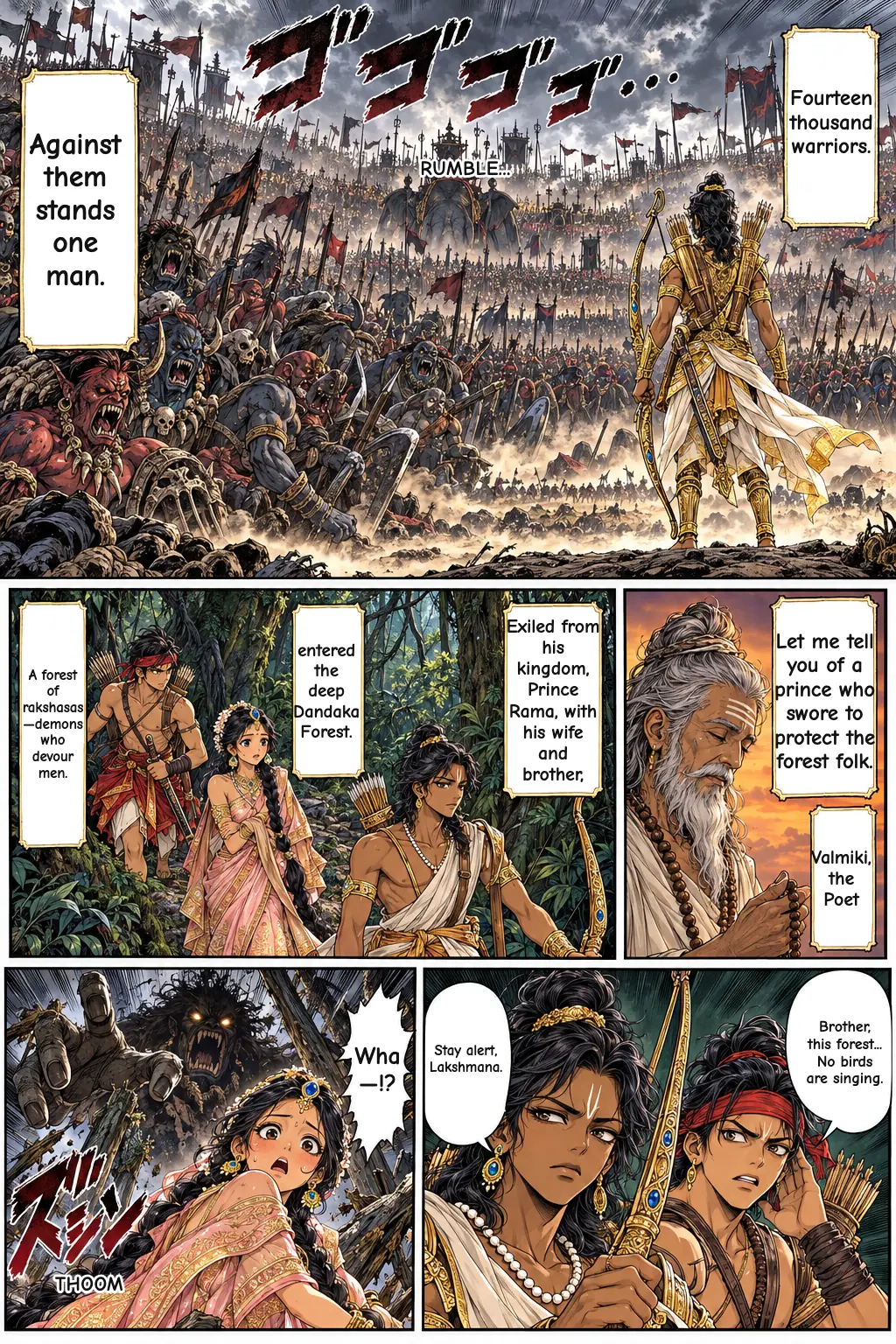
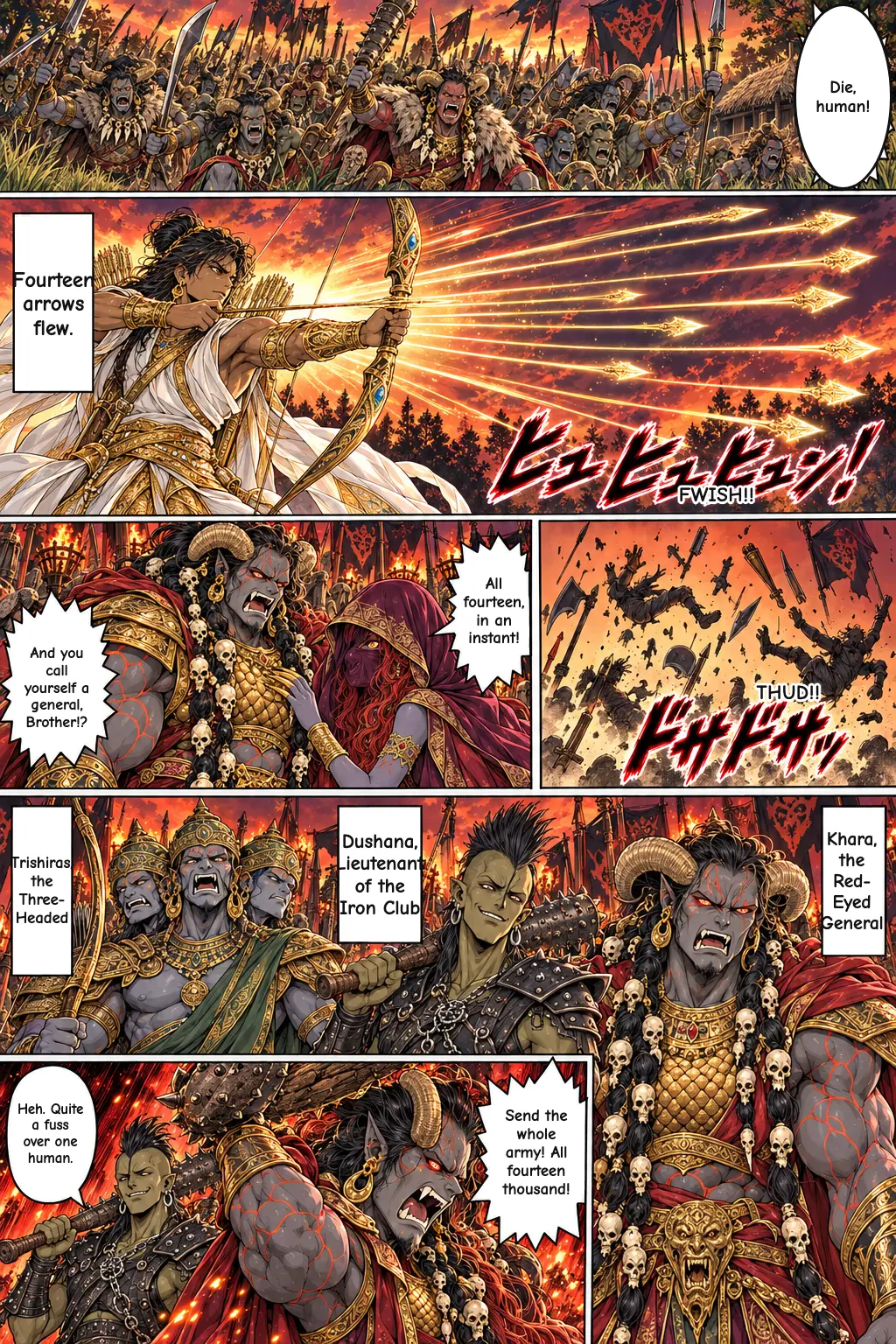
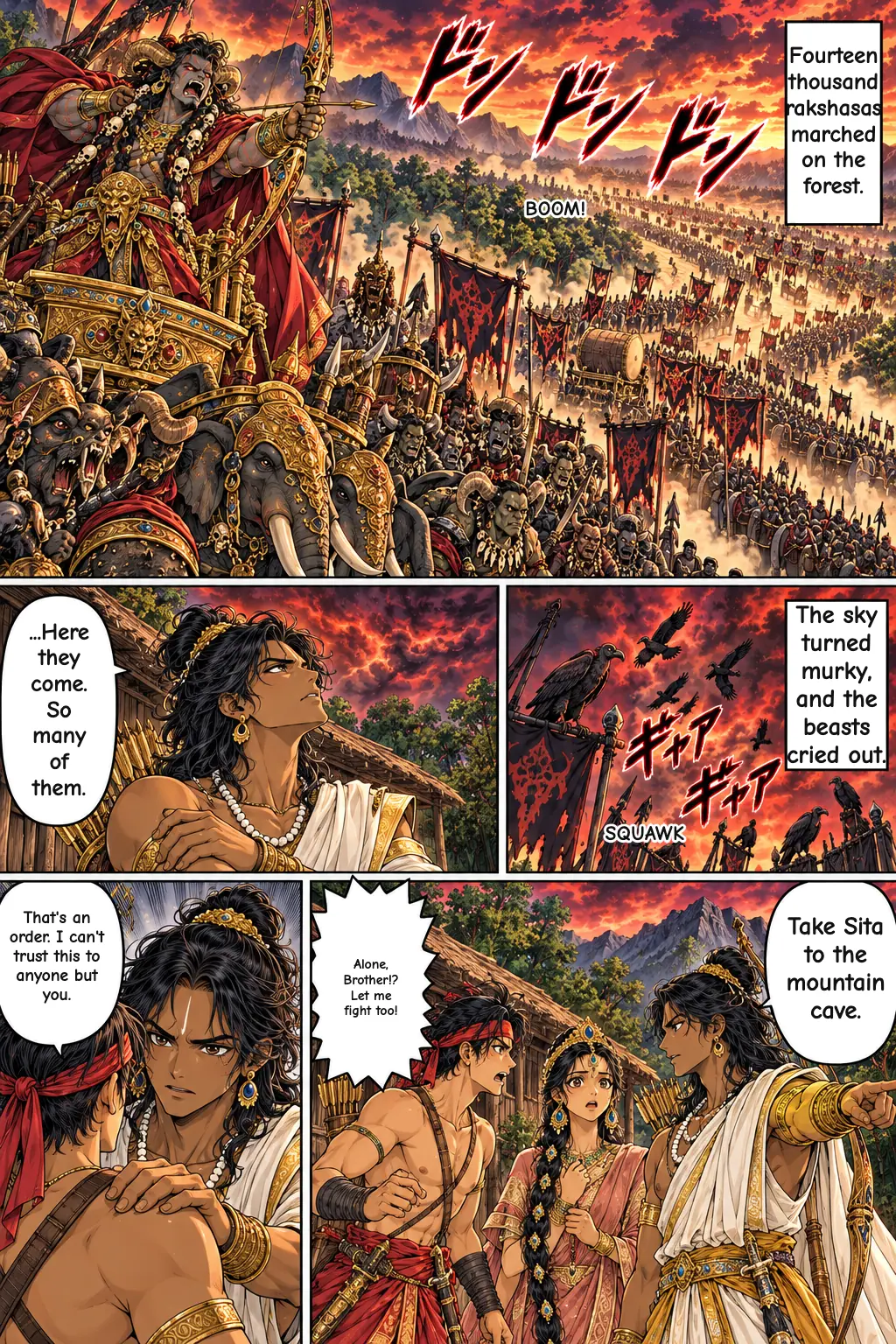
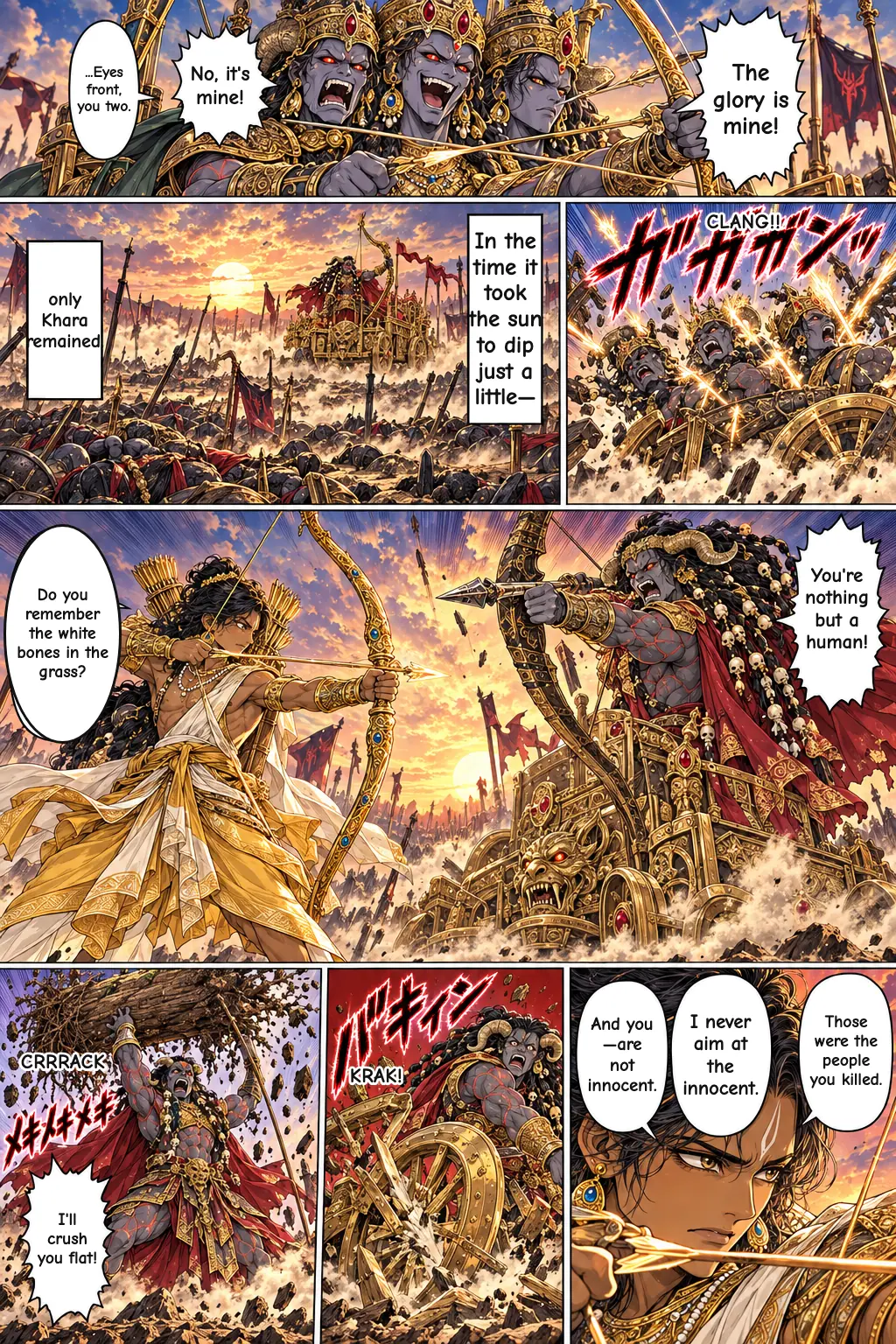
Rama vows to protect the sages of the forest. When he turns down a marriage proposal from the rakshasa princess Shurpanakha, an army of fourteen thousand rakshasas descends on him. Rama sends his wife and brother to safety in a cave and faces the horde alone.
Shurpanakha and Khara Explained: Ramayana Aranya Kanda Summary
The Original Story, Part 1: Into the Dandaka Forest
The Ramayana is one of India's two great Sanskrit epics, traditionally credited to the poet-sage Valmiki. Its third book, the Aranya Kanda ("Book of the Forest"), follows Prince Rama of Kosala after his exile from the capital, Ayodhya. With him are his wife Sita and his loyal younger brother Lakshmana. (Chapter numbers in this article follow the widely circulated southern version of the text.)
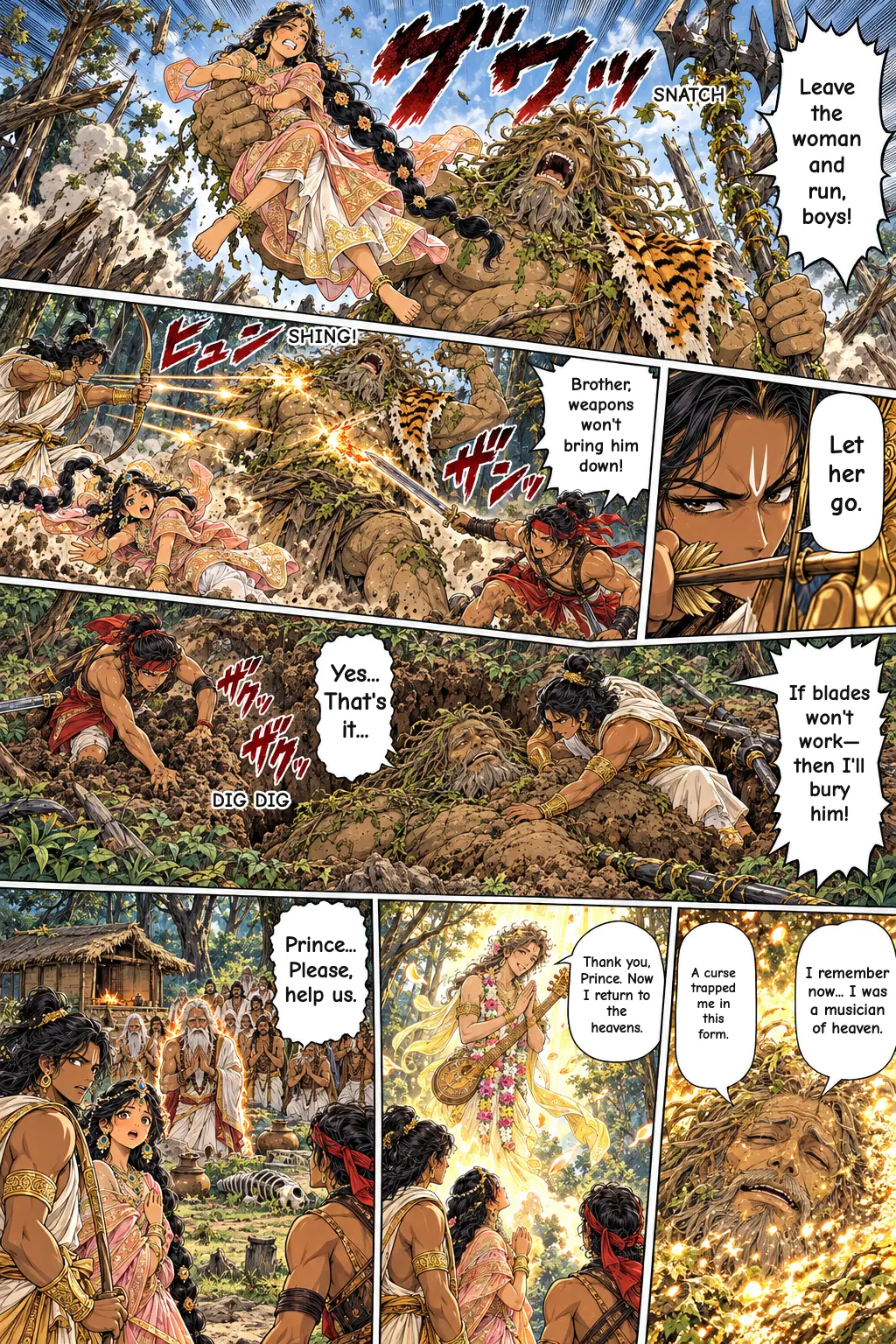
As the three enter the vast Dandaka forest, groups of hermit-sages welcome them and beg for protection from rakshasas, man-eating demons who prey on them. Almost at once a giant rakshasa named Viradha snatches up Sita. The brothers cut off his arms, but a boon from Brahma, the creator god, means no weapon can kill him, so they bury him alive in a pit. Before dying he reveals that he is really Tumburu, a gandharva (a heavenly musician) cursed by Kubera, the god of wealth, and he returns to heaven.
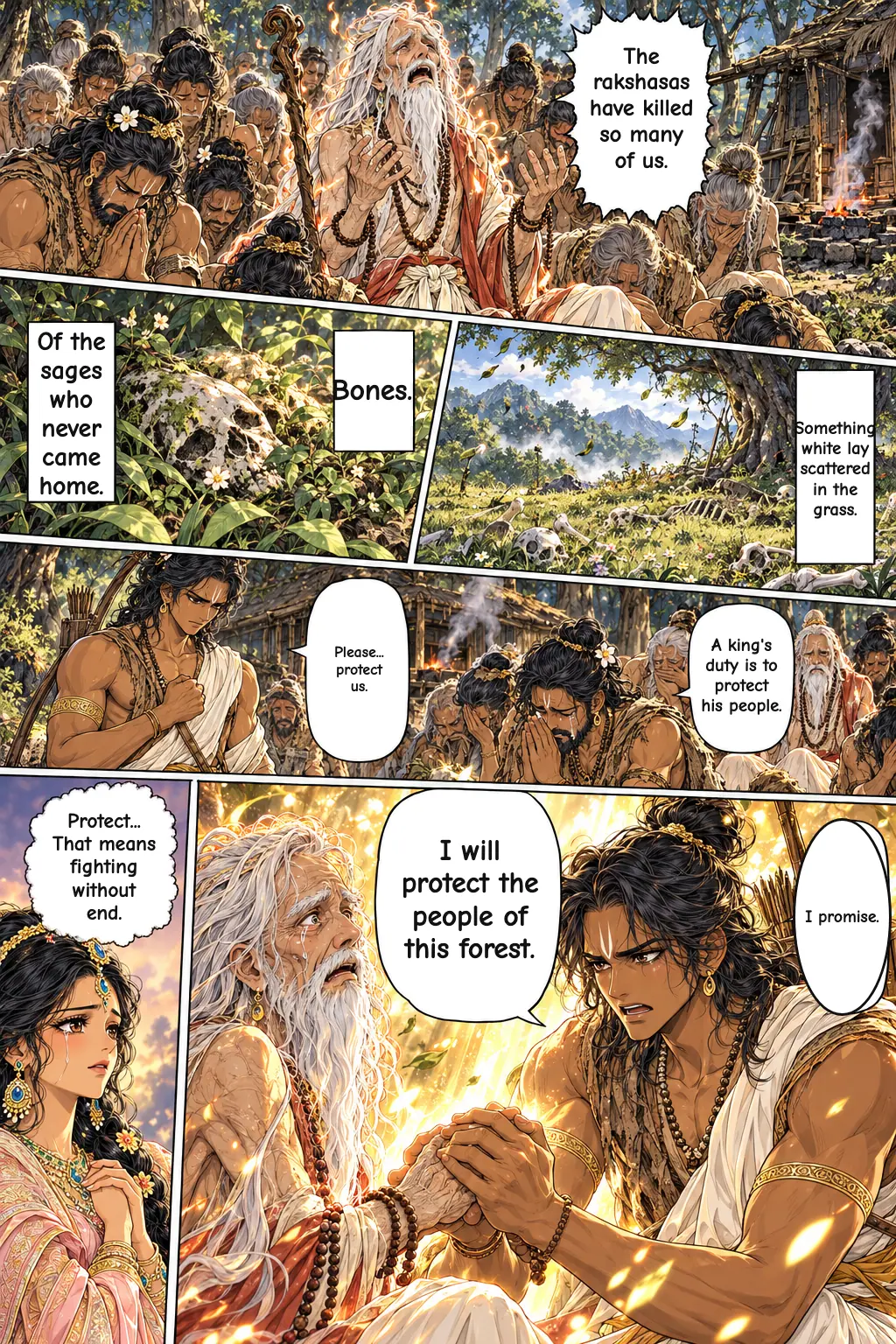
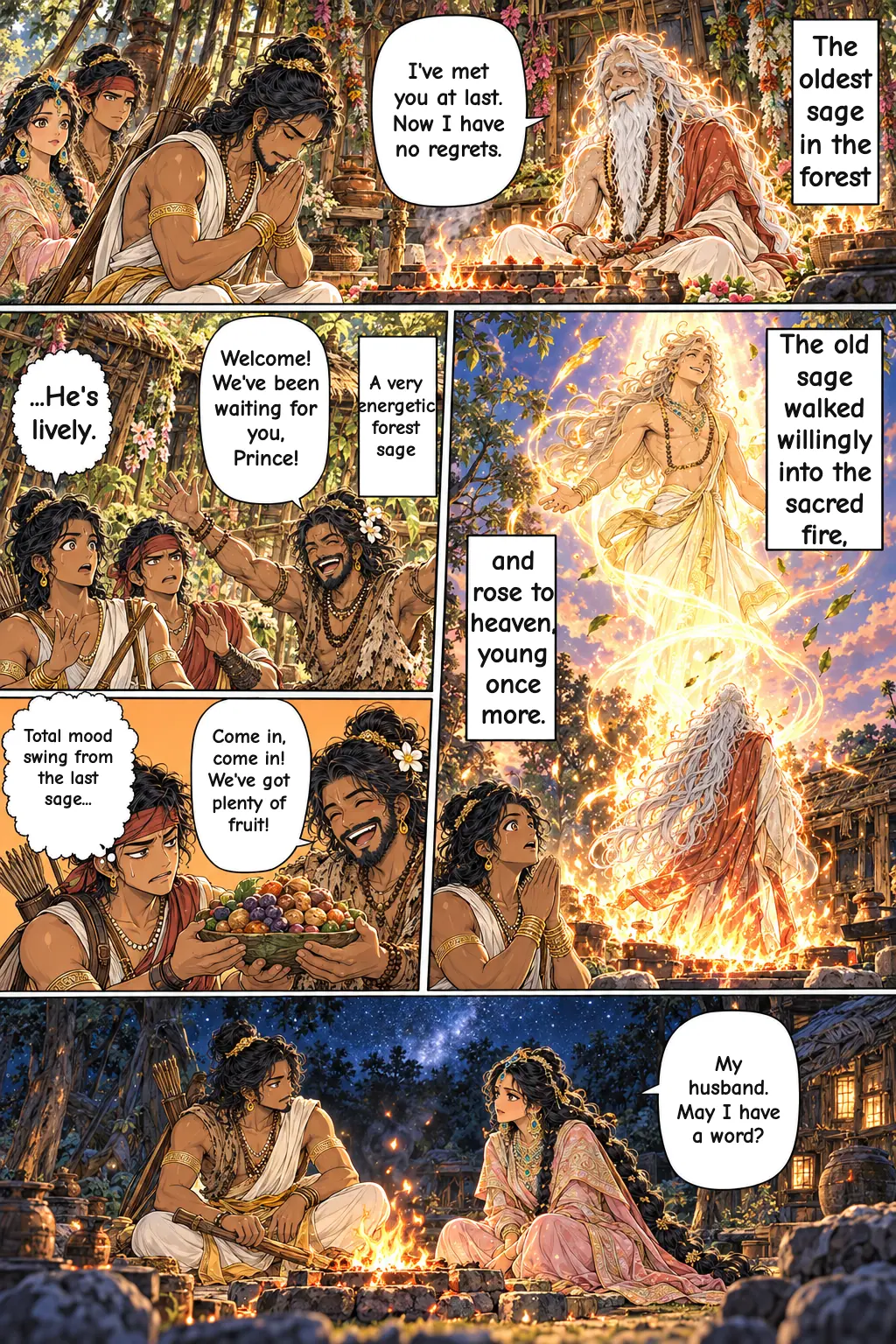
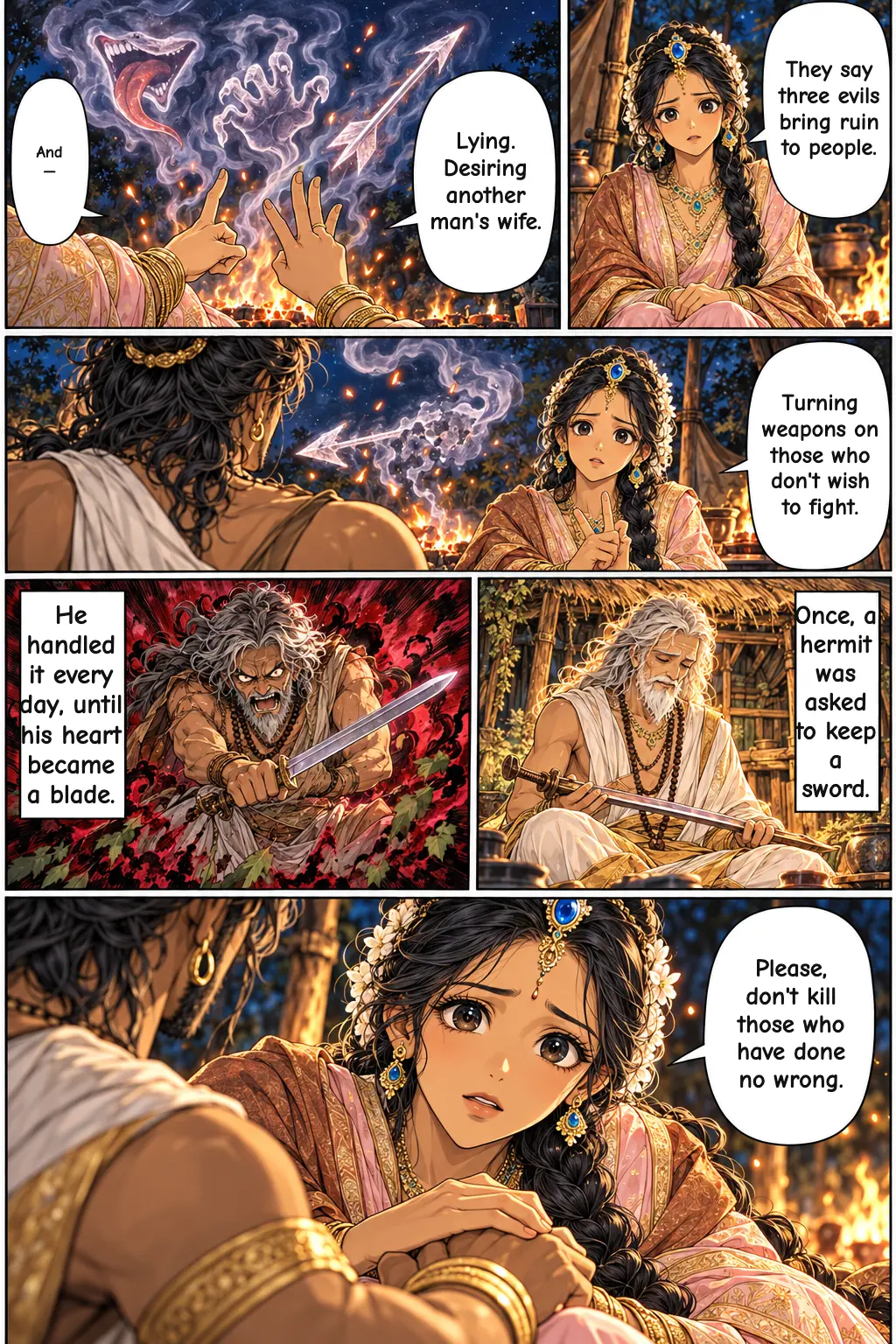
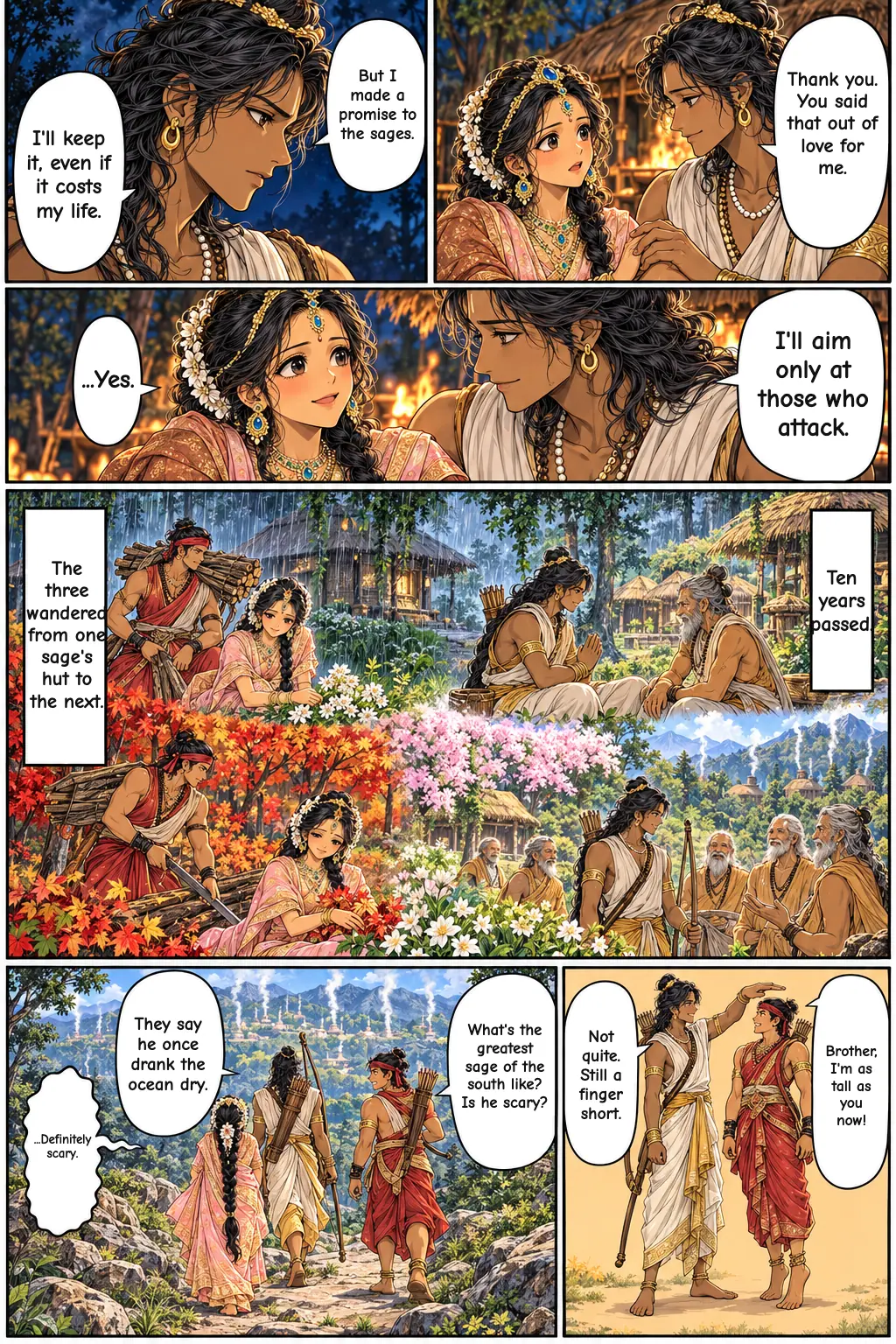
Deeper in the forest, the sage Sharabhanga meets Rama and then enters a fire to rise to Brahma's world. Other ascetics show Rama a heap of bones, the remains of sages killed by rakshasas, and Rama vows to destroy the demons and protect them. Sita gently challenges him: violence against those who have shown no hostility, she says, is one of three great wrongs, alongside lying and desiring someone else's spouse, and she tells a cautionary tale of a hermit corrupted by carrying a weapon. Rama replies that his promise to the sages must be kept even at the cost of his life.
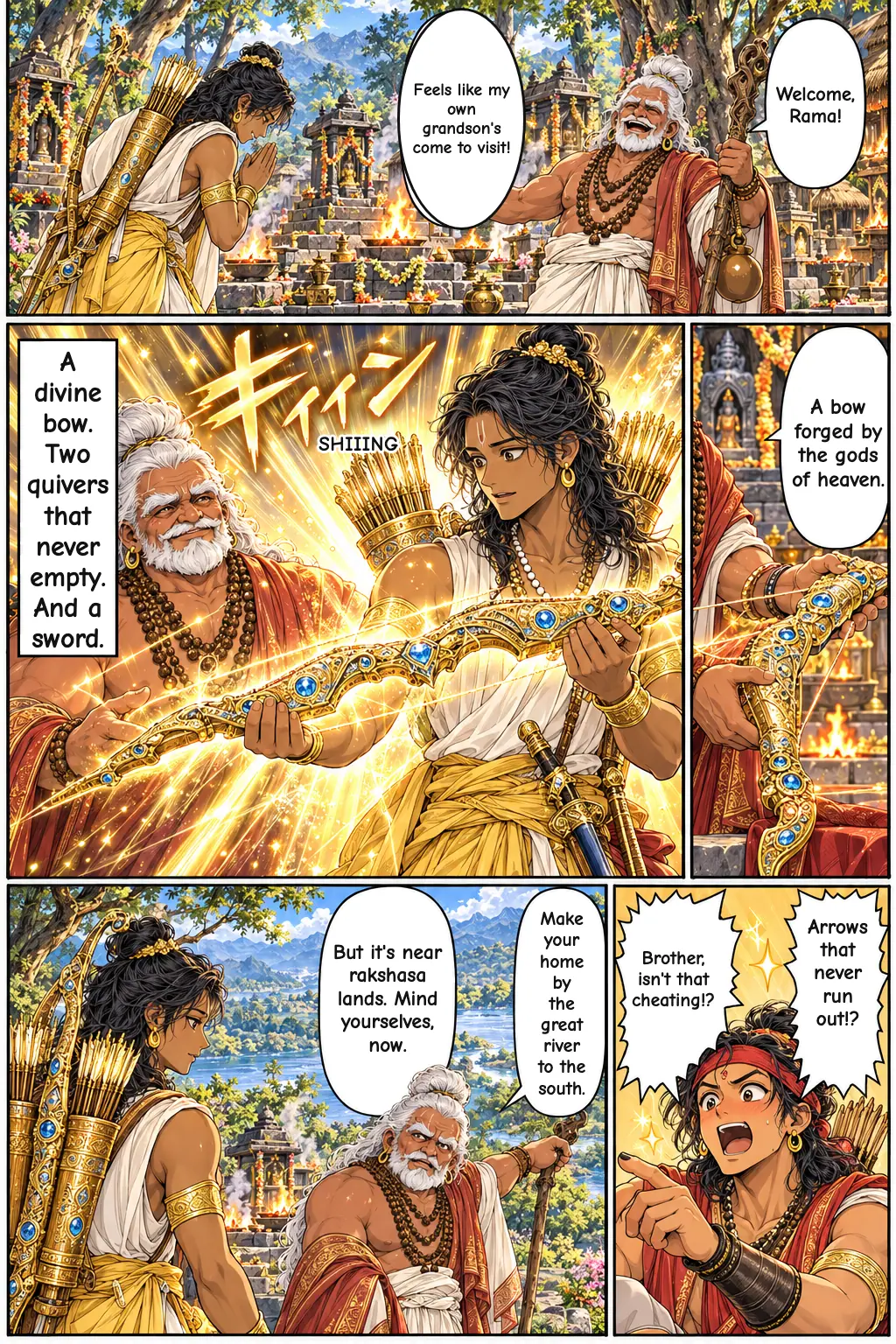
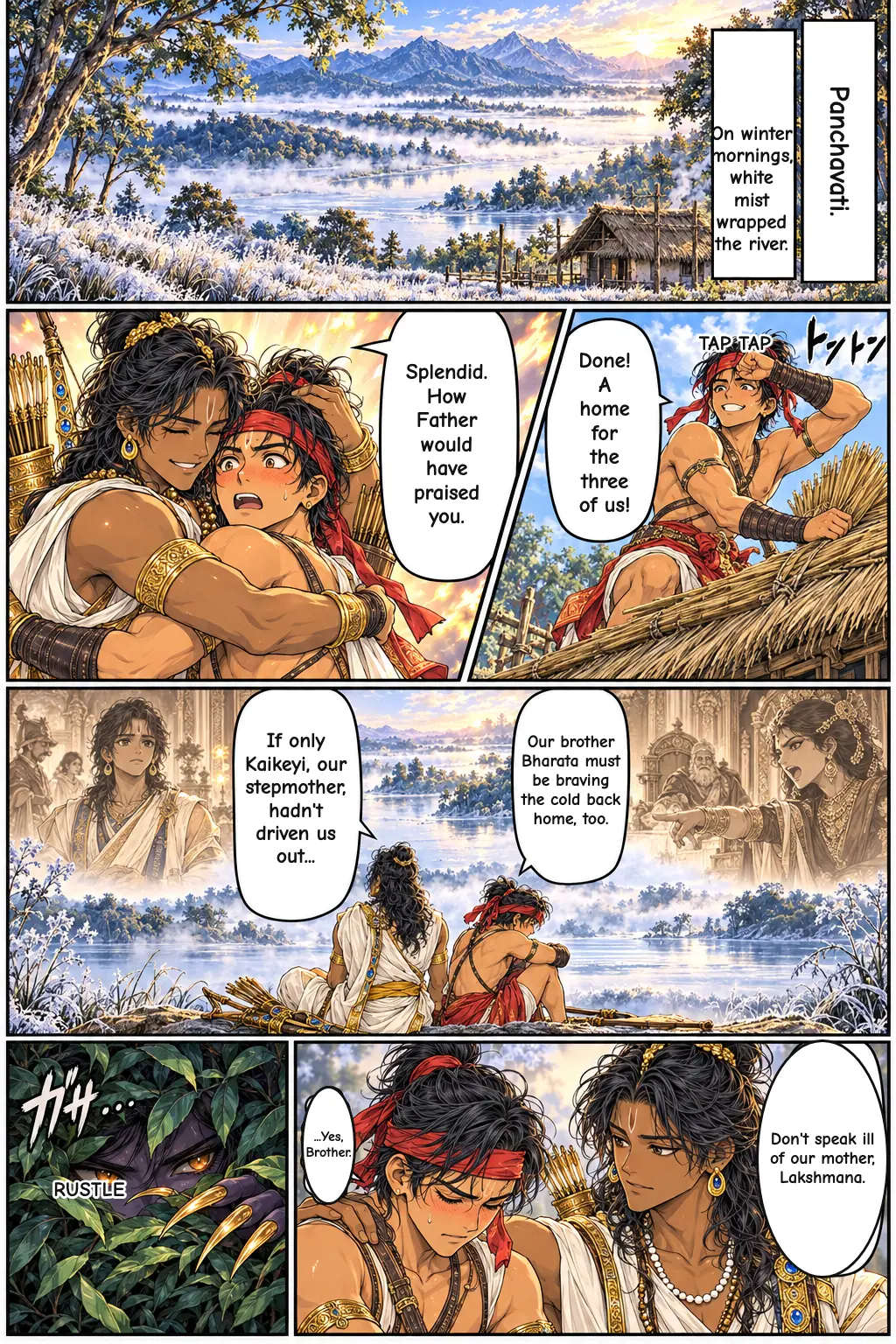
The trio spend ten years moving between hermitages. The great sage Agastya gives Rama divine weapons, including Vishnu's bow, two quivers that never run out of arrows, and a sword, and advises him to settle at Panchavati beside the Godavari River. On the way they befriend Jatayu, a giant bird king who was a friend of Rama's late father and offers to guard Sita. Lakshmana builds a thatched hut, and for a while life is calm.
The Original Story, Part 2: Shurpanakha and Khara's Army
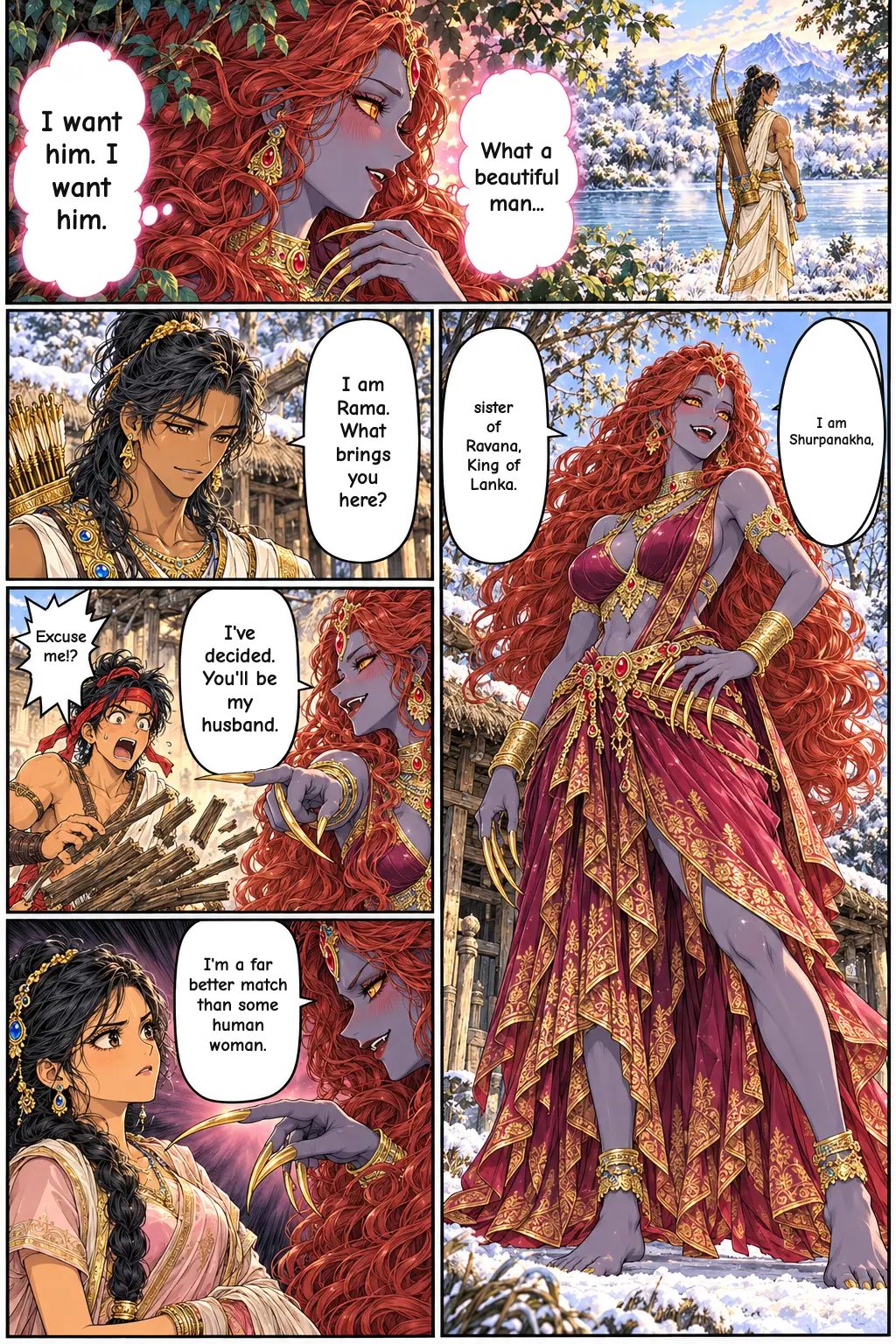
One day Shurpanakha, a rakshasa woman and the sister of Ravana, the demon king of Lanka, comes to the hut and falls for Rama at first sight. Valmiki describes her as Rama's opposite in every way: pot-bellied, wild-haired and harsh-voiced. Her proposal is blunt. Leave your ugly wife and marry me, she says, and we can eat Sita and your brother.
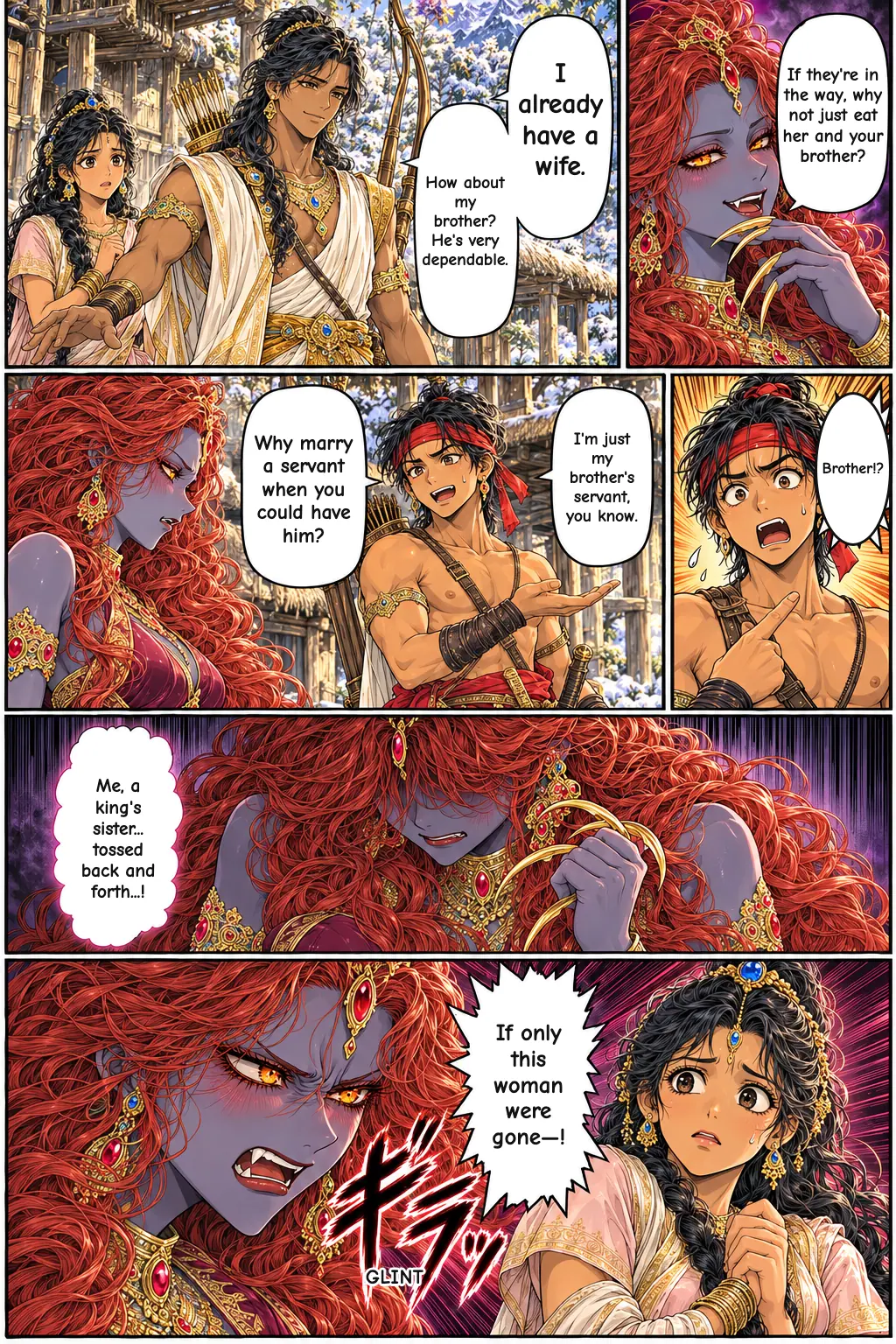
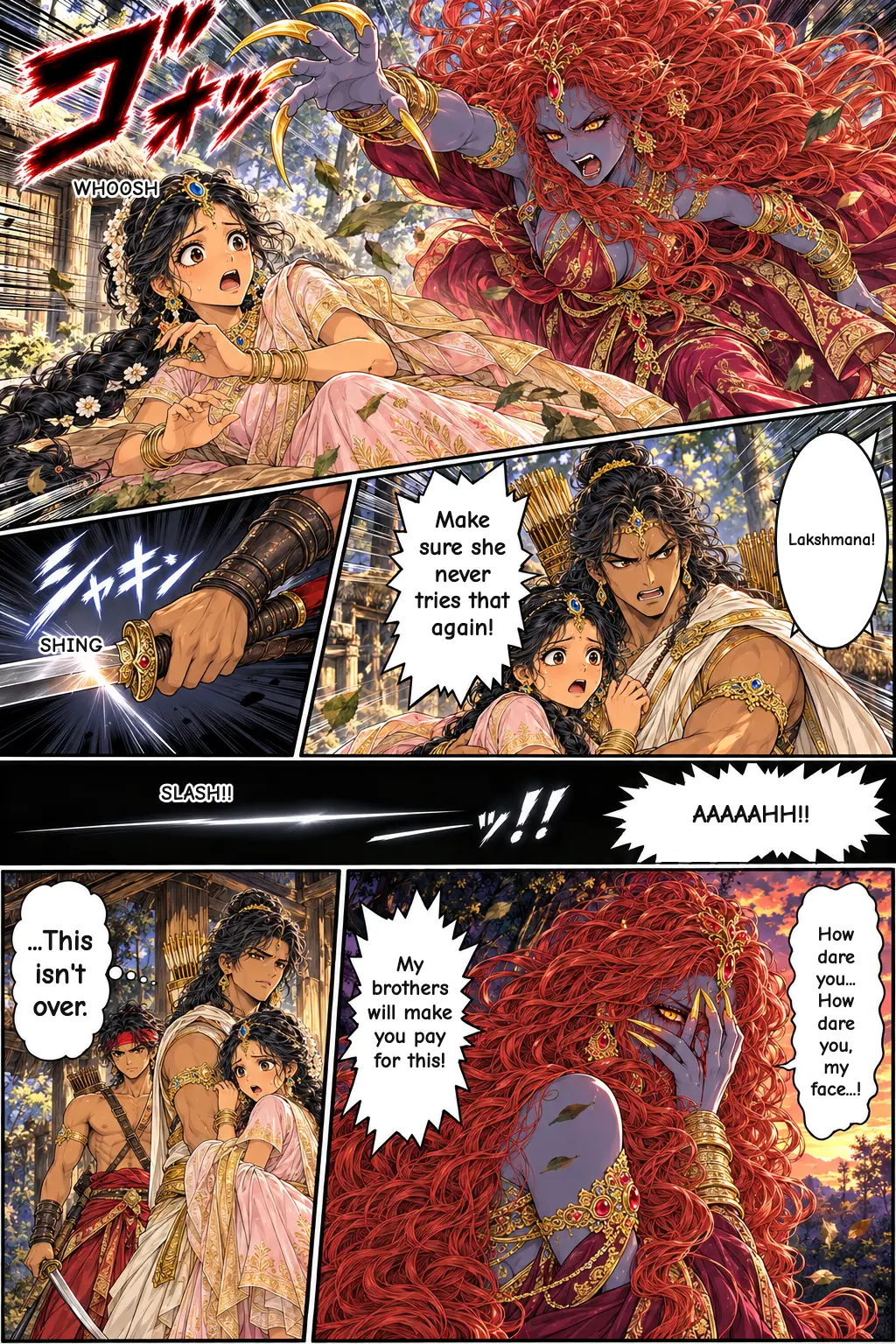
Rama answers that he already has a wife and, teasing her, suggests Lakshmana instead. Lakshmana teases back that he is only his brother's servant, so she should become Rama's second wife. Taking the mockery seriously and blaming Sita, Shurpanakha lunges at her. Rama holds her back and orders Lakshmana to punish her, and Lakshmana cuts off her ears and nose with his sword.
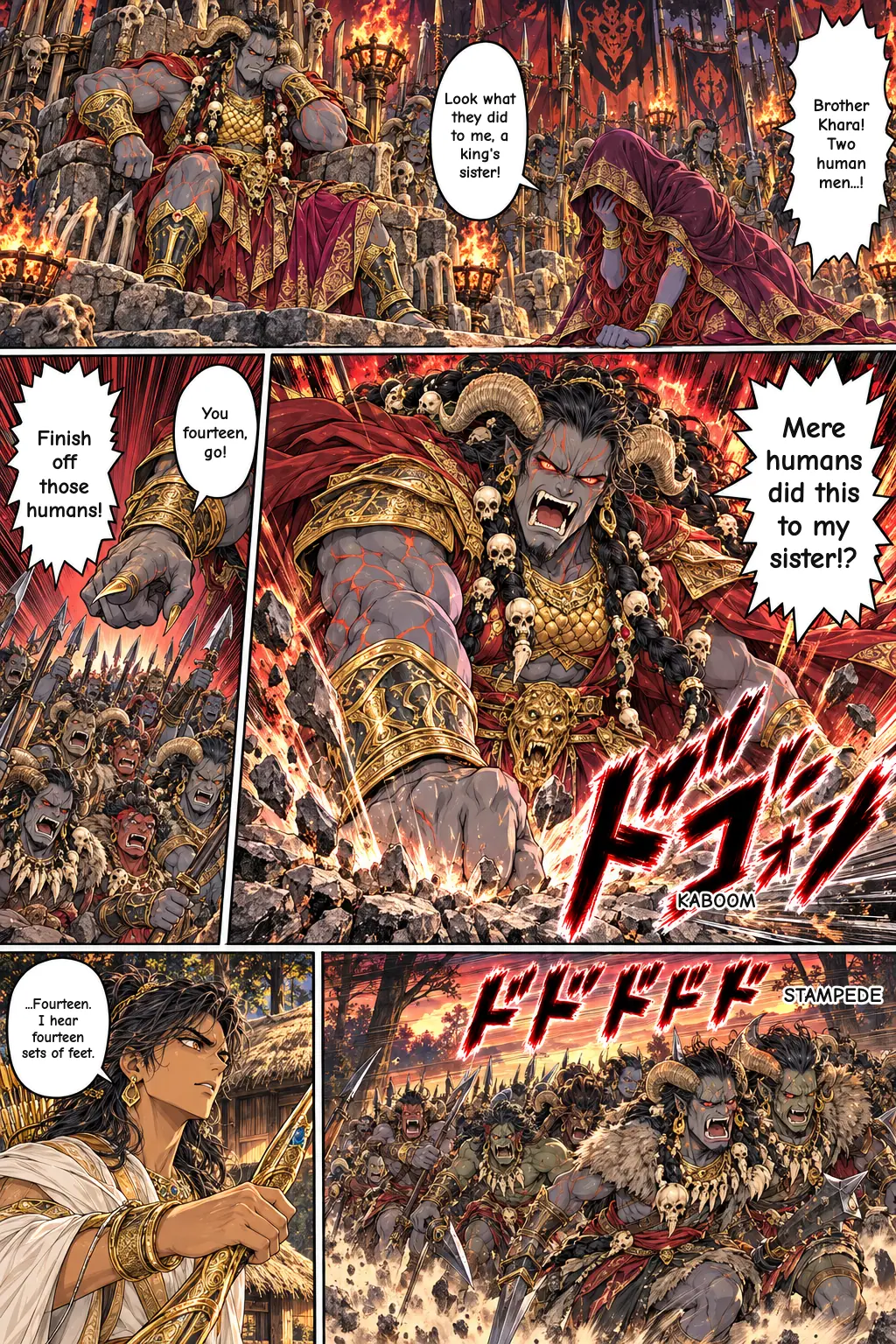
She flees to her brother Khara, commander of the rakshasa garrison at Janasthana. Khara first sends fourteen rakshasas, and Rama kills them with fourteen arrows. Stung by his sister's taunts, Khara marches out with his general Dushana and an army of fourteen thousand, ignoring a series of dreadful omens.
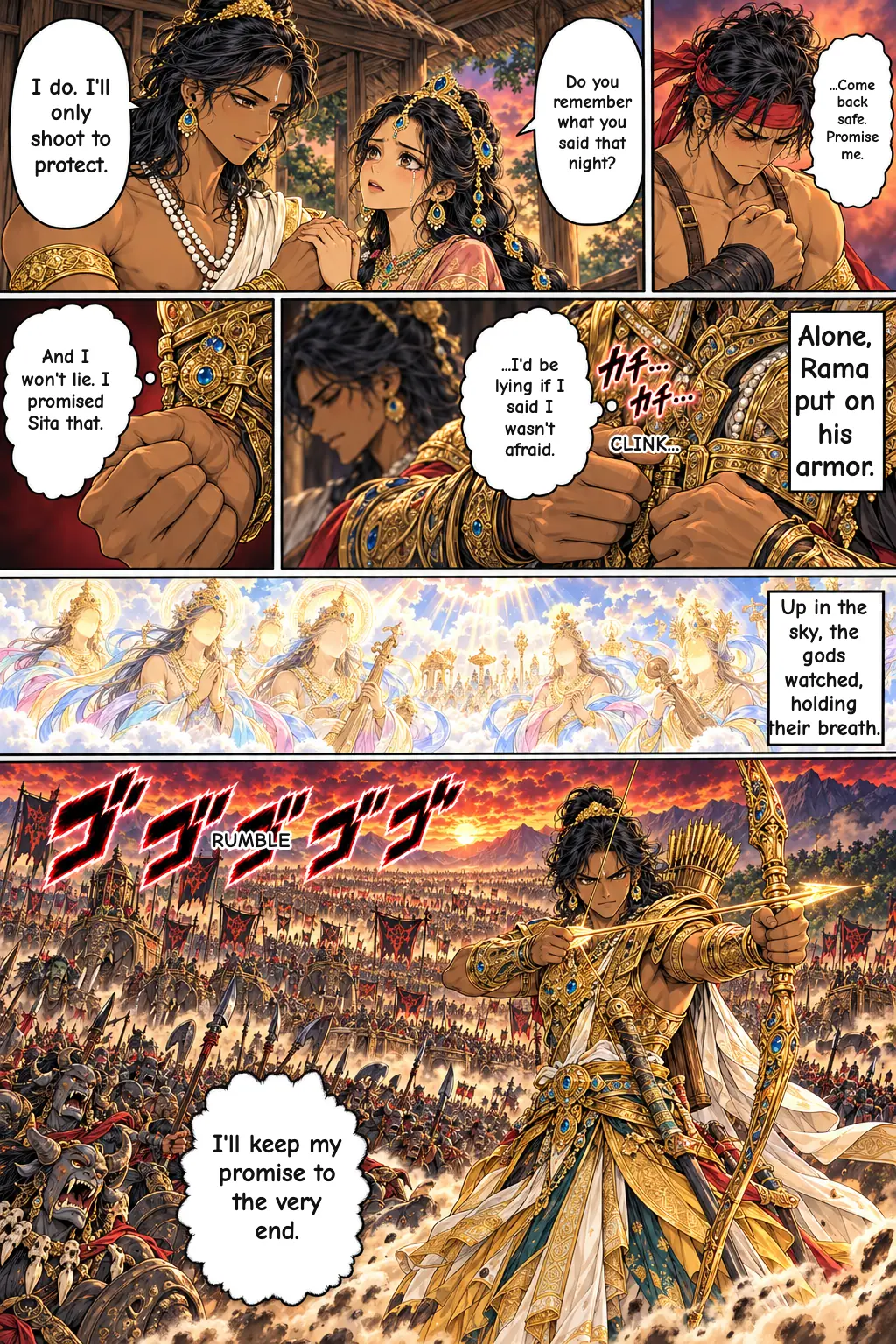
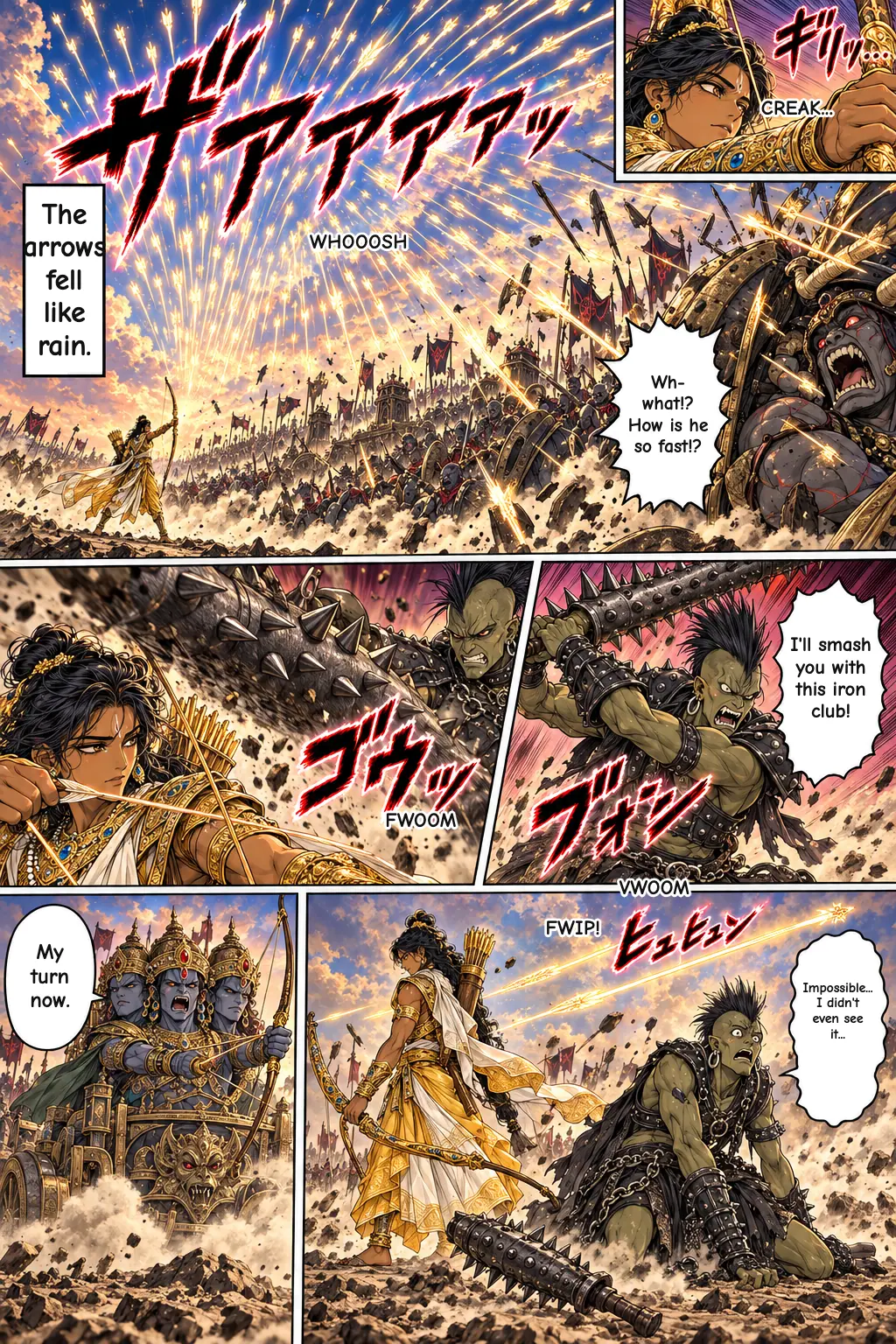
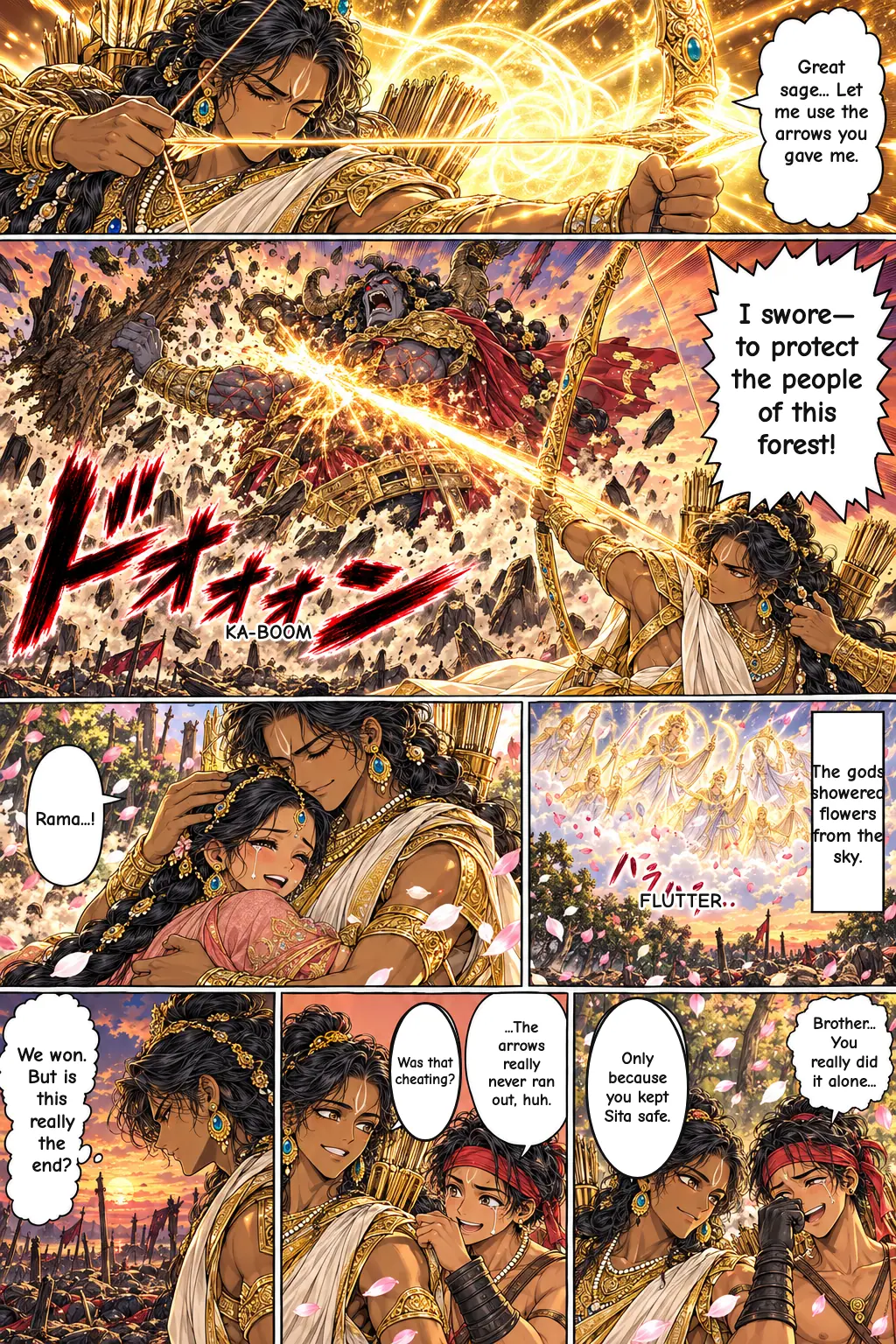
Rama reads the omens too. He orders Lakshmana to take Sita to a mountain cave, puts on his armor and waits alone while gods and sages gather to watch. His storm of arrows wipes out the army. He kills Dushana, then the three-headed warrior Trishiras, and finally, after a duel fought with both weapons and insults, smashes Khara's chariot and bow and slays him with the arrow of Indra, king of the gods, that Agastya had given him. Flowers rain from the sky, and Sita leaves the cave to embrace her husband.
Main Characters at a Glance
Rama, the exiled prince, is a master archer who places keeping his word above everything else. Sita, his wife, is thoughtful enough to question the morality of his vow. Lakshmana, his brother, serves him faithfully, building their home and carrying out his orders. On the other side, Shurpanakha is the spark of the conflict, while her brother Khara, his general Dushana and the three-headed Trishiras lead the demon army. Sages such as Agastya and the bird king Jatayu stand as the heroes' allies.
What This Episode Means
At its heart this section is about dharma, the duty and right conduct that guides each character. Rama's vow to the sages shows the ideal of a prince who protects the vulnerable, even far from his throne. The forest itself is a frontier between settled society and wild, dangerous lands, and the sages' hermitages are fragile outposts that need defending.
Sita's objection matters too. The epic lets her make a serious moral case against unprovoked violence, and Rama answers it rather than dismissing it. His battles are then framed as defense: the rakshasas attack first, and Rama sends his family to safety before fighting.
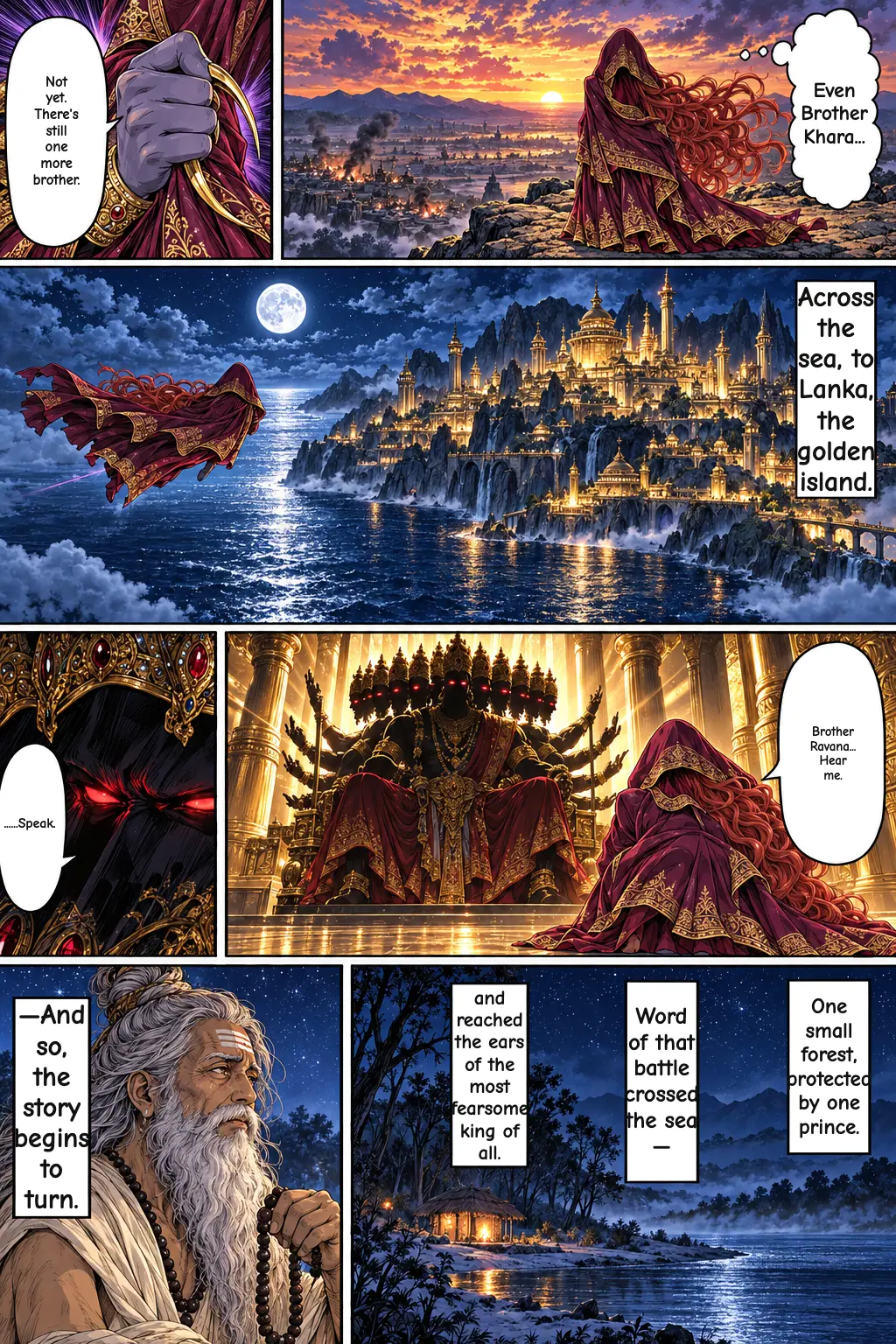
The Shurpanakha scene is one of the most debated moments in the Ramayana. Modern readers often question both the brothers' teasing and the harshness of her punishment. Some readers point out that Lakshmana actually had a wife, Urmila, back in Ayodhya; the idea that his words were therefore just a joke is a later explanation, not something the scene states. Many later retellings and screen versions also show Shurpanakha disguised as a beautiful woman, but in Valmiki she arrives in her own form. Whatever one's view, the epic treats this moment as the turning point: in the chapters that follow, word of the defeat reaches Ravana, and Shurpanakha goes to Lanka to tell him about Sita's beauty.
What the Manga Changed
Valmiki's text describes people and places mostly with stock, formal praise, so the manga designs the characters' faces, costumes, hermitages and forest on its own. It also compresses the ten years of wandering, giving encounters like Viradha and Sharabhanga only brief treatment, and stages for itself the moment Shurpanakha first sees Rama, which the original simply says happened when she came to the hut.
The core of the proposal scene, with its rejection, teasing and her furious attack, follows the original, but the expressions, timing and wording of the dialogue are the manga's own. Her injury is shown through shadow and cut-away rather than graphic detail. The cave's terrain, the look and weapons of the demon army, and the flow of the battle are also the artist's creation, since Valmiki mainly lists weapons and arrows. Scenes of Sita waiting inside the cave are likewise new; the original says almost nothing about her during the fight.
Where to Read It
To explore the source, look for a complete English translation of Valmiki's Ramayana and read the opening thirty chapters of the Aranya Kanda; note that chapter numbers can differ between versions of the text. For a vivid way into the story, Episode 5 of RAMAYANA: The Exiled Prince and the Son of the Wind on Manga Portal brings Rama's stand against fourteen thousand demons to life. Every episode is free to read, with no sign-up needed, so you can start from the beginning or continue as the story heads toward Ravana and Lanka.
Characters in this episode
Rama
The exiled prince of Kosala, a peerless archer who vows to protect the forest sages and defeats Khara's army single-handed.
Sita
Rama's wife, who follows him into exile and questions whether fighting those who have done him no harm is right.
Lakshmana
Rama's devoted younger brother, who builds their forest hut and, on Rama's order, cuts off Shurpanakha's ears and nose.
Shurpanakha
A rakshasa woman and sister of Ravana whose rejected proposal and violent attack on Sita set off the war.
Khara
Shurpanakha's arrogant brother and commander at Janasthana, who leads fourteen thousand rakshasas against Rama and dies by Indra's arrow.
Agastya
A great forest sage who gives Rama divine weapons and advises him to settle at Panchavati.
FAQ
Why did Lakshmana cut off Shurpanakha's nose?
In Valmiki's Ramayana, Shurpanakha proposed to Rama, was teased by both brothers, and then attacked Sita intending to devour her. Rama stopped her and ordered Lakshmana to punish her, and Lakshmana cut off her ears and nose with his sword.
Who is Shurpanakha in the Ramayana?
Shurpanakha is a rakshasa (demon) woman, the sister of Ravana, Kumbhakarna, Vibhishana, Khara and Dushana. Her humiliation at Panchavati leads first to Khara's attack on Rama and later to Ravana's abduction of Sita.
How did Rama defeat 14,000 demons alone?
After sending Sita and Lakshmana to a mountain cave, Rama faced Khara's army by himself with divine weapons from the sage Agastya. He destroyed the army with a storm of arrows, killed the generals Dushana and Trishiras, and finally slew Khara with Indra's arrow.
What is the Aranya Kanda?
The Aranya Kanda, or Book of the Forest, is the third of the Ramayana's seven books. It covers Rama, Sita and Lakshmana's life in exile in the forest, including the Shurpanakha episode, the war with Khara and, later, Sita's abduction by Ravana.
Did Shurpanakha disguise herself as a beautiful woman?
Not in Valmiki's Sanskrit Ramayana, where she approaches Rama in her own form and is described as his opposite in appearance. The disguise appears in many later retellings and film or TV adaptations.