Episode 7Before Sun Wukong, There Was HanumanHanuman Meets Rama (Kishkindha Kanda)
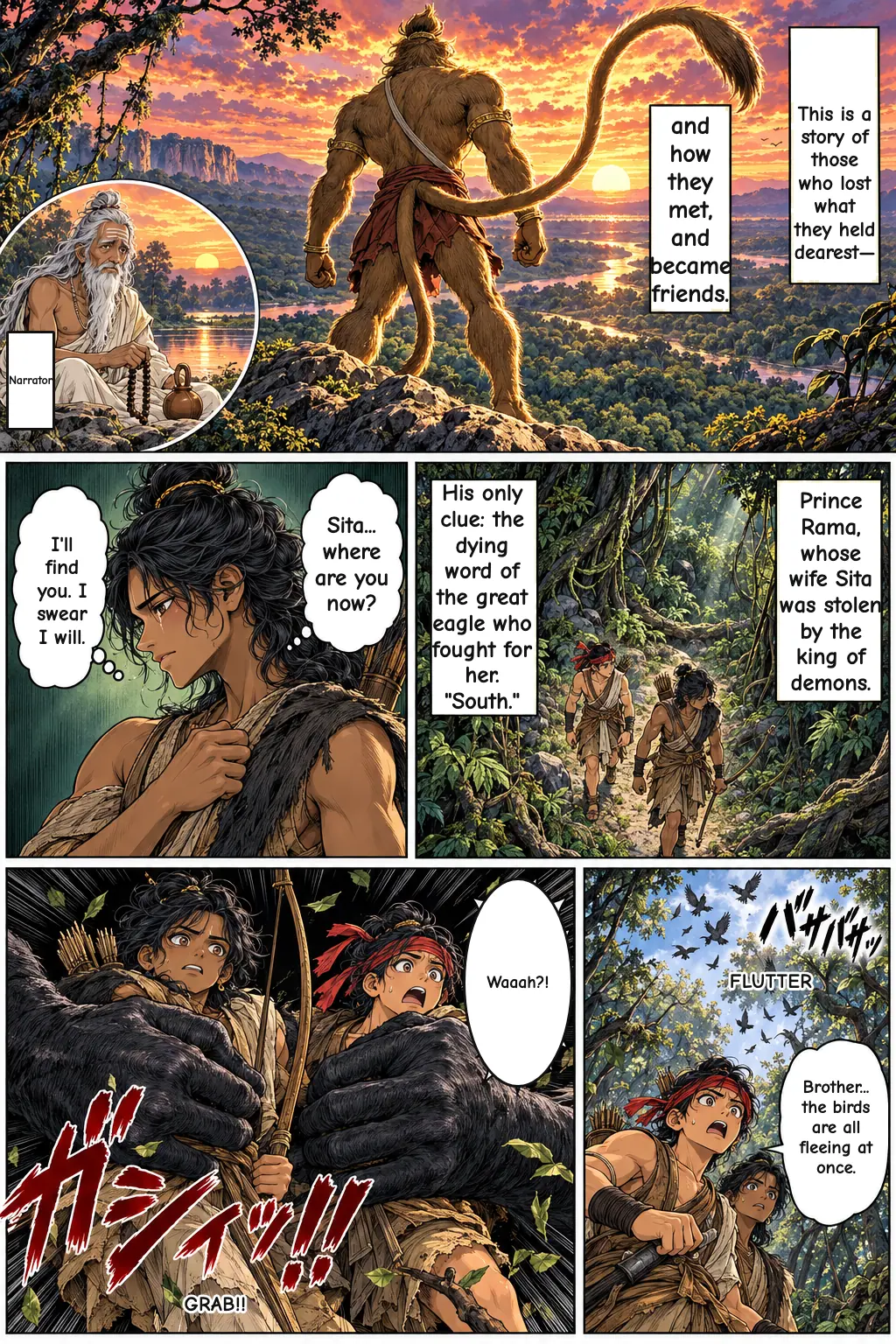
Searching for Sita, Rama and Lakshmana head south. Guided by the demon Kabandha and the old ascetic Shabari, they meet Hanuman, son of the wind god. Before a blazing fire, Rama swears friendship with Sugriva, an exiled prince of the monkey folk. But when Rama looses a single arrow to keep his promise, the dying King Vali makes him face what that arrow truly cost.
Hanuman Meets Rama: Kishkindha Kanda Summary & Vali's Death Explained
The Original Story: Kabandha, Shabari, and the Road South
After the demon king Ravana carries off Sita, Prince Rama and his younger brother Lakshmana search the forests of southern India for her. In Valmiki's Sanskrit Ramayana, the ancient epic traditionally credited to the poet-sage Valmiki, this part of the journey covers the last chapters (sargas 69–75) of the Aranya Kanda, the "Forest Book," and the first 26 chapters of the Kishkindha Kanda, the book named after the monkey kingdom of Kishkindha.
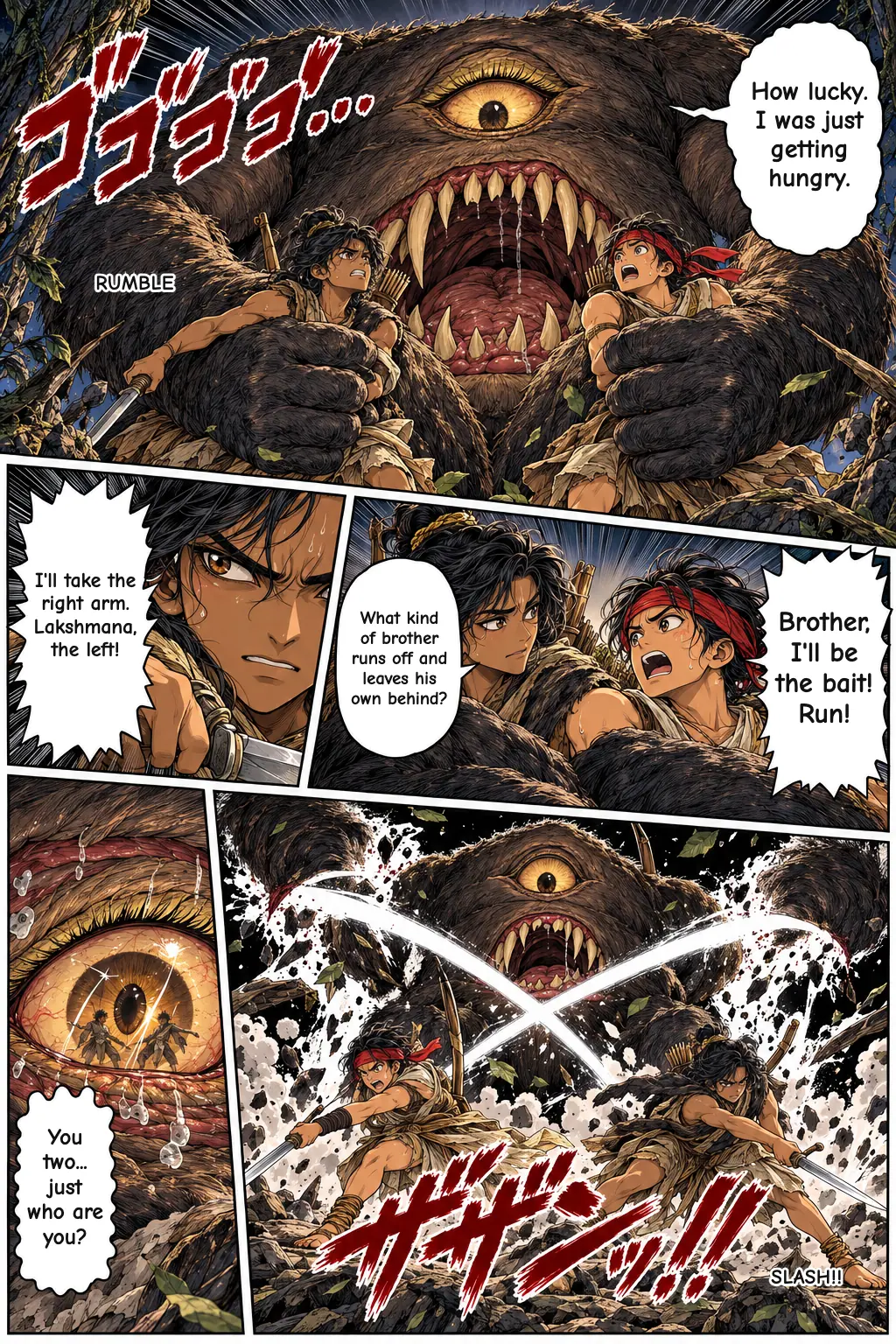
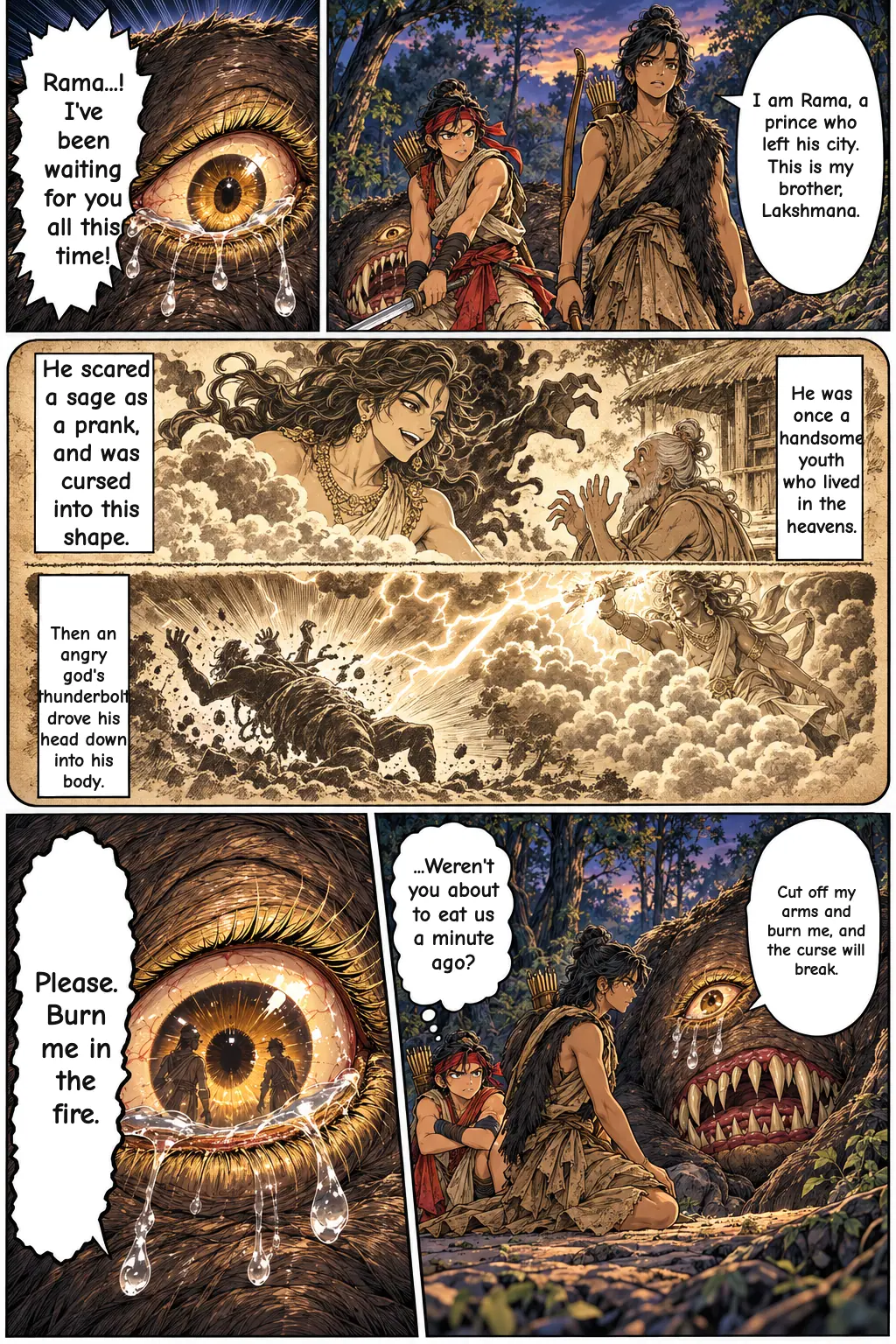
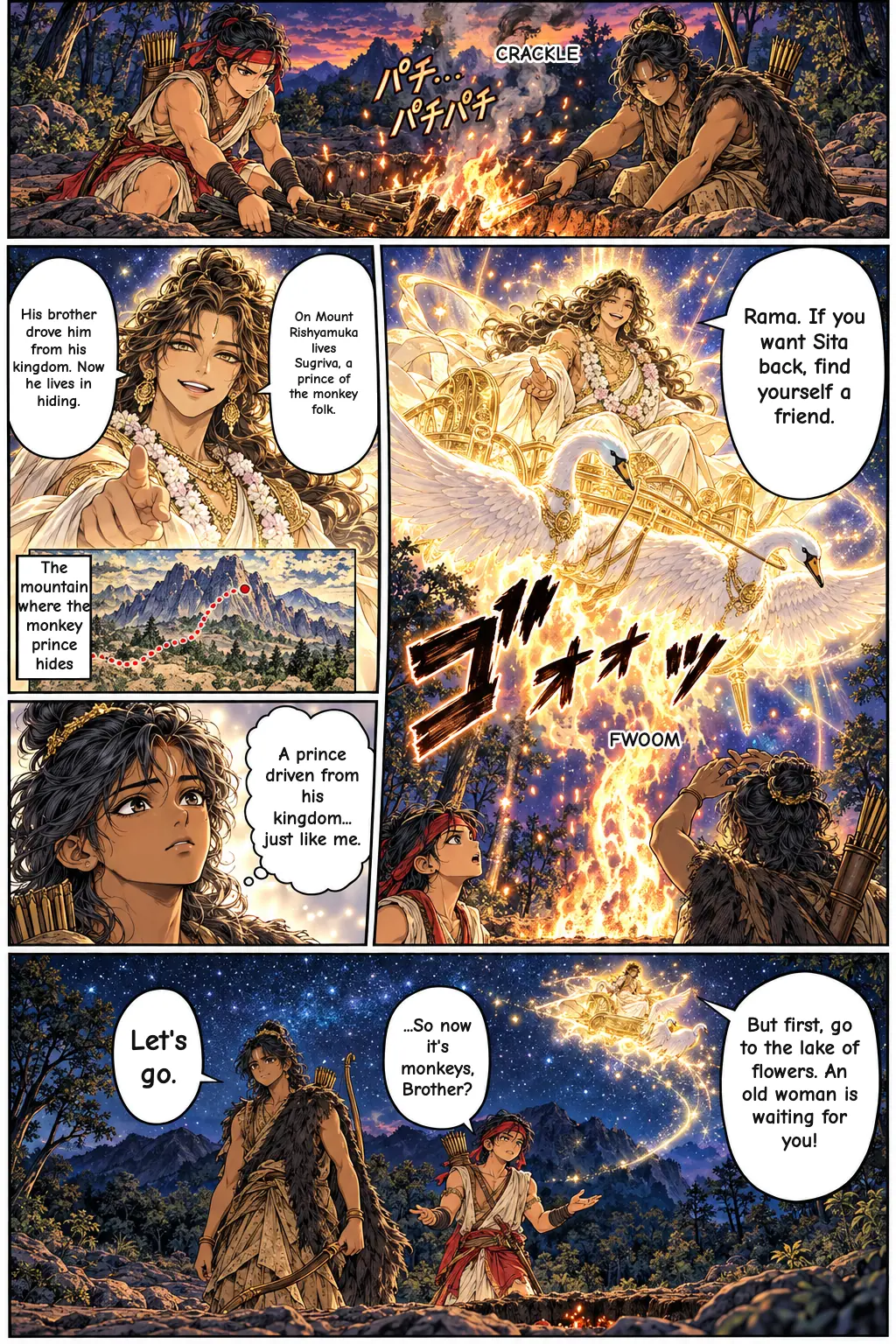
First the brothers are seized by Kabandha, a monstrous being with no head, a mouth in his belly, a single huge eye, and arms of enormous length. Rama cuts off the right arm and Lakshmana the left. Kabandha then tells them he was once beautiful, but a sage's curse and a blow from the thunderbolt of Indra, king of the gods, left him in this shape, and only Rama could release him. The brothers cremate his body, and he rises from the flames in a shining heavenly form. His advice: make friends with Sugriva, an exiled monkey prince hiding on Mount Rishyamuka, and follow the road past Lake Pampa.
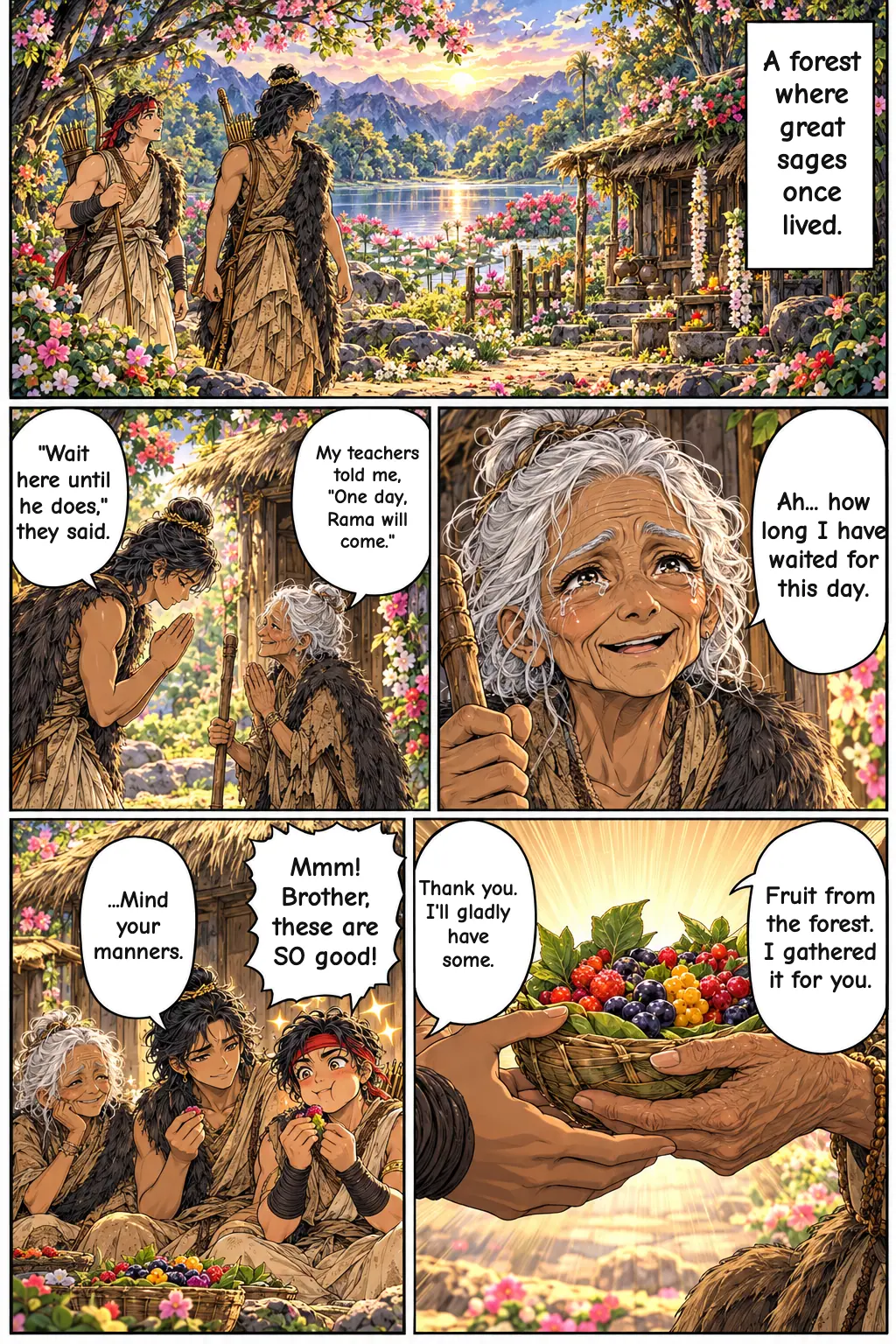
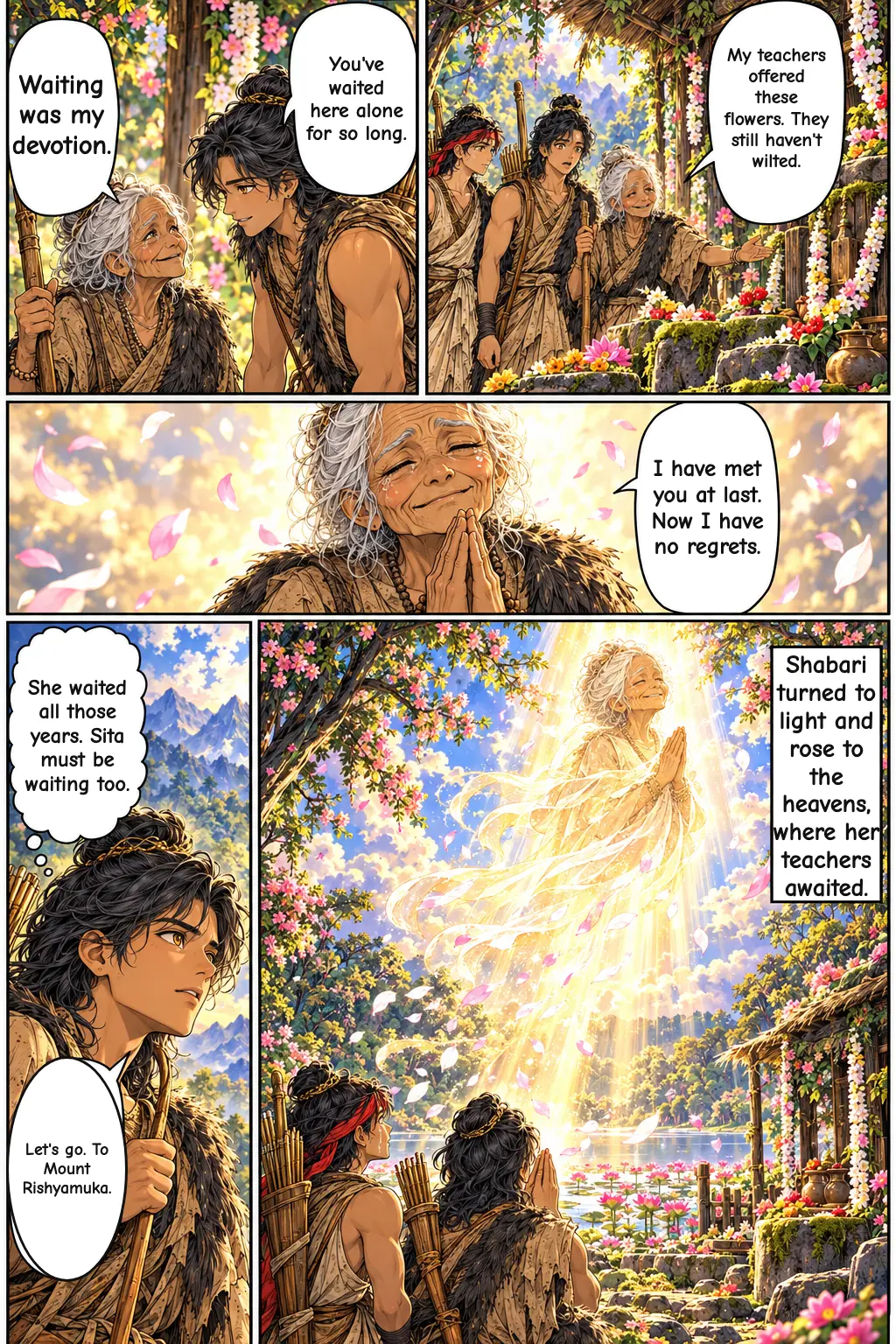
On the way they visit Shabari, a female ascetic who has stayed on at the hermitage of the sage Matanga after her teachers left for heaven, because they told her Rama would one day come. She welcomes the brothers with food she has gathered in the forest, shows them the hermitage where flowers offered long ago have never withered, and then, with Rama's leave, enters a fire and rises to heaven. A much-loved story says she tasted each berry so that Rama would get only the sweet ones, but that detail comes from later devotional tradition, not from Valmiki.
Hanuman Meets Rama, and the Arrow That Killed Vali
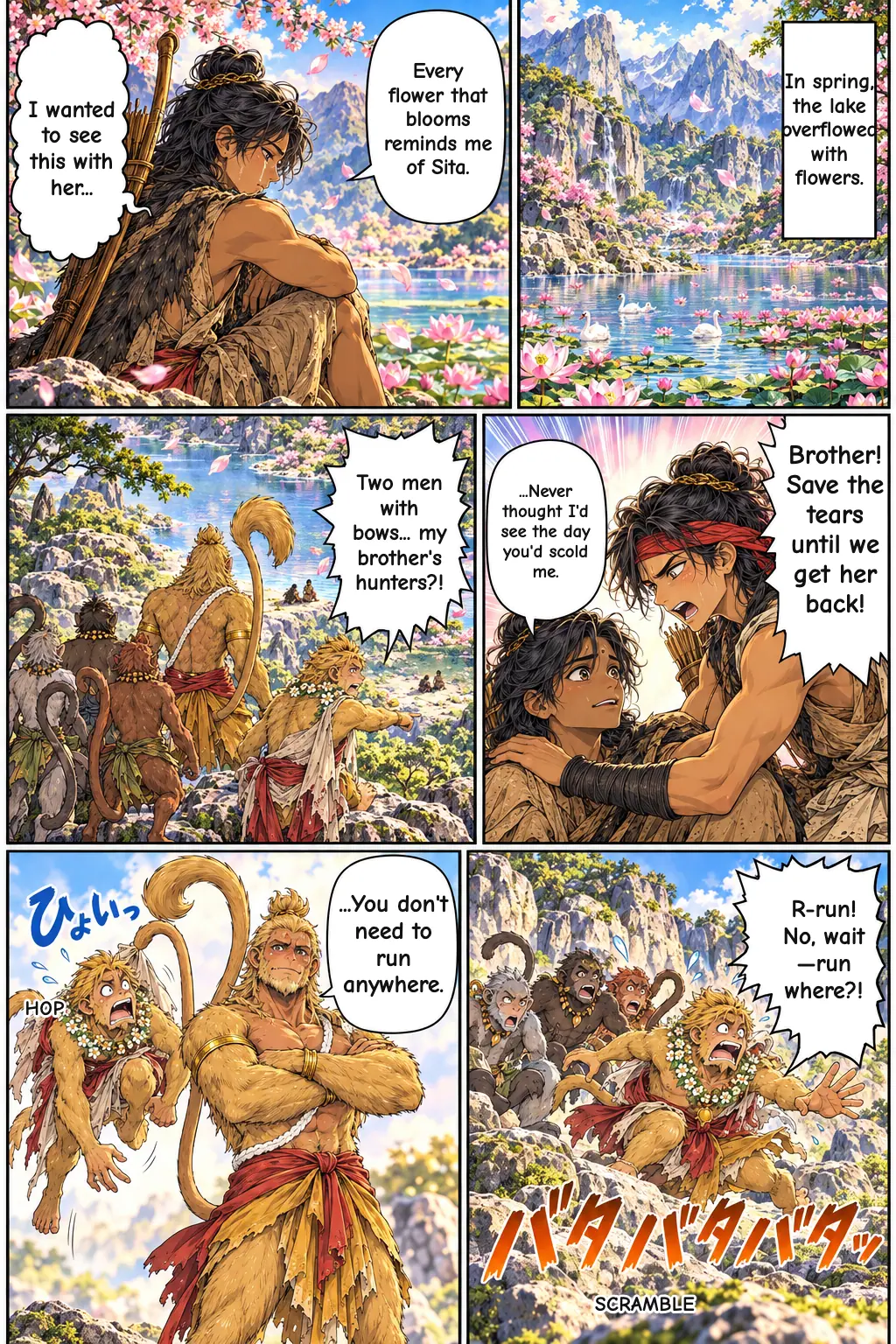
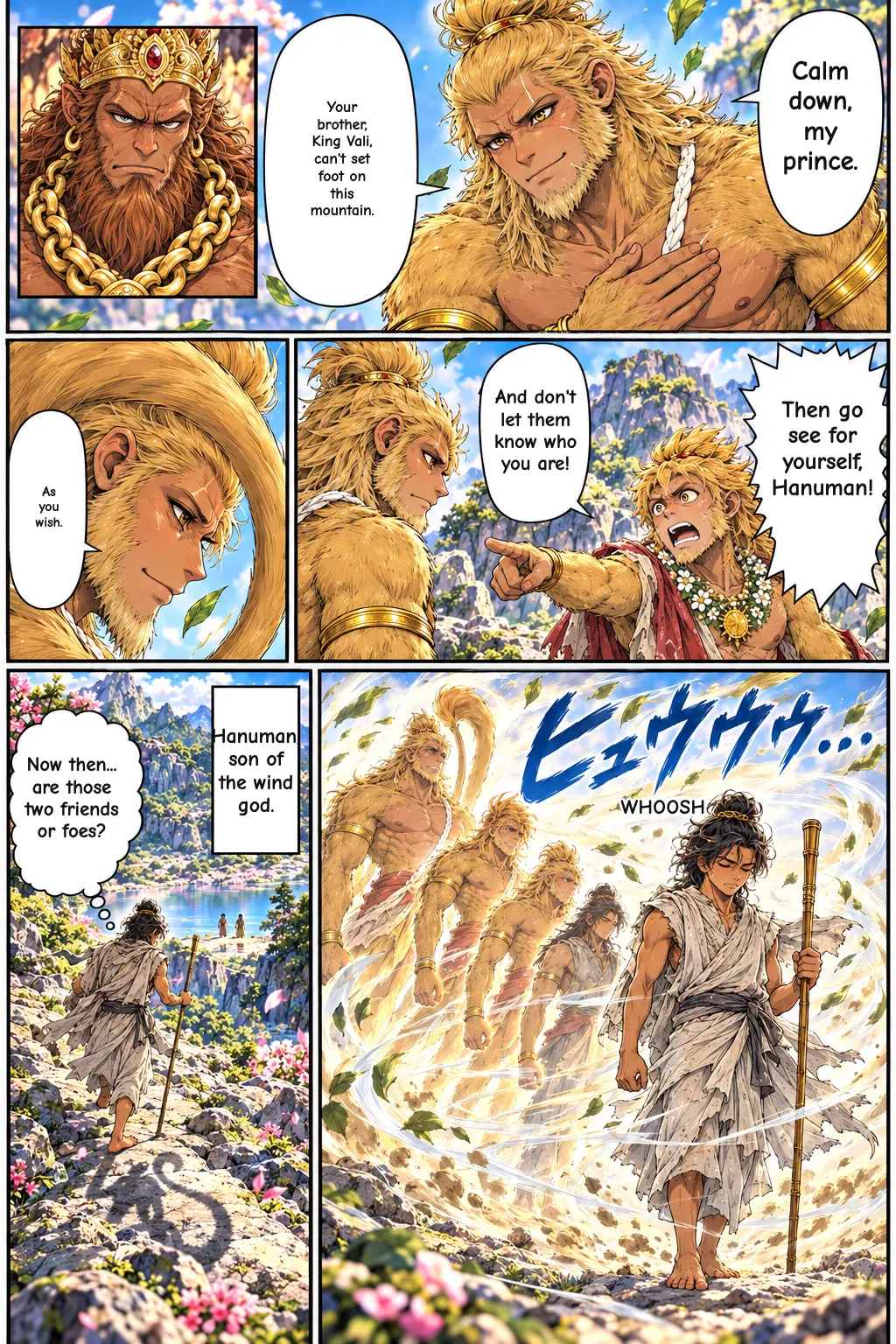
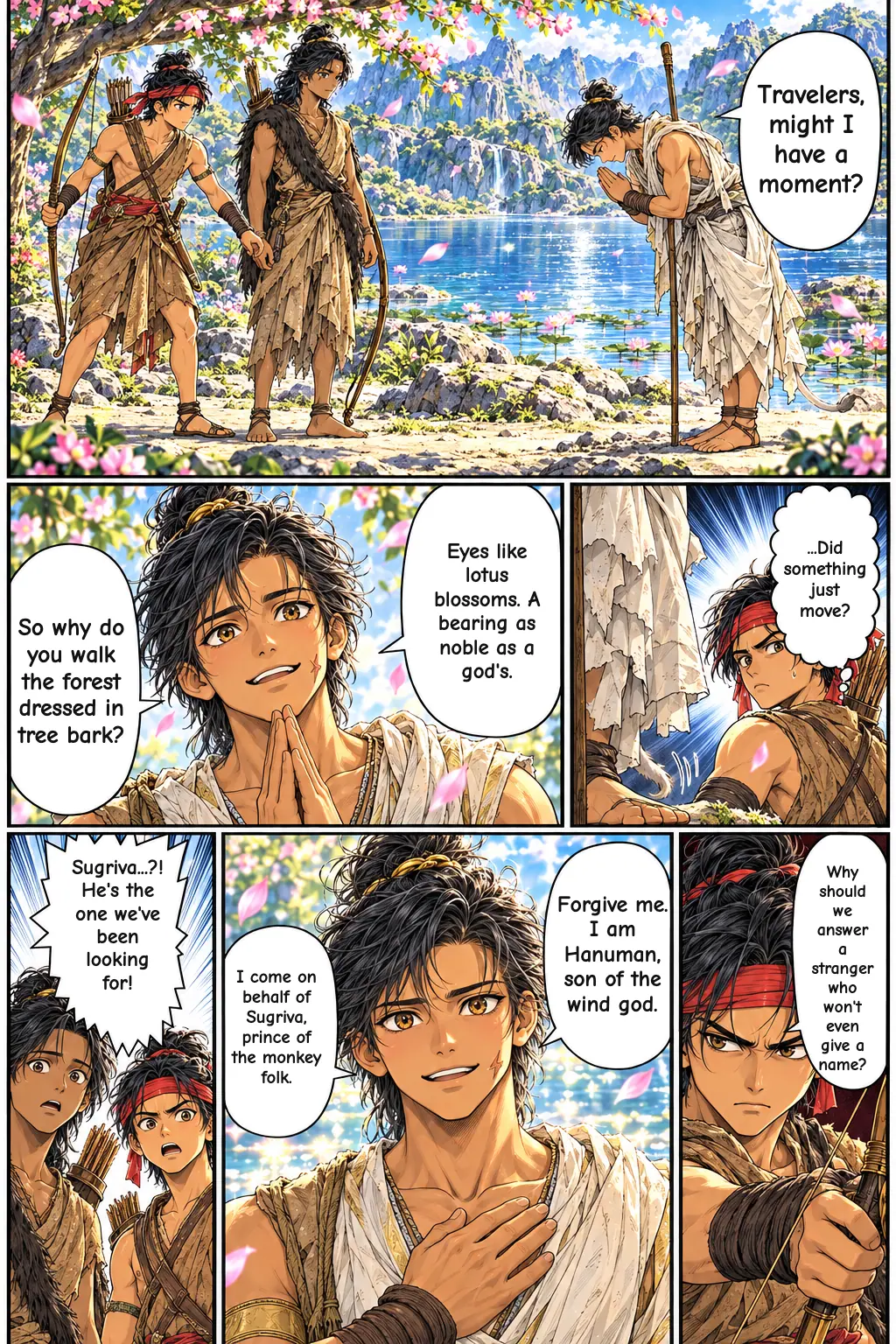
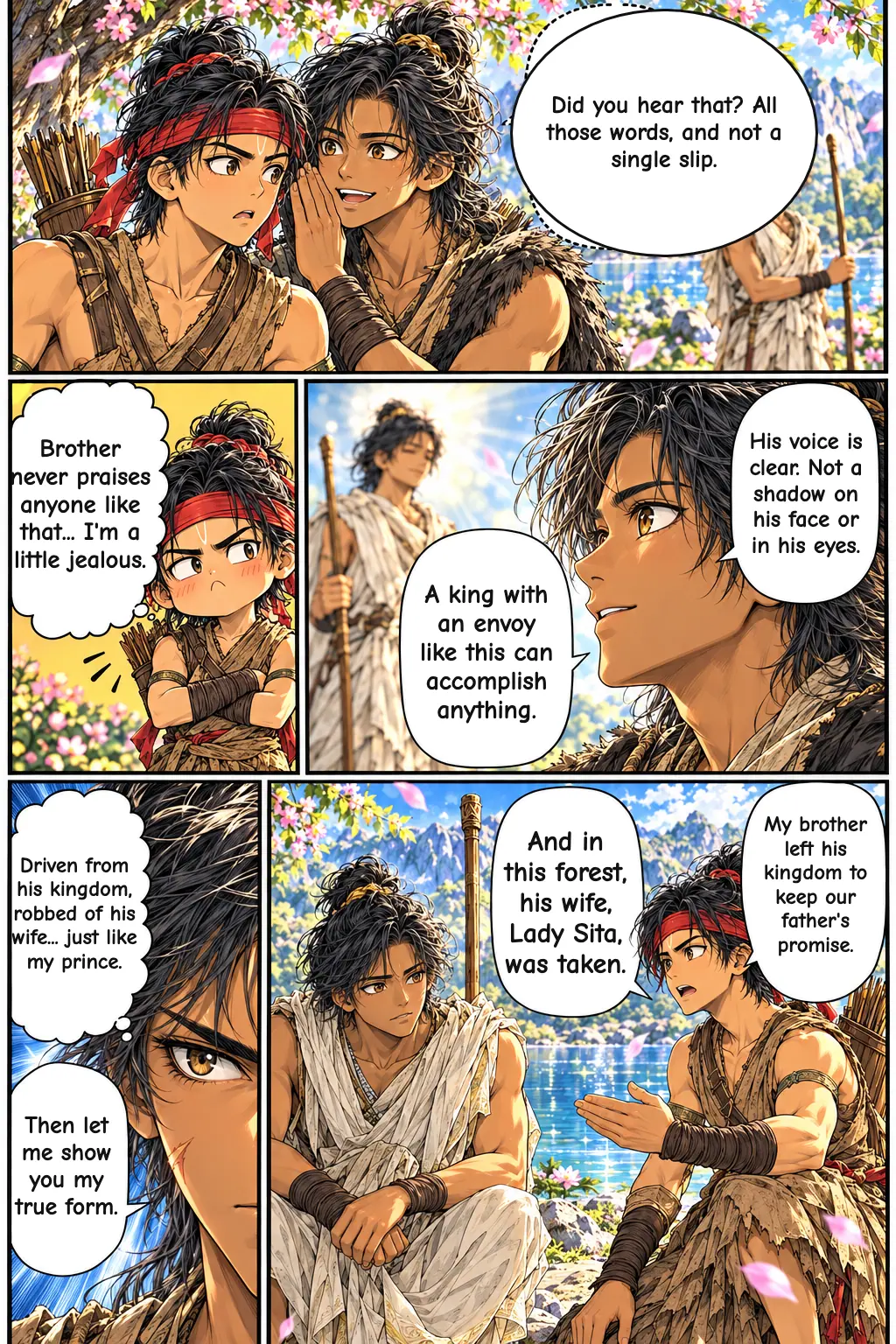
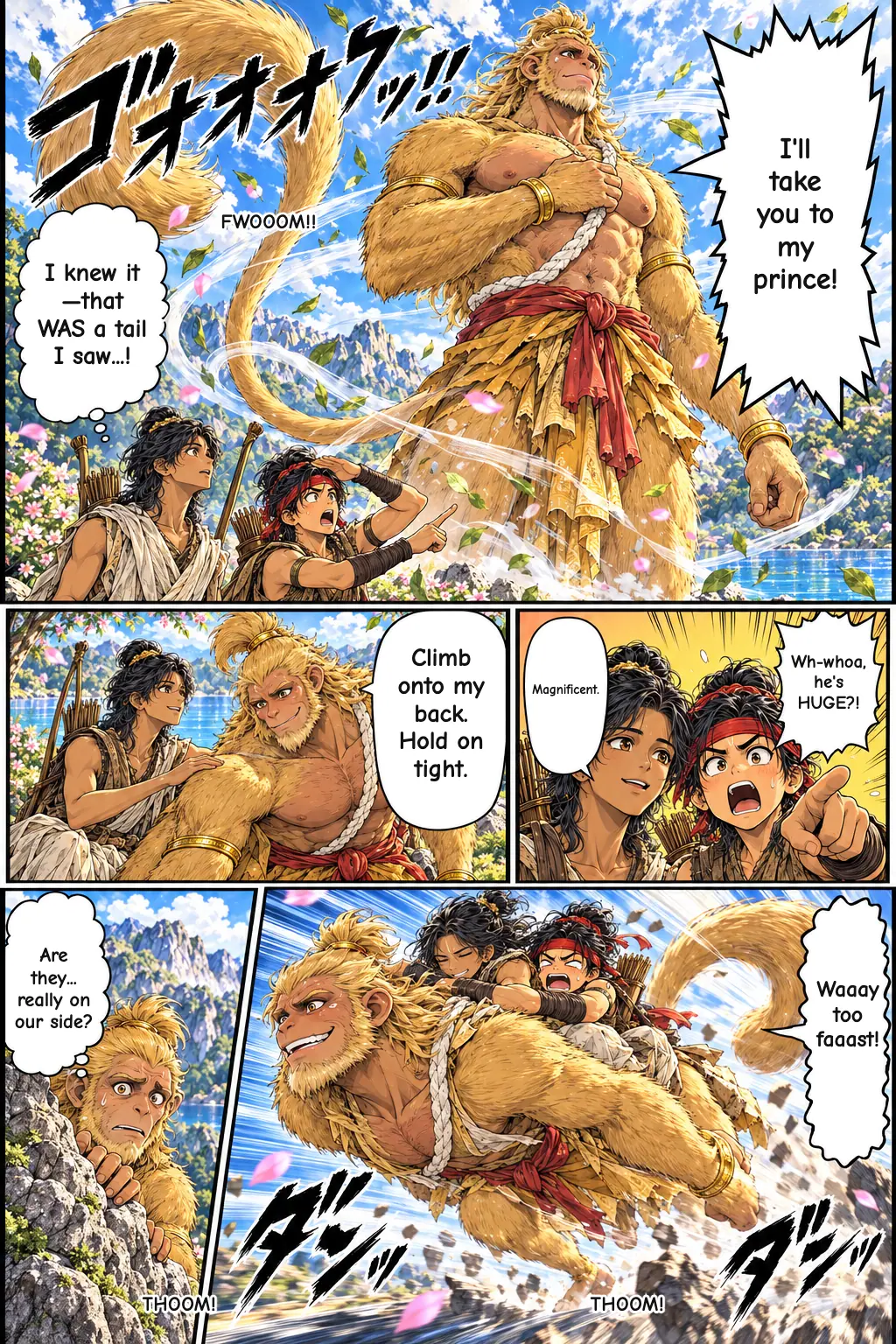
At Lake Pampa in springtime, Rama grieves for Sita at length while Lakshmana tries to steady him. From the mountain, Sugriva sees the two armed strangers and fears they are assassins sent by his older brother Vali, the monkey king. He sends his adviser Hanuman, son of the wind god, to find out who they are. Hanuman approaches disguised as a wandering mendicant, and his speech is so correct, clear, and pleasant that Rama praises it to Lakshmana. Once he hears their story, Hanuman takes back his monkey form and carries both brothers on his back to Sugriva.
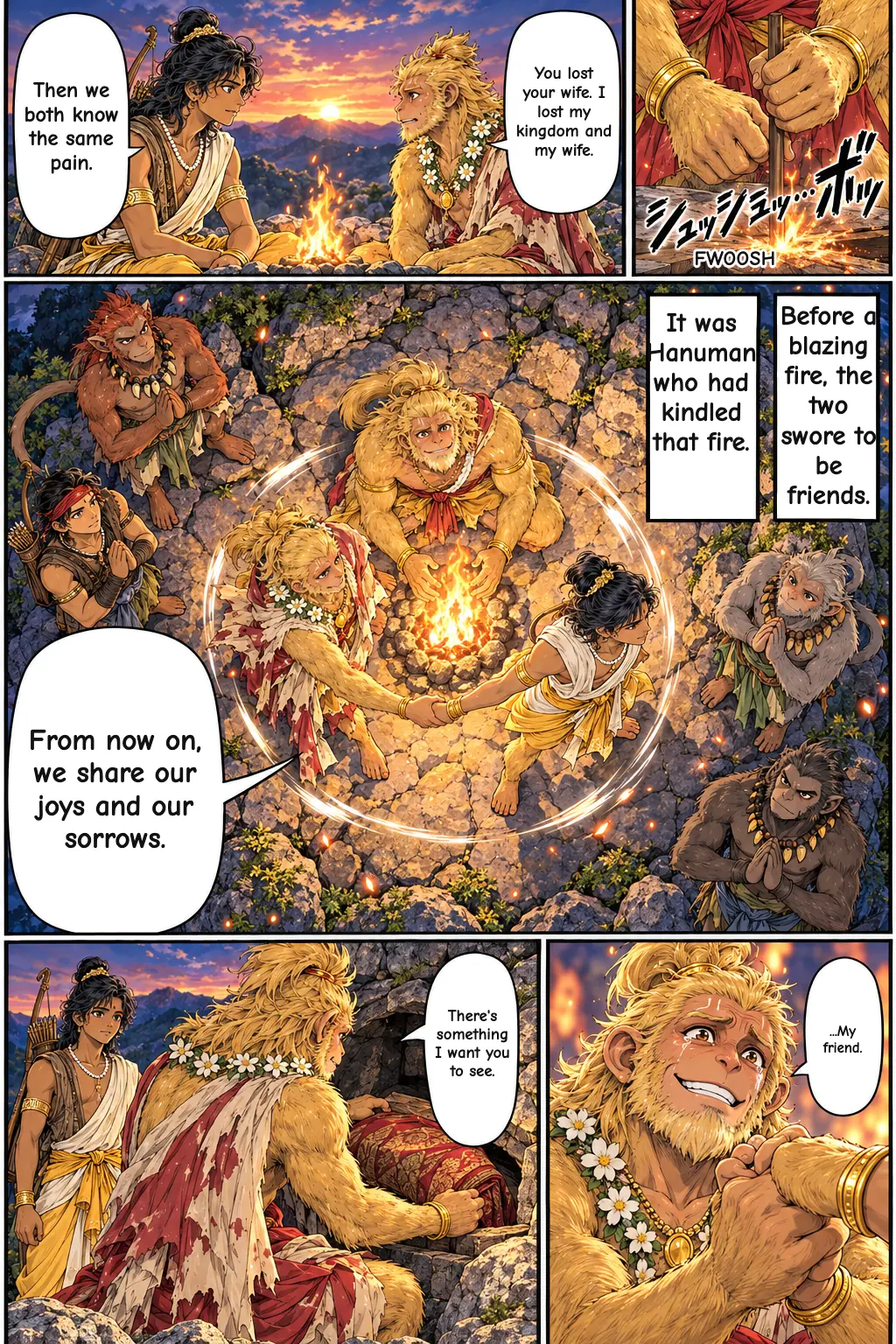
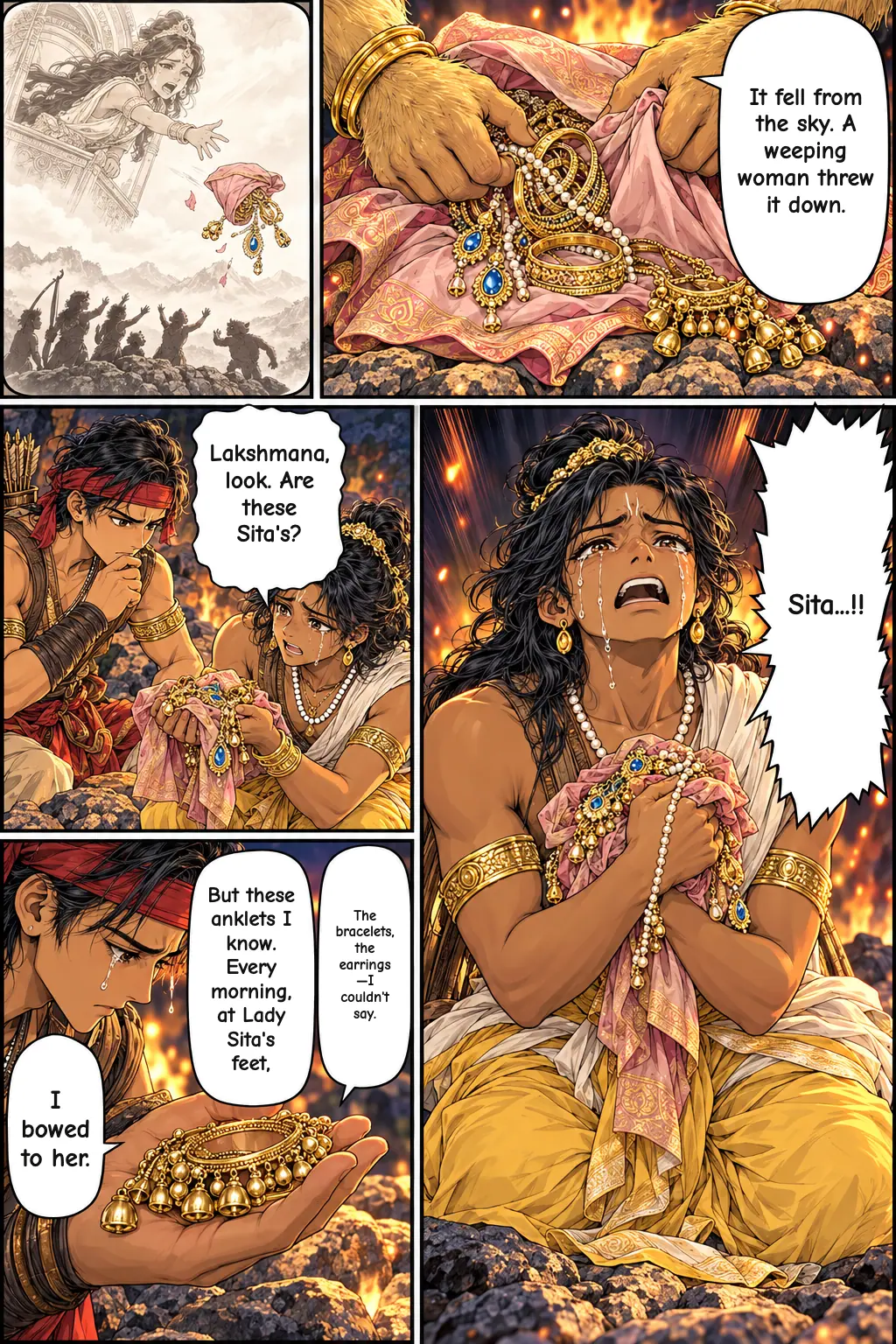
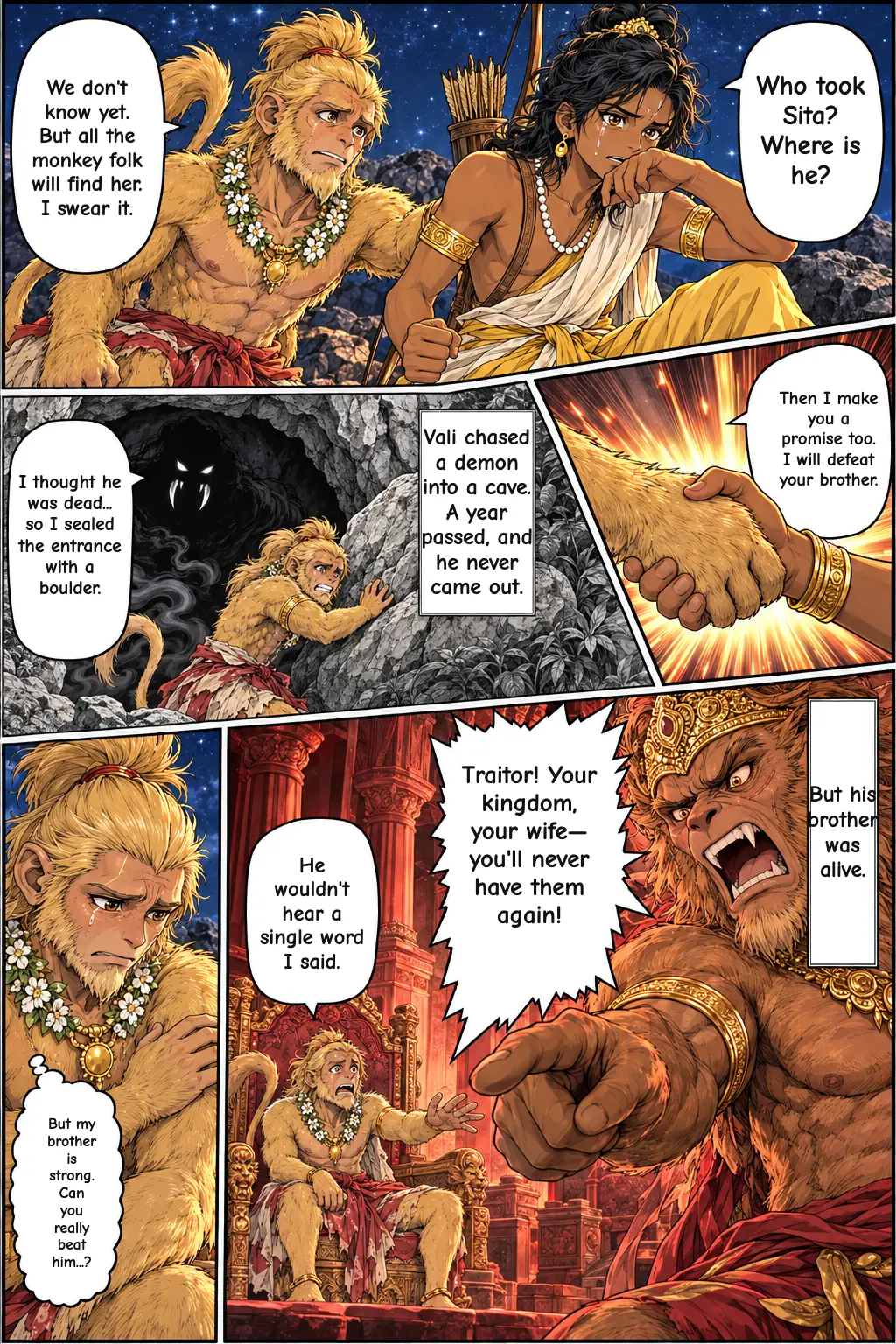
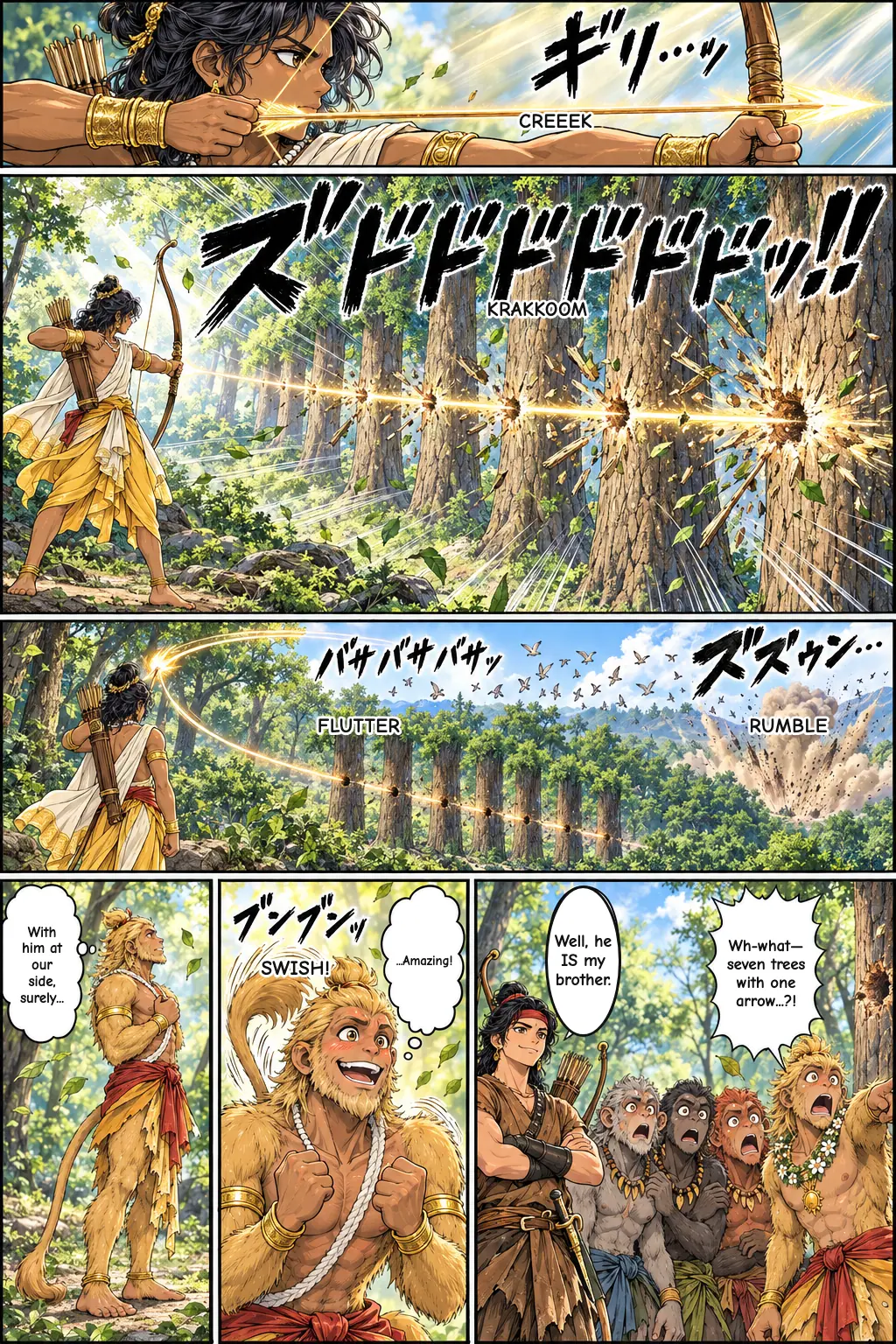
Hanuman kindles a fire, and Rama and Sugriva walk around it and swear friendship with the fire as their witness. Sugriva then shows jewelry that Sita threw down from the sky as she was carried away, and Rama breaks down in tears. Lakshmana recognizes only her anklets, because he bowed at her feet every day. Sugriva explains his exile: Vali once chased a demon into a cave and did not return for a year. Believing his brother dead, Sugriva sealed the cave and took the throne. When Vali came back, he saw betrayal, drove Sugriva out, and took his wife Ruma. Vali's strength is legendary, but a sage's curse bars him from Mount Rishyamuka, which is why Sugriva hides there. To win Sugriva's trust, Rama sends a single arrow through seven sal trees.
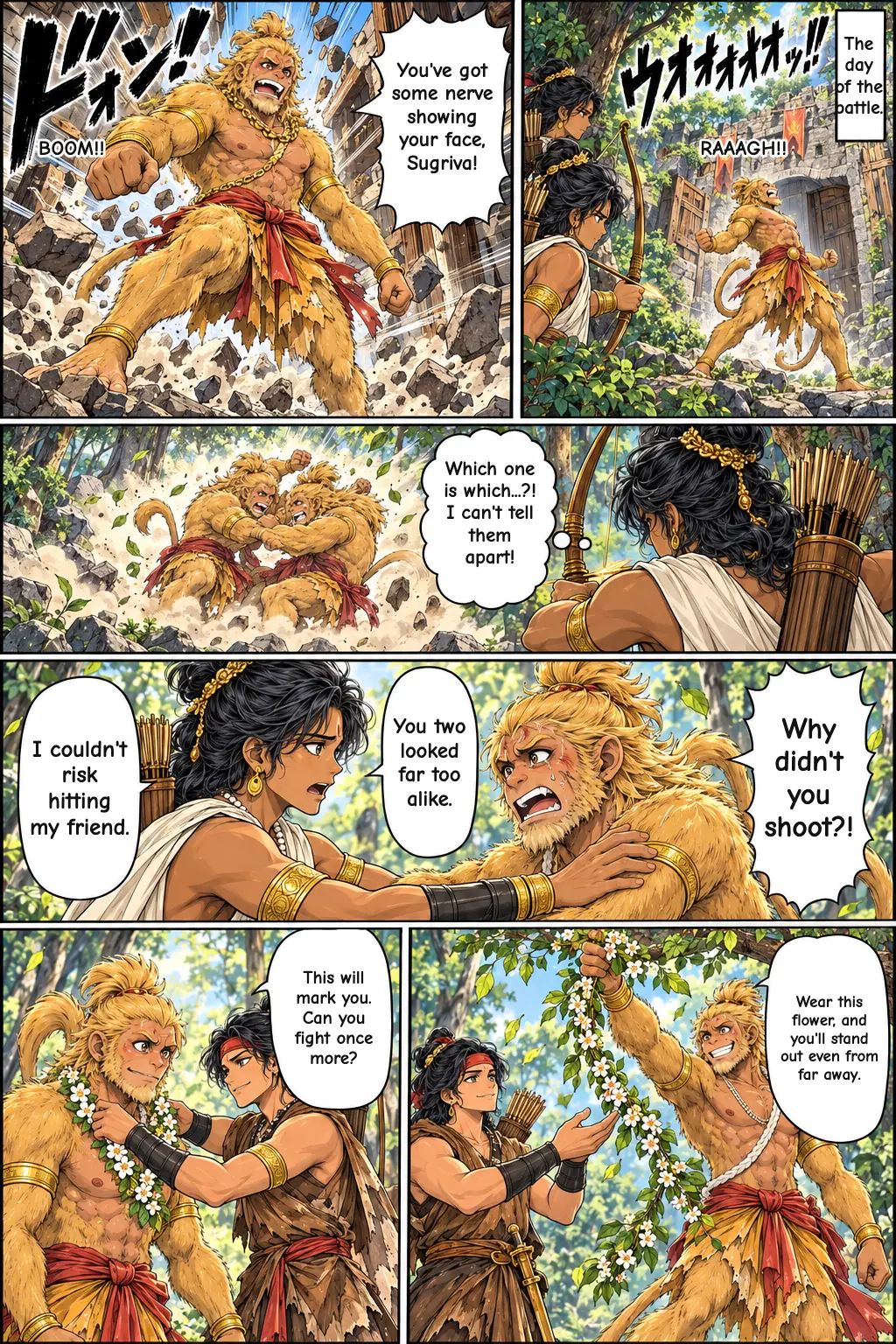
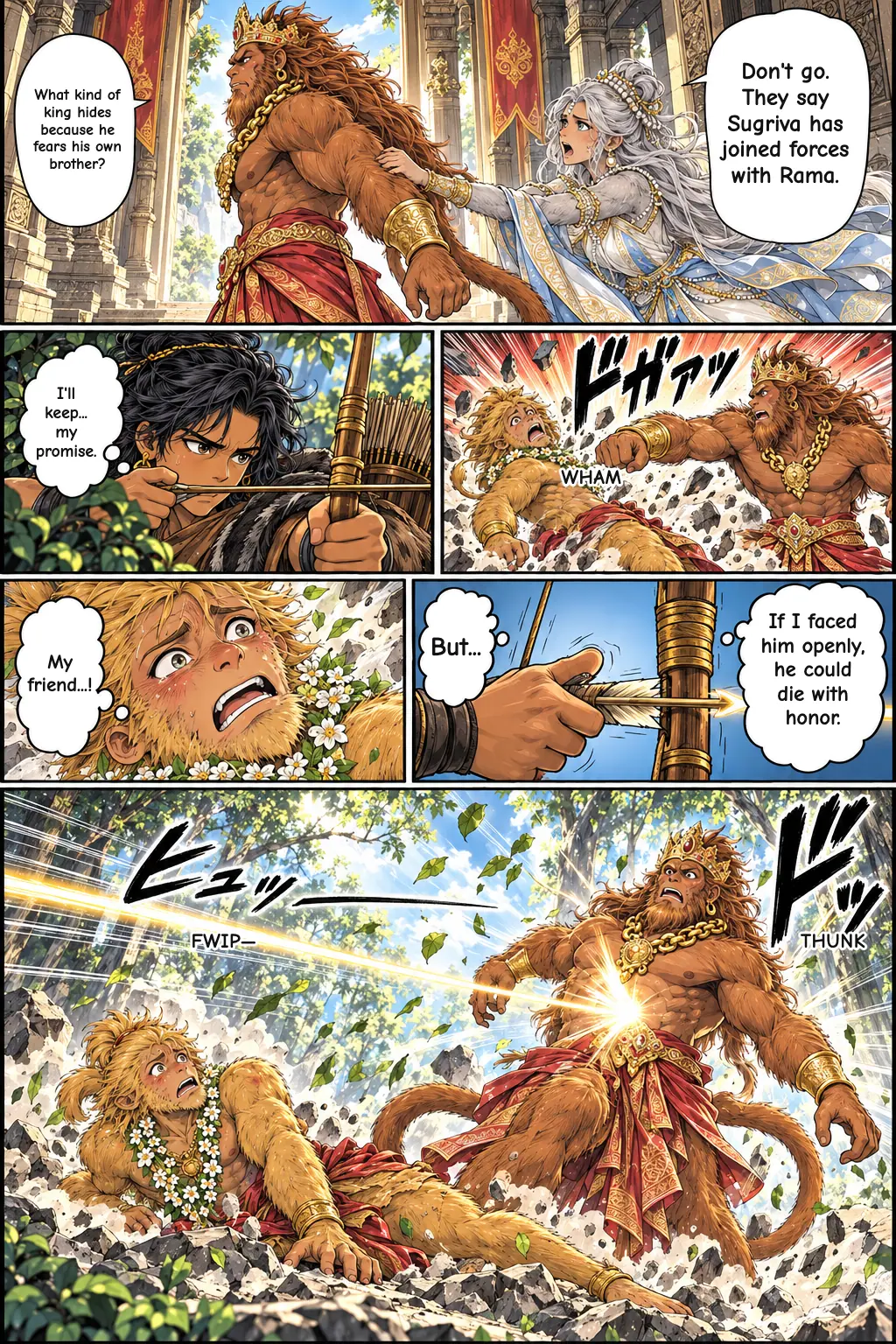
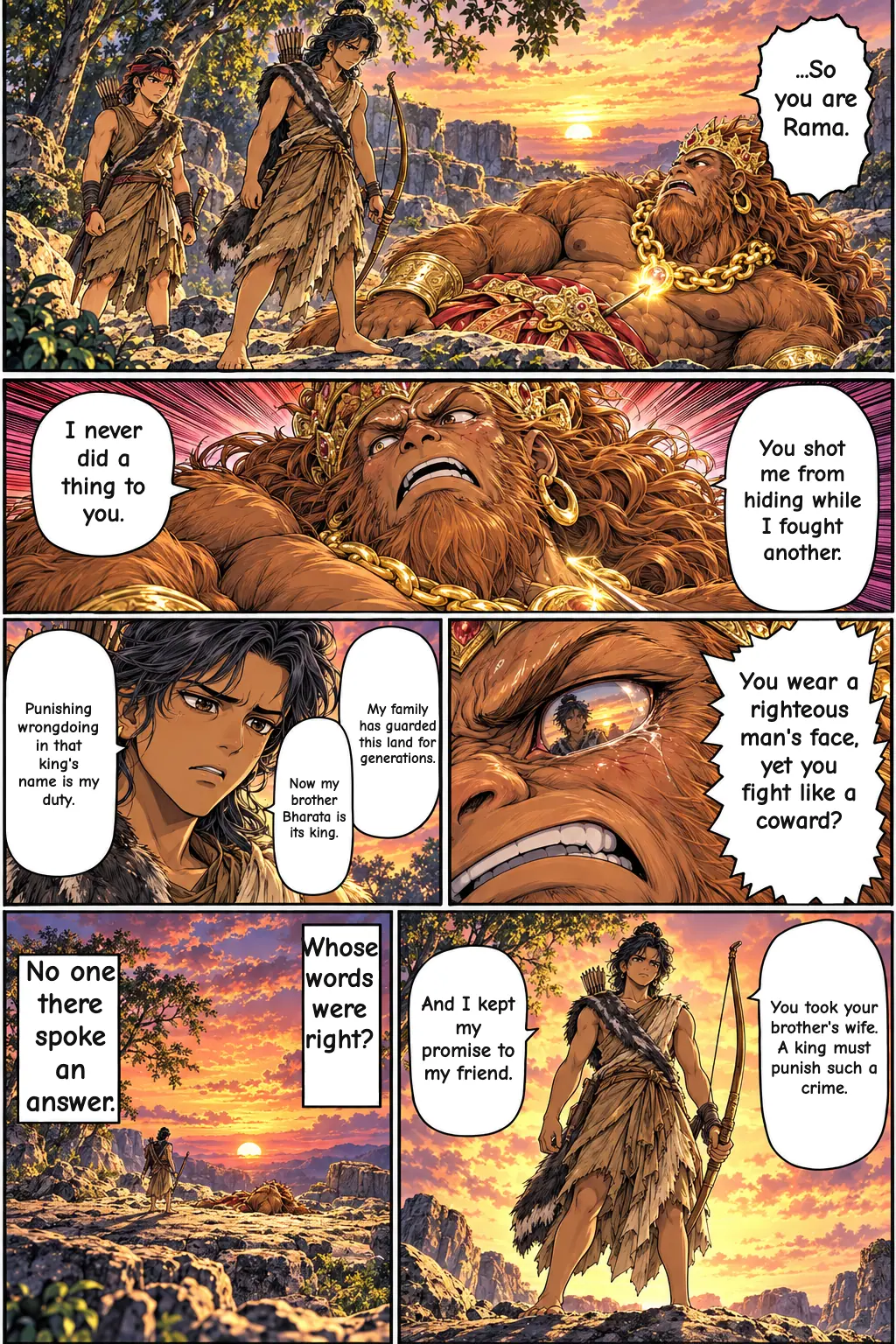
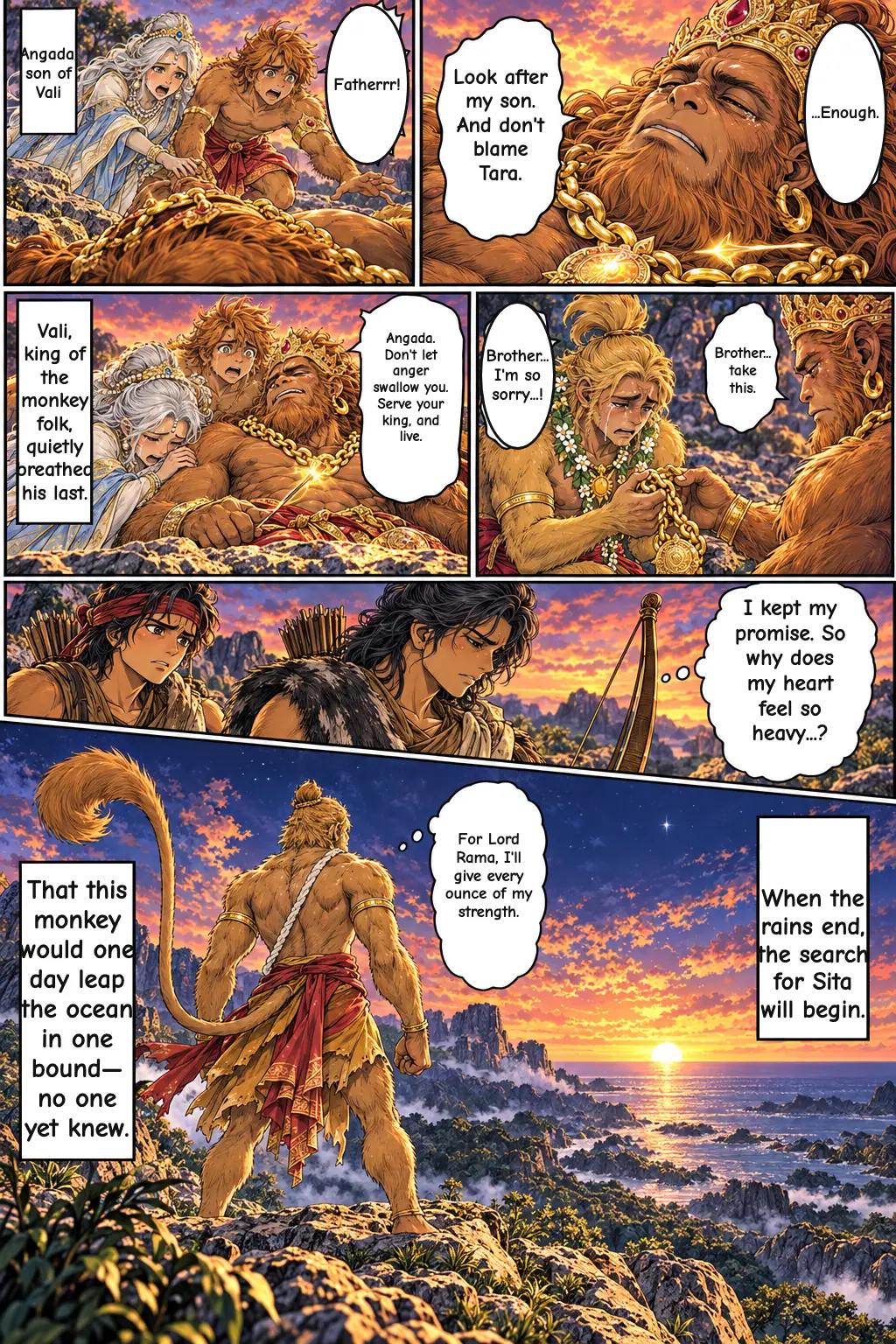
In the first duel, the brothers look so alike that Rama cannot shoot. The second time, Sugriva wears a garland as a sign, and Rama shoots Vali from cover among the trees. The dying Vali reproaches Rama for striking a warrior who was not fighting him. Rama replies that the land falls under the law of his royal house, and that Vali deserved punishment for taking his brother's wife. Vali accepts this and entrusts his son Angada and his wife Tara to Rama and Sugriva. After Tara's lament and the funeral, Sugriva is crowned king and Angada becomes heir. Rama, bound by his vow of exile not to enter a city, waits on a mountain until the rainy season ends.
What This Episode Means: Friendship, Duty, and an Old Debate
The Kishkindha Kanda is a story about alliances. Rama and Sugriva are mirror images: both are princes driven from home, and both have lost a wife. Their oath before the fire turns a chance meeting into the partnership that will later carry the search for Sita across the sea.
Vali's death is one of the most debated moments in the whole epic. For centuries poets, commentators, and modern readers have argued about whether Rama acted rightly in shooting from hiding. Valmiki gives both Vali's accusation and Rama's answer, and later retellings often add their own explanations, so readers still weigh the question for themselves.
This is also Hanuman's first great scene. Some scholars have suggested that Hanuman influenced Sun Wukong, the Monkey King of the Chinese novel Journey to the West. Others argue that Sun Wukong grew mainly out of Chinese traditions, and the question remains open.
How the Manga Adapts the Story
The manga keeps Valmiki's main events: Kabandha's guidance, the visit to Shabari, Hanuman's meeting with the brothers, the fire oath, the arrow, and Vali's final words.
Some long passages are shortened. Rama's lament at Lake Pampa is told in a few panels, and Kabandha's backstory and the old quarrel between Vali and Sugriva appear as short flashbacks. The argument between Vali and Rama is condensed to its main points, and the manga sets out both sides without declaring a winner.
Other elements are the artist's creation. In Valmiki, Hanuman is simply glad to find allies for his master; the manga expands his feelings with expressions and inner thoughts. Faces, costumes, the look of the monkey folk, the landscapes, and the staging of the fatal shot are all invented. Shabari is drawn as an old woman, as she usually is in popular tradition. Later paintings and performances often show Hanuman carrying the brothers on his shoulders, while Valmiki's text says he carried them on his back.
Where to Read It
If you want to see these scenes come to life, from Kabandha's grim forest to the vow before the fire and Vali's last words, Episode 7 of RAMAYANA: The Exiled Prince and the Son of the Wind is available here on Manga Portal. Every episode is free to read, and you don't need to sign up. Start here, or go back to Episode 1 to follow Rama's exile from the beginning.
Characters in this episode
Rama
The exiled prince of Ayodhya, a peerless archer searching for his abducted wife Sita.
Lakshmana
Rama's loyal younger brother, who steadies him in grief and recognizes Sita's anklets.
Hanuman
Son of the wind god and Sugriva's eloquent adviser, who first meets Rama in disguise.
Sugriva
An exiled monkey prince who swears friendship with Rama to win back his kingdom and wife.
Vali
The mighty monkey king of Kishkindha and Sugriva's older brother, killed by Rama's arrow.
Shabari
A devoted female ascetic who waits years at Matanga's hermitage to welcome Rama.
FAQ
How did Hanuman first meet Rama?
Sugriva sent Hanuman to find out who Rama and Lakshmana were, and he approached them disguised as a wandering mendicant. Rama was impressed by how well he spoke. After learning their story, Hanuman took back his monkey form and carried them to Sugriva.
Why did Rama kill Vali?
Rama had promised to help Sugriva, whom Vali had driven out and whose wife Vali had taken. In Valmiki's Ramayana, Rama tells the dying Vali that this was a punishment under his royal family's law. Whether shooting from hiding was right has been debated for centuries.
Who is Shabari in the Ramayana?
Shabari is a female ascetic who stayed at the sage Matanga's hermitage, waiting for Rama as her teachers had told her to. She welcomes him with forest food and then enters a fire and rises to heaven. The well-known story of her tasting berries comes from later tradition, not from Valmiki.
Is Sun Wukong based on Hanuman?
Some scholars have suggested that Hanuman influenced Sun Wukong of Journey to the West, while others argue that he came mainly from Chinese traditions. There is no settled answer.
What happens in the Kishkindha Kanda?
It is the fourth book of the Ramayana. Rama meets Hanuman, allies with Sugriva, kills Vali, and makes Sugriva king of the monkeys. It ends with the monkeys setting out to search for Sita.