EnglishChoose language

Episode 16The Gods Were One Whisker ShortAndvari's Ring, Fafnir, and the Otter's Ransom

19 pagesFree · No sign-up

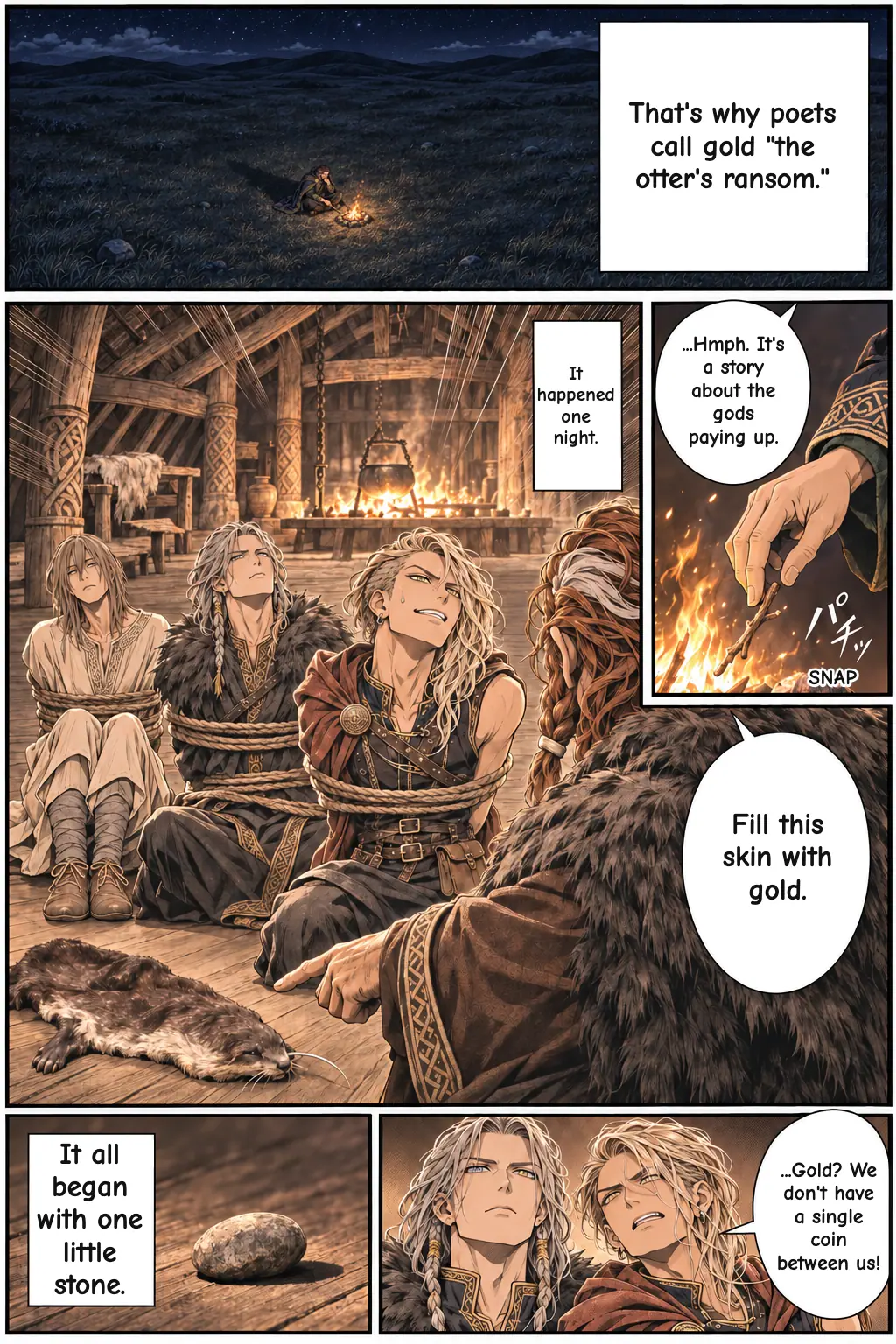
Page 1: That's why poets call gold "the otter's ransom." ...Hmph. It's a story about the gods paying up.
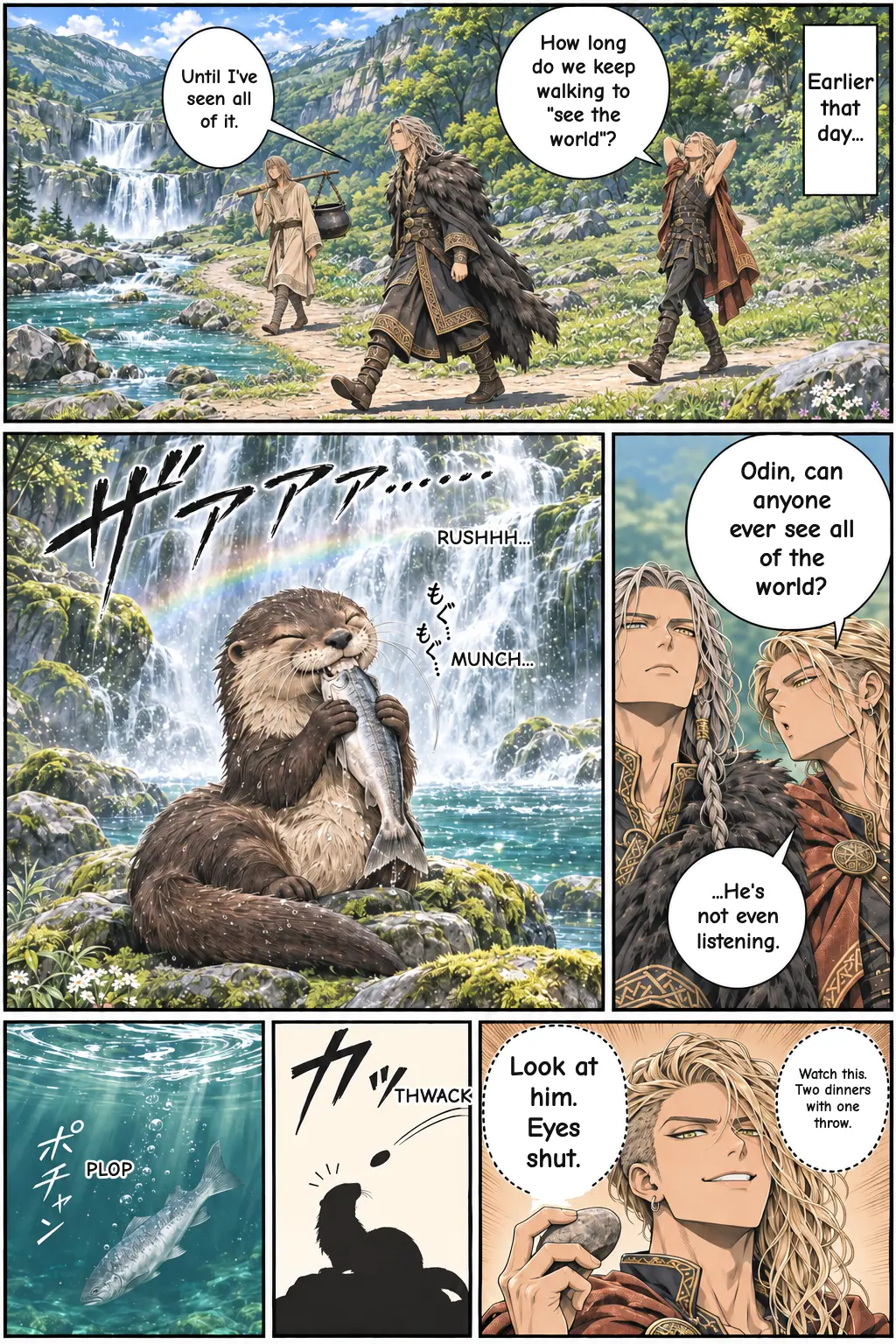
Page 2: Earlier that day... How long do we keep walking to "see the world"?
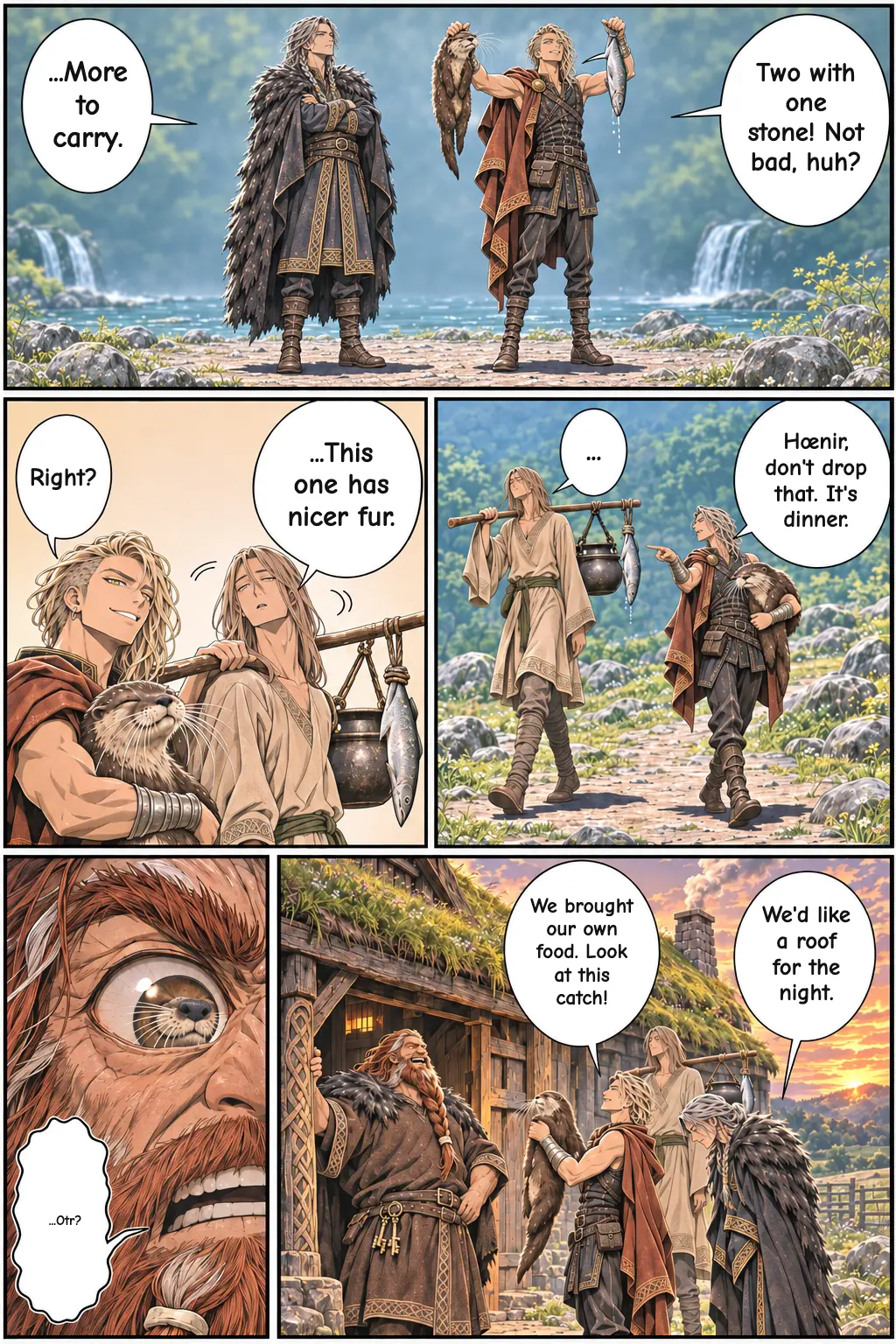
Page 3: Two with one stone! Not bad, huh? ...More to carry.
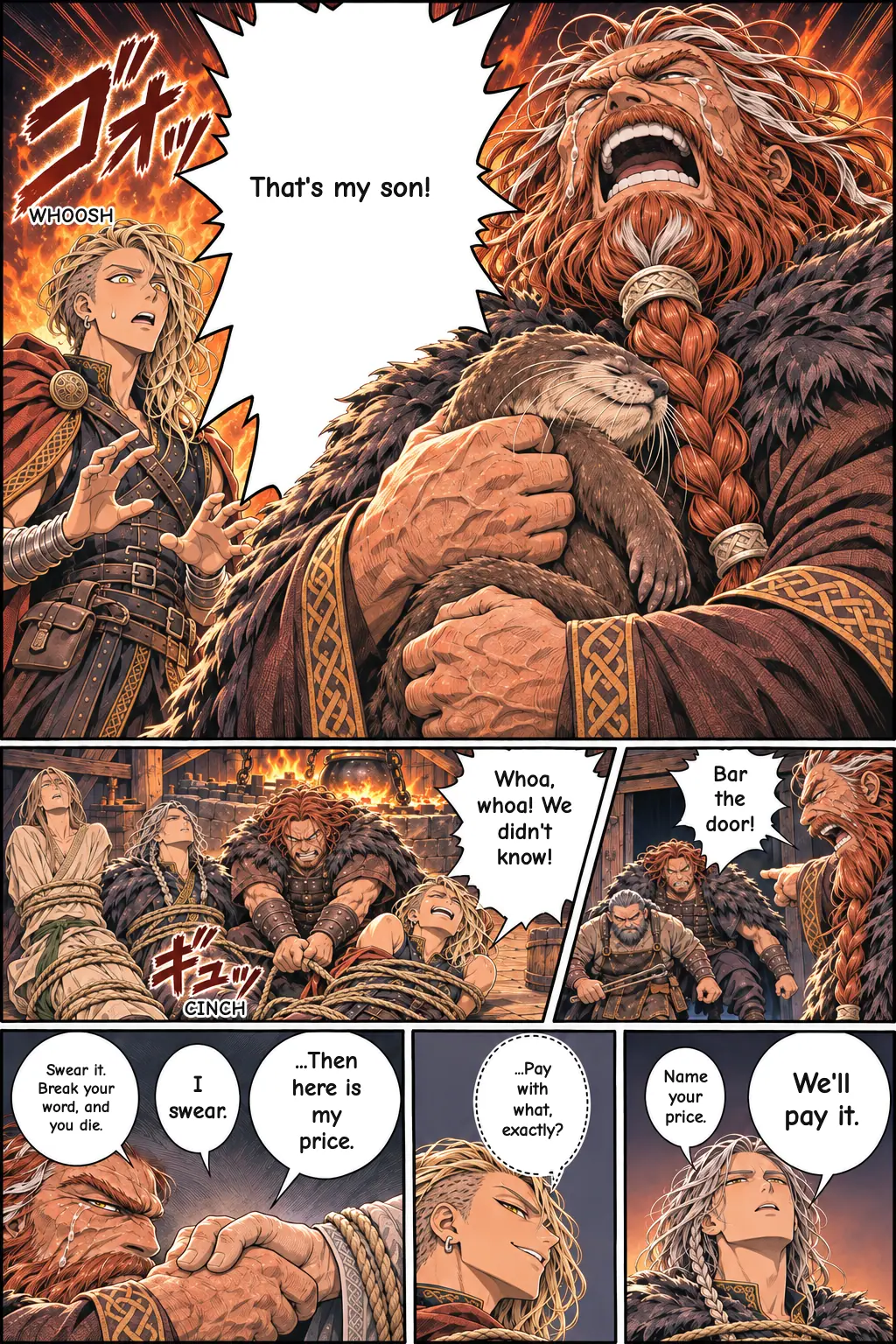
Page 4: That's my son! Bar the door!
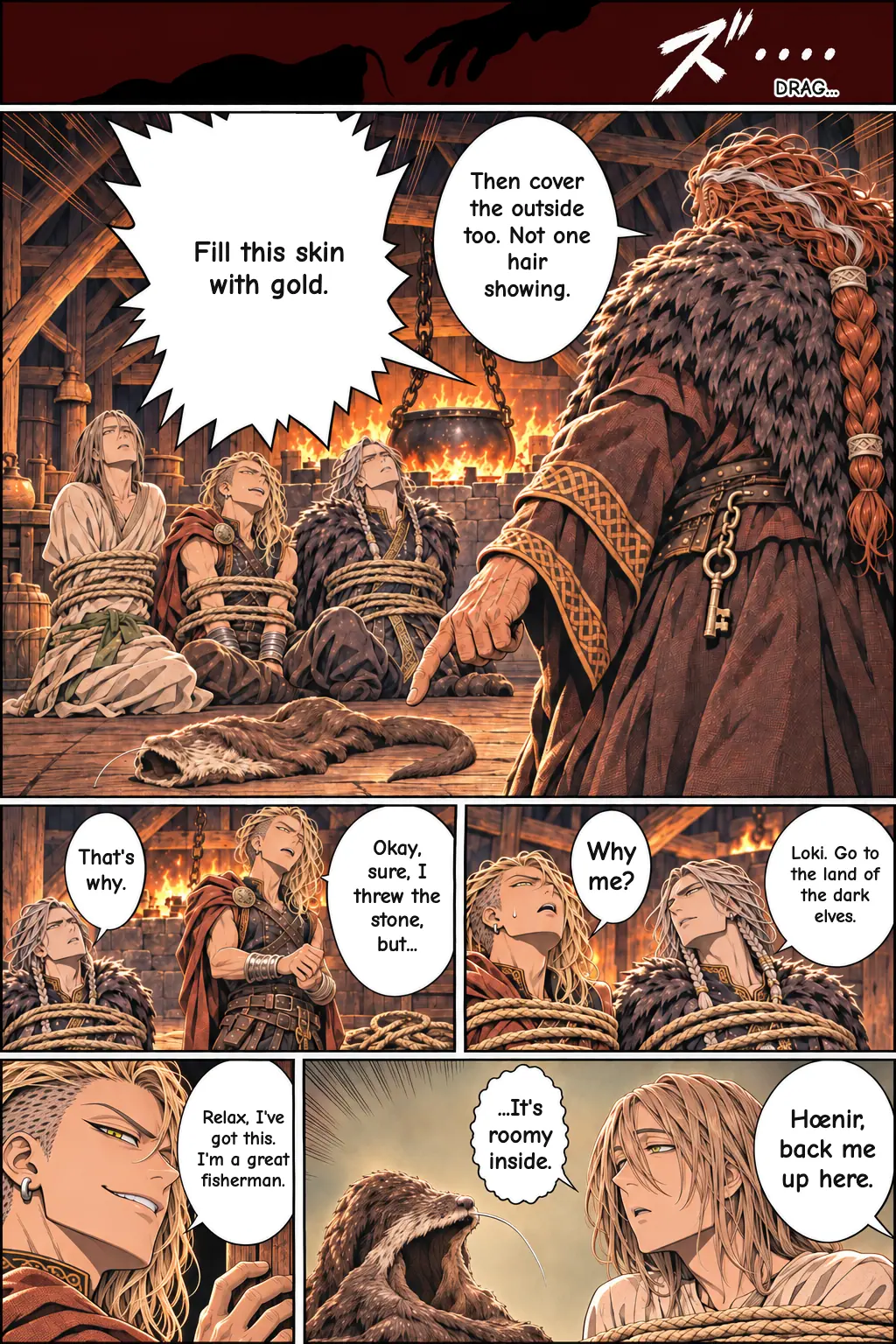
Page 5: Fill this skin with gold. Then cover the outside too. Not one hair showing.
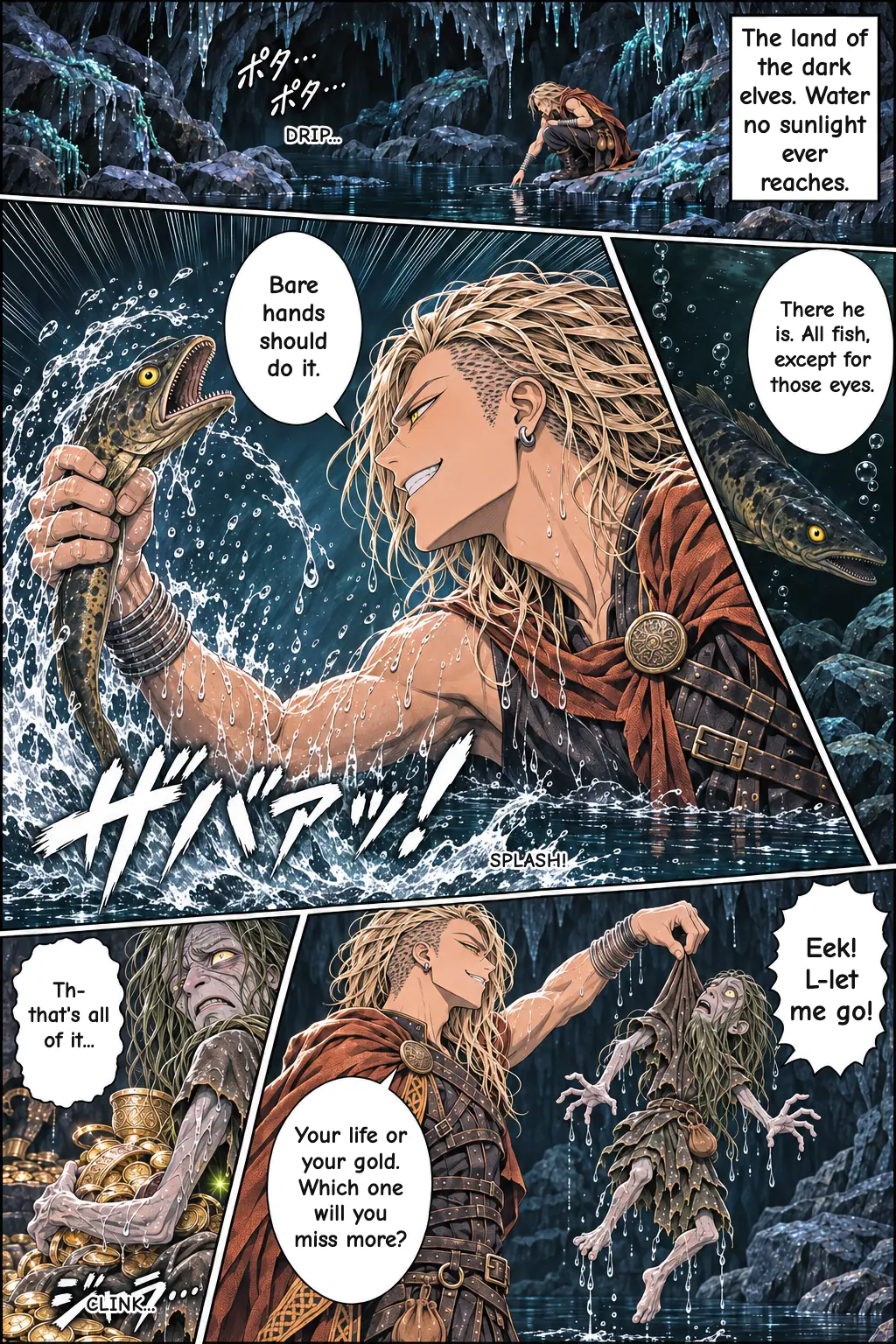
Page 6: The land of the dark elves. Water no sunlight ever reaches. There he is. All fish, except for those eyes.
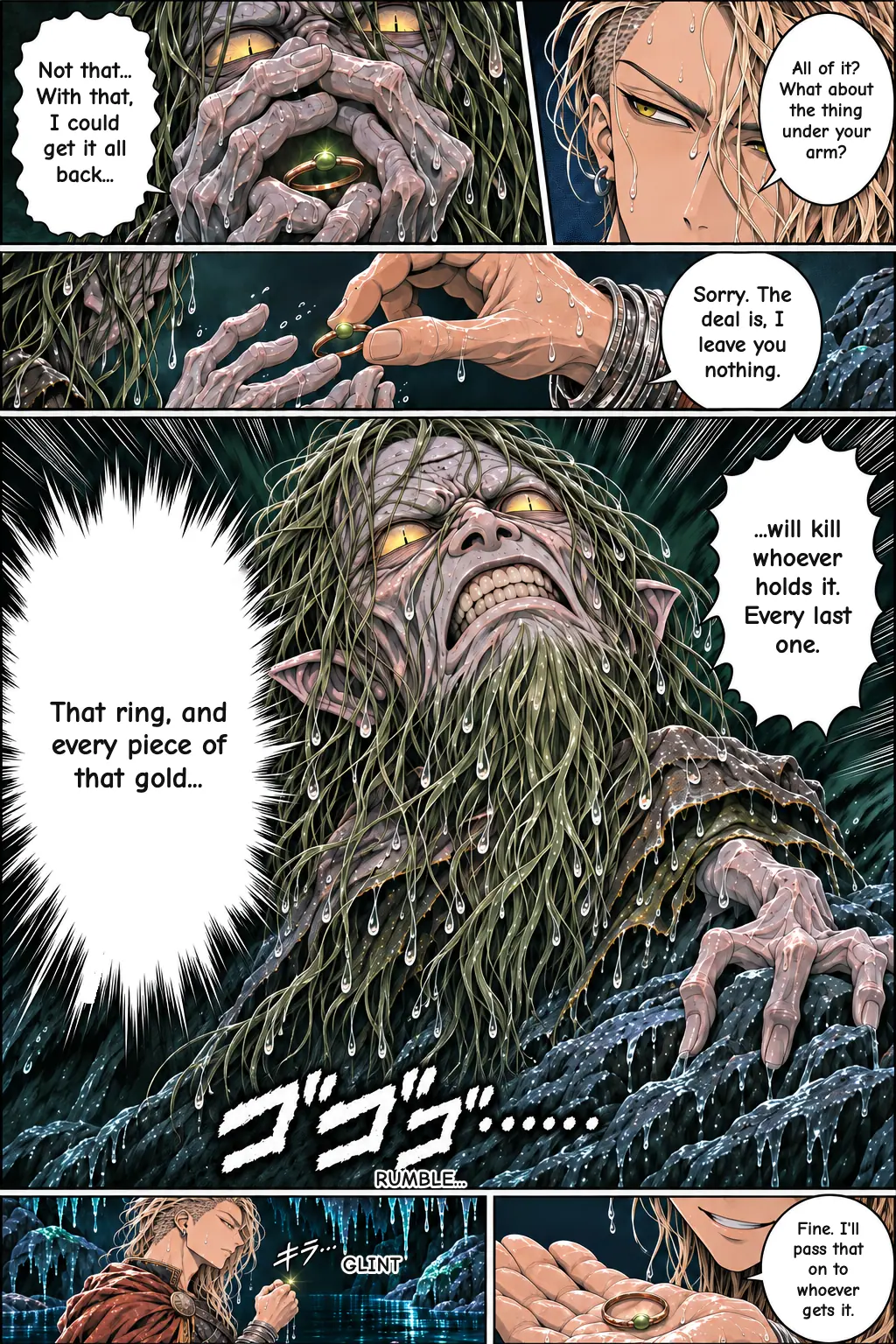
Page 7: All of it? What about the thing under your arm? Not that... With that, I could get it all back...
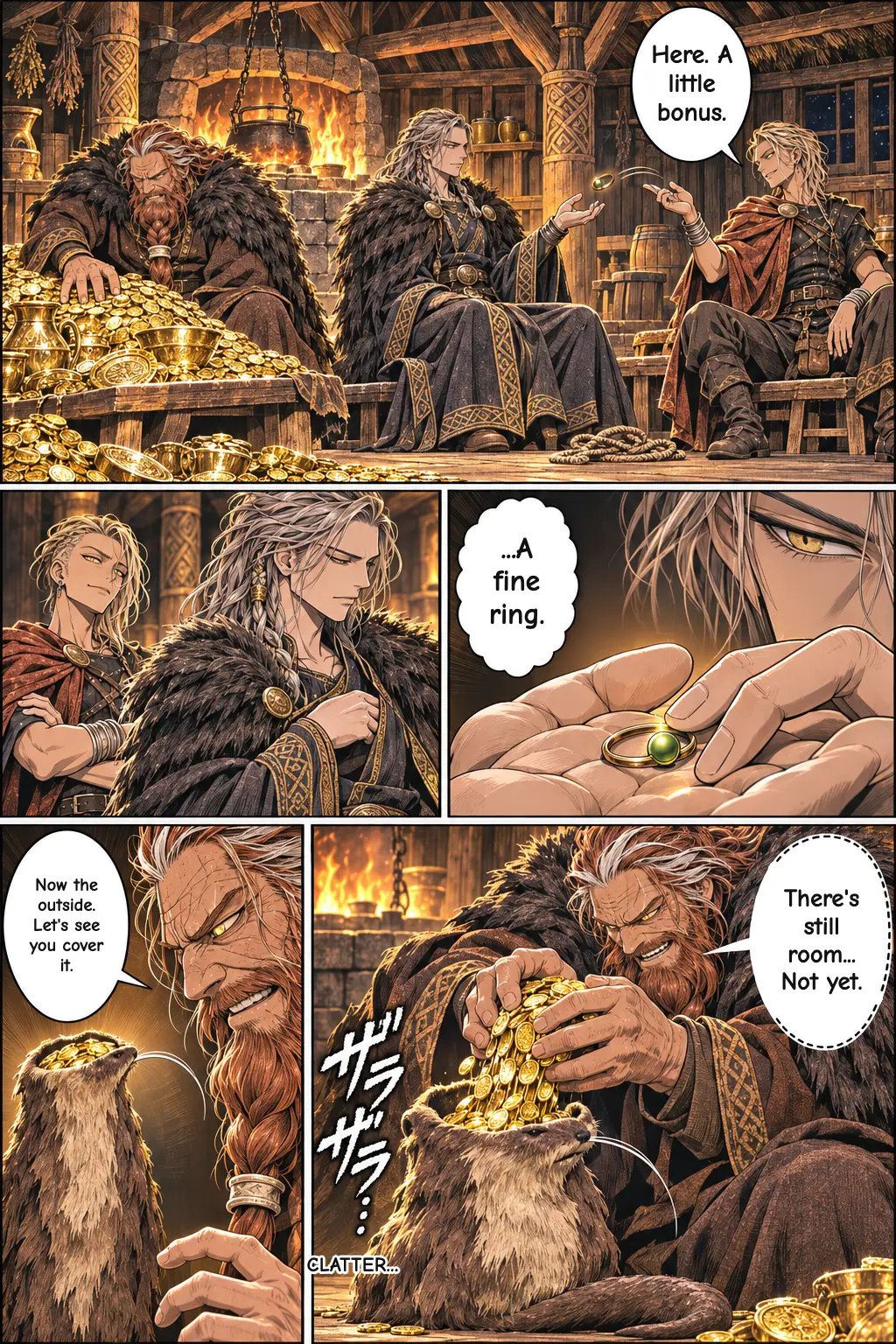
Page 8: Here. A little bonus. ...A fine ring.
Page 9: That should be enough. There's a whisker sticking out.
Page 10: ...A pity. There. Our debt is paid.
Page 11: Oh, one thing I forgot to mention. That gold and that ring will kill whoever owns them.
Page 12: Father, that's the price of our brother. Share it. Half, at least.
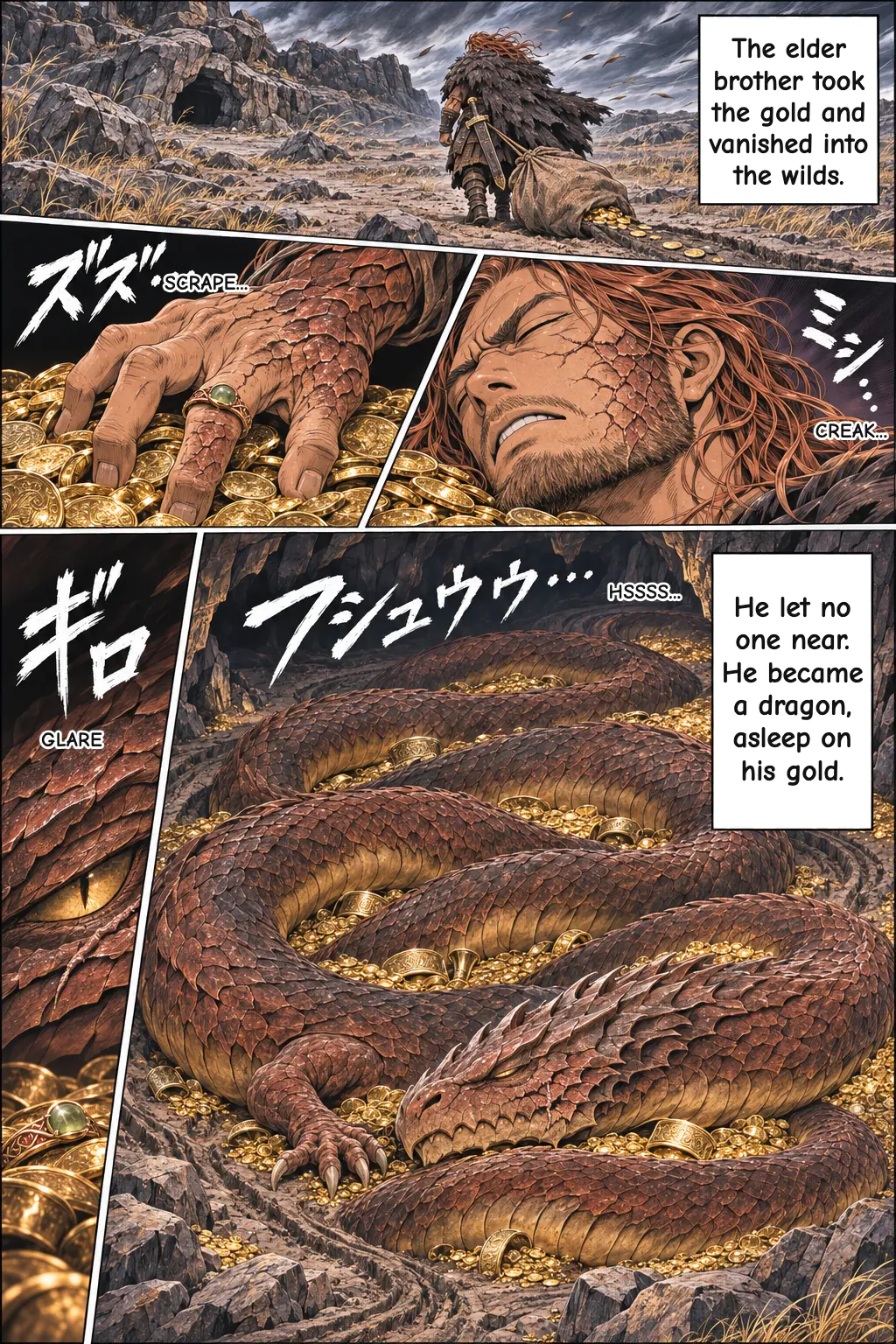
Page 13: The elder brother took the gold and vanished into the wilds. He let no one near. He became a dragon, asleep on his gold.
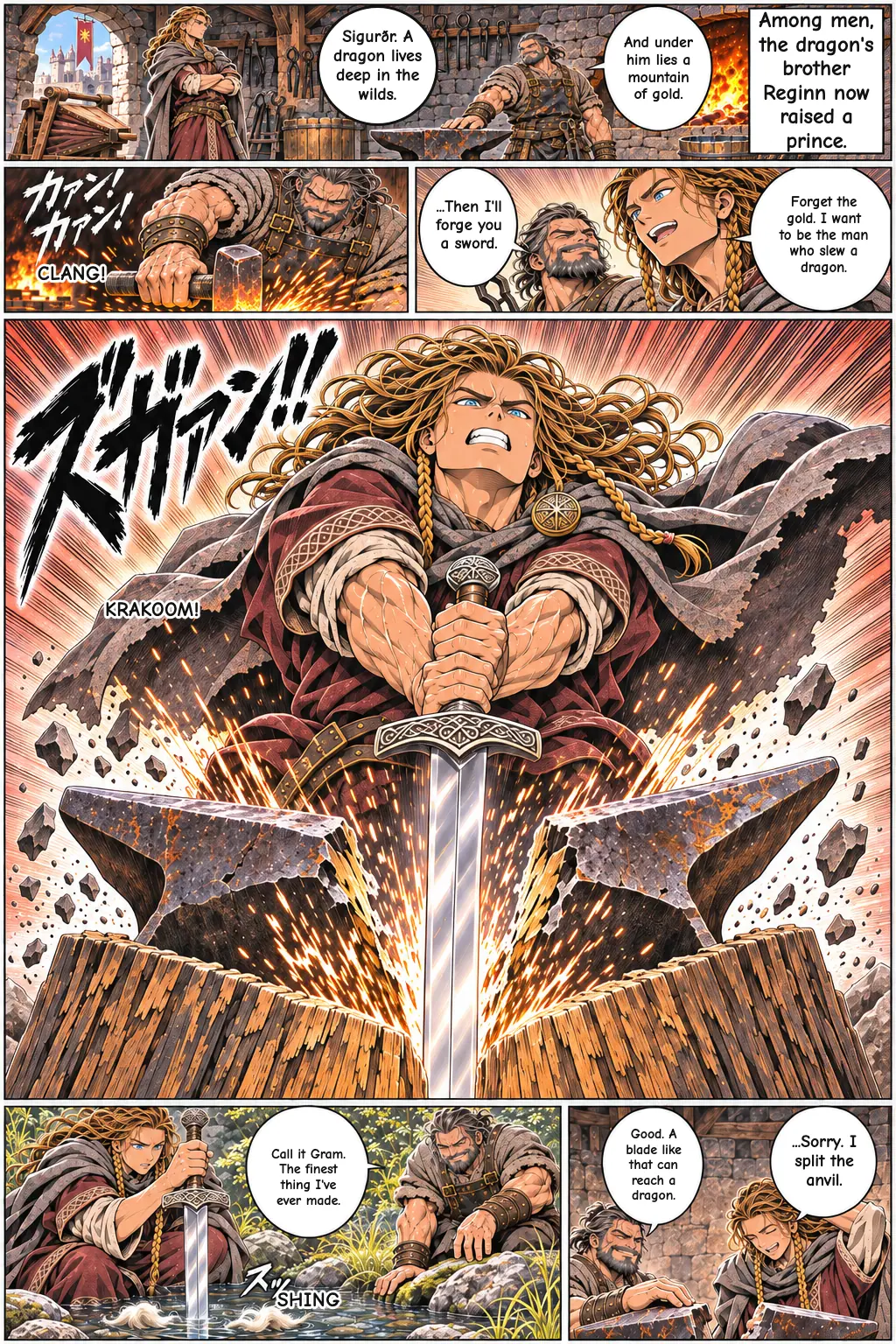
Page 14: Among men, the dragon's brother Reginn now raised a prince. Sigurðr. A dragon lives deep in the wilds.
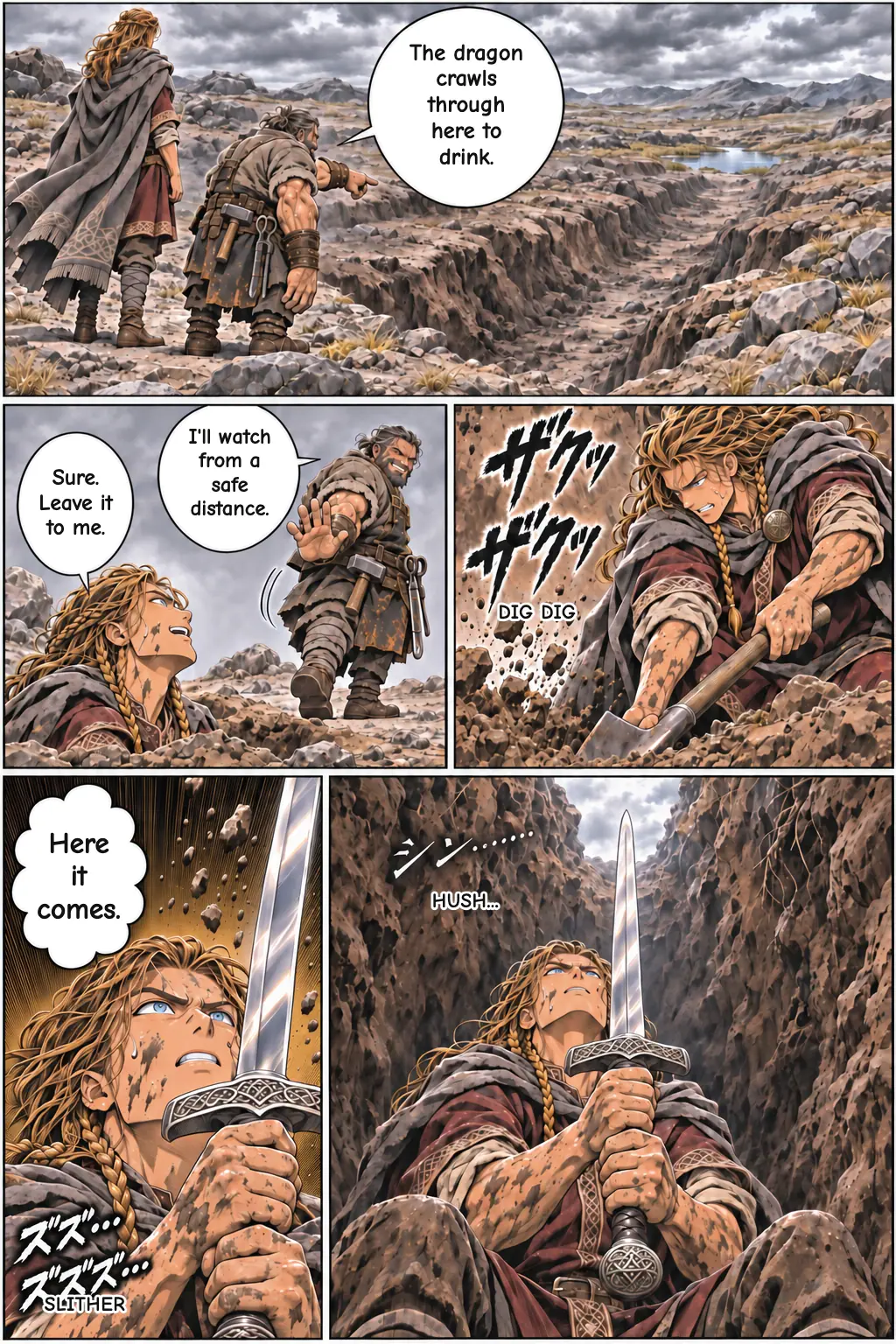
Page 15: The dragon crawls through here to drink. I'll watch from a safe distance.
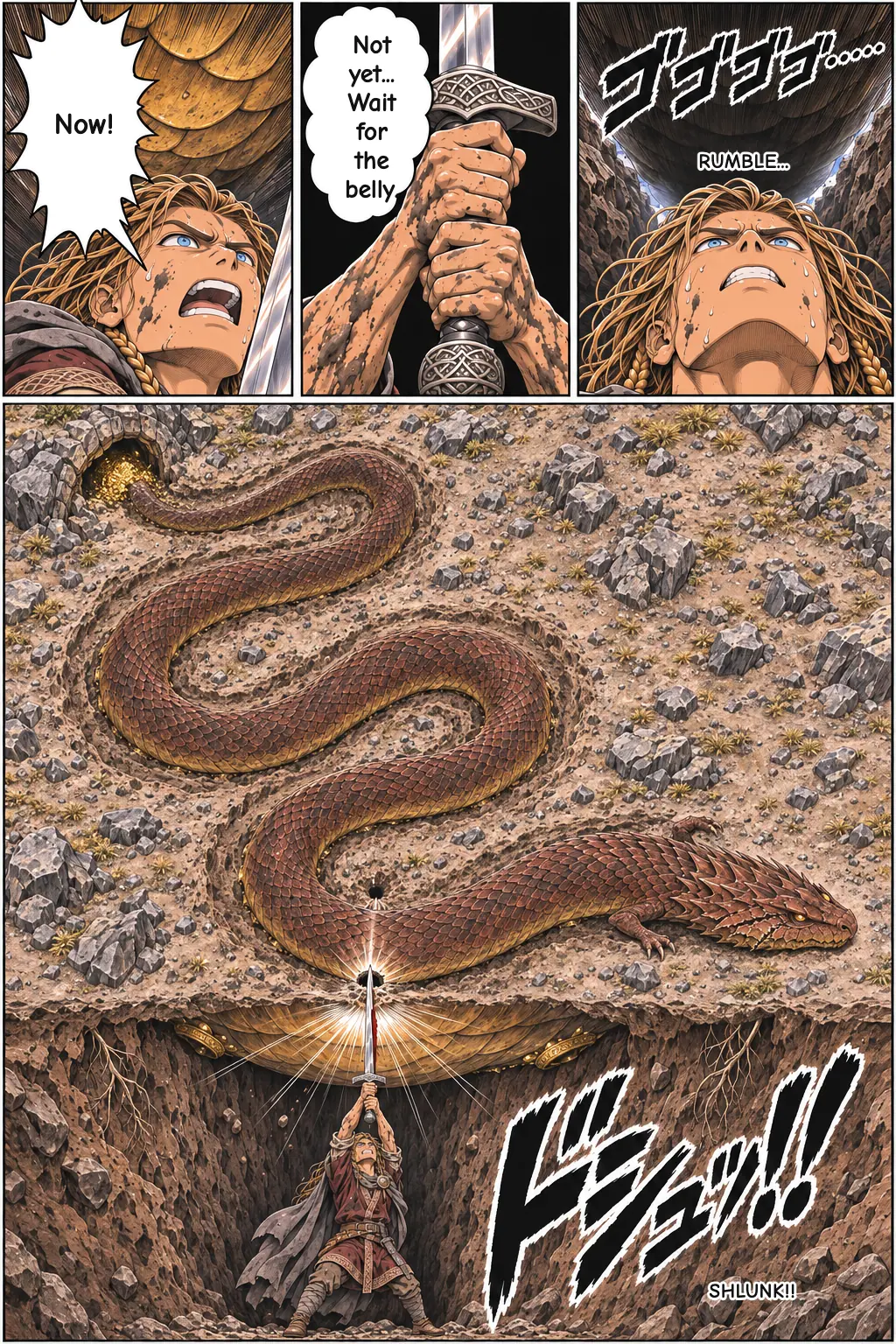
Page 16: Not yet... Wait for the belly. Now!
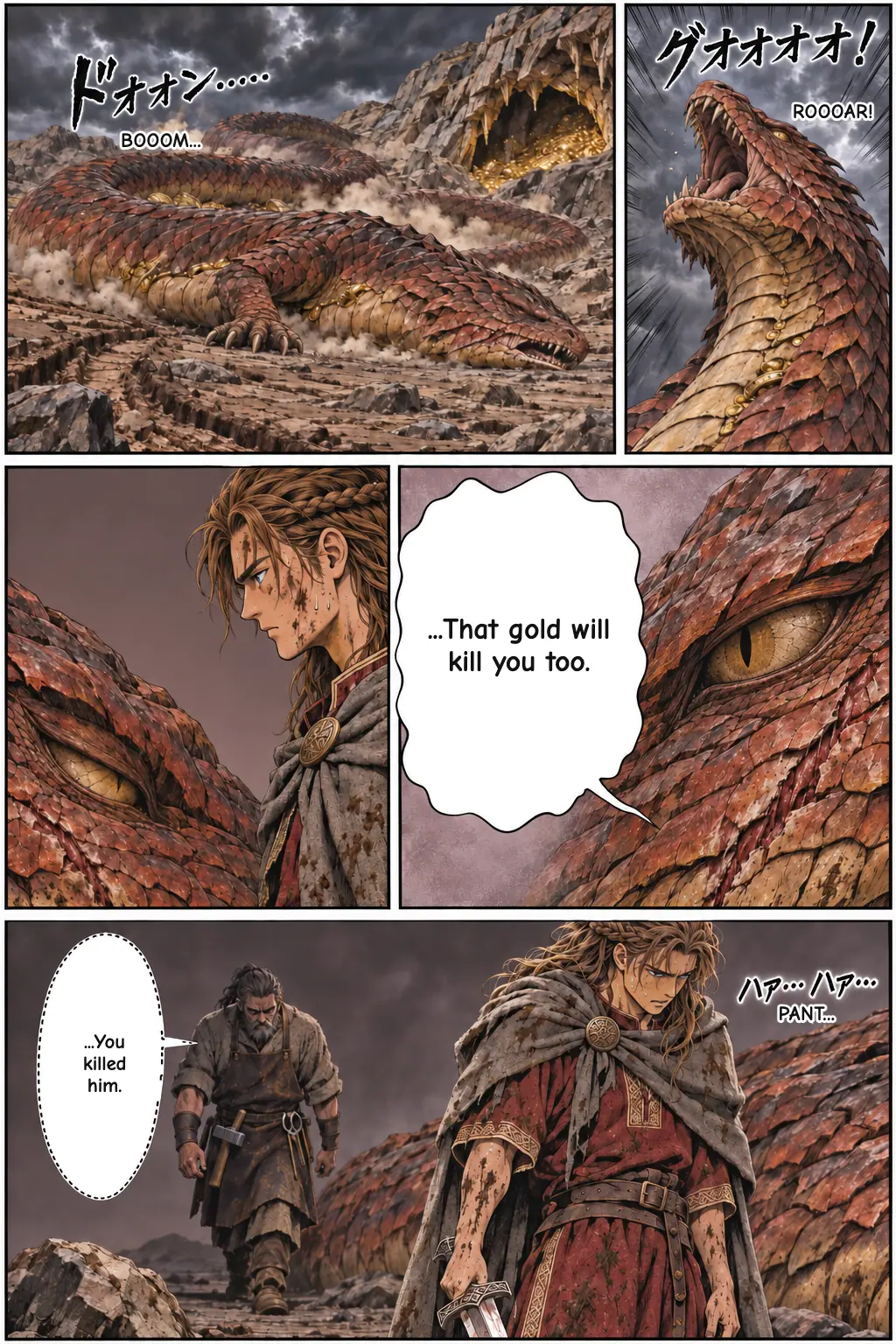
Page 17: ...That gold will kill you too. ...You killed him.
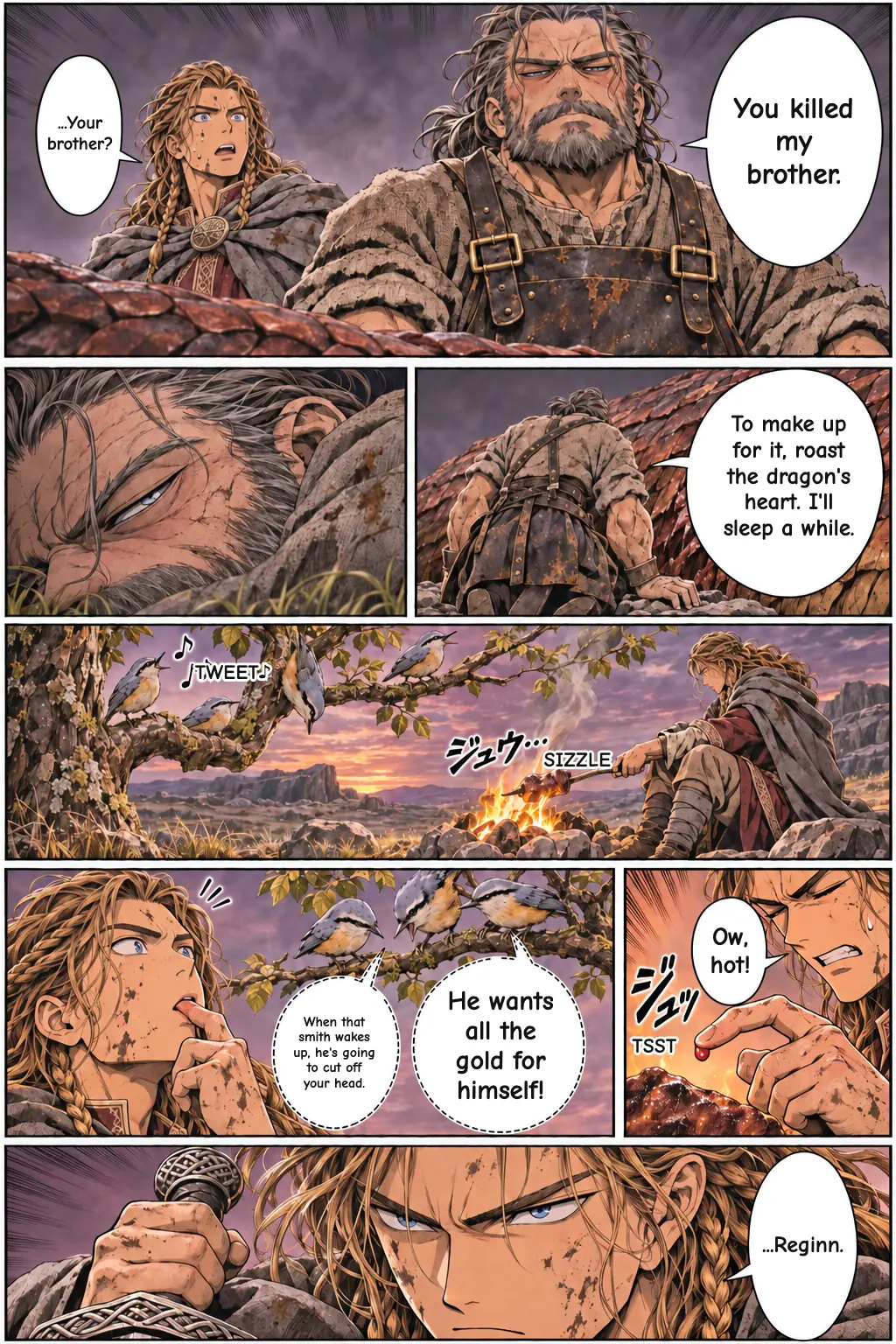
Page 18: You killed my brother. ...Your brother?
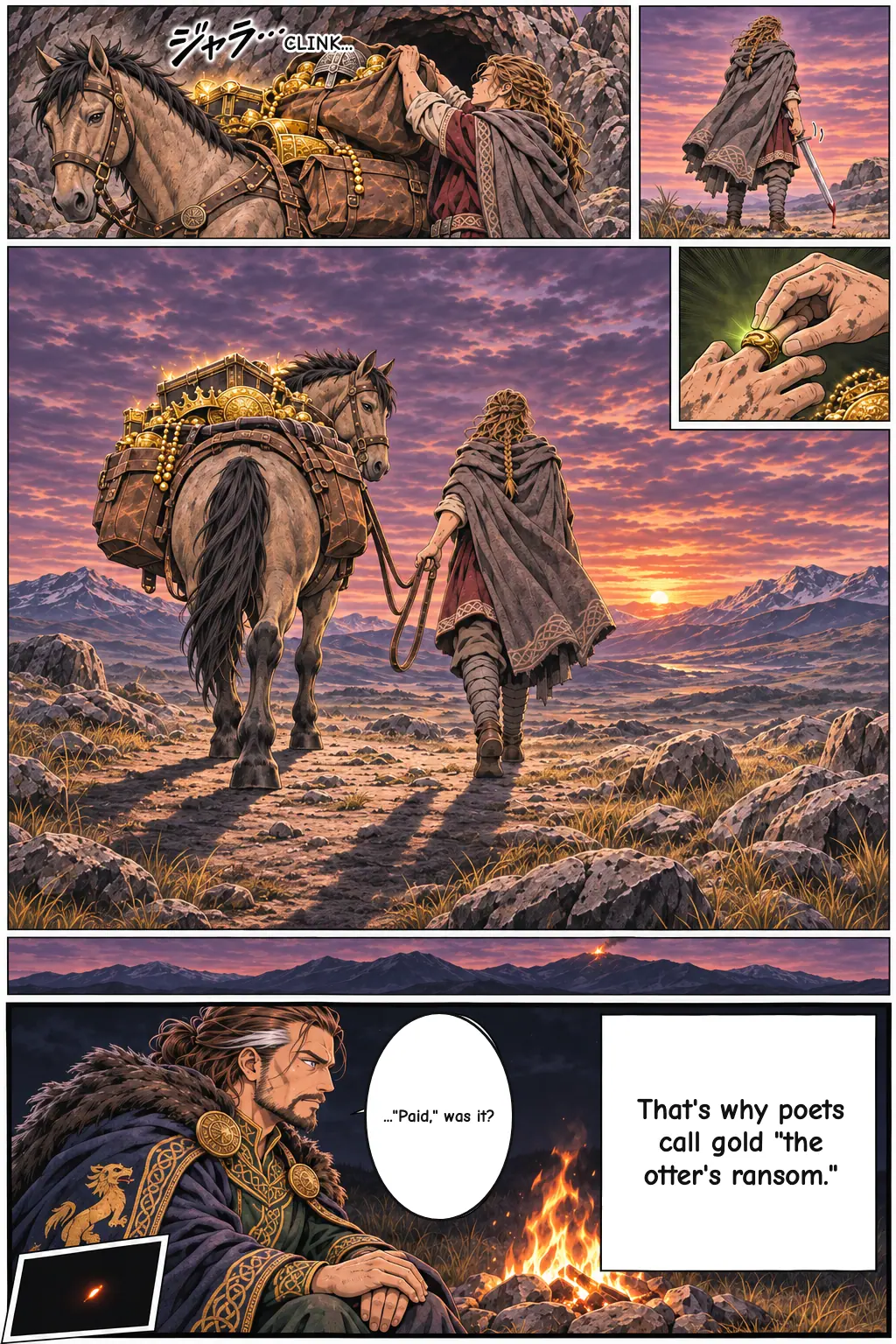
Page 19: That's why poets call gold "the otter's ransom." ..."Paid," was it?

Thanks for reading!

That's all for now. Try one of these next
Bookmark the series page so you can jump back in when the next episode is out: NORSE MYTHOLOGYRSS for this series

Get new episodes in your feed. Follow us on:ThreadsBluesky

Story summary

Episode 16 (side story). The gods kill an otter with a single stone, and they can't leave until its skin is covered in gold. The ring that hides the last whisker sets a son against his father and turns a brother into a dragon. Then it passes to the young man who slays that dragon.

SourceProse Edda — Nordic (Iceland) · c. 1220

Also available in:日本語简体中文繁體中文한국어EspañolFrançais

Episode script

Page 1

That's why poets call gold "the otter's ransom."

Gylfi: ...Hmph. It's a story about the gods paying up.

It happened one night.

Hreiðmarr: Fill this skin with gold.

Loki: ...Gold? We don't have a single coin between us!

It all began with one little stone.

Page 2

Earlier that day...

Loki: How long do we keep walking to "see the world"?

Odin: Until I've seen all of it.

Loki: Odin, can anyone ever see all of the world?

Loki: ...He's not even listening.

Loki: Look at him. Eyes shut.

Loki: Watch this. Two dinners with one throw.

Page 3

Loki: Two with one stone! Not bad, huh?

Odin: ...More to carry.

Loki: Hœnir, don't drop that. It's dinner.

Hœnir: ...

Hœnir: ...This one has nicer fur.

Loki: Right?

Odin: We'd like a roof for the night.

Loki: We brought our own food. Look at this catch!

Hreiðmarr: ...Otr?

Page 4

Hreiðmarr: That's my son!

Hreiðmarr: Bar the door!

Loki: Whoa, whoa! We didn't know!

Odin: Name your price.

Odin: We'll pay it.

Loki: ...Pay with what, exactly?

Hreiðmarr: Swear it. Break your word, and you die.

Odin: I swear.

Hreiðmarr: ...Then here is my price.

Page 5

Hreiðmarr: Fill this skin with gold.

Hreiðmarr: Then cover the outside too. Not one hair showing.

Odin: Loki. Go to the land of the dark elves.

Loki: Why me?

Loki: Okay, sure, I threw the stone, but...

Odin: That's why.

Loki: Hœnir, back me up here.

Hœnir: ...It's roomy inside.

Loki: Relax, I've got this. I'm a great fisherman.

Page 6

The land of the dark elves. Water no sunlight ever reaches.

Loki: There he is. All fish, except for those eyes.

Loki: Bare hands should do it.

Andvari: Eek! L-let me go!

Loki: Your life or your gold. Which one will you miss more?

Andvari: Th-that's all of it...

Page 7

Loki: All of it? What about the thing under your arm?

Andvari: Not that... With that, I could get it all back...

Loki: Sorry. The deal is, I leave you nothing.

Andvari: That ring, and every piece of that gold...

Andvari: ...will kill whoever holds it. Every last one.

Loki: Fine. I'll pass that on to whoever gets it.

Page 8

Loki: Here. A little bonus.

Odin: ...A fine ring.

Hreiðmarr: There's still room... Not yet.

Hreiðmarr: Now the outside. Let's see you cover it.

Page 9

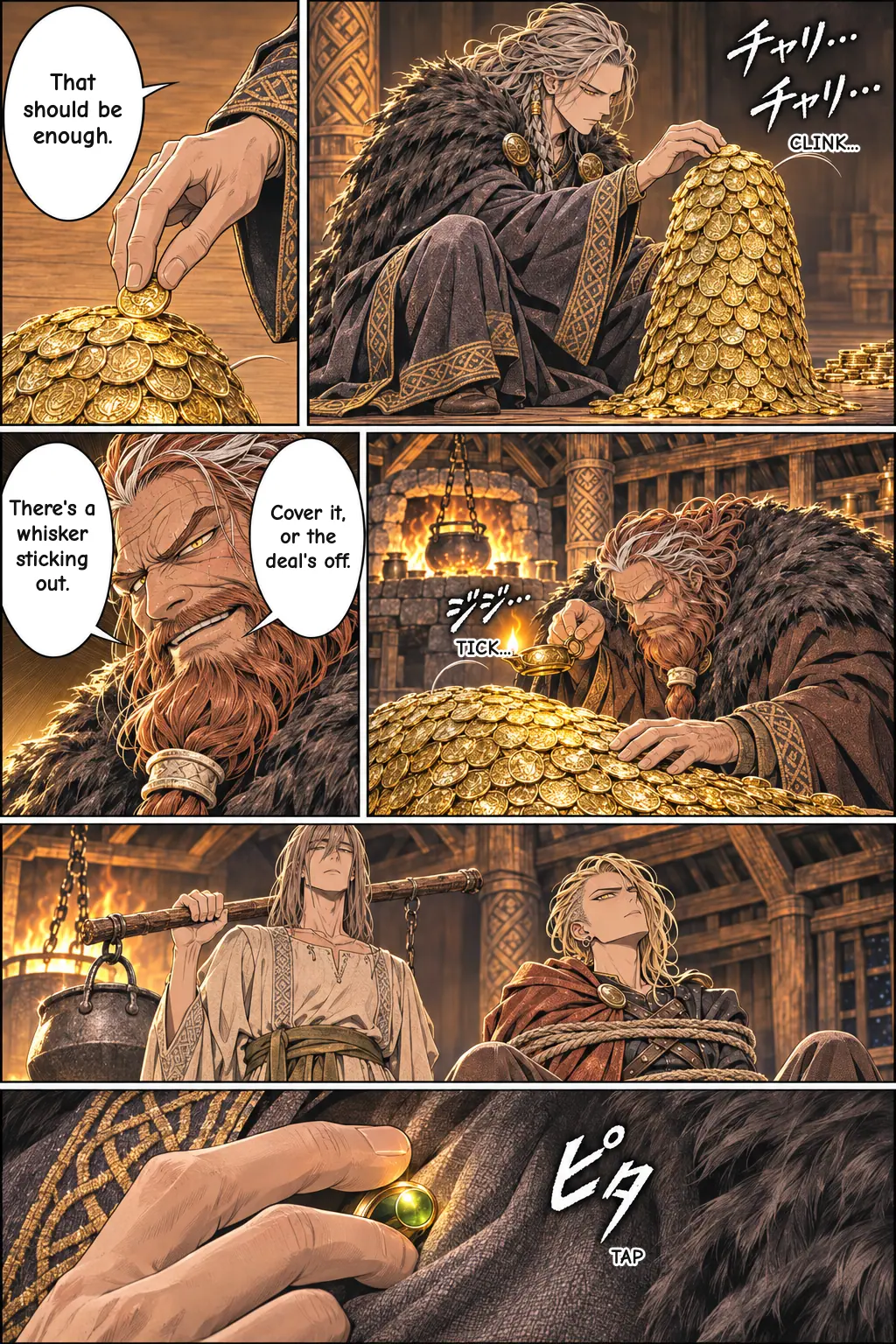
Odin: That should be enough.

Hreiðmarr: There's a whisker sticking out.

Hreiðmarr: Cover it, or the deal's off.

Page 10

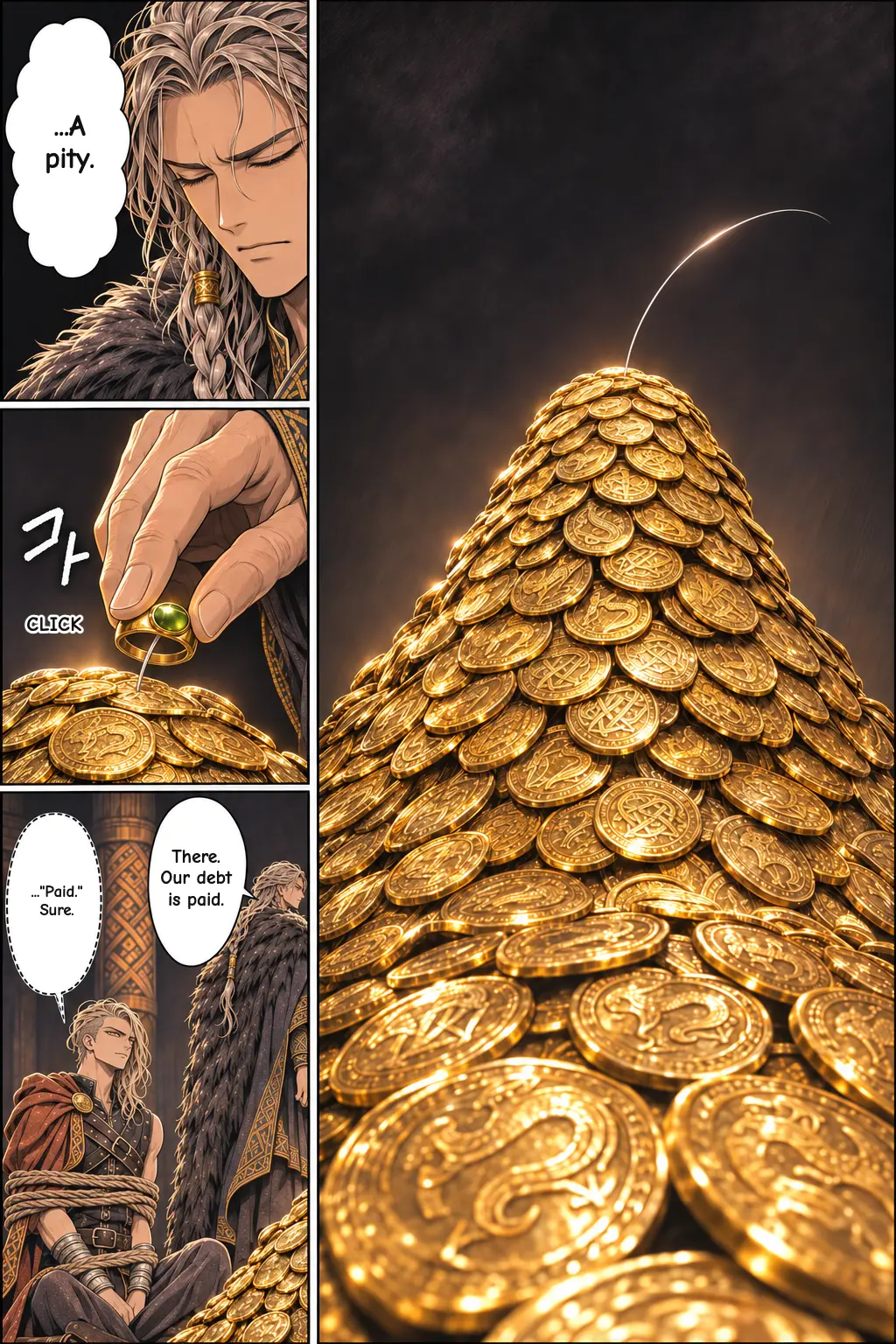
Odin: ...A pity.

Odin: There. Our debt is paid.

Loki: ..."Paid." Sure.

Page 11

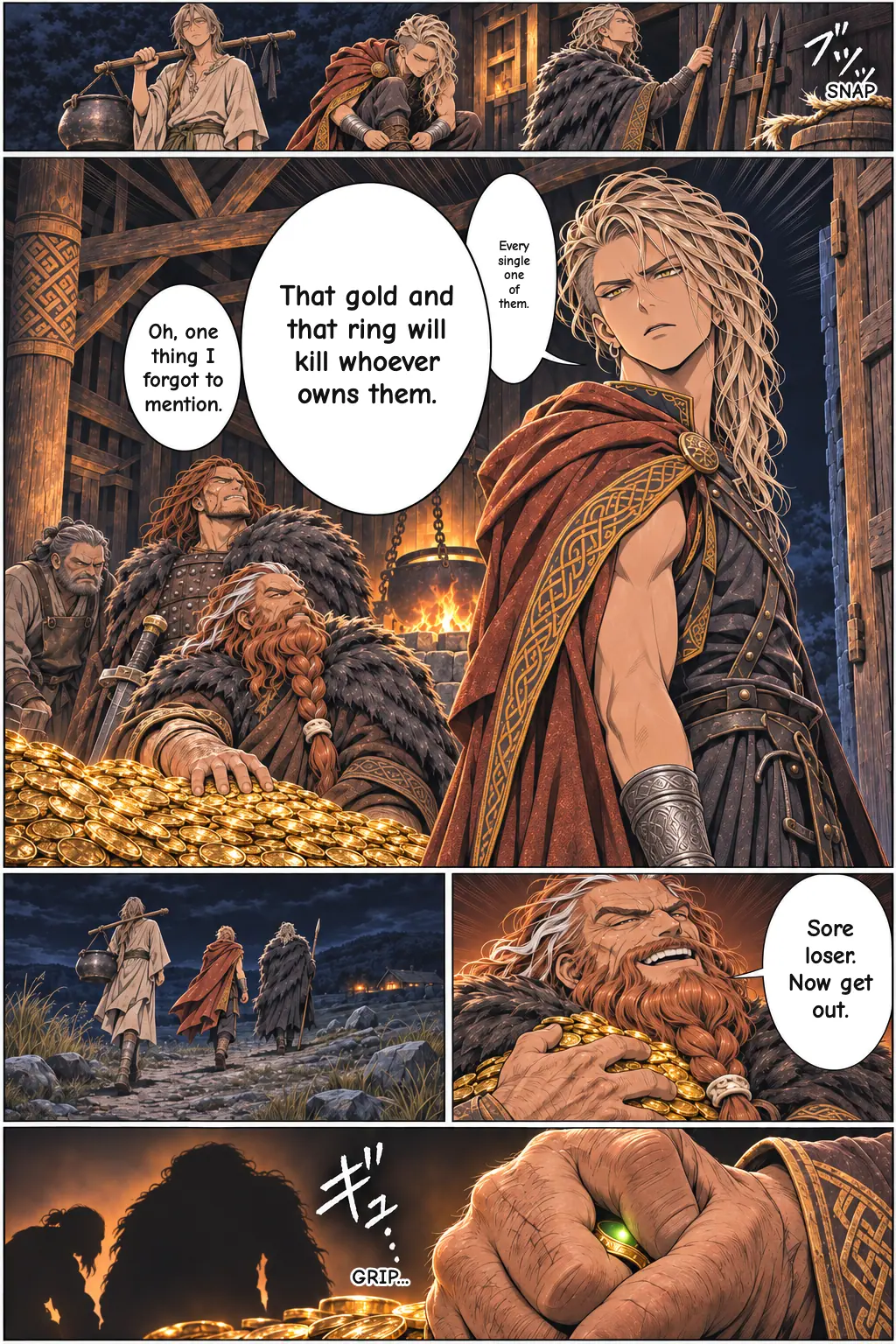
Loki: Oh, one thing I forgot to mention.

Loki: That gold and that ring will kill whoever owns them.

Loki: Every single one of them.

Hreiðmarr: Sore loser. Now get out.

Page 12

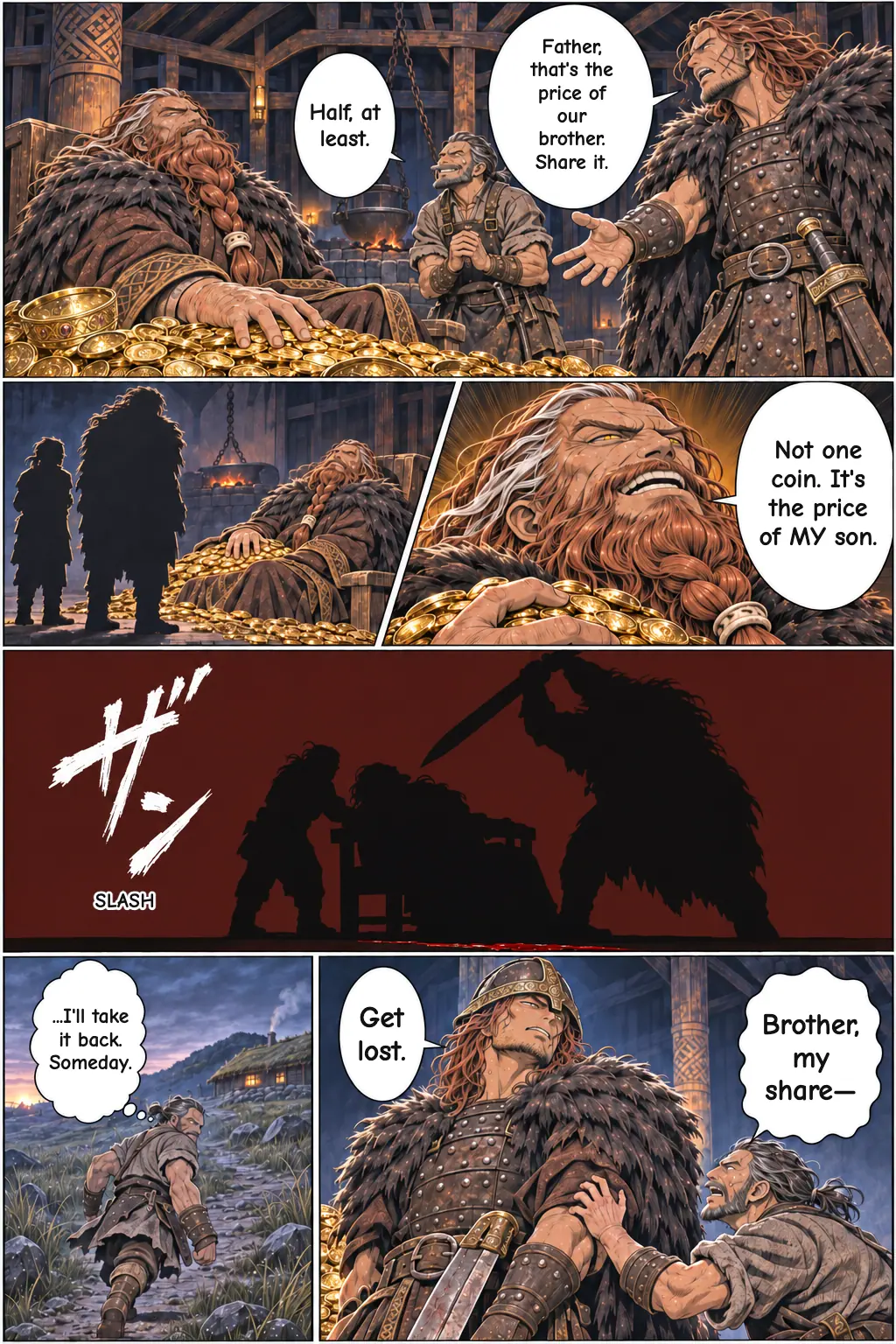
Fáfnir: Father, that's the price of our brother. Share it.

Reginn: Half, at least.

Hreiðmarr: Not one coin. It's the price of MY son.

Reginn: Brother, my share—

Fáfnir: Get lost.

Reginn: ...I'll take it back. Someday.

Page 13

The elder brother took the gold and vanished into the wilds.

He let no one near. He became a dragon, asleep on his gold.

Page 14

Among men, the dragon's brother Reginn now raised a prince.

Reginn: Sigurðr. A dragon lives deep in the wilds.

Reginn: And under him lies a mountain of gold.

Sigurðr: Forget the gold. I want to be the man who slew a dragon.

Reginn: ...Then I'll forge you a sword.

Sigurðr: ...Sorry. I split the anvil.

Reginn: Good. A blade like that can reach a dragon.

Reginn: Call it Gram. The finest thing I've ever made.

Page 15

Reginn: The dragon crawls through here to drink.

Reginn: I'll watch from a safe distance.

Sigurðr: Sure. Leave it to me.

Sigurðr: Here it comes.

Page 16

Sigurðr: Not yet... Wait for the belly.

Sigurðr: Now!

Page 17

Fáfnir: ...That gold will kill you too.

Reginn: ...You killed him.

Page 18

Reginn: You killed my brother.

Sigurðr: ...Your brother?

Reginn: To make up for it, roast the dragon's heart. I'll sleep a while.

Sigurðr: Ow, hot!

When that smith wakes up, he's going to cut off your head.

He wants all the gold for himself!

Sigurðr: ...Reginn.

Page 19

That's why poets call gold "the otter's ransom."

Gylfi: ..."Paid," was it?

RSS

The original story behind this episode

Andvari's Ring and Fafnir: The Otter's Ransom Myth Explained (Norse)

In short: The otter's ransom is a Norse myth in which Loki kills an otter that is really a man's son. To pay for it, the gods must cover its skin in gold, and the last whisker is hidden with Andvari's cursed ring. The curse turns Fafnir against his father and into a dragon, until the hero Sigurd slays him. Snorri Sturluson tells the story in the Skáldskaparmál section of the Prose Edda, written in the early 13th century.

The Original Myth: A Stone, an Otter, and a Debt in Gold

The story appears in the Prose Edda by the Icelandic writer Snorri Sturluson, in the part called Skáldskaparmál ("the language of poetry"). Snorri tells it to answer a riddle for poets: why can gold be called "the otter's ransom"? Chapter numbers differ from edition to edition. In Anthony Faulkes's translation it comes at about chapters 39–40.

Three gods are out exploring the world: Odin, the chief of the gods; Loki, the trickster; and Hoenir, a quiet companion. They follow a river to a waterfall. There an otter is eating a salmon with its eyes shut. Loki throws a stone, kills it, and boasts that he has caught an otter and a salmon with one throw.

That night they ask to stay with Hreidmar, a strong farmer who is skilled in magic, and they show him their catch. Hreidmar knows the otter at once: it is his son Otr. With his other sons, Fafnir and Regin, he seizes the gods and ties them up. The gods offer to pay whatever compensation he names and swear an oath to it. His terms are that the otter's skin must be filled with red gold and covered completely on the outside.

Odin sends Loki to Svartalfheim, the land of the dark elves. There Loki catches the dwarf Andvari, who is swimming as a fish, with his bare hands. To save his life, Andvari has to give up all the gold in his rock. He tries to keep back one small ring, hidden under his arm, and says it would let him grow rich again. Loki takes it anyway. As Andvari goes back into the stone, he curses the ring: it will be the death of everyone who owns it.

One Whisker Short: From Cursed Ring to Dragon-Slayer

Odin likes the ring and keeps it for himself, handing over the rest of the gold. Hreidmar packs the skin and stands it up, and Odin covers the outside. Then Hreidmar spots one whisker still showing and says there is no deal unless it is covered too. Odin has to take out the ring and lay it over the whisker. As the gods leave, Loki makes sure to tell Hreidmar and his sons that the gold and the ring will bring death to whoever has them.

The curse works fast. Fafnir and Regin ask for a share of the payment for their brother, and Hreidmar refuses. Fafnir kills his father with a sword. Some versions of the tradition say Hreidmar was asleep at the time. Fafnir takes the gold, his father's Helm of Terror, and the sword Hrotti, and he gives Regin nothing. Regin flees. Fafnir goes to Gnitaheath, takes the form of a serpent (a dragon in later retellings), and lies on top of the hoard.

Regin becomes a smith for King Hjalprek. There he raises Sigurd, the son of Sigmund and Hjordis, as his foster son. He urges Sigurd to go after Fafnir's gold and forges him the sword Gram. It is sharp enough to cut a tuft of wool floating down a stream, and Sigurd splits Regin's anvil with it. At Gnitaheath, Sigurd digs a pit on the path Fafnir takes to the water. When the serpent crawls over him, Sigurd stabs him from below and kills him.

Regin says Sigurd has killed his brother. As payment, he asks Sigurd to roast Fafnir's heart, then drinks the blood and lies down to sleep. Sigurd touches the heart to see if it is done, burns his finger, and puts it in his mouth. Suddenly he can understand birds. They say Regin plans to betray him, so Sigurd kills Regin, loads the gold onto his horse Grani, and rides away.

What the Myth Tells Us: Blood-Price, Oaths, and Poetic Gold

At its core this is a story about compensation for a killing. Early Scandinavian society had a custom, often called wergild, of settling a death with a payment rather than endless revenge. Hreidmar's demand follows that logic, and so does the gods' sworn oath to pay. What makes it chilling is that the gods themselves can be held to it and are forced to pay what Snorri calls a forced payment. The settlement doesn't end the violence, though. It starts a chain of family killings, one after another.

Snorri's main purpose was to explain kennings, the poetic nicknames that skalds (Norse court poets) used for ordinary things. That is why the story ends with names for gold: "otter's ransom," "the gods' forced payment," and "metal of strife." A poet who knew the story could pack a whole tragedy into two words.

The episode also ties the world of the gods to the human hero legends of the Volsungs. Other Old Norse sources call the ring Andvaranaut. The same body of legend later fed into Wagner's opera cycle The Ring of the Nibelung, and readers often compare it to cursed-ring stories in modern fantasy.

Other Versions of the Story

Old Norse sources do not all agree on the details. In Snorri's telling, Loki catches Andvari with his hands. In the prose of the Poetic Edda poem Reginsmal and in the Volsunga saga, Loki borrows a net from Ran, the sea goddess, to catch him. The Volsunga saga also gives a longer, richer account of Regin, Sigurd, and what happens after the gold. In this article, the main summary follows Snorri, and the other versions are marked as other versions.

What the Manga Changed

Episode 16 of NORSE MYTHOLOGY: The King Who Heard the End of the Gods is a side story that follows Snorri's order of events. Some parts are the manga's own invention. Snorri only says the gods set out to explore the world, so the reason for their trip and their conversations on the road are new. So are the look of the waterfall, the farmhouse, Andvari's cave, and Gnitaheath, along with the seasons, the time of day, and Hreidmar's family life.

In the manga, Loki skins the otter and carries the skin around. In the source, the skinning seems to be done by Hreidmar's household. The manga also invents Andvari's appearance and how he changes from a fish back into a dwarf, and it draws out the tension of the whisker scene with pauses and facial expressions. The source only calls Fafnir a serpent (ormr), so his transformation and his dragon design are the artists' interpretation. Sigurd's age, looks, and personality, and the details of the forge, are invented too.

Nobody is sure exactly what kind of birds the source means. The word is often translated as "nuthatches," so the birds in the manga are an artistic choice. The narrator's framing, "this is why poets call gold the otter's ransom," matches Snorri's own purpose. The episode also links back to Episode 15 and ends with a short hint at Sigurd's later story, including Brynhild.

Where to Read It

If you want to see the whisker moment, Andvari's curse, and Sigurd waiting in the pit, Episode 16 is on Manga Portal, just above this article. Every episode of NORSE MYTHOLOGY: The King Who Heard the End of the Gods is free to read, with no sign-up. The earlier episodes cover the wider Norse myths that Snorri tells, from the first giants to the end of the gods. You can start at Episode 1 or jump in right here.

Characters in this episode

Odin
The chief of the Norse gods. He keeps Andvari's ring for its beauty but has to give it up to cover the last whisker.
Loki
The trickster god. He kills the otter with one stone, takes all the dwarf's gold, and delivers the curse on purpose.
Hreidmar
A powerful farmer skilled in magic and the father of Otr, Fafnir, and Regin. He demands the gold ransom and is killed for it.
Andvari
A dwarf who lives as a fish in the water. He loses his gold to Loki and curses the ring that was taken from him.
Fafnir
Hreidmar's son. He murders his father for the gold and becomes a serpent, or dragon, guarding the hoard on Gnitaheath.
Sigurd
A young human hero, raised by Regin. He kills Fafnir from a pit with the sword Gram and learns to understand birds.

FAQ

Why is gold called "otter's ransom" in Norse mythology?

Because the gods once had to pay gold for killing Otr, a man who had taken the form of an otter. His father, Hreidmar, made them fill and cover the otter's skin with gold. Snorri Sturluson tells the story in the Prose Edda to explain this poetic name for gold.

What is Andvari's ring?

It is a small gold ring that belonged to the dwarf Andvari. He tried to hide it when Loki took his treasure. When Loki took the ring too, Andvari cursed it to bring death to everyone who owned it. Other Old Norse sources call it Andvaranaut.

How did Fafnir become a dragon?

After killing his father, Hreidmar, for the gold, Fafnir went to Gnitaheath and took the form of a serpent, lying on the hoard. The Prose Edda uses the word for serpent (ormr). Later retellings usually picture him as a dragon.

How did Sigurd kill Fafnir?

Sigurd dug a pit on the path Fafnir took to the water and hid inside it. When the serpent crawled over the pit, Sigurd stabbed him from below with the sword Gram, which Regin had forged.

Did Loki use a net to catch Andvari?

It depends on the source. In Snorri's Prose Edda, Loki catches Andvari with his hands. In the Poetic Edda prose and the Volsunga saga, he borrows a net from the sea goddess Ran.

Read the manga from the start (free)