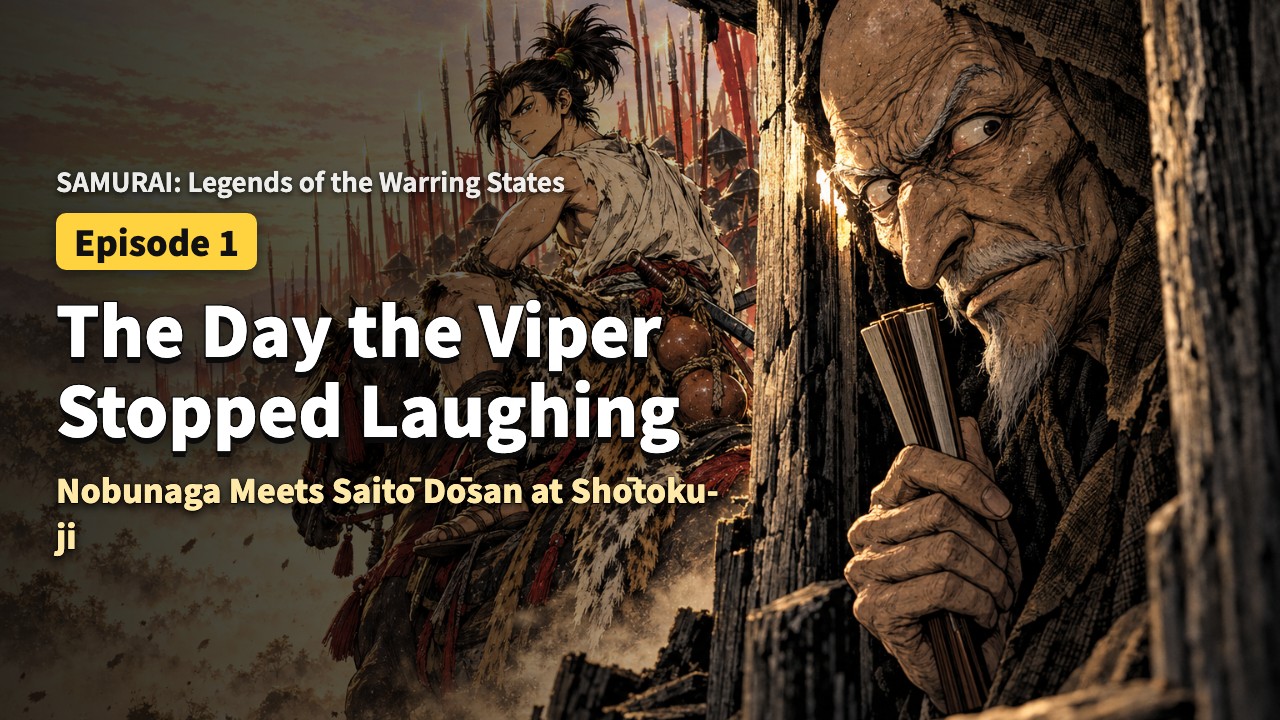
Episode 9Join Me, Stay Out, or BurnThe Burning of Mount Hiei
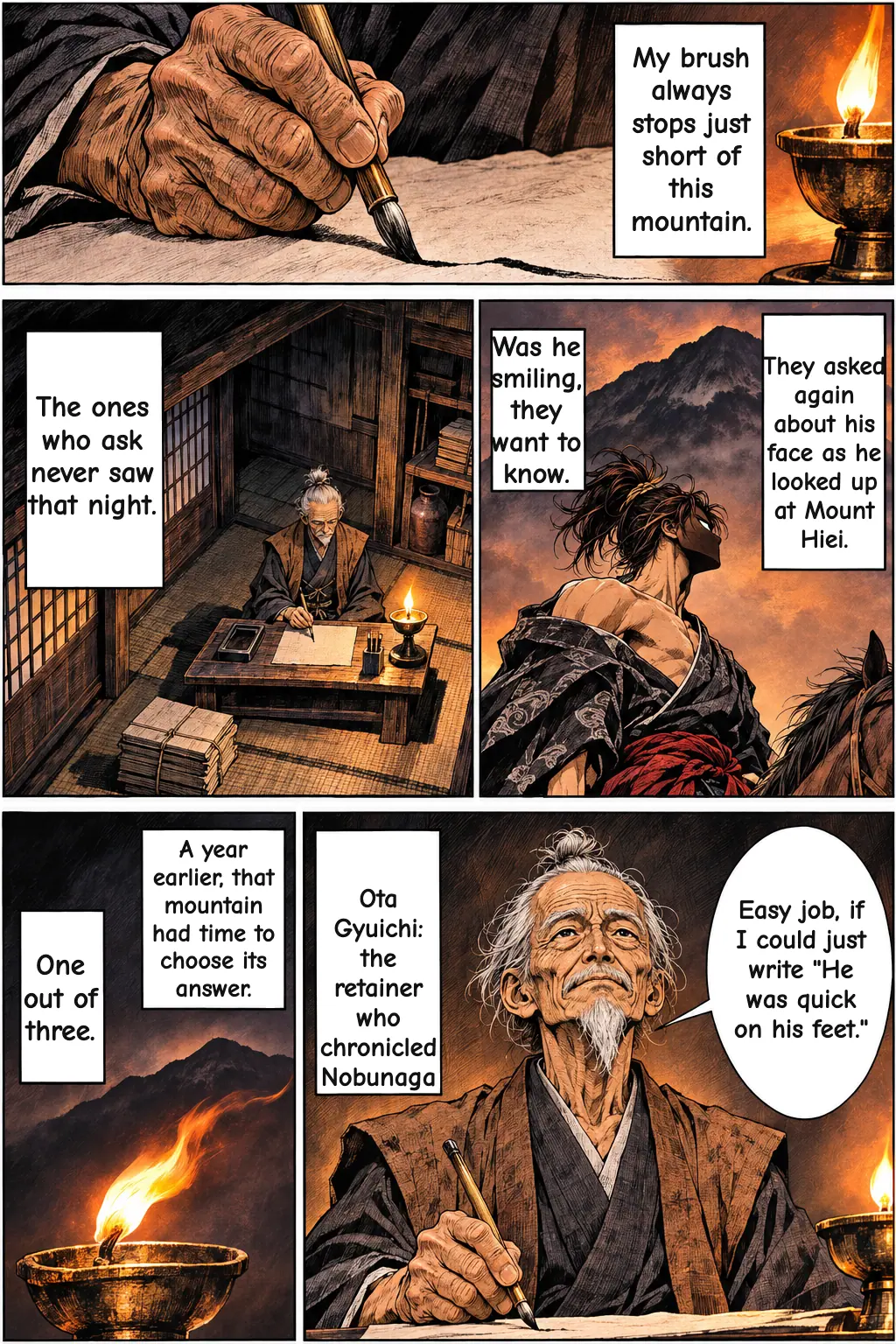
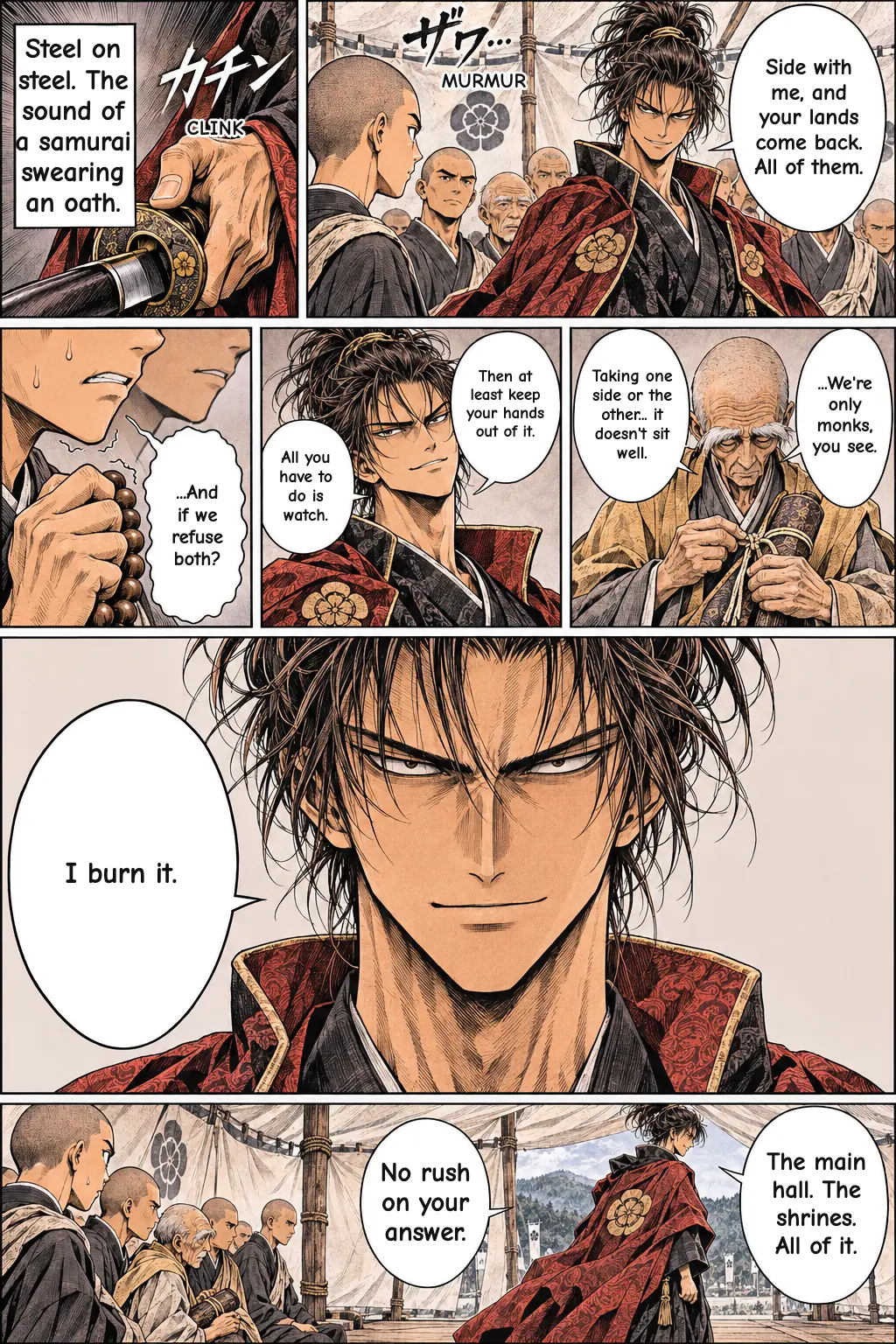
A sacred mountain lent its slopes to the enemy, and Oda Nobunaga gives it three choices: join him, stay out of it, or burn. A year later, the mountain goes up in flames, and the cries for mercy go unanswered. Before that night, an old chronicler's brush stops.
Get new episodes in your feed. Follow us on:ThreadsBluesky
Story summary
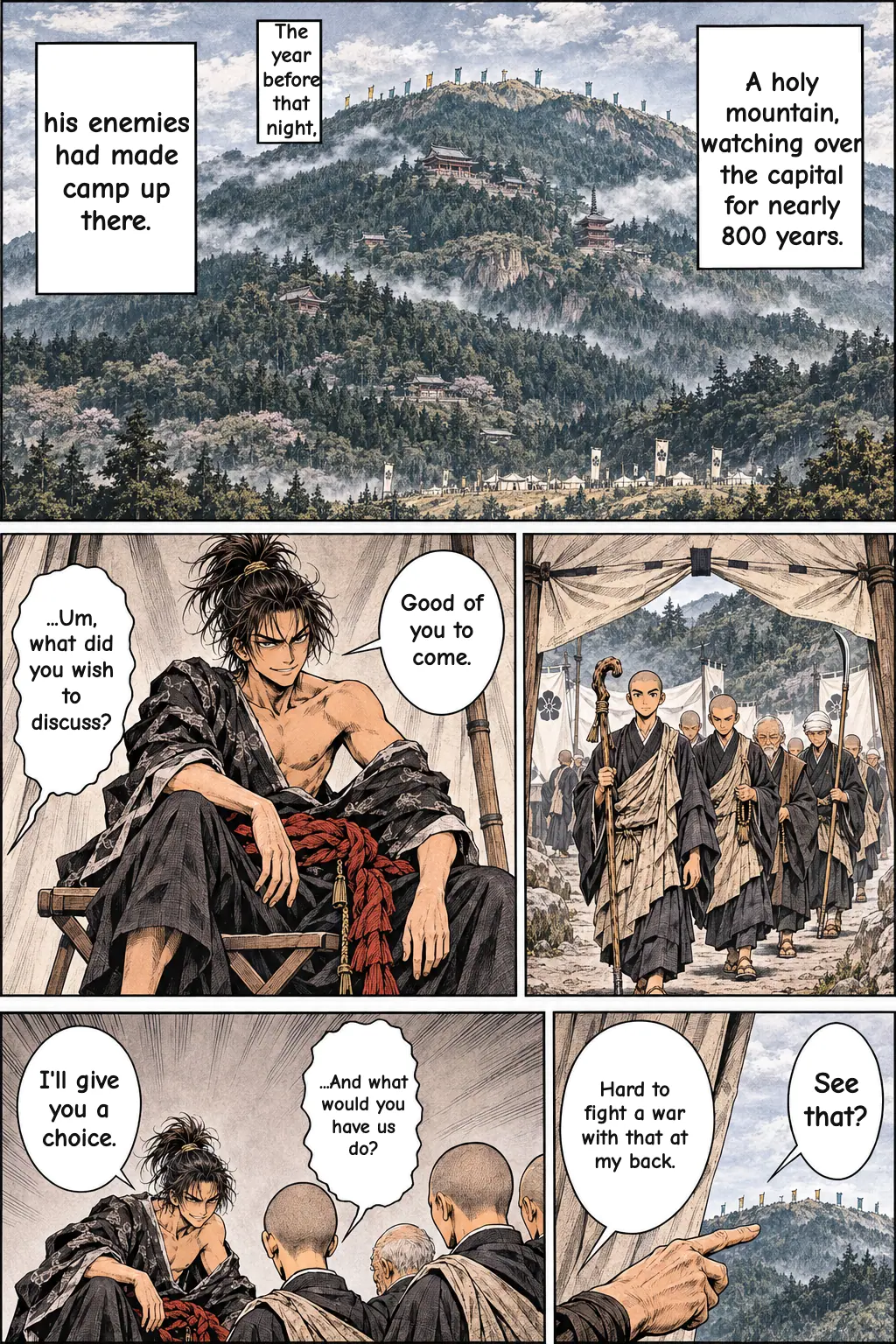
This story comes from the Shinchō Kōki, the chronicle of Oda Nobunaga's life written by his retainer Ōta Gyūichi. Its account of Mount Hiei, the great monastic center overlooking Kyoto, begins a year before the fire. In 1570, the armies of the Asai and Asakura, two warlord houses at war with Nobunaga, climbed the mountain and made camp there. Nobunaga summoned the monks and offered terms. If they sided with him, he swore to return the temple lands inside his territories. If their vows kept them from taking sides, he asked only that they stay out of the fight.
The Burning of Mount Hiei Explained: Oda Nobunaga's 1571 Attack
In short: The Burning of Mount Hiei is the 1571 attack in which Oda Nobunaga, after warning the monks a year earlier to join him or stay neutral, destroyed the sacred mountain near Kyoto and killed the people who fled there. The account comes from the Shinchō Kōki, a chronicle by Nobunaga's retainer Ōta Gyūichi, who condemns the monks yet calls the slaughter pitiful.
What Happened: The Burning of Mount Hiei in the Shinchō Kōki
This story comes from the Shinchō Kōki, the chronicle of Oda Nobunaga's life written by his retainer Ōta Gyūichi. Its account of Mount Hiei, the great monastic center overlooking Kyoto, begins a year before the fire. In 1570, the armies of the Asai and Asakura, two warlord houses at war with Nobunaga, climbed the mountain and made camp there.
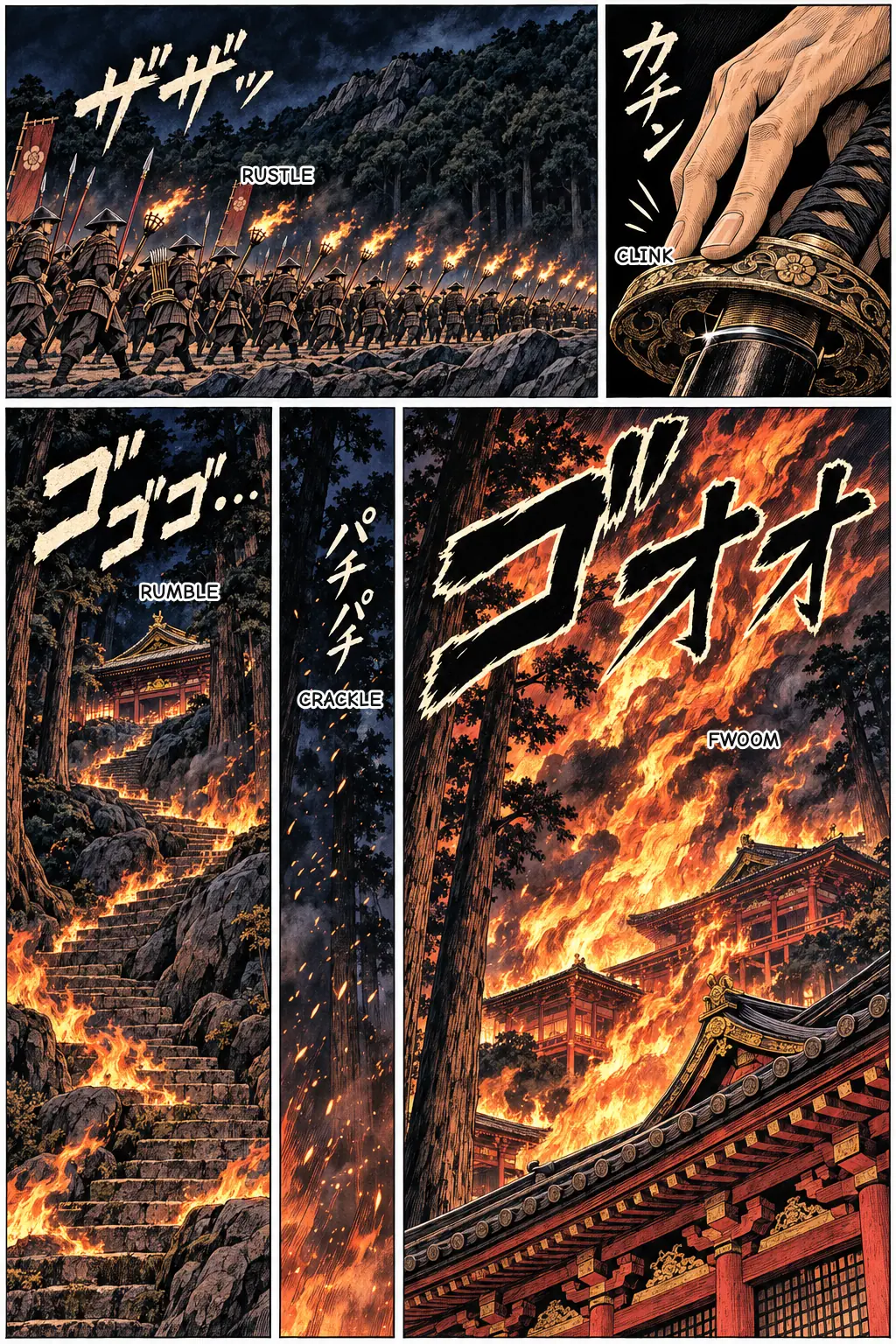
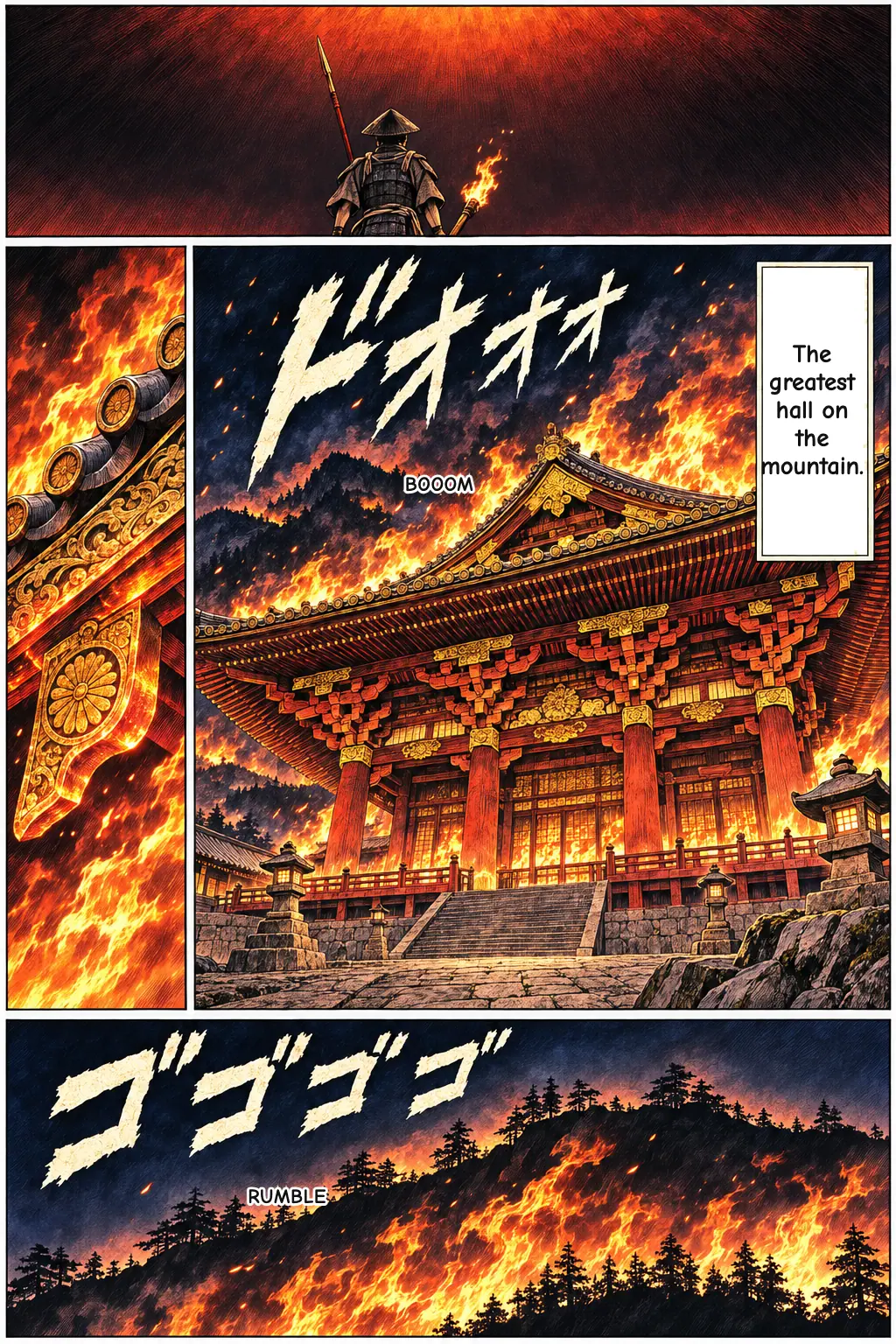
Nobunaga summoned the monks and offered terms. If they sided with him, he swore to return the temple lands inside his territories. If their vows kept them from taking sides, he asked only that they stay out of the fight. If they rejected both, he would burn everything, from the Konpon Chūdō, the mountain's central hall, to the twenty-one Sannō shrines. The monks did not accept and backed his enemies.
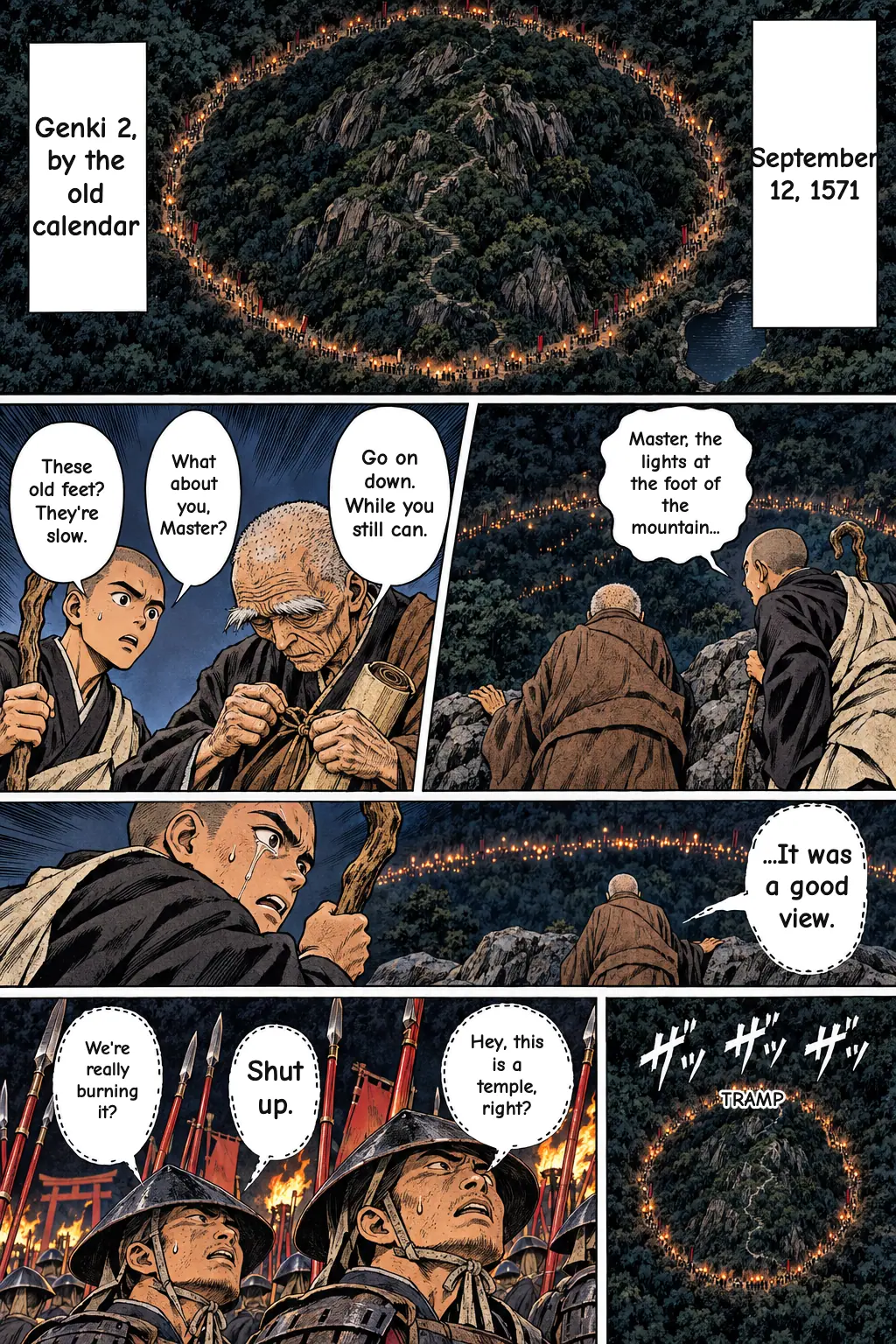
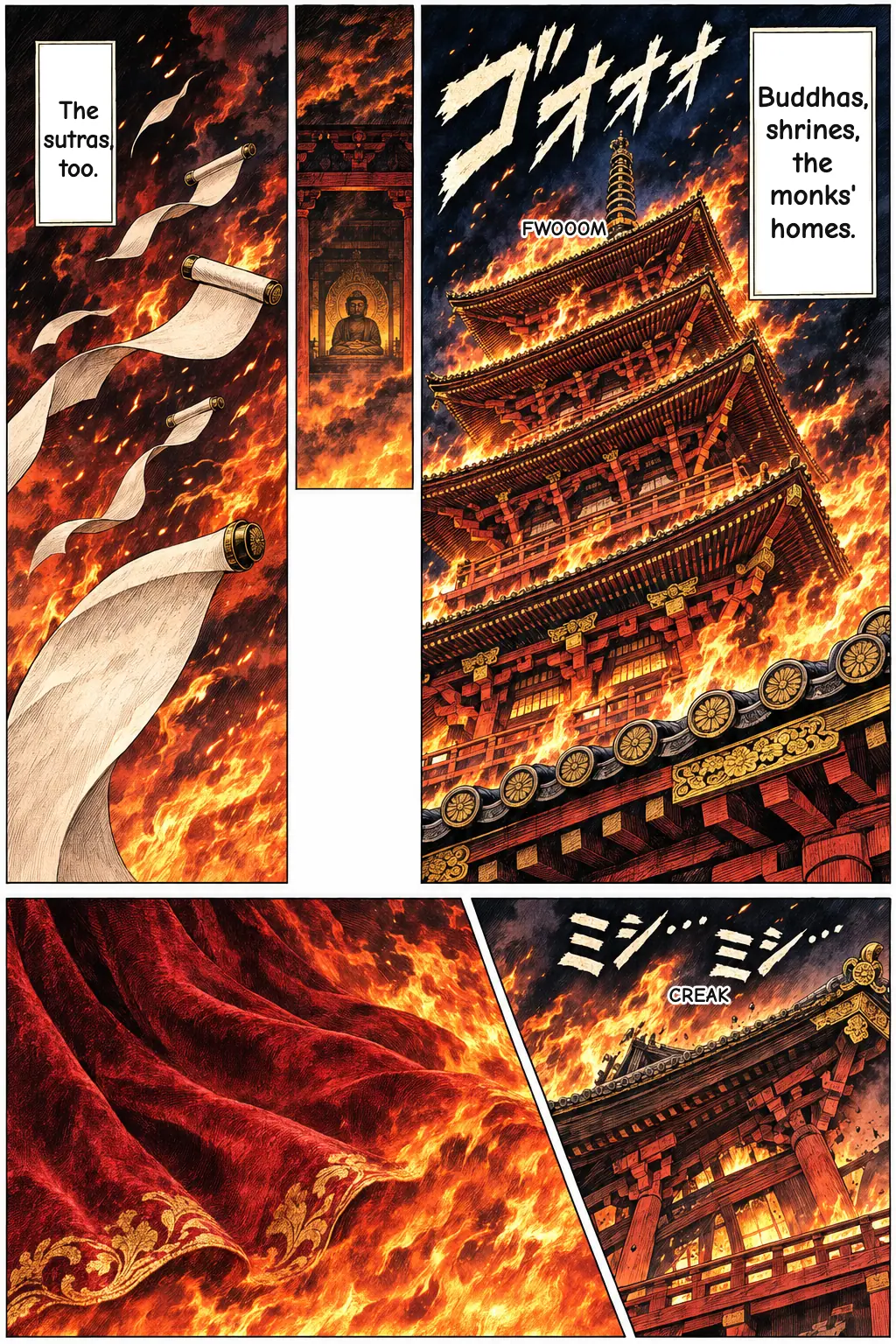
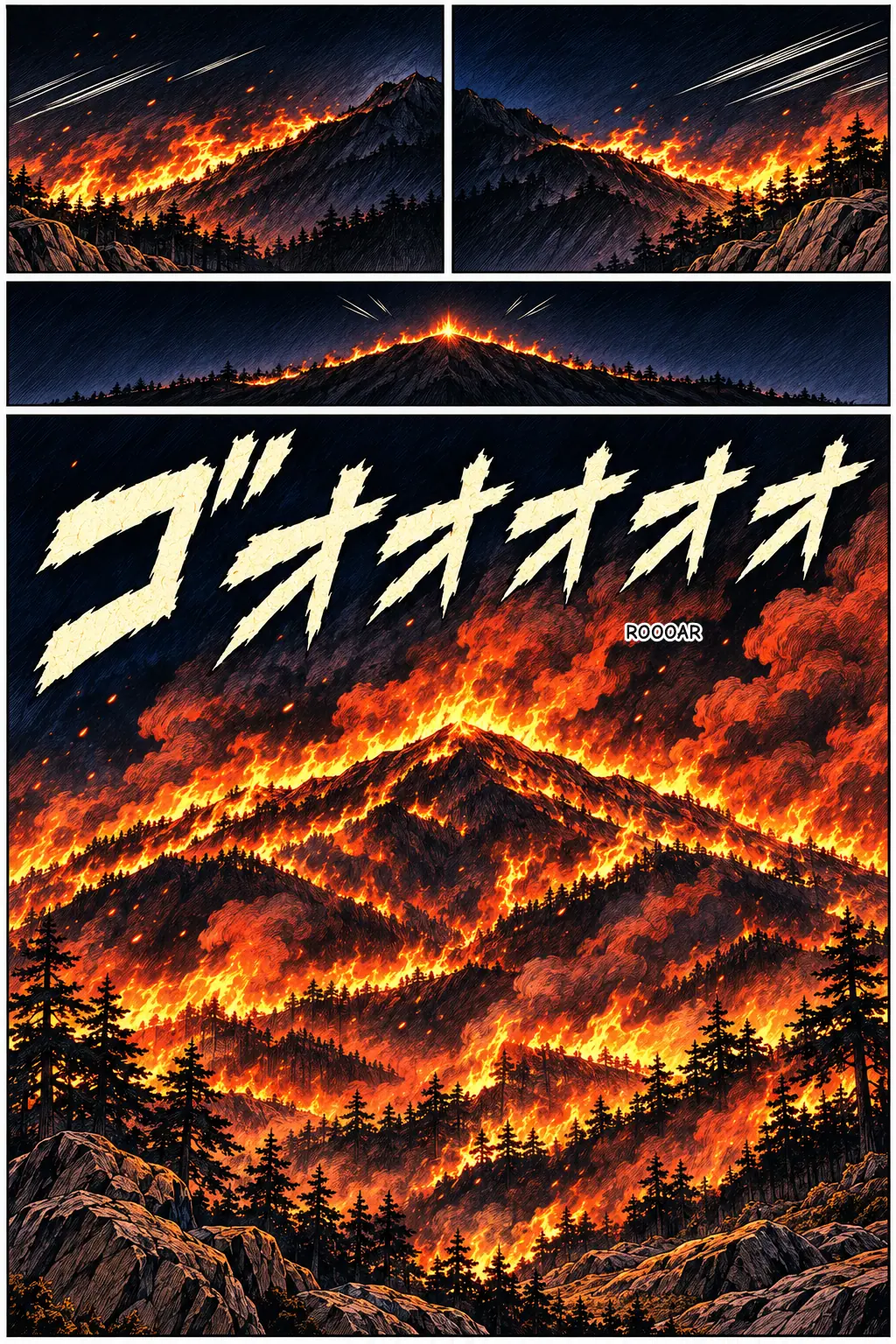
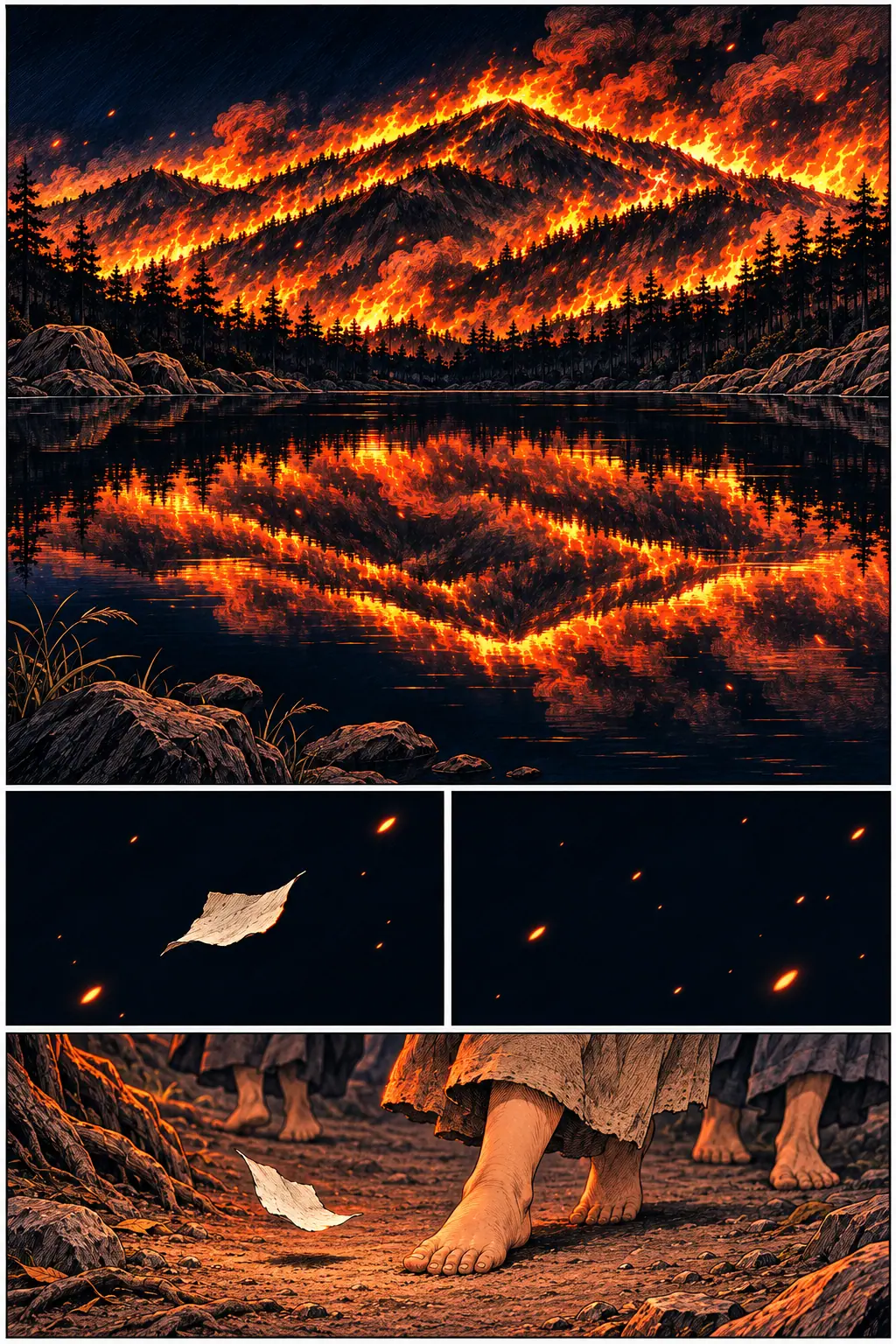
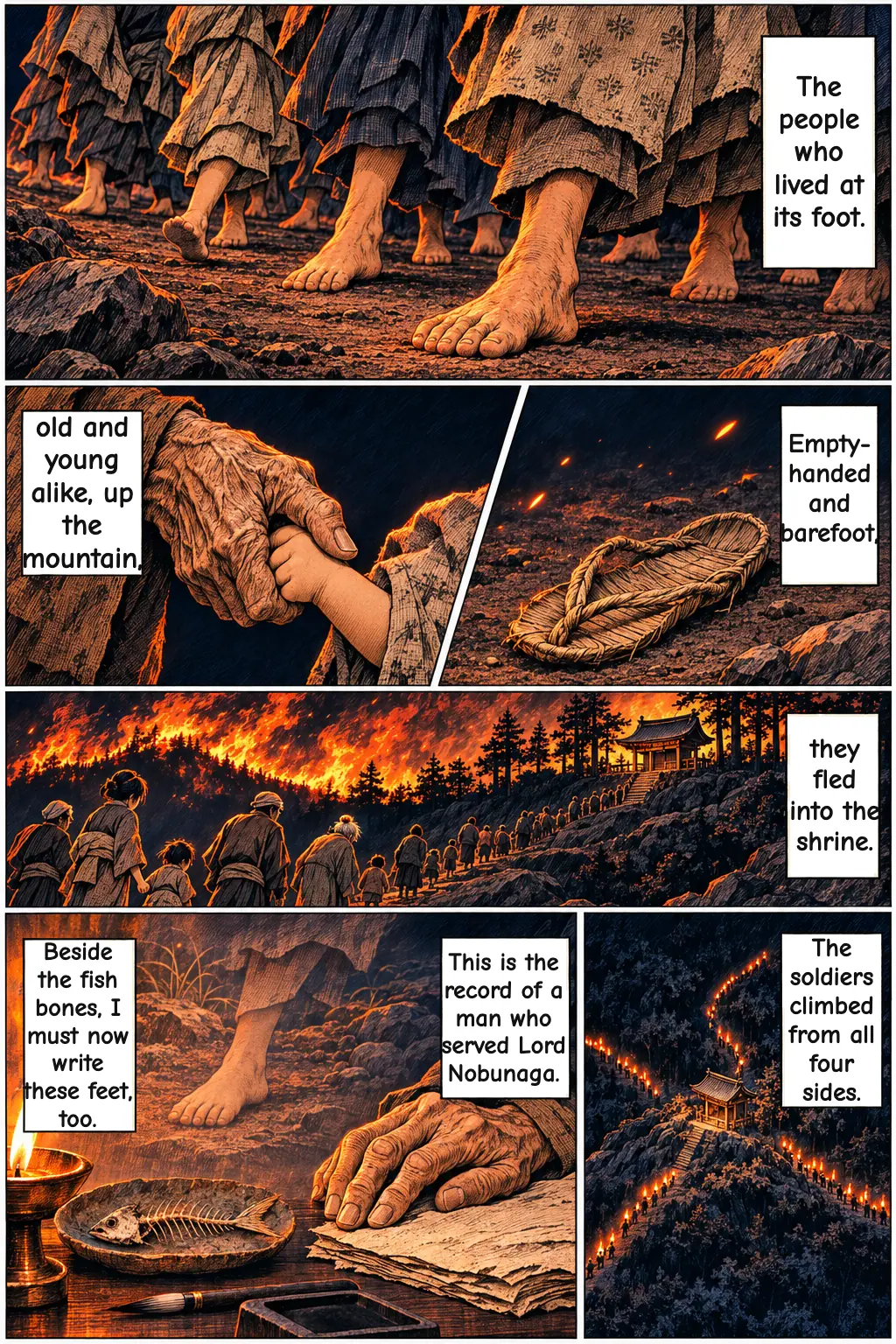
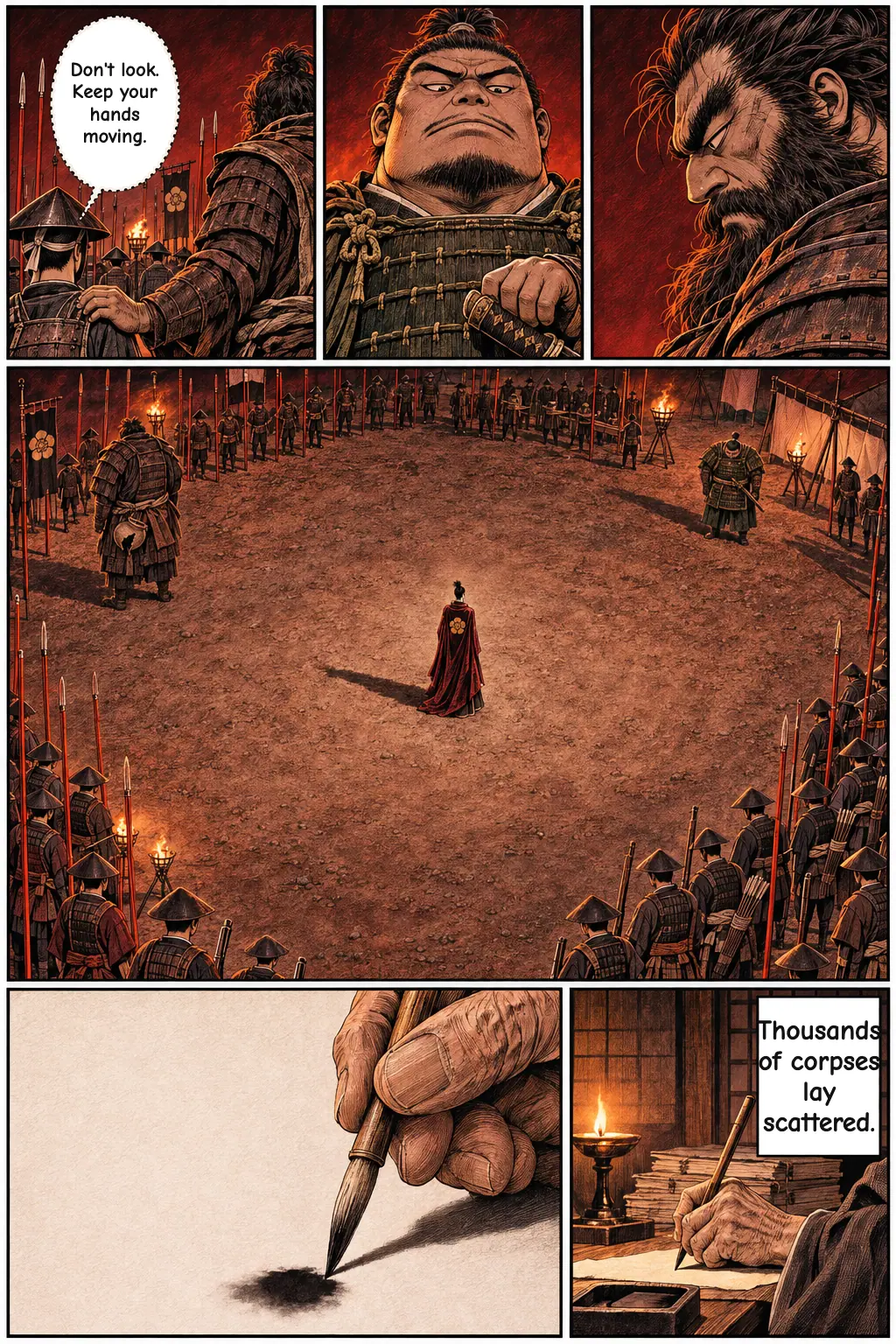
On the twelfth day of the ninth month of 1571, late September by the Western calendar, Nobunaga's army closed in. According to the chronicle, halls, shrines, sacred images, monks' lodgings, and sutra scrolls all burned, with not one building left standing. Men and women, young and old, fled barefoot from the foot of the mountain up Hachiōji hill and crowded into its shrine. Soldiers came up from every side with war cries, cut down clergy and laypeople alike, and brought the heads for Nobunaga to see.
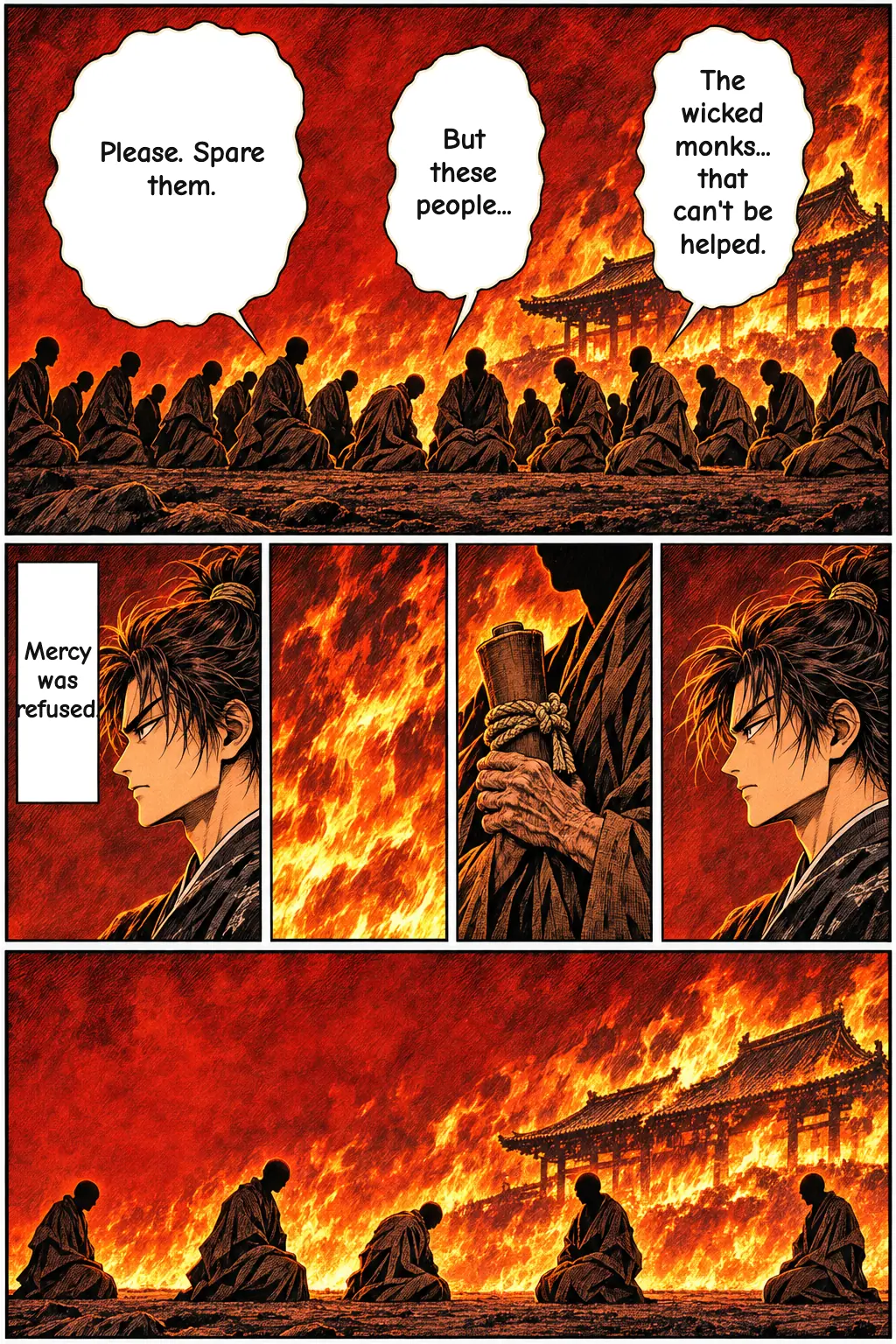
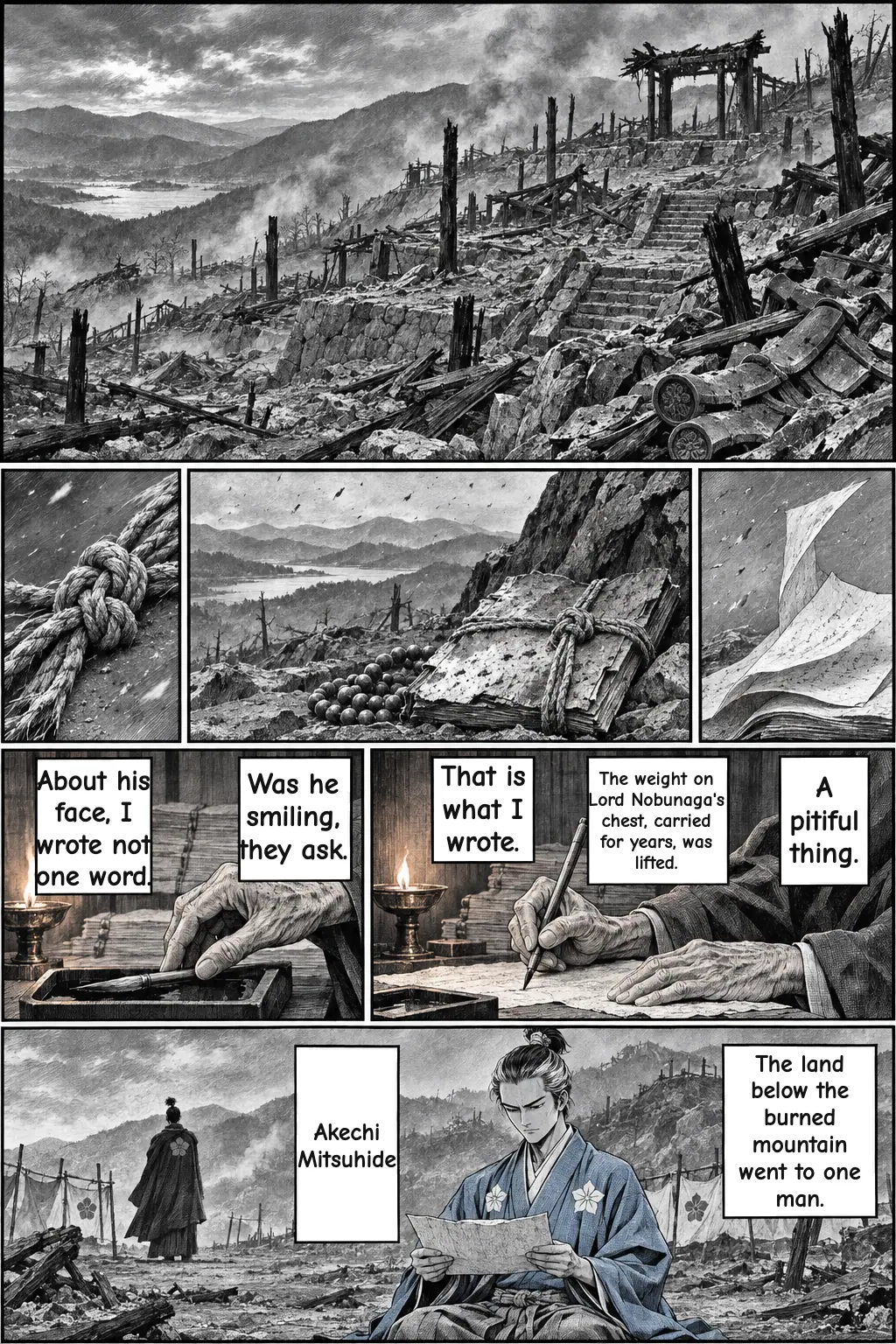
Renowned senior monks, beautiful women, and young boys were captured and brought before him. They pleaded that wicked monks might deserve punishment, but that they themselves did not. He refused, and all were beheaded. Gyūichi reports several thousand bodies scattered across the ground and says Nobunaga had at last cleared a resentment carried for years. The Shiga district then went to Akechi Jūbei, better known as Akechi Mitsuhide, who settled at Sakamoto.
Why Mount Hiei Mattered
Mount Hiei was home to Enryaku-ji, the head temple of Tendai Buddhism, founded by the monk Saichō around the end of the eighth century. Standing northeast of Kyoto, it was regarded as a spiritual guardian of the capital, a role the chronicle itself mentions.
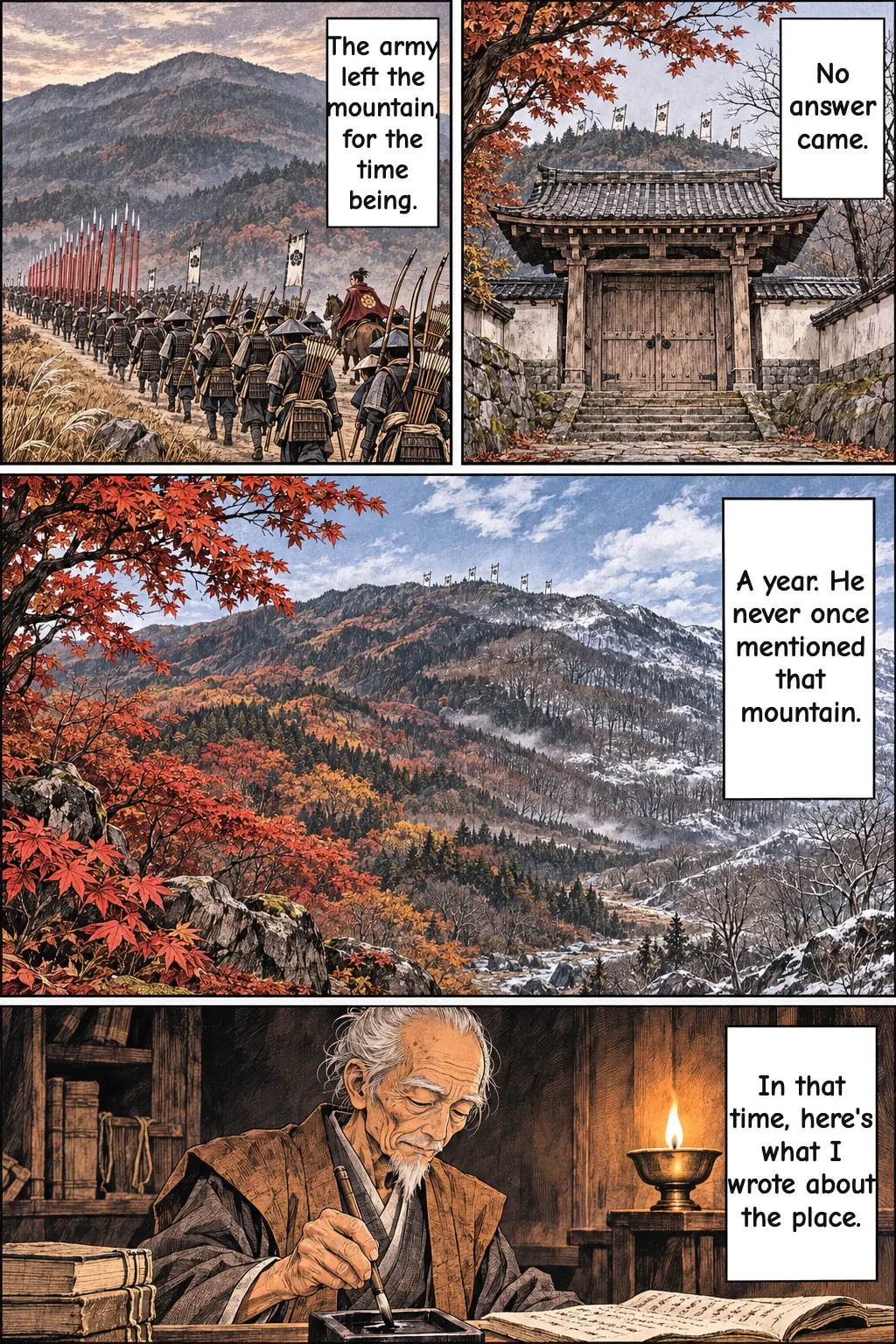
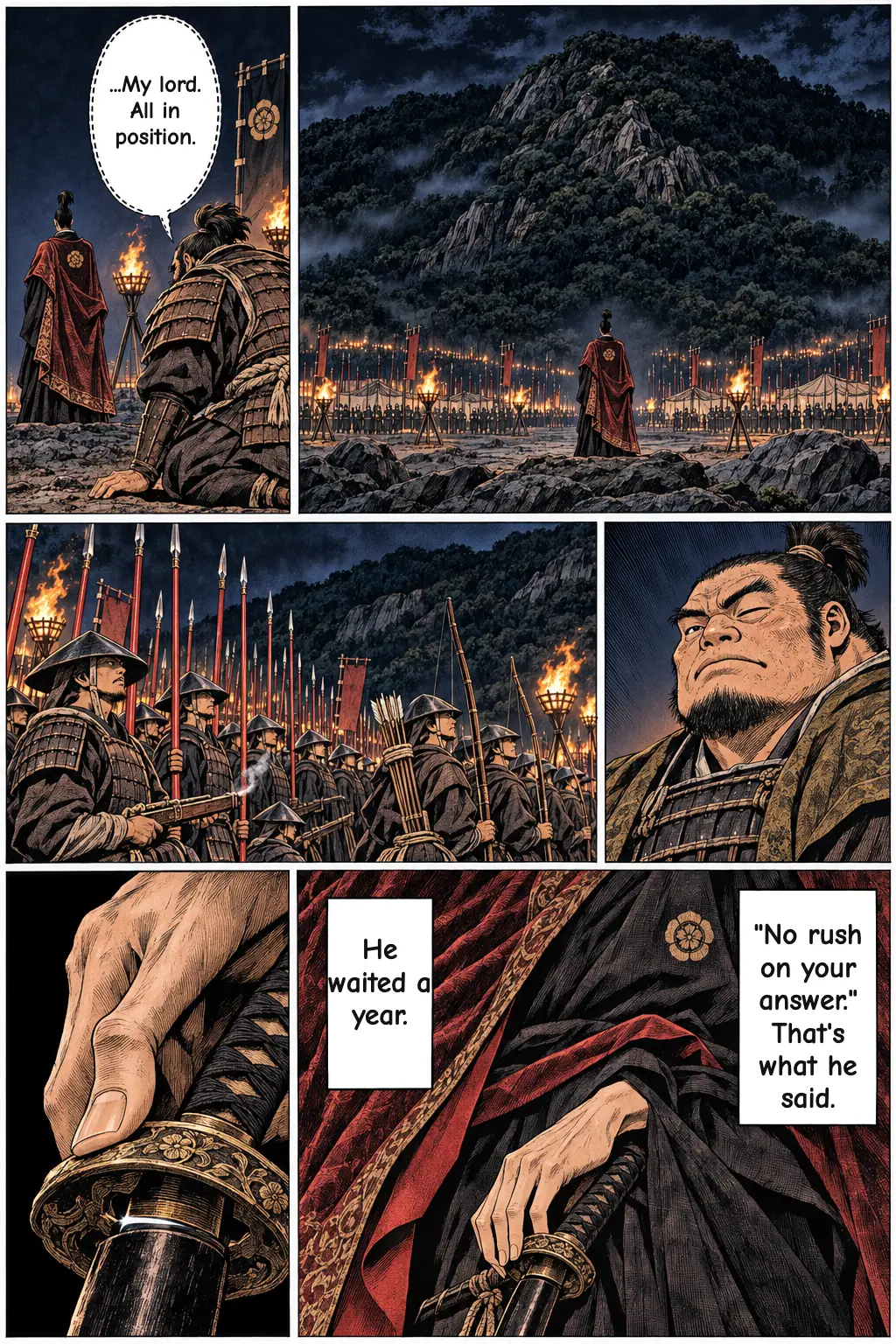
By the Warring States period (the Sengoku era of civil war), the mountain was also a worldly power, with large landholdings and armed monks. An enemy camped on its slopes was a direct military threat to Nobunaga. The 1570 standoff ended in a truce, and his forces withdrew. In Gyūichi's telling, then, the fire is not a sudden rage but a threat made openly and carried out a year later.
A Chronicler Caught Between Blame and Pity
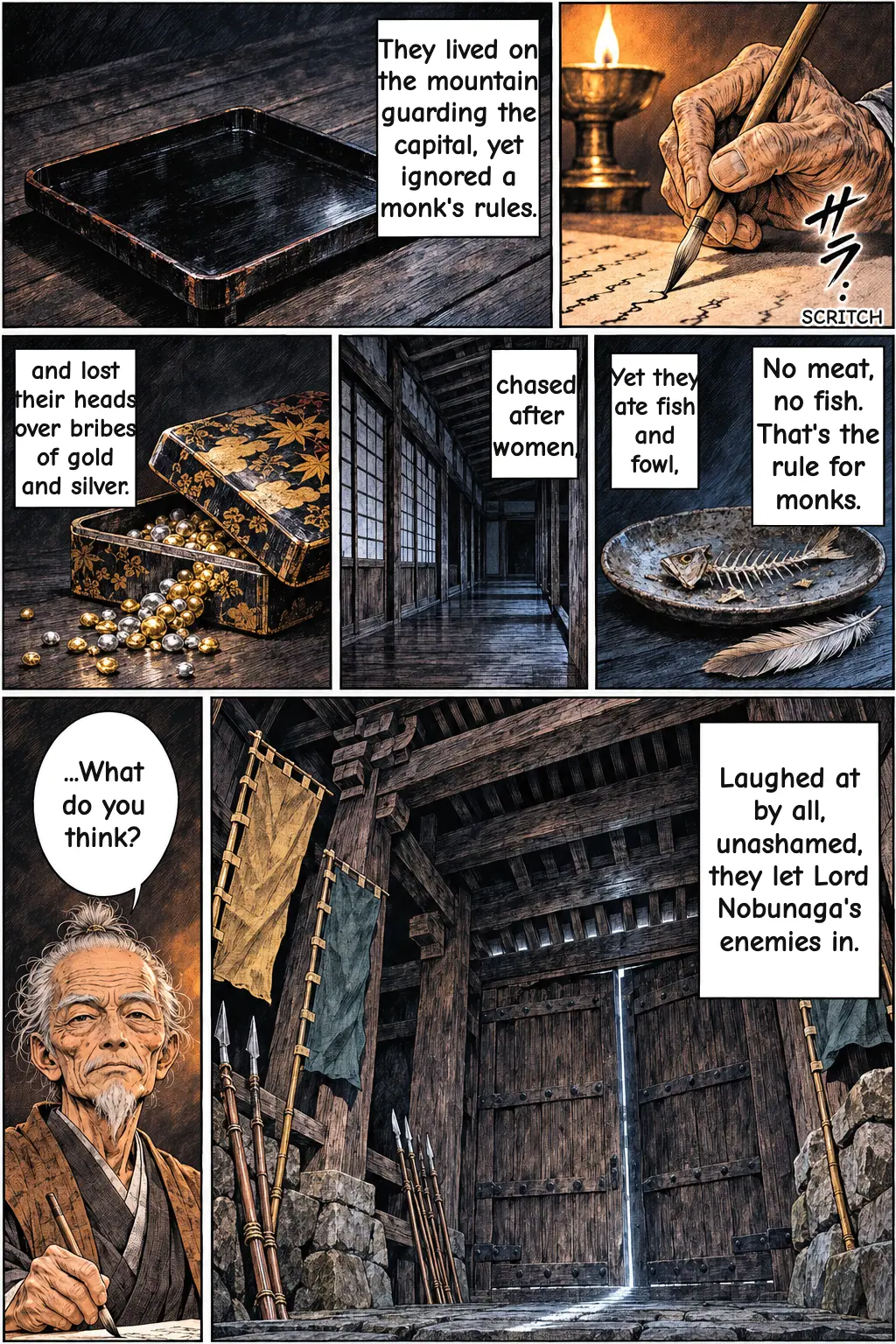
Gyūichi's charges against the monks are harsh. He says they ignored the discipline of their calling, indulged in sexual excess, ate fish and fowl, took bribes of gold and silver, and let Nobunaga's enemies do as they pleased on the mountain. Readers should remember who is speaking: he was Nobunaga's man, and this passage gives no version from the monks themselves.
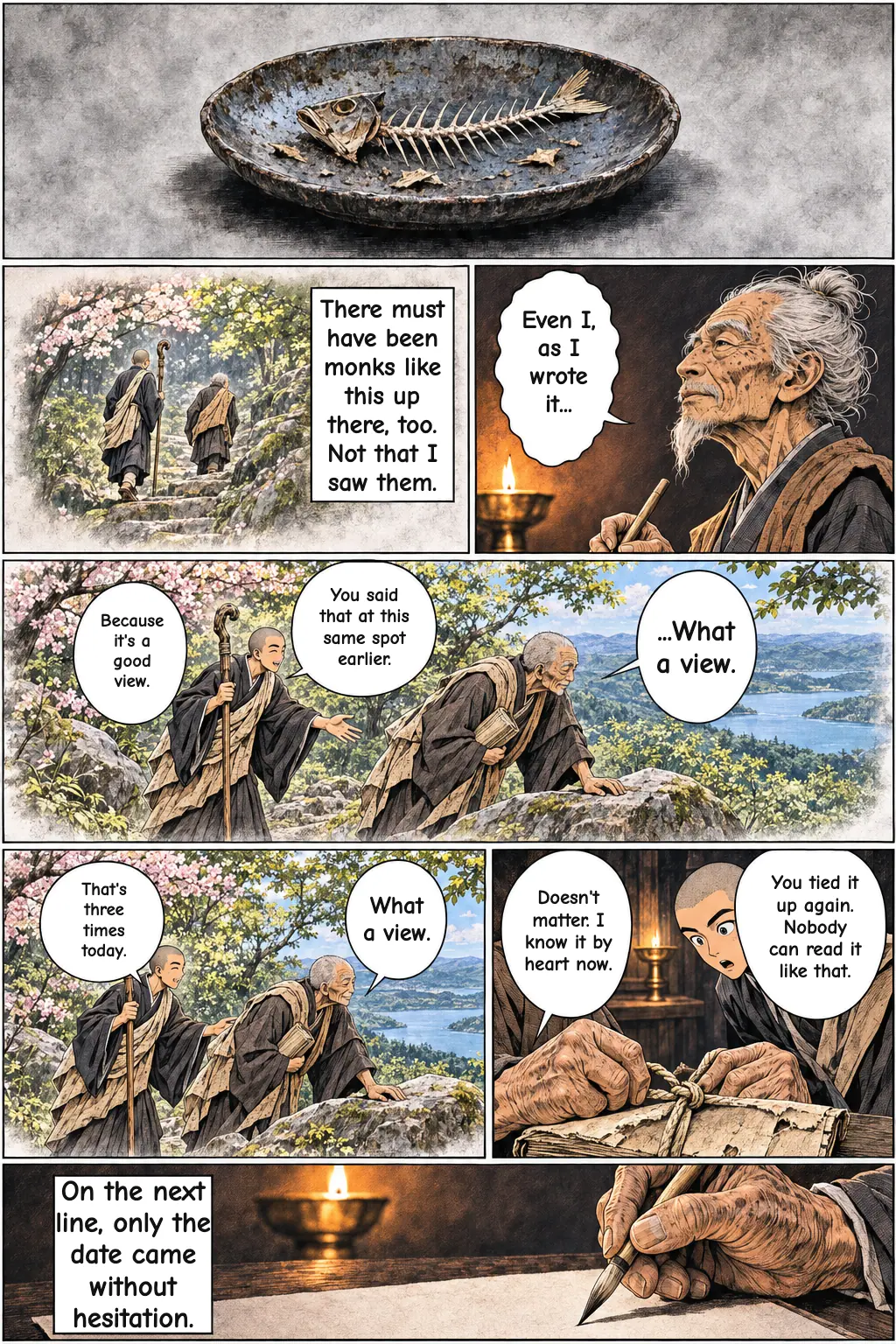
Yet he does not write the burning as a simple triumph. In his own voice he calls what happened pitiful and describes the executions as too terrible to look at. Blame and pity stand side by side, unresolved, and that tension is much of what makes this short passage so powerful.
What Historians Still Debate
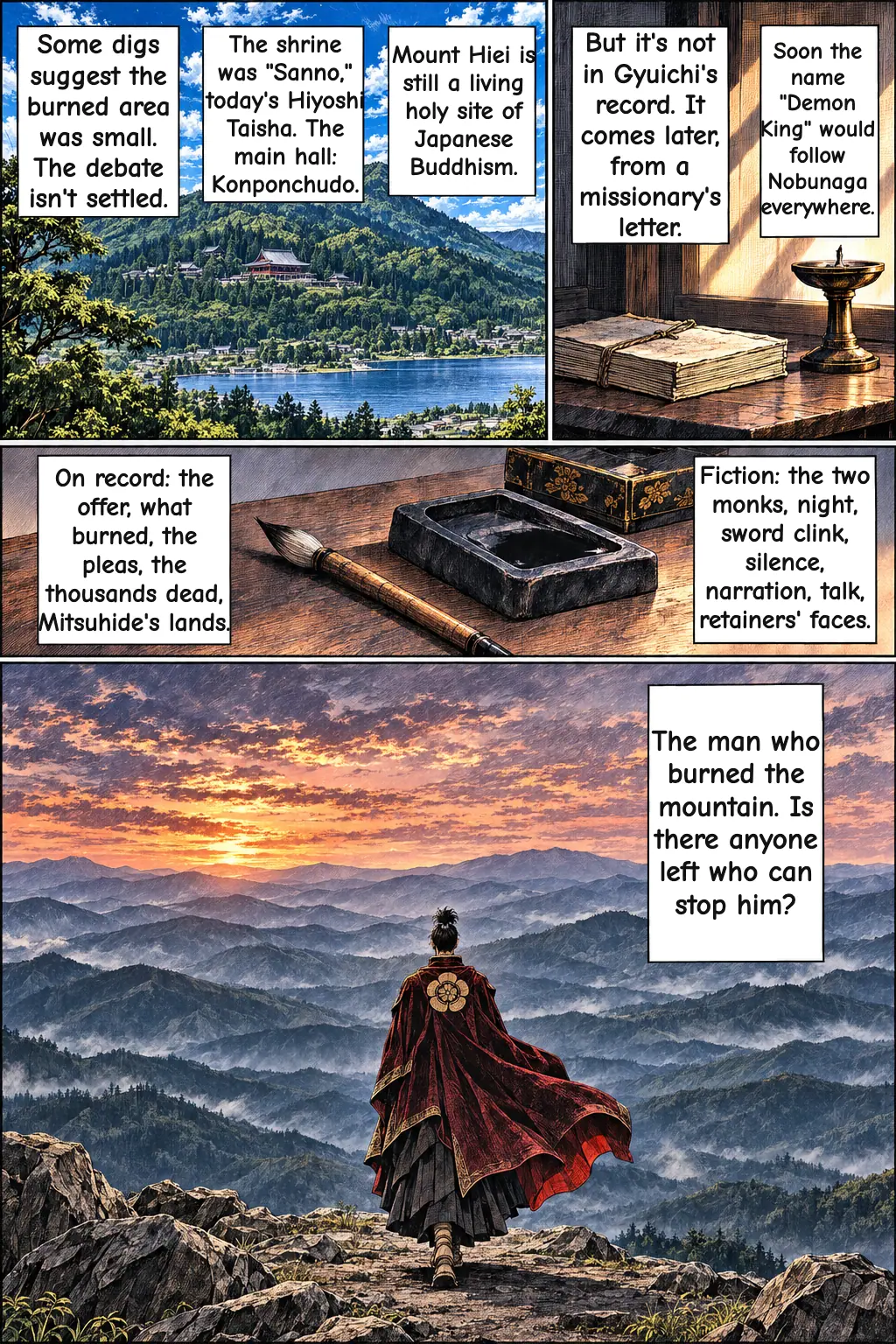
The scale of the destruction is one open question. Some researchers, pointing to excavations on the mountain, suggest that fewer buildings burned in 1571 than the chronicle implies. There is also a view that many people were living at Sakamoto rather than on the peak by this time. Death tolls vary by source and cannot be fixed precisely.
Two popular details need care as well. Nobunaga's famous nickname, the Demon King of the Sixth Heaven, does not come from this chronicle. It appears in a letter by the Jesuit missionary Luís Fróis, in an anecdote about an exchange with the warlord Takeda Shingen, and tying it directly to the fire is a later reading. The tale of Nobunaga's retainer Sakuma Nobumori protesting the attack also comes from later books, not this passage.
What the Manga Changes
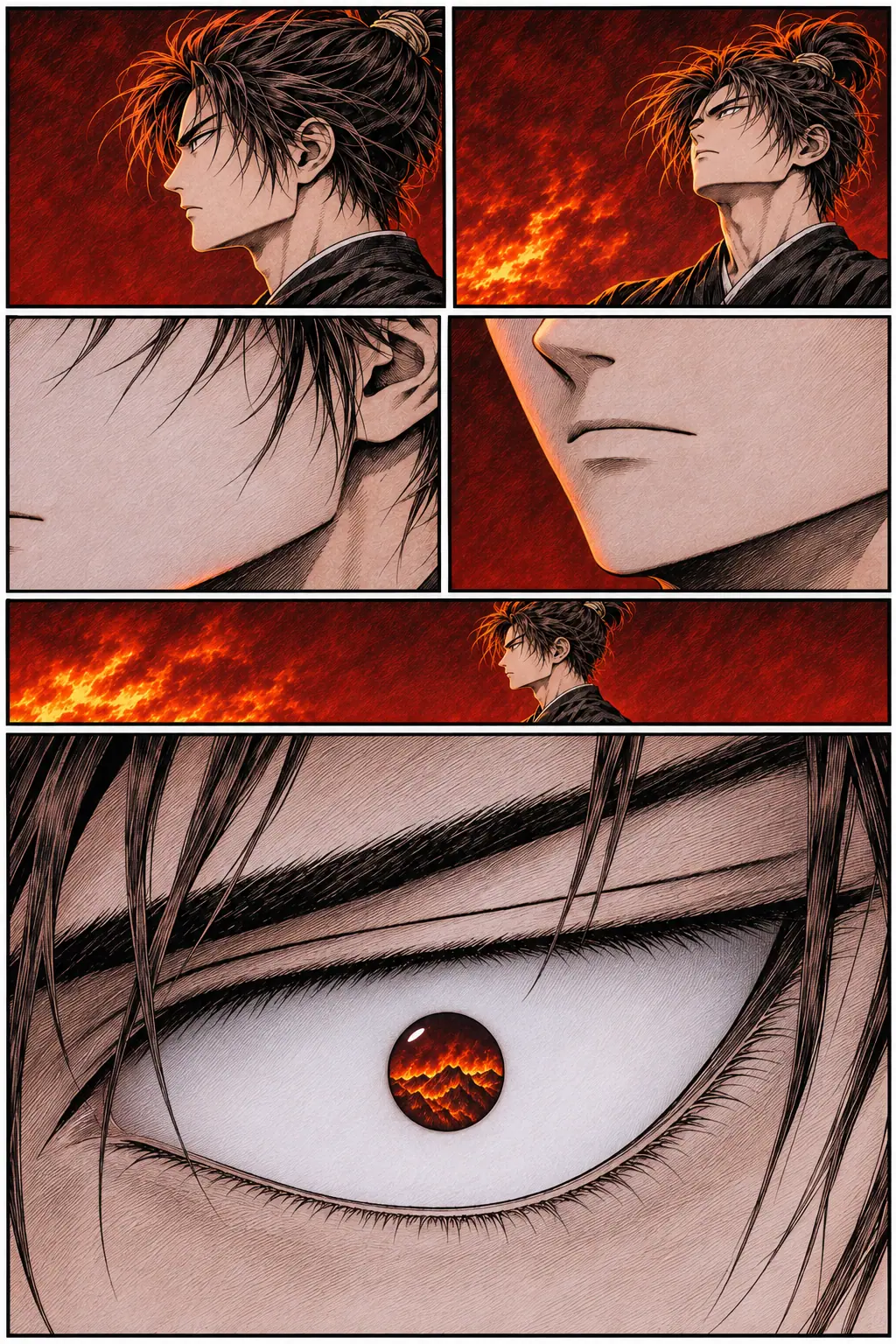
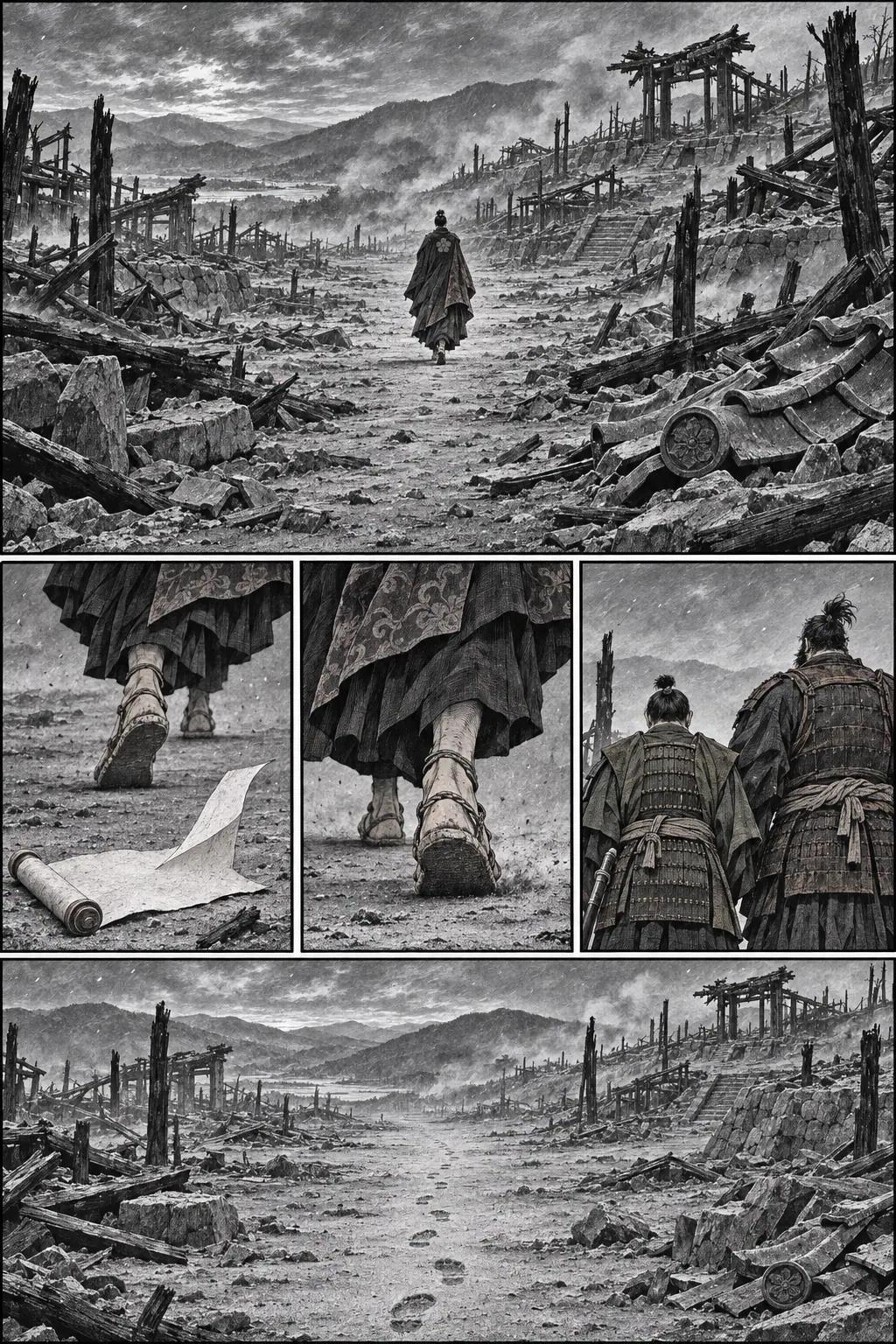
The manga's backbone comes from the chronicle: the three choices, the burning, the flight of the people, the refused pleas, and Mitsuhide's reward. Around that, it adds drama of its own. Nobunaga's silence on the night of the fire is one example. The chronicle records no words from him that day, and the manga turns that gap into a deliberate choice, though he clearly speaks when he sets his terms.
Gyūichi also becomes a character. The chronicle never places him in the scene or describes any hesitation, so the old chronicler whose brush stops is the manga's invention, built from the mixed feelings in his writing. The wording of the negotiations, individual voices begging for mercy, and unease among unnamed men are also creative additions. So is the suggestion that the "Demon King" began here, which is the story's interpretation, not historical fact.
The violence is mostly suggested through flames, shadows, and scattered sutras, and the deaths of children are not shown directly.
Where to Read It
To see these events as a story, read Episode 9, "Join Me, Stay Out, or Burn," of ODA NOBUNAGA: The Demon King of the Warring States here on Manga Portal. Every episode is free, and no sign-up is needed, so you can go back to the beginning or simply continue from this page.
Characters in this episode
Oda Nobunaga
The warlord who gives Mount Hiei three choices and, when the monks refuse, burns the mountain and denies all pleas for mercy.
Ōta Gyūichi
Nobunaga's retainer and the author of the Shinchō Kōki, who condemns the monks yet calls the slaughter pitiful.
The monks of Mount Hiei
The clergy who reject Nobunaga's terms and whom Gyūichi accuses of corruption, a charge written from Nobunaga's side.
The people of the mountain's foot
Unnamed men, women, and children who flee barefoot to Hachiōji hill and are caught up in the killing.
Akechi Mitsuhide (Akechi Jūbei)
The retainer given the Shiga district after the attack, who settles at Sakamoto and later turns on Nobunaga at Honnō-ji in 1582, outside this passage.
The Asai and Asakura
Warlord houses at war with Nobunaga, whose armies camp on Mount Hiei in 1570 and set the conflict in motion.
FAQ
Why did Oda Nobunaga burn Mount Hiei?
In 1570 the monks let his enemies, the Asai and Asakura, camp on the mountain and refused his offer to join him or stay neutral. He had warned them he would burn it, and he did so in 1571. Gyūichi also presents the monks' alleged corruption as part of the justification.
How many people died at Mount Hiei in 1571?
The Shinchō Kōki says several thousand bodies lay scattered, but it gives no exact count. Other sources give varying numbers, and some researchers question the scale of the destruction.
Did Nobunaga kill women and children at Mount Hiei?
According to the Shinchō Kōki, yes. It says people including women and young boys were captured, begged for their lives, and were beheaded on his orders.
Is the burning of Mount Hiei why Nobunaga was called the Demon King?
Not directly. The name Demon King of the Sixth Heaven does not appear in the Shinchō Kōki; it comes from a letter by the missionary Luís Fróis about an exchange with Takeda Shingen. Linking it to the fire is a later view, and the manga uses that link as interpretation.
What is the Shinchō Kōki?
It is a chronicle of Oda Nobunaga's life written by his retainer Ōta Gyūichi. Historians value it as a major source for Nobunaga's career, while keeping in mind that its author served him.