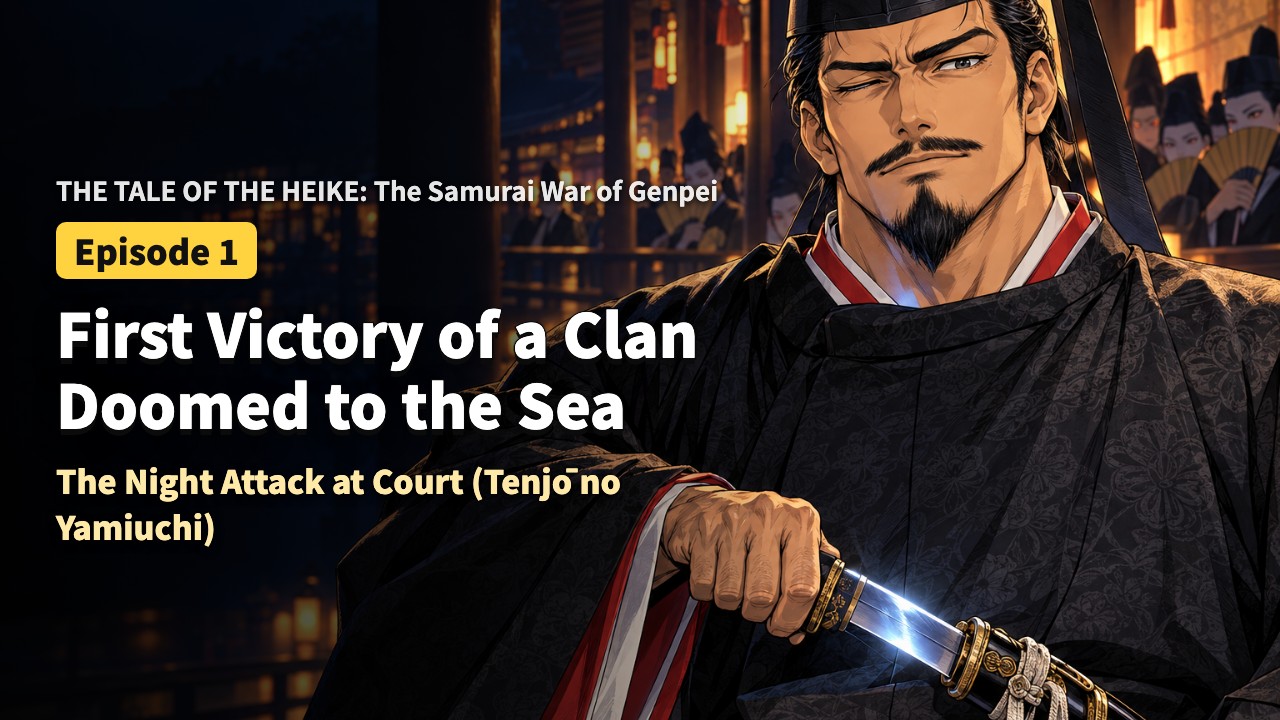
Episode 1The Day the Viper Stopped LaughingNobunaga Meets Saitō Dōsan at Shōtoku-ji
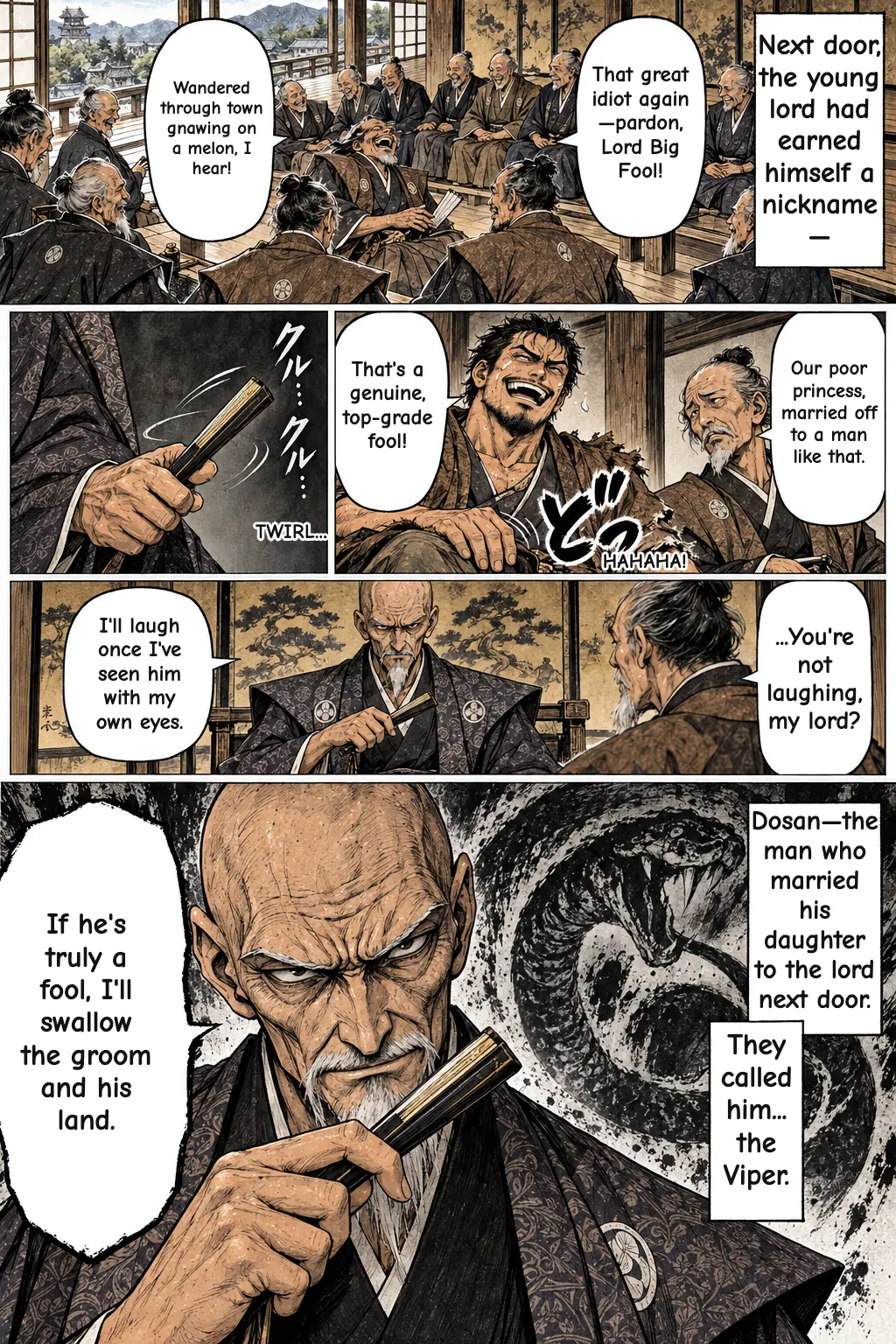
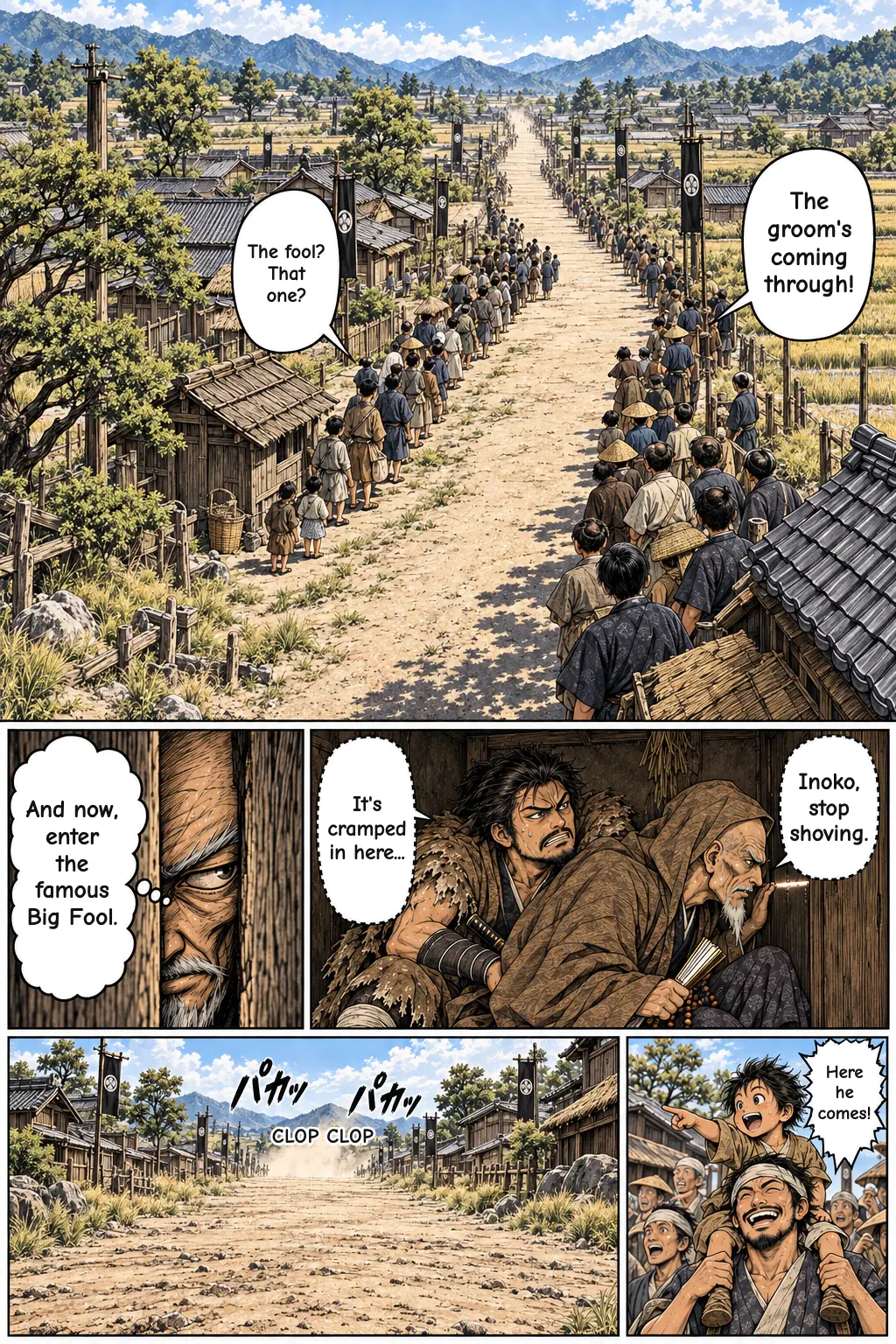
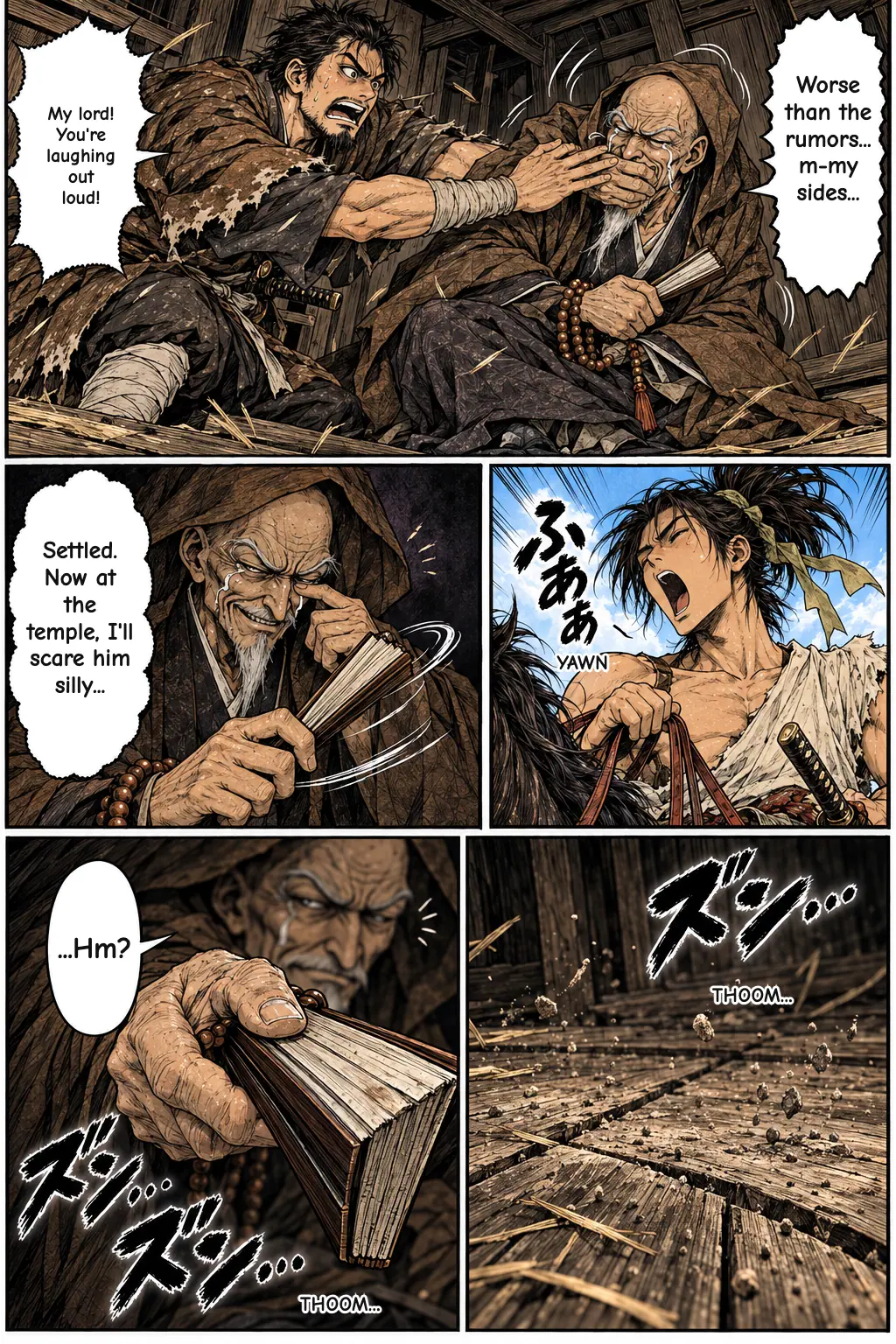
Young Nobunaga is the laughingstock of the land—"the Big Fool." Saito Dosan, the old warlord they call the Viper, married his daughter off to him, and now he wants to see the groom with his own eyes. One peek at the procession from a roadside hut, and one quick change behind a temple folding screen, wipe the smile right off the old man's face.
Bookmark the series page so you can jump back in when the next episode is out: SAMURAIRSS for this series
Story summary
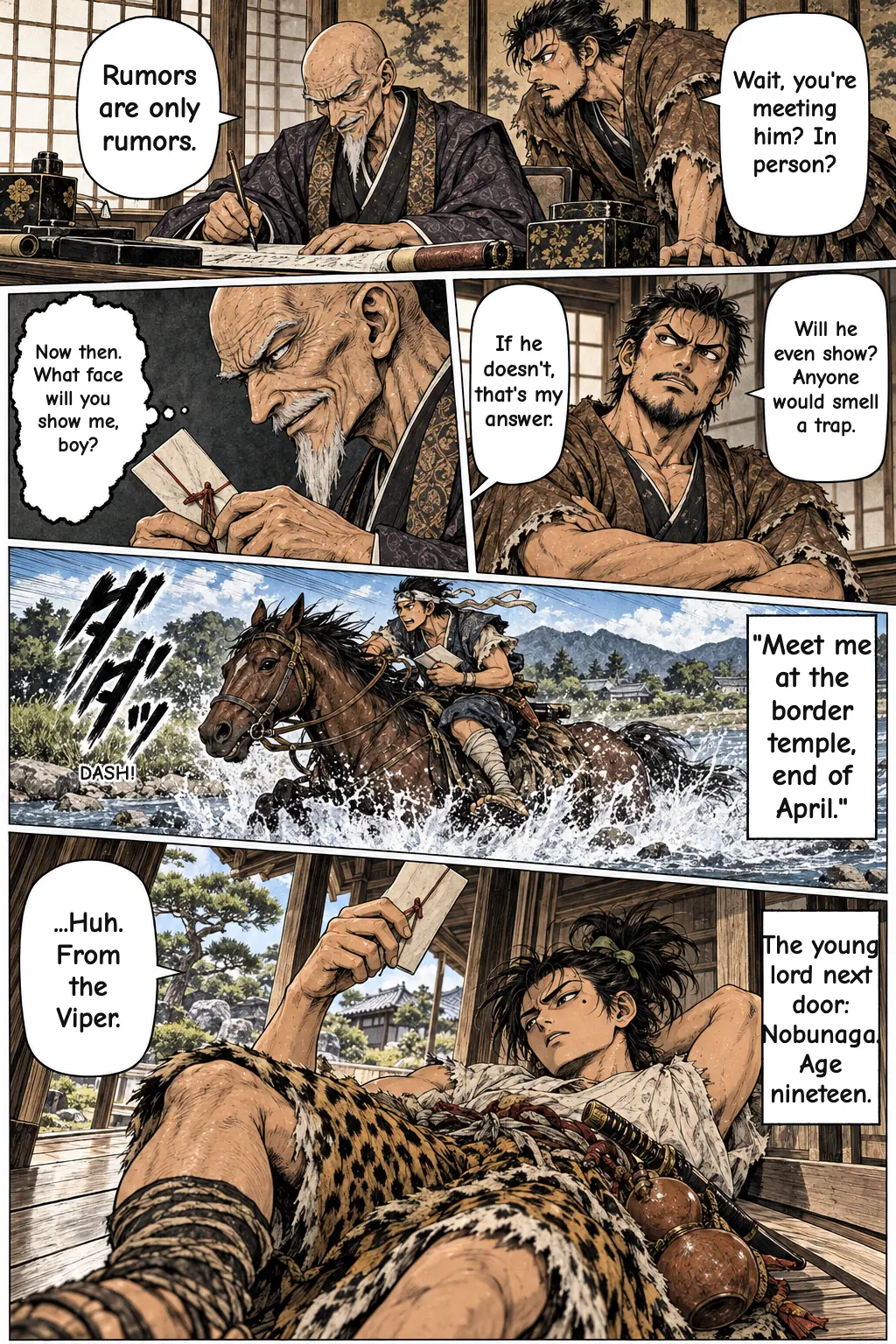
In mid-sixteenth-century Japan, during the Warring States period, the young Oda Nobunaga ruled part of Owari Province (today western Aichi Prefecture). People around Saitō Dōsan, lord of the neighboring province of Mino (today Gifu), kept telling him that Nobunaga was an oddball and a complete fool. Dōsan had married his daughter to Nobunaga, and he kept saying the young man was no fool. He decided to find out for himself. He proposed a meeting at Shōtoku-ji, a temple in the town of Tomita in Owari. Nobunaga agreed without hesitation.
Nobunaga Meets Dōsan at Shōtoku-ji: The 'Big Fool' Story Explained
In short: The meeting at Shōtoku-ji is a famous episode from the Shinchō Kōki (The Chronicle of Lord Nobunaga) by Ōta Gyūichi. Saitō Dōsan, lord of Mino, spies on his son-in-law Oda Nobunaga, whom everyone calls a "big fool." Nobunaga arrives looking wild, then changes into formal dress behind a screen. Dōsan leaves convinced that his own sons will one day serve this young man.
The Original Story: A Test at a Temple Town
In mid-sixteenth-century Japan, during the Warring States period, the young Oda Nobunaga ruled part of Owari Province (today western Aichi Prefecture). People around Saitō Dōsan, lord of the neighboring province of Mino (today Gifu), kept telling him that Nobunaga was an oddball and a complete fool. Dōsan had married his daughter to Nobunaga, and he kept saying the young man was no fool. He decided to find out for himself. He proposed a meeting at Shōtoku-ji, a temple in the town of Tomita in Owari. Nobunaga agreed without hesitation.
Tomita was a temple town tied to the Honganji, a powerful Buddhist network centered in Osaka. According to the chronicle, both Mino and Owari had granted it special privileges, so it worked as neutral ground. The meeting took place in late April of the old calendar. The year is usually given as 1553, but the chronicle's early dates are uncertain, so historians treat this as the most common view, not a settled fact.
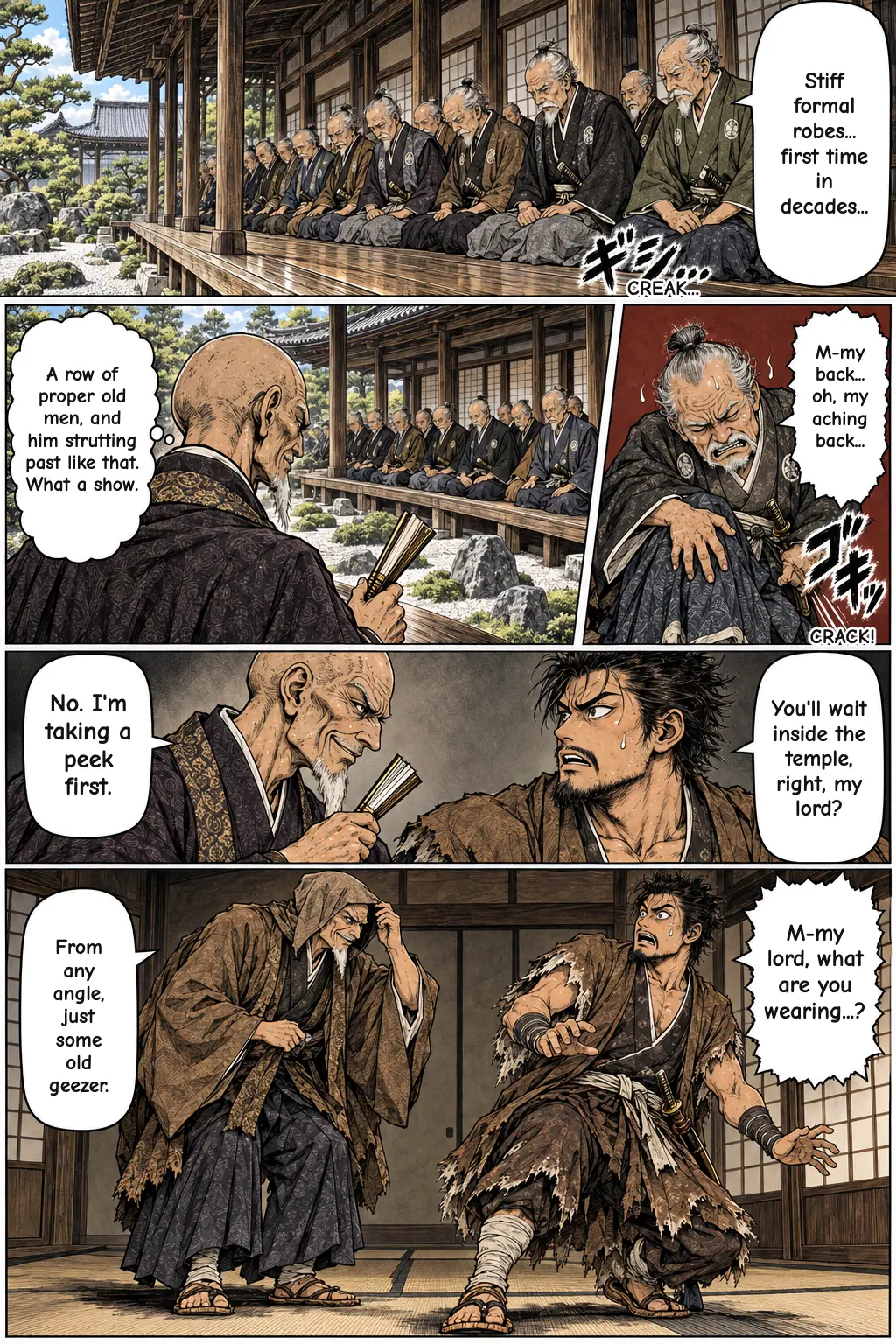
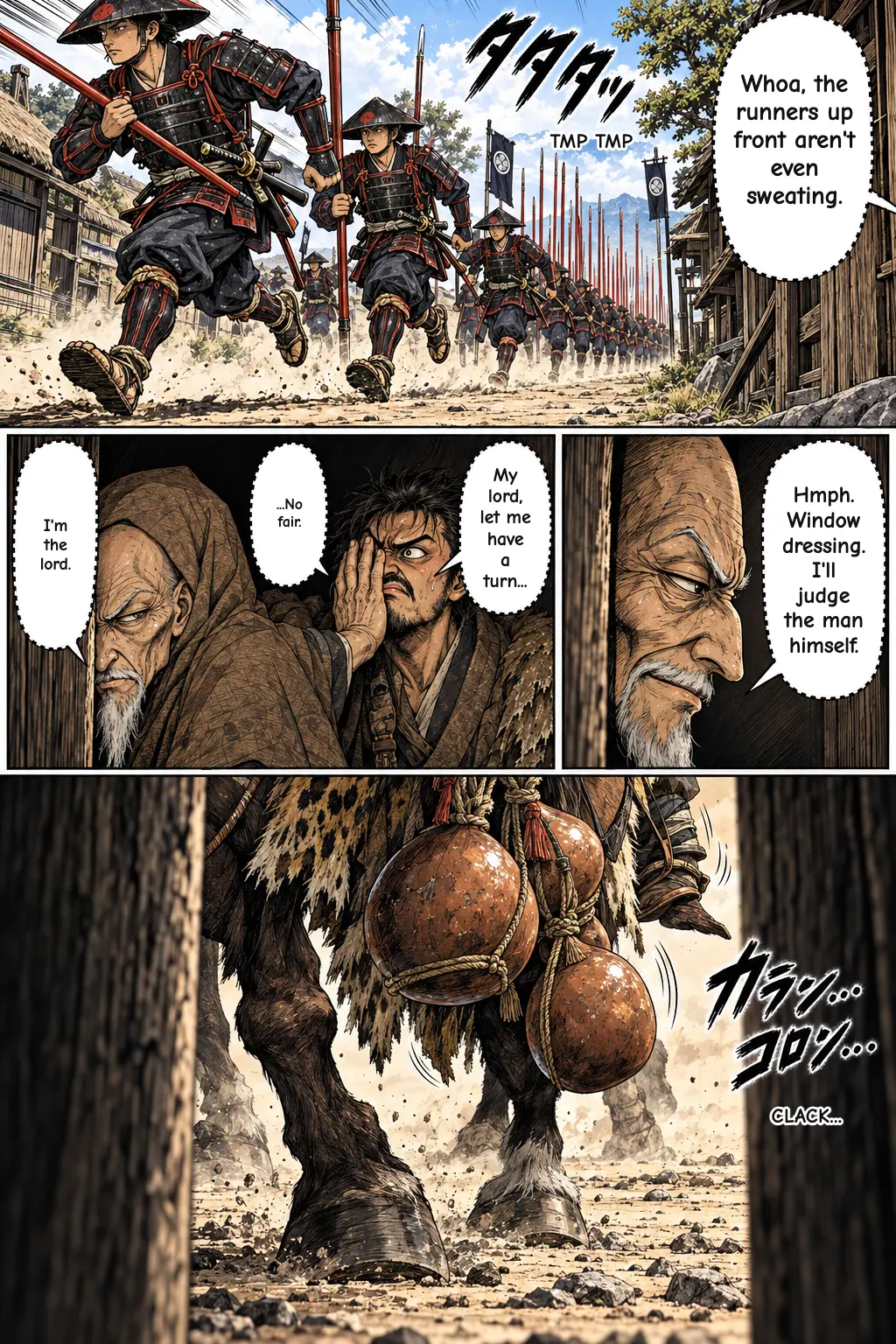
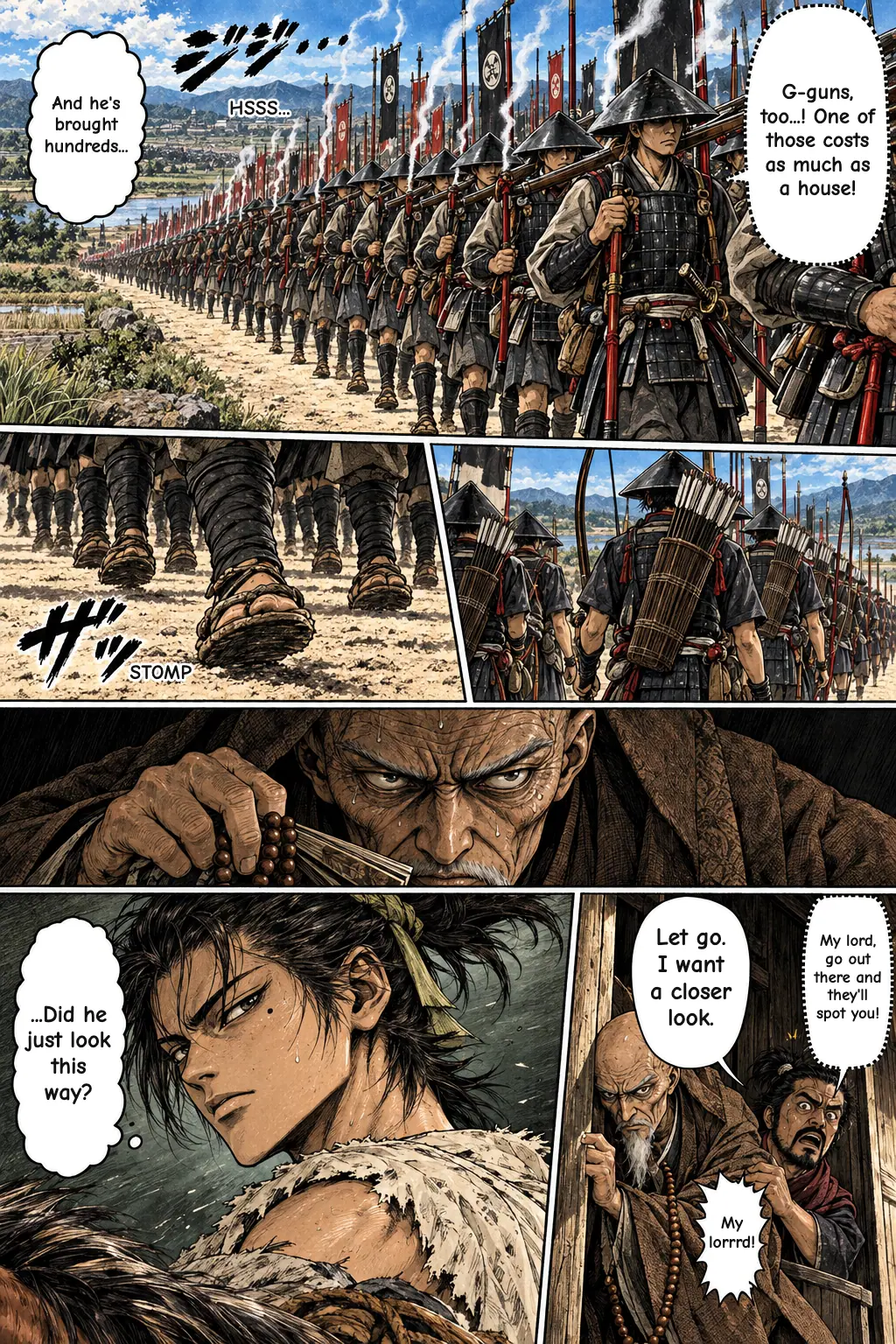
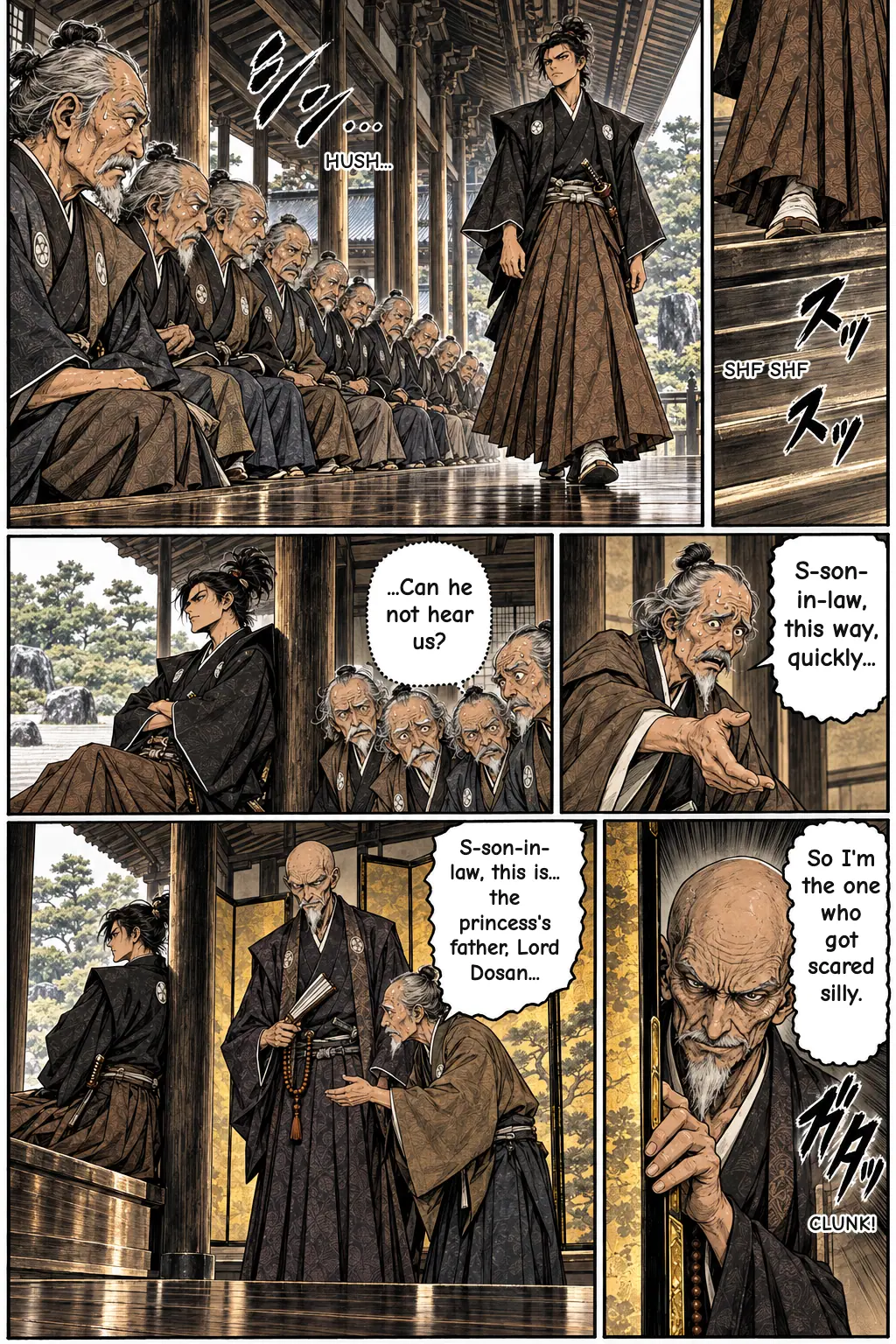
Dōsan planned a little trap. He lined up seven or eight hundred of his senior retainers along the temple veranda, all in old-fashioned, very formal robes, so that the scruffy groom would have to walk past them and feel small. Then Dōsan hid in a small house at the edge of town to watch the procession go by.
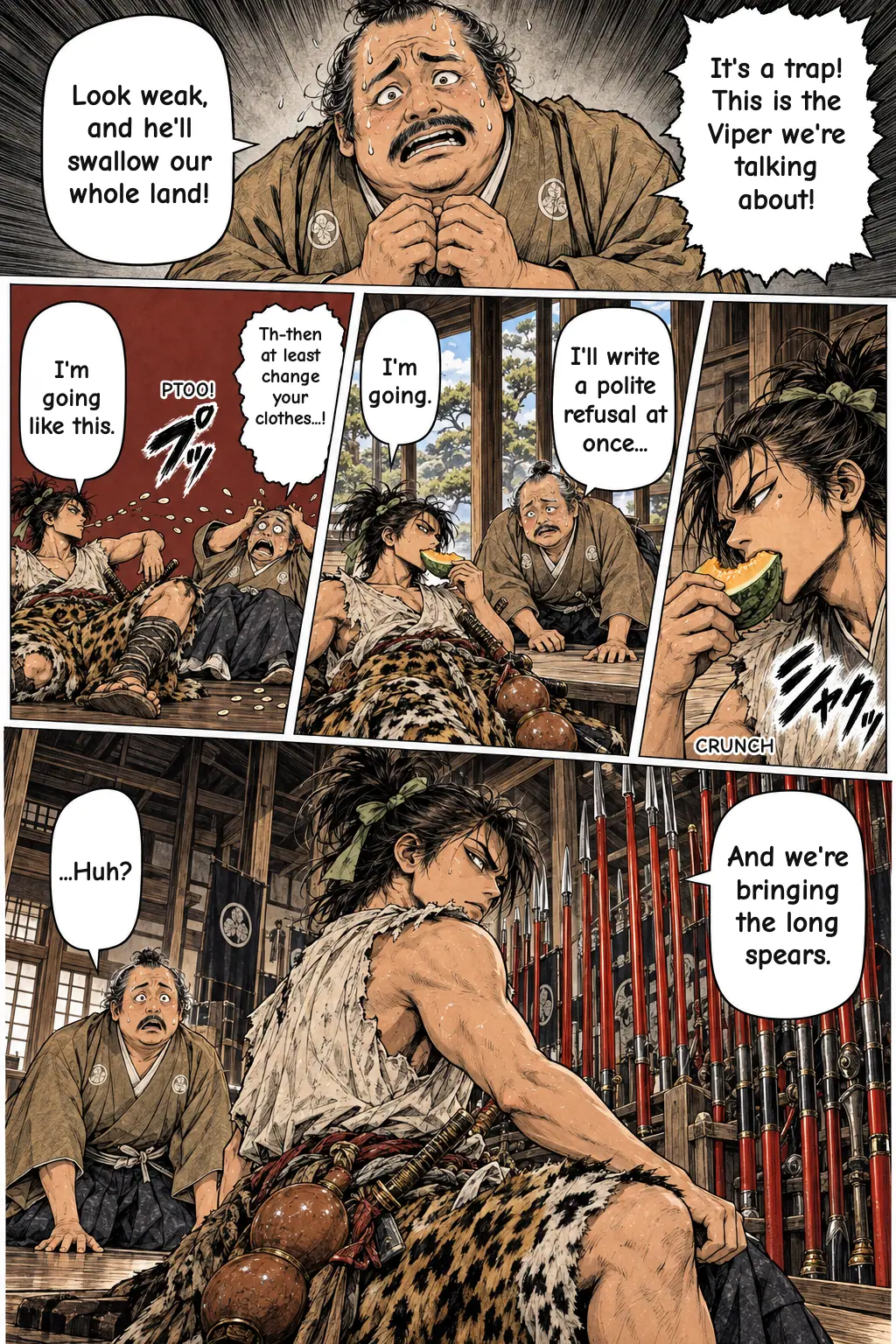
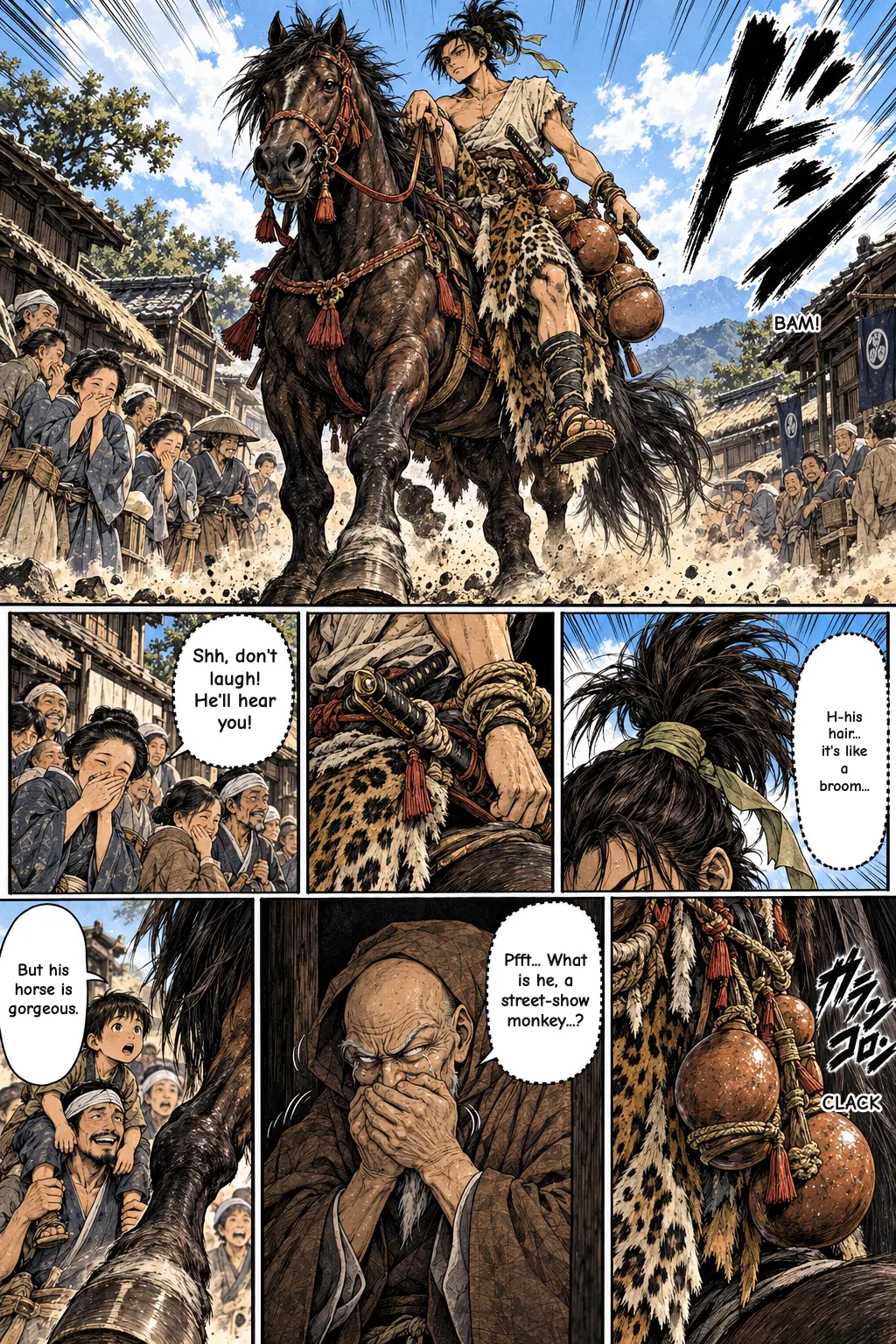
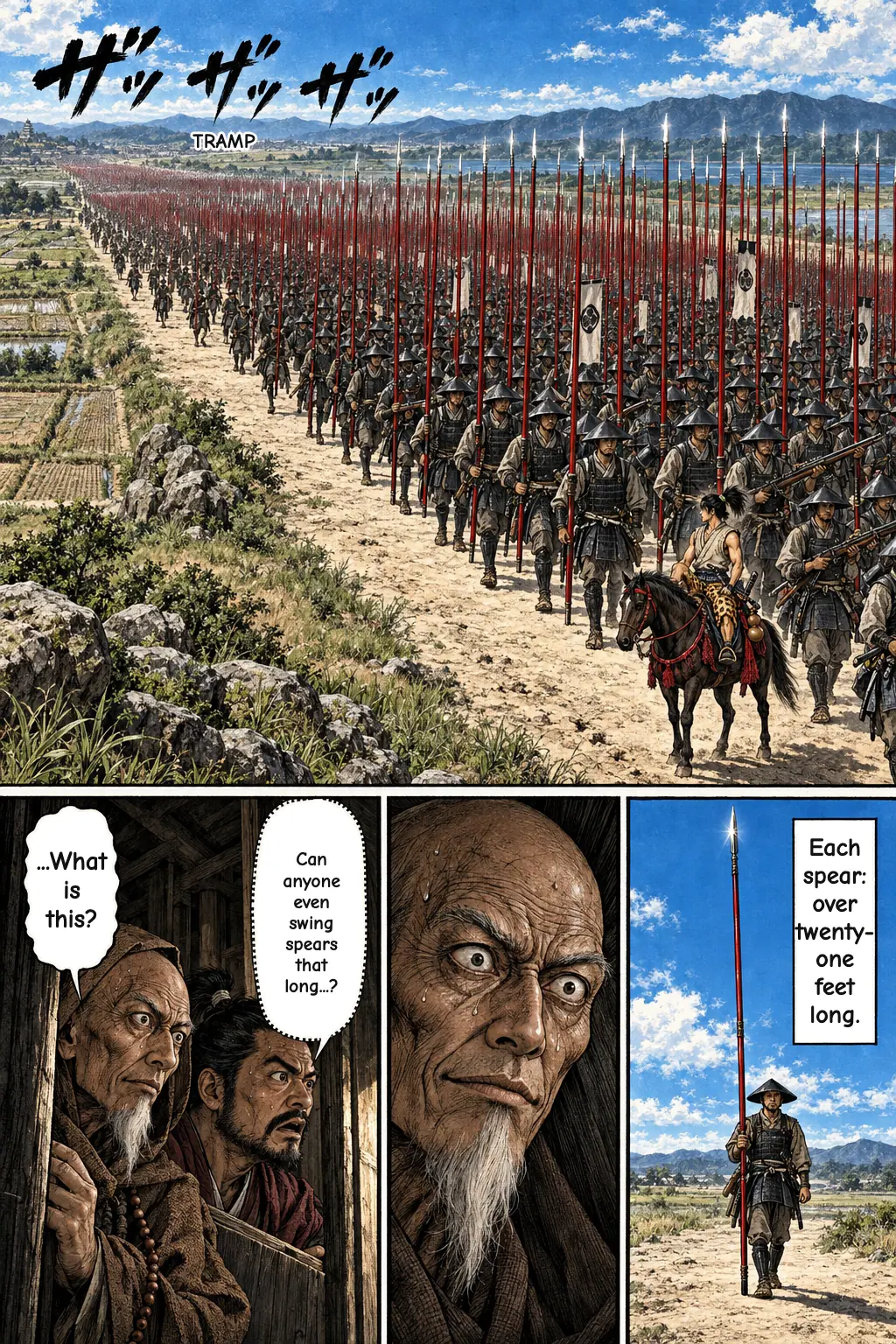
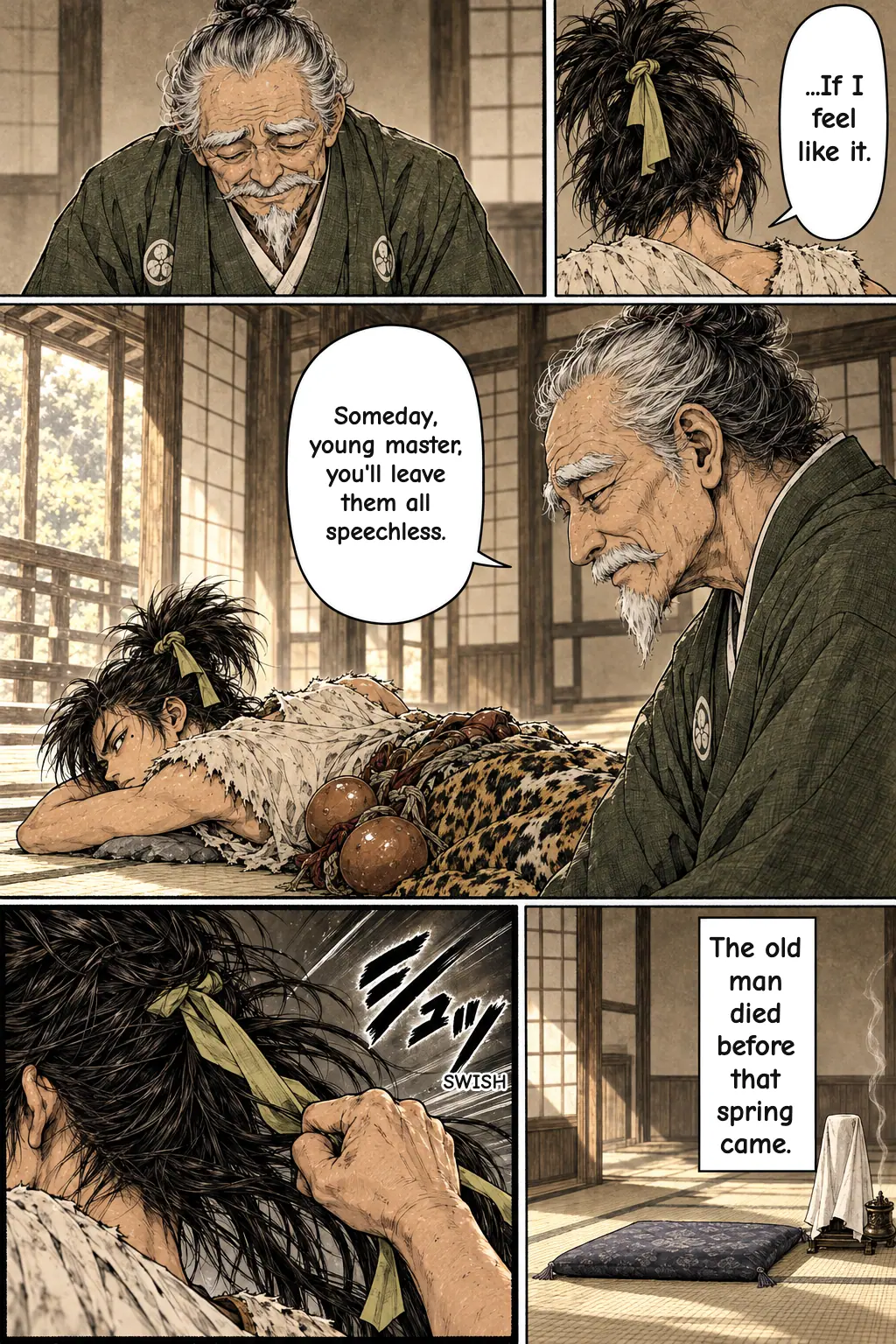
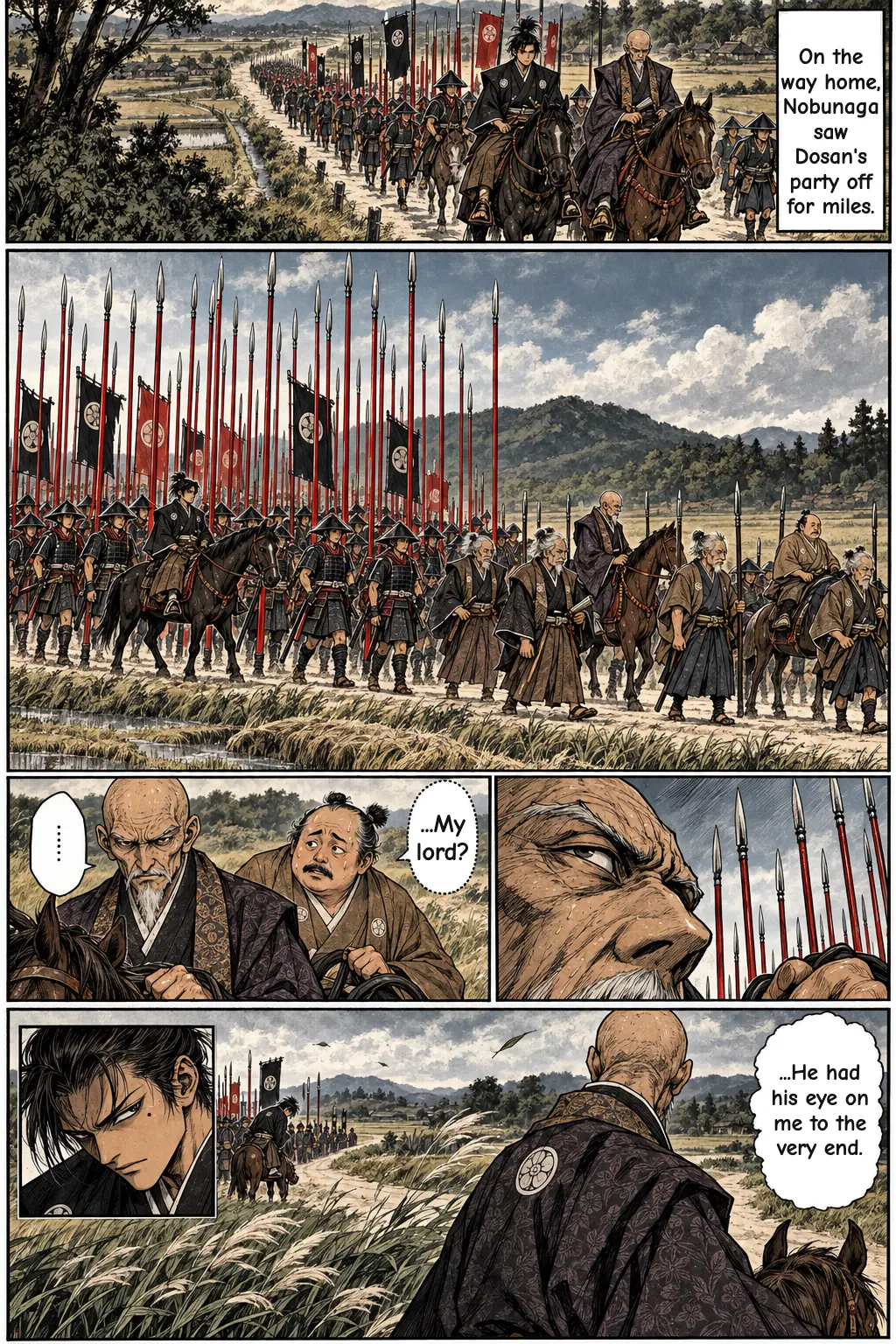
What he saw was strange. Nobunaga rode in with his hair tied up in a tall tea-whisk topknot and wore a light cotton robe with the sleeves torn off. Flint pouches and gourds hung from his waist, "like a monkey trainer," and his short trousers were patched together from tiger and leopard skins. But behind him marched a serious army: about five hundred long spears painted vermilion, each roughly six meters long, plus some five hundred bows and guns.
The Quick Change and "De aru ka"
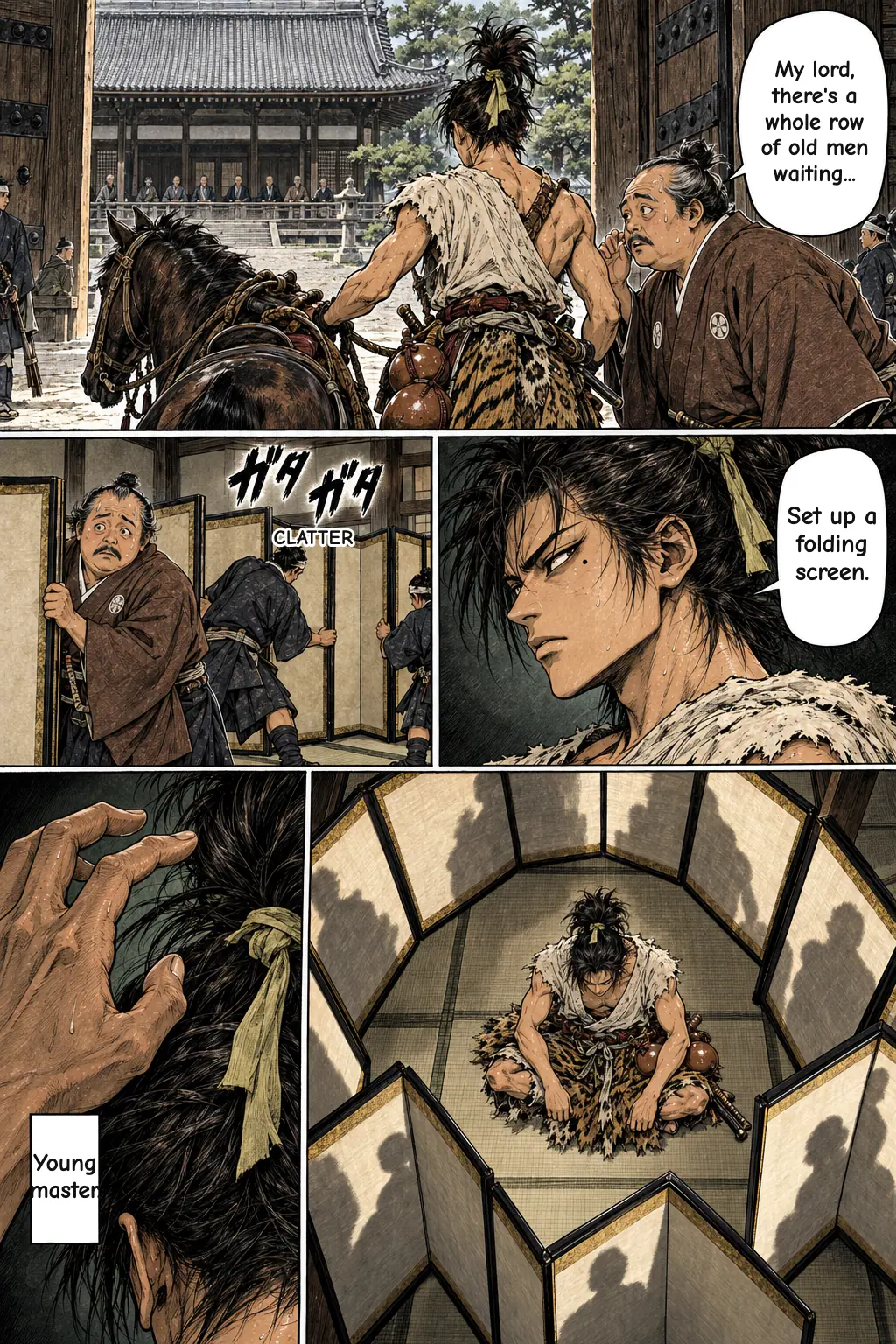
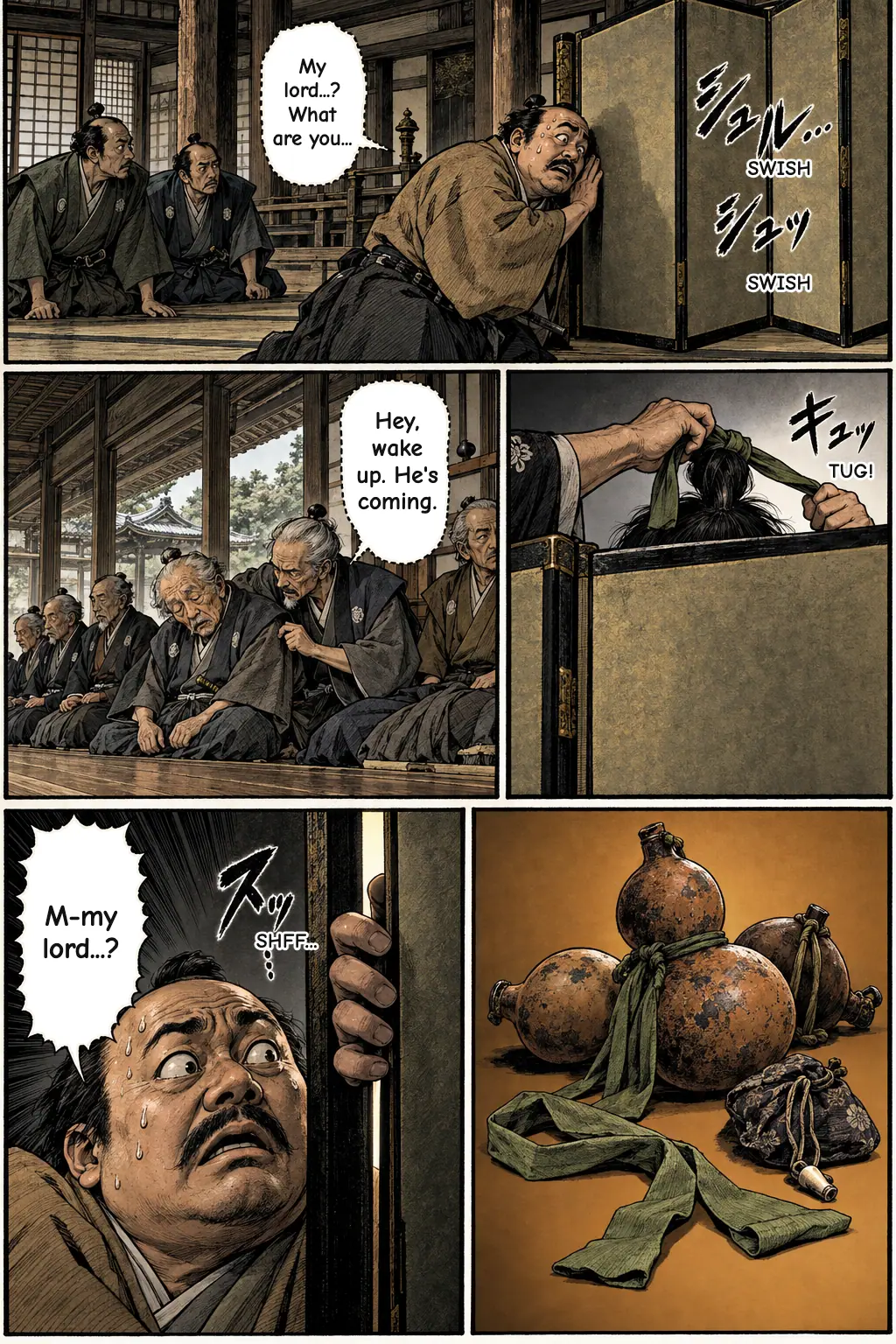
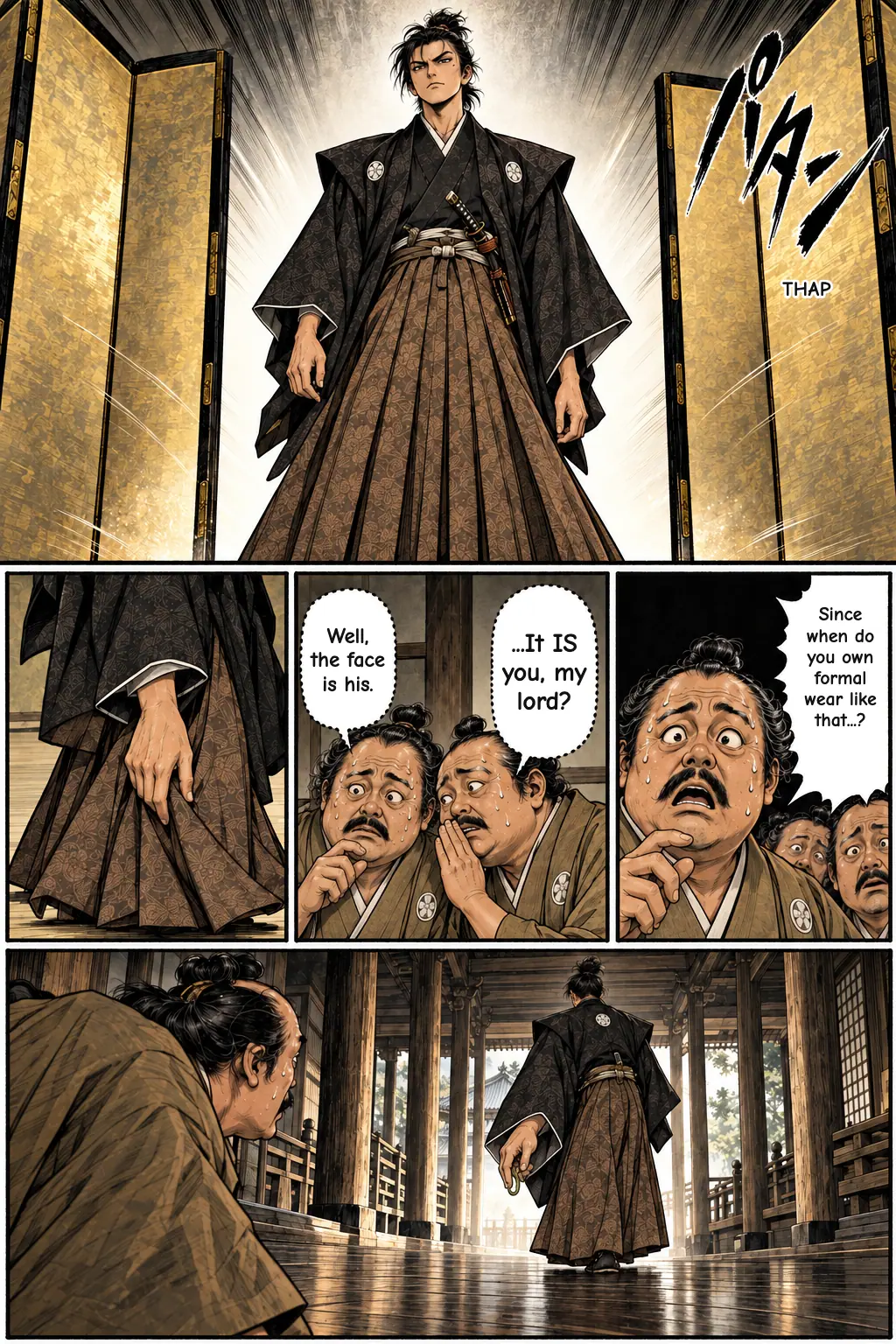
At the temple, Nobunaga had folding screens set up around himself. For the first time in his life he tied his hair in a proper formal style, put on long brown formal trousers that nobody knew he had prepared, and slipped a small sword into his belt. His own retainers were stunned. Had all that foolishness been an act?
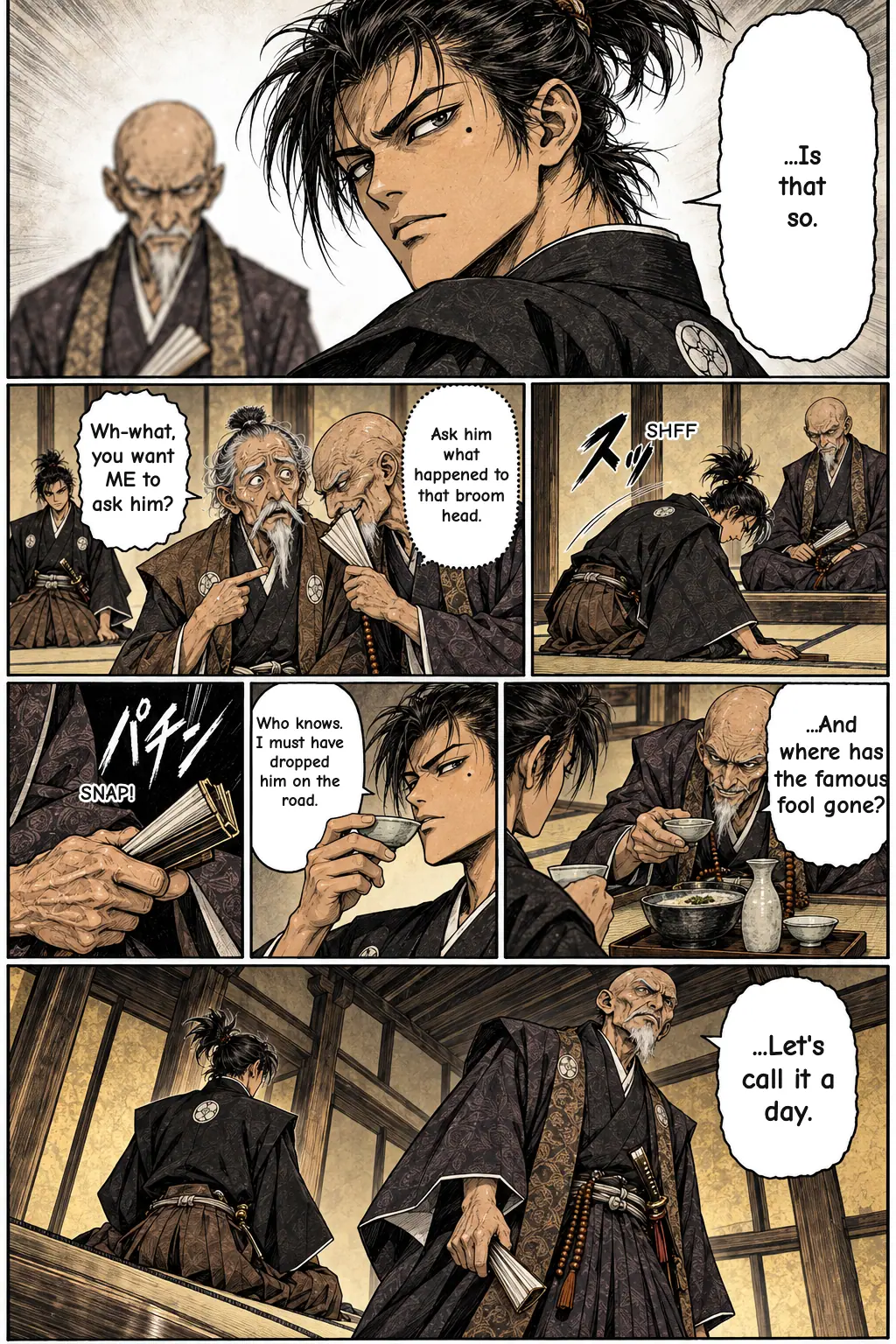
Nobunaga then walked up into the hall. Two of Dōsan's men, Hotta Dōkū and Kasuga Tango, urged him to come along quickly, but he ignored them, strolled past the rows of samurai, and leaned against a pillar. When Dōsan finally stepped out from behind a screen, Nobunaga still acted as if he had not noticed. Hotta Dōkū had to announce, "This is Lord Yamashiro" (Dōsan's title). Nobunaga answered only "De aru ka", roughly "Is that so," then bowed politely and took his seat. They shared rice in hot broth (yuzuke) and cups of sake, and the meeting ended without trouble. Dōsan, looking as if he had bitten something bitter, said they should meet again soon and left.
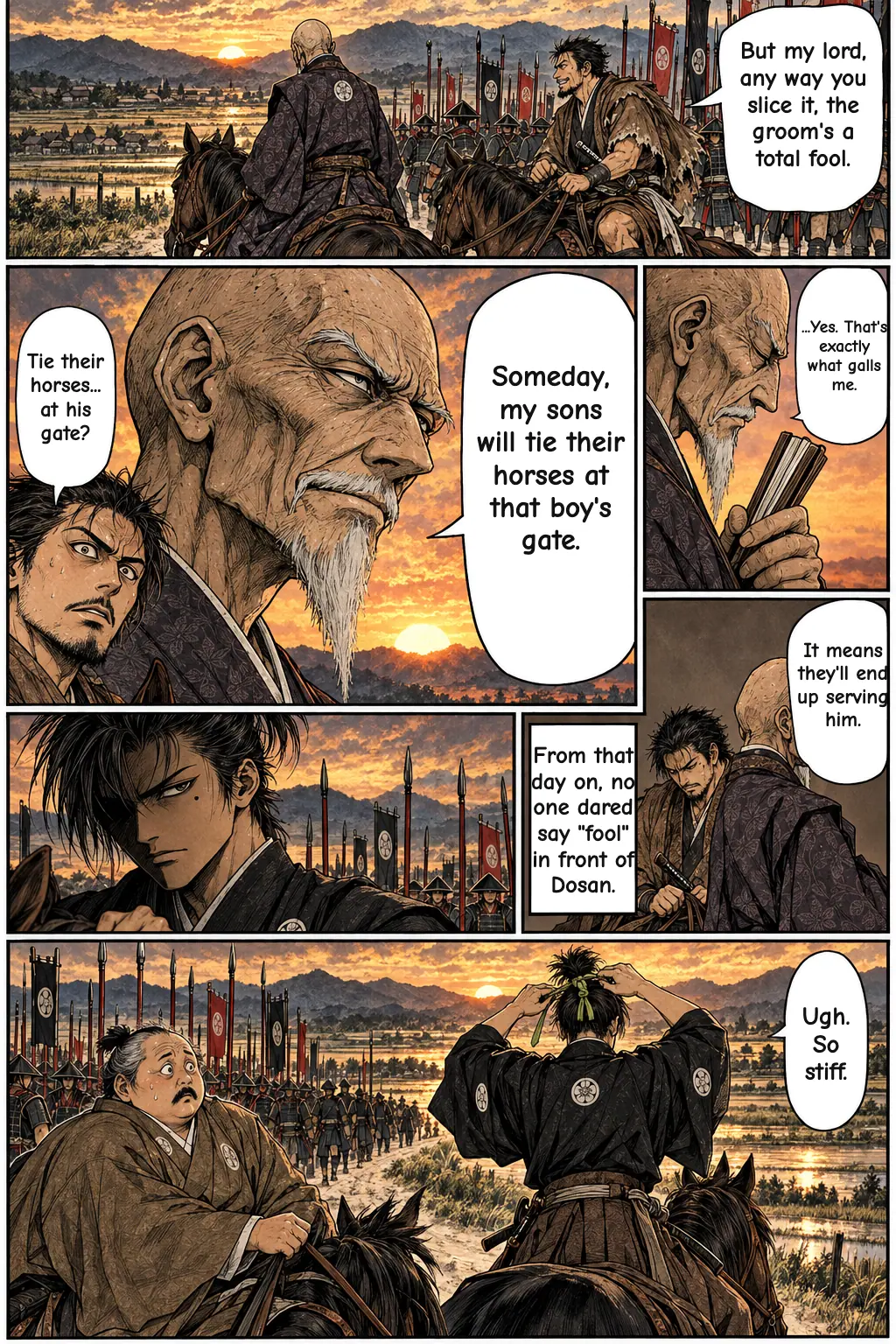
On the road home, at a place called Akanabe, Dōsan's retainer Inoko Hyōsuke said that Nobunaga was clearly a fool after all. Dōsan replied that this was exactly what made him bitter: his own sons, he predicted, would someday be tying their horses outside that "fool's" gate, meaning they would serve him. After that day, the chronicle says, nobody called Nobunaga a fool in front of Dōsan again.
Main Characters
Saitō Dōsan, lord of Mino and Nobunaga's father-in-law, is a schemer who sets up the test and spies on the procession. He is popularly nicknamed "the Viper" (Mamushi), but that name does not appear in this chapter of the chronicle; it comes from later tradition. Oda Nobunaga, the young lord of Owari, is mocked as a fool yet arrives with a large, modern army and a sharp sense of timing.
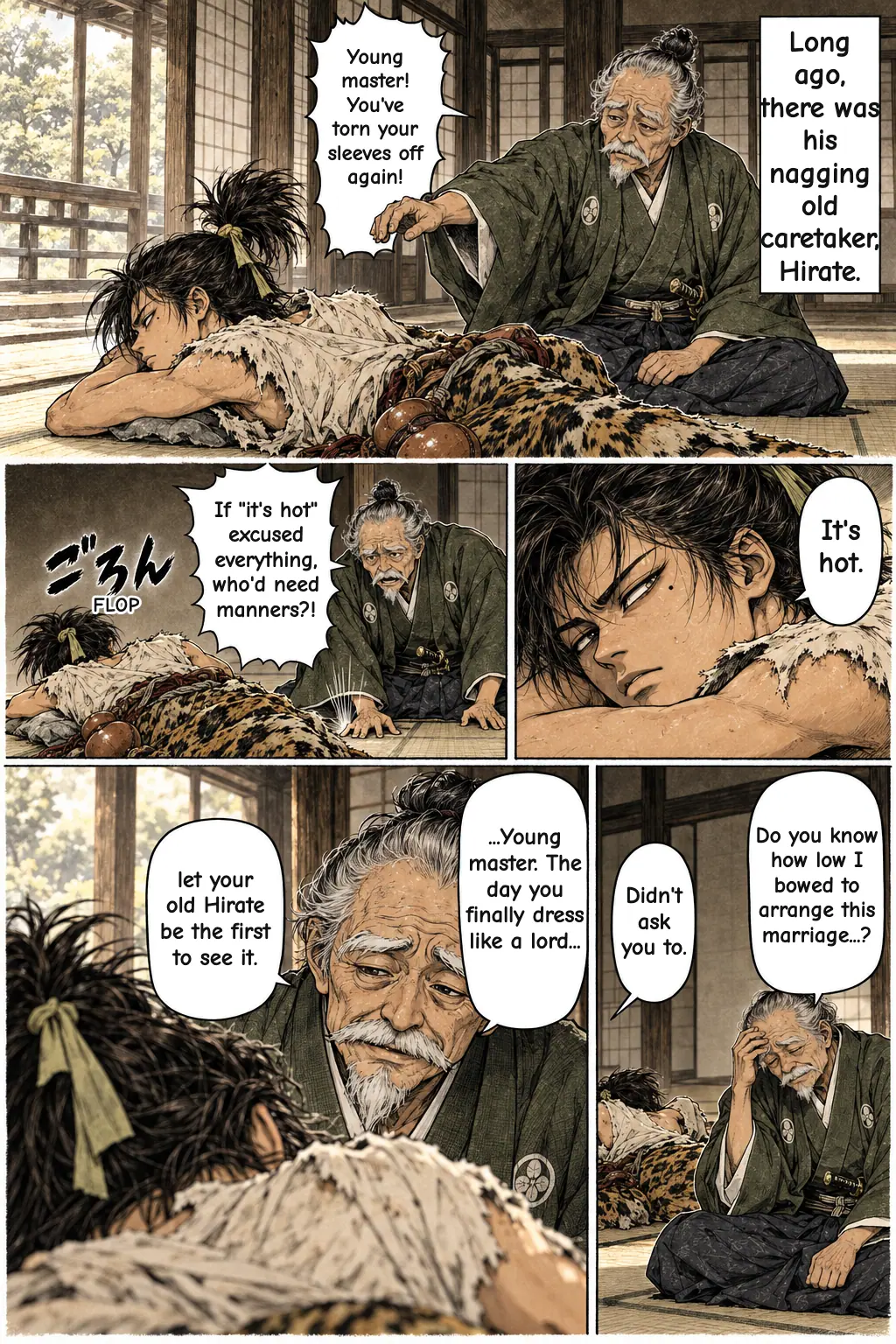
Hirate Masahide, one of Nobunaga's senior retainers, appears elsewhere in the same book as the man who cleverly arranged the marriage. He took his own life before this meeting. The famous idea that he died to scold Nobunaga into behaving better is a later, widely told interpretation, not something this passage states.
What the Story Tells Us
The author, Ōta Gyūichi, served Nobunaga, and his chronicle is one of the most important sources on Nobunaga's life. This episode shows how alliances worked in the Warring States era: marriages bound families together, but a lord still had to judge with his own eyes whether a partner was strong or weak.
It also hints at a military change. The chronicle notes that Mino's spears were short while Owari's were long, and Nobunaga brought guns in large numbers. Many readers see the scene as an early sign of the leader who would later unite much of Japan. In later history, Dōsan was killed a few years afterward in a war with his own son, and Nobunaga eventually took control of Mino.
What the Manga Changes
The chronicle is short and factual, so the manga adds drama. Dōsan's inner thoughts and facial expressions while he peeks from the hut are invented; the source only says he hid and watched. The detailed conversation at the meeting is also new, since the text records only "De aru ka," the meal, the sake, and the promise to meet again. Nobunaga's private reasons for changing clothes, the flashback scenes with Hirate Masahide, the sounds of the procession, and the townspeople's reactions are all the manga's own creation. The flashback does not decide why Hirate died. Character faces and body types are newly designed, because the chronicle never describes how anyone looked.
Where to Read It
If you want to see the moment the Viper stops laughing, read Episode 1 of SAMURAI: Legends of the Warring States here on Manga Portal. Every episode is free, with no sign-up needed. For the original, Ōta Gyūichi's Shinchō Kōki (the 1881 Meiji edition) can be viewed online at the National Diet Library Digital Collections: https://dl.ndl.go.jp/pid/781192.
Characters in this episode
Saitō Dōsan
Lord of Mino and Nobunaga's scheming father-in-law, popularly called "the Viper," who secretly spies on the young man to judge him.
Oda Nobunaga
The young lord of Owari mocked as a "big fool," who shows up looking wild with a powerful army and then surprises everyone in formal dress.
Hotta Dōkū
Dōsan's go-between who urges Nobunaga to hurry, introduces him to Dōsan, and serves the meal.
Kasuga Tango
A retainer of Dōsan who joins Hotta Dōkū in urging Nobunaga to come forward.
Inoko Hyōsuke
A retainer of Dōsan whose remark on the road home leads Dōsan to predict that his sons will serve Nobunaga.
Hirate Masahide
Nobunaga's senior retainer who arranged the marriage with Dōsan's daughter and died before the meeting; he appears in the manga's flashbacks.
FAQ
Why did Saitō Dōsan want to meet Oda Nobunaga?
People around Dōsan kept calling his son-in-law Nobunaga a fool, but Dōsan doubted it. He arranged a meeting at Shōtoku-ji in Tomita to judge the young man with his own eyes.
What does "De aru ka" mean?
It means roughly "Is that so" or "I see." In the Shinchō Kōki, it is Nobunaga's whole reply when he is told that the man in front of him is Dōsan, which shows how calm and unimpressed he was.
When did the meeting at Shōtoku-ji happen?
The chronicle places it in late April of the old lunar calendar. The year is usually given as 1553, but the early dates in the Shinchō Kōki are not fully reliable, so that is the common view rather than a certain fact.
Why was Nobunaga called a fool?
As a young man he dressed and acted strangely, with a messy topknot, a sleeveless robe, gourds on his belt, and animal-skin trousers. At Shōtoku-ji he changed into formal dress, and his own retainers wondered whether the foolishness had been an act all along.
Why is Saitō Dōsan called the Viper?
"The Viper" (Mamushi) is a popular nickname that reflects his reputation as a cunning, ruthless lord. It does not appear in the Shōtoku-ji chapter of the Shinchō Kōki; it comes from later tradition.