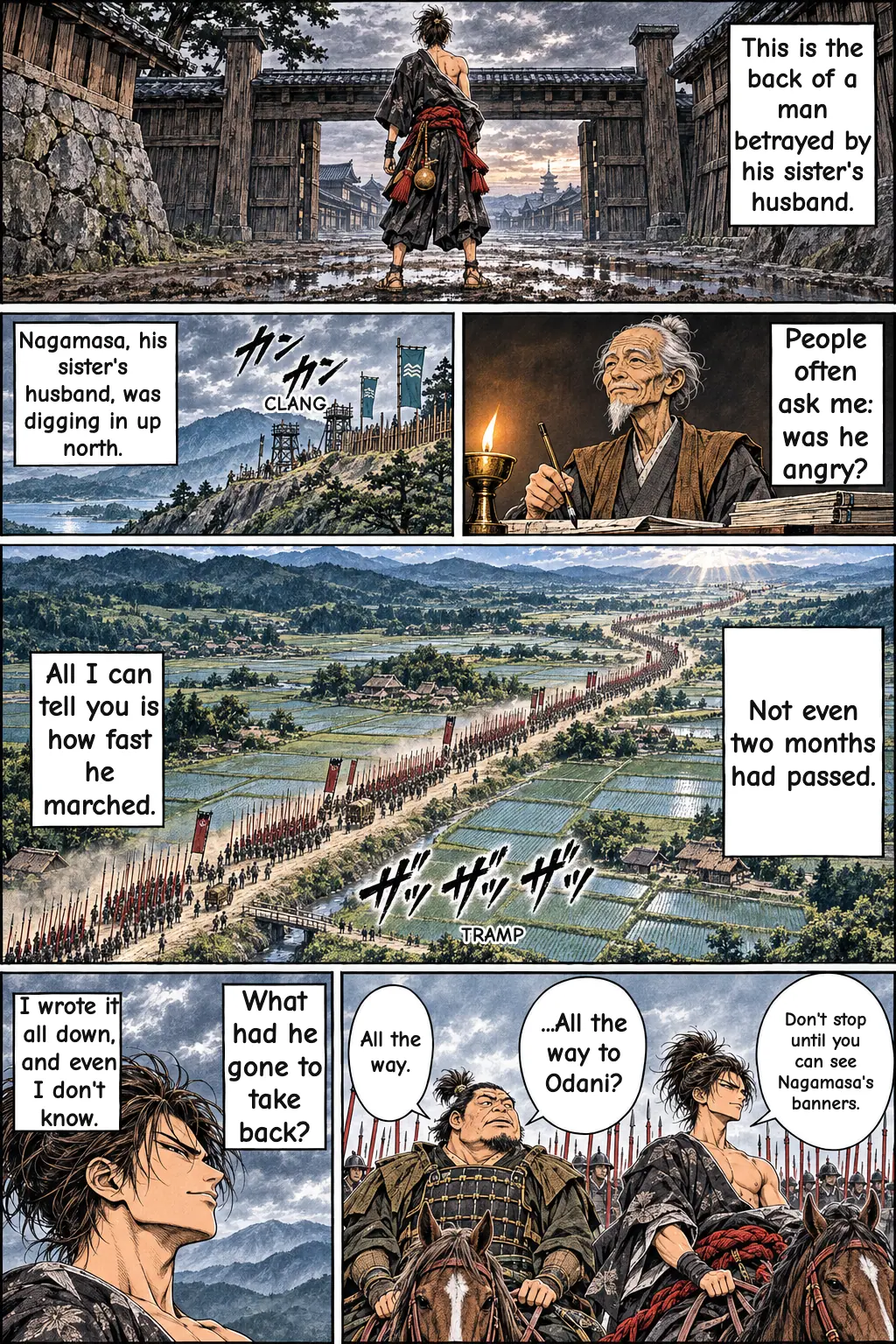
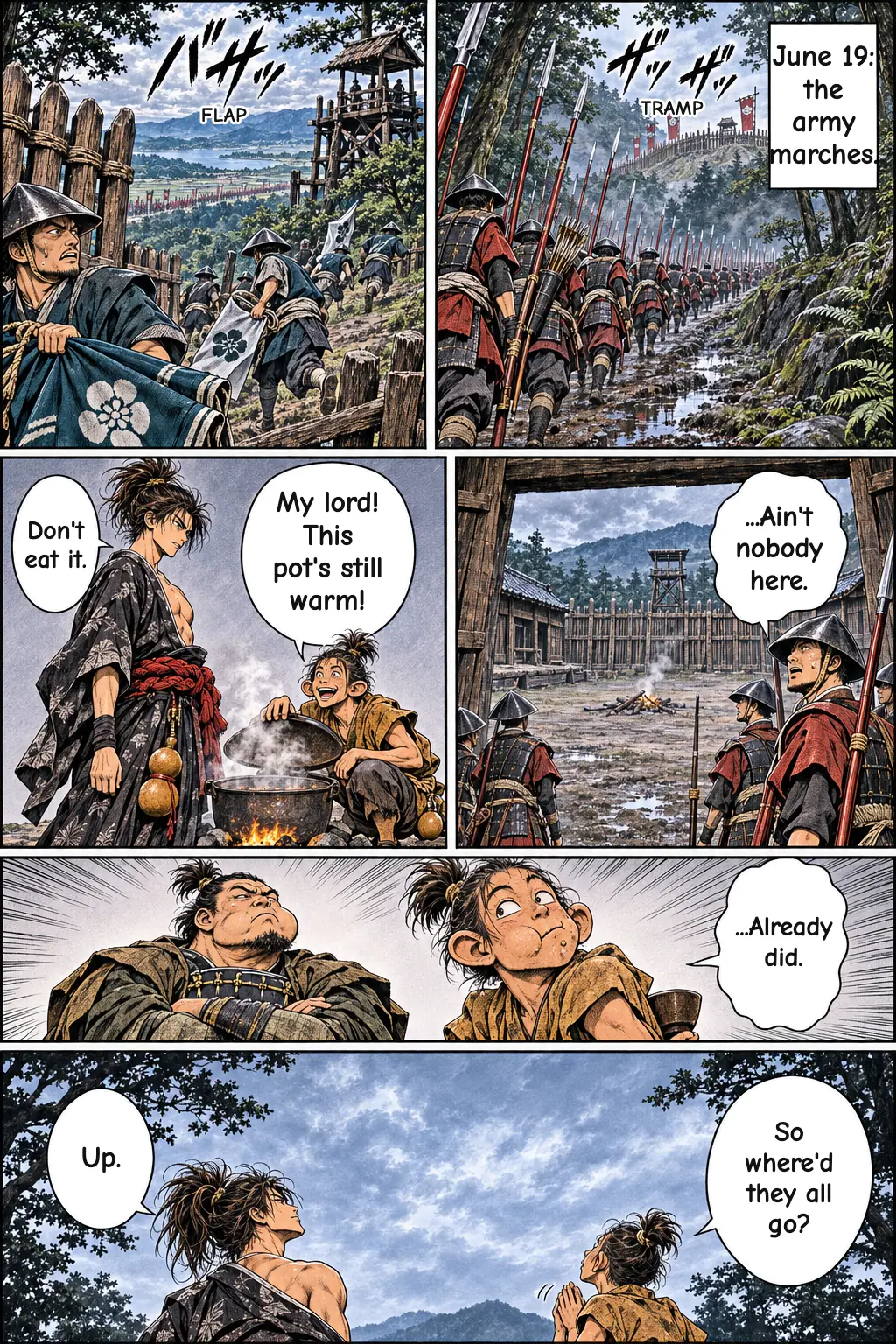
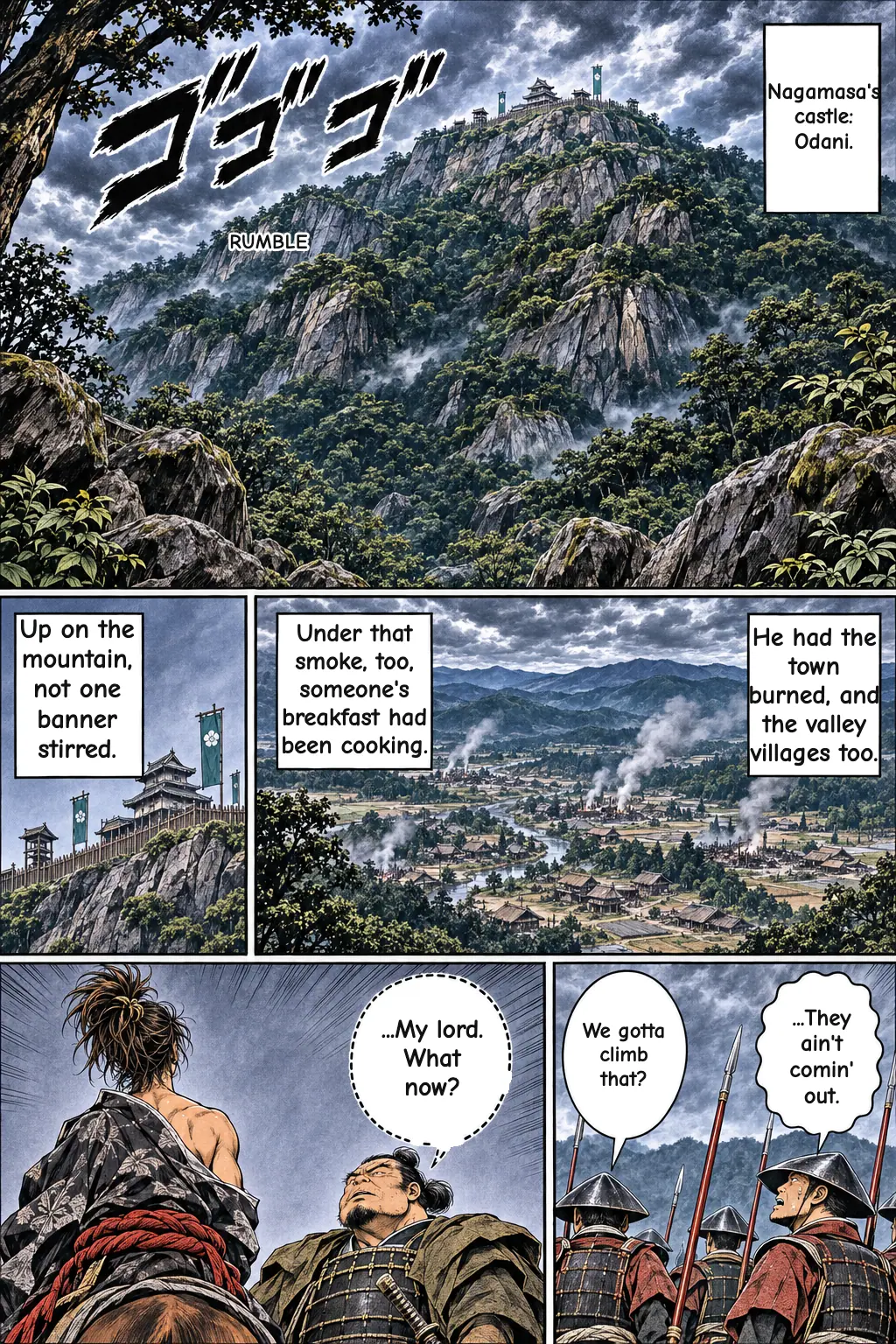
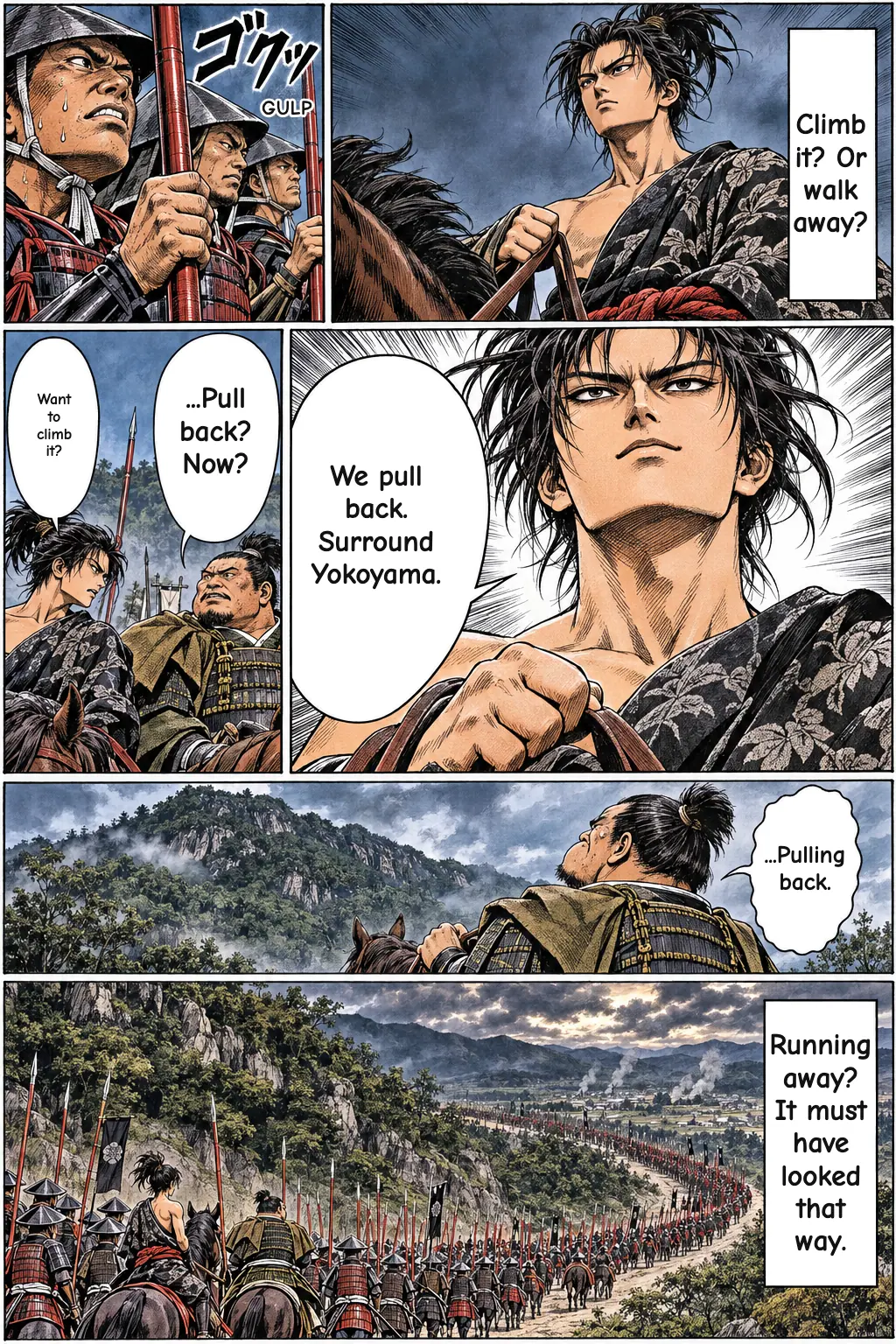
Episode 8He Came Back for His Sister's HusbandThe Battle of Anegawa
Betrayed by his sister's husband, Nobunaga fled home caked in mud. In under two months he marches north again, trusts his one remaining ally with half the battlefield, and wins the battle at the river. But the mountain castle does not fall, and that autumn, the banners he failed to wipe out climb another mountain.
Get new episodes in your feed. Follow us on:ThreadsBluesky
Story summary
The story begins in the spring of 1570, the first year of the Genki era. Nobunaga, the warlord then dominating central Japan, was campaigning against Echizen, the northern province held by the Asakura clan. While he was there, Azai Nagamasa, lord of Odani Castle in northern Ōmi (today's Shiga Prefecture), turned against him. The betrayal stung because the two men were family by marriage. The chronicle shows that tie, and history generally names Nobunaga's sister Oichi as Nagamasa's wife. With an enemy suddenly behind him, Nobunaga pulled back from Kanegasaki to Kyoto.
Battle of Anegawa Explained: Oda Nobunaga vs. the Azai and Asakura
In short: The Battle of Anegawa was fought in 1570 in northern Ōmi, when Oda Nobunaga and his ally Tokugawa Ieyasu defeated the armies of Azai Nagamasa and the Asakura clan at the Ane River, as recorded in Ōta Gyūichi's chronicle, the Shinchō Kōki. Nobunaga won the field but did not take Azai's mountain castle at Odani, so the war went on.
Before the battle: betrayal and the road home
The story begins in the spring of 1570, the first year of the Genki era. Nobunaga, the warlord then dominating central Japan, was campaigning against Echizen, the northern province held by the Asakura clan. While he was there, Azai Nagamasa, lord of Odani Castle in northern Ōmi (today's Shiga Prefecture), turned against him. The betrayal stung because the two men were family by marriage. The chronicle shows that tie, and history generally names Nobunaga's sister Oichi as Nagamasa's wife.
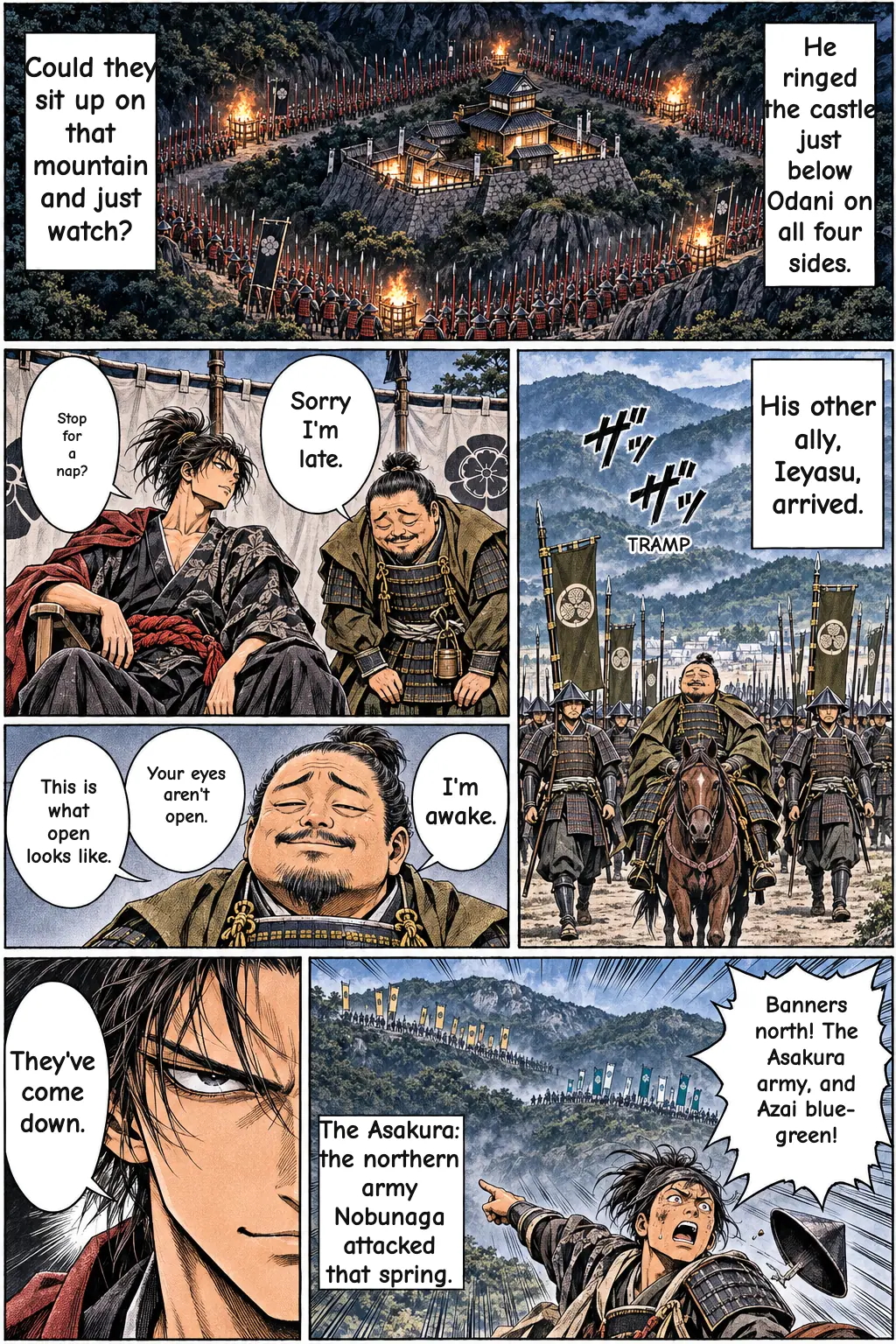
With an enemy suddenly behind him, Nobunaga pulled back from Kanegasaki to Kyoto. Then, on his way home to Gifu through the Chigusa mountain pass, a gunman named Sugitani Zenjūbō fired at him. Nobunaga came through unharmed.
He did not stay home long. Early in the sixth month, his commanders Shibata Katsuie and Sakuma Nobumori beat a Rokkaku force at Ochikubo in Ōmi. Meanwhile, the Azai called in troops from Echizen and fortified two positions, Takekurabe and Kariyasu.
The Battle of Anegawa in the Shinchō Kōki
The turning point came when two local figures, Hori and Higuchi, sided with Nobunaga. When he marched on the 19th of the sixth month, the enemy abandoned Takekurabe and Kariyasu. He pushed up to Odani, placed troops on the nearby heights of Hibariyama and Toragozen-yama, and ordered his retainer Mori Yoshinari and others to burn the villages in the valleys. He then drew back, surrounded Yokoyama Castle, and set his headquarters at Tatsugahana. Here Tokugawa Ieyasu joined him.
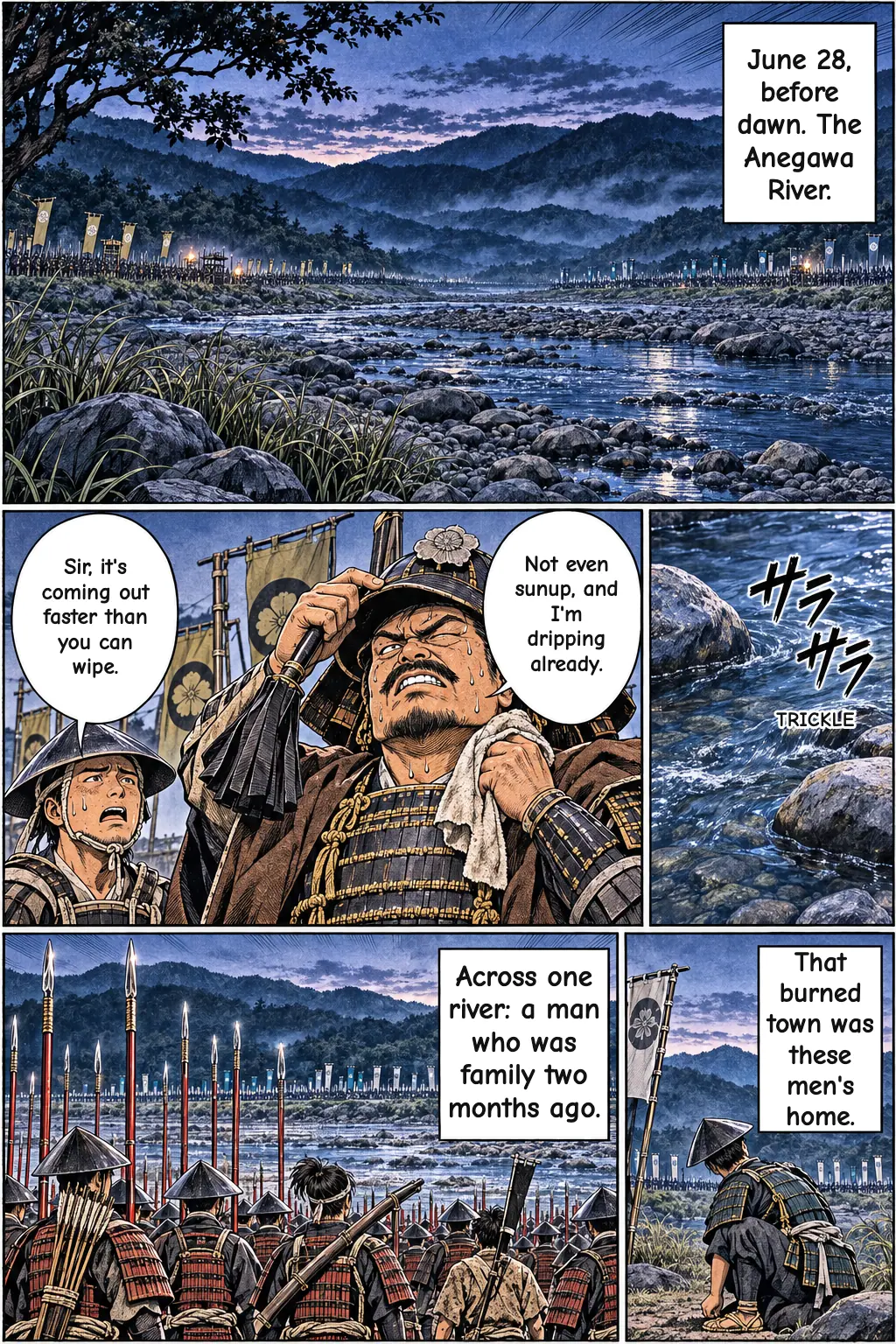
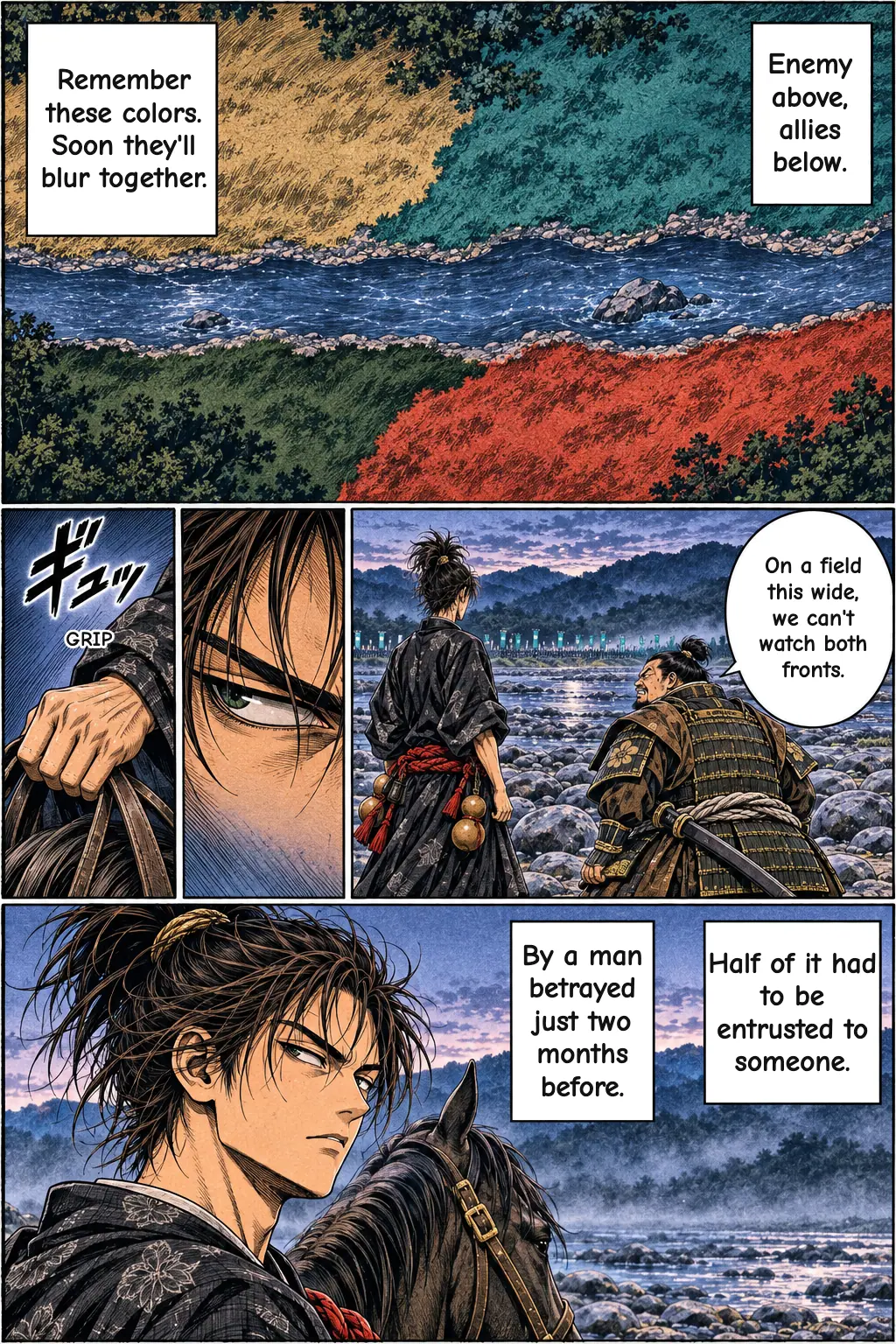
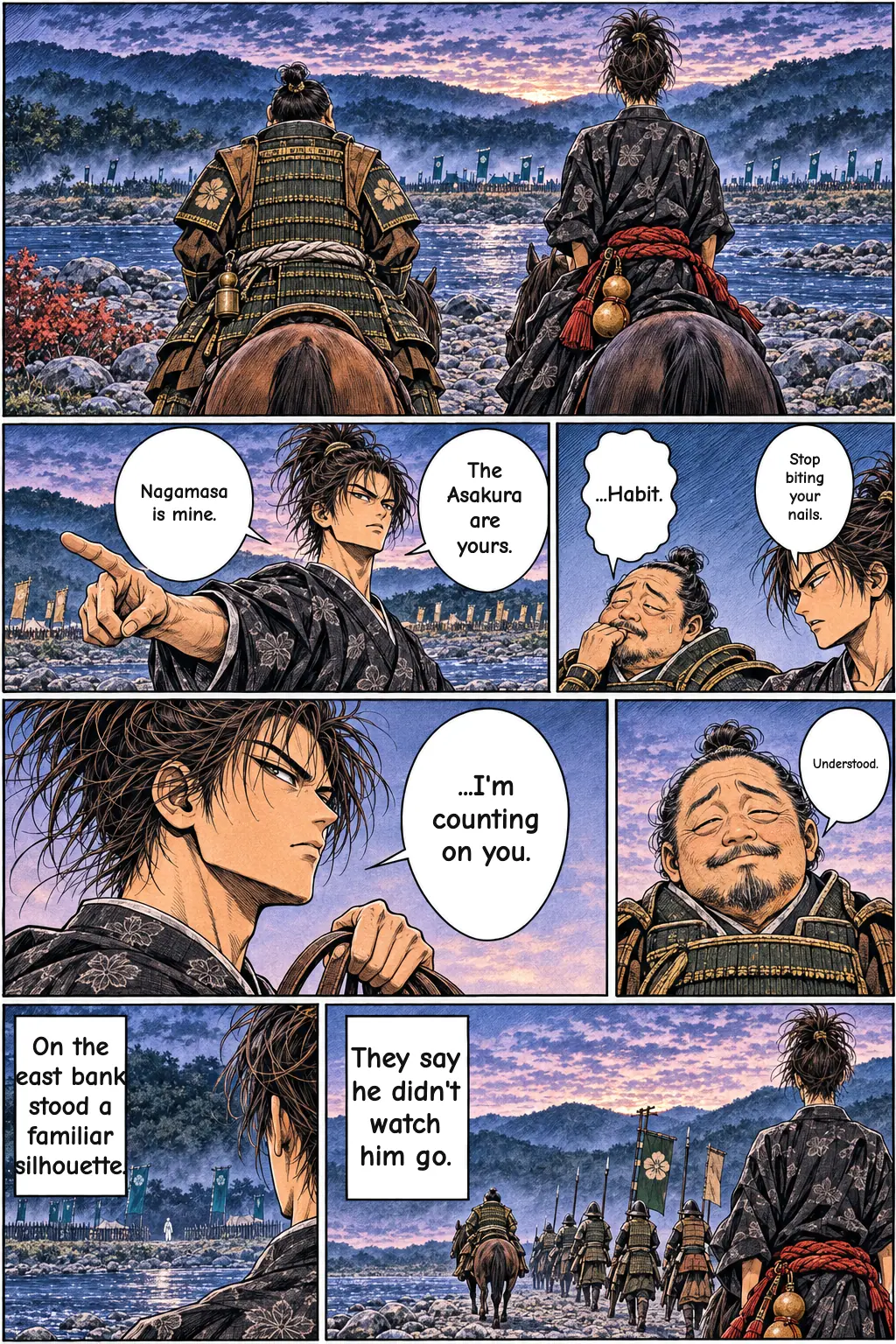
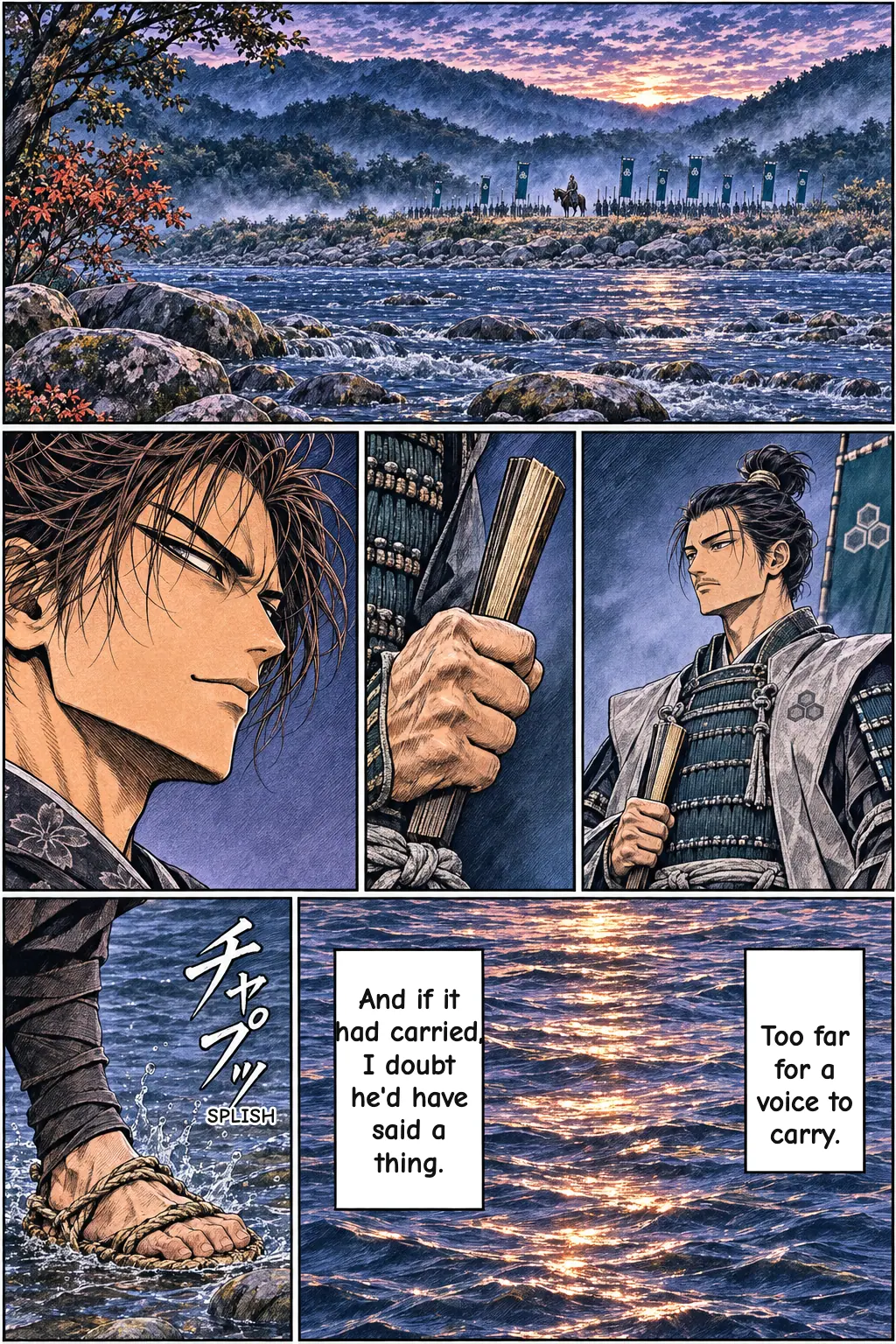
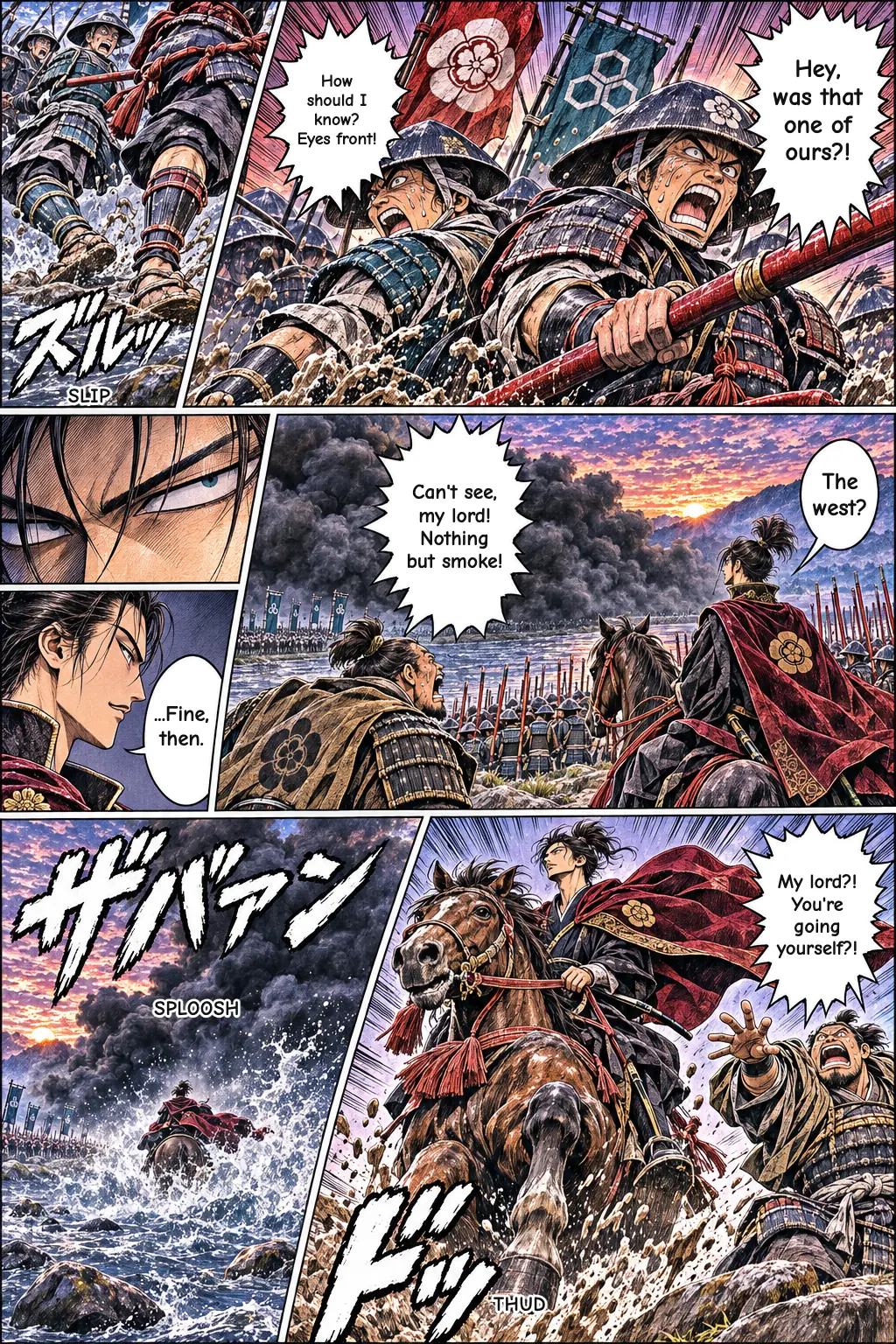
Asakura Kagetake arrived with the Echizen army to relieve the castle, and the Azai came out too, camping first on Ōyoriyama. Early on the 28th of the sixth month by the old lunar calendar, they advanced and took up two positions facing the Ane River, at Nomura and Mitamura. The allies matched them: in the west at Mitamura, Ieyasu faced the Asakura, and in the east at Nomura, Nobunaga's guard and the Mino troops faced the Azai.
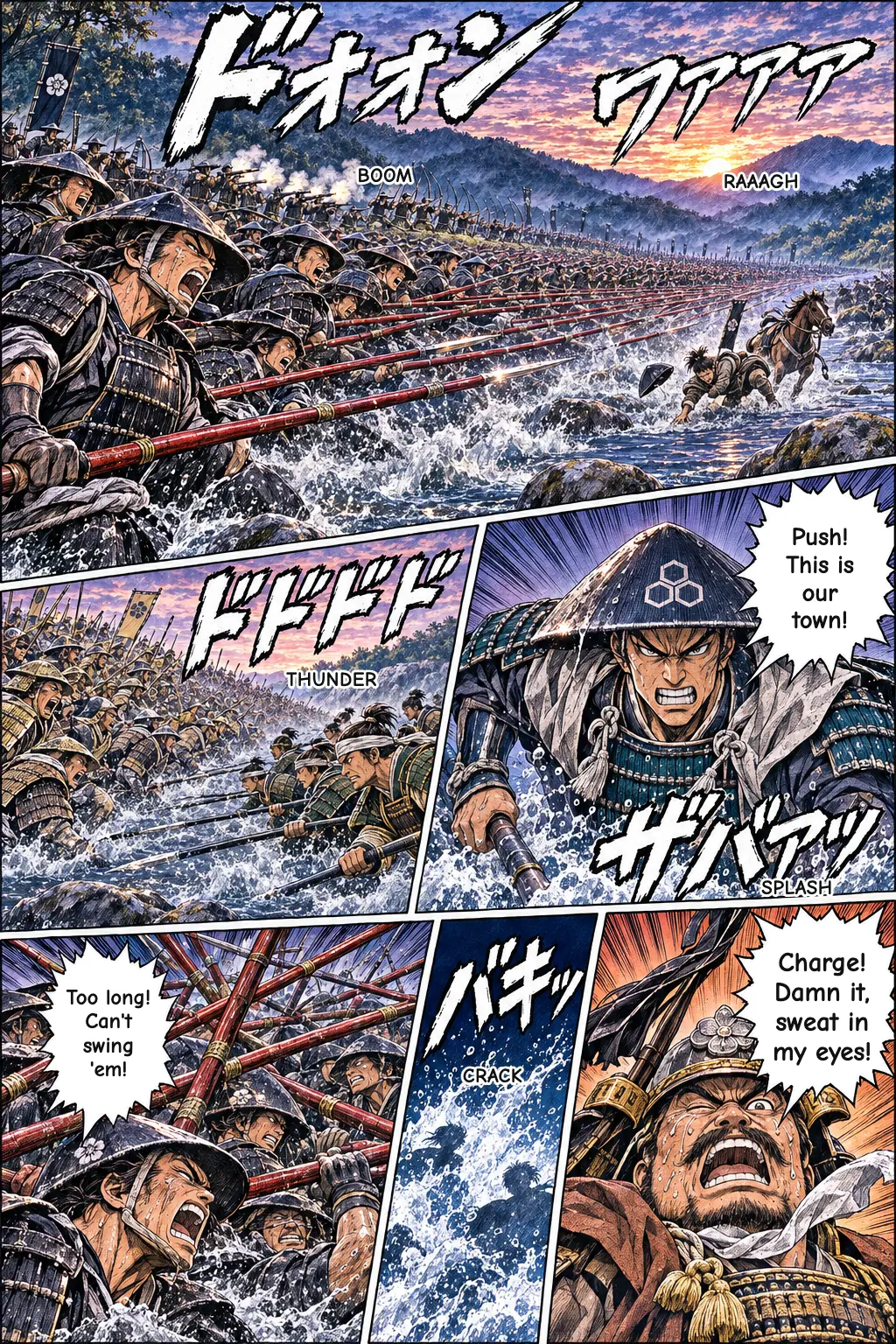
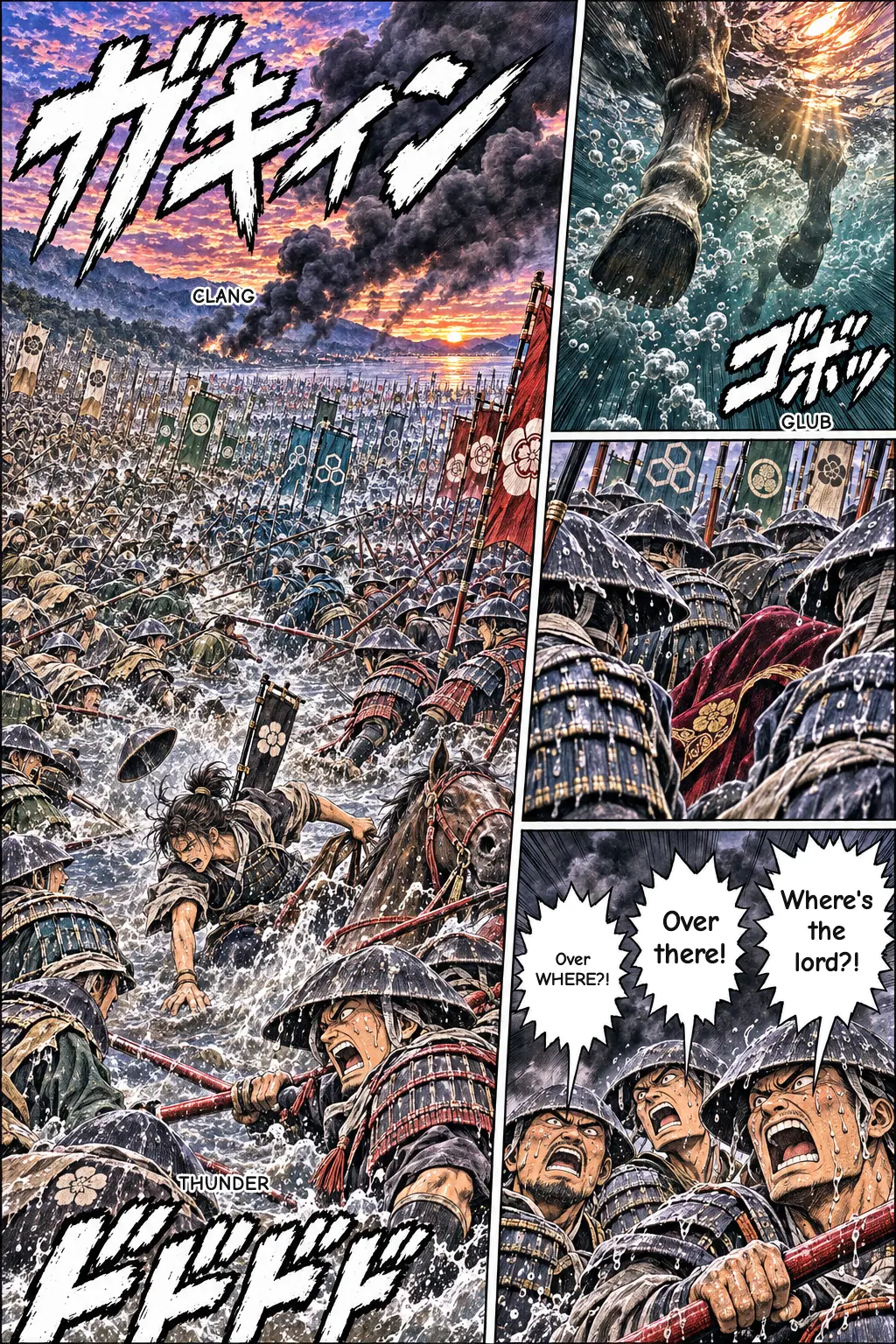
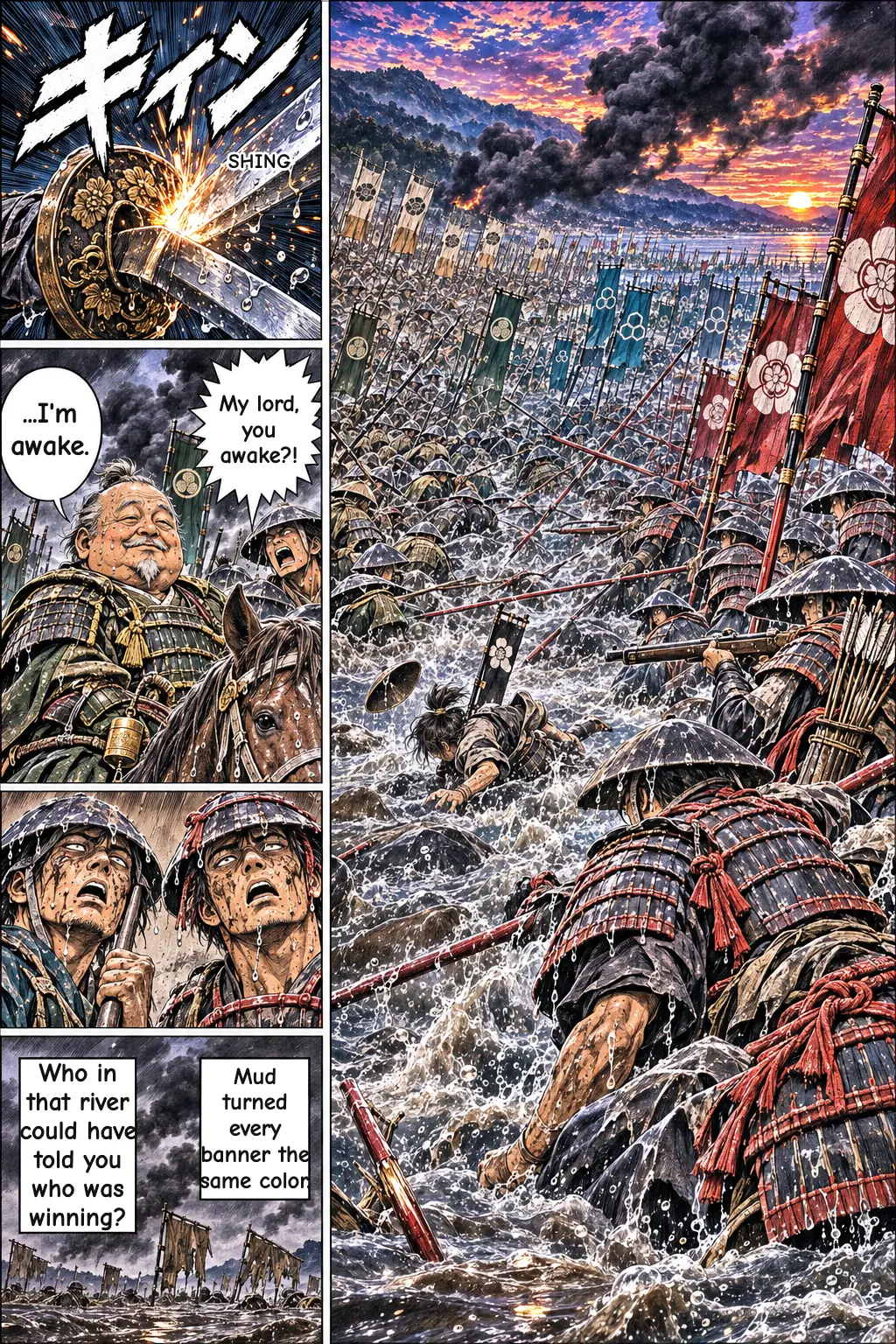
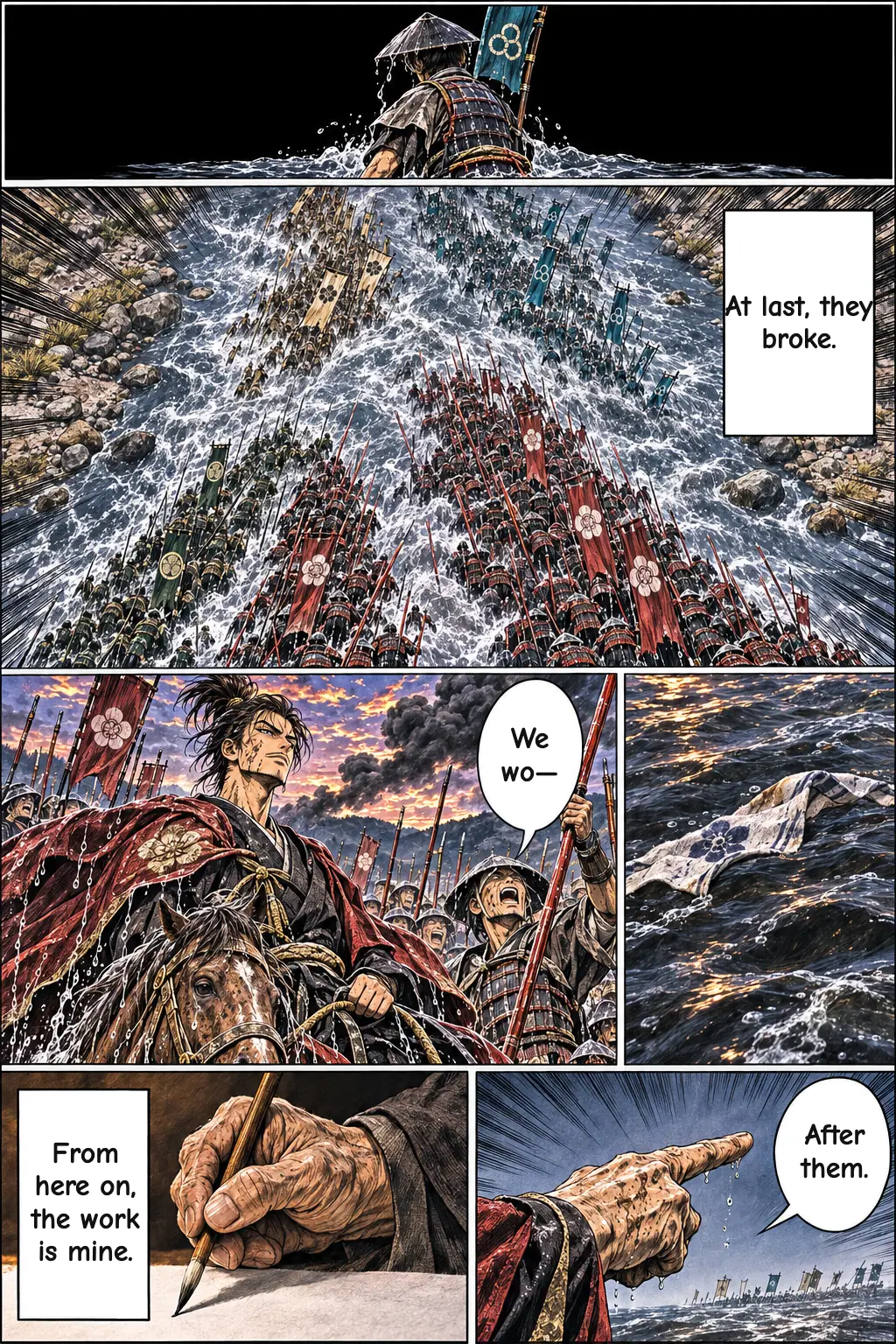
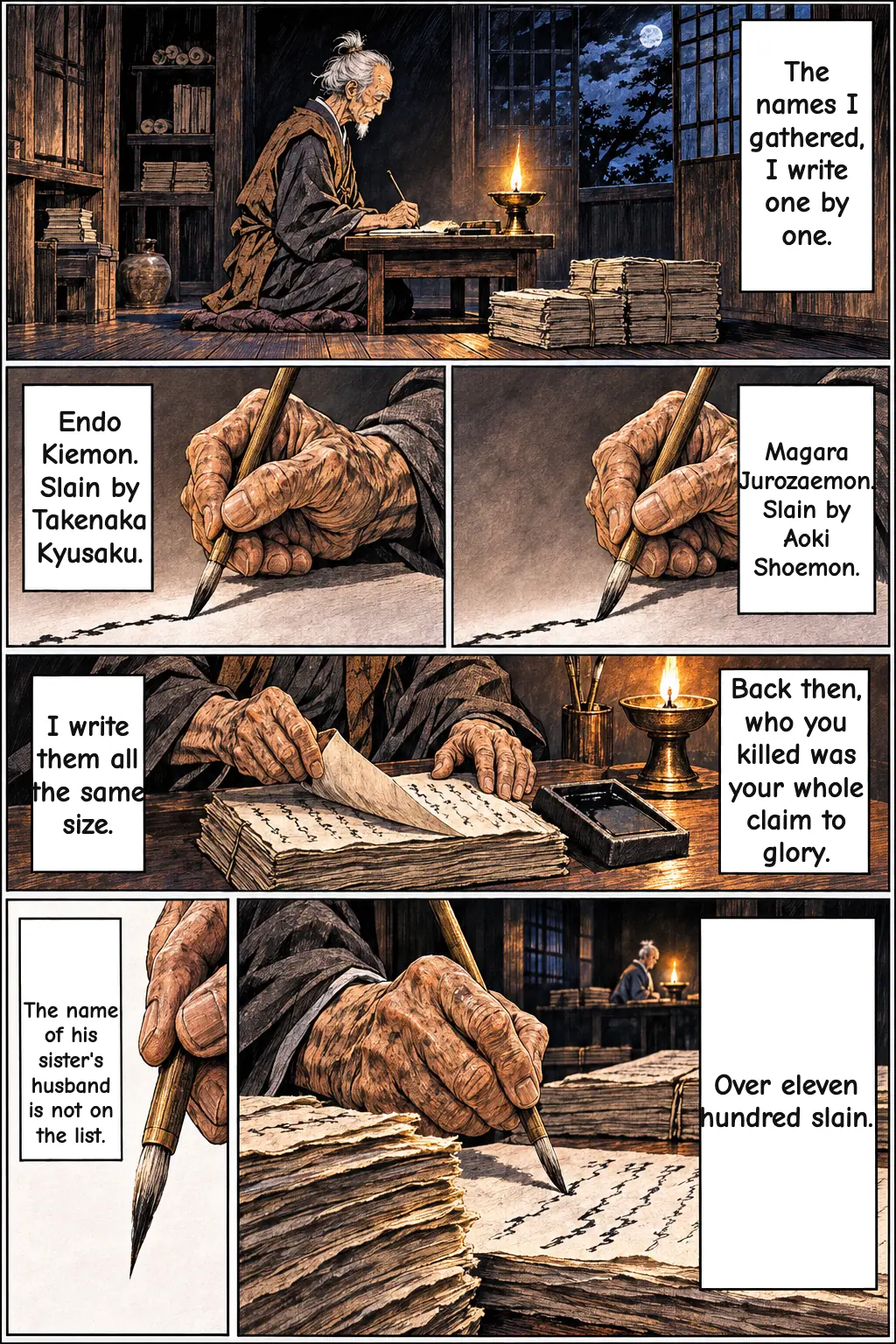
Fighting began around dawn, at the hour of the hare. The chronicle describes a hard, close fight amid black smoke, then the enemy line breaking. It lists the notable warriors who fell, including Makara Jūrōzaemon, killed by Aoki Shoemon, and Endō Kiemon, killed by Takenaka Kyūsaku. Troop numbers and casualty counts for this battle should be treated with caution, since chronicle figures are hard to verify.
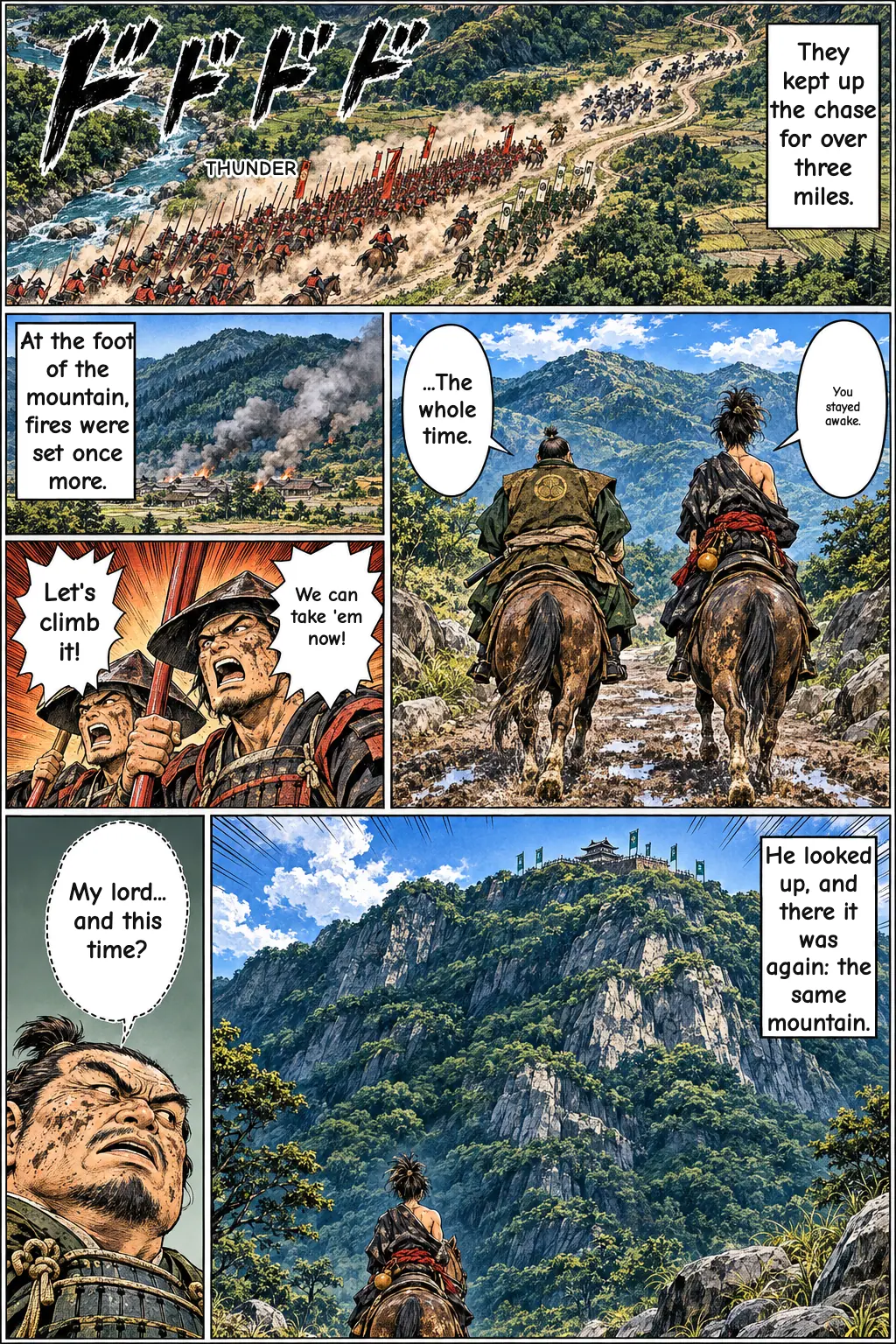
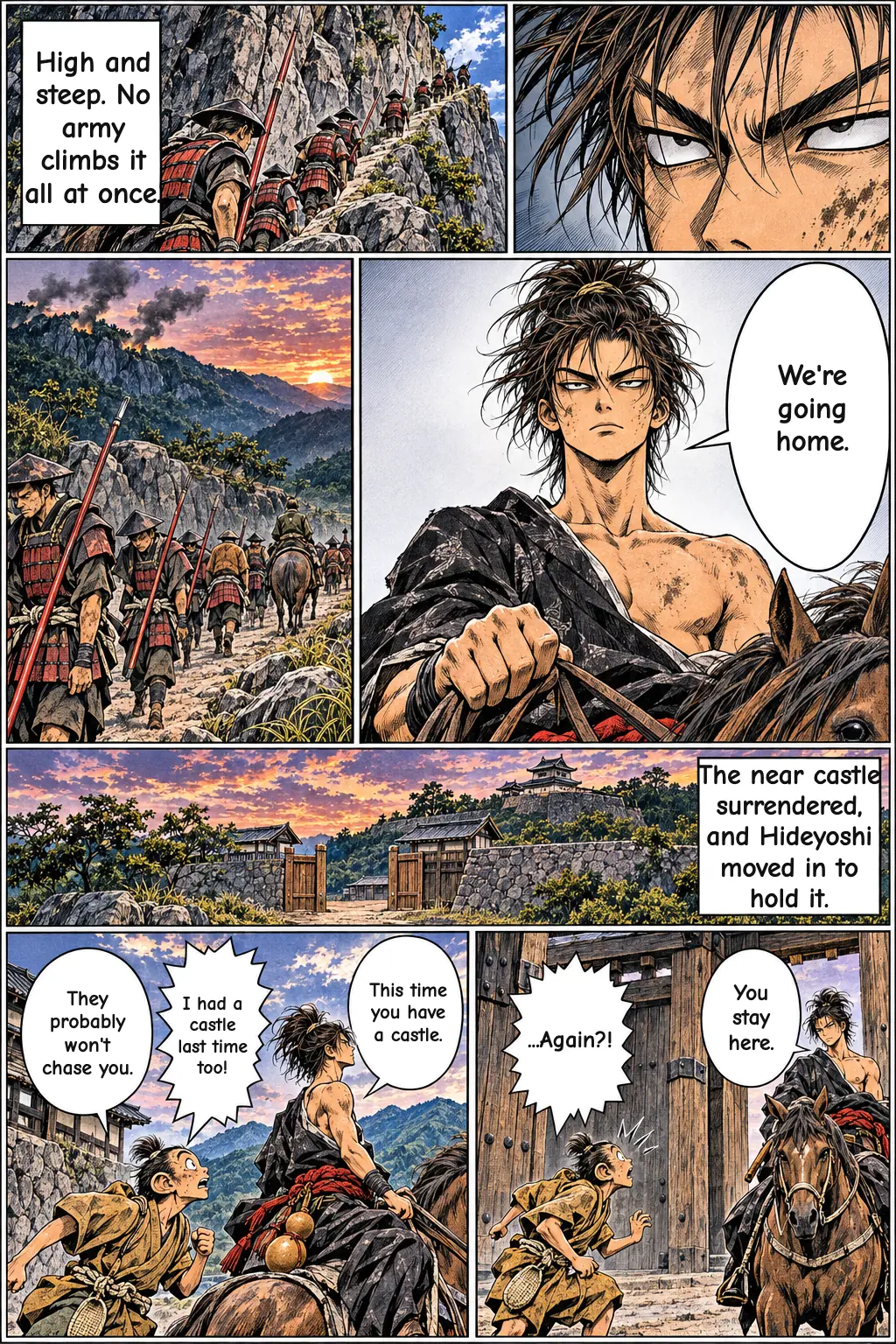
Nobunaga's men chased the survivors about fifty chō, roughly five kilometers, to Odani and set fires around it. But Odani stood on a high, difficult mountain, and he judged that a direct assault would not work. He returned to Yokoyama, which surrendered and was placed under Kinoshita Tōkichirō, the man later known as Toyotomi Hideyoshi. Nobunaga then moved on to encircle Sawayama Castle.
What the battle meant in Warring States Japan
Anegawa comes from the Sengoku, or Warring States, period, when regional lords fought for land with no effective central power to stop them. Alliances held only as long as they served each side, and marriage ties were part of that calculation, which is why Nagamasa's break with his brother-in-law makes such a sharp story.
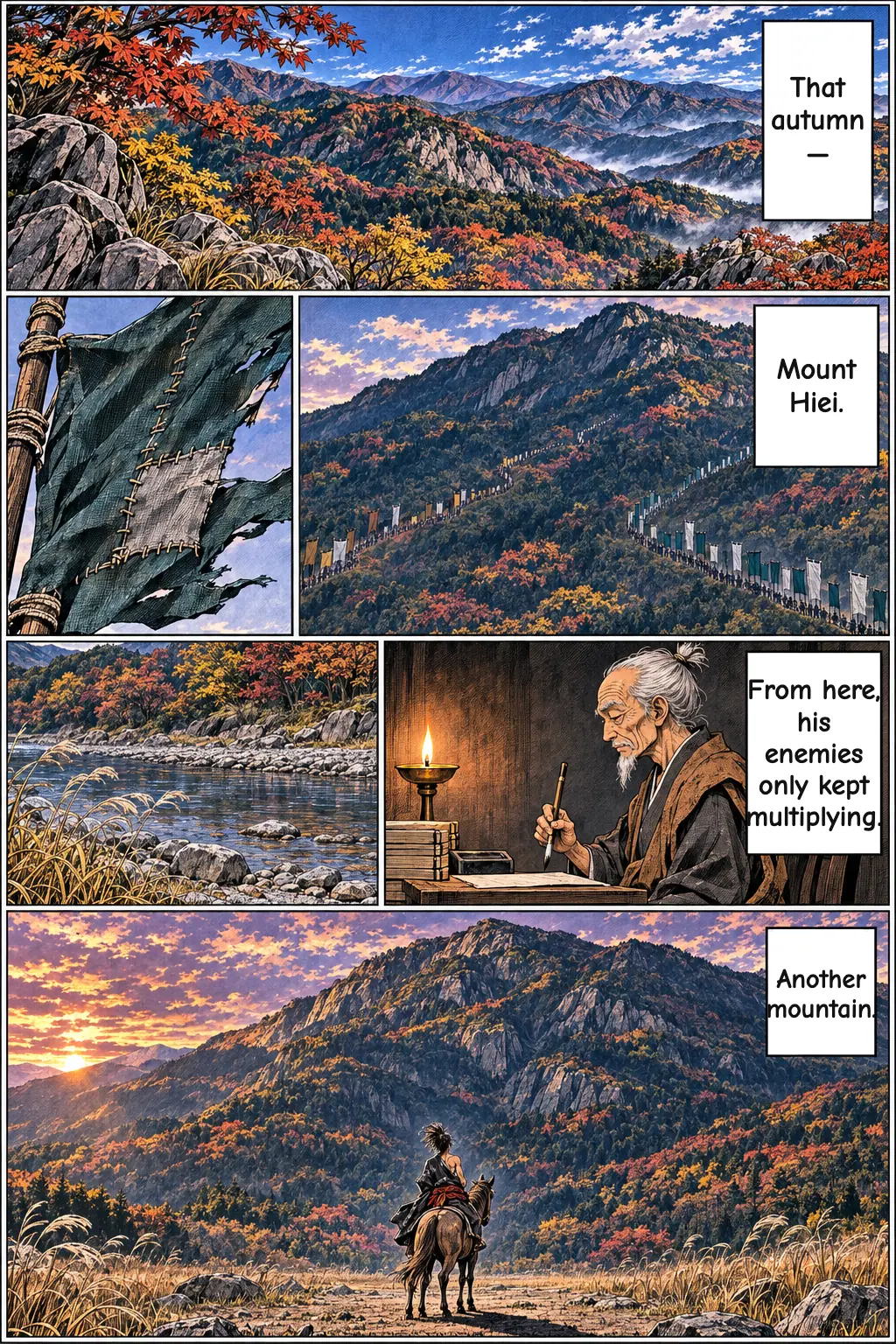
The result was a real victory with a real limit. The Azai and Asakura lost men but kept their armies and their castles. That autumn, in the ninth month, the Honganji temple organization turned against Nobunaga, and the Azai and Asakura advanced to Sakamoto near Kyoto. Mori Yoshinari and Nobunaga's younger brother Kurō were killed, and when Nobunaga returned, his enemies climbed Mt. Hiei. The Azai and Asakura were not finally destroyed until 1573.
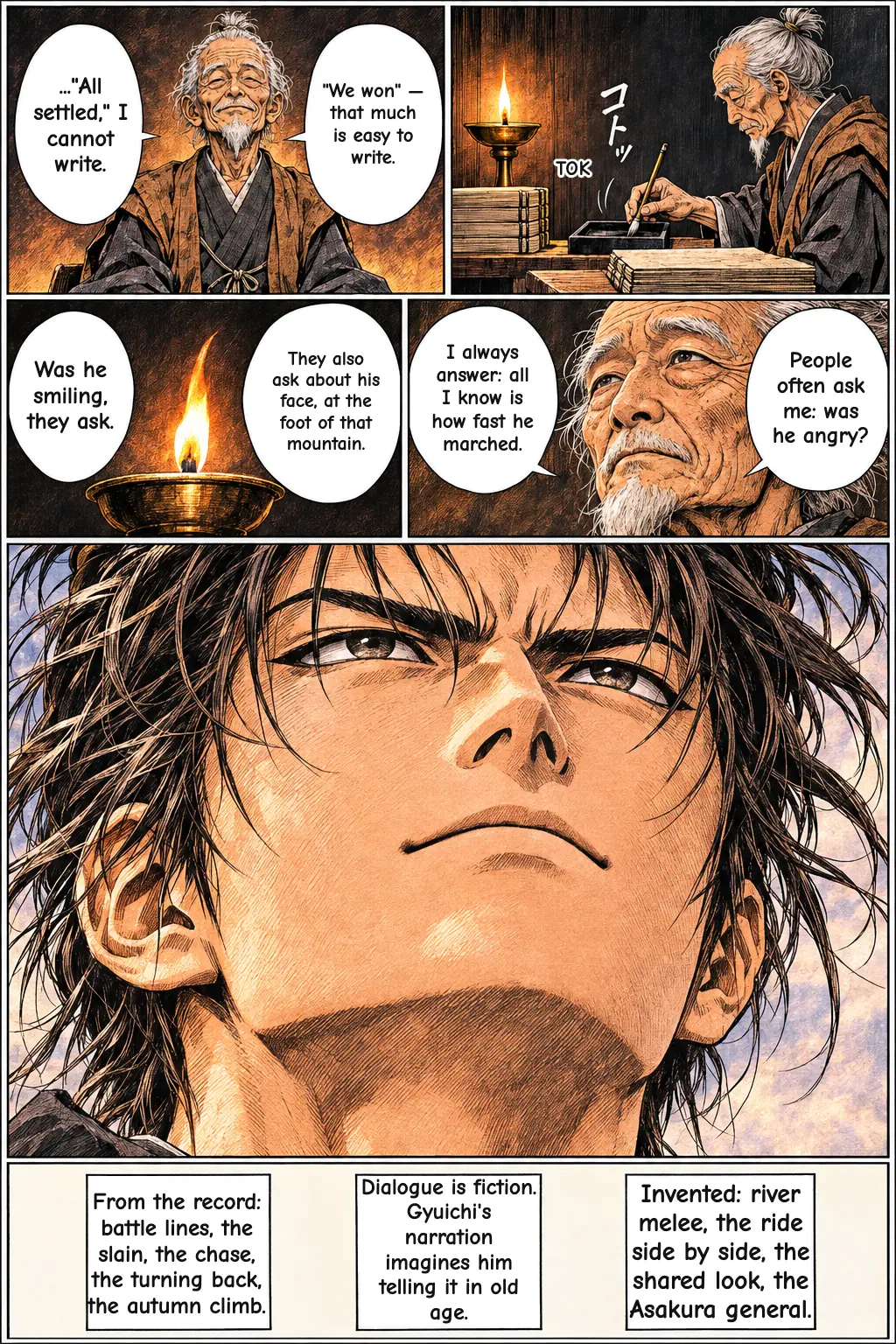
It also helps to know the source. Ōta Gyūichi served Nobunaga, and his chronicle is valued for dates, places and names. This passage reads like a record, not a drama, and it says little about what anyone felt. Famous later details, such as Makara's enormous sword, are not features of this account.
What the manga changes
The main events follow the chronicle: the march north, the division of the battlefield, the named deaths, the failure to take Odani. Much of the feeling, though, is the manga's own. The faces and inner voices of Nobunaga, Ieyasu and Nagamasa are invented, as are their camp conversations, including the way Nobunaga and Ieyasu talk through who takes which side of the field. The chronicle records the deployment, not those words.
The most striking image, warriors slashing at each other in the river itself, is also dramatization. The chronicle clearly places the armies with the river before them, but this research did not confirm a melee in the water. The swordplay, horses, spray and shouting are added, as are the details of the duels between Aoki and Makara and between Takenaka and Endō. Who killed whom is unchanged. Nameless foot soldiers and villagers are also added to show the war from below.
Two structural choices matter most. The manga uses Ōta Gyūichi as a narrator who voices unease after the victory, but those reflections are not his actual words, and the "Nobunaga encirclement" is a name later historians gave to this web of enemies. The final scene of enemy banners on Mt. Hiei also jumps ahead: it belongs to the autumn campaign, about three months after Anegawa, not to the battle's aftermath.
Where to read it
If you want to see how a dry list of dates and names becomes a story, read Episode 8 of ODA NOBUNAGA: The Demon King of the Warring States right here on Manga Portal. Every episode is free, with no sign-up, so you can also go back to the betrayal that set this up or carry on to what happens on Mt. Hiei.
Characters in this episode
Oda Nobunaga
The warlord at the center of the story, who returns north within two months of Azai's betrayal and commands the eastern side of the field at Anegawa.
Tokugawa Ieyasu
Nobunaga's ally, who joins him at Tatsugahana and fights the Asakura army on the western side of the battle.
Azai Nagamasa
The lord of Odani Castle and Nobunaga's relative by marriage, whose defection starts the war and whose mountain castle survives the defeat.
Asakura Kagetake
The commander of the Echizen army, who comes to help the Azai and is beaten by Ieyasu's forces at Mitamura.
Kinoshita Tōkichirō
The Oda retainer later known as Toyotomi Hideyoshi, who is put in charge of Yokoyama Castle after it surrenders.
Ōta Gyūichi
The author of the Shinchō Kōki, a man who served Nobunaga and who appears in the manga as its narrator.
FAQ
Who won the Battle of Anegawa?
Oda Nobunaga and Tokugawa Ieyasu won, driving the Azai and Asakura armies from the field. However, Nobunaga did not capture Azai's main castle at Odani, so the victory did not end the war.
Why did Azai Nagamasa betray Oda Nobunaga?
A common explanation is that the Azai had long-standing ties to the Asakura, and Nobunaga's invasion of Echizen forced Nagamasa to choose between them. His exact motives are still debated, and the events covered here tell us more about what he did than why.
Who fought on each side at Anegawa?
Nobunaga and his Mino troops faced the Azai in the east at Nomura, while Ieyasu faced the Asakura under Asakura Kagetake in the west at Mitamura. The two armies were positioned with the Ane River in front of them.
Why didn't Nobunaga take Odani Castle after the battle?
The Shinchō Kōki says Odani was a high, difficult mountain position that could not easily be stormed. Nobunaga burned the surrounding area, went back to Yokoyama, and accepted that castle's surrender instead.
Is the river fight in the manga historically accurate?
Partly. The battle and its river setting are recorded, but the source passage used for this manga confirms the armies lining up with the river before them, not a melee in the water. The scenes of fighting in the river are dramatization.