Episode 7He Was Winning. Then He Ran for His LifeThe Retreat from Kanegasaki
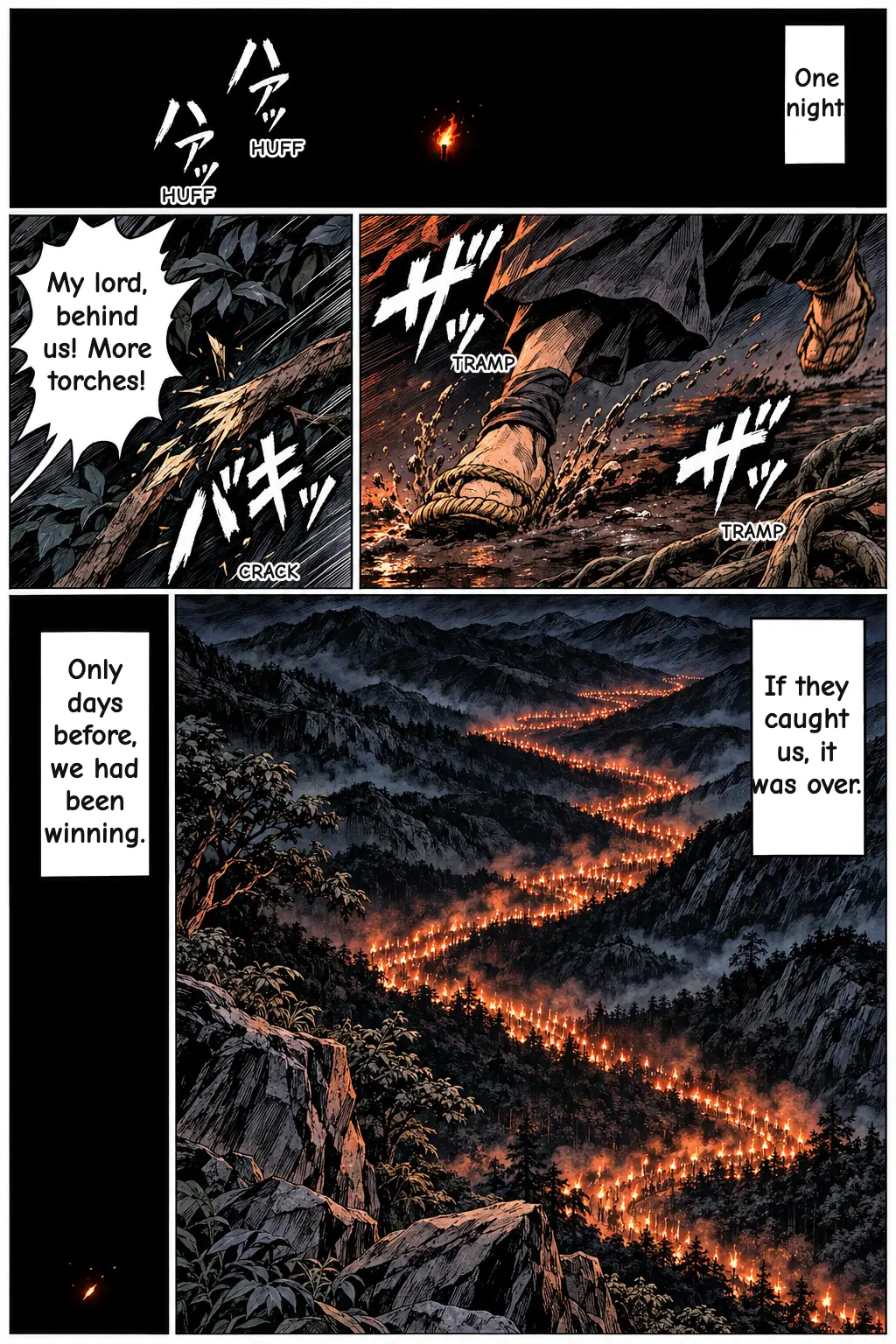
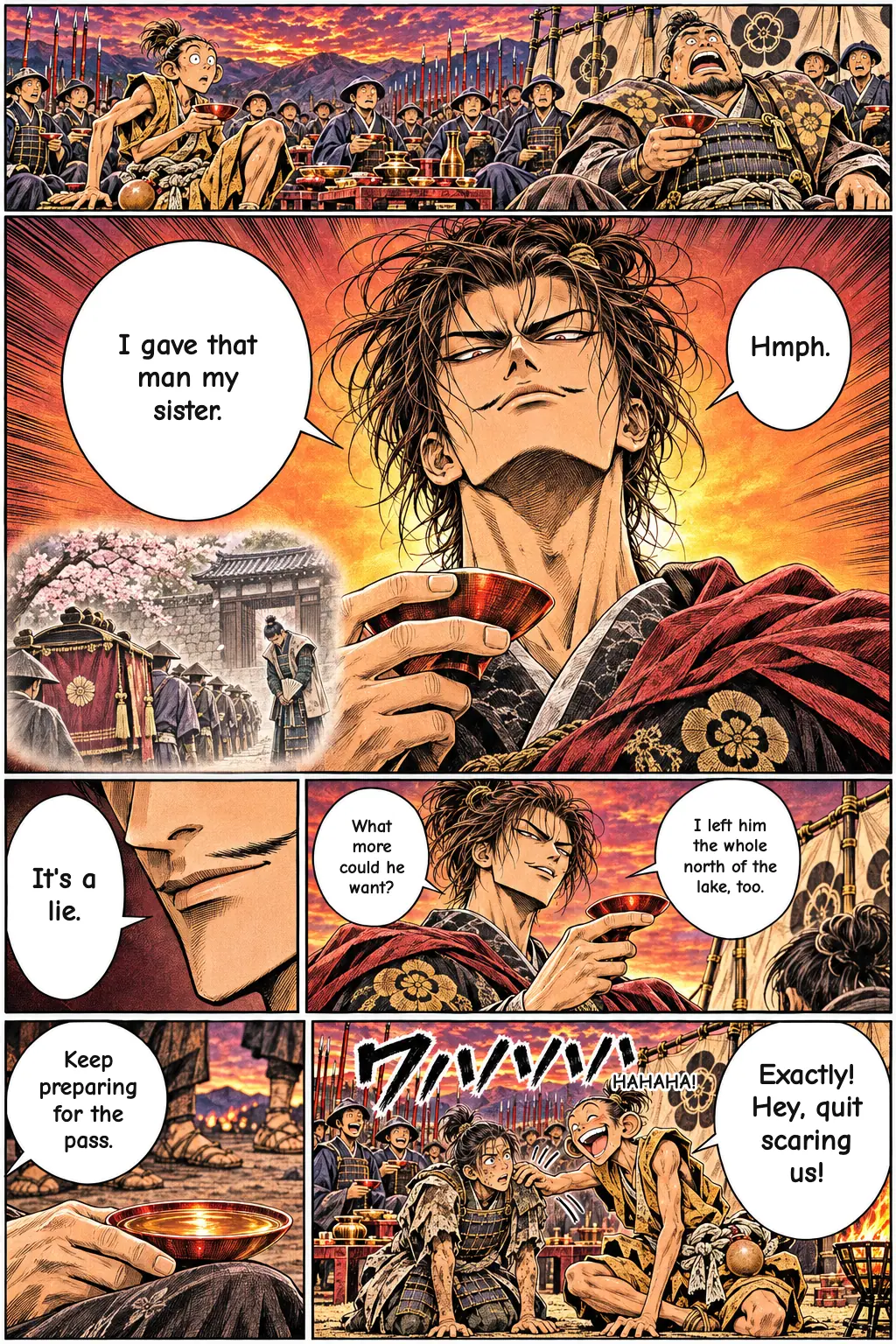
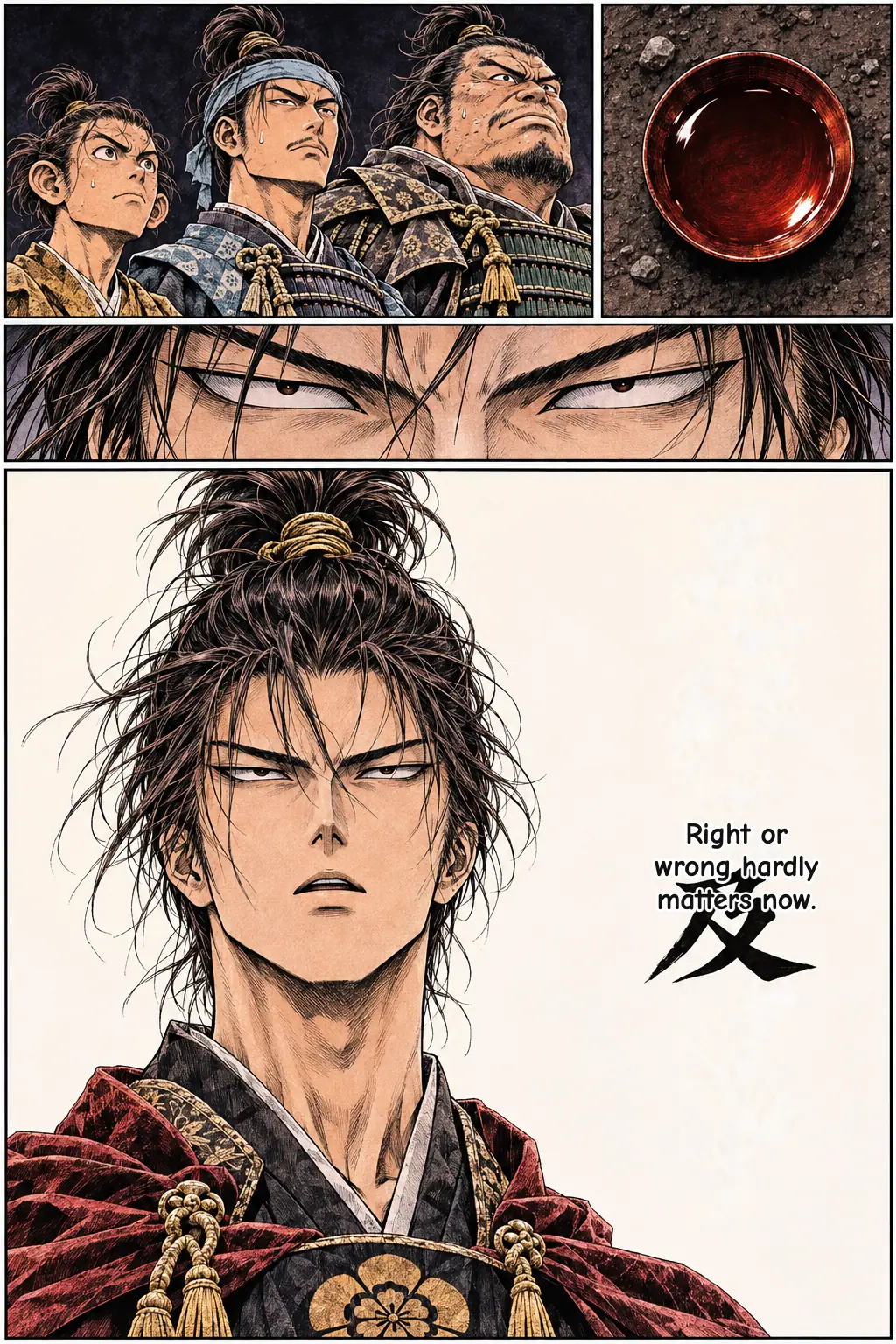
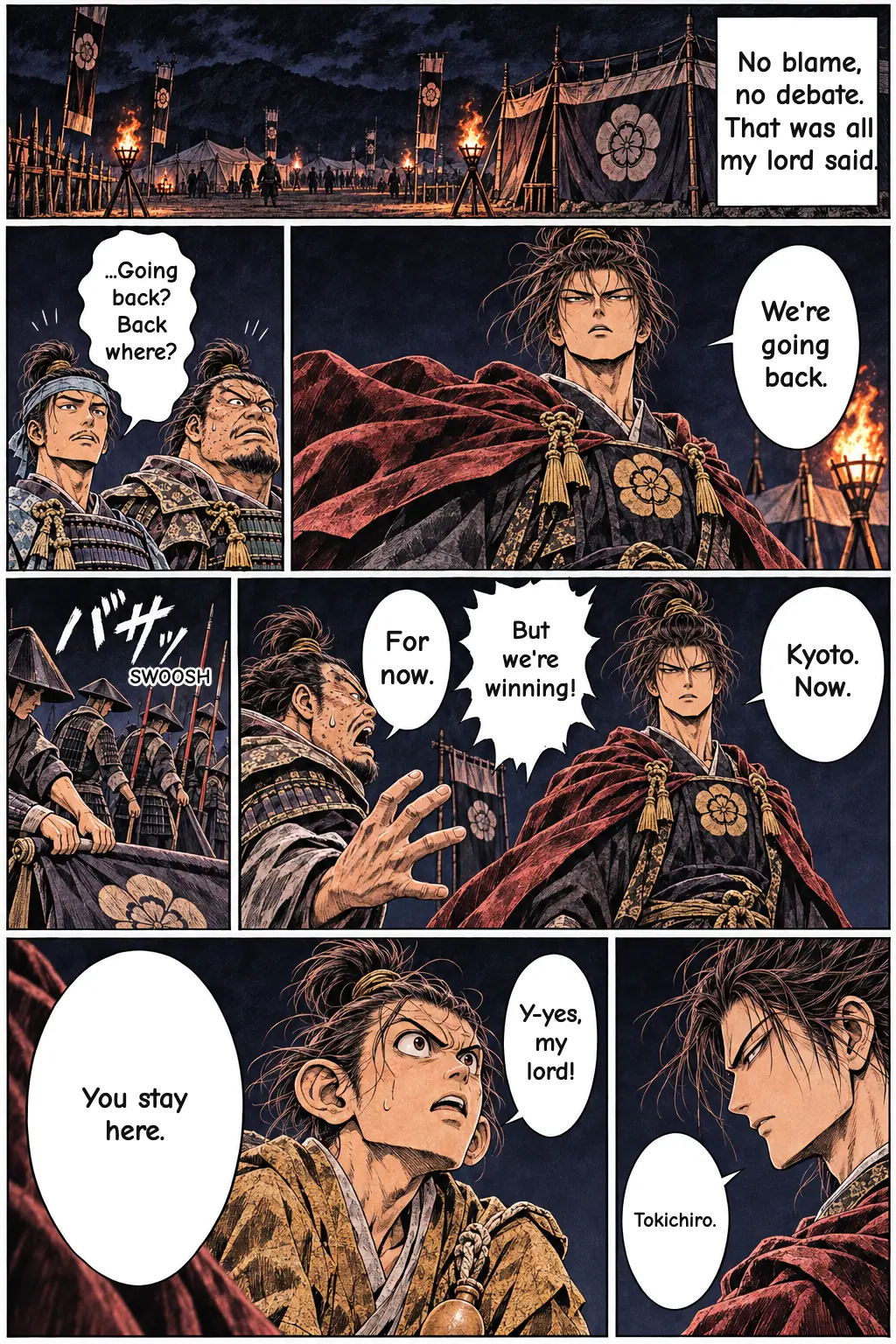
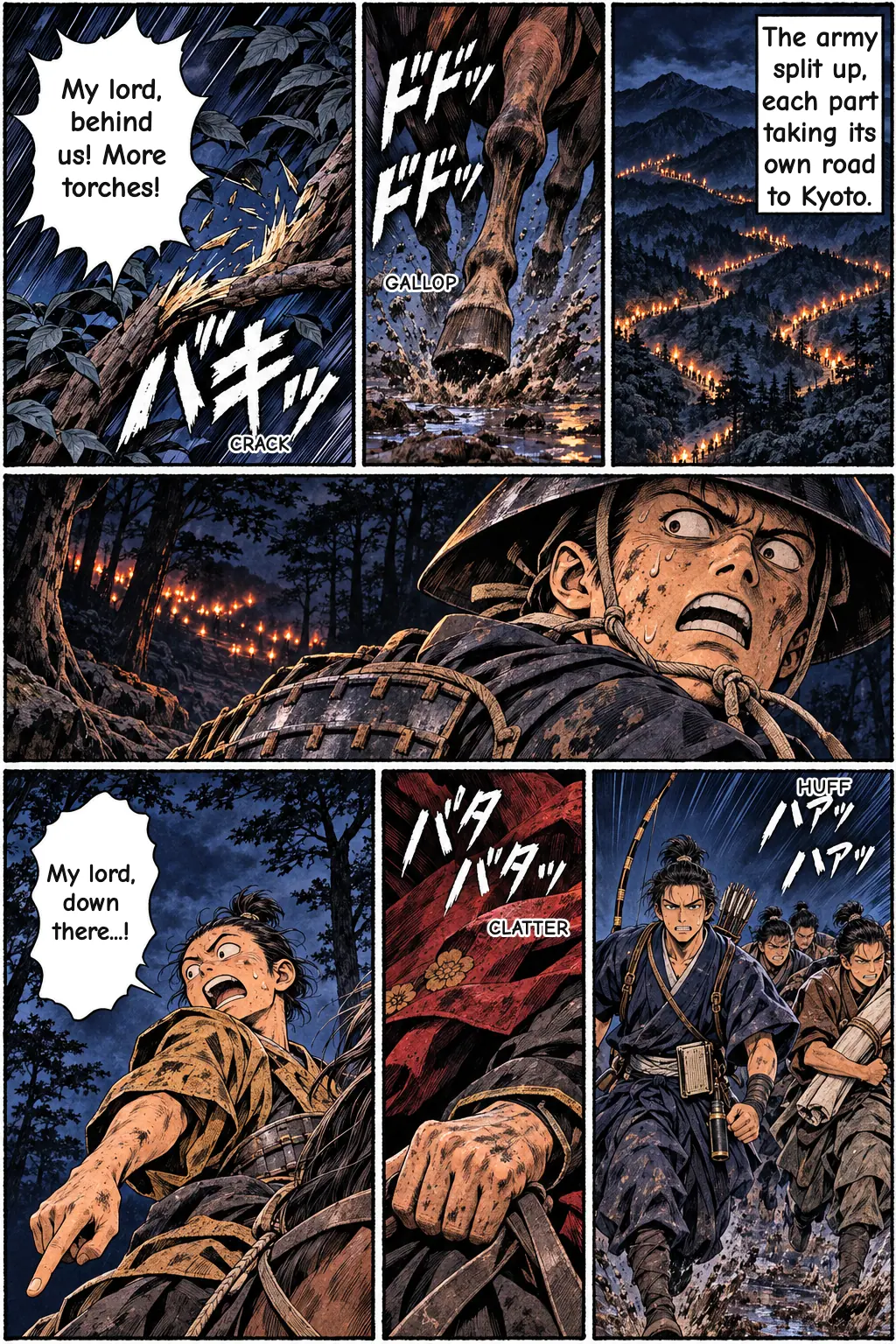
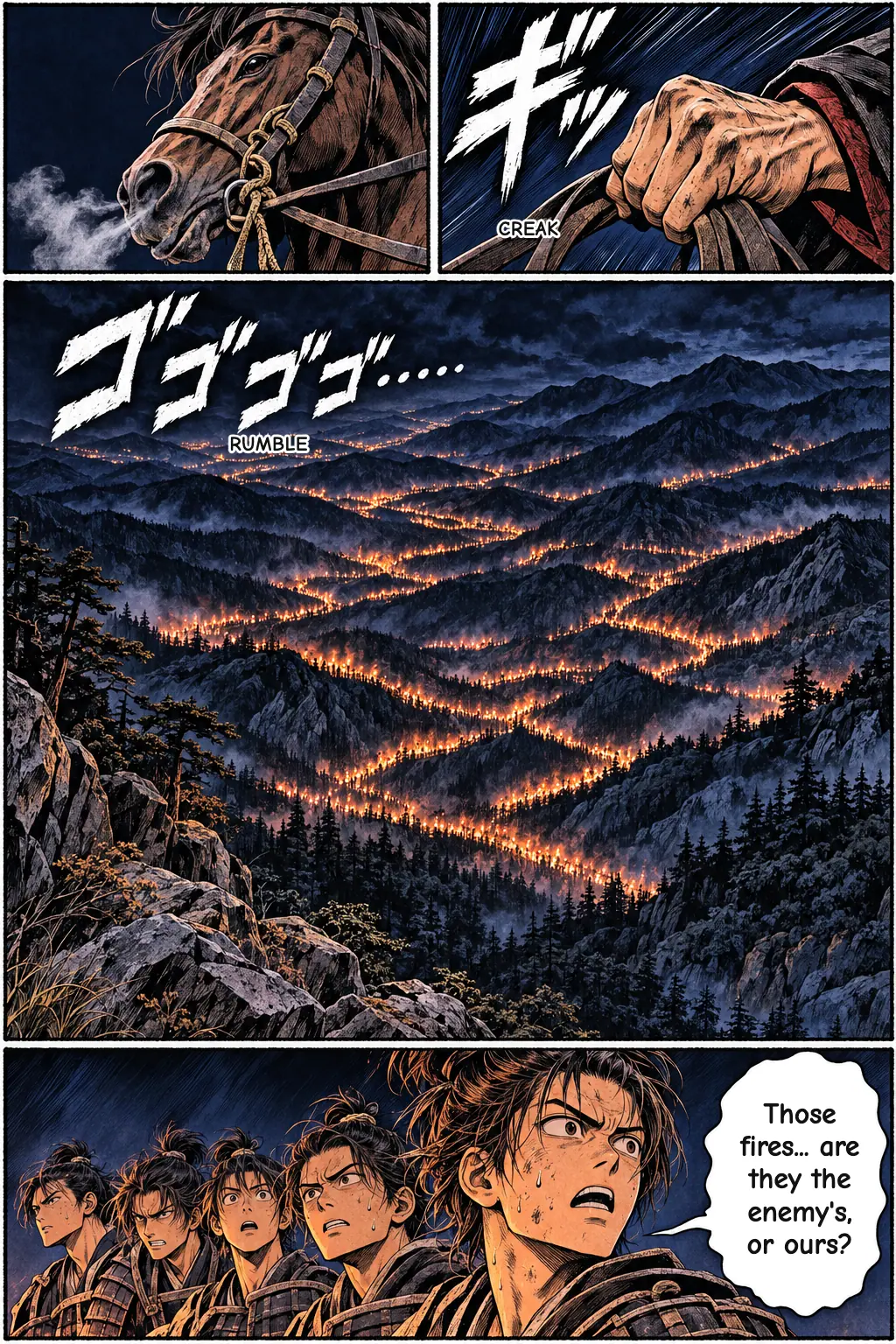
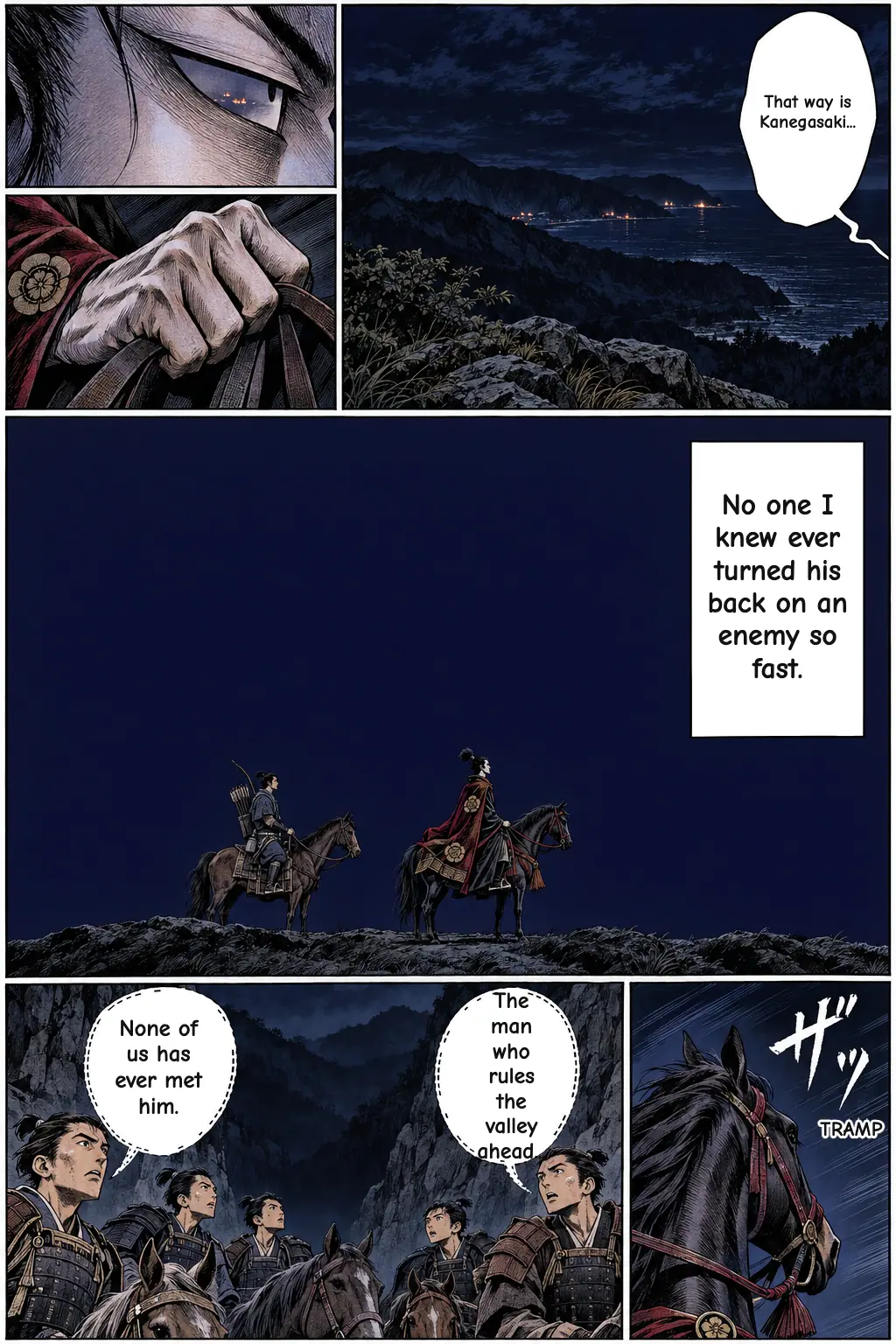
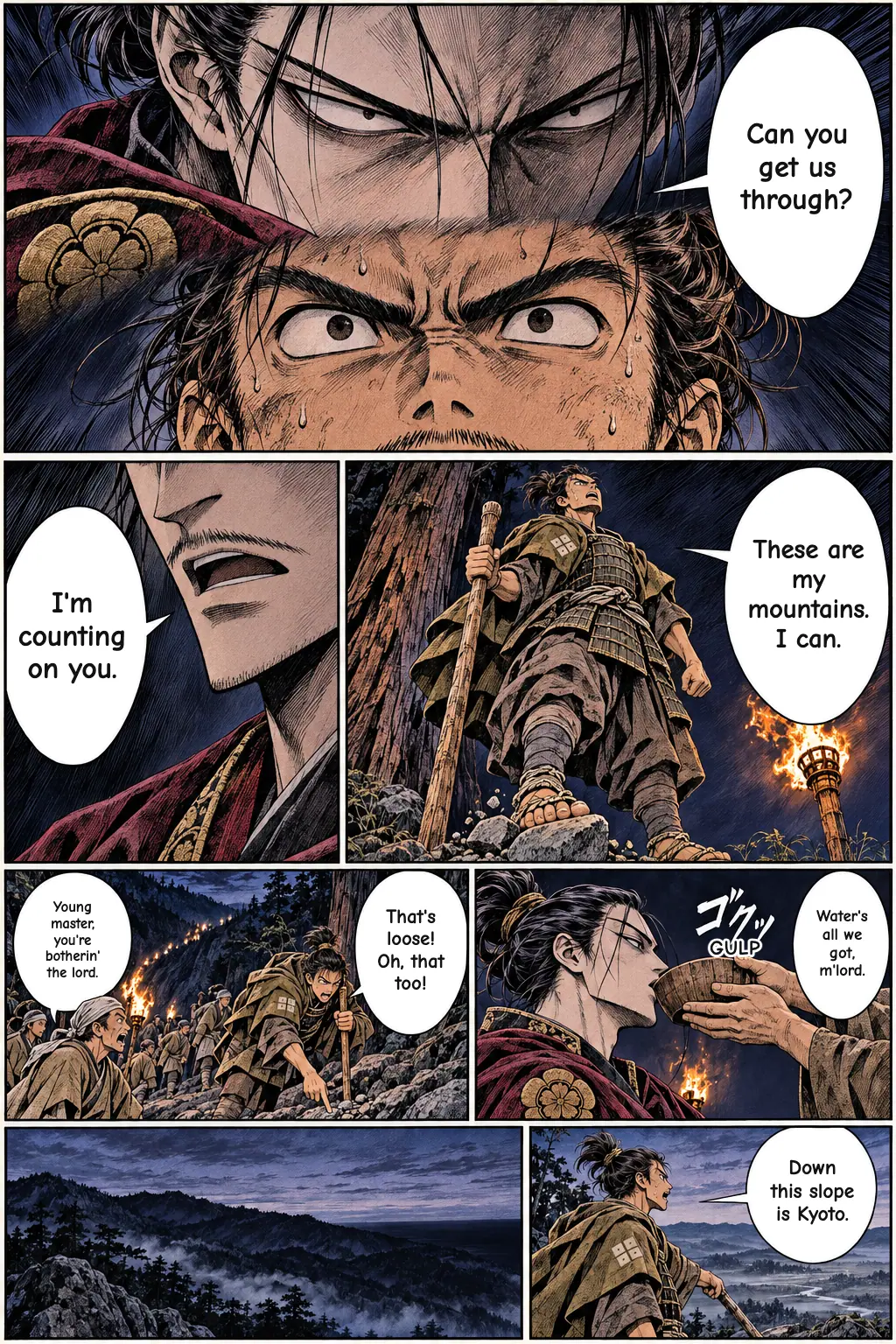
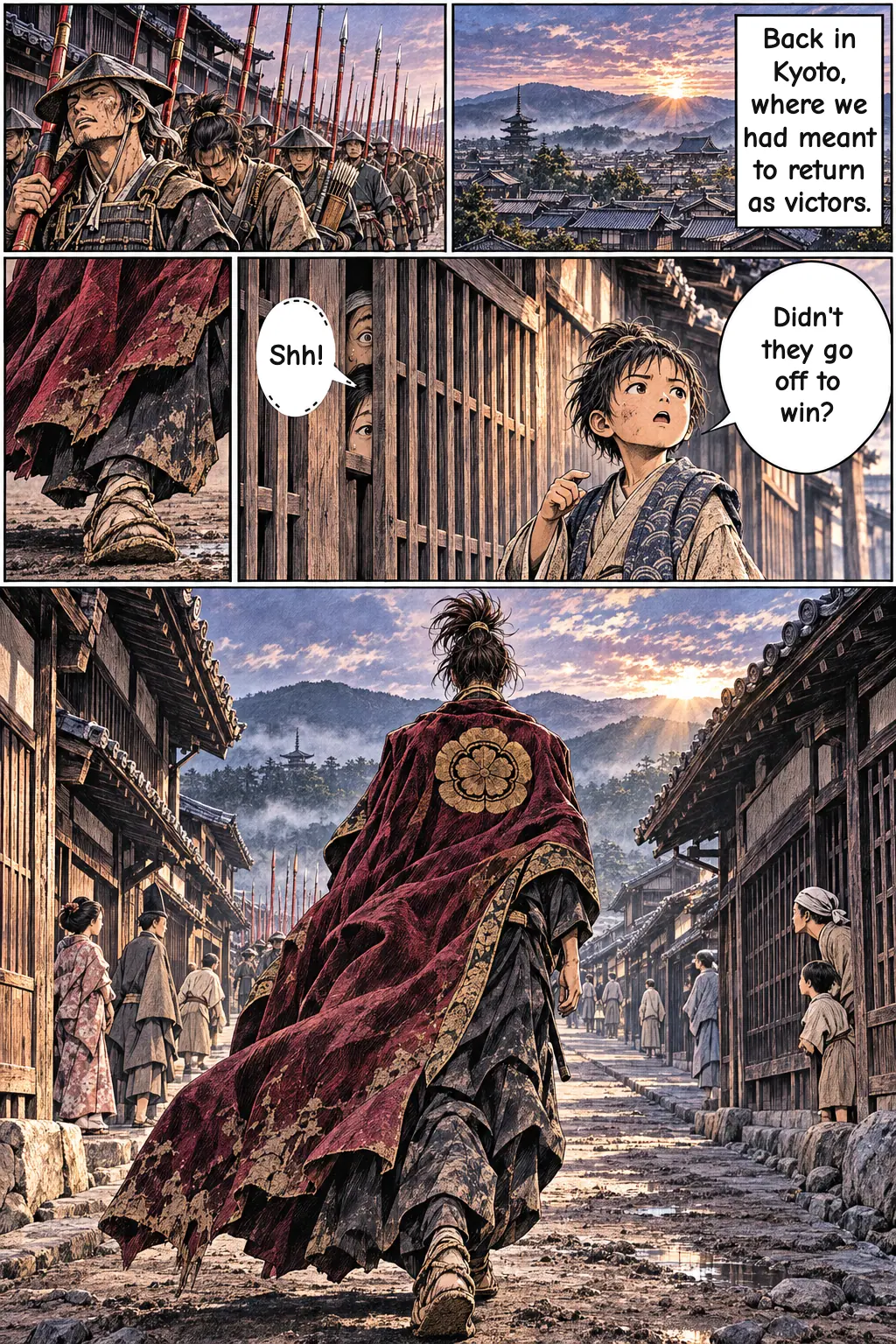
With victory in sight, Nobunaga hears that his sister's husband has turned on him. He laughs it off, but the reports keep coming. "Right or wrong hardly matters now," he says, then leaves the win and his pride behind and races through dark mountain trails to Kyoto.
Get new episodes in your feed. Follow us on:ThreadsBluesky
Story summary
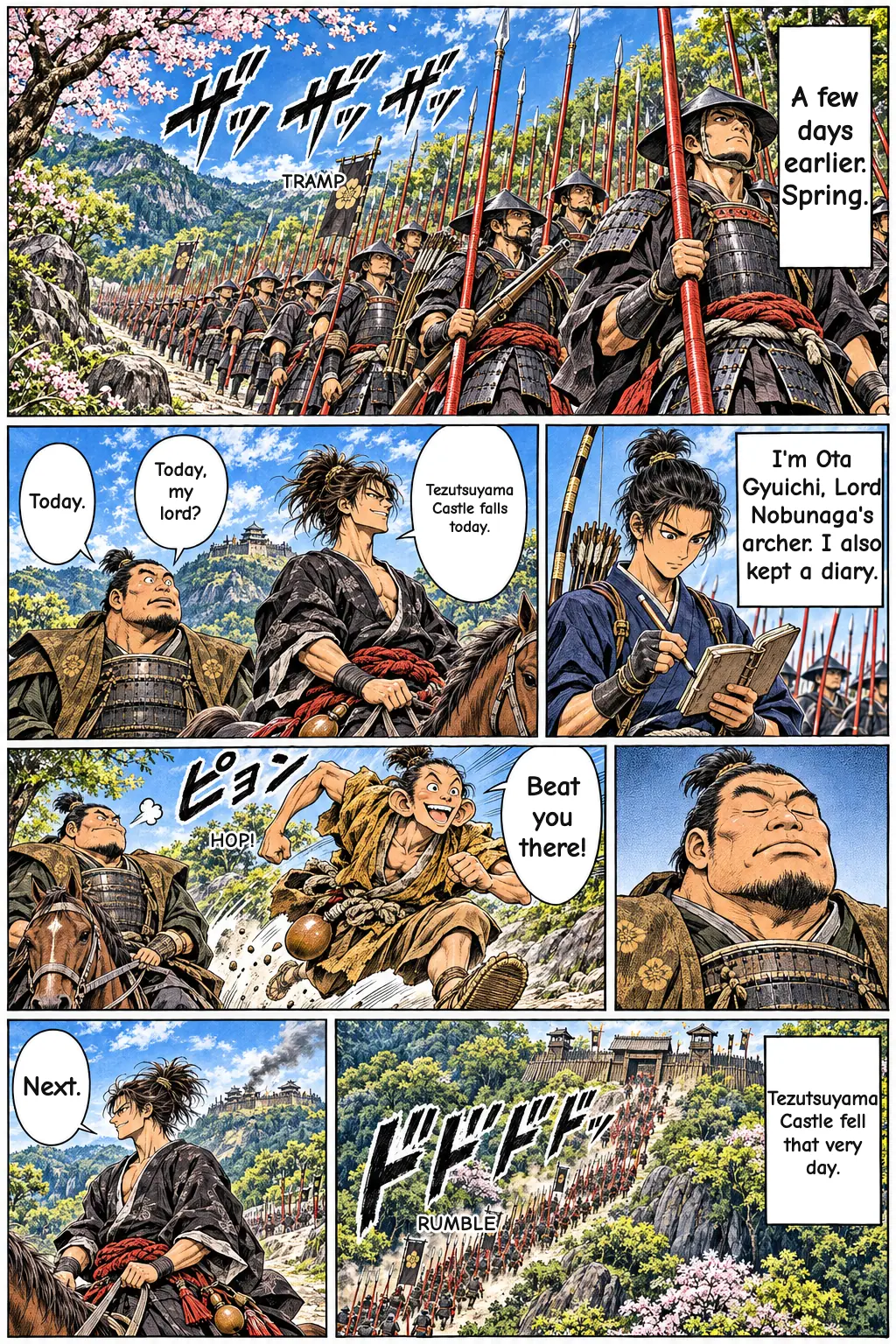
The account comes from Book 3 of the Shinchō Kōki, written by Ōta Gyūichi, who served Nobunaga. On the twentieth day of the fourth month of Genki 1 (1570), Nobunaga left Kyoto for Echizen, a province on the Sea of Japan held by the Asakura clan. His army passed Sakamoto, camped at Wani on the western side of Lake Biwa, then moved through Tanaka in Takashima District and on to Kumagawa and Sagaki in Wakasa Province. On the twenty-fifth he attacked Tezutsuyama Castle and took a great many heads.
Retreat from Kanegasaki Summary: Oda Nobunaga's Escape (Shinchō Kōki)
In short: The Retreat from Kanegasaki is the moment in 1570 when Oda Nobunaga, the warlord then advancing through Echizen Province, learned that his relative Azai Nagamasa had turned against him and abandoned the invasion. According to the Shinchō Kōki, Ōta Gyūichi's chronicle of Nobunaga's life, he left Kinoshita Tōkichirō (the future Toyotomi Hideyoshi) at Kanegasaki Castle and withdrew through the mountains of Kutsuki to Kyoto.
The Story in the Shinchō Kōki
The account comes from Book 3 of the Shinchō Kōki, written by Ōta Gyūichi, who served Nobunaga. On the twentieth day of the fourth month of Genki 1 (1570), Nobunaga left Kyoto for Echizen, a province on the Sea of Japan held by the Asakura clan. His army passed Sakamoto, camped at Wani on the western side of Lake Biwa, then moved through Tanaka in Takashima District and on to Kumagawa and Sagaki in Wakasa Province.
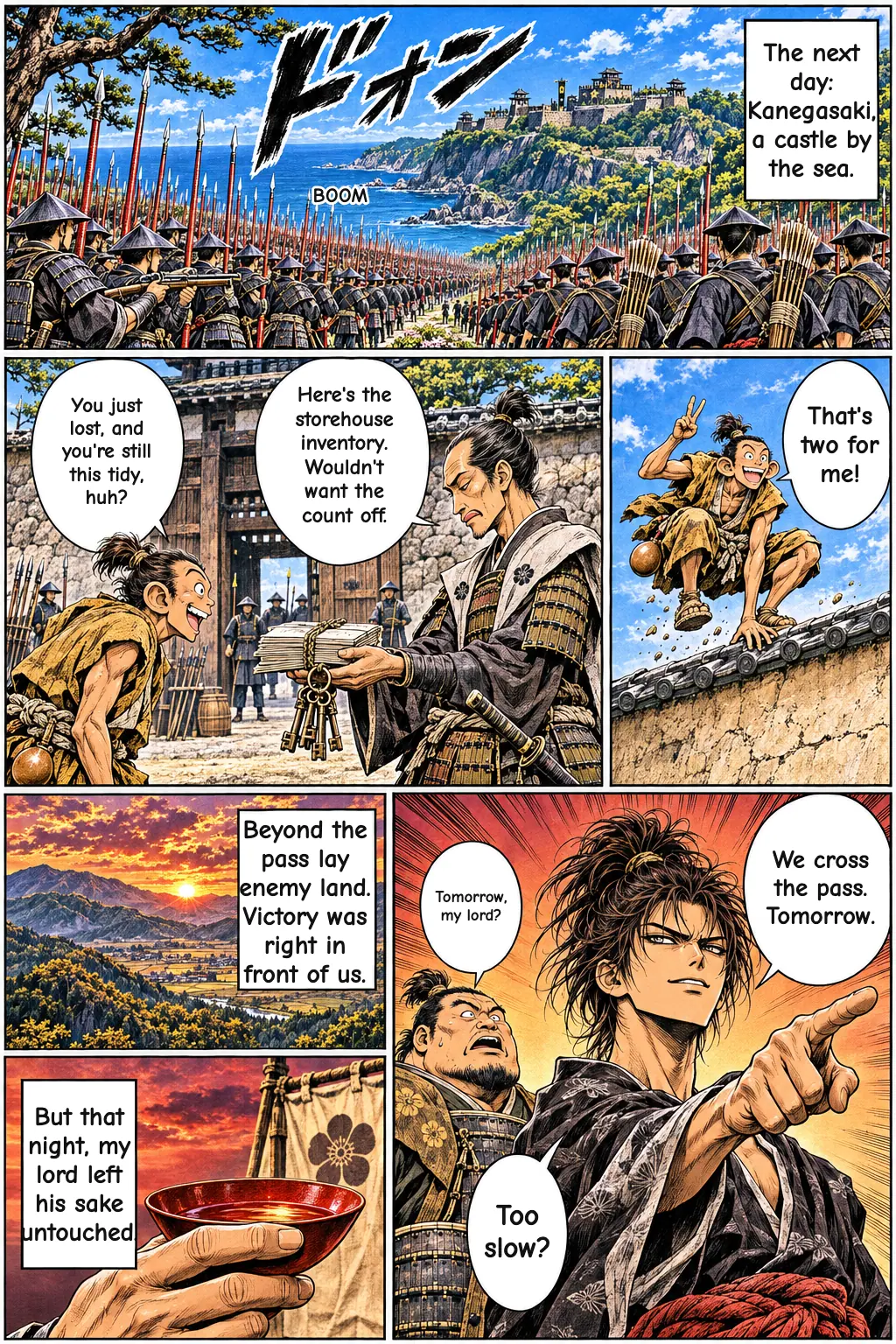
On the twenty-fifth he attacked Tezutsuyama Castle and took a great many heads. The next day he struck Kanegasaki Castle, held by an Asakura commander the chronicle calls Asakura Chūmu-no-Taifu, who surrendered and left. Hikita Castle was handed over as well. Nobunaga now meant to cross Kinome Pass into the heart of Echizen.
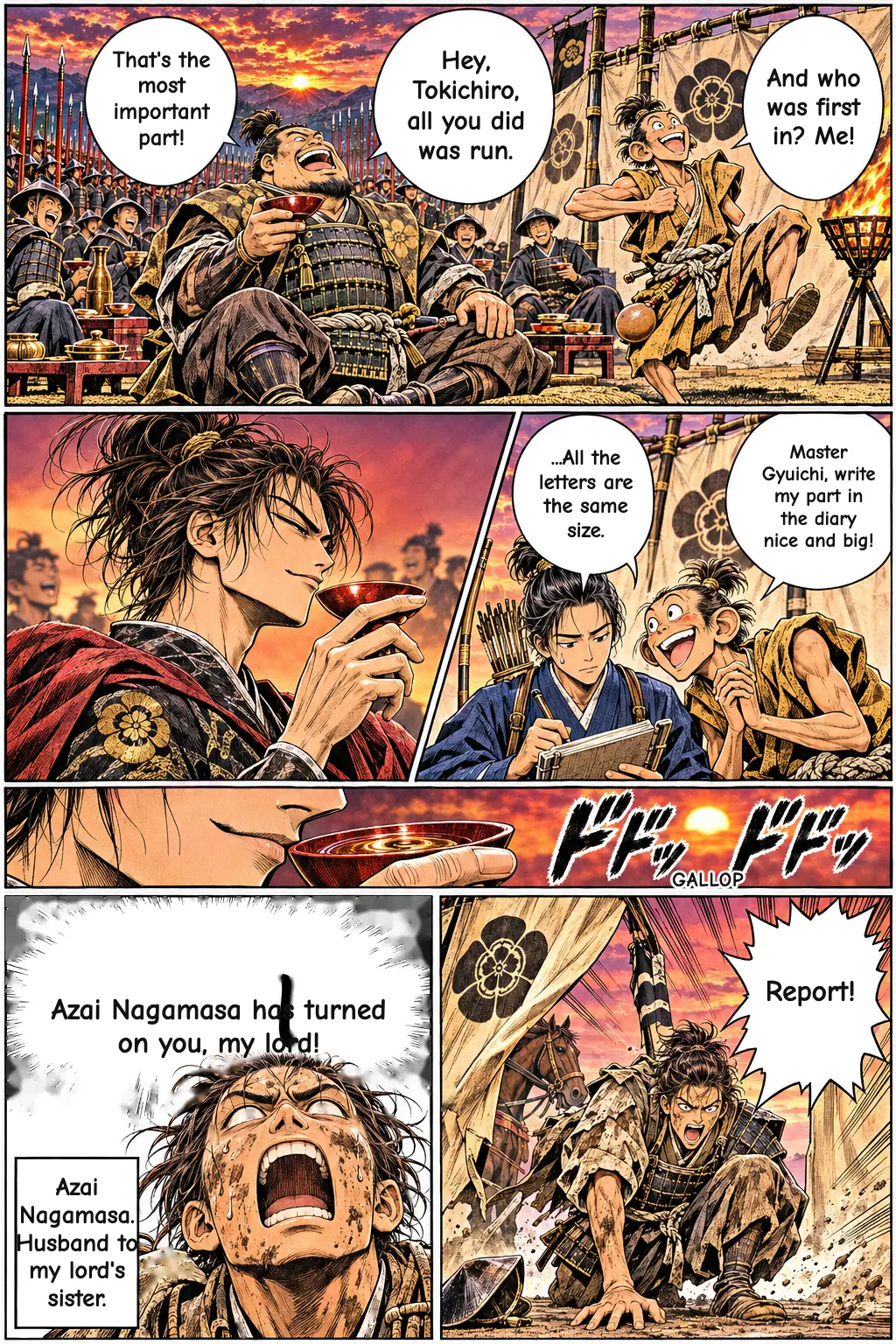
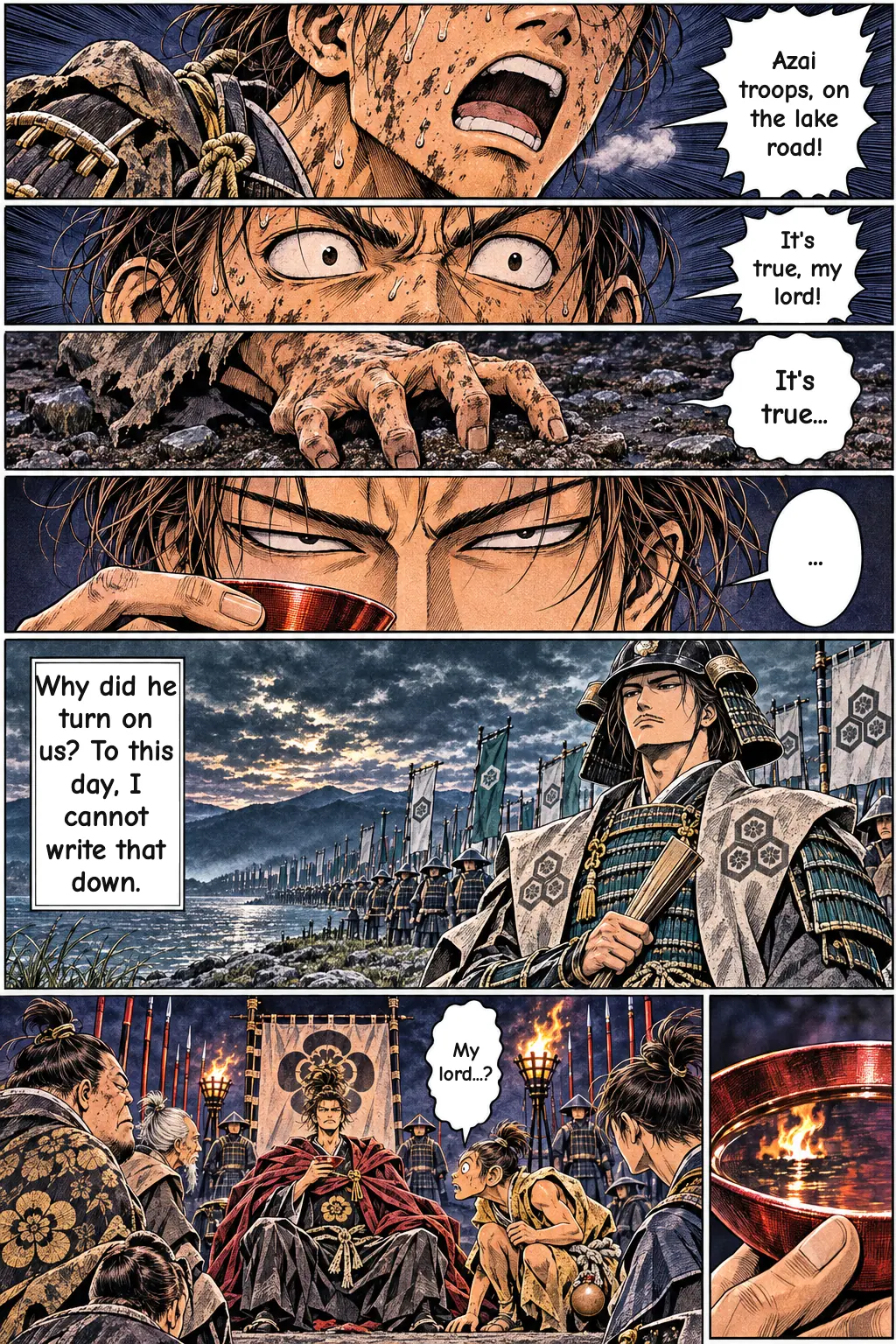
Then came a report that Azai Bizen, better known as Azai Nagamasa, had defected. Nobunaga dismissed it as false. The chronicle gives his reasoning: Azai was unmistakably family and had been entrusted with all of northern Ōmi, so he had nothing to complain about. But confirmations kept arriving from several directions. Nobunaga's response is recorded in a phrase now closely tied to him, zehi ni oyobazu, which means roughly that there is no point in arguing over it.
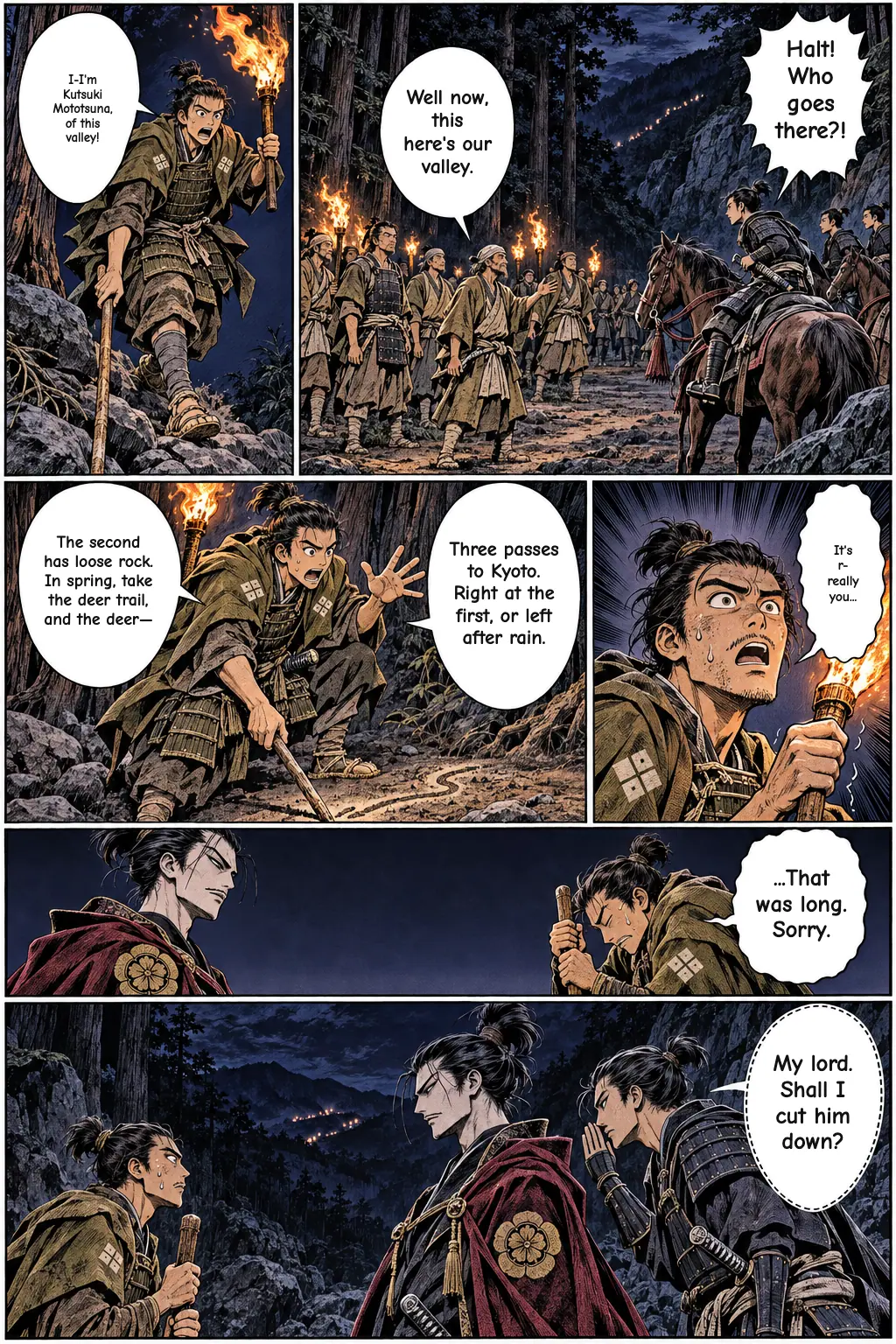
He left Kinoshita Tōkichirō at Kanegasaki and, on the last day of the month, withdrew by way of Kutsuki, in the mountains west of Lake Biwa. A local lord, Kutsuki Shinano-no-Kami, exerted himself on Nobunaga's behalf, and the chronicle's account ends with the return to Kyoto.
Why the News Changed Everything
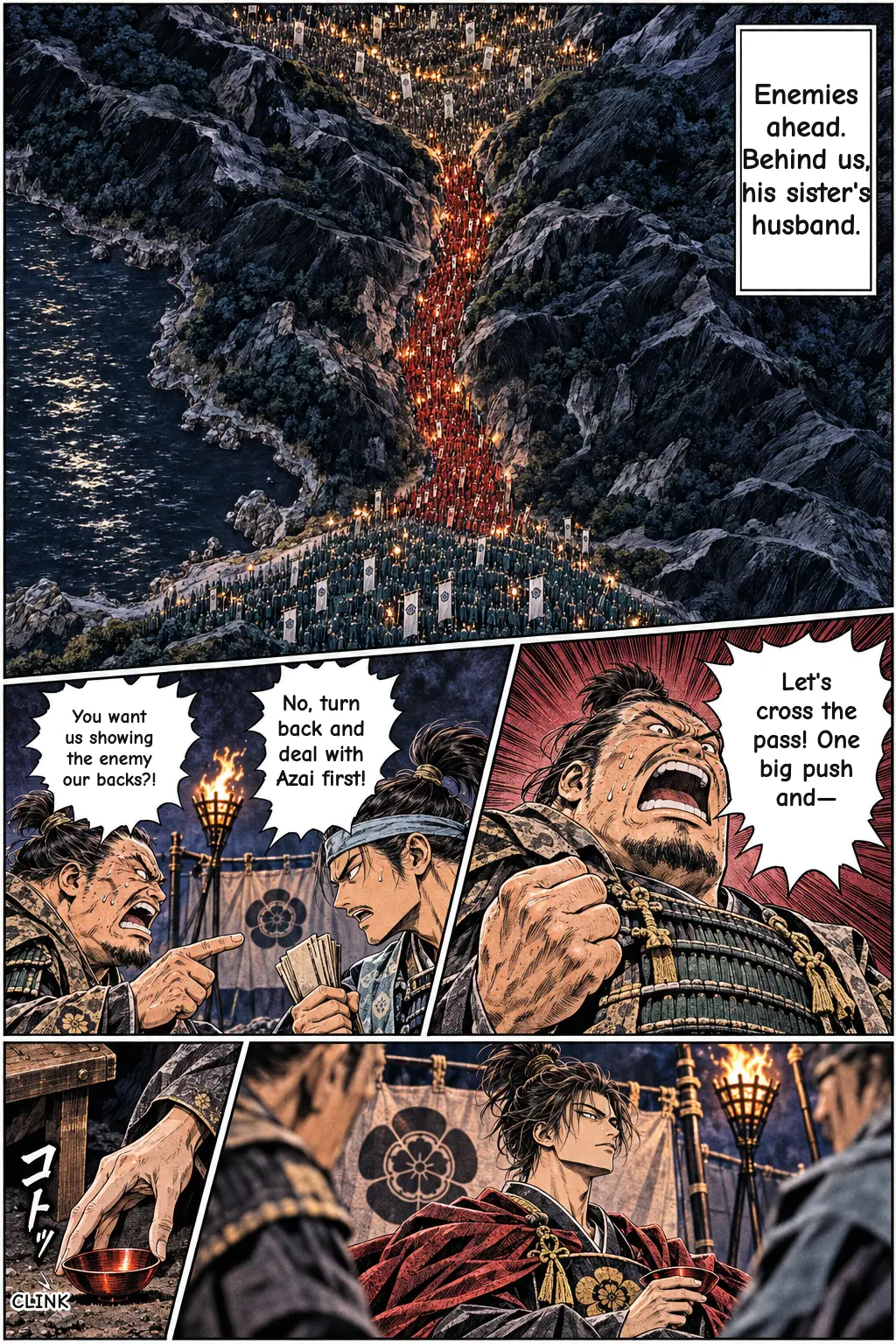
The passage does not stop to explain the danger, but the map does. Northern Ōmi lies between Echizen and Kyoto, so a hostile Azai could threaten the army from behind while the Asakura stood in front. That is why this retreat is usually described as an escape from a pincer attack. In Japanese it is often called Kanegasaki no Nokiguchi.
It also shows how fragile alliances could be in the Sengoku, or Warring States, period, when rival lords competed for land and power across Japan. Marriage was a common way to bind two houses together, but family ties were no guarantee of loyalty. Nobunaga's first reaction rests on exactly that assumption: a relative who had been treated well would not rebel.
What stands out is how quickly he changed course once the evidence piled up. He had just won two castles, and he gave up the campaign anyway. The chronicle uses the same phrase, zehi ni oyobazu, in its account of the Honnō-ji Incident of 1582, when Nobunaga was attacked by his own general, Akechi Mitsuhide. Readers who know the ending often find the echo chilling.
What the Chronicle Doesn't Say
Many famous details of this retreat are not in this passage, and it helps to keep them separate. The best known is a later anecdote: Nobunaga's sister Oichi, Nagamasa's wife, is said to have sent him a bag of beans tied at both ends as a coded warning that he was trapped. It is a tradition, not part of this account.
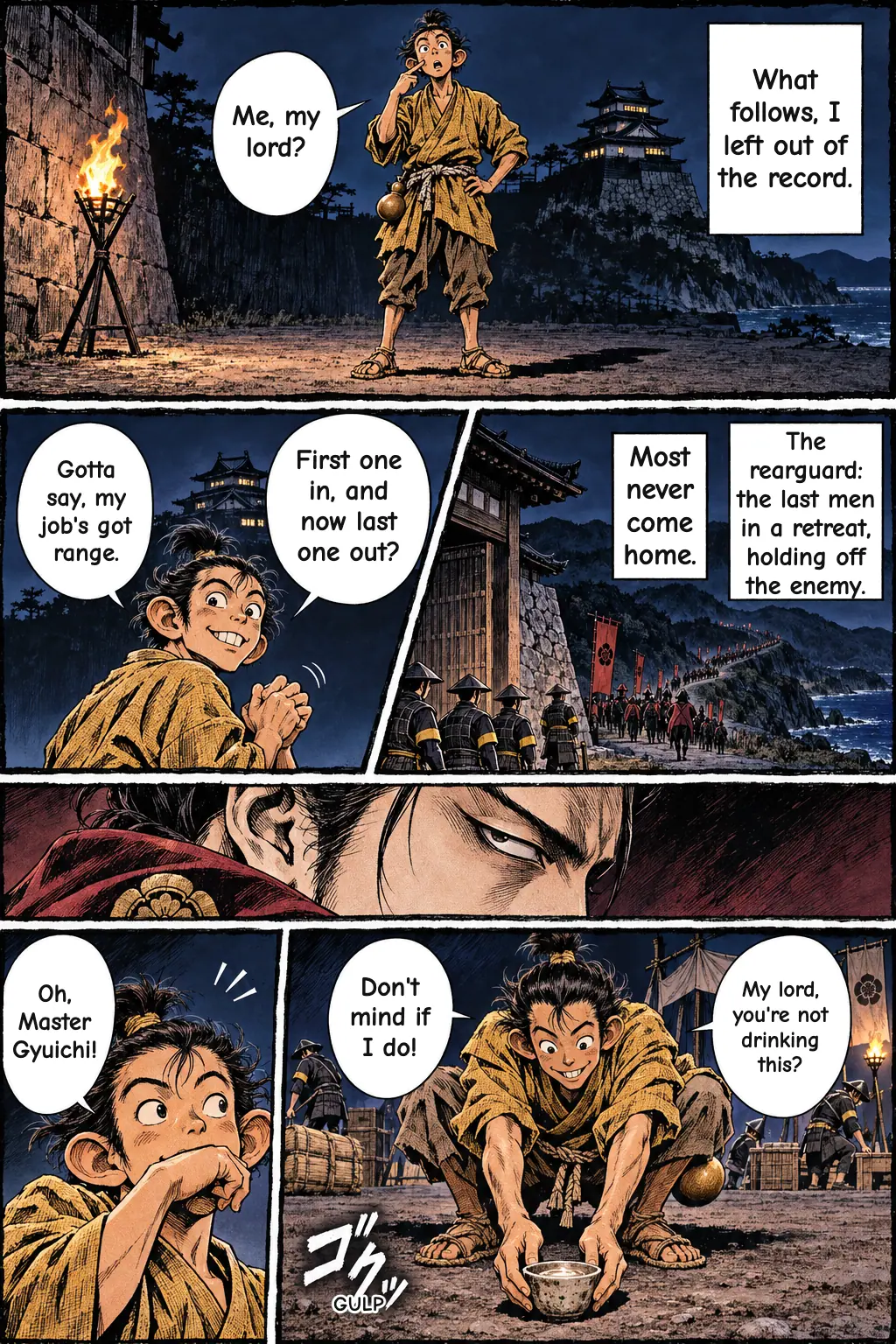
Popular versions also say that Tōkichirō volunteered to guard the rear and held off a fierce pursuit, making his name in the process. These come from later war tales and common retellings. Here the chronicle states only that he was left at Kanegasaki.
Other accounts add that Matsunaga Hisahide talked Kutsuki into letting Nobunaga through, that Nobunaga reached Kyoto with only a few attendants, and that Akechi Mitsuhide, Ikeda Katsumasa, or Tokugawa Ieyasu took part in the withdrawal. These details rest on other sources or popular tradition and need separate checking. As for why Nagamasa rebelled, the usual explanation is his family's old bond with the Asakura, but this passage gives no motive at all.
What the Manga Changed
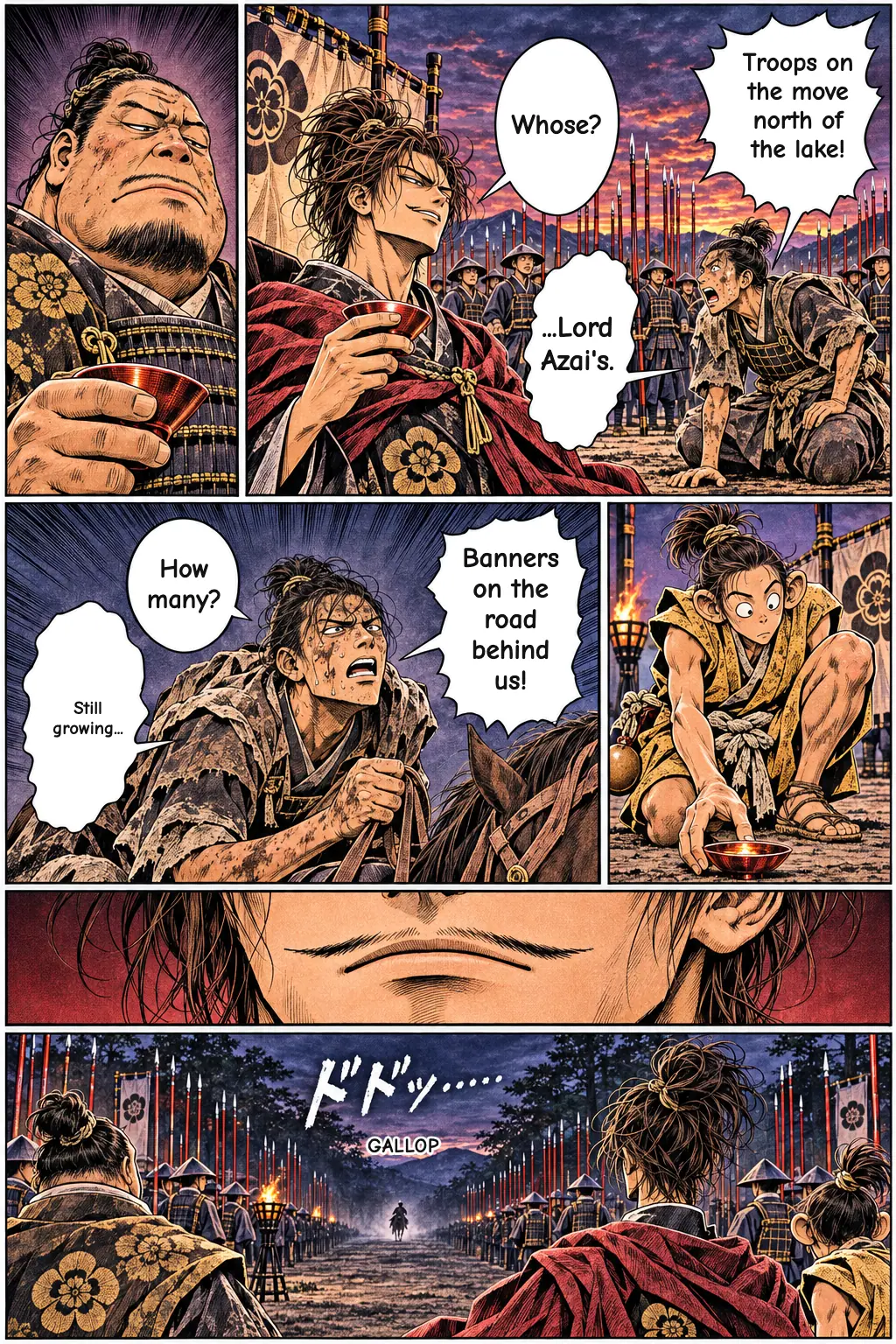
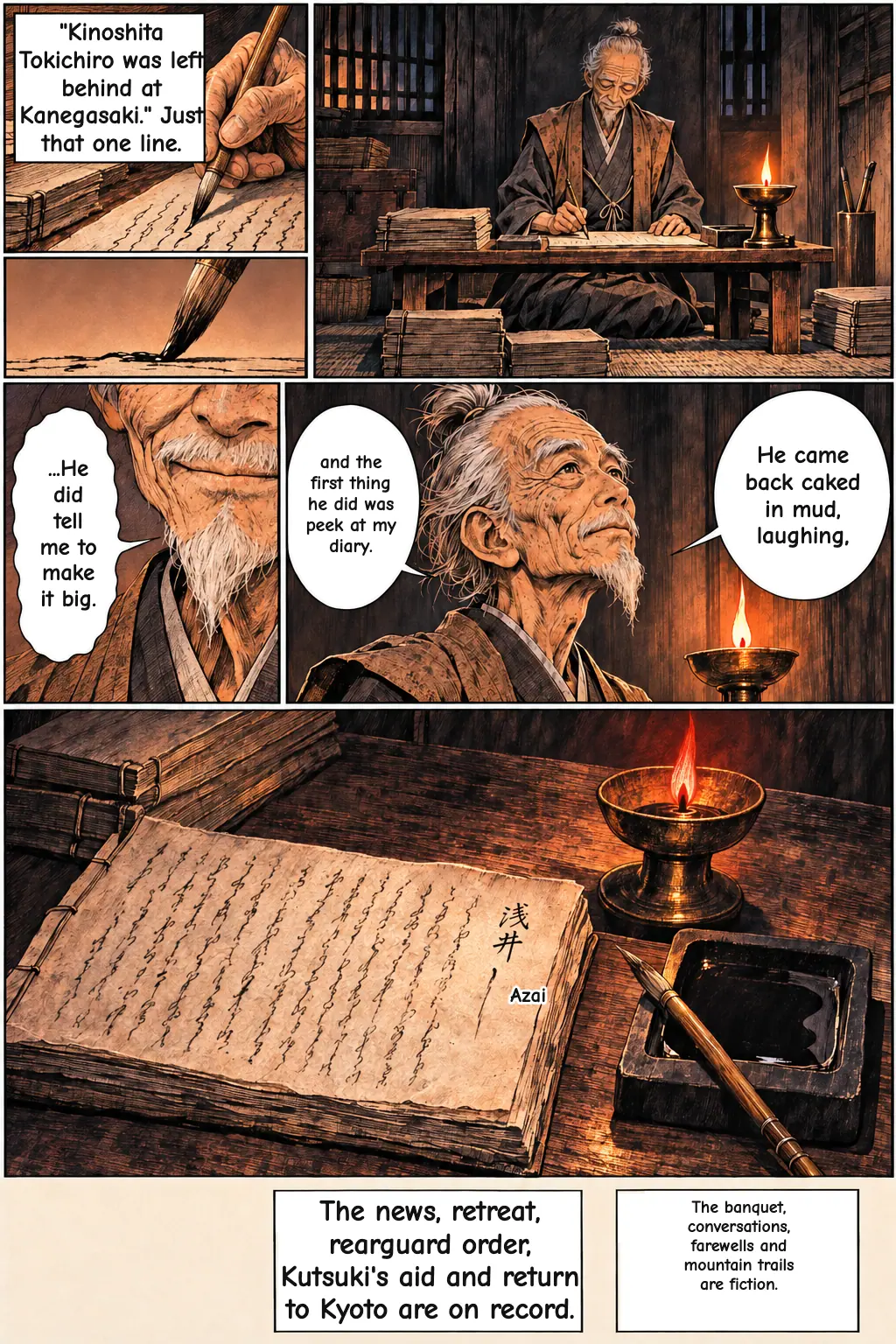
The manga follows the chronicle's main events: the fast advance, the report, Nobunaga's disbelief, the decision to withdraw, Tōkichirō left at Kanegasaki, and the journey through Kutsuki to Kyoto. Its version of zehi ni oyobazu is the line "Right or wrong hardly matters now."
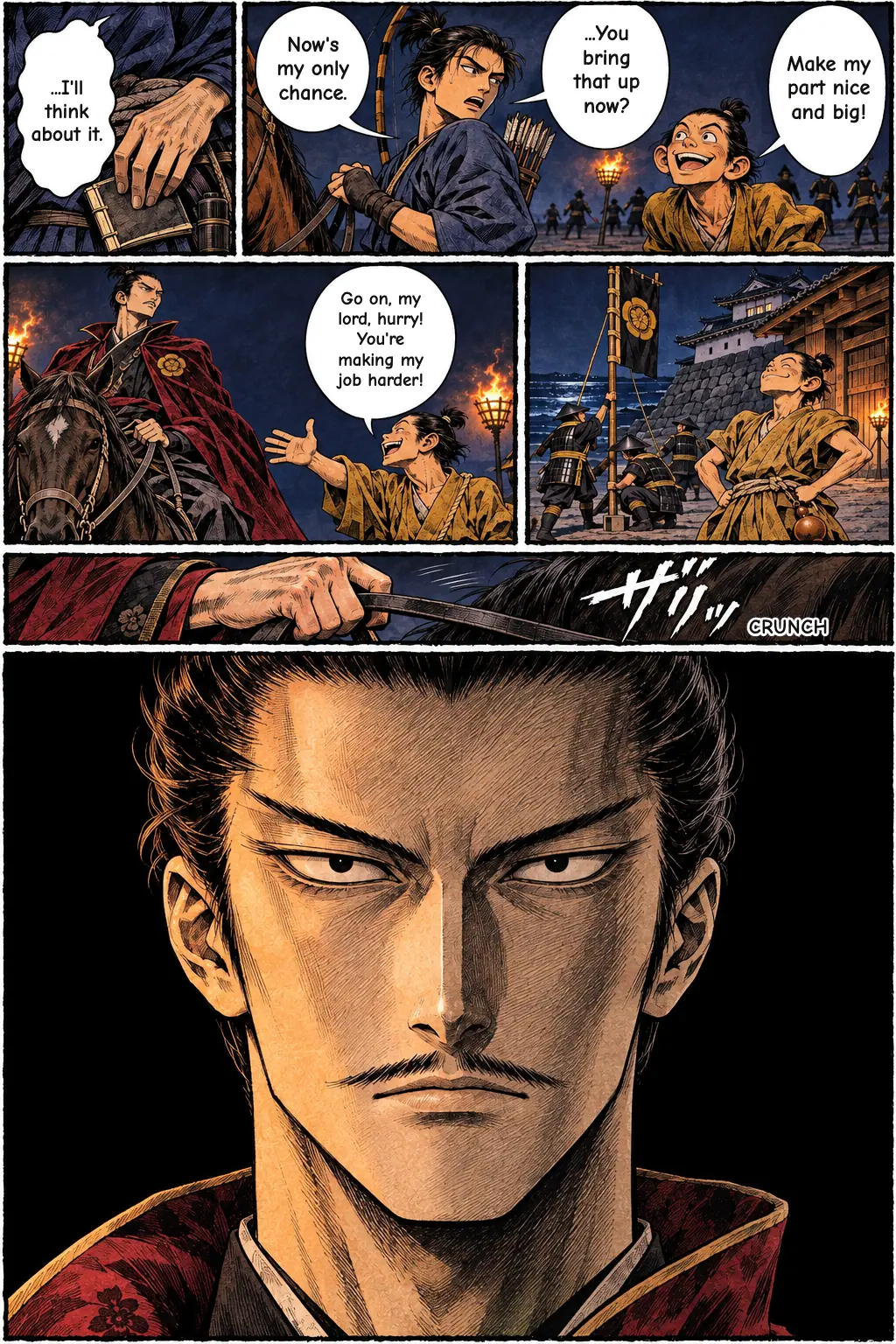
Much of the feeling, though, is invented. The chronicle says only that Nobunaga judged the report false; his laughing it off is the manga's staging. The messengers, the tension in camp as reports mount, and Nobunaga's inner thoughts after deciding to retreat are also creative additions.
The same goes for the farewell between Nobunaga and Tōkichirō and Tōkichirō's expression and resolve at the castle, since the source records no conversation or speech from him. The dark mountain trails, the weather, the time of day, and the companions on the road are imagined too, as is any meeting or dialogue with Kutsuki beyond the fact that he helped.
Where to Read It
You can read this retreat as Episode 7 of ODA NOBUNAGA: The Demon King of the Warring States here on Manga Portal. Every episode is free, with no sign-up needed. If you'd like to see how a commander walks away from a battle he is winning, this chapter is a good place to start, and the earlier episodes show how Nobunaga got there.
Characters in this episode
Oda Nobunaga
The warlord leading the Echizen campaign, who first dismisses the news of betrayal and then abandons his advance once the reports are confirmed.
Azai Nagamasa (Azai Bizen)
The lord of northern Ōmi and Nobunaga's relative, whose reported defection triggers the retreat, though this passage shows neither his actions nor his motive.
Kinoshita Tōkichirō (later Toyotomi Hideyoshi)
The Oda commander left at Kanegasaki Castle, which is all this passage of the chronicle records about him.
Kutsuki Shinano-no-Kami (Kutsuki Mototsuna)
The lord who worked on Nobunaga's behalf during the withdrawal through Kutsuki; the name Mototsuna comes from outside this passage.
Asakura Chūmu-no-Taifu (Asakura Kagetsune)
The Asakura commander who held Kanegasaki Castle until he surrendered and left; the name Kagetsune comes from other sources.
FAQ
What happened at the Retreat from Kanegasaki?
In 1570, Oda Nobunaga was invading Echizen and had already taken Tezutsuyama and Kanegasaki when he learned that Azai Nagamasa had defected. He called off the advance, left Kinoshita Tōkichirō at Kanegasaki, and returned to Kyoto through Kutsuki.
Why did Azai Nagamasa betray Oda Nobunaga?
The common explanation is that the Azai clan valued its old ties with the Asakura, the family Nobunaga was attacking. The Shinchō Kōki passage on the retreat does not state a motive, so this explanation comes from outside it.
Did Oichi really warn Nobunaga with a bag of beans?
The story says Oichi sent a bag of beans tied at both ends to signal that he was trapped from both sides. It is a later anecdote and does not appear in this Shinchō Kōki account, where the news arrives simply as reports of Azai's defection.
Did Hideyoshi volunteer to guard the rear at Kanegasaki?
That is the popular version, found in later war tales and common retellings. This passage of the Shinchō Kōki says only that Kinoshita Tōkichirō, the future Hideyoshi, was left at Kanegasaki Castle. It does not mention volunteering or describe how he fought.
What does "zehi ni oyobazu" mean?
It means roughly that there is no point in debating the matter, and it is often read as accepting a situation that cannot be argued away. In the Shinchō Kōki, Nobunaga says it here when the reports are confirmed, and the phrase appears again in the account of his final crisis at Honnō-ji.