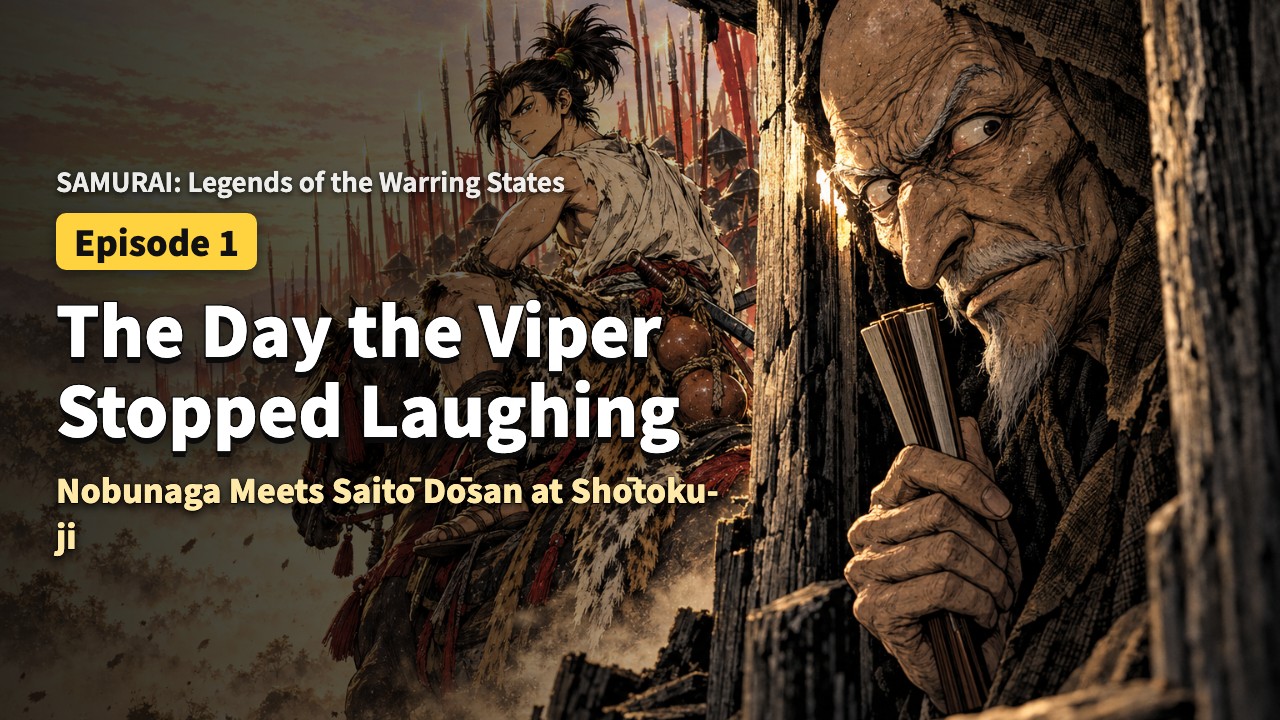
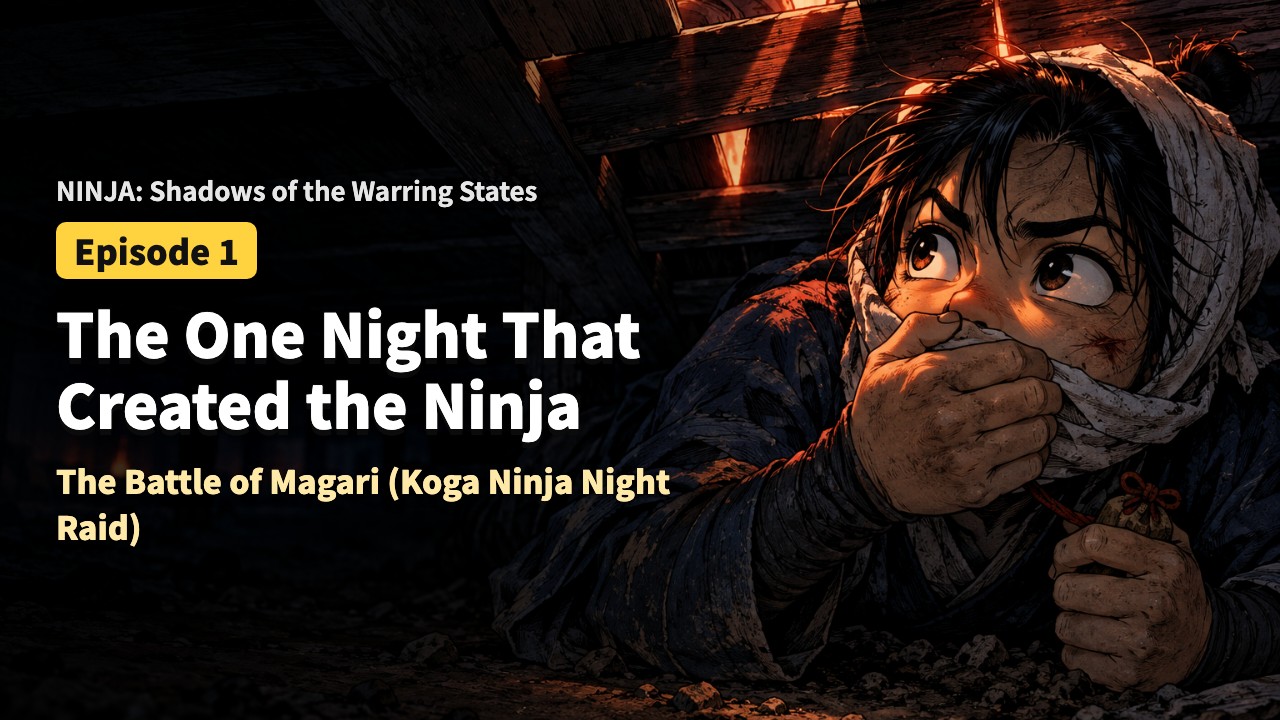
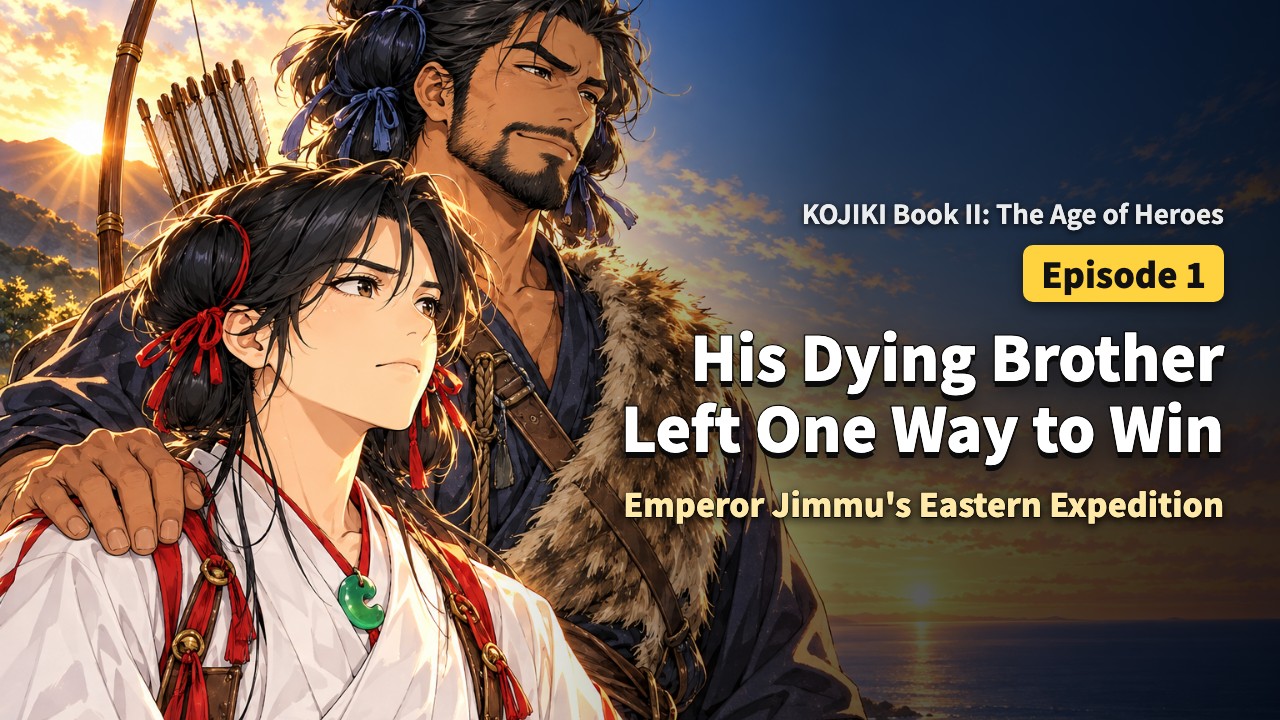
Episode 3He Forgave His Brother Once. Only Once.The Battle of Ino
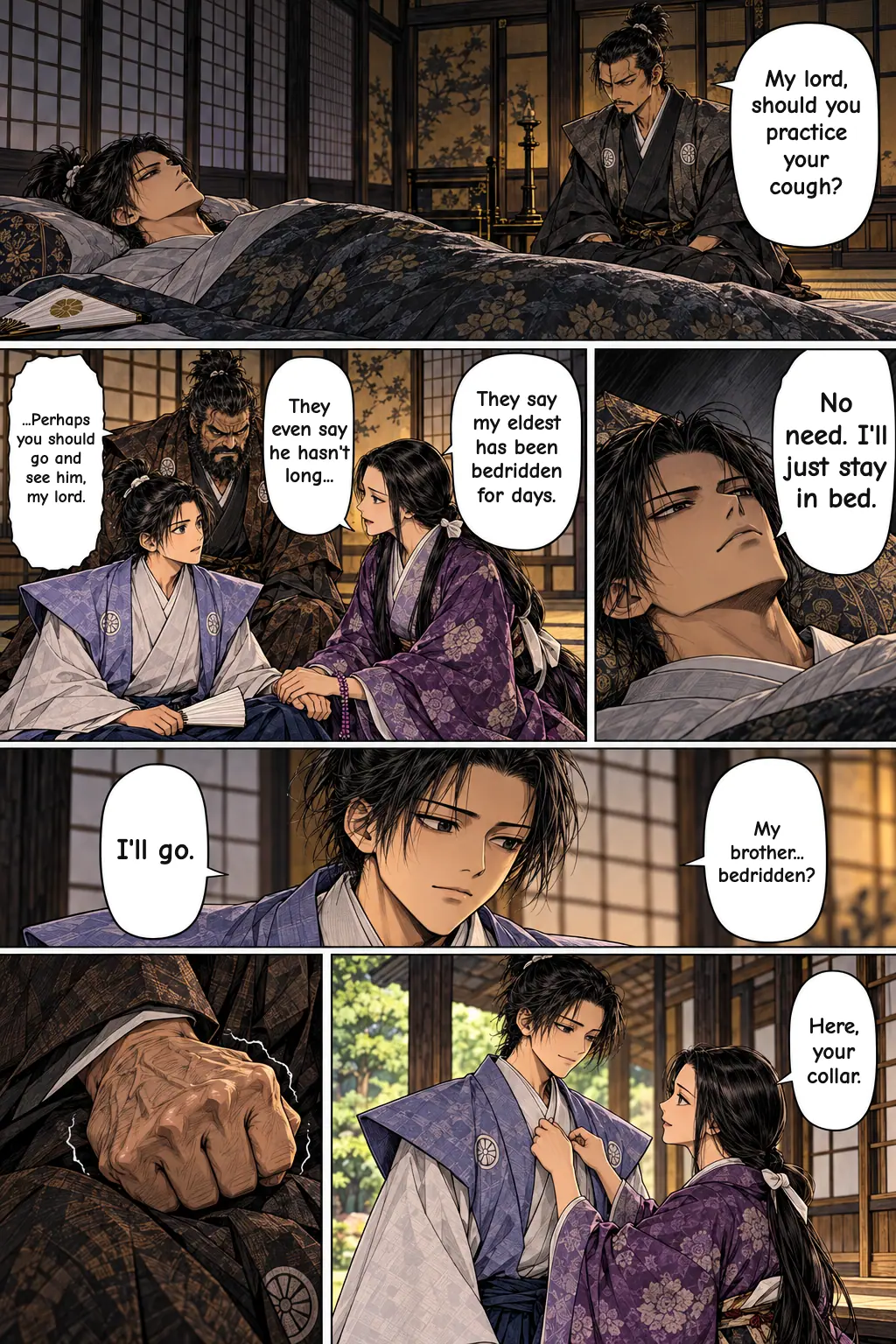
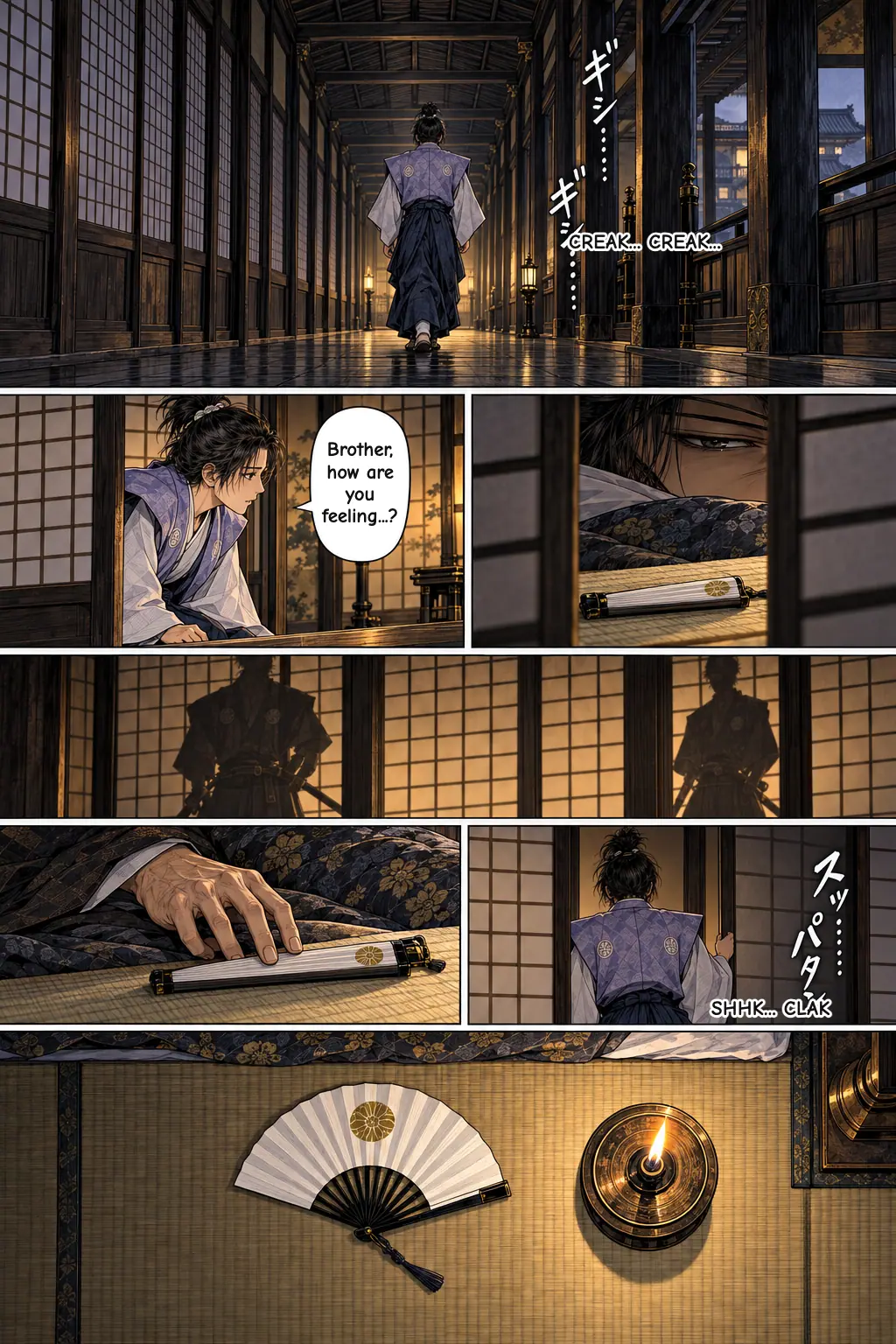
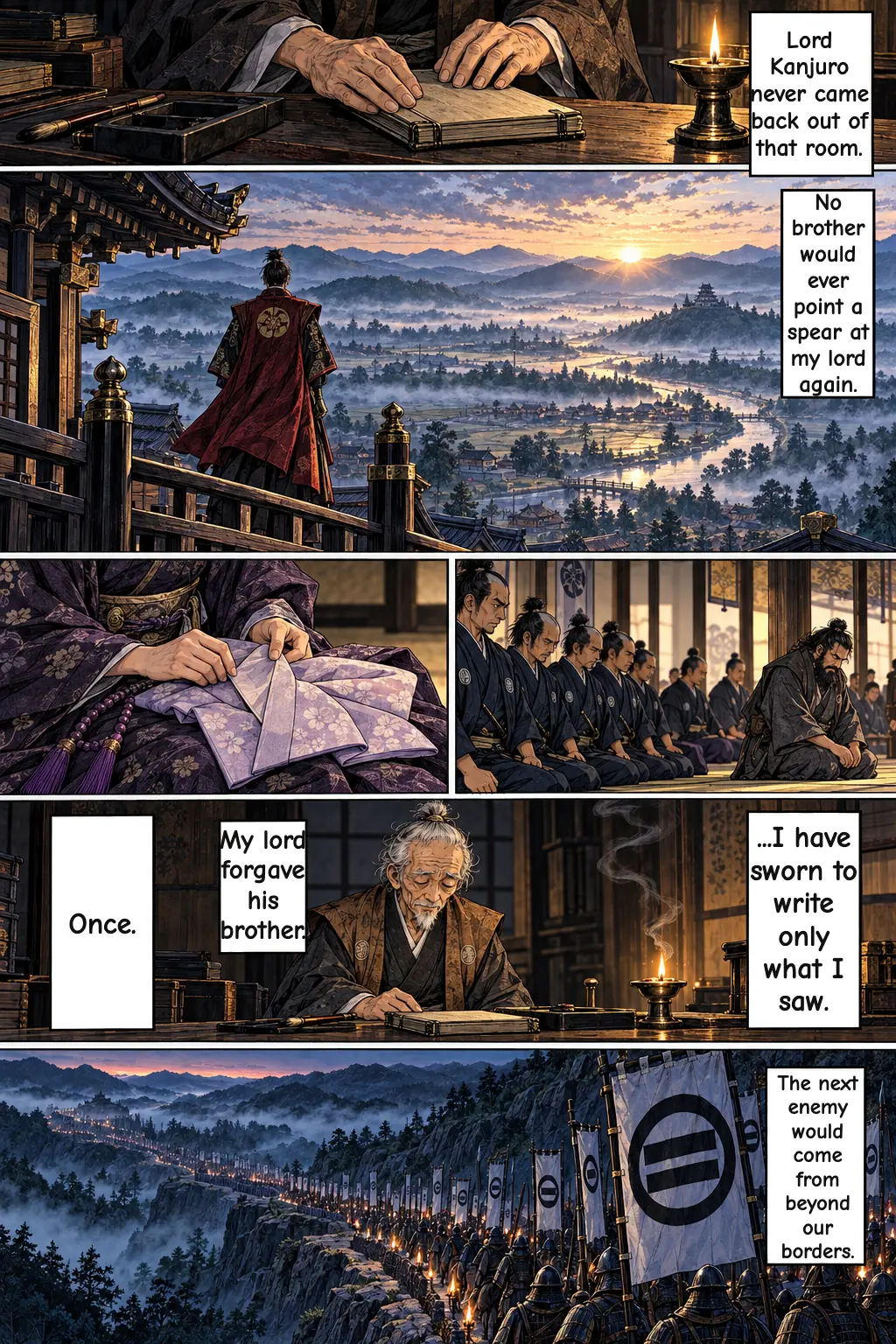
Saito Dosan, his wife's father and the one man who believed in him, is dead, and the young lord Oda Nobunaga is suddenly alone. His polite younger brother Kanjuro, his mother's favorite, is pushed by ambitious retainers into rising against him. Nobunaga forgives him once. He doesn't forgive him a second time.
Get new episodes in your feed. Follow us on:ThreadsBluesky
Story summary
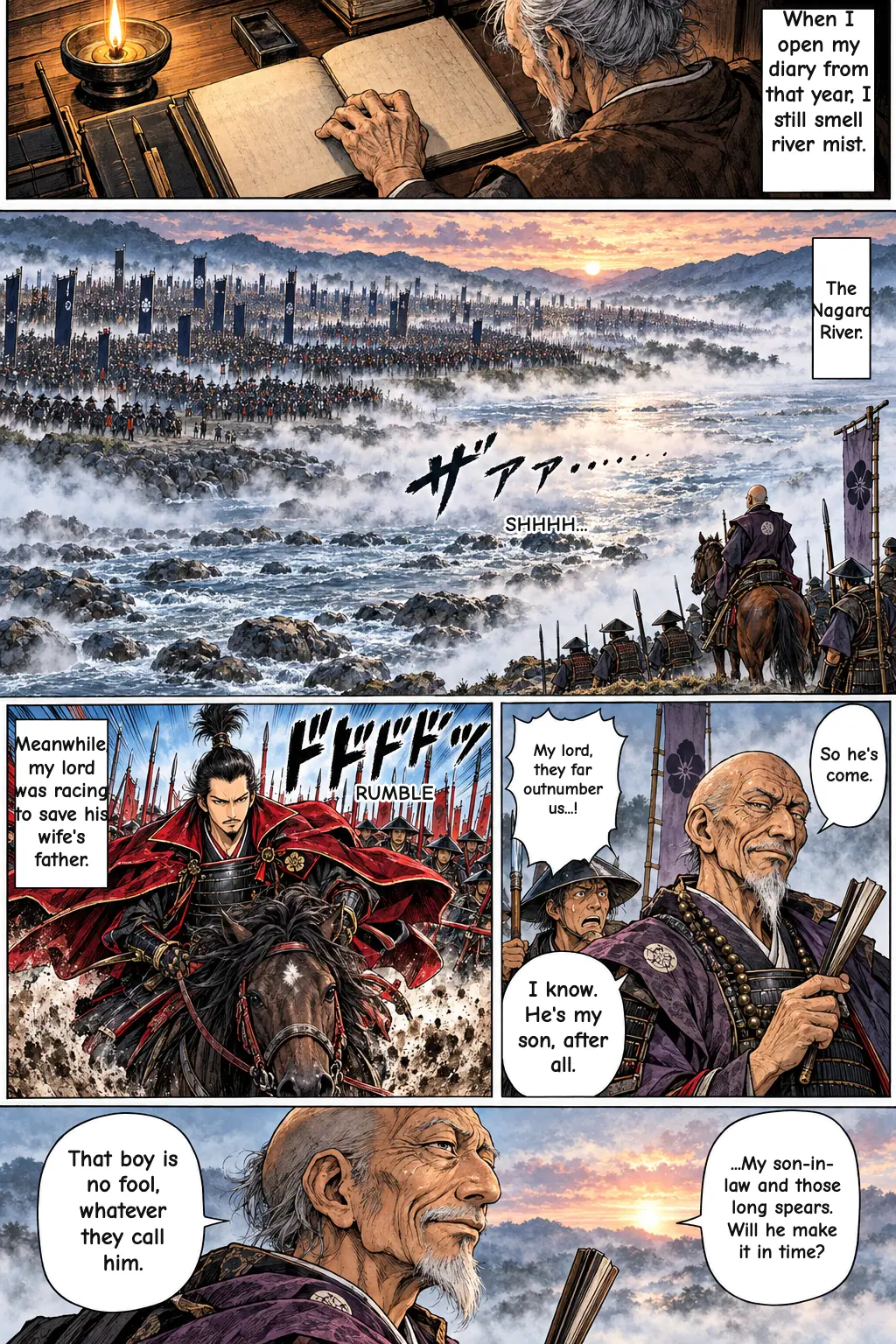
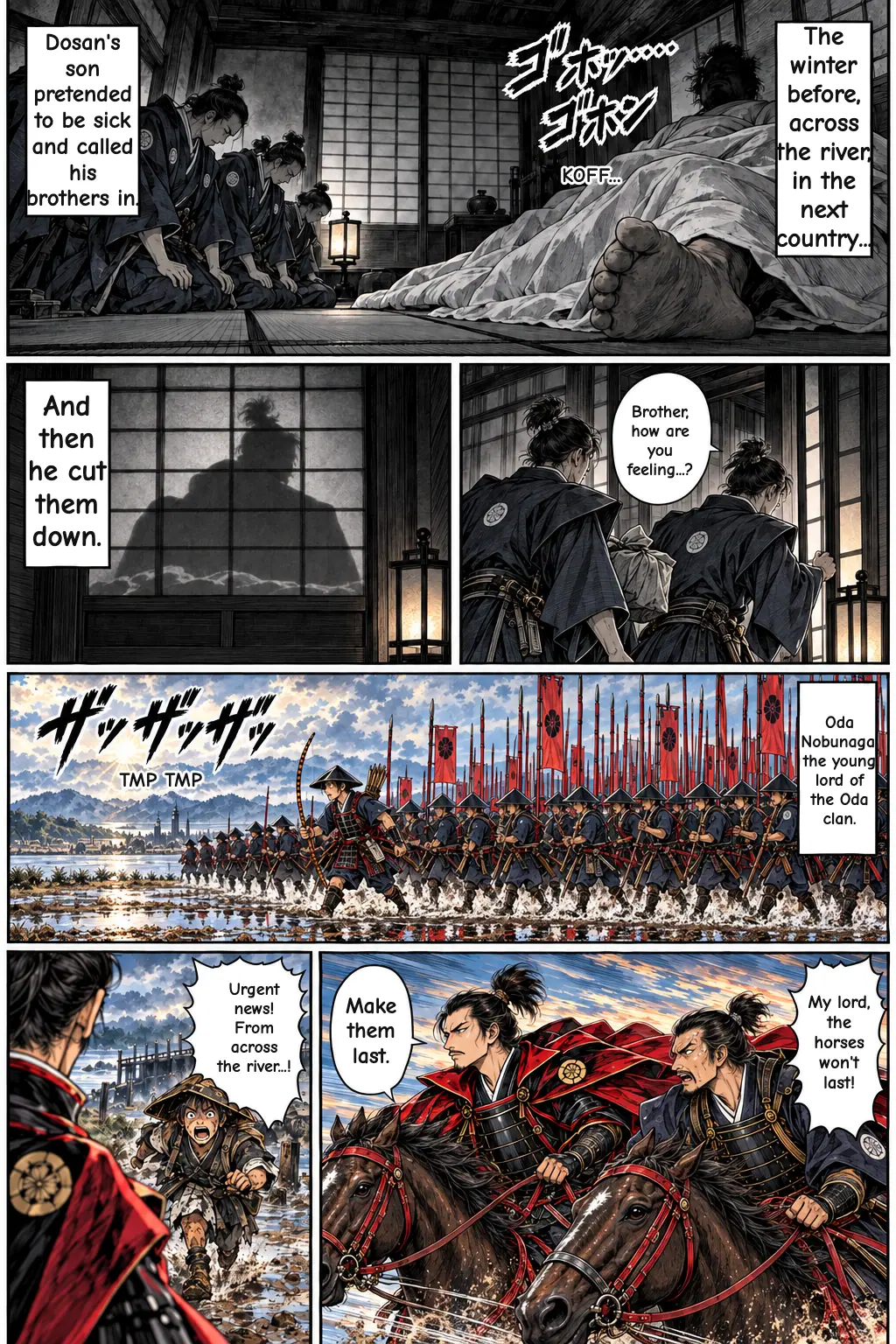
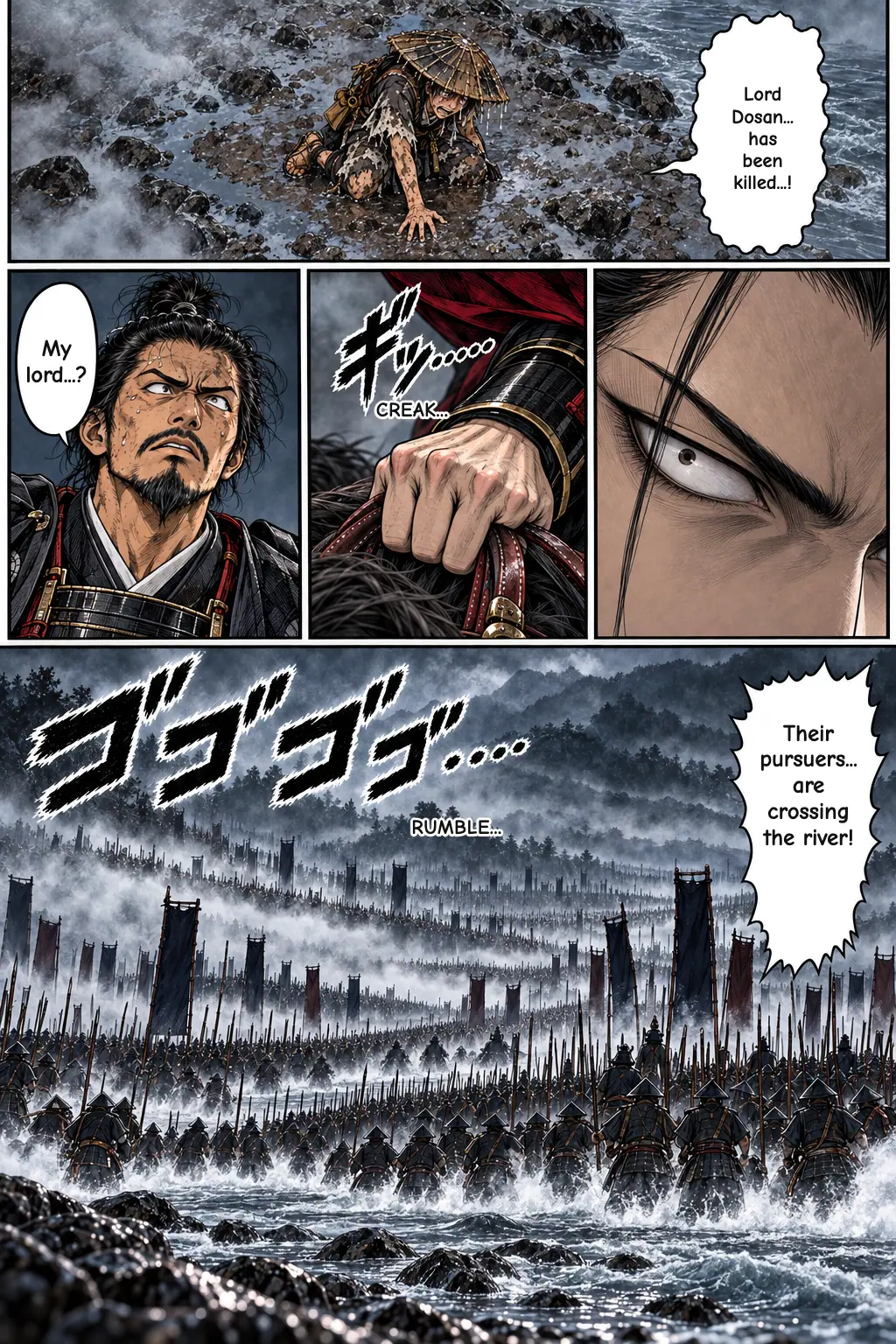
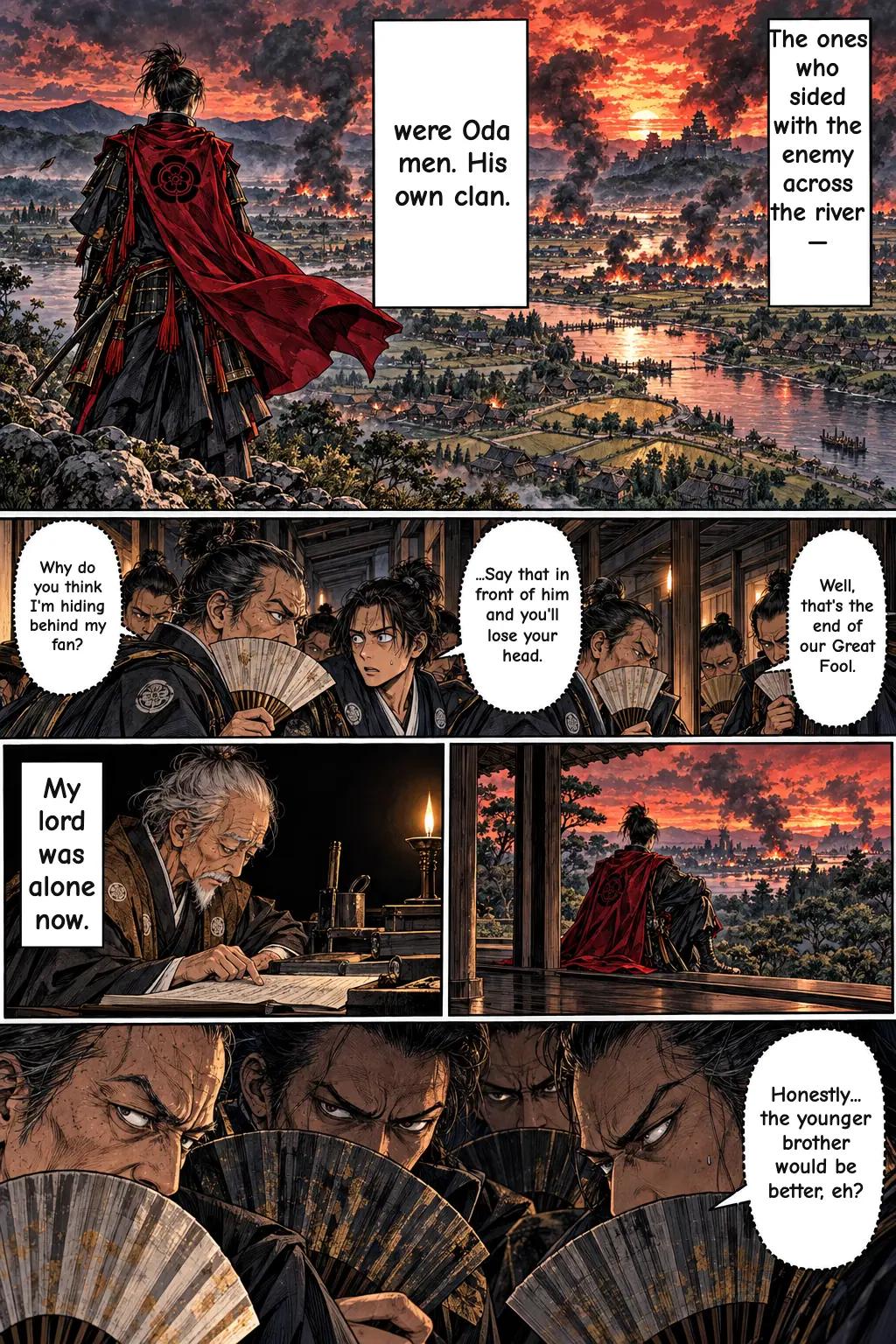
The episode opens with the loss of Nobunaga's most important ally. Saito Dosan, lord of the neighboring province of Mino, was the father of Nobunaga's wife. According to the Shinchō Kōki ("Chronicle of Lord Nobunaga"), Dosan fell out with his son Yoshitatsu. Yoshitatsu tricked his two younger brothers into coming to him and had them killed, which was an open break with his father. In the fourth month of 1556, father and son met in battle near the Nagara River. Yoshitatsu's army was far larger, and Dosan was killed.
Oda Nobunaga and His Brother Kanjuro: The Battle of Ino Explained (Shinchō Kōki)
In short: The Battle of Ino (1556) was a fight between the young Oda Nobunaga and his own clan. Senior retainers had raised his younger brother Kanjuro against him. In the Shinchō Kōki, the chronicle written by Nobunaga's retainer Ōta Gyūichi, Nobunaga wins with fewer than 700 men and pardons his brother when their mother pleads for him. When Kanjuro plots a second time, Nobunaga pretends to be ill, lures him to Kiyosu Castle and has him killed.
The Original Story, Part 1: The Death of Saito Dosan
The episode opens with the loss of Nobunaga's most important ally. Saito Dosan, lord of the neighboring province of Mino, was the father of Nobunaga's wife. According to the Shinchō Kōki ("Chronicle of Lord Nobunaga"), Dosan fell out with his son Yoshitatsu. Yoshitatsu tricked his two younger brothers into coming to him and had them killed, which was an open break with his father.
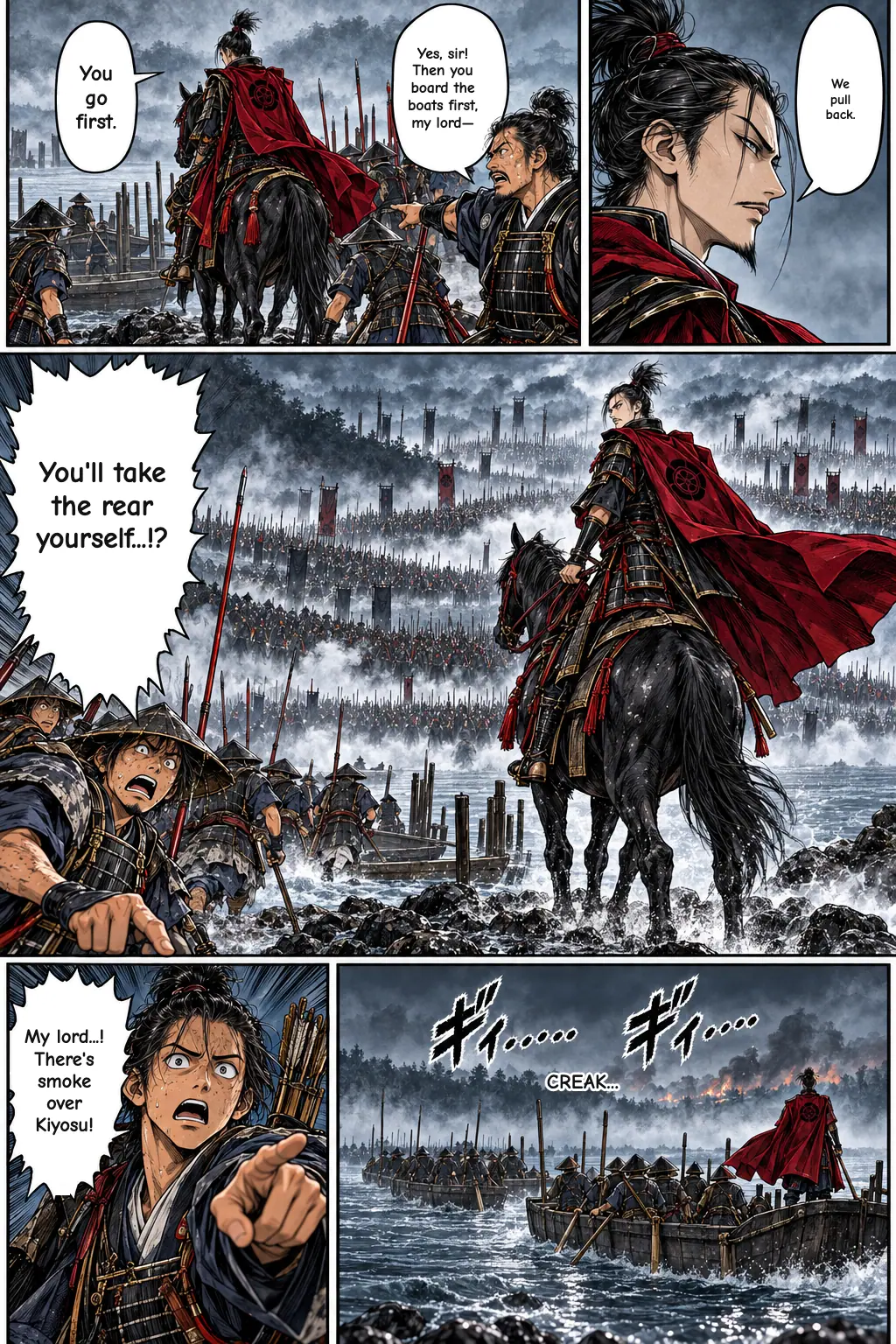
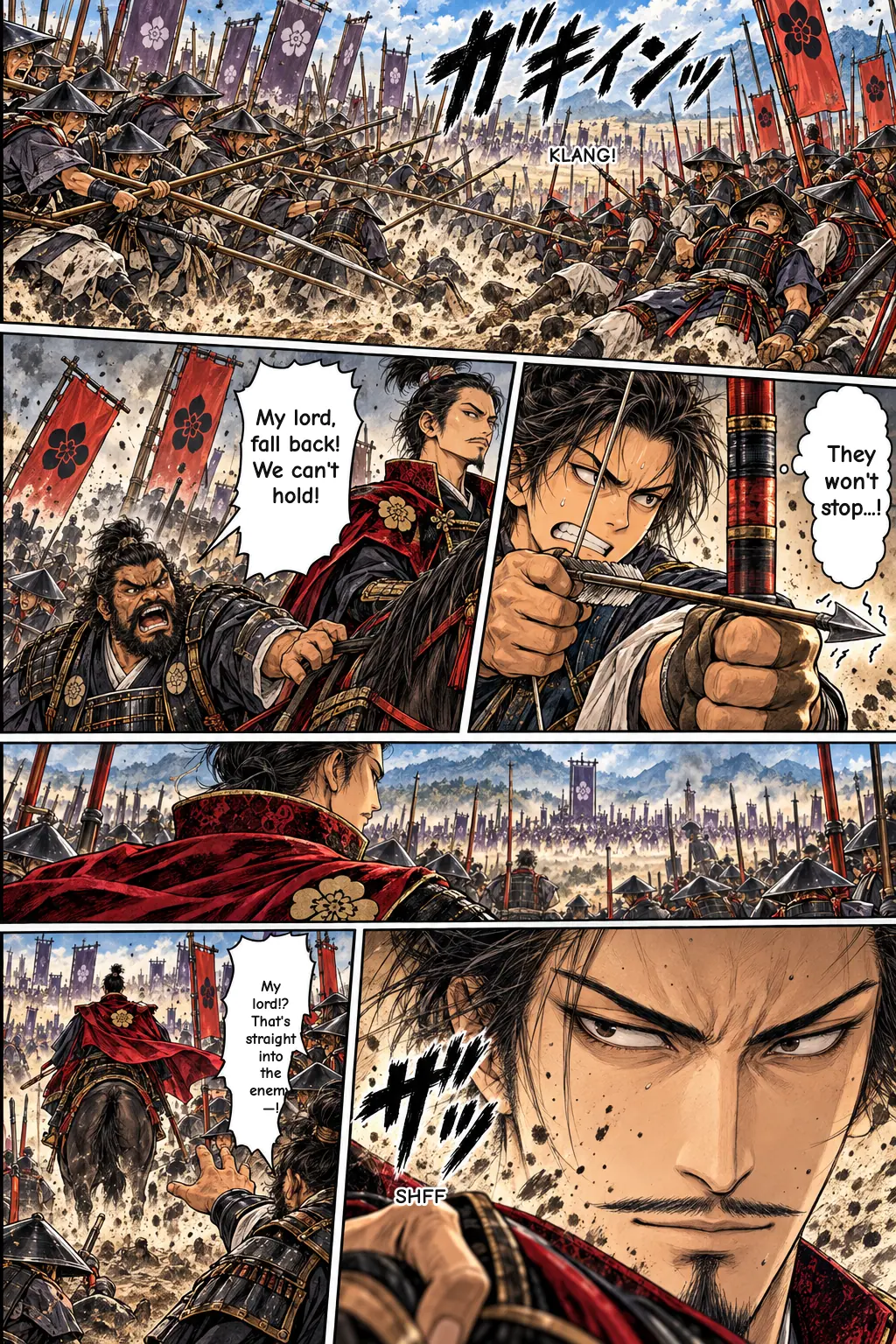
In the fourth month of 1556, father and son met in battle near the Nagara River. Yoshitatsu's army was far larger, and Dosan was killed. Nobunaga had marched out of his home province of Owari to help, but by the time he reached Ōra in Mino it was too late. He pulled back, guarded the rear of the retreat himself and crossed the river by boat while Mino troops chased him.
His enemies in Owari saw their chance. The Oda lord of Iwakura, a rival branch of the clan, sided with Yoshitatsu and burned villages near Nobunaga's base at Kiyosu. Nobunaga had lost his outside protector and now had enemies close to home.
The Original Story, Part 2: The Battle of Ino
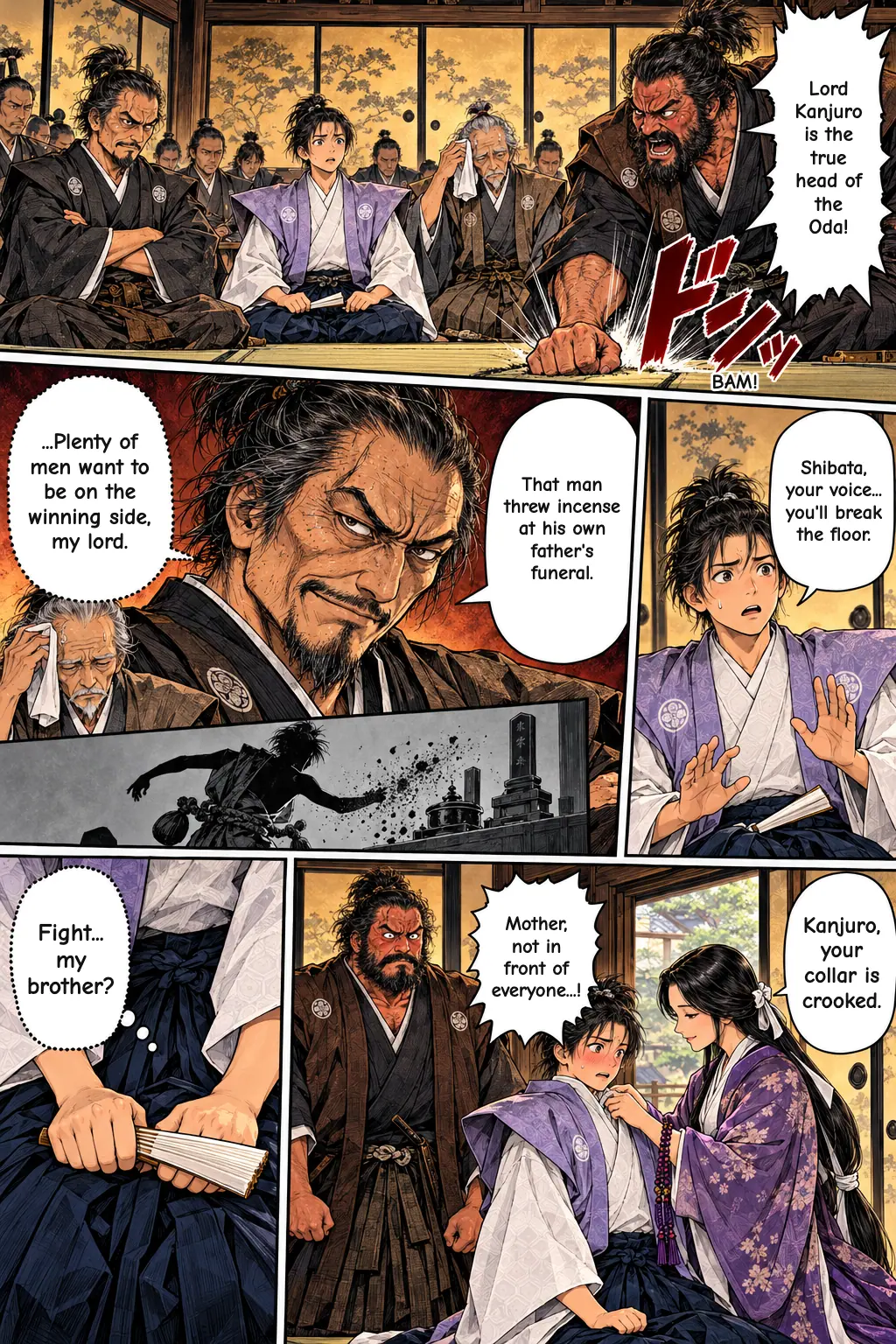
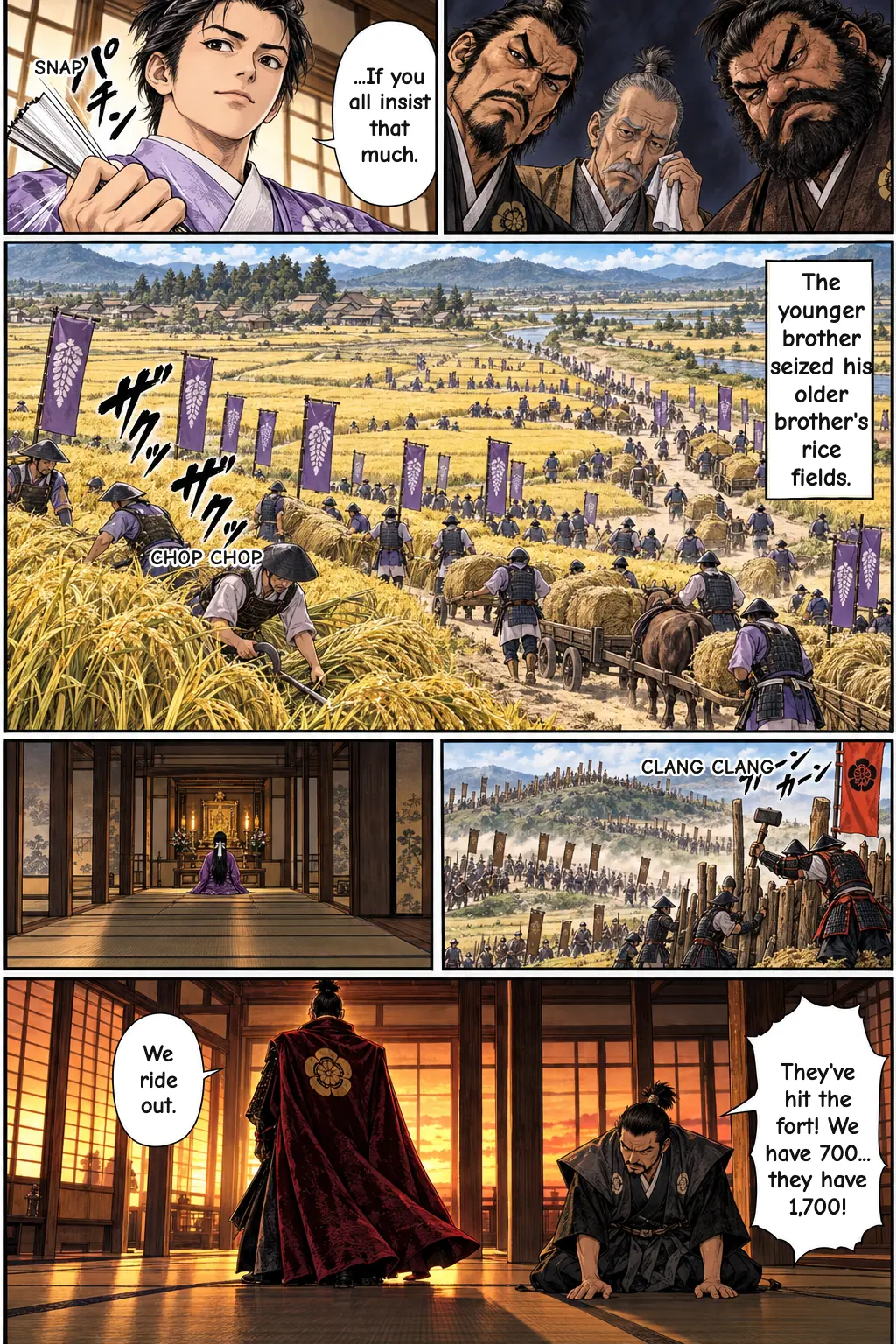
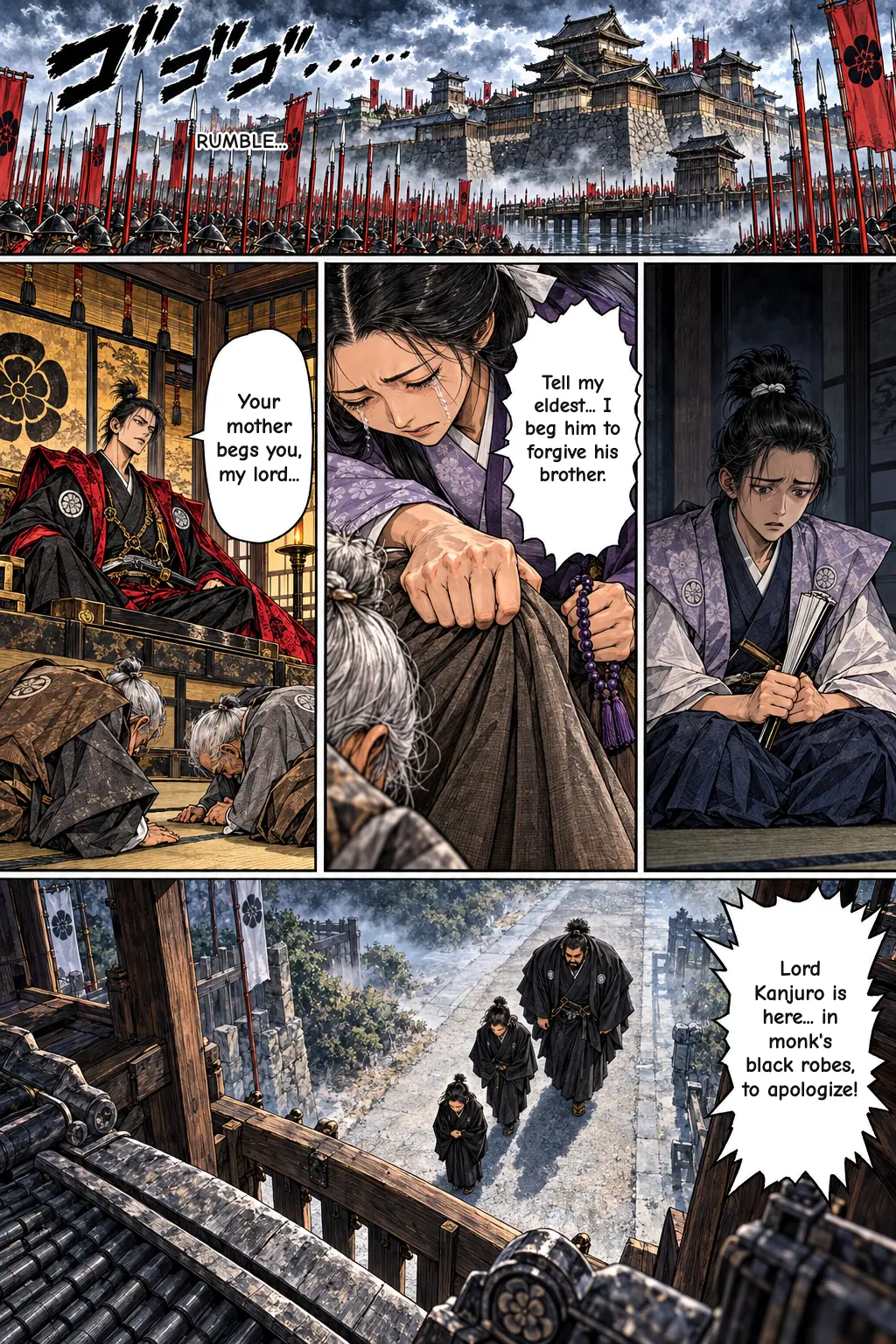
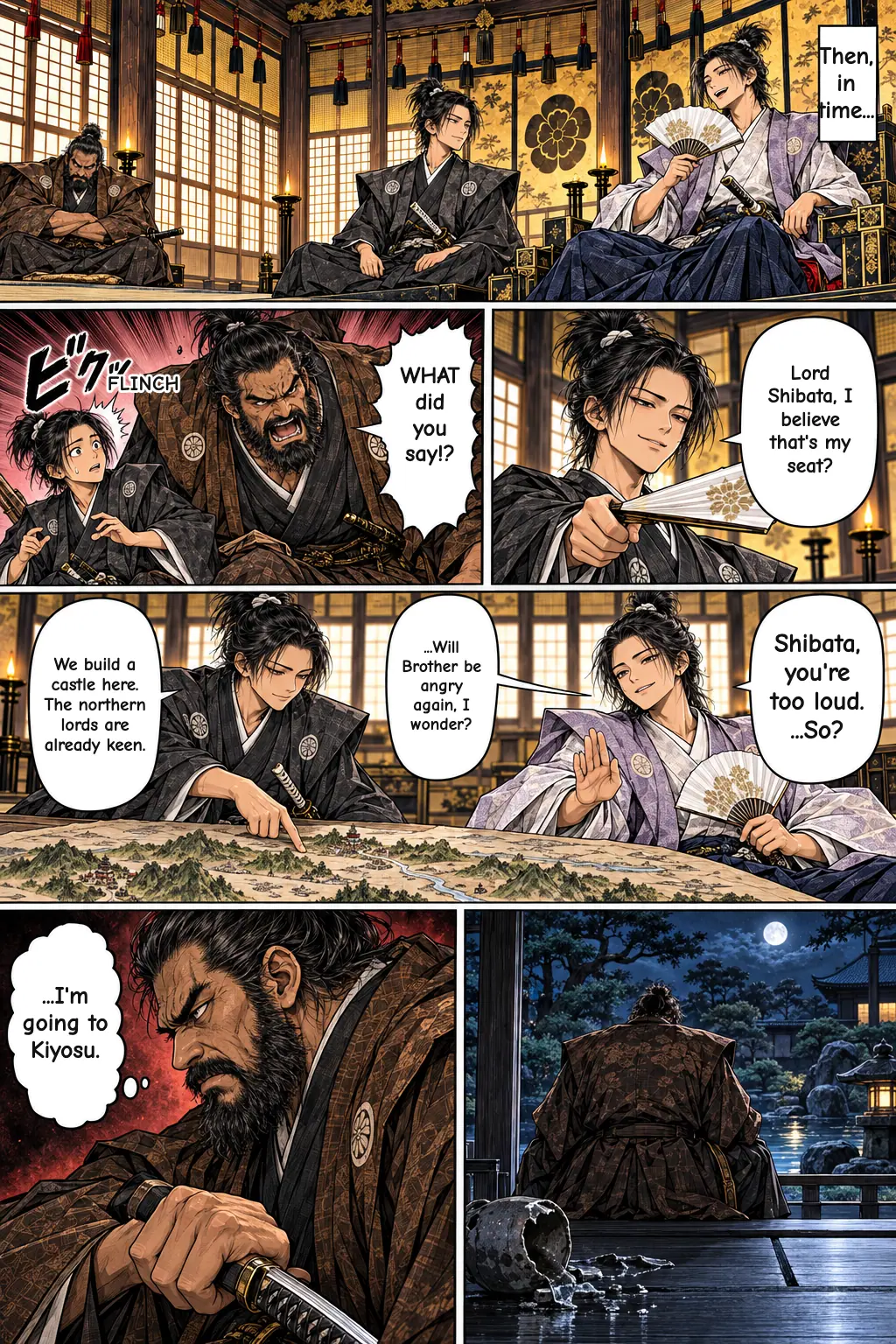
The next threat came from his own family. Two of the clan's top retainers, the brothers Hayashi Sado-no-kami and Hayashi Mimasaka-no-kami, joined the warrior Shibata Gonroku (later famous as Shibata Katsuie) in backing Nobunaga's younger brother Kanjuro as their lord. They began taking over Nobunaga's lands.
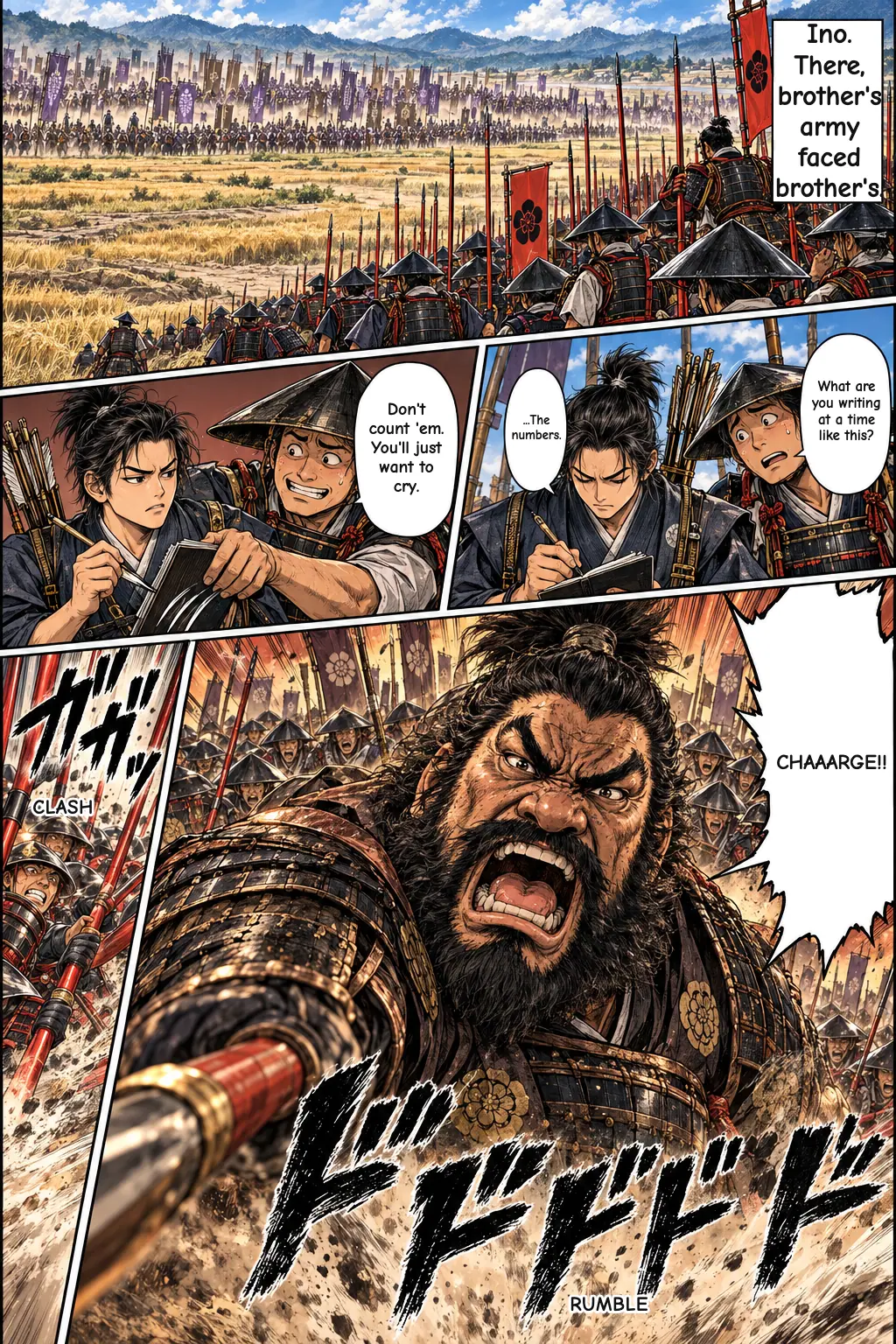
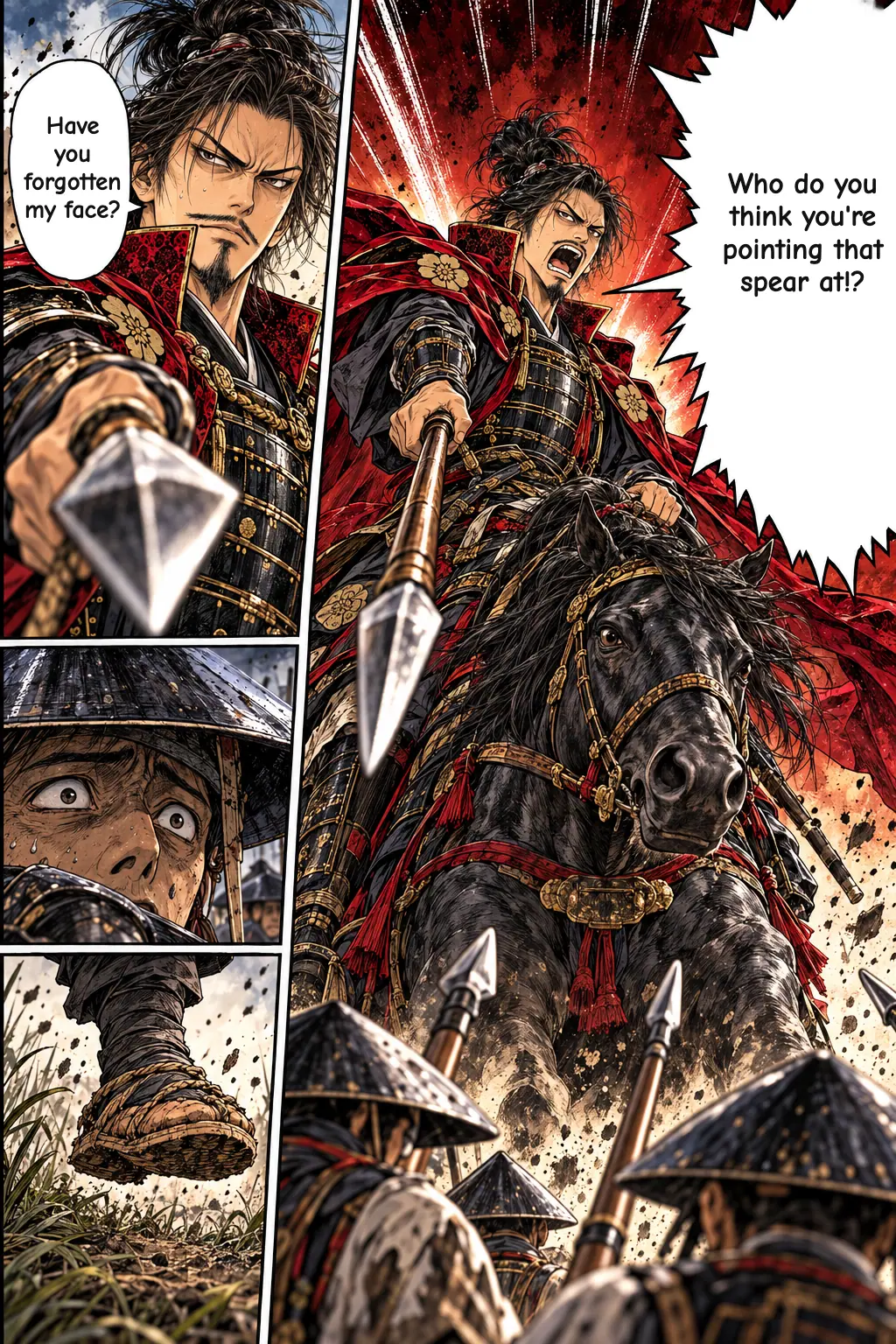
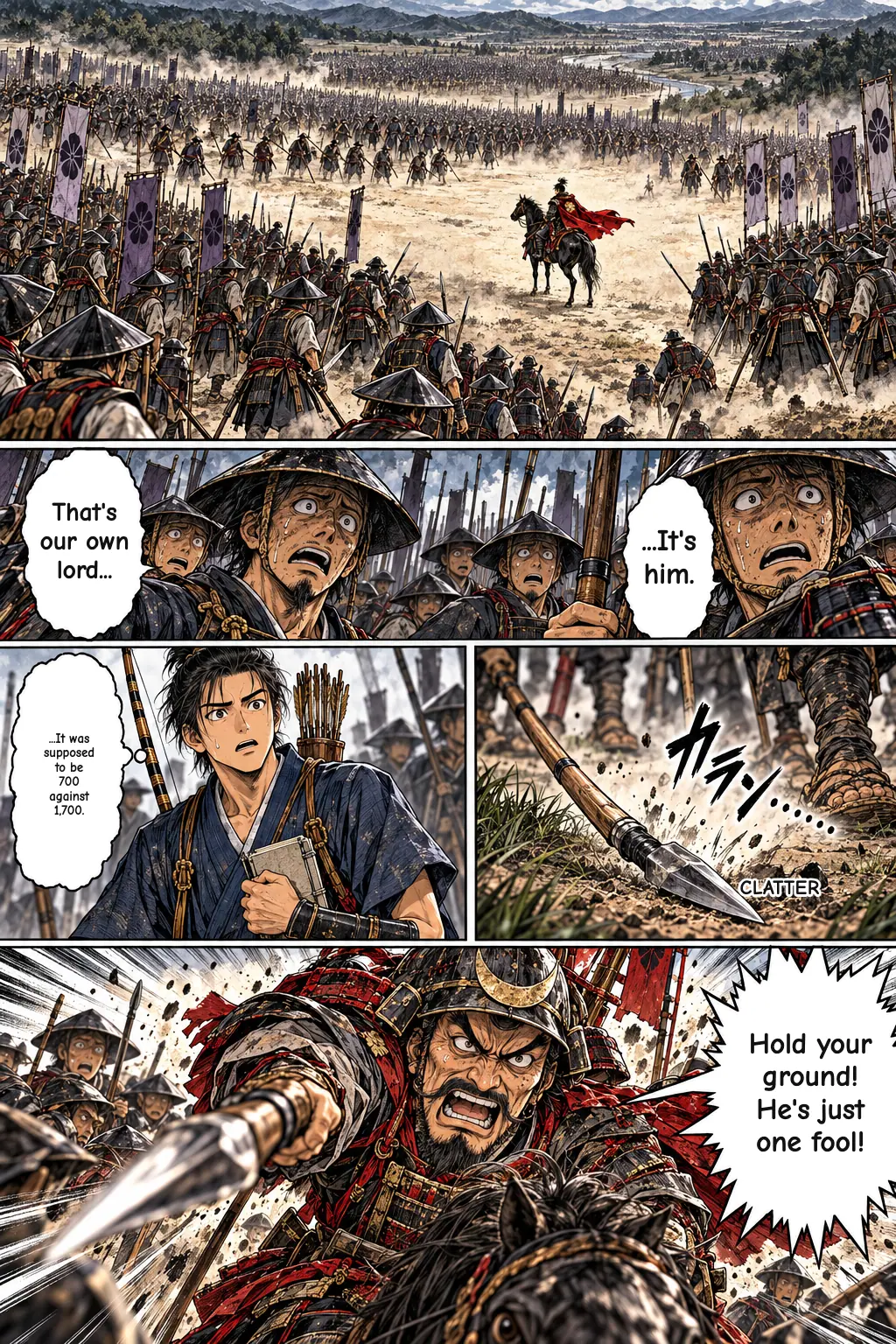
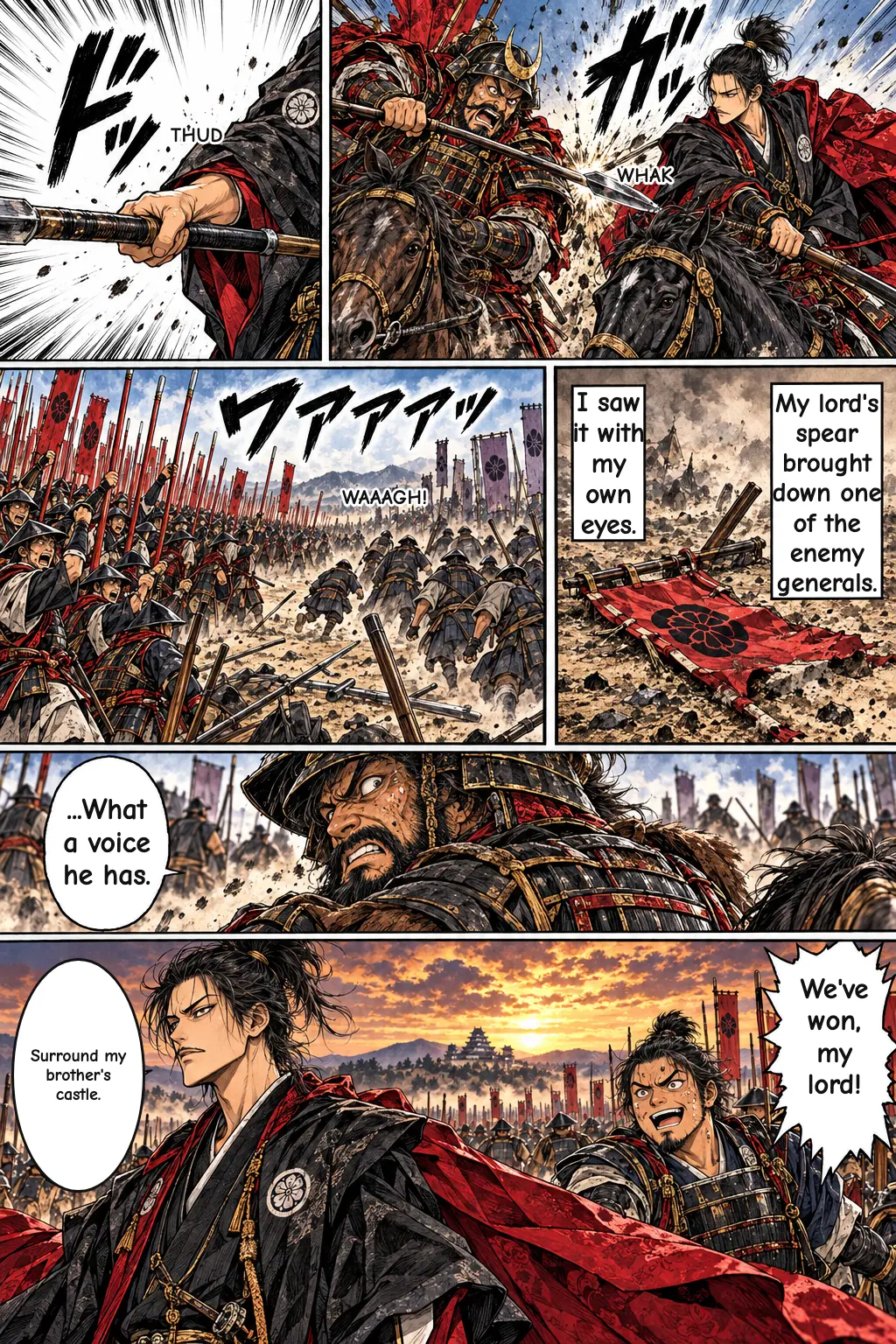
On the 24th day of the eighth month of 1556, the two sides fought at Ino. The chronicle says Nobunaga had fewer than 700 men, against about 1,000 under Shibata and about 700 under Hayashi Mimasaka. At first Shibata's troops pushed Nobunaga's side back, and some of his men were killed. Then Nobunaga shouted at the enemy in a great rage. The chronicle explains that the soldiers belonged to the same house and feared their lord's authority, so they faltered and then ran. Nobunaga cut down Hayashi Mimasaka himself, and the day was his.
Forgiven Once, Not Twice
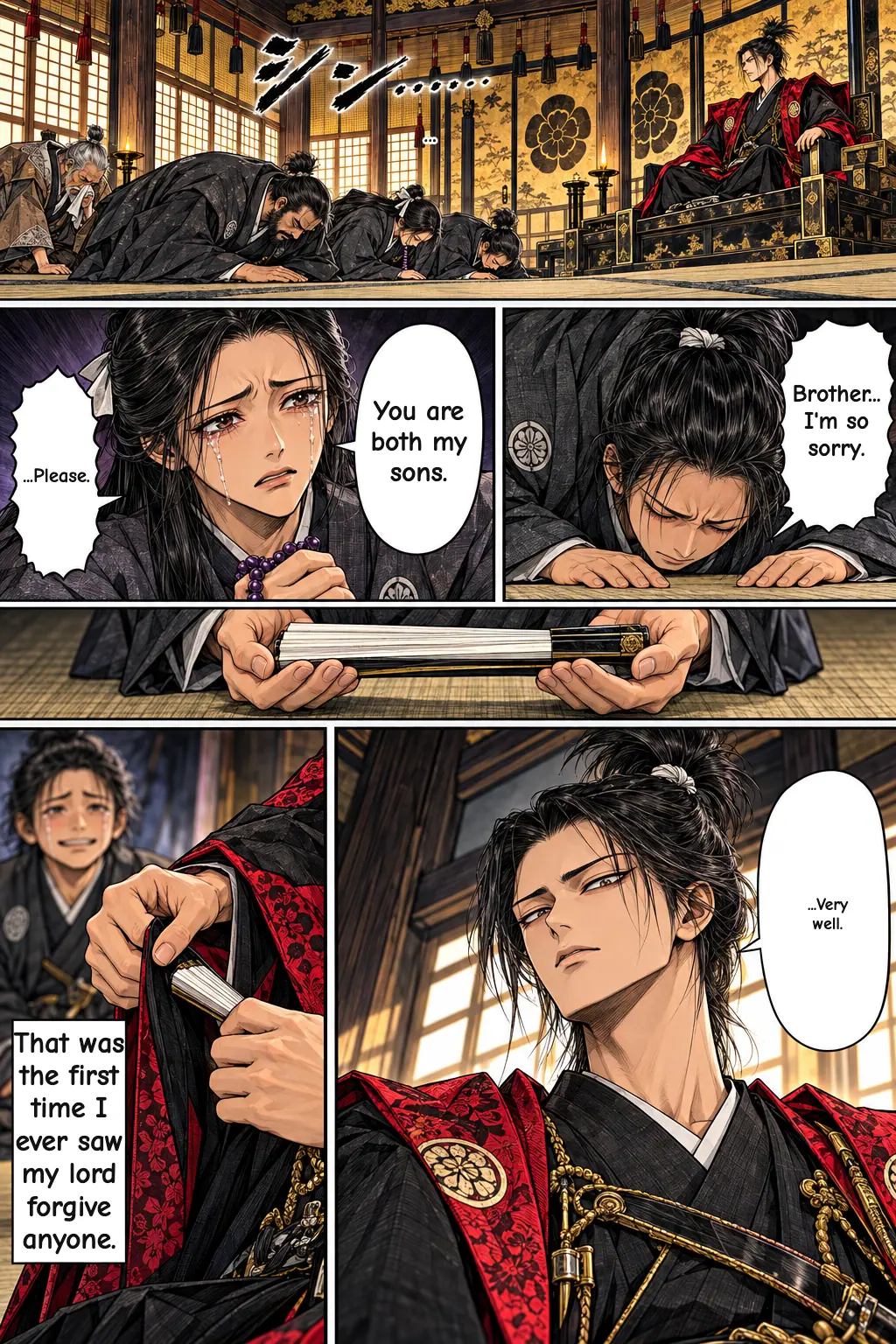
After the battle, Nobunaga attacked the area around Kanjuro's castle at Suemori. Their mother lived there, and she sent two men as go-betweens to ask for mercy. Nobunaga pardoned Kanjuro, Shibata and Hayashi Sado. Kanjuro and Shibata came to Kiyosu with the mother to apologize, wearing plain black robes as a sign of humility.
The peace did not hold. Kanjuro began plotting again, made contact with Iwakura and tried to build a new fort. He also gave his young favorite, Tsuzuki Kurando, more and more power and pushed Shibata aside. This time Shibata went to Nobunaga and told him about the plot.
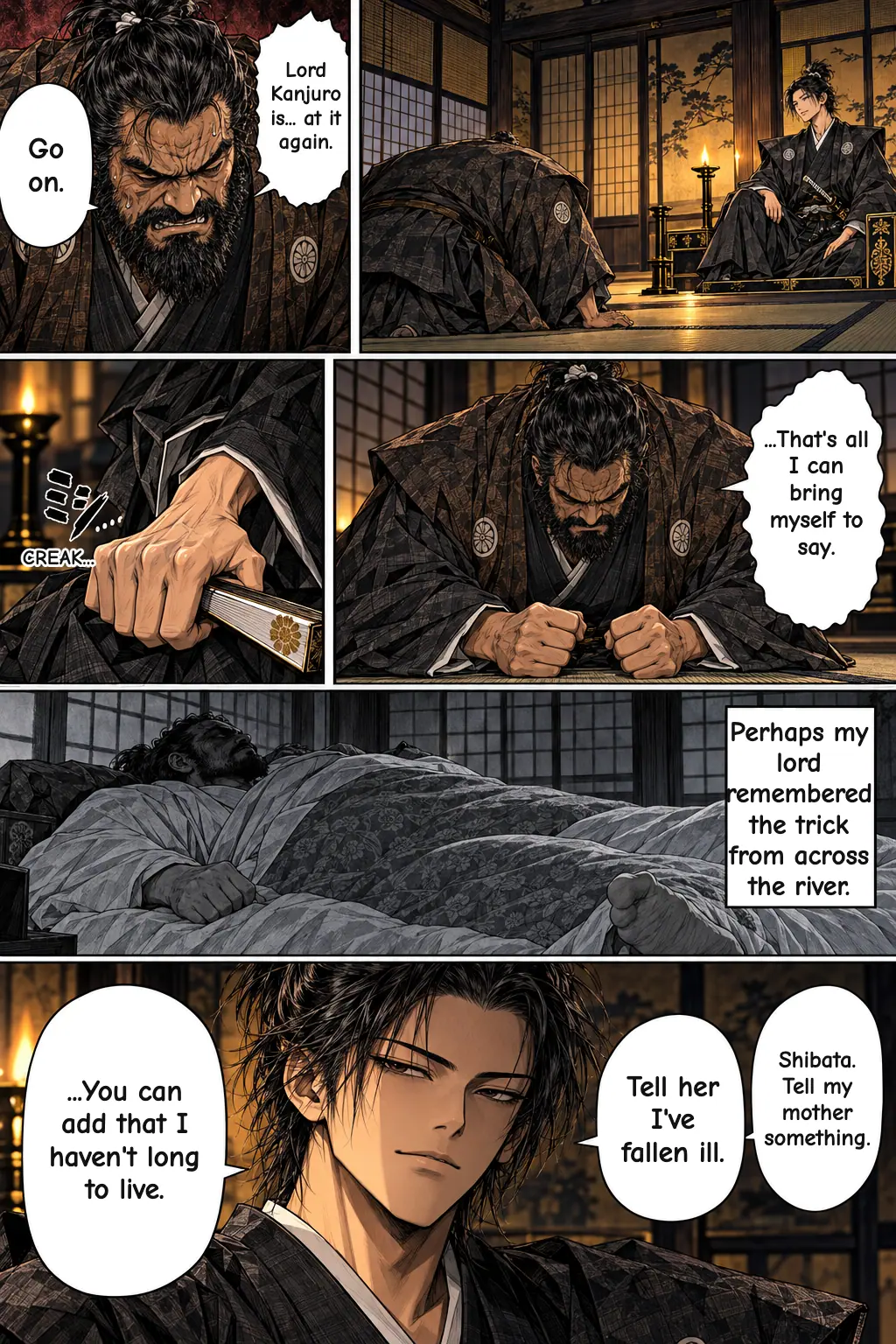
Nobunaga then pretended to be ill and stayed indoors. Their mother and Shibata urged Kanjuro to visit his sick brother. When he came to Kiyosu Castle, Nobunaga's retainers, including Kawajiri, killed him inside the castle. The usual date is the second day of the eleventh month of 1557, though the chronicle's dating has been discussed by historians.
Why It Matters: Family and Power in the Warring States Era
In the Sengoku ("Warring States") period, from the late 1400s to the late 1500s, a family name gave a warrior no real protection. Lords depended on their senior retainers, and those retainers could switch sides if they thought another family member would serve them better. Nobunaga's early reputation as an odd, unruly young man made a quieter, well-mannered brother an easy choice for such retainers.
The Shinchō Kōki is valuable because its author, Ōta Gyūichi, served Nobunaga and wrote down what he saw and heard. His account is short and plain. It records what happened but rarely says what anyone felt. The story also shows a key part of Nobunaga's rise: his first big fight was with his own family, and unifying Owari came before any campaign beyond it.
What the Manga Changed
The manga follows the chronicle's events, but some parts are invented for the drama. Ōta Gyūichi serves as the narrator, and his closing line, roughly "My lord showed mercy. Once," is the manga's own. The chronicle tells us Nobunaga shouted at Ino, but it does not give his words, so the manga's version is new. The same goes for Nobunaga's face when he hears of Dosan's death, Shibata's doubts when he reports the second plot, the mother's words as she pleads for her son, and the short final scene at Kiyosu.
The manga also leaves out some later traditions. A famous story says Dosan wrote a letter leaving Mino to Nobunaga before he died, but that letter is not in the Shinchō Kōki. The name "Nobuyuki" for Kanjuro and "Dota Gozen" for the mother come from later sources too. This adaptation keeps the names the chronicle uses.
Where to Read It
If you want to see these events in pictures, Episode 3 of ODA NOBUNAGA: The Demon King of the Warring States tells this story in manga form, from the news of Dosan's death to the meeting at Kiyosu. Every episode is free on Manga Portal, and you don't need to sign up. Start from Episode 1 to see how the young "fool of Owari" became the man who would change Japan.
Characters in this episode
Oda Nobunaga
The young lord of Owari, the story's hero. He wins at Ino with a small army, pardons his brother once and has him killed after the second plot.
Kanjuro (Oda Nobunaga's younger brother)
Nobunaga's well-mannered brother, who is raised against him by ambitious retainers, forgiven after Ino and killed at Kiyosu after he plots a second time.
Saito Dosan
Lord of Mino and father of Nobunaga's wife, Nobunaga's main backer, who is killed in battle by his own son in 1556.
Saito Yoshitatsu
Dosan's son, who kills his two younger brothers and then defeats his father at the Nagara River.
Shibata Gonroku (Shibata Katsuie)
Kanjuro's leading general at Ino, who is later pushed aside by Kanjuro and reports the second plot to Nobunaga.
Nobunaga's mother
Mother of both brothers, who pleads for Kanjuro after Ino and later urges him to visit Nobunaga at Kiyosu.
FAQ
Why did Oda Nobunaga kill his brother?
According to the Shinchō Kōki, his brother Kanjuro rebelled twice. After the first revolt ended at the Battle of Ino in 1556, Nobunaga pardoned him because their mother asked him to. When Kanjuro plotted again, Nobunaga lured him to Kiyosu Castle by pretending to be ill and had him killed.
What was the Battle of Ino?
It was a battle in Owari province in 1556 between Oda Nobunaga and retainers who supported his brother Kanjuro, led by Shibata Gonroku and the Hayashi brothers. Nobunaga had fewer than 700 men but won after his furious shouting broke the enemy's nerve.
Who was Kanjuro, and is he the same as Oda Nobuyuki?
Kanjuro was Nobunaga's younger brother, and his formal name is usually given as Oda Nobukatsu. The name "Nobuyuki" is often used today but appears in later sources. The Shinchō Kōki calls him Kanjuro.
How did Saito Dosan die?
Dosan fell out with his son Saito Yoshitatsu, who killed his two younger brothers and turned against his father. In 1556 Yoshitatsu's larger army defeated Dosan near the Nagara River, and Dosan was killed. Nobunaga came to help but arrived too late.
Did Shibata Katsuie betray Nobunaga?
Yes, at first. Shibata led Kanjuro's troops against Nobunaga at Ino. After he was pardoned and then sidelined by Kanjuro, he warned Nobunaga about the second plot and later became one of Nobunaga's top generals.