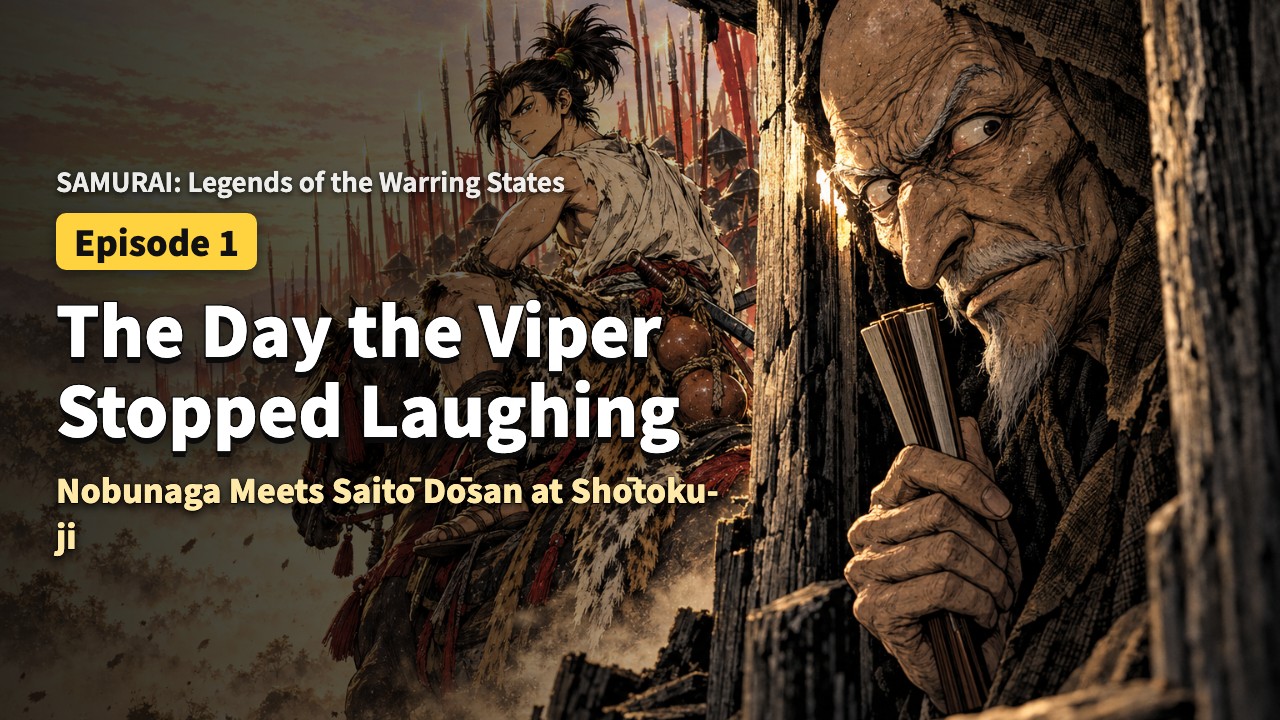
Episode 5He Beat an Army. He Can't Beat a Hill.Siege of Inabayama Castle
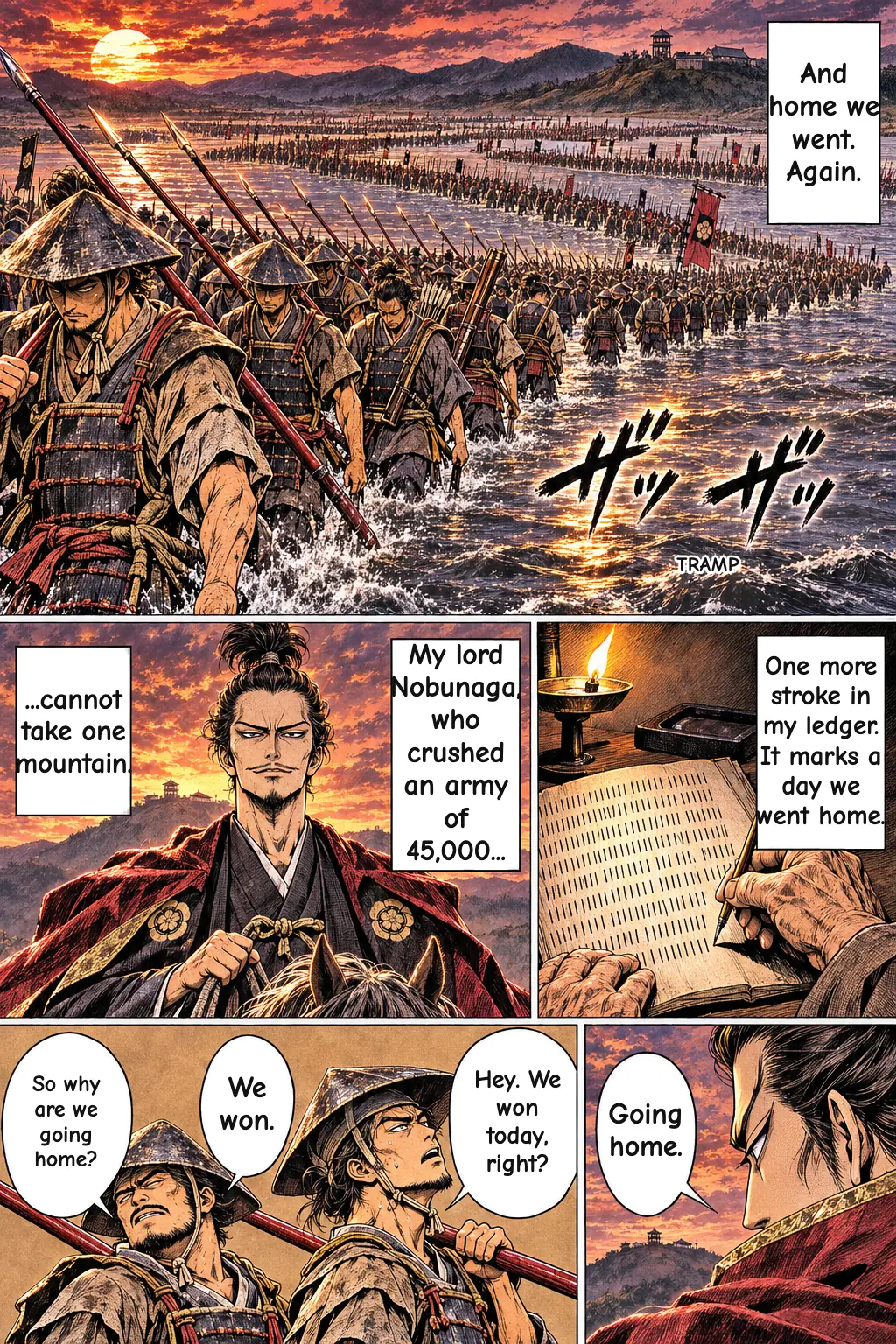
Oda Nobunaga crushed an army of 45,000, yet for years one mountain castle has him saying "Going home." He strips away the enemy's allies one by one, then moves without waiting for the hostages, so fast that even his own side is stunned.
Get new episodes in your feed. Follow us on:ThreadsBluesky
Story summary
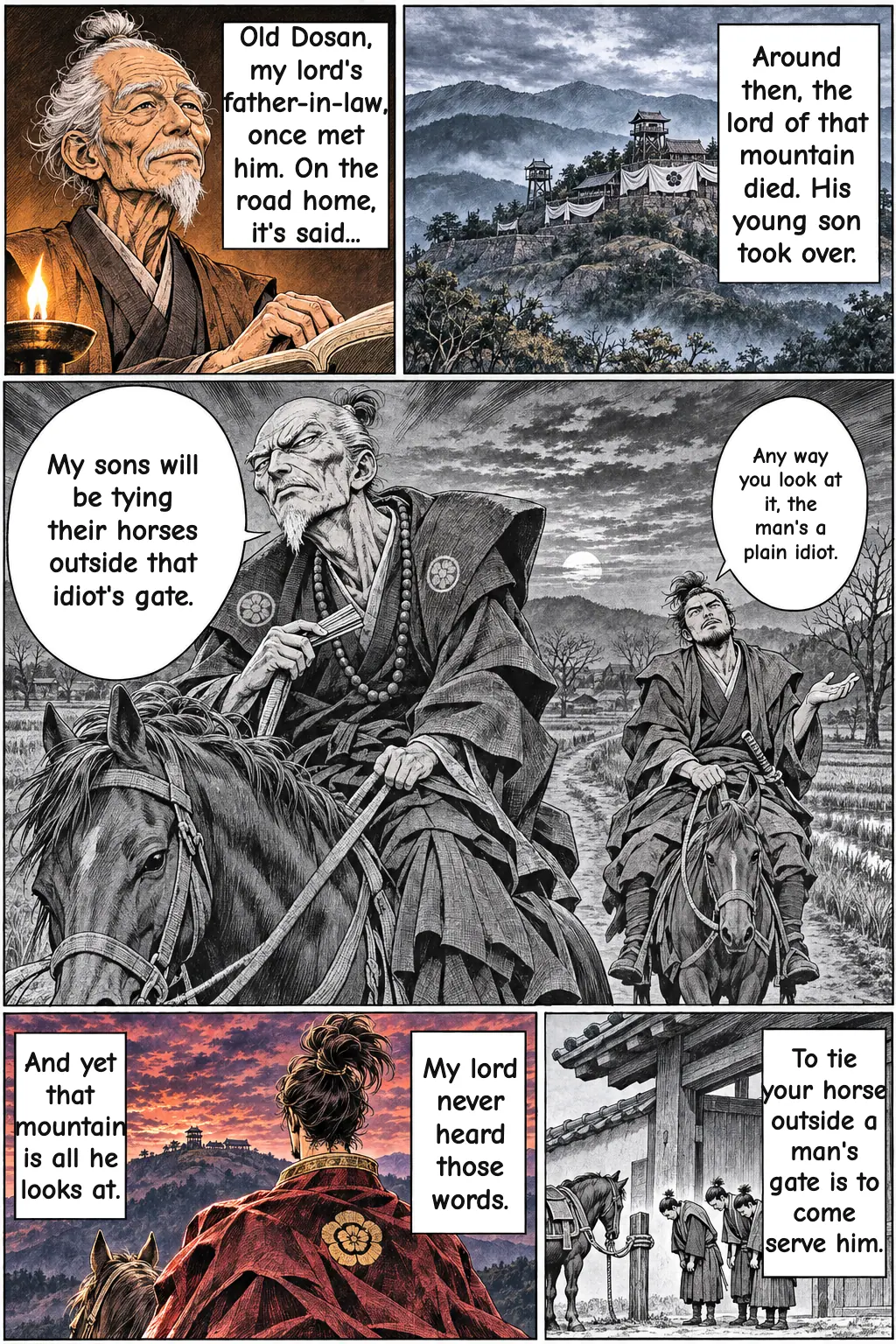
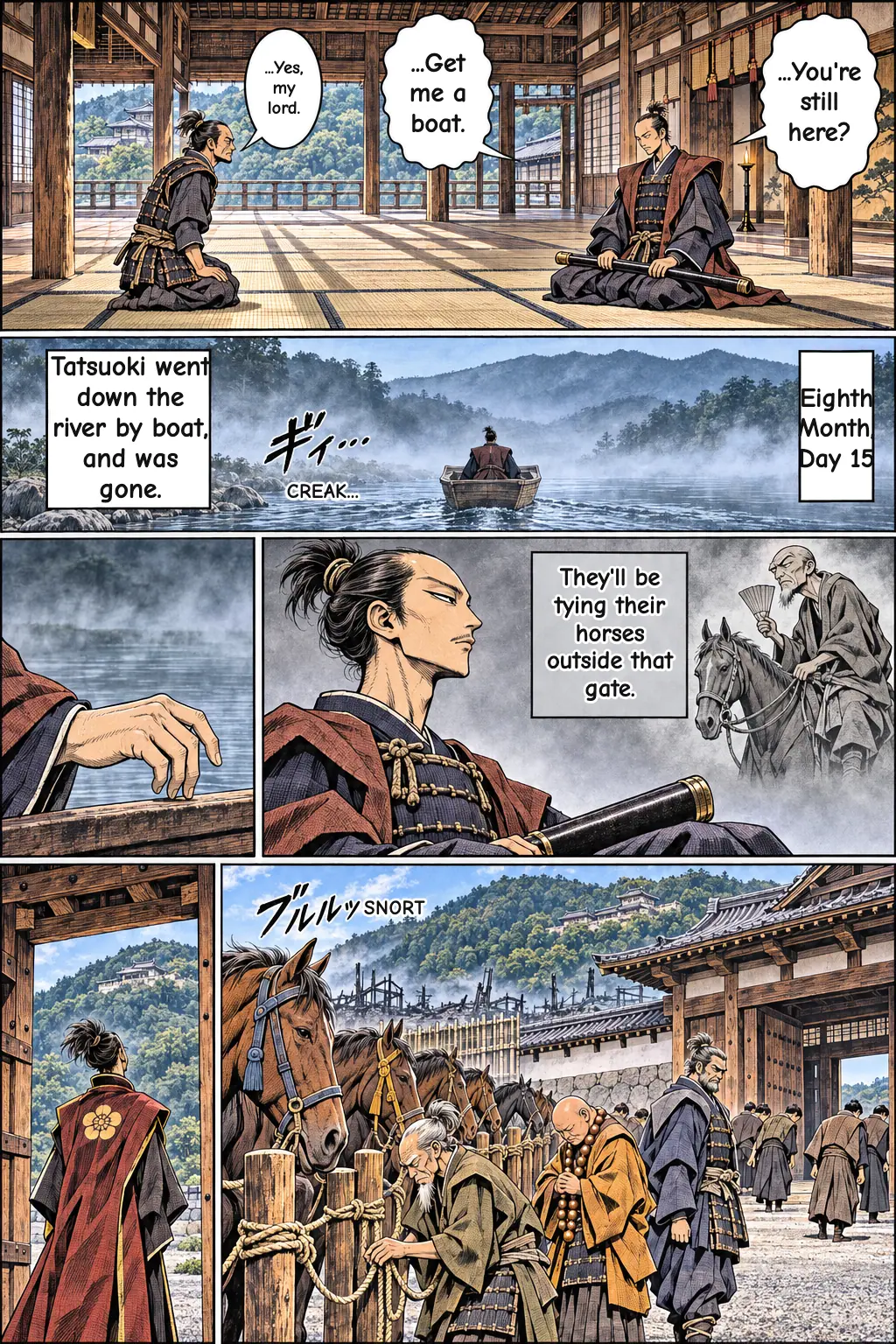
The Shinchō Kōki (Chronicle of Lord Nobunaga) was written by Ōta Gyūichi, a retainer who served Oda Nobunaga and fought in some of the events he describes. Its opening book follows Nobunaga's early career in Owari, part of present-day Aichi Prefecture, and his struggle for Mino, the neighboring province to the north. Mino has a personal history for Nobunaga. Its former lord, Saitō Dōsan, was his father-in-law. After meeting the young Nobunaga, widely mocked as a fool, at Shōtokuji temple, Dōsan predicted that his own sons would one day tie their horses outside that fool's gate.
Siege of Inabayama Castle Summary: How Oda Nobunaga Conquered Mino
In short: The Siege of Inabayama Castle is the climax of Oda Nobunaga's long campaign to conquer Mino province, as told in the opening book of the Shinchō Kōki. After years of isolating the Saitō clan, Nobunaga marched without waiting for hostages from three defecting Mino lords, burned the town, and fenced in the castle. Saitō Tatsuoki surrendered and left by boat, and Nobunaga made Inabayama his new base.
Background: Why Nobunaga Wanted Mino
The Shinchō Kōki (Chronicle of Lord Nobunaga) was written by Ōta Gyūichi, a retainer who served Oda Nobunaga and fought in some of the events he describes. Its opening book follows Nobunaga's early career in Owari, part of present-day Aichi Prefecture, and his struggle for Mino, the neighboring province to the north.
Mino has a personal history for Nobunaga. Its former lord, Saitō Dōsan, was his father-in-law. After meeting the young Nobunaga, widely mocked as a fool, at Shōtokuji temple, Dōsan predicted that his own sons would one day tie their horses outside that fool's gate. Dōsan later died fighting his son Yoshitatsu. By the period of this story, Mino's defense had passed to Yoshitatsu's son Saitō Tatsuoki, a succession usually dated to 1561.
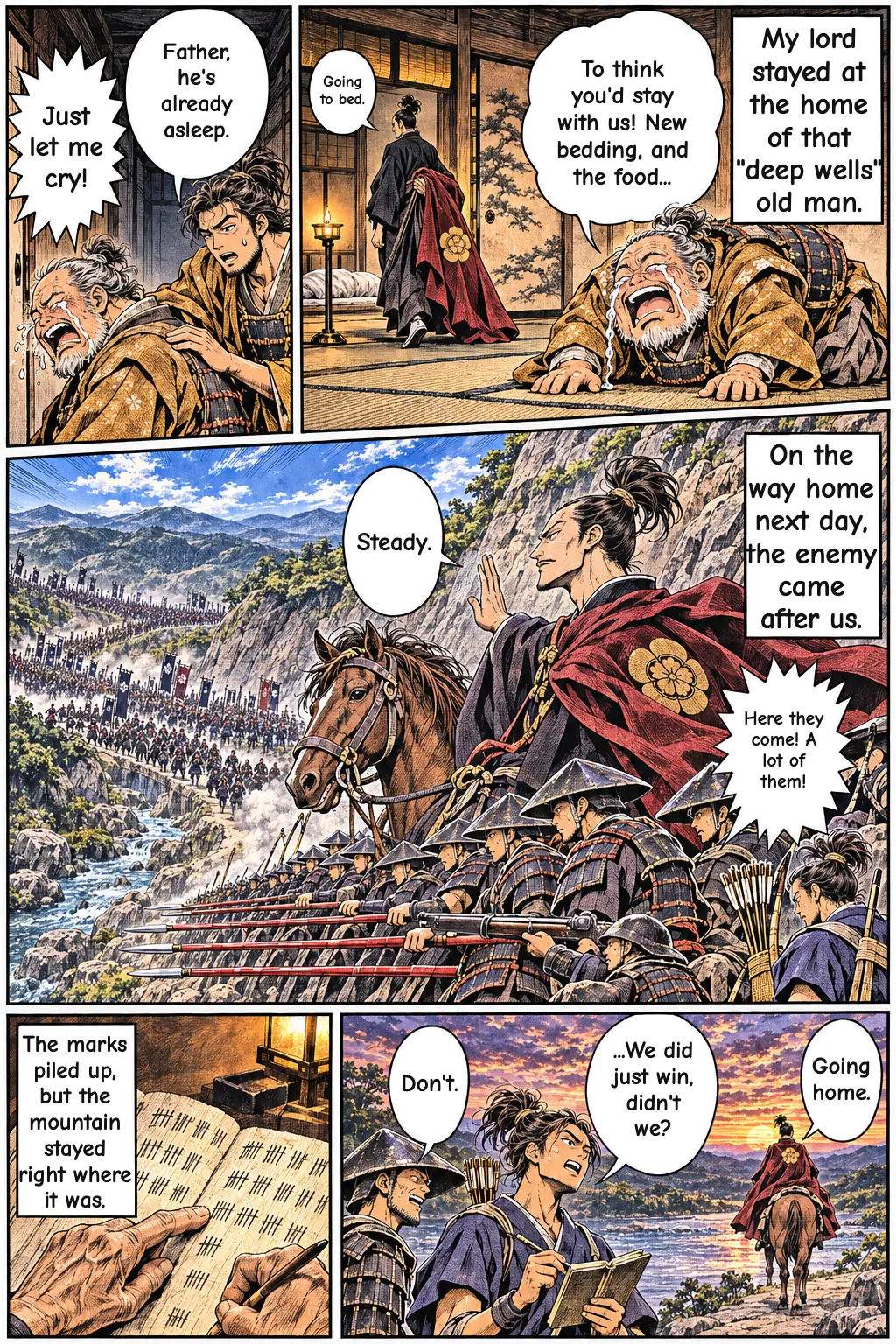
Nobunaga had already destroyed the Imagawa army at Okehazama in 1560, a force the chronicle numbers at 45,000. Taking Mino proved far slower.
Summary: Years of Slow Pressure
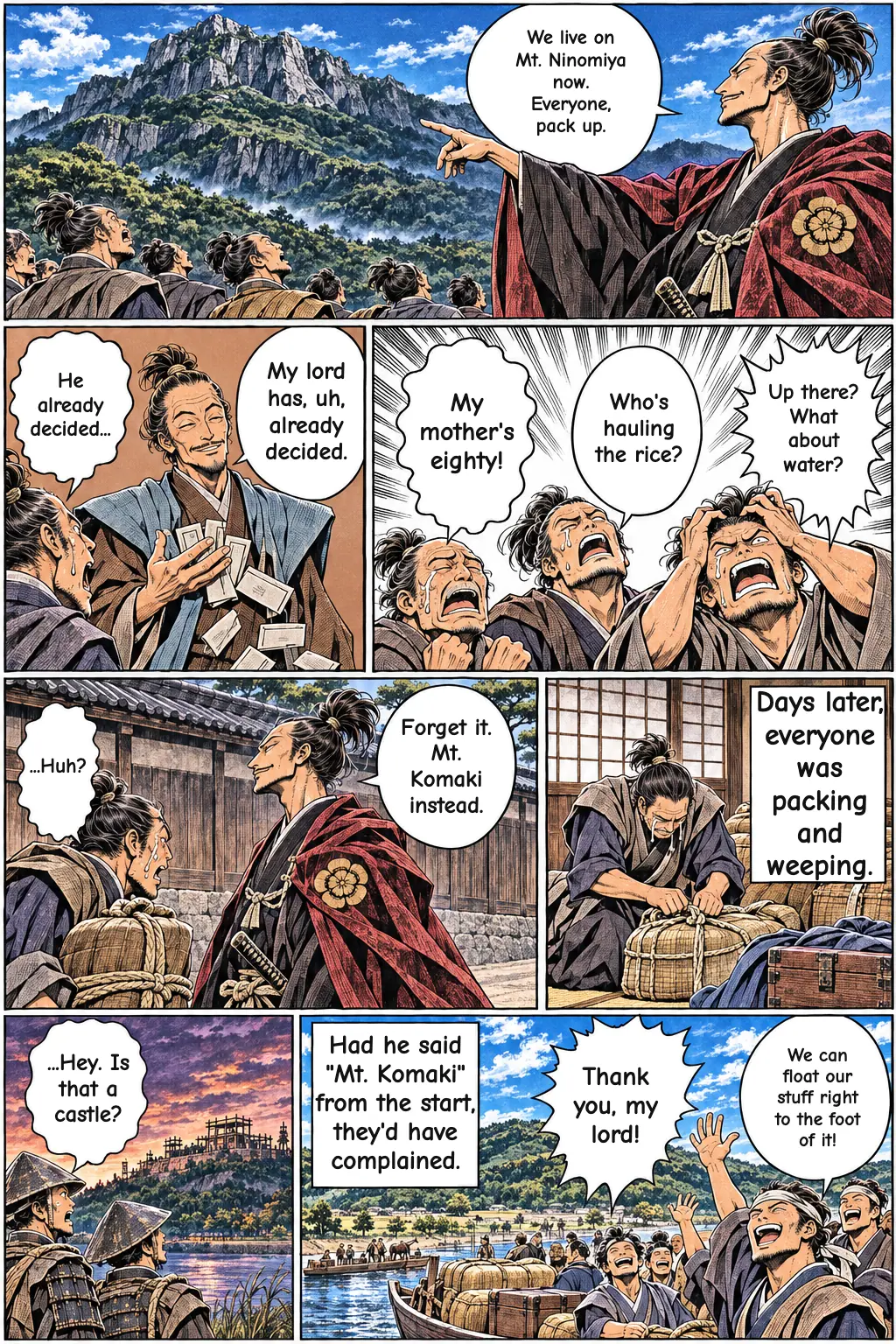
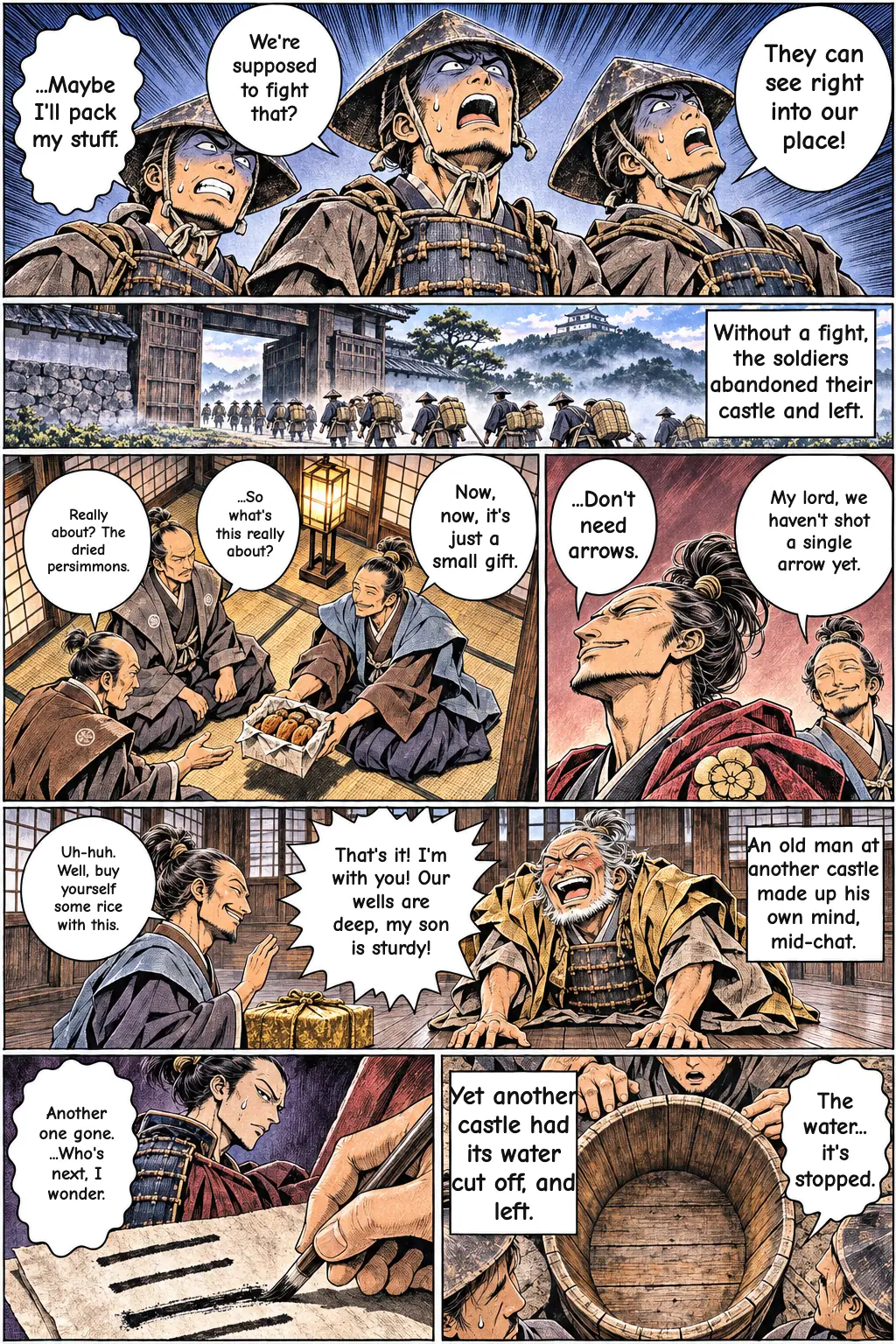
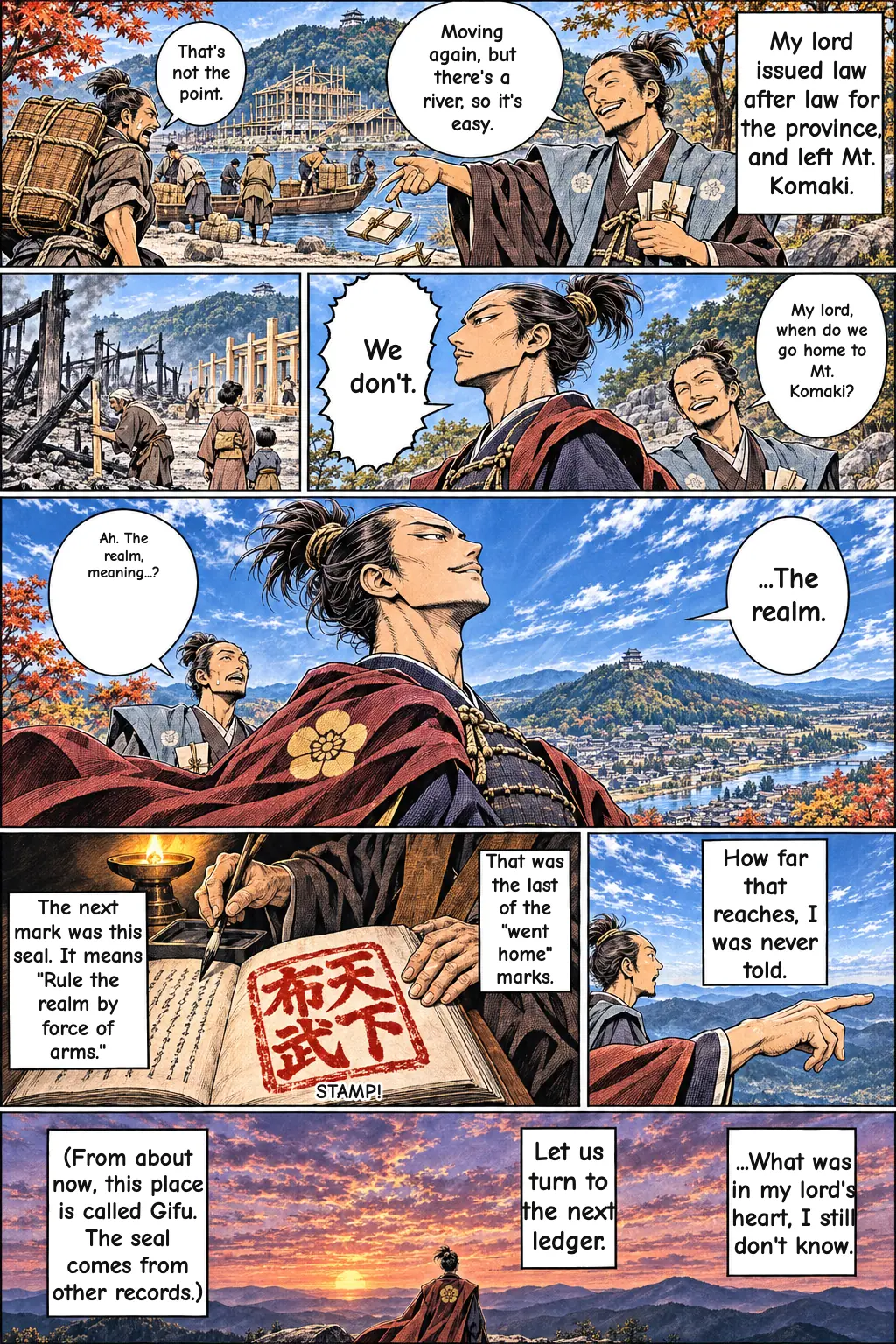
Nobunaga crossed the Kiso River and other waterways into western Mino, defeating Saitō forces at Moribe and killing commanders including Nagai Kai-no-kami and Hibino Shimotsuke-no-kami. A single victory did not settle the matter, so he changed his position as well as his tactics. First he ordered a move from Kiyosu to Ninomiya-yama, a hard place to live, which dismayed his retainers. Then he switched to Komakiyama, where goods could be carried by river to the foot of the mountain, and everyone moved gladly.
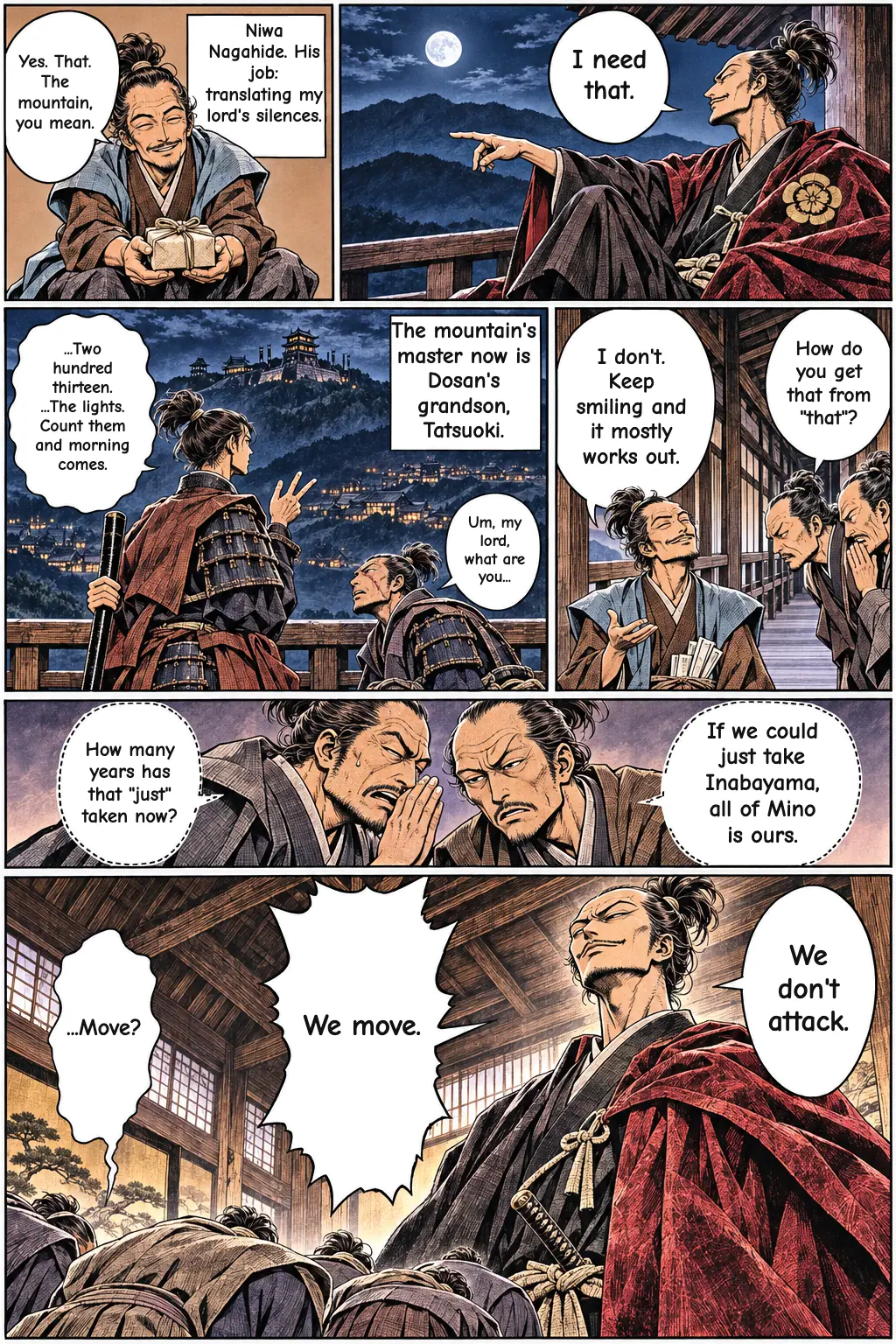
The new castle also worked as pressure. Watching it rise, the garrison at Oguchi decided they could not hold out and fled to Inuyama. Two senior Inuyama retainers, Wada Shinsuke and Nakajima Bungo-no-kami, then came over through Nobunaga's retainer Niwa Nagahide, leaving Inuyama Castle isolated.
Inside Mino, Satō Kii-no-kami and his son Ukon-emon of Kajita Castle also defected through Niwa, and Nobunaga gave them gold to buy provisions. From a camp at Ikiyama, he attacked the castles of Uruma and Sarubami. At Sarubami, Niwa's men seized the higher ground and cut off the water supply, and both castles were abandoned.
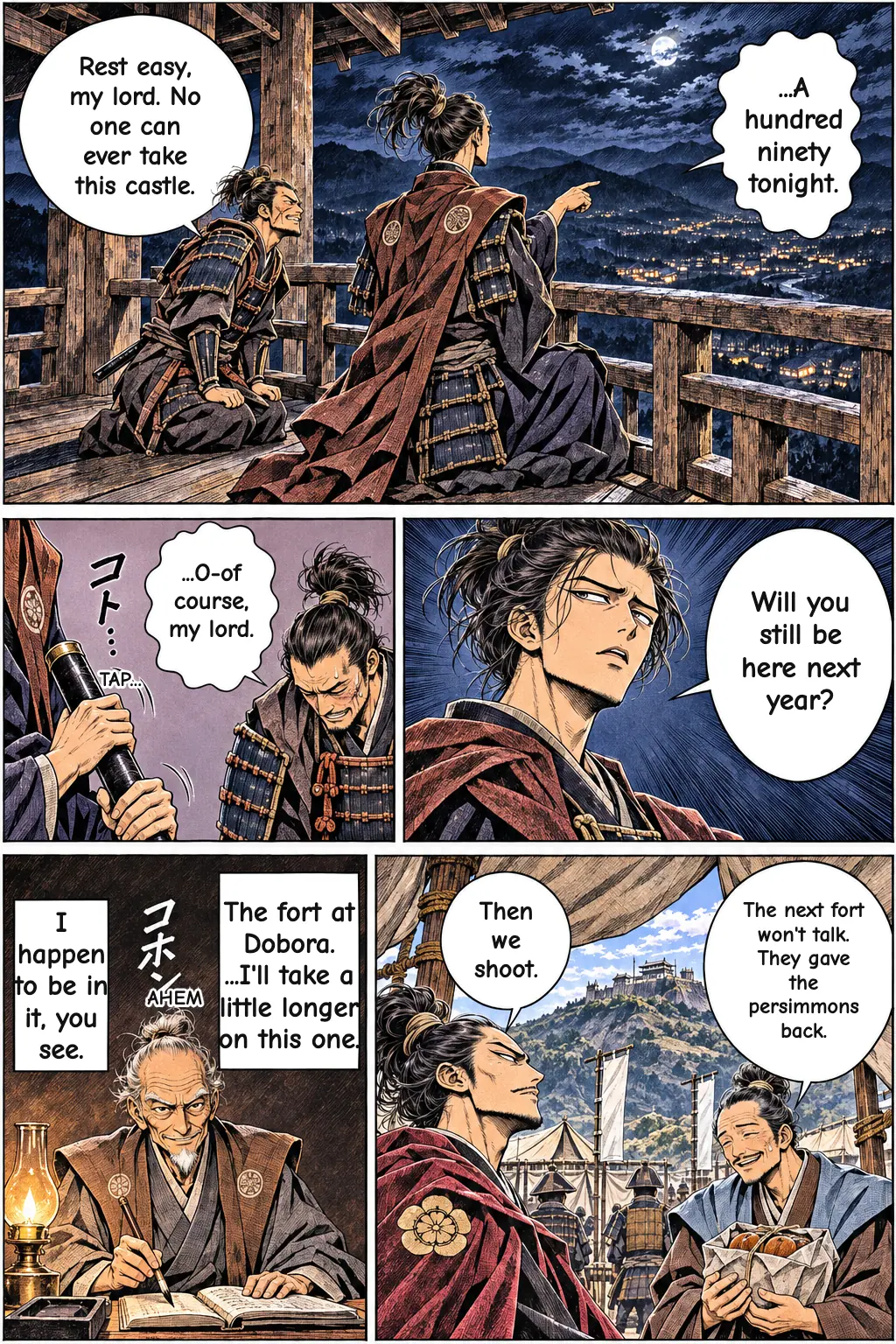
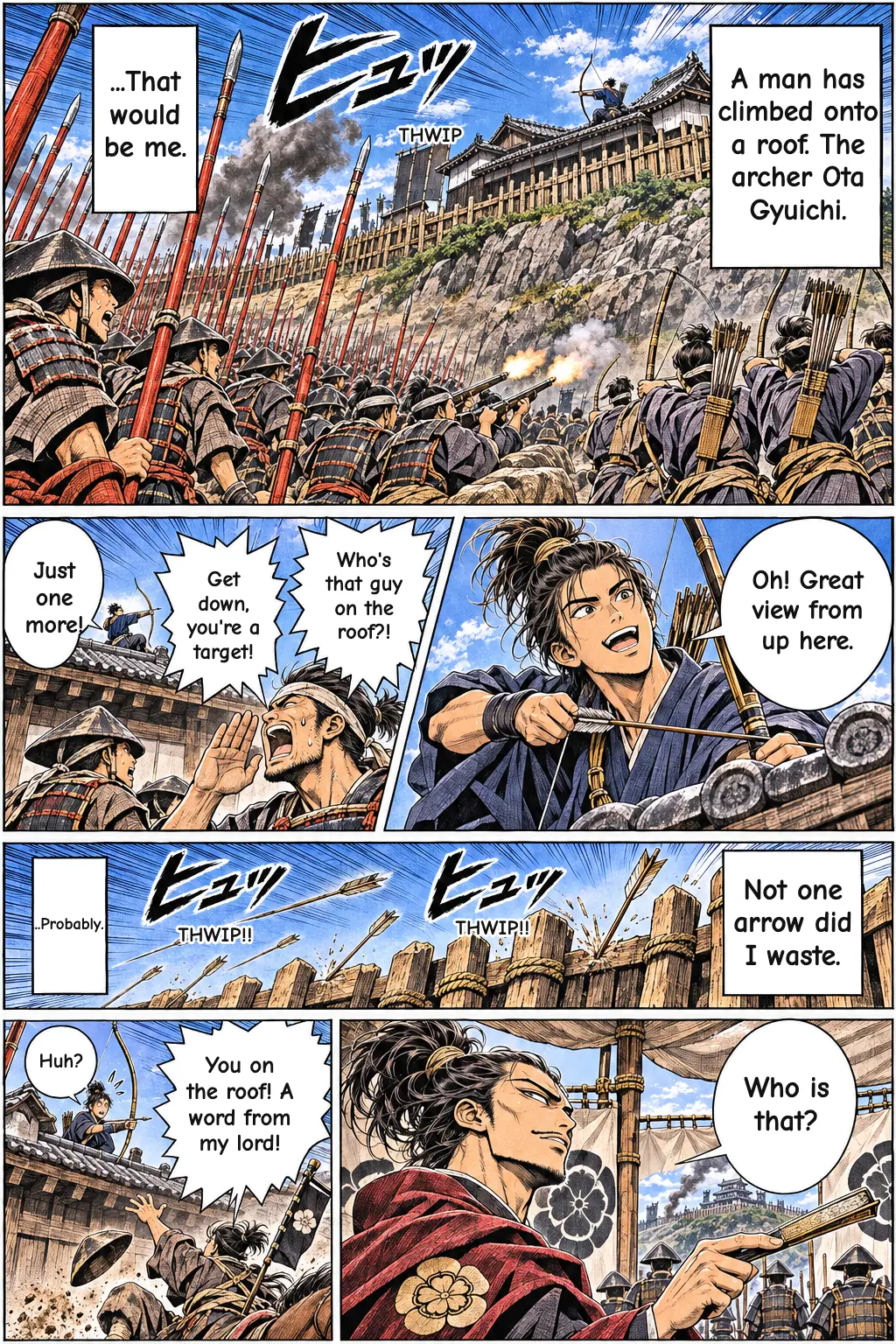
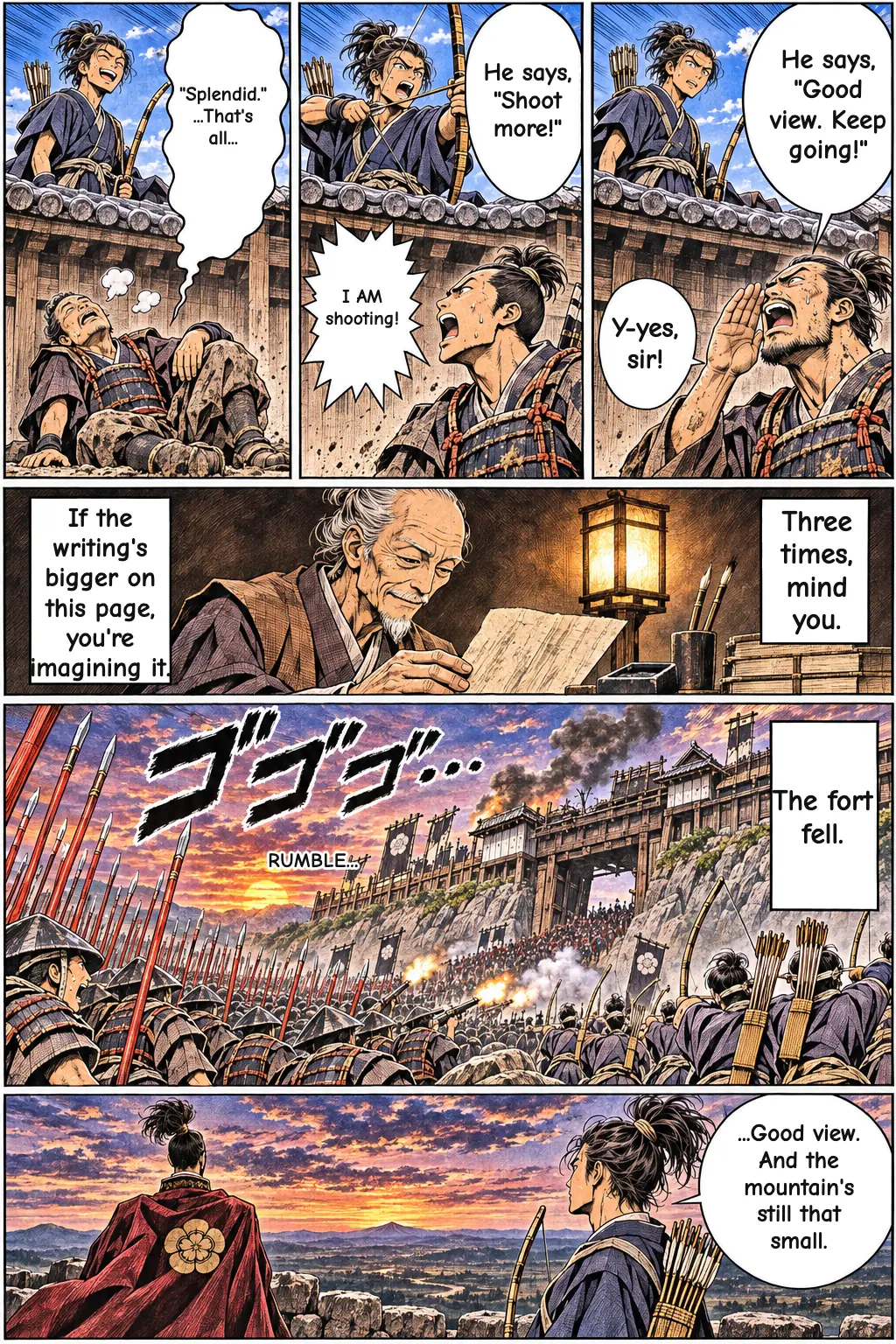
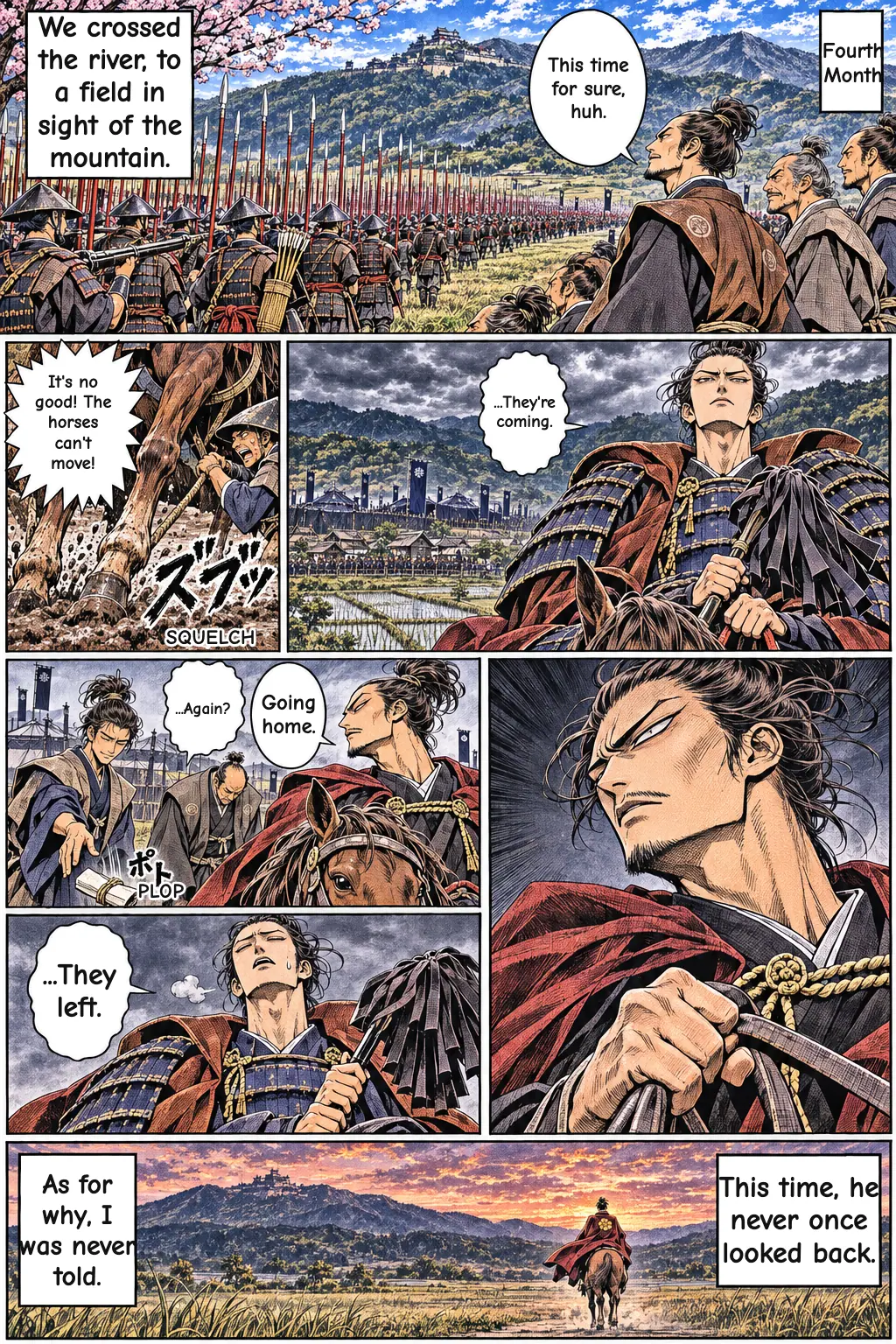
The fort at Dōhora, built by the Saitō commander Nagai Hayato to counter Kajita, fell only after hard fighting. Gyūichi himself climbed onto a roof and kept shooting arrows, earning praise and a larger stipend. Yet resistance continued. When Nobunaga advanced to Kagamino in the fourth month of the old calendar, Tatsuoki waited at Shinkanō, and the ground between them was so difficult for horses that Nobunaga pulled back that day.
Summary: The Final Strike at Inabayama
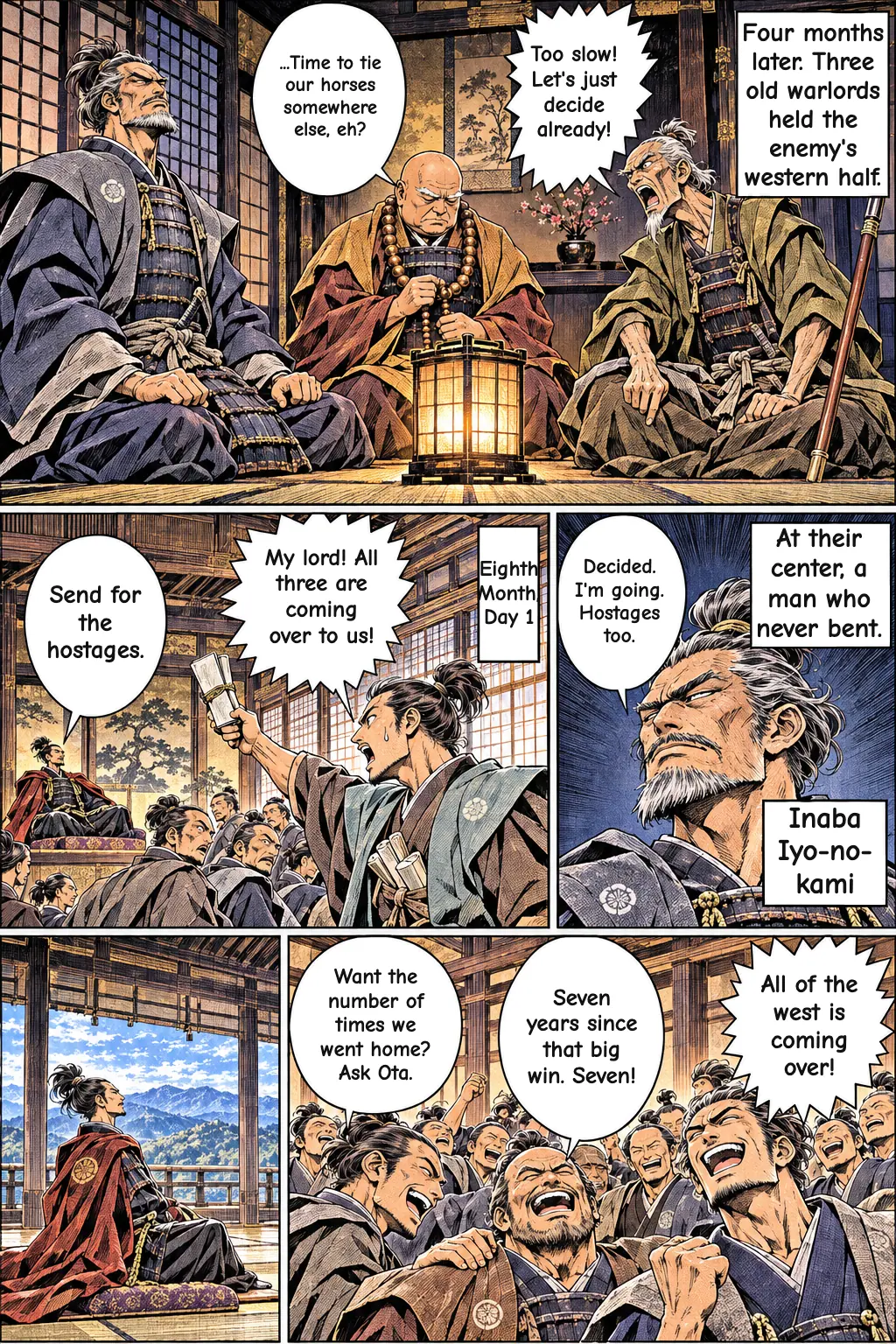
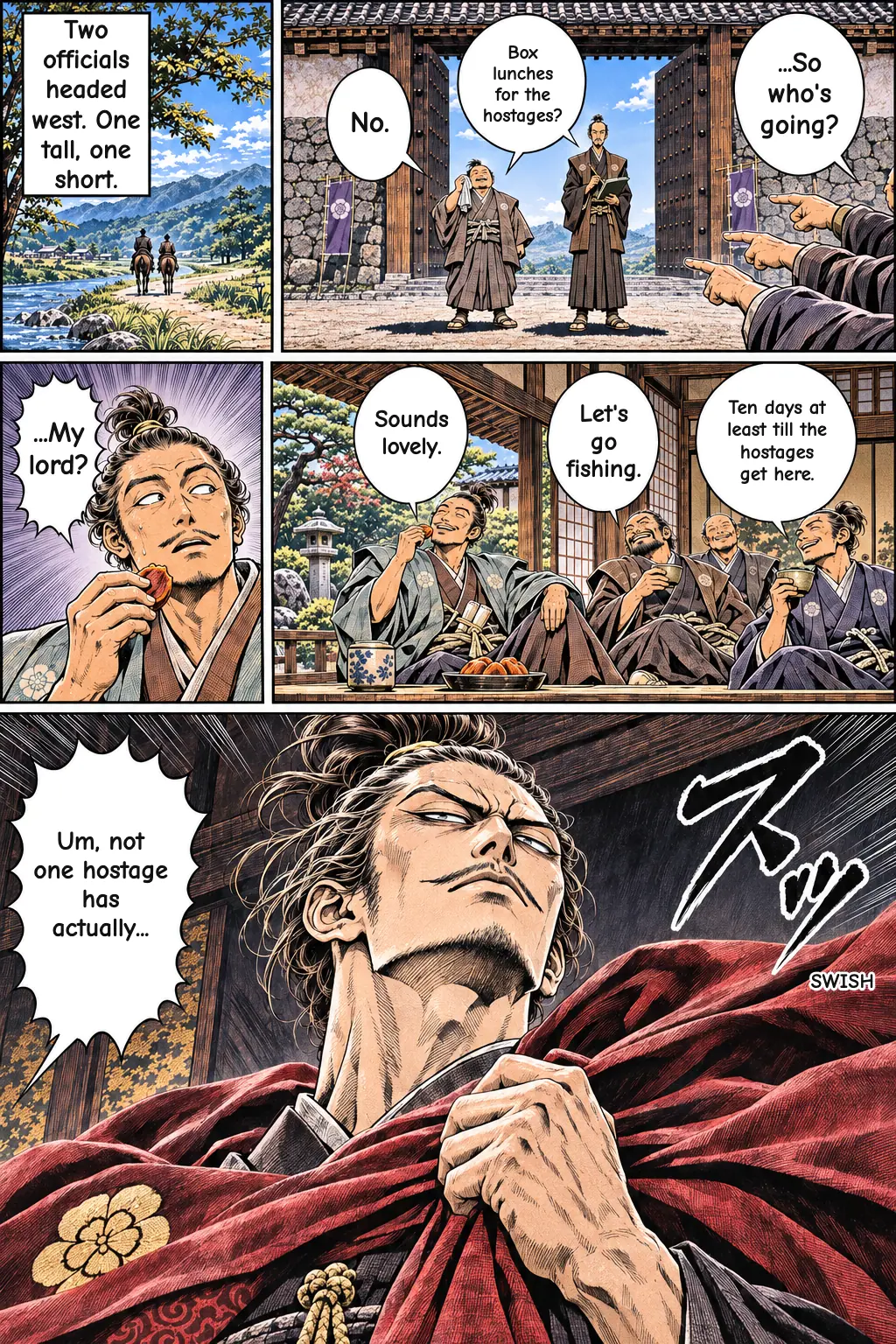
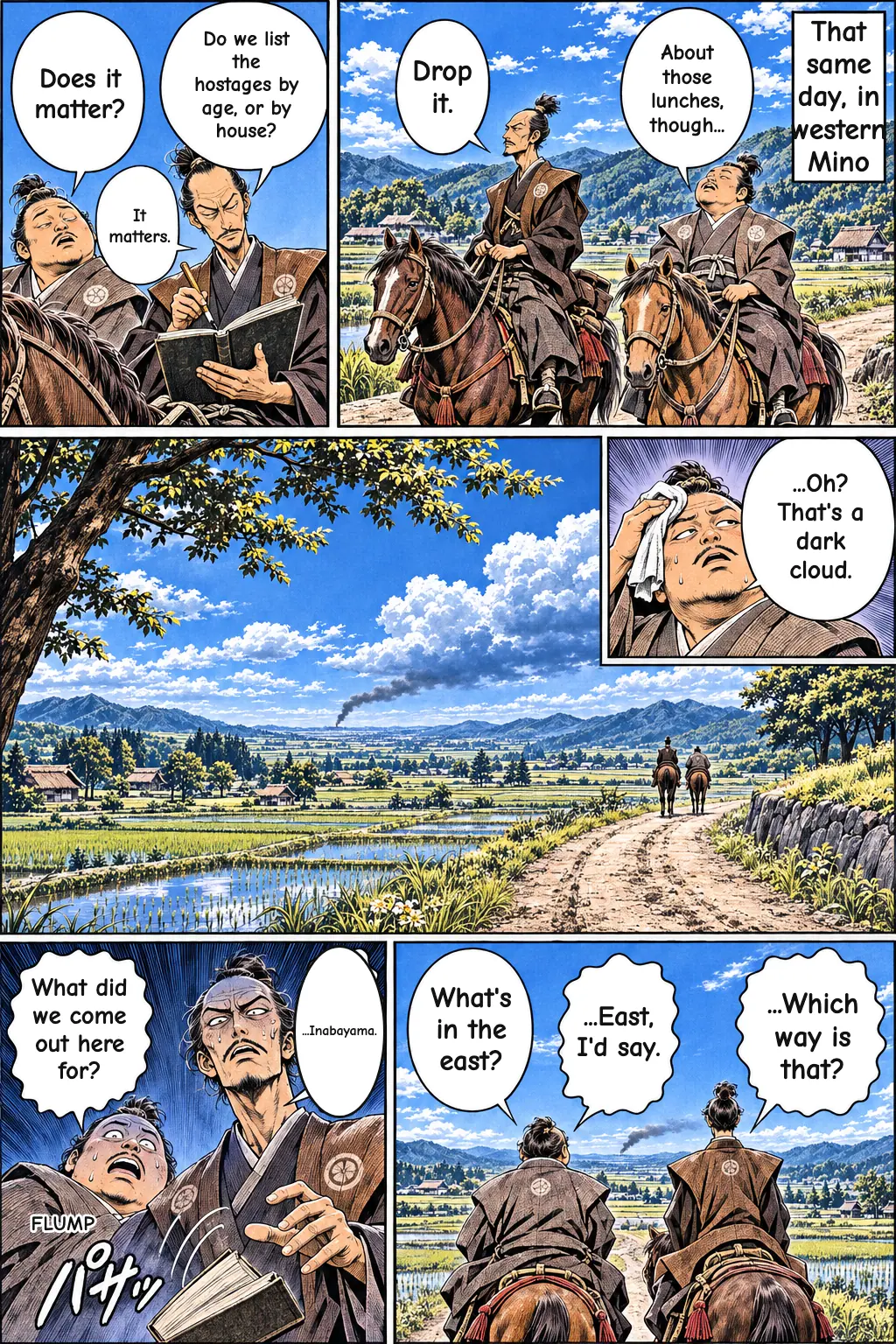
On the first day of the eighth month, the three leading lords of western Mino, Inaba Iyo-no-kami, Ujiie Bokuzen, and Andō Iga-no-kami, offered to join Nobunaga and asked him to collect their hostages. He sent his retainers Murai Minbu-no-jō and Shimada Tokoro-no-suke to receive them.
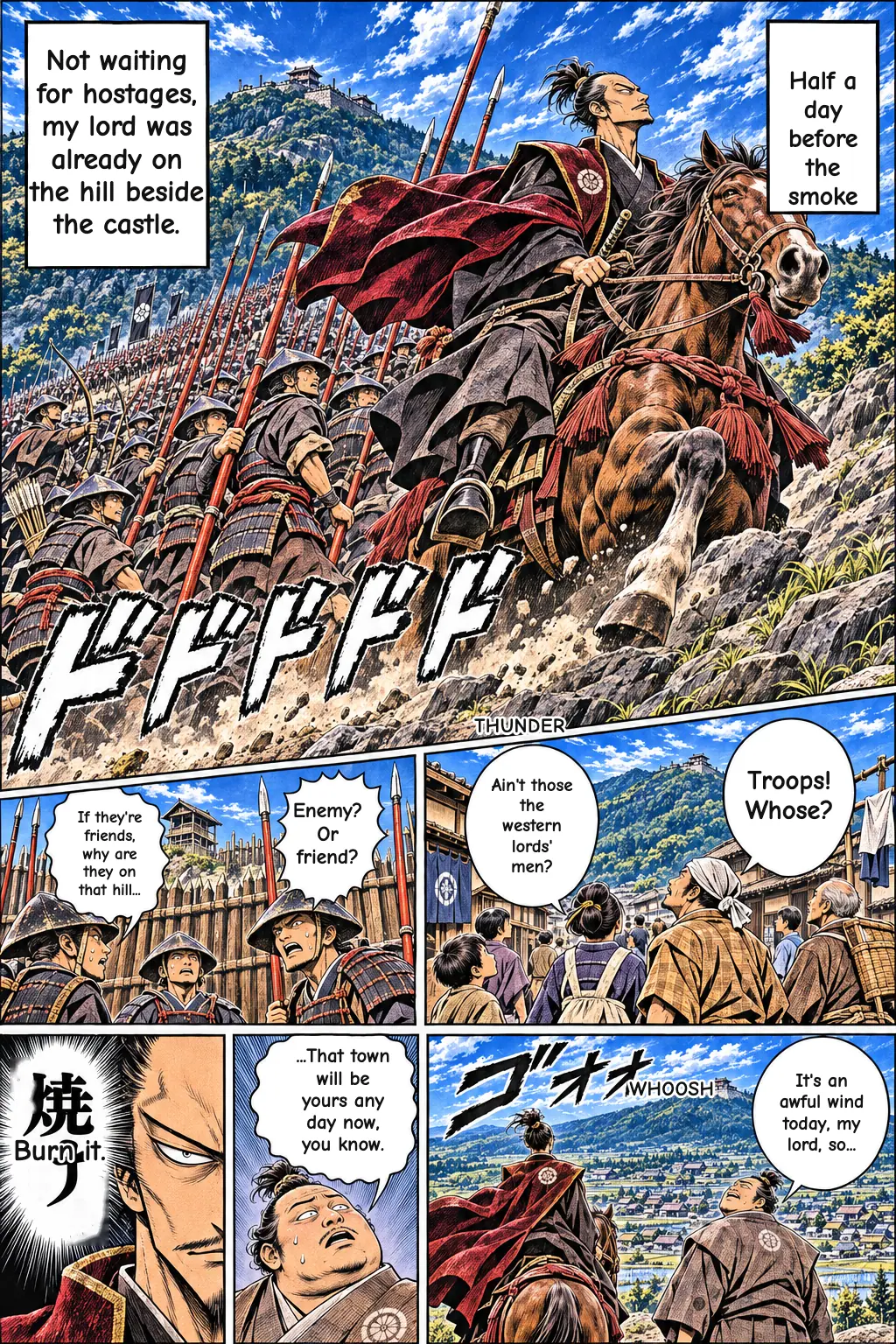
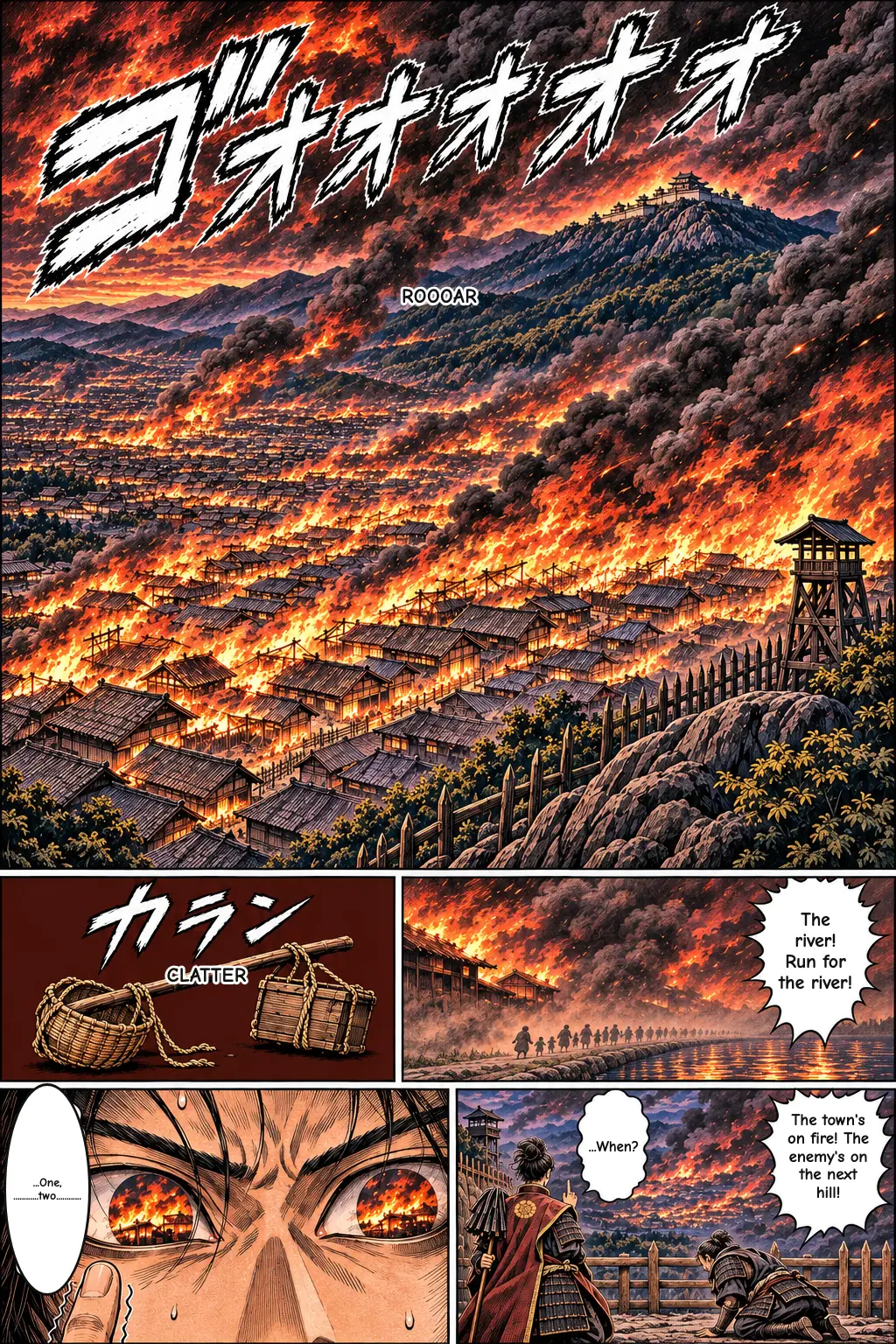
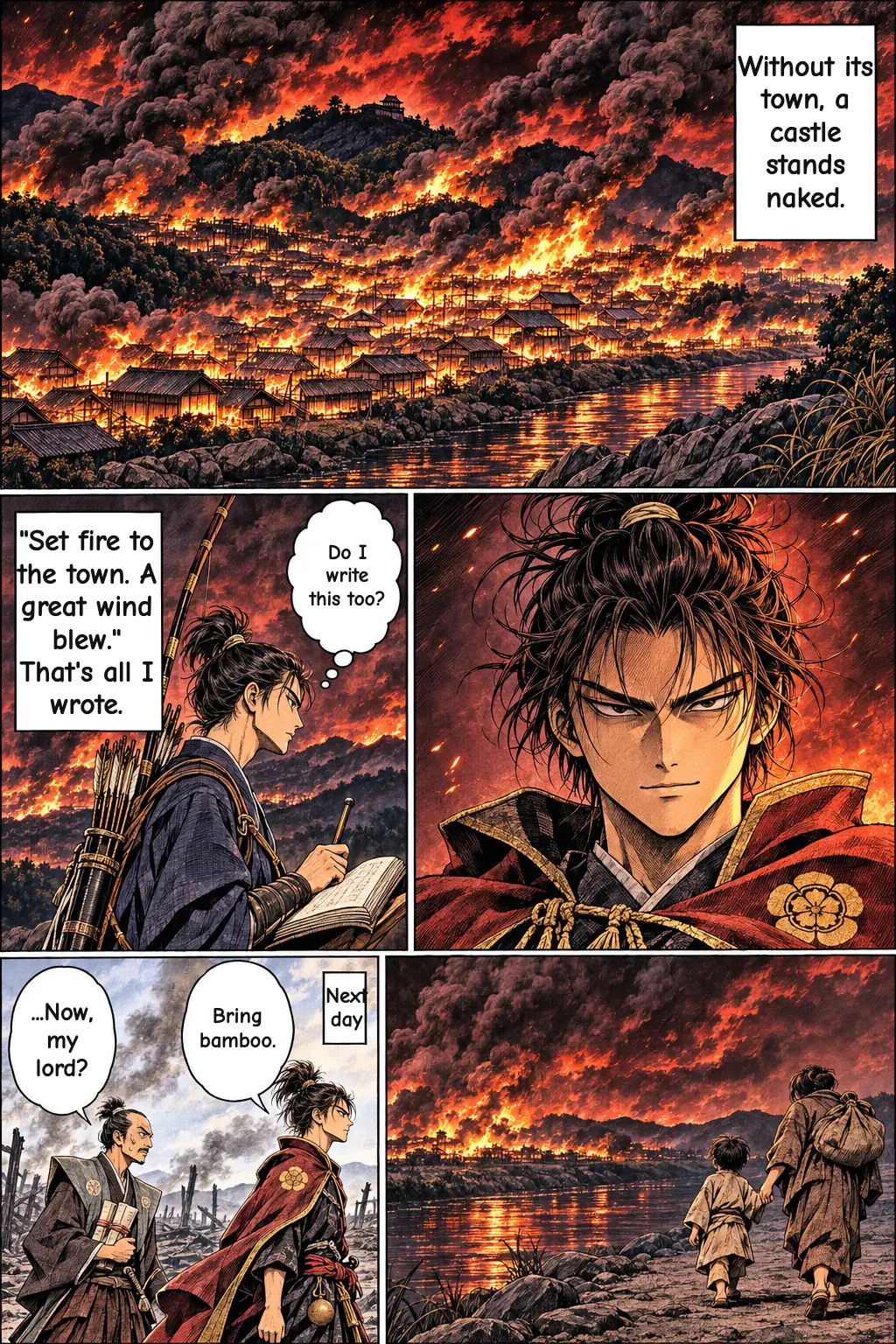
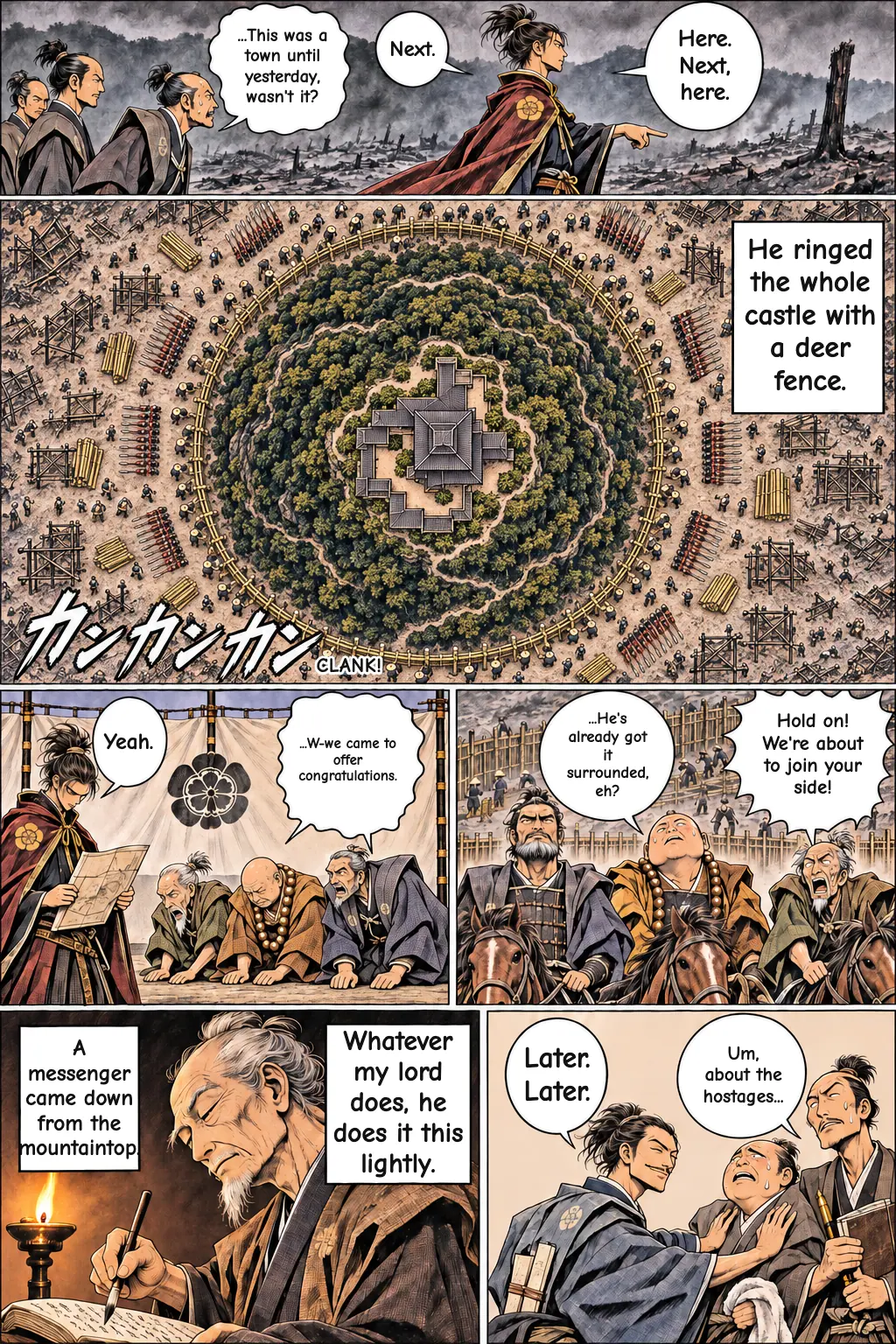
Then, without waiting for the hostages to arrive, he suddenly set out and rushed up Zuiryūji hill beside the castle. People could not tell whether this force was friend or enemy. In a strong wind, he set the town on fire and left the castle stripped of its surroundings.
The next day he assigned construction duties and ringed the castle on all sides with rough deer fencing. The three lords, startled, came to pay their respects. Gyūichi comments that Nobunaga handled everything with this same lightness of movement. On the fifteenth day of the month, Tatsuoki surrendered and left by boat along the waterway toward the Hida River, heading to Nagashima in Kawachi. Nobunaga settled the affairs of Mino and moved from Komakiyama to Inabayama.
What the Story Tells Us
The story shows how a Warring States province could fall without one decisive battle. Castles, river routes, food, water, and the loyalty of local lords all mattered. Nobunaga's battlefield wins count for less here than his patient work of leaving the enemy with fewer and fewer friends.
The date usually given for the fall of Inabayama is 1567, though this part of the chronicle works mainly in months and days, and the timing of some events in the Mino campaign is still discussed. Some readers see the capture as the fulfillment of Dōsan's prediction, but that is a later interpretation, since this passage does not mention it.
Two famous details also come from beyond this account. The town of Inokuchi is generally said to have been renamed Gifu around this time, a point that deserves checking against the chronicle's text. Nobunaga's tenka fubu seal, whose meaning is debated, is known from documents of the period. Popular tales of Hideyoshi's one-night castle at Sunomata and Takenaka Hanbei's seizure of Inabayama are likewise not part of the account summarized here.
What the Manga Changes
The chronicle records events plainly and rarely explains feelings, so the manga fills those gaps with drama. Nobunaga's frustration over years of failure and his thought process at the moment he decides not to wait for the hostages are invented. So is the retainers' grumbling dialogue during the move to Komakiyama, although the change of plan itself is in the source.
The manga also imagines scenes the chronicle barely touches: the three lords' discussion and motives for defecting, Tatsuoki's inner thoughts and his departure, and the townspeople caught in the fire. The source only reports the burning and the strong wind.
Gyūichi appears as narrator and witness, but only his archery at Dōhora comes from the record. The closing scene, with Nobunaga looking up at the sky and speaking of tenka, the realm, is entirely the manga's creation.
Where to Read It
You can read this story in Episode 5 of ODA NOBUNAGA: The Demon King of the Warring States on Manga Portal. If you want to see how a man who beat an army of 45,000 could be stopped by one mountain castle, it makes a fast, dramatic companion to this summary. Every episode is free, with no sign-up required.
Characters in this episode
Oda Nobunaga
The warlord of Owari who spends years wearing down Mino before seizing Inabayama in a sudden advance.
Saitō Tatsuoki
The lord of Mino who defends Inabayama until he is surrounded, then surrenders and leaves by boat for Nagashima.
The Three Lords of Western Mino (Inaba, Ujiie, and Andō)
Powerful Mino lords who offer to defect to Nobunaga and are astonished when he moves before their hostages arrive.
Niwa Nagahide
A Nobunaga retainer who brokers defections and helps lead the attacks on Sarubami and Dōhora.
Ōta Gyūichi
The author of the Shinchō Kōki, a skilled archer who is rewarded for shooting from a rooftop at Dōhora.
Saitō Dōsan
Nobunaga's late father-in-law, who once predicted that his own sons would end up tying their horses outside Nobunaga's gate.
FAQ
How did Oda Nobunaga capture Inabayama Castle?
According to the Shinchō Kōki, he first weakened the Saitō clan by winning over or isolating its neighbors and castles. When three major Mino lords offered to defect, he rushed up a nearby hill without waiting for their hostages, burned the town, and surrounded the castle with fencing. Saitō Tatsuoki surrendered on the fifteenth day of the eighth month.
When did the Siege of Inabayama Castle happen?
It is conventionally dated to 1567. The relevant part of the Shinchō Kōki focuses mainly on months and days, and the timing of some events in the Mino campaign is still discussed.
Who were the three lords who betrayed Saitō Tatsuoki?
They were Inaba Iyo-no-kami, Ujiie Bokuzen, and Andō Iga-no-kami, leading figures in western Mino. The chronicle records their offer to join Nobunaga but says almost nothing about why they made it.
What happened to Saitō Tatsuoki after Inabayama fell?
The chronicle says he surrendered and traveled by boat to Nagashima in Kawachi. The manga's picture of his emotions and departure is largely imagined, because the source gives few personal details about him.
Did Hideyoshi build a one-night castle during the Inabayama campaign?
That famous story is not part of the Shinchō Kōki account summarized in this article. It comes from later tellings, and its details are treated with caution.