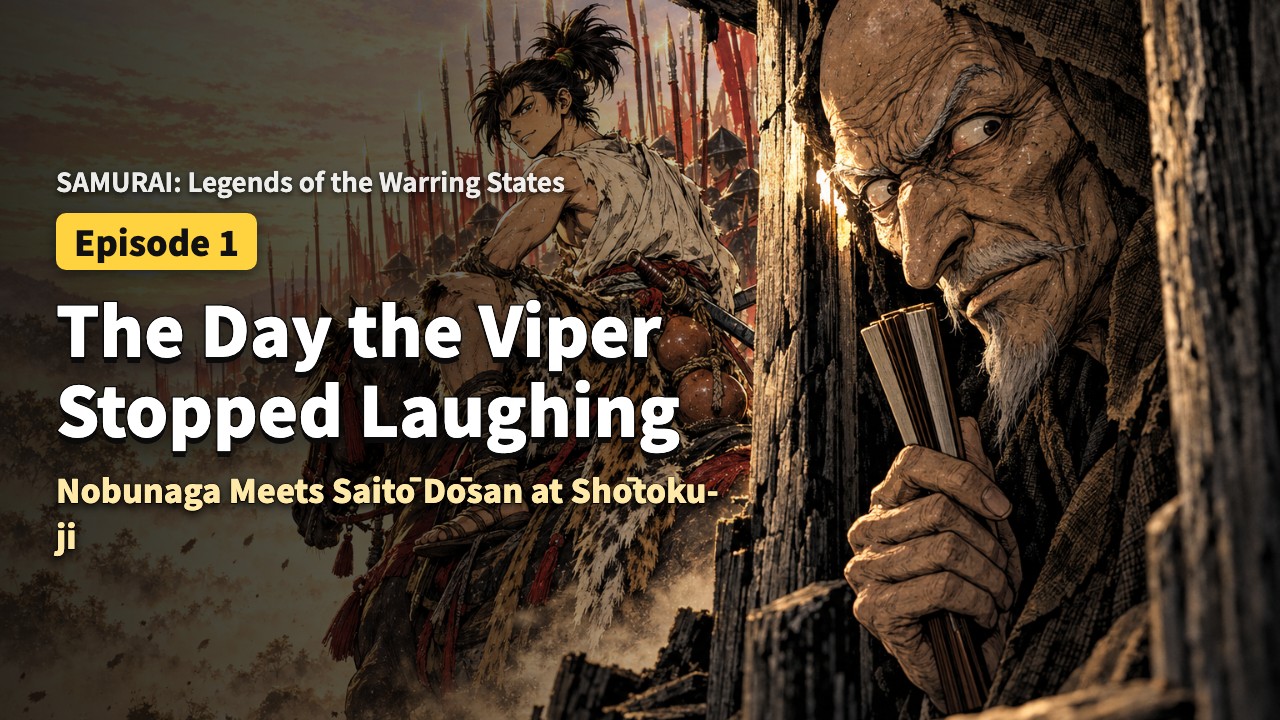
Episode 6Keep the Title. Give Me the Ports.Nobunaga's March on Kyoto
Backing a nobleman who has lost everything, Oda Nobunaga takes a mountain castle in a single day and fills Kyoto with long vermilion spears. Then, drawing on the stories told about him, this episode shows the man who turned down the high rank a weeping shogun offered with the word "Father," and asked only for a few towns of ports and roads.
Get new episodes in your feed. Follow us on:ThreadsBluesky
Story summary
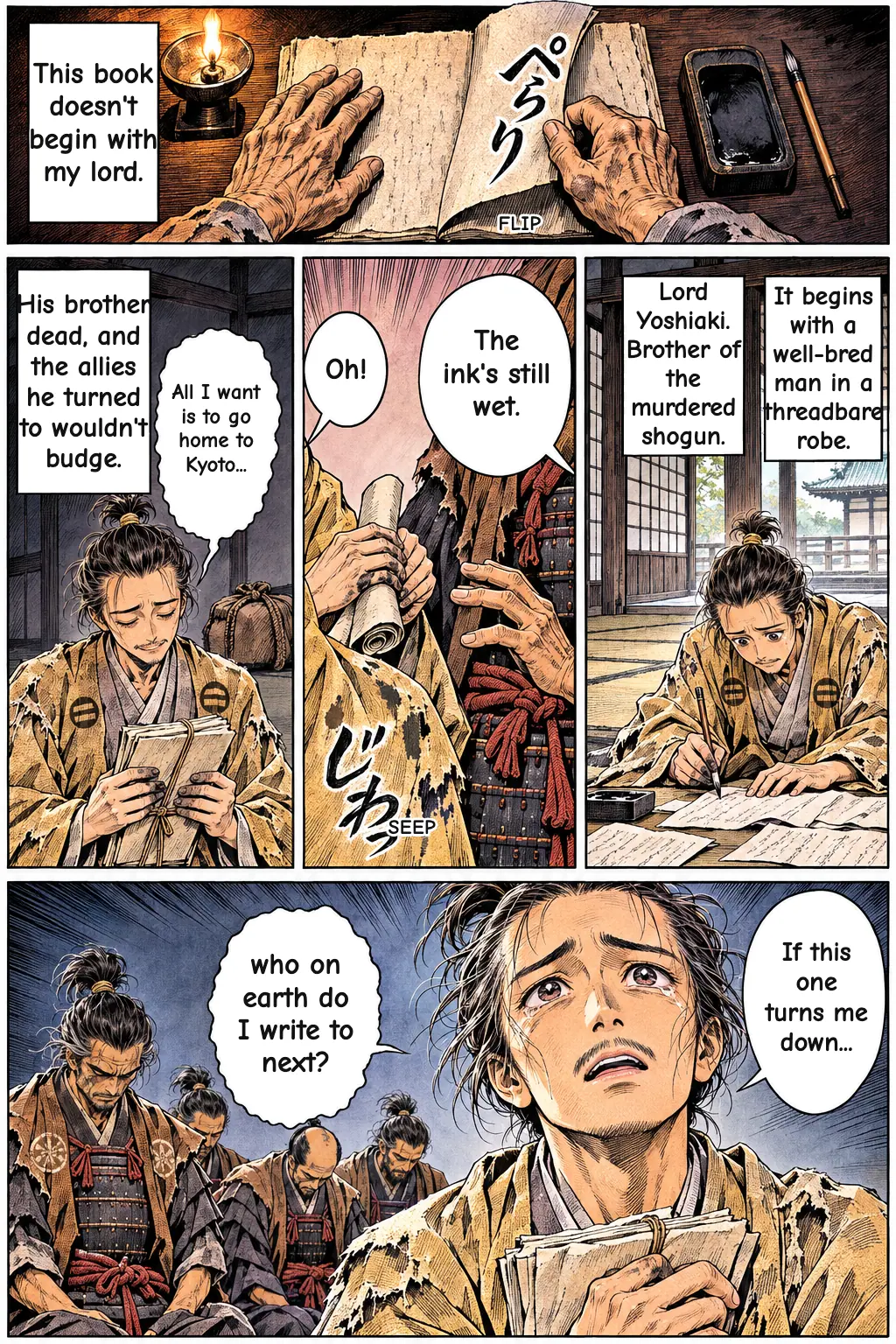
The story begins with a killing at the top of Japanese politics. In 1565 the shogun Ashikaga Yoshiteru, Japan's highest military authority, was killed by forces of the Miyoshi and Matsunaga factions. His younger brother Kakukei, a Buddhist monk at the Ichijō-in temple in Nara, escaped and spent the next few years looking for a warlord who would restore his family. He would later be known as Yoshiaki. Asakura Yoshikage, lord of Echizen province, took him in, but never marched on his behalf. In 1568 Yoshiaki turned to Oda Nobunaga, lord of Owari and Mino.
Nobunaga's March on Kyoto (1568): Shinchō Kōki Summary and Yoshiaki
In short: Nobunaga's march on Kyoto is the 1568 campaign in which the warlord Oda Nobunaga backed the exiled Ashikaga Yoshiaki, took Mitsukuri Castle in a single day, and drove off the Rokkaku clan, after which Yoshiaki became shogun. The main account is the Shinchō Kōki, a chronicle by Nobunaga's retainer Ōta Gyūichi, which presents the whole affair as finished in under a hundred days.
What the Shinchō Kōki records: the road to Kyoto
The story begins with a killing at the top of Japanese politics. In 1565 the shogun Ashikaga Yoshiteru, Japan's highest military authority, was killed by forces of the Miyoshi and Matsunaga factions. His younger brother Kakukei, a Buddhist monk at the Ichijō-in temple in Nara, escaped and spent the next few years looking for a warlord who would restore his family. He would later be known as Yoshiaki. Asakura Yoshikage, lord of Echizen province, took him in, but never marched on his behalf.
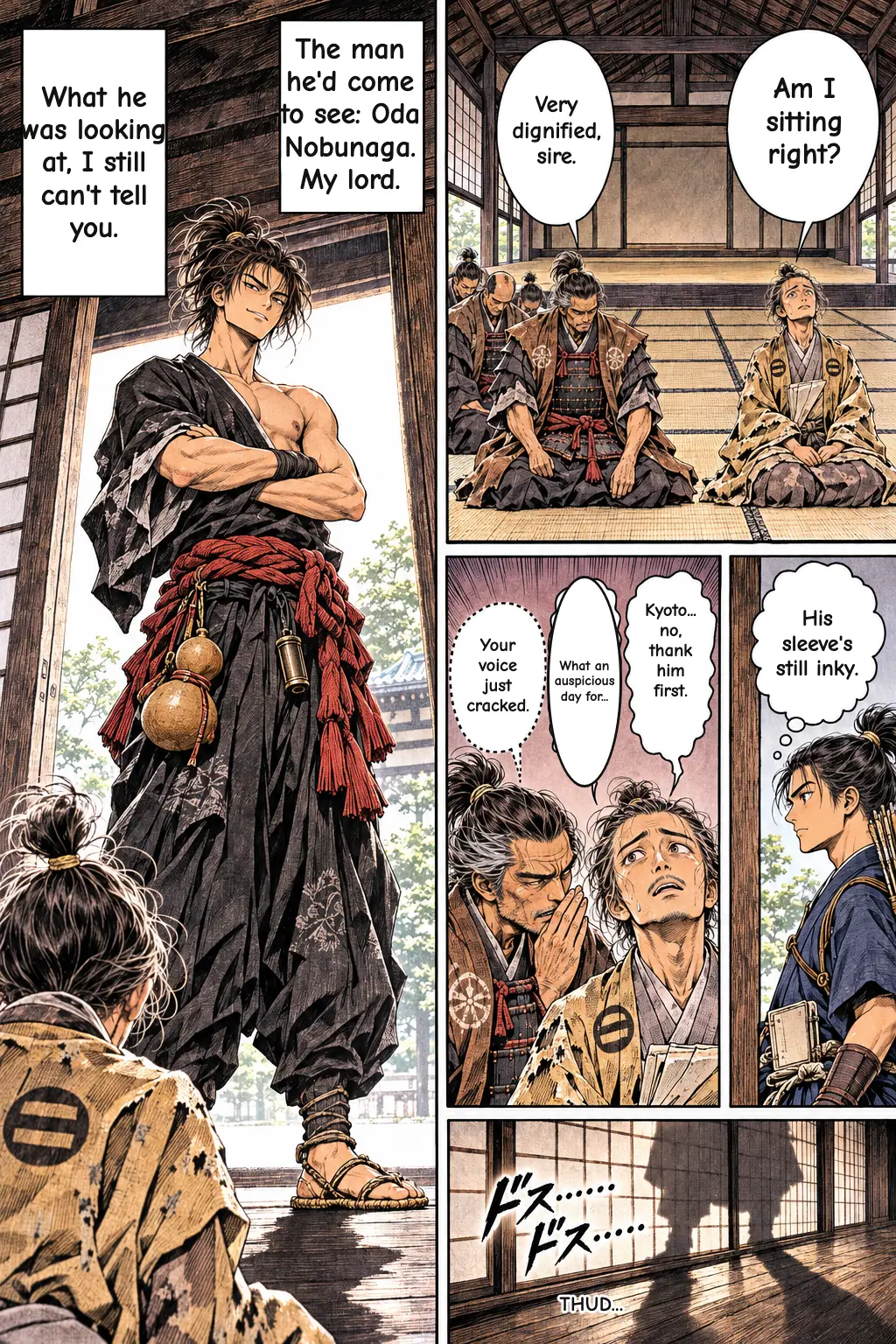
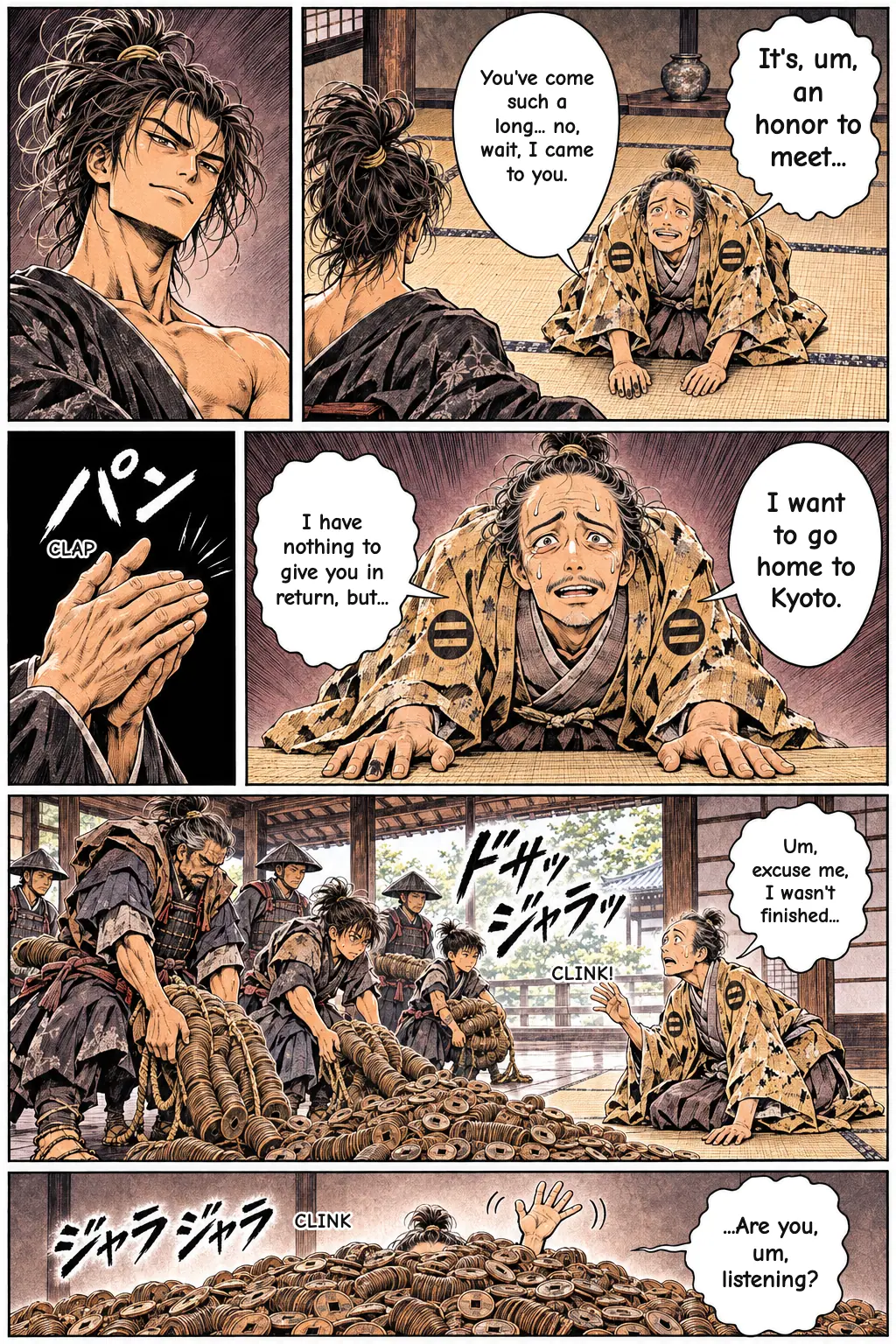
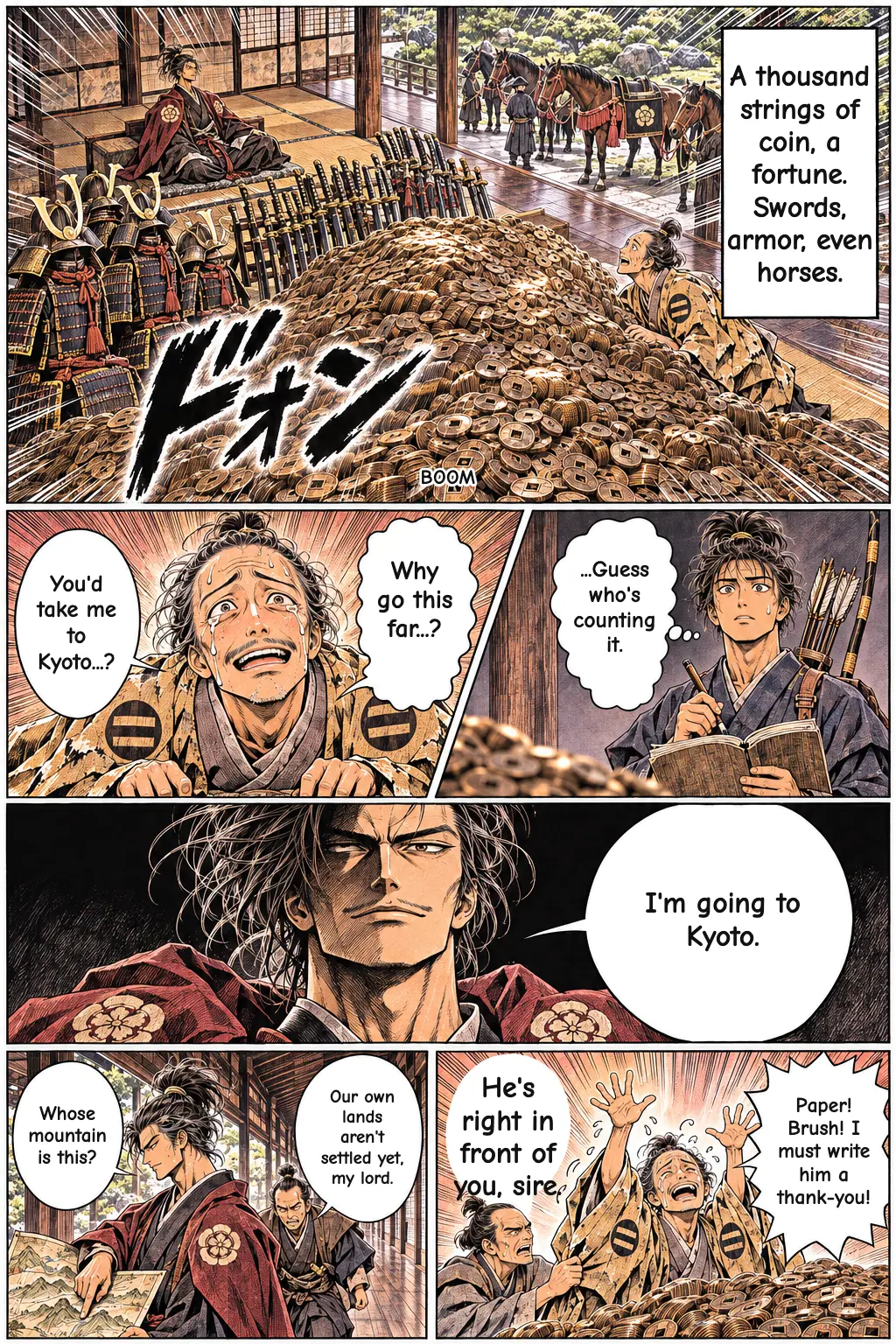
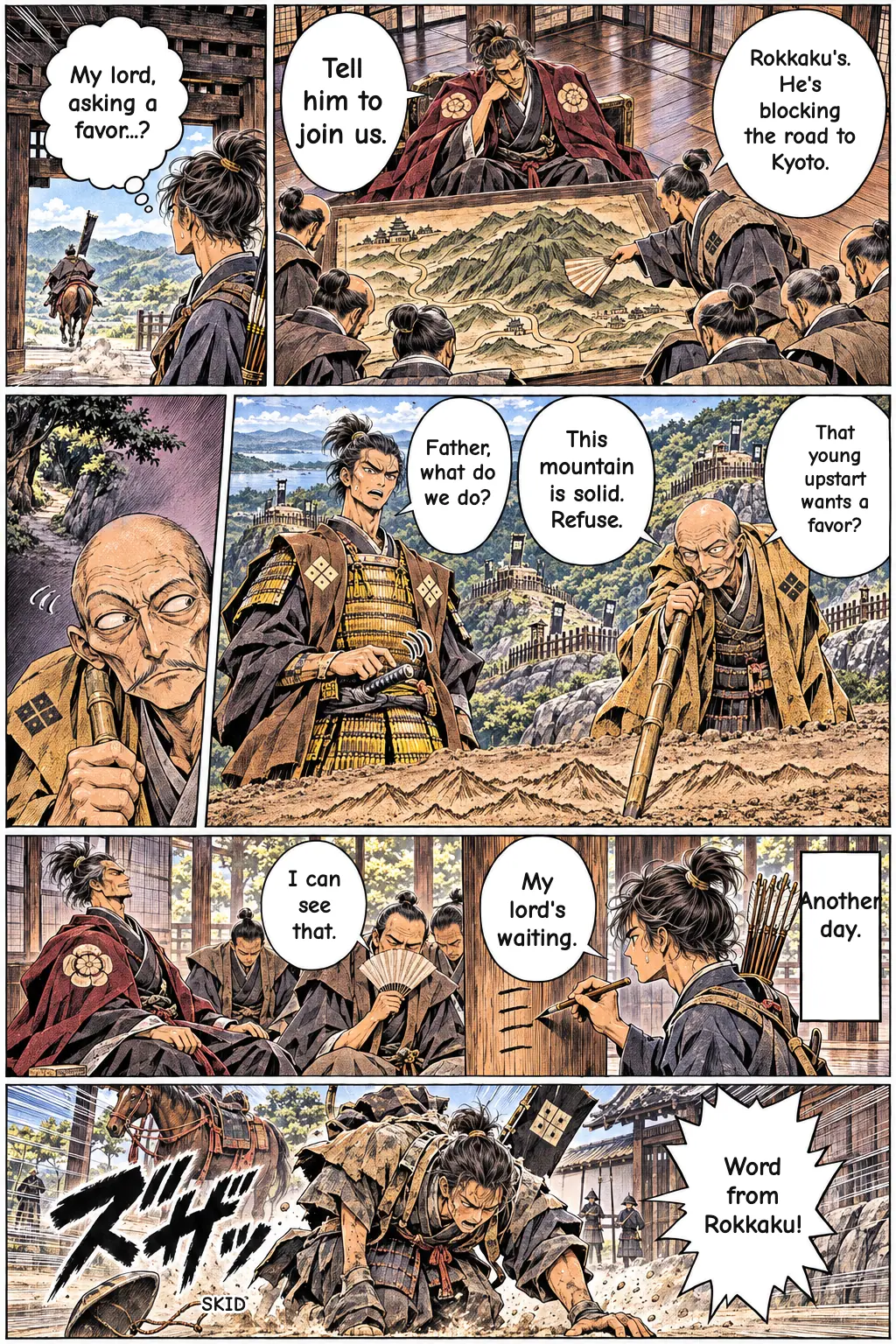
In 1568 Yoshiaki turned to Oda Nobunaga, lord of Owari and Mino. Nobunaga sent envoys to fetch him and received him at Ryūshō-ji, a temple in Mino, with generous gifts of coin, swords, armor and horses. The road to Kyoto ran through southern Ōmi, the territory of Rokkaku Jōtei, so Nobunaga tried diplomacy first. He traveled to Sawayama and, with an envoy from Yoshiaki, spent several days asking Jōtei to cooperate. Jōtei refused.
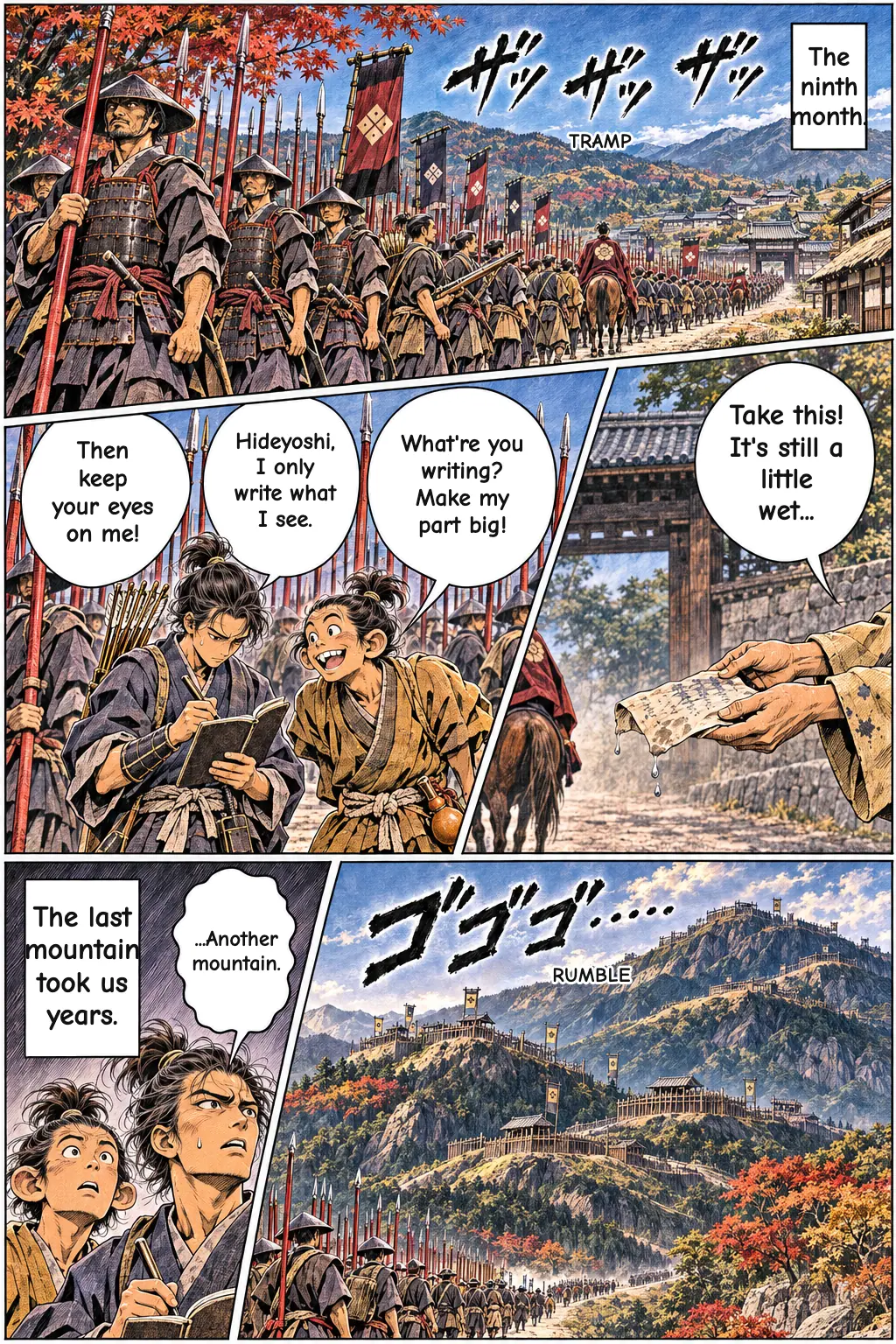
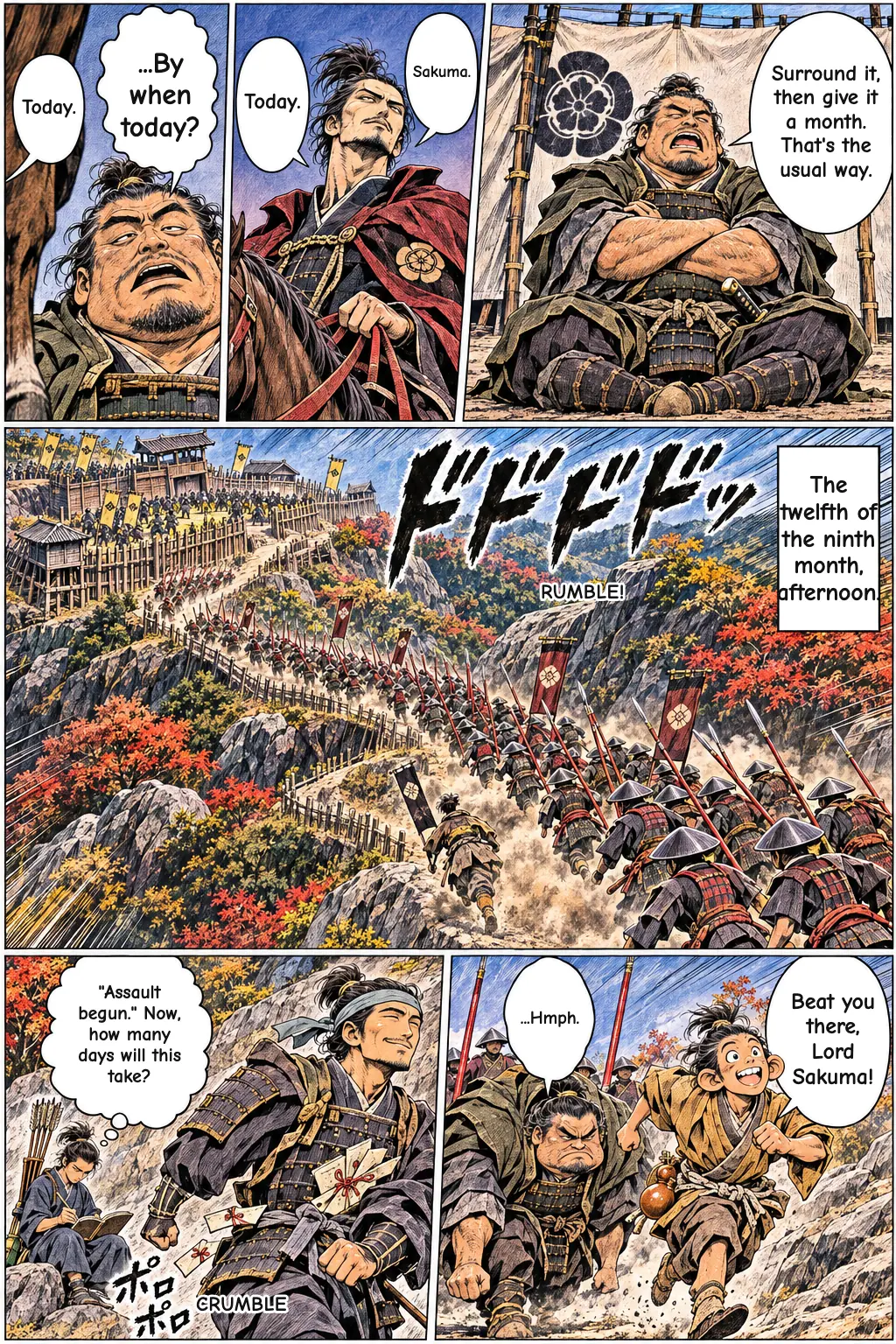
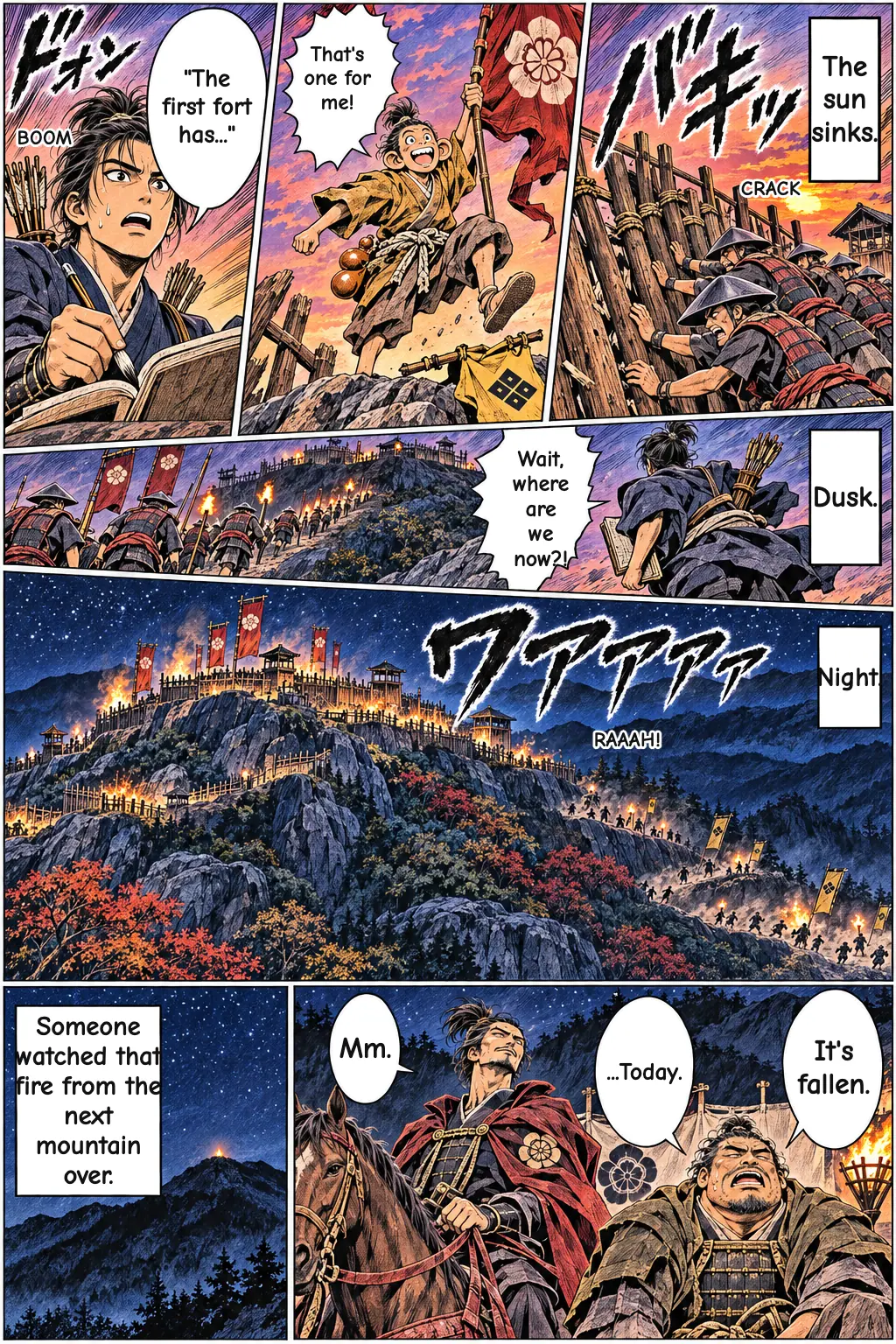
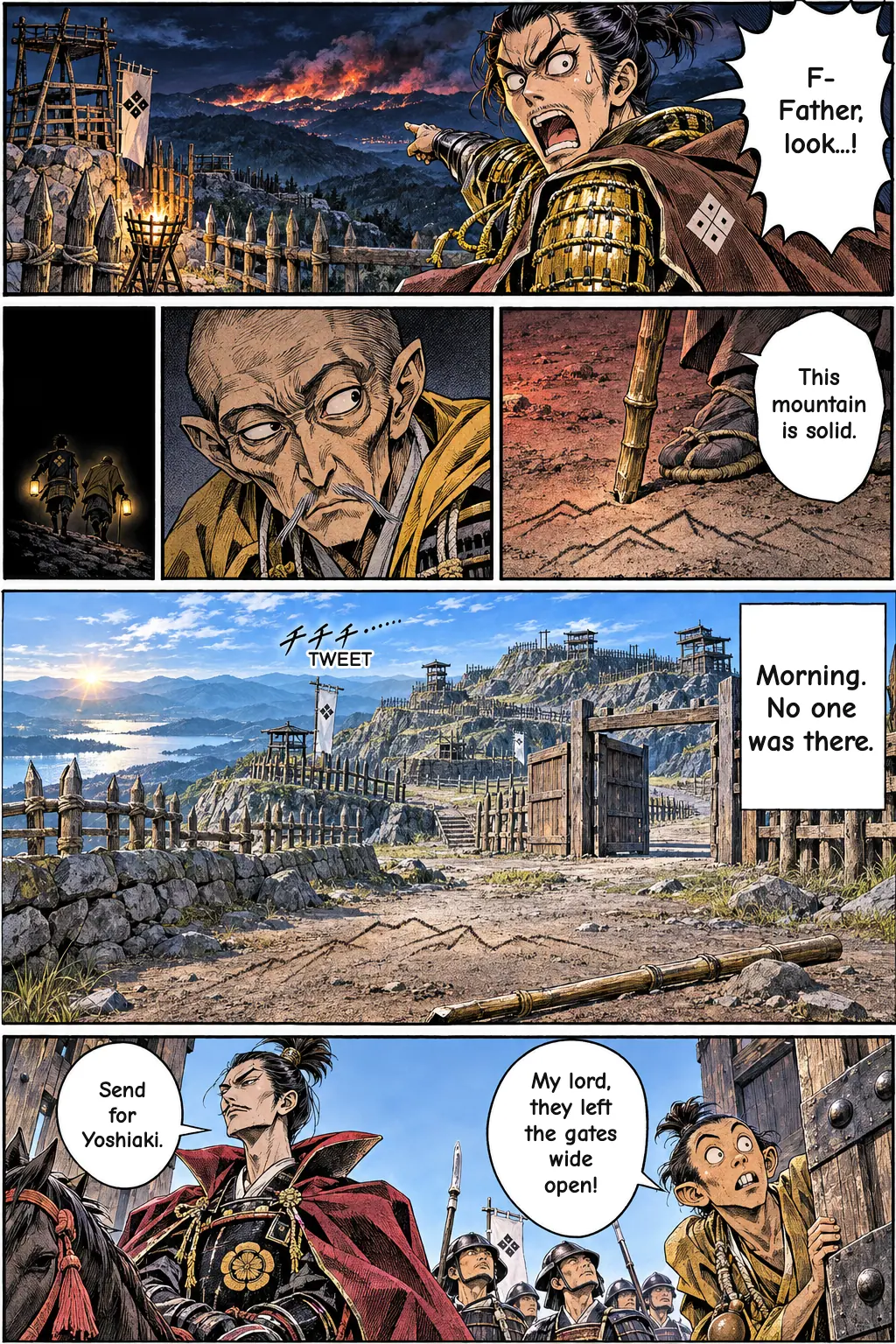
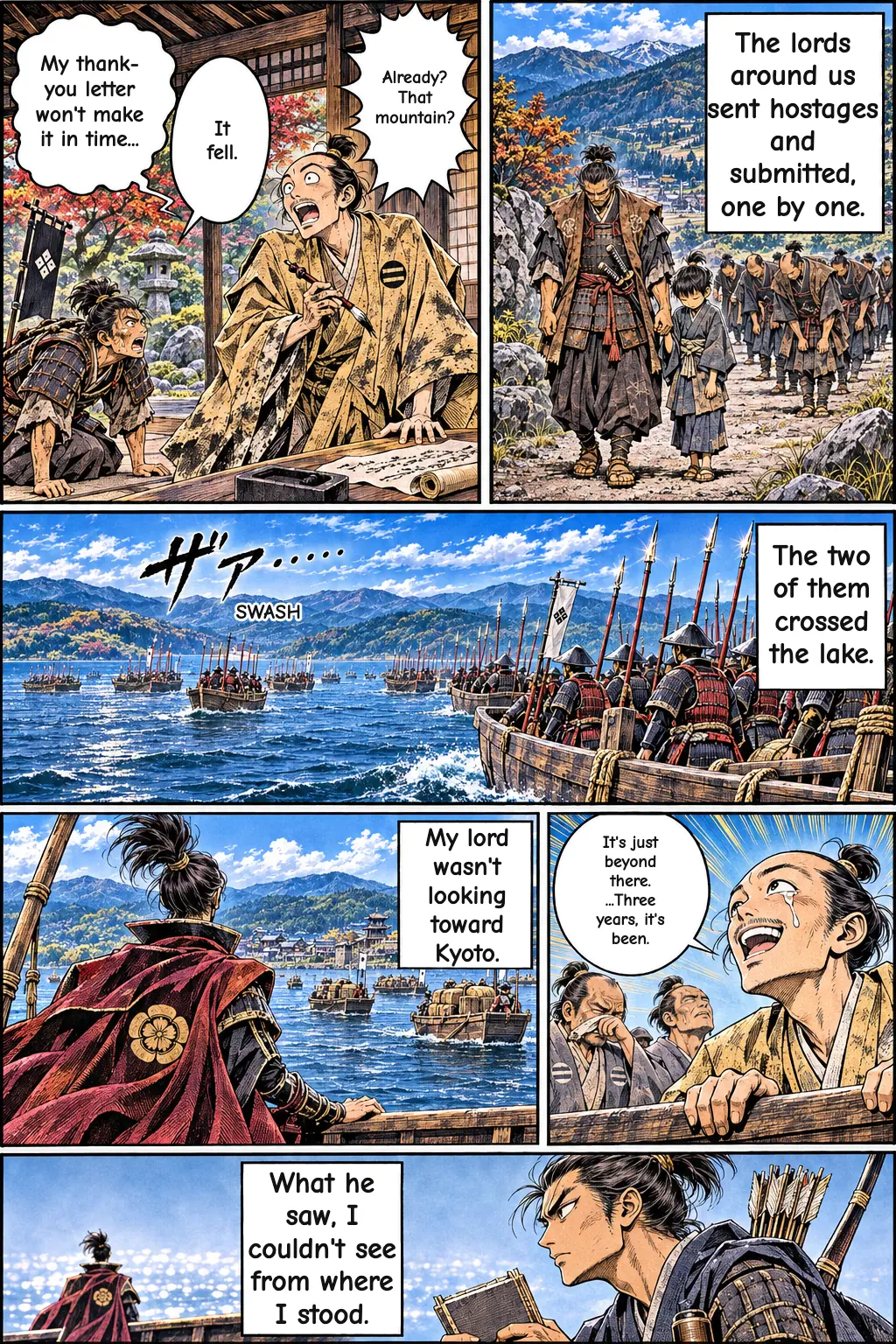
In the ninth month Nobunaga left Gifu with troops from Owari, Mino, Ise and Mikawa. A figure of about 60,000 men is often repeated, but it is unclear whether it comes from the chronicle or from later writers. On the twelfth of that month his army attacked Mitsukuri Castle, fighting from afternoon into the night, and took it the same day. Jōtei and his son then abandoned their main castle at Kannonji under cover of darkness, and the local lords of Ōmi gave hostages and submitted.
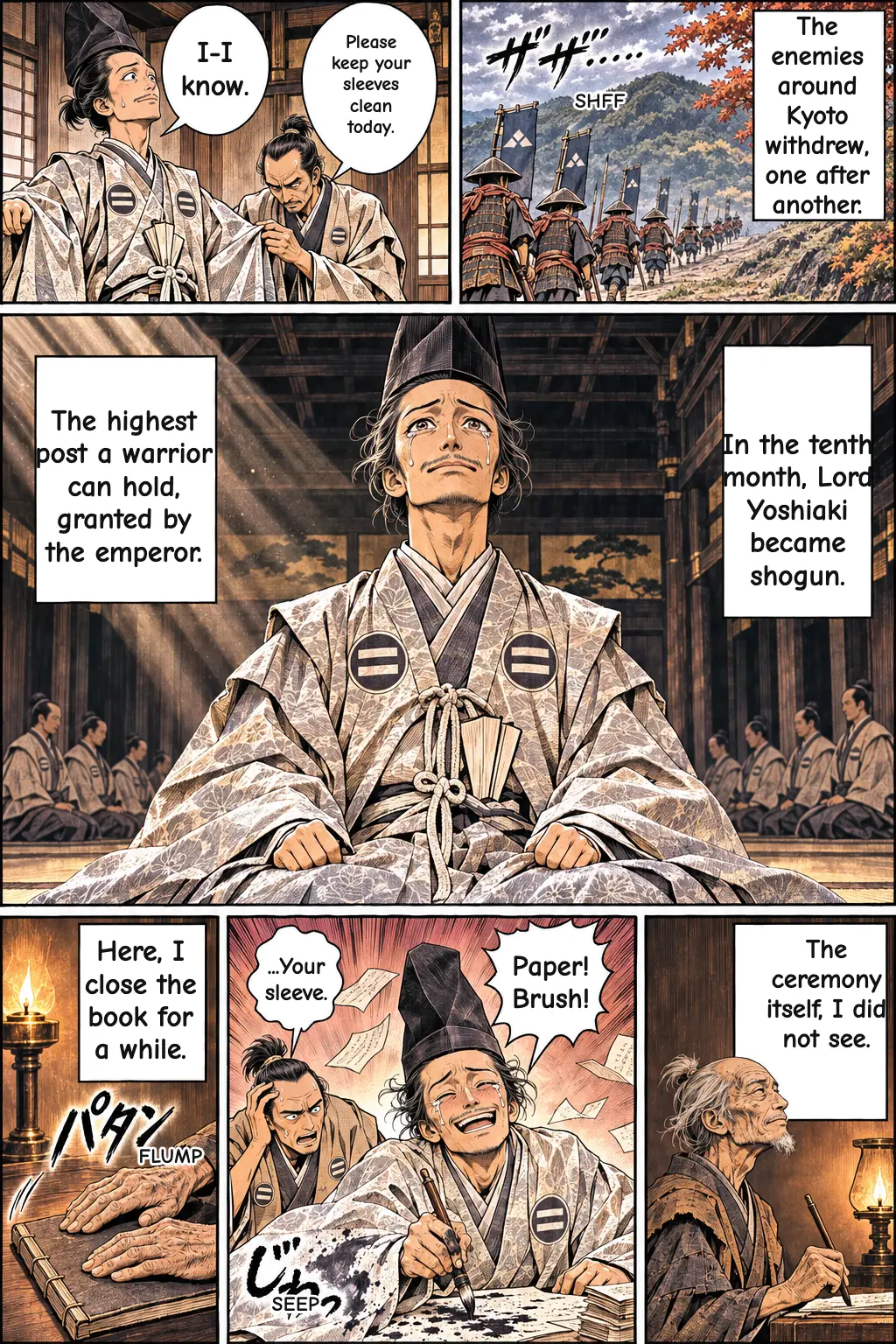
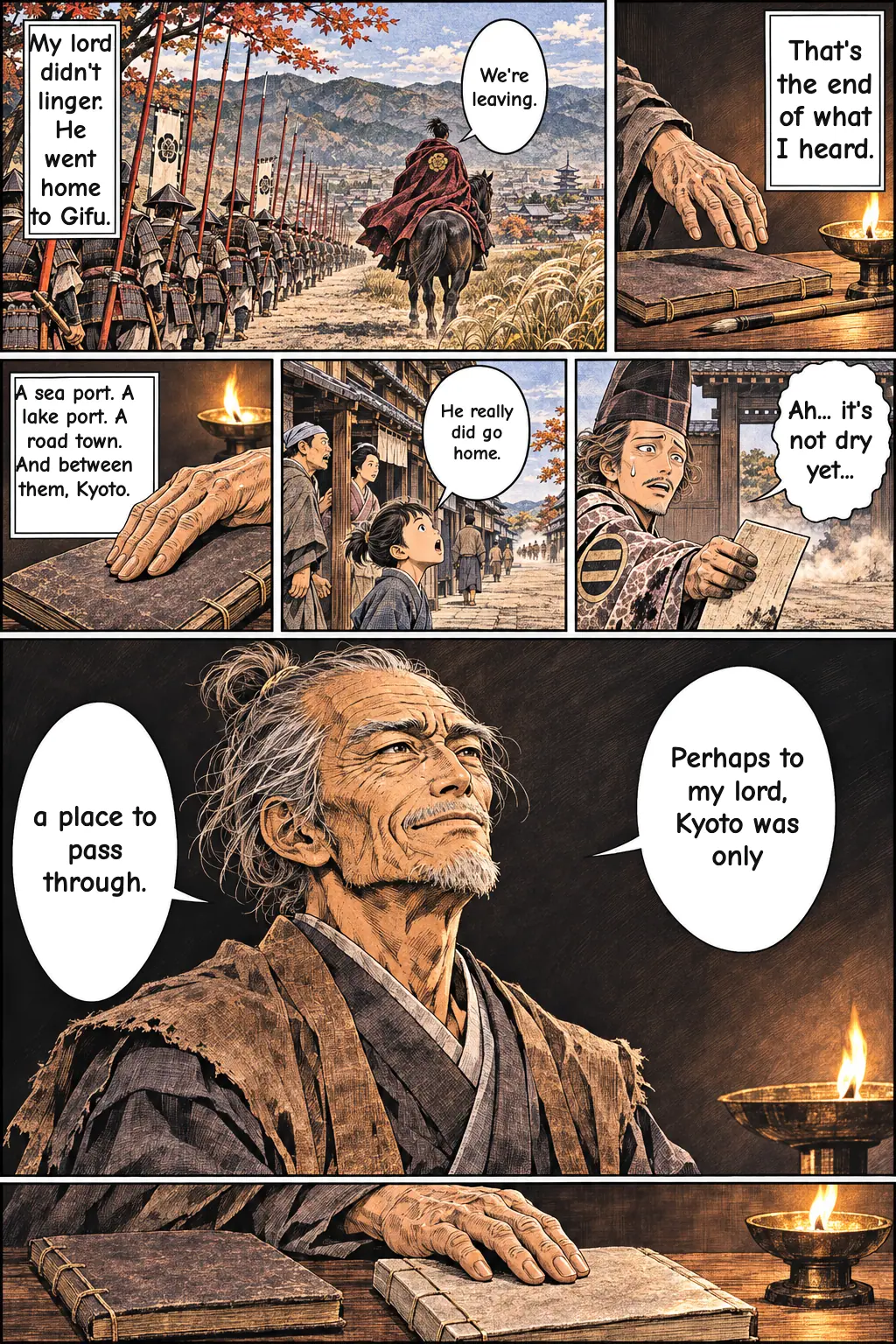
Nobunaga sent for Yoshiaki, who came to Kuwanomi-dera temple in Ōmi. Together they crossed Lake Biwa, stopped at Mii-dera temple and entered Kyoto. Opposition around the capital crumbled quickly at Shōryūji, Akutagawa and Ikeda. At Akutagawa Castle, lords came to pay their respects to Yoshiaki. Matsunaga Hisahide handed over a famous tea caddy called Tsukumogami, and the Sakai merchant Imai Sōkyū offered the Matsushima jar and the Jōō Nasu tea caddy. Yoshiaki returned to Kyoto and became shogun in the tenth month, conventionally dated to the eighteenth. Late that month, Nobunaga went home to Gifu.
Why the march mattered
By the 1560s, Japan's Warring States period had left the shogunate weak, but the title still carried legitimacy. A warlord who restored a rightful shogun could act in that shogun's name, and Kyoto, home of the imperial court, was the place where such authority was confirmed. Marching there gave Nobunaga a national stage that a regional lord would otherwise lack.
Historians read his aims in different ways. Some see the campaign as the first step toward ruling all Japan. Others stress that at this stage he was acting as the backer of a restored shogun, and that his larger ambitions may have developed later.
The gifts are revealing too. Prized tea utensils carried enormous prestige in this era, so handing one over was a visible political act as well as a present. Gyūichi's habit of noting such objects by name reflects his style: he writes down dates, names and gifts, and says little about what anyone was thinking.
The "Father" letter and the ports: record or tradition?
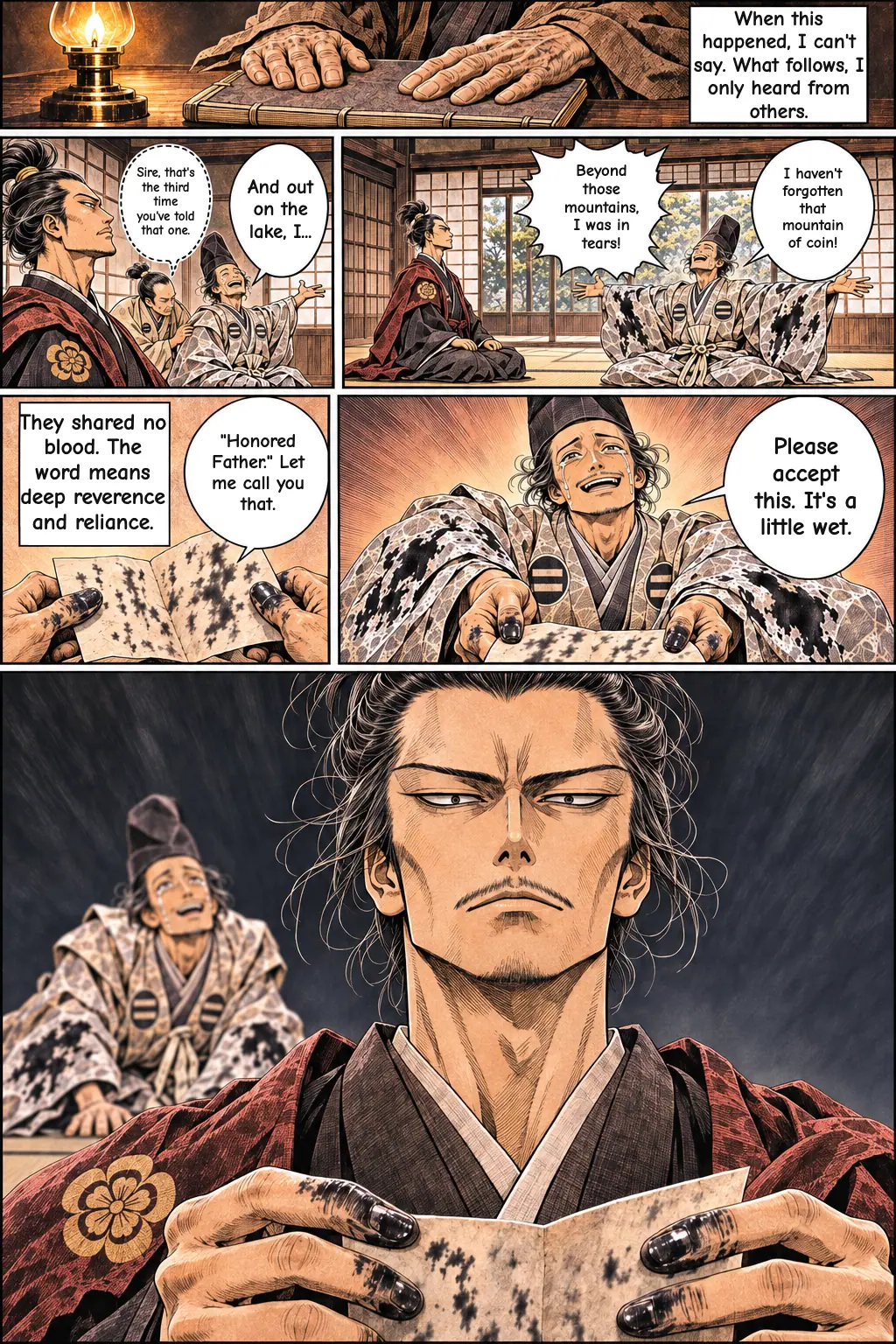
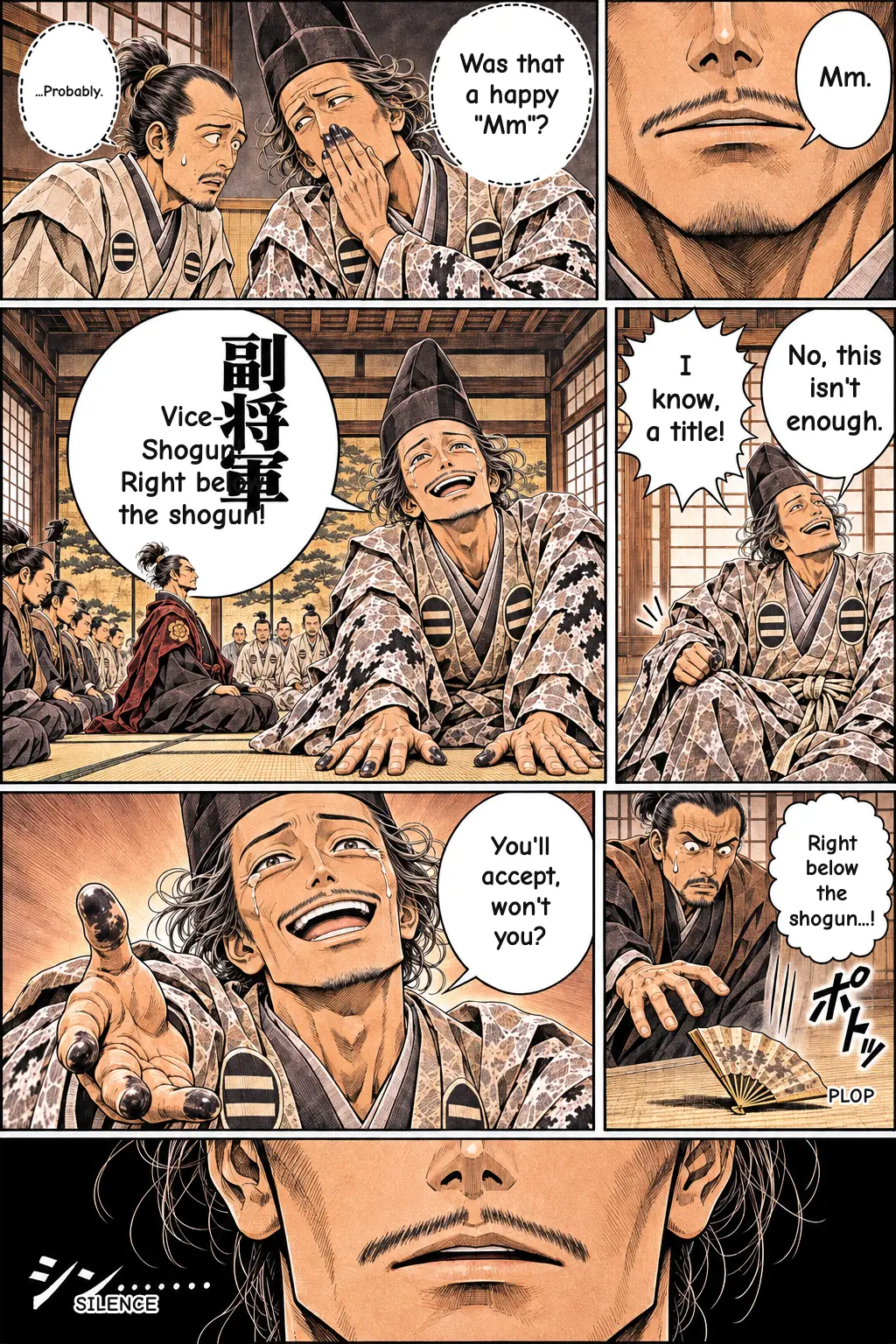
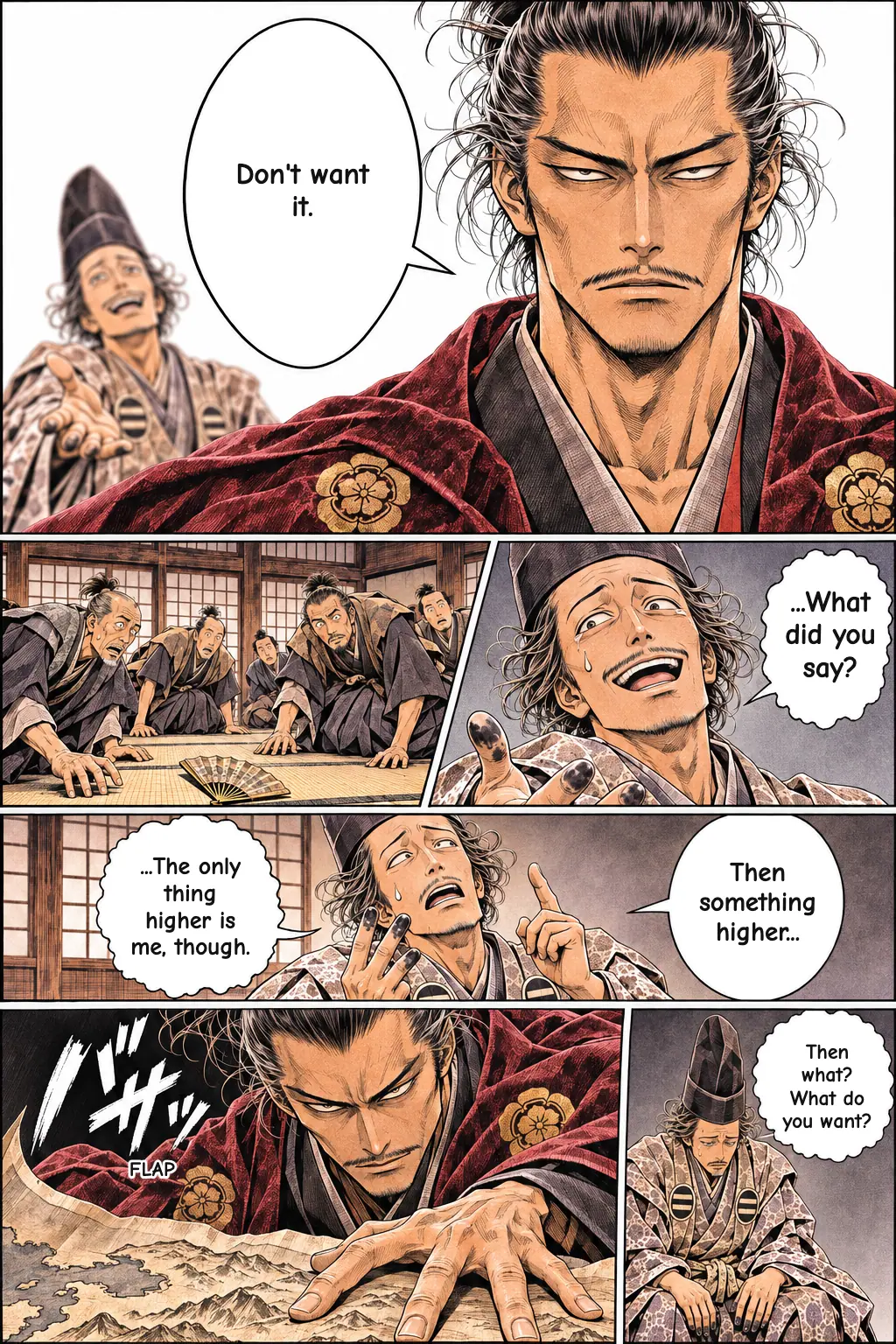
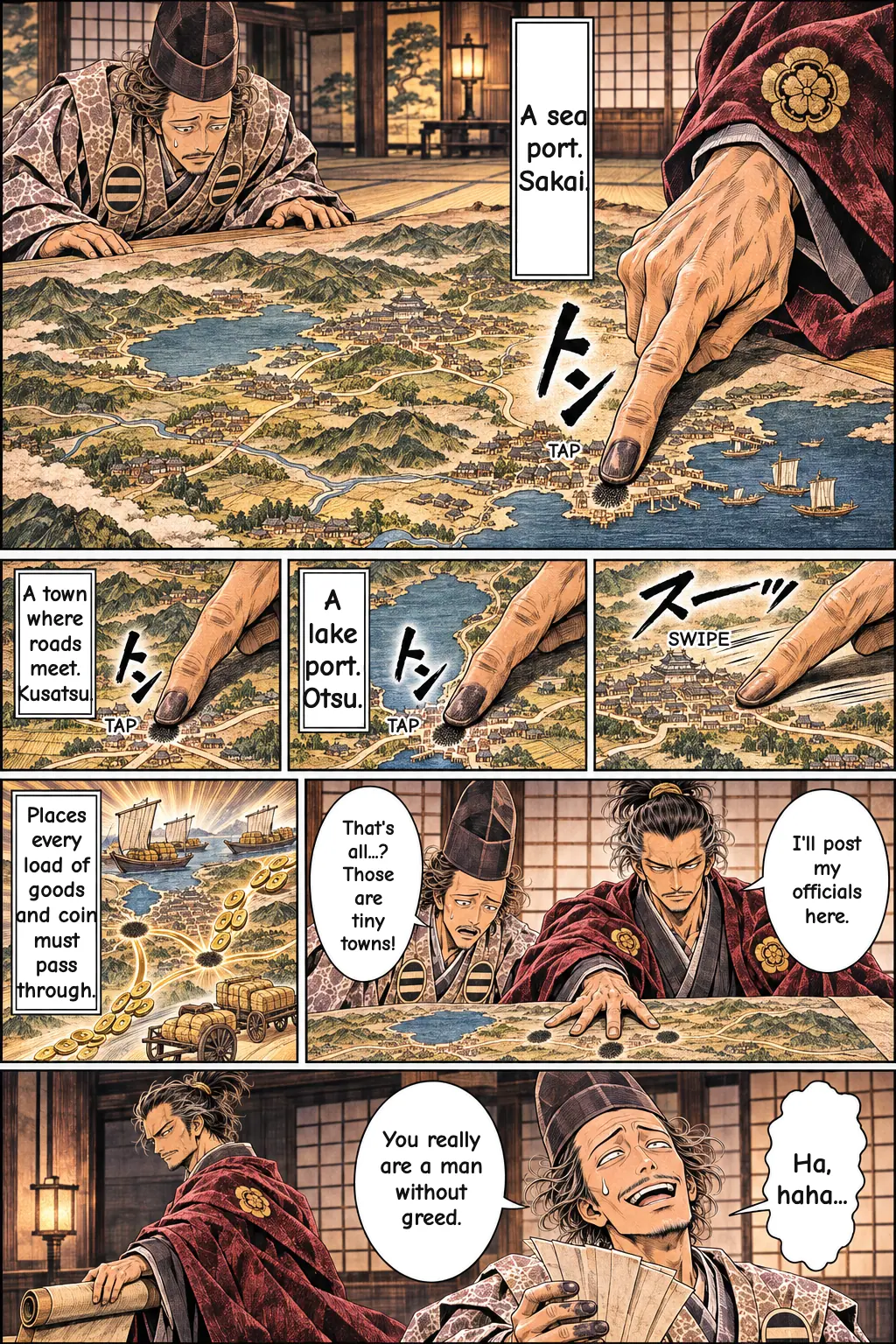
This episode's most memorable idea is a story often told about Nobunaga. In it, a grateful Yoshiaki addresses him as "Father" and offers high rank, such as deputy shogun. Nobunaga declines and asks instead to place his own administrators in Sakai, Ōtsu and Kusatsu.
Readers should treat this with care. We have not been able to confirm any of these details in the Book 1 account of the 1568 campaign. They may come from another part of the chronicle or from later writers, and that question remains open. The story's appeal is easy to see, because all three towns were valuable: Sakai was a wealthy trading port, Ōtsu stood on Lake Biwa, and Kusatsu was a key point on the roads to the capital. That choice would suggest a man who preferred income to titles, but this is an interpretation rather than something the passage states.
What the manga changes
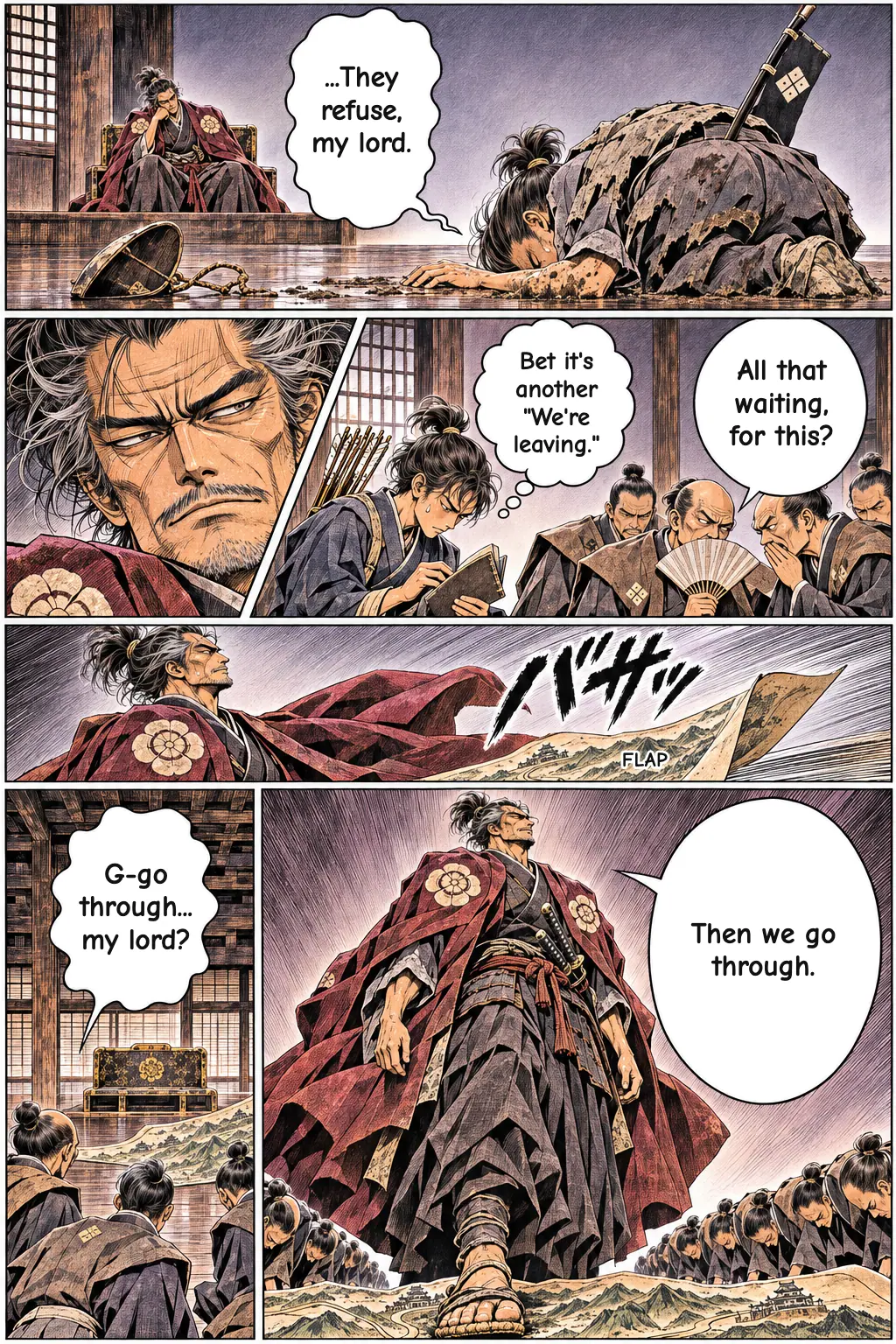
The events above form the skeleton of the episode, and the manga adds the flesh. Gyūichi appears as a narrator who shares his personal impressions, but in this part of the chronicle he does not speak as a character, so that framing and his comments are invented. The private conversations between Nobunaga and Yoshiaki are also fiction, as are the exchanges at Sawayama and Jōtei's reasons for refusing.
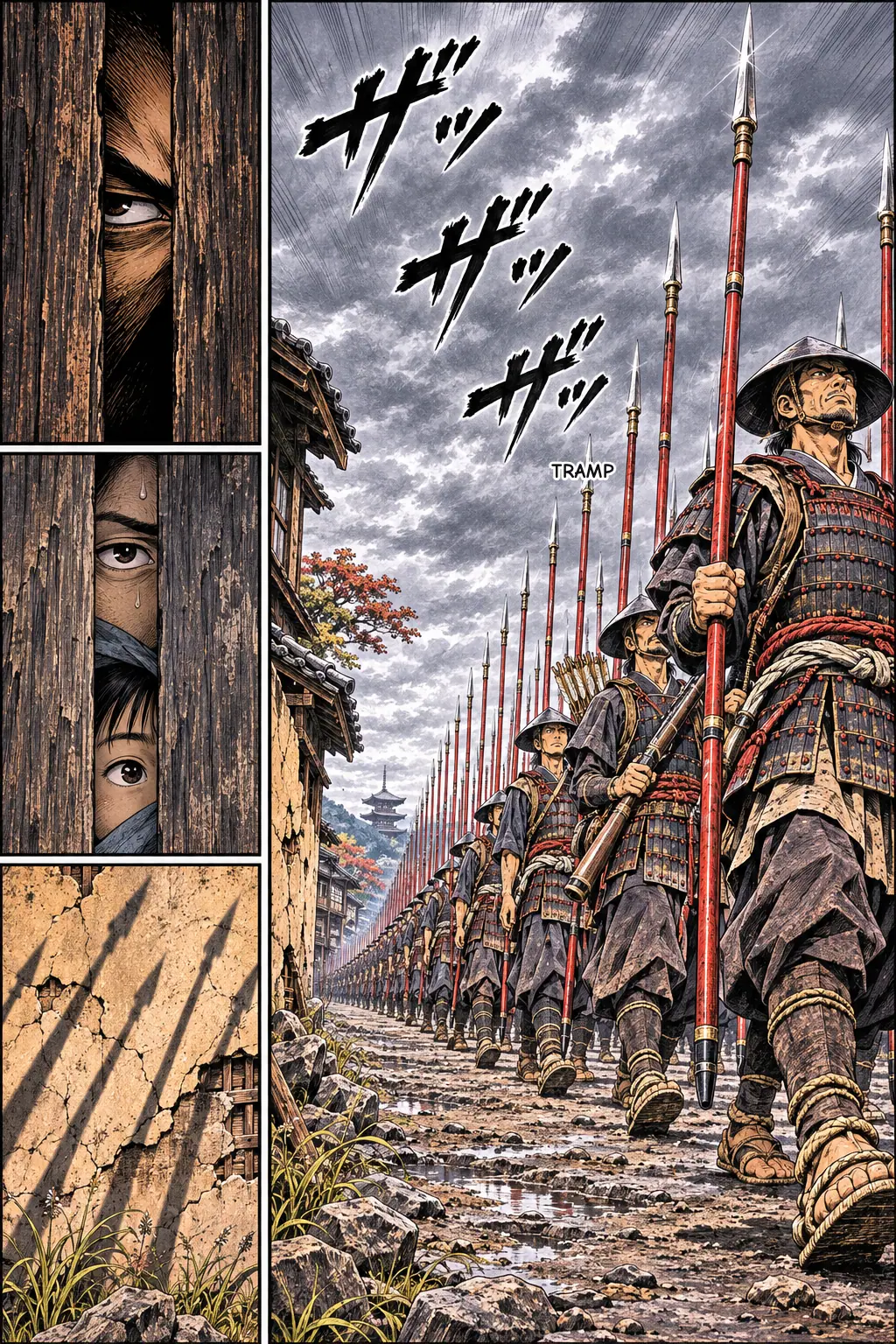
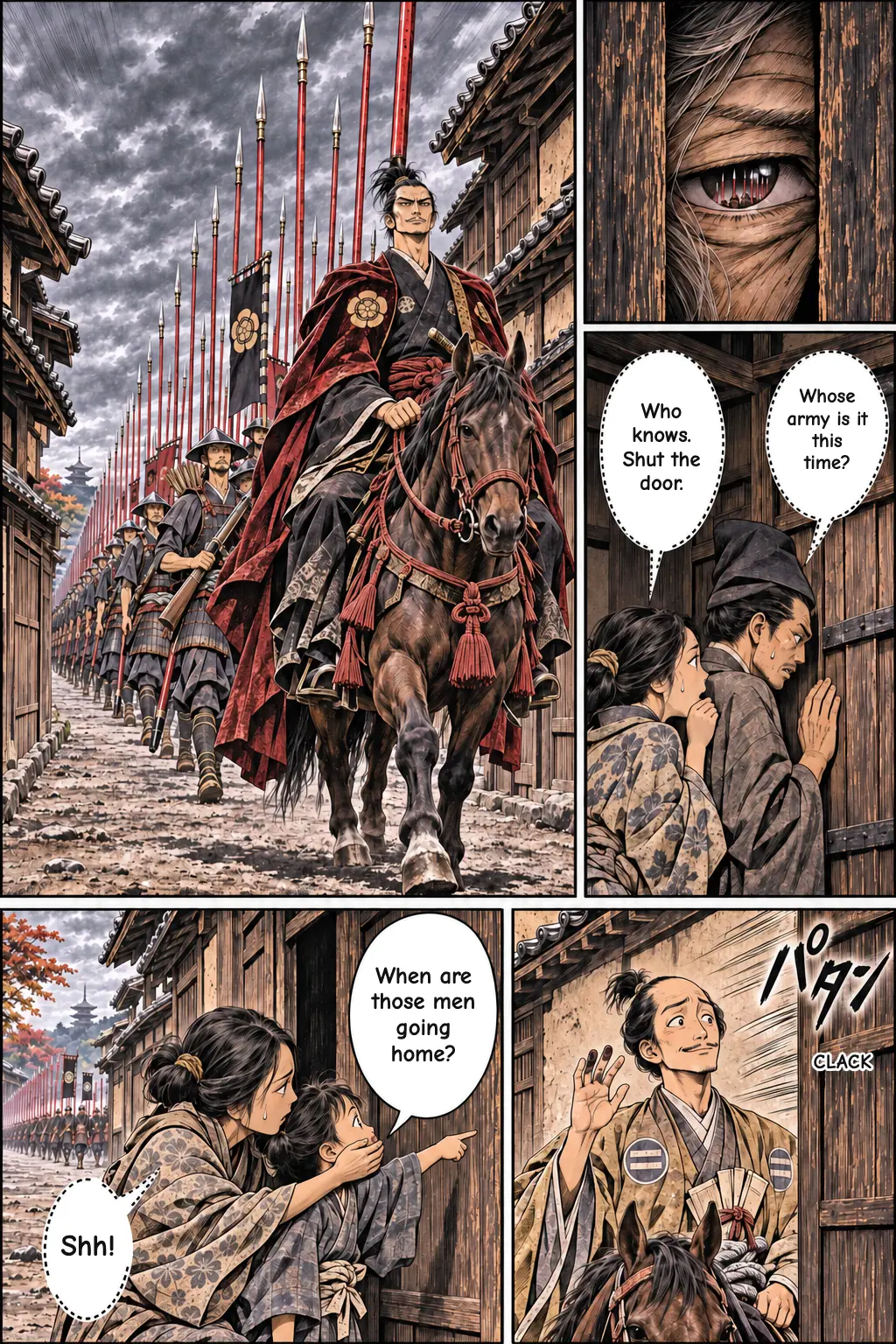
The battle details at Mitsukuri, the Rokkaku family's feelings as they flee, and the reactions of ordinary people in Kyoto, including unnamed characters, are dramatized as well. Treat the sight of long vermilion spears filling the city as the manga's staging. Two character readings also belong to the manga: the source does not establish Yoshiaki as an emotional, tearful man, and Nobunaga's preference for profit over honor is an interpretation, since the chronicle rarely describes his inner life.
Where to read it
You can read the story in Episode 6 of ODA NOBUNAGA: The Demon King of the Warring States, right here on Manga Portal. Every episode is free, and no registration is needed. It is a quick way to see how a chronicle's list of castles, dates and gifts becomes a living drama, and now that you know which parts come from the record and which come from later stories or the manga's imagination, you can enjoy both.
Characters in this episode
Oda Nobunaga
The lord of Owari and Mino who took up Yoshiaki's cause and led the army to Kyoto.
Ashikaga Yoshiaki (Kakukei)
A former Buddhist monk and brother of the slain shogun, who wandered in search of a backer and became shogun with Nobunaga's help.
Ōta Gyūichi
Nobunaga's retainer and the author of the Shinchō Kōki, who also serves as the manga's fictionalized narrator.
Rokkaku Jōtei
The lord of southern Ōmi, also known as Rokkaku Yoshikata, who refused to cooperate and fled Kannonji Castle after Mitsukuri fell.
Asakura Yoshikage
The lord of Echizen who sheltered Yoshiaki but never marched on Kyoto for him.
Matsunaga Hisahide
A warlord of Yamato linked to the faction behind Yoshiteru's death, who submitted to Nobunaga by giving up a famous tea caddy.
FAQ
Why did Oda Nobunaga march on Kyoto in 1568?
Ashikaga Yoshiaki, the brother of the murdered shogun, asked for his help in restoring the family after the Asakura clan failed to act. Backing Yoshiaki also gave Nobunaga a legitimate reason to enter the capital. Historians differ on how far his ambitions already reached at that point.
How long did Nobunaga's march on Kyoto take?
Nobunaga left Gifu in the ninth month of 1568 and was back there by the end of the tenth month. The Shinchō Kōki presents the affair, counted from when Yoshiaki turned to him, as completed in under a hundred days.
Did Nobunaga really turn down the title of deputy shogun?
It is a well-known story, but we have not been able to confirm it in the Shinchō Kōki's Book 1 account of the 1568 campaign. The same applies to the "Father" letter and the request for Sakai, Ōtsu and Kusatsu. The manga draws on these as stories told about him, so they should not be read as confirmed parts of this record.
Who was Ashikaga Yoshiaki?
He was the younger brother of the shogun Ashikaga Yoshiteru and a Buddhist monk in Nara until Yoshiteru was killed in 1565. After escaping and seeking support from several warlords, he became shogun in 1568 with Nobunaga's backing. Later reckoning counts him as the fifteenth Ashikaga shogun.
What is the Shinchō Kōki?
It is a chronicle of Oda Nobunaga's life written by Ōta Gyūichi, one of his retainers. It is known for recording dates, names and gifts in detail while saying little about people's inner thoughts. That is why the manga has to imagine much of the dialogue and emotion.