Episode 10The Demon Looked Like My Wife. I Lost It.The Demon Tile
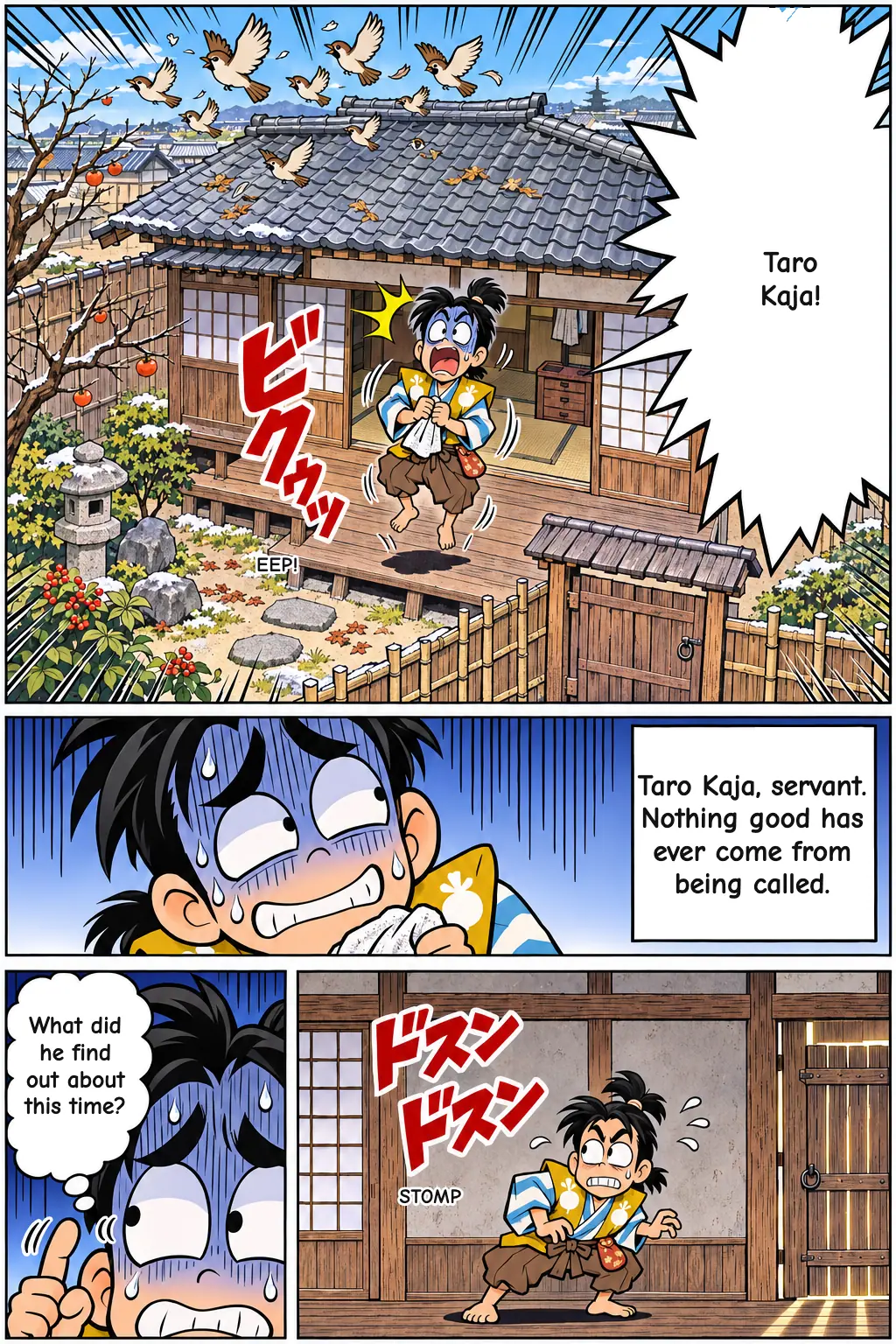
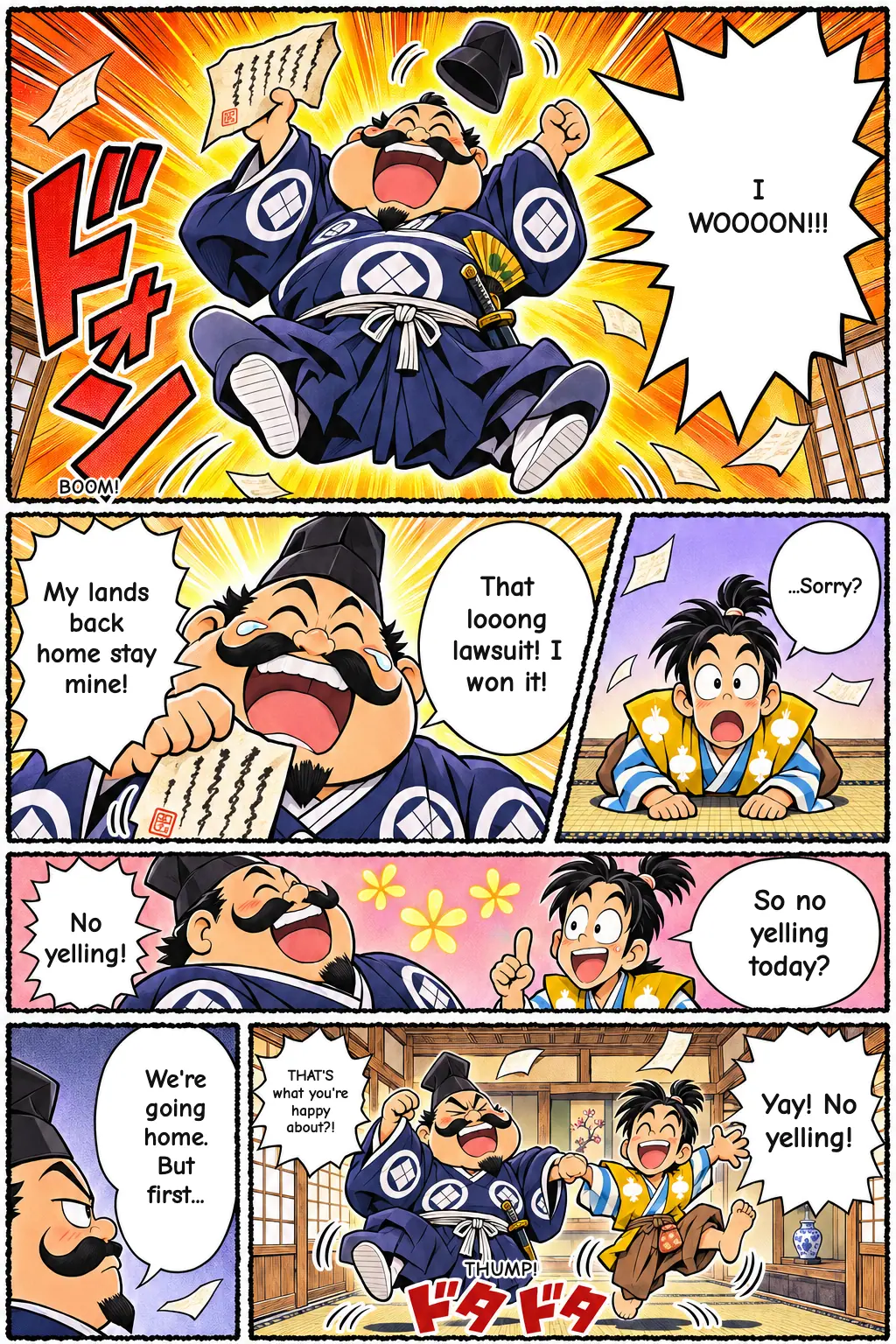
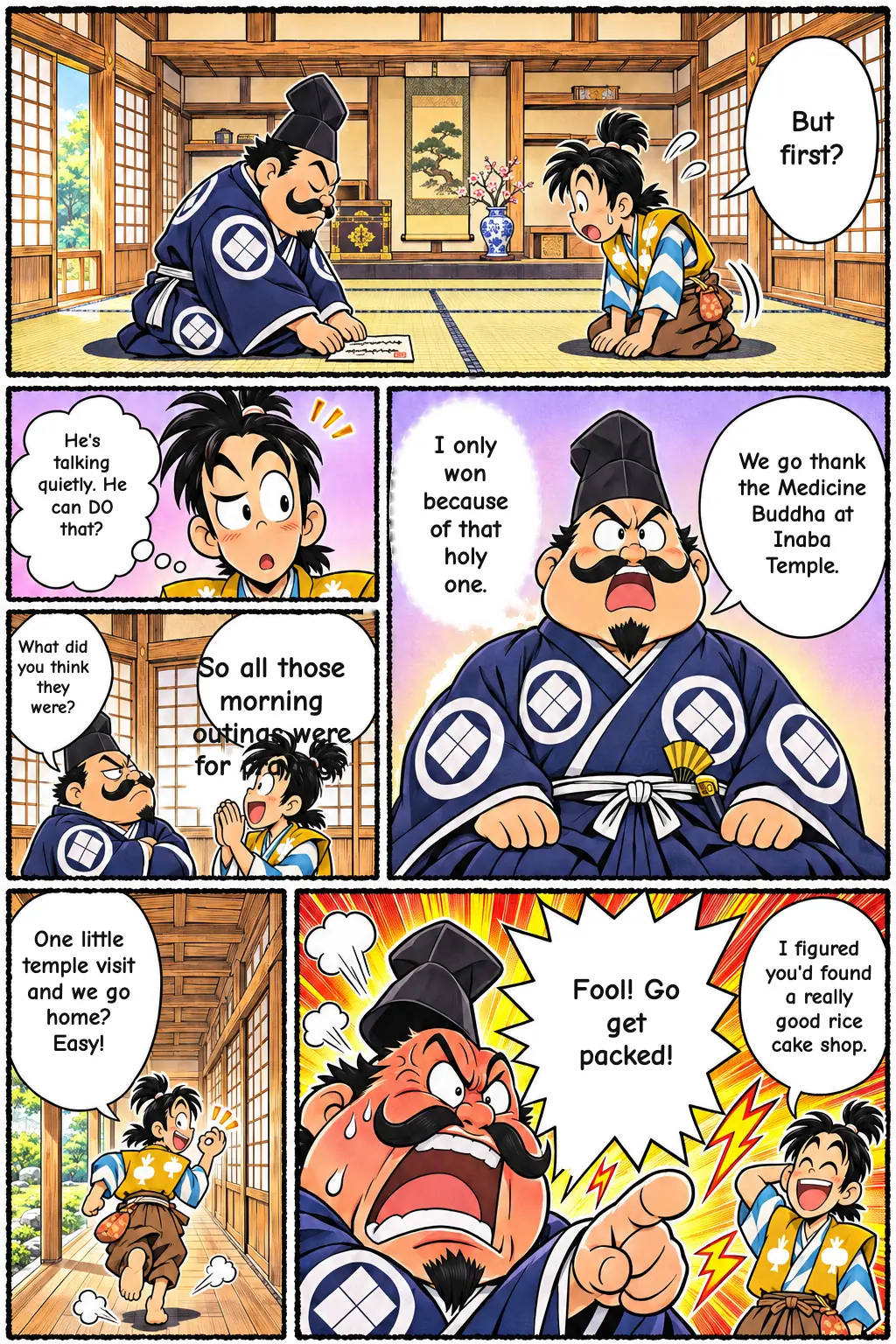
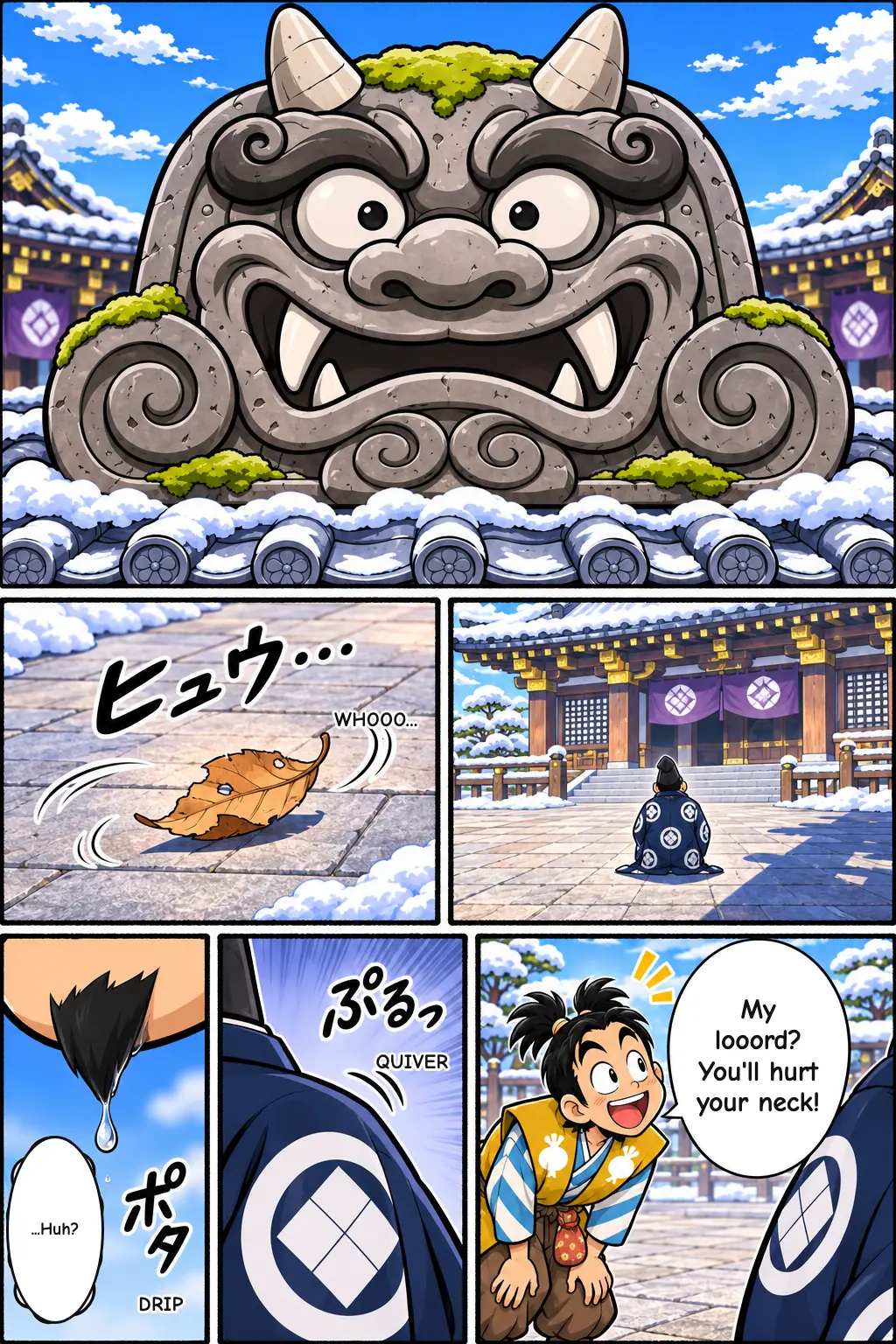
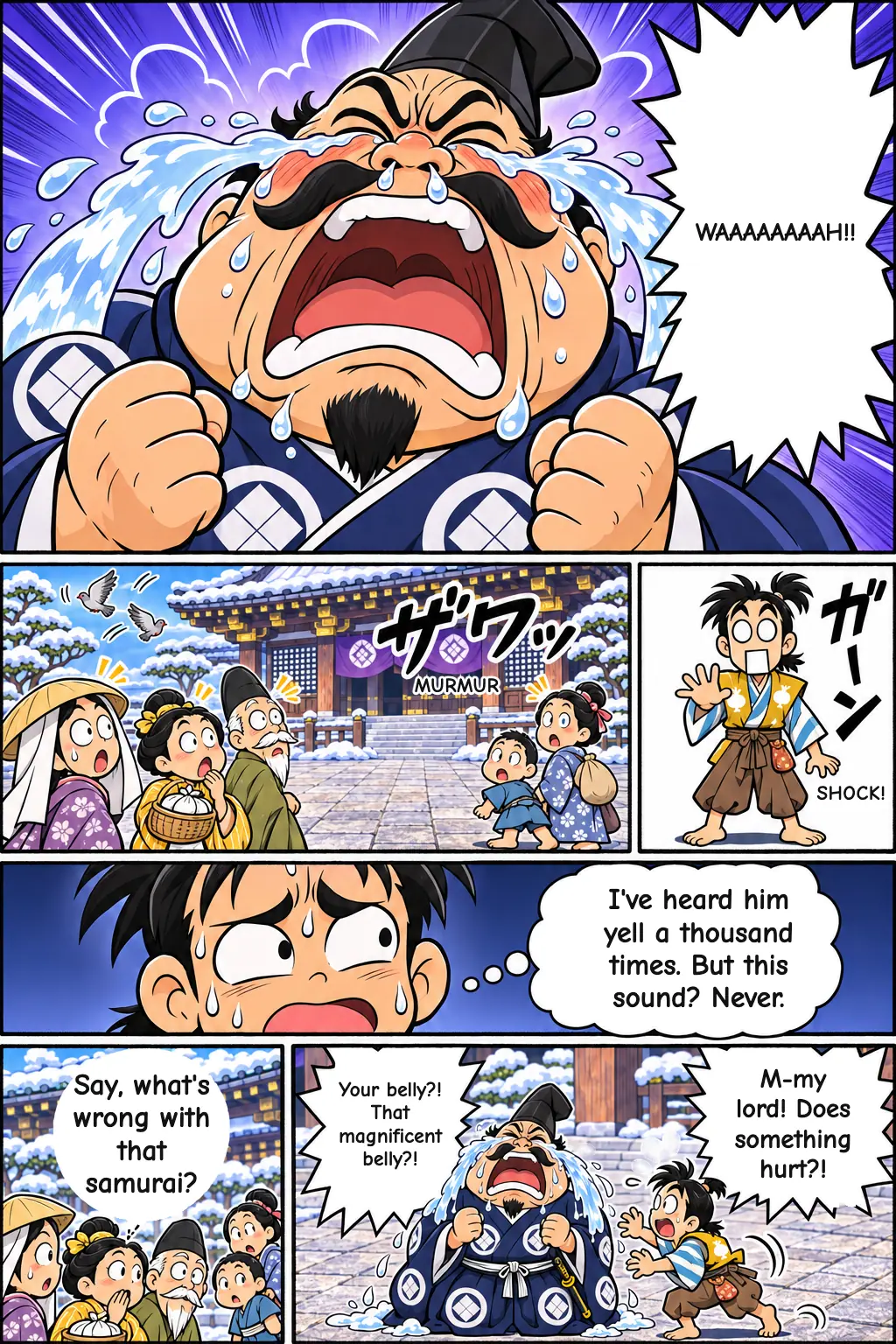
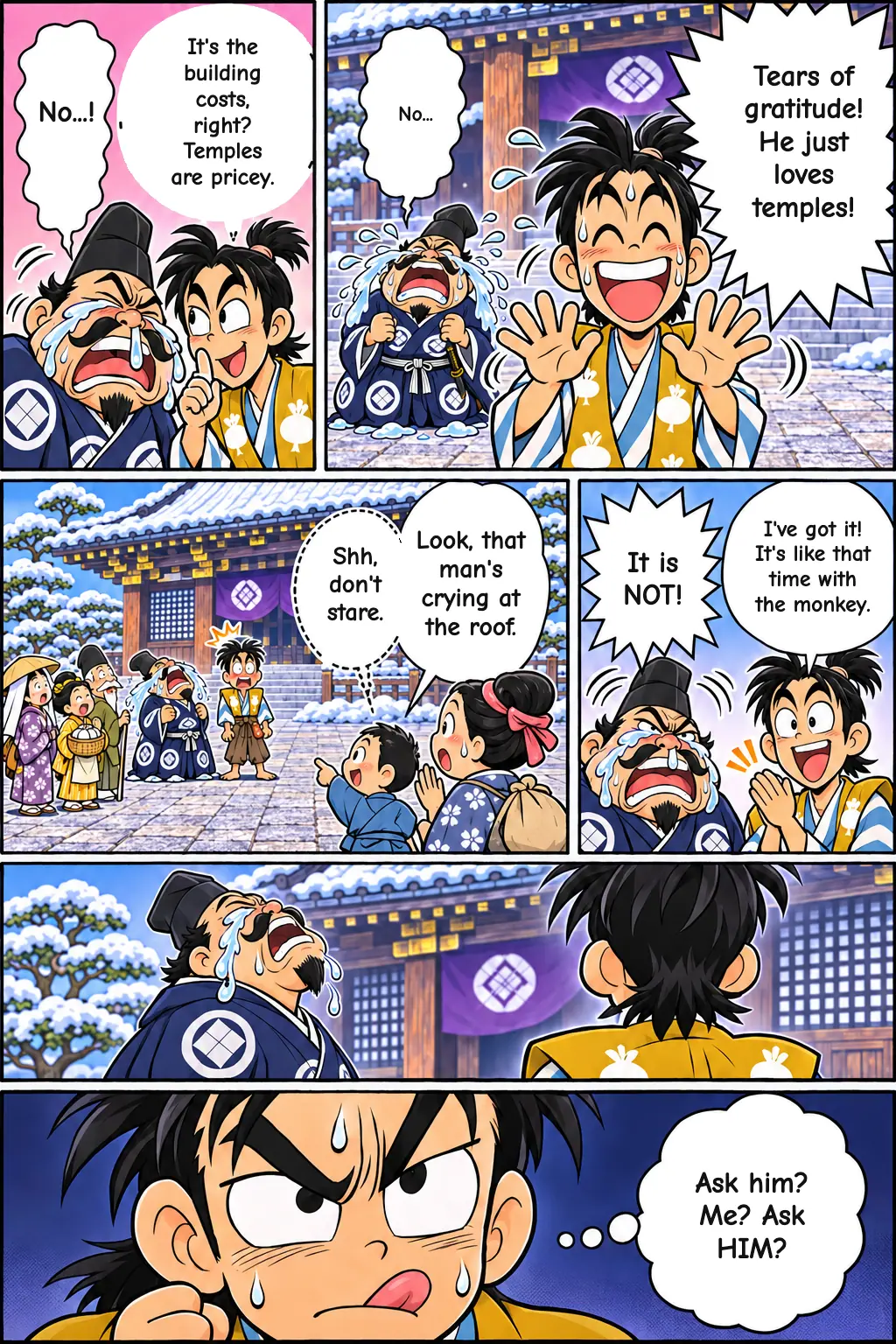
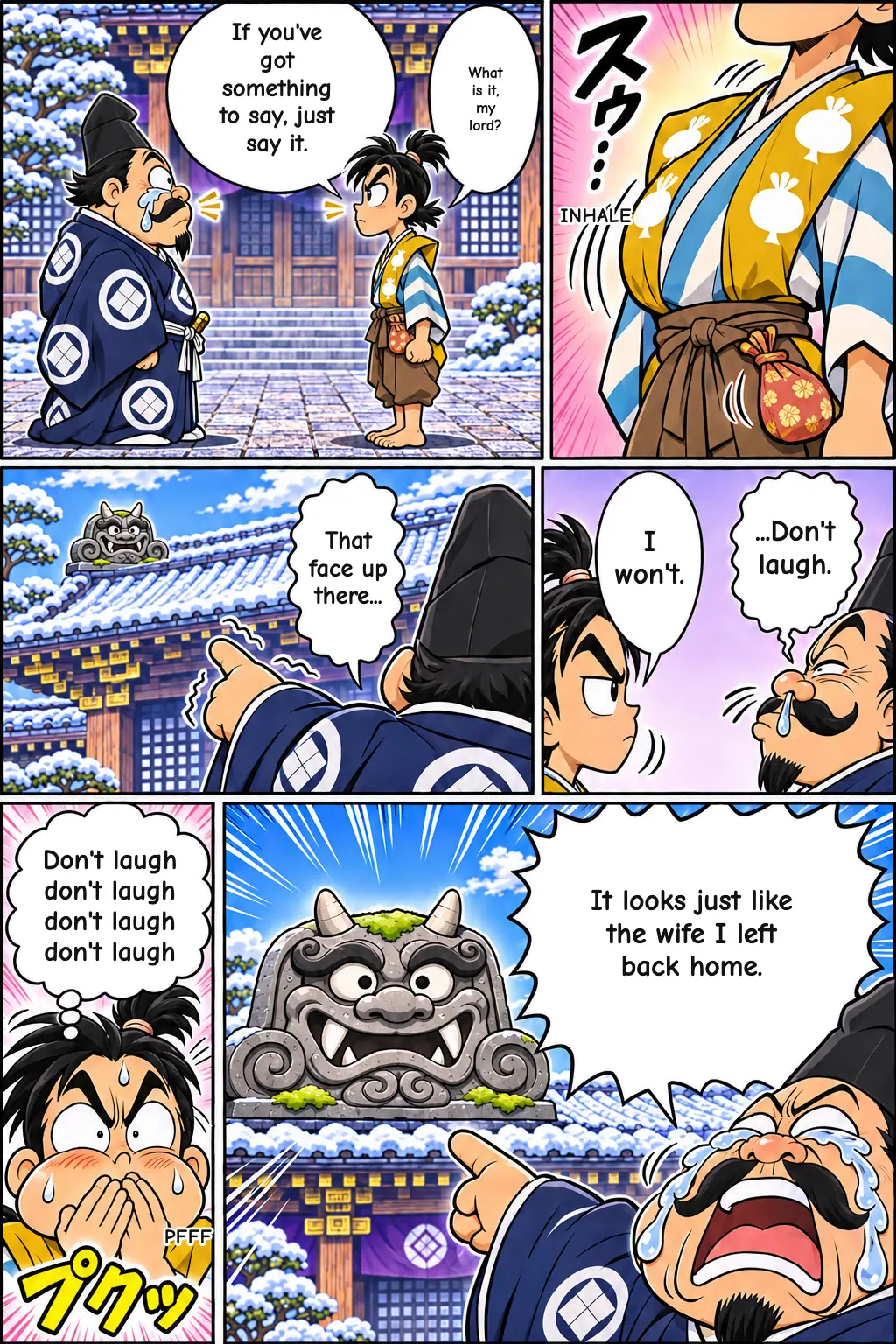
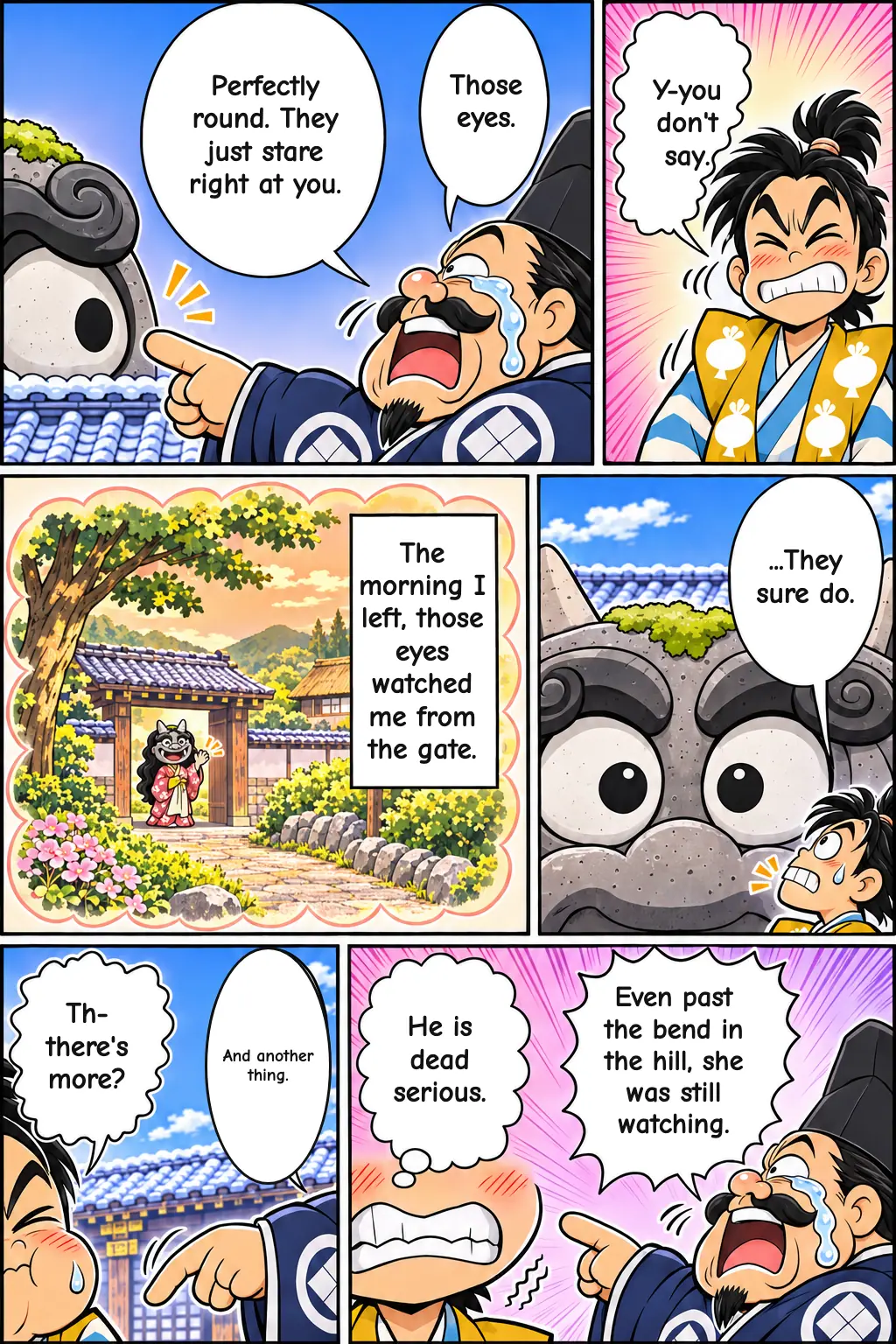
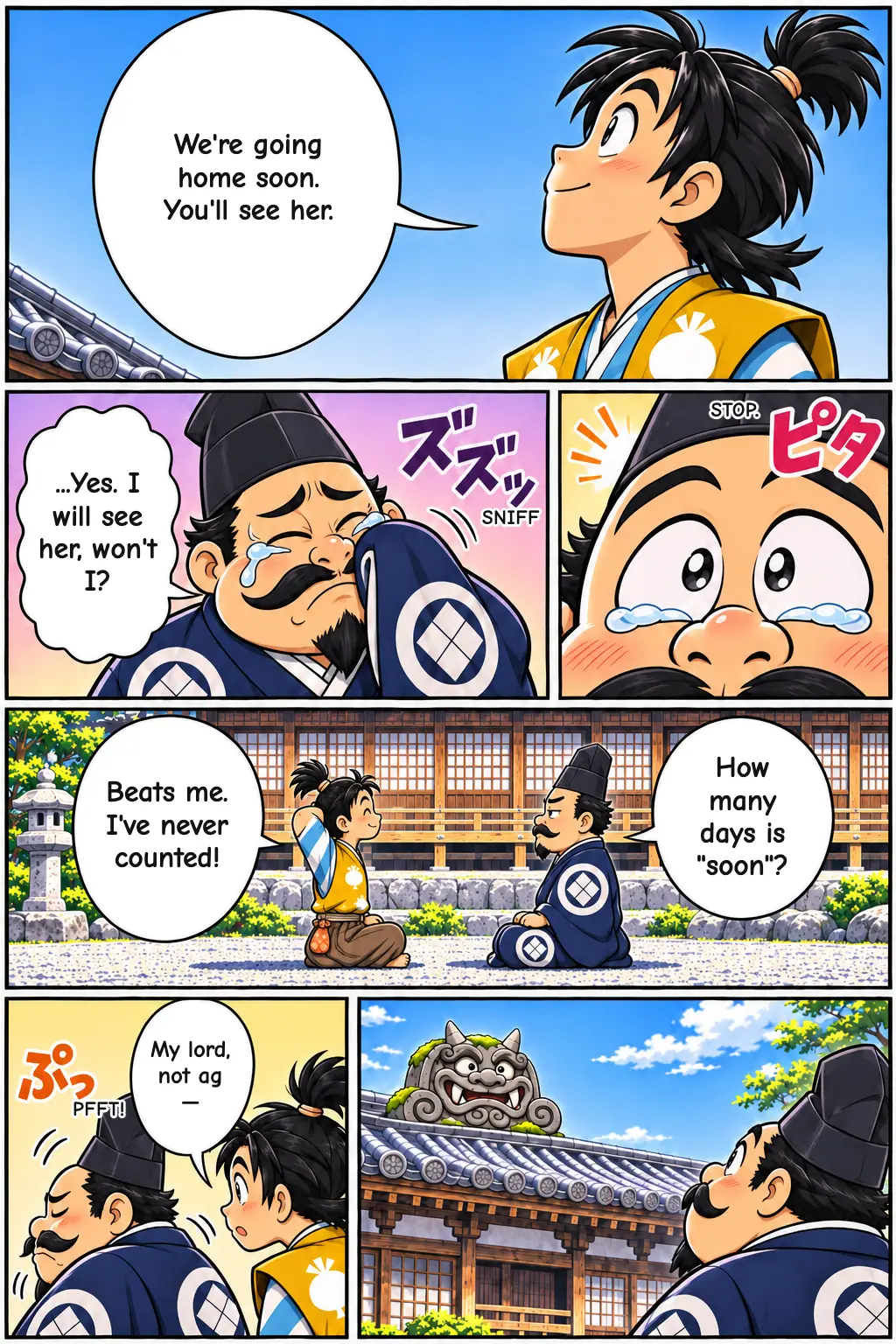
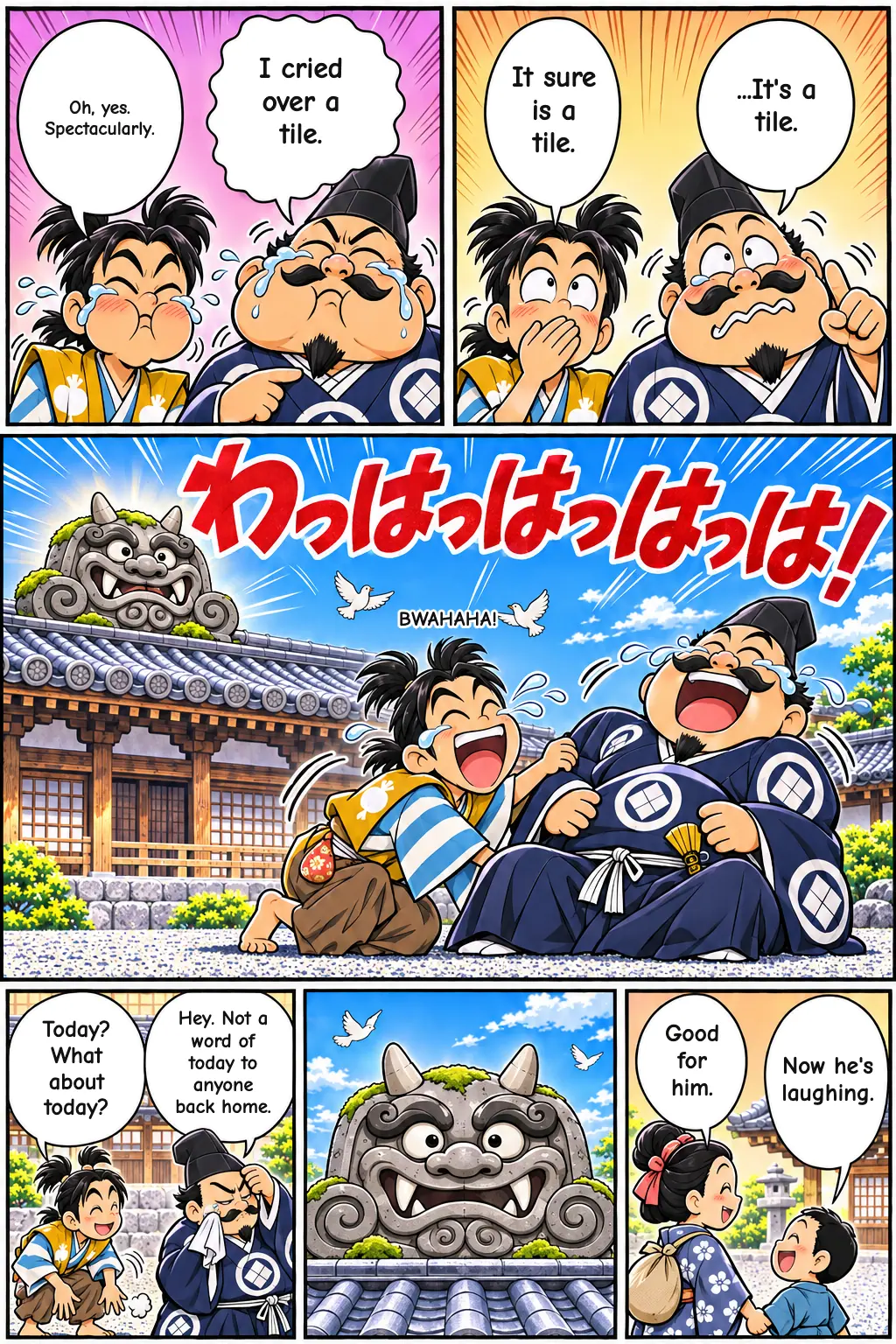
the series finale. Fresh off winning a long lawsuit, a daimyo goes to a temple to give thanks, looks up at the demon face on the roof, and bursts into tears. "It looks just like my wife back home!" Fighting back laughter, Taro Kaja has to choose his next words. Based on the kyogen play "The Demon Tile."
Bookmark the series page so you can jump back in when the next episode is out: KYOGENRSS for this series
Get new episodes in your feed. Follow us on:ThreadsBluesky
Story summary
Kyogen is Japan's classical comic theater, a spoken art that grew up alongside the more solemn masked drama called Noh and has been performed for roughly 600 years. Its stories are short, its casts are small, and its humor comes from ordinary human weakness rather than from gods or great heroes. The Demon Tile, known in Japanese as Onigawara, is a "daimyo play," a kyogen in which the main character is a lord. An onigawara is a real architectural feature: a decorative roof tile, often shaped like a scowling ogre's face.
The Demon Tile (Onigawara) Kyogen: Summary, Characters and Meaning
In short: The Demon Tile (Onigawara) is a comic kyogen play in which a provincial lord, fresh from winning a long lawsuit in Kyoto, visits a temple to give thanks and bursts into tears at a demon-faced roof tile, because it reminds him of his wife back home. His servant Taro Kaja reassures him that they will soon be home, and the two end up laughing together. The play belongs to the repertory of the Okura and Izumi schools of kyogen.
What Is The Demon Tile?
Kyogen is Japan's classical comic theater, a spoken art that grew up alongside the more solemn masked drama called Noh and has been performed for roughly 600 years. Its stories are short, its casts are small, and its humor comes from ordinary human weakness rather than from gods or great heroes.
The Demon Tile, known in Japanese as Onigawara, is a "daimyo play," a kyogen in which the main character is a lord. An onigawara is a real architectural feature: a decorative roof tile, often shaped like a scowling ogre's face. The whole play grows from one absurd moment in front of that tile, which makes it one of the simplest and most easily understood comedies in the tradition.
The Story of the Original Play
A lord from a distant province introduces himself. He has spent a long time in the capital pursuing a lawsuit, and he has finally won. His lands are confirmed, and he is free to go home. He calls his servant, Taro Kaja, and shares the good news.
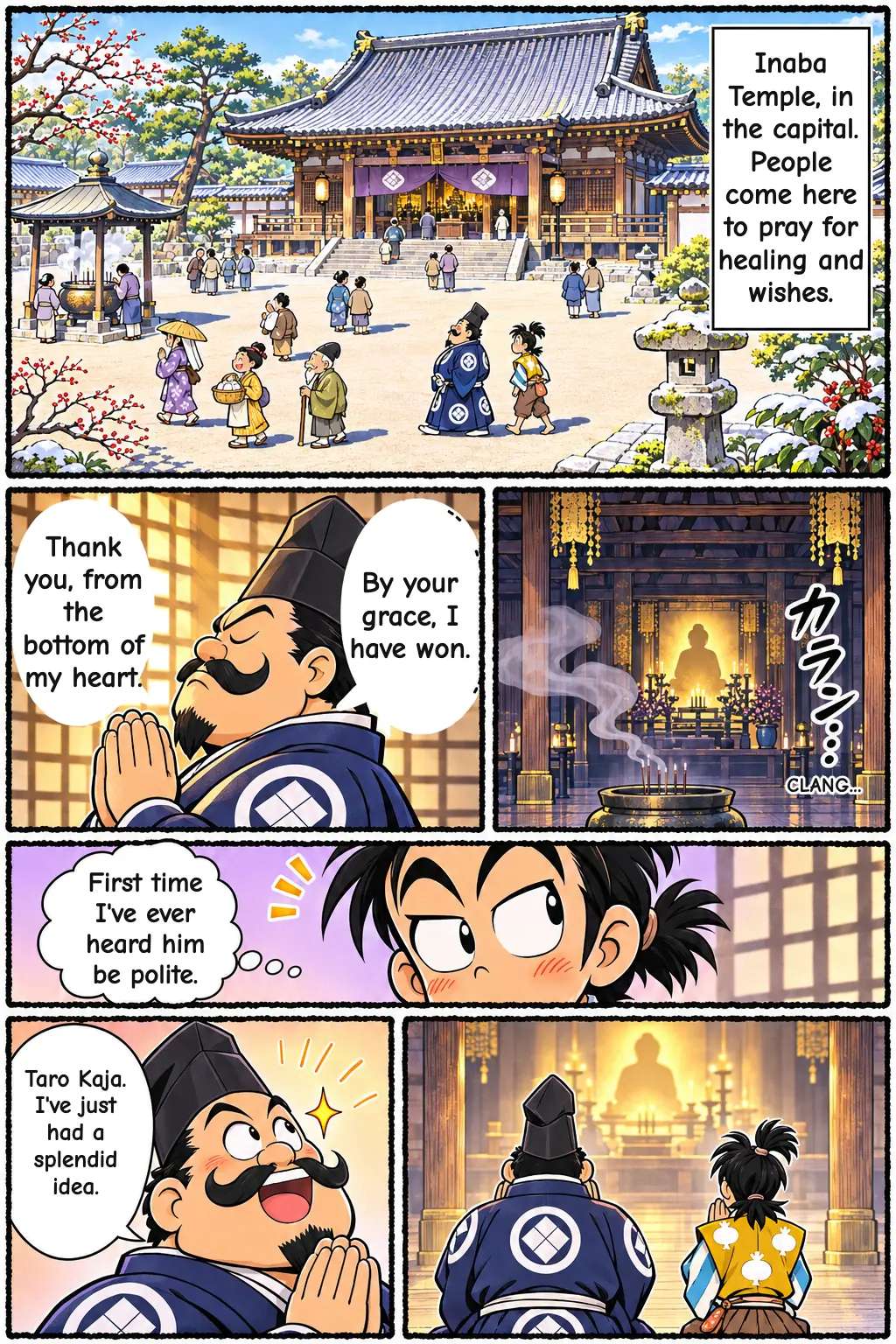
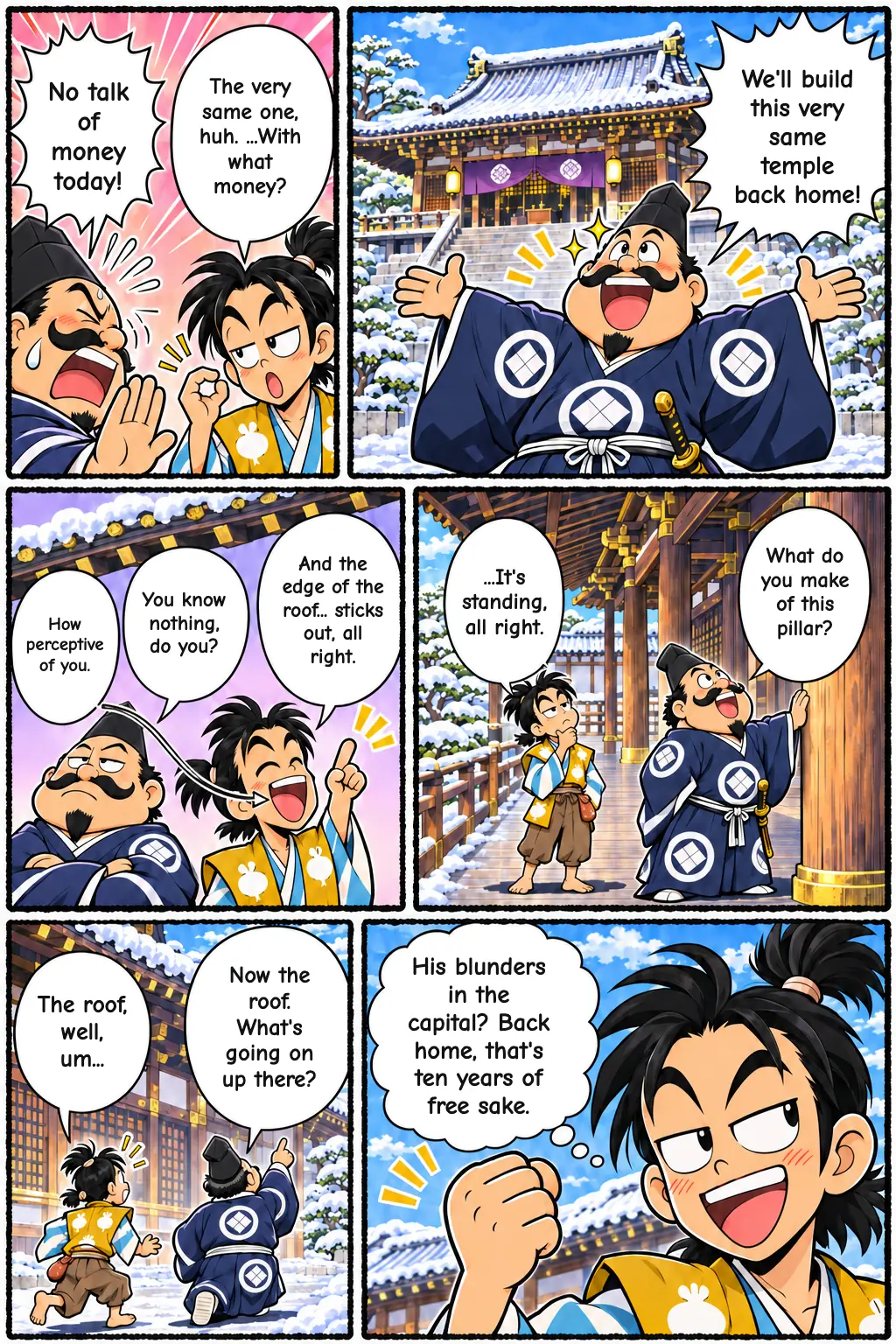
The lord credits his victory to Yakushi Nyorai, the Healing Buddha, whom he has worshipped at Inabado temple during his stay. Before leaving, he decides to go and offer his thanks, with Taro Kaja attending him. After their prayers, he has a grand idea: why not build the same kind of hall back home? Master and servant begin walking around the building to study how it is made.
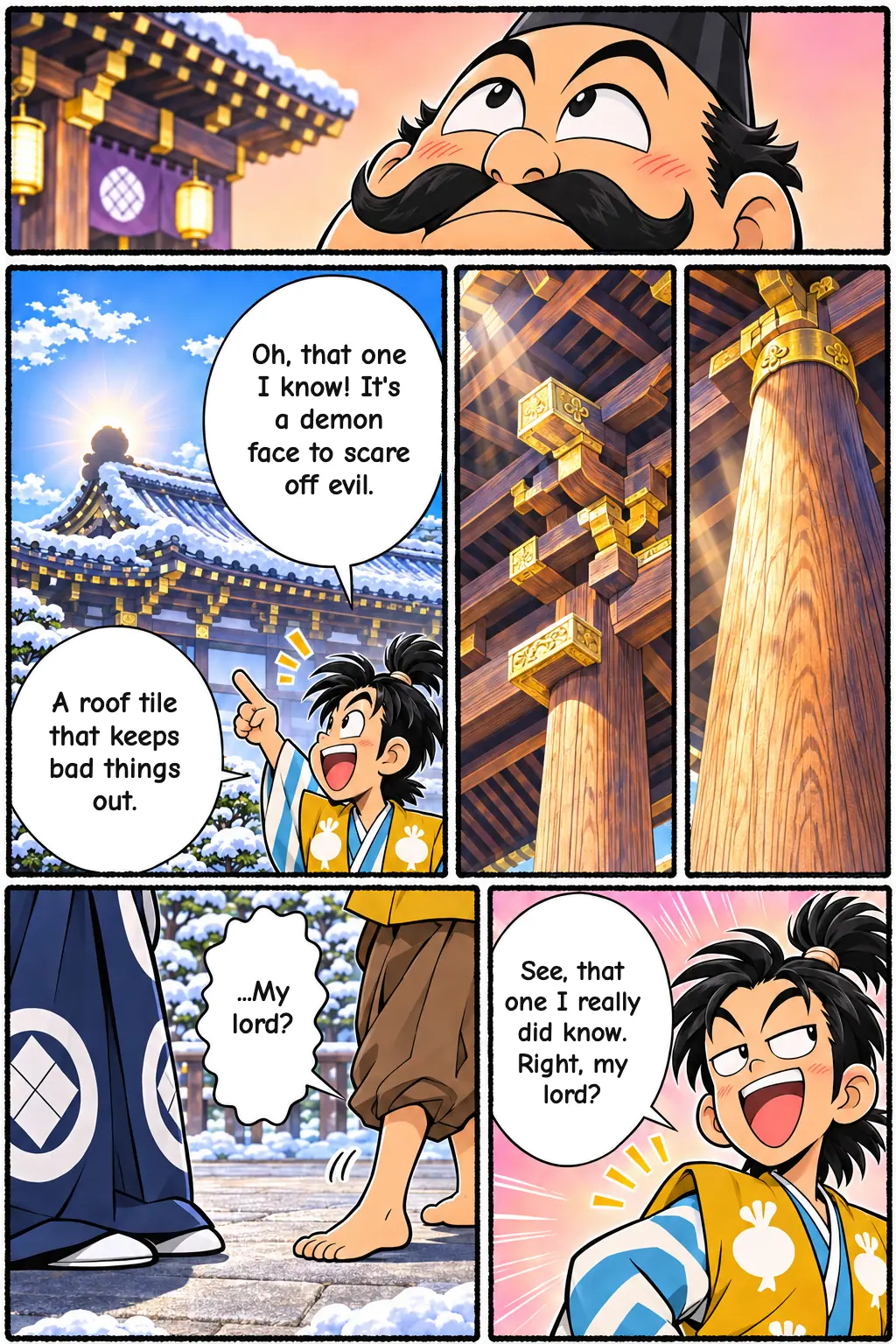
While they are examining the roof, the lord looks up at a demon tile and suddenly starts to cry. The exact spot on the roof and the order of the tour may differ between performance traditions. The startled Taro Kaja asks what is wrong. The lord explains that the demon's face looks exactly like his wife, whom he left behind in the provinces, and that seeing it has made him miss her.
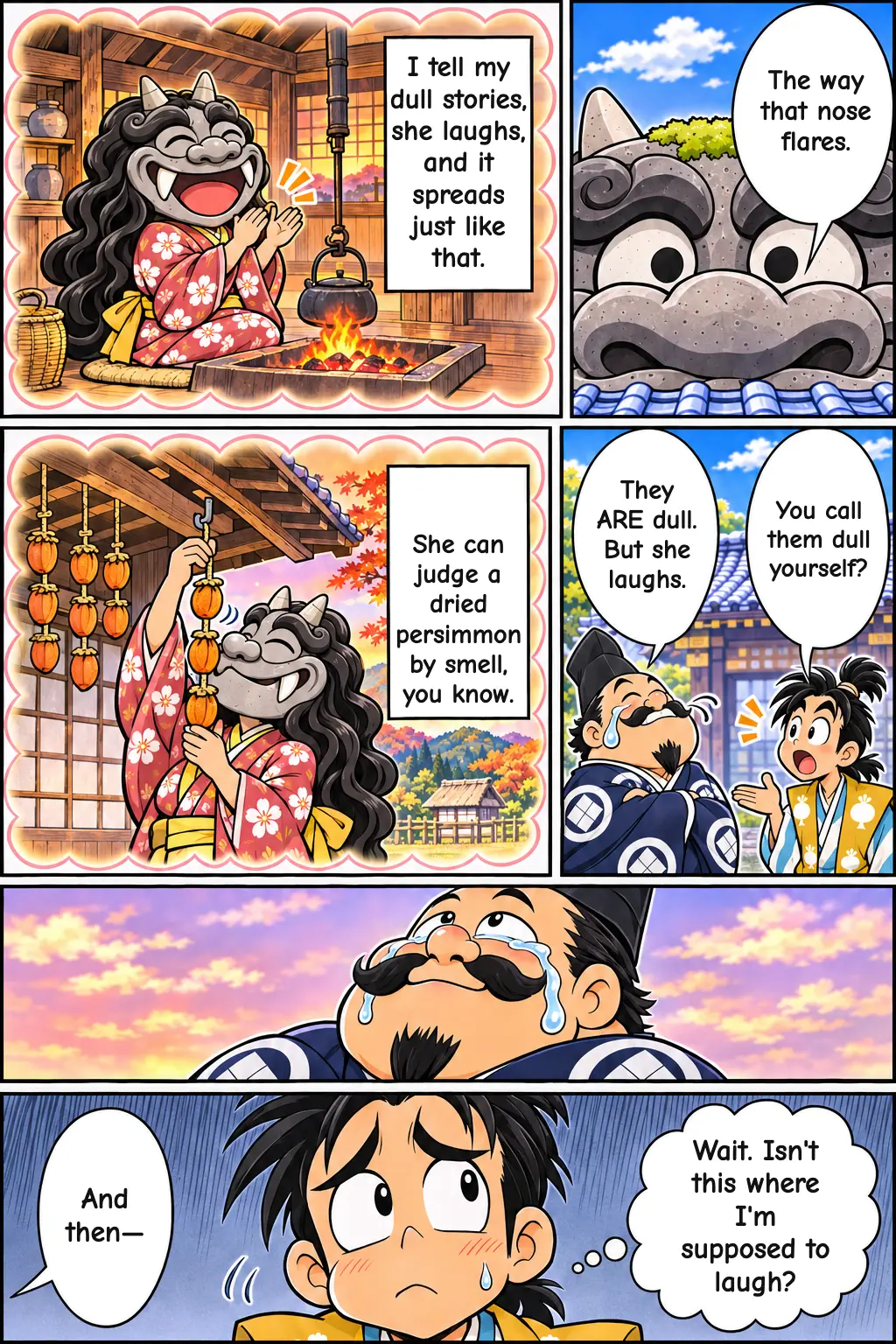
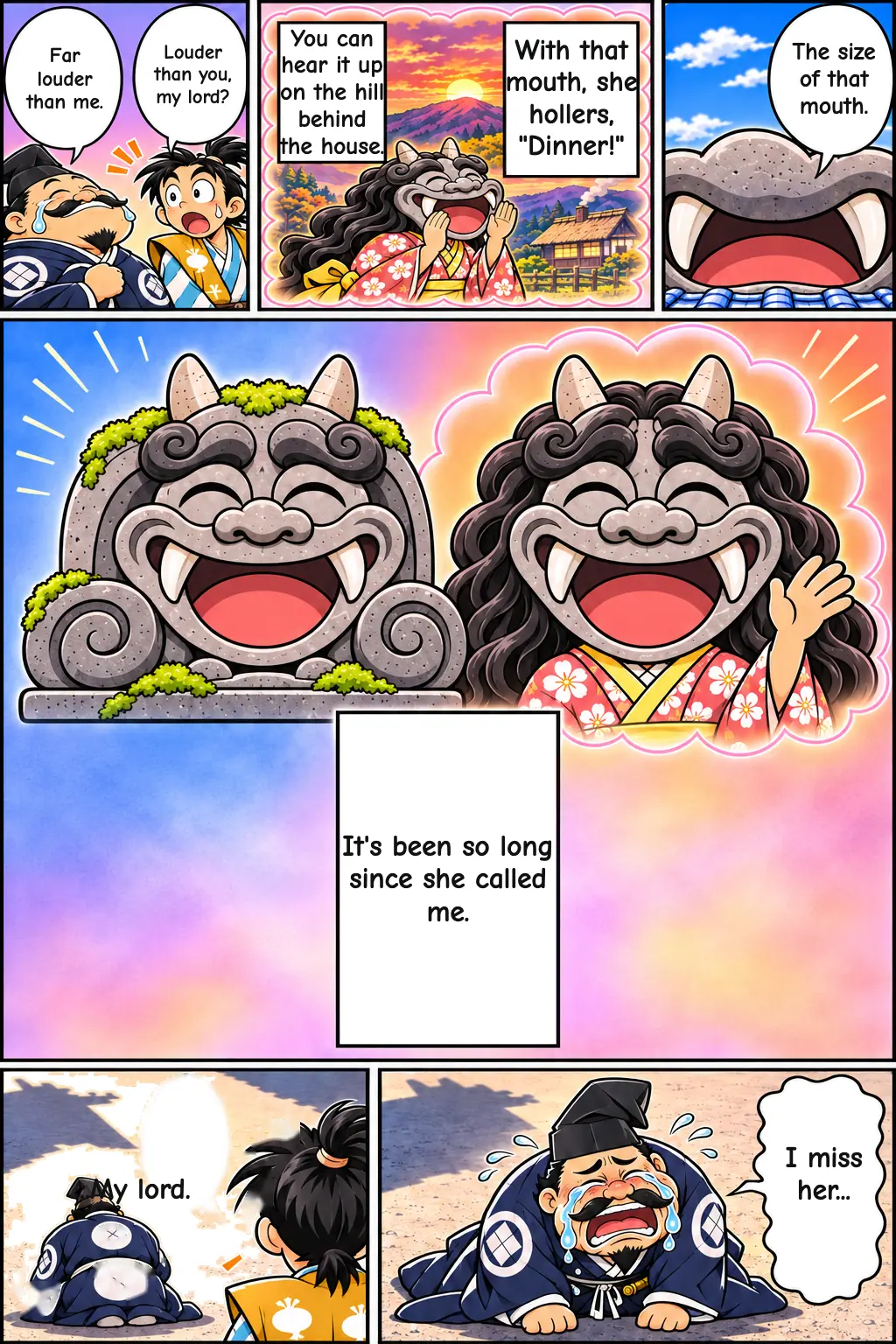
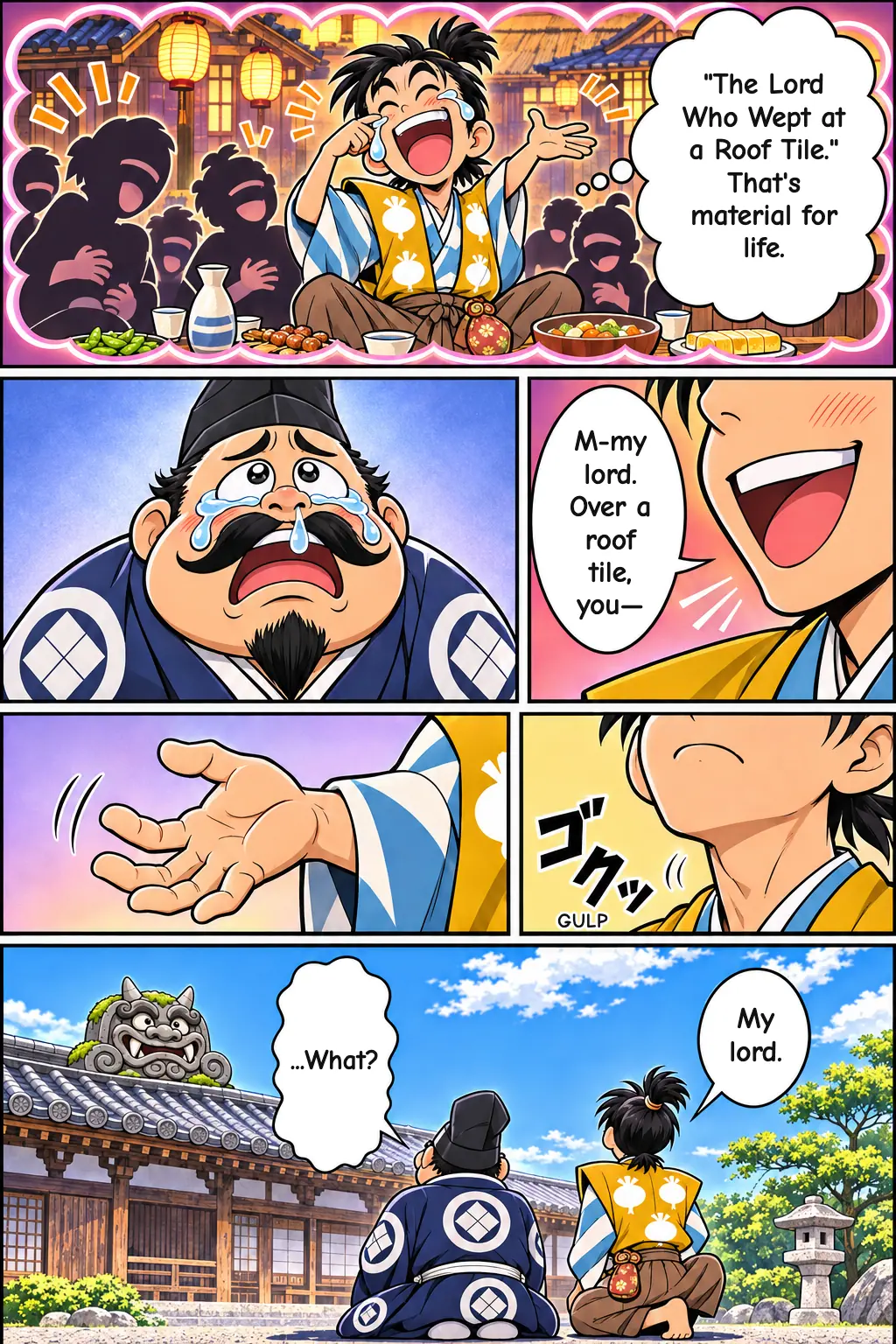
He then laments the resemblance feature by feature, moving through details such as the eyes, nose and mouth, with the wording depending on the script. Taro Kaja comforts him: they will be going home soon, and he will see her then. The lord cheers up at once. The play ends with master and servant laughing heartily together.
Who Is Who on Stage
Only two people ever appear. The lord is the lead role, or shite, and Taro Kaja is the supporting role, or ado. Taro Kaja is the stock servant of kyogen, a figure audiences would recognize from many other plays.
The most important person in the story never steps on stage. The wife exists only in her husband's words. We hear nothing from her and learn nothing about her personality, so everything we think we know about her comes from a tearful man staring at an ogre.
Why the Joke Works: Culture and Meaning
Some background makes the setup clearer. Demon tiles were placed on roofs with a protective purpose, their fierce faces meant to keep misfortune away. Inabado is a real temple in Kyoto, associated with its statue of Yakushi. The setting therefore starts out reverent: a grateful pilgrim standing in a holy place. Then the lord's emotion collapses that dignity in a single moment.
Lords are frequent targets in kyogen, which often finds its comedy in the gap between a person's rank and the way they actually behave. Here is a man who has just won a major legal victory and planned a new temple hall, and he is sobbing at roof decoration.
The joke also has a softer side, and this is what gives the play its staying power. The lord compares his wife to a demon without a trace of tact, yet he is crying because he misses her so much. It can be read as an insult, as a love confession, or as both at once. The play itself does not settle the question. It simply lets the two men laugh.
What the Manga Changes
The central events of Episode 10 come from the play: the lawsuit, the thanksgiving visit, the tears at the demon tile, the wife's resemblance, and the shared laughter. Several elements, however, are the manga's own additions.
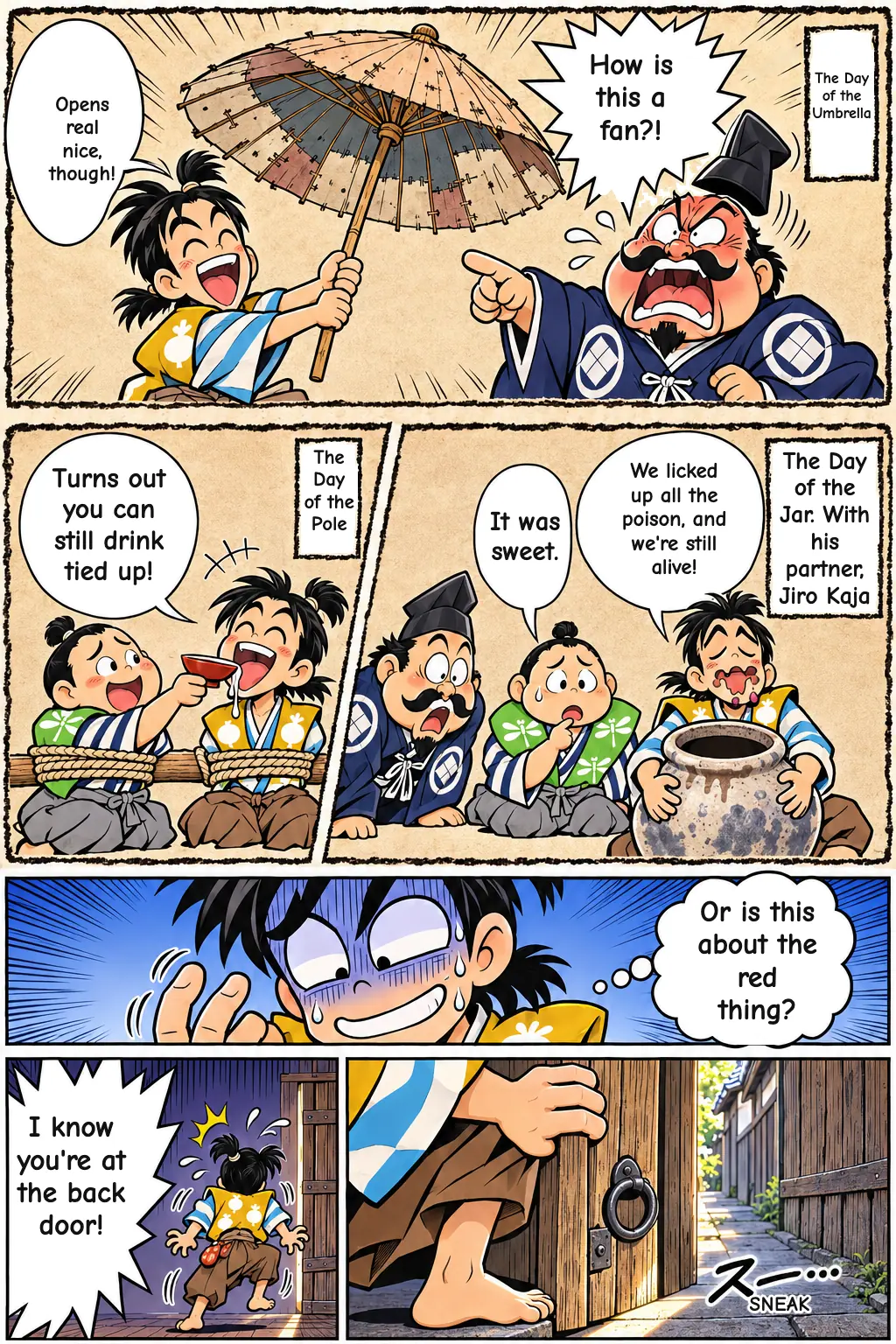
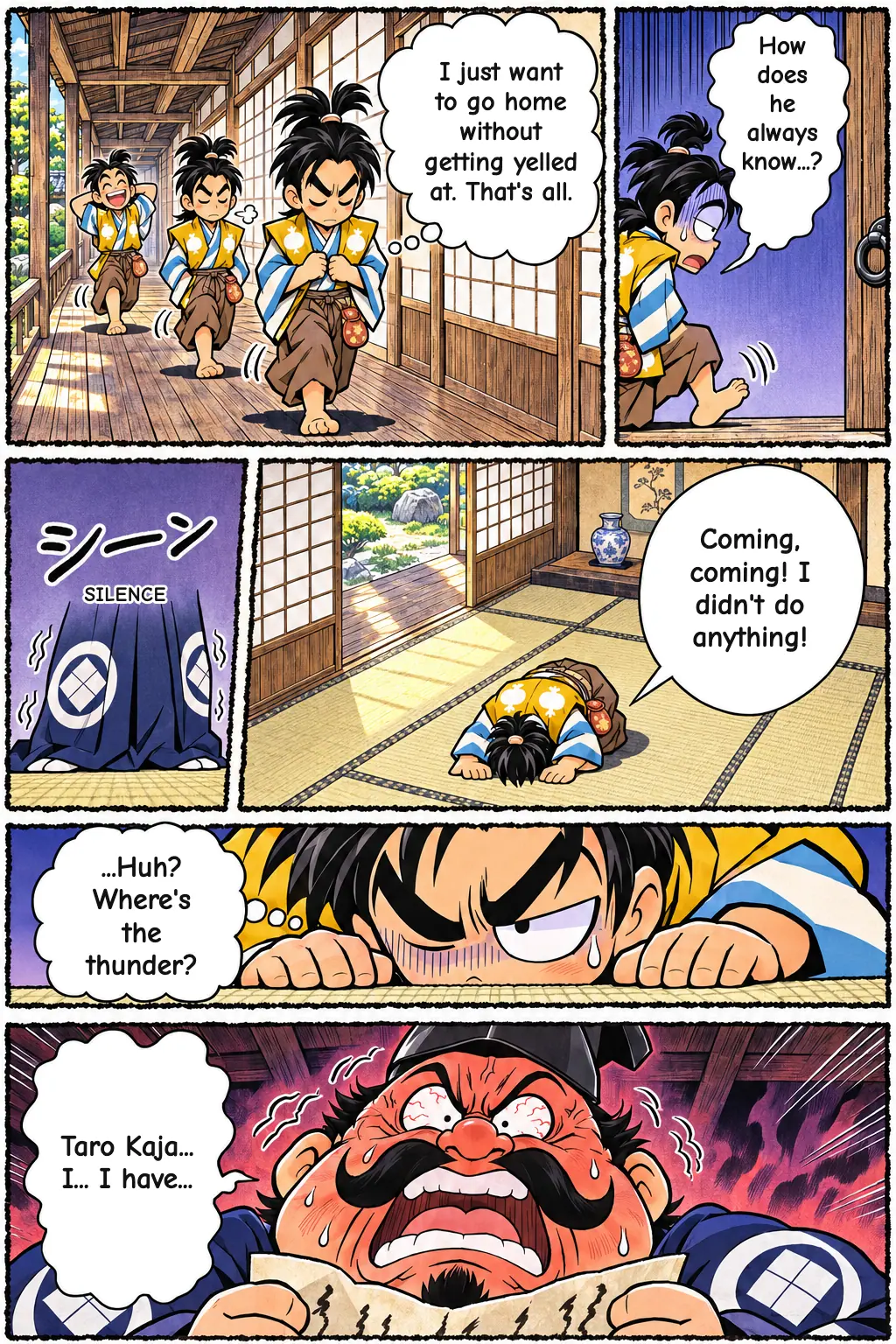
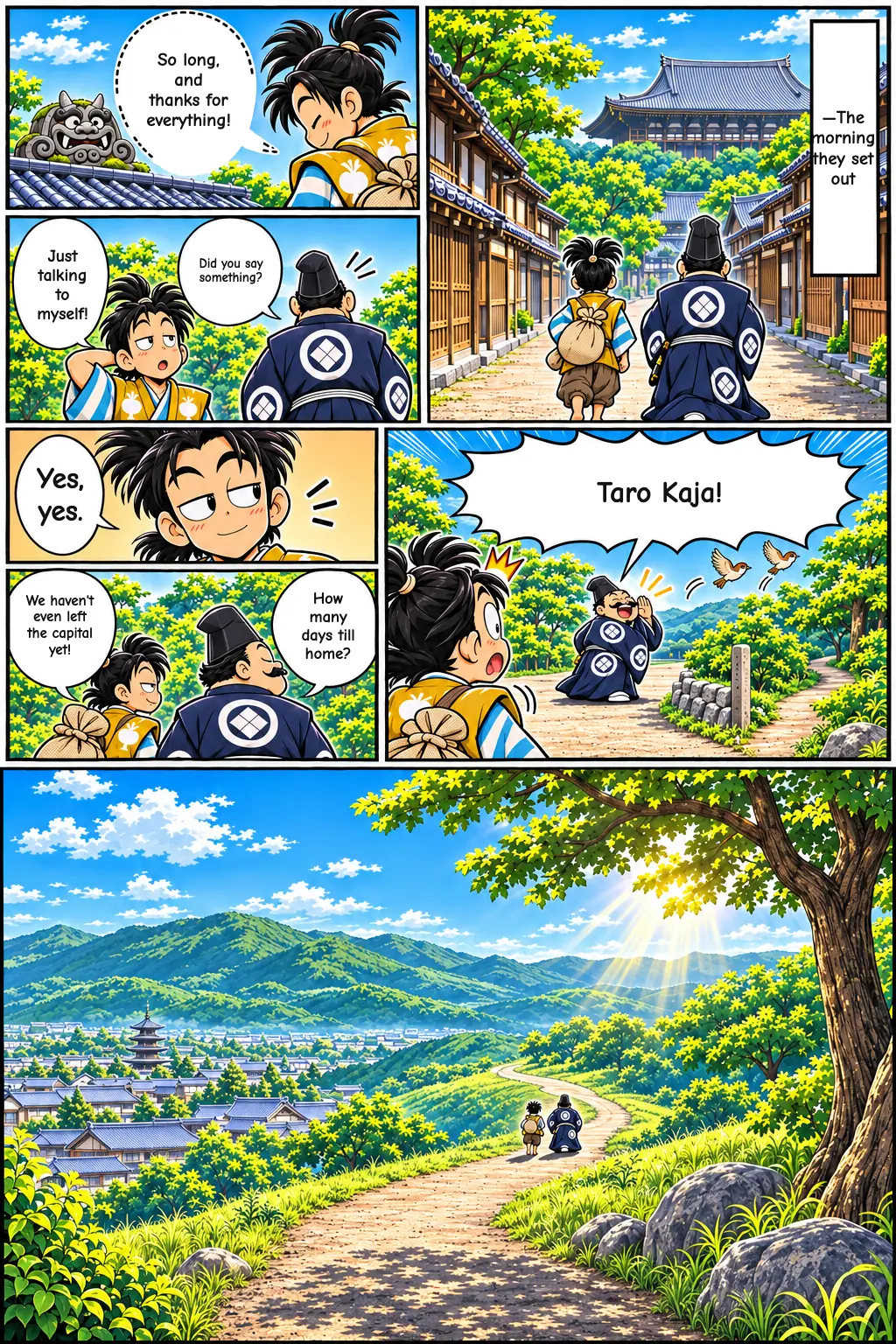
Because this is the series finale, the episode opens with a brief look back at earlier troubles from the series. That includes Jiro Kaja, Taro Kaja's fellow servant, who does not appear in The Demon Tile itself. The panels showing the wife are the lord's imagination only, and any hint of her personality or of the couple's relationship is invented, since the source tells us nothing about it.
The ending is also extended. The original closes on the laughter and never shows the departure, while the manga adds a scene of setting off for home and a closing farewell to the series. Details of the temple grounds and the homeland scenery are also artistic choices rather than material from the play.
Where to Read It
A joke built on a face works especially well in manga, where you can see the demon, the lord's crumpling expression, and Taro Kaja trying to keep his composure as he chooses his next words. You can read this finale, along with the rest of KYOGEN: Japan's 600-Year-Old Comedy, on Manga Portal. Every episode is free, and no registration is needed. If you enjoyed this one, the earlier episodes are a pleasant way to meet the rest of kyogen's foolish lords and quick-witted servants.
Characters in this episode
The Daimyo (Provincial Lord)
A lord from a distant province who wins a long lawsuit in the capital, then bursts into tears when a demon tile reminds him of his wife.
Taro Kaja
The lord's servant, a stock kyogen character, who accompanies him to the temple, asks why he is crying, and comforts him with the promise of going home soon.
The Daimyo's Wife
The lord's wife back home, who never appears on stage and is known only through her husband's comparison of her face to the demon tile.
FAQ
What is The Demon Tile (Onigawara) about?
It is a short kyogen comedy about a lord who has just won a long lawsuit and goes to a temple to give thanks. When he sees a demon-faced roof tile, he cries because it looks like the wife he left at home. His servant comforts him, and they finish by laughing together.
What is an onigawara?
An onigawara, or demon tile, is a decorative Japanese roof tile, often made in the shape of a fierce ogre's face. These tiles were traditionally placed on roofs with a protective purpose, to keep misfortune away.
Why does the daimyo cry in The Demon Tile?
The demon's face reminds him of his wife, who is far away in his home province. The comedy is that the comparison is so unflattering, yet his tears come from really missing her.
Does the wife appear in The Demon Tile?
No. She is only talked about by her husband and has no lines or actions in the play. In the manga, she appears only in panels showing what the lord imagines.
What is kyogen, and how is it different from Noh?
Kyogen is Japan's traditional comic theater, which developed alongside Noh and has been performed for about 600 years. Noh is solemn, masked and musical, while kyogen relies mainly on spoken dialogue and comedy drawn from everyday human failings.