Episode 3Can't Reach My CupBut I Can Reach Yours — Bō Shibari (Tied to a Pole)
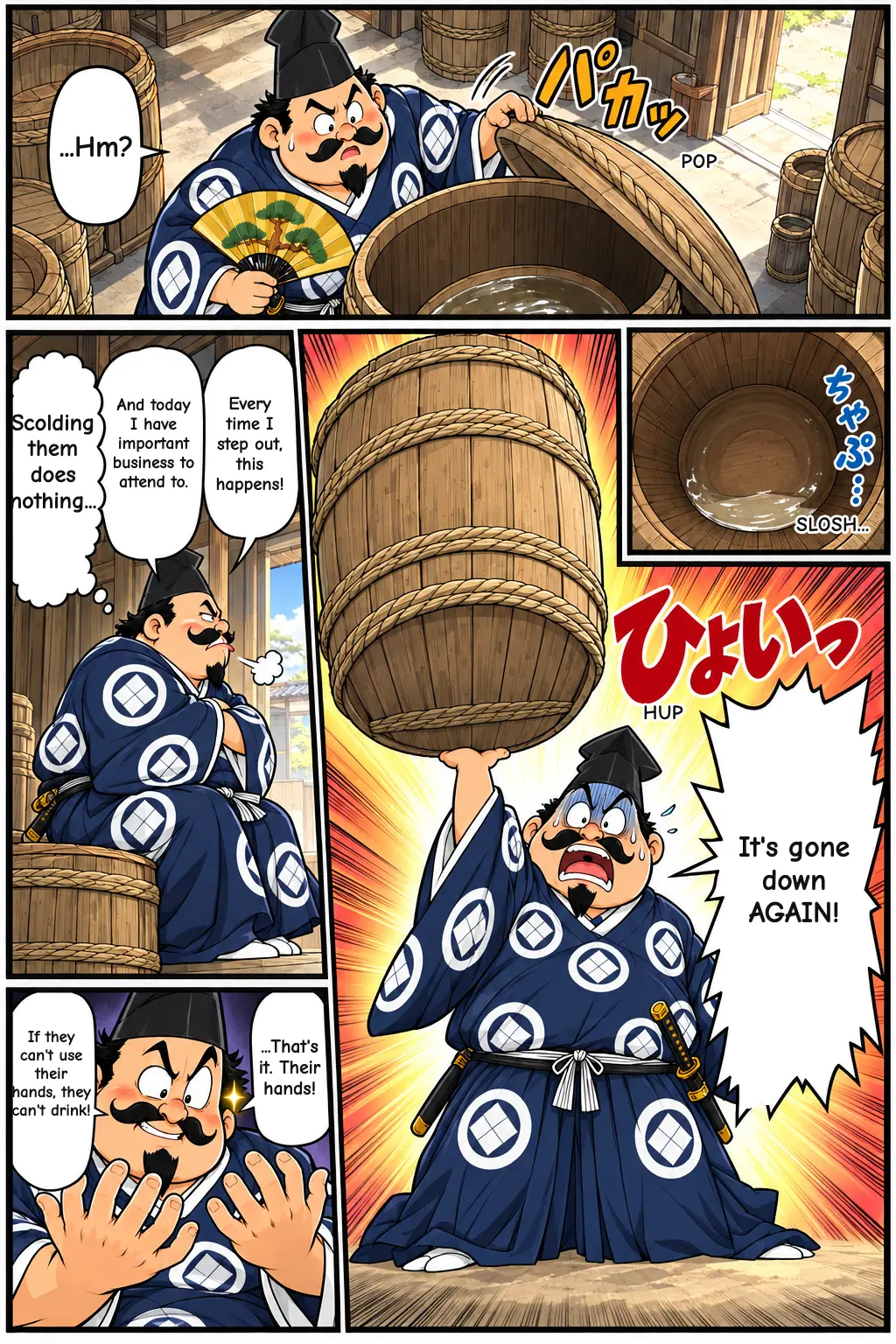
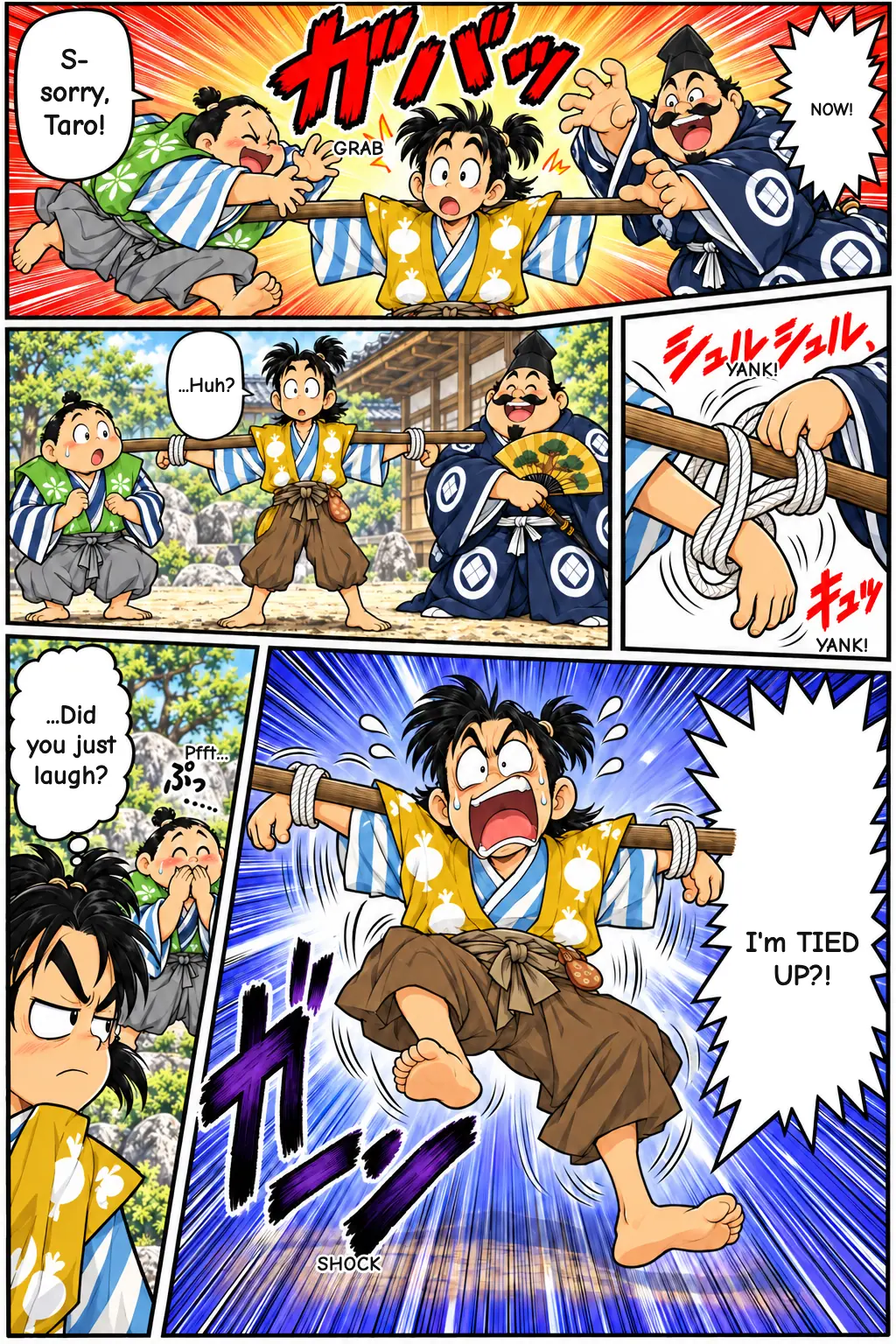
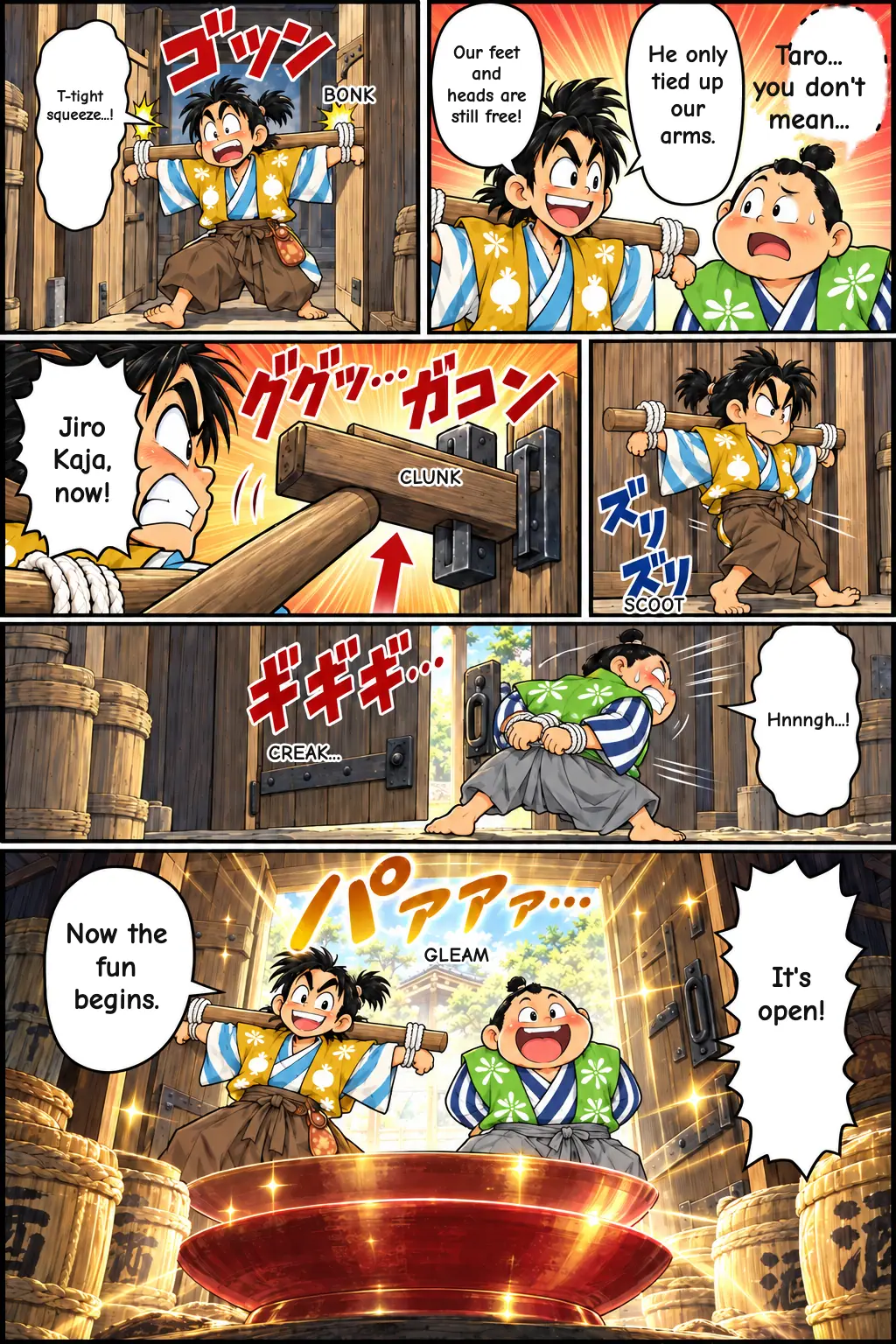
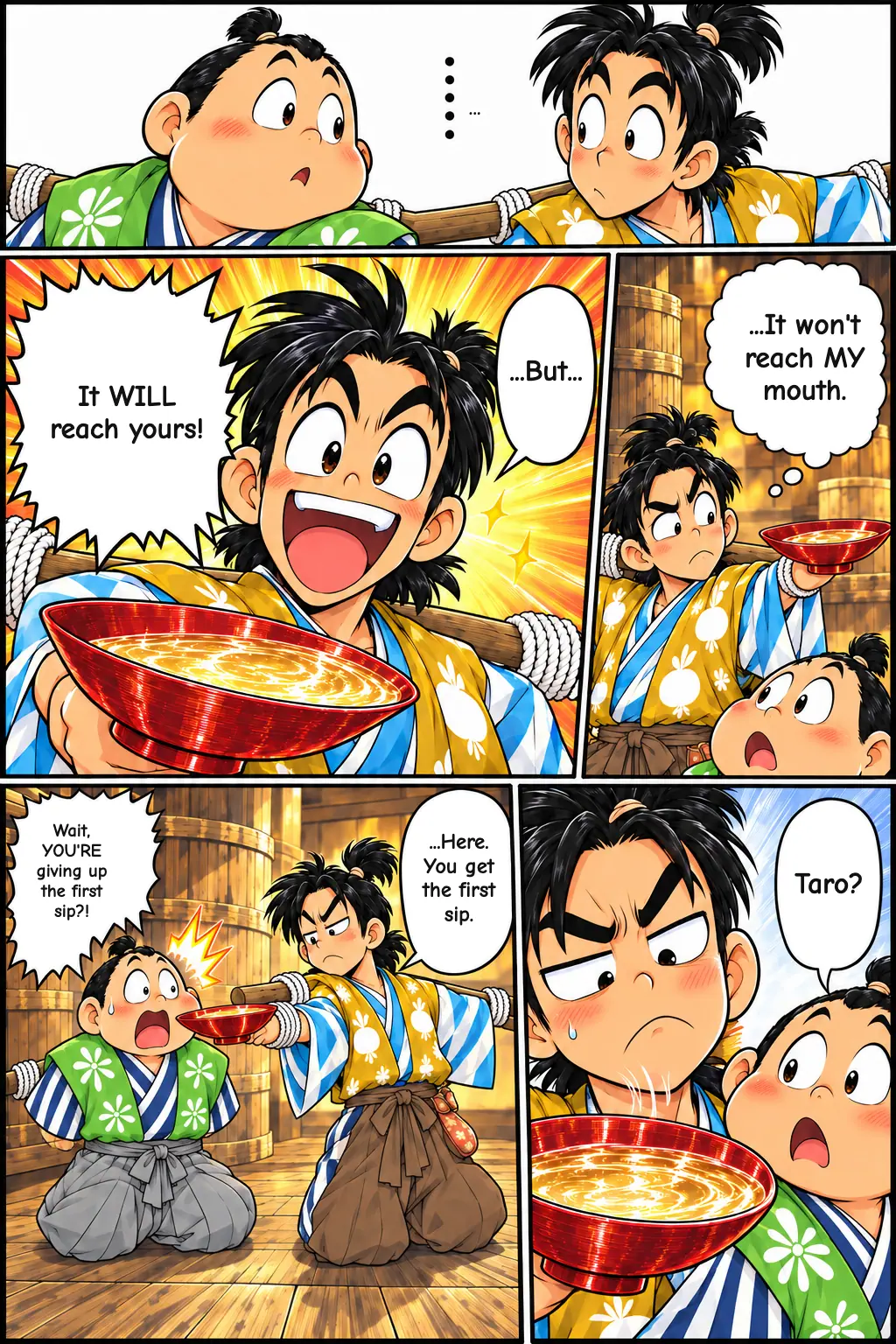
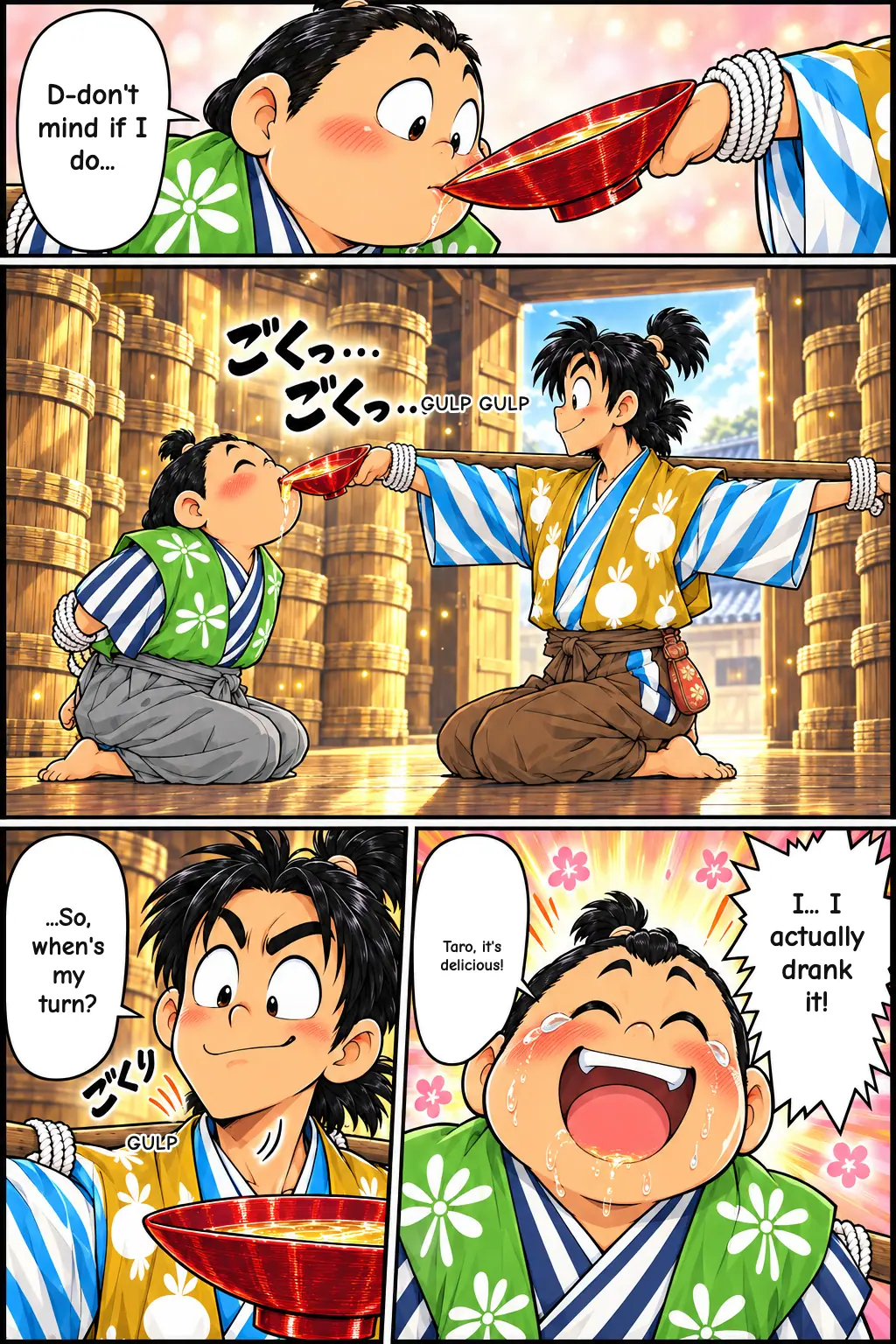
Every time the Daimyo leaves home, his sake mysteriously goes down. So before heading out, he ties Taro Kaja's arms to a pole and Jiro Kaja's hands behind his back. Neither can lift a cup to his own mouth, but each can reach the other's. This kyogen play about two servants teaming up is 600 years old.
Bookmark the series page so you can jump back in when the next episode is out: KYOGENRSS for this series
Get new episodes in your feed. Follow us on:ThreadsBluesky
Story summary
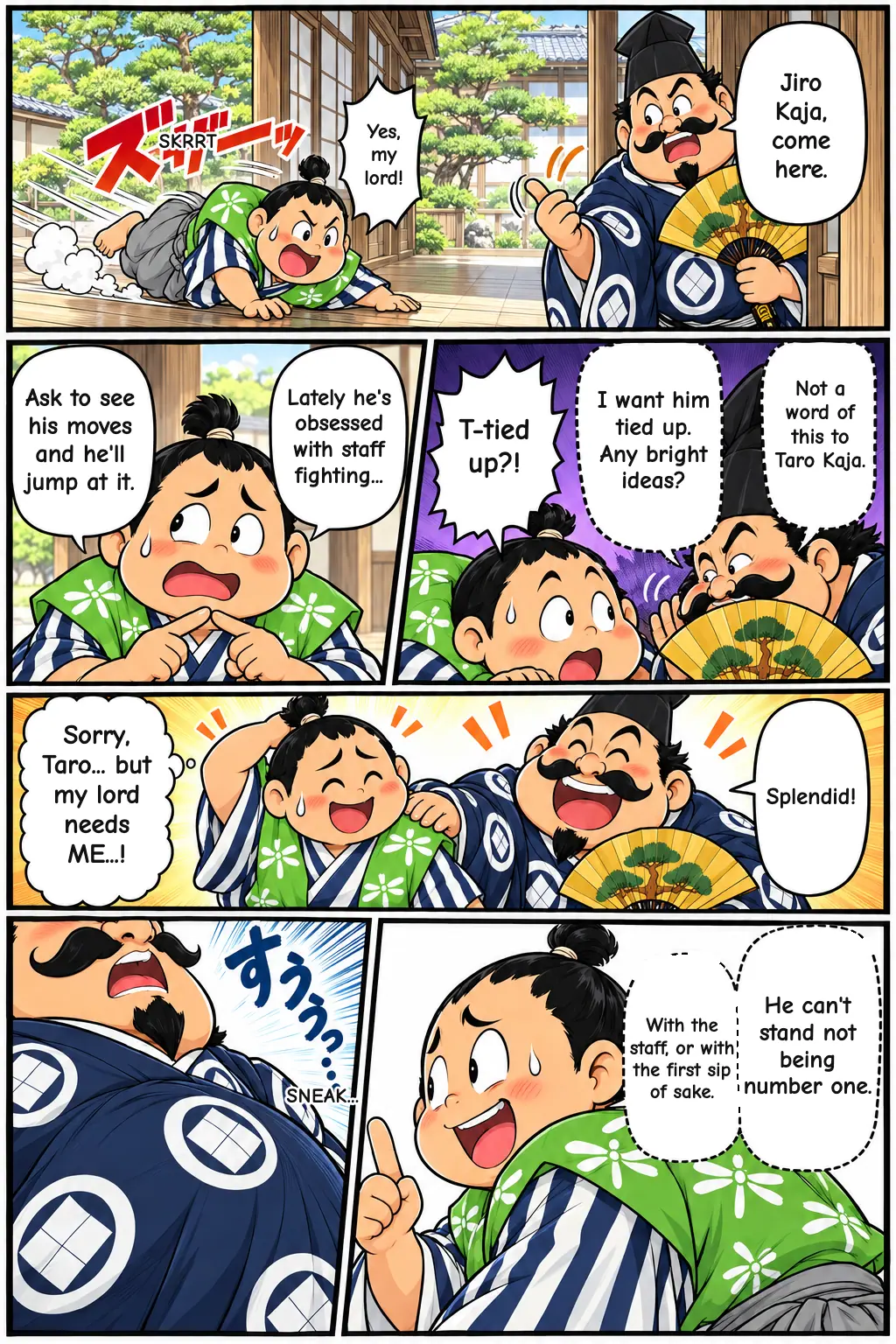
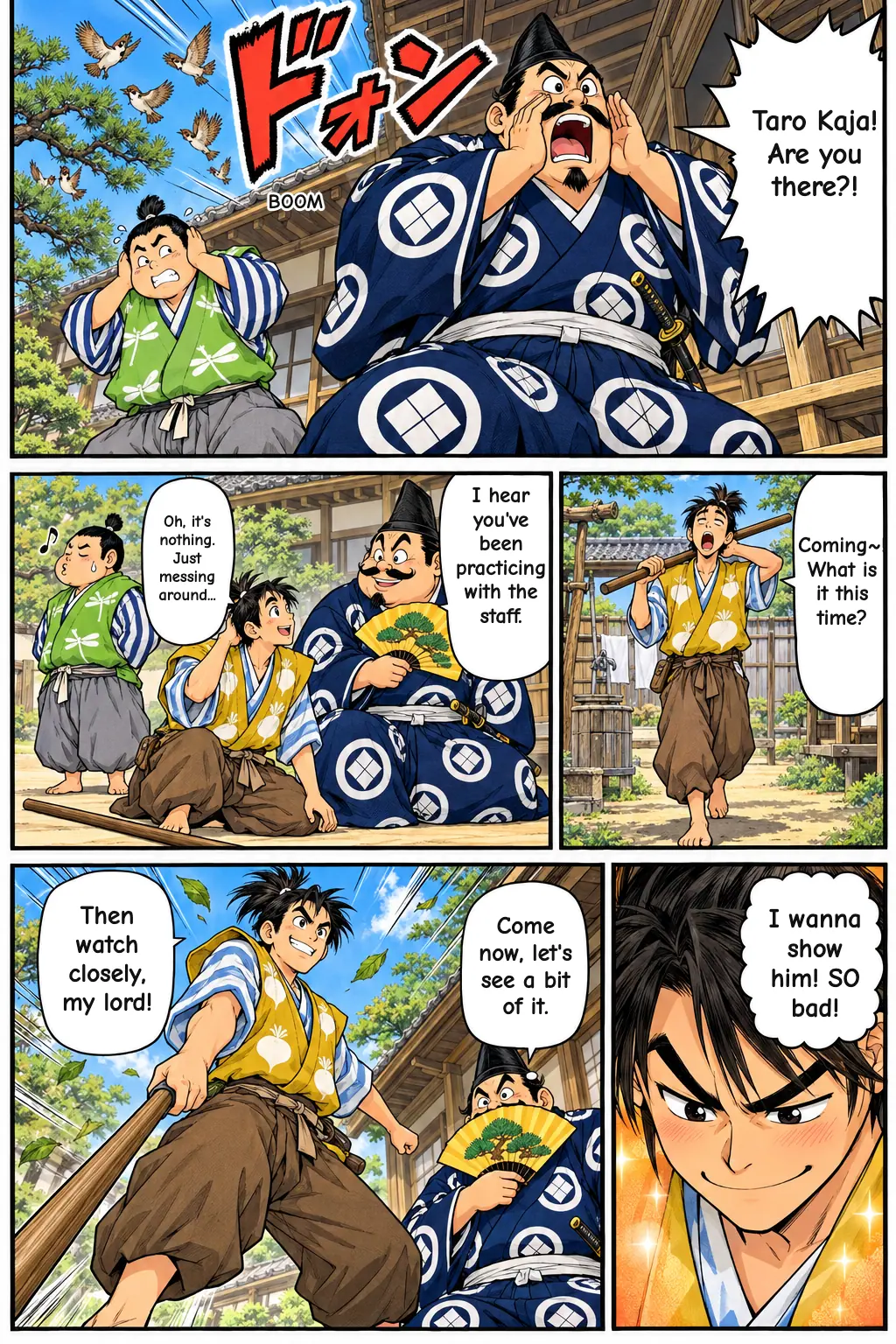
Bō Shibari is one of the best-known plays in kyogen, the comic theater that grew up alongside Noh. It opens with a master who has a problem: every time he leaves the house, his sake disappears. He is quite sure who is drinking it. His two servants, Taro Kaja and Jiro Kaja, are the only ones home. Before his next trip, the master calls Jiro Kaja in first and asks for advice. Jiro Kaja mentions that Taro Kaja has lately been practicing bōjutsu, fighting with a staff. They make a plan around that. The master summons Taro Kaja and asks to see his staff forms.
Bō Shibari (Tied to a Pole) Kyogen: Story Summary, Characters & Meaning
In short: Bō Shibari ("Tied to a Pole") is a classic kyogen comedy, still performed by both the Ōkura and Izumi schools. A master ties his servant Taro Kaja's arms to a pole and Jiro Kaja's hands behind his back so they can't steal his sake while he is away. The two can't lift a cup to their own mouths, so they feed each other, get happily drunk, and are caught when the master's face shows up reflected in their cup.
The original story of Bō Shibari
Bō Shibari is one of the best-known plays in kyogen, the comic theater that grew up alongside Noh. It opens with a master who has a problem: every time he leaves the house, his sake disappears. He is quite sure who is drinking it. His two servants, Taro Kaja and Jiro Kaja, are the only ones home.
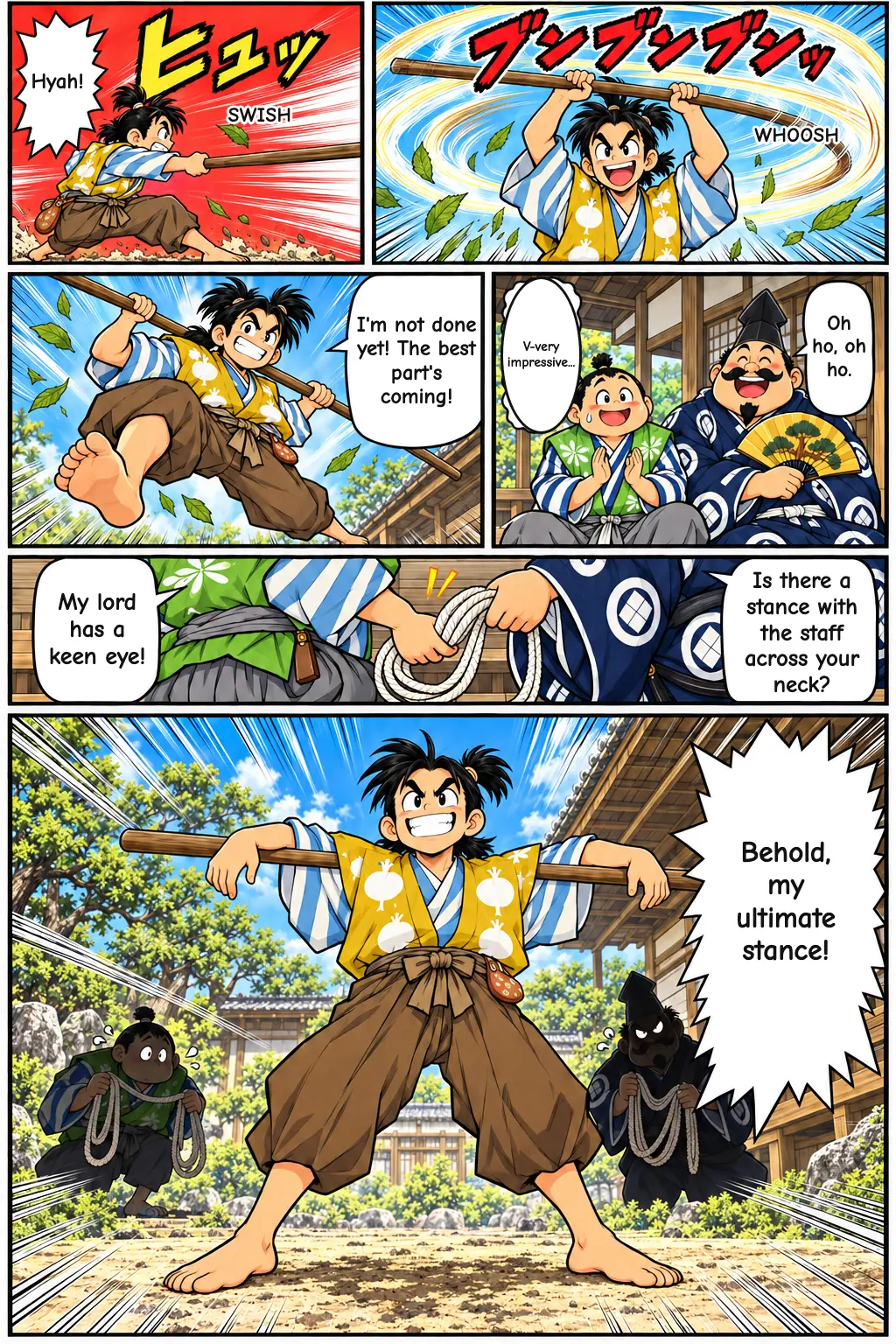
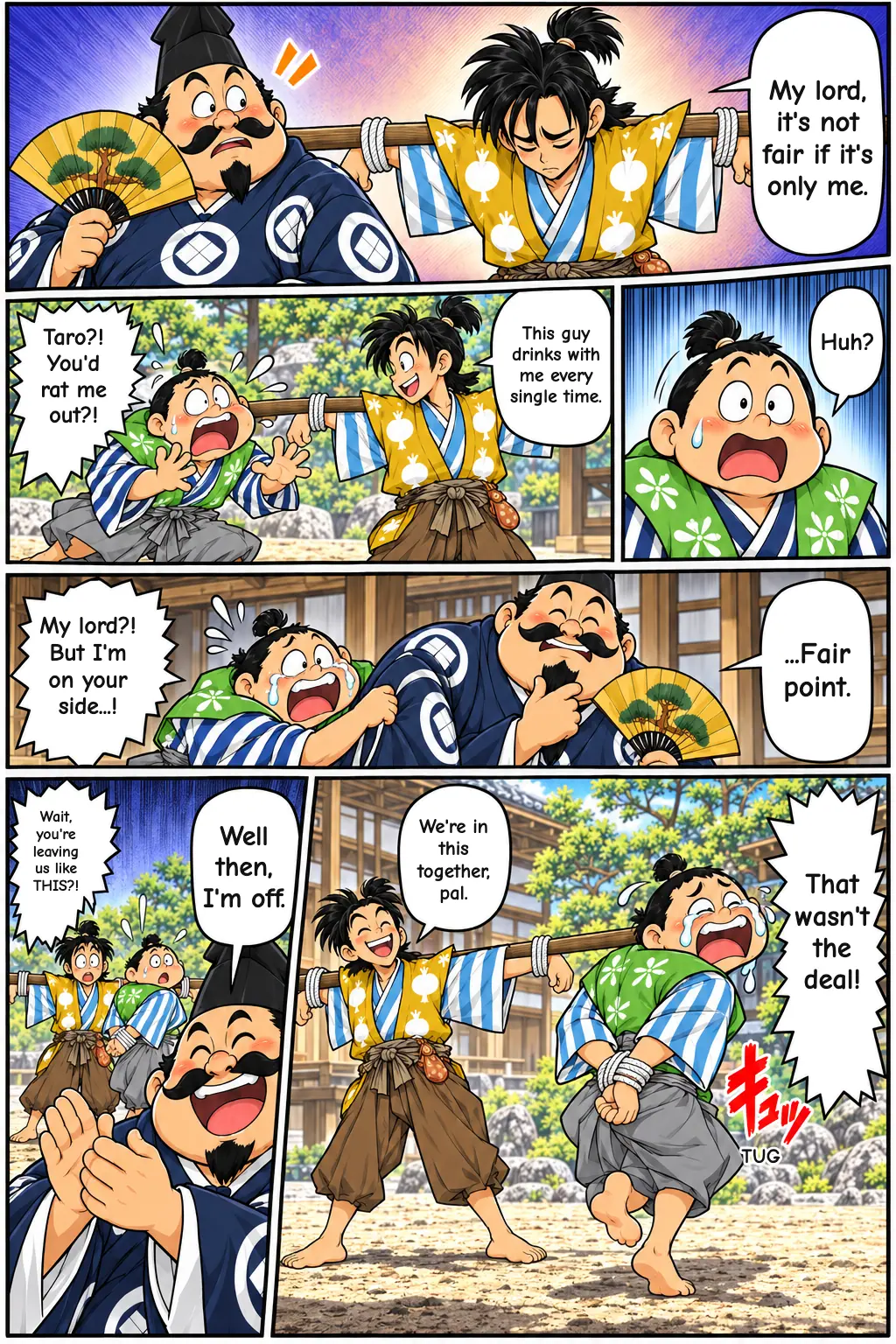
Before his next trip, the master calls Jiro Kaja in first and asks for advice. Jiro Kaja mentions that Taro Kaja has lately been practicing bōjutsu, fighting with a staff. They make a plan around that. The master summons Taro Kaja and asks to see his staff forms. Taro Kaja shows off proudly and ends up holding a stance with the pole across the back of his shoulders and both arms hooked over it. Right then, the master and Jiro Kaja tie his arms to the pole. Taro Kaja laughs at Jiro Kaja for being on the master's side, but the joke turns on Jiro Kaja: he gets his hands tied behind his back too. Pleased with himself, the master heads out.
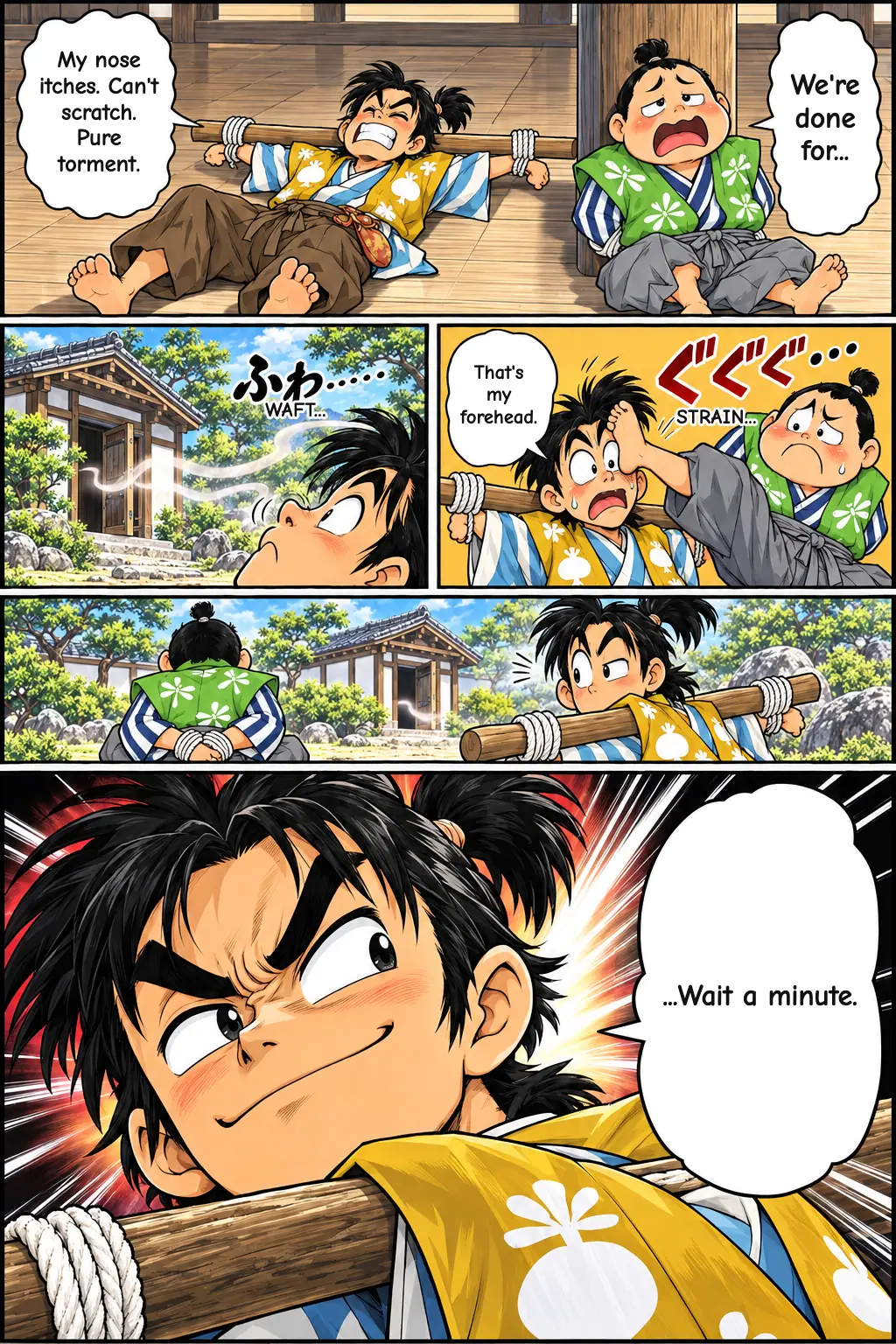
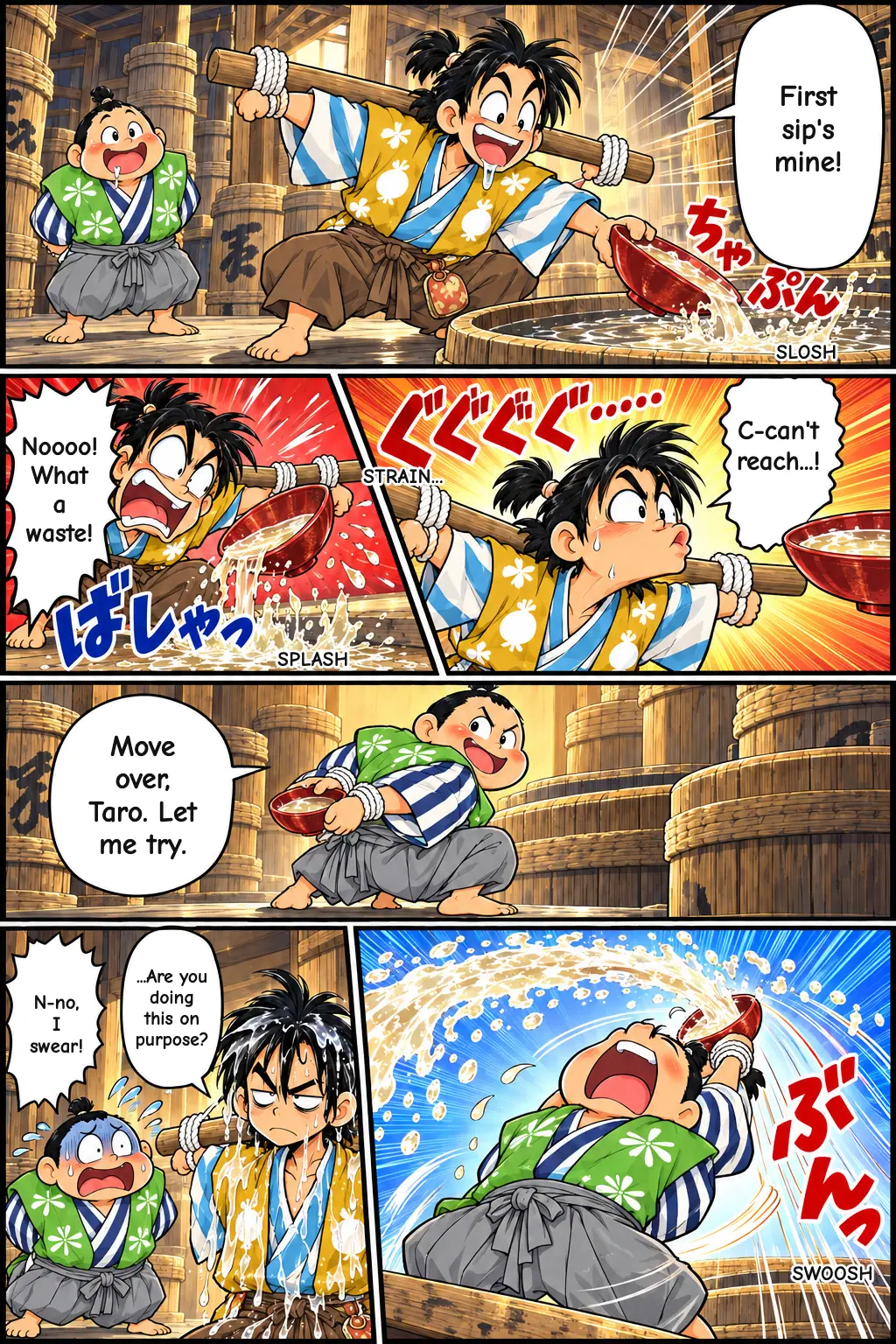
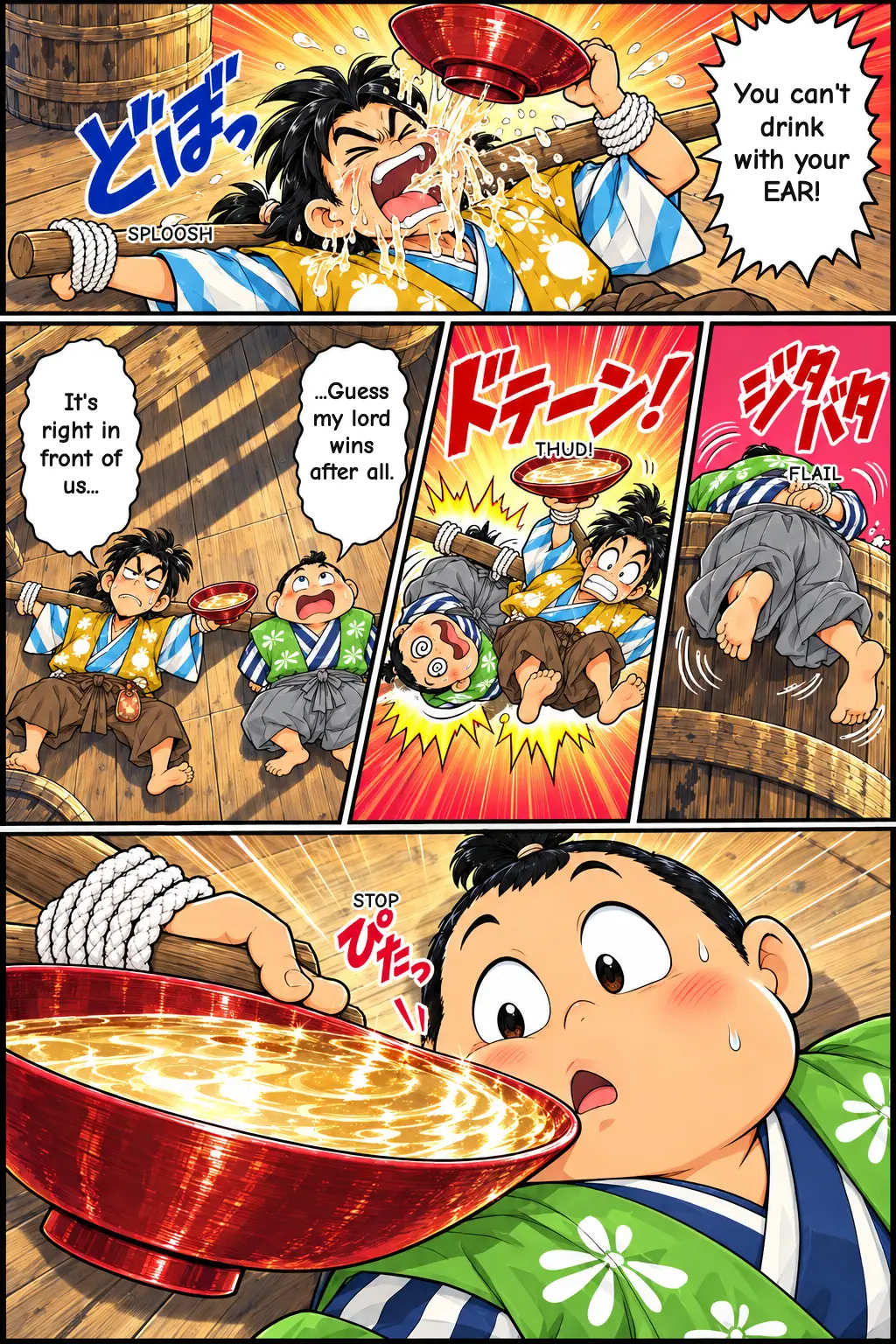
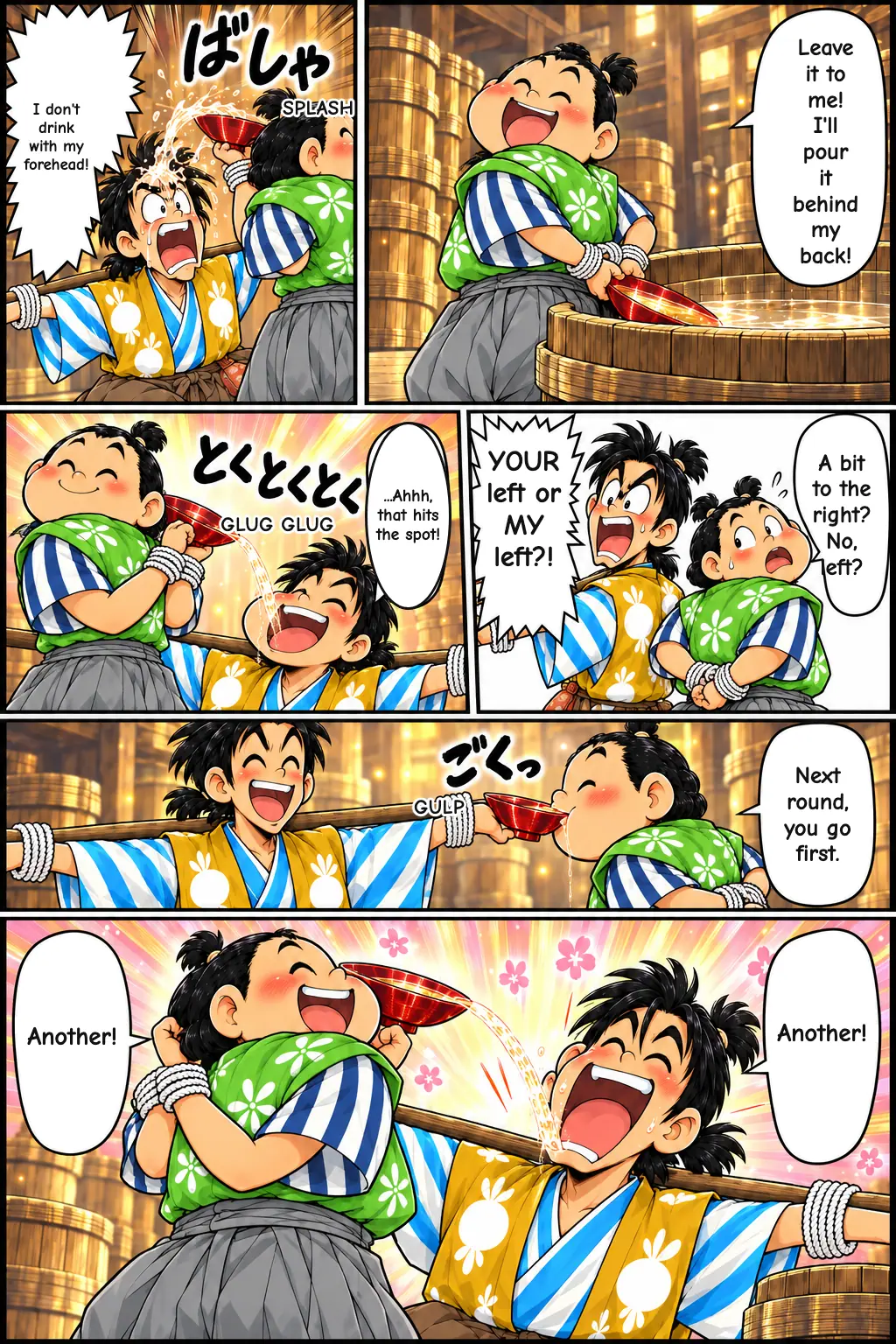
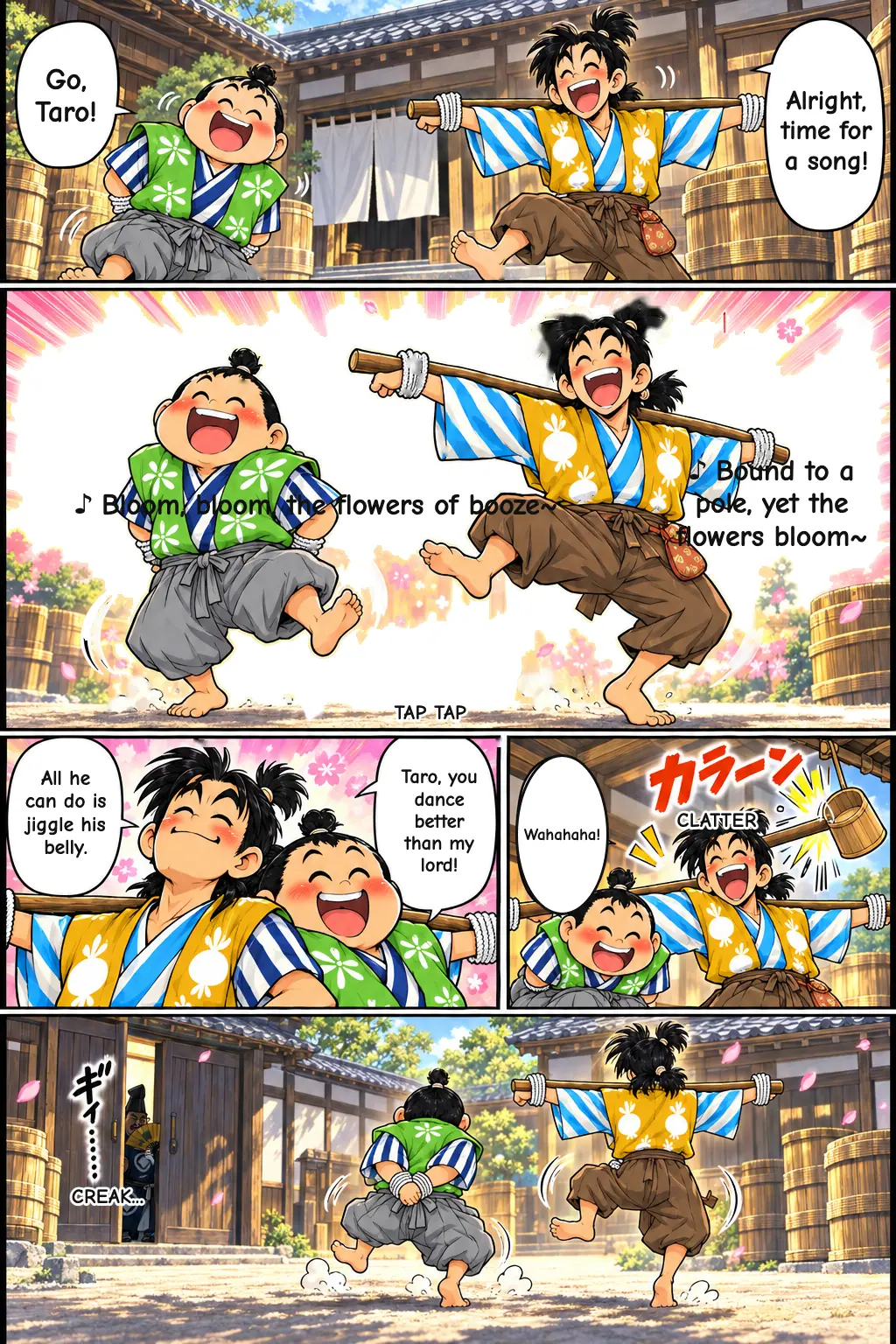
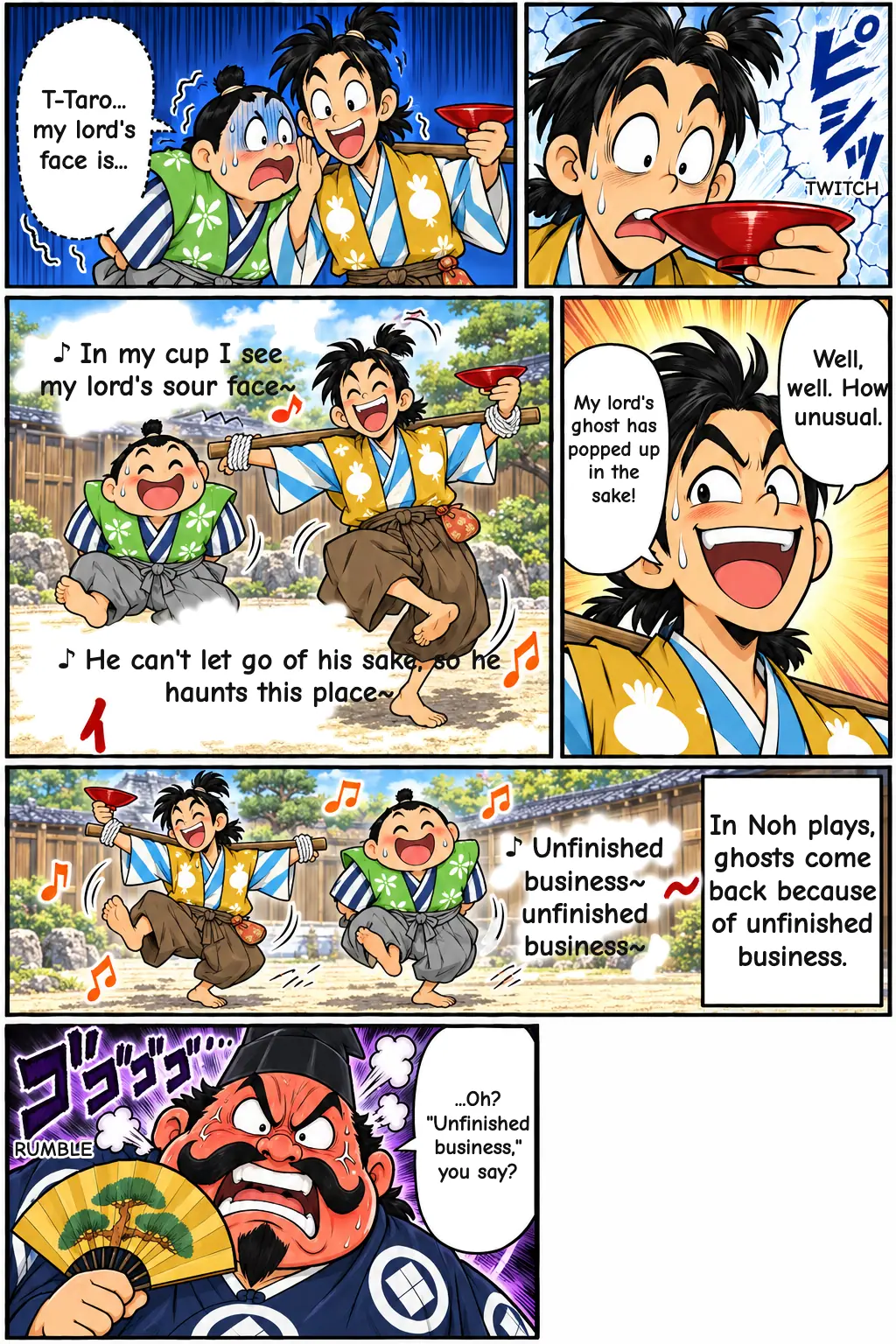
Being tied up doesn't stop the two servants wanting a drink. After a lot of awkward fumbling, they get the storehouse door open and reach the sake. Neither one can bring a cup to his own lips, but they find a way around it. Taro Kaja, his arms stuck on the pole, holds the cup out to Jiro Kaja's mouth. Jiro Kaja, hands behind his back, turns around and tips the cup over his shoulder for Taro Kaja. They take turns until they are both drunk, then start singing short songs and dancing. Taro Kaja does his dance with the pole still across his shoulders.
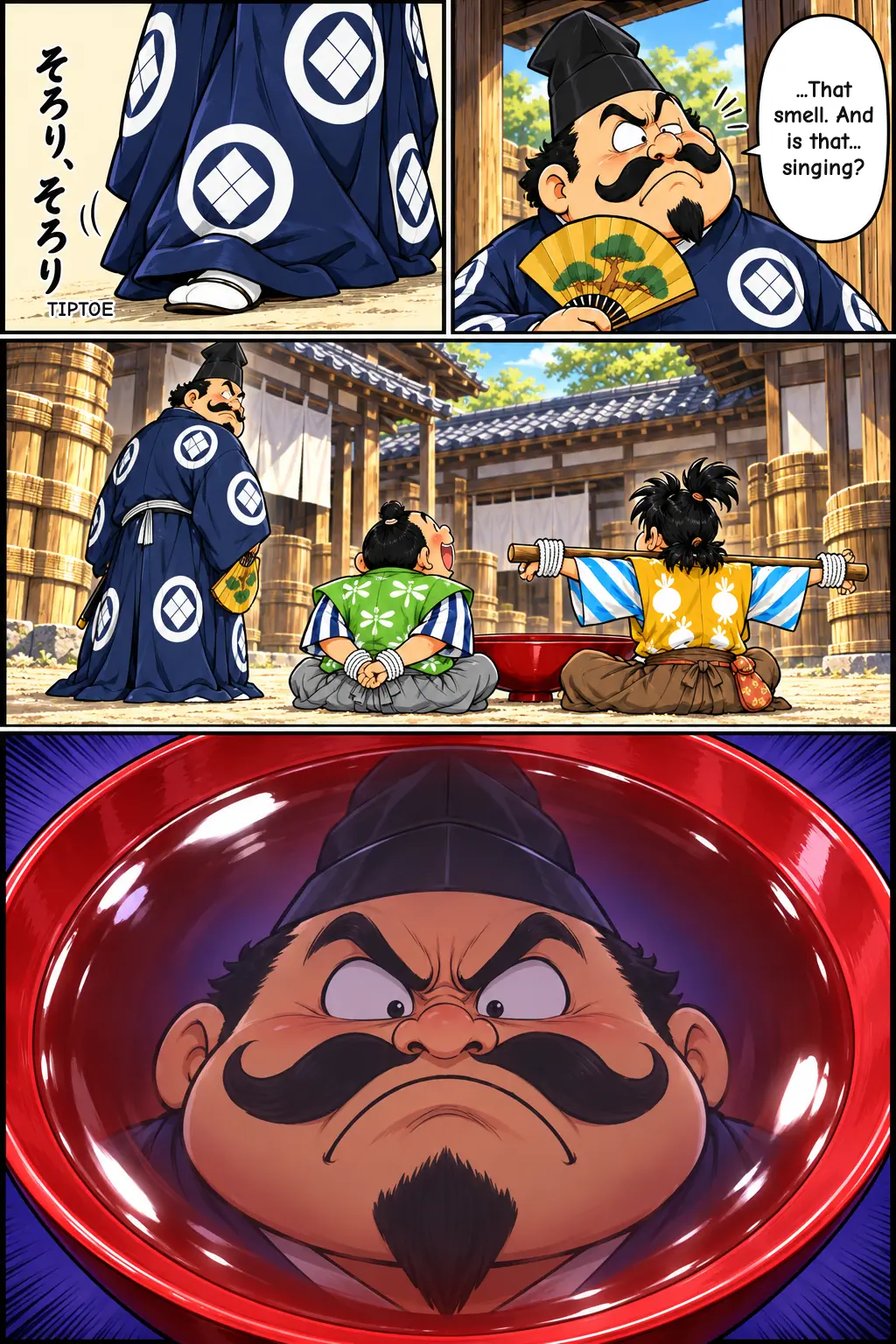
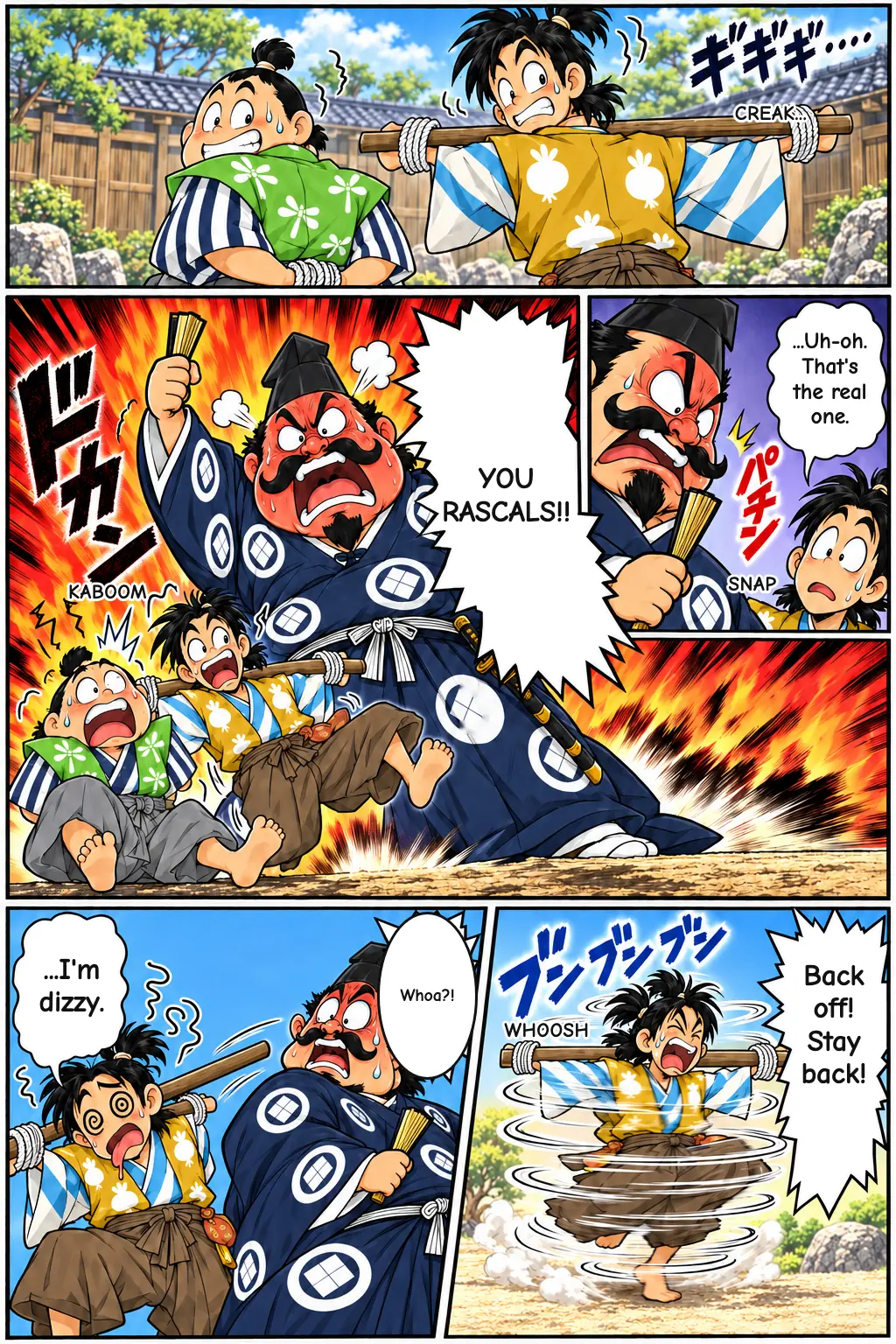
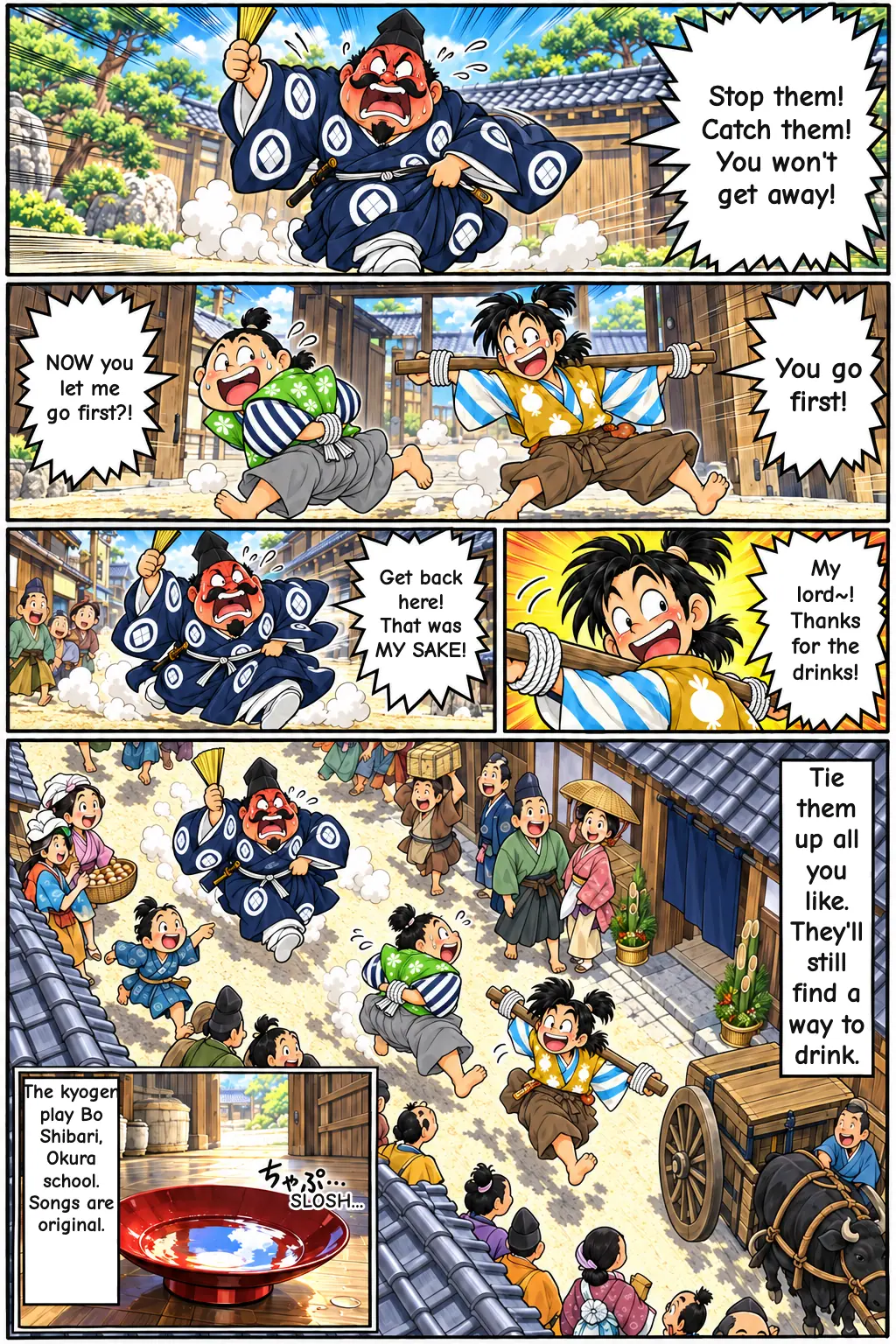
Then the master comes home and quietly stands behind them. His face appears in the sake in their cup. The servants don't realize he is really there. They decide the face must be the master's own clinging attachment to his sake, appearing in the cup, and they make fun of it in a song they make up on the spot. When they finally turn around and see him, he is furious. The play ends the usual kyogen way: the master chases them off the stage, shouting that he won't let them get away. In some productions Taro Kaja also swings his pole at the master during the chase. This depends on the school and the staging, so not every performance has it.
Main characters
Kyogen roles have set names. Taro Kaja is the shite, the lead role. He is the senior servant and the main sake thief. Jiro Kaja is the junior servant, played as the ko-ado (supporting role). The master is the ado, the role who plays opposite the lead. In Bō Shibari the master is usually just called the 'master' (aruji), not a feudal lord. Kaja means a household servant, and 'Taro' and 'Jiro' are traditional names for a first and second son. So the names work almost like 'Servant No. 1' and 'Servant No. 2', and audiences know the types right away.
Background: what the play is about
Kyogen developed in the 14th and 15th centuries from earlier comic performing arts, and it was performed between the serious Noh plays. Noh deals with ghosts, gods and tragedy. Kyogen shows ordinary people: tricky servants, pompous masters, greedy monks. Bō Shibari belongs to a group of plays about Taro Kaja, and many of them have the same pattern. The master tries to control his servants, and the servants get the better of him anyway.
That's a big part of why the play has lasted. The master's plan is clever, but it only works on the body. It can't stop two people who want the same thing from working together. Being tied up actually turns the servants into a team. There's also a gentle bit of class satire: the joke in the cup suggests the master cares about his sake as much as the servants do.
Kyogen is played on a bare Noh stage with almost no props. The pole is real, but the storehouse, the door and much of the drinking are acted out through movement and voice. Performers in this tradition often say the story should come across clearly enough that the audience can almost see the storehouse.
What the manga changed
The manga keeps all the main beats of the play: the plan built on Taro Kaja's staff training, the two different ways of tying the servants, drinking by feeding each other, the drunken song and dance, the face in the cup, and the chase. Several things are adaptation, though.
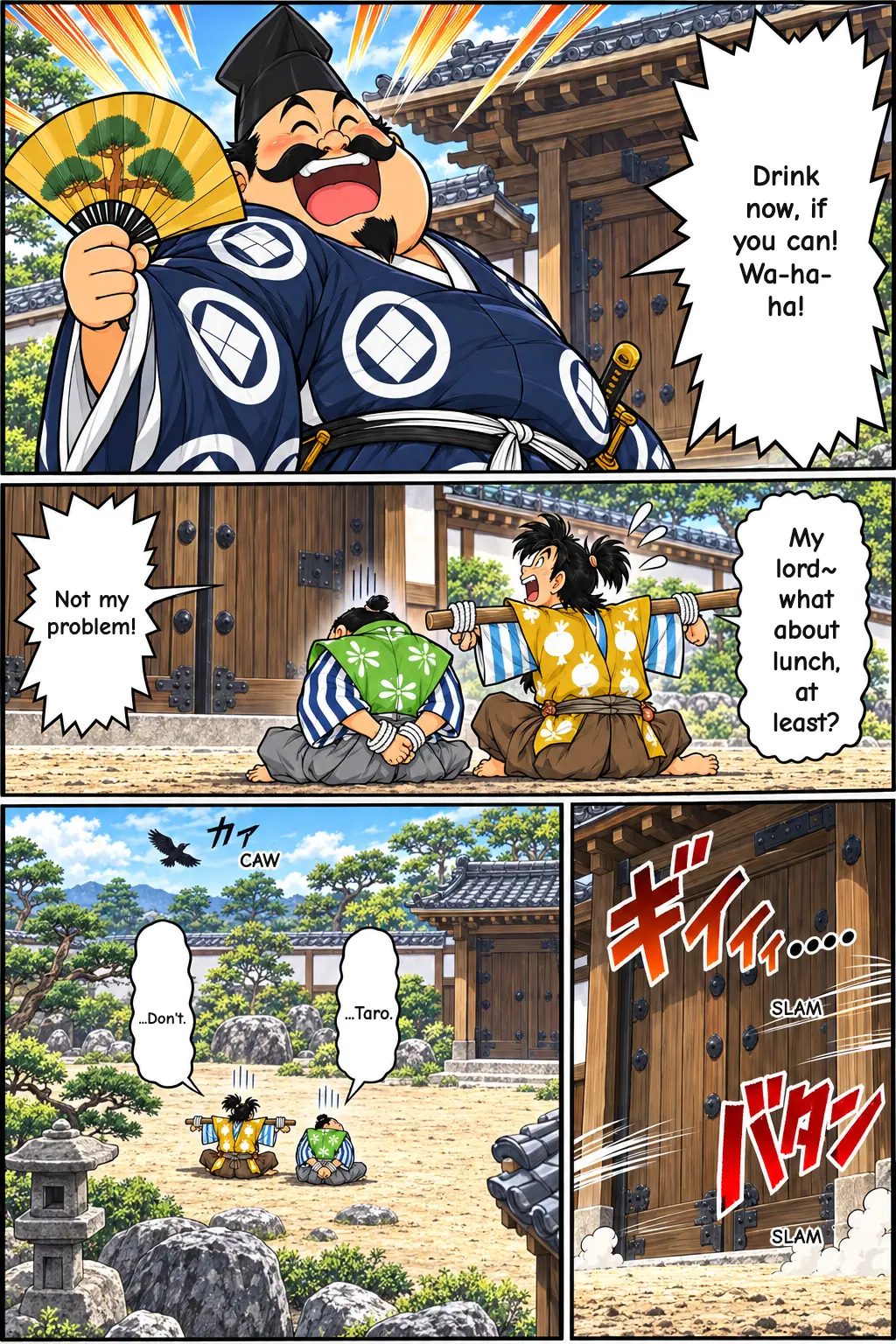
The master becomes the Daimyo who appears across this manga series, while the original usually calls him only 'the master.' The manga also invents where he goes and why, since the play doesn't really say. On a bare stage the house and storehouse are imagined. The manga draws them out, including the door, the sake jars and the cups. The run of failed attempts before the servants manage to drink is expanded with extra gags. The songs are short new lyrics written for the manga, not the play's own words, though they keep the idea that the face in the cup is the master's craving for his sake. The servants' personalities are also drawn more sharply: Taro is the show-off, and Jiro is the smart one who still gets caught. Any pole-swinging fight in the chase is the manga's own staging.
Where to read it
Watching a live performance is the best way to see Bō Shibari, but a manga can show the gags frame by frame, and the jokes in this play are very visual. Episode 3 of KYOGEN: Japan's 600-Year-Old Comedy on Manga Portal tells the full story, from the trap to the chase. Every episode is free to read with no sign-up, so if you enjoy this one, the other kyogen comedies in the series are on the same page.
Characters in this episode
Taro Kaja
The senior servant and lead role: a proud, sake-loving joker whose arms end up tied to his own practice pole.
Jiro Kaja
The junior servant who helps the master set the trap, then gets his own hands tied behind his back.
The Master (Daimyo in the manga)
The head of the house, who ties up his servants to protect his sake and comes home to find himself mocked; the original usually calls him simply 'the master.'
FAQ
What is Bō Shibari about?
A master ties up his two servants so they can't drink his sake while he's out. They help each other drink anyway: each feeds the other, since neither can reach his own mouth. They get drunk, sing, and are caught when the master's face appears in their cup.
What does 'Bō Shibari' mean?
It means 'tied to a pole' (bō is a staff or pole, shibari means tying). The title refers to Taro Kaja, whose arms are tied to the pole he was showing off with.
Who are Taro Kaja and Jiro Kaja?
They are stock servant characters who show up in many kyogen plays. Taro Kaja is usually the senior servant and the lead role, and Jiro Kaja is his junior partner. Kaja means household servant.
What is kyogen?
Kyogen is a Japanese comic theater that developed with Noh about 600 years ago. It uses spoken dialogue and exaggerated movement to show everyday people, and it is traditionally performed between Noh plays.
How does Bō Shibari end?
The servants make fun of the master's reflection in a made-up song, then turn and see he's really there. He angrily chases them off the stage, which is the standard ending for many kyogen plays.