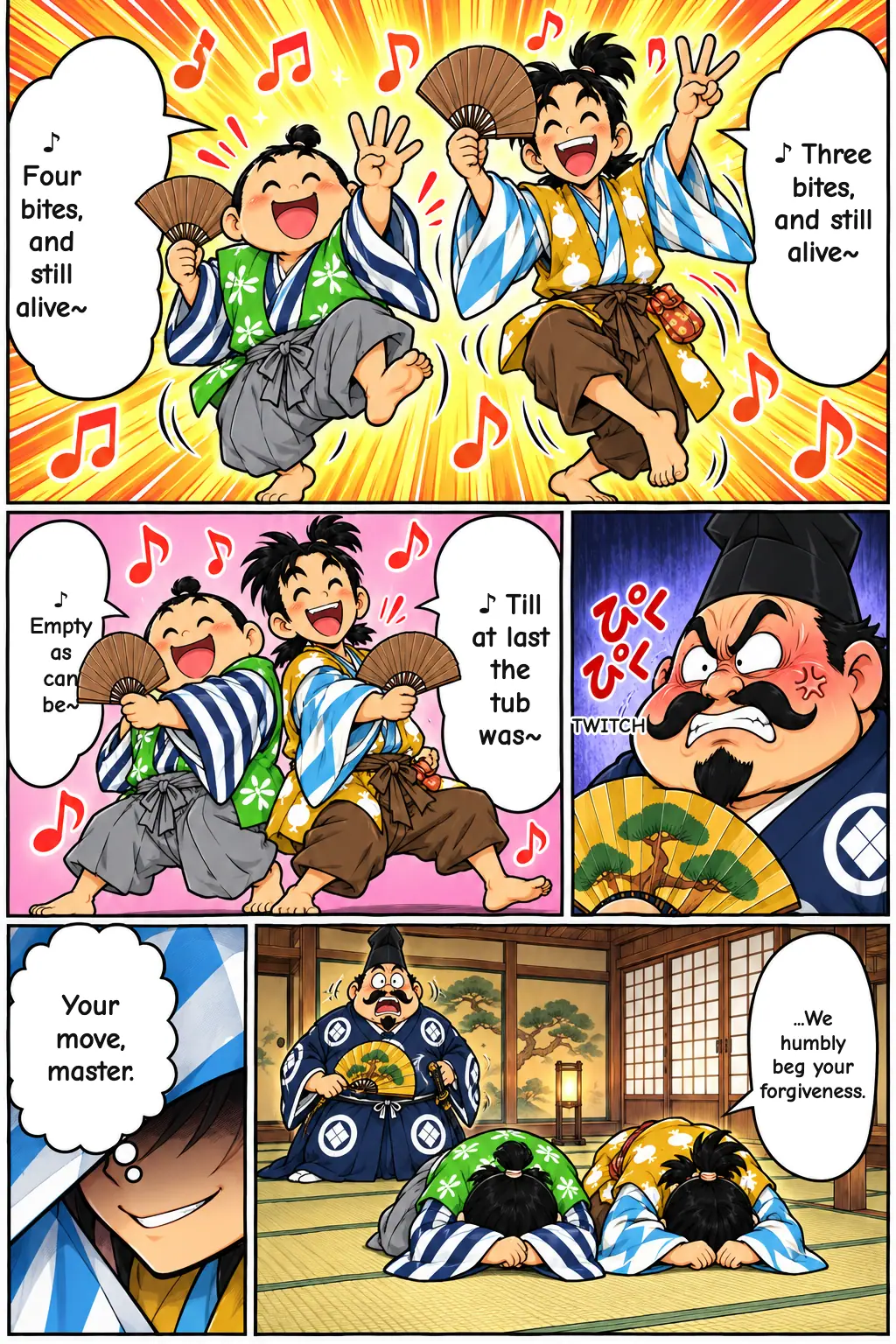
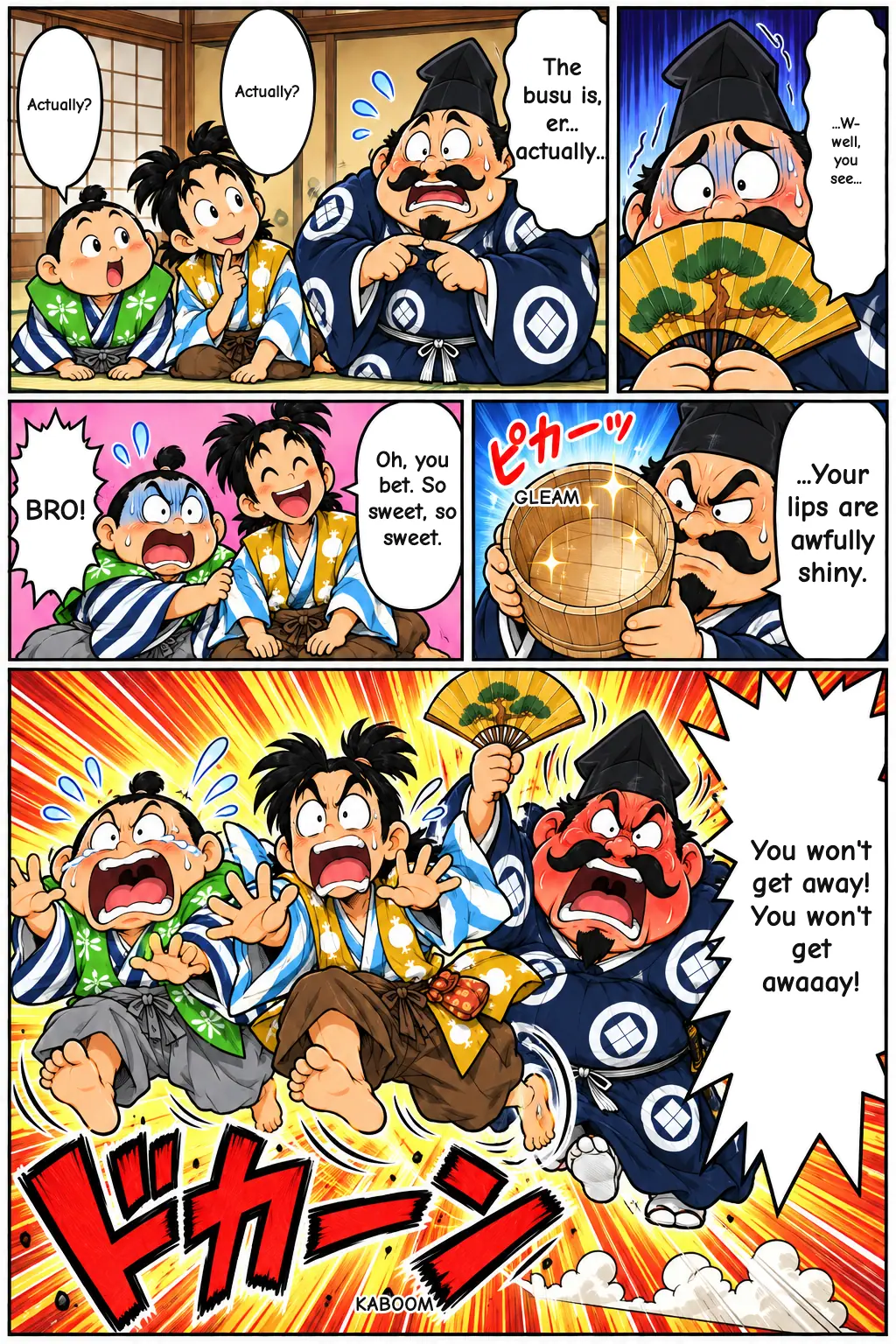
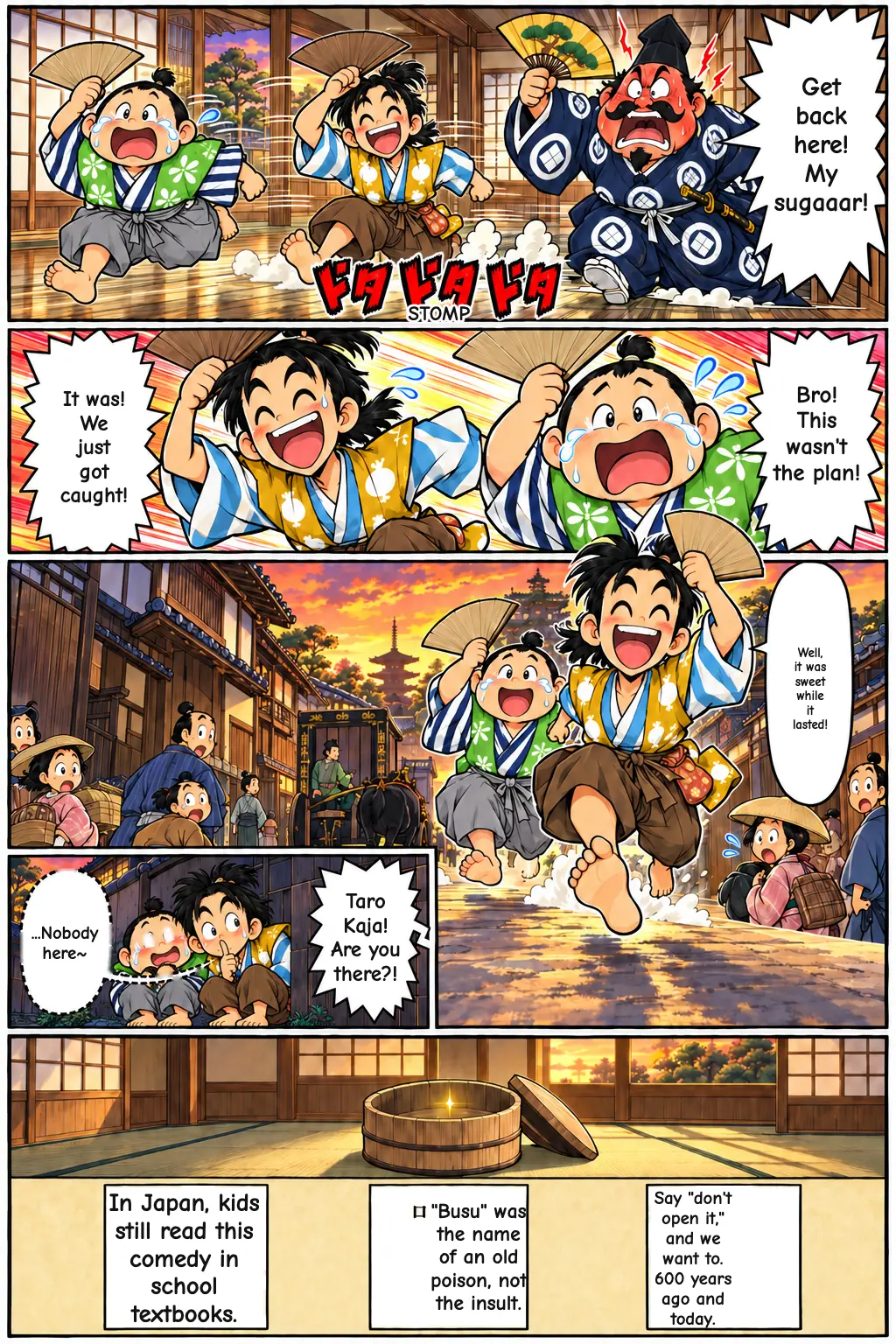
Episode 2Even Its Breeze Kills. So We Peeked.Busu (The Poison Jar)
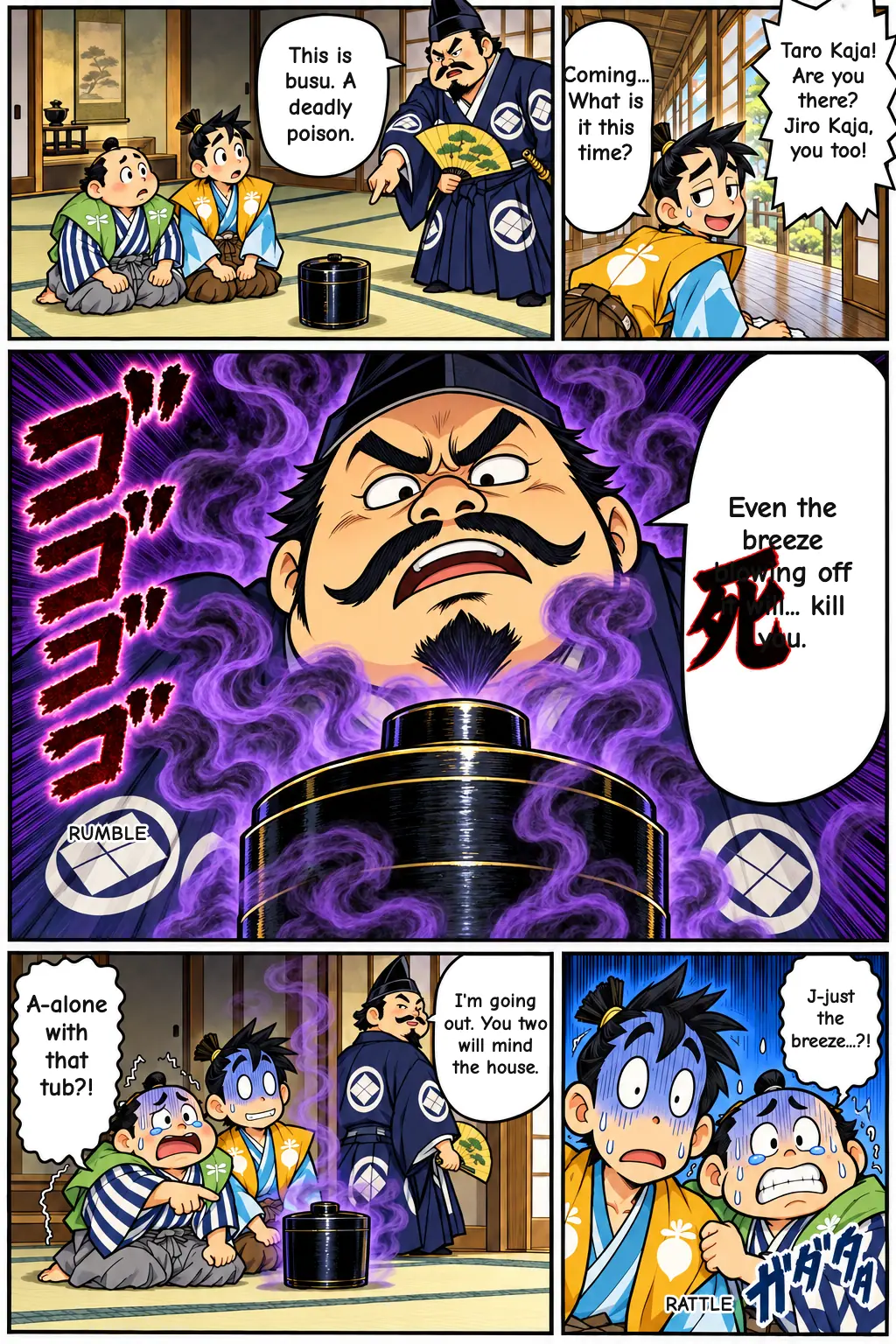
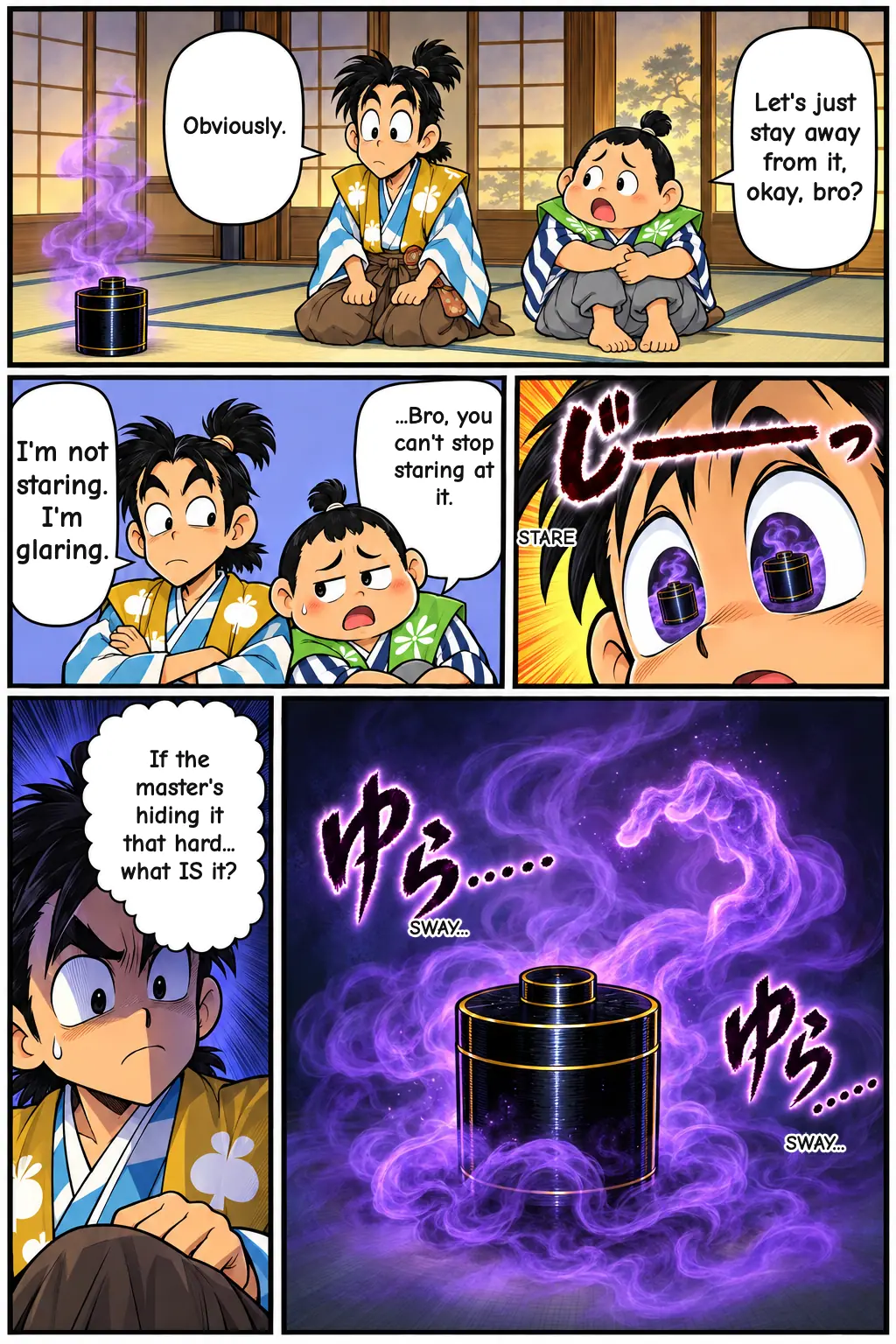
Before heading out, the Daimyo leaves behind a tub of "busu," a poison so deadly that even the breeze off it will kill you. Left to watch the house, Taro Kaja and Jiro Kaja are terrified, but they can't stop wondering what's inside. Once they find out, they turn their master's lie right back on him. It's one of Japan's best-loved kyogen comedies, a favorite in school textbooks.
Bookmark the series page so you can jump back in when the next episode is out: KYOGENRSS for this series
Get new episodes in your feed. Follow us on:ThreadsBluesky
Story summary
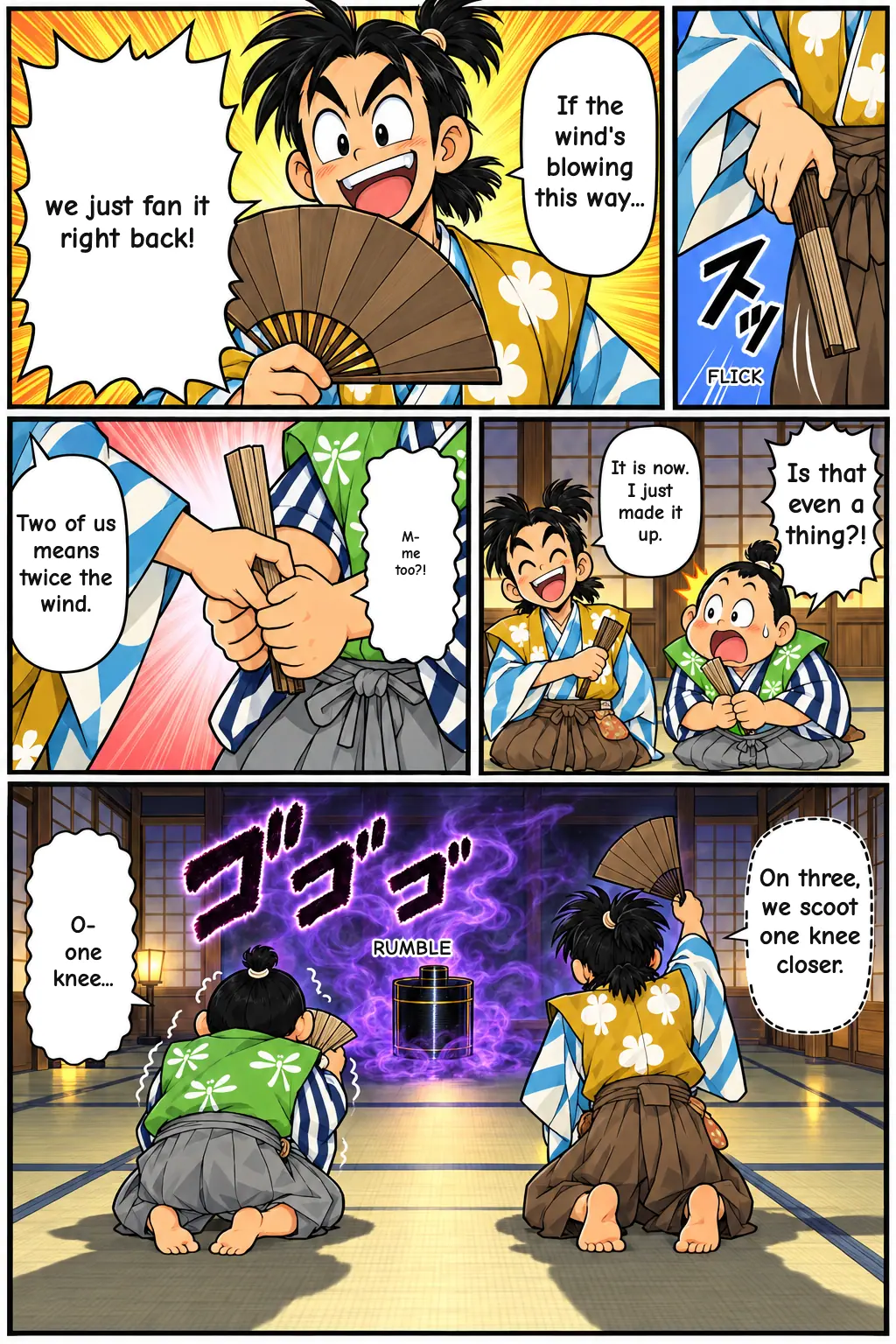
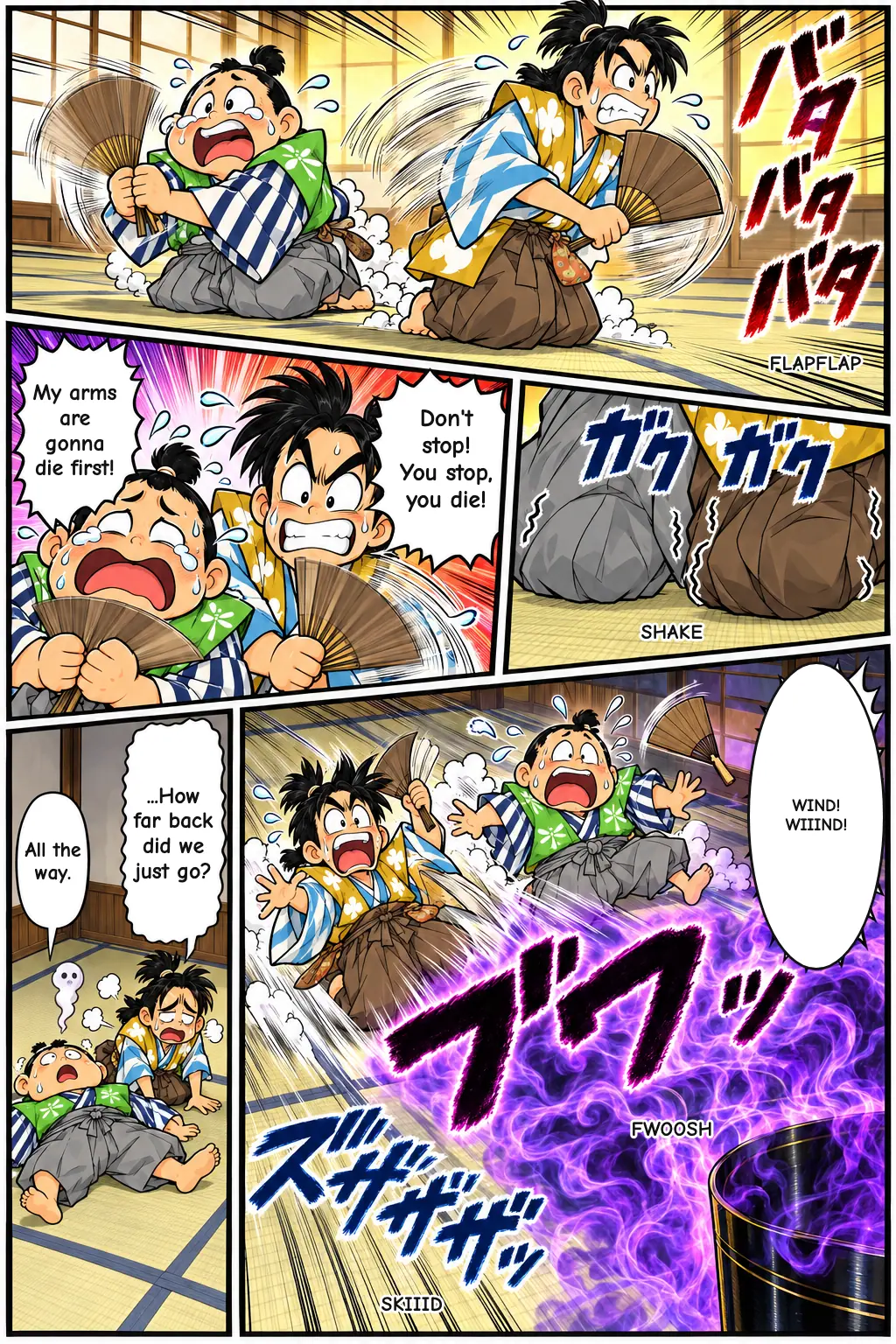
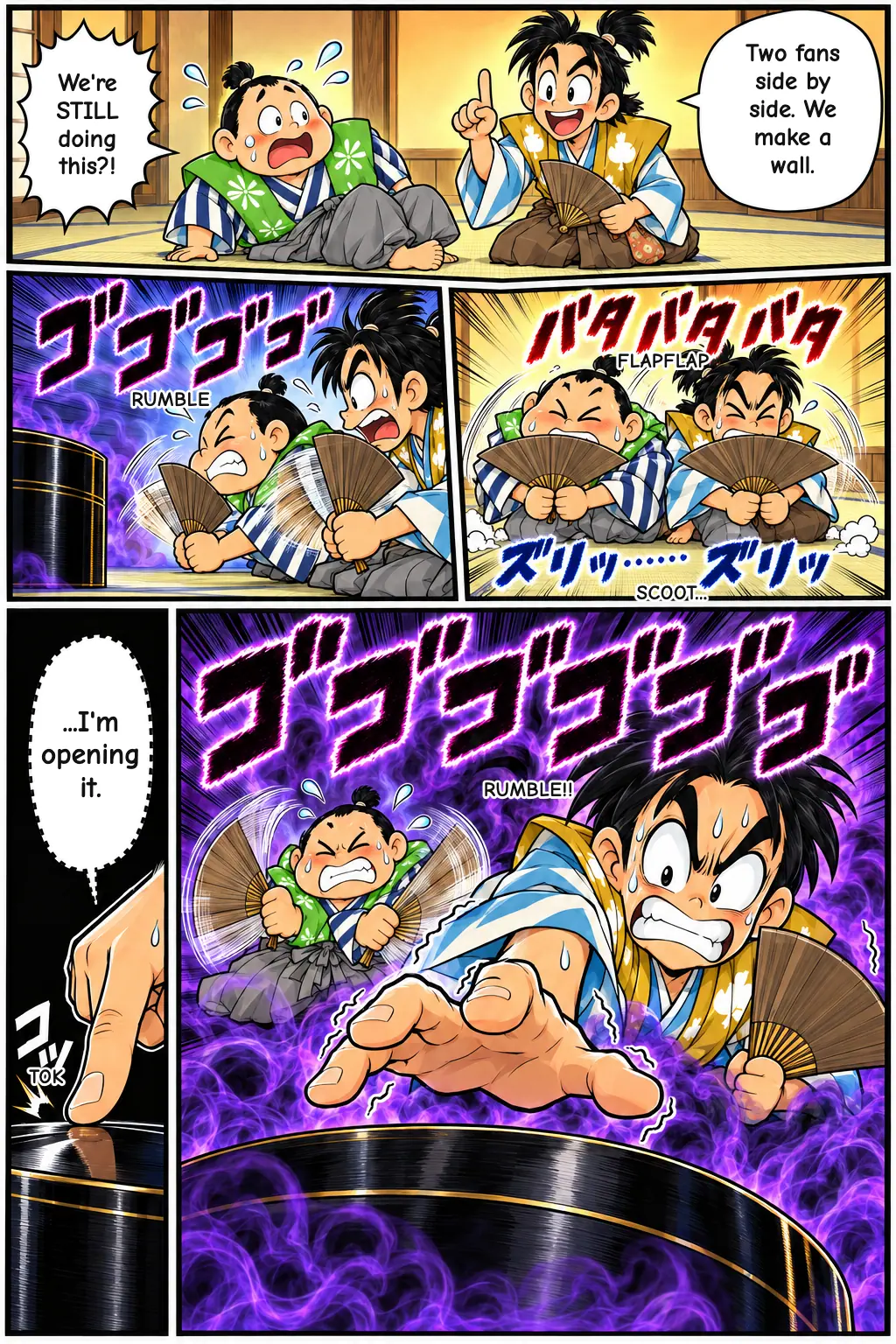
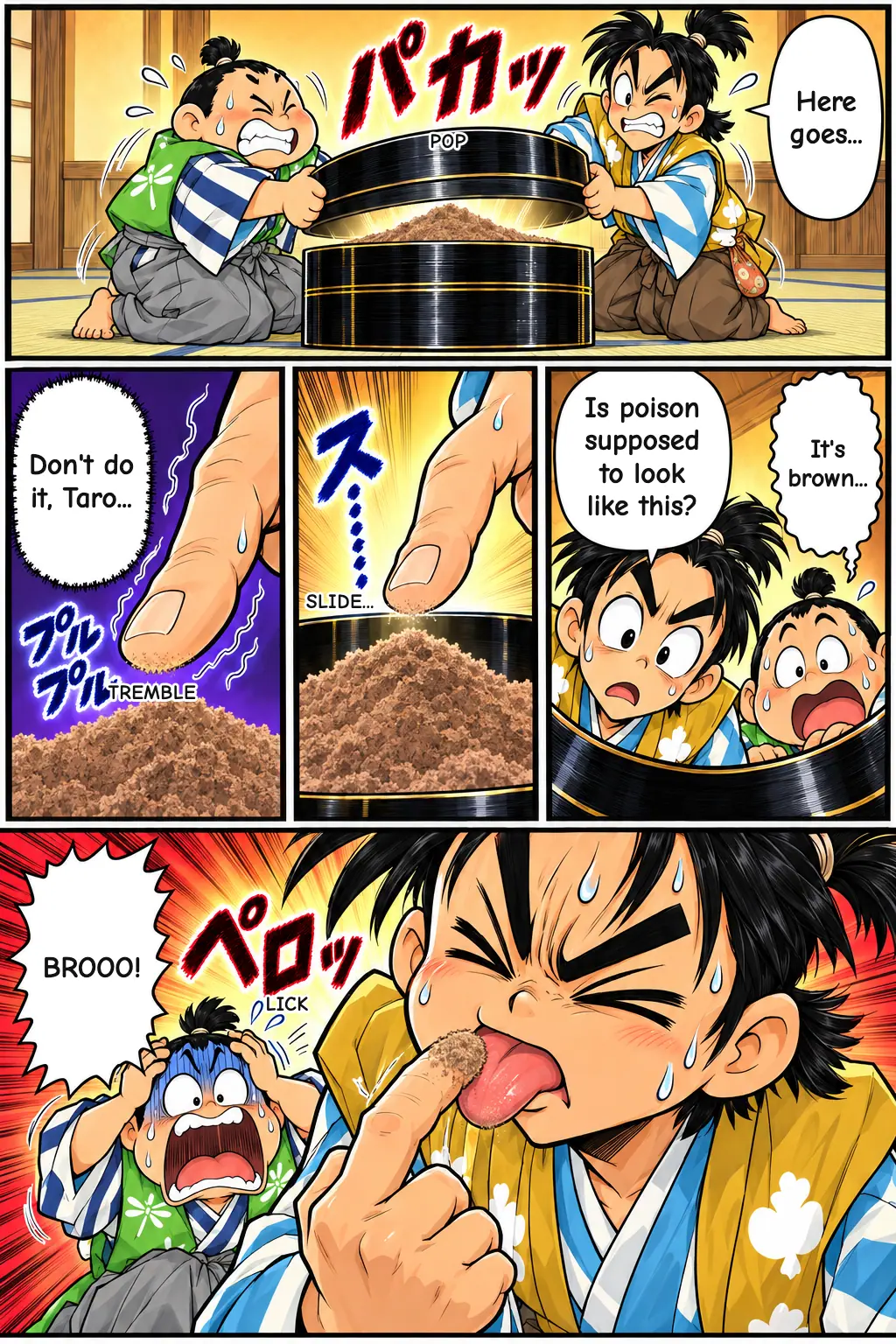
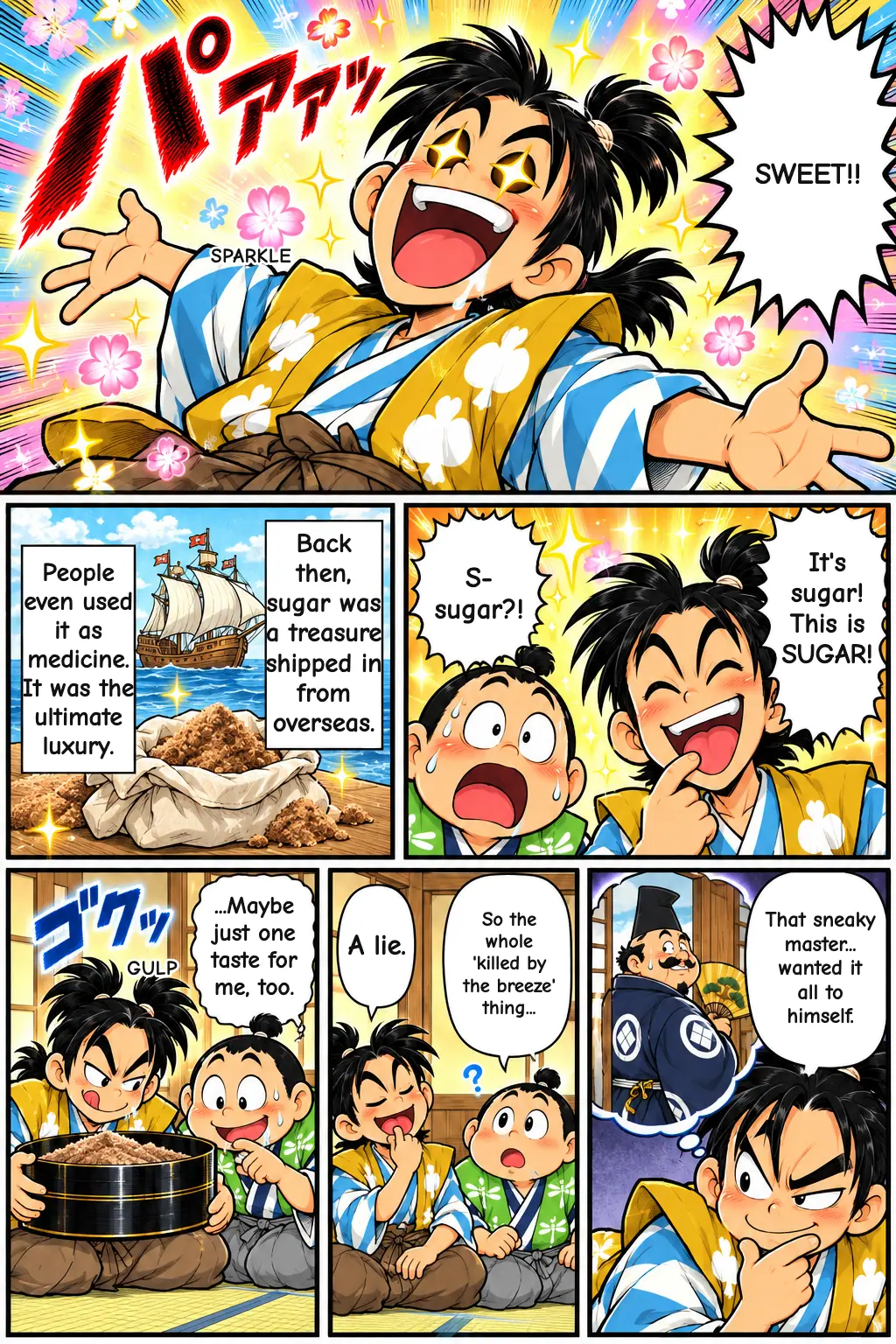
The master of the house has to go out, so he calls his two servants, Taro Kaja and Jiro Kaja, and tells them to watch the place while he's gone. Before he leaves, he points to a covered tub. It holds busu, he says, a poison so strong that if the breeze blowing from it so much as touches you, you die. Stay away from it. Then he leaves. Of course the warning only makes them curious. The two creep toward the tub, fanning hard so the deadly air blows back the other way, and lift the lid. Taro Kaja can't resist and takes a lick. It isn't poison at all. It's sugar, and it's delicious.
Busu (The Poison Jar) Kyogen Summary: Taro Kaja, Jiro Kaja and the “Poison” Sugar
In short: Busu (The Poison Jar) is a classic kyogen comedy from Japan. A master tells his servants Taro Kaja and Jiro Kaja that a tub holds busu, a poison so deadly that even the breeze blowing off it can kill. The two peek inside anyway, find sweet sugar, eat every bit of it, and then use the master's own lie as their excuse. The play is in the repertoire of the Okura and Izumi schools of kyogen and is preserved in the Okura Toraakira text.
The Story of Busu: A Plot Summary
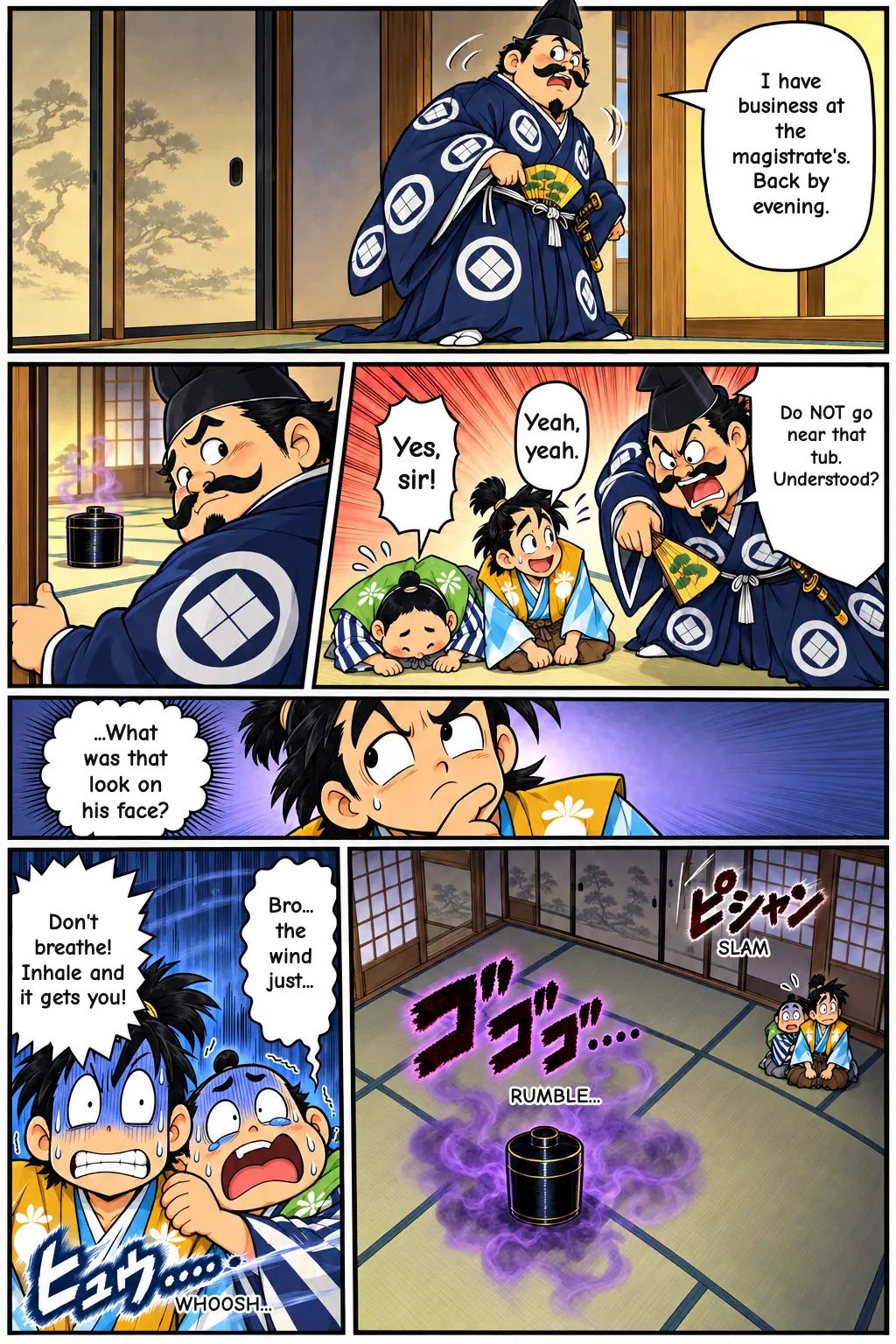
The master of the house has to go out, so he calls his two servants, Taro Kaja and Jiro Kaja, and tells them to watch the place while he's gone. Before he leaves, he points to a covered tub. It holds busu, he says, a poison so strong that if the breeze blowing from it so much as touches you, you die. Stay away from it. Then he leaves.
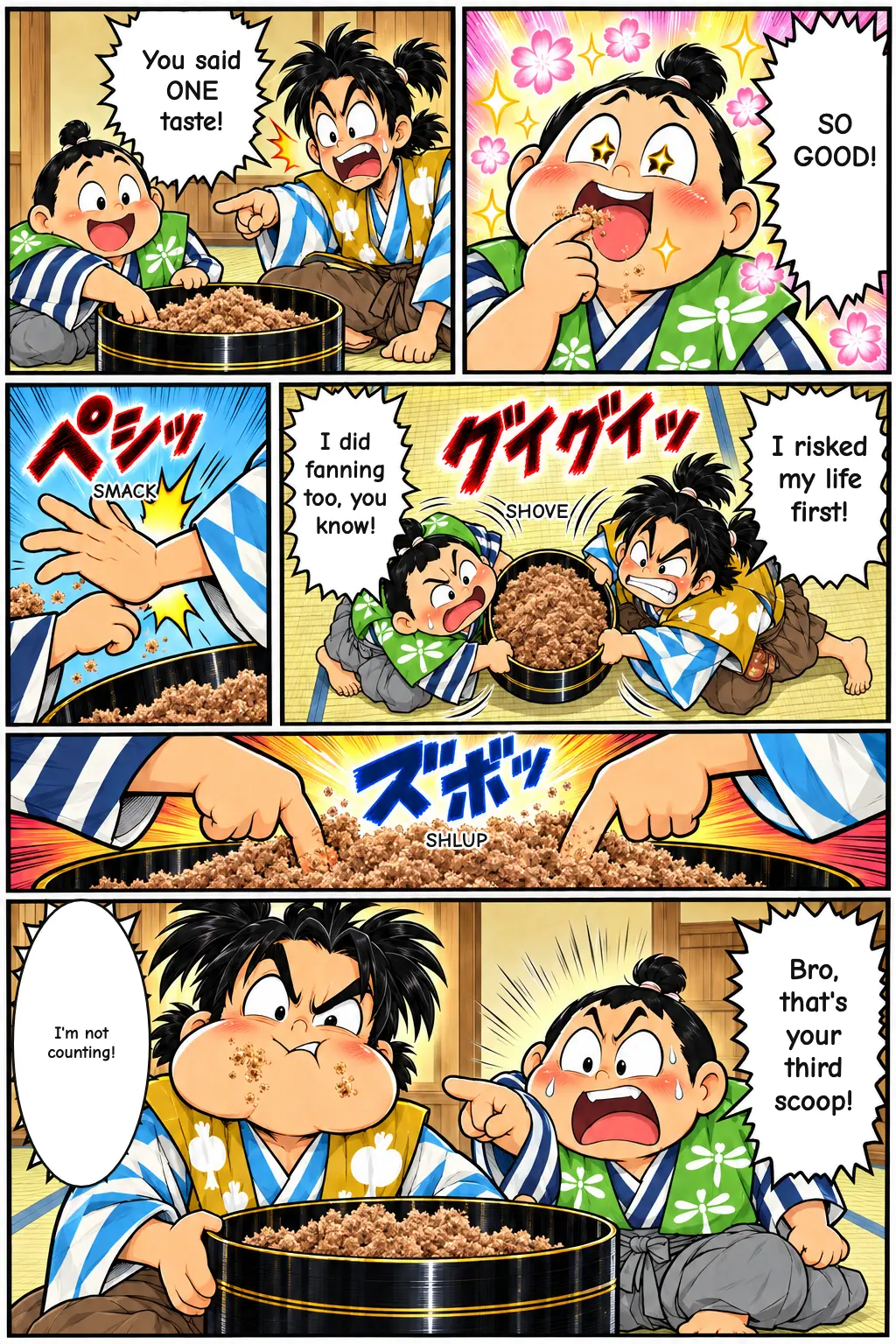
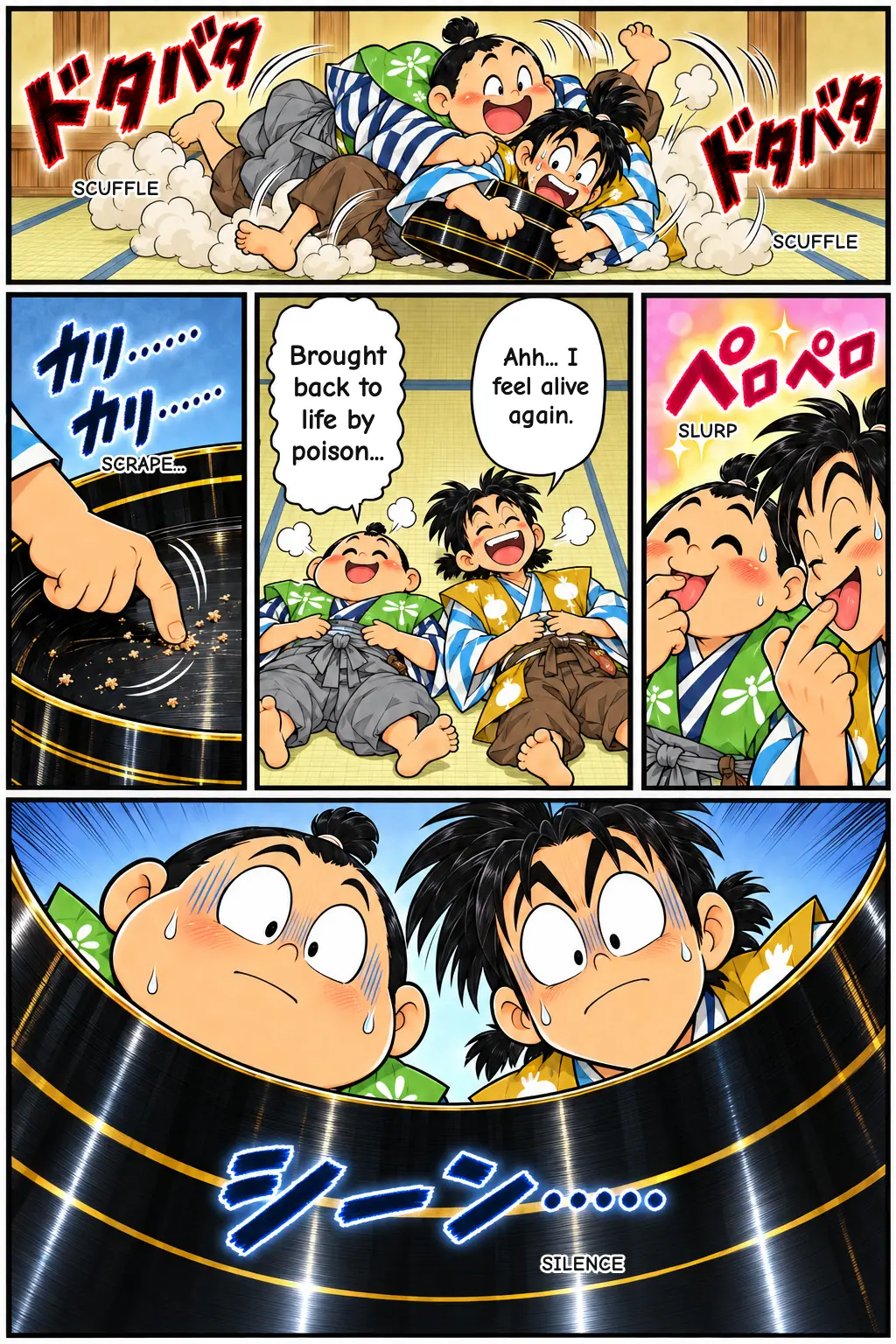
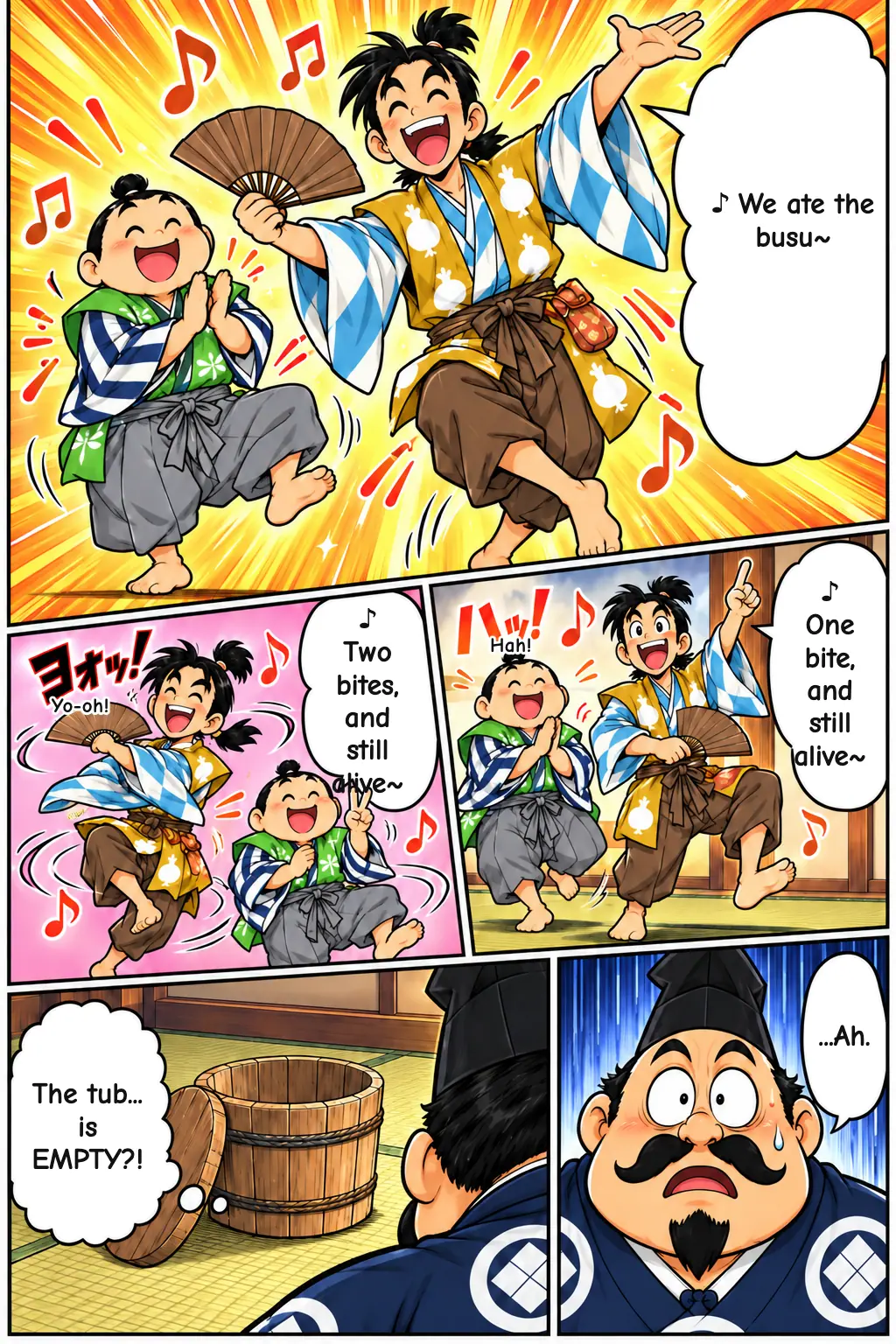
Of course the warning only makes them curious. The two creep toward the tub, fanning hard so the deadly air blows back the other way, and lift the lid. Taro Kaja can't resist and takes a lick. It isn't poison at all. It's sugar, and it's delicious. Jiro Kaja tries some too, and the two grab it from each other until the tub is empty.
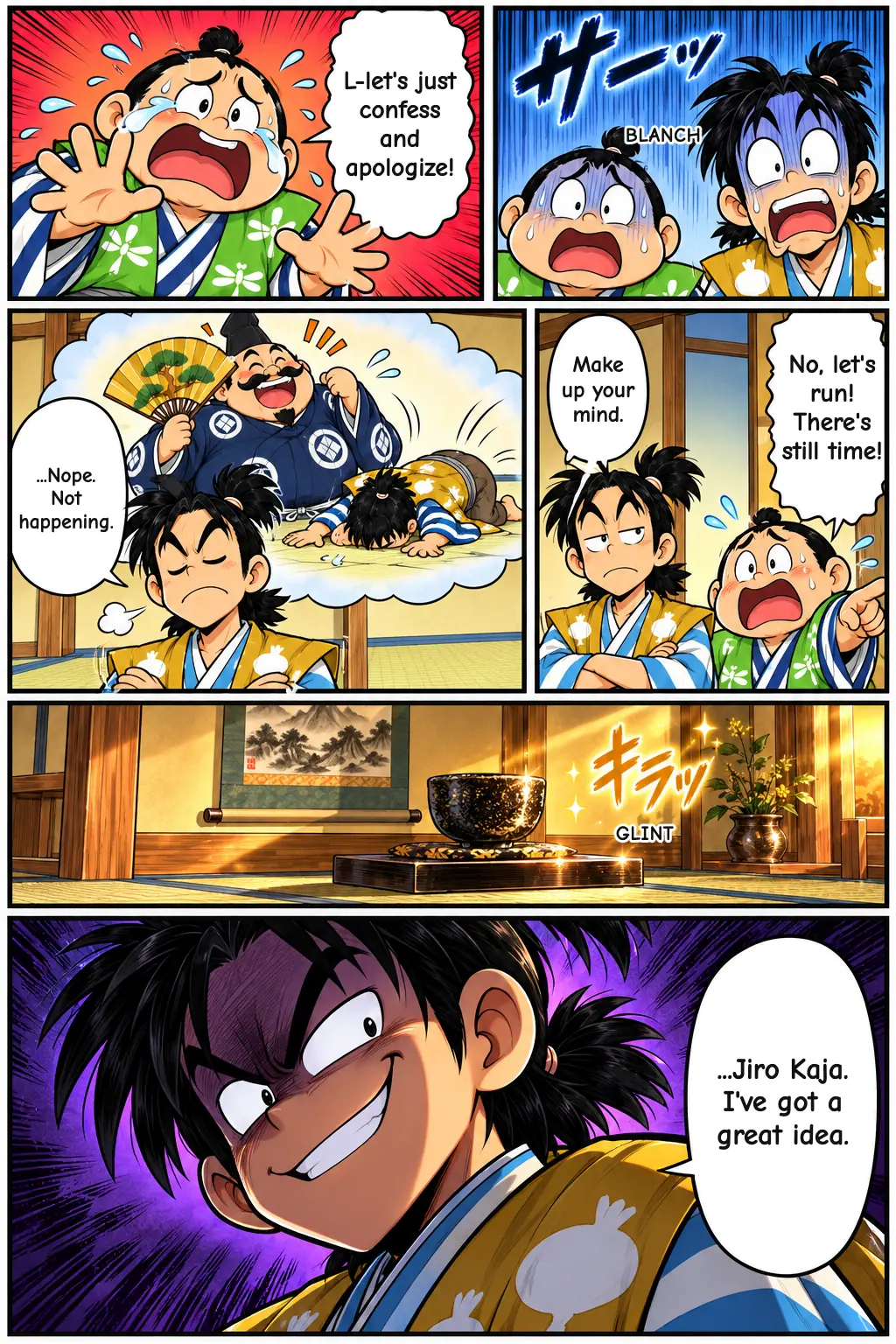
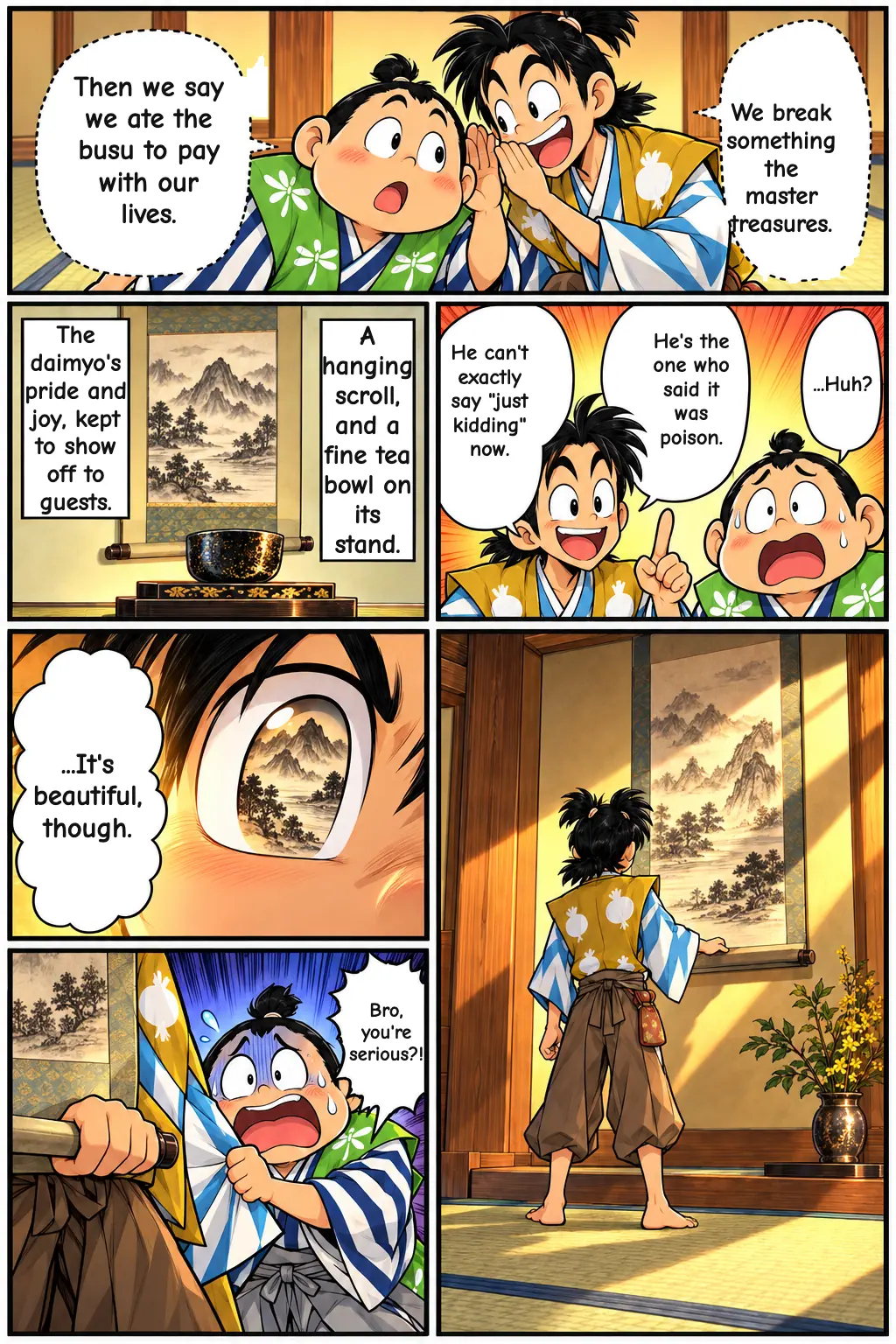
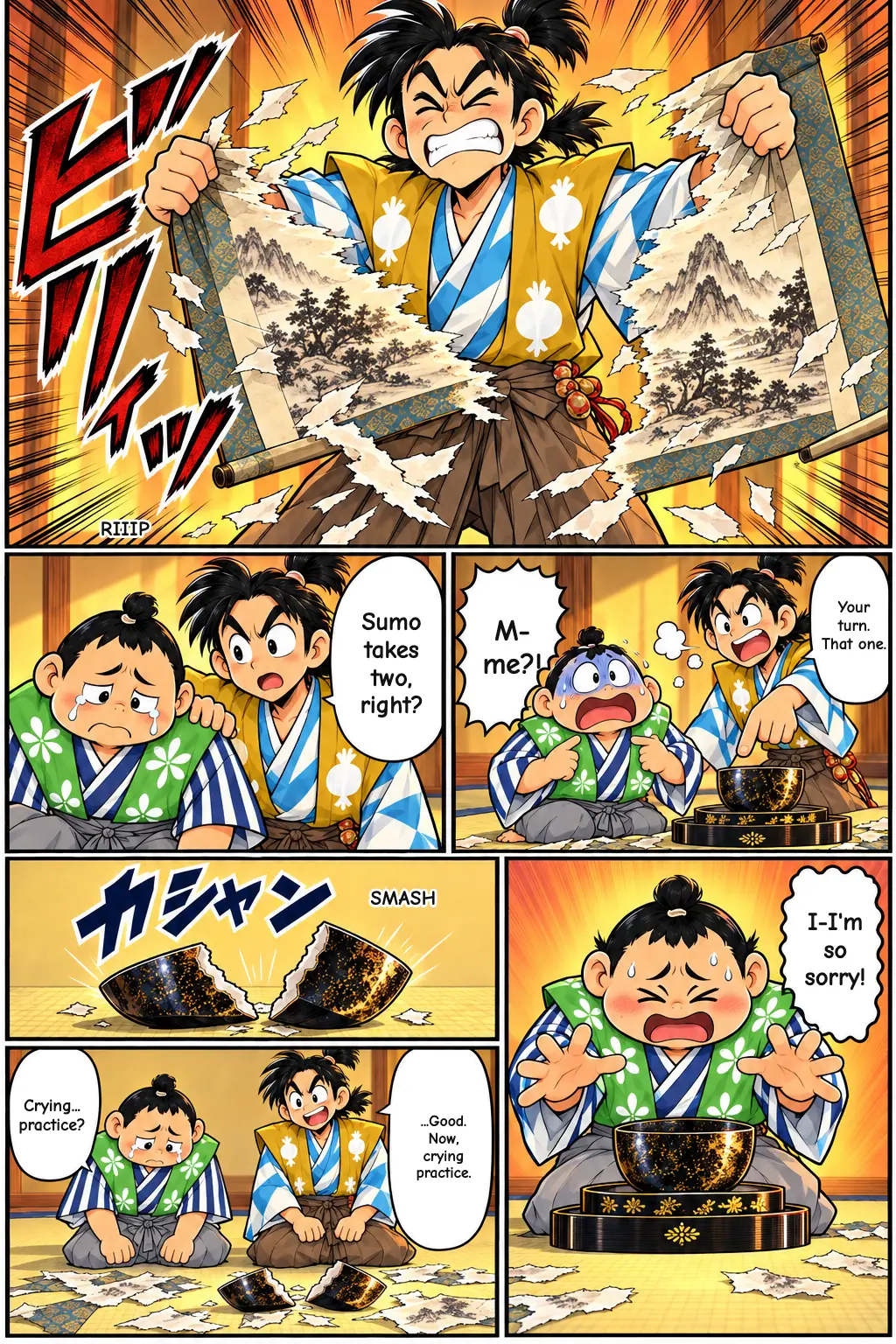
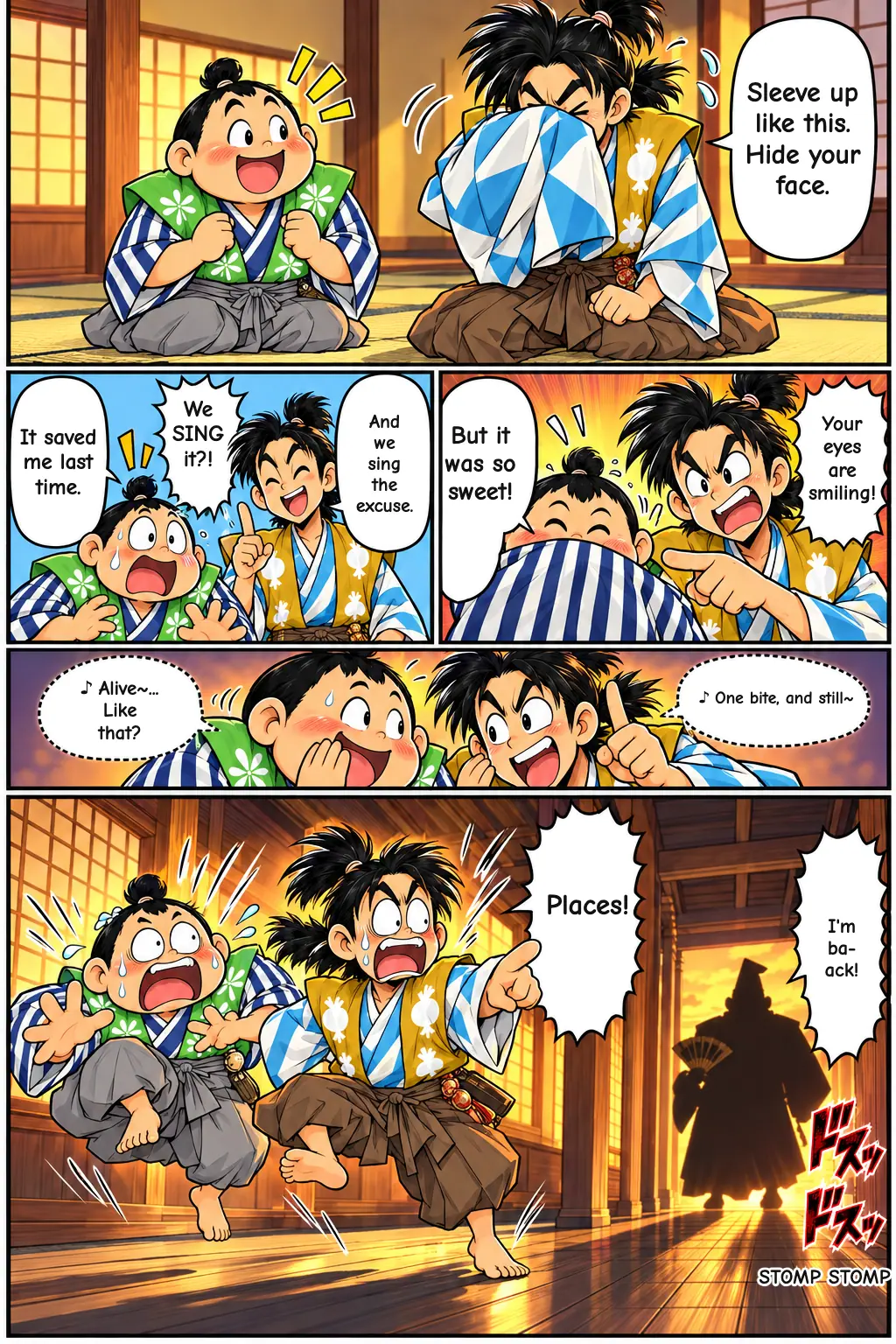
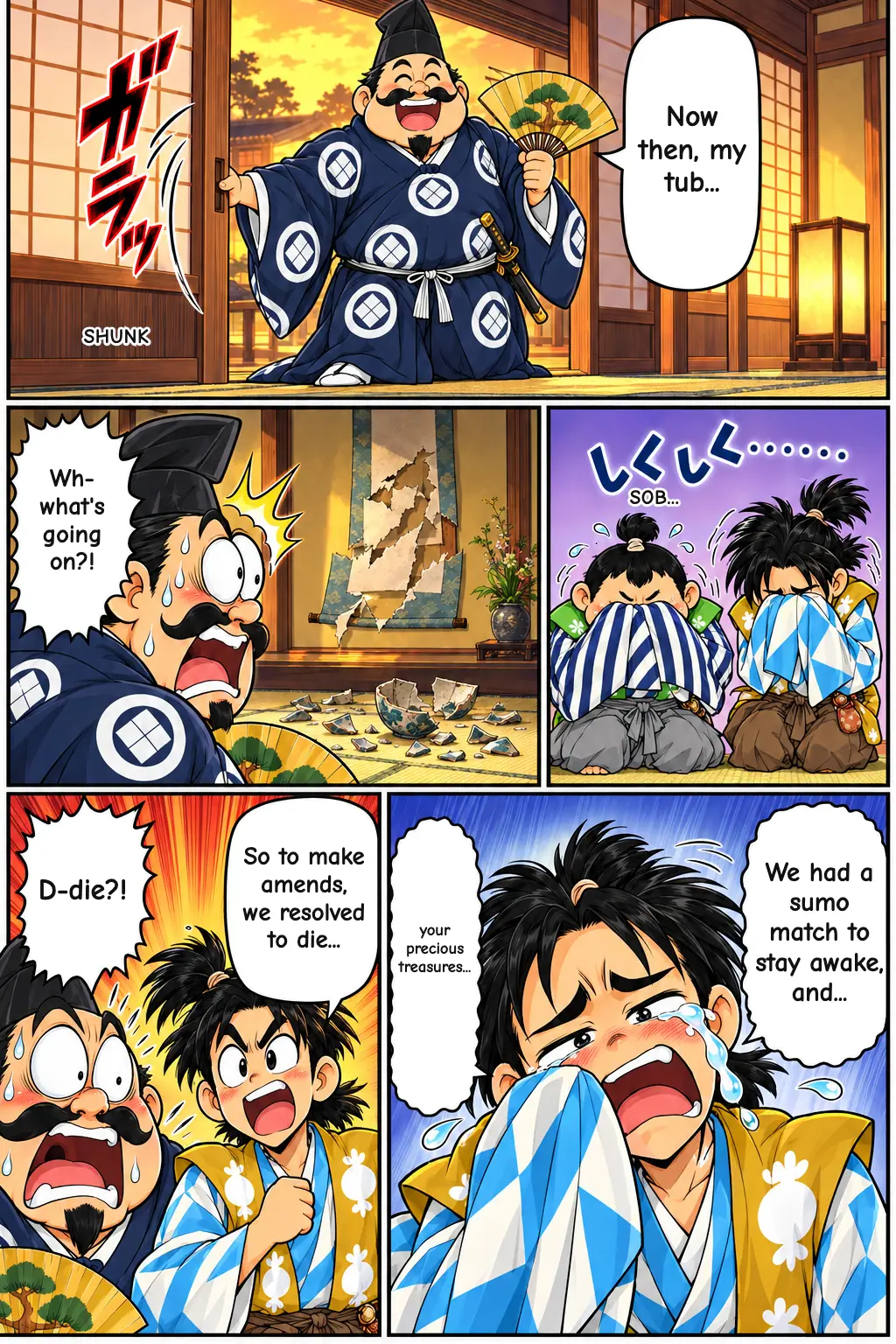
Now they need an excuse. Taro Kaja comes up with a bold plan: he tears up the master's treasured hanging scroll, and a prized tenmoku tea bowl on its stand gets smashed as well. When the master comes home, the two greet him in tears. They were wrestling to stay awake, they explain, and broke his precious things by accident. Ashamed, they decided to die by eating the busu. But one mouthful didn't kill them, and neither did two. They tell all this in a half-sung lament. The master realizes he's been tricked, shouts "Yarumaizo, yarumaizo!" (roughly, "Don't let them get away!"), and chases them off the stage. That chase is how the play ends.
Main Characters
Kyogen uses stock characters, and Busu shows the classic setup clearly. The master is a careful, slightly sly man who'd rather lie than share his sugar. Taro Kaja is the chief servant and the one who drives the plot: the first to taste the busu and the one who thinks up the excuse. Jiro Kaja is his partner. He takes part in everything, but in many versions he tends to follow Taro's lead. Exactly how the two split the work, for example who breaks which treasure, varies between schools, scripts, and textbook versions.
What Busu Tells Us: Kyogen and Its World
Kyogen is a comic theater that grew up beside Noh, Japan's solemn masked drama. It took shape around the 14th and 15th centuries, during the Muromachi period, which is where the "600-year-old comedy" label comes from. Traditionally a kyogen play is performed between two Noh plays, and where Noh deals in ghosts and tragedy, kyogen deals in ordinary people: servants, masters, farmers, and con men.
Busu shows one of kyogen's favorite jokes, the servant who outwits his master. The master holds the power, but here he's caught out by his own lie. He made up the poison story to keep the sugar to himself, and the servants simply play along with it. Sugar was a rare and costly luxury in medieval Japan, which explains why he'd guard it so jealously. The word busu itself refers to a real poison made from aconite (wolfsbane) root, so to the original audience the threat would have sounded believable.
A very similar story appears in Shasekishu (Collection of Sand and Pebbles), a 13th-century book of Buddhist tales. In it, a monk tells a young temple boy that his candy is poison. The boy breaks the monk's treasured water jar, then eats the candy, saying he tried to die by eating the poison but couldn't. It is often described as one of the sources Busu grew out of. Today Busu is one of the best-known kyogen plays and a familiar piece in Japanese school textbooks, so many people in Japan first meet classical theater through this one sugary joke.
What the Manga Changes
The manga follows the original's plot closely, from the warning to the fanning, the sugar, the broken treasures, the sung excuse, and the final chase. Some details are new or exaggerated for comics.
The biggest change: in the original script the master is simply "the master" (shu), not a daimyo (feudal lord). For this series, the manga merges the role into its recurring Daimyo character. Where he's going and why are the manga's invention too, as is the exaggerated comedy of the two servants creeping up on the tub, the wild fanning, their faces when they taste the sugar, and the slapstick fight over it. The manga also draws a sharper contrast between the two, making Taro more of a schemer and Jiro a little more timid. The design of the scroll and the tea bowl, the Muromachi-era house and costumes, the way the sung excuse keeps counting up past two mouthfuls, and whatever happens at the end of the chase are all creative choices. The original simply ends with the master chasing them away.
Where to Read It
If you'd like to see Taro Kaja and Jiro Kaja fan their way toward the "poison" tub, Episode 2 of KYOGEN: Japan's 600-Year-Old Comedy, "Even Its Breeze Kills. So We Peeked.", is right here on Manga Portal. Every episode is free, and you don't need an account. It's a quick, easy way into a comedy Japanese audiences have been laughing at for centuries, and the other episodes bring more of kyogen's servants, masters, and schemes to life.
Characters in this episode
The Master (Shu)
The head of the house, who tells his servants his sugar is a deadly poison so he can keep it to himself; the manga casts him as the series' Daimyo.
Taro Kaja
The chief servant, curious and quick-witted, who tastes the 'poison' first and invents the outrageous excuse.
Jiro Kaja
Taro Kaja's fellow servant and partner in crime, who shares the sugar and joins the tearful act, usually following Taro's lead.
FAQ
What is Busu in kyogen?
Busu is a short comic play in Japan's kyogen theater. A master tells his two servants that a tub holds a deadly poison called busu, but it turns out to be sugar, and the servants eat it all and blame the master's lie. It is performed by both the Okura and Izumi schools.
What does 'busu' mean?
Busu (附子) is the name of a real poison made from aconite (wolfsbane) root. In the play, the master uses the name to scare his servants away from his sugar.
How does Busu end?
The master comes home and finds his sugar gone and his treasures broken. The servants claim they tried to kill themselves by eating the poison. When he realizes he's been tricked, he shouts 'Yarumaizo, yarumaizo!' and chases them off the stage, a standard way for kyogen plays to end.
Who are Taro Kaja and Jiro Kaja?
They are stock servant characters who show up in many kyogen plays. Taro Kaja is usually the main servant and comic lead, and Jiro Kaja is his second. Together they often outsmart, or get caught by, their master.
Is Busu based on an older story?
A very similar tale appears in Shasekishu, a 13th-century collection of Buddhist stories, in which a temple boy eats the 'poison' candy his monk was hiding. It is often described as one of the sources of the play.