Episode 6Lend Me Your Monkey's Skin. He's Using It.The Monkey Quiver (Utsubo-zaru)
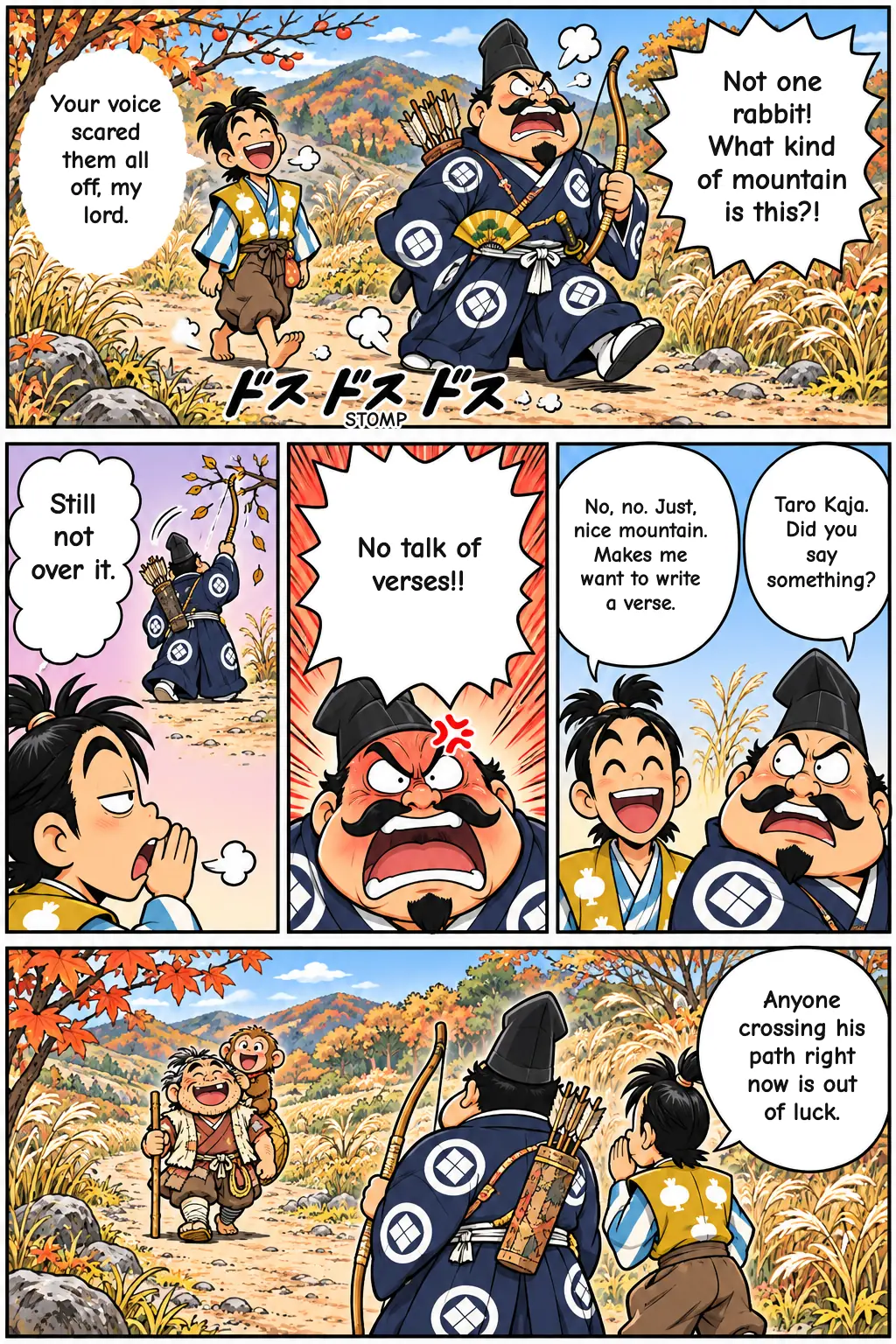
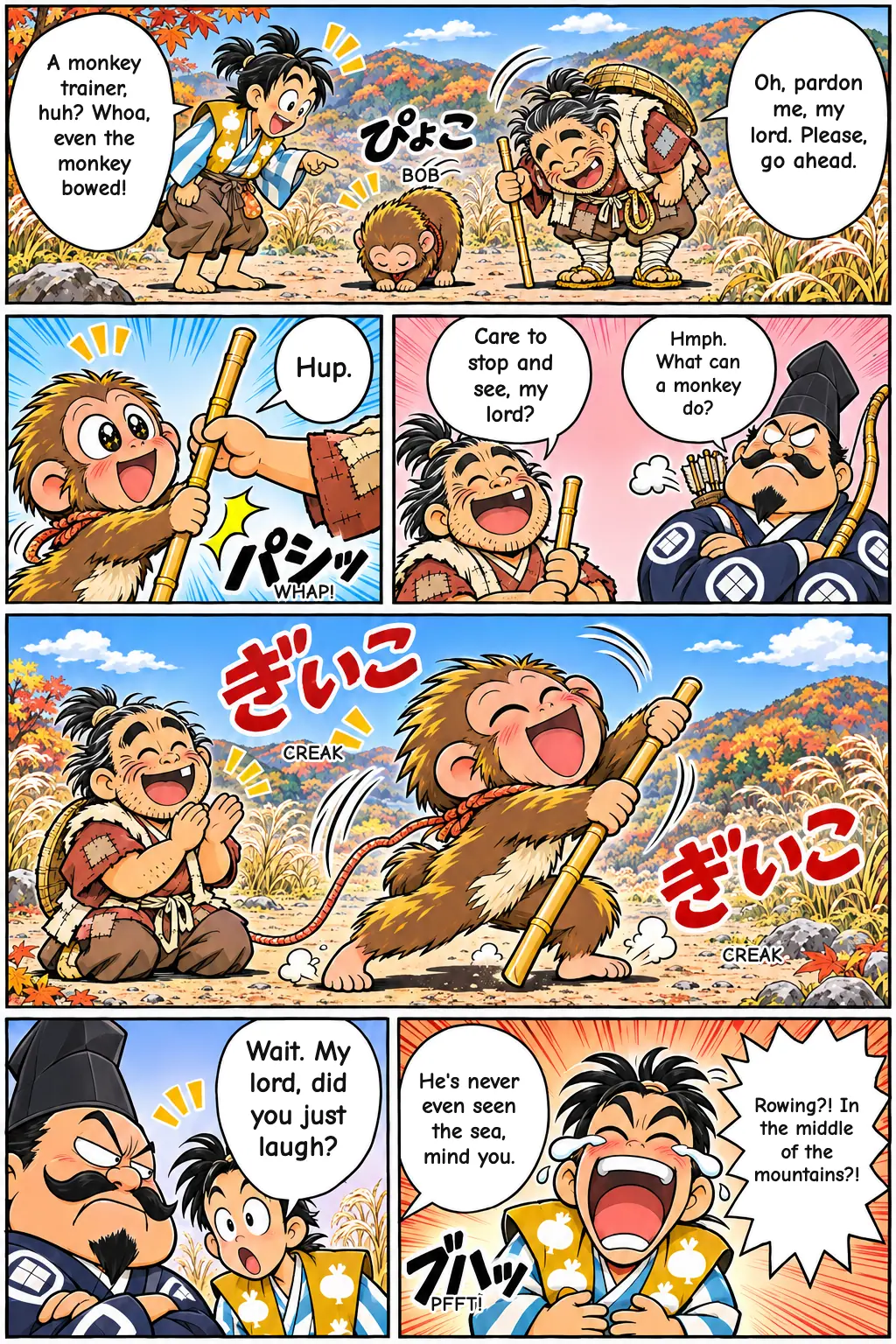
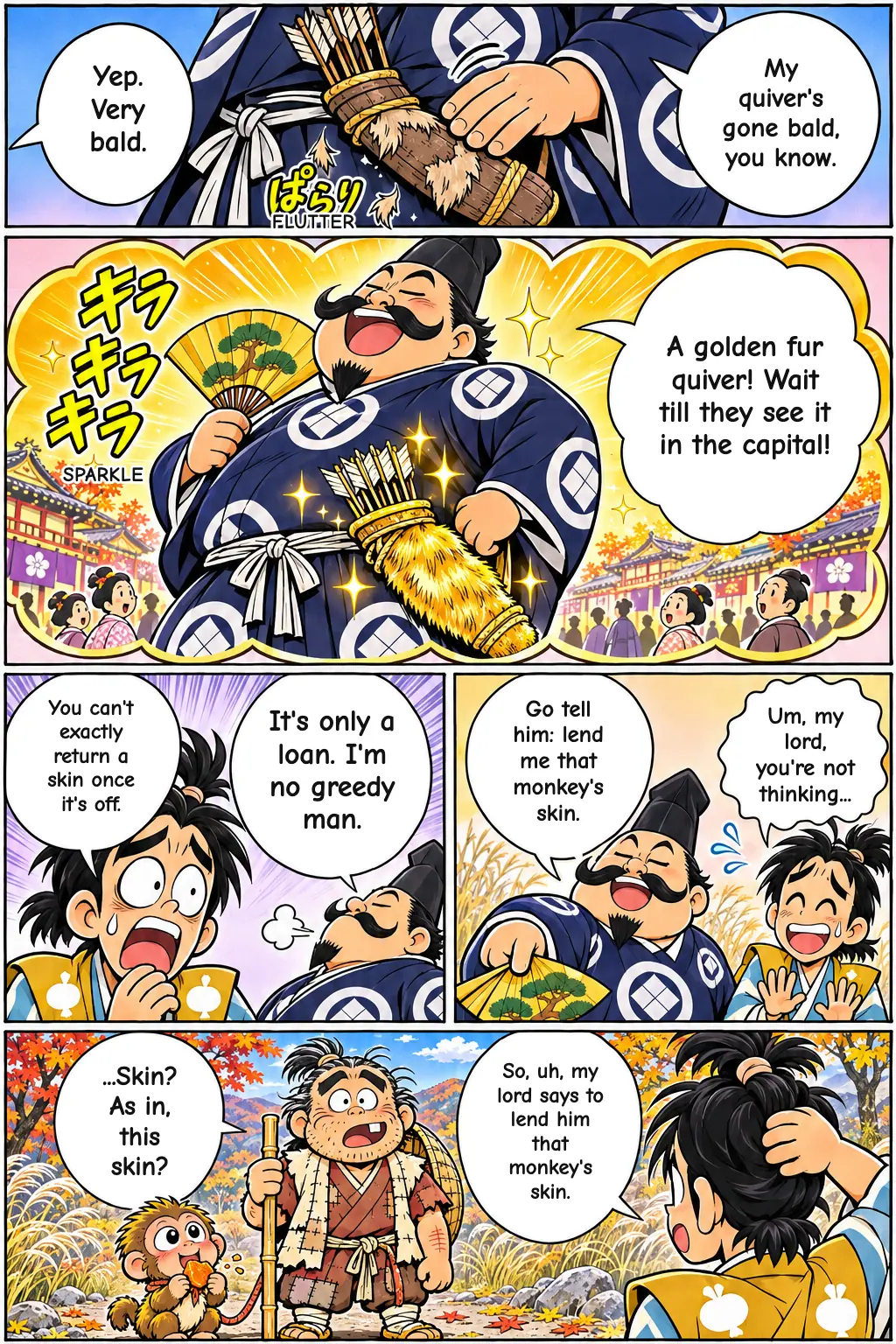
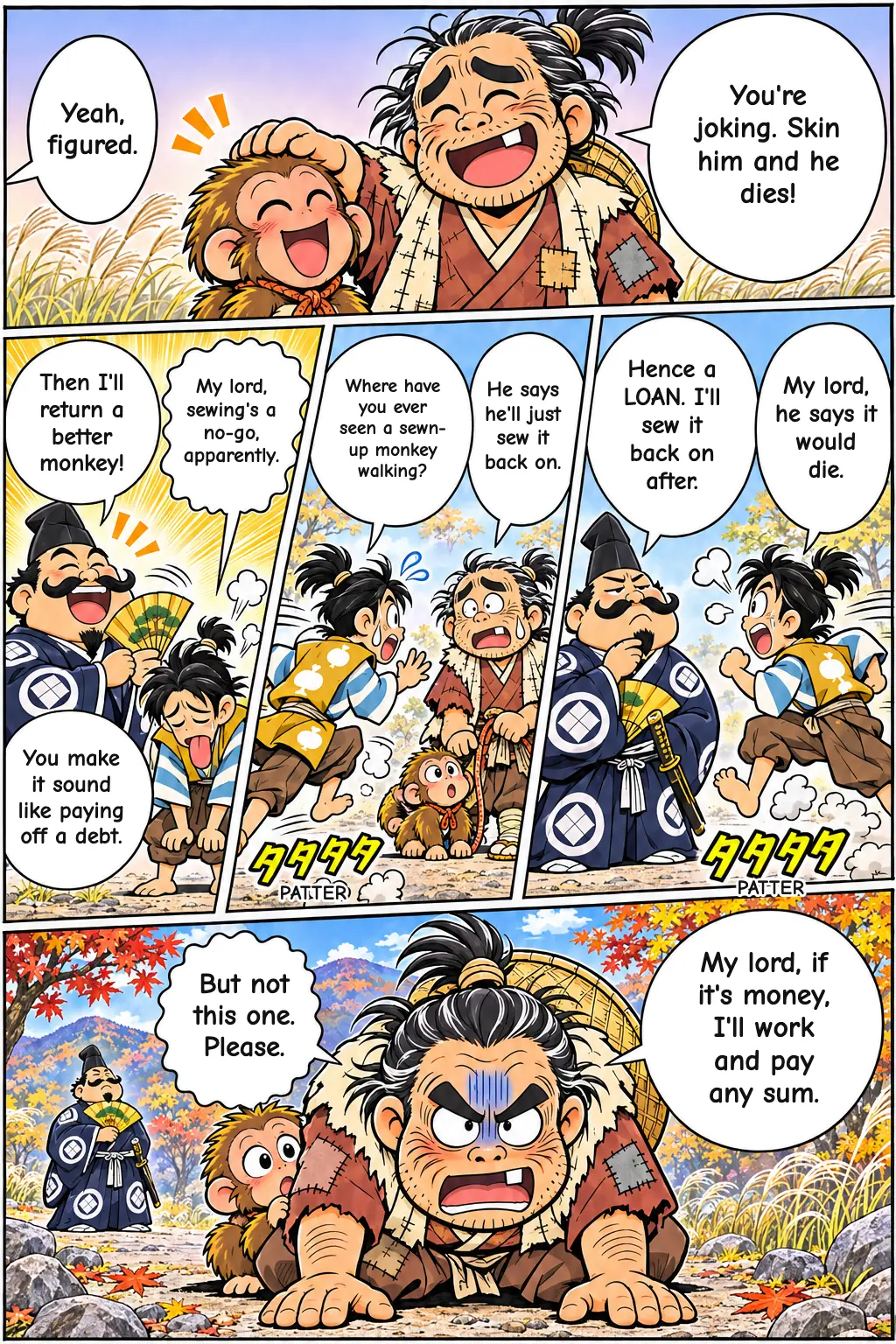
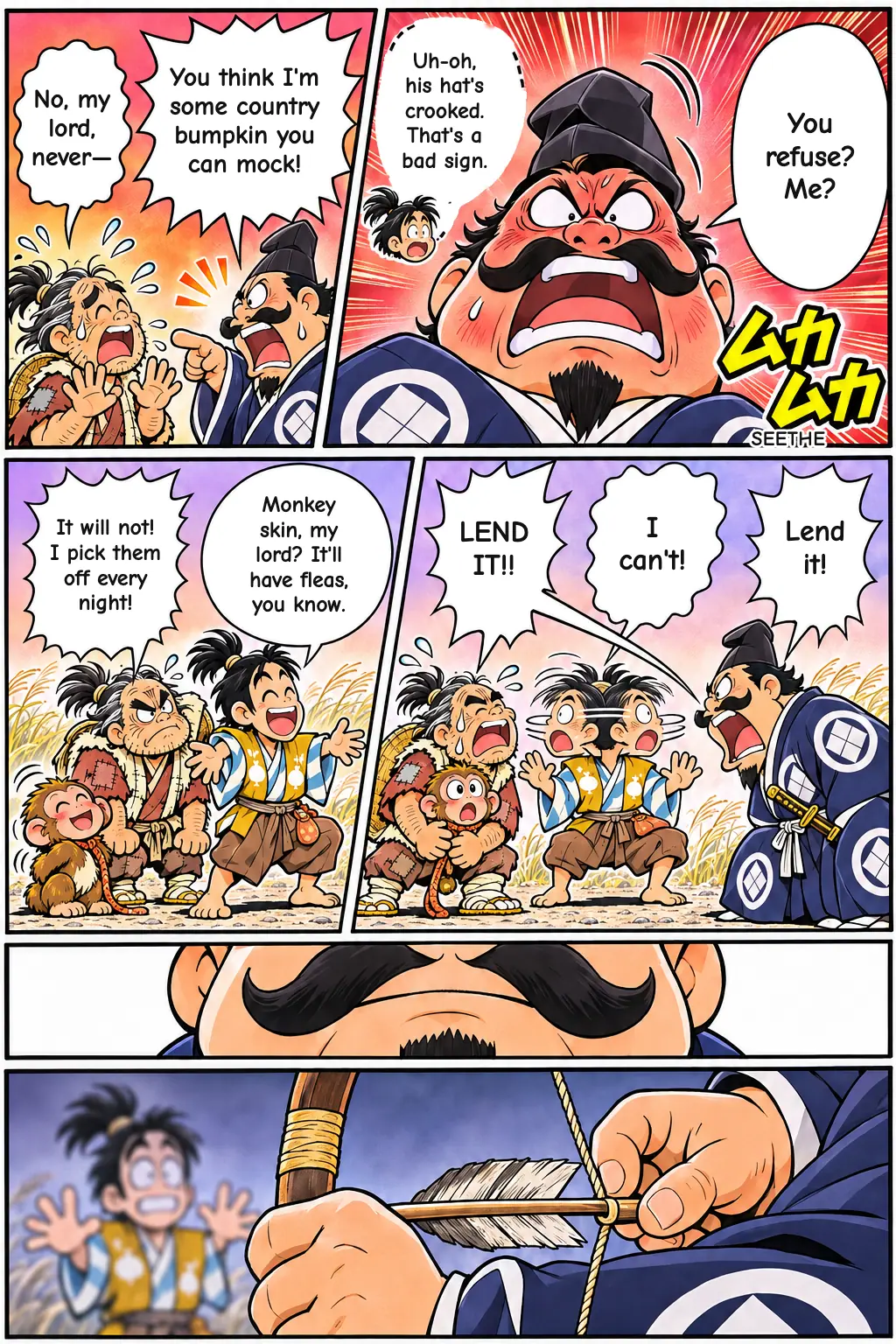
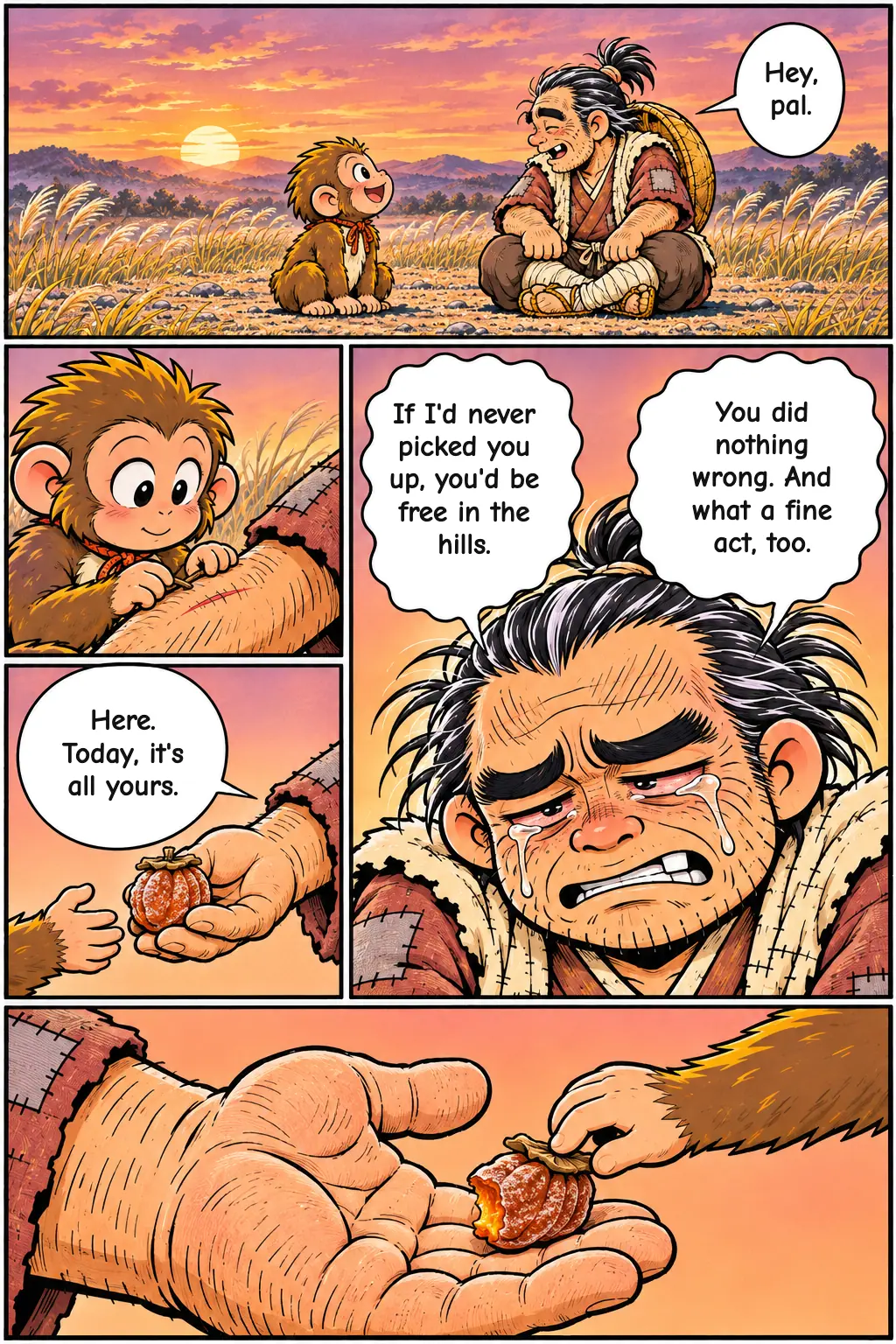
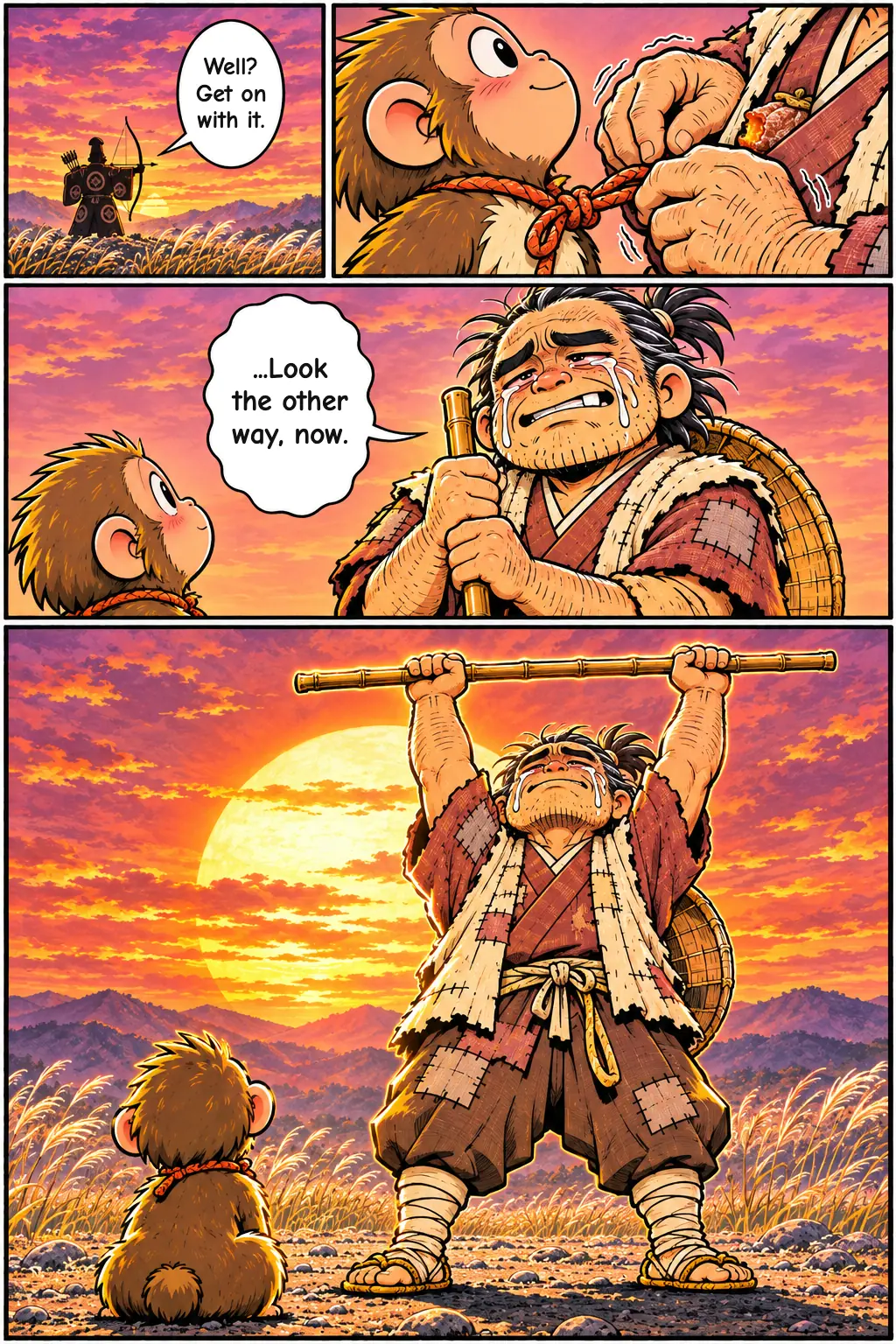
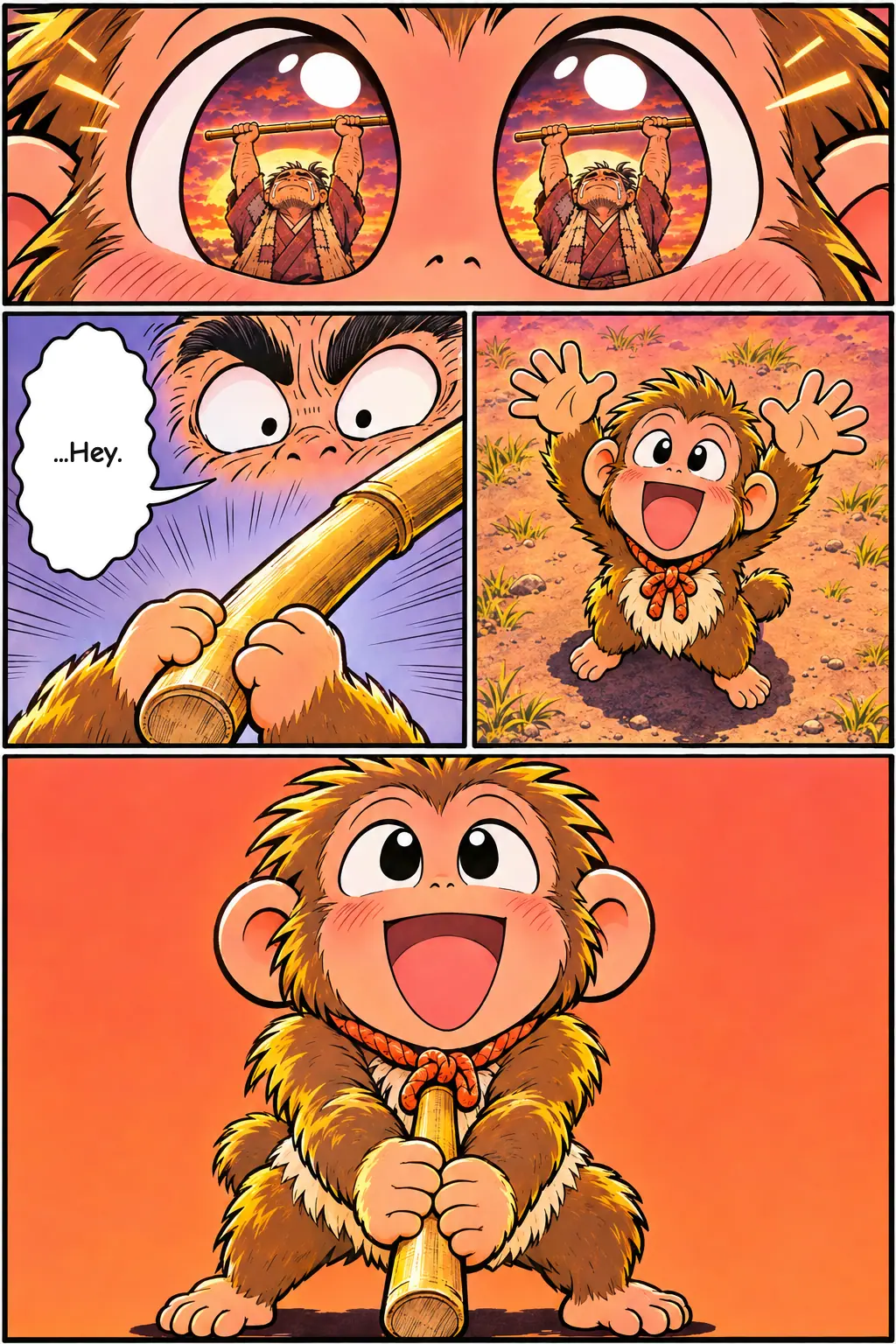
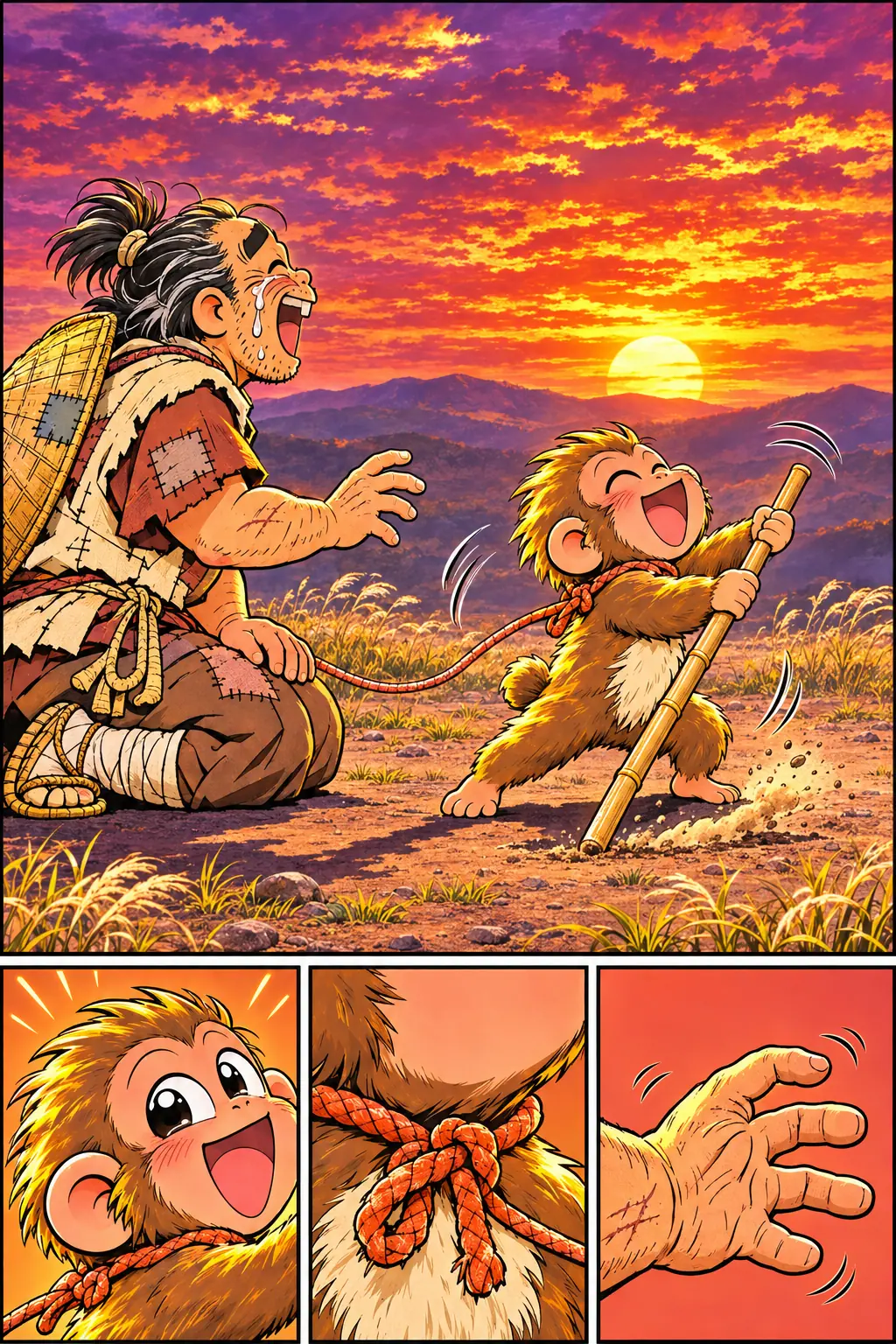
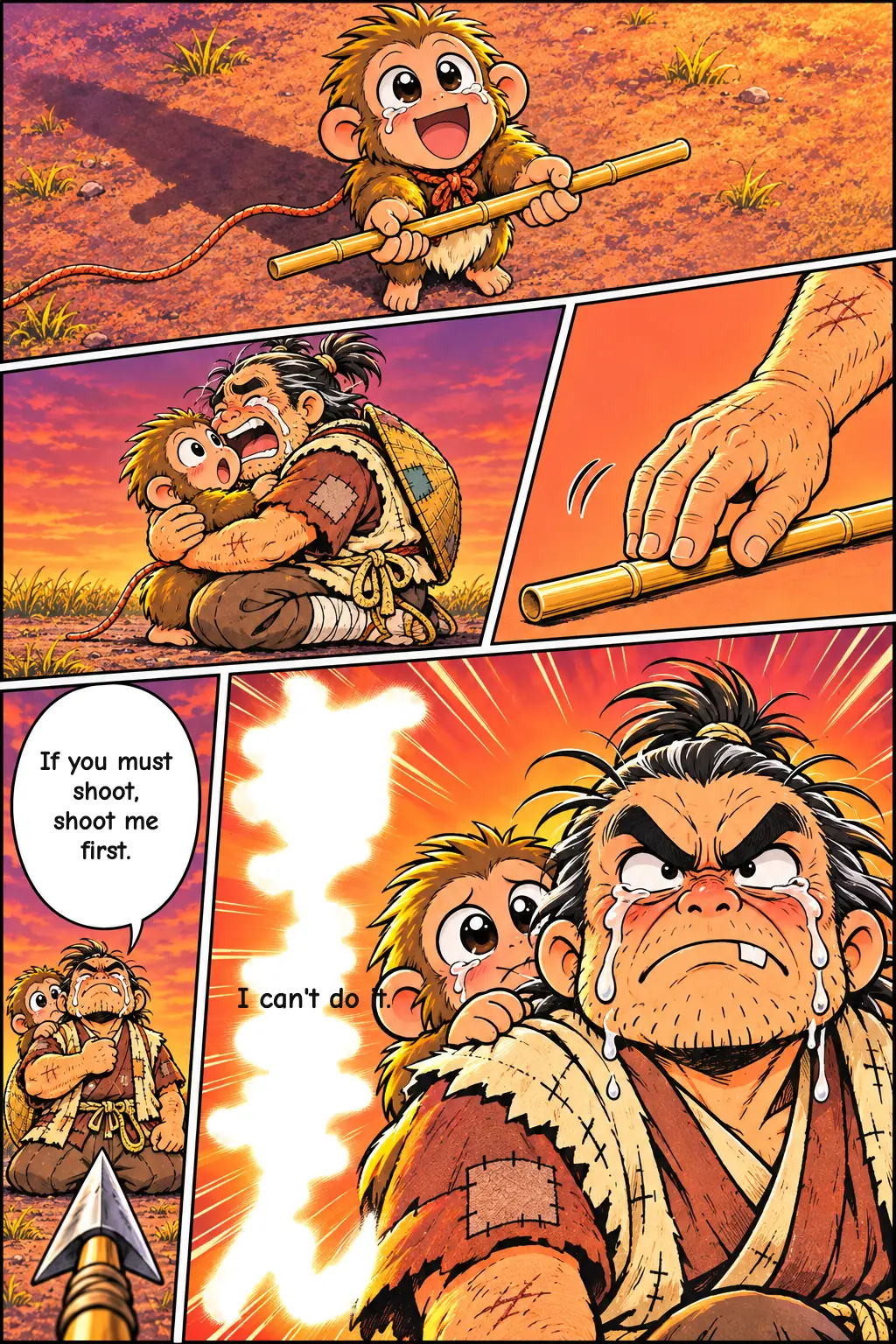
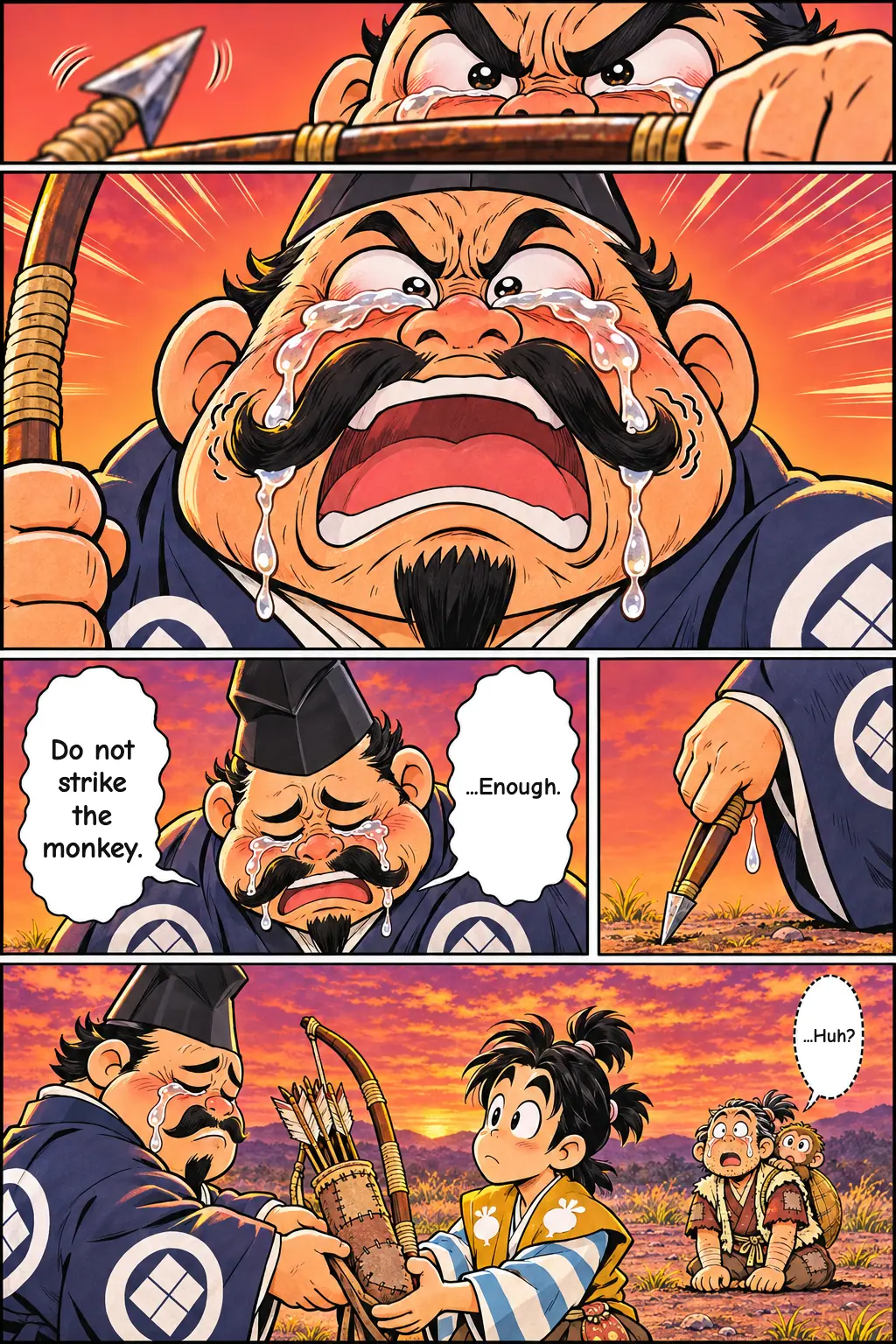
After a hunt with nothing to show for it, a furious daimyo aims his bow at a traveling monkey trainer and demands, "Lend me that monkey's skin." Weeping, the trainer raises his staff. But the Little Monkey thinks it's his cue and starts to row. You'll laugh, you'll cry, and you'll end up laughing harder than ever.
Bookmark the series page so you can jump back in when the next episode is out: KYOGENRSS for this series
Get new episodes in your feed. Follow us on:ThreadsBluesky
Story summary
Utsubo-zaru, usually translated as The Monkey Quiver, is one of the best-loved plays in kyogen, the comic theater that developed alongside Japan's masked Noh drama about six hundred years ago. Kyogen is mostly spoken, and it finds its humor in ordinary human weakness. An utsubo is a quiver, a case for carrying arrows, and zaru comes from saru, the Japanese word for monkey. The title sums up the whole problem: a monkey, and a quiver that someone wants covered in its fur.
Utsubo-zaru (The Monkey Quiver) Summary: Kyogen Comedy Explained
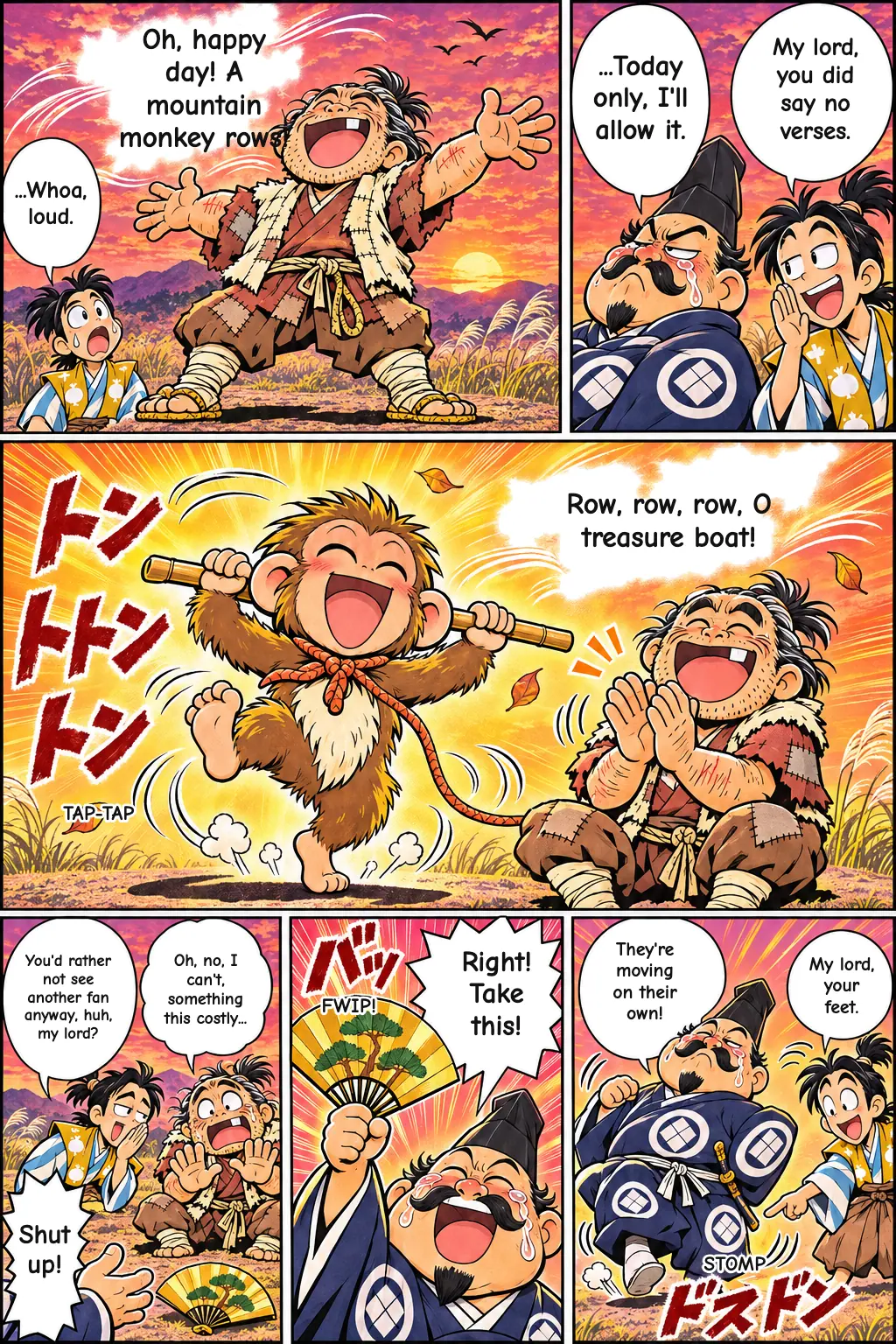
In short: Utsubo-zaru (The Monkey Quiver) is a classic Japanese kyogen comedy in which a lord demands the skin of a traveling trainer's little monkey to cover his quiver. When the heartbroken trainer raises his staff to kill it, the unknowing monkey takes the staff and starts the boat-rowing trick it was taught. The trainer collapses in tears, the lord weeps too and spares the monkey, and the play ends with everyone dancing.
What Is Utsubo-zaru?
Utsubo-zaru, usually translated as The Monkey Quiver, is one of the best-loved plays in kyogen, the comic theater that developed alongside Japan's masked Noh drama about six hundred years ago. Kyogen is mostly spoken, and it finds its humor in ordinary human weakness. An utsubo is a quiver, a case for carrying arrows, and zaru comes from saru, the Japanese word for monkey. The title sums up the whole problem: a monkey, and a quiver that someone wants covered in its fur.
The play belongs to the group known as daimyo plays, comedies built around a self-important lord, and it is performed in both surviving kyogen schools, Okura and Izumi. The outline below is the shared core of the story. Details such as the words of the monkey's song, the gifts handed out at the end, and how much the servant does can differ from one script to another.
The Story of the Original Play
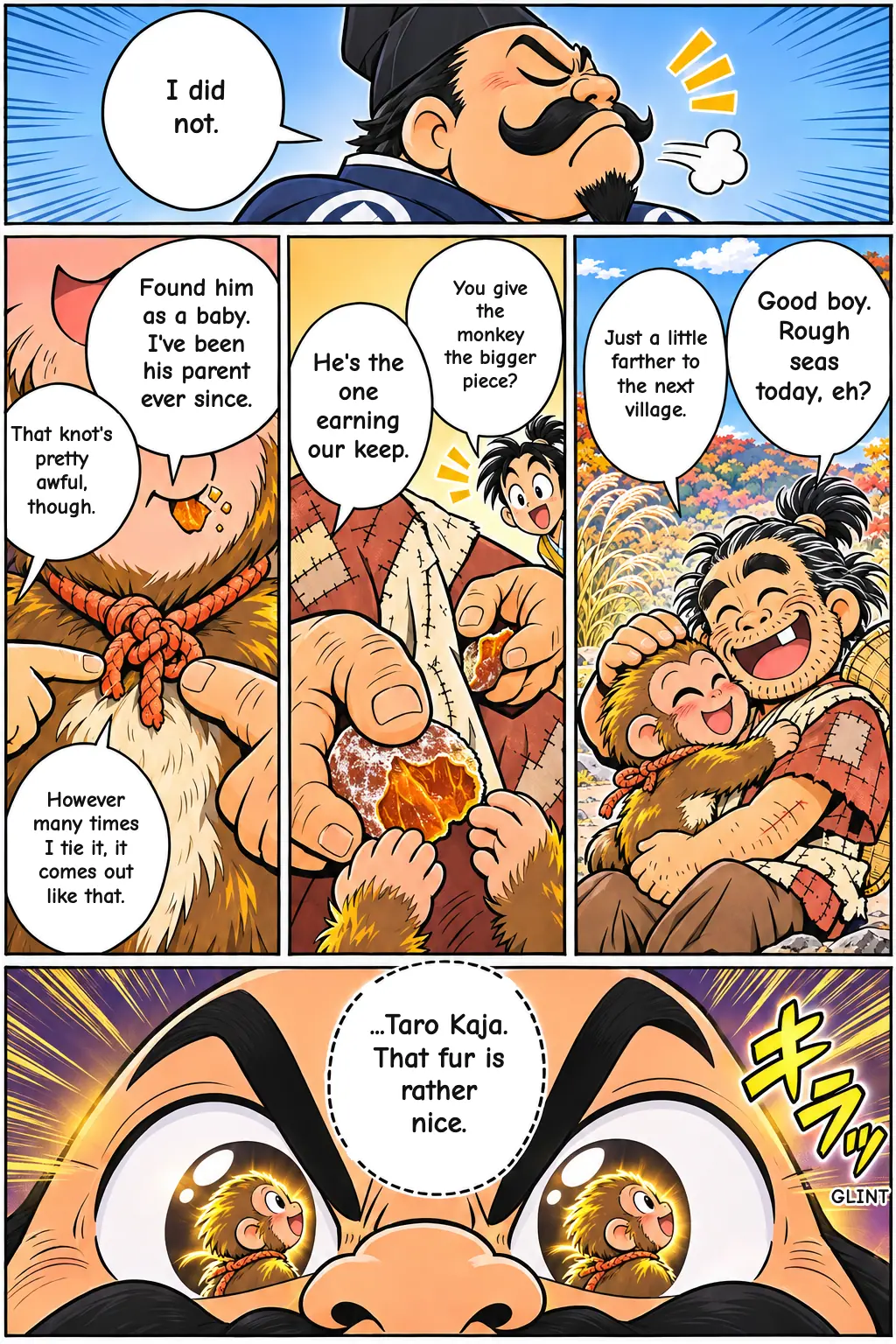
A daimyo, or lord, goes out with his servant Taro Kaja. How the outing is framed can depend on the script. Along the way they meet a monkey trainer leading a little monkey. The lord notices its beautiful coat and decides it would make a splendid covering for his quiver, so he demands that the trainer lend him the skin. The word lend is the dark joke here, because a monkey cannot give up its skin and live.
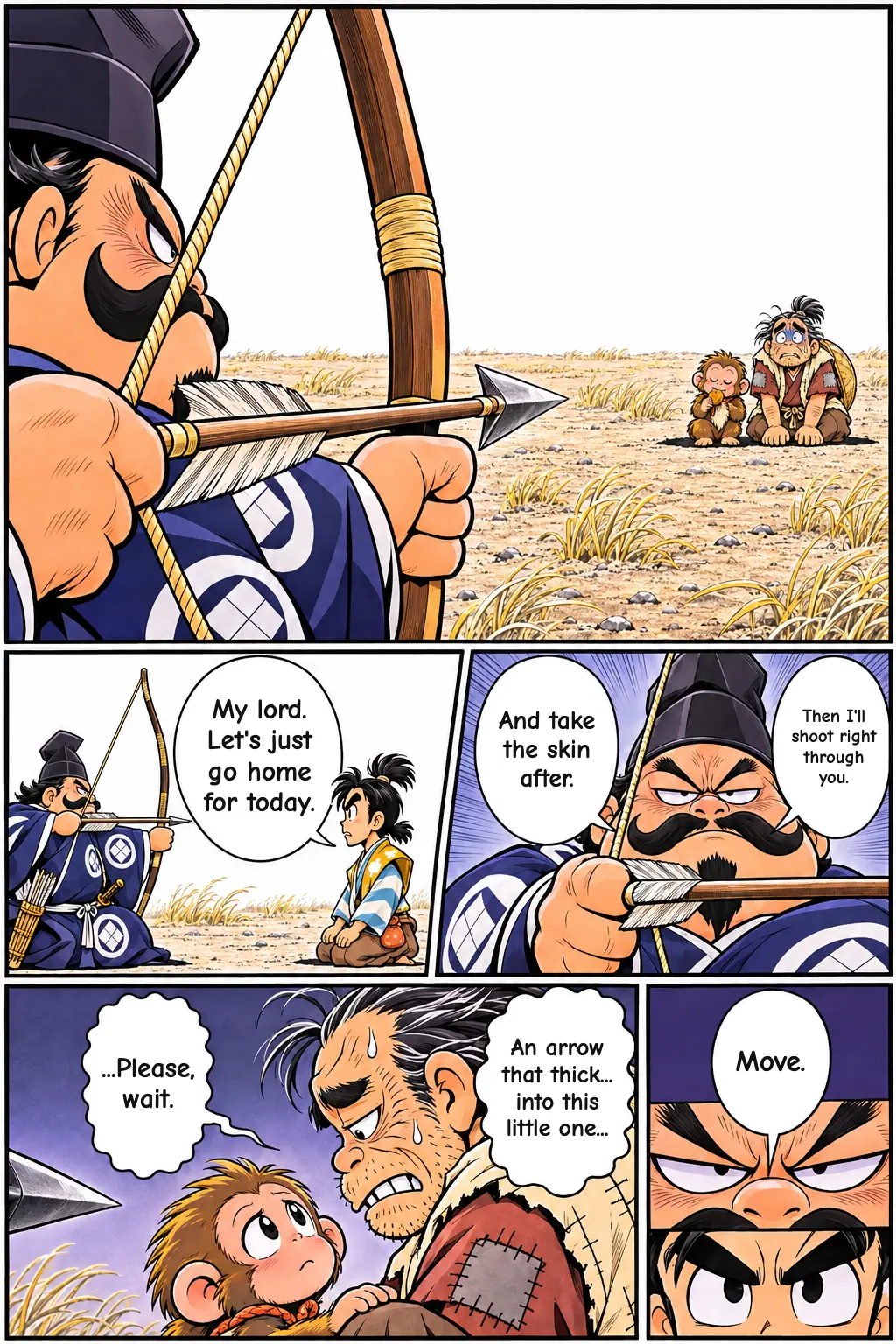
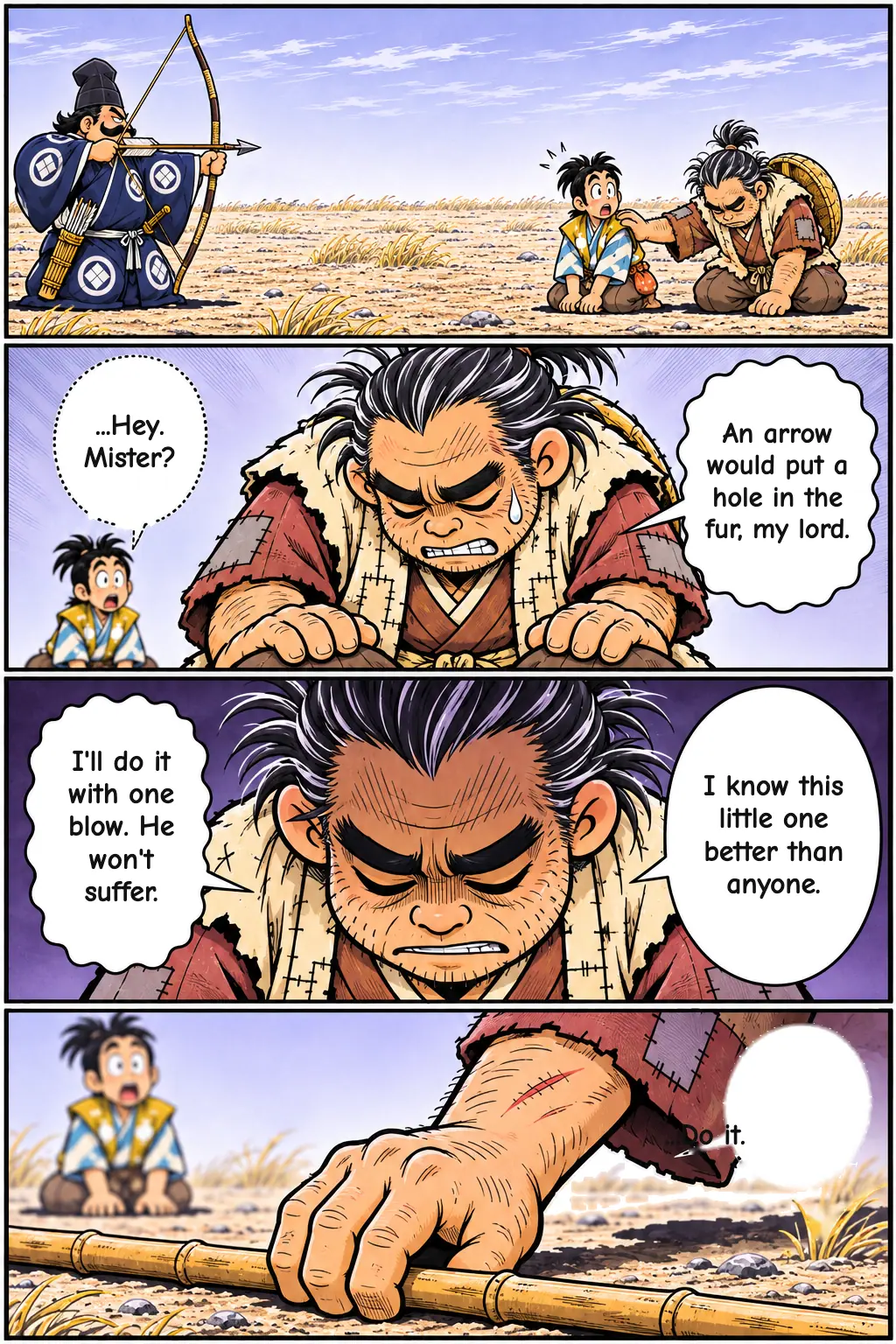
The trainer explains this and begs to be excused. The lord flies into a rage, fits an arrow to his bow, and threatens to shoot both man and monkey, while Taro Kaja tries to smooth things over between them. Seeing no way out, the trainer makes a painful offer: an arrow wound would spoil the skin, so he will kill the monkey himself with a single blow, since he knows how to handle it.
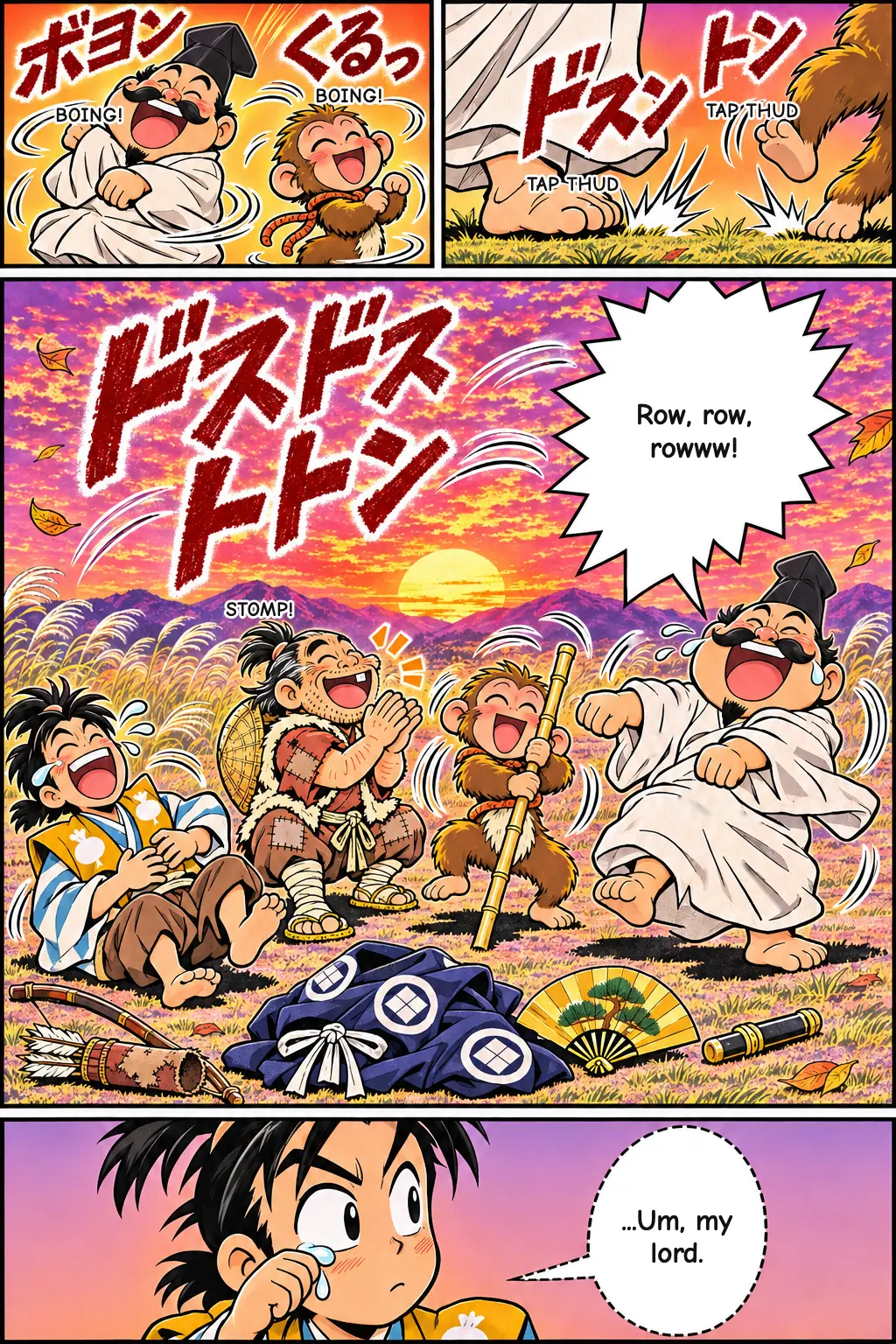
He explains the situation to the little monkey and mourns the parting. Then he raises his staff. The monkey, understanding none of this, takes the staff and starts pretending to row a boat, a trick the trainer taught it. It thinks the moment has come to perform. The trainer cannot go on. He lowers the staff, breaks down, and says he cannot strike the animal.
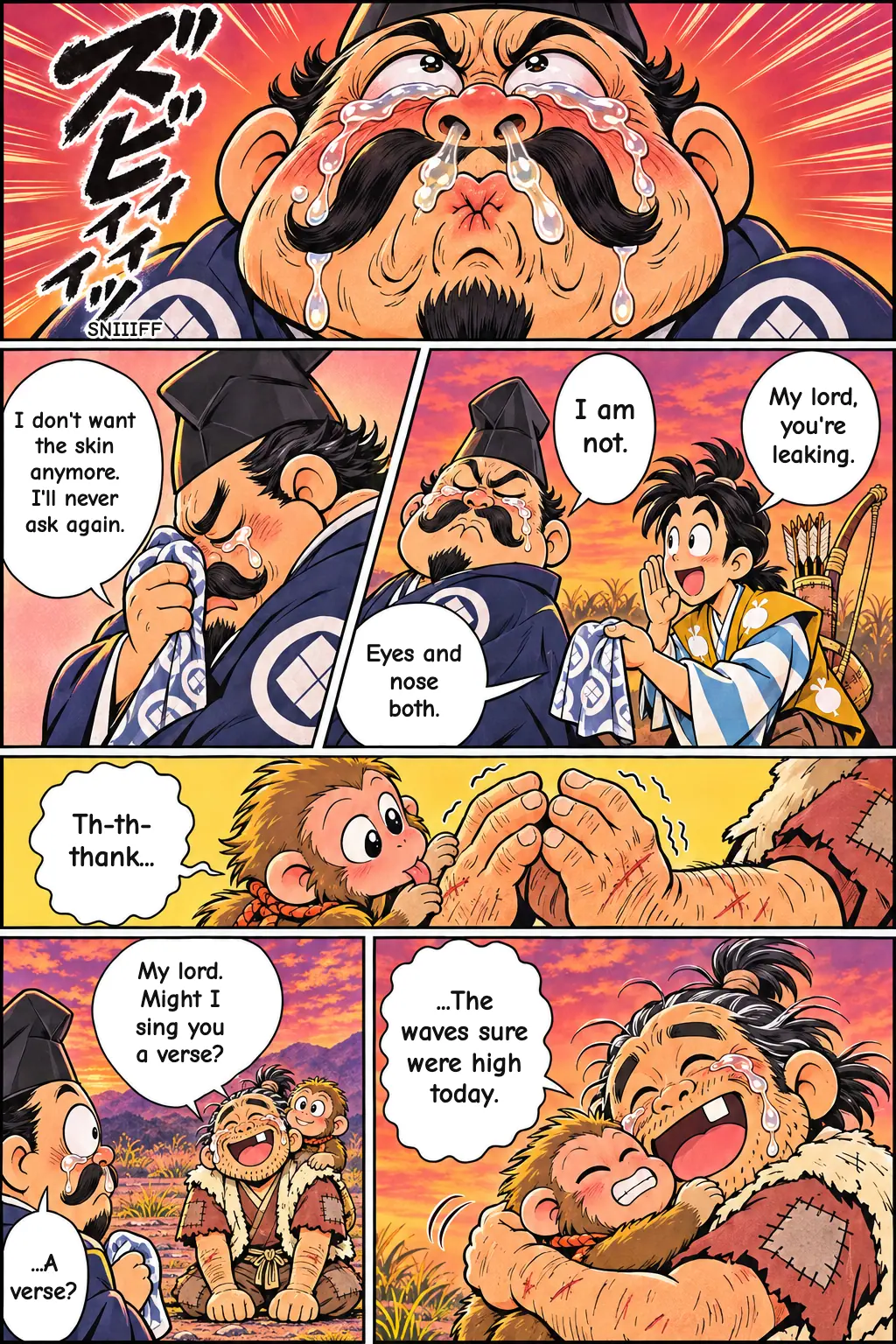
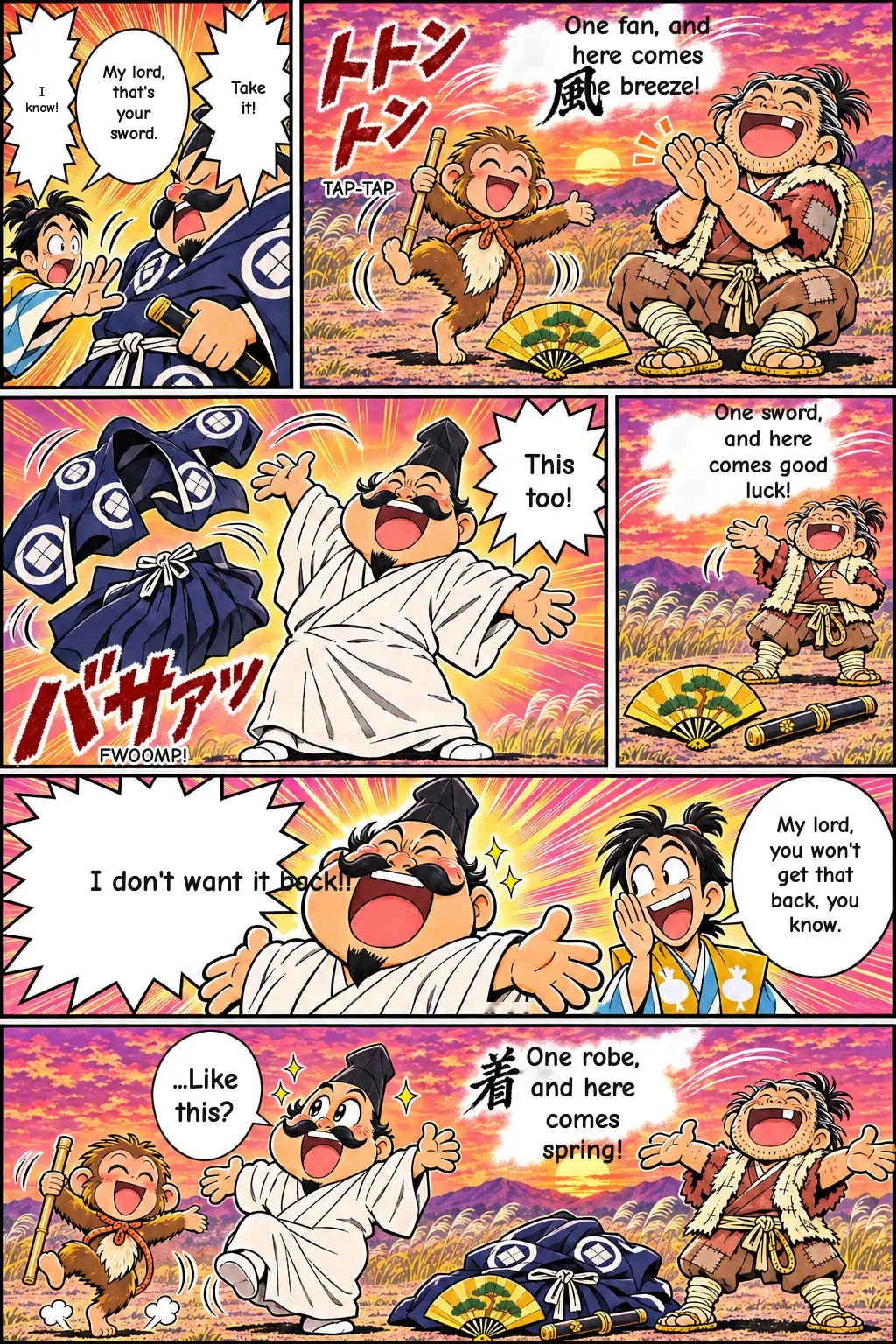
The lord, watching, begins to cry as well, and he announces that the monkey will live. The overjoyed trainer sings a monkey song in thanks while the little monkey dances. Delighted, the lord hands over gift after gift, including a fan, a sword, and his clothing, and finally starts imitating the monkey and dancing beside it. The play closes in cheerful noise.
The Main Characters
The daimyo is a bully and a child at once. He is quick to threaten, quick to cry, and quick to give away his belongings once he is happy. Taro Kaja, the stock servant of kyogen, supports the scene from the side as a go-between. The monkey trainer, called saruhiki in Japanese, loves the monkey as if it were his own child, yet he cannot defy an armed lord. The little monkey never speaks and never learns how close it came to death.
What the Play Is Saying
The play's power comes from its imbalance. The lord holds a bow and the trainer holds only a staff, and no argument the trainer makes gets him anywhere. What changes the lord's mind is the monkey's complete innocence: it trusts the raised staff because that staff has always meant work and play. The play does not stop to preach about this. It simply lets a powerful man be moved to tears, then shows him making a fool of himself out of pure joy. One natural way to read it is as a comedy that mocks a lord's selfishness while still finding a soft heart inside him.
The play also has a well-known life offstage. The little monkey is often played by the young child of a kyogen family as a first stage appearance, which gives the role a special warmth for audiences who know the tradition. Actors have a saying that a kyogen career begins with the monkey and ends with the fox, the fox being the demanding play Tsurigitsune. This is performance custom and not part of the story.
What the Manga Changes
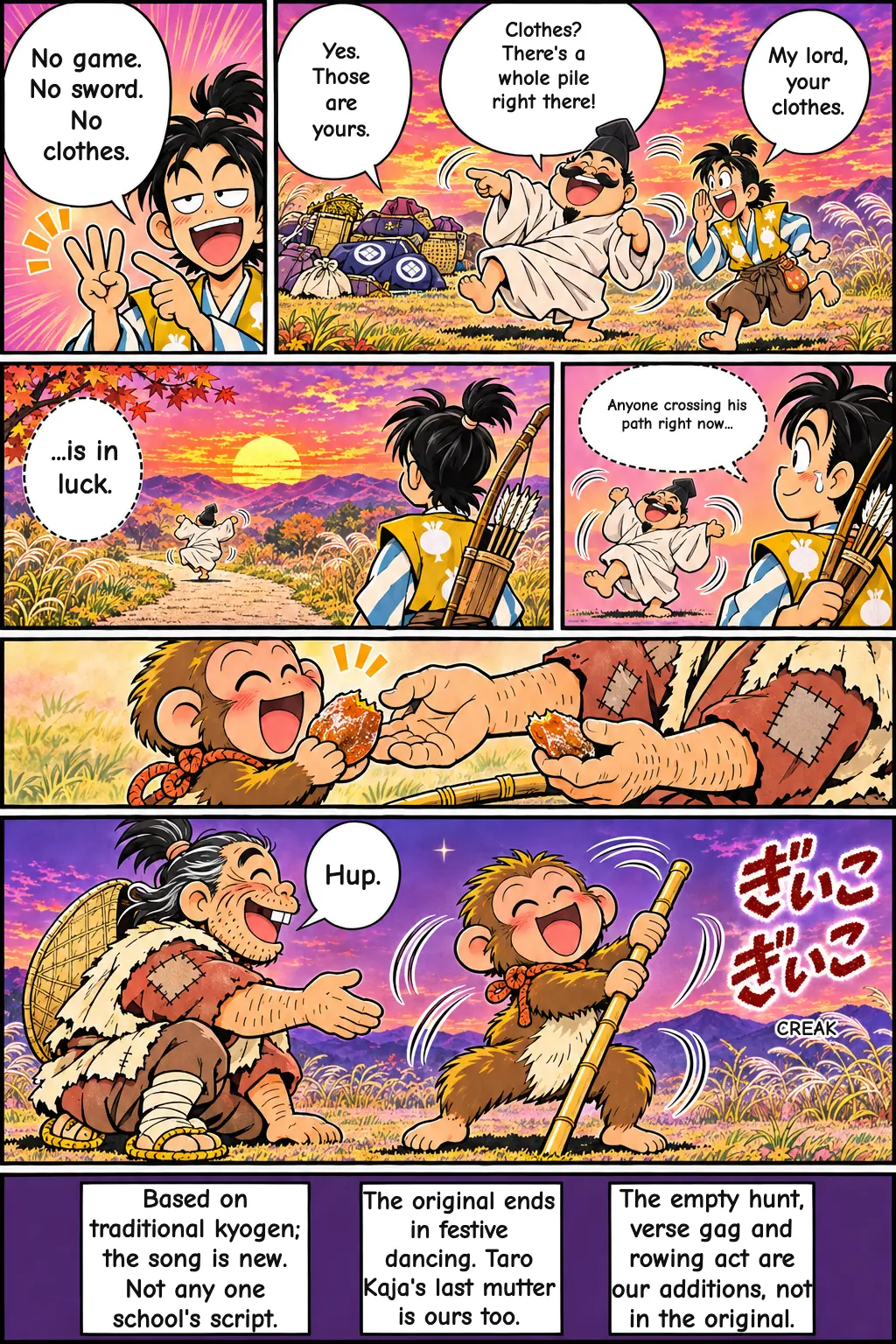
The main events, including the demand, the threat, the raised staff, the rowing trick, the mercy, and the final dance, come from the play, and the manga keeps the ending as it is. Much of what surrounds them is new. The manga opens on a hunt that has gone badly, which gives the lord a sour mood to take out on the trainer. Its setting details, the characters' looks and ages, and names for unnamed figures are also the manga's own.
The largest additions are flashbacks to how the trainer and the monkey met and how the monkey learned to row. These scenes are invented for the manga. So are the small silent expressions and gestures that let the monkey show feeling without words, Taro Kaja's private thoughts and comic panic, and the staging of the moment the lord's heart turns. The panel-by-panel shift from tears to laughter, the way the final dance spreads, and the lingering aftermath are manga choices too. The song lyrics were newly written for the manga and its translated editions, based on old scripts.
Where to Read It
You can read this story as Episode 6 of KYOGEN: Japan's 600-Year-Old Comedy, titled "Lend Me Your Monkey's Skin. He's Using It." Every episode is free, with no account needed. The moment the staff goes up is worth seeing on the page, and if it leaves you wanting more, the other episodes are one click away.
Characters in this episode
The Daimyo
A hot-tempered lord who demands the monkey's skin for his quiver, then weeps, spares the monkey, and joins its dance.
Taro Kaja
The lord's servant, who carries messages and tries to calm the standoff between his master and the trainer.
The Monkey Trainer
A traveling performer who cherishes his monkey like a child and cannot bring himself to strike it.
The Little Monkey
A wordless performing monkey with a beautiful coat, who mistakes a raised staff for its cue to row.
FAQ
What is the story of Utsubo-zaru?
A lord demands a monkey's skin to cover his quiver and threatens the monkey's trainer with a bow. When the trainer raises his staff to kill the monkey, it innocently begins its rowing trick, and both men end up in tears. The lord spares the monkey, and the play ends in a dance.
Why does the lord want the monkey's skin?
He admires the monkey's fine coat and wants it as a covering for his utsubo, or quiver. He asks to borrow the skin, even though taking it would kill the animal.
Does the monkey die in Utsubo-zaru?
No. The trainer cannot bring himself to strike it, and the lord is so moved that he lets it live. The monkey then dances to the trainer's song.
What does "begins with the monkey, ends with the fox" mean in kyogen?
It is a saying about a kyogen actor's career. The child's role in Utsubo-zaru is often a first stage appearance, while the fox refers to Tsurigitsune, a demanding play associated with an actor's mature years.
What is kyogen?
Kyogen is a traditional Japanese form of comic theater with roots going back about six hundred years. It developed alongside Noh drama and draws its laughs from everyday characters such as foolish lords and clever servants.