Episode 5The Lord Who Cheated Off a Servant's ShinHagi Daimyo
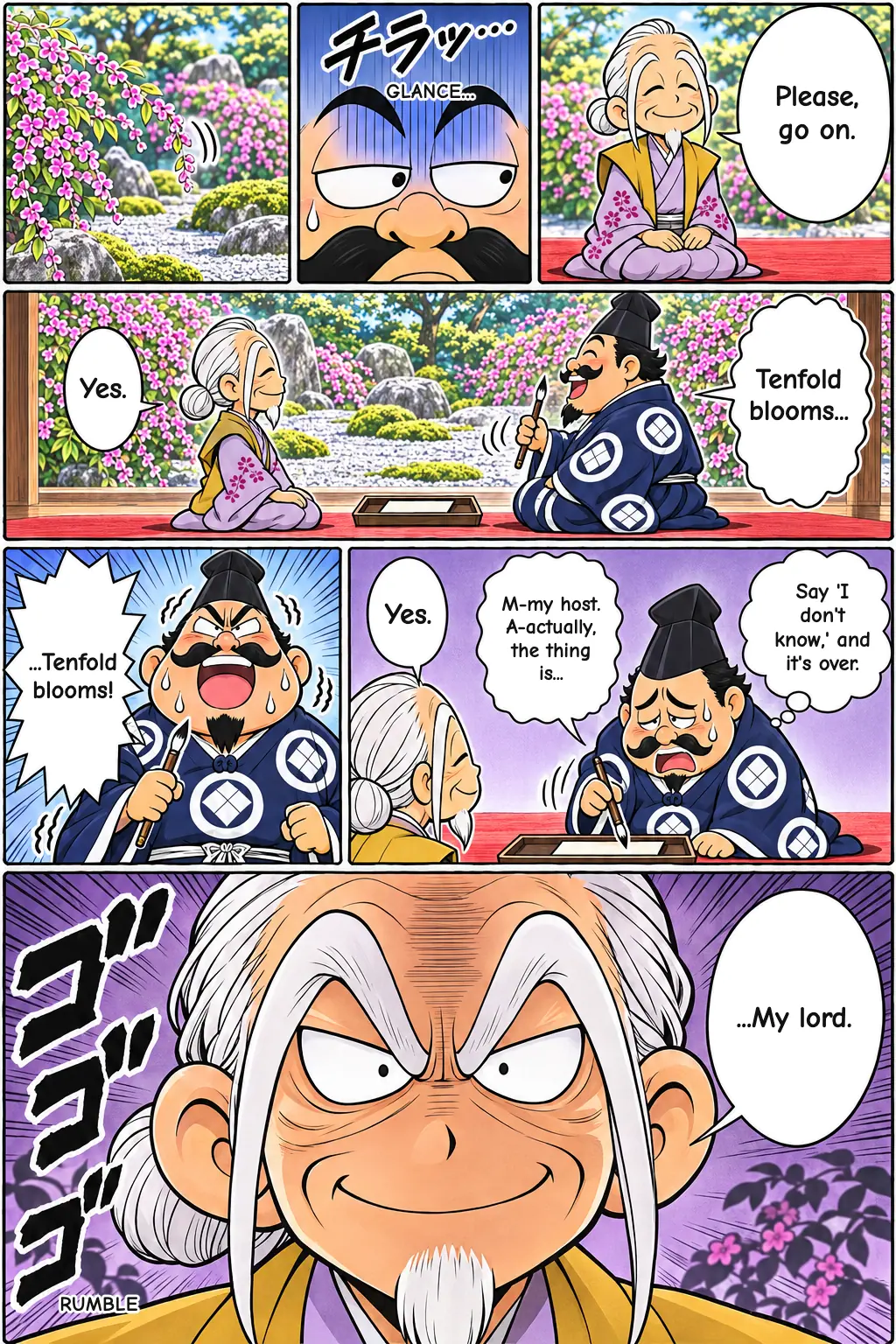
A vain lord who can't write a single line of poetry walks into a poetry challenge armed with his servant's fan ribs and, somehow, a shin. Only you know the answer in Hagi Daimyo, a 600-year-old comedy about cheating.
Bookmark the series page so you can jump back in when the next episode is out: KYOGENRSS for this series
Get new episodes in your feed. Follow us on:ThreadsBluesky
Story summary
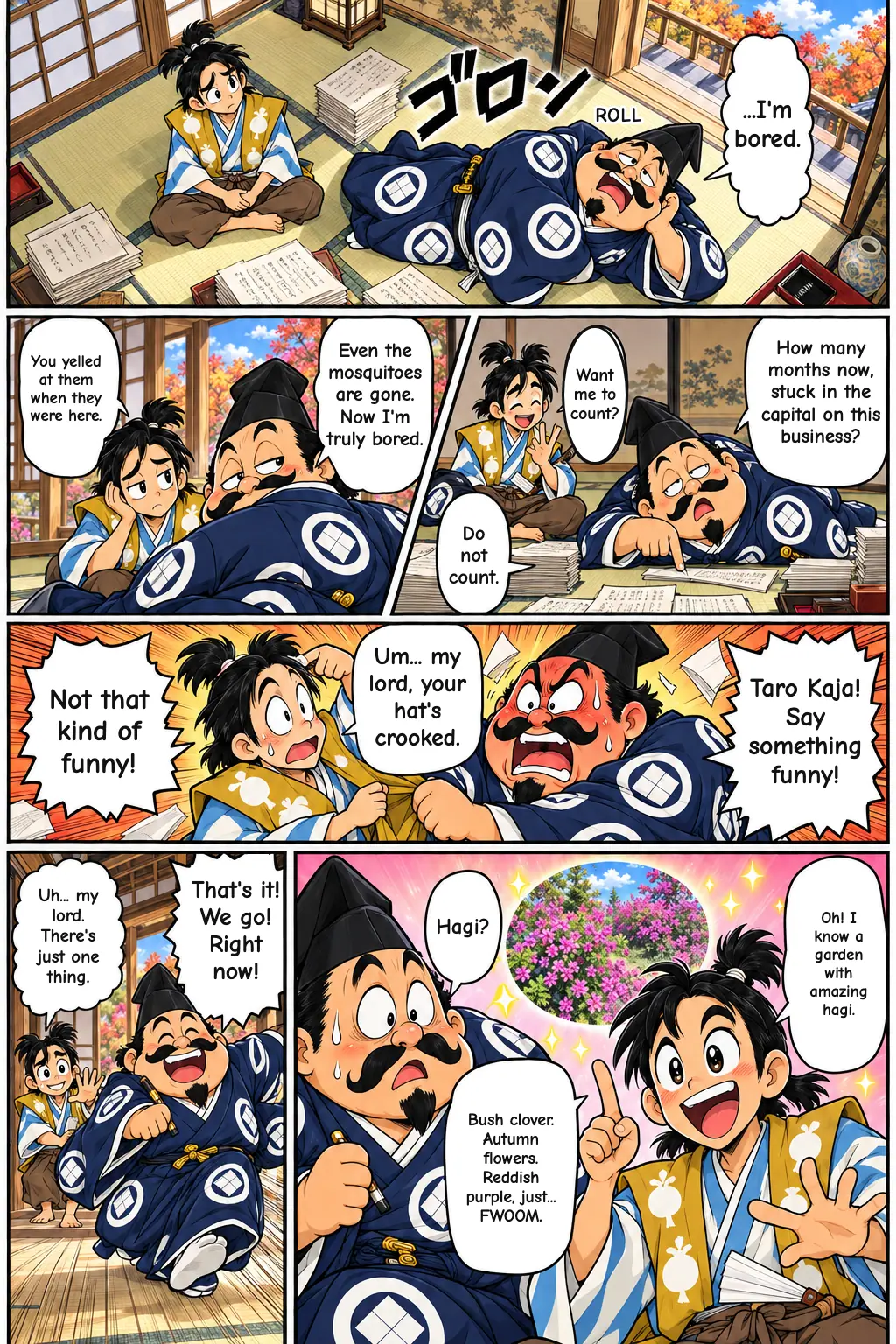
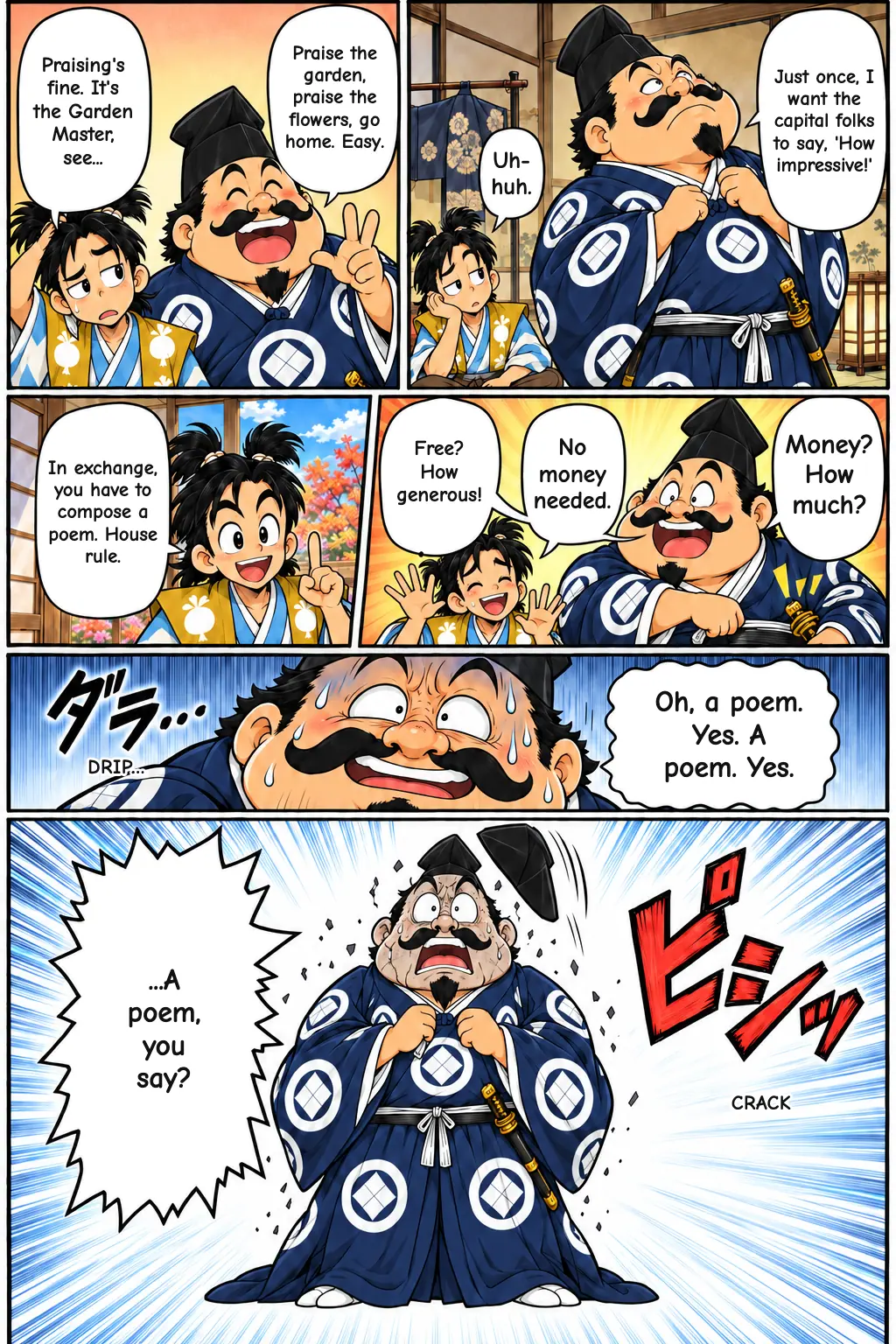
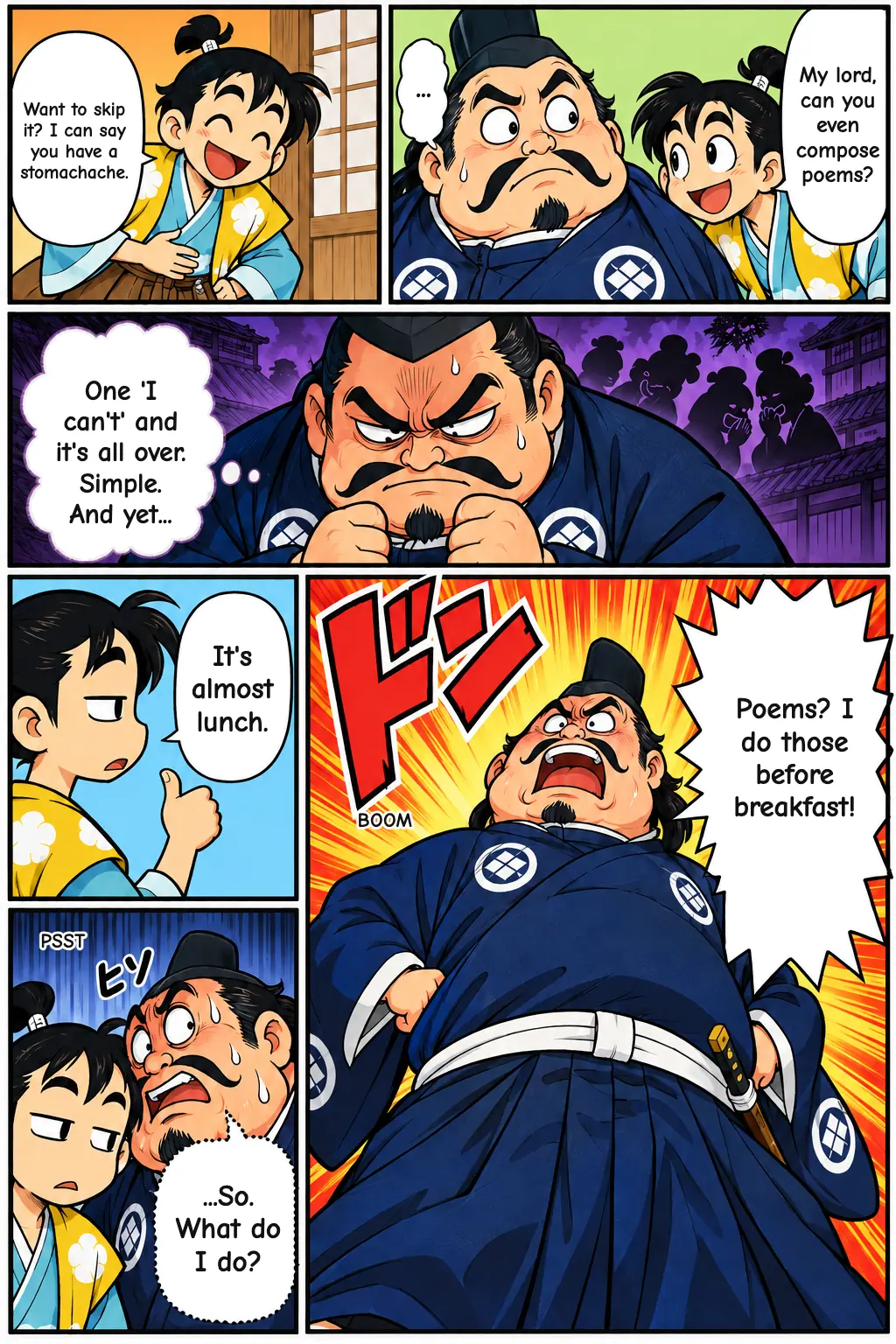
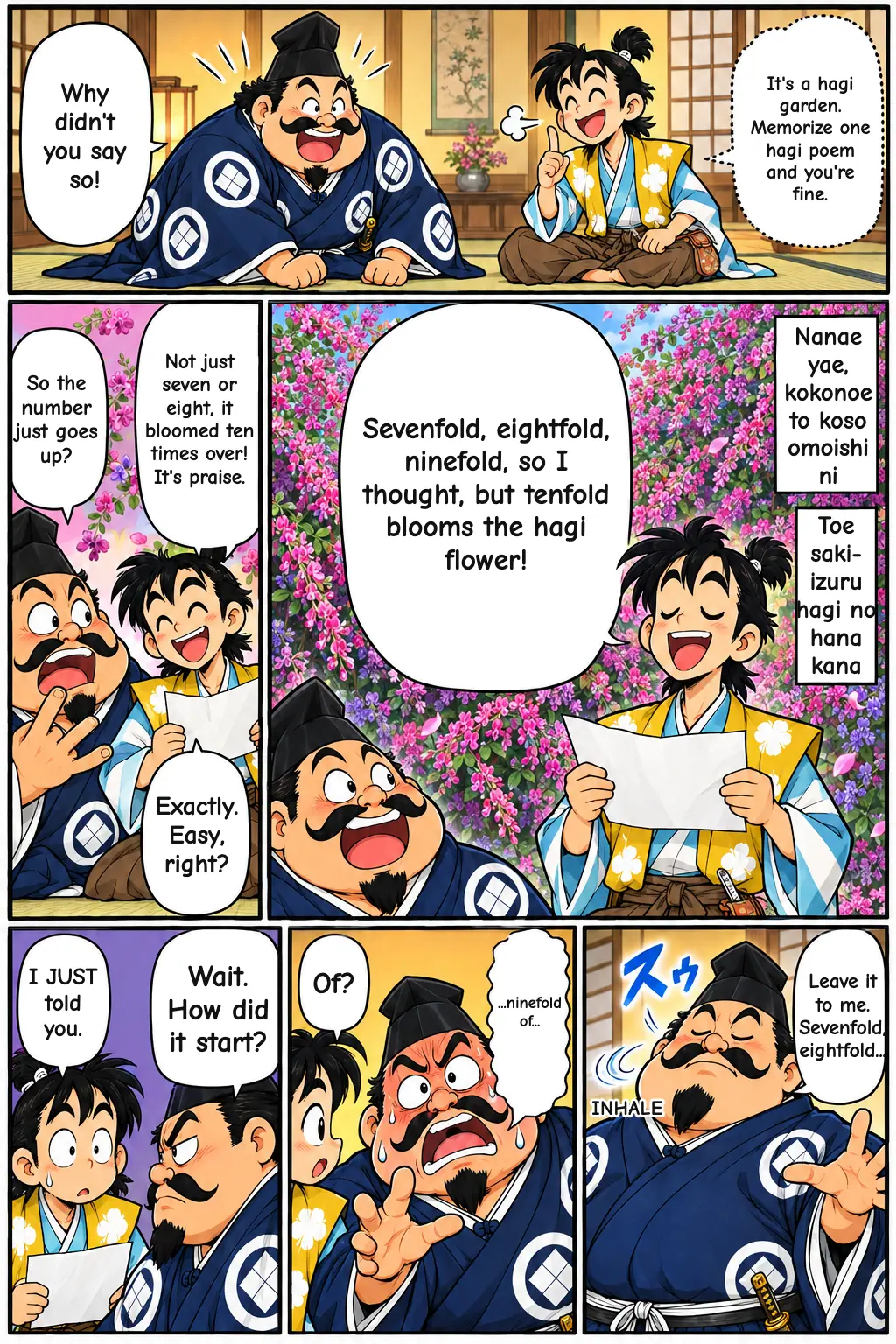
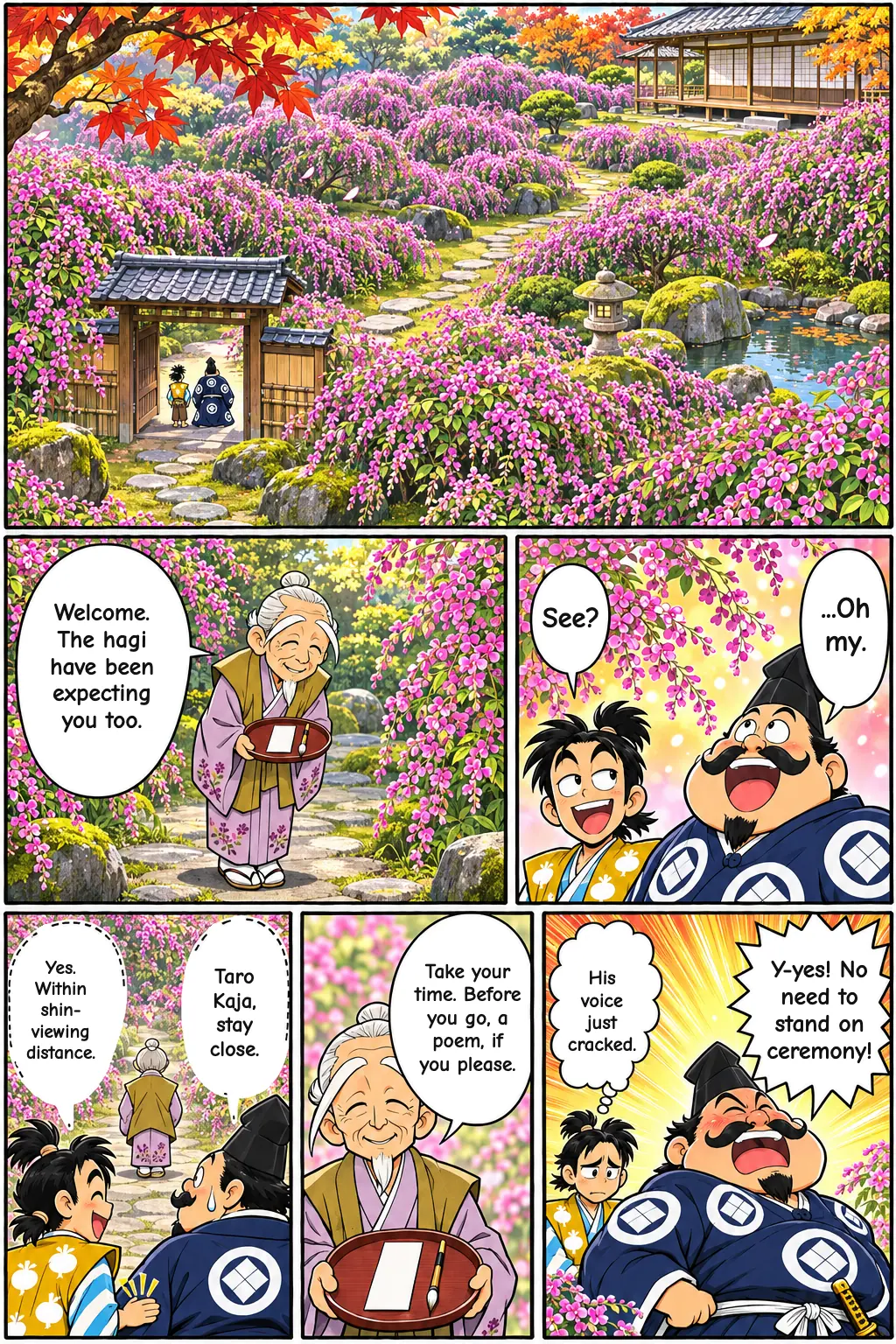
A lord from a distant province has been stuck in the capital for a long time because of a lawsuit. The case drags on, he grows bored, and he asks his servant, Tarokaja, for ideas. Tarokaja suggests visiting a garden famous for its splendid hagi, or bush clover, a flowering shrub. There is one catch: the garden's owner always asks guests for a waka, a short classical poem. The lord cannot compose one. Tarokaja teaches him a ready-made verse.
Hagi Daimyo Summary: The Kyogen Comedy About a Lord's Poetry Cheat
In short: Hagi Daimyo is a classic Japanese kyogen comedy in which a lord who cannot compose poetry tries to recite a verse using secret signals from his servant, Tarokaja: fan ribs for the numbers and a bared shin for the word "hagi." The lord misreads the signals, his servant walks out, and the garden's owner drives him away in disgrace. The play is part of the Okura and Izumi kyogen repertoires.
The Original Story of Hagi Daimyo
A lord from a distant province has been stuck in the capital for a long time because of a lawsuit. The case drags on, he grows bored, and he asks his servant, Tarokaja, for ideas. Tarokaja suggests visiting a garden famous for its splendid hagi, or bush clover, a flowering shrub. There is one catch: the garden's owner always asks guests for a waka, a short classical poem. The lord cannot compose one.
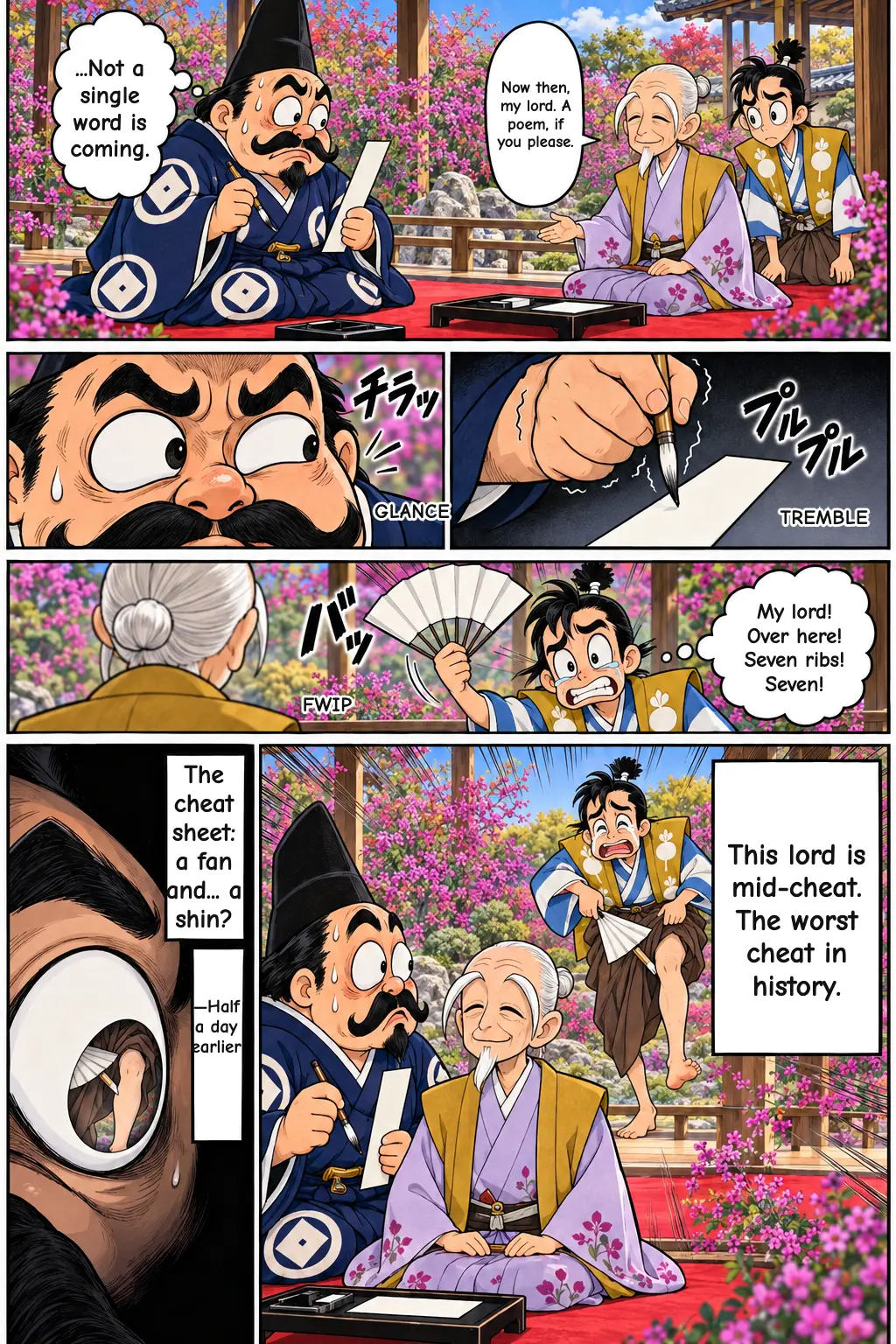
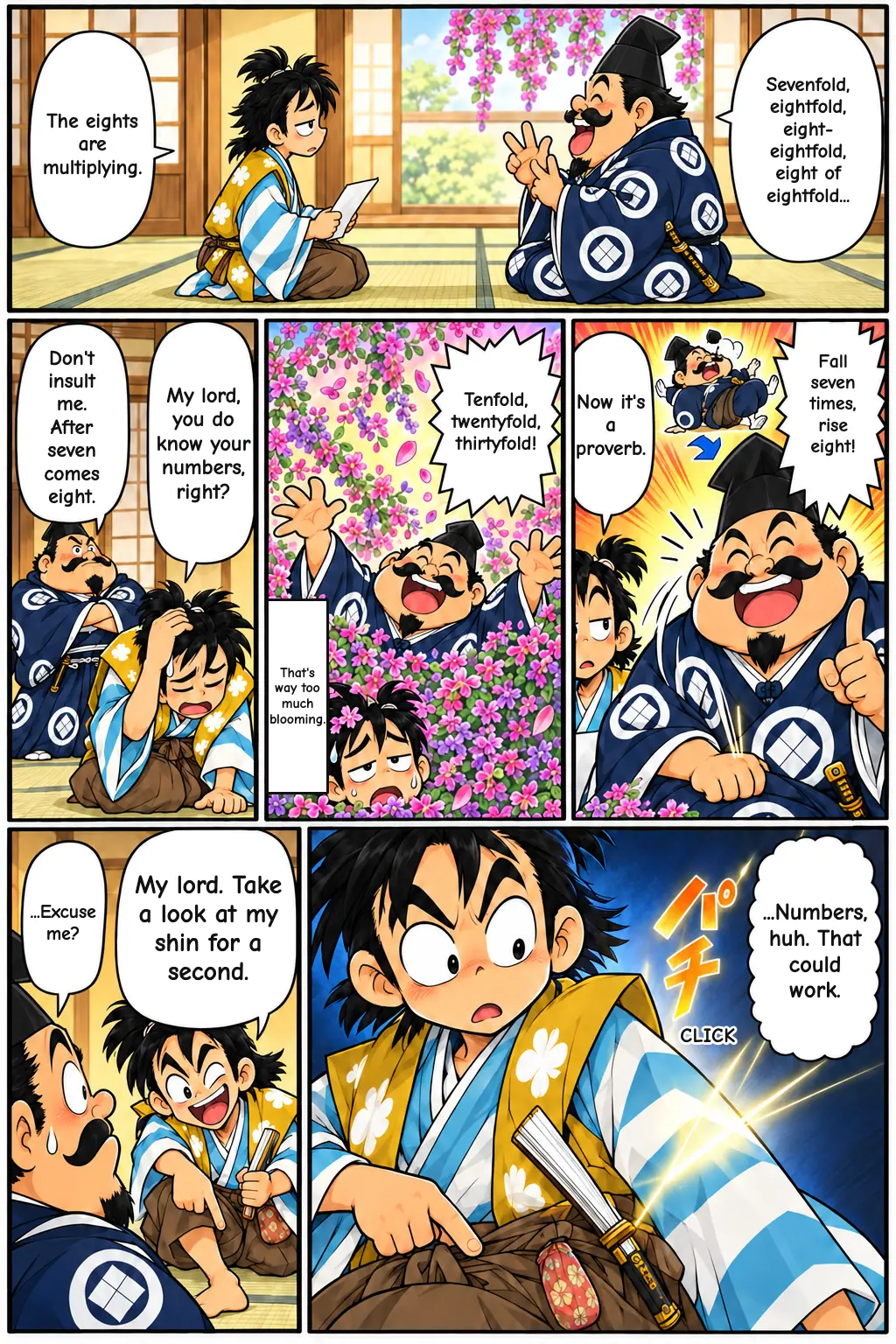
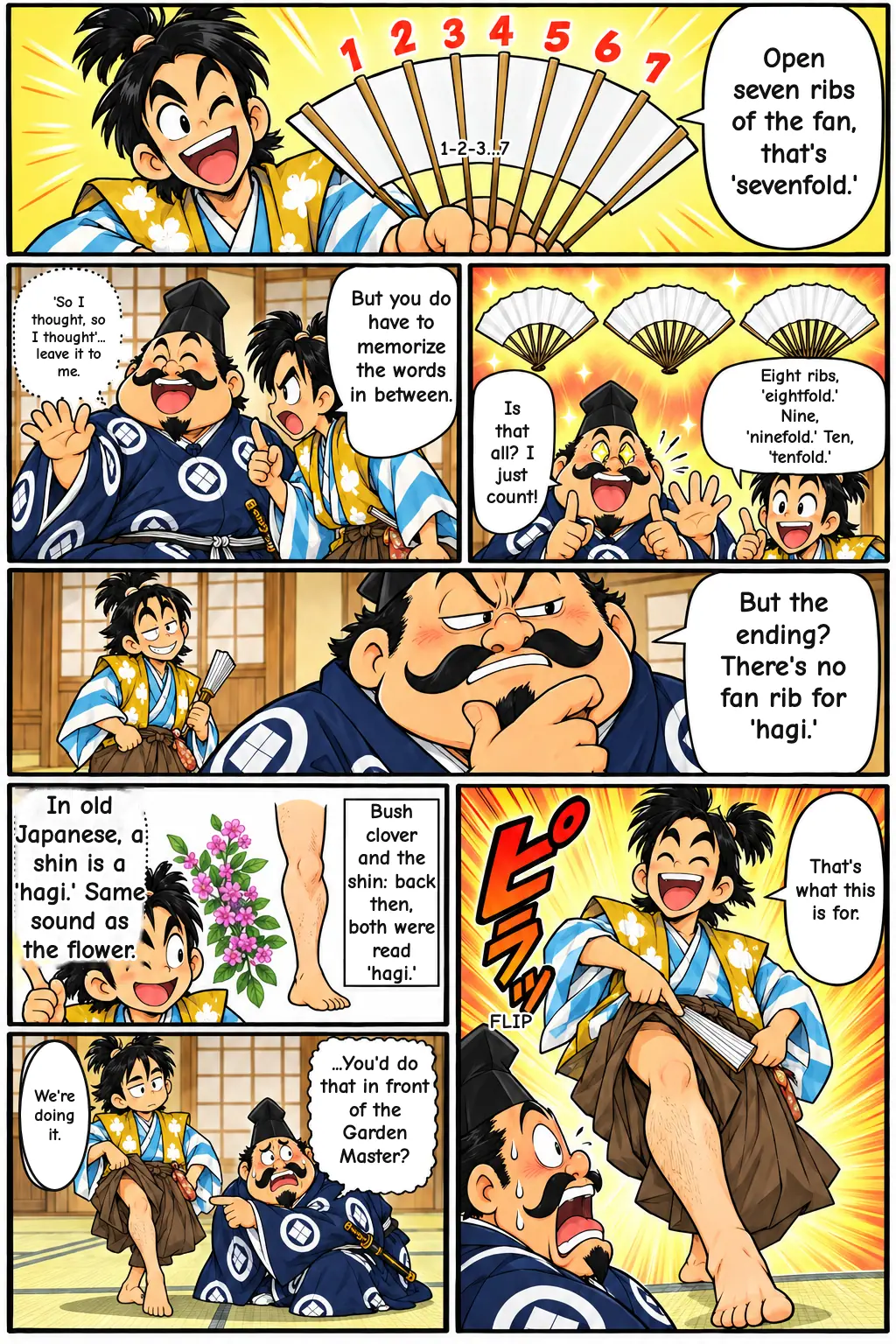
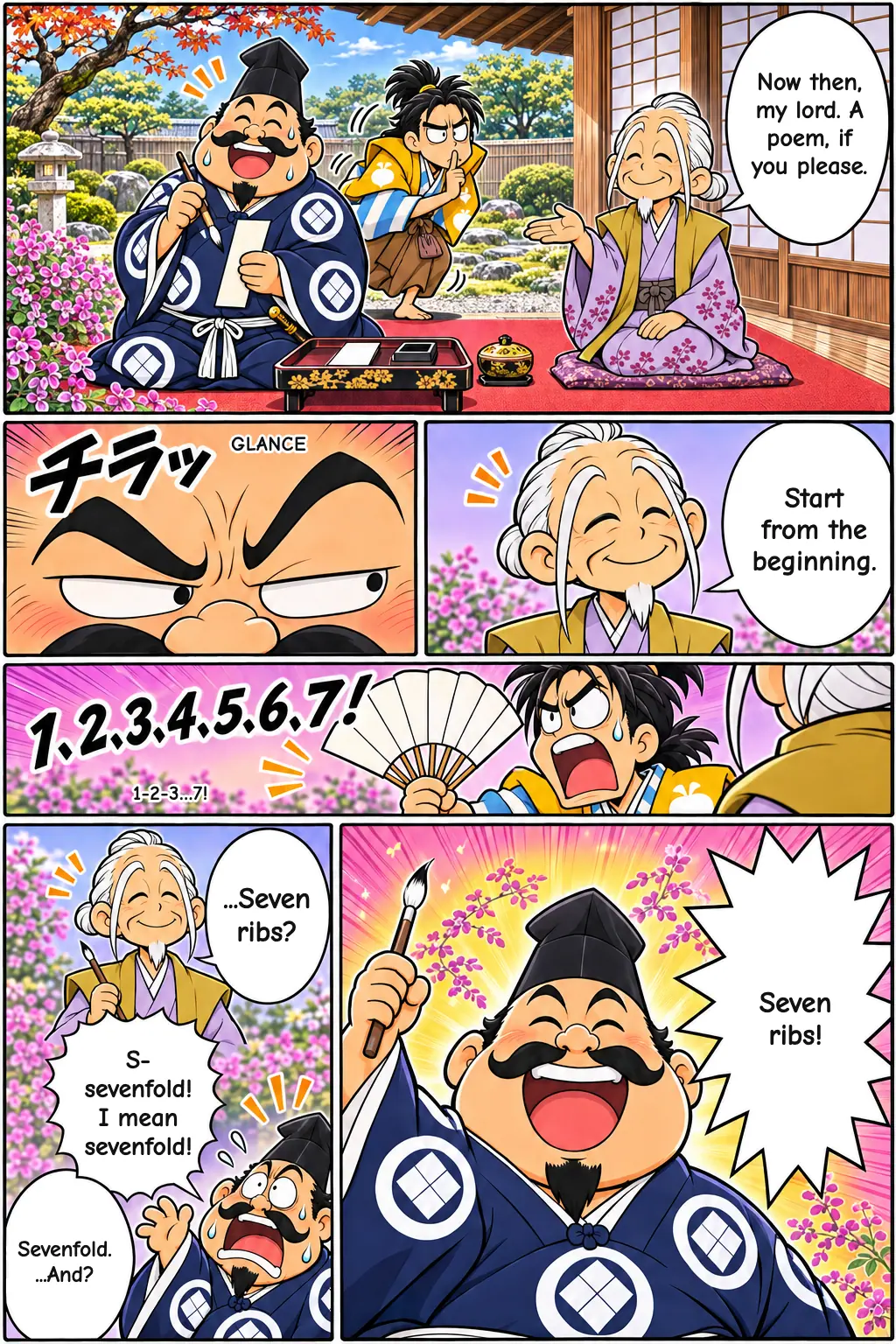
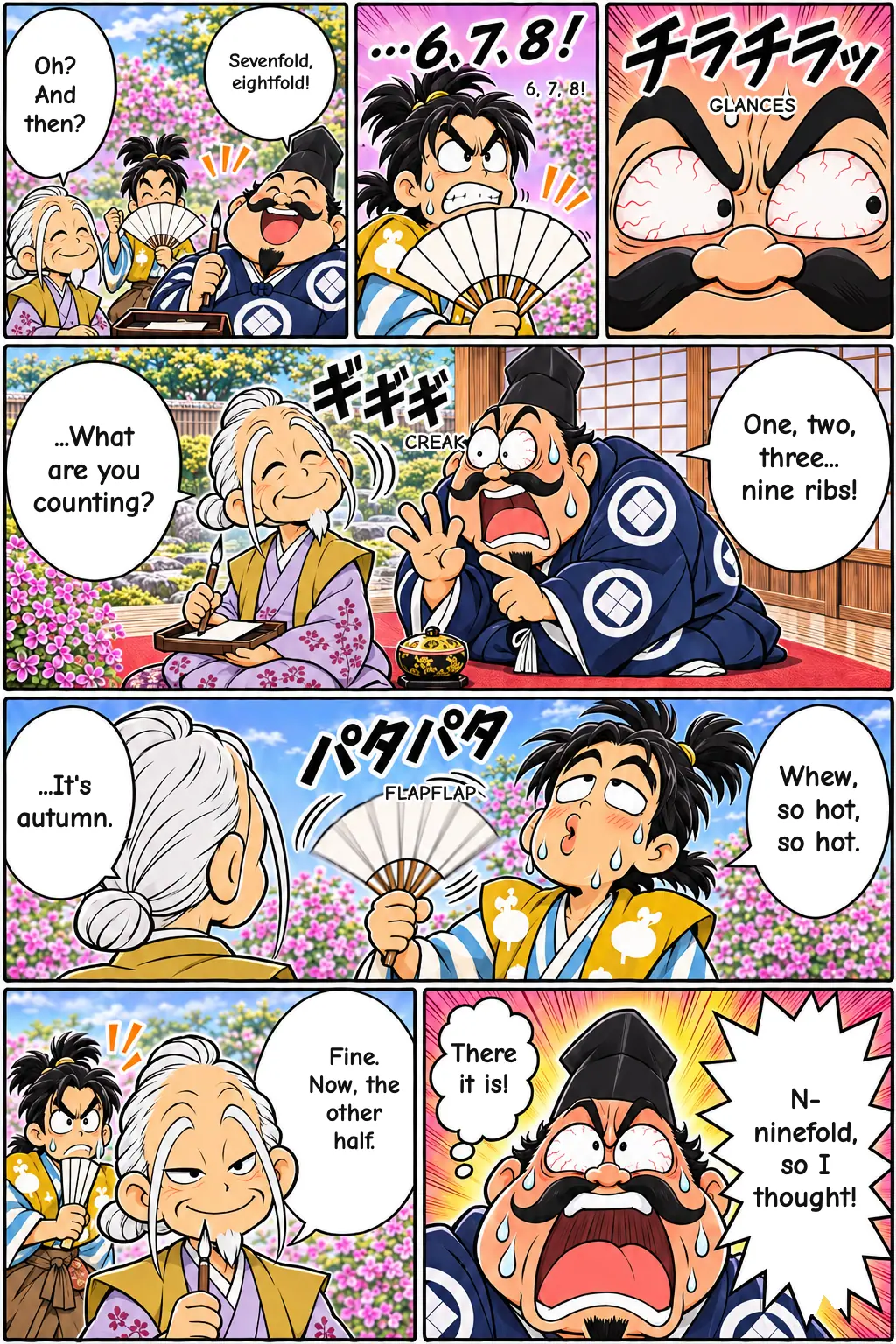
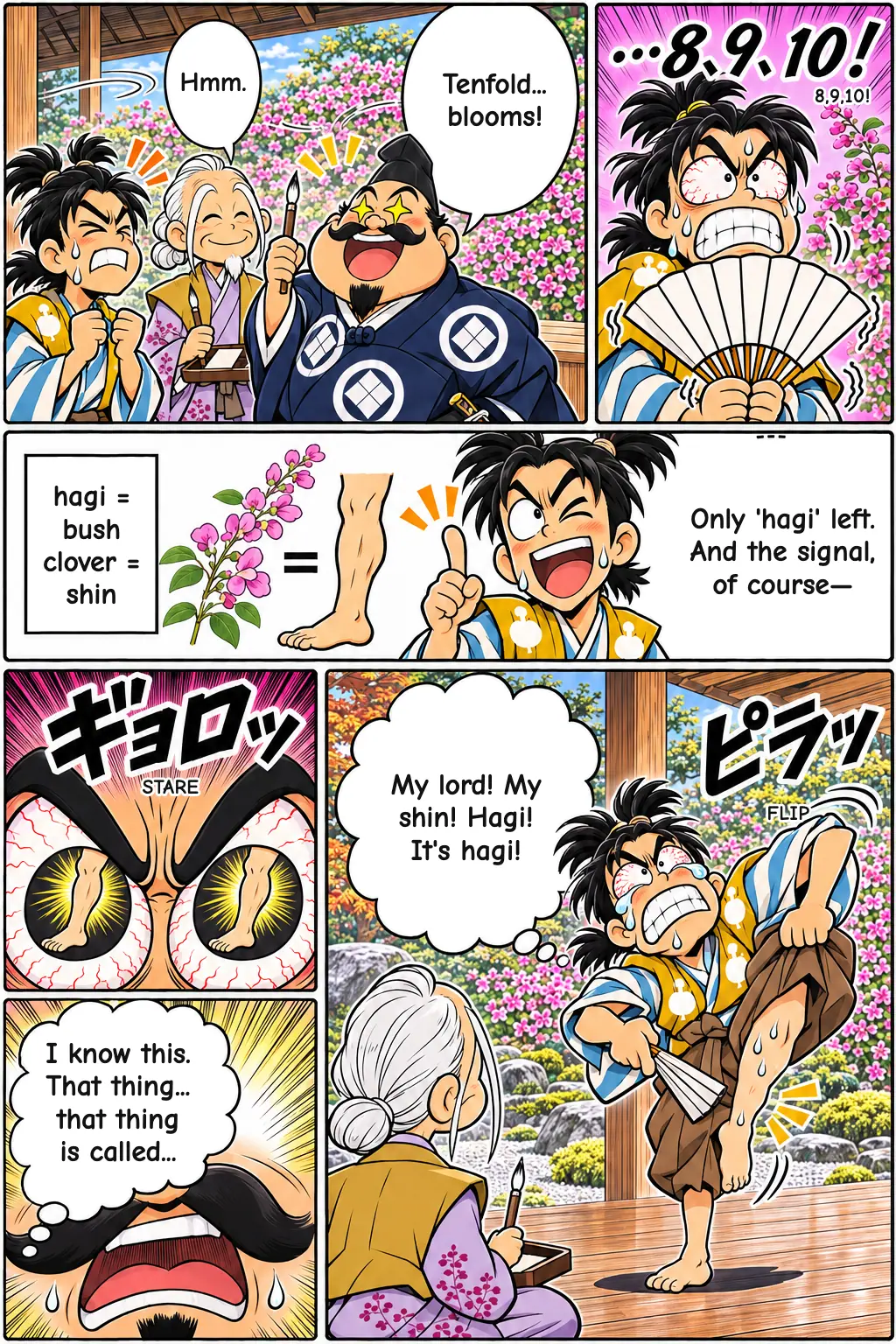
Tarokaja teaches him a ready-made verse. Put loosely into English, it says the speaker expected the blossoms to open in seven, eight, even nine layers, only to find the bush clover blooming in ten. The lord cannot memorize even that, so Tarokaja invents a cheat sheet made of gestures. He will open his fan to show the numbers through its ribs, and he will show his shin for the word hagi. Some versions add other signals, such as pointing at the nose for hana, meaning "flower." Details like this may differ by school and production.
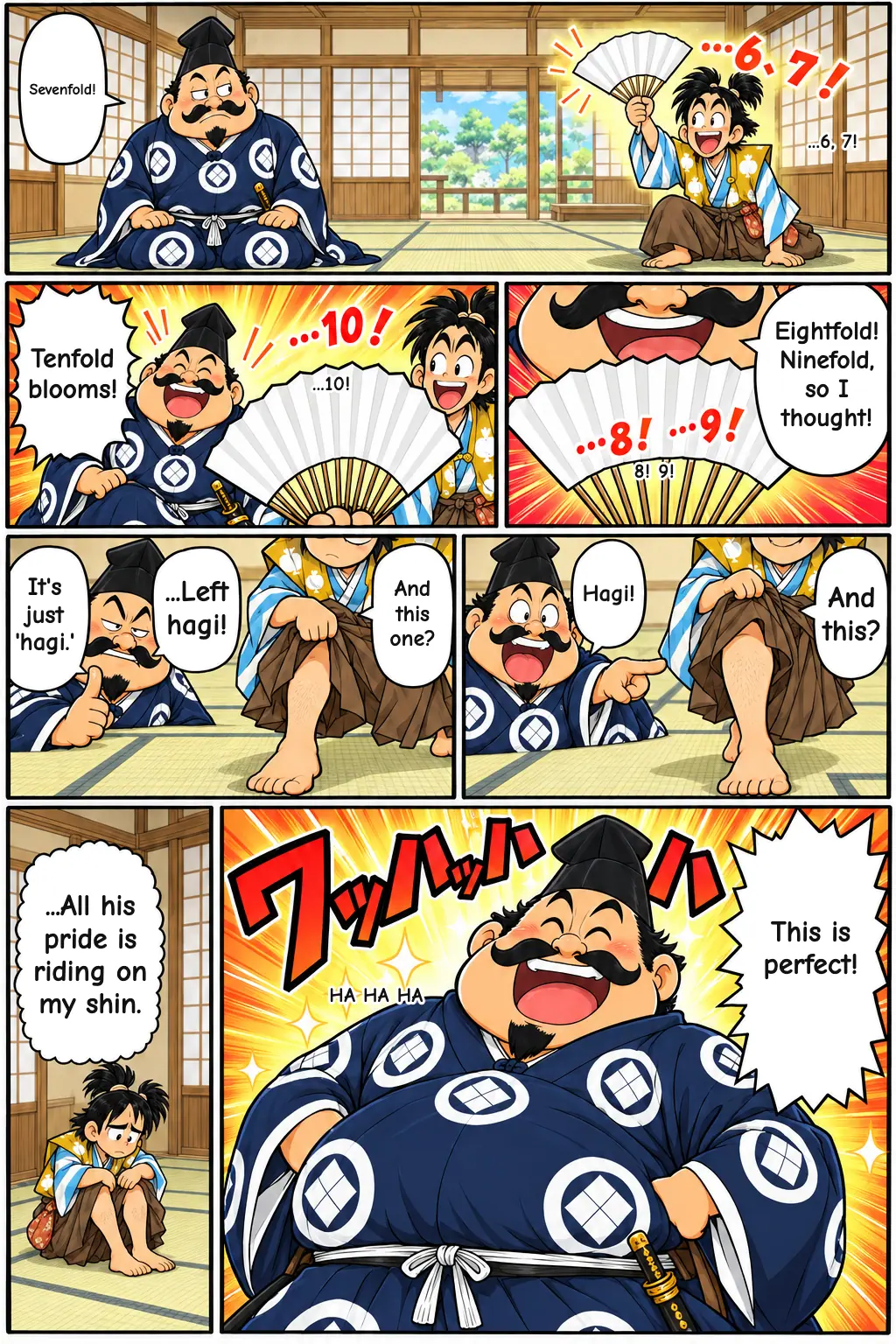
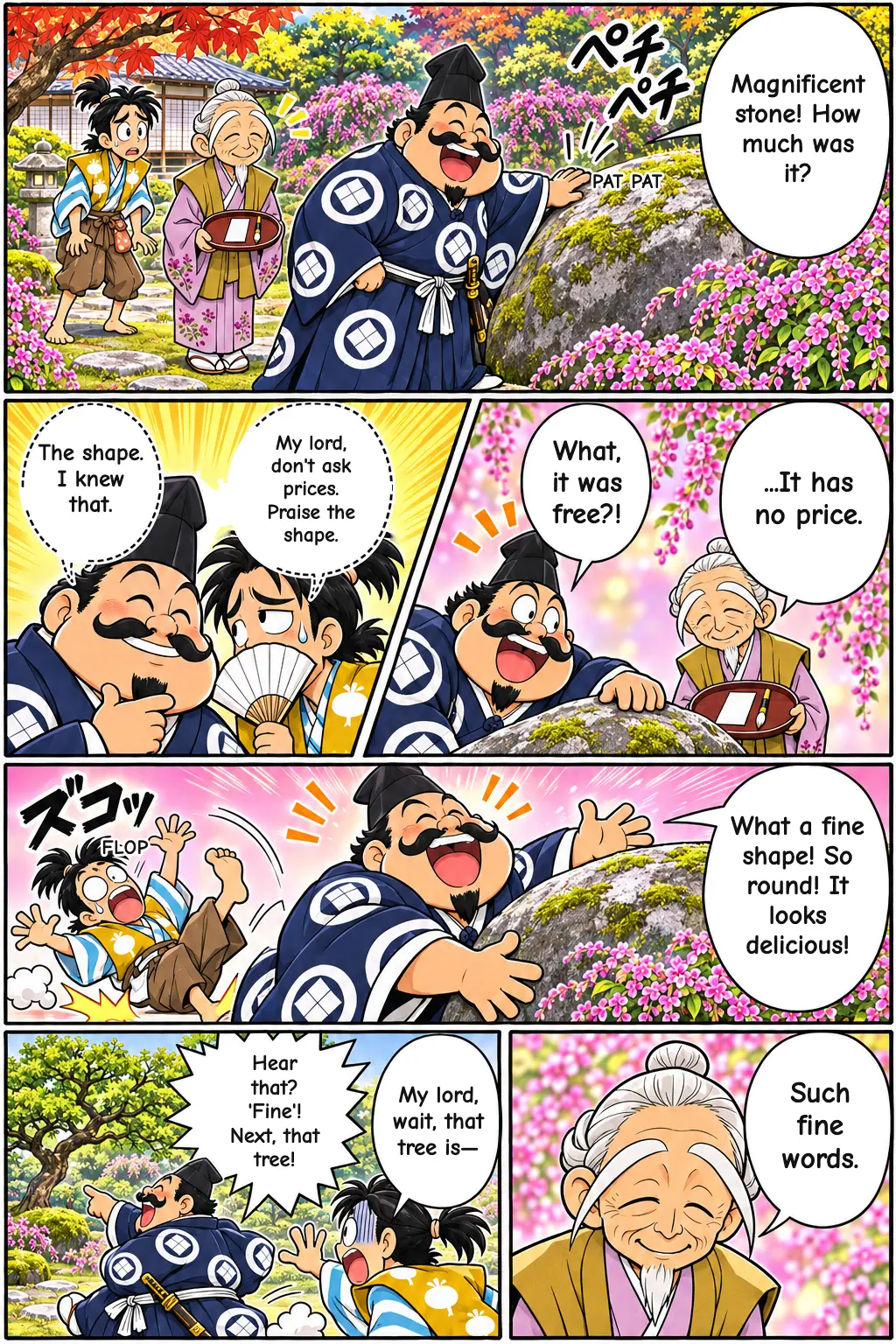
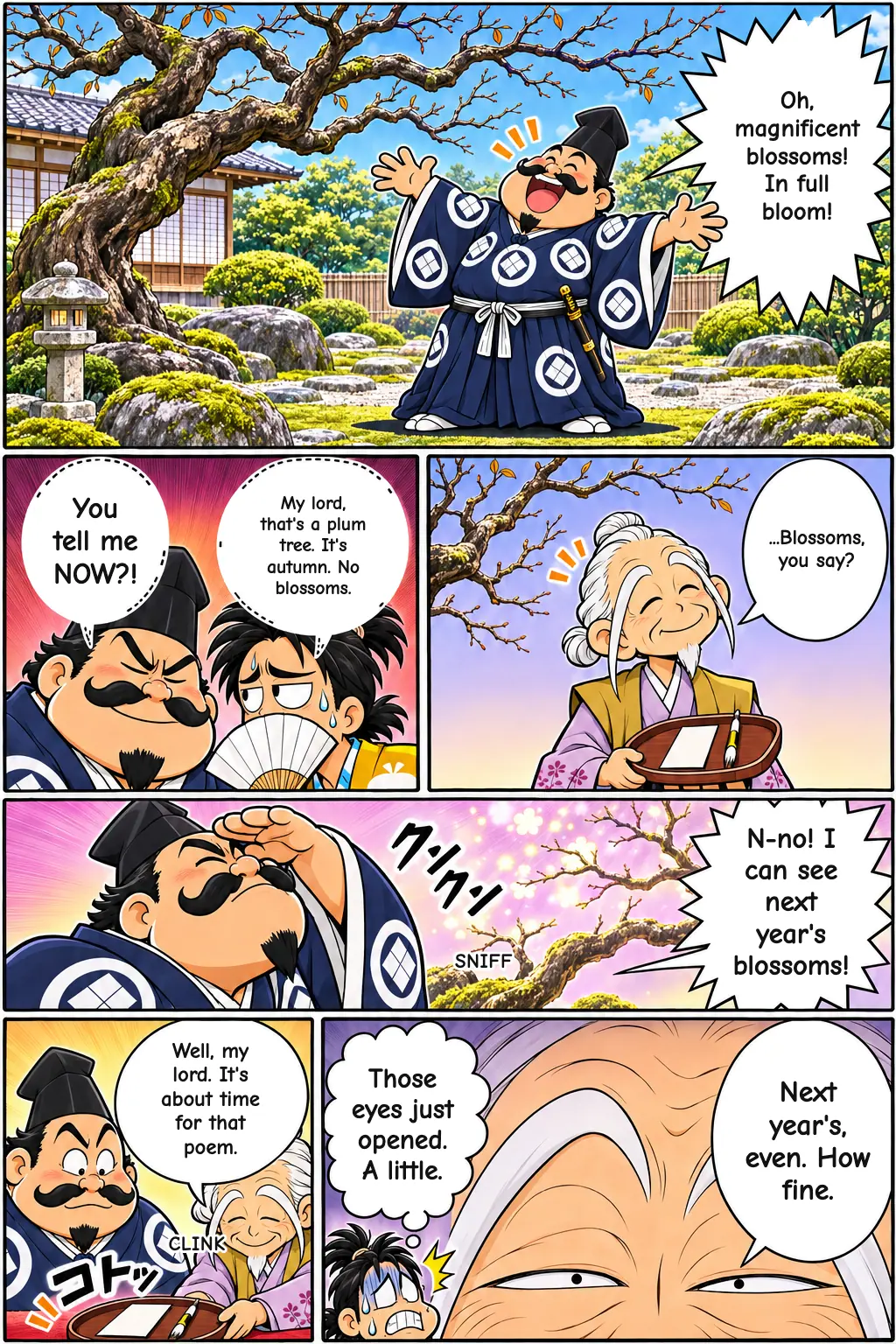
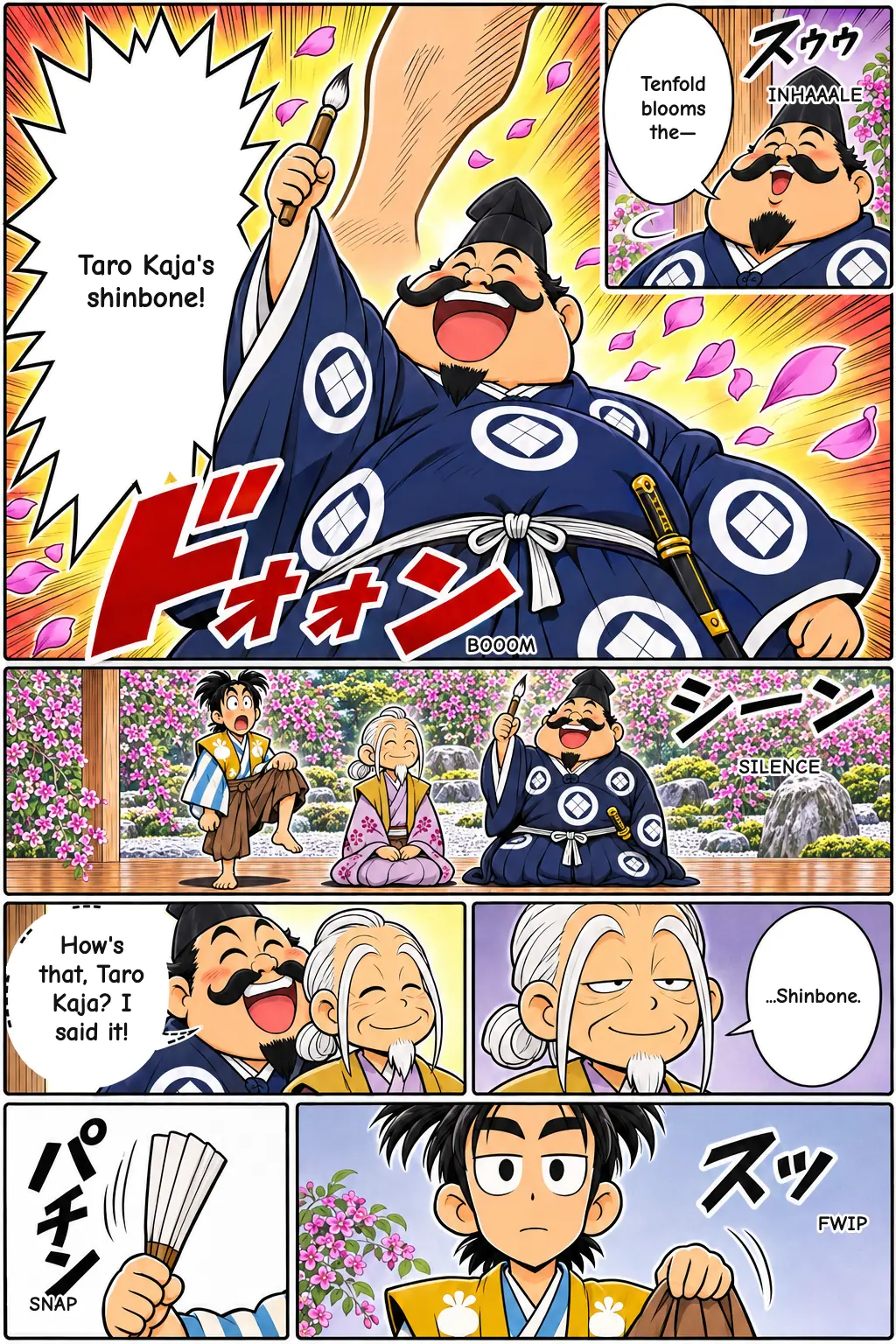
At the garden, the host welcomes them and shows them around. The lord praises a garden stone and a plum tree with compliments that miss the mark, baffling the host and making Tarokaja sweat. Then the host asks for the promised poem. Taking the signals far too literally, the lord announces the fan ribs he can see and comes out with something like "Tarokaja's shin."
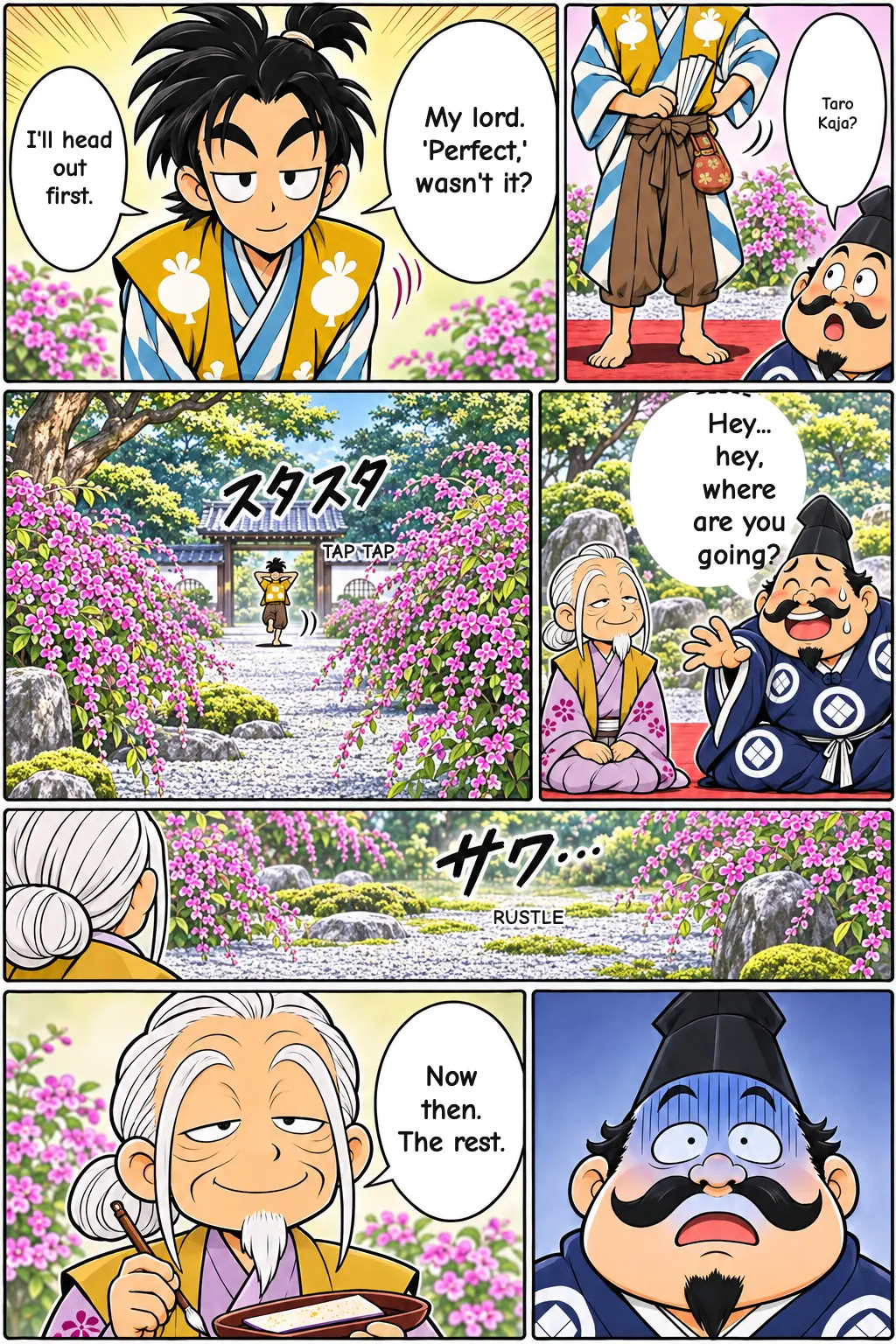
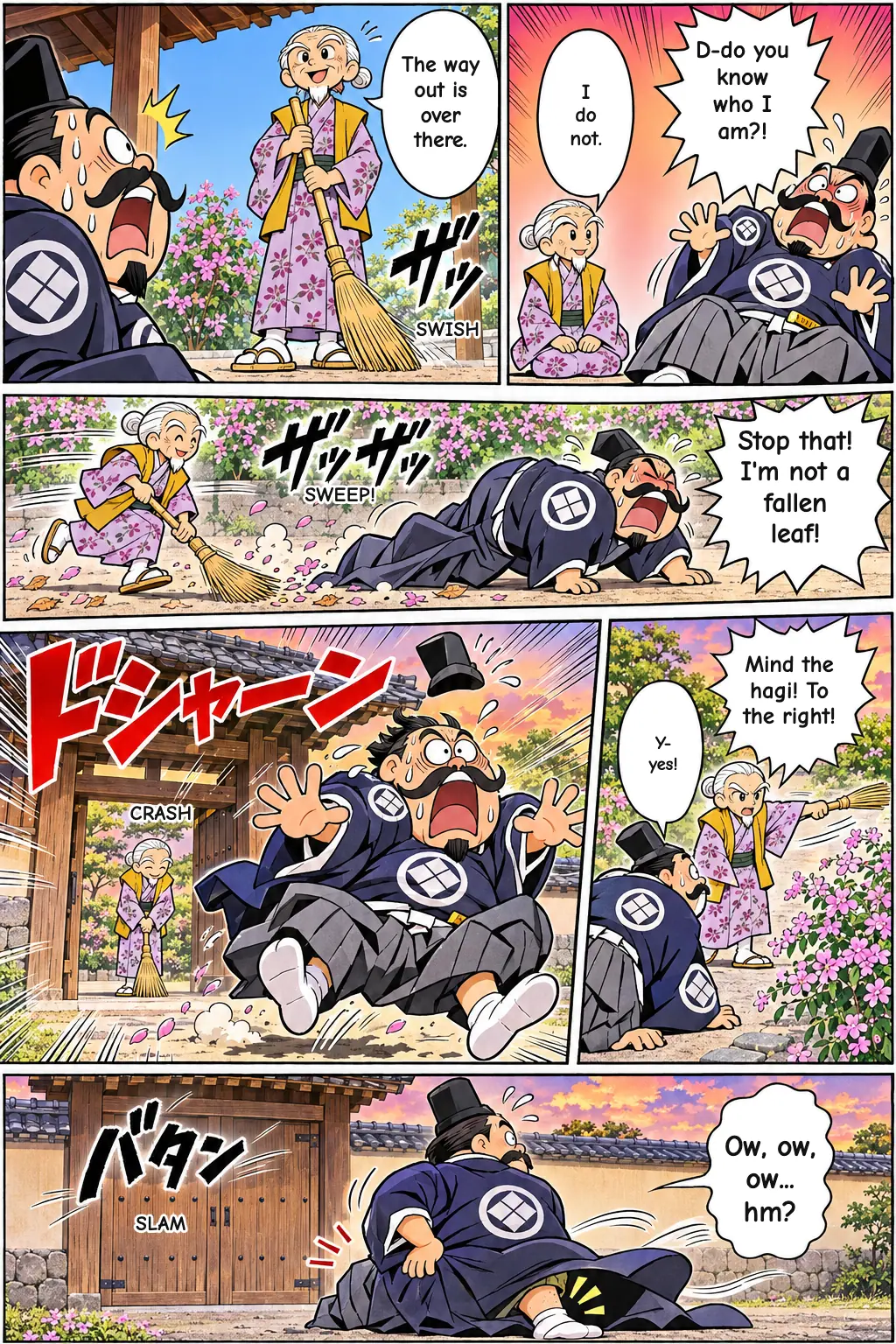
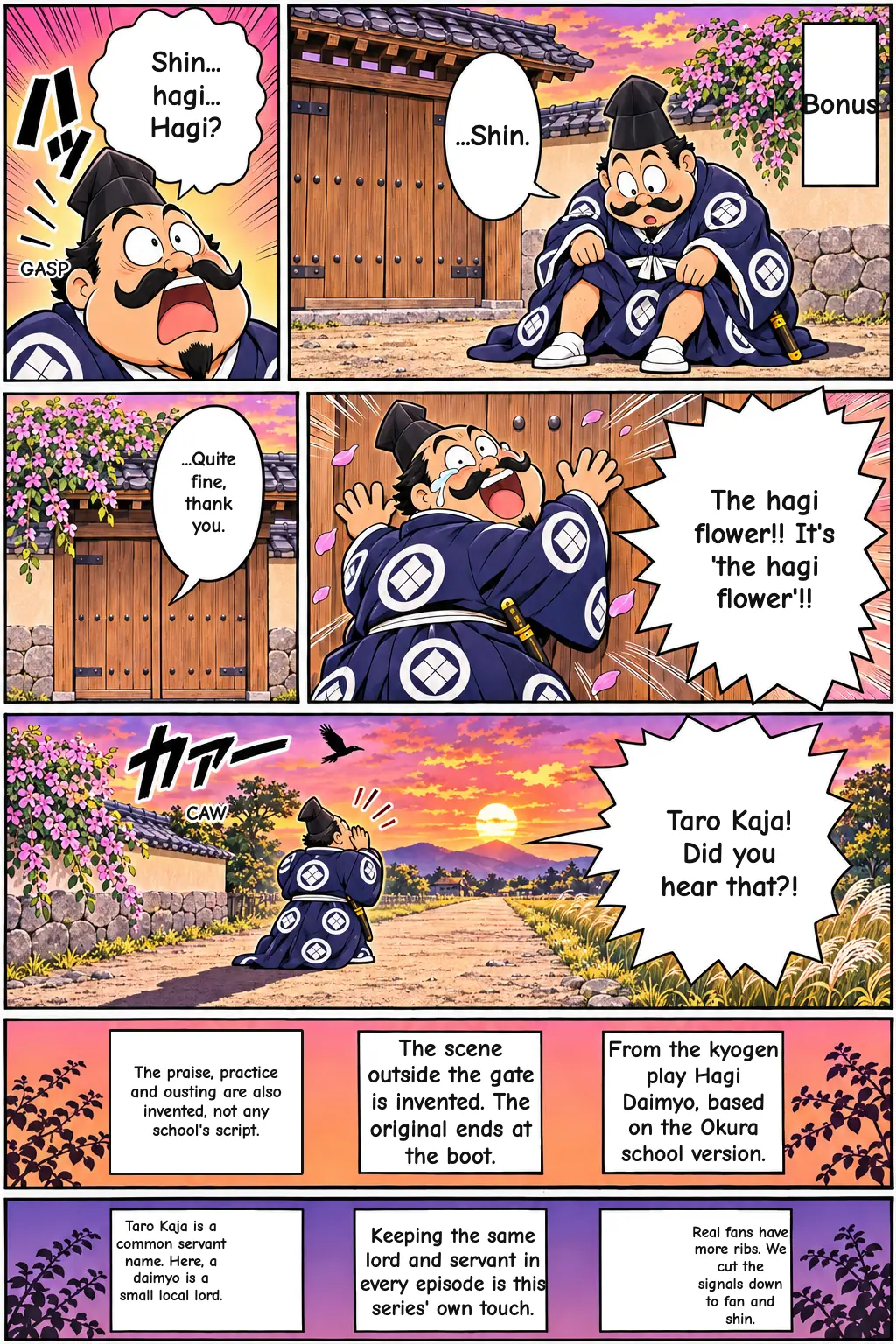
Fed up, Tarokaja goes home and leaves his master behind. Alone, the lord cannot produce the second half of the poem. The host presses him for the rest, gets nothing, and drives him out in disgrace. The exact closing lines depend on the school and script.
Why the Shin Is the Punchline
The joke rests on a pun. In Japanese, hagi can mean both "bush clover" and "shin," so Tarokaja's plan is actually clever. His bare leg works like a picture puzzle that points to the flower's name. The fan works in a similar way, because the verse counts upward from seven to ten and the ribs can show each number.
A waka has 31 syllables arranged in a 5-7-5-7-7 pattern and is often described as an upper part and a lower part. That shape helps build the suspense. The lord can stumble through the opening with help, but the ending is where he has to finish the thought, and by then his only helper has left. The audience knows the answer the entire time, and the fun comes from watching him miss it.
Main Characters
The lord, or daimyo, is the play's lead role. He is vain about his standing but helpless without his servant. Tarokaja is kyogen's familiar name for a servant character, and here he is the quick thinker who knows the garden, teaches the poem, and designs the signals. The host owns the garden and has no personal name. His custom of asking every guest for a poem is what sets the whole disaster in motion.
What the Comedy Tells Us
Kyogen is Japan's classical comic theatre. It grew up alongside Noh, the masked and more solemn dramatic form, and the two have traditionally shared a stage. Together they are known as nogaku, which UNESCO recognizes as intangible cultural heritage. Where Noh often deals with ghosts and sorrow, kyogen is built mainly on dialogue and everyday human weakness: greed, laziness, cowardice, and pride. The "600 years" in the series title describes the age of this tradition. Individual plays are harder to date, and kyogen was long handed down through families of performers.
Plays featuring a lord as the main character form a recognized group known as daimyo kyogen. Hagi Daimyo fits that group neatly. Being able to answer with a poem was a sign of refinement, so the lord's failure exposes the gap between his rank and his learning. The play can be read as a gentle jab at people who want the appearance of culture without the effort. It also flips the social order, since the servant is plainly the smarter of the two. That reading is an interpretation rather than something the play states, but it helps explain why the humor still works today: nearly everyone has met someone bluffing their way through a test.
What the Manga Version Changes
The manga keeps the original's main line: the lawsuit, the garden, the poem, the signals, the misfire, the abandoned lord, and the humiliating exit. The fan and the shin stay at the center of the story.
Other elements are newly created for the comic. They include the characters' looks, ages, and clothing details, the design of the garden, and the banter between lord and servant, including scenes of them practicing the signals. The manga also writes fresh wording for the lord's misguided compliments so that modern readers get the joke, while keeping the fact that the praise misses the mark. Stage gestures become panel layouts, exaggerated expressions, and close-ups of the fan and shin. Background on the lord's home and his stay in the capital is also invented, and so is the short closing moment after his expulsion. A guide and margin notes, added for this version, explain the wordplay.
Where to Read It
Reading about the shin joke is one thing, but seeing it land is another. Episode 5 of KYOGEN: Japan's 600-Year-Old Comedy, "The Lord Who Cheated Off a Servant's Shin," tells this story here on Manga Portal, and it lets you in on the answer while the lord flounders. Every episode is free, with no sign-up needed, so you can start with this one or read the rest of the series for more of kyogen's fools and schemers.
Characters in this episode
The Daimyo (Lord)
A vain provincial lord staying in the capital for a lawsuit, who cannot write a poem or even memorize one.
Tarokaja
The lord's quick-witted servant, who teaches him a poem, invents the fan and shin signals, and finally walks out on him.
The Garden Host
The unnamed owner of the bush clover garden, who asks every guest for a poem and drives out the lord when he cannot finish his.
FAQ
What is Hagi Daimyo about?
Hagi Daimyo is a kyogen comedy about a lord who visits a famous bush clover garden, where guests must offer a poem. He can't compose one, so his servant Tarokaja teaches him a verse and gives him secret signals. The lord misreads them and is thrown out in disgrace.
Why does Tarokaja show his shin in Hagi Daimyo?
The word hagi can mean both "bush clover" and "shin" in Japanese. Tarokaja shows his shin to remind the lord of the flower's name in the poem. The lord takes the hint literally and ends up saying something about Tarokaja's shin instead.
What does the title Hagi Daimyo mean?
Hagi is bush clover, the flowering shrub at the center of the garden visit, and a daimyo is a lord. The title can be understood simply as "the bush clover lord," a name that hints at the shin pun at the heart of the play.
What is kyogen?
Kyogen is a classical form of Japanese comic theatre with a tradition of roughly 600 years. It developed alongside Noh and has traditionally been performed with it. Its humor comes mostly from dialogue and familiar human failings.
How does Hagi Daimyo end?
Tarokaja gets fed up and goes home, leaving the lord alone with the host. The lord can't produce the rest of the poem, so the host drives him out in disgrace. The exact final lines vary by school and script.