Episode 6Her Monster Husband Was the God of LoveCupid and Psyche (Eros and Psyche)
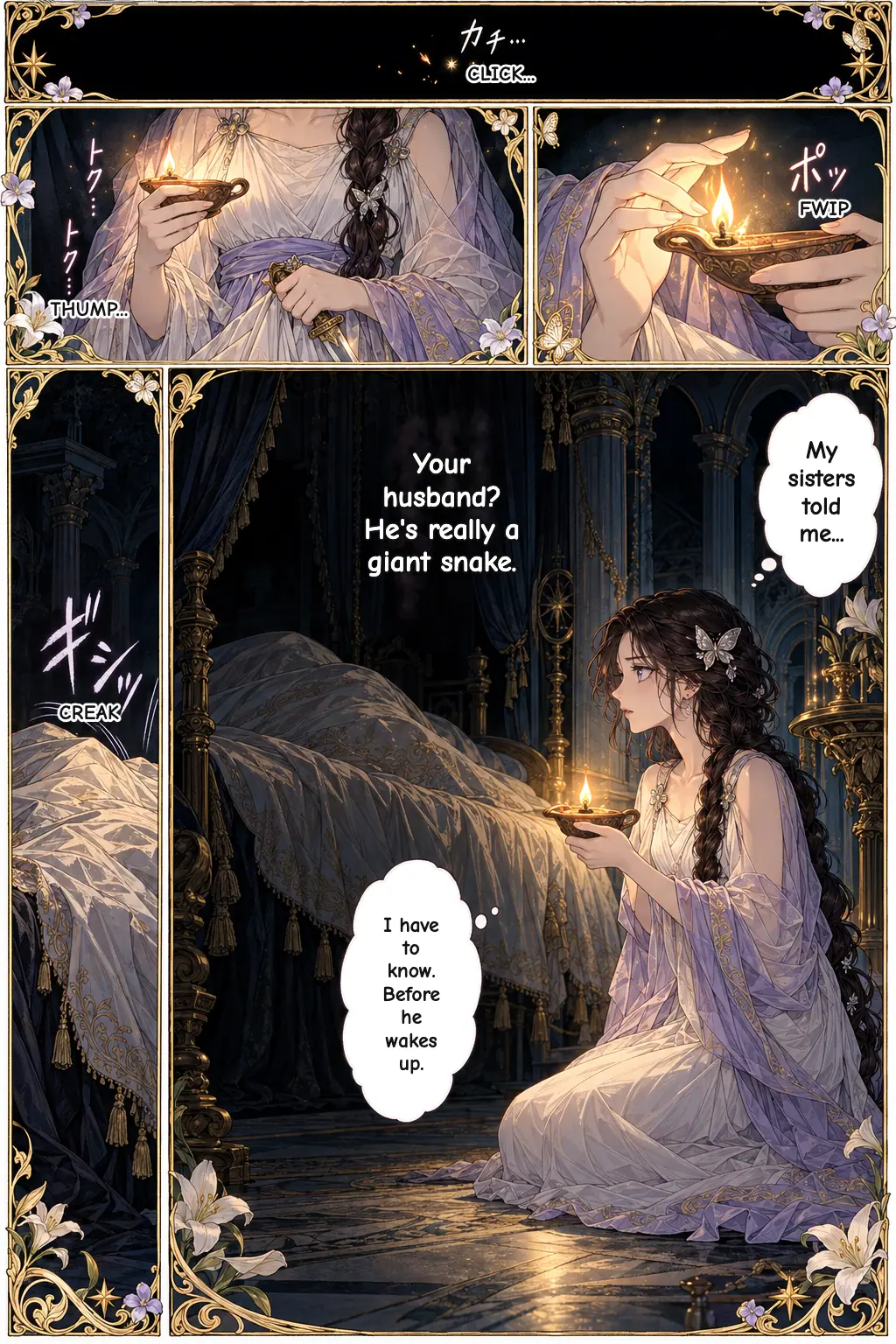
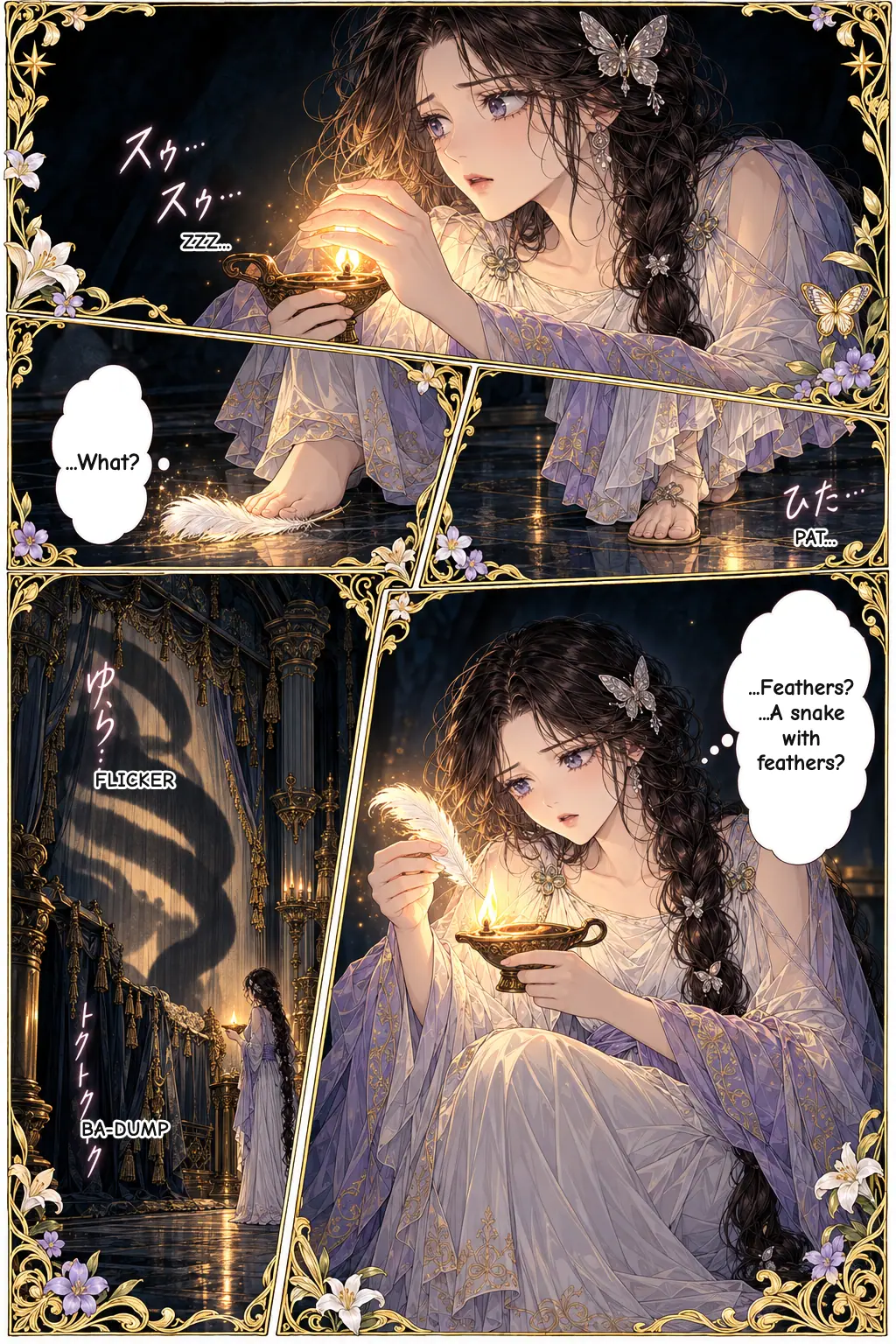
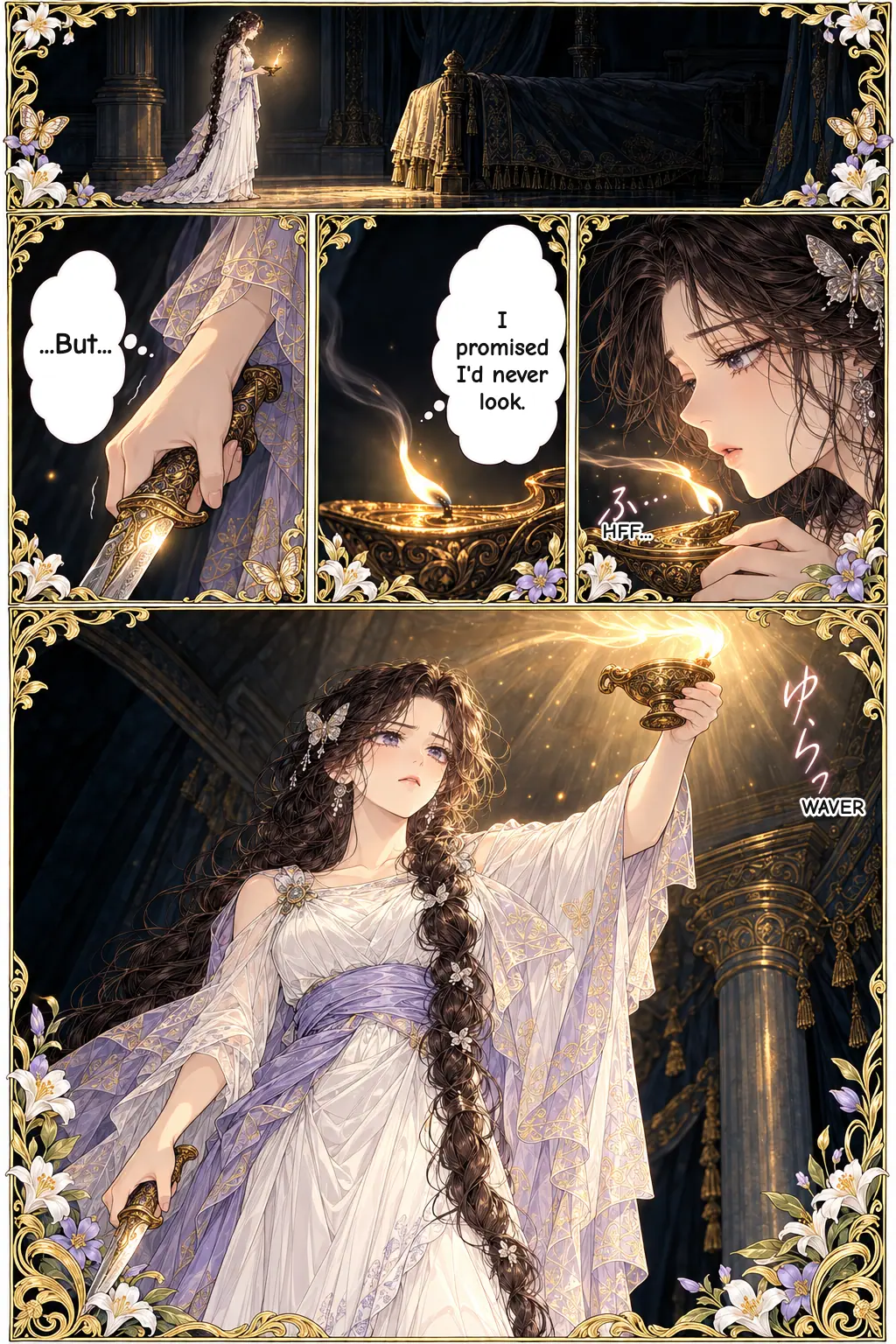
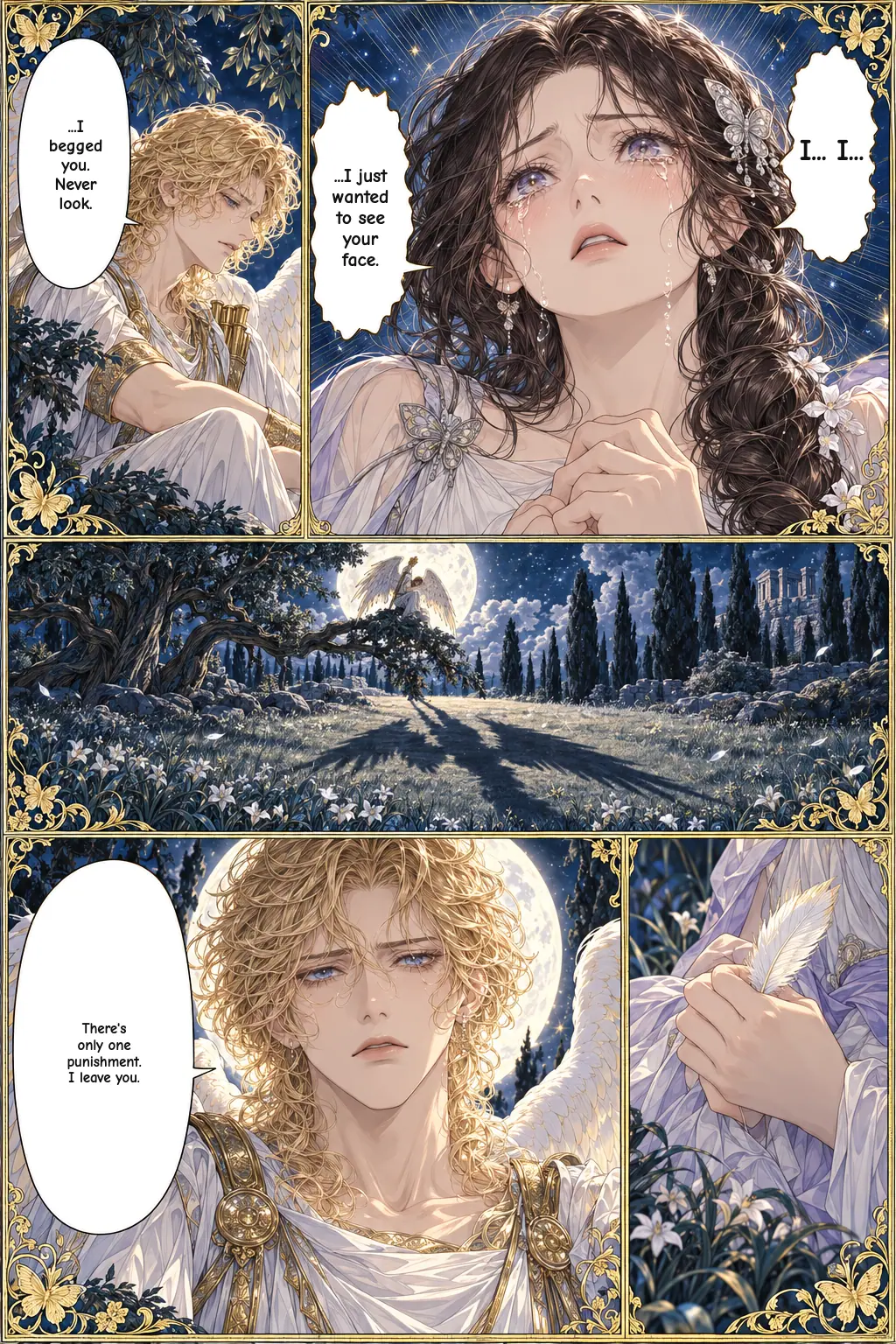
Haunted by her sisters' words, "Your husband is a giant snake," Psyche takes a lamp and a blade to look at her sleeping husband's face. What she finds is the god of love, who has loved her all along. But at the height of her joy, a single drop of oil falls from the lamp.
Get new episodes in your feed. Follow us on:ThreadsBluesky
Story summary
Psyche, the youngest daughter of a king, lives in a magical palace with a husband who visits only in the dark and has warned her never to try to see him. Her two jealous sisters convince her that he is really a huge serpent who will eat her, and they tell her to hide a lamp and a razor and kill him while he sleeps. In Book 5, sections 22 to 25 of Apuleius' Metamorphoses, she finally does it. When the light falls on the bed, there is no monster. Asleep there is Cupid himself, the god of love.
Cupid and Psyche: The Lamp, the Drop of Oil, and Why Cupid Left
In short: The lamp scene in the myth of Cupid and Psyche is the moment Psyche breaks her one rule. Her sisters have told her that her unseen husband is a monster, so she looks at him by lamplight and finds Cupid, the god of love. A drop of hot oil from the lamp burns his shoulder, and he flies away. The story comes from Book 5 of Apuleius' Latin novel Metamorphoses (also called The Golden Ass), written in the 2nd century AD.
The original story: the lamp, the oil, and the cypress tree
Psyche, the youngest daughter of a king, lives in a magical palace with a husband who visits only in the dark and has warned her never to try to see him. Her two jealous sisters convince her that he is really a huge serpent who will eat her, and they tell her to hide a lamp and a razor and kill him while he sleeps. In Book 5, sections 22 to 25 of Apuleius' Metamorphoses, she finally does it.
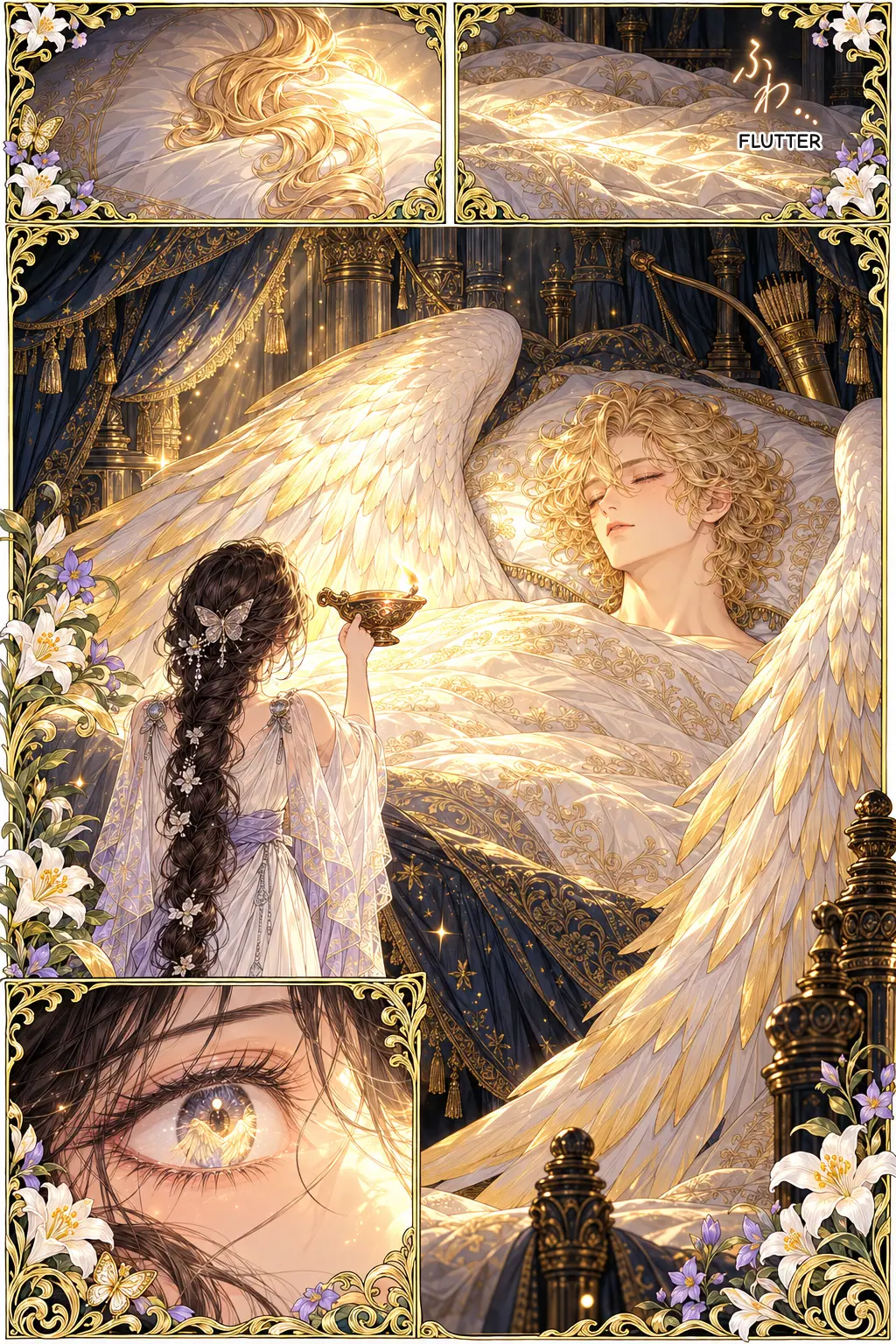
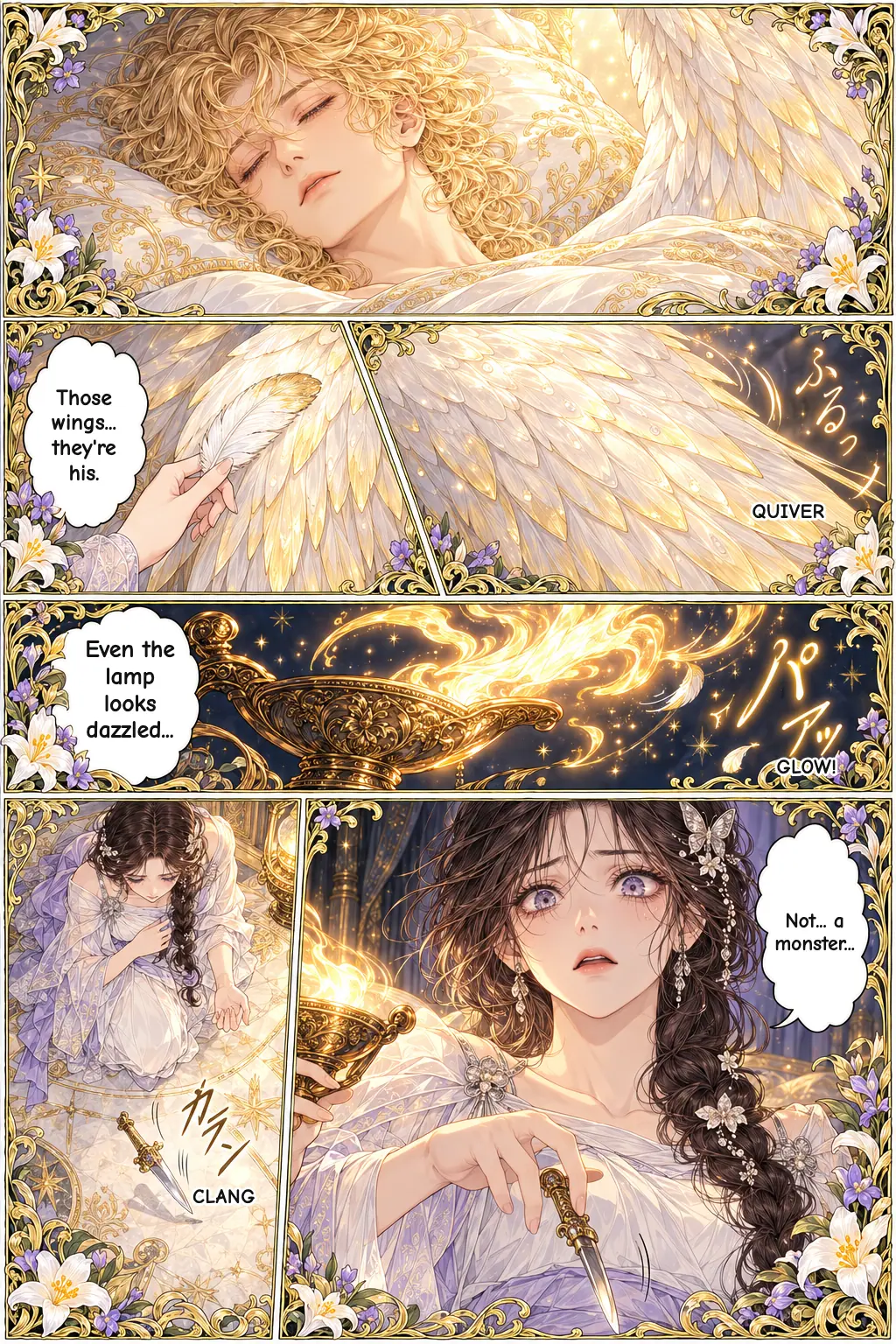
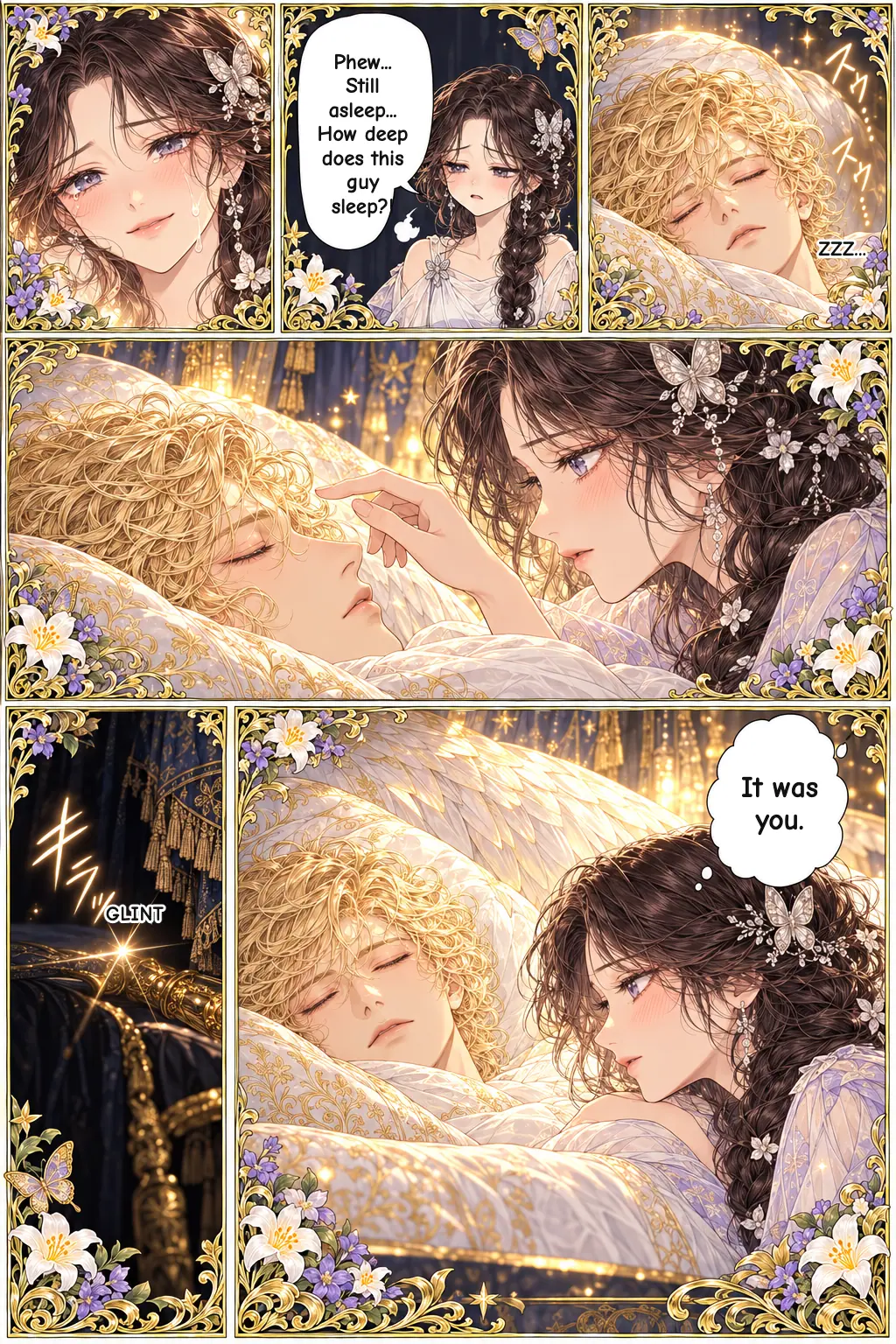
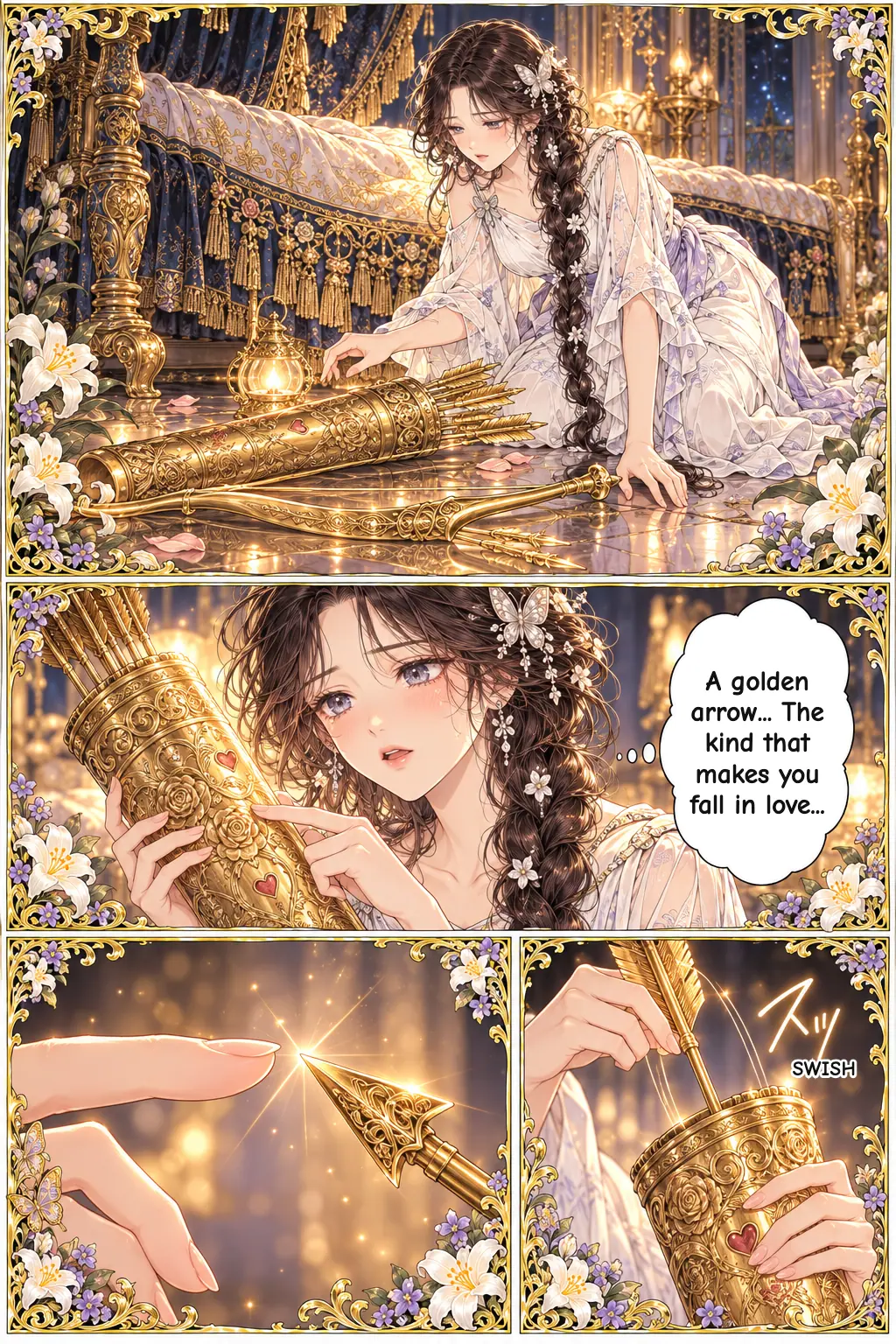
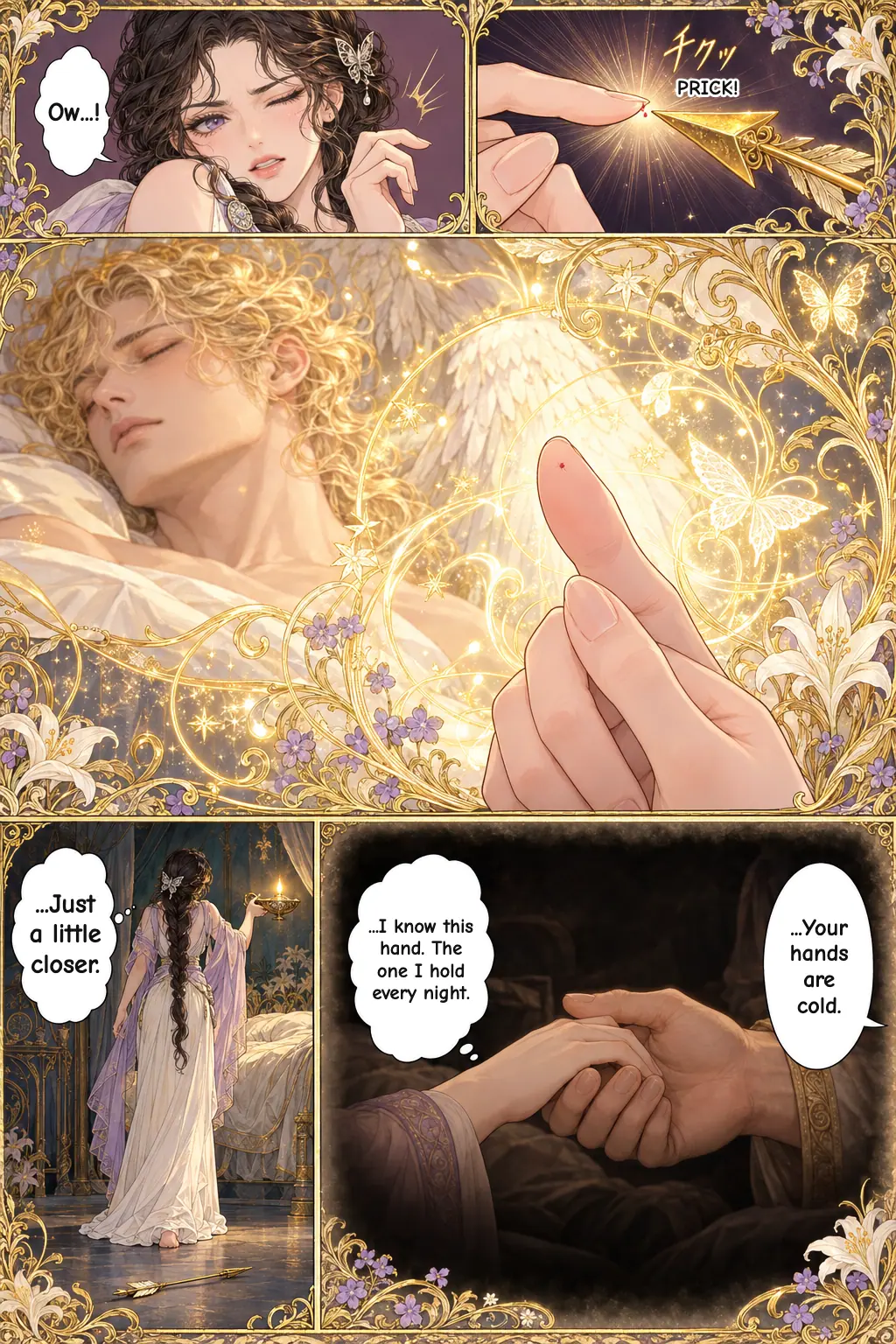
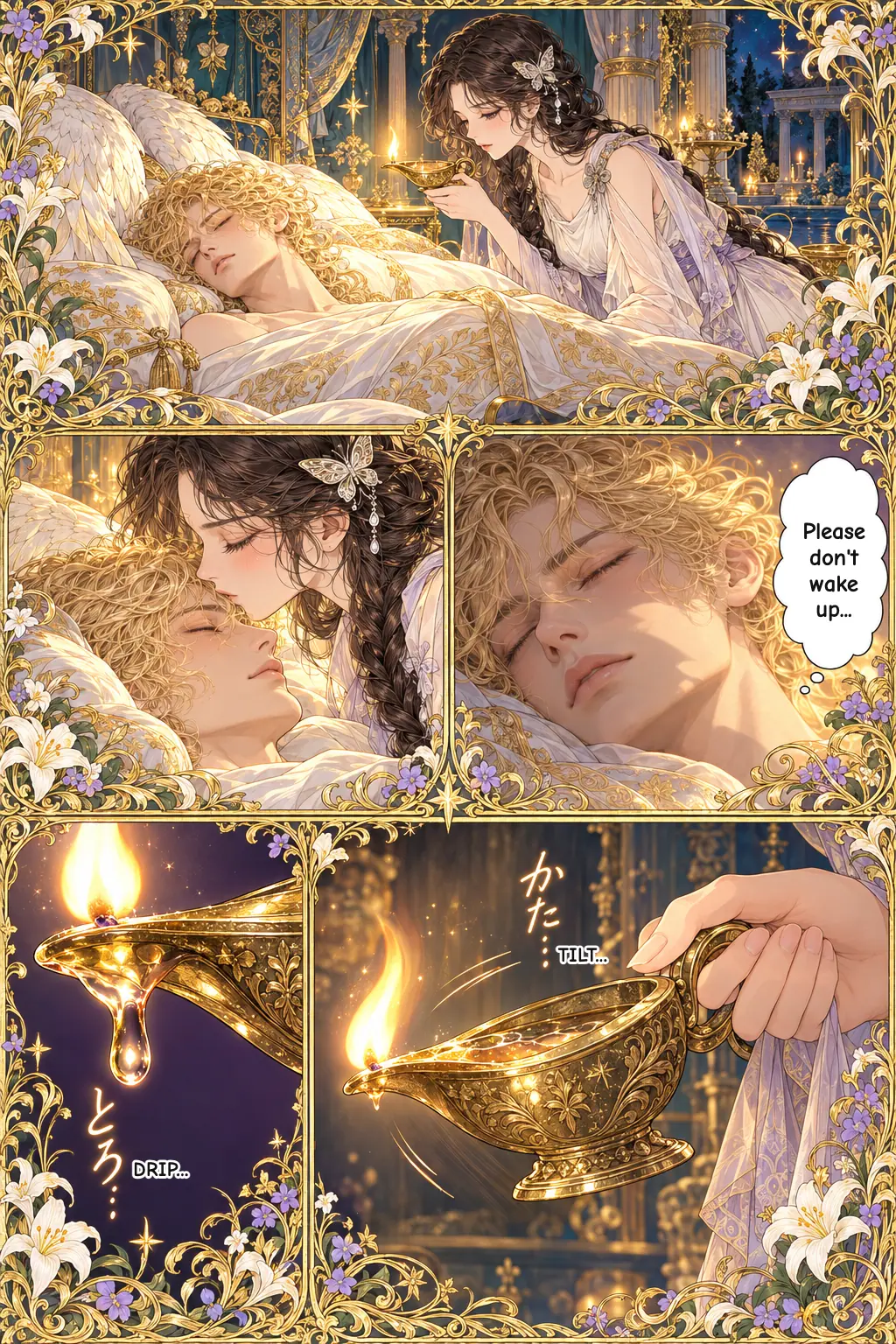
When the light falls on the bed, there is no monster. Asleep there is Cupid himself, the god of love. Apuleius describes him lovingly: golden hair scented with ambrosia, a neck as white as milk, rosy cheeks, and white wings on his shoulders that shine as if wet with dew. His bow, quiver and arrows lie at the foot of the bed. The narrator even says the lamp burned brighter at the sight. Psyche, pale and shaking, falls to her knees, and the razor slips from her hand. Slowly her courage comes back as she gazes at him. Too curious to stop, she touches his weapons and tests an arrow's tip with her finger. She presses too hard, and a tiny drop of rosy blood appears. In Apuleius' words, she has fallen in love with Love without knowing it. She leans over and kisses him again and again.
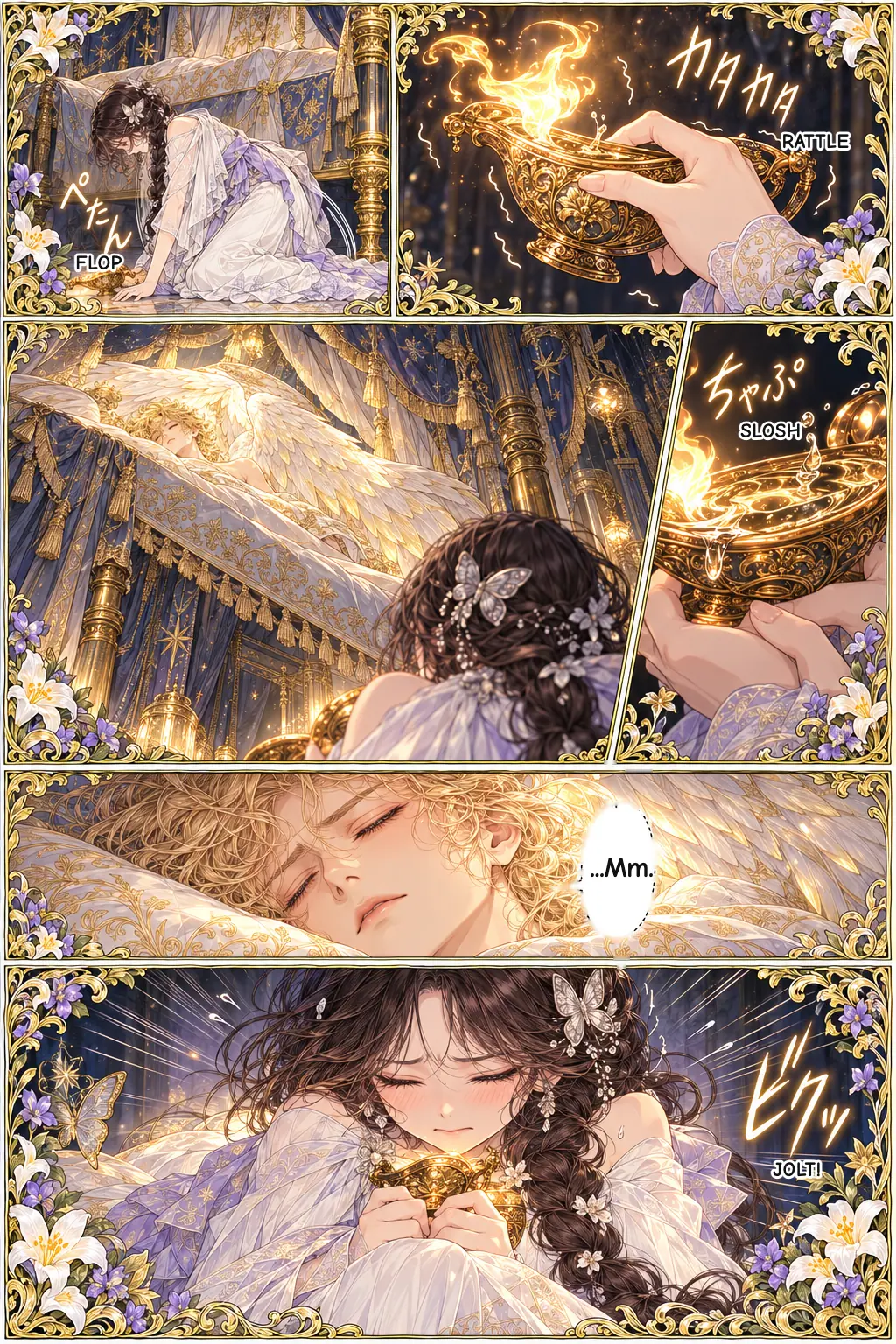
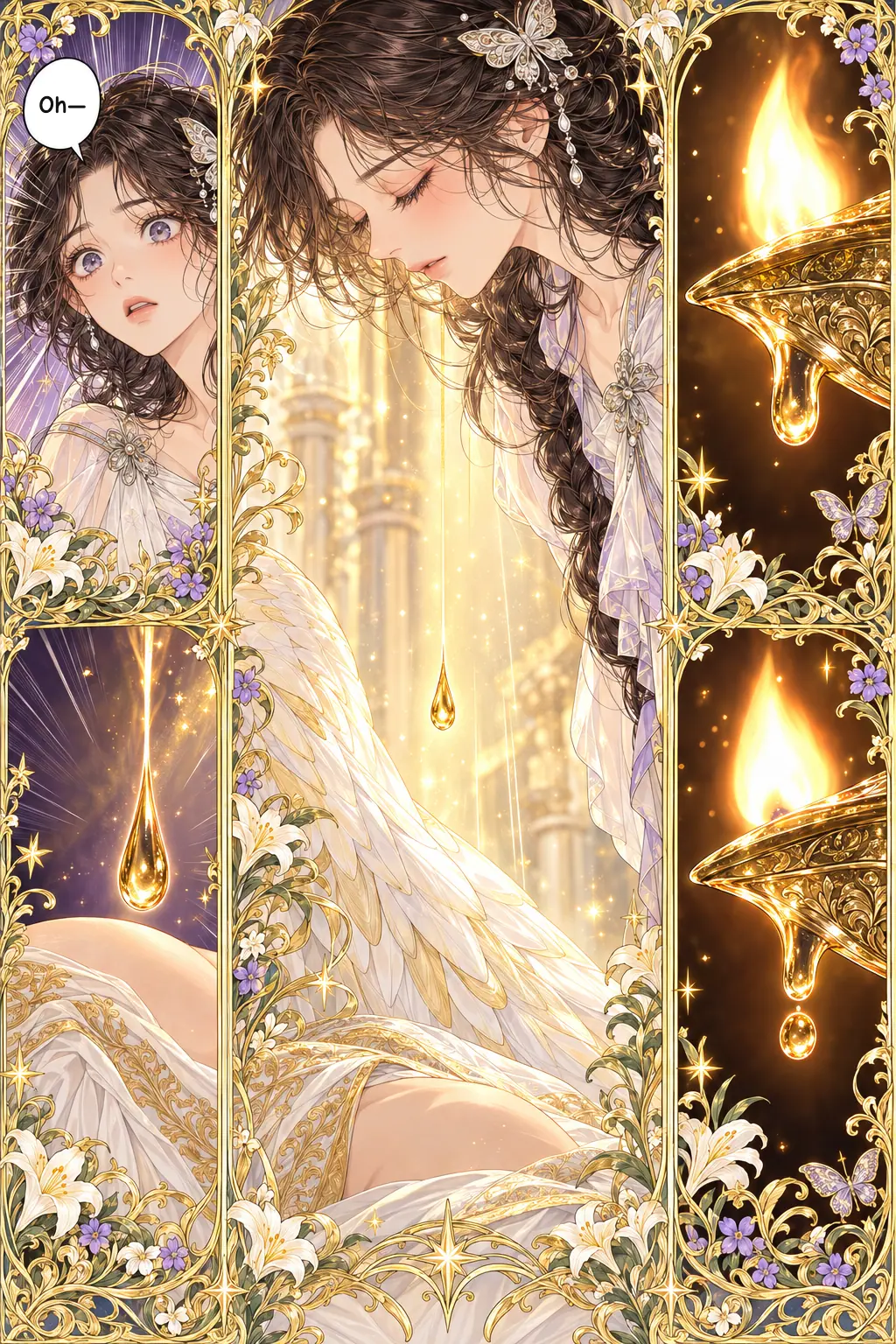
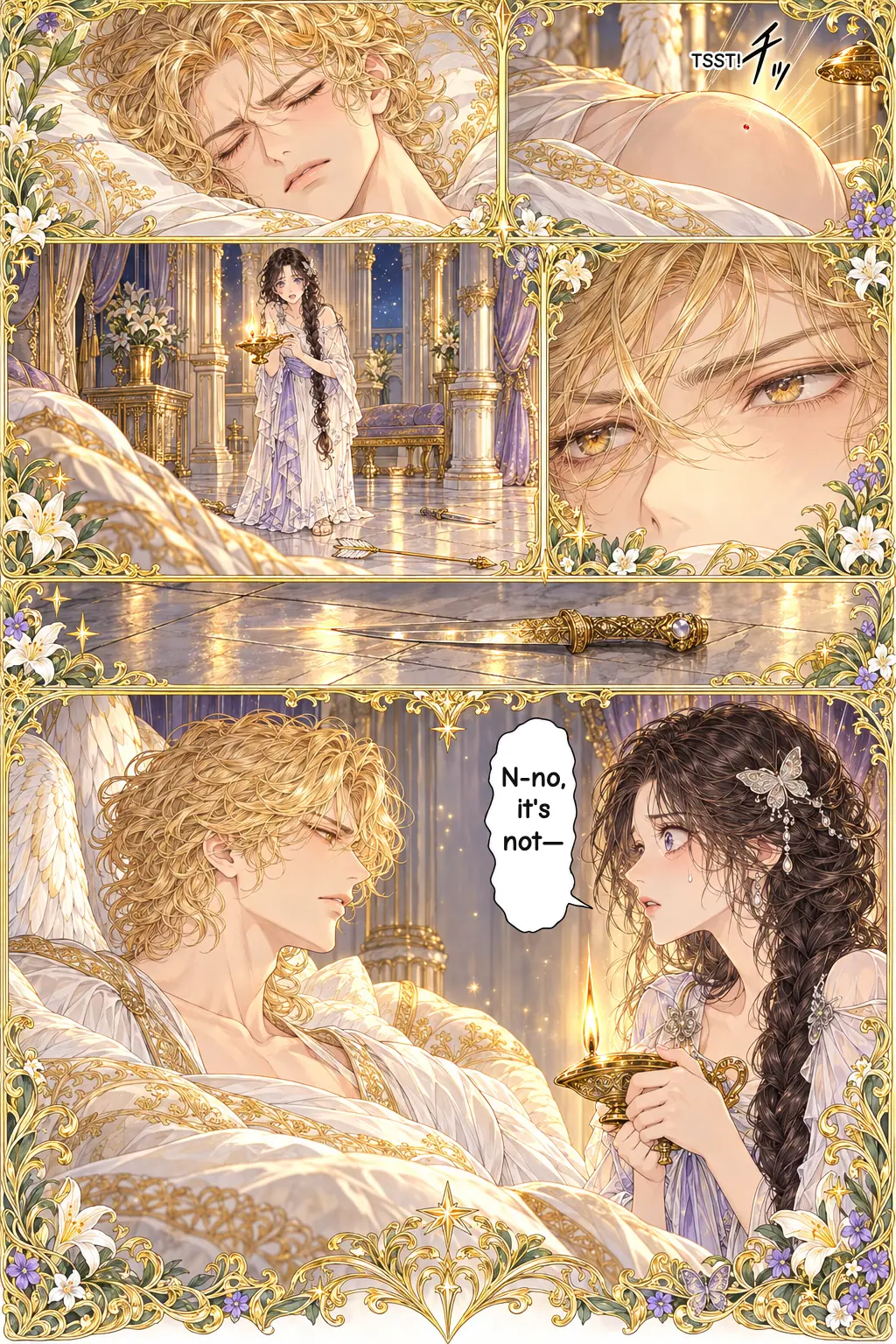
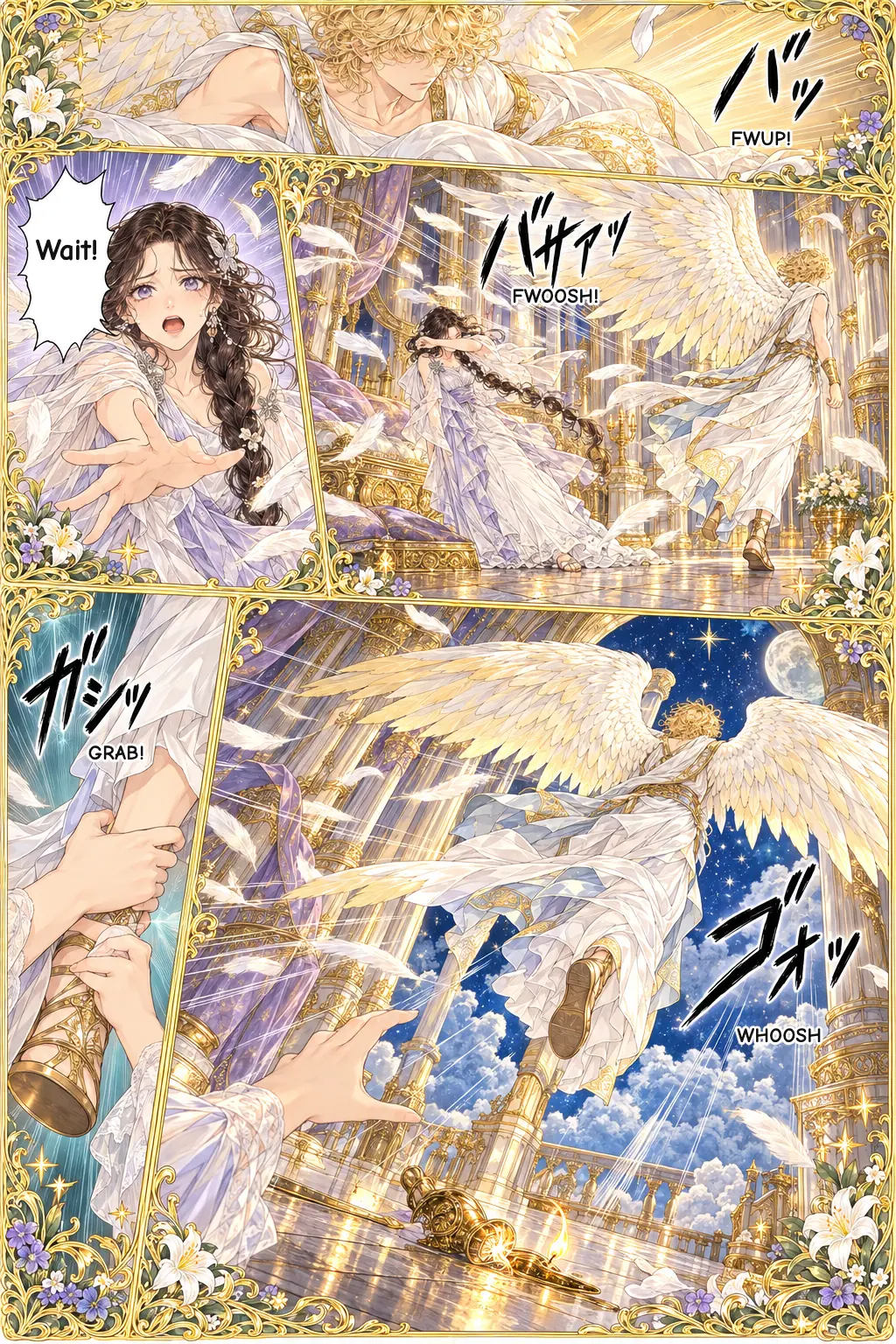
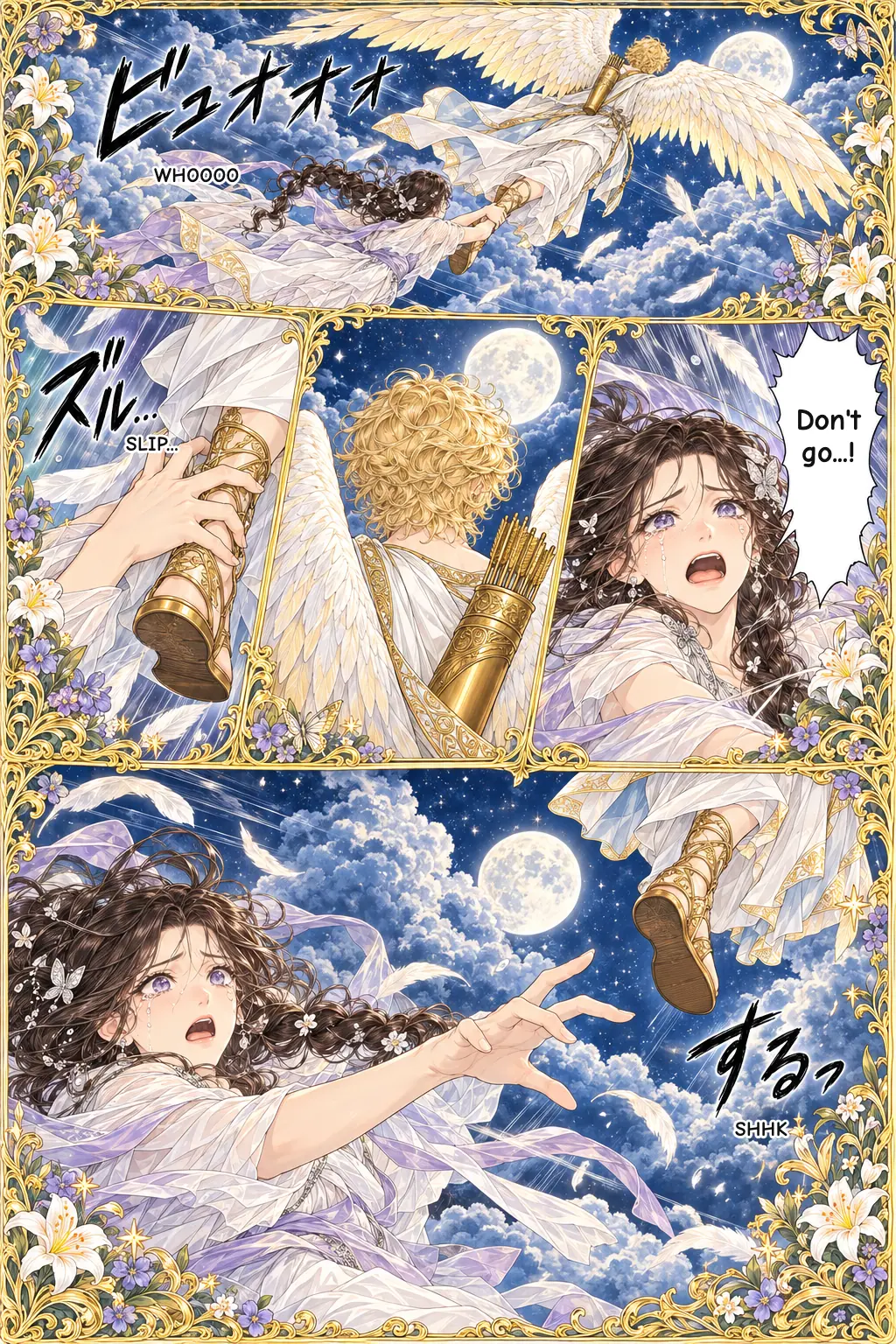
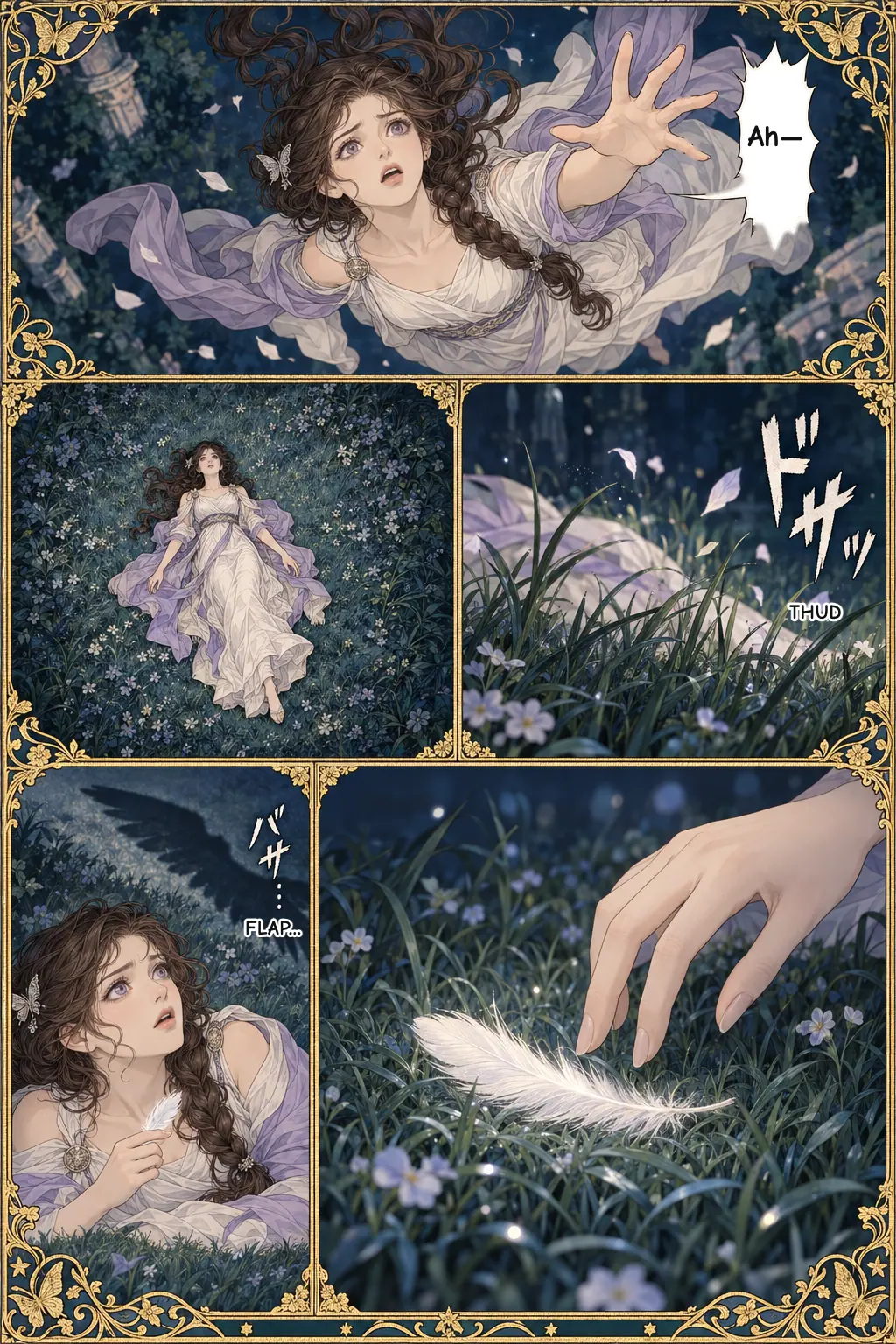
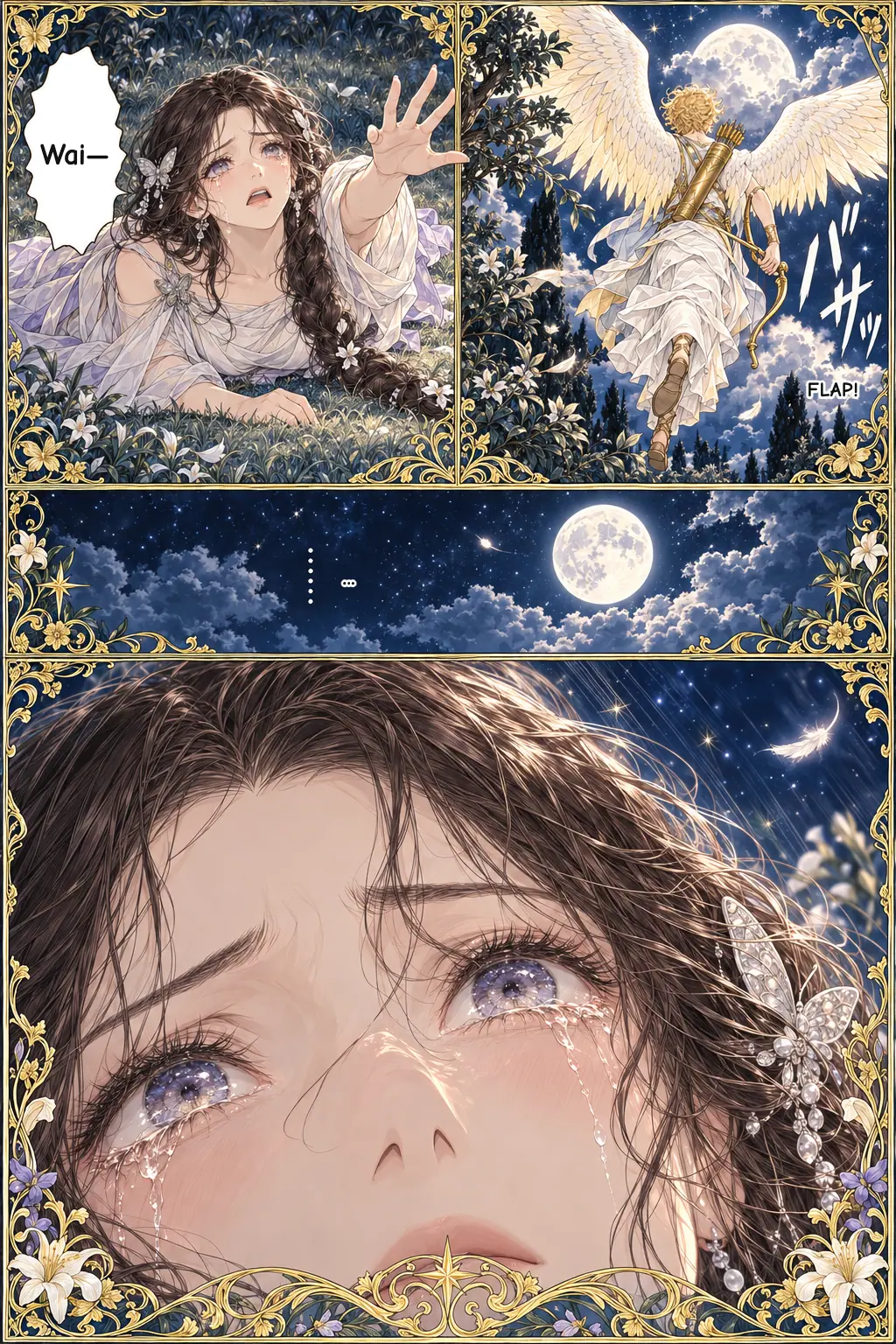
Then the lamp lets fall a drop of hot oil onto the god's right shoulder. The narrator scolds it as bold and reckless, and wonders whether it acted out of betrayal, envy, or a wish to touch that body too. Cupid wakes in pain, sees that his trust has been broken, and flies off without a word. Psyche grabs his right leg and is carried up into the clouds until she loses her grip and falls.
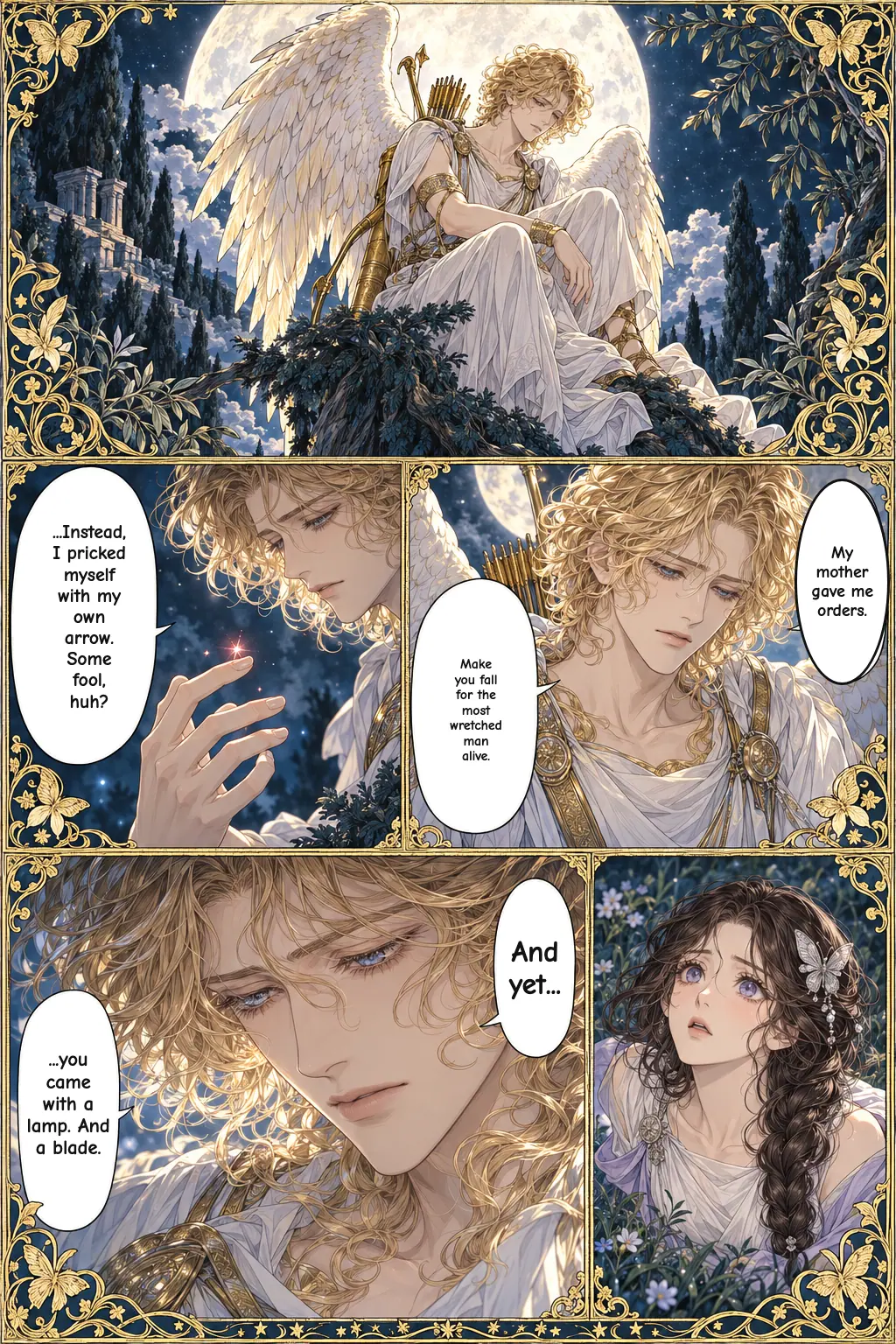
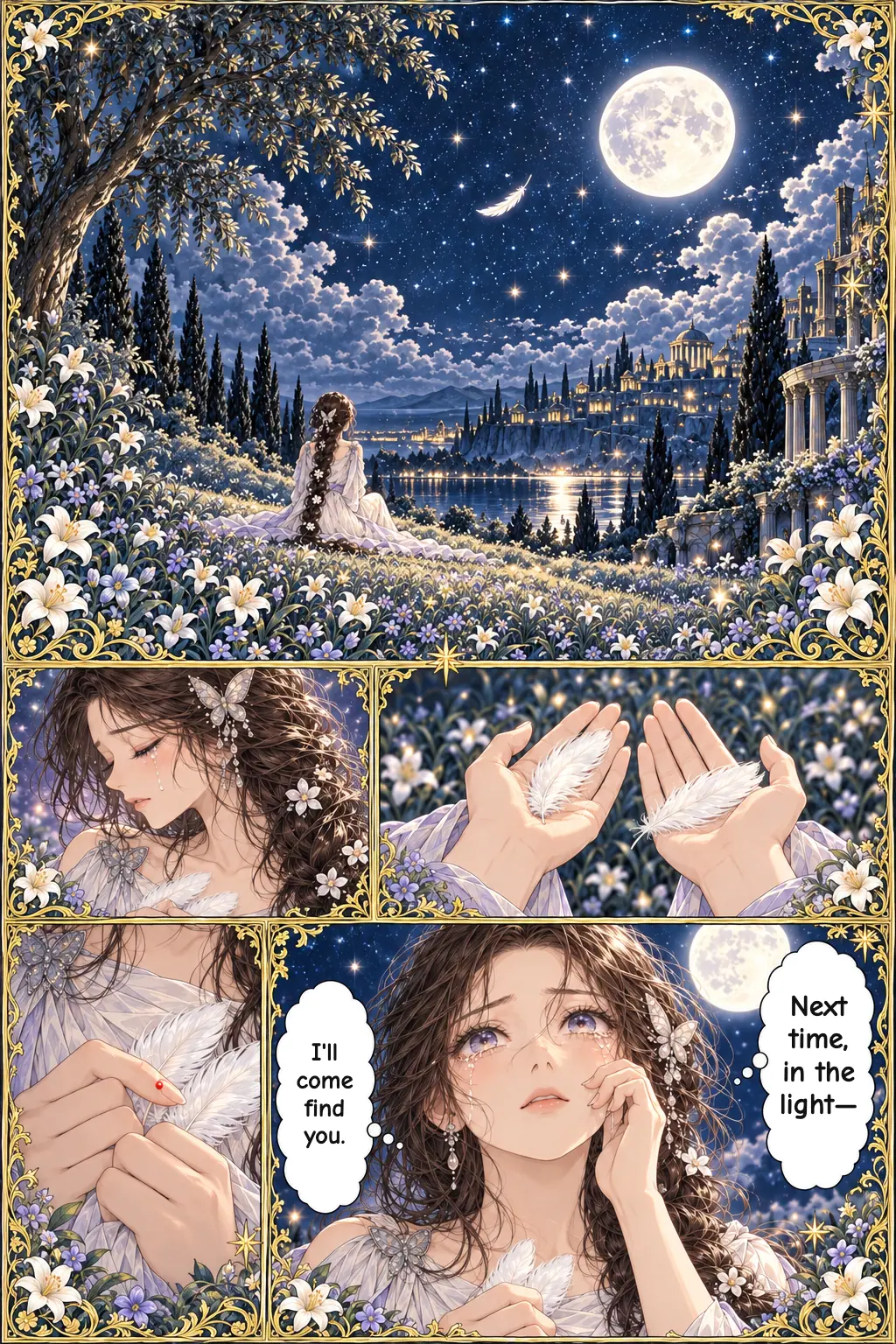
Cupid does not simply abandon her. He lands in a nearby cypress tree and speaks. His mother Venus had ordered him to make Psyche fall for the most wretched of men, he says, but he disobeyed, wounded himself with his own arrow, and married her. Yet she took him for a beast and came with a blade for his neck. Her sisters will soon be punished; her only punishment will be his leaving. Then he flies away, and Psyche watches until she can no longer see him.
Who is who in this scene
Psyche is the human heroine. By this point in the story she is pregnant. The narrator calls her very simple, meaning trusting and naive rather than foolish. Her curiosity drives the plot.
Cupid (Latin Cupido or Amor, the Roman name for the Greek god Eros) is the god of love and the son of Venus. The manga's title uses his Greek name, Eros. Venus (the Greek Aphrodite) and the two sisters do not appear here; we only hear about them through Cupid's words from the tree.
What the scene means: background and readings
Apuleius was a writer from Roman North Africa. Cupid and Psyche is a story told inside his novel: an old woman tells it to a young woman held captive by robbers. It is the longest and most famous episode in the book.
Psyche's name is the Greek word for soul, and many readers have taken the tale as a story about the soul and love. Some scholars see the forbidden look as being about trust versus curiosity. The plot also resembles folktales about a lost, hidden husband, and it is often named as a distant ancestor of stories like Beauty and the Beast. These are interpretations, not things the text states.
The lamp scene is the turning point. Up to here Psyche has been passive; afterward, in the rest of the story, she must go out and win Cupid back through her own efforts.
What the manga changes
Episode 6 follows Apuleius closely, but some details are the artist's work. The bedroom, the bedding and the lamp's design are invented, and Cupid is shown from the chest up under a sheet. The text only mentions the bed and the weapons at its foot. Psyche's shifting expressions (shock, relief, a quickening heart) are drawn in more detail than the original, which says only that she grew pale, trembled, knelt, and recovered.
The manga does not show Psyche turning the razor toward herself. It treats the arrow prick as Psyche realizing a love that was already there, not as a magic spell. Cupid's burn is shown as a red mark and a wince; the text only says his right shoulder was burned and he leapt up. His speech in the cypress is shortened but keeps its meaning. The night sky, moon, sound of wings and falling feathers are added for atmosphere. The episode ends with Psyche grieving, before the next part of the original, where she throws herself into a river and the river carries her back to the bank.
Where to read it
If you want to see the moment the light reveals the god of love, read EROS & PSYCHE: The Forbidden Gaze, Episode 6, here on Manga Portal. Every episode is free, and you don't need an account. Start from Episode 1 to see how Psyche ended up married to a husband she had never seen, or read on to find out how she tries to win him back.
Characters in this episode
Psyche
A king's youngest daughter, married to an unseen husband, who breaks her promise and looks at him by lamplight.
Cupid (Eros)
The god of love and son of Venus, who secretly married Psyche against his mother's orders and leaves when she betrays his trust.
Venus (Aphrodite)
The goddess of love and beauty, Cupid's mother, who ordered him to make Psyche fall for the lowest of men.
Psyche's sisters
Psyche's two jealous older sisters, who told her that her husband was a monstrous serpent and urged her to kill him.
The lamp
The lamp that reveals Cupid, which the narrator treats almost like a character and blames for the drop of oil that burns him.
FAQ
Why did Psyche look at Cupid?
Her sisters convinced her that her unseen husband was a giant serpent who would eat her. They told her to hide a lamp and a blade and kill him while he slept, so she lit the lamp to see him.
Why did Cupid leave Psyche?
He had warned her never to try to see him, and she broke that trust and even came with a blade. When hot oil from her lamp burned his shoulder and woke him, he flew away. He told her that his leaving was her only punishment.
Where does the story of Cupid and Psyche come from?
It comes from the Metamorphoses, also known as The Golden Ass, a Latin novel written in the 2nd century AD by Apuleius. The lamp scene is in Book 5, sections 22 to 25.
Is Cupid the same as Eros?
Yes. Cupid (Latin Cupido or Amor) is the Roman name for the Greek god of love, Eros. Apuleius wrote in Latin and used the Roman names, so his Venus is the Greek Aphrodite.
What does Psyche's name mean?
Psyche is the Greek word for soul. Because of this, many readers interpret the story as an allegory of the soul's journey toward love, although Apuleius never says so directly.