Episode 1Too Beautiful to Be LovedCupid and Psyche
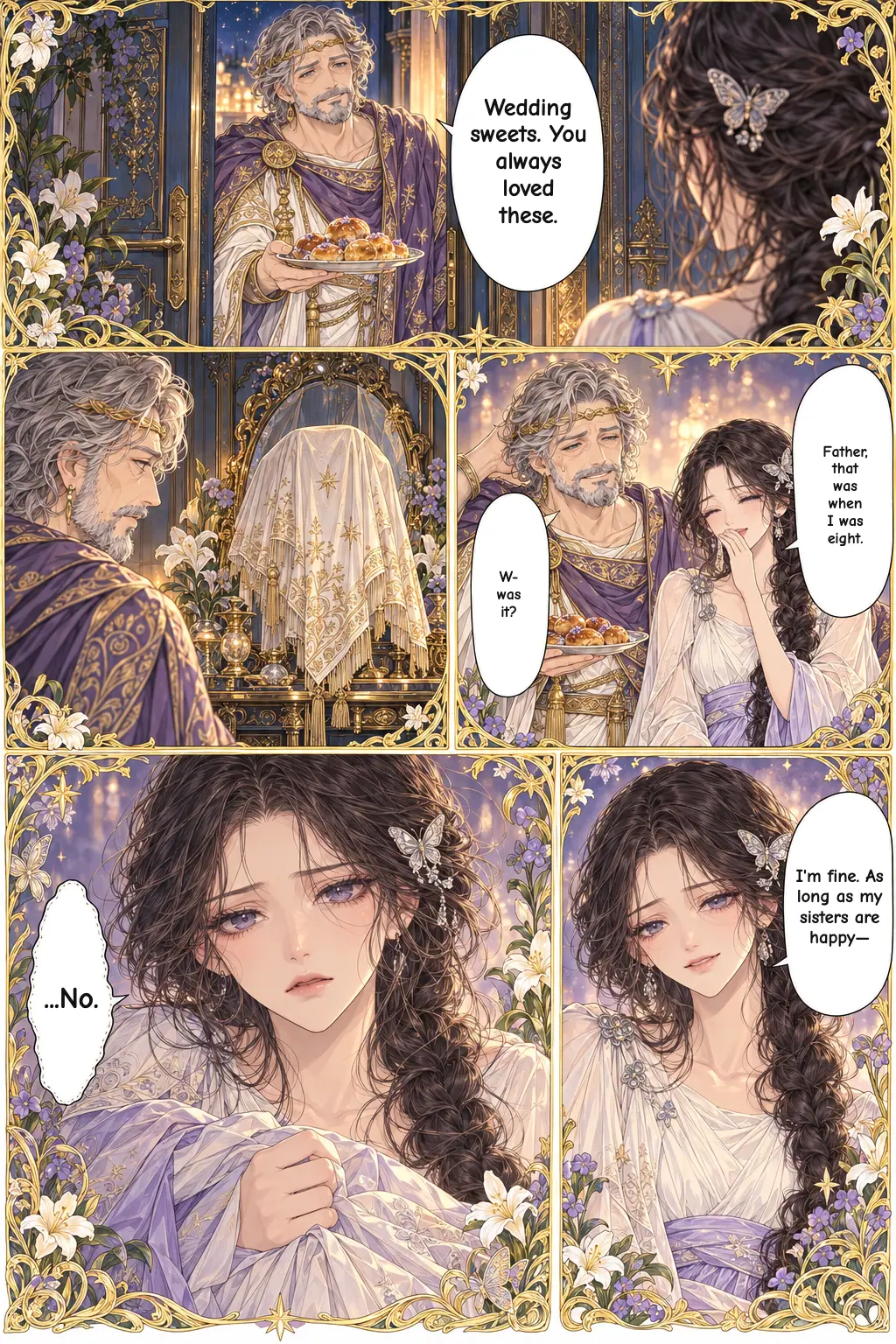
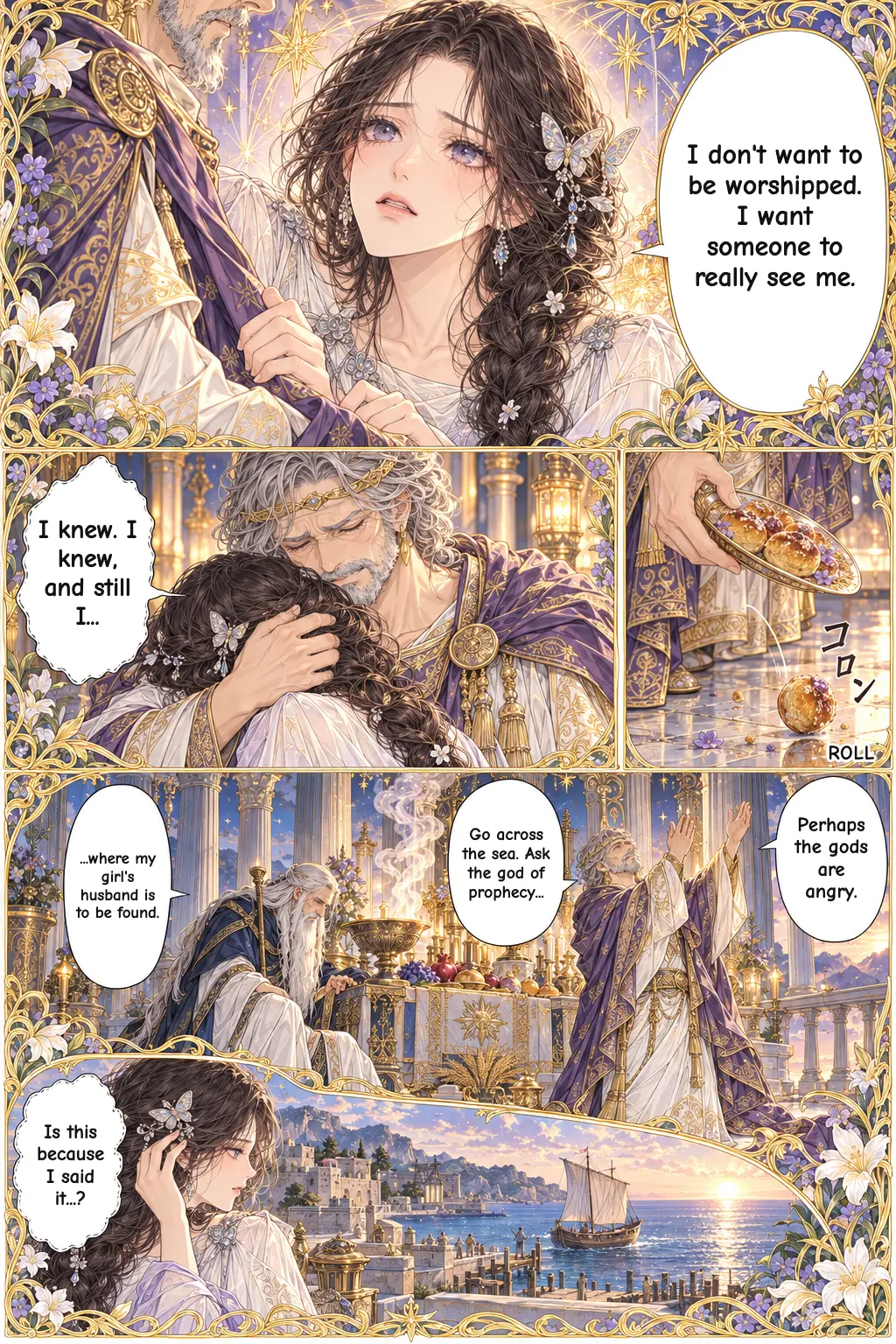
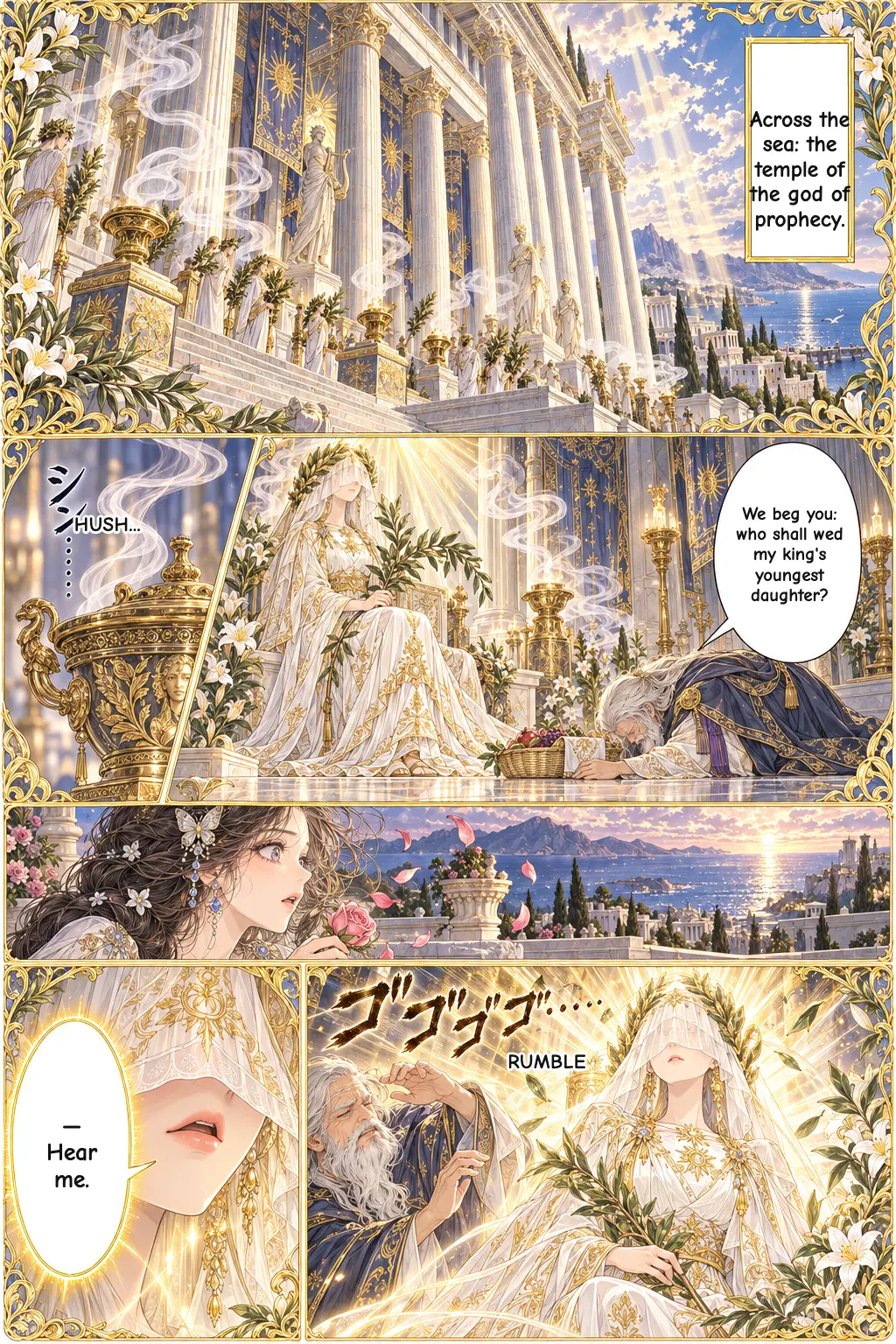
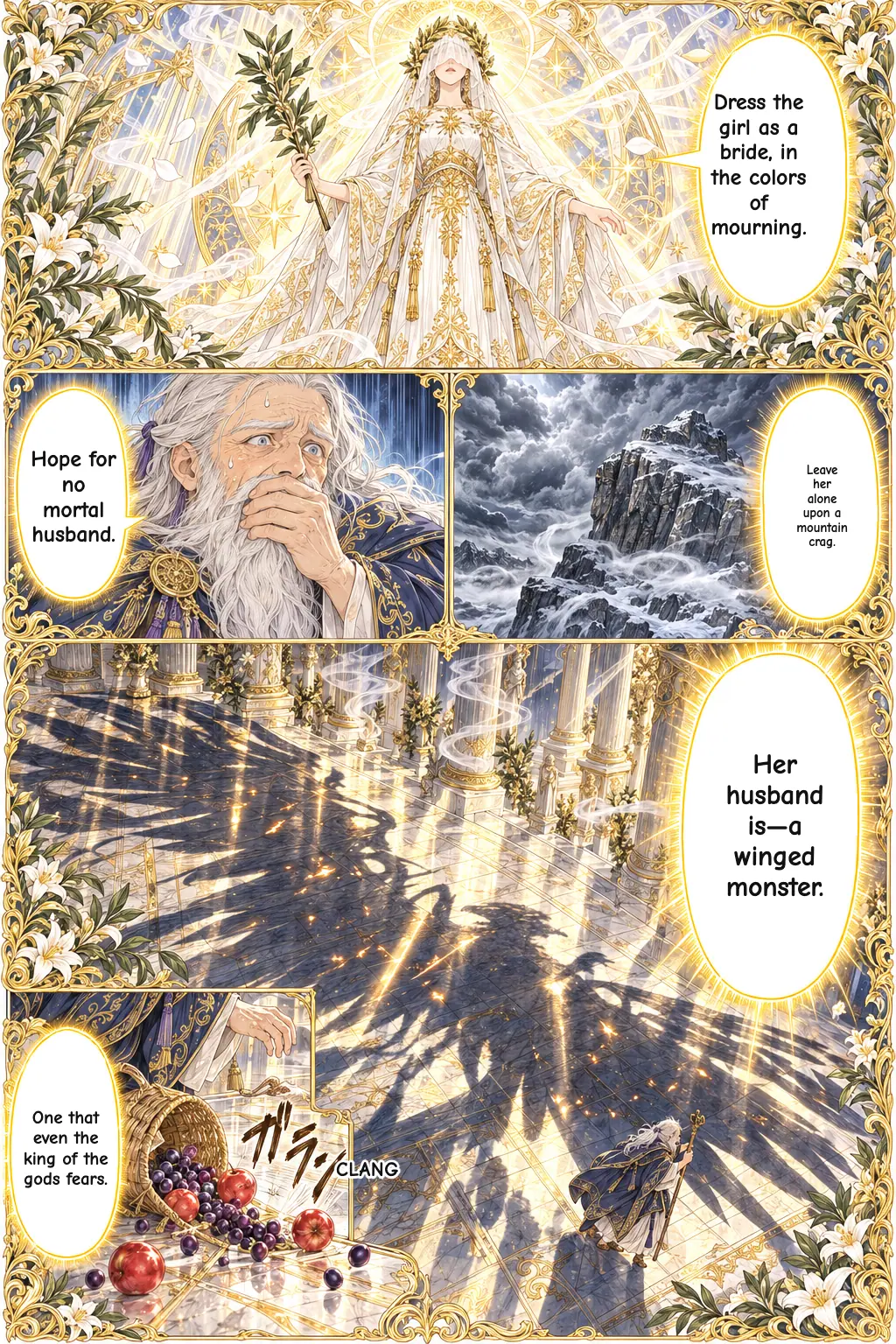
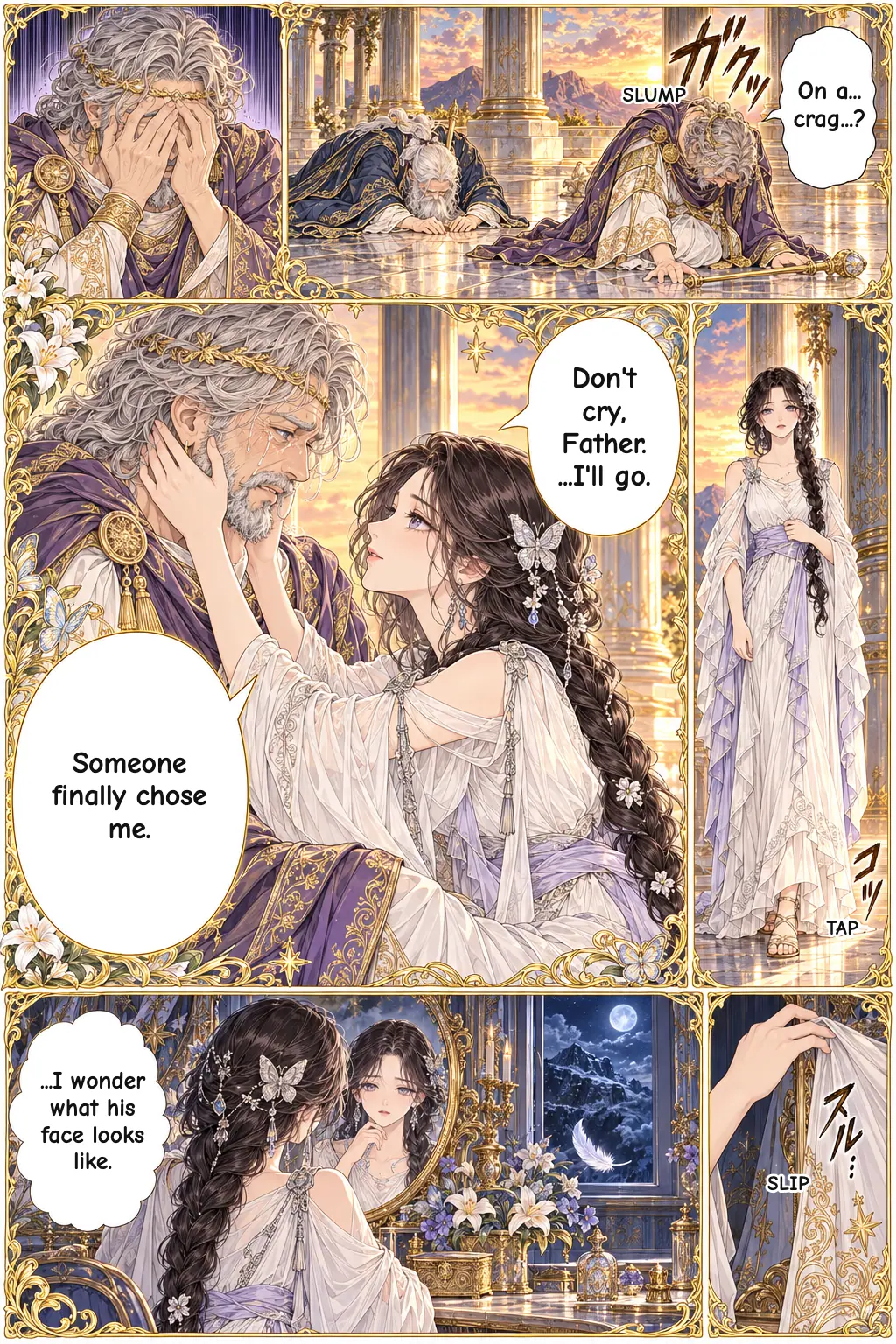
Everyone worships her, but no one falls in love with her. Princess Psyche is so beautiful that she earns the jealousy of the goddess Venus. In this first episode, Psyche tells her father, "I want someone to really see me." Then the god of prophecy gives his answer: "Leave her on a mountain crag as a bride. Her husband is a winged monster."
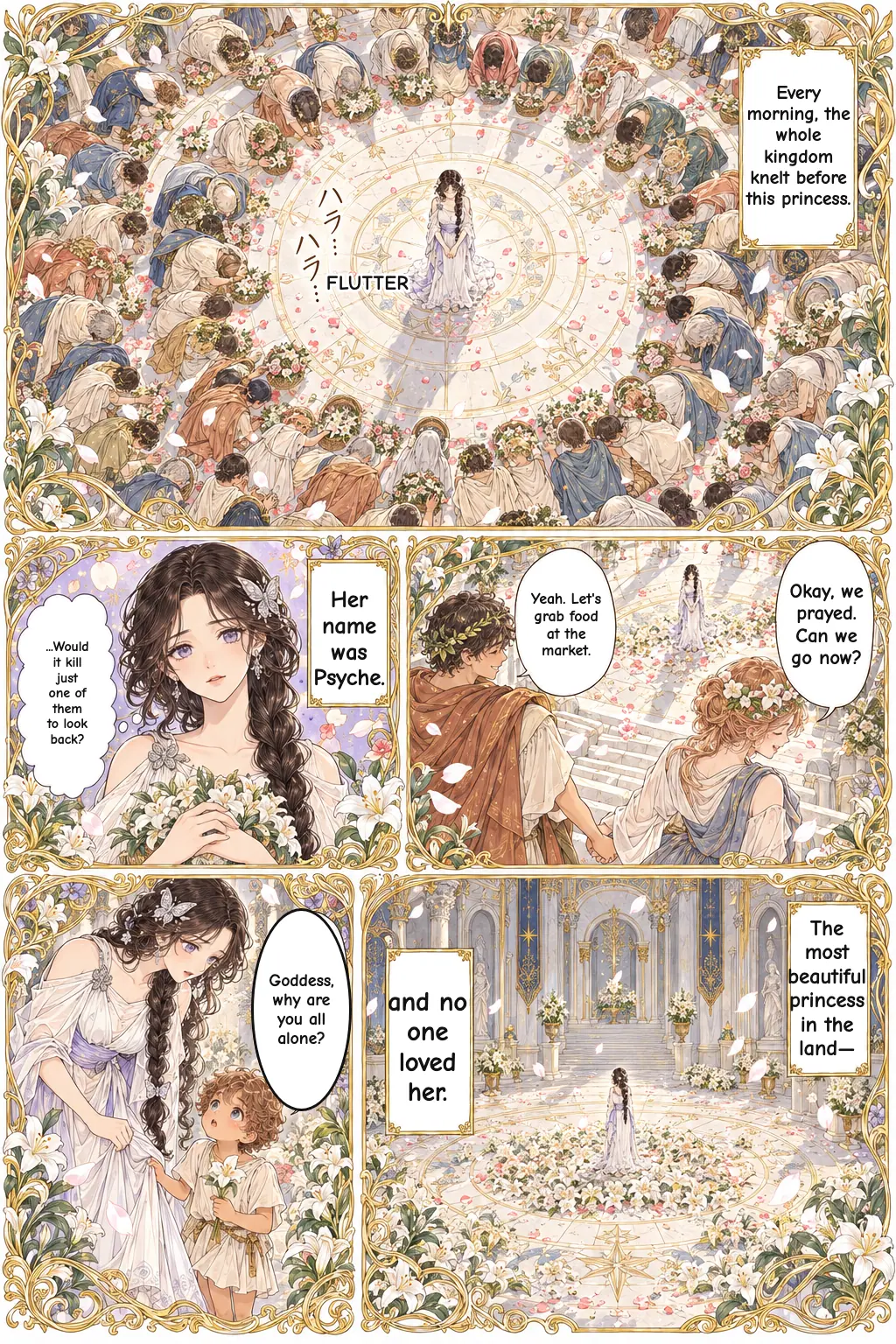
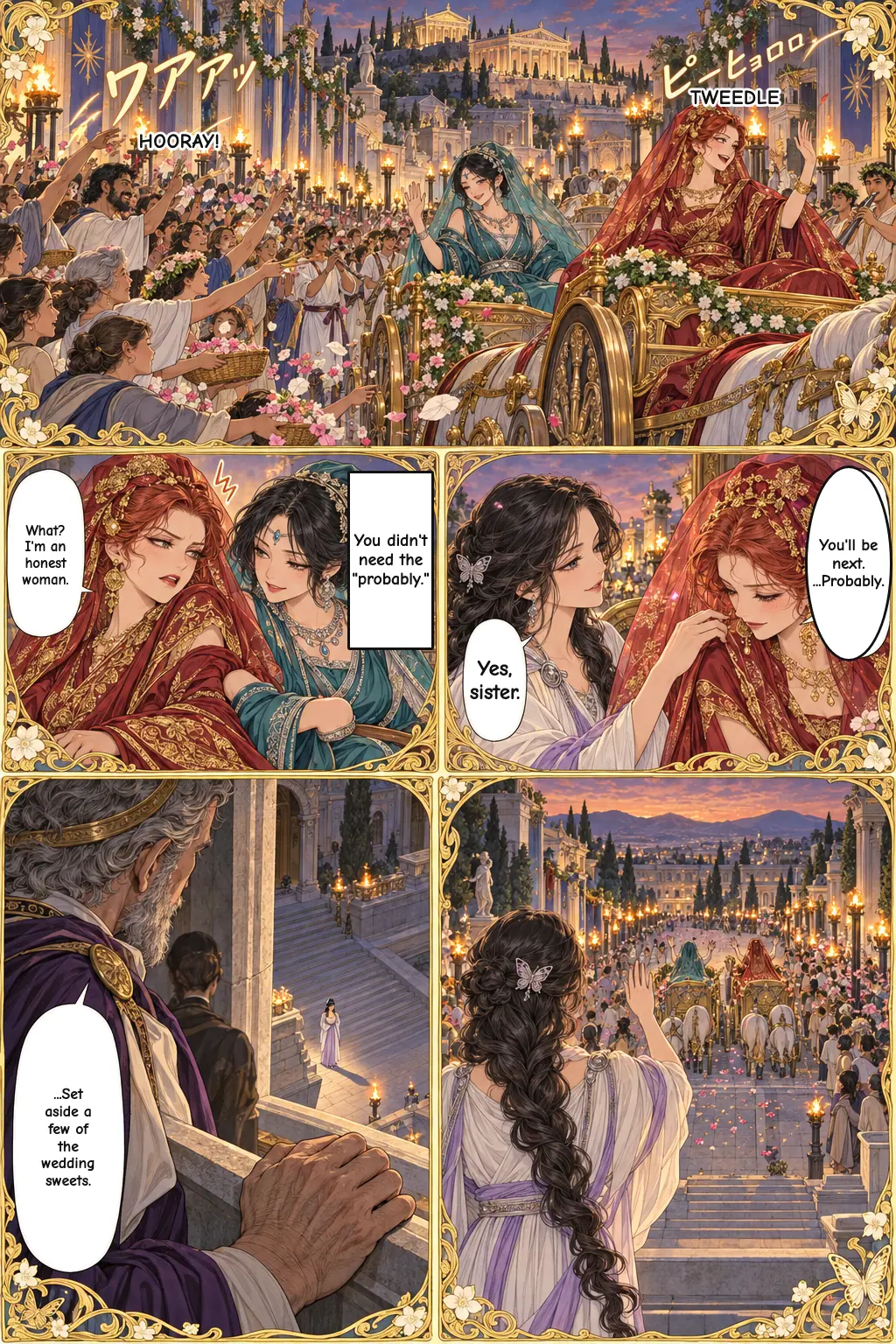
The tale opens in a kingdom the author never names. A king and queen have three daughters. The two older girls are lovely in an ordinary way, the kind of beauty people can still describe. The youngest, Psyche, is so beautiful that human words fail to praise her properly. Crowds of local people and visitors from far away come just to look at her. They greet her the way worshippers greet a goddess, with a hand raised to the lips, and a rumor spreads that Venus herself has come down to earth or been born again. Soon nobody makes the trip to Venus's famous shrines at Paphos, Cnidus, and Cythera.
Cupid and Psyche Summary: Venus's Jealousy and the Oracle Explained
In short: Cupid and Psyche is a tale from Apuleius's Latin novel the Metamorphoses (also called The Golden Ass, 2nd century CE). It begins with Princess Psyche, who is so beautiful that people worship her instead of Venus, the goddess of love. Yet no one asks to marry her. The angry Venus sends her winged son to punish the girl, and an oracle of Apollo orders that Psyche be left on a mountain crag as the bride of a winged monster.
The Original Story: How Cupid and Psyche Begins
The tale opens in a kingdom the author never names. A king and queen have three daughters. The two older girls are lovely in an ordinary way, the kind of beauty people can still describe. The youngest, Psyche, is so beautiful that human words fail to praise her properly.
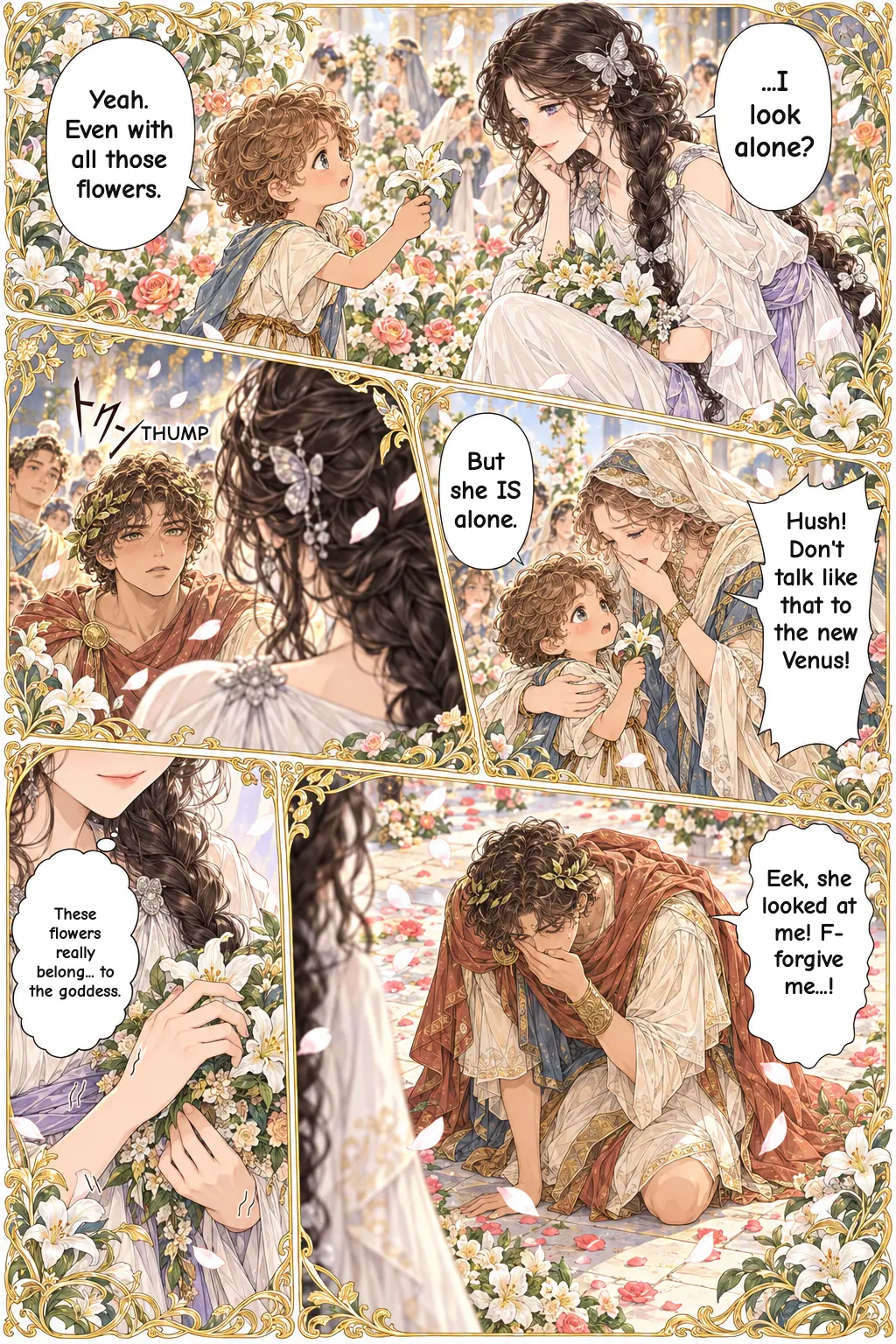
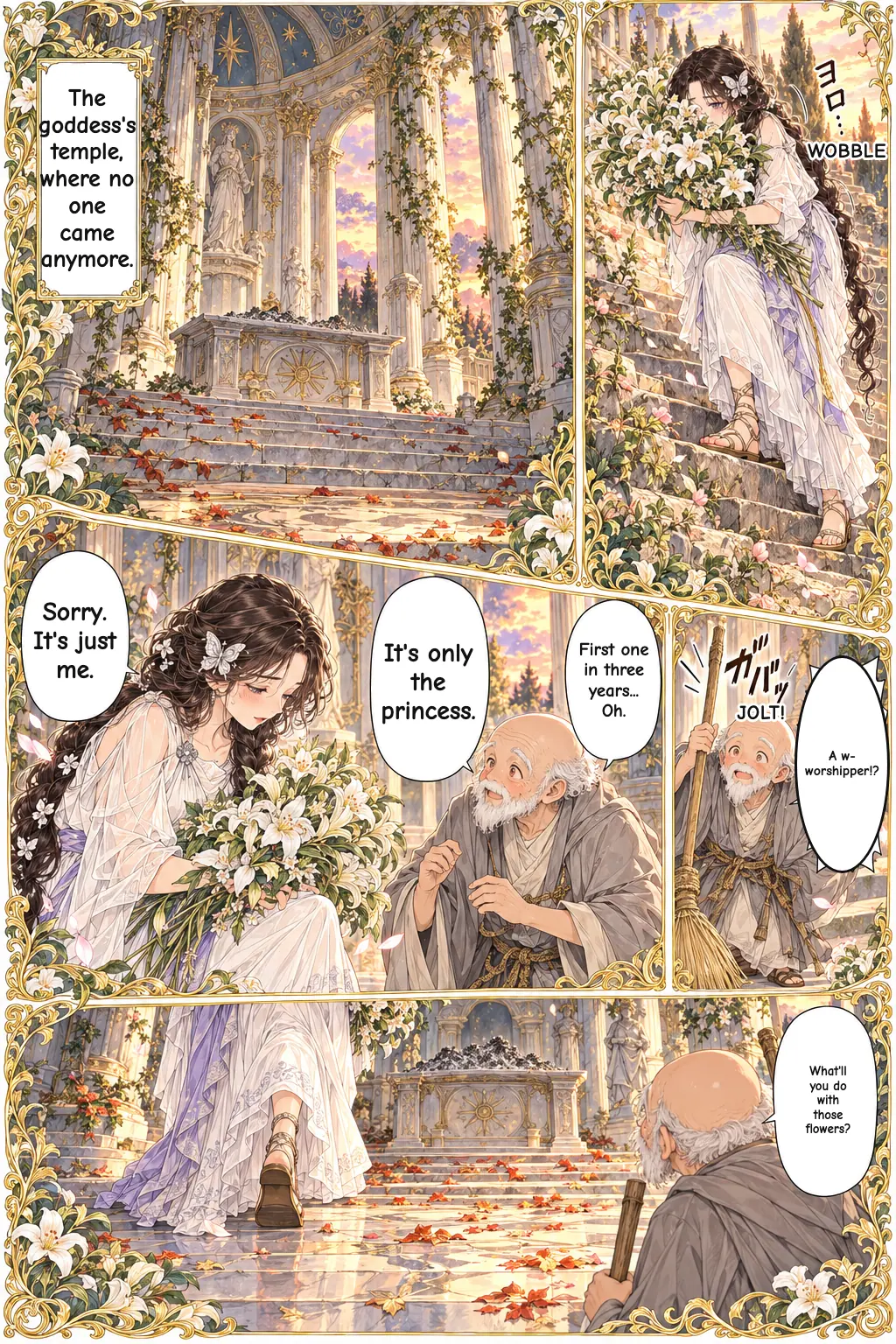
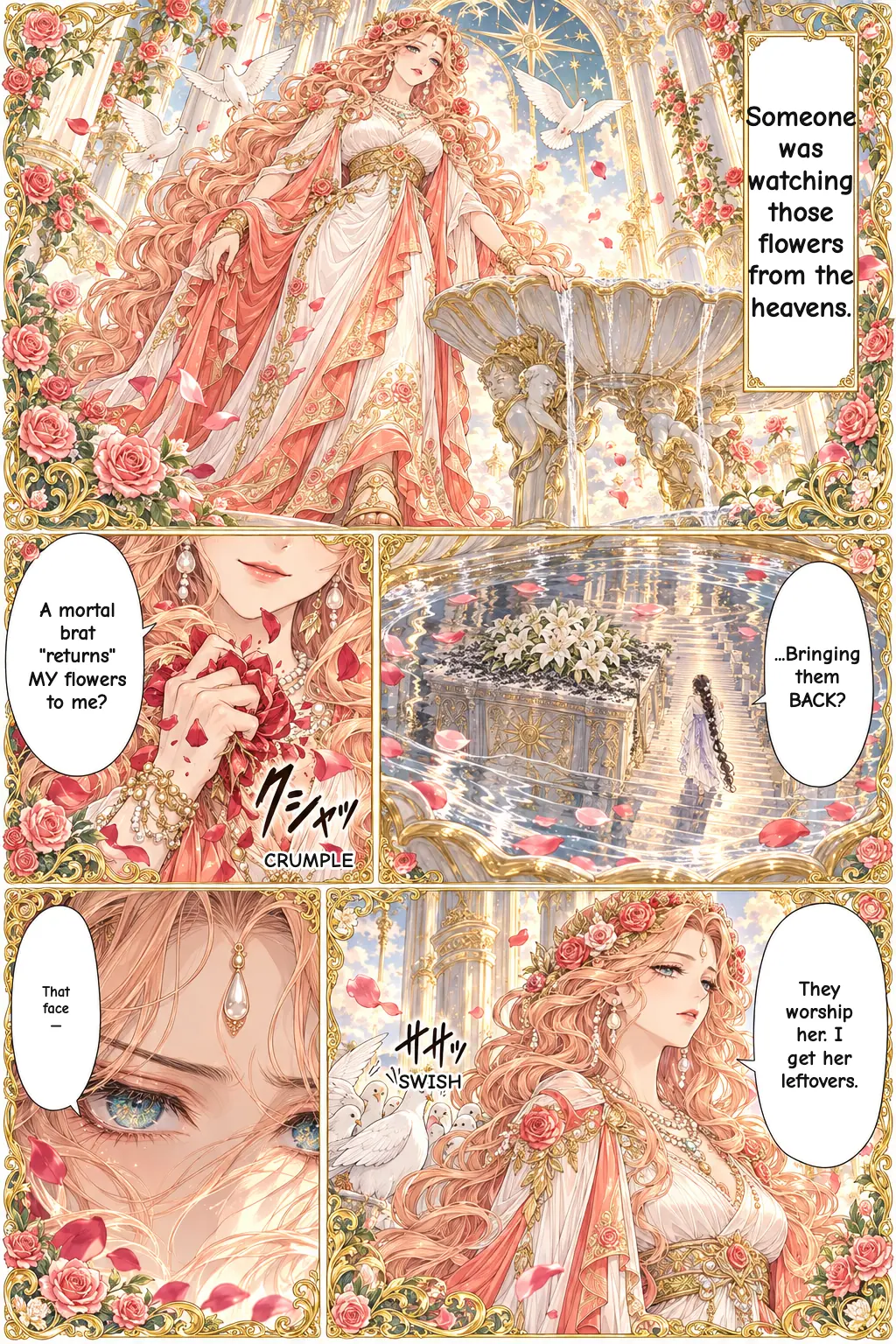
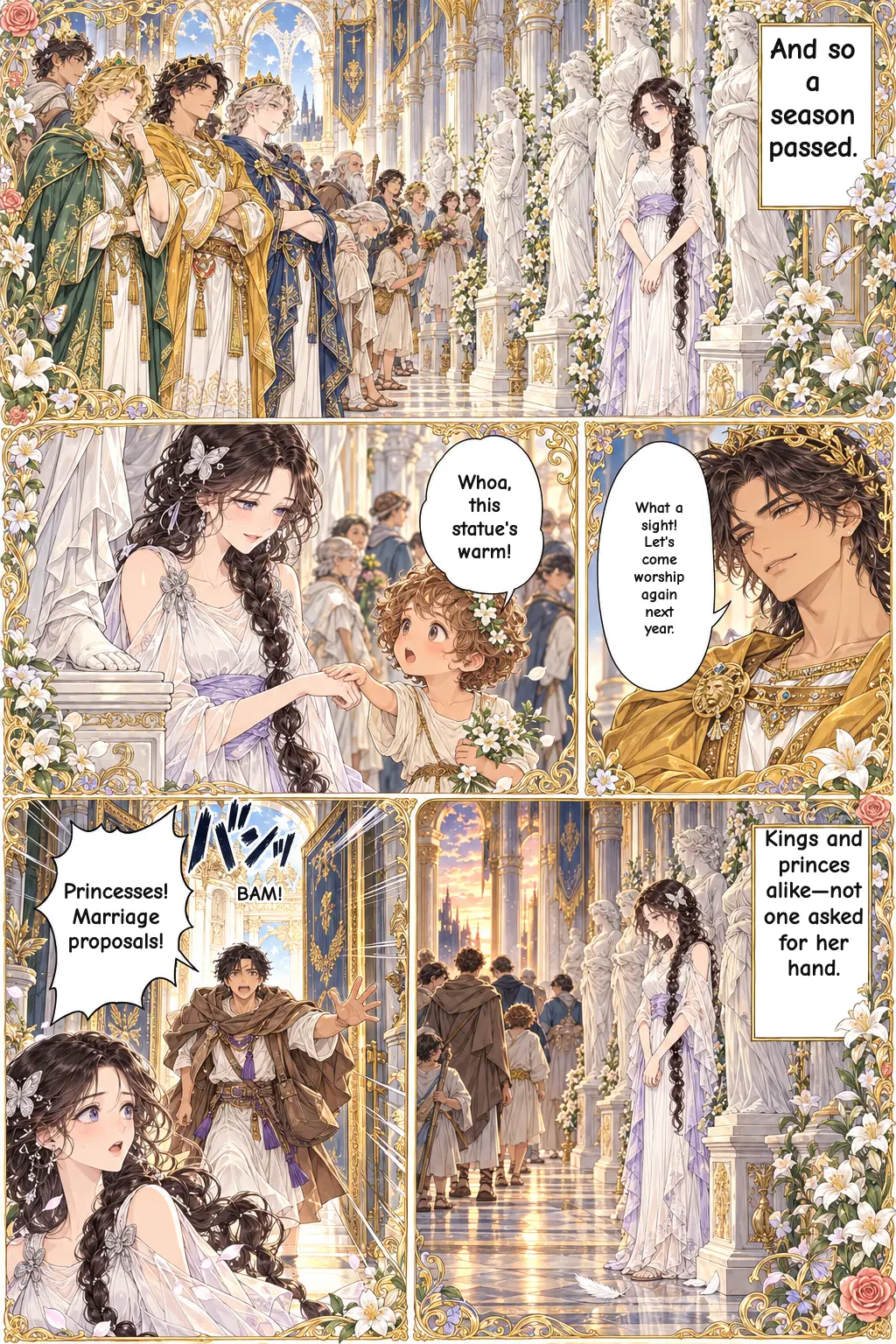
Crowds of local people and visitors from far away come just to look at her. They greet her the way worshippers greet a goddess, with a hand raised to the lips, and a rumor spreads that Venus herself has come down to earth or been born again. Soon nobody makes the trip to Venus's famous shrines at Paphos, Cnidus, and Cythera. Her festivals stop, her temples fall into disrepair, and her altars go cold. Meanwhile, people scatter flowers and garlands in front of Psyche as she walks through the streets.
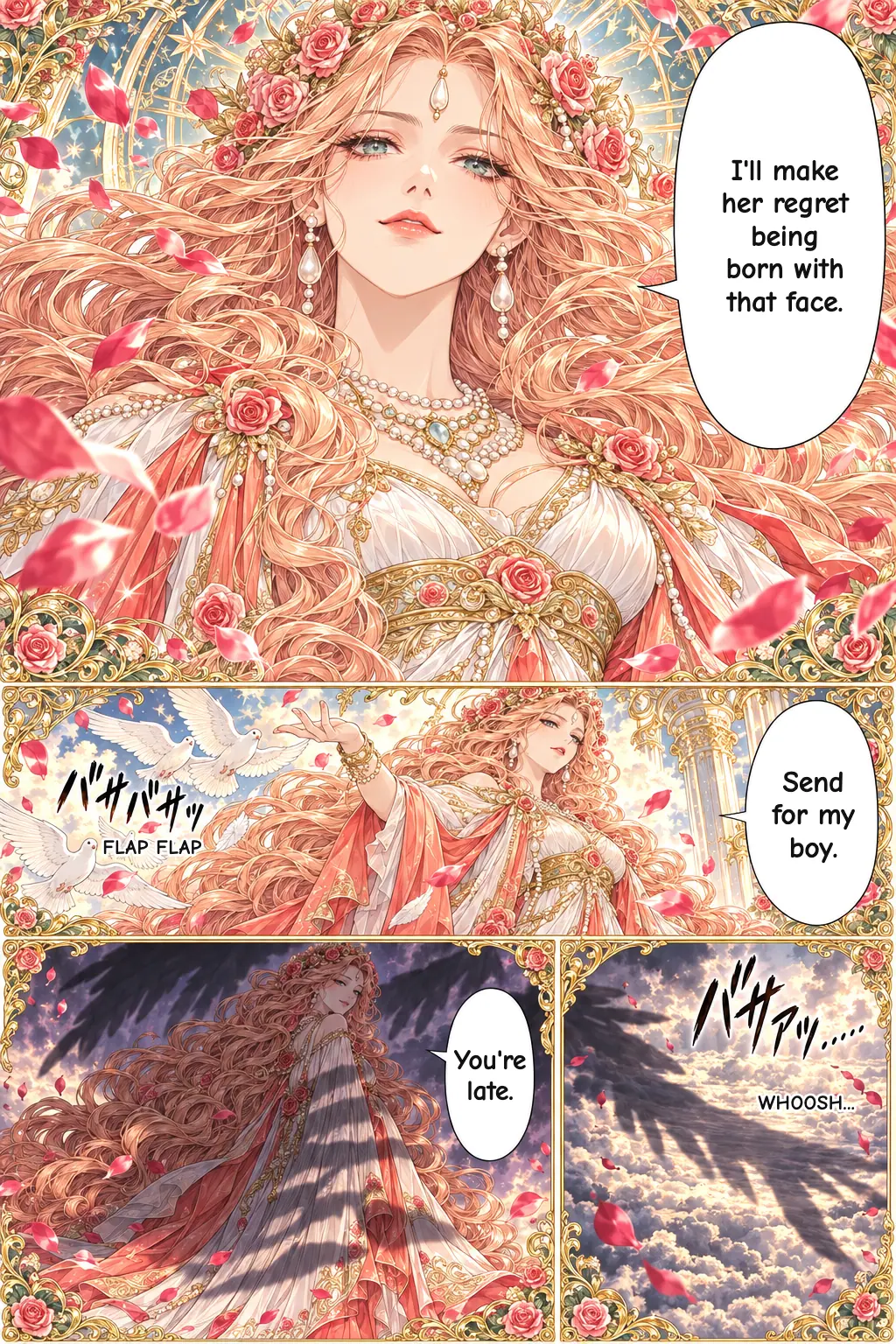
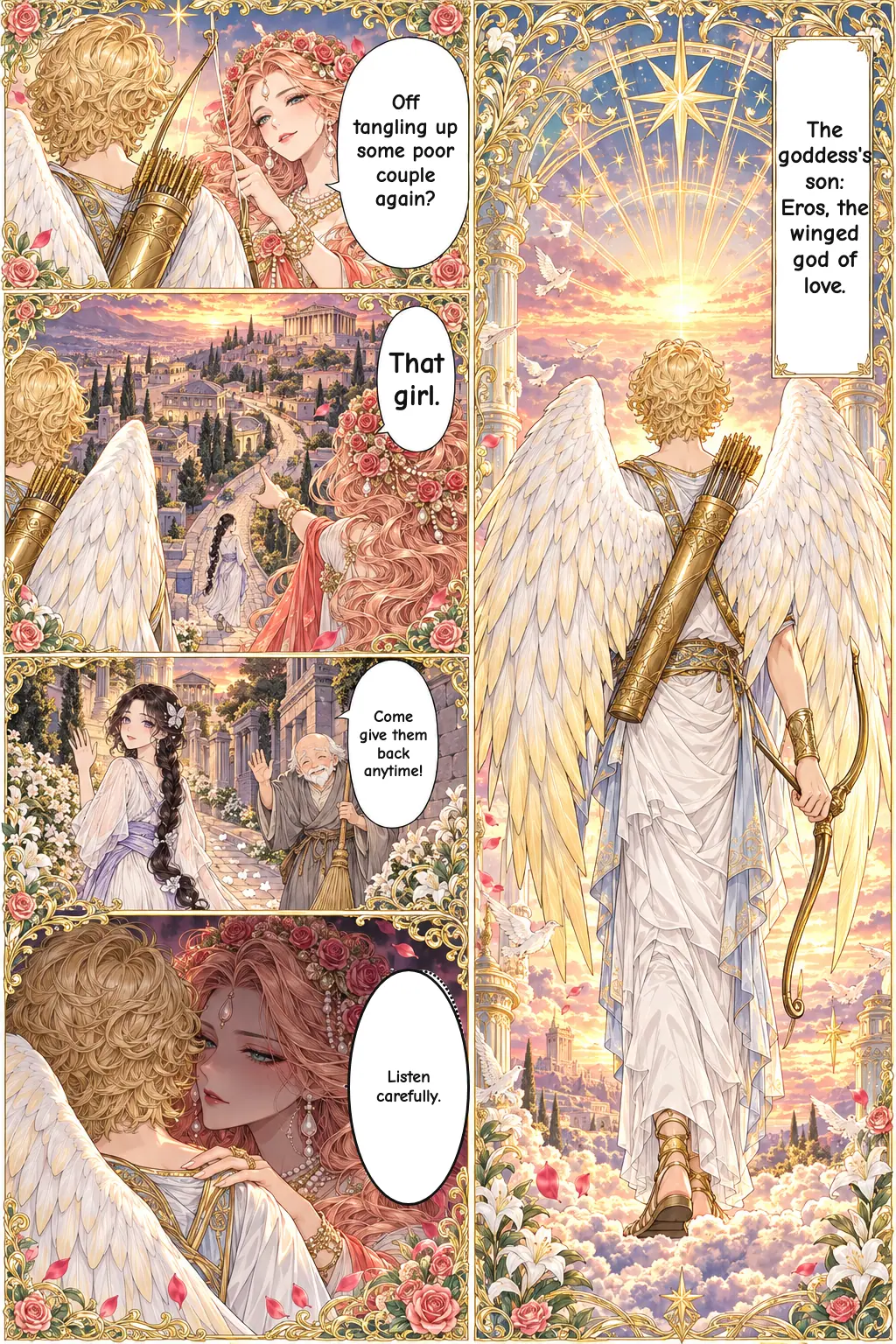
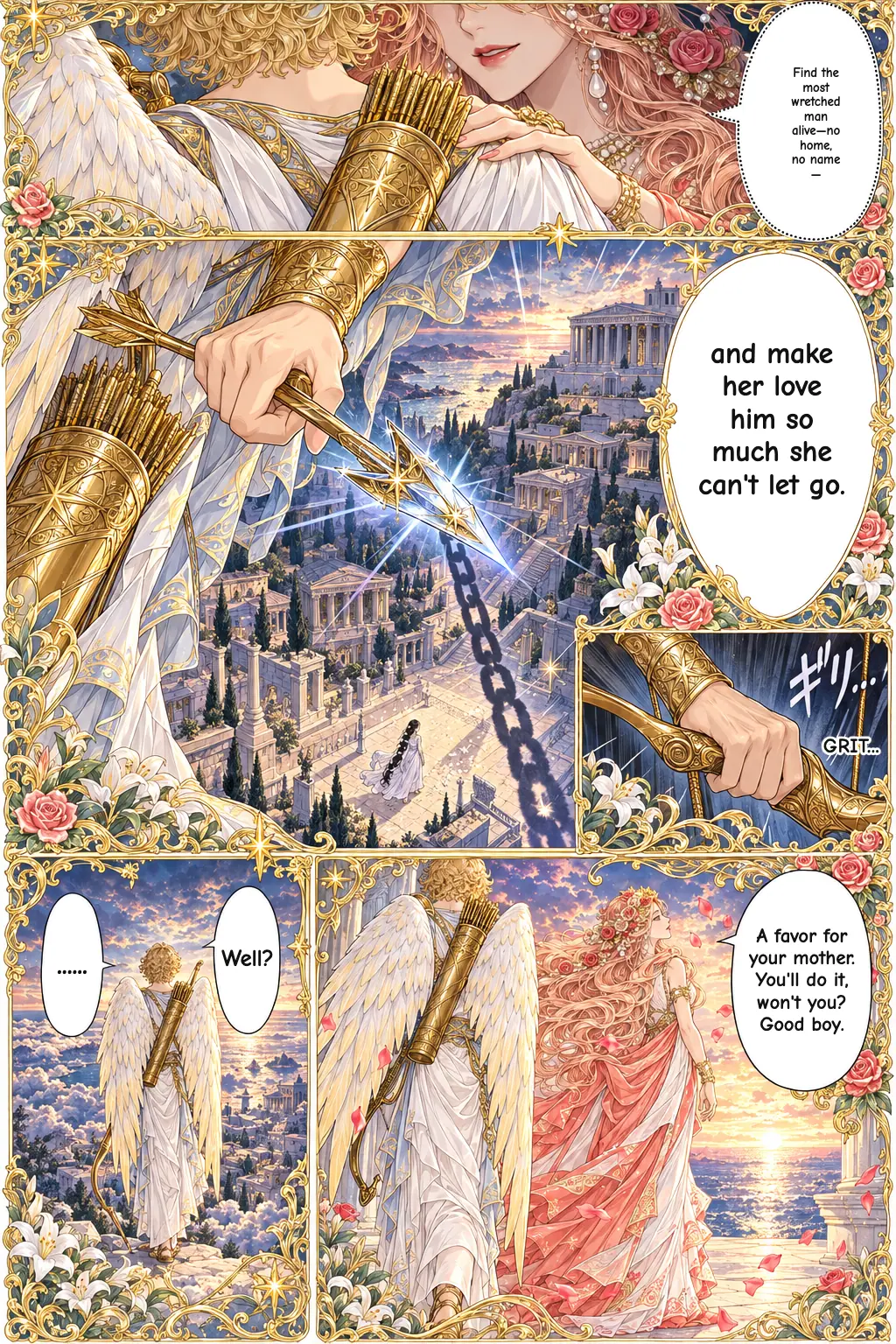
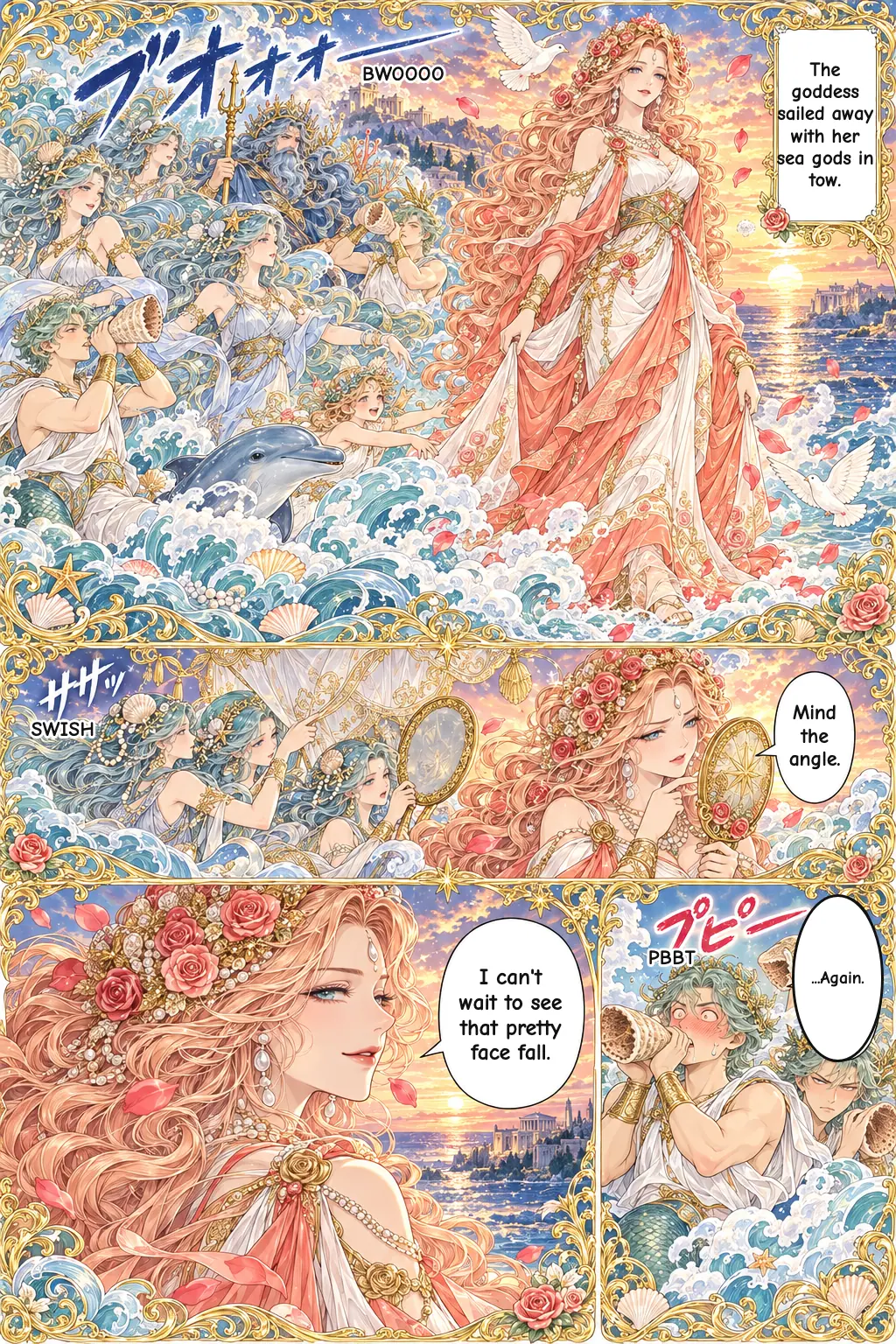
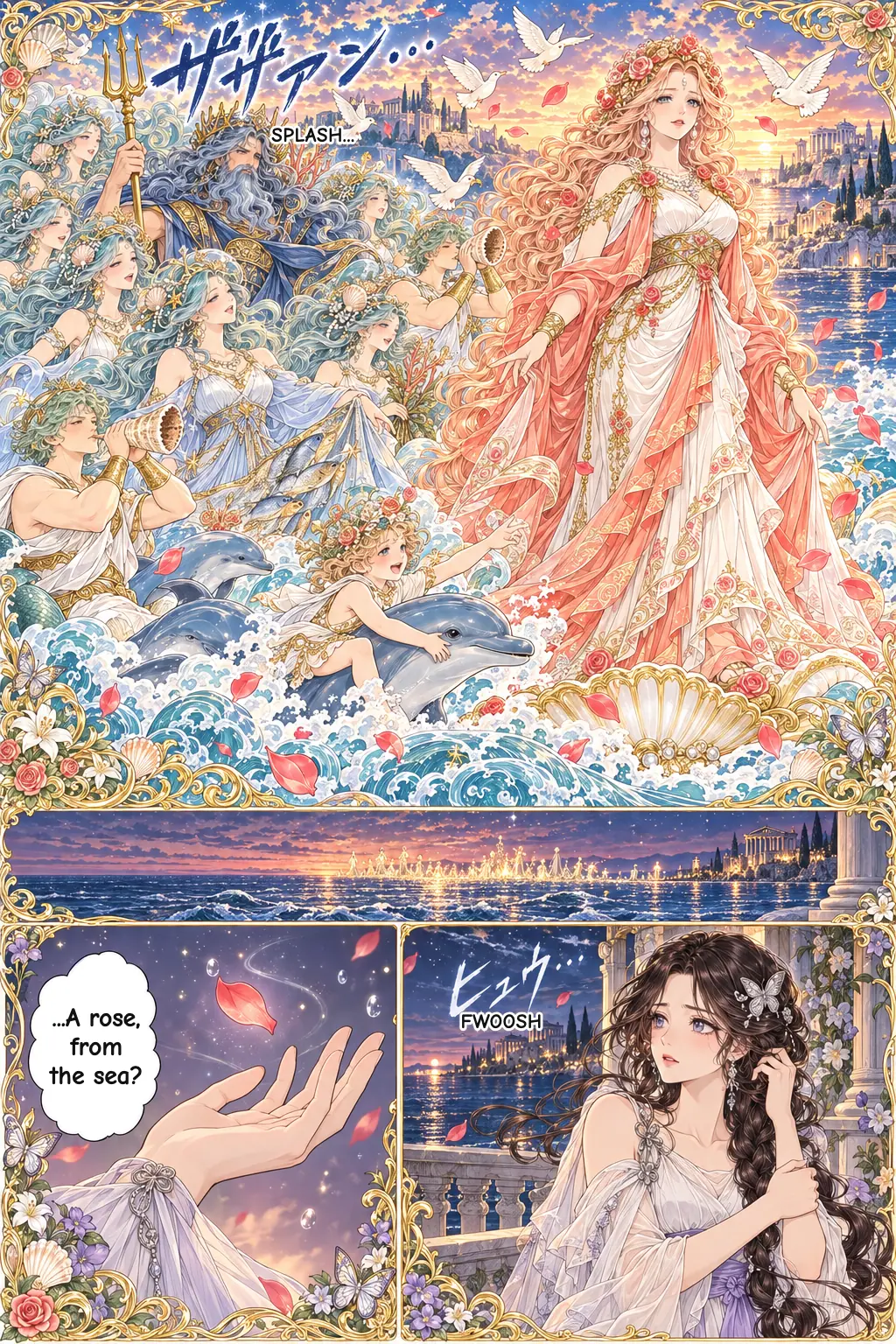
Venus is furious. She calls her winged son, the mischievous boy we know as Cupid, shows him the girl, and makes a cruel request: make Psyche fall desperately in love with the most miserable man in the world, someone with no rank, no money, and no safety. Then Venus kisses her son and sets off across the sea with a parade of sea gods. The story does not say how her son responds or whether he acts right away.
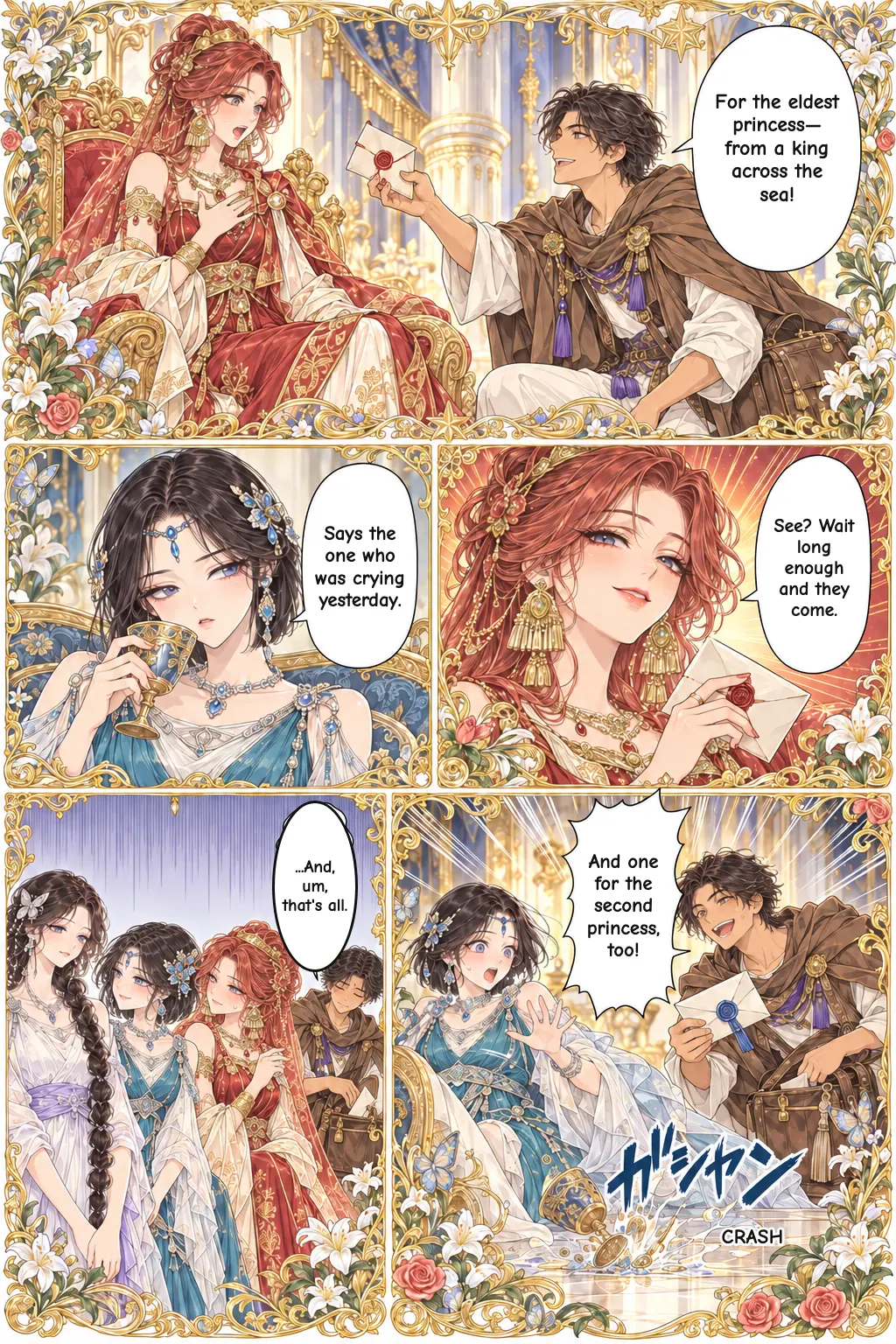
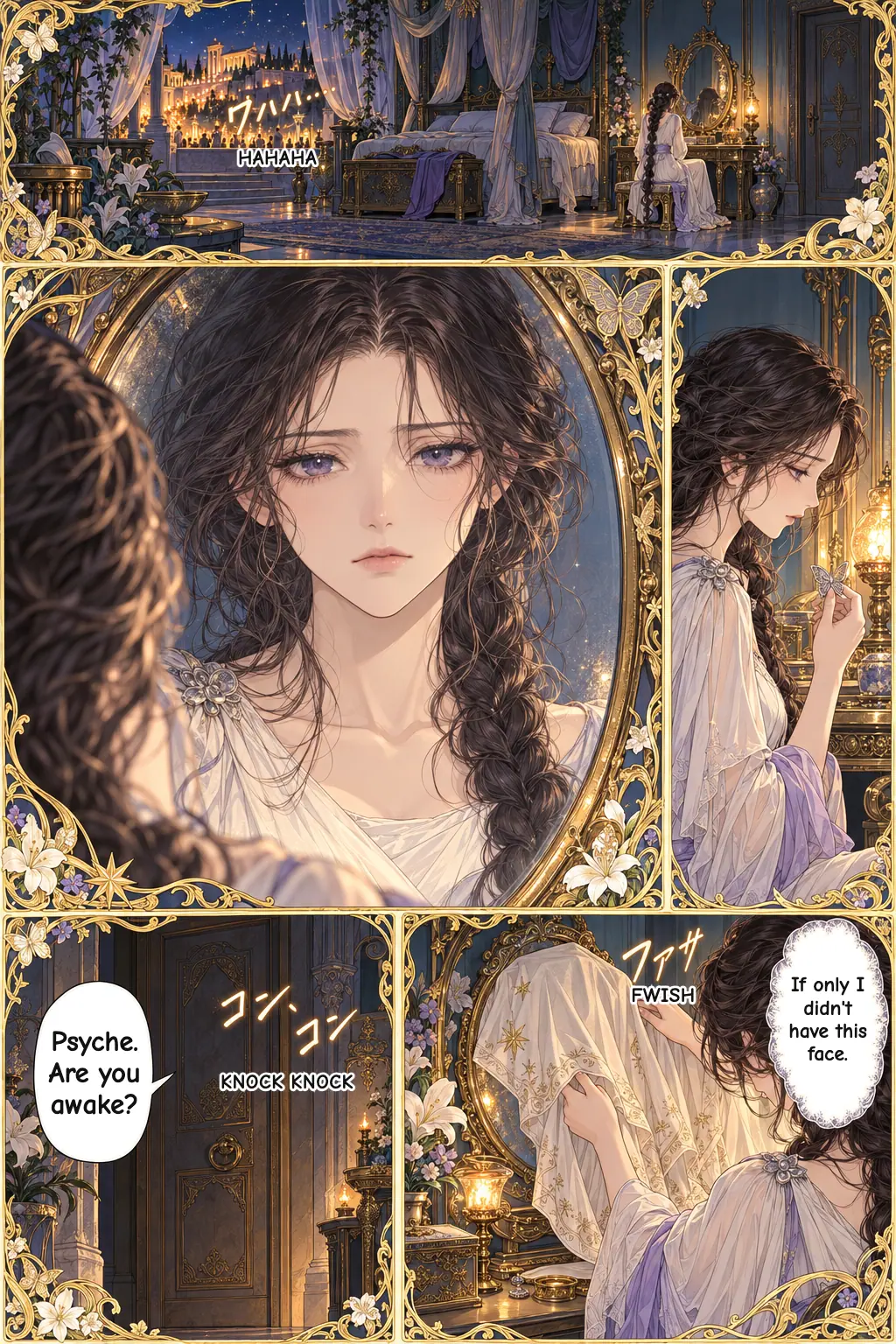
Psyche, meanwhile, gets nothing from her beauty. Everyone admires her, but no king, prince, or commoner proposes. People stare at her like a finely made statue. Her sisters marry kings, while Psyche stays home, lonely and worn down, and comes to hate the beauty everyone else enjoys. Her father suspects the gods are angry and asks the old oracle of Apollo at Miletus what to do. The answer is terrible: dress the girl as if for a funeral wedding, leave her on a high mountain rock, and give up hope of a human husband. Her husband will be a cruel, winged, serpent-like creature that even Jupiter fears. The whole kingdom mourns as the grim wedding preparations begin.
Main Characters
Psyche is the youngest princess and the heroine. Her name is the Greek word for “soul” or “breath of life.” In this opening part she barely speaks; we mostly see what others do to her and how lonely she becomes.
Venus (Aphrodite in Greek myth) is the goddess of love and beauty. Here she is proud and easily hurt. She calls herself the mother of all nature and complains that even the famous Judgment of Paris, when a shepherd prince chose her as the most beautiful goddess, now means nothing.
Her son, called Cupido or Amor in Latin, Cupid in English, and Eros in Greek, is described as a reckless winged boy who flies into homes at night with his torch and arrows, ruins marriages, and is never punished. He says nothing at all in this part of the story.
What This Myth Tells Us: Background and Meaning
Apuleius was a North African writer of the Roman Empire. His Metamorphoses follows a man who is accidentally turned into a donkey. It is a different work from Ovid's better-known poem of the same name. Cupid and Psyche is a story told inside the novel: an old woman working for a gang of robbers tells it to Charite, a young bride the robbers have kidnapped, to comfort her.
The opening is full of irony. Psyche is treated like a goddess, but that worship isolates her instead of making her happy. Apuleius also jokes with his readers. He points out that Apollo, a Greek god, gives his oracle in Latin verse for the sake of the Latin author telling the story.
Since Psyche means “soul” and her future husband is Love, many readers have seen the tale as an allegory of the soul searching for love. That reading is old and popular, but it remains an interpretation. Folklorists also often compare the story to later tales like Beauty and the Beast, in which a girl is promised to a mysterious, supposedly monstrous husband.
What the Manga Changes
Episode 1 keeps the main events of the original: the worship, Venus's jealousy, the lonely princess, her sisters' marriages, and the oracle's command. Some parts are the manga's own invention, and it helps to know which ones.
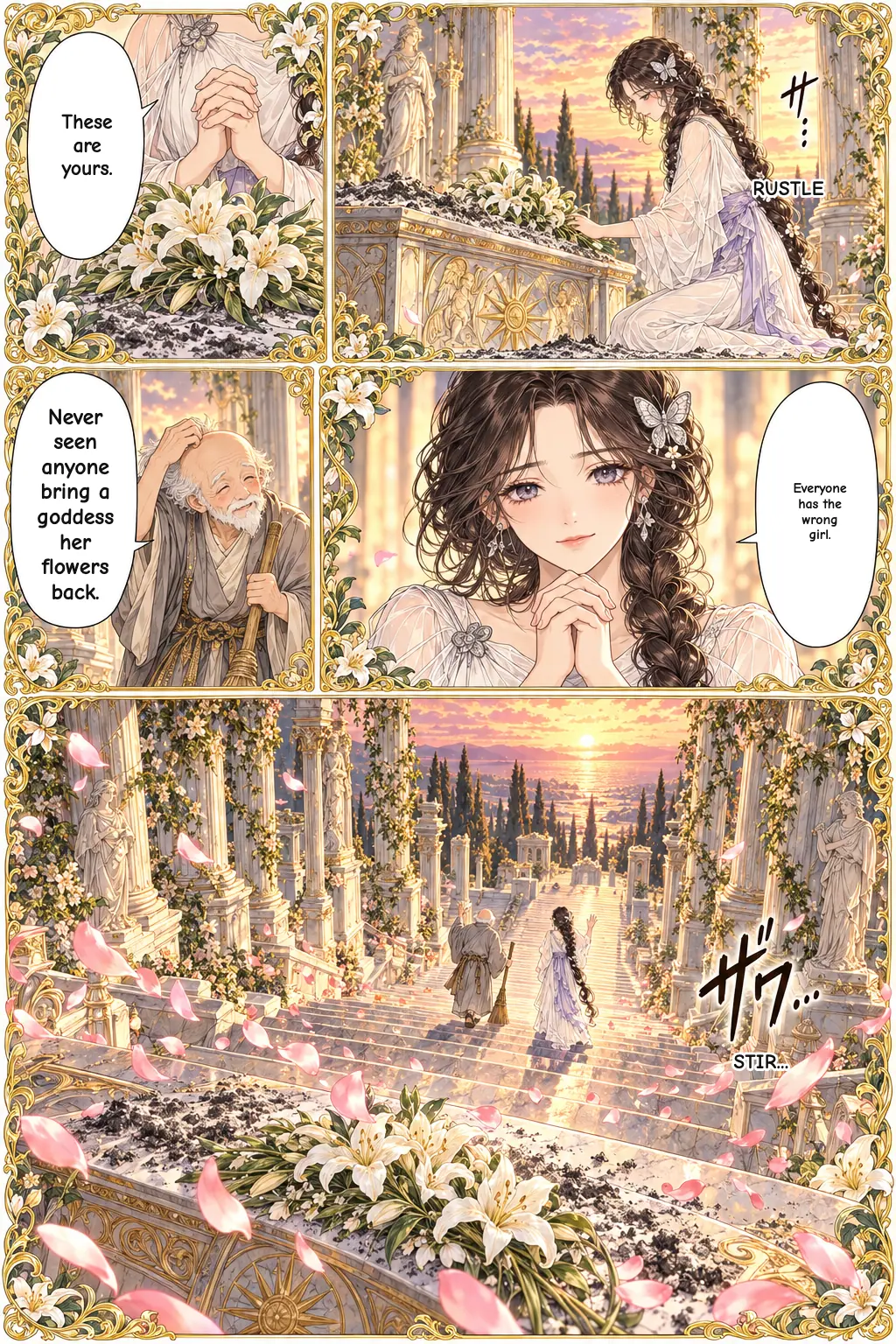
Psyche's line to her father, “I want someone to really see me,” is not in Apuleius. The original says only that she grieved and hated her beauty, so her inner thoughts and expressions are added by the manga. The wording of the oracle is also new. It keeps the original's key points (the mountain crag, the funeral-like wedding, the winged monster) but uses fresh language. The look of the palace, the royal family's faces and clothes, and the oracle scene are all designed for the manga, since the source describes almost none of them. Cupid appears only from behind or as the shadow of his wings, which matches the original, where he never speaks in this scene. The manga also shortens Venus's speech and her procession across the sea.
Where to Read It
If you want to see this story come to life, EROS & PSYCHE: The Forbidden Gaze starts here with Episode 1, “Too Beautiful to Be Loved.” Every episode is free to read on Manga Portal, and you don't need to sign up. Read on to find out what waits for Psyche on the mountain, and why a single look will change everything.
Characters in this episode
Psyche
The youngest of three princesses, so beautiful that people worship her like a goddess, yet no one wants to marry her.
Venus
The Roman goddess of love and beauty, who becomes furious when people stop worshipping her and start worshipping Psyche.
Cupid (Eros)
Venus's winged son, a mischievous god of desire whom she orders to make Psyche fall in love with the lowest of men.
The King
Psyche's unnamed father, who fears the gods are angry and asks Apollo's oracle at Miletus about his daughter's marriage.
Psyche's Sisters
Two older princesses of ordinary beauty who marry kings while Psyche is left alone.
Apollo of Miletus
The god of prophecy, whose oracle orders that Psyche be left on a mountain crag as the bride of a winged monster.
FAQ
Where does the story of Cupid and Psyche come from?
It comes from the Metamorphoses, also called The Golden Ass, a Latin novel by Apuleius from the 2nd century CE. In the novel, an old woman tells the tale to comfort a kidnapped bride. It is not part of Ovid's Metamorphoses.
Why was Venus jealous of Psyche?
People were so amazed by Psyche's beauty that they worshipped her as if she were Venus. They abandoned the goddess's temples and festivals. Venus felt insulted and decided to punish the girl.
What did the oracle say about Psyche?
Apollo's oracle at Miletus told the king to dress Psyche as if for a funeral wedding and leave her on a high mountain rock. It said her husband would be a cruel winged monster that even Jupiter feared, not a human being.
Why did no one want to marry Psyche?
In the original story, people admired Psyche like a statue or a goddess, but no one proposed to her. Her beauty seemed too far above ordinary life, so she stayed alone while her sisters married kings.
What does the name Psyche mean?
Psyche is the Greek word for “soul.” Because she later becomes the bride of Love (Cupid), many readers have interpreted the story as an allegory of the soul and love, though this is one interpretation.