Episode 1She Asked 'What's That?' He Never AnsweredThe Tales of Ise: Akutagawa
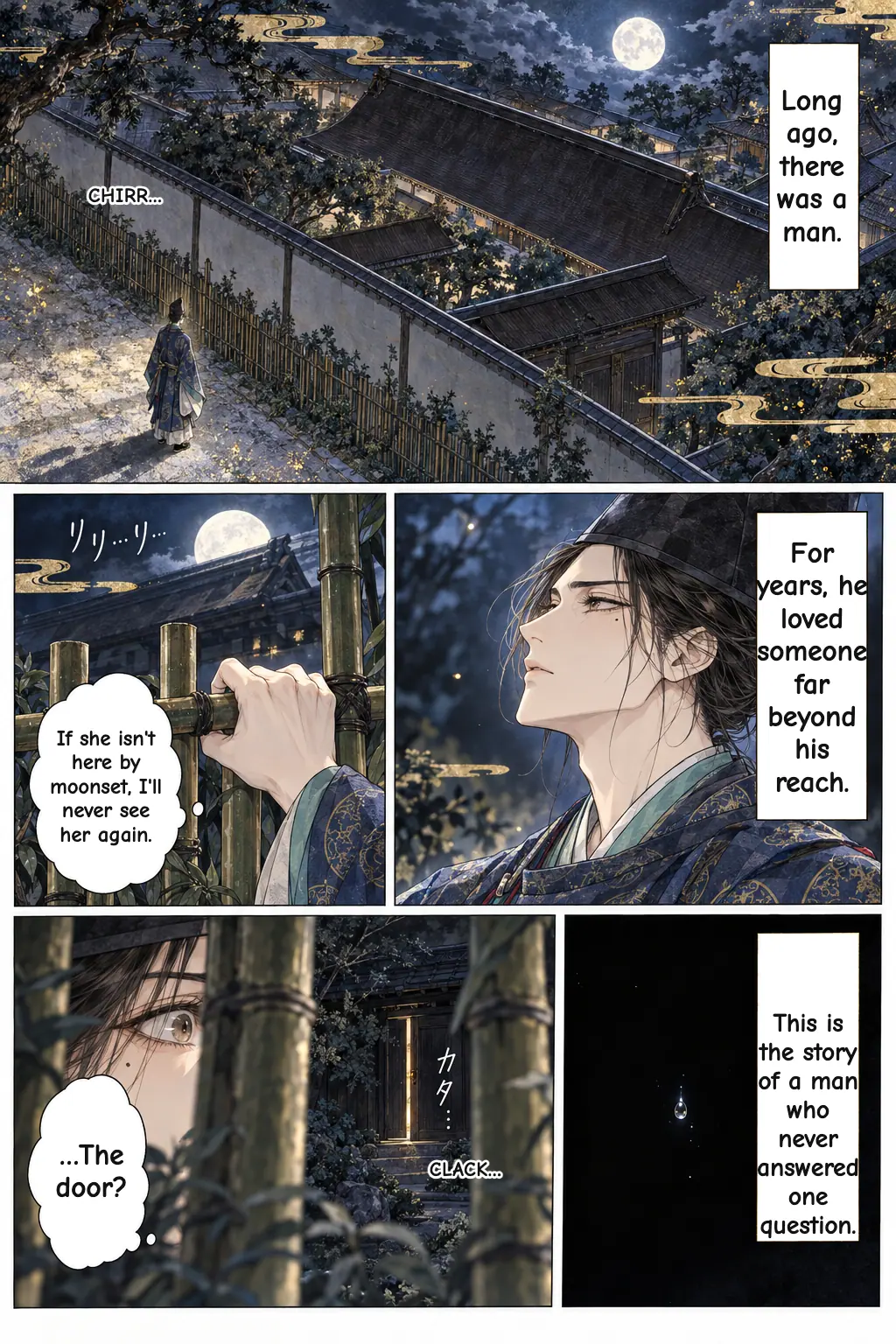
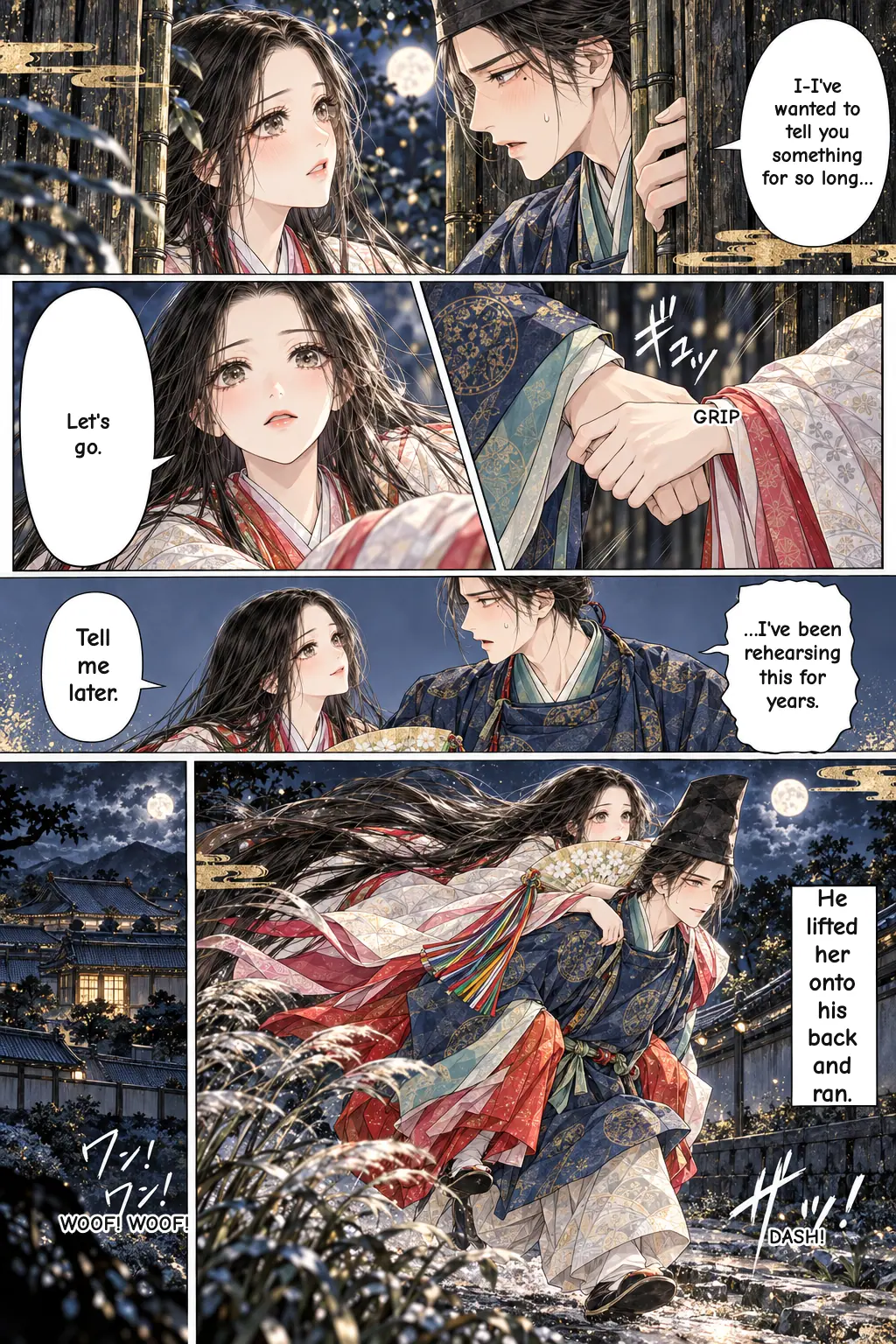
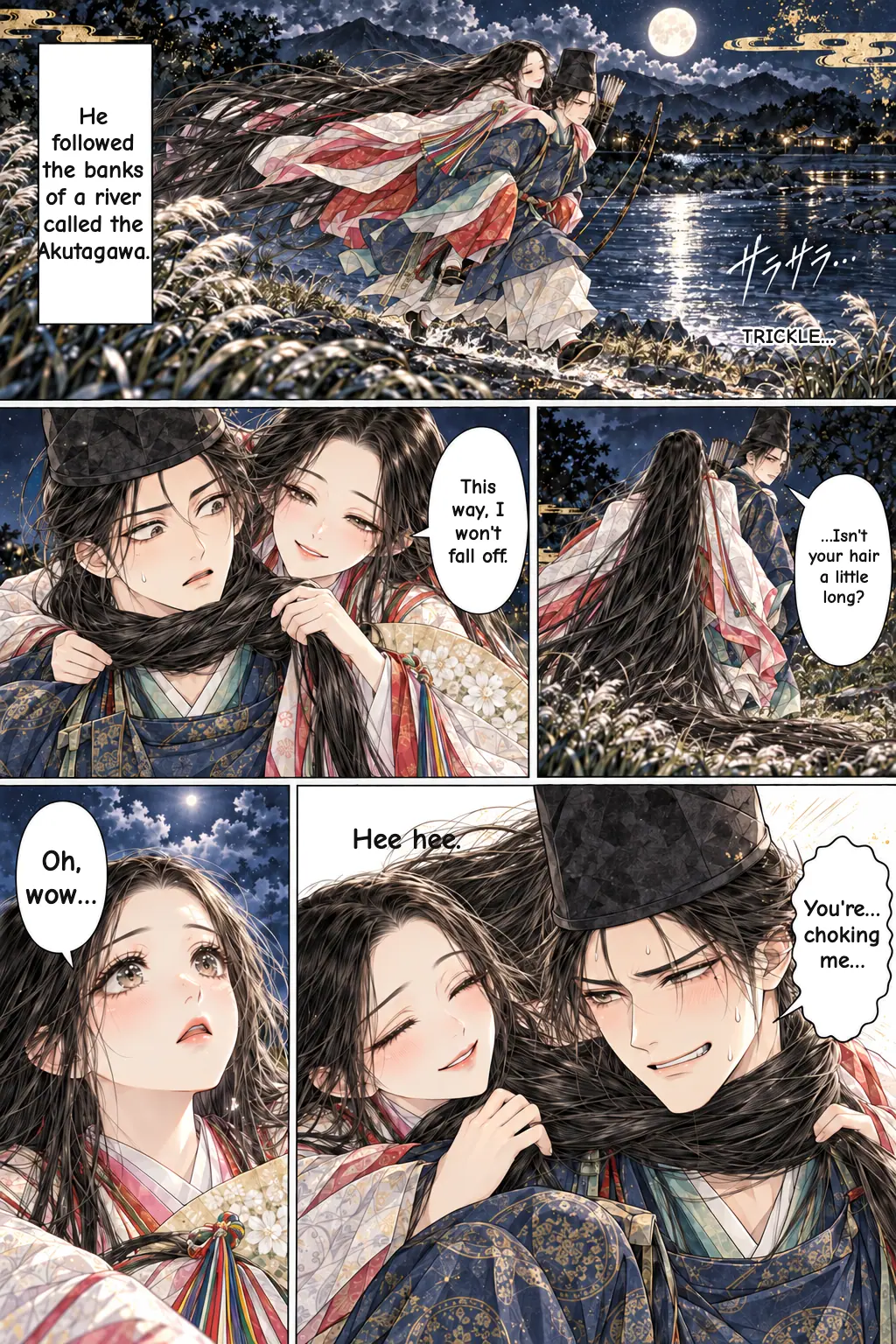
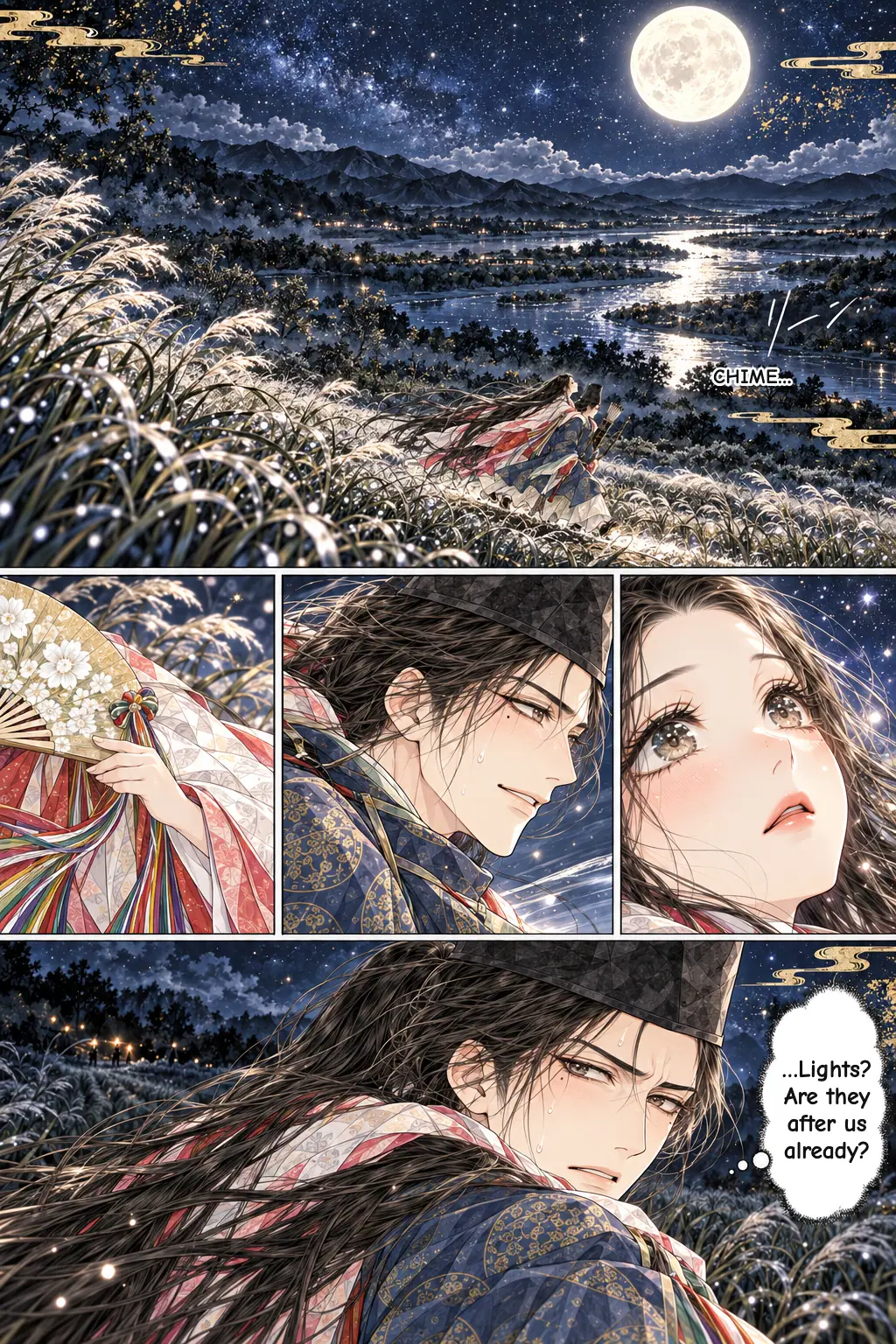
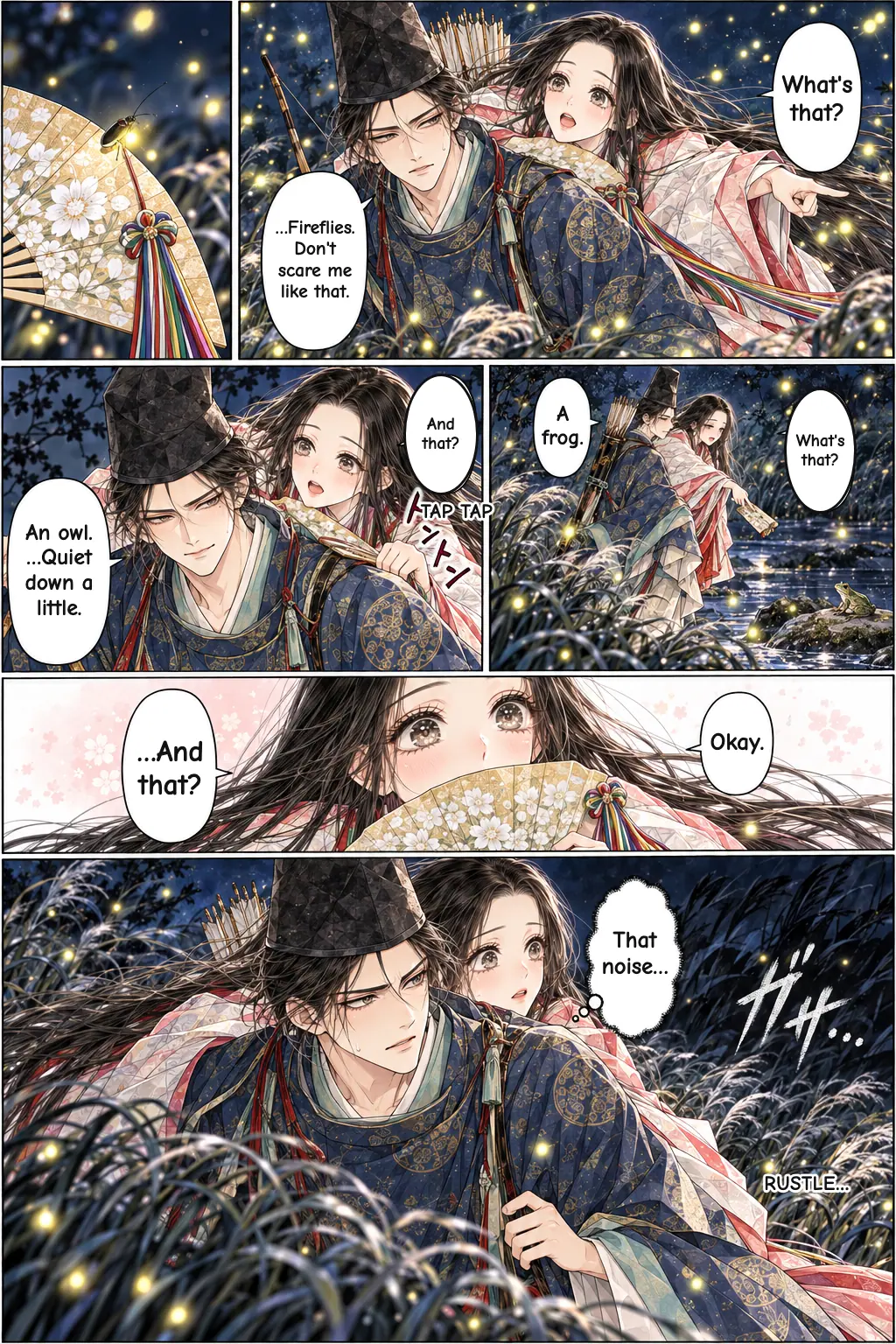
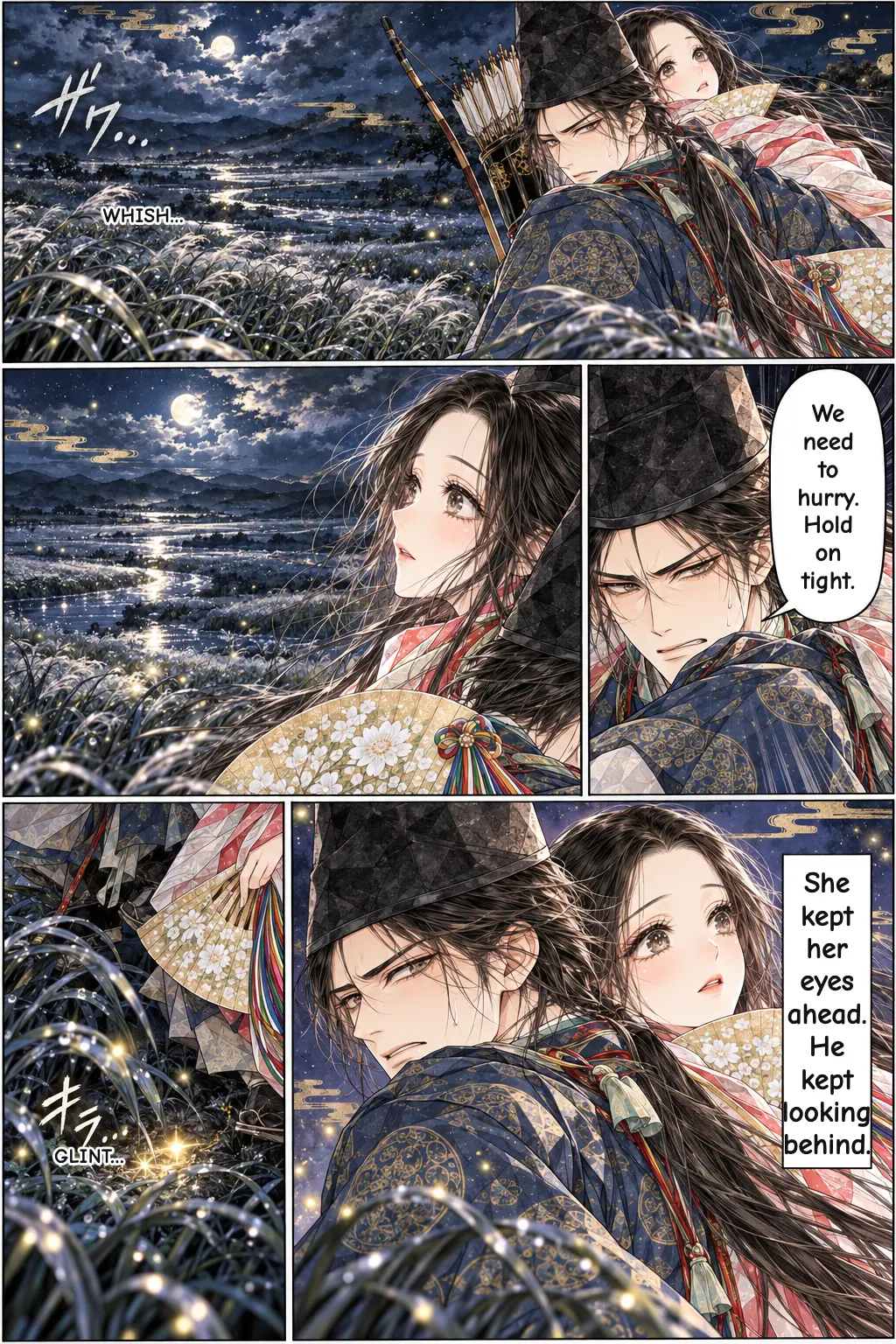
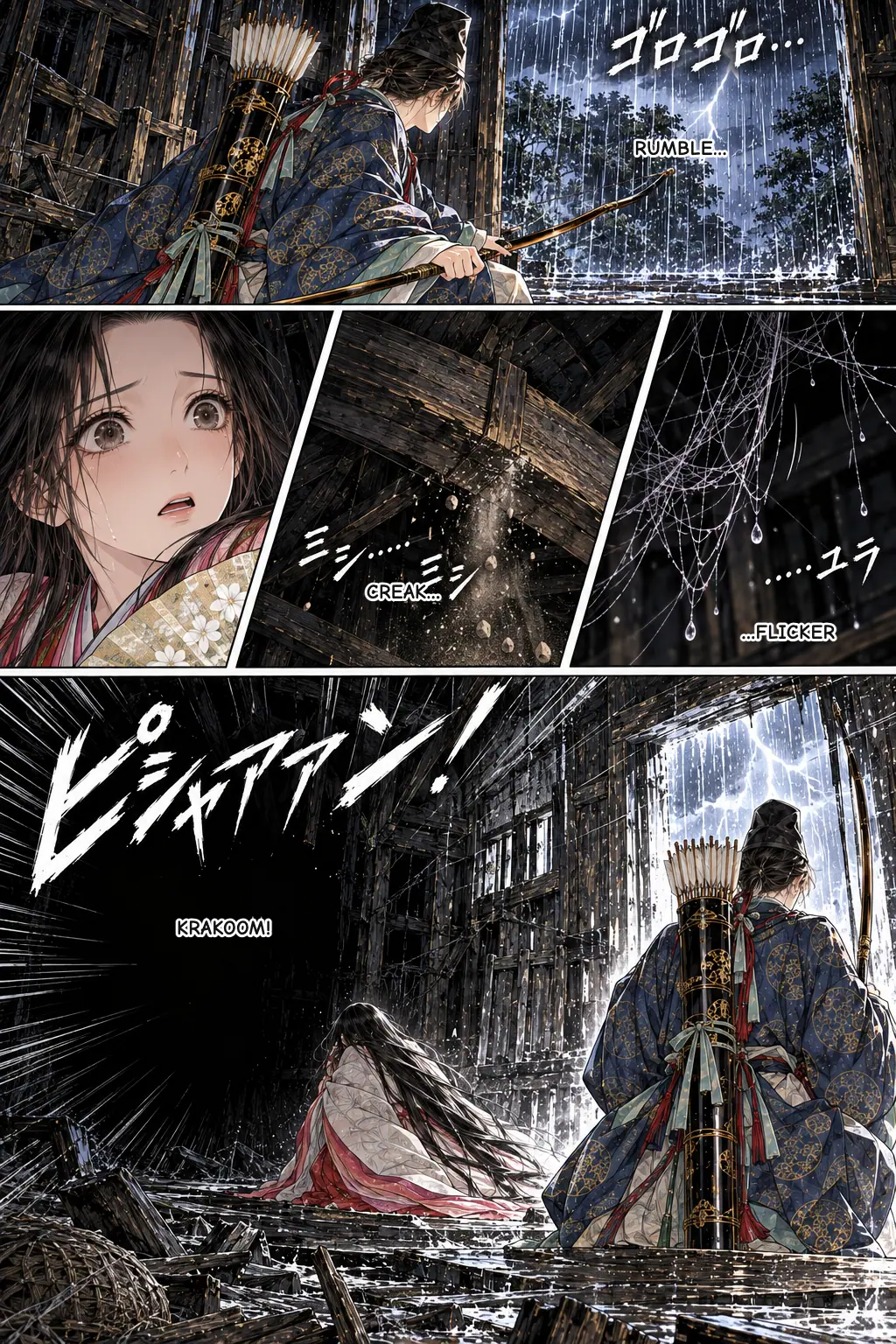
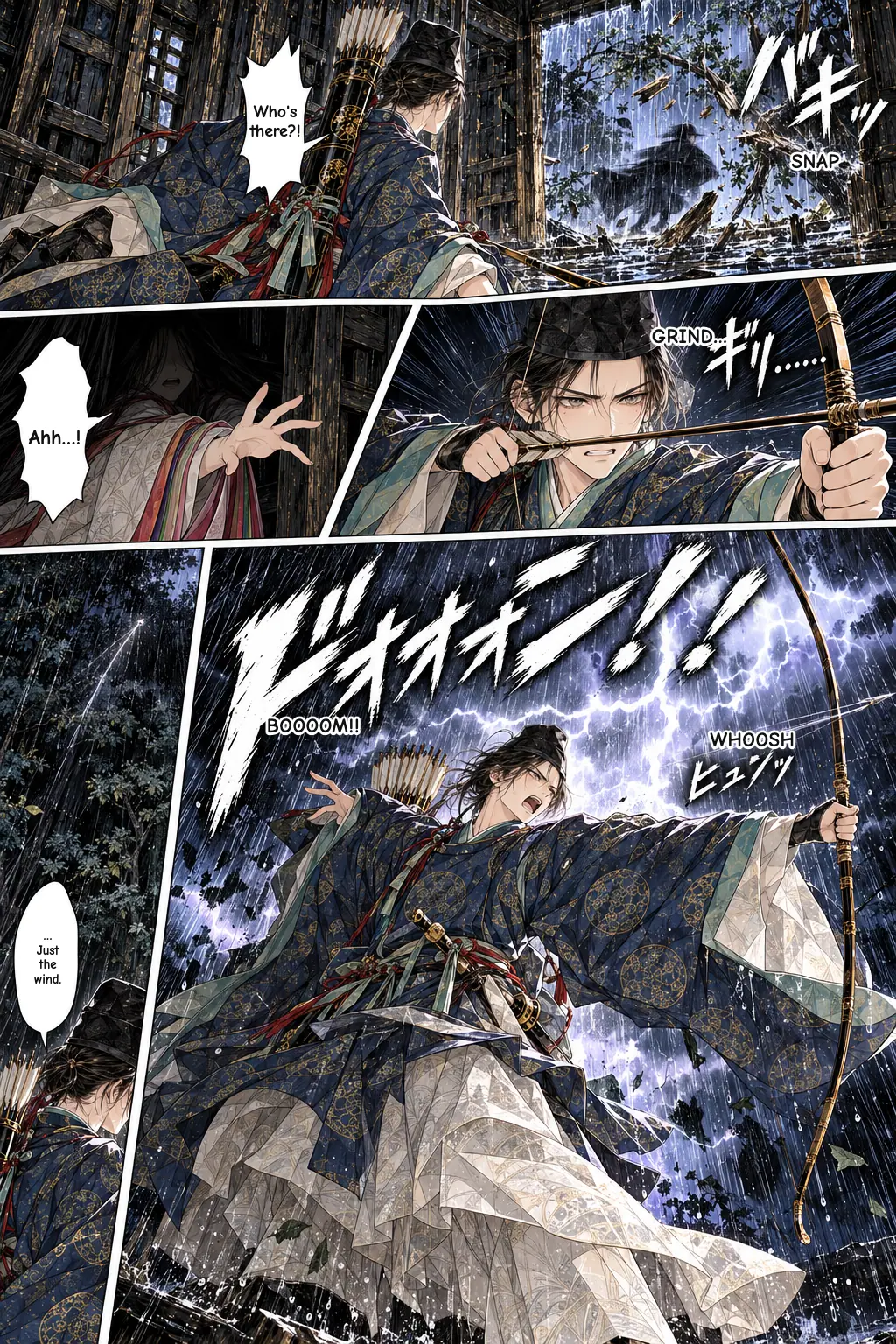
Episode 1 of the series. After years of longing, a man runs off into the night carrying the woman he loves on his back. Along the way she keeps asking, "What's that?" He never answers her last question. When a thunderstorm hits, he hides her in an old storehouse and stands guard at the door until morning. At dawn, she is gone. This is a thousand-year-old story of an elopement, and of one question that went unanswered.
19 pagesFree · No sign-up
In short: "Akutagawa" is a short episode (Section 6) from The Tales of Ise, a collection of Japanese poem-tales from the early Heian period. A man runs off at night with a high-born woman he has courted for years. While he guards the door of a ruined storehouse during a thunderstorm, a demon swallows her in one bite. At dawn he finds her gone and grieves in a poem about dew. A note added at the end says the "demon" was really her brothers, who took her back.
The Tales of Ise (Ise Monogatari) is a Japanese classic, probably put together in the early Heian period (roughly the 9th to 10th centuries). Nobody knows who wrote it. It is a set of short episodes, and each one is built around a waka, a 31-syllable poem. Most episodes start with the same plain words: "Long ago, there was a man." Section 6 is called "Akutagawa" after a river in the story. It is one of the best-known episodes in the book. The man had been courting a woman for years, but her rank was far above his and he could not hope to marry her.
The Tales of Ise "Akutagawa" Explained: The Elopement, the Dew, and the Demon
The Original Story: A Summary of "Akutagawa"
The Tales of Ise (Ise Monogatari) is a Japanese classic, probably put together in the early Heian period (roughly the 9th to 10th centuries). Nobody knows who wrote it. It is a set of short episodes, and each one is built around a waka, a 31-syllable poem. Most episodes start with the same plain words: "Long ago, there was a man." Section 6 is called "Akutagawa" after a river in the story. It is one of the best-known episodes in the book.
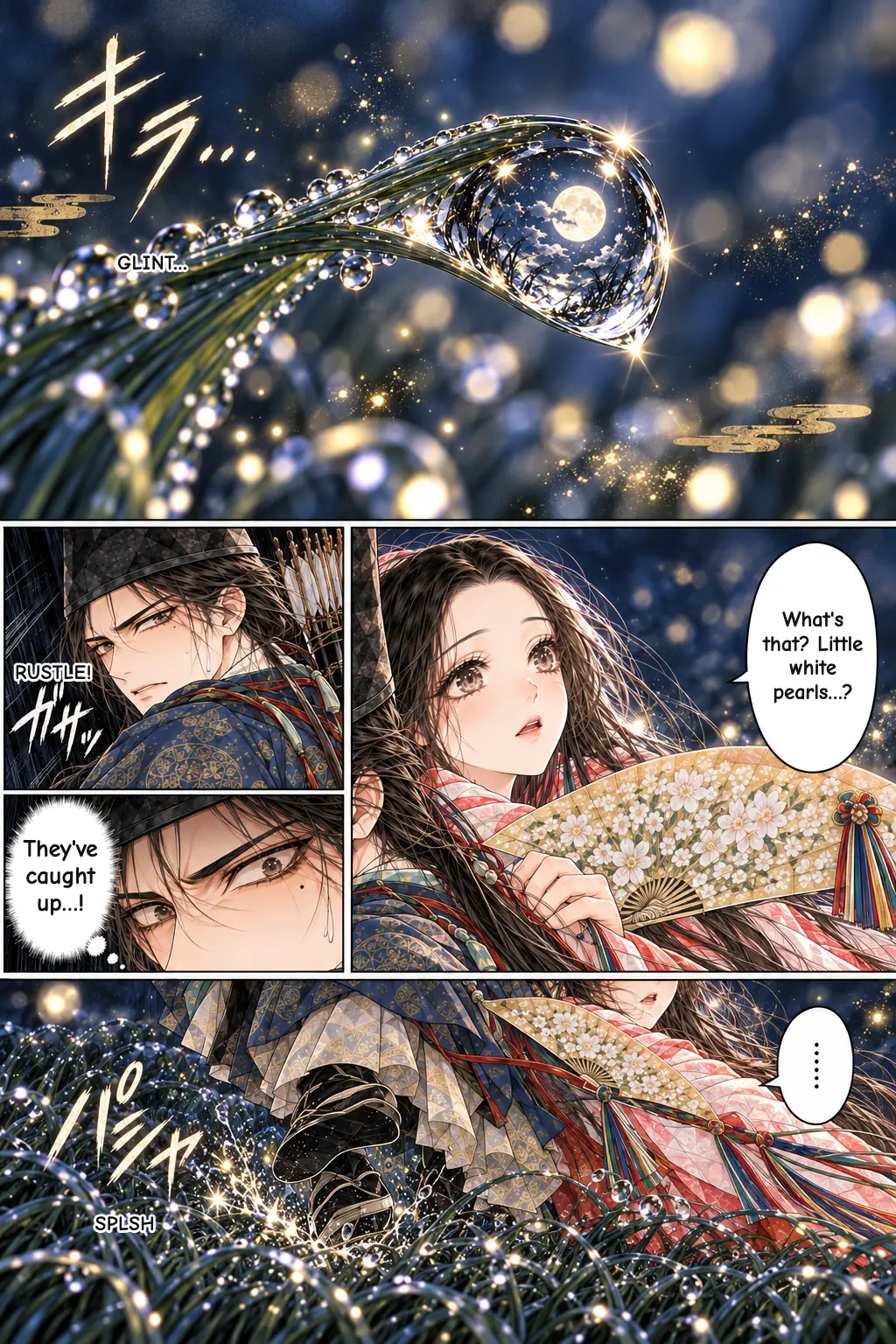
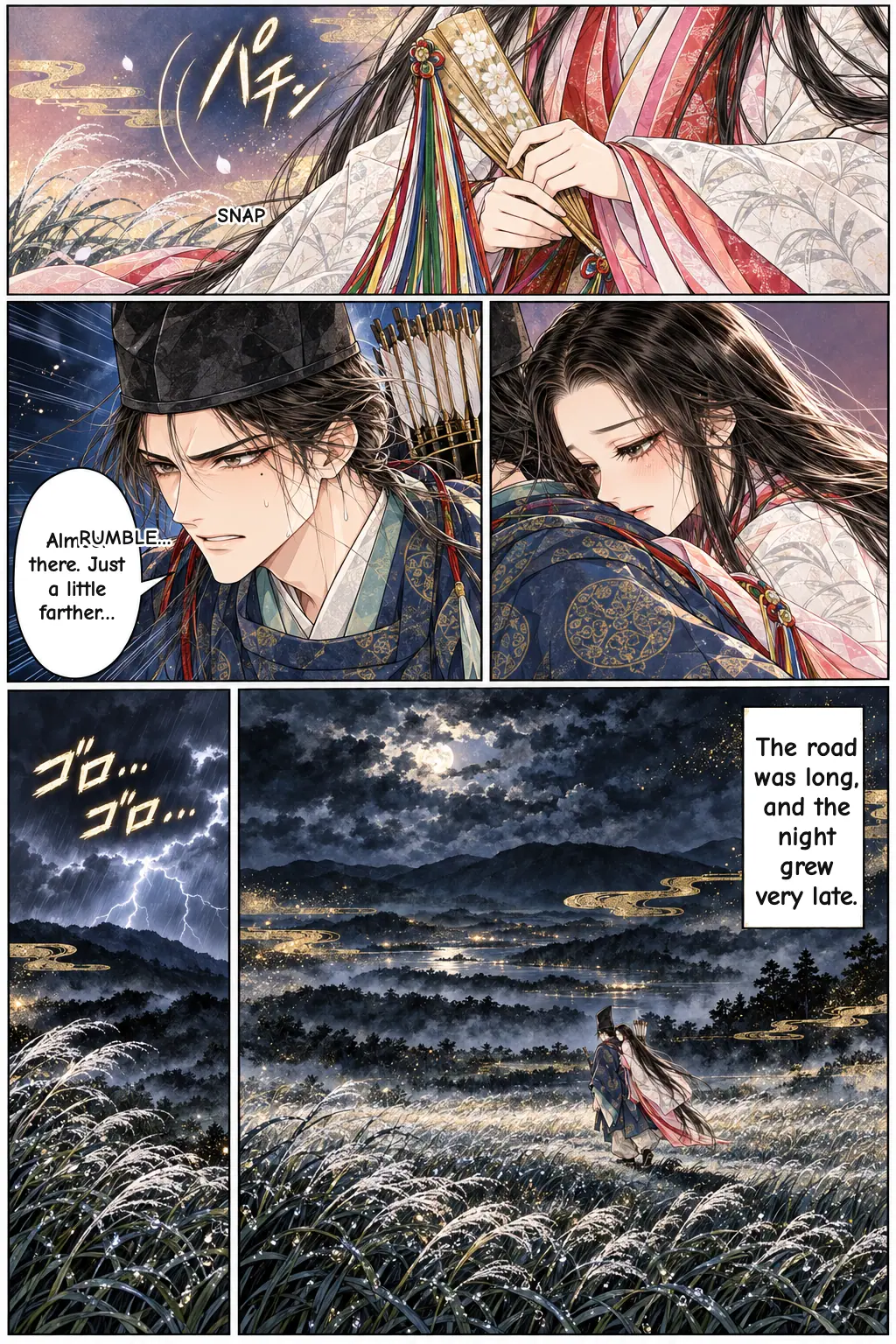
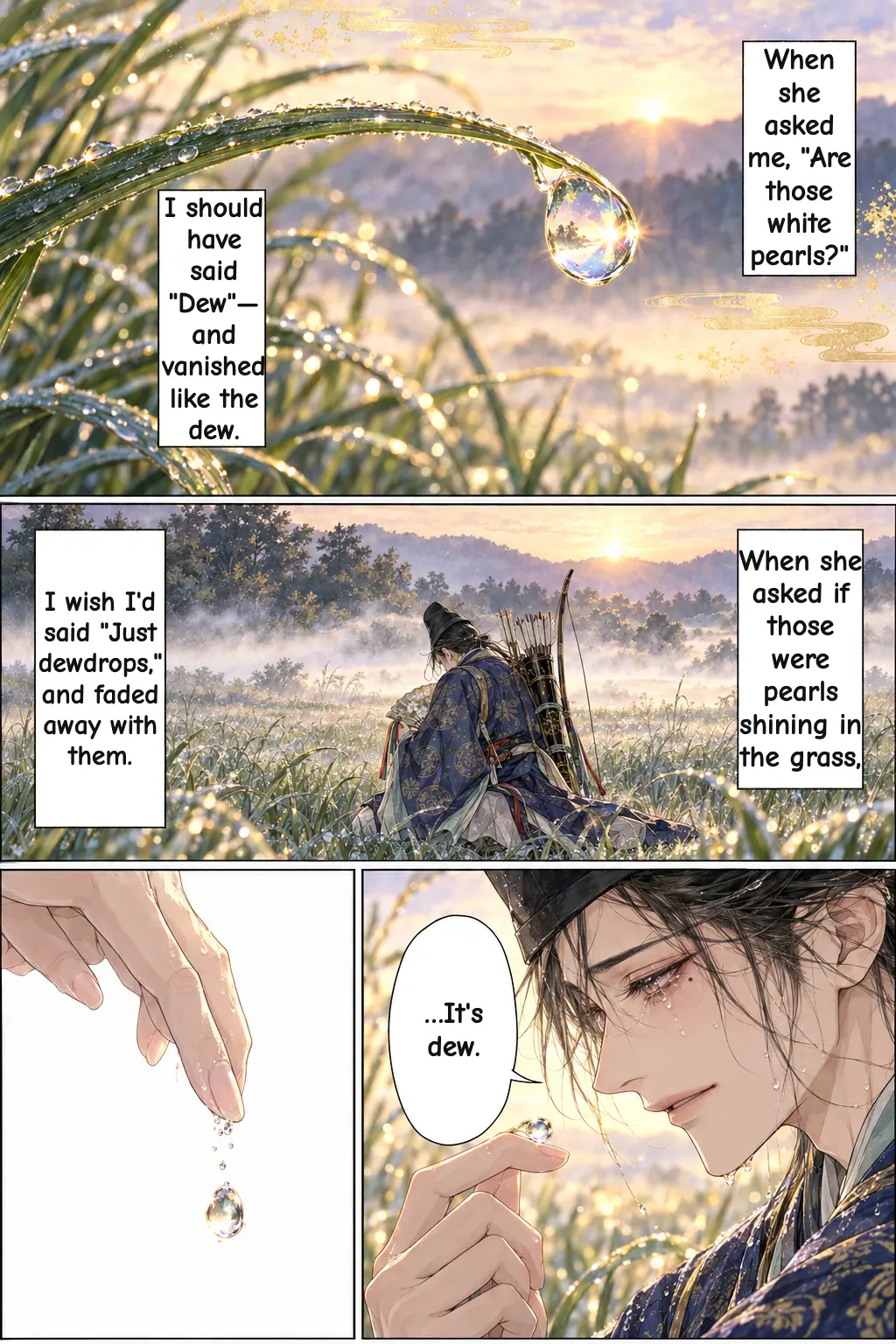
The man had been courting a woman for years, but her rank was far above his and he could not hope to marry her. In the end he stole her away and fled with her on a very dark night. The text says only that he "stole her out." It never says whether she agreed. As he led her along the banks of the Akutagawa, she saw dew shining on the grass and asked him what it was.
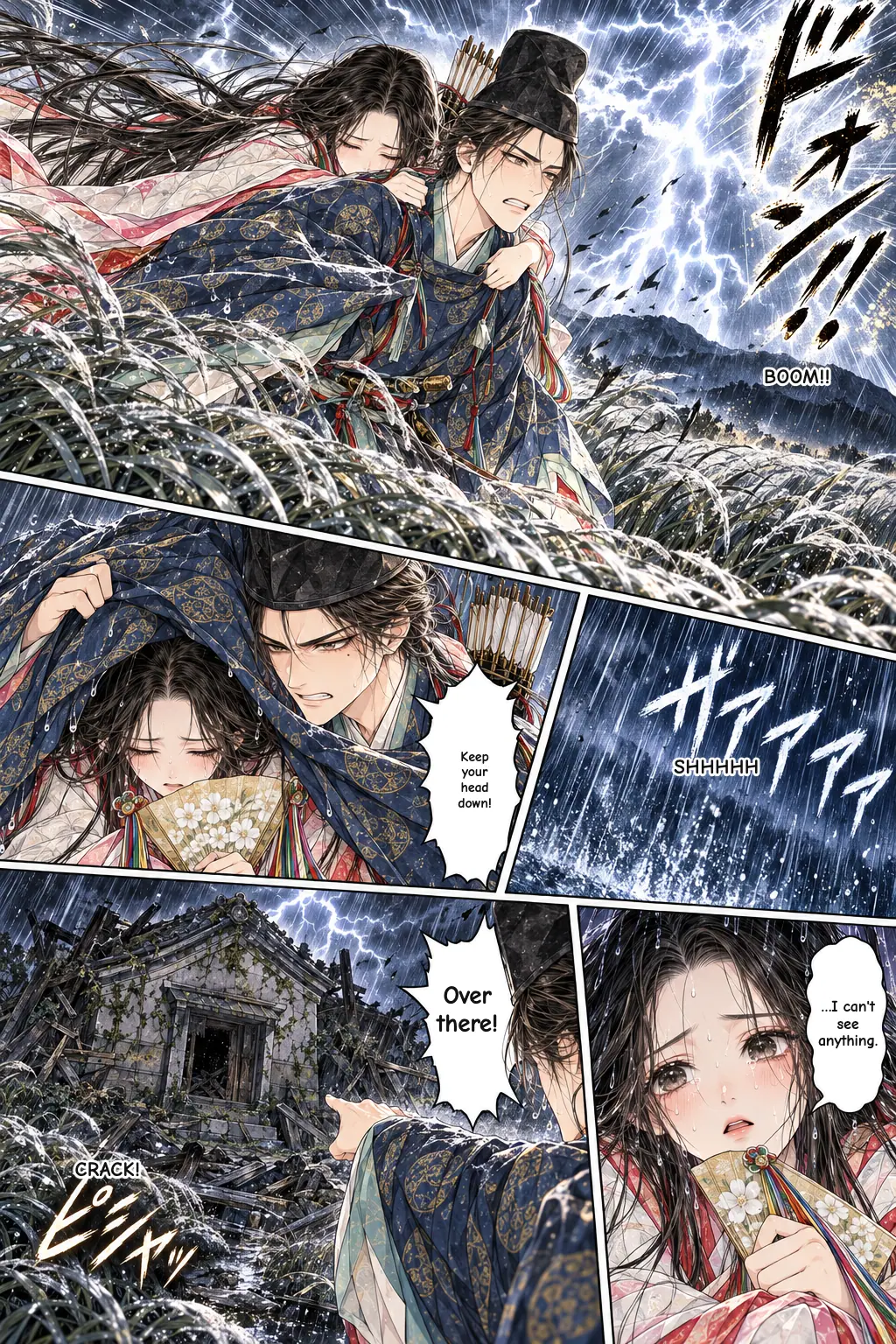
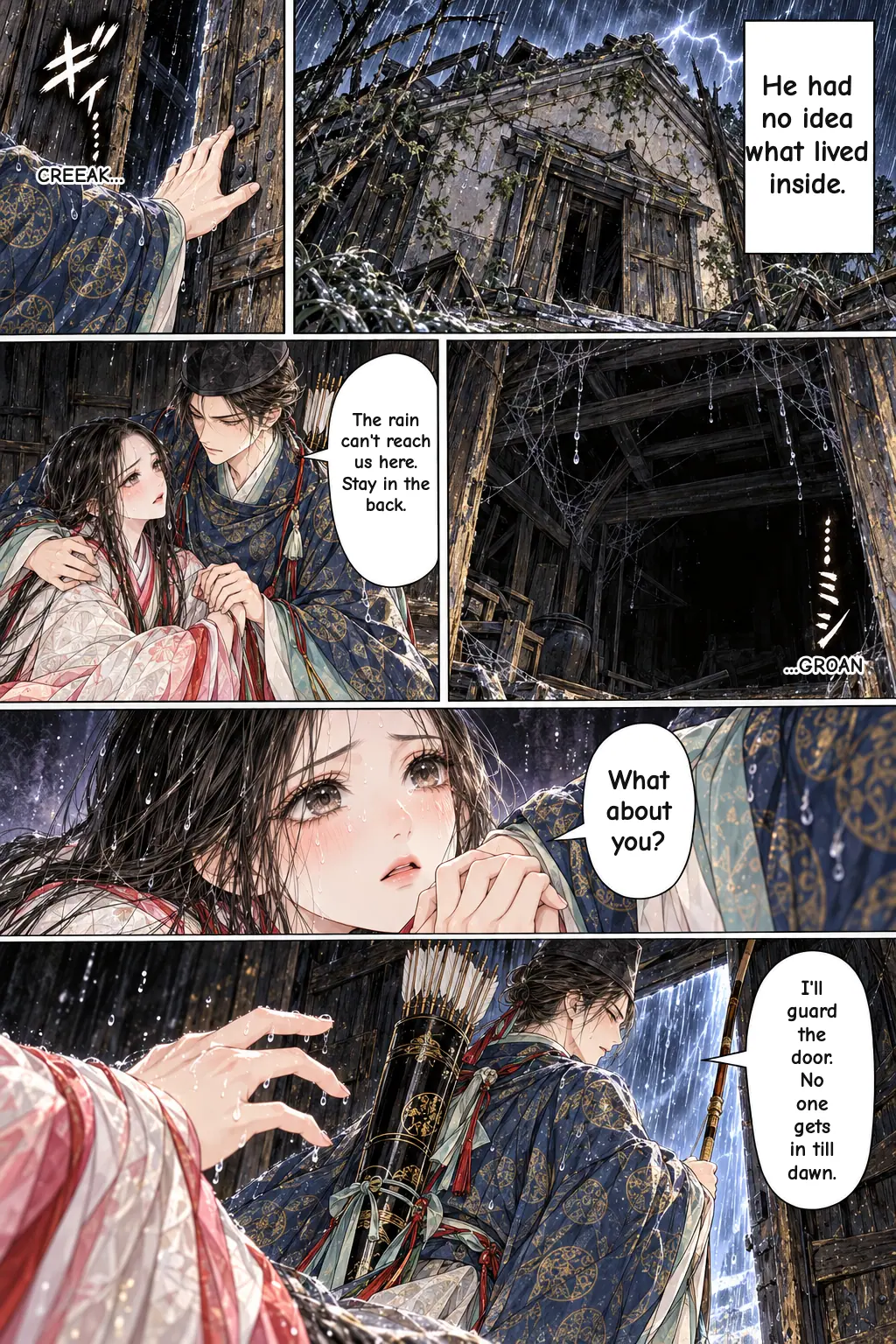
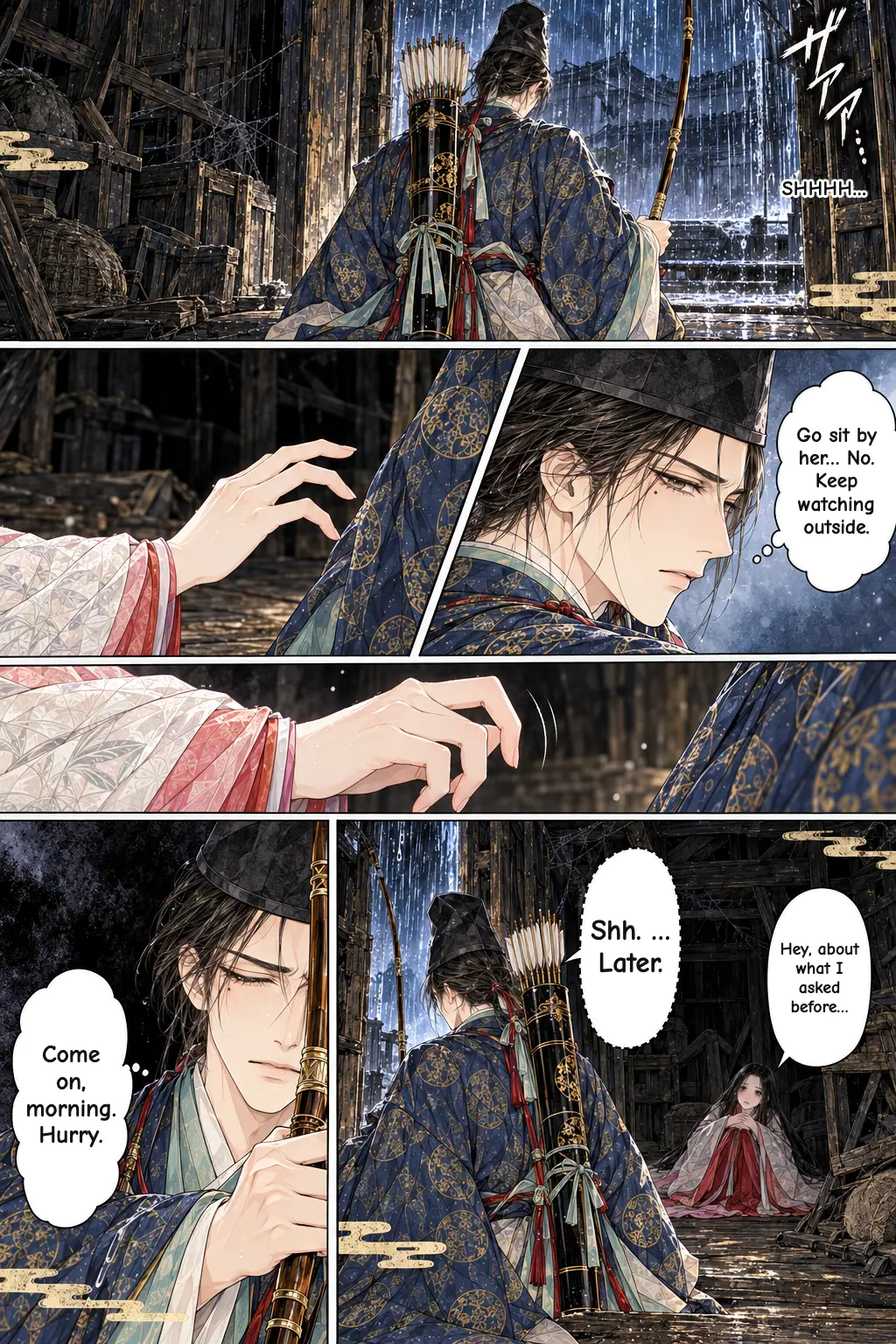
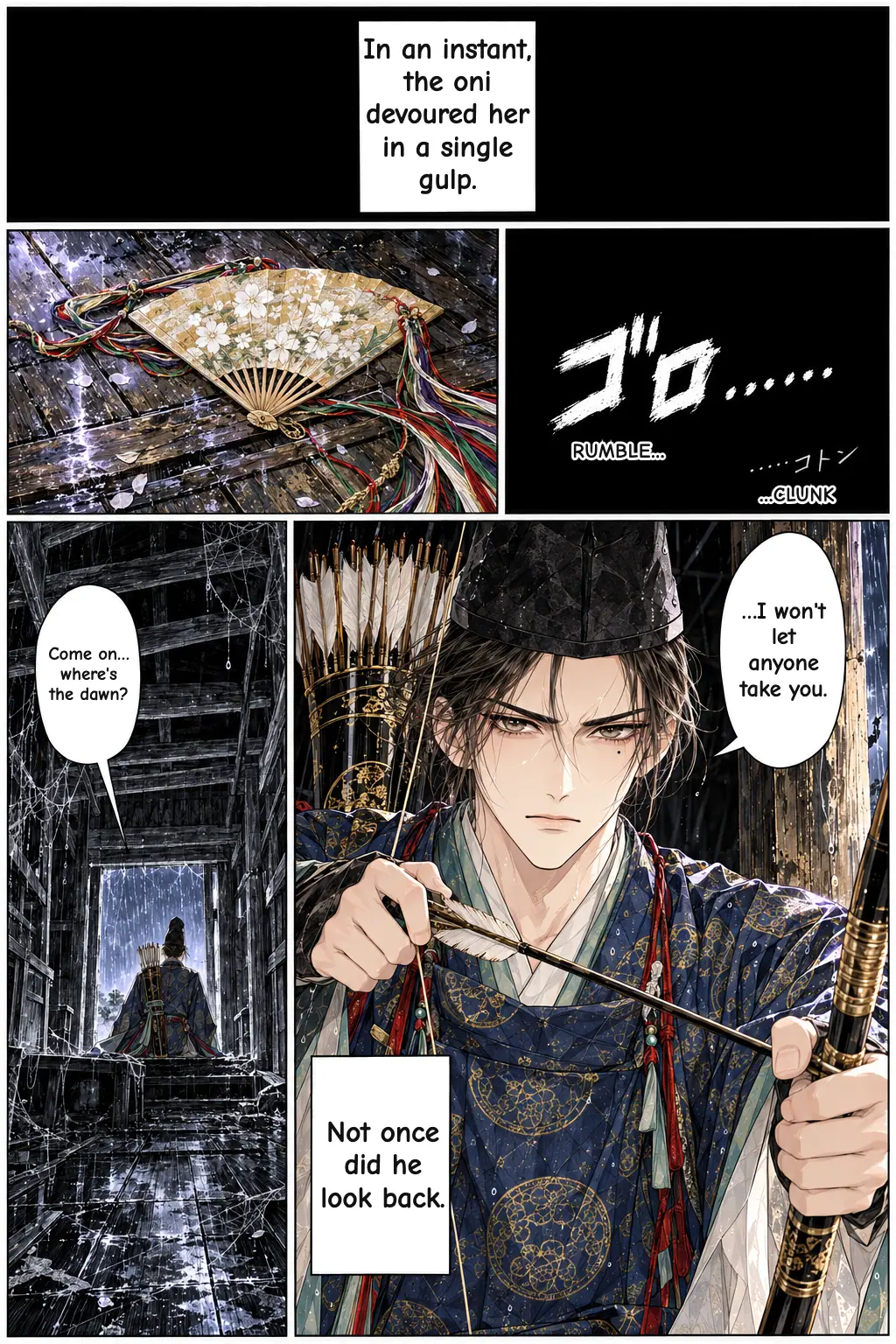
They still had far to go and the night was getting late. Then thunder crashed and heavy rain began. Without knowing that a demon (oni) lived there, the man pushed the woman deep inside a ruined storehouse. He sat in the doorway with his bow and quiver on his back and waited, hoping dawn would come soon. Meanwhile the demon swallowed her in a single bite. She cried out, but the thunder covered her voice and he never heard it.
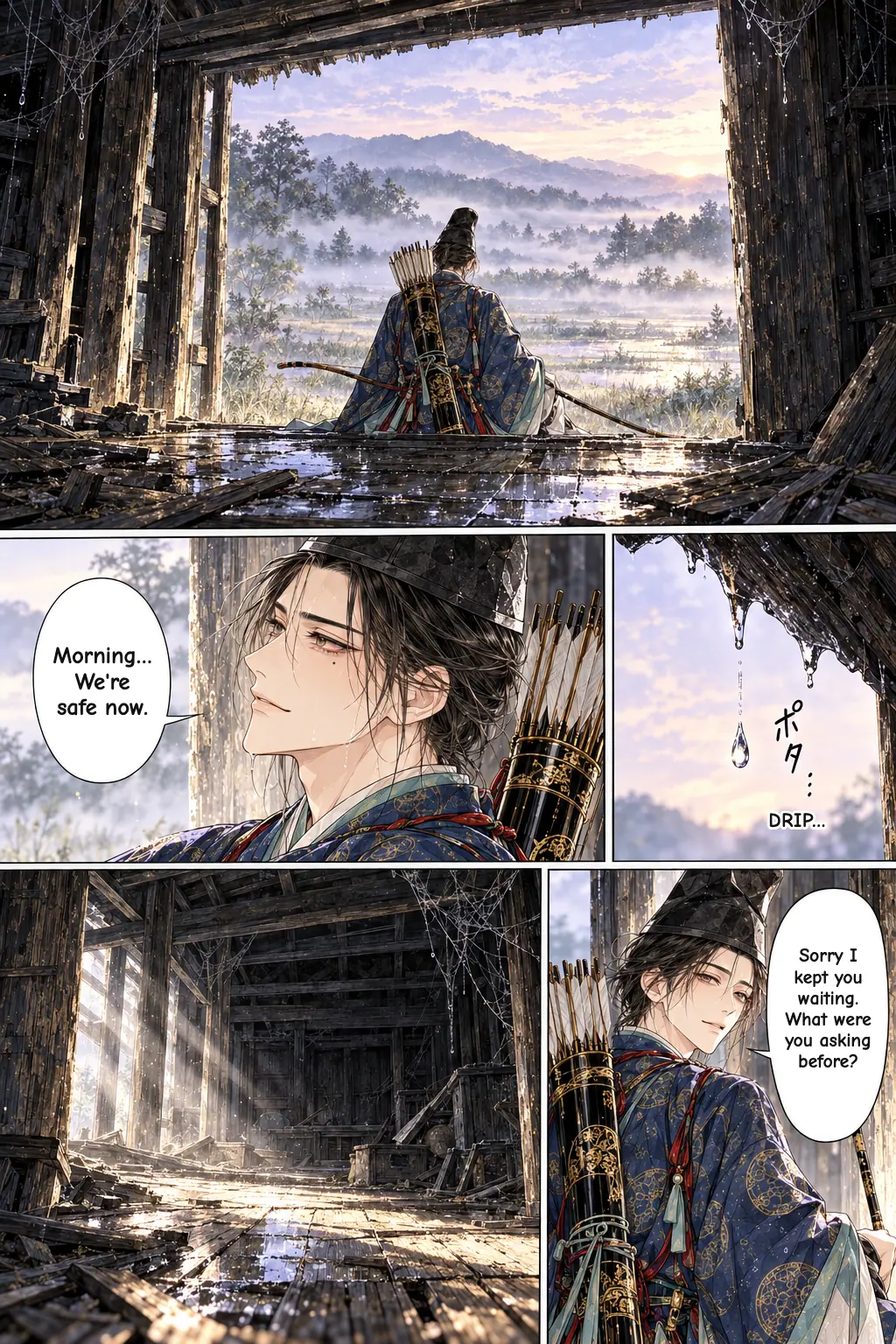
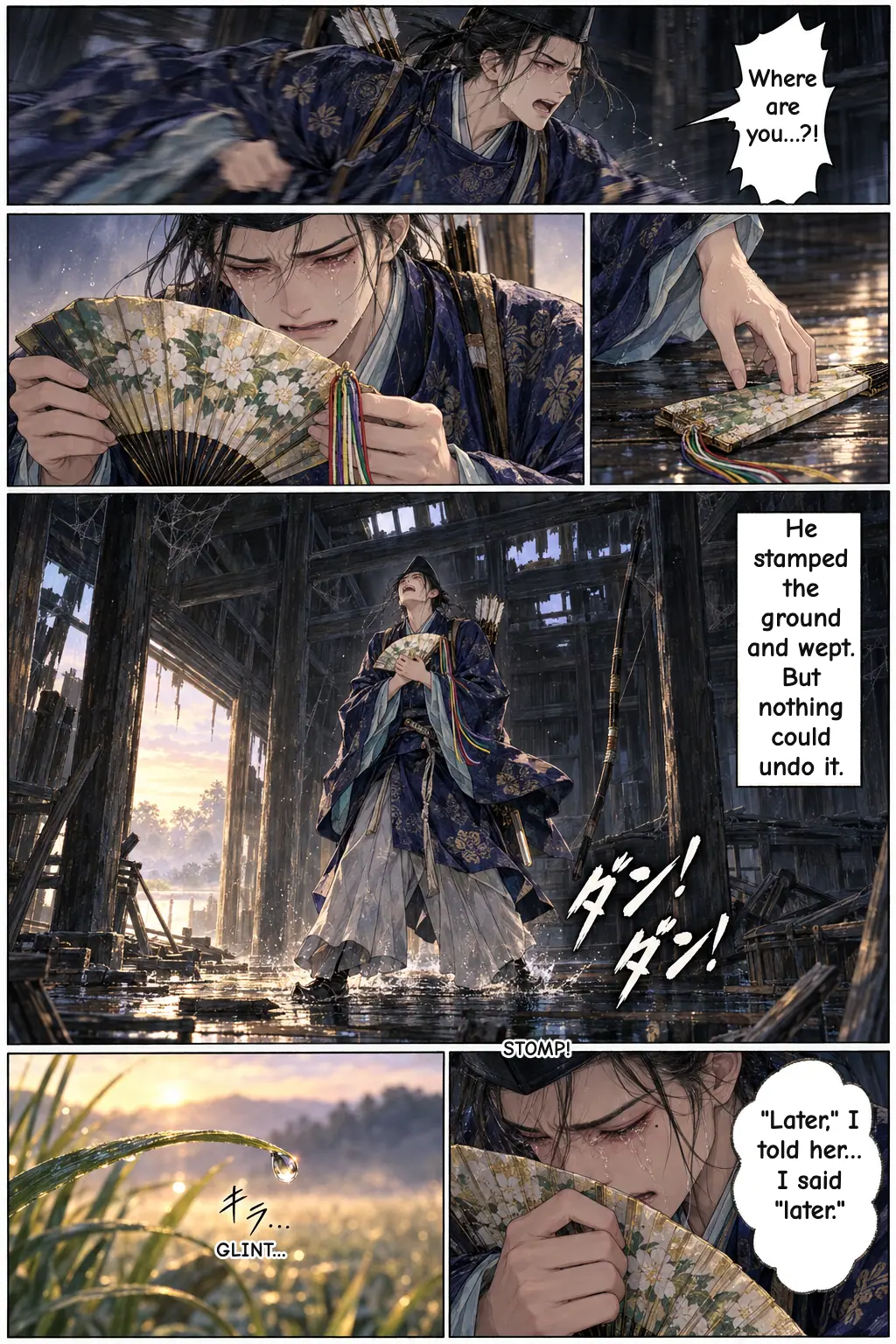
When the sky grew light, the woman was gone. The man stamped his feet and wept, but there was nothing he could do. He made a poem. In my own words: when she asked whether it was a white jewel or something else, he wishes he had answered "dew" and then vanished along with it, the way dew does.
The Twist: Who Was the "Demon"?
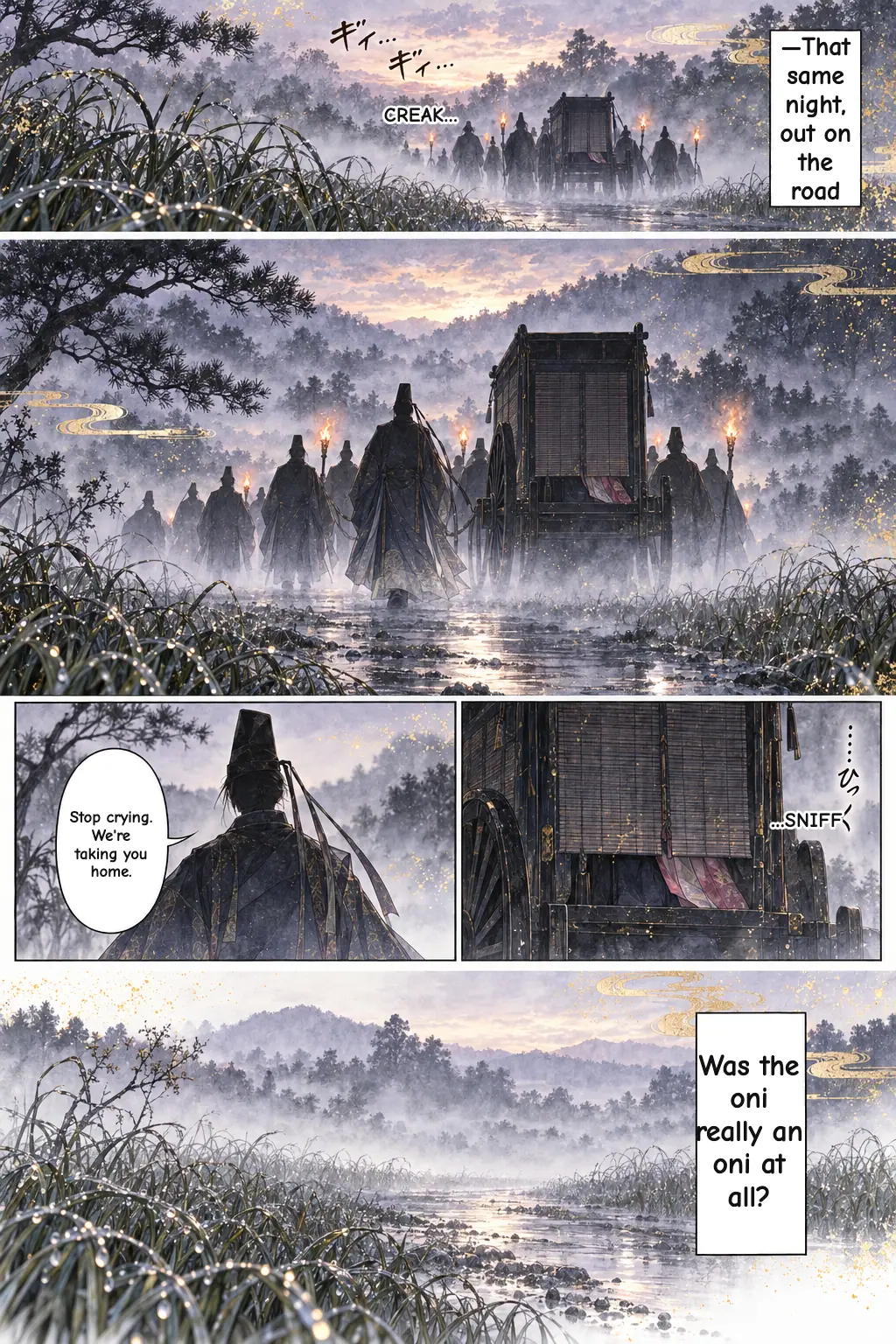
Right after the poem, the text adds a short explanation. The woman was the future Empress of Nijō, a young noblewoman living in the household of her cousin, an imperial consort. She was very beautiful, so the man carried her off on his back. But her brothers, later known as the Horikawa Minister and the Grand Counselor Kunitsune, were still junior officials at the time. On their way to the palace they heard someone crying hard, stopped the man, and took their sister back. The story calls them a "demon" because of that. The note also says she was still very young and not yet an empress.
So the episode tells the story twice: first as a ghost story, then as a scandal at court. Scholars still debate which reading came first and why the two were put side by side.
Main Characters
The man is never named in this episode. Since medieval times, readers have usually taken him to be Ariwara no Narihira, a famous 9th-century poet and lover. That is the traditional reading, not something the text says. The woman is linked in the closing note to Fujiwara no Takaiko, later called the Empress of Nijō. Her brothers are usually taken to be Fujiwara no Mototsune and Fujiwara no Kunitsune.
What the Story Tells Us About Heian Japan
At the Heian court, women of high rank lived mostly hidden behind screens and blinds. That helps explain the woman's question about the dew. The story suggests she had hardly ever been outside at night, and in classical poetry dew is a common image for things that do not last. So her innocent question and his poem connect the shining dew with her sudden disappearance and with how fragile a human life is.
The episode also shows how dangerous love across rank could be. Marriages among the Fujiwara, the most powerful clan at court, were political, so carrying off a future empress was a serious offense. Later, the collection Konjaku Monogatarishū (Volume 27, Tale 7) tells a similar story about Narihira as a darker demon tale. This story became part of a long Japanese tradition of oni hitokuchi, the "demon's single bite." Where the real Akutagawa river was is debated, and the text does not tell us.
What the Manga Changes
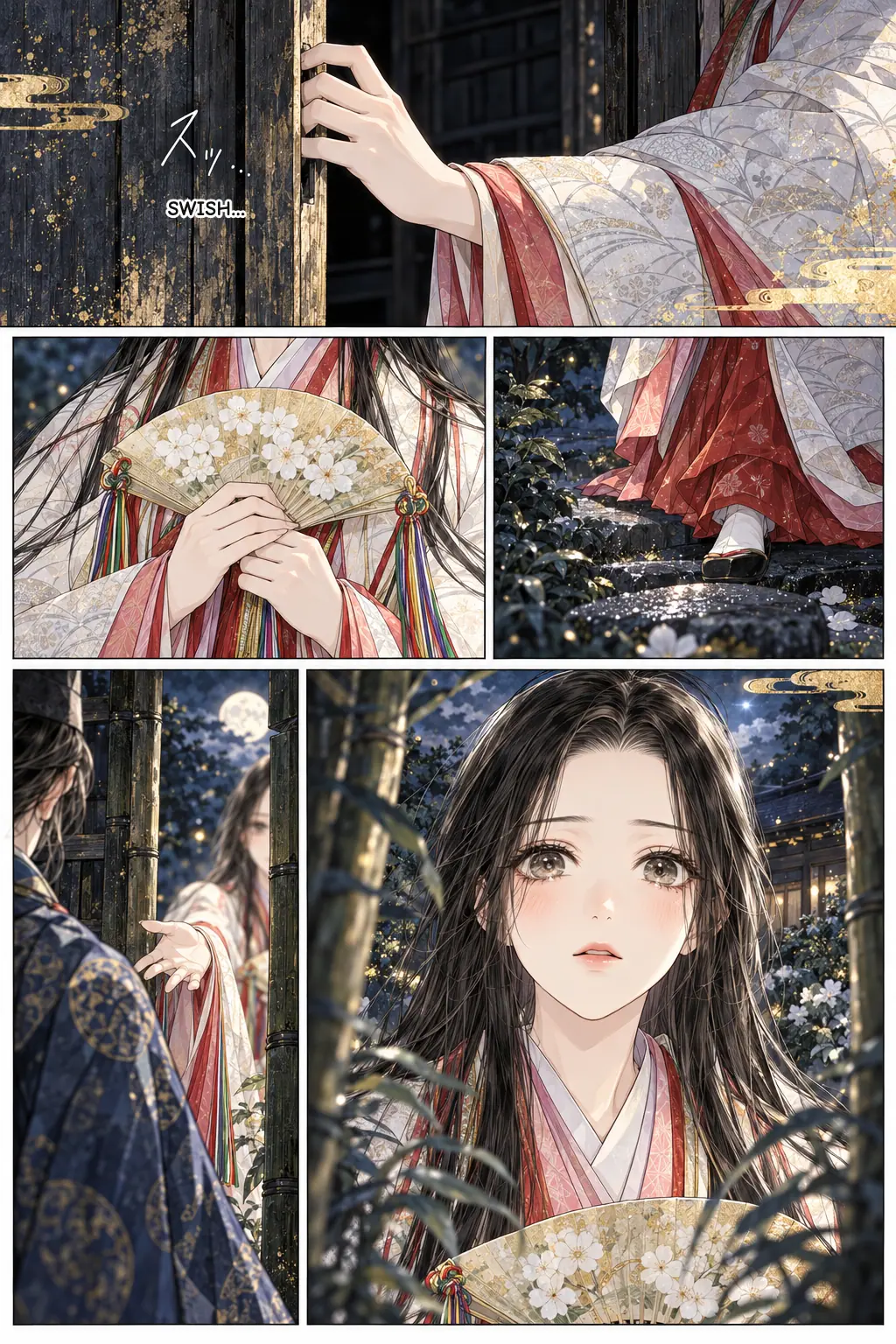
The manga follows the main events of the original: the long courtship, the night escape, the question about the dew, the storm, the storehouse, the man guarding the door, and the empty dawn. Some parts are our own additions. In the manga, the woman leaves her home willingly and takes the man's hand. The original only says he stole her away. The journey to the river is shown in more detail through her eyes, with the moon, insects, the sound of the river, and the shining dew. The original mentions only the dew and her question.
The original does not actually say that he refused to answer. Readers usually understand it that way from his poem. The manga shows him leaving her last question unanswered and imagines why. The characters' faces, clothes, and hair, their past letters and meetings, and the inside of the storehouse are all invented, as is the fallen fan that hints she is gone. The demon is never shown directly. On the last page, the manga hints at the twist about her brothers with torches and men's voices in the distance, without naming anyone.
Read the Manga: LOVE & ALLURE, Episode 1
If you want to see this thousand-year-old elopement play out panel by panel, from the dew on the grass to the empty storehouse at dawn, Episode 1 of LOVE & ALLURE: Classic Japanese Tales of Romance tells it in a few minutes of reading. All episodes on Manga Portal are free, with no sign-up needed. Read it once for the ghost story, then again for the twist.
Characters in this episode
The Man (Mukashi Otoko)
An unnamed lover who courts a woman far above his rank for years, carries her off at night, and loses her in a storehouse. Tradition identifies him as the poet Ariwara no Narihira.
The Woman
A sheltered high-born young woman who asks what the shining dew is and vanishes in the night. The closing note identifies her as the future Empress of Nijō (Fujiwara no Takaiko).
The Oni (Demon)
A creature who lives at the storehouse and swallows the woman in one bite. Its appearance is never described, and the closing note says the 'demon' was really her brothers.
The Horikawa Minister (Fujiwara no Mototsune)
One of the woman's brothers, who appears only in the closing note and helps take her back after hearing her cry.
Grand Counselor Kunitsune (Fujiwara no Kunitsune)
The woman's eldest brother, who stops the man together with Mototsune and brings her home.
FAQ
What is the Akutagawa episode in The Tales of Ise about?
It is Section 6 of The Tales of Ise. A man runs off with a high-born woman, hides her in a storehouse during a thunderstorm, and finds at dawn that a demon has eaten her. He mourns her in a poem comparing her to dew.
Who was the demon in the Akutagawa story?
In the main story it is a real oni that swallows the woman in one bite. A note at the end says the 'demon' was really her brothers, who heard her crying and took her back.
Is the man in The Tales of Ise Ariwara no Narihira?
The text only calls him 'a man.' Since medieval times, readers have traditionally identified him as the poet Ariwara no Narihira, but this is a traditional reading, not something the text states.
Why does the woman ask about the dew?
As a sheltered noblewoman of the Heian court, she had probably never seen the open fields at night, so the shining drops are new to her. In Japanese poetry dew stands for things that do not last, which makes her question a sign of her coming disappearance.
Where was the Akutagawa river?
The text does not say exactly. Where the river was is debated, and there are several competing theories.