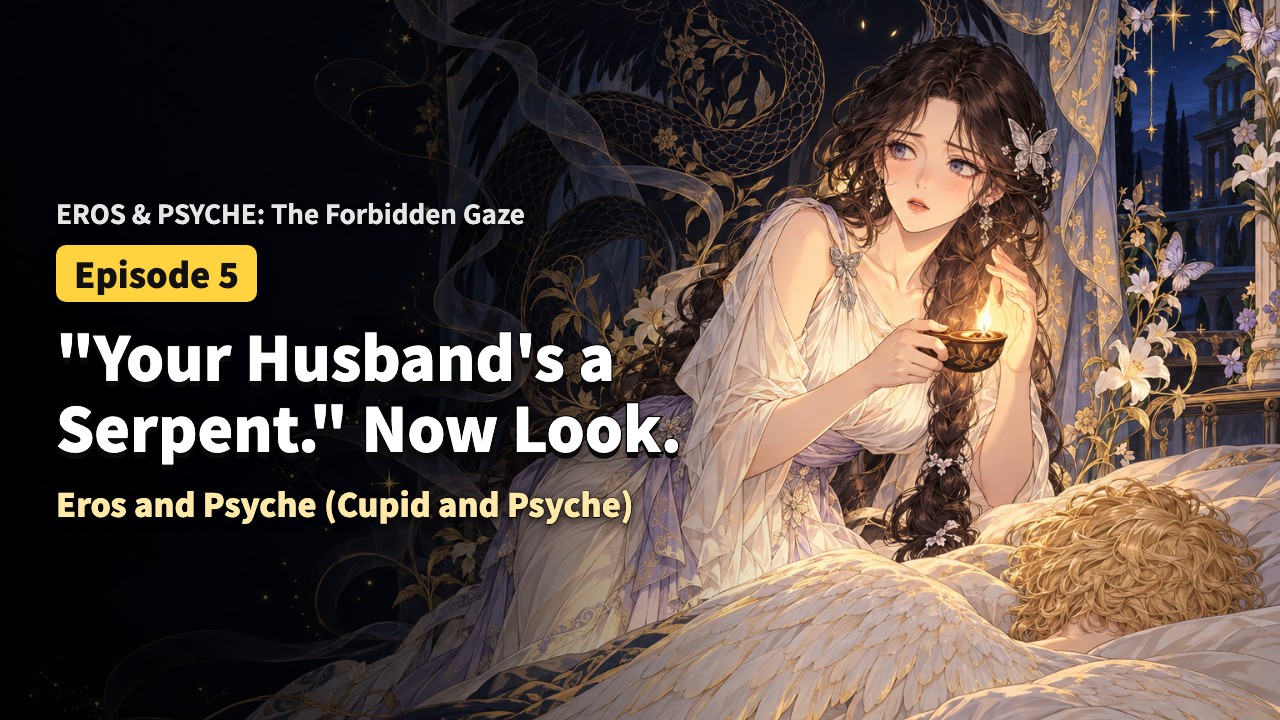
Episode 4I Shared My Joy. My Sisters Turned Green.Eros and Psyche (Cupid and Psyche)
Psyche's sisters weep on the cliff, sure she is dead, so she brings them to her golden palace and treats them like royalty. She only wanted to share her happiness, but little by little her sisters' eyes turn green with envy. That night, her unseen husband tells her she is carrying his child.
Get new episodes in your feed. Follow us on:ThreadsBluesky
Story summary
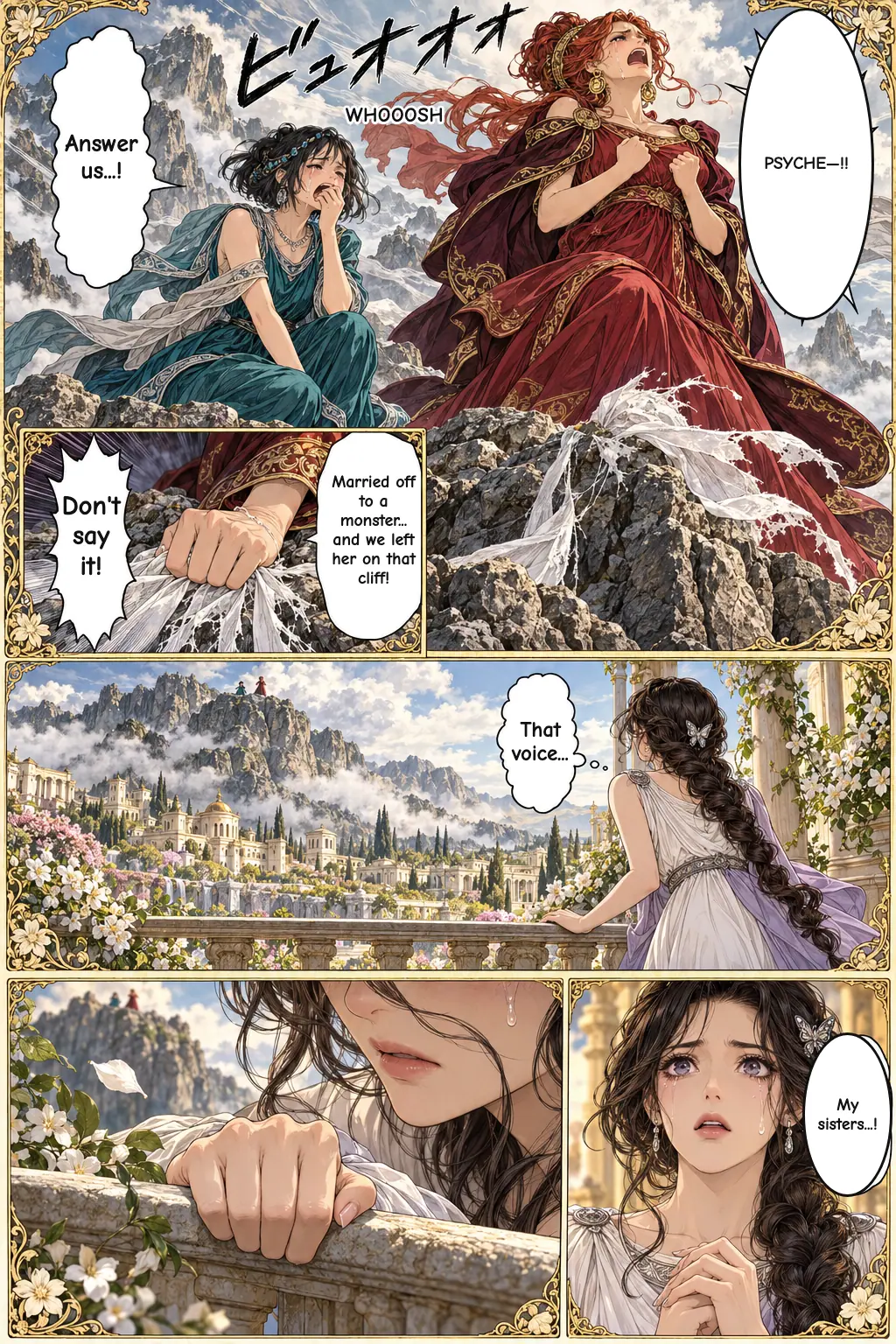
The tale of Cupid and Psyche is told in the Metamorphoses of Apuleius, a Roman-era writer of the 2nd century CE. By this point Psyche, the youngest and most beautiful of three princesses, has been left on a lonely cliff as a bride for some fearsome creature. Instead she was carried away to a magnificent palace, where a husband she is never allowed to see visits her only in the dark. Her two older sisters come to the cliff believing she is dead. They beat their breasts and cry out her name.
Cupid and Psyche: Psyche's Jealous Sisters Visit the Palace – Story Explained
In short: In this part of the myth of Eros and Psyche (Cupid and Psyche), Psyche brings her grieving sisters to her golden palace and treats them like royalty, but her generosity makes them bitterly jealous, and they begin to plot her ruin. That night her unseen husband warns her about them and tells her she is pregnant: the child will be a god if she keeps his secret, and a mortal if she reveals it. The story comes from Apuleius' Latin novel Metamorphoses (The Golden Ass), Book 5, sections 7–13.
The original myth: what happens when the sisters visit
The tale of Cupid and Psyche is told in the Metamorphoses of Apuleius, a Roman-era writer of the 2nd century CE. By this point Psyche, the youngest and most beautiful of three princesses, has been left on a lonely cliff as a bride for some fearsome creature. Instead she was carried away to a magnificent palace, where a husband she is never allowed to see visits her only in the dark.
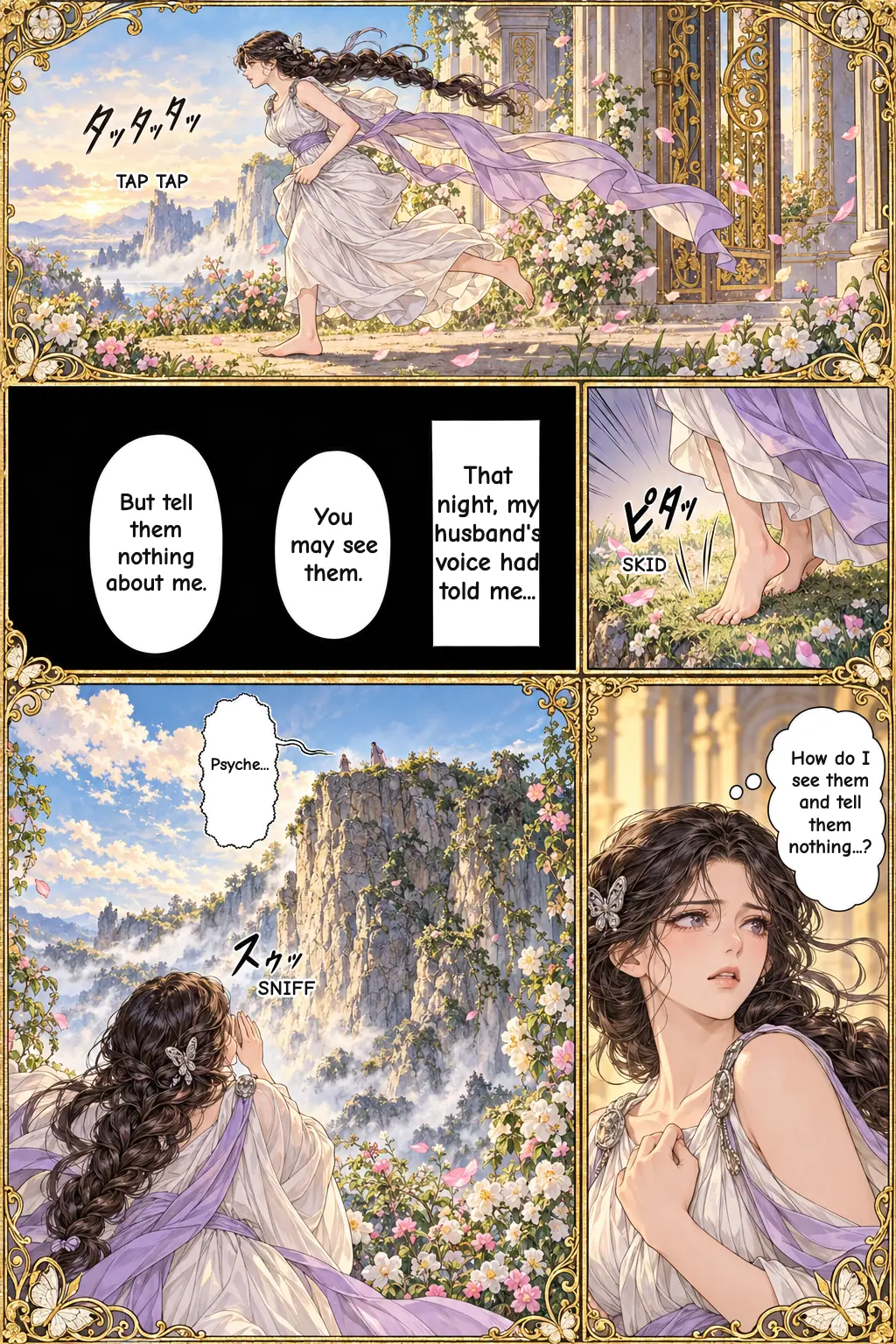
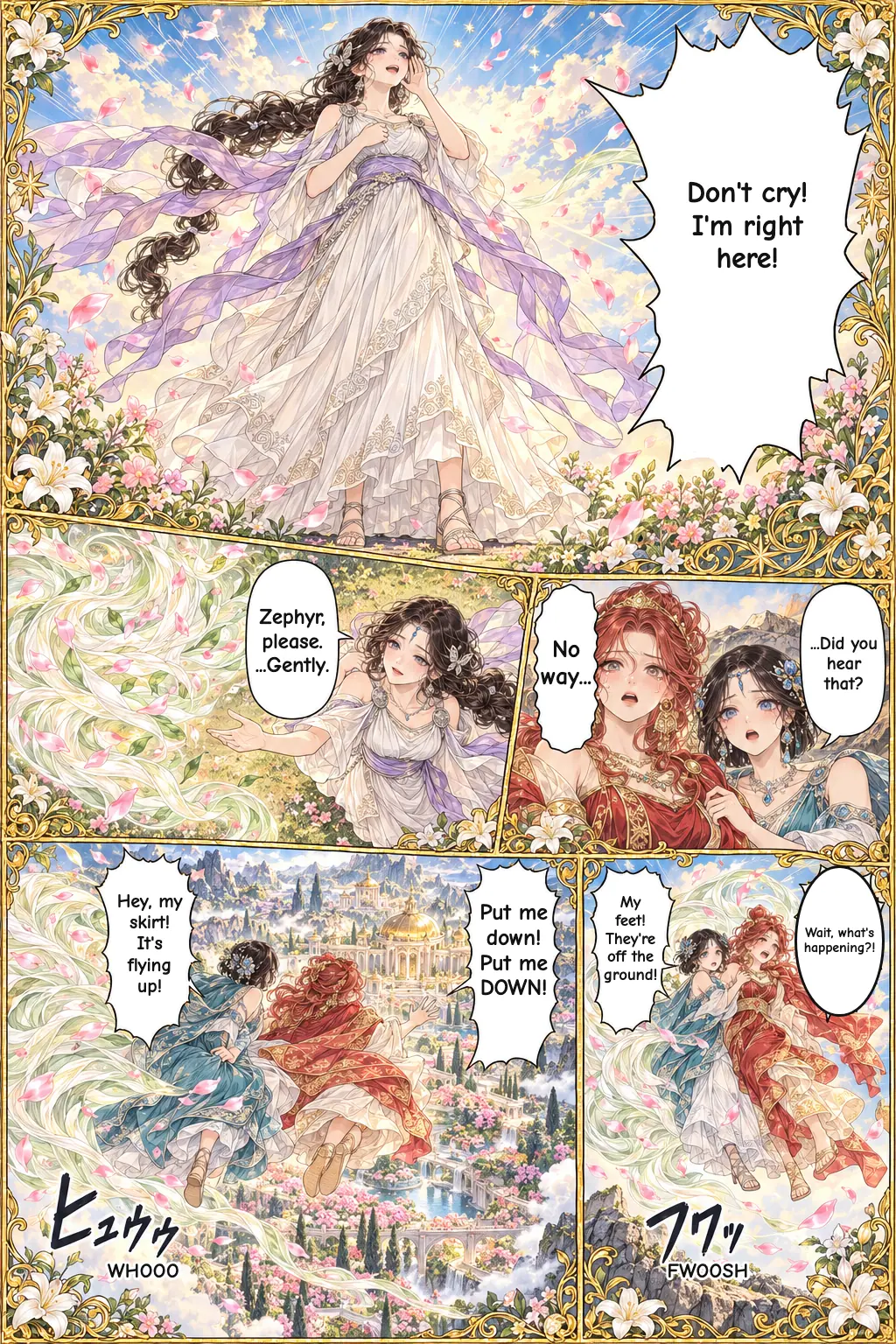
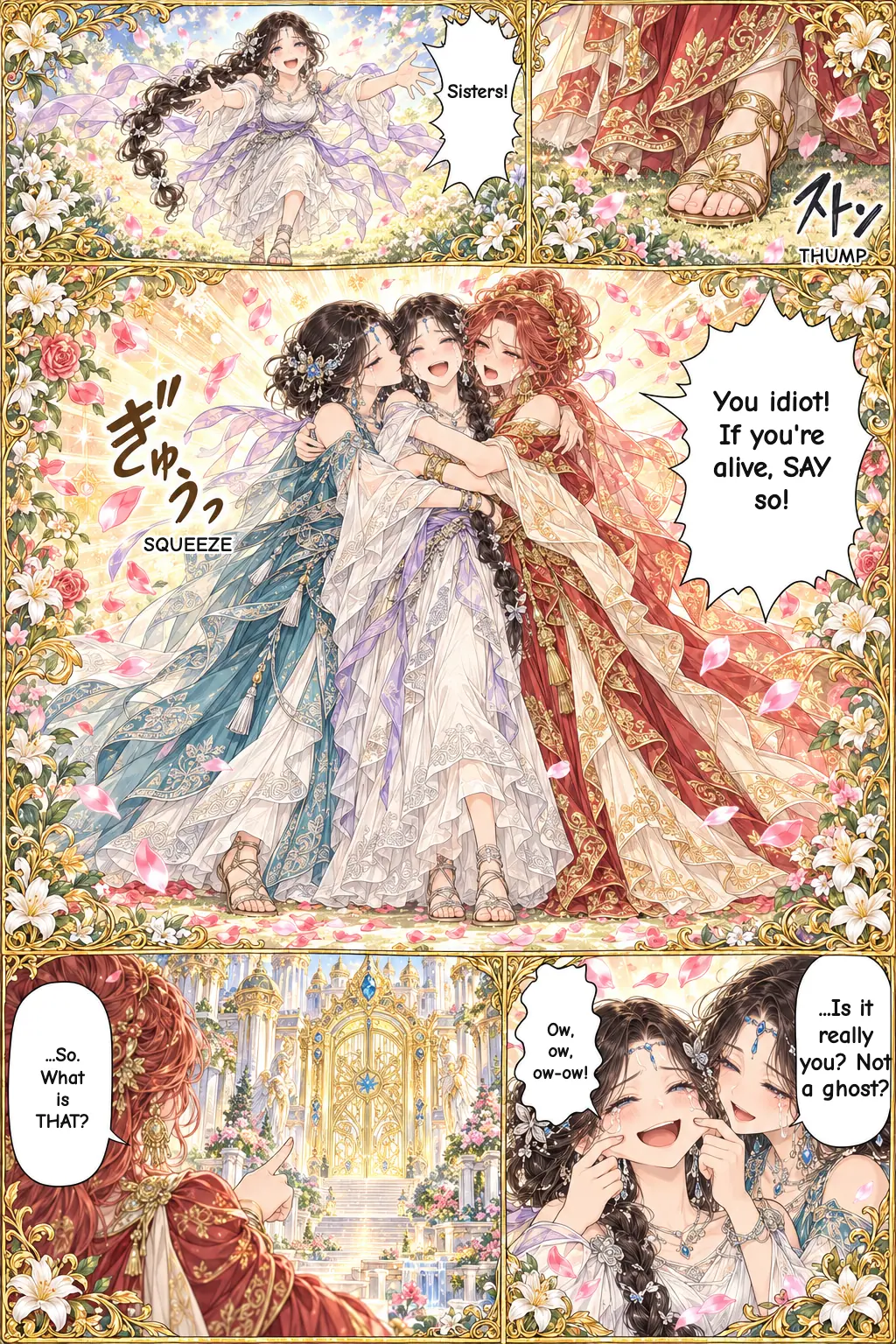
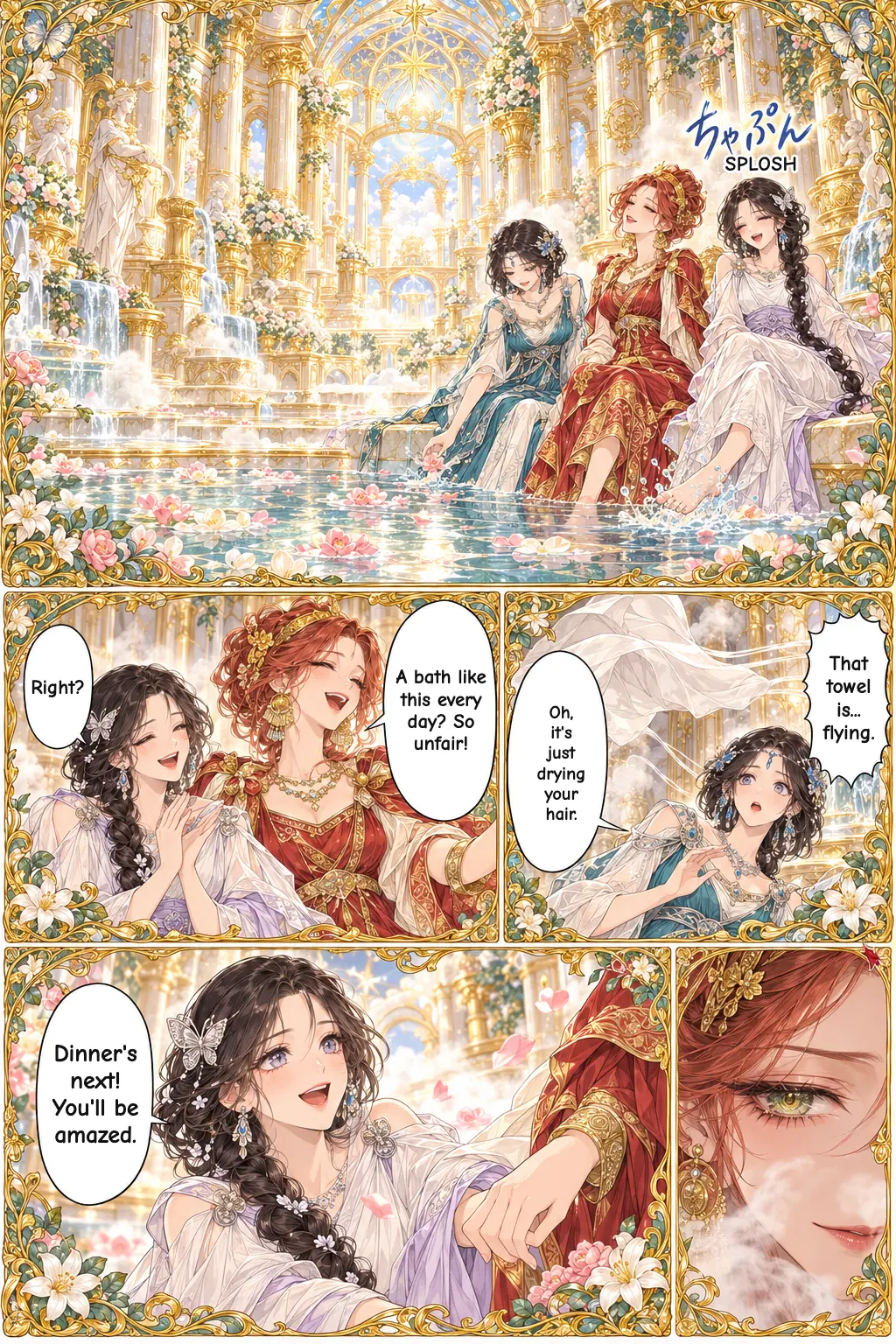
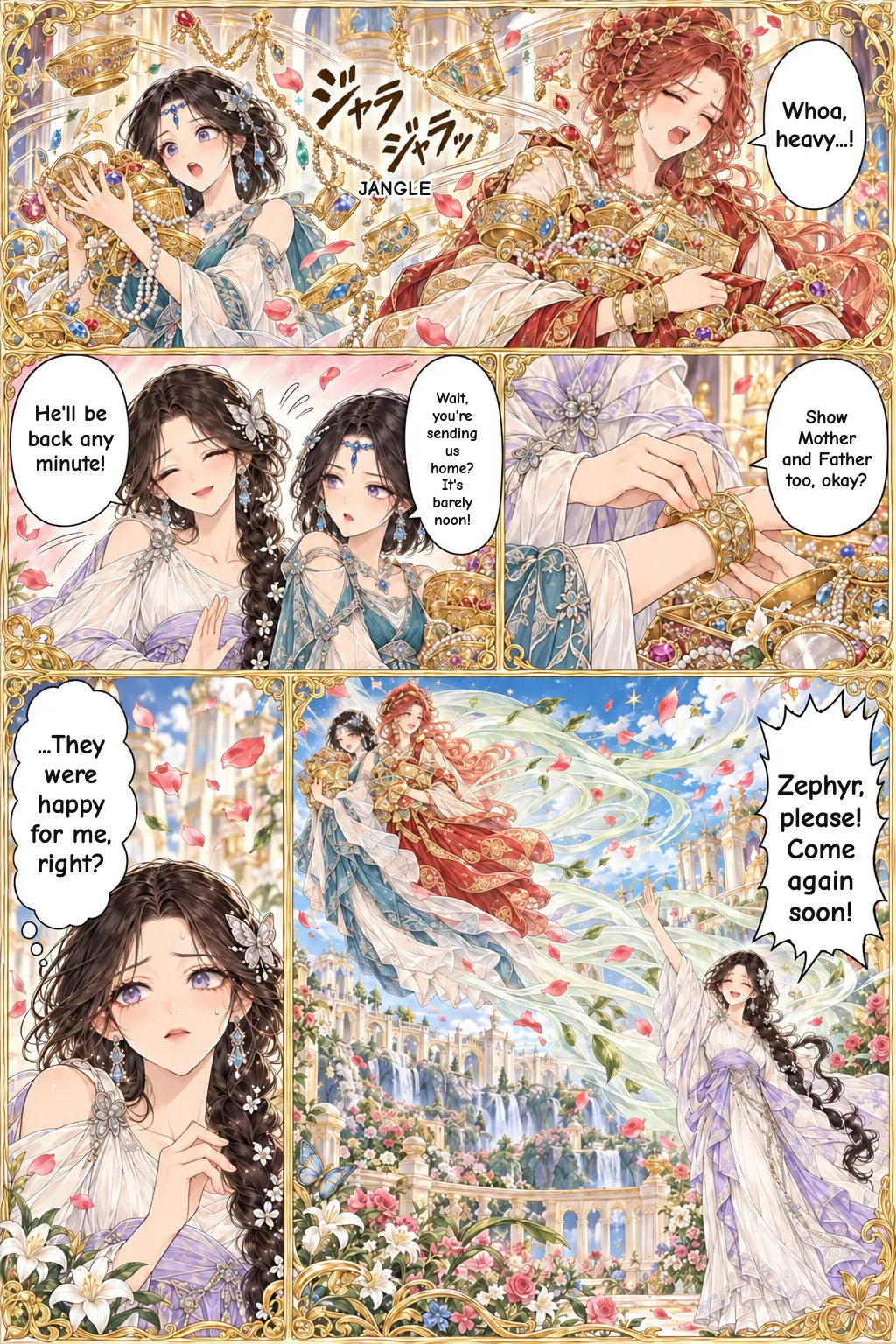
Her two older sisters come to the cliff believing she is dead. They beat their breasts and cry out her name. Psyche hears them, and since her husband has reluctantly given permission, she has Zephyrus, the gentle west wind, carry them safely down to the palace. The sisters hug, kiss, and weep with joy at the reunion.
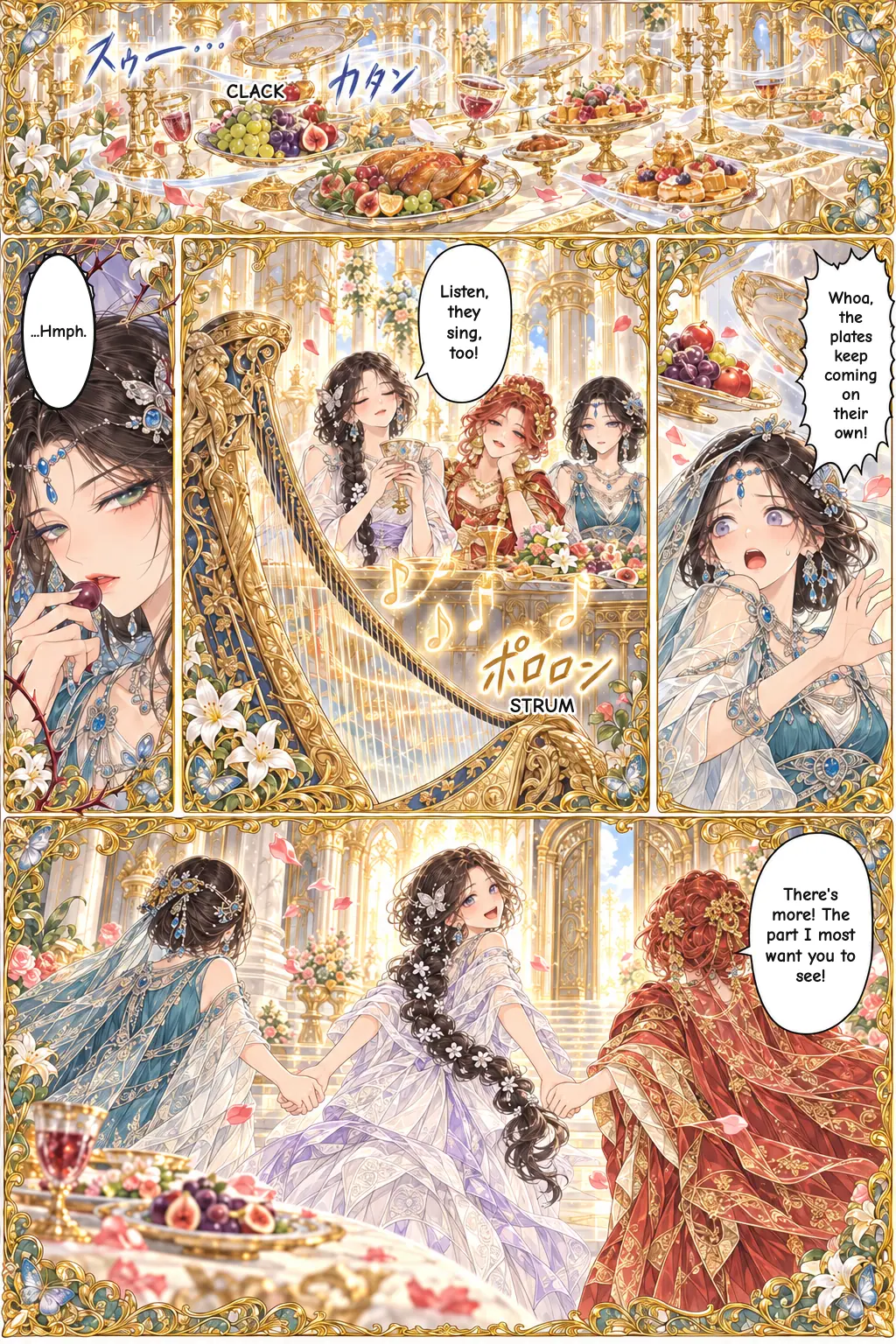
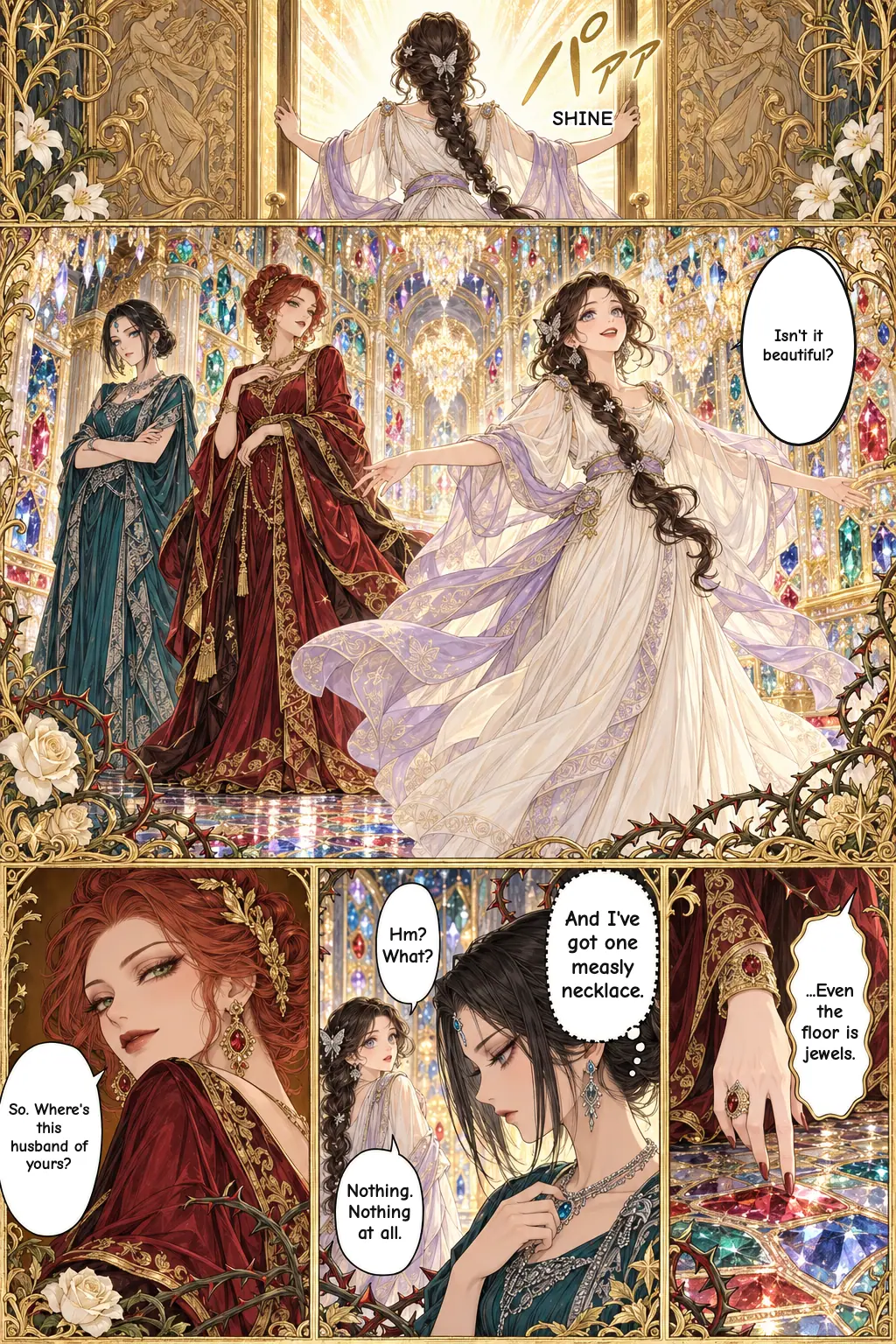
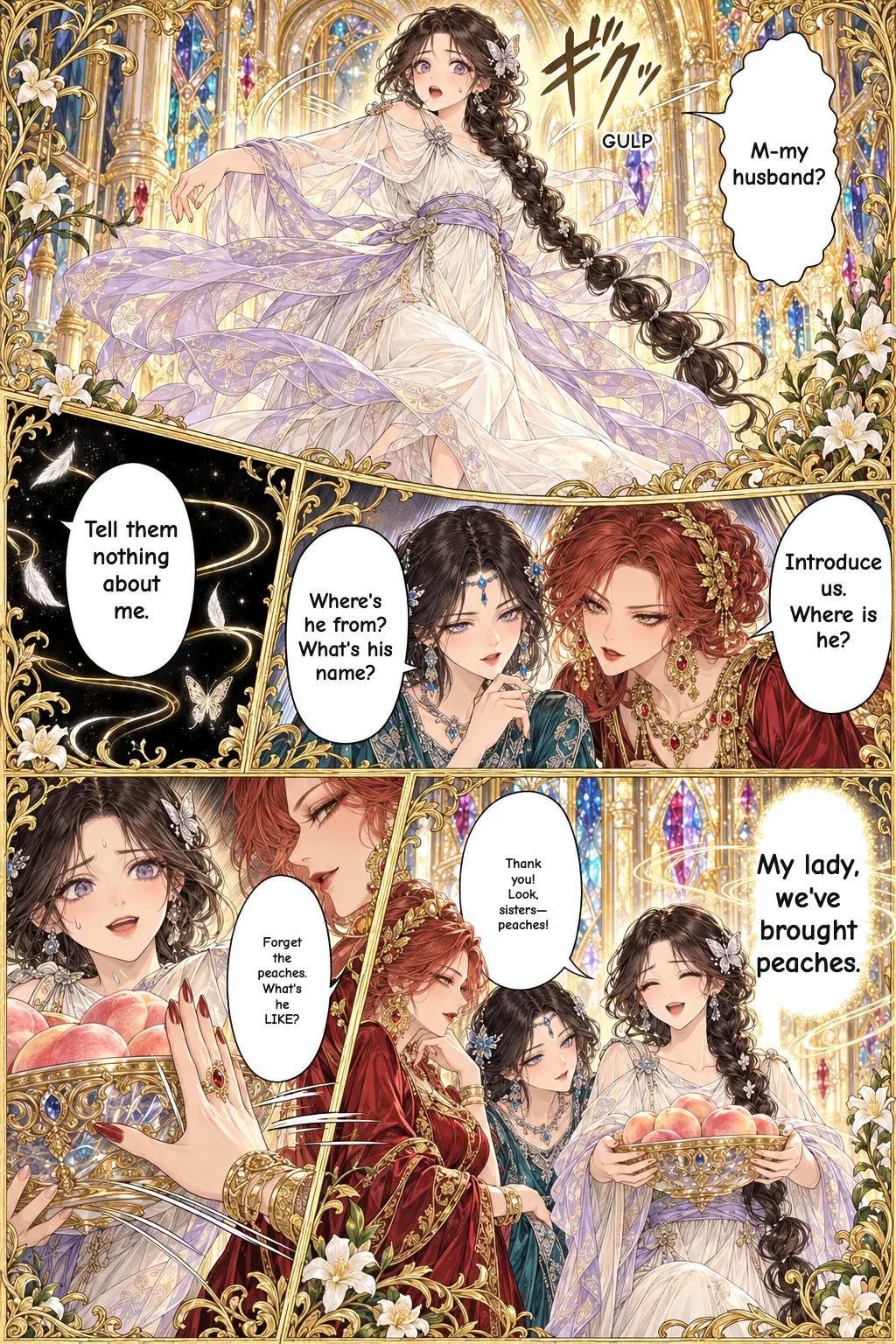
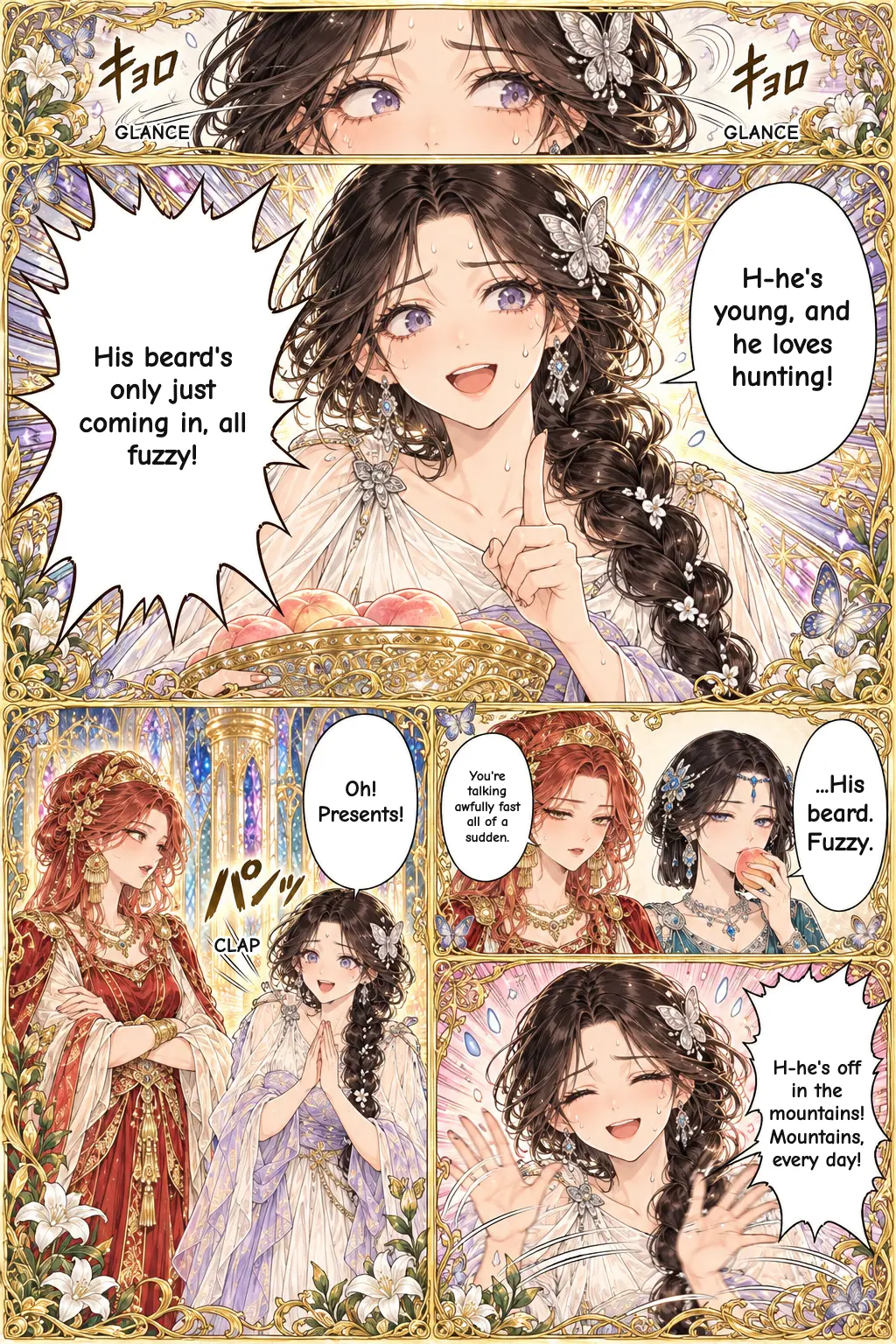
Psyche then shows them everything: rooms of gold and jewels, servants who are only voices, a bath, and a lavish feast. But as the sisters take in all this wealth, envy begins to grow. One of them keeps asking who the master of the house is and what he looks like. Remembering her promise, Psyche invents an answer on the spot: he is a handsome young man whose beard is just starting to come in, and he spends most of his time hunting in the hills. Afraid she might slip and reveal the truth, she quickly loads her sisters with gold and jewels and has the wind take them home.
The envy turns into a plot
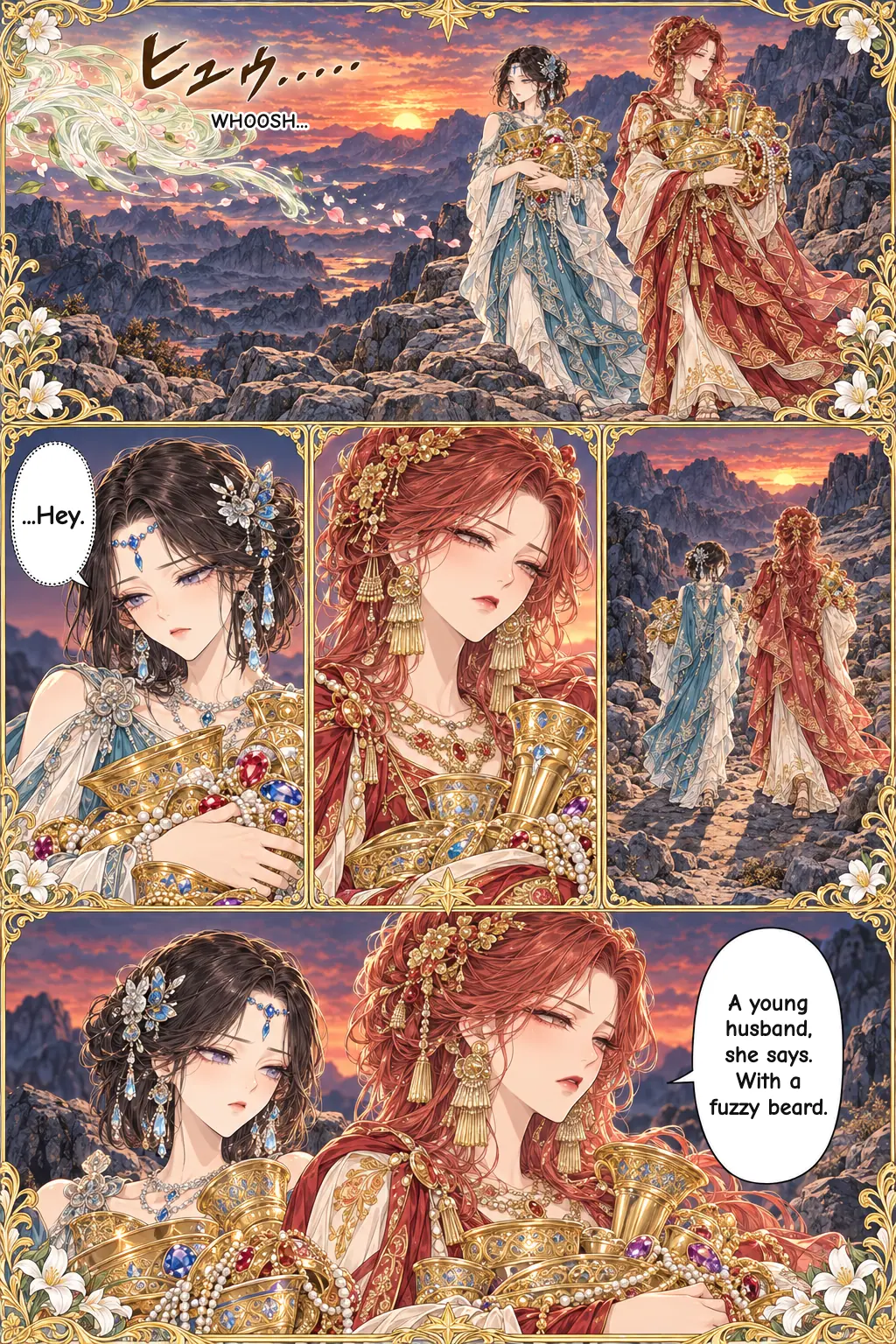
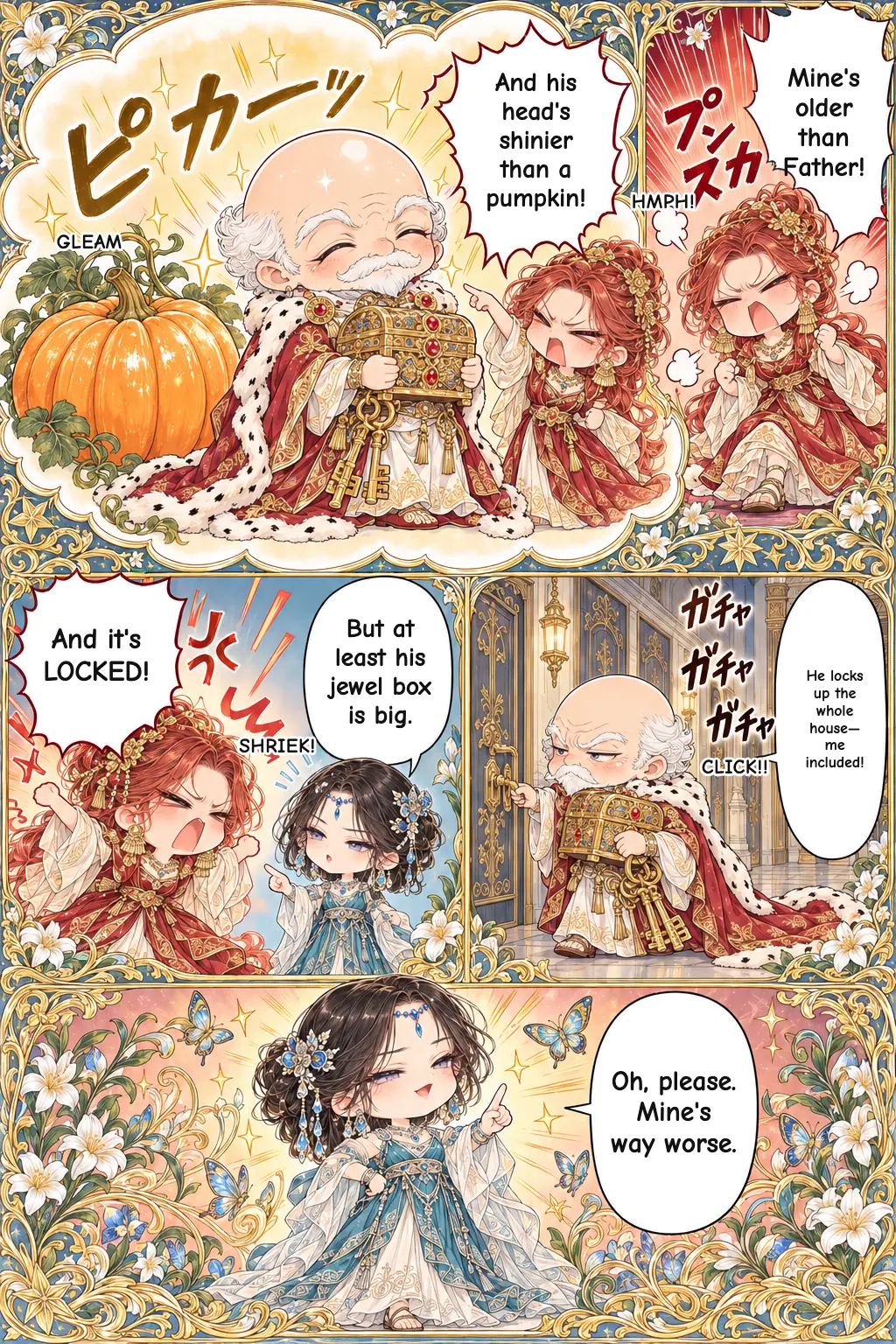
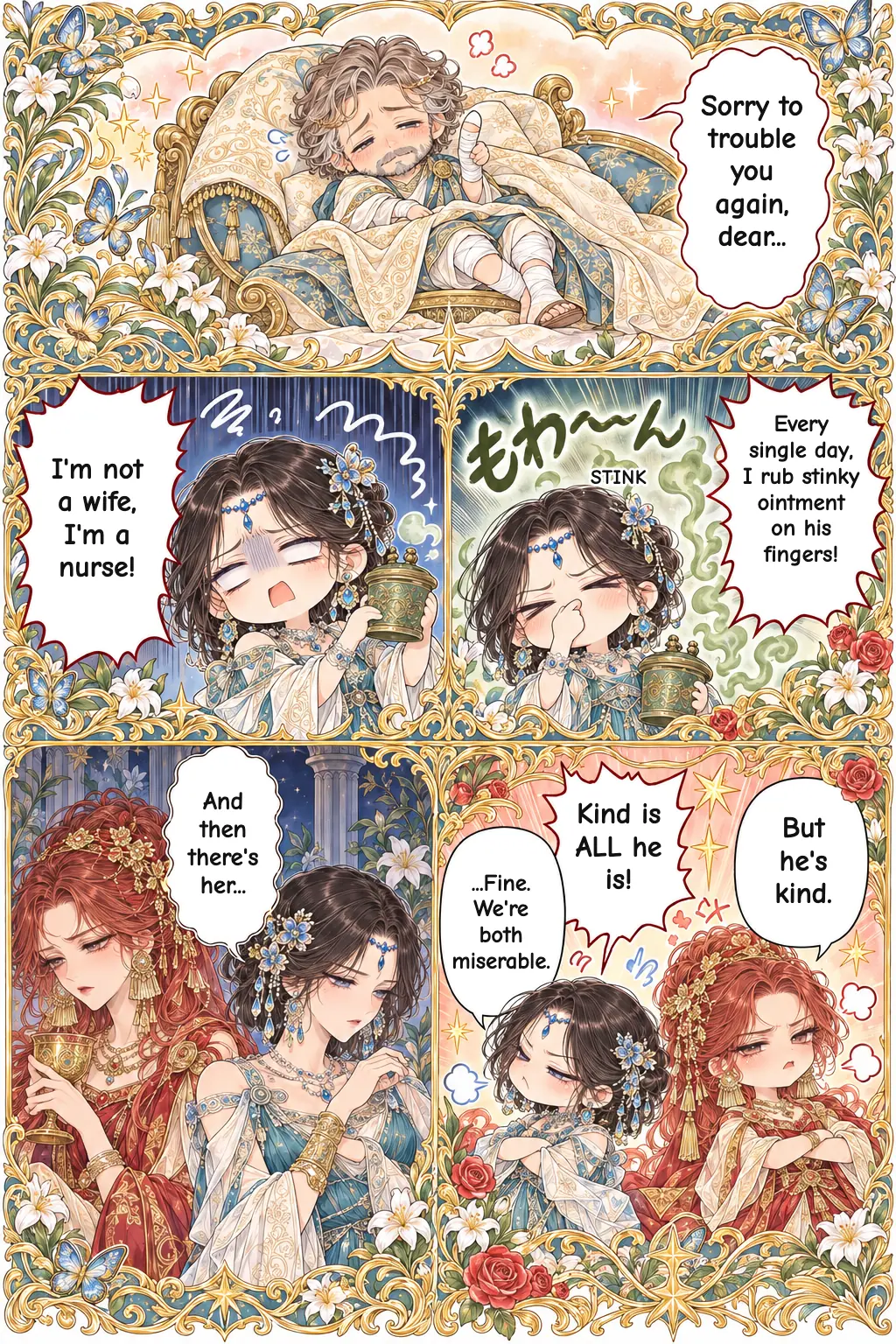
On the way back, the sisters' jealousy boils over. One complains that her own husband is older than her father, balder than a pumpkin, and so stingy that he keeps the whole house under lock and key. The other says her husband is crippled by joint disease, so that she spends her days rubbing medicine into his fingers, more like a nurse than a wife.
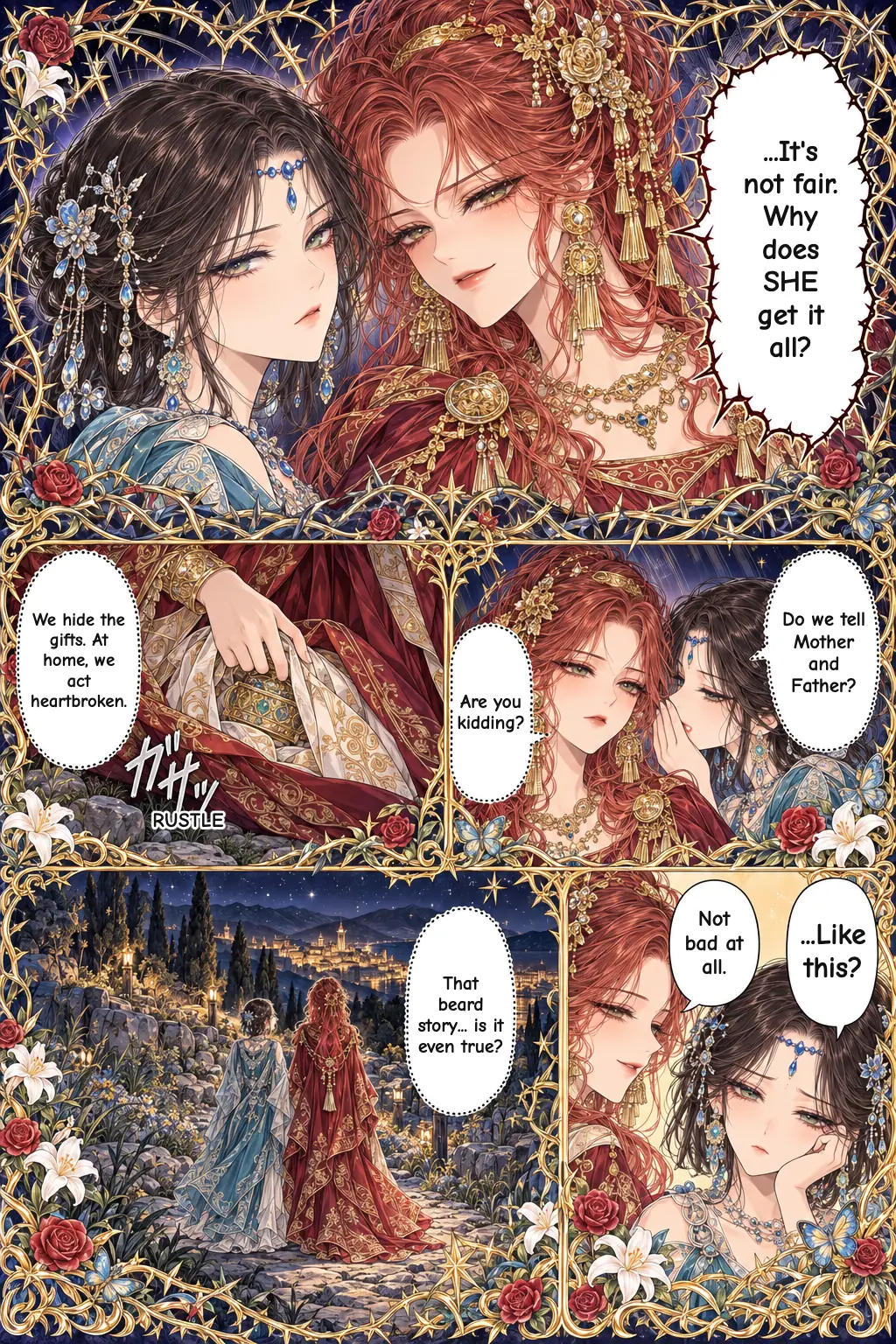
The two agree to tell no one, not even their parents, about Psyche's good fortune. They hide the gifts, pretend to be in mourning at home, and start planning how to bring their little sister down.
The warning and the secret child
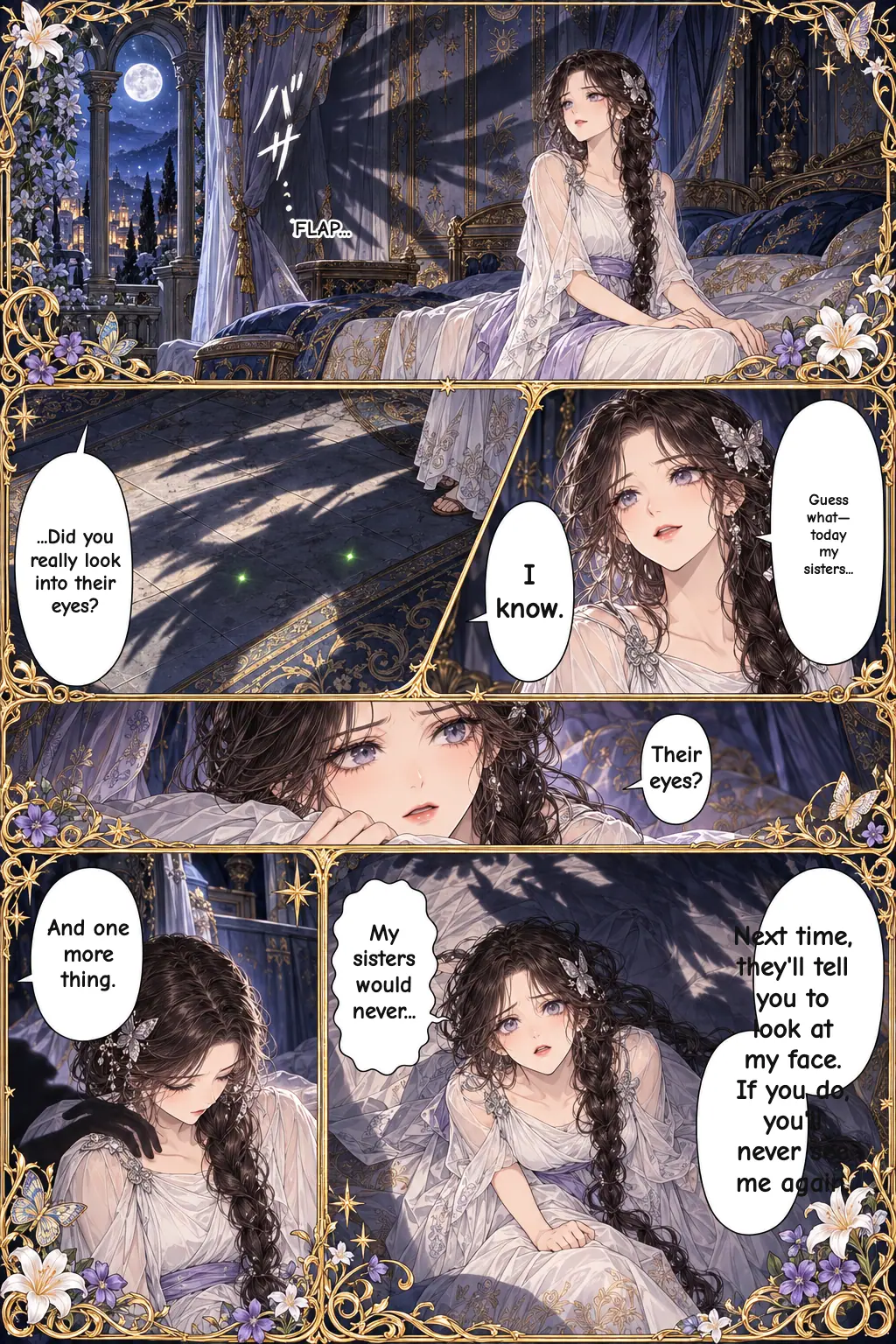
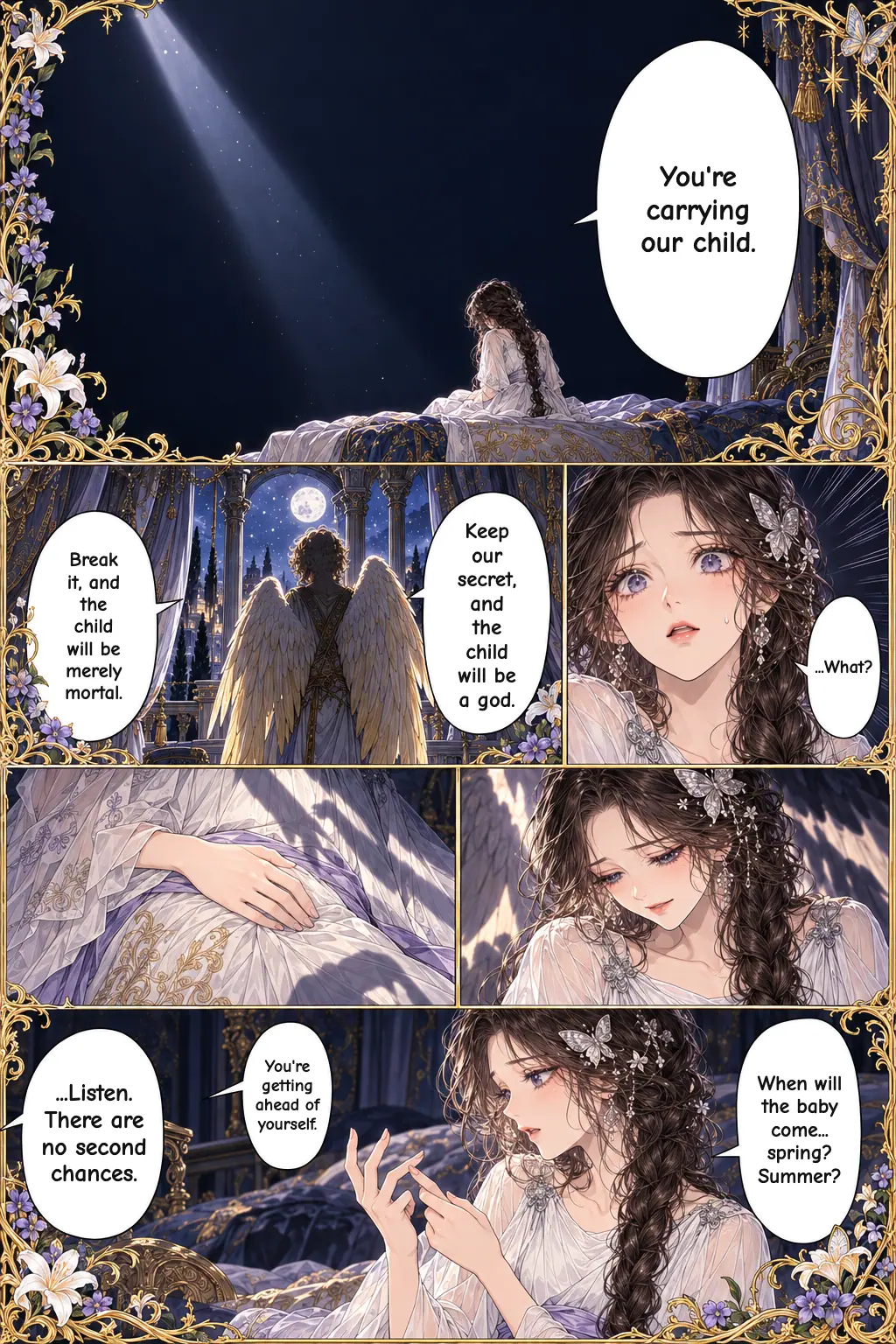
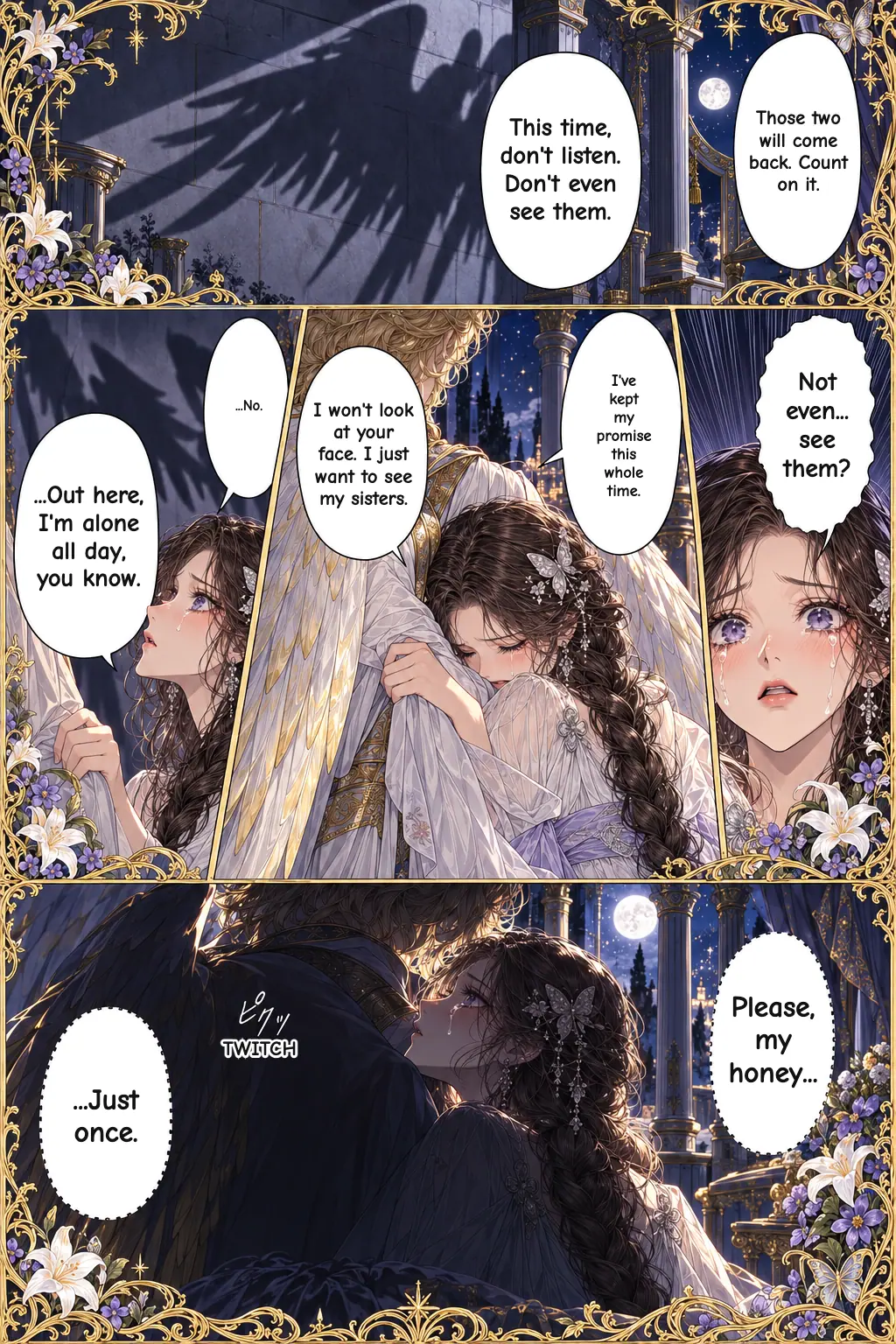
That night the husband warns Psyche that her sisters, whom he compares to wicked she-wolves, will try to persuade her to look at his face. If she does, she will never see him again. He also tells her she is carrying his child. If she keeps his secret, the baby will be divine; if she betrays it, the baby will be mortal. Psyche is overjoyed at the idea of a divine child and counts the days and months until the birth.
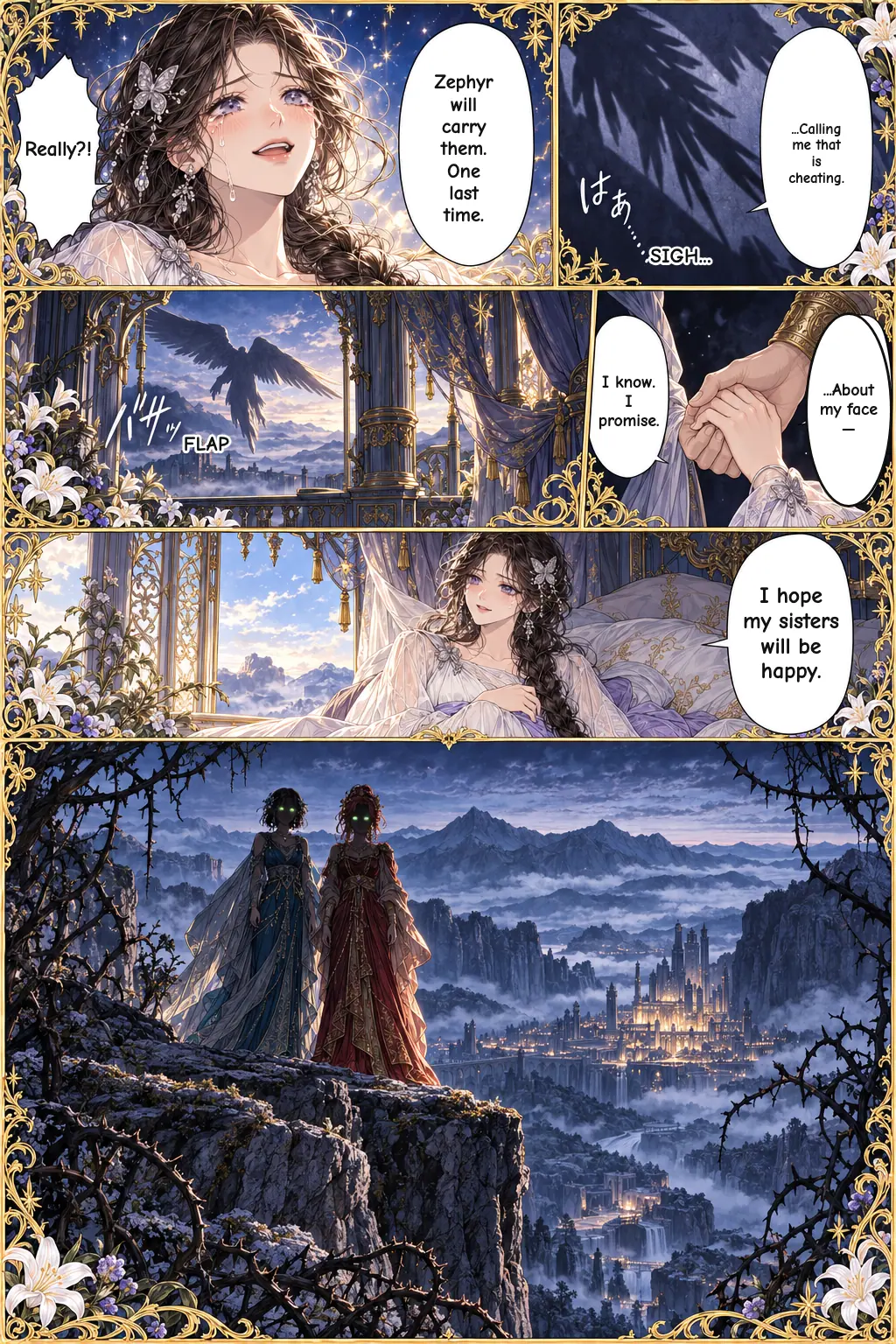
When the sisters approach again, he warns her even more strongly: this is the final danger, and she should not even meet them. Psyche cries and pleads. She reminds him that she has kept her promise so far and says she does not need to see his face, only her sisters. She holds him and calls him every sweet name she can think of. At last he gives in, agrees that the west wind will bring the sisters once more, and leaves before dawn.
What this part of the myth is about
The name Psyche is the Greek word for 'soul', and the husband, though unnamed here, is Cupid (Eros), the god of love. Many readers have taken the tale as an allegory of the soul's journey toward divine love, though how far Apuleius meant it that way is debated.
On a simpler level, this episode is about trust and envy. Psyche's mistake is not greed but generosity and loneliness: she wants to share her happiness with family. The sisters show how comparison can turn love into resentment, and their comic complaints about their husbands reveal how unhappy their own royal marriages are. The prophecy about the child raises the stakes, since keeping the secret now affects someone besides Psyche. Some scholars also compare the story to later folktales about a mysterious hidden husband, such as Beauty and the Beast.
What the manga changes
The manga follows Apuleius' plot closely, but some visual details are invented, because the original text describes very little. The look of the palace, the bath, the food, and the gold and jewel gifts were designed for the manga. Zephyrus appears as swirling petals and fabric rather than a person, which fits the original, where the wind is never given a human form.
The sisters' looks, ages, clothes, and distinct personalities are the manga's own creation. Their complaints about their husbands are shown as short comic daydreams, such as the pumpkin-bald old man and the medicine scene. Their smiles slowly fading on the way home, and Psyche's nervous expression as she tells her lie, are also added for drama. The husband is shown only through darkness, silhouette, and voice. After learning of the pregnancy, Psyche gently touches her belly; the original only says she rejoiced and counted the days. Later in the tale, Apuleius names the child Voluptas, meaning 'Pleasure' or 'Joy', and the manga quietly sets this up for the finale.
Where to read it
If you want to see the golden palace, the sisters' slow change, and that quiet midnight announcement, read Episode 4 of EROS & PSYCHE: The Forbidden Gaze here on Manga Portal. Every episode is free, with no sign-up needed, so you can start from the beginning or keep going to find out whether Psyche can protect her secret.
Characters in this episode
Psyche
The youngest princess, whose name means 'soul', living happily with a husband she is forbidden to see.
Psyche's husband (Cupid / Eros)
The god of love, who visits only at night and is not named or seen in this part of the story.
The first sister
One of Psyche's older sisters, unhappily married to a bald, old, miserly king, who grows jealous of Psyche's luxury.
The second sister
Psyche's other sister, who complains of nursing a husband bent by joint disease and joins the plot against Psyche.
Zephyrus
The gentle west wind who carries the sisters between the cliff and the palace.
The invisible servants
Bodiless voices that wait on Psyche and her guests in the palace.
FAQ
Why were Psyche's sisters jealous?
When Psyche showed them her golden palace, invisible servants, and rich gifts, they compared it with their own unhappy marriages to old or sick kings. Their envy grew so strong that they decided to hide her good fortune and plot her downfall.
What did Psyche tell her sisters about her husband?
She had never seen him, so she made up a story, saying he was a handsome young man with a newly growing beard who spent his time hunting. She then sent them home quickly so she would not accidentally give away the secret.
Was Psyche pregnant in the myth?
Yes. In Apuleius' version her husband tells her she is carrying his child, which will be divine if she keeps his secret and mortal if she reveals it. The daughter, named Voluptas ('Pleasure'), is born at the end of the story.
Where does the story of Cupid and Psyche come from?
The full story survives in the Metamorphoses, also called The Golden Ass, a Latin novel by Apuleius from the 2nd century CE. It runs from Book 4, section 28 to Book 6, section 24.
Why couldn't Psyche see her husband's face?
He warned her that if she looked at him, she would lose him forever. In this part of the story he does not say who he is; readers later learn that he is Cupid, the god of love.