Episode 2She Smiled on the Day She Wed a MonsterCupid and Psyche
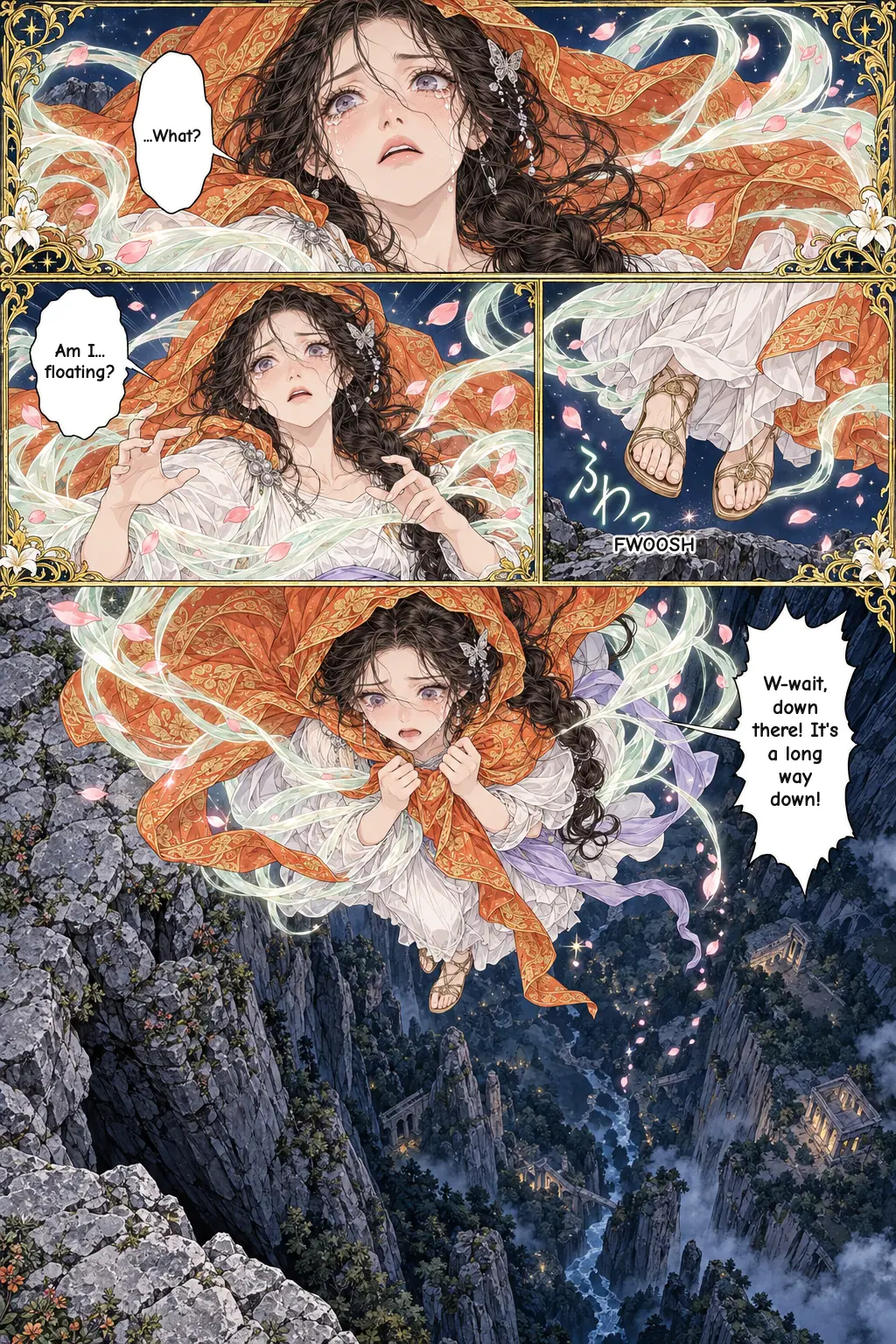
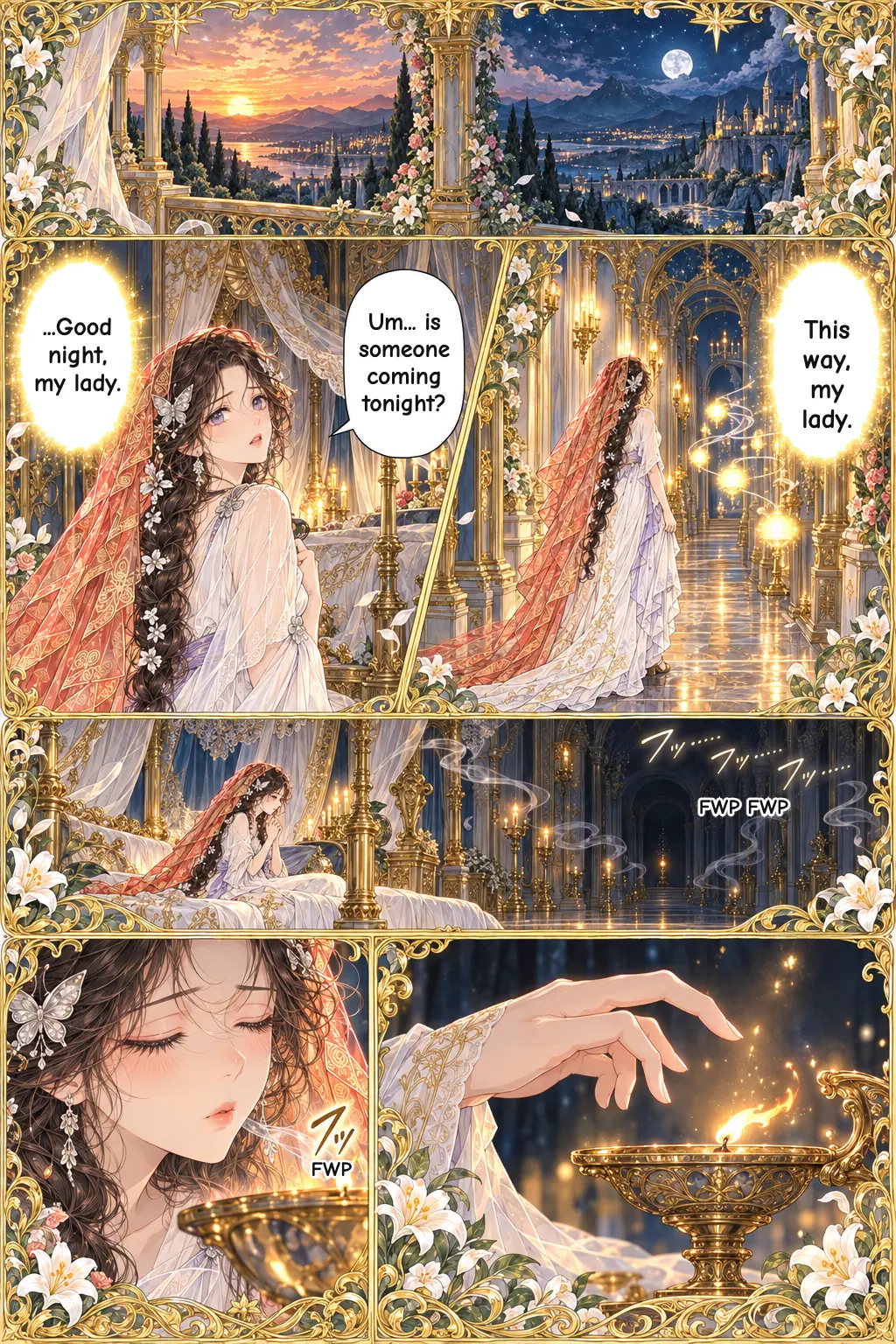
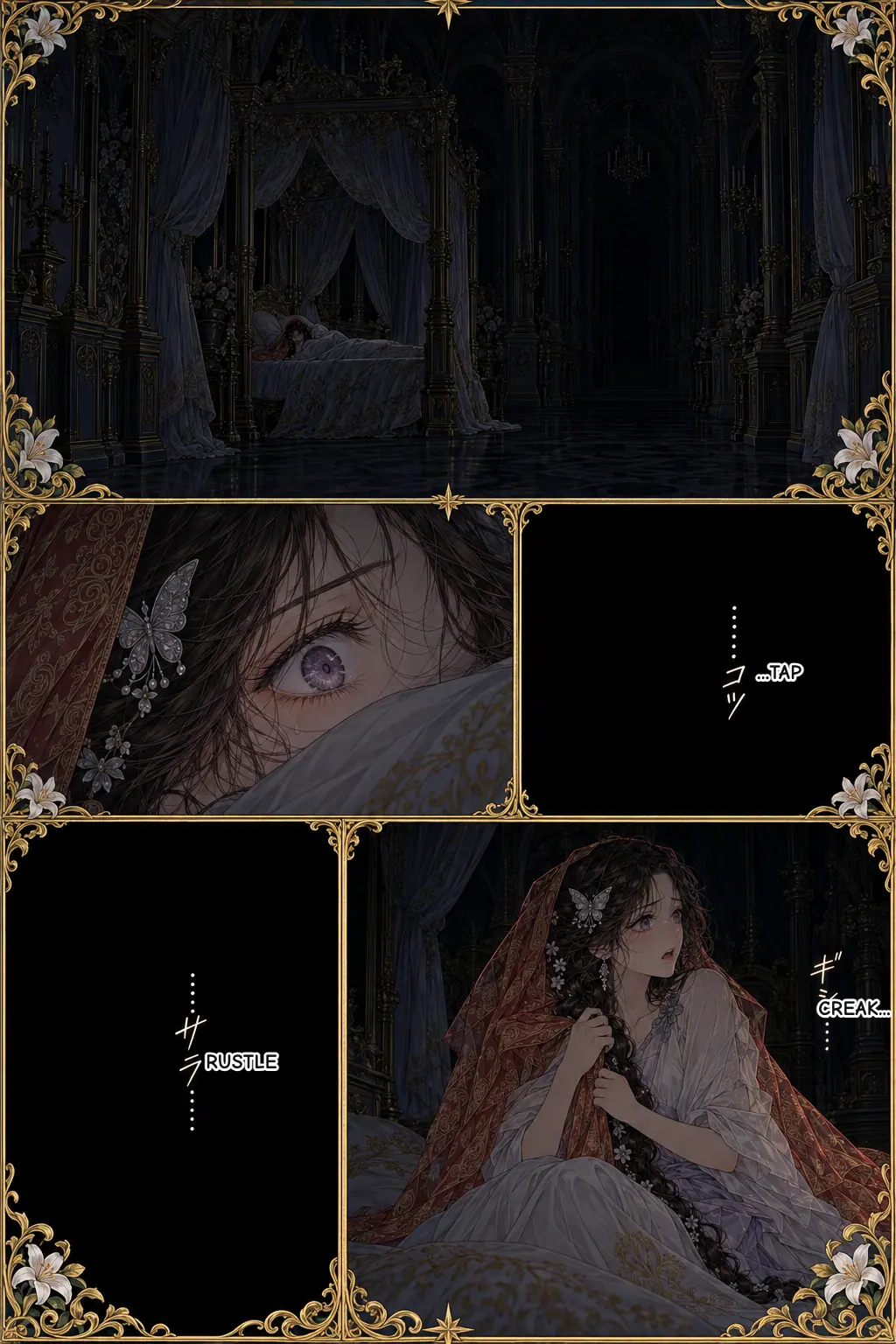
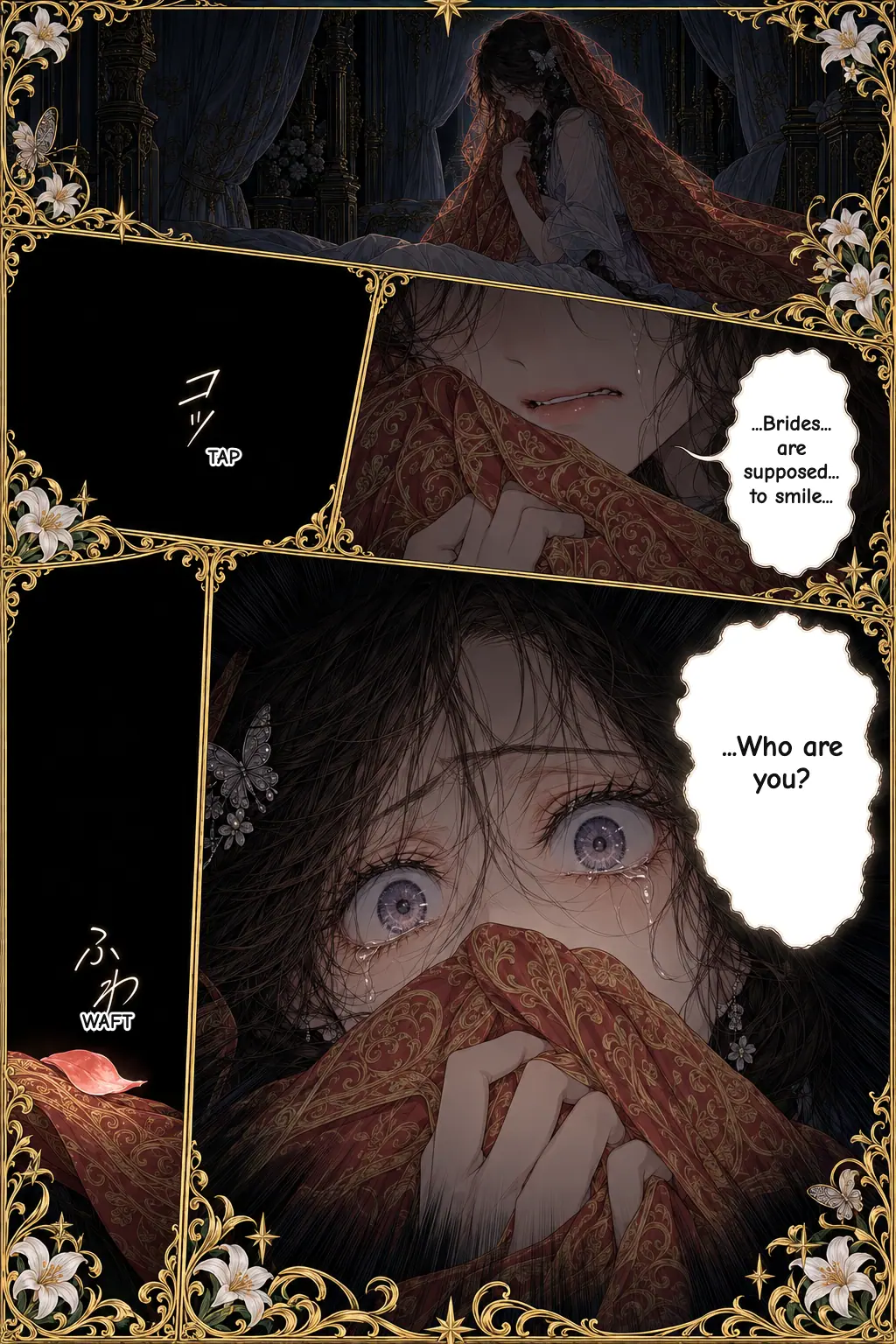
Psyche is sent to a mountain crag to marry a husband who isn't human. Instead of falling apart, she comforts her weeping parents and leads the wedding procession on her own two feet. Left alone on the rock, she gives herself to the West Wind and is carried to a golden palace run by servants who are nothing but voices. Then night falls, and something comes toward her in the dark.
Psyche is the youngest of three princesses, and she is so beautiful that people have started worshipping her as a new Venus, the goddess of love. Nobody dares to marry her, though. Her worried father asks the oracle of Apollo at Miletus for help, and the answer is chilling: dress the girl for a deathly wedding, leave her on a high mountain crag, and give up hope of a human son-in-law. Her husband will be a savage, winged, serpent-like evil that torments the world and that even Jupiter, king of the gods, fears. The wedding preparations go wrong in every way.
Cupid and Psyche Story: Psyche's Monster Wedding and Invisible Palace
In short: This part of "Cupid and Psyche" tells how Princess Psyche, doomed by an oracle to marry a terrifying winged creature, walks calmly to a mountain rock, is lifted away by the West Wind, and wakes beside a golden palace served by bodiless voices. It comes from Books 4–5 of Apuleius' Latin novel the Metamorphoses (also called The Golden Ass), written in the 2nd century CE.
The Original Myth: A Wedding That Feels Like a Funeral
Psyche is the youngest of three princesses, and she is so beautiful that people have started worshipping her as a new Venus, the goddess of love. Nobody dares to marry her, though. Her worried father asks the oracle of Apollo at Miletus for help, and the answer is chilling: dress the girl for a deathly wedding, leave her on a high mountain crag, and give up hope of a human son-in-law. Her husband will be a savage, winged, serpent-like evil that torments the world and that even Jupiter, king of the gods, fears.
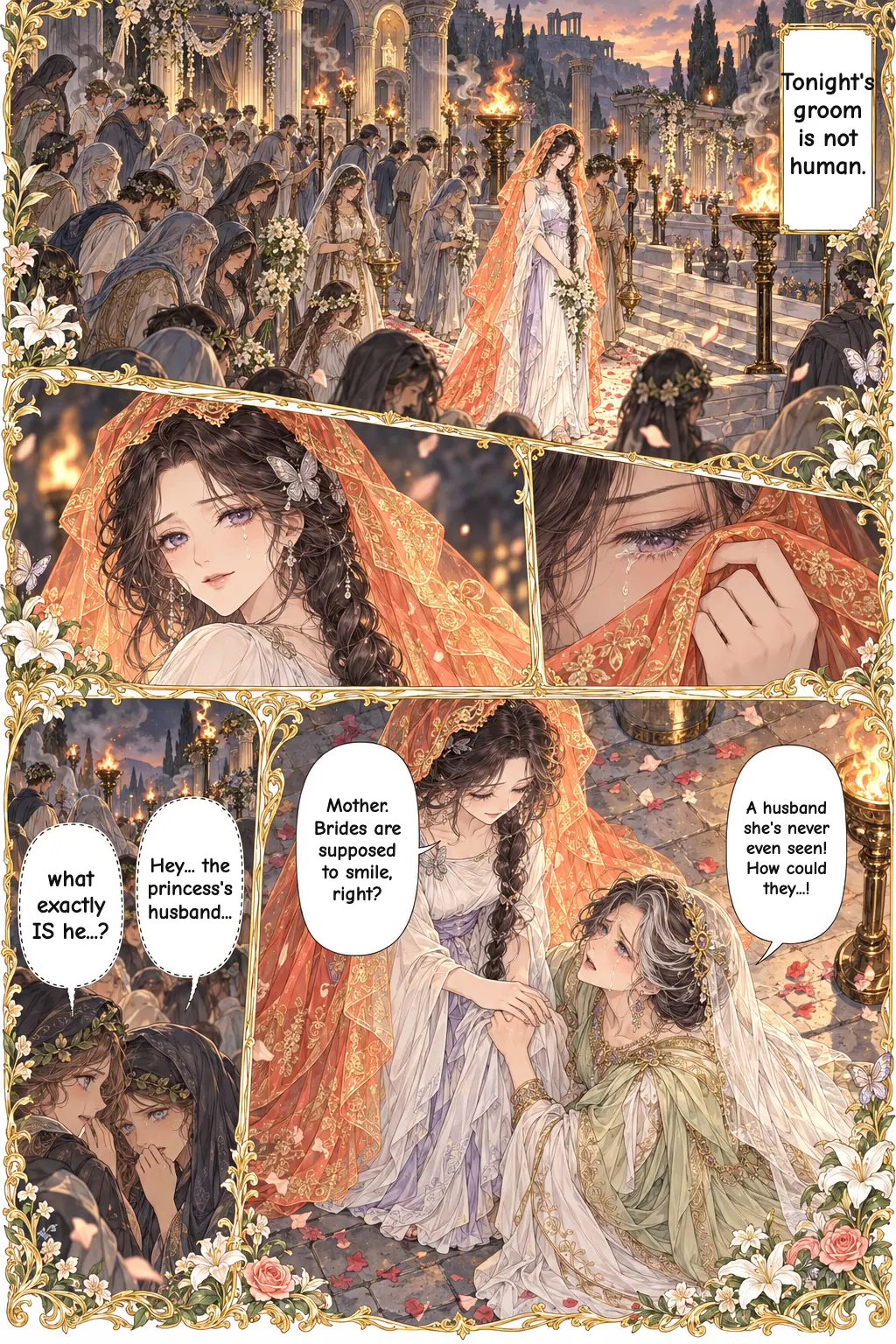
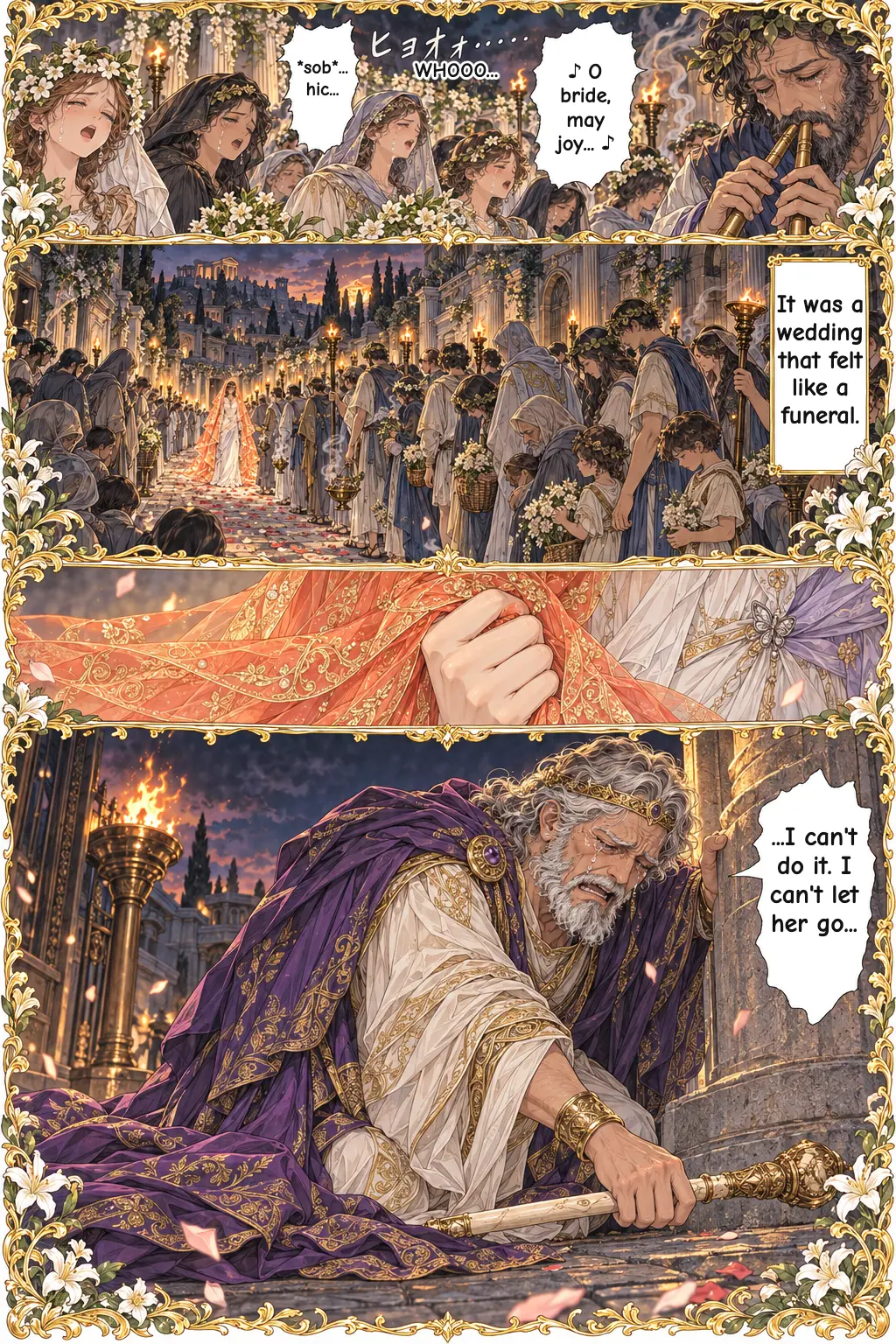
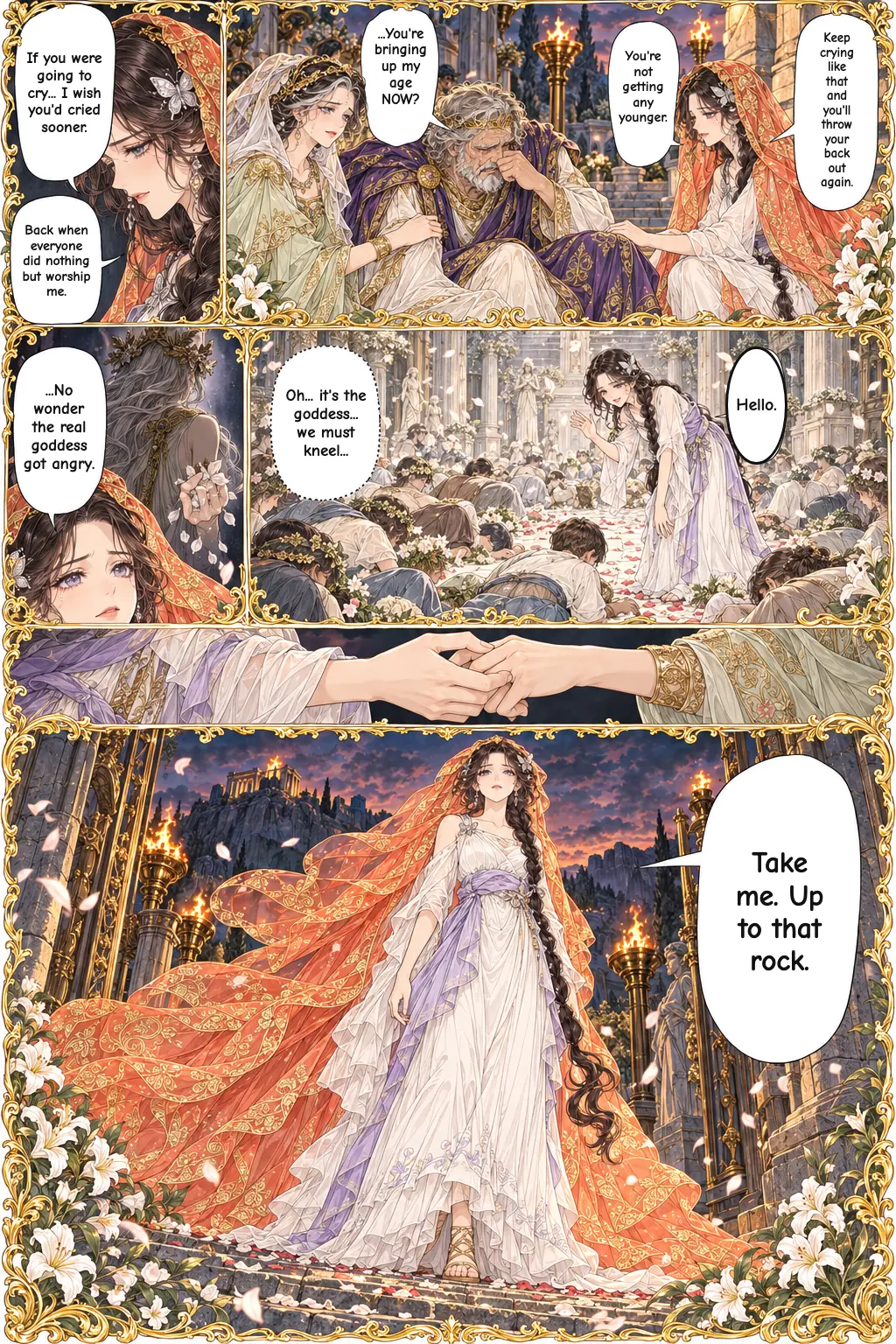
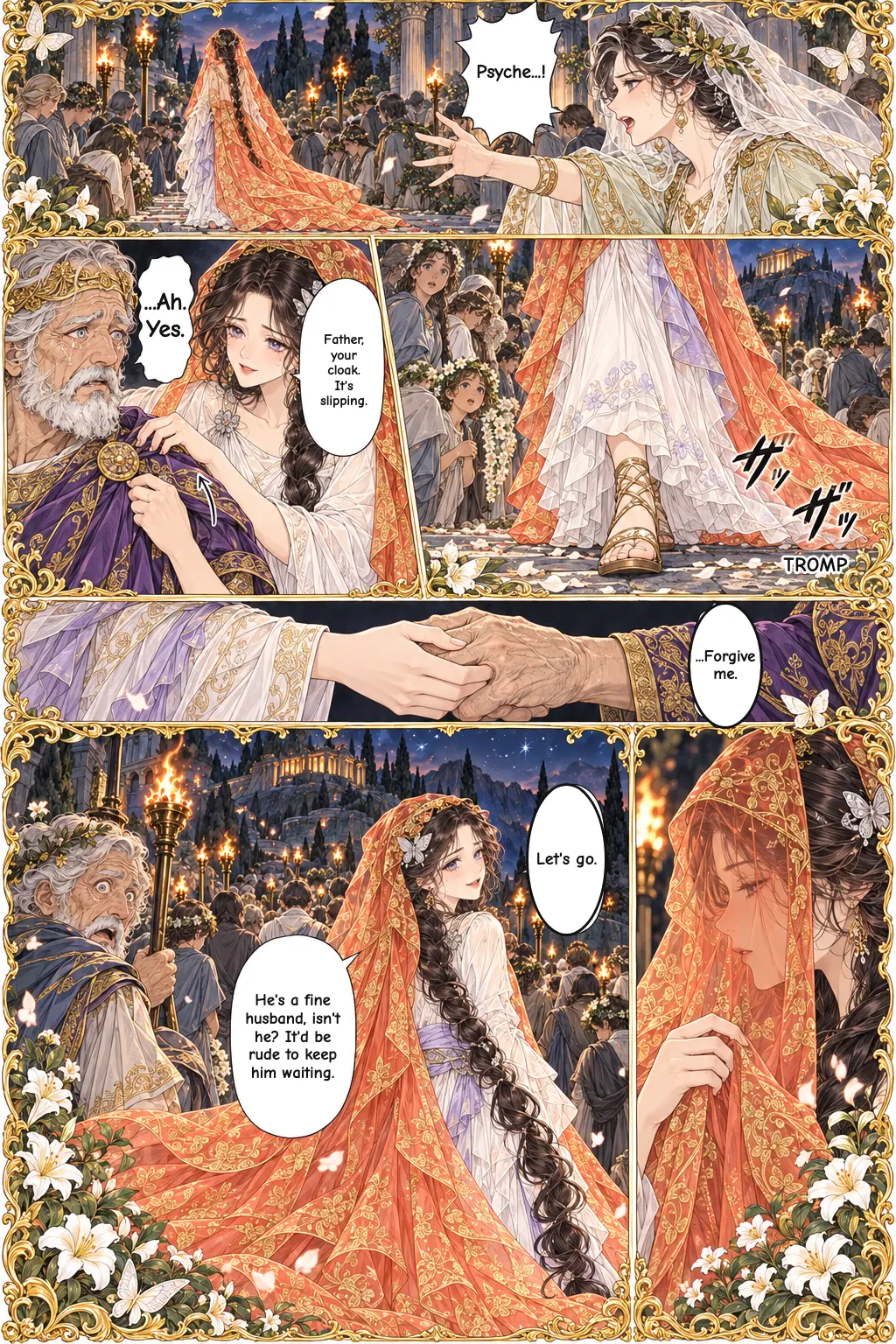
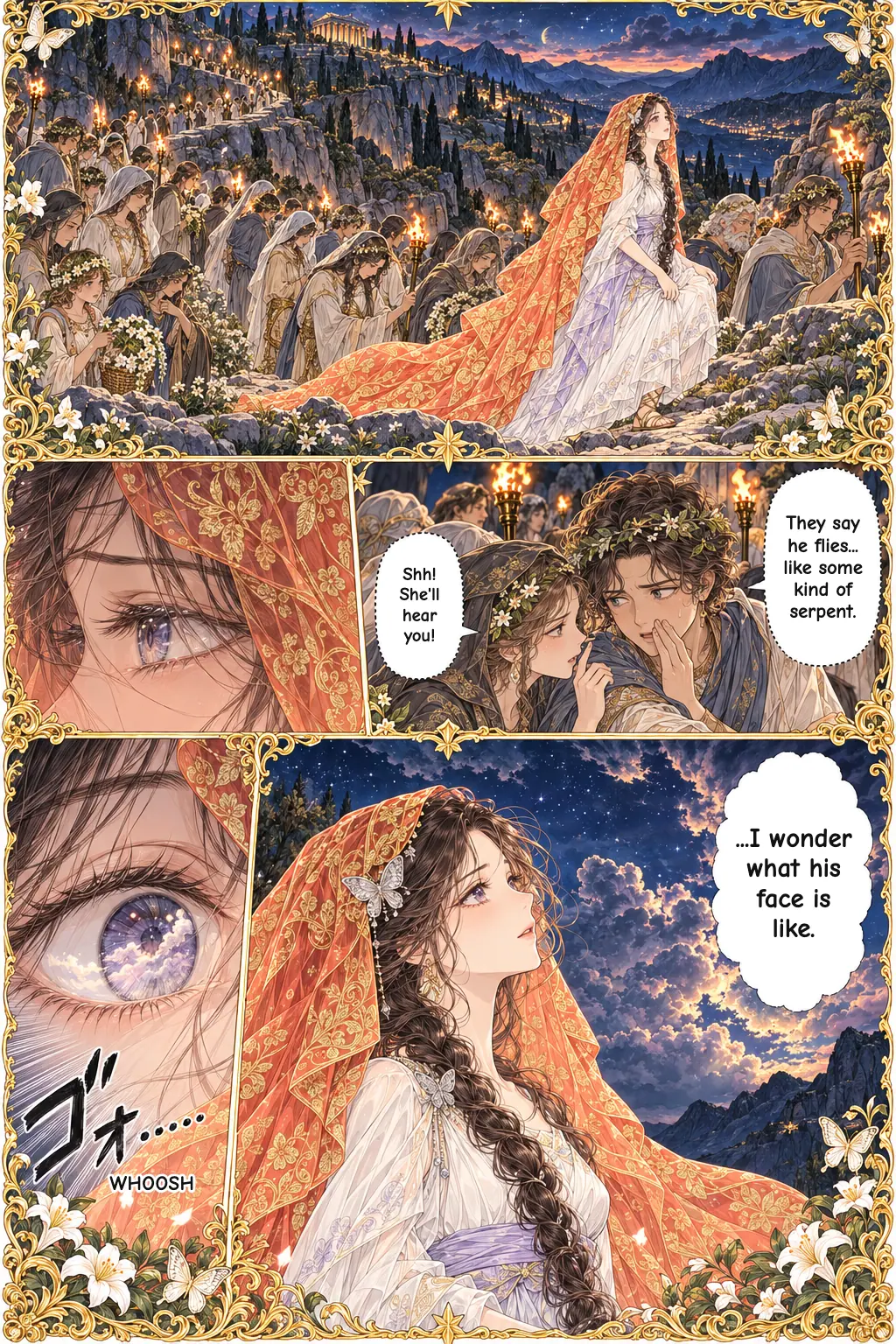
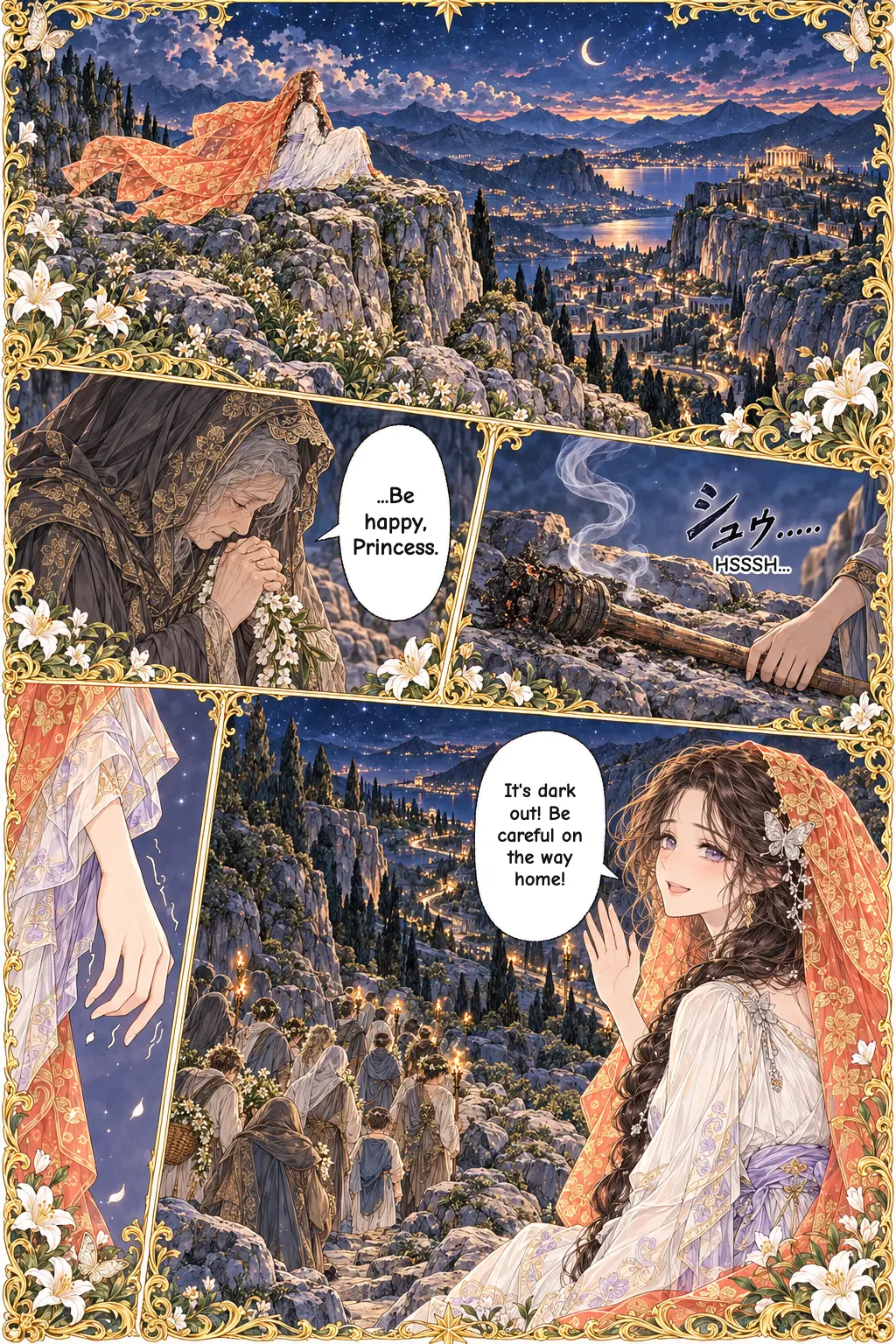
The wedding preparations go wrong in every way. The torches burn low and smoky, the bridal flute plays a mournful tune, and the wedding song collapses into crying. Psyche wipes her tears with her own bridal veil. The whole city grieves as if for a death. Yet Psyche is the one who speaks up. She tells her weeping, aging parents that the time to mourn was when crowds called her a goddess, because Venus' name alone is what is destroying her. She asks them to take her to the rock, and she joins the procession with a firm step.
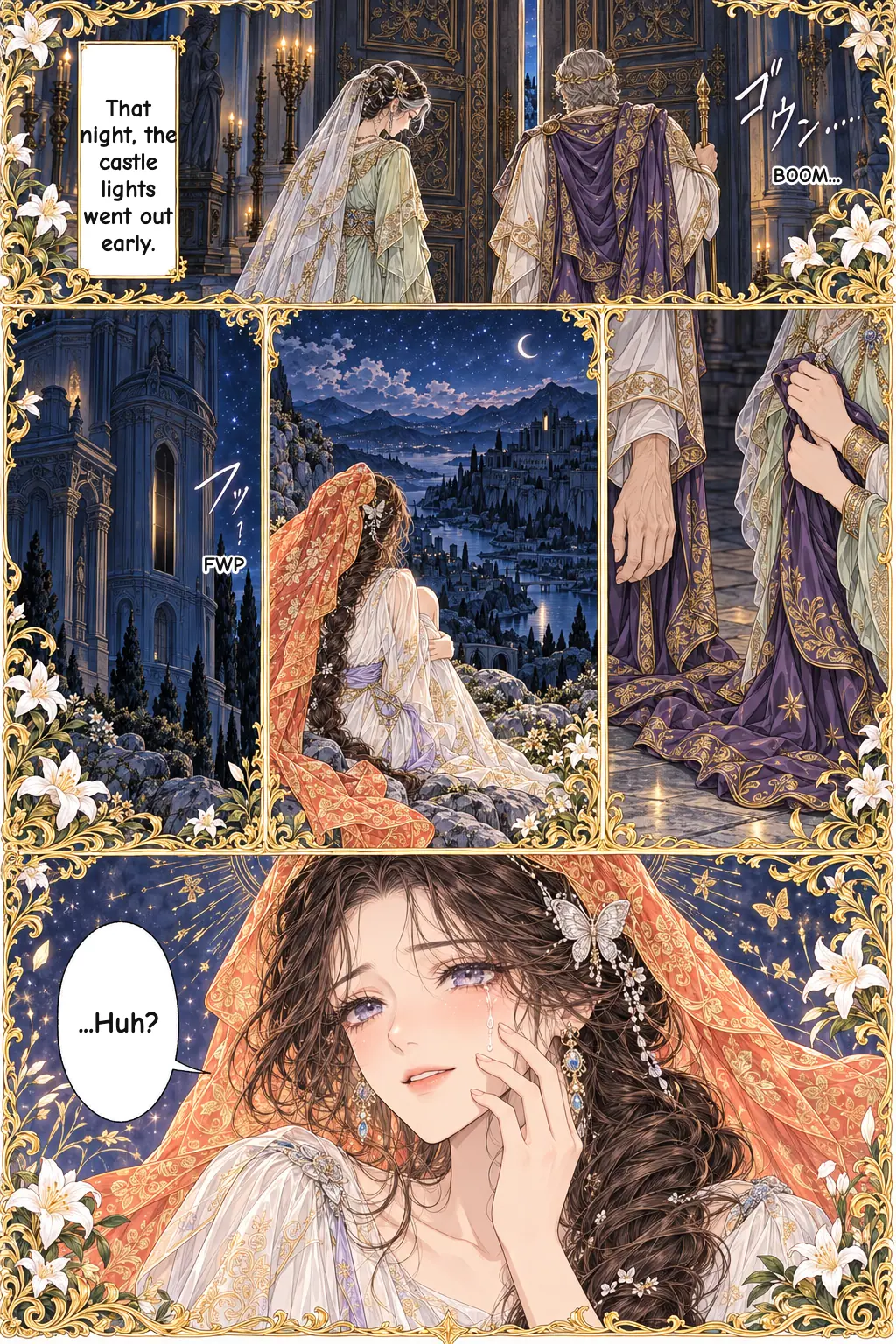
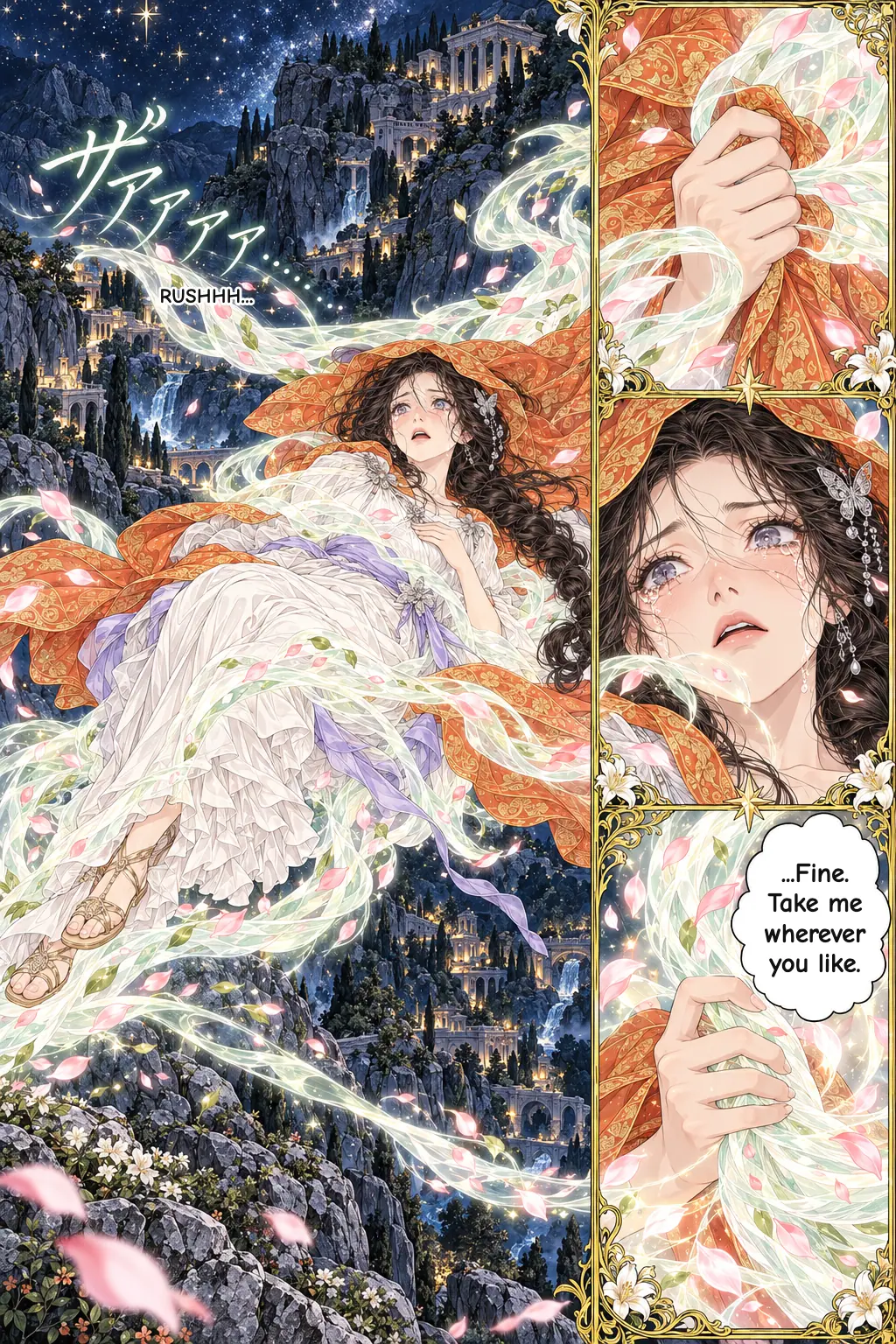
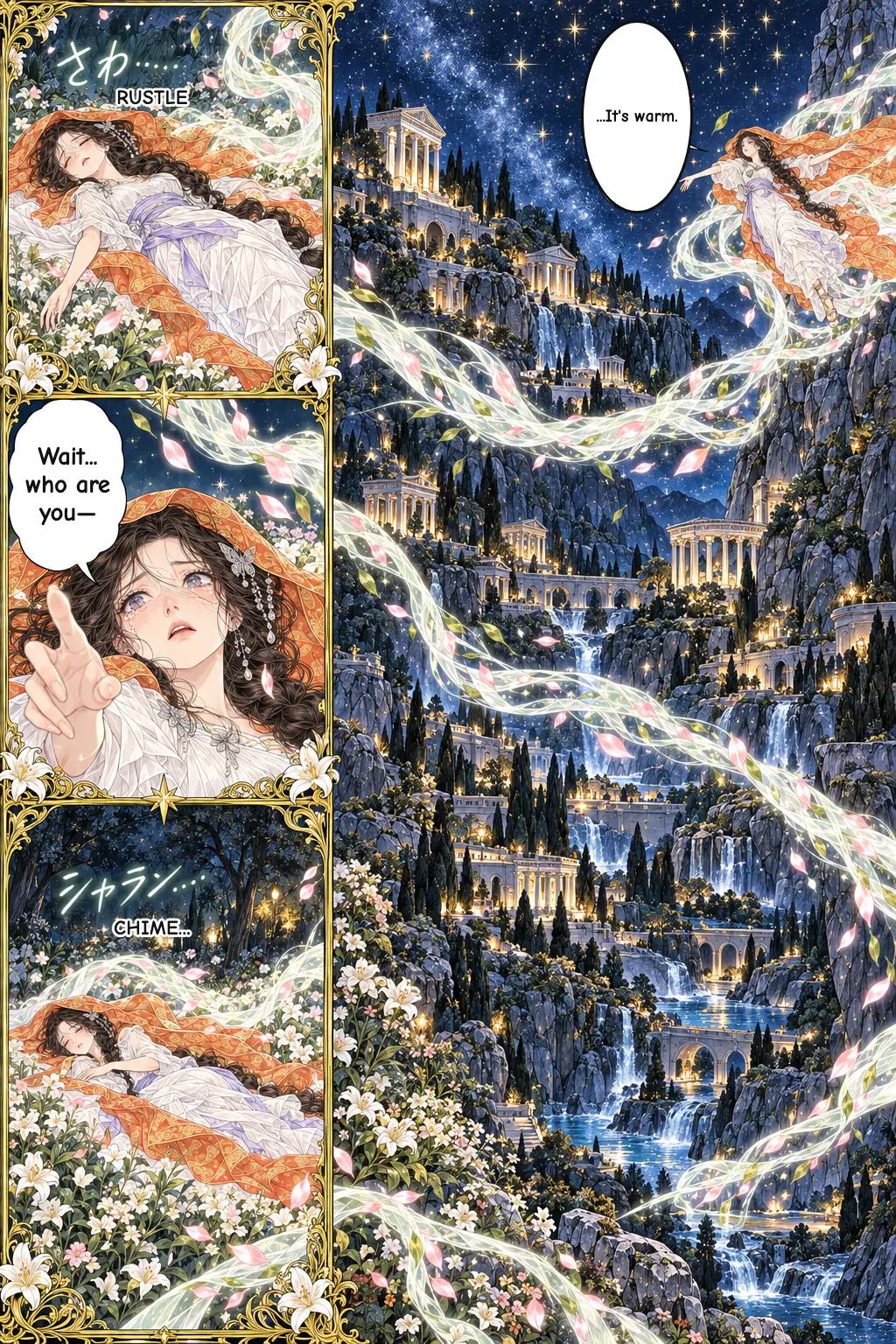
The crowd leaves her at the summit along with the wedding torches, now put out by tears, and goes home with bowed heads. Her parents shut themselves away in grief. Alone and trembling, Psyche feels a soft breeze rise beneath her: Zephyrus, the gentle West Wind, lifts her, carries her down the slope with her clothes rippling, and lays her on a bed of flowers in a valley.
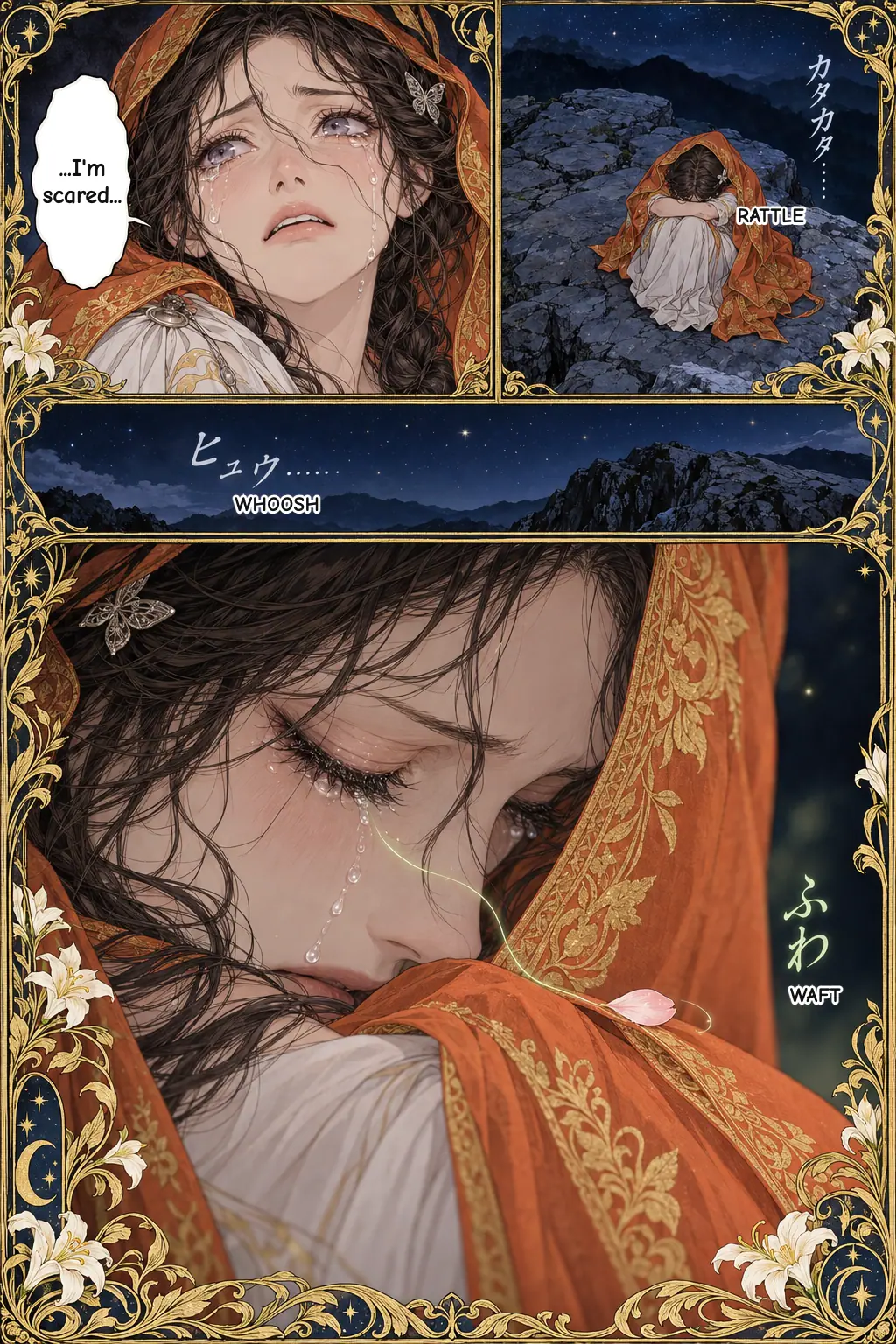
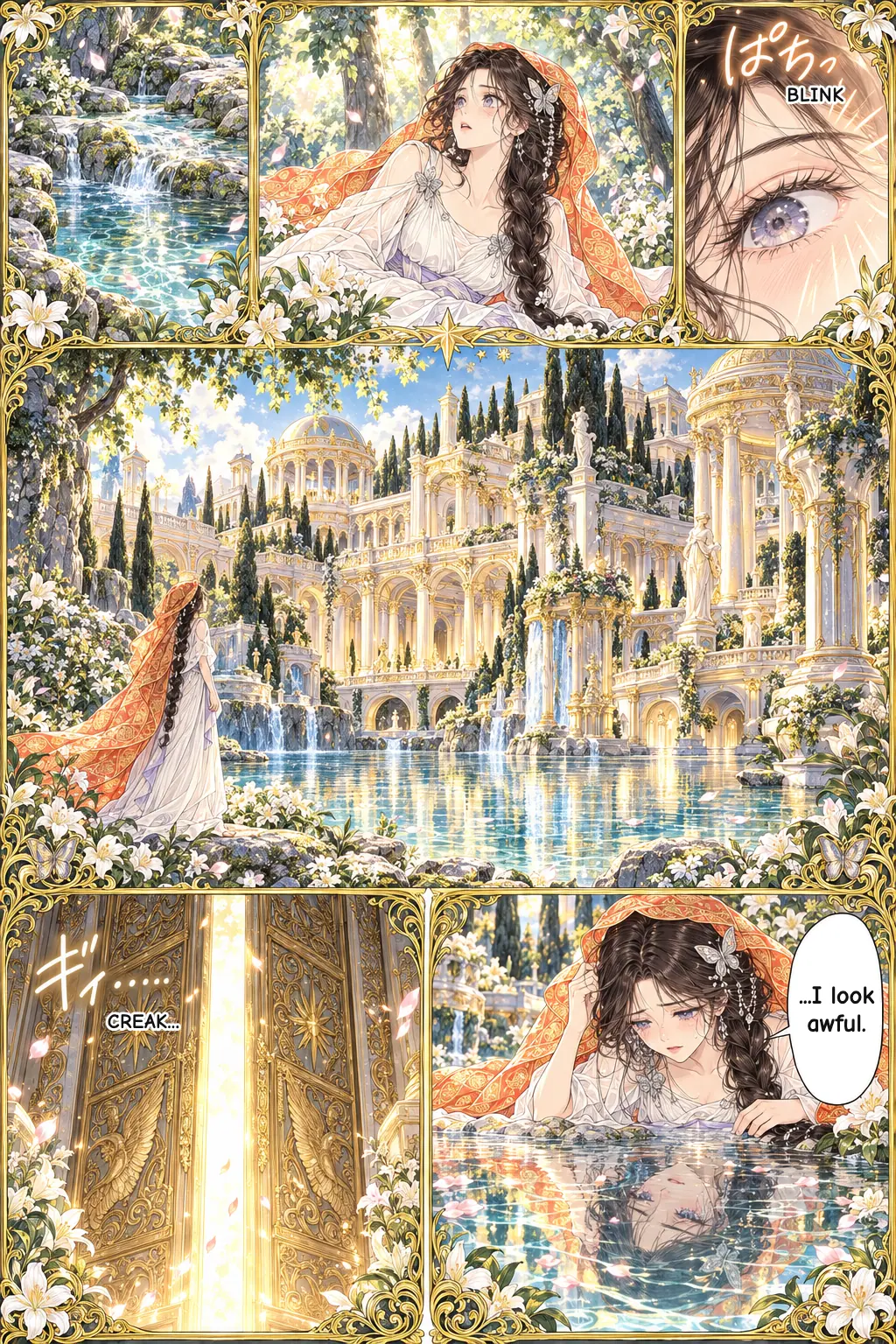
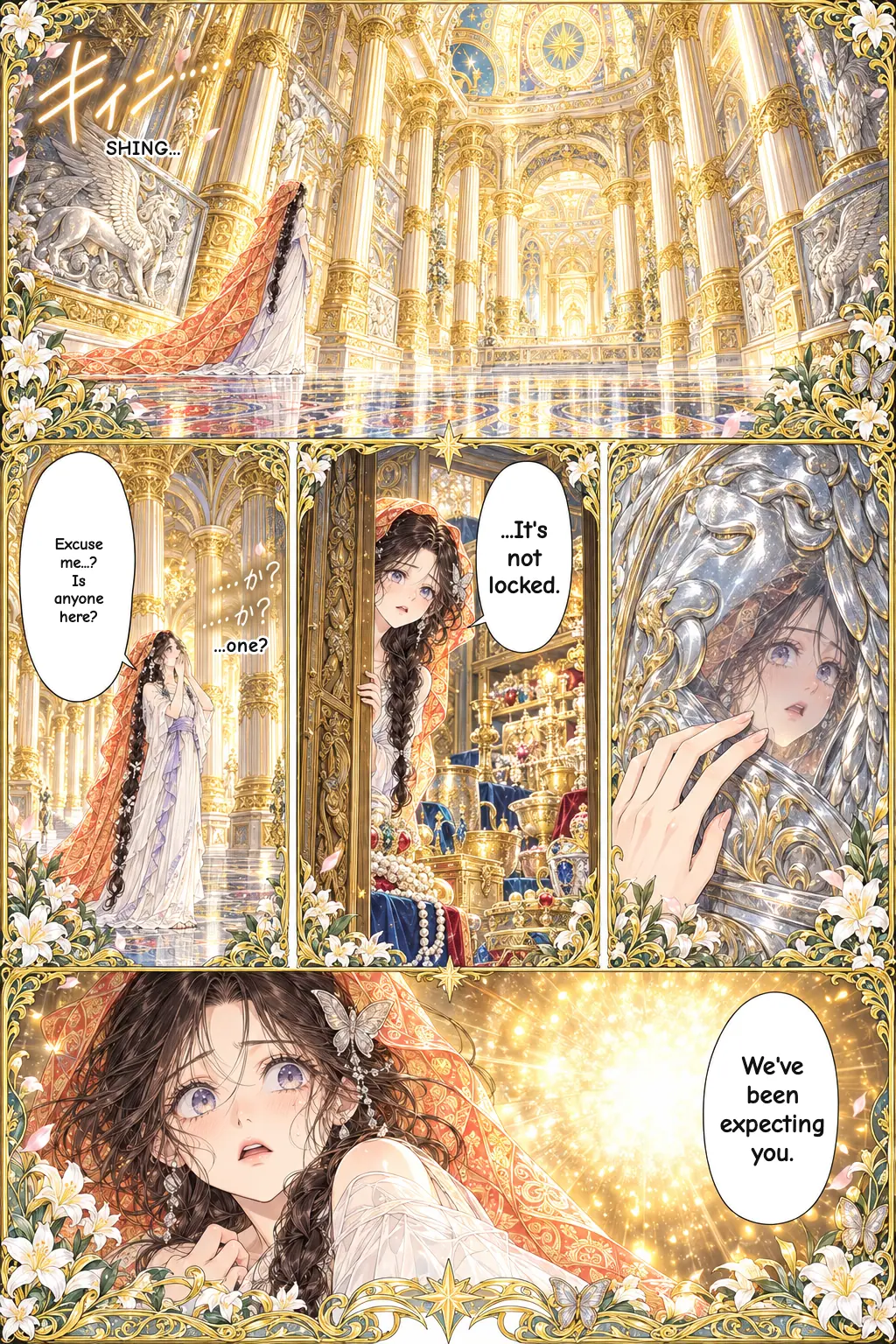
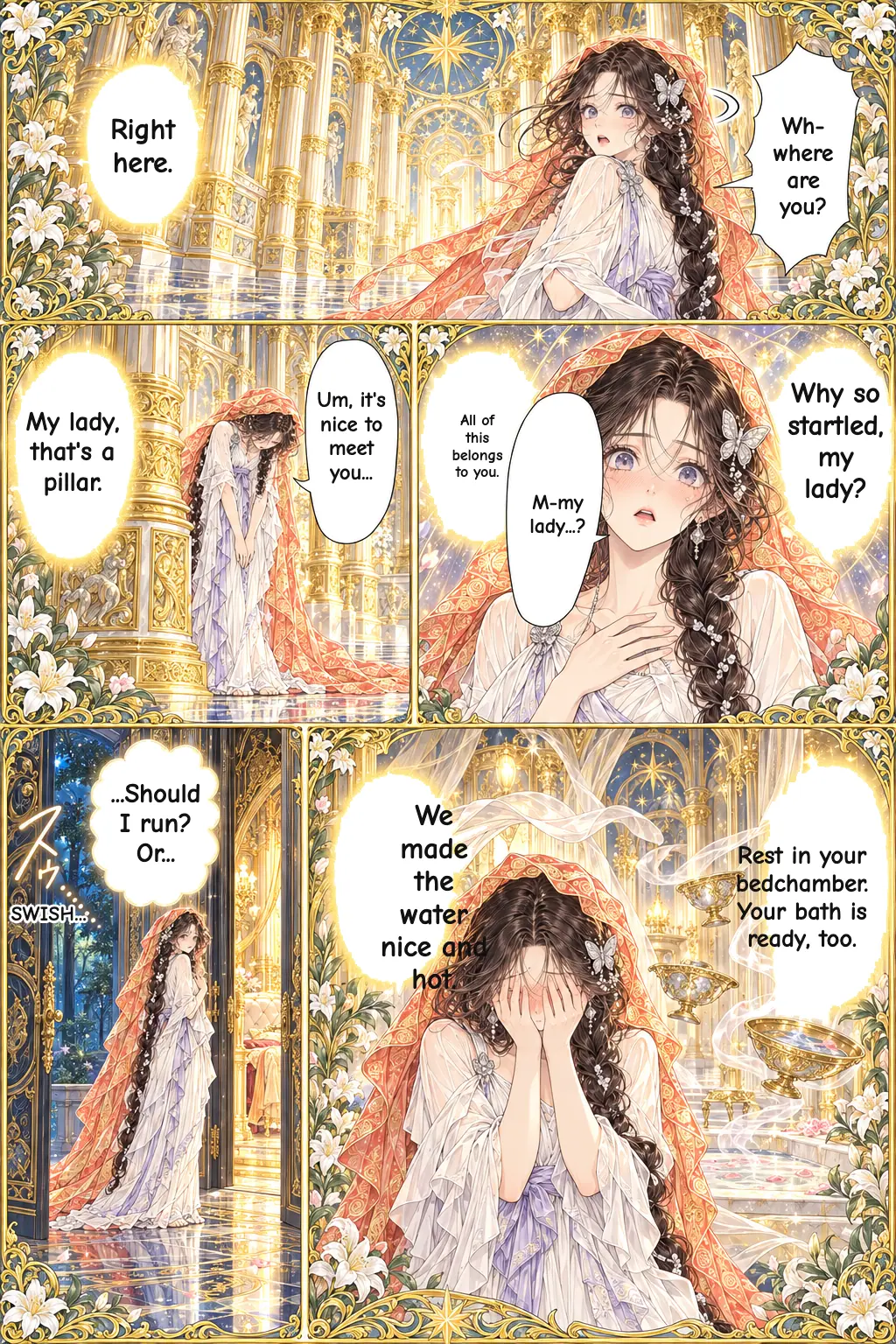
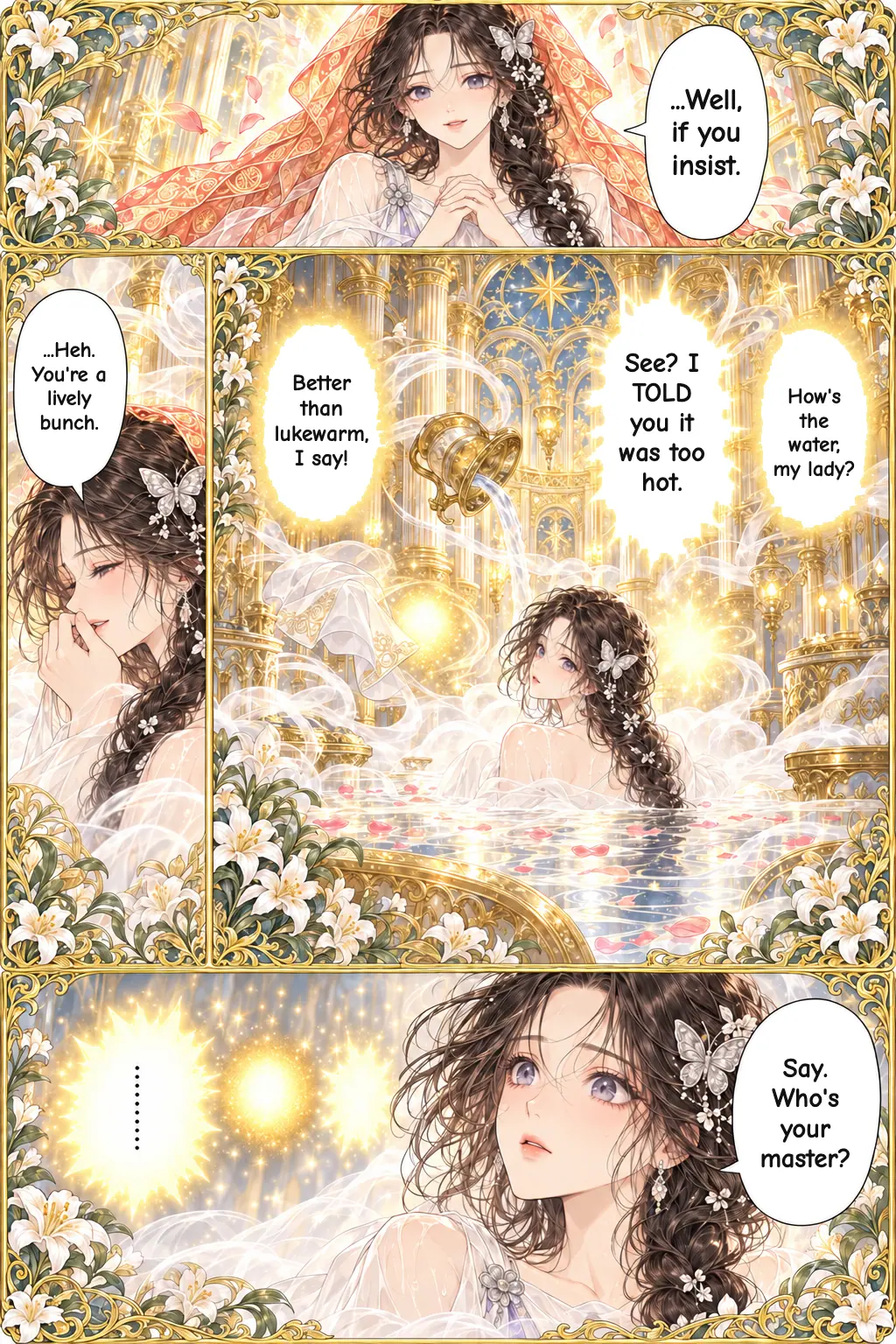
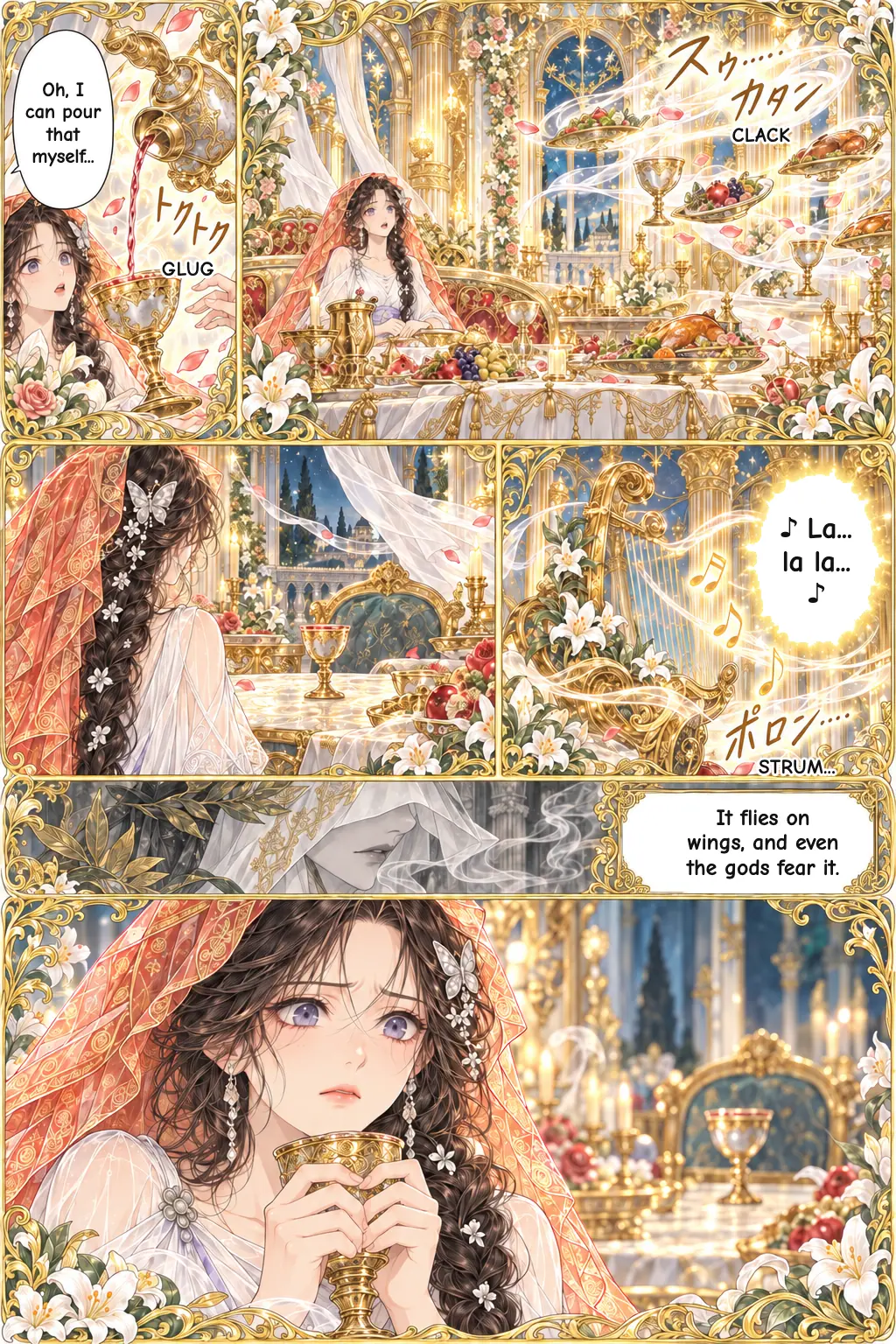
She falls asleep and wakes refreshed. Nearby is a grove, a crystal-clear spring, and a palace built by divine skill rather than human hands: golden columns, a ceiling of citrus wood and ivory, silver walls carved with animals, and floors of jewels. Its treasures have no locks and no guards. Bodiless voices greet her as their mistress, tell her it all belongs to her, and serve her a bath, a feast, songs from unseen singers, and the music of a lyre. But when night falls and she lies alone in the dark, a faint sound reaches her, and fear of the unknown grips her more than any danger she has faced so far.
Main Characters in This Episode
Psyche is the heart of the scene. Apuleius shows her as two things at once: brave enough to comfort her parents and accept her fate in her own words, and still young enough to shake and cry on the rock and to be terrified by a noise at night. The text does not describe her hair or face in detail; her famous beauty is what matters.
Around her are her nameless royal parents, the grieving townspeople who once worshipped her, the West Wind (written as a breeze, not a person), and the invisible servants who exist only as voices. Venus and Apollo are offstage forces: Venus as the source of Psyche's trouble, Apollo as the voice of the oracle. The mysterious husband has not yet appeared at all.
What This Myth Tells Us: Background and Meaning
Apuleius was a writer from Roman North Africa. Inside his comic novel about a man turned into a donkey, an old woman tells this tale to a frightened, kidnapped bride, so it is a story within a story. Readers of the whole novel later learn the husband is Cupid, the god of love (Eros in Greek), but at this point neither Psyche nor the text reveals that.
The scene mixes two Roman rituals on purpose: a wedding procession, with torches, music and the bride's flame-colored veil, and a funeral. That blend makes marriage look like a kind of death, a leap into the unknown. Many readers also see Psyche, whose name means "soul" in Greek, as a symbol of the soul's journey, though that is one interpretation among several.
What the Manga Changes
The manga follows the main events closely: the oracle, the smoky torches and sad flute, Psyche's speech, the rock, the West Wind, the palace's gold, ivory, silver and jewels, and the voices. Some choices are creative additions. The procession is drawn as a dark bridal march with flowers and a sheer veil, while Apuleius openly frames it as a funeral-like wedding. Psyche walks at the front of the procession to show her strength; in the original she simply joins it.
Faces, hair, costumes, the kinds of flowers, the layout of the palace rooms, the food at the feast, and how the invisible servants appear (floating dishes, doors opening by themselves, drifting steam) are all the artists' inventions, since the source gives no such details. Psyche's inner monologue is also new, written to stay true to her speech and her night-time fear. The cliffhanger, with a dim bedroom and a sound beyond the door, dramatizes the moment where the original episode's suspense peaks.
Where to Read It
If you want to see Psyche step onto that rock and wake inside the palace of voices, read Episode 2 of EROS & PSYCHE: The Forbidden Gaze right here on Manga Portal. Every episode is free, with no sign-up needed, and the next one picks up exactly where the dark leaves off.
Characters in this episode
Psyche
A princess so beautiful she is worshipped like Venus, who faces a terrifying oracle with courage but still feels very human fear.
Psyche's Parents (the King and Queen)
Unnamed rulers who sought the oracle and, heartbroken, obey it by sending their daughter to the mountain.
Zephyrus, the West Wind
A gentle breeze that lifts Psyche from the rock and lays her down in a flowery valley.
The Invisible Servants
Bodiless voices who welcome Psyche as mistress of the palace and serve her bath, feast and music.
Venus, goddess of love
Mentioned but unseen, she is the source of Psyche's misfortune because people worshipped Psyche in her place.
The Unknown Husband
Described by the oracle as a winged, serpent-like terror even the gods fear; in this episode he is only a sound in the dark.
FAQ
Why was Psyche sent to marry a monster?
Her father asked the oracle of Apollo why no one would marry her, and the oracle ordered that she be dressed for a deathly wedding and left on a mountain rock. It said her husband would be a winged, serpent-like being feared even by Jupiter. Behind this lies Venus' anger at people worshipping Psyche instead of her.
Who carried Psyche to the palace?
Zephyrus, the gentle West Wind, lifted her from the crag and carried her down into a flowery valley. In the original text he is described as a breeze rather than a person.
Who are the invisible servants in Cupid and Psyche?
They are voices without bodies who call Psyche their mistress and tell her the palace's riches are hers. They prepare her bath, her bedroom, a royal feast, and music from unseen singers and a lyre.
Is Psyche's husband really a monster?
In this part of the story nobody knows, and the original text keeps it secret. Readers of the full tale later learn that the husband is Cupid, the god of love.
Where does the story of Cupid and Psyche come from?
It comes from the Metamorphoses (also called The Golden Ass), a Latin novel by Apuleius from the 2nd century CE. In the novel, an old woman tells it to a captive young bride.