EnglishChoose language

Episode 11The Hero Who Wept at His Own LegendNausicaa and the Phaeacians

19 pagesFree · No sign-up

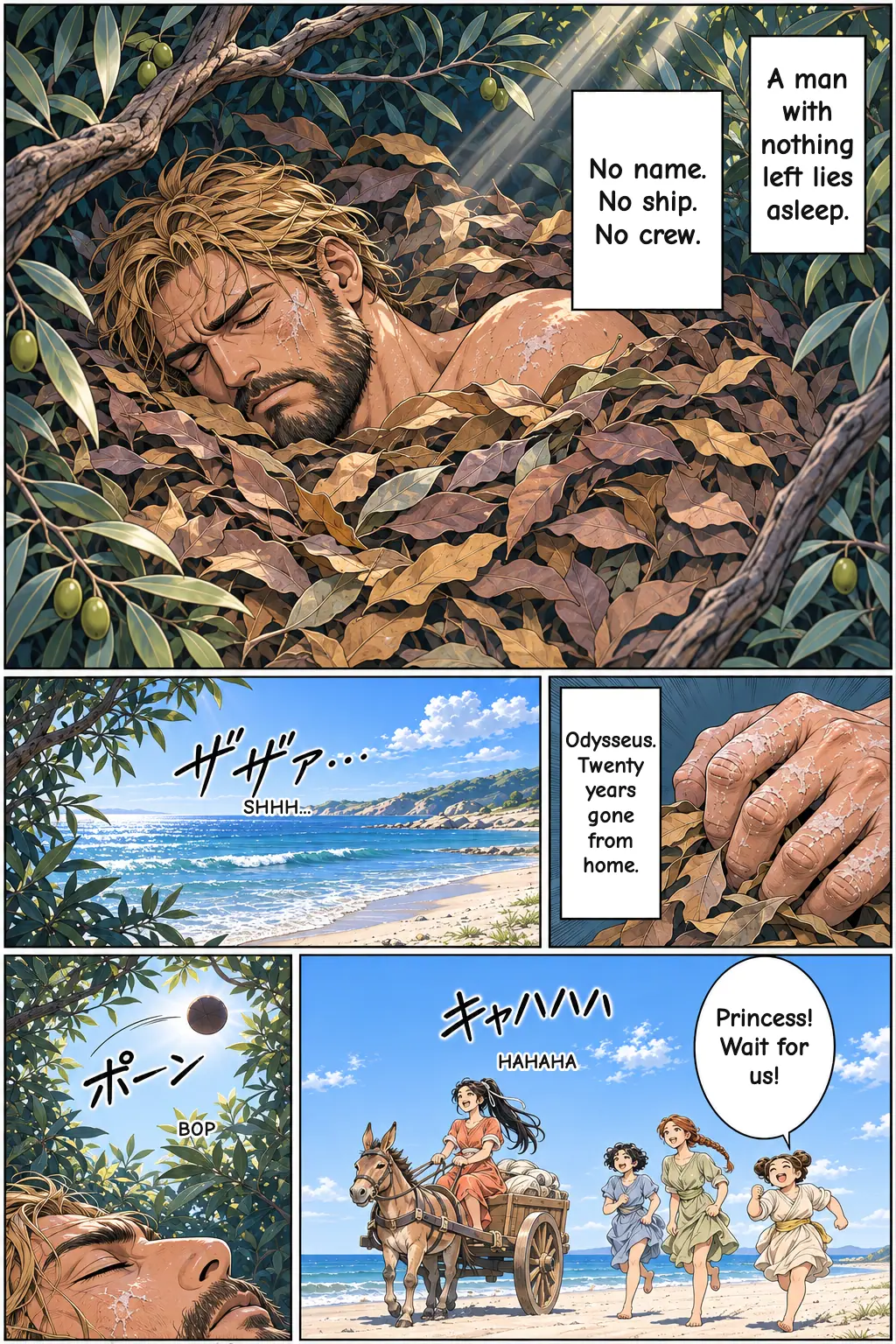
Page 1: No name. No ship. No crew. A man with nothing left lies asleep.
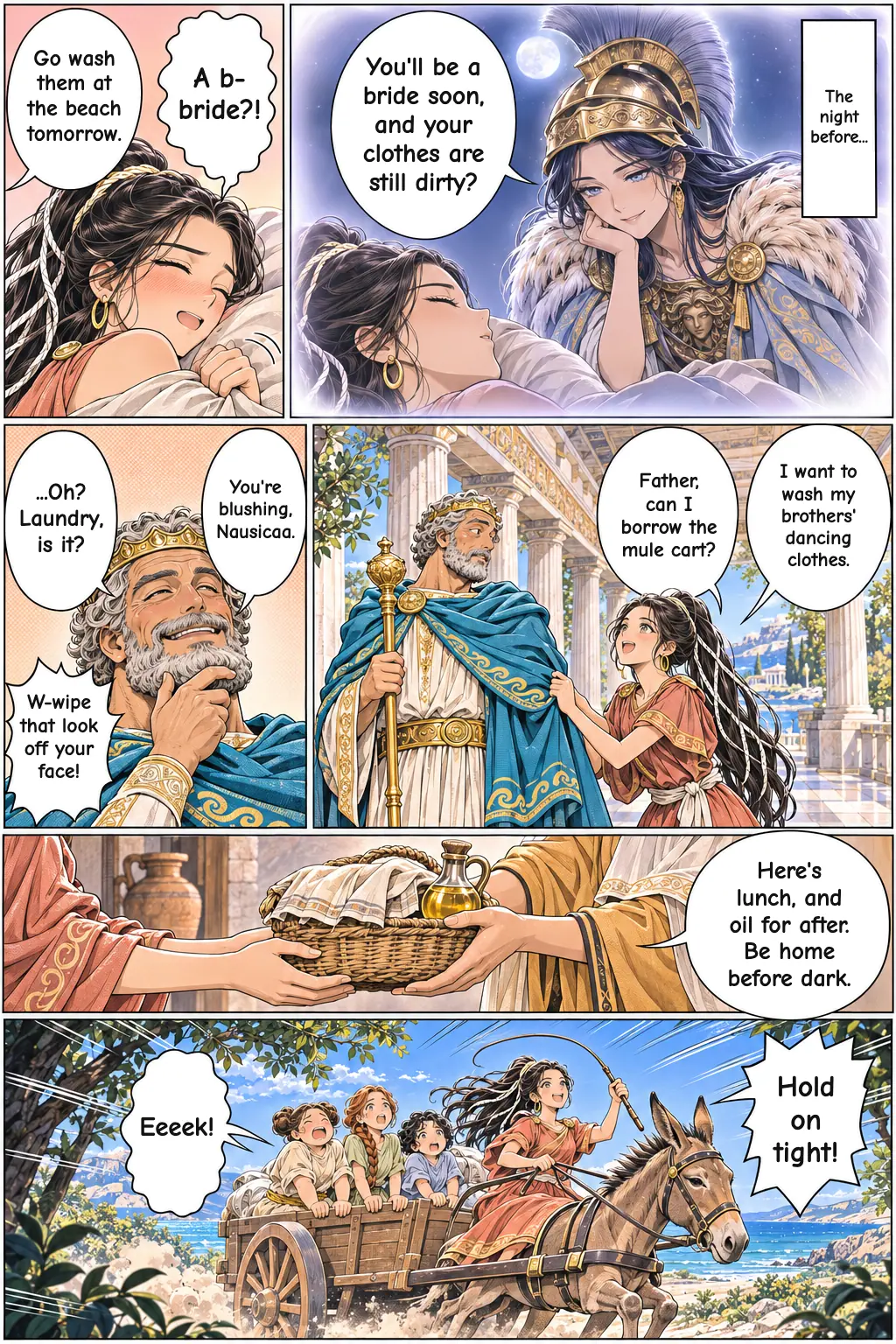
Page 2: The night before... You'll be a bride soon, and your clothes are still dirty?
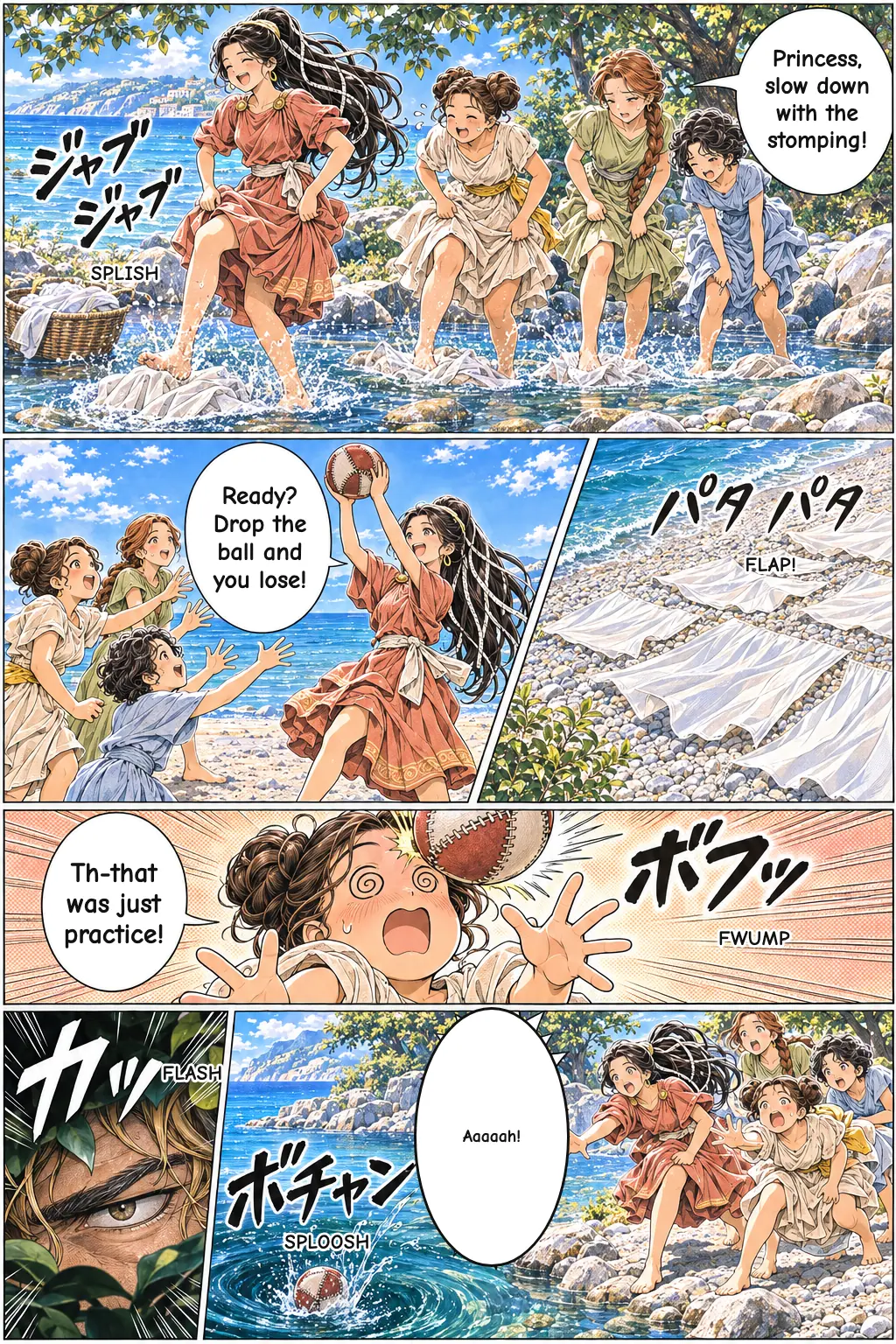
Page 3: Princess, slow down with the stomping! Ready? Drop the ball and you lose!
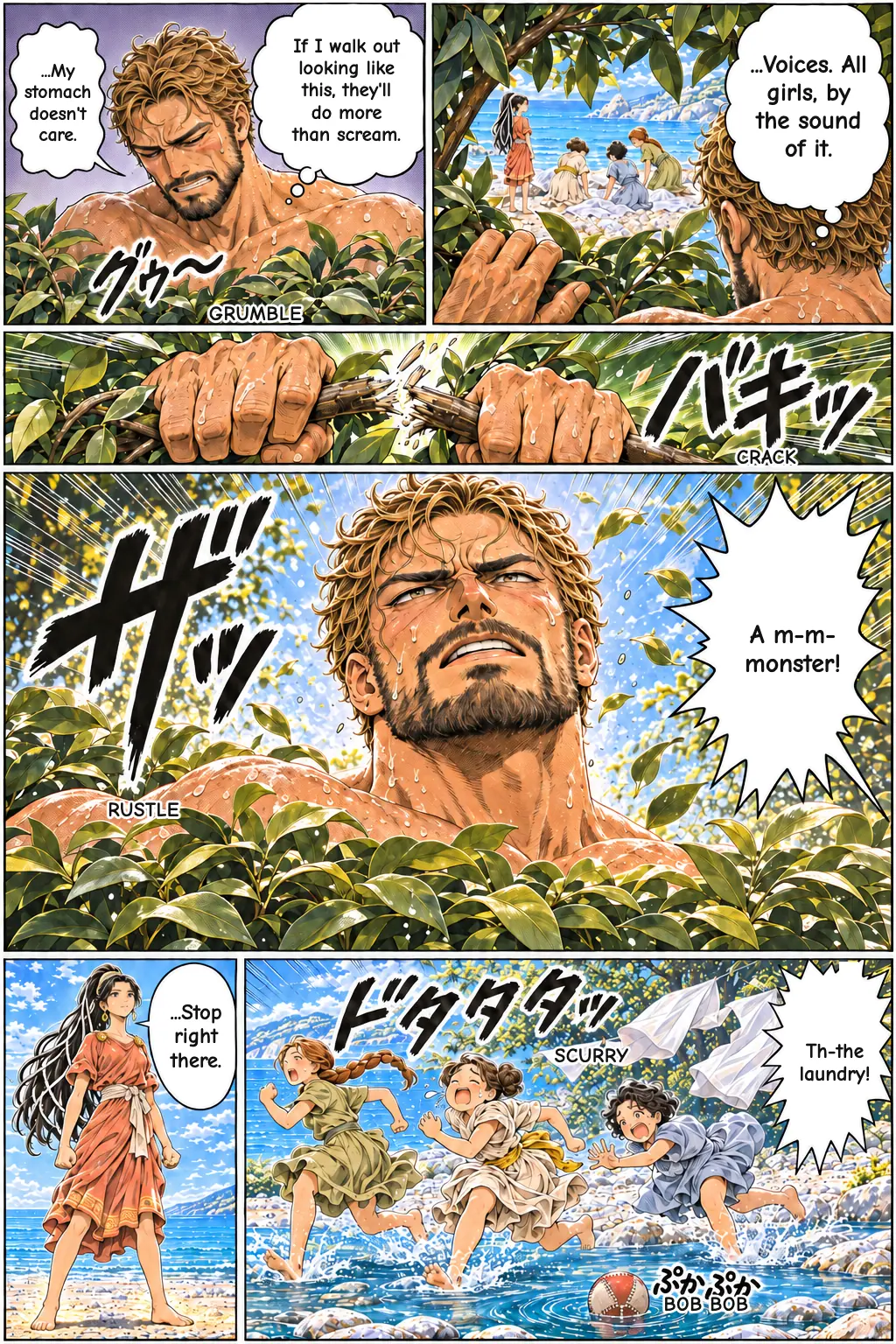
Page 4: ...Voices. All girls, by the sound of it. If I walk out looking like this, they'll do more than scream.
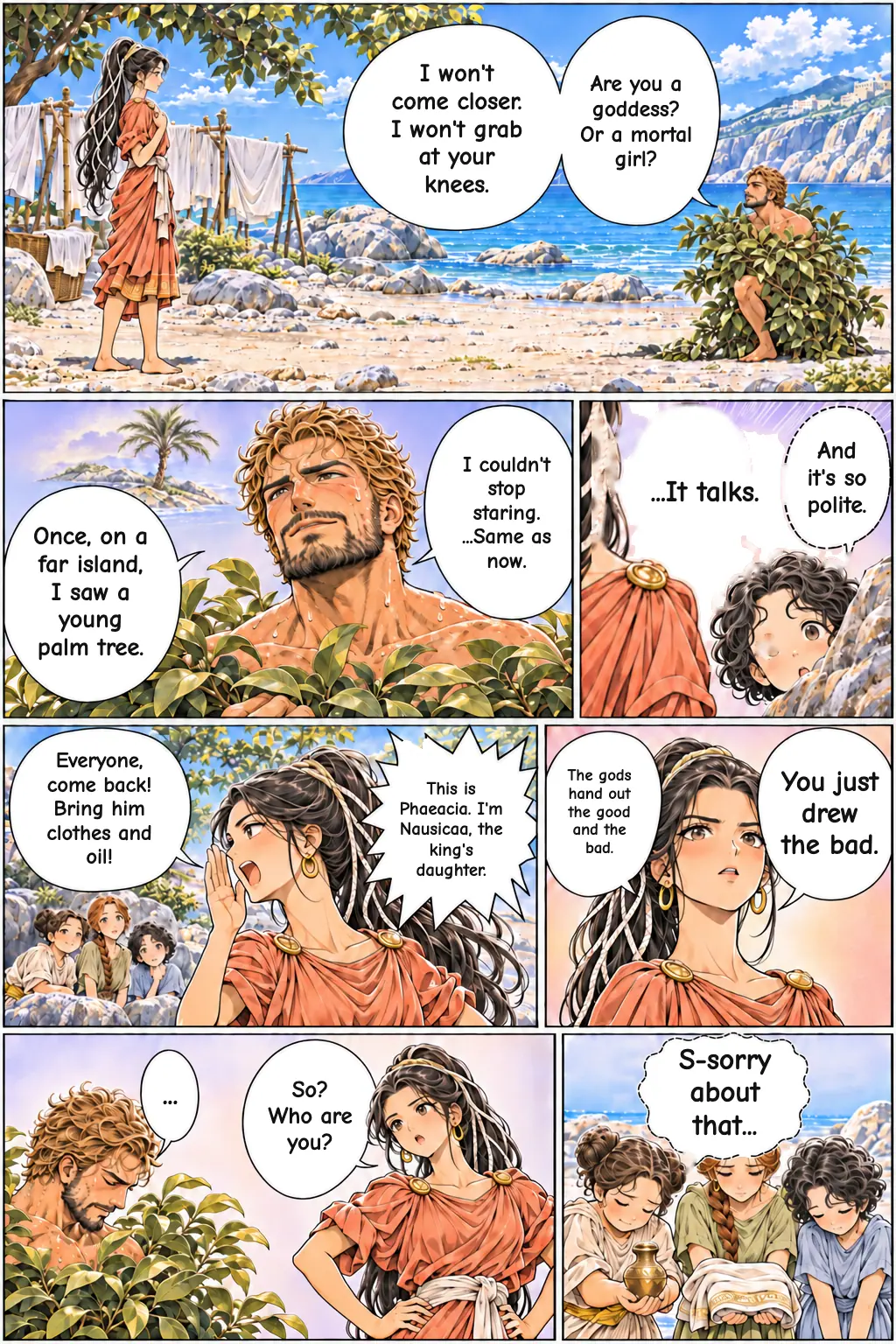
Page 5: I won't come closer. I won't grab at your knees. Are you a goddess? Or a mortal girl?
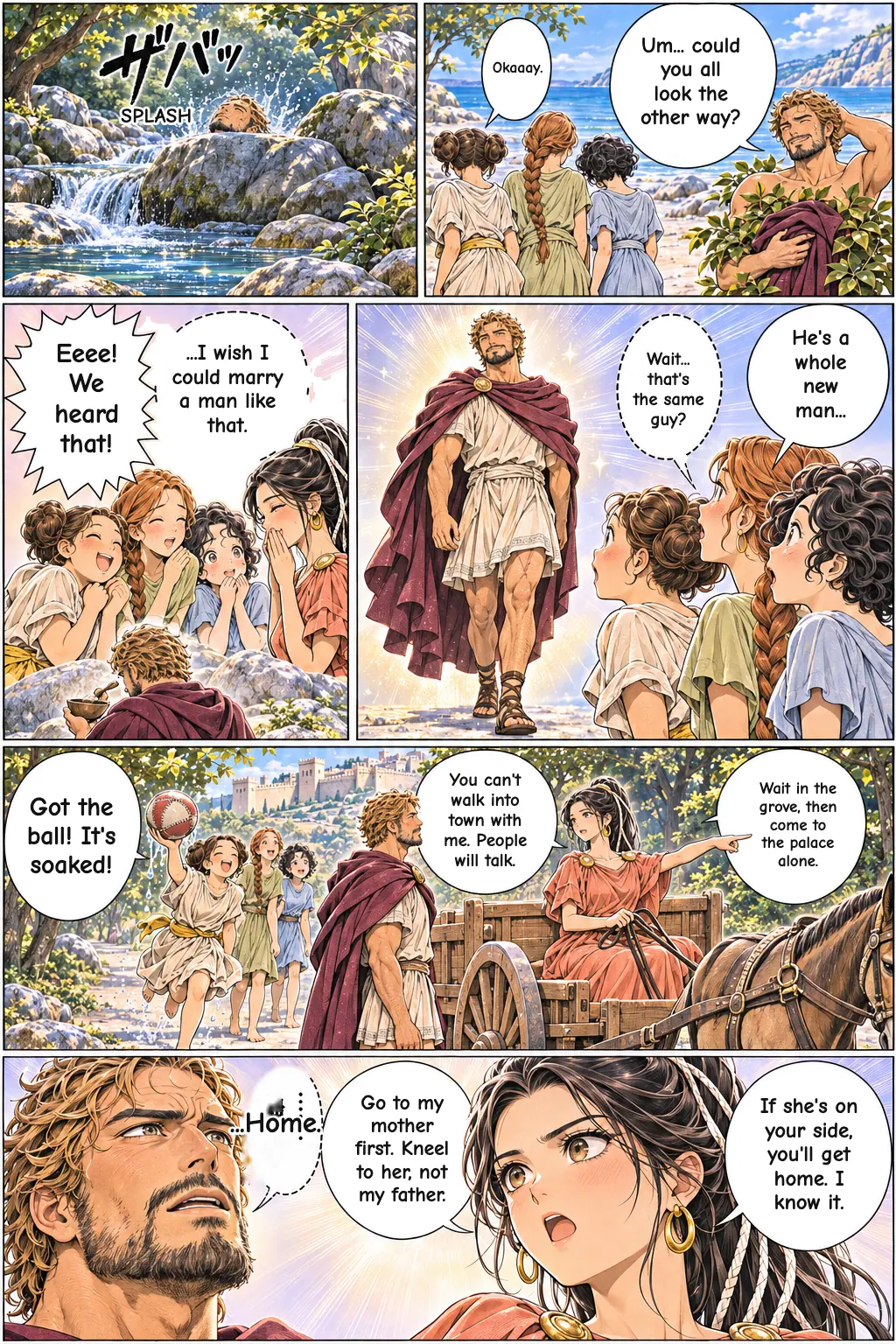
Page 6: Um... could you all look the other way? Okaaay.
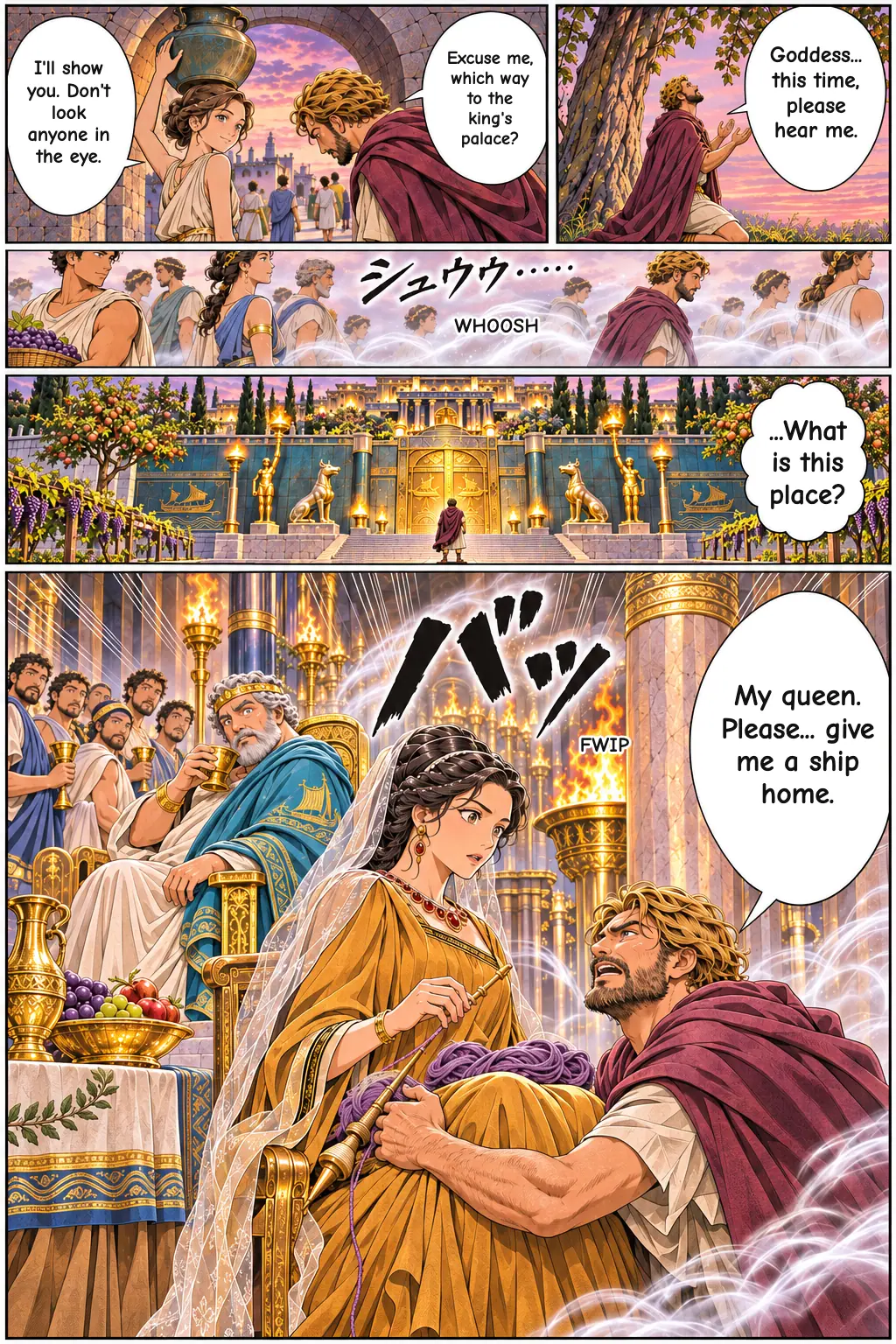
Page 7: Goddess... this time, please hear me. Excuse me, which way to the king's palace?
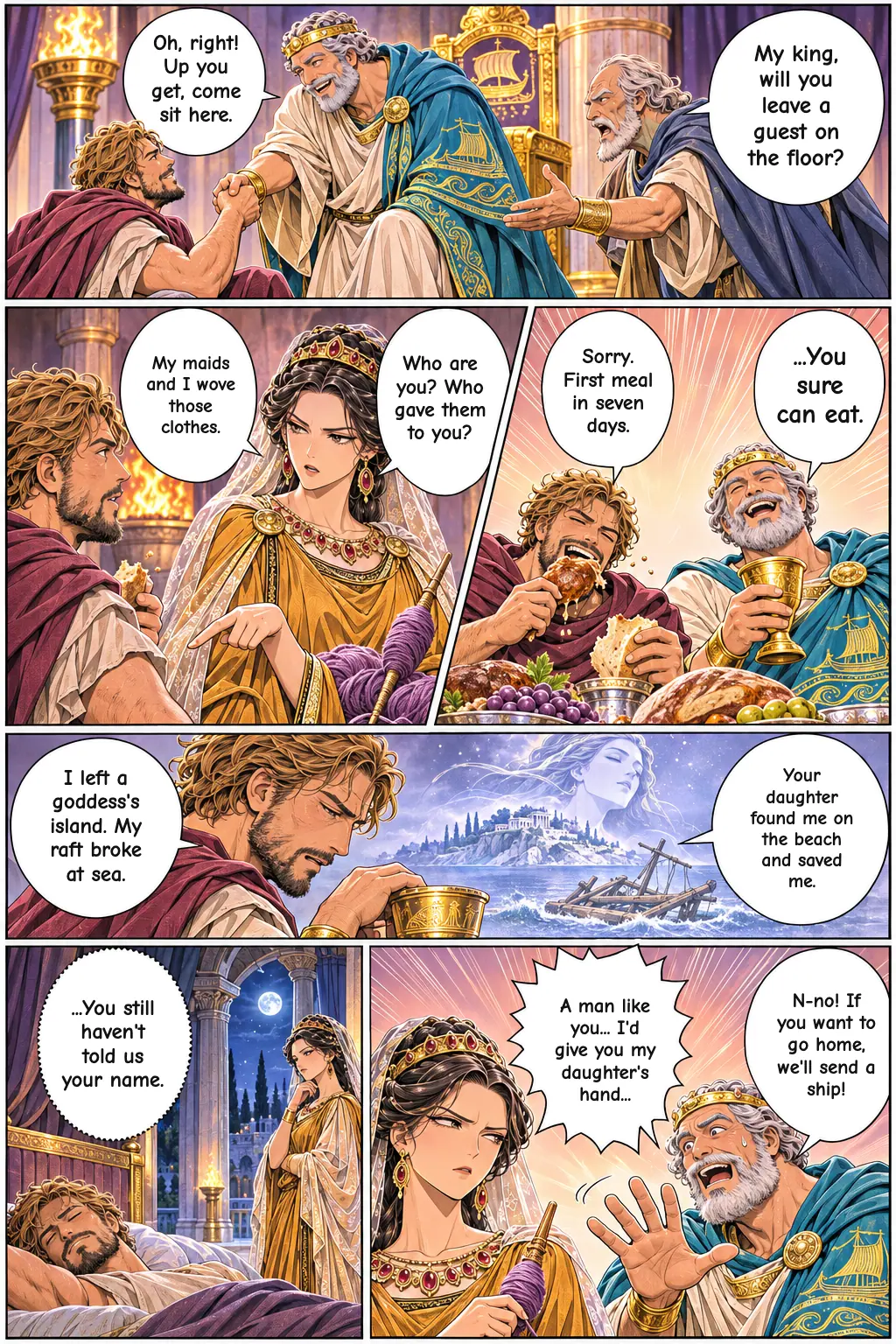
Page 8: My king, will you leave a guest on the floor? Oh, right! Up you get, come sit here.
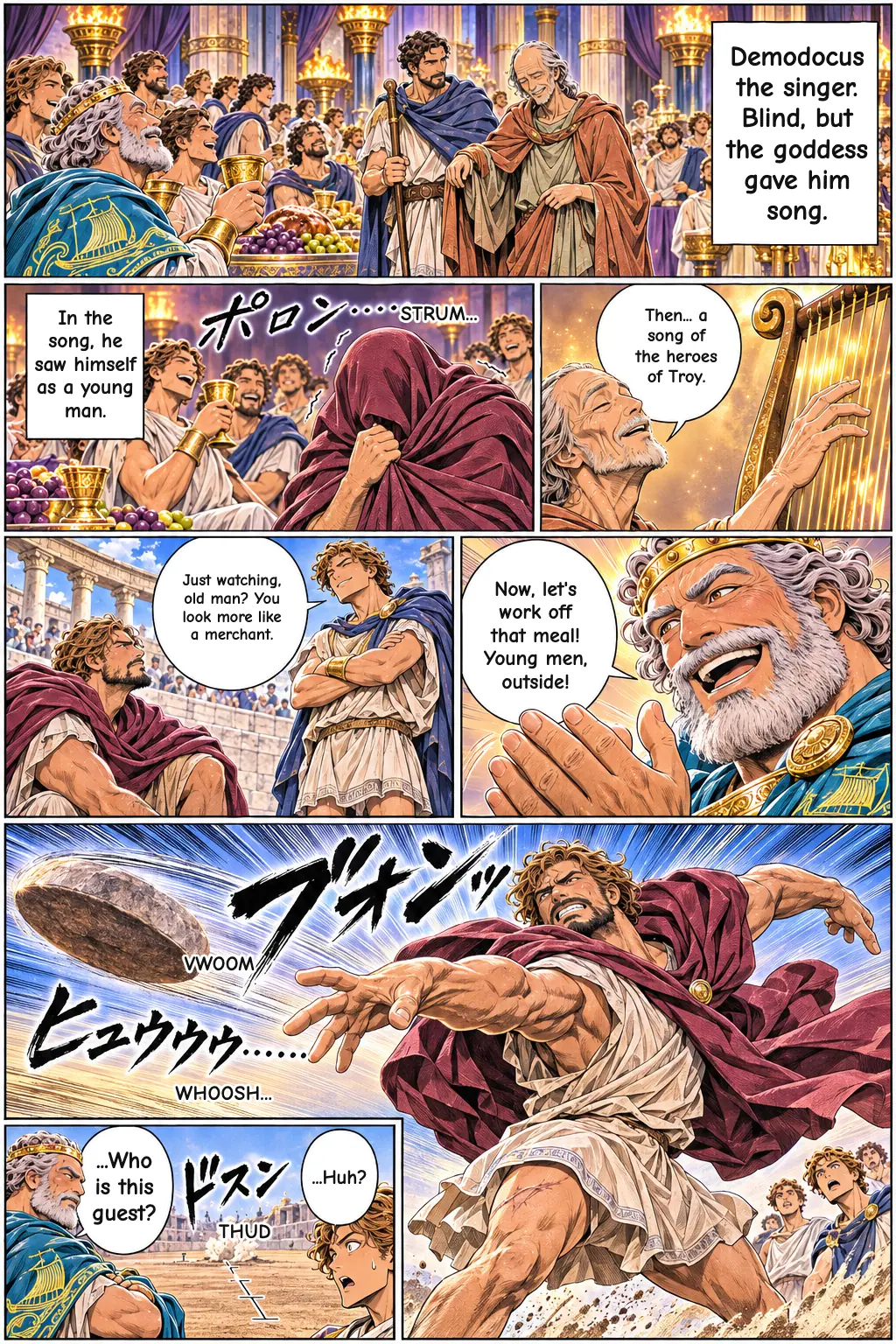
Page 9: Demodocus the singer. Blind, but the goddess gave him song. Then... a song of the heroes of Troy.
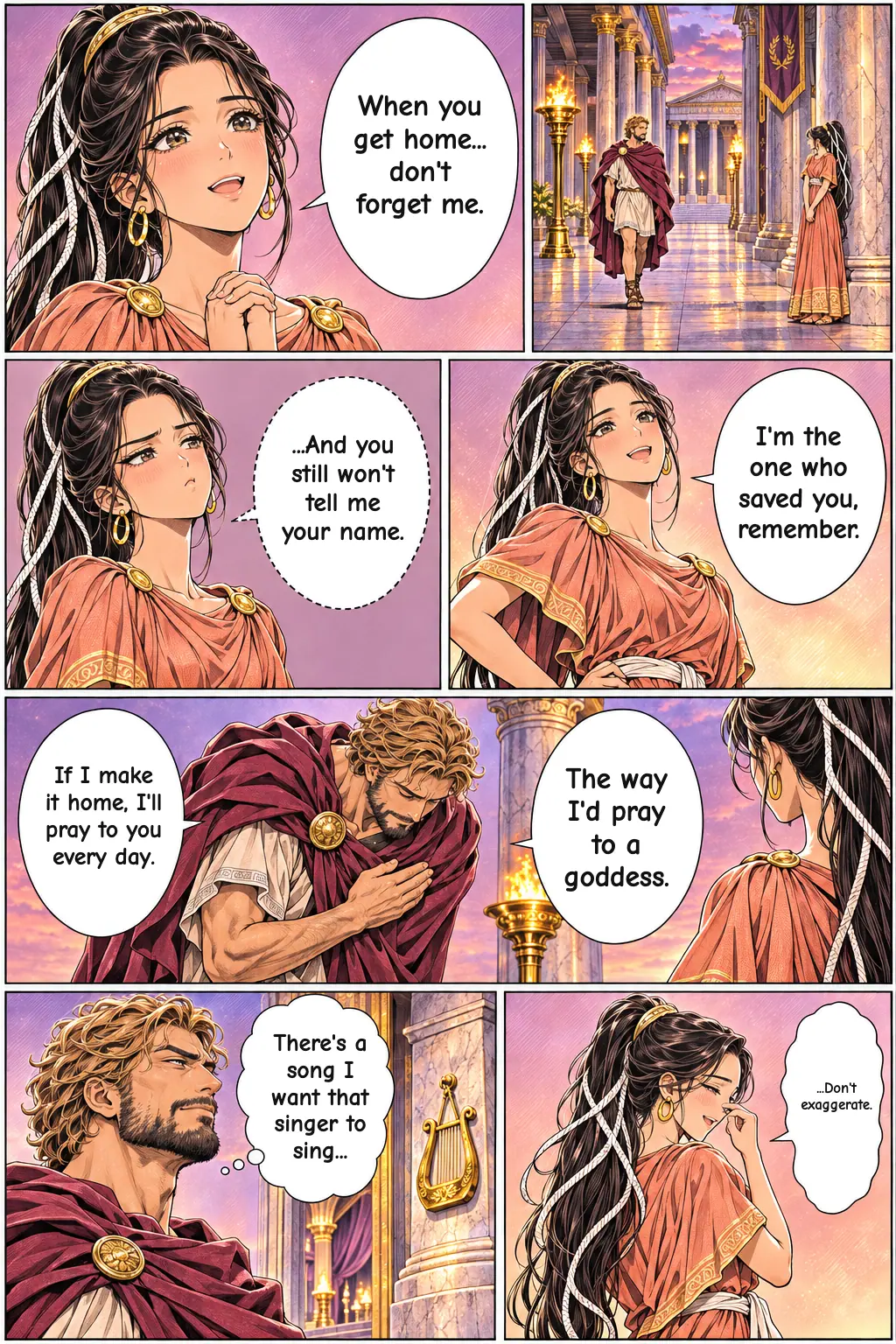
Page 10: When you get home... don't forget me. I'm the one who saved you, remember.
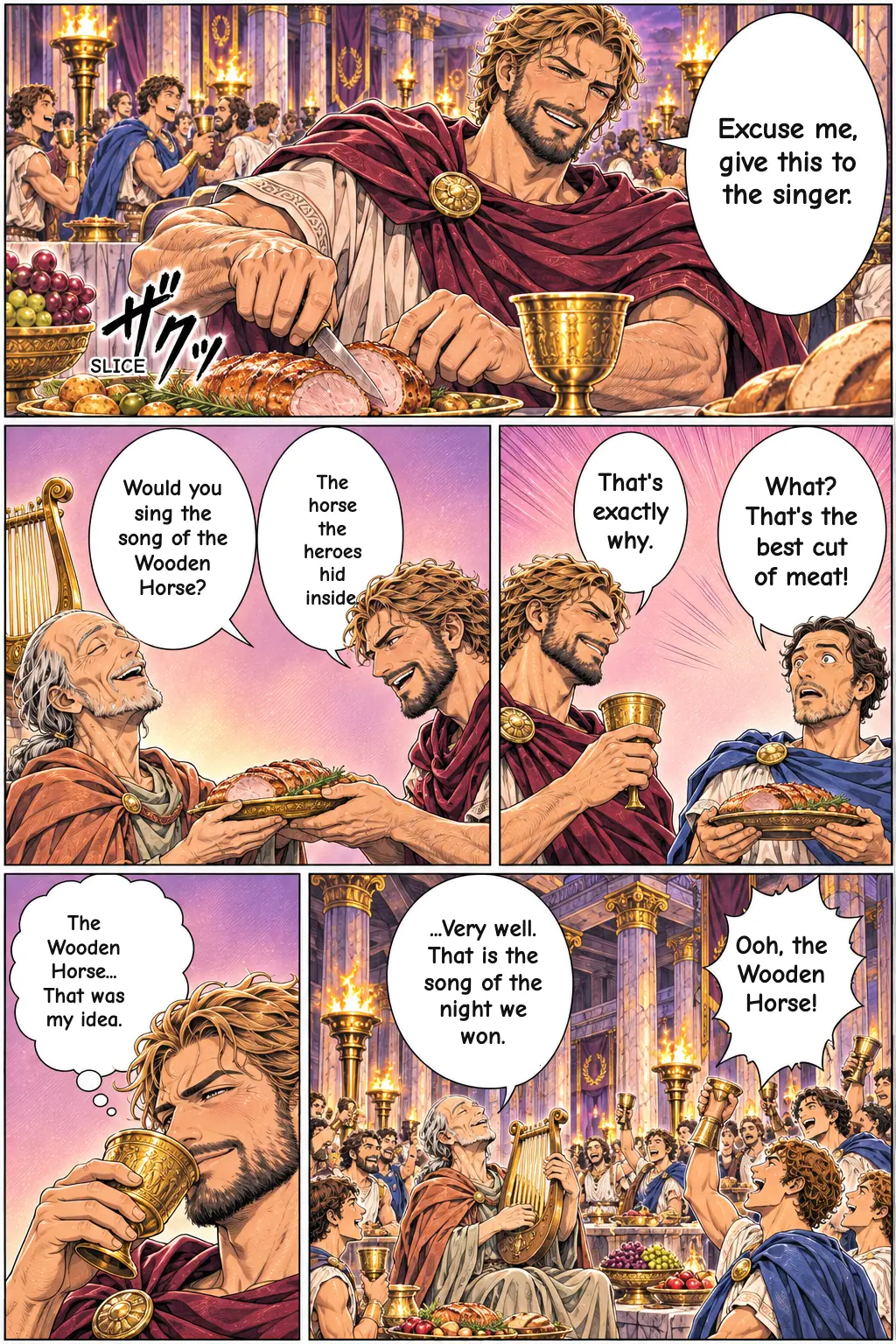
Page 11: Excuse me, give this to the singer. What? That's the best cut of meat!
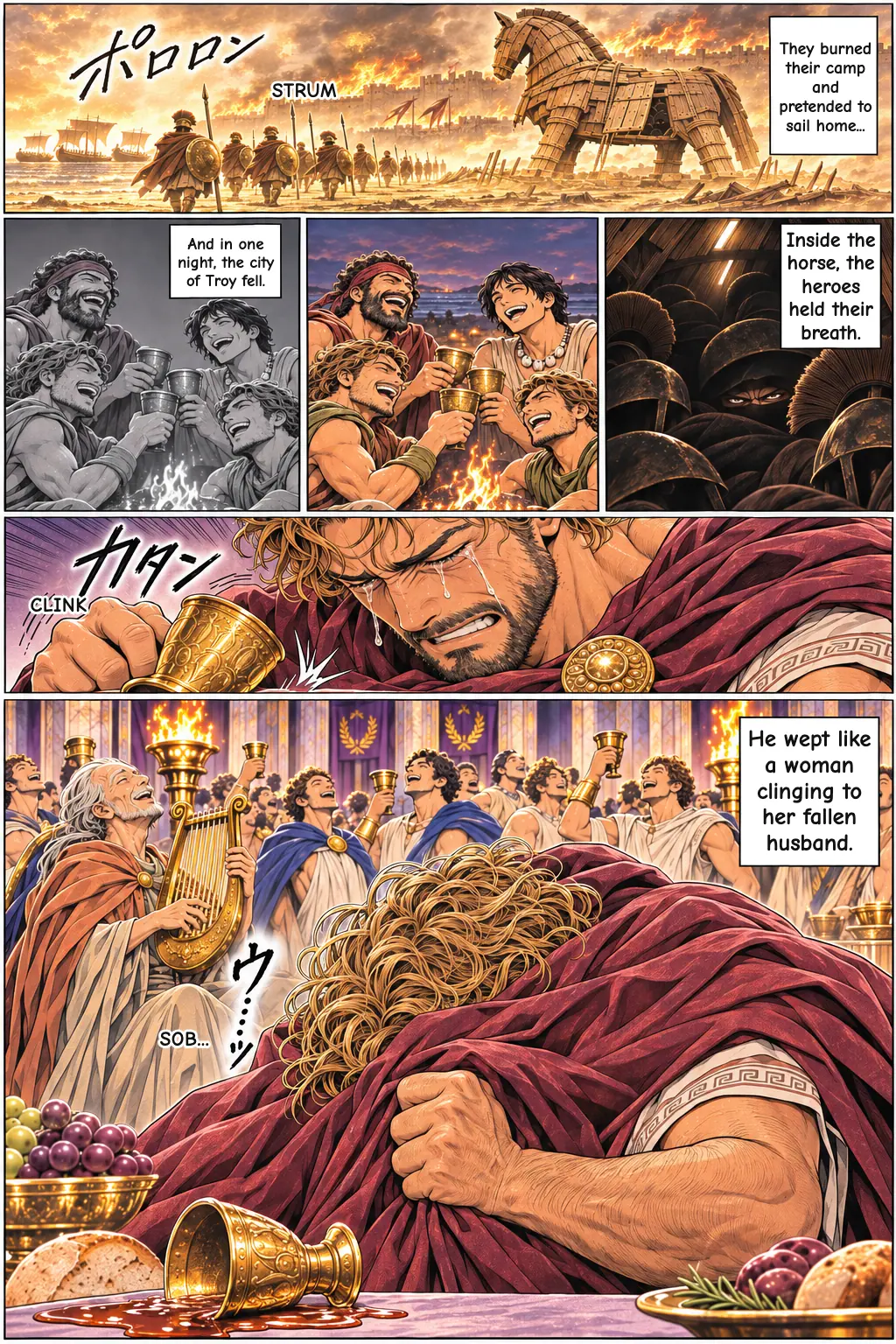
Page 12: They burned their camp and pretended to sail home... Inside the horse, the heroes held their breath.
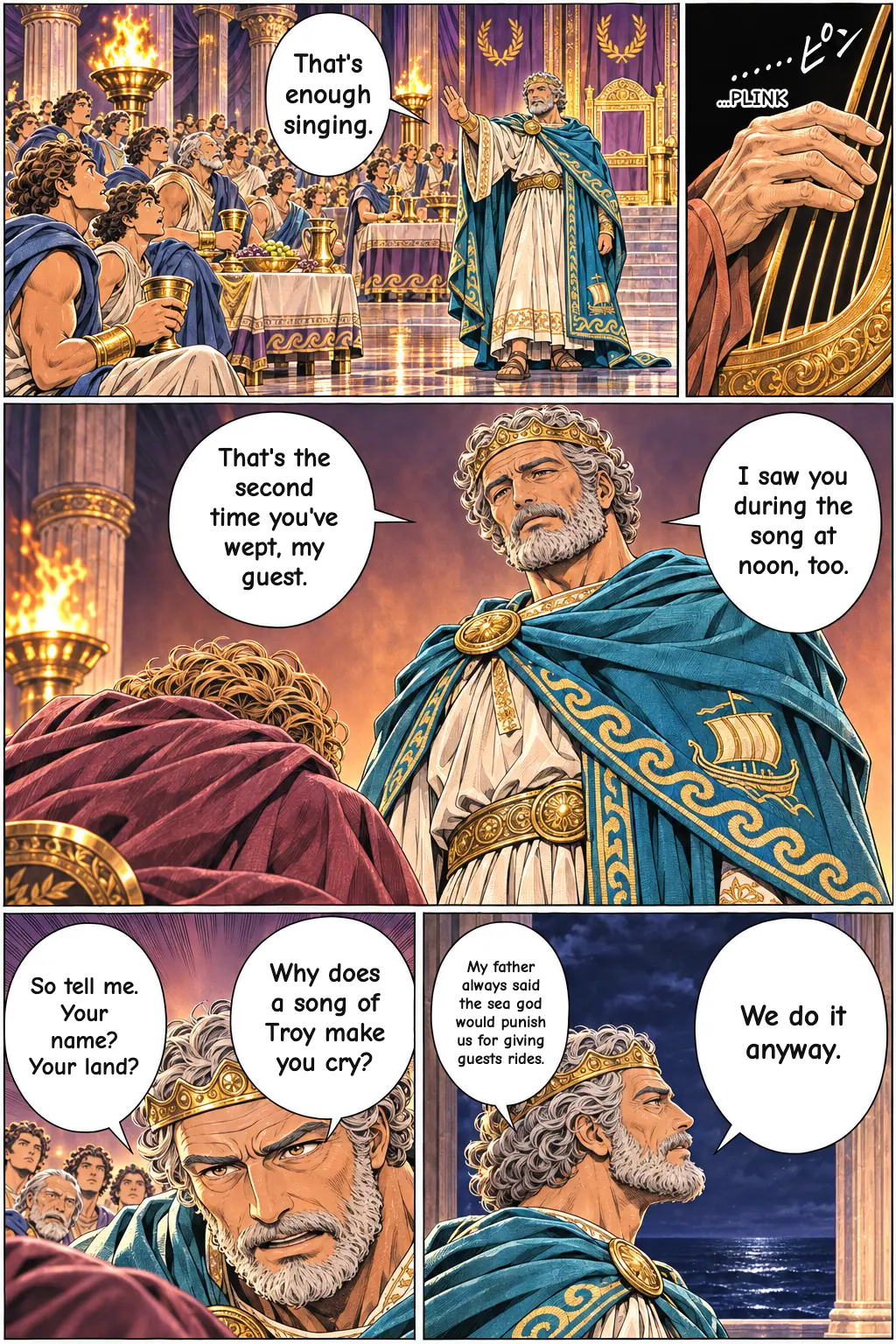
Page 13: That's enough singing. That's the second time you've wept, my guest.
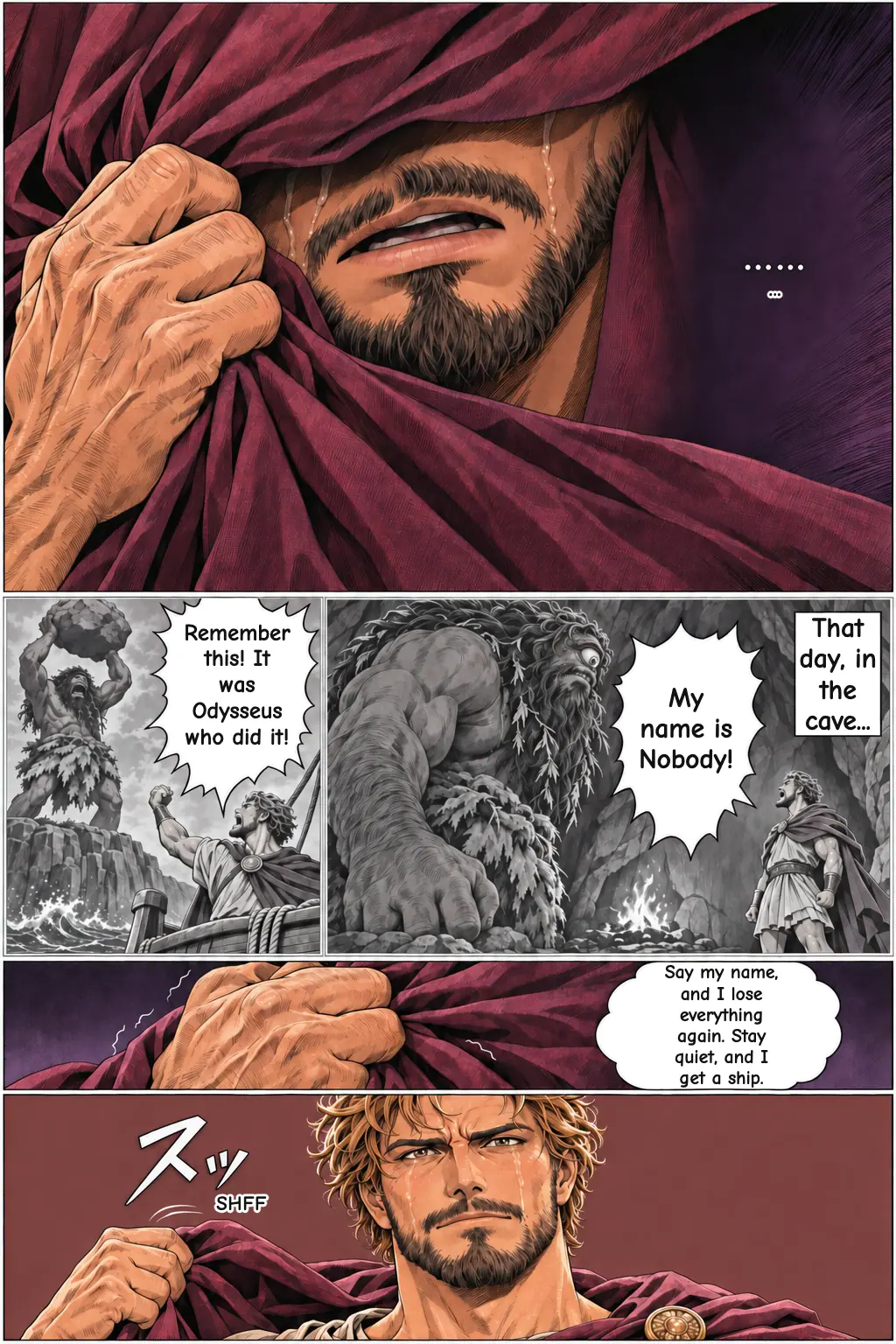
Page 14: That day, in the cave... My name is Nobody!
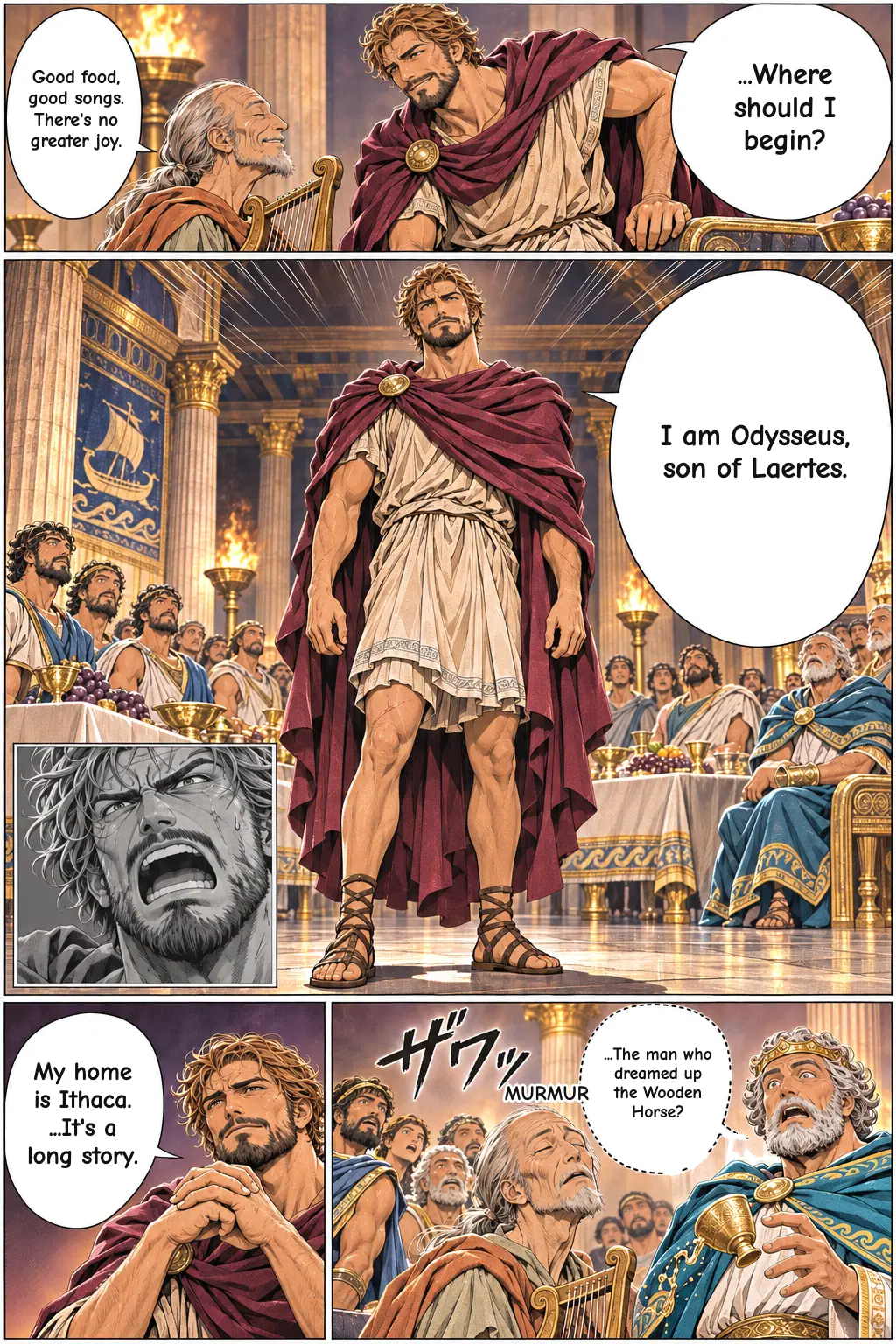
Page 15: Good food, good songs. There's no greater joy. ...Where should I begin?
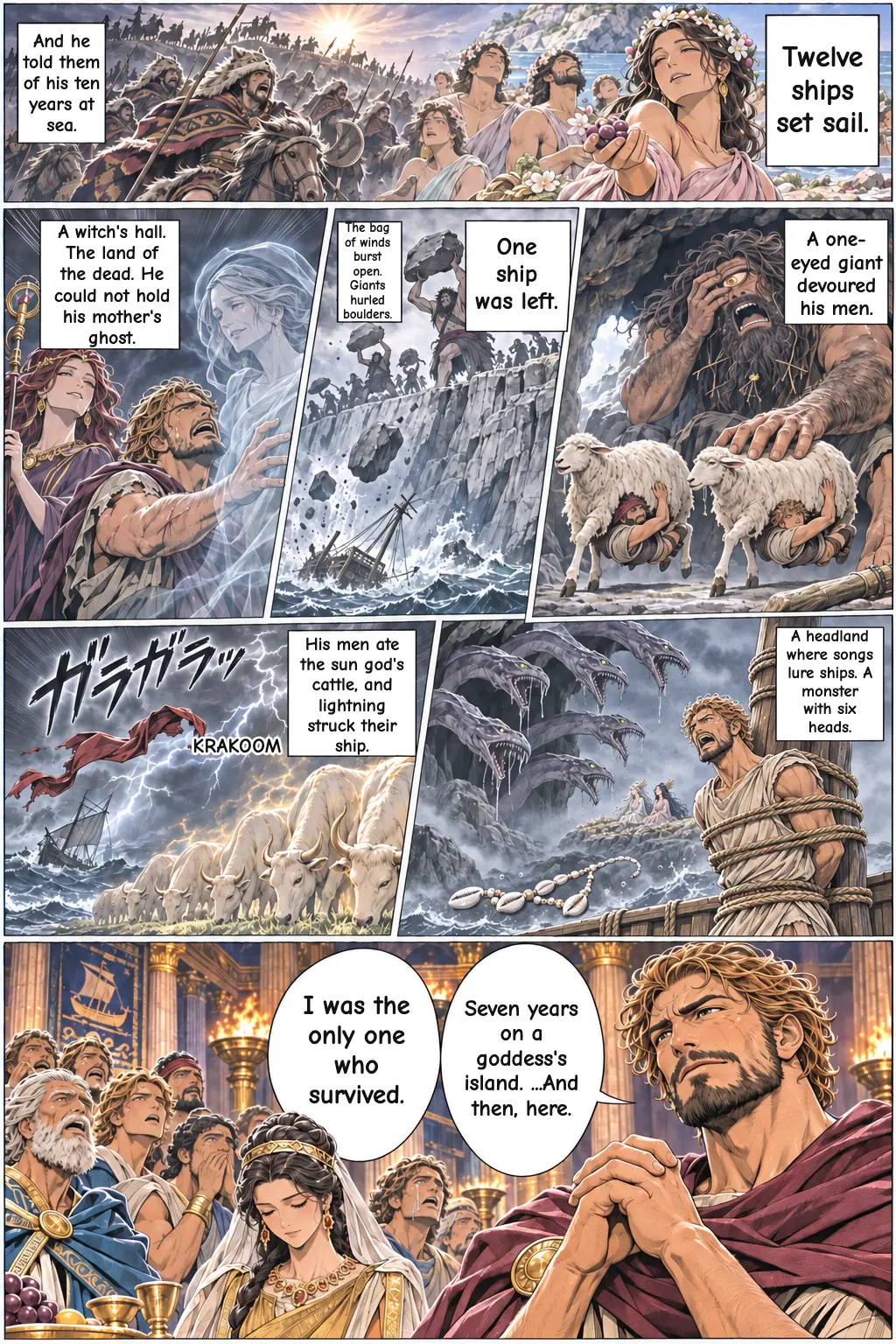
Page 16: And he told them of his ten years at sea. Twelve ships set sail.
Page 17: ...No one can say a word. I'll give him a bronze pot too!
Page 18: The god of the sea took his grievance to the king of the sky. The king of the sky nodded.
Page 19: ...Just as my father said. From this day on, we carry no one.

Thanks for reading!

Coming nextEpisode 12 Episode 12: The Old Beggar — Father and Son

That's all for now. Try one of these next
The next episode should be out around November 27Bookmark the series page so you can jump back in when the next episode is out: GREEK MYTHOLOGY: THE ODYSSEYRSS for this series

Get new episodes in your feed. Follow us on:ThreadsBluesky

A storm has taken everything from Odysseus. He washes up on a strange beach without even giving his name, and Princess Nausicaa takes him in. At the feast he asks the blind singer for the song of the Wooden Horse, breaks down in tears, and finally tells them who he is. But the ship that carries him home sails straight into the sea god's punishment.

Story summary

After leaving the island of the nymph Calypso, Odysseus is wrecked by a storm and swims ashore on Scheria, the land of the Phaeacians, a sea-faring people famous for their ships. Exhausted and naked, he crawls under two olive bushes, covers himself with fallen leaves, and falls asleep. Meanwhile Athena, his protector goddess, appears in a dream to Princess Nausicaa, disguised as one of her friends. She reminds the girl that her wedding day cannot be far off, so her family's clothes ought to be washed.

SourceOdyssey — Greece · c. 8th century BC

Also available in:日本語简体中文繁體中文한국어EspañolFrançais

Episode script

Page 1

No name. No ship. No crew.

A man with nothing left lies asleep.

Odysseus. Twenty years gone from home.

Nausicaa's handmaids: Princess! Wait for us!

Page 2

The night before...

Athena: You'll be a bride soon, and your clothes are still dirty?

Nausicaa: A b-bride?!

Athena: Go wash them at the beach tomorrow.

Nausicaa: Father, can I borrow the mule cart?

Nausicaa: I want to wash my brothers' dancing clothes.

Alcinous: ...Oh? Laundry, is it?

Alcinous: You're blushing, Nausicaa.

Nausicaa: W-wipe that look off your face!

Arete: Here's lunch, and oil for after. Be home before dark.

Nausicaa: Hold on tight!

Nausicaa's handmaids: Eeeek!

Page 3

Nausicaa's handmaids: Princess, slow down with the stomping!

Nausicaa: Ready? Drop the ball and you lose!

Nausicaa's handmaids: Th-that was just practice!

Nausicaa's handmaids: Aaaaah!

Page 4

Odysseus: ...Voices. All girls, by the sound of it.

Odysseus: If I walk out looking like this, they'll do more than scream.

Odysseus: ...My stomach doesn't care.

Nausicaa's handmaids: A m-m-monster!

Nausicaa's handmaids: Th-the laundry!

Nausicaa: ...Stop right there.

Page 5

Odysseus: I won't come closer. I won't grab at your knees.

Odysseus: Are you a goddess? Or a mortal girl?

Nausicaa's handmaids: ...It talks.

Nausicaa's handmaids: And it's so polite.

Odysseus: Once, on a far island, I saw a young palm tree.

Odysseus: I couldn't stop staring. ...Same as now.

Nausicaa: The gods hand out the good and the bad.

Nausicaa: You just drew the bad.

Nausicaa: Everyone, come back! Bring him clothes and oil!

Nausicaa: This is Phaeacia. I'm Nausicaa, the king's daughter.

Nausicaa's handmaids: S-sorry about that...

Nausicaa: So? Who are you?

Odysseus: ...

Page 6

Odysseus: Um... could you all look the other way?

Nausicaa's handmaids: Okaaay.

Nausicaa's handmaids: Wait... that's the same guy?

Nausicaa's handmaids: He's a whole new man...

Nausicaa: ...I wish I could marry a man like that.

Nausicaa's handmaids: Eeee! We heard that!

Nausicaa: You can't walk into town with me. People will talk.

Nausicaa: Wait in the grove, then come to the palace alone.

Nausicaa's handmaids: Got the ball! It's soaked!

Nausicaa: Go to my mother first. Kneel to her, not my father.

Nausicaa: If she's on your side, you'll get home. I know it.

Odysseus: ...Home.

Page 7

Odysseus: Goddess... this time, please hear me.

Odysseus: Excuse me, which way to the king's palace?

Athena: I'll show you. Don't look anyone in the eye.

Odysseus: ...What is this place?

Odysseus: My queen. Please... give me a ship home.

Page 8

The Phaeacians: My king, will you leave a guest on the floor?

Alcinous: Oh, right! Up you get, come sit here.

Alcinous: ...You sure can eat.

Odysseus: Sorry. First meal in seven days.

Arete: My maids and I wove those clothes.

Arete: Who are you? Who gave them to you?

Odysseus: I left a goddess's island. My raft broke at sea.

Odysseus: Your daughter found me on the beach and saved me.

Alcinous: A man like you... I'd give you my daughter's hand...

Alcinous: N-no! If you want to go home, we'll send a ship!

Arete: ...You still haven't told us your name.

Page 9

Demodocus the singer. Blind, but the goddess gave him song.

Demodocus: Then... a song of the heroes of Troy.

In the song, he saw himself as a young man.

Alcinous: Now, let's work off that meal! Young men, outside!

The Phaeacians: Just watching, old man? You look more like a merchant.

The Phaeacians: ...Huh?

Alcinous: ...Who is this guest?

Page 10

Nausicaa: When you get home... don't forget me.

Nausicaa: I'm the one who saved you, remember.

Nausicaa: ...And you still won't tell me your name.

Odysseus: If I make it home, I'll pray to you every day.

Odysseus: The way I'd pray to a goddess.

Nausicaa: ...Don't exaggerate.

Odysseus: There's a song I want that singer to sing...

Page 11

Odysseus: Excuse me, give this to the singer.

The Phaeacians: What? That's the best cut of meat!

Odysseus: That's exactly why.

Odysseus: Would you sing the song of the Wooden Horse?

Odysseus: The horse the heroes hid inside.

The Phaeacians: Ooh, the Wooden Horse!

Demodocus: ...Very well. That is the song of the night we won.

Odysseus: The Wooden Horse... That was my idea.

Page 12

Demodocus: They burned their camp and pretended to sail home...

Demodocus: Inside the horse, the heroes held their breath.

Demodocus: And in one night, the city of Troy fell.

He wept like a woman clinging to her fallen husband.

Page 13

Alcinous: That's enough singing.

Alcinous: That's the second time you've wept, my guest.

Alcinous: I saw you during the song at noon, too.

Alcinous: My father always said the sea god would punish us for giving guests rides.

Alcinous: We do it anyway.

Alcinous: So tell me. Your name? Your land?

Alcinous: Why does a song of Troy make you cry?

Page 14

That day, in the cave...

Odysseus: My name is Nobody!

Odysseus: Remember this! It was Odysseus who did it!

Odysseus: Say my name, and I lose everything again. Stay quiet, and I get a ship.

Page 15

Odysseus: Good food, good songs. There's no greater joy.

Odysseus: ...Where should I begin?

Odysseus: I am Odysseus, son of Laertes.

Alcinous: ...The man who dreamed up the Wooden Horse?

Odysseus: My home is Ithaca. ...It's a long story.

Page 16

And he told them of his ten years at sea.

Twelve ships set sail.

A one-eyed giant devoured his men.

The bag of winds burst open. Giants hurled boulders.

One ship was left.

A witch's hall. The land of the dead. He could not hold his mother's ghost.

A headland where songs lure ships. A monster with six heads.

His men ate the sun god's cattle, and lightning struck their ship.

Odysseus: I was the only one who survived.

Odysseus: Seven years on a goddess's island. ...And then, here.

Page 17

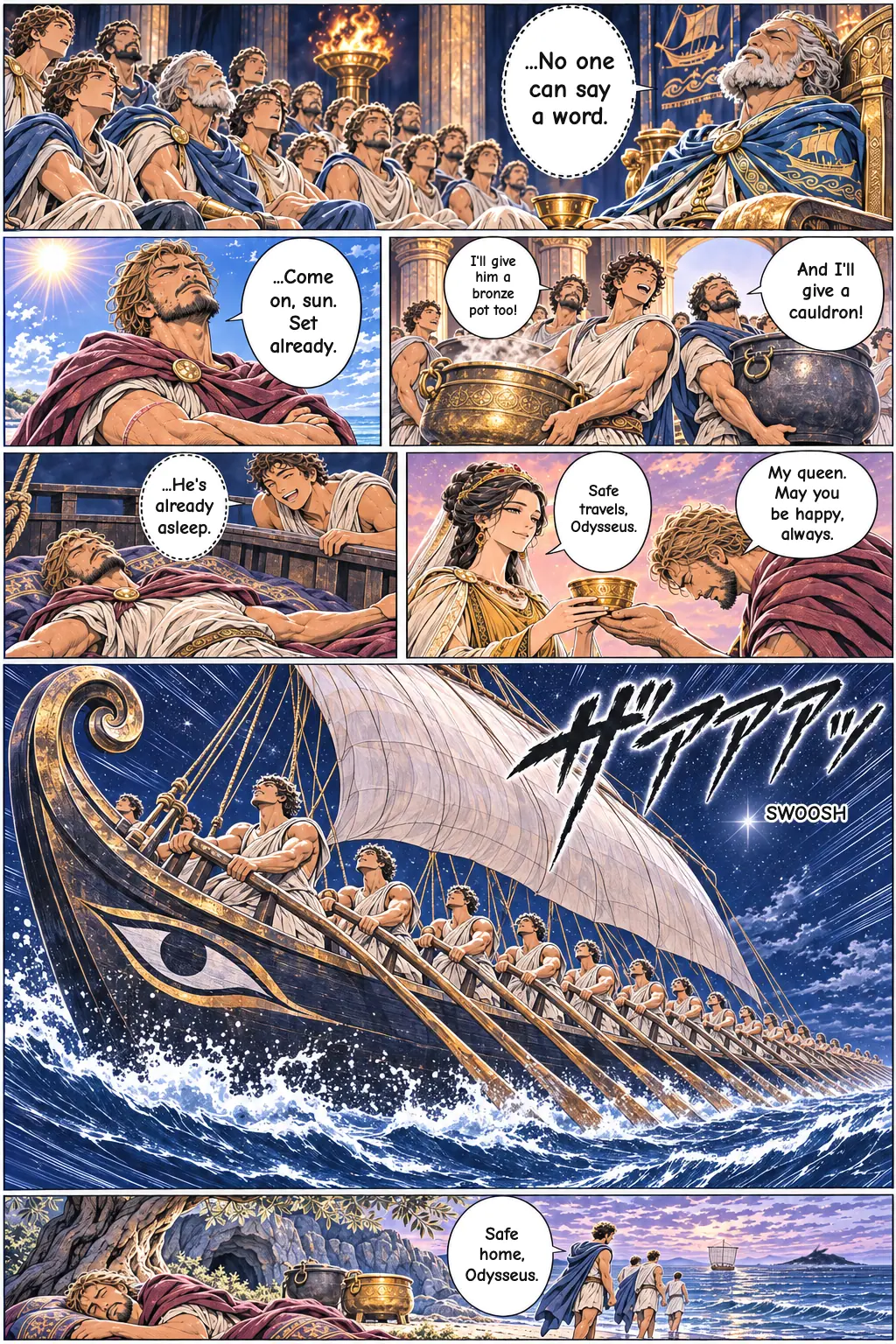
Alcinous: ...No one can say a word.

The Phaeacians: I'll give him a bronze pot too!

The Phaeacians: And I'll give a cauldron!

Odysseus: ...Come on, sun. Set already.

Odysseus: My queen. May you be happy, always.

Arete: Safe travels, Odysseus.

The Phaeacians: ...He's already asleep.

The Phaeacians: Safe home, Odysseus.

Page 18

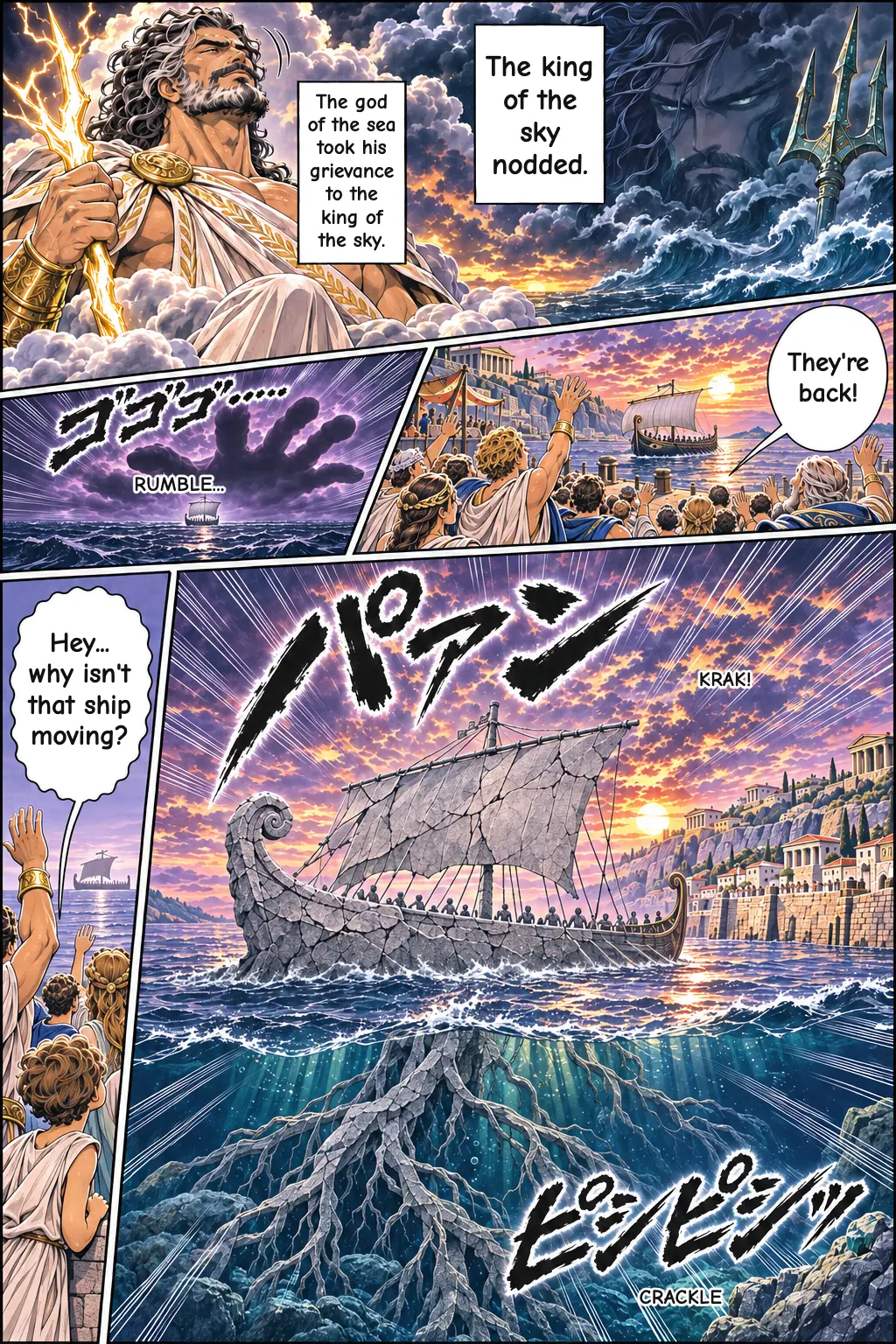
The god of the sea took his grievance to the king of the sky.

The king of the sky nodded.

The Phaeacians: They're back!

The Phaeacians: Hey... why isn't that ship moving?

Page 19

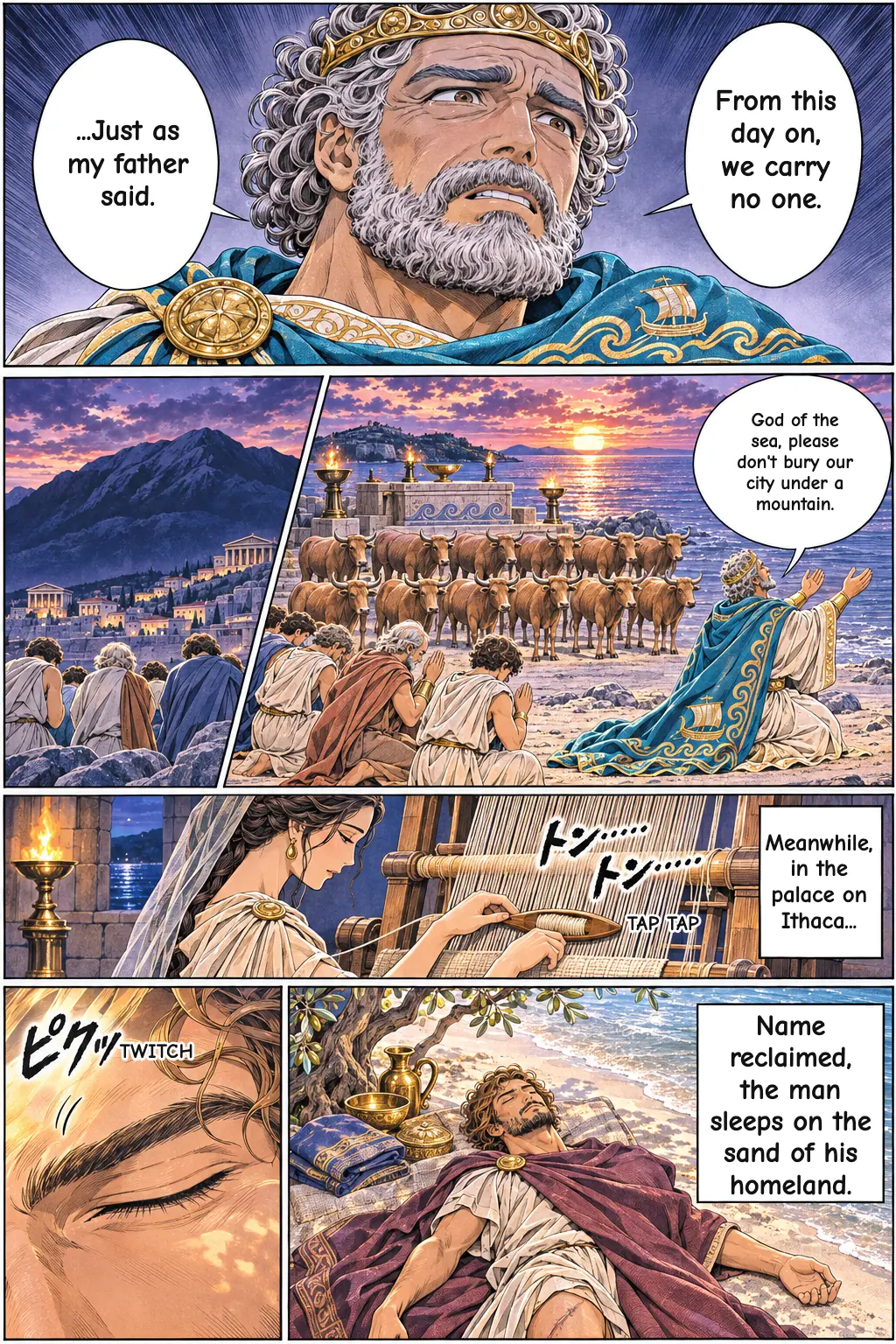
Alcinous: ...Just as my father said.

Alcinous: From this day on, we carry no one.

Alcinous: God of the sea, please don't bury our city under a mountain.

Meanwhile, in the palace on Ithaca...

Name reclaimed, the man sleeps on the sand of his homeland.

RSS

The original story behind this episode

Nausicaa and the Phaeacians: Odyssey Books 6–8 and 13 Summary Explained

In short: Nausicaa and the Phaeacians is the episode of Homer's Odyssey (Books 6–8 and the start of Book 13) in which the shipwrecked Odysseus is found on a beach by Princess Nausicaa, welcomed by King Alcinous and Queen Arete, and moved to tears when a blind singer performs the story of the Trojan Horse. Only then does he reveal his name, and the Phaeacians carry him home to Ithaca, but Poseidon turns their returning ship to stone as punishment.

The original story: from shipwreck to the stone ship

After leaving the island of the nymph Calypso, Odysseus is wrecked by a storm and swims ashore on Scheria, the land of the Phaeacians, a sea-faring people famous for their ships. Exhausted and naked, he crawls under two olive bushes, covers himself with fallen leaves, and falls asleep. Meanwhile Athena, his protector goddess, appears in a dream to Princess Nausicaa, disguised as one of her friends. She reminds the girl that her wedding day cannot be far off, so her family's clothes ought to be washed. Nausicaa, too shy to mention marriage, simply asks her father for the mule cart, and he understands without being told.

At the river mouth, Nausicaa and her maids wash the clothes, bathe, eat, and play a ball game. A stray throw lands in a deep pool, the girls shout, and the noise wakes Odysseus. He breaks off a leafy branch to cover himself and steps out, crusted with sea salt, looking like a hungry mountain lion. The maids scatter. Only Nausicaa, given courage by Athena, stays where she is. Odysseus decides not to clasp her knees, as a suppliant normally would, in case it offends her. Instead he pleads from a distance, comparing her to the goddess Artemis and to a young palm tree he once saw on the island of Delos.

Nausicaa gives him clothes and oil and tells him how to reach the palace without starting gossip: wait in Athena's grove outside town, then go in alone and appeal first to her mother, Queen Arete. Hidden in a mist by Athena, Odysseus walks through a city of wonders, including bronze walls, gold and silver guard dogs made by the smith god Hephaestus, and an orchard that bears fruit all year round. He kneels at the queen's feet, the mist lifts, and King Alcinous promises him a ship home. He still does not give his name.

The next day there is a feast and athletic games. When a young man named Euryalus mocks him as a mere merchant, Odysseus throws a discus farther than anyone else. At the banquet the blind singer Demodocus sings, and twice Odysseus hides his face and weeps. The second time, he has asked for the song of the Wooden Horse at Troy, his own greatest trick. Alcinous notices and asks who he really is. At the start of Book 9 he finally answers: he is Odysseus, son of Laertes. He then tells the long tale of his wanderings, and the Phaeacians sail him home while he sleeps. In Book 13, as their ship returns, Poseidon turns it to stone within sight of its harbour, with Zeus's approval.

Main characters

Odysseus is the king of Ithaca, a clever and well-spoken hero who keeps his name hidden for most of this episode. Nausicaa is a young princess of marriageable age, brave, practical, and careful about her reputation. Her parents, King Alcinous and Queen Arete, are model hosts, and Arete in particular is described as wise and deeply respected, even settling quarrels among the people.

Behind the scenes, Athena arranges almost everything, appearing in disguise as a girl friend, a young girl carrying a water jar, and a herald. Demodocus, the blind singer, is said to have been given both good and bad by the Muse: she took his sight but gave him the gift of song. Poseidon, the sea god, still holds a grudge against Odysseus and resents the Phaeacians for helping travellers.

What this myth tells us: hospitality, fame, and tears

The Phaeacian books are a showcase of xenia, the ancient Greek code of hospitality. A stranger arrives with nothing, and his hosts feed him, clothe him, and send him on his way before even asking his name. Audiences would have noticed how differently Odysseus is treated here compared with the monsters and dangerous hosts of his travels.

The scene at the feast is one of the most striking in Homer. Odysseus hears his own story turned into a famous song and, instead of feeling proud, he breaks down. Homer compares his weeping to that of a woman mourning her husband after a city has fallen. Many readers see this as a moment where the hero finally faces the human cost of the war that made him famous. Hearing his legend sung by someone else seems to be what moves him to claim his name again.

The ending is darker. Alcinous remembers an old prophecy from his father: one day Poseidon would strike down a Phaeacian ship and cover their city with a mountain. The Phaeacians offer sacrifices, and Homer leaves them there. Whether the mountain actually falls is never shown, and there is an old scholarly debate about how to read Zeus's words at this point, so the fate of the city is left uncertain.

What the manga changes or adds

Episode 11 follows the order of Homer's main events, including the ball game, the hidden name, the song of the Wooden Horse, the voyage home, and the ship turned to stone. Some details are the manga's own invention because Homer says little or nothing about them. The maids' names, number, and personalities are created for the manga, as are the colour and look of the ball and the design of the Phaeacian city, palace, and clothing. The palace's golden dogs, golden statues of youths, and ever-fruiting orchard come from the original text.

Homer only says that Athena put courage into Nausicaa, so her inner thoughts when she stands her ground are the manga's interpretation. The same goes for the glances between Nausicaa and Odysseus when they part. If the branch Odysseus holds is drawn as olive, that is also an artistic choice: he sleeps under olive bushes, but the poem does not say what kind of branch he breaks off. The manga also condenses the games and presents Odysseus's long story (Books 9–12) as a short recap of earlier episodes. It handles the reactions to the stone ship, and the question of the mountain, with the same openness as the original.

Where to read it

If you want to see this episode come to life, from the startled maids on the beach to a hero crying at his own legend, you can read GREEK MYTHOLOGY: THE ODYSSEY — The Twenty-Year Voyage Home here on Manga Portal. Every episode is free, with no sign-up needed, so you can begin at Episode 1 or go straight on to see what Odysseus finds when he wakes up on Ithaca.

Characters in this episode

Odysseus
The shipwrecked king of Ithaca, who hides his name from the Phaeacians until a song about Troy brings him to tears.
Nausicaa
A brave and sensible Phaeacian princess who finds Odysseus on the beach and tells him how to win her parents' help.
Athena
The goddess who protects Odysseus, working in disguise and hiding him in a mist on his way to the palace.
Alcinous
The generous king of the Phaeacians who notices the stranger's tears and promises him a ship home.
Arete
The wise and respected queen of the Phaeacians, to whom Odysseus kneels to ask for help.
Demodocus
The blind court singer whose song of the Wooden Horse makes Odysseus weep and reveal who he is.

FAQ

Who is Nausicaa in the Odyssey?

Nausicaa is the daughter of King Alcinous and Queen Arete of the Phaeacians. In Book 6 she finds the shipwrecked Odysseus by the river, gives him clothes, and tells him how to reach the palace safely.

Why does Odysseus cry when Demodocus sings?

Demodocus sings about the Trojan War, and the second time Odysseus asks for the story of the Wooden Horse, his own famous stratagem. Hearing his own past turned into a song overwhelms him, and Homer compares his tears to those of a widow in a fallen city.

Who were the Phaeacians?

The Phaeacians are a seafaring people in the Odyssey who live on the island of Scheria. They are famous for their fast ships and generous hospitality, and they carry Odysseus home to Ithaca.

Why did Poseidon turn the Phaeacian ship to stone?

Poseidon was angry that the Phaeacians kept helping travellers by sea, especially Odysseus, whom he hated. With Zeus's approval, he turned their returning ship to stone as it came into view of its home harbour.

When does Odysseus reveal his name to the Phaeacians?

He hides his name all through Books 6 to 8. Only after King Alcinous sees him weeping at the song of the Wooden Horse does he announce, at the start of Book 9, that he is Odysseus, son of Laertes.

Read the manga from the start (free)