The next episode should be out around November 25Bookmark the series page so you can jump back in when the next episode is out: Journey to the WestRSS for this series
Get new episodes in your feed. Follow us on:ThreadsBluesky
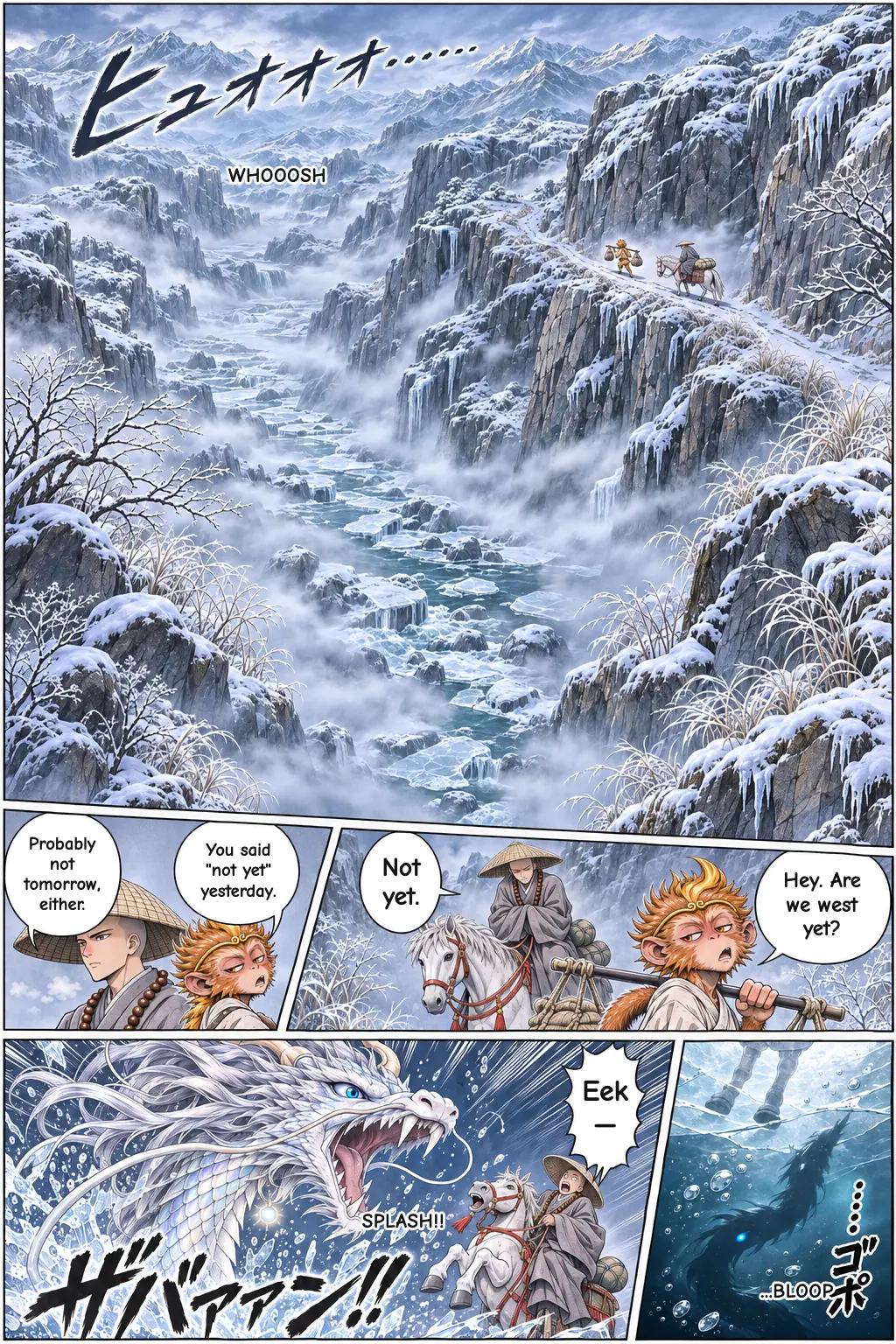
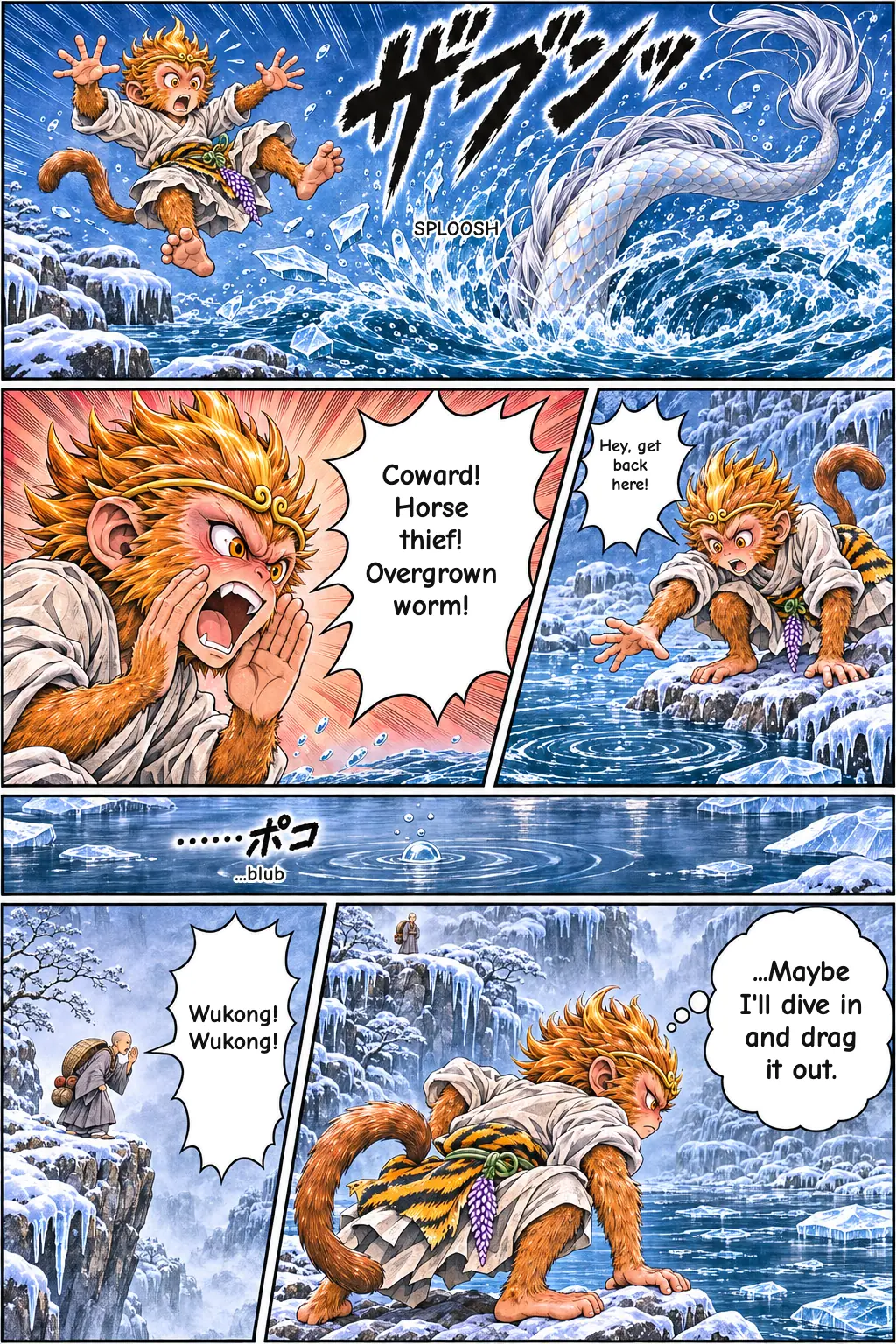
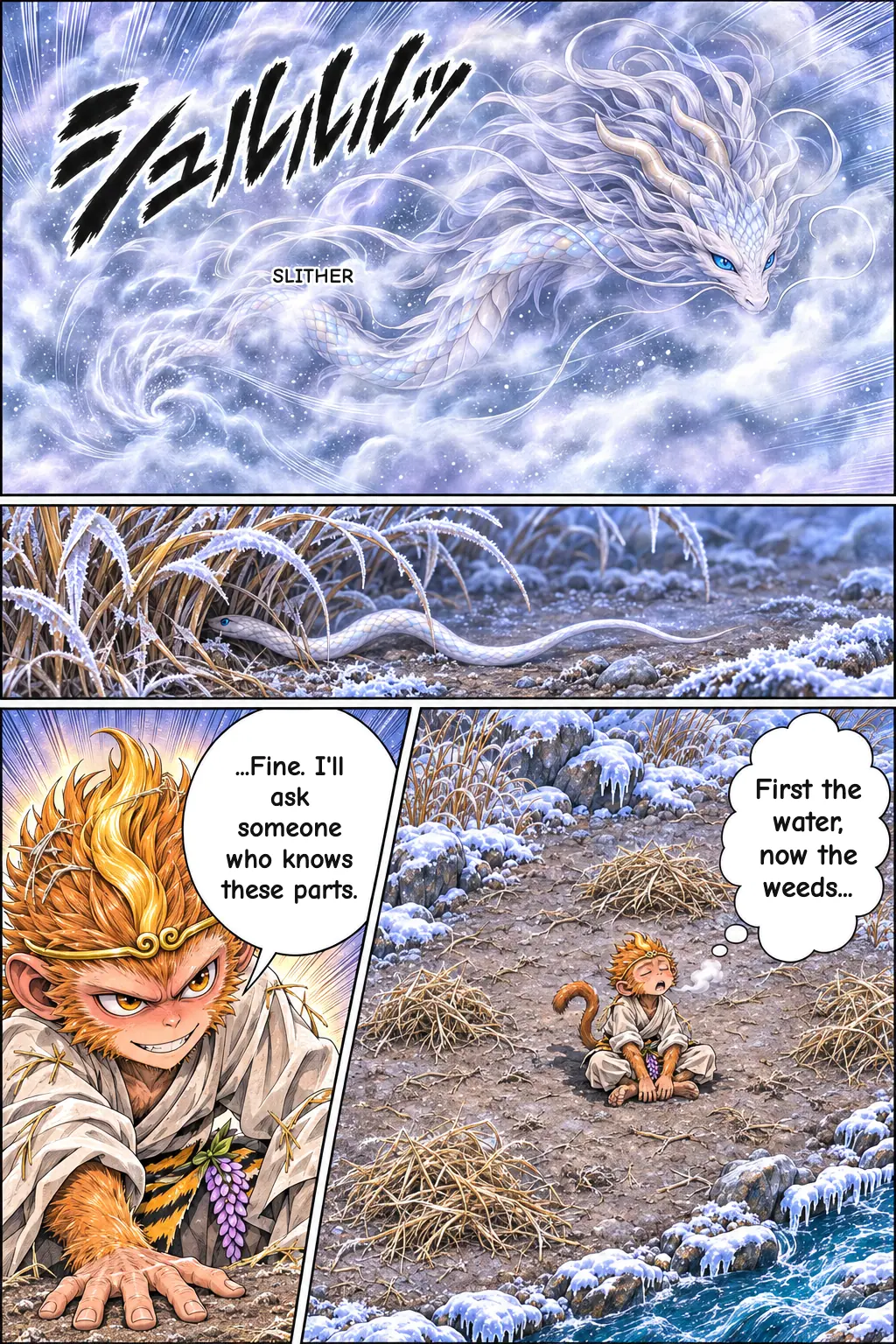
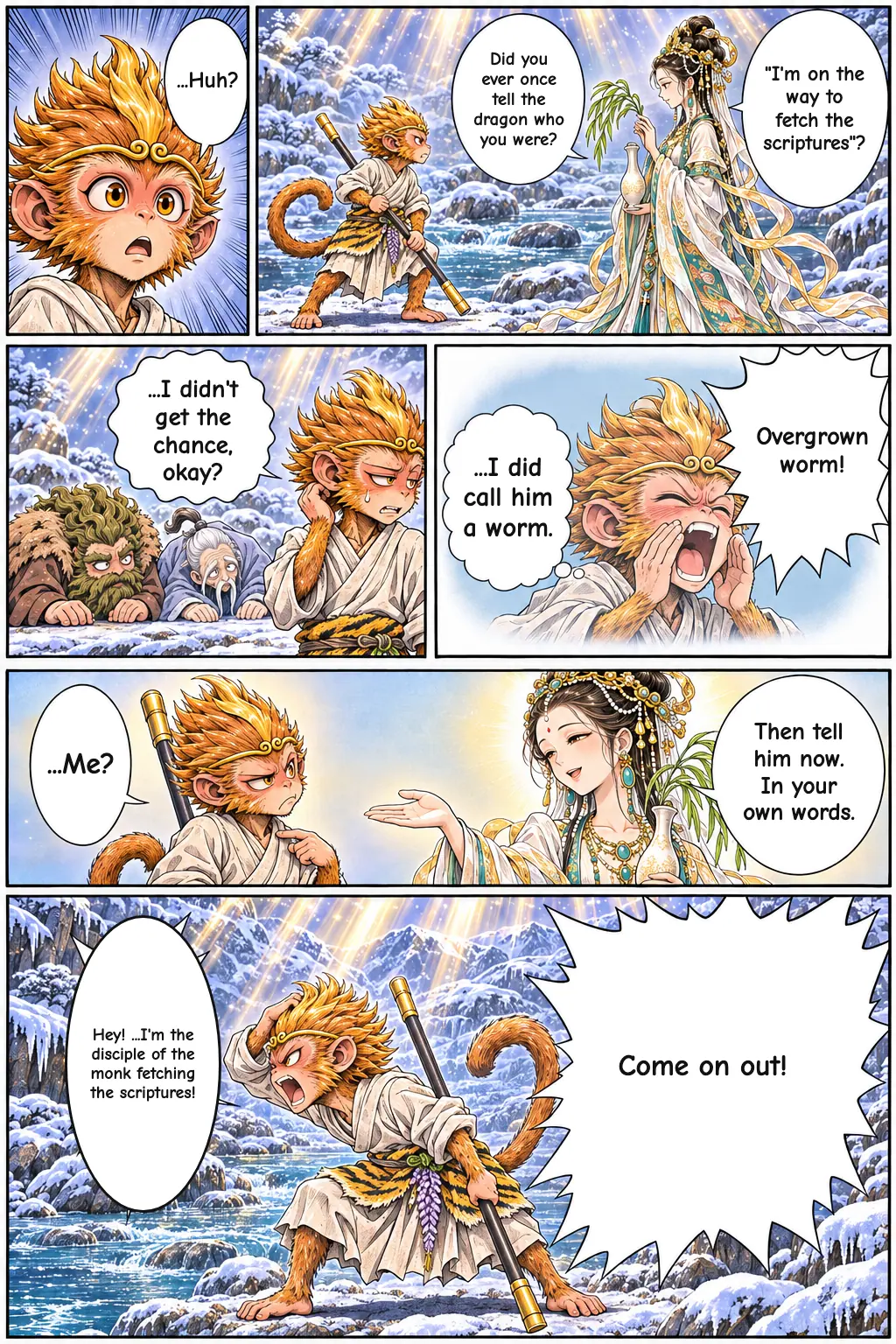
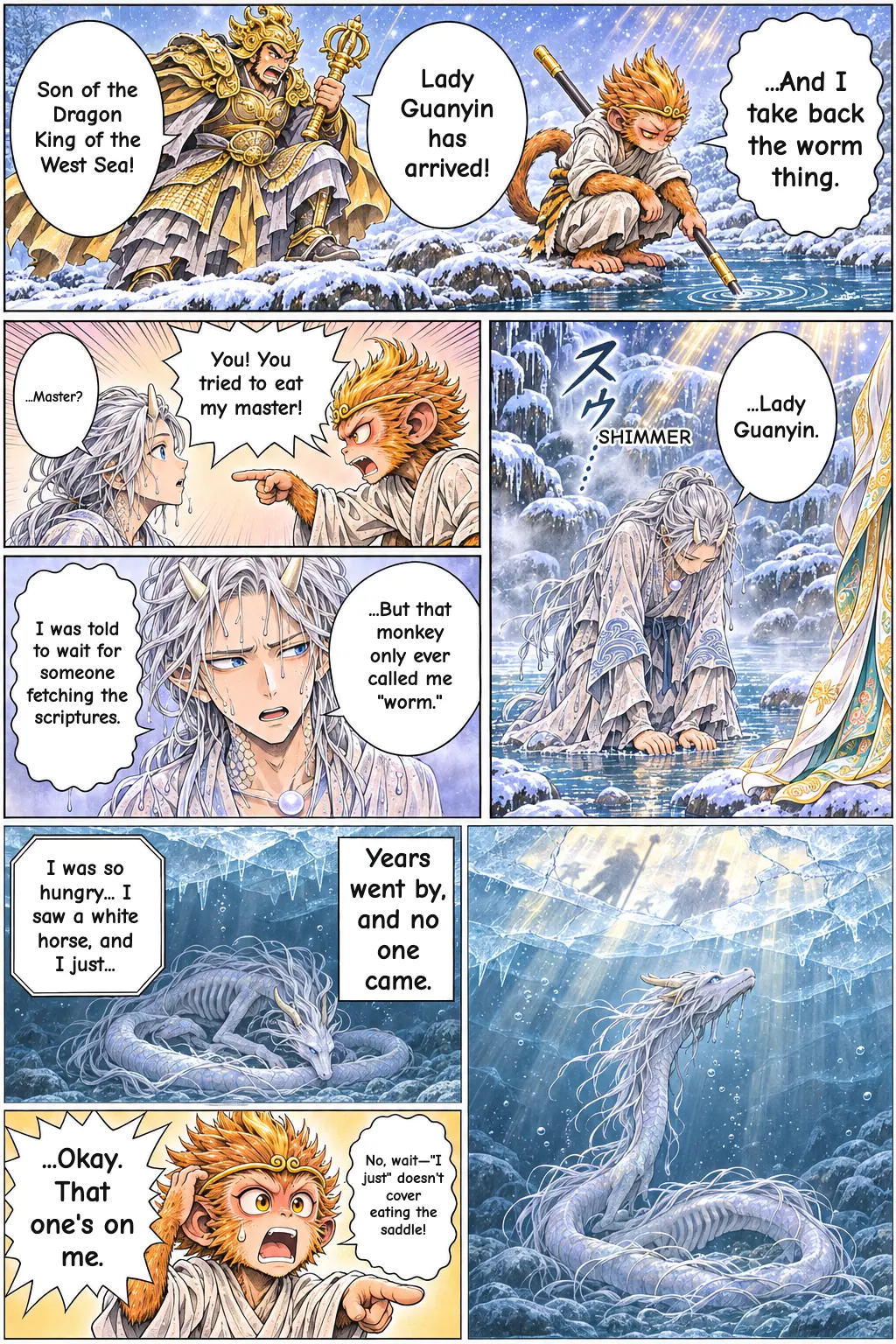
In a frozen gorge in the dead of winter, a dragon swallows Tang Sanzang's horse whole. Furious, Sun Wukong gives chase, but the dragon escapes into the water, then vanishes into the weeds, and his master can only weep. Then the truth comes out: the dragon is a young prince who has been waiting a long time for someone. And the one who never said who he was? Wukong.
Story summary
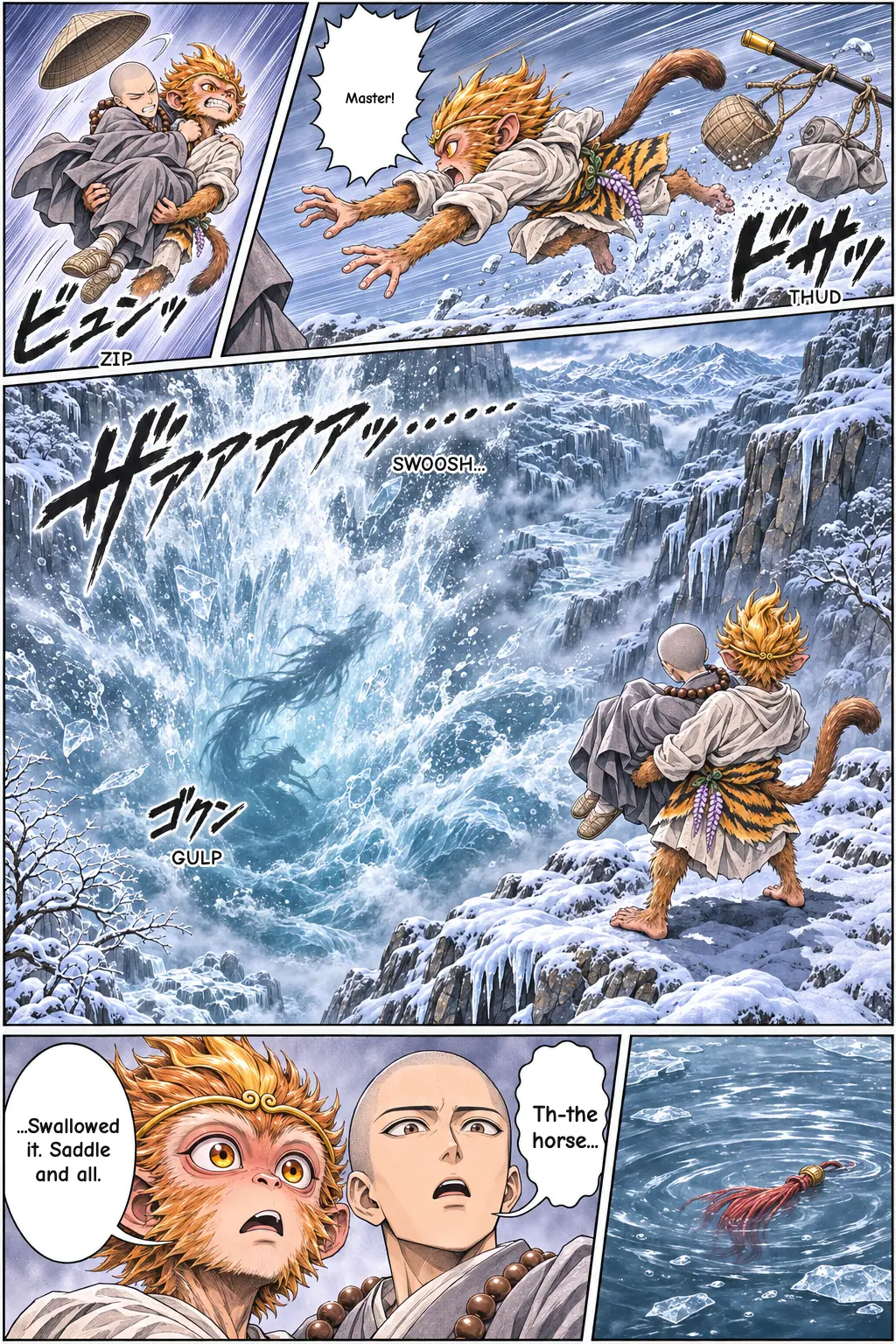
Journey to the West follows the Tang-dynasty monk Tang Sanzang (also called Tripitaka) on his long trip to India to bring Buddhist scriptures back to China. At this point Sun Wukong, the Monkey King, has only just become his disciple. In the middle of winter the two reach Eagle Grief Stream (Yingchou Jian), a gorge on Serpent Coil Mountain. A dragon leaps out of the water. Wukong drops the luggage and carries his master to higher ground, and the dragon swallows the monk's white horse whole, saddle and bridle included. Sanzang cries and asks how he can possibly go on foot.
Journey to the West Ch. 15 Summary: Yulong the White Dragon Horse
In short: Yulong, the White Dragon Horse, is a dragon prince who swallows the monk Tang Sanzang's horse and is then turned into a white horse to carry him west. The story comes from Chapter 15 of the Chinese classic Journey to the West (Ming dynasty, 1592 edition). Sun Wukong fights the dragon, but only Guanyin, the bodhisattva of mercy, can settle things. She reveals that the dragon had been waiting for the pilgrims all along.
The Original Story: What Happens in Chapter 15
Journey to the West follows the Tang-dynasty monk Tang Sanzang (also called Tripitaka) on his long trip to India to bring Buddhist scriptures back to China. At this point Sun Wukong, the Monkey King, has only just become his disciple. In the middle of winter the two reach Eagle Grief Stream (Yingchou Jian), a gorge on Serpent Coil Mountain. A dragon leaps out of the water. Wukong drops the luggage and carries his master to higher ground, and the dragon swallows the monk's white horse whole, saddle and bridle included.
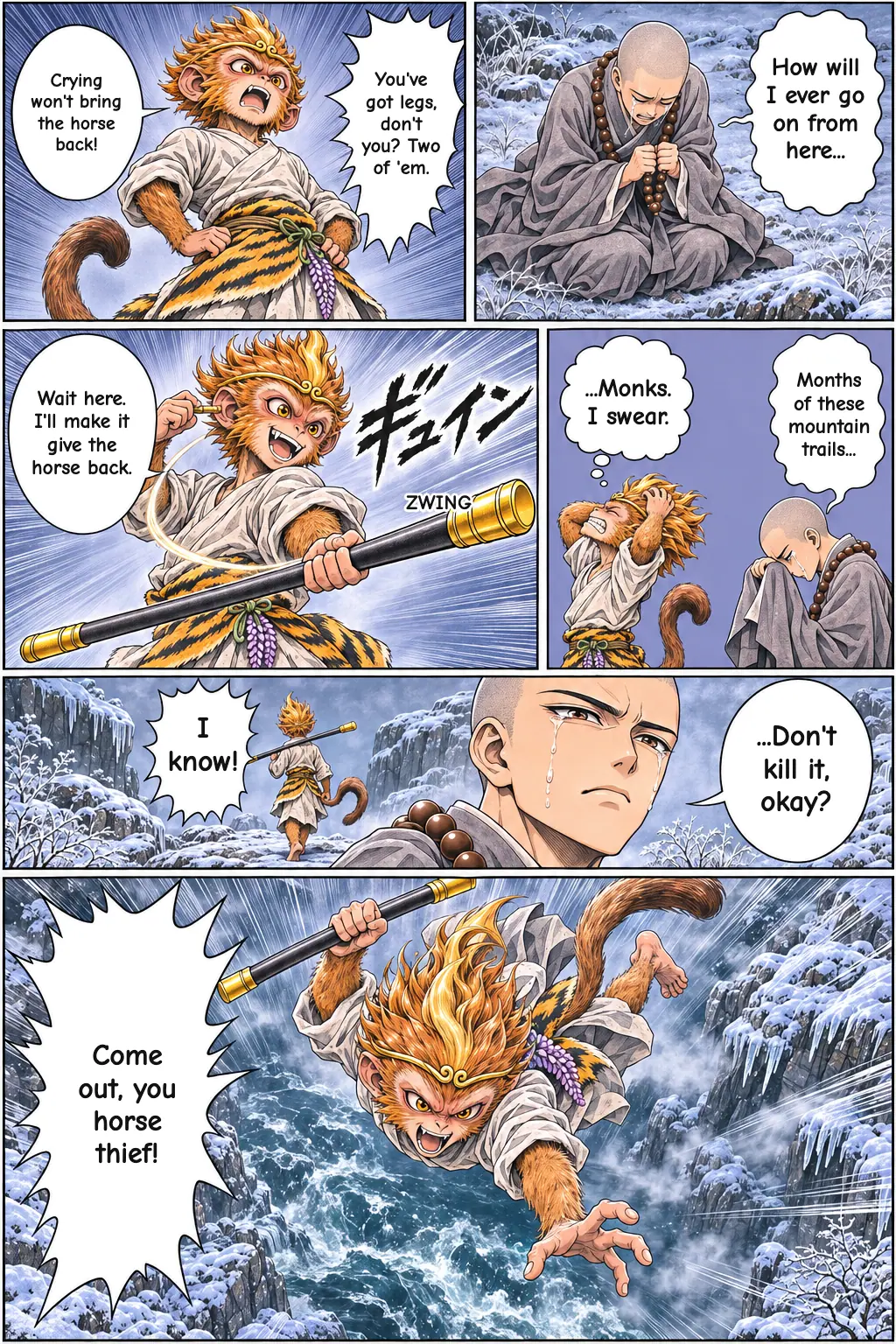
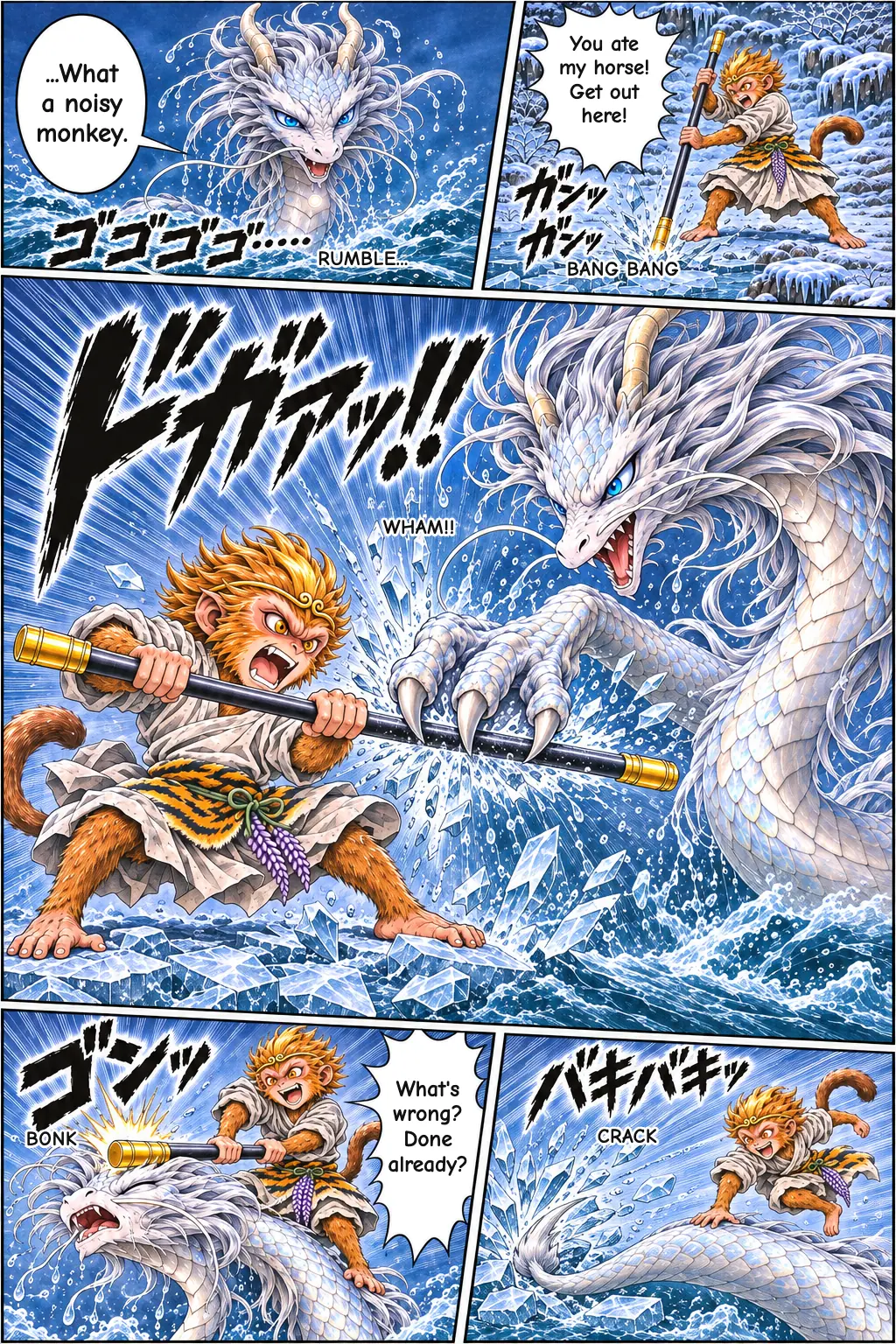
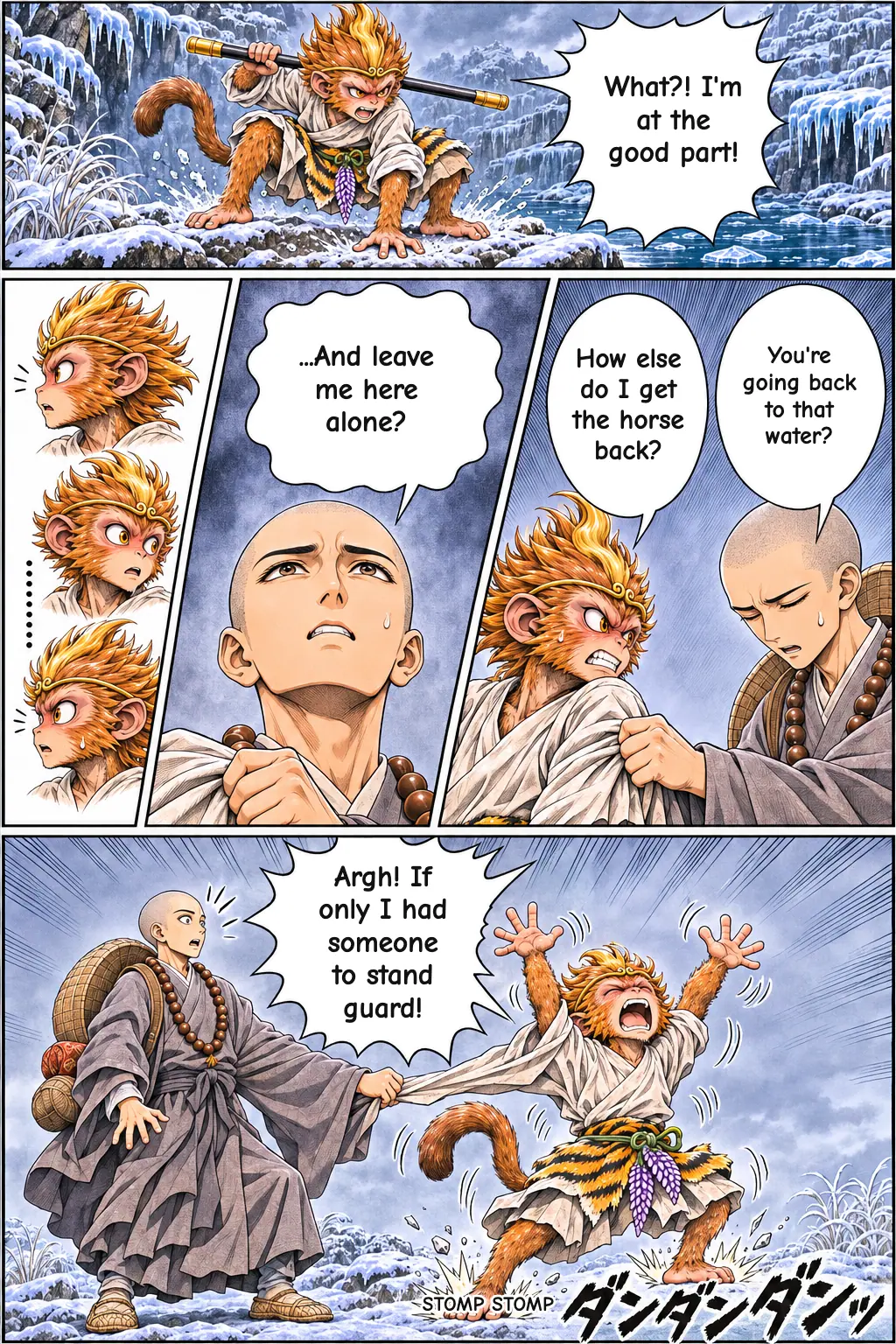
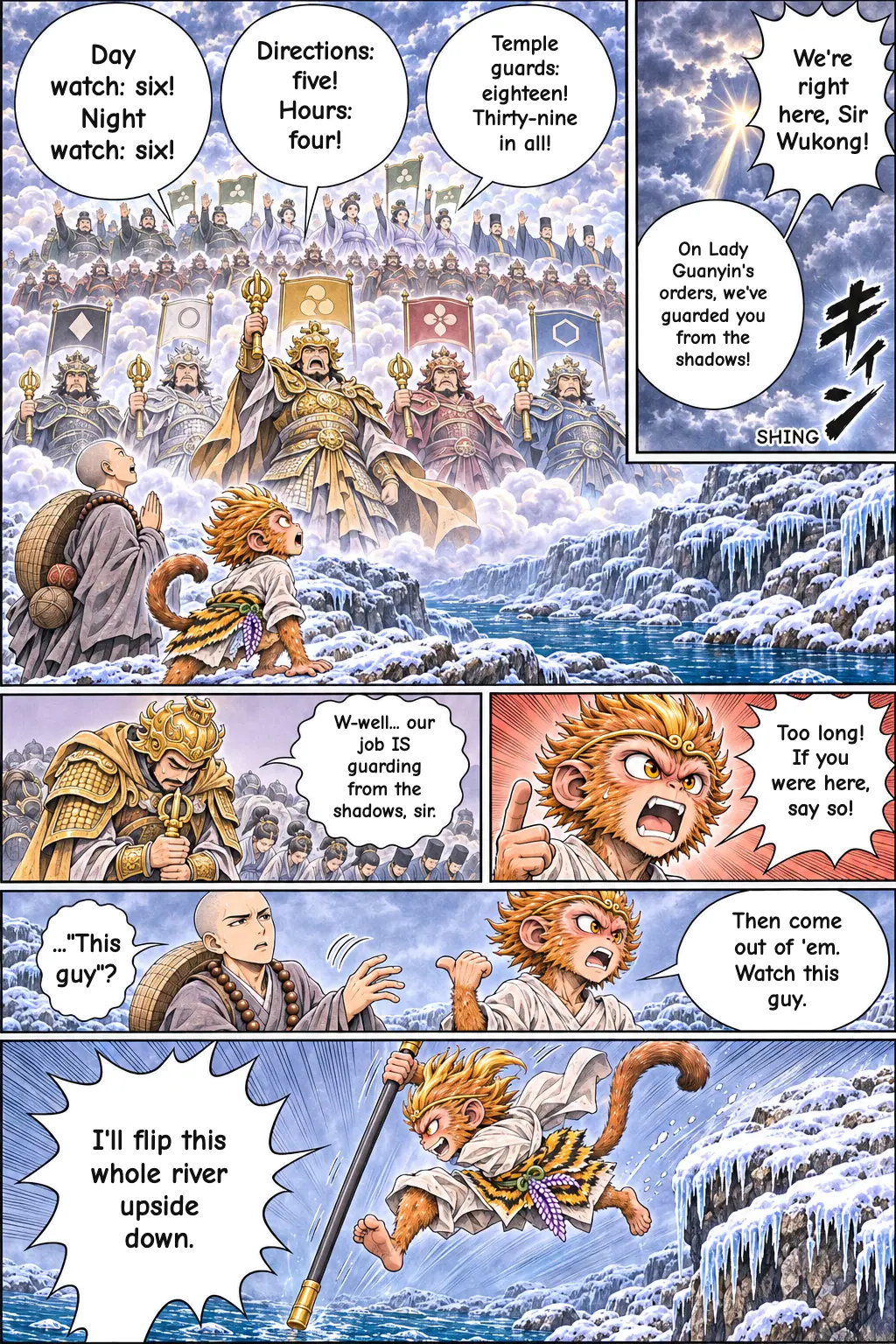
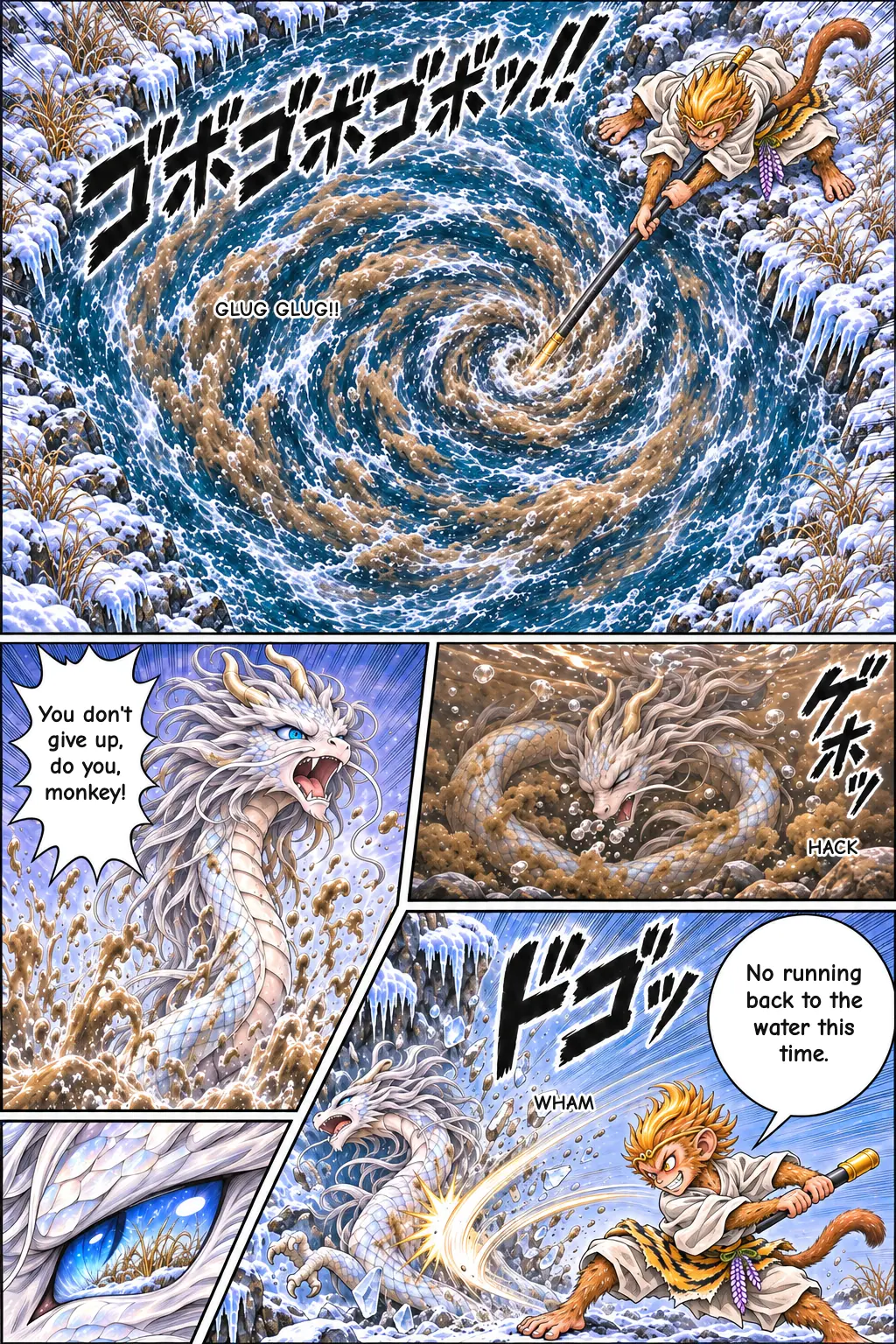
Sanzang cries and asks how he can possibly go on foot. Wukong is annoyed by his master's despair and insists on catching the dragon. He shouts insults at the stream, and the dragon comes out to fight. It is no match for him and dives back under the water, where it stays. Wukong doesn't want to leave Sanzang alone. Then voices call from the sky. They belong to a group of guardian deities whom Guanyin has sent to protect the pilgrims in secret. Wukong leaves his master in their care and churns the stream until the water turns muddy. The dragon comes up again, loses again, and this time turns into a water snake and slips away into the grass.
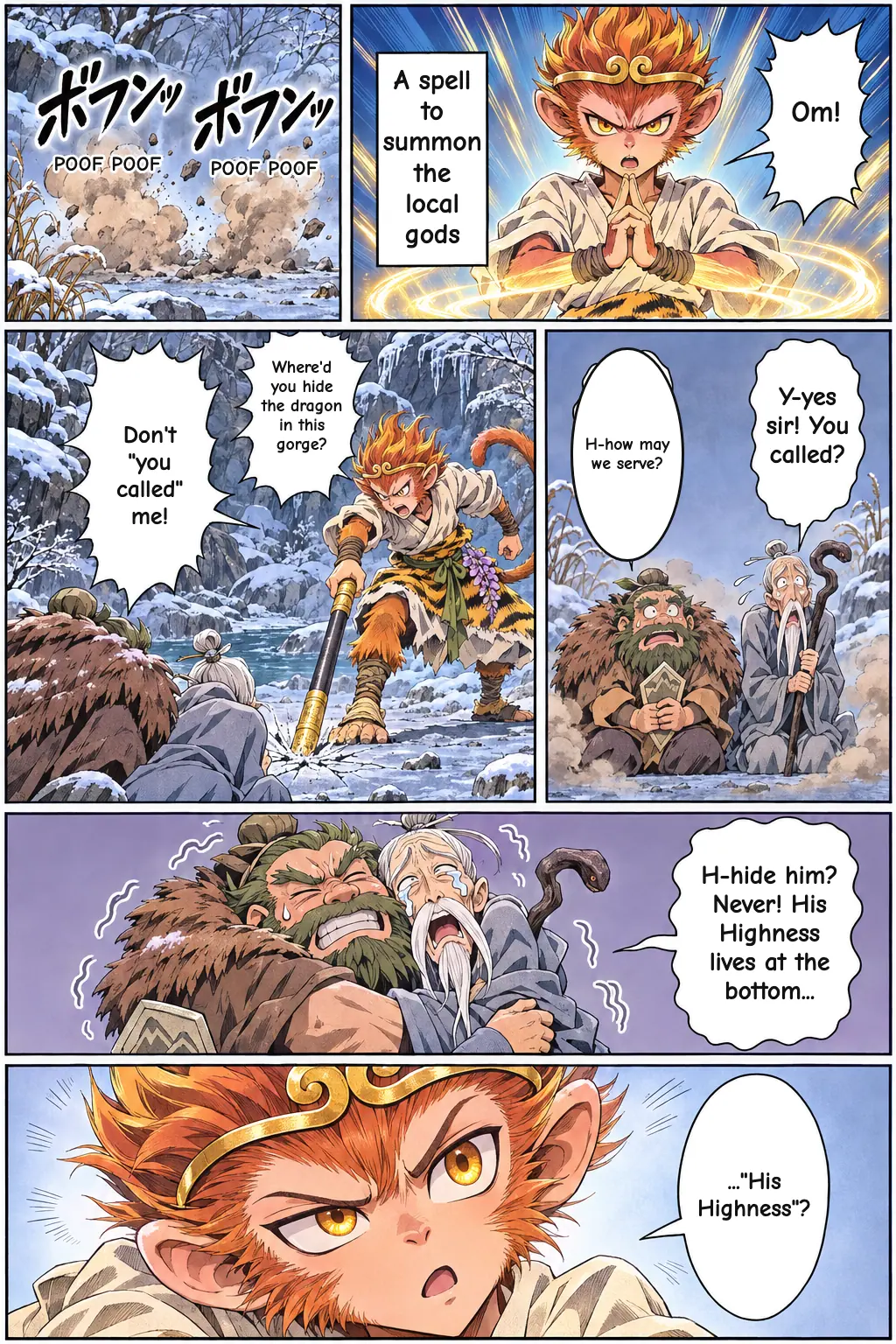
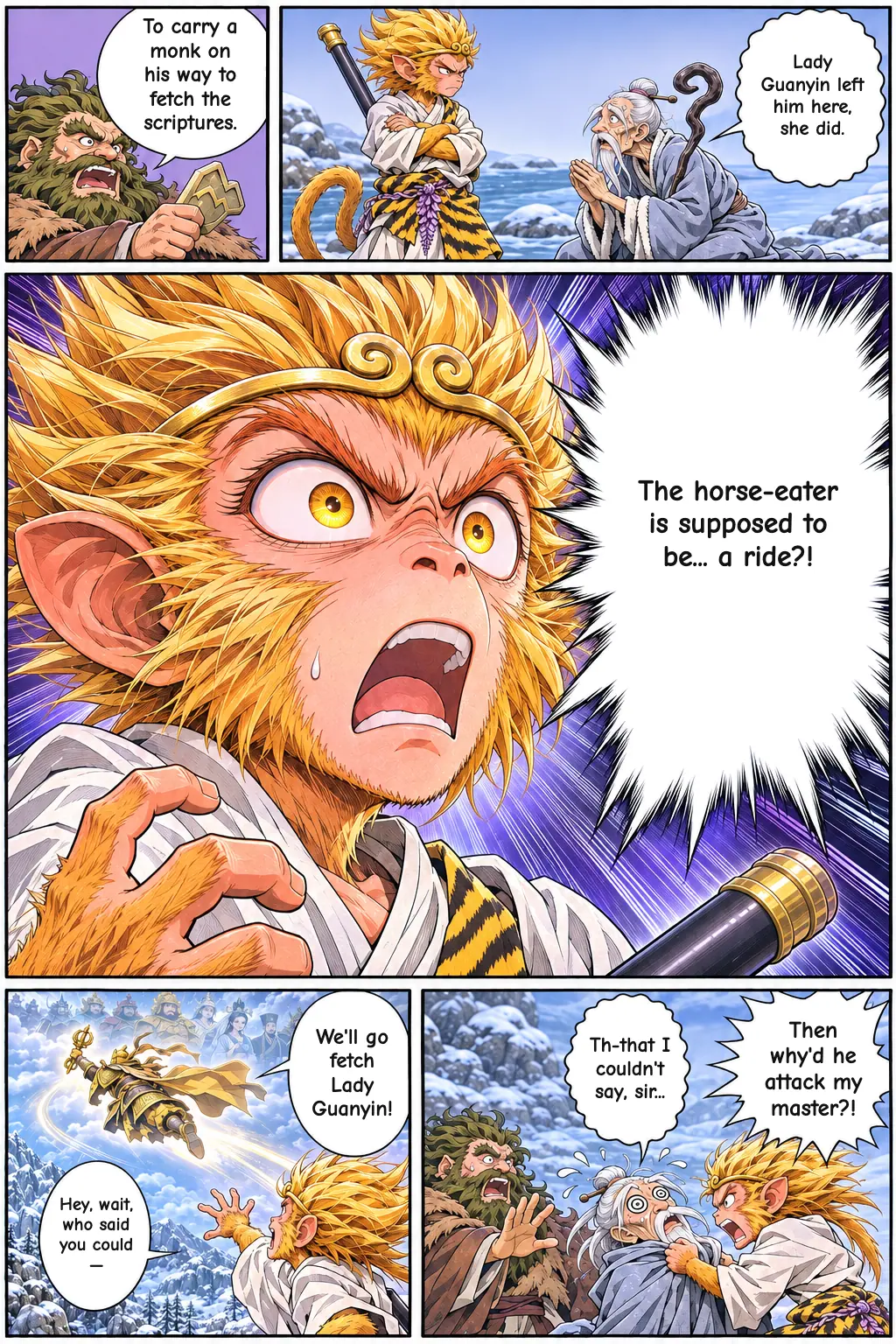
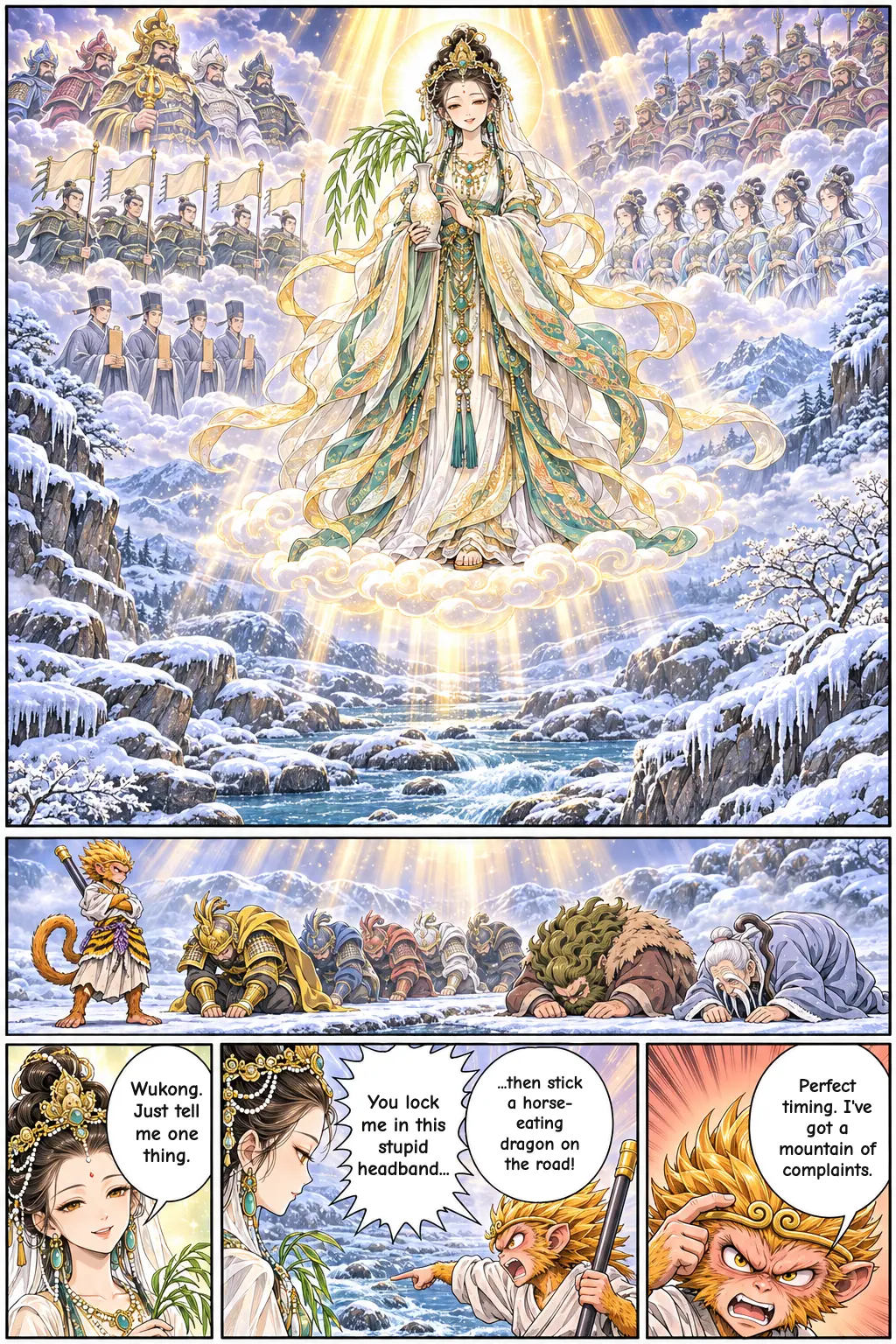
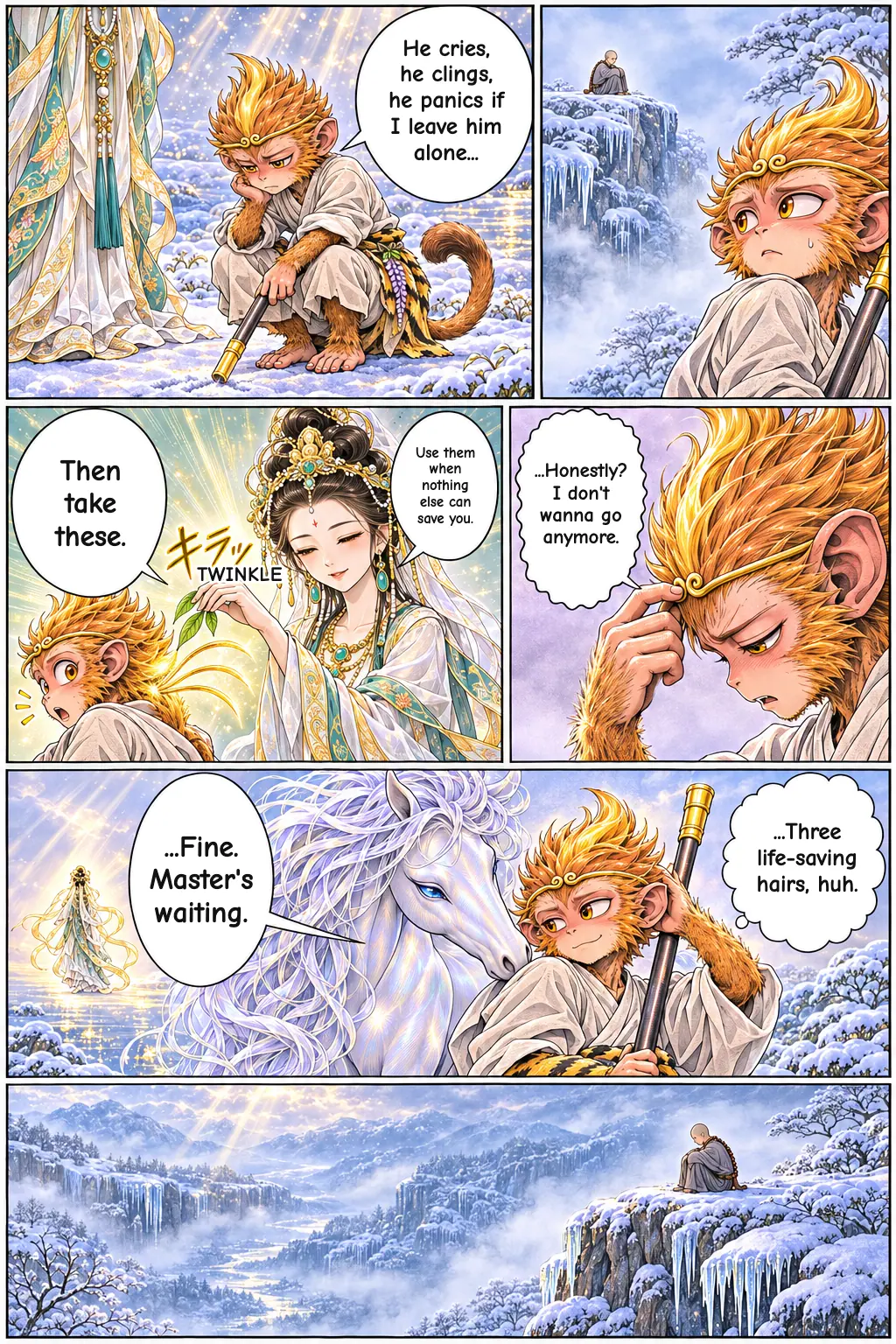
Wukong summons the local mountain god and earth god and scolds them. They tell him who the dragon is: Guanyin herself placed it here to wait for the scripture pilgrim and serve as his mount. One of the guardians flies to the South Sea to fetch her. When Guanyin arrives, Wukong complains loudly about the dragon in the road and about the tight golden band she gave Sanzang to control him. Her reply is simple. The dragon never knew who they were because Wukong never said he was traveling to fetch scriptures.
The Dragon Becomes a Horse
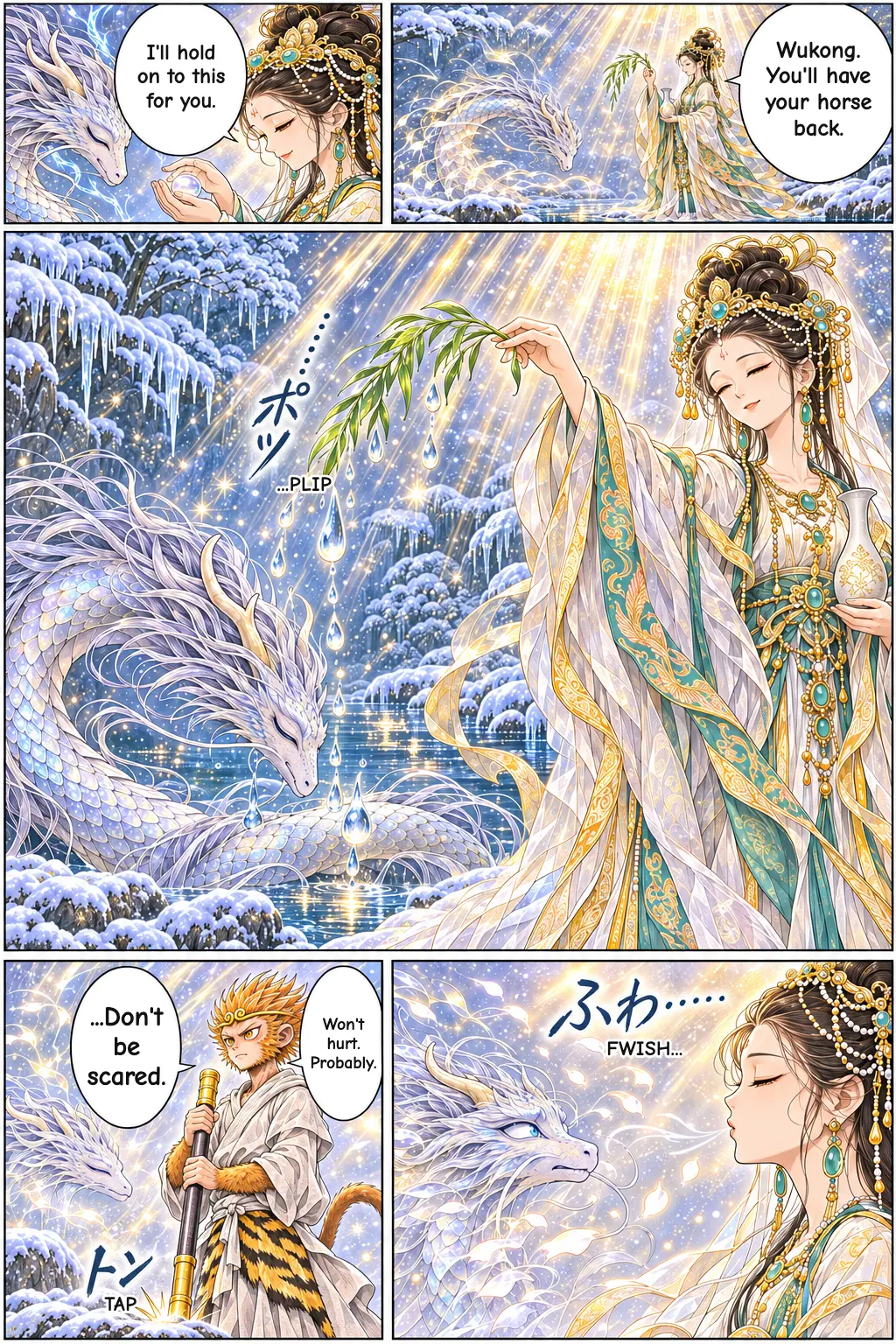
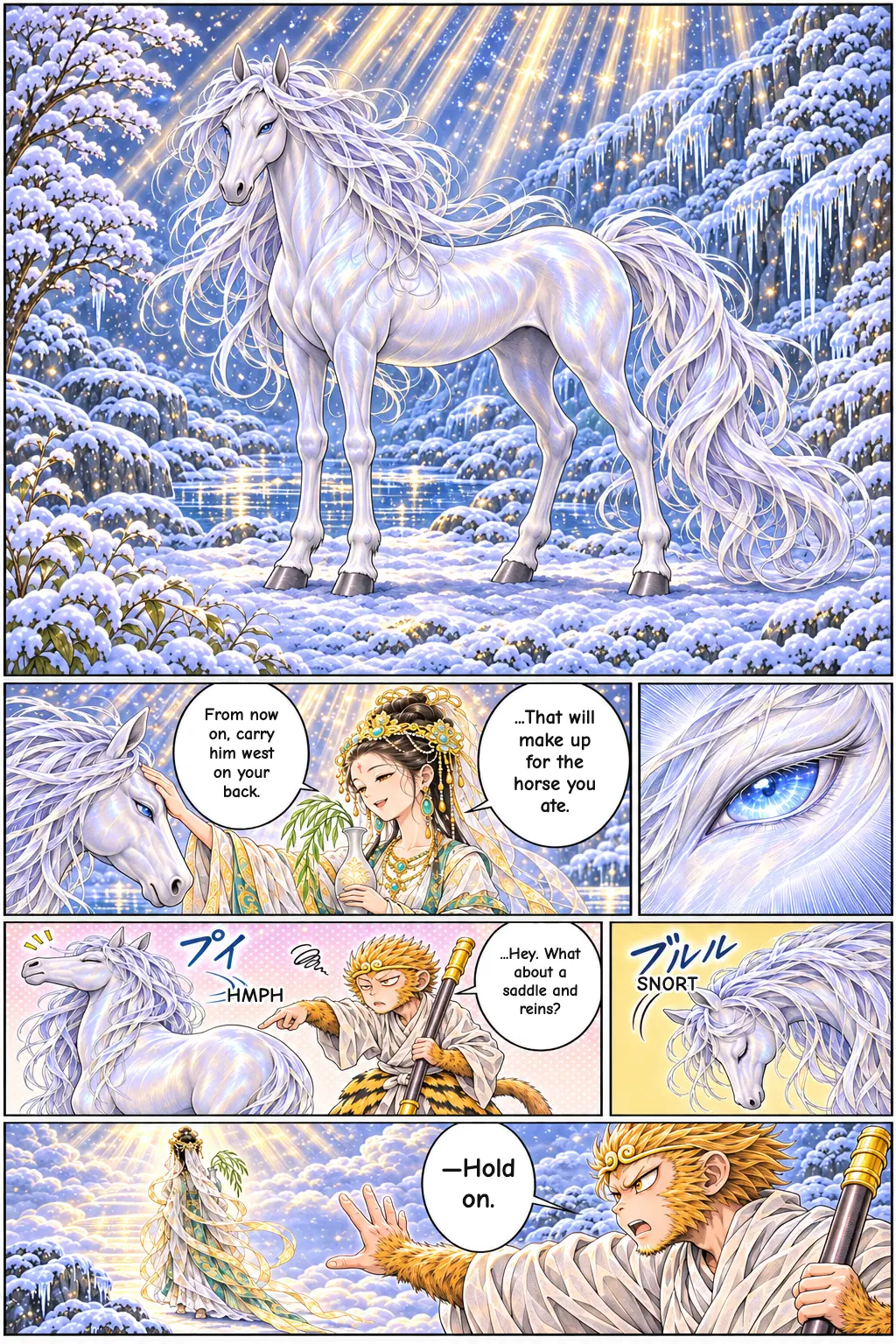
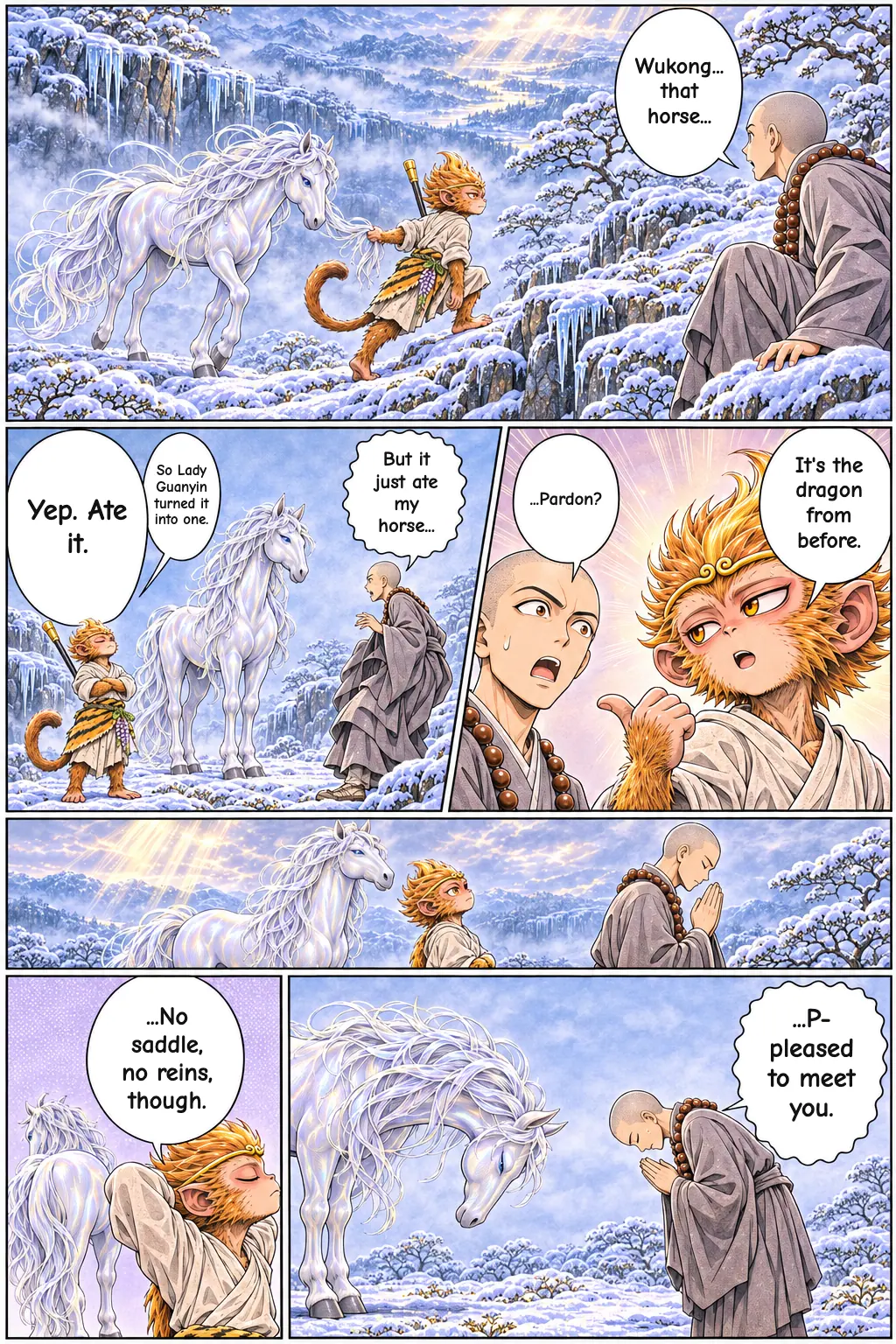
Guanyin calls out to the dragon by its title: the Third Prince Yulong (Jade Dragon), son of Ao Run, Dragon King of the Western Sea. The dragon appears in human form and protests that nobody had mentioned any pilgrim. Guanyin takes the bright pearl from under his chin, sprinkles him with sweet dew from her willow branch, and breathes on him. He becomes a white horse that looks just like the one he ate. She tells him to serve faithfully and make up for his past wrongs. An earlier chapter explains that he had been condemned for an offense in his father's palace, and Guanyin had saved him.
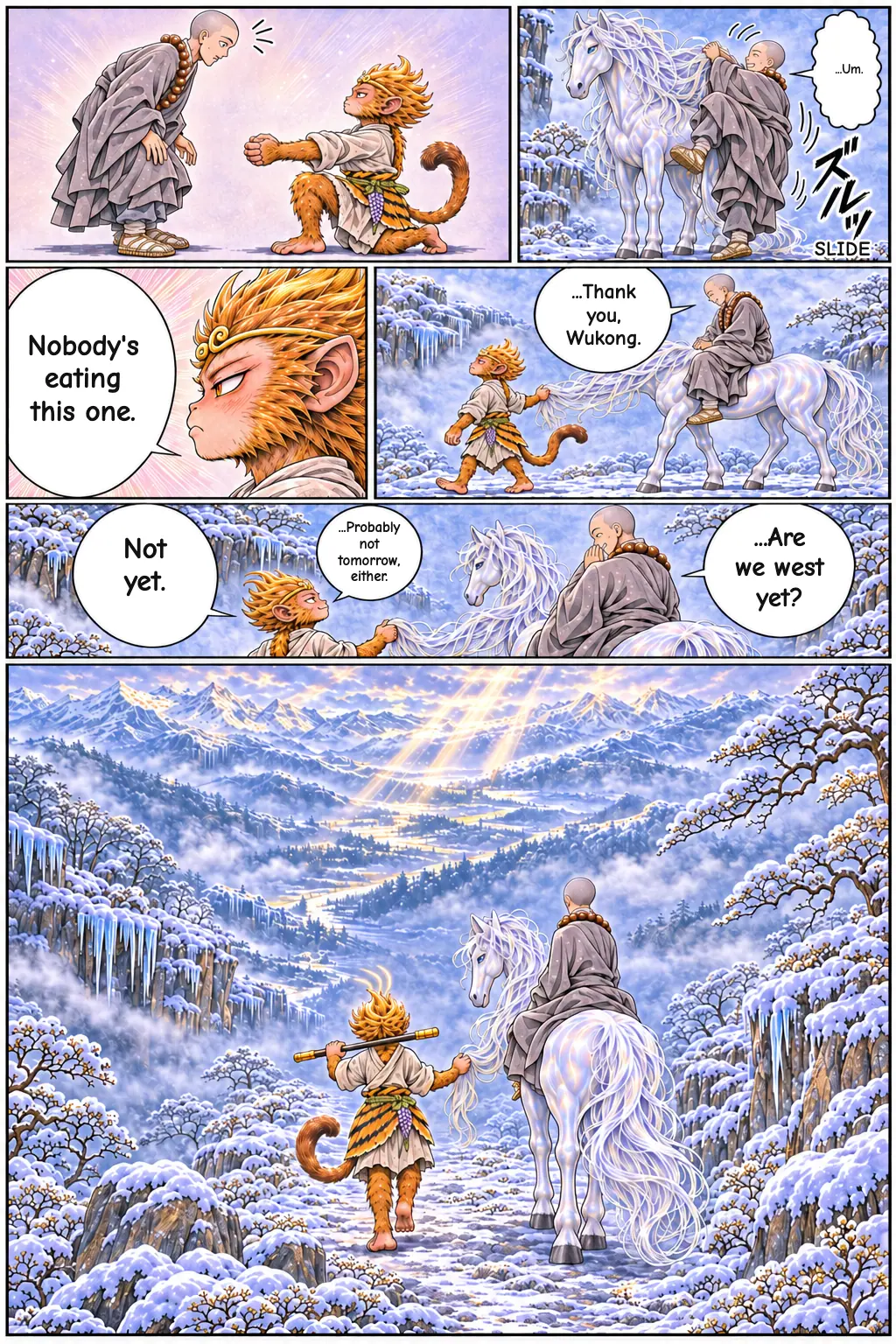
Wukong then begs to be let off the journey, saying the road is too hard. Guanyin turns three willow leaves into three life-saving hairs and sets them on the back of his head, for use when he is truly desperate. When Wukong returns with the horse, Sanzang bows toward the south, where Guanyin lives. The horse still has no saddle, but an old man at a village shrine gives them lodging, a saddle and a bridle, and the next morning a whip. He then reveals that he is a local god sent by Guanyin and vanishes. Sanzang bows in thanks, and Wukong laughs.
Main Characters
Tang Sanzang is devout and grateful, but in this chapter he is quick to cry and afraid of being left alone. Sun Wukong is strong, short-tempered and blunt, and he talks back even to a bodhisattva. Yulong is the hungry, outmatched dragon prince who had been waiting in the gorge. Guanyin stays calm under Wukong's complaints and quietly arranges help behind the scenes. Lesser figures fill in the world around them: the hidden guardian deities, the nervous local gods, and the old man with the saddle.
What the Story Means: Culture and Background
Journey to the West was published in its earliest surviving full form in 1592, during the Ming dynasty. It is a fantastic retelling of the real monk Xuanzang's seventh-century pilgrimage. It mixes Buddhist and Daoist ideas with folk religion, which is why a bodhisattva, dragon kings and village earth gods all appear in the same episode.
The chapter's title in Chinese pairs the monkey and the horse with the idea of reining something in. In Chinese thought there is an old phrase, the 'monkey of the mind and horse of the will,' for a restless mind that won't stay still. Many readers and later commentators take Wukong to stand for the mind and the dragon horse for the will, so taming the horse means getting the will under control. This is a traditional interpretation, not something the story spells out, but it helps explain why the novel bothers to give the monk such an unusual horse.
What the Manga Changes
The manga follows the original chapter's events in order: the frozen gorge, the swallowed horse, the escape into the water and the weeds, Guanyin's arrival, and the reveal that Wukong never said who he was. The novel gives only the outline of Sanzang crying and Wukong scolding him. The manga adds its own dialogue to show an awkward new relationship between teacher and student. It also designs the dragon, the horse, Guanyin and the guardian gods from scratch and stages the fight scenes in its own way.
The novel says almost nothing about the dragon's feelings. The manga gently adds a sense of guilt and of the loneliness of waiting a long time for someone who never comes. Those touches are creative additions, not part of the 1592 text. Any explanation of the mind-monkey and will-horse symbolism in the manga is presented as a later reading of the story.
Where to Read It
To see this episode as a story, read Episode 10 of Journey to the West: The Great Sage Equal to Heaven on Manga Portal. You can follow Wukong from his early adventures to the moment the pilgrims finally get their horse. Every episode is free, with no sign-up required.
Characters in this episode
Tang Sanzang (Tripitaka)
A devout Buddhist monk traveling west for scriptures, who weeps when his horse is eaten and fears being left alone.
Sun Wukong, the Monkey King
Sanzang's newly recruited disciple, powerful and hot-tempered, who fights the dragon and argues with Guanyin.
Yulong, the White Dragon Horse
The third son of the Dragon King of the Western Sea, who eats the horse and is transformed into Sanzang's white steed.
Guanyin
The bodhisattva of mercy who secretly protects the pilgrims, turns the dragon into a horse, and gives Wukong three life-saving hairs.
The hidden guardian deities
Gods sent by Guanyin to guard the pilgrims unseen, one of whom flies to fetch her.
The old man at the shrine
A local god in disguise, sent by Guanyin, who gives the travelers a saddle, a bridle and a whip.
FAQ
Who is the white horse in Journey to the West?
The white horse is Yulong, the third prince of Ao Run, Dragon King of the Western Sea. Guanyin turns him into a horse in Chapter 15 so he can carry Tang Sanzang to India.
Why did the dragon eat Tang Sanzang's horse?
The dragon was hungry and had no idea the travelers were the pilgrims he was supposed to wait for. Guanyin points out that Wukong never told the dragon they were on their way to fetch scriptures.
What chapter does the white dragon horse appear in?
The dragon eats the horse and is transformed in Chapter 15. His backstory, in which Guanyin saves him and tells him to wait for the pilgrim, is set up in an earlier chapter.
What are Sun Wukong's three life-saving hairs?
After Wukong complains that the journey is too hard, Guanyin turns three willow leaves into three hairs and places them on the back of his head. They are meant to save him in a moment of real crisis.
What does the white dragon horse symbolize?
A common traditional reading links Wukong to the restless 'monkey of the mind' and the horse to the 'horse of the will.' Taming the horse then stands for bringing the will under control. This is an interpretation by readers and commentators, not a statement in the story itself.