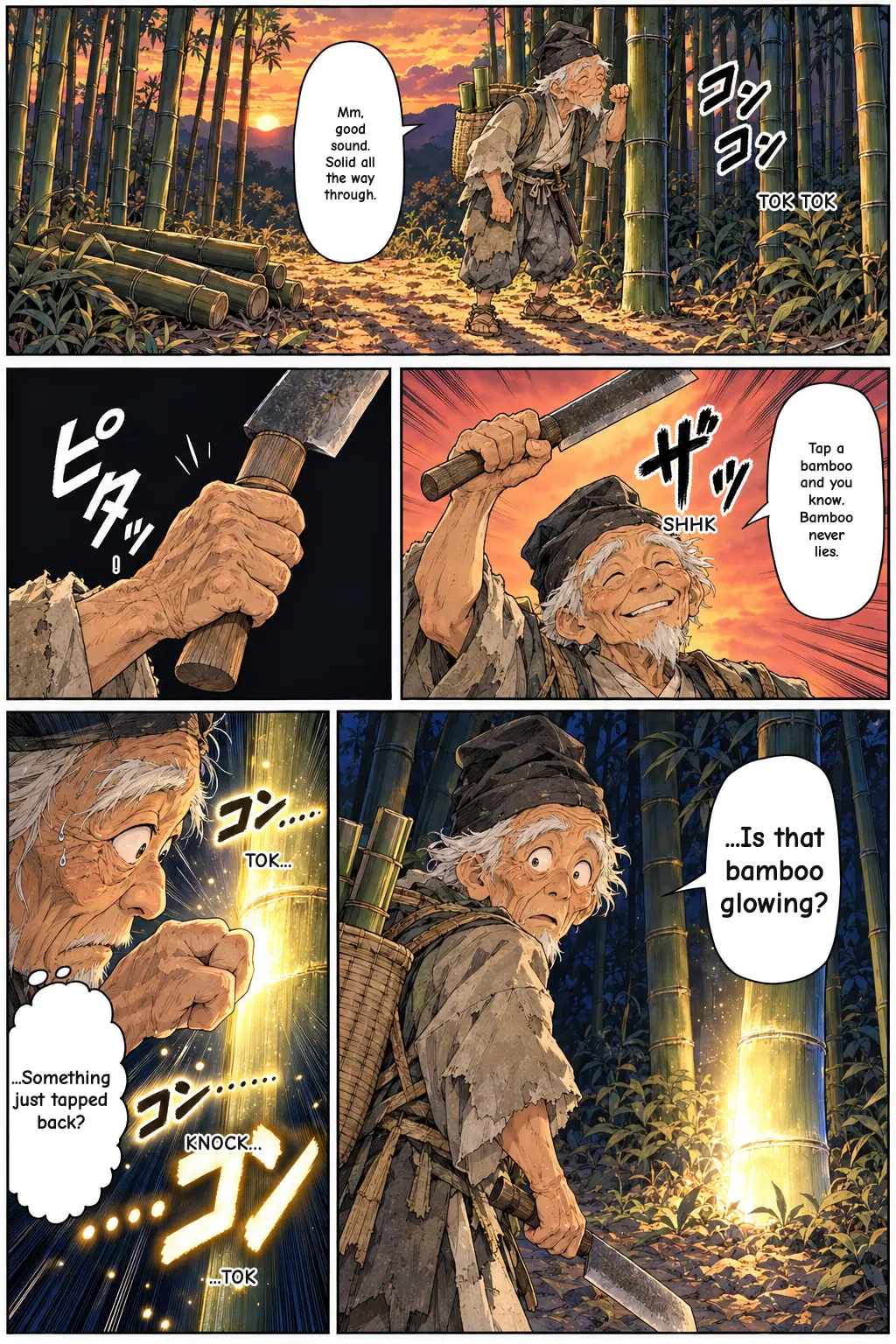
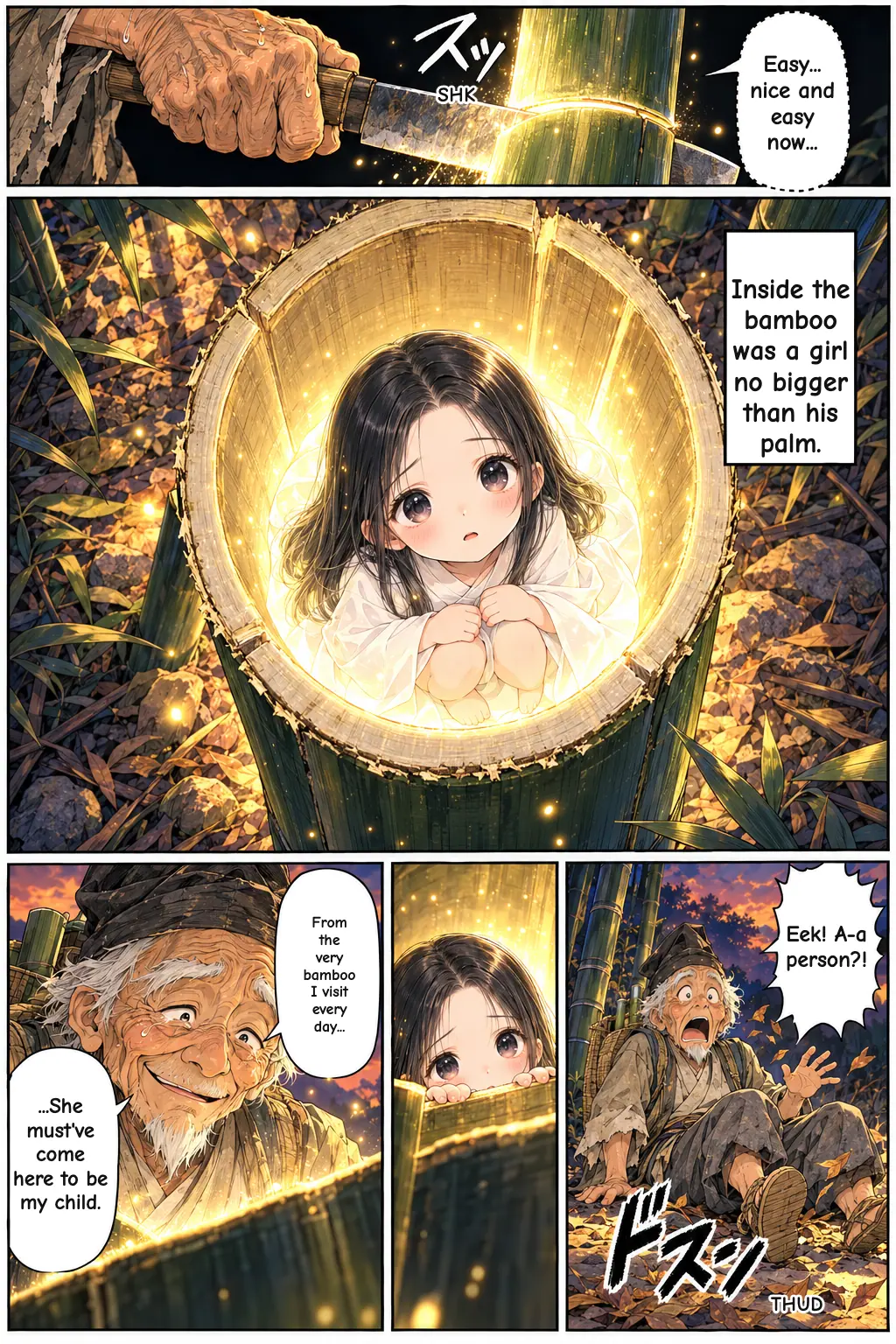
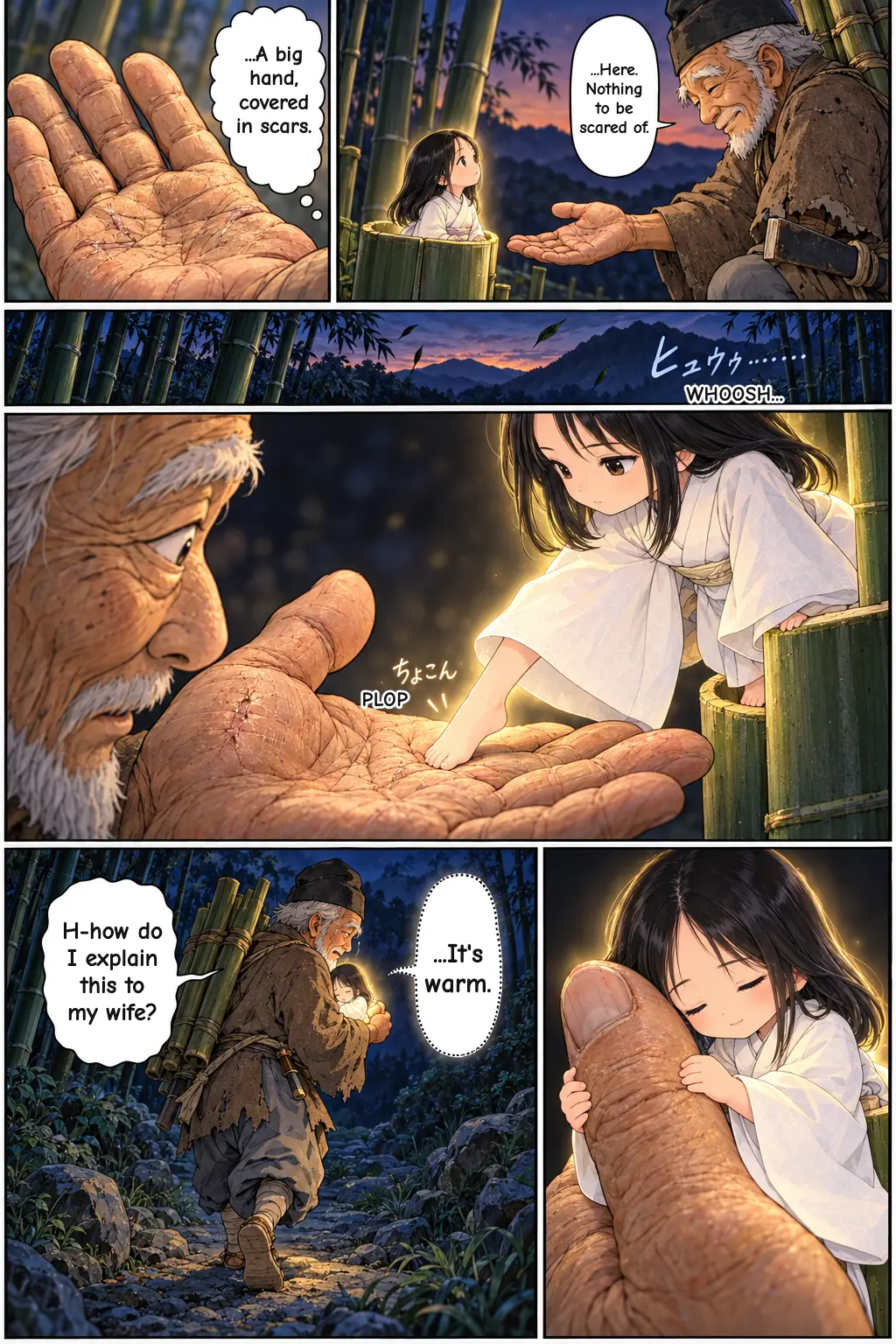
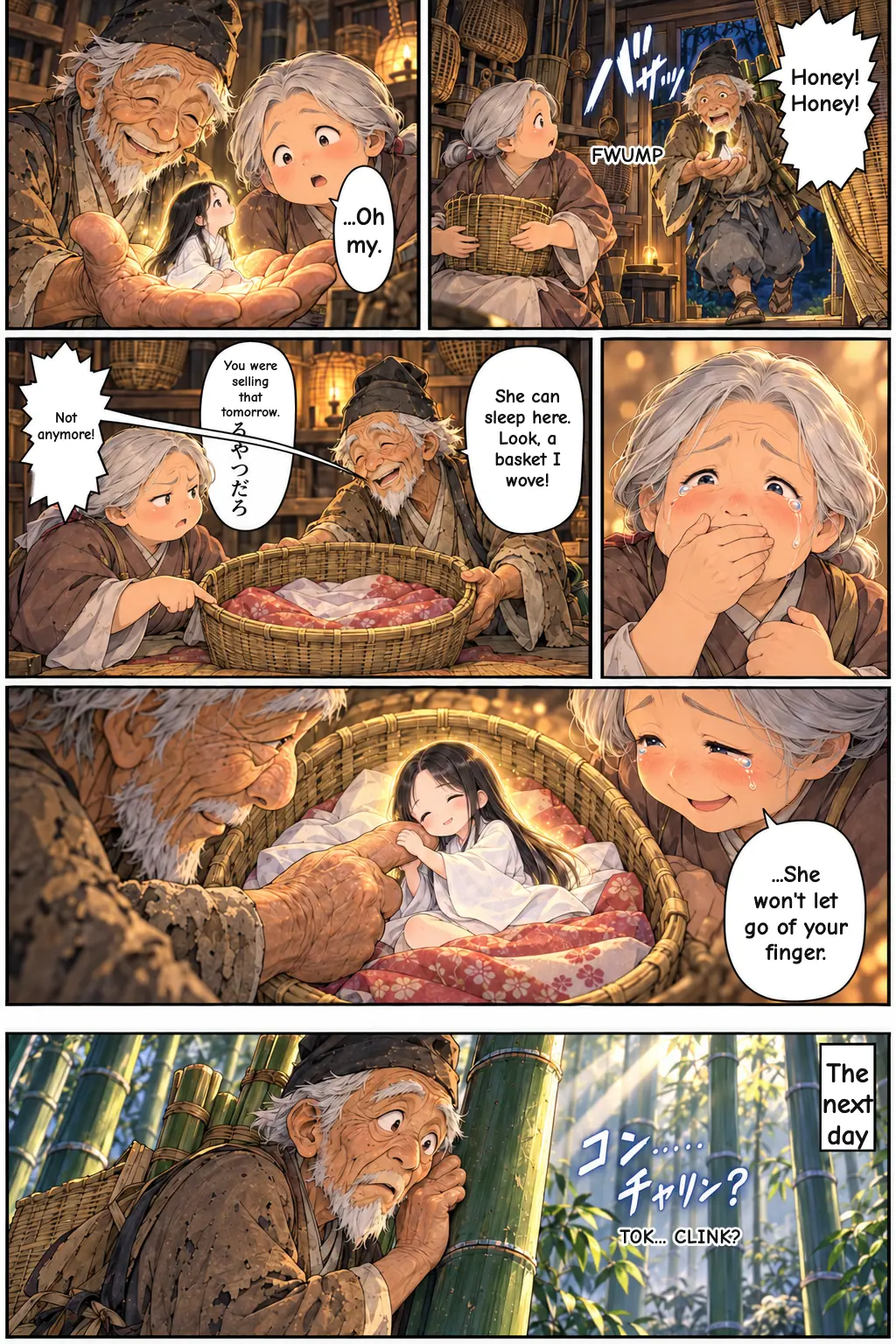
Episode 1Born from Bamboo, Grown in Three MonthsThe Birth of Princess Kaguya
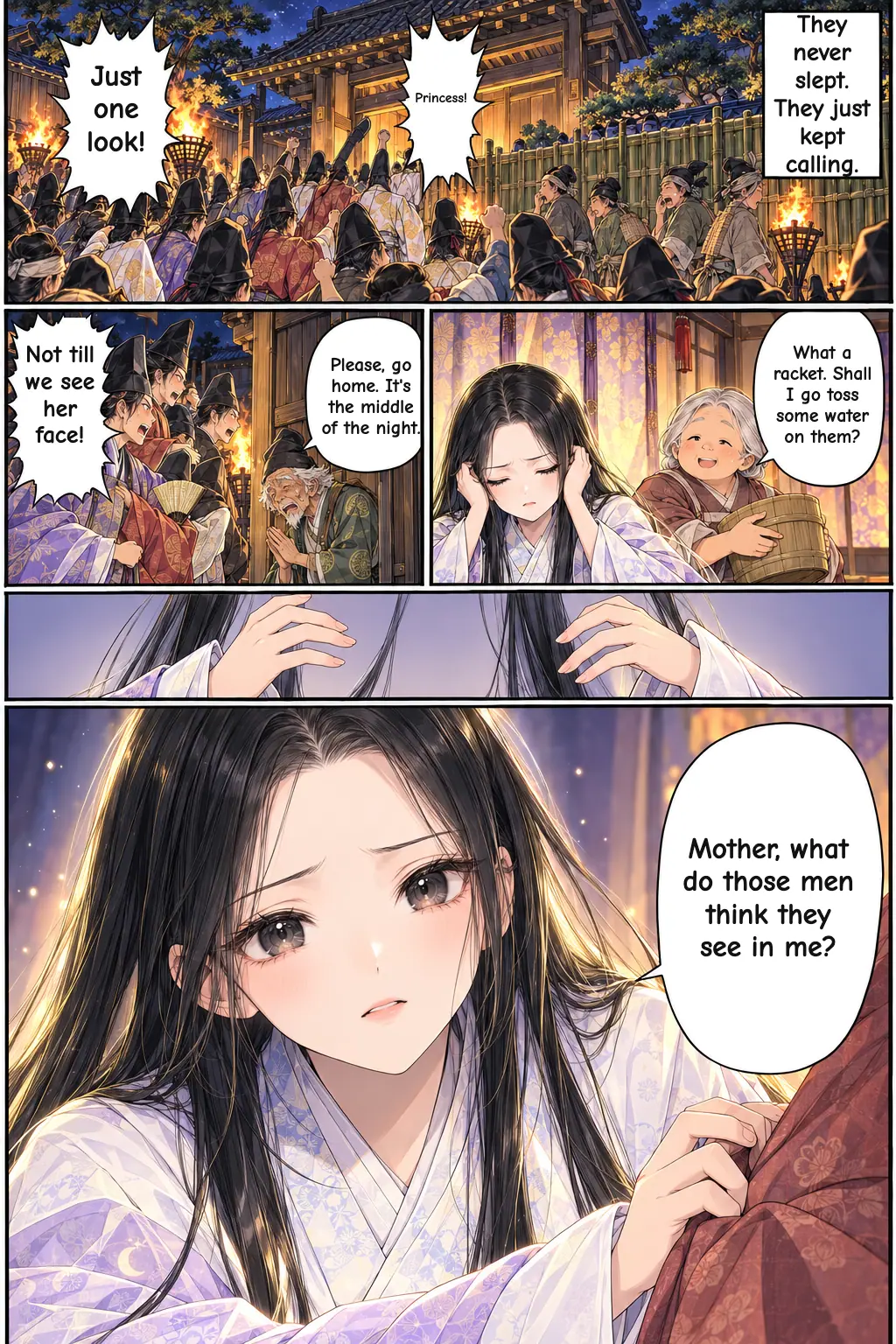
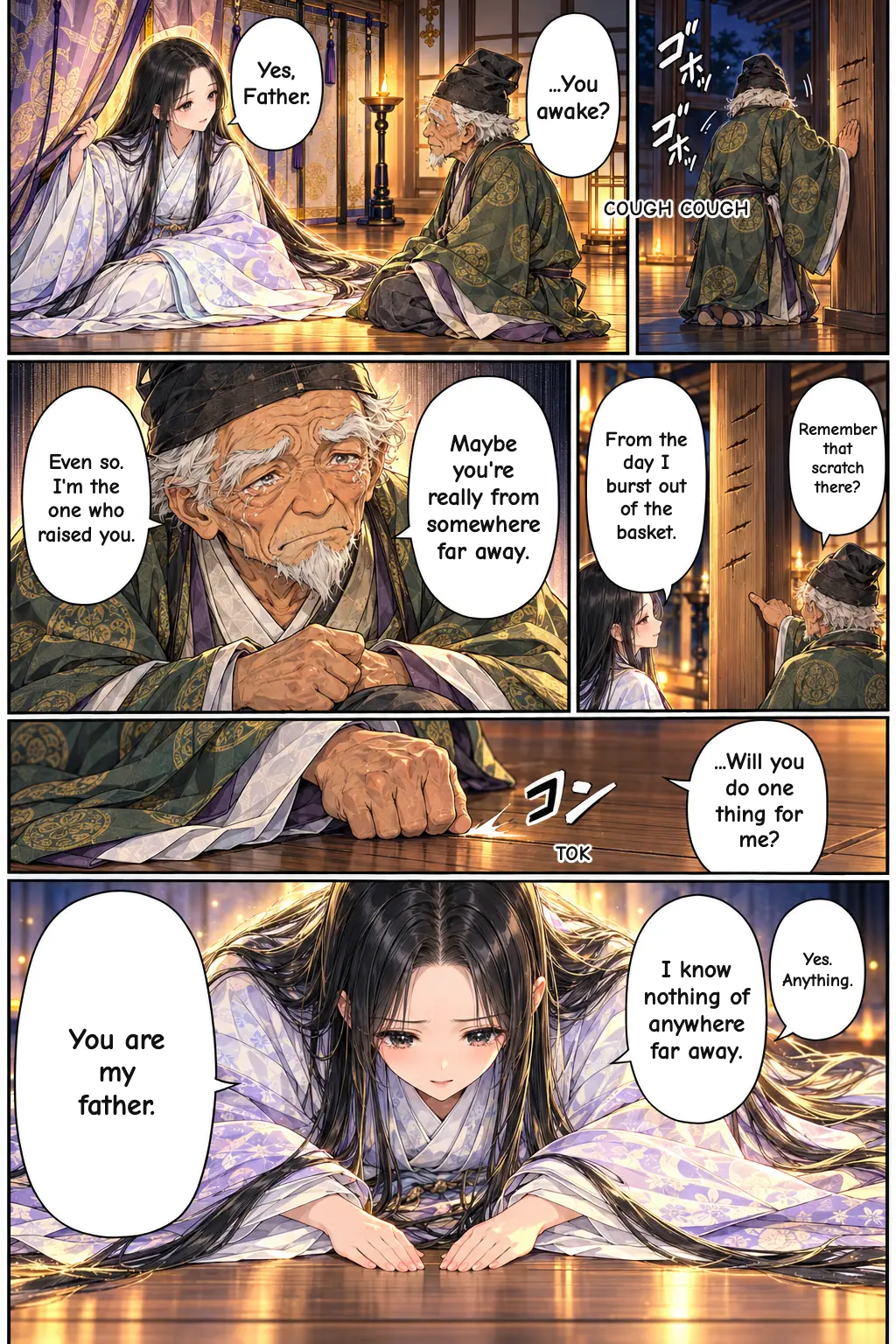
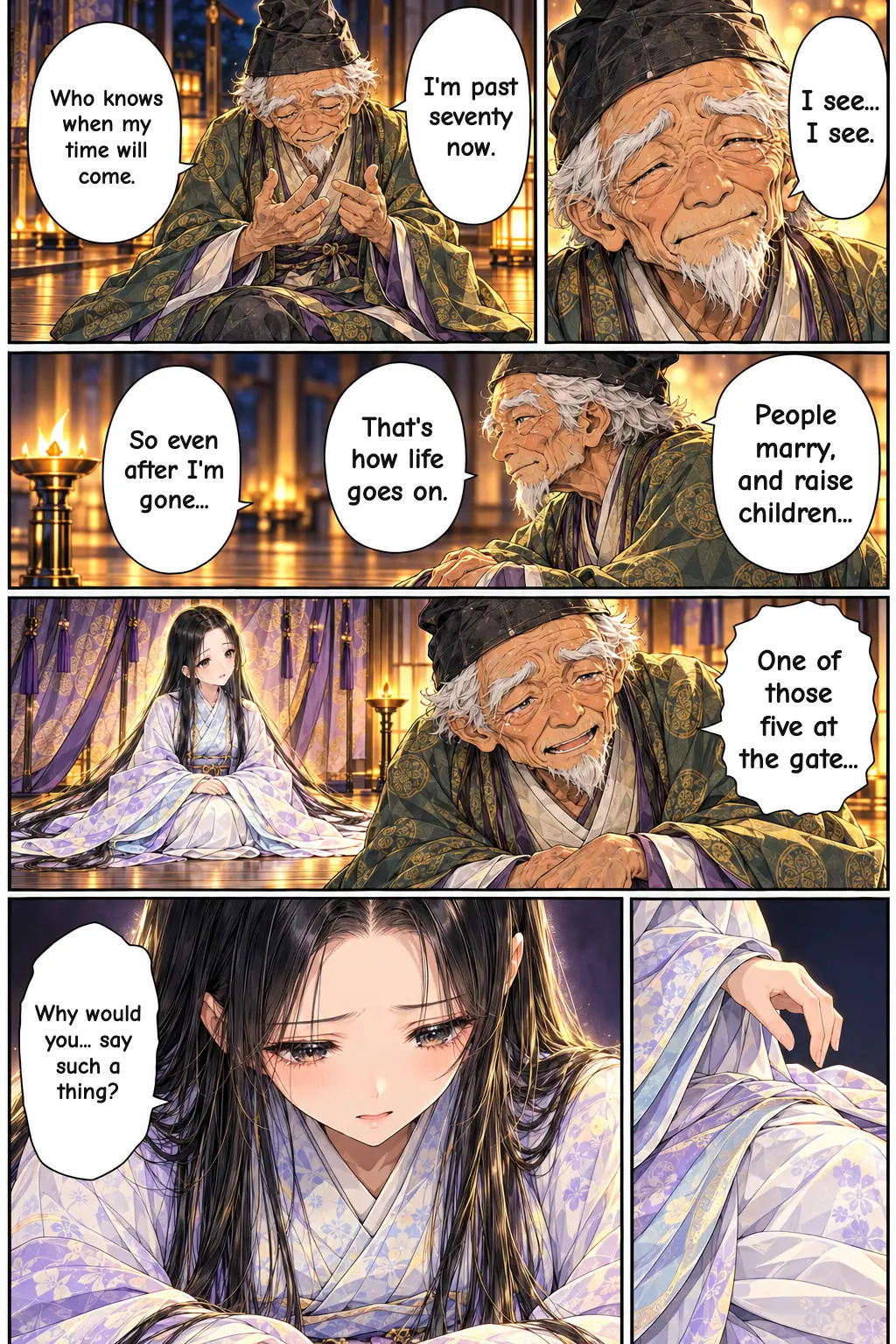
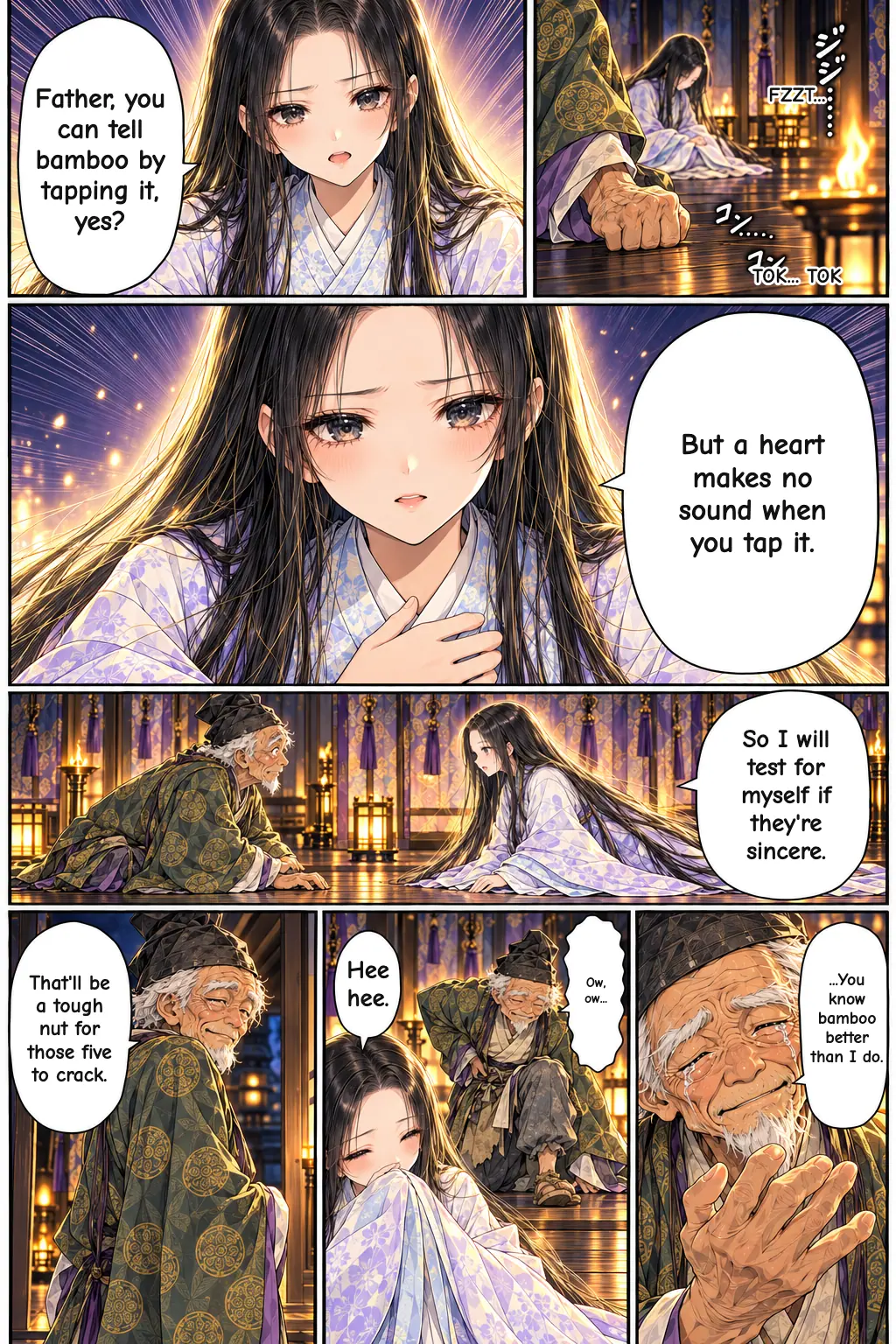
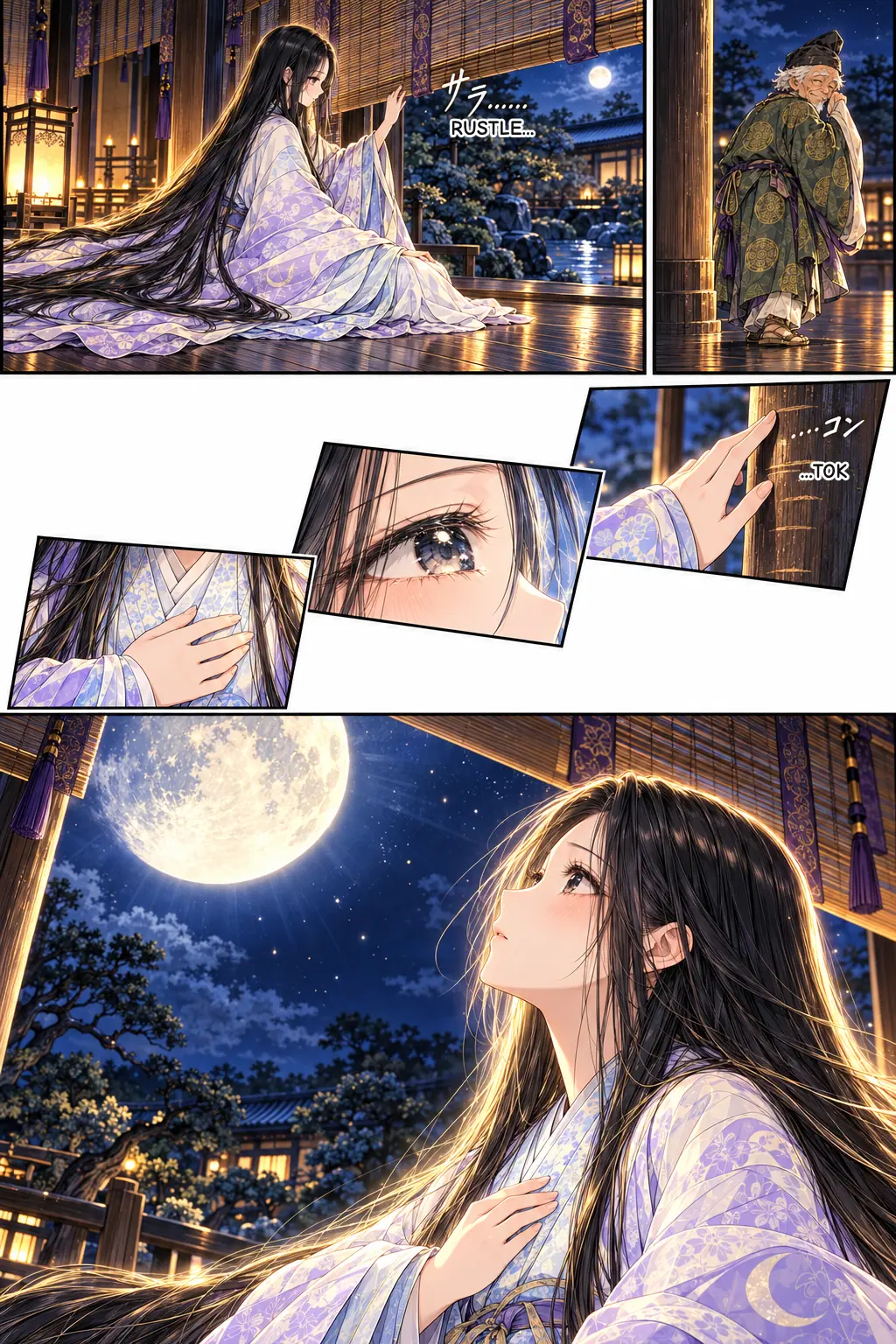
An old bamboo cutter finds a girl no bigger than his palm inside a glowing stalk of bamboo, and he and his wife raise her as their own. She grows into a radiant beauty, and men swarm their gate. Her aging father begs her to marry while he still lives. Her answer borrows his own habit of tapping bamboo: quiet, gentle, and impossible to shake.
Get new episodes in your feed. Follow us on:ThreadsBluesky
Story summary
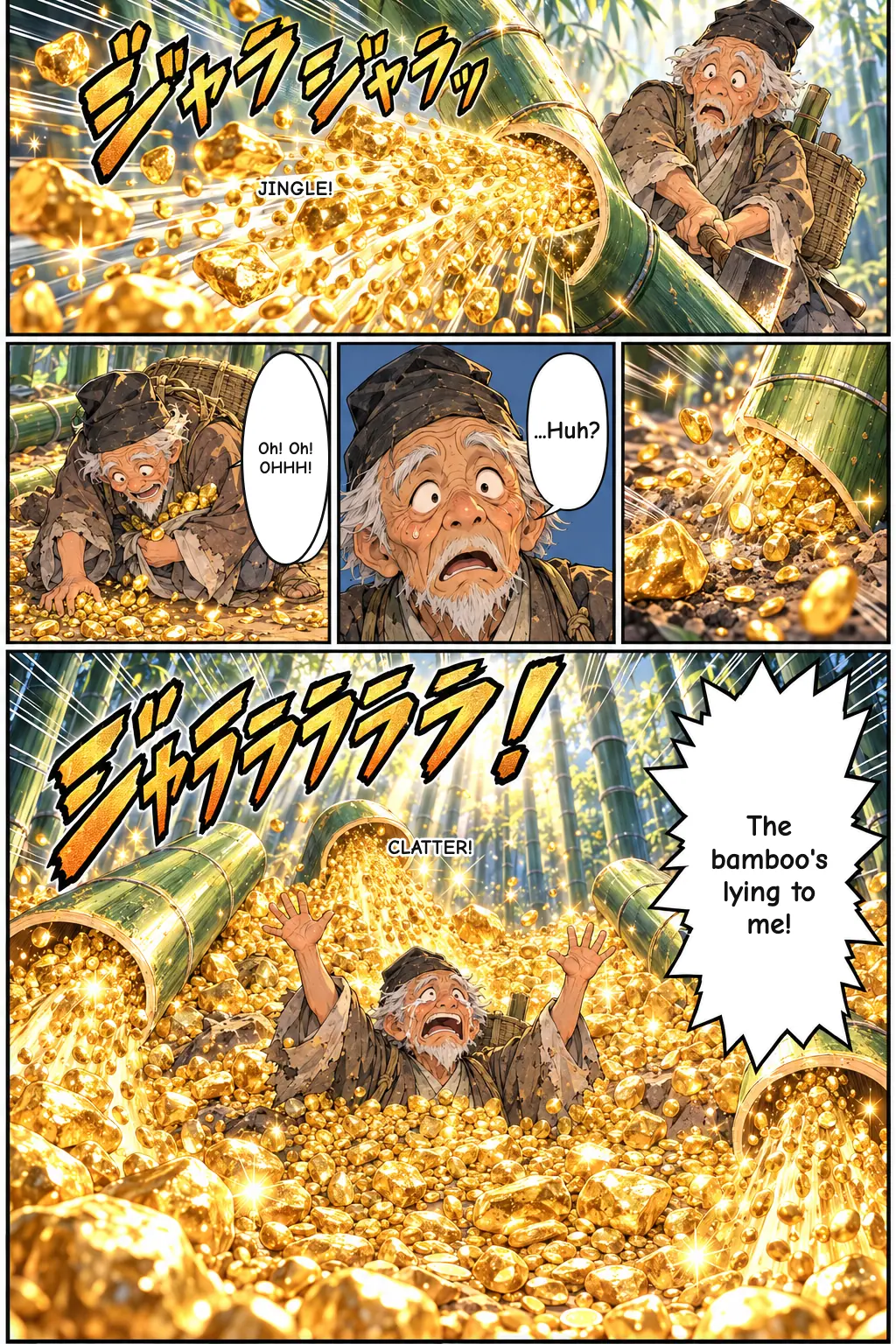
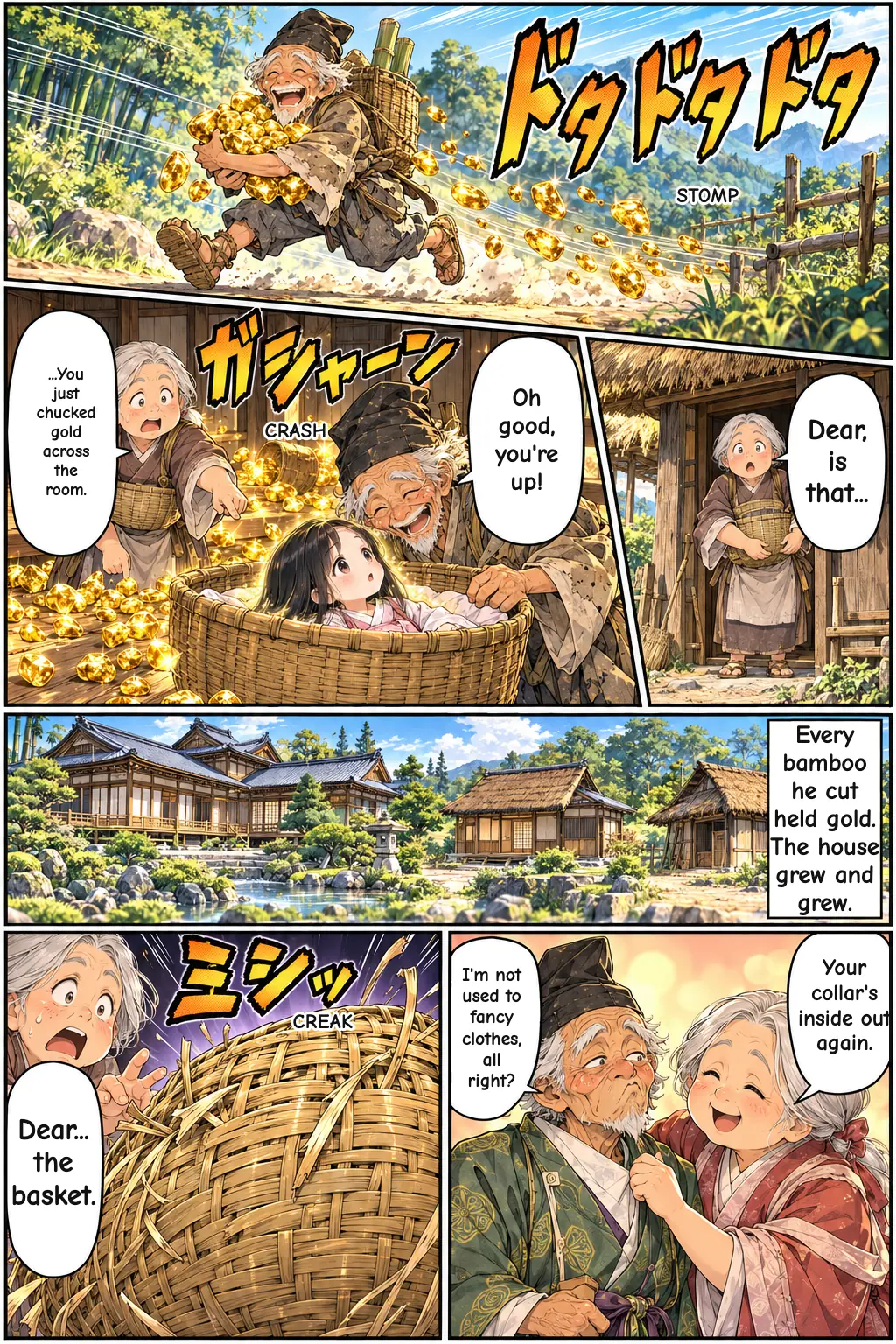
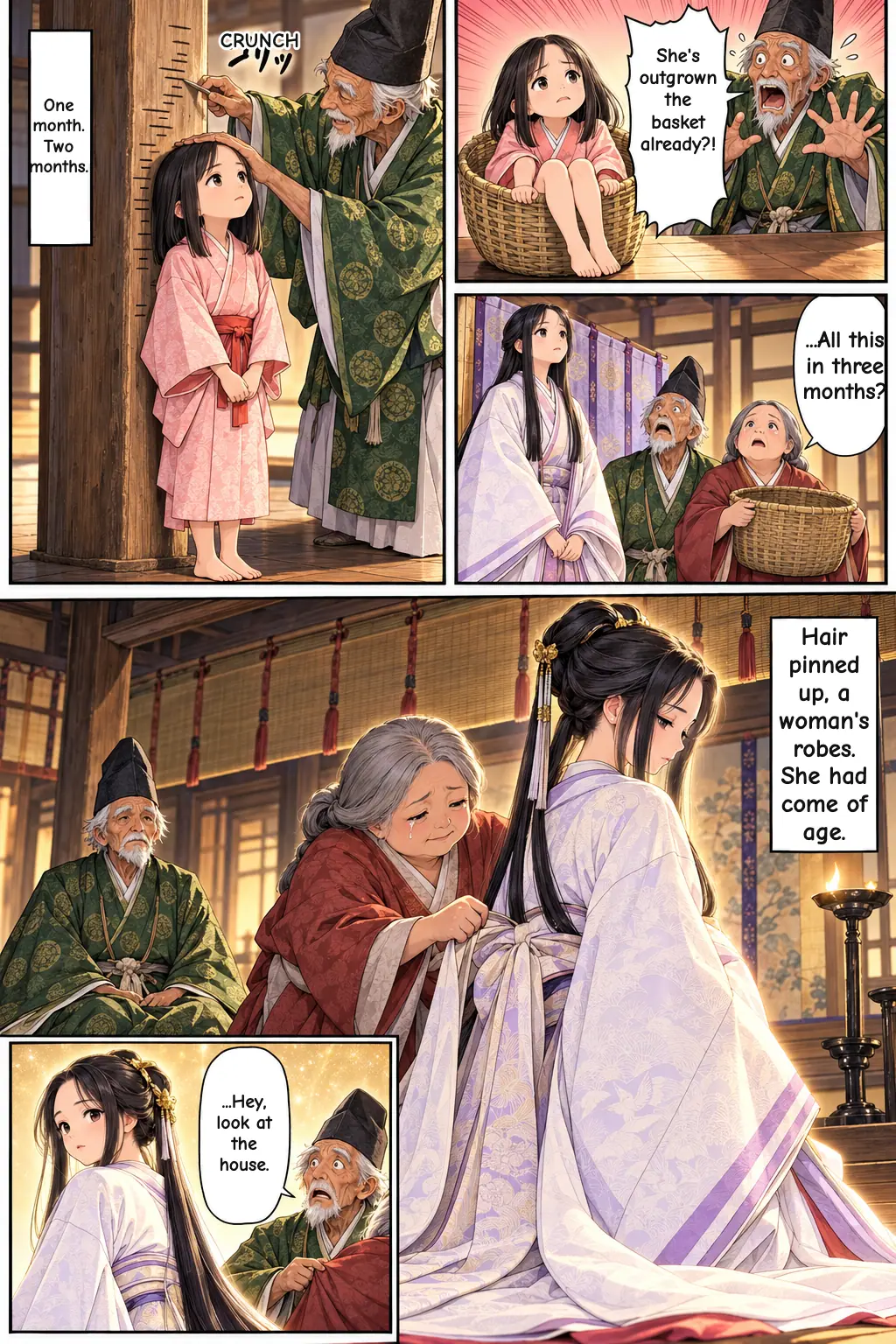
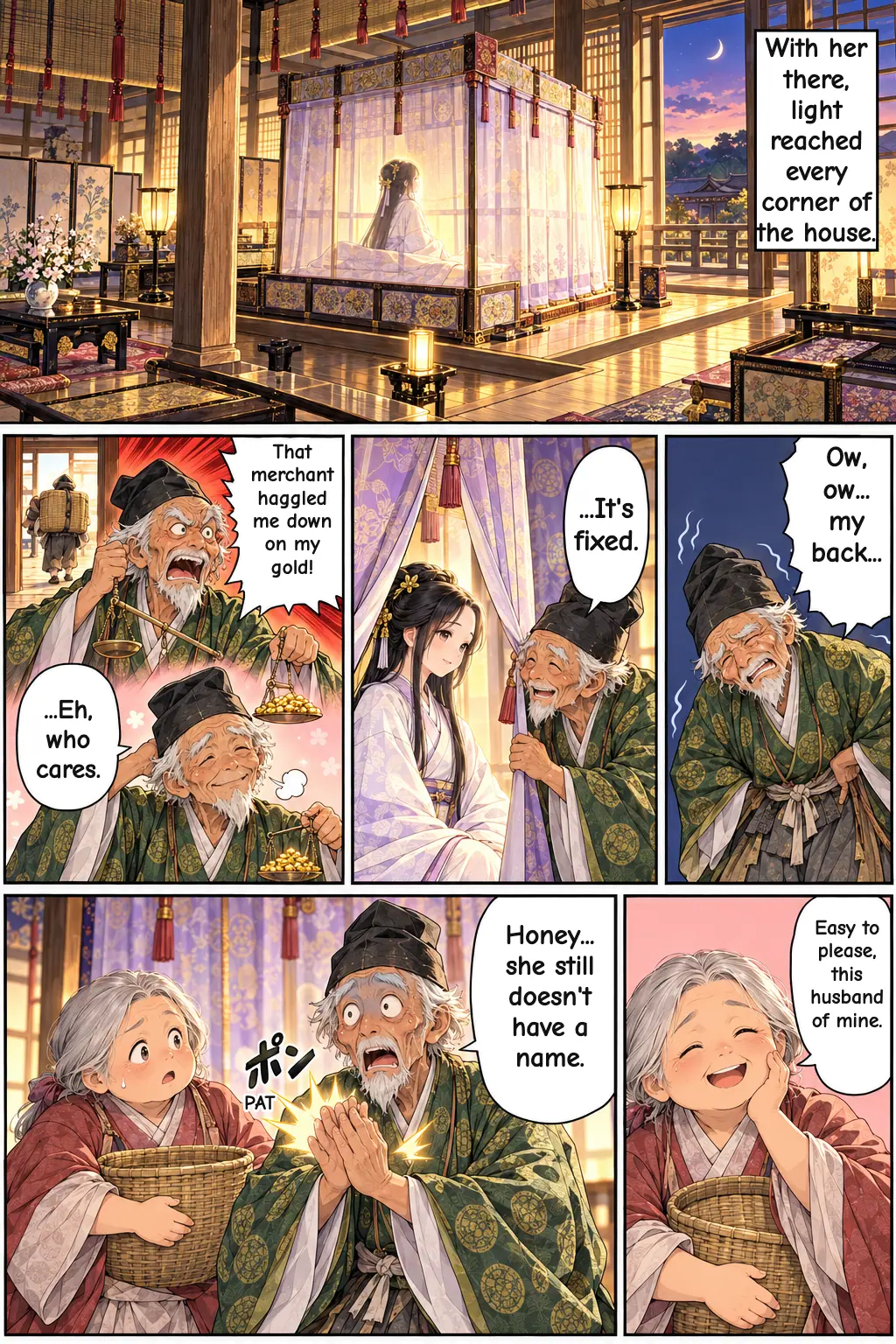
One day an old man who makes his living cutting bamboo notices a single stalk shining from within. Inside he finds a girl only about three inches (roughly 9 cm) tall. He and his wife, who have no children, take her home and raise her as their own daughter. From then on, whenever he cuts bamboo, he keeps finding gold hidden in the stalks, and the family slowly becomes rich. The girl grows at an astonishing speed. In about three months she is a full-grown young woman, so beautiful that her presence seems to fill the house with light.
The Tale of the Bamboo Cutter Summary: How Princess Kaguya Was Born from Bamboo
In short: The Tale of the Bamboo Cutter (Taketori Monogatari) is the story of an old bamboo cutter who finds a tiny girl inside a glowing bamboo stalk. She grows into Princess Kaguya, a beauty courted by noblemen and an emperor, and at last she is taken back to the Moon, where she came from. It is one of Japan's oldest surviving prose tales, written by an unknown author in the early Heian period (around the 9th–10th century).
The original story in brief
One day an old man who makes his living cutting bamboo notices a single stalk shining from within. Inside he finds a girl only about three inches (roughly 9 cm) tall. He and his wife, who have no children, take her home and raise her as their own daughter. From then on, whenever he cuts bamboo, he keeps finding gold hidden in the stalks, and the family slowly becomes rich.
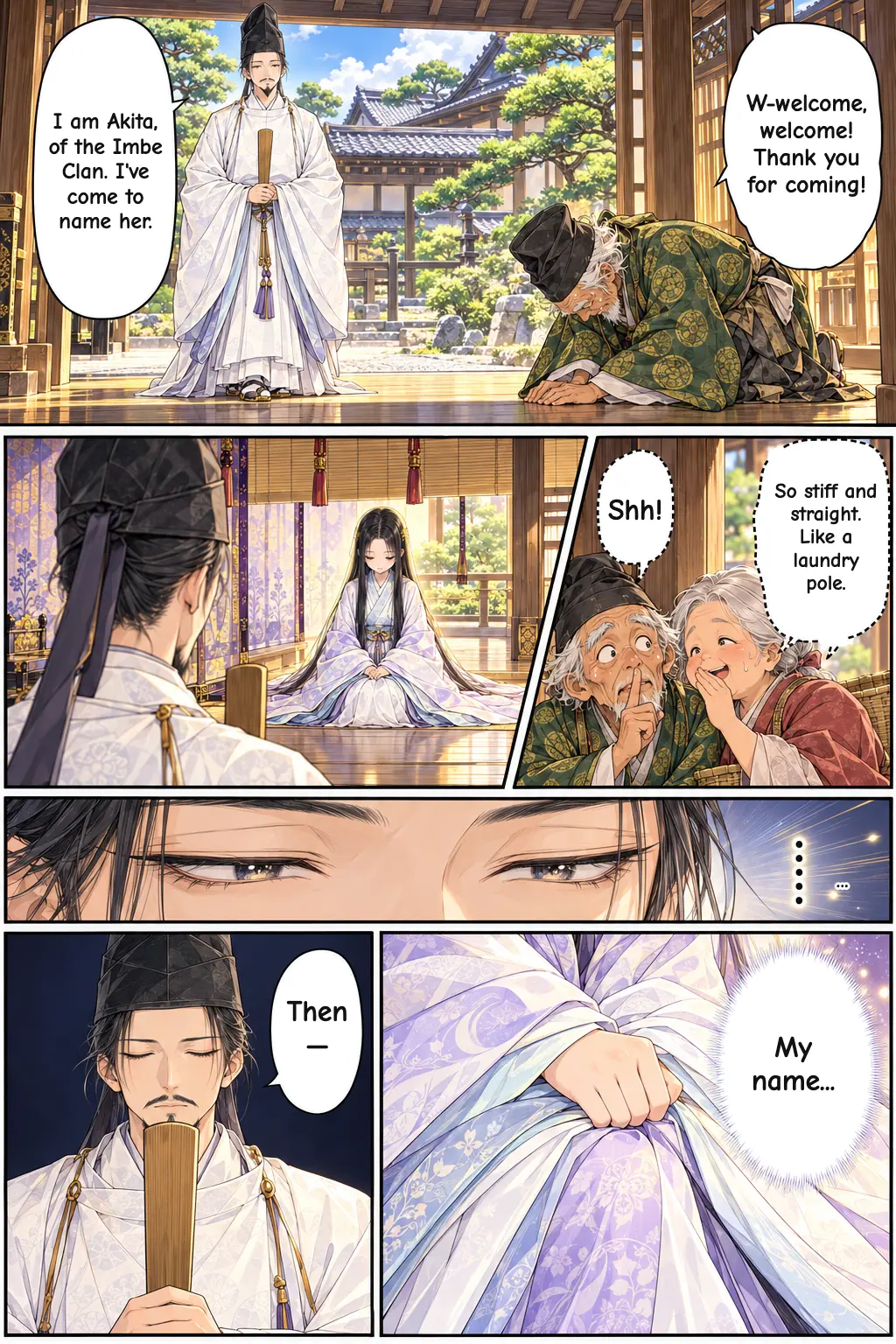
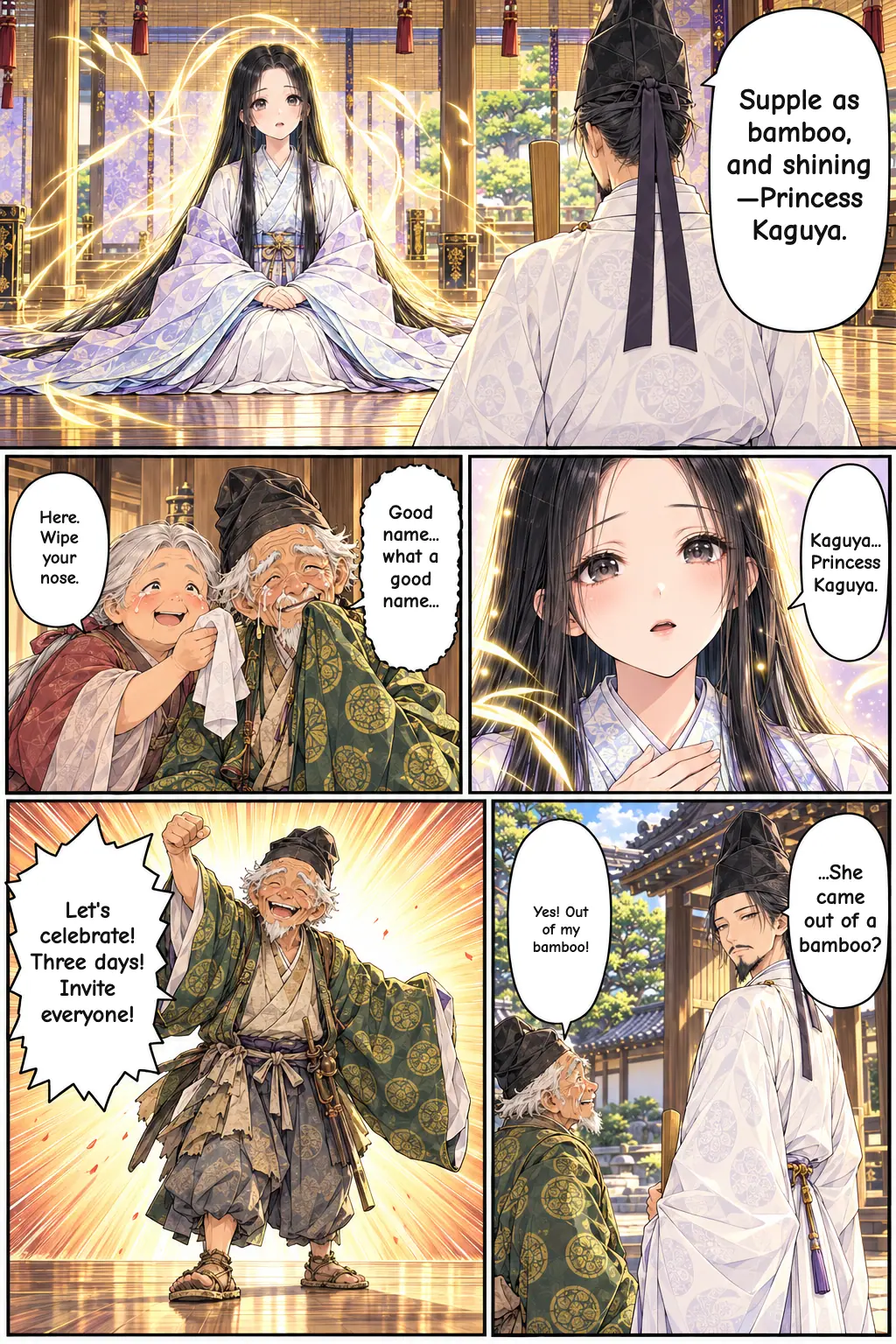
The girl grows at an astonishing speed. In about three months she is a full-grown young woman, so beautiful that her presence seems to fill the house with light. A naming ceremony is held, and she is given the name Nayotake no Kaguya-hime, often translated as "the Shining Princess of the supple bamboo."
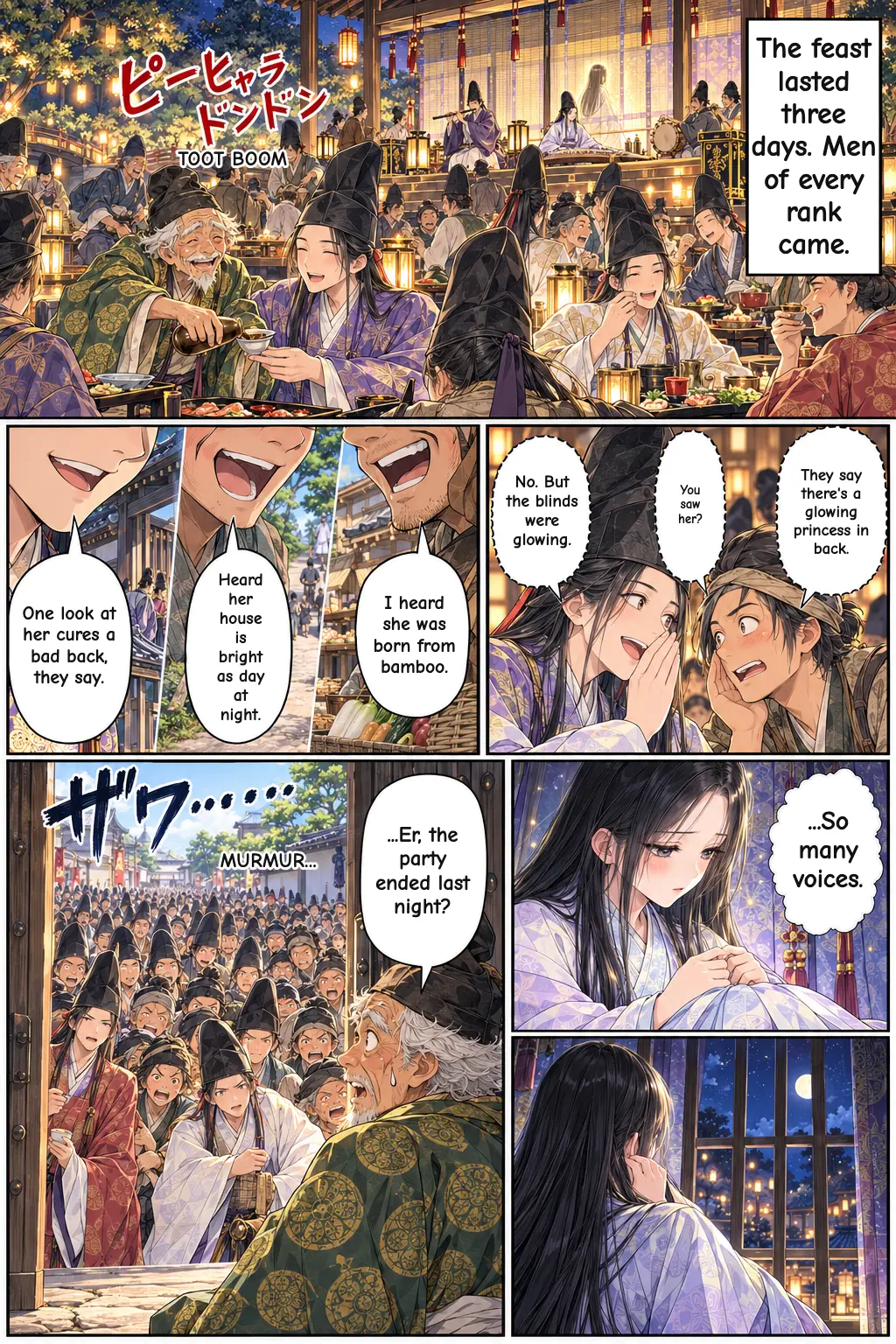
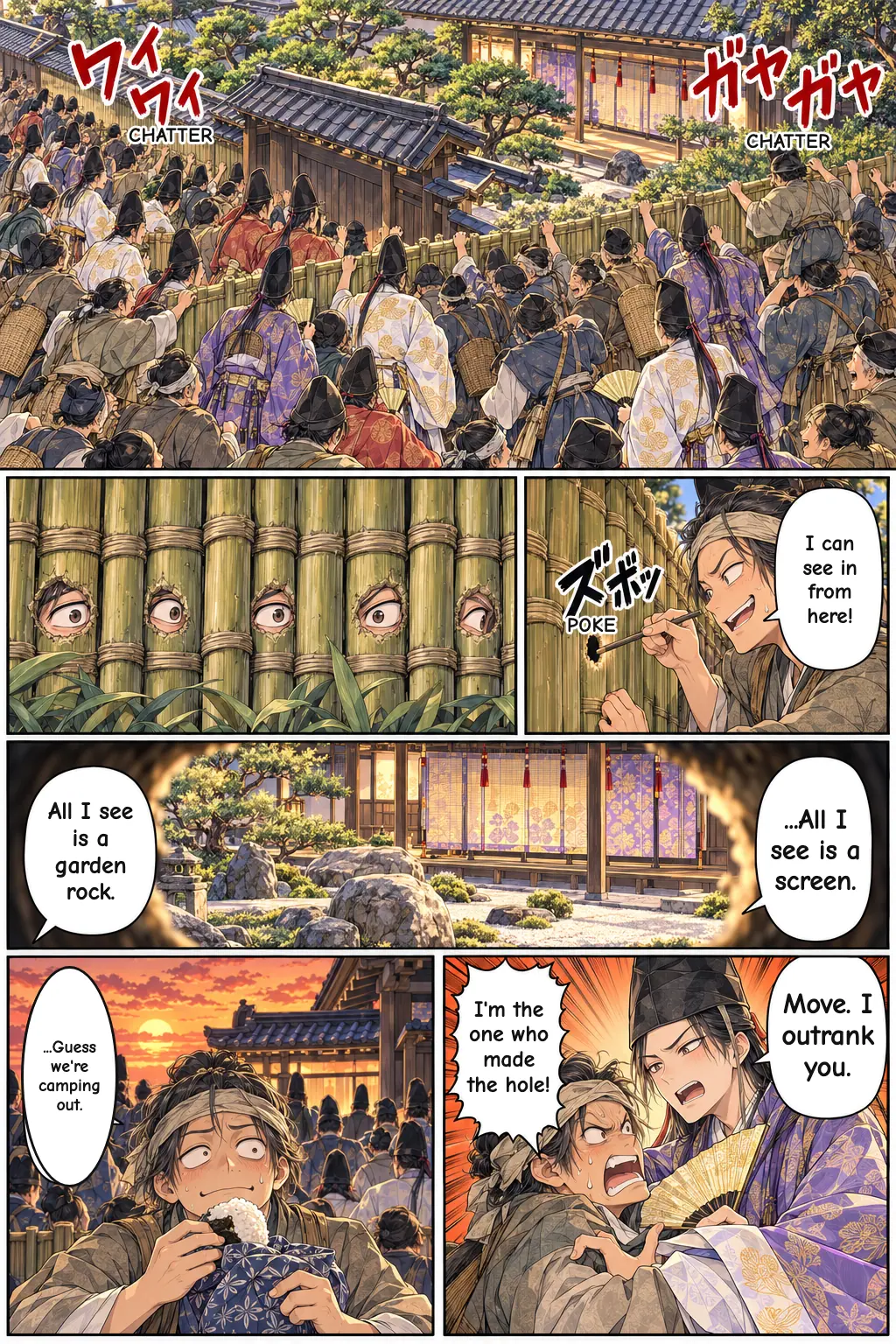
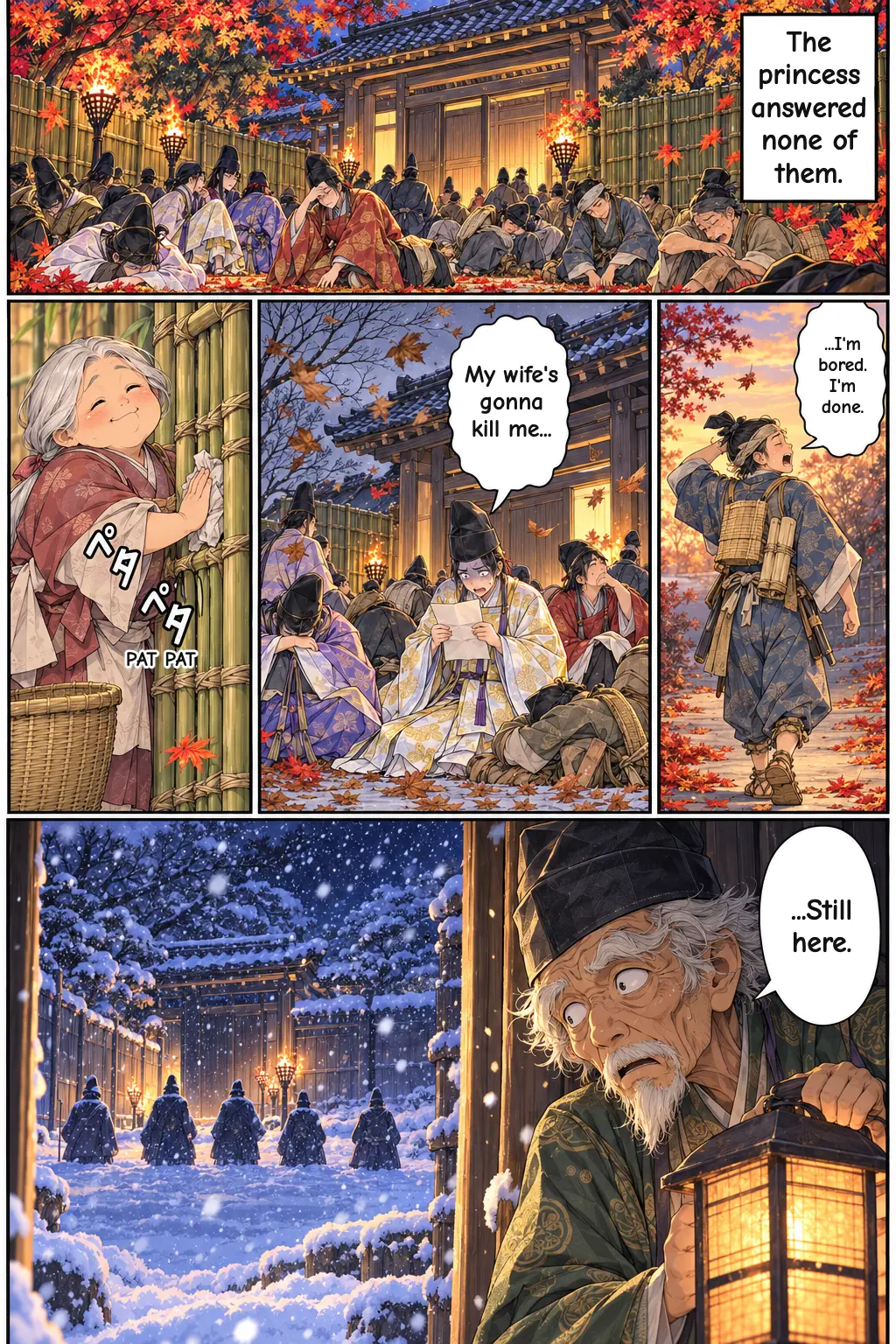
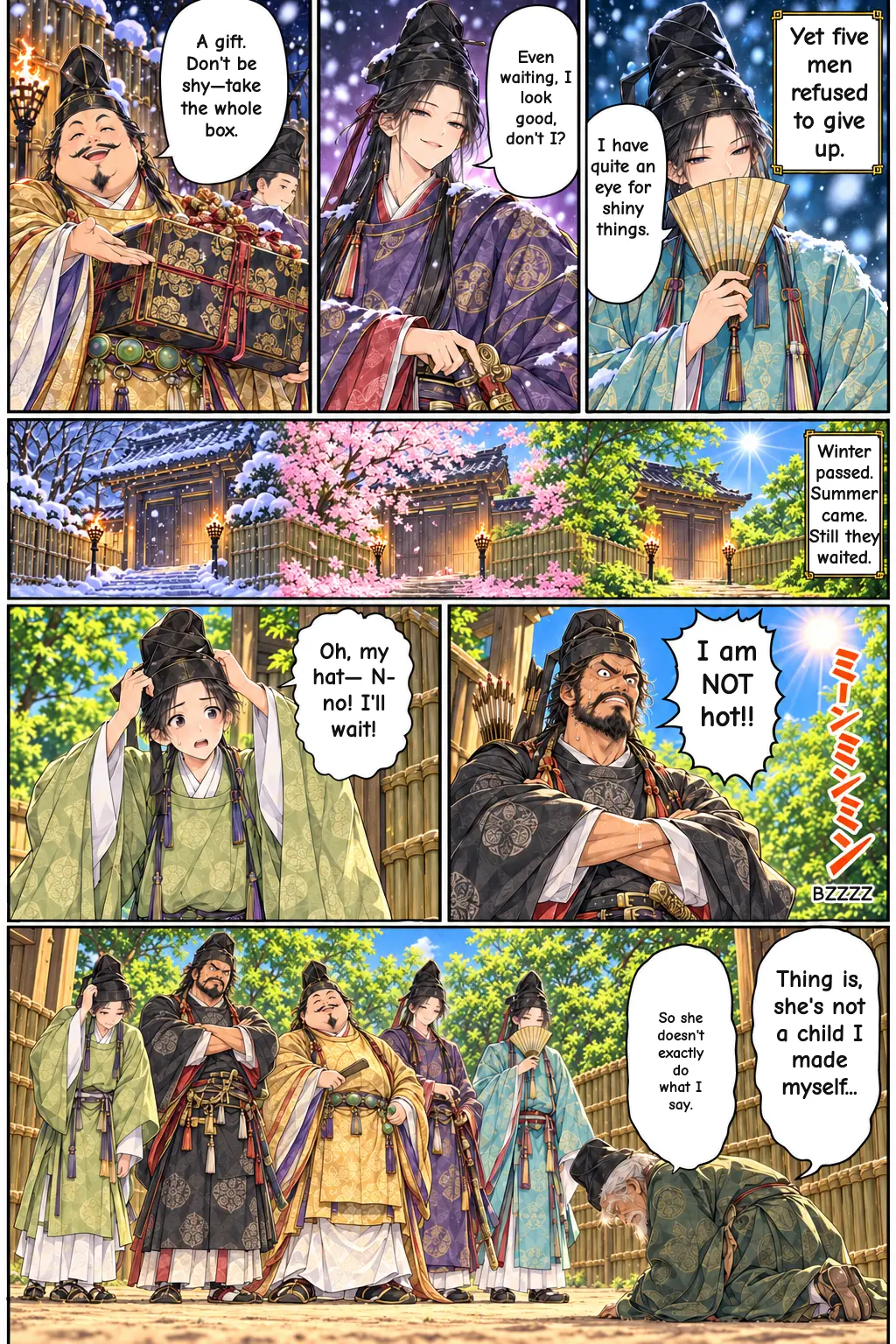
Word of her beauty spreads, and men gather around the house day and night, hoping just to catch a glimpse of her. Five noble suitors refuse to give up. The old man, now past seventy, pleads with her: in this world, people marry, and he wants to see her settled before he dies. She answers that she will only marry someone whose devotion is truly proven, and she gives each of the five suitors an almost impossible quest. All of them fail, some through trickery that is exposed.
Later the Emperor himself falls for her. She refuses to go to court, but the two exchange letters for about three years. Then she begins gazing at the Moon and weeping. She finally confesses that she is from the Capital of the Moon and that people will come for her on the fifteenth night of the eighth month. The Emperor sends 2,000 soldiers to guard the house, but at midnight heavenly beings descend on clouds in a light brighter than day, and the soldiers lose all will to fight. Before putting on the robe of feathers, which will erase her earthly feelings, Kaguya leaves a letter and a robe for her parents, and a poem and an elixir of immortality for the Emperor. Then she rises to the sky in a flying carriage.
How the tale ends: the smoke of Mount Fuji
The old couple fall ill with grief and refuse the elixir, asking what reason they have left to live. The Emperor, too, stops eating and gives up music and amusements. Deciding that immortality means nothing if he can never see her again, he asks which mountain is closest to heaven. He is told of a peak in Suruga Province, and he orders his messenger to burn the letter and the elixir at its summit.
According to the tale, the mountain was named Fuji because many soldiers (in Japanese, a word that sounds like "fuji") climbed it, and its smoke is said to rise into the clouds to this day. Many readers also hear "fushi," meaning "undying," in the name, a link to the burned elixir. That second reading is a popular interpretation rather than something the text states outright.
What the story tells us about its time
The tale comes from the world of the Heian court, where marriage, rank, and poetry were tightly linked. The suitors' quests poke fun at powerful men who try to buy, fake, or force their way to what they want, and the exchange of poems between Kaguya and the Emperor reflects how courtship actually worked among aristocrats.
The story also carries a strong Buddhist-tinged sense that the human world is impure and fleeting. The Moon people call the earth a defiled place, yet the most moving parts of the tale are human ones: the old man's love, the mother's embrace, and the Emperor's grief. The text says Kaguya was sent down because she committed some offense on the Moon, but it never says what that offense was. Many theories exist, and none is confirmed by the original.
What the manga's Episode 1 adds
Episode 1 follows the opening of the original closely: the glowing bamboo, the palm-sized girl, the couple raising her, her rapid growth, and the crowd of admirers at the gate. The old father's request that she marry while he is still alive also comes straight from the tale.
Some touches are the manga's own. The way Kaguya frames her answer, echoing her father's habit of tapping bamboo, is a creative device that gives the scene a gentle, personal rhythm; the original simply has her insist on proof of real devotion. The look of Kaguya, the house, and the characters, along with the expressions and pauses between lines, are also the artist's interpretation, since the original gives almost no physical description. In later episodes, the designs of the Moon people, the feathered robe, and the flying carriage are invented as well, because the text mentions little beyond clouds and a canopied carriage.
Where to read it
If you want to see the story unfold scene by scene, from the shining bamboo to the last trail of smoke above Fuji, Manga Portal's THE TALE OF THE BAMBOO CUTTER: Princess Kaguya from the Moon retells it in comic form. Every episode is free to read, with no account or sign-up needed. Start with Episode 1 and meet Kaguya before the Moon calls her home.
Characters in this episode
Princess Kaguya (Kaguya-hime)
A girl found inside glowing bamboo who grows into a radiant beauty and is revealed to be from the Capital of the Moon.
The Bamboo Cutter (Sanuki no Miyatsuko)
The old man who finds Kaguya, raises her with deep love, and begs her to marry before he dies.
The Old Woman
The bamboo cutter's wife and Kaguya's foster mother, who holds her tight when the Moon people come.
The Five Suitors
Noblemen who seek Kaguya's hand and fail the impossible quests she sets for them.
The Emperor (Mikado)
The ruler who exchanges letters with Kaguya for years and later burns her elixir of immortality on the mountain closest to heaven.
The Moon People
Heavenly beings who descend on clouds to bring Kaguya back, carrying the robe of feathers and the elixir.
FAQ
Who is Princess Kaguya?
Princess Kaguya is the heroine of The Tale of the Bamboo Cutter, a Japanese tale from the early Heian period. She is found as a tiny girl inside a shining bamboo stalk and turns out to be a being from the Moon.
Why did Princess Kaguya go back to the Moon?
The original says she was sent to earth because of an offense she committed on the Moon, and that once her time was up, the Moon people came to take her home. The tale never explains what the offense was, so any specific answer is later speculation.
Who wrote The Tale of the Bamboo Cutter?
The author is unknown. It was likely written in the early Heian period, around the 9th to 10th century, and is often called the oldest surviving Japanese prose tale.
How is Mount Fuji connected to Princess Kaguya?
At the end of the tale, the Emperor has Kaguya's letter and the elixir of immortality burned on the mountain closest to heaven. The tale explains the name Fuji through the many soldiers who climbed it, and many readers also connect it to "fushi," meaning undying.
Is The Tale of Princess Kaguya the same story?
Yes. The Tale of Princess Kaguya is another common English title for the same story, and several modern films and books retell it in their own ways.