Episode 6She Left Him Foreverand a Cure for Death — The Ascension of Princess Kaguya
Princess Kaguya confesses she must return to the Moon Capital, and on the night of the full moon two thousand soldiers stand guard around her home. Before the Robe of Heaven can change her heart, she leaves behind a letter and a poem. And why did the Emperor burn the Elixir of Immortality?
Princess Kaguya Returns to the Moon: Bamboo Cutter Ending Explained
The Original Story: Princess Kaguya's Ascension
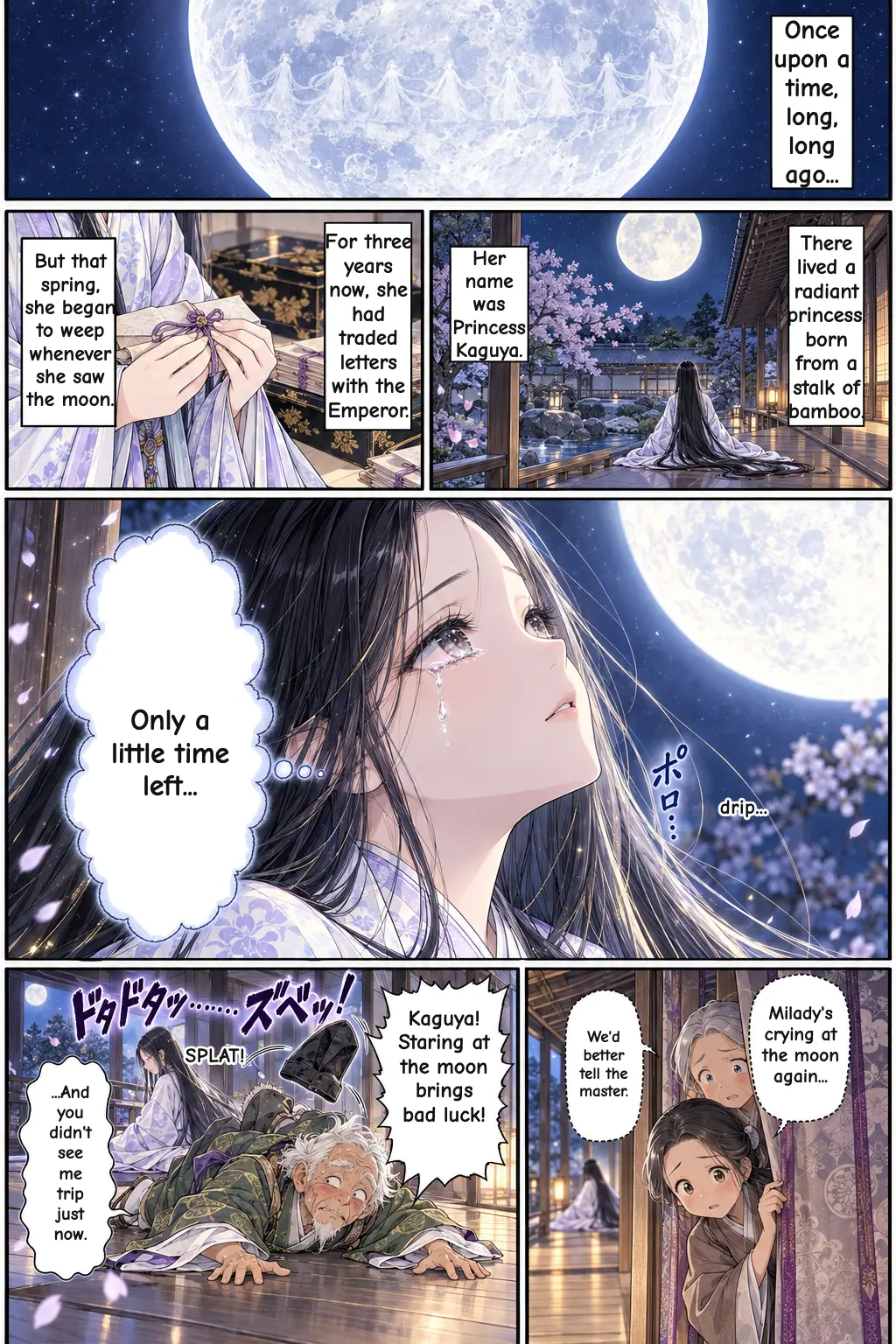
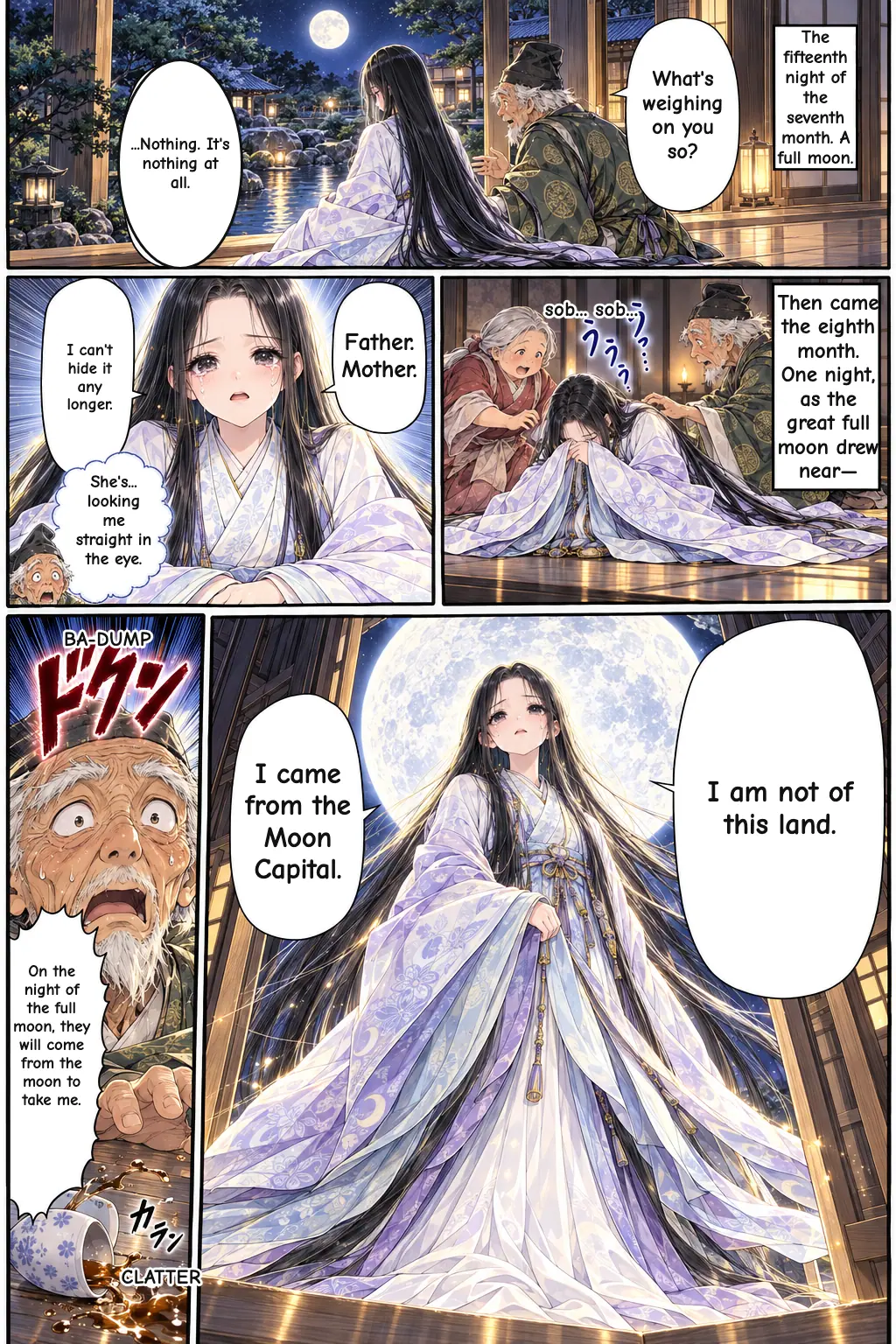
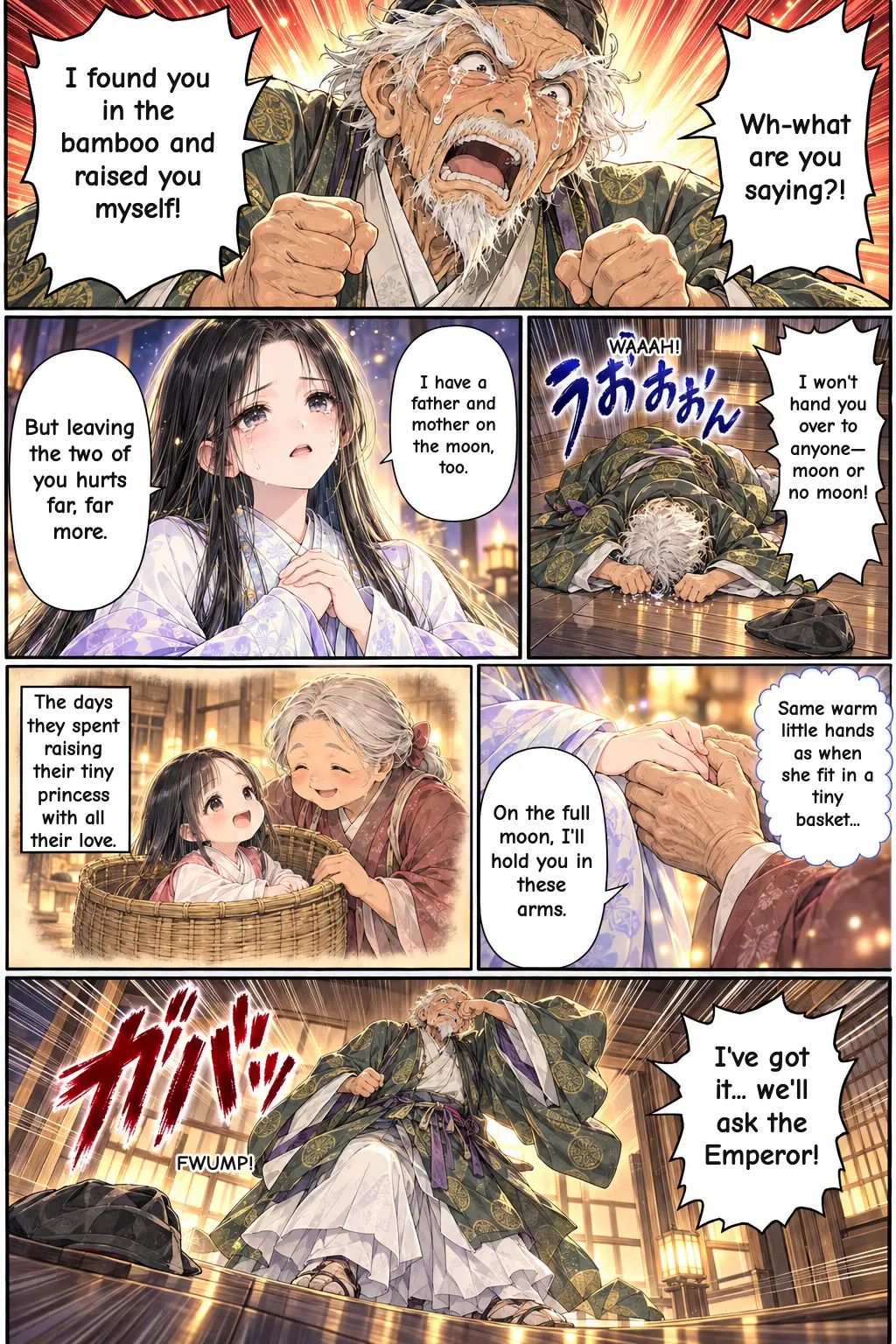
The Tale of the Bamboo Cutter (Taketori Monogatari) closes with one of the most famous farewells in Japanese literature. By this point, Princess Kaguya, the girl an old bamboo cutter once found glowing inside a stalk of bamboo, has turned down five noble suitors and even refused to serve at the Emperor's court. For about three years she and the Emperor have only exchanged letters. Then, from the start of one spring, she begins gazing at the moon and sinking into sorrow, sometimes weeping when she thinks no one is watching. As the fifteenth night of the eighth month approaches (the great harvest moon of the old lunar calendar), she finally tells her foster parents the truth. She is not from this world but from the Capital of the Moon. She came here because of a bond from long ago, and on this month's full moon her people will come to take her home. The old man collapses in tears, insisting that no one will take the child he raised as his own.
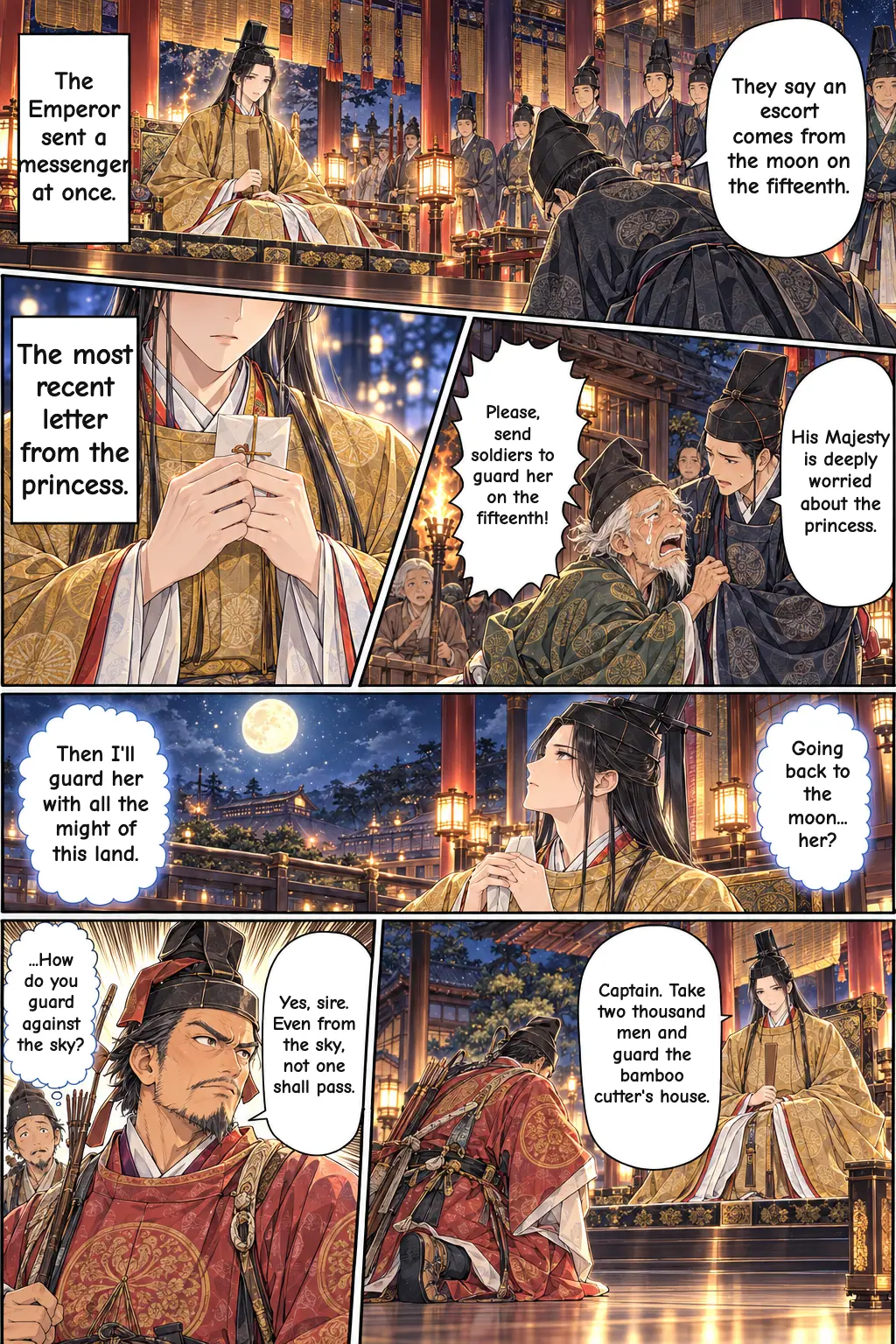
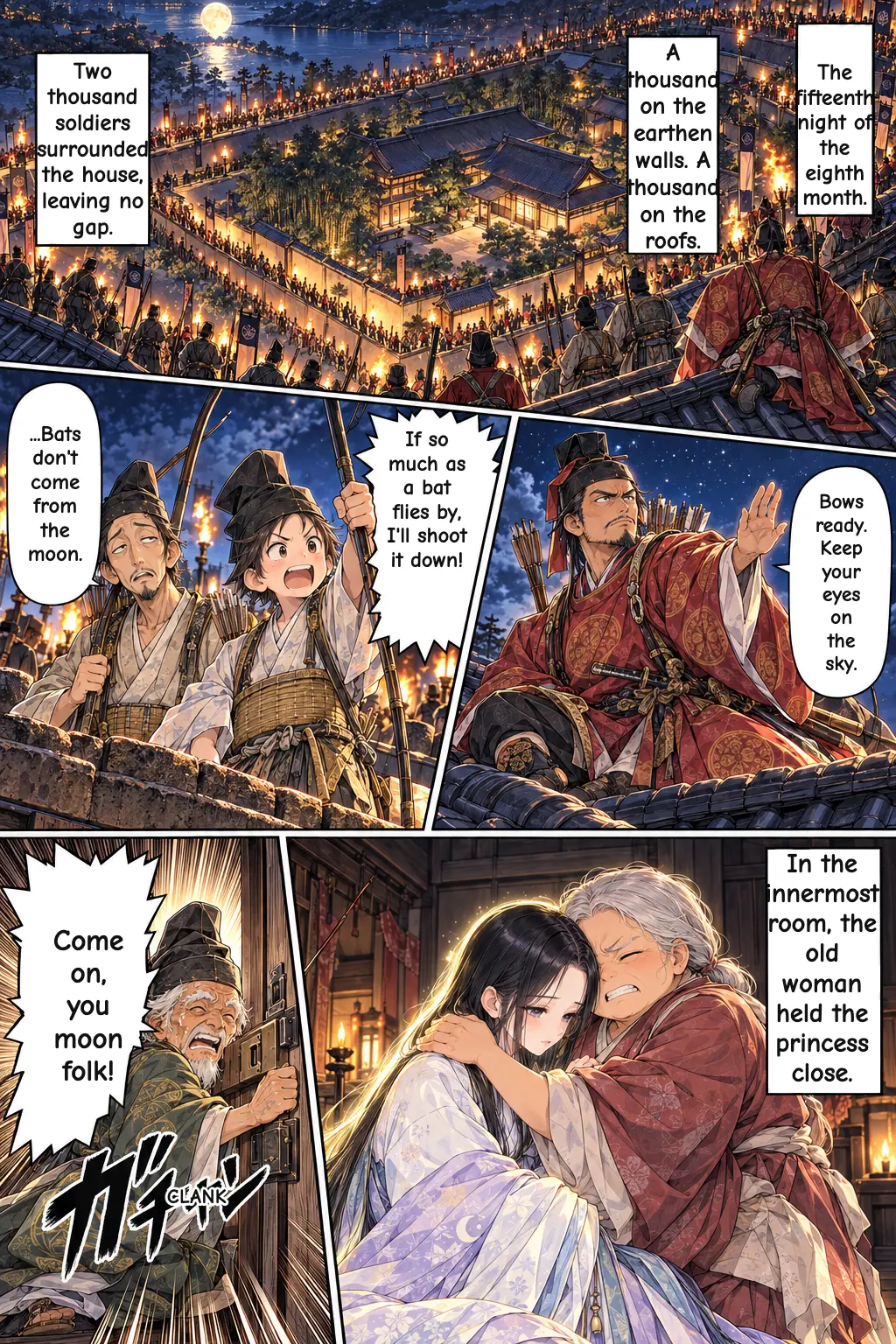
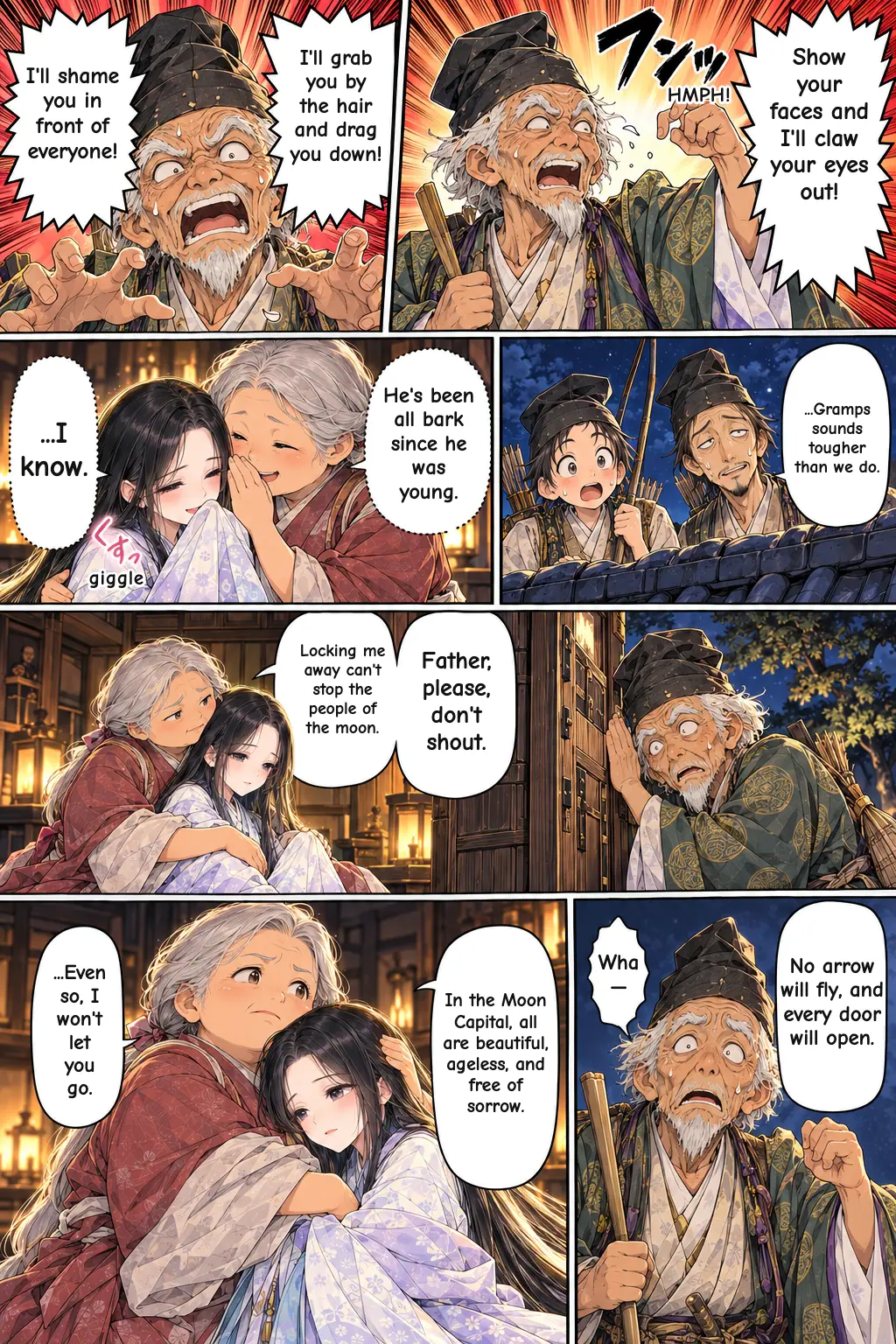
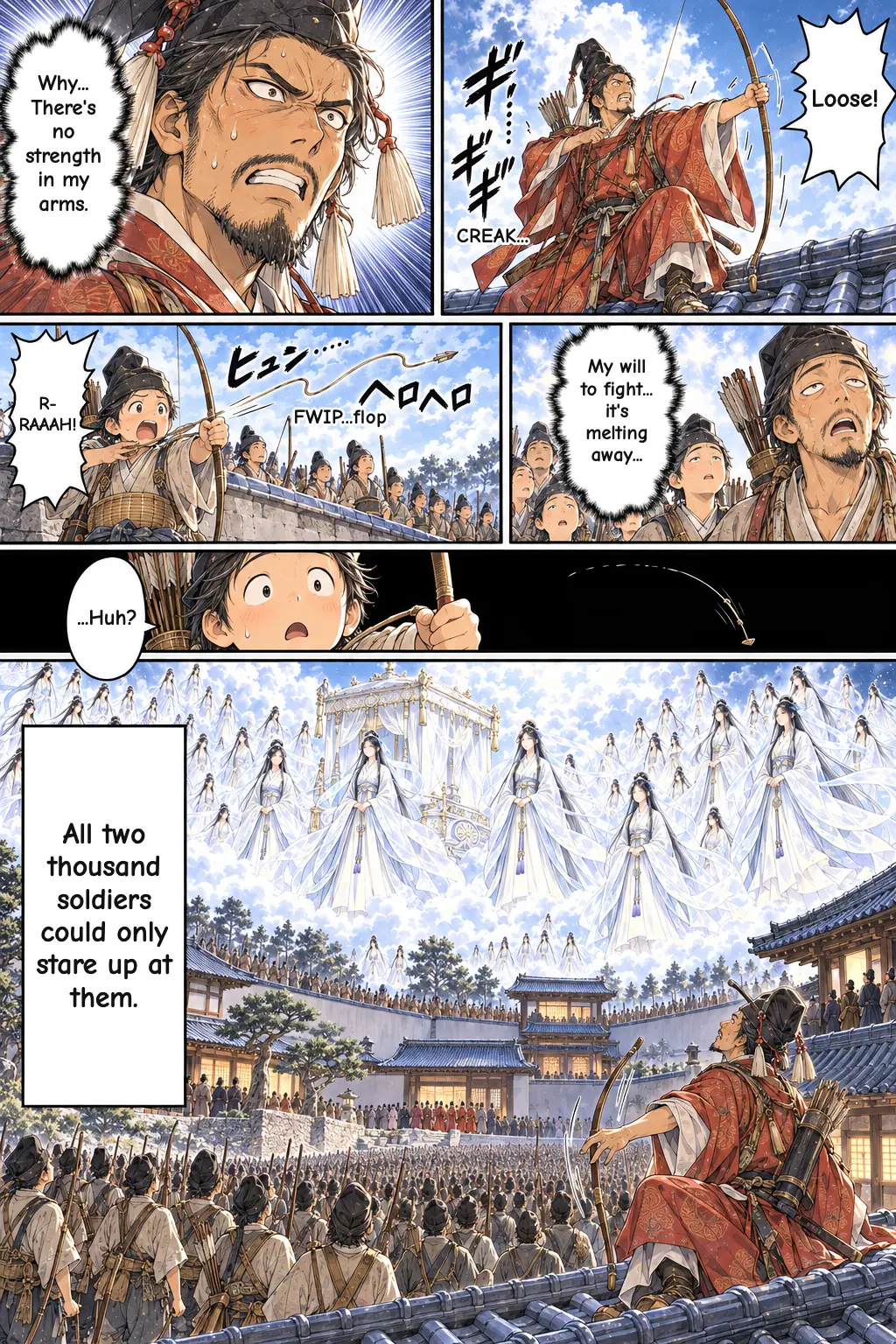
The Emperor answers with force. He sends an imperial envoy, the captain Takano no Ōkuni, with two thousand men from the palace guards. A thousand line the earthen walls and a thousand stand on the roof. Inside a locked storeroom, the old woman holds Kaguya in her arms while the old man guards the door and boasts that he will claw out the Moon people's eyes. Kaguya warns him calmly that no one can fight the people of the Moon. Bows will not shoot and every door will open.
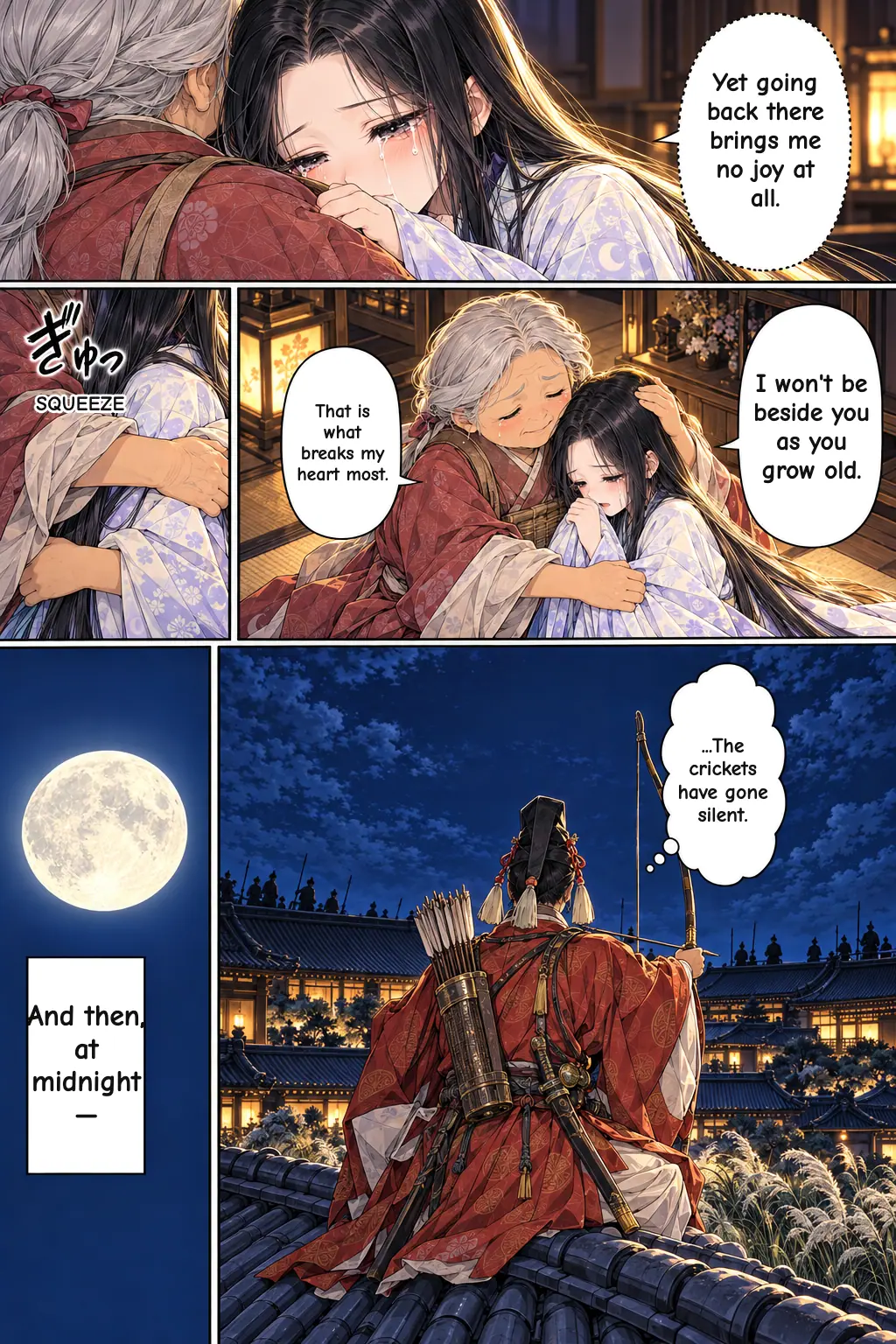
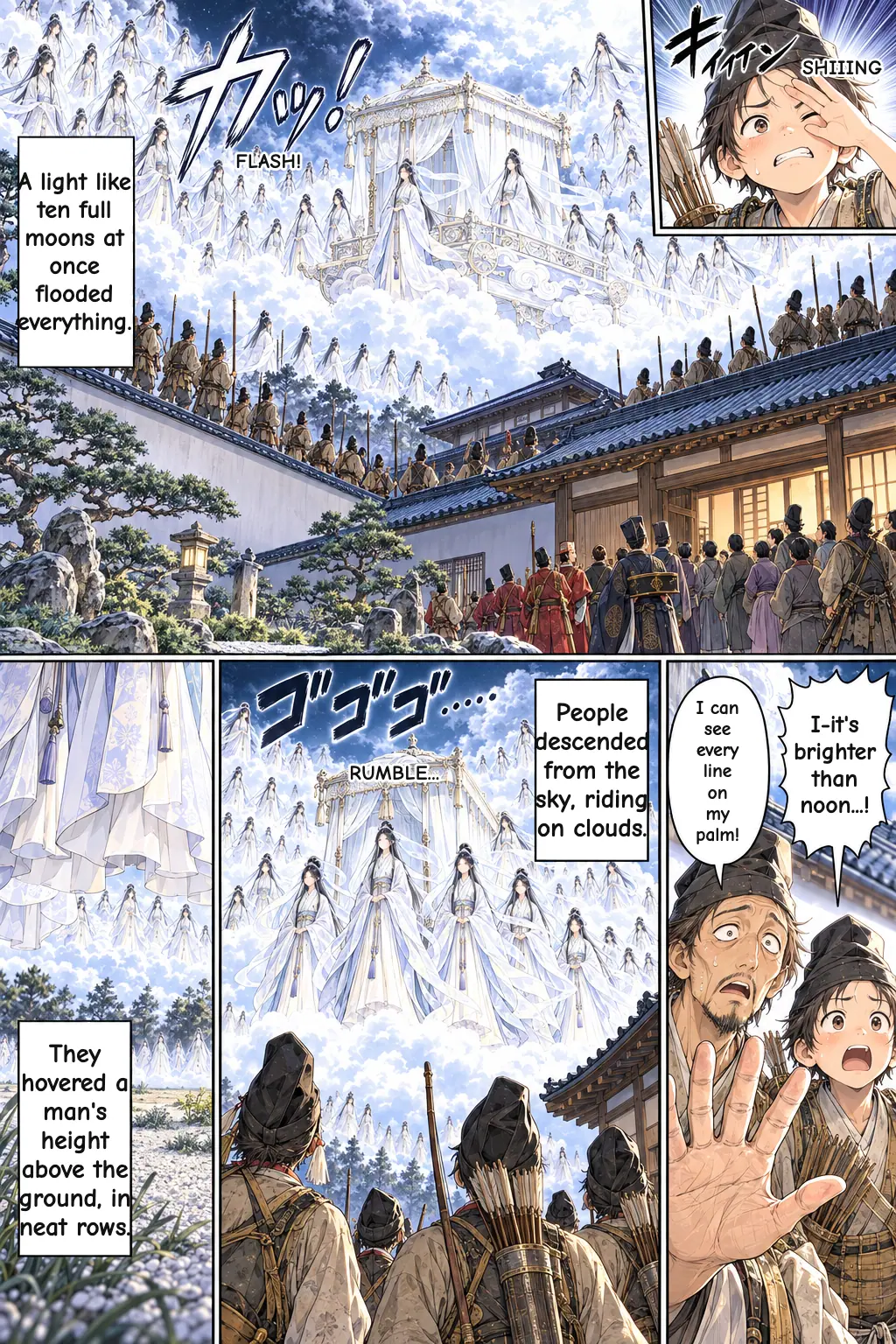
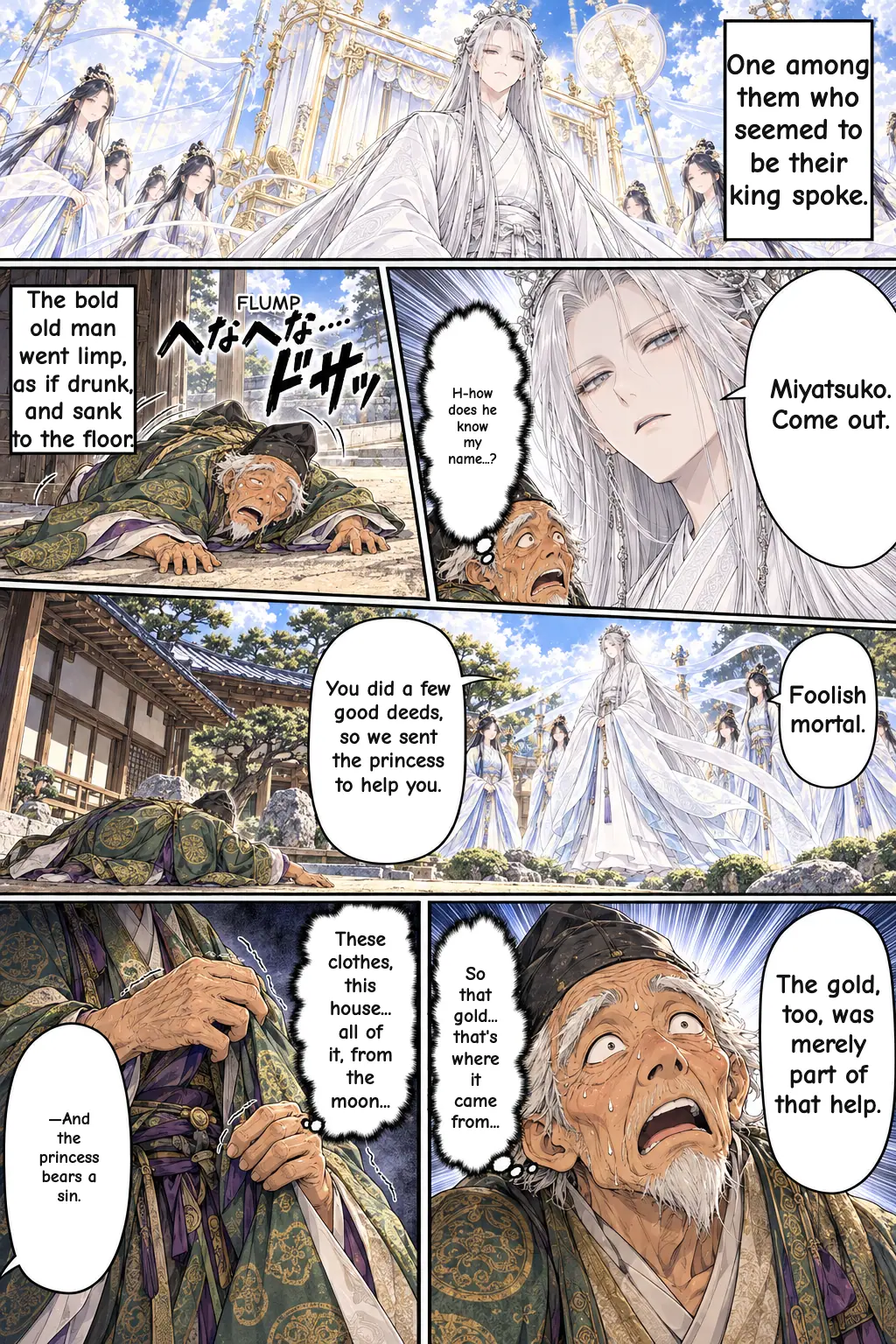
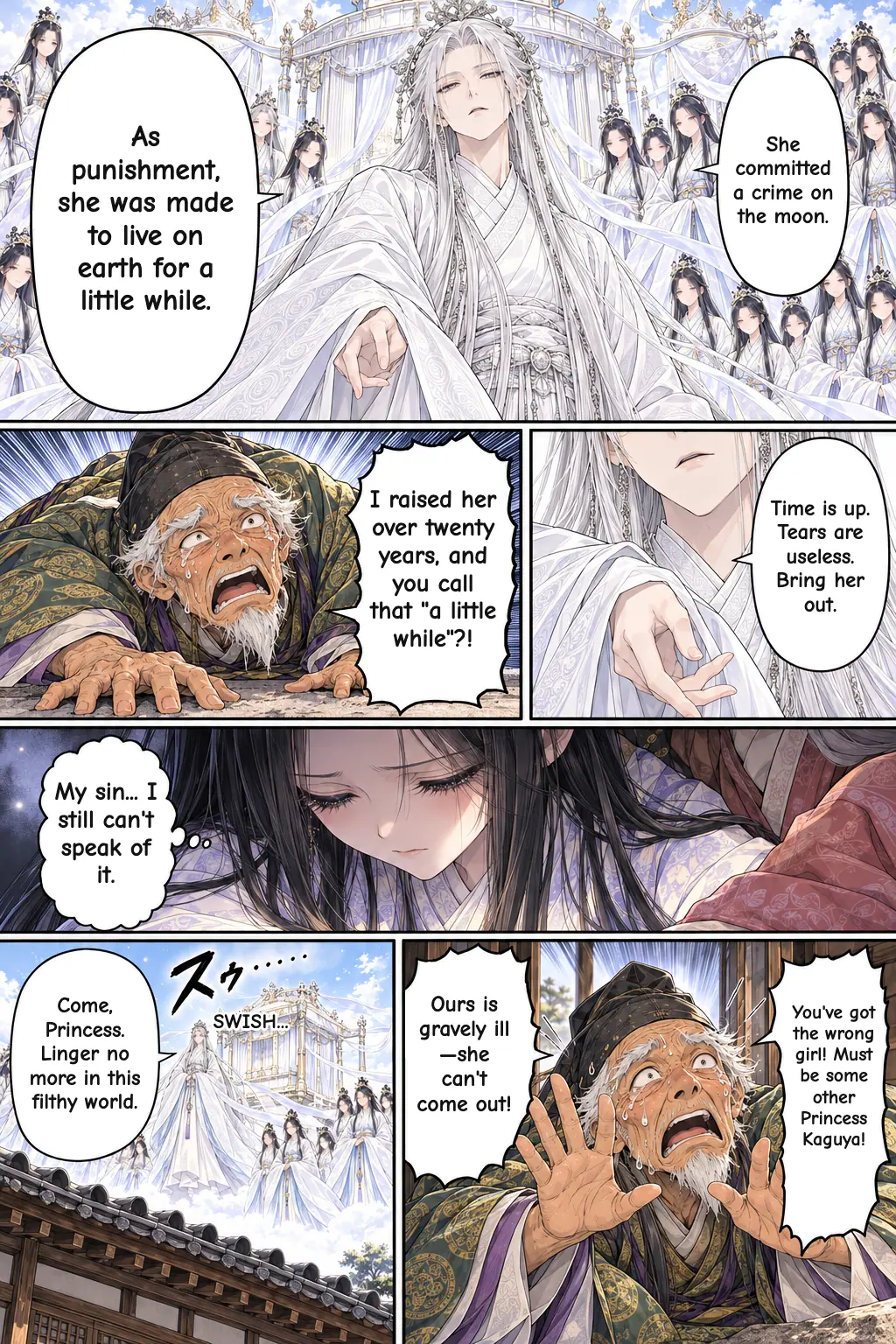
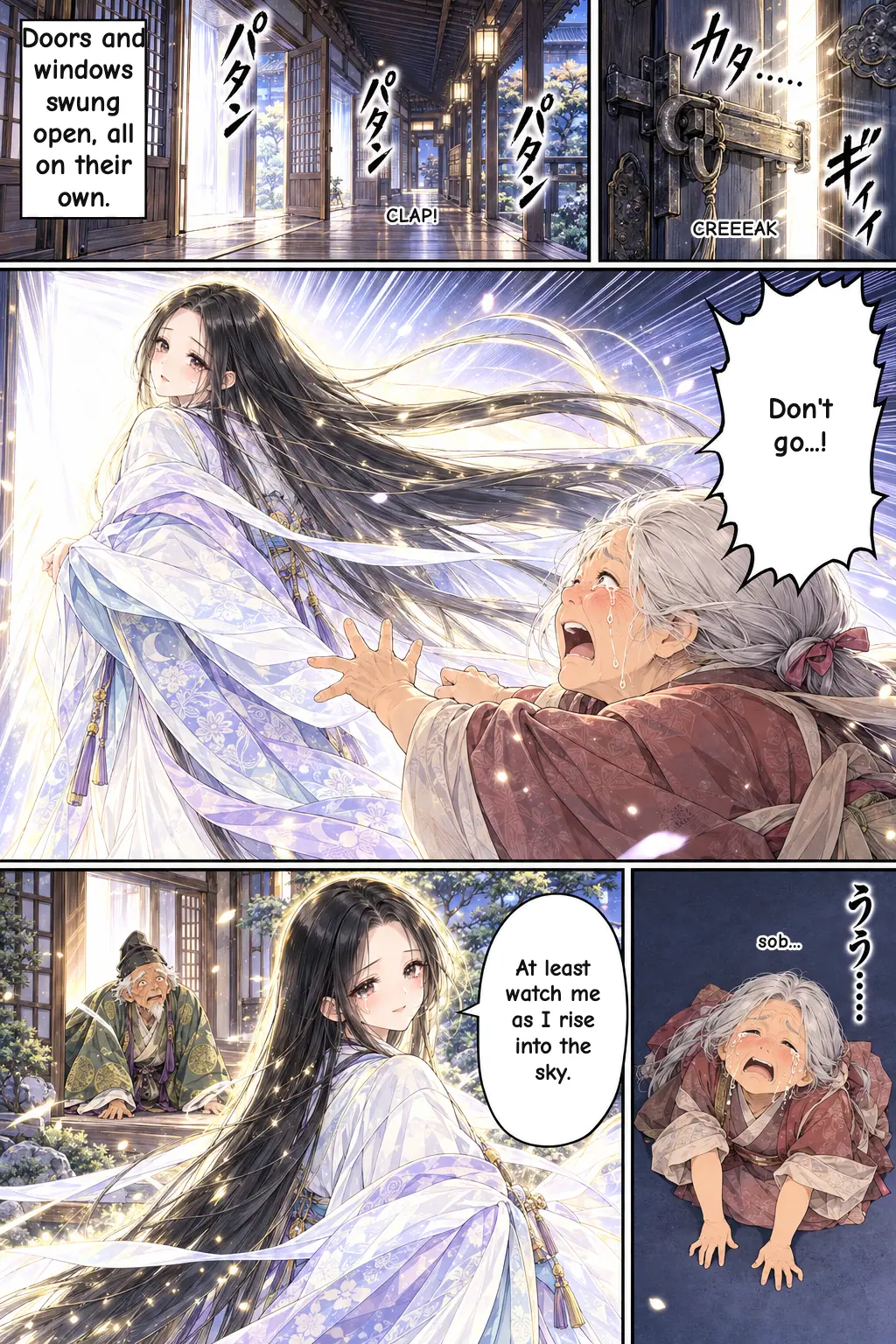
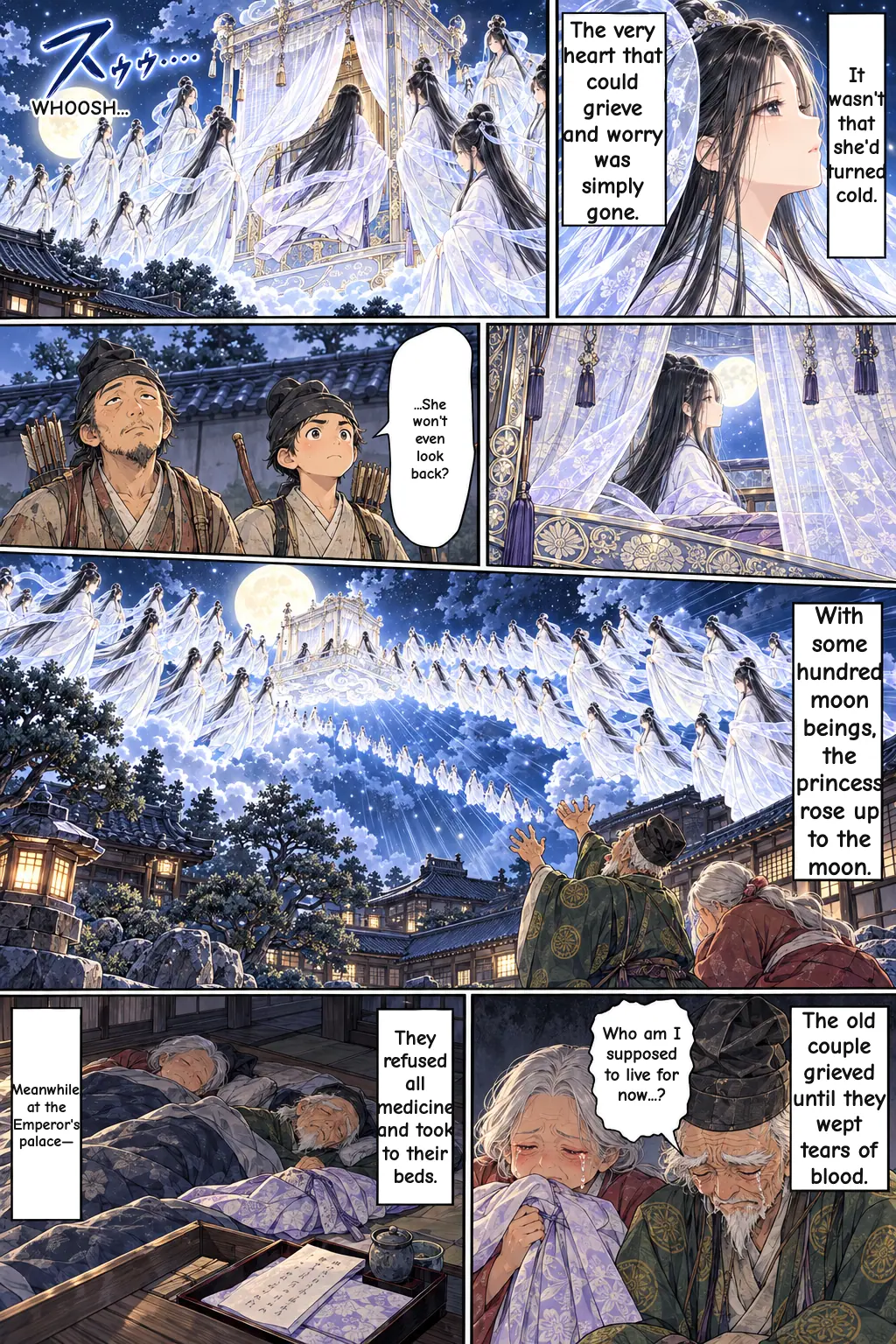
Around midnight, a light ten times brighter than the full moon floods the house. It is so bright you could see the pores on a person's skin. Heavenly beings descend on clouds and hover about five feet above the ground. The soldiers go limp, as if under a spell, and the few arrows they manage to shoot fly off course. A figure who seems to be a king tells the old man that Kaguya was sent down for a short time because she had committed a crime. Her term is over, he says, and the gold the old man found was a reward for his small good deeds. The old man argues that he has raised her for more than twenty years, but the doors and lattices swing open on their own and Kaguya walks out.
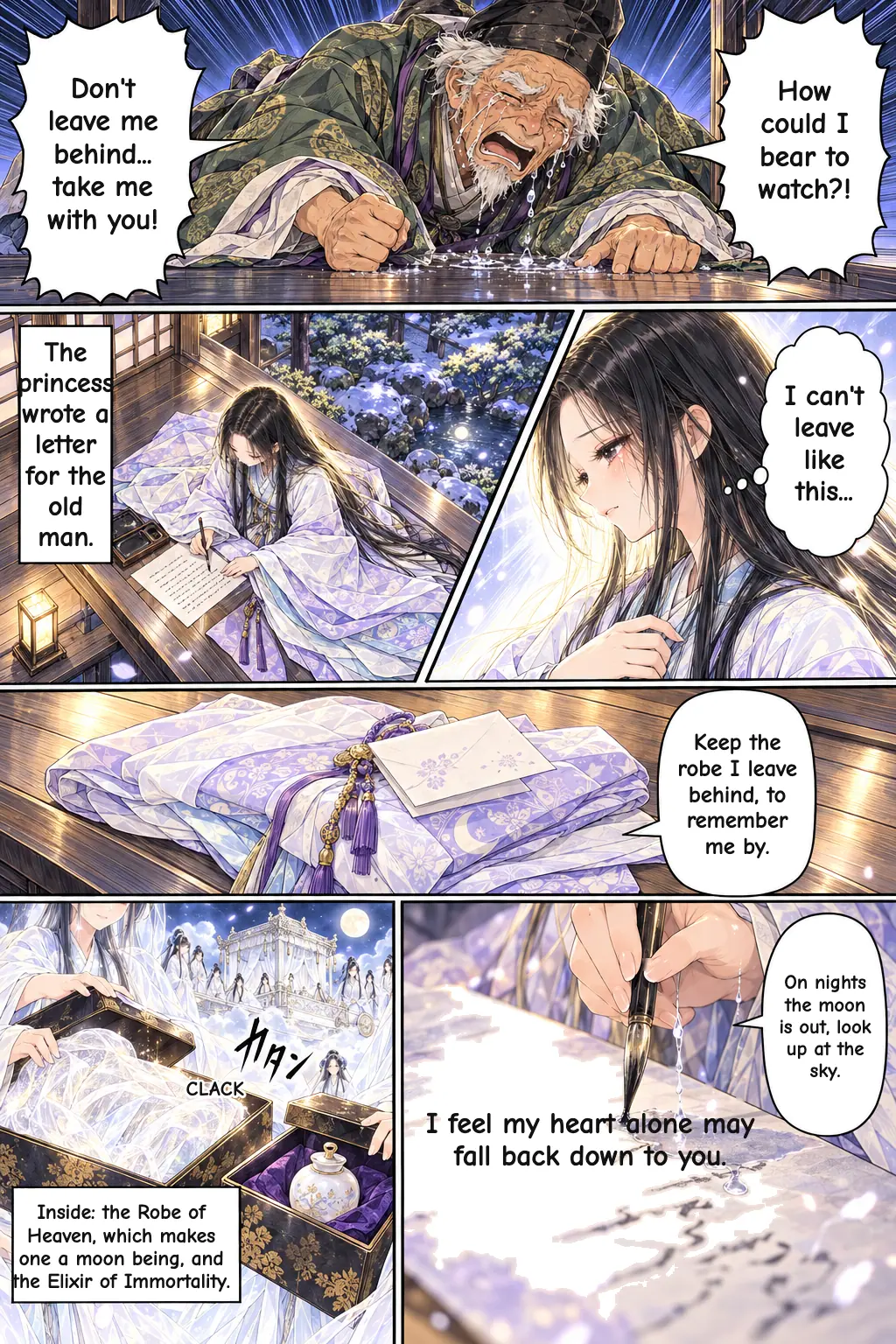
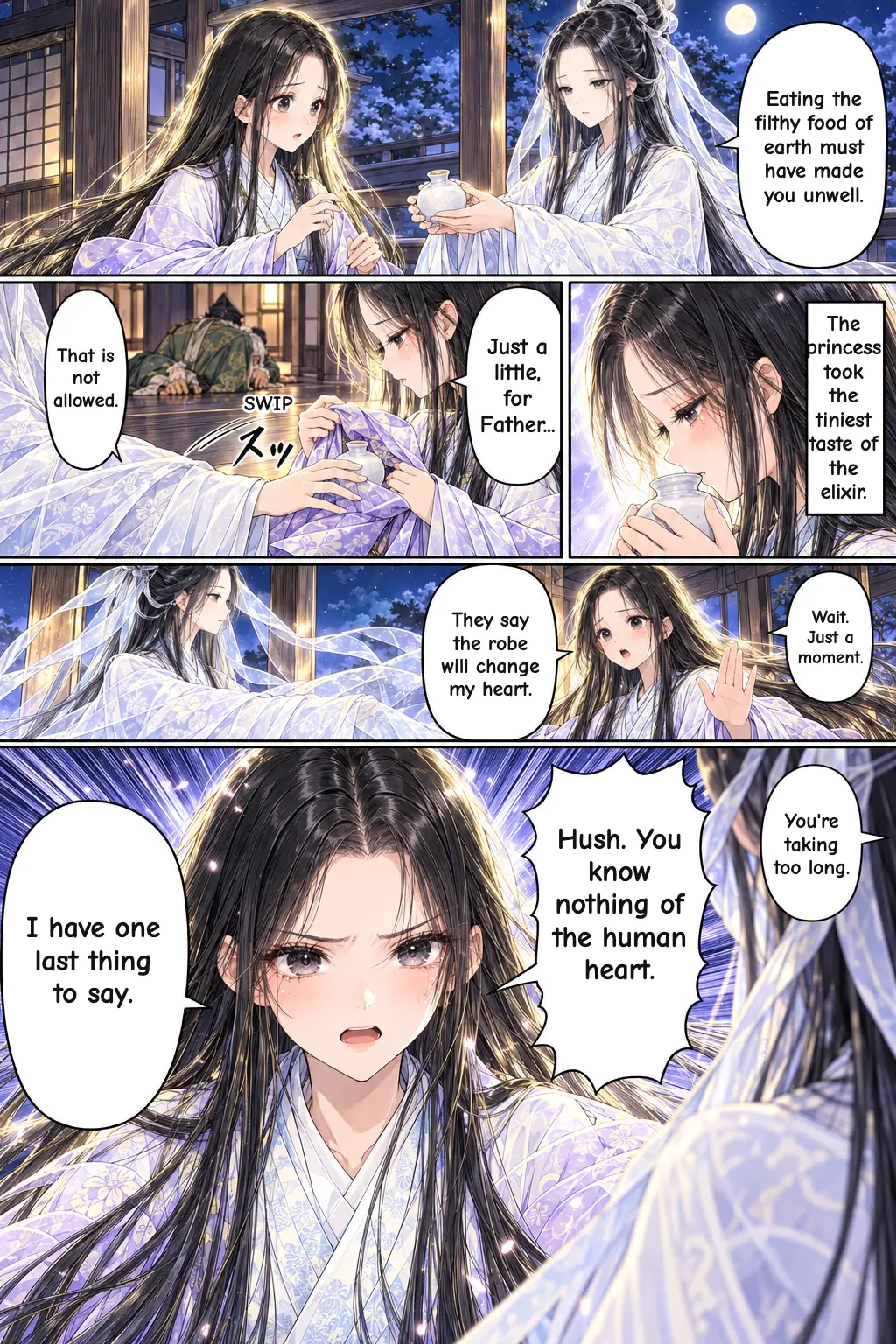
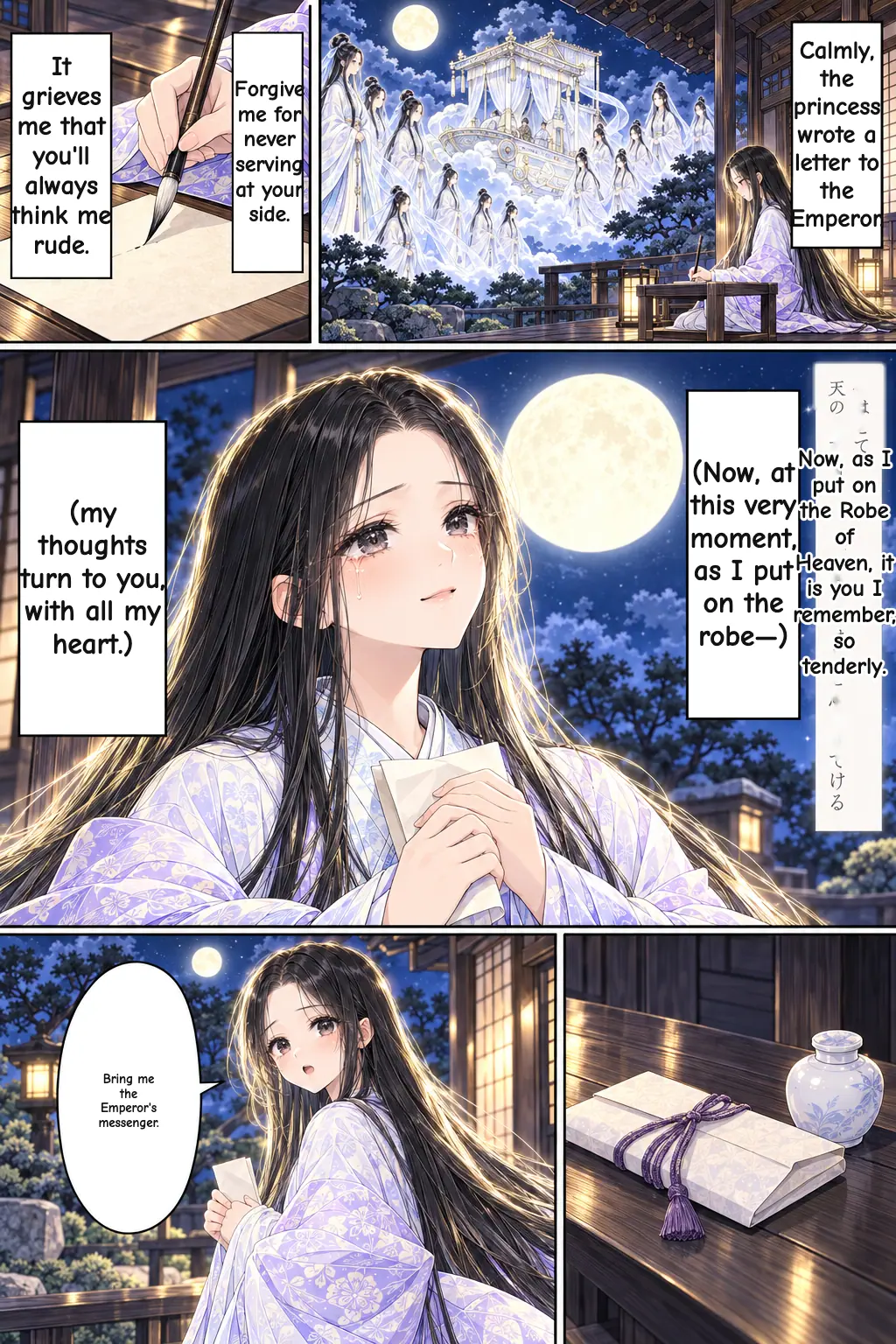
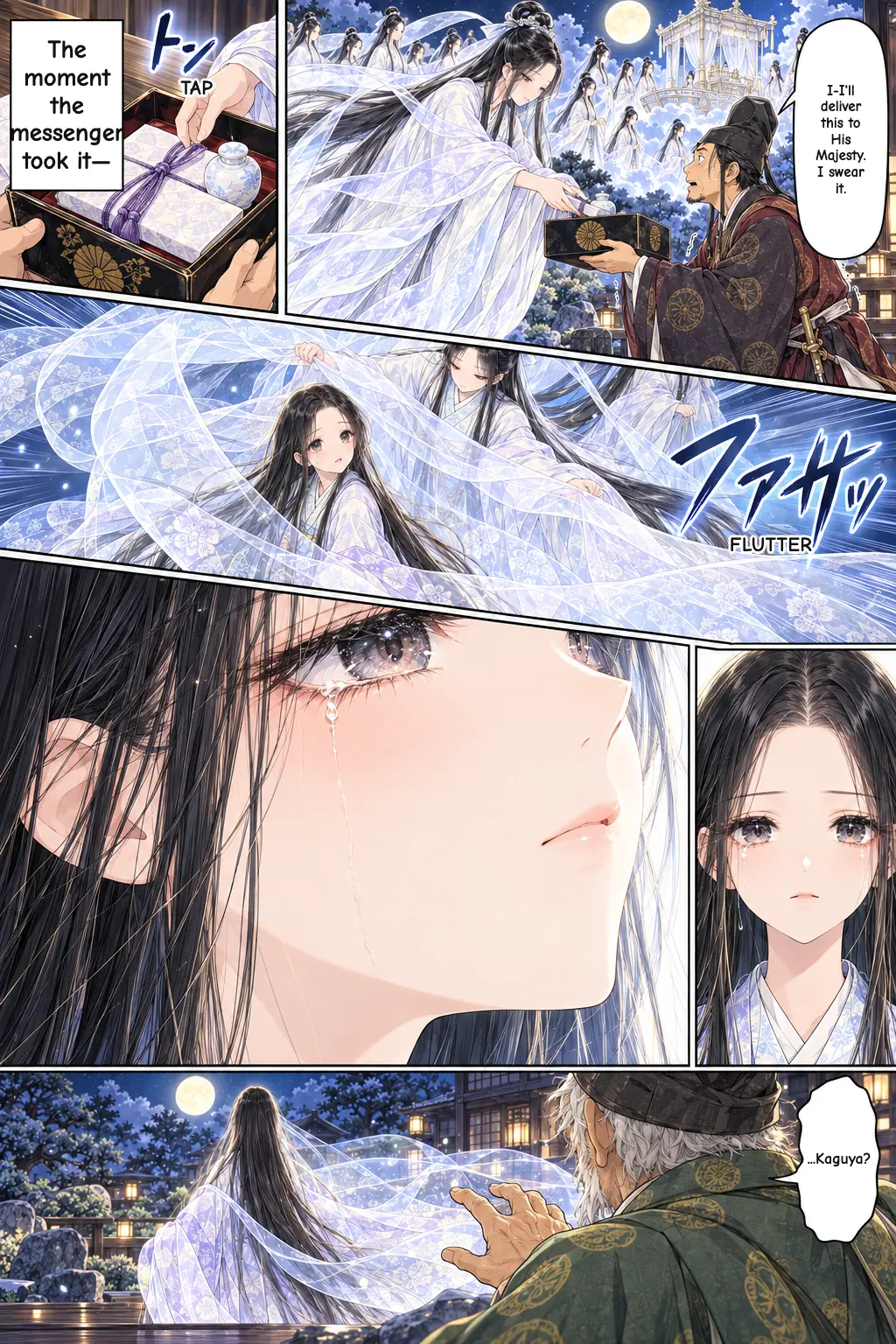
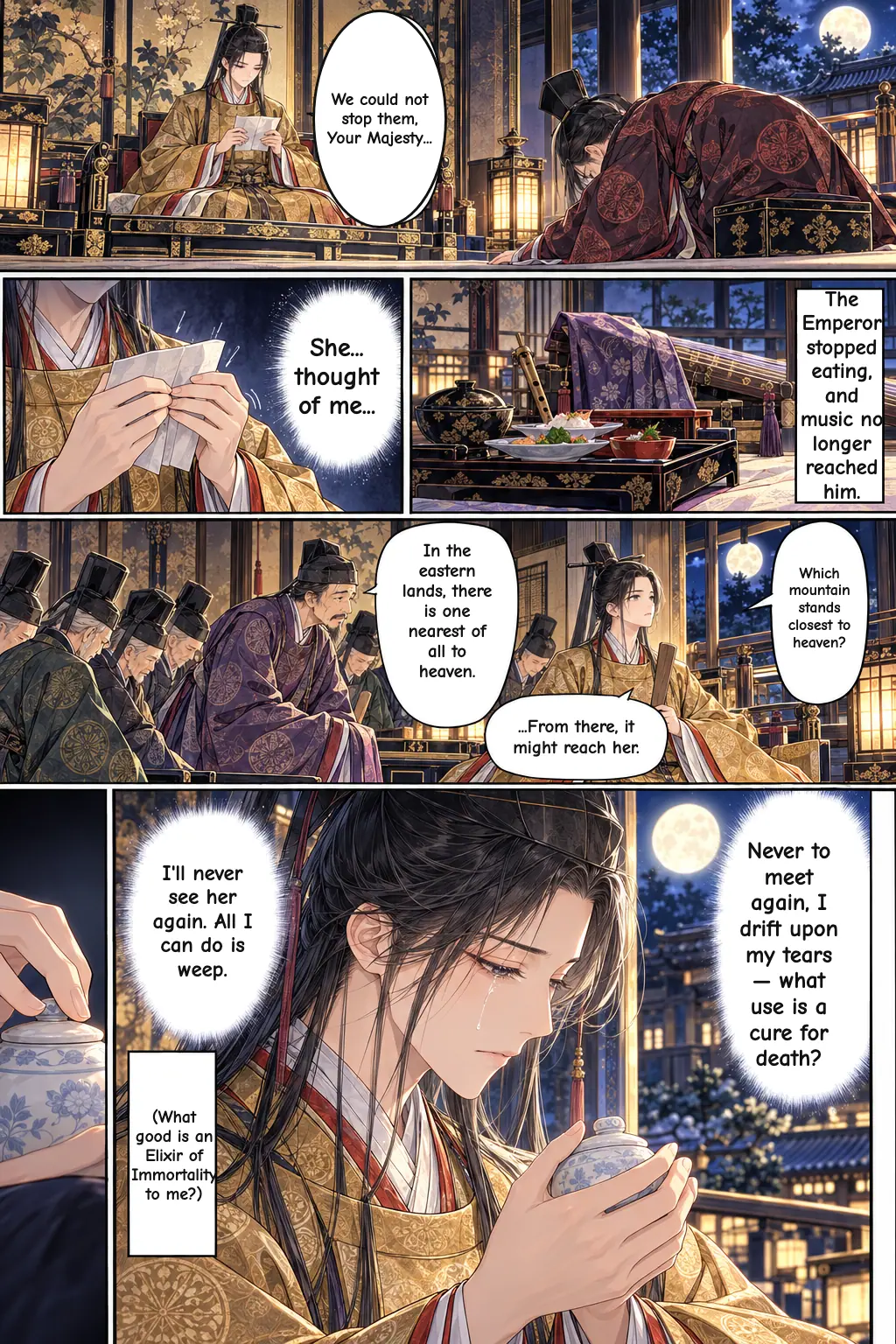
Before leaving, Kaguya writes to the old man. She asks him to keep the robe she leaves behind to remember her by, and to look up at the moon on moonlit nights. A heavenly being offers her the Elixir of Immortality and she tastes only a little. When they try to dress her in the Robe of Heaven, she stops them. Whoever wears it, she says, loses their human heart. So she first writes calmly to the Emperor, apologizing for refusing him and adding a poem: now that she must put on the heavenly robe, she finds herself thinking of him with tenderness. She sends the letter and the remaining elixir to him through a court officer, the Tō-no-Chūjō. The moment the robe touches her, her grief and her love for the old man vanish. She rises with about a hundred heavenly beings in a flying carriage.
The Ending: Why the Emperor Burned the Elixir
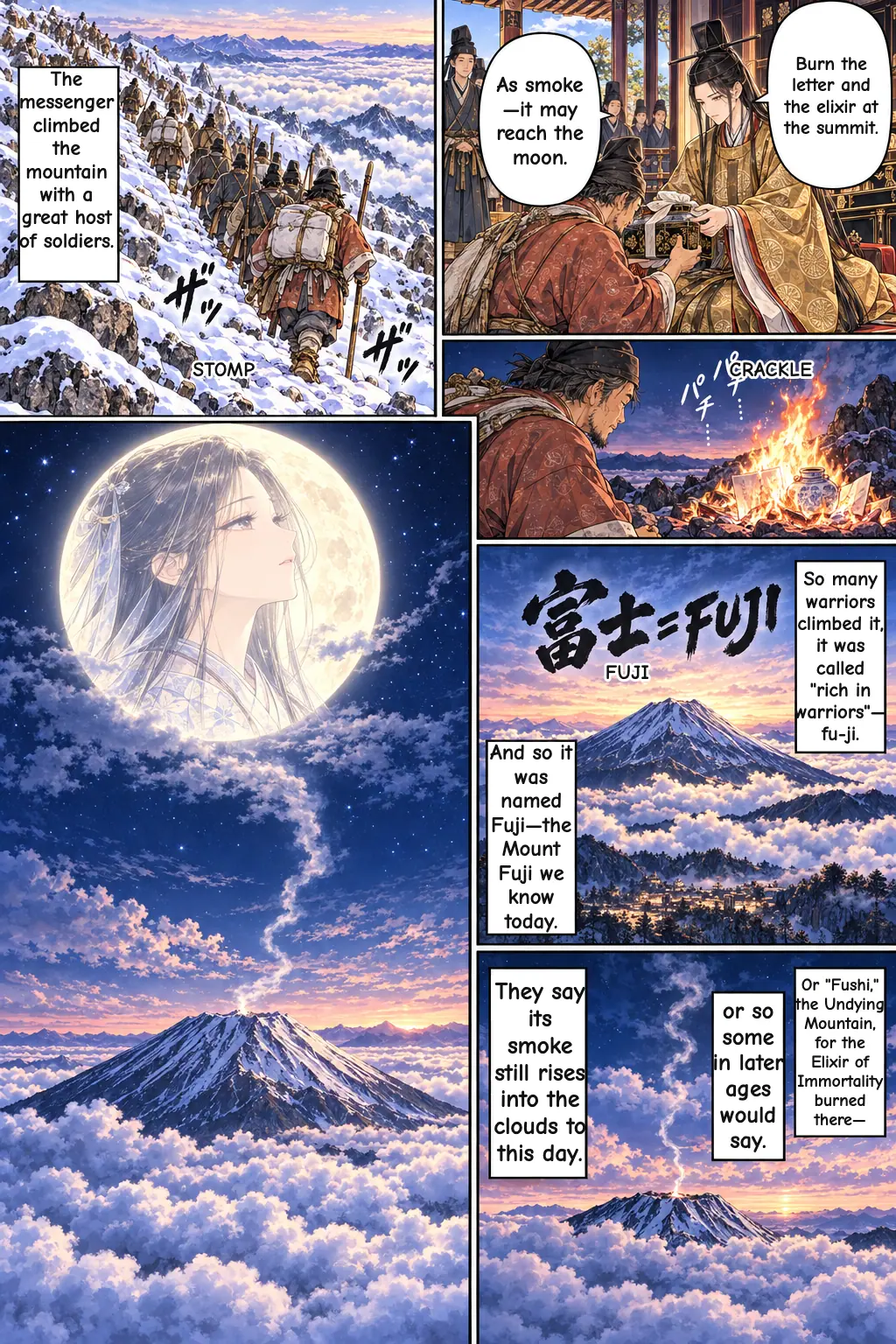
Kaguya's foster parents weep tears of blood and fall ill, refusing all medicine. The tale says no more about their fate. The Emperor gives up meals and music. In a poem he asks what use a medicine against death could be to someone who will never see her again. He asks which mountain stands closest to heaven and learns it is a peak in Suruga Province. He sends a messenger, Tsuki no Iwakasa, to burn the letter and the elixir at its summit. Many soldiers climb with him. The tale explains that this is why the mountain came to be called Fuji, and says its smoke is still said to rise into the clouds.
The Emperor never climbs the mountain himself, and the text never states that he hopes the smoke will reach Kaguya. Many readers sense that hope anyway. Some scholars also suggest a second wordplay on fushi ("no death"), alongside the explanation the tale actually gives, which links the name to the many soldiers.
What the Story Says About Its World
The tale was written in the early Heian period, probably in the late 800s or early 900s. Its author is unknown. It is often called Japan's oldest surviving prose tale. The Moon in this story is a realm of beings who are beautiful, never age, and feel no worry. Earth, in their eyes, is an "unclean place." Many readers find echoes of Buddhist and Chinese ideas here, such as a pure heaven and an elixir of eternal life, though how much they shaped the tale is debated.
The tale never spells out Kaguya's crime. Its heart is the contrast between two kinds of existence. The Moon offers perfection without feeling. Earth offers aging, loss, and love. Kaguya's last act as a human is to write letters before the robe takes her memories, and the Emperor's choice to burn eternal life rather than live it without her show which side the story values.
What the Manga Changes
Episode 6 follows the original closely, but some visual and dramatic details are the manga's own. The source never says what Kaguya's crime was or what the Moon Capital looks like, so any glimpse of those comes from the manga. The same goes for the armor and placement of the two thousand soldiers and the looks and personalities of Takano no Ōkuni and Tō-no-Chūjō. The designs of the heavenly beings, the king, the flying carriage, and the Robe of Heaven are also invented, since the text only calls them beautiful and mentions a silk canopy.
The flashbacks to Kaguya's life with her foster parents, the details of the climb up Fuji and the ceremony at the summit, and the final spread of smoke stretching toward the moon are also the manga's additions. In the original, the smoke simply rises into the clouds. The epilogue is also condensed into a few pages. The manga does keep the source's striking images, like the light ten times brighter than the full moon.
Where to Read It
If you want to see Kaguya's farewell, the two thousand guards frozen in the moonlight, and the smoke over Fuji, you can read Episode 6 of THE TALE OF THE BAMBOO CUTTER: Princess Kaguya from the Moon here on Manga Portal. Every episode is free to read and you don't need to sign up, so you can also start from the beginning and follow Kaguya from the bamboo grove to the Moon.
Characters in this episode
Princess Kaguya
A woman from the Capital of the Moon who was sent to Earth for a crime and raised by a bamboo cutter, and who must return on the full moon.
The Bamboo Cutter (Taketori no Okina, also called Miyatsuko-maro)
Kaguya's foster father, who threatens and pleads with the Moon people but cannot stop them taking her home.
The Old Woman (Ōna)
Kaguya's foster mother, who holds her inside a locked storeroom and can only weep at the sky when Kaguya is taken.
The Emperor (Mikado)
The ruler who exchanged letters with Kaguya for years and later has her letter and the Elixir of Immortality burned on the mountain closest to heaven.
The King of the Moon People
A figure described only as 'one who seemed to be a king,' who announces that Kaguya's sentence on Earth is over.
Takano no Ōkuni
The imperial envoy and guards captain who leads two thousand soldiers to protect Kaguya's home.
FAQ
Why did Princess Kaguya return to the Moon?
She was a person from the Capital of the Moon who had been sent to Earth for a short time because of a crime. When her sentence ended, the Moon people came for her on the night of the full moon. The original tale never says what the crime was.
Why did the Emperor burn the Elixir of Immortality?
Kaguya left him the elixir along with a farewell letter. Grieving, the Emperor wrote that a medicine against death meant nothing if he could never see her again. He ordered both burned on the mountain closest to heaven.
How does the Tale of the Bamboo Cutter explain the name of Mount Fuji?
The tale says the mountain was named because a large number of soldiers climbed it to carry out the Emperor's order. Some scholars also see a pun on 'fushi,' meaning 'no death,' though the text itself gives only the soldier explanation.
Does Princess Kaguya forget her family?
Yes. When she puts on the Robe of Heaven, her sorrow and her love for her foster father disappear. That is why she insists on writing her letters before she wears it.
Who wrote the Tale of the Bamboo Cutter?
The author is unknown. It was written in the early Heian period, around the late 9th or early 10th century, and is often called Japan's oldest surviving prose tale.