Episode 5The Fifth Suitor, Dangling from the SkyThe Swallow's Cowrie Shell and the Emperor
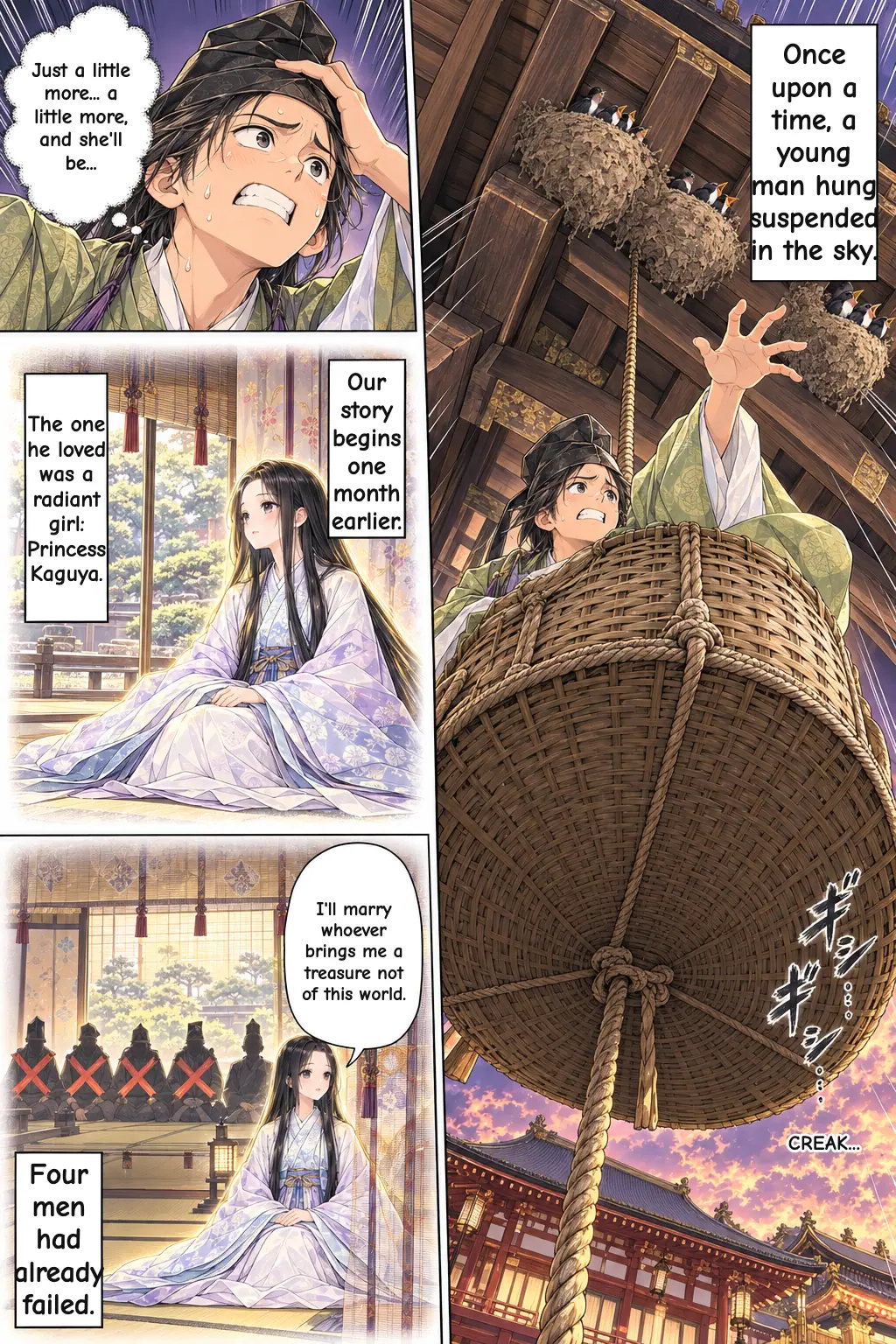
Young Middle Counselor Isonokami rides a basket into the sky to seize the swallow's birth-charm shell. He falls, the whole capital laughs at him, and he dies. His death stirs Princess Kaguya's heart for the first time. Then the Emperor, having heard the rumors, comes to see her for himself, and she turns into a shadow before his eyes. Three years of letters later, the princess begins to gaze up at the moon.
Tale of the Bamboo Cutter: Kaguya, the Swallow's Shell and the Emperor
The Original Story, Part 1: The Fifth Suitor and the Swallow's Cowrie Shell
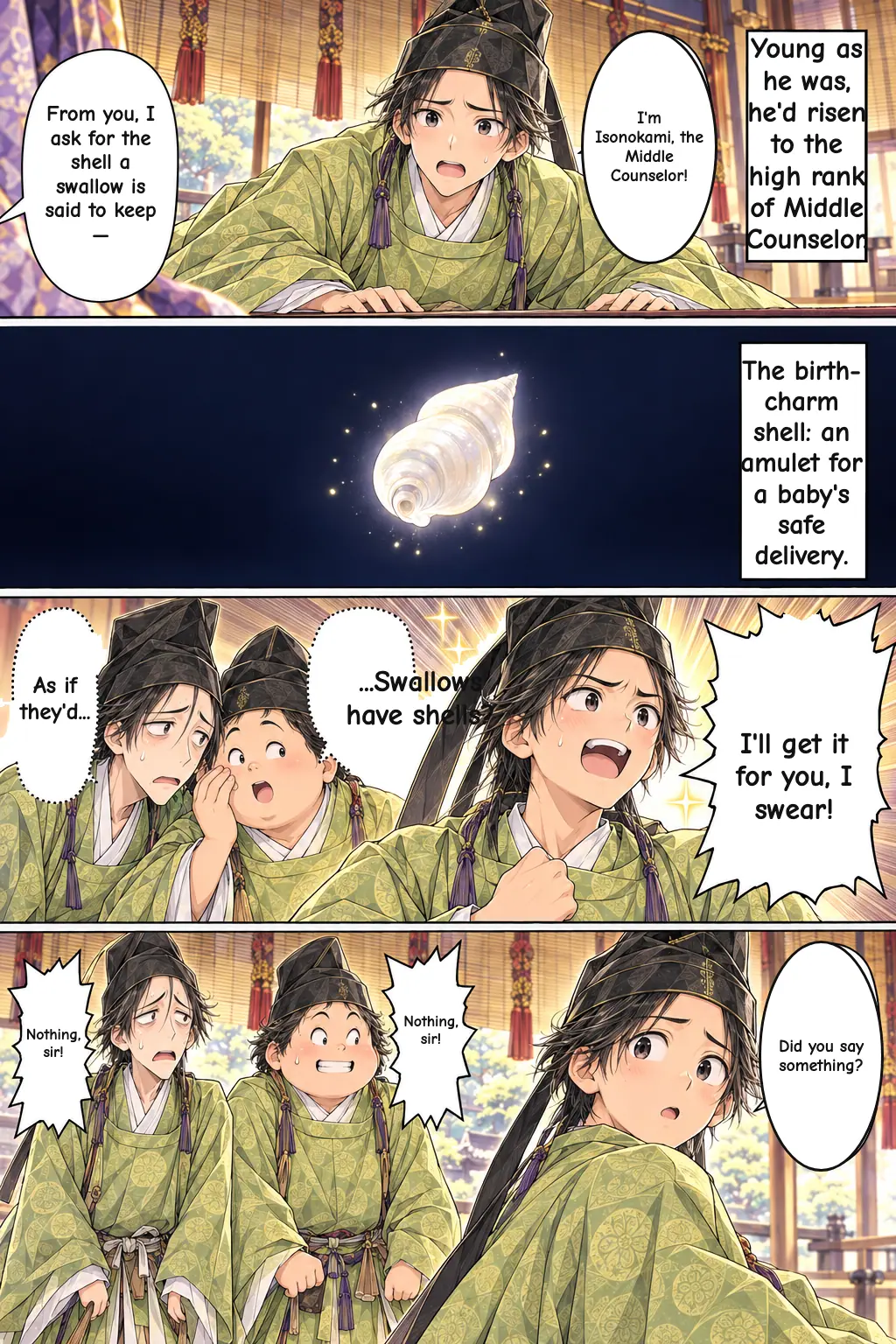
The Tale of the Bamboo Cutter (Taketori Monogatari) is one of Japan's oldest surviving prose tales, written by an unknown author in the early Heian period (roughly the ninth to early tenth century). Princess Kaguya, a radiant girl found inside a stalk of bamboo, gives each of her five noble suitors an impossible task. The fifth, the Middle Counselor Isonokami no Marotari, must bring her a koyasugai, a cowrie shell said to be produced by a swallow and treasured as a charm for safe childbirth.
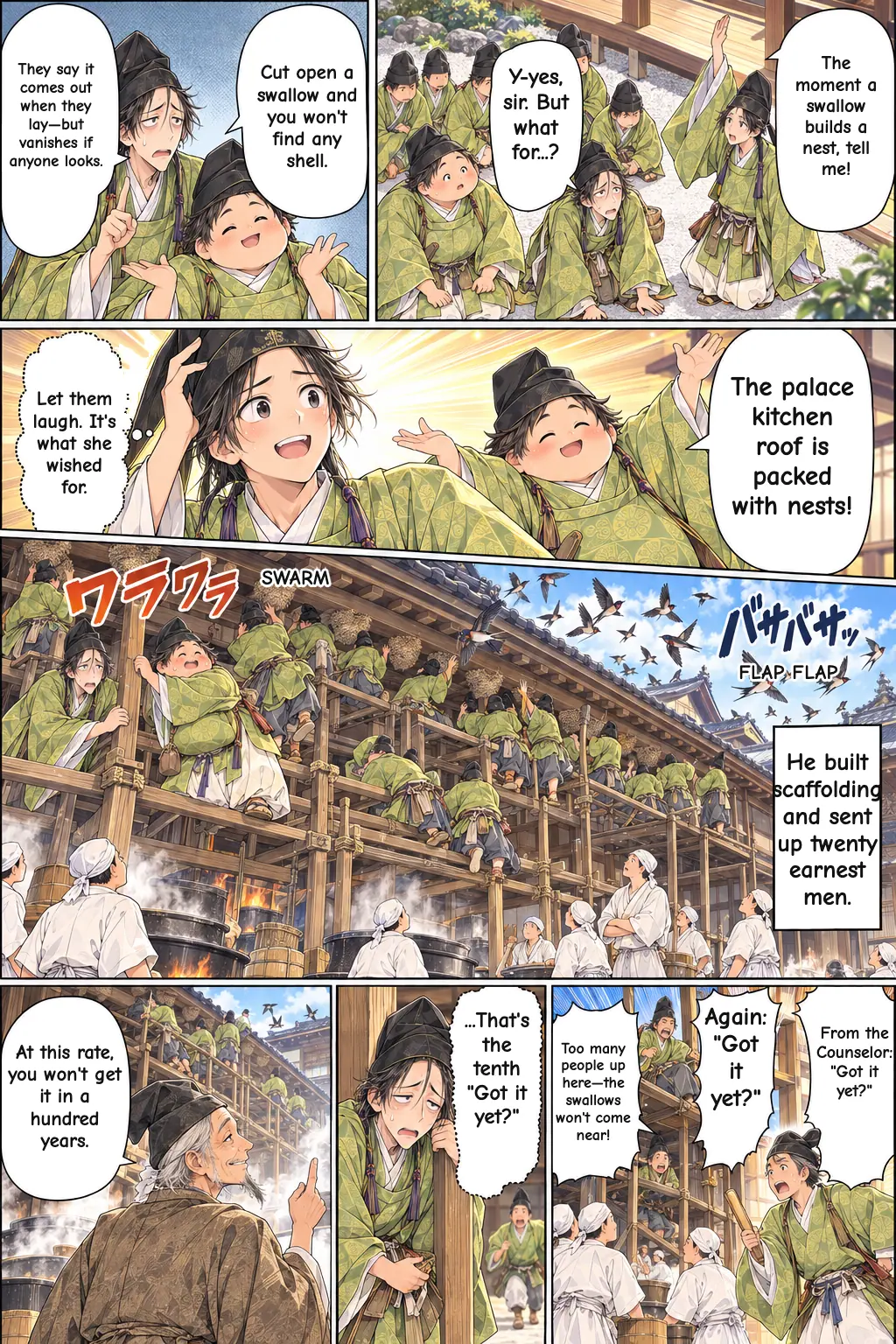
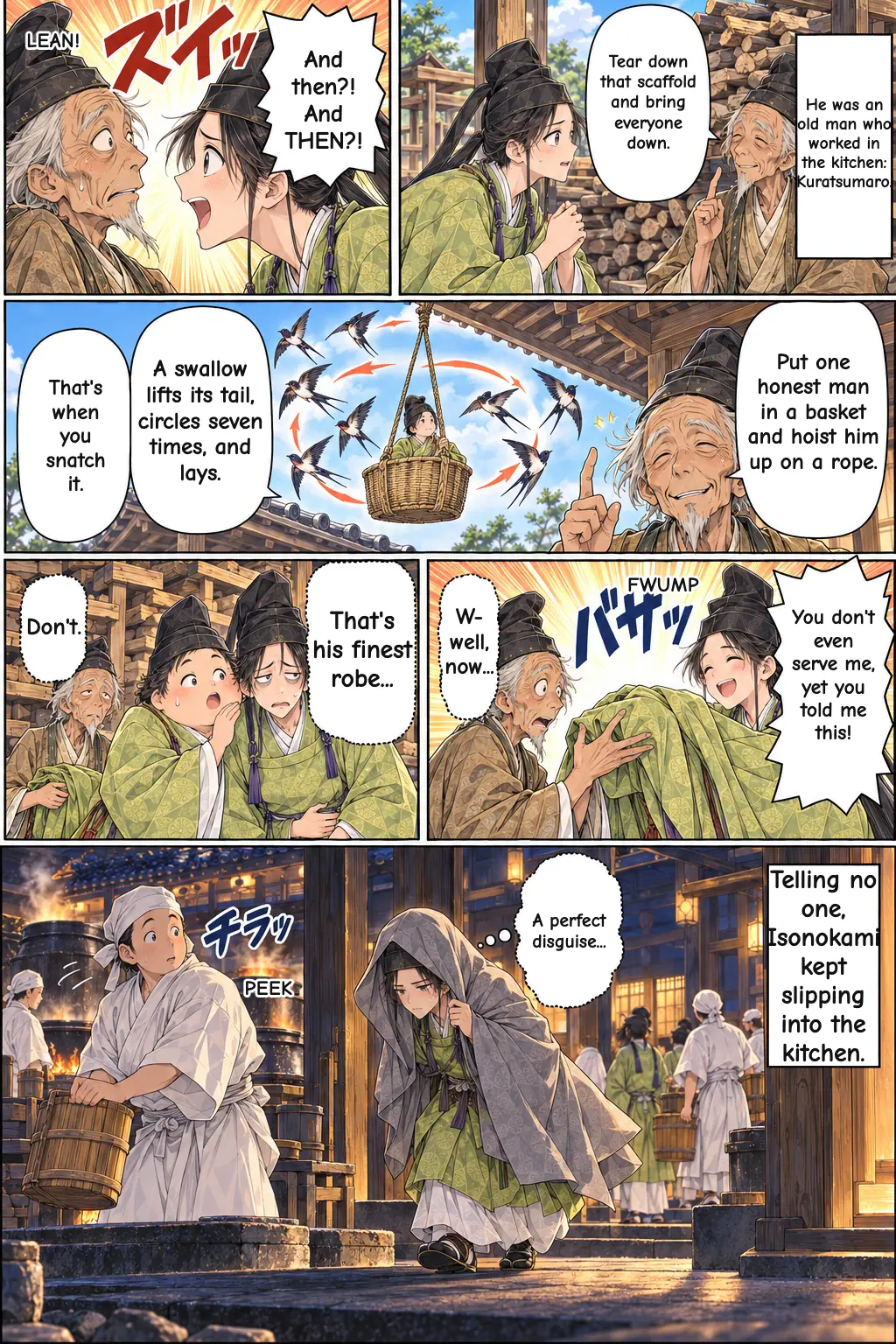
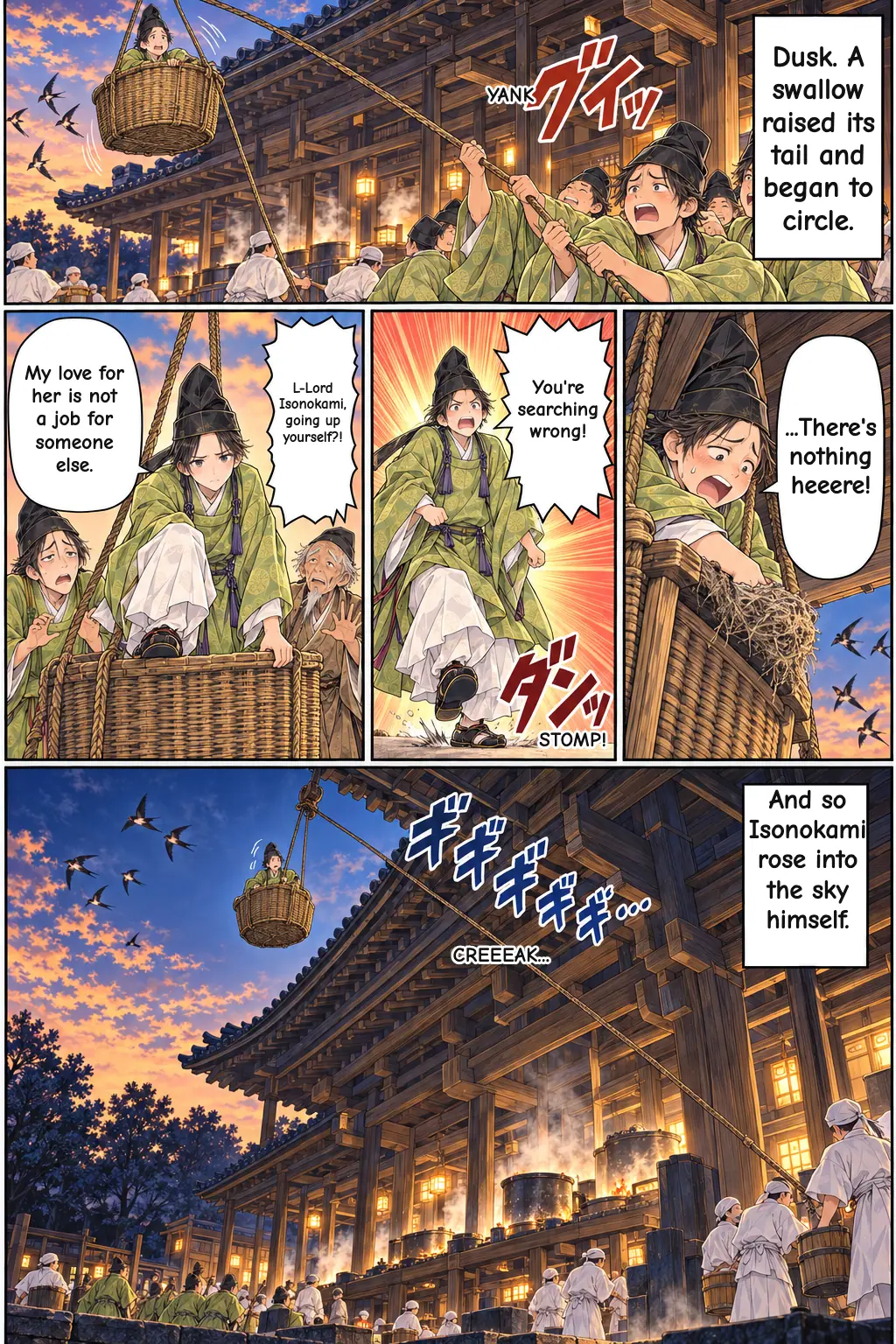
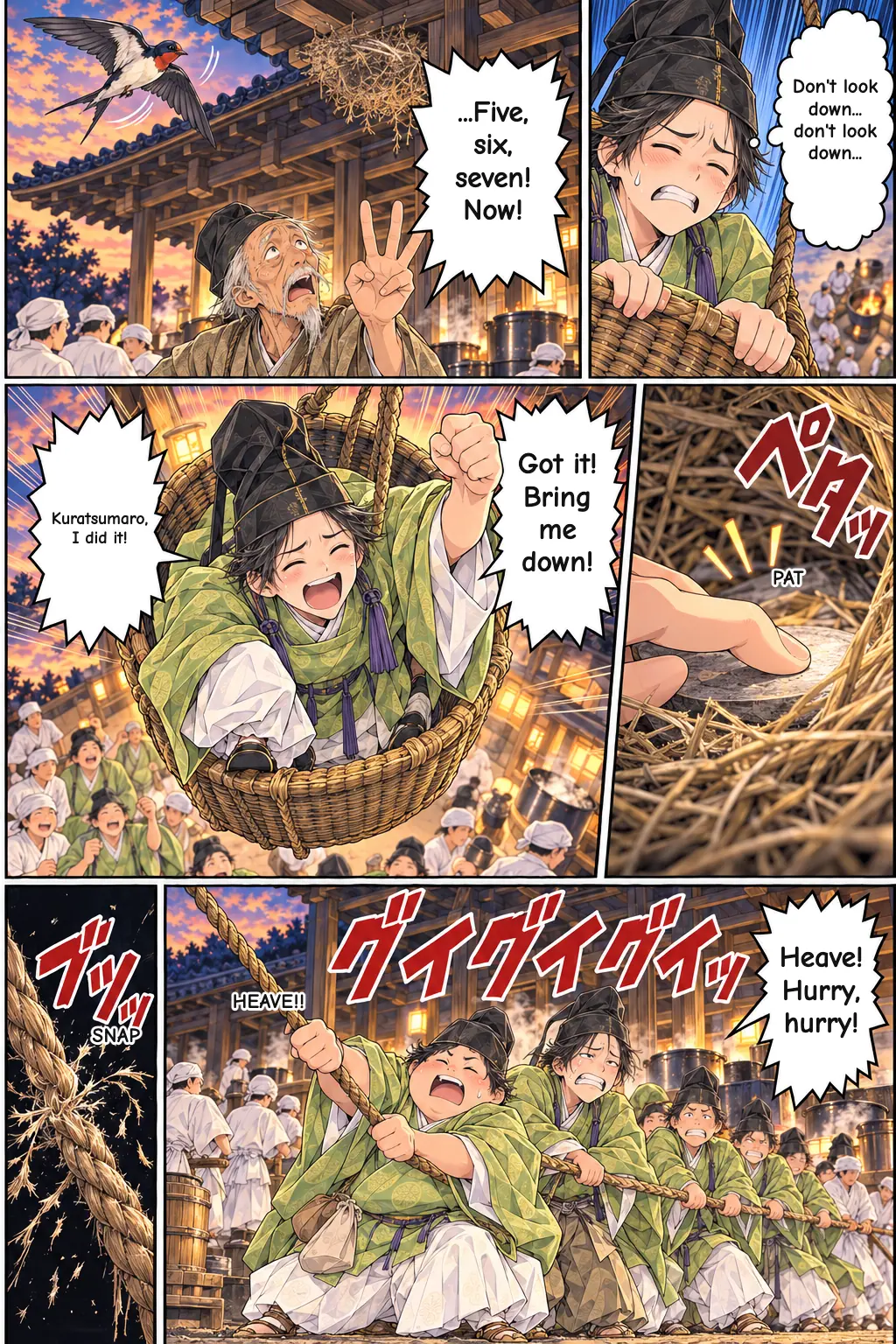
His household men tell him the shell appears only when a swallow lays its eggs and vanishes if anyone watches. On advice, he builds scaffolding up to the roof beams of the rice-cooking hall of the palace kitchen bureau, where swallows nest, and sends about twenty men up. The swallows, frightened by the crowd, stay away. An old kitchen official named Kuratsumaro, who is not even in the Counselor's service, suggests a better plan: take down the scaffolding, hoist a single man up in a rough basket on a rope, and grab the shell at the moment a swallow lifts its tail and circles seven times to lay. Delighted, the Counselor gives the old man the robe off his back.
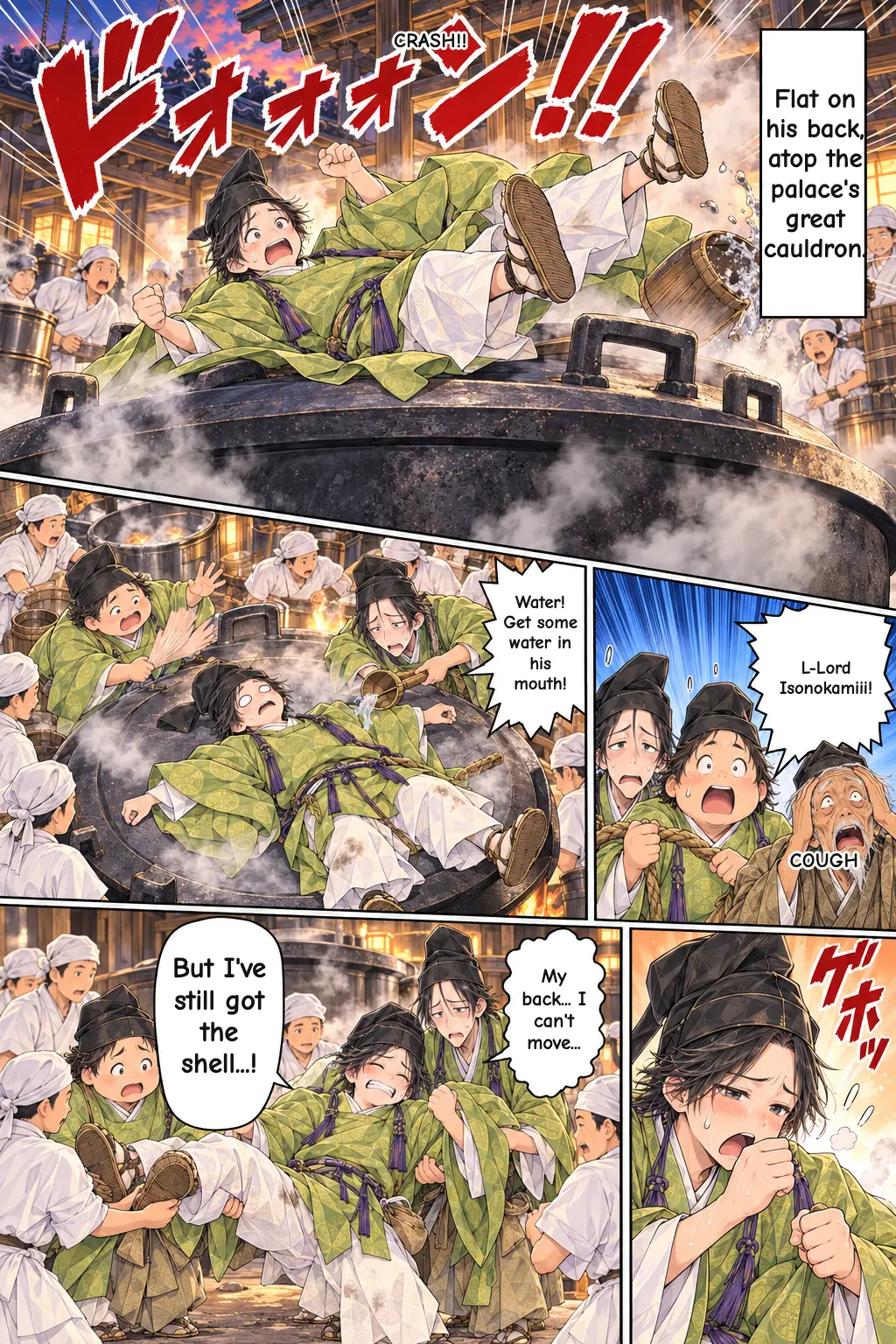
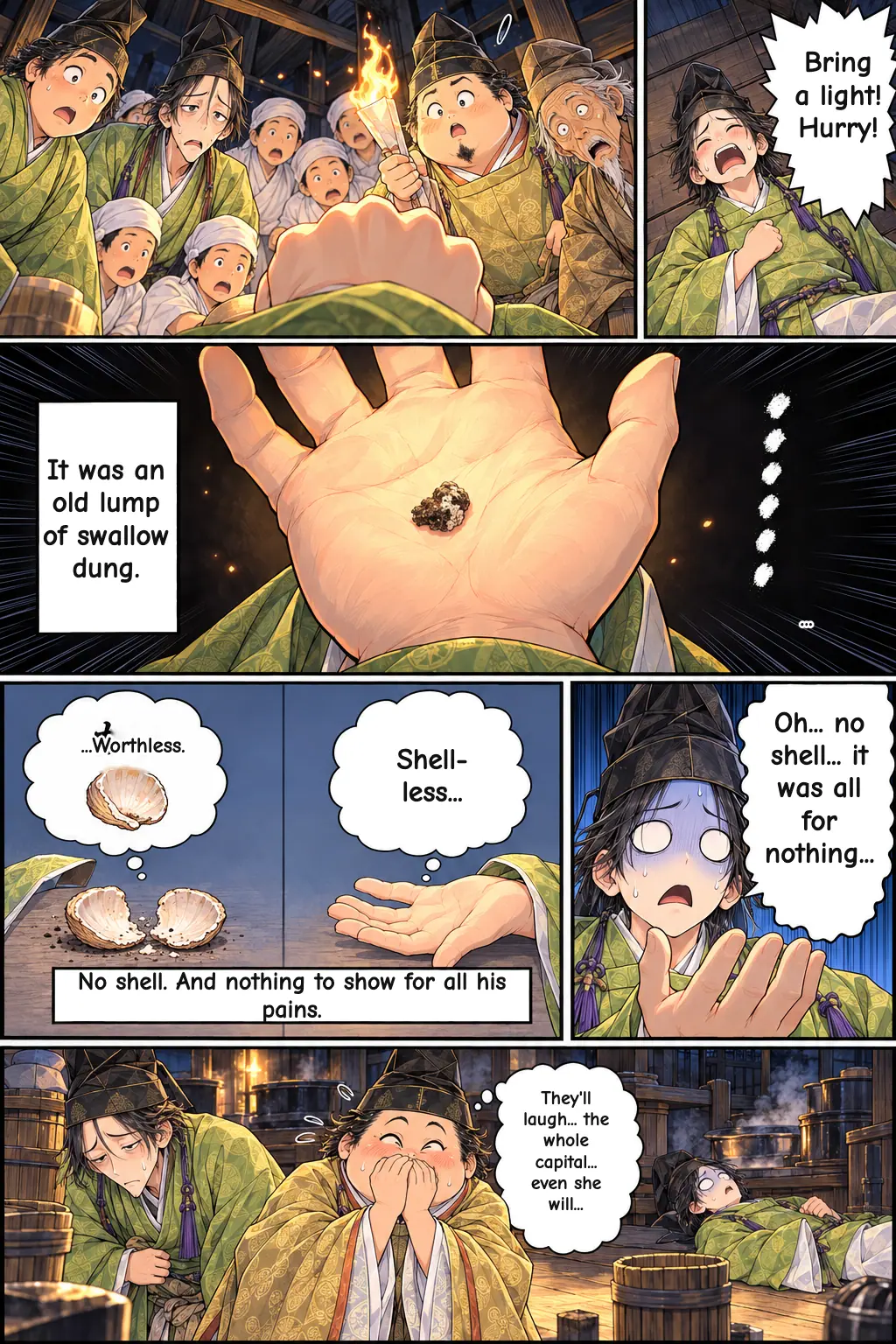
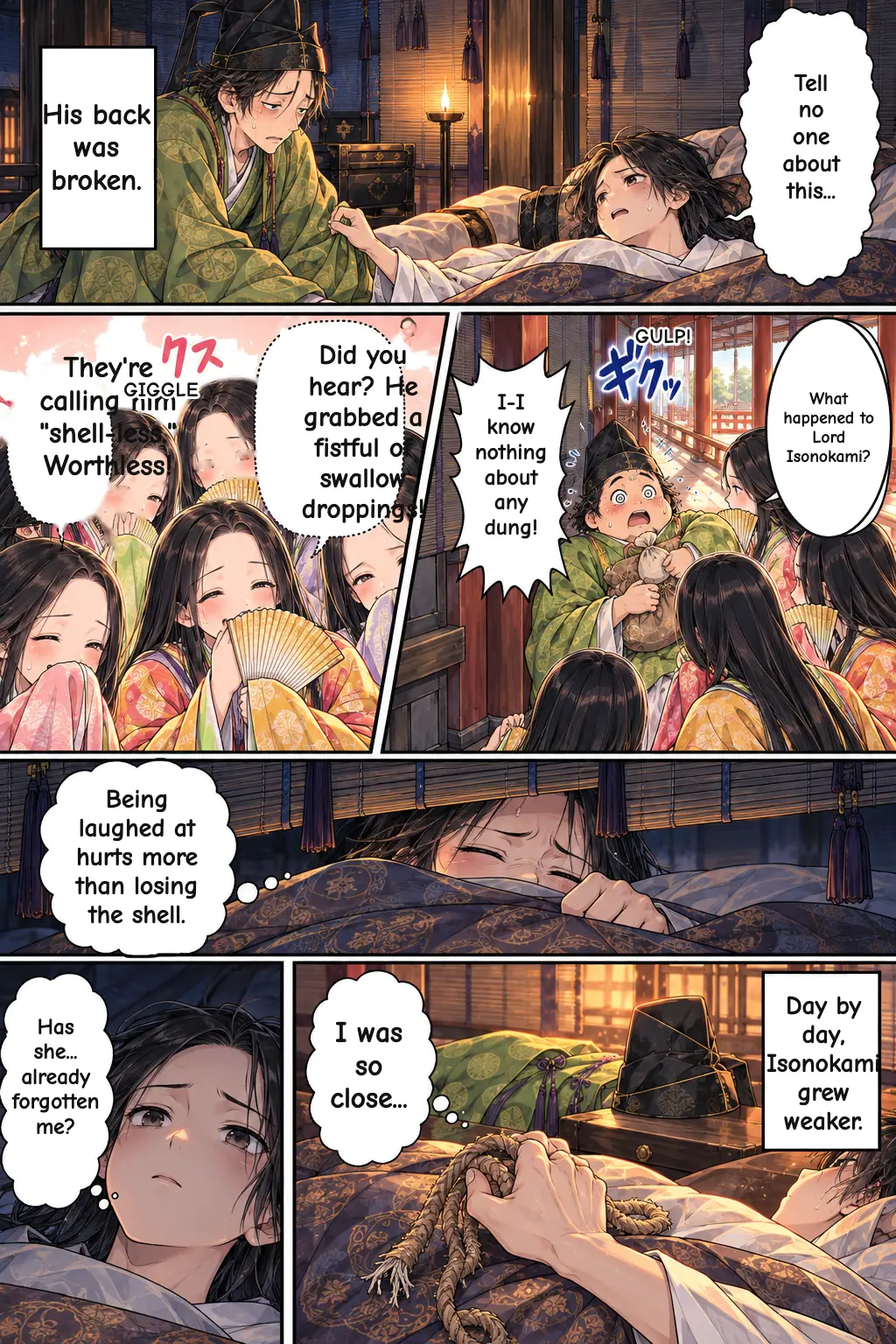
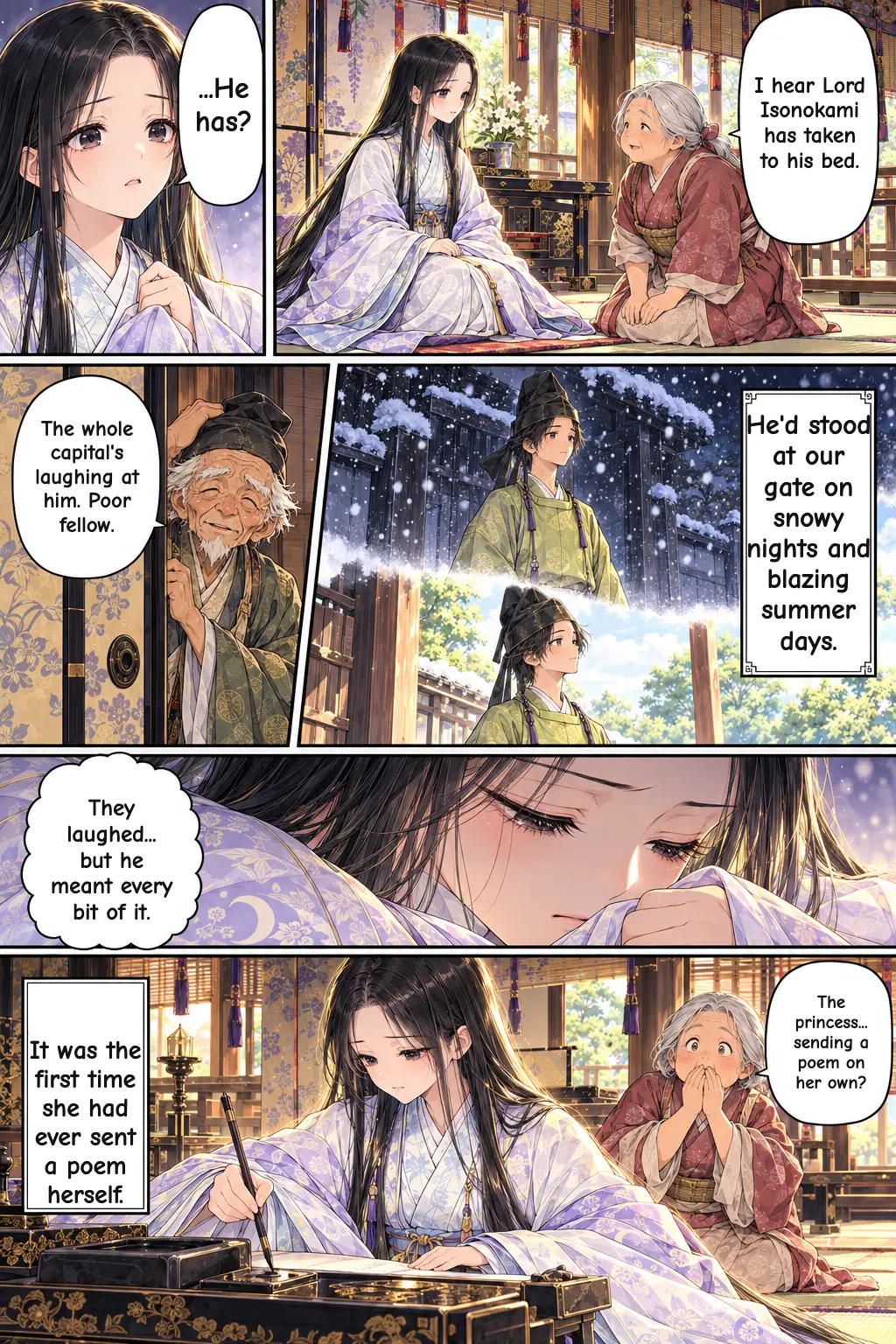
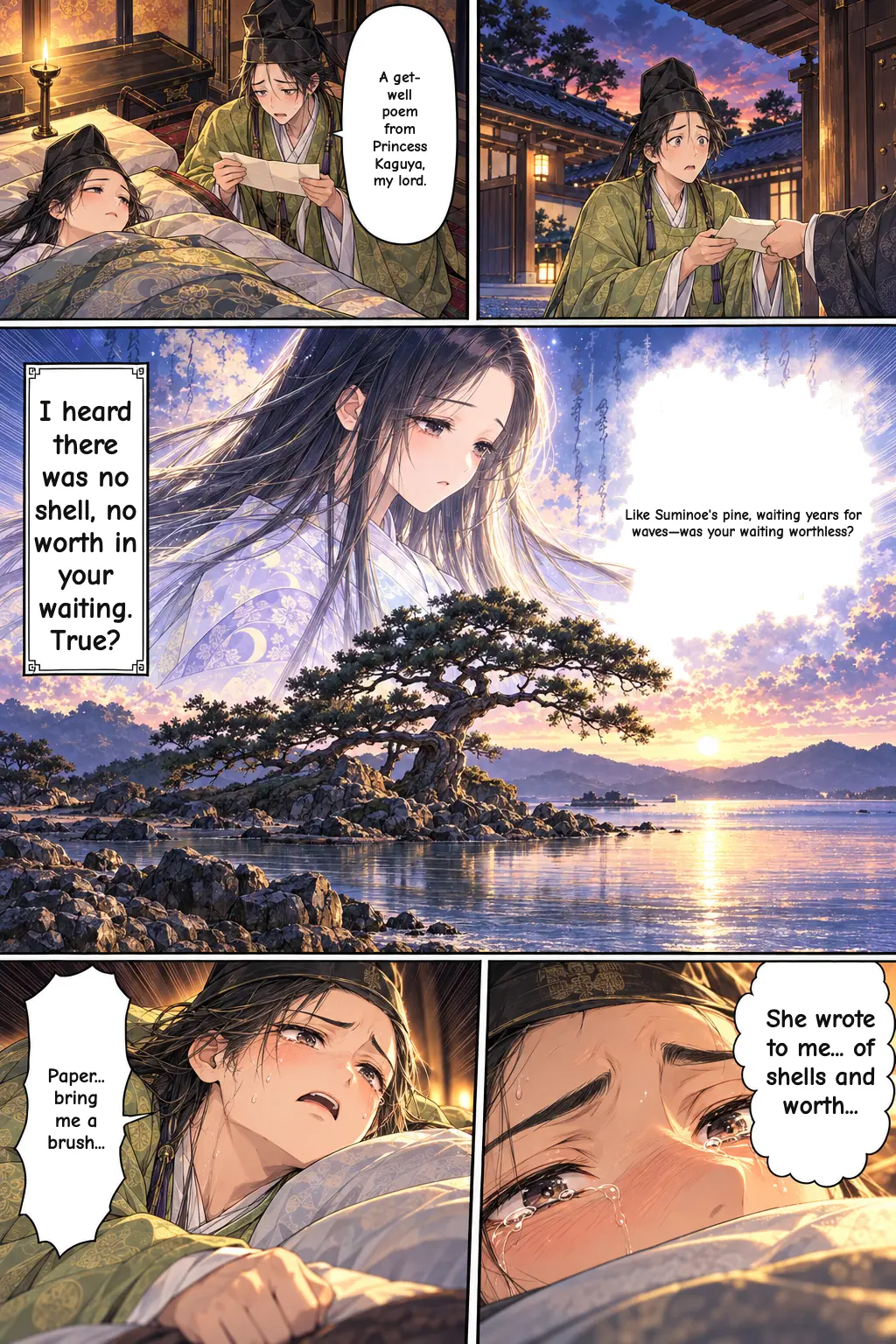
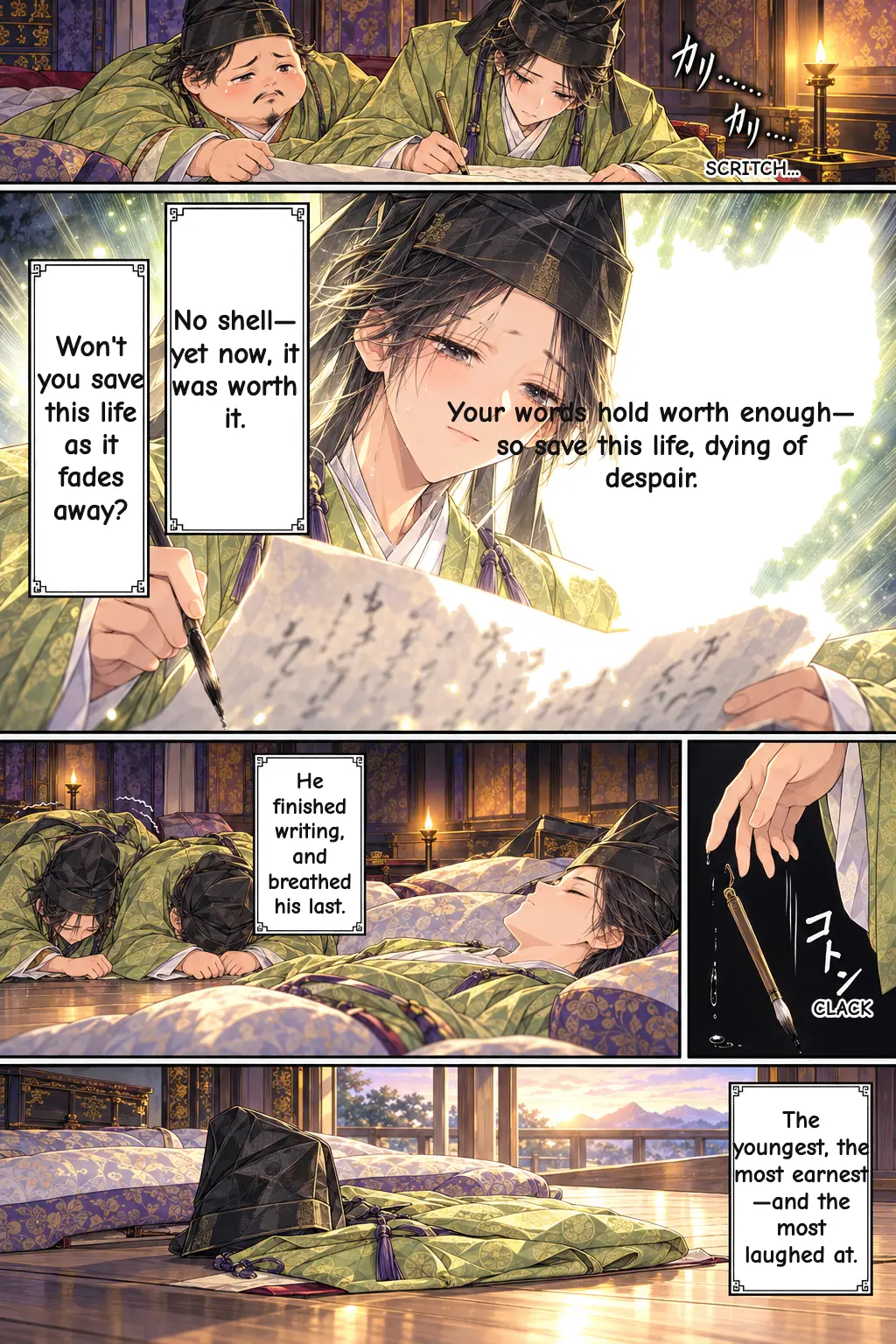
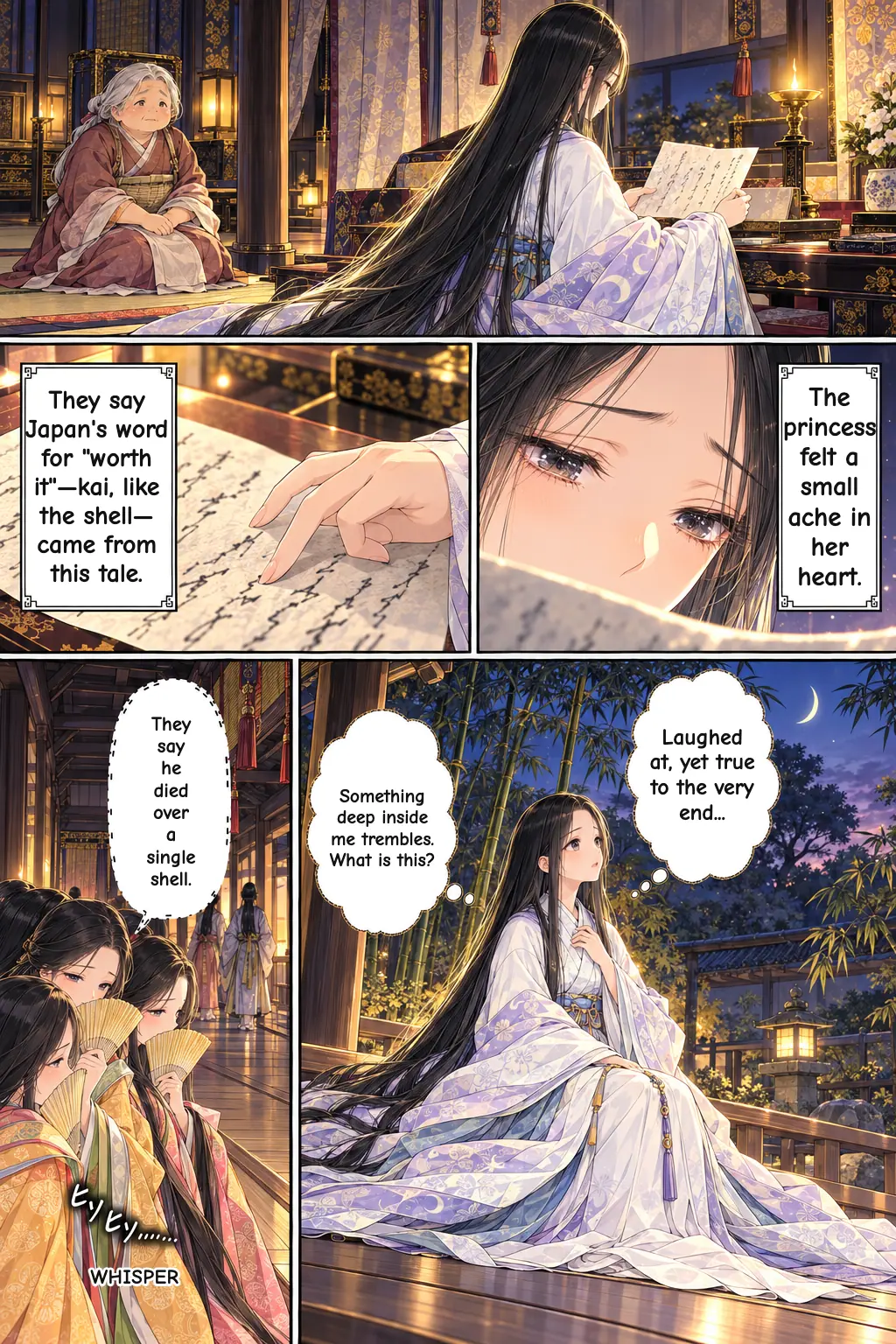
At dusk, a servant is lifted up but finds nothing. Impatient, the Counselor climbs into the basket himself. Groping in a nest, he feels something flat and shouts to be lowered. His men pull too hard, the rope snaps, and he lands on his back on top of a great cauldron (the text's exact name for this vessel is unclear). Revived with water, he opens his hand by lamplight: he is clutching old swallow droppings. His back is broken, and he wastes away, tormented less by failure than by the shame of being laughed at. Kaguya sends him a poem asking after him; with his last strength he writes a reply and dies. Hearing this, she feels a little pity.
The Original Story, Part 2: The Emperor and the Princess Who Became a Shadow
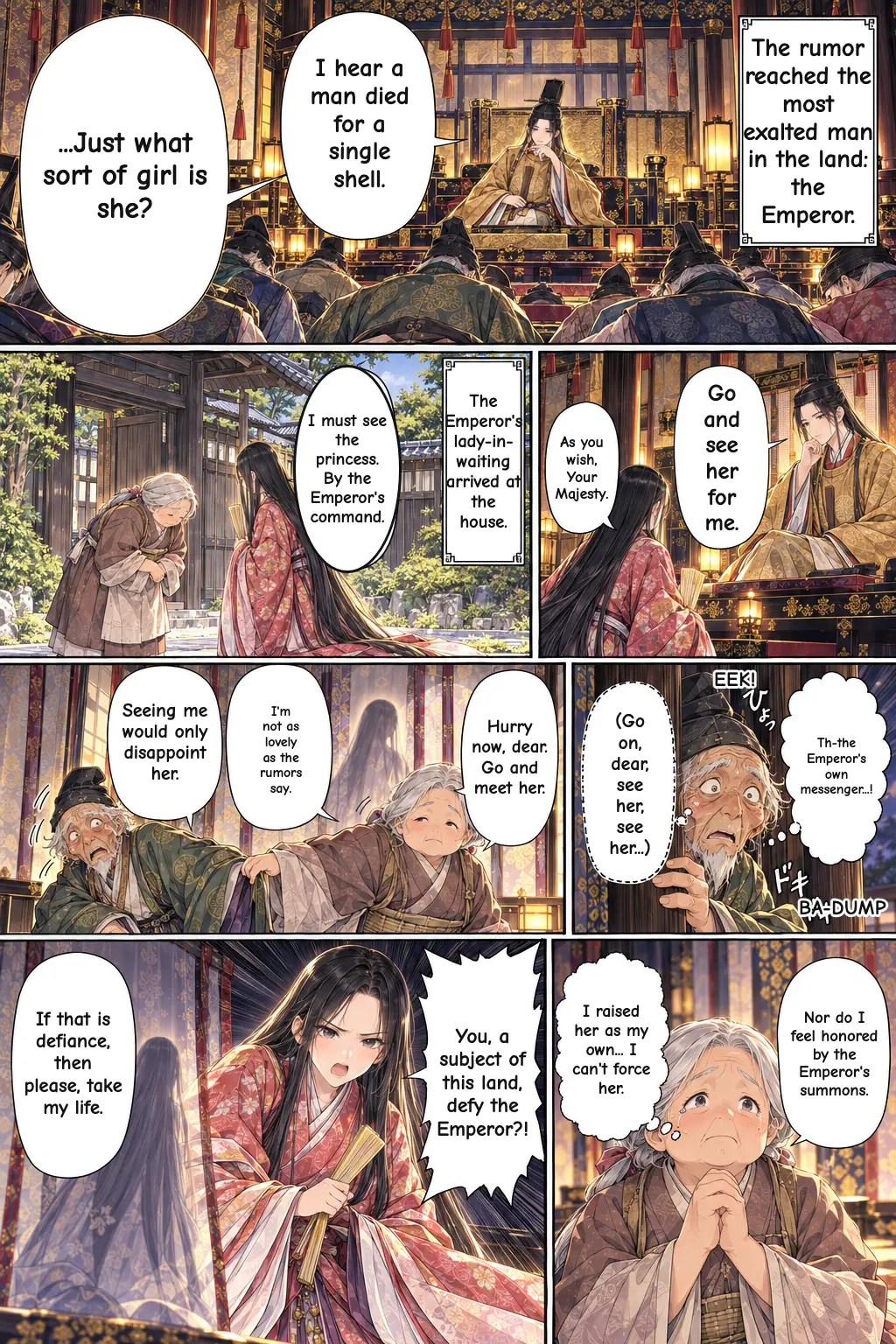
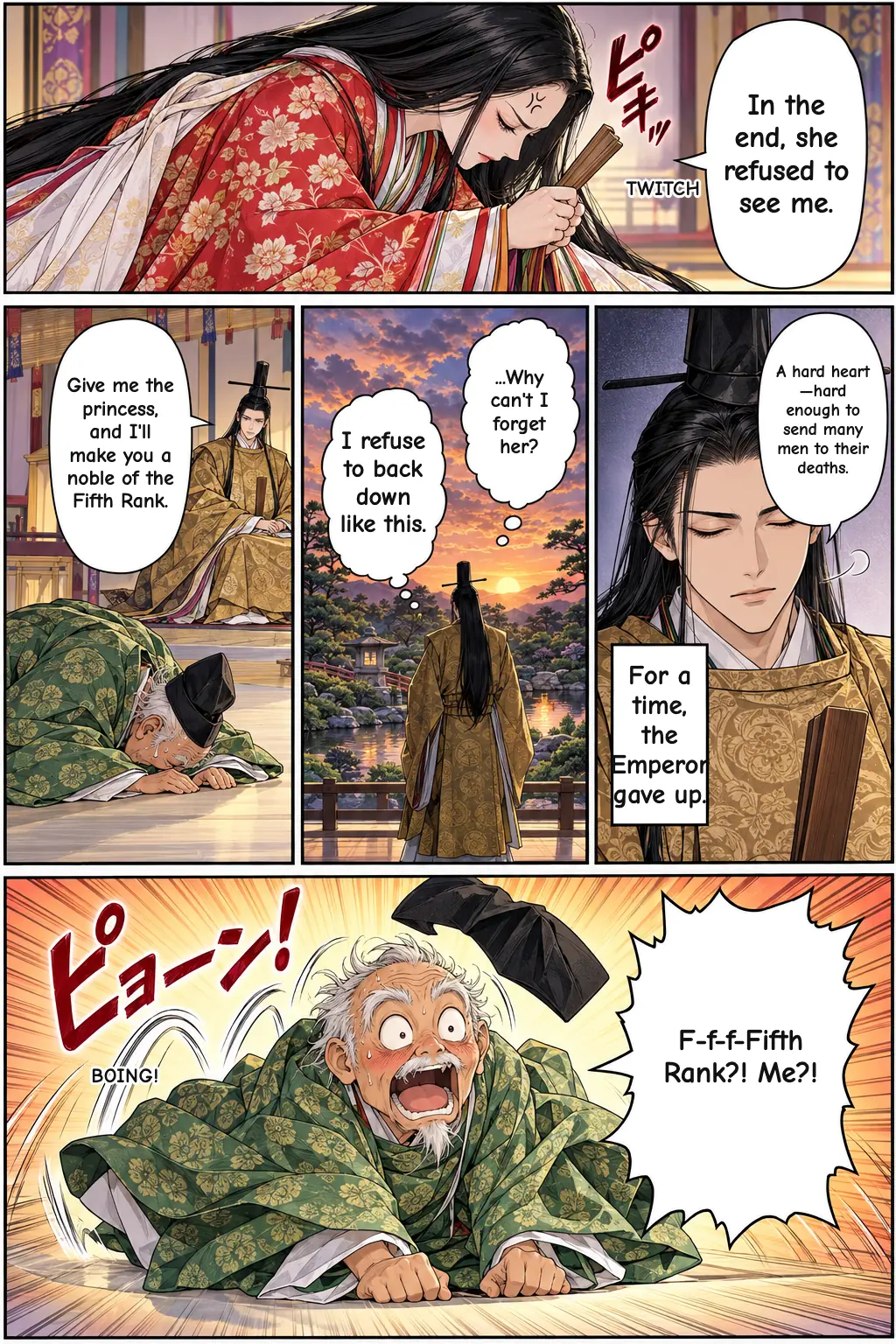
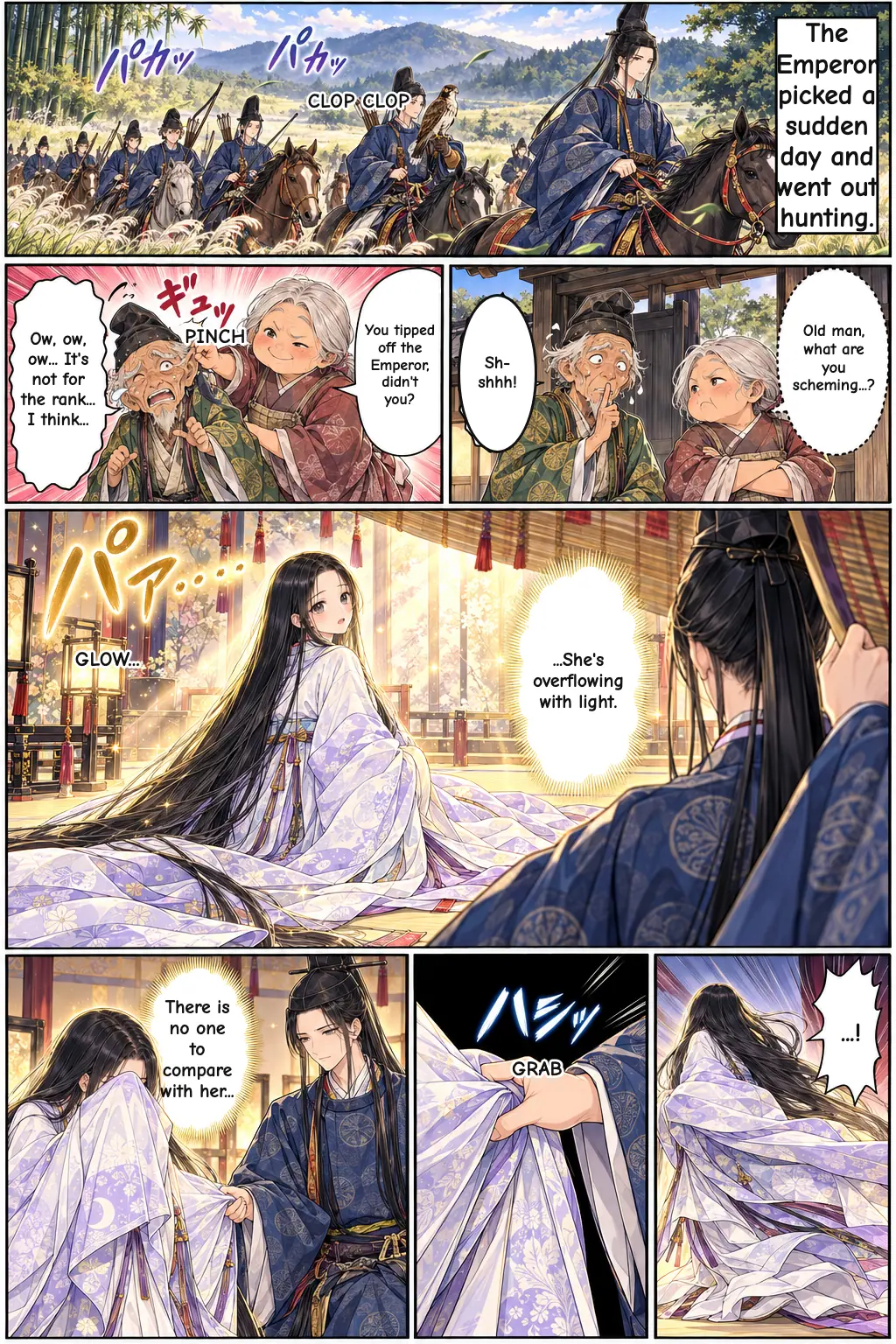
Word of Kaguya's beauty reaches the Emperor. He sends a court lady, Nakatomi no Fusako, to see her. The princess refuses to meet her, saying she is not beautiful and does not value the summons. When Fusako insists that no one can disobey the sovereign, Kaguya replies that he may as well have her killed.
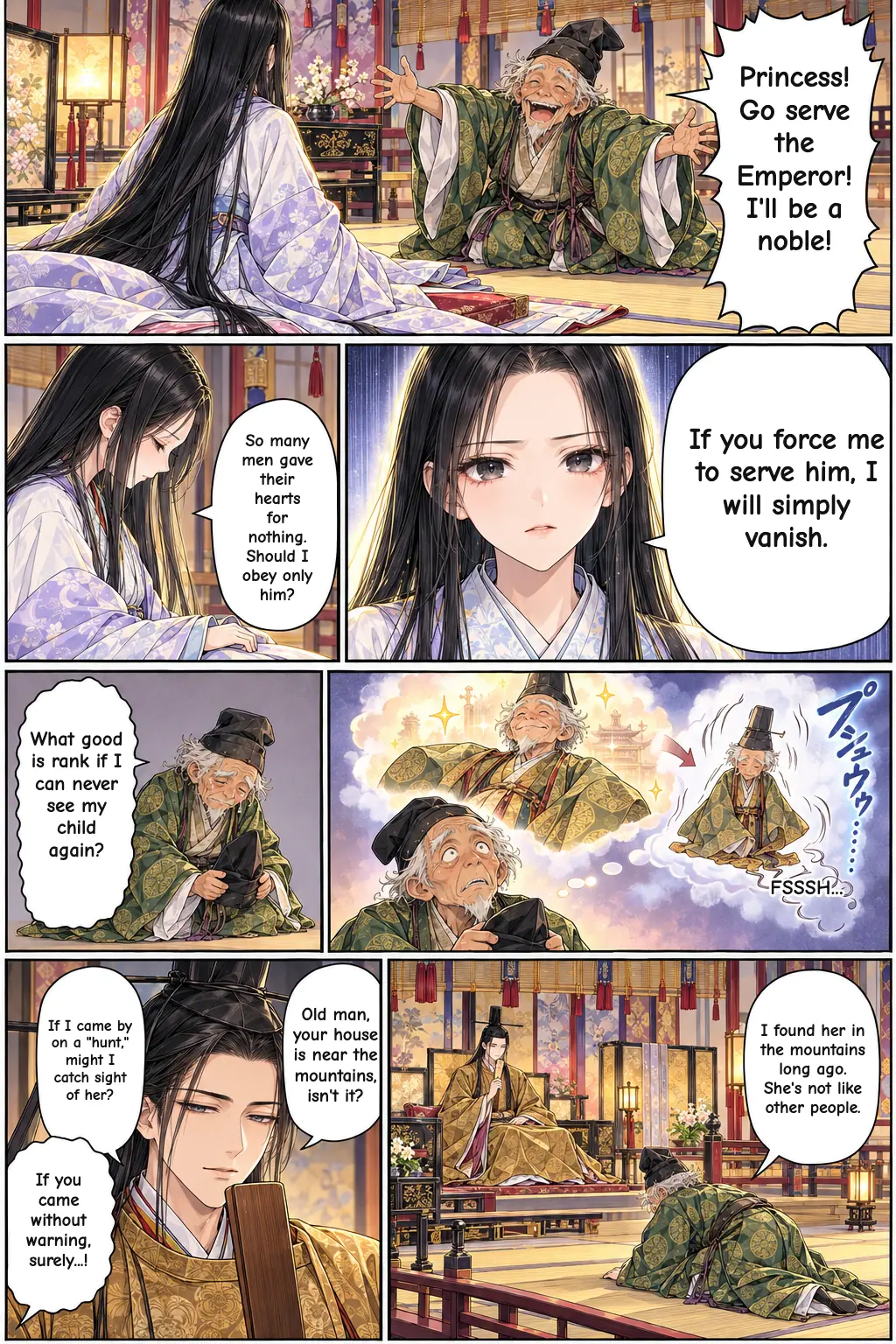
The Emperor gives up, then changes his mind. He promises the bamboo cutter a court rank if he hands over his daughter. The old man is thrilled, but Kaguya says that if she is forced into service she will simply vanish. Choosing her life over the honor, he tells the Emperor that she is not his natural child but one he found in the mountains, and unlike ordinary people.
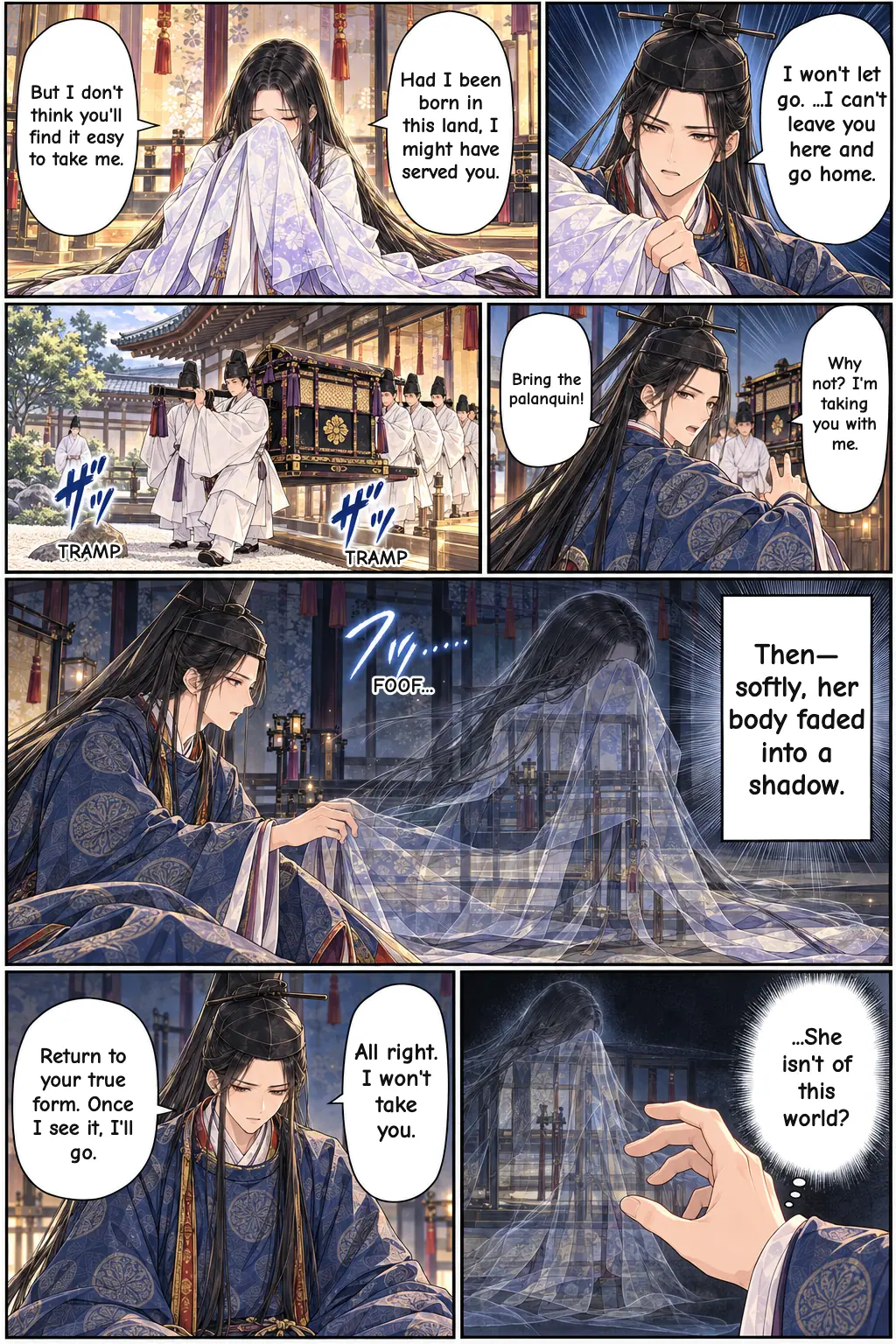
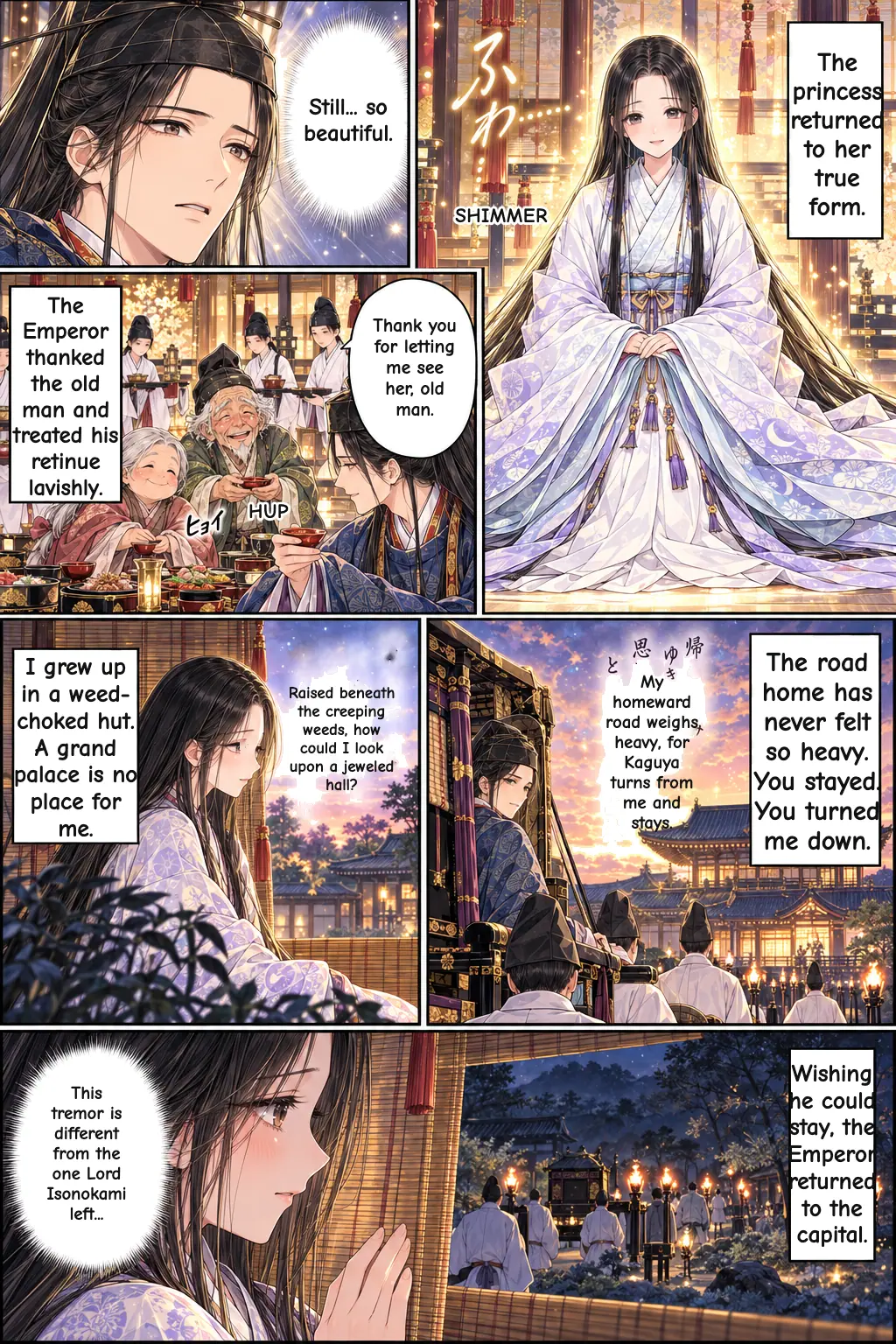
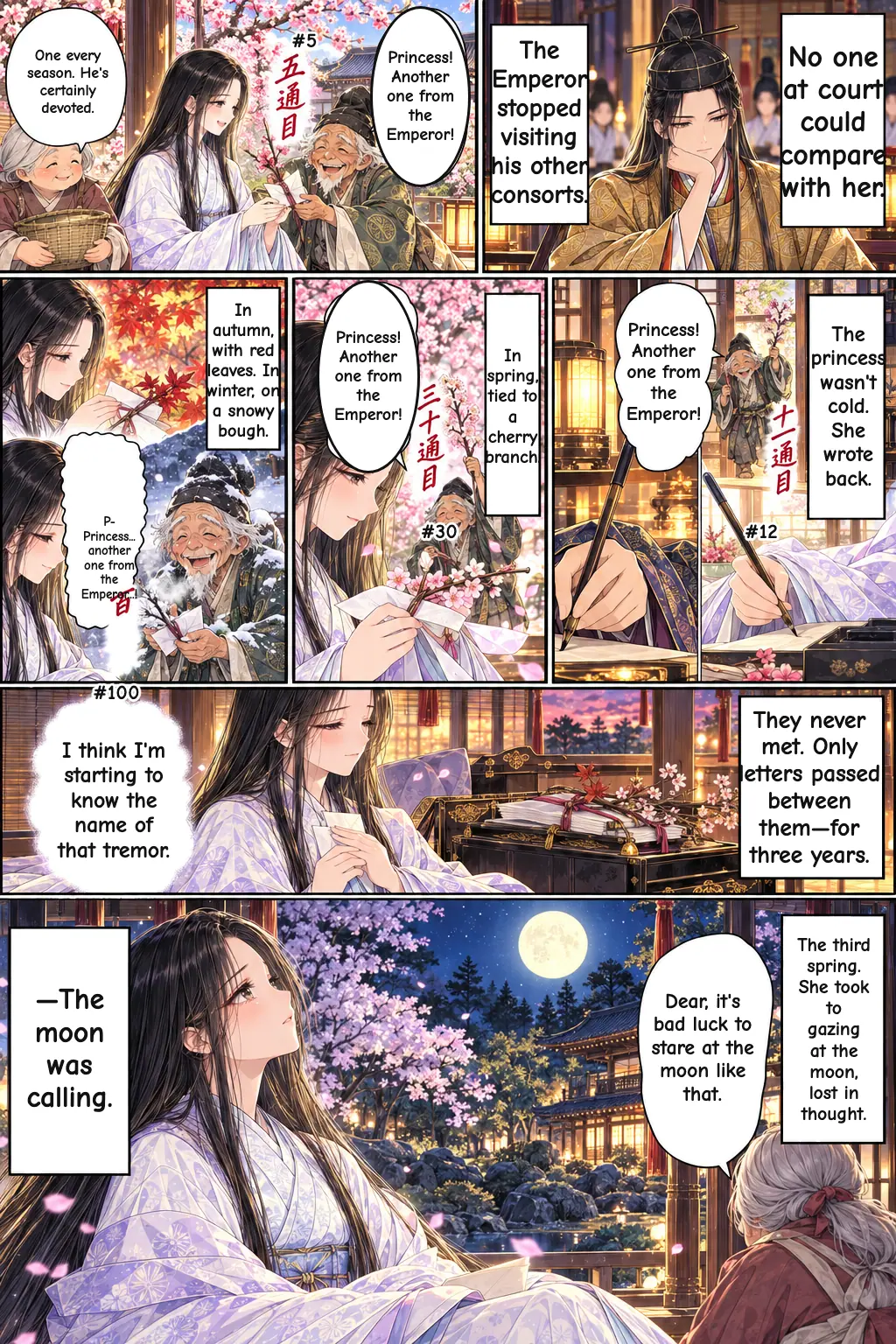
The Emperor then pretends to go hunting and slips into the house. He sees Kaguya shining, catches her sleeve, and tries to carry her off in his palanquin. In that instant she becomes a shadow. Realizing she is not of this world, he asks her to return to her form, exchanges poems with her, and leaves heartbroken. For about three years they comfort each other through letters and poems. After that, the tale tells us, Kaguya begins to gaze at the moon with growing sorrow.
What This Part of the Story Tells Us
This episode is built on wordplay. In Japanese, kai means both "shell" and "worth" or "result." The narrator claims that kai nashi ("no shell," hence "in vain") comes from the Counselor's failure, and that kai ari ("worthwhile") comes from Kaguya's small reply. Kaguya's poem to him also puns on matsu, meaning both "pine tree" and "to wait." These playful origin stories are a signature of the tale, not real word histories.
The episode also gently mocks the Heian aristocracy: a high official risking his body on a roof for a fertility charm, and a ruler sure that his command cannot be refused. A long-standing theory holds that the five suitors are modeled on real courtiers, with Isonokami echoing the historical statesman Isonokami no Maro, but this cannot be proven. Finally, the shadow scene is the clearest sign so far that Kaguya does not belong to the human world, preparing for the moon revelations to come.
What the Manga Changes or Adds
The original text says almost nothing about appearances, so the characters' faces, ages and clothing, the kitchen hall's beams and nests, and the look of the cauldron are the artist's choices. The Counselor's fear and fumbling in the basket, his slow decline and the people nursing him are also visual additions.
The biggest interpretive choice is emotional. The original simply says Kaguya heard the news and sent a poem, and later felt "a little pity." The manga presents his death as the first time her heart is truly stirred, and links that feeling to her relationship with the Emperor. This is the series' reading, not something the original states.
How Kaguya turns into a shadow is not described in the source, so the manga invents its visual form. Of the three years of letters, only the two poems from the Emperor's visit survive in the original; the other letters, and the seasonal montage of notes tied to branches and flowers, are imagined within the tale's brief mention of letters attached to trees and grasses.
Where to Read It
If you want to see the Counselor's fall, the Emperor's secret visit and Kaguya's vanishing brought to life, Episode 5 of THE TALE OF THE BAMBOO CUTTER: Princess Kaguya from the Moon is right above this article. Every episode on Manga Portal is free to read, with no sign-up required, so you can start from the beginning or continue to the moon chapters whenever you like.
Characters in this episode
Isonokami no Marotari
A Middle Counselor and the fifth suitor, who dies after falling from a basket while hunting for the swallow's cowrie shell.
Kuratsumaro
An old official of the palace kitchens who teaches the Counselor how to catch the shell and is rewarded with his robe.
Princess Kaguya
The radiant girl from the bamboo who rejects every suitor, even the Emperor, and turns into a shadow to avoid being taken.
The Emperor
Japan's unnamed ruler, who tries to claim Kaguya by force but, realizing she is not human, settles for three years of letters.
Nakatomi no Fusako
A court lady sent by the Emperor to see Kaguya, who is refused despite her stern demands.
The Bamboo Cutter
Kaguya's foster father, who is tempted by a court rank but chooses his daughter's life instead.
FAQ
What is the swallow's cowrie shell in The Tale of the Bamboo Cutter?
It is a koyasugai, a shell believed to be produced by a swallow and used as a charm for safe childbirth. Kaguya asks the Middle Counselor Isonokami to bring it to her, knowing it is practically impossible to find.
What happens to the fifth suitor of Princess Kaguya?
Isonokami is hoisted up to a swallow's nest in a basket, but the rope snaps and he falls onto a large cauldron. He finds he is holding only old droppings, breaks his back, and dies of his injury and shame soon after replying to Kaguya's poem.
Why did Princess Kaguya refuse the Emperor?
She tells him she will vanish if forced into court service, and says it would look wrong to obey him after rejecting so many sincere suitors. The tale also hints that she was not born in this world, which becomes clear later.
Why does Kaguya turn into a shadow?
When the Emperor grabs her sleeve to take her away, she suddenly becomes a shadow. This shows him she is not an ordinary person, and he gives up trying to take her by force.
What does "kai nashi" mean in the story?
Kai means both "shell" and "worth." The tale playfully claims that kai nashi, "in vain," came from the Counselor's failure to get the shell; this is a joke within the story rather than the word's true origin.