Episode 2To Marry Her, Find What Doesn't ExistPrincess Kaguya's Five Impossible Tasks
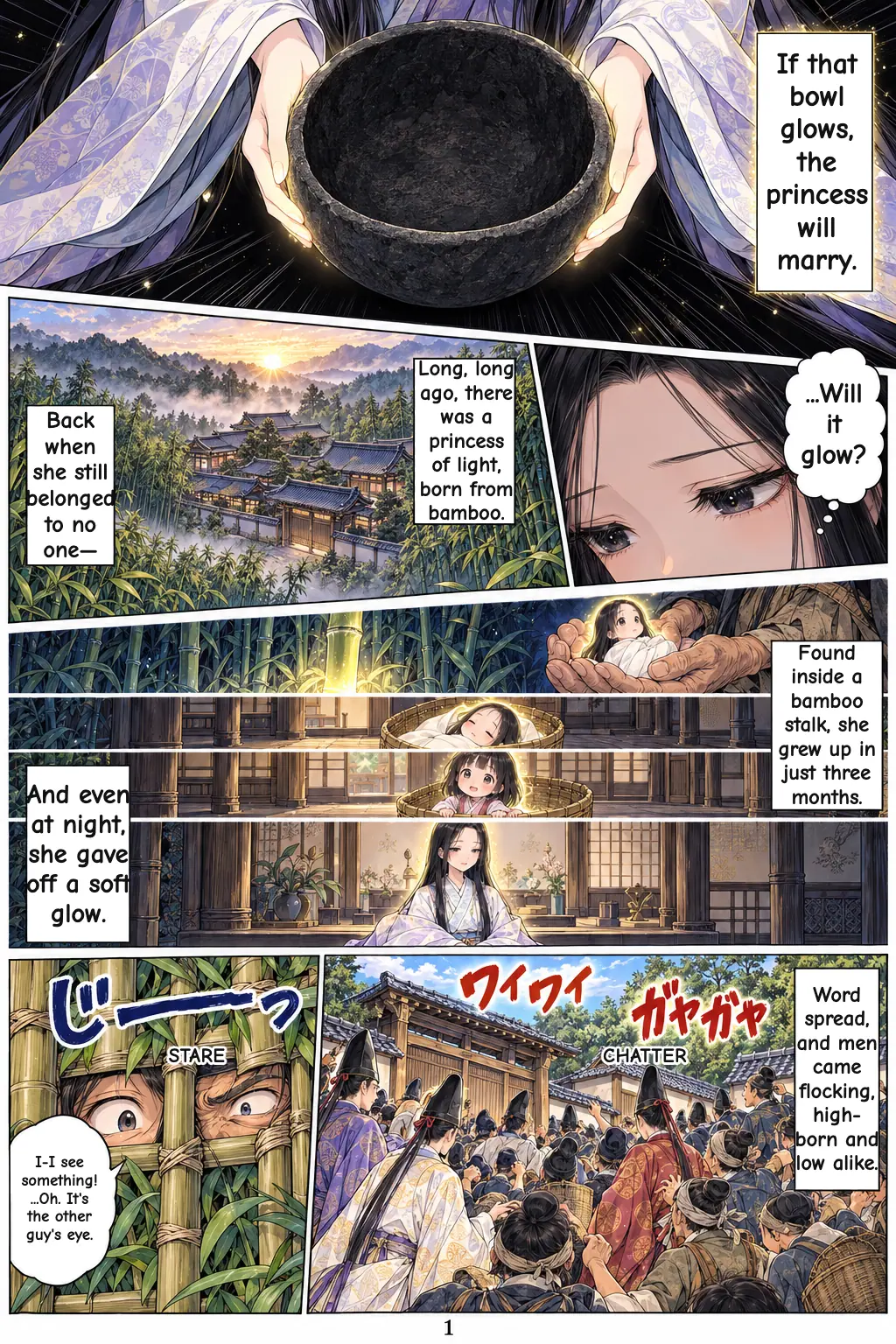
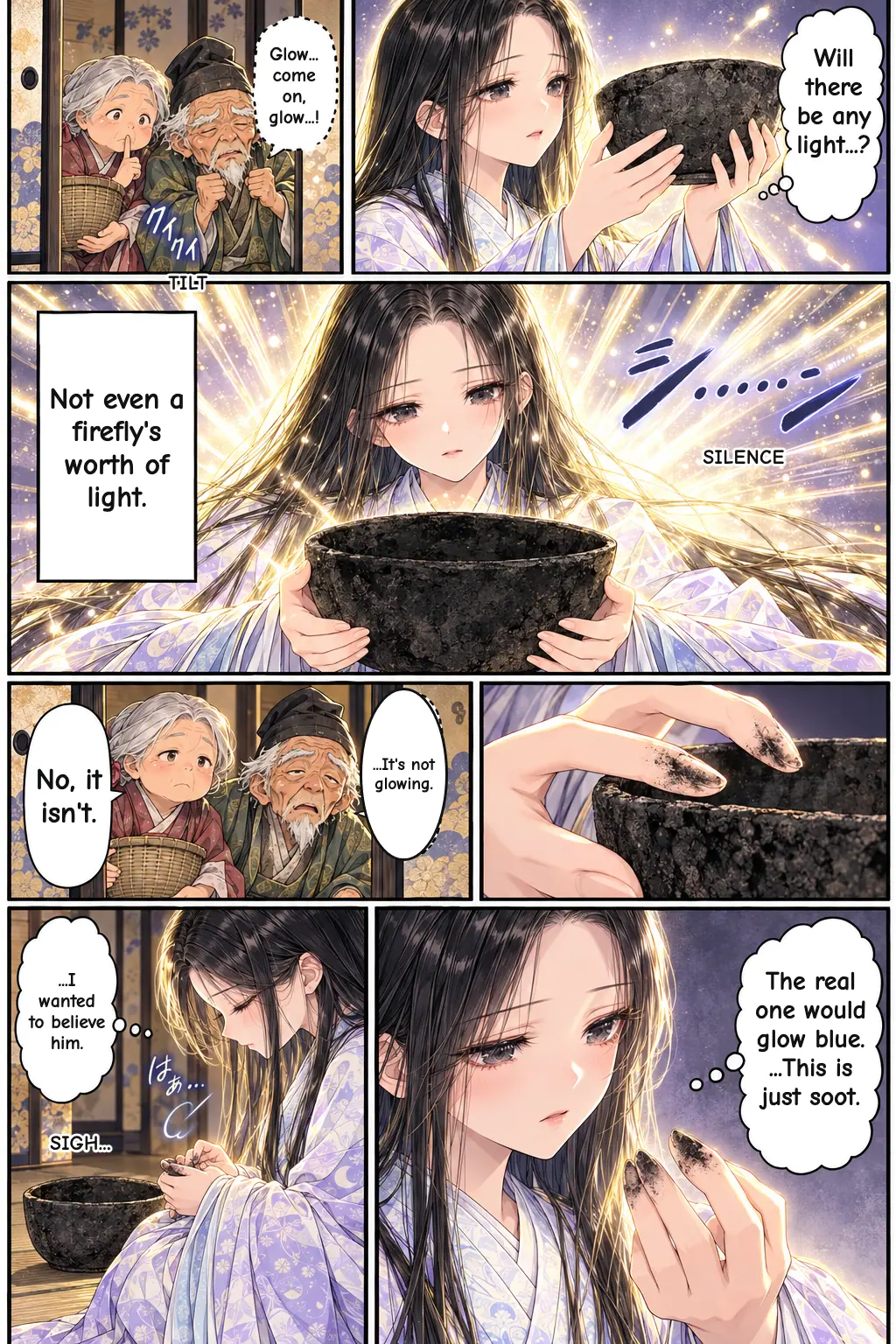
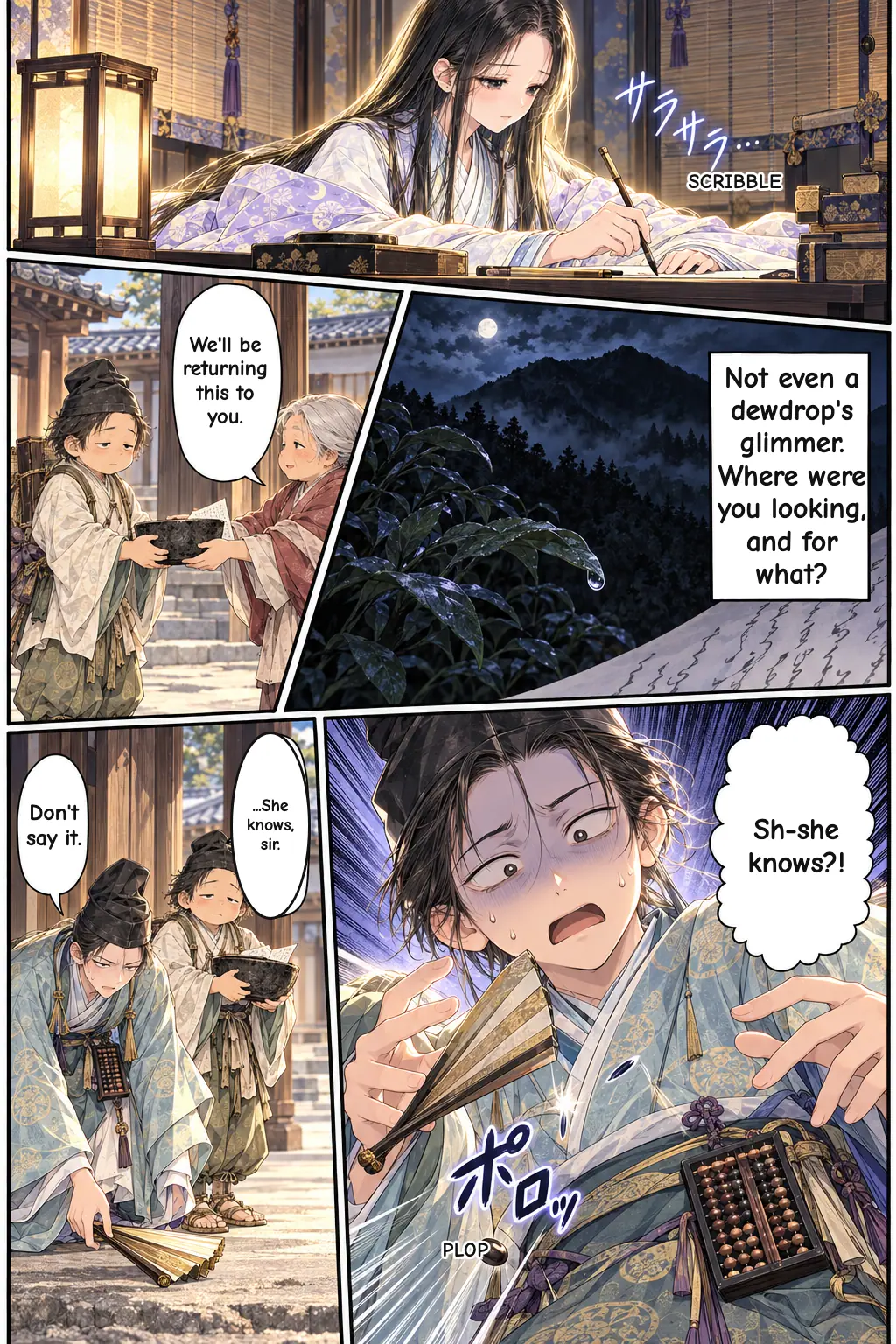
Five noble suitors just won't stop showing up, so Princess Kaguya sets them a challenge: if they truly love her, each must bring her a treasure that doesn't exist in this world. Prince Ishitsukuri goes first, and he cheats to get his bowl. The real one is said to glow blue. Will this one glow in the princess's light?
Princess Kaguya's Five Impossible Tasks: Bamboo Cutter Story Explained
The Original Story: Five Suitors and Five Impossible Treasures
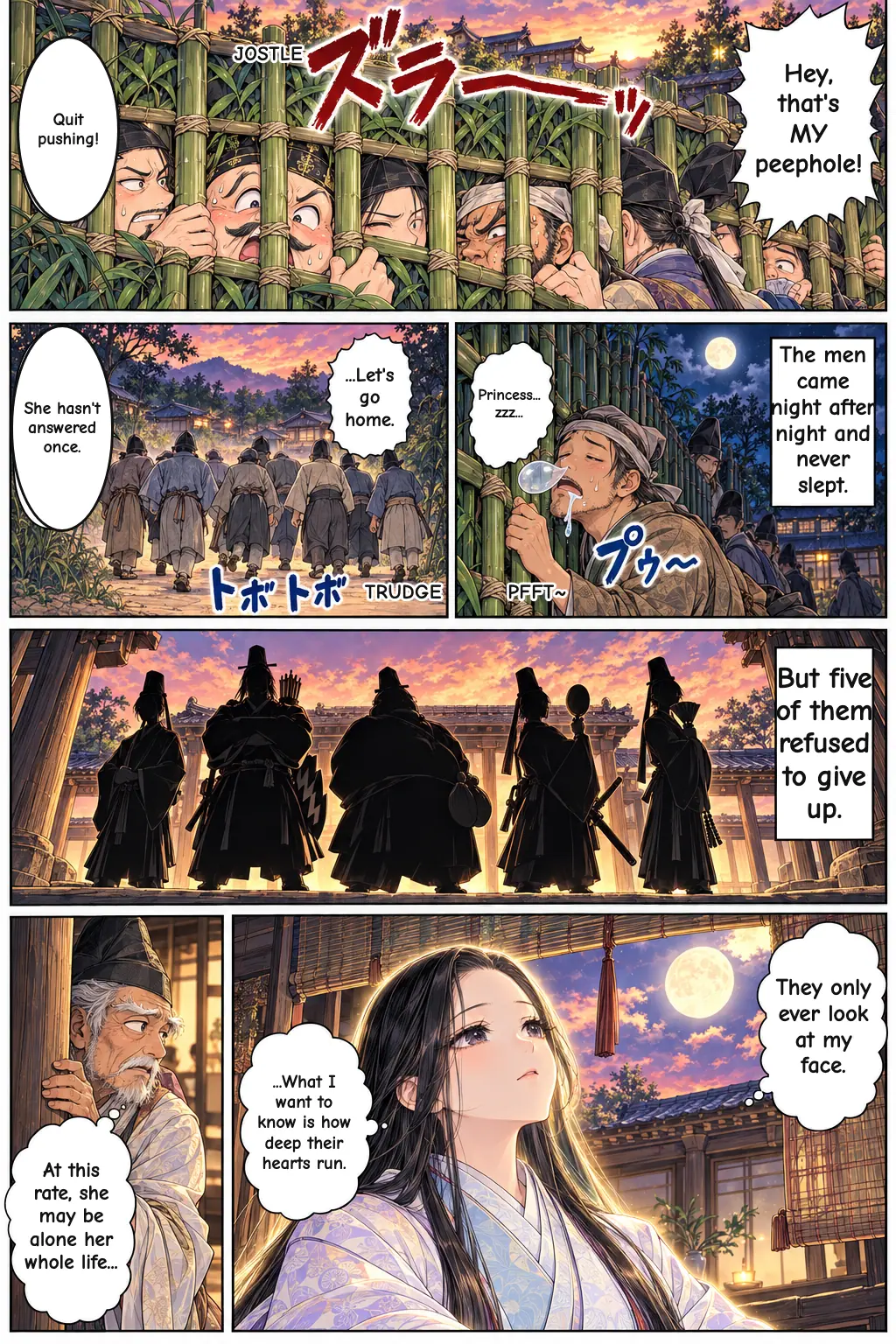
The Tale of the Bamboo Cutter (Taketori Monogatari) is a Japanese tale by an unknown author. It is usually dated to somewhere between the late 800s and the early 900s. Earlier in the story, an old bamboo cutter finds a tiny girl inside a glowing bamboo stalk and raises her. She grows into Princess Kaguya, and word of her beauty spreads. Men of every rank start hanging around her house, and some peek through gaps in the fence. The narrator jokes that this kind of night-time courting is where the Japanese word yobai comes from.
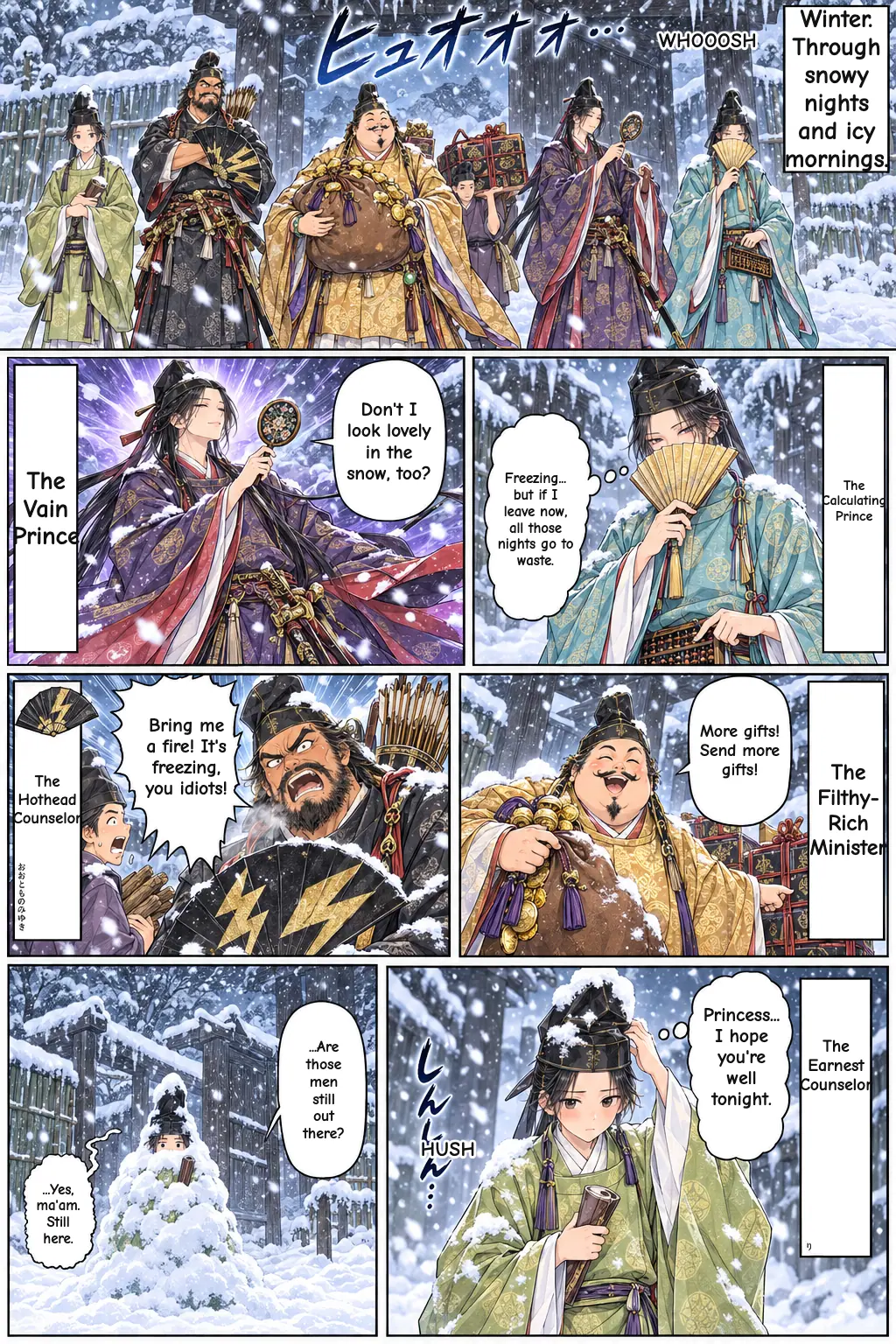
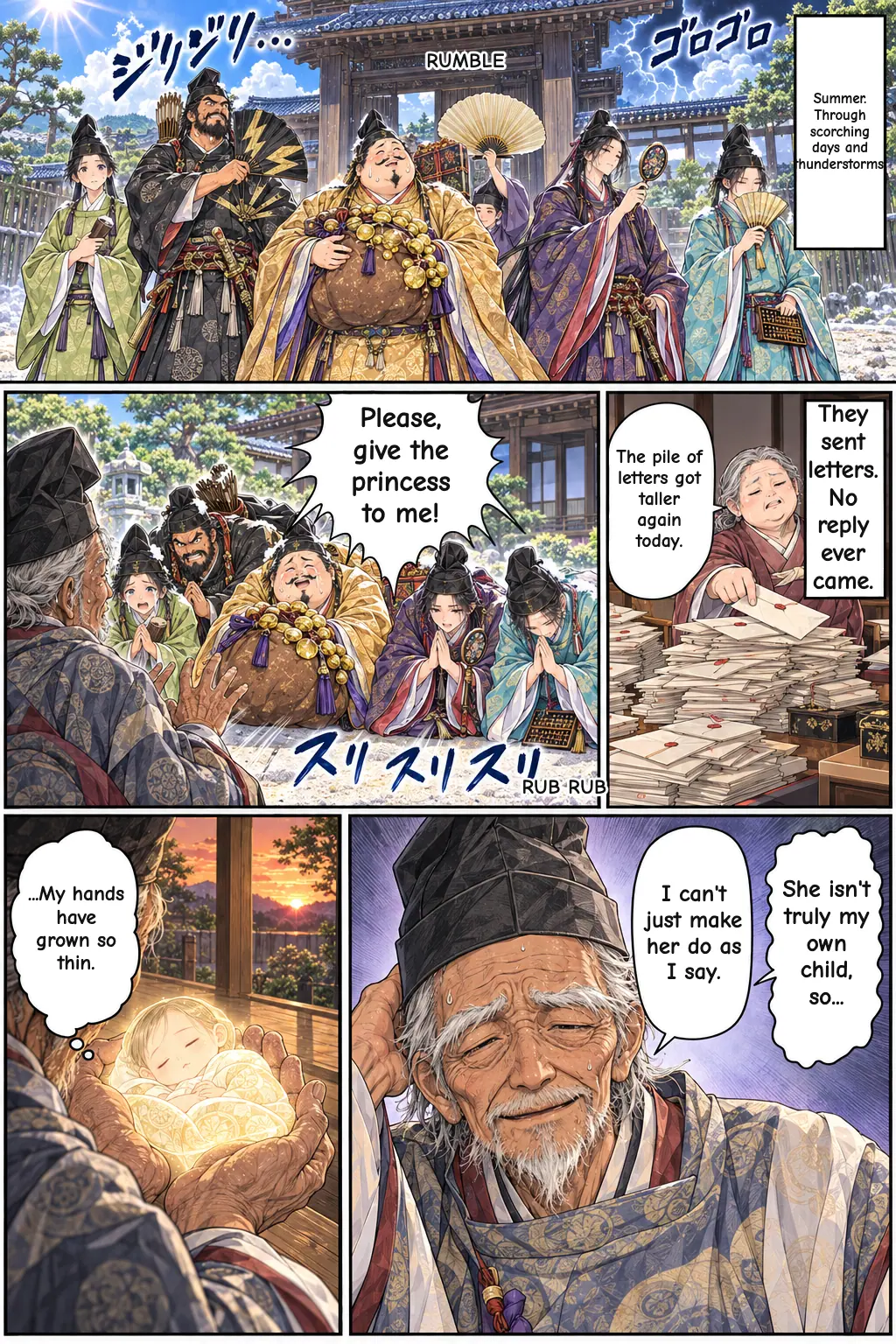
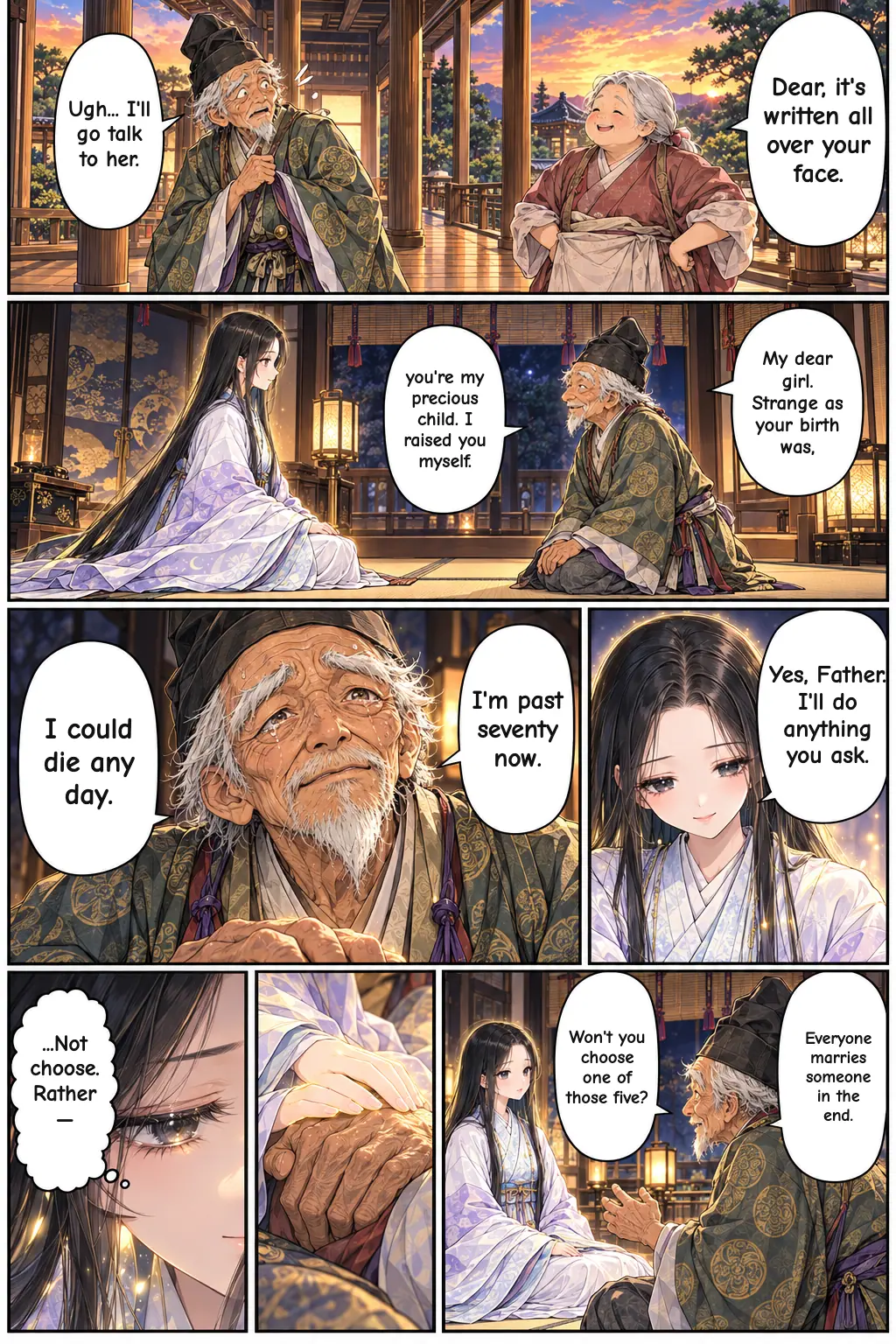
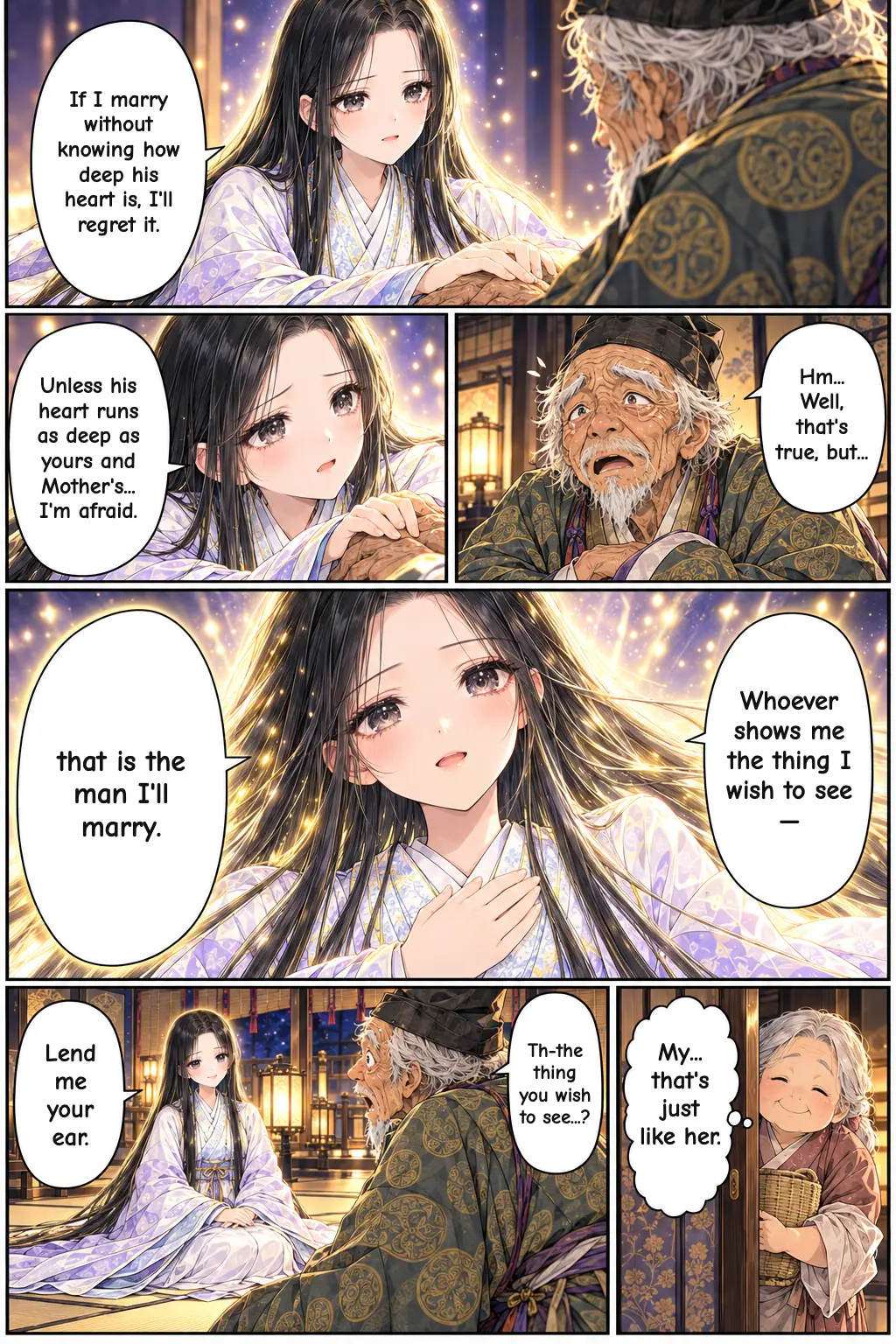
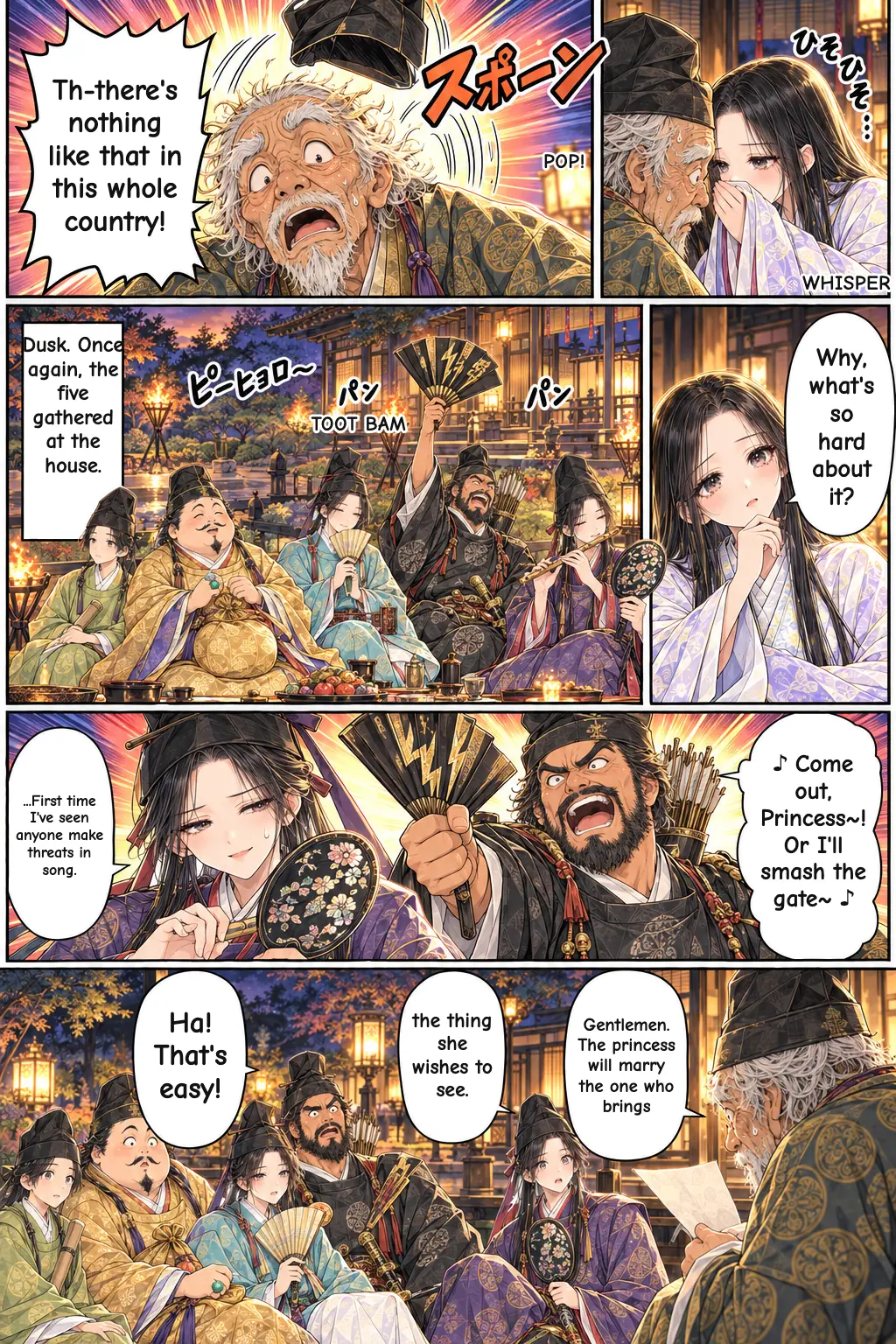
Most of these admirers give up. Five persistent noblemen don't. They come in the snow and ice of winter and in the scorching, thundery heat of summer, and they keep sending letters she never answers. The old man reminds Kaguya that he is past seventy and may not live much longer, and he urges her to pick a husband. She replies that she can't marry someone without knowing how deep his feelings really are. Her test is simple: she will serve whichever man shows her the thing she wants to see.
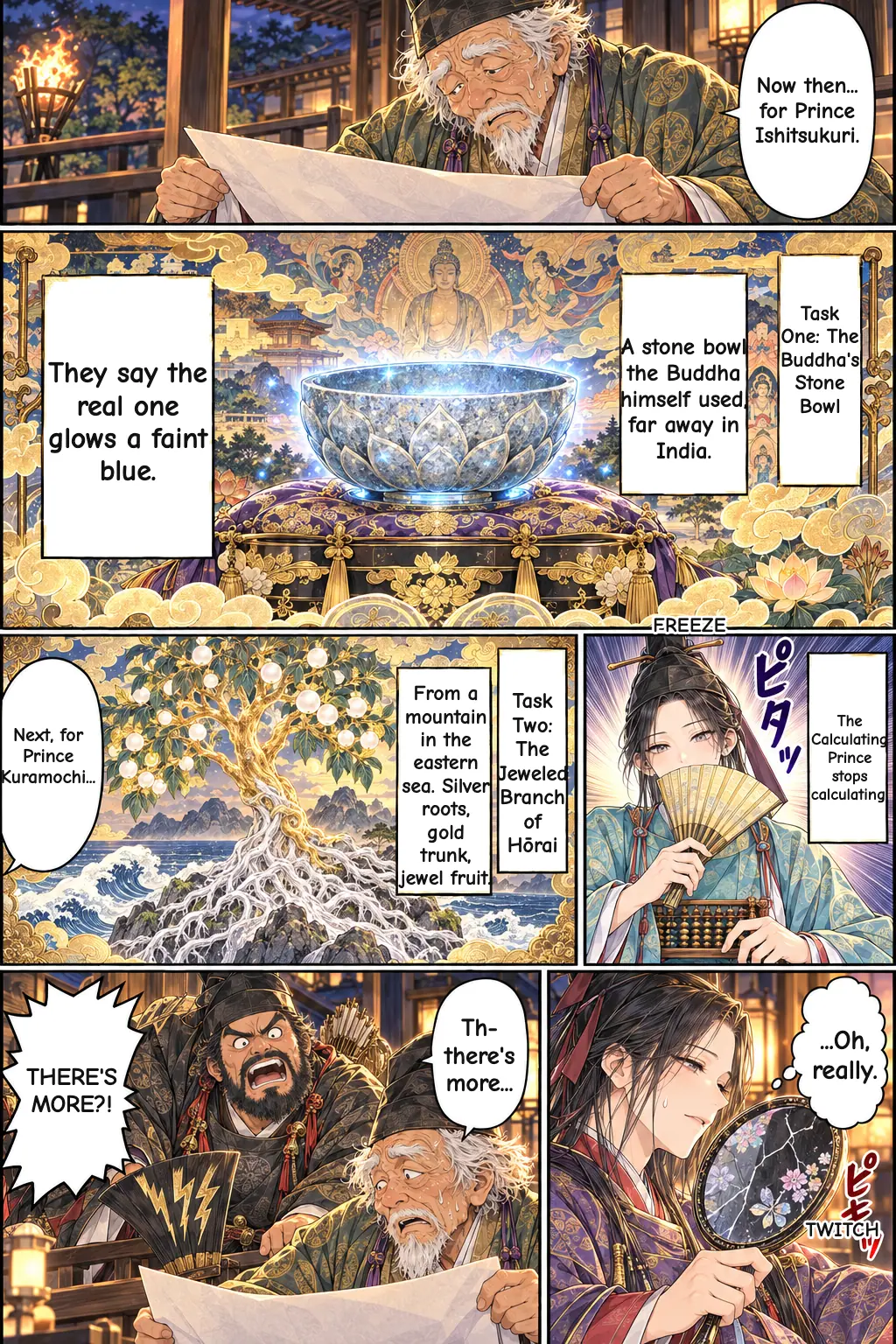
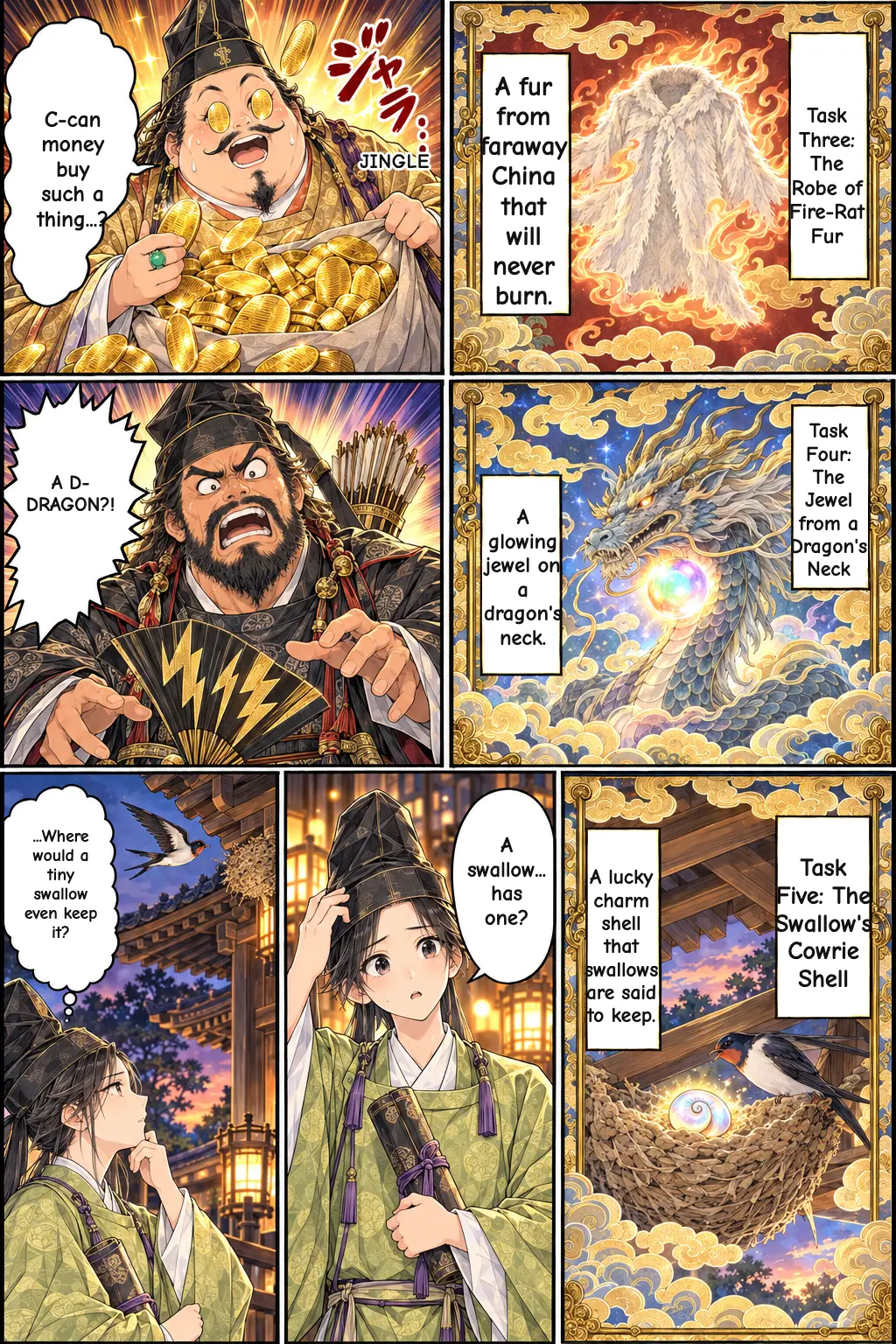
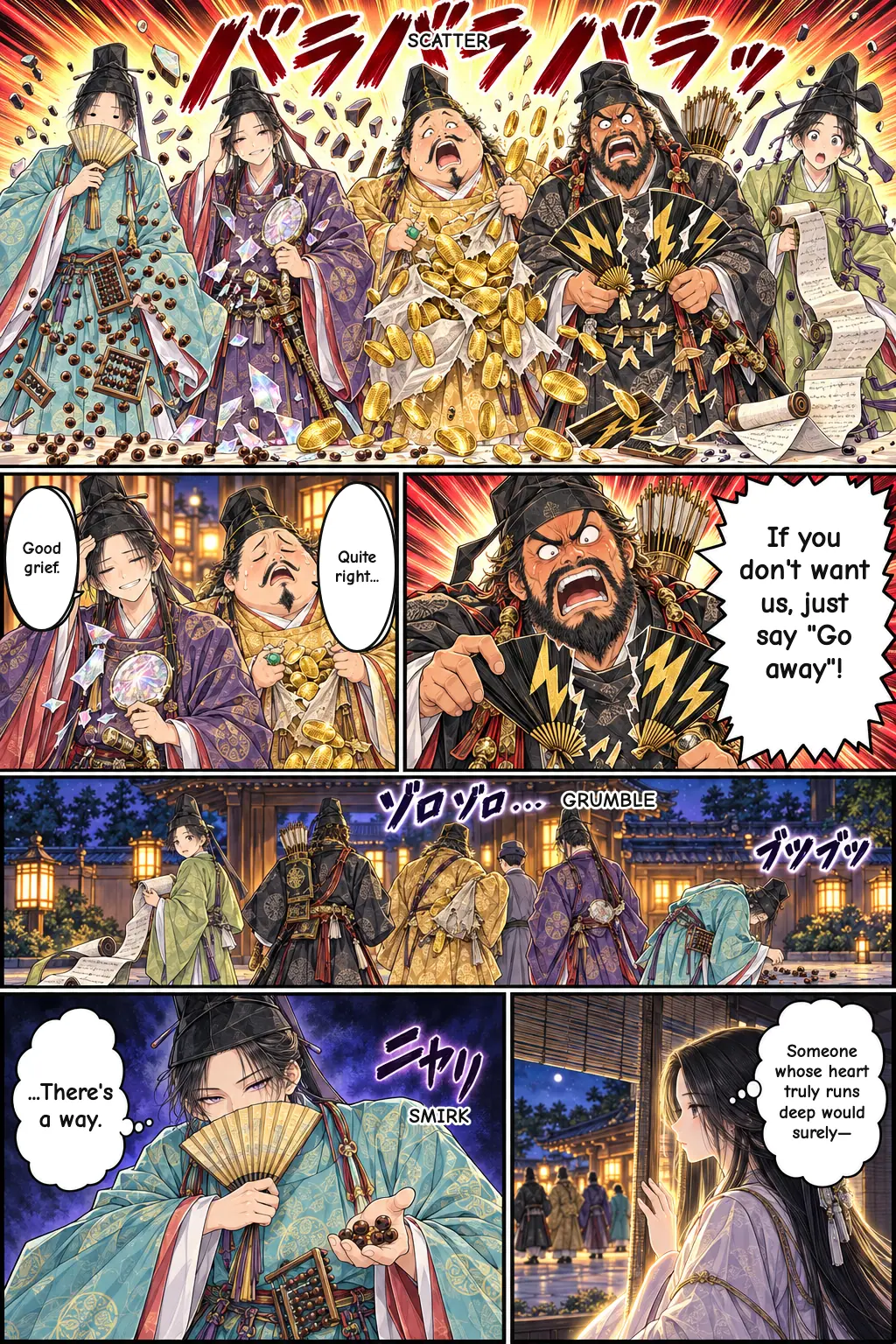
Each suitor gets a different treasure. Prince Ishitsukuri must bring the stone begging bowl of the Buddha from India. Prince Kuramochi must find a branch from Mount Hōrai in the eastern sea, with silver roots, a gold stem and white jewels for fruit. Minister Abe must find a robe made from the fur of the fire-rat of China. Counselor Ōtomo must get the five-colored shining jewel from a dragon's neck. Counselor Isonokami must find the cowrie shell that a swallow holds. The old man worries that none of these things exist in Japan, but Kaguya asks what is so difficult about it. The suitors go home in a bad mood, grumbling that she might as well have told them to stay away.
Prince Ishitsukuri and the Fake Buddha's Bowl
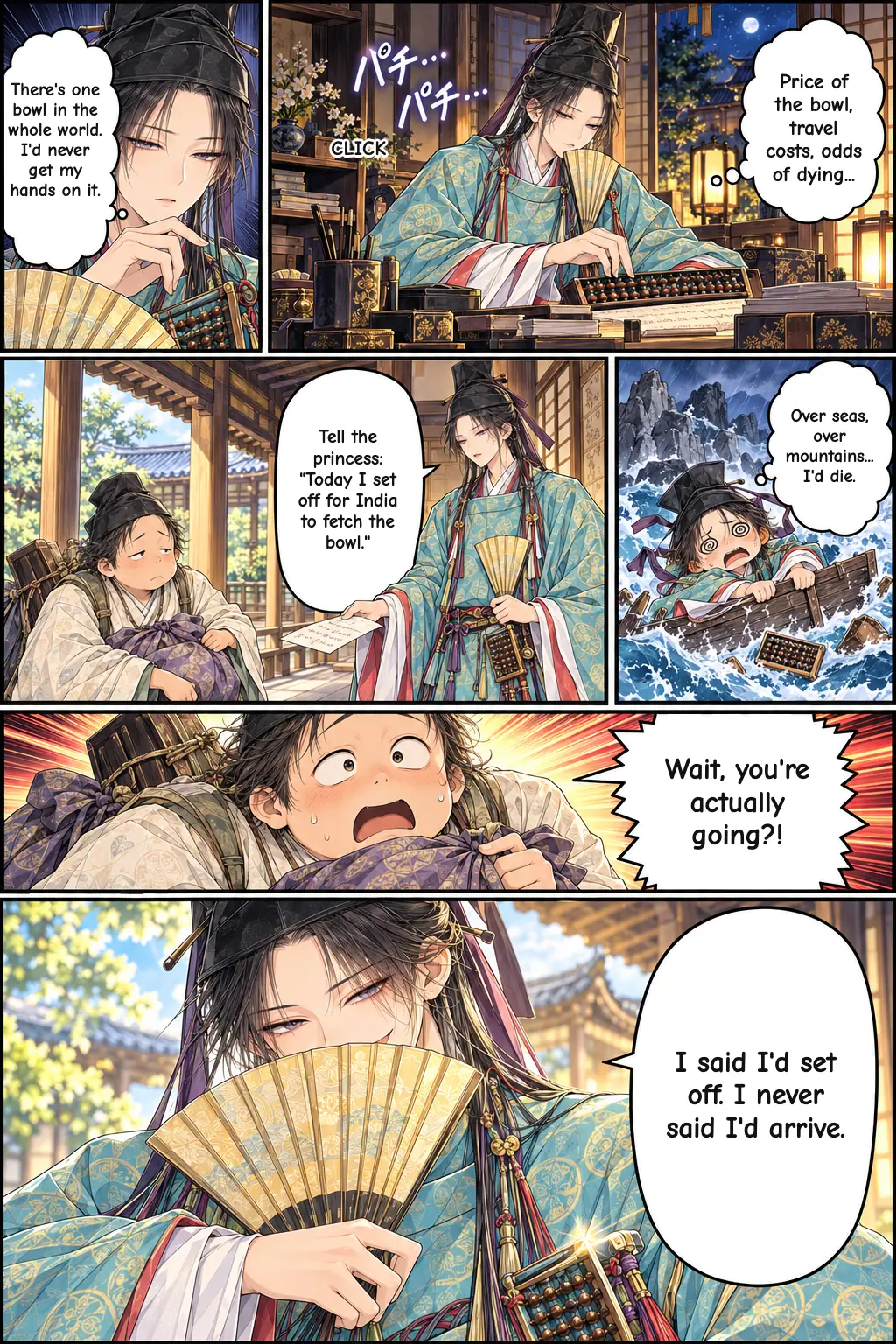
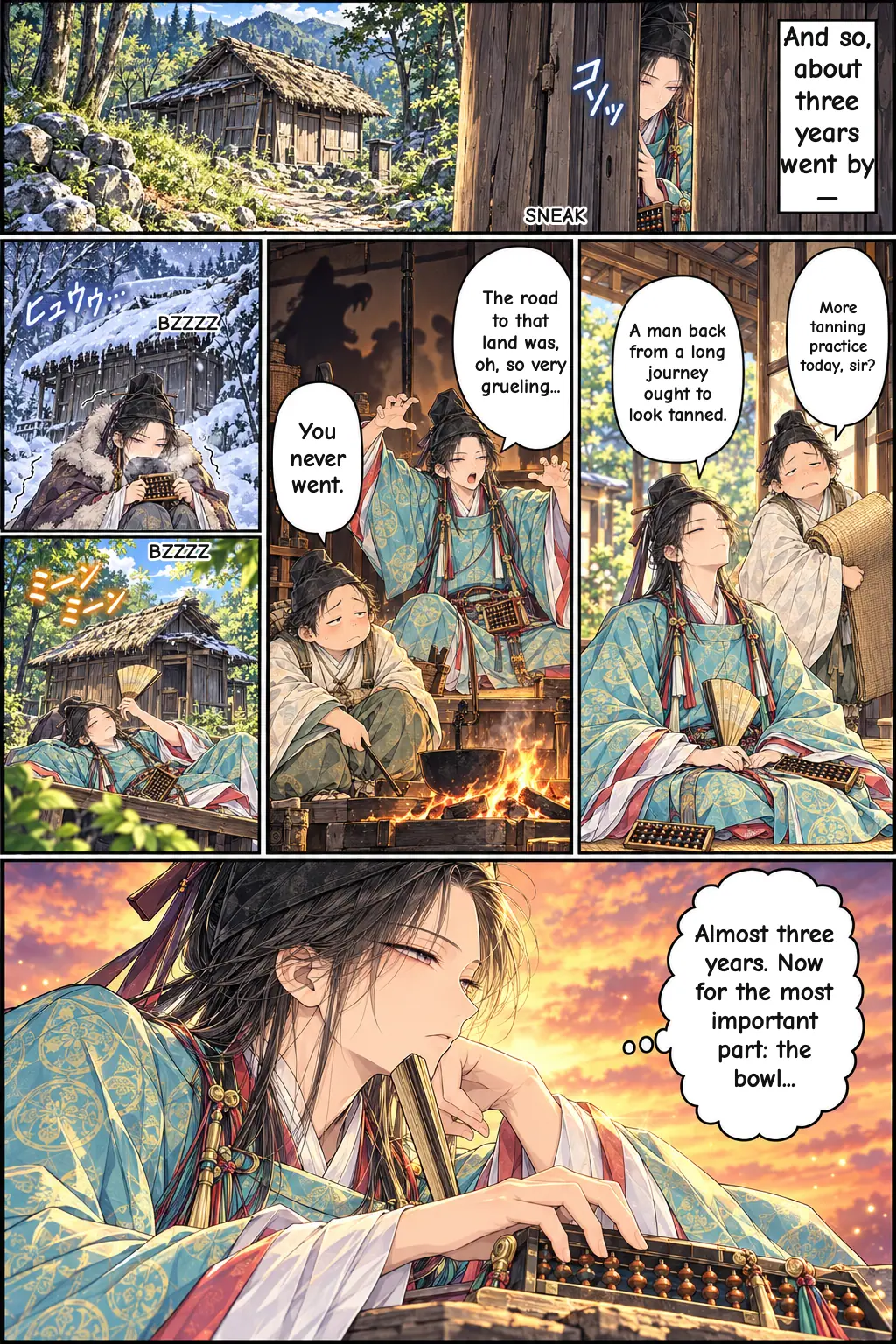
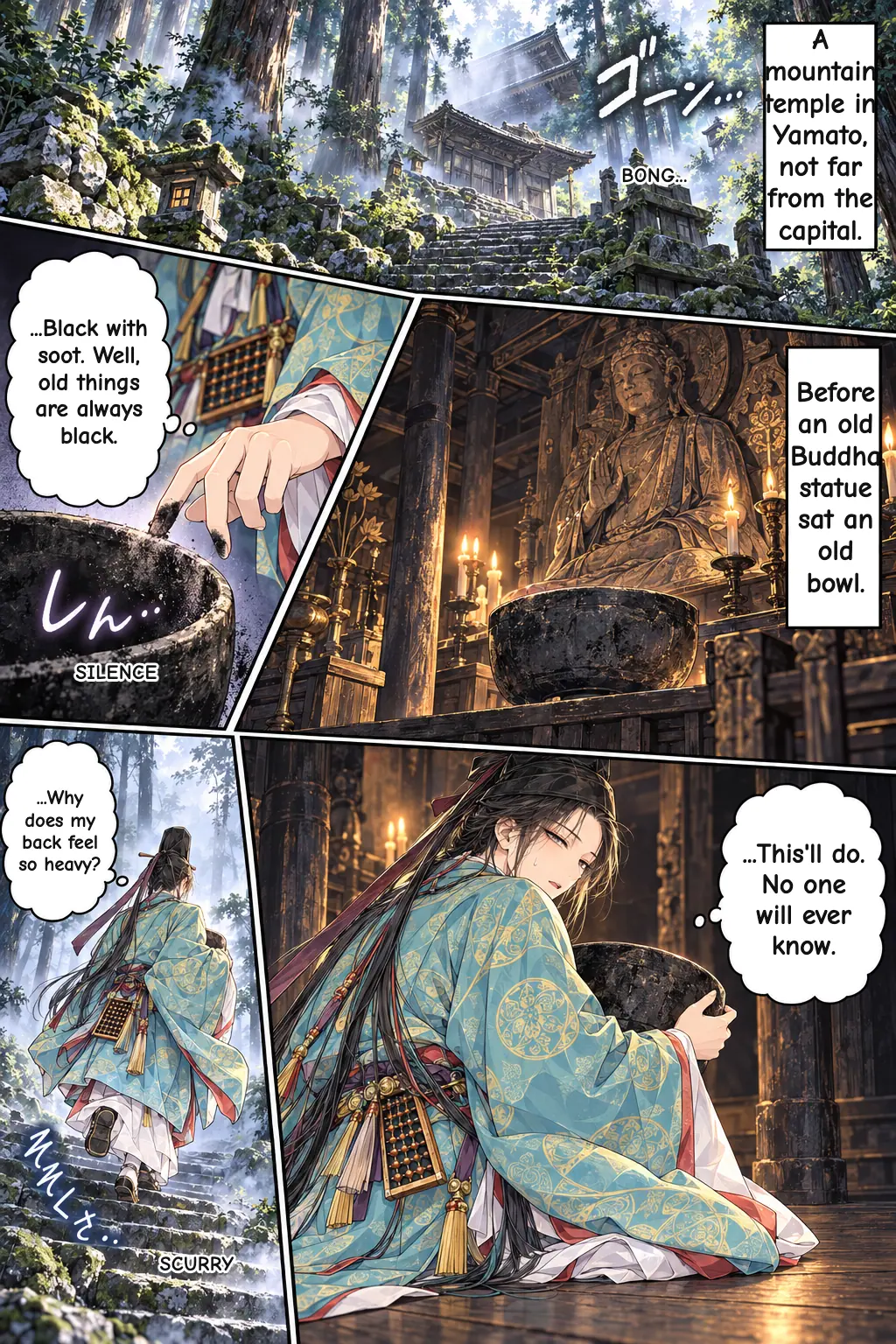
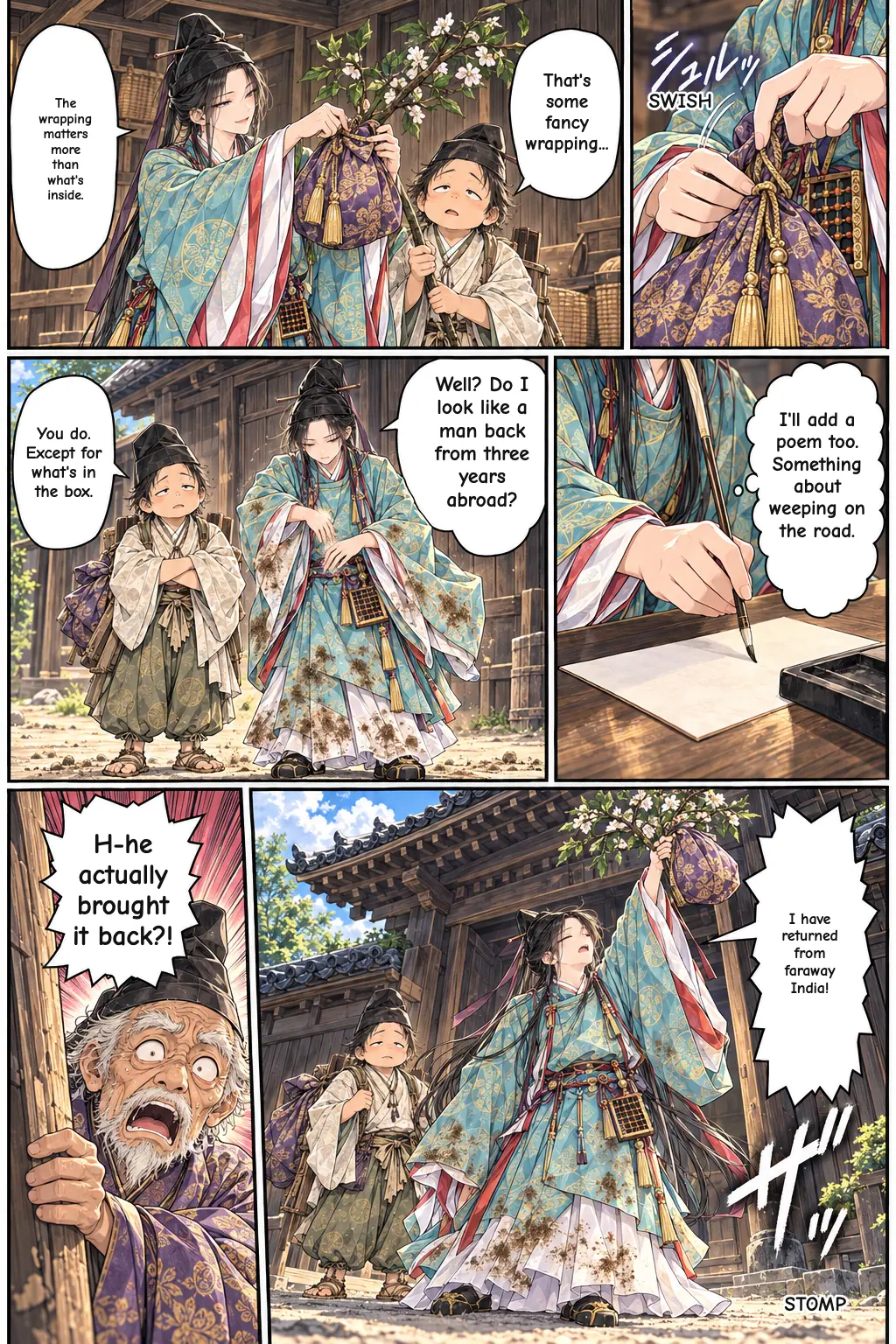
The text calls Ishitsukuri a calculating man. He knows he could never find a one-of-a-kind bowl in India however far he traveled. So he sends Kaguya word that he is leaving for India that same day. About three years later, he picks up a soot-blackened bowl from in front of a statue of Binzuru (a disciple of the Buddha) at a mountain temple in Tōchi District, Yamato Province, which is right in Japan. He puts it in a brocade bag, ties it to an artificial flowering branch, and presents it.
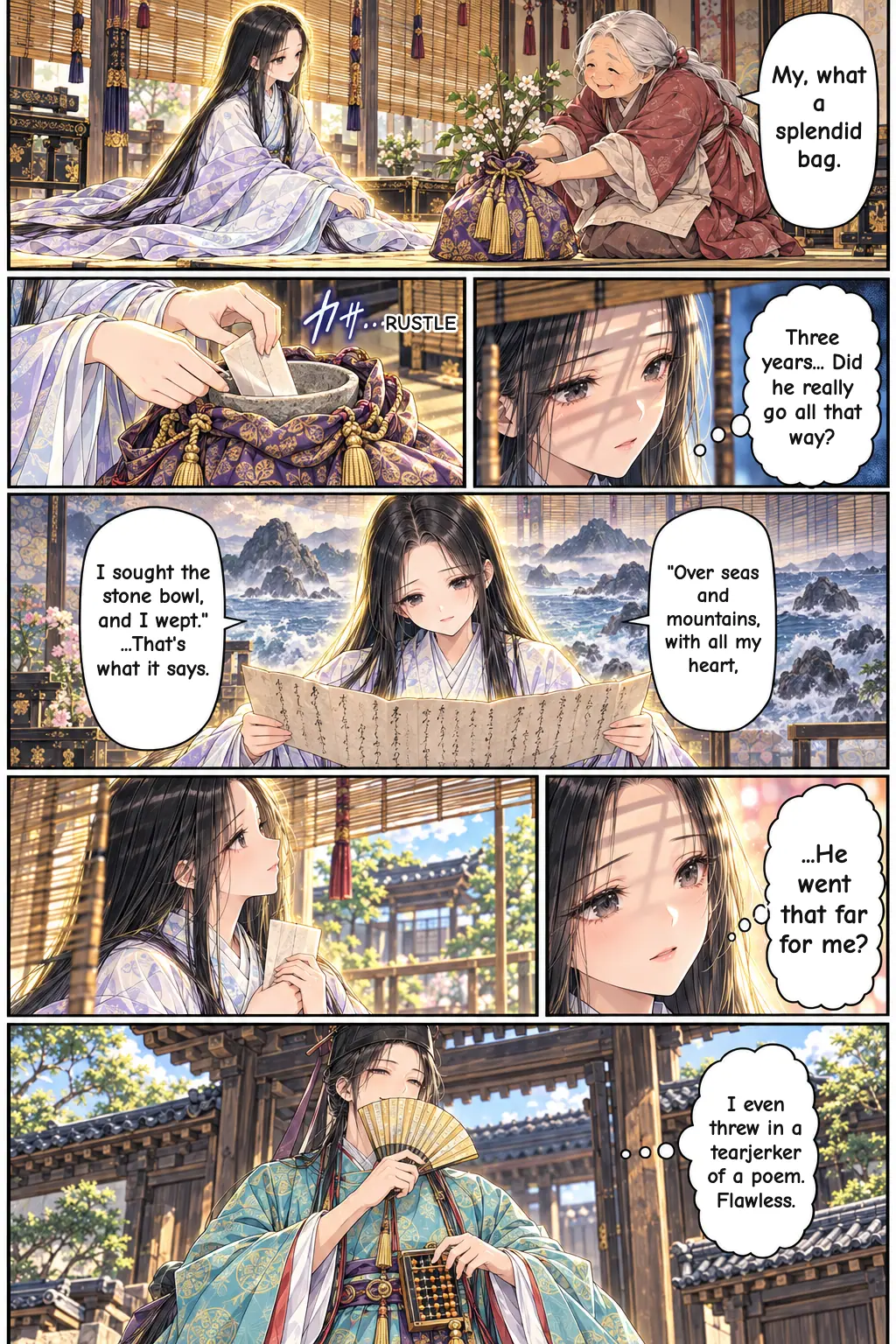
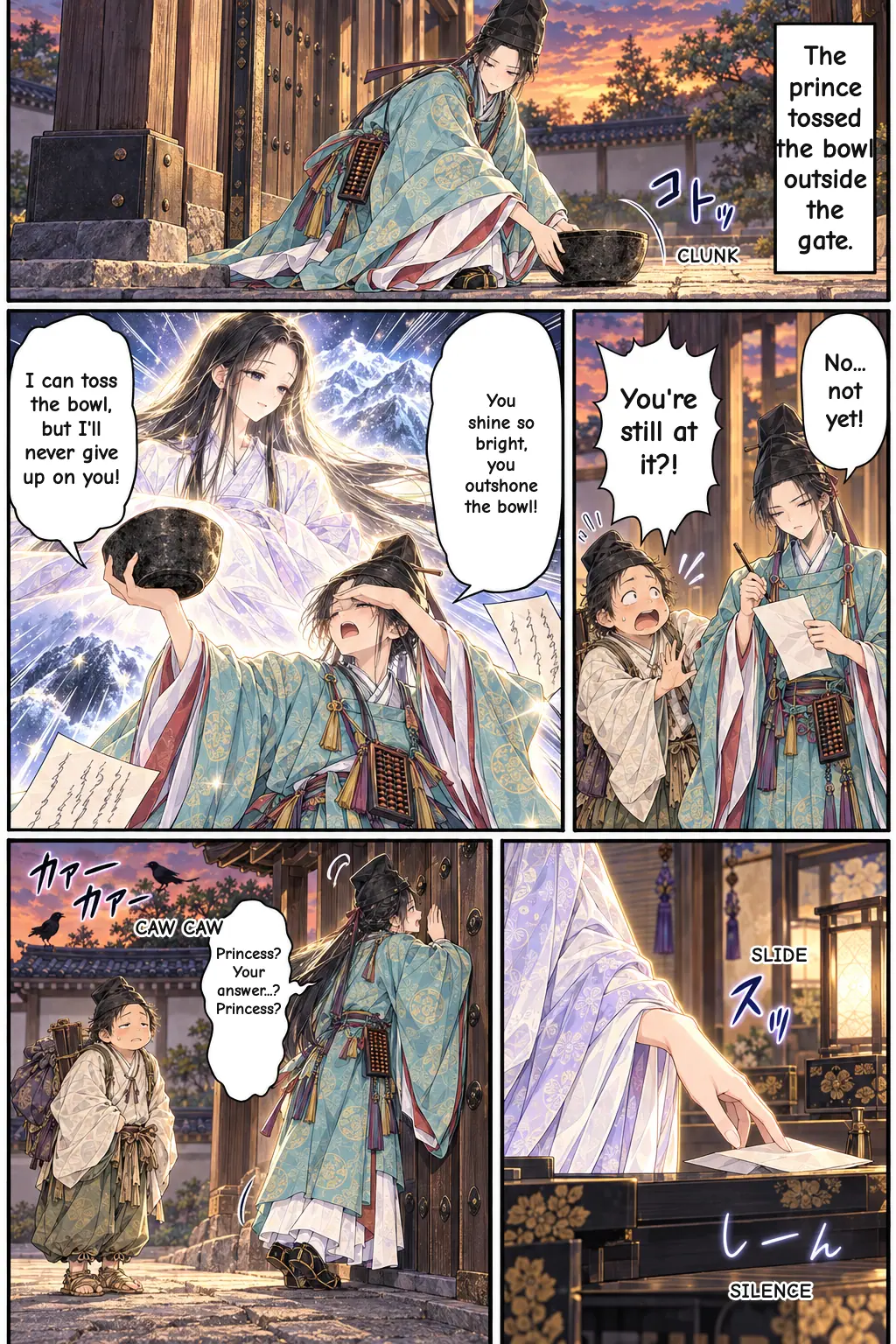
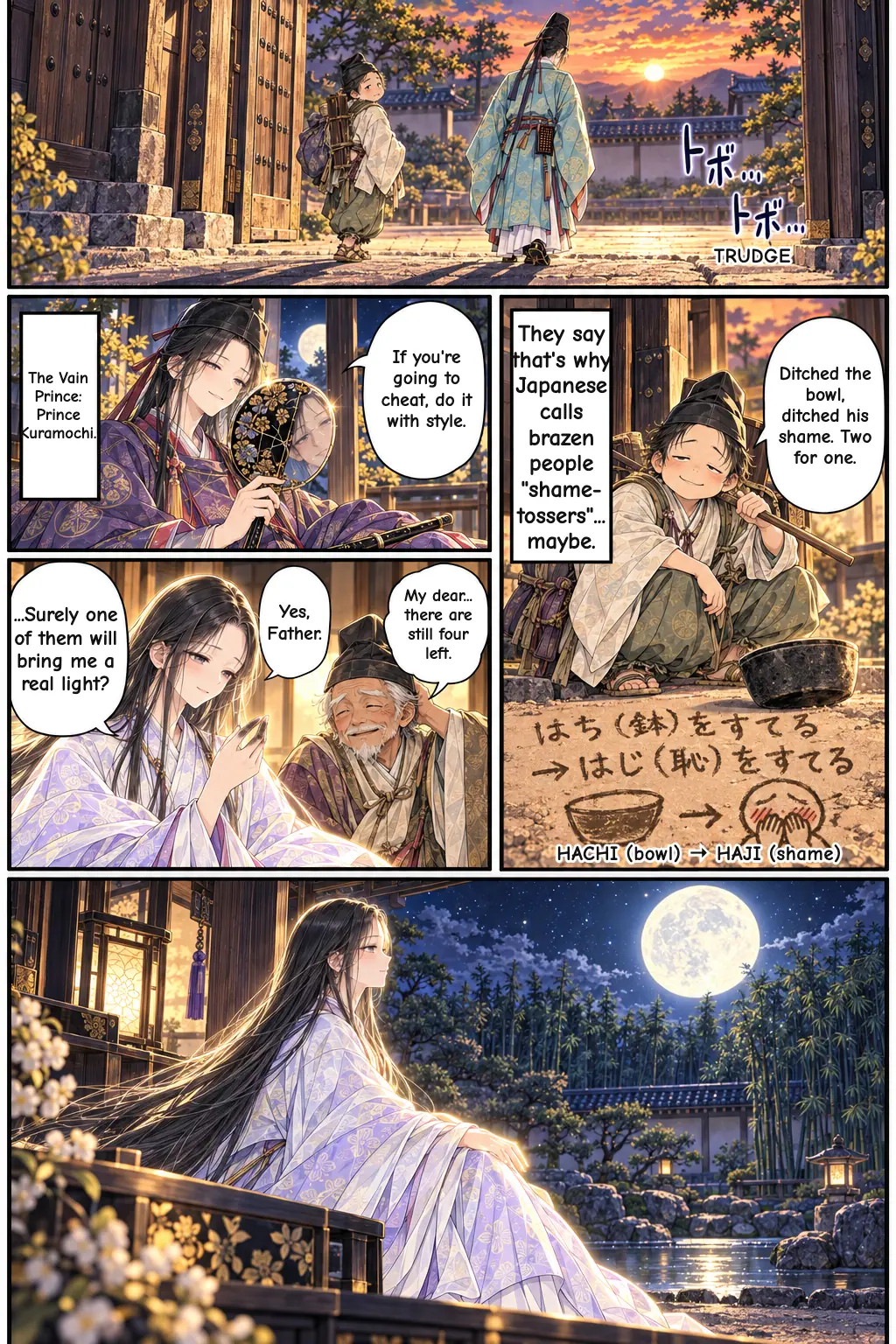
Inside the bowl is a poem in which he describes the tears he shed on his long journey over seas and mountains. The poem is full of wordplay on "stone" and "bowl." Kaguya checks the bowl for light and finds less than a firefly's glow. She sends it back with a sharp poem of her own: if it were real, it would at least hold the gleam of a dewdrop, so what was he searching for on such a dim mountain? Ishitsukuri throws the bowl away at her gate. Even then he sends another poem, claiming the bowl probably lost its shine next to her radiance. She ignores him completely. The narrator ends the episode with a pun. In Japanese, hachi (bowl) sounds like haji (shame), so "throwing away the bowl" becomes "throwing away shame," a saying for someone with no shame at all.
Main Characters
Princess Kaguya is polite to the old man but very clear about what she wants. The bamboo cutter, her adoptive father, loves her deeply and acts as the go-between with her suitors. Prince Ishitsukuri is the focus of this episode. The other four suitors only appear as a group here, and each of their quests is told in later chapters.
What the Story Says: Culture and Background
The "impossible task" is a familiar motif in folktales worldwide, but here it does a specific job. Kaguya uses it to test whether a man's devotion is real, and in each episode the suitor's character shows in how he tries to fake, buy or force his way to success. Much of the humor comes from wordplay, and many episodes end with a playful origin story for a Japanese word or saying.
The text never explains why a genuine Buddha's bowl should shine. It only shows Kaguya looking for light. Readers usually take it that a holy object would give off light, but the tale itself leaves this unstated. Some scholars have also noted that several of the suitors' names resemble real court officials from the late 600s. This has led to theories that the story pokes fun at the aristocracy, though there is no agreement on how intentional that was.
What the Manga Changes
The manga keeps the main events of the original: the persistent suitors, Kaguya's test, the five treasures, the fake bowl and the poems. Some details are its own additions. The original says nothing about the bowl's color, so the idea that the real one glows blue is the manga's. The image panels of each treasure are also artistic interpretation, although the Hōrai branch and the five-colored dragon jewel follow the details given in the text.
The original only says that "about three years" passed, so the comic scenes of Ishitsukuri hiding out during that time are invented. The text also doesn't say whether he stole the bowl or was given it. The suitors' faces, ages and personalities, the shocked or pale reactions to the tasks, and the details of the house and seasons are all the manga's creative choices.
Where to Read It
To see Kaguya's challenge and Ishitsukuri's cheap trick come to life, read Episode 2 of THE TALE OF THE BAMBOO CUTTER: Princess Kaguya from the Moon here on Manga Portal. Every episode is free, and you don't need to sign up. The next episodes follow the other four suitors, each trying to outsmart the princess in his own way.
Characters in this episode
Princess Kaguya
A girl of mysterious origin who was found inside a bamboo stalk; she tests her suitors by asking for treasures that don't exist.
The Bamboo Cutter (Taketori no Okina)
Kaguya's elderly adoptive father, over seventy, who urges her to marry and passes her challenge on to the suitors.
Prince Ishitsukuri
A calculating prince who pretends to travel to India but hands over a sooty bowl from a temple in Japan as the Buddha's bowl.
Prince Kuramochi
A suitor ordered to bring a branch from Mount Hōrai with silver roots, a gold stem and jewel fruit.
Minister Abe no Miushi
The Minister of the Right, sent to find a robe made of fire-rat fur from China.
Counselors Ōtomo no Miyuki and Isonokami no Marotari
The last two suitors, asked for a dragon's five-colored jewel and a swallow's cowrie shell.
FAQ
What are Princess Kaguya's five impossible tasks?
She asks for the Buddha's stone begging bowl from India, a jeweled branch from Mount Hōrai, a fire-rat fur robe from China, a five-colored jewel from a dragon's neck, and a cowrie shell held by a swallow. Each of the five suitors gets one task.
Why did Princess Kaguya give her suitors impossible tasks?
In the story, she says she can't marry a man without knowing how deep his feelings are. She promises to serve whoever shows her the treasure she wants to see, which turns the request into a test of his devotion.
How did Kaguya know Prince Ishitsukuri's bowl was fake?
She looked for light in the bowl and found not even a firefly's glimmer. The original never explains why a real one should shine. It simply shows her checking for light.
Who wrote The Tale of the Bamboo Cutter?
Nobody knows who wrote it. It is generally dated to between the late 9th and early 10th centuries, which makes it one of the oldest surviving Japanese prose tales.
What does 'throwing away shame' have to do with the story?
After his fake bowl is exposed, Ishitsukuri throws it away and keeps courting Kaguya anyway. Because hachi (bowl) sounds like haji (shame), the narrator presents this as the origin of a saying for shameless behavior.