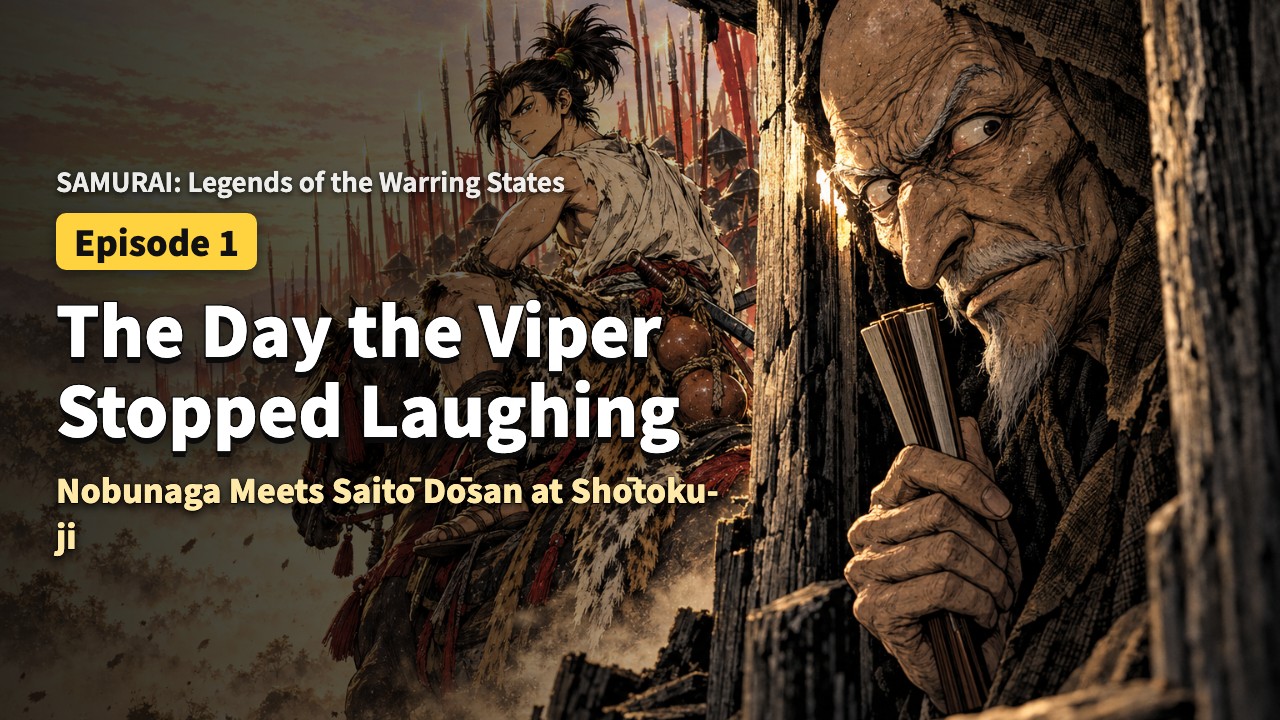
Episode 10The New Year's Feast Had One More CourseThe Golden Skulls
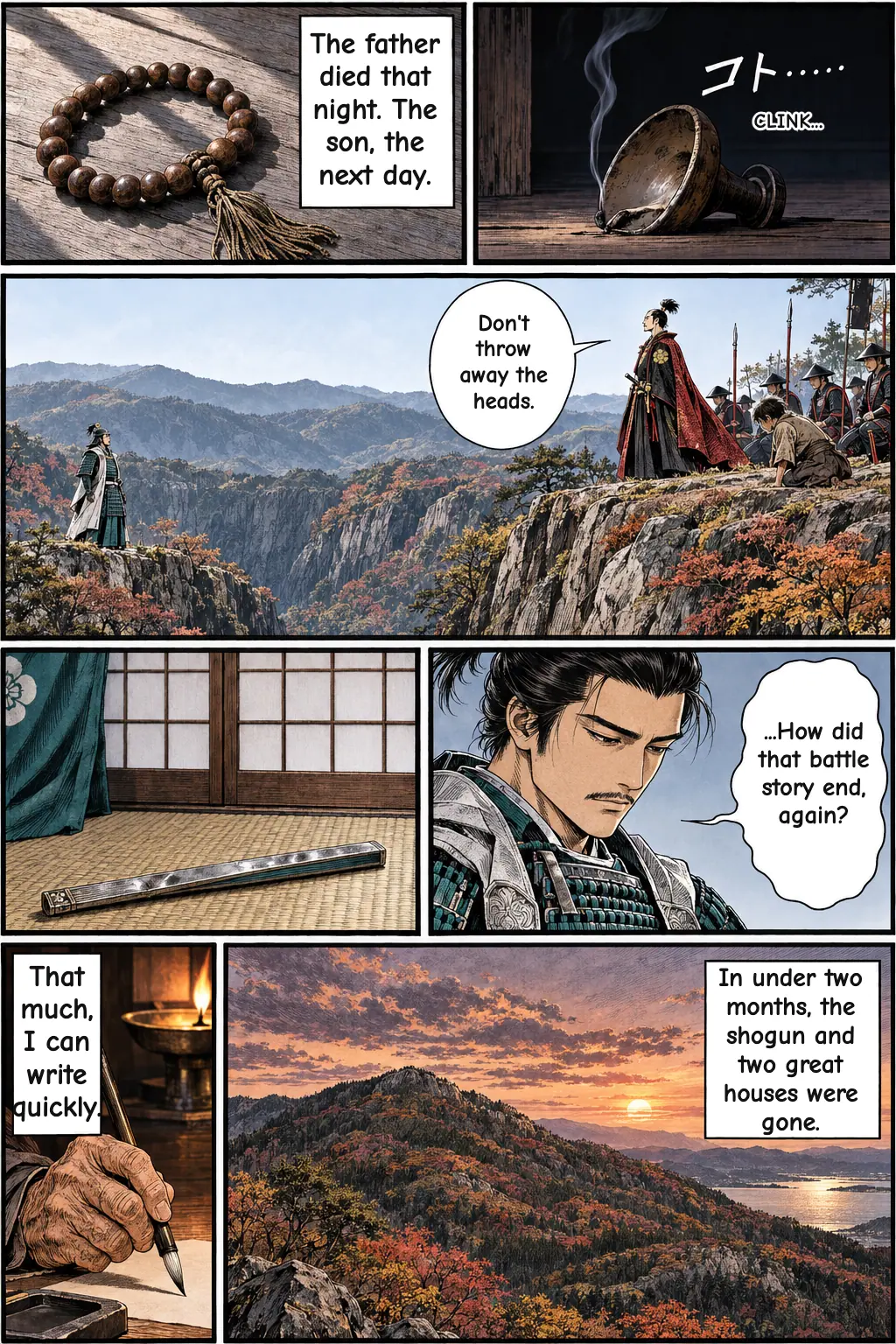
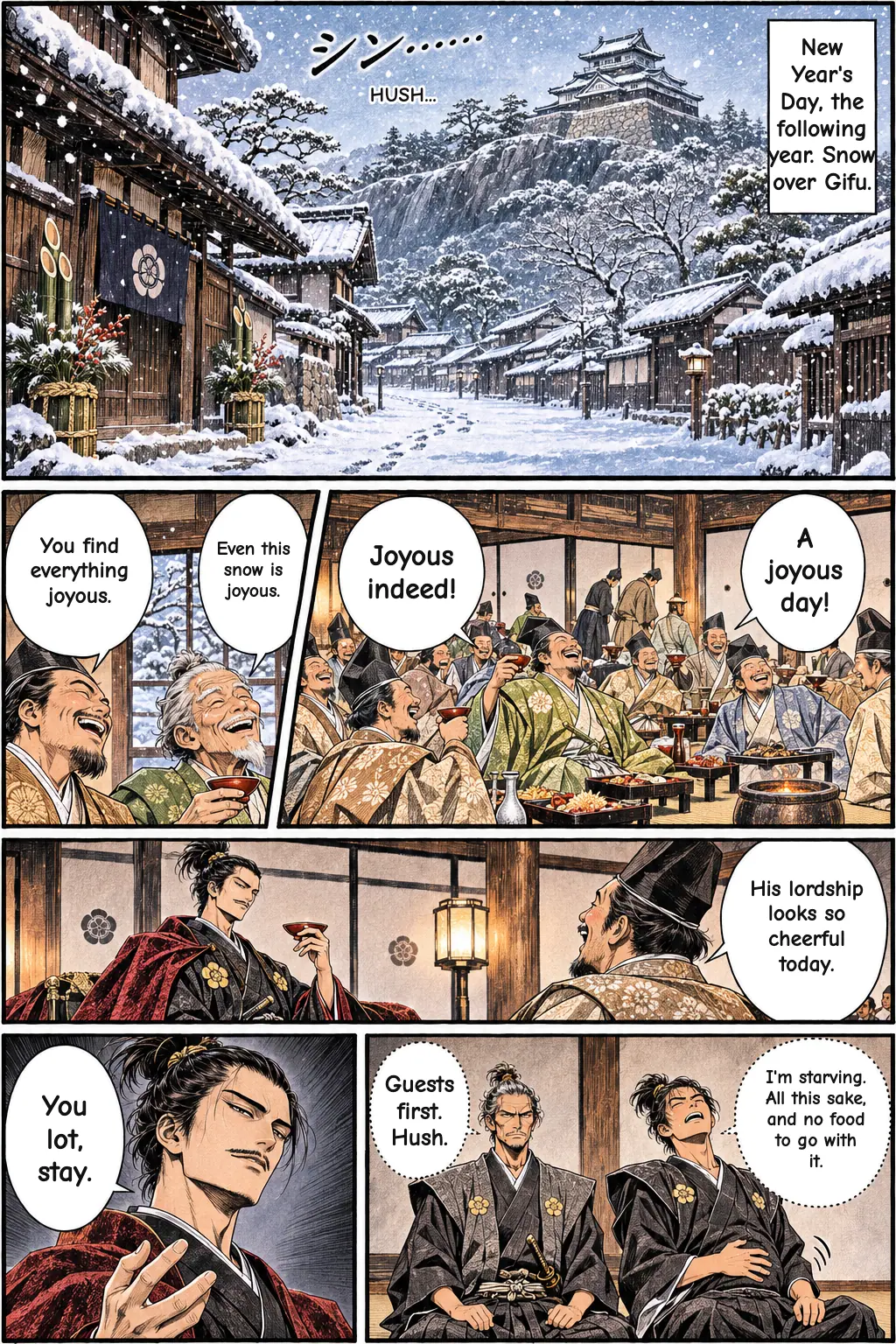
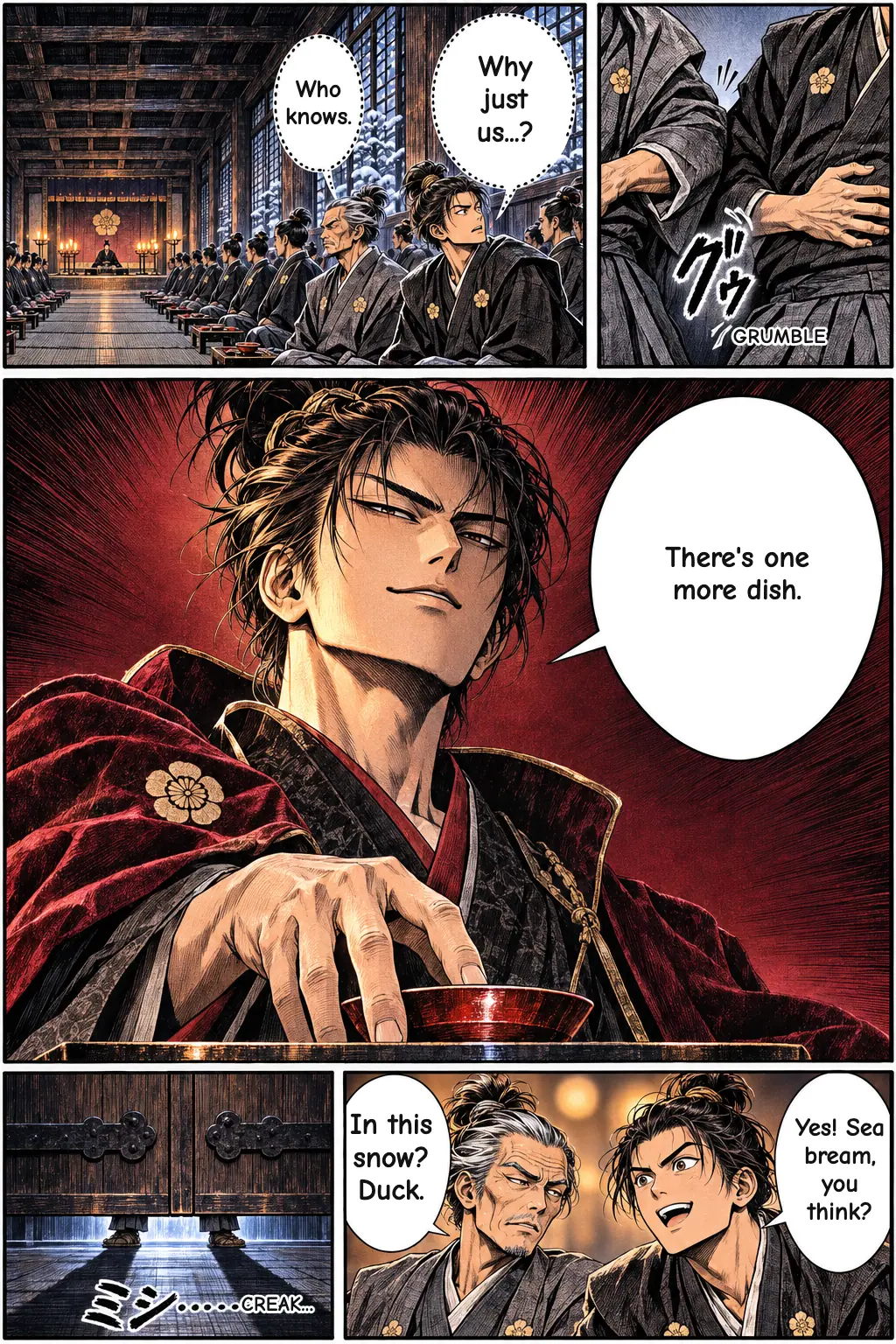
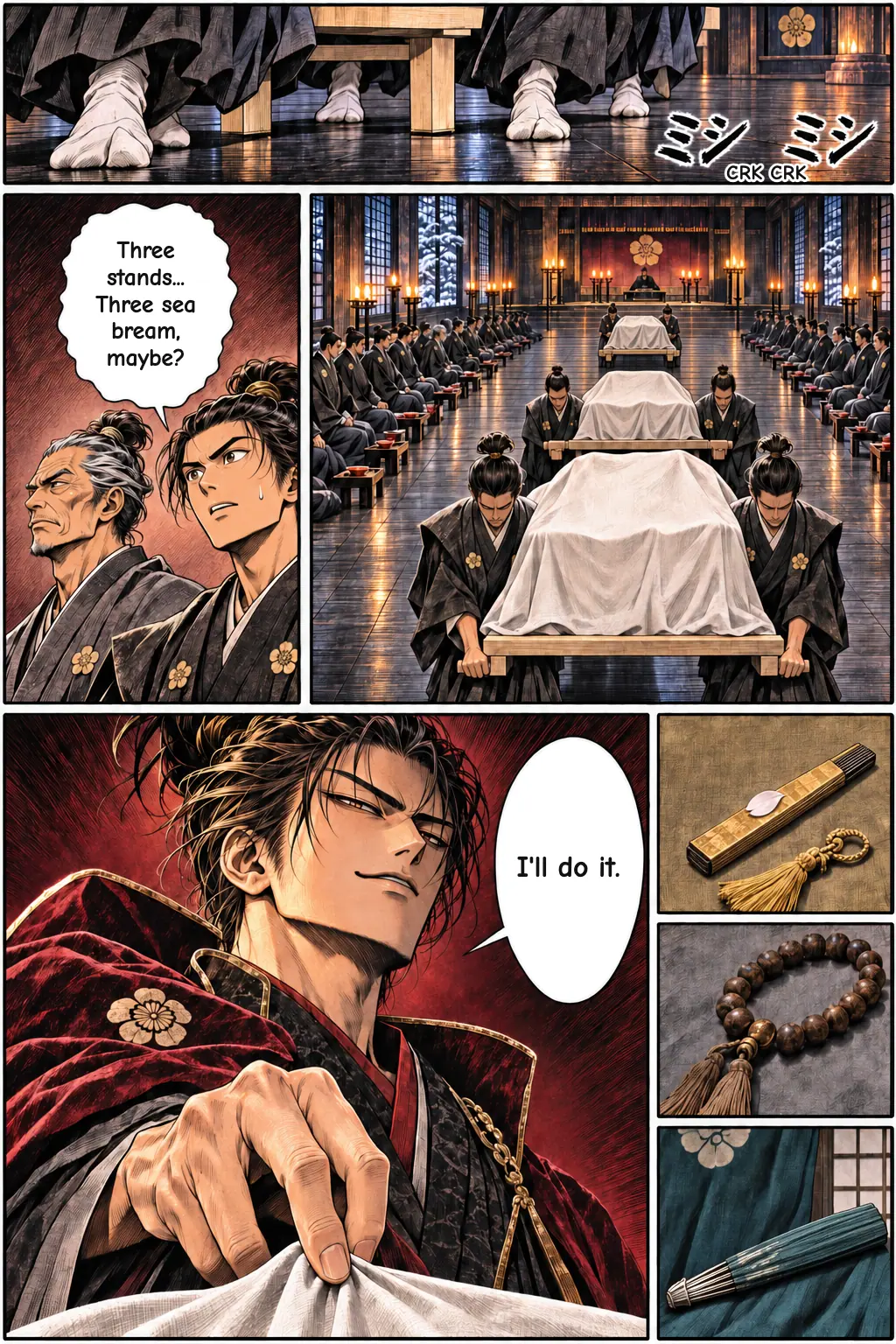
"The Golden Skulls." Oda Nobunaga drives out of Kyoto the shogun who once called him "Father," then wipes out a great house and his own sister's husband's family in under two months. On New Year's Day, after the guests have gone, he cheerfully announces: "There's one more dish."
Get new episodes in your feed. Follow us on:ThreadsBluesky
Story summary
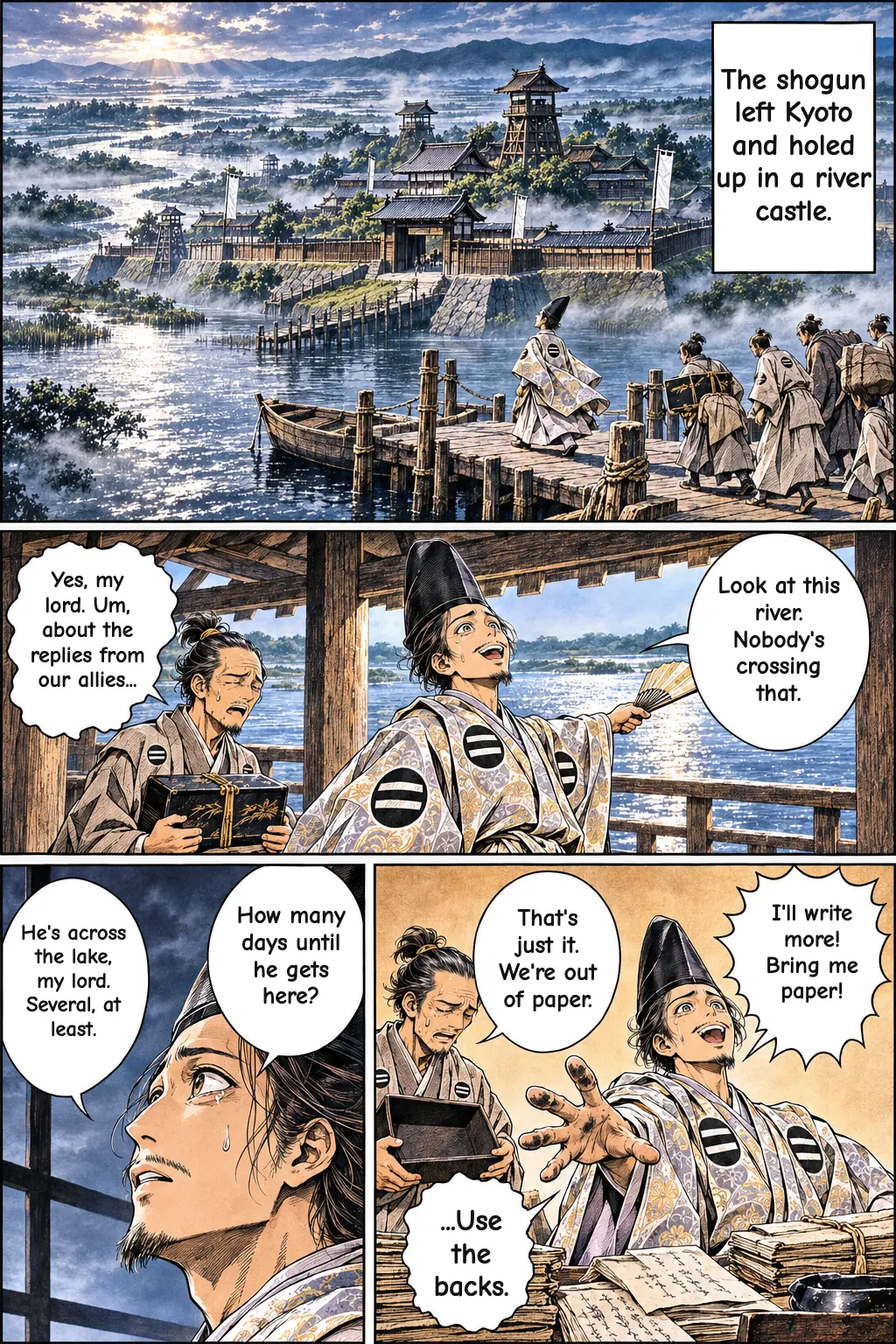
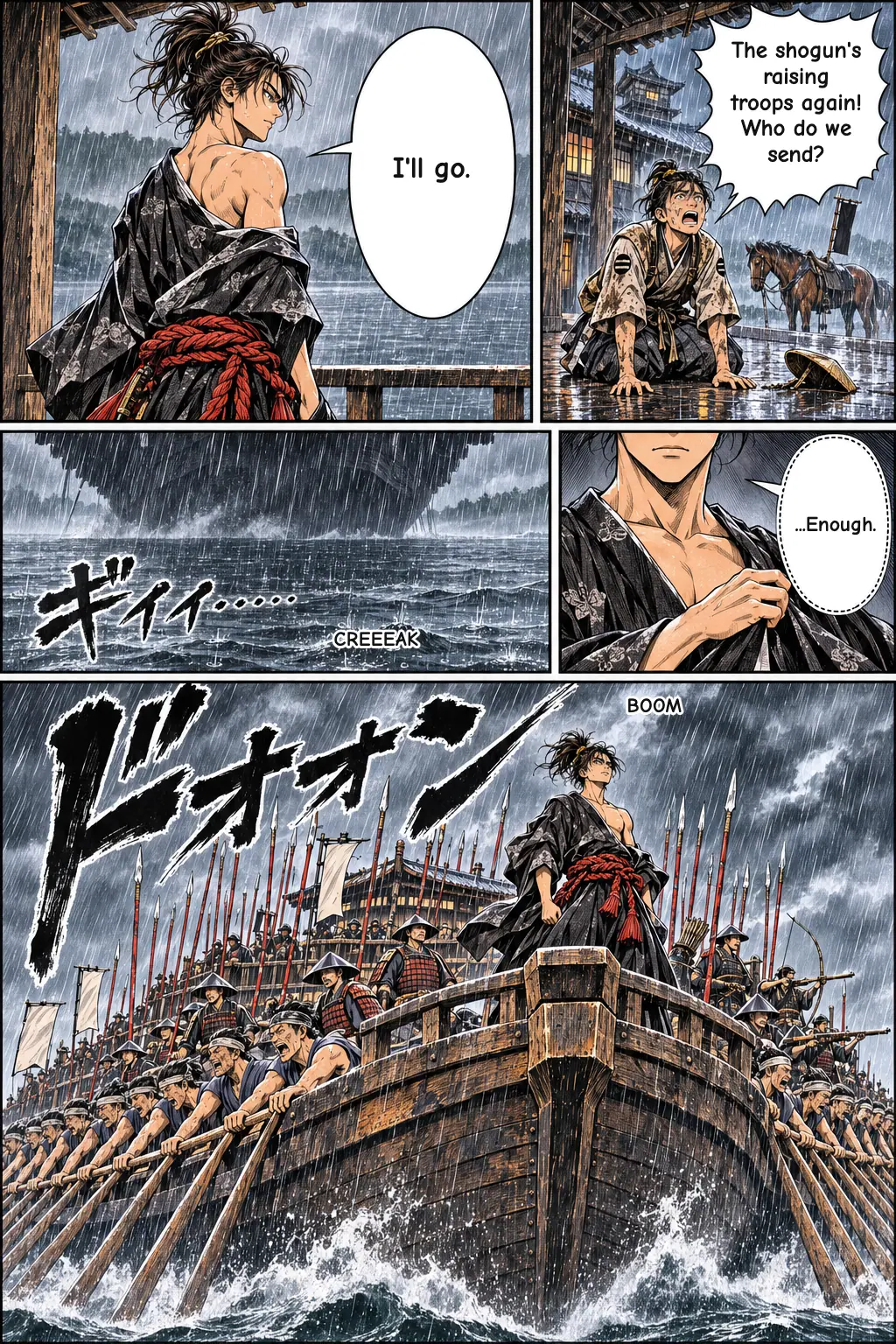
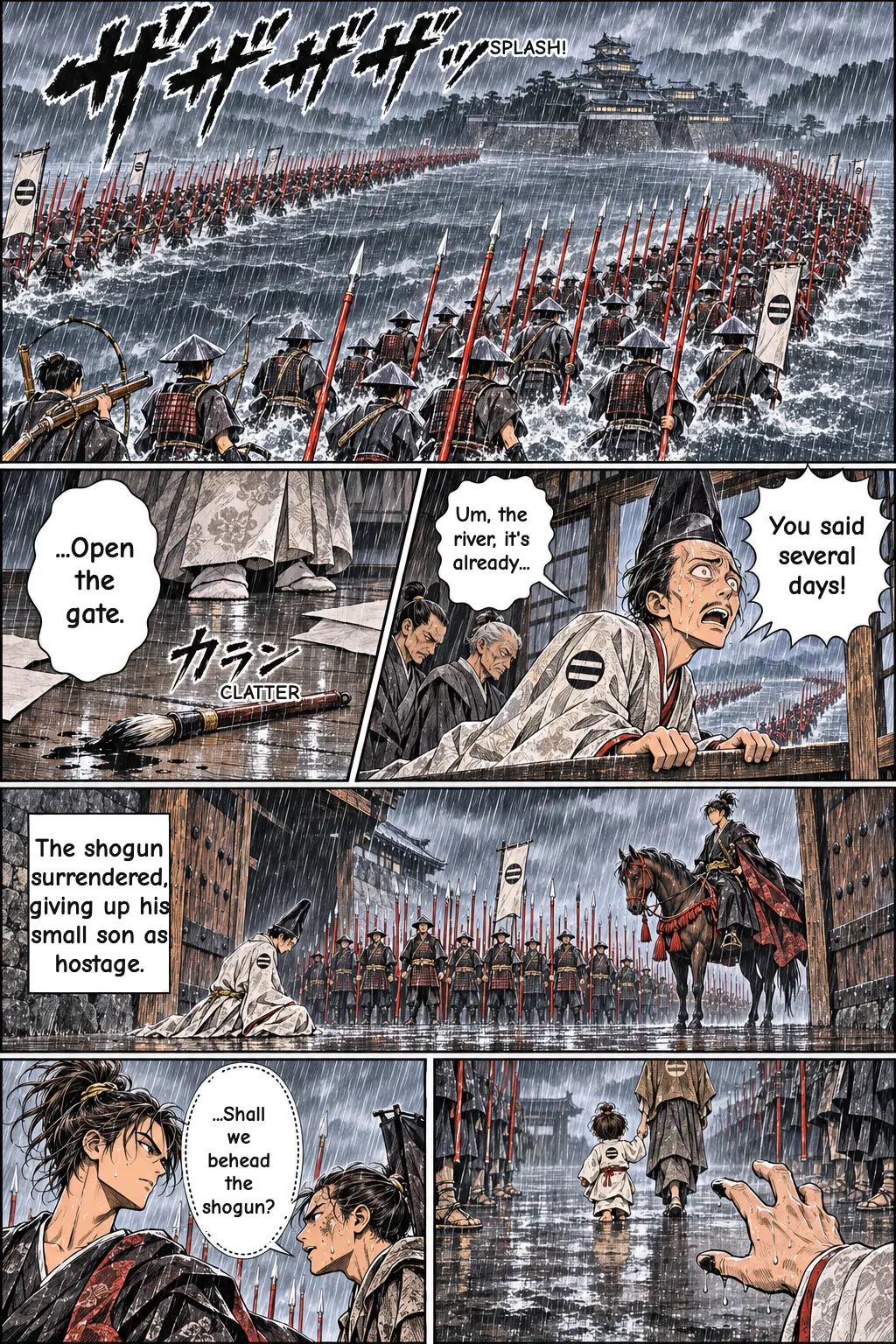
Early in 1573, Ashikaga Yoshiaki, the shogun and Japan's official military ruler, turned against Oda Nobunaga, the warlord who had brought him to Kyoto five years earlier. Nobunaga's generals took the forts Yoshiaki had raised at Imakatata and Ishiyama. Nobunaga then marched to the capital and set fire to its upper district and outskirts, which forced a temporary peace. He also ordered a huge oared ship built on Lake Biwa. When Yoshiaki rose again in the seventh month, from Makishima Castle at Uji, the ship carried Nobunaga swiftly across the lake.
Oda Nobunaga's Golden Skulls: The 1574 New Year's Feast Explained
In short: The "golden skulls" were the gold-finished heads of Asakura Yoshikage, Azai Hisamasa, and Azai Nagamasa, which Oda Nobunaga set out as a delicacy for his closest retainers on New Year's Day, 1574. The story comes from the Shinchō Kōki, a chronicle of Nobunaga's life by his former retainer Ōta Gyūichi, and it closes the campaigns of 1573 in which he drove out the shogun and destroyed both clans.
The Original Story: The Road to the Feast (1573)
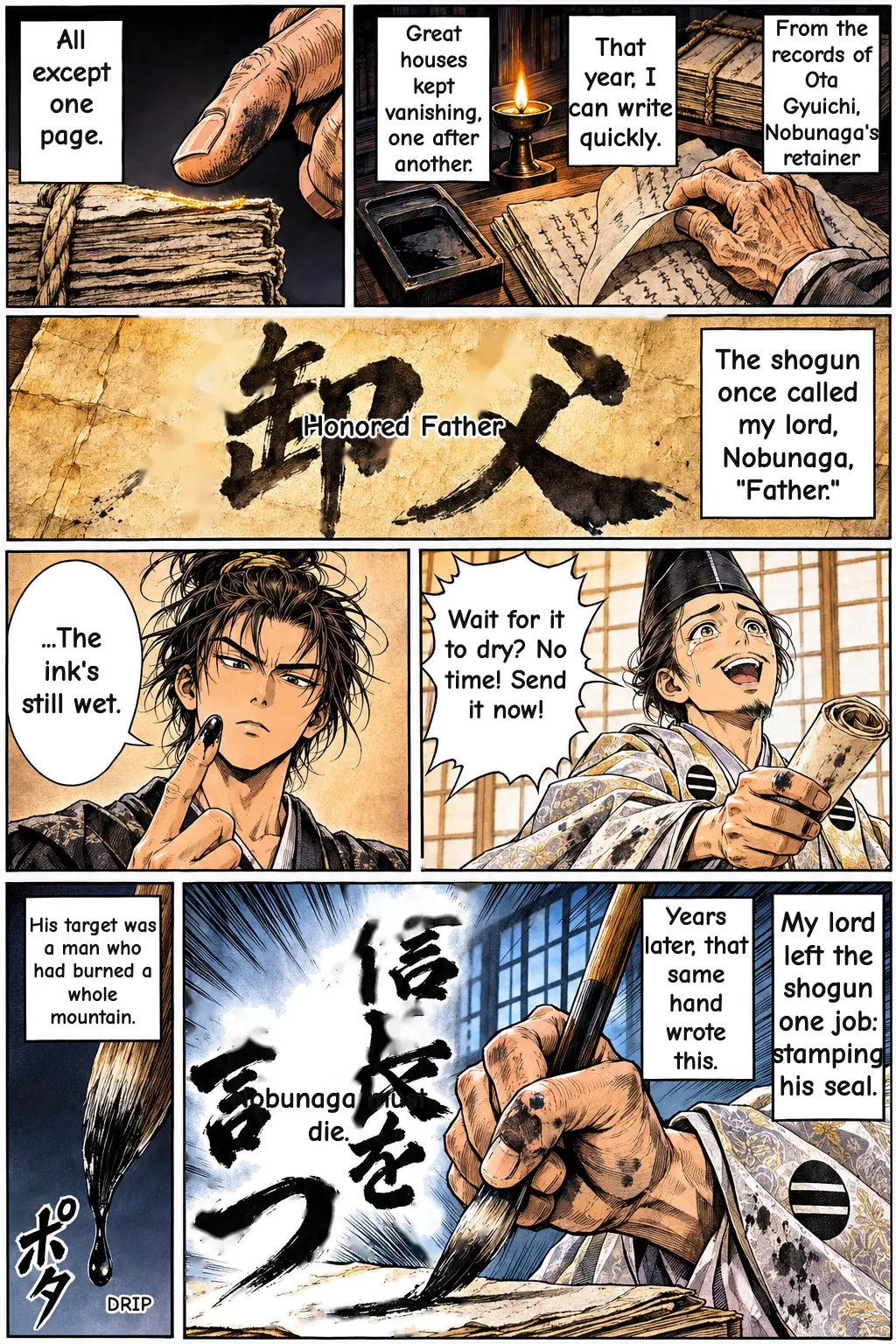
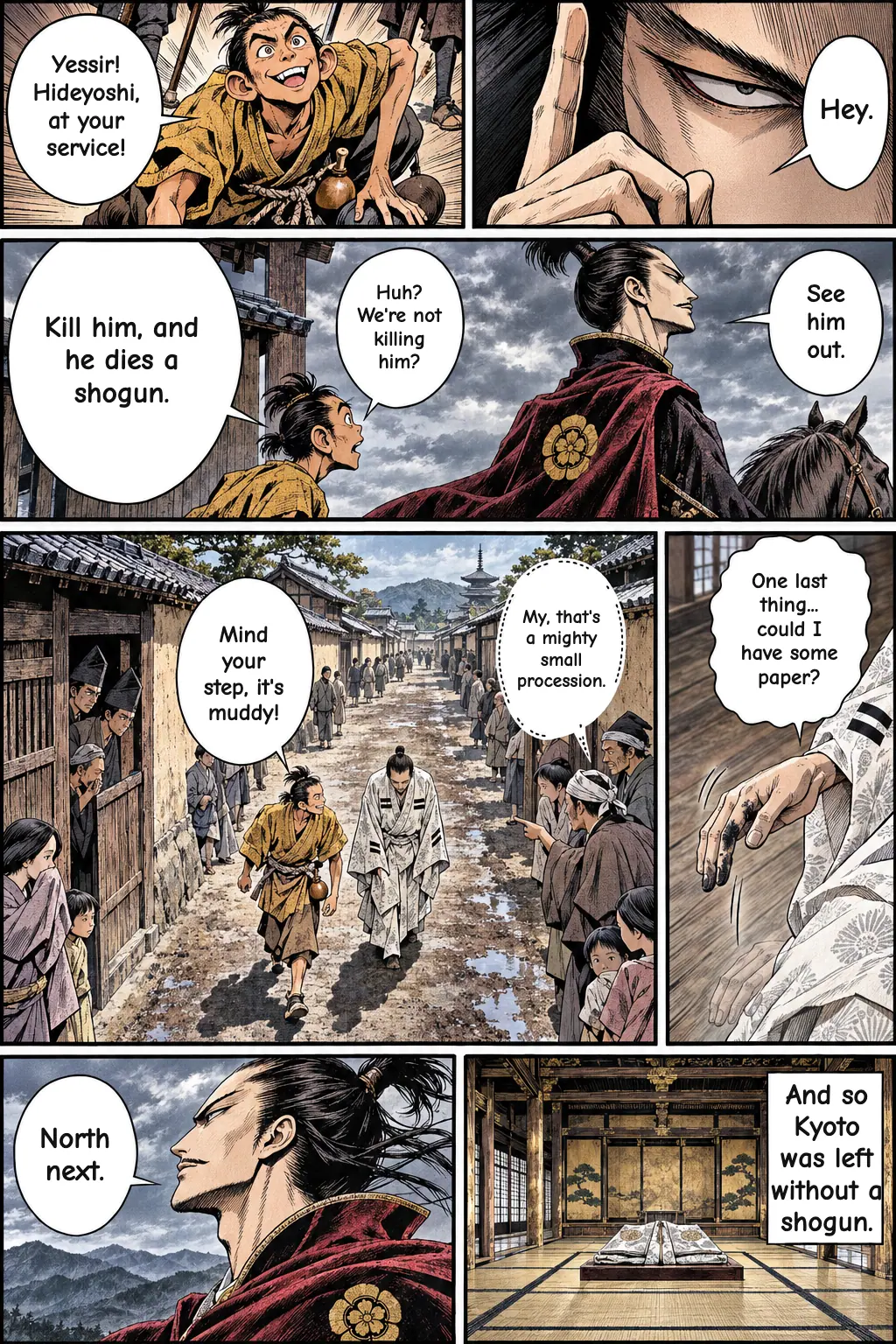
Early in 1573, Ashikaga Yoshiaki, the shogun and Japan's official military ruler, turned against Oda Nobunaga, the warlord who had brought him to Kyoto five years earlier. Nobunaga's generals took the forts Yoshiaki had raised at Imakatata and Ishiyama. Nobunaga then marched to the capital and set fire to its upper district and outskirts, which forced a temporary peace. He also ordered a huge oared ship built on Lake Biwa. When Yoshiaki rose again in the seventh month, from Makishima Castle at Uji, the ship carried Nobunaga swiftly across the lake. His army forced a crossing of the Uji River, and Yoshiaki surrendered, giving up his young son as a hostage. Nobunaga spared his life and had Hashiba Hideyoshi, the general later known as Toyotomi Hideyoshi, escort him to Wakae in Kawachi. Along the way, people jeered at him as "Binbō Kubō," roughly "the pauper shogun." Gyūichi judges that Yoshiaki brought this on himself, yet still finds it pitiful.
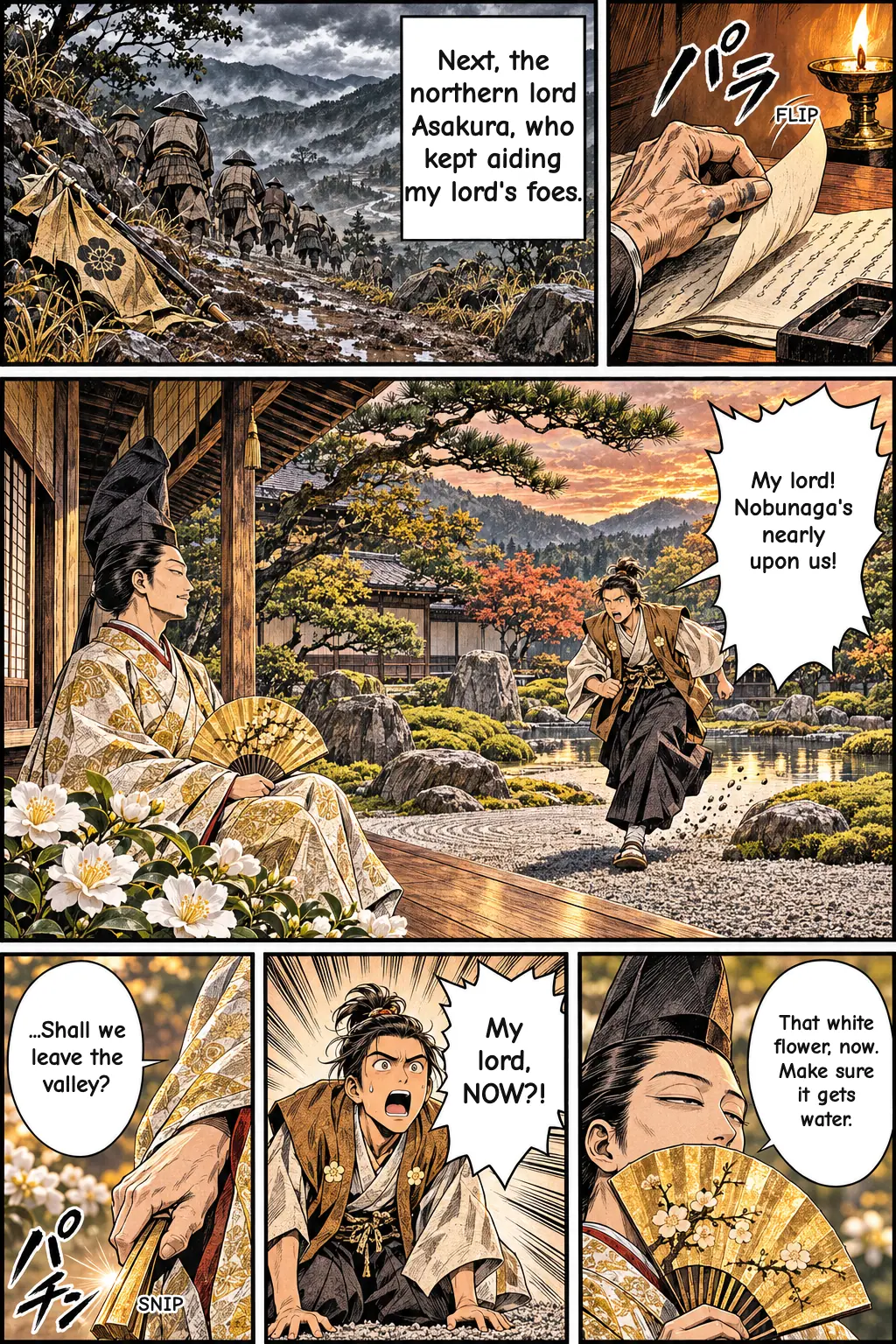
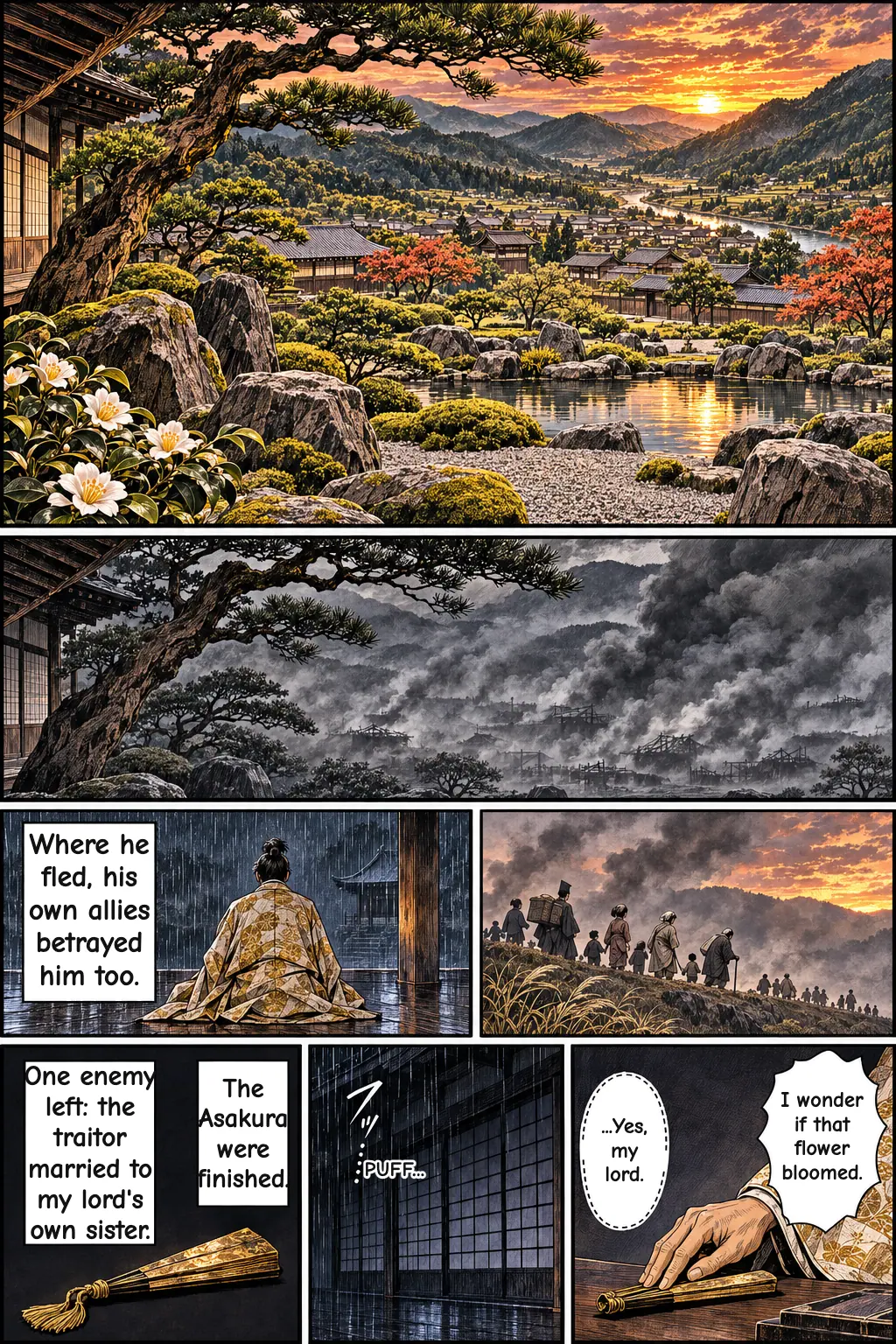
In the eighth month, an Azai commander defected, and Nobunaga marched into northern Ōmi. He personally led his horse guards through a storm to seize a key fort. Expecting the allied Asakura army to retreat, he ordered a pursuit, but his senior generals lagged behind and he rode ahead of them. When he scolded them, Sakuma Nobumori answered back that no lord had better retainers, which enraged him. The Asakura were crushed near Mount Tone. Nobunaga's forces then invaded Echizen and burned Ichijōdani, the Asakura capital. Asakura Yoshikage fled to Ōno, where his kinsman Asakura Kageakira betrayed him. Yoshikage killed himself, and his head was delivered to Nobunaga.
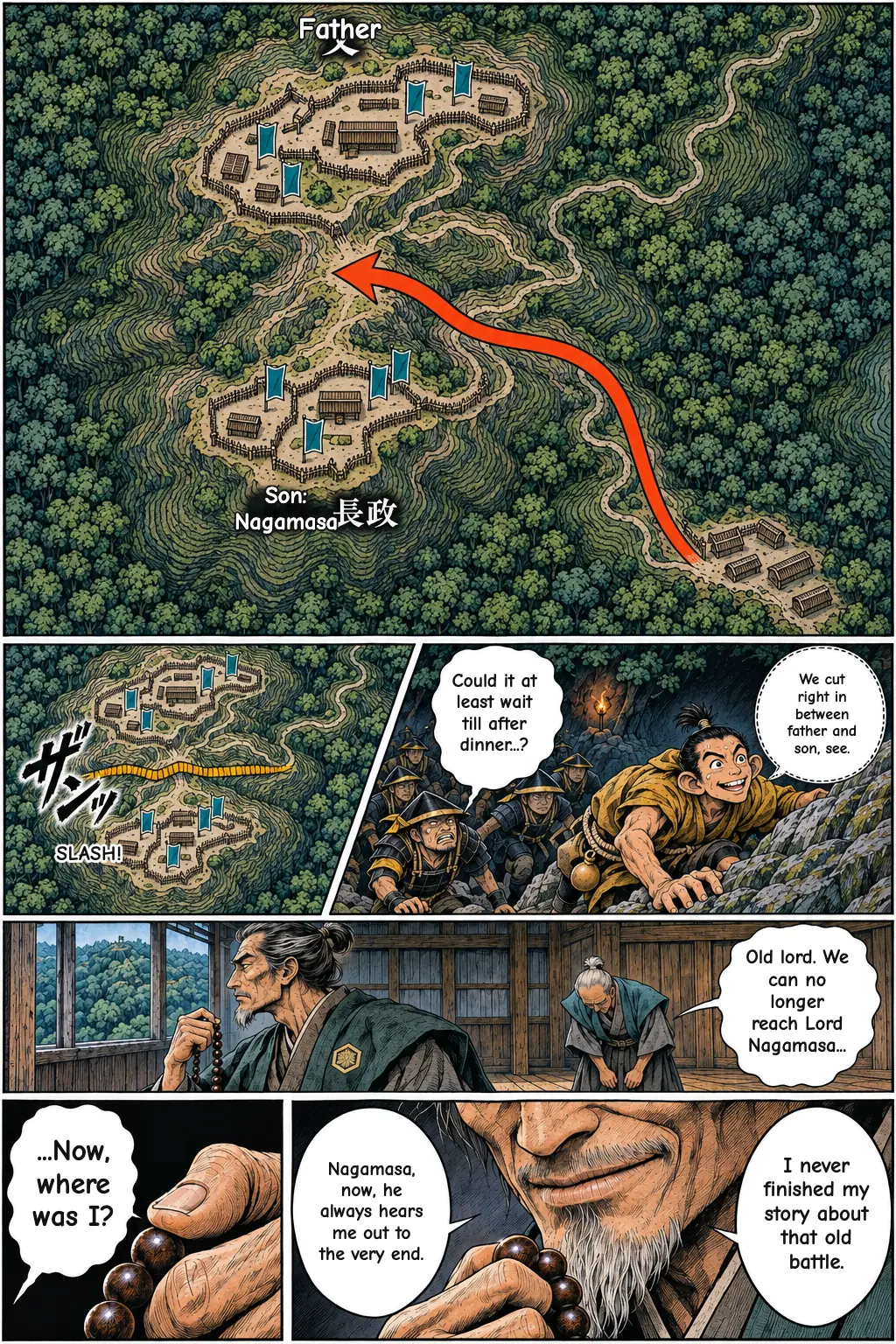
Nobunaga turned back to Odani Castle, home of the Azai. In a night action, Hideyoshi captured a position called Kyōgoku-tsuburu, cutting off Azai Hisamasa from his son Nagamasa. Hisamasa took his own life. The next day Nobunaga went up to the position himself, and Nagamasa died along with his senior retainer Akao. Their heads were exposed in Kyoto. Nagamasa's ten-year-old heir was hunted down and crucified at Sekigahara.
The New Year's Feast of 1574
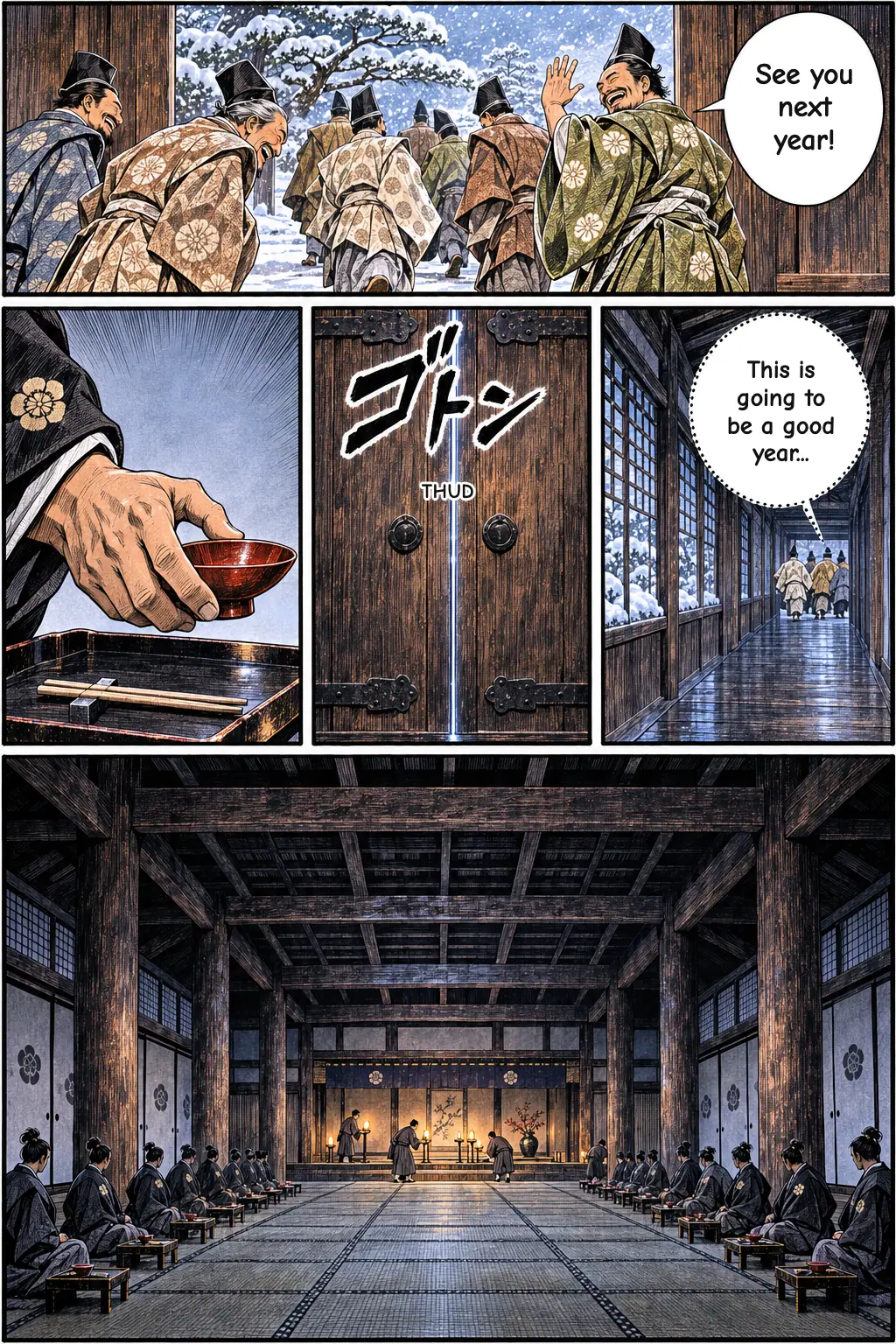
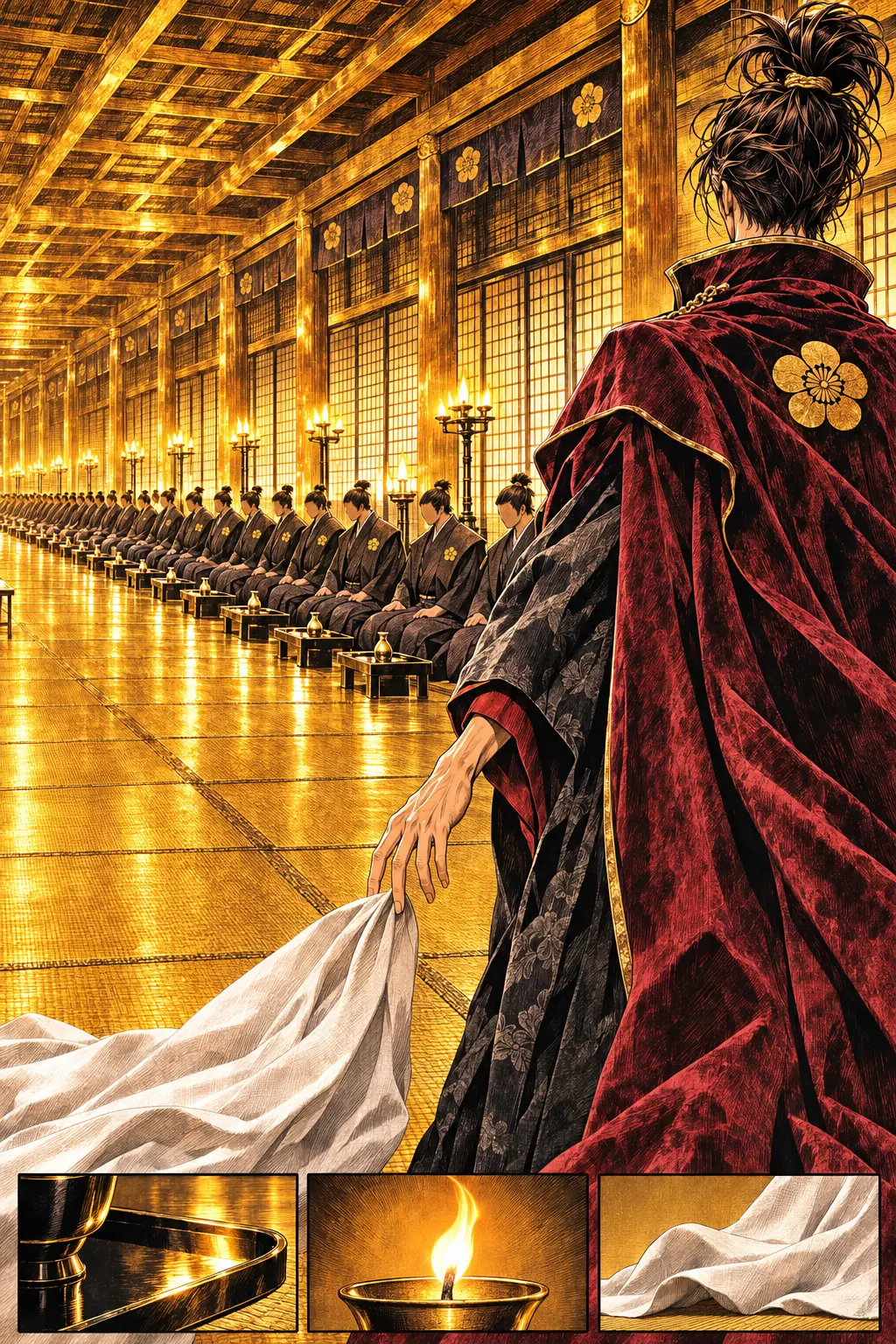
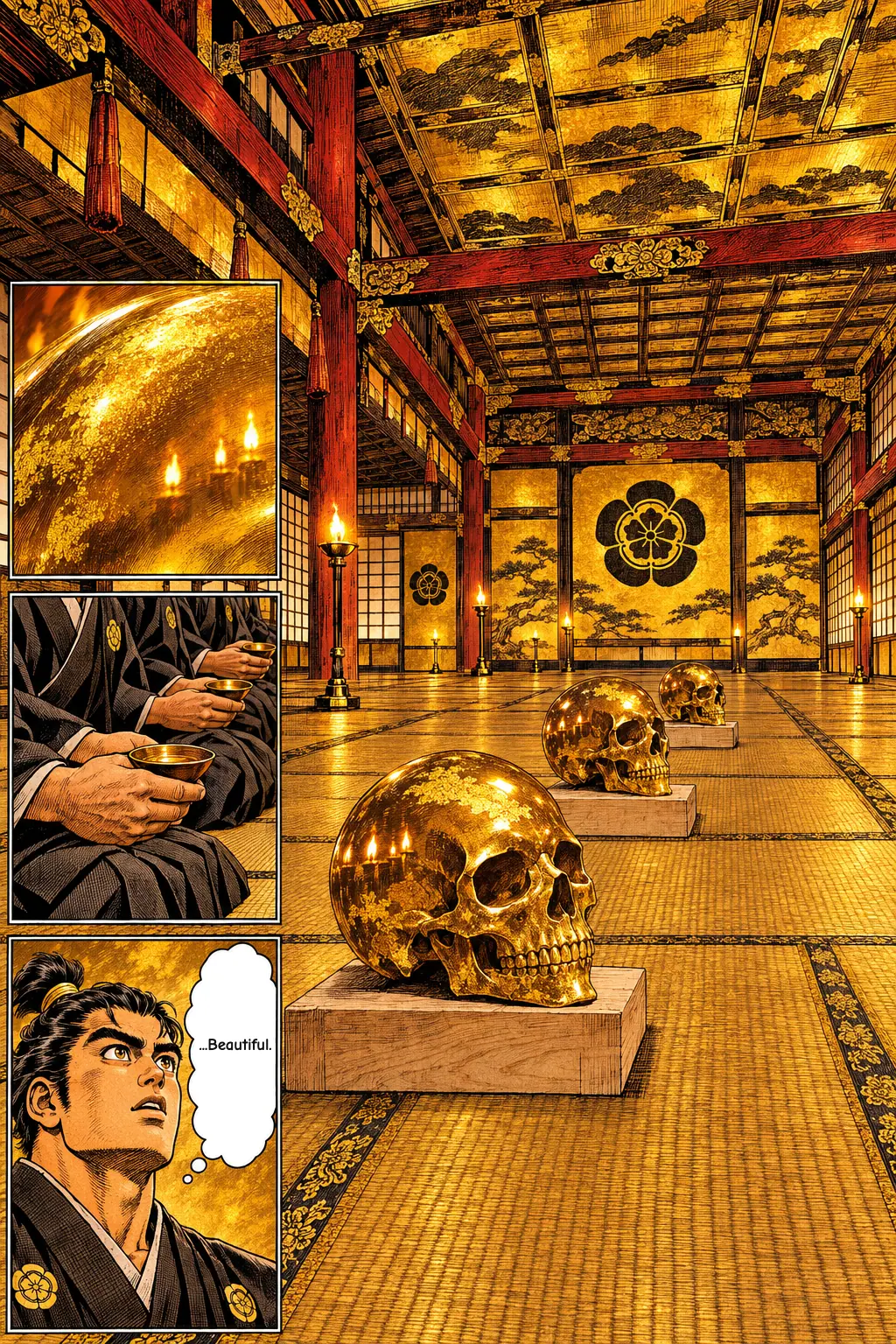
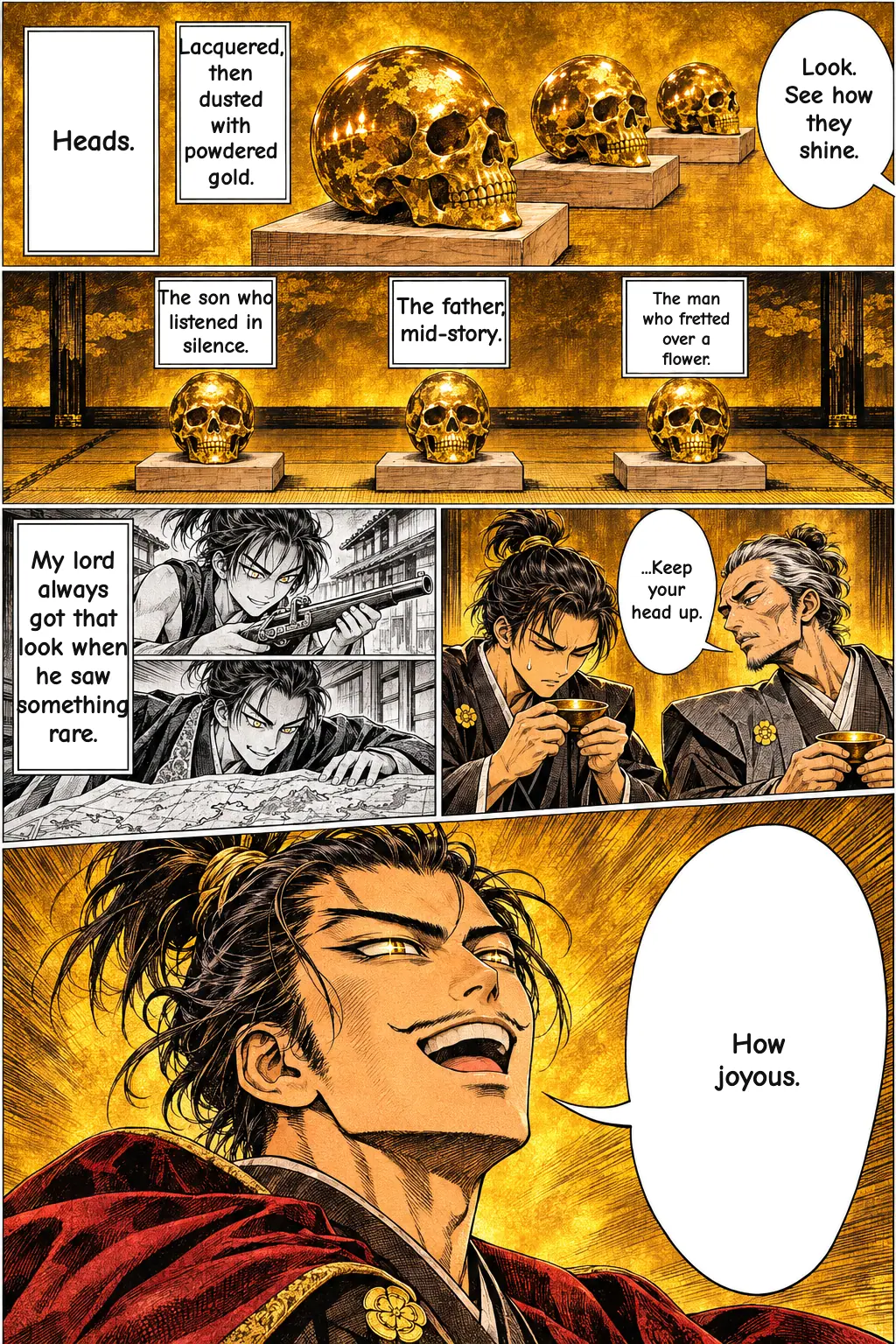
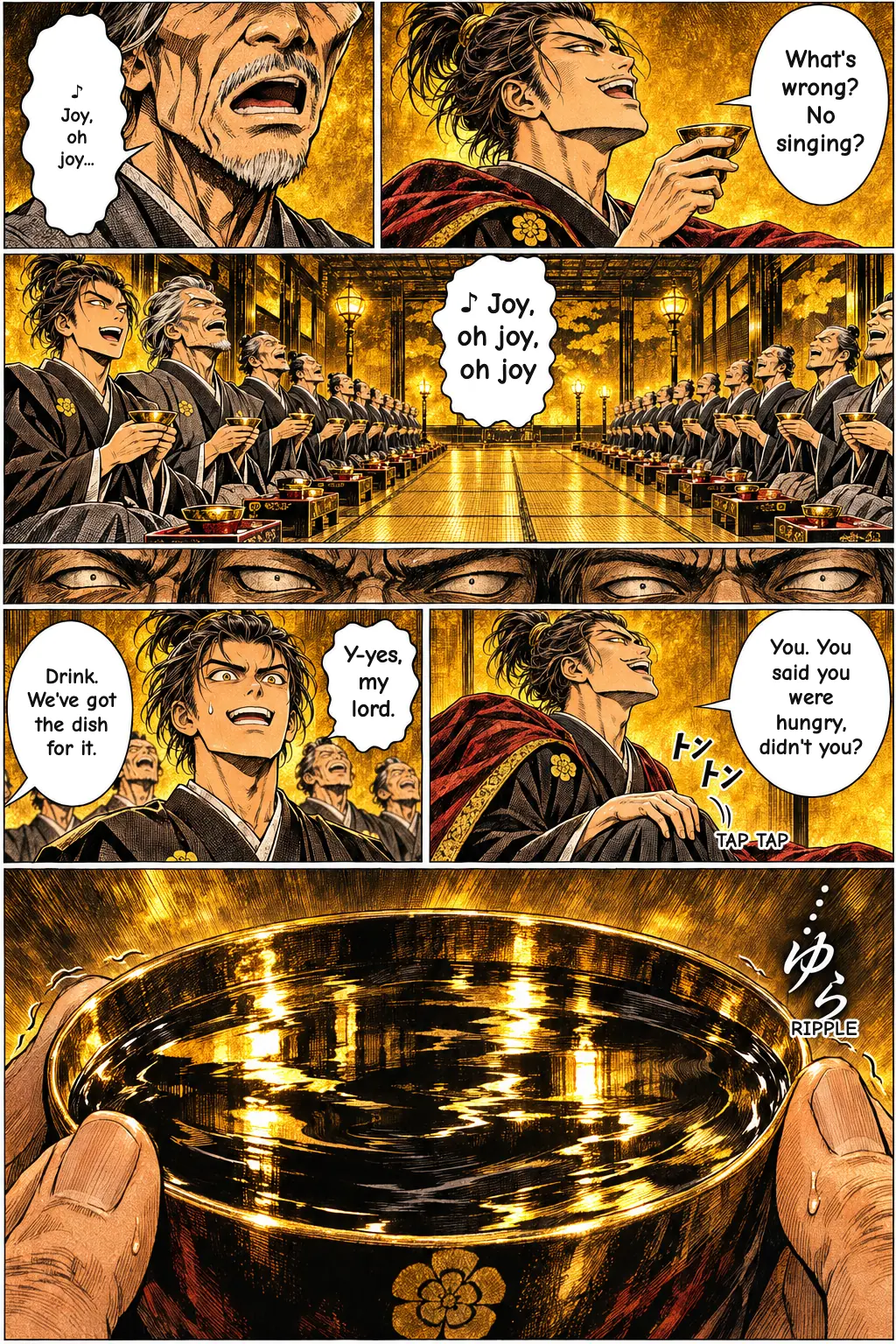
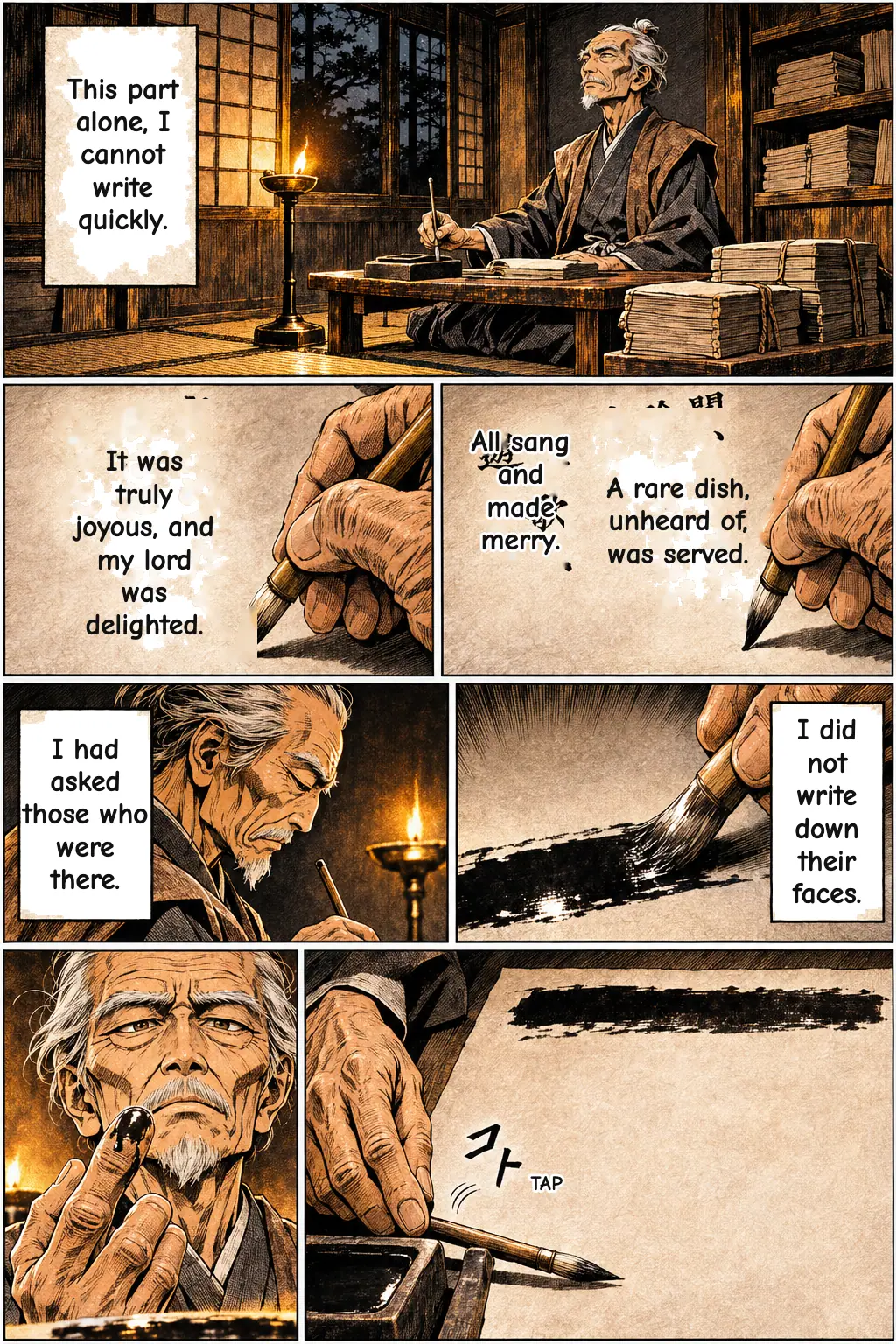
On the first day of the new year, lords from Kyoto and neighboring provinces came to Gifu to pay their respects and receive ceremonial sake. After these outside guests left, only Nobunaga's horse guards remained. Then came a dish that, Gyūichi says, no one had heard of in past or present: the three heads, finished in hakudami, a technique generally understood as lacquer with gold, and placed on formal serving stands. The drinking went on. The men sang and amused themselves, and Nobunaga was delighted. The chronicle says nothing more about how anyone felt.
What the Feast Says About Nobunaga's World
The most striking thing about this passage is its calm. Gyūichi lists the heads much as he might list any rare dish, and he presents the gathering as a happy one. Modern readers usually see horror, but enemy heads were a normal part of warfare in this period: they were inspected after battle and publicly displayed. Treating them as refreshments at a party was another matter, and the chronicle itself calls it unusual.
Why did Nobunaga do it? The text does not say. Many readers take it as a display of triumph and terror aimed at his inner circle. Others have suggested it was a way of closing a long war, or even a kind of respect for worthy enemies. None of these readings can be proven from the chronicle. Personal history may also matter: Nagamasa was married to Nobunaga's sister, and had sided with the Asakura against Nobunaga in 1570.
The year 1573 also has a larger meaning. Later historians commonly treat Yoshiaki's expulsion as the end of the Muromachi shogunate, which had lasted more than two centuries. That is a modern dividing line, however, because Yoshiaki left Kyoto without giving up his title.
What the Manga Changes
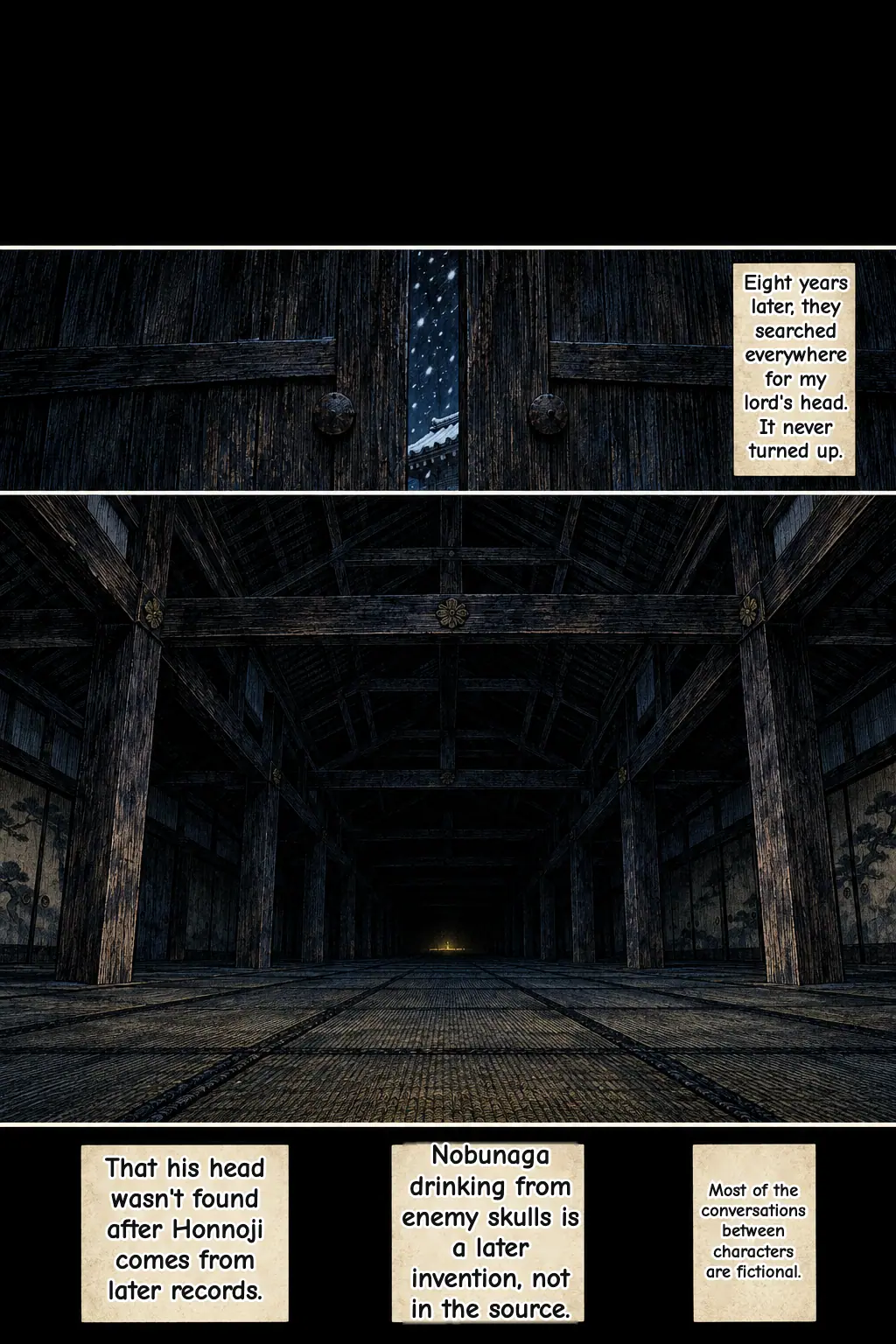
The events above, including the three gilded heads, the singing, and Nobunaga's pleasure, come from the chronicle. Much of the drama around them is the manga's own. Nobunaga's line "There's one more dish" and the build-up to the reveal are invented, since Gyūichi simply names what was served. The retainers freezing in fear is also an invention: the source records no such reaction. The thoughts and final words of Yoshiaki, Nagamasa, and Yoshikage, and details of the fires and fallen castles, are imagined as well.
The manga's image of a shogun who once called Nobunaga "Father" should be read as dramatic framing, because it does not come from the chapters behind this episode. The story also compresses the timeline, trimming events such as the fighting at Nagashima. Some details people often connect with this story sit outside the chronicle's core account too. The escape of Nagamasa's wife, Oichi, and their three daughters from Odani is the traditional version, and later sources may give the name Manpukumaru to the executed heir.
Where to Read It
If you came here looking for the facts of the golden skulls, the manga is a vivid way to feel how quickly those few months unfolded. Episode 10 is on this page, and ODA NOBUNAGA: The Demon King of the Warring States is free to read on Manga Portal, every episode, with no sign-up. To see how Nobunaga and Yoshiaki reached this breaking point, start from the first episode.
Characters in this episode
Oda Nobunaga
The warlord at the center of the story, who expels the shogun, destroys the Asakura and Azai, and serves their heads at a New Year's party.
Ashikaga Yoshiaki
The shogun who rises against Nobunaga twice, surrenders at Makishima Castle, and is sent away from Kyoto alive.
Asakura Yoshikage
The lord of Echizen, who loses his capital at Ichijōdani and kills himself after a kinsman betrays him.
Azai Nagamasa
The lord of northern Ōmi and husband of Nobunaga's sister, who dies when Odani Castle falls.
Azai Hisamasa
Nagamasa's father, who takes his own life at Odani after Hideyoshi's night attack cuts him off from his son.
Hashiba Hideyoshi
Nobunaga's general, later known as Toyotomi Hideyoshi, who escorts the defeated shogun and splits the defenses of Odani Castle.
FAQ
Did Oda Nobunaga really turn his enemies' skulls into gold?
The Shinchō Kōki says the heads of Asakura Yoshikage, Azai Hisamasa, and Azai Nagamasa were finished in hakudami and set out at a New Year's drinking party in 1574. The author, Ōta Gyūichi, had served Nobunaga, which makes this an important source. The chronicle speaks of heads and does not describe the process in detail, so "golden skulls" is a popular shorthand.
Did Nobunaga drink sake from a skull cup?
That is a later popular legend and does not appear in the Shinchō Kōki. The chronicle says the heads were displayed as a delicacy while the men drank and sang. It does not say anyone used them as cups.
What is hakudami?
Hakudami is the term the chronicle uses for how the heads were finished. It is generally understood to mean coating with lacquer and gold. Gyūichi names the technique but does not explain how it was done.
Why did Nobunaga hate Azai Nagamasa?
Nagamasa was married to Nobunaga's sister but sided with the Asakura against him in 1570, so many readers see the feast as revenge for betrayal. The chronicle reveals little about either man's private feelings, so this motive is an interpretation rather than a stated fact.
What happened to Shogun Ashikaga Yoshiaki after he surrendered?
Nobunaga spared his life, took his young son as a hostage, and had him escorted to Wakae in Kawachi. Yoshiaki left Kyoto still holding the title of shogun, and later historians often treat 1573 as the end of the Muromachi shogunate.