Episode 5100 Men, One Spy. All It Takes: "Sit."Tachisuguri
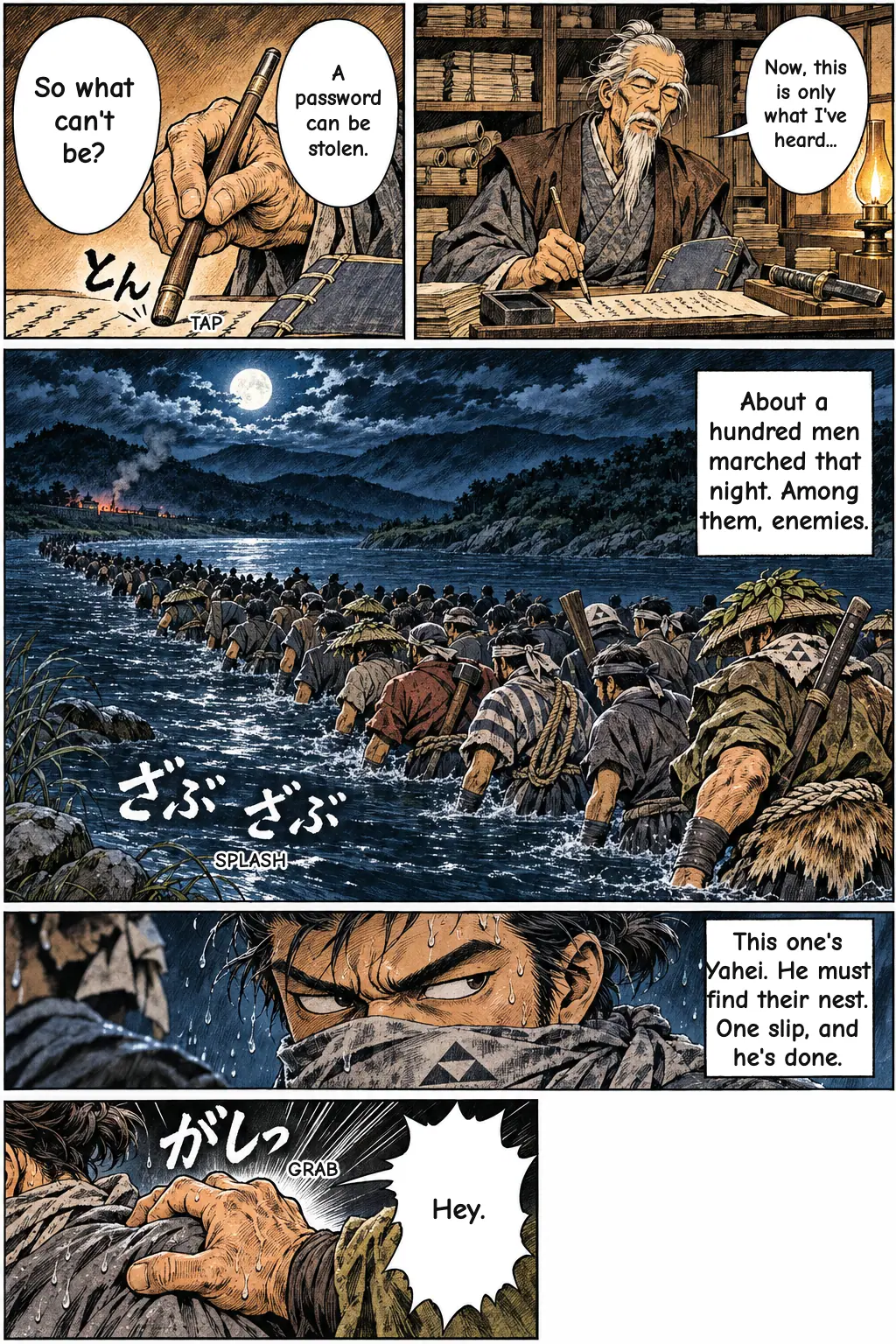
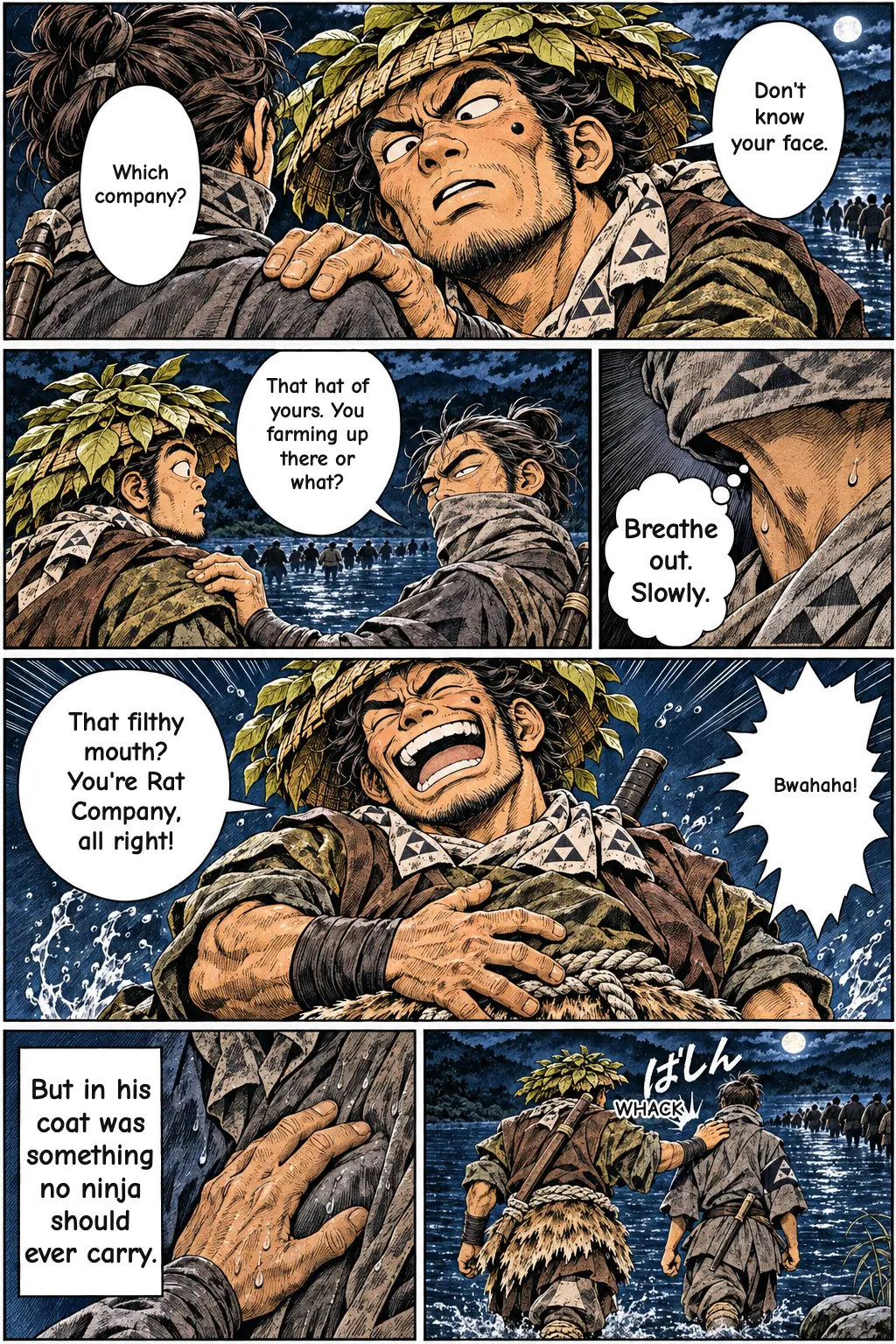
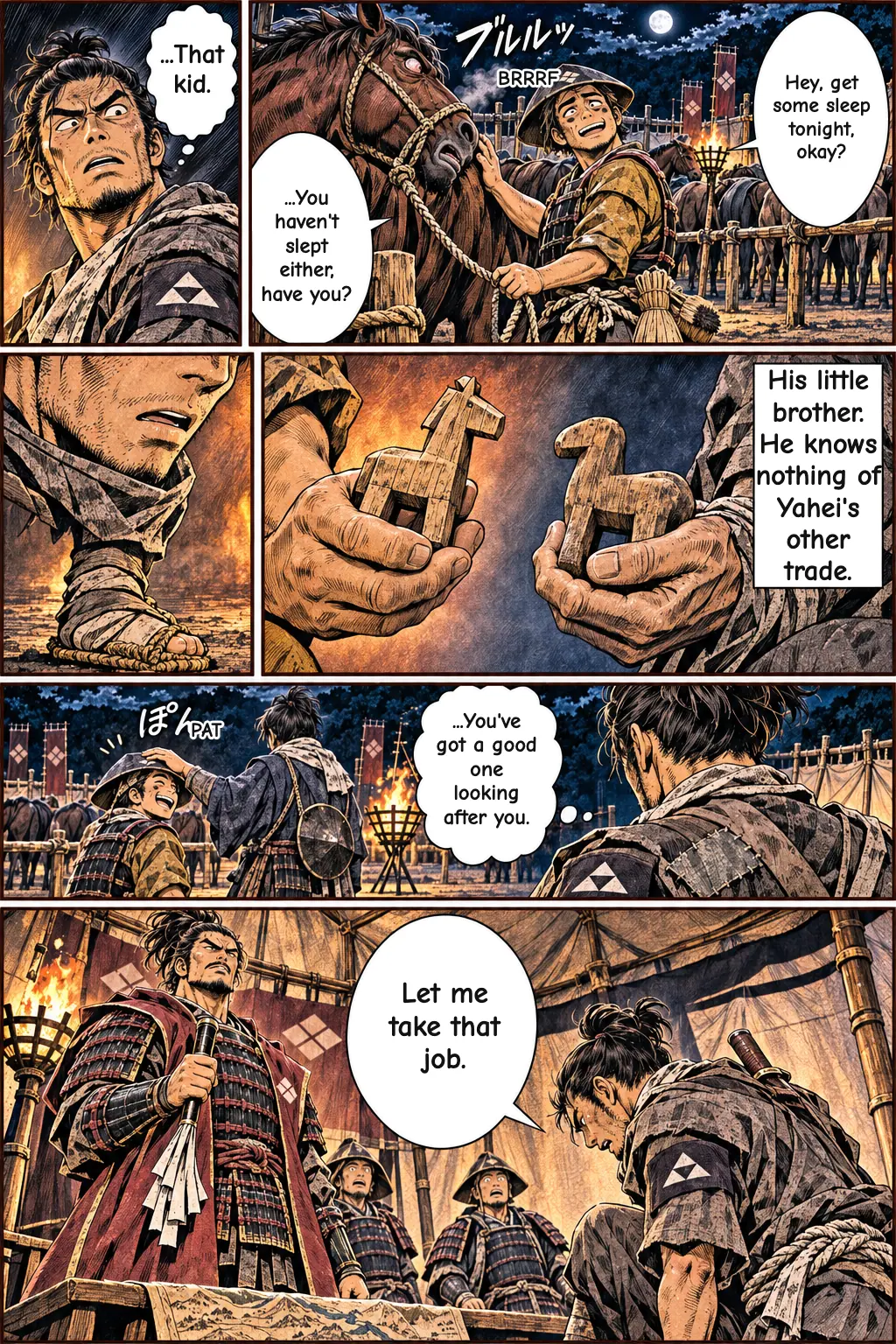
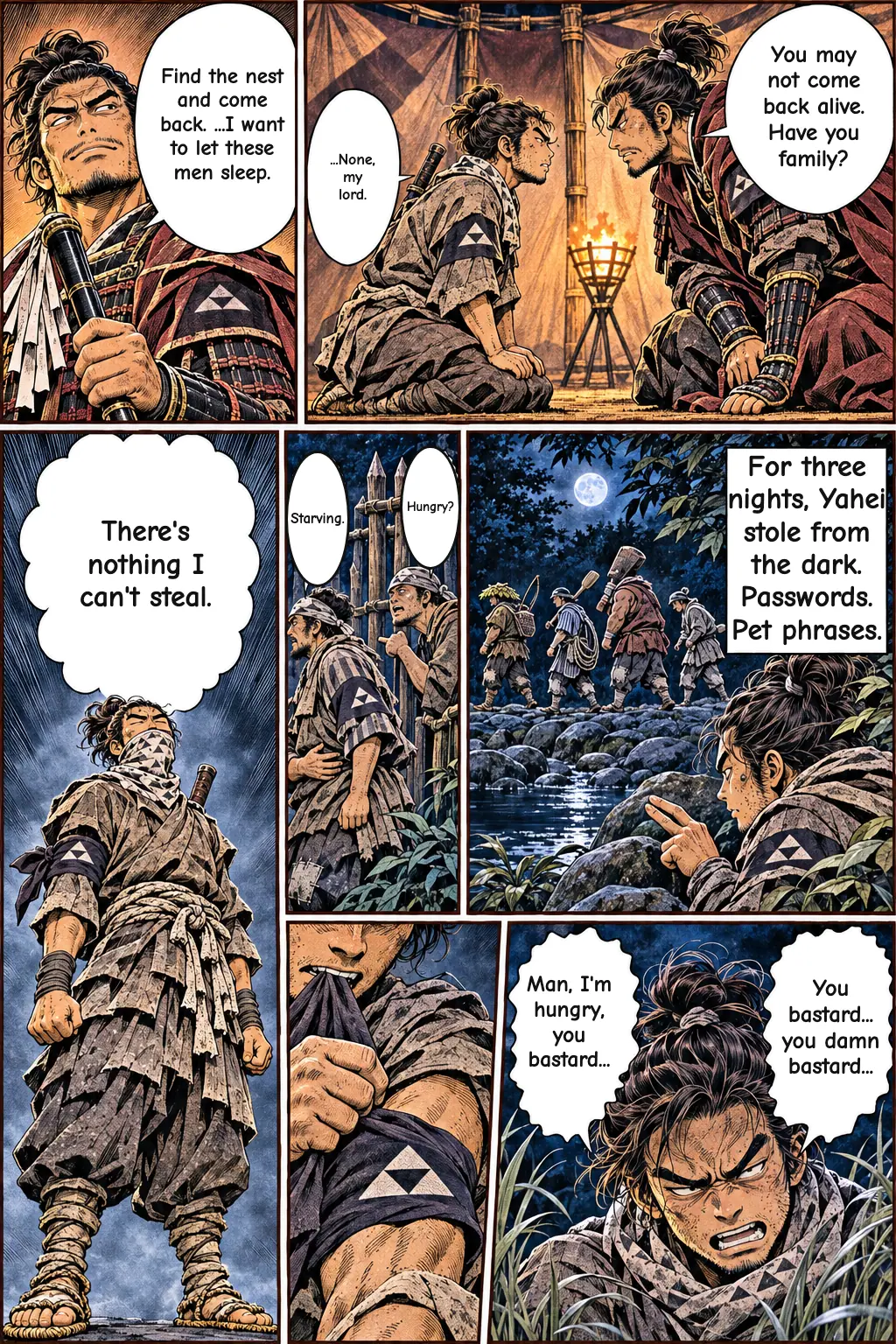
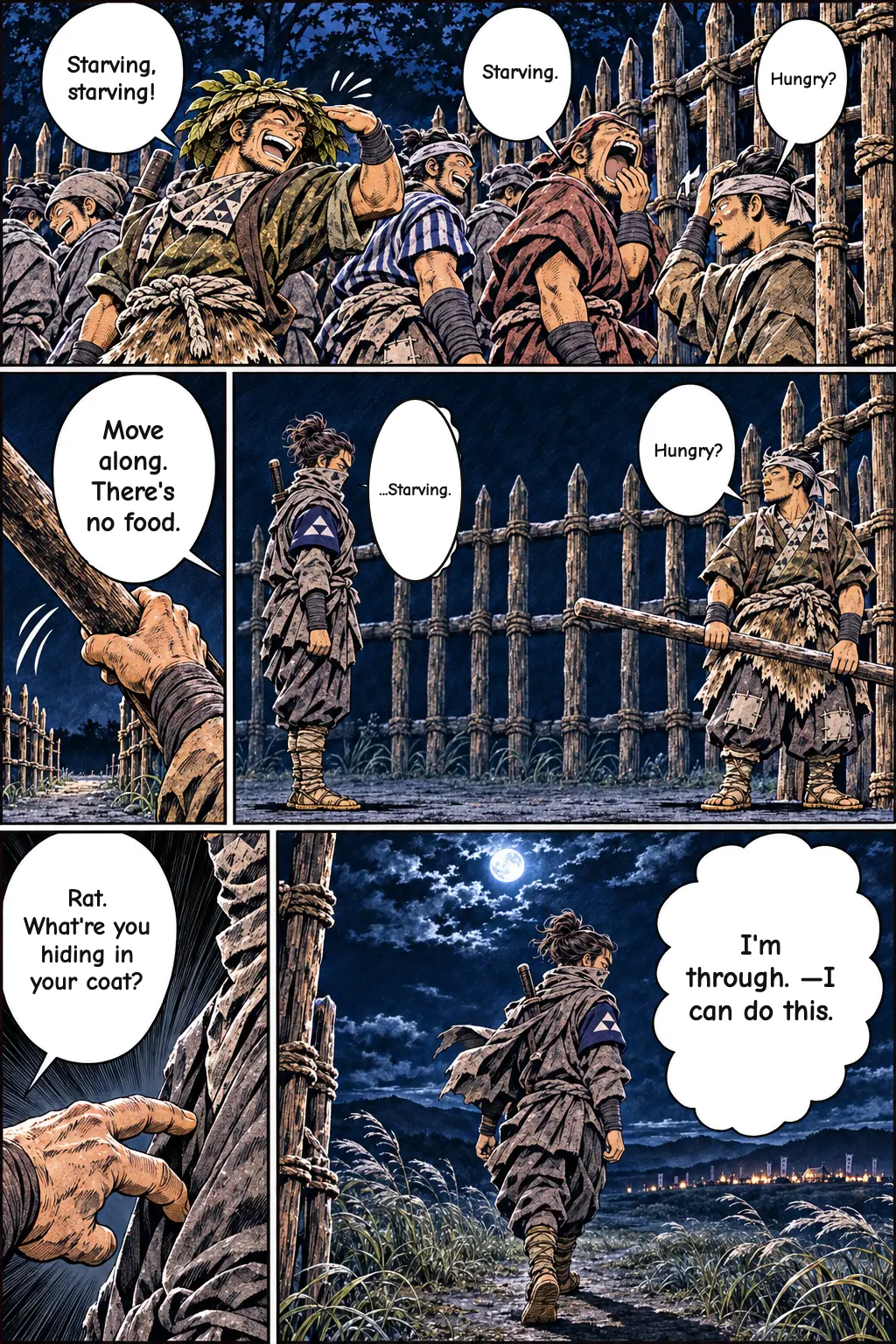
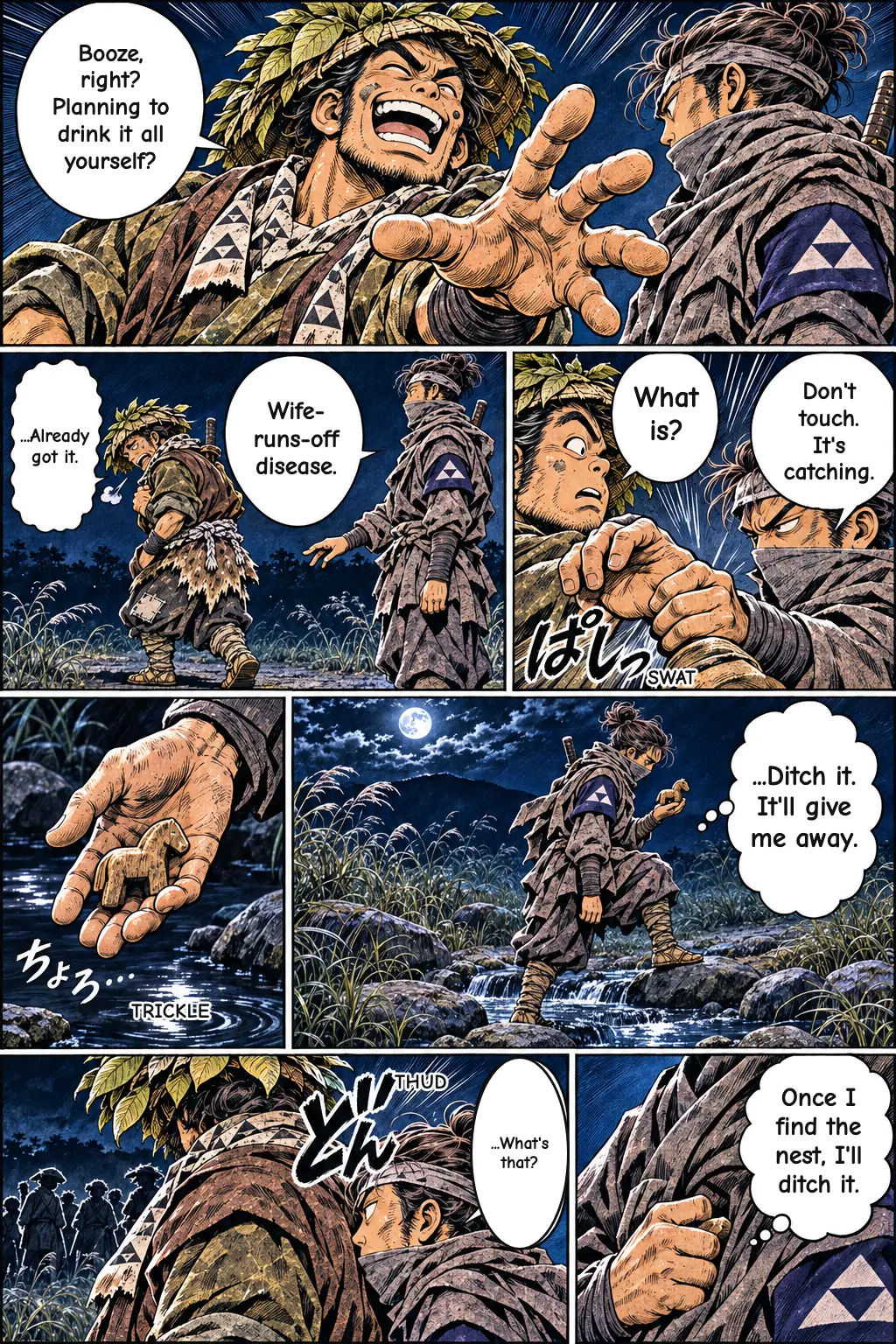
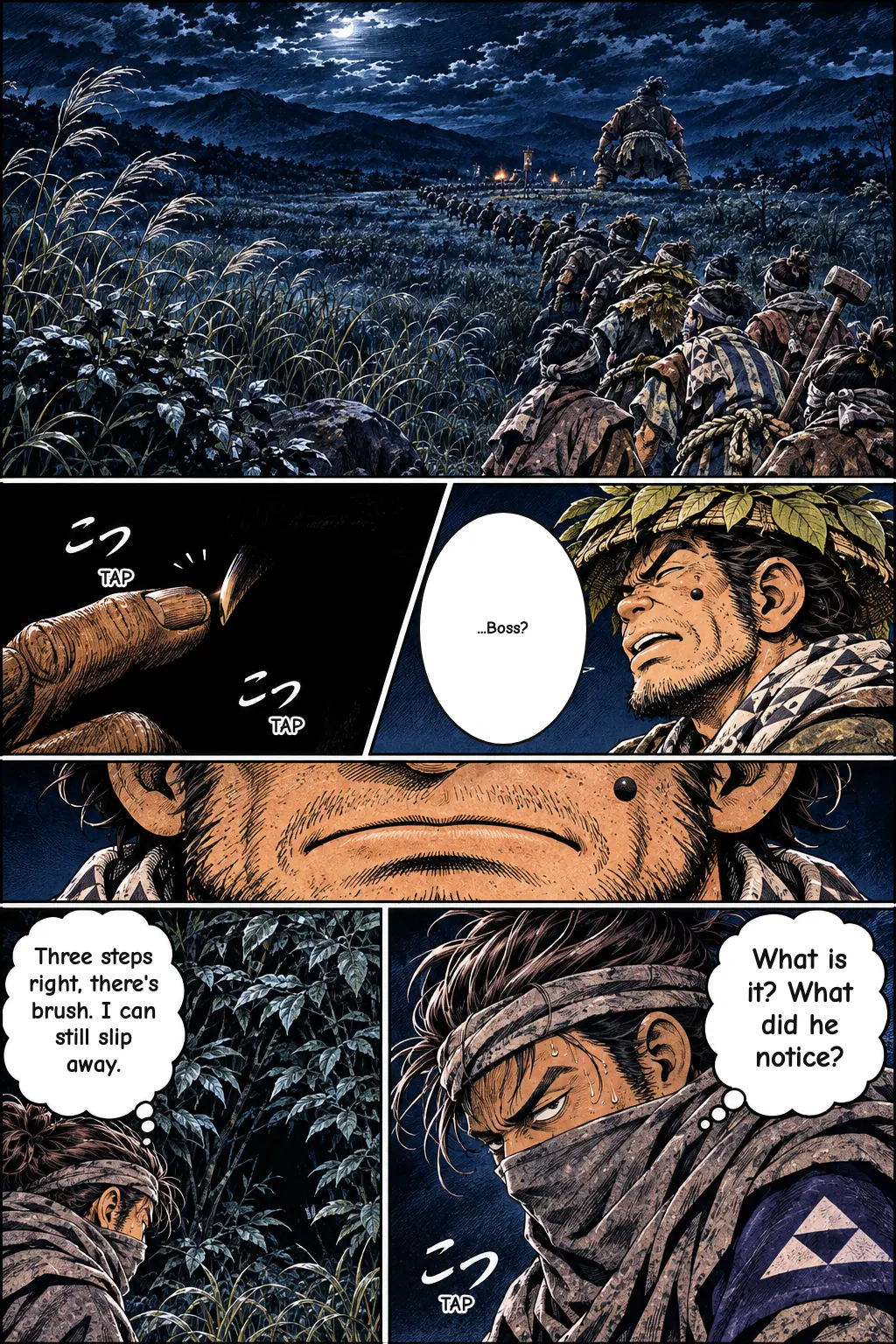
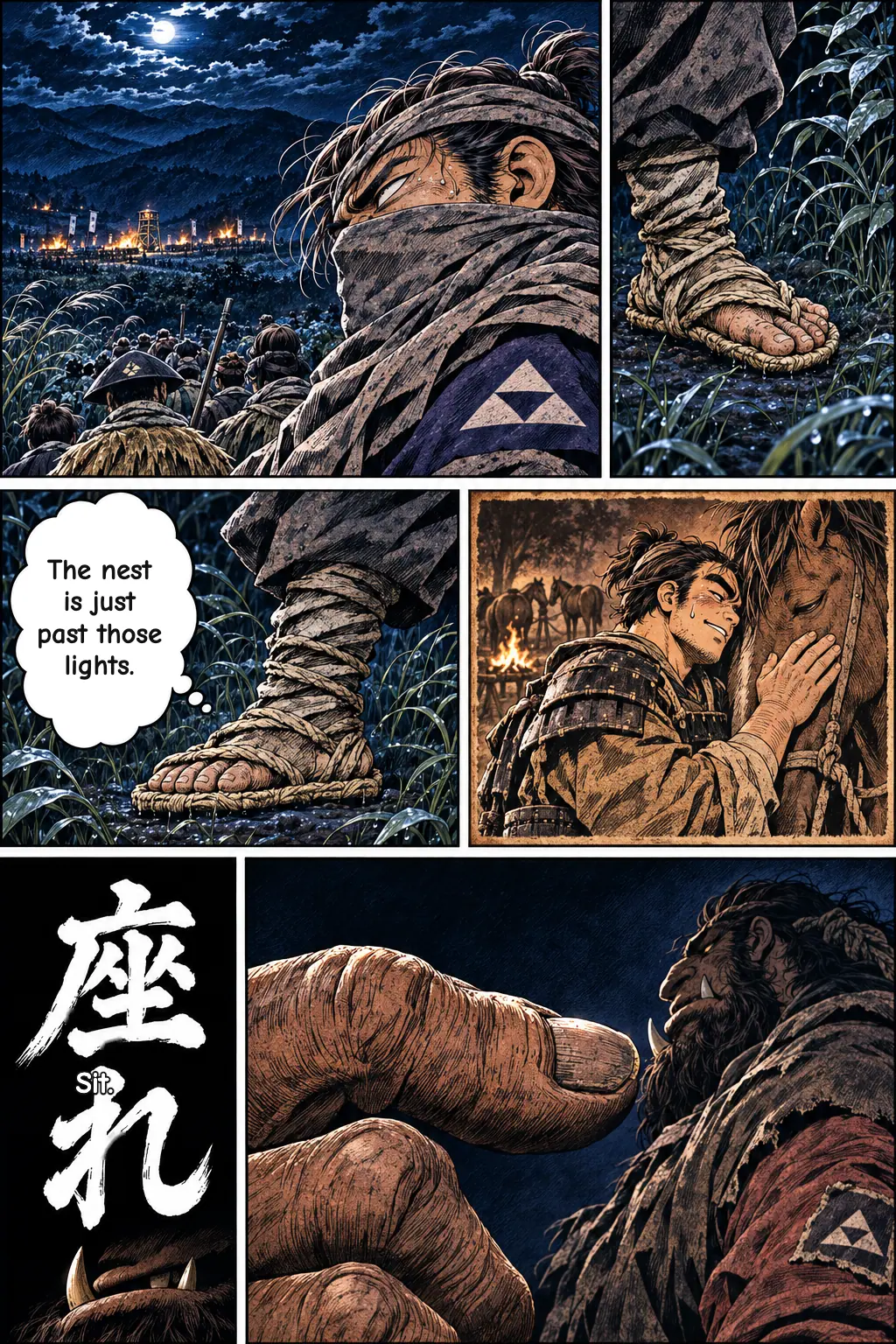
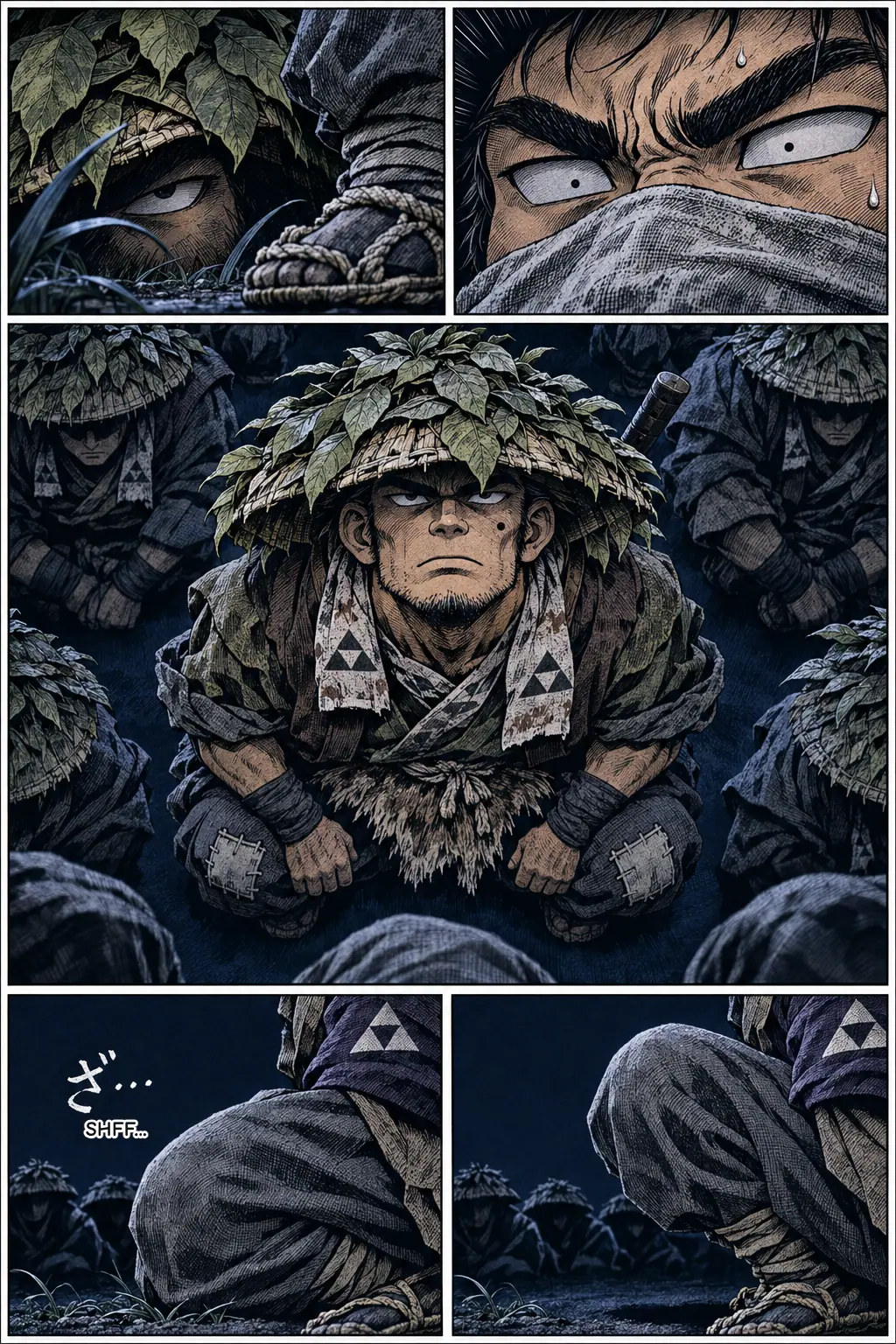
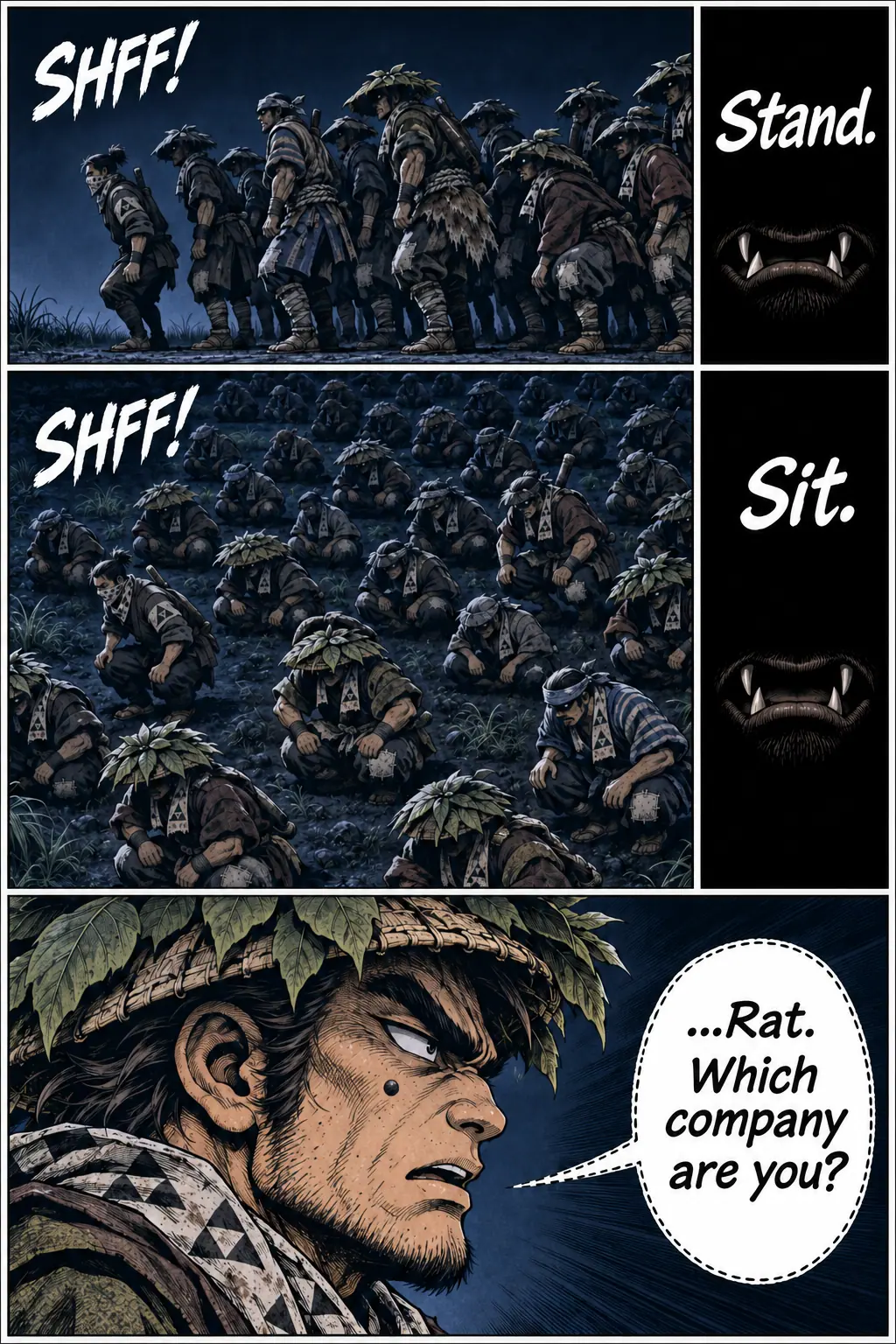
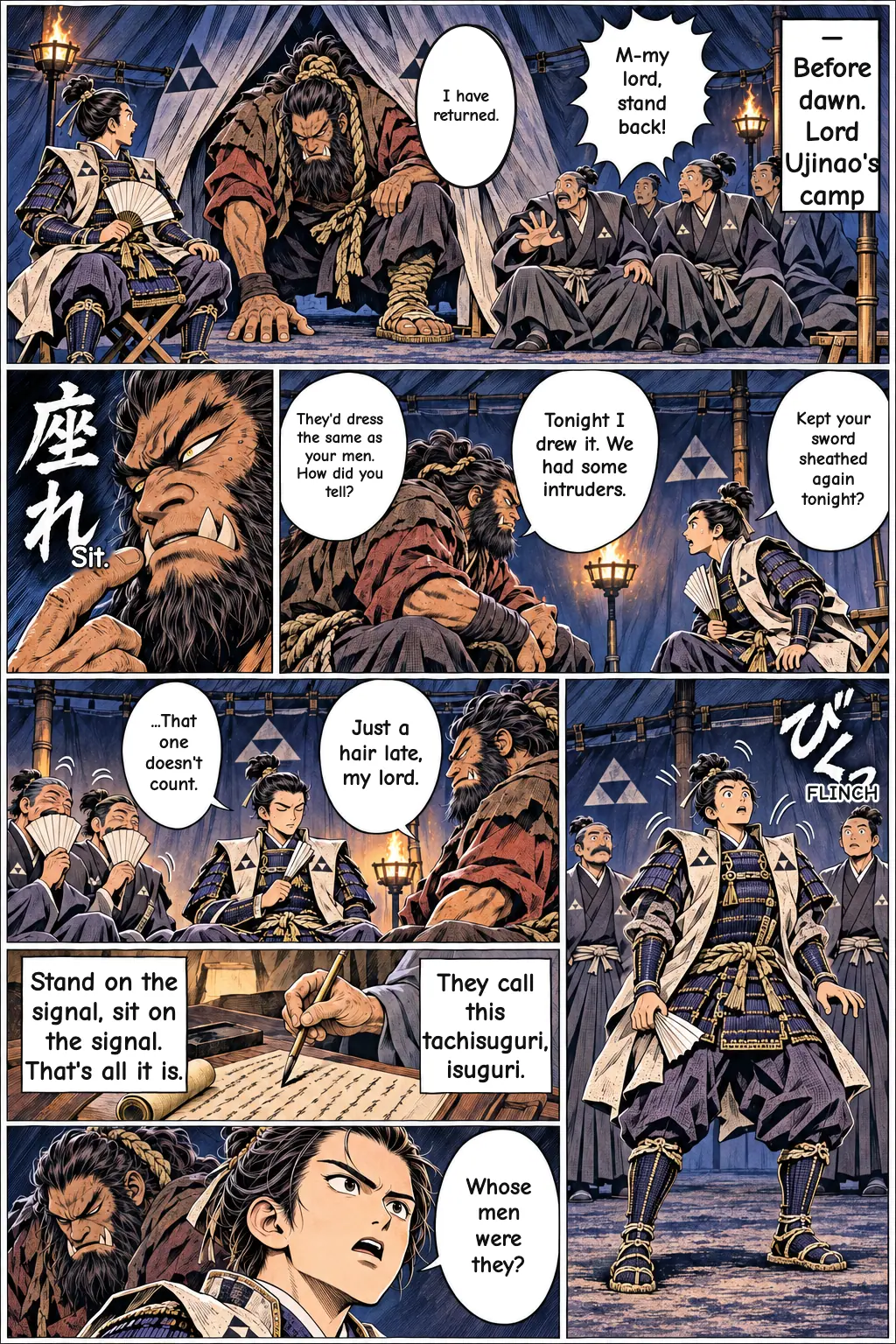
To save a camp that can't sleep, and the little brother trapped in it, master spy Yahei slips into the enemy's ranks and follows them toward their nest. He's stolen their walk and their password. Then their giant of a leader says one low word: "Sit."
Bookmark the series page so you can jump back in when the next episode is out: NINJARSS for this series
Get new episodes in your feed. Follow us on:ThreadsBluesky
Story summary
The tale comes from the Hojo Godaiki, a chronicle of the five generations of the Hojo clan, who ruled much of eastern Japan during the Warring States period. It describes men known in the Kanto region as rappa, a local word for hired raiders and spies. They had criminal backgrounds, yet the chronicle treats them as people of real cunning. Hojo Ujinao, the head of the clan, kept two hundred of them on his payroll. They fell into four types: mountain bandits, pirates, robbers, and thieves. Above them all stood their chief, Fuma Kotaro.
Fuma Kotaro and Tachisuguri: The Ninja Spy Test from the Hojo Godaiki
In short: Tachisuguri is the stand-and-sit test that Fuma Kotaro's band of raiders used to expose enemy infiltrators, as told in the Hojo Godaiki, a Japanese chronicle from the early Edo period. When Takeda men slipped into the raiders' ranks during a night retreat, everyone rose and sat together on a prearranged signal, and anyone out of step was found and killed.
The Original Story: Night Raids at the Kise River
The tale comes from the Hojo Godaiki, a chronicle of the five generations of the Hojo clan, who ruled much of eastern Japan during the Warring States period. It describes men known in the Kanto region as rappa, a local word for hired raiders and spies. They had criminal backgrounds, yet the chronicle treats them as people of real cunning. Hojo Ujinao, the head of the clan, kept two hundred of them on his payroll. They fell into four types: mountain bandits, pirates, robbers, and thieves. Above them all stood their chief, Fuma Kotaro.
Ujinao's army faced that of Takeda Katsuyori, lord of the rival Takeda clan, across the Kise River on the border between the provinces of Suruga and Izu. The standoff is often dated to around 1581, although that date is an identification made by later readers rather than a settled detail of the story.
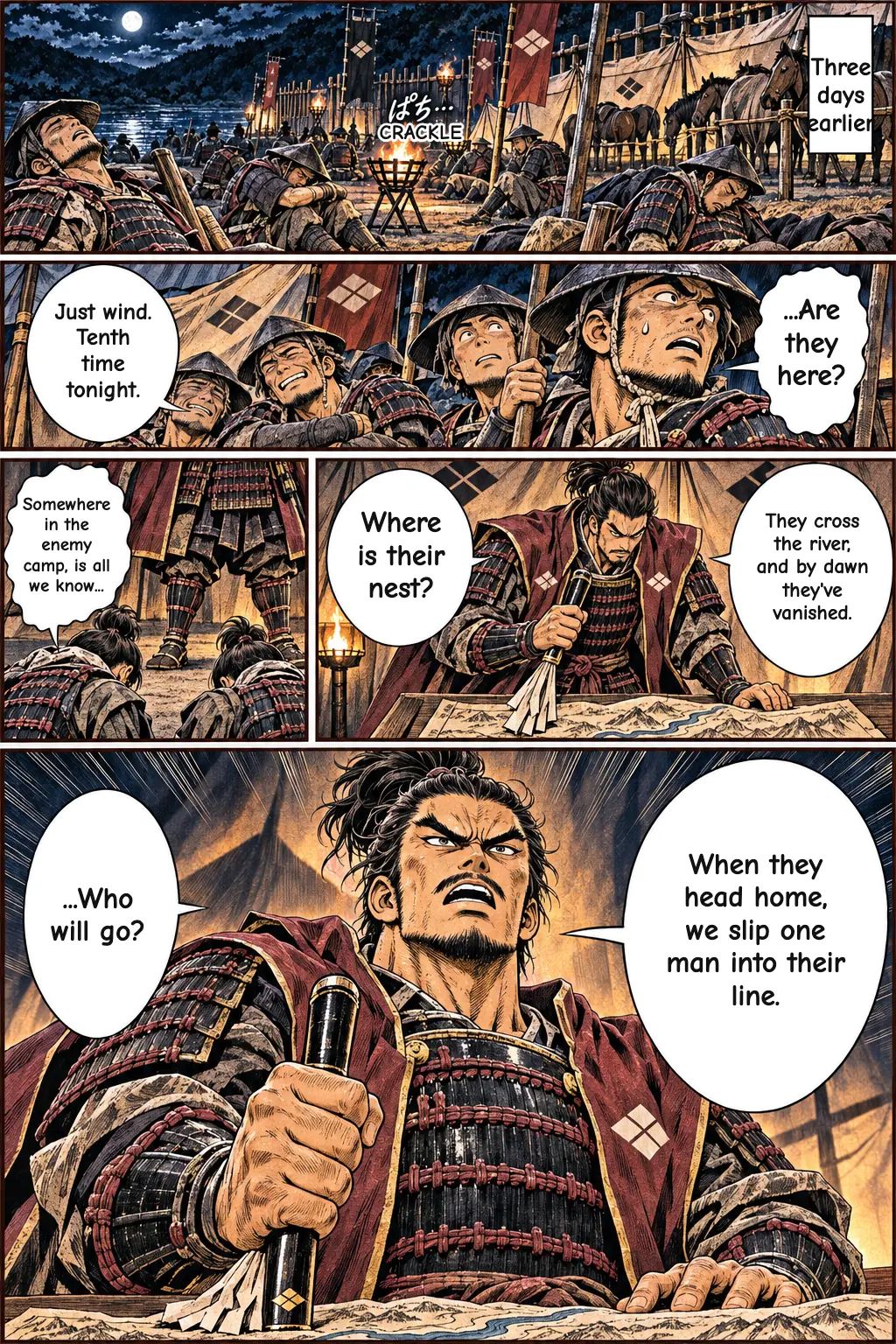
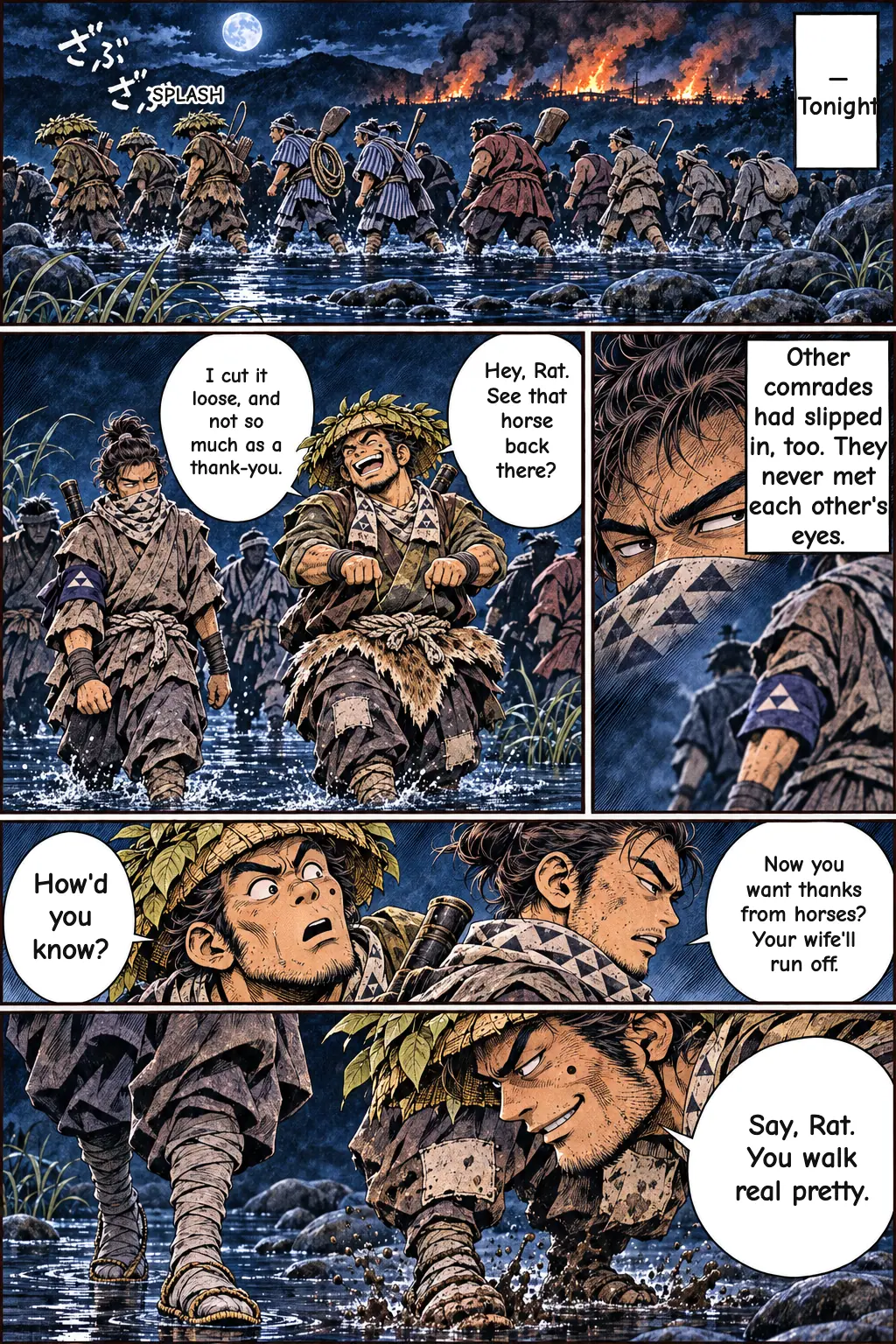
Under cover of darkness, rain, and wind, Kotaro's band crossed the river to attack the Takeda camp. They took prisoners, cut the ropes of tethered horses and rode them away, set fires, and raised war cries from every direction so that the enemy could not tell how many attackers there were or where they stood. The Takeda soldiers came to dread each nightfall.
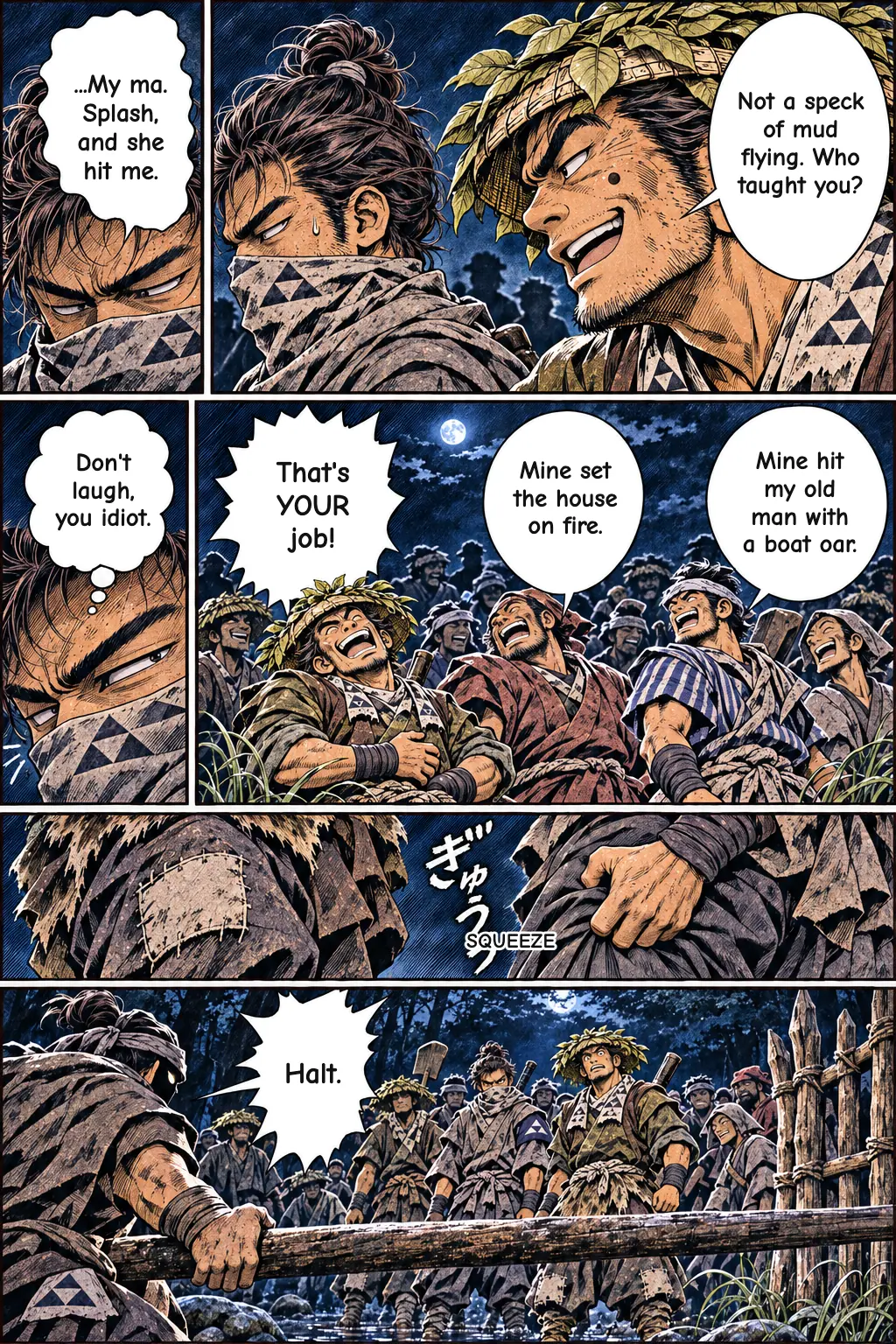
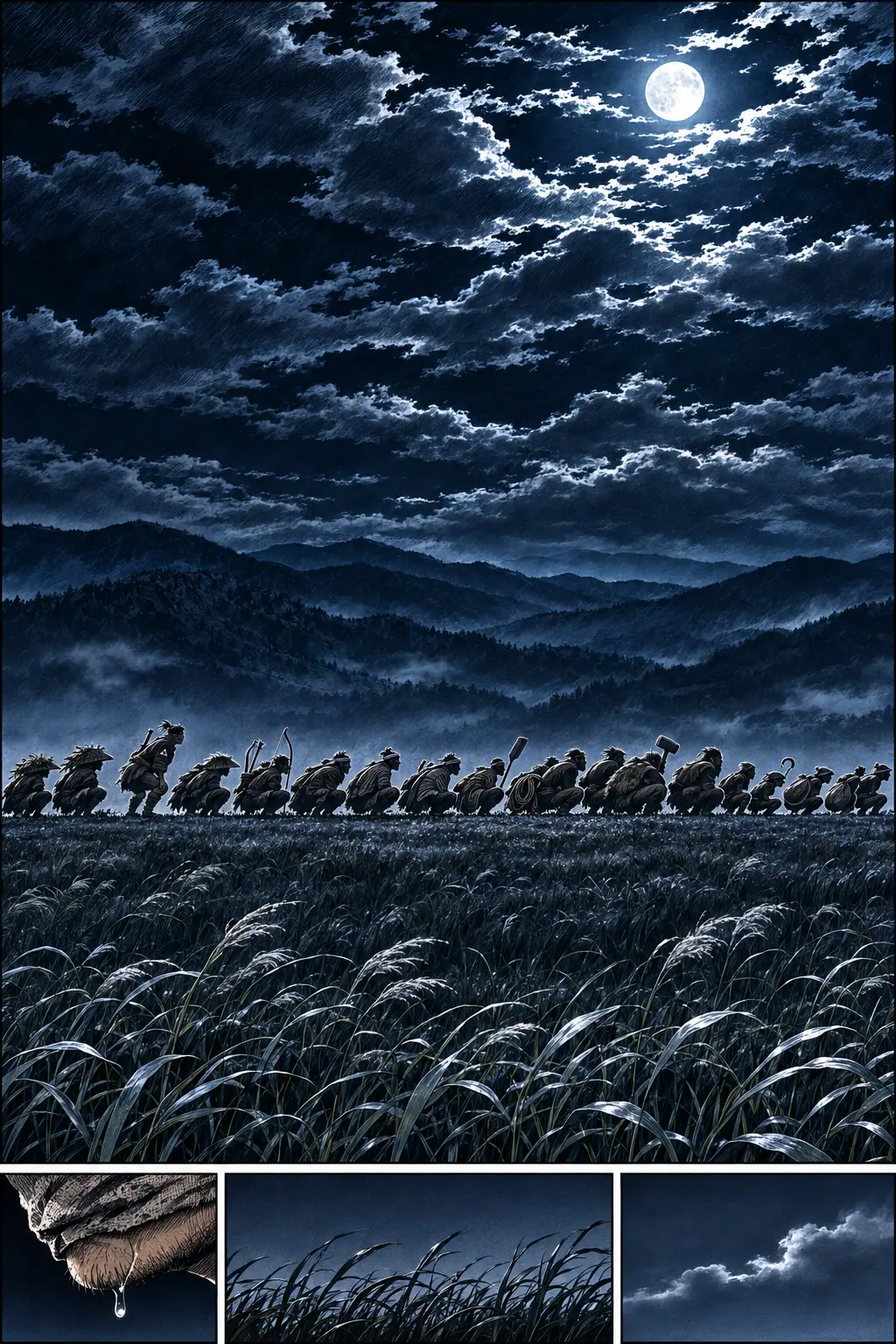
Then some Takeda men tried a daring reply. As the raiders withdrew, they mixed into the group and followed it back toward the Hojo lines. The band was ready for this. At a signal agreed in advance, every member stood at once, then sat at once. This was tachisuguri and isuguri, which can be loosely read as sorting by standing and sorting by sitting. The infiltrators did not know the signal, their movements fell out of step, and they were discovered and cut down.
Main Characters: Who Is Who
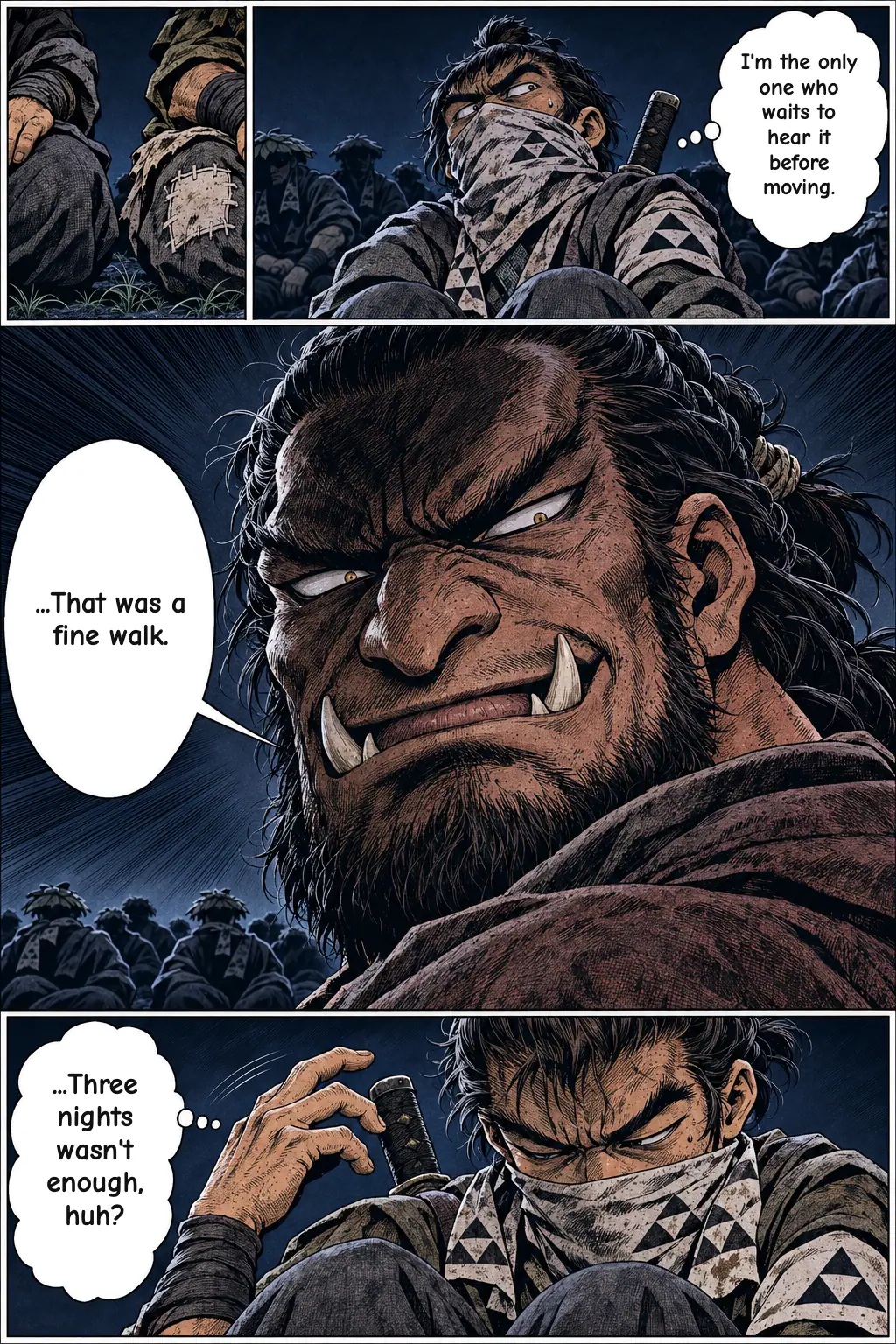
Fuma Kotaro (also written Fuma or Fuuma) is the figure most readers come looking for. The chronicle paints him as a frightening giant: the height usually cited from it is about seven shaku and two sun, well over two meters, with a heavily muscled body, fierce slanting eyes, a wide mouth showing fangs, a long head, and a high nose. His loud voice is said to carry a great distance, while his quiet voice comes out as a hoarse rasp that is hard to make out. Some accounts suggest that Kotaro was a name passed down through a line of leaders rather than belonging to one man.
Hojo Ujinao and Takeda Katsuyori are real historical lords, but this episode reveals little of their personalities. Ujinao matters as the employer of the rappa, and Katsuyori as the commander on the receiving end of their raids. The infiltrators themselves are an unnamed group, with no recorded backgrounds or motives.
What This Story Tells Us About Warring States Japan
The story offers a glimpse of how irregular fighters could serve a great clan. In the 1500s, rival lords were almost constantly at war, and a raid that robbed the enemy of sleep, horses, and confidence could be valuable even without a pitched battle. The Hojo gave men from outside the law a place on the payroll because their skills were useful in exactly this kind of conflict.
It also complicates the popular image of the ninja. The source does not show black-clad assassins with magical tricks. It shows organized raiders using darkness, noise, and fear. The word rappa is the regional term used here, and modern retellings often group such men under the broader label of ninja or shinobi.
The most striking idea is the test itself. A spy can copy clothing and blend into a crowd, but a habit drilled into a whole group is much harder to fake. Tachisuguri works like a security check carried in the body, and it turns every member of the band into a witness against any stranger.
It helps to read the account with some caution. The author, Miura Joshin, wrote in the early Edo period, after the Hojo had fallen, and the book circulated in printed editions during the Kan'ei era. Its vivid details, including Kotaro's monstrous appearance, are better treated as a memorable war tale than as verified eyewitness reporting.
What the Manga Changes and Adds
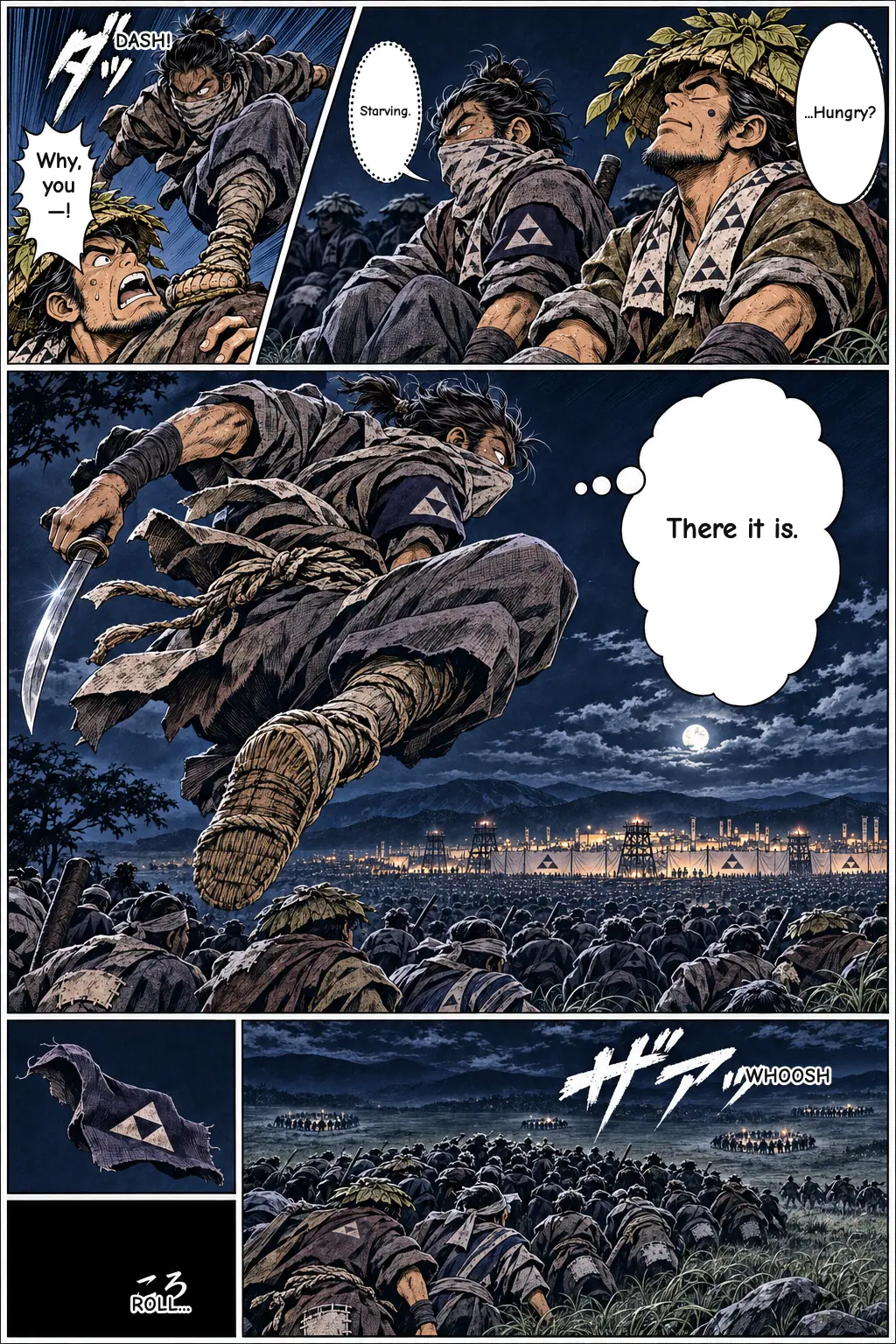
The core of the episode follows the chronicle: the night raids that terrorize the Takeda camp, an enemy slipping in among the retreating raiders, and a test based on moving together on a signal.
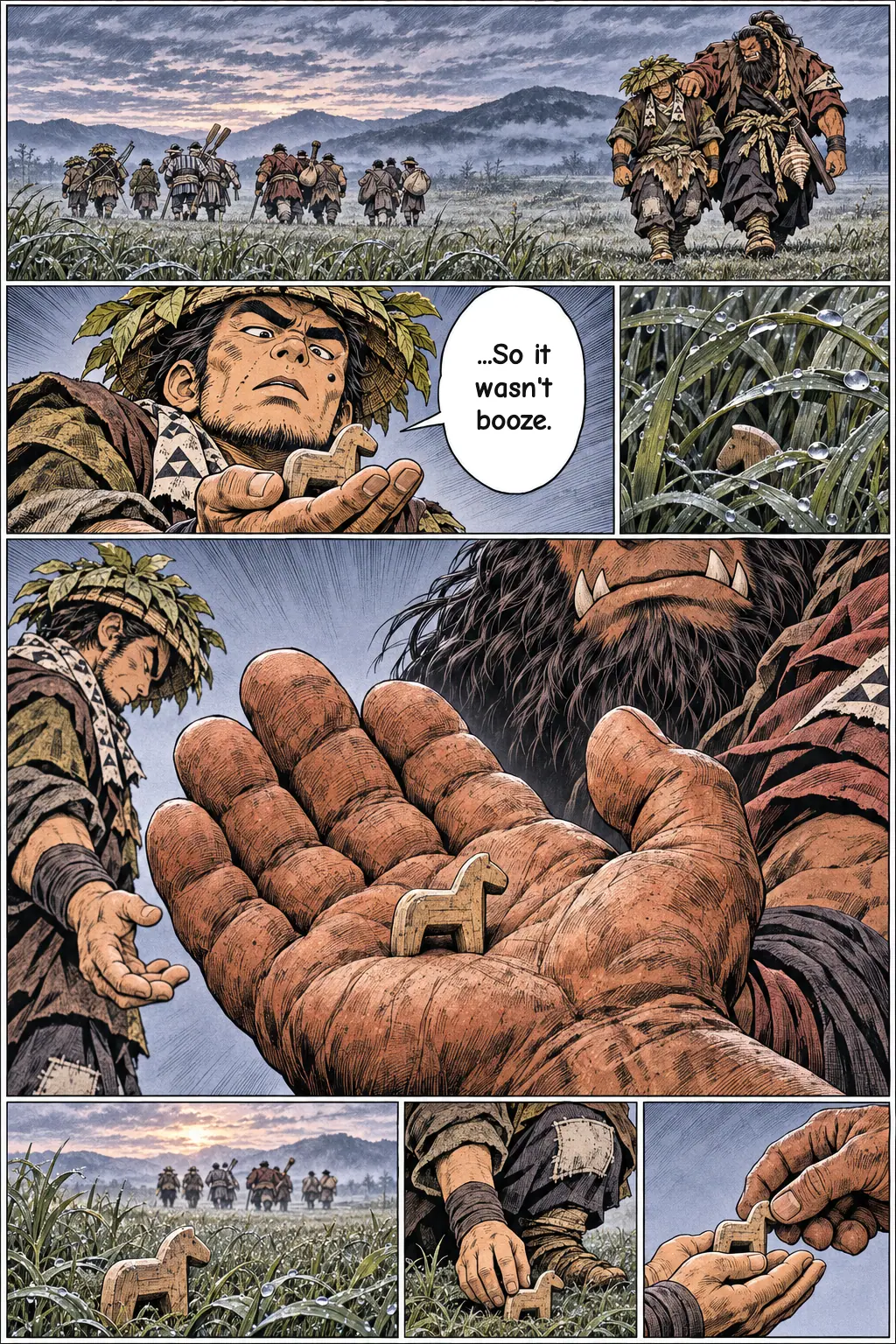
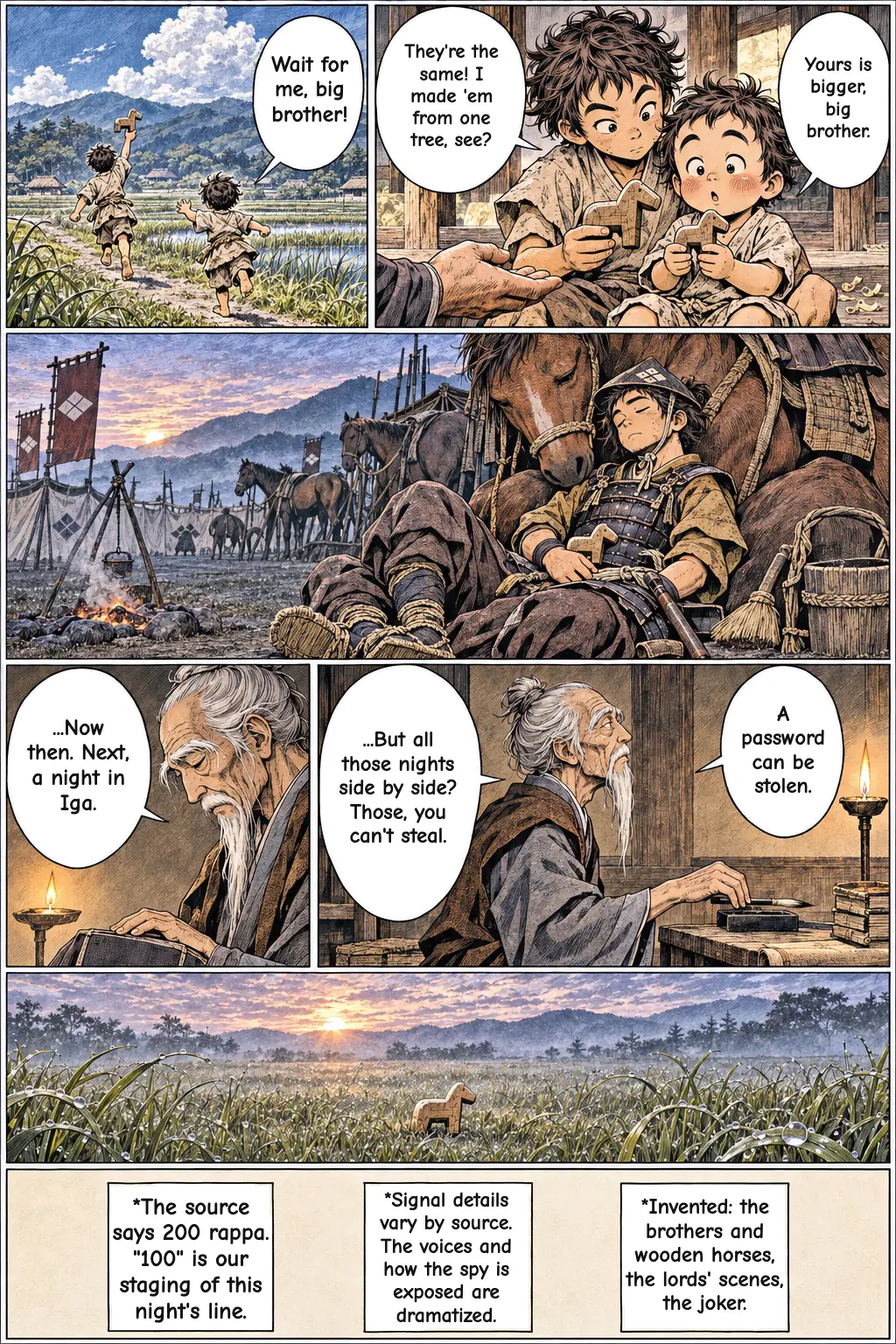
Much of the personal drama is new. The chronicle names no individual infiltrator, so Yahei, the master spy, is a creation of the manga, as are his personality, family, and motives. His little brother, the young soldier from Episode 4, and the bond between them are invented too. The original gives a group of infiltrators, and its number is not something we can confirm, while the manga focuses on one man among the enemy. Its title also says 100 men, whereas the chronicle gives the size of the band as two hundred.
The staging belongs to the manga as well. That includes the dialogue between Kotaro and Yahei, the timing of the moment of discovery, the terrain of the retreat, and the raiders' costumes and gear. Kotaro giving the signal himself in a single low word, "Sit," is a dramatic choice in the manga, and it should not be taken as a confirmed detail of the source. Likewise, Yahei stealing the band's walk and password is part of this episode's telling.
Where to Read It
If you want to feel the tension of that moment rather than just read about it, this story is at its best on the page: one man surrounded by the enemy, waiting for a word he cannot prepare for. Episode 5 of NINJA: Shadows of the Warring States is on Manga Portal, along with the rest of the series. Every episode is free to read, and you don't need an account. To see why the camp can't sleep and who Yahei is trying to save, you may want to begin with Episode 4.
Characters in this episode
Fuma Kotaro
The giant chief of the Hojo clan's rappa raiders, who leads the night attacks on the Takeda camp.
Hojo Ujinao
The head of the Hojo clan, who keeps two hundred rappa in his service and faces the Takeda at the Kise River.
Takeda Katsuyori
The lord of the rival Takeda clan, whose camp suffers the raiders' repeated night attacks.
The Fuma Band
Two hundred raiders drawn from bandits, pirates, robbers, and thieves, skilled in night attacks and trained to move as one on a signal.
The Takeda Infiltrators
Unnamed men in the original chronicle who join the retreating raiders and are exposed by the stand-and-sit test.
Yahei
A master spy invented for the manga, who infiltrates the enemy ranks to save a sleepless camp and his little brother.
FAQ
What is tachisuguri?
Tachisuguri is a method of exposing infiltrators described in the Hojo Godaiki, paired with a sitting version called isuguri. On a prearranged signal, every member of the group stood or sat at the same moment. Anyone who did not know the signal moved out of step and was revealed as an enemy.
Who was Fuma Kotaro?
Fuma Kotaro was the leader of the rappa, or hired raiders and spies, who served the Hojo clan in the Warring States period. The Hojo Godaiki describes him as an enormous, fanged man who led night raids against the Takeda. Much of his popular image comes from this account, and some say the name may have been passed down through several leaders.
Were the rappa the same as ninja?
Rappa was a regional word used in the Kanto area for hired raiders and spies, and modern retellings often group them with ninja or shinobi. The men in this story are closer to organized night raiders than to the black-clad assassins of pop culture. The chronicle describes them as coming from criminal backgrounds such as banditry and piracy.
Is the story of Fuma Kotaro and the Kise River true?
Hojo Ujinao and Takeda Katsuyori were real lords, and their clans were rivals in this region. The details of the raids and the stand-and-sit test come from a chronicle written after the Hojo had fallen, so they are hard to verify. It is best to read them as a war tale that may contain history, rather than as a confirmed record.
Does Yahei appear in the original Hojo Godaiki?
No. The chronicle does not name the infiltrators or give their backgrounds. Yahei and his bond with his little brother were created for the manga NINJA: Shadows of the Warring States.