Episode 3Summon the Seven-Foot Ninja With FangsFuma Kotaro
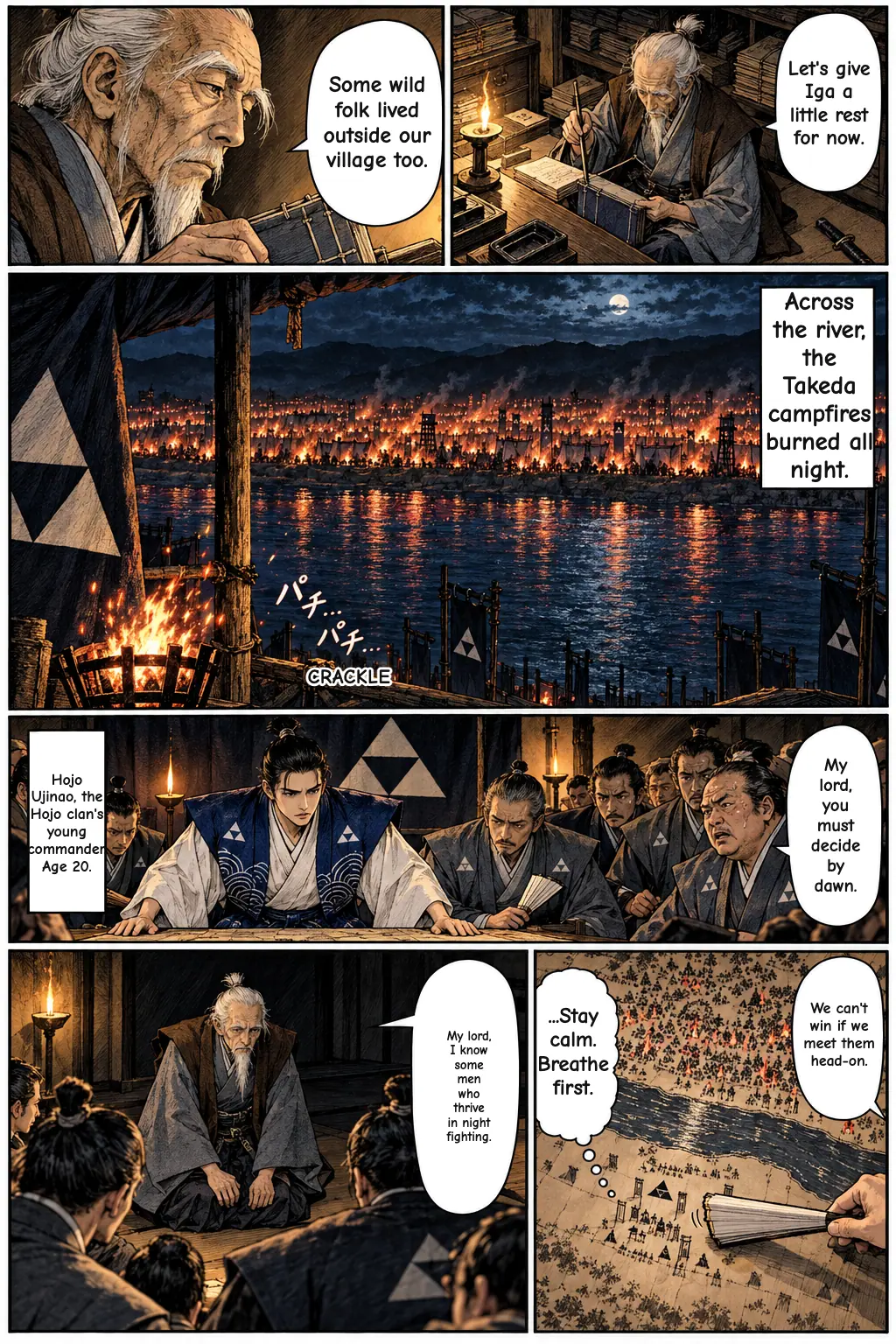
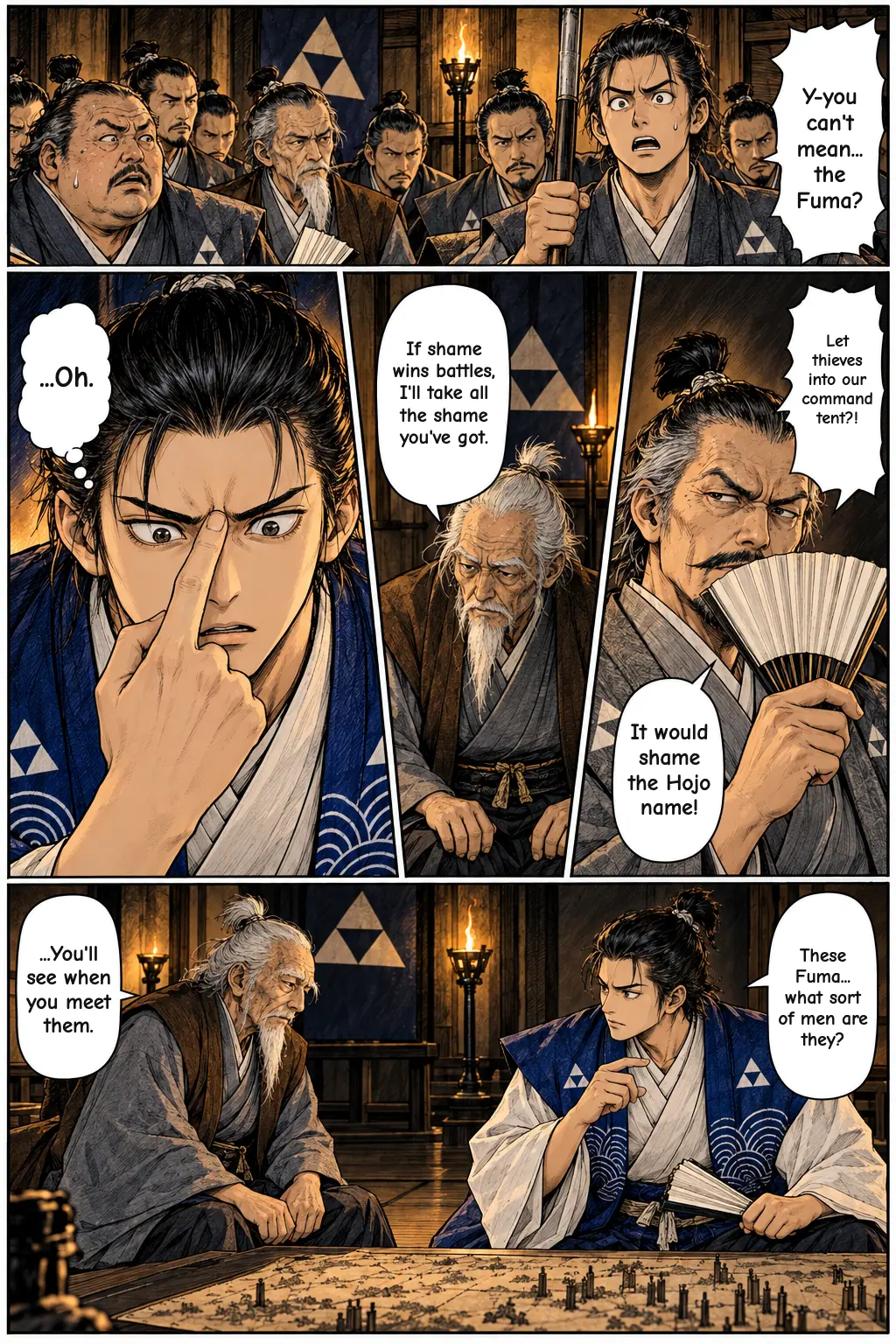
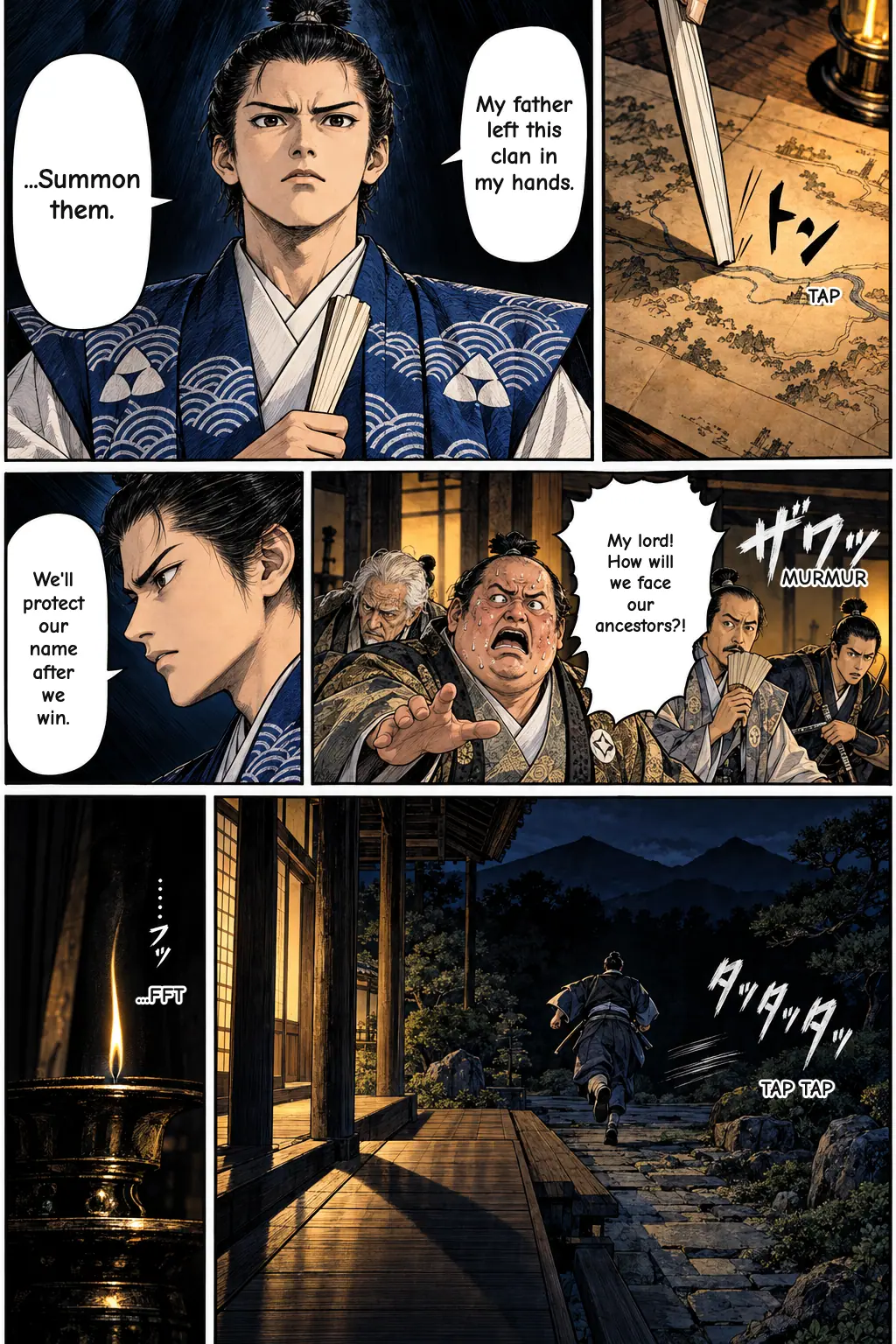
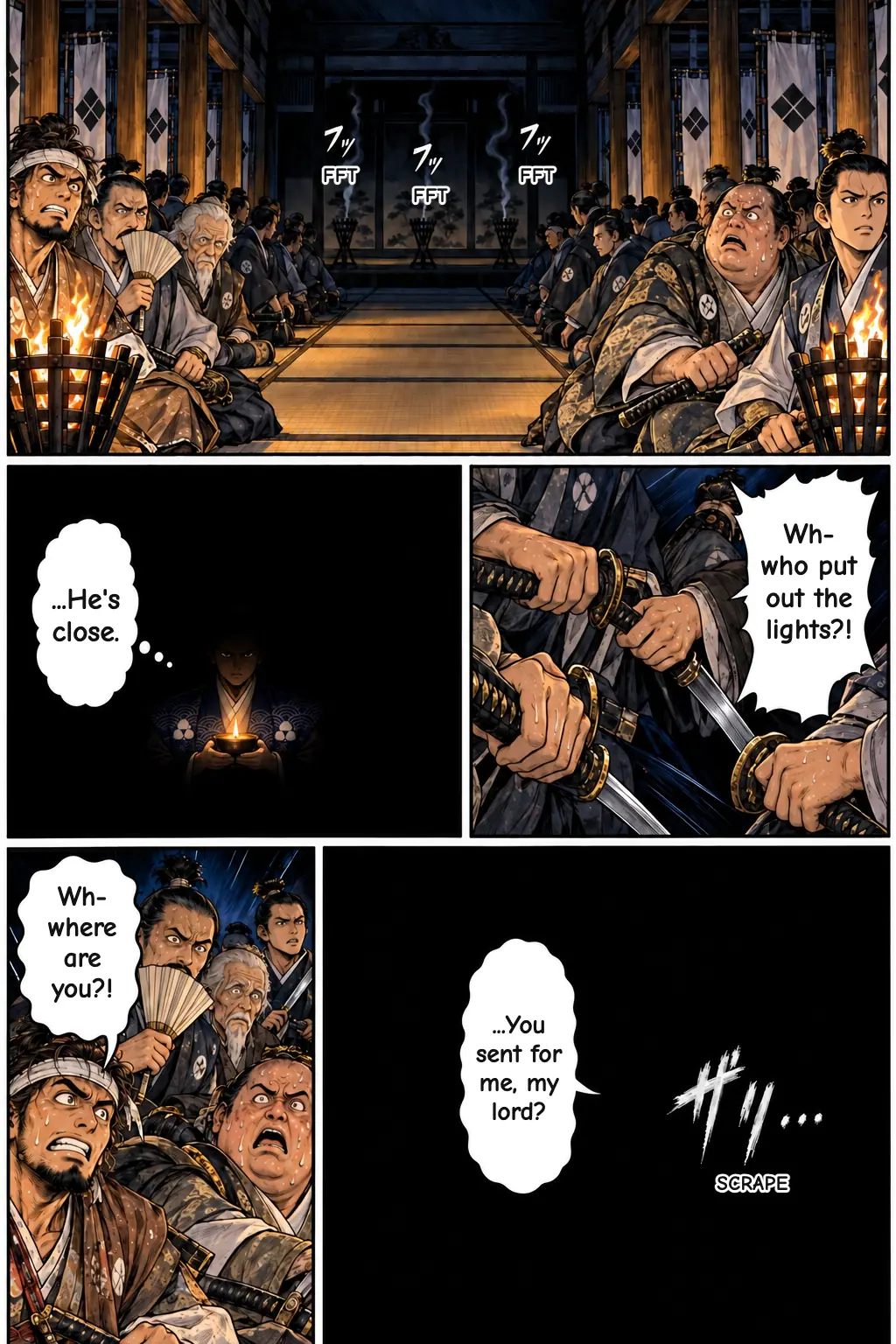
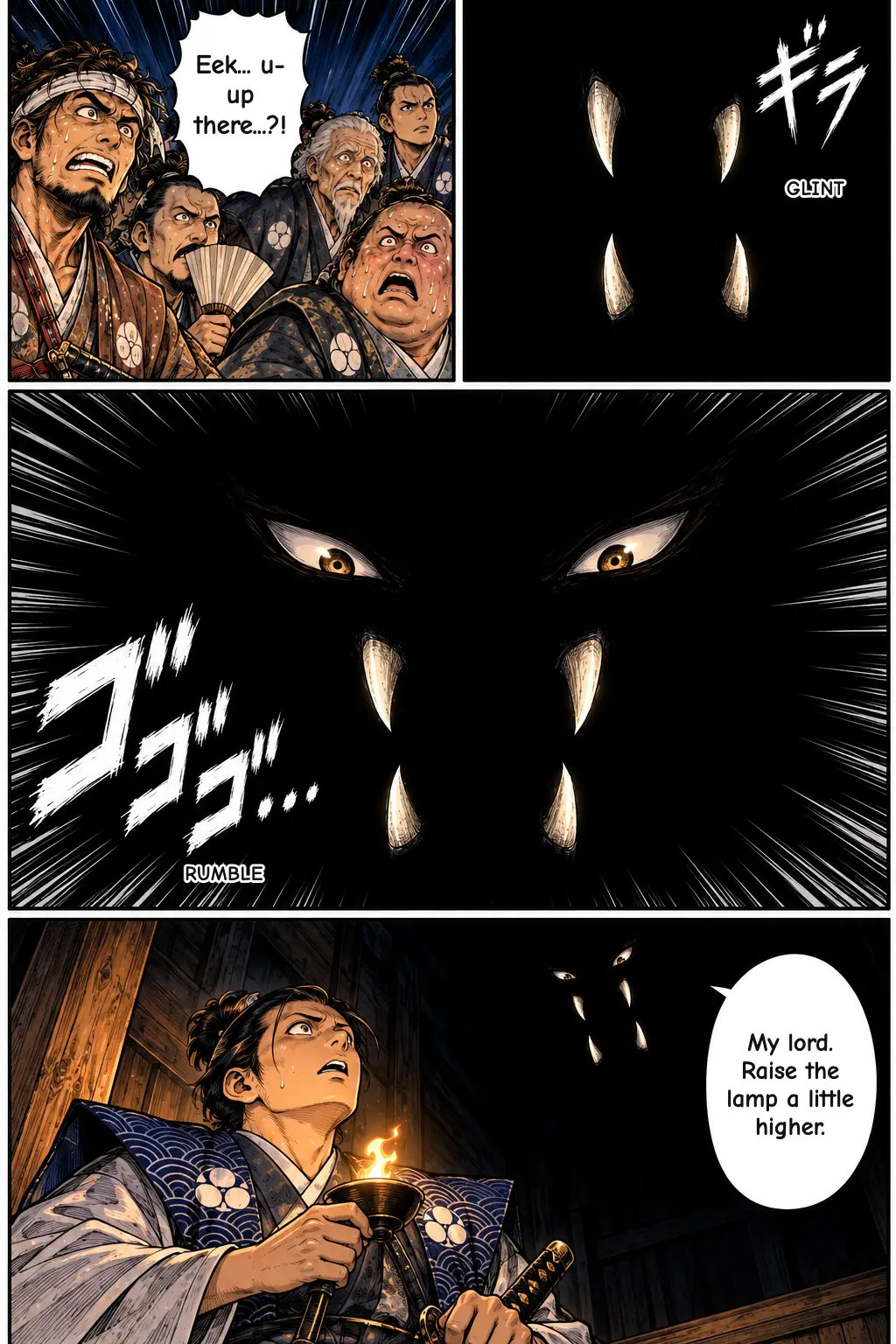
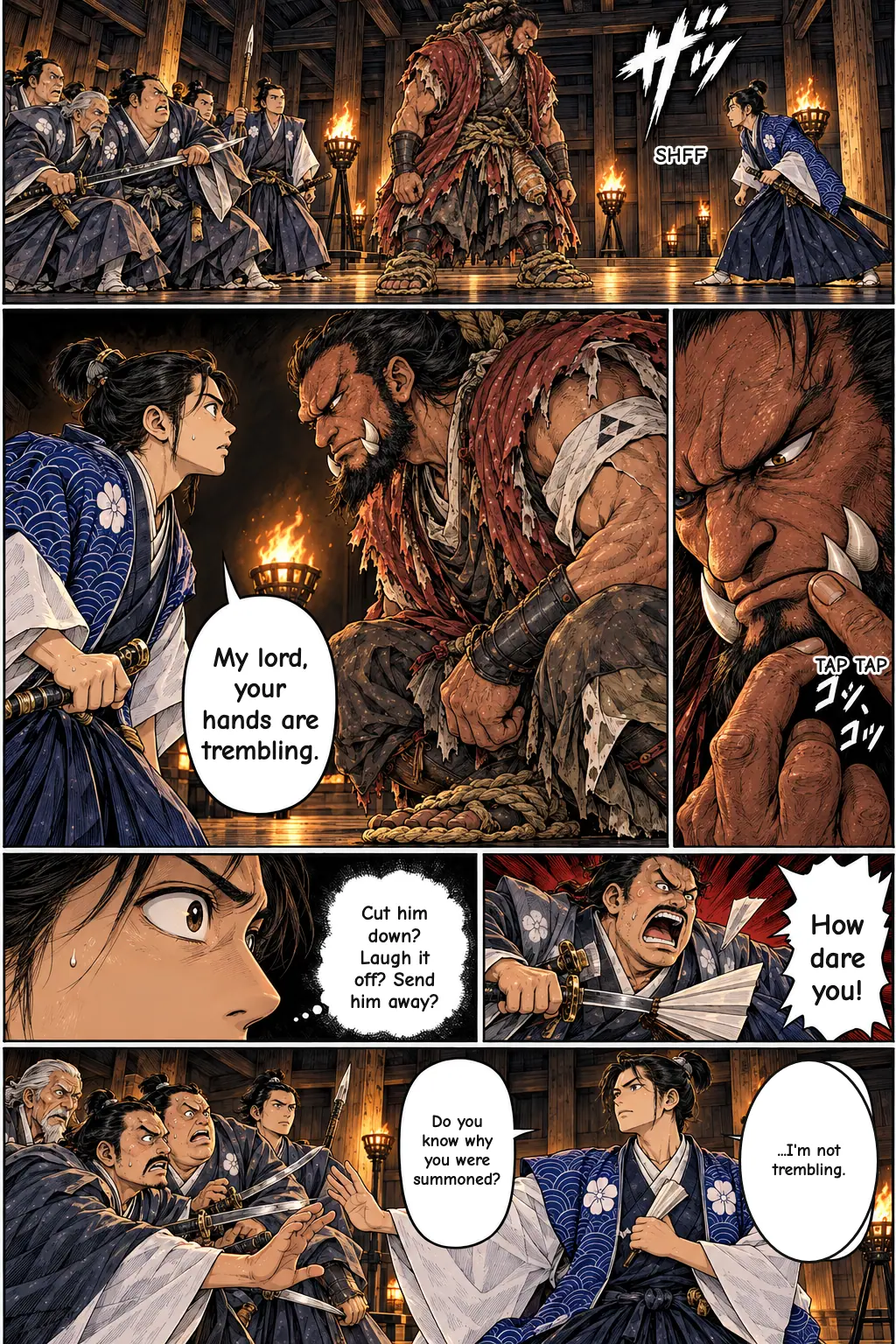
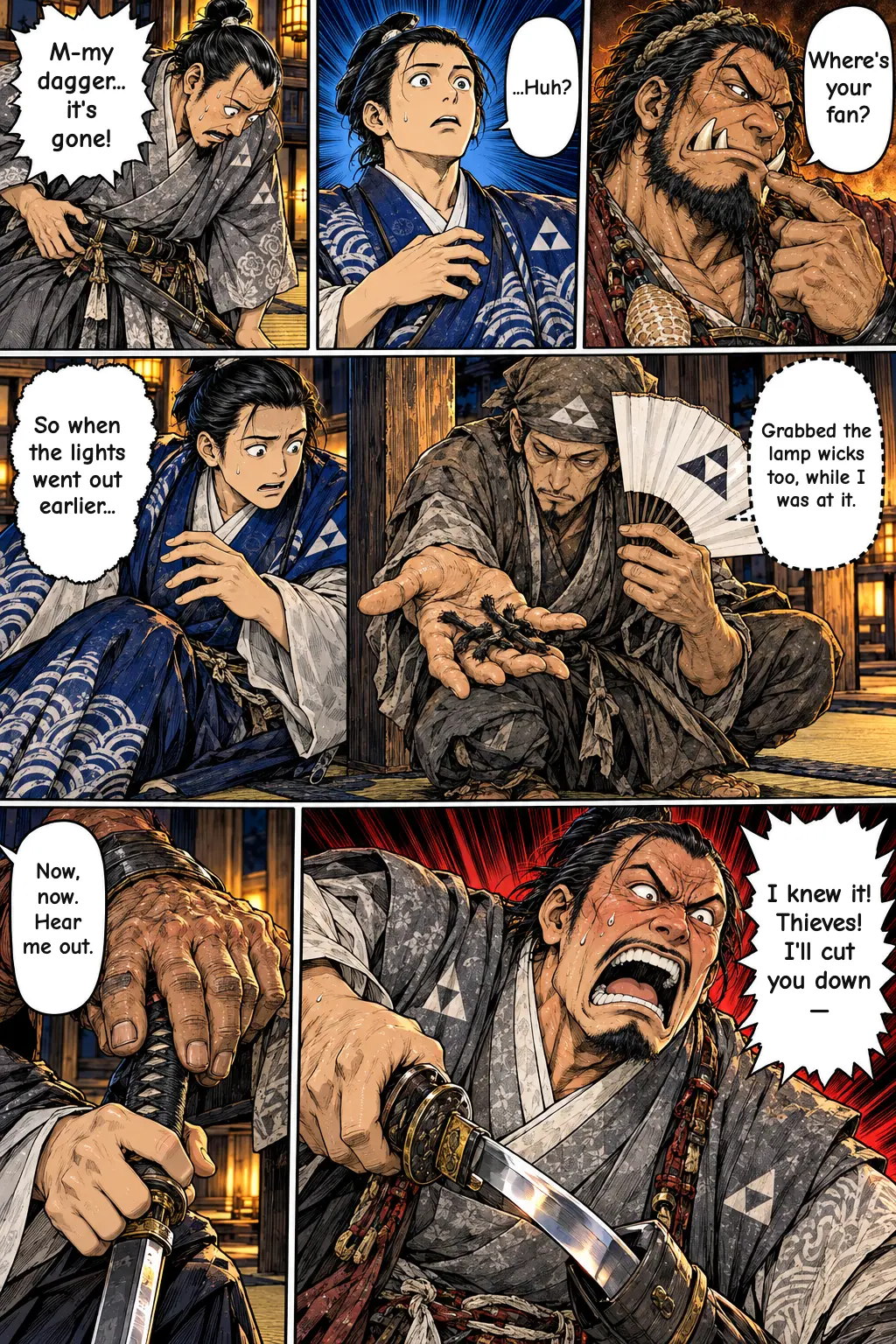
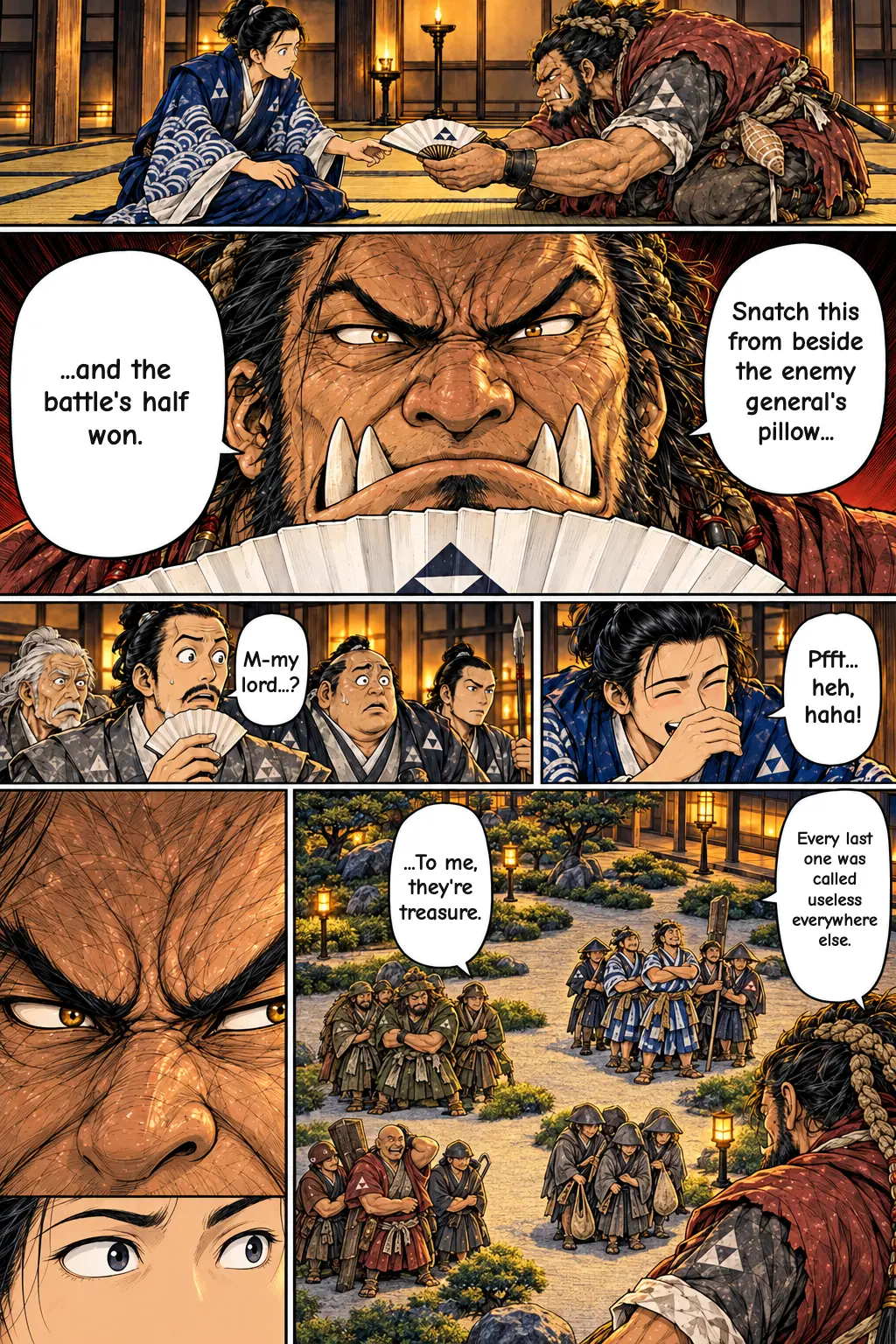
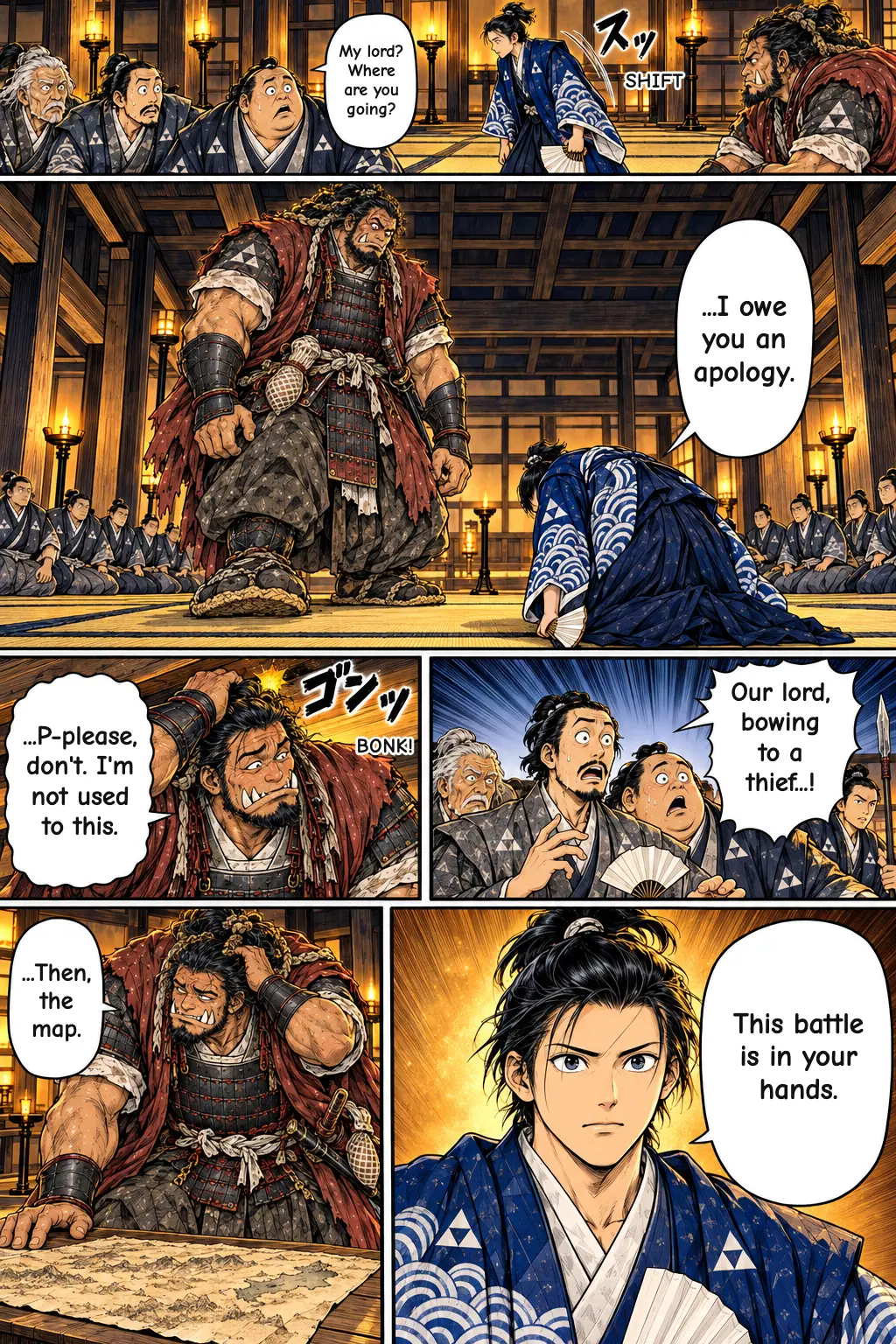
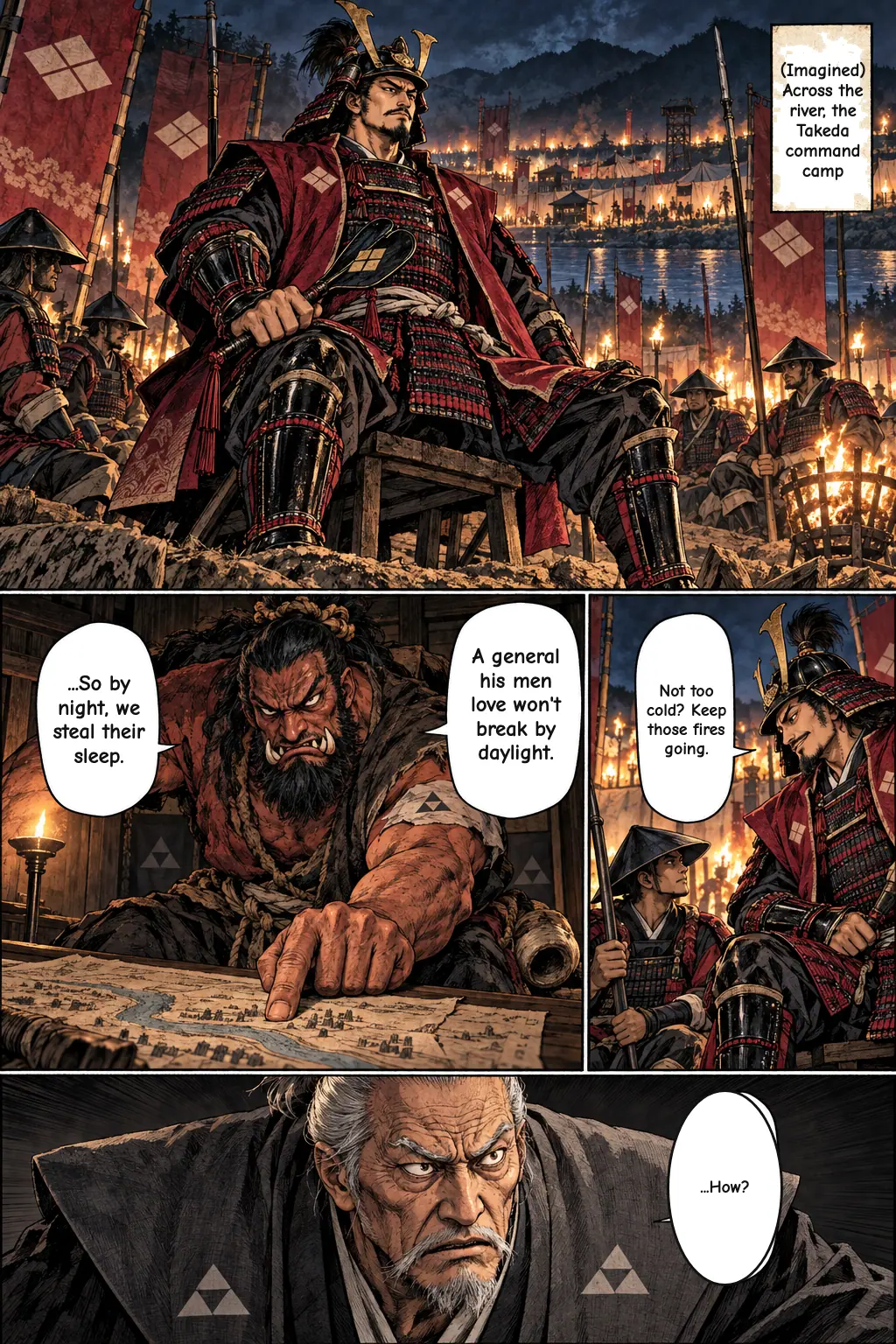
With the vast Takeda army camped across the river and a decision due by dawn, young commander Hojo Ujinao summons the Fuma, men his retainers sneer at as common thieves. Out of the dark steps a man over seven feet tall, with four fangs and a voice said to carry for miles.
Bookmark the series page so you can jump back in when the next episode is out: NINJARSS for this series
Get new episodes in your feed. Follow us on:ThreadsBluesky
Story summary
The tale comes from the Hojo Godaiki ("Chronicle of Five Generations of the Hojo"), written by Miura Joshin, a samurai who had once served the Hojo. He seems to have written it near the end of the Keicho era (about 1610s), and it was printed during the Kan'ei era (1624–1644). One chapter is about the rappa of the Kanto region. Rappa was a word used in eastern Japan for the kind of hired spies and raiders we would now call ninja. According to the chronicle, while Hojo Ujinao led the clan, the Hojo paid and fed 200 rappa.
Fuma Kotaro: The Seven-Foot Ninja of the Hojo Clan, Story & Origins Explained
In short: Fuma Kotaro is the legendary leader of the Fuma, a band of 200 rappa (spies and raiders) who served the Hojo clan of Sagami. The Hojo Godaiki, an early 17th-century chronicle by Miura Joshin, describes him as a fanged giant over seven feet tall. It says his men slipped into the Takeda camp at the Kise River night after night, and the chaos they caused was so bad that the Takeda soldiers ended up fighting each other.
The Original Story: Fuma and the Rappa of the Hojo
The tale comes from the Hojo Godaiki ("Chronicle of Five Generations of the Hojo"), written by Miura Joshin, a samurai who had once served the Hojo. He seems to have written it near the end of the Keicho era (about 1610s), and it was printed during the Kan'ei era (1624–1644). One chapter is about the rappa of the Kanto region. Rappa was a word used in eastern Japan for the kind of hired spies and raiders we would now call ninja.
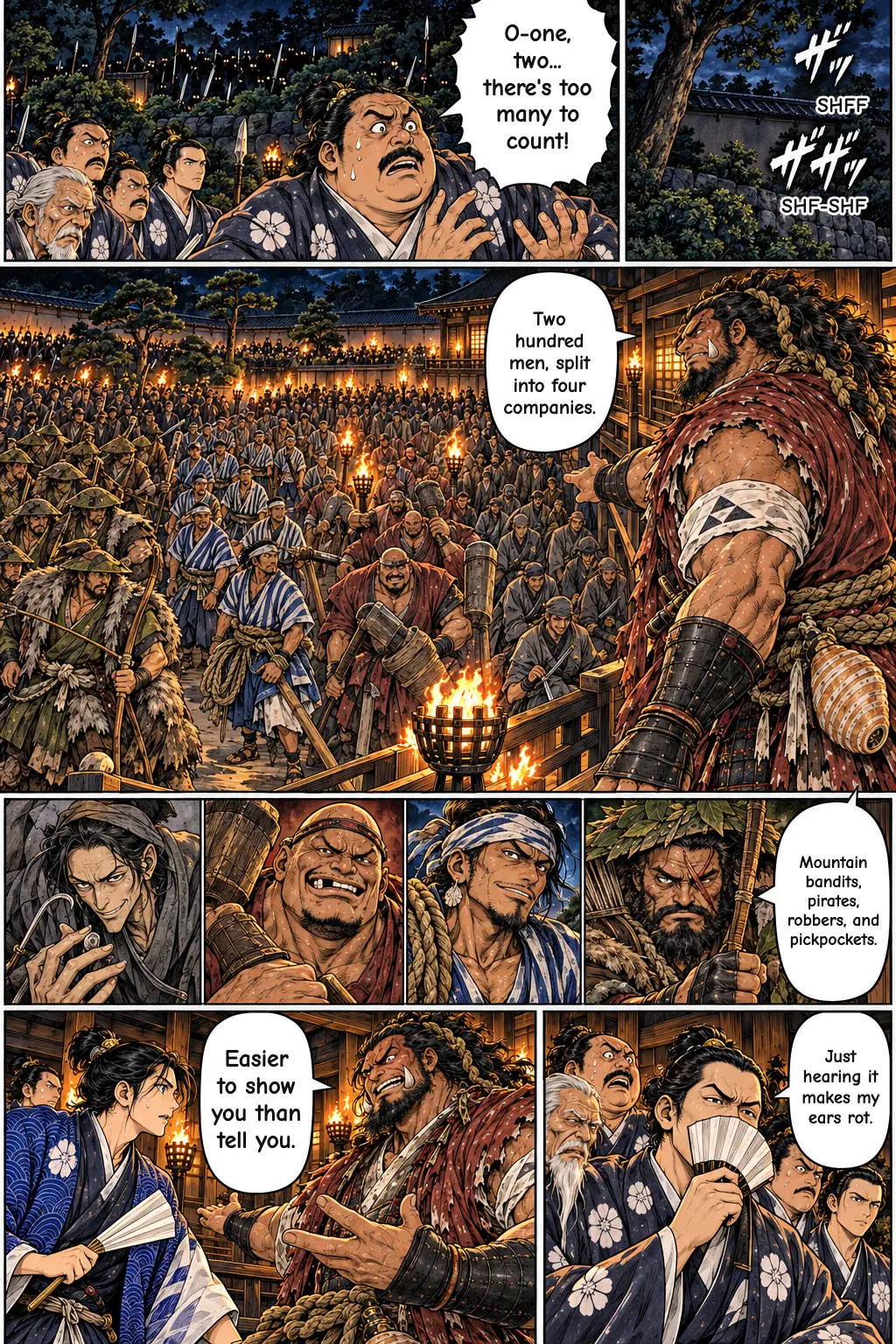
According to the chronicle, while Hojo Ujinao led the clan, the Hojo paid and fed 200 rappa. Joshin explains that they were thieves, but thieves with real cunning and a gift for strategy. Their leader was a man called Fuma. The 200 were split into four groups: mountain bandits, sea pirates, robbers, and sneak thieves.
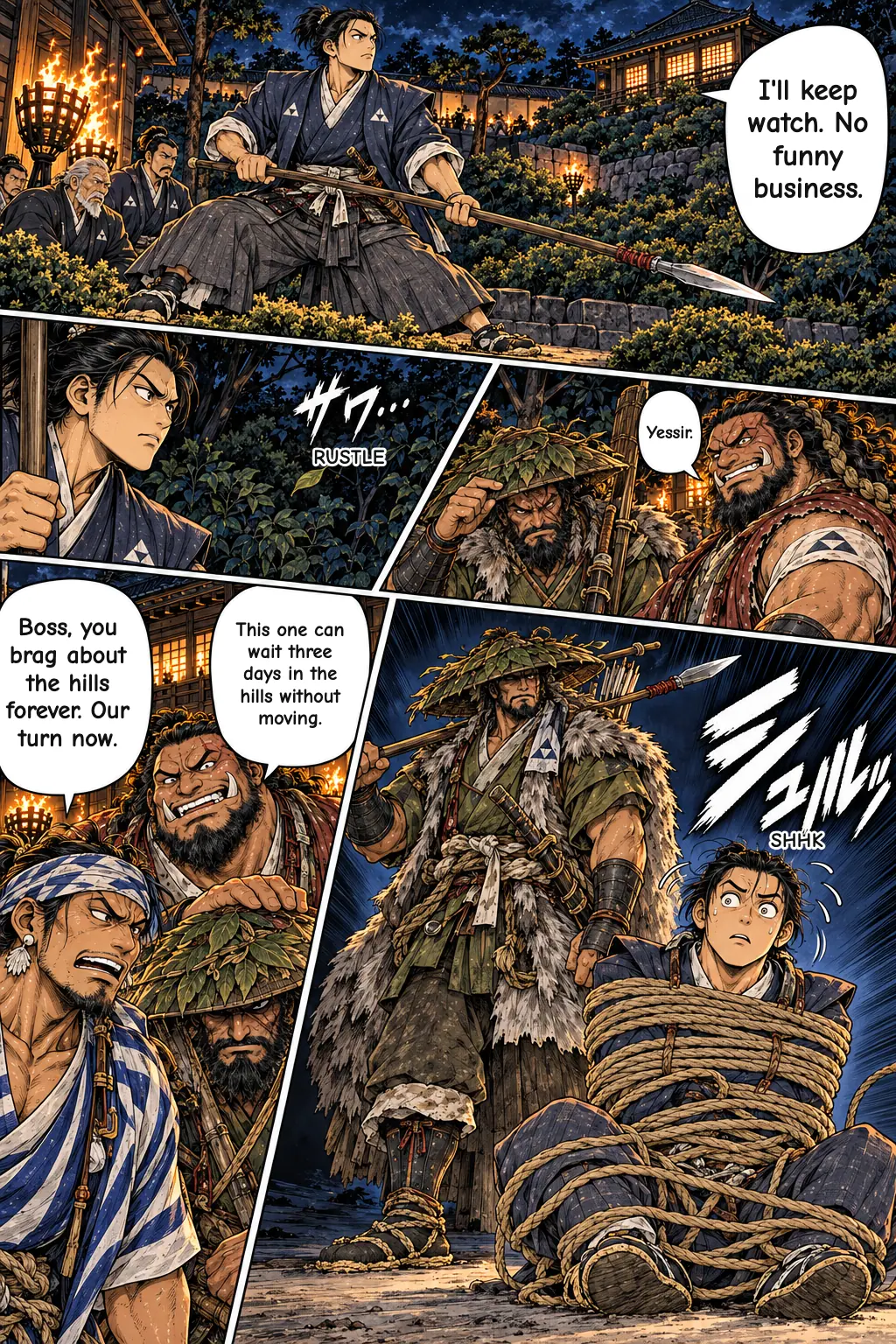
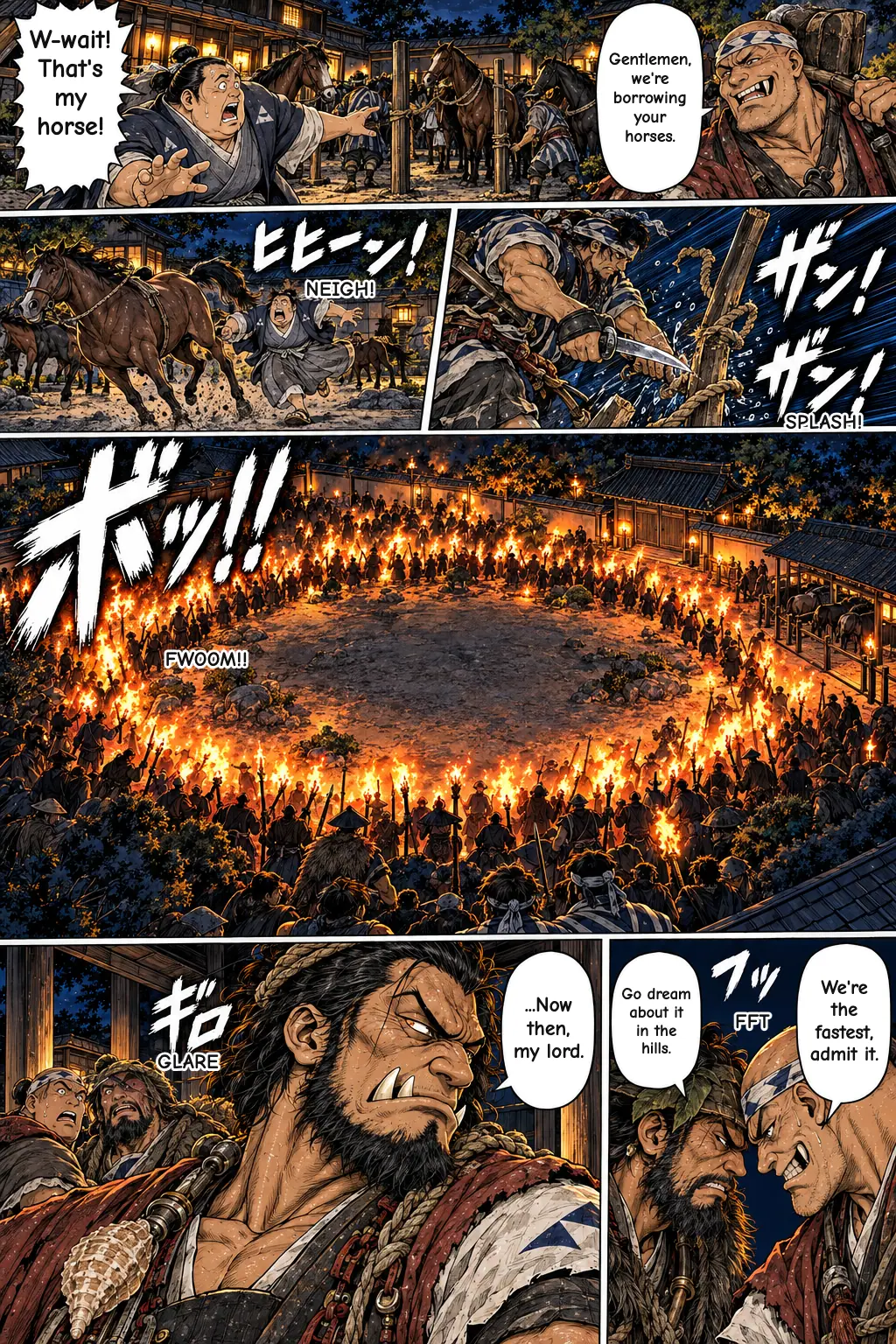
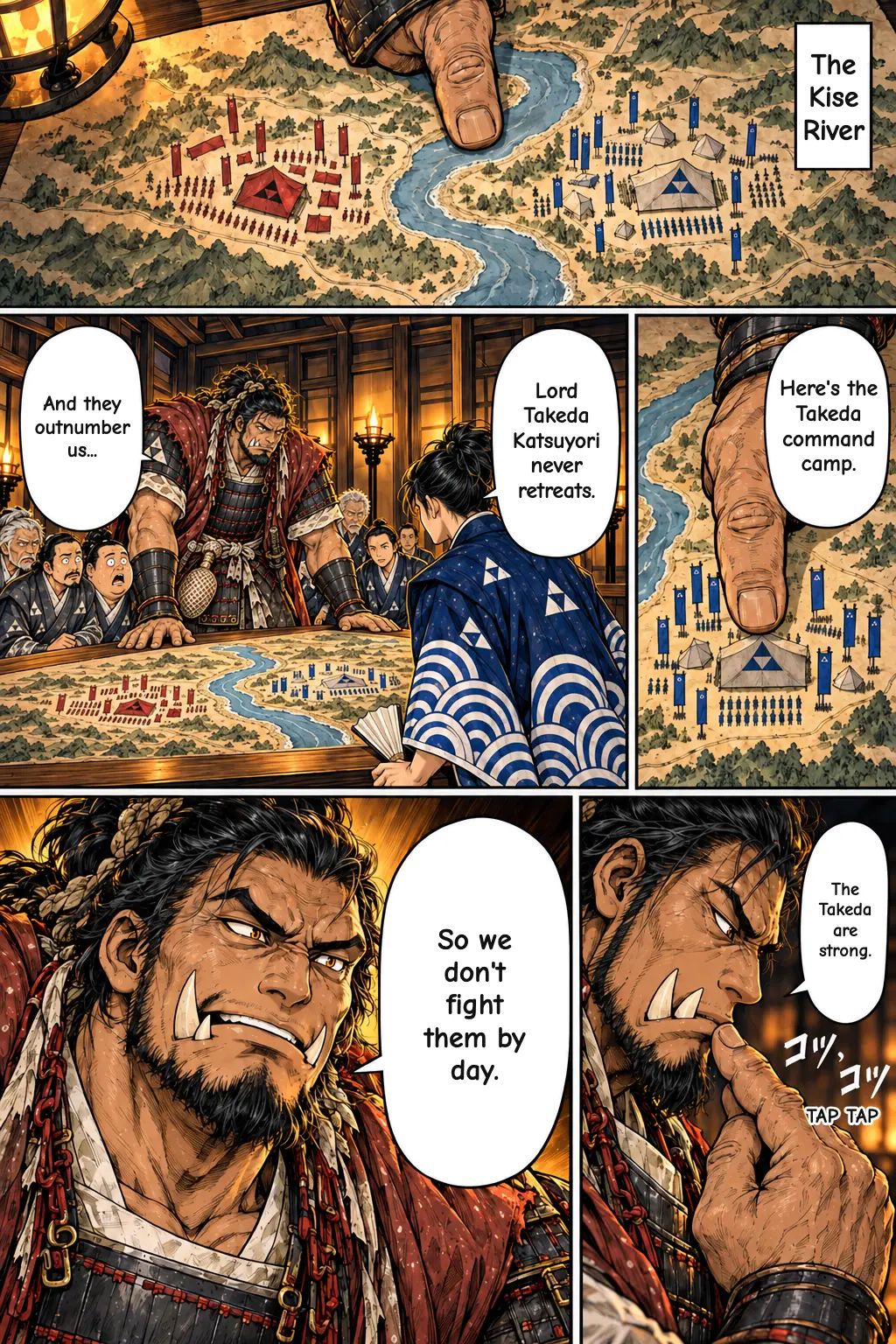
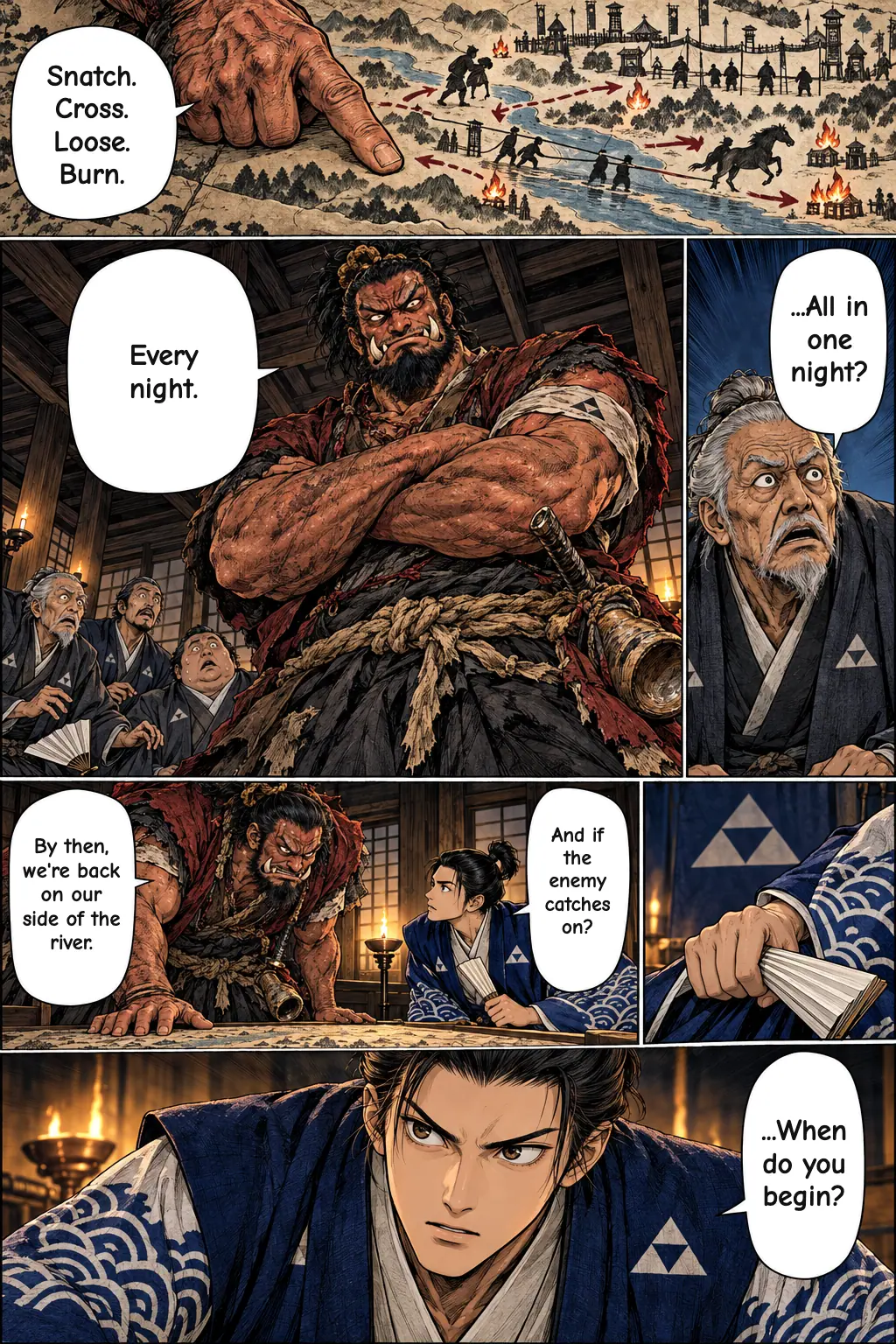
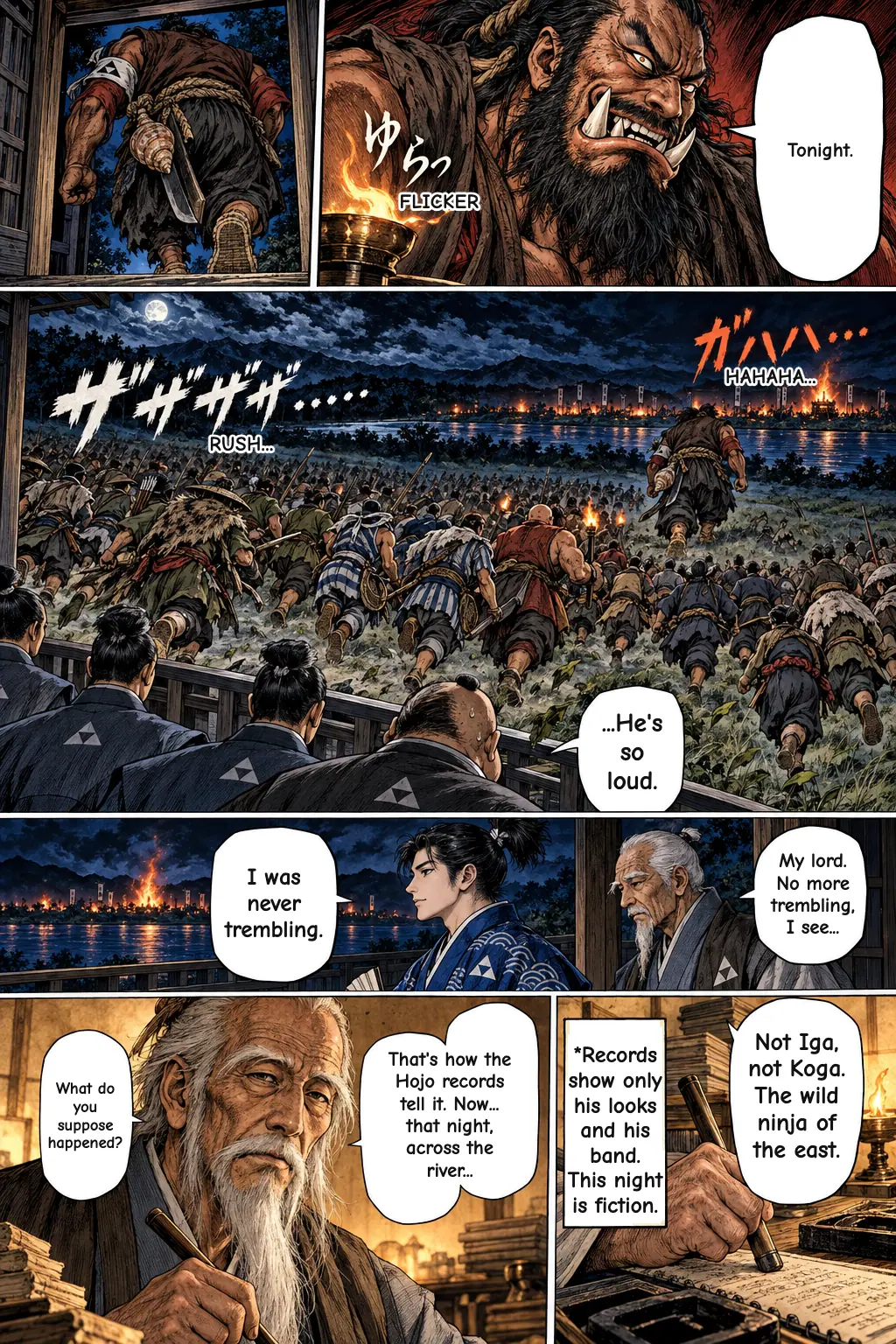
Around Tensho 9 (roughly 1581), Ujinao's army faced Takeda Katsuyori's forces across the Kise River, on the border between Izu and Suruga provinces. The chronicle says Fuma's rappa got into the Takeda camp every night. They took prisoners alive, cut the ropes holding the horses and set them loose, and started fires. The Takeda troops panicked in the dark, and some of them even attacked their own comrades. Some versions add that on the way back, the rappa used a signal to stand up and sit down all together, which let them spot any enemy who had blended in with them. Joshin ends the chapter by praising how clever the rappa were.
The Giant With Fangs: How the Source Describes Fuma
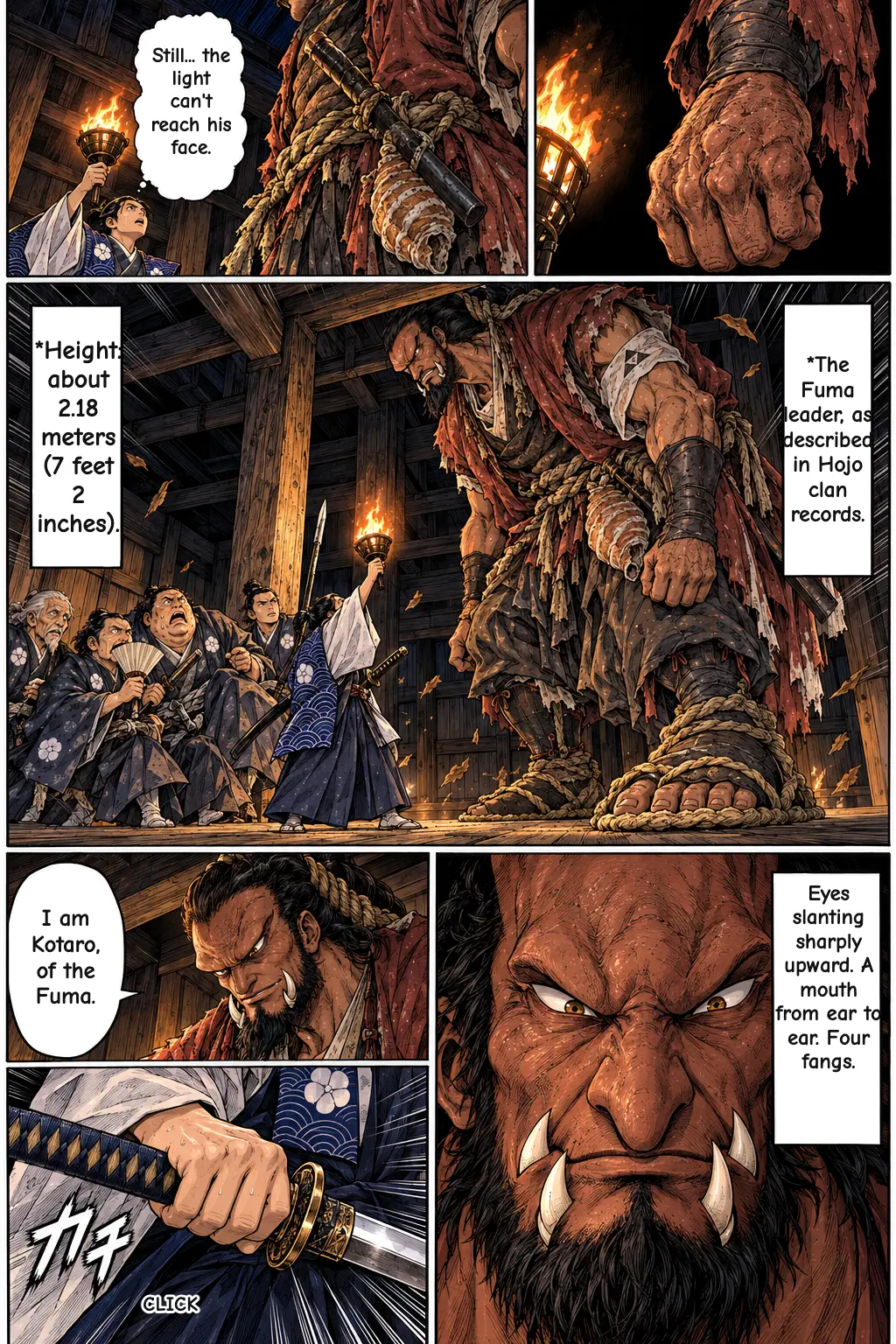
Fuma's description is the most famous part of the chapter, and it reads more like a demon than a man. He stood seven shaku and two sun tall, about 2.18 meters or a little over seven feet. His arms and legs were thick with muscle and covered in lumps. His eyes slanted upward, he had a black beard, and his mouth was split wide to both sides, with four fangs sticking out. His head looked like that of Fukurokuju, a god of luck known for his very tall, long head, and his nose was high.
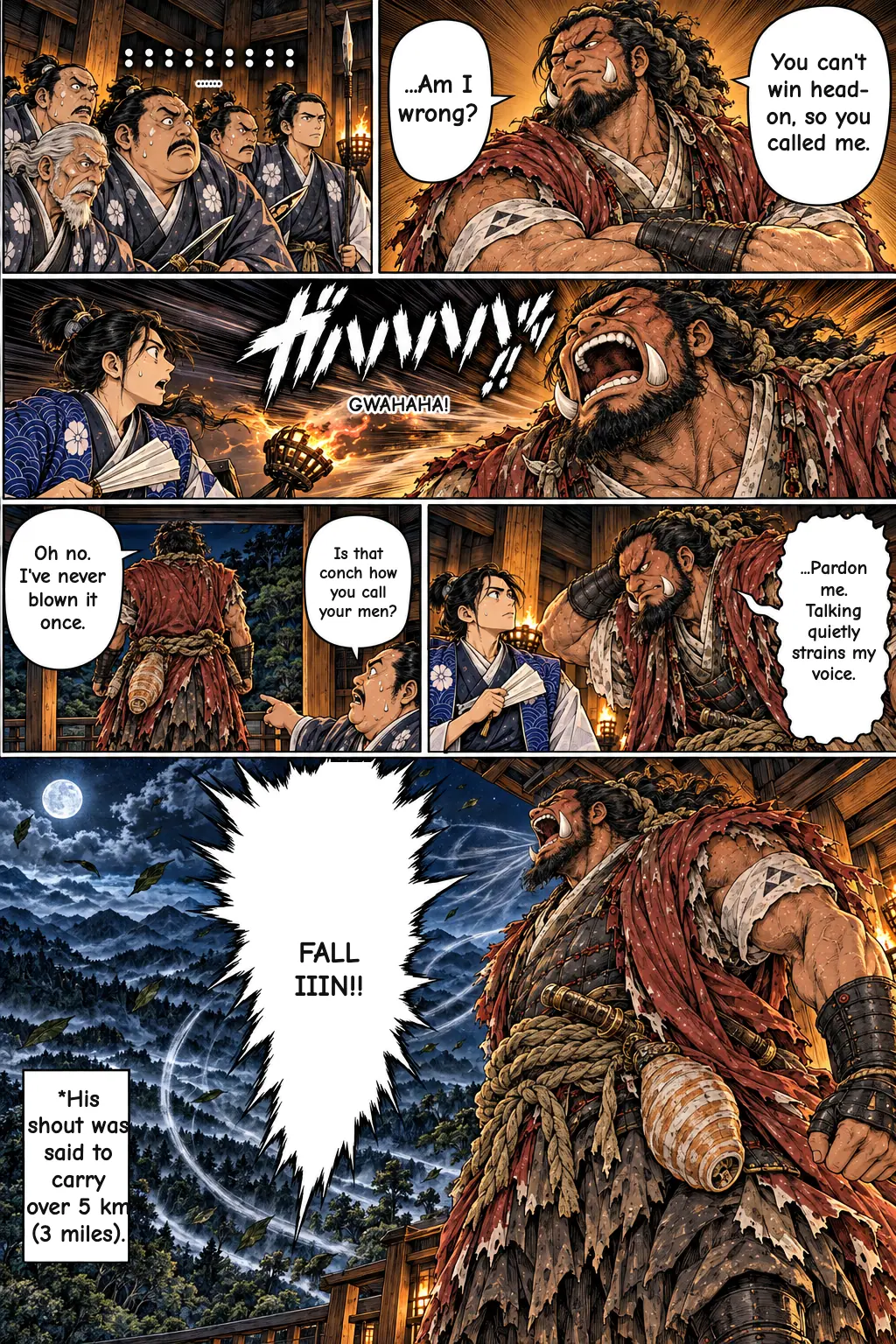
His voice was just as strange. When he shouted, it carried fifty cho, more than five kilometers (over three miles). When he spoke quietly, it came out hoarse and muddy.
Whether he was really called "Kotaro" is less clear. The chronicle mostly calls him just "Fuma," and "Fuma Kotaro" may be a name that spread in later tradition. Some accounts also say that after the Hojo fell, leftover Fuma men turned to banditry near Edo and were caught and executed in the Keicho era. That story may come from another part of the book or from later legend.
Historical and Cultural Background
The Hojo of Odawara (often called the Later Hojo) were one of the great warlord families of the Sengoku, or "Warring States," period. Ujinao was the clan's fifth and last head. The clan fell to Toyotomi Hideyoshi in 1590, so the Hojo Godaiki looks back at a world its author had watched vanish. Takeda Katsuyori was the son of the famous general Takeda Shingen, and his clan was destroyed in 1582.
The chapter shows how Sengoku lords really fought. Besides armies of samurai, they relied on irregular fighters taken from the edges of society: bandits, pirates, and thieves who knew how to move unseen. Joshin's monstrous picture of Fuma is part fact and part legend. It reflects how frightening these shadowy men seemed to ordinary people, and it helped turn the Fuma into one of Japan's best-known ninja groups, next to those of Iga and Koga.
What the Manga Changes
The chronicle never shows Ujinao meeting Fuma face to face. In Episode 3, the young commander calls for the Fuma on the night before a decision due at dawn. His retainers sneer at them as common thieves. Then the seven-foot giant steps out of the dark. This scene was invented to lead into Episode 4.
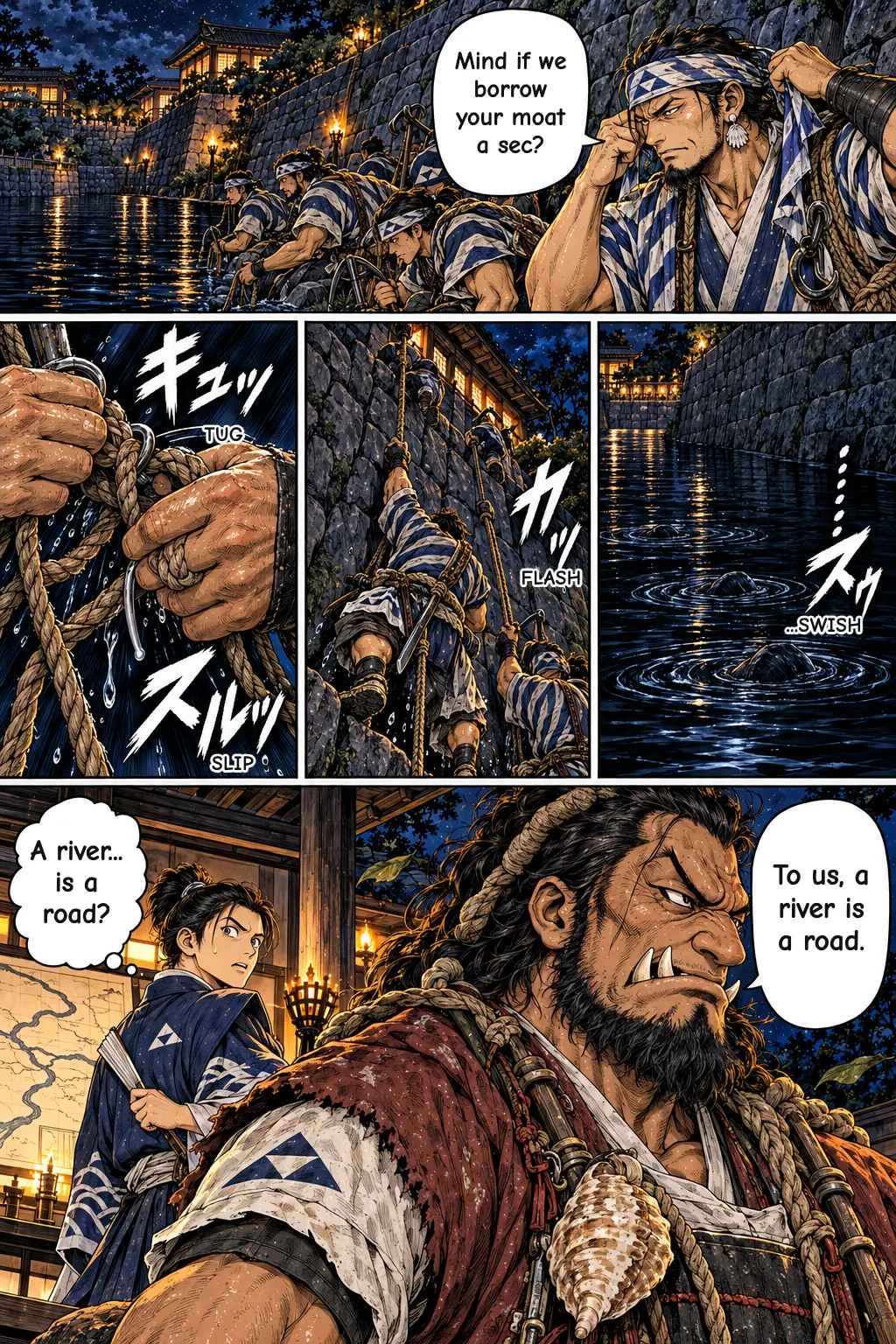
The source only lists the names of the four groups. The manga shows each group's special skills, and it gives individual rappa their own names, faces, and personalities, none of which appear in the original. Fuma's way of speaking, his banter with Ujinao, the night scenes at the Kise River, and the way the manga shows off his huge voice are also creative additions. The plan against the Takeda army stays inside what the chronicle records: night raids, taking prisoners, freeing horses, and setting fires.
Where to Read It
If you want to see Fuma's fangs, his voice, and his 200 thieves come to life, Episode 3 of NINJA: Shadows of the Warring States is right here on Manga Portal. Every episode is free to read, and you don't need an account. Start with this episode, or go back to Episode 1 and follow the shadow war from the beginning.
Characters in this episode
Fuma (Fuma Kotaro)
Leader of the Hojo clan's 200 rappa, described in the Hojo Godaiki as a fanged giant over seven feet tall whose shout carried more than five kilometers.
Hojo Ujinao
Fifth and last head of the Hojo clan of Odawara, who kept the rappa in his pay and faced the Takeda at the Kise River.
Takeda Katsuyori
Head of the Takeda clan of Kai and son of Takeda Shingen, whose camp was thrown into chaos by the Fuma's night raids.
The 200 Rappa
Fuma's band of clever thieves, split into four groups (mountain bandits, pirates, robbers, and sneak thieves), who raided the enemy at night.
Miura Joshin
Former Hojo retainer and author of the Hojo Godaiki, the chronicle that records the Fuma legend.
FAQ
Who was Fuma Kotaro?
Fuma Kotaro is the legendary leader of the Fuma, a group of rappa (ninja-like spies and raiders) who served the Hojo clan in the Sengoku period. The main early source, the Hojo Godaiki, mostly calls him just "Fuma." The name "Kotaro" may come from later tradition.
Was Fuma Kotaro really over seven feet tall?
The Hojo Godaiki gives his height as seven shaku two sun, about 2.18 meters, and also describes four fangs and a mouth split to both sides. These details are best read as legend mixed with history, not a reliable physical record.
What did the Fuma ninja do at the Kise River?
Around 1581, when the Hojo and Takeda armies faced each other across the Kise River, the Fuma slipped into the Takeda camp every night. They took prisoners, set horses loose, and started fires, and the confused Takeda soldiers even fought one another.
What is the difference between rappa and ninja?
Rappa was a word used mainly in eastern Japan for hired spies, raiders, and scouts, people we would now call ninja. The Hojo Godaiki describes them as thieves with sharp wits and a talent for strategy.
What happened to the Fuma after the Hojo clan fell?
After Toyotomi Hideyoshi defeated the Hojo in 1590, the Fuma lost their lord. According to one tradition, some of them became bandits near Edo and were caught and executed in the early 1600s, but this account is uncertain.