Episode 2The Gold Was Open. No One Was Watching.Seishin (Bansenshukai)
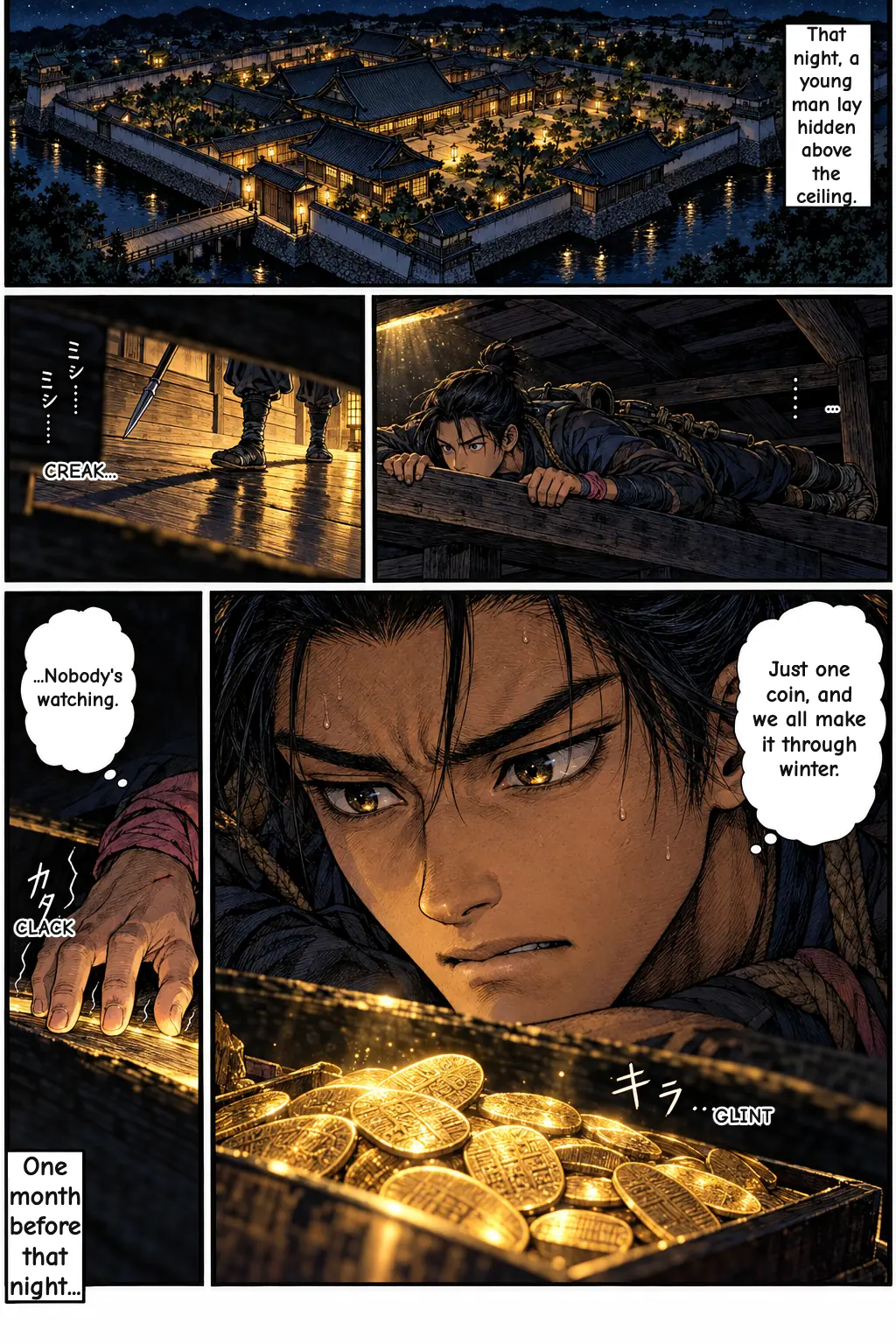
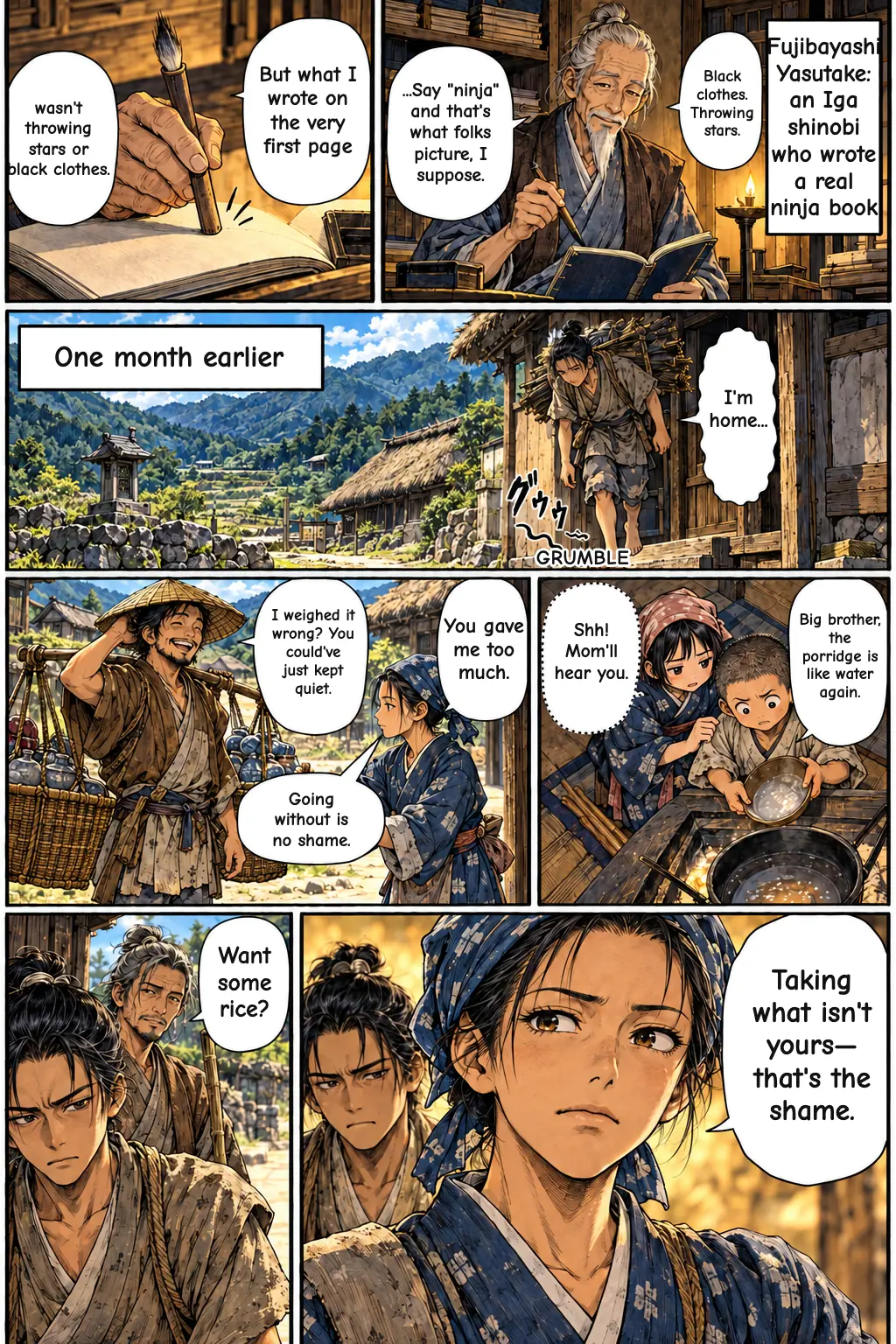
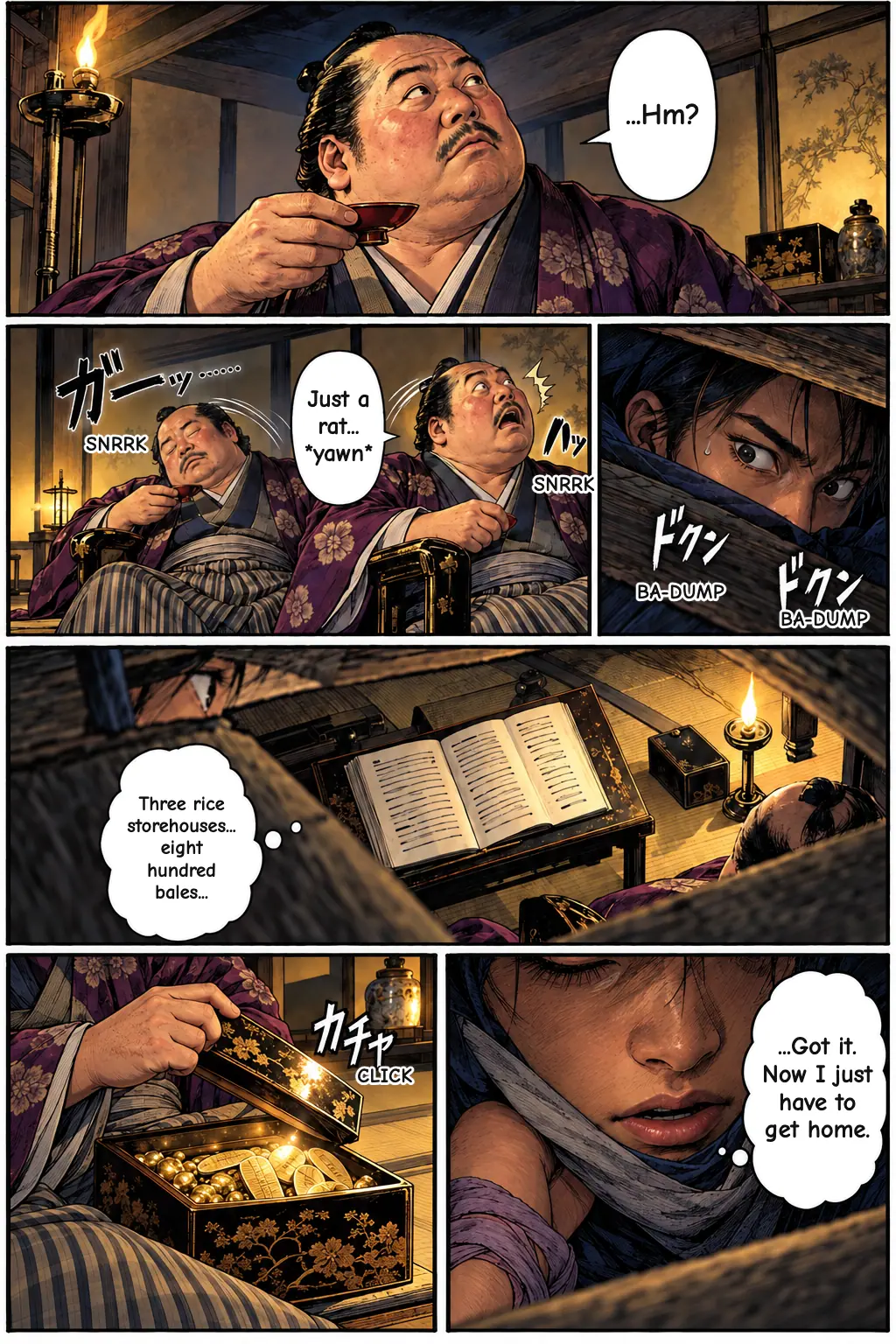
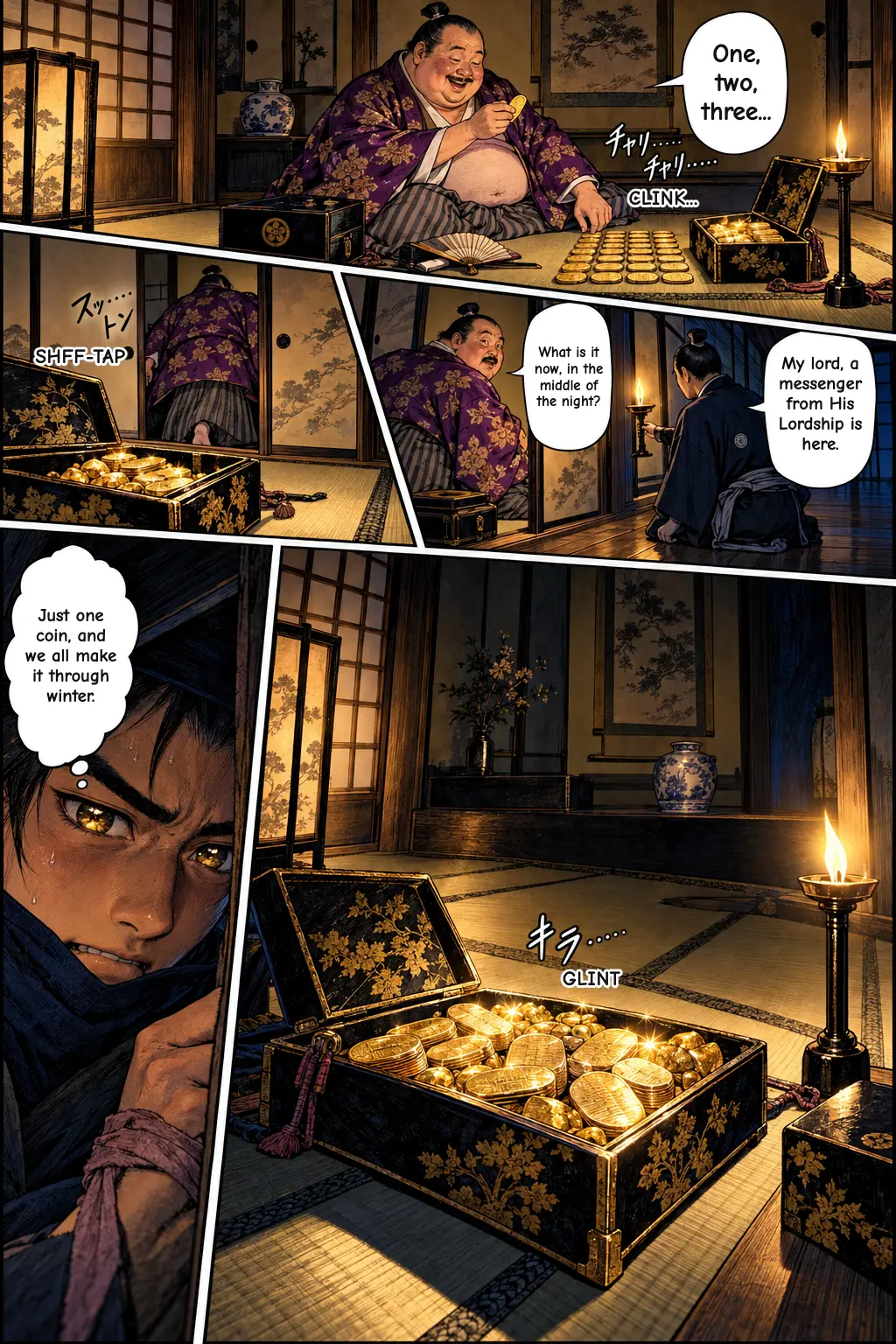
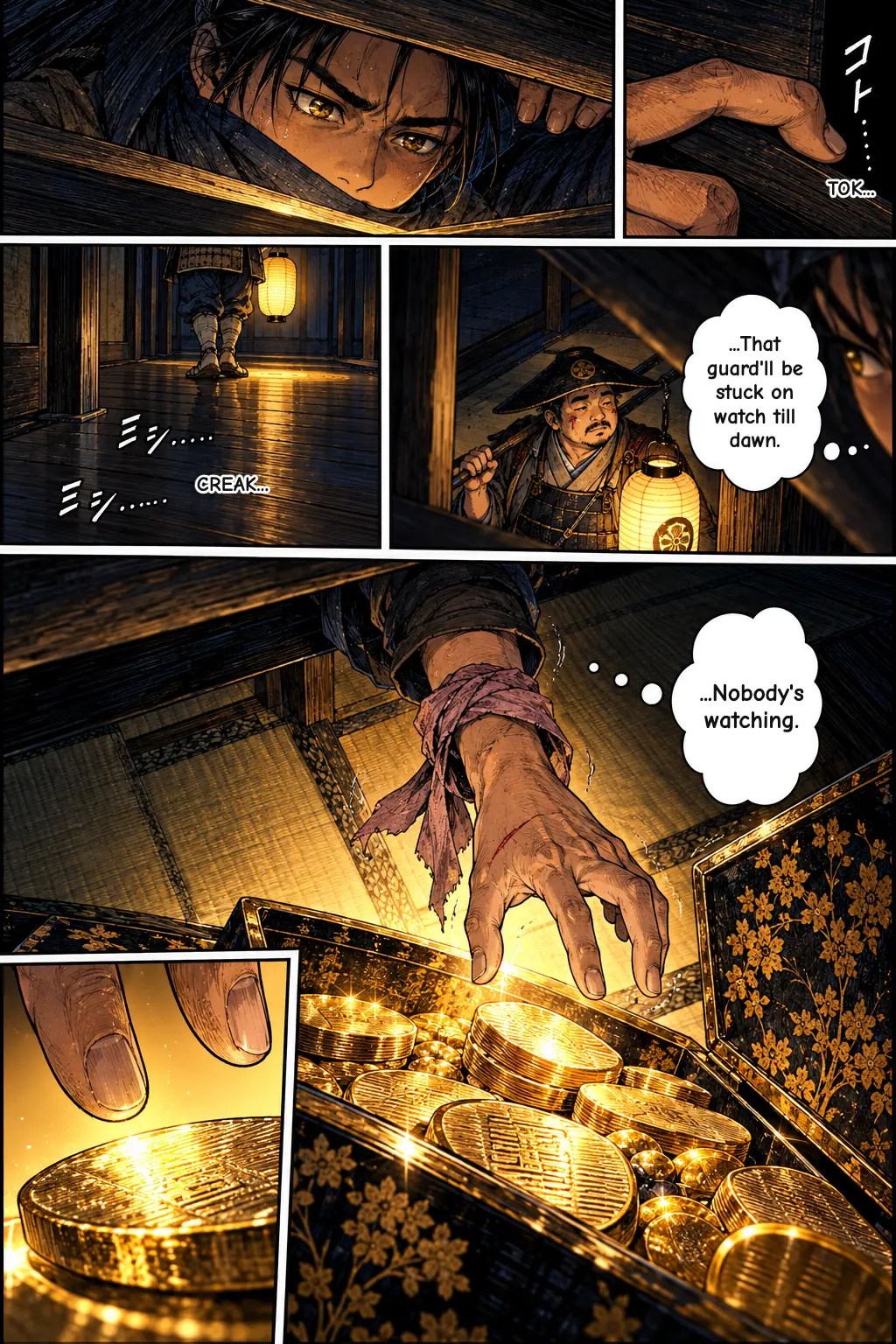
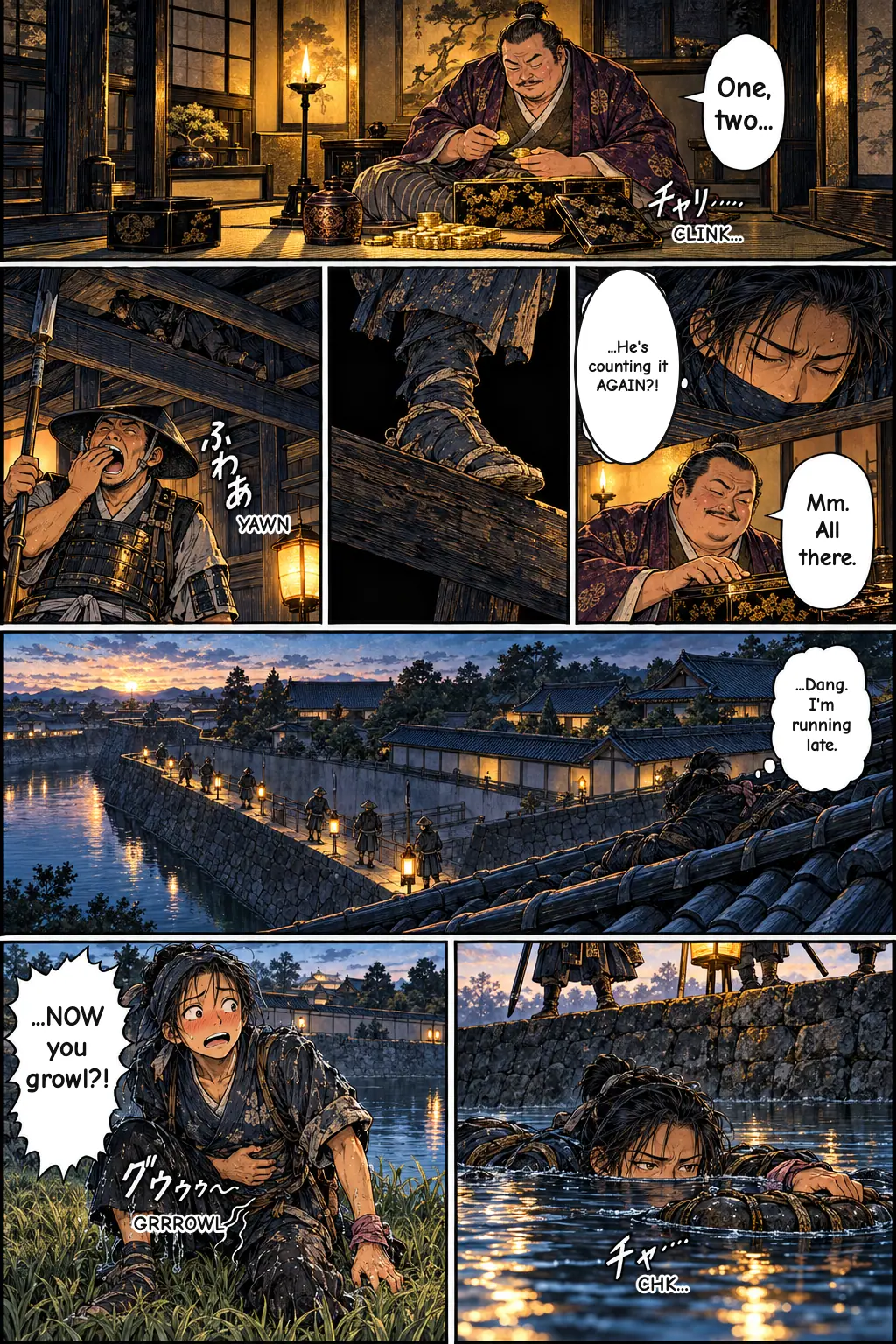
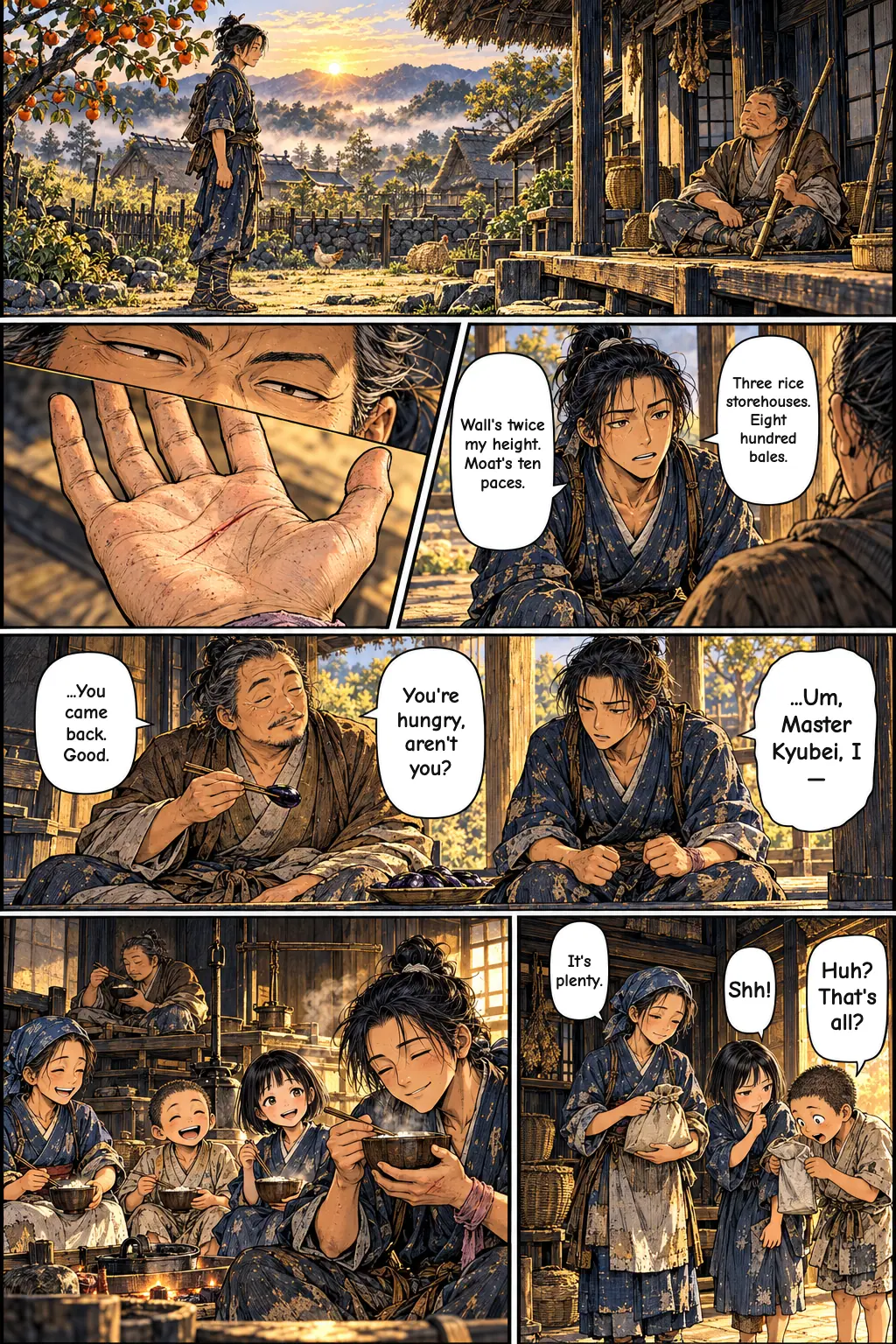
Yoichi, a young Iga shinobi, wants his family to make it through the winter. On the night of his first infiltration, he finds himself alone in an empty room with an open box of gold. This is a story about seishin, the "true heart," the rule a real ninja book put on its very first page.
Bookmark the series page so you can jump back in when the next episode is out: NINJARSS for this series
Get new episodes in your feed. Follow us on:ThreadsBluesky
Story summary
The Bansenshukai is one of the best-known ninja manuals from Japan. Its title can be read as "ten thousand rivers gathered into one sea." The idea is that the many separate streams of shinobi knowledge, especially those of Iga and Koga (two mountain regions near Kyoto famous for their ninja), are brought together in a single work. The preface is dated 1676, in the early Edo period, and names Fujibayashi Yasutake, a man of Iga, as the compiler. It is important to know what kind of book this is. The Bansenshukai is not a novel or a legend, and it has no plot or heroes.
Bansenshukai Explained: Seishin, the Ninja's True Heart (NINJA Ep. 2)
In short: The Bansenshukai is a Japanese ninja manual compiled by Fujibayashi Yasutake of Iga, with a preface dated 1676, that gathers the shinobi traditions of Iga and Koga into one book. Before it teaches a single trick, it lays down seishin, the "true heart": a ninja's skills rest on an upright mind, and without loyalty and righteousness they are no better than a thief's. Episode 2 of NINJA: Shadows of the Warring States turns that rule into a story about a young shinobi alone with an open box of gold.
What is the Bansenshukai?
The Bansenshukai is one of the best-known ninja manuals from Japan. Its title can be read as "ten thousand rivers gathered into one sea." The idea is that the many separate streams of shinobi knowledge, especially those of Iga and Koga (two mountain regions near Kyoto famous for their ninja), are brought together in a single work. The preface is dated 1676, in the early Edo period, and names Fujibayashi Yasutake, a man of Iga, as the compiler.
It is important to know what kind of book this is. The Bansenshukai is not a novel or a legend, and it has no plot or heroes. It is a reference work, more like a military handbook. It survives in several handwritten copies, and these differ in some details, so scholars do not always agree on exactly which material sits in which volume.
How the book is organized
After the preface and general notes, the first volume uses a question-and-answer format to explain why ninjutsu (the ninja's art) matters and where it fits within the wider art of war. Then comes Seishin, the "true heart" or "correct mind," usually placed in volumes two and three.
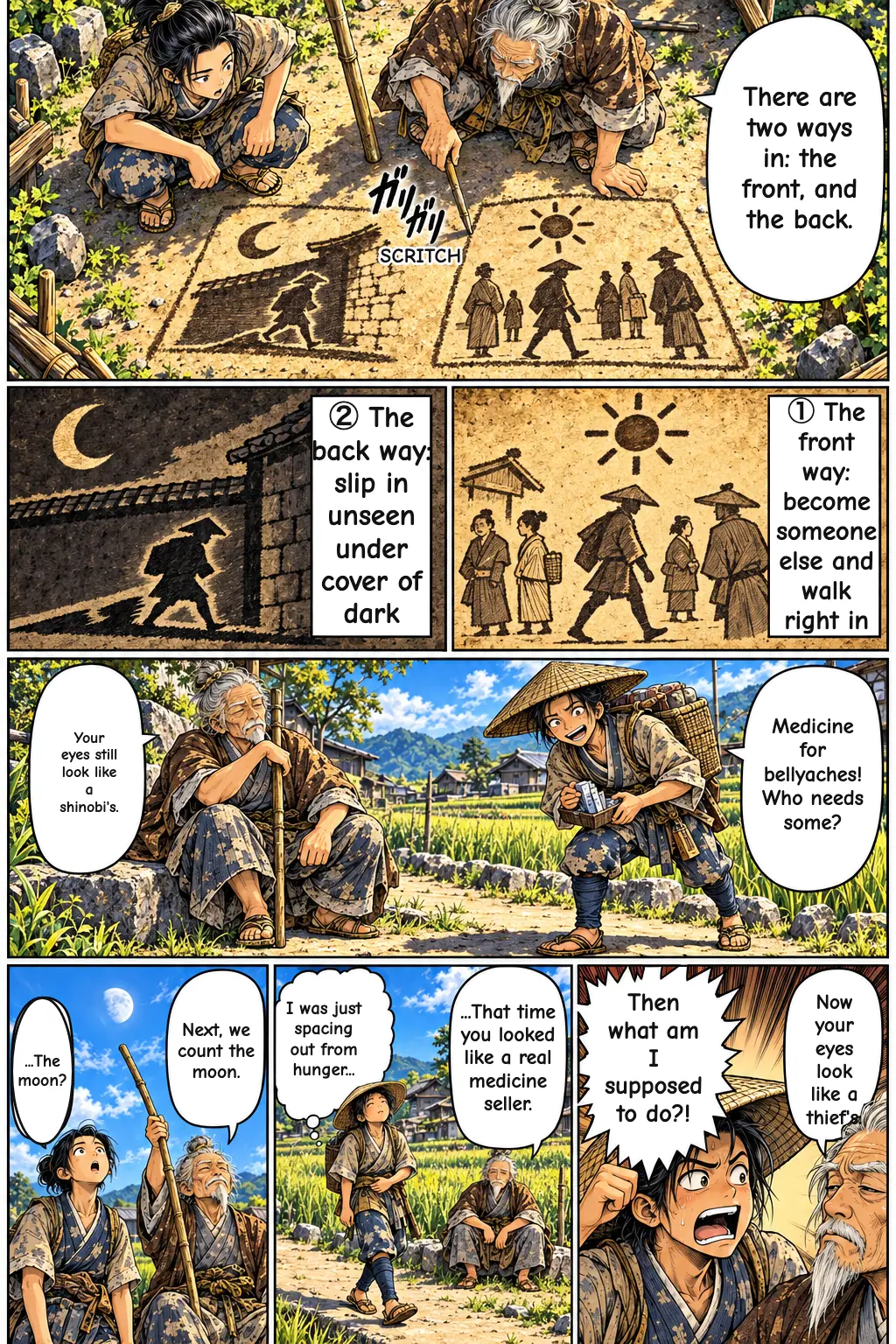
Next is Shochi, "what the general must know." These volumes advise a commander on how to use shinobi, how to set up passwords, signs and agreed signals, and how to guard against enemy spies. The core technical sections follow. Yonin, often called the "open" or "light" art, covers getting inside the enemy's side while staying in plain sight, using schemes, false identities, and agents placed in enemy territory long in advance. Innin, the "hidden" or "dark" art, covers slipping into castles, camps and houses unseen, for example by choosing the right moment, judging when guards are careless, and dealing with doors and locks.
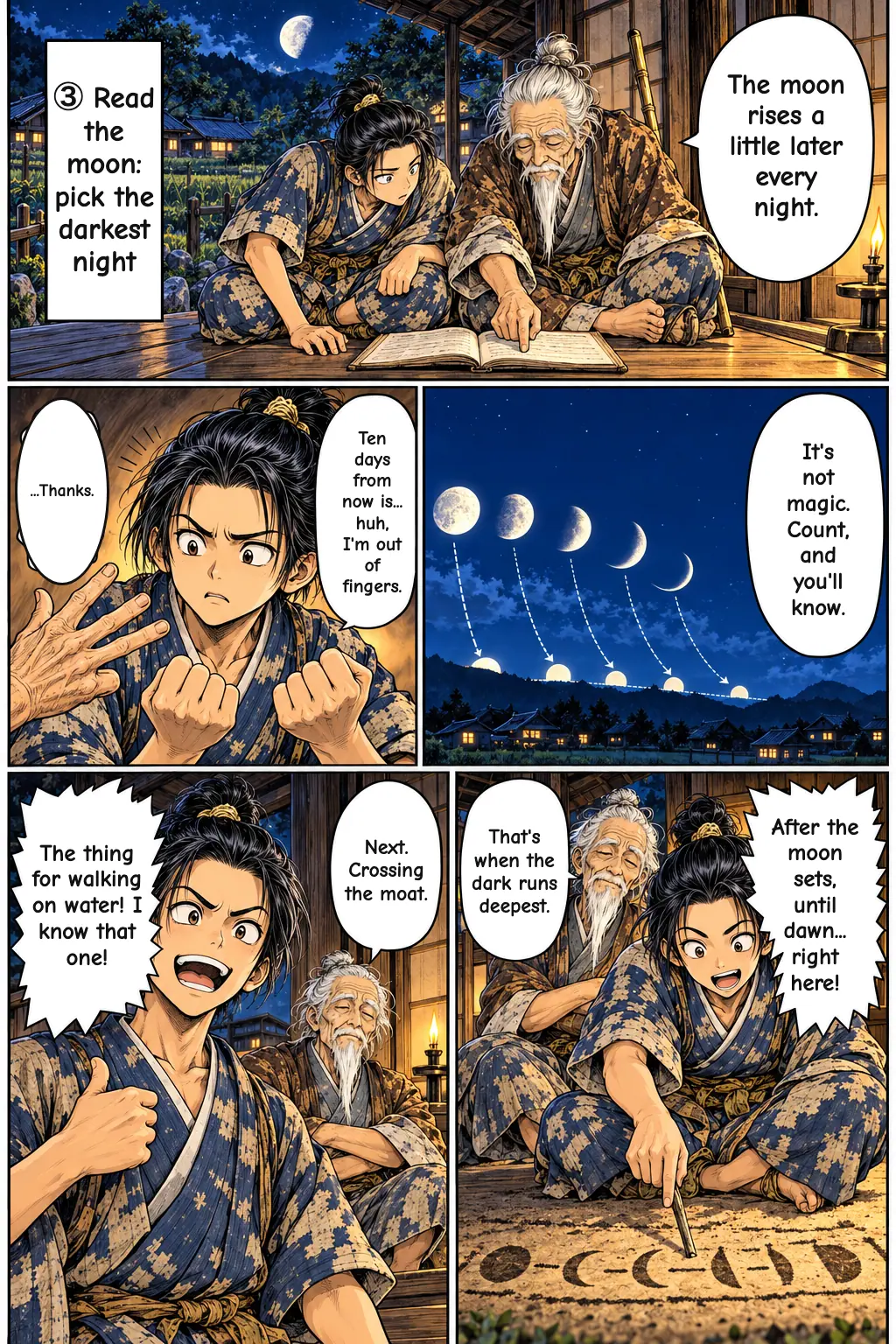
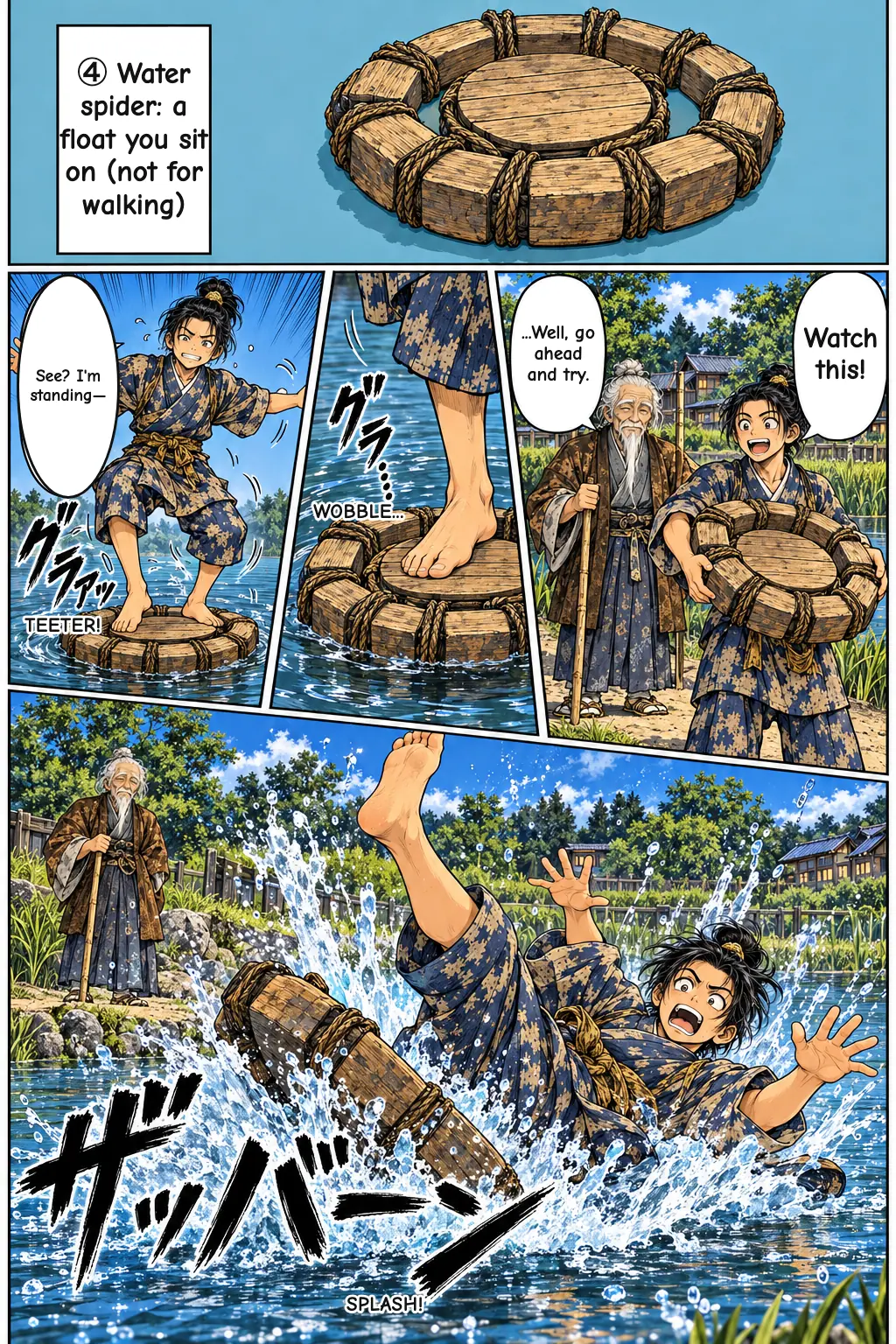
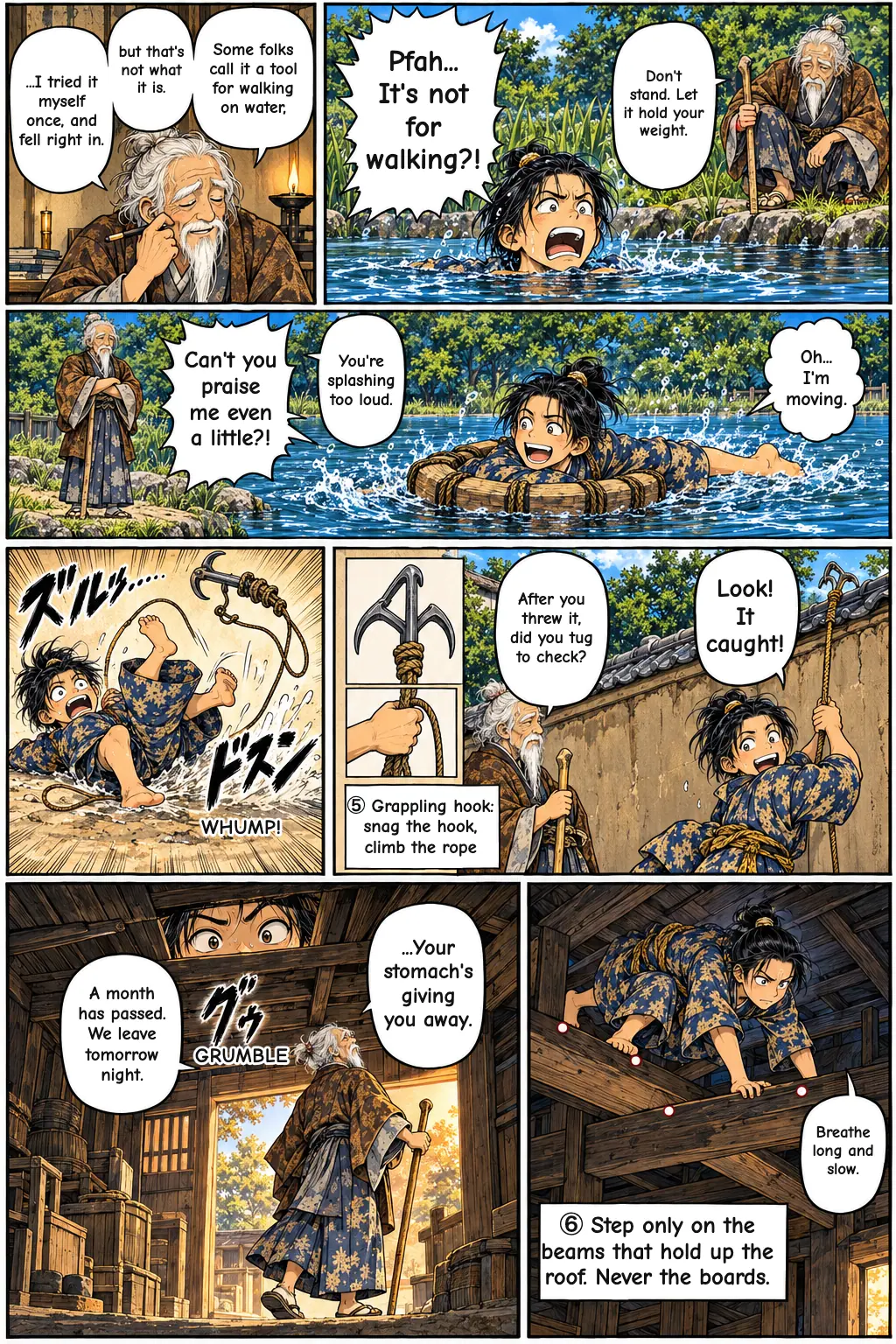
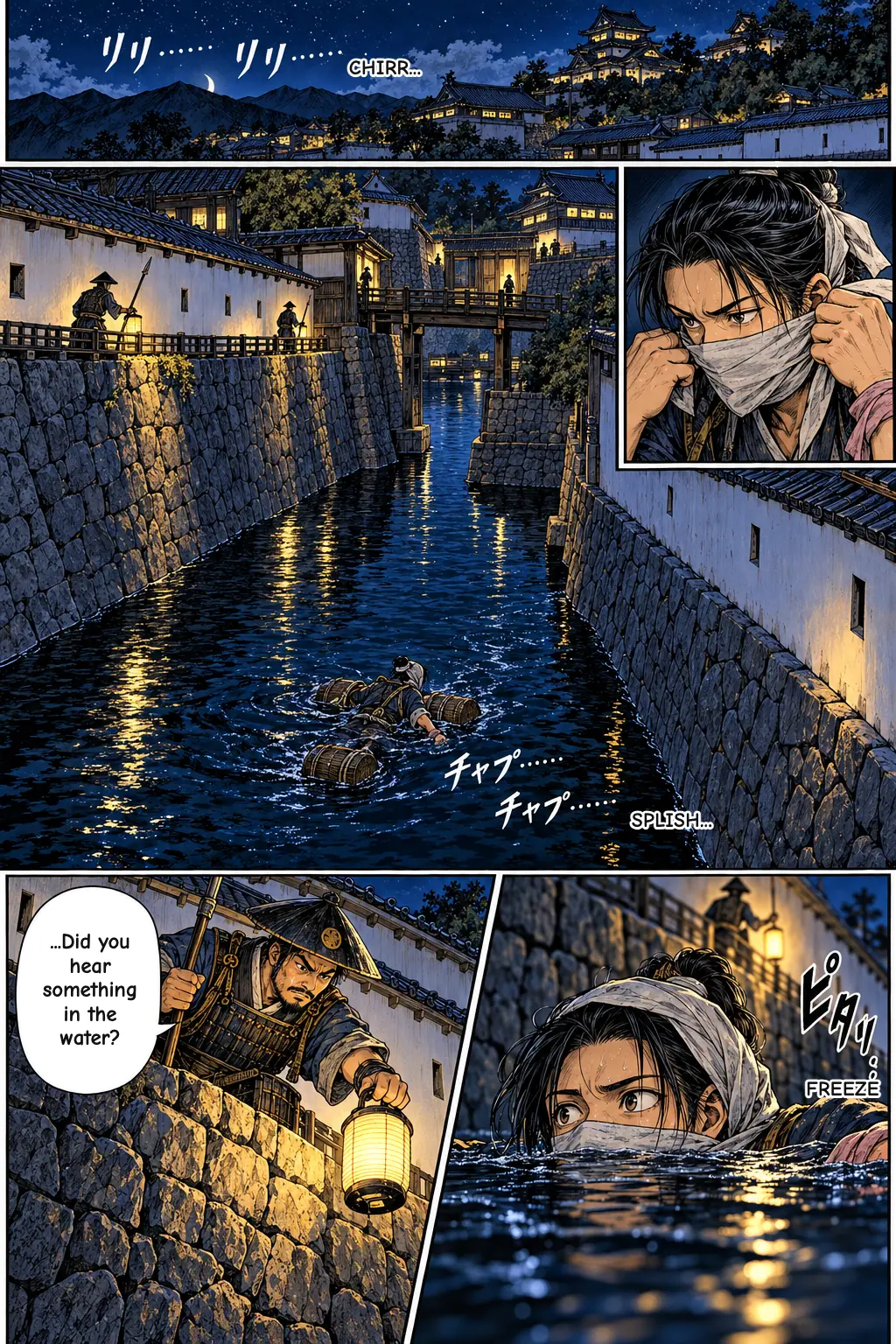
The book closes with Tenji, on choosing the time (the phases of the moon, the weather, the hour), and Ninki, on tools. The tools are grouped into climbing tools, water-crossing tools, opening tools for doors and locks, and fire tools, with drawings. One famous water tool, the mizugumo or "water spider," is often pictured as shoes for walking on water, but some researchers think it was more likely used as a float.
Seishin: why the "true heart" comes first
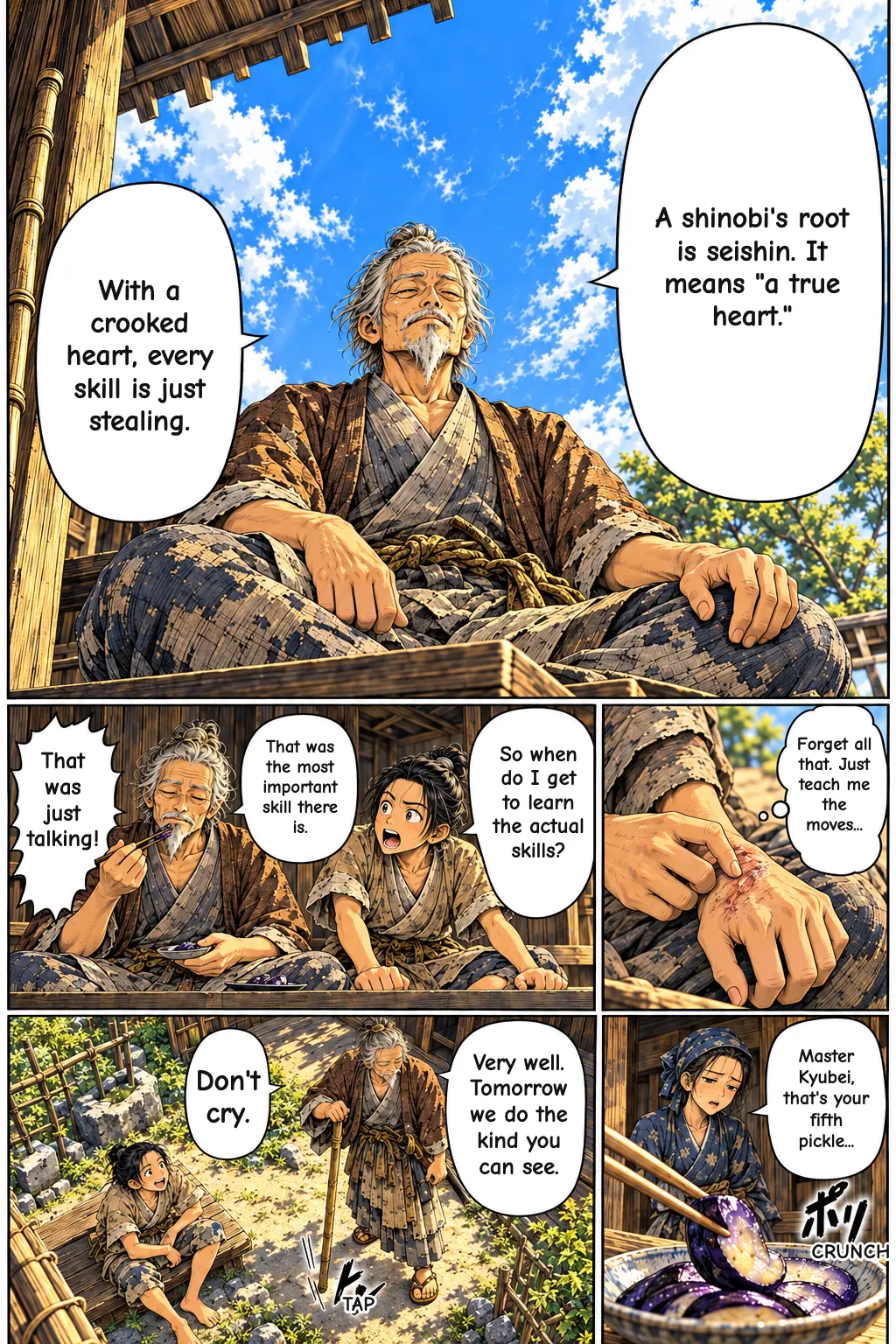
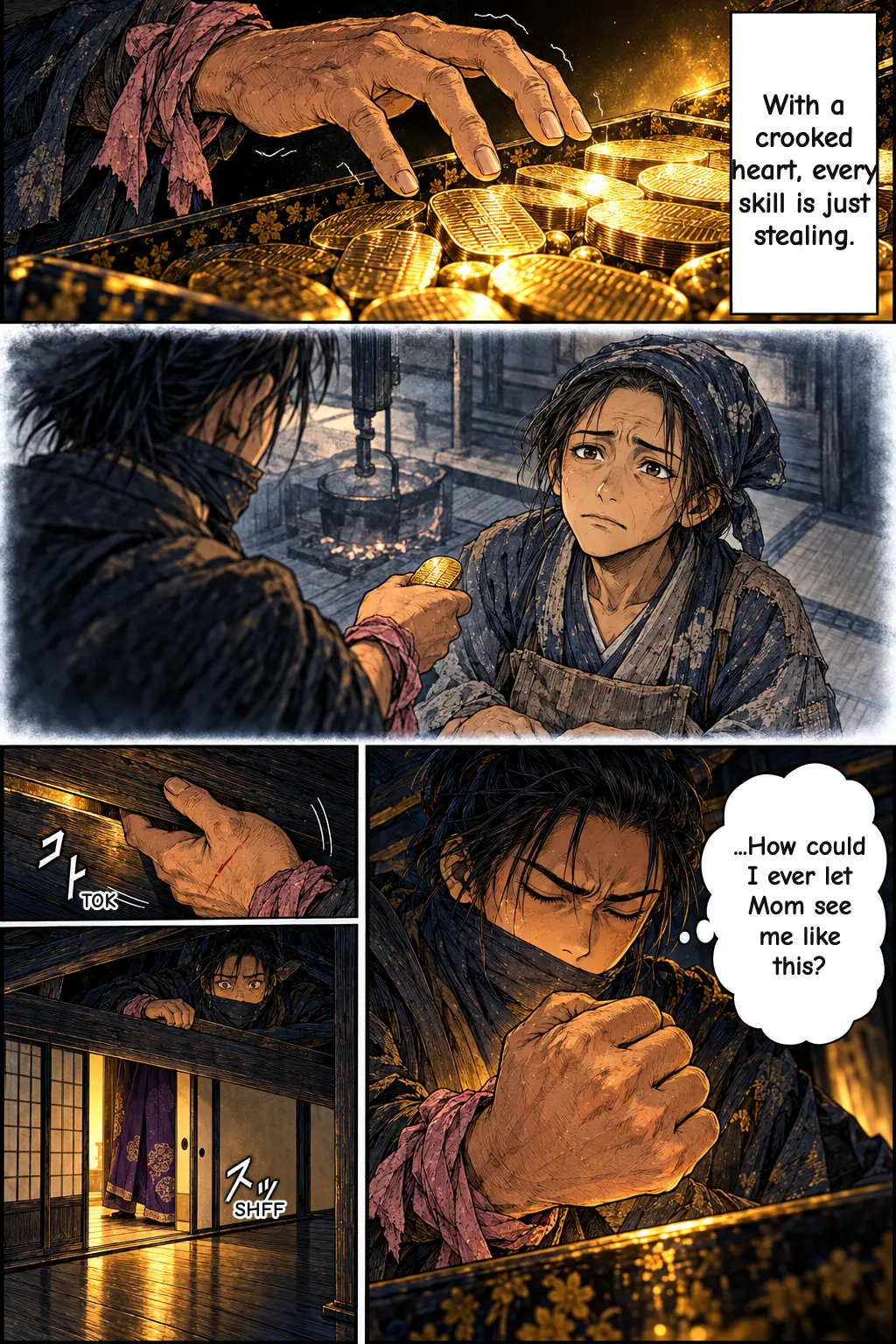
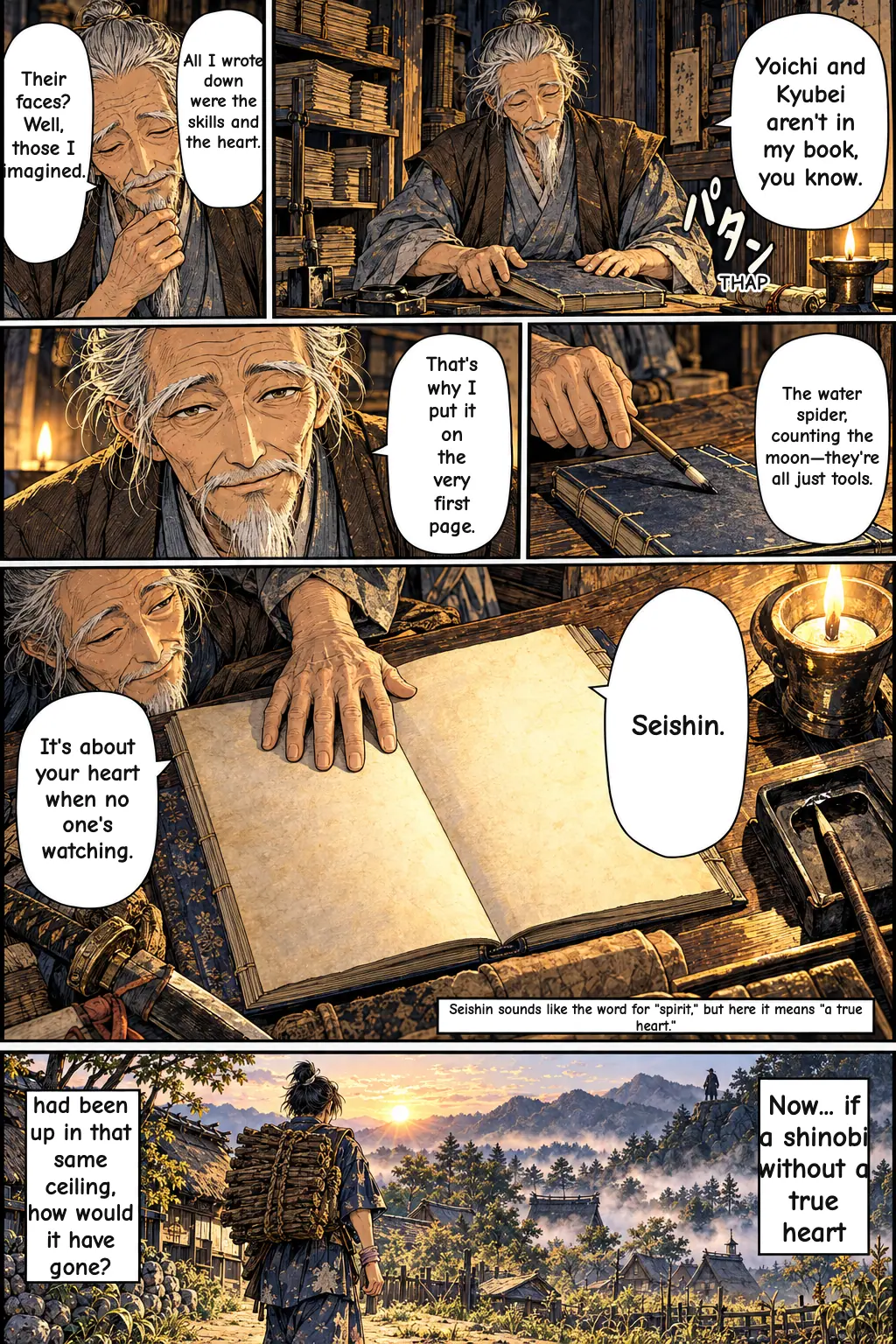
The Seishin section is the moral heart of the whole book. Its message is simple: the root of the ninja's art is an upright mind, and plots and tricks are only the branches. A shinobi must hold to benevolence, righteousness, loyalty and good faith. If he uses his skills for his own greed, the book warns, there is no difference between him and a common thief.
This matters because almost everything that follows in the Bansenshukai, from lying about who you are to opening a stranger's door at night, would look like crime out of context. Seishin draws the line. The same act is either service or theft, depending on the heart behind it and whose orders it serves. The section is also often read as teaching a readiness to put one's own life aside to carry out a lord's command, though the exact wording varies by copy and translation.
There is a historical background too. By 1676 Japan had been at peace for decades under the Tokugawa shoguns, and the age of constant war was over. Many scholars see the Bansenshukai partly as an effort to record and dignify a fading tradition, presenting the shinobi not as sneaks but as disciplined, loyal specialists.
What the manga changes and adds
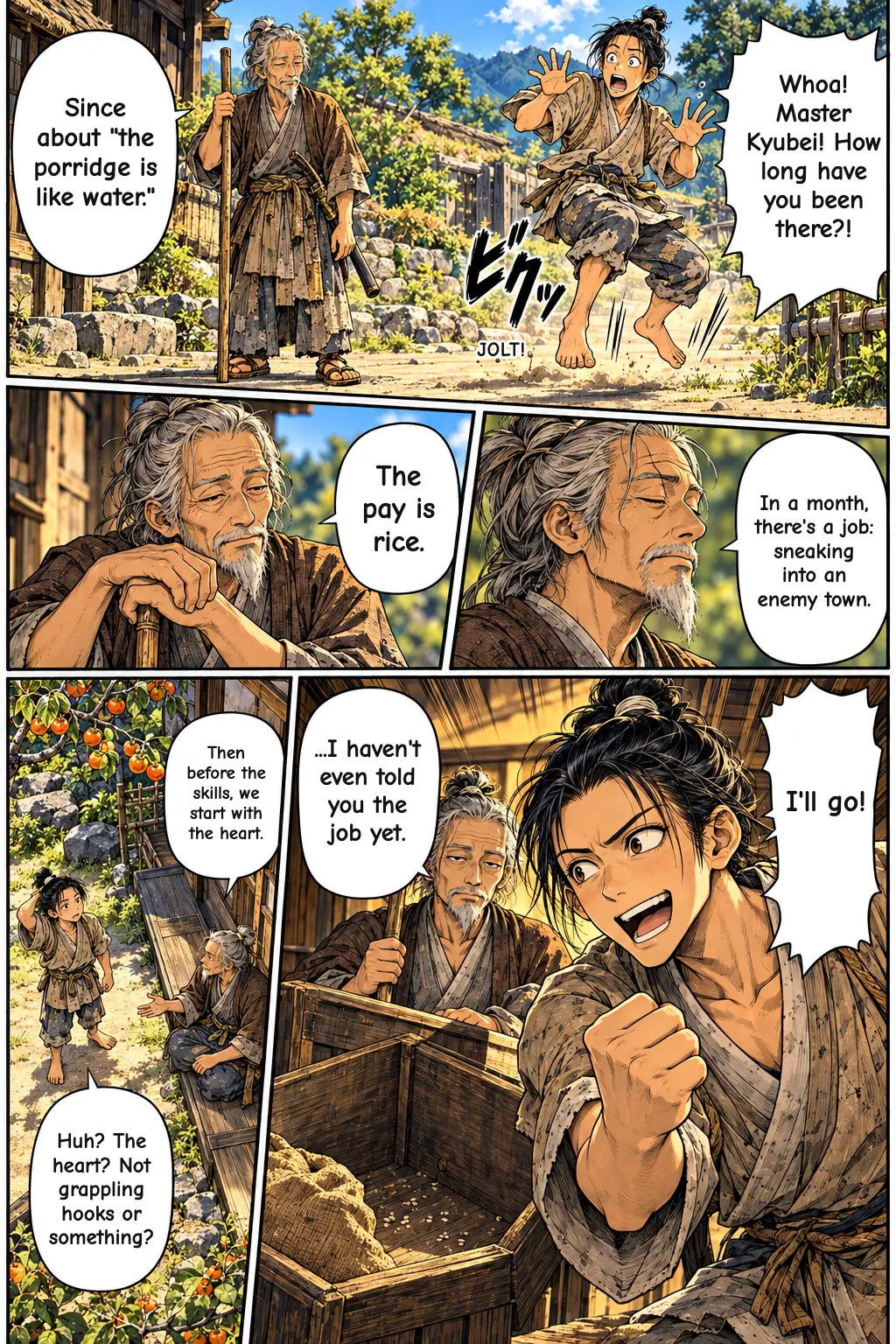
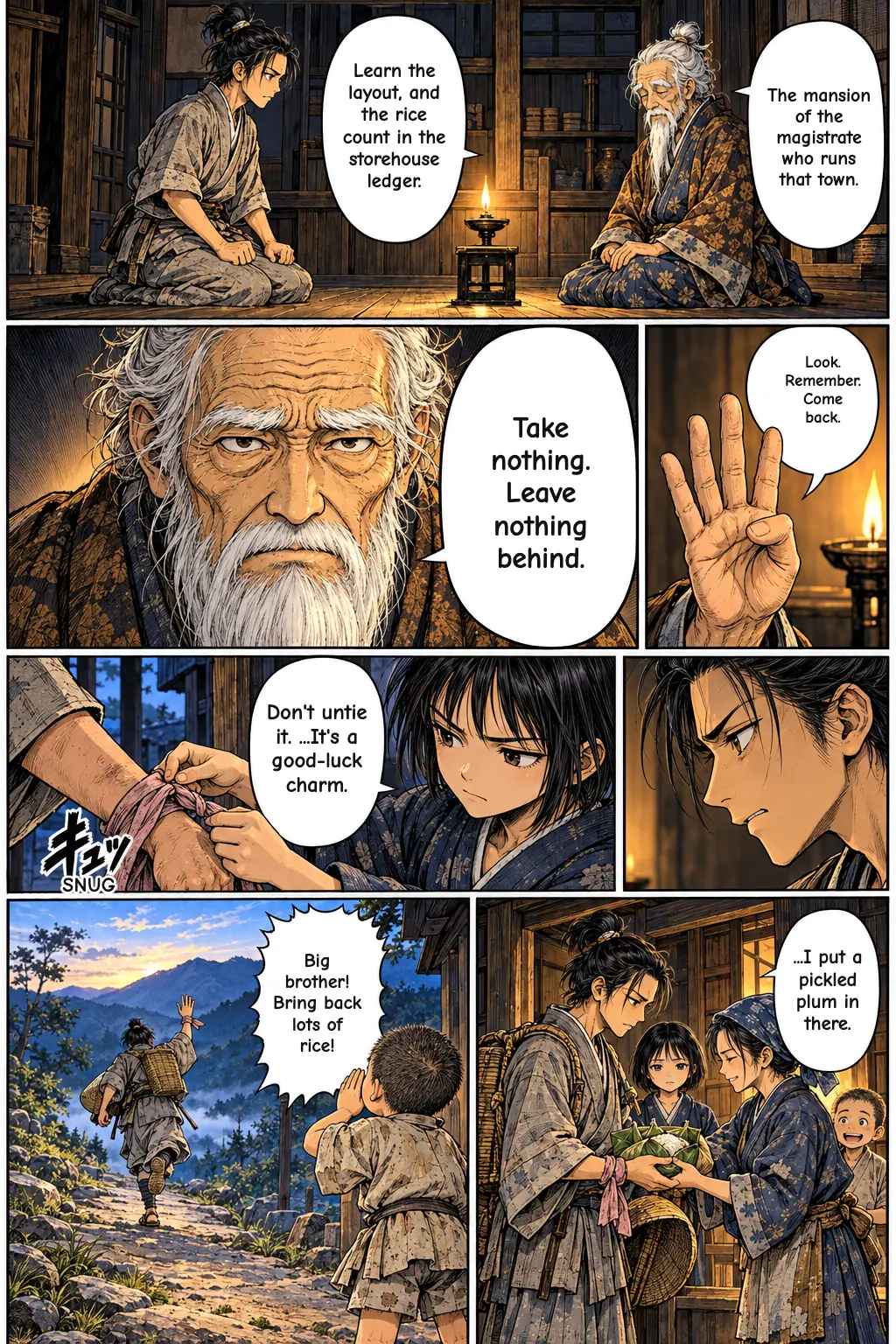
Episode 2, "The Gold Was Open. No One Was Watching.," is an original story built on the Bansenshukai's ideas. Yoichi, the young Iga shinobi, his family, his teacher and his first mission are all invented for the manga. None of them appear in the original book.
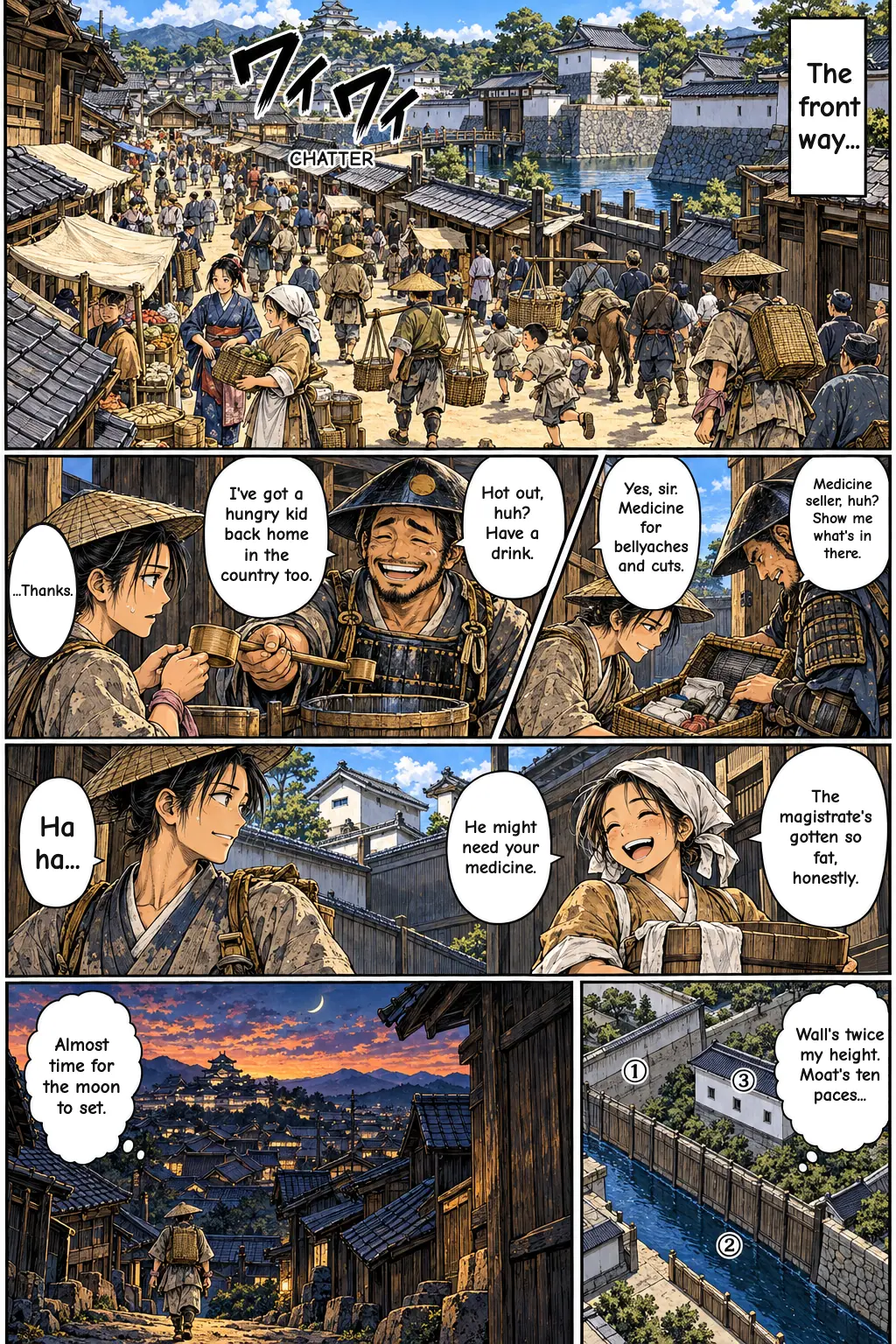
The episode is also set in the late Warring States period (Sengoku), about a century before the book was compiled. This is a deliberate creative choice: it places the traditions that the Bansenshukai later wrote down back in the era of war they came from. The castle town Yoichi enters, the lord he serves, and the scene with the box of gold are fiction. So are the lines his teacher speaks about seishin. They are written to stay true to the book's point, that skill without a true heart becomes theft, but they are not quotations from the text.
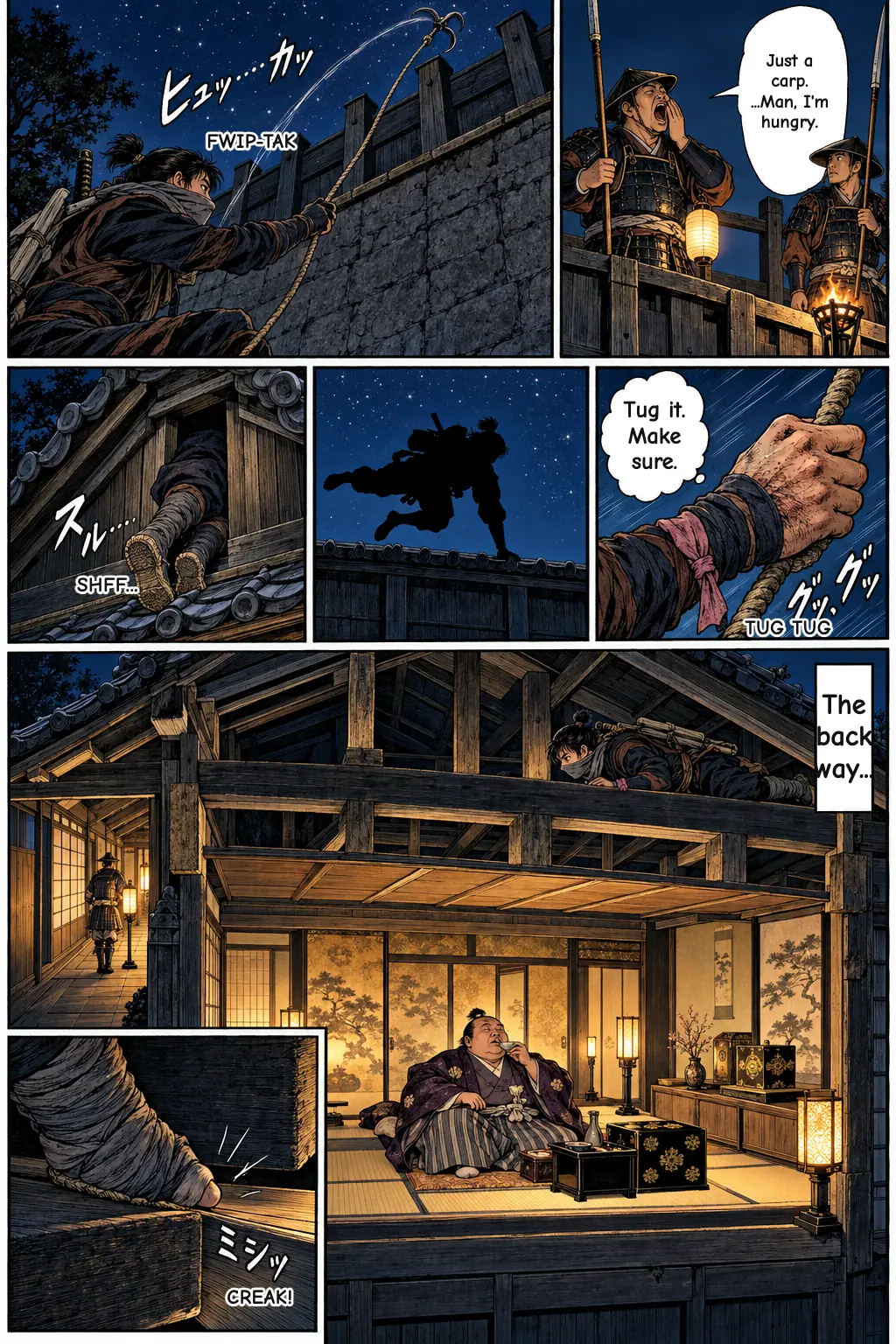
Training scenes, such as throwing a hooked rope or crossing a moat, are dramatized, but the tools are drawn to follow the illustrations in surviving copies of the manual.
Where to read it
If you want to see what seishin feels like from the inside, read Episode 2 of NINJA: Shadows of the Warring States here on Manga Portal. Yoichi needs his family to survive the winter, the gold is right in front of him, and nobody is watching. What he does next is the whole lesson of the Bansenshukai in one night.
Every episode is free to read, with no sign-up needed. Start from Episode 1 to follow Yoichi from the beginning, or carry on to see how the open and hidden arts of the ninja play out in later missions.
Characters in this episode
Yoichi
A young Iga shinobi, created for the manga, who faces the temptation of an unguarded box of gold on his first infiltration mission.
Yoichi's teacher
An invented senior Iga ninja who teaches Yoichi the open and hidden arts, the tools, and above all the rule of seishin.
Fujibayashi Yasutake
The real man of Iga named in the 1676 preface as the compiler of the Bansenshukai; the book tells us little about him personally.
The masters of Iga and Koga
Past shinobi experts the book is said to list by name and home region, without stories or descriptions of them.
FAQ
What is the Bansenshukai?
The Bansenshukai is a Japanese ninja manual with a preface dated 1676, compiled by Fujibayashi Yasutake of Iga. It gathers the ninja traditions of Iga and Koga into one book, covering ethics, command, disguise, infiltration, timing and tools.
What does seishin mean in ninjutsu?
Seishin means the "true heart" or "correct mind." In the Bansenshukai it is the foundation of the ninja's art: skills must serve loyalty and righteousness, and a shinobi who uses them for personal gain is no better than a thief.
Is the Bansenshukai a real historical book?
Yes. It survives in several handwritten copies from the Edo period, which differ in some details. It is a manual, not a story, so the characters in the manga are invented.
What is the difference between yonin and innin?
Yonin is the "open" art of getting into the enemy's side while staying visible, using schemes and false identities. Innin is the "hidden" art of sneaking into castles, camps or houses without being seen.
Did ninja really walk on water with the mizugumo?
The Bansenshukai does draw a water-crossing tool called the mizugumo, or "water spider." The popular idea of walking on water is doubtful, and some researchers think it was used as a float instead.