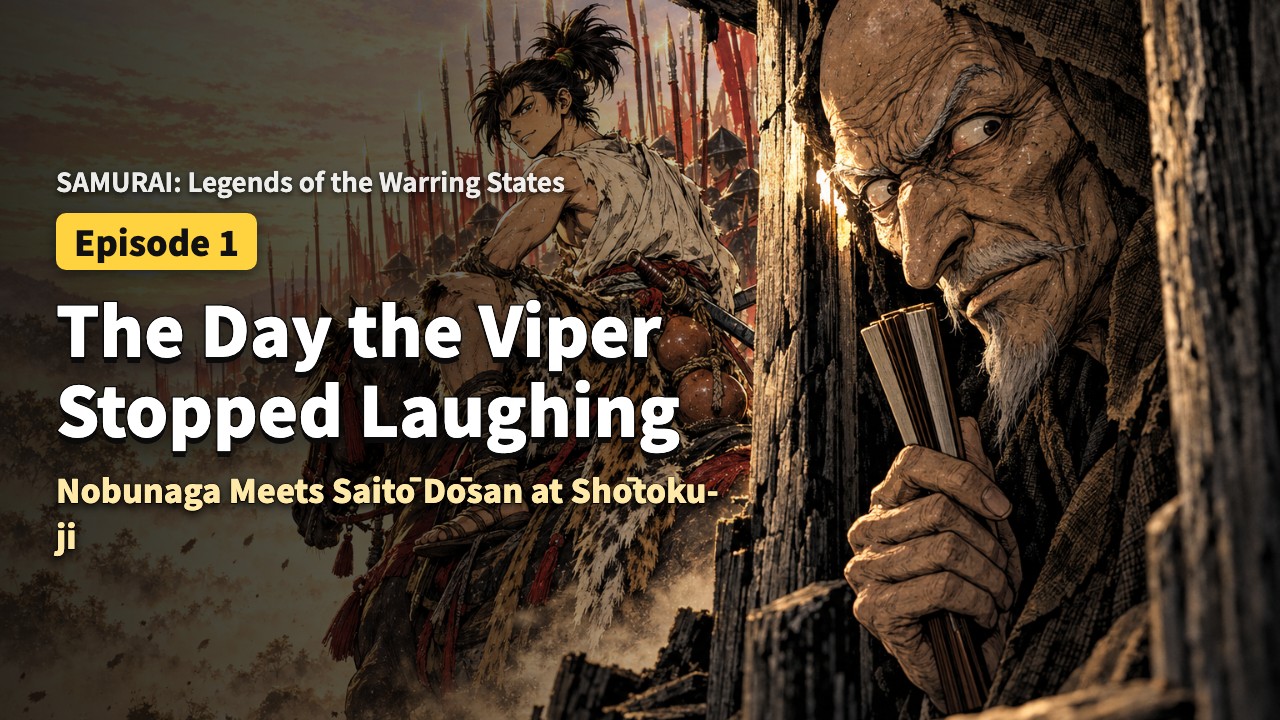
Episode 4No Swords Drawn. An Army Fell.The Fuma Night Raids at Kisegawa
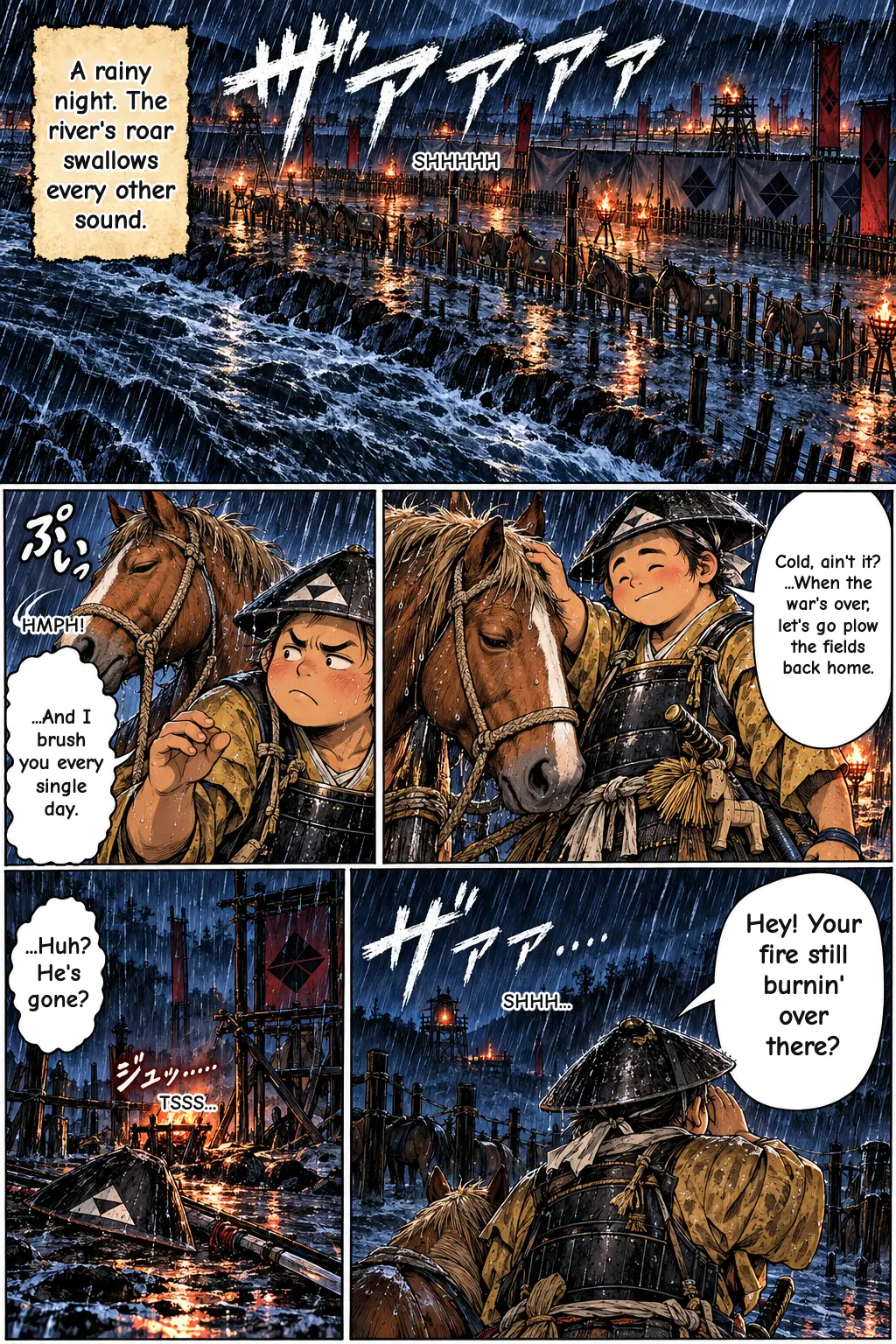
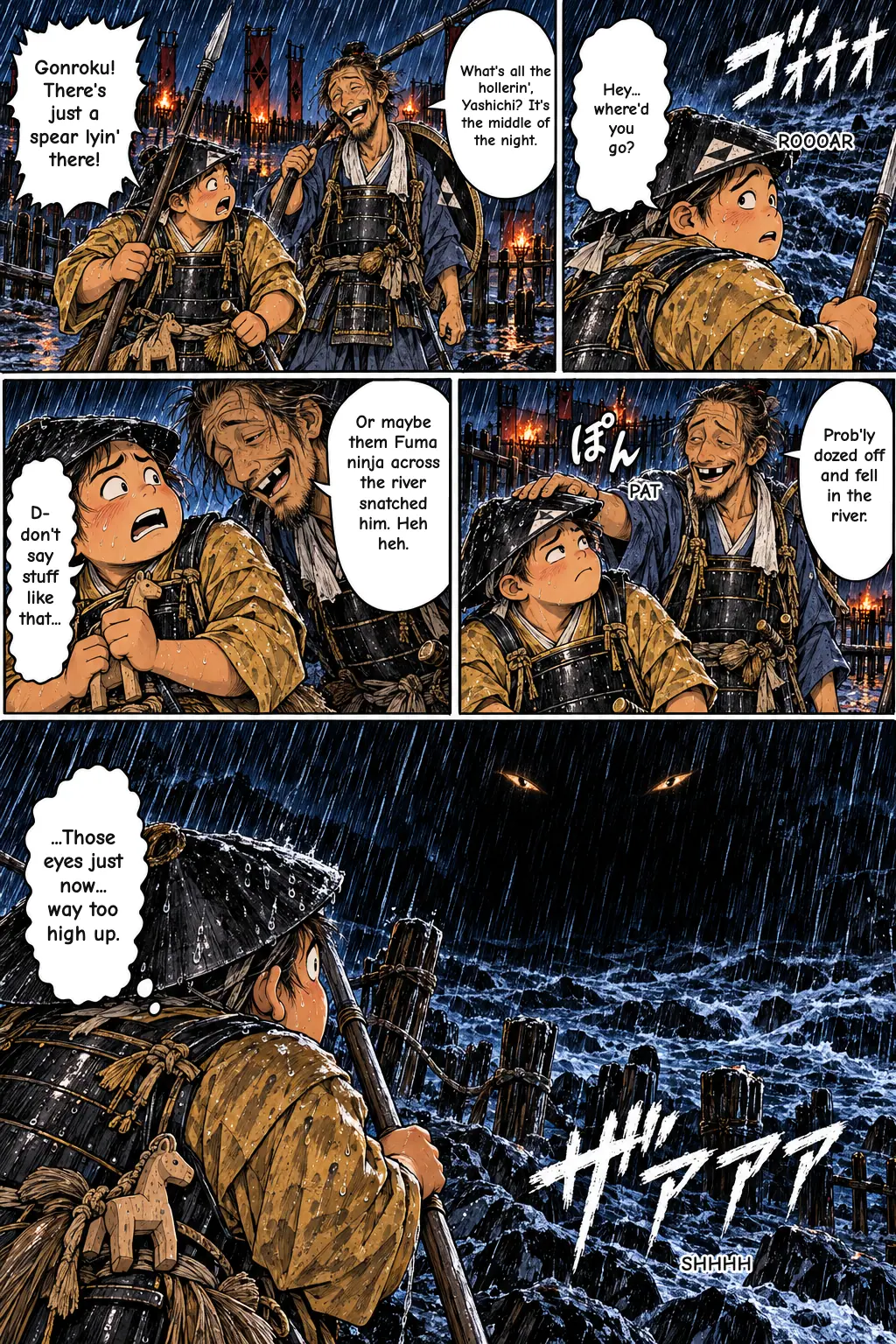
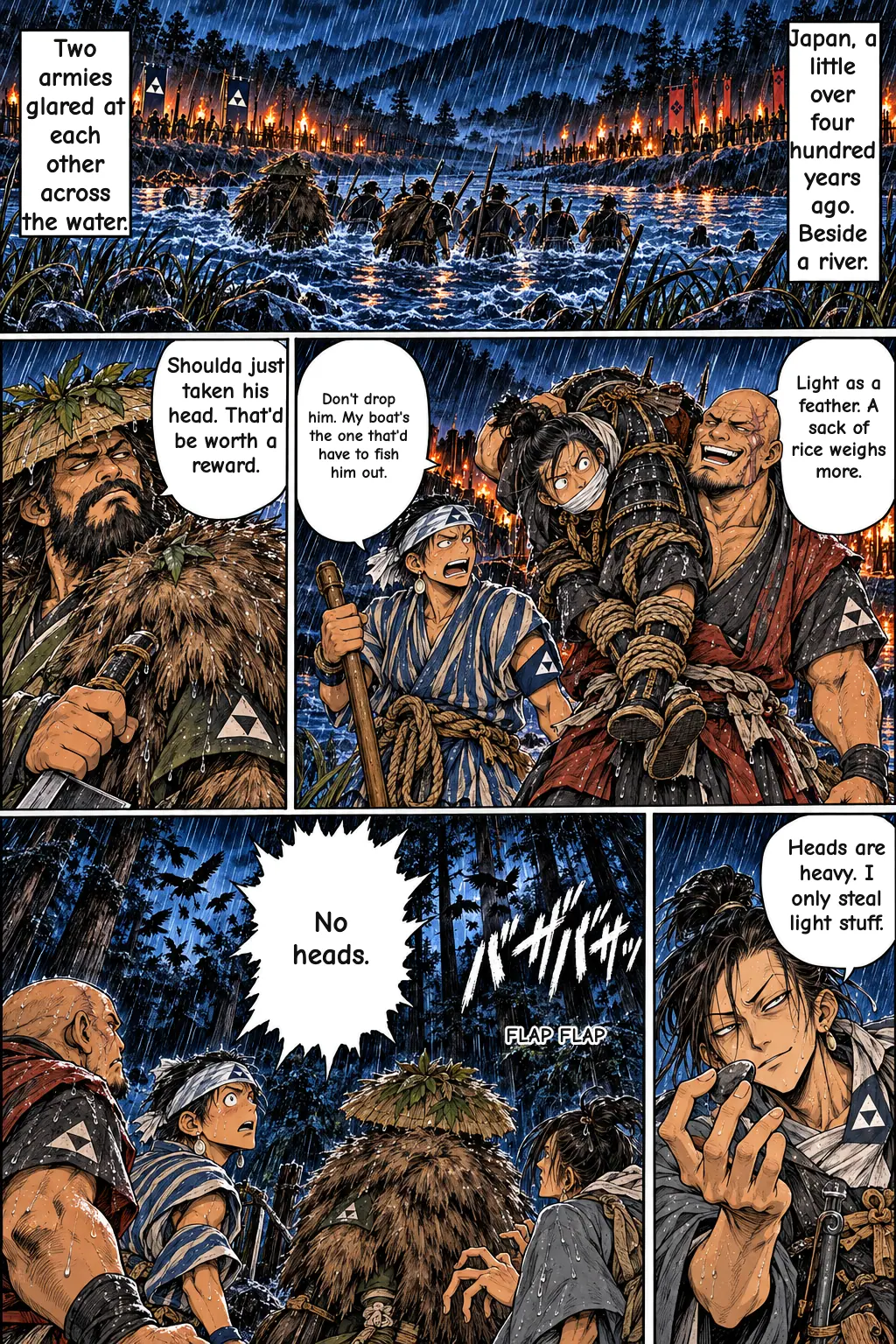
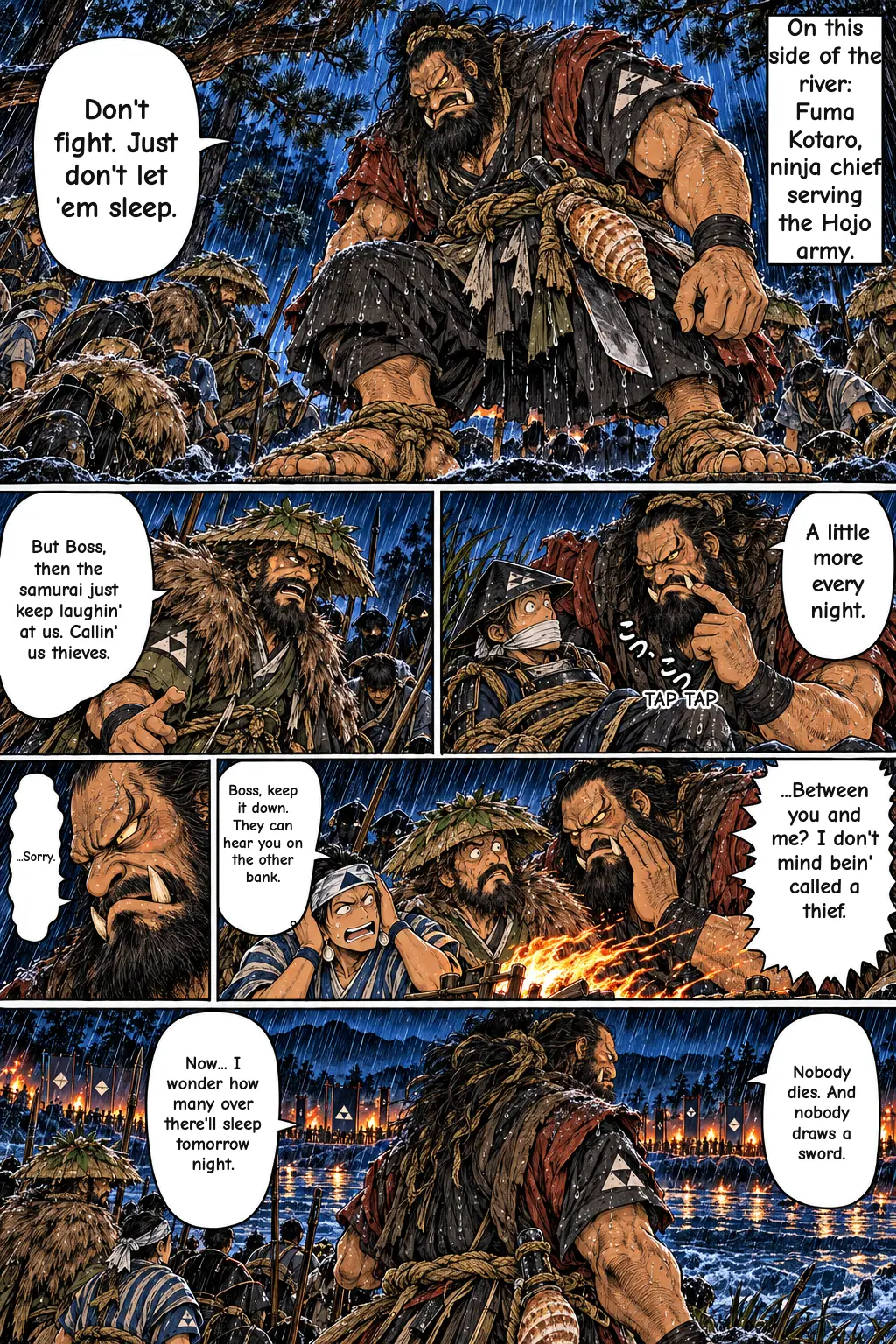
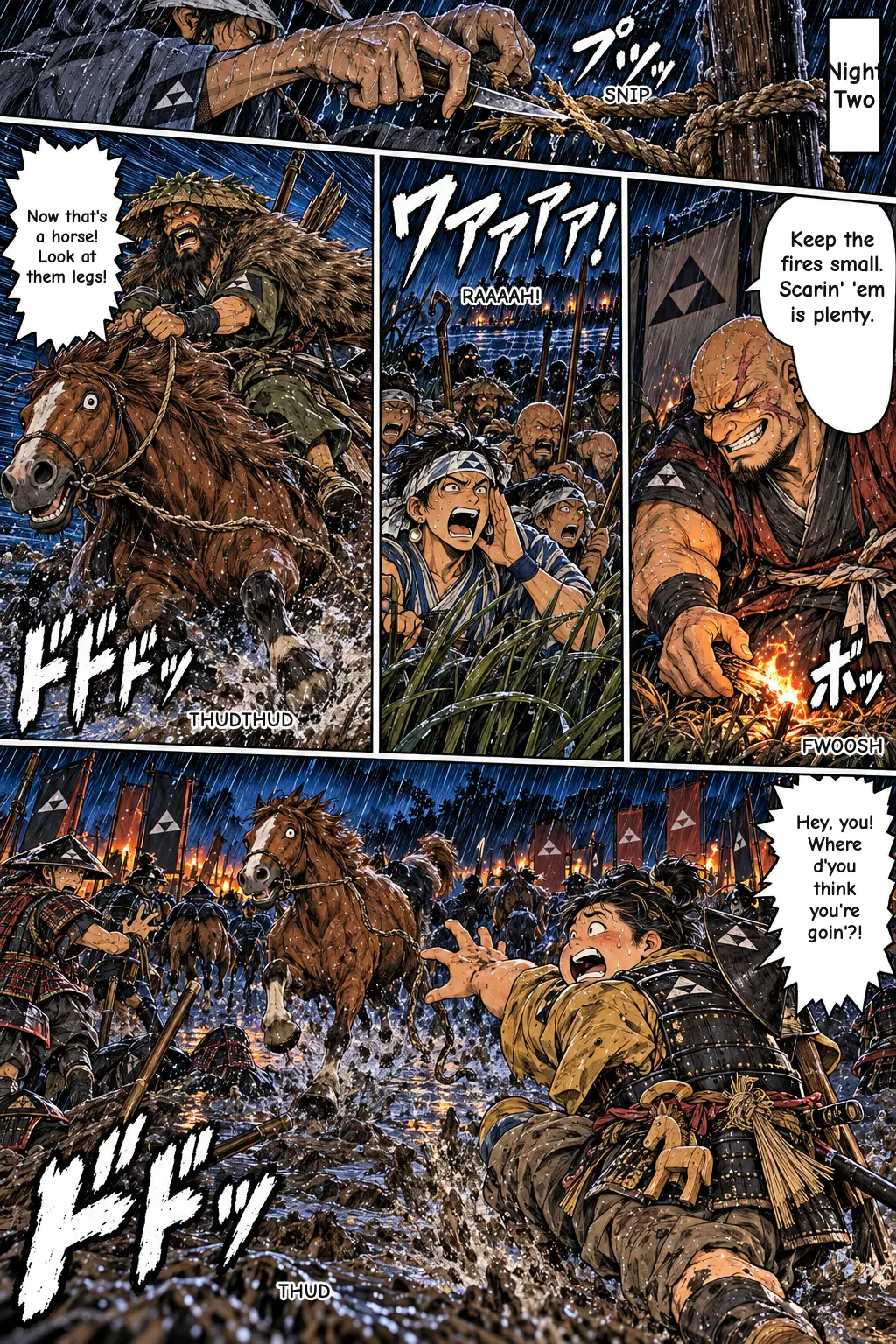
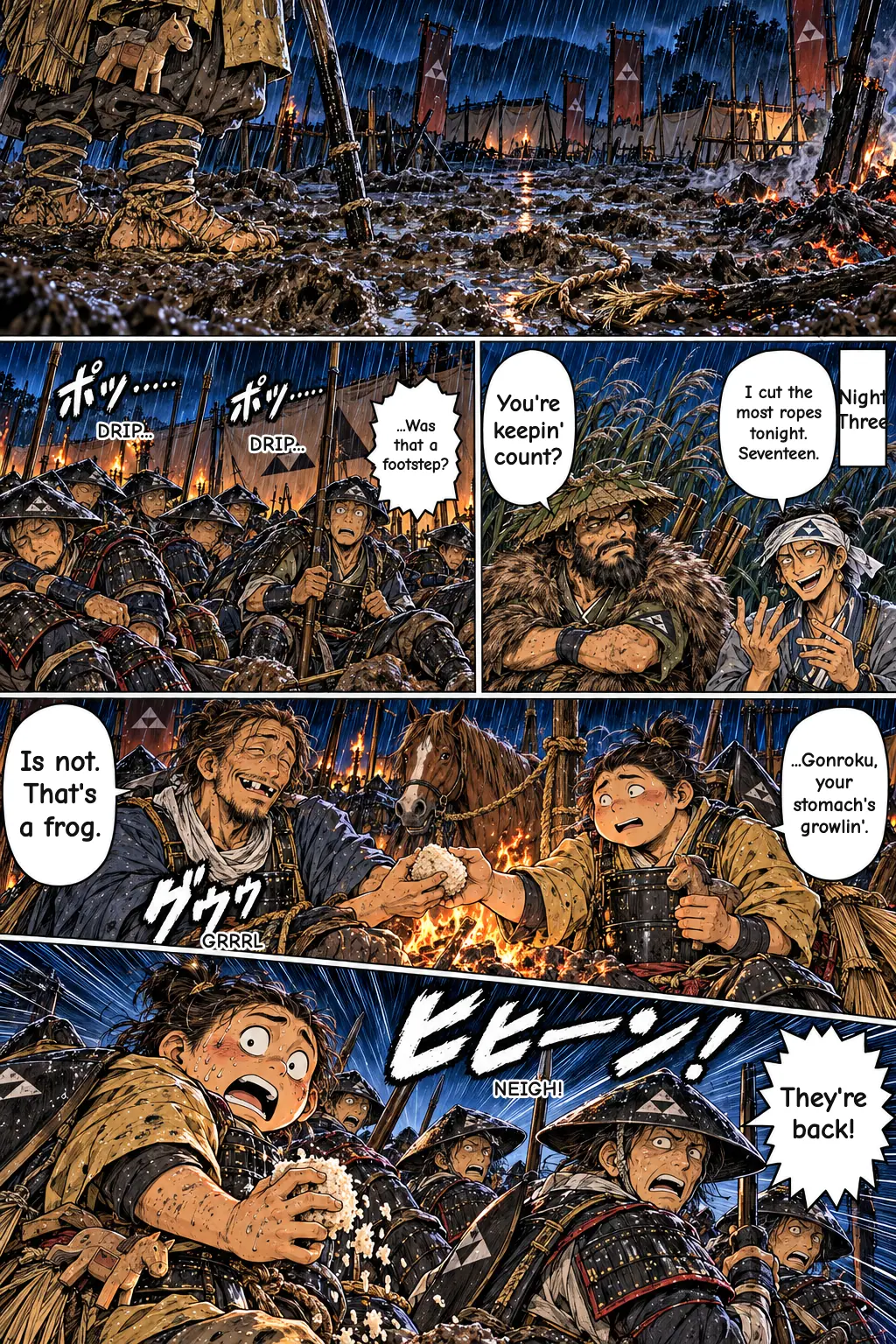
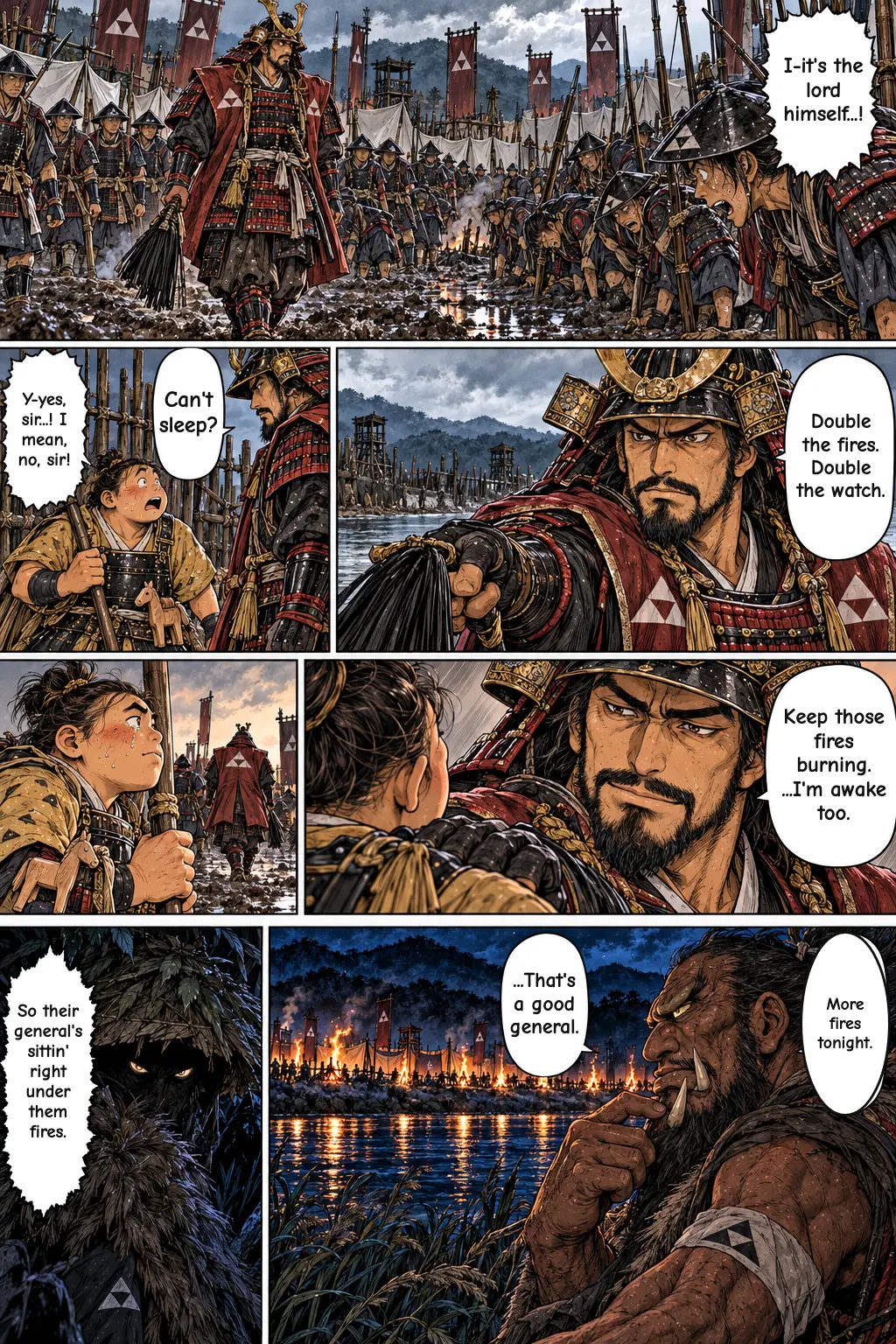
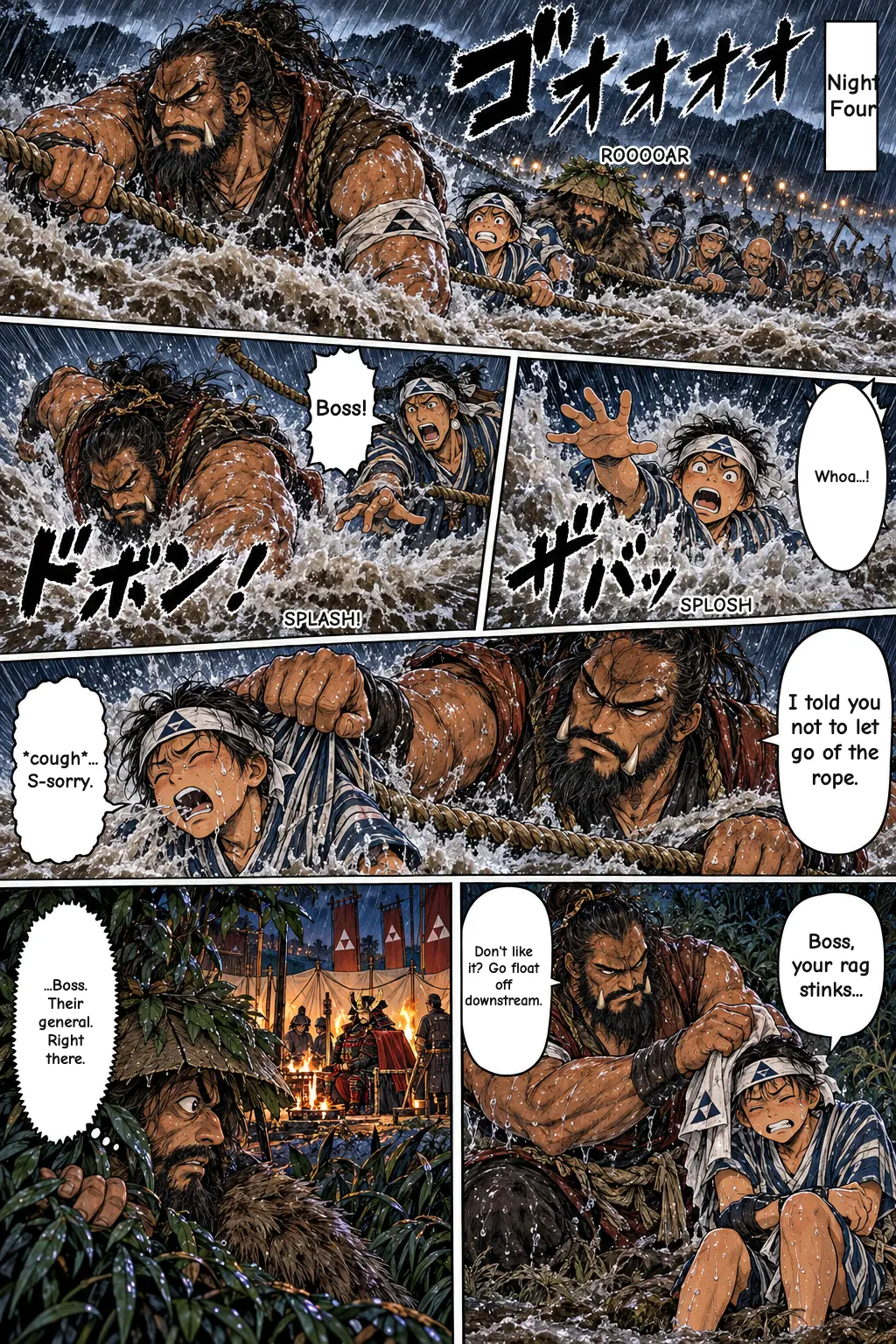
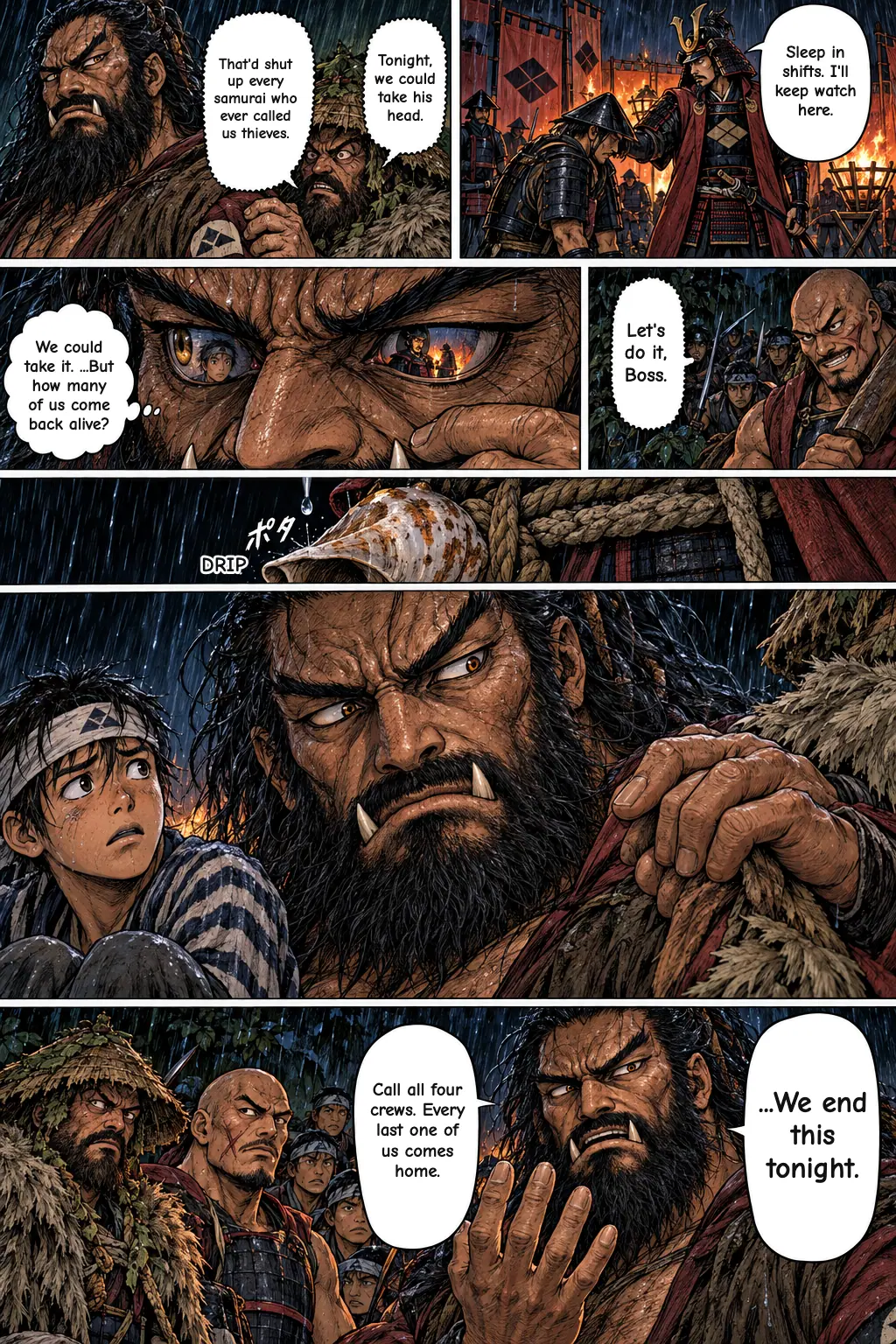
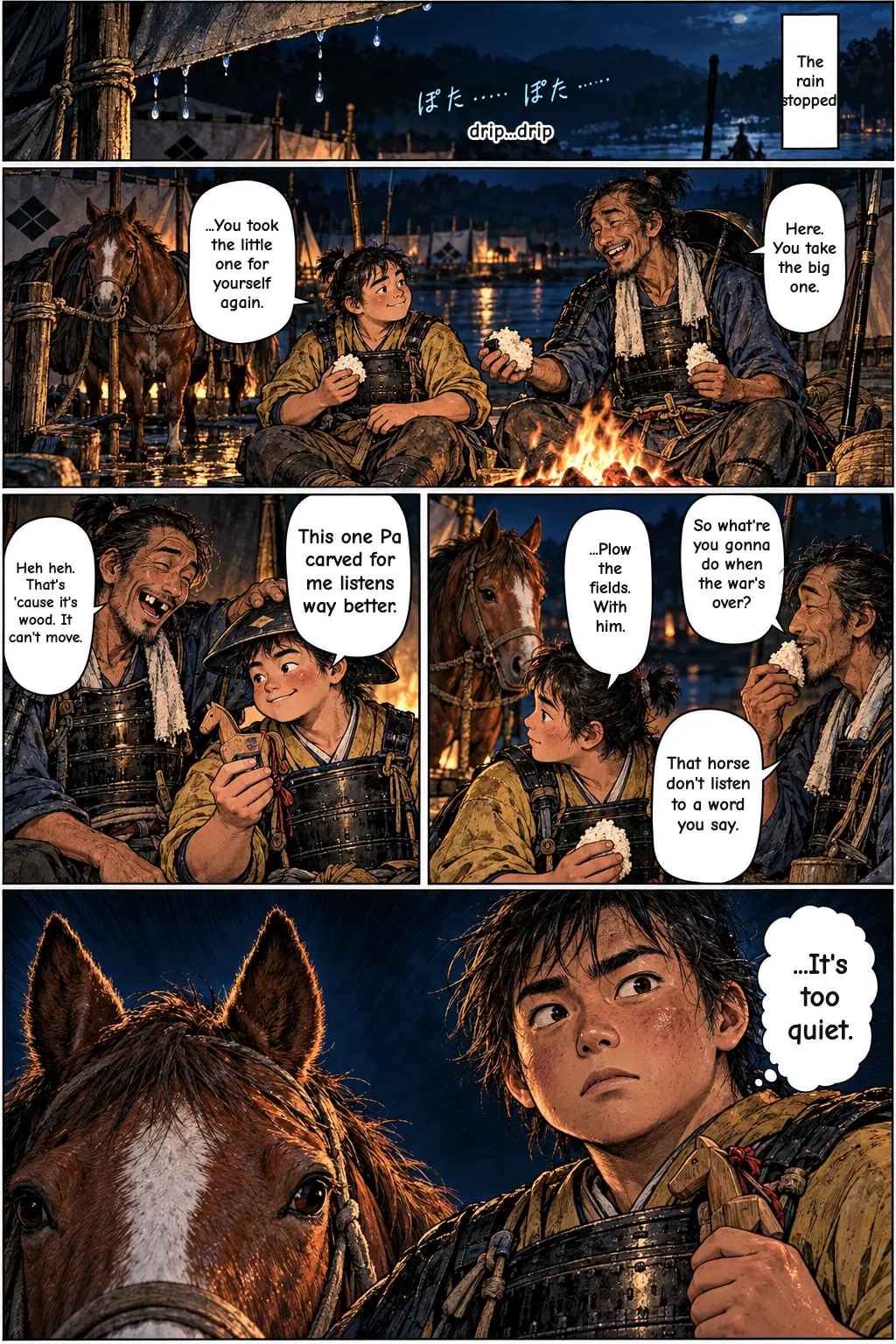
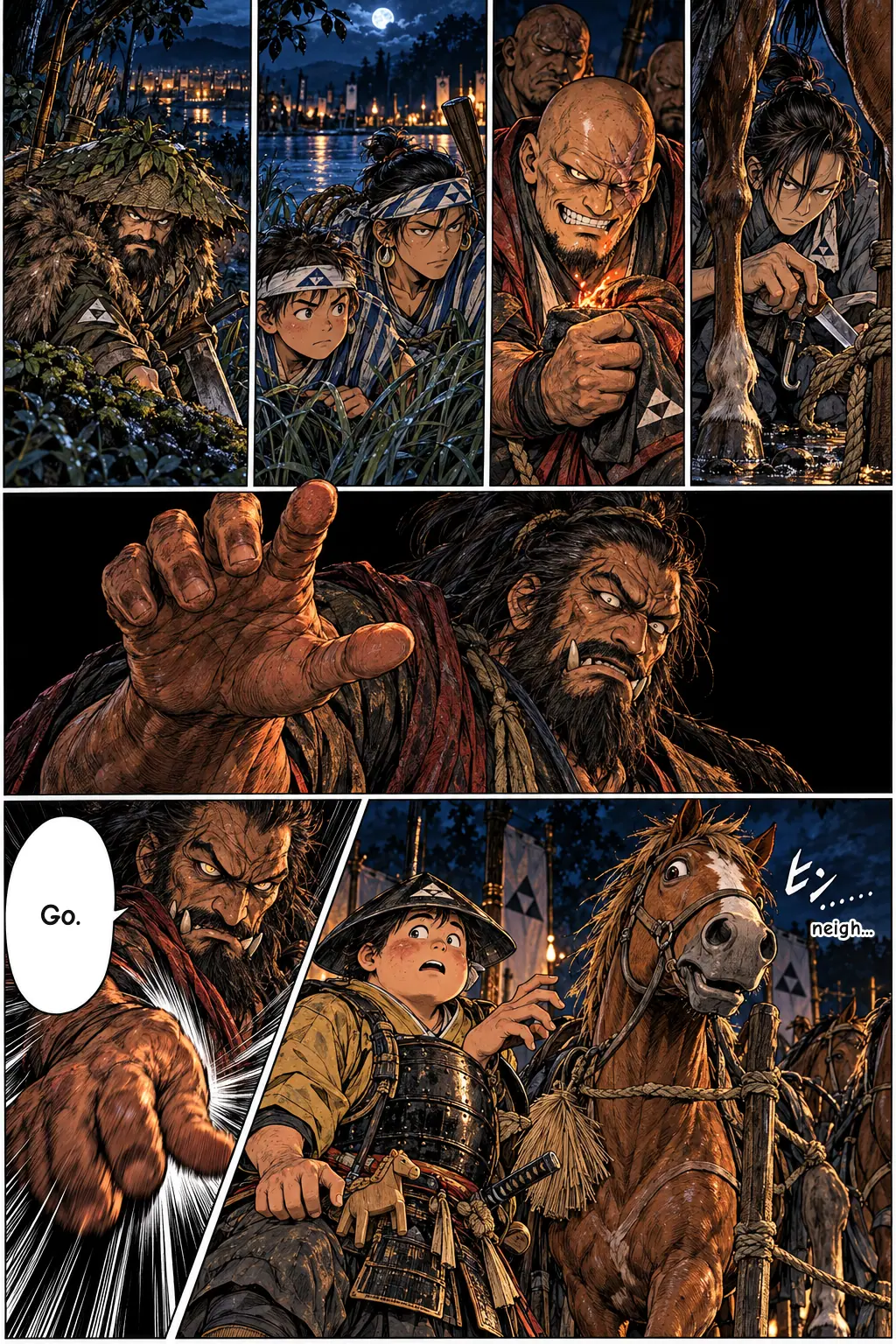
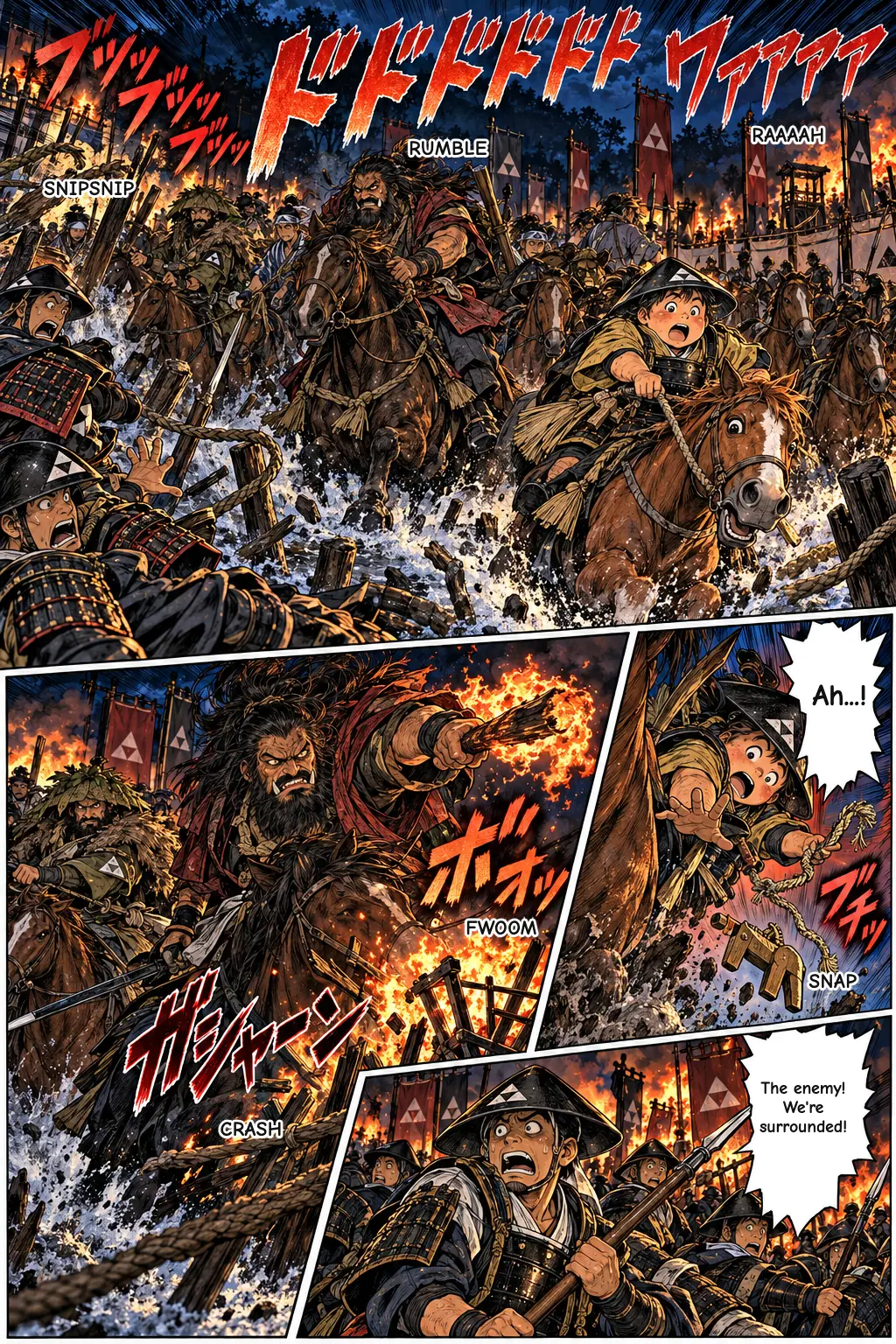
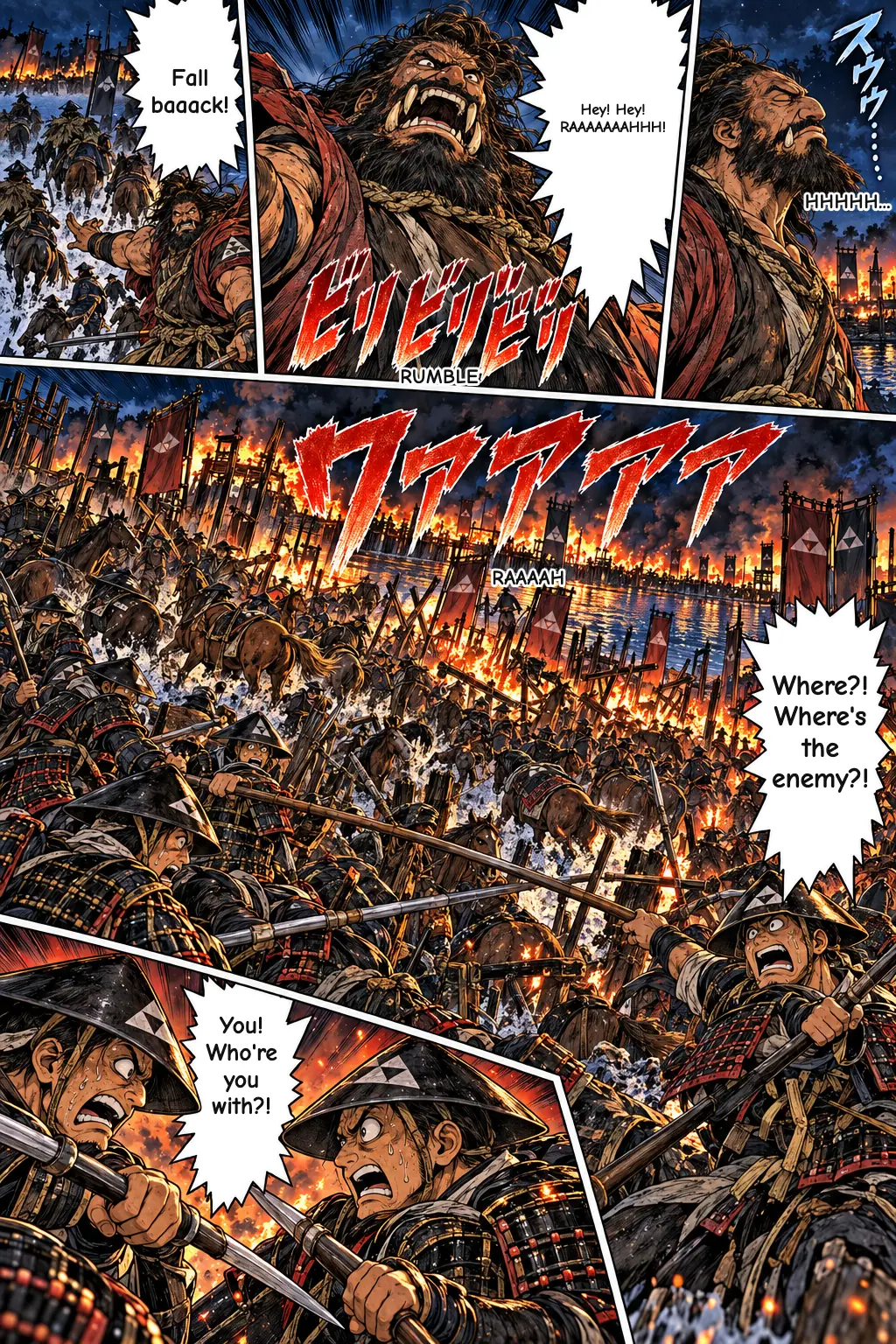
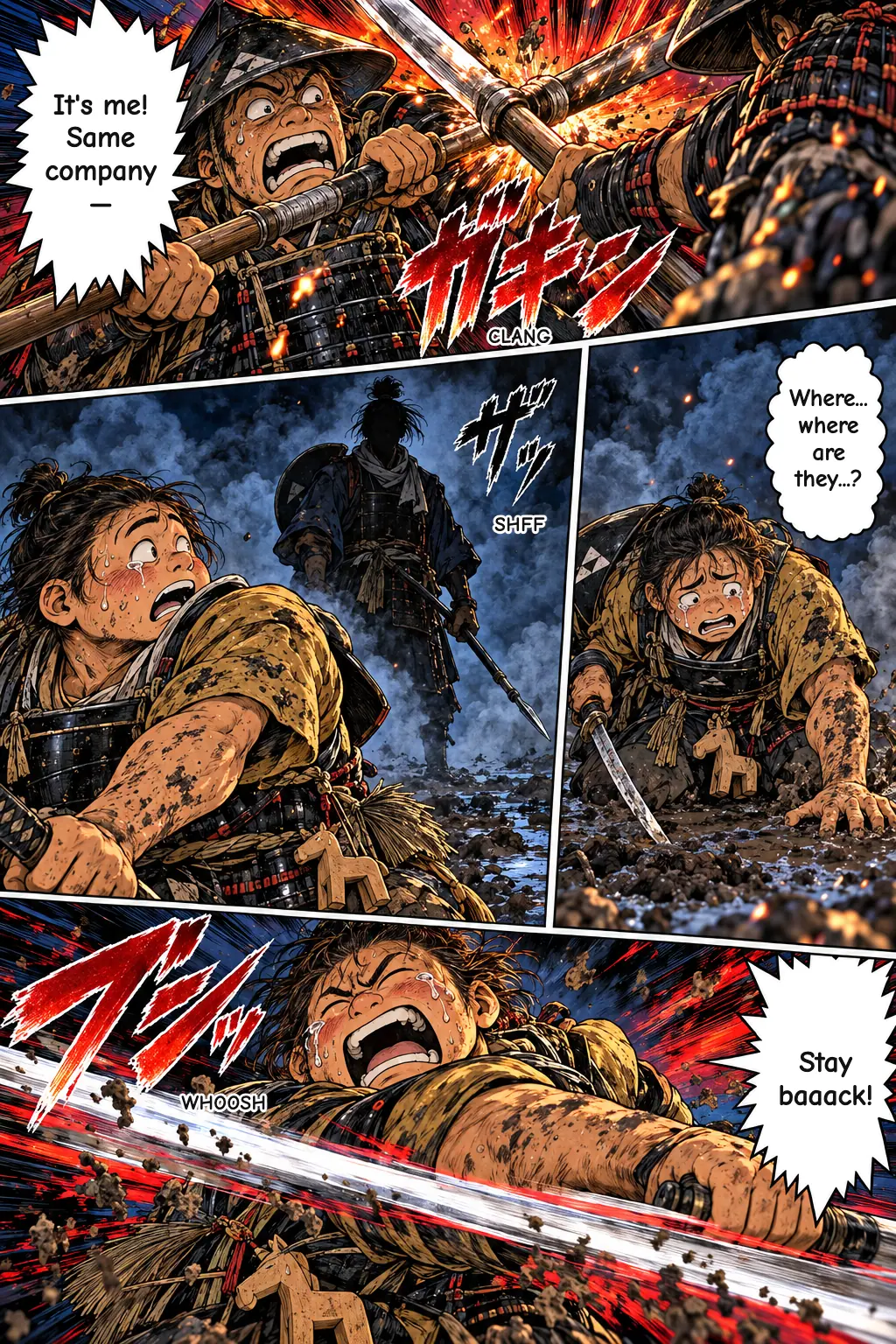
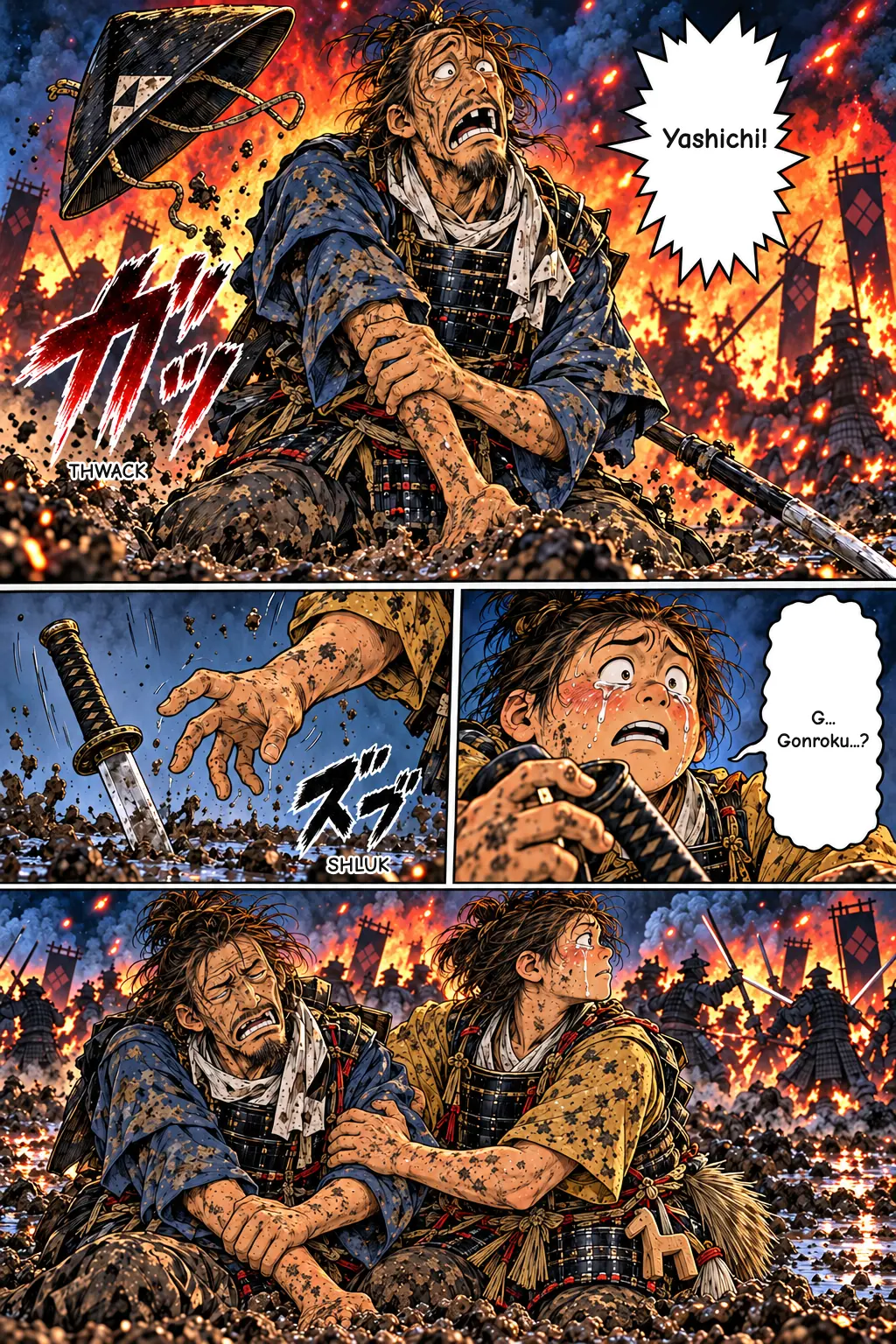
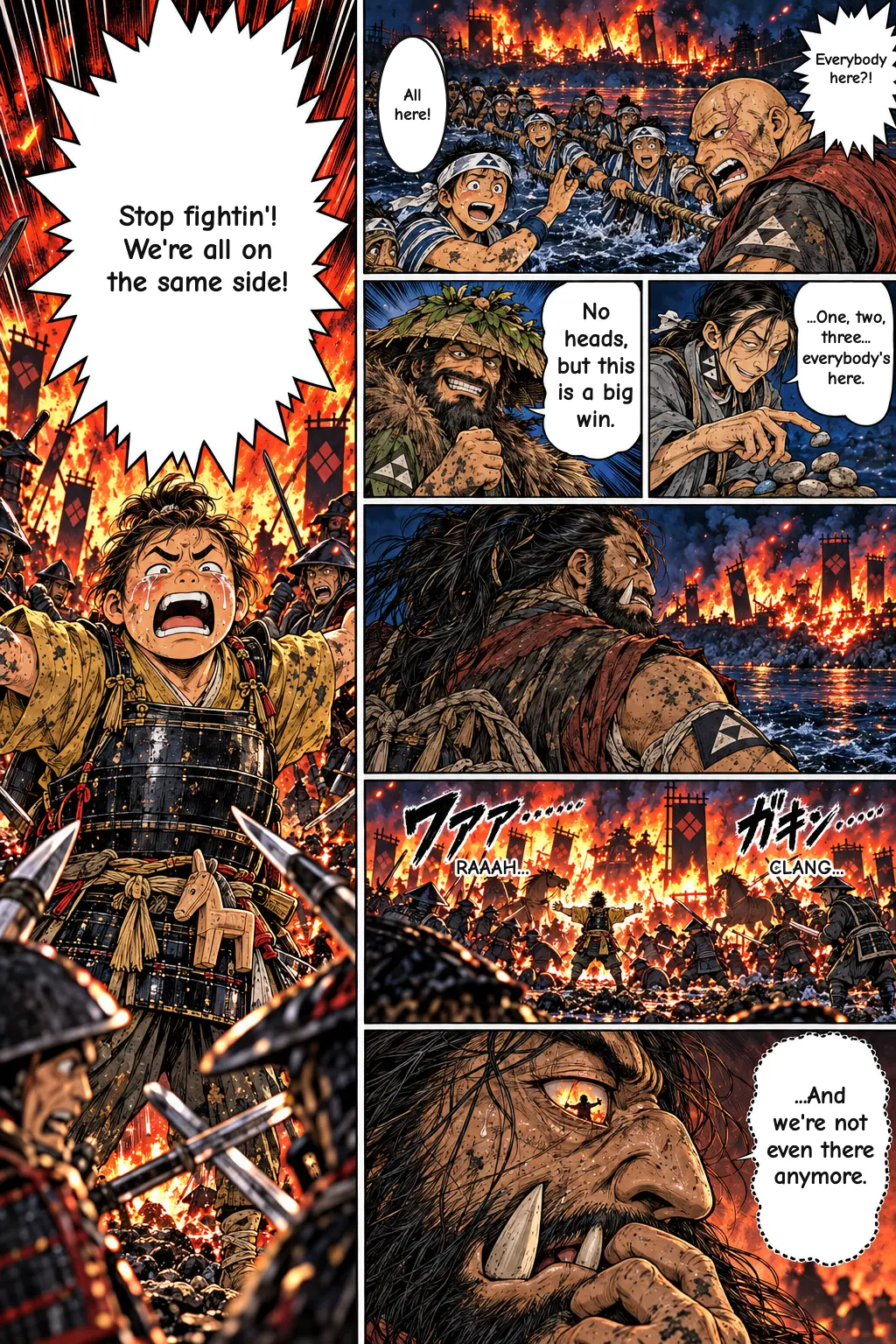
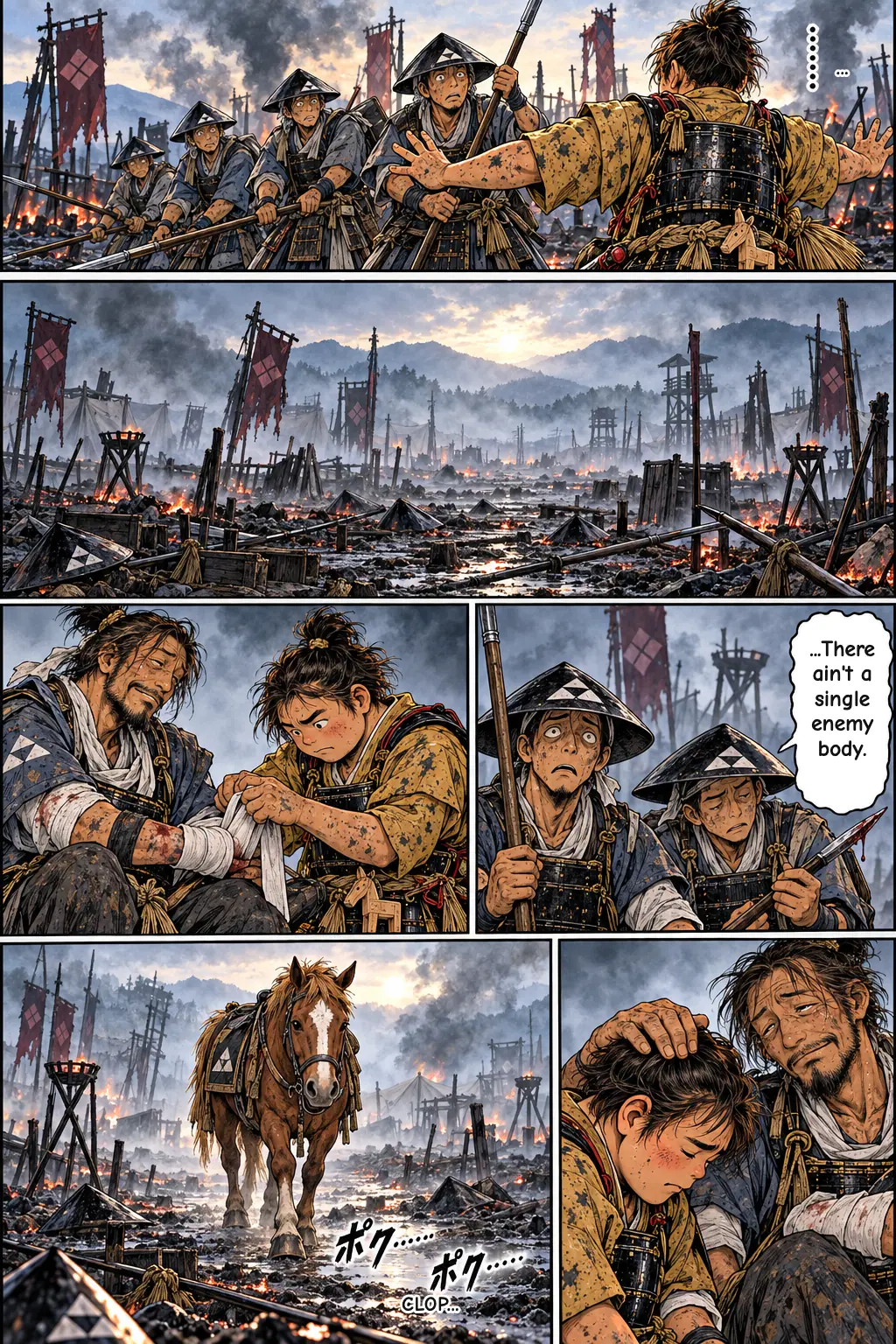
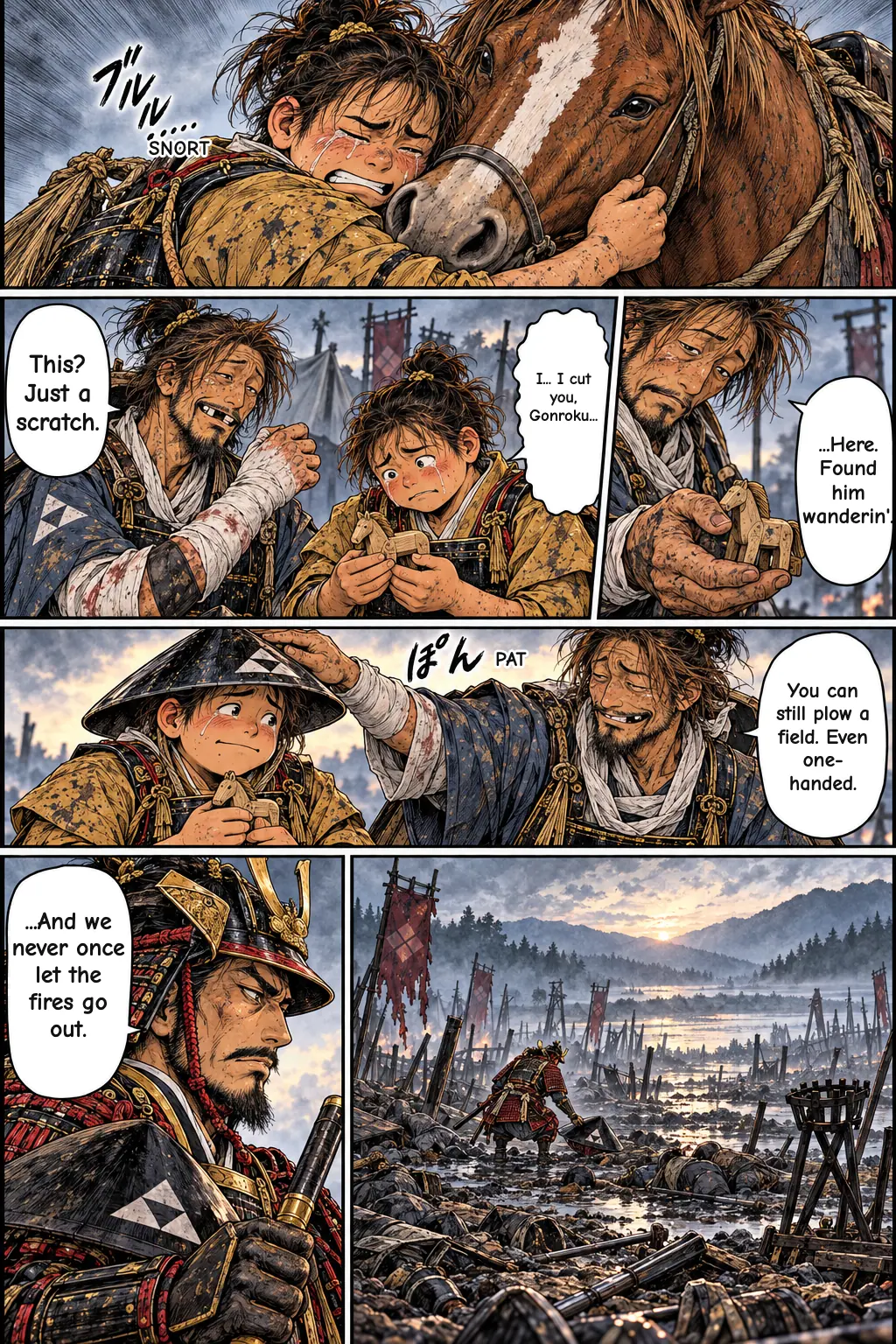
Night after rainy night, Fuma Kotaro's ninja cross the river, set horses loose, light fires, and raise war cries. They never draw a single sword, yet the great Takeda army crumbles. On the final night, a young soldier driven mad by fear turns his blade on the man who looked out for him. Then, bare-handed, he steps between comrades about to cut each other down.
Bookmark the series page so you can jump back in when the next episode is out: NINJARSS for this series
Get new episodes in your feed. Follow us on:ThreadsBluesky
Story summary
The story takes place during Japan's Warring States period, in the Tensho era, around 1580 to 1581. Two warlords, Hojo Ujinao and Takeda Katsuyori, have camped their armies on opposite banks of the Kise River (Kisegawa), near the border of the old provinces of Suruga and Izu, in today's Shizuoka Prefecture. Neither side moves. The armies simply stare at each other across the water. The Hojo, however, keep a special kind of retainer: the rappa, men skilled in theft and infiltration. Their chief is a figure named Fuma.
Fuma Kotaro's Kisegawa Night Raids: The Hojo Godaiki Story Explained
In short: The Fuma night raids at Kisegawa are an episode from the Hojo Godaiki, a Japanese chronicle of the Hojo clan, in which raiders led by a man called Fuma cross the Kise River on rainy, pitch-dark nights to attack the Takeda camp. They cut horses loose, set fires, and raise war cries until the confused Takeda soldiers end up killing one another. By morning, the damage turns out to be the work of the army's own hands.
The Original Story: Night Raids at the Kise River
The story takes place during Japan's Warring States period, in the Tensho era, around 1580 to 1581. Two warlords, Hojo Ujinao and Takeda Katsuyori, have camped their armies on opposite banks of the Kise River (Kisegawa), near the border of the old provinces of Suruga and Izu, in today's Shizuoka Prefecture. Neither side moves. The armies simply stare at each other across the water.
The Hojo, however, keep a special kind of retainer: the rappa, men skilled in theft and infiltration. Their chief is a figure named Fuma. On rainy nights and moonless nights, his men, working in separate bands, slip across the river and into the Takeda camp.
Once inside, they seize people alive and slice through the ropes tethering the horses. Then they mount the loose animals and gallop through the camp, starting fires in one spot after another and shouting war cries. The Takeda soldiers, jolted awake in the dark, cannot tell where the enemy is, so they strike at whoever is near them. When dawn comes, the truth is plain: the casualties in the camp came from Takeda men fighting Takeda men.
Main Figures in the Episode
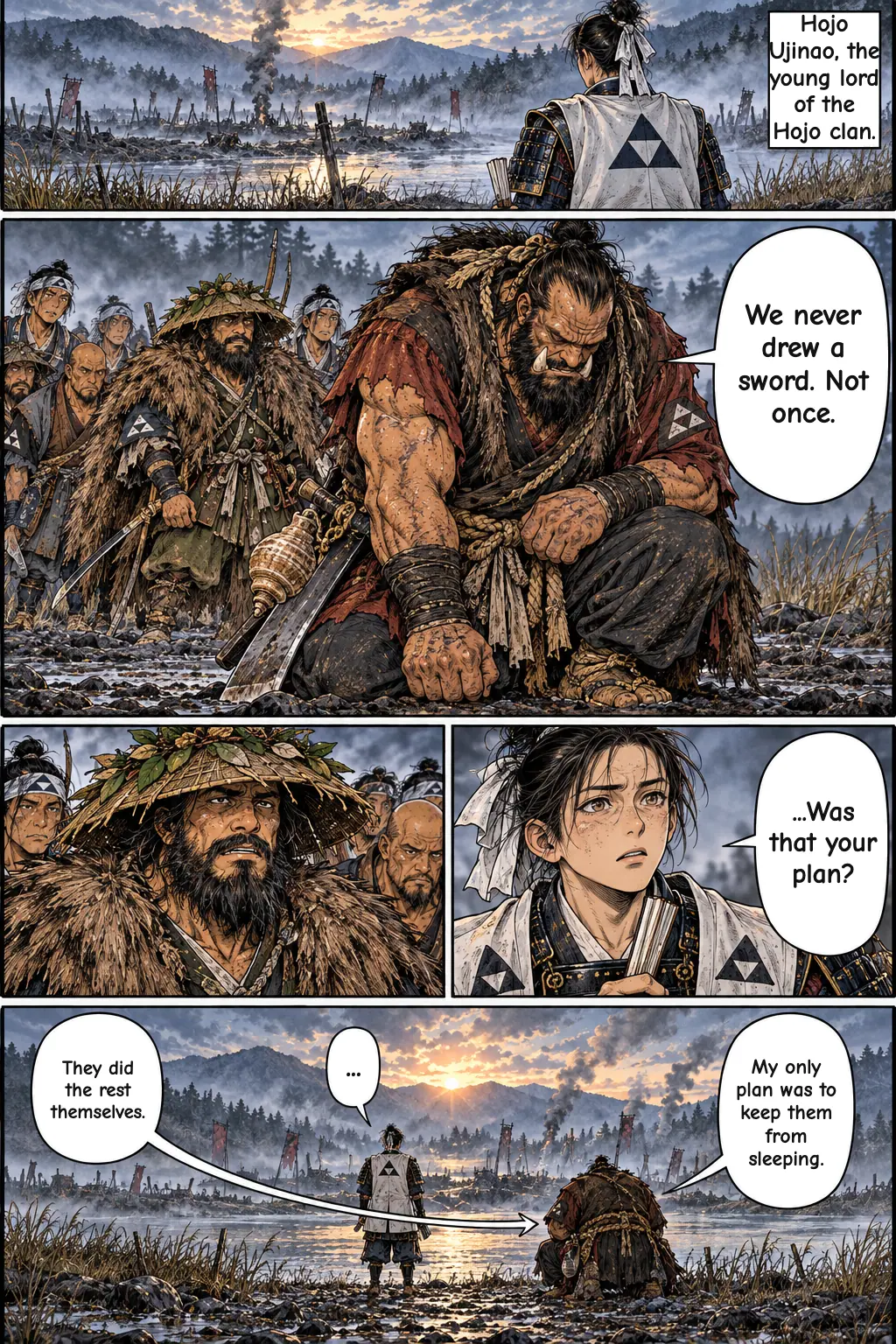
Fuma is the unforgettable presence here. The chronicle pictures him as a giant, heavily muscled man with eyes slanting upward, a mouth torn wide enough to show fangs, and a voice that carries a great distance. It reads less like a portrait than a description of a demon, and that is part of its power.
By contrast, the two commanders barely register as people. Ujinao appears as the head of the house that employs the rappa, and Katsuyori as the general on the receiving end. The raiders and the Takeda soldiers are unnamed crowds. This story is about a tactic and a terror, not about individual heroes.
Background: Rappa, Fear, and the Warring States
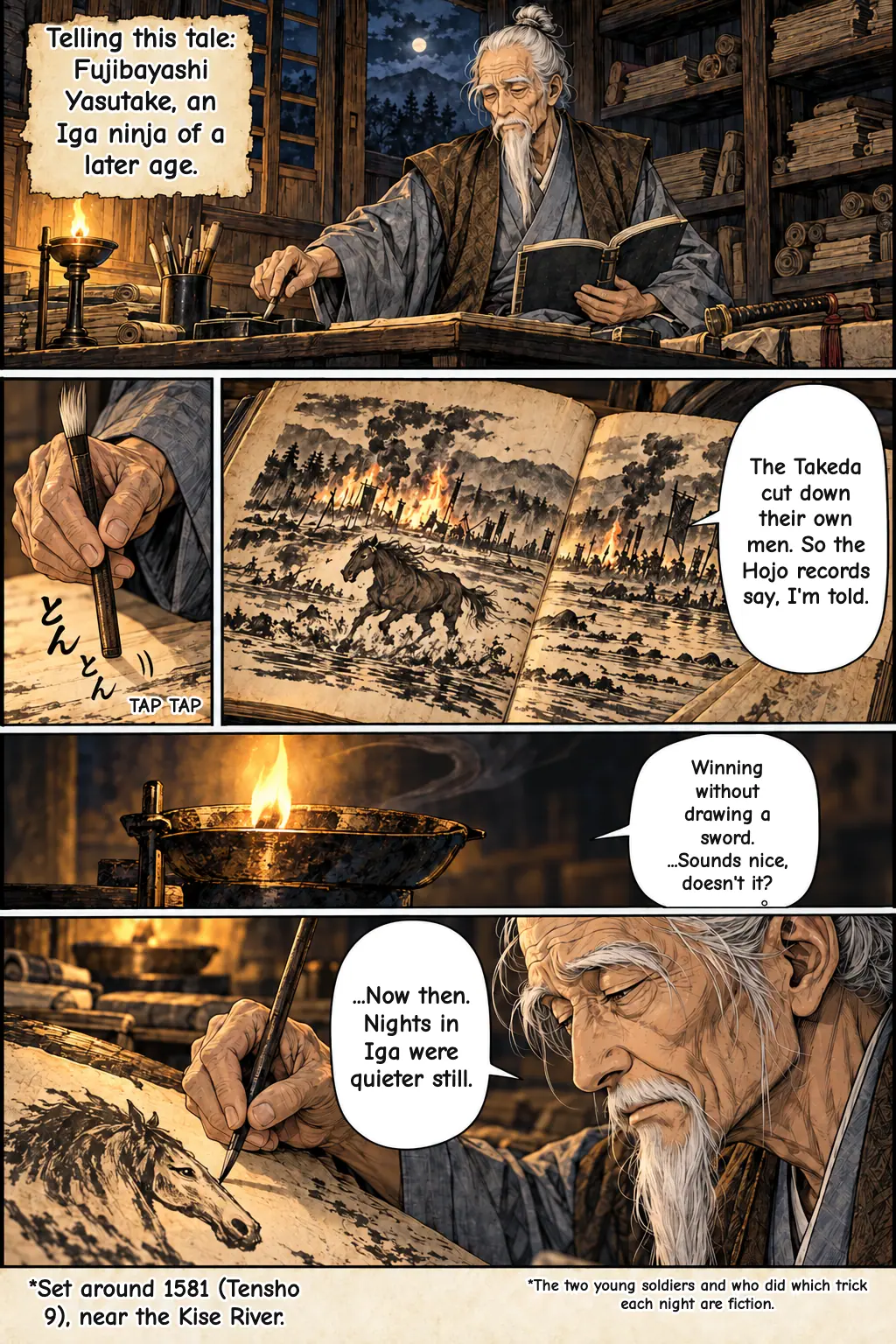
The source for this episode is the Hojo Godaiki, a chronicle of the Hojo clan by Miura Joshin, compiled in the Keicho era (1596–1615) and printed in the Kan'ei era (1624–1644). The passage is about the cunning of the rappa of the Kanto region, and it uses that word rather than the now-familiar "ninja." These were not the black-clad assassins of pop culture. They were closer to professional thieves and infiltrators hired for war.
The tale is also a study in how an army works. One reading is that a large force depends on order, sleep, and knowing who stands beside you, and that the raiders attacked exactly those things. Horses running loose, fires in the wrong places, and shouting from every side could make a crowd of armed men dangerous mainly to itself.
Both clans in the story were near the end of their road. The Takeda fell in 1582, and the Hojo followed in 1590. A chronicle written after those collapses looks back at a vanished world, and that may be part of why such vivid stories were preserved.
What Is Uncertain in the Tradition
Several popular details should be held loosely. The name "Fuma Kotaro" is the familiar one today, but we could not confirm the personal name Kotaro in this passage, and it is treated here as a later common name. The leader's name is also written as Kazama in some forms.
You may read that Fuma commanded about 200 men divided into four bands. Those figures are often repeated, but we have not verified them against the text. The same goes for a famous trick in which Takeda infiltrators hiding among the returning raiders are exposed when everyone is ordered to stand and sit on a signal. It is linked with the Fuma, but we could not confirm that it belongs to this passage. The exact year is also uncertain, since the standoff stretched across roughly 1580 and 1581.
What the Manga Changes
The core of Episode 4 follows the source: the night crossings, the freed horses, the fires, the war cries, and the army turning on itself. The chronicle's description of Fuma's appearance also guides the manga's design.
Much of the human drama, though, is invented. The young Takeda soldier, including his name, background, and point of view, is the manga's creation. So is the final-night scene in which he, mad with fear, attacks the man who looked out for him, and then steps unarmed between comrades about to kill each other. The source gives us crowds, not this kind of personal story.
The manga also adds the raiders' faces, personalities, and conversations, Fuma's lines and orders, the detailed plan for each night, the rain and rising river, the commanders' reactions in camp, and the specific look of the camp at dawn. The striking idea that the raiders never draw a sword, and the image of a great army crumbling because of it, are dramatic framing. The source does record captives taken, and it does not make this the end of the Takeda, whose fall came later, in 1582.
Where to Read It
If this story of an army undone by the dark has caught your interest, the manga shows what a summary can't: the rain, the panic, and one frightened young soldier in the middle of it. You can read Episode 4 of NINJA: Shadows of the Warring States, "No Swords Drawn. An Army Fell.", right here on Manga Portal. Every episode is free, with no sign-up required.
Characters in this episode
Fuma (Fuma Kotaro)
Chief of the Hojo clan's rappa, described in the chronicle as a huge, fanged, demon-like man; "Kotaro" is the later popular name.
Hojo Ujinao
Head of the Hojo clan and commander on the Hojo side of the Kise River standoff.
Takeda Katsuyori
Commander of the Takeda army, camped on the opposite bank and targeted by the night raids.
The Rappa
Fuma's unnamed raiders, skilled in theft and infiltration, who cross the river by night to spread chaos in the Takeda camp.
The Takeda Soldiers
The nameless troops who, unable to find the enemy in the dark, end up striking down their own comrades.
The Young Takeda Soldier (manga only)
A character created for the manga, whose terror on the final night turns him against a friend before he steps unarmed between his comrades.
FAQ
Who was Fuma Kotaro?
He is remembered as the leader of the Fuma, the rappa (raiders and infiltrators) who served the Hojo clan. The Hojo Godaiki describes a chief named Fuma as a giant with fangs and a far-carrying voice. We could not confirm the name Kotaro in the passage on these raids, and it is treated here as a later common name.
What happened at the Fuma night raids at Kisegawa?
While the Hojo and Takeda armies faced each other across the Kise River, Fuma's men crossed on rainy and dark nights. They captured people, cut horses loose, set fires, and shouted war cries, and the Takeda soldiers, unable to find the enemy, fought one another in the confusion.
Were the Fuma ninja?
They are often called ninja today, but the Hojo Godaiki calls them rappa, a word for men who specialized in theft and infiltration. They are quite different from the black-clad assassins of modern fiction.
Did the Kisegawa night raids really happen?
The Hojo and Takeda were real rivals, and the standoff is placed around 1580 to 1581. The details of the raids come from a chronicle compiled decades later, and they include plainly legendary touches such as Fuma's demon-like looks, so it is safest to read the episode as a traditional account rather than a verified record.
Is the young soldier in the manga a historical person?
No. The young Takeda soldier and his story are created for the manga. The source describes the Takeda troops only as an unnamed group.