Episode 2He Shot a Stag With a Cherry Pit. Then...Baron Munchausen: The Stag and the Cherry Tree
Out of flint and out of bullets, the Baron fires with whatever he has on hand, then gets hauled into the sky by a string of ducks. And the desperate shot of cherry pits he fired that day? Years later, it comes back out of the deep forest in a shape nobody saw coming.
Get new episodes in your feed. Follow us on:ThreadsBluesky
Story summary
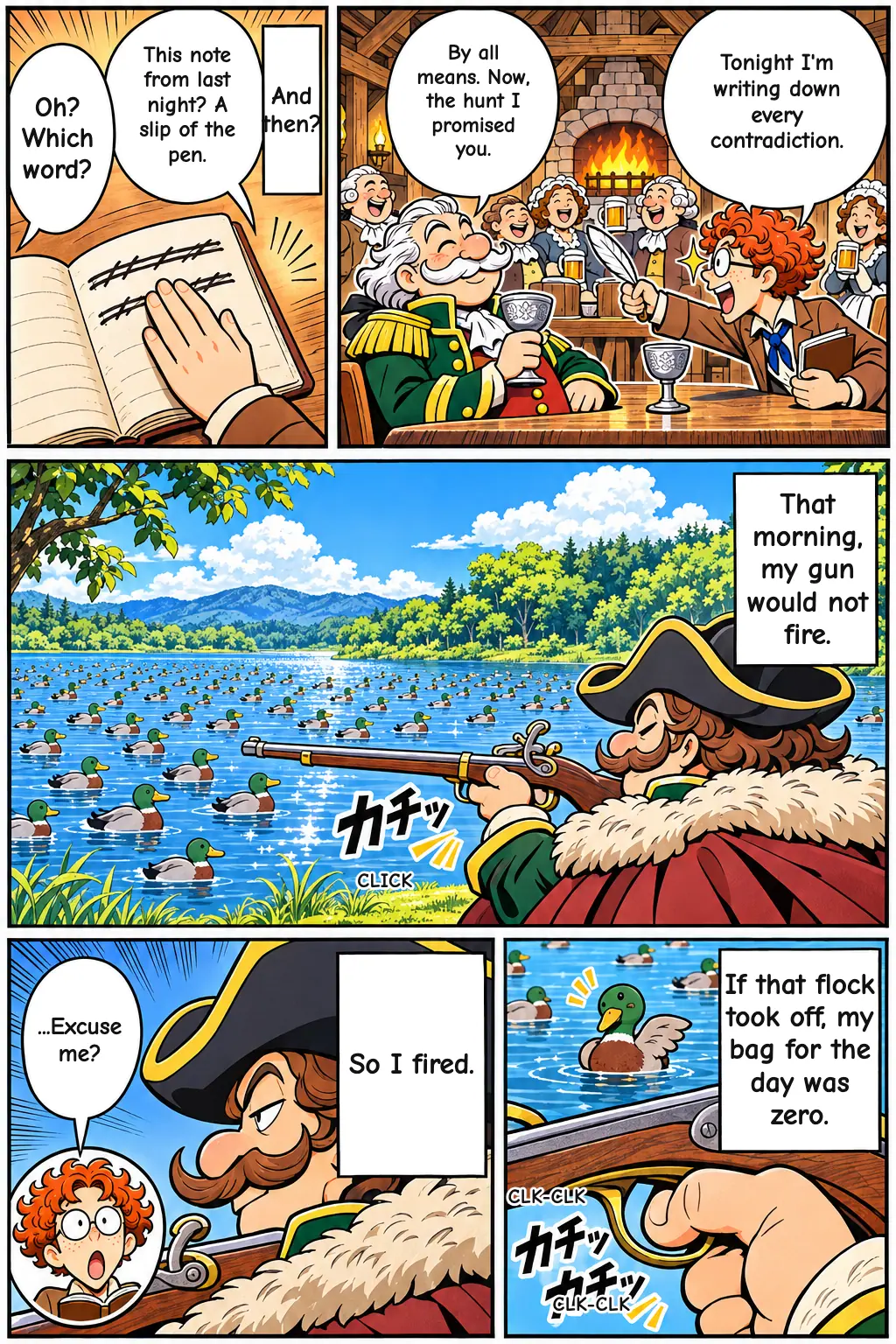
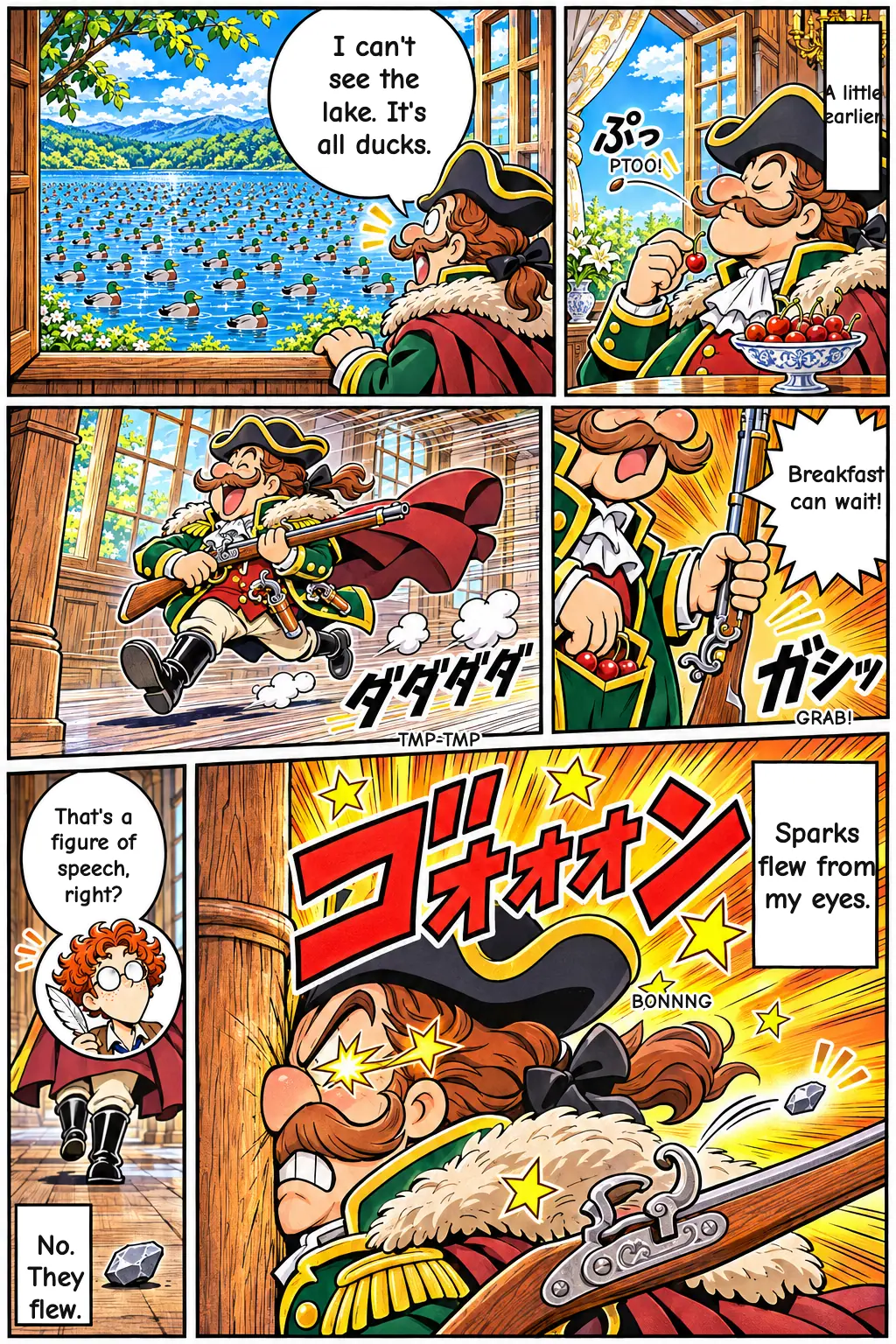
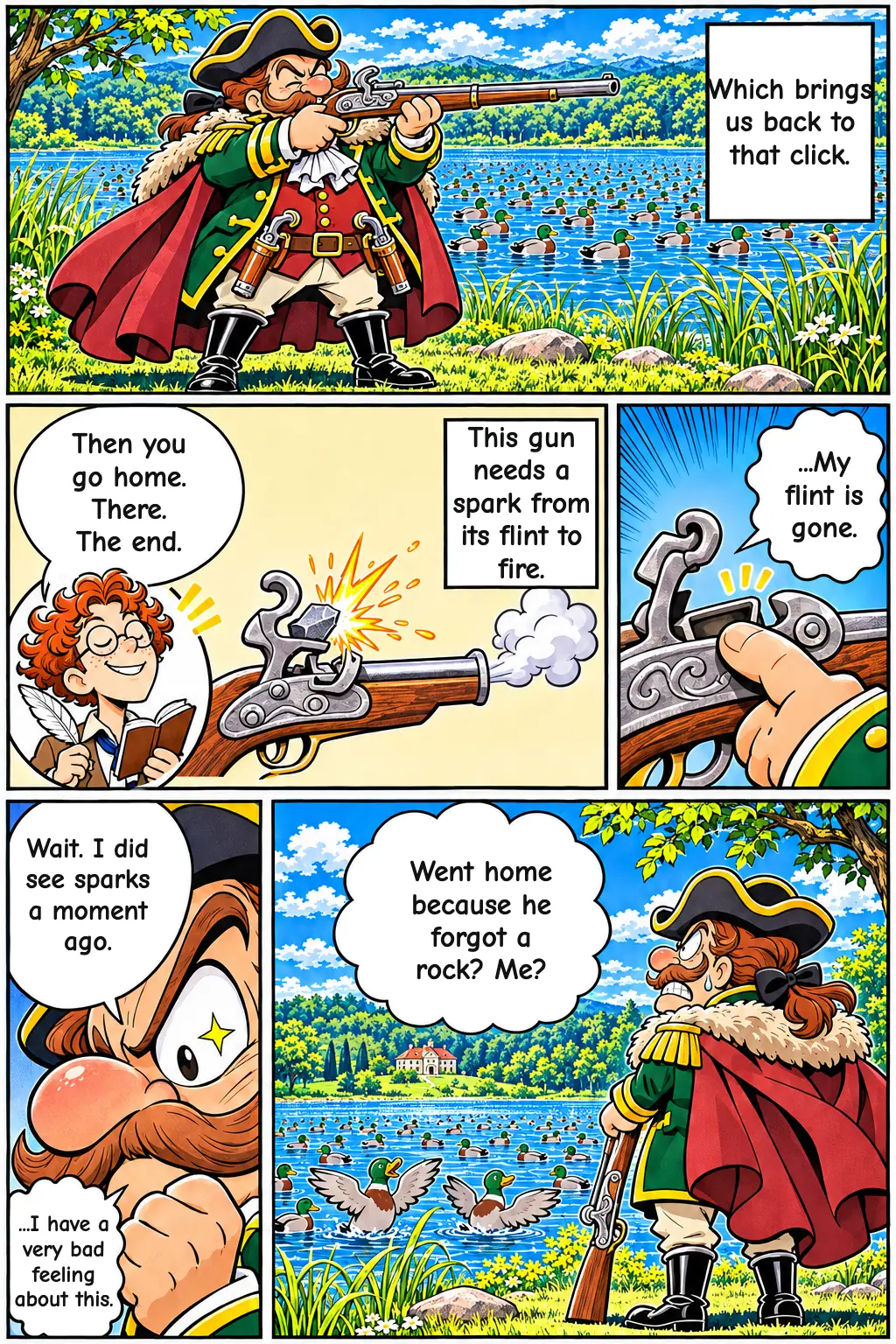
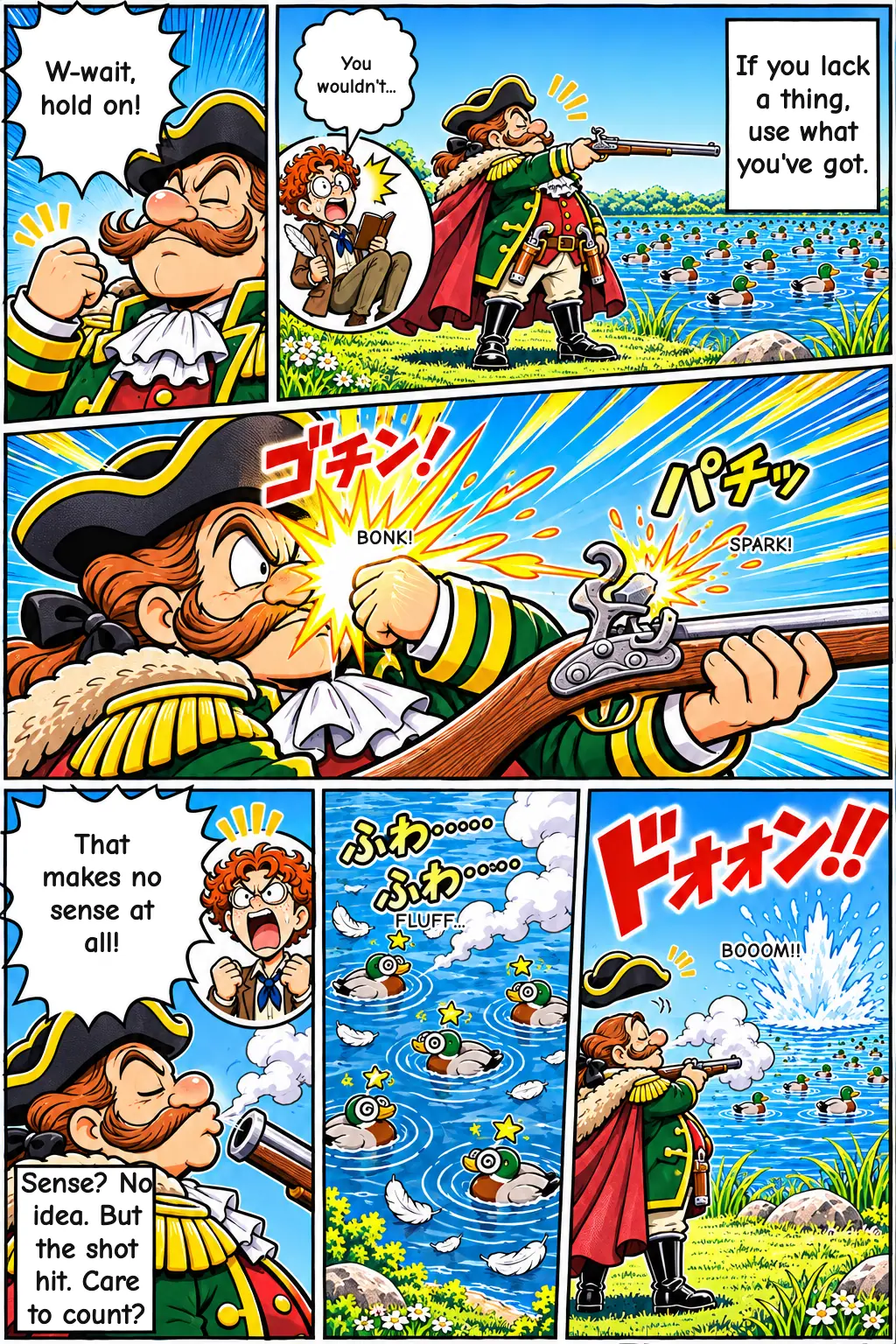
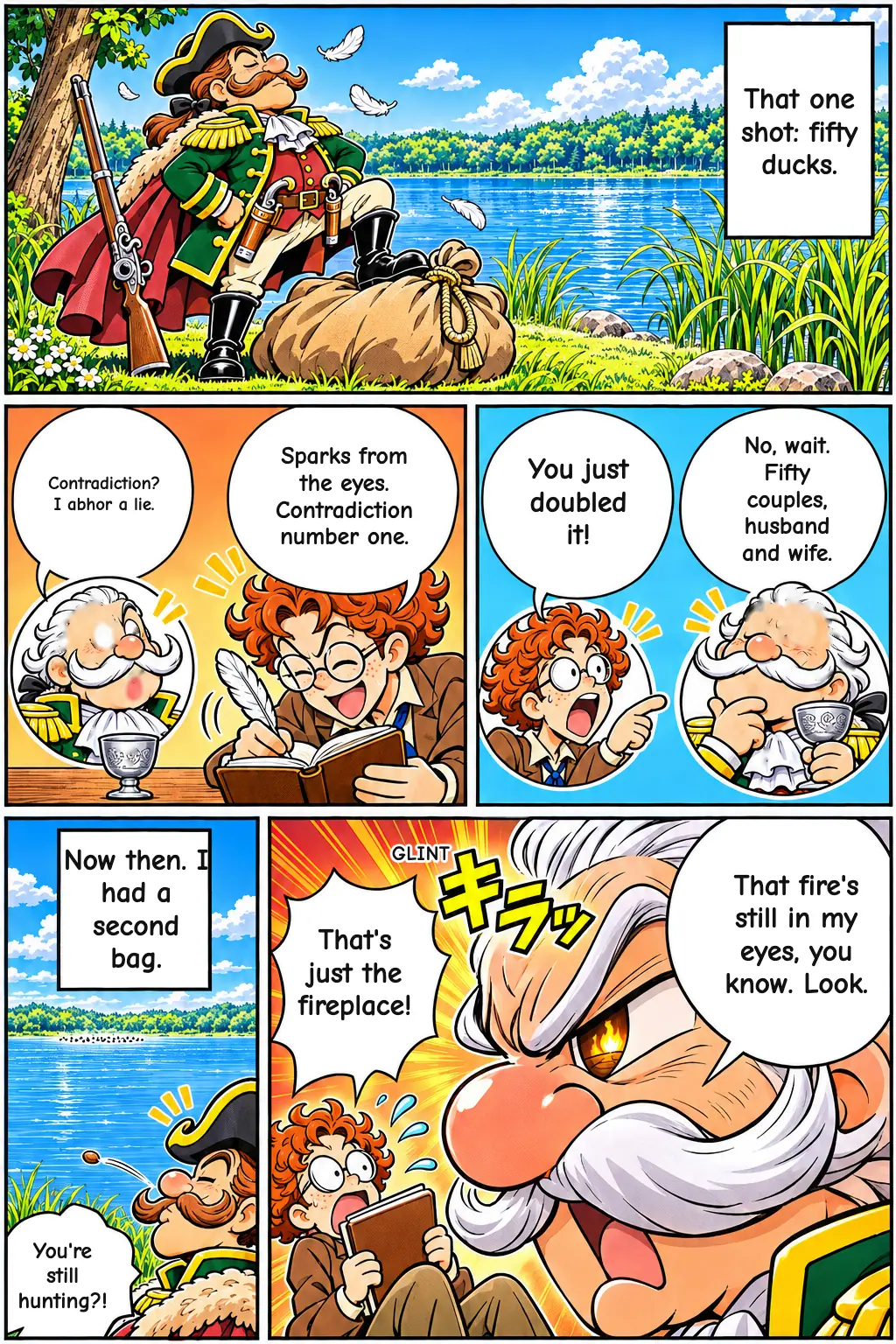
The Baron tells these stories himself, in the first person and with a perfectly straight face. They are separate hunting adventures rather than one continuous plot. In the first, he spots wild ducks covering a large pond near his home, grabs his gun and runs out so fast that he smashes his face into the doorpost. Sparks fly from his eyes. When he reaches the pond, he finds the impact has knocked the flint out of his gun, so there is nothing to ignite the powder. Remembering the sparks, he opens the priming pan, aims at the birds and punches himself in the eye.
Baron Munchausen's Cherry Tree Stag and Flying Ducks: Story Explained
In short: The cherry tree stag is a tall tale in which Baron Munchausen, out of bullets, shoots a stag with cherry pits and meets it again a year or two later with a fruit-laden cherry tree growing between its antlers. He kills it and boasts of getting venison and cherry sauce in one shot. The story comes from the Munchausen books published by Rudolf Erich Raspe (1785) and Gottfried August Bürger (1786).
The original tales: a punch, a flock of ducks and a cherry tree
The Baron tells these stories himself, in the first person and with a perfectly straight face. They are separate hunting adventures rather than one continuous plot. In the first, he spots wild ducks covering a large pond near his home, grabs his gun and runs out so fast that he smashes his face into the doorpost. Sparks fly from his eyes. When he reaches the pond, he finds the impact has knocked the flint out of his gun, so there is nothing to ignite the powder. Remembering the sparks, he opens the priming pan, aims at the birds and punches himself in the eye. The spark fires the gun, and one shot brings down a huge haul of waterfowl. The exact count varies by edition.
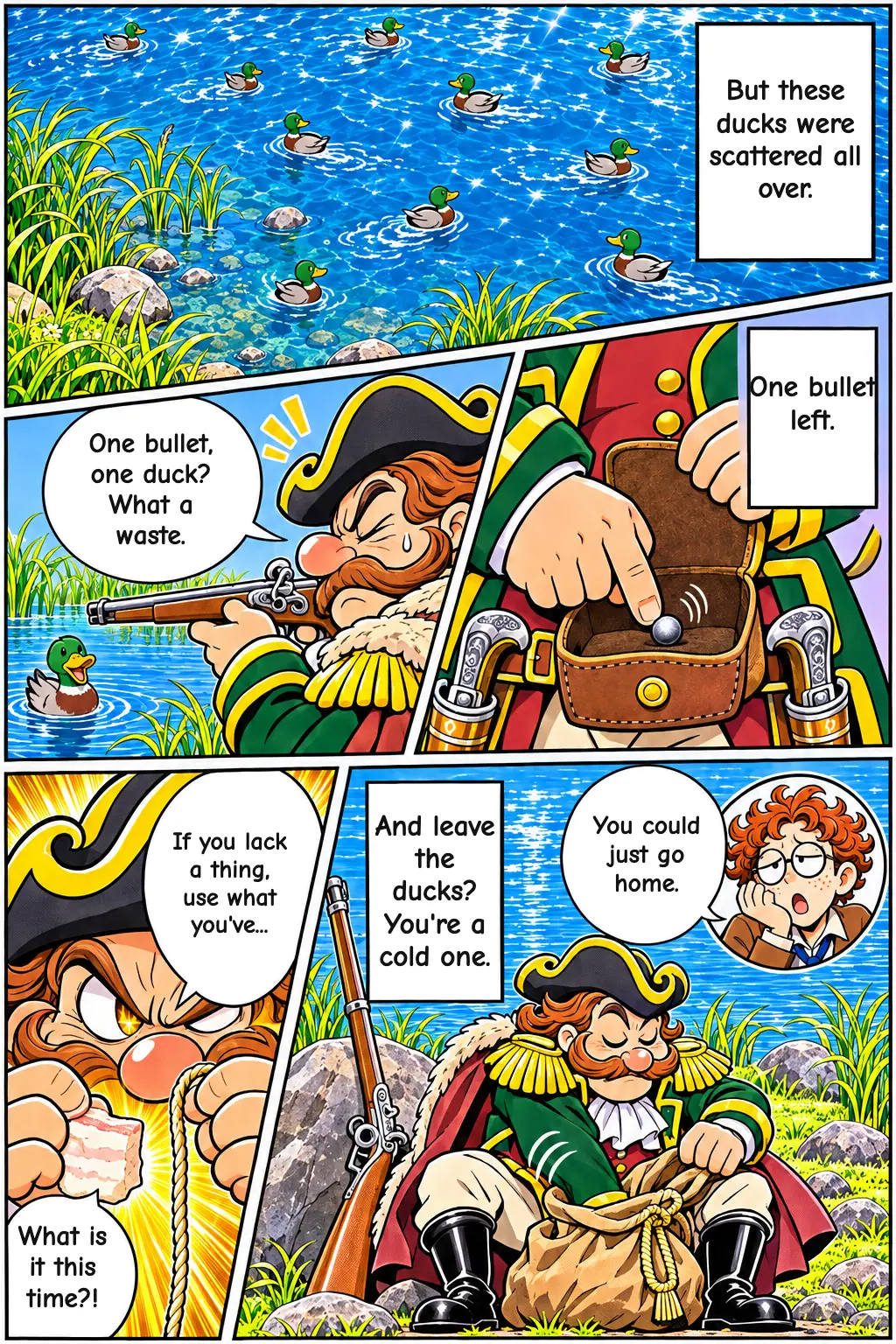
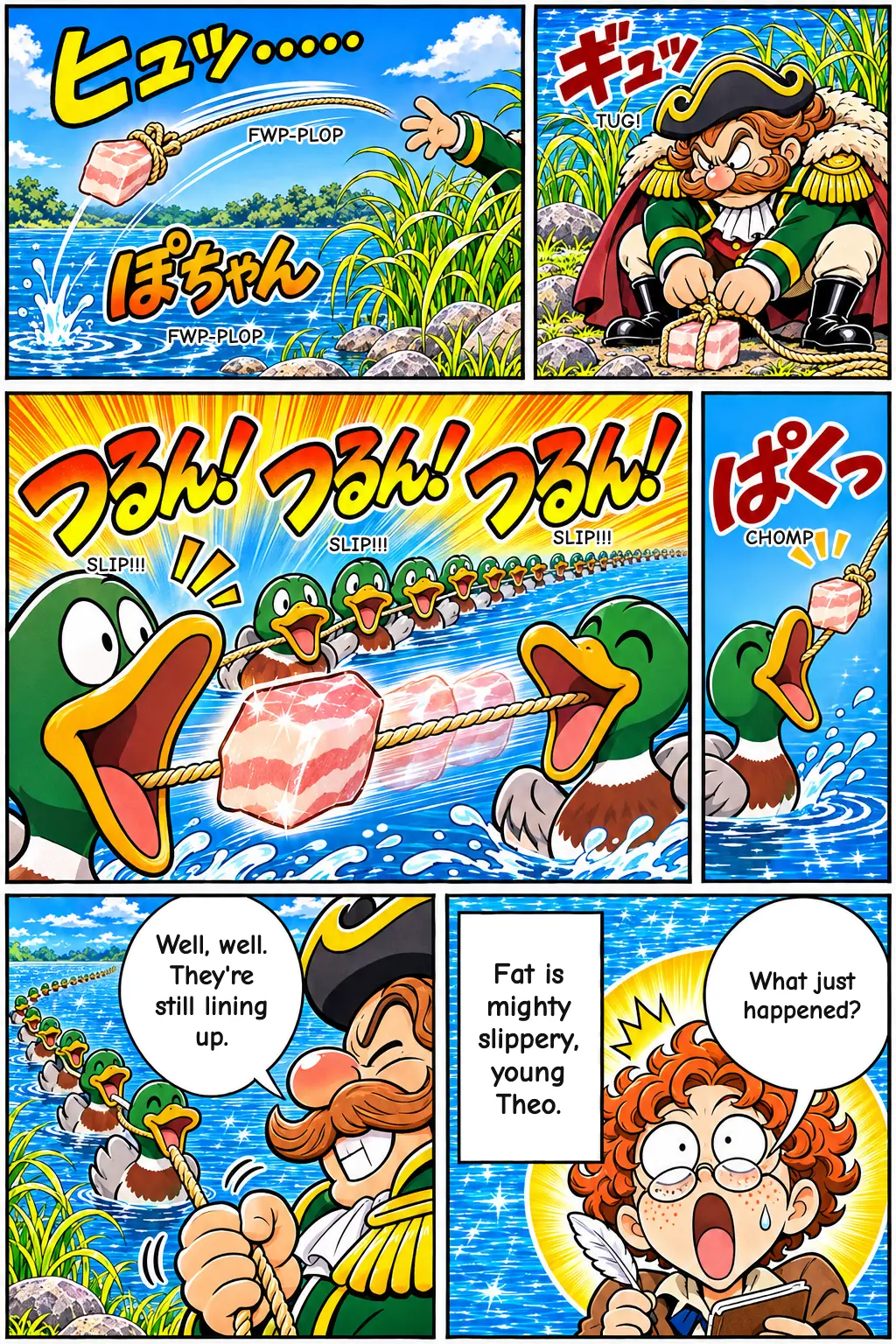
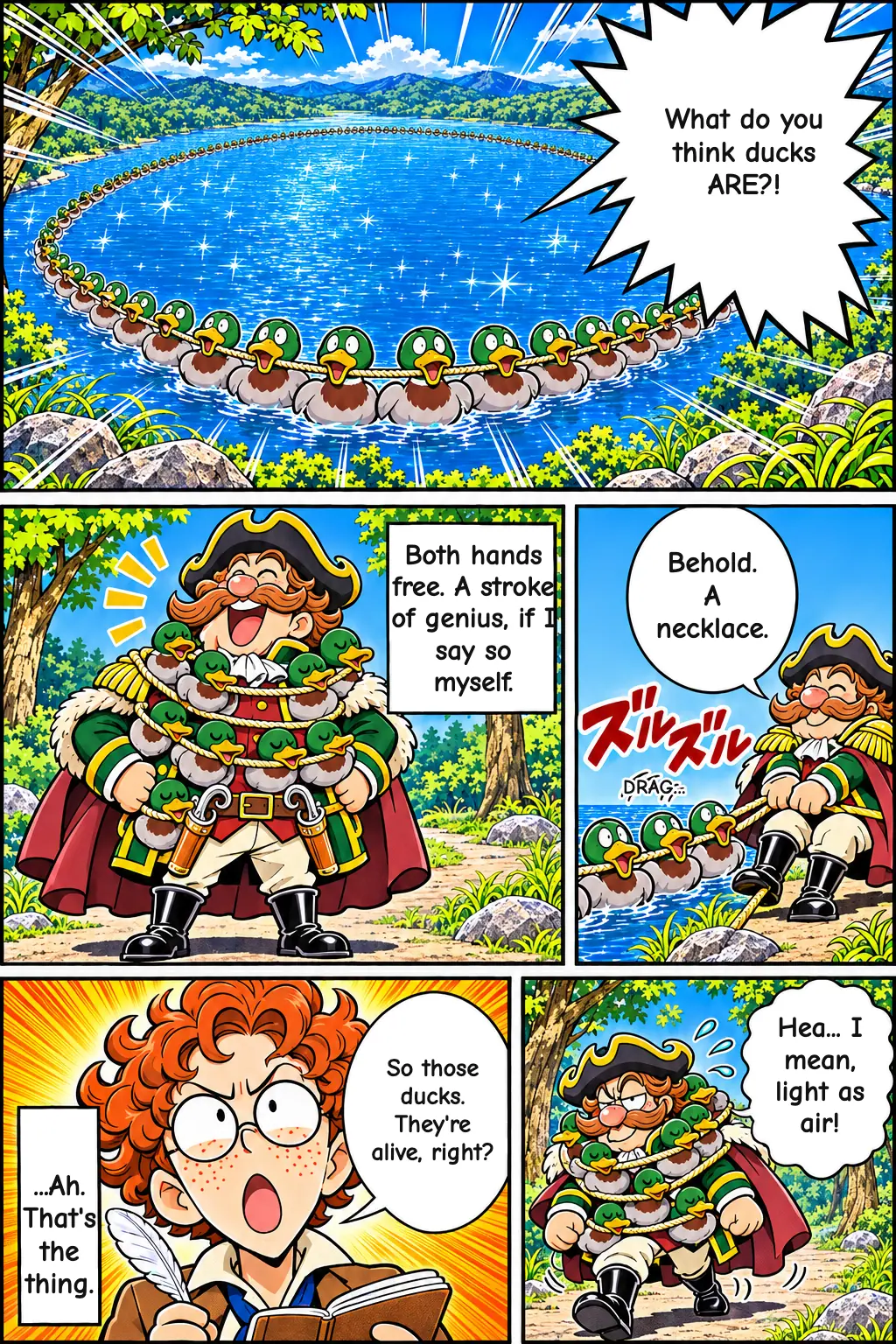
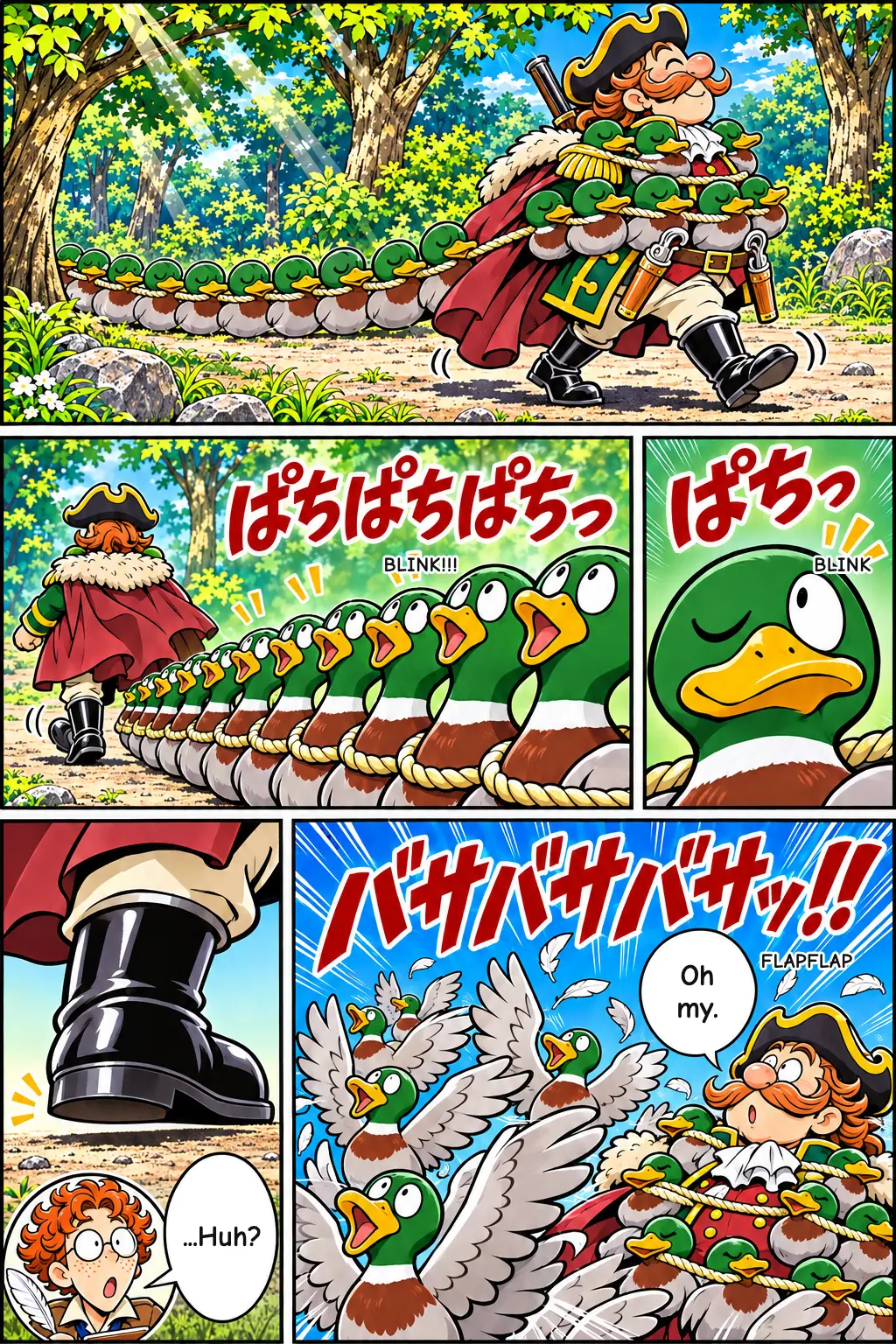
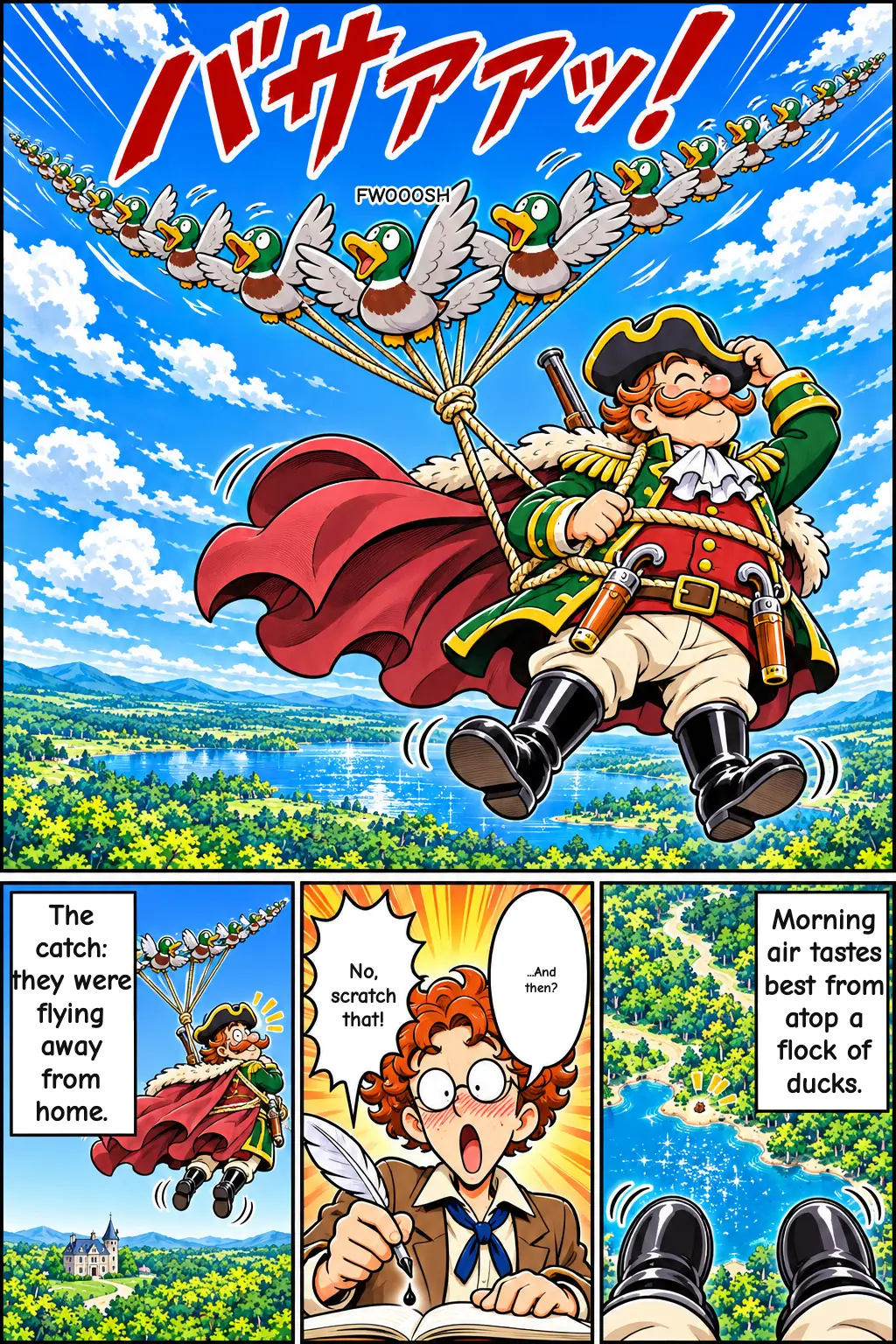
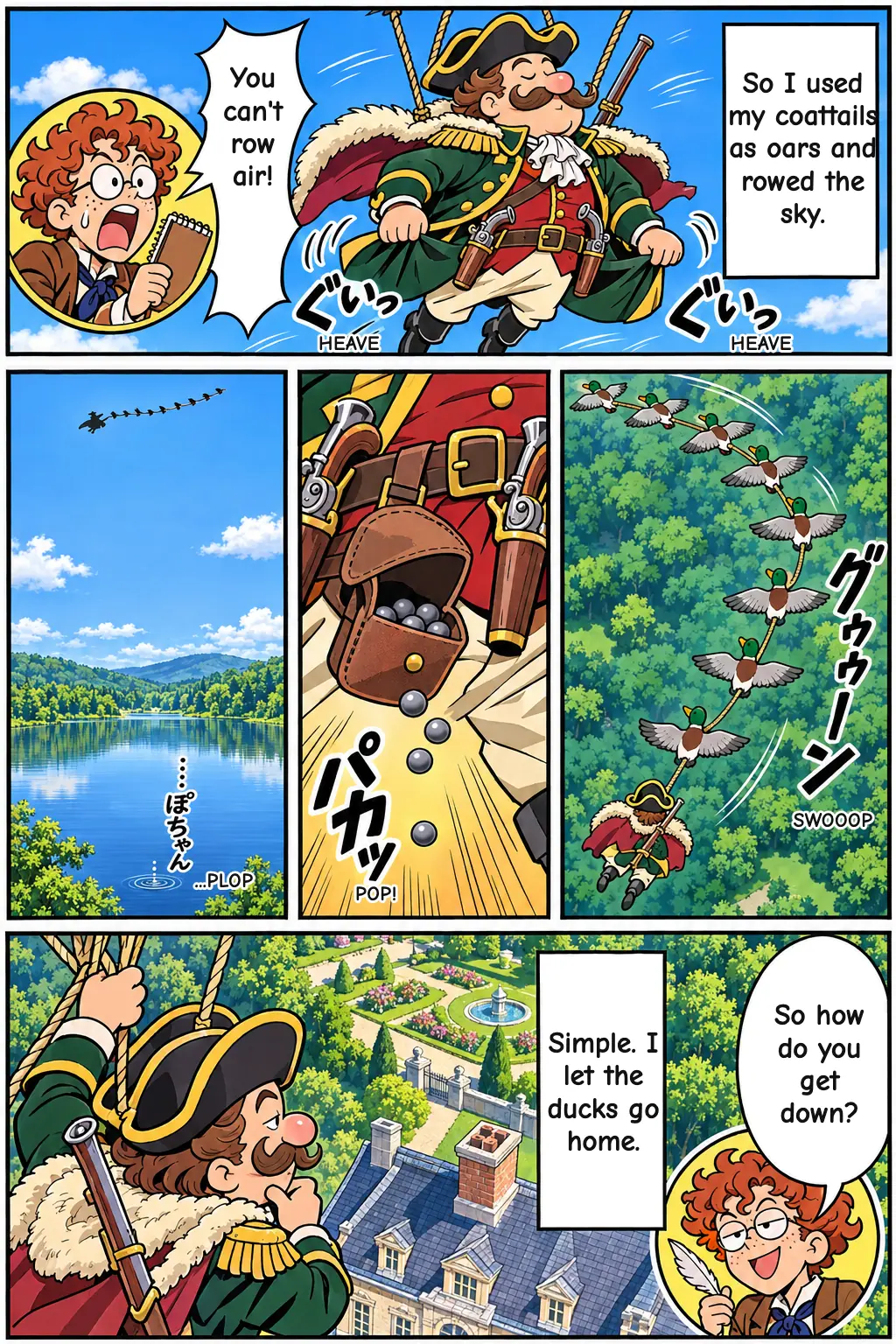
In another adventure, he finds ducks scattered across a lake and has only one bullet left. He ties a piece of leftover fat to a long string, hides in the reeds and tosses the bait into the water. The first duck swallows it, and the slippery fat passes straight through the bird. The next duck swallows it, then the next, until a whole line of ducks is threaded on the string like beads. The Baron winds the string around himself and heads home. But the ducks are still alive. Once they recover from their surprise, they take off and carry him into the sky.
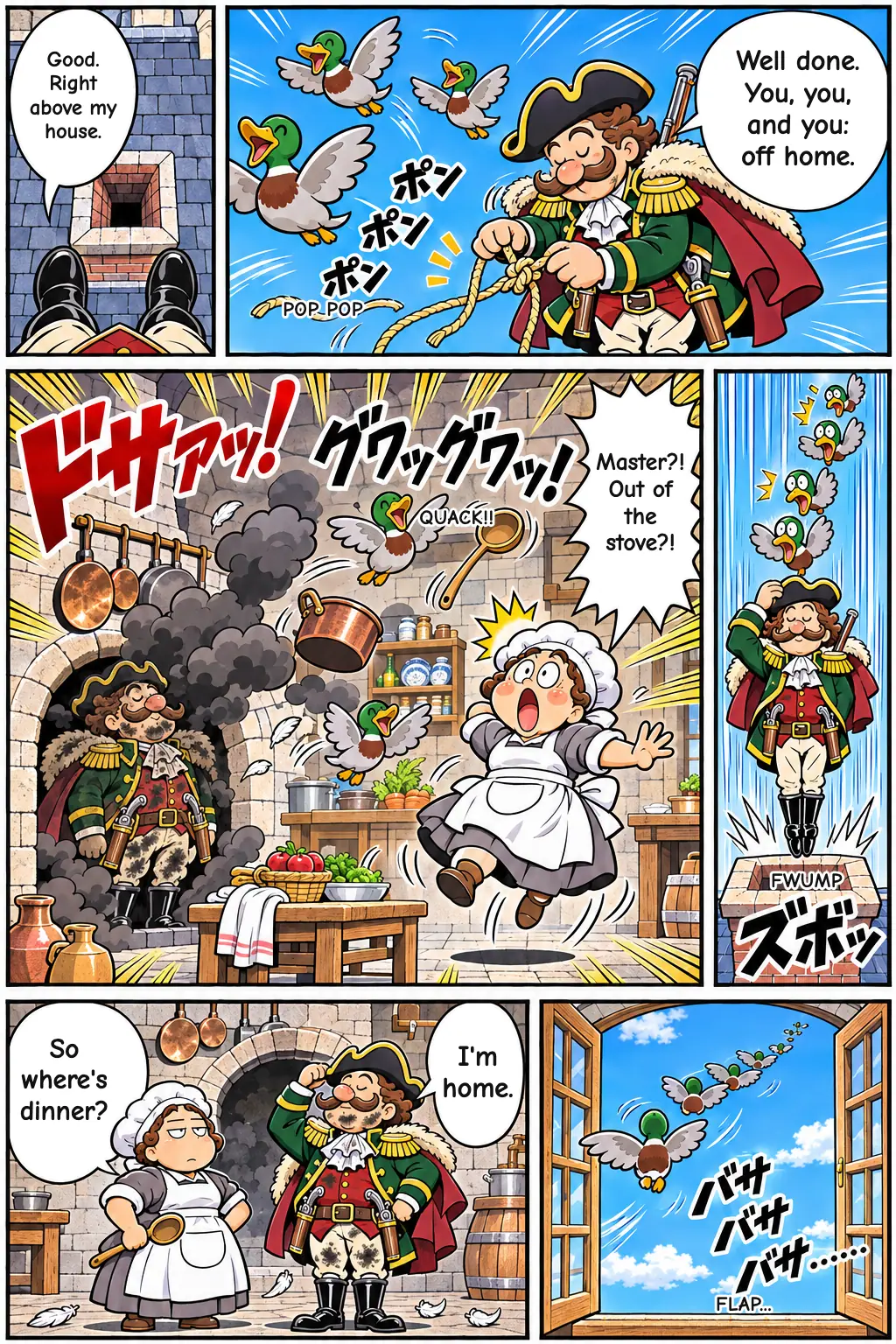
He handles this calmly, using the tails of his coat as oars to row through the air toward his house. Over the roof, he crushes the ducks' heads one at a time so that they sink gradually, and he drops down through the chimney.
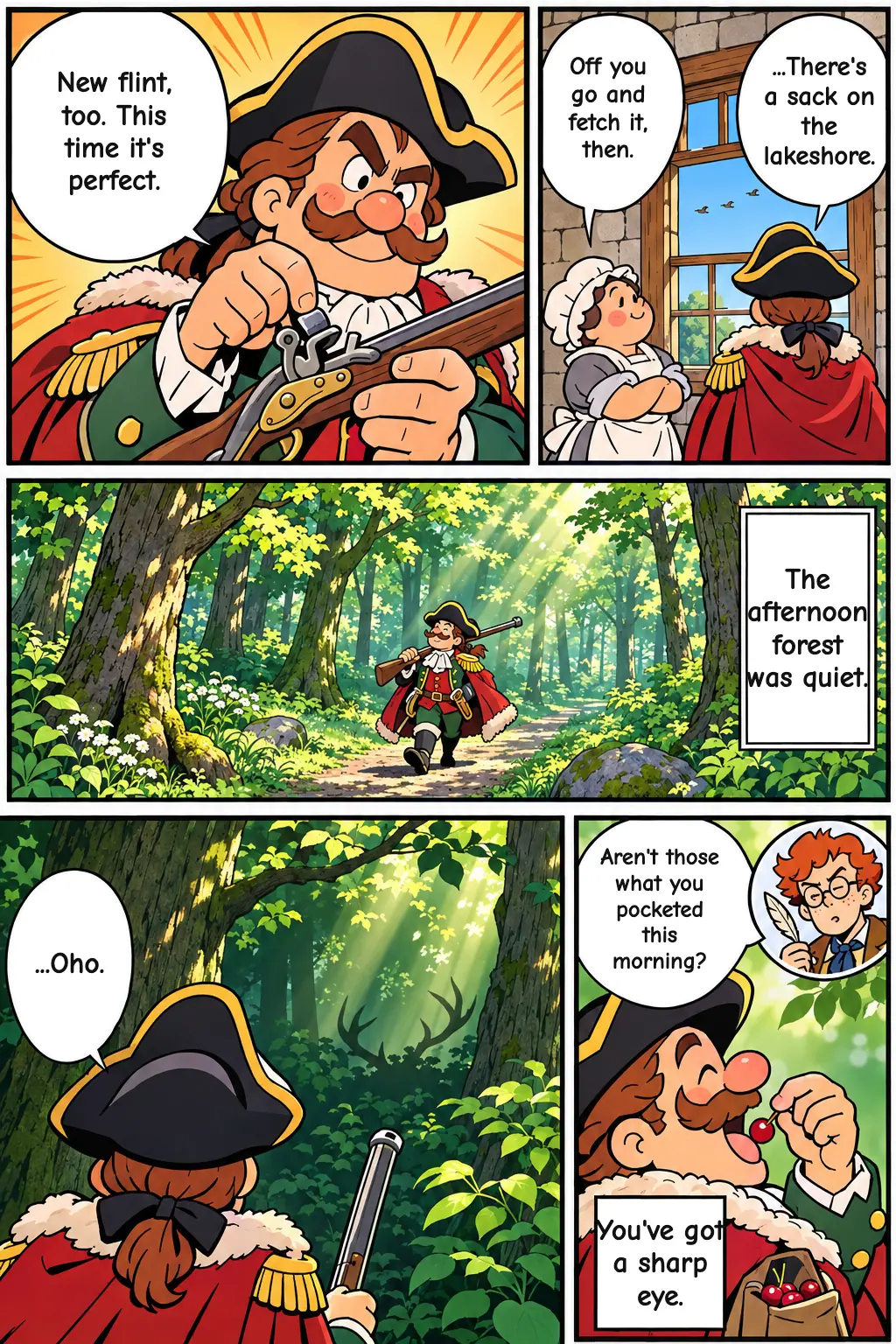
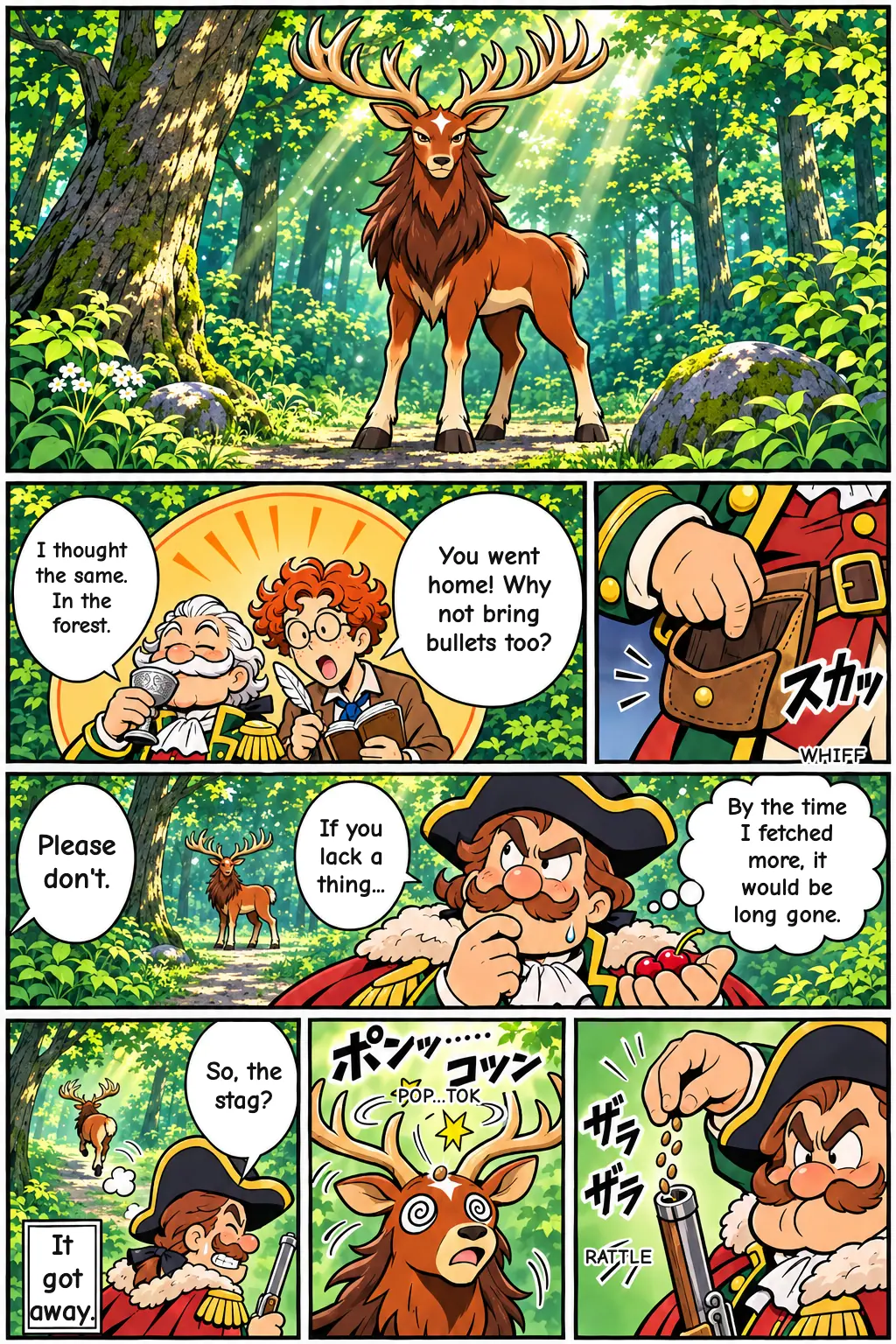
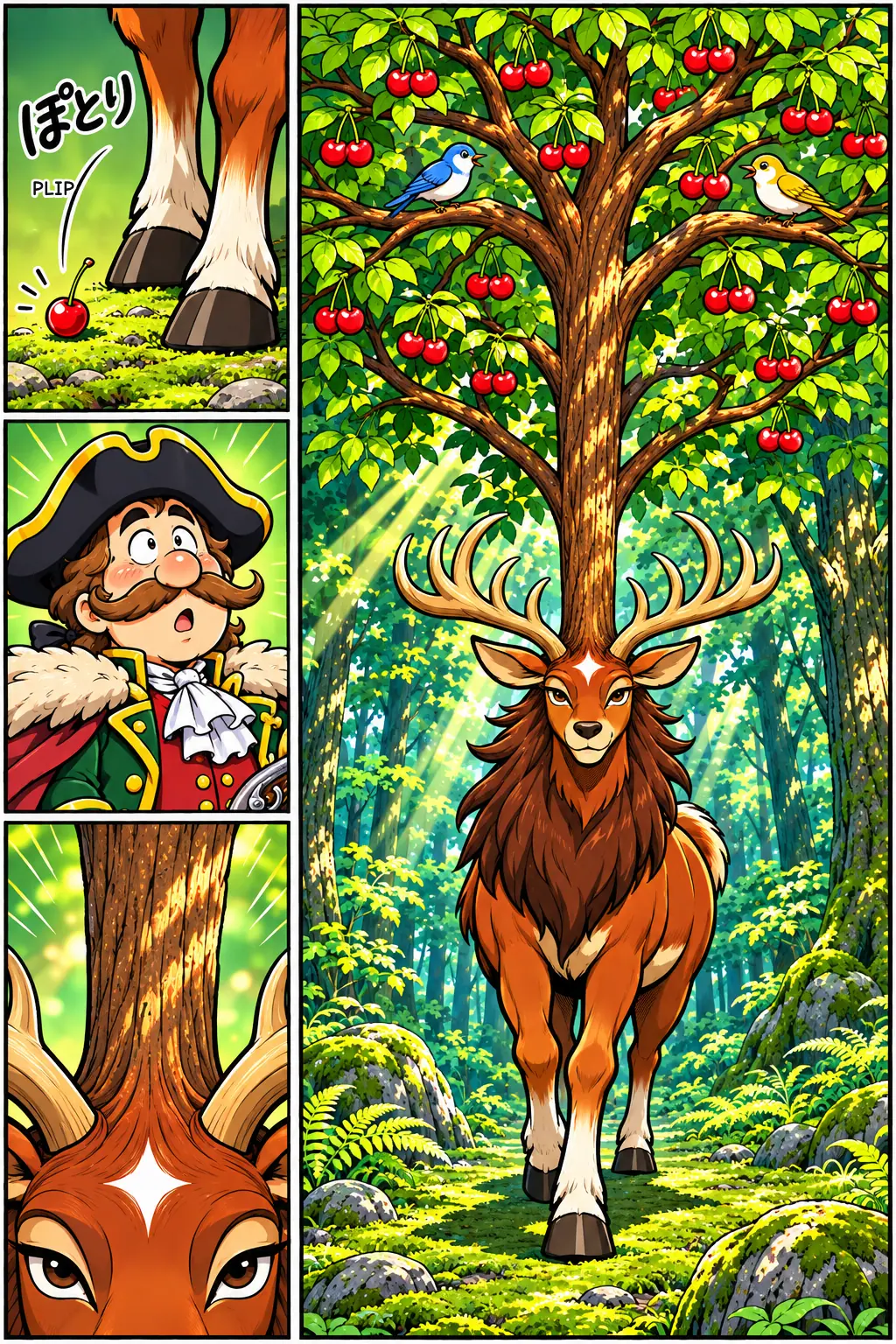
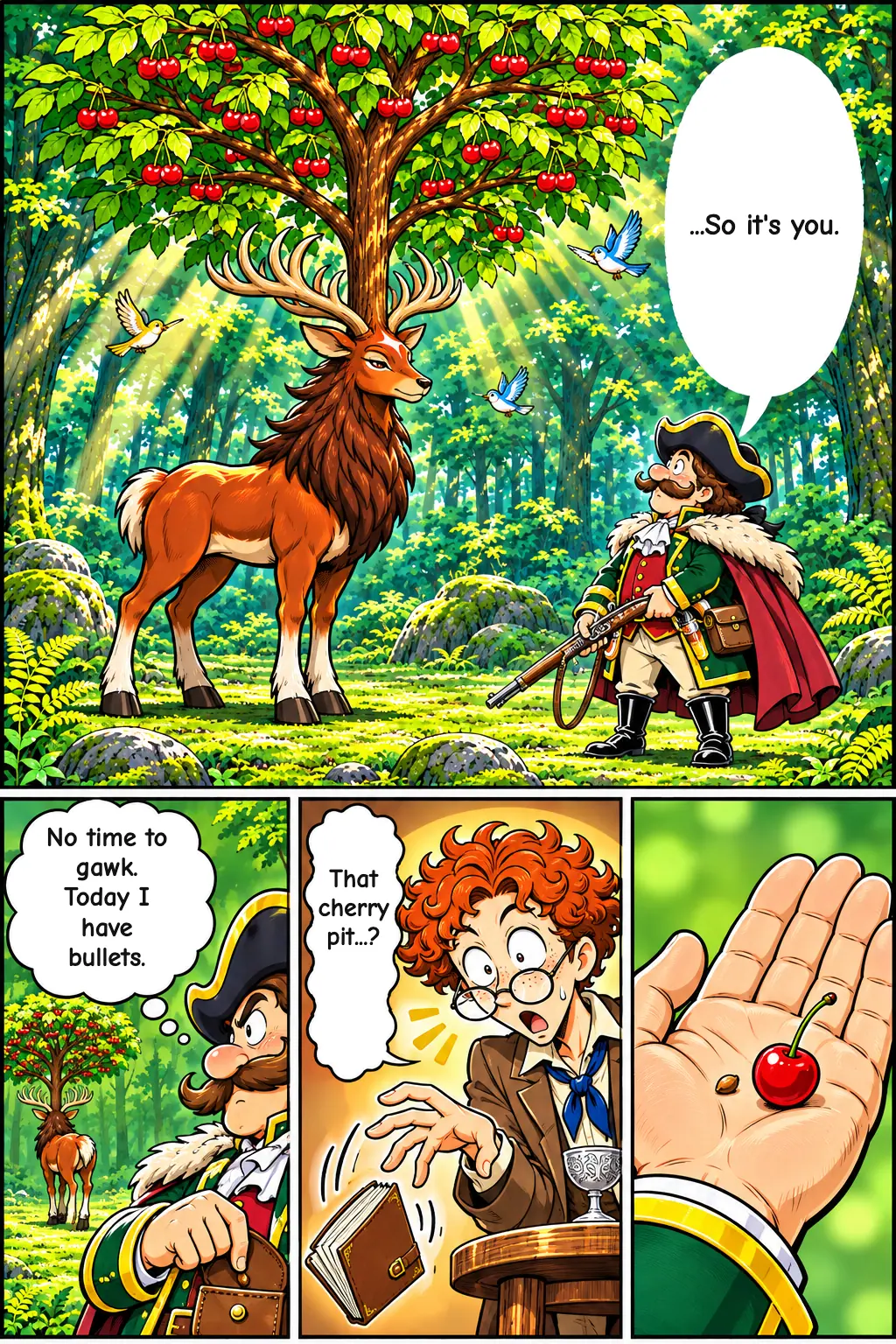
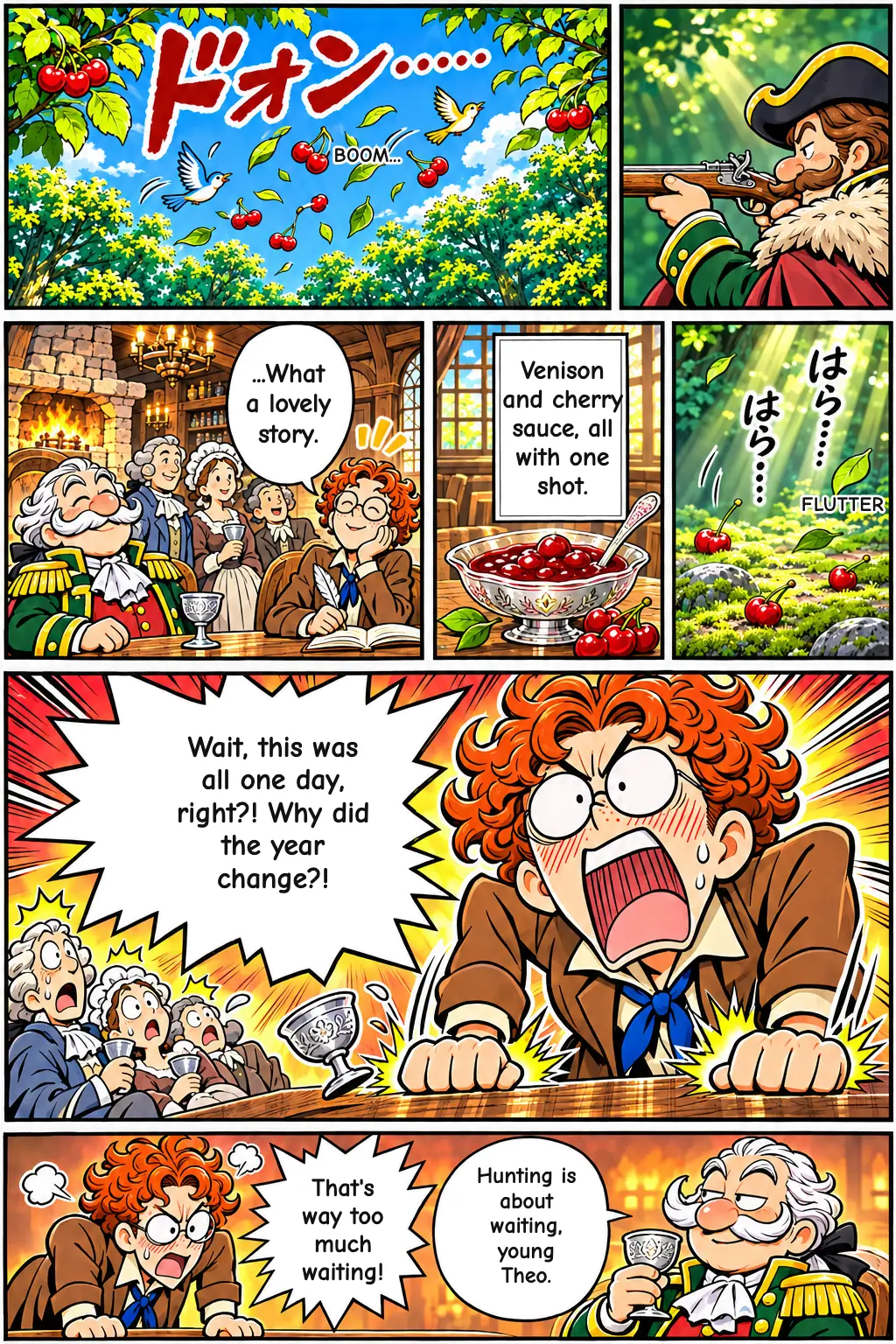
The most famous tale comes when he has run out of bullets and meets a magnificent stag that stares at him as if it knows he is helpless. He loads his gun with powder and a handful of cherry pits, freshly sucked clean, and hits the animal on the forehead between the antlers. It staggers but escapes. A year or two later, in the same forest, he meets a stag with a cherry tree more than ten feet tall growing between its antlers. He recalls the earlier shot, treats the animal as his rightful property and brings it down. Since the tree is full of fruit, he declares that he has won both the meat and the sauce to go with it.
Where the stories come from
Baron Munchausen was named after a real person, Hieronymus Karl Friedrich von Münchhausen (1720–1797), a German nobleman who served with the Russian army and was known for telling colorful stories. The book, however, is a work of fiction, and it should not be read as a record of what he actually said or did.
The English version first appeared in 1785 as Baron Munchausen's Narrative of his Marvellous Travels and Campaigns in Russia, written by Rudolf Erich Raspe, a German author living in Britain. A year later, the poet Gottfried August Bürger published a German version, Wunderbare Reisen zu Wasser und Lande, which reworked and expanded the material.
Because the text grew from edition to edition, details are not fixed. Chapter numbers differ, and the hunting tales usually sit around Chapters 3 and 4 in the English line. The duck-on-a-string adventure is associated with Bürger's German line, so it may not appear in the same place, or at all, in every English edition. If your copy looks different from this summary, that is probably why.
Why these tales still work
These stories belong to the tradition of the tall tale, in which the joke lies in telling something impossible as though it were plain fact. Hunting is a natural setting, because hunters have long been teased for exaggerating their catch. The Baron pushes that habit to its limit. Even an embarrassing collision with a doorpost becomes proof of his quick thinking.
The tales also have a recognizable comic logic. Each one starts from a real problem: no flint, too few bullets, a load too heavy to carry. Then it solves that problem with an answer that is absurd but strangely tidy. The cherry tree is the best example, because the payoff arrives long after the setup, and the finishing touch is a joke about dinner.
The story also has a playful religious edge. The Baron brings up Saint Hubert, the patron saint of hunters, who according to legend met a stag bearing a cross between its antlers. Once he has shown what a cherry pit can do, he jokes that a devout hunter or cleric might have planted that cross the same way. A sacred legend is suddenly recast as one more trick shot, which gives the tale a wink at the credulous.
What is original and what the manga adds
From the source: the doorpost collision, the punch that fires the gun, the ducks threaded on a string, the flight, the rowing with coat tails, the cherry pit shot and the stag's return with its tree.
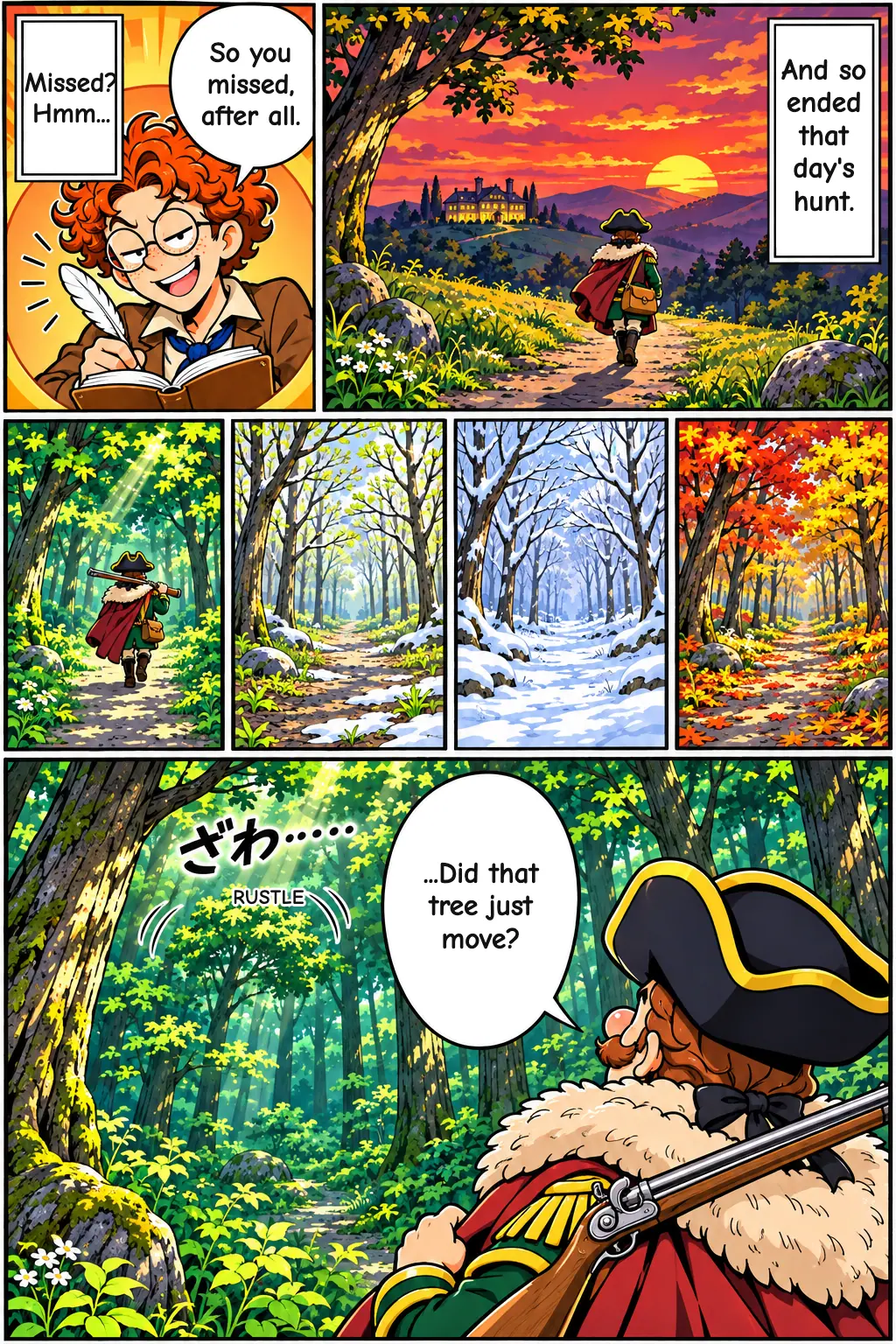
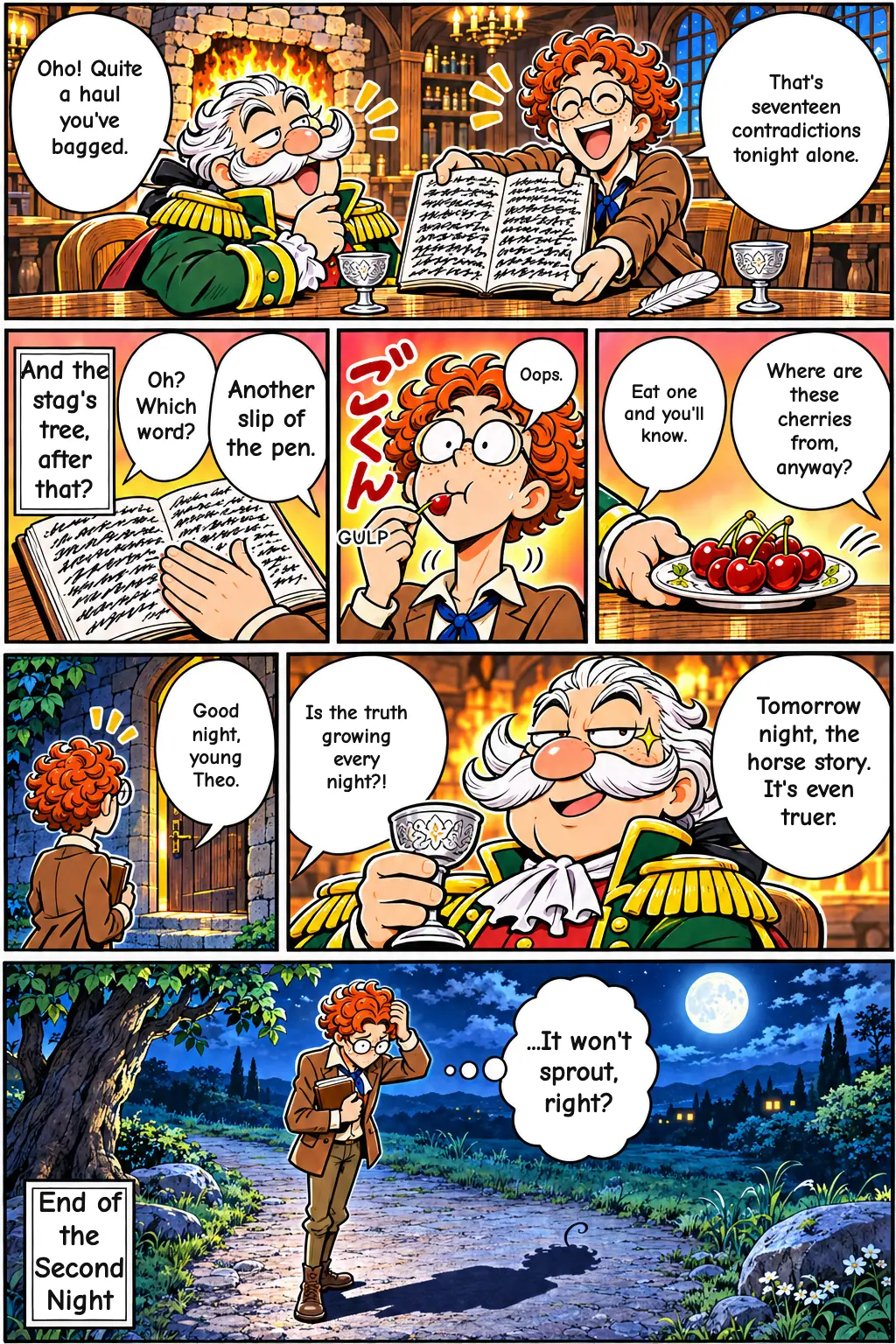
From the manga: the source tells these as separate hunts, while the episode links them into one flowing adventure, with its own scene changes and pacing. The Baron's face, clothes and age are the manga's own design, since the original offers little description of him. The seasons, weather, forest and house scenery, along with the expressive faces of the ducks and the stag, are also creative choices. So are any comic reactions from listeners or household members.
The manga's summary says the cherry pit shot returns years later, while the source says a year or two. Where a scene in the manga differs from the original on details like these, including how the Baron gets back to the ground, treat the summary above as the version closer to the source.
Where to read it
If you want to see a man row through the sky with his coat tails, this story is a good fit for manga, since so many of the jokes are visual. Episode 2 of BARON MUNCHAUSEN: Fourteen Nights of Impossible Tales is on this page, and every episode on Manga Portal is free to read with no sign-up. Start here for the cherry tree, then keep going if you want to find out what the Baron claims next.
Characters in this episode
Baron Munchausen
The narrator and hero, a proud hunter who presents every impossible escape as sober fact.
The wild ducks
The Baron's prey, first shot in a huge flock and later threaded on a string, still alive and strong enough to lift him into the sky.
The stag
A magnificent animal that survives a forehead full of cherry pits and returns with a fruiting cherry tree between its antlers.
Saint Hubert
The patron saint of hunters, mentioned but never seen, whose legendary stag with a cross inspires the Baron's closing joke.
FAQ
What happens in the Baron Munchausen cherry tree story?
Out of bullets, the Baron loads his gun with cherry pits and hits a stag on the forehead, but it escapes. A year or two later he meets it again with a cherry tree growing between its antlers. He kills it and claims both the meat and the cherry sauce.
Was Baron Munchausen a real person?
Yes, the name comes from a real German nobleman, Hieronymus Karl Friedrich von Münchhausen (1720–1797), who served with the Russian army and was known as a storyteller. The adventures in the book are fiction, and they should not be taken as his real experiences.
Who wrote The Surprising Adventures of Baron Munchausen?
The English book was first published in 1785 by Rudolf Erich Raspe, under the title Baron Munchausen's Narrative of his Marvellous Travels and Campaigns in Russia. Gottfried August Bürger published an expanded German version in 1786. Later editions and titles vary.
How does Baron Munchausen fly with the ducks?
He threads a line of live ducks on a string using a piece of slippery fat as bait, and they take off with him attached. He rows through the air with his coat tails, then crushes the ducks' heads one by one to descend through his chimney. This episode is associated with Bürger's German version.
How does the Baron fire his gun without a flint?
After losing the flint in a collision with a doorpost, he remembers the sparks that flew from his eyes. He opens the priming pan, aims at the ducks and punches himself in the eye, and the spark sets off the shot.