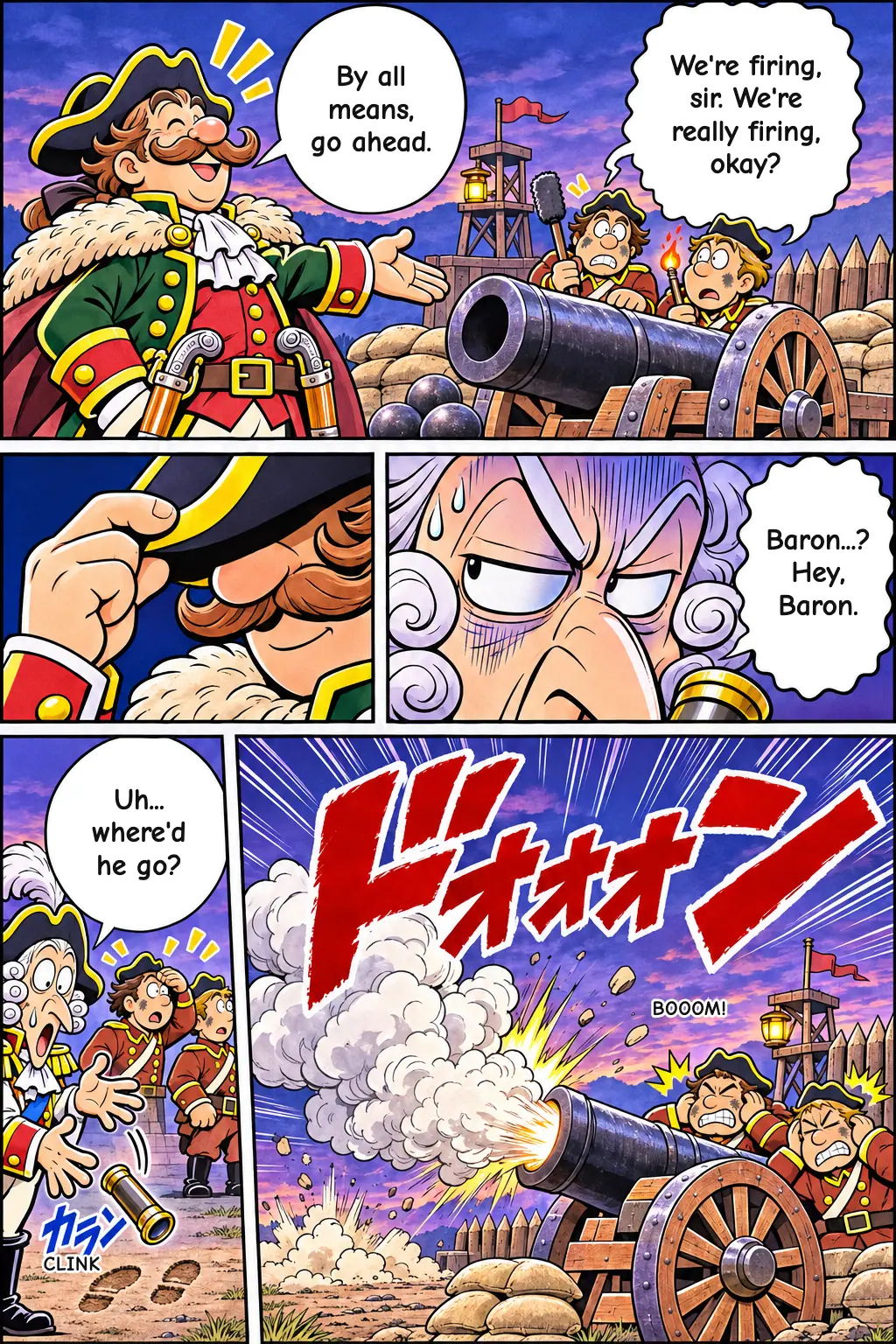
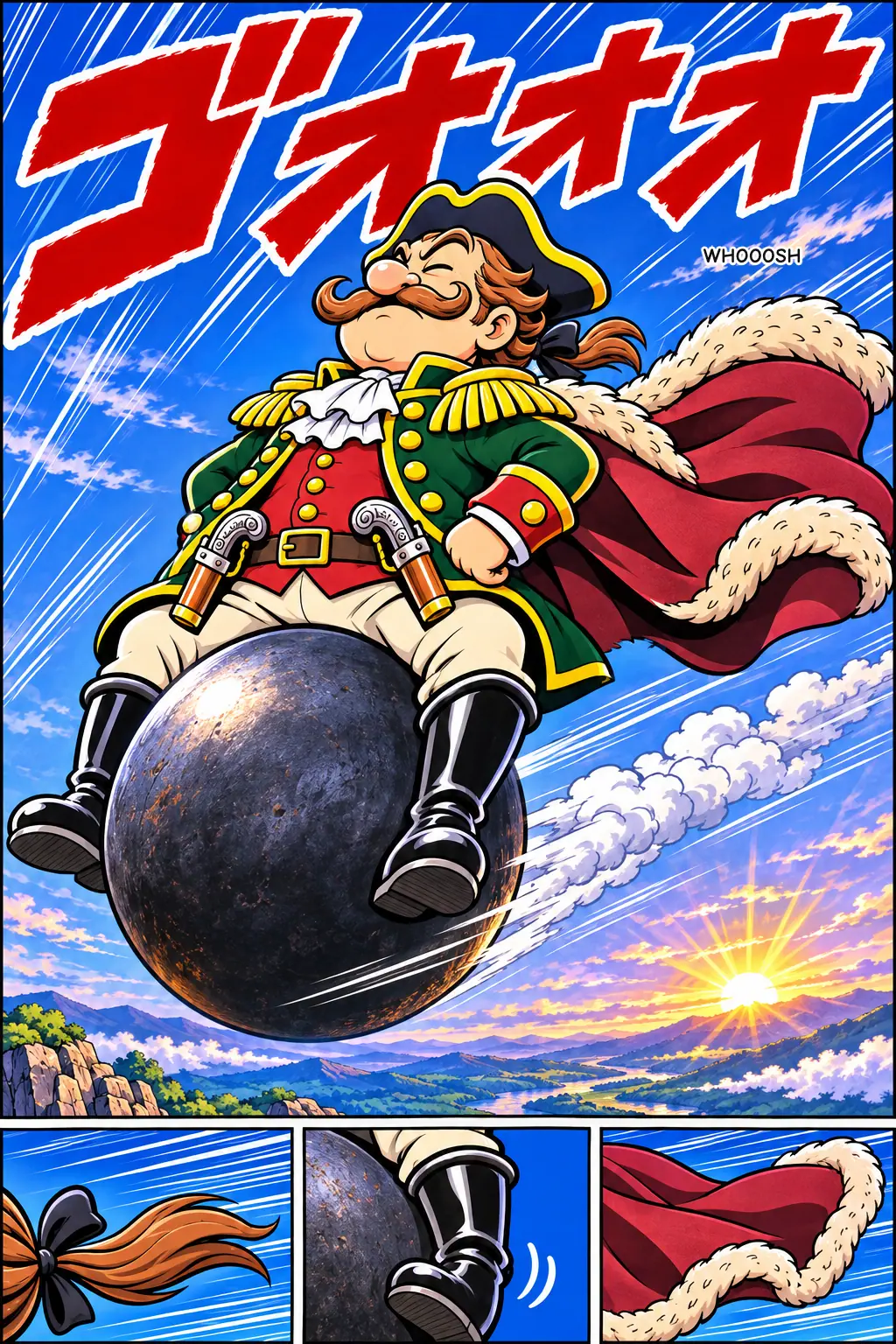
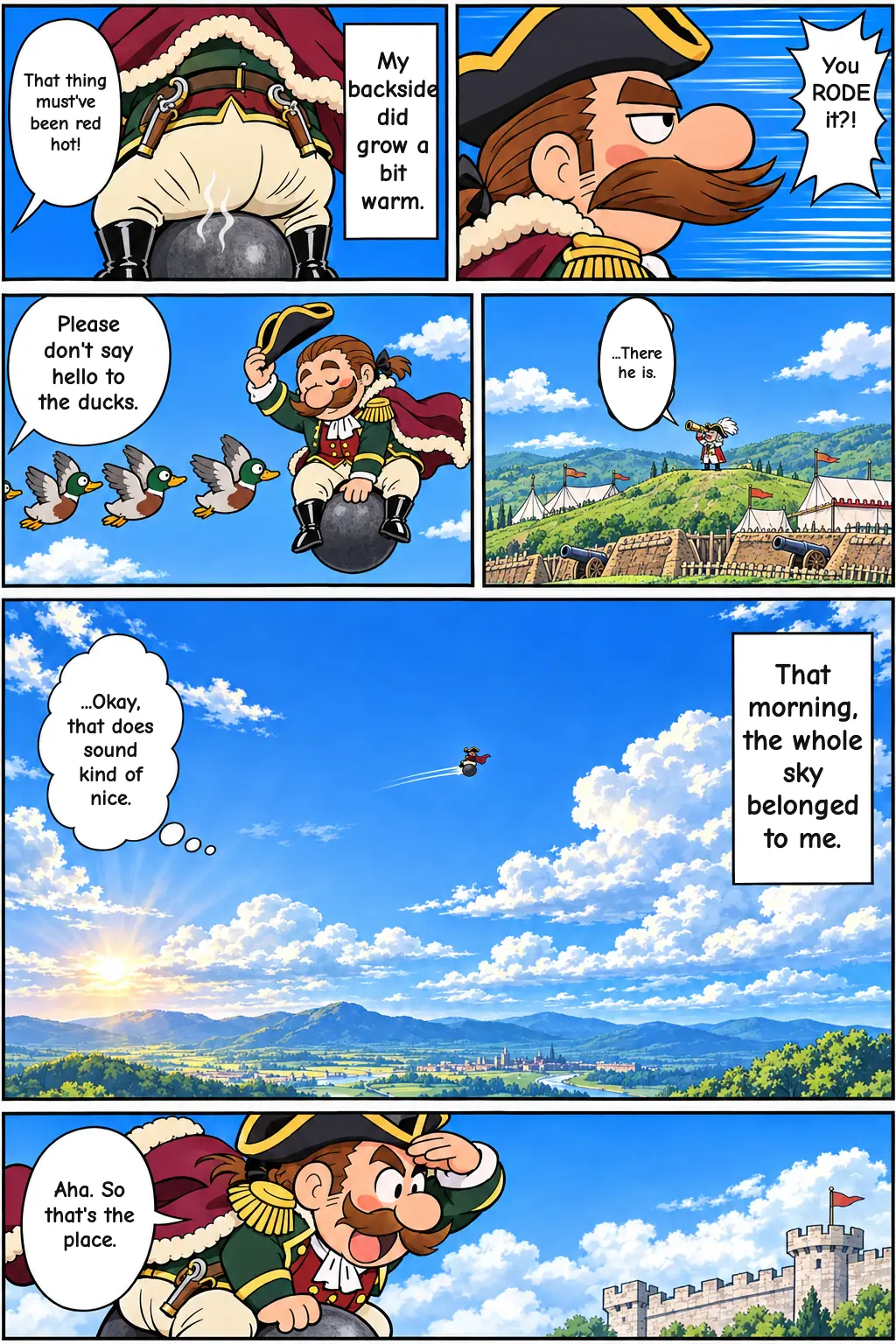
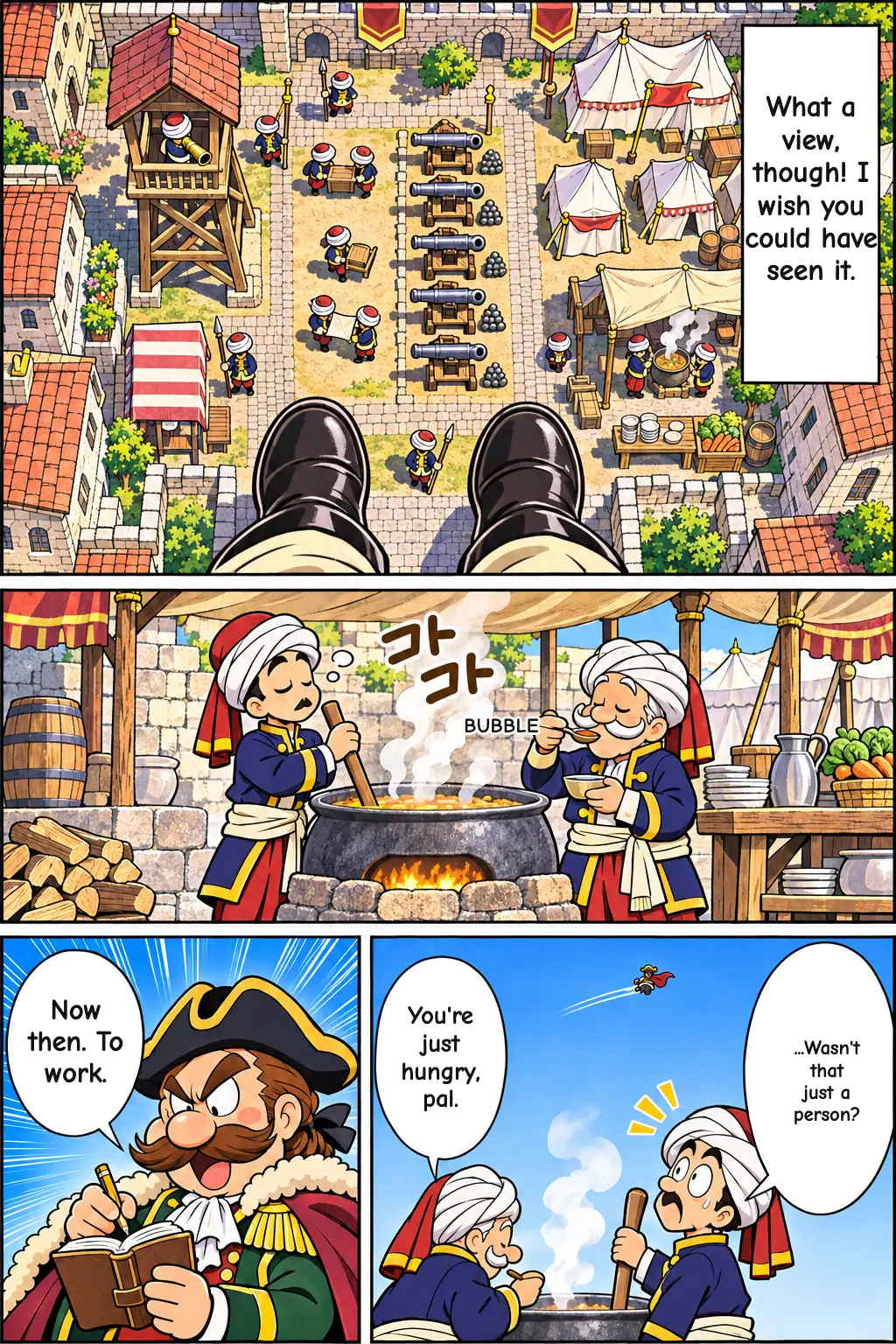
Episode 4He Rode a Cannonball. No Return Ticket.Baron Munchausen: The Cannonball Ride
To scout an enemy town no one can enter, Baron Munchausen leaps onto a flying cannonball. Only in midair does he notice the flaw in his plan: there's no way back. And later, stranded in a swamp with no one around, he grabs hold of his own hair. *The storytelling frame, the view from the sky, and the bloodless comedy are adaptations.
Get new episodes in your feed. Follow us on:ThreadsBluesky
Story summary
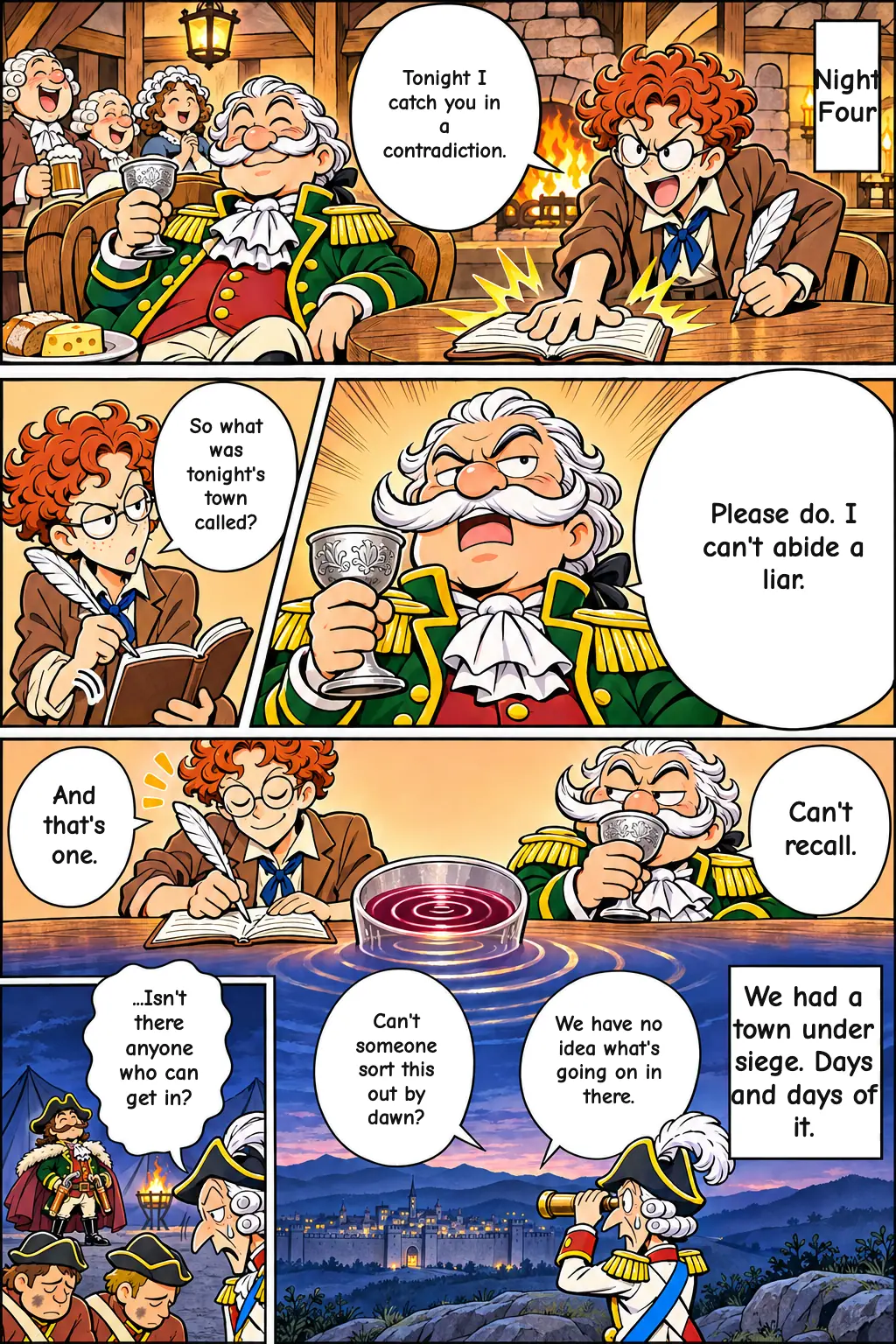
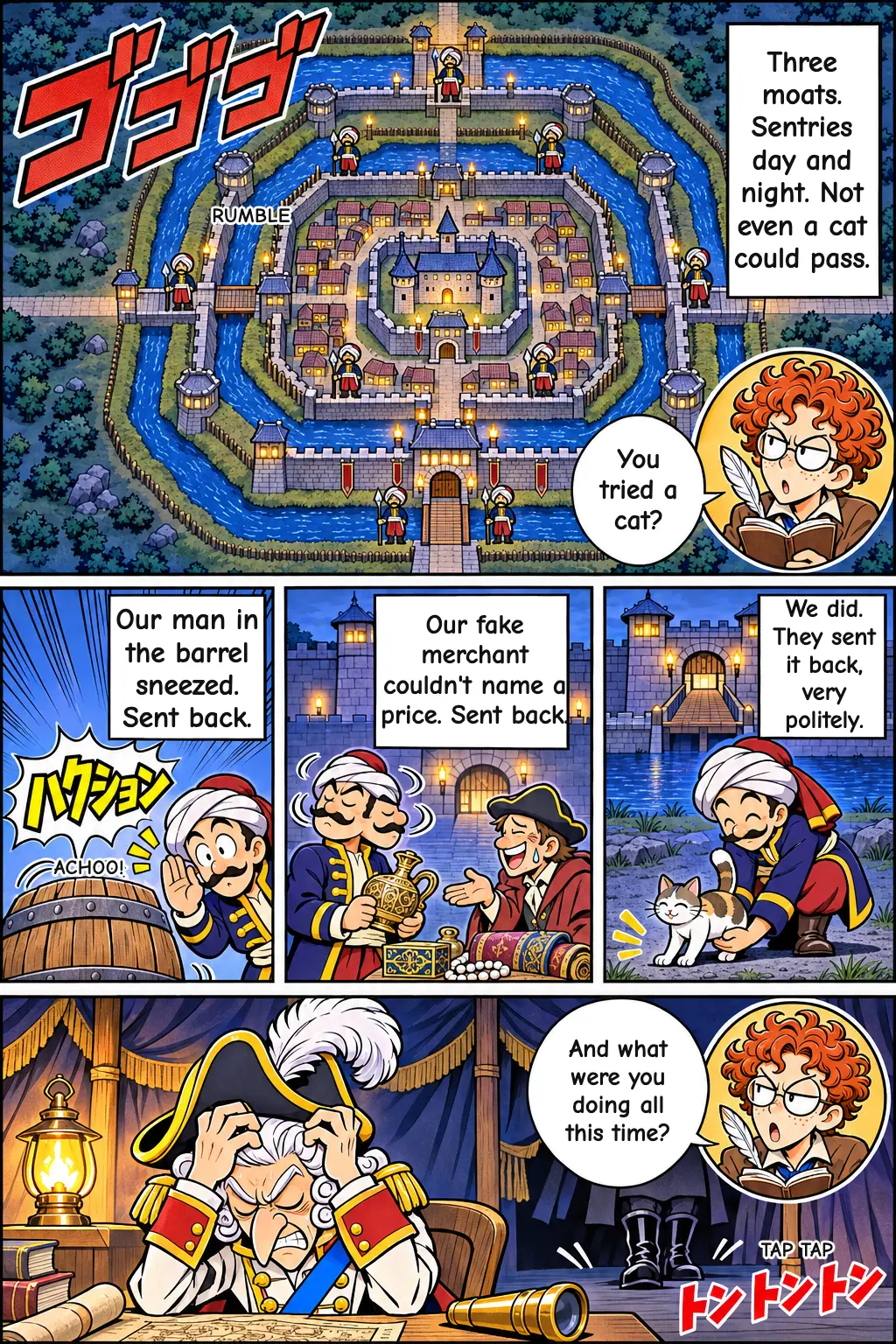
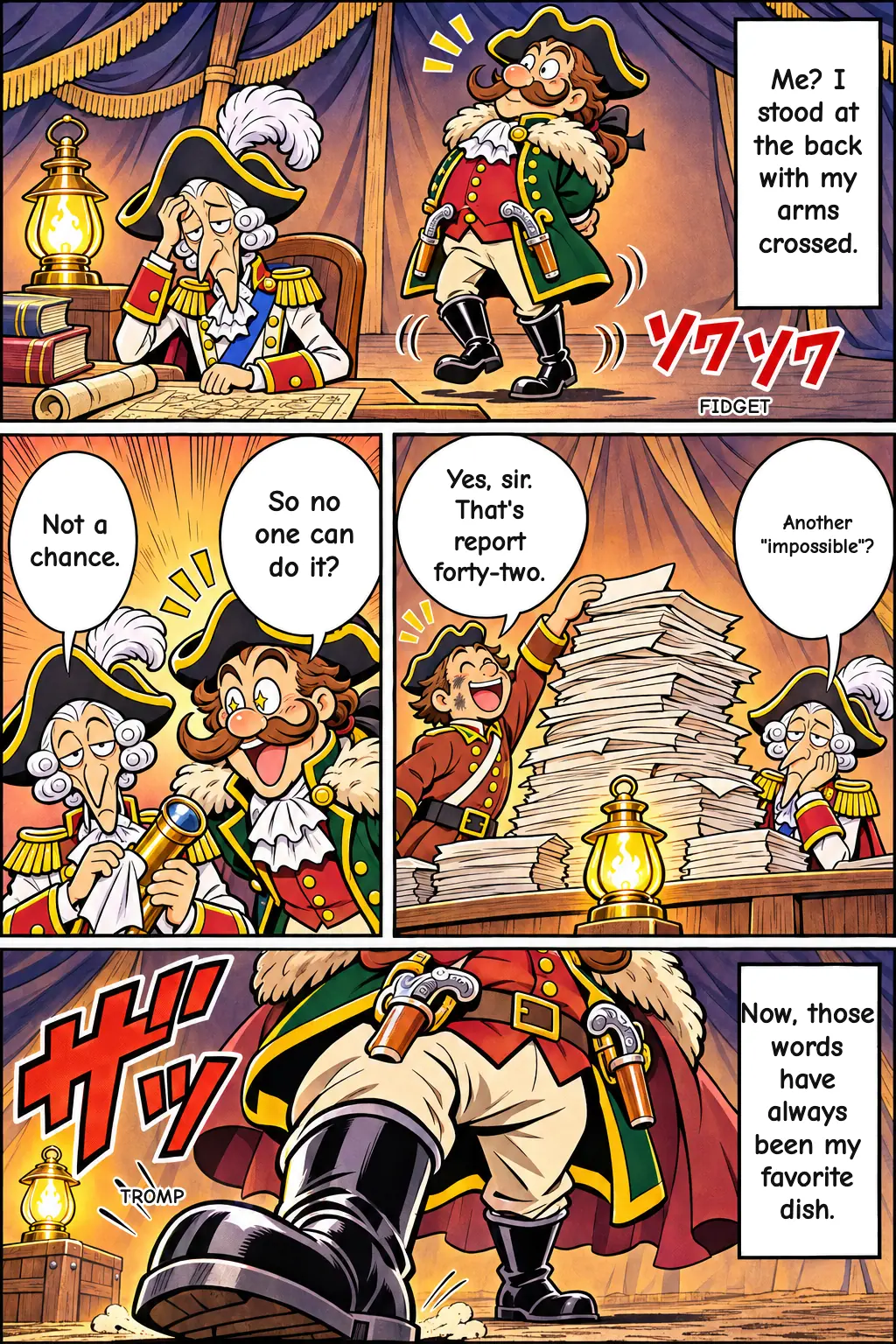
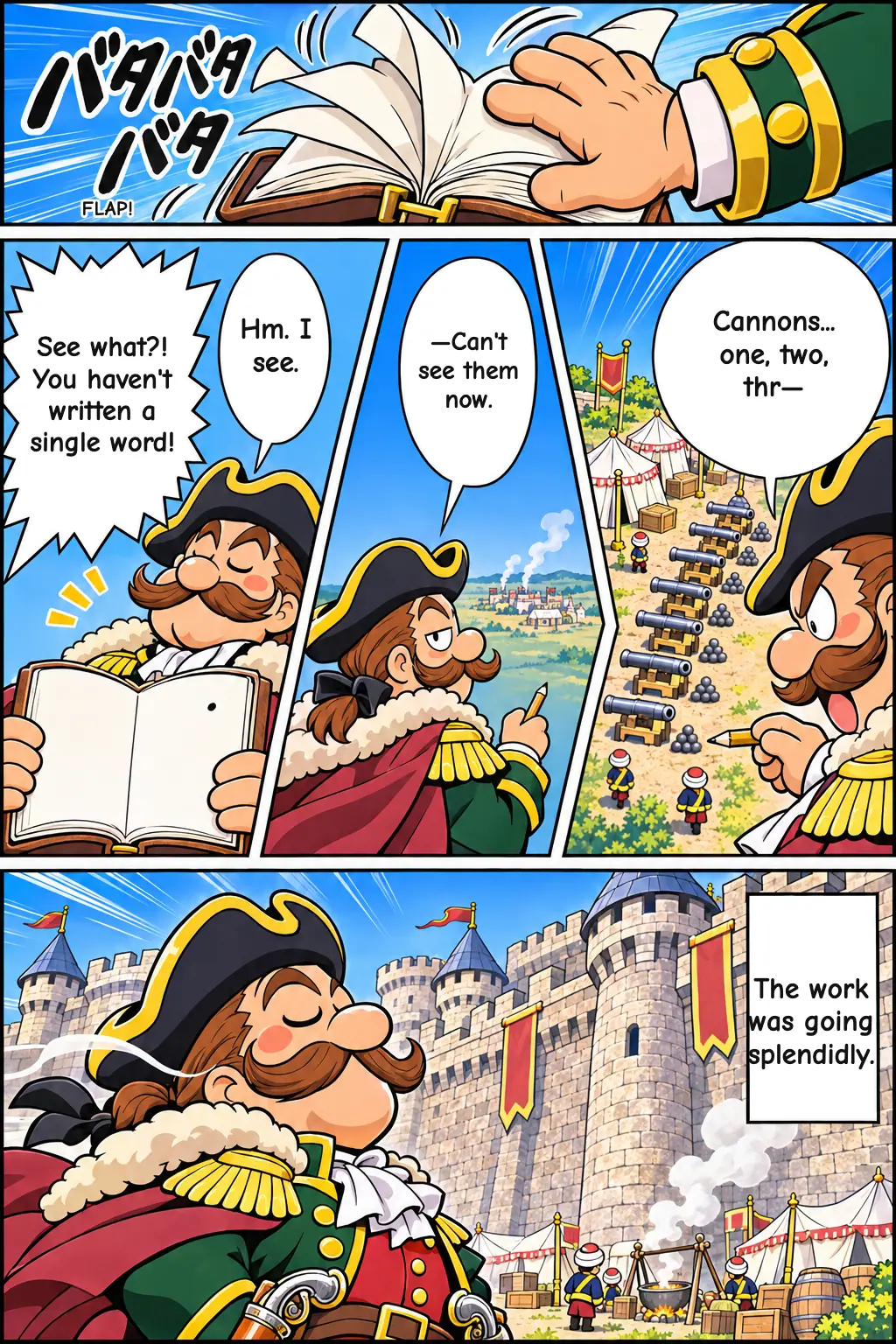
This tale belongs to the Baron's stories of his campaign against the Turks. Like the rest of his adventures, it is told in the first person, as a true account of his own deeds. His army is besieging a town, though he says he can no longer remember its name. The field marshal wants an exact picture of what is happening inside the fortress. The trouble is that outposts, guards, and fortifications make it almost impossible to get in, and no one seems right for the job. The Baron steps forward, moved more by a rush of courage than by careful thought.
Baron Munchausen's Cannonball Ride and Swamp Escape: Story Explained
In short: The Baron Munchausen cannonball ride is a tall tale in which the Baron leaps onto a flying cannonball to scout a besieged town, realizes in midair that he has no way out, and returns on an enemy cannonball with nothing to report. In a separate episode, he and his horse sink into a swamp, and he hauls them both out by his own hair. Both stories appear in Gottfried August Bürger's German editions of the Munchausen adventures (1786, expanded 1788).
The Original Story: The Cannonball Ride
This tale belongs to the Baron's stories of his campaign against the Turks. Like the rest of his adventures, it is told in the first person, as a true account of his own deeds. His army is besieging a town, though he says he can no longer remember its name. The field marshal wants an exact picture of what is happening inside the fortress. The trouble is that outposts, guards, and fortifications make it almost impossible to get in, and no one seems right for the job.
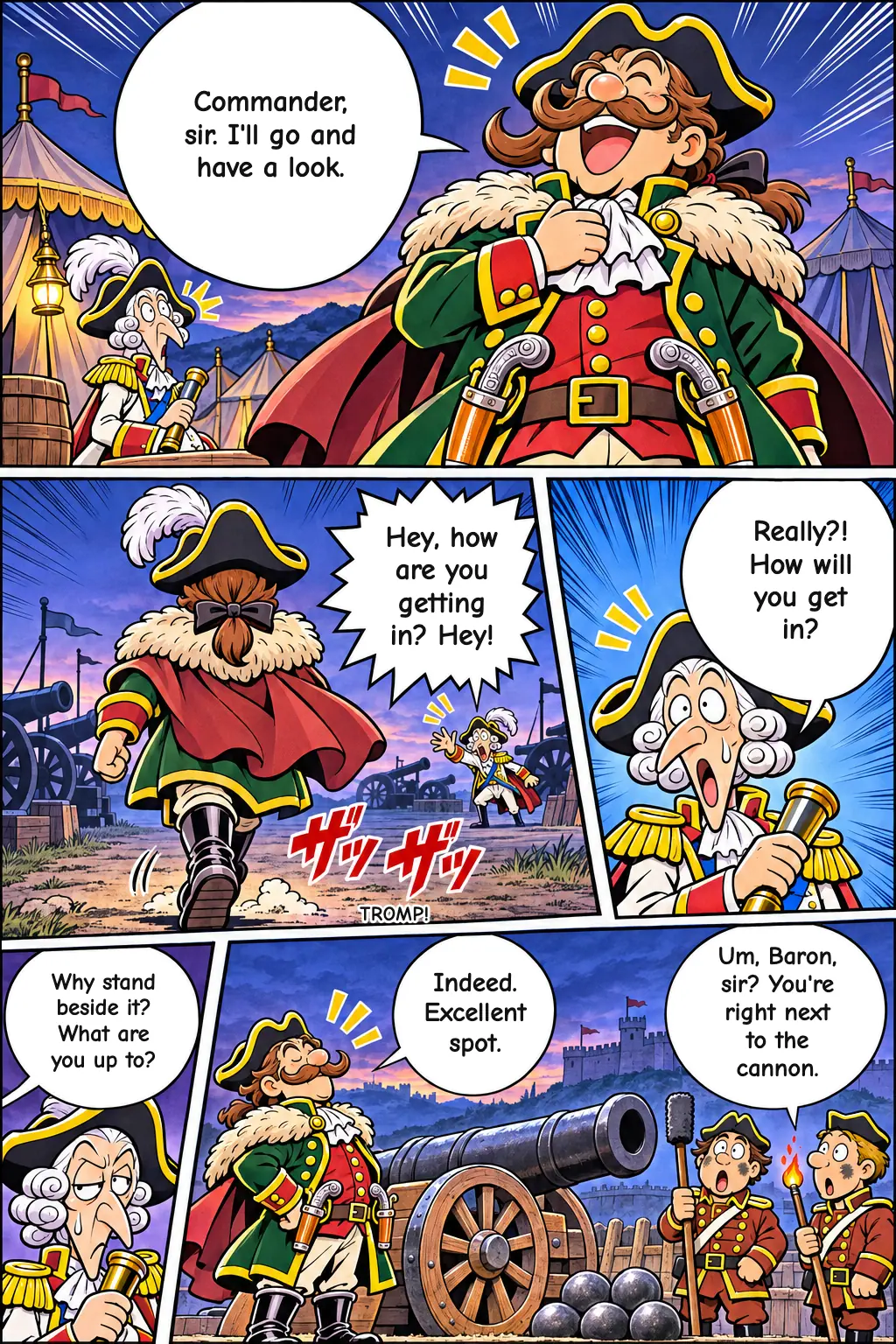
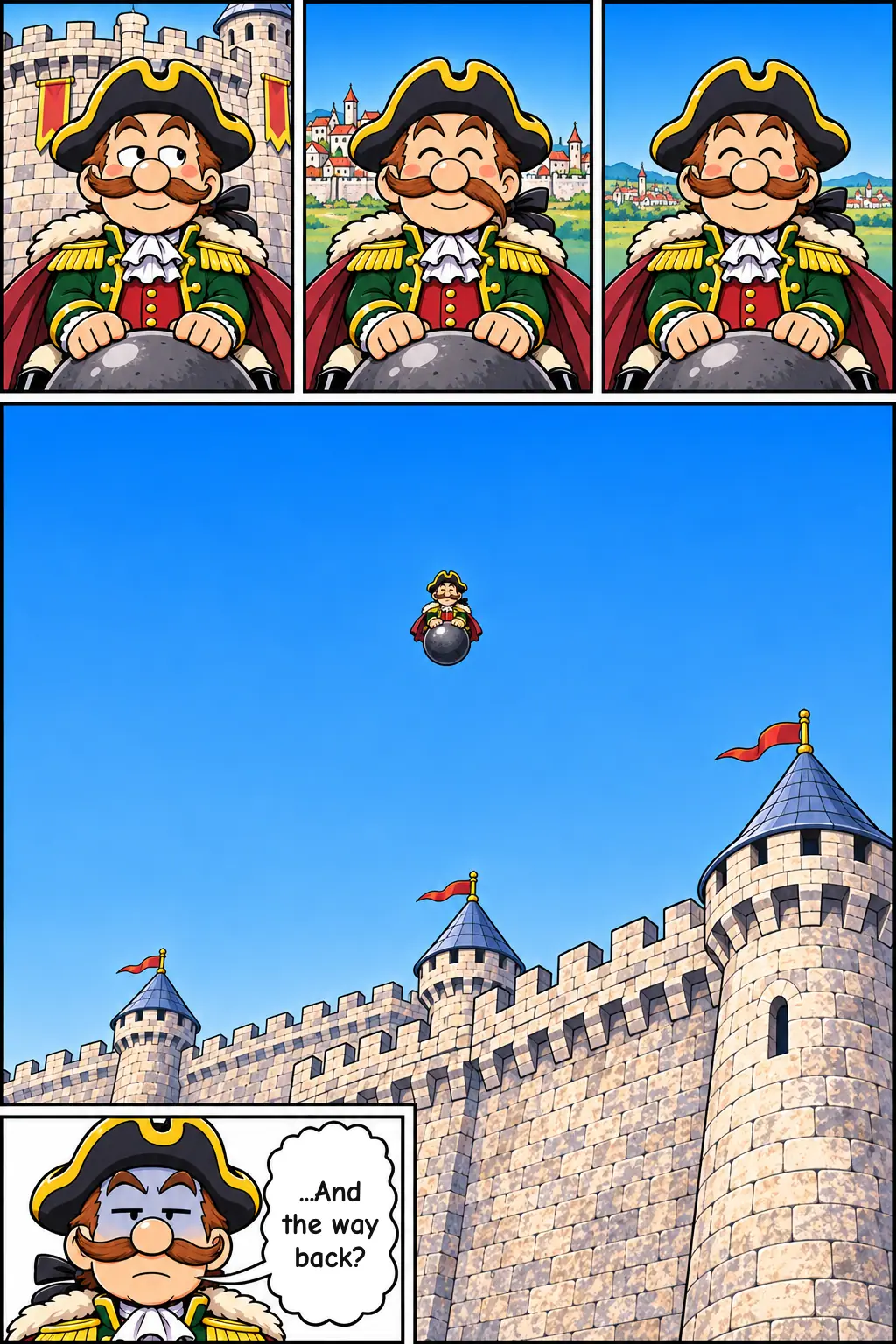
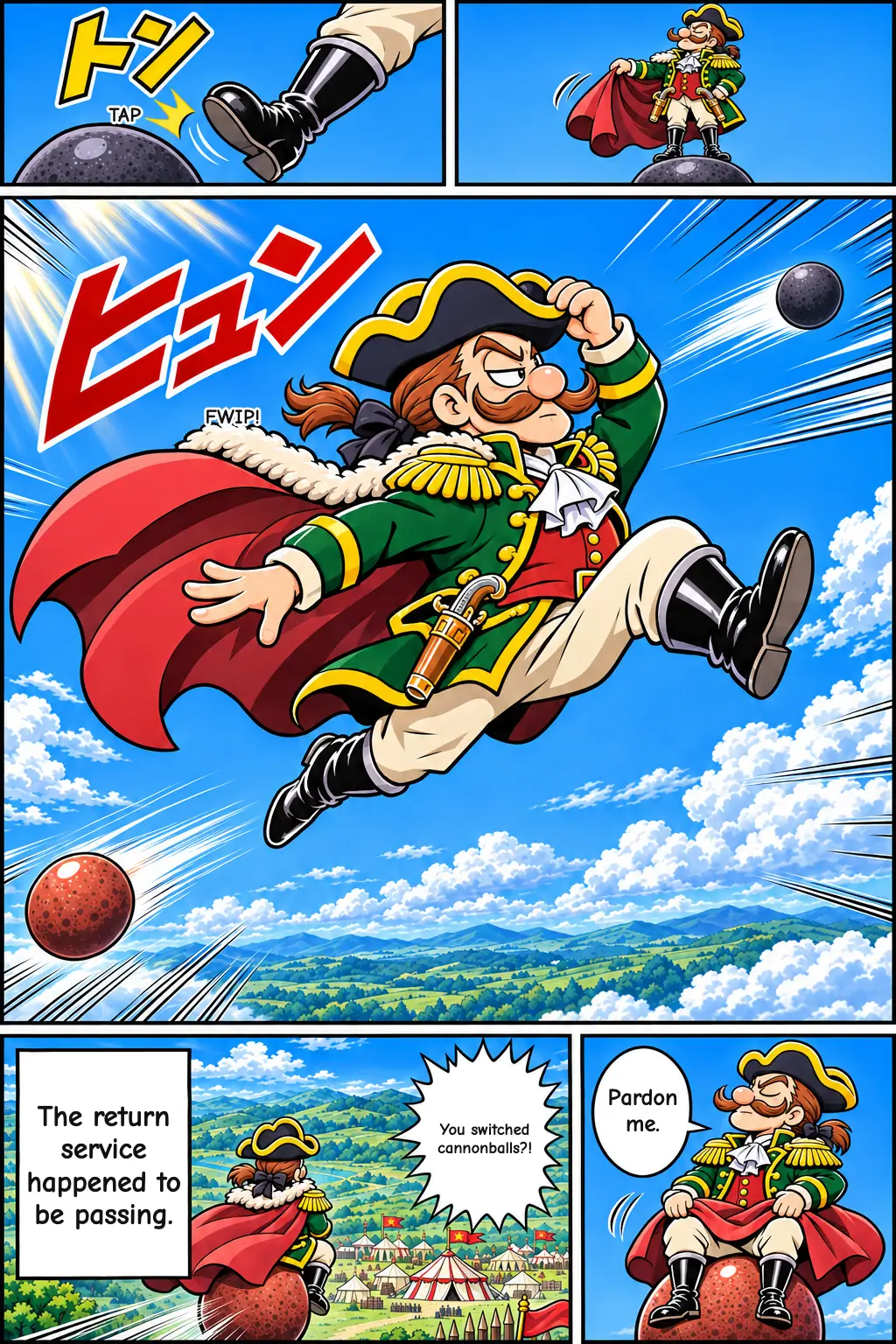
The Baron steps forward, moved more by a rush of courage than by careful thought. He takes his place beside a large cannon aimed at the fortress, and when it fires, he jumps onto the ball and flies toward the enemy.
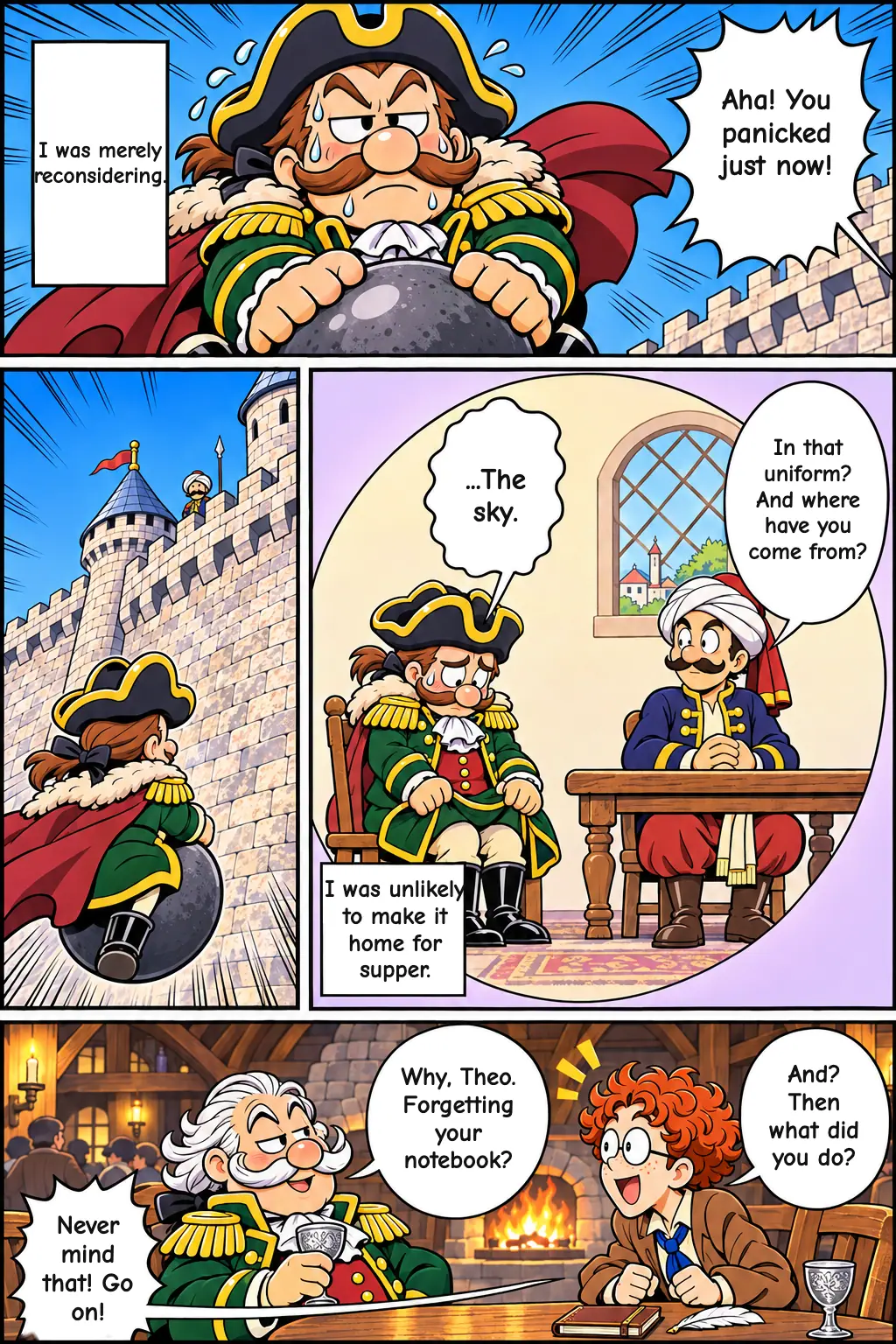
Halfway there, he has second thoughts. Getting in will be easy, but getting out will not. If he is caught, he will be treated as a spy, and spies go to the gallows.
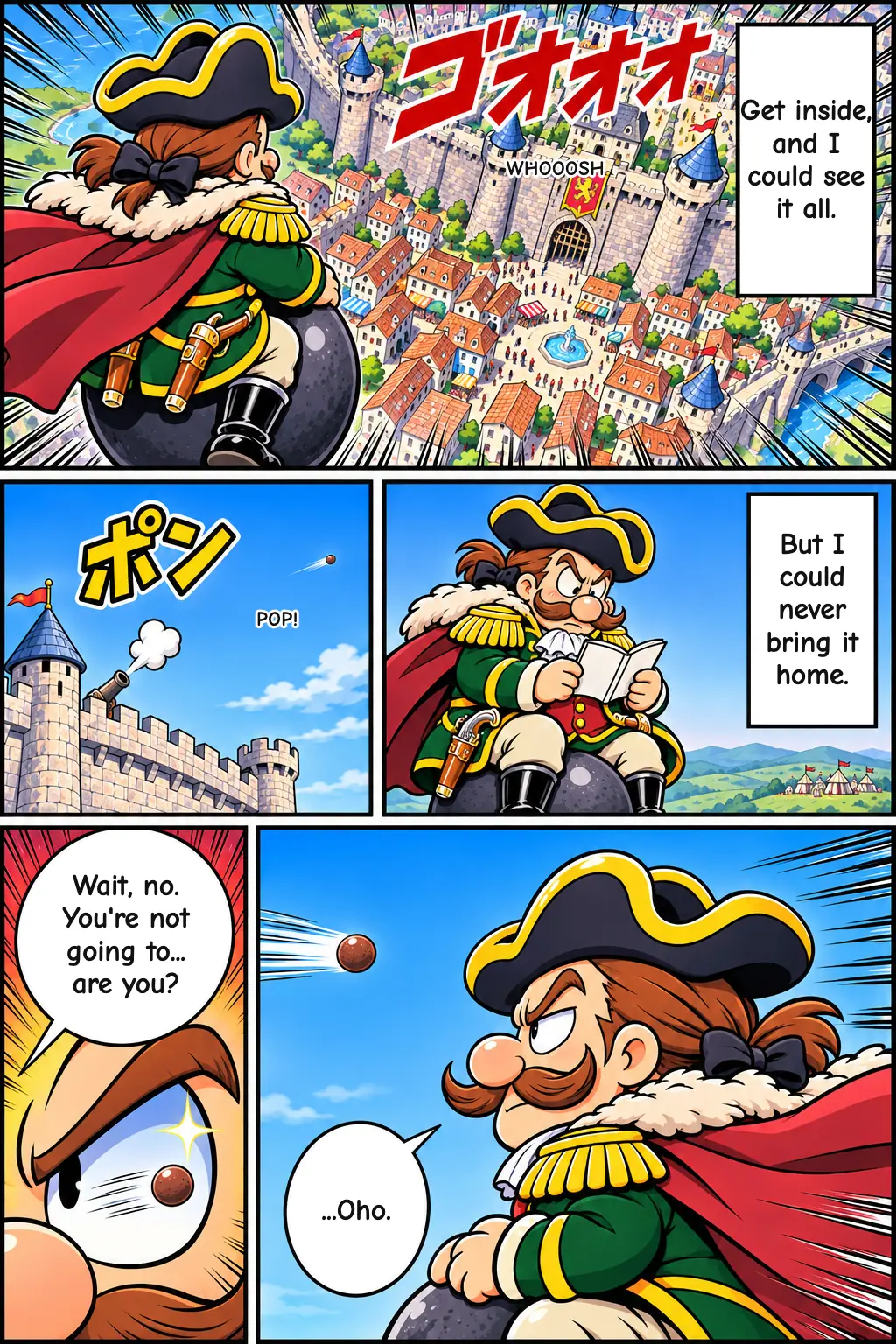
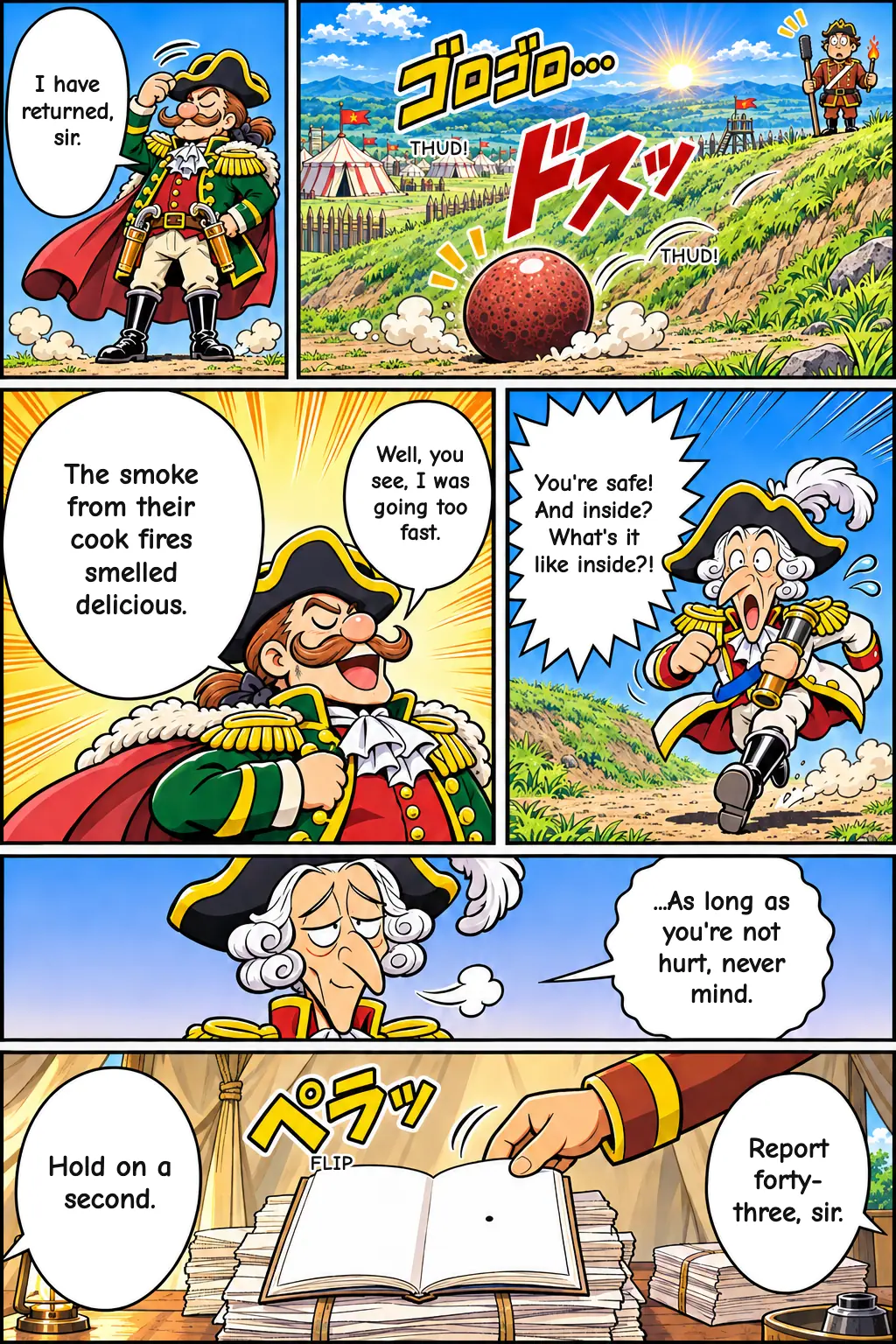
Then a cannonball fired from the fortress toward his own camp passes close by. He switches to it in midair and rides home without a scratch. The mission is a complete failure, since he has seen nothing worth reporting. That is the joke: an astonishing stunt achieves nothing, and the Baron tells us so without embarrassment.
The Swamp: Pulling Himself Out by His Own Hair
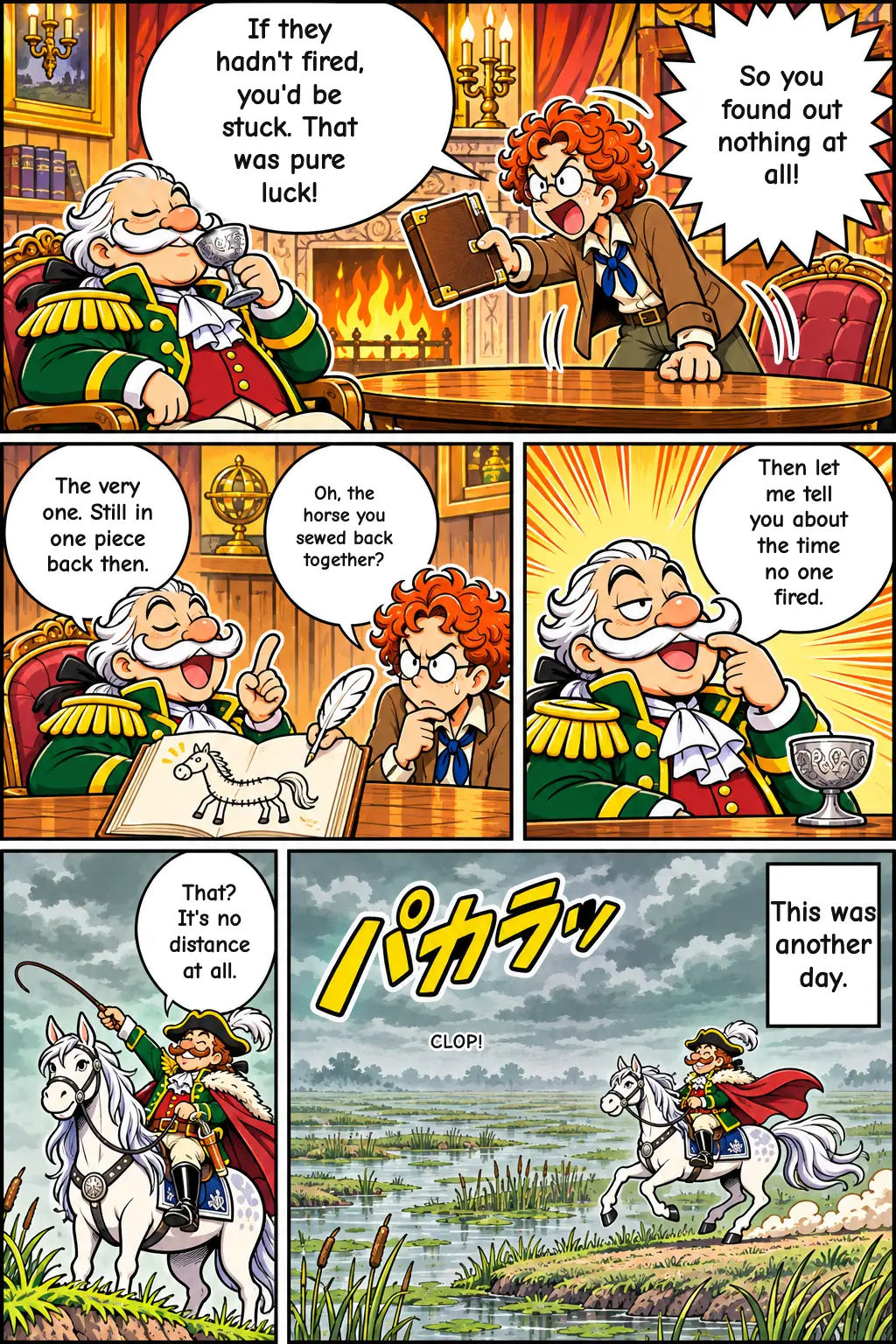
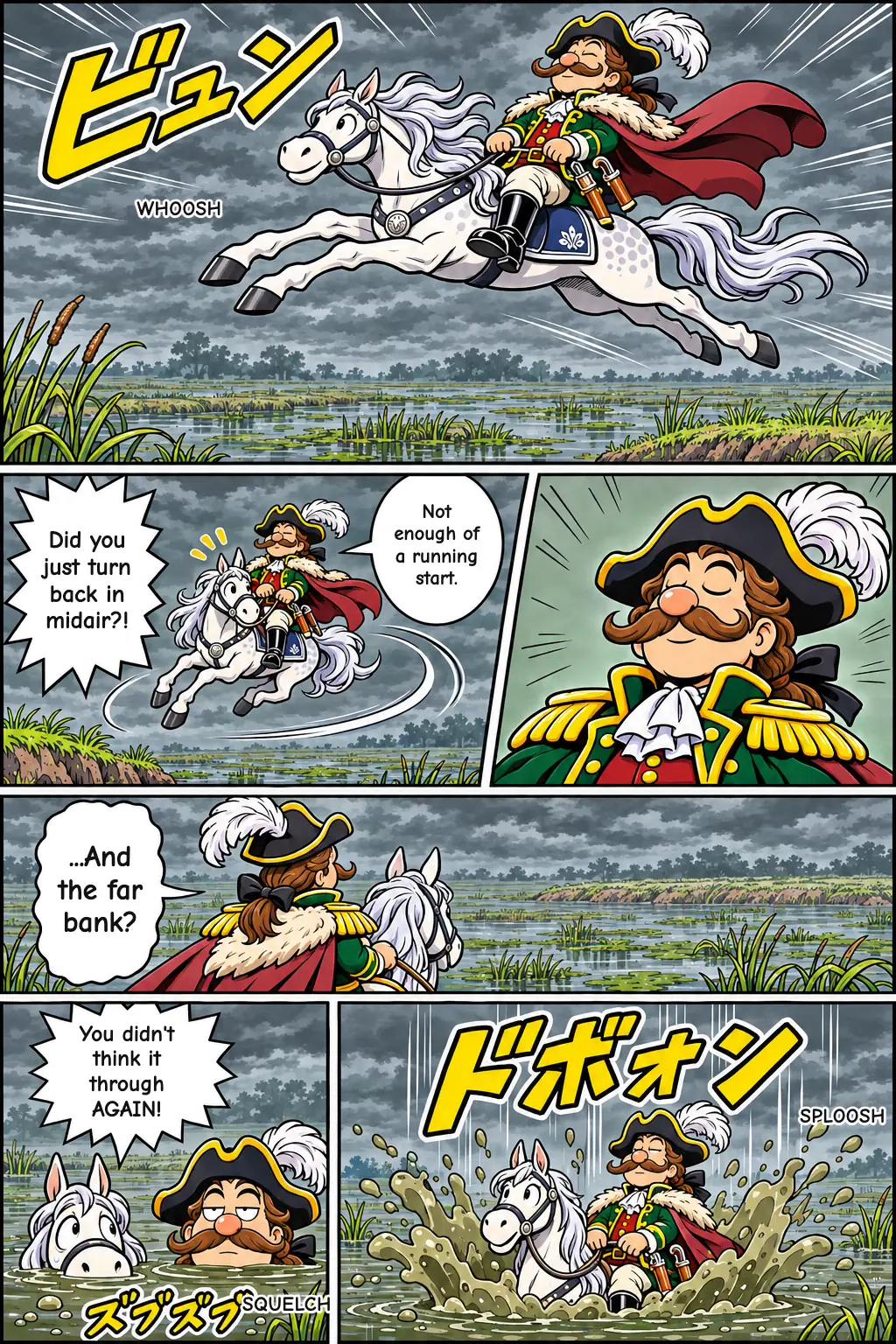
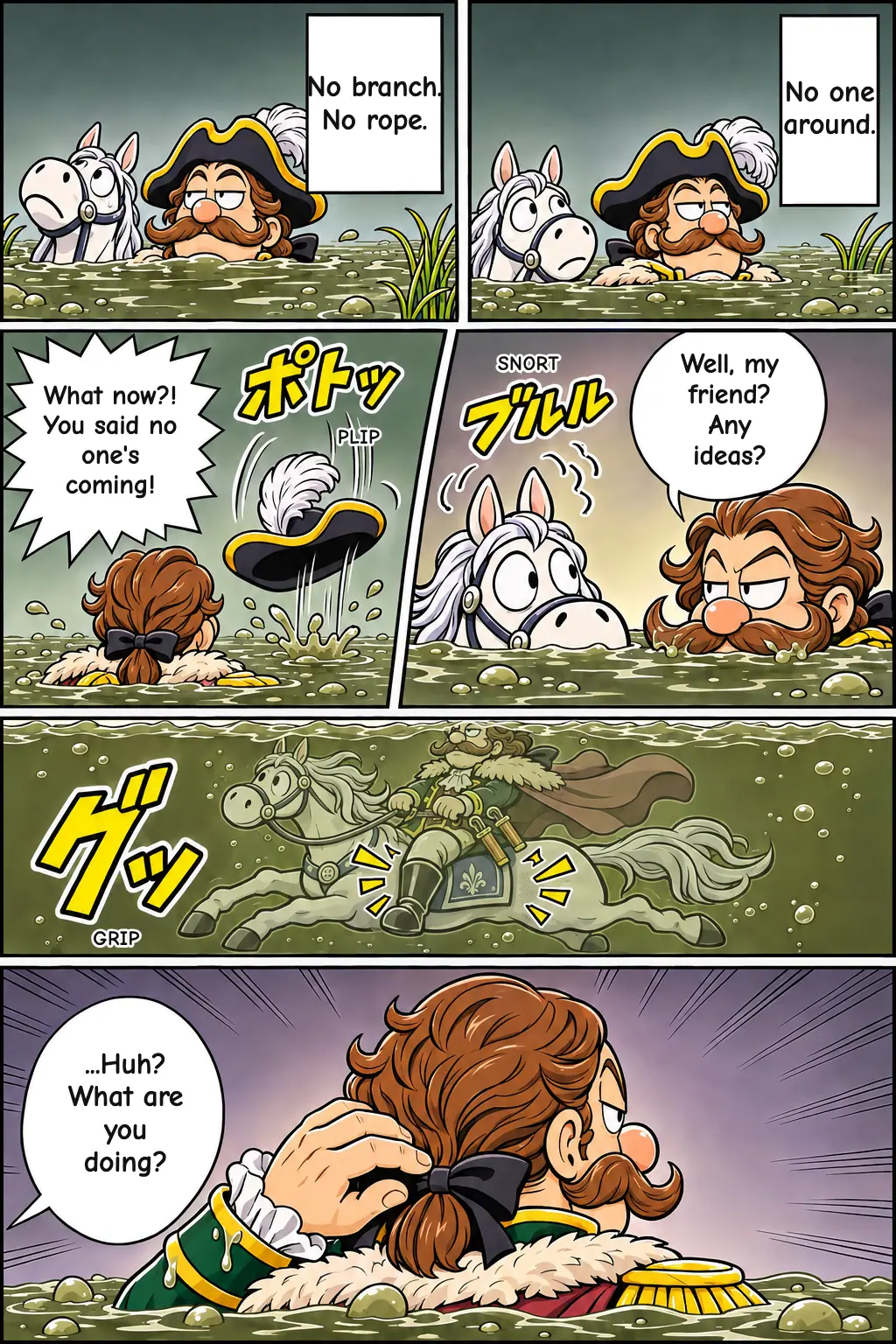
On another occasion, the Baron tries to jump a swamp on horseback. It turns out to be wider than he thought, so he turns around in midair, goes back, and takes a longer run-up. The second jump also falls short. Horse and rider drop into the swamp just before the far bank, and the Baron sinks up to his neck.
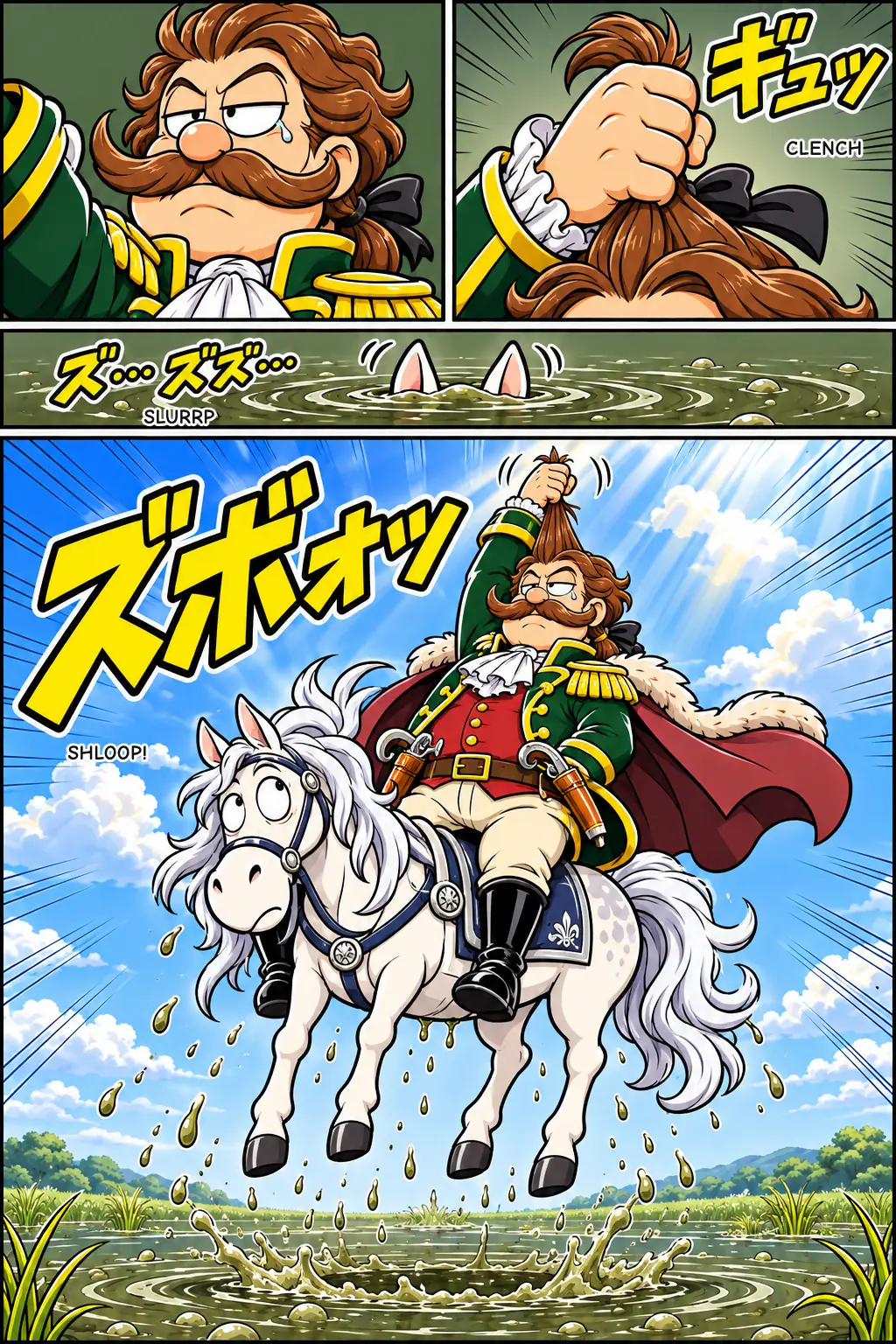
With no one to help him, he finds a solution that defies physics. He grabs his own pigtail, the tied-back hair of his day, and pulls upward with the strength of his arm. Because he is gripping the horse tightly between his knees, the animal comes up with him.
This is not the end of the Baron's war. His campaign stories continue, and he is later captured and sold as a slave to the Sultan, who sets him to tending bees.
Who Was Baron Munchausen?
There was a real Baron: Hieronymus Karl Friedrich von Münchhausen (1720–1797), a German nobleman who served in the Russian army and fought against the Ottoman Turks. The Russo-Turkish War of 1735–39 is often given as the background for these tales, but that context comes from his real career rather than from the story itself. Neither the town nor the fortress can be matched to a historical place from the tale.
The book's history is a little tangled. Rudolf Erich Raspe published the first collection in English in 1785, and Bürger reworked and expanded it in German the following year. The cannonball and swamp episodes are commonly credited to Bürger rather than to Raspe's first edition. Later editions arrange the chapters differently, so the two tales may not sit in the same place in every copy.
Why These Tall Tales Still Work
The humor comes from the Baron's tone. He treats the impossible as routine and applies sensible reasoning to absurd situations. While flying through the air on a cannonball, he calmly worries about the legal consequences of espionage. The tales are often read as a playful send-up of boastful soldiers and travelers, and the fun lies in watching a storyteller stay perfectly serious.
The swamp escape has also outlived the book as an image of a logical impossibility: you cannot lift yourself with nothing outside yourself to stand on. The philosopher Hans Albert borrowed the Baron's name for the "Münchhausen trilemma," a problem about how any claim can ever be finally proved.
What the Manga Changes
From the original: the Baron's boastful first-person voice, the unnamed town, the marshal's wish for information, the leap onto the cannonball, the midair realization, the swamp, and the rescue by his own hair.
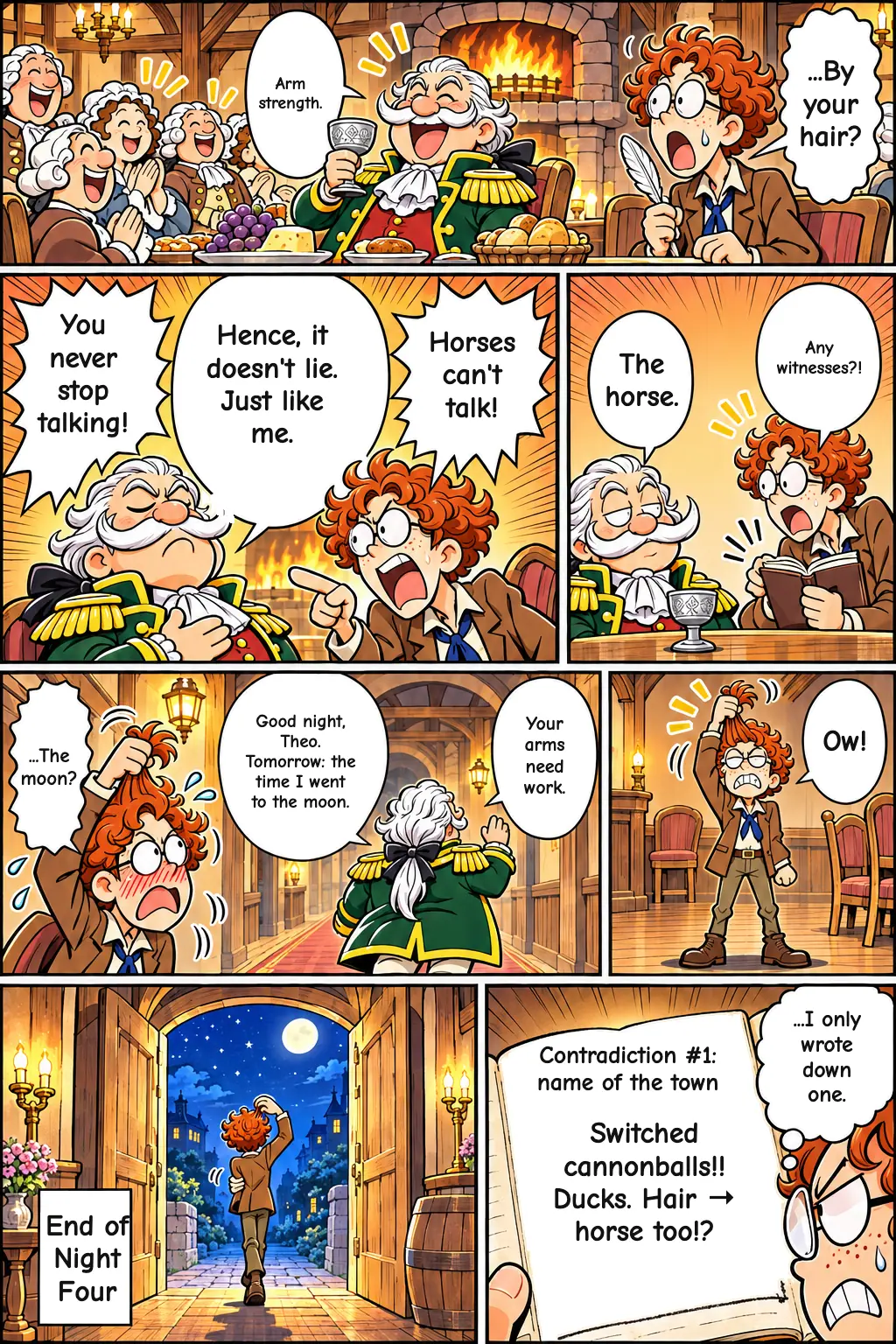
Added for the manga: a storytelling frame around the tales, a view of the enemy from the sky, and a bloodless, comedic treatment of the war. The original says almost nothing about what the Baron sees in the air, so that view is an invention. The look of the town and fortress and the characters' clothing and hair details are also the manga's own designs, since the source gives little description.
The structure differs too. Ending the episode on the swamp is a choice made for the manga, because the Baron's campaign stories carry on well past that point in the book.
Where to Read It
If you would like to see these stunts drawn out panel by panel, this episode of BARON MUNCHAUSEN: Fourteen Nights of Impossible Tales tells both on Manga Portal. All episodes are free to read, with no account needed, so it is easy to start here or go back to the first night and follow the Baron's boasts from the beginning.
Characters in this episode
Baron Munchausen (Freiherr von Münchhausen)
The narrator and hero, a cavalry officer in the campaign against the Turks who proudly recounts his impossible feats, including his failures, as plain fact.
The Field Marshal
The commander of the besieging army, whose wish to know what is happening inside the fortress sets the cannonball ride in motion.
The Baron's Horse
The Baron's mount in the swamp episode, which makes two attempts at the jump and is lifted out while clamped between his knees.
The Turkish Garrison
The unnamed defenders of the besieged fortress, whose return fire unknowingly gives the Baron his ride home.
FAQ
Did Baron Munchausen really ride a cannonball?
No. The real Baron von Münchhausen was a German nobleman and soldier, but the cannonball ride is fiction. It is told in the Baron's voice as a deliberately impossible tall tale.
How does Baron Munchausen get out of the swamp?
He grabs his own pigtail and pulls himself upward with the strength of his arm. Since he is gripping his horse between his knees, he lifts the horse out as well.
Does the Baron's cannonball mission succeed?
No. He realizes in midair that he could be caught and hanged as a spy, so he jumps onto a cannonball headed back to his own camp. He returns unharmed but has no information to report.
Who wrote The Adventures of Baron Munchausen?
Rudolf Erich Raspe published the first collection in English in 1785. Gottfried August Bürger then reworked and expanded it in German in 1786, with a further expanded edition in 1788. The cannonball and swamp episodes are commonly credited to Bürger.
Did "pull yourself up by your bootstraps" come from Baron Munchausen?
The two are often linked, but the connection is doubtful. In this tale, the Baron pulls himself up by his hair, not by any bootstraps. The swamp scene is simply a similar image of doing the impossible by lifting yourself.