Episode 3Why Won't This Horse Stop Drinking?The Adventures of Baron Munchausen
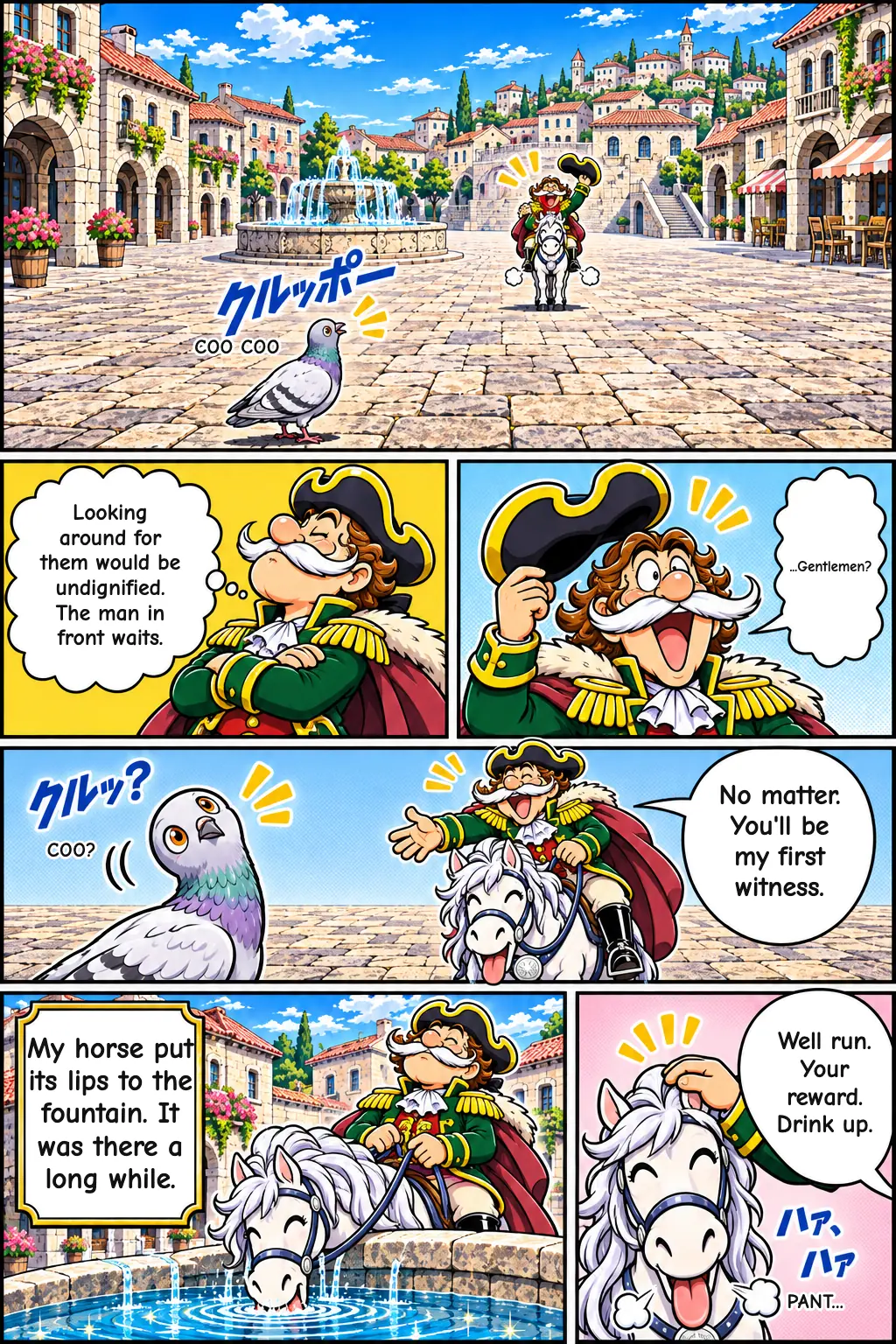
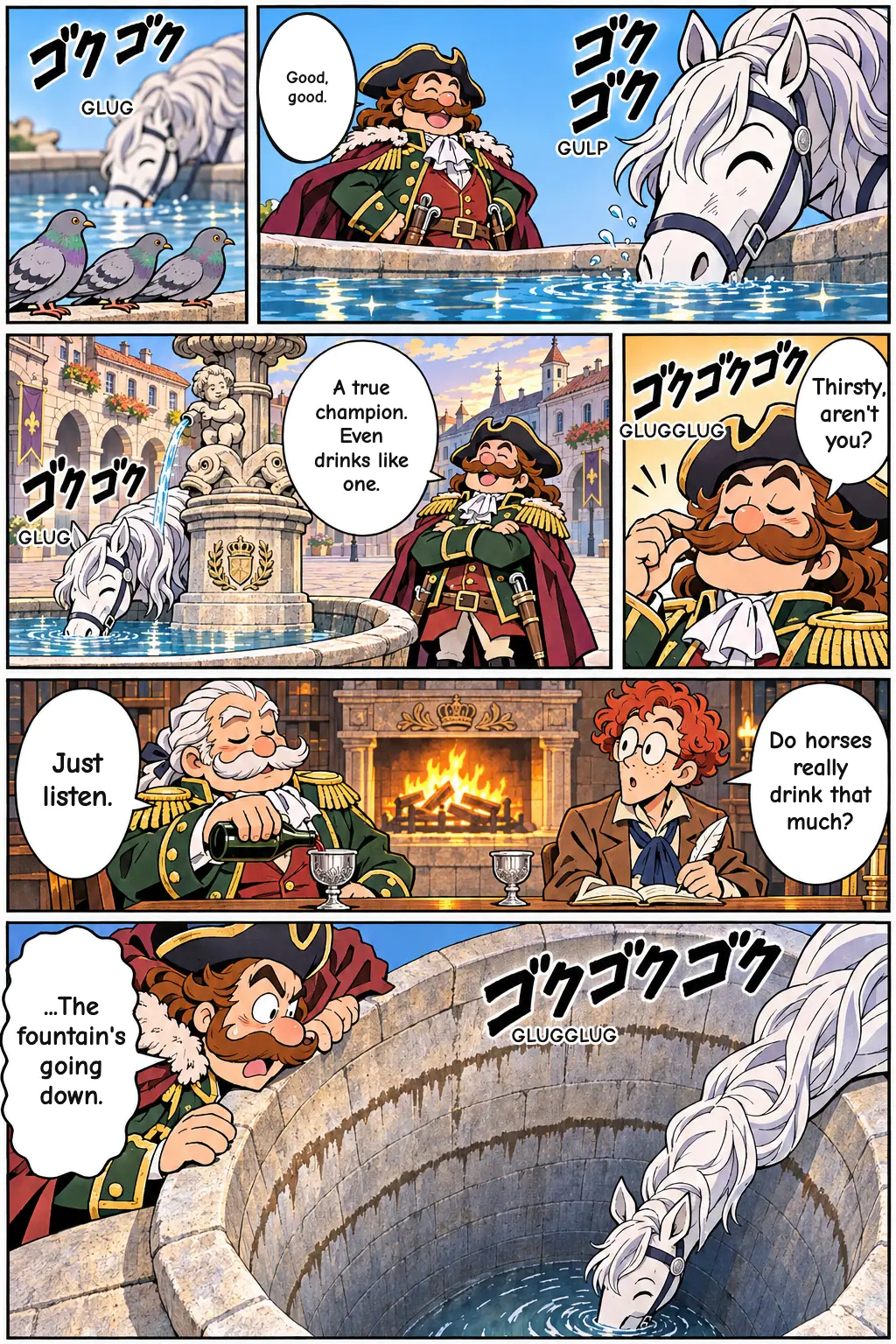
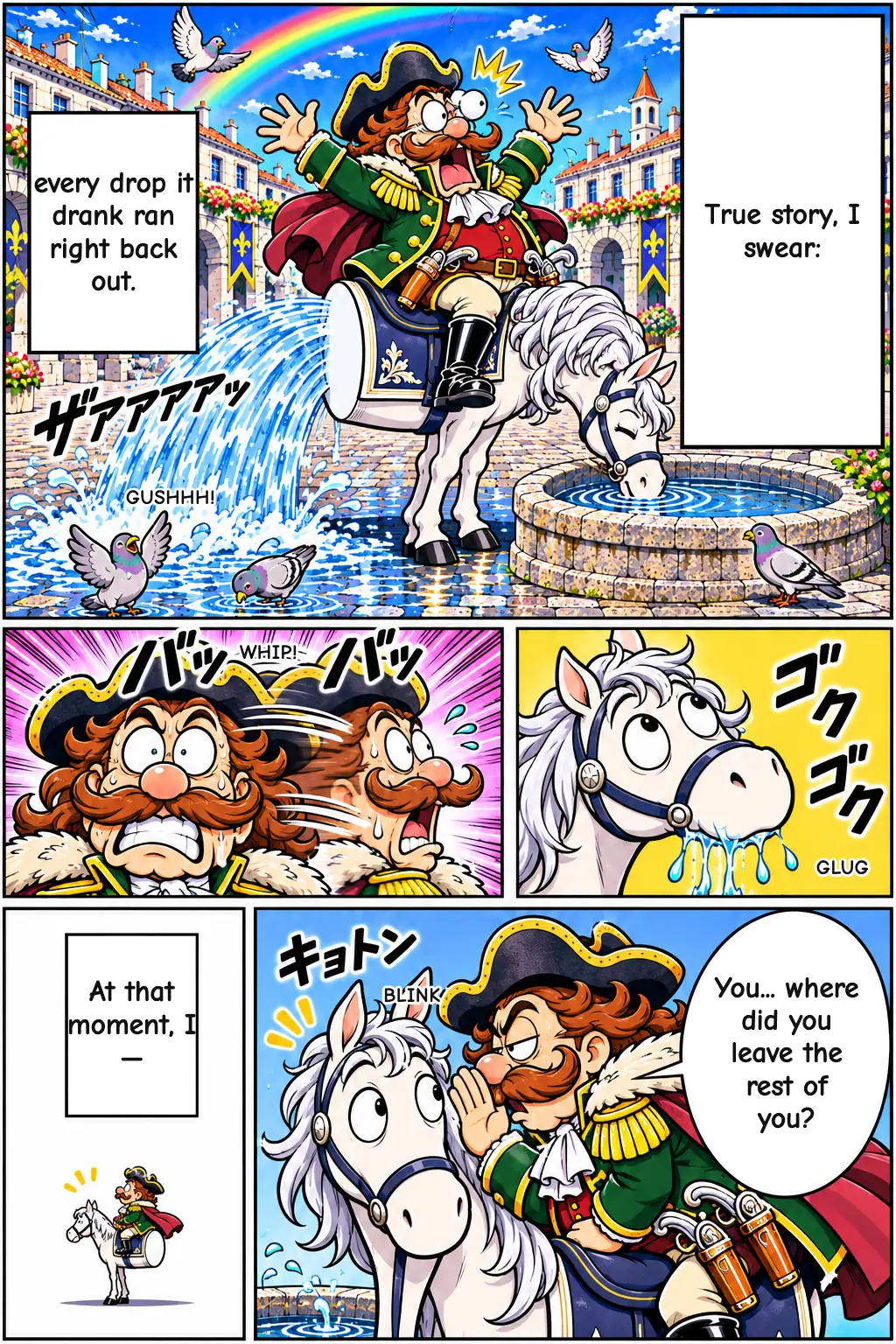
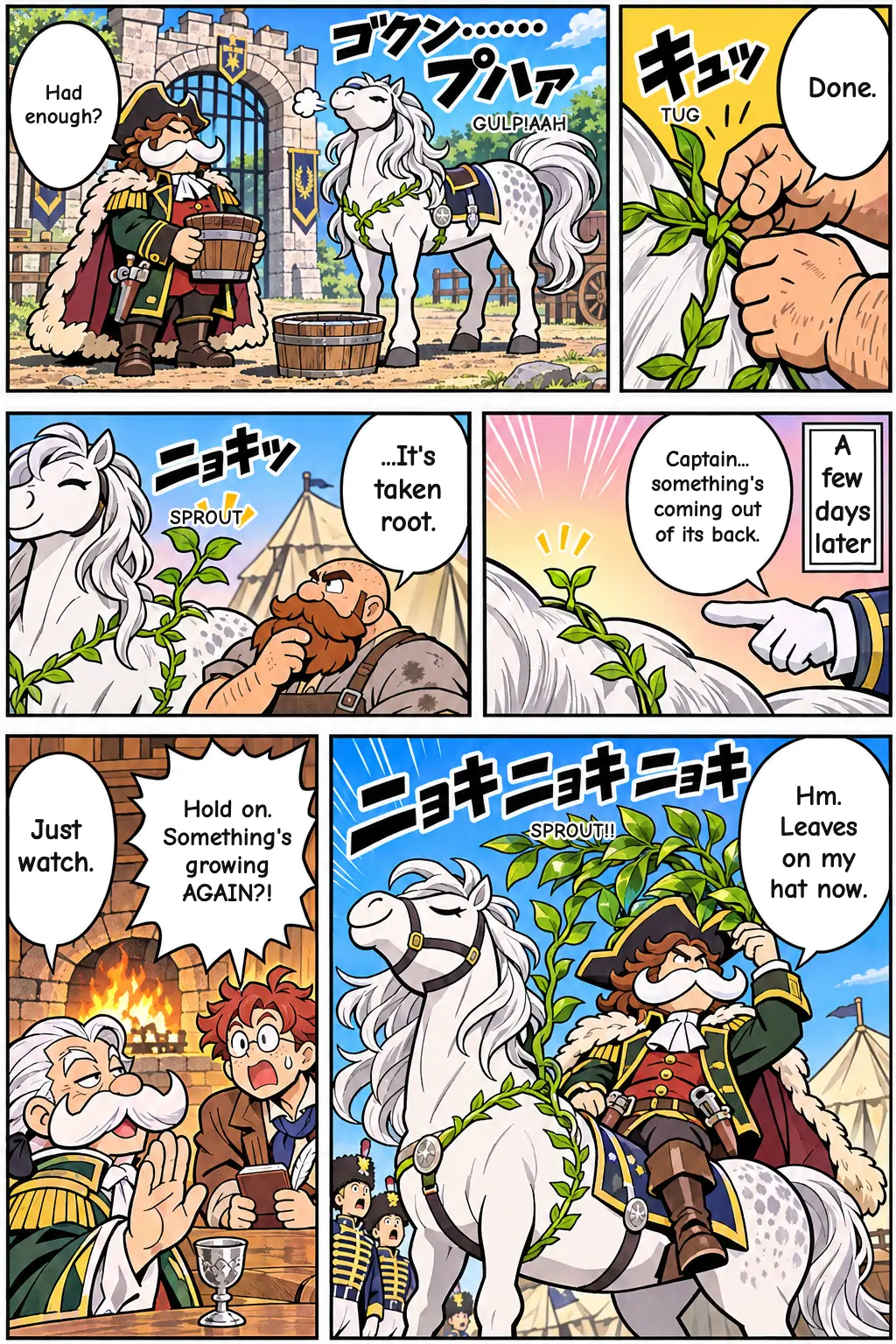
Baron Munchausen tames a wild horse no one can ride and charges first into an enemy town, but no matter how much the horse drinks at the fountain, it's never enough. Then the Baron looks behind him. *The storytelling frame and bloodless comedy are our adaptation; all the adventures are fiction.
Get new episodes in your feed. Follow us on:ThreadsBluesky
Story summary
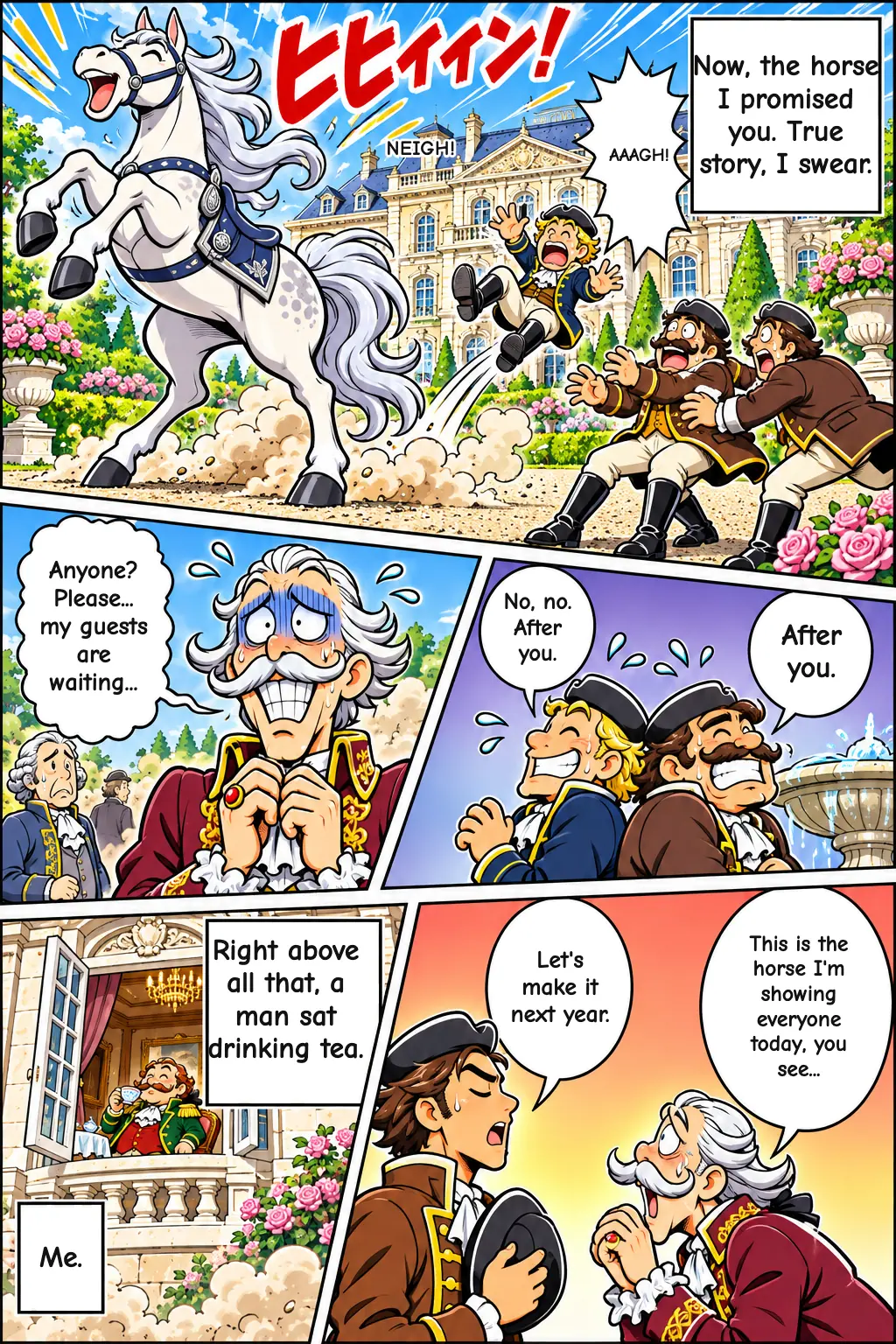
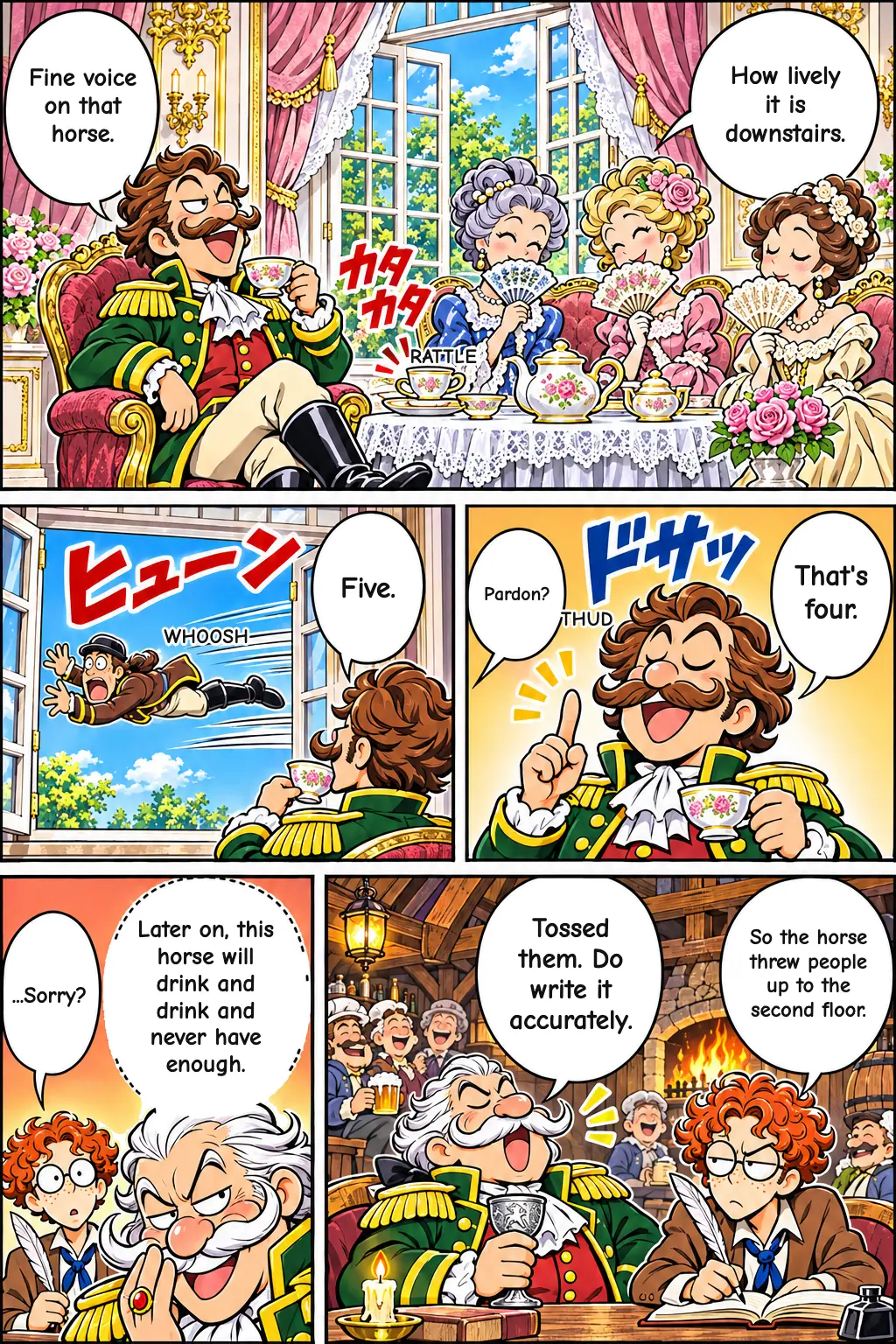
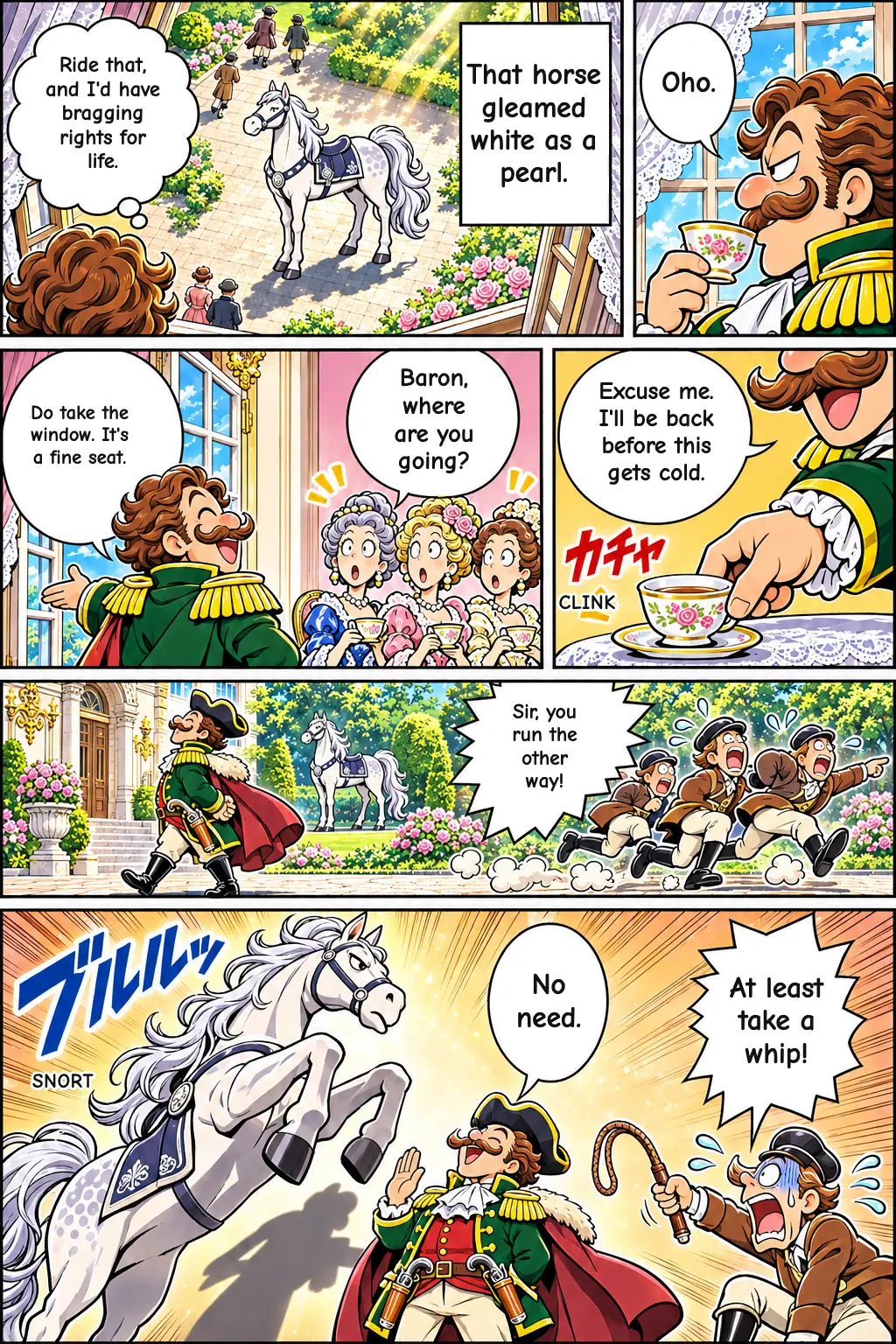
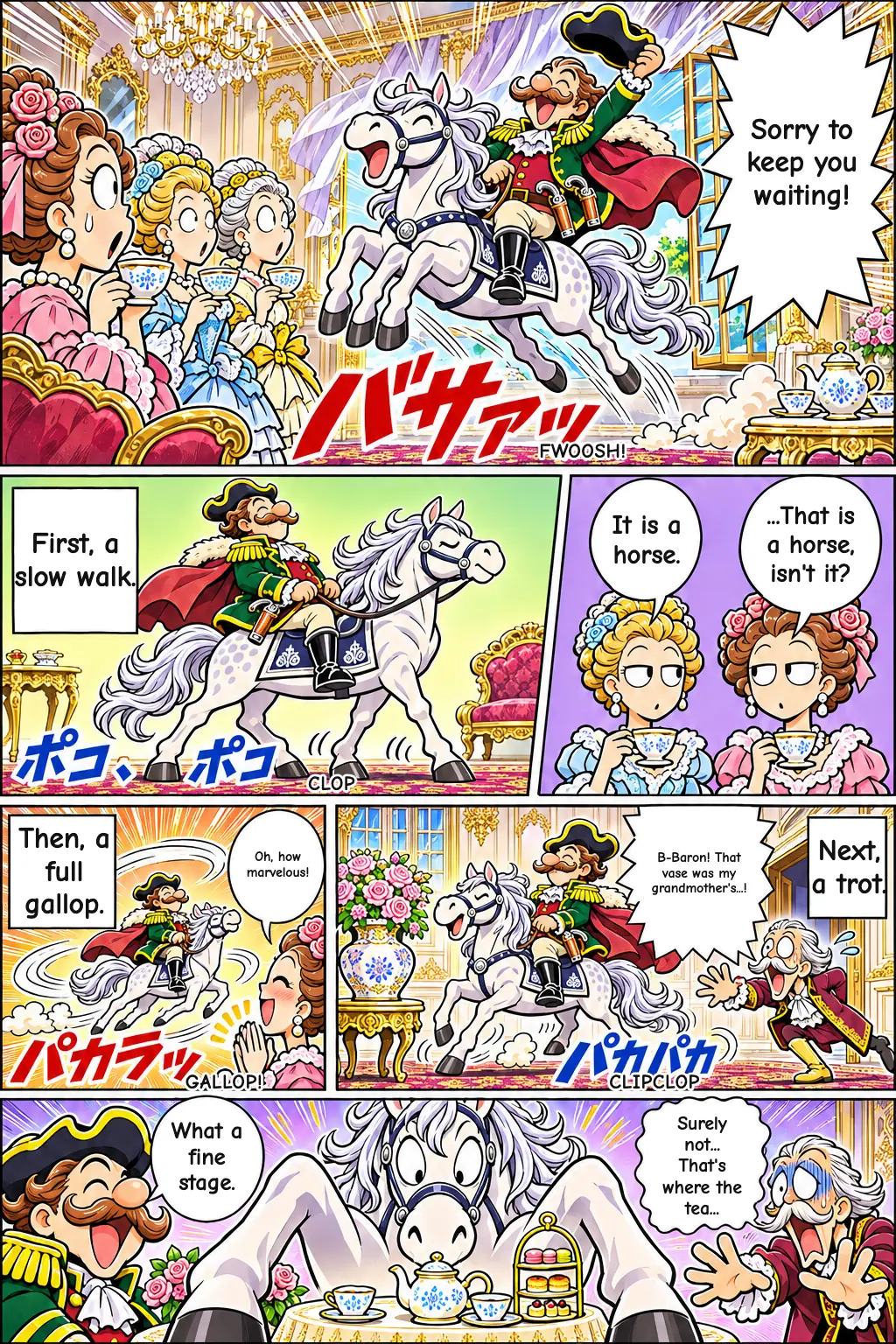
The episode begins far from any battlefield. The Baron is staying at the Lithuanian home of a nobleman, Count Przobossky (the spelling may differ between editions). He is taking tea with the ladies while the gentlemen stand in the courtyard inspecting a young thoroughbred. A commotion brings him downstairs. The horse is so wild that even confident riders refuse to approach it. The Baron leaps onto its back in a single bound and, through sheer horsemanship, makes it obedient. Then he shows off.
Baron Munchausen's Half Horse: Story Summary and Meaning Explained
In short: The half-horse story is a tall tale from Rudolf Erich Raspe's "Baron Munchausen's Narrative of his Marvellous Travels and Campaigns in Russia" (1785). The Baron chases the enemy into a walled town and lets his horse drink at a fountain, only to find the water pouring straight out because a falling portcullis has cut the animal in two. A farrier sews the halves together with laurel shoots, which take root and grow into a shady bower above the rider.
The Half-Horse Story: Plot Summary
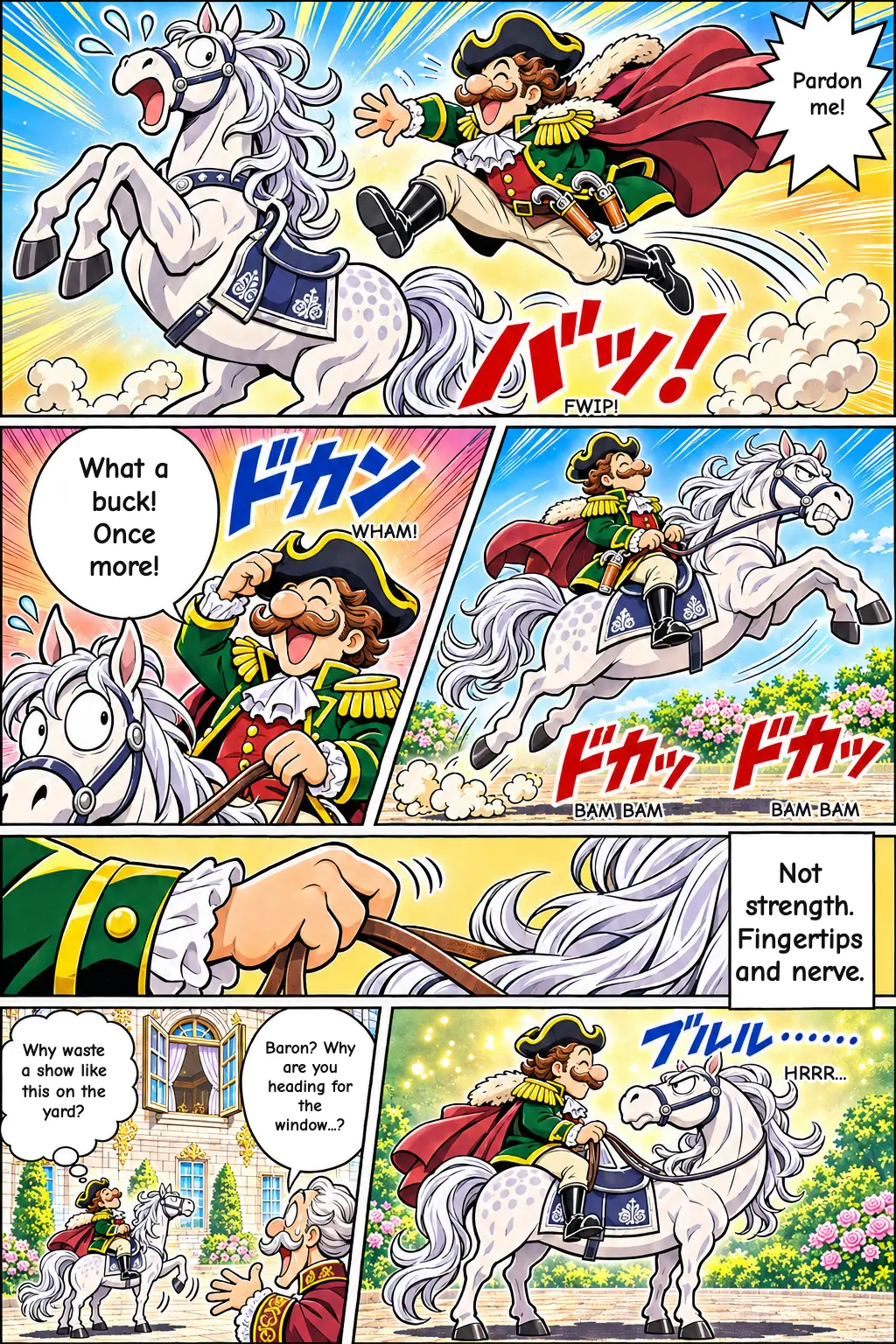
The episode begins far from any battlefield. The Baron is staying at the Lithuanian home of a nobleman, Count Przobossky (the spelling may differ between editions). He is taking tea with the ladies while the gentlemen stand in the courtyard inspecting a young thoroughbred. A commotion brings him downstairs. The horse is so wild that even confident riders refuse to approach it. The Baron leaps onto its back in a single bound and, through sheer horsemanship, makes it obedient.
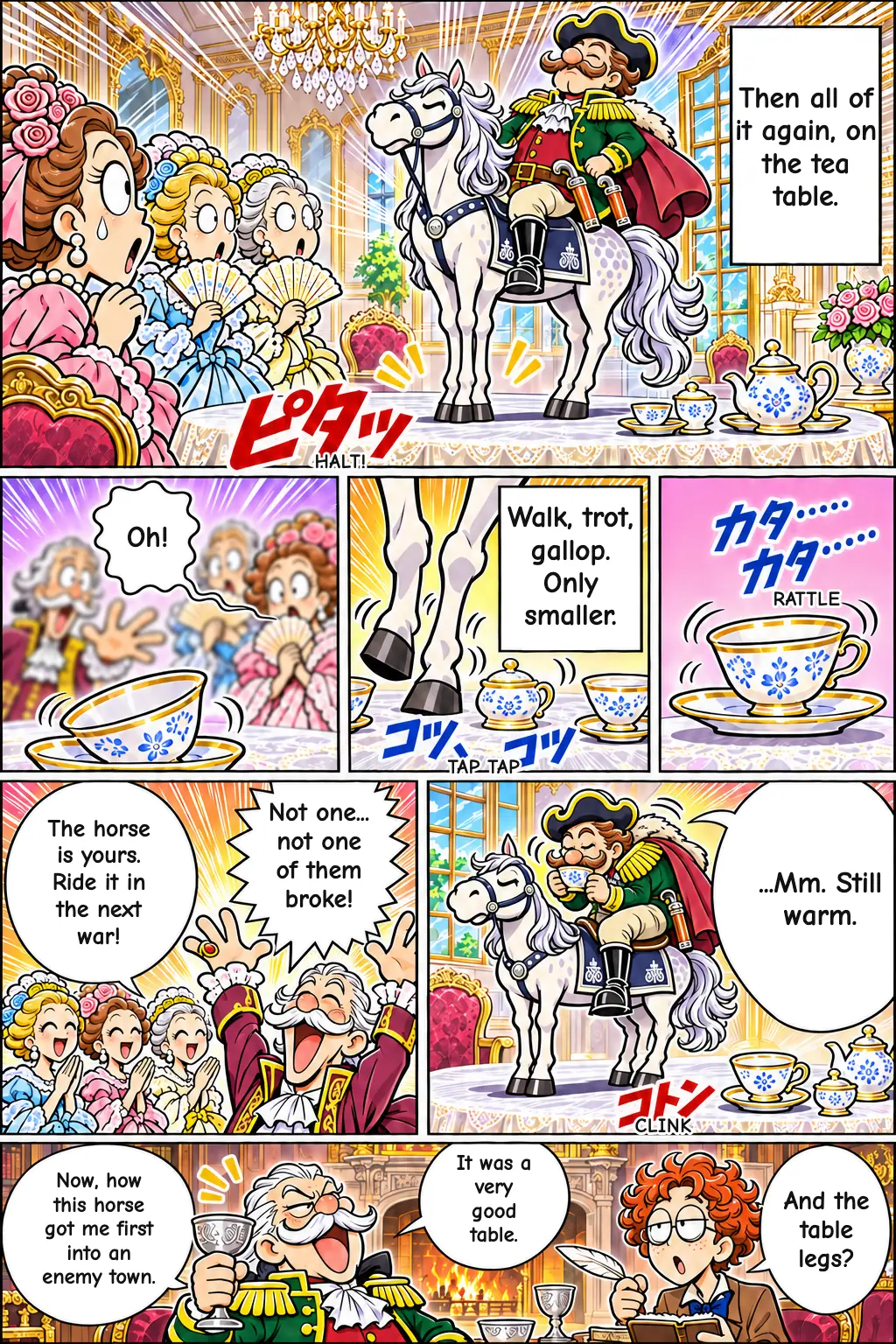
Then he shows off. To entertain the ladies, he rides through an open window into the tea room and takes the horse through a walk, a trot and a gallop. Finally he puts it up on the tea table to repeat the whole routine in miniature. Not one cup or saucer breaks. The delighted Count gives him the horse to ride in the coming war against the Turks, under the command of Count Munich.
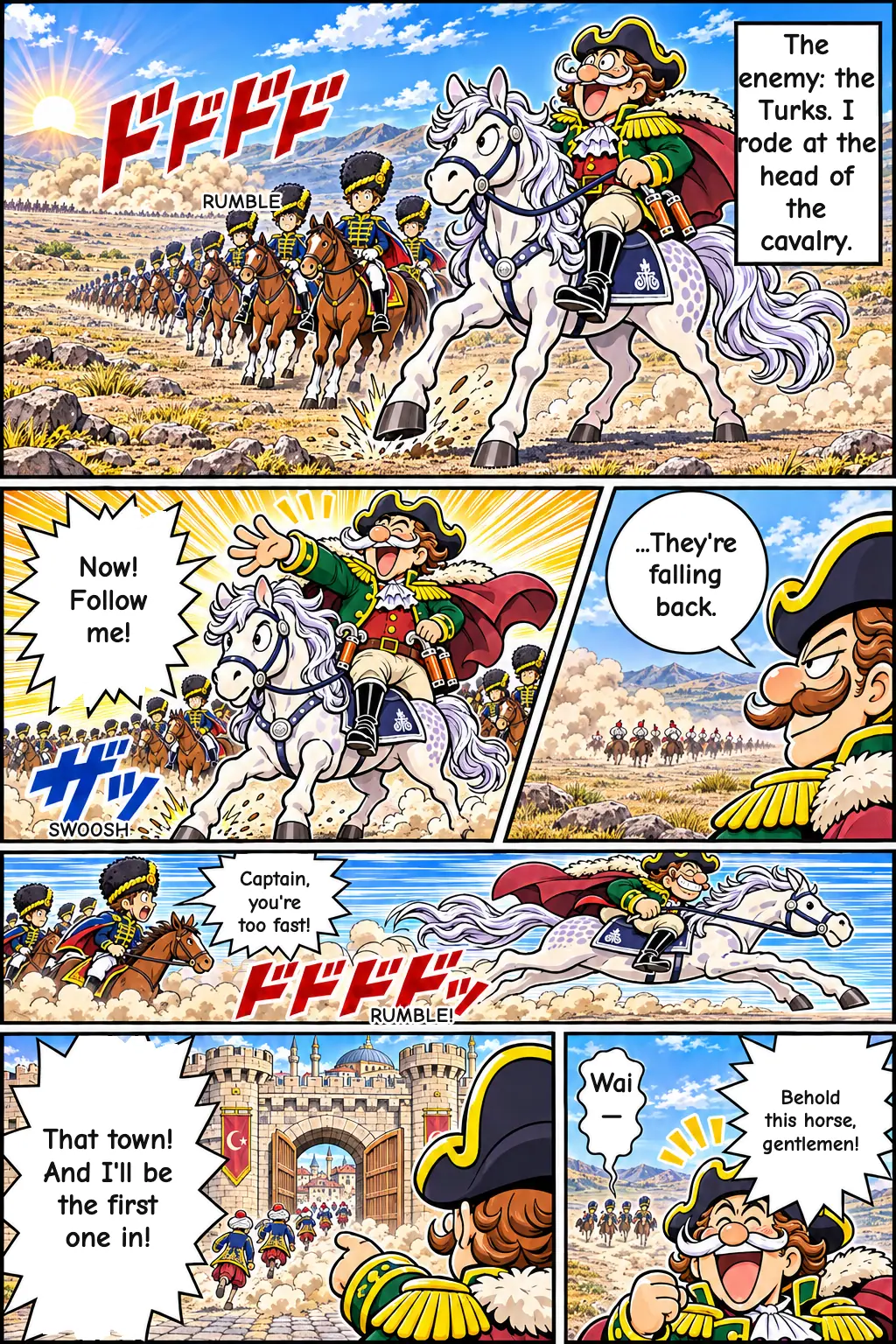
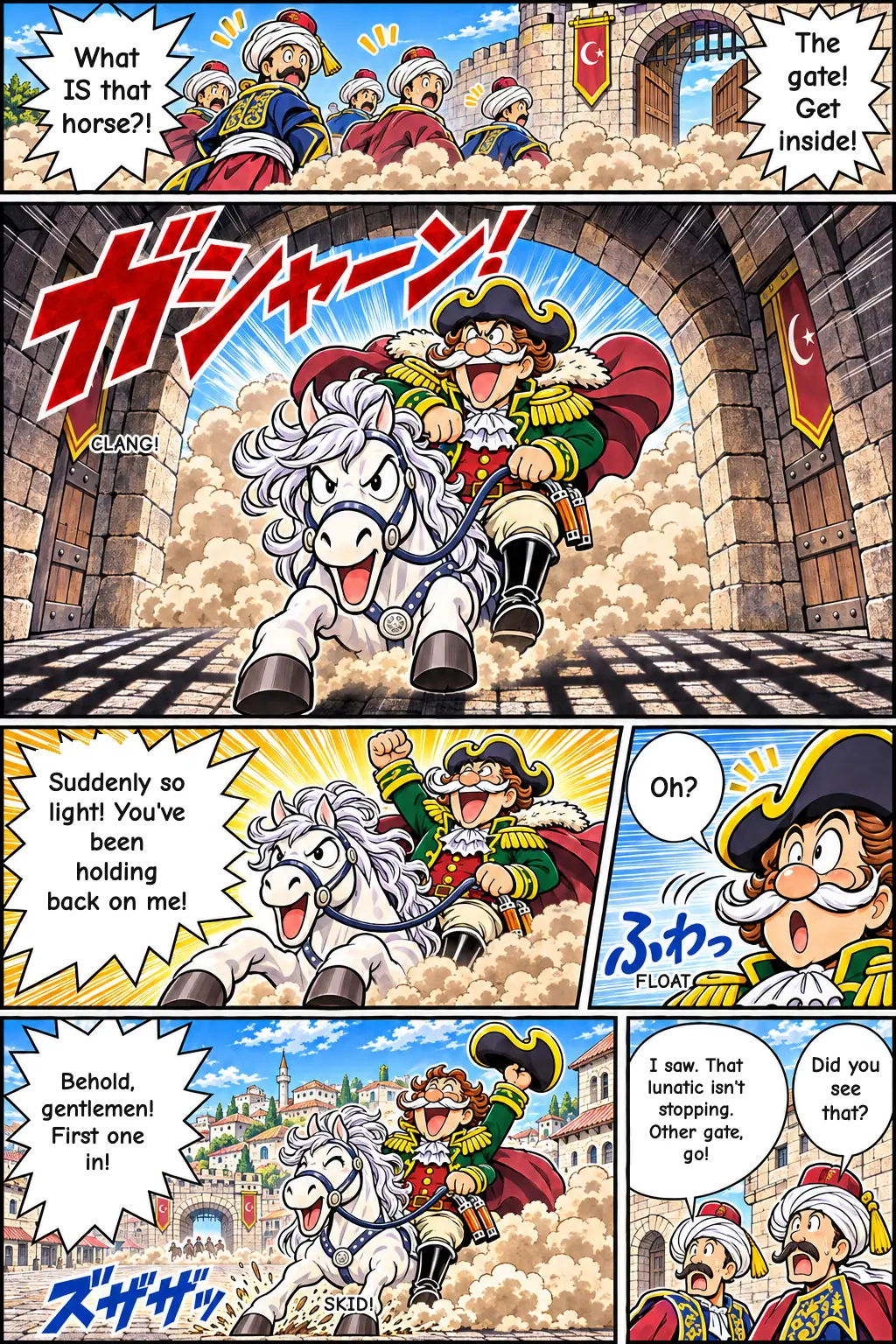
On campaign, the Baron is at an outpost when he sees a cloud of dust approaching. He sends his hussars (light cavalry) out to both flanks to raise more dust, then rides straight ahead to see who is coming. When the enemy begins to fall back, he attacks and routs them. His horse's speed puts him at the very front of the chase, into a walled town and on toward its far gate. As the last fleeing soldiers escape, he halts in the town square and discovers that none of his men are with him.
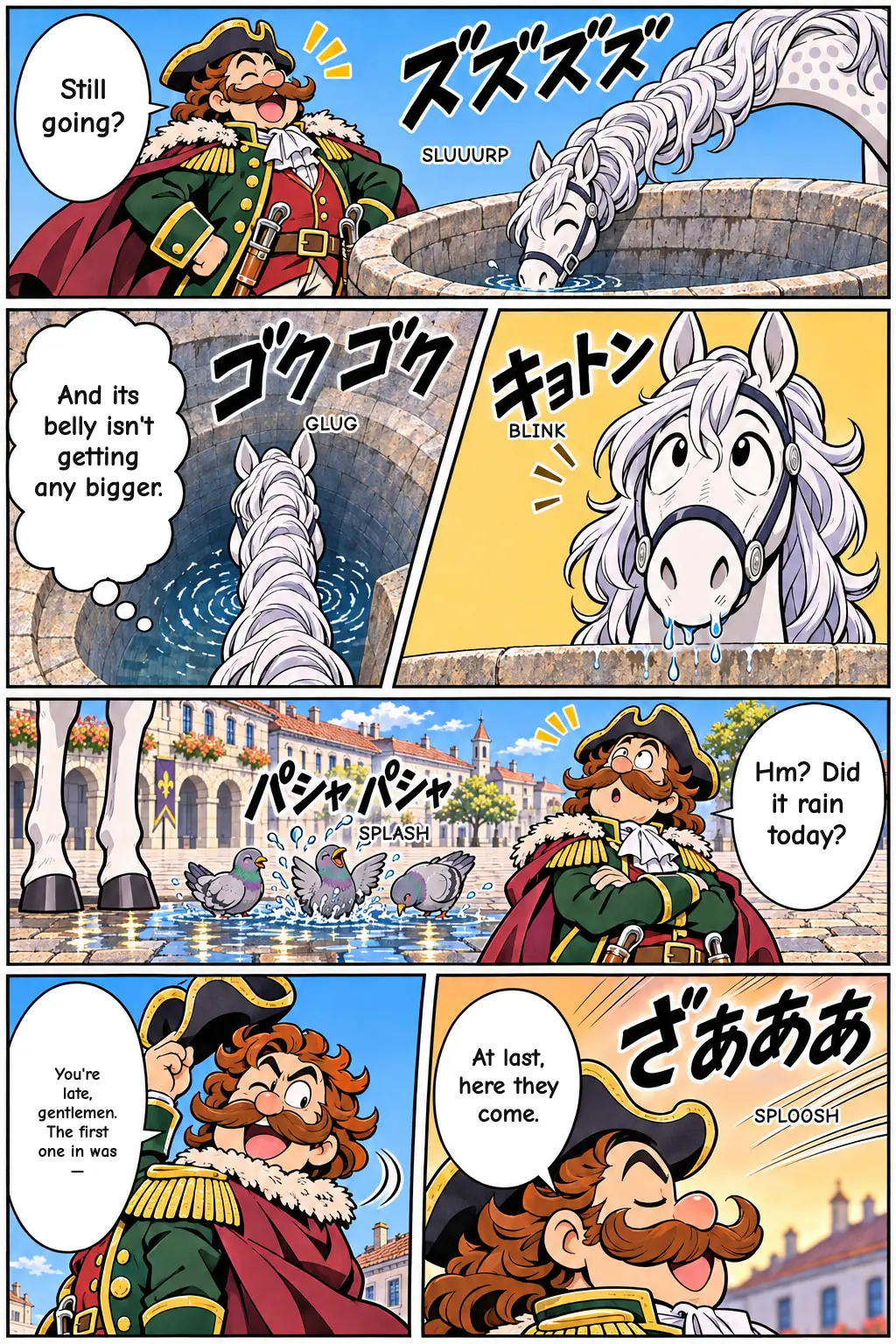
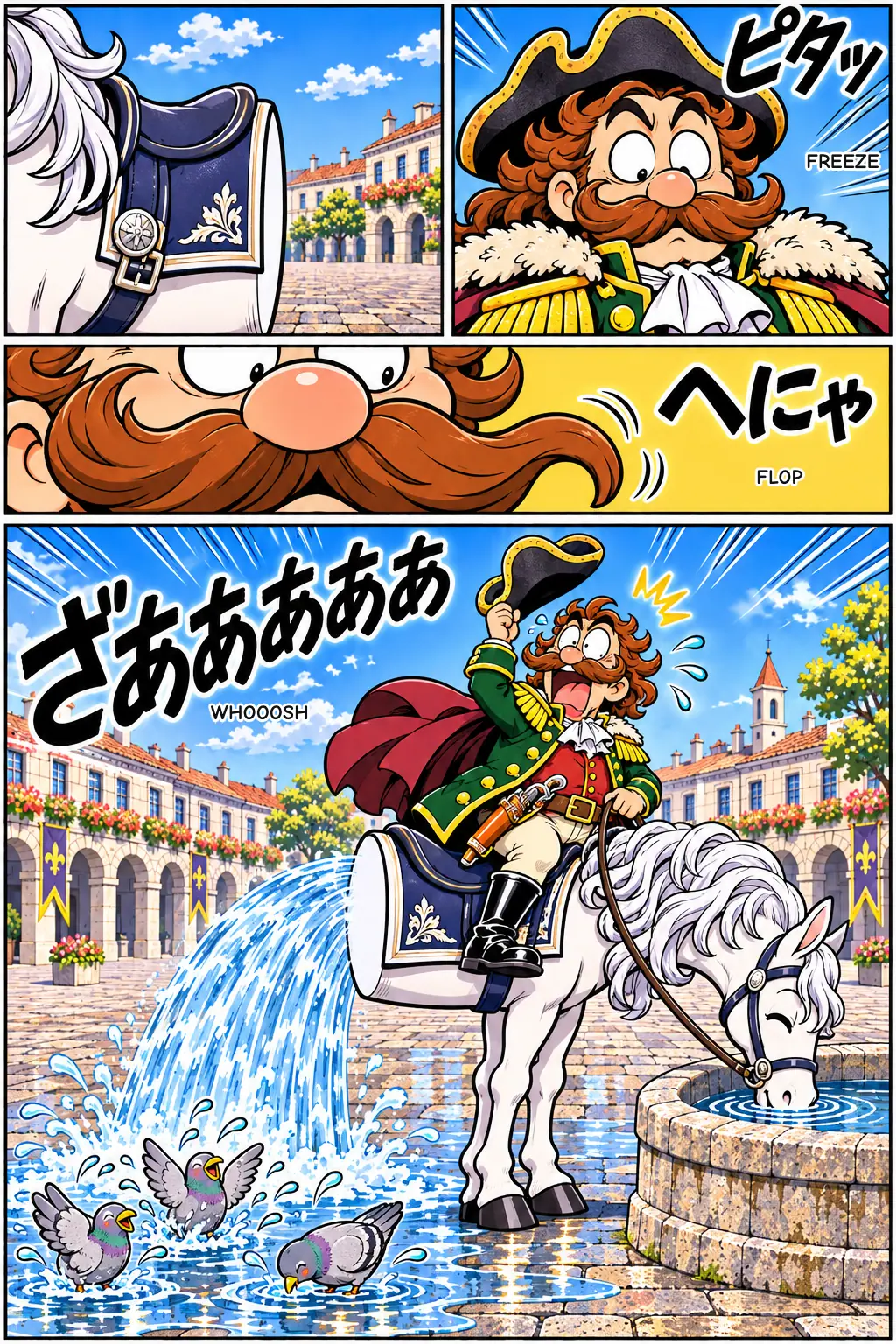
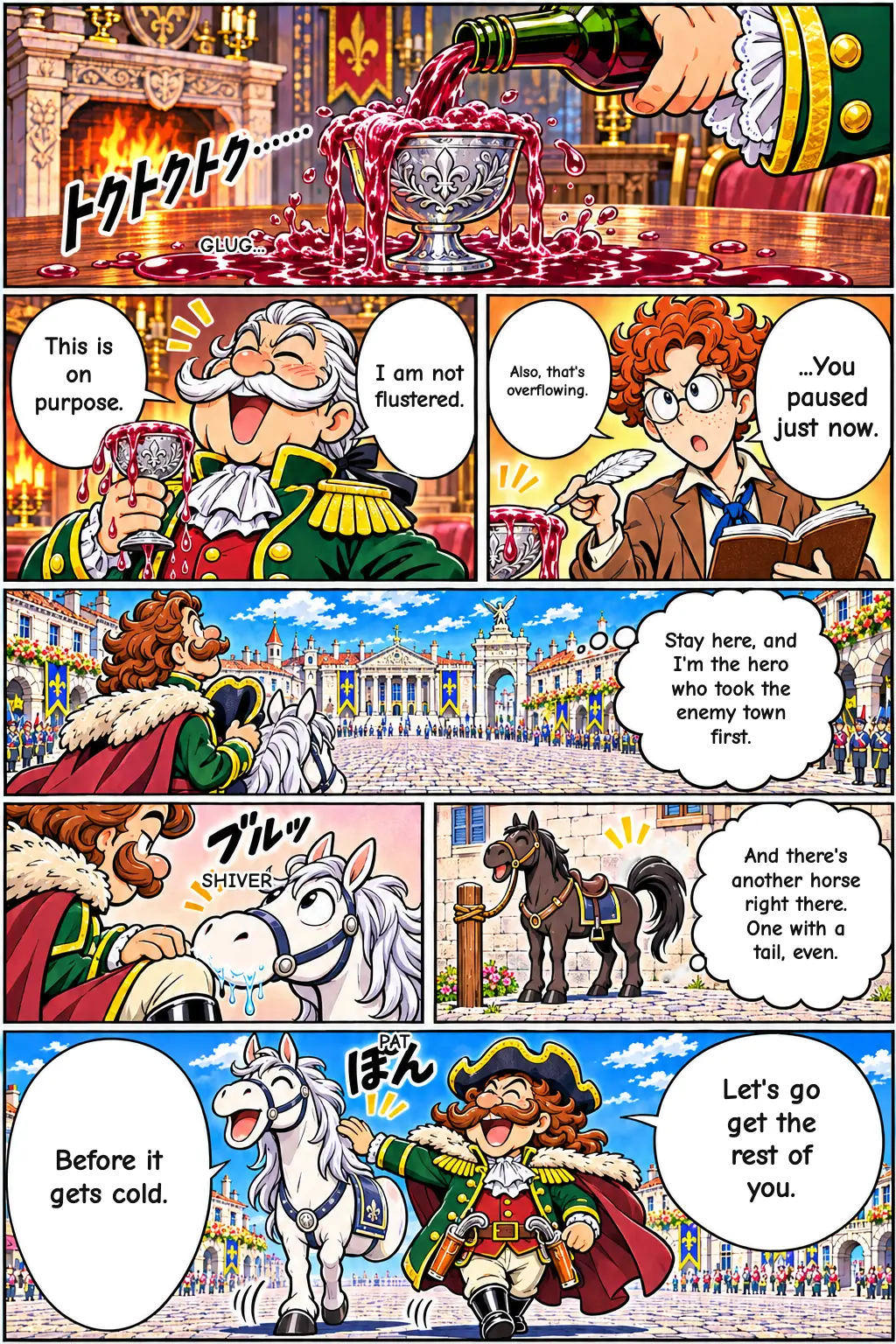
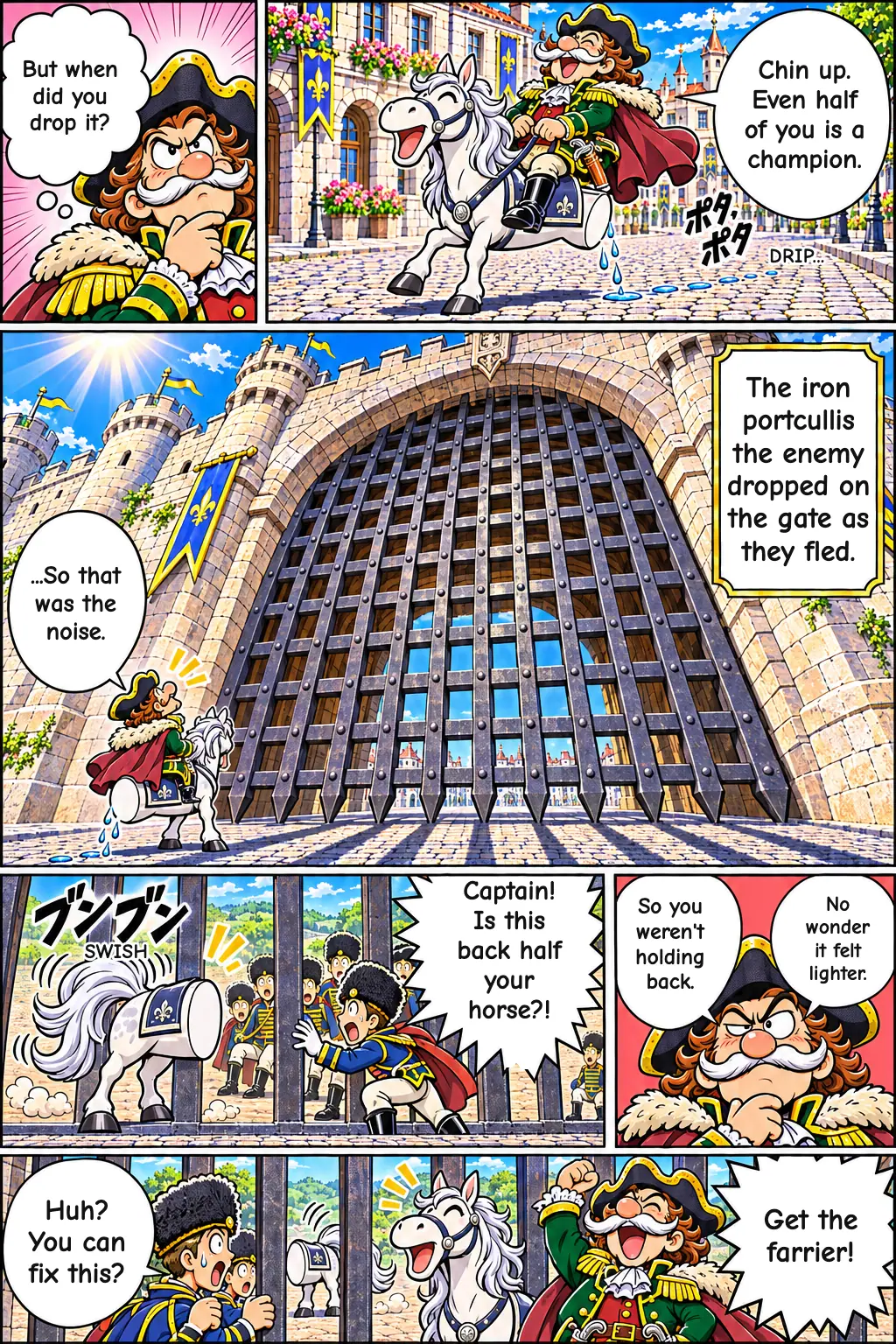
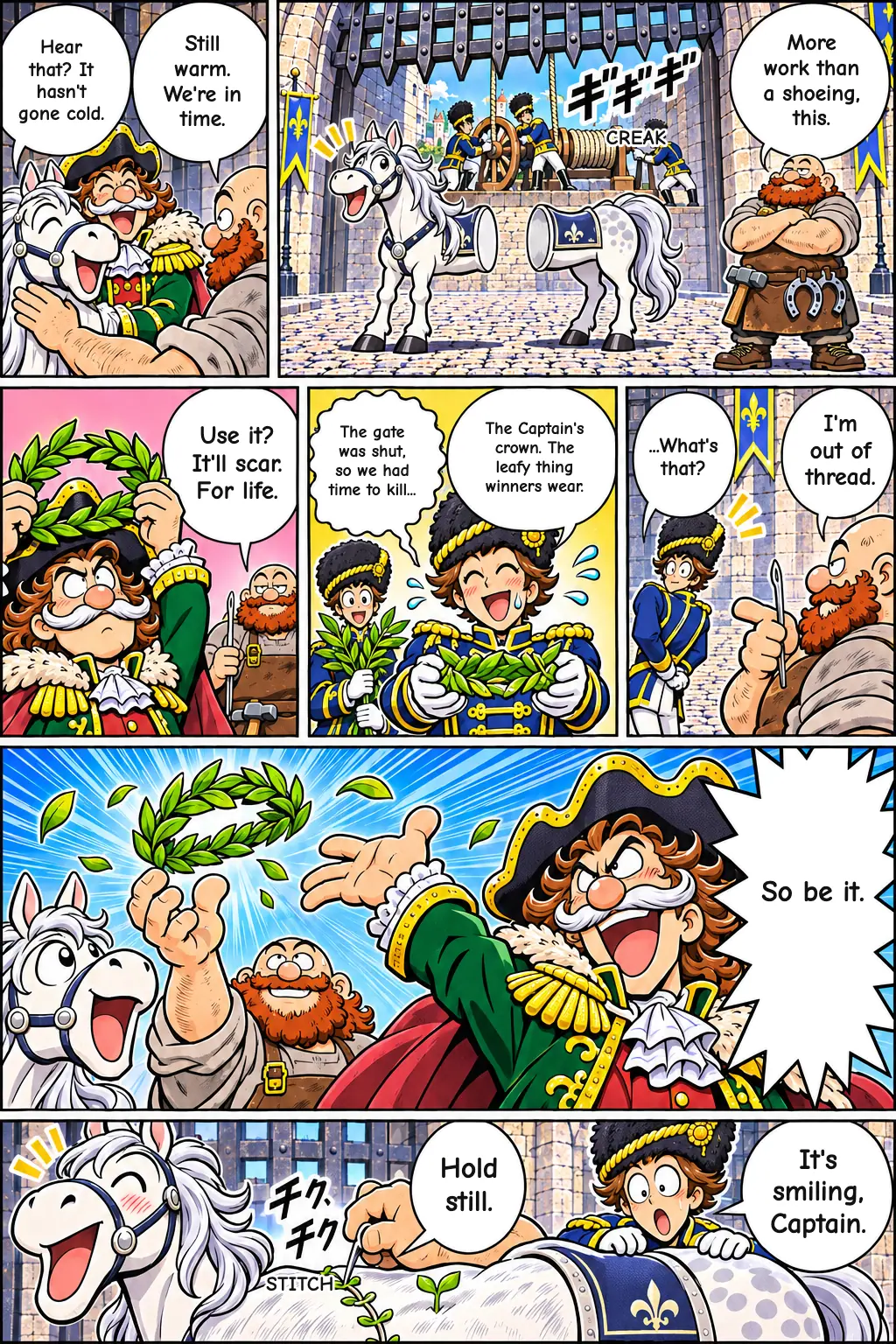
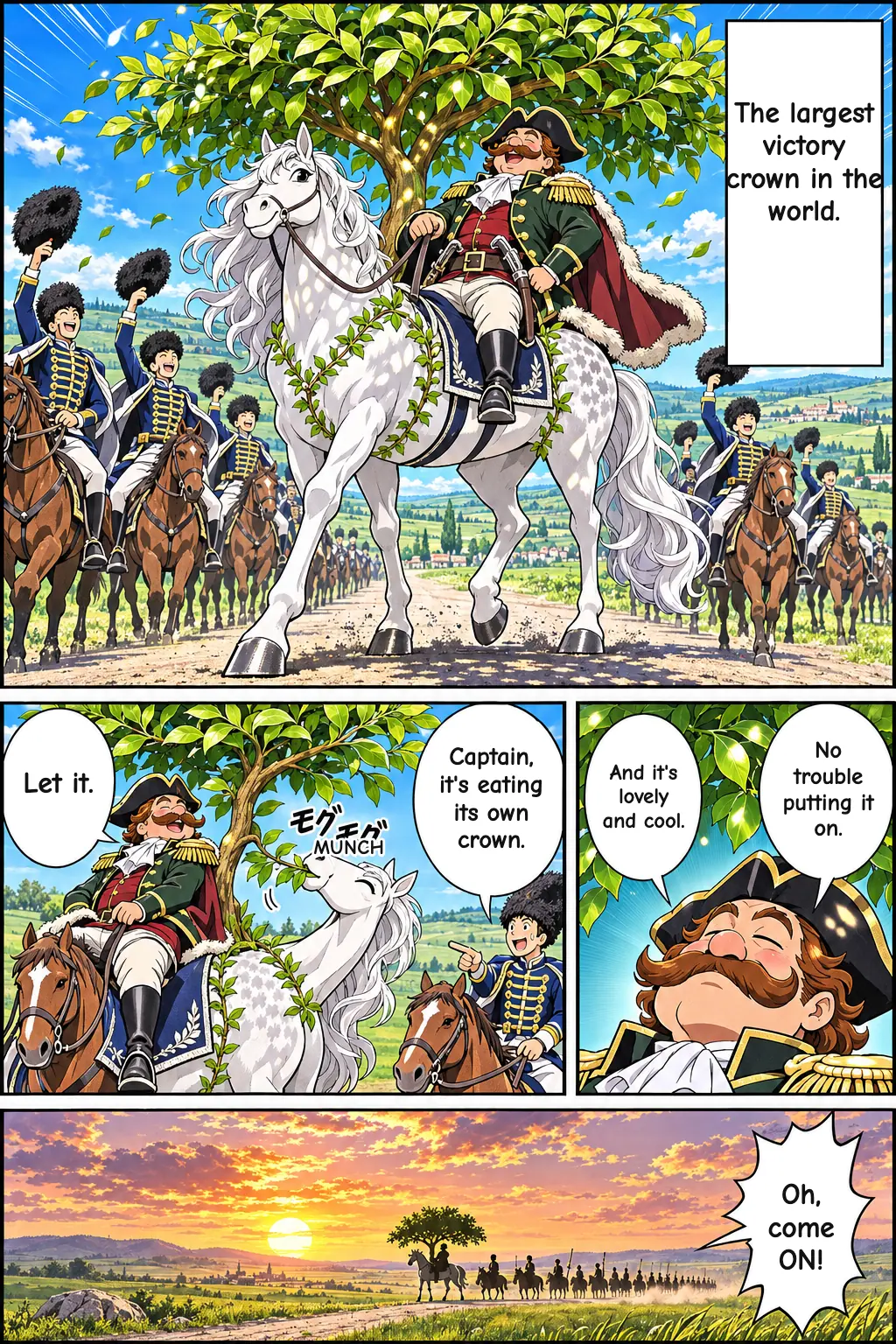
While he waits, he walks the panting horse to the fountain. It drinks and drinks and is never satisfied. Looking around for his hussars, the Baron sees why: the back half of the horse is gone, and the water is running straight out. He returns to the town gate and learns that the enemy's falling portcullis has sliced the animal in two. The hindquarters are still outside. The regiment's farrier joins the halves while they are warm, stitching them with sprigs and young shoots of laurel, the nearest material at hand. The wound heals, and the laurel takes root. It grows into a leafy bower, so on later campaigns the Baron rides into action in the shade of his own horse.
Where the Tale Comes From
The book first appeared in English in 1785, written by Rudolf Erich Raspe, a German scholar living in Britain. Gottfried August Bürger produced a German version in 1786, and the collection kept growing and changing in later editions. That is why chapter numbers for this episode vary, so it is safer to look for the horse story itself than for a fixed chapter.
Behind the fiction stands a real person: Hieronymus Karl Friedrich von Münchhausen (1720–1797), a German nobleman who served with the Russian army and had a reputation for telling colorful stories. The adventures in the book are fiction, not a record of his life.
The war has a real setting too. Field Marshal Burkhard Christoph von Münnich, the book's "Count Munich," led Russian forces against the Ottoman Empire in the 1730s, and the fortress of Ochakov (spelled Oczakow in older English) was captured in 1737. The Baron frames the campaign as a chance to restore the Russian honor damaged during Peter the Great's fight on the Pruth River in 1711. Real names and dates make the impossible parts sound oddly official.
Why the Joke Works
The story is a tall tale, a form in which the teller stays perfectly serious while the facts become absurd. The fun lies in the Baron's calm. A horse cut in half would be a catastrophe in any other story, but here it is simply a puzzle to solve, followed by a practical repair.
The ending can also be read as a sly joke about military glory. Laurel has been a sign of victory since ancient times, and the Baron literally gets a crop of it growing from his mount. This is an interpretation, since the book does not explain the gag. It also fits the vanity of a narrator who compares his horse to Bucephalus, the famous steed of Alexander the Great, a horse also remembered for being tamed when others could not manage it.
What the Manga Changes
The main events above come from the original: the wild horse, the tea table, the chase, the endless drinking, the portcullis and the laurel. The teacups still survive unbroken in the manga, too.
The manga's additions are comedy and staging. The battle is played as bloodless comedy, softening the rout and the image of the severed hindquarters left outside the gate. The horse's personality and expressions are invented, because the original gives it no name and calls it only his Lithuanian horse. Also invented are the looks and lines of the Count and the ladies, the farrier's personality, the wobbling-tableware gags and any explanation of where the hussars went. The original leaves their absence as a mystery to the Baron.
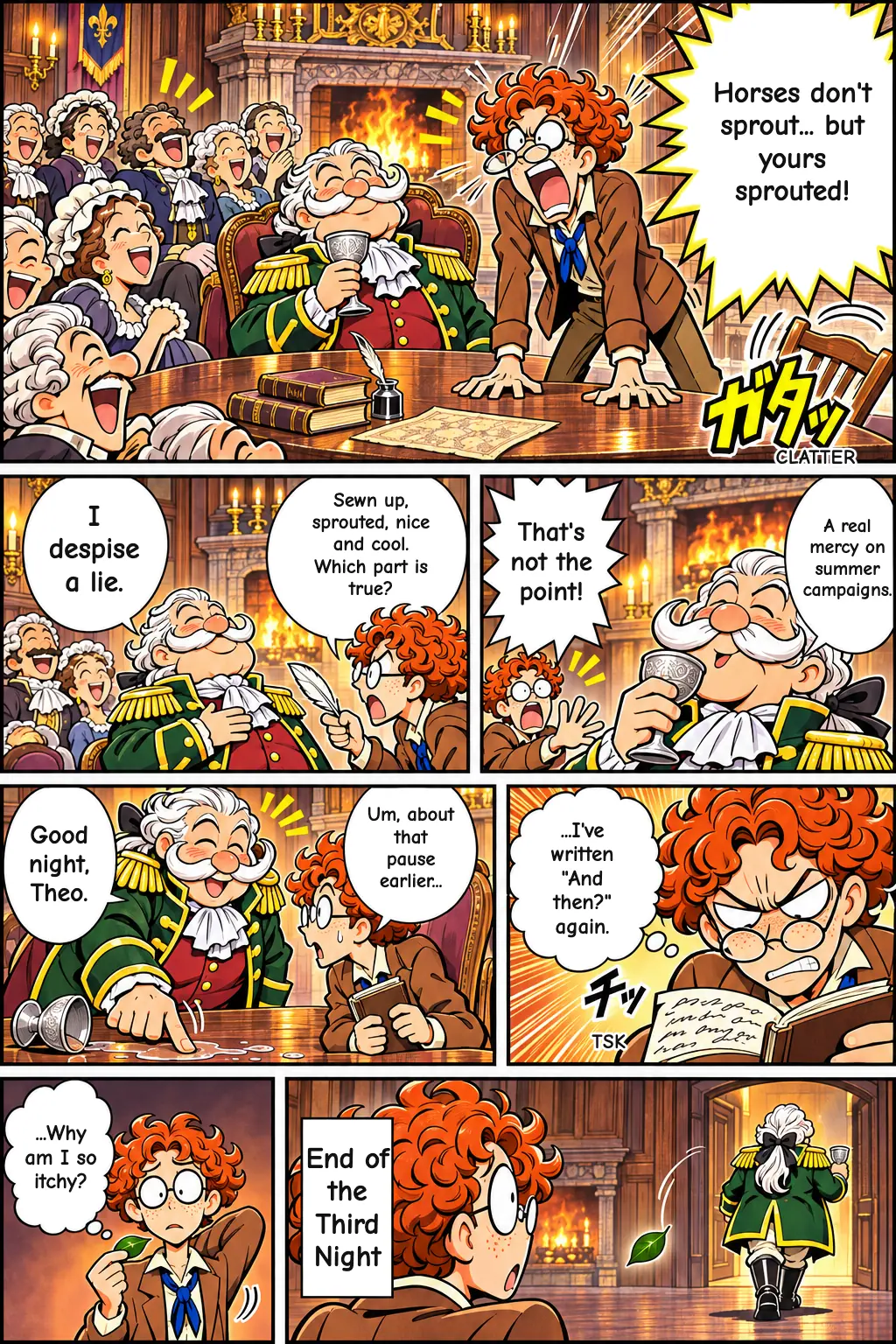
The Baron does speak in the first person in the original book. The manga's storytelling frame, including its setting and listeners' reactions, is the adaptation's own creation.
Where to Read It
The best part of this story is the moment the Baron finally looks behind him, and that timing is a natural fit for comics. You can read Episode 3 of BARON MUNCHAUSEN: Fourteen Nights of Impossible Tales here on Manga Portal. Every episode is free, with no sign-up required, so if the half-horse makes you laugh, the rest of the Baron's impossible stories are easy to continue.
Characters in this episode
Baron Munchausen
The boastful first-person narrator, a superb rider who treats every impossible disaster with complete calm.
The Lithuanian Horse
A nameless young thoroughbred, wild at first but fast and delicate once tamed, that loses its back half in battle.
Count Przobossky
The Lithuanian nobleman and host who is so impressed by the Baron's riding that he gives him the horse.
The Ladies at Tea
The delighted audience for the Baron's horse-riding performance on top of the tea table.
The Farrier
An unnamed horse-shoeing craftsman in the Baron's regiment who stitches the two halves together with laurel shoots.
Count Munich
The Russian commander of the Turkish campaign, mentioned by name and based on the historical general Münnich.
FAQ
What happens to Baron Munchausen's horse?
A falling portcullis at a town gate cuts the horse in two during a chase. The Baron notices only when the water it drinks at a fountain pours straight out. A farrier then sews the halves together with laurel shoots, and the horse recovers.
Why won't the Baron's horse stop drinking?
The horse has lost its back half, so the water never stays inside and its thirst is never satisfied. The Baron discovers this only when he turns around to look for his missing soldiers.
Is Baron Munchausen a real person?
Yes and no. Hieronymus Karl Friedrich von Münchhausen (1720–1797) was a real German nobleman who served with the Russian army, but the adventures in the book are fiction. Rudolf Erich Raspe wrote the 1785 English book that made the name famous.
Does the half-horse story happen at the Siege of Ochakov?
It is often linked to Ochakov because the Baron is fighting in the campaign that drives the Turks toward that fortress. The episode itself reads as a chase into a walled town rather than a siege, so it is best not to treat it as an account of the storming of Ochakov.
Who wrote The Adventures of Baron Munchausen?
Rudolf Erich Raspe wrote the first English version, published in 1785. Gottfried August Bürger's German version followed in 1786, and later editions changed and expanded the collection.