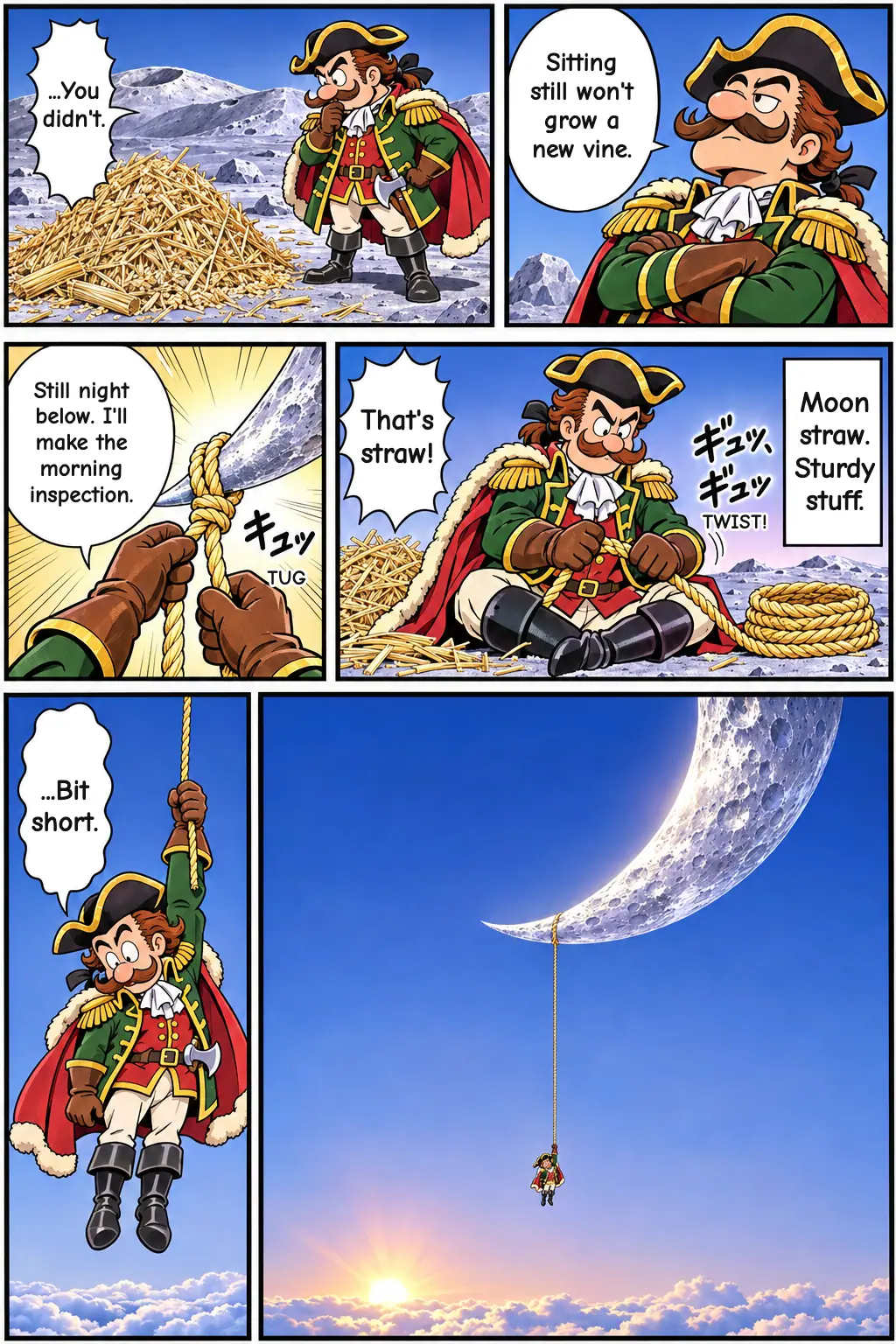
Episode 5He Threw an Axe to the Moon. Plan: Beans.Baron Munchausen: The Silver Axe and the Moon
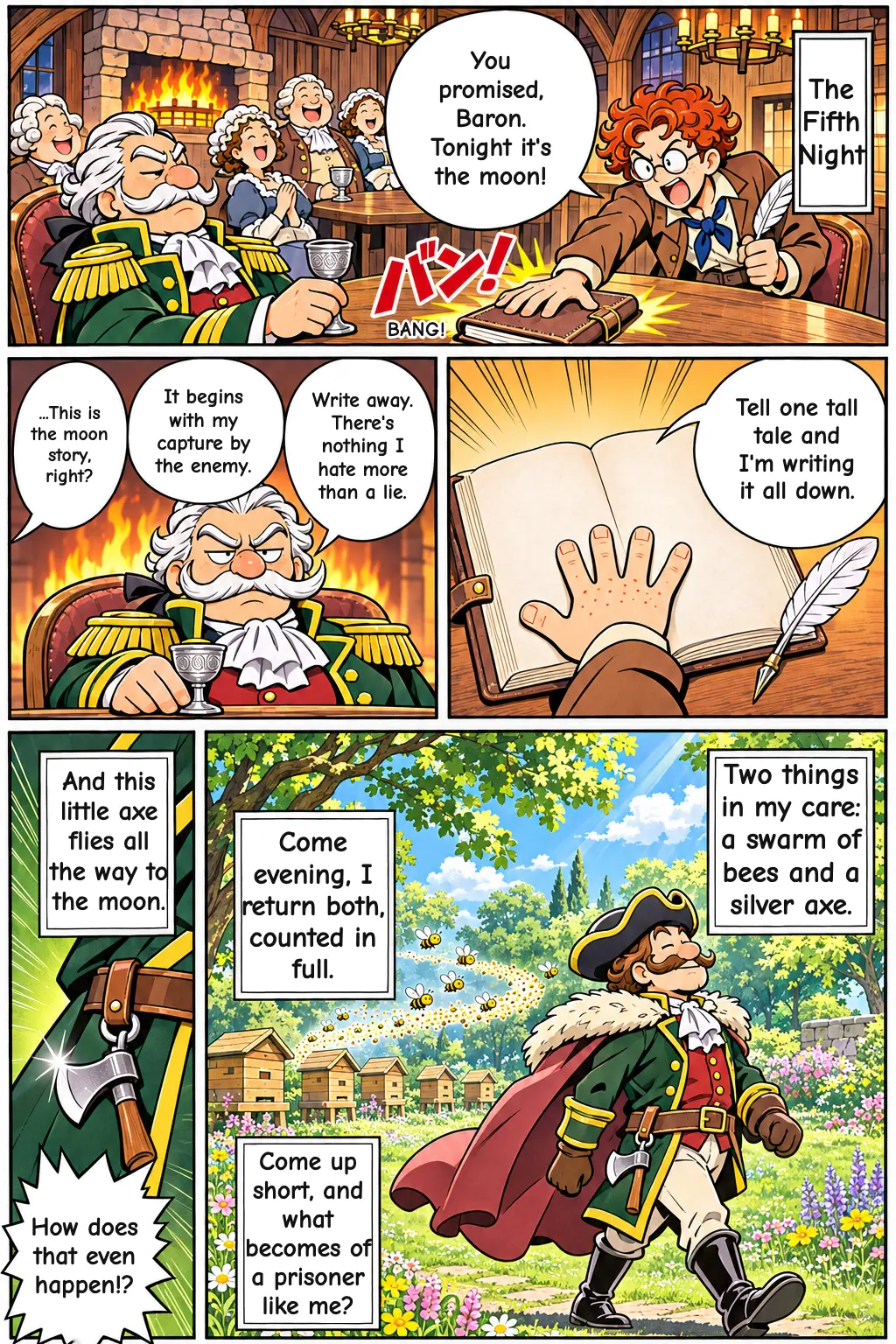
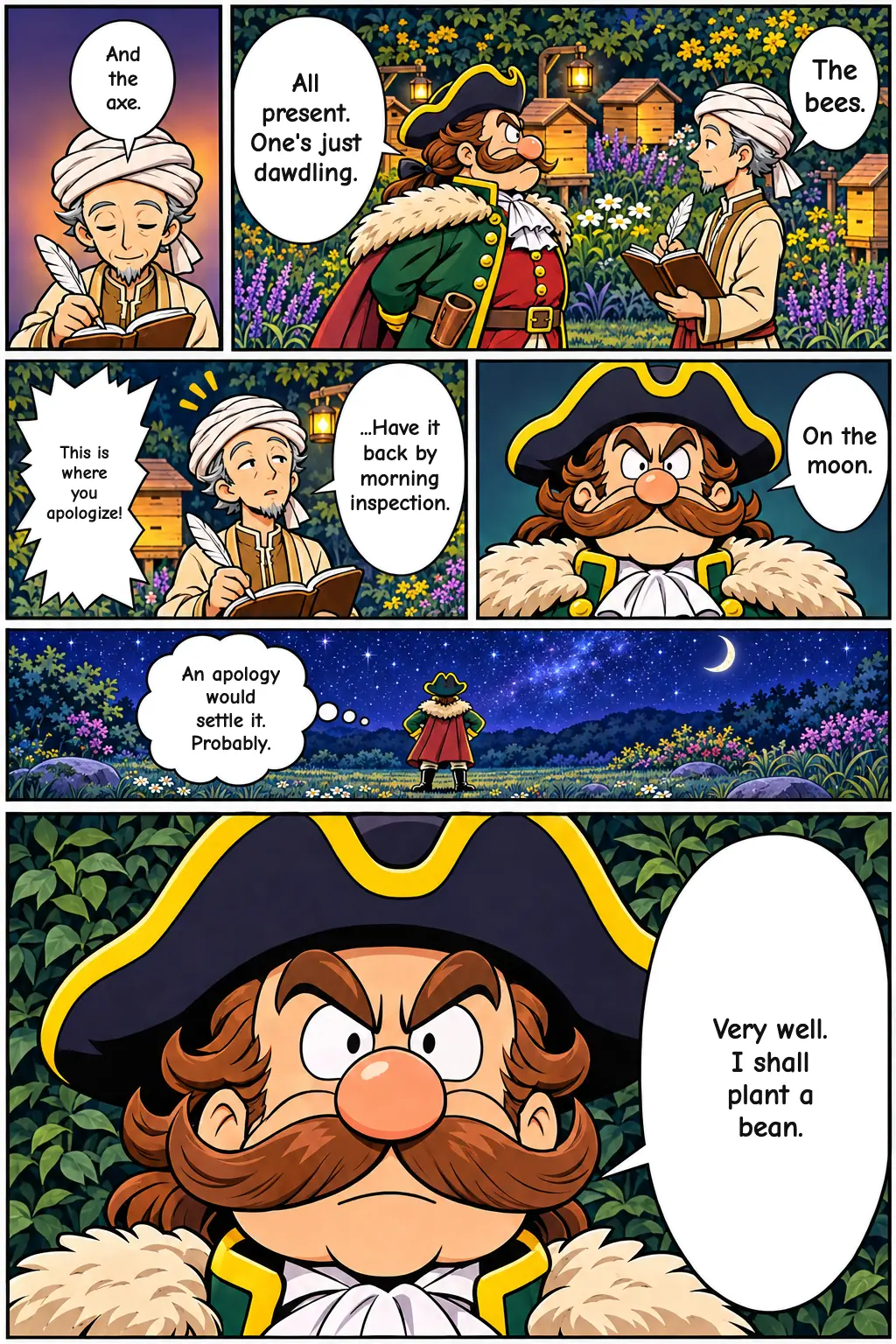
Episode 5 of the series. Held captive and put on bee duty, the Baron sends a silver axe in his care flying to the moon, then answers with a straight face: "Very well. I shall plant a bean." Note: the storytelling frame and its listener, the Head Gardener and the inspection deadline, and the Sultan's appearance are additions made for this adaptation.
Get new episodes in your feed. Follow us on:ThreadsBluesky
Story summary
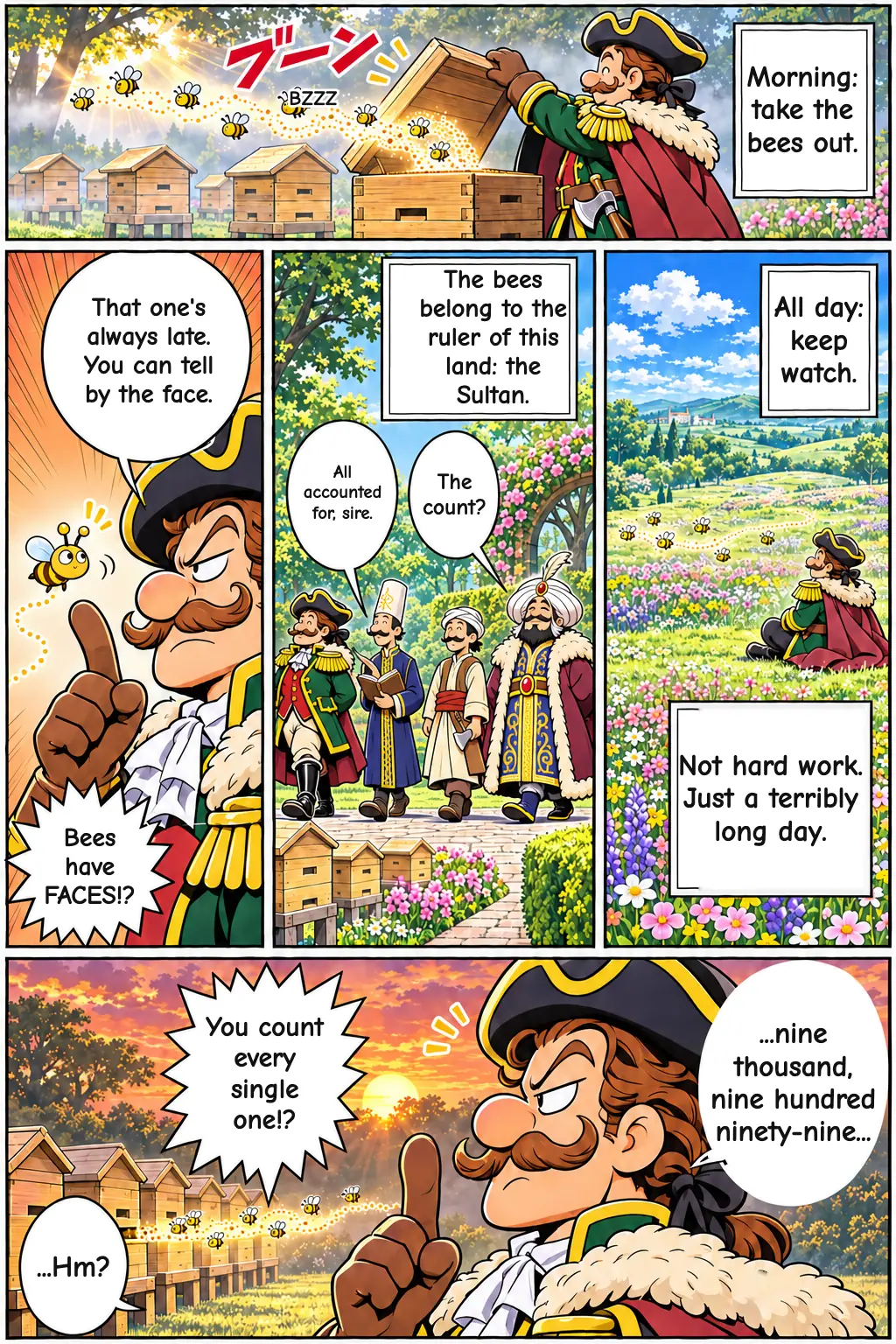
The episode is drawn from what English editions usually count as Chapter 6 of Baron Munchausen's adventures, though chapter numbers and divisions can vary by edition. The Baron, narrating in the first person, has been fighting the Turks when he is outnumbered and captured. He is then sold into slavery. His new job is more strange than hard: every morning he drives the Sultan's bees out to pasture, watches them all day as if they were livestock, and herds them back to their hives at night. One evening, a bee is missing.
Baron Munchausen and the Moon: The Silver Axe Story Summary
In short: The silver axe story is a tall tale from Rudolf Erich Raspe's 1785 book of Baron Munchausen's adventures, in which the enslaved Baron accidentally throws an axe to the moon while defending one of the Sultan's bees from two bears. He climbs a fast-growing bean plant to fetch it, braids a straw rope to get back down, and falls the last few miles to Earth, surviving without lasting harm.
The original story: Baron Munchausen's silver axe and the moon
The episode is drawn from what English editions usually count as Chapter 6 of Baron Munchausen's adventures, though chapter numbers and divisions can vary by edition. The Baron, narrating in the first person, has been fighting the Turks when he is outnumbered and captured. He is then sold into slavery. His new job is more strange than hard: every morning he drives the Sultan's bees out to pasture, watches them all day as if they were livestock, and herds them back to their hives at night.
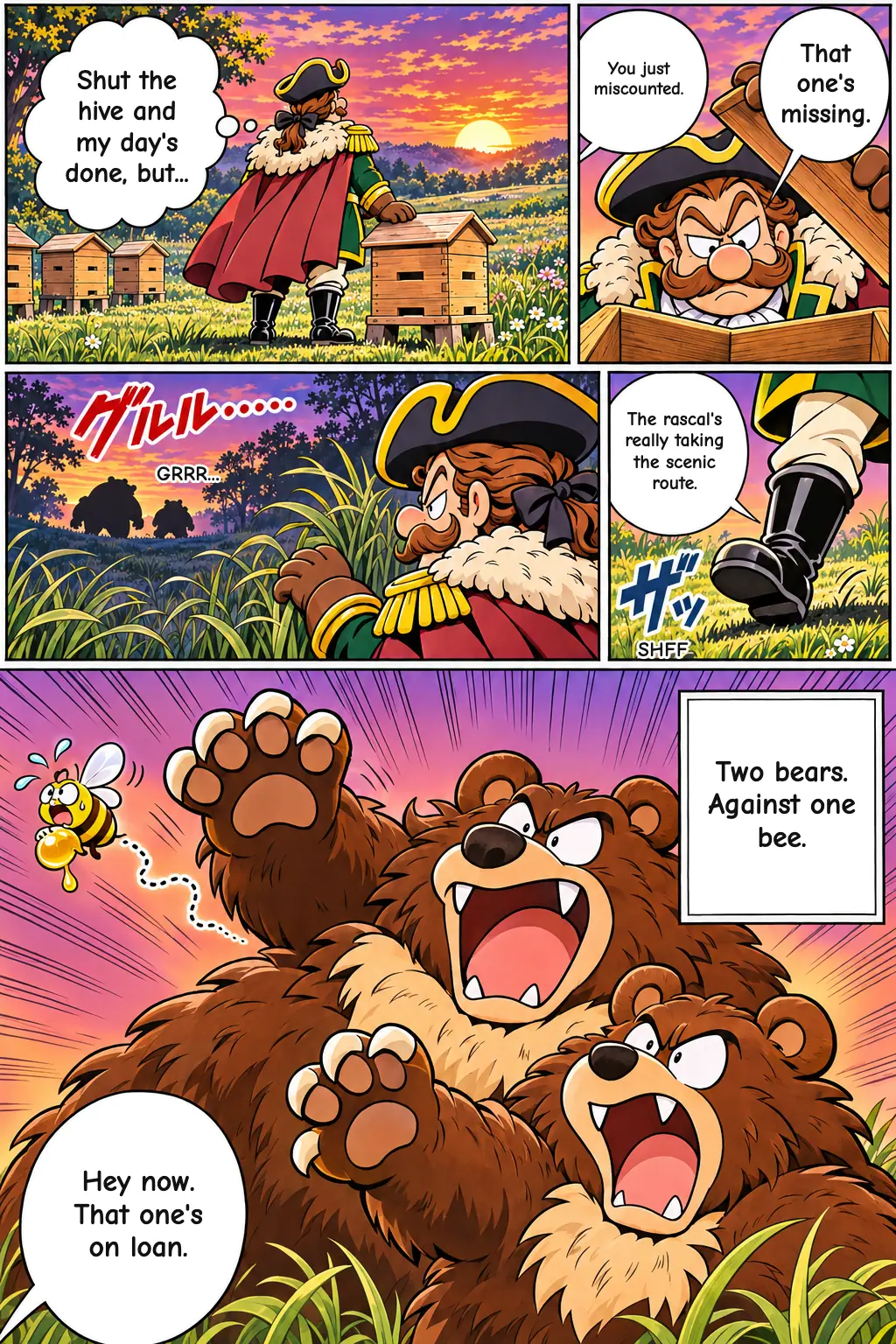
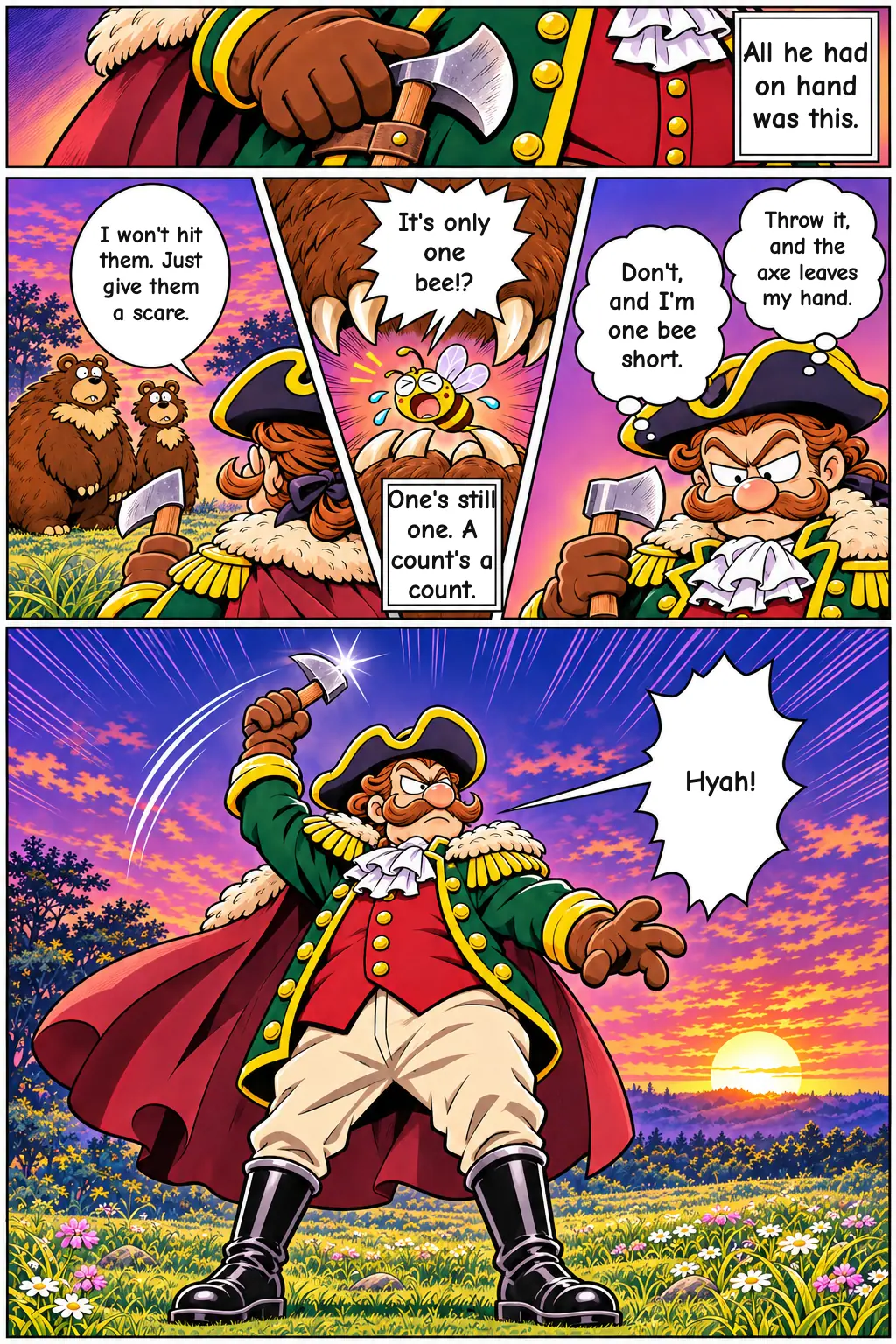
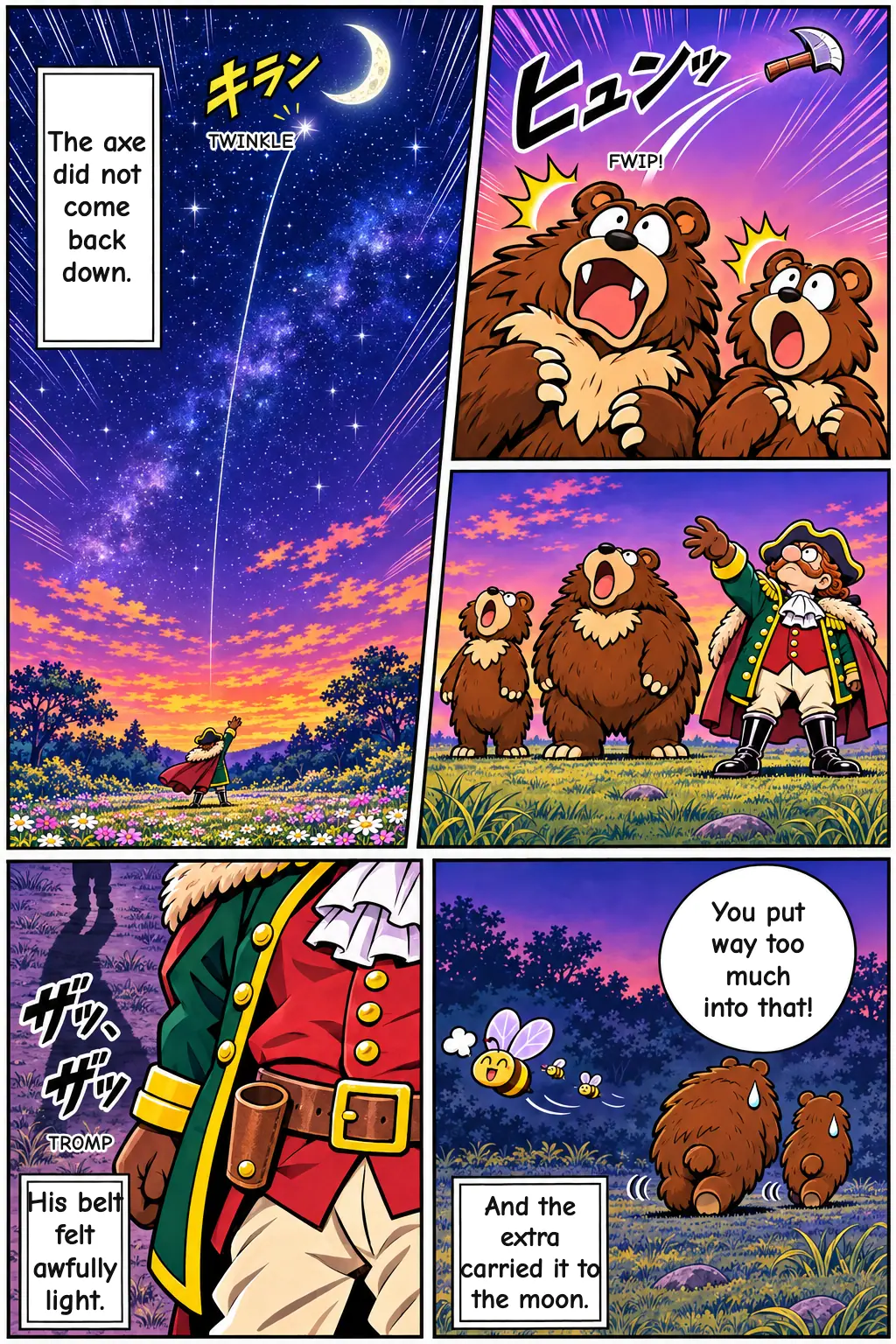
One evening, a bee is missing. The Baron spots it under attack by two bears, who want the honey it is carrying. His only weapon is a silver axe, the badge worn by the Sultan's gardeners and farmers. He throws it to scare the bears away, but the throw goes wrong. The axe sails upward and keeps going until it reaches the moon.
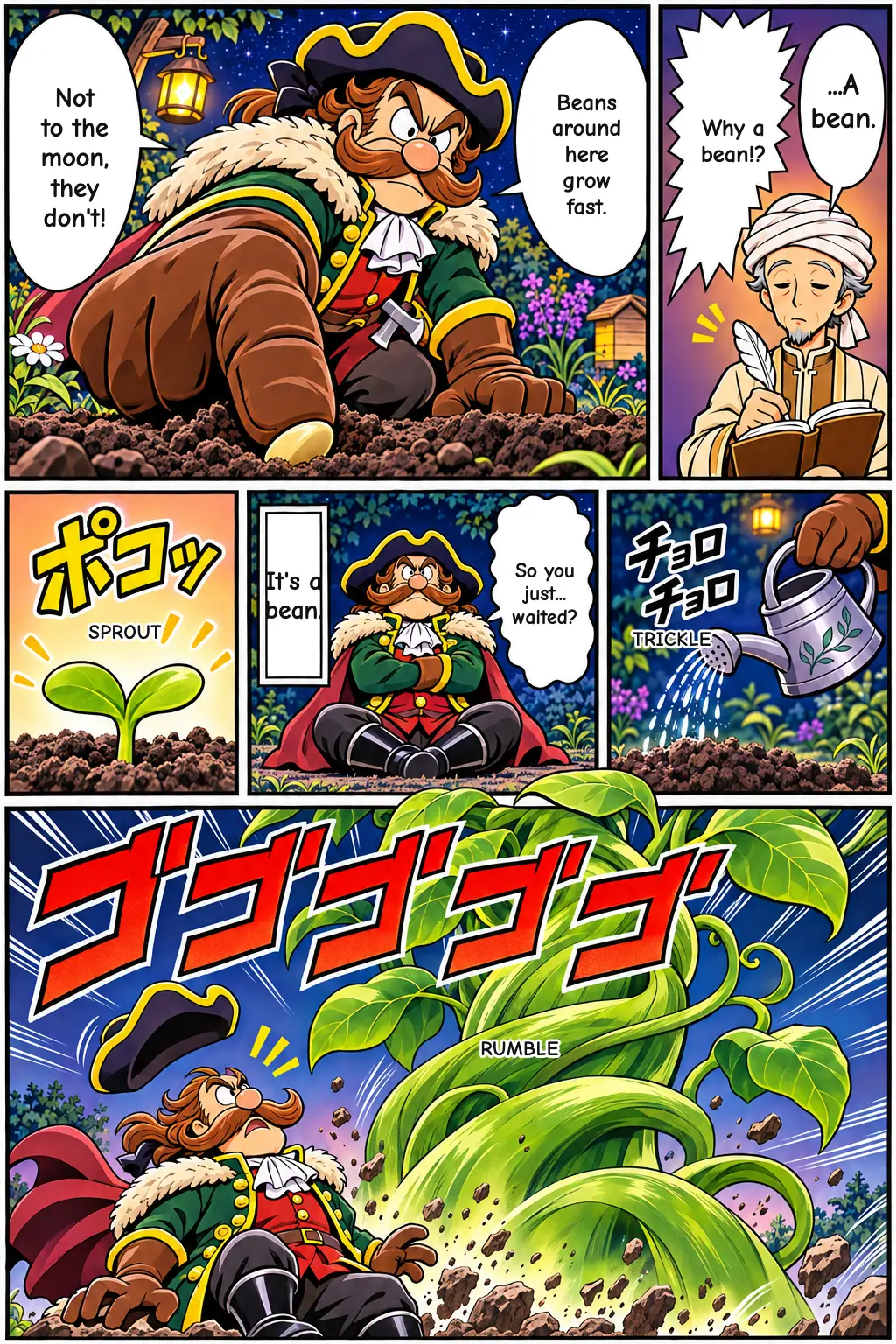
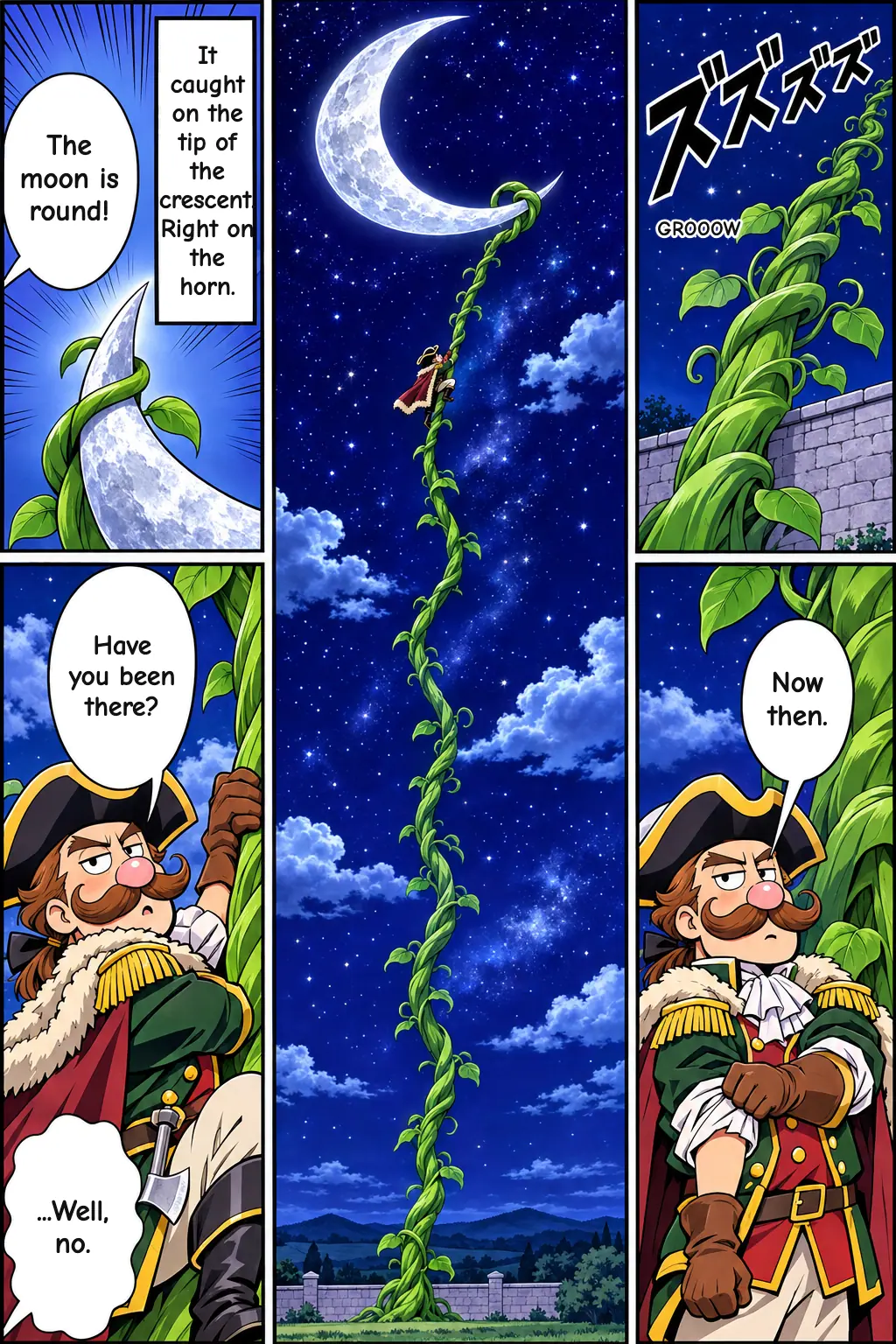
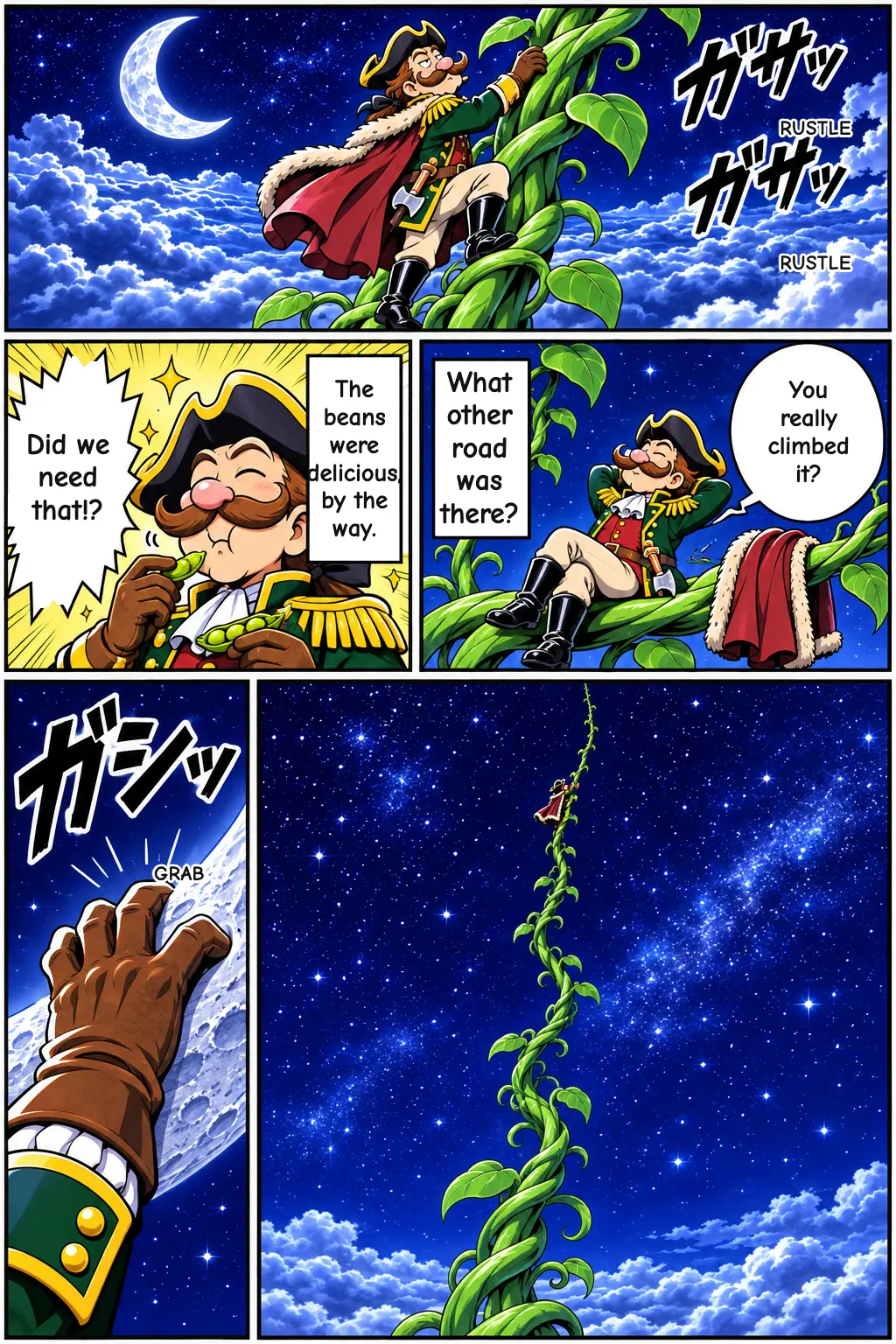
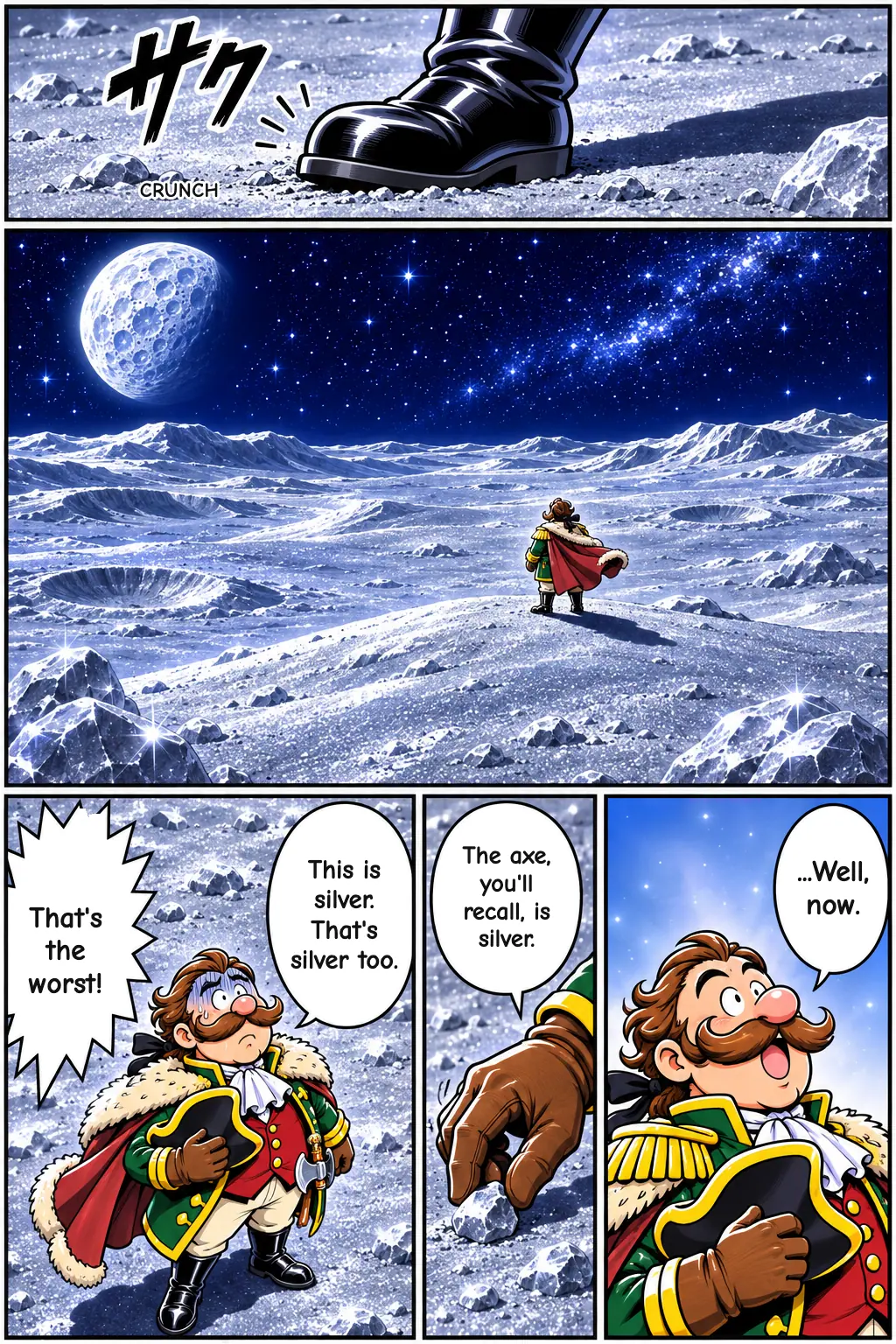
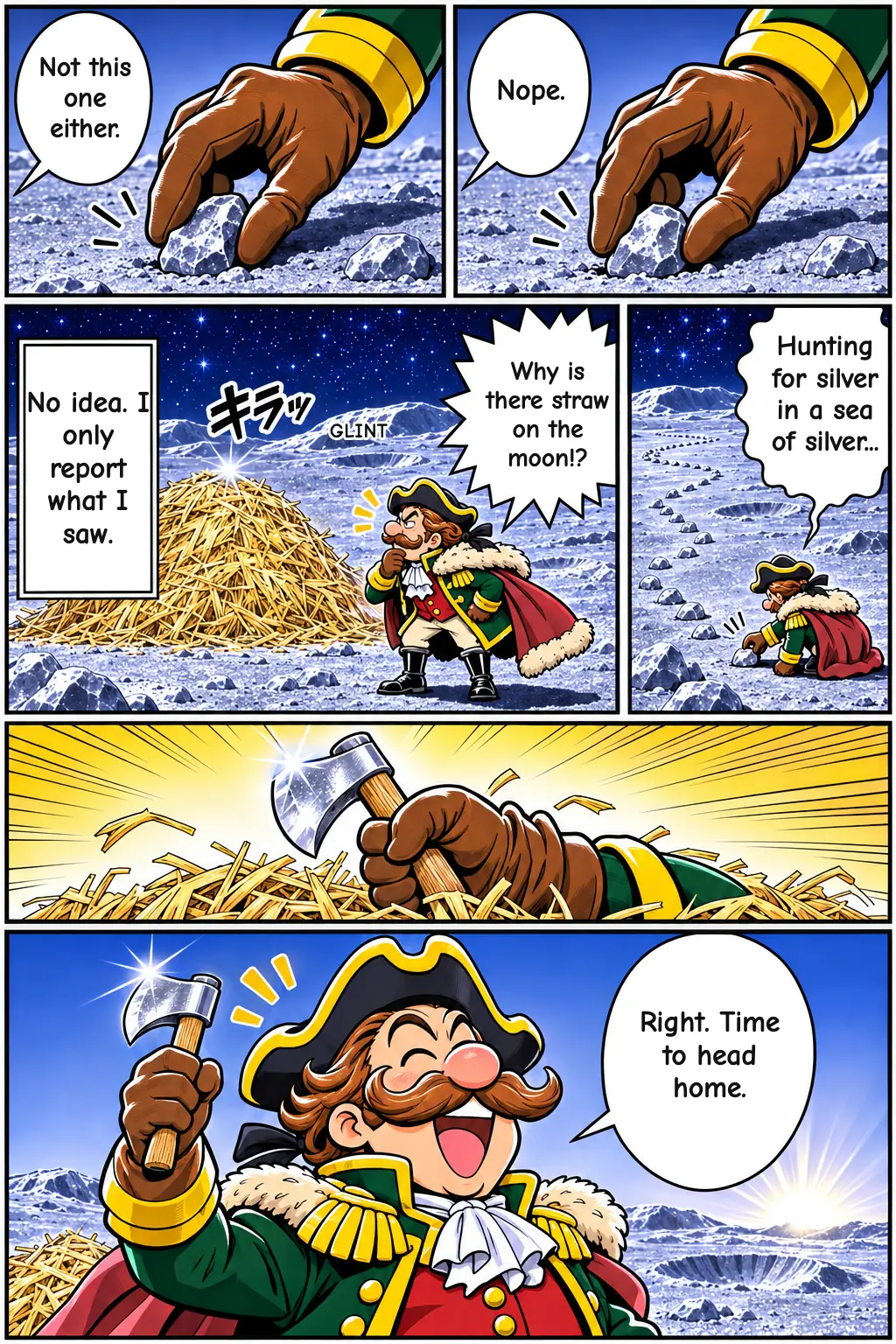
Most people would write off the axe. The Baron remembers that Turkish beans grow quickly and very tall, so he plants one. The vine shoots up and wraps around one of the moon's horns, and he simply climbs it. The search is the hard part, because everything on the moon shines like silver. He eventually finds his axe in a pile of chaff and chopped straw.
The way back down: straw rope, a long fall and a deep hole
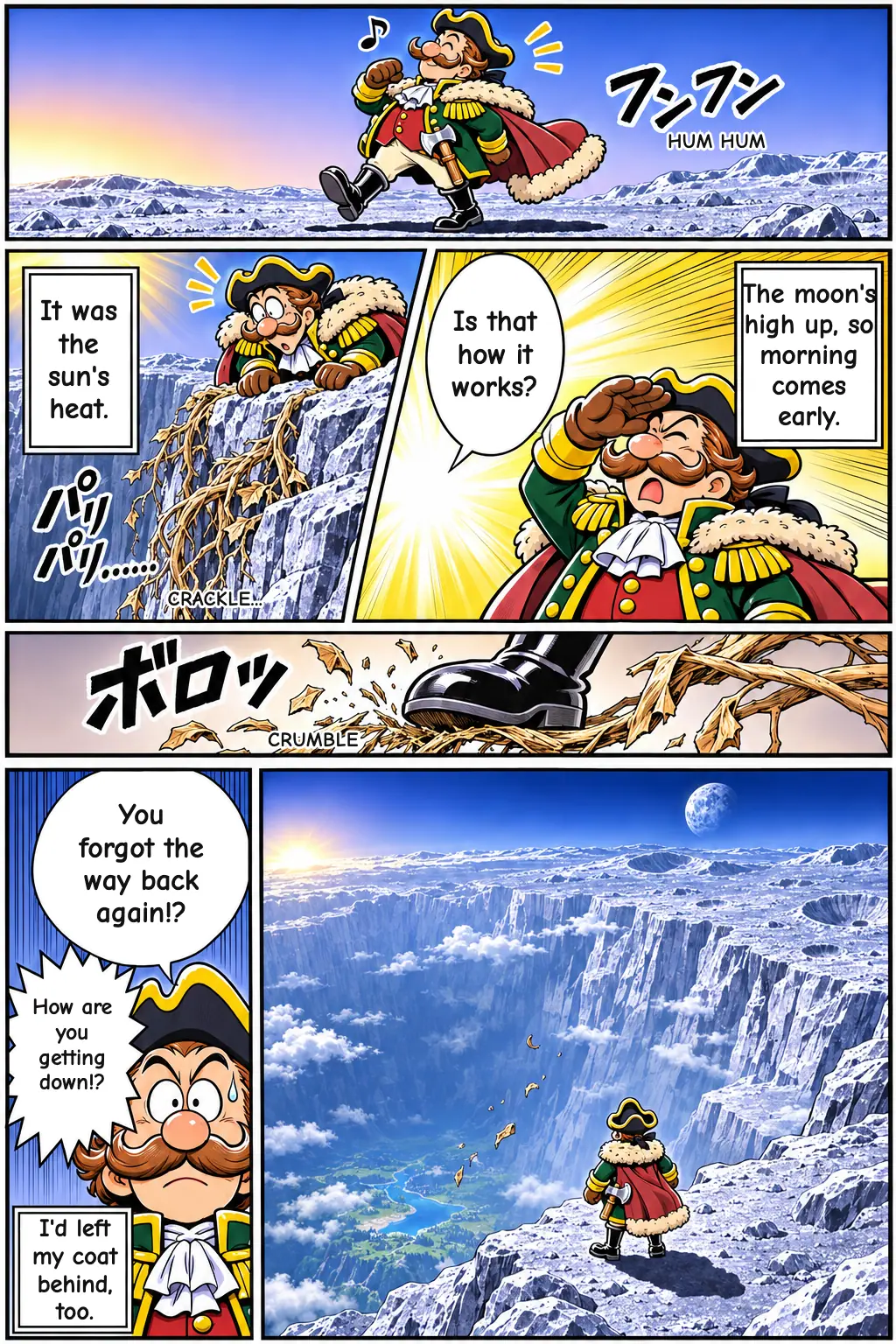
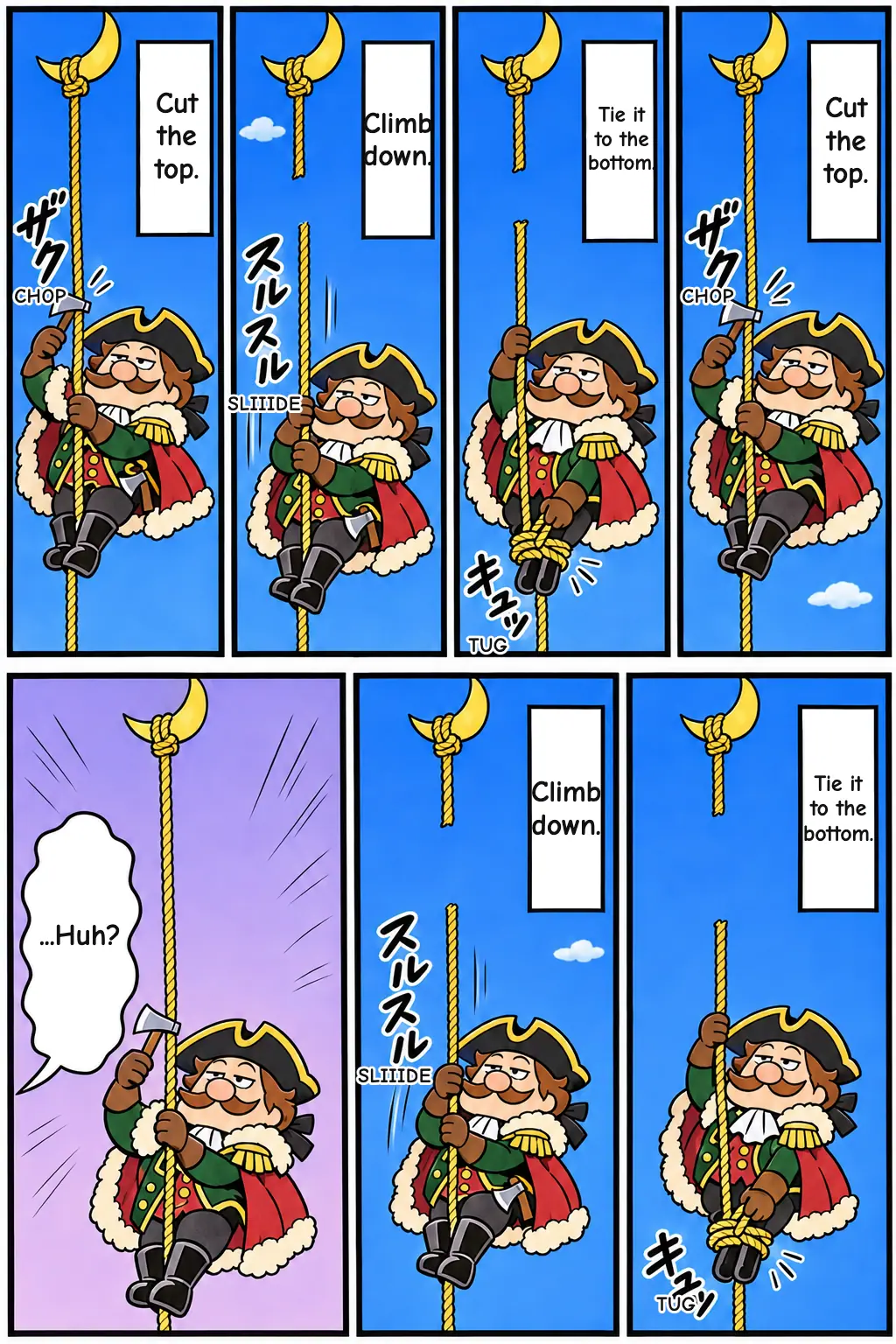
The return trip is where the story gets truly ridiculous. While the Baron was busy searching, the sun's heat has dried out the bean vine, so it is useless. He twists the chopped straw into a rope, ties it to one of the moon's horns, and slides to the bottom. Then he holds on with his left hand, cuts away the section above him with the axe, and ties that piece to the lower end. He repeats the trick again and again.
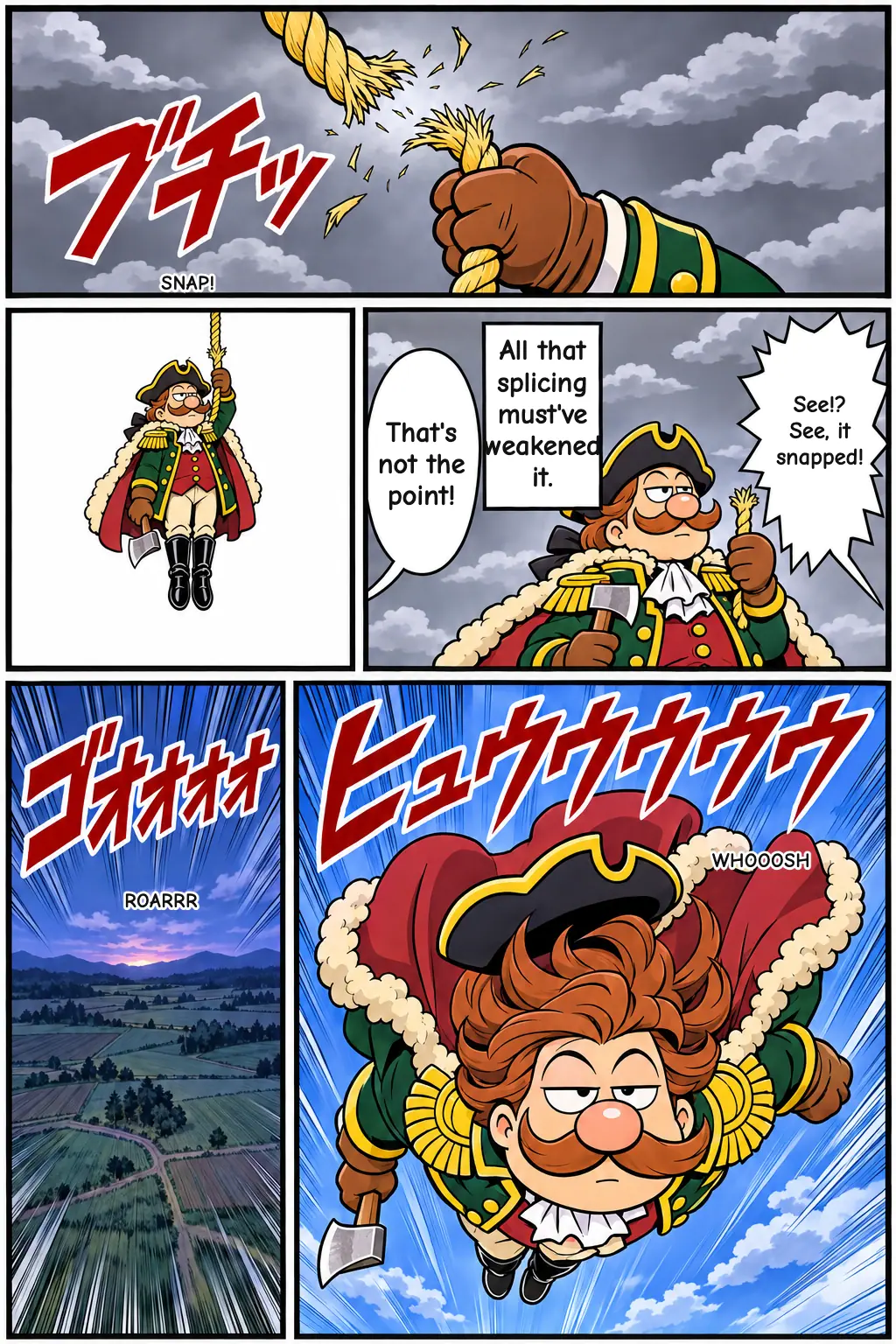
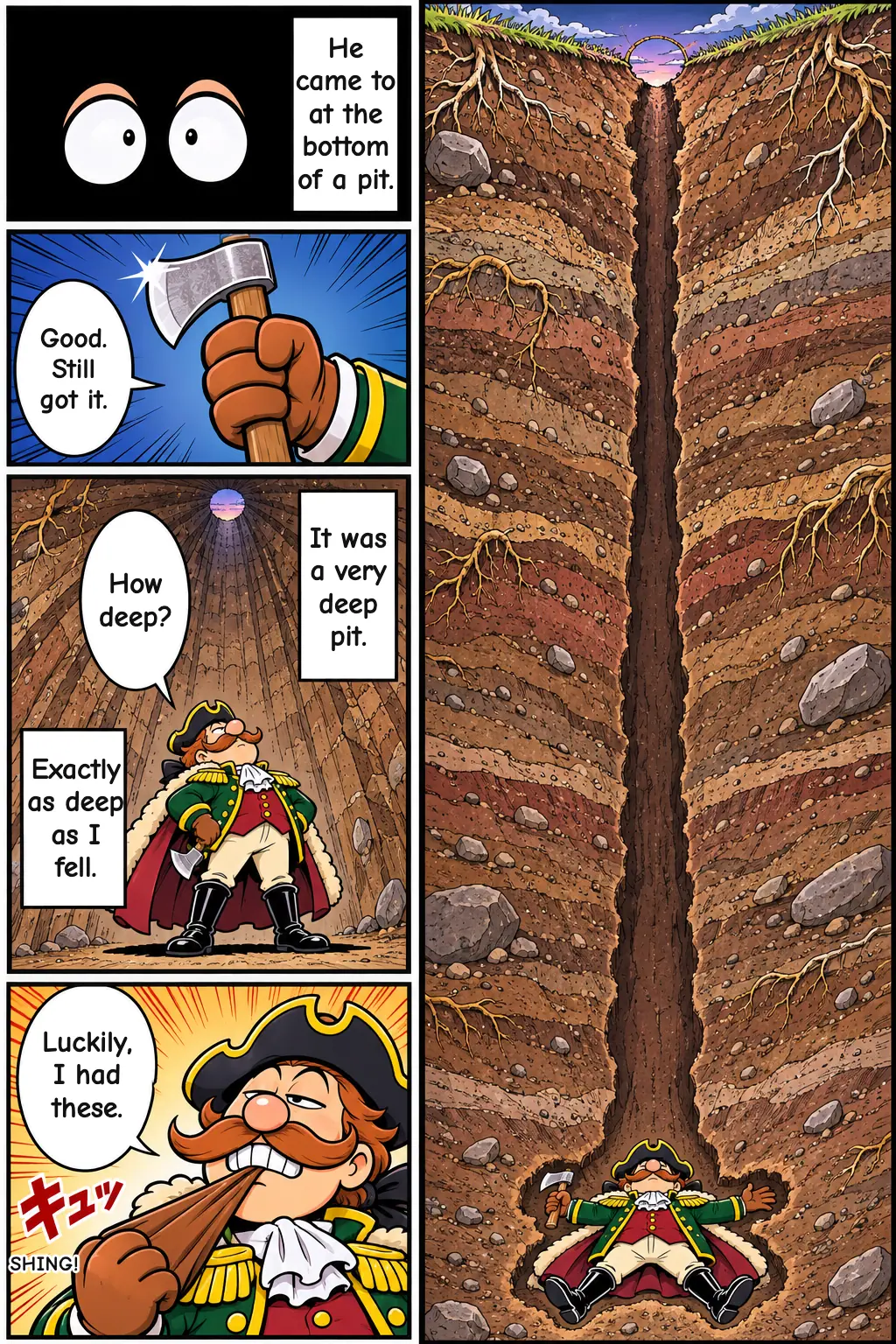
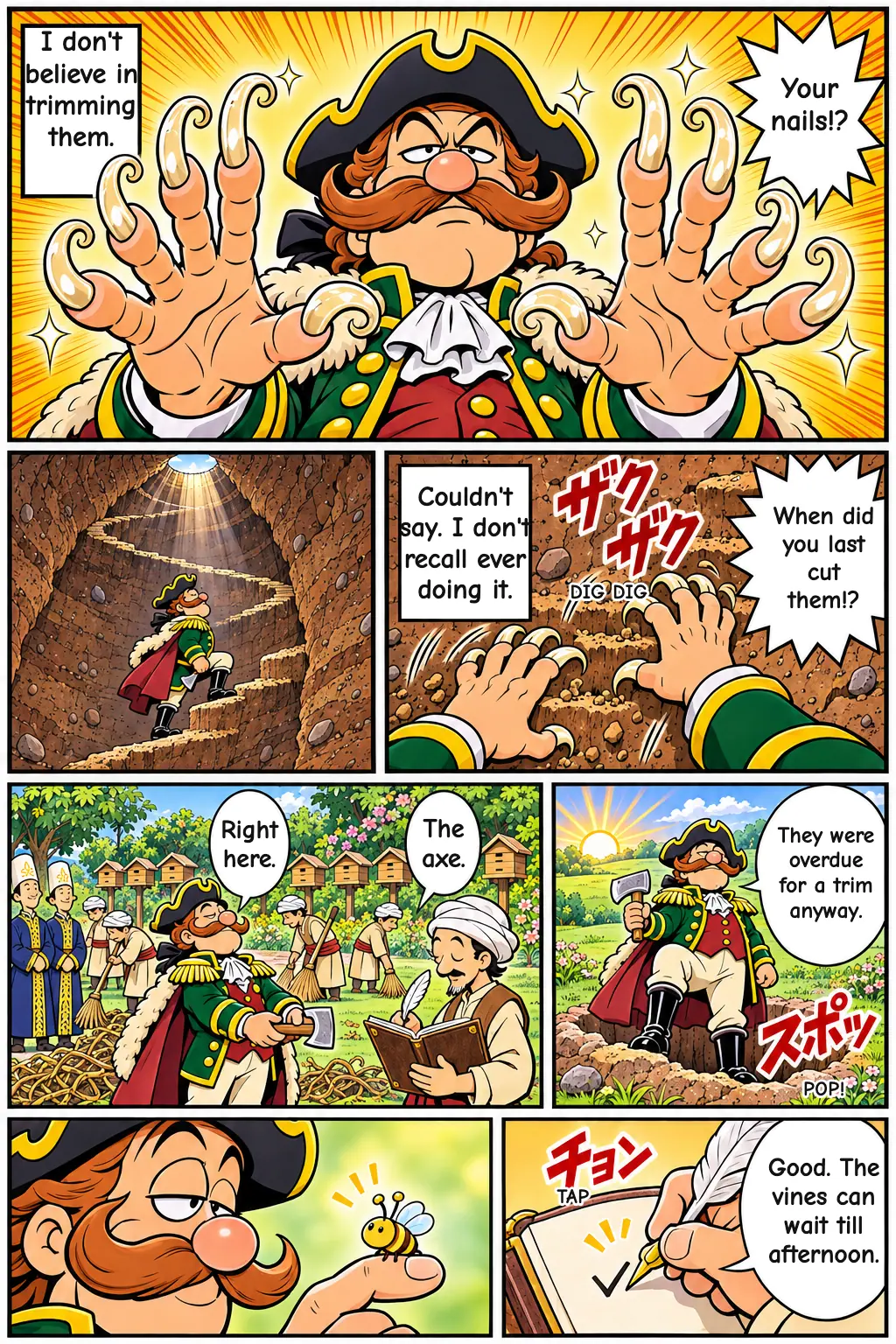
All that cutting and knotting weakens the rope, and it snaps while he is still at least four or five miles above the ground (the exact figure may differ between editions). He hits the Earth so hard that he is knocked out, and he wakes at the bottom of a hole at least nine fathoms deep, about 54 feet, created by the force of his own impact. He gets out by carving a way up with his fingernails. Some texts add that the nails had been growing for forty years, a detail worth treating as edition-dependent.
The chapter then moves on. Peace with the Turks brings the Baron his freedom, and he sets off for home. His journey includes further tall tales, among them a carriage he carries over a hedge and a coachman's horn whose notes freeze, but those fall outside this episode's story. Readers may also come across a follow-up in which the Baron baits bears with honey; it may depend on the edition, and we have not confirmed where it appears.
Main characters in the silver axe tale
The cast is small. The Baron dominates the tale as both hero and narrator, and the chapter tells us nothing about his looks. The Sultan is barely more than a name in the main plot: he owns the bees and the farm, but his personality and court go undescribed. The bee and the two bears exist mainly to set off the disaster, and the Baron's habit of calling the bears robbers gives a tiny animal squabble the tone of a serious crime.
What the story means: tall tales, boasting and 18th-century Europe
The Baron Munchausen stories belong to the tradition of the tall tale, where the fun comes from an impossible event told as plain fact. This episode shows how the joke works. Each step follows a kind of logic: a lost tool must be retrieved, a tall plant can be climbed, and a rope can be lengthened. The conclusions are absurd, but the Baron never admits it. Even the crescent moon's horns, usually just a figure of speech, become solid objects to tie a rope to.
There was a real man behind the character. Hieronymus Karl Friedrich von Münchhausen (1720–1797) was a German nobleman who served with the Russian army against the Ottoman Empire, and he reportedly had a name for telling exaggerated stories. Raspe, a German-born writer living in Britain, published the English book anonymously in 1785. The poet Gottfried August Bürger then produced an expanded German version, appearing in 1786 and 1788. Many readers see the book as a parody of boastful soldiers and unreliable travel writing, though it can also be enjoyed as pure comic nonsense.
It also reflects its time. The Baron's offhand remark that being sold as a slave is typical of the Turks expresses a European attitude toward the Ottoman world, and it should be read as the narrator's voice and not as history.
What the manga changes from the original
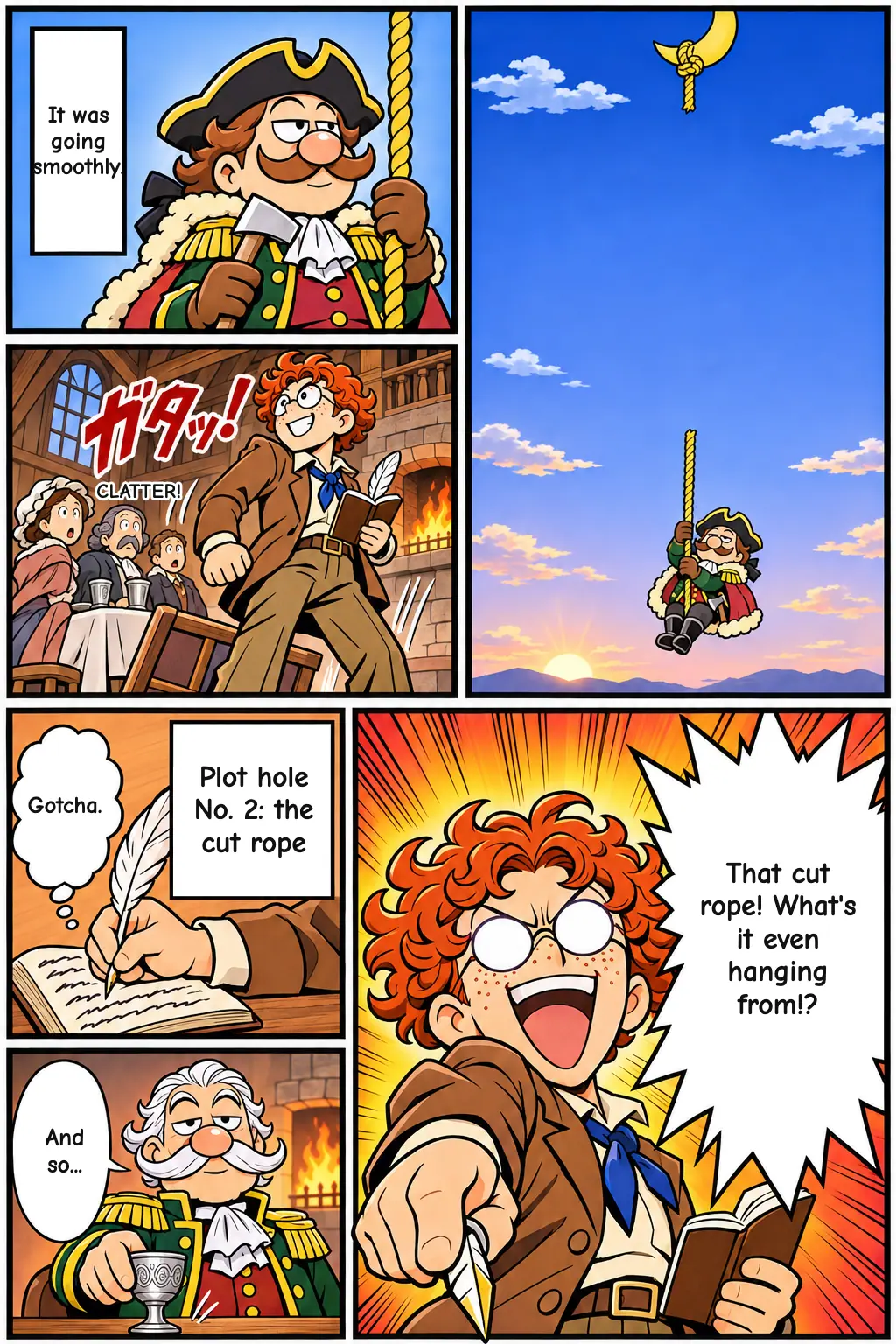
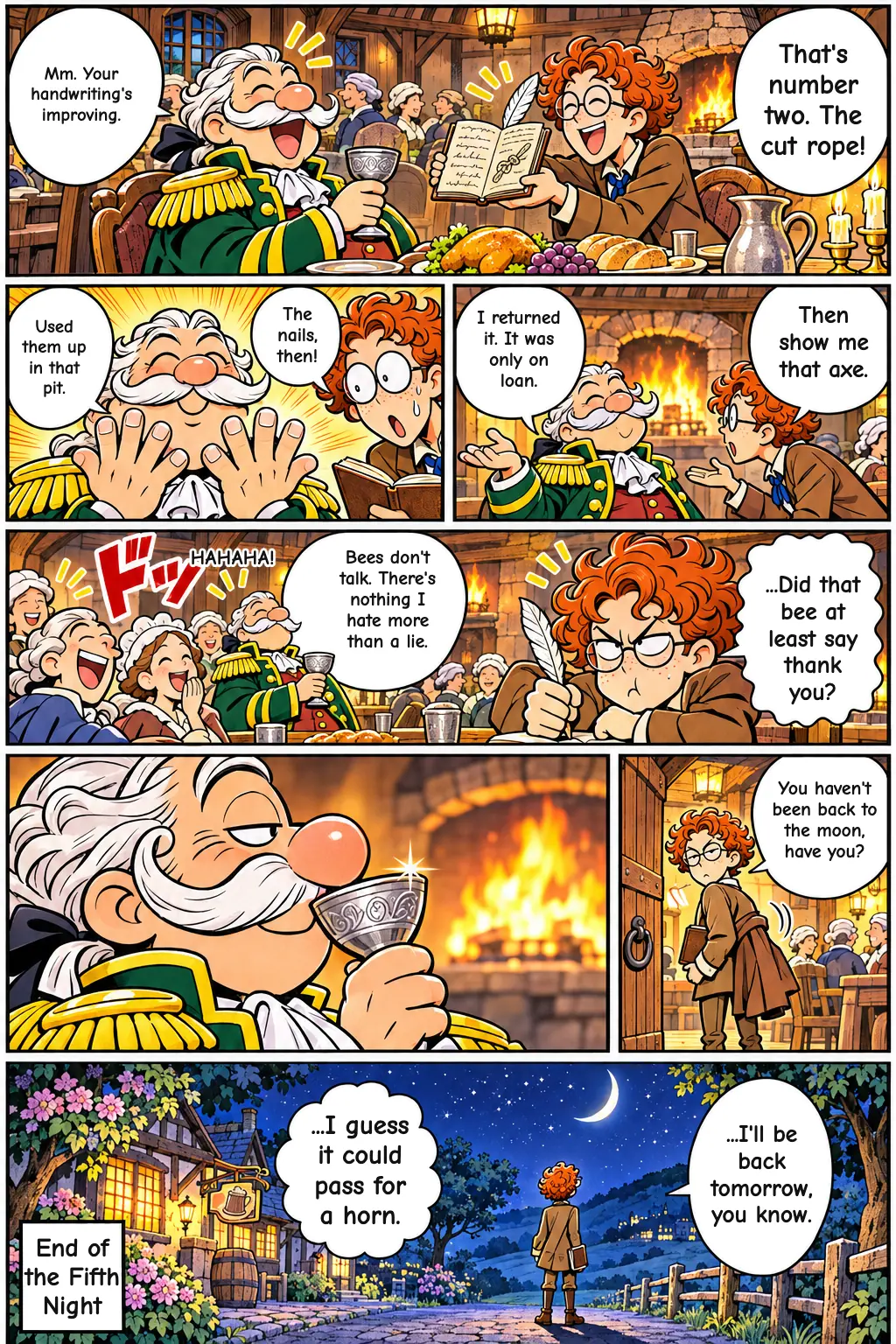
The core events of this episode come from the original: the capture, the bee duty, the bears, the misfired silver axe and the idea of planting a bean. Several elements were created for this adaptation. The storytelling frame and the listener who hears the tale are new. So are the Head Gardener and the inspection deadline, which add pressure that the original does not have. The Sultan's on-page appearance, including a court where no one laughs, is also an invention, since the original keeps him almost entirely offstage and its main setting is the farm and pasture.
The manga also fills in things the chapter leaves blank, such as the Baron's face and costume, his inner thoughts, how he tells individual bees apart, and how the bears look and react. The Baron's deadpan line, "Very well. I shall plant a bean," is the manga's phrasing, though it captures the unbothered spirit of the original narrator. If you want to know what is authentic, the rule of thumb is simple: the wild plot belongs to the 18th-century book, while much of the character comedy around it is new.
Where to read it
You can read this tale as Episode 5 of BARON MUNCHAUSEN: Fourteen Nights of Impossible Tales here on Manga Portal. Every episode is free, and you do not need to sign up. It is a good place to start if you enjoy dry humor, or you can go back to Episode 1 and follow the Baron's claims as they grow more impossible night by night.
Characters in this episode
Baron Munchausen
The boastful first-person narrator, a captured soldier who tells impossible adventures as though they were plain fact.
The Sultan
The Baron's master and the owner of the bees and farm, who is almost entirely offstage in the original but appears in person in the manga.
The Sultan's bee
A honey-carrying bee from the Baron's flock whose rescue sets off the whole trip to the moon.
The two bears
A pair of honey-hungry attackers, called robbers by the Baron, whose assault on the bee prompts him to throw the axe.
The Head Gardener
A character created for the manga who adds pressure through an inspection deadline and does not appear in the original chapter.
FAQ
Why did Baron Munchausen go to the moon?
He went to get back a silver axe, the badge of the Sultan's gardeners and farmers. He had thrown it at two bears attacking a bee, but the throw sent it all the way to the moon. He then climbed a fast-growing bean vine to retrieve it.
How did Baron Munchausen get back from the moon?
The sun had dried out his bean vine, so he made a rope from chopped straw and slid down it. He kept cutting off the part above him and tying it to the bottom, until the weakened rope broke miles above the ground. He fell into a deep hole and dug his way out with his fingernails.
Was Baron Munchausen a real person?
Yes, the character is named after Hieronymus Karl Friedrich von Münchhausen, a real German nobleman who served with the Russian army against the Ottoman Empire. He reportedly had a reputation for exaggerated stories. The adventures in the book, however, are fiction.
Who wrote The Surprising Adventures of Baron Munchausen?
Rudolf Erich Raspe published the first English version anonymously in 1785, under the title Baron Munchausen's Narrative of his Marvellous Travels and Campaigns in Russia. Gottfried August Bürger then created an expanded German version, published in 1786 and 1788. The title and contents vary across later editions.
Is the Sultan's appearance in the manga from the original story?
No, the Sultan's on-page appearance was created for the manga. In the original chapter's main plot, he is mentioned as the owner of the bees and the farm but is not developed as a character. The Head Gardener and the inspection deadline are also additions.