Episode 6Nobody Blew the Horn. It Sang Anyway.Baron Munchausen: The Frozen Horn
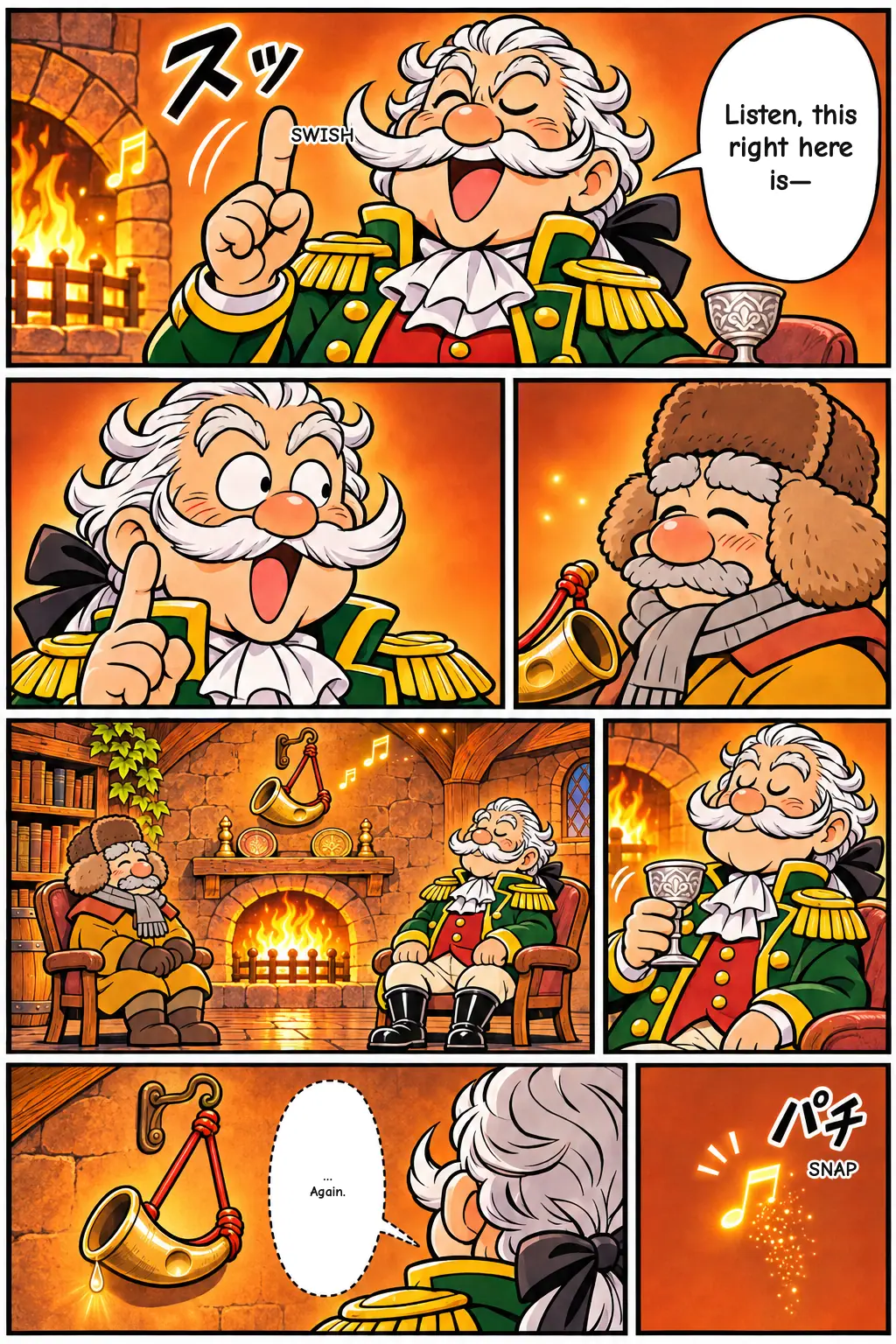
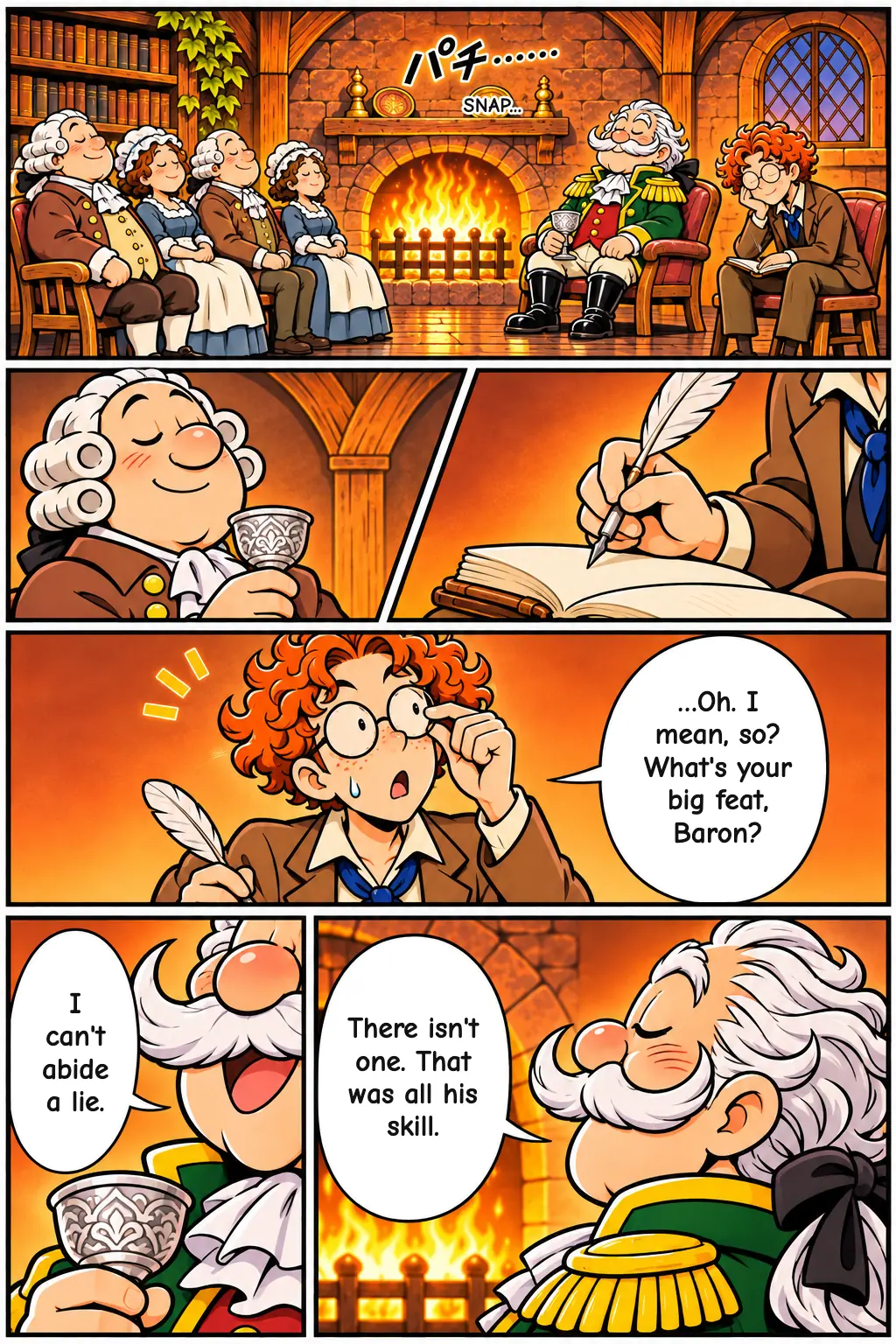
On a freezing road home, the signal horn won't make a sound. When Baron Munchausen meets another carriage on a narrow road, he solves it by carrying his carriage and horses past it. But waiting by the fire at the inn is a sound that silences even the talkative Baron. *The storytelling frame and listener, the coachman's personality, the quiet inn scene, and the depiction of the musical notes are adaptations.
Get new episodes in your feed. Follow us on:ThreadsBluesky
Story summary
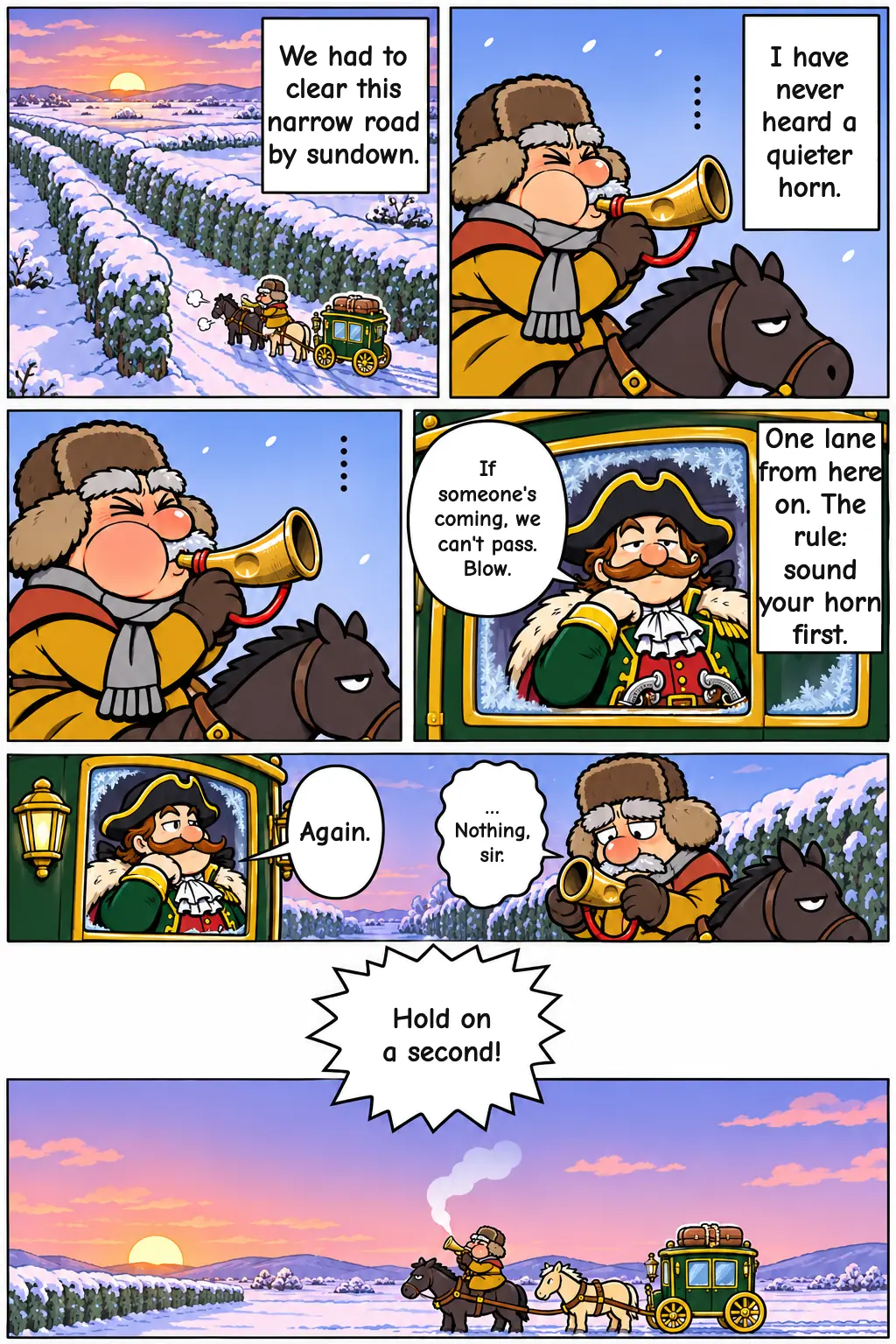
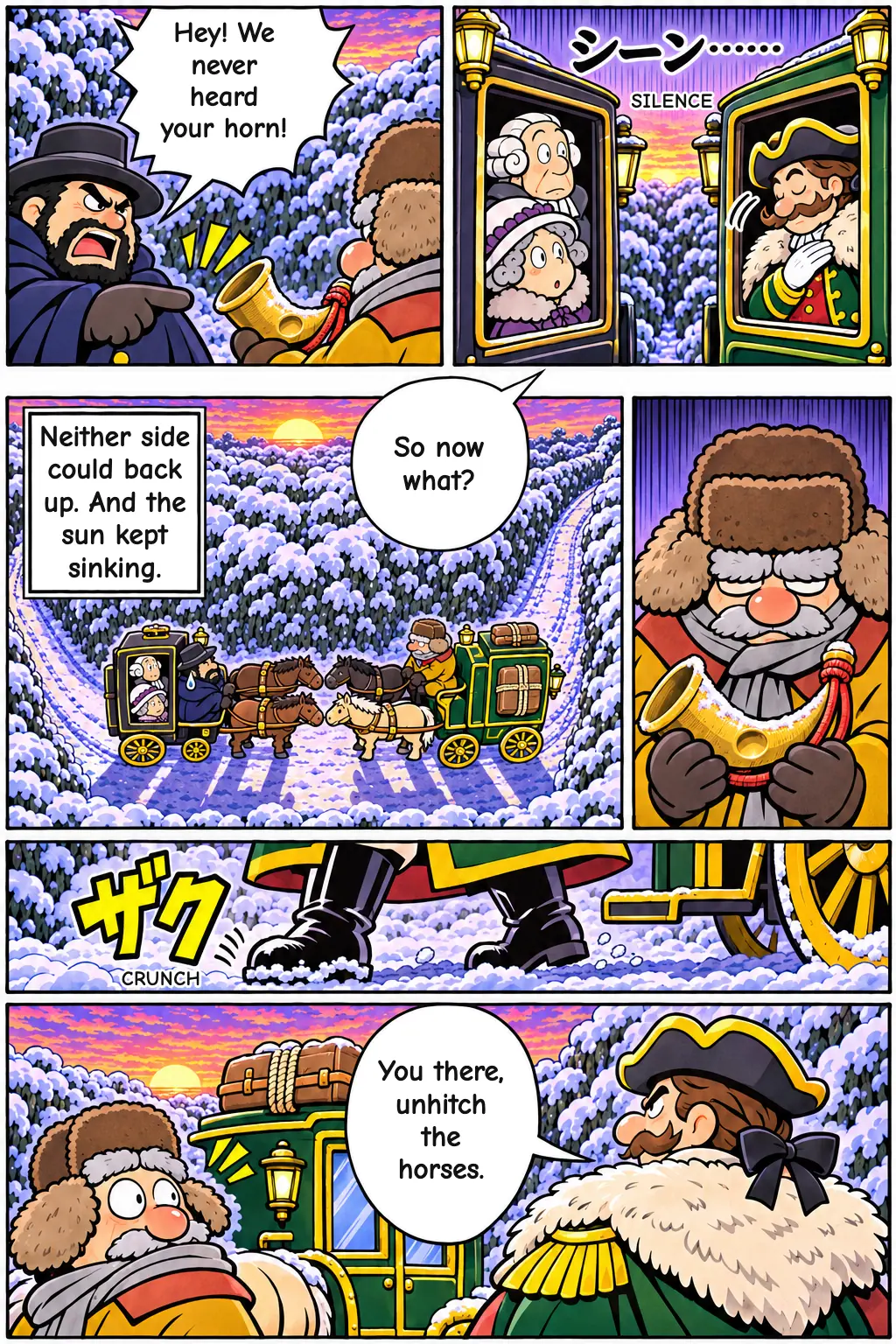
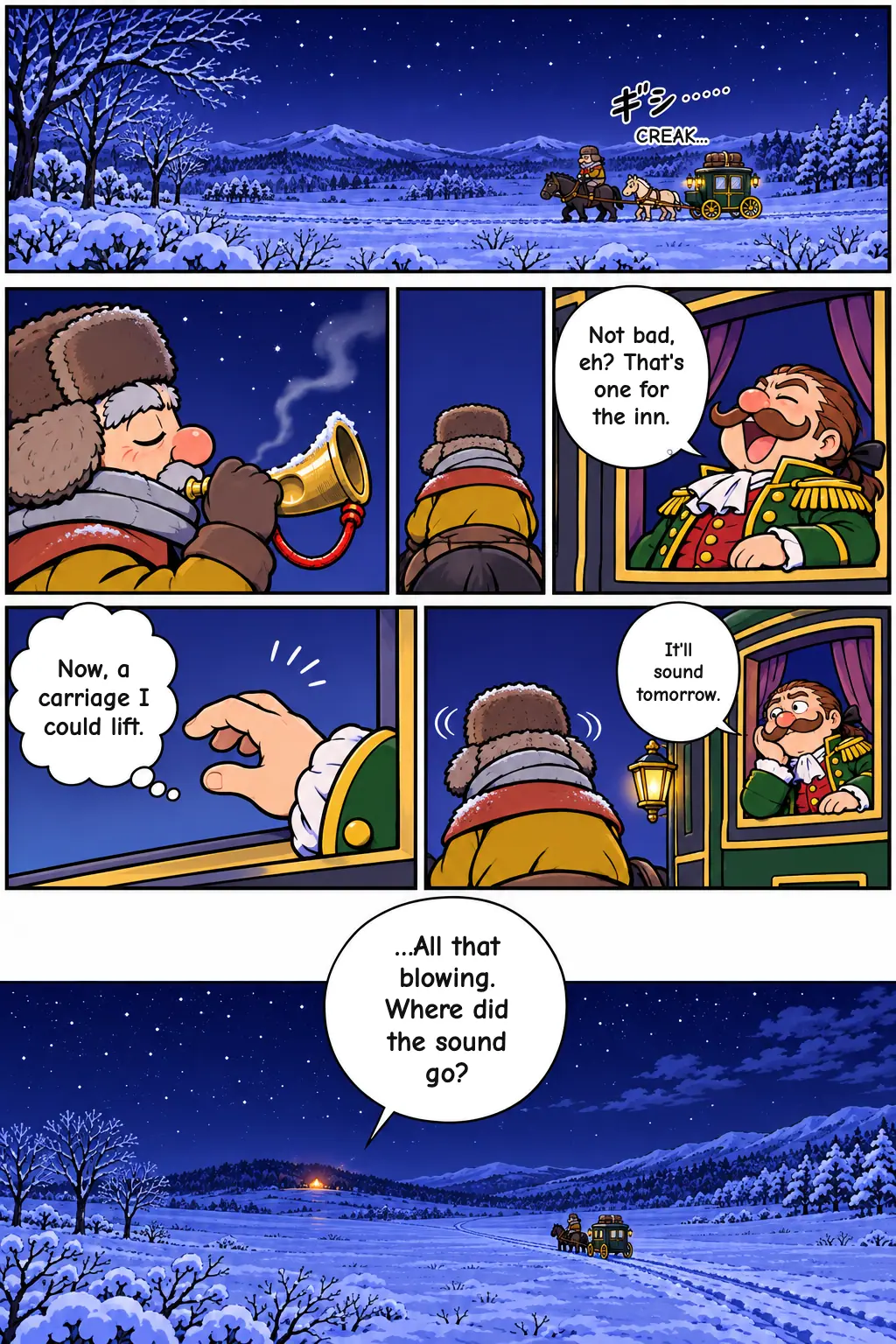
After peace is made with the Turks, Baron Munchausen regains his freedom and leaves St. Petersburg during a political upheaval in which a child emperor and others are sent to Siberia. The winter is savage across all of Europe. The Baron jokes that the sun has been suffering from frostbite ever since, and he says the trip home was harder than the trip out. Traveling by post-coach, he reaches a narrow road and orders his postilion, the coach's driver, to blow the horn so that oncoming travelers will wait. The man blows with all his strength, but the horn makes no sound.
Baron Munchausen's Frozen Horn: Story Summary and Meaning Explained
In short: The frozen horn is a tall tale from Rudolf Erich Raspe's "Baron Munchausen's Narrative of his Marvellous Travels and Campaigns in Russia" (1785). In a brutal winter, a coach horn refuses to sound, Baron Munchausen clears a blocked road by leaping a hedge with his carriage and horses, and at an inn the tunes frozen inside the horn thaw and play by themselves.
The Frozen Horn Story: What Happens in the Original Tale
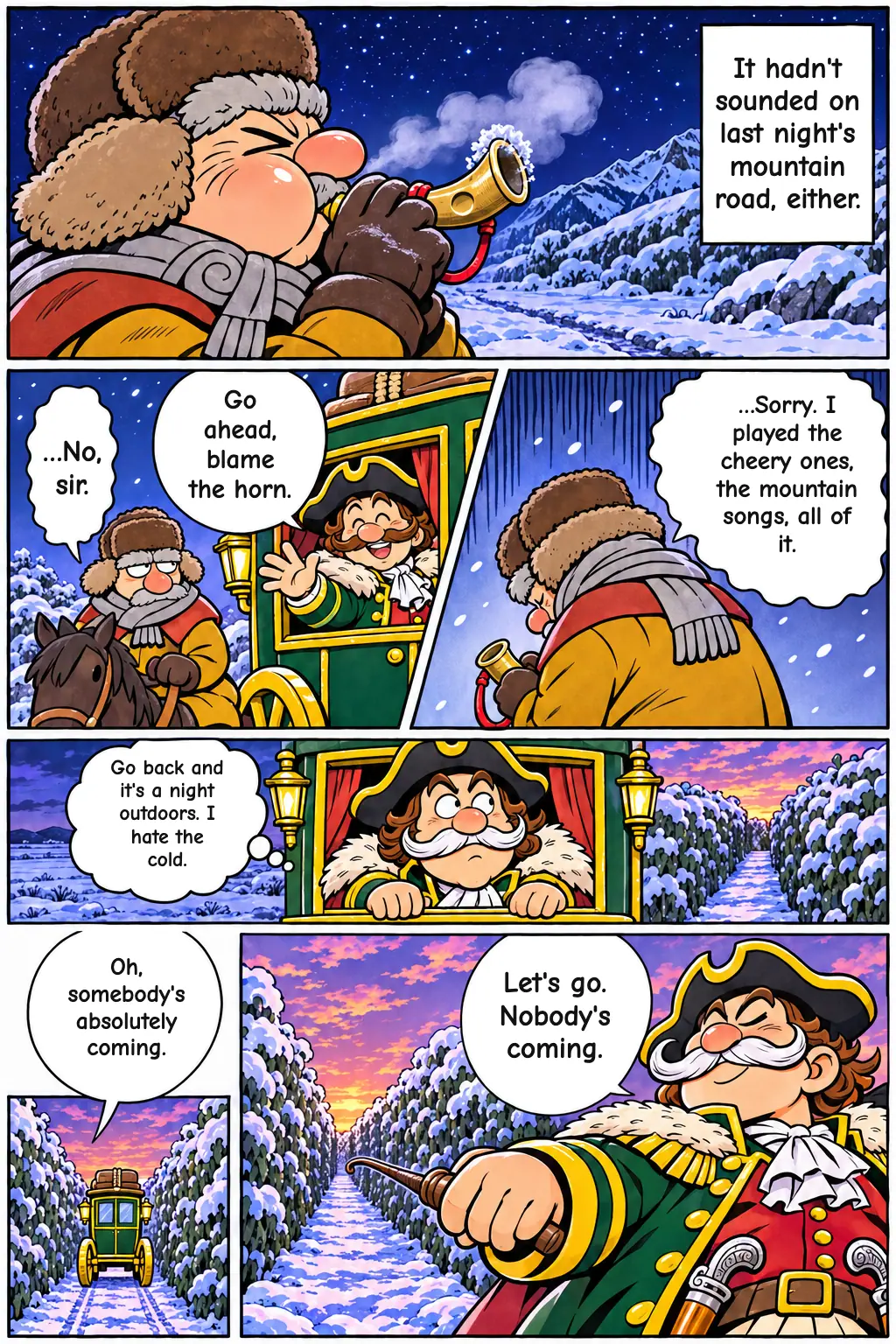
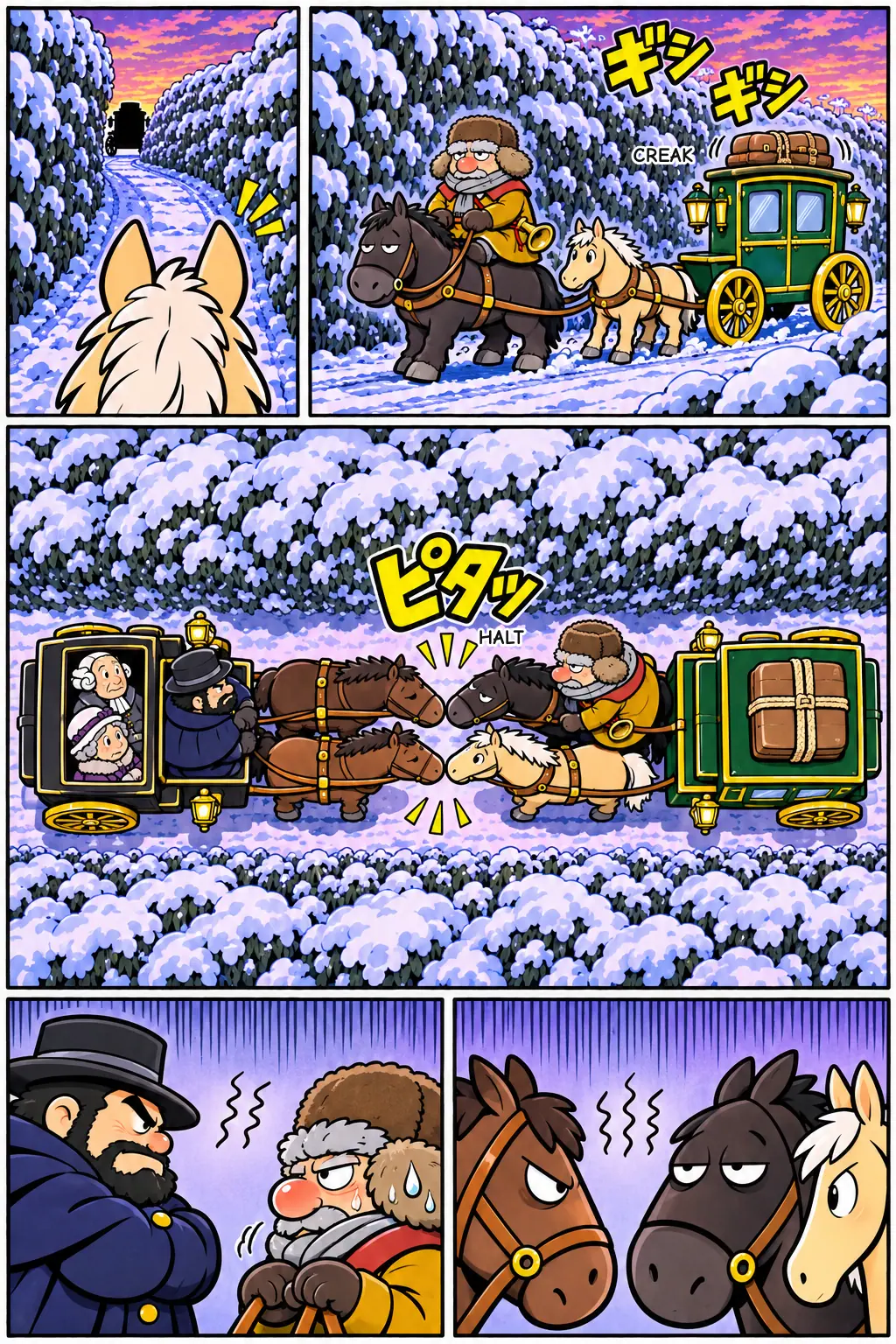
After peace is made with the Turks, Baron Munchausen regains his freedom and leaves St. Petersburg during a political upheaval in which a child emperor and others are sent to Siberia. The winter is savage across all of Europe. The Baron jokes that the sun has been suffering from frostbite ever since, and he says the trip home was harder than the trip out. Traveling by post-coach, he reaches a narrow road and orders his postilion, the coach's driver, to blow the horn so that oncoming travelers will wait. The man blows with all his strength, but the horn makes no sound. Neither of them can tell why, and soon another carriage comes from the opposite direction and blocks the way.
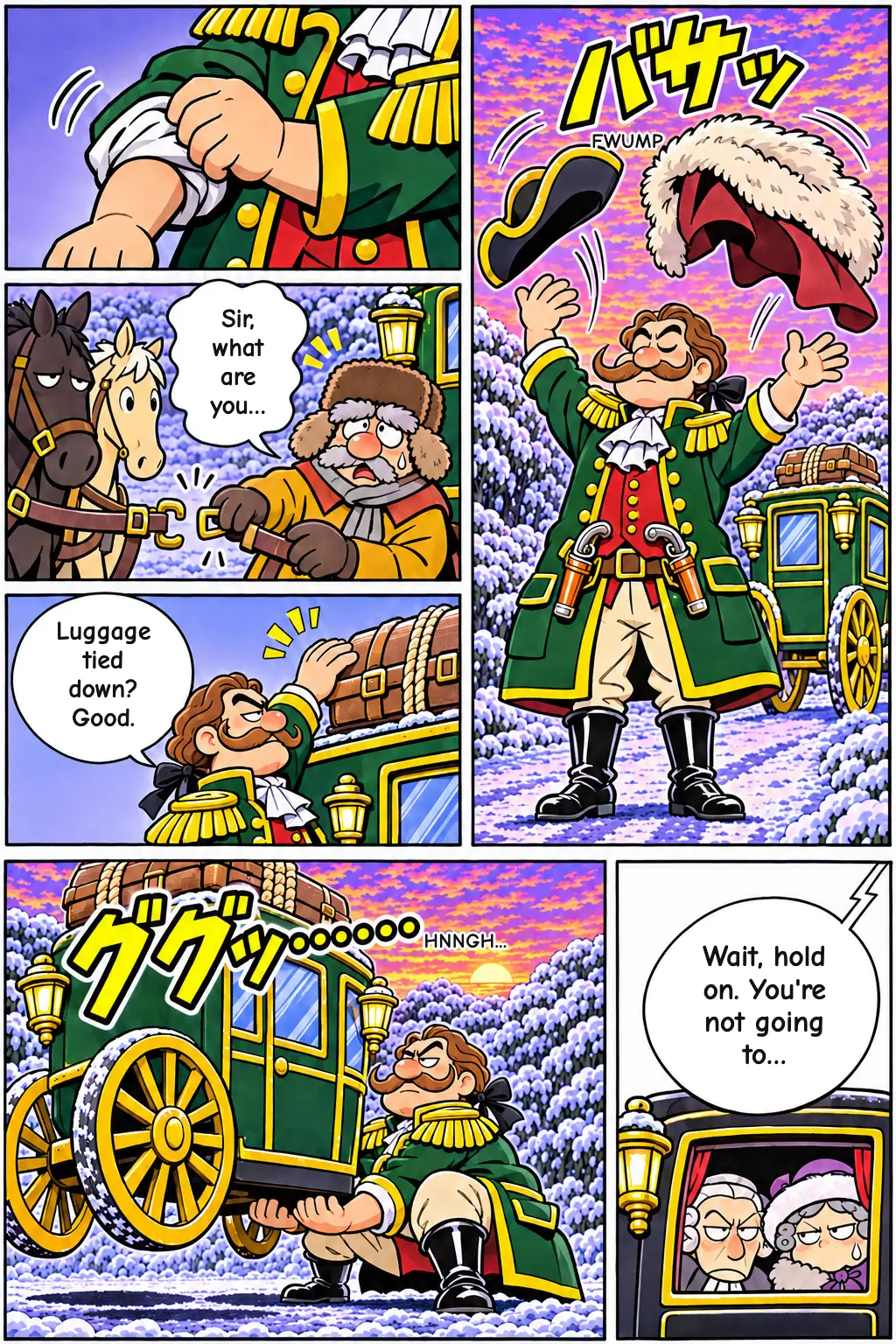
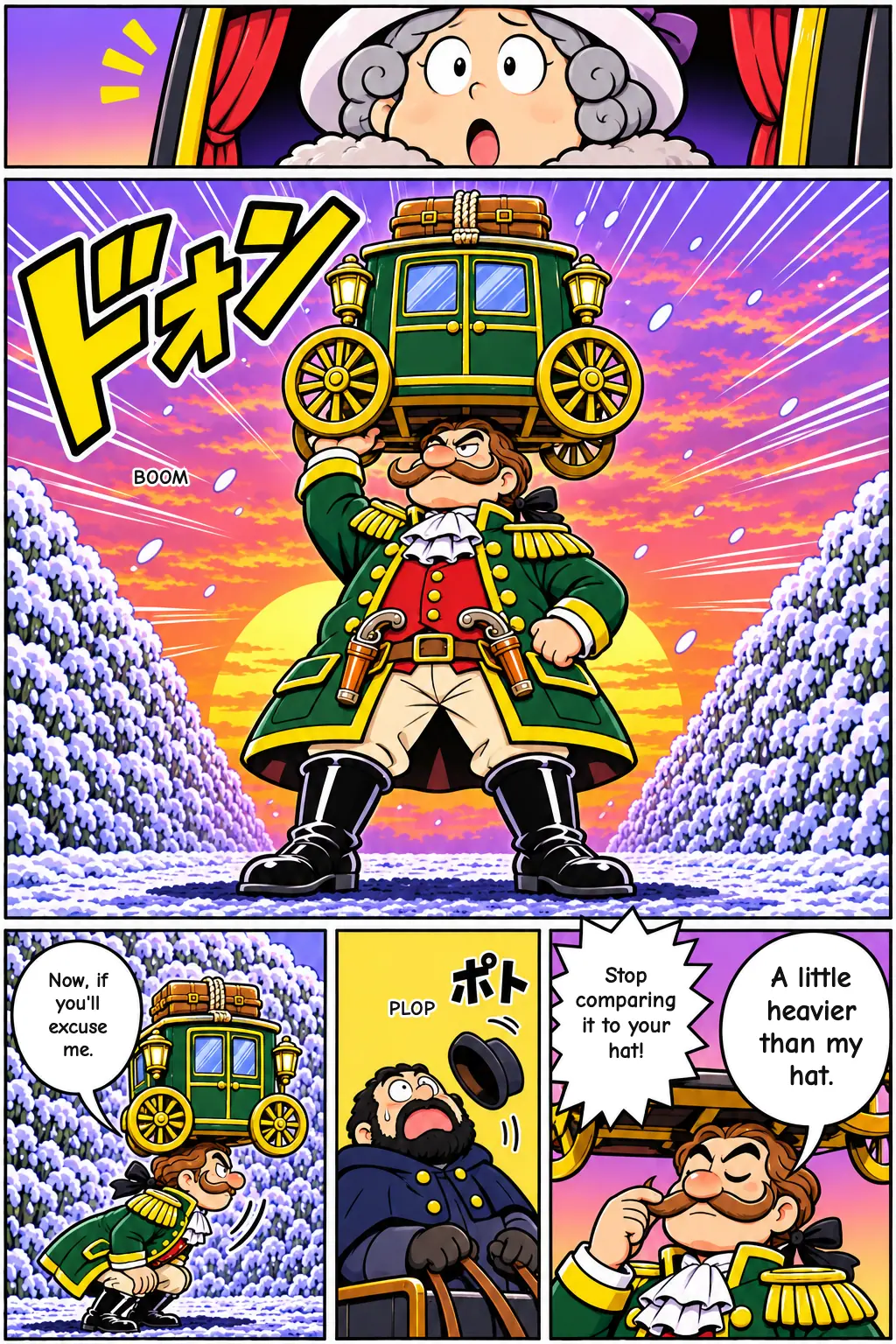
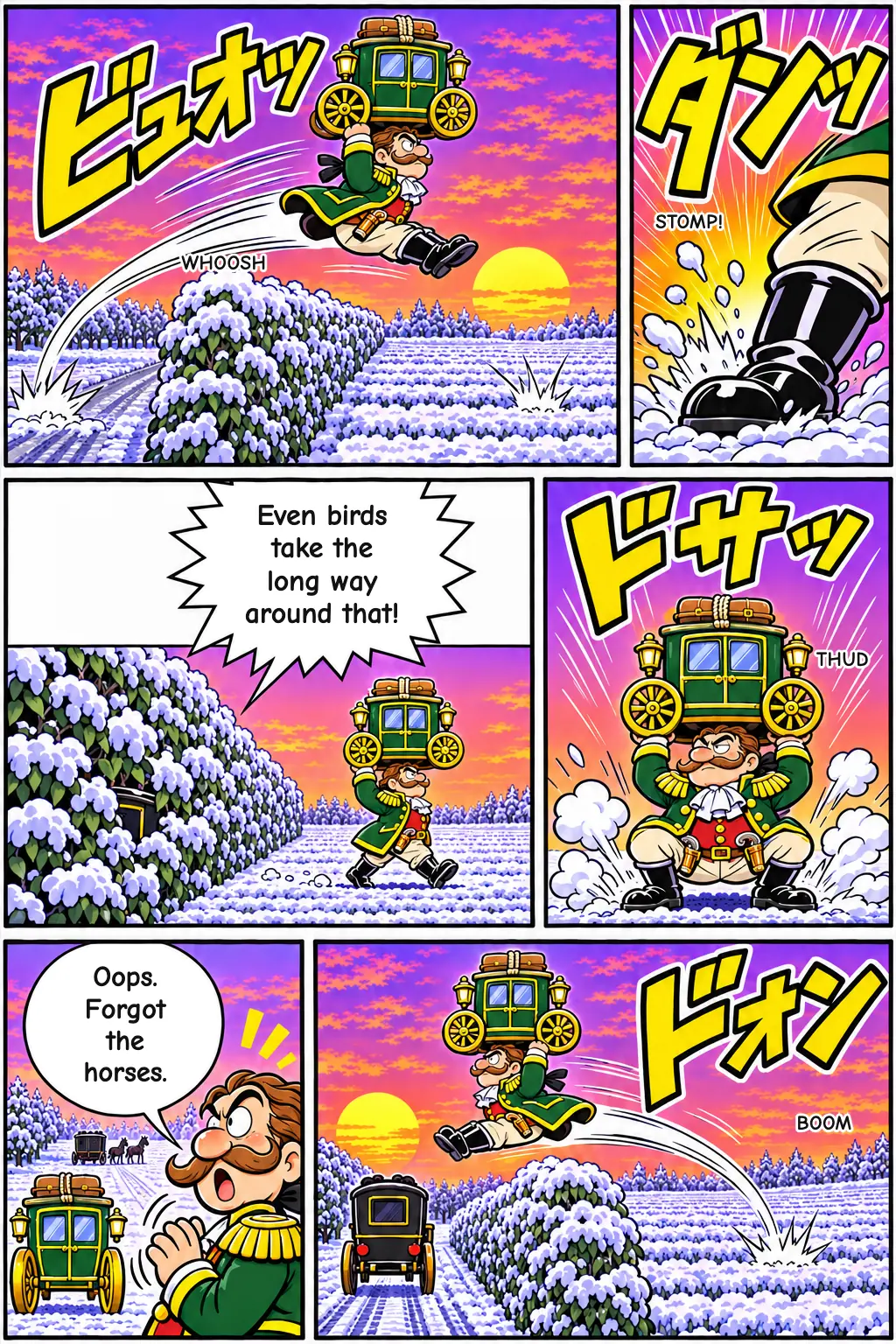
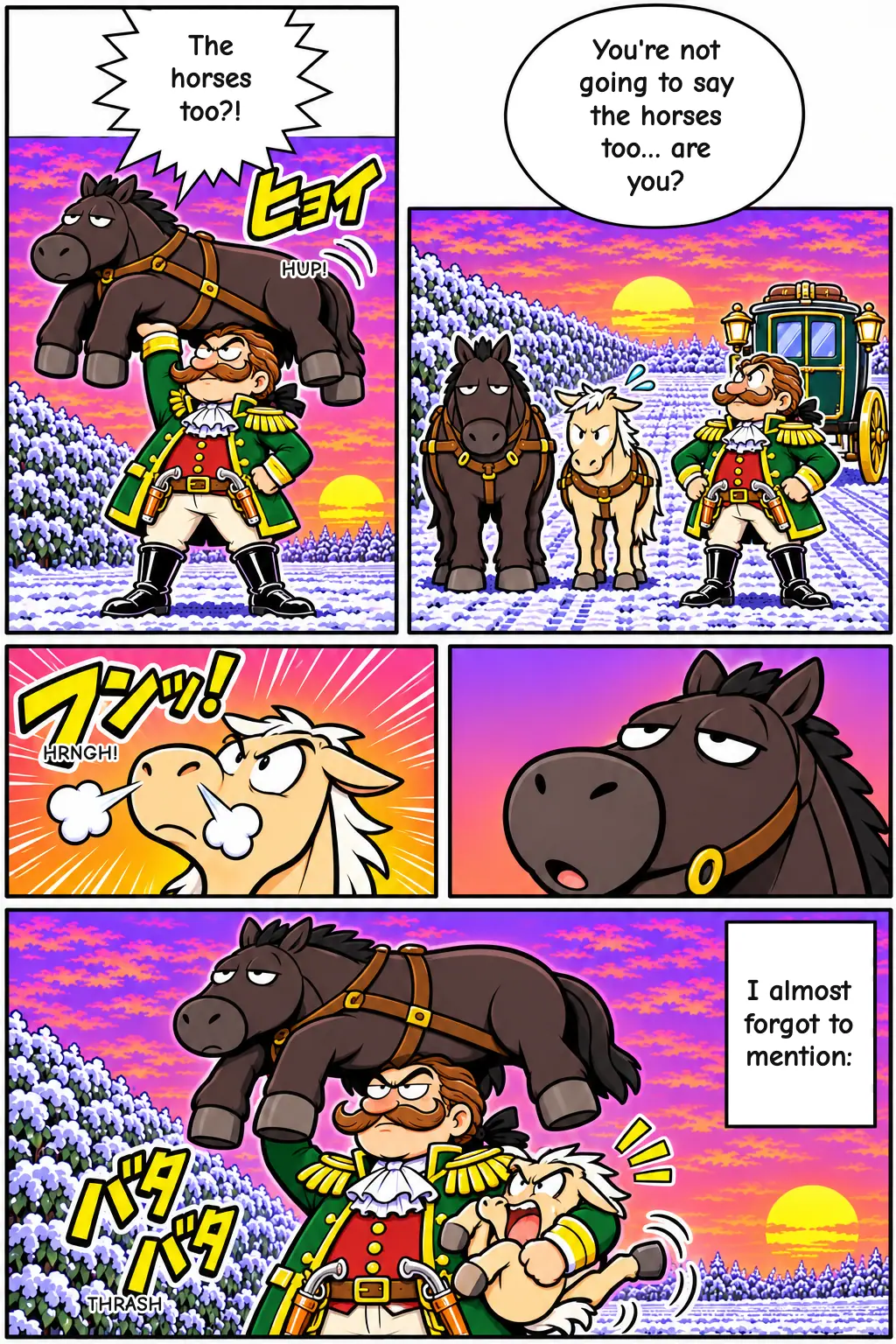
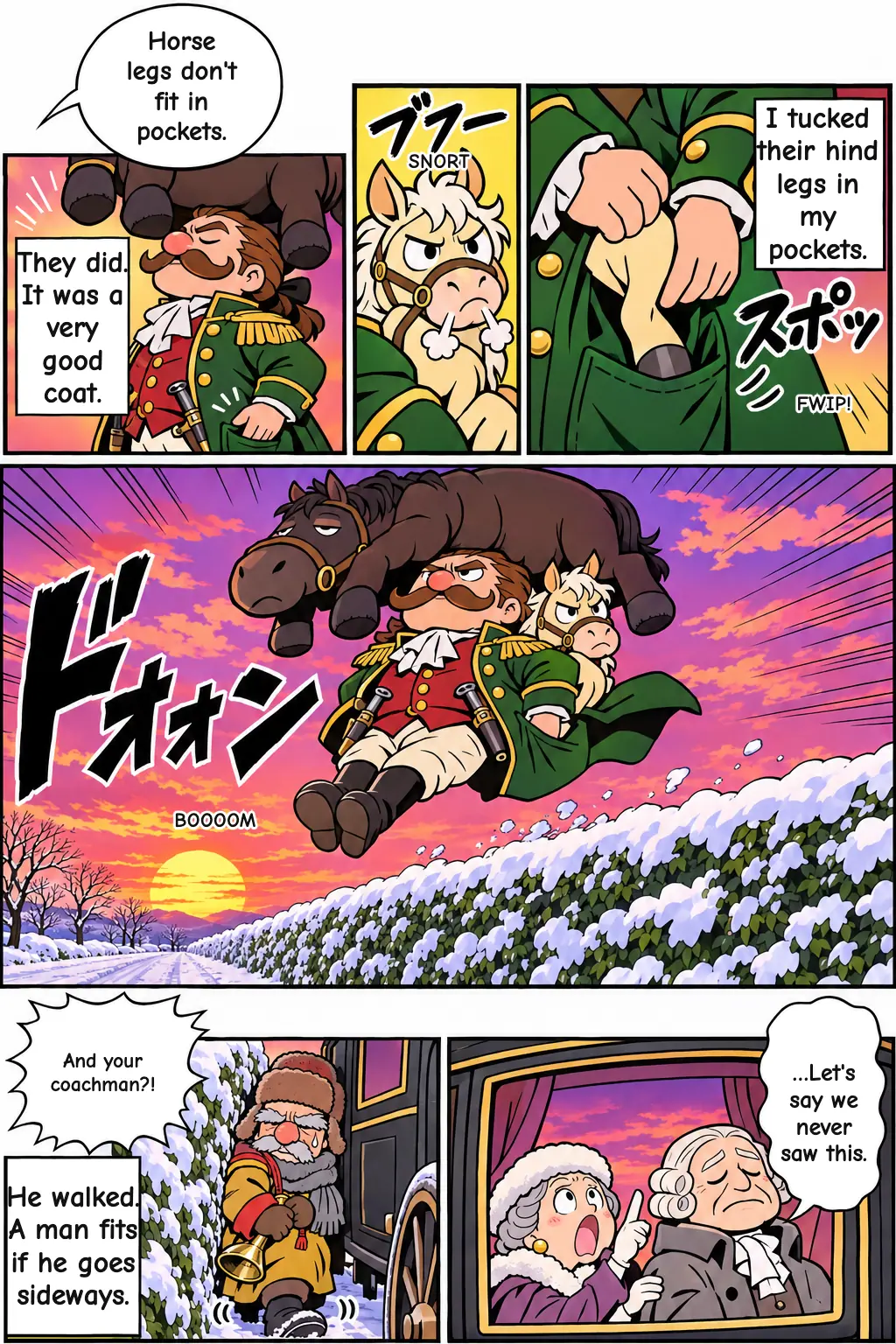
The Baron's solution is delivered as if it were ordinary road etiquette. He gets out, lifts his carriage, wheels and all, onto his head, and jumps a hedge about nine feet high into the field beside the road. A second leap lands him on the road beyond the other carriage. He then goes back for the horses, placing one on his head and tucking the other under his left arm, and brings them across the same way. Only later, once the inn has been reached, does he remember to mention a detail: the horse under his arm was not yet four years old, hated the jumping, and kicked and snorted, so he stuffed its hind legs into his coat pocket.
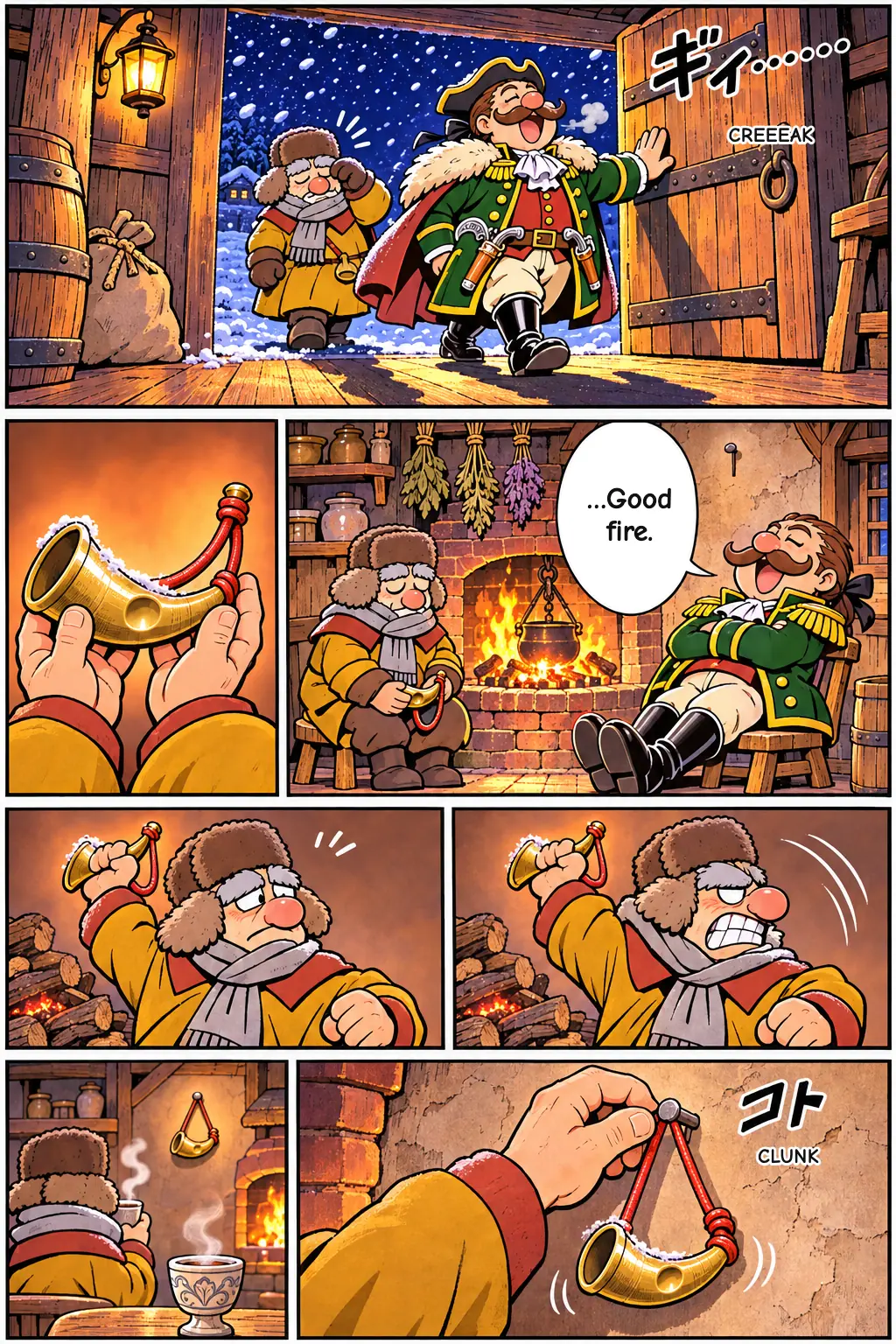
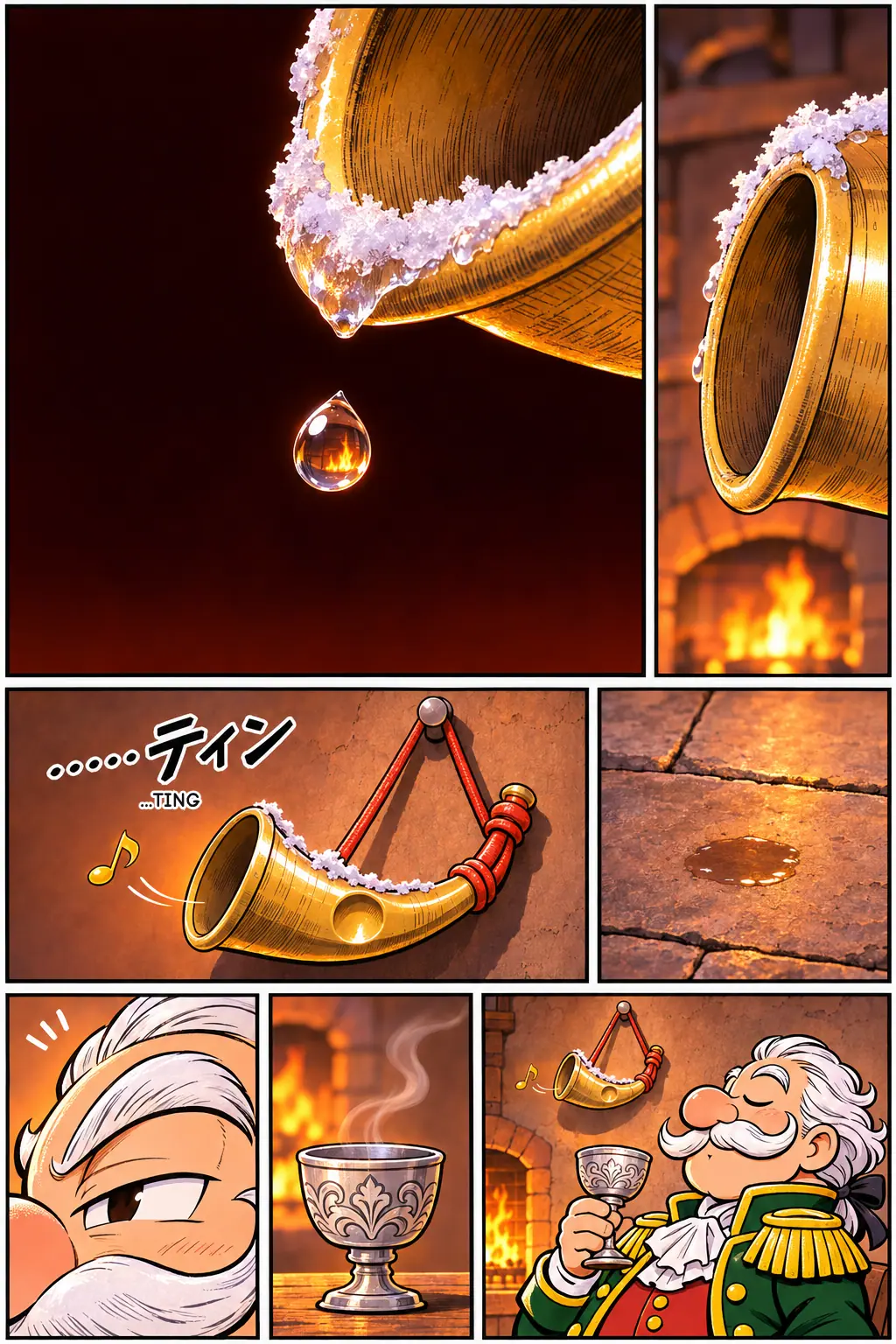
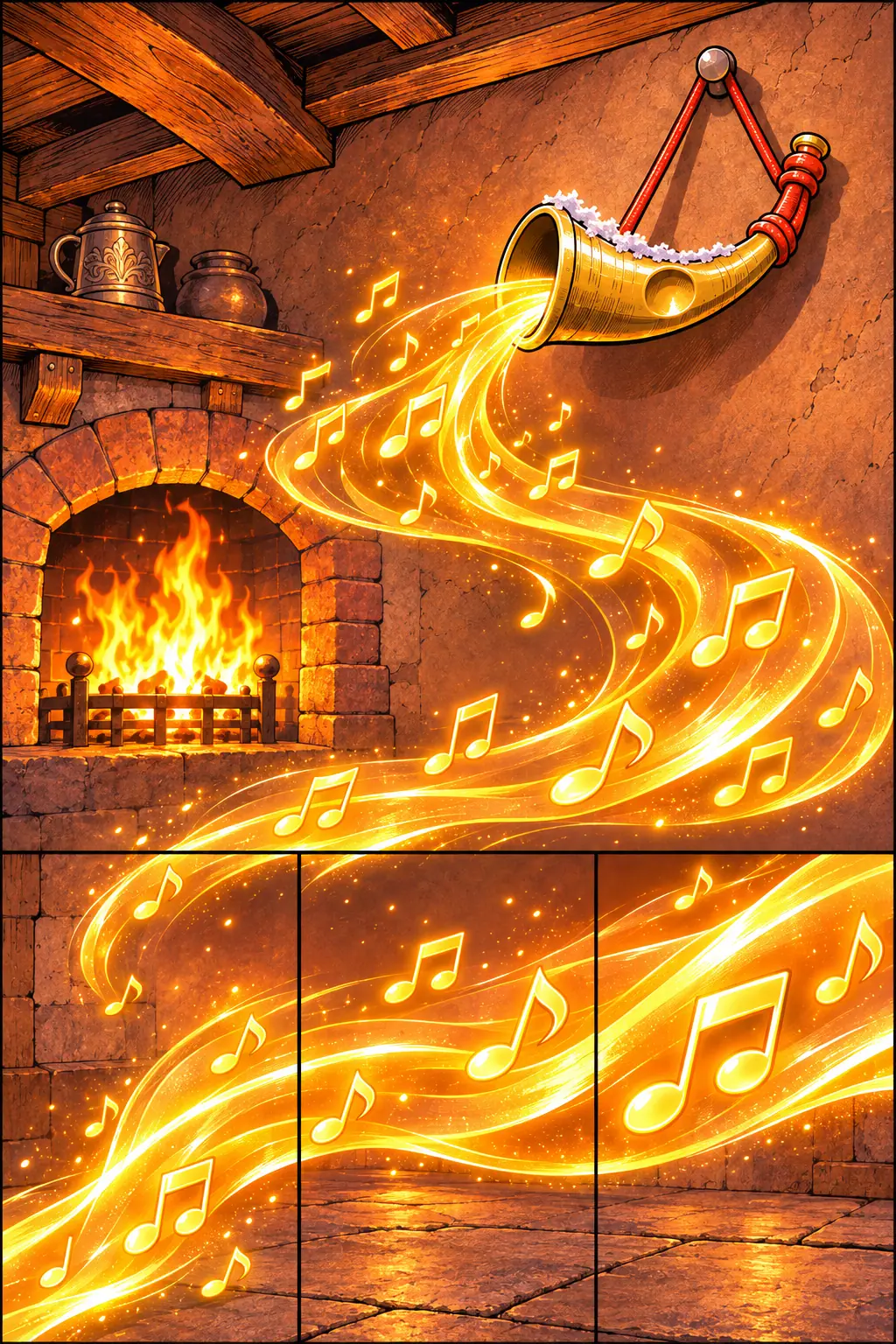
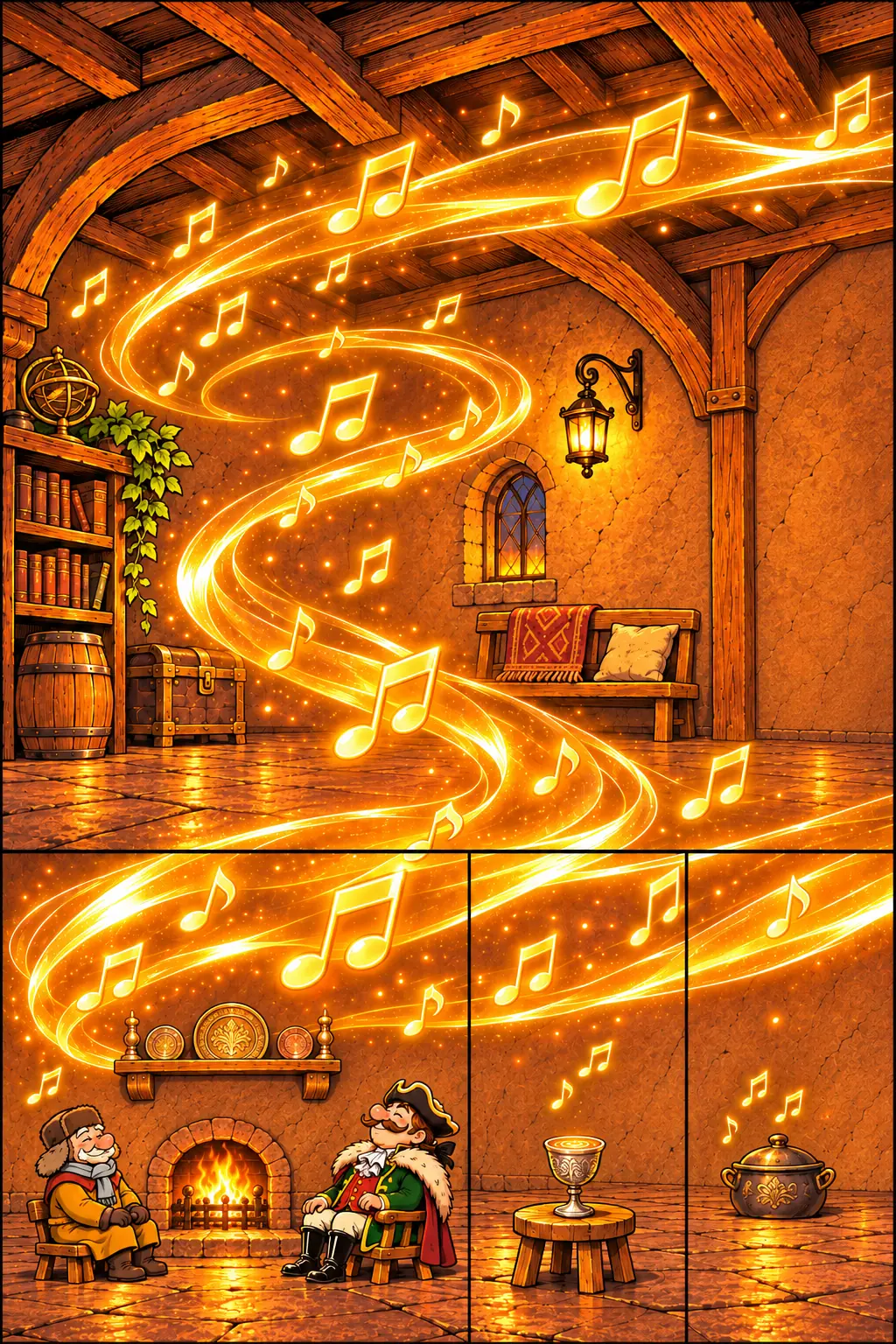
With the horses harnessed again, the two men reach an inn at the end of the stage and finally rest. The postilion hangs his horn on a nail near the kitchen fire, and the Baron sits down on the other side. Suddenly a sound rings out behind them. They turn and realize what happened on the road: the notes had frozen inside the horn, and now they are thawing. For some time the horn plays one tune after another with nobody touching it, and the Baron notes that the music does the postilion's skill great credit.
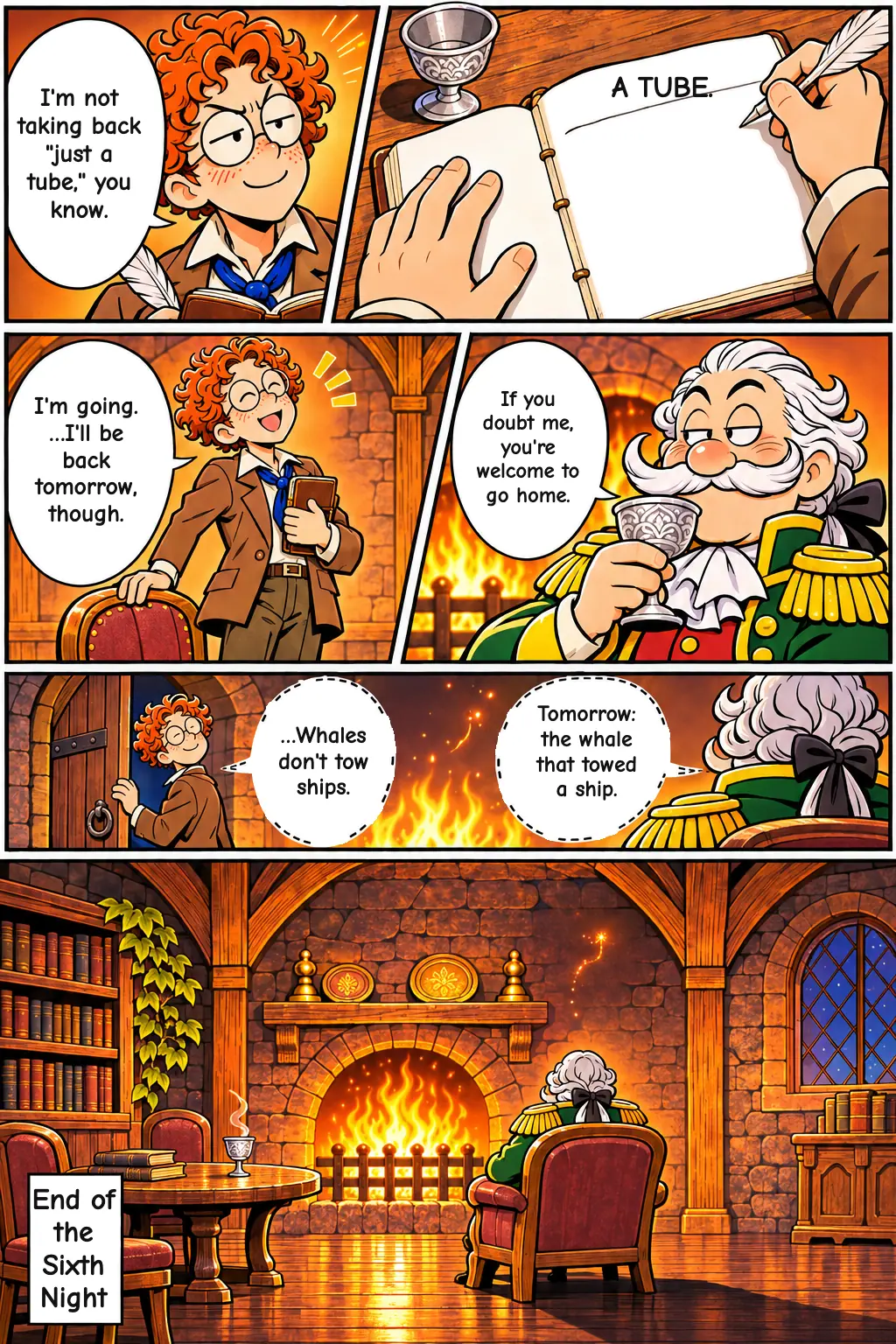
When the concert ends, the Baron closes his account of Russia. He says he pities anyone who doubts him and asks such people to leave before he begins the next part of his adventures.
Main Characters of the Frozen Horn
The cast is tiny. Baron Munchausen is both narrator and hero, and he admits to struggling only with the weight of the carriage. The postilion has no name or description in the source, and his main roles are blowing the horn and turning out to be a fine musician. The travelers in the other carriage are barely there at all: the text says that they arrive, but not who they are or how they react. Two horses complete the party, one of them very unhappy about being carried.
Background: Who Was Baron Munchausen, and What Is the Joke?
There was a real baron behind the book. Hieronymus Karl Friedrich von Münchhausen (1720–1797) was a German nobleman who served with the Russian army and became known for telling stories. Rudolf Erich Raspe, a German scholar living in England, published the English narrative in 1785, at first without his name. The fictional Baron has long since outgrown the real man, and his name is now shorthand for outrageous exaggeration.
The opening also borrows from real events. The upheaval is usually identified with the 1741 coup that removed the infant Russian emperor Ivan VI, and Europe did endure harsh winters around that time. Still, the Baron's version should not be read as history, because a real-sounding setting is part of how a tall tale works.
Frozen sound is an old comic idea as well. Plutarch mentions a joke about words freezing in the air and being heard after a thaw, and Rabelais, the French Renaissance satirist, used frozen words in his own fiction. Whether Raspe had these examples in mind is not something the episode itself can tell us, but the horn belongs to a long line of the same playful thought.
The real comedy lies in the Baron's tone. He treats the impossible as routine, adds the pocket trick as an afterthought, and meets disbelief with wounded dignity. The book is often read as a parody of boastful travel stories, and this episode shows why: the more absurd the claim, the calmer and more insistent the narrator becomes.
What the Manga Changes
The essential events of Episode 6 come from the source: the silent horn, the head-on meeting on a narrow road, the Baron carrying his carriage and horses past the obstacle, and the horn that plays at the inn after thawing.
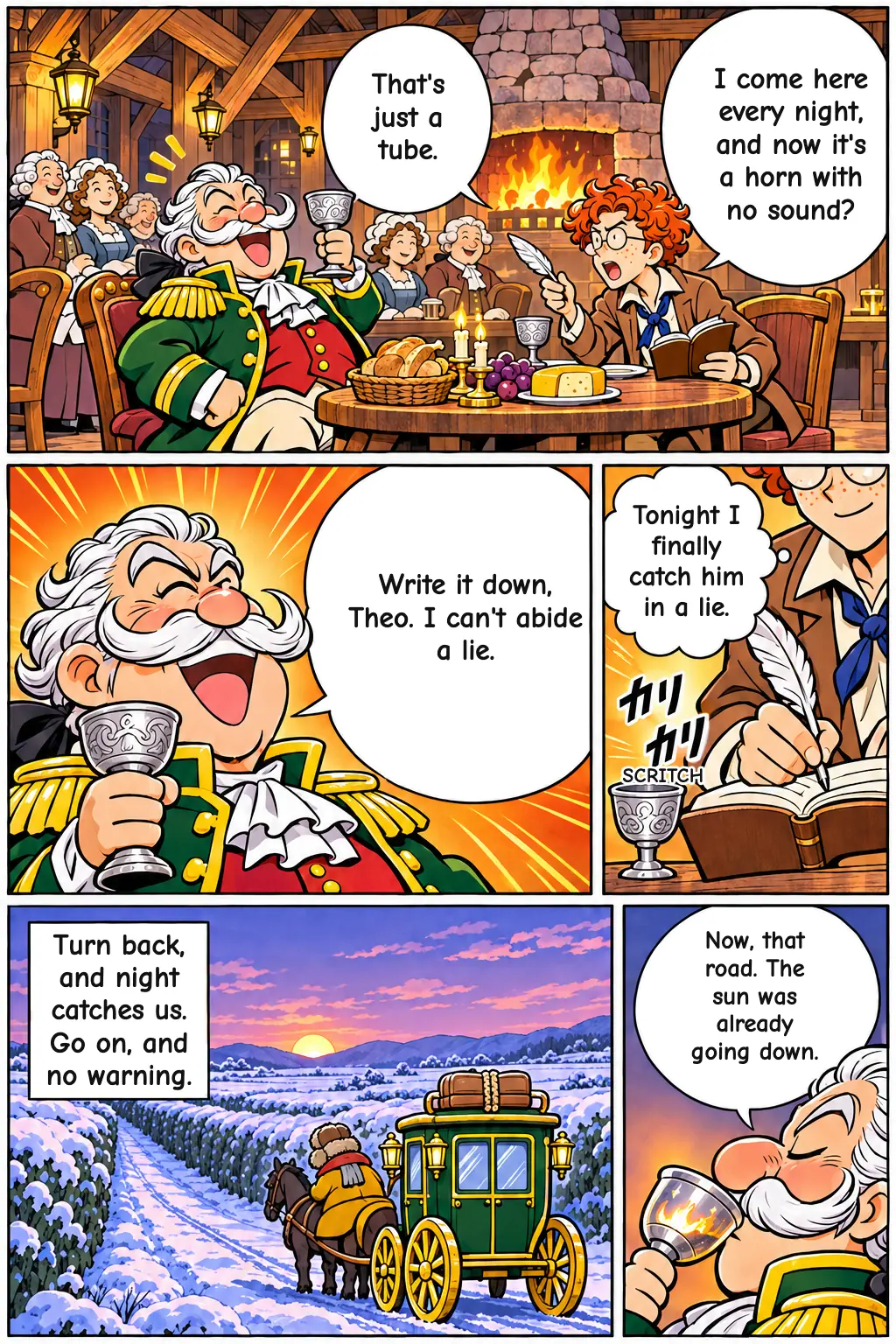
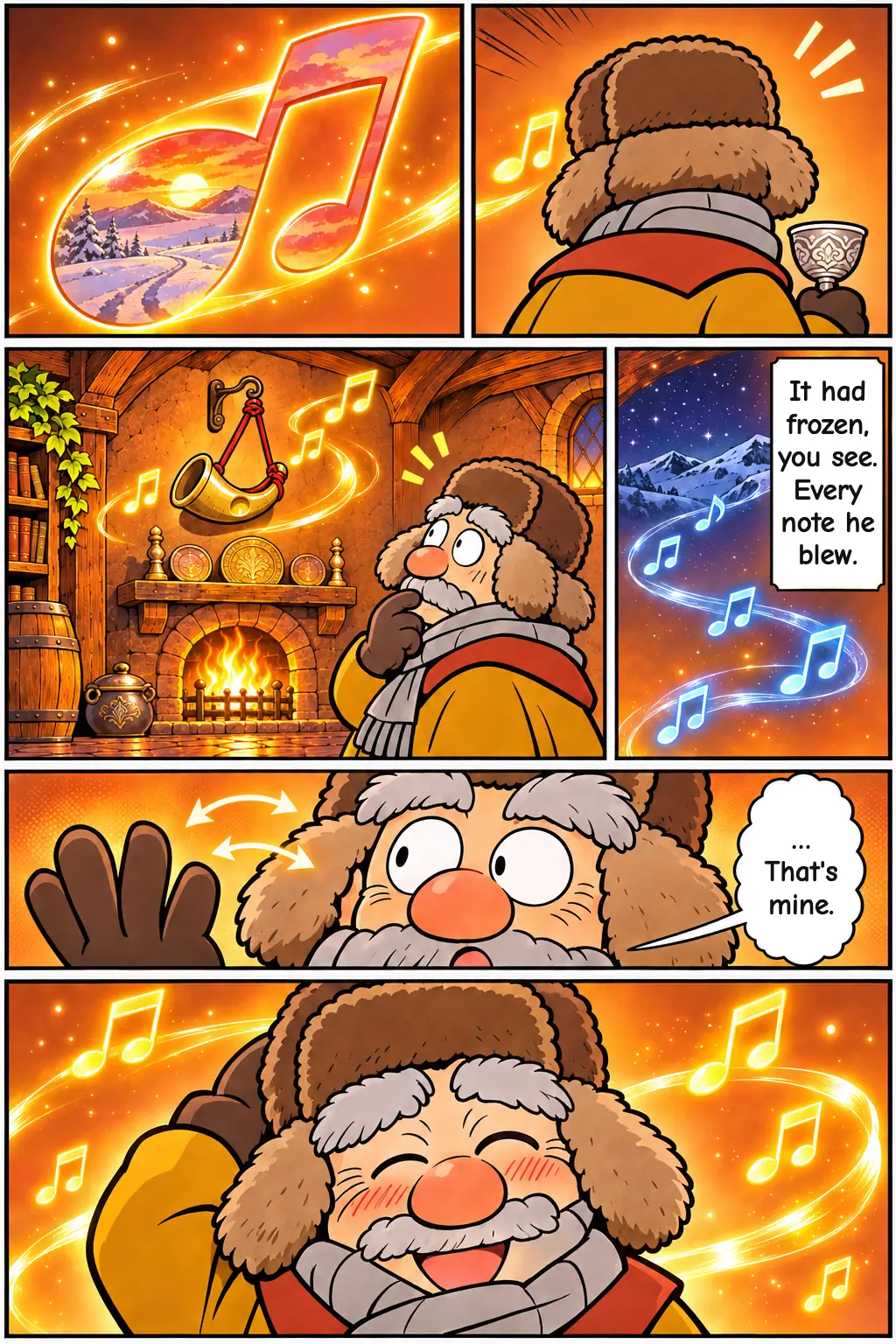
The manga openly adds four things. Its storytelling frame and listener are staged for the comic; the original Baron does address a company of listeners, but they are not developed as characters in this passage. The coachman's personality is also invented, since the source gives him little beyond his effort and musical ability. The quiet mood at the inn is an adaptation too, because the original scene is brief and says almost nothing about atmosphere. Finally, the way the musical notes are drawn belongs to the manga. The idea that the sound silences even the talkative Baron is part of this adaptation as well, and not something the source states.
Where to Read Baron Munchausen as a Manga
If you would like to see a carriage go over a nine-foot hedge, or watch a silent horn finally find its voice, this tale is a natural fit for comics. Episode 6 of BARON MUNCHAUSEN: Fourteen Nights of Impossible Tales, "Nobody Blew the Horn. It Sang Anyway.", is available here on Manga Portal. Every episode is free to read, with no account required, so you can start with this one or go back to the first night.
Characters in this episode
Baron Munchausen
The boastful first-person narrator, who leaps a nine-foot hedge with a carriage on his head and insists that every word is true.
The Postilion (Coachman)
The Baron's unnamed coach driver, whose horn stays silent on the road and later proves his musical skill when the frozen tunes thaw.
The Travelers in the Other Carriage
The unnamed party who meet the Baron head-on and block the narrow road, with no details about them given in the source.
The Two Horses
The Baron's coach horses, one carried on his head and the other, a feisty youngster, held under his arm with its hind legs in his coat pocket.
FAQ
What is the frozen horn story in Baron Munchausen?
It is a tall tale in which a coach horn makes no sound on a freezing road. Later, when it hangs near an inn's kitchen fire, the notes frozen inside thaw and the horn plays tunes by itself.
Why wouldn't Baron Munchausen's horn make a sound?
According to the tale, the cold was so intense that the notes froze inside the horn as they were blown. The Baron and the postilion only understand this when the heat of the fire releases the music.
How did Baron Munchausen get past the other carriage?
He put his carriage on his head and jumped a hedge about nine feet high into a field, then leaped back onto the road beyond the other carriage. He returned for the horses and carried them across in the same way.
Was Baron Munchausen a real person?
Yes. Hieronymus Karl Friedrich von Münchhausen (1720–1797) was a real German nobleman known for his stories. The wildly impossible adventures in the 1785 English book, however, are fiction published by Rudolf Erich Raspe.
Who wrote Baron Munchausen's Narrative?
Rudolf Erich Raspe, a German scholar living in England, wrote the English narrative first published in 1785. It originally appeared without his name, and later editions expanded the Baron's adventures.