Episode 1The Frog Came to Collect on Her PromiseThe Frog King, or Iron Henry
A princess loses her golden ball in a spring and carelessly promises a frog anything he wants. After all, he's just a frog. Then he follows her all the way to the castle door. In the original tale, the frog isn't kissed back into a prince. He gets thrown at a wall. The story ends with Faithful Henry, a servant who bound his chest with three iron bands.
Get new episodes in your feed. Follow us on:ThreadsBluesky
Story summary
The story opens "in the old days, when wishing still helped." A king has several daughters. The youngest is so beautiful that the sun itself is amazed whenever it shines on her face. Near the castle there is a dark forest, and under an old linden tree in that forest is a deep spring. On hot days the princess goes there to toss and catch her favorite toy, a golden ball. One day the ball slips out of her hands and sinks into the spring. The water is too deep to see the bottom, so she starts to cry. A frog sticks its thick, ugly head out of the water and asks what's wrong.
The Frog King, or Iron Henry: Grimm Story Summary, Ending and Meaning
In short: "The Frog King, or Iron Henry" is the first story in the Brothers Grimm's Children's and Household Tales (Kinder- und Hausmärchen). A princess promises a frog he can be her companion if he brings back her golden ball. She tries to break the promise, her father the king makes her keep it, and in the end she throws the frog against a wall, which turns him back into a prince. The tale closes with Faithful Henry, whose iron chest bands burst for joy.
The Original Tale: What Happens in "The Frog King"
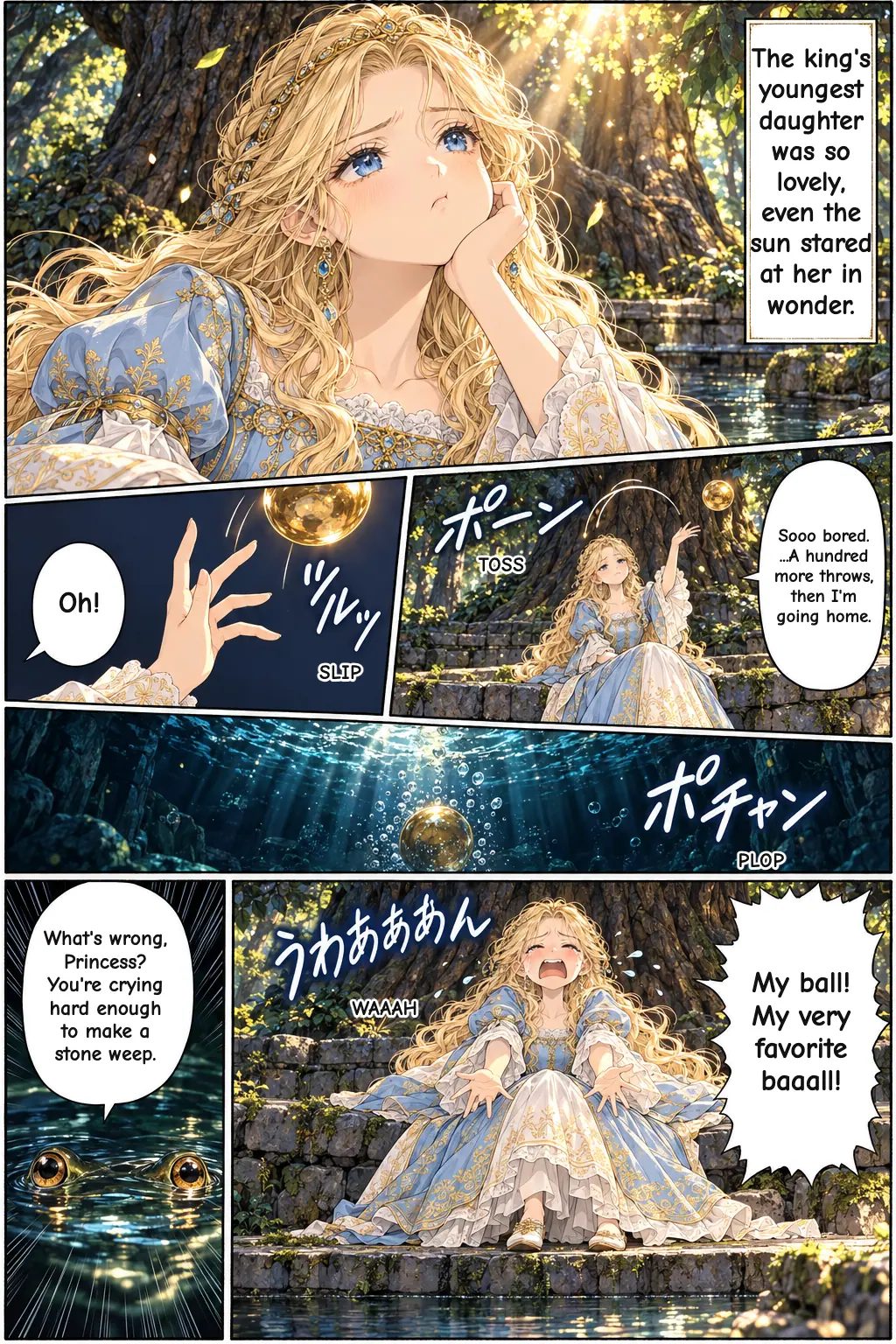
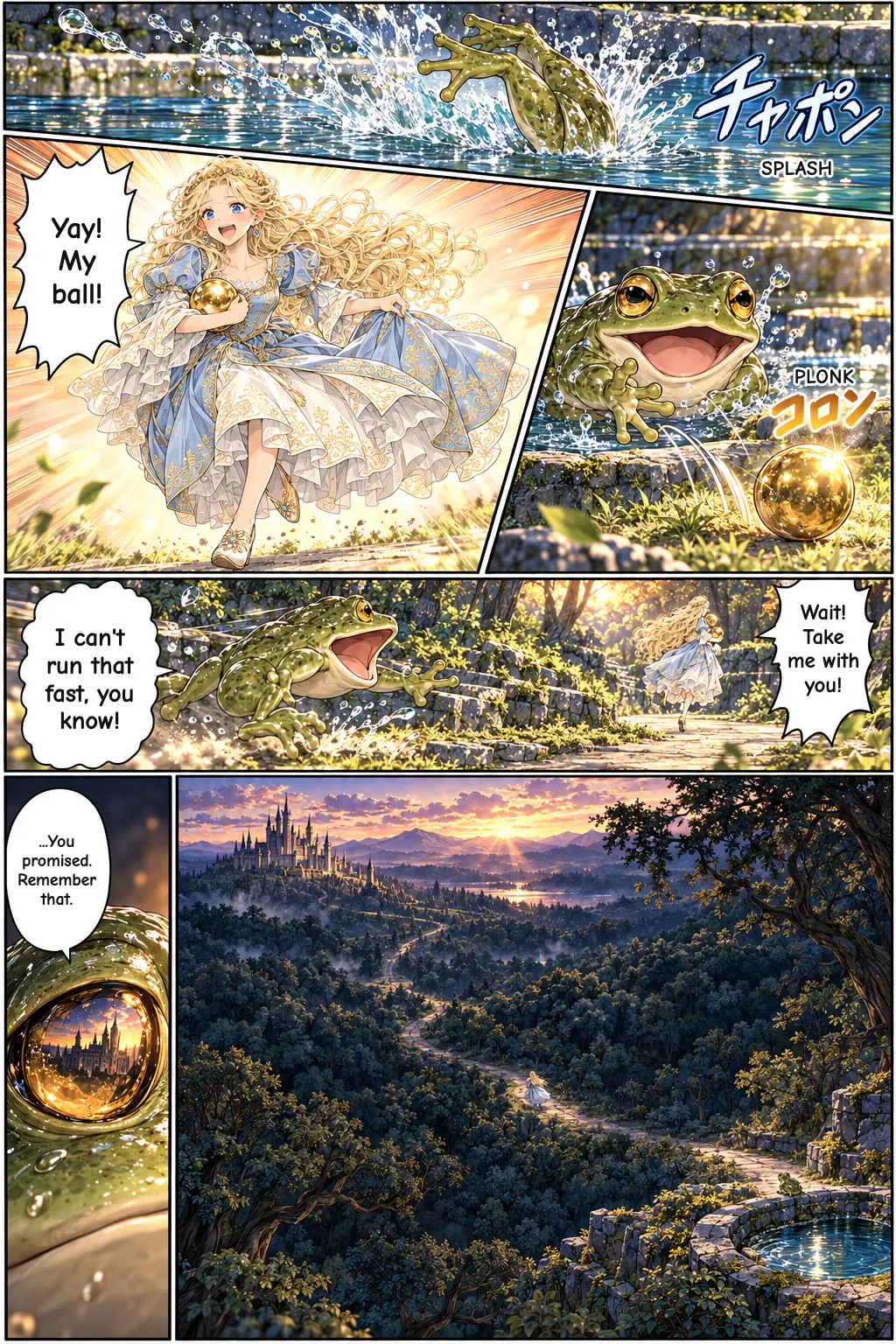
The story opens "in the old days, when wishing still helped." A king has several daughters. The youngest is so beautiful that the sun itself is amazed whenever it shines on her face. Near the castle there is a dark forest, and under an old linden tree in that forest is a deep spring. On hot days the princess goes there to toss and catch her favorite toy, a golden ball.
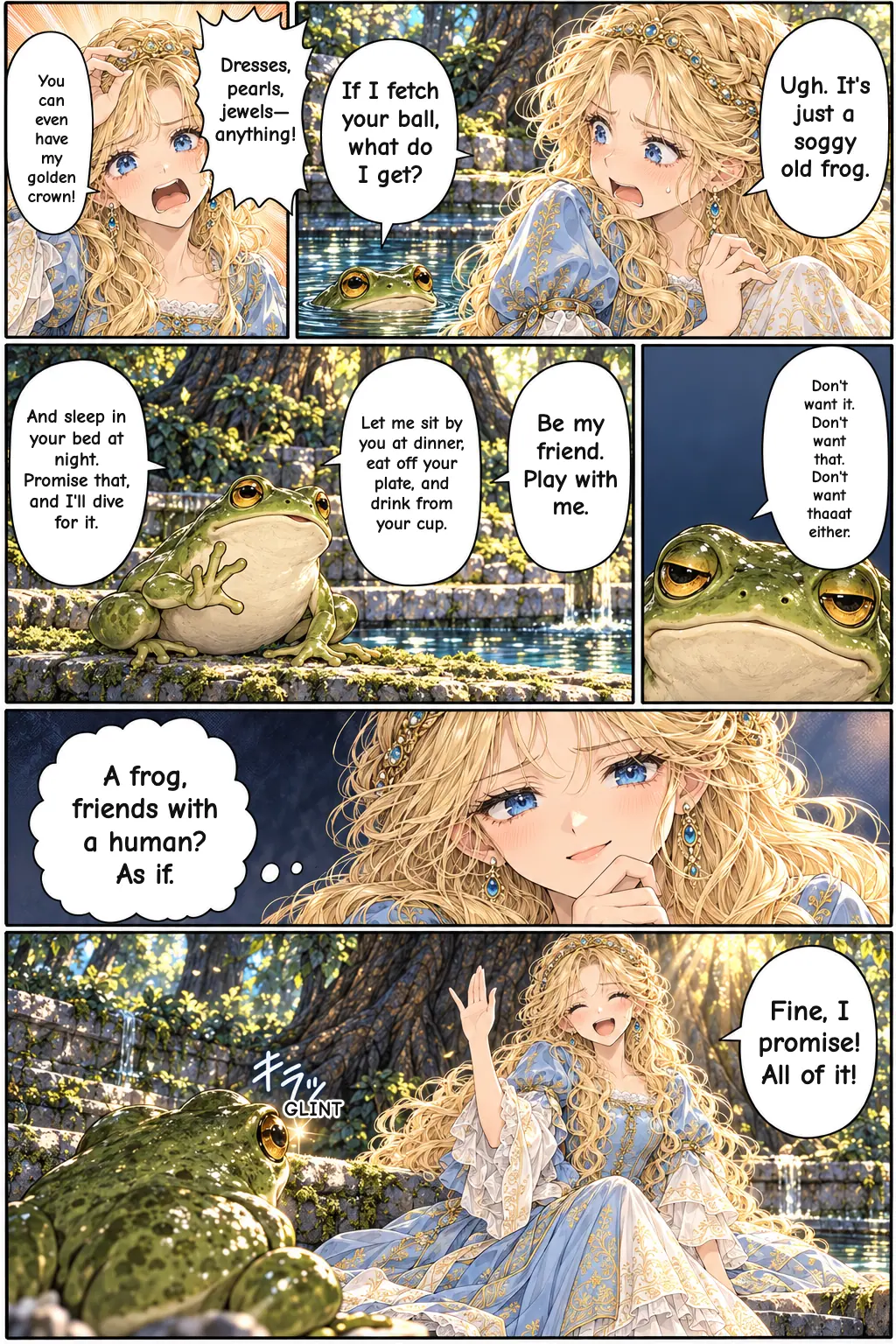
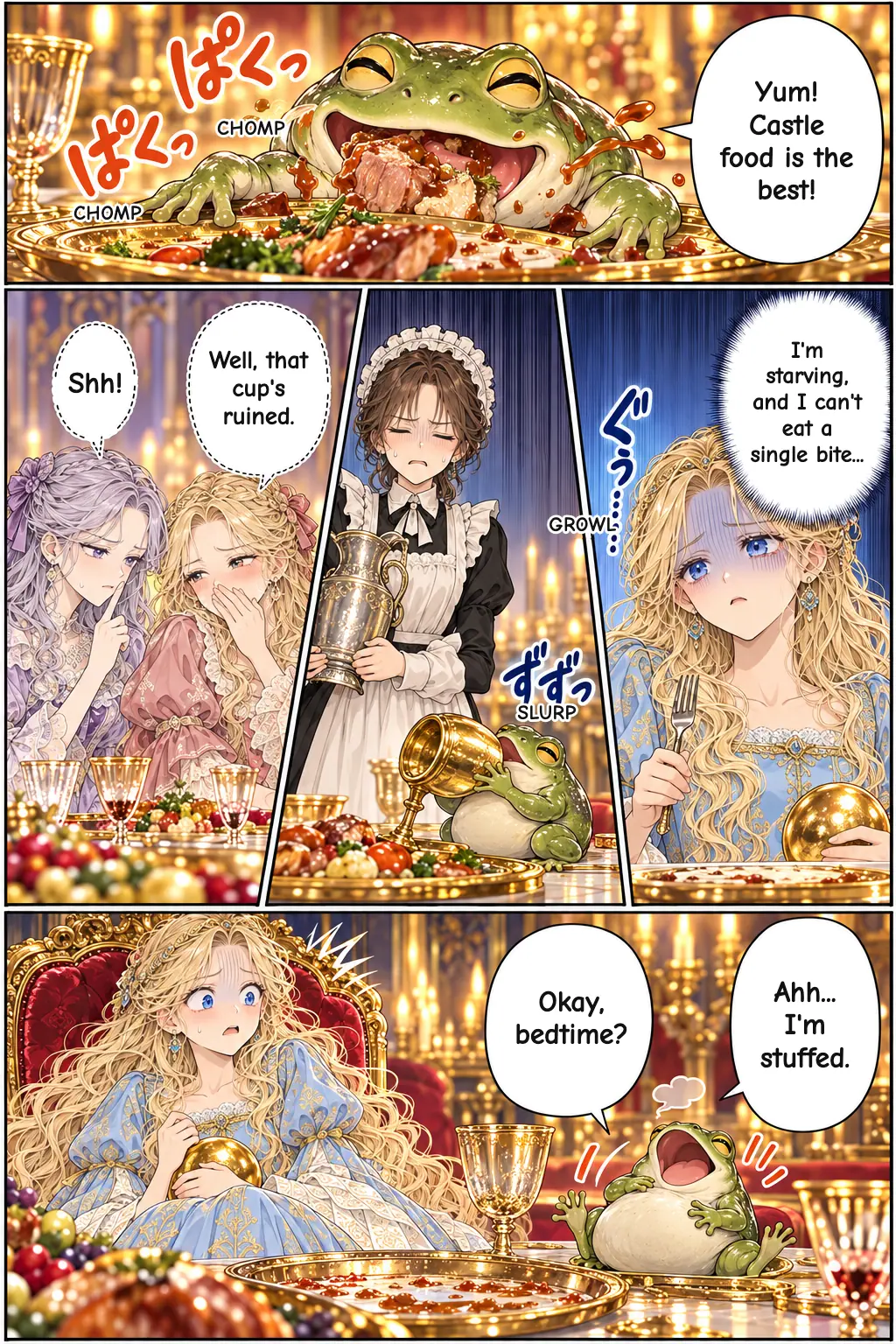
One day the ball slips out of her hands and sinks into the spring. The water is too deep to see the bottom, so she starts to cry. A frog sticks its thick, ugly head out of the water and asks what's wrong. She offers him her clothes, her pearls and jewels, even her golden crown. He doesn't want any of it. What he wants is to be her friend and playmate: to sit beside her at the table, eat from her little golden plate, drink from her cup, and sleep in her bed. She agrees, privately thinking a frog could never be a person's companion anyway. The frog dives down and brings the ball back. She grabs it and runs home, ignoring him as he calls out that he can't run as fast as she can.
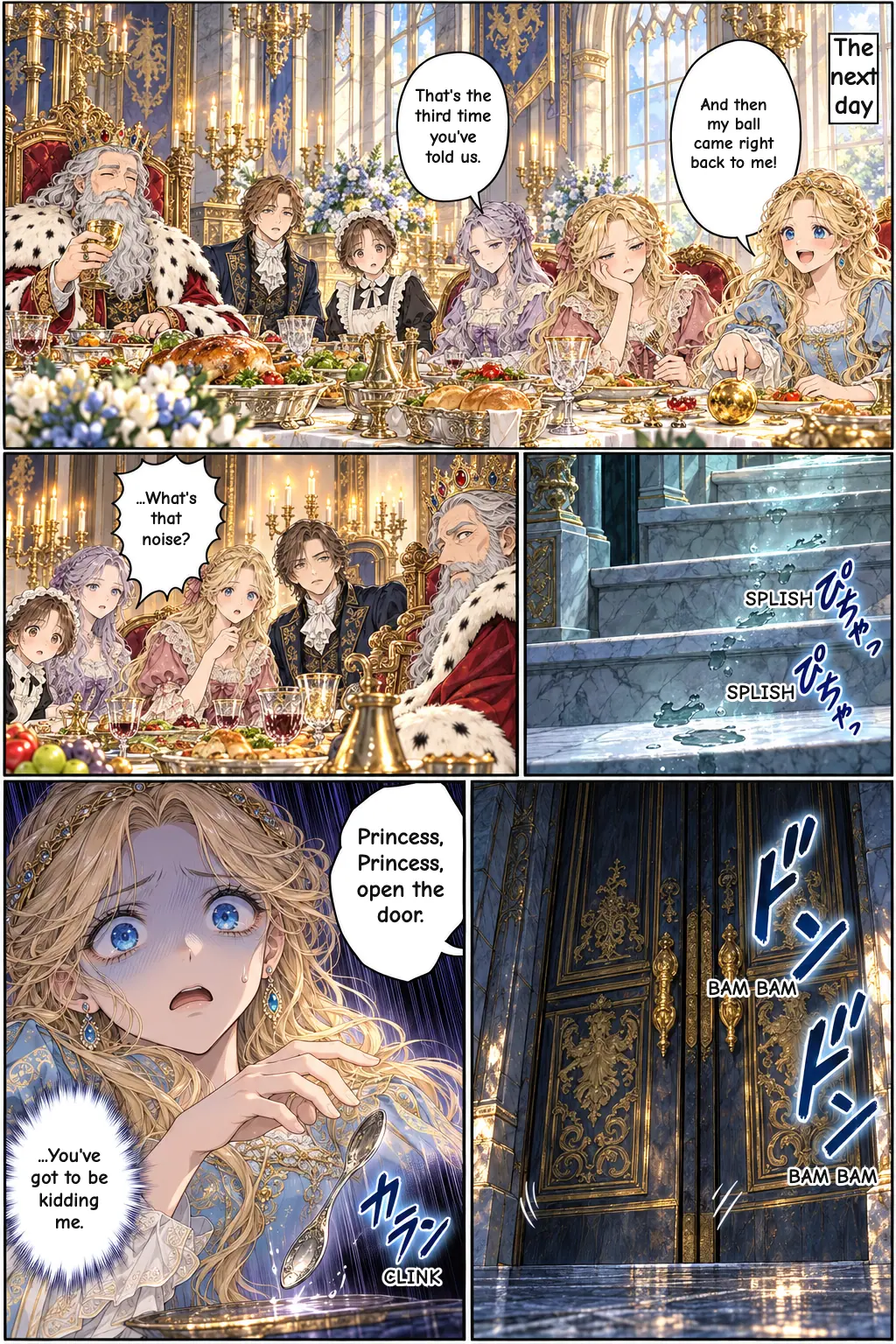
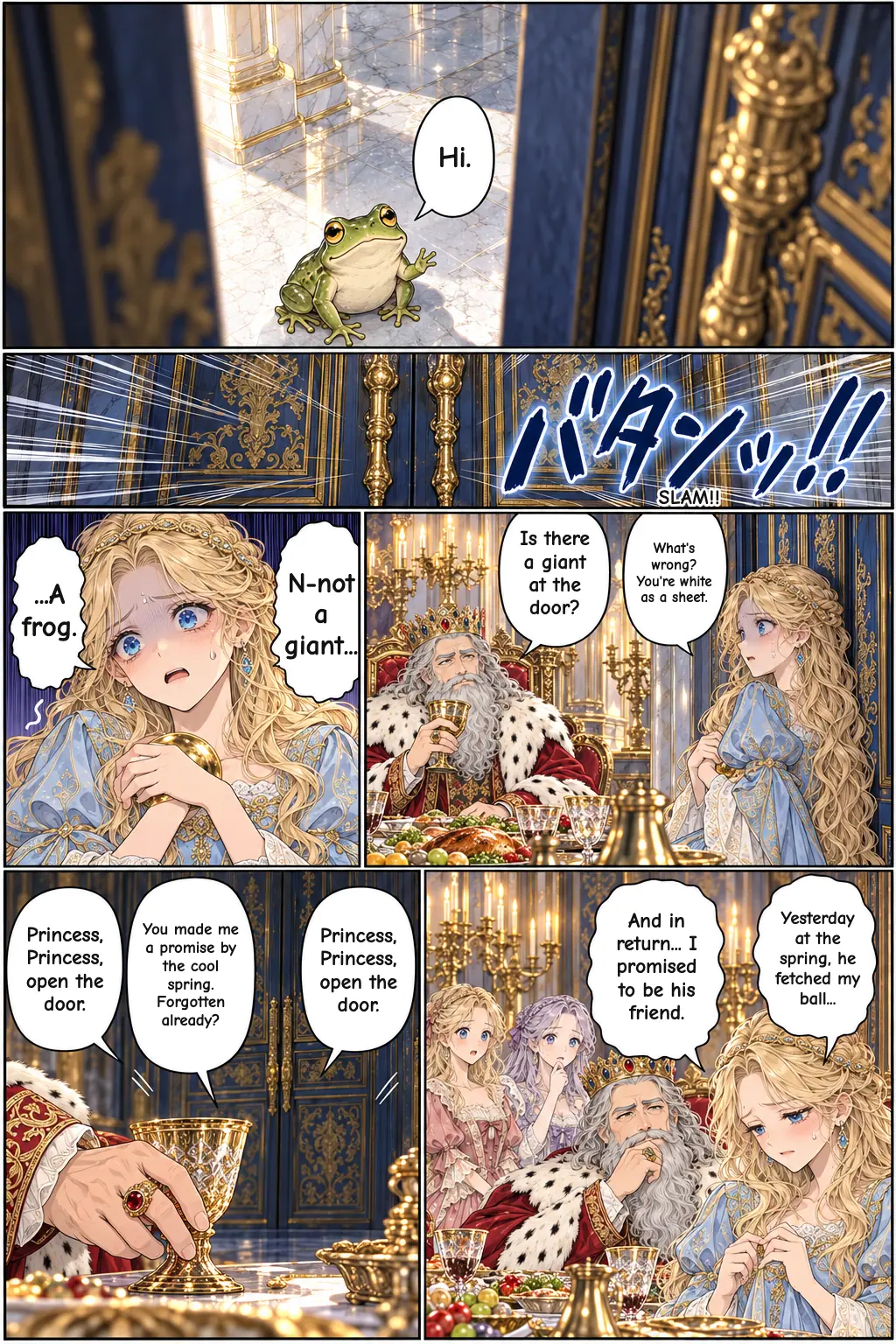
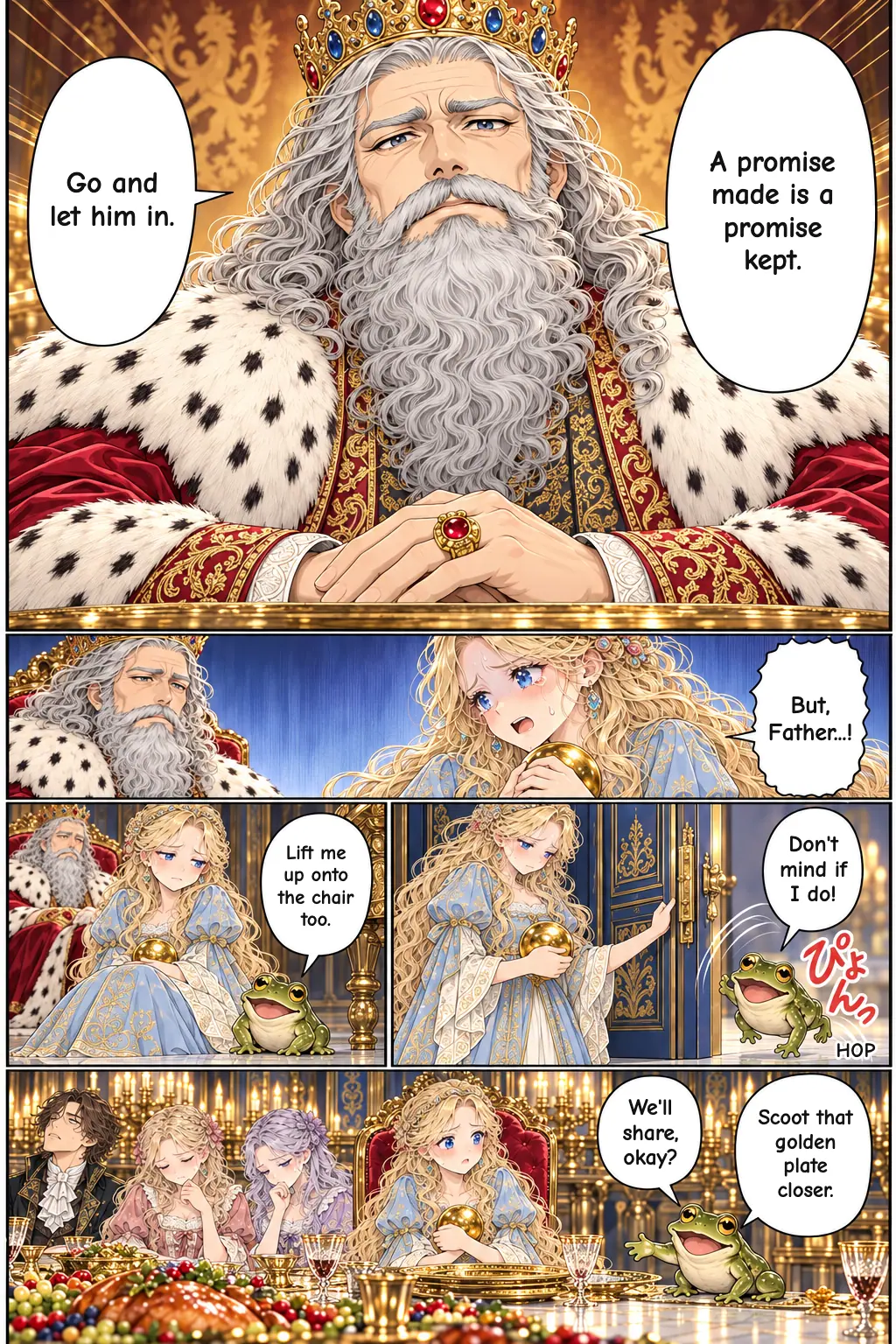
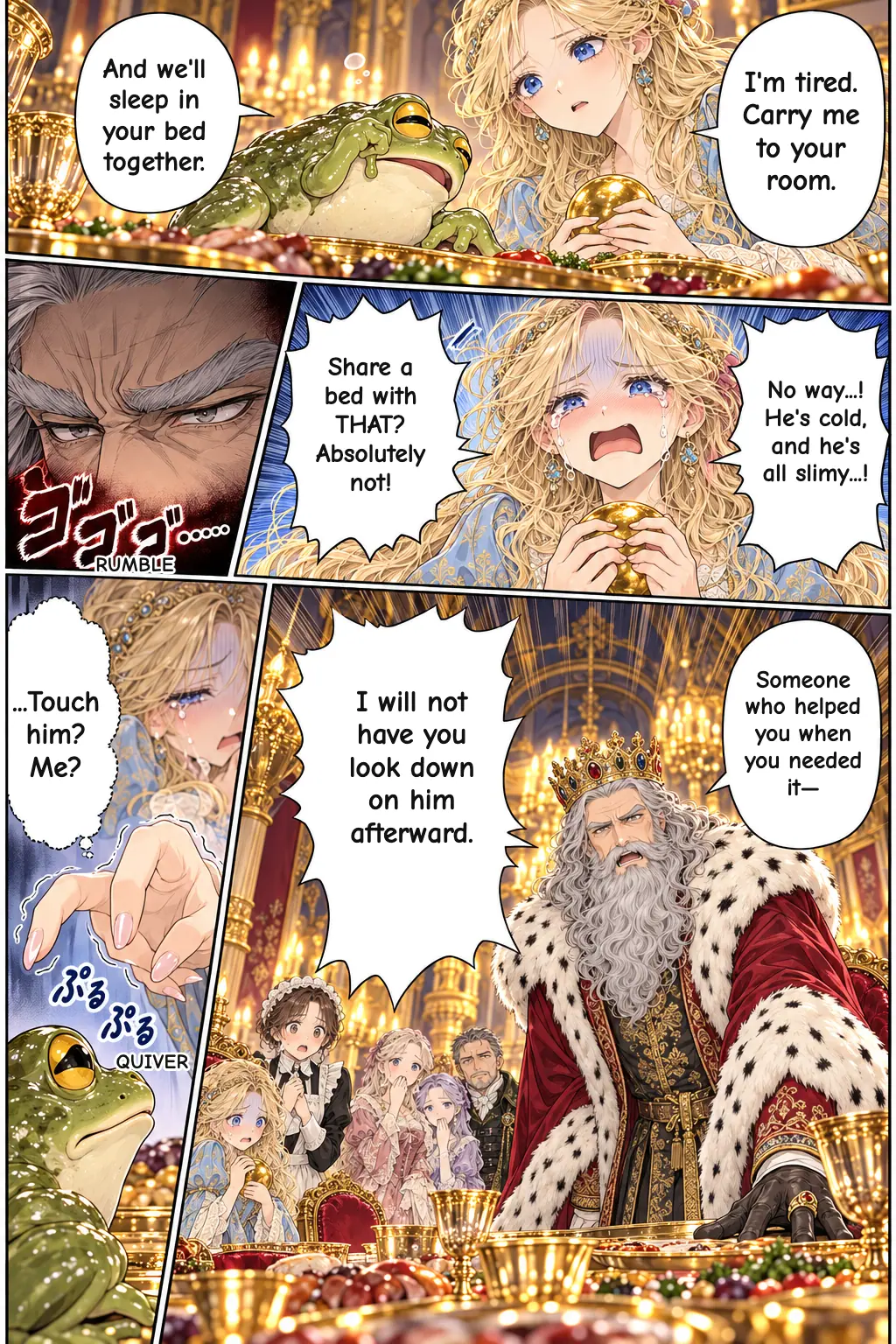
The next day, while she's at dinner with the king and his court, something comes splashing up the marble stairs. The frog knocks at the door and calls, in a little rhyme, for the youngest princess to let him in. She slams the door, frightened. When her father asks why, she tells him about the promise. The king's answer is firm: a promise must be kept. He also tells her she shouldn't look down on someone who helped her when she was in trouble. So the frog eats from her golden plate, while she can barely swallow a bite.
The Ending Most People Get Wrong: No Kiss, Just a Wall
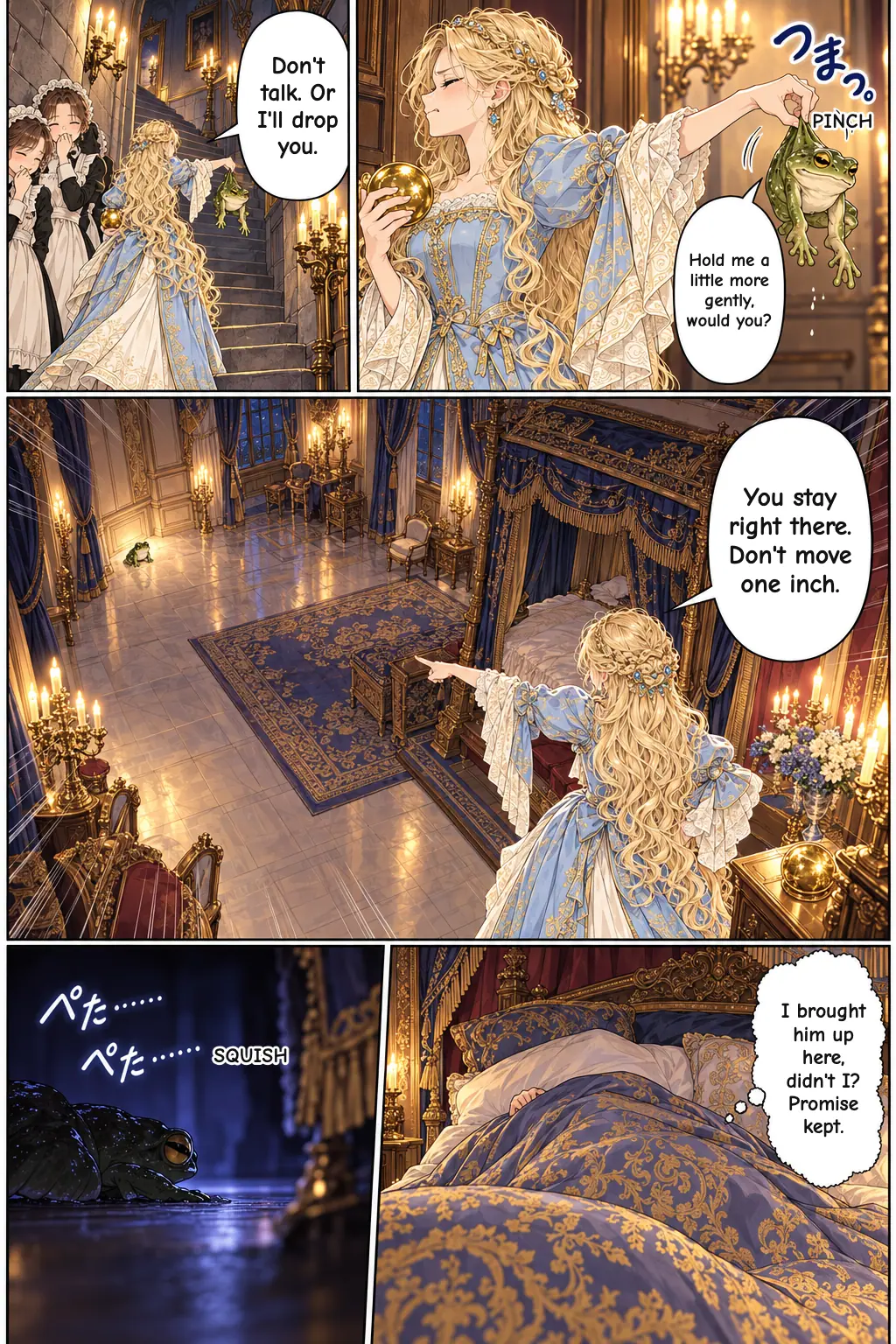
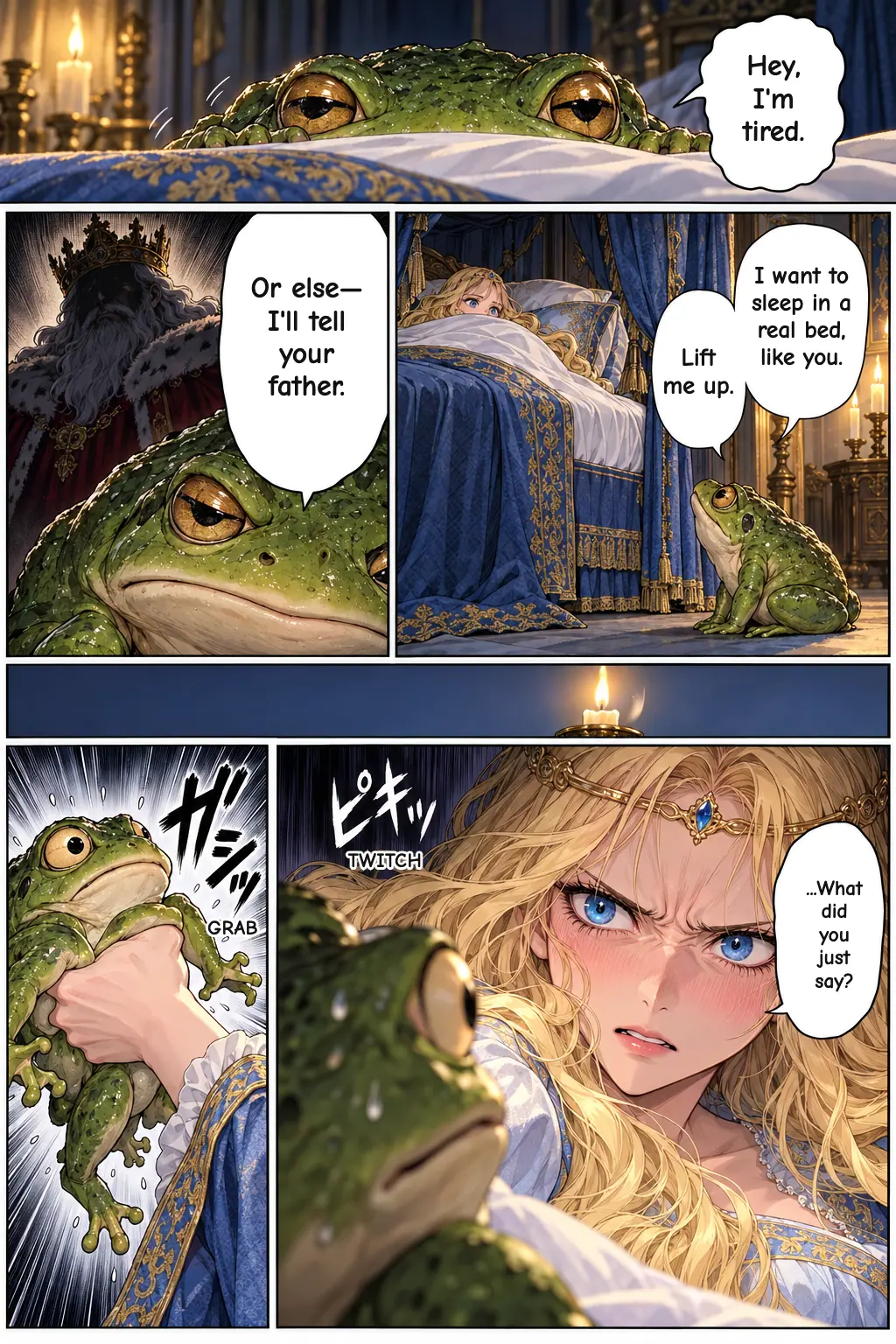
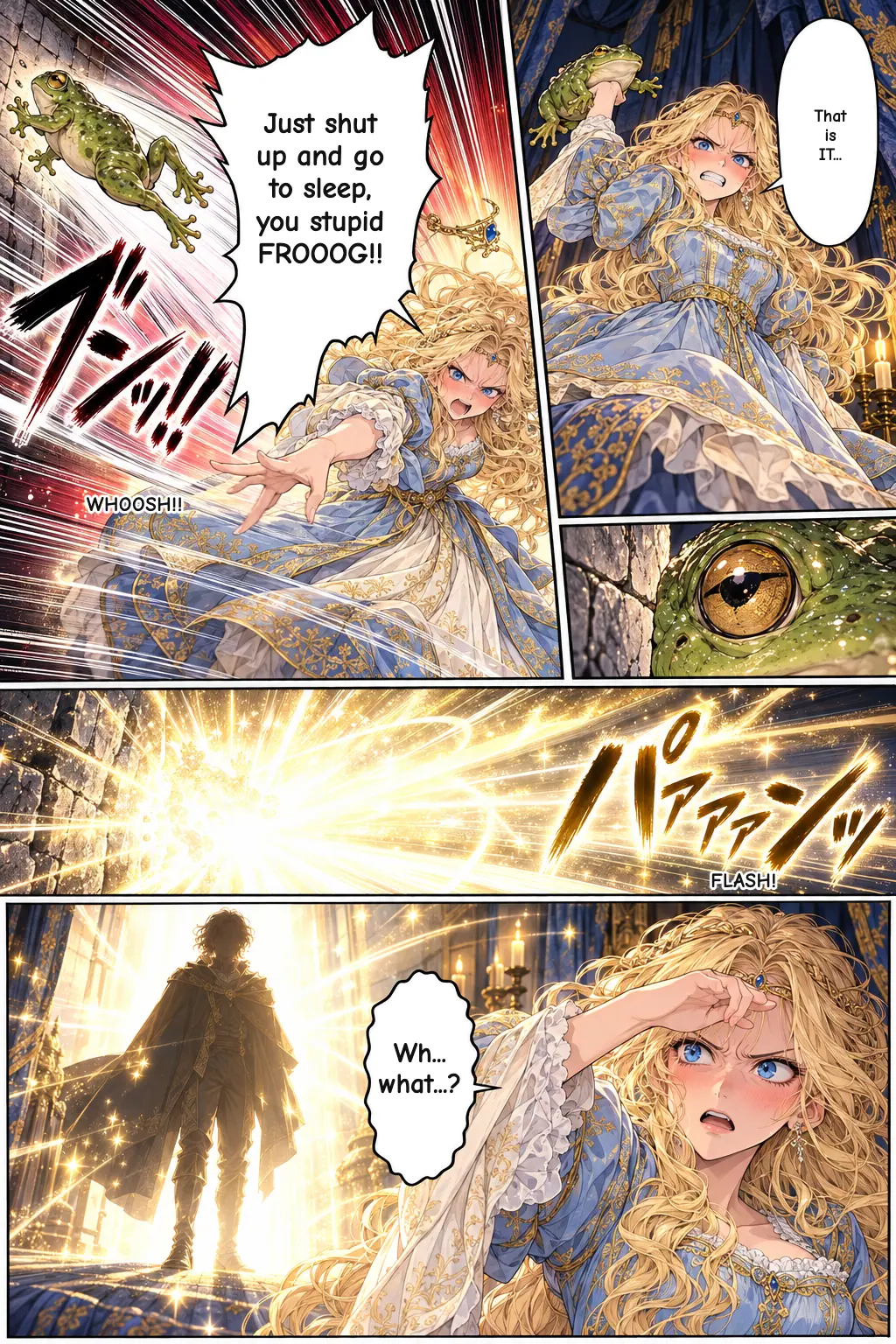
Many people know this story as "the princess kisses the frog." In the Grimms' text, there is no kiss. After dinner the frog asks to be carried to her bedroom. Disgusted by his cold skin, she picks him up with two fingers and drops him in a corner. When he crawls over and threatens to tell her father unless she lifts him into the bed, she loses her temper and throws him against the wall as hard as she can.
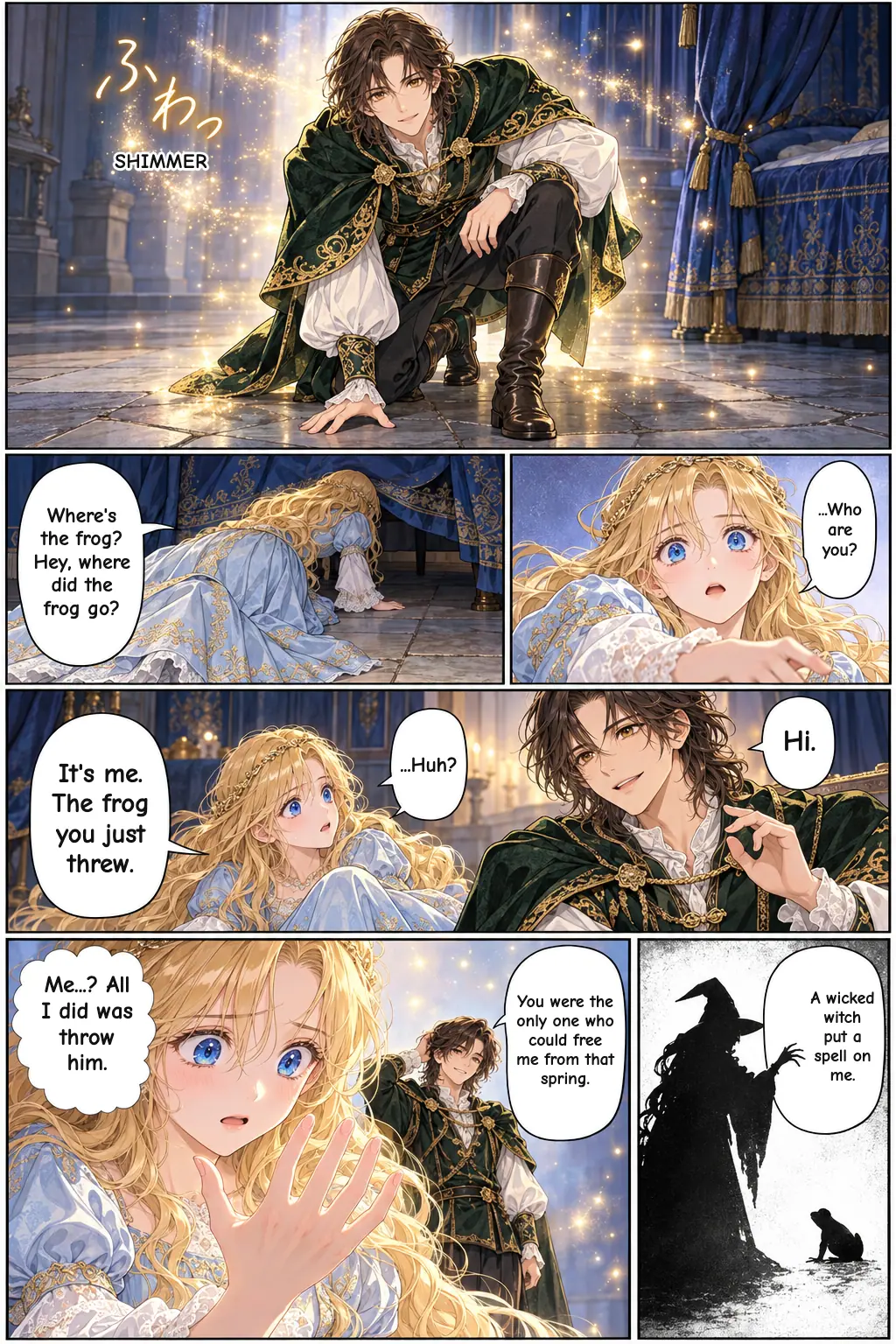
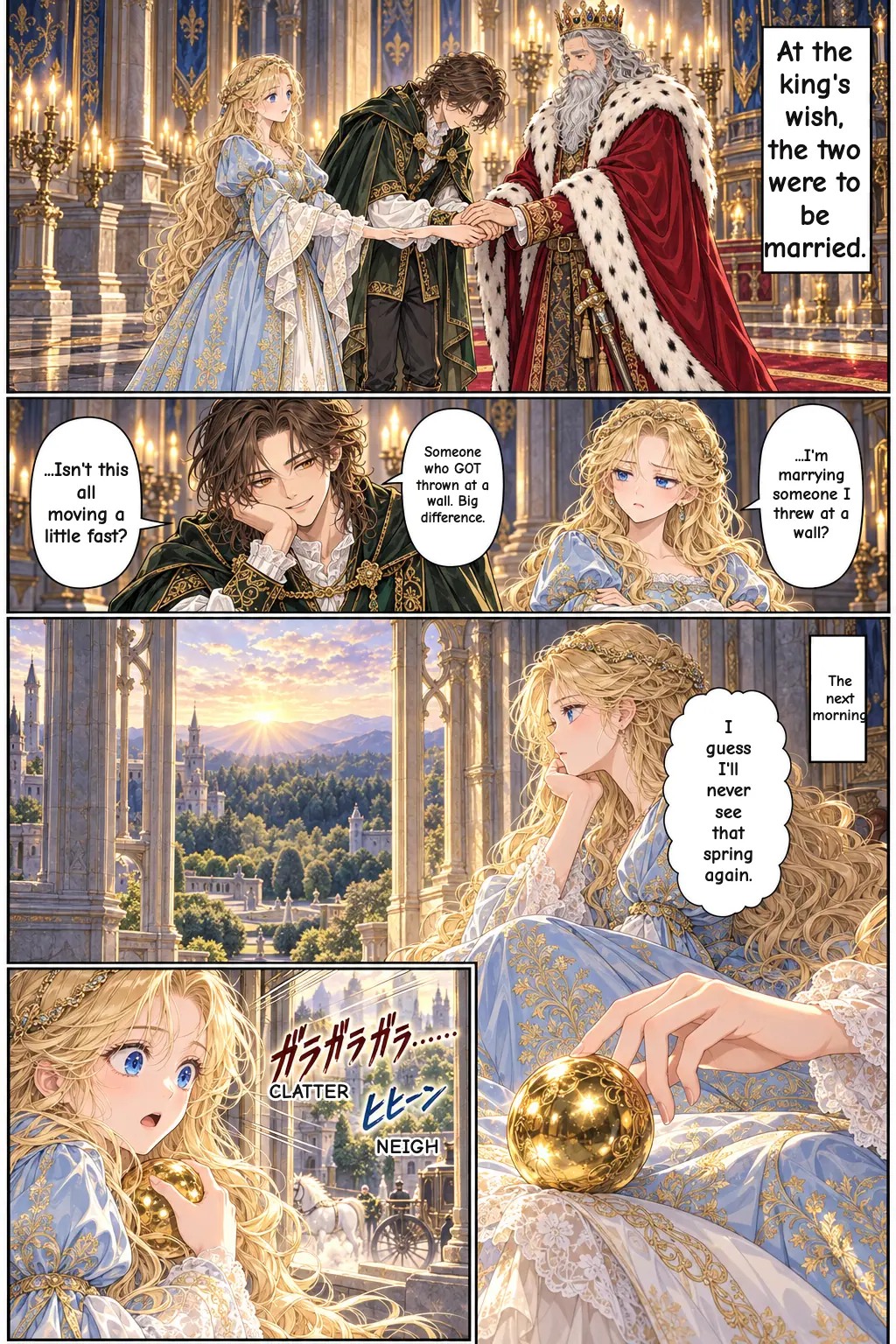
What falls to the floor isn't a frog anymore. It's a prince with kind, beautiful eyes. He explains that a wicked witch had put a spell on him, and only this princess could free him from the spring. By her father's wish, he becomes her companion and husband. The kiss comes from later retellings and adaptations. It isn't part of the Grimms' version.
Who Is Iron Henry?
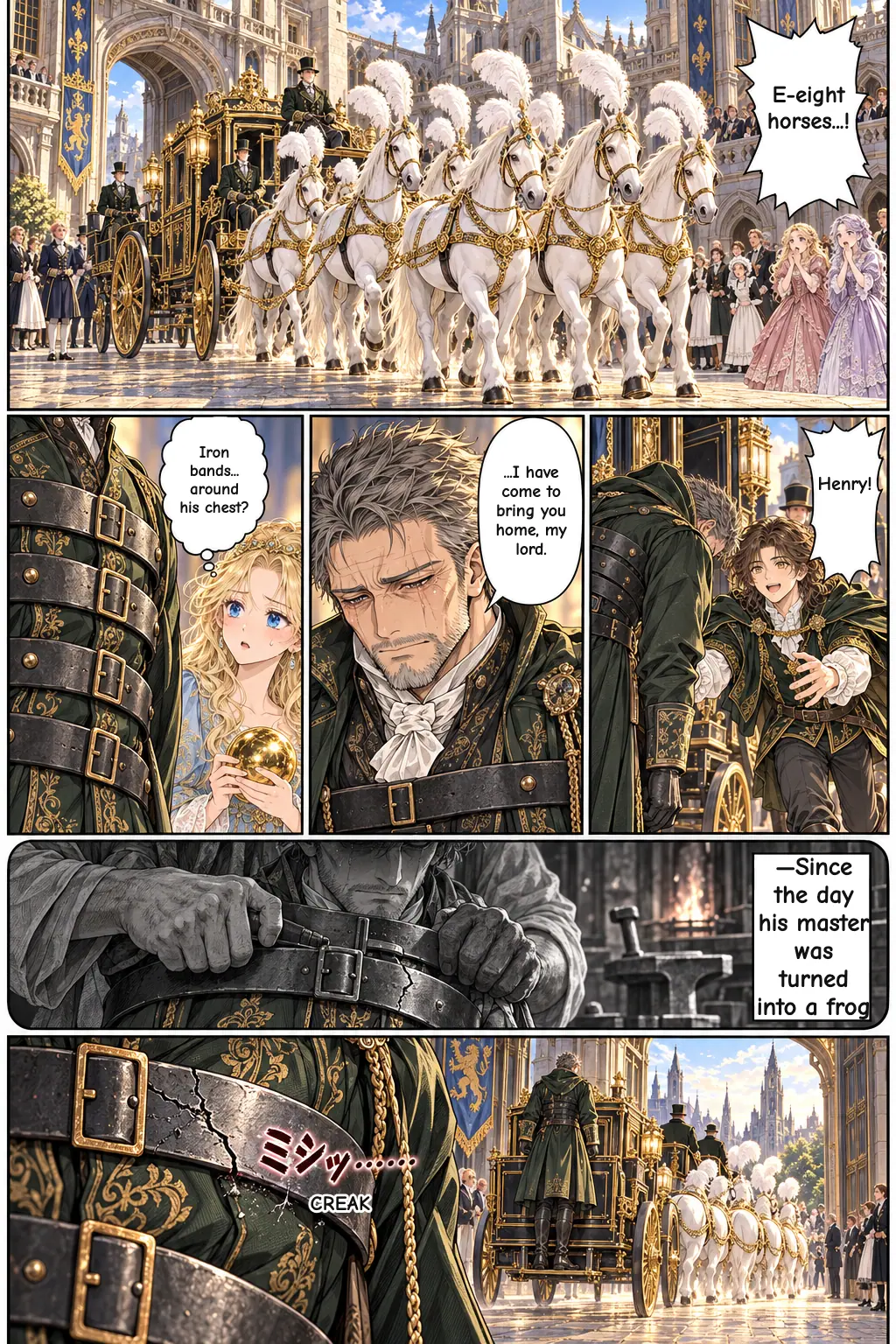
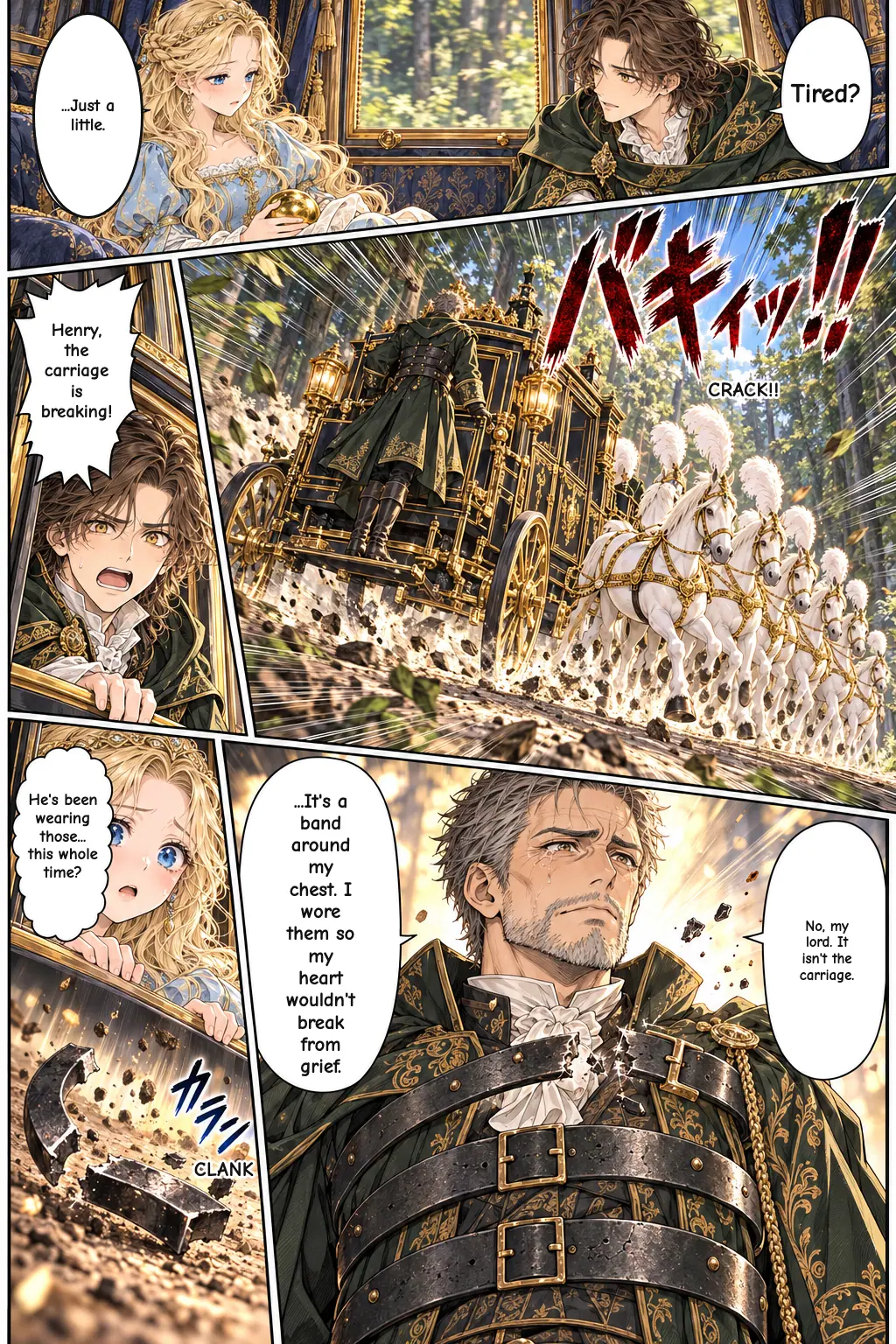
The second half of the title belongs to a character who only appears in the last few lines. The next morning, a carriage pulled by eight white horses arrives. The horses wear white ostrich plumes and are harnessed with golden chains. Riding on the back is the prince's loyal servant, Henry (Heinrich in German).
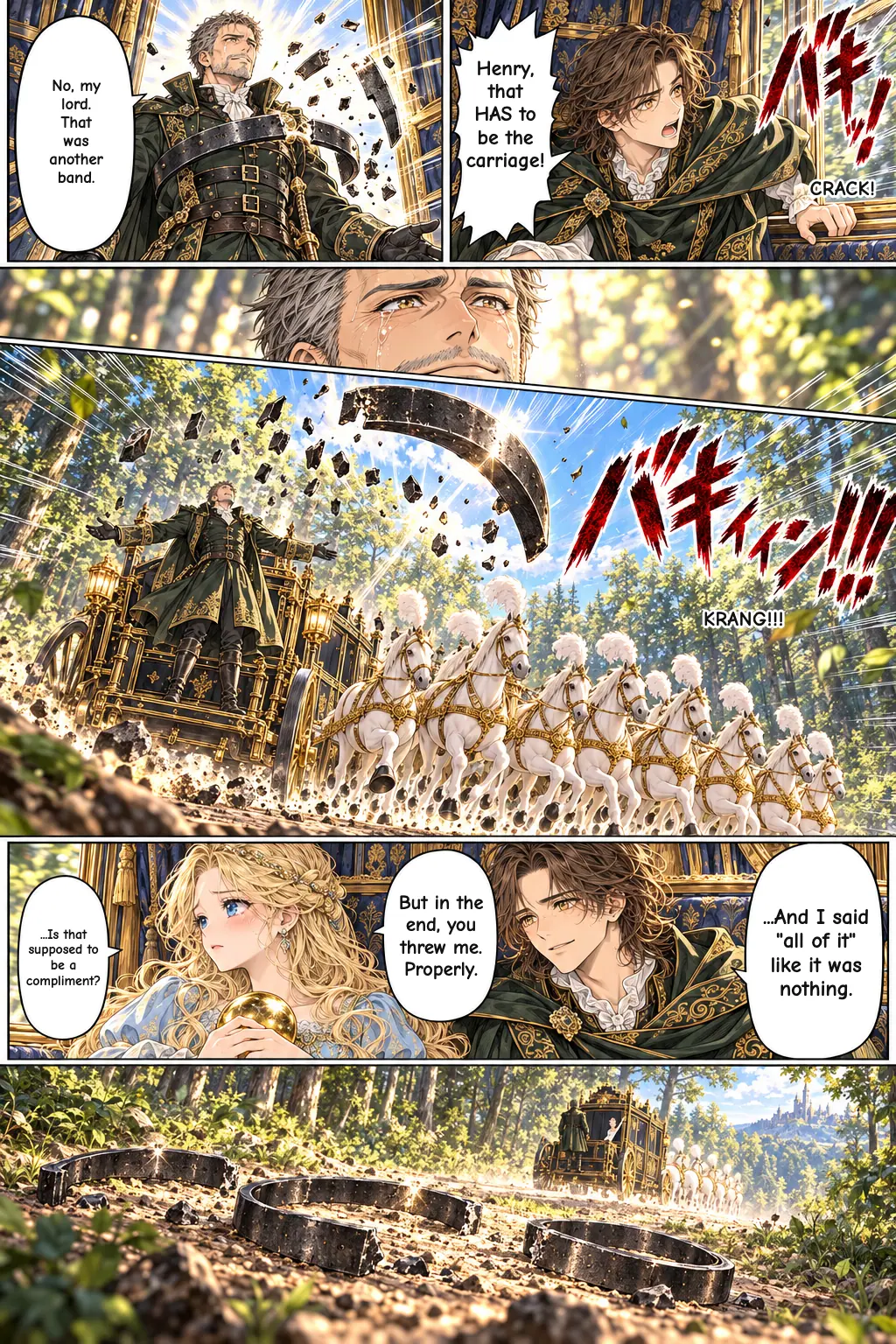
When his master was turned into a frog, Henry was so heartbroken that he had three iron bands fastened around his chest to keep his heart from bursting with grief. On the road home there's a loud crack. The prince thinks the carriage is breaking. Henry tells him no, it's one of the bands around his heart. It happens twice more, until all three bands have snapped from joy. The story ends on the servant's loyalty, not on the couple.
What the Story Says: Promises, Fathers and Folk Tradition
The clearest lesson comes from the king himself: you keep your word, even when it was given carelessly, and you don't scorn someone who helped you. The princess learns that a promise to a mere frog still counts.
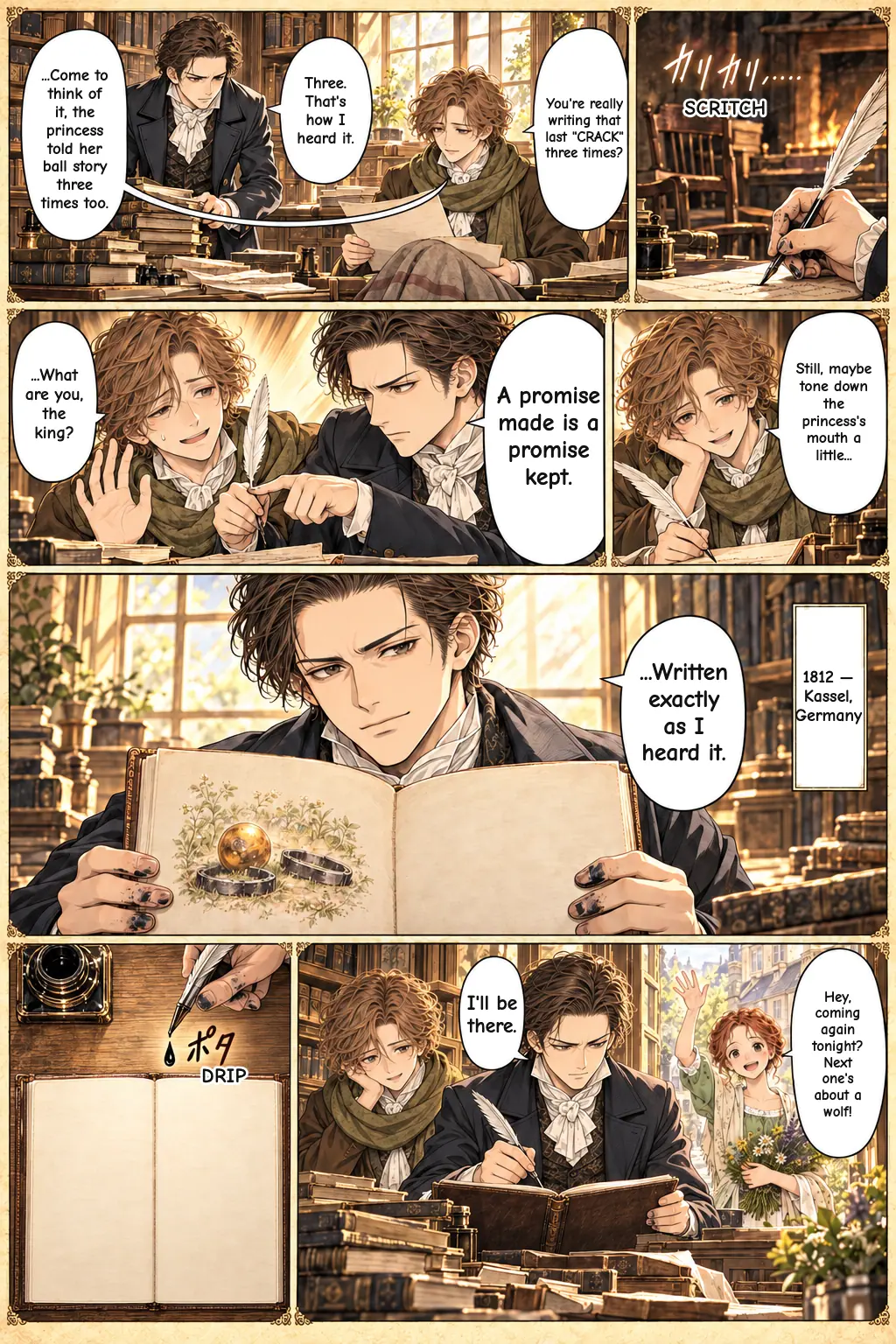
Readers have long noticed the odd twist that the spell breaks through anger, not obedience. Some interpreters read the story as being about growing up and facing what disgusts you. Others see it as a tale about a girl finally standing up for herself. The Grimms gave no explanation, so these remain readings, not facts. Jacob and Wilhelm Grimm collected tales in and around Kassel in the early 1800s and published the first edition in 1812. "The Frog King" stood first in that edition, and it was still first in the final 1857 edition, which is the version summarized here.
What the Manga Version Changes
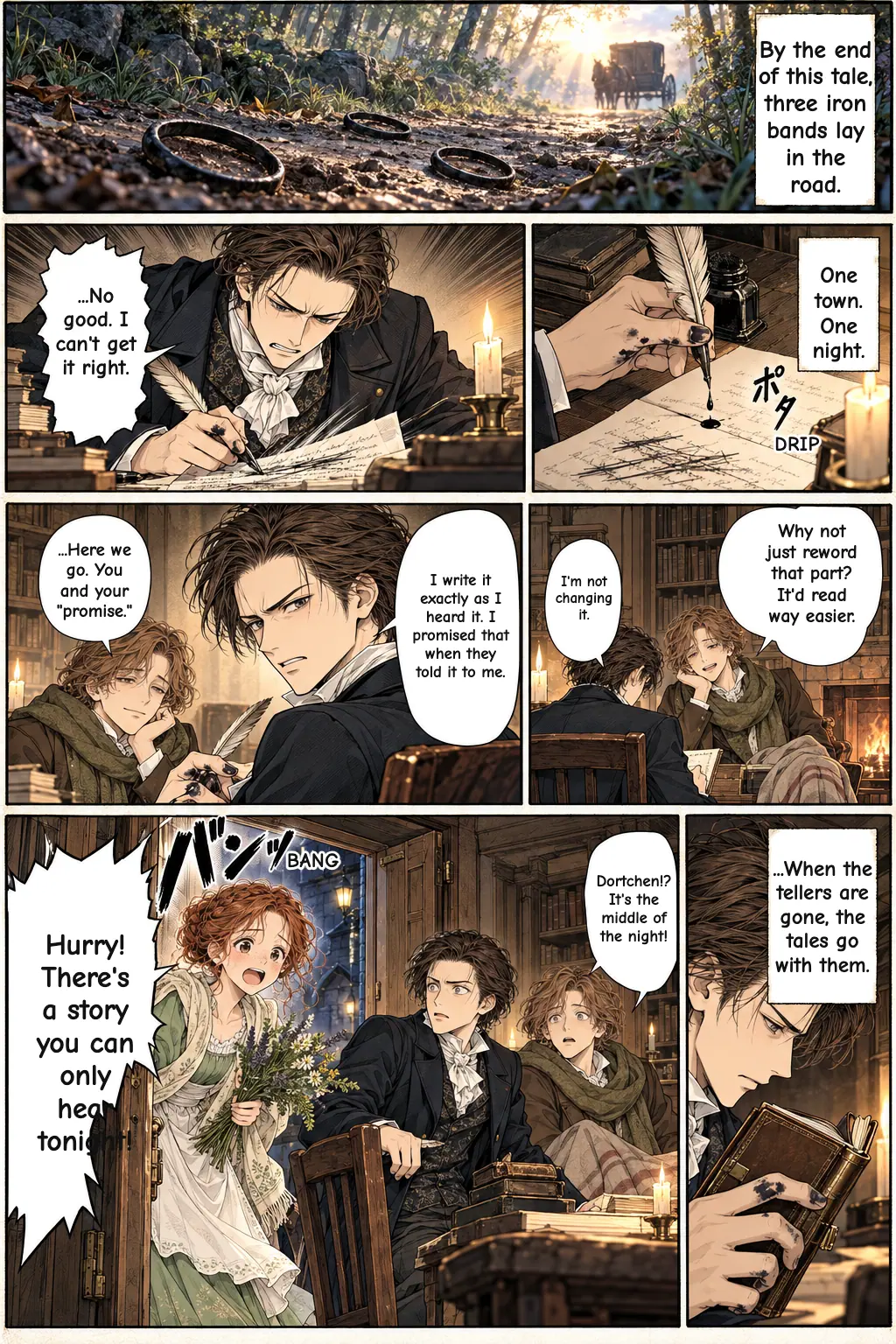
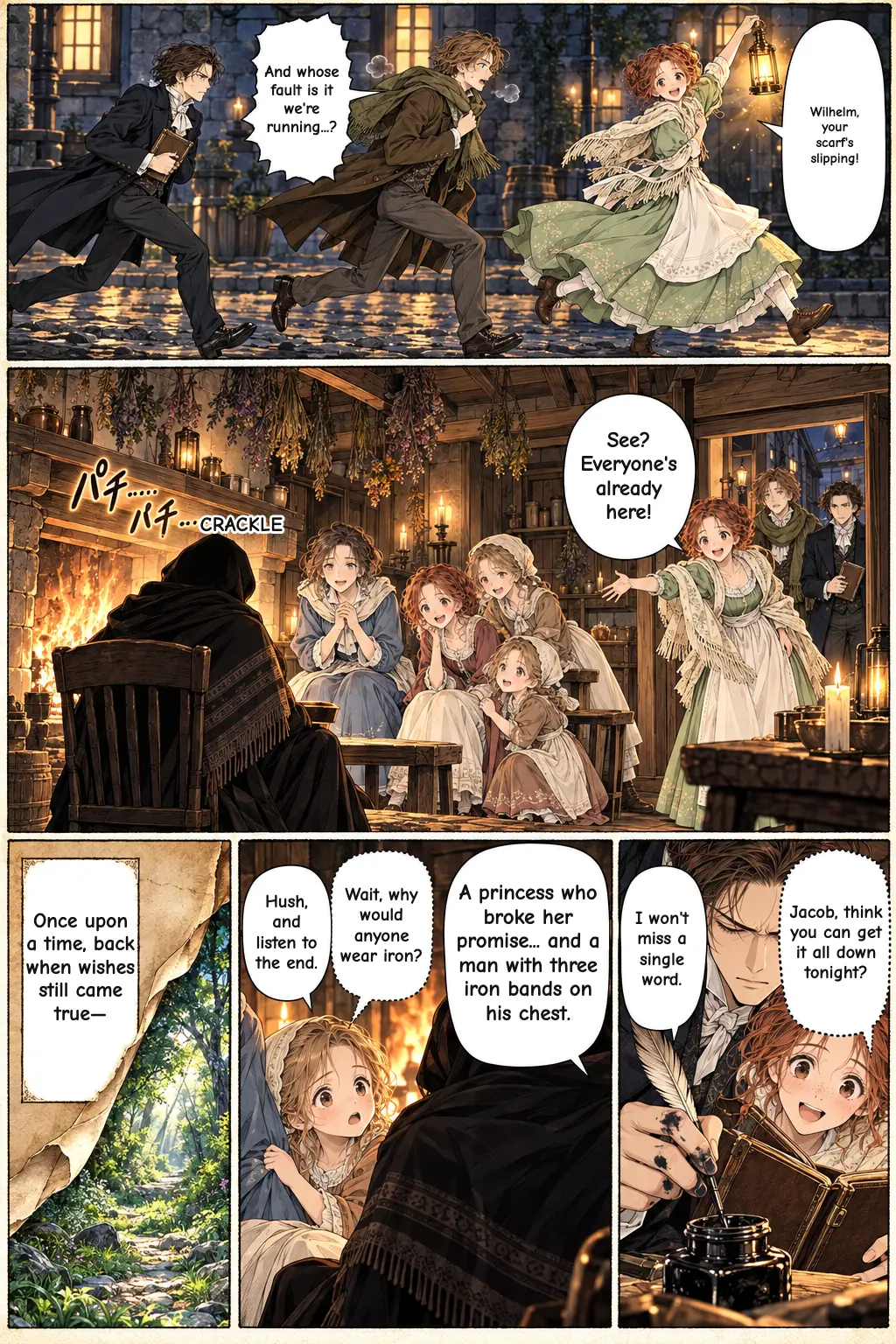
The manga follows the events of the 1857 text, including the wall and the three iron bands. The Grimms describe almost nothing about how anyone looks, so every face, outfit, castle and forest design in the manga is our own invention. Background details are ours too, like the courtiers' reactions at dinner.
The episode also adds a frame story that isn't in the tale: it opens with the Grimm brothers deciding to collect folk tales in Kassel, and it closes with them putting the stories into a book, with "The Frog King" placed first in the 1812 edition. The frog's knocking rhyme and Henry's reply are new English renderings written for the manga, not taken from any existing translation.
Where to Read It
If you want to watch the frog climb those marble stairs and hear Henry's iron bands snap, Episode 1 of GRIMM'S FAIRY TALES: The Tellers of the Forest is right here on Manga Portal. Every episode is free to read, and you don't need to sign up. It's a quick way to meet the original Grimm story, wall and all, before moving on to the next tale in the series.
Characters in this episode
The Youngest Princess
The king's youngest and most beautiful daughter, who makes a careless promise to a frog to get her golden ball back.
The Frog / The Frog King
A talking frog in the forest spring who is really a prince under a witch's spell, and who insists the princess keep her word.
The King
The princess's father, who orders her to honor her promise and not scorn someone who helped her.
Faithful Henry (Iron Henry)
The prince's loyal servant, who bound his heart with three iron bands out of grief, and they burst for joy when his master is freed.
The Wicked Witch
The unseen figure who turned the prince into a frog; she is mentioned only once and never appears.
Jacob and Wilhelm Grimm
The brothers who collected and published the tales; they appear only in the manga's added frame story, not in the tale itself.
FAQ
Does the princess kiss the frog in the Grimm fairy tale?
No. In the Brothers Grimm version, the princess throws the frog against the wall in anger, and that breaks the spell. The kiss comes from later retellings and adaptations.
Who is Iron Henry in The Frog King?
Iron Henry, or Faithful Henry, is the prince's loyal servant. He had three iron bands put around his chest so his heart wouldn't break with grief while his master was a frog, and the bands snap one by one for joy at the end.
What is the moral of The Frog King?
The king states it directly: a promise must be kept, and you shouldn't look down on someone who helped you when you needed it. Some readers also see themes of growing up or standing up for yourself, but those are interpretations.
Why is The Frog King the first Grimm fairy tale?
The Grimms placed it first in the 1812 first edition of Children's and Household Tales, and it stayed first through the final 1857 edition. That's why it's often listed as KHM 1.
Why did the witch turn the prince into a frog?
The original tale never says. The prince only mentions that a wicked witch cursed him and that only the princess could free him.