Episode 2The Youngest Hid in the Clockand Watched — The Wolf and the Seven Young Kids
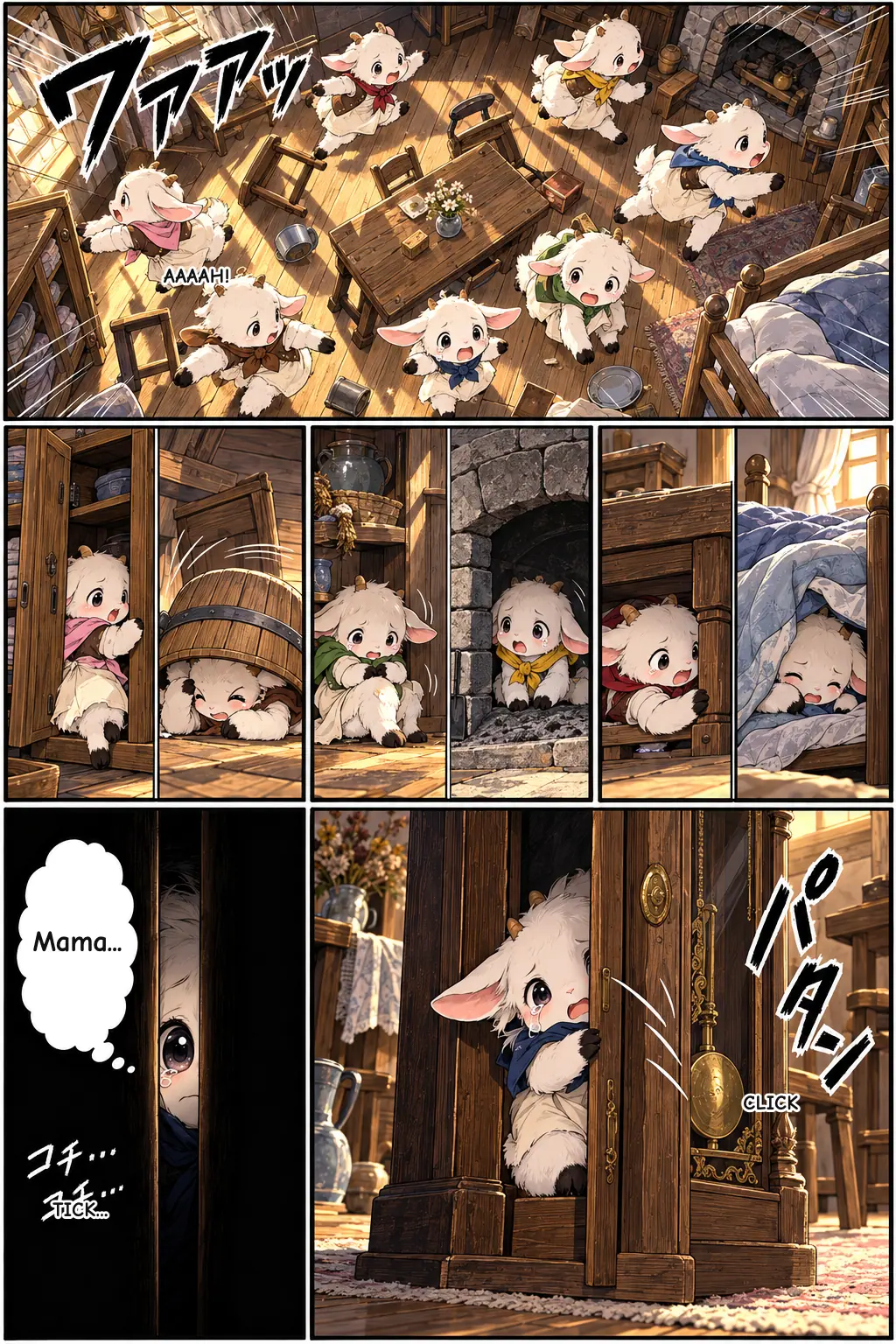
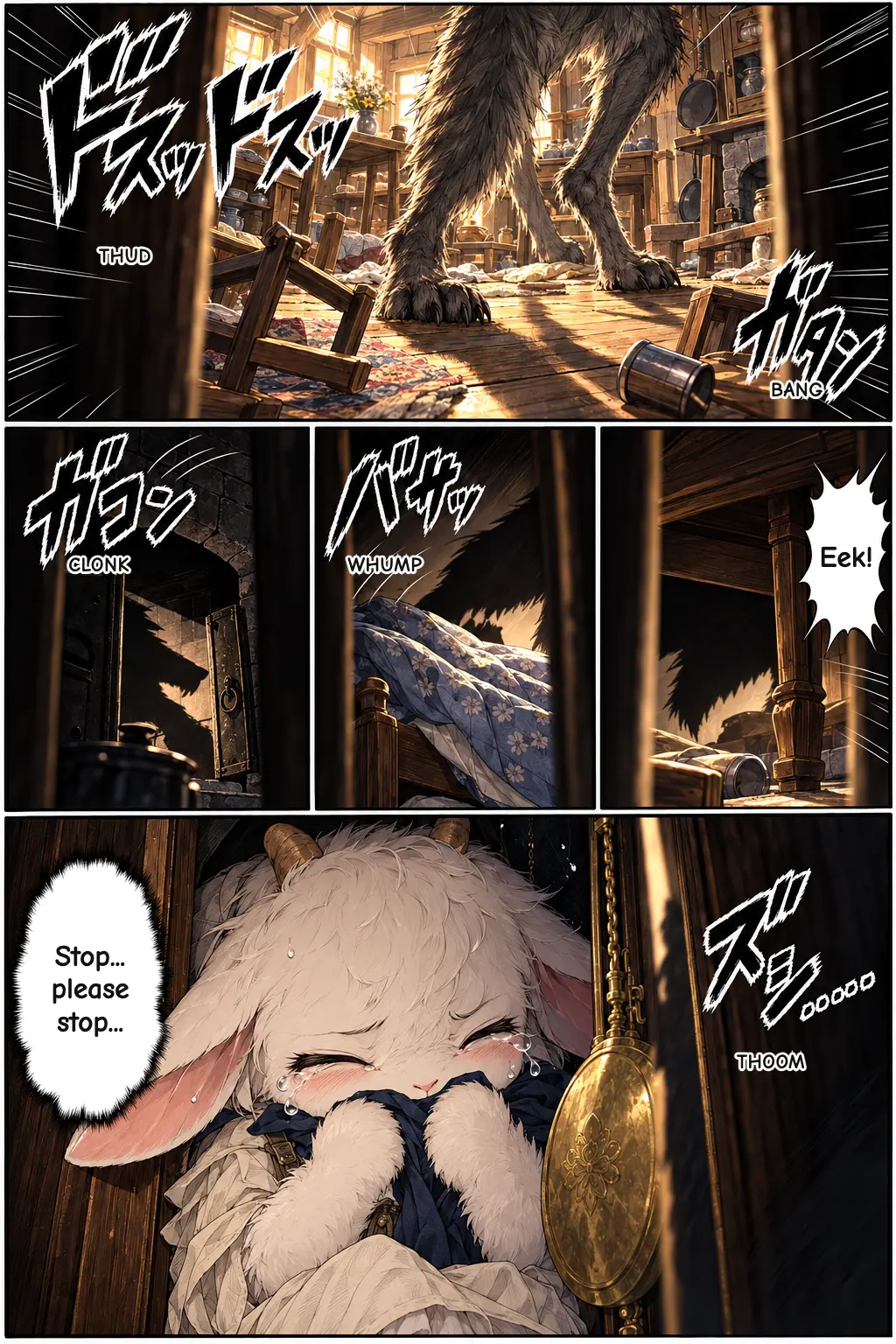
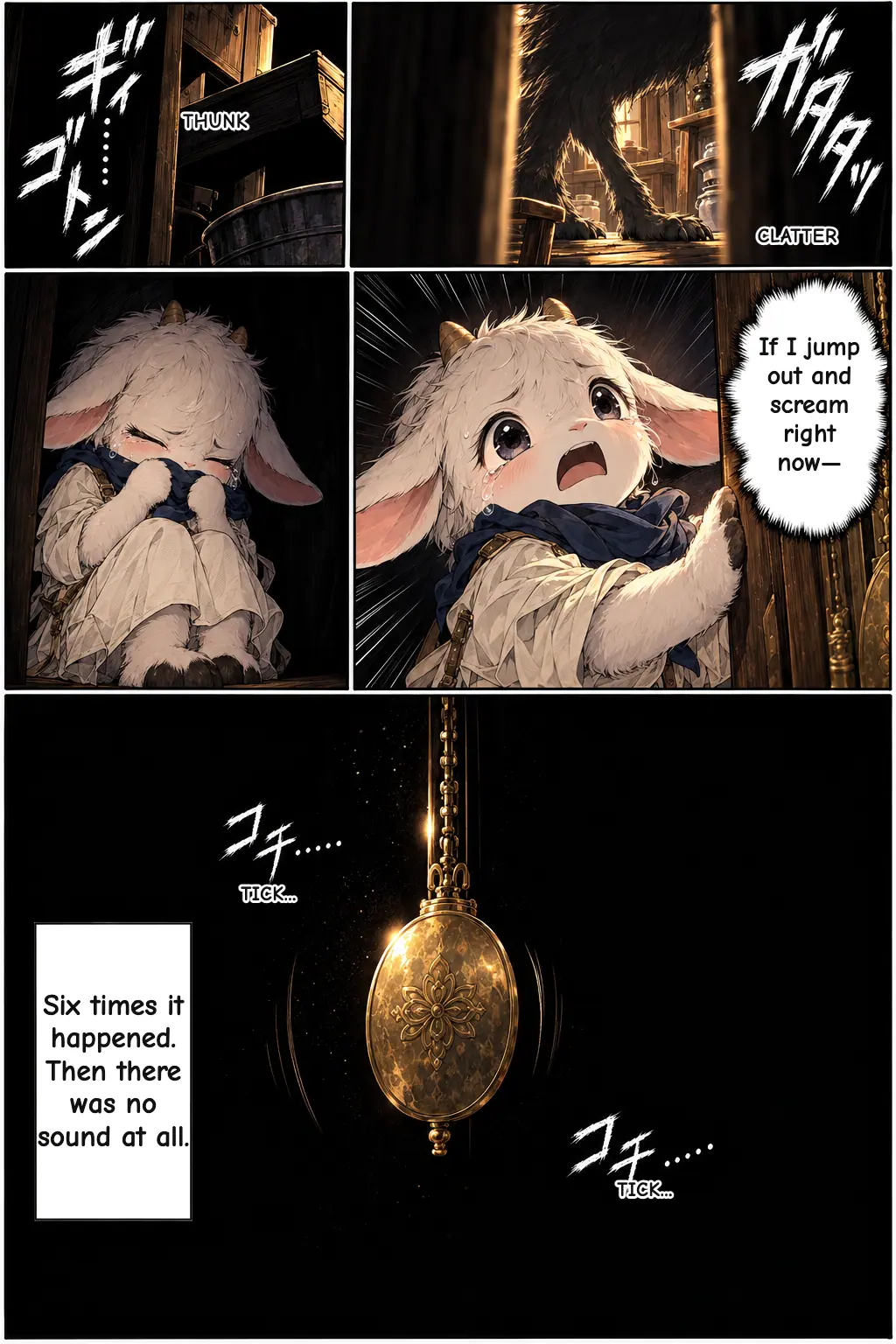
Episode 2 of the Grimm's Fairy Tales series. While Mother Goat is out, the Wolf disguises his voice and his paws and knocks on the door three times. The youngest kid hides inside the tall clock's case and hears everything from the dark. Then, to get the family back, the little one has to run home alone.
The Wolf and the Seven Young Kids: Grimm Fairy Tale Summary & Meaning
The Original Story: What Happens in "The Wolf and the Seven Young Kids"
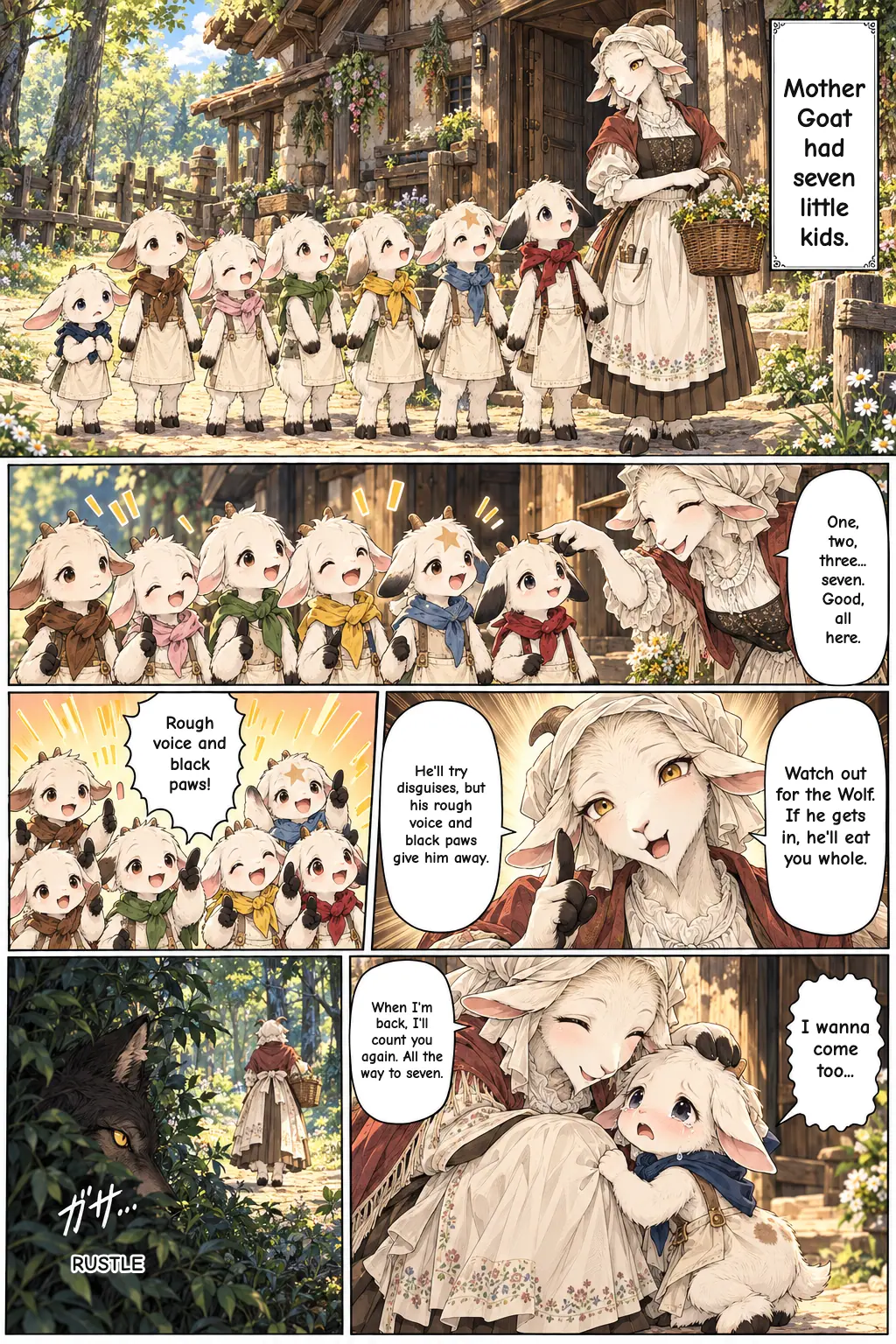
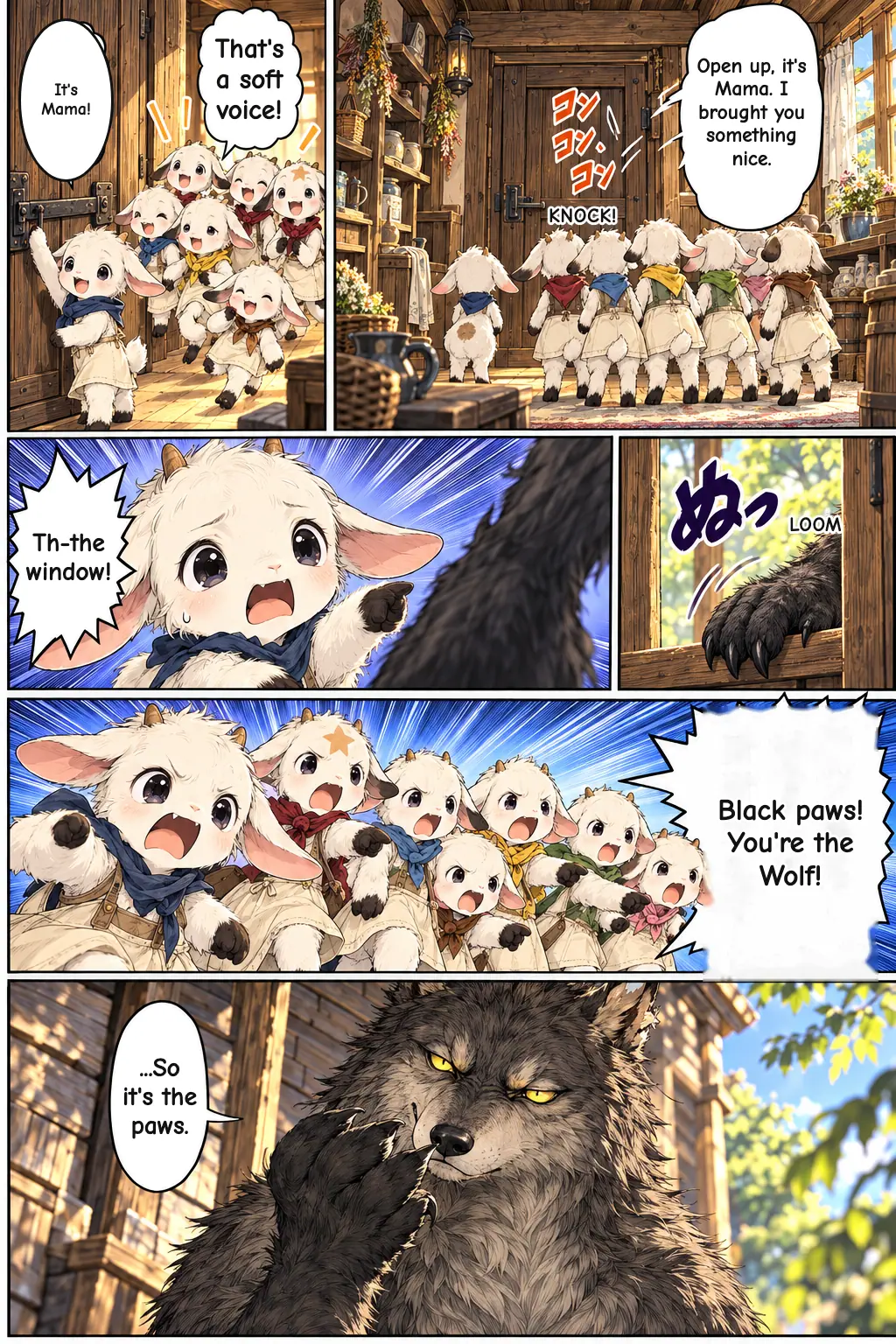
"The Wolf and the Seven Young Kids" (in German, Der Wolf und die sieben jungen Geißlein) is tale number 5 in the Brothers Grimm's famous collection, Children's and Household Tales. This summary follows the final 1857 edition. An old mother goat has seven little kids, and she loves them the way any mother loves her children. Before she goes into the forest to find food, she warns them about the Wolf: if he gets inside, he will eat them up, skin, hair and all. He is good at disguises, she says, but they can always spot him by his rough voice and his black feet. The kids promise to be careful, and she leaves feeling reassured.
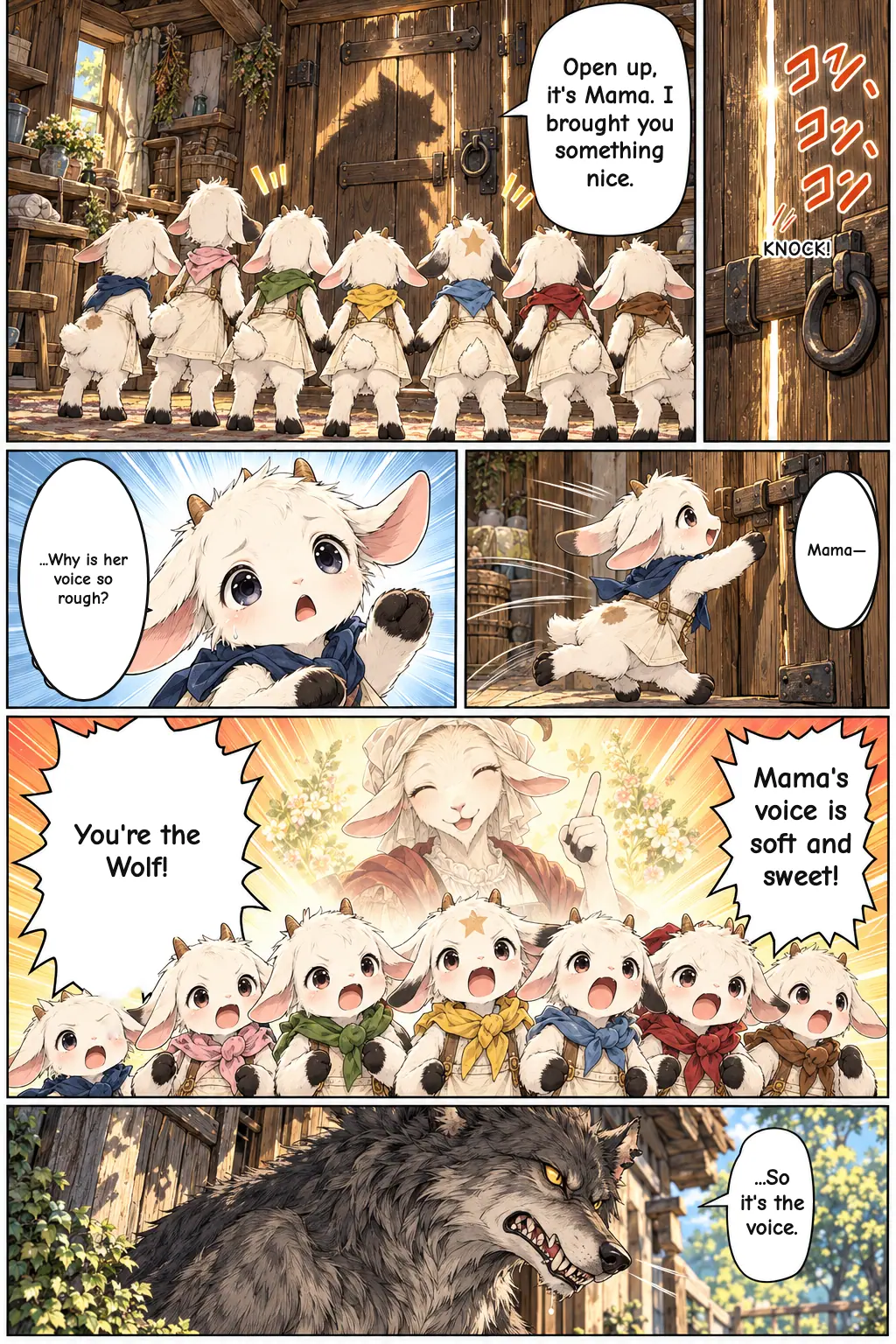
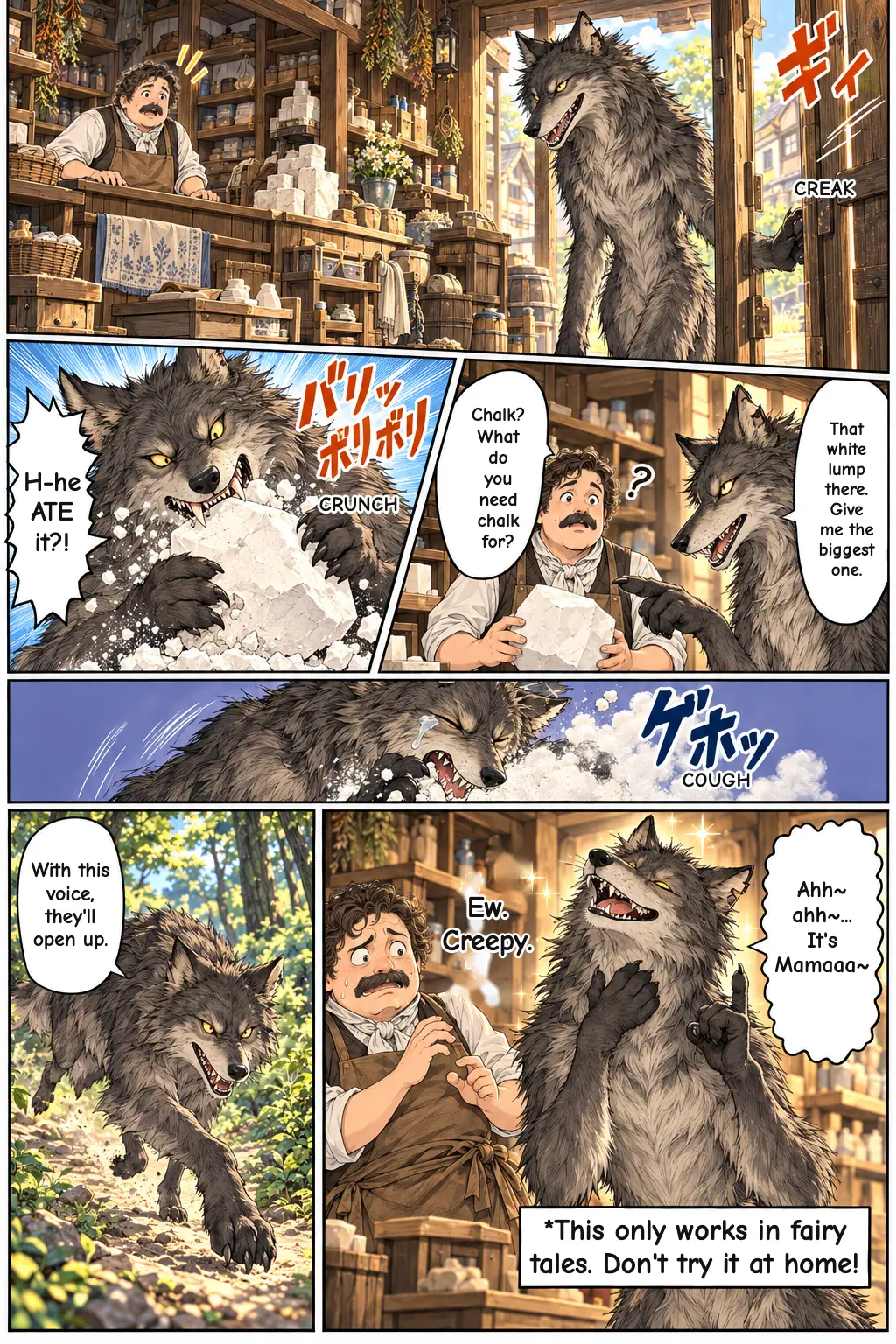
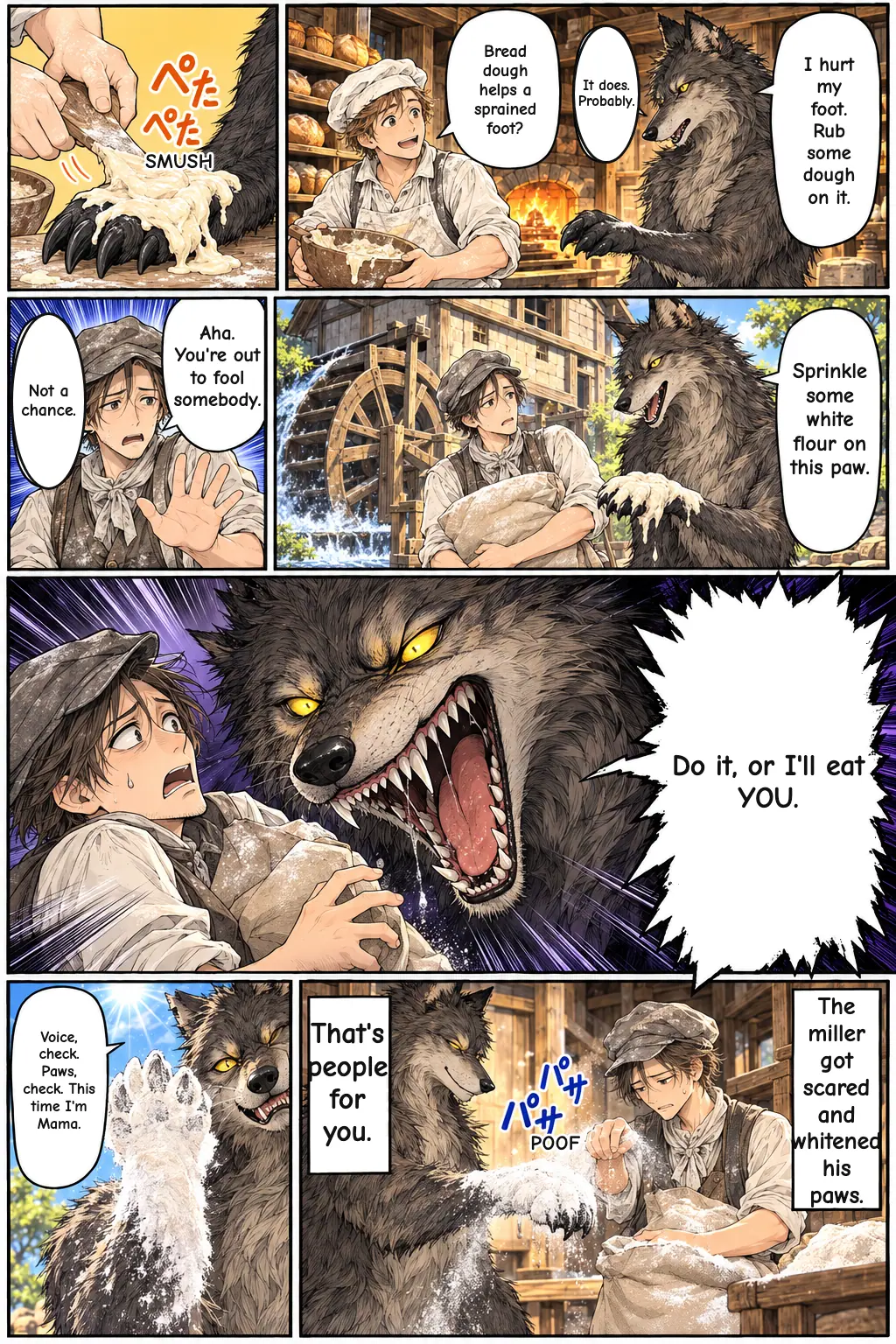
The Wolf knocks three times. The first time, he says he is their mother and has brought something for each of them. But his voice is rough, and the kids refuse to open the door. Their mother, they say, has a soft voice. So the Wolf buys a big lump of chalk from a shopkeeper and eats it to make his voice softer. On his second visit the voice passes the test, but he rests a black paw on the windowsill, and the kids catch him again. Next he tells a baker he has hurt his foot and gets dough smeared on it. Then he orders a miller to dust it with white flour. The miller suspects a trick and says no, until the Wolf threatens to eat him. The miller gives in, and the narrator adds a dry remark that this is just how people are.
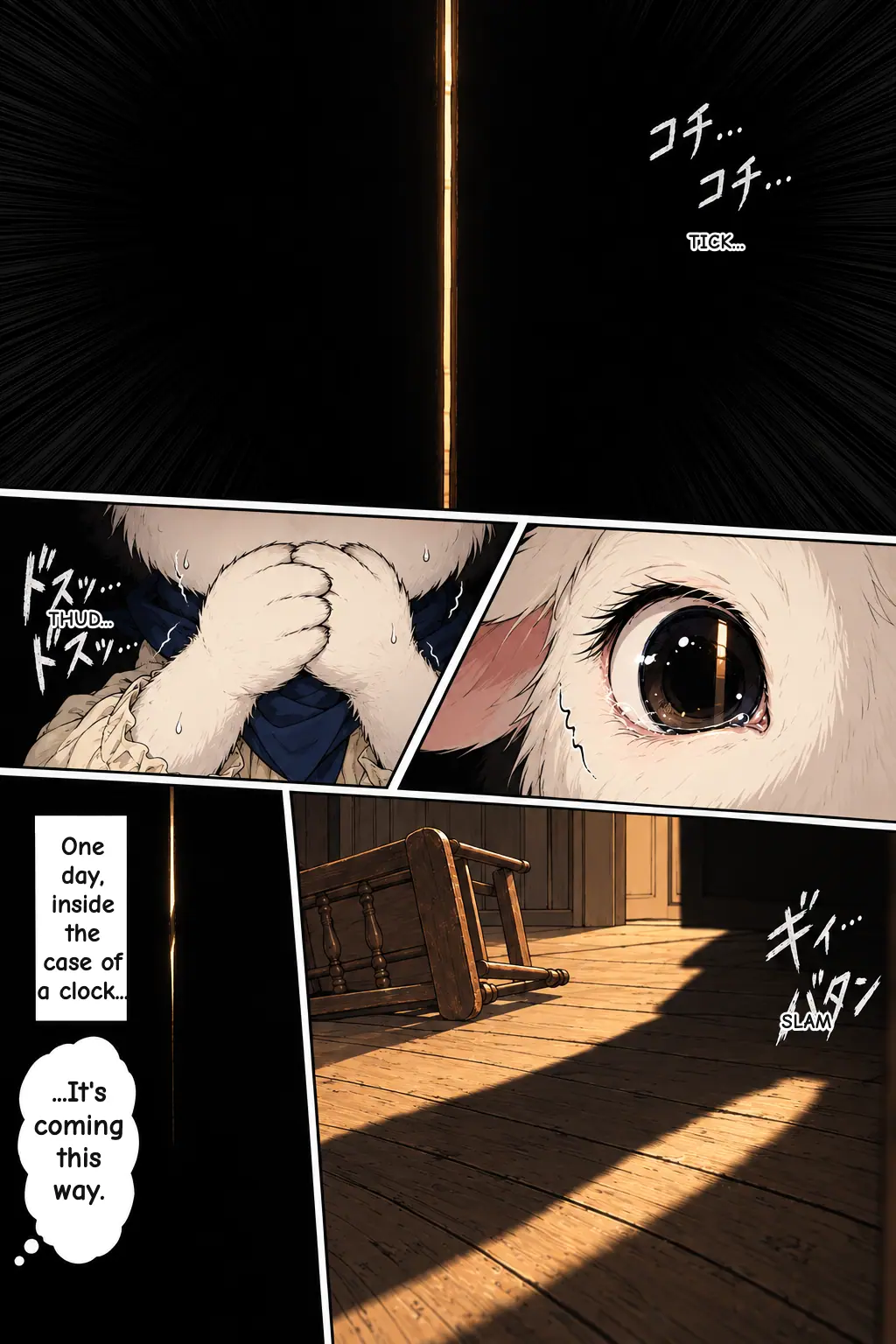
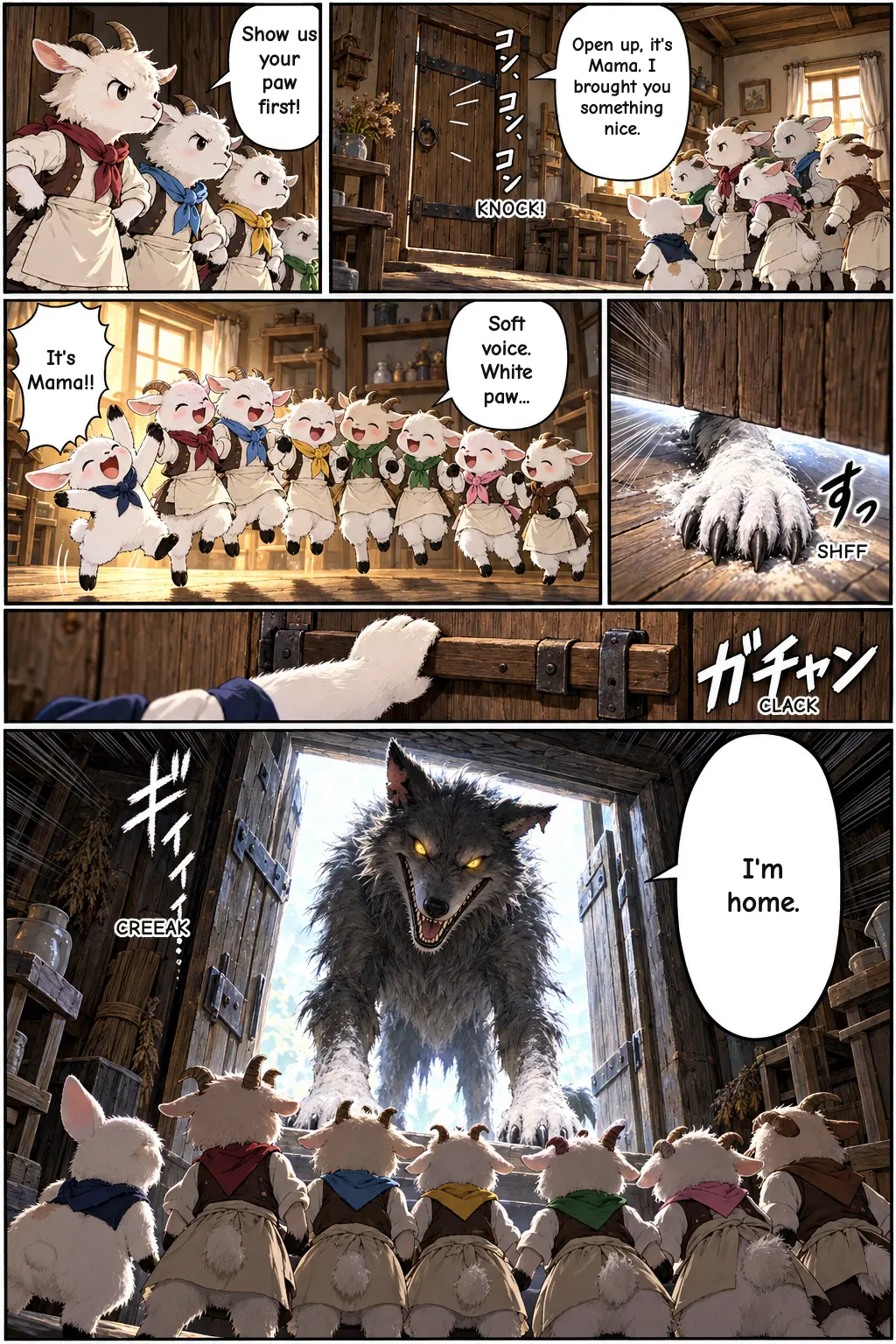
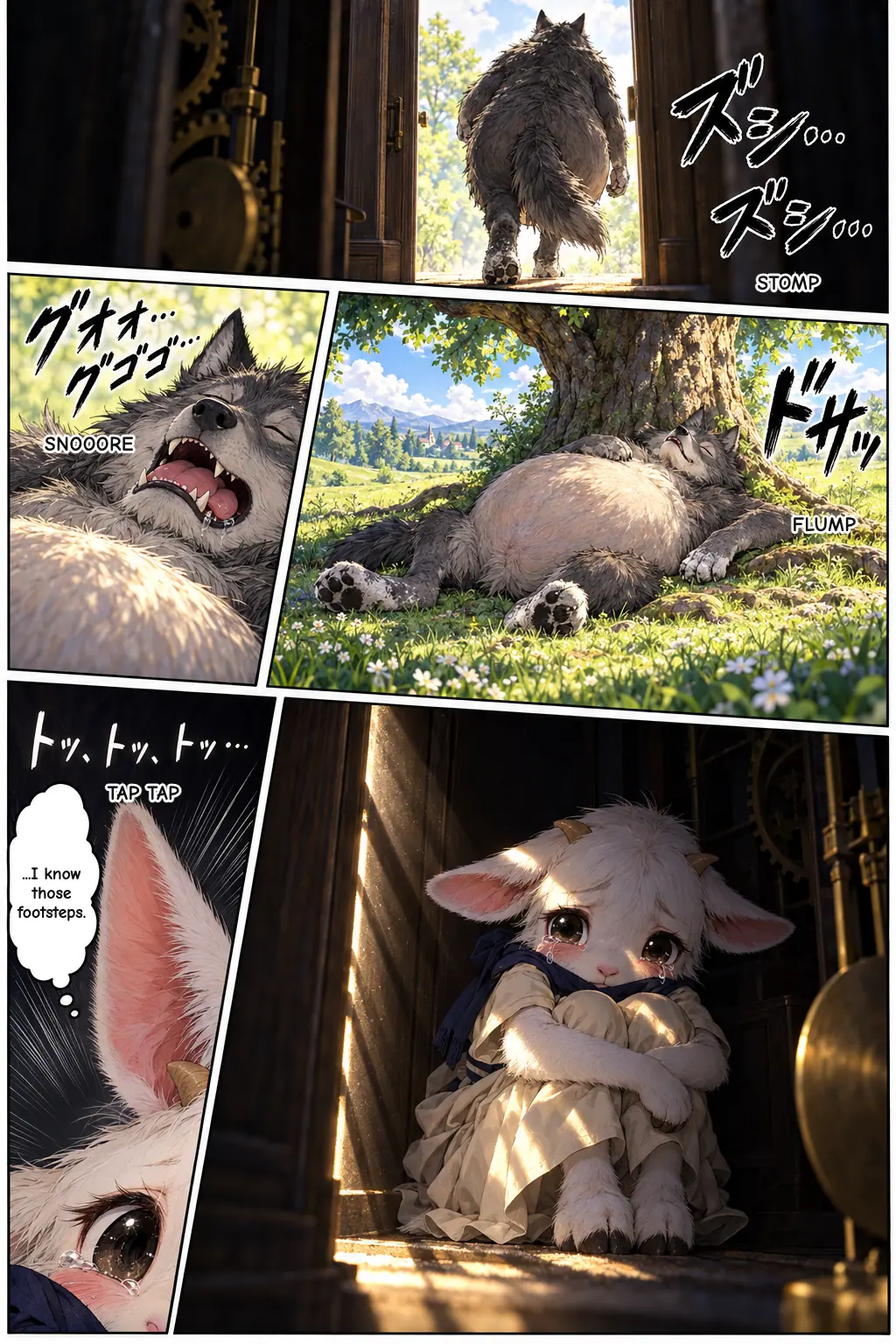
On the third visit the Wolf shows a white paw, and the kids open the door. They scatter in a panic: under the table, into the bed, into the oven, into the kitchen, into the cupboard, under the washbowl, and the youngest into the case of the tall wall clock. The Wolf finds six of them and swallows each one whole. Only the youngest, inside the clock, is never found. Full and sleepy, the Wolf wanders out to a green meadow and falls asleep under a tree.
The Rescue, the Stones, and the Well
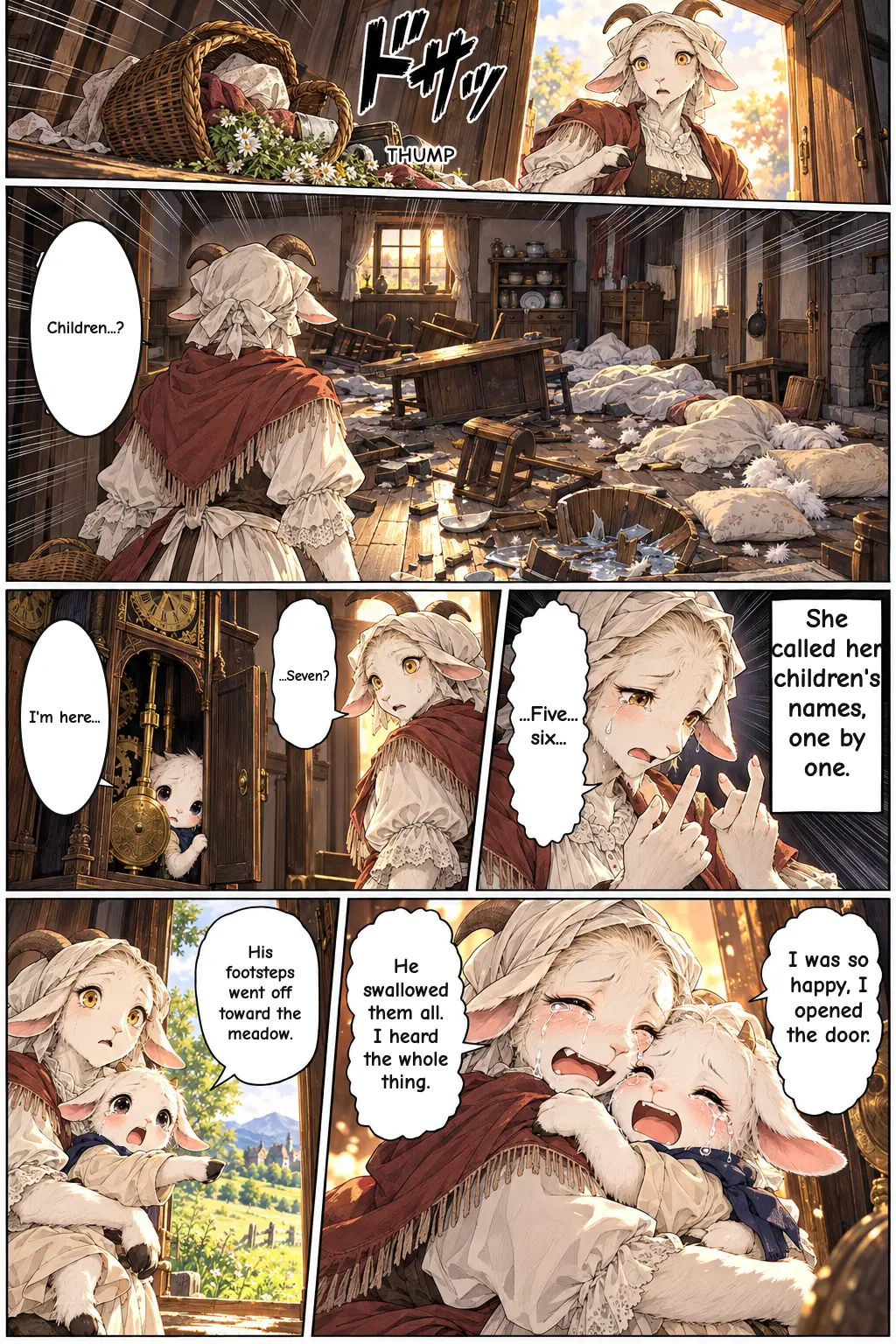
The mother comes home to a wrecked house. The door is wide open, the furniture is knocked over, the washbowl is broken and the bedding is pulled onto the floor. She calls each child by name, and none of them answers. Then she calls the youngest, and a small voice answers from inside the clock case. When she hears what happened, she weeps.
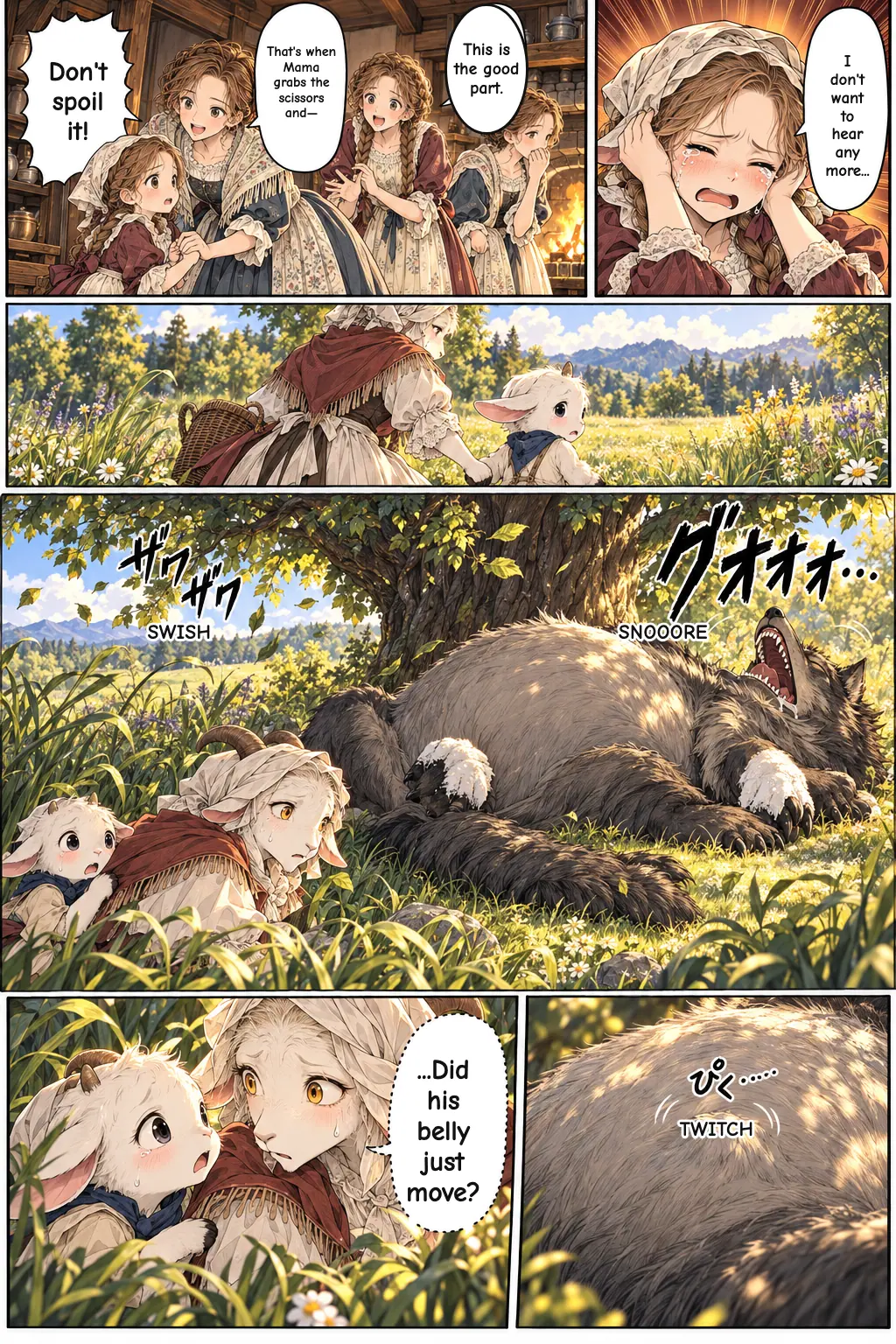
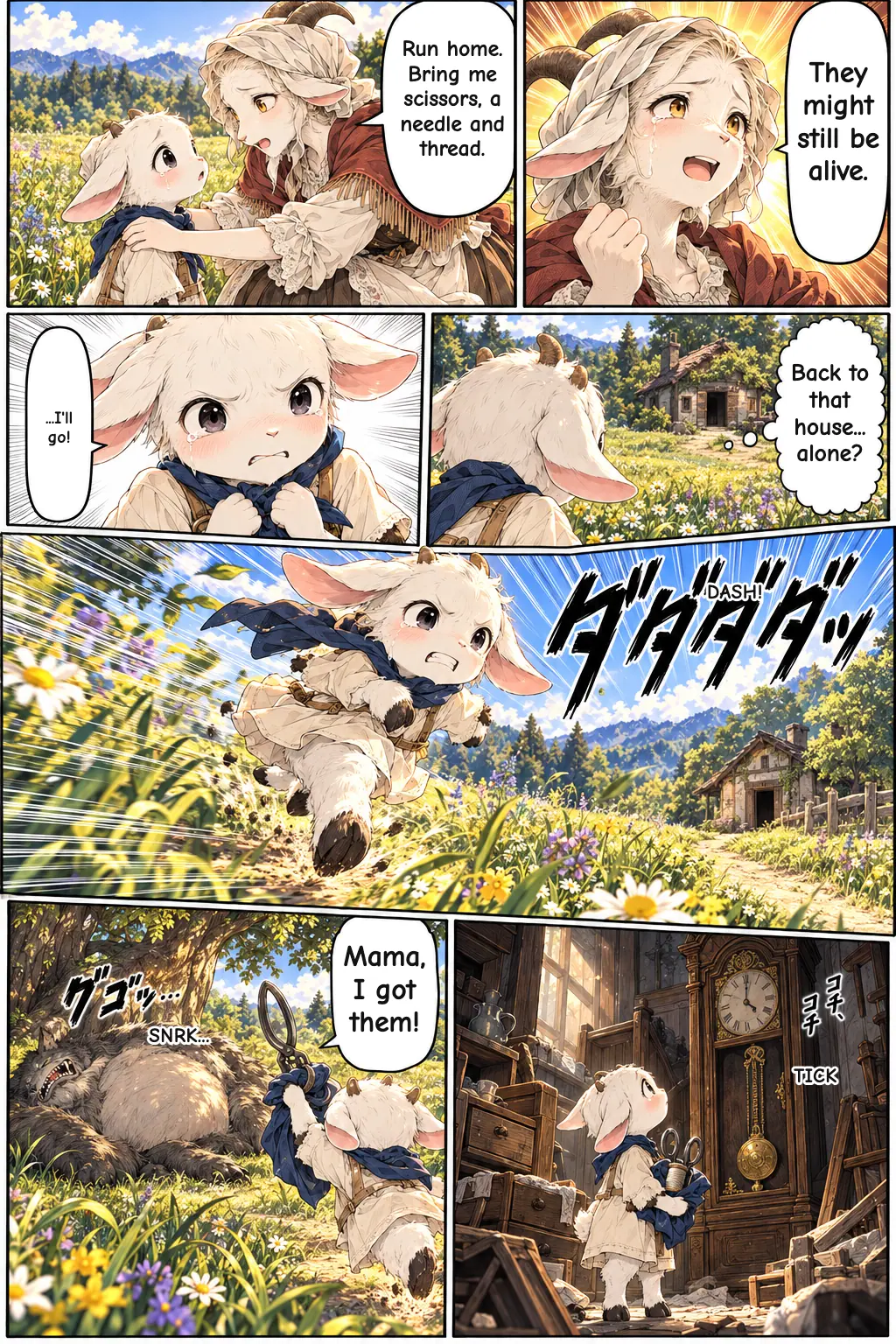
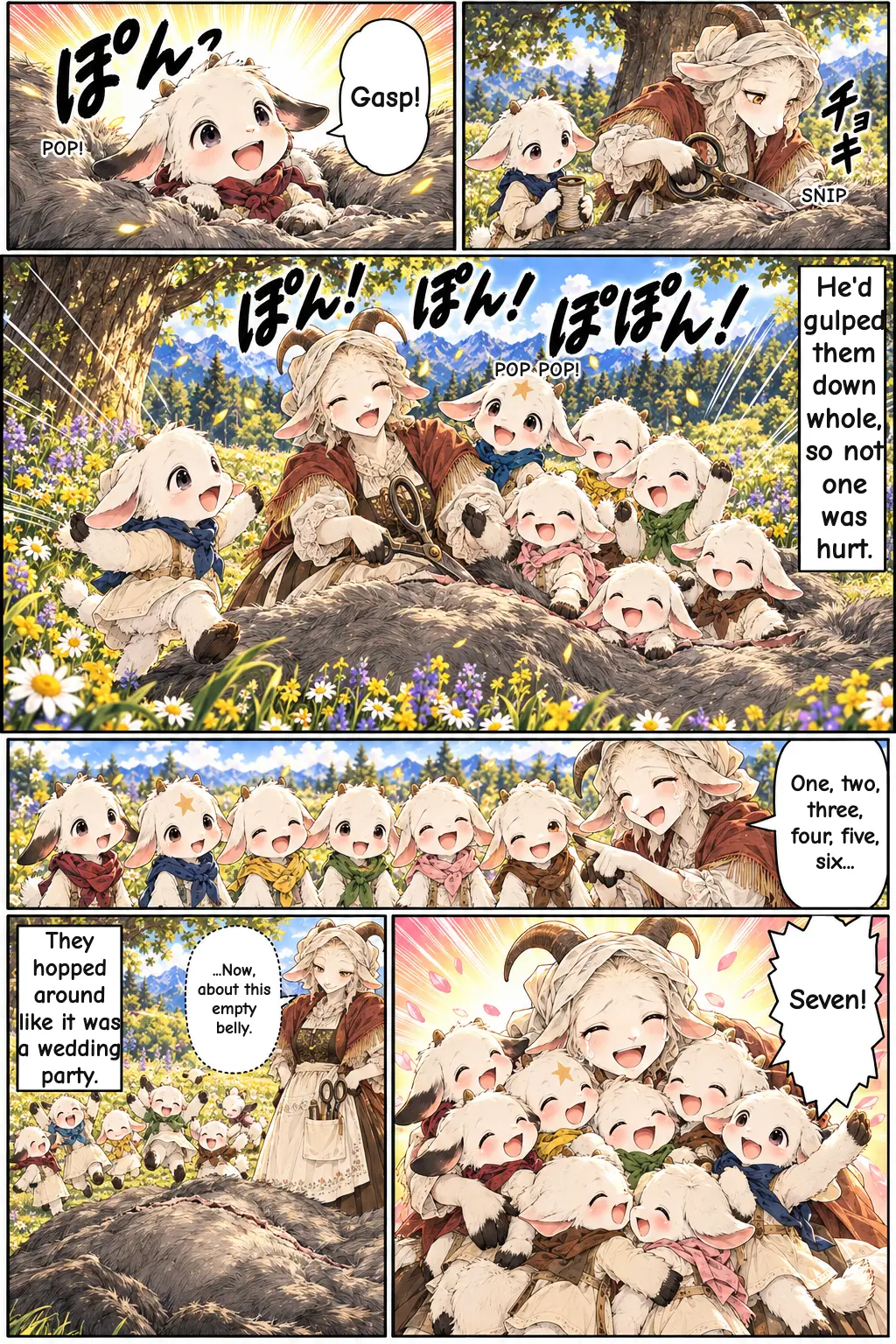
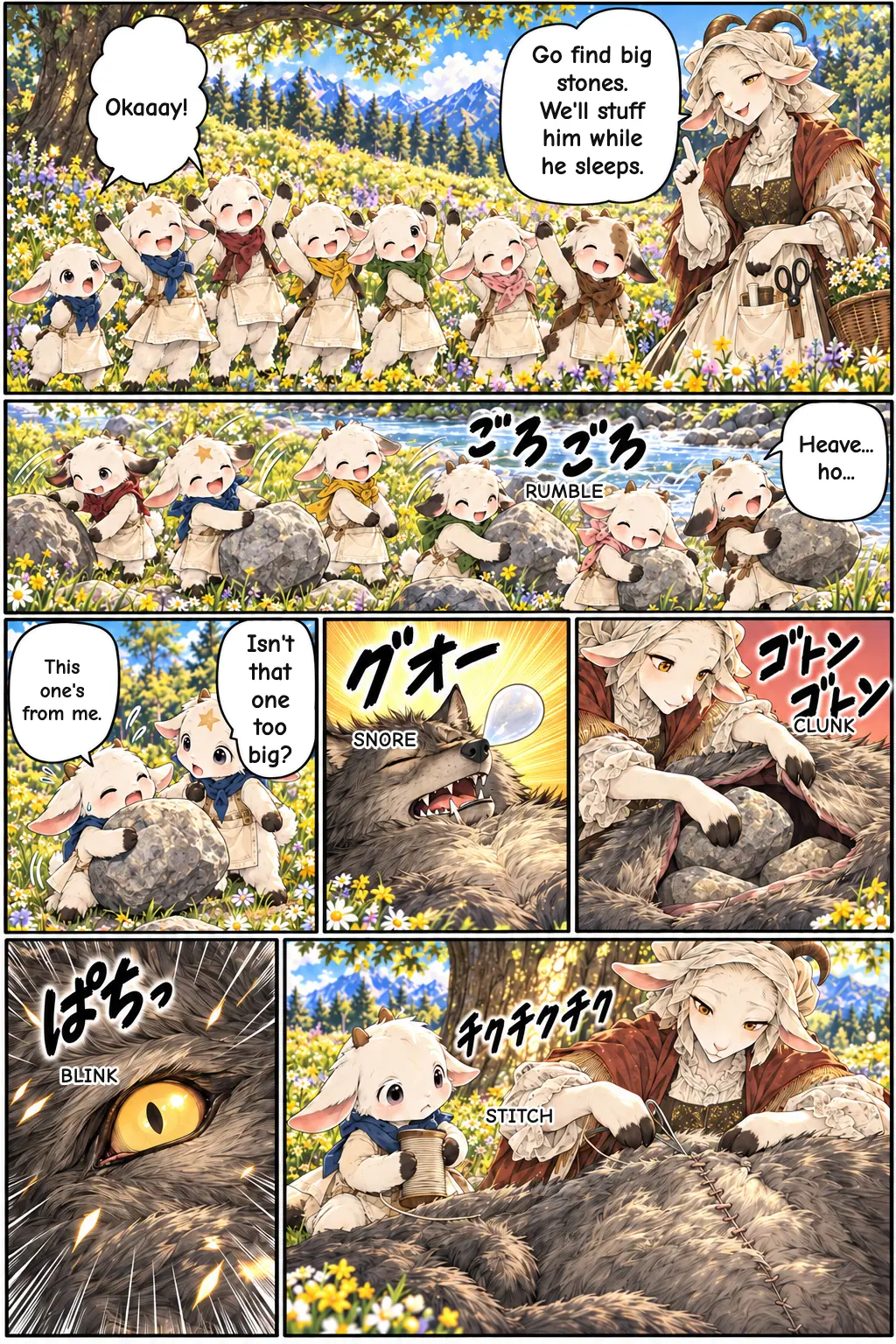
She goes outside with the youngest and finds the Wolf snoring so loudly that the branches shake. Something is moving inside his swollen belly. Thinking her children might still be alive, she sends the youngest running home for scissors, a needle and thread. She cuts the Wolf open, and one after another all six kids jump out unhurt. The greedy Wolf had swallowed them whole without chewing. They hug their mother and leap about for joy. Then she has them gather heavy stones, fills the sleeping Wolf's belly with them and quickly sews it shut.
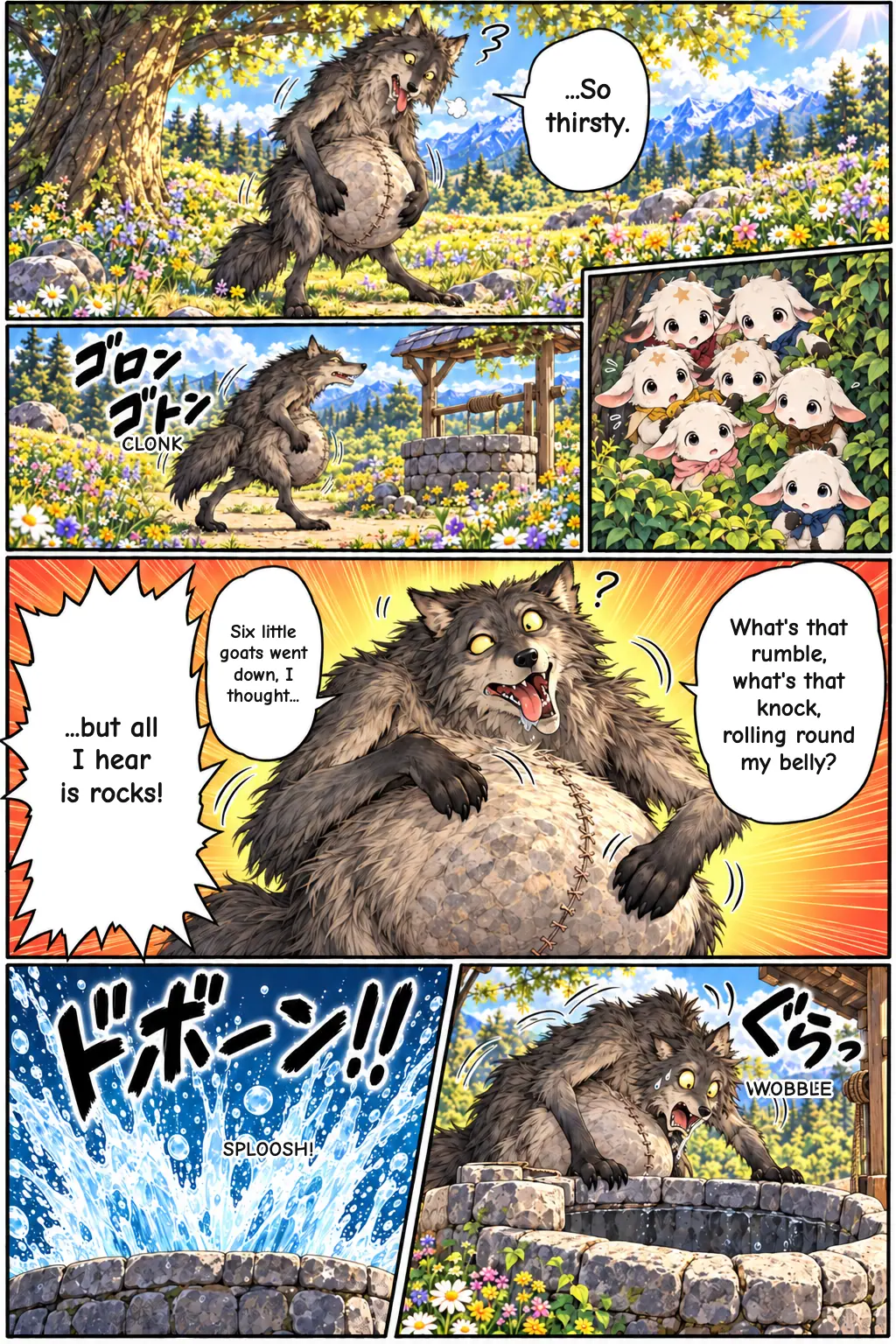
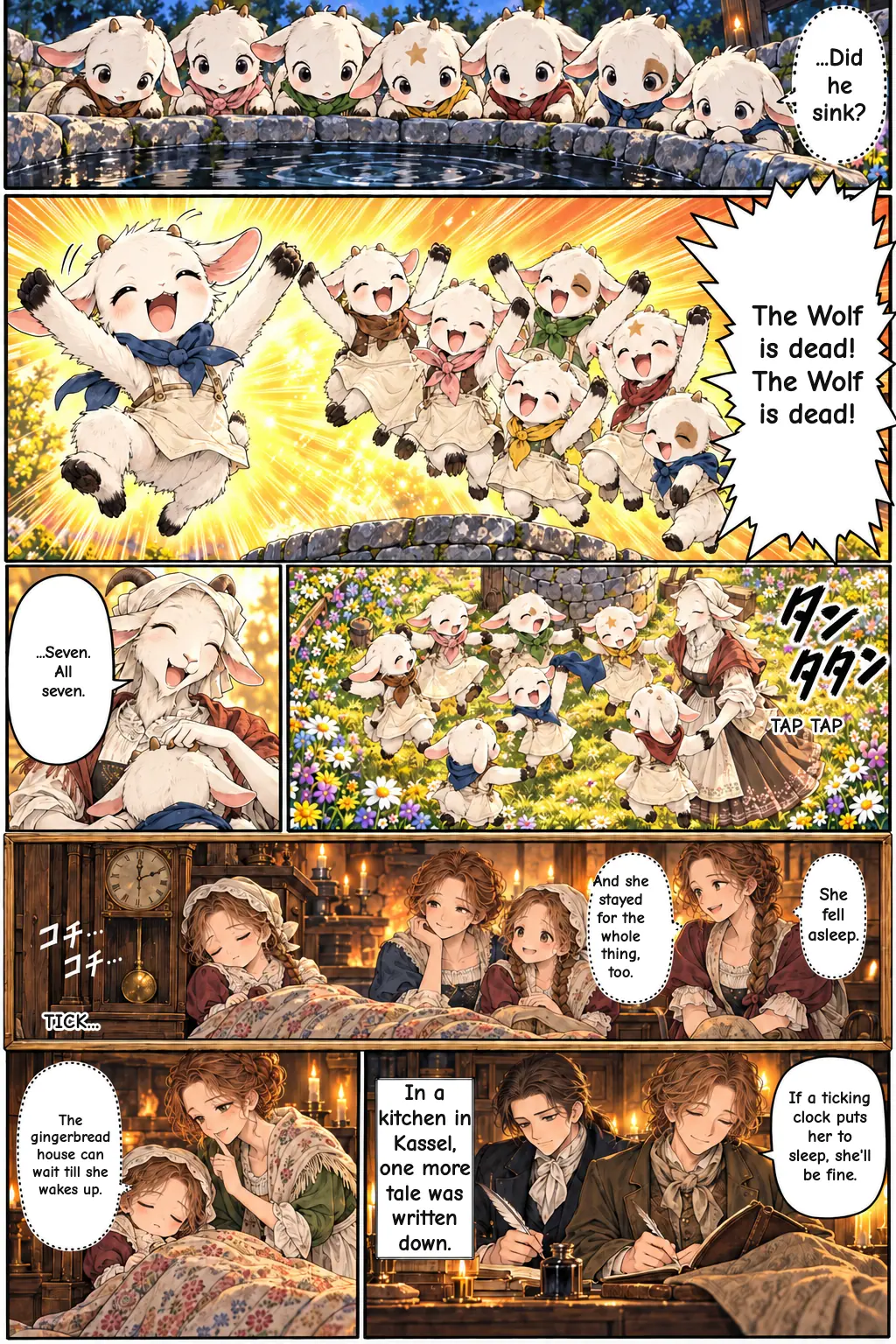
When the Wolf wakes, the stones make him desperately thirsty. As he walks to a well, they rattle and bump inside him, and he says a short rhyming complaint: he thought he had eaten six kids, but it feels like a load of stones. When he leans over to drink, the weight pulls him into the well and he drowns. The kids run up shouting that the Wolf is dead, and they dance around the well with their mother.
Main Characters
The Mother Goat is the true hero: she is careful enough to teach her children exactly how to recognize the Wolf, calm enough to notice the movement in his belly, and quick enough to cut, rescue and sew. The Wolf is a clever, greedy villain whose disguises take real planning, but his greed (swallowing without chewing) is also what saves his victims. The seven kids pass two tests before failing the third. In the original they have no names or separate personalities. The youngest kid is the witness and helper who survives in the clock and runs for the tools. The shopkeeper, the baker and the miller are small roles, but the miller's fearful cooperation gives the tale its sharpest bit of commentary on human nature.
What the Tale Says: Background and Meaning
Jacob and Wilhelm Grimm were scholars in Kassel, in the German region of Hesse, who collected folktales in the early 1800s. Their first edition appeared in 1812, and Wilhelm kept revising the wording until the seventh edition of 1857. The brothers' own notes link this tale to oral tradition in Hesse. Some scholars think it came from a family the brothers knew in Kassel, such as the Hassenpflugs, but who first told it is not certain. Folklorists list stories like this as an international tale type (ATU 123), and versions are told in many countries.
On the surface, it is a warning tale: listen to your parents, and don't open the door to strangers who pretend to be someone you trust. It also shows how a disguise works, one clue at a time. A voice can be faked, and so can a paw, and the kids get tricked only when every test is passed. The cut-open belly filled with stones also appears in the Grimms' "Little Red Riding Hood", which suggests it was a familiar way to punish a wolf in German storytelling. And the miller's moment reminds adult readers that ordinary people often help wrongdoers out of fear.
What the Manga Changes
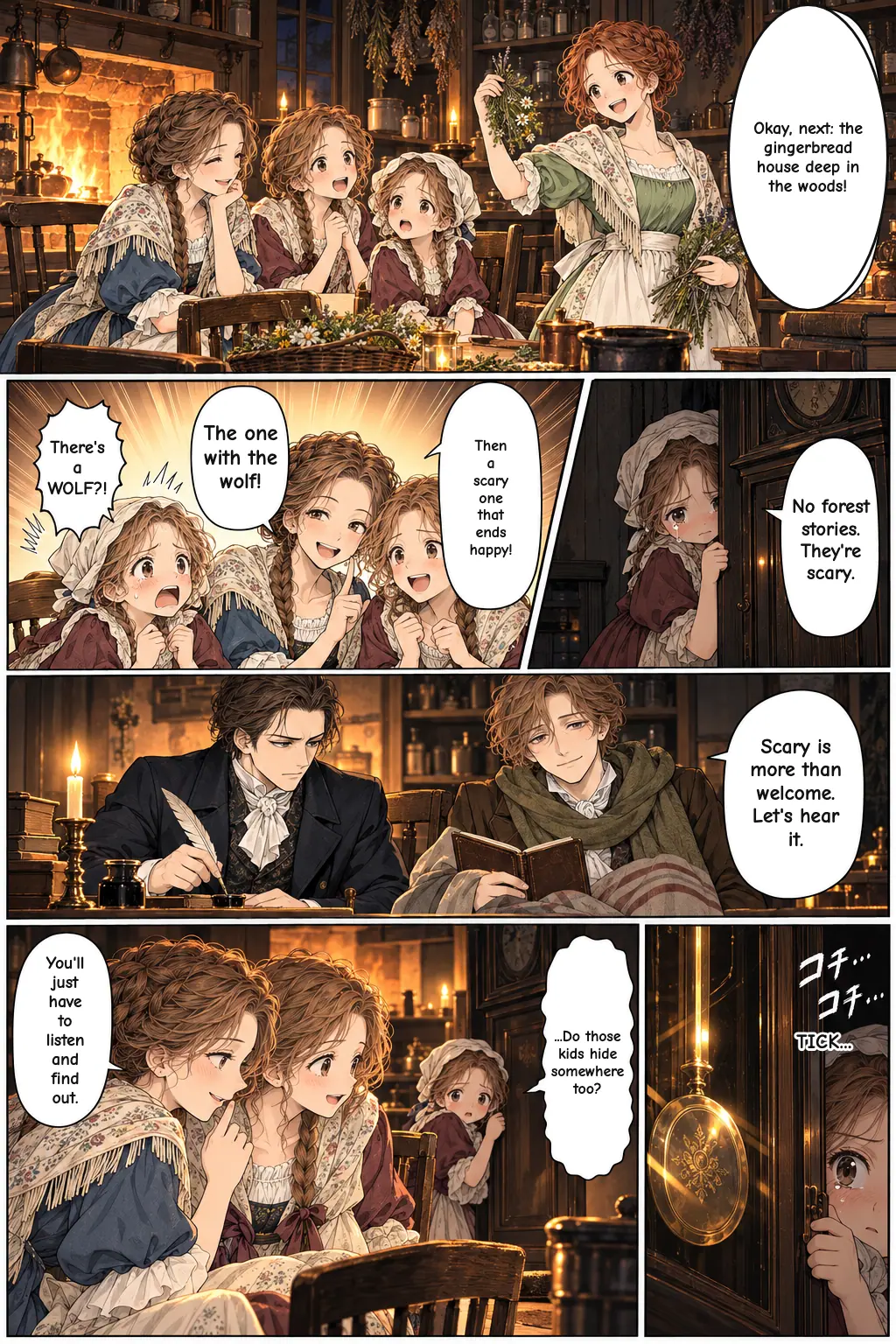
The core events in the manga, including the three knocks, the chalk, the dough and flour, the hiding places, the clock case, the rescue, the stones and the well, come from the Grimm text. The series wraps each tale in a frame story in which the young Brothers Grimm listen to storytellers in Kassel and write the tales down. That frame is the manga's invention, and it does not claim any real person as the teller. Names, looks and personalities given to the seven kids are also creative additions, because the Grimms never name them. The same goes for the village scenery, what the Wolf pretends to have brought, and how the shopkeeper, baker and miller look and act.
This episode also tells much of the story from inside the dark clock case, from the youngest kid's point of view. The original says only that the youngest hid there and told the mother afterward. The rescue scene is drawn gently for readers of all ages, and the Wolf's rhyme is the manga team's own fresh version.
Where to Read It
If you want to see the three knocks build tension, and follow the youngest kid's run home with your own eyes, Episode 2 of GRIMM'S FAIRY TALES: The Tellers of the Forest is on Manga Portal. Every episode is free to read, with no sign-up required, so you can go straight from this summary into the story and on to the next tale in the series.
Characters in this episode
Mother Goat
An old goat who loves her seven kids, warns them about the Wolf, then cuts the sleeping Wolf open to save them and gets her revenge with stones.
The Wolf
A cunning, greedy villain who disguises his voice with chalk and his paw with dough and flour, then swallows six kids whole.
The Seven Young Kids
The mother's children, who see through the Wolf twice and are fooled the third time. The original tale never names them.
The Youngest Kid
The only one who escapes, by hiding in the clock case. The youngest tells the mother what happened and runs home for scissors, needle and thread.
The Miller
A man who sees through the Wolf's trick but whitens his paw anyway when the Wolf threatens to eat him.
The Baker and the Shopkeeper
Minor figures. One smears dough on the Wolf's paw, and the other sells him the chalk that softens his voice.
FAQ
What is the story of The Wolf and the Seven Young Kids?
While a mother goat is away, a wolf disguises his voice and paw to trick her seven kids into opening the door, then swallows six of them. The youngest hides in a clock case, and the mother later cuts the sleeping wolf open, rescues all six, and fills his belly with stones. The wolf falls into a well and drowns.
How did the wolf trick the seven little goats?
He ate chalk to make his rough voice sound soft, then had a baker put dough on his black paw and forced a miller to cover it in white flour. With a soft voice and a white paw, he matched what their mother had told them to look for.
Where did the youngest goat hide?
The youngest kid hid inside the case of the tall wall clock. It was the one hiding place the wolf never checked, so that kid was the only one not swallowed.
How does The Wolf and the Seven Young Kids end?
The wolf wakes up thirsty from the stones in his belly, goes to a well, and is pulled in by their weight and drowns. The seven kids and their mother dance around the well for joy.
Is The Wolf and the Seven Young Kids a Grimm fairy tale?
Yes. It is number 5 (KHM 5) in the Brothers Grimm's Children's and Household Tales, first published in 1812 and revised through the final 1857 edition. The Grimms linked it to oral tradition in Hesse, Germany, though the original teller is not known for certain.