Episode 1The Princess Who Wouldn't Kiss the FrogThe Frog Prince (The Frog King, or Iron Henry)
Episode 1 of the Grimm's Fairy Tales series. A careless promise made to a frog at the well follows the Youngest Princess all the way to her dinner table. The spell isn't broken by a kiss, but by one furious throw. And in a faraway kingdom, the iron bands around a loyal servant's heart burst, one by one, for joy.
The Frog Prince Original Story: Grimm's Frog King and Iron Henry Explained
The Original Story of The Frog Prince (Summary)
Most people think they know The Frog Prince: a princess kisses a frog and he turns into a handsome prince. The version the Brothers Grimm printed is quite different. Its full title is The Frog King, or Iron Henry (in German, Der Froschkönig oder der eiserne Heinrich), and it is tale number 1 in their famous collection, Children's and Household Tales (Kinder- und Hausmärchen). Here is how it goes in the final 1857 edition.
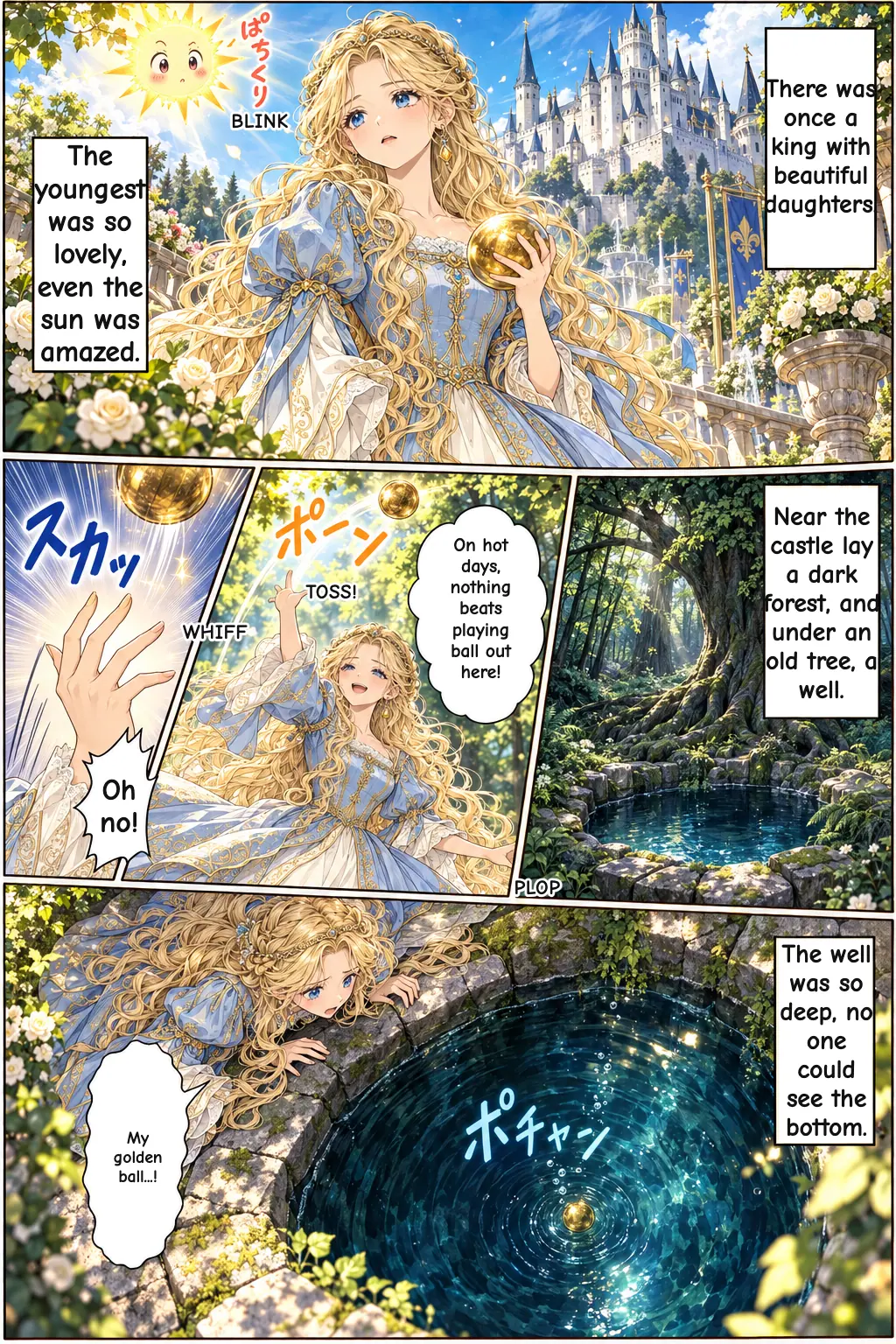
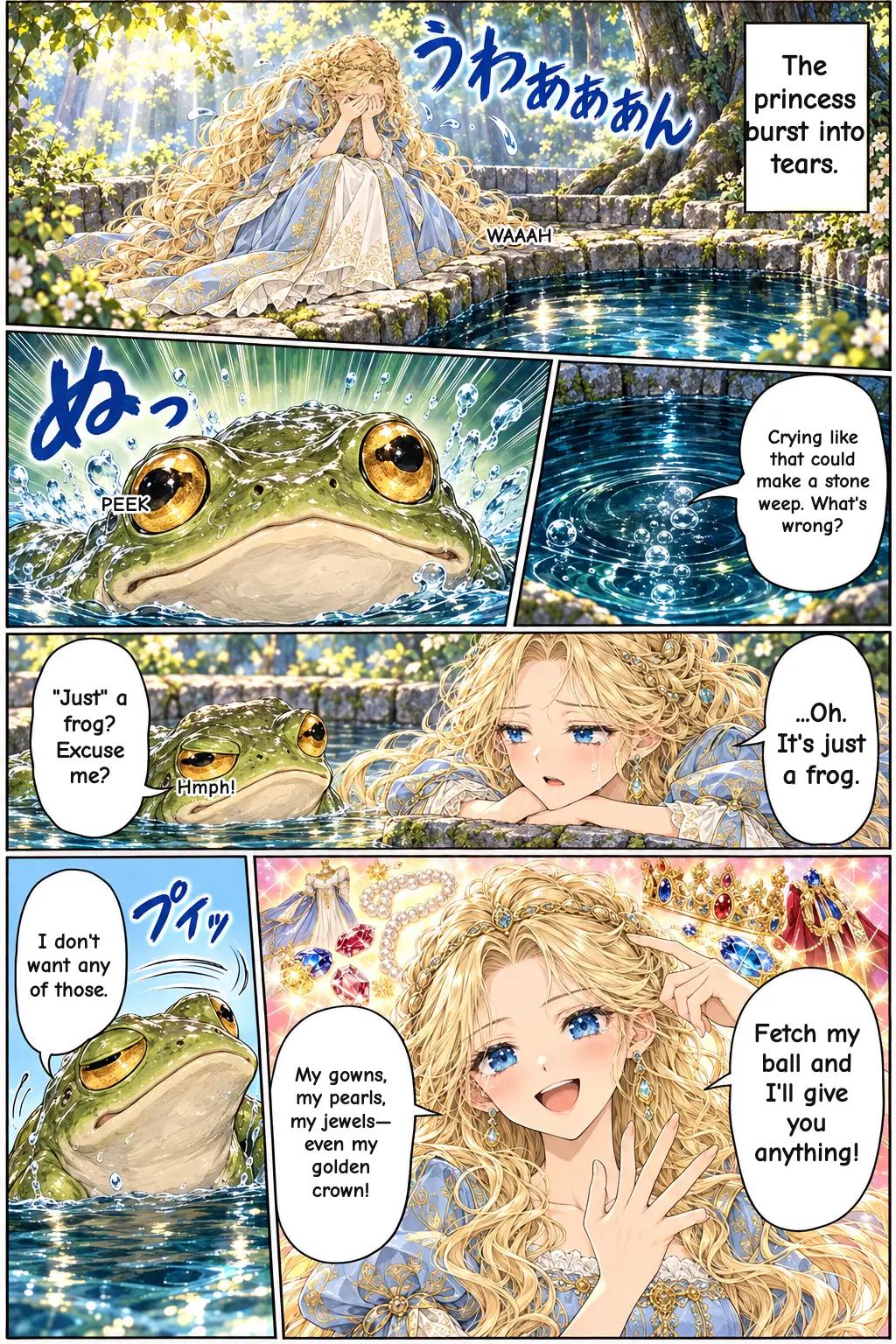
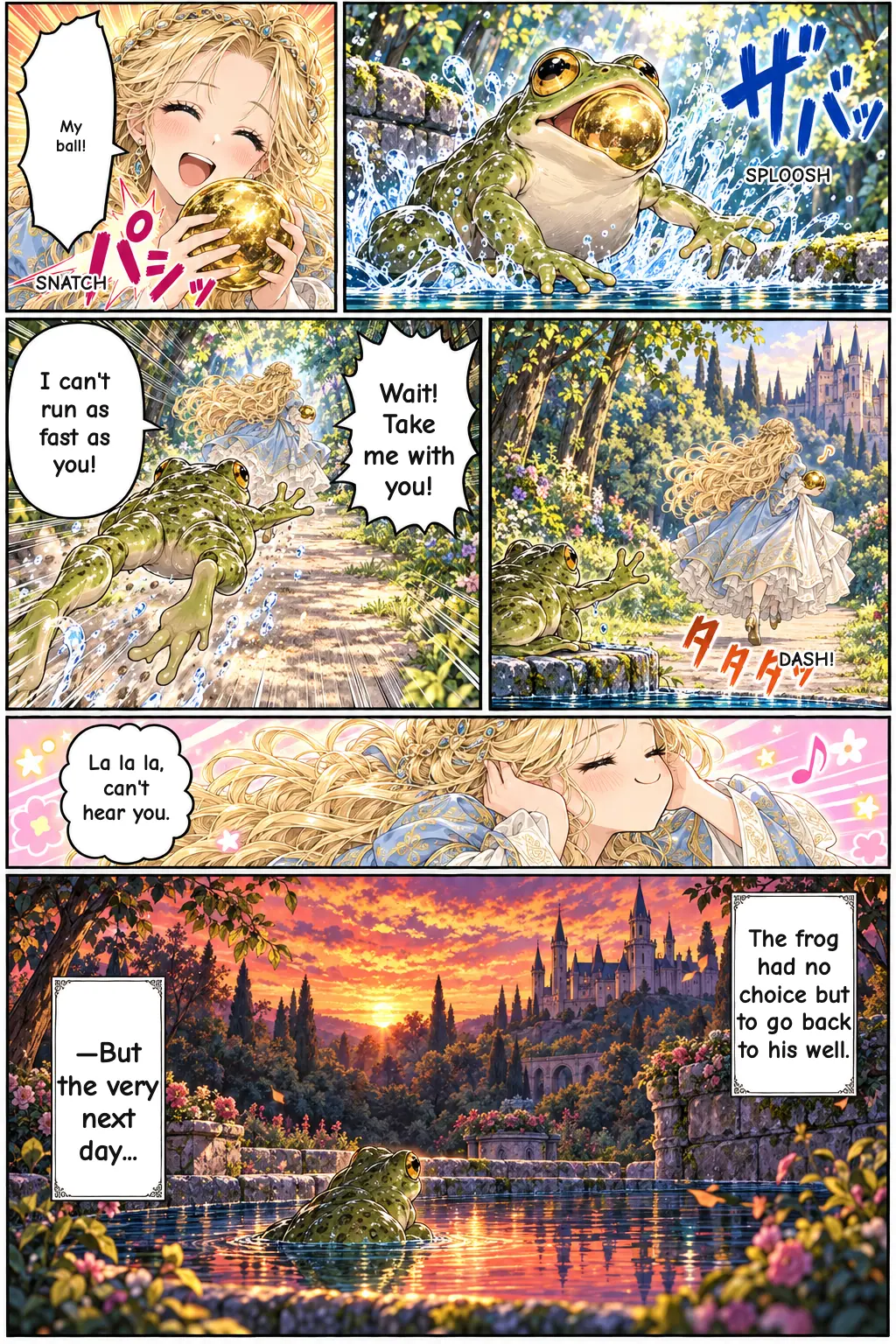
Long ago, in the days when wishing still worked, a king had several beautiful daughters, and the youngest was so lovely that even the sun was amazed at her. Near the castle lay a dark forest, and under an old linden tree there was a well. On hot days the youngest princess played there, tossing her favorite toy, a golden ball. One day the ball slipped from her hands and sank into water so deep that no bottom could be seen. She cried and cried, until a frog poked its thick, ugly head out of the water and asked what was wrong.
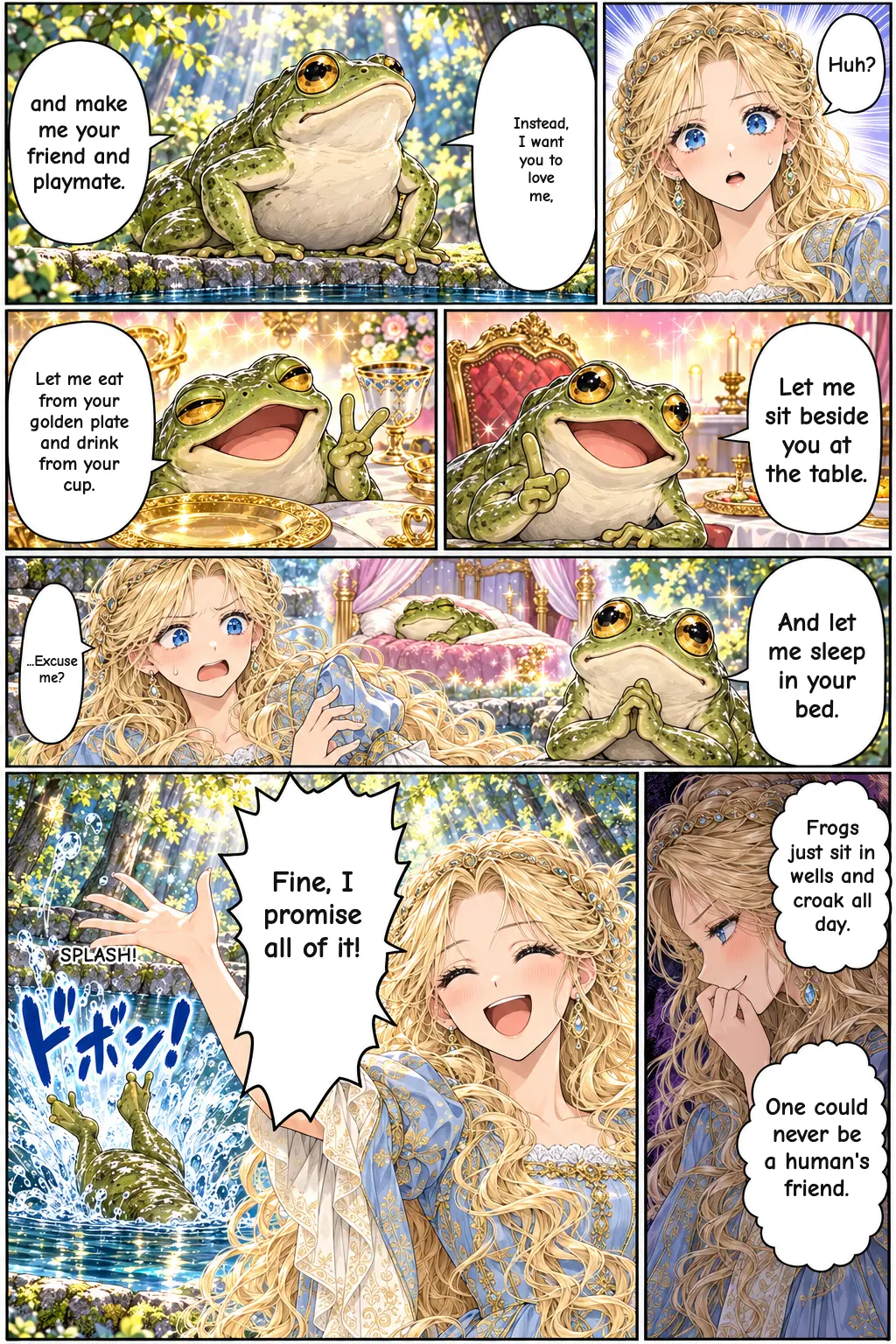
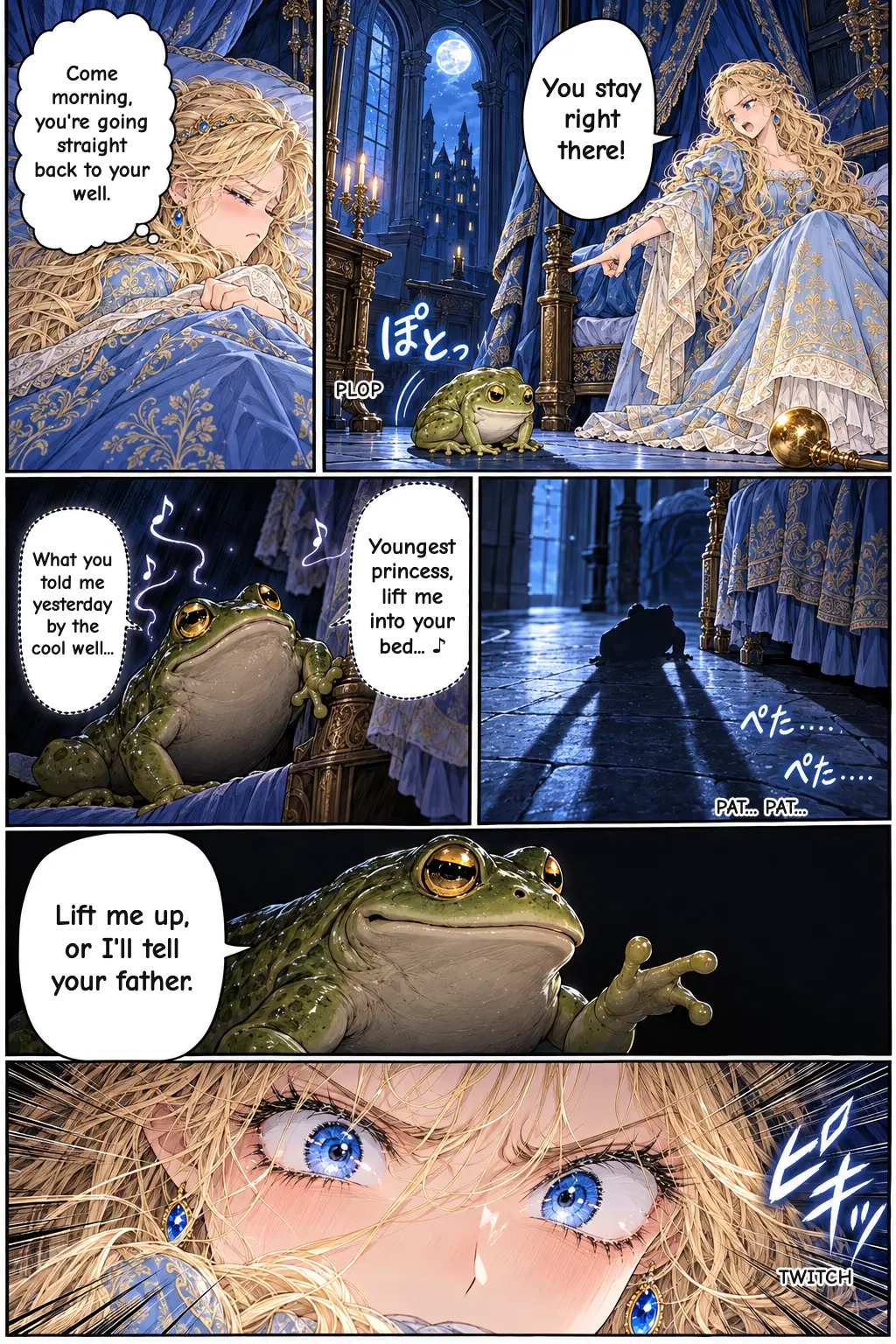
She offered the frog her dresses, her pearls and jewels, even her golden crown. The frog wanted none of it. Instead, he asked to be loved, to be her companion, to sit beside her at the table, eat from her little golden plate, drink from her cup, and sleep in her bed. Privately sure that a frog could never be anyone's companion, the princess promised everything. The frog dove down and brought back the ball, and she ran home at once, ignoring his cries that he could not keep up.
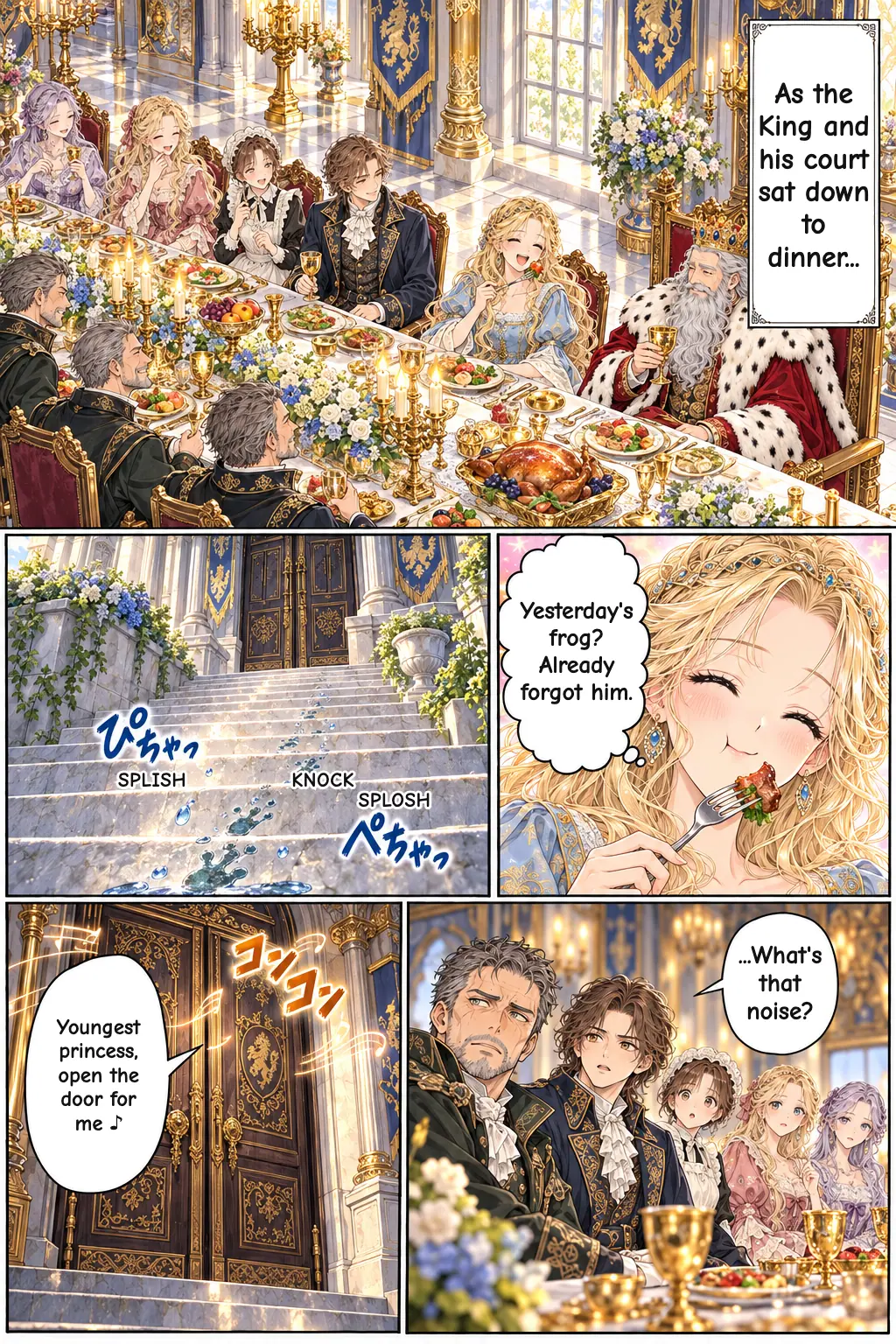
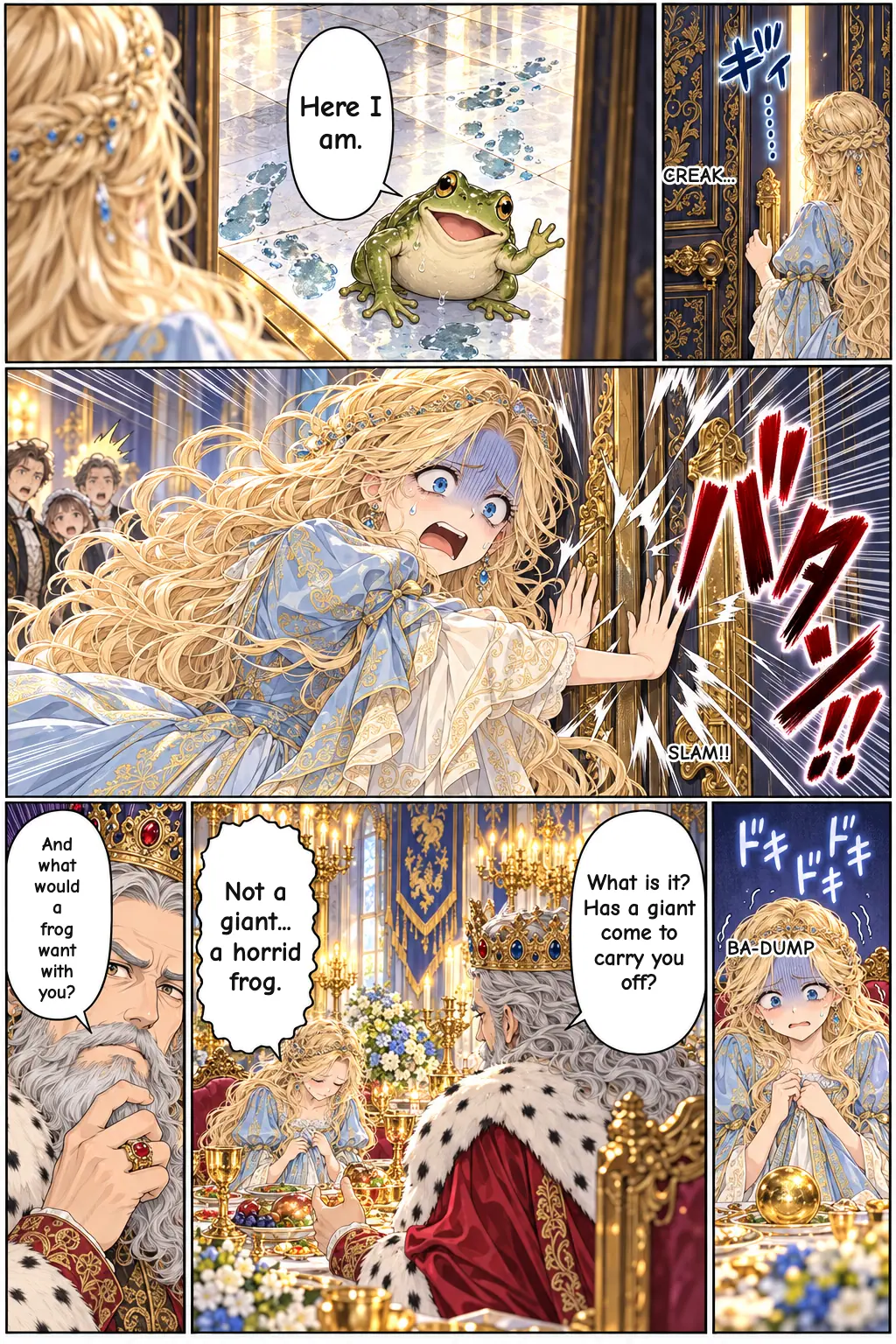
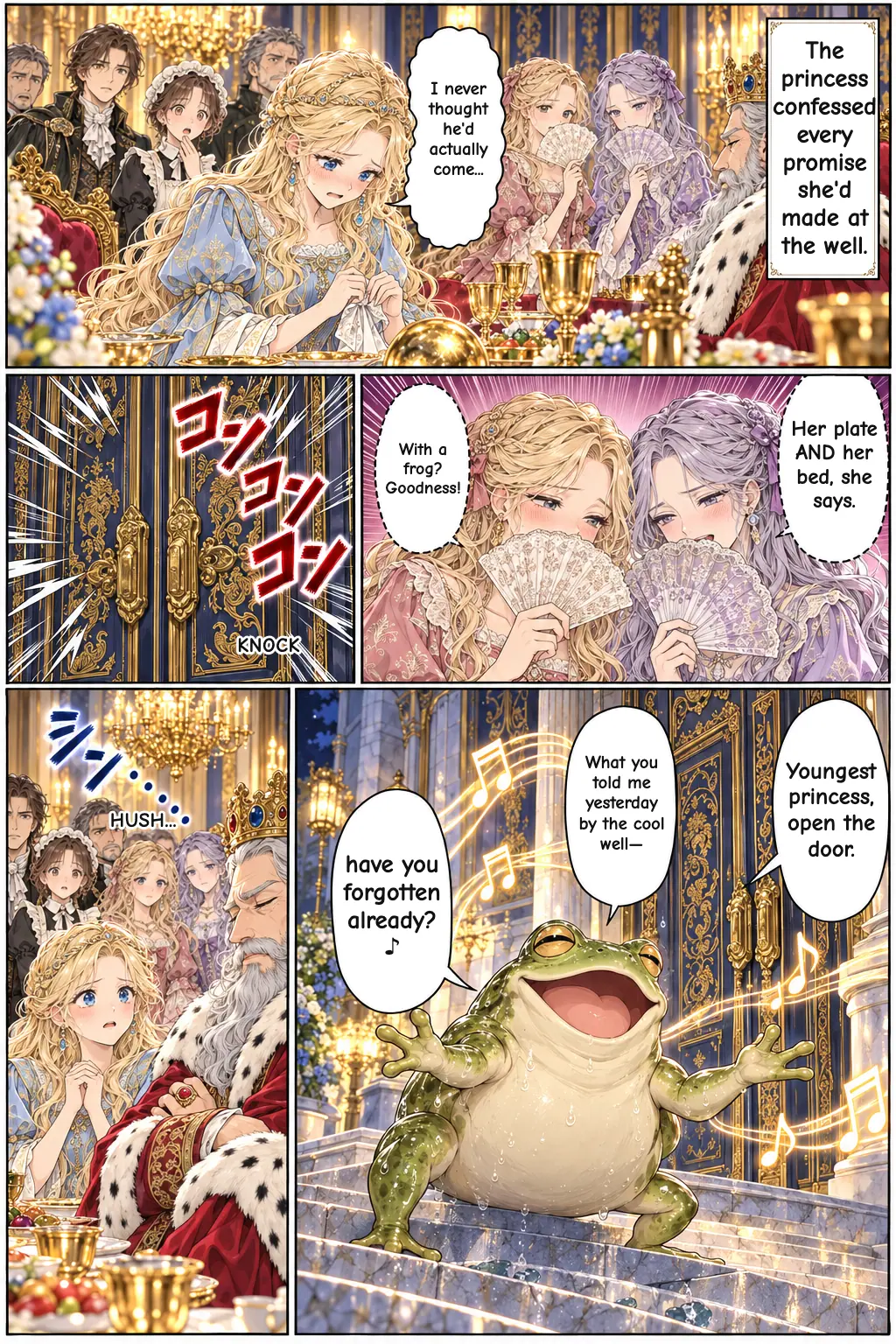
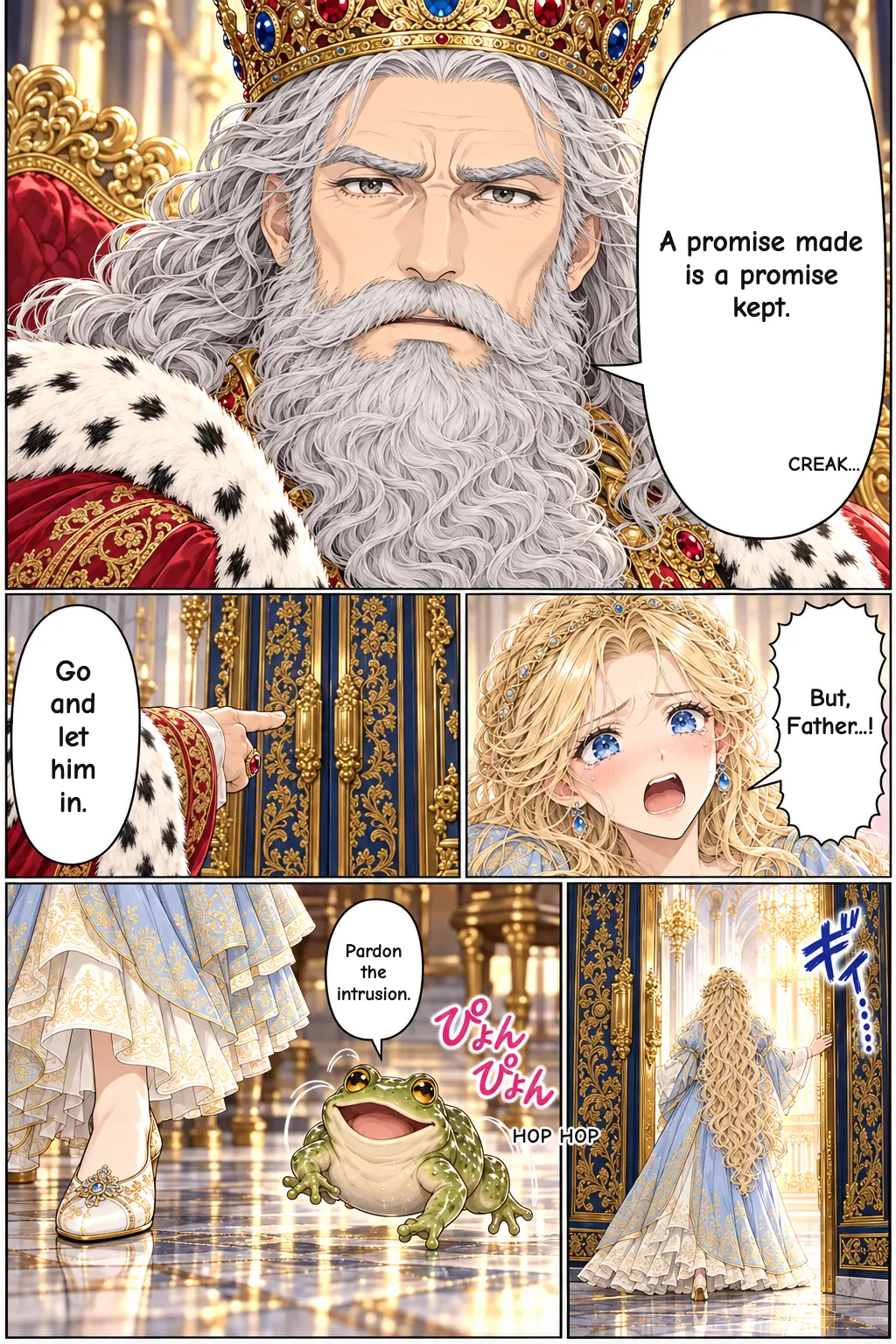
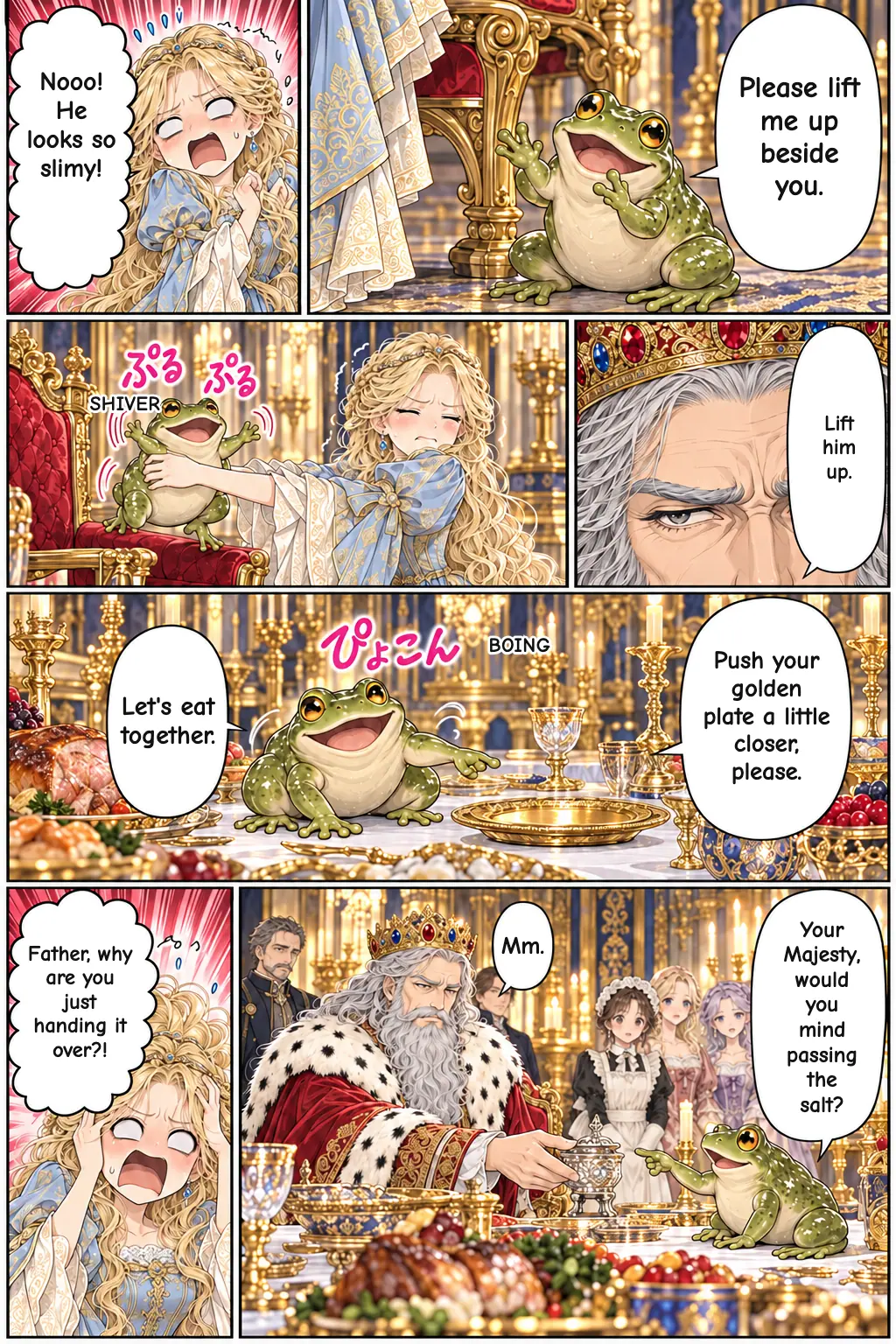
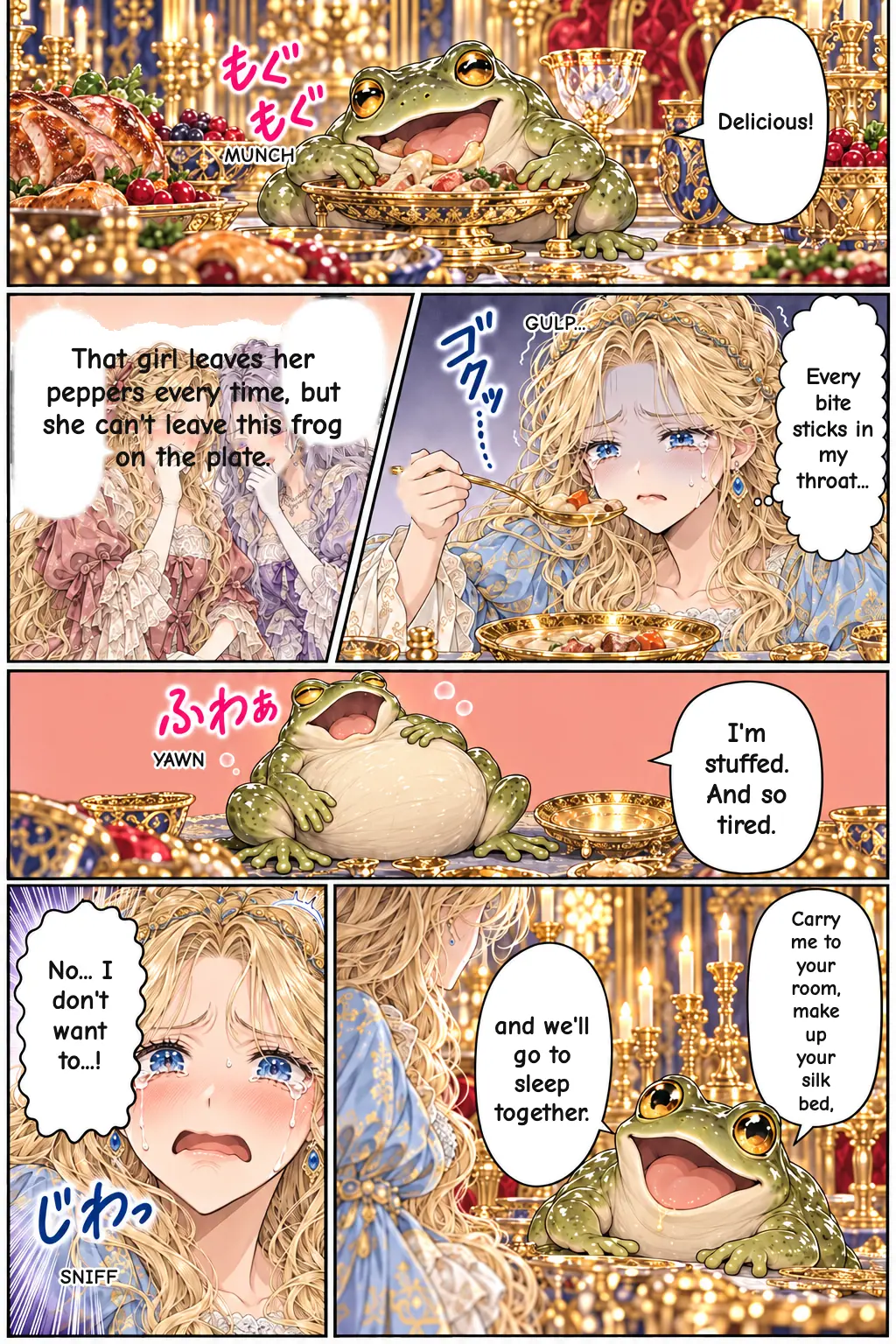
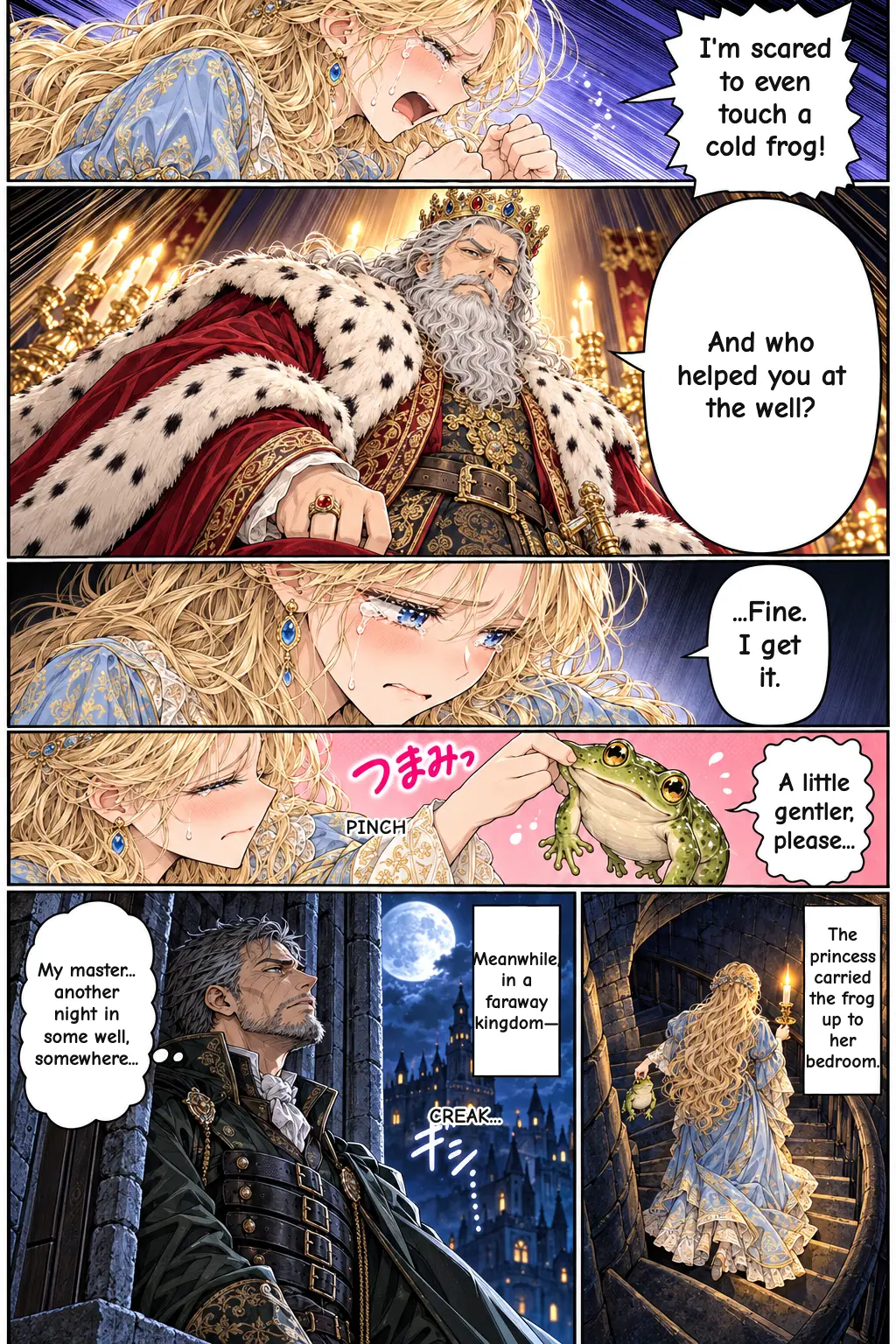
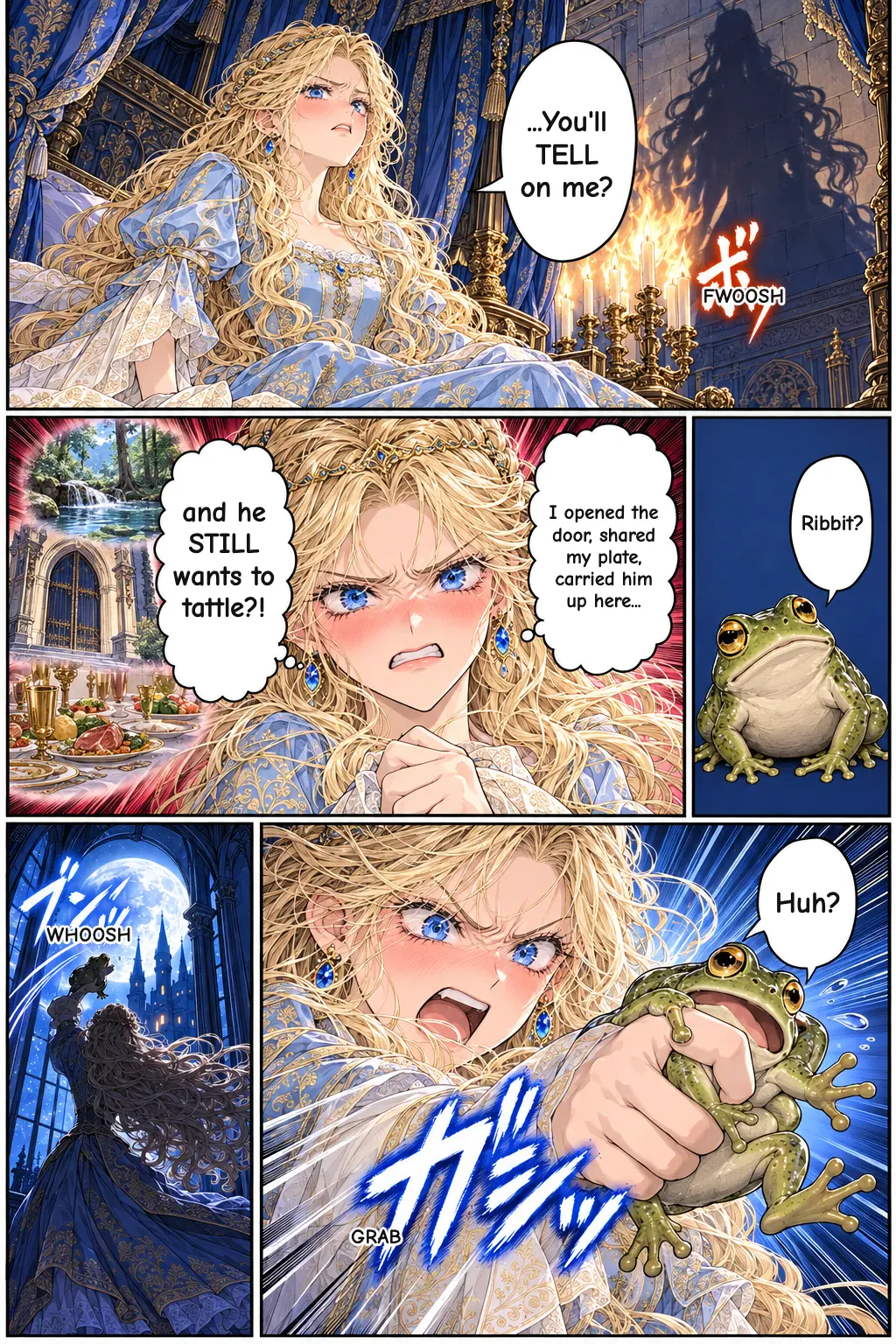
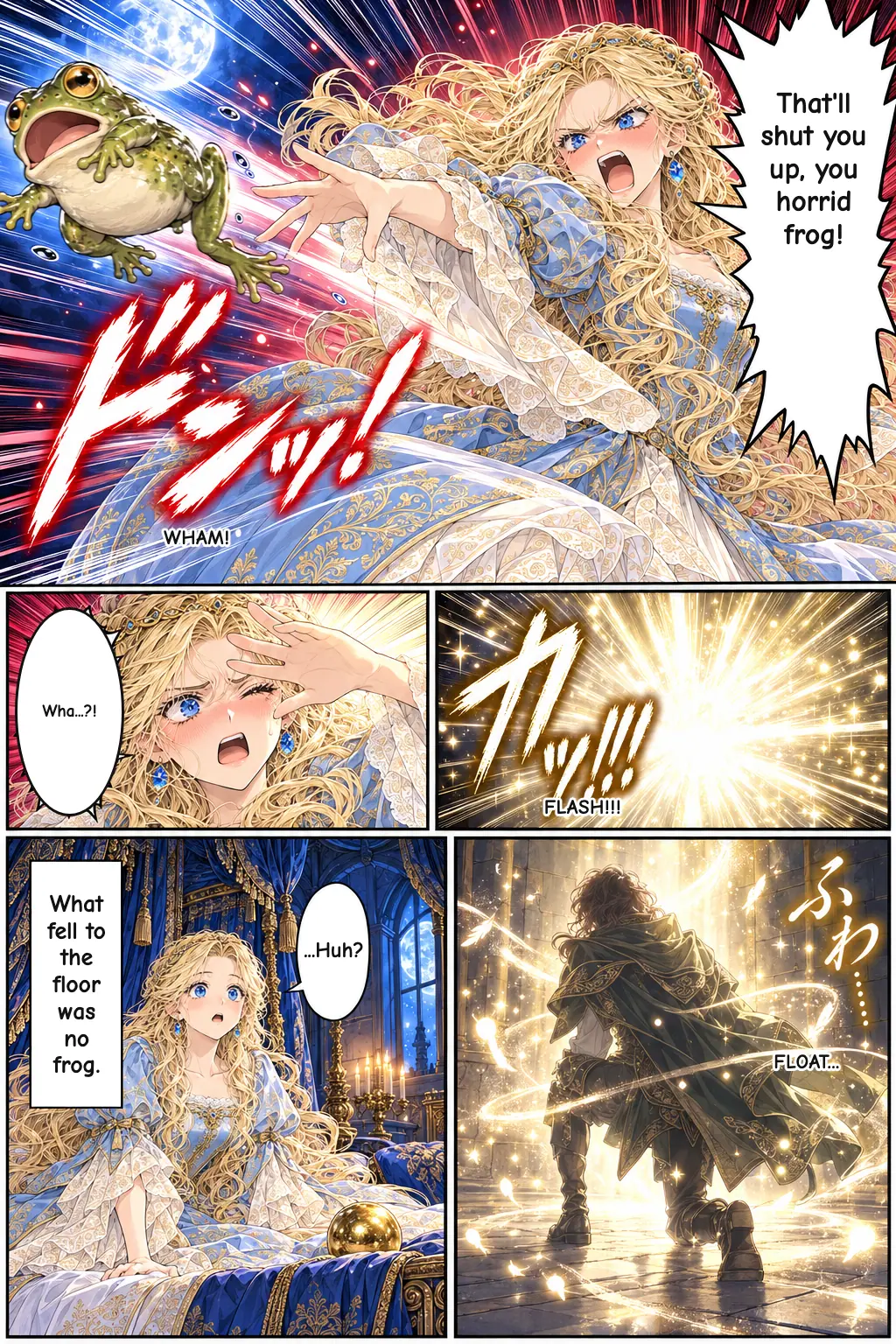
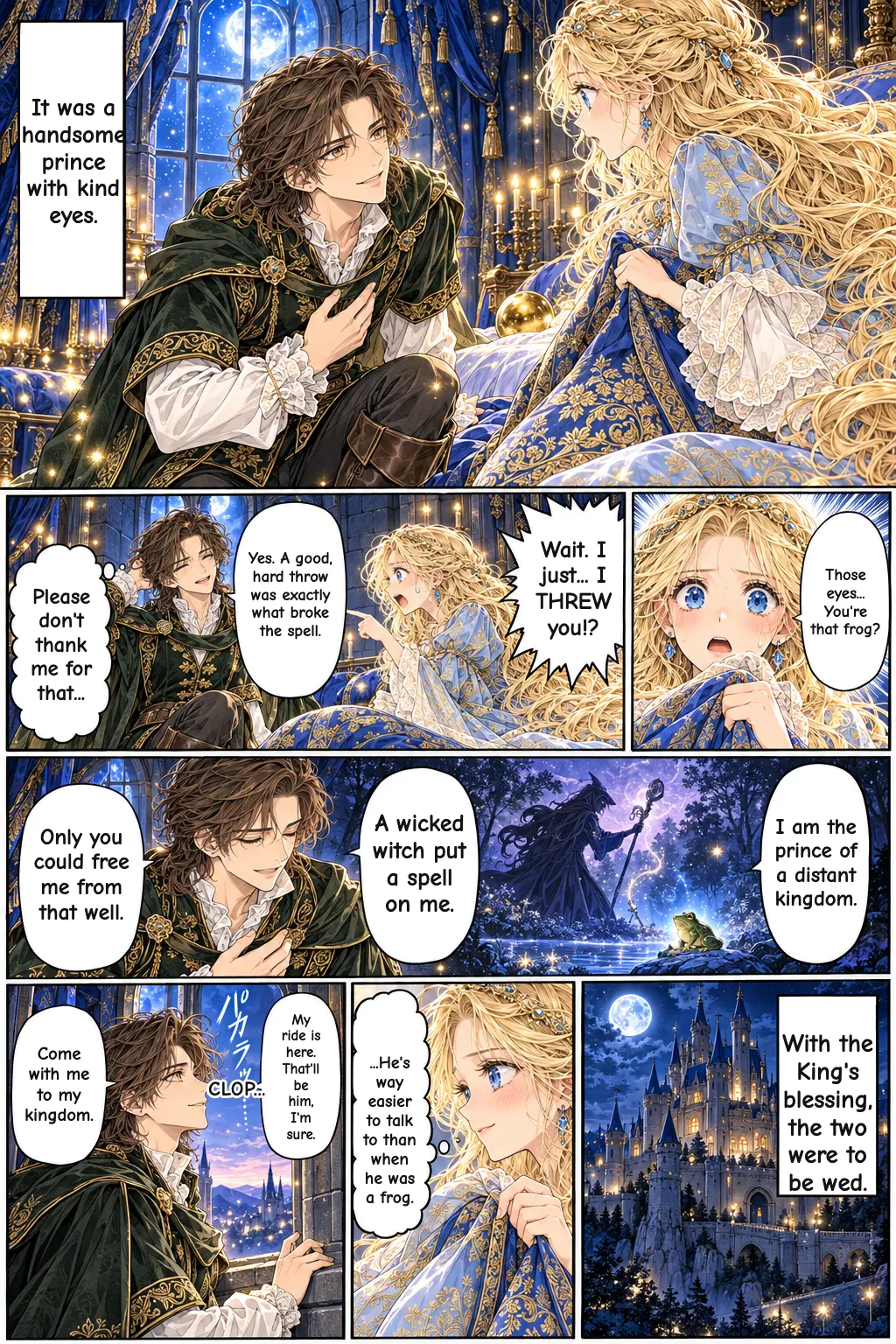
The next day, while she dined with the king and his court, something came climbing the marble stairs, knocked, and called for the youngest princess to open the door. She slammed it shut in fright and confessed the whole story. The king told her firmly that a promise must be kept, and later that you must not scorn someone who helped you when you were in trouble. So she let the frog in, lifted him onto the table, and shared her plate, though every bite stuck in her throat. Then she carried him, between two fingers, up to her room. When he demanded to be lifted into her bed and threatened to tell her father, she lost her temper and hurled him against the wall. What fell to the floor was no frog but a prince with kind, beautiful eyes. A wicked witch had enchanted him, and only she could free him. By her father's will, he became her husband.
Who Is Iron Henry? The Ending Most Versions Leave Out
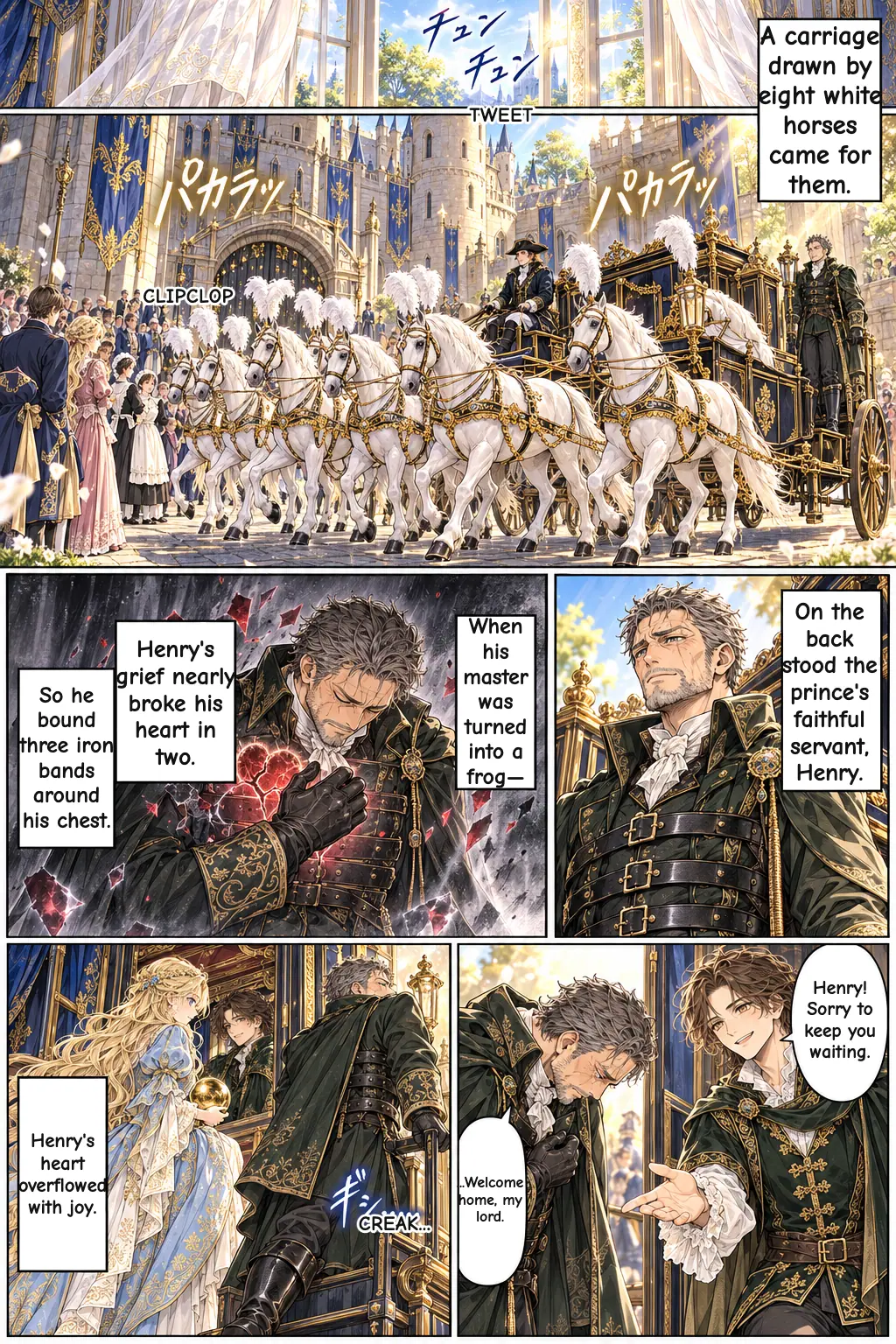
The story does not stop at the transformation. The next morning a carriage arrived, drawn by eight white horses with white ostrich plumes and golden harnesses. Standing at the back was Faithful Henry, the prince's servant. When his master was turned into a frog, Henry had grieved so deeply that he had three iron bands placed around his heart to keep it from breaking.
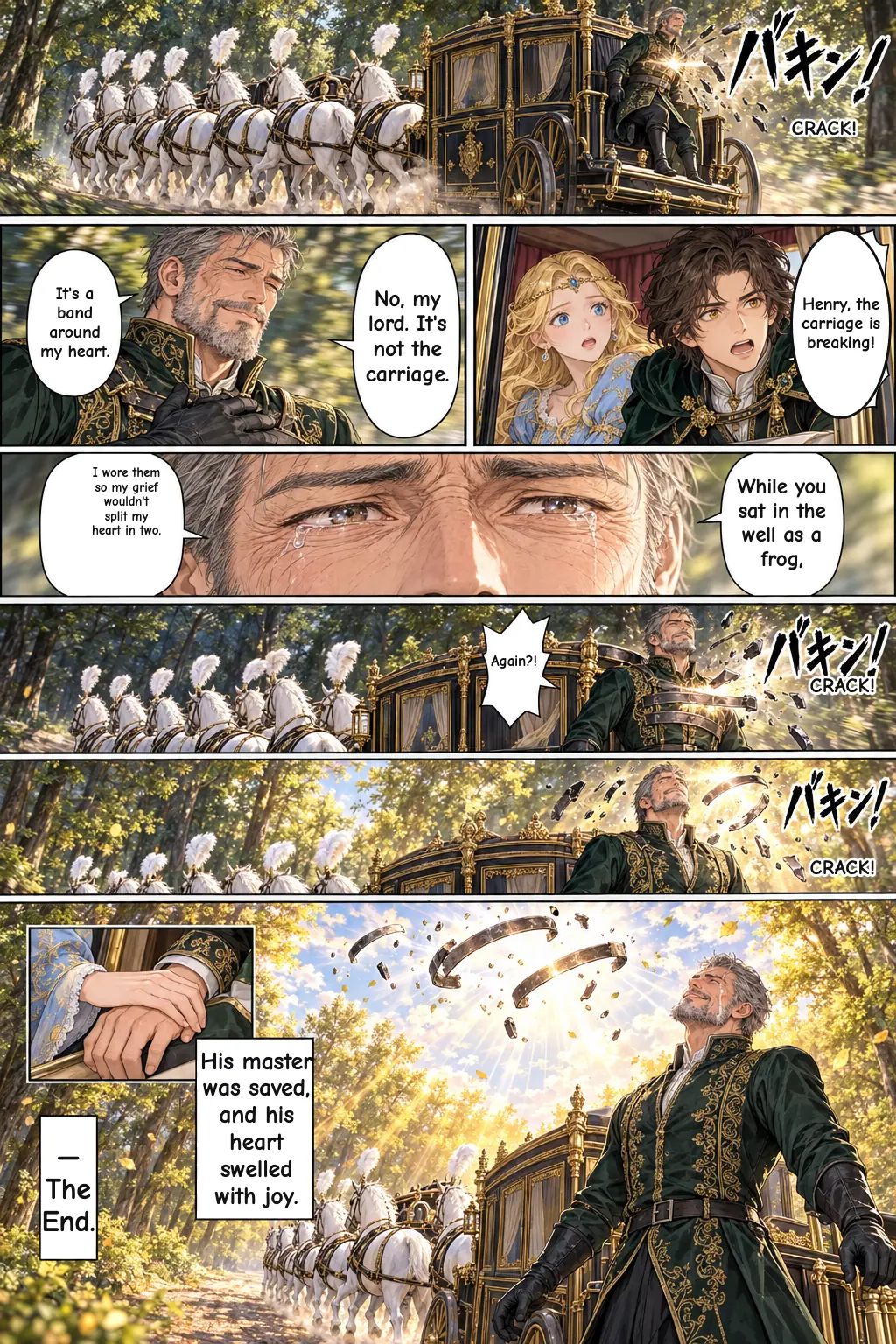
On the road home, the prince heard a loud crack and thought the carriage was breaking. Henry answered that it was only one of the bands around his heart, bursting now that his master was free. It cracked again, and once more, until all three bands had snapped from joy. Many modern retellings drop this scene, but for the Grimms it was important enough to put Henry's name in the title.
What the Story Means: Promises, Gratitude and Faithfulness
The king says the tale's lesson out loud: keep your promises, and don't look down on someone who helped you in a hard moment. The princess makes a careless promise she never means to keep, and the story will not let her off the hook. Yet the tale is not simply a neat moral lesson. The spell is broken not by patience or affection but by her furious throw, a surprising turn that readers and scholars have interpreted in many different ways.
Henry's iron bands give the story a second heart. While the princess learns, unwillingly, about obligation, Henry shows loyalty given freely. The tale's place as number 1 in the collection also makes it one of the best-known German folktales. Jacob Grimm (born 1785) and Wilhelm Grimm (born 1786) gathered tales while living in Kassel and published the first volume in 1812, then revised the collection over many editions until the final one in 1857. Where exactly this particular tale came from is not something we will guess at here.
What the Manga Changes and Adds
The manga follows the main events of the Grimms' text, including the throw instead of a kiss and the three bands bursting. Some parts are the manga's own creation, and it is worth separating them from the original.
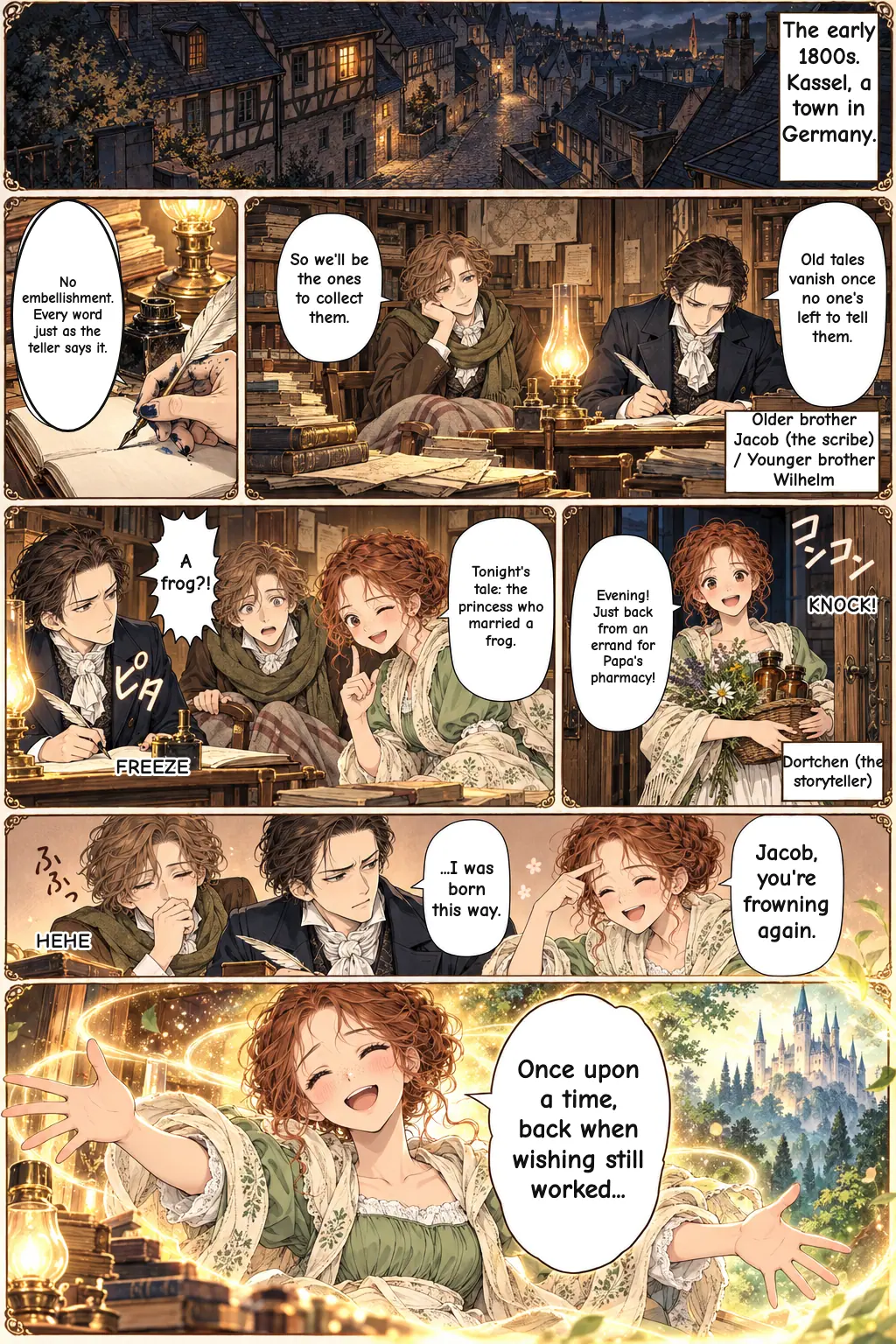
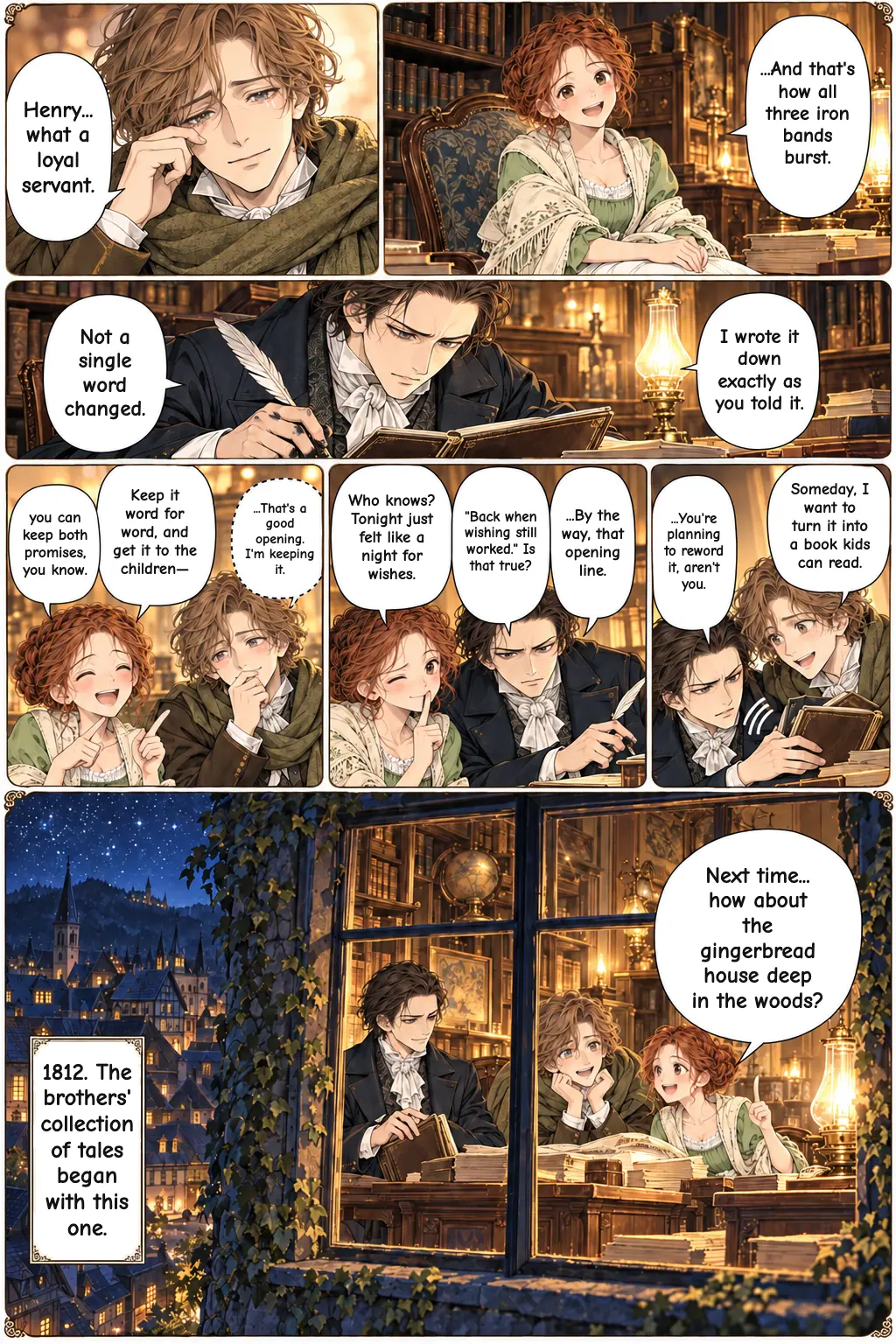
The episode opens with a short frame story featuring the Brothers Grimm as collectors of tales. Their names, their life in Kassel and the 1812 first volume are historical, but the scenes and dialogue are dramatized, and the manga does not claim to know who first told them this tale. The original never names the princess, the prince or the witch, and says nothing about their ages, clothes or hair, so the characters' looks are the artists' design. The same goes for the castle, the forest and the well, the frog's size and expressions, the dinner, Henry's appearance, and how the iron bands are shown. The Grimms give the witch only one passing mention, so any glimpse of her is adaptation. The timing of the second and third cracks, told in a single quick line in the original, is also paced by the manga. Finally, the original never tells us how the princess felt about her new husband; the manga leaves the plot unchanged.
Where to Read It
If you would like to see the golden ball, the knock at the door and Henry's breaking bands brought to life, Episode 1 of GRIMM'S FAIRY TALES: The Tellers of the Forest, "The Princess Who Wouldn't Kiss the Frog," is right here on Manga Portal. Every episode is free to read, with no sign-up needed, and the series goes on to explore more tales from the Grimms' collection.
Characters in this episode
The Youngest Princess
The king's youngest and most beautiful daughter, who makes a careless promise to a frog to get her golden ball back and tries hard not to keep it.
The Frog / The Prince
A prince turned into a frog by a wicked witch, who asks to be the princess's companion and is freed when she throws him against the wall.
The King
The princess's father, who insists that promises must be kept and that those who helped you must not be scorned.
Faithful Henry (Iron Henry)
The prince's loyal servant, who bound his grieving heart with three iron bands that burst for joy when his master is saved.
The Wicked Witch
The one who cast the frog spell, mentioned only once in the prince's words and never shown in the original tale.
FAQ
Does the princess kiss the frog in the original Frog Prince?
No. In the Grimms' final 1857 text, the princess gets angry and throws the frog against the wall, and he turns back into a prince. The kiss is something found in many later retellings, not in this version.
Who is Iron Henry in The Frog Prince?
Iron Henry, or Faithful Henry, is the prince's loyal servant. He wrapped three iron bands around his heart so it would not break from grief, and on the ride home the bands snap one after another from joy.
What is the moral of The Frog Prince?
The king states it directly: you must keep your promises, and you should not look down on someone who helped you when you needed it. Henry's story adds a second theme of faithfulness.
Why is The Frog King the first Grimm fairy tale?
It is tale number 1 (KHM 1) in the Brothers Grimm's Children's and Household Tales. That position helped make it one of the most famous stories in the collection.
Who turned the prince into a frog?
The prince says a wicked witch enchanted him and that only the princess could free him from the well. The original tale gives no reason for the spell and never describes the witch.