Get new episodes in your feed. Follow us on:ThreadsBluesky
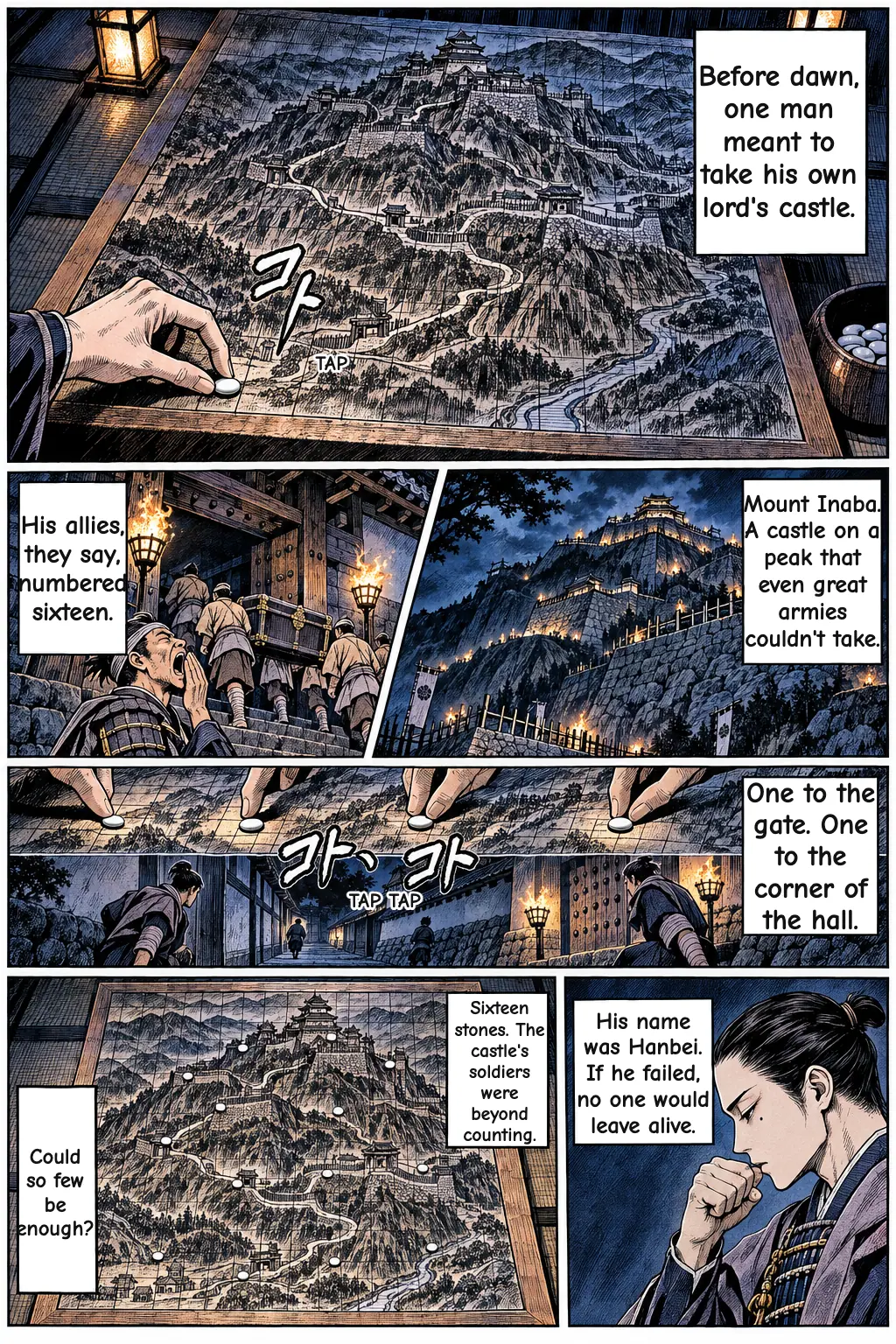
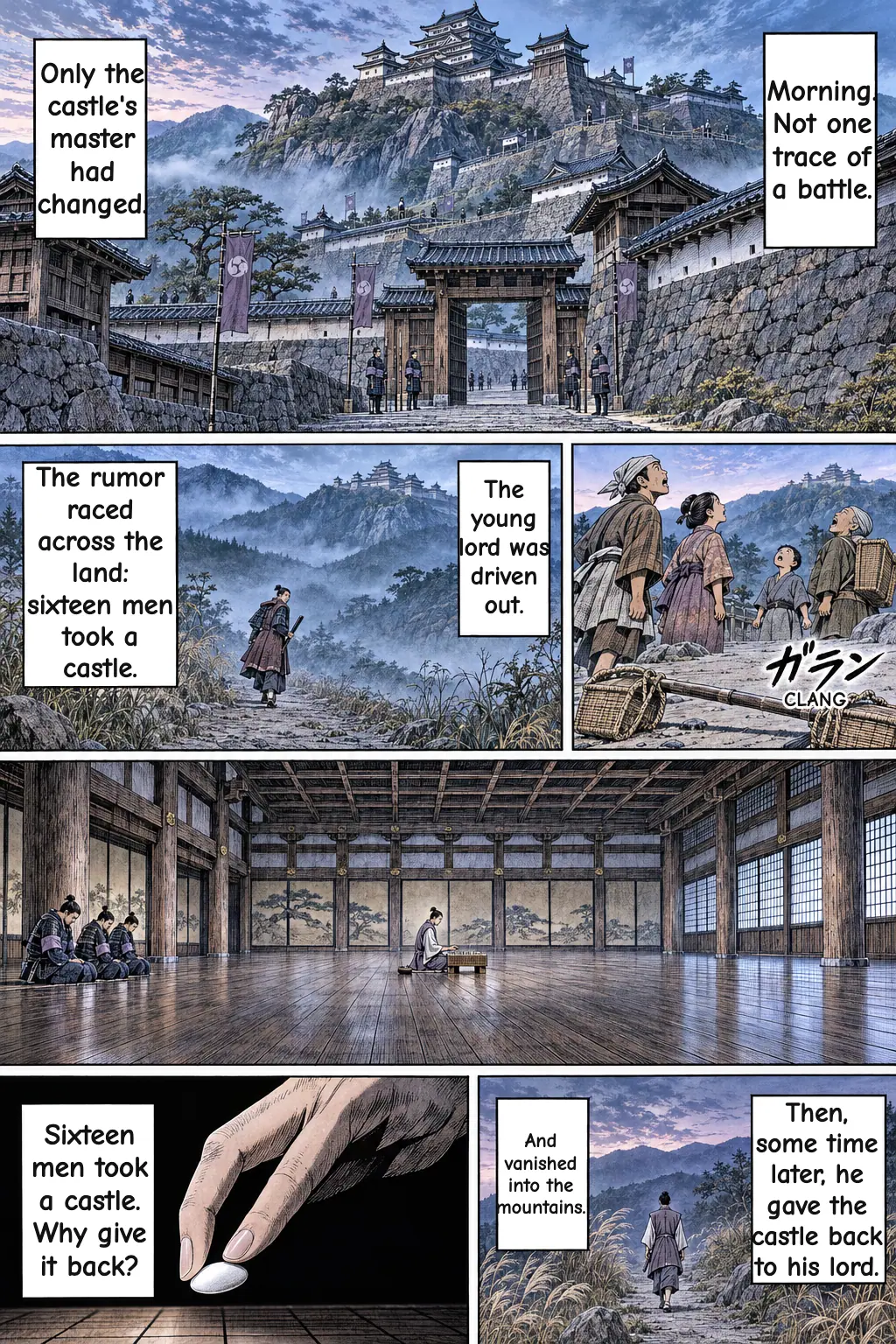
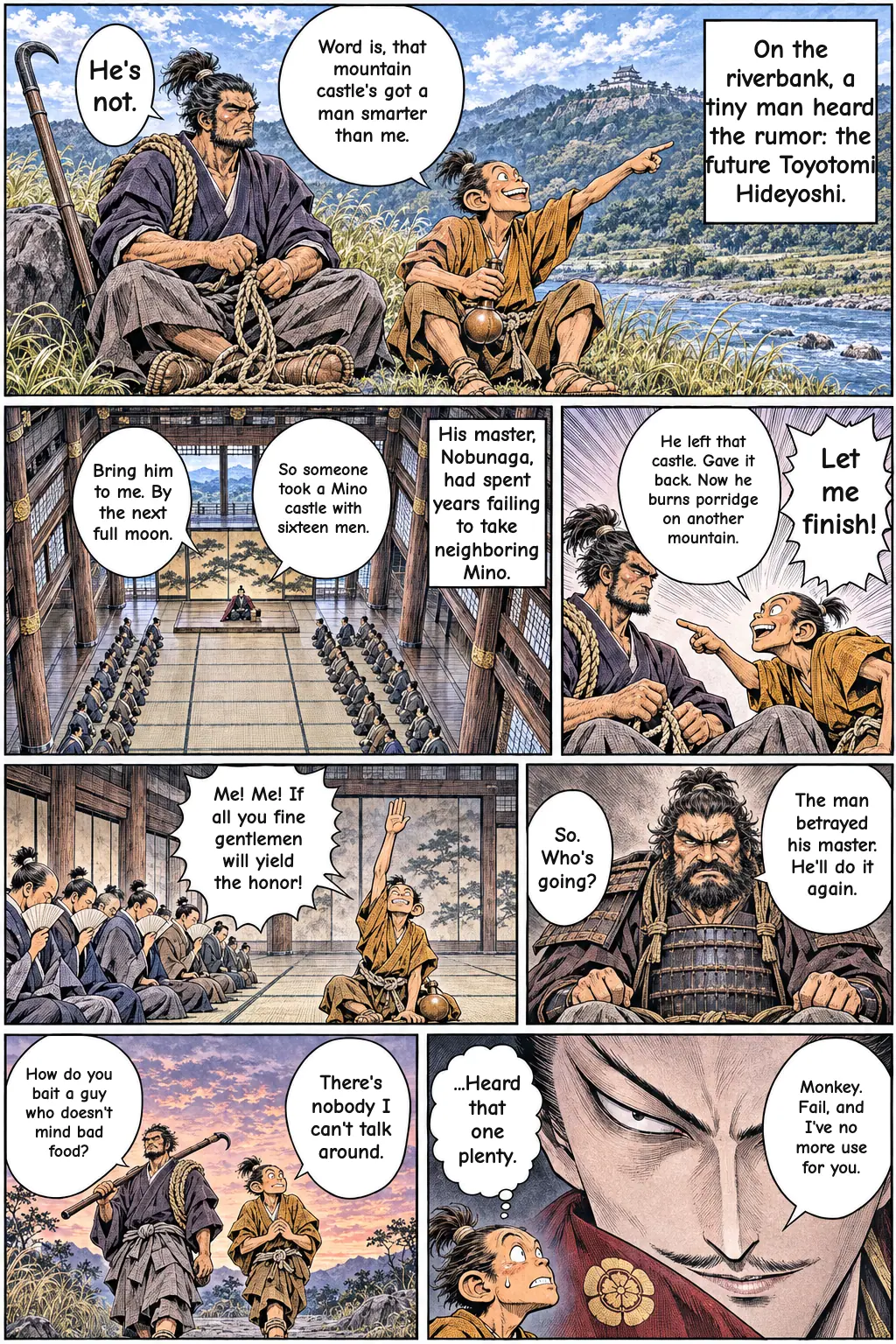
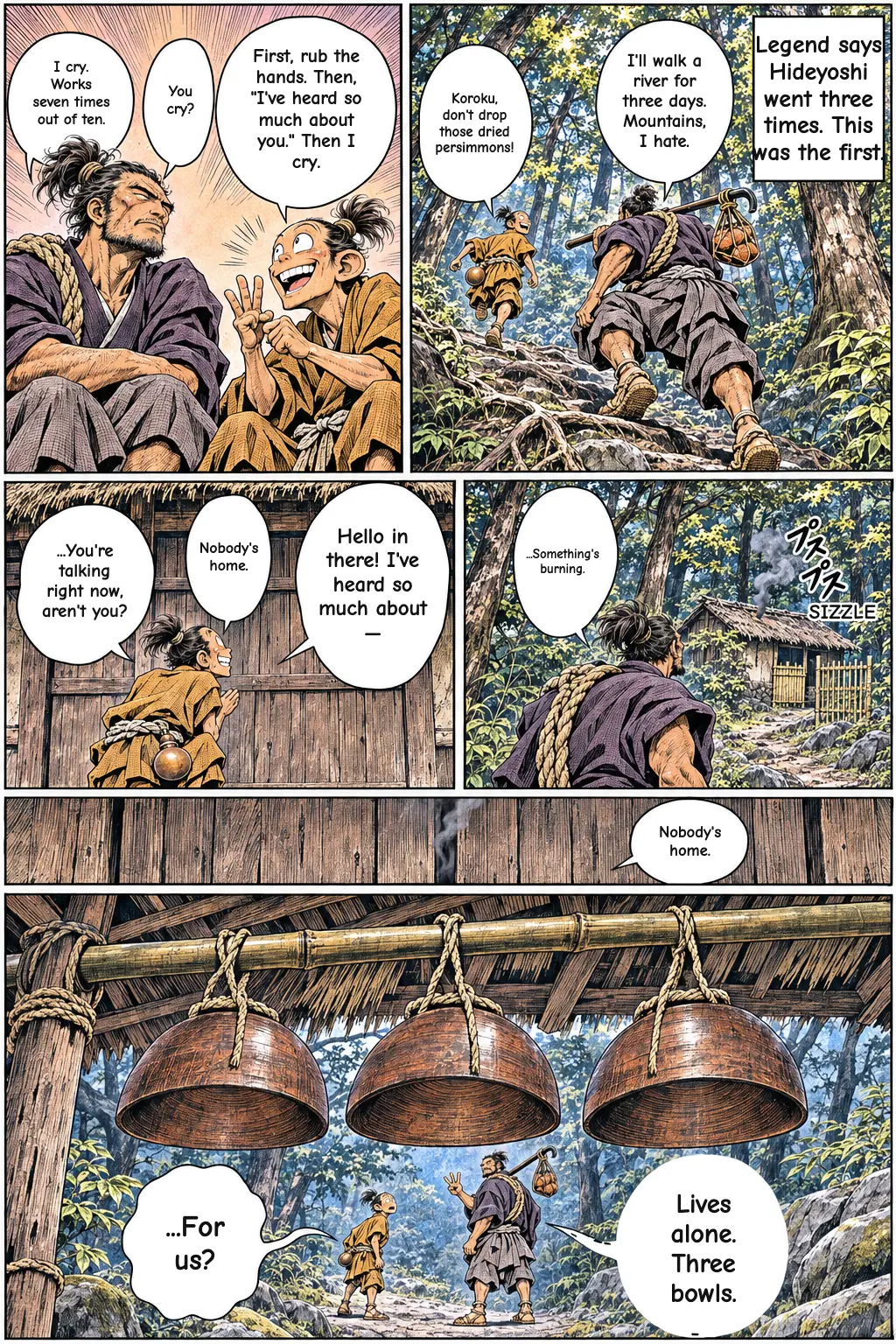
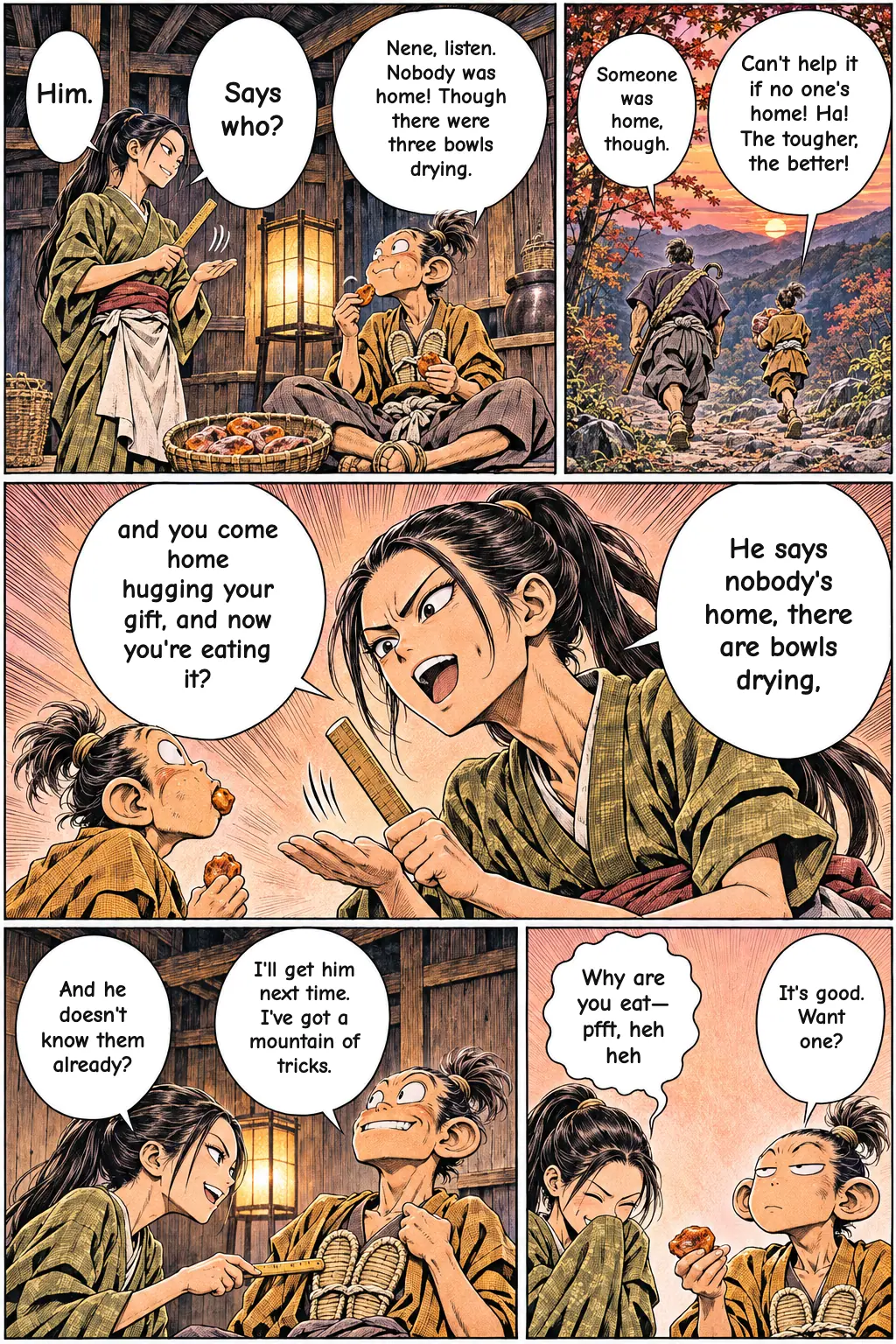
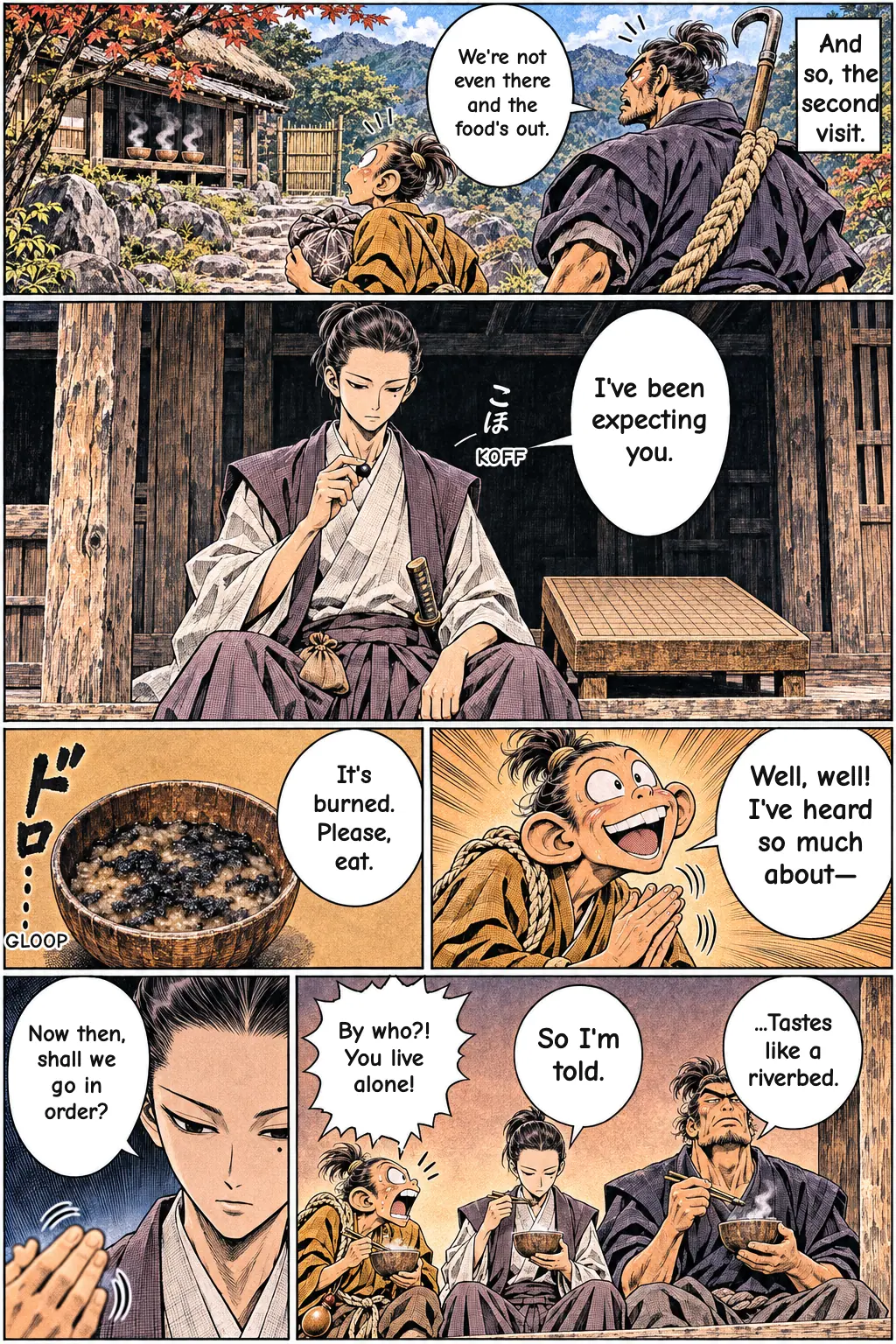
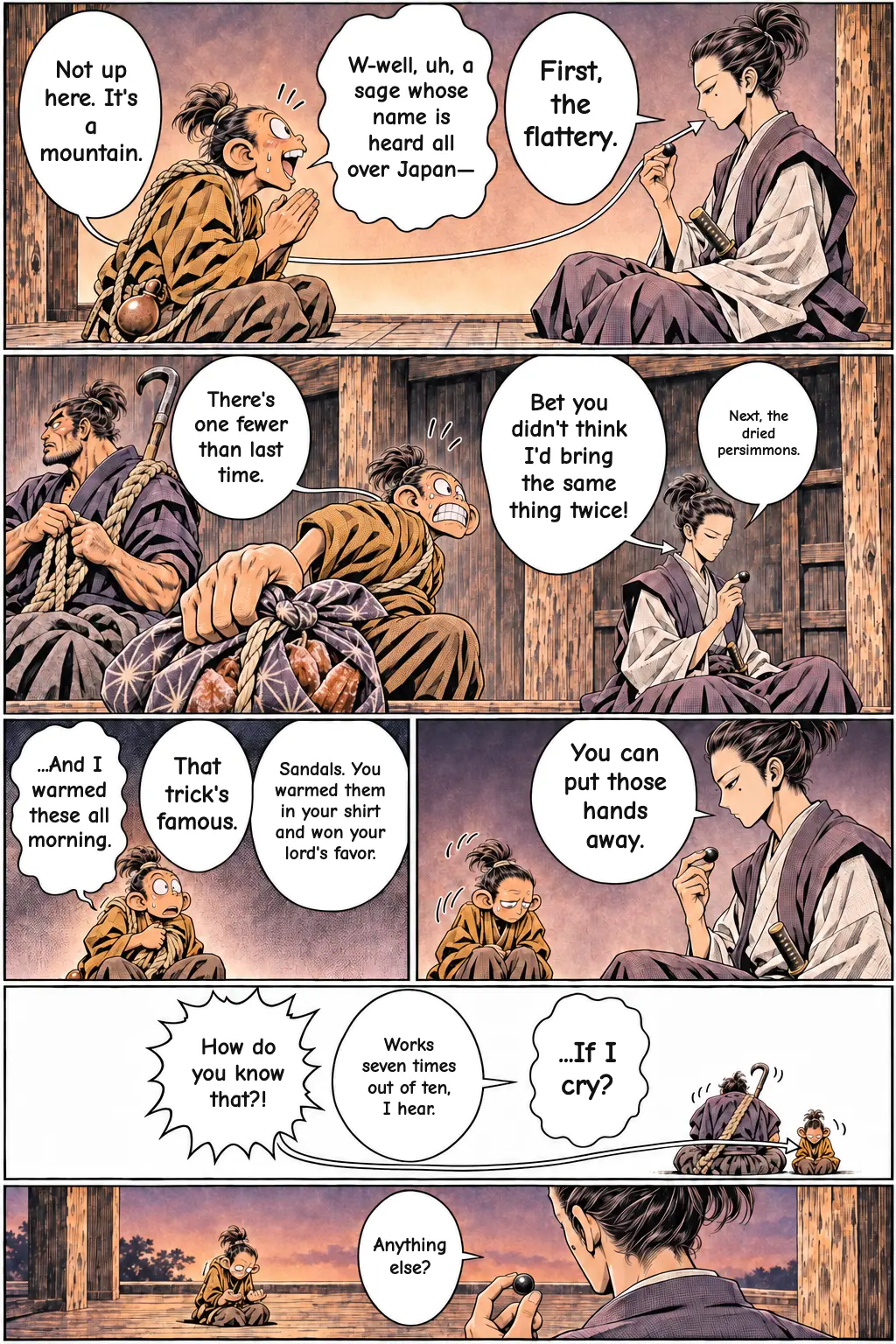
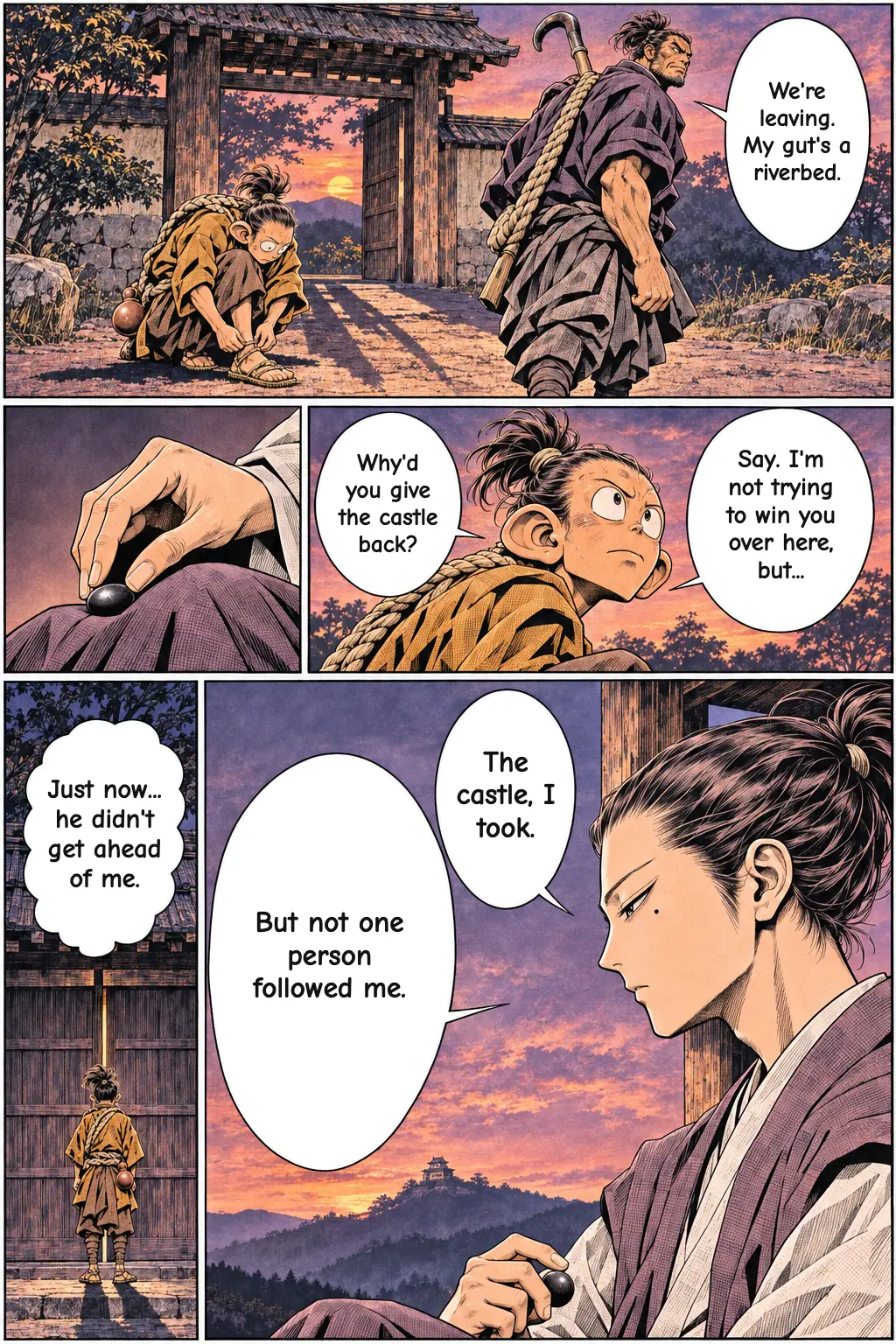
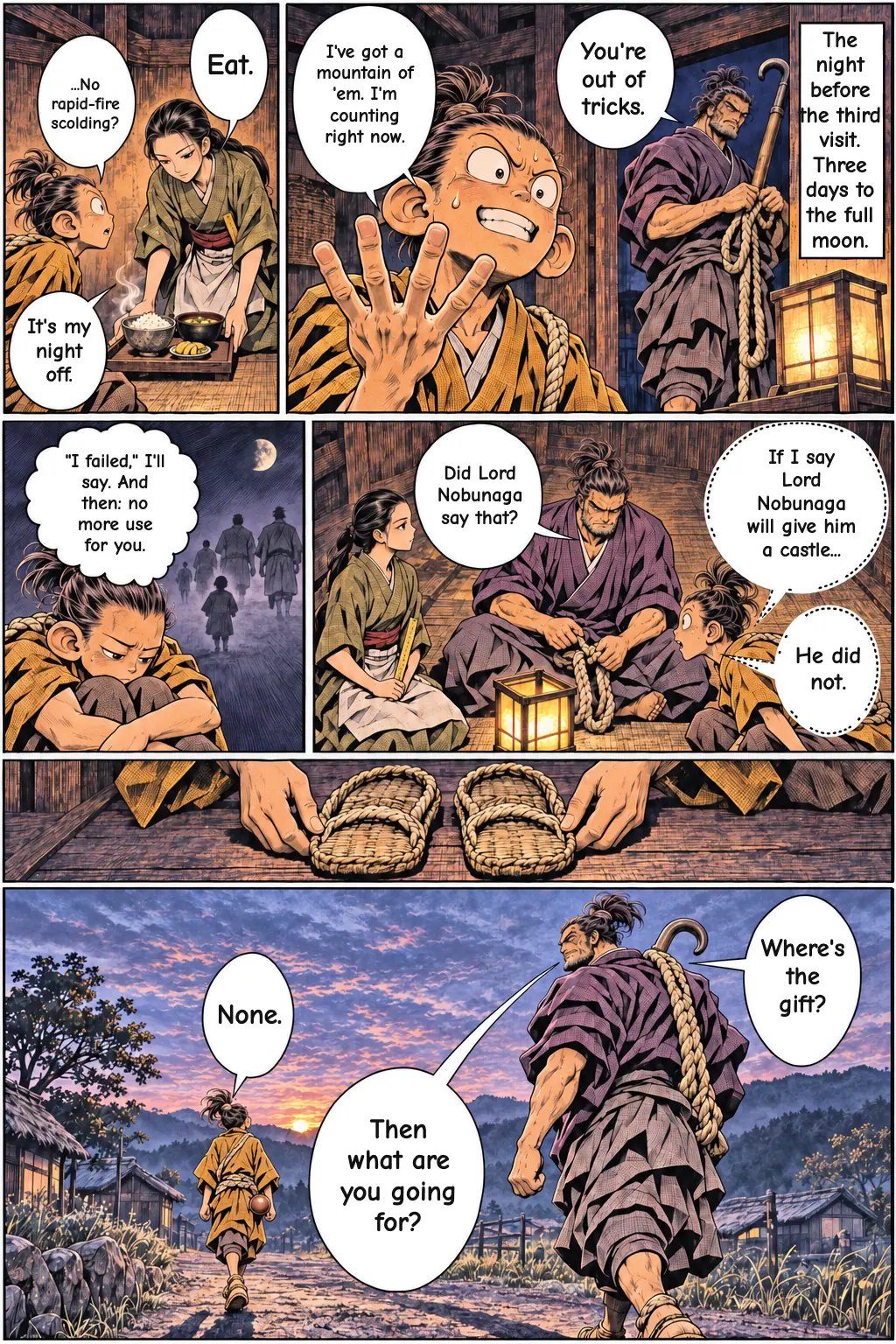
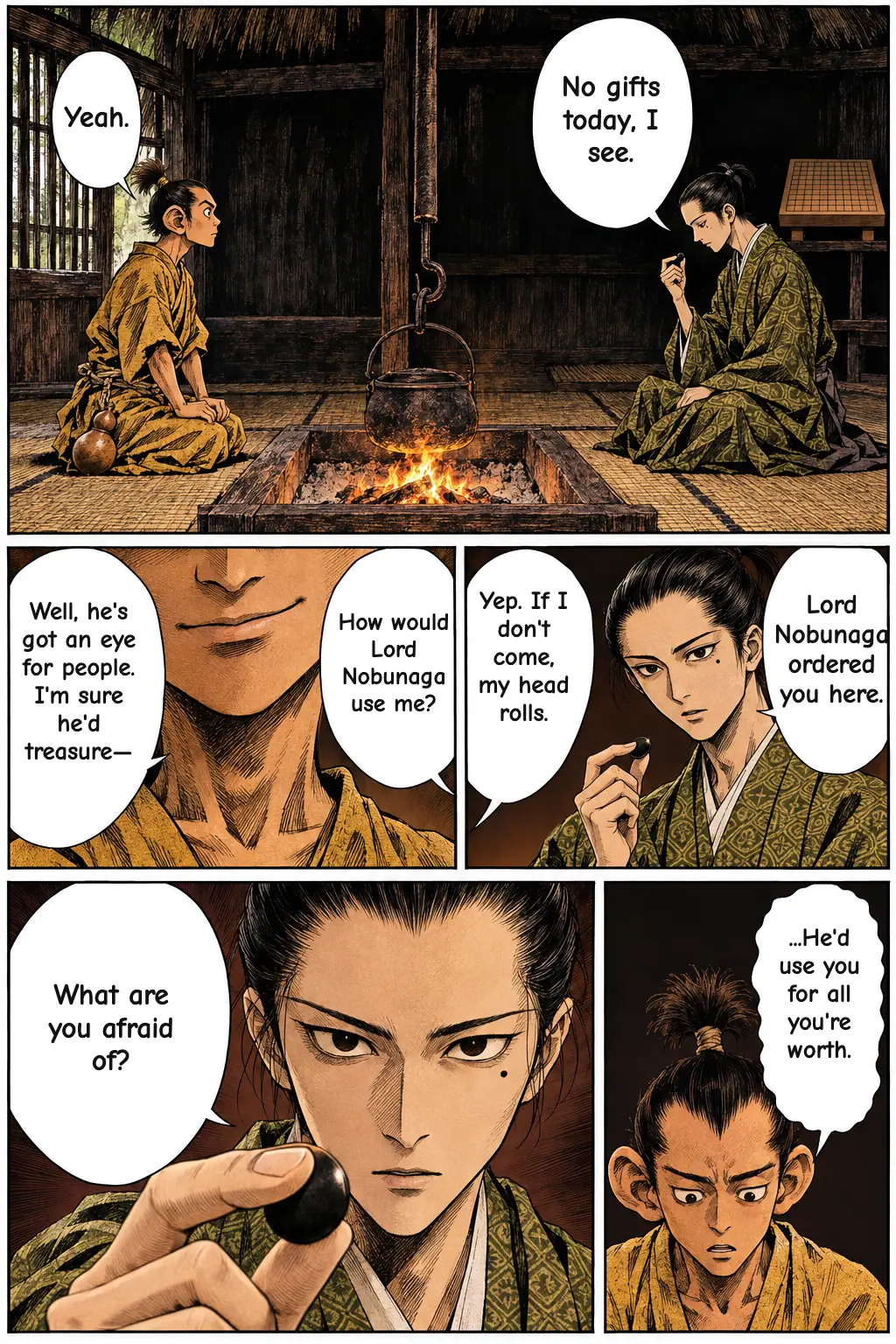
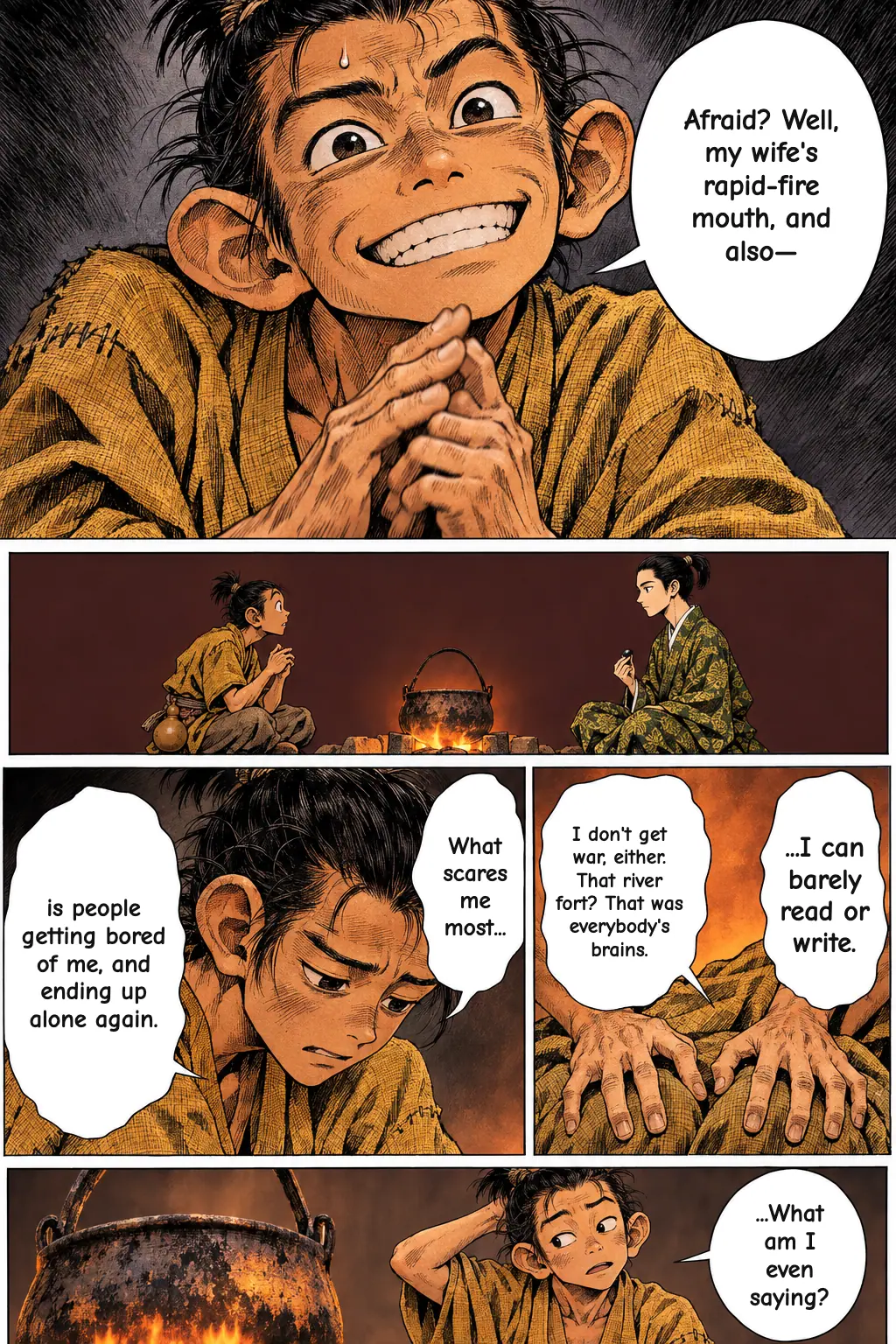
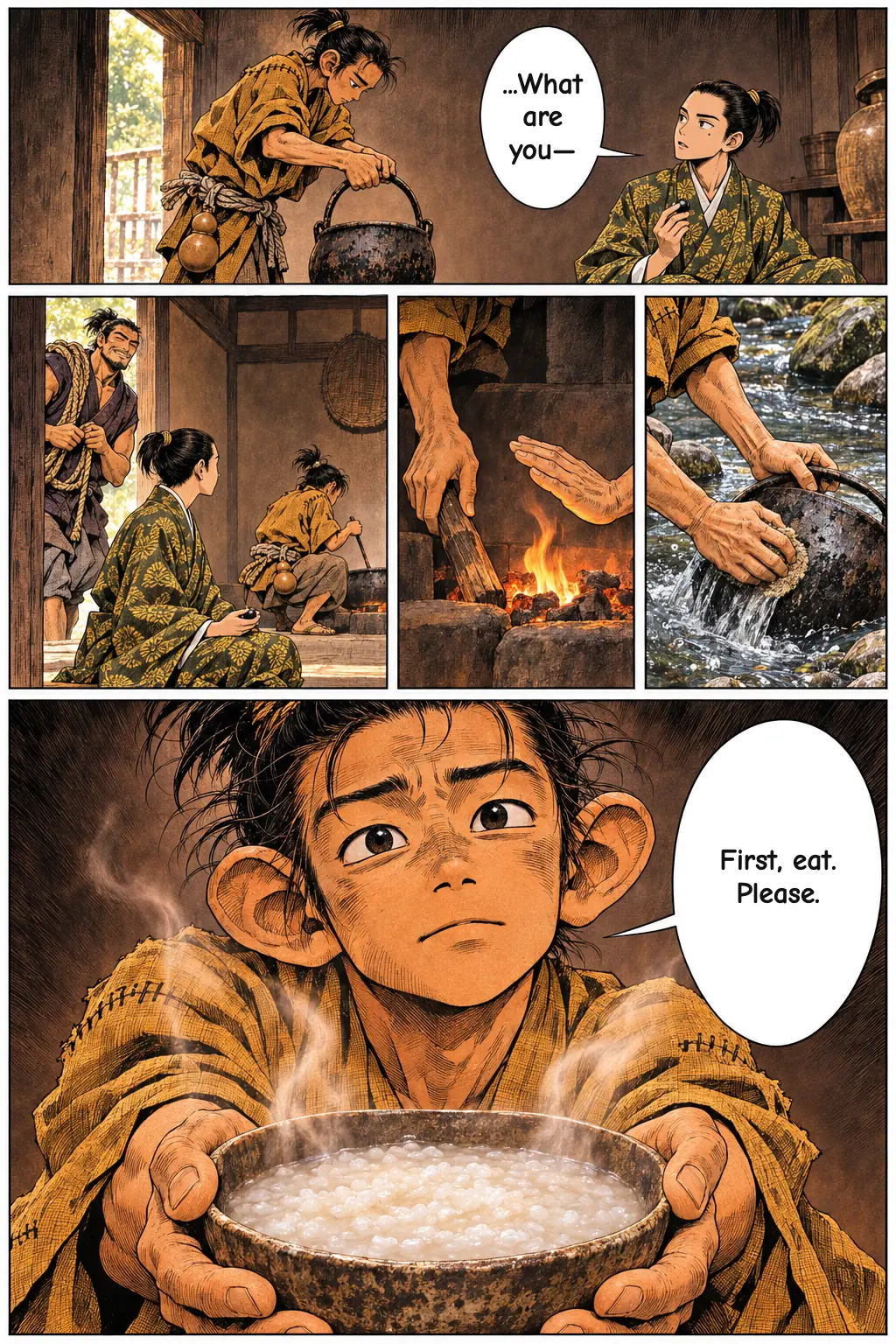
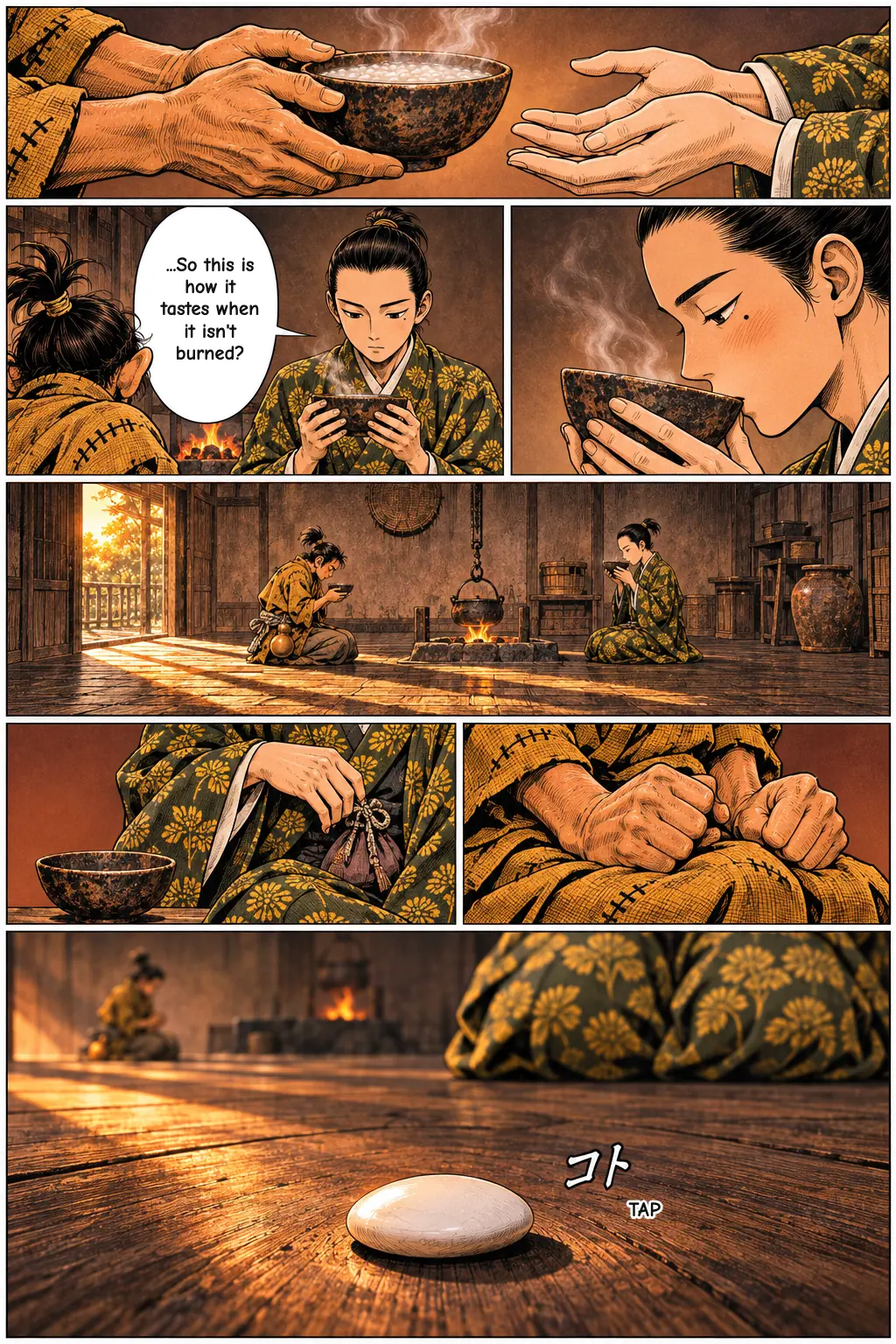
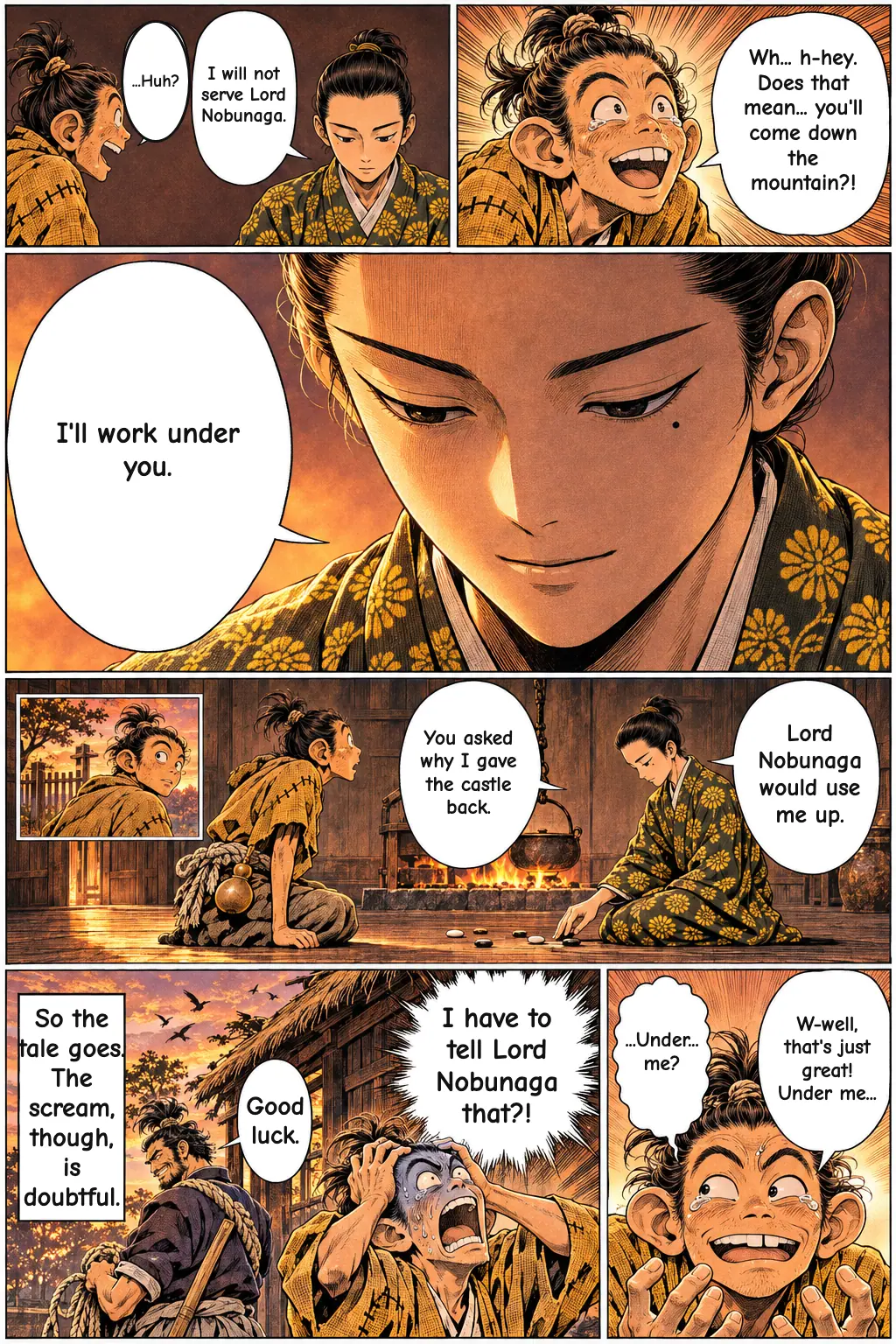
A man took a castle with just sixteen followers, inexplicably gave it back, and vanished into the mountains. Hideyoshi keeps climbing up to recruit him, but every compliment and gift is called out before he can use it. On his third visit, out of tricks, he offers the one thing he has left: his own weakness.
Story summary
The Taikoki is a biography of Toyotomi Hideyoshi written by Oze Hoan, a physician and Confucian scholar, in the early Edo period, around the Kan'ei era (1624–1644). That is a few decades after Hideyoshi's death. It is a lively literary work rather than a modern history, so it is best read as a story about a remarkable rise, not as a verified record. This part of the story takes place in the 1560s.
Takenaka Hanbei: The 16-Man Castle Seizure and Hideyoshi, Explained
In short: The story of Takenaka Hanbei is about a samurai of the Saito clan who seized his own lord's stronghold, Inabayama Castle, with only a small band of men, and who later came to serve Kinoshita Tokichiro, the future Toyotomi Hideyoshi. Its outline is associated with the Taikoki, Oze Hoan's early Edo-period biography of Hideyoshi. The famous tale of Hideyoshi climbing the mountains again and again to recruit him is later legend, not established fact.
The Original Story: Hanbei and the Fall of Mino
The Taikoki is a biography of Toyotomi Hideyoshi written by Oze Hoan, a physician and Confucian scholar, in the early Edo period, around the Kan'ei era (1624–1644). That is a few decades after Hideyoshi's death. It is a lively literary work rather than a modern history, so it is best read as a story about a remarkable rise, not as a verified record.
This part of the story takes place in the 1560s. Oda Nobunaga, the warlord of Owari (today's western Aichi Prefecture), wants the neighboring province of Mino (today's southern Gifu Prefecture), held by the Saito clan under the young lord Saito Tatsuoki. Hideyoshi is still called Kinoshita Tokichiro, a retainer of Nobunaga who is making his name through quick thinking and hard work.
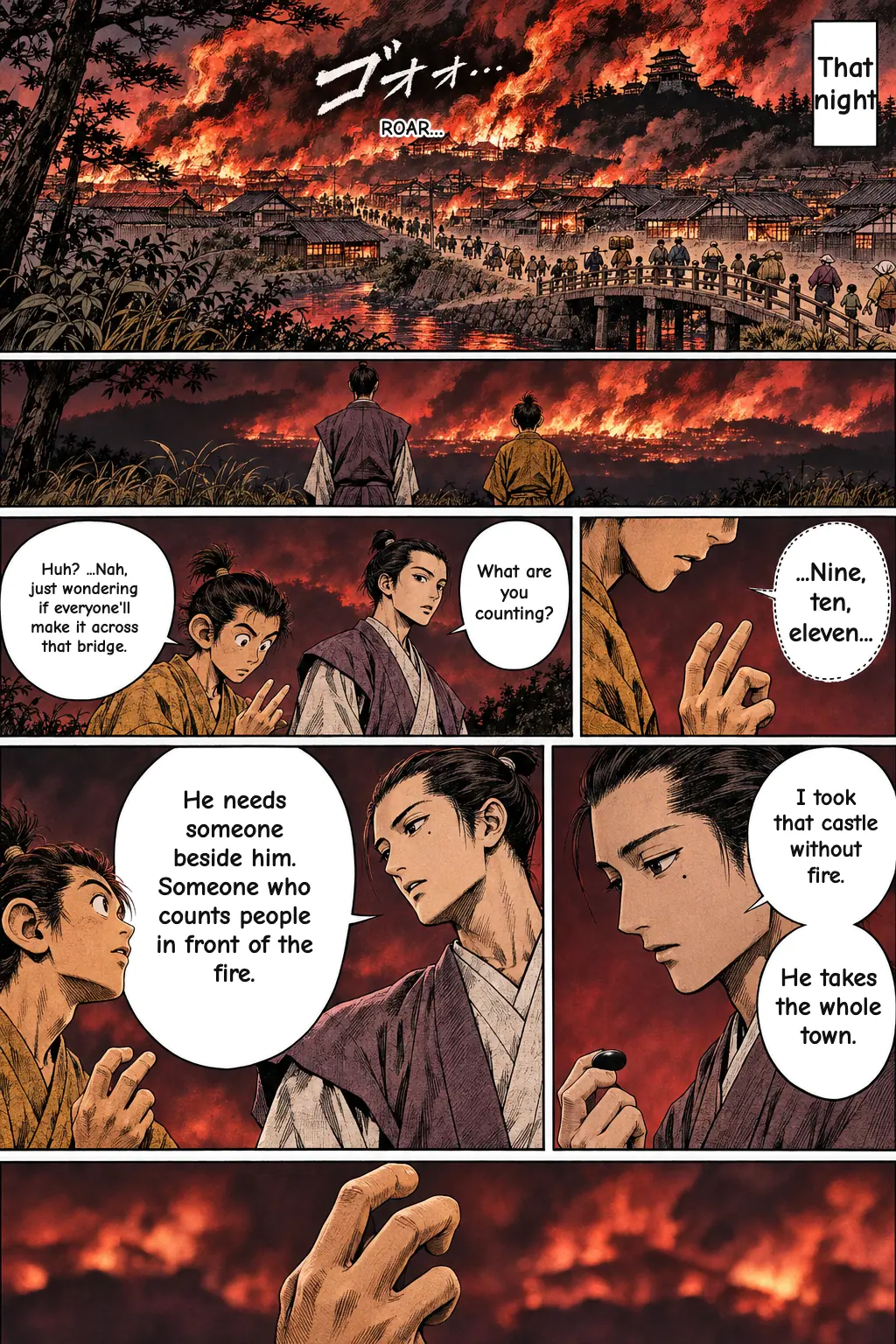
Then comes a shock. Takenaka Hanbei, a strategist serving the Saito clan, captures Tatsuoki's own castle at Inabayama with only a handful of men. In time Hanbei joins Tokichiro's side and serves him with his intellect. Oda pressure continues until Inabayama falls, usually dated to 1567. Tatsuoki loses his castle, and Mino passes to Nobunaga. Exactly how and when Hanbei joined Tokichiro is less clear, including whether it came before or after the castle fell.
The Legends Around the Castle Seizure
Most of the vivid details are popular tradition, and they may not all appear in Hoan's own text. The seizure is usually dated to 1564. The common telling says Hanbei had a dozen or so followers, often given as sixteen or seventeen. They entered the castle on the pretext of visiting his sick younger brother, with weapons hidden in storage chests. His father-in-law, Ando Morinari, is also said to have sent troops in support.
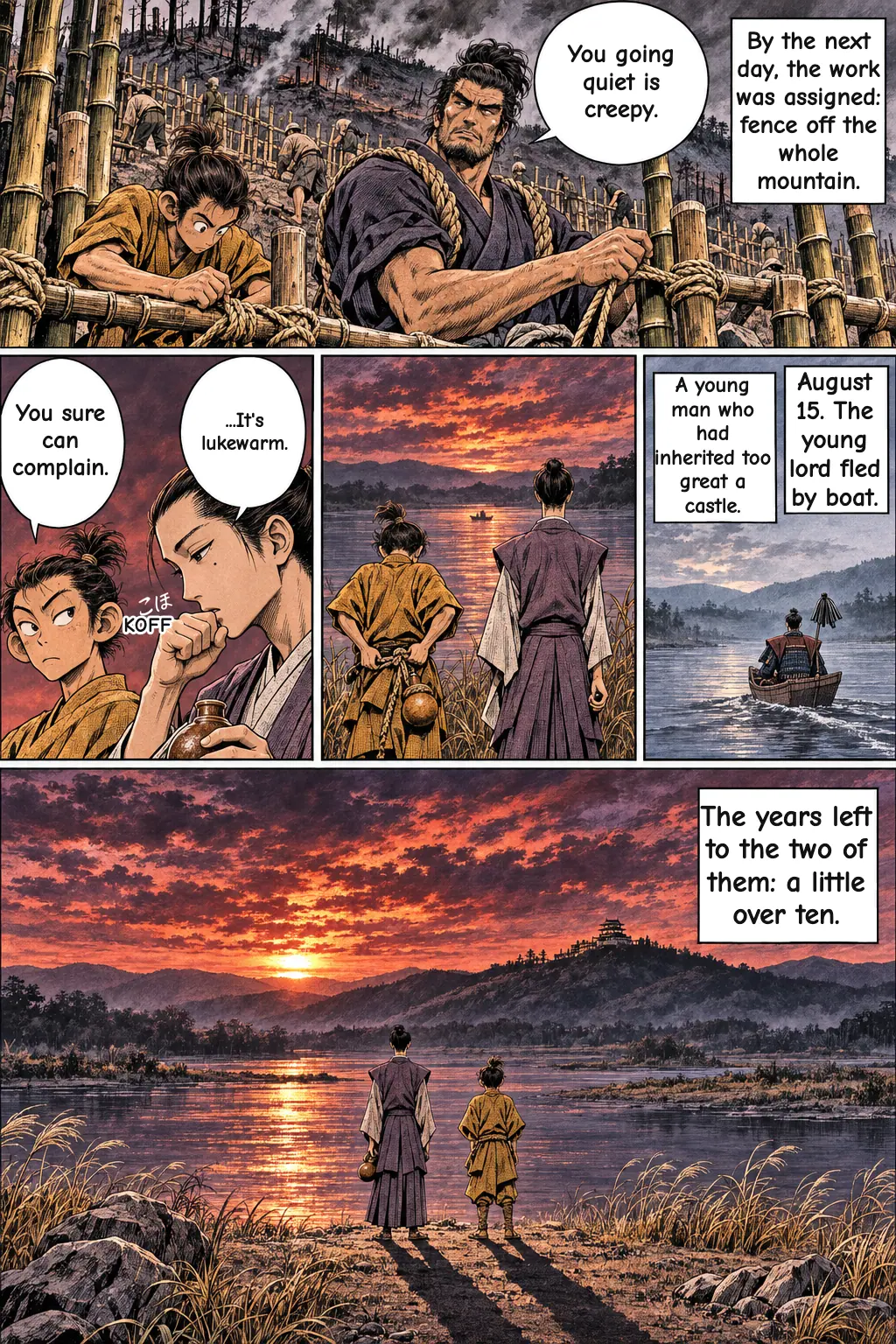
The strangest part comes next. Tradition says Hanbei returned the castle to Tatsuoki after about half a year and withdrew into the mountains. No one can say for certain why. A common explanation is that he meant to warn a careless young lord rather than to take power for himself, but this is interpretation, not a settled fact.
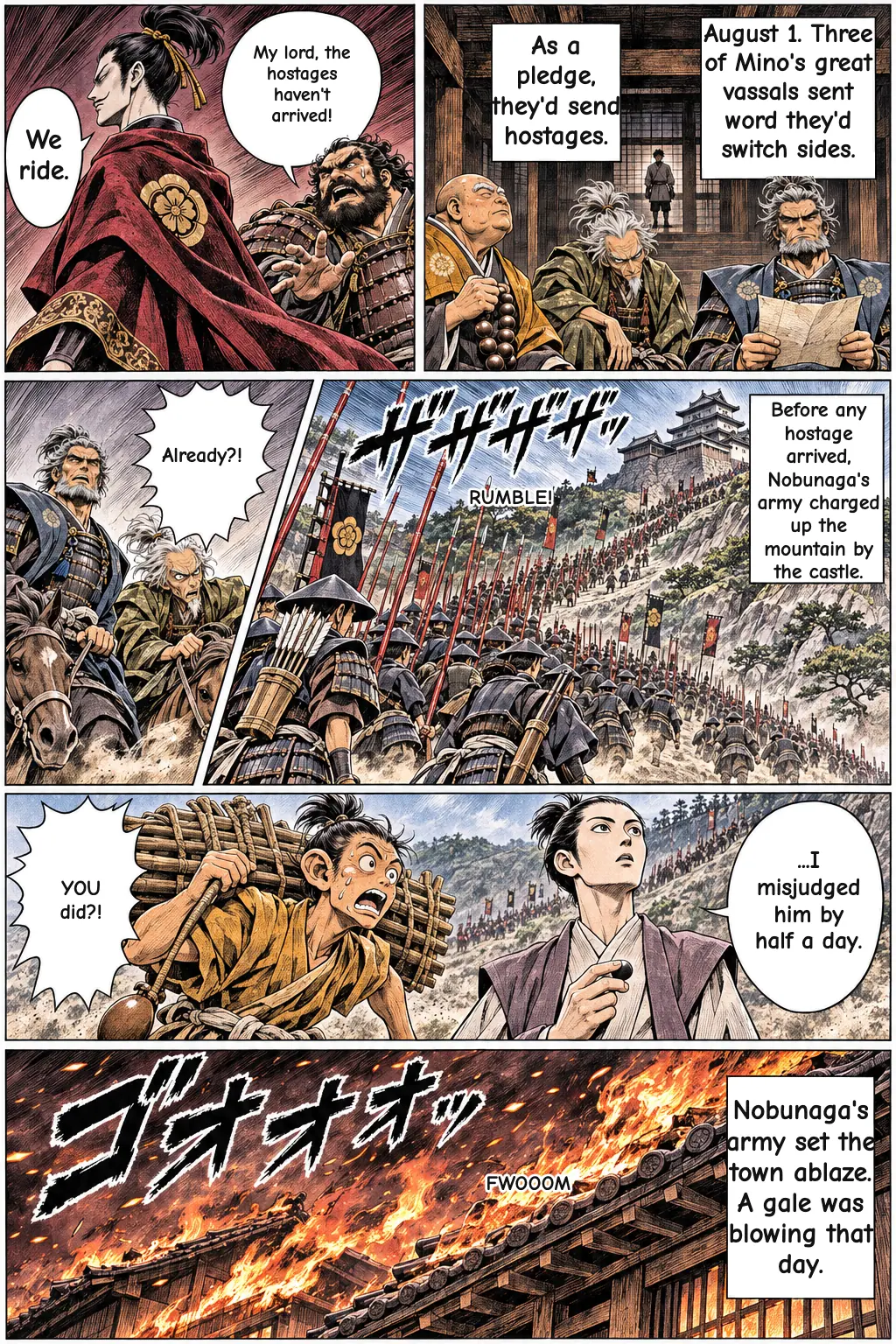
Other well-known episodes are also uncertain. The fort Tokichiro built at Sunomata became the "one-night castle" of legend, a version that is heavily exaggerated. The defection of three leading Saito retainers, Inaba Ittetsu, Ujiie Bokuzen and Ando Morinari, is known from other sources such as Ota Gyuichi's Shincho Koki. Stories of Horio Yoshiharu guiding Tokichiro's men up a back path, and of a gourd used as a signal that later became Hideyoshi's battle standard, carry much later embellishment.
What the Story Says About the Warring States Period
These events belong to the Sengoku, or Warring States, period, when local lords fought for land and retainers sometimes overthrew their masters. In that world, seizing a castle was shocking but understandable. Giving it back was the part that demanded an explanation, which may be why Hanbei has fascinated storytellers for so long.
The tale also fits the larger arc of Hideyoshi's life. A man of humble birth had no famous family name to attract followers, so winning over talented people mattered enormously. A brilliant strategist choosing to serve him makes a powerful sign of his rising star.
The repeated visits echo a famous Chinese story from the Three Kingdoms era, in which the warlord Liu Bei calls three times on the strategist Zhuge Liang before winning his service. Many readers in Japan know this pattern well: a leader proves his worth by humbling himself before someone wiser.
What the Manga Changed
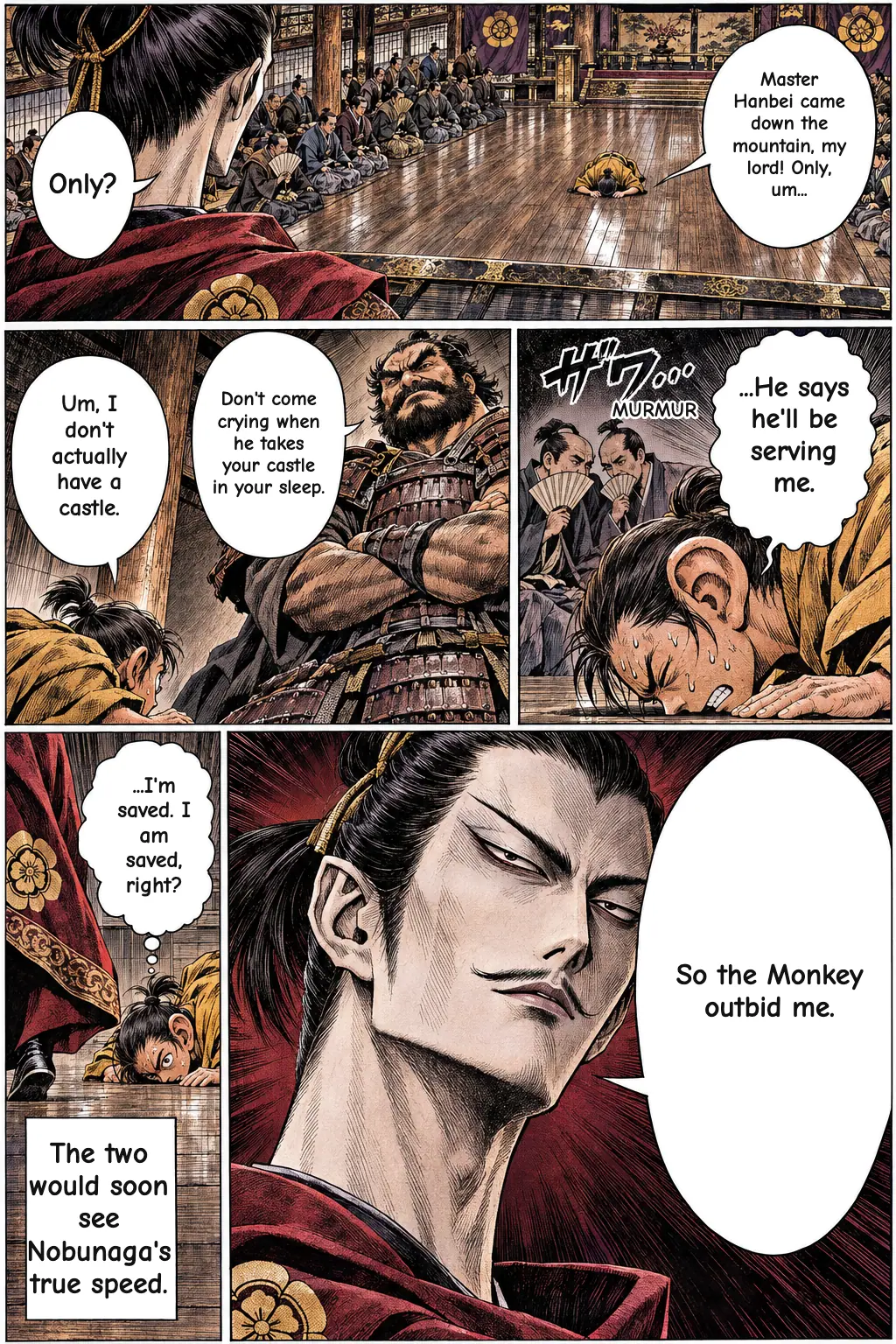
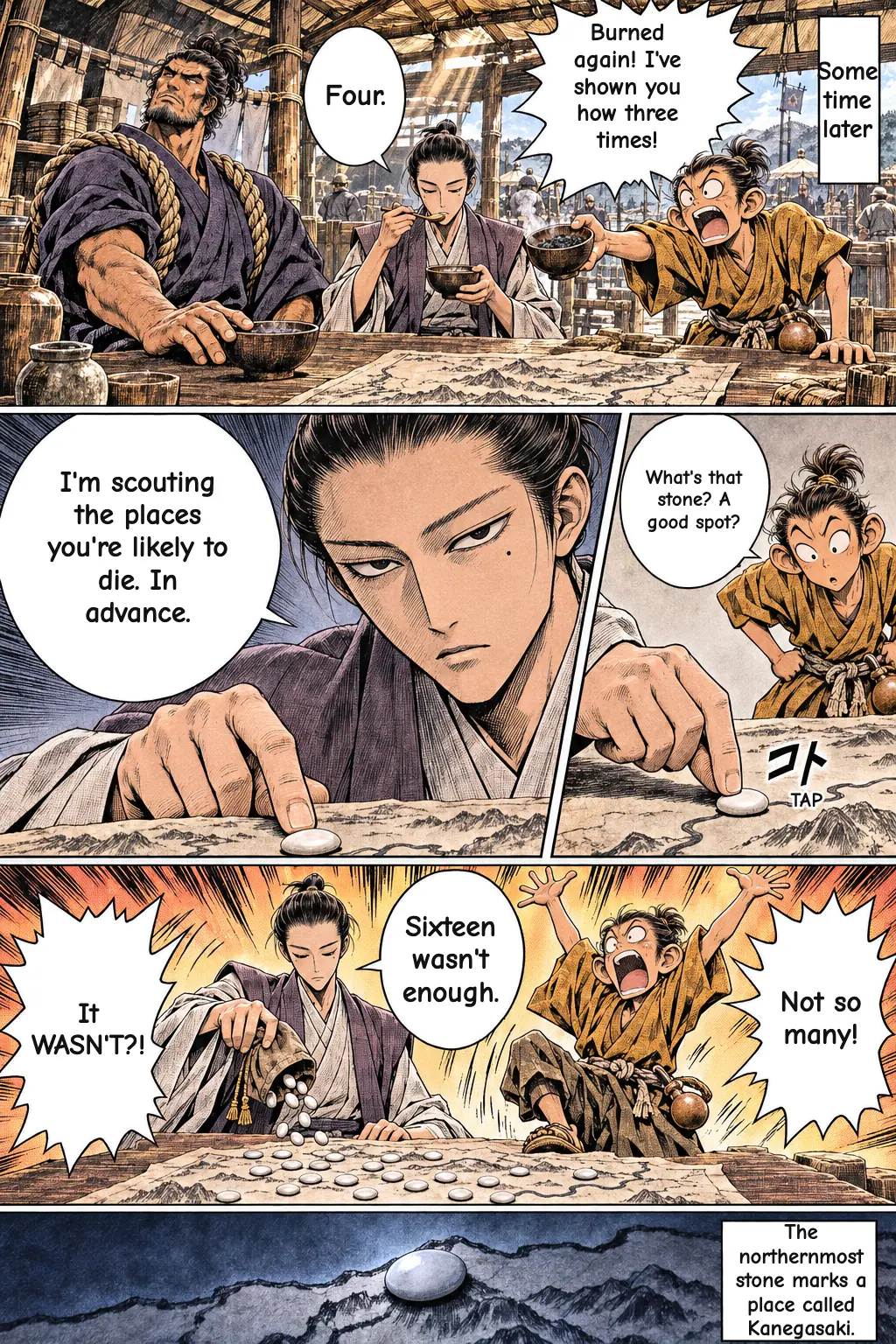
Episode 4 builds its drama on material that the manga invents or freely adapts. Hideyoshi climbing the mountain on repeated visits comes from later legend and is presented here as dramatization. The conversations between the two men are also created for the manga: Hanbei calling out every compliment and gift before it can work, and Hideyoshi, out of tricks, offering his own weakness on the third visit.
The series also imagines what the sources leave open: why Hanbei took the castle, how he felt when he gave it up, how he lived in retreat, how the two men first met, and why he would choose Hideyoshi over Nobunaga. Hanbei's look and way of speaking are original too. The manga deliberately avoids the frail, beautiful genius familiar from novels, TV dramas and games.
What it does not change is the historical result: Inabayama Castle still falls, and Mino still goes to Nobunaga.
Where to Read It
If you would like to see how an out-of-tricks Hideyoshi handles a man who sees through everything, you can read this story in Episode 4 of Toyotomi Hideyoshi: From Peasant to Ruler of Japan on Manga Portal. Every episode is free, and no account is needed. Start here, or go back to the beginning to follow the whole climb from peasant to ruler of Japan.
Characters in this episode
Kinoshita Tokichiro (Toyotomi Hideyoshi)
The hero of the series, a retainer of Oda Nobunaga who rises through his wits and later becomes the ruler of Japan.
Takenaka Hanbei (Shigeharu)
A Saito clan strategist famed for capturing Inabayama Castle with a small band, who later serves Hideyoshi.
Oda Nobunaga
The warlord of Owari and Tokichiro's lord, who leads the campaign to conquer Mino Province.
Saito Tatsuoki
The young lord of Mino and Hanbei's master, who loses Inabayama Castle first to Hanbei and later to the Oda forces.
Ando Morinari
A leading Saito retainer and Hanbei's father-in-law, said by tradition to have helped in the seizure of the castle.
FAQ
Who was Takenaka Hanbei?
Takenaka Hanbei (1544–1579), also known as Takenaka Shigeharu, was a Japanese strategist of the Warring States period. He first served the Saito clan of Mino and later served under Hideyoshi. He is commonly recorded as having died of illness during Hideyoshi's campaign in Harima Province.
How did Takenaka Hanbei capture Inabayama Castle?
Popular tradition says he entered with a dozen or so men, often given as sixteen or seventeen, on the pretext of visiting his sick brother, with weapons hidden in chests. His father-in-law, Ando Morinari, is said to have helped with troops. These details are widely repeated, but they may not all come from the Taikoki itself.
Why did Takenaka Hanbei give Inabayama Castle back?
No one knows for certain. A common explanation is that he wanted to warn his careless young lord, Saito Tatsuoki, rather than seize power for himself. The return itself, usually said to have come after about half a year, is also known mainly through later tradition.
Did Hideyoshi really visit Hanbei three times to recruit him?
This is later legend, and it closely resembles the Chinese story of Liu Bei visiting Zhuge Liang three times. Hanbei's service under Hideyoshi is part of the story's outline, but the repeated mountain visits are not established fact. The manga uses them as open dramatization.
Where is Inabayama Castle today?
It stood on Mount Kinka in present-day Gifu City. After taking it, Nobunaga is said to have renamed the area Gifu and moved his base there. The site is now known as Gifu Castle, and a modern reconstruction stands on the mountain.