Get new episodes in your feed. Follow us on:ThreadsBluesky
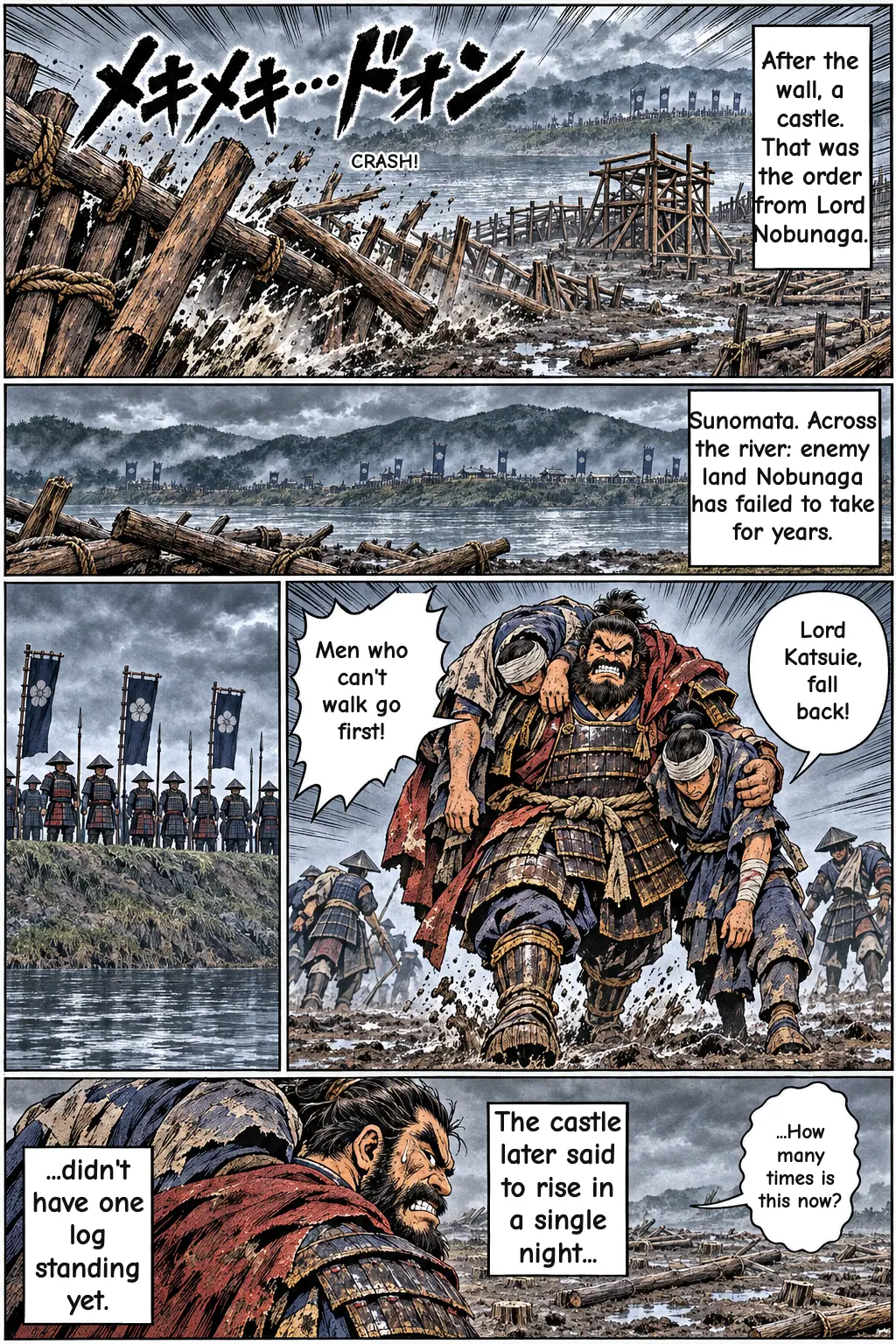
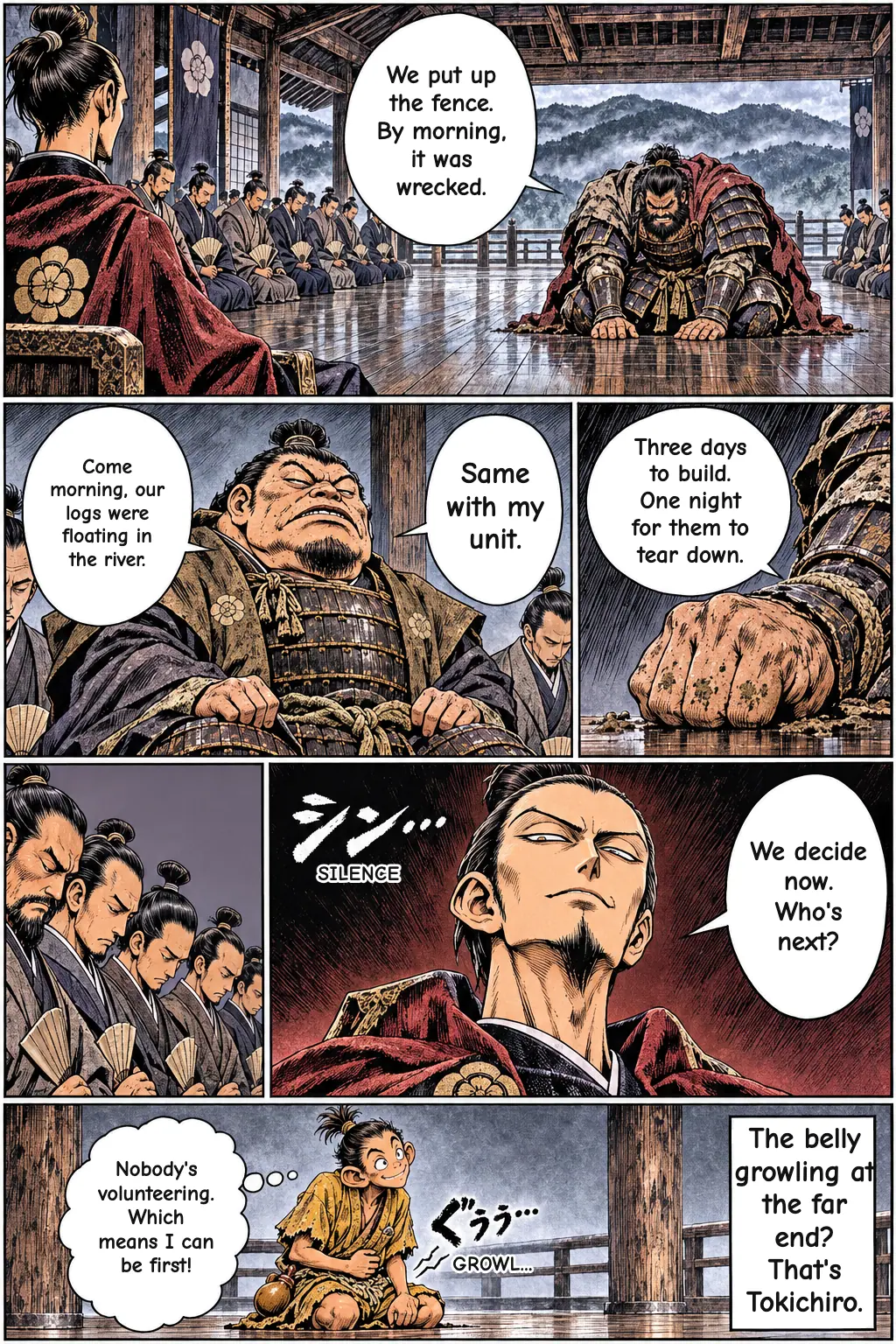
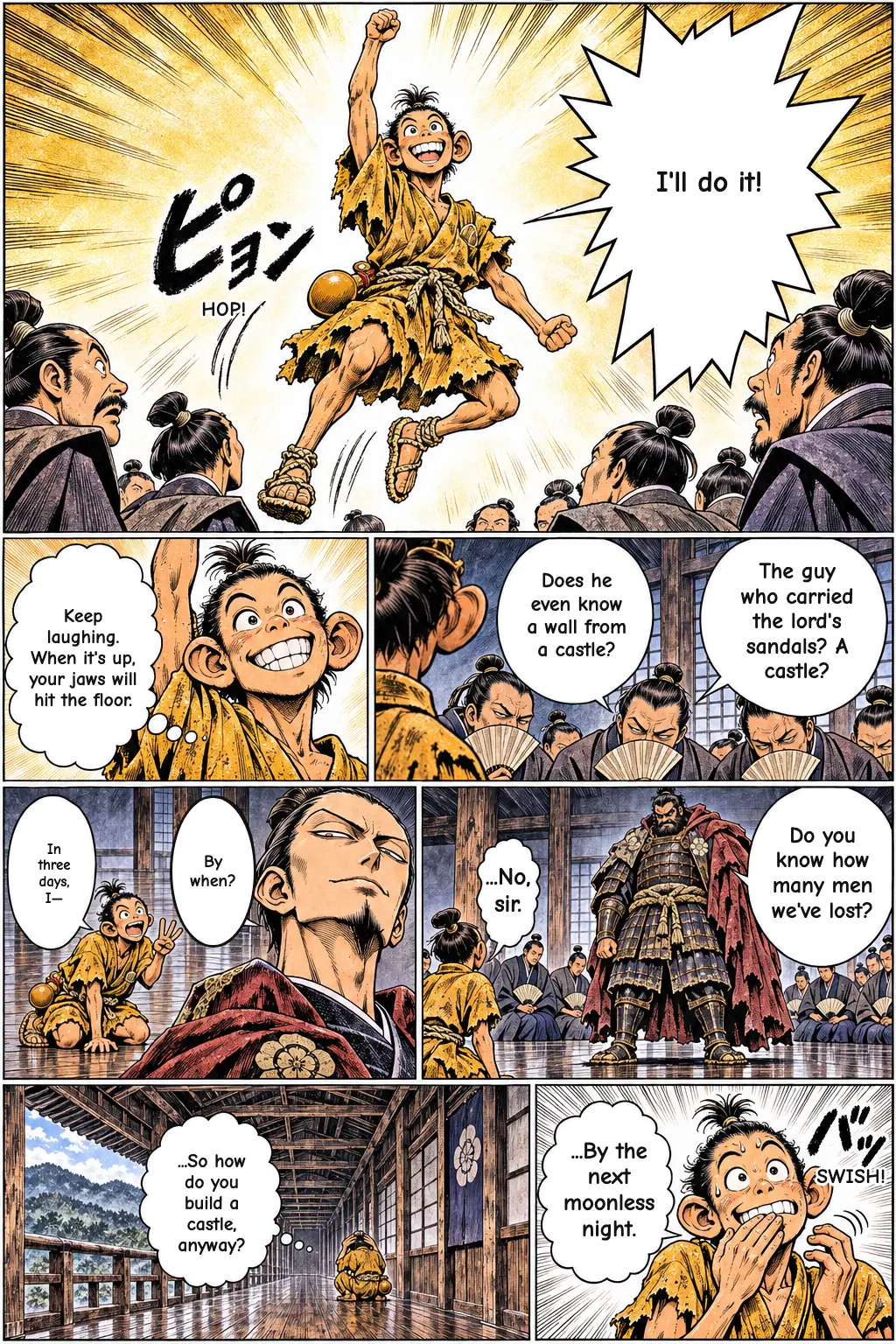
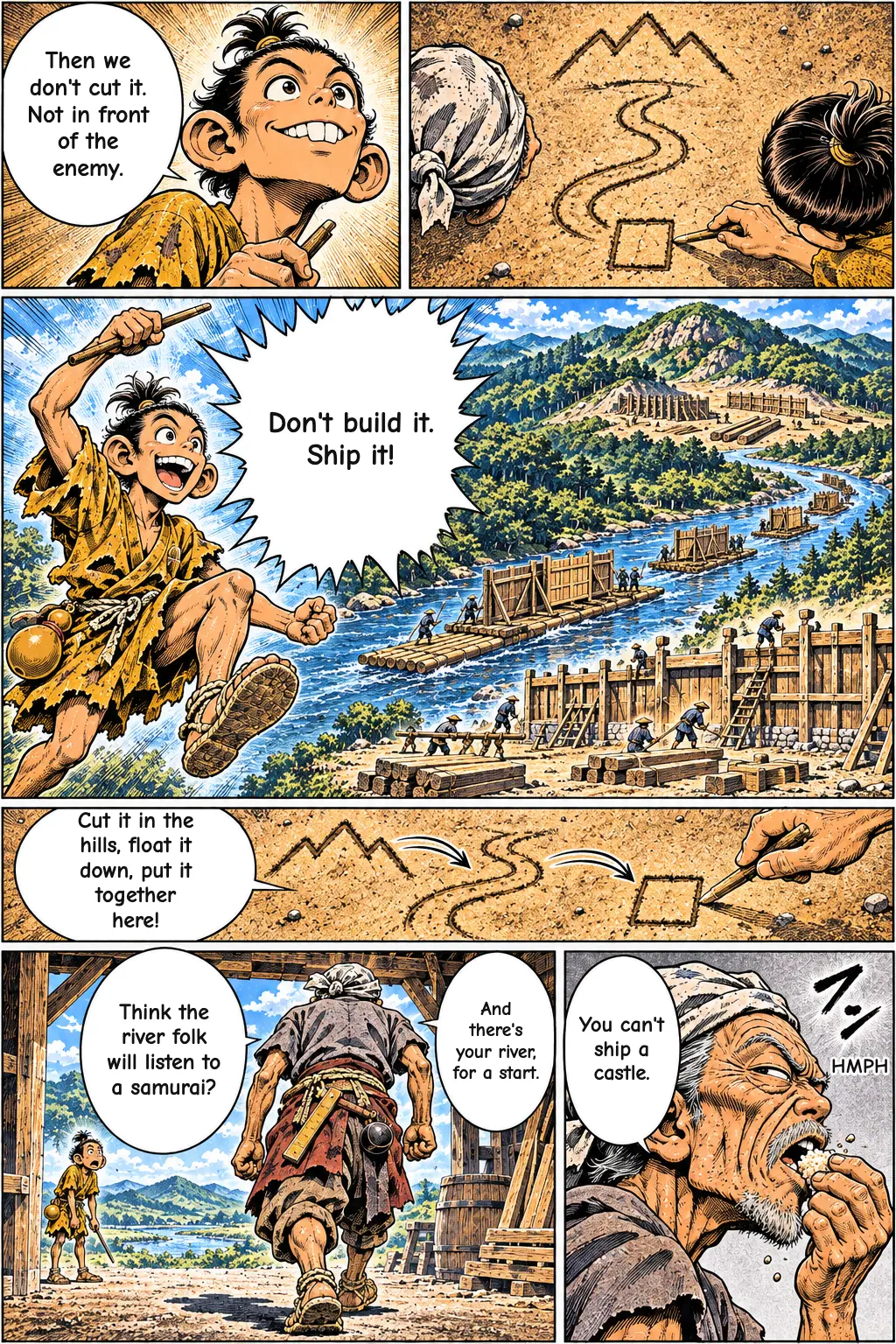
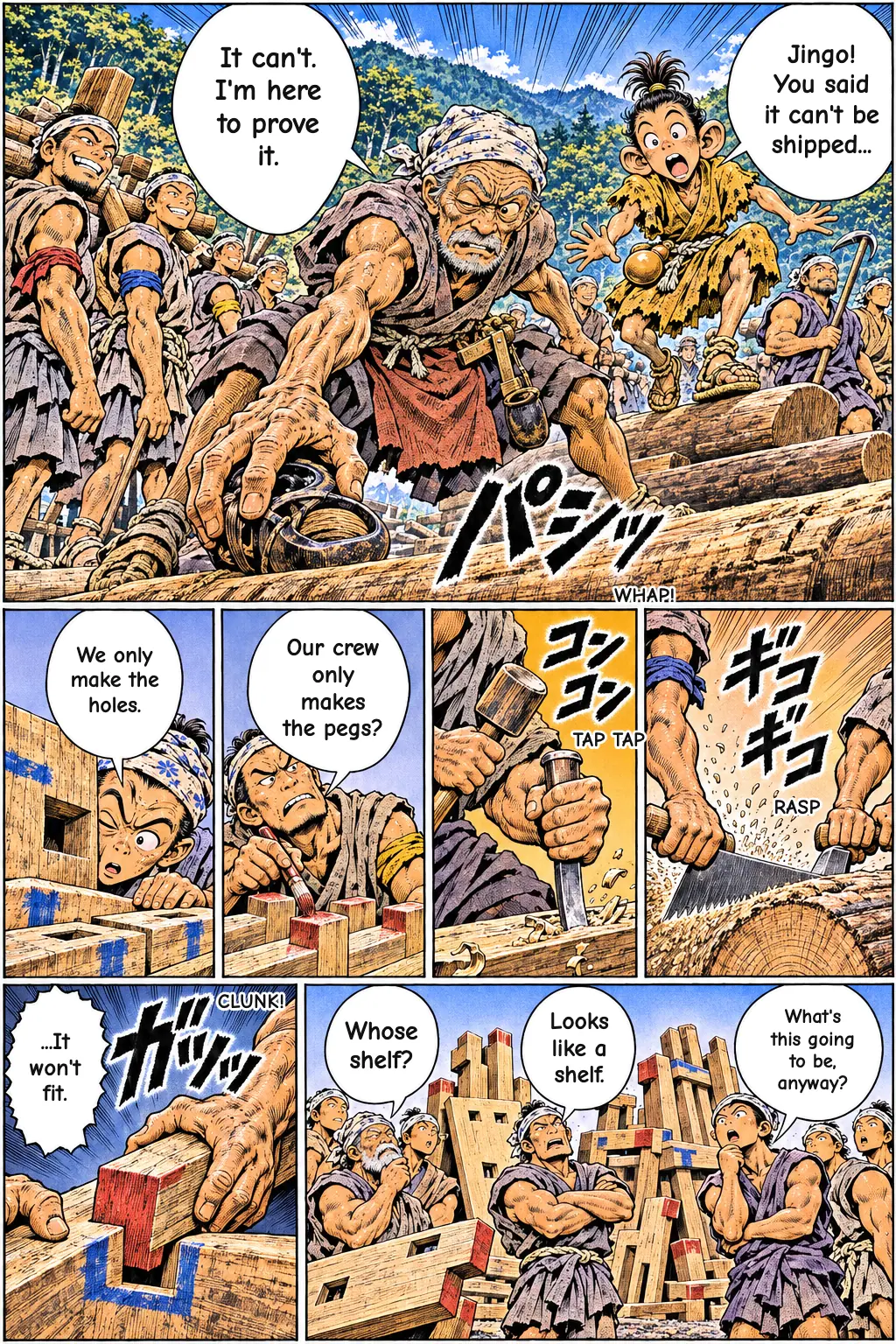
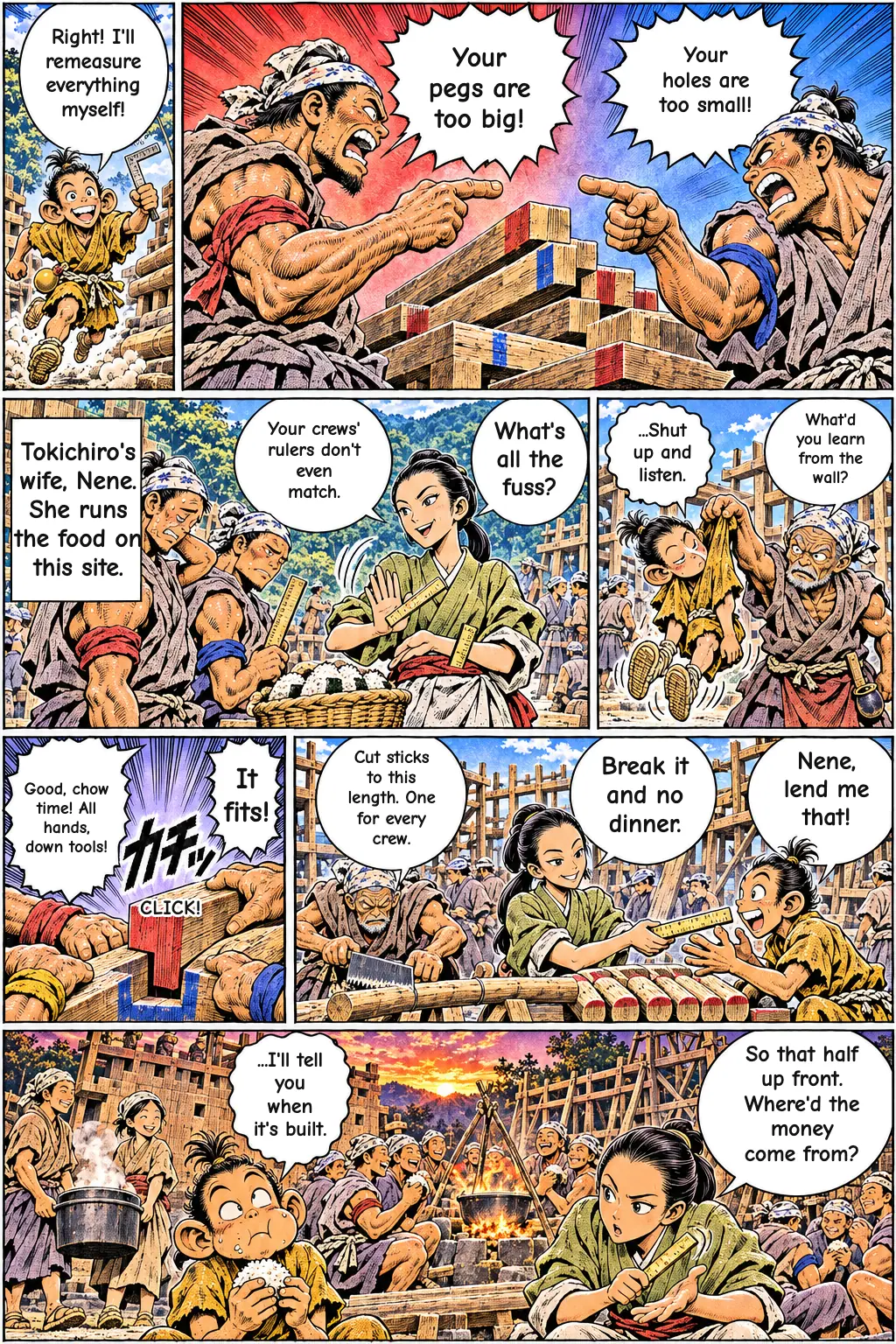
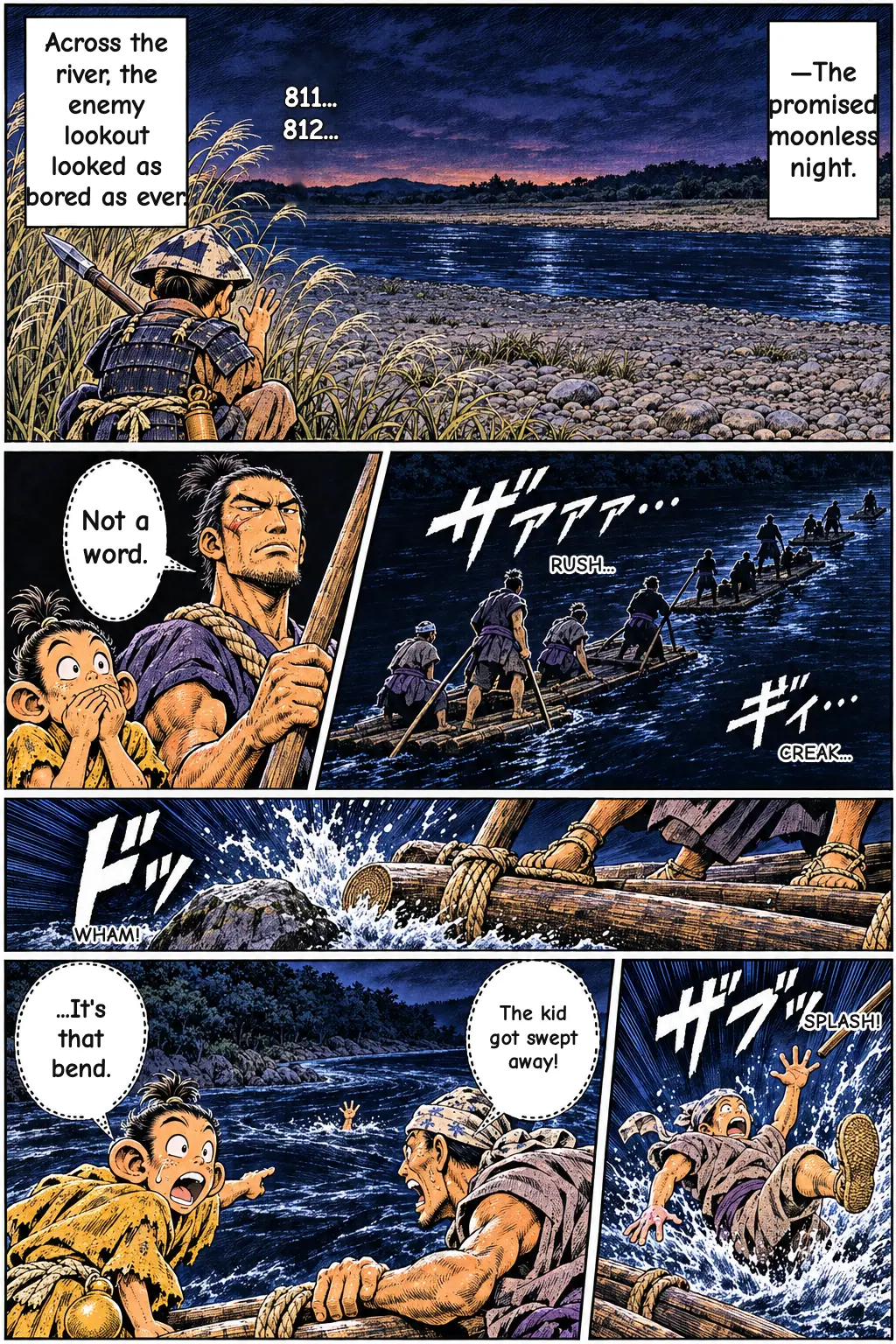
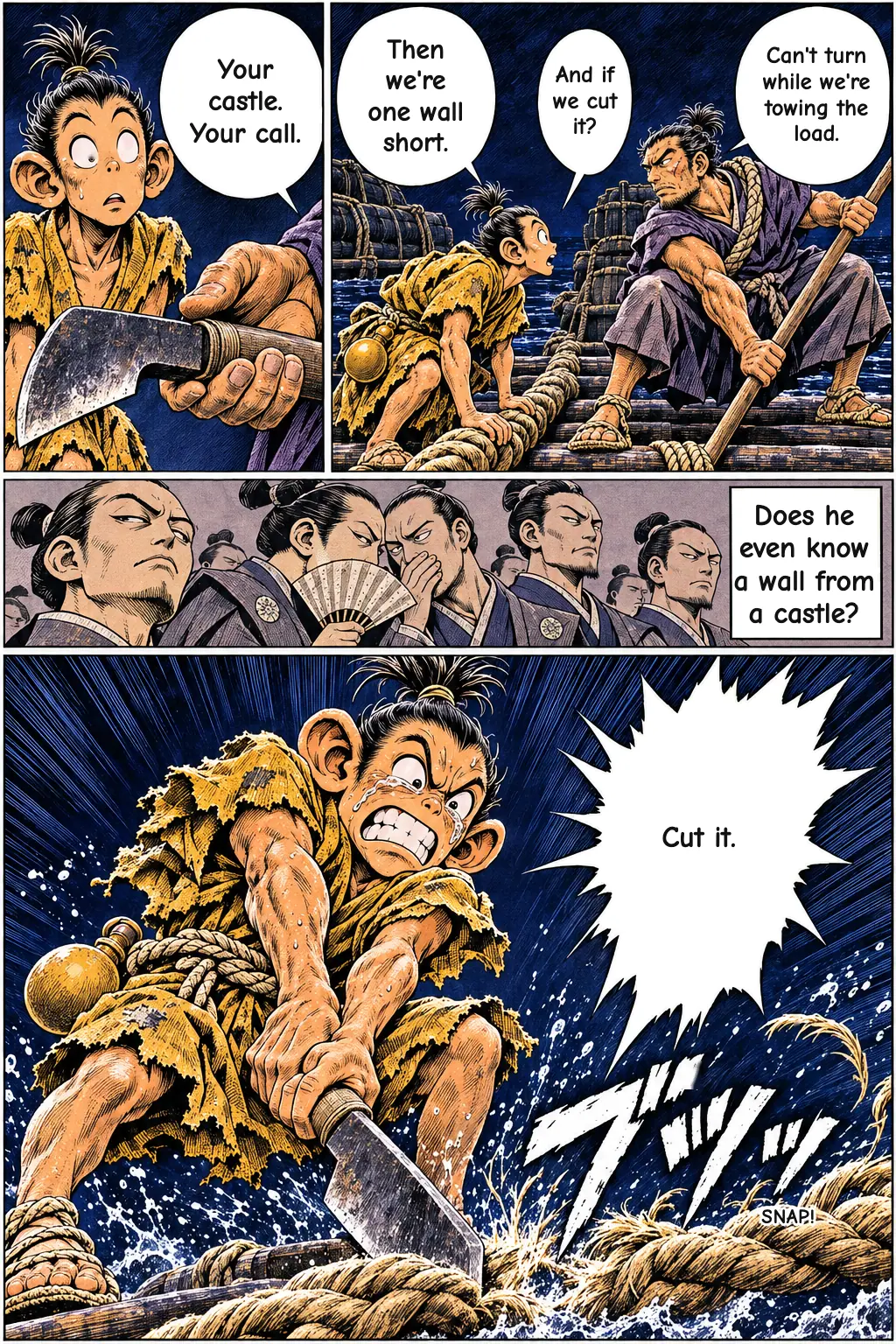
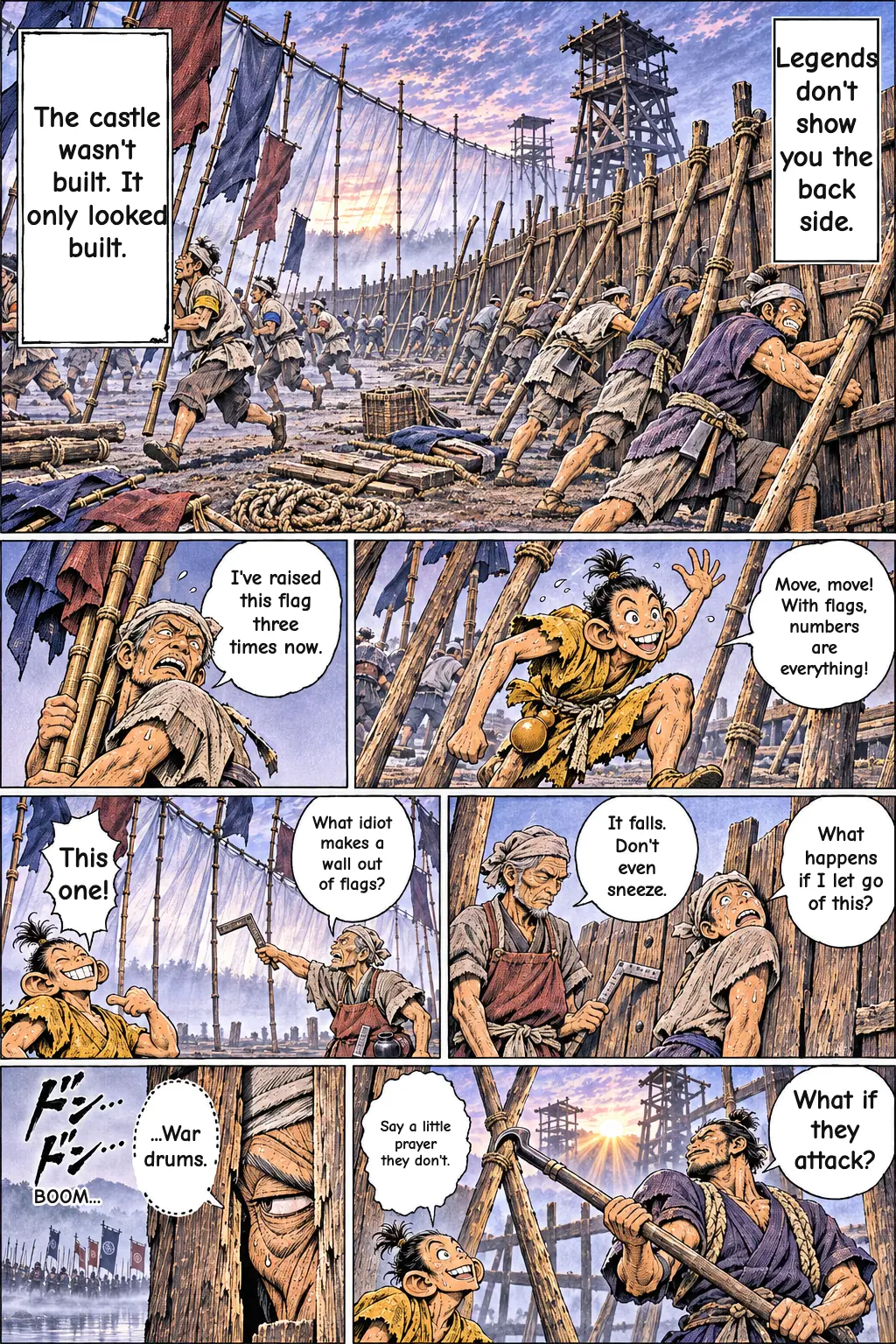
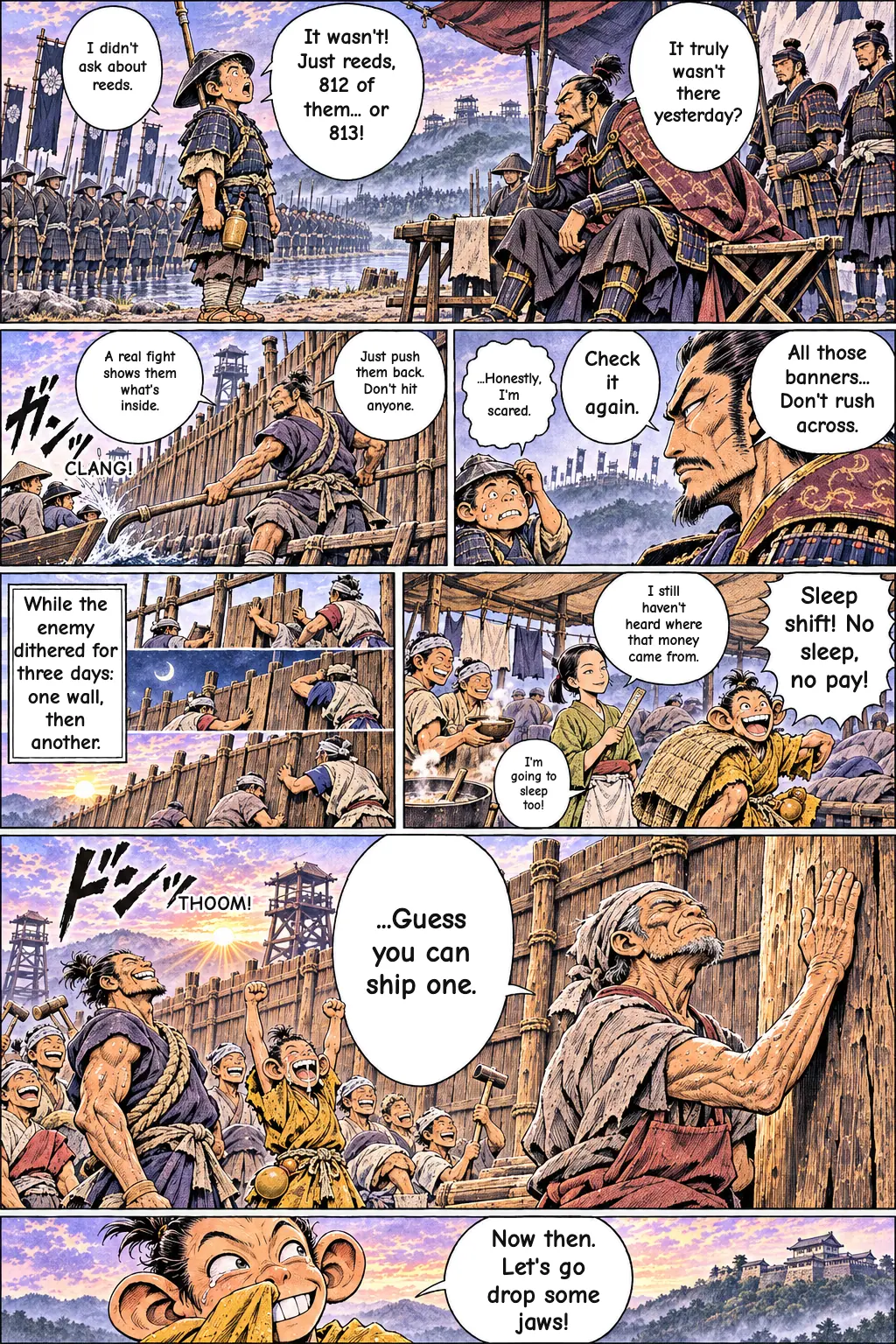
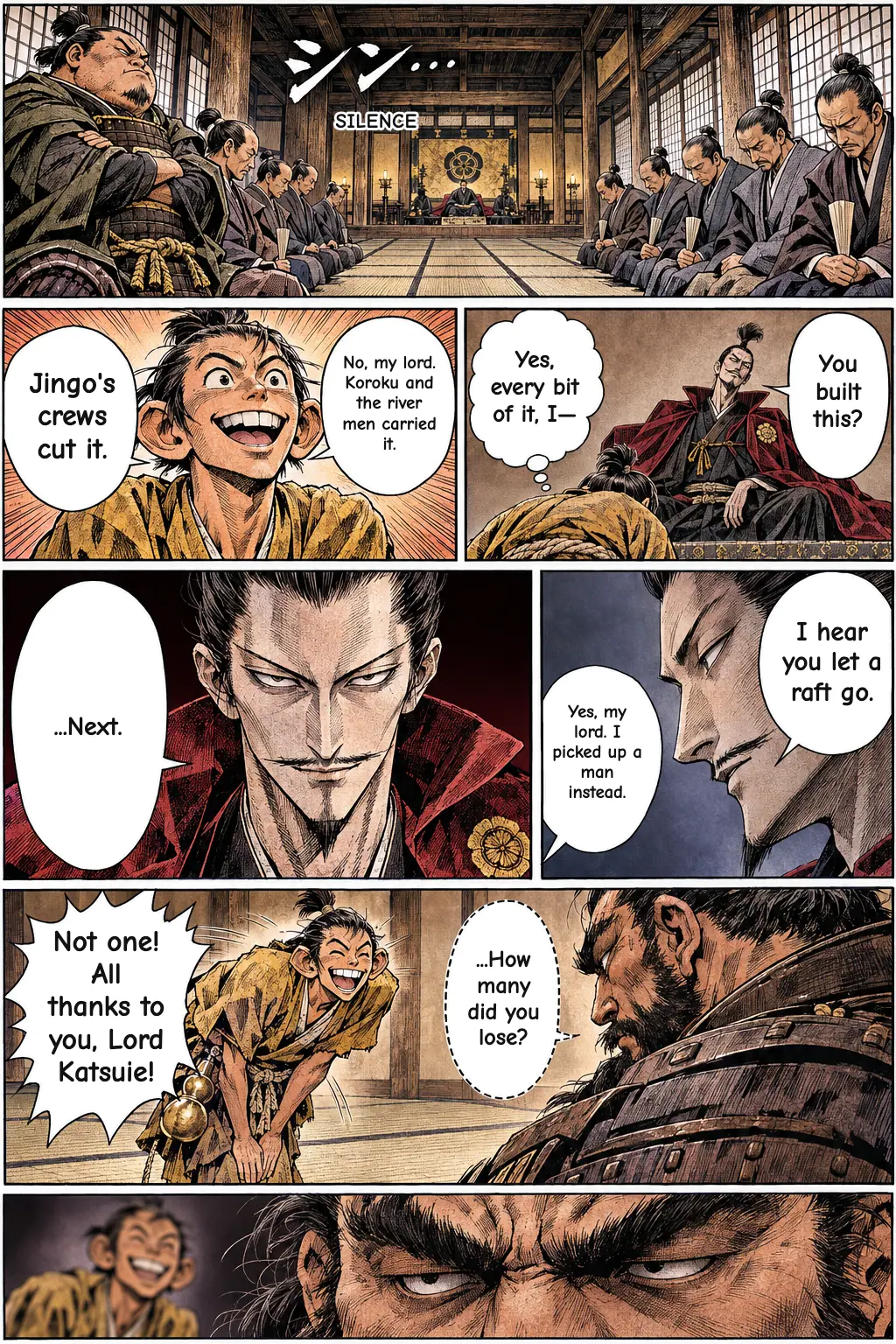
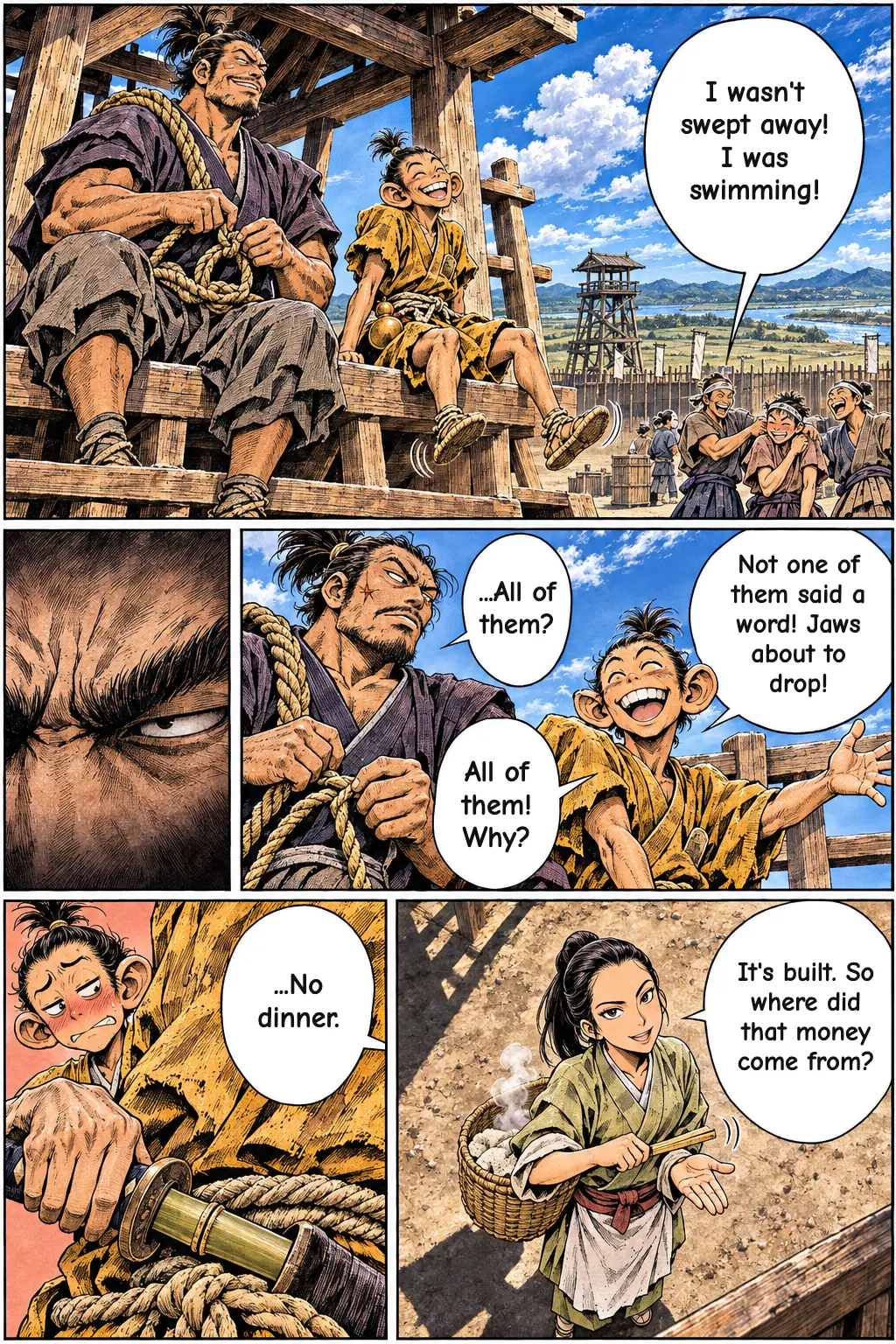
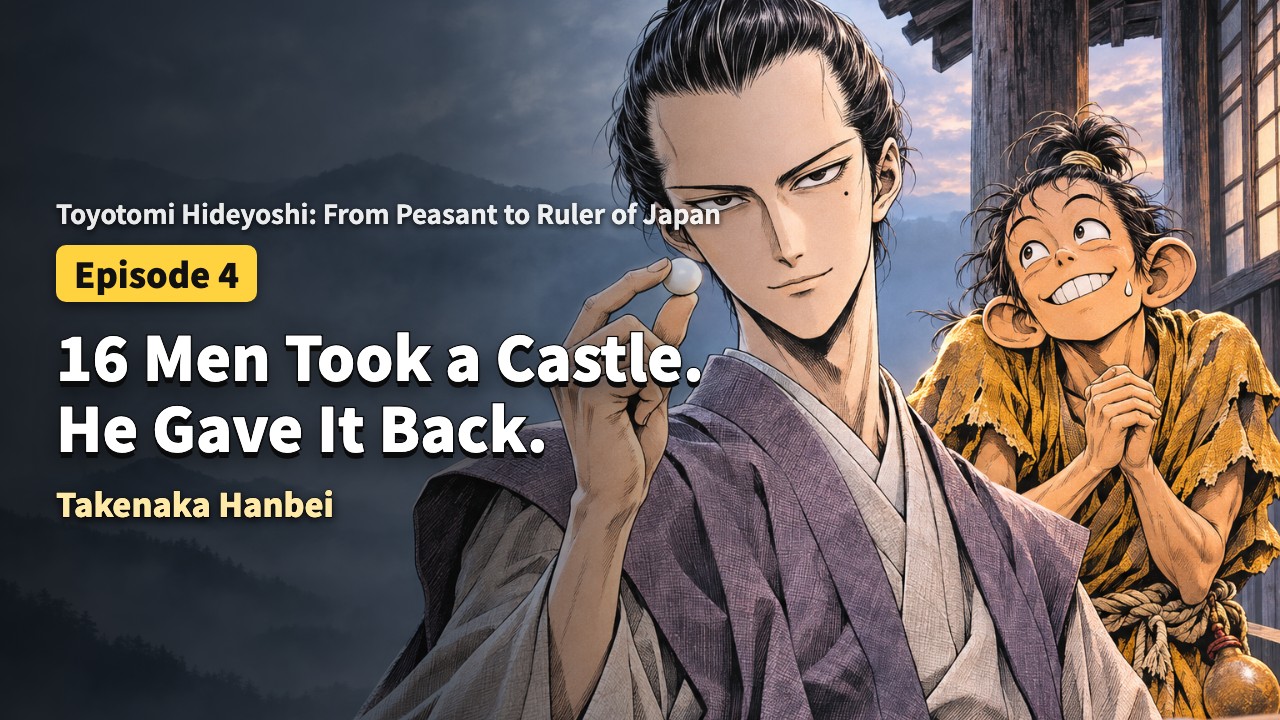
Everyone laughs when Tokichiro volunteers to build a castle the enemy keeps tearing down, right under their noses. His answer: don't build it, ship it, with river men and carpenters on his side. On the big night he must choose between a raft of castle parts and a man swept away, and his choice steals the enemy's morning.
Story summary
In the 1560s, Oda Nobunaga, the warlord of Owari Province in central Japan, was trying to conquer neighboring Mino Province, the land of the Saito clan. The campaign went slowly. Nobunaga needed a base close to enemy territory, and Sunomata, a riverside site on the way into Mino, was the obvious place for one. The trouble was getting a stronghold built there while the Saito side did everything it could to stop it. In the Taikoki, the biography of Hideyoshi by the scholar Oze Hoan, this hard job belongs to Kinoshita Tokichiro, the low-born retainer who would later become Toyotomi Hideyoshi.
In short: The Sunomata "one-night castle" is the story of how Kinoshita Tokichiro, the future Toyotomi Hideyoshi, built a fort for Oda Nobunaga at a riverside site near enemy territory, a task told in the Taikoki tradition of his life. The famous details, such as pre-cut timber floated downriver and a fort appearing by dawn, are generally treated as later legend, and the "one night" is an exaggeration.
The Story in Brief: What Happened at Sunomata
In the 1560s, Oda Nobunaga, the warlord of Owari Province in central Japan, was trying to conquer neighboring Mino Province, the land of the Saito clan. The campaign went slowly. Nobunaga needed a base close to enemy territory, and Sunomata, a riverside site on the way into Mino, was the obvious place for one. The trouble was getting a stronghold built there while the Saito side did everything it could to stop it.
In the Taikoki, the biography of Hideyoshi by the scholar Oze Hoan, this hard job belongs to Kinoshita Tokichiro, the low-born retainer who would later become Toyotomi Hideyoshi. He takes on the task and completes the fort. That is the core of the episode: a man with no family rank earns his lord's notice through ability and results, one more step on his climb from the bottom of society.
How the "One-Night Castle" Legend Grew
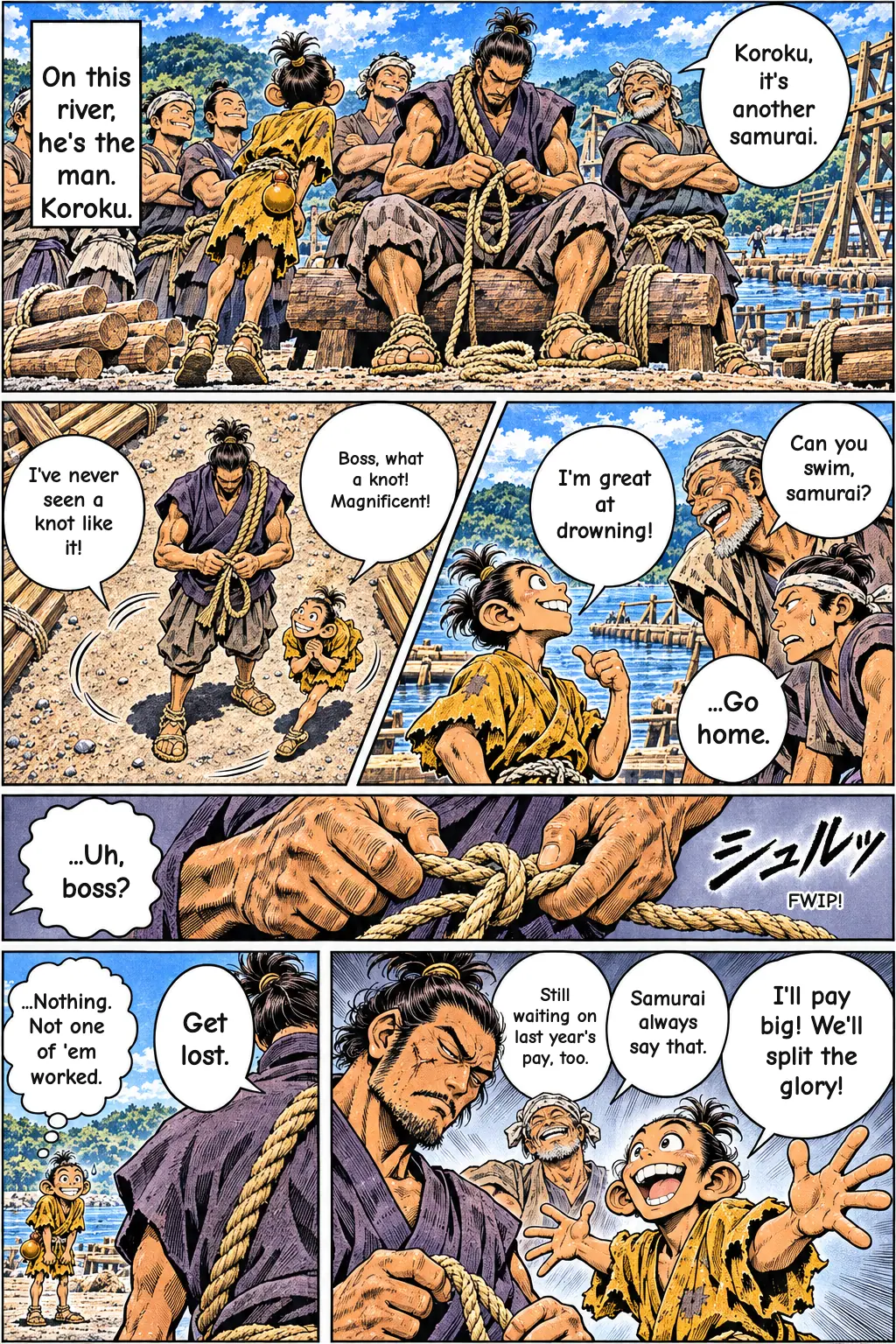
The version most people know today is far more dramatic. In it, Nobunaga's senior generals, Sakuma Nobumori and Shibata Katsuie, try to build at Sunomata first and fail under enemy attack. Tokichiro then turns to people outside the usual chain of command: river men led by Hachisuka Koroku, a local strongman who knew the waterways.
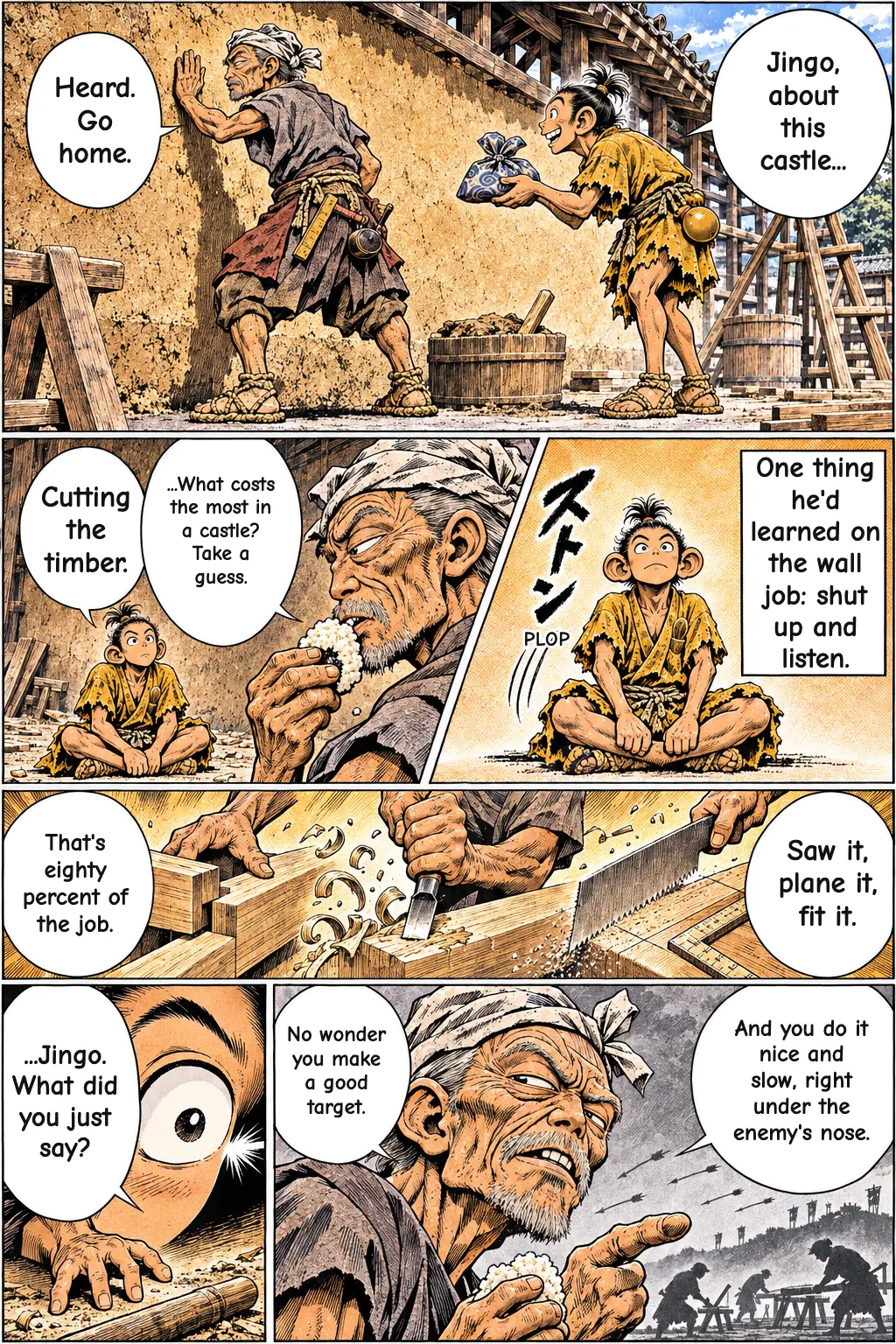
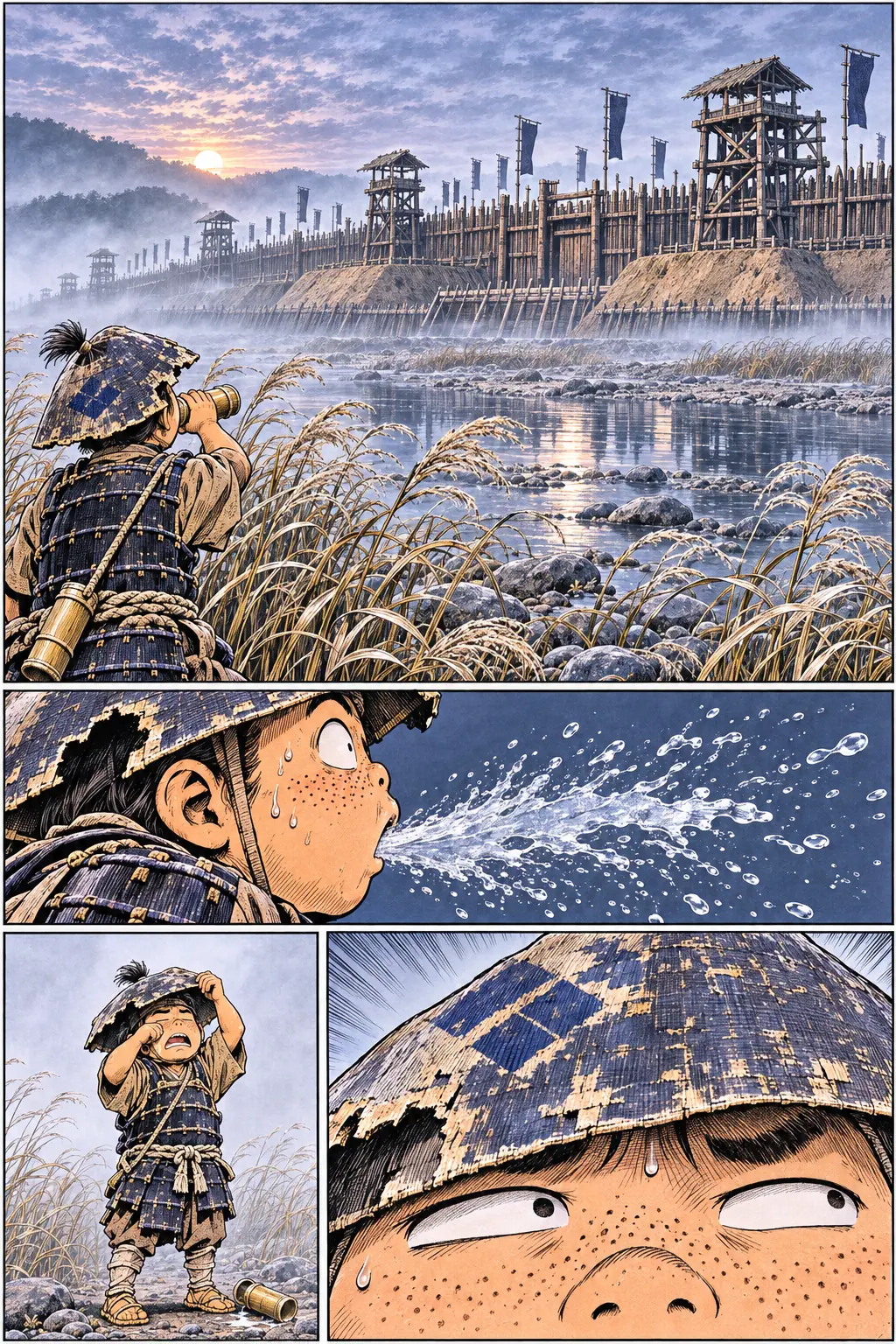
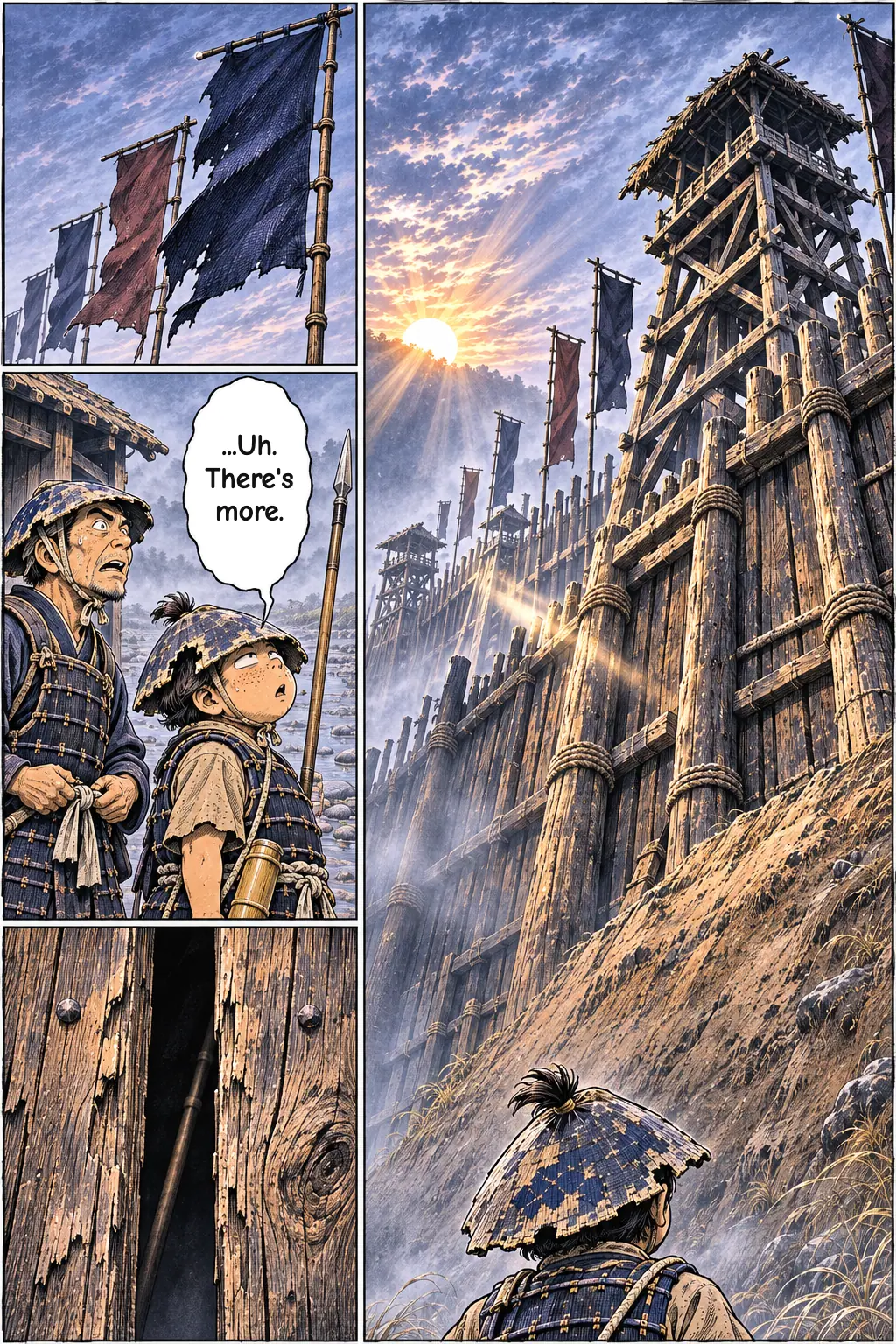
Rather than building on site, the crews cut and shape timber upstream and float it down the river. Once there, they put up fences and towers at high speed while fending off the Saito troops. At dawn, the enemy looks across the water and sees a fort that was not there before. The senior generals are shown up, and Nobunaga has found a man worth promoting.
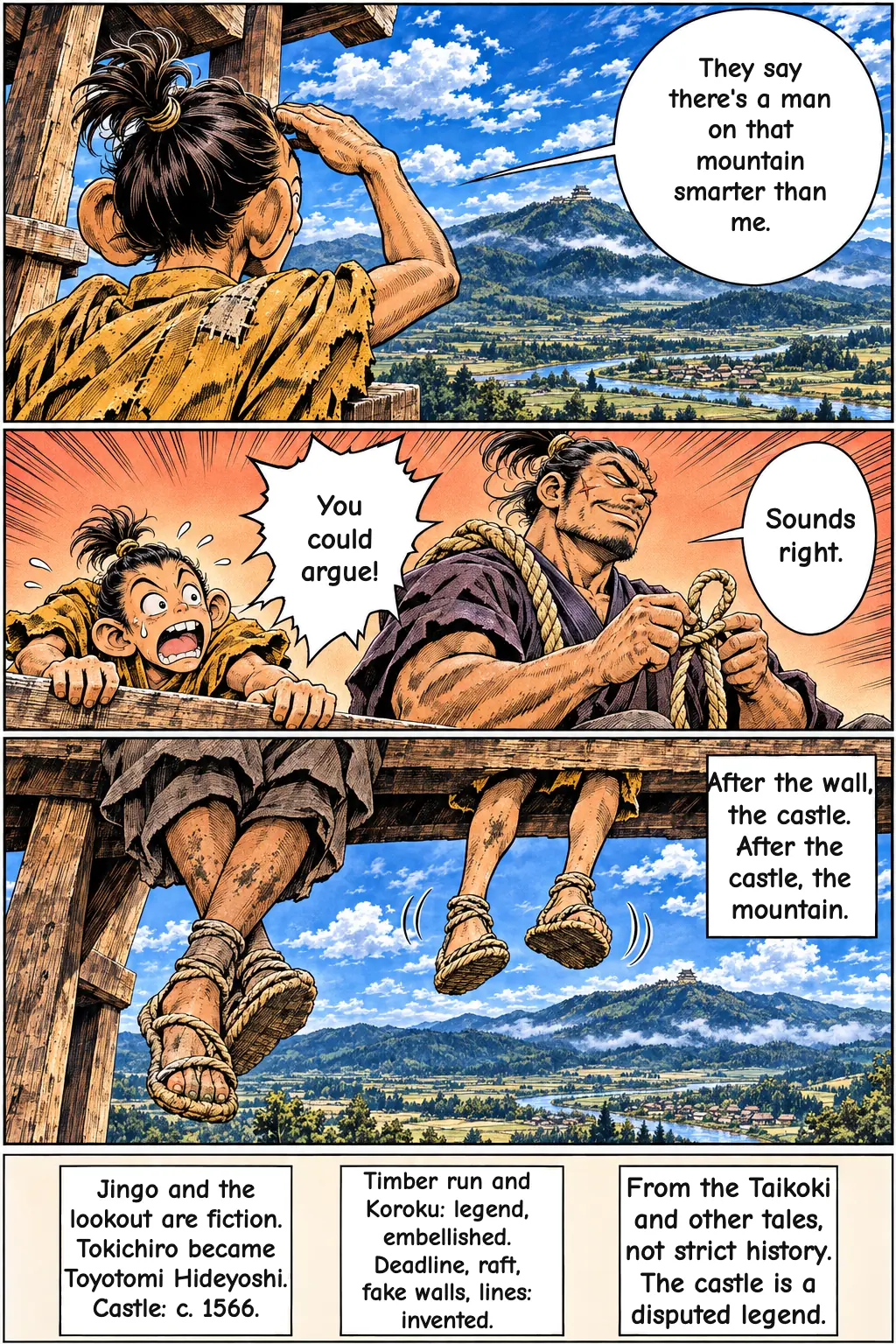
Treat these details as tradition, not record. They are thought to have spread through later retellings and popular books, and we have not confirmed how many appear in Oze Hoan's own text. The "one night" itself is an exaggeration; any real construction would have taken days at the least. Some historians also question how much of the famous episode happened as told.
Why the Story Matters: Forts, Rivers and a Rise from Nothing
The story is set in the Sengoku, or Warring States, period, when rival lords fought for control of Japan. A fort built deep in the frontier zone was more than a building. It gave an army a place to gather, store supplies and threaten the enemy, and at a river site it could also help control movement along the water. That is why a small fort could matter so much, and why the other side would fight to stop it.
The legend also lasts because it fits the larger Hideyoshi story. He rose from humble origins to rule Japan, an extraordinary climb in a society built on rank. The Sunomata tale turns that climb into a single picture: the man everyone underestimates solves, by planning and by winning over common workers, a problem that force could not solve.
Keep in mind what kind of book the Taikoki is. Oze Hoan wrote it in the early 1600s, after Hideyoshi's death in 1598, and it is a literary biography rather than a neutral record. Later history adds a neat ending: Inabayama, the main Saito castle, fell to Nobunaga, and the clan lost Mino. The claim that Sunomata directly caused this is mainly storytelling, though the fort is often remembered as one step in the campaign.
What the Manga Changes and Adds
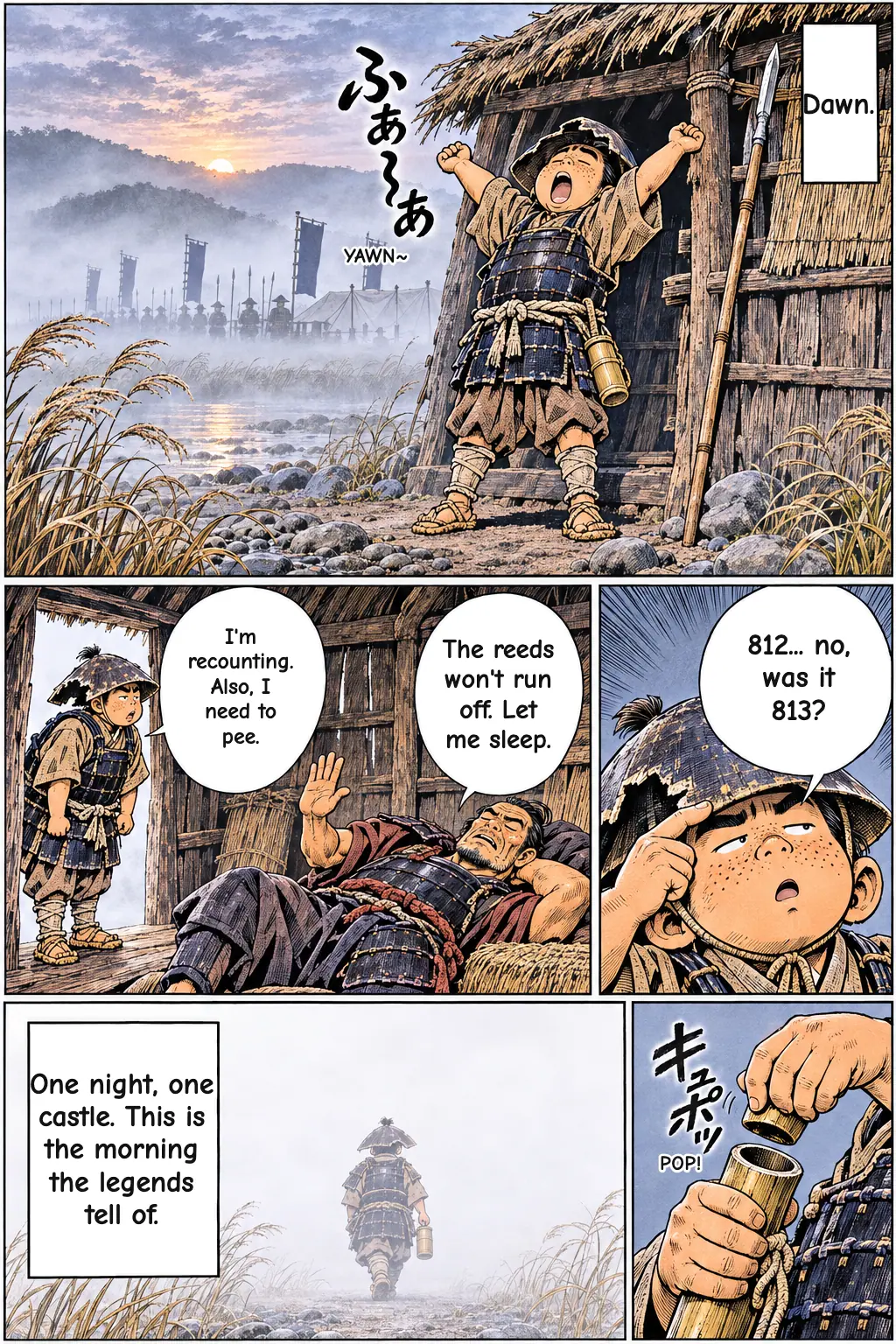
This episode, "Build a Castle Before the Enemy Wakes," follows the popular legend and openly adds to it. Everyone laughs when Tokichiro volunteers, and his answer is a plan that sounds like a joke: don't build the castle, ship it. These scenes are not established parts of the source as we have checked it.
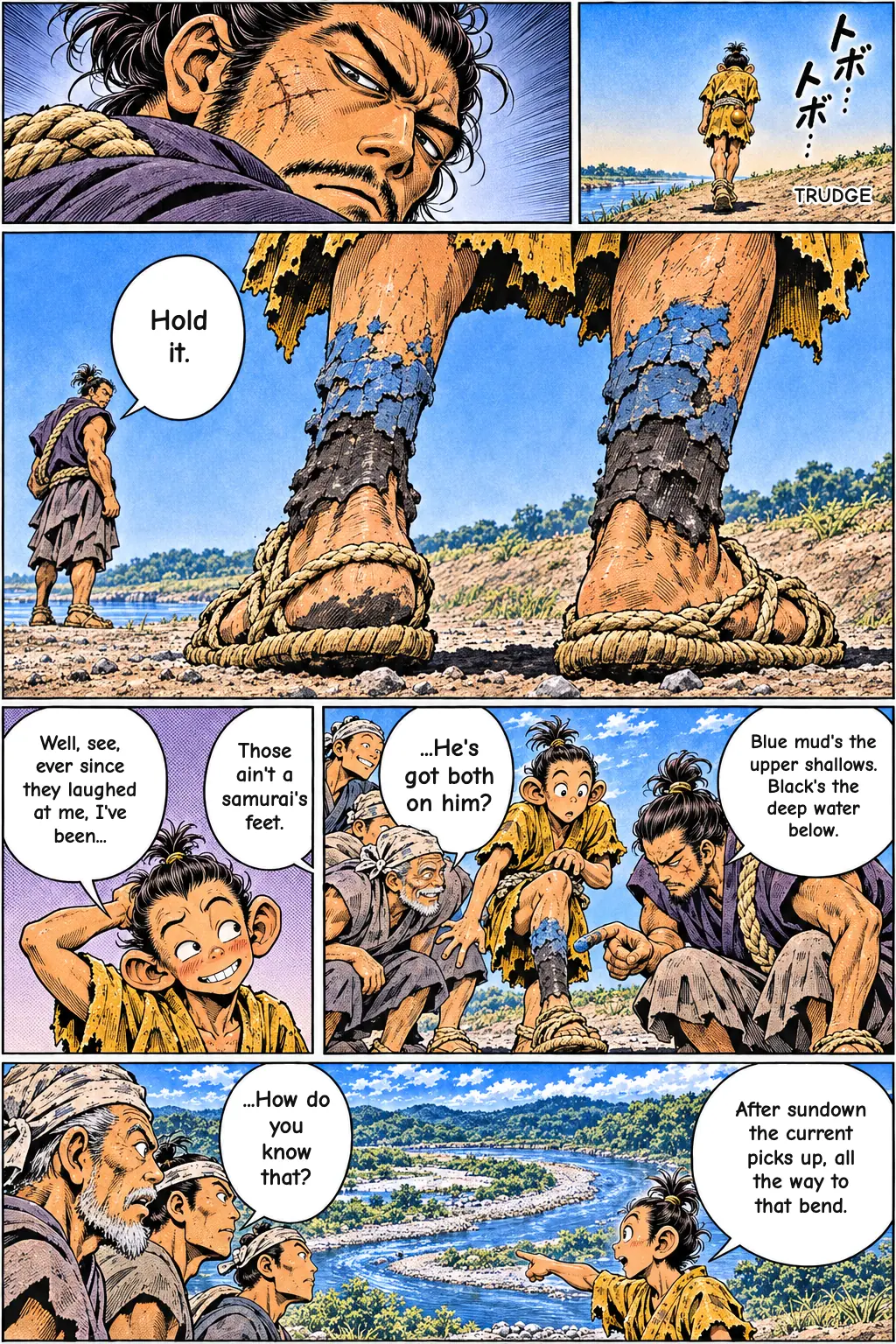
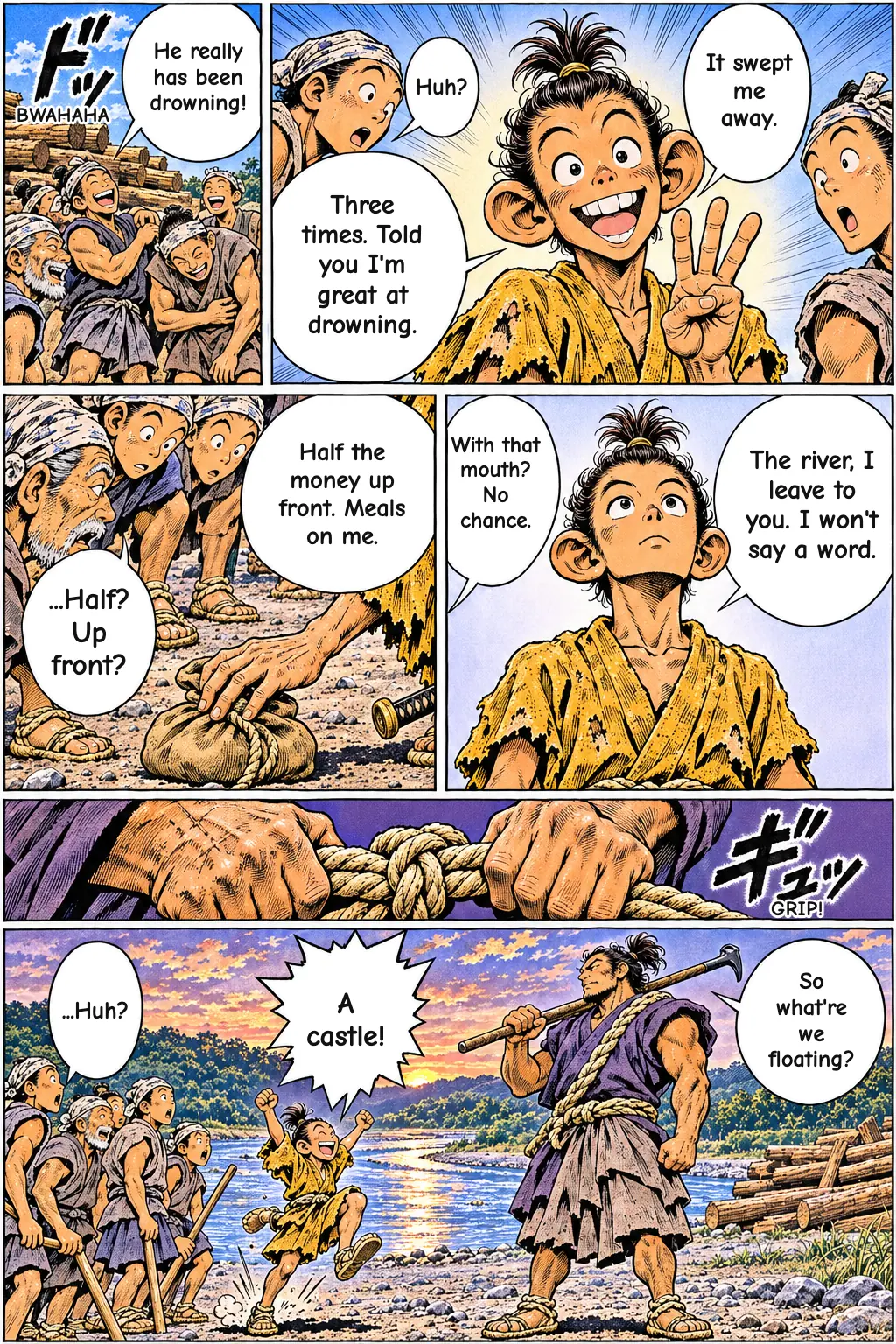
The manga's own inventions include the step-by-step system of preparing, numbering and rafting the castle parts; the dialogue and bargaining when Tokichiro recruits Koroku; the comedy of senior retainers sneering and then fuming; and the reactions of unnamed Saito lookouts. Tokichiro's jokes, gestures and pep talks to his crew are also created for the page, as are the diagram panels in which he explains his plan.
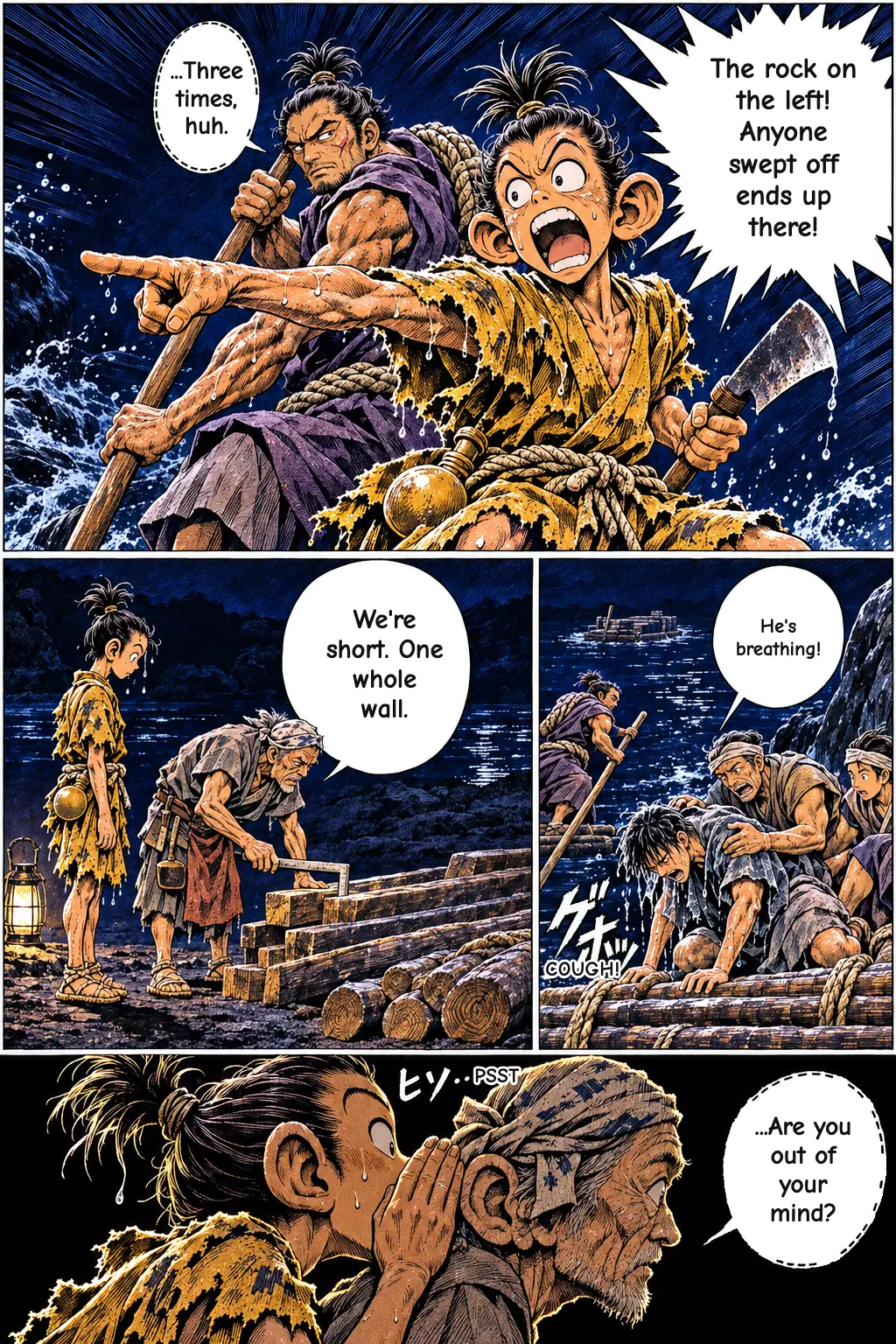
The biggest addition is the crisis on the big night. Night raids, rising water and lost materials are built for tension, including the moment when Tokichiro must choose between a raft of castle parts and a man swept away. Don't read that choice as history. It is the manga's way of showing why people would follow him. The "overnight" castle is likewise treated as a short building job, with the dawn surprise played up as the big payoff.
Where to Read It
If you came here wondering how a castle could appear overnight, this episode is an entertaining way to see the legend in motion: the laughter, the wild plan and the enemy's shocked morning. It also works well as a way into Hideyoshi's whole rise from peasant to ruler of Japan.
Toyotomi Hideyoshi: From Peasant to Ruler of Japan is free to read in full here on Manga Portal, with no sign-up needed. Read Episode 3 above, or start from the beginning and watch Tokichiro climb one impossible job at a time.
Characters in this episode
Kinoshita Tokichiro (later Toyotomi Hideyoshi)
The low-born retainer of Oda Nobunaga who takes on the Sunomata job and completes it, and who would one day rule Japan.
Oda Nobunaga
The warlord of Owari Province, who is fighting to take Mino and rewards Tokichiro's ability.
Saito Tatsuoki and the Saito forces
The ruling side in Mino Province, who try to block Oda's advance; their personalities in this episode are the manga's invention.
Hachisuka Koroku (Masakatsu)
A river-country strongman and later retainer of Hideyoshi, whose help at Sunomata comes from tradition rather than confirmed source text.
Sakuma Nobumori and Shibata Katsuie
Senior Oda generals who, in the popular legend, fail at Sunomata before Tokichiro succeeds; this role is not confirmed in the source text.
FAQ
Did Toyotomi Hideyoshi really build a castle in one night?
Almost certainly not in a single night. The "one night" is an exaggeration, and any real work would have taken days at the least. Some historians also question how much of the famous episode happened as told.
What is the Sunomata Castle story about?
Oda Nobunaga needs a base near enemy territory during his campaign against the Saito clan of Mino. The young Hideyoshi, then called Kinoshita Tokichiro, takes on the job and gets the fort built. Popular versions add floated timber, river-men allies and a fort that seems to appear by dawn.
Where is Sunomata?
Sunomata is a riverside area in what is now the city of Ogaki in Gifu Prefecture, central Japan. In the story, it lies at the edge of Mino Province, the land Nobunaga wanted to conquer. The name is also written Sunomata in older forms of the same place name, with different Japanese characters.
Who helped Hideyoshi build the Sunomata castle?
Popular tradition credits Hachisuka Koroku and his river men, who later feature among Hideyoshi's followers. We have not confirmed that this role appears in Oze Hoan's Taikoki, so it is best read as part of the legend.
What is the Taikoki?
The Taikoki is a biography of Toyotomi Hideyoshi written by the scholar Oze Hoan in the early 1600s, after Hideyoshi's death. It is a literary account rather than a neutral record, and its name comes from Taiko, a title Hideyoshi held late in life.