Episode 7Too Proud to Say Sorry, He Played a CrowKaki-Yamabushi
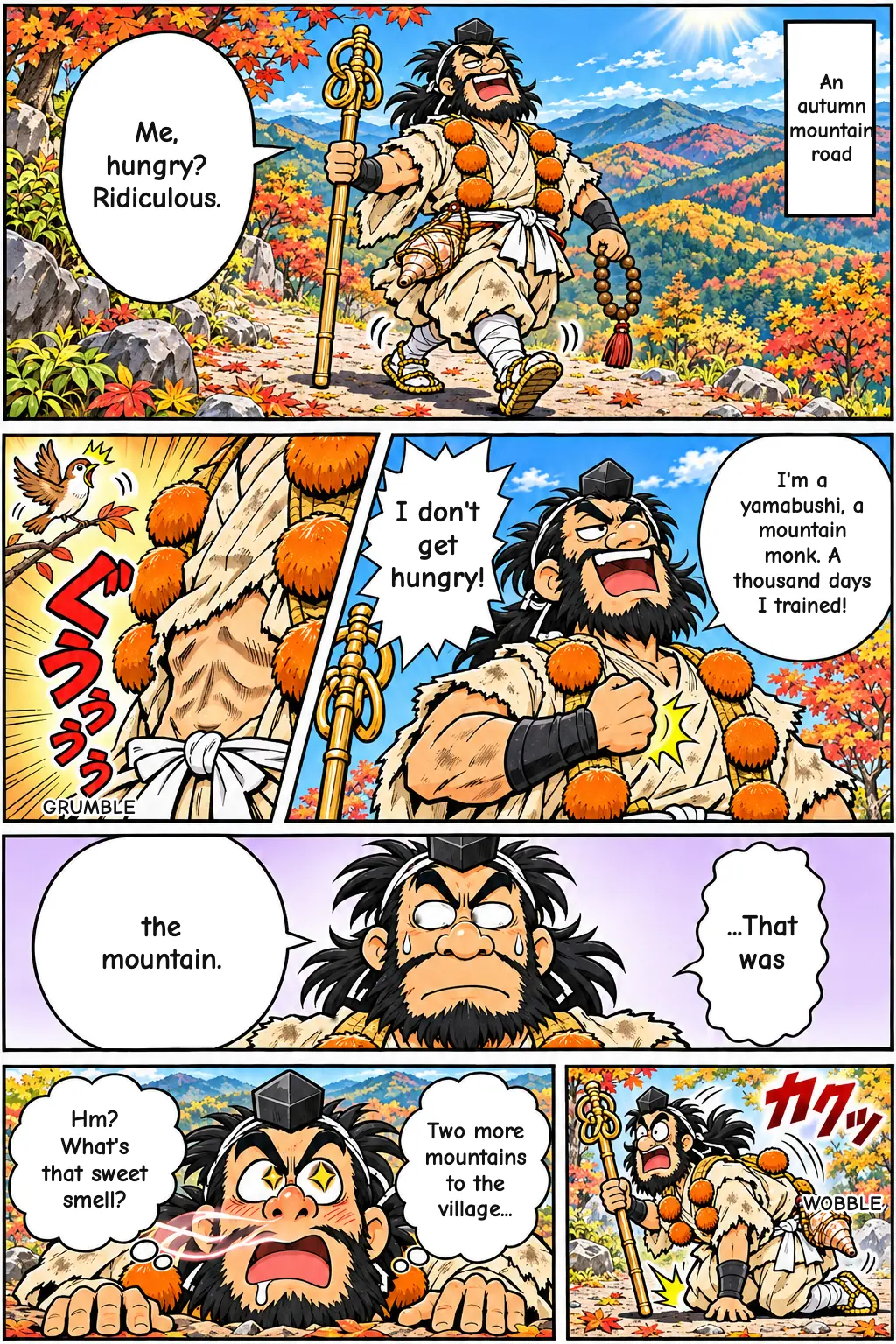
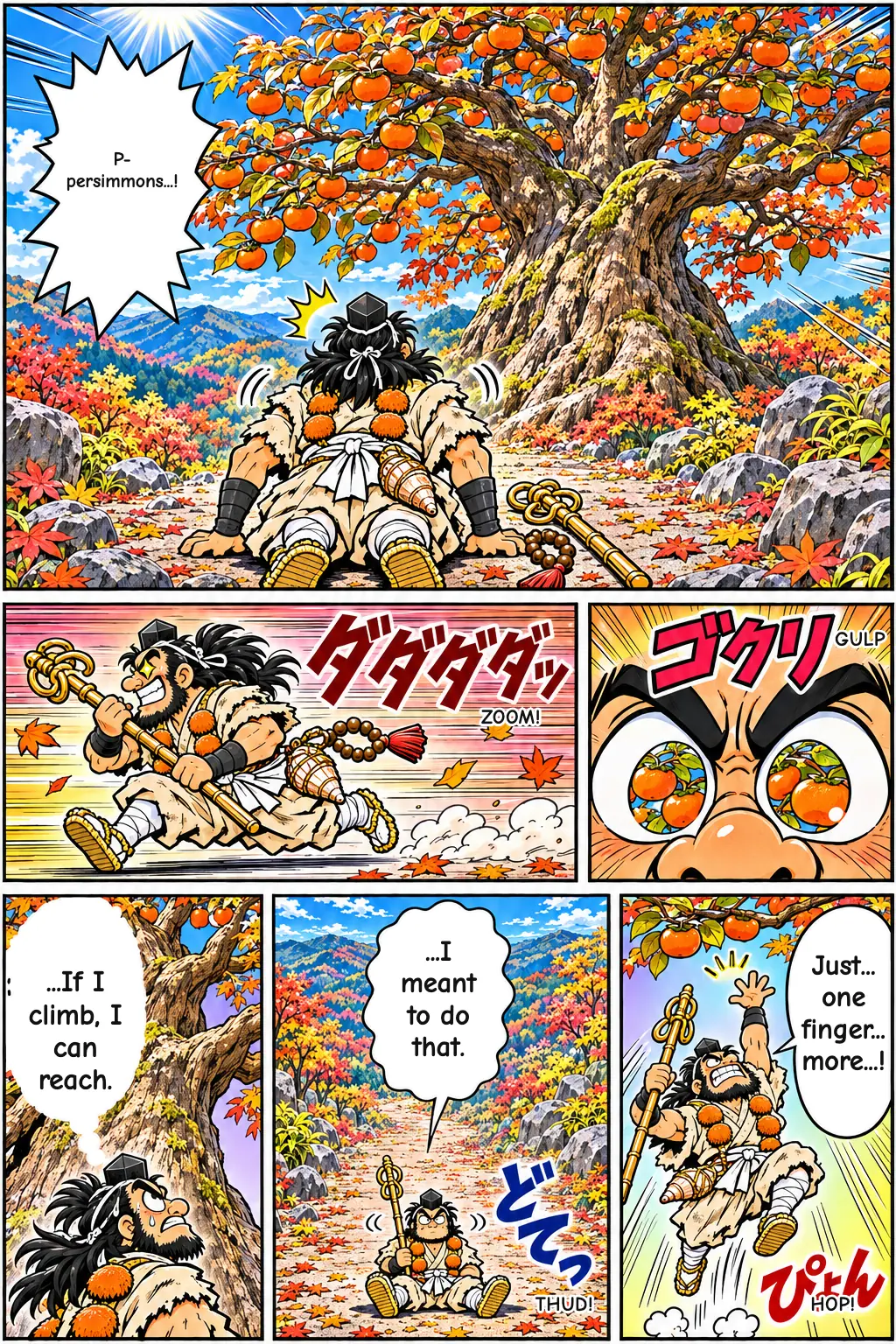
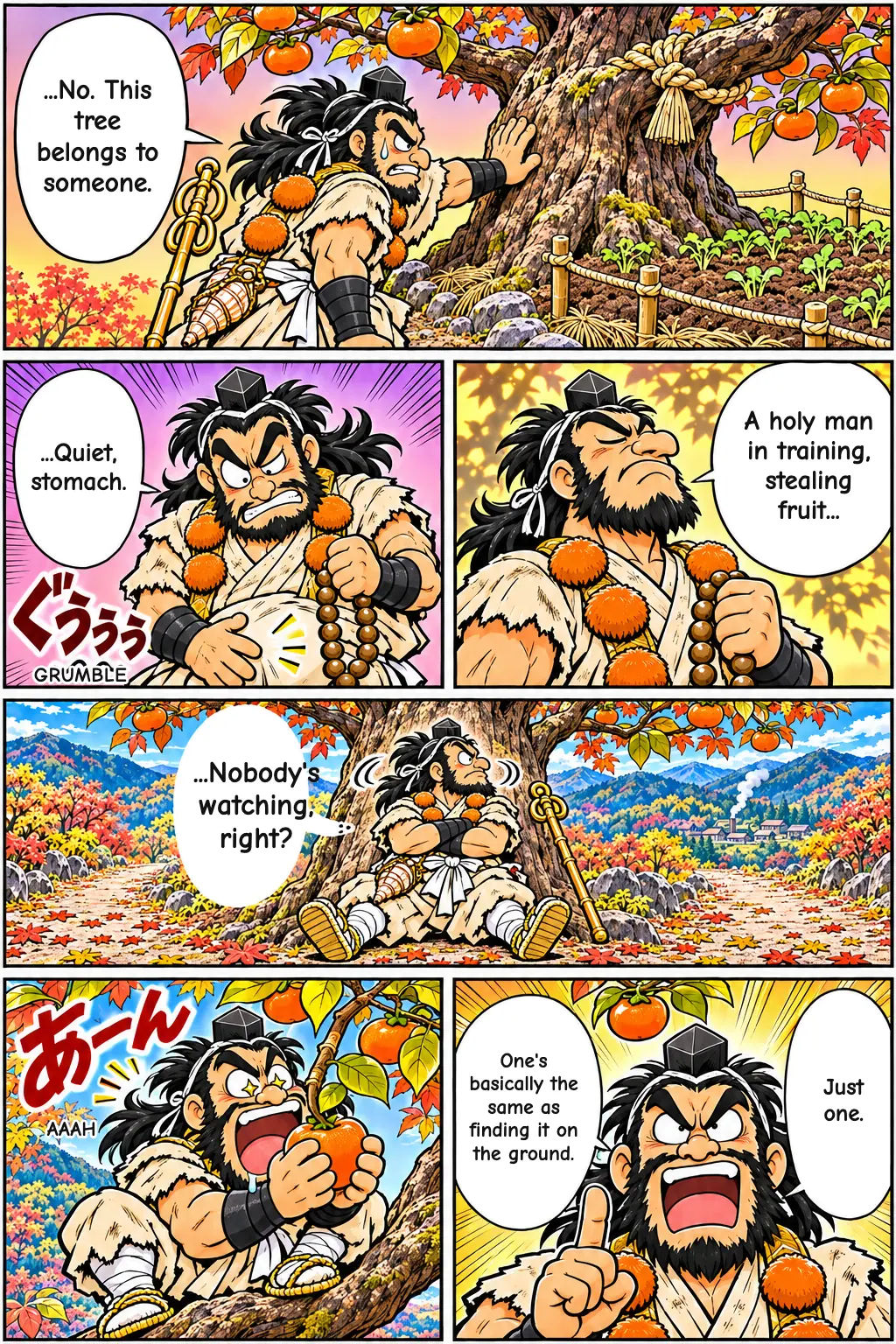
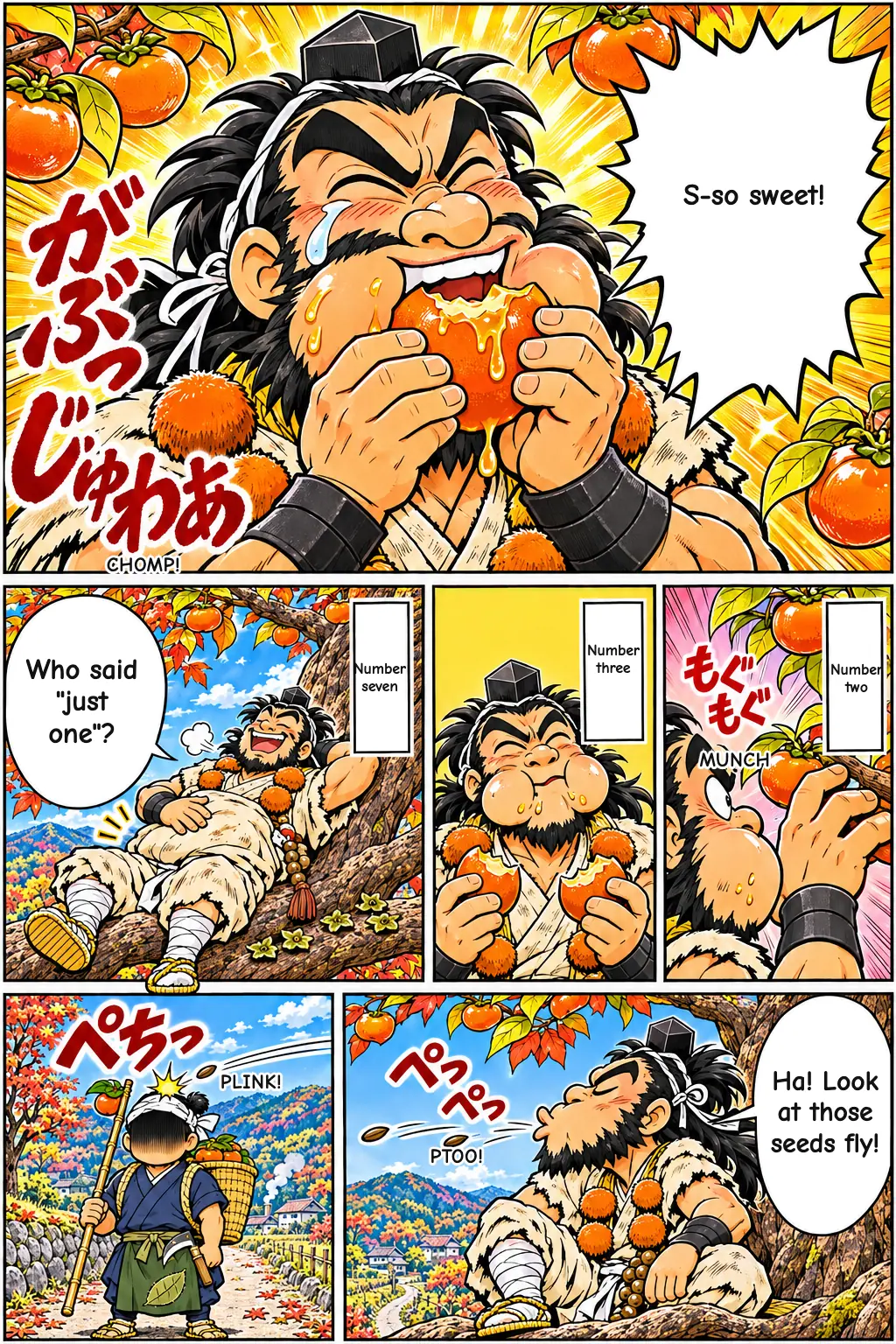
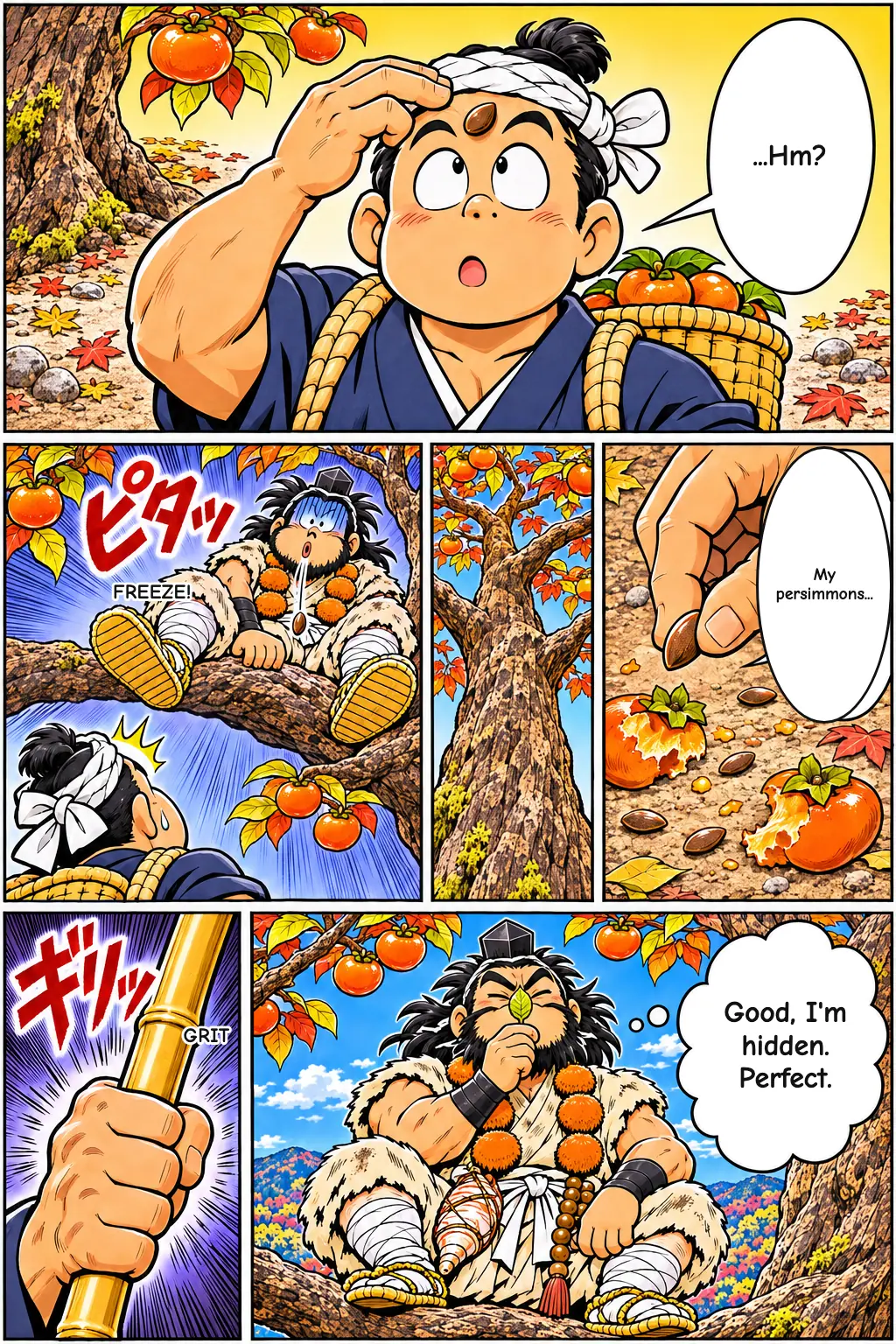
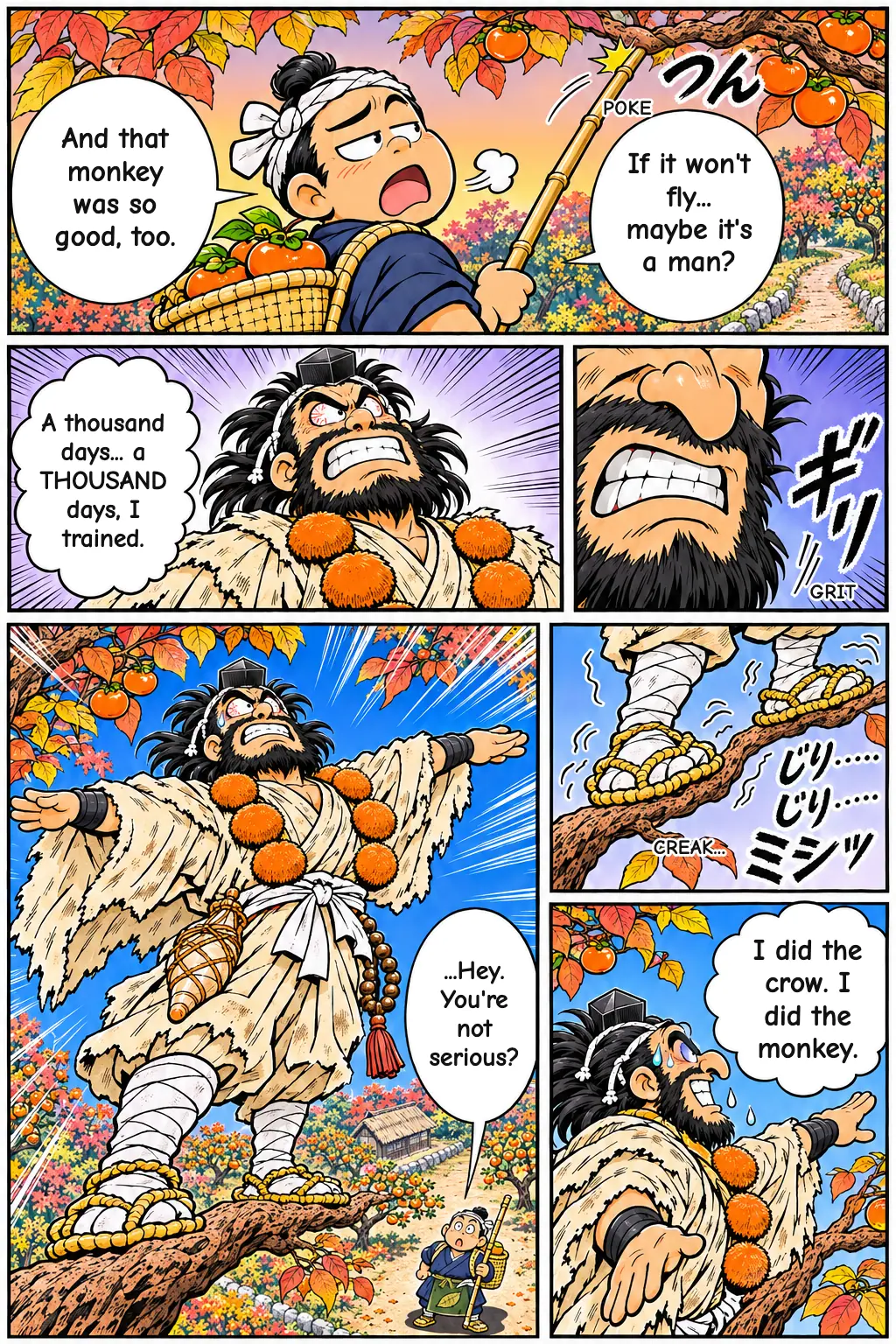
A starving, vain yamabushi sneaks up a tree and gobbles a stranger's persimmons. The orchard owner sees everything and goes along with it: "If you're a crow, caw. If you're a kite, fly!" One apology would end it all, but this man can't apologize, and he ends up leaping from the tree for real. This is Kaki-Yamabushi, the Kyogen comedy that has kept audiences laughing for 600 years.
Bookmark the series page so you can jump back in when the next episode is out: KYOGENRSS for this series
Get new episodes in your feed. Follow us on:ThreadsBluesky
Story summary
Kaki-Yamabushi, which roughly means "The Persimmon Yamabushi," is a short play from Kyogen, the comic theater that developed alongside Japan's more solemn Noh drama. Kyogen has made audiences laugh for about 600 years. This play belongs to the repertoire of its two main schools, Okura and Izumi, so small details can differ from one performance tradition to another. A yamabushi is a mountain ascetic, a religious practitioner who trains in the mountains to gain spiritual power. Kyogen has a whole group of plays that have fun with these figures, and this is one of them.
Kaki-Yamabushi Summary: The Kyogen Comedy of the Persimmon Thief
In short: Kaki-Yamabushi is a classic Japanese Kyogen comedy about a hungry mountain ascetic who is caught eating a stranger's persimmons. The orchard owner pretends to mistake him for an animal, so he caws like a crow, mimics a monkey, and finally jumps from the tree like a bird, crashing to the ground. The play ends in a chase with no clear winner.
What Is Kaki-Yamabushi?
Kaki-Yamabushi, which roughly means "The Persimmon Yamabushi," is a short play from Kyogen, the comic theater that developed alongside Japan's more solemn Noh drama. Kyogen has made audiences laugh for about 600 years. This play belongs to the repertoire of its two main schools, Okura and Izumi, so small details can differ from one performance tradition to another.
A yamabushi is a mountain ascetic, a religious practitioner who trains in the mountains to gain spiritual power. Kyogen has a whole group of plays that have fun with these figures, and this is one of them. There are only two roles, and neither has a personal name: the Yamabushi, who is the lead, and the Persimmon Owner, who is his partner on stage.
The Original Story: A Plot Summary
The Yamabushi introduces himself as a man heading home after training at Omine and Katsuragi, famous mountain sites for ascetic practice. On the road he grows hungry and spots a persimmon tree full of fruit. He climbs up and starts eating, though the fruit is not his. Some details vary by script, including how he first tries to reach the persimmons from the ground and what tips off the owner.
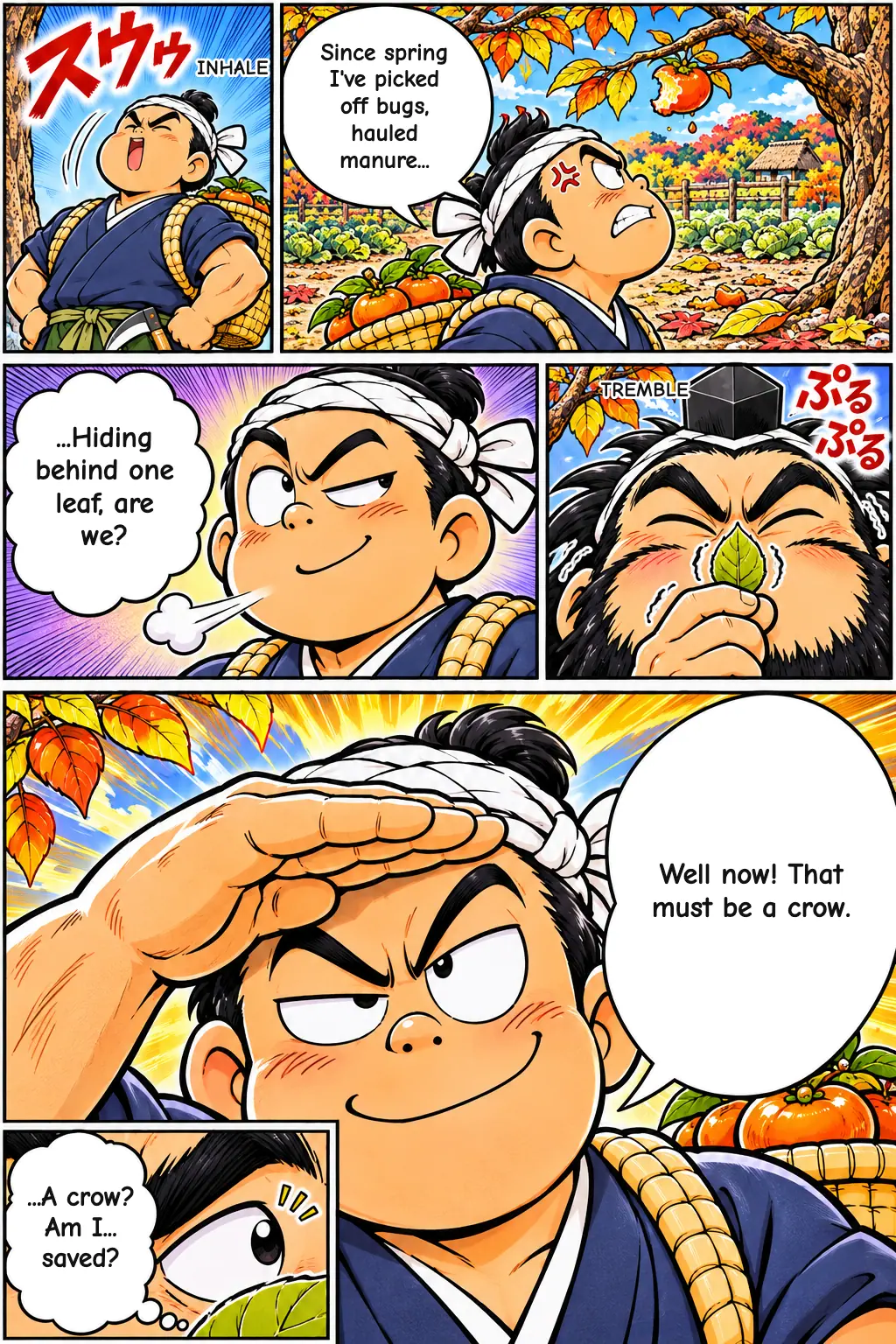
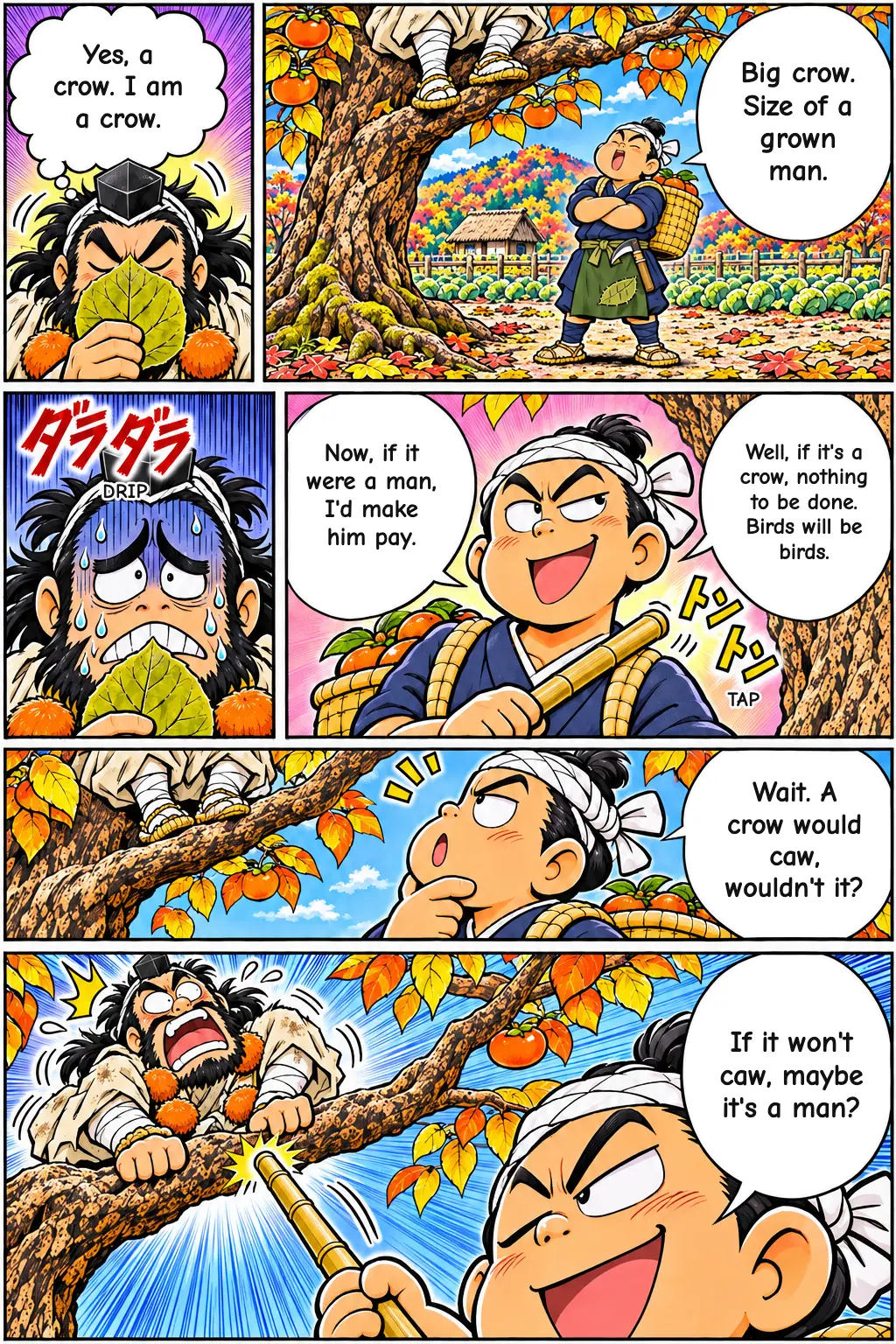
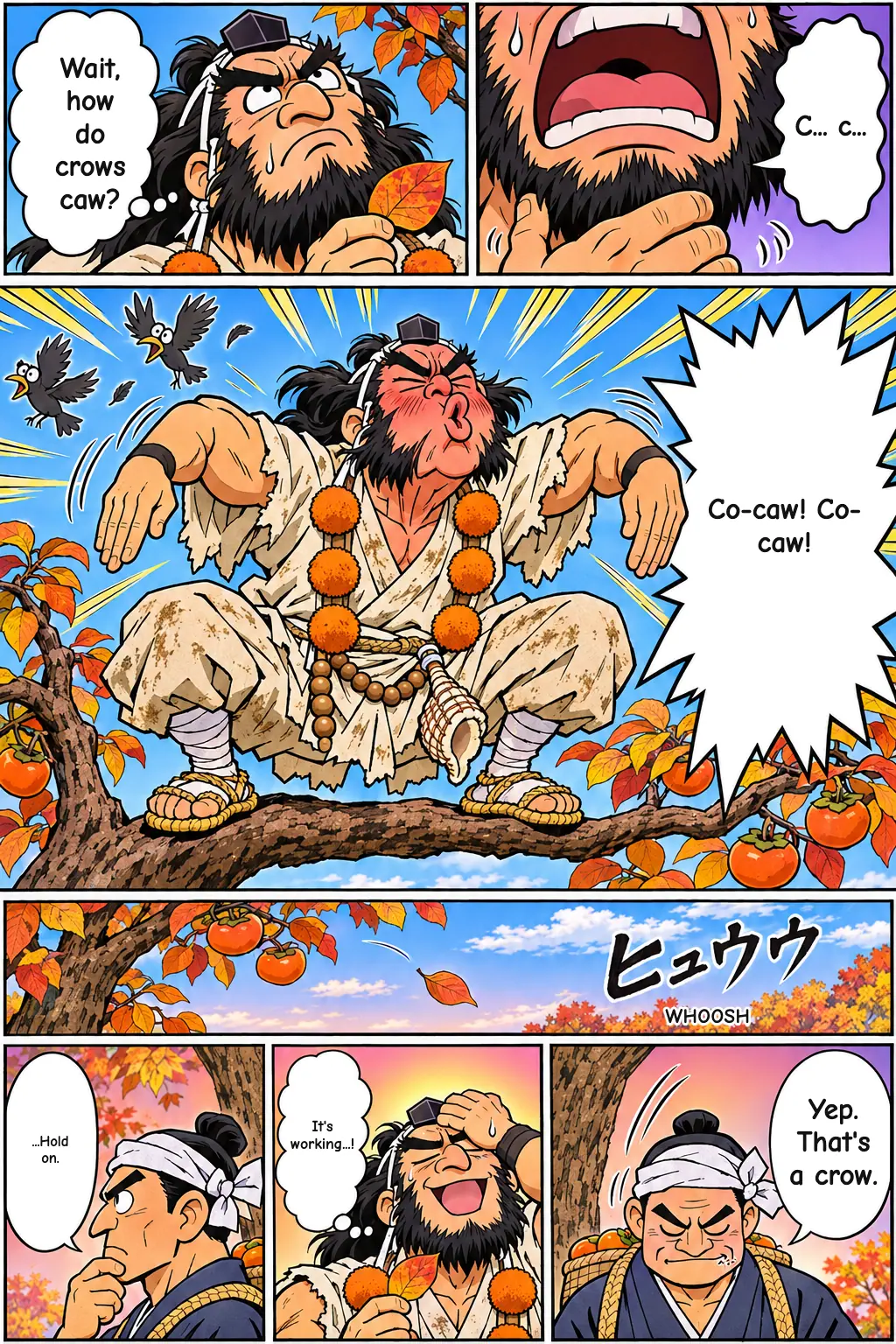
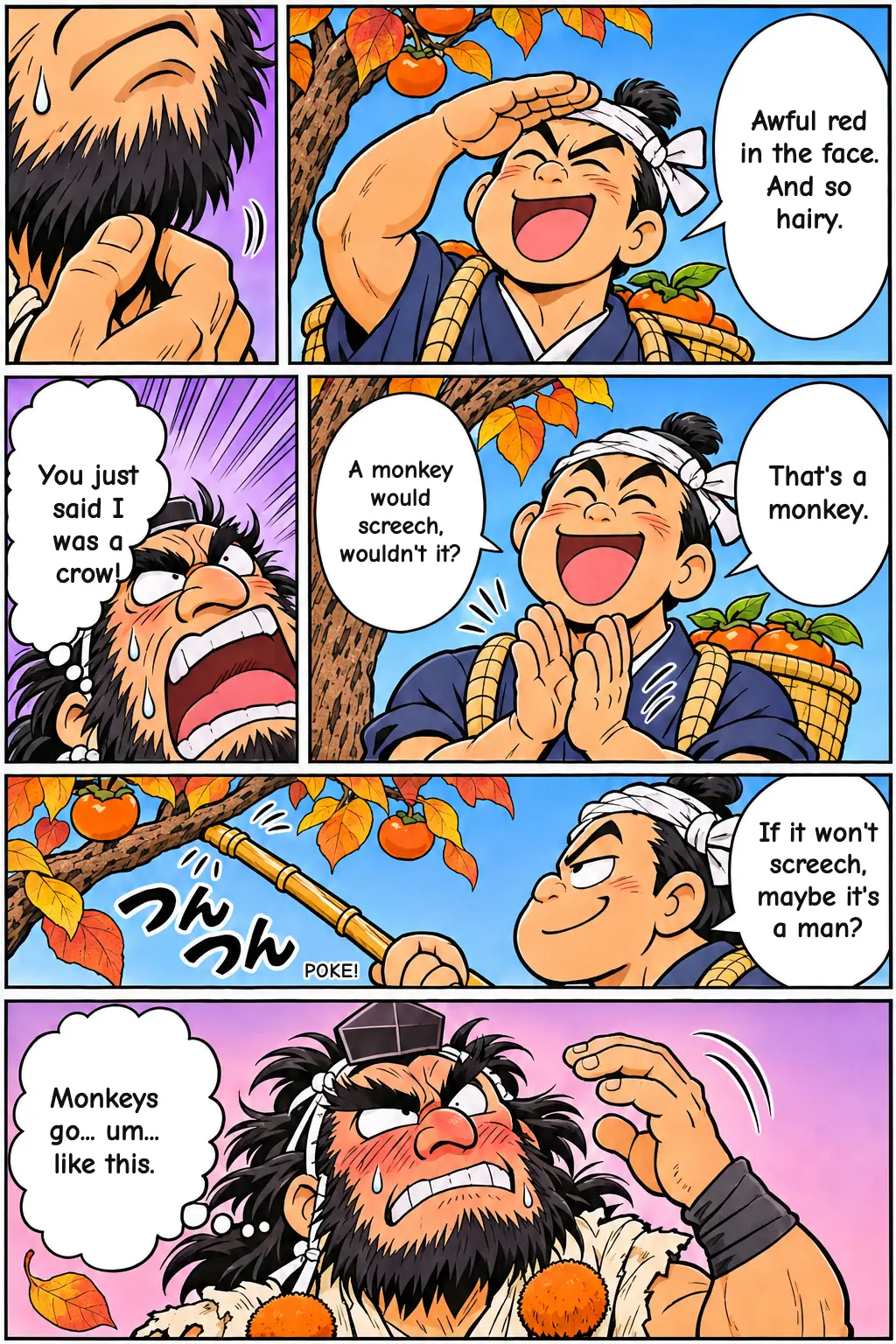
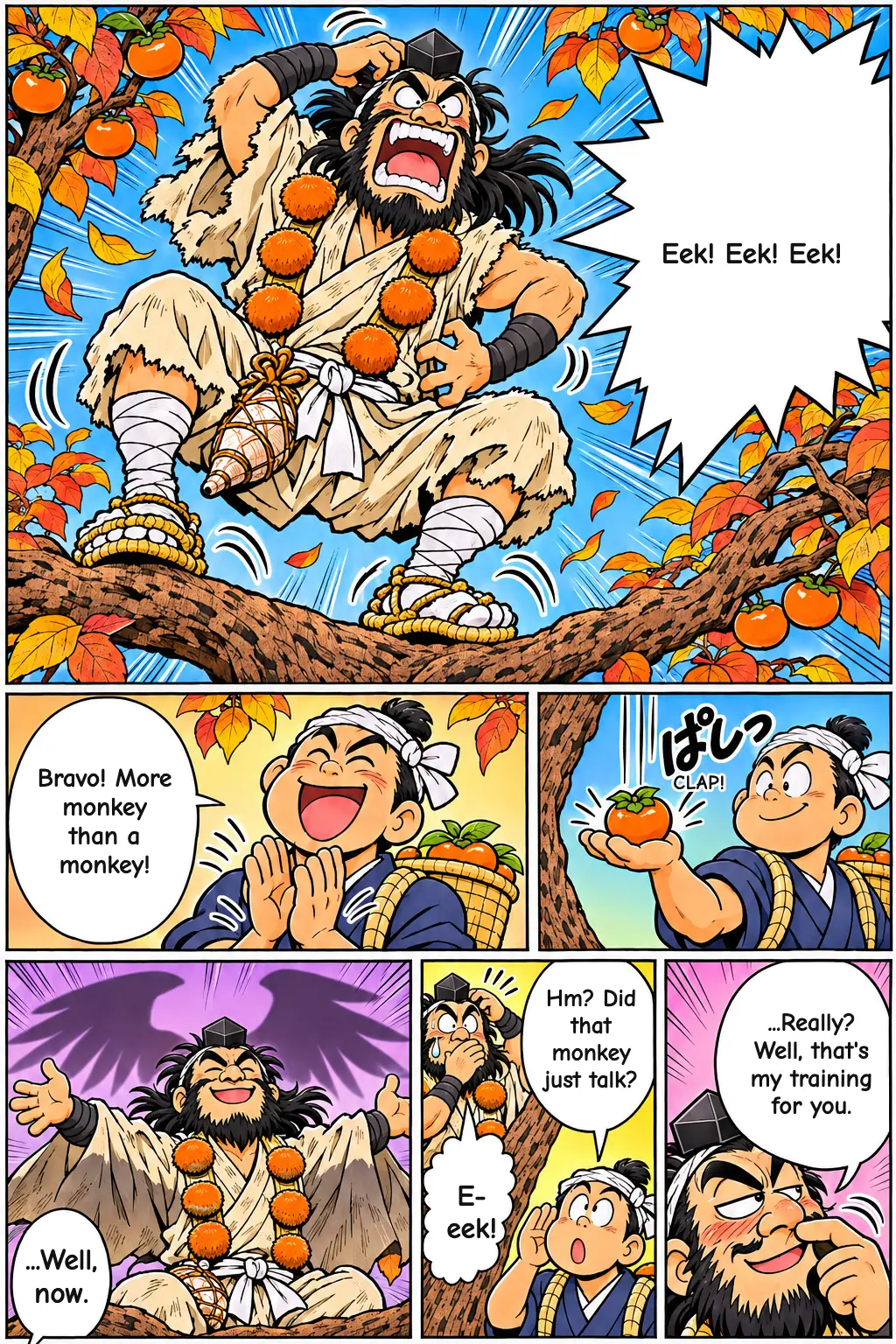
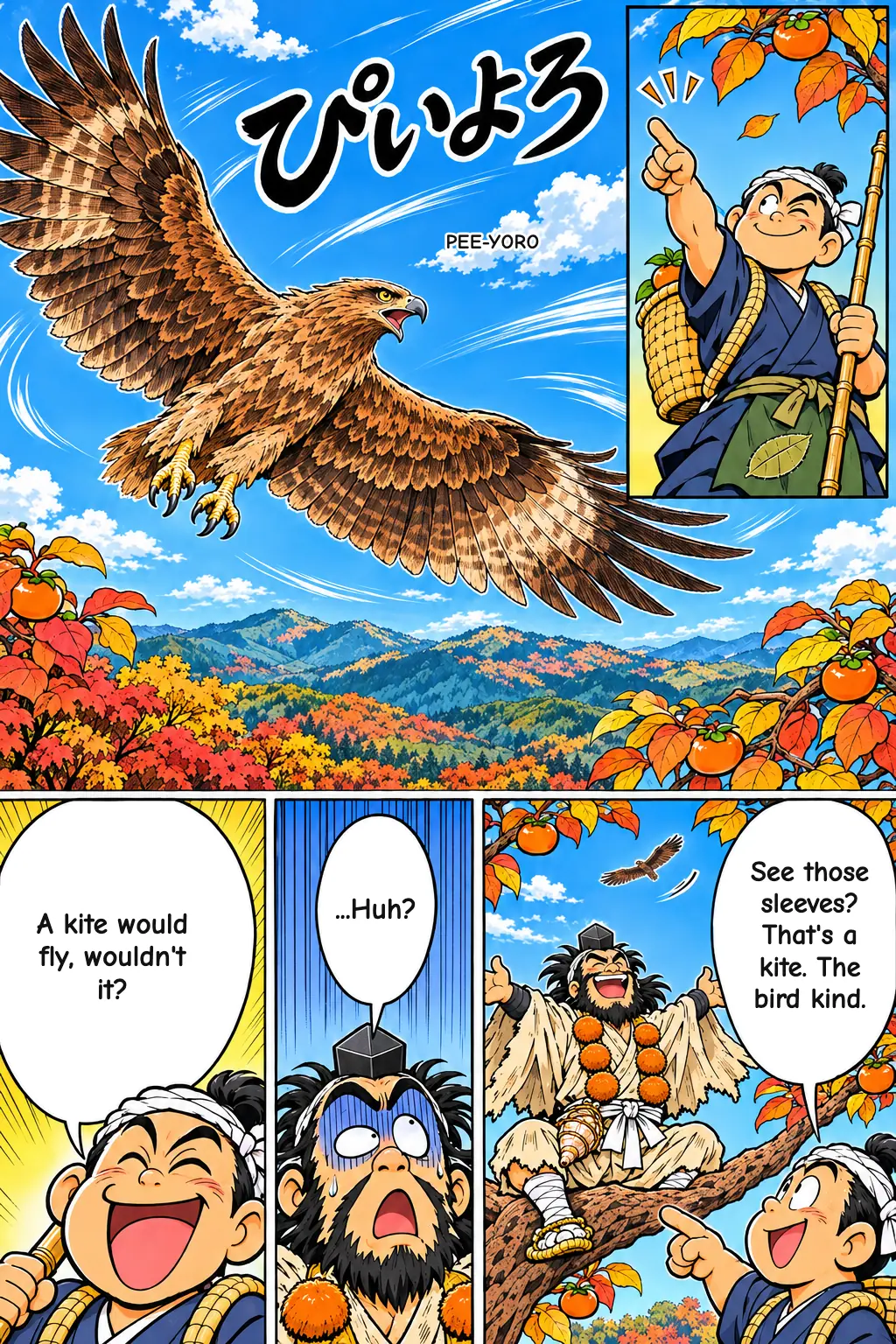
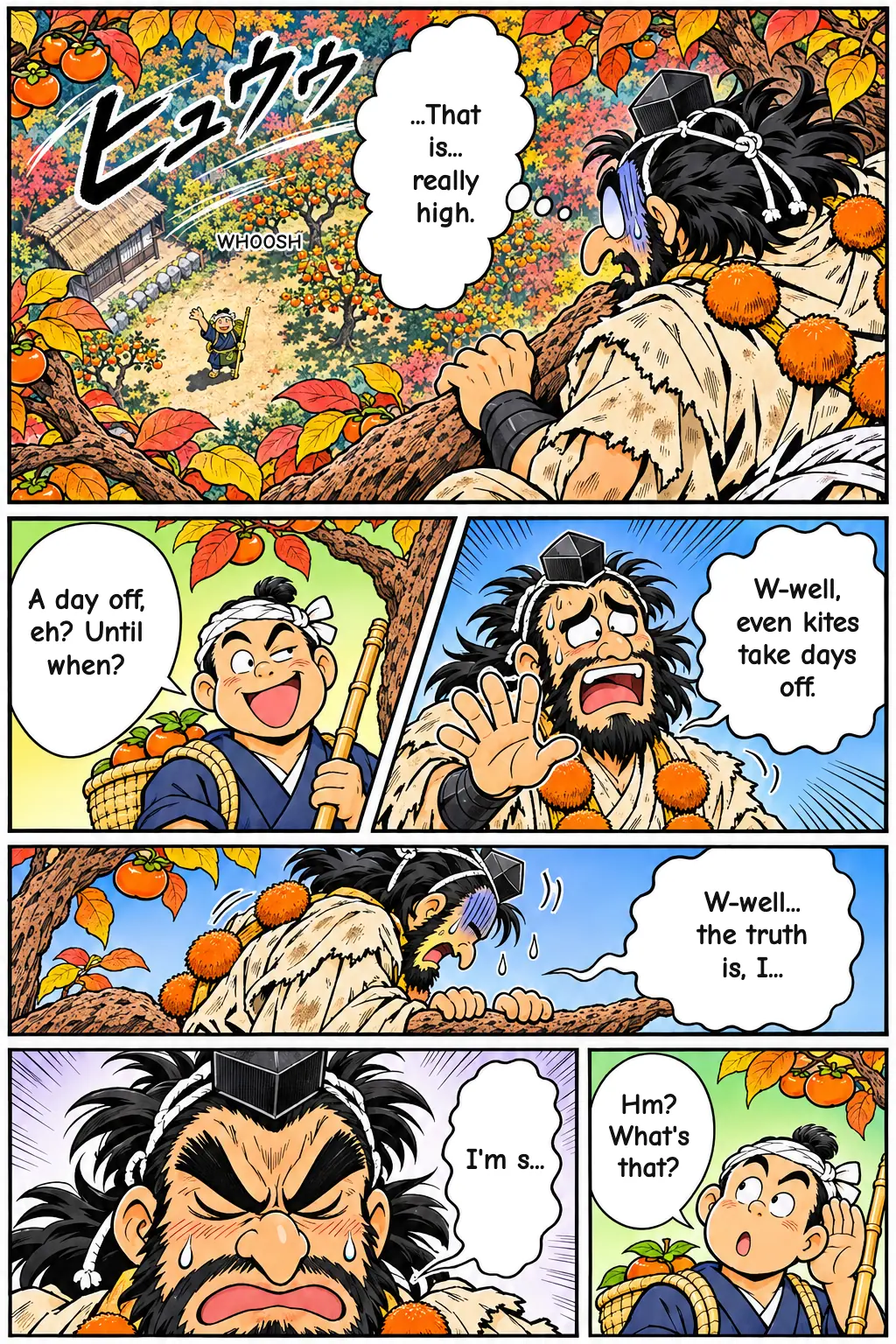
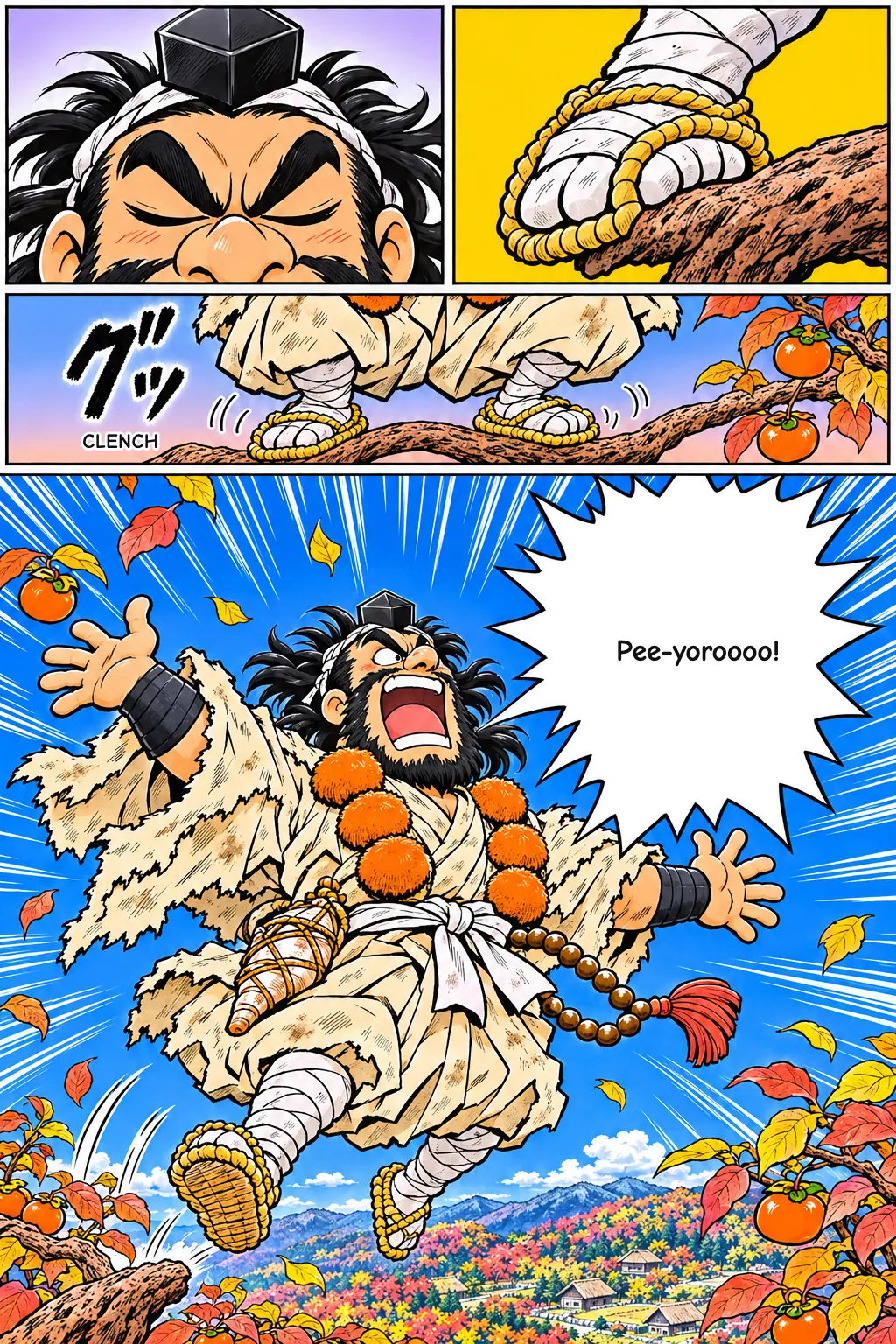
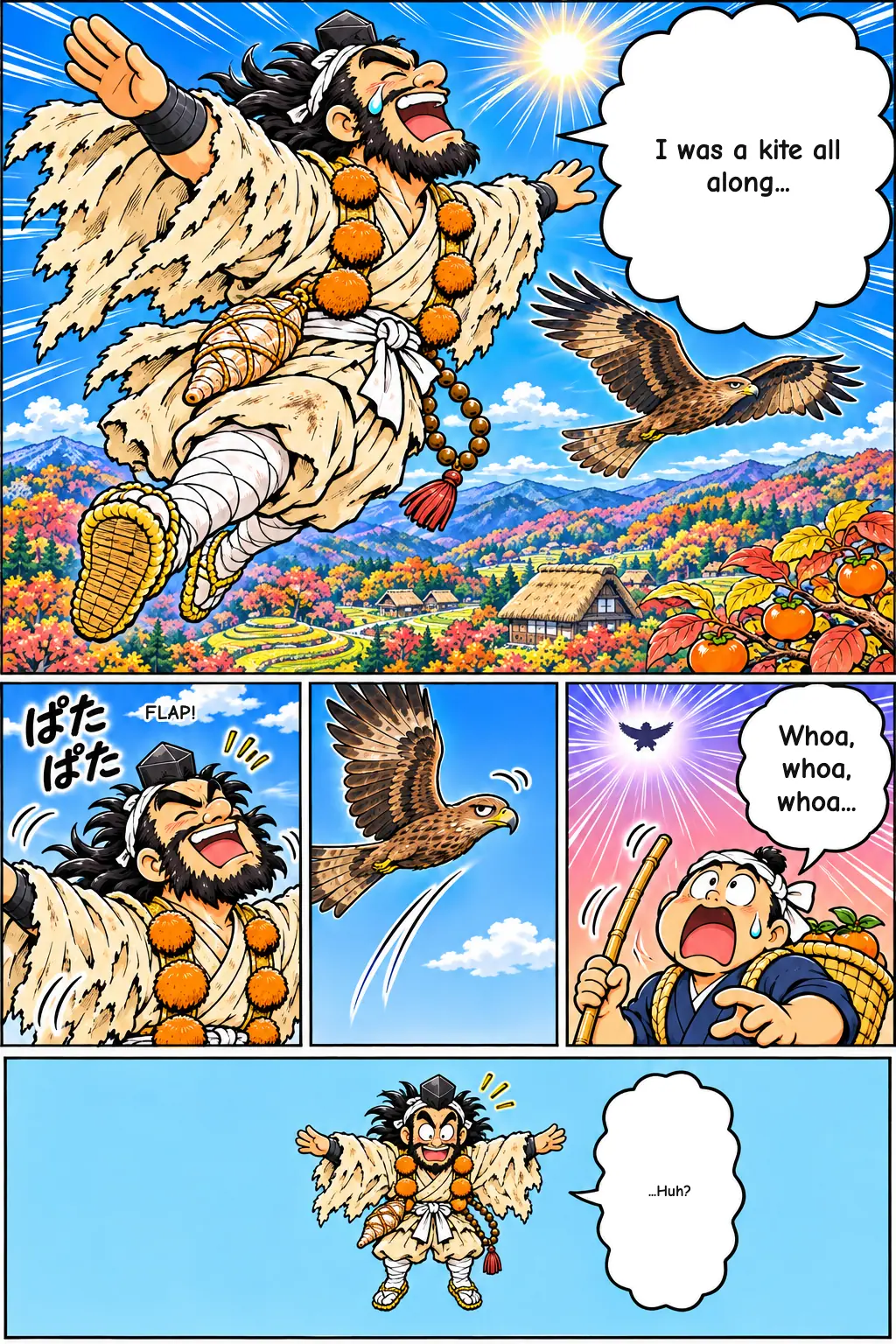
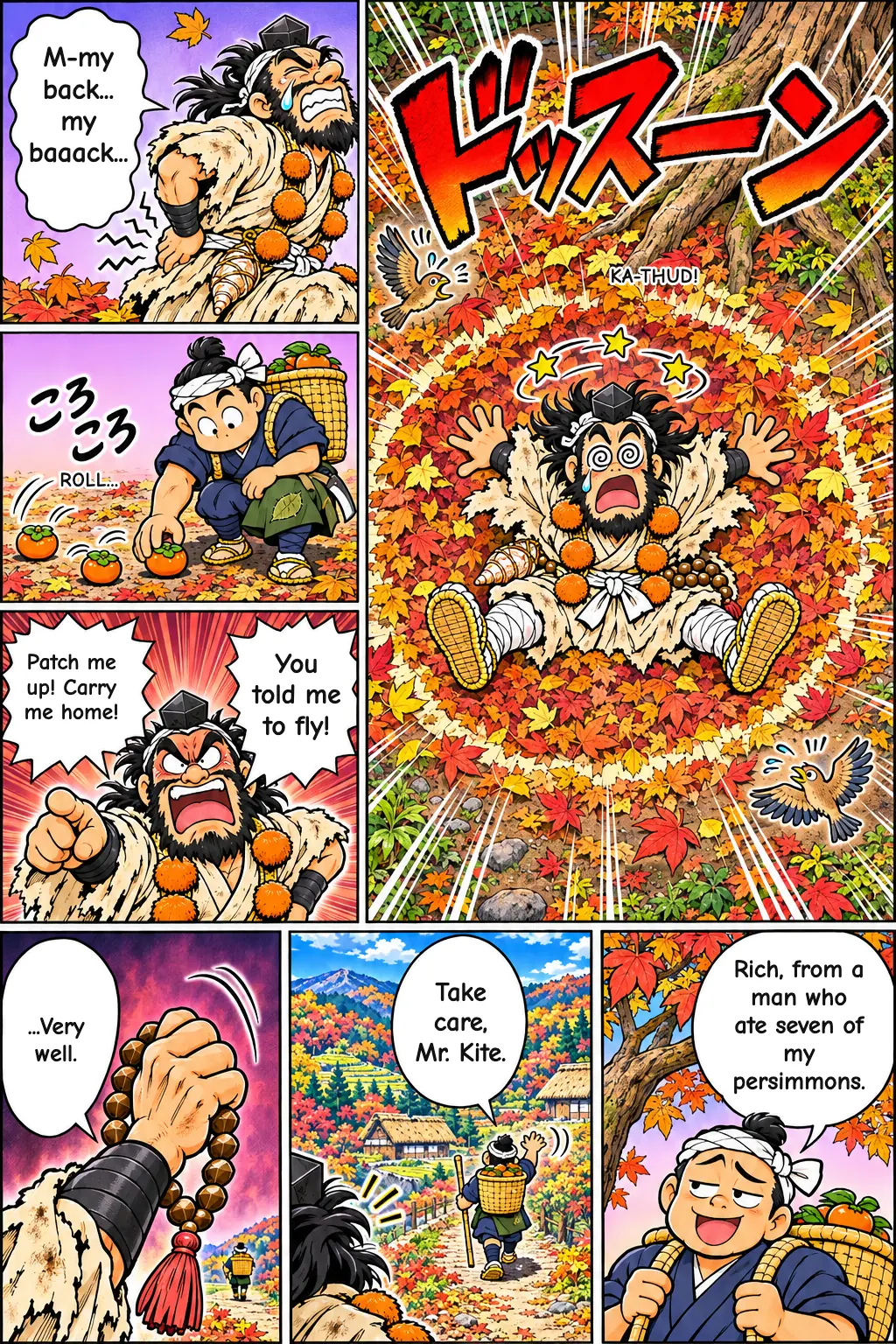
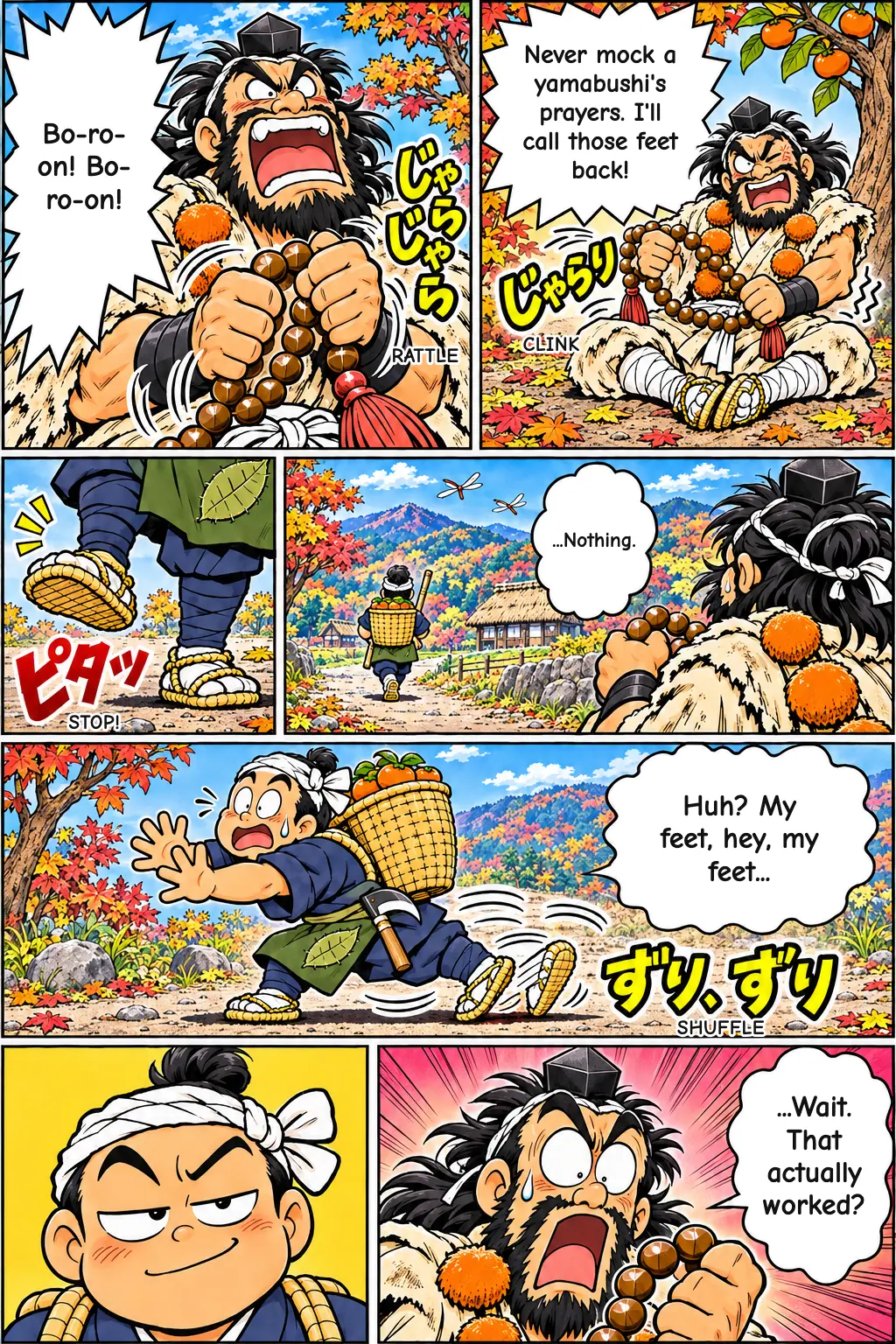
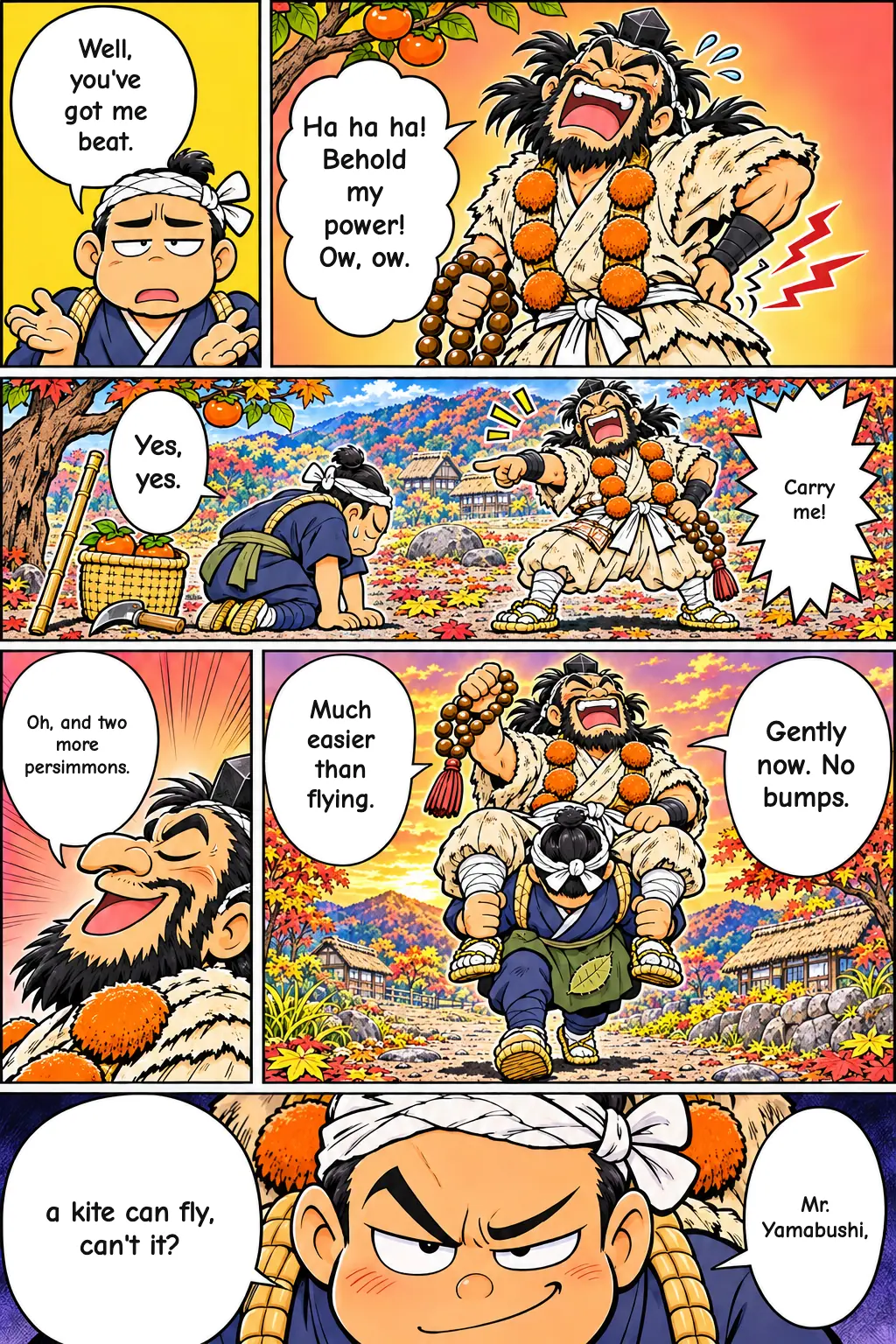
The Persimmon Owner comes to check on his tree, sees that fruit has been eaten, and finds the man among the branches. The Yamabushi tries to hide his face. The owner knows perfectly well that this is a person, but he says aloud that it must be a crow, and that a crow would surely caw. So the Yamabushi caws: "Kokaa, kokaa." Next the owner decides it is a monkey, and the Yamabushi imitates a monkey. Then the owner declares it a kite, the bird of prey, and teases that a kite ought to fly. The Yamabushi flaps his arms, jumps, falls, and hurts his lower back.
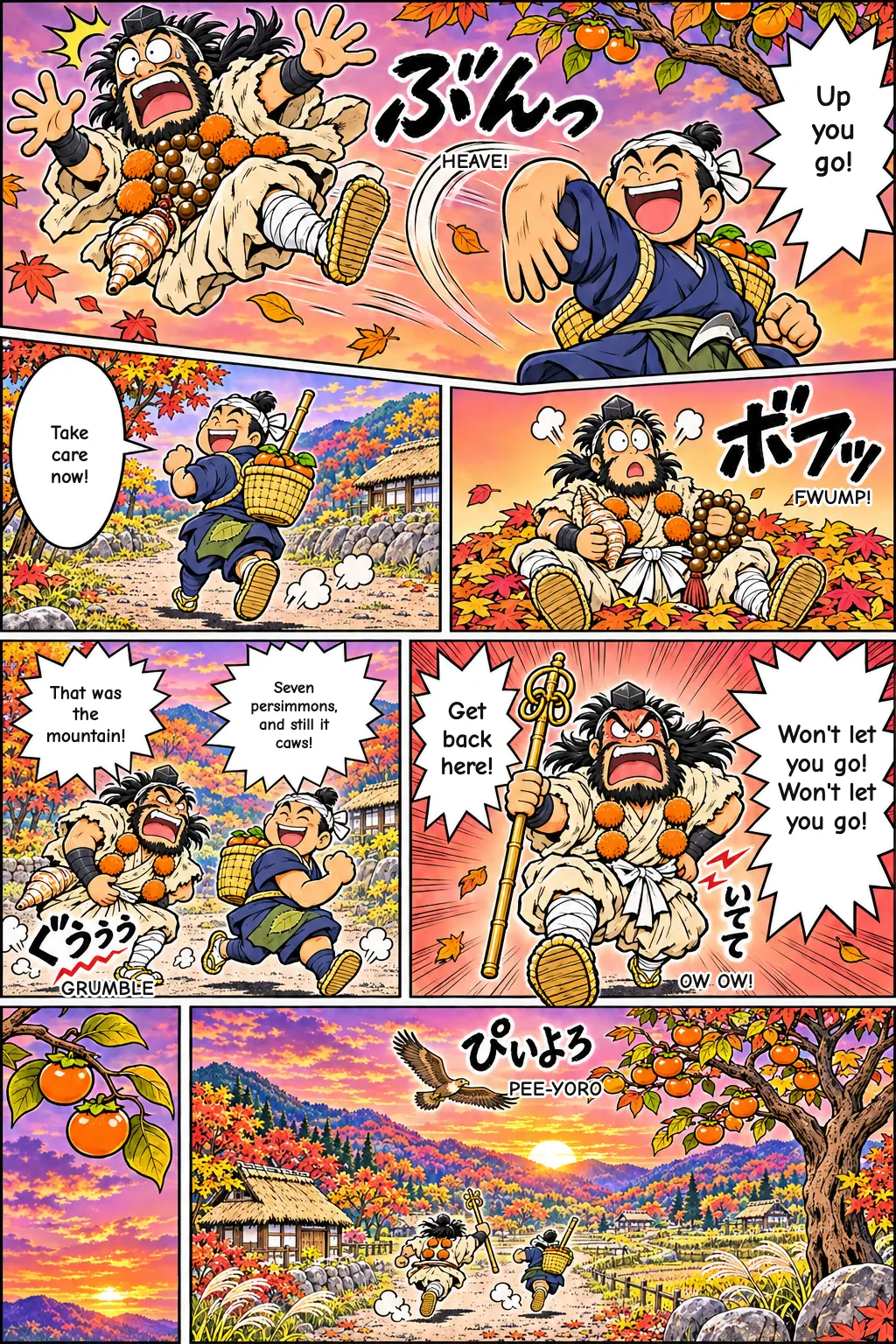
Many short summaries stop there, but the play continues. The furious Yamabushi scolds the owner and demands to be looked after. The owner refuses and starts to leave, so the Yamabushi uses the power of prayer to drag him back. The chant is said to sound something like "boron, boron," though the wording may depend on the script. The owner reluctantly takes him on his back, then throws him off and runs, with the Yamabushi in pursuit. Many Kyogen plays end with a chase of this kind, and neither man clearly wins.
What the Comedy Is Really About
The joke starts with a gap between image and behavior. A yamabushi has just finished serious training and claims special power, yet he cannot walk past a fruit tree. One common reading treats the play as gentle satire of people who claim spiritual authority. It is not a harsh attack, though. The Yamabushi is silly in a very human way, and that may be part of why the play still works.
The other half of the fun is that the owner is in on it. He could simply shout at the thief. Instead he plays along, and each new animal is a little test of how far the man will go to avoid being exposed. The audience knows, the owner knows, and the Yamabushi is the only one who thinks the disguise might be working. Every caw makes it harder for him to come clean.
The ending adds a final twist. His prayers do seem to work on stage, but he uses them only to force someone to carry him after a fall he brought on himself. Kyogen is known for this kind of everyday humor, built from spoken dialogue and physical performance rather than elaborate plots. The stage version is also said to do without a real tree, leaving the audience to imagine one through the actors' words and movement.
What the Manga Changes
The core events of Episode 7 come straight from the play: the stolen persimmons, the animal game, and the leap from the tree. The manga adds its own angle in how it frames the story. Its version makes the Yamabushi vain and turns the comedy on a simple idea, that one apology would end everything and he cannot bring himself to say it. That is the manga's interpretation for modern readers. The play itself shows a man desperate not to be discovered, without stating the lesson in those terms.
Much of what you see on the page is also new. The Yamabushi's and the owner's looks, ages, and personality details, along with the season, the road, and the size of the tree, are the manga's own creations. So are the inner monologues, the exaggerated hunger, the taste of the fruit, and the way the animal sounds are drawn for international readers. Showing a real tree is a visual choice that the stage does not need.
One change goes beyond the visuals. The series brings the same Yamabushi back in Episode 8, as a side story apart from the master-and-servant tales elsewhere in the series. That connection does not exist in the original, where Kaki-Yamabushi stands alone. And because the play leaves its chase unresolved, any sense of how things turn out afterward belongs to the manga, not to the Kyogen tradition.
Where to Read It
You can read this story as Episode 7, "Too Proud to Say Sorry, He Played a Crow," in KYOGEN: Japan's 600-Year-Old Comedy here on Manga Portal. Every episode is free, and you don't need an account. If this is your first encounter with Kyogen, it's an easy place to begin: no background knowledge is needed to enjoy a grown man in a tree, cawing for his dignity.
Characters in this episode
The Yamabushi
A nameless mountain ascetic returning from training at Omine and Katsuragi, who steals persimmons and will imitate almost anything to avoid being exposed.
The Persimmon Owner
The quick-witted, nameless owner of the tree, who recognizes the thief at once and teases him by pretending he is a crow, a monkey, and a kite.
FAQ
What is the story of Kaki-Yamabushi?
A hungry yamabushi, or mountain ascetic, climbs a tree and eats persimmons that belong to someone else. The owner catches him and pretends he is an animal, so he caws, mimics a monkey, and jumps from the tree like a kite. He then demands care, drags the owner back with prayer, and the play ends in a chase.
What is a yamabushi?
A yamabushi is a Japanese mountain ascetic who trains in the mountains to gain spiritual power. In Kaki-Yamabushi, the humor comes from the contrast between that serious image and a man who can't resist a stranger's fruit.
Why does the yamabushi pretend to be a crow?
He is hiding in the tree and doesn't want to be identified as the thief. When the owner says that the shape must be a crow and that a crow would caw, he caws to keep up the act. The owner knows who he is all along and is simply teasing him.
What is Kyogen?
Kyogen is a traditional Japanese comic theater that developed alongside Noh and has a history of about 600 years. It relies on dialogue and physical comedy and often features everyday characters without personal names. The Okura and Izumi schools are its two main traditions.
How does Kaki-Yamabushi end?
After the owner is forced to carry the injured yamabushi, he throws him off and runs away. The yamabushi chases after him as the play ends, and neither clearly wins.