Episode 8Sir, Your Exorcism Is Growing MushroomsKusabira
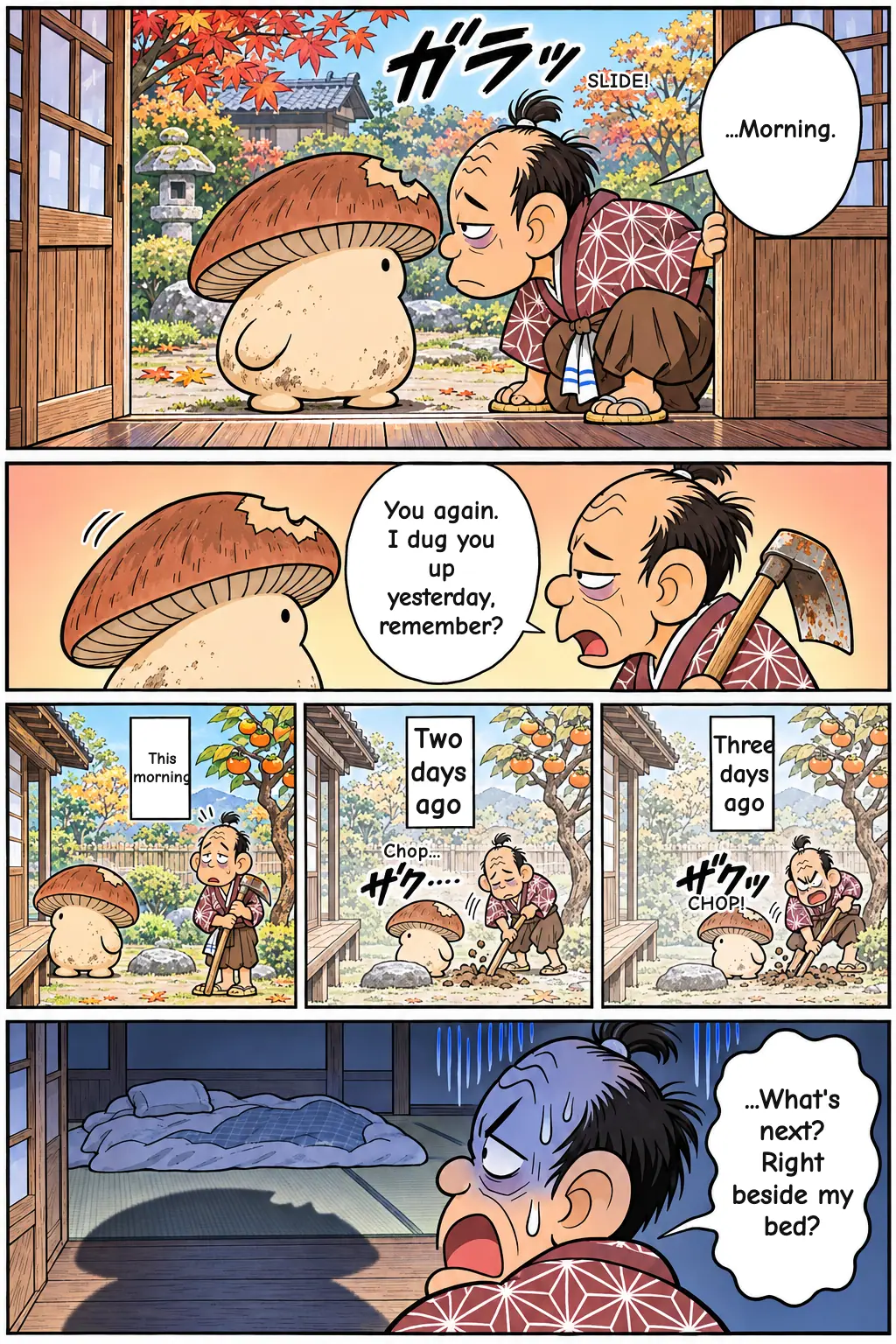
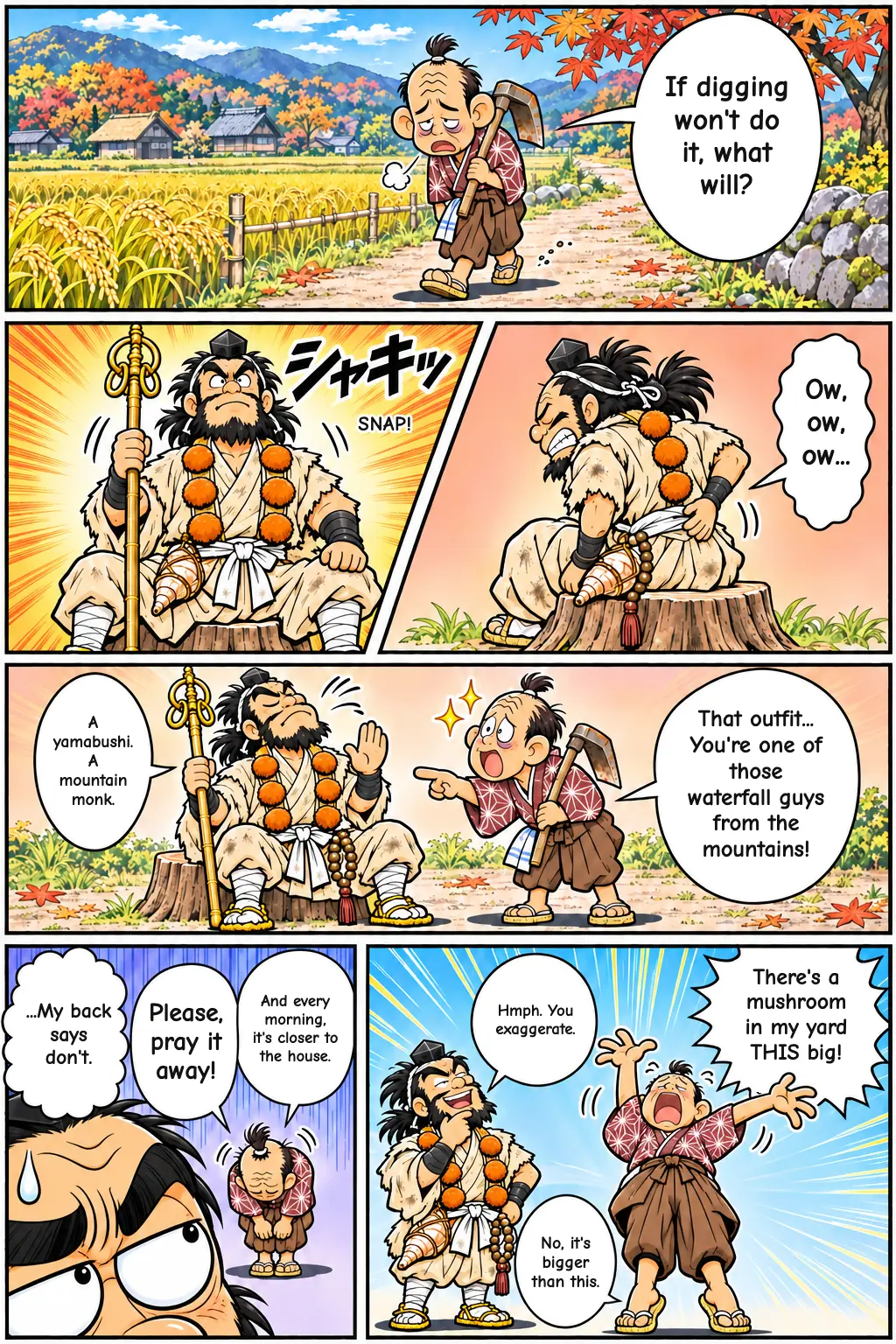
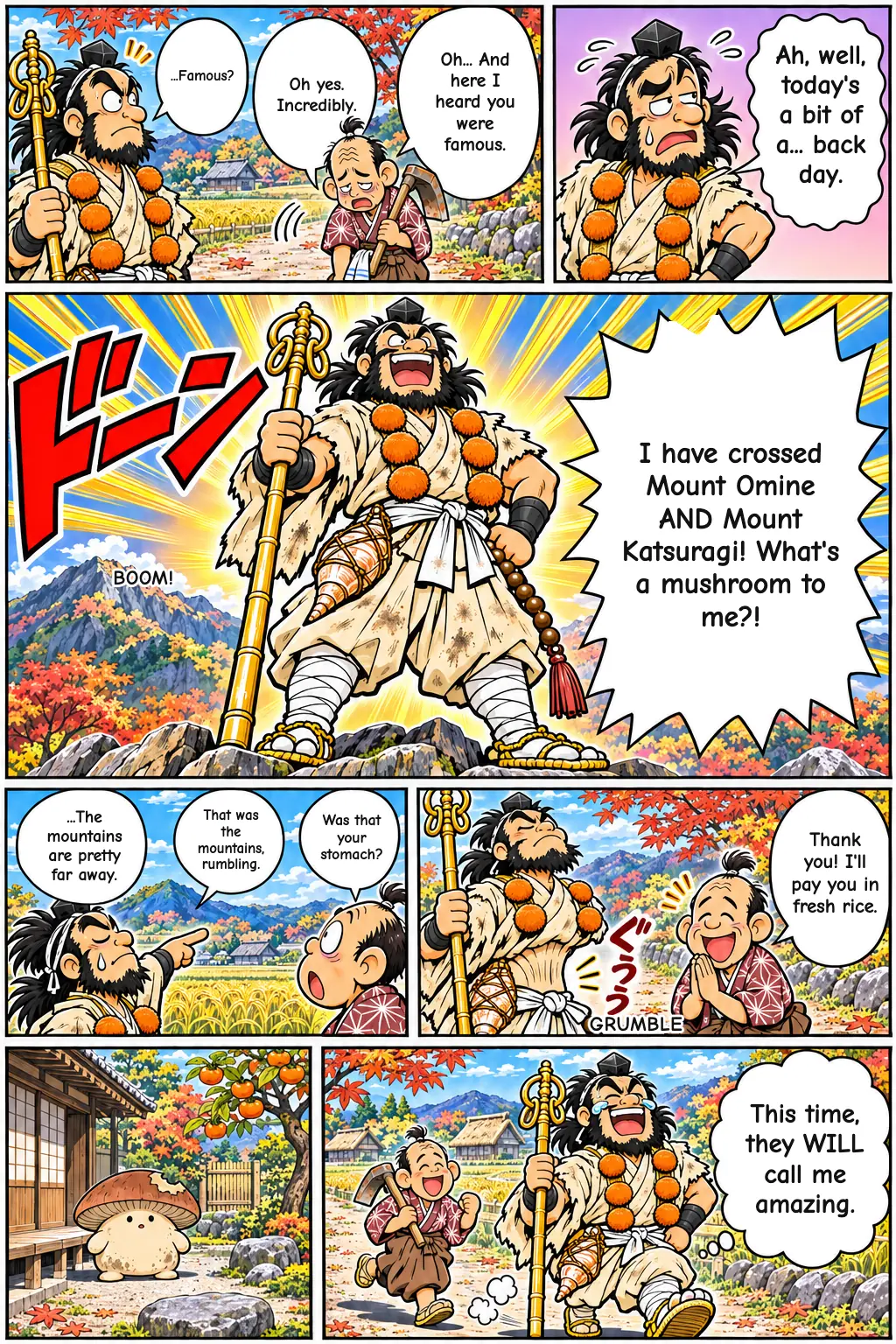
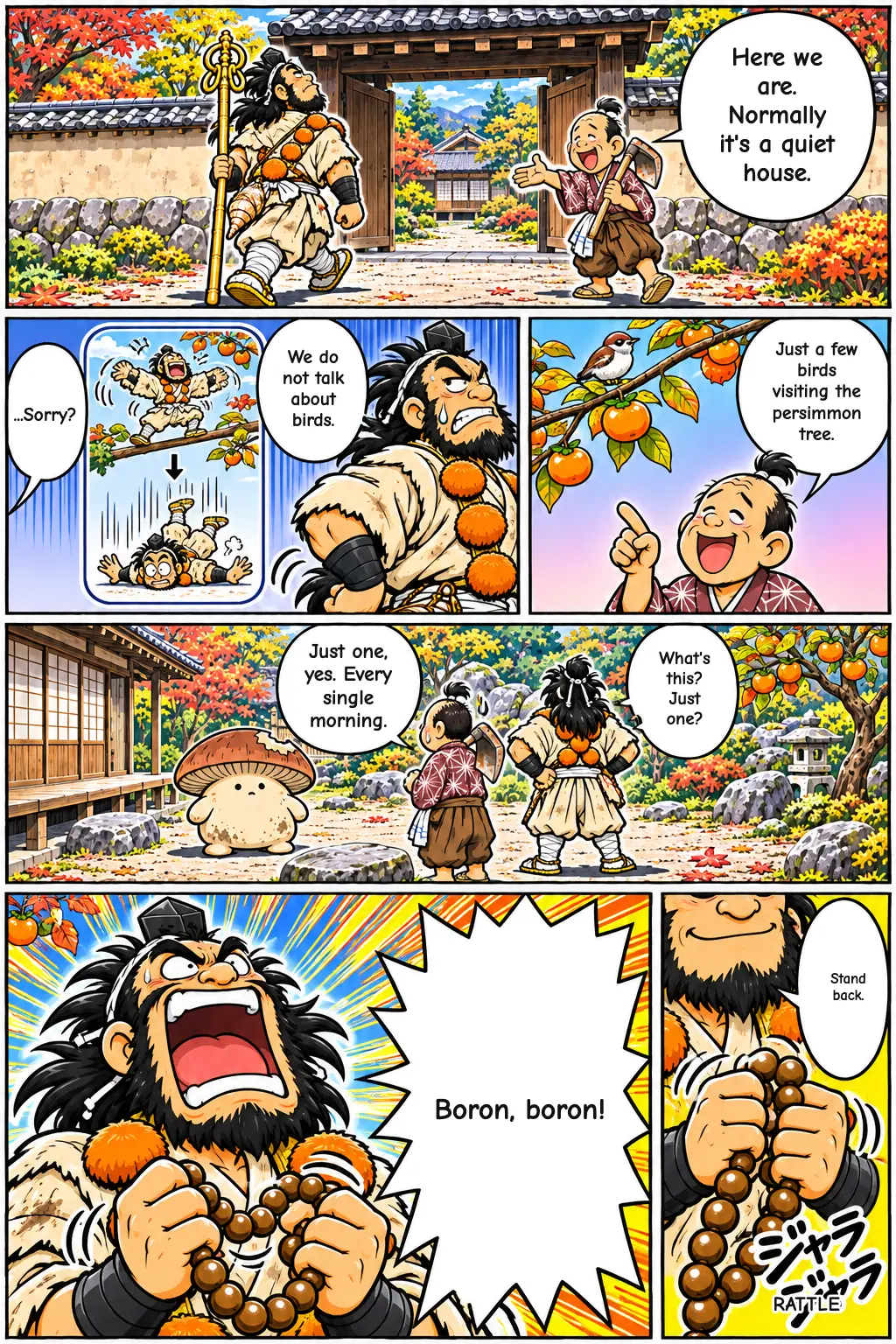
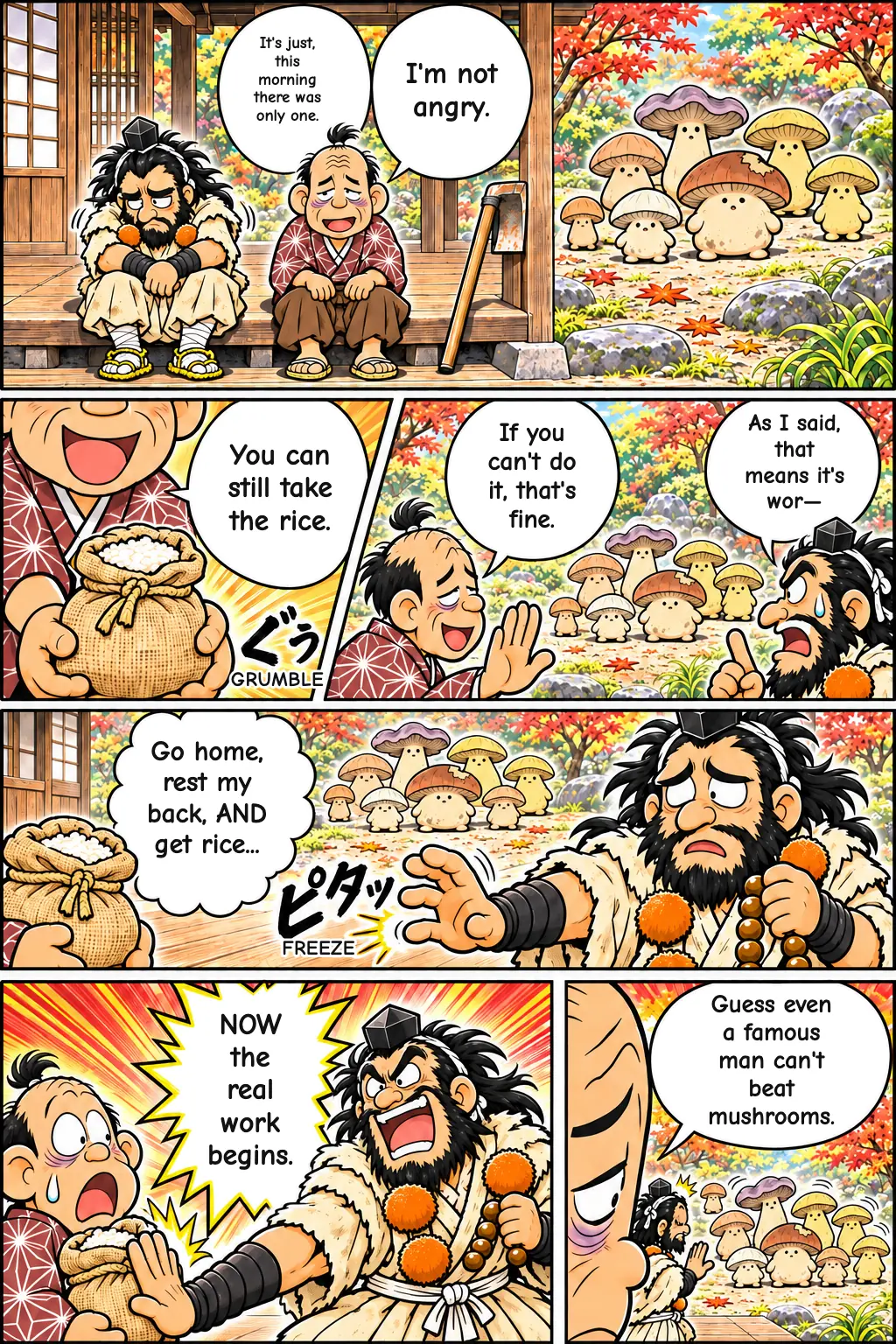
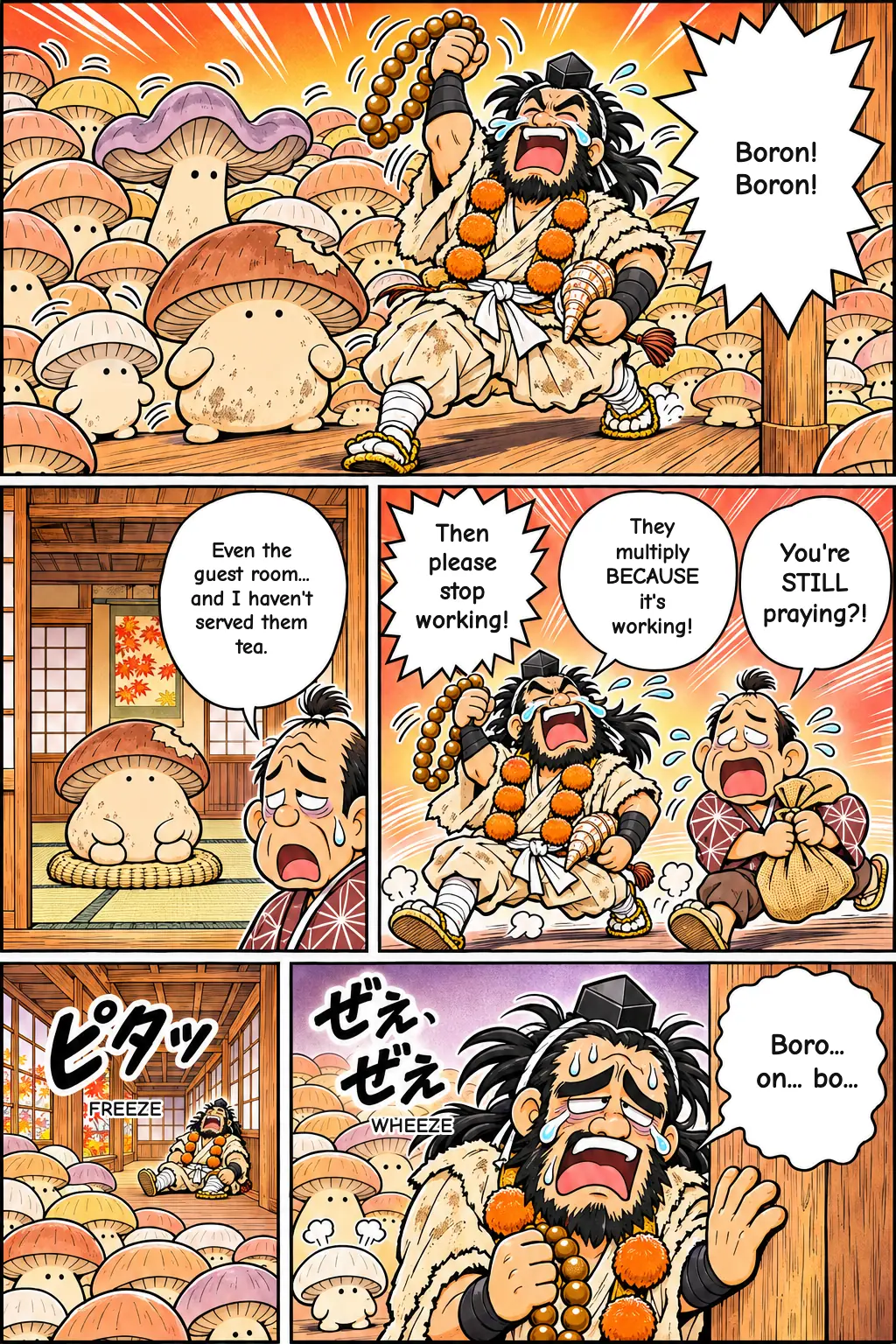
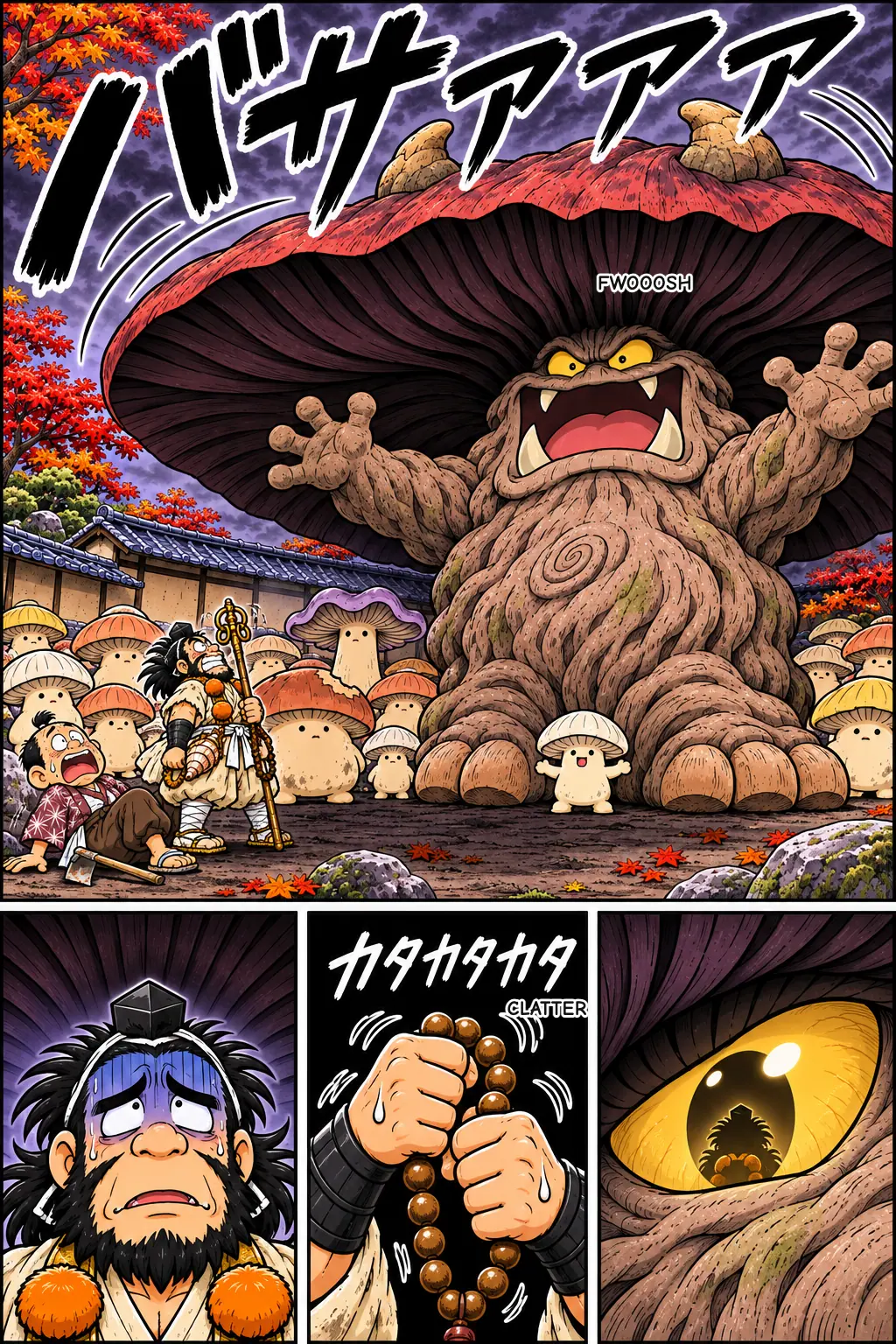
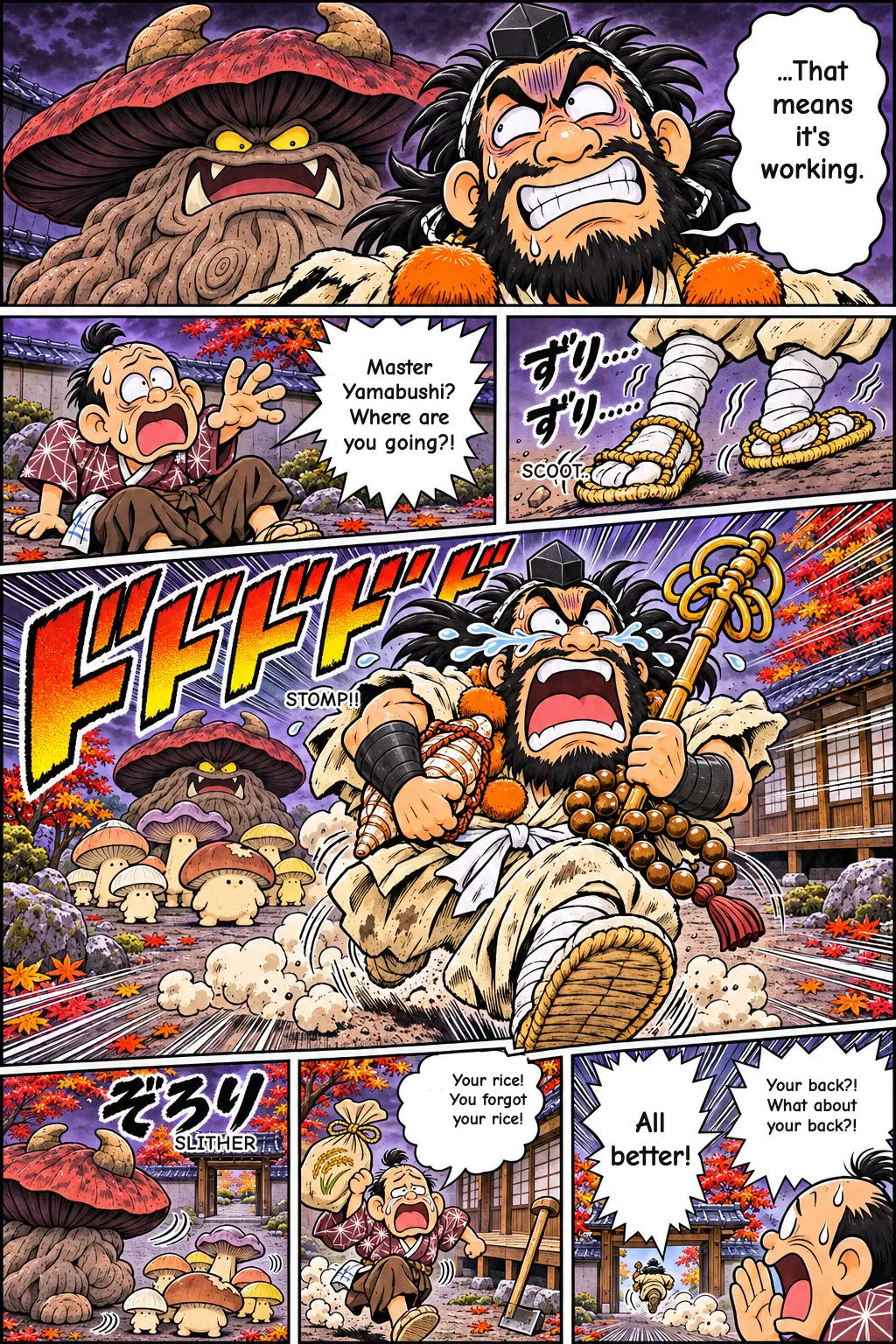
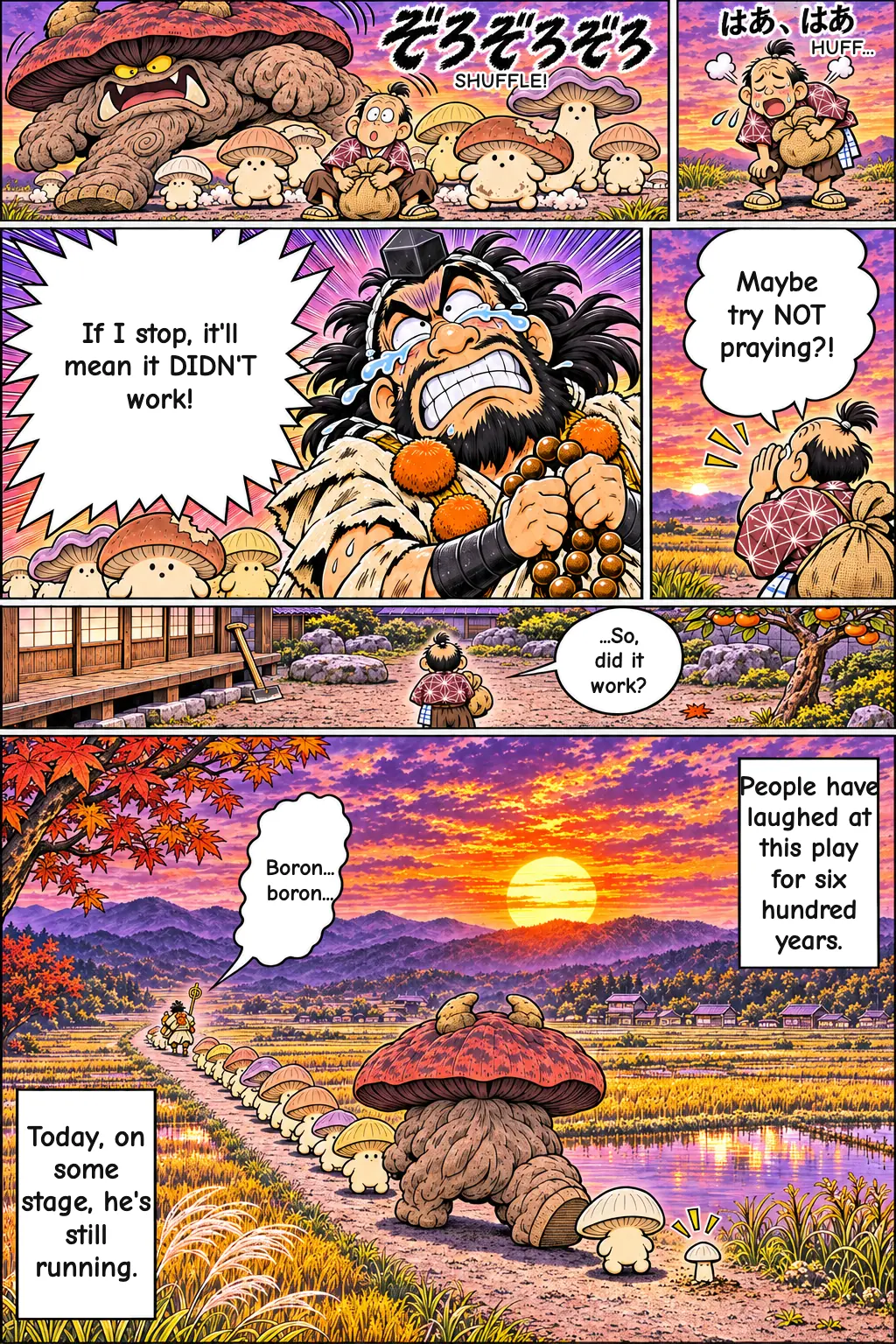
A man with a giant mushroom growing in his yard begs a famous yamabushi, a mountain monk, to pray it away. But every prayer makes more of them. "That means it's working!" he insists. In this classic kyogen play, Kusabira, a so-called expert who can't back down is chased by a silent parade of mushrooms.
Bookmark the series page so you can jump back in when the next episode is out: KYOGENRSS for this series
Get new episodes in your feed. Follow us on:ThreadsBluesky
Story summary
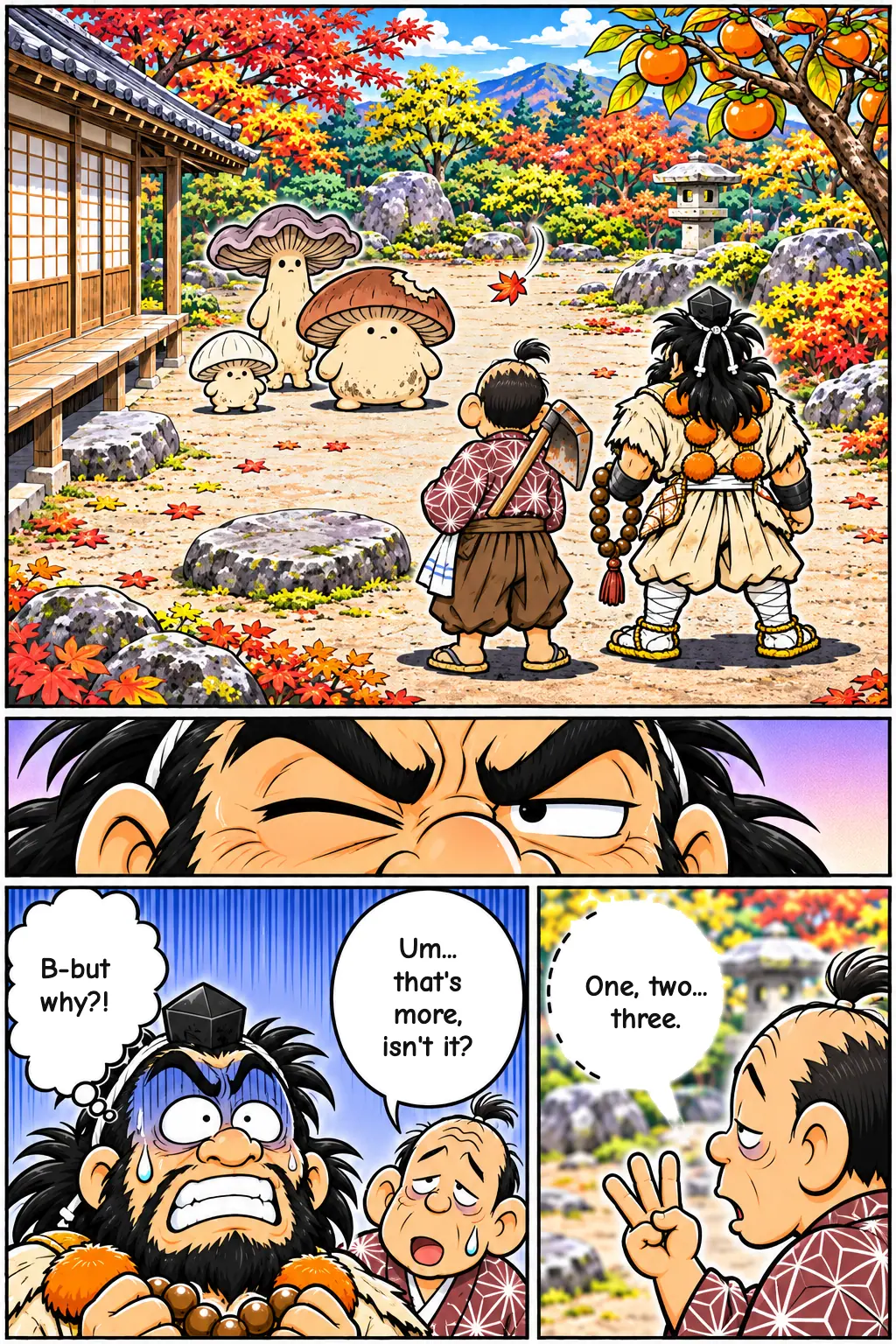
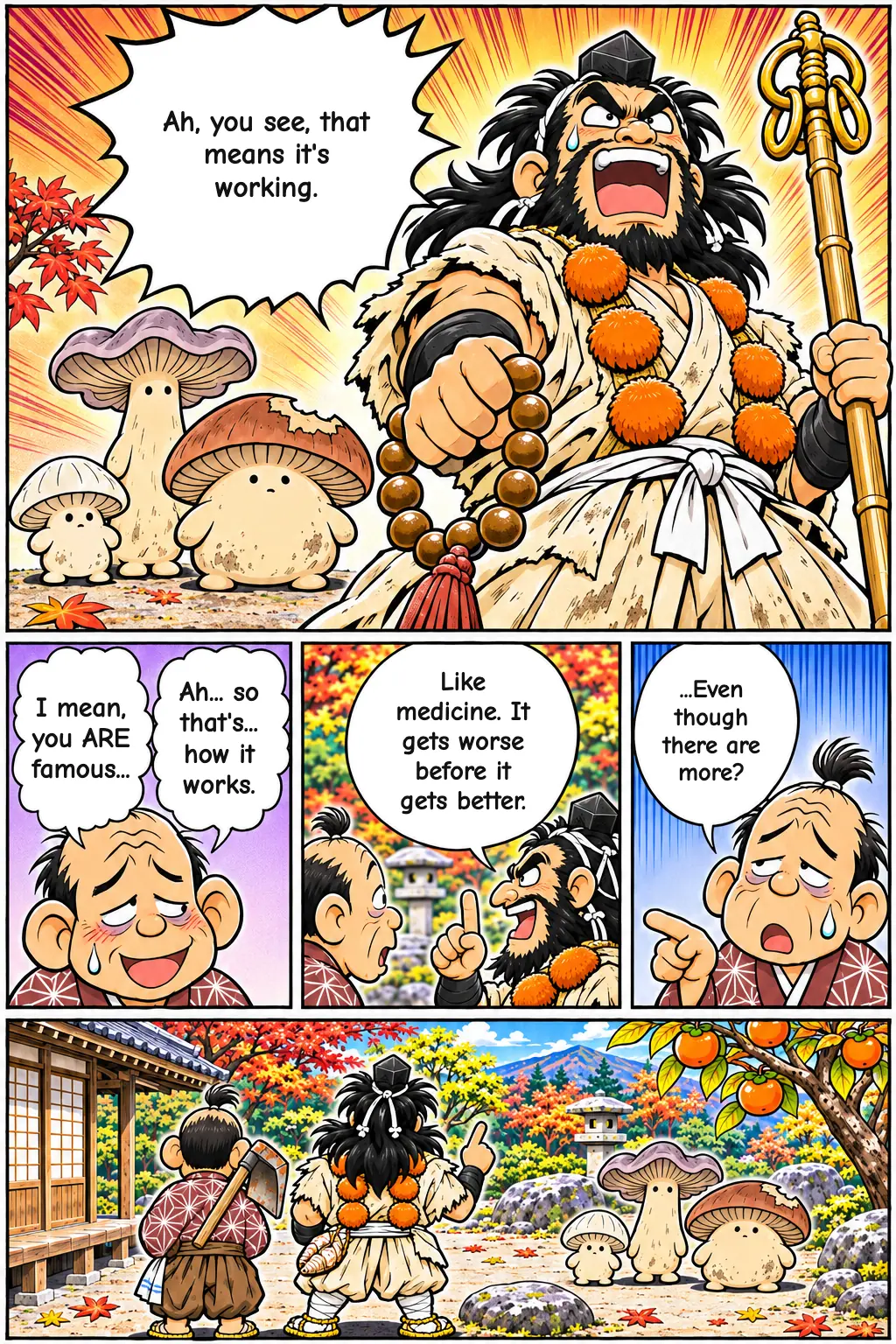
A man discovers a mushroom about as tall as a person growing on his property. He removes it, but by the next day it has returned, and this keeps happening. Unnerved, he goes to a yamabushi, a mountain ascetic said to gain spiritual power through hard religious training, and asks him to drive the thing away with prayer. The yamabushi agrees, boasting of his training and powers, and arrives with a great air of importance. He rubs his prayer beads together and begins. The mushrooms do not shrink. They multiply.
Kusabira Summary: The Kyogen Play Where Prayers Multiply Mushrooms
In short: Kusabira is a classic Japanese kyogen comedy in which a man asks a boastful yamabushi, a mountain ascetic, to pray away a giant mushroom growing on his property. Every prayer produces more mushrooms, until a huge "demon mushroom" appears and the swarm chases the yamabushi away.
Kusabira Summary: The Original Kyogen Play
A man discovers a mushroom about as tall as a person growing on his property. He removes it, but by the next day it has returned, and this keeps happening. Unnerved, he goes to a yamabushi, a mountain ascetic said to gain spiritual power through hard religious training, and asks him to drive the thing away with prayer.
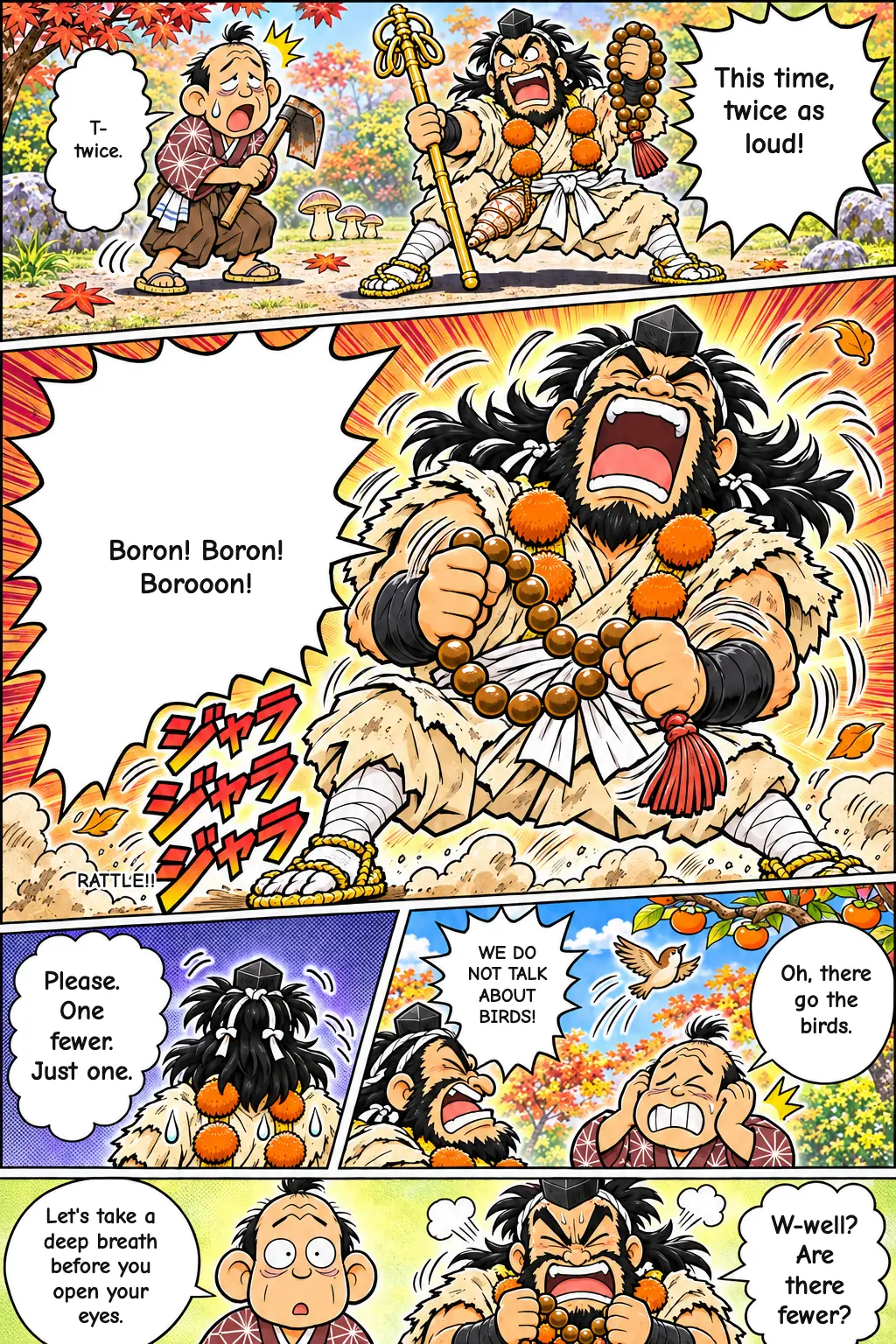
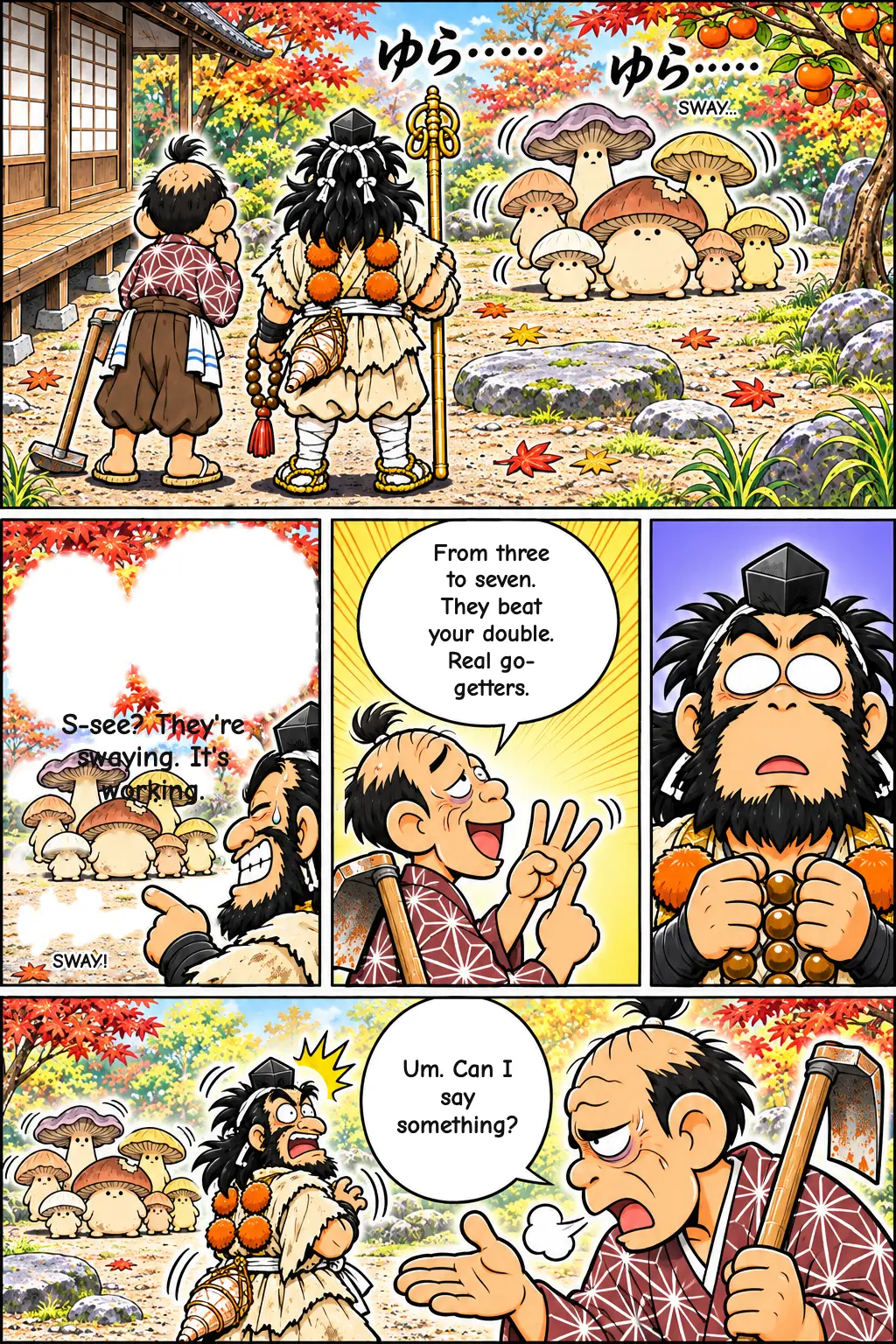
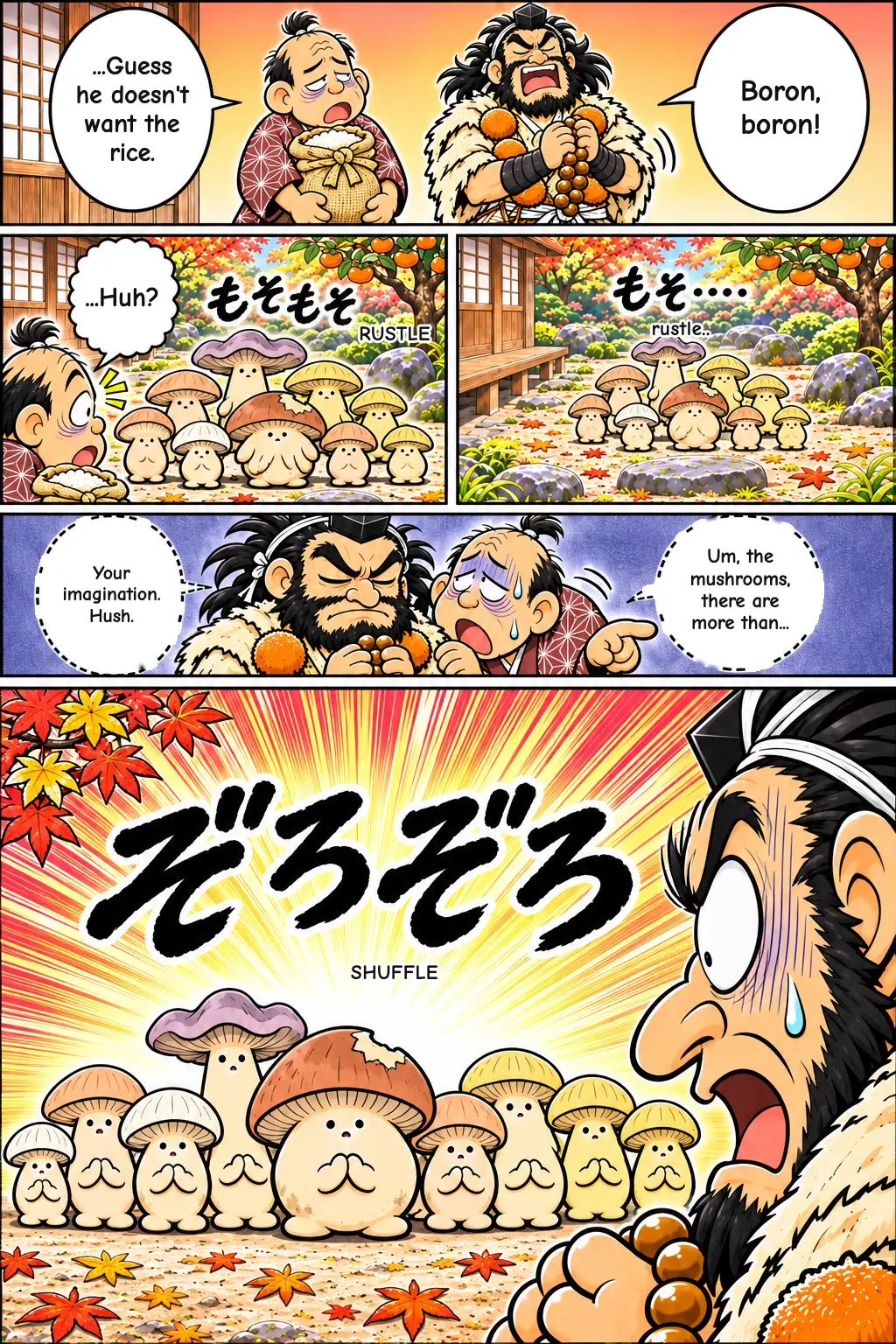
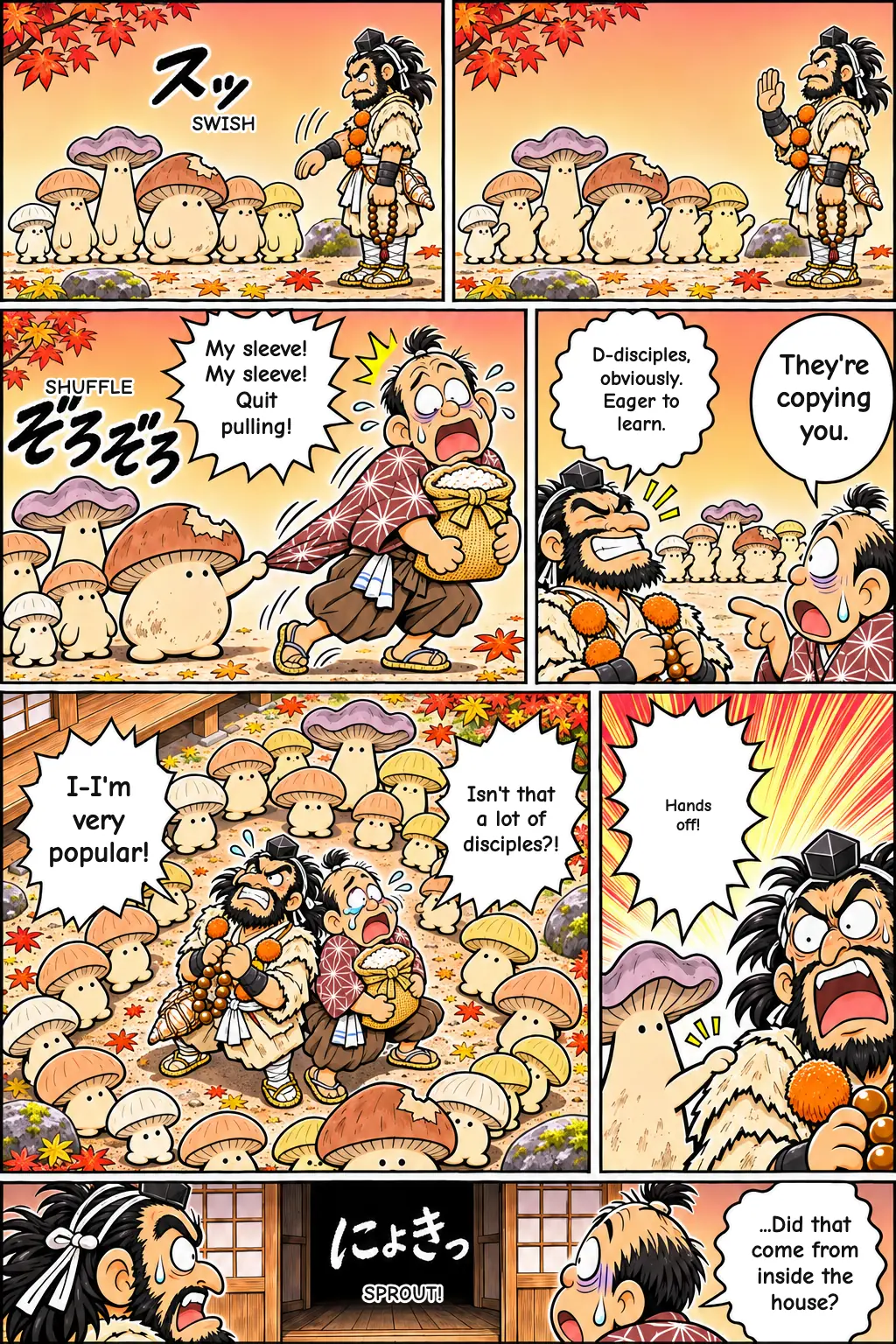
The yamabushi agrees, boasting of his training and powers, and arrives with a great air of importance. He rubs his prayer beads together and begins. The mushrooms do not shrink. They multiply. One after another they appear, then start moving around the stage, closing in on both men and clinging to them.
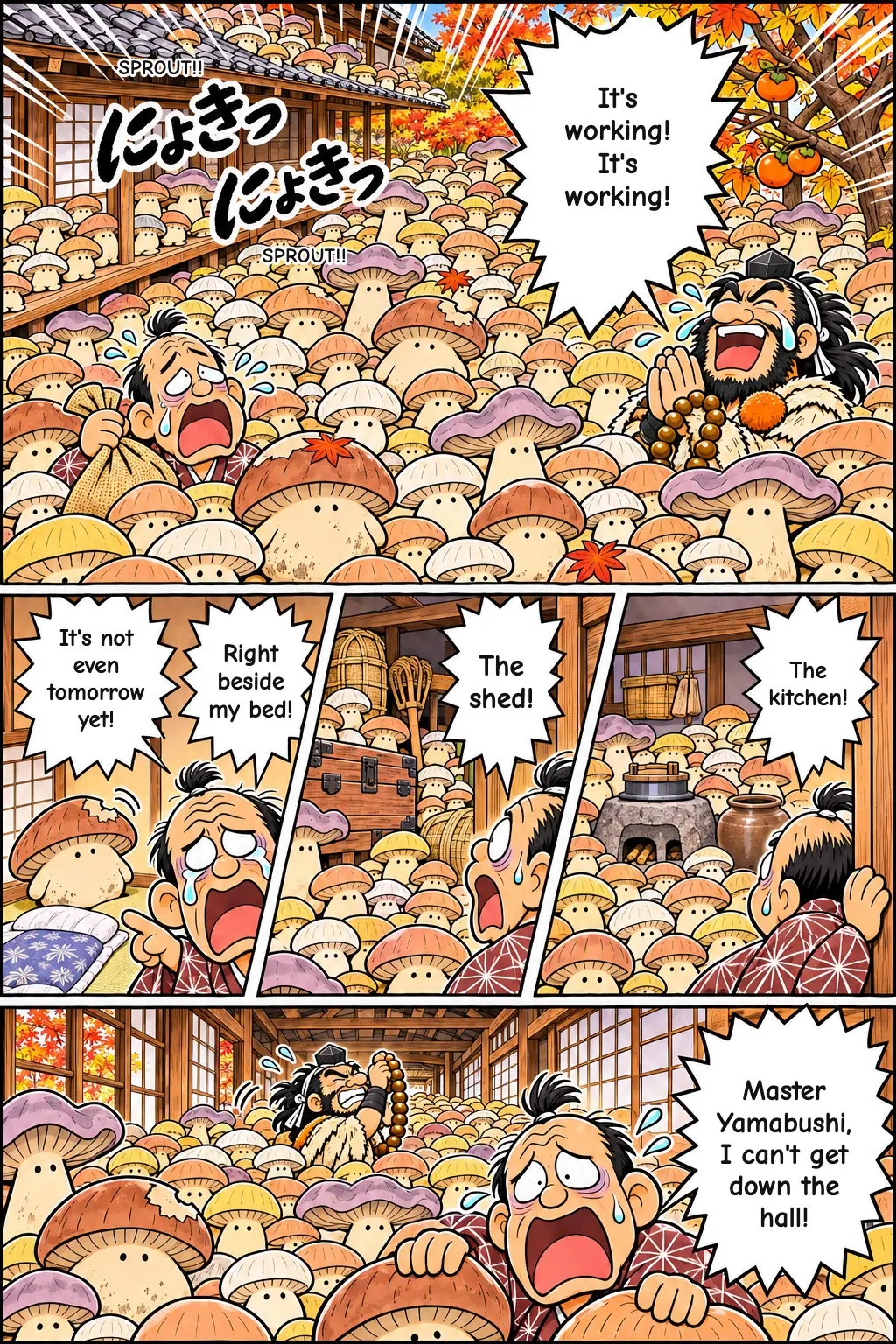
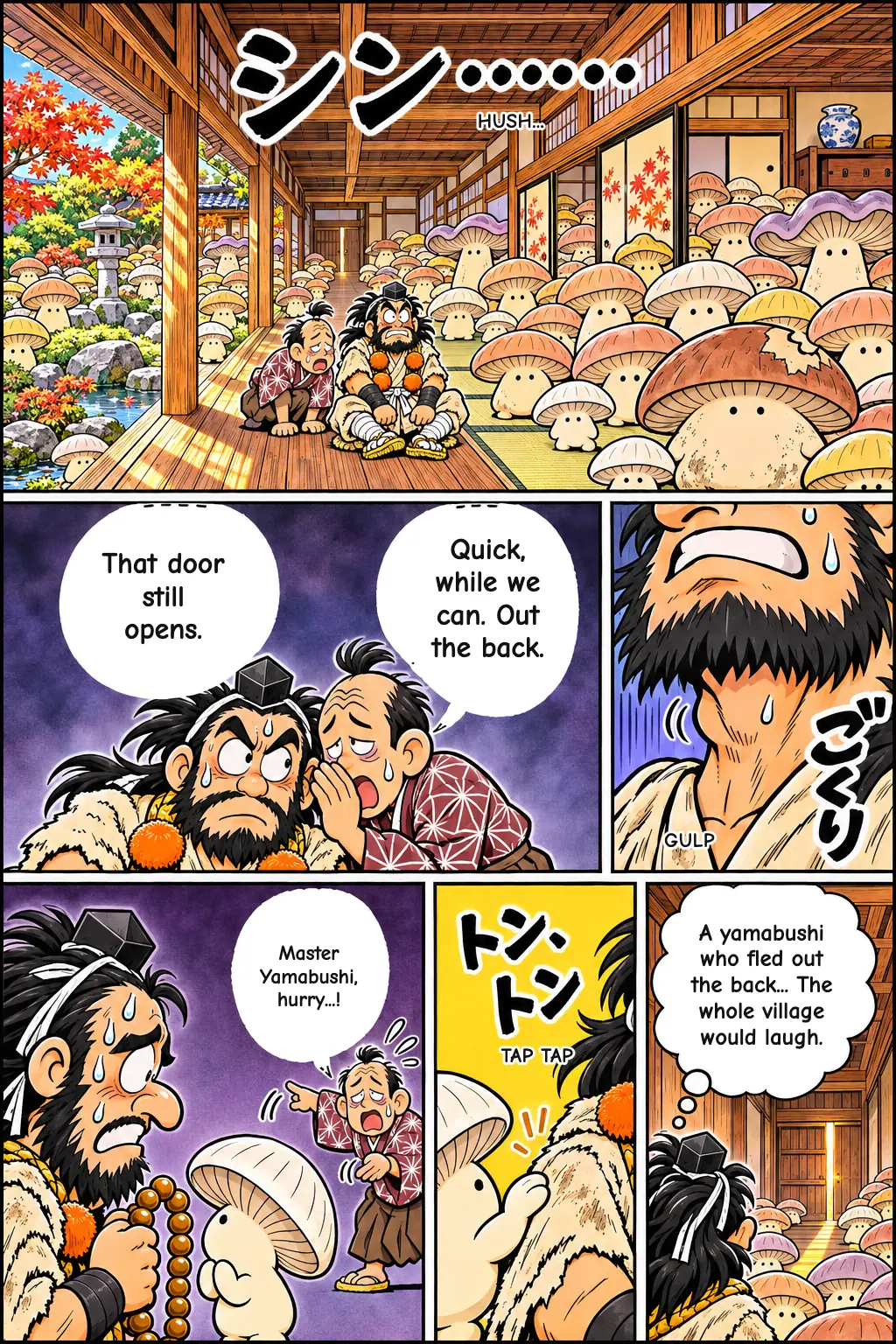
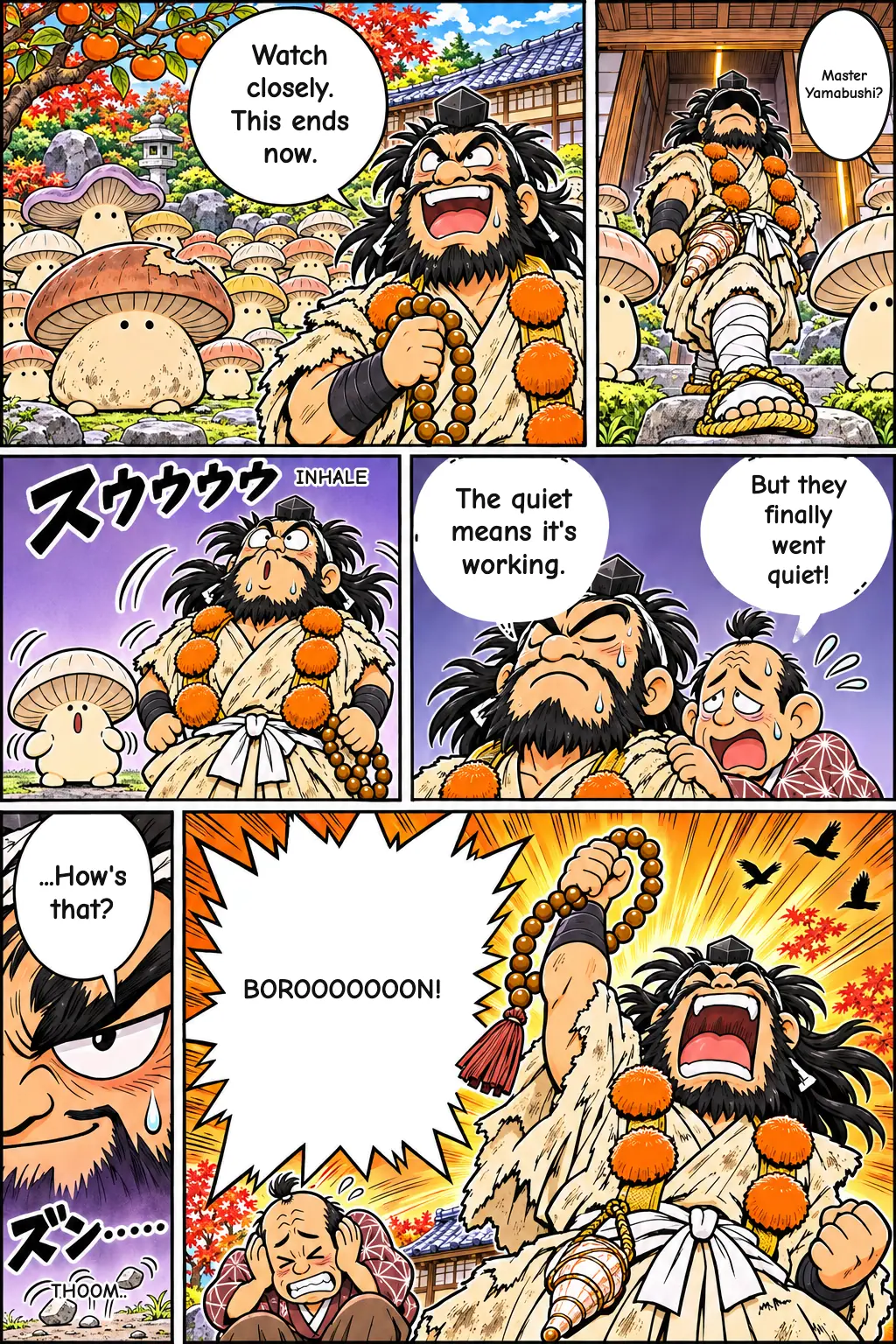
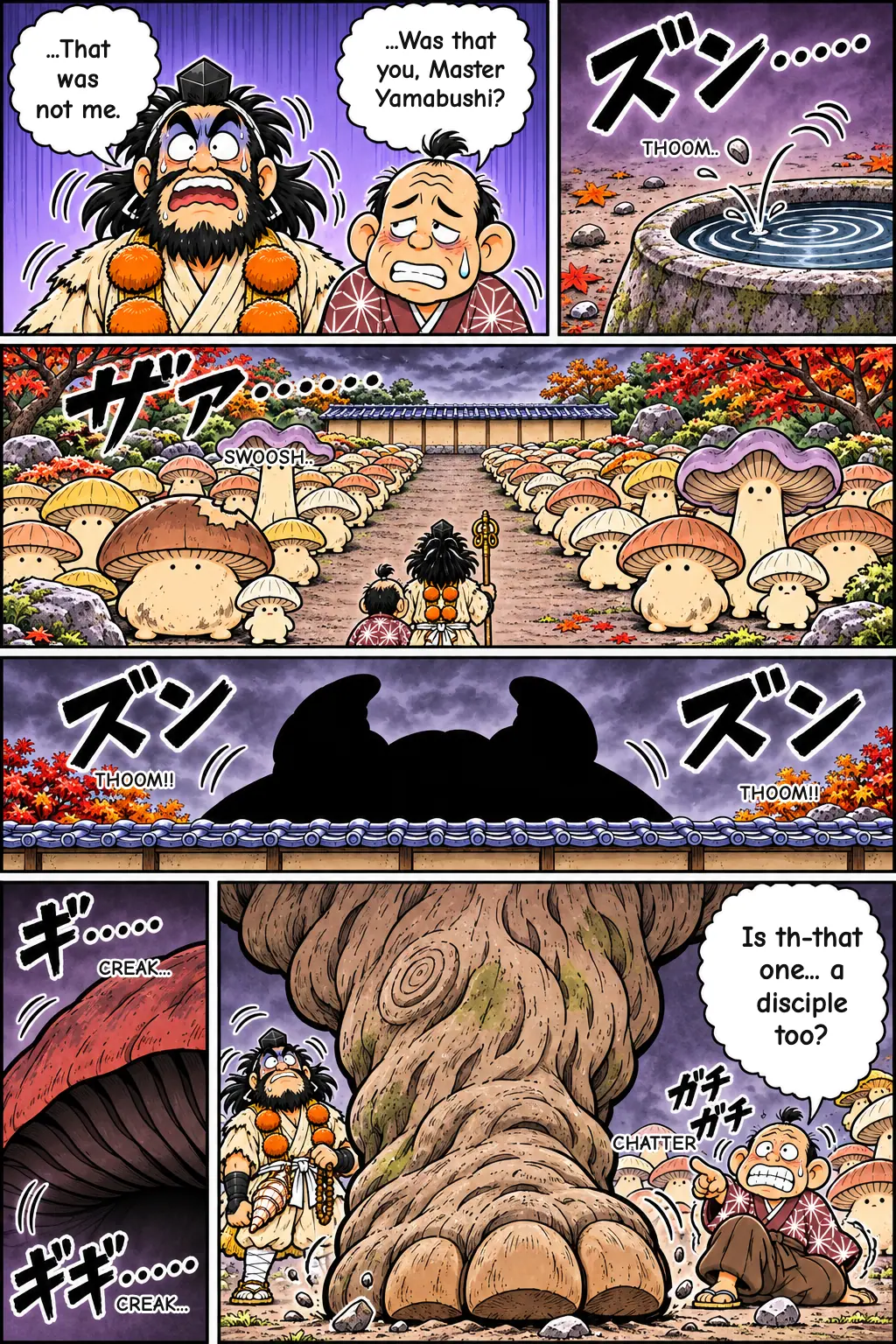
The yamabushi refuses to admit defeat and keeps praying, but matters only get worse. Finally, an enormous oni-take, or demon mushroom, opens its wide umbrella-like cap and lunges at him. He can no longer continue, so he flees with the mushrooms in pursuit, and the play ends there. Nobody solves the problem, and the mushrooms win.
Details vary by school and script. Kyogen is handed down mainly through two schools, Okura and Izumi, and their versions are not identical. Some stagings reportedly include a hime-take, a mushroom in female form who pesters the yamabushi, though it does not appear to be part of every version. The man's exit also varies: he may run with the yamabushi or get away first.
Main Characters in Kusabira
The yamabushi is the lead role, known in kyogen as the shite. He has no personal name, and that suits the joke: he stands for a type of confident expert more than a specific person. The homeowner plays the supporting role, called the ado. He is also unnamed, and he is less a hero than an ordinary person pulled deeper into trouble by the help he paid for.
The mushrooms are the play's great visual gag. Several actors play them as a group, with little in the way of names or individual personalities. They are a shuffling, spreading presence, which is what makes them funny and slightly creepy at once. The demon mushroom gives that presence a frightening climax.
What Kusabira Tells Us About Kyogen and Japanese Culture
Kyogen is the comic theater traditionally performed alongside noh, Japan's solemn masked drama. The two developed together in medieval Japan and are still staged today. Where noh often deals with ghosts, grief, and memory, kyogen tends to look at everyday people and their very human failings: greed, vanity, laziness, and bluffing.
Kusabira belongs to a group of plays that make fun of yamabushi. Mountain ascetics were real figures in Japanese religious life, associated with the practice of Shugendo, and ordinary people could call on them for prayers in times of trouble. That is exactly why the comedy works. A person who claims special power and charges into a crisis is a perfect target when the crisis gets worse.
The play is often enjoyed as a story about authority falling apart. The yamabushi's status rests on his words and his reputation, but the mushrooms do not argue, and they are not impressed. They simply keep arriving. This is one way to read the piece, not a moral stated by the play itself, and it can also be enjoyed as pure absurd comedy.
The play also seems to give no reason for the mushrooms' appearance. They are not presented as a punishment or a curse with a backstory; they simply show up. Much of the charm lies in that unexplained strangeness, which can feel surprisingly modern to audiences today.
What the Manga Changes
The core of Episode 8 comes from the play: the unwanted mushrooms, the request for prayer, the boasting yamabushi, the multiplying swarm, the demon mushroom, and the final chase. The manga's biggest addition is continuity. It treats this yamabushi as the same man from Episode 7, based on the play Kaki Yamabushi, so this story becomes a sequel in which he has learned nothing. The original plays are separate works and do not connect this way.
The manga also fleshes out the two men's personalities and gives them specific names, verbal habits, and banter. The man's complaints and the yamabushi's excuses follow the spirit of the original, but the exact lines belong to the manga, including the insistence that more mushrooms must mean the prayer is working.
The visuals expand the stage comedy as well. Giving the mushrooms varied shapes, expressions, and gestures is a creative choice, as are the escalating gags, the extended chase, and the details of the house and yard. Any aftermath or panel that leads into the next episode is also the manga's own invention, since the play stops once the chase begins.
Where to Read Kusabira as a Manga
If you want to see how a silent crowd of mushrooms can defeat a very loud man, Episode 8 of KYOGEN: Japan's 600-Year-Old Comedy tells the story in "Sir, Your Exorcism Is Growing Mushrooms." You can read every episode here on Manga Portal for free, with no sign-up required. It is a quick way to meet a Japanese comedy tradition with no background knowledge, and if you enjoy this yamabushi's downfall, Episode 7 shows you his previous one.
Characters in this episode
The Yamabushi
A nameless, boastful mountain ascetic whose confident prayers only make the mushroom problem worse.
The Man (Homeowner)
An ordinary, unnamed householder who asks for prayers to remove a giant mushroom and gets caught up in the growing chaos.
The Mushrooms (Kusabira)
A group of largely wordless figures played by several actors, who multiply with each prayer and crowd around the two men.
Oni-take (Demon Mushroom)
A huge mushroom with a wide, umbrella-like cap that appears near the end to terrify the yamabushi, though its staging varies by school and production.
Hime-take (Princess Mushroom)
A mushroom in female form said to pester the yamabushi in some versions, but not a role found in every script.
FAQ
What is the kyogen play Kusabira about?
A man asks a yamabushi, a mountain ascetic, to pray away a giant mushroom that keeps growing back on his property. The prayers make the mushrooms multiply instead. In the end, the yamabushi runs away with the mushrooms chasing him.
What does "kusabira" mean?
Kusabira is an old Japanese word associated with mushrooms, and it serves as the title of this play. The play's title is sometimes written with the kanji for mushroom.
What is a yamabushi?
A yamabushi is a mountain ascetic linked to Shugendo, a Japanese religious tradition centered on training in the mountains. They were believed to gain spiritual power through this practice. Kyogen comedies often poke fun at yamabushi who claim more power than they can show.
How does Kusabira end?
A huge demon mushroom appears and menaces the yamabushi, who gives up and flees as the mushrooms chase him. The play offers no neat resolution or explanation of why the mushrooms appeared. Some details differ by school and script.
Is the yamabushi in Kusabira the same character as in Kaki Yamabushi?
Not in the original plays, which are separate works with unnamed characters. The Manga Portal series links them by making the two yamabushi the same person. That connection is a creative choice of the manga.