Episode 11Not a Thousand Hooks. Only the Lost One.Umisachi and Yamasachi
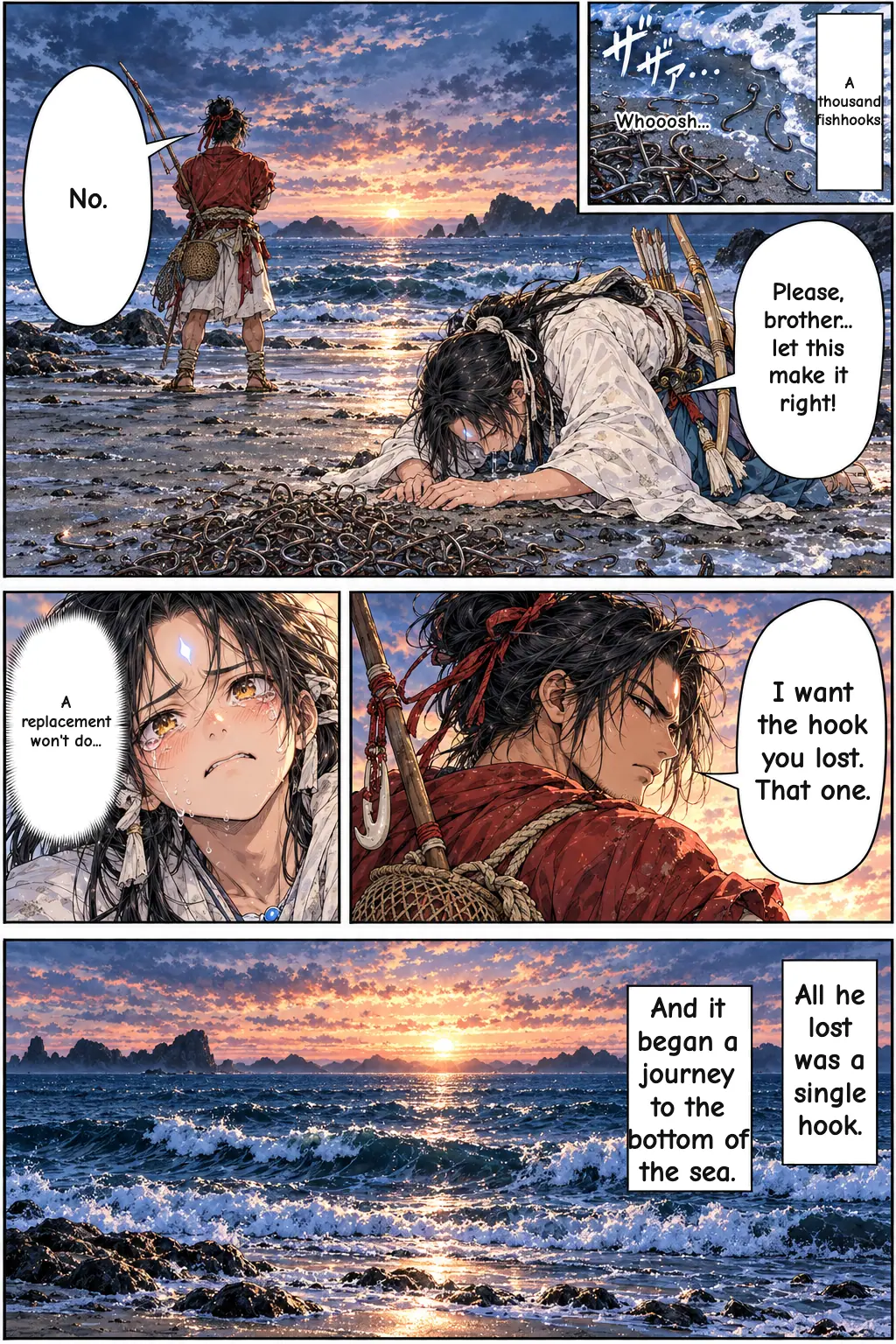
Hoori loses his older brother's treasured fishhook in the sea, and even a thousand new hooks won't buy forgiveness. An old god of the tides guides him to a palace at the bottom of the ocean. After falling in love with a princess and spending three happy years there, Hoori gets the hook back. But the two jewels the sea god gives him lead the brothers into a bitter showdown.
Umisachi and Yamasachi Explained: The Kojiki's Lost Fishhook Myth
The Myth in Brief: Two Brothers and One Fishhook
The tale of Umisachi and Yamasachi appears in the first book of the Kojiki ("Record of Ancient Matters"), Japan's oldest surviving chronicle, compiled by the court official Ō no Yasumaro and presented in 712 CE. The two brothers are sons of Ninigi, the grandson of the sun goddess Amaterasu who came down from heaven, and Konohanasakuya-hime, the blossom princess, who gave birth to them inside a burning hut.
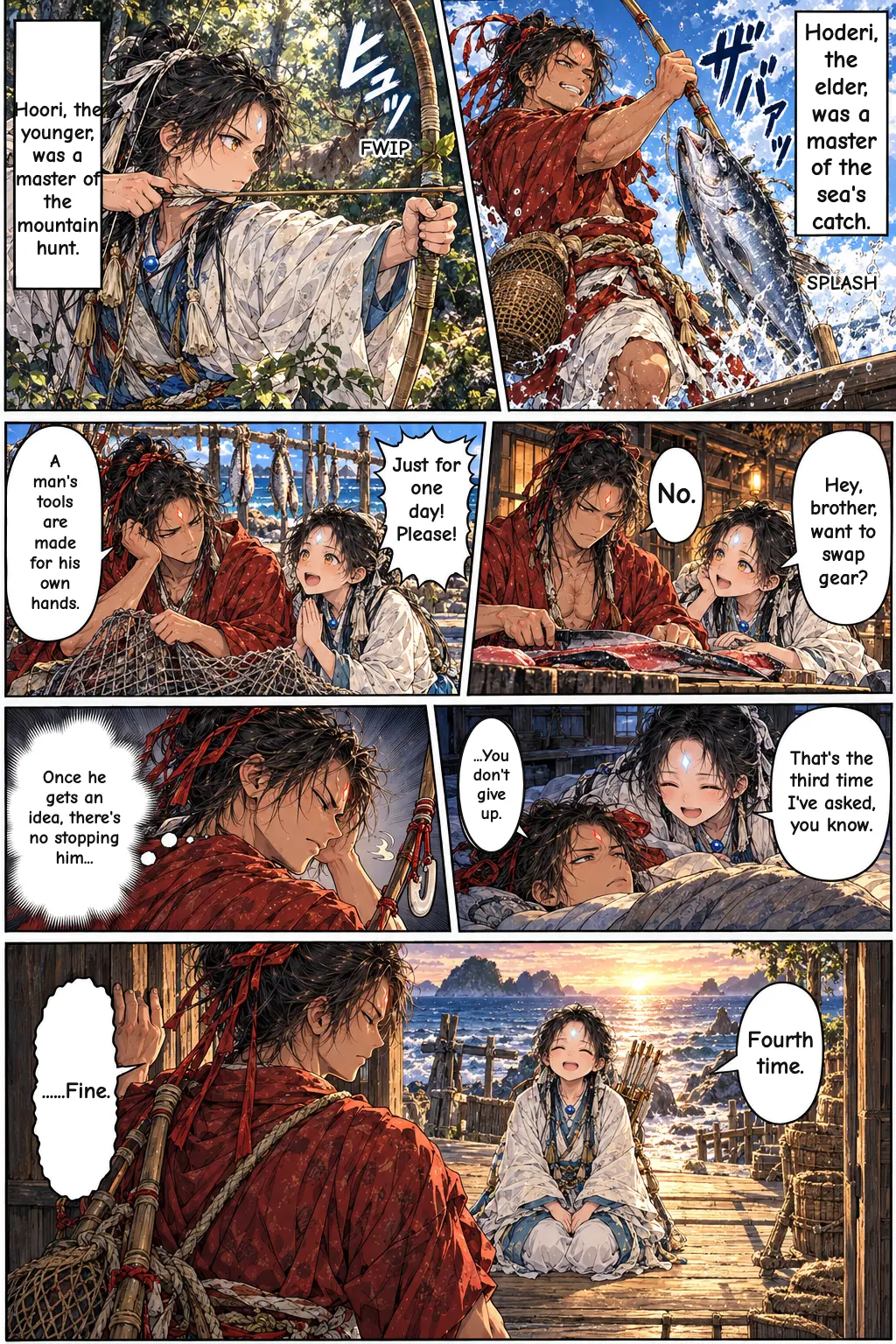
The elder brother, Hoderi, was called Umisachi, "luck of the sea," because he caught fish of every size. The younger, Hoori, was Yamasachi, "luck of the mountains," because he hunted animals large and small. Hoori asked three times to swap their gear and was turned down each time, but at last his brother agreed to a short exchange.
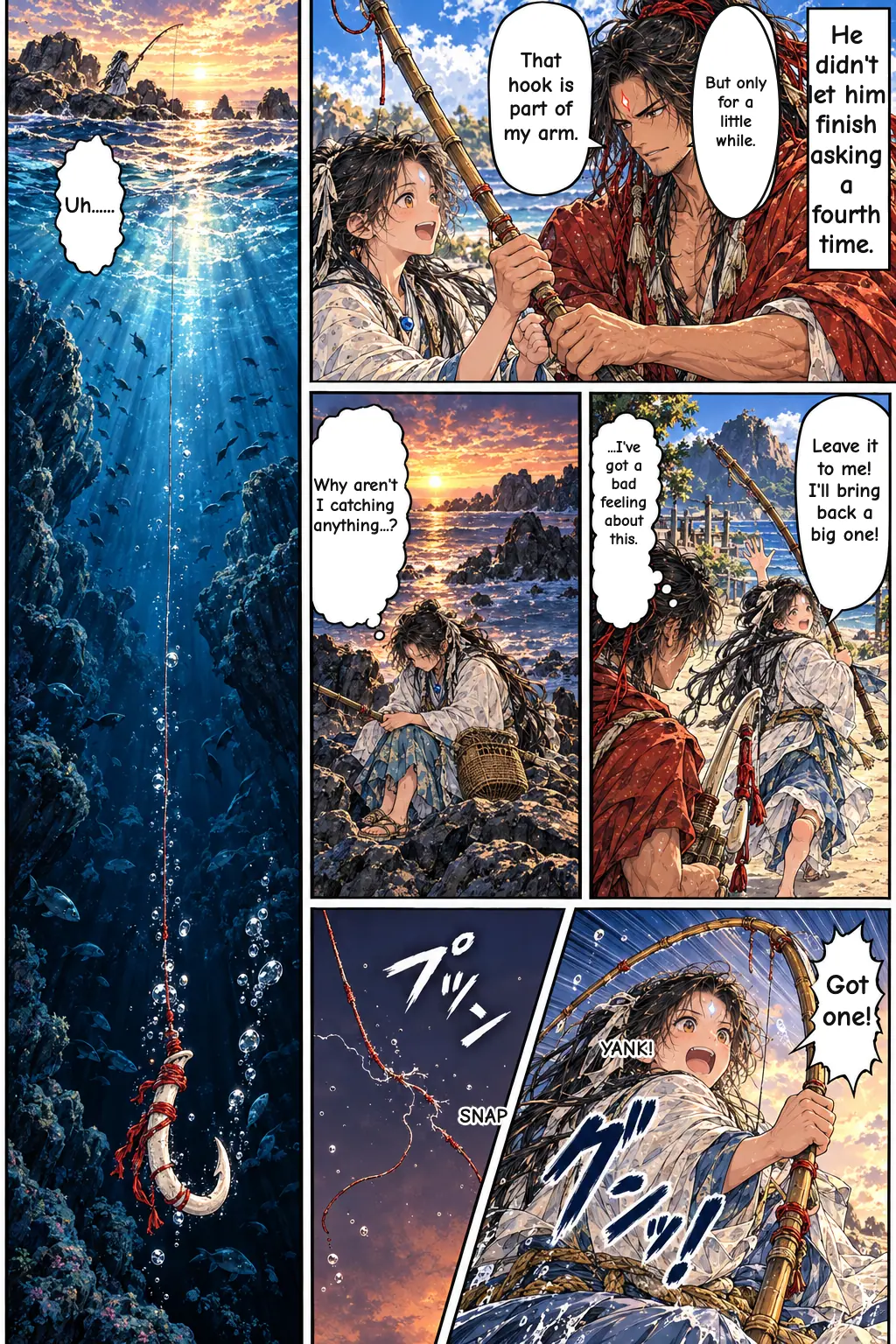
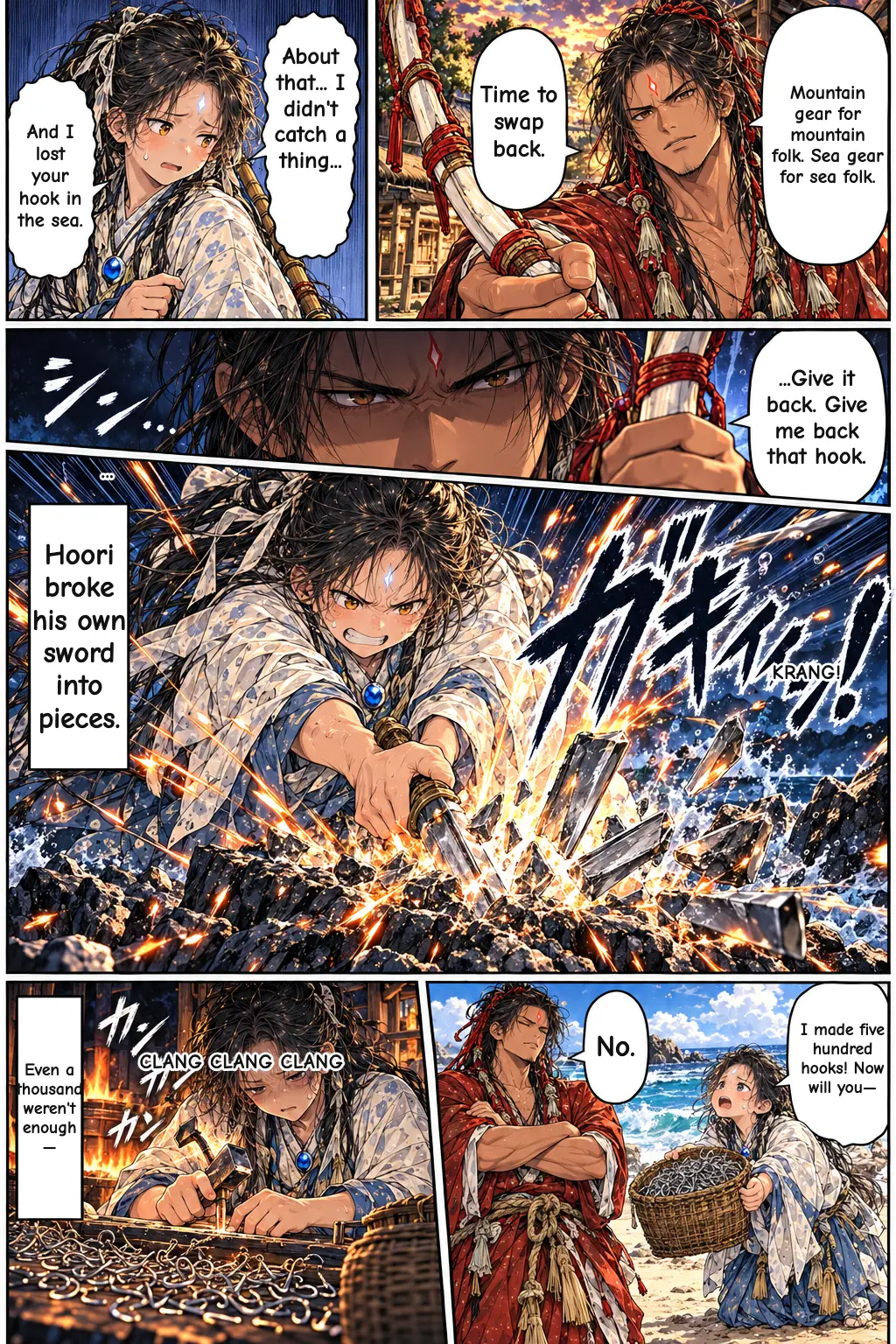
At sea, Hoori caught nothing, and he lost the fishhook as well. Hoderi demanded his own tools back. Hoori broke his sword and made five hundred hooks to make up for the loss, then a thousand, but his brother refused every one. He wanted the original hook and nothing else.
The Sea God's Palace and the Two Tide Jewels
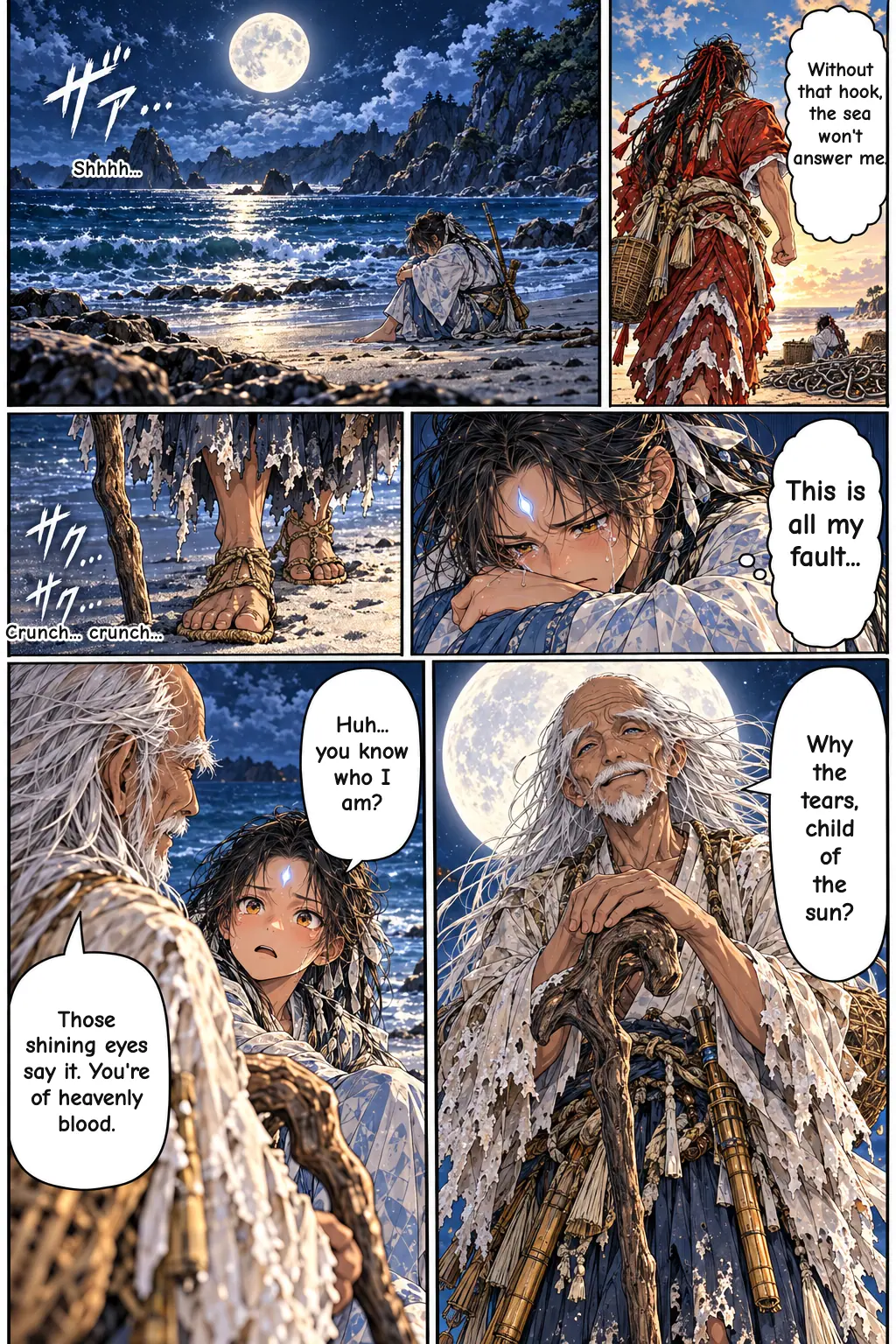
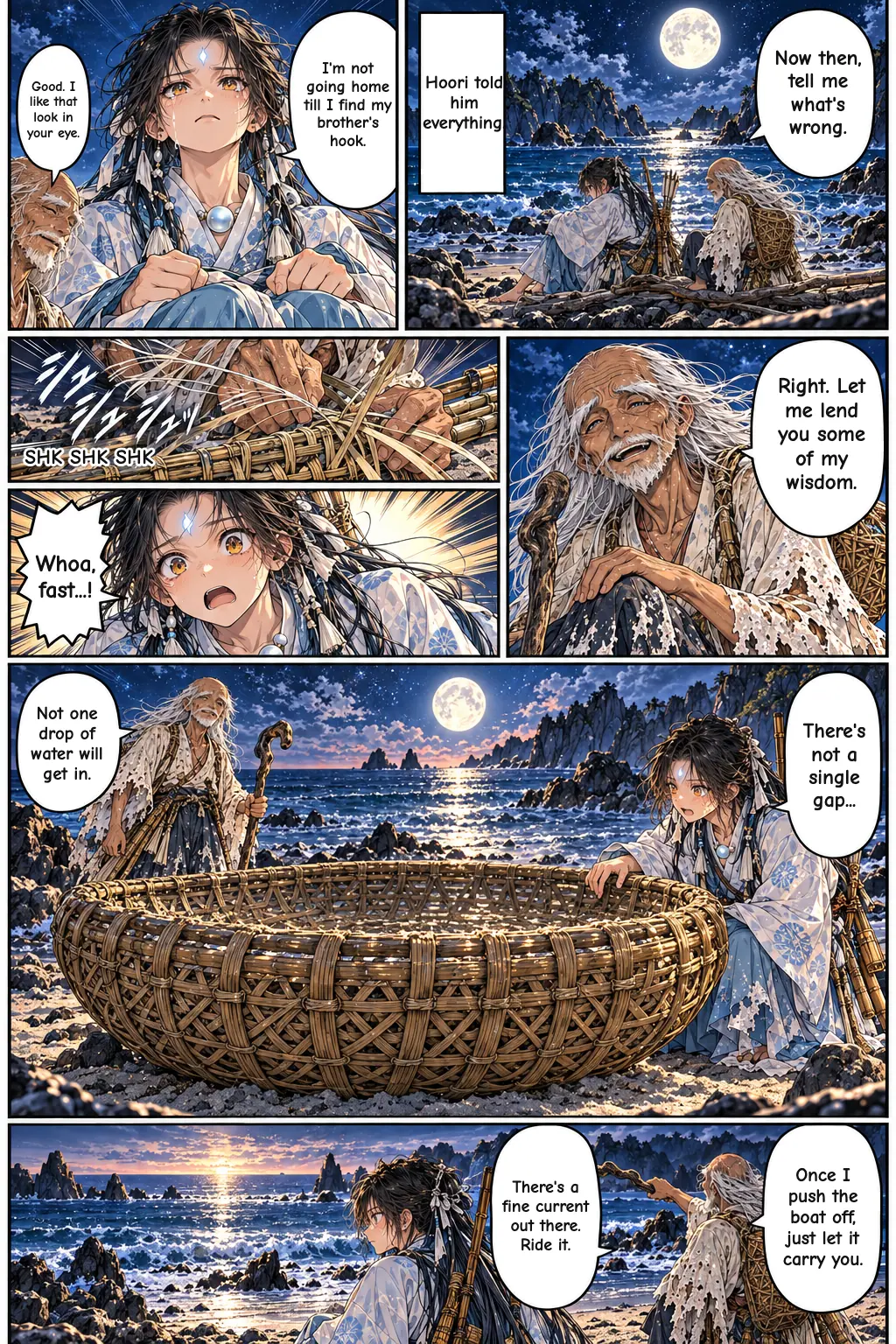
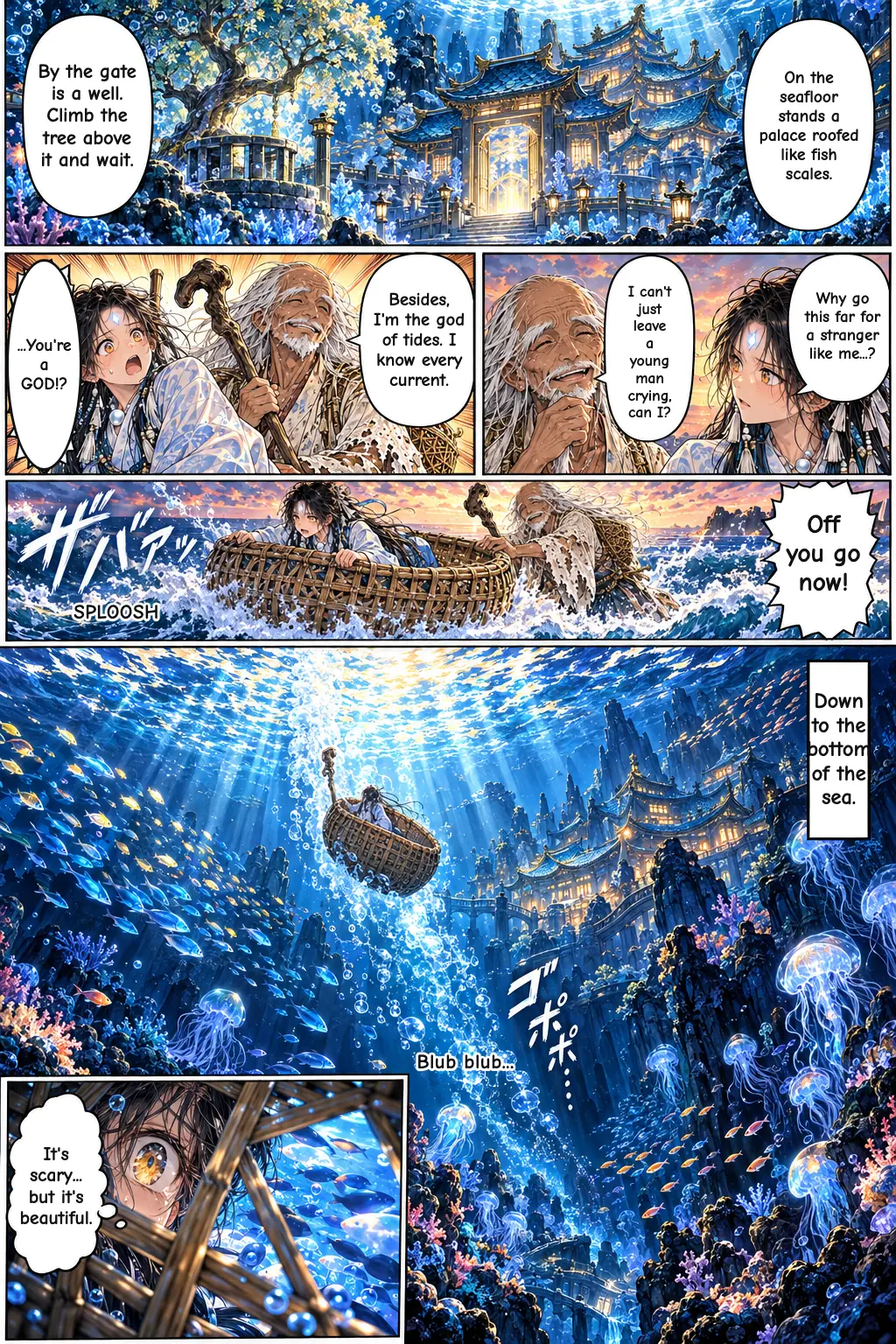
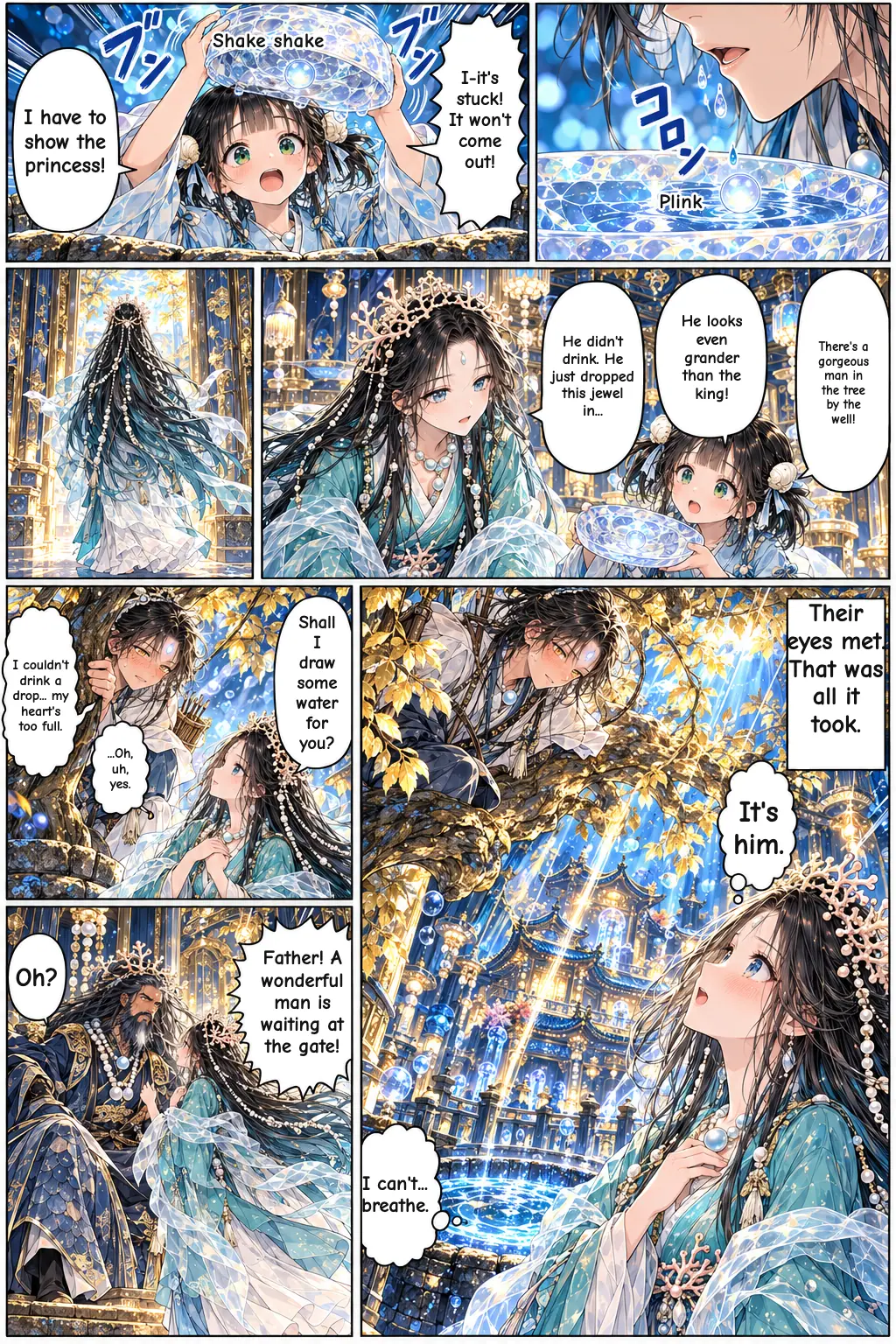
As Hoori wept on the shore, Shiotsuchi, a god linked to the tides and sea routes, appeared and asked what was wrong. He built Hoori a small boat of tightly woven bamboo and told him what to do: follow a good current to a palace built like fish scales, climb the sacred katsura tree beside its well, and wait there. Everything happened just as he said.
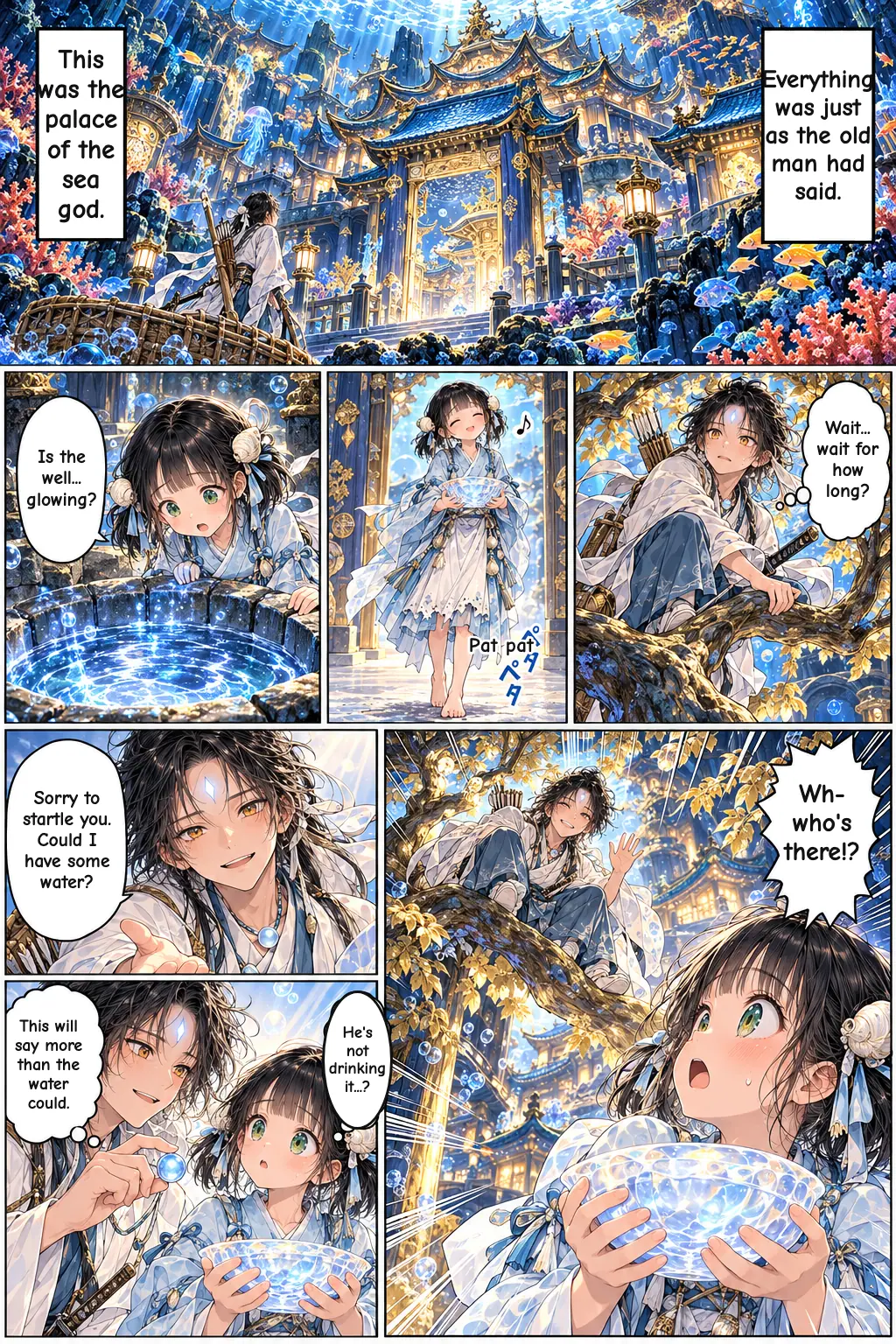
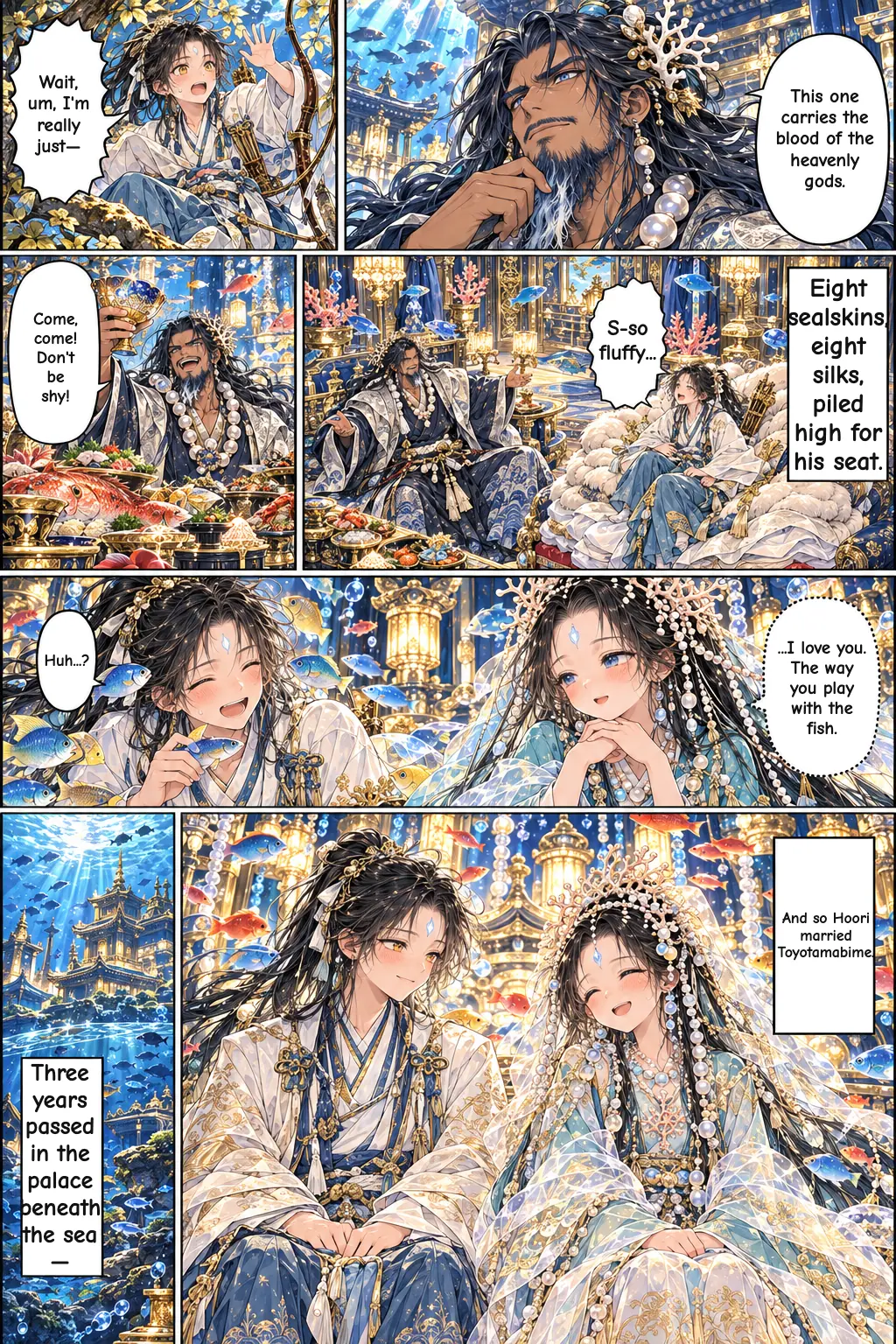
A maid of Toyotama-hime, daughter of the sea god Watatsumi, came to draw water, saw a light in the well, and looked up to find a handsome young man in the tree. Hoori asked for water, but instead of drinking he dropped a jewel from his necklace into her vessel, where it stuck fast. The princess came out to look, and their eyes met. The sea god himself recognized Hoori as a child of the heavenly line. He welcomed him with a lavish feast and gave him his daughter in marriage.
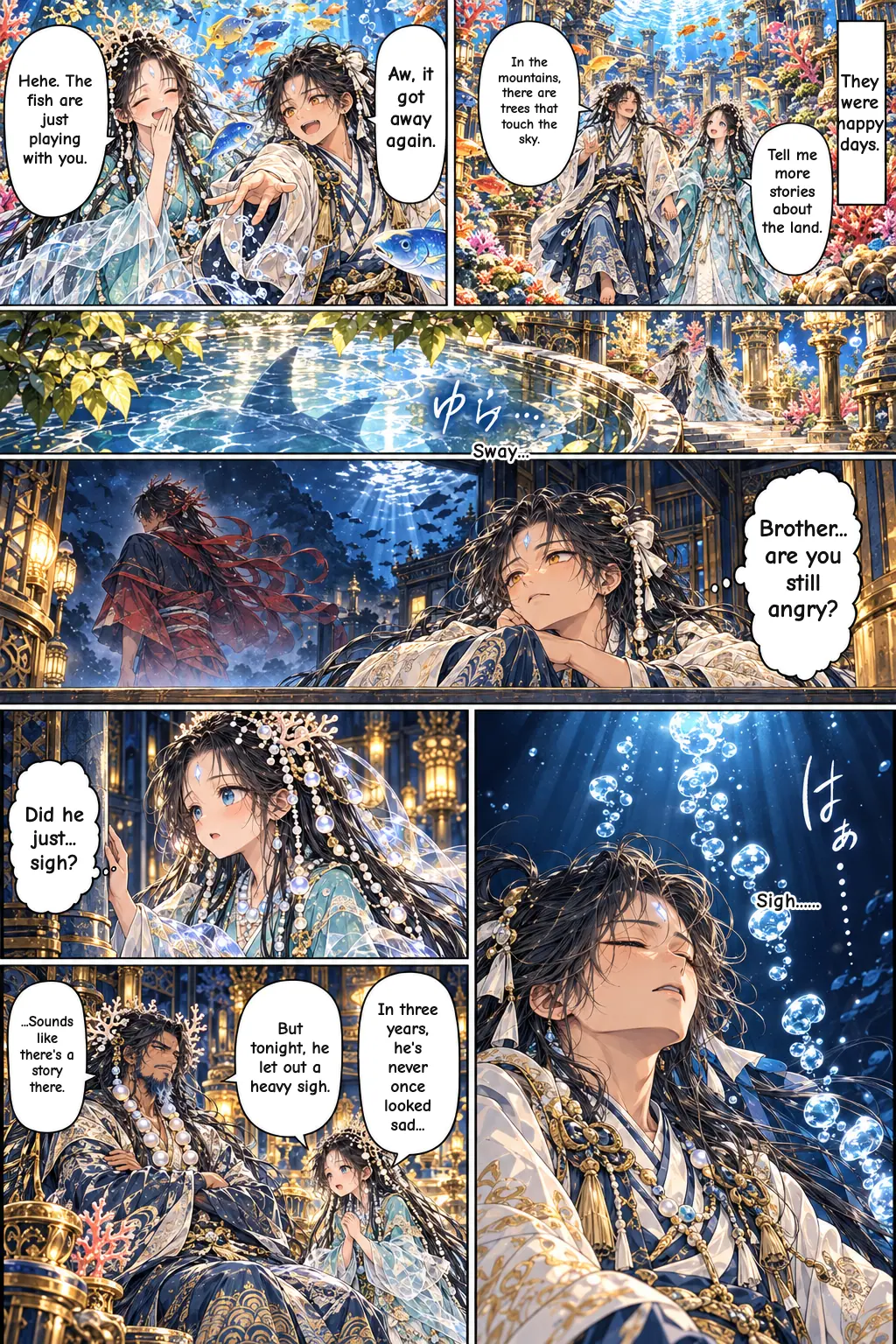
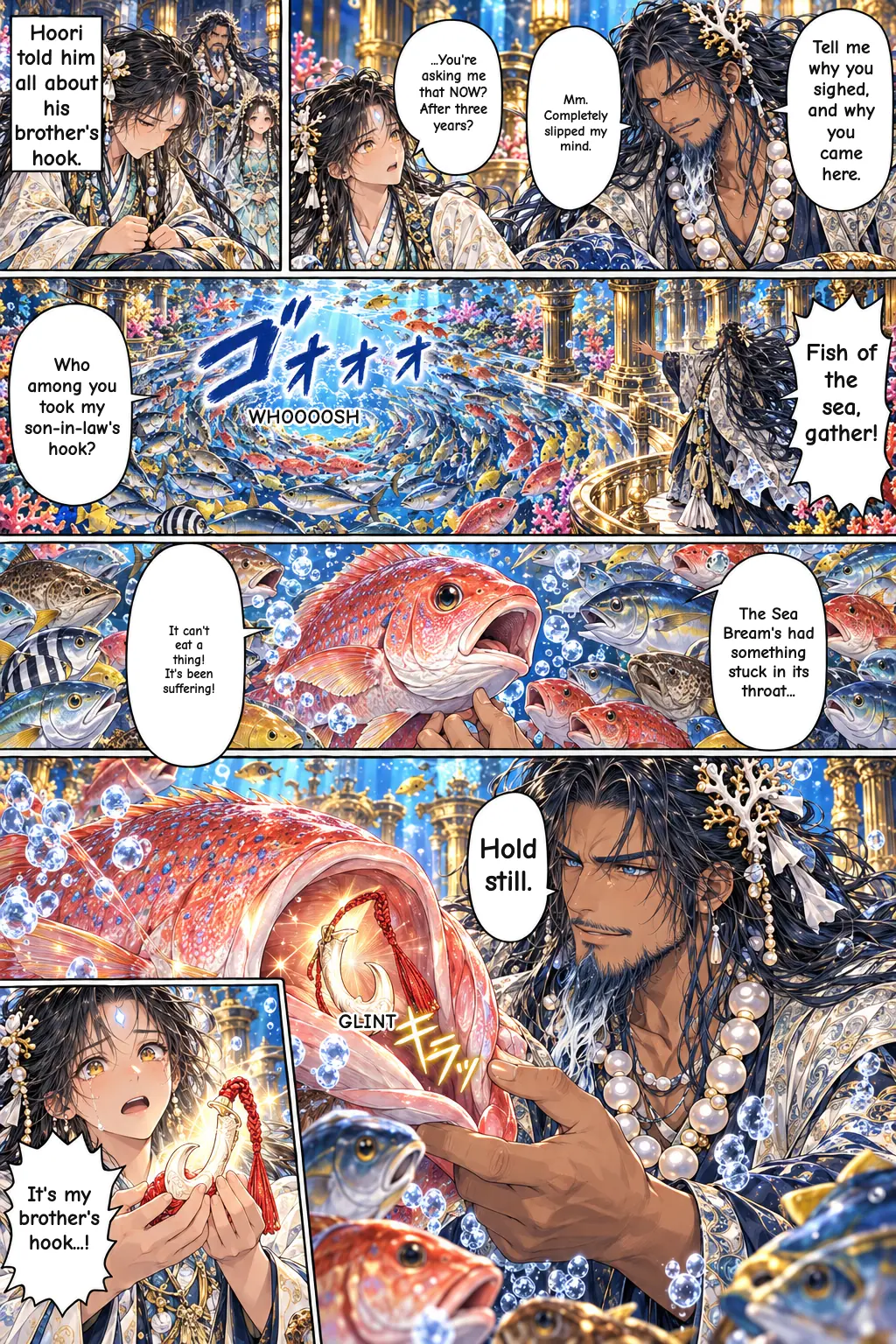
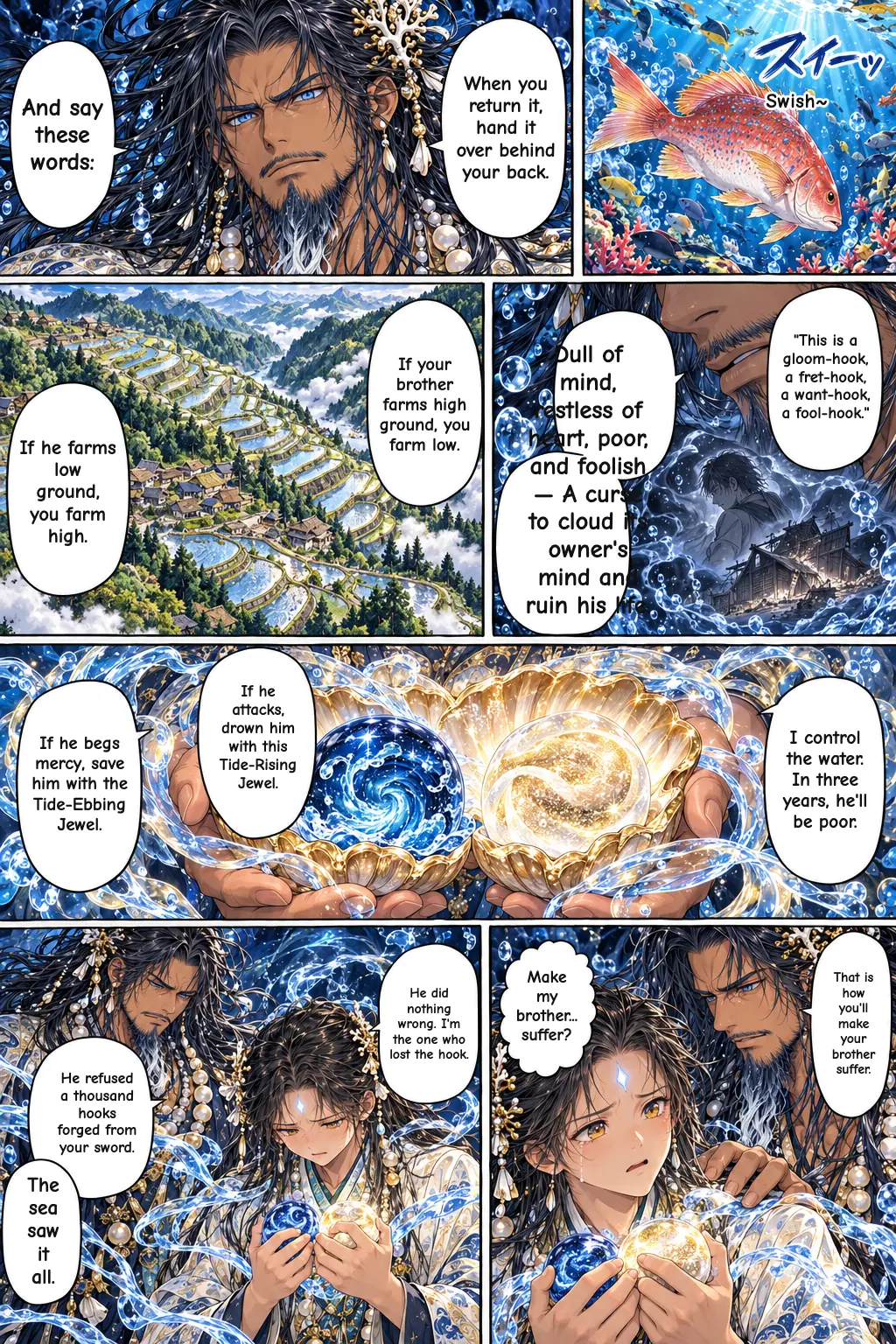
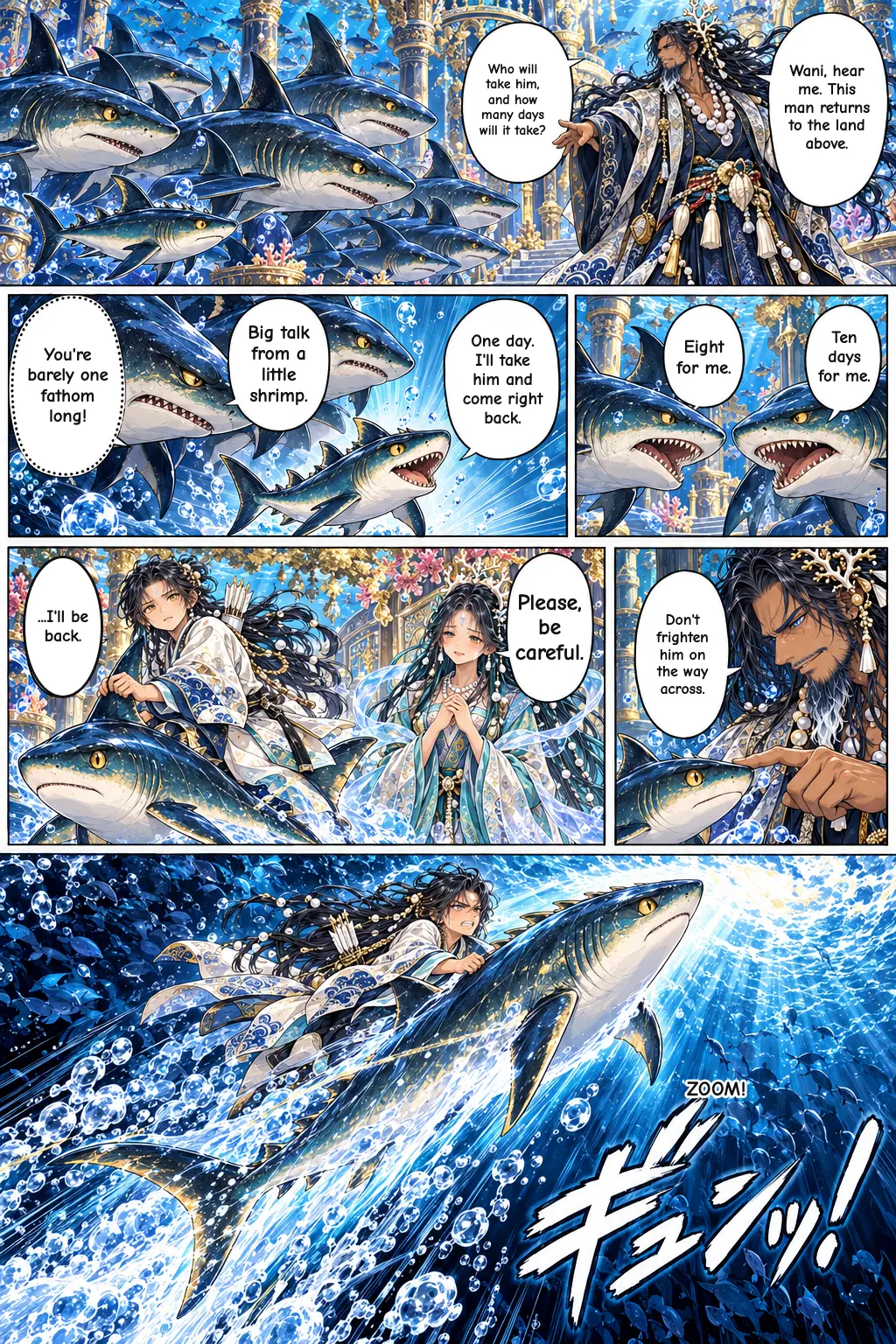
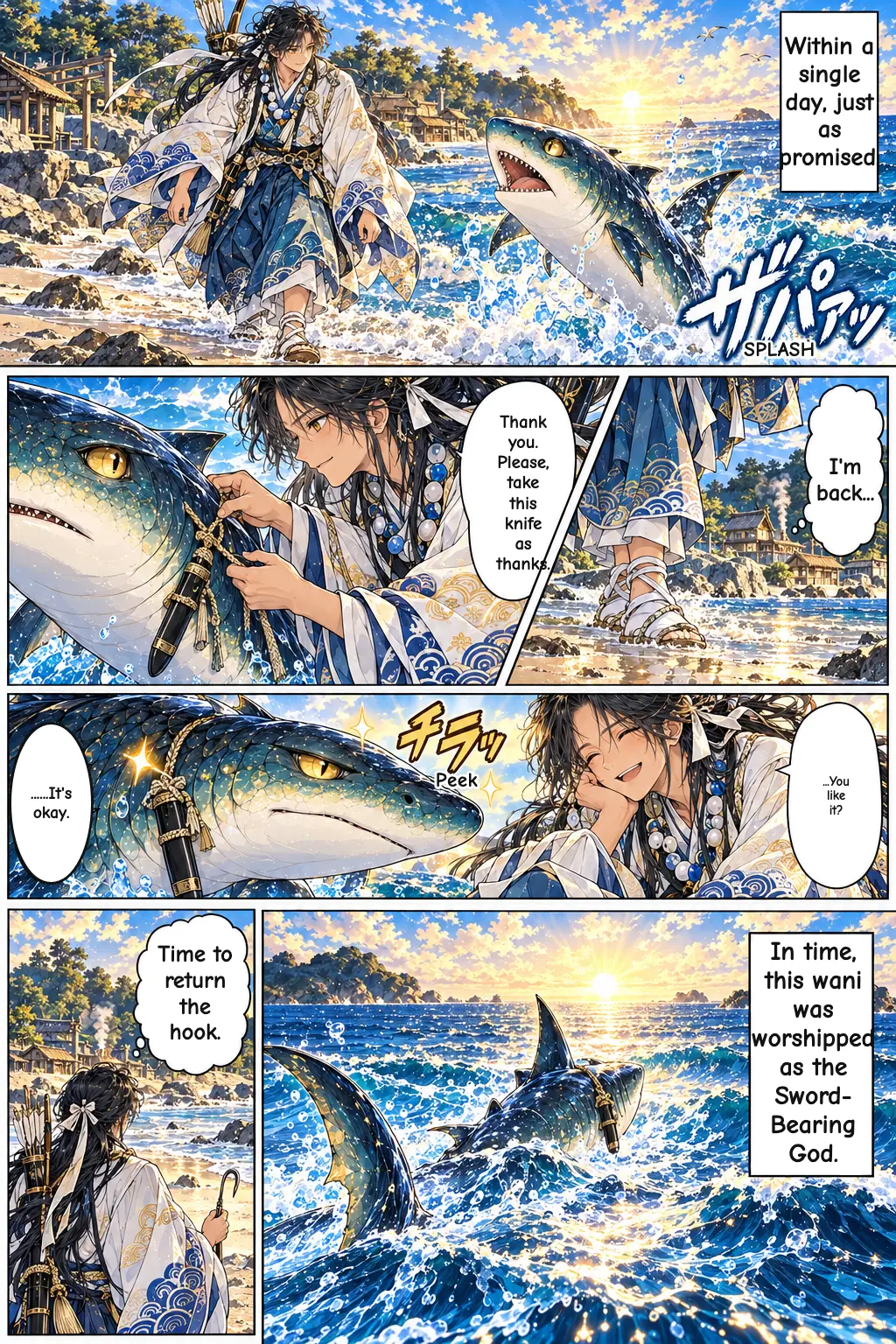
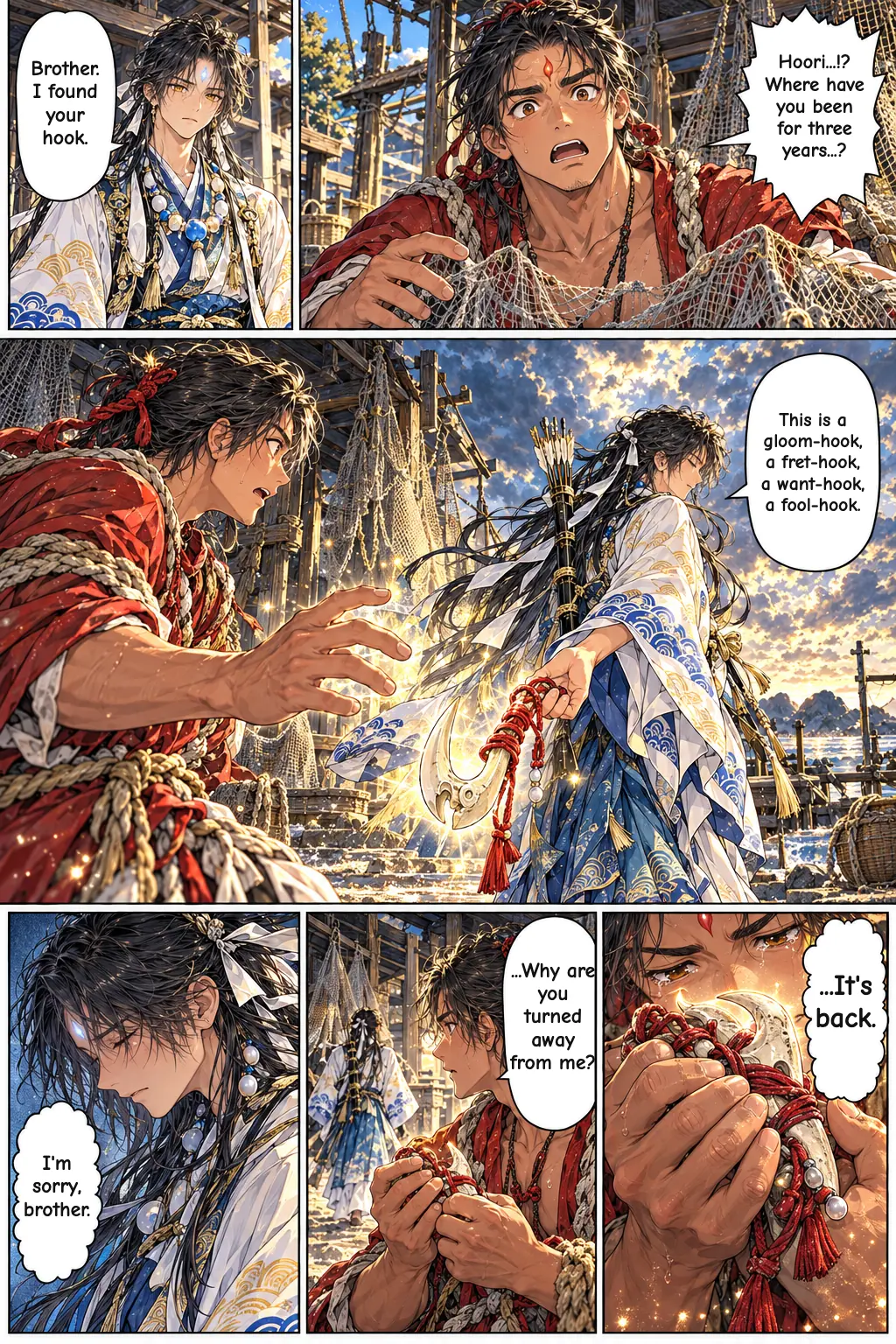
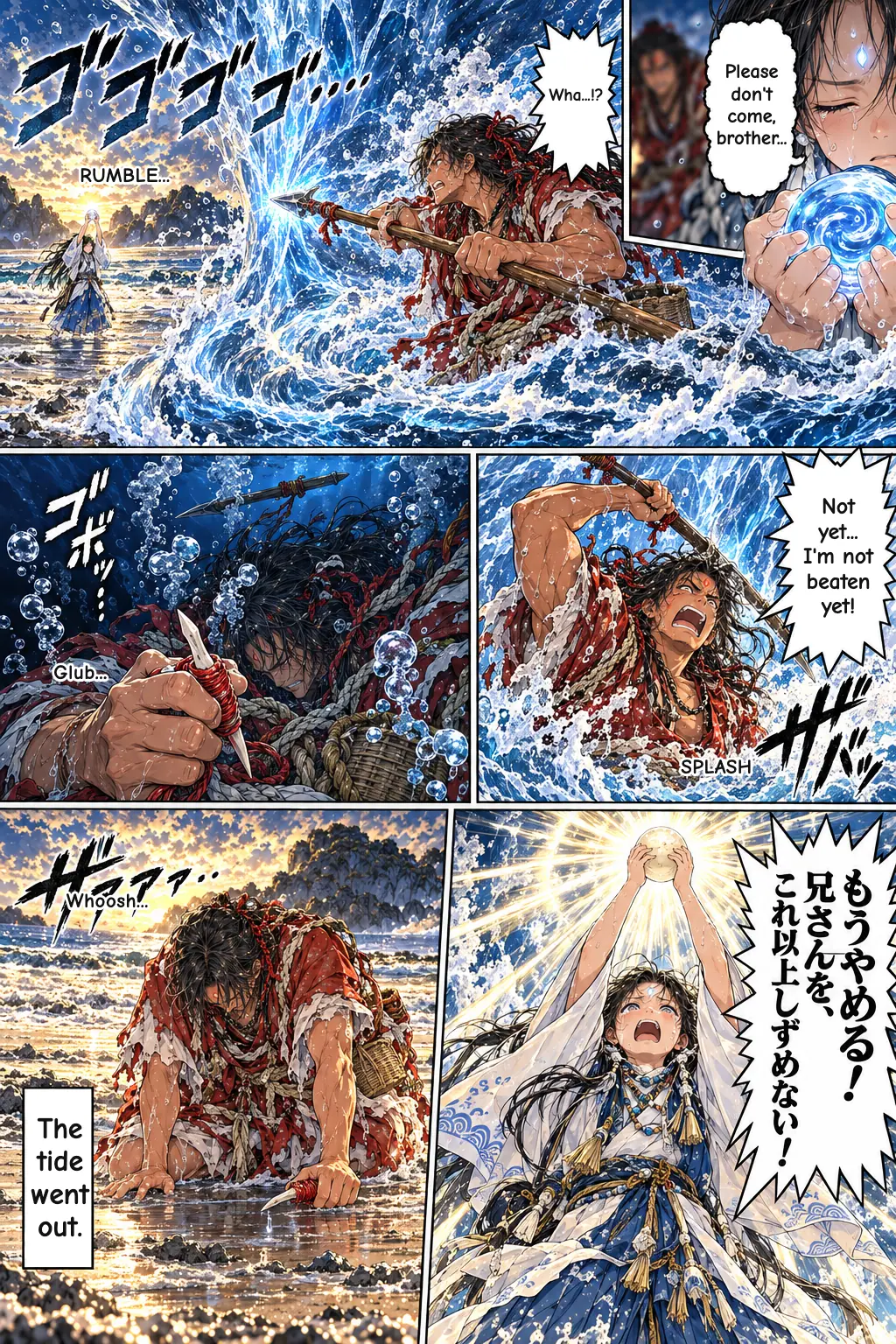
After three happy years, Hoori remembered why he had come and let out a deep sigh. The sea god called together all the fish of the ocean, and the hook was found stuck in the throat of a red sea bream. Watatsumi gave it back with three instructions. First, hand the hook to your brother behind your back while speaking words that curse him with gloom and poverty. Second, plant your rice fields on the opposite ground to his, because the sea god controls the water. Third, if your brother attacks, use the tide-flowing jewel to drown him, and when he begs for mercy, use the tide-ebbing jewel to save him. A wani (a sea creature often understood as a shark) carried Hoori home in a single day. Hoori tied a small knife to its neck, and from then on it was called Sahimochi, "the blade-bearing god."
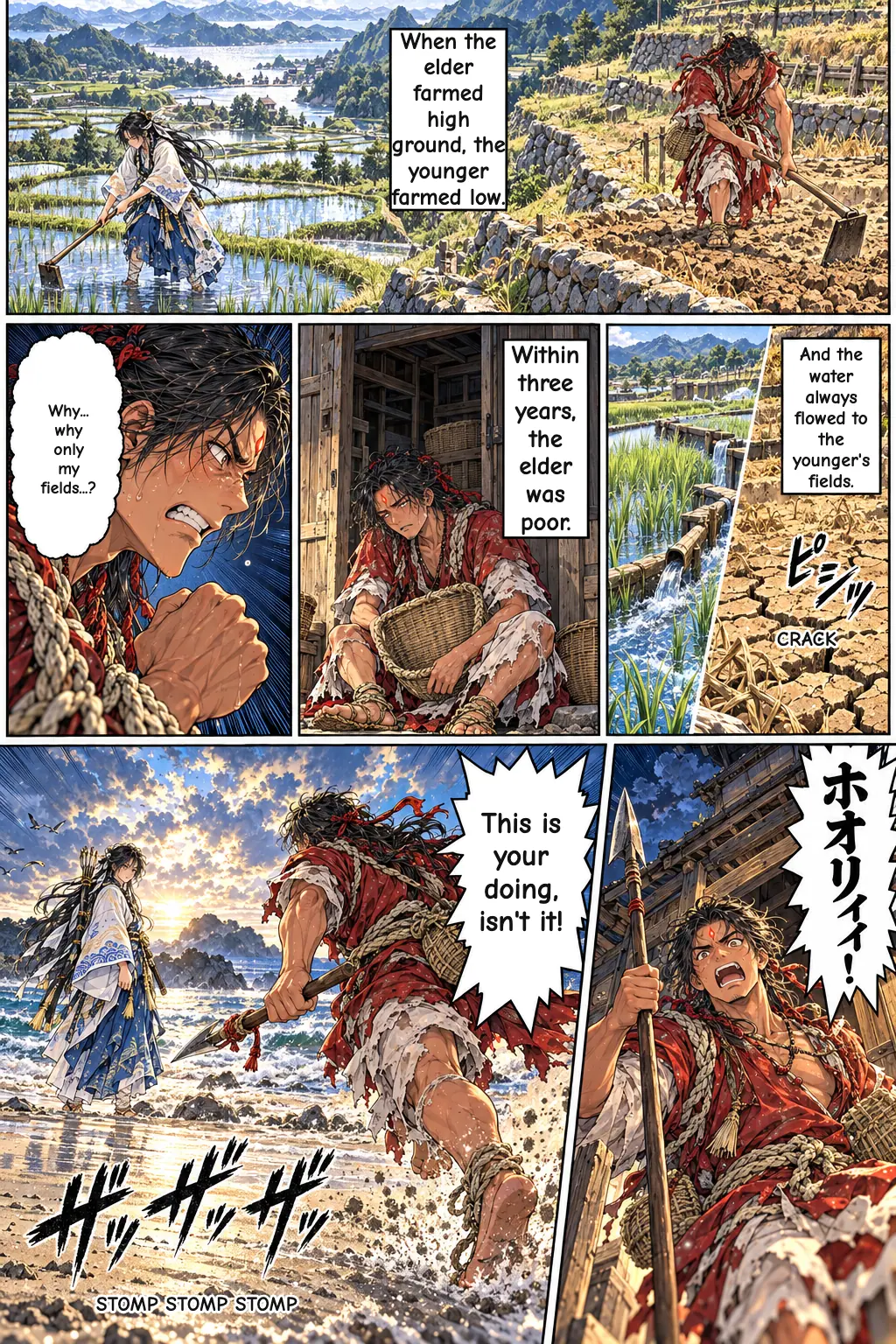
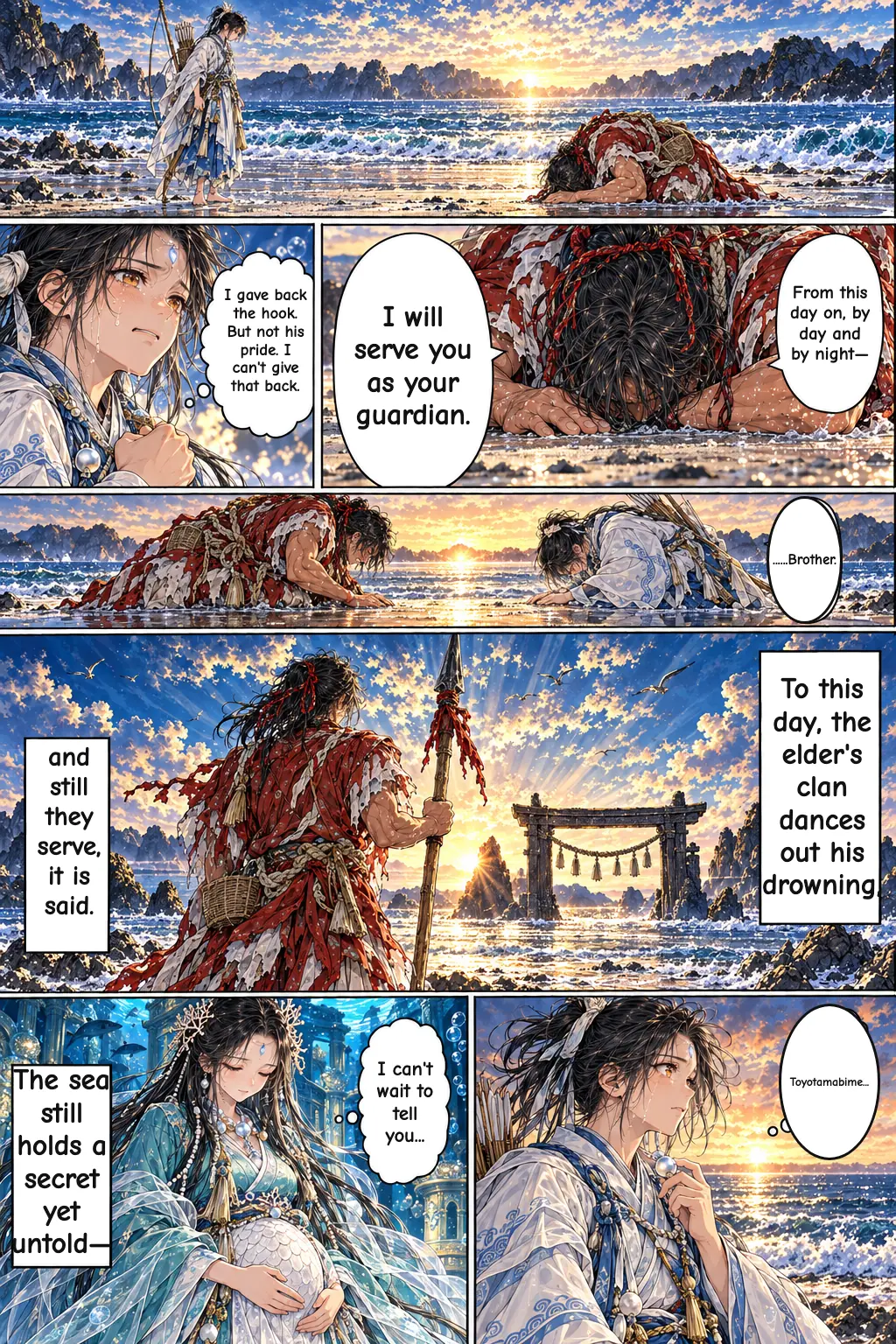
Everything came true. Hoderi grew poor and attacked in anger. He was drowned and rescued again and again until he bowed and swore to guard his younger brother by day and by night. The Kojiki adds that his descendants still act out the movements of a drowning man as part of their service.
What the Myth Tells Us
The Kojiki names Hoderi as the ancestor of the Hayato of Ata, a people of southern Kyushu who later served the imperial court as guards and performers. Many scholars read the ending as an origin story that explains, and justifies, that service, including court performances said to act out drowning.
Hoori, by contrast, belongs to the direct imperial line. According to the Kojiki, his grandson becomes Jimmu, the legendary first emperor. By marrying the sea god's daughter, the heavenly line gains a link to the power of the ocean, adding the sea to its ties with heaven and the mountains.
The story also reflects a world of fishing and rice farming, where whoever controlled water controlled wealth. A hero spending three years in an undersea palace is often compared with the later Urashima Tarō legend. Some researchers also point to similar lost-fishhook stories elsewhere in Asia and the Pacific, though how they are connected is still debated.
What the Manga Adds or Changes
The Kojiki tells this episode briefly, so the manga fills in many gaps. The brothers' personalities, ages and expressions are the artist's interpretation. The original never calls Hoderi stubborn or Hoori careless; it only reports what they did. The dialogue of the three requests, the fishing scene where the hook is lost, and the image of the sword being broken into hooks are all creative additions.
Showing Shiotsuchi as an old god follows the Nihon Shoki (720), Japan's other early chronicle, where he appears as an old man. The Kojiki does not describe his looks at all. The palace architecture, the undersea path, the appearance of the sea god, the princess and the wani, the scenes of married life, how the bream is found, and the size and visual effects of the final showdown are all invented for the manga. The Kojiki gives only a few clues: a palace like fish scales, a gate, a well and a sacred tree.
Where to Read It
If you'd like to see the lost hook, the palace under the sea and the tide jewels come to life, Episode 11 of KOJIKI: Chronicle of the Gods on Manga Portal tells the whole story, from the brothers' quarrel to their final reckoning. Every episode is free, with no sign-up needed, so you can start here or go back to Episode 1 and follow the gods from the very beginning.
Characters in this episode
Hoori (Yamasachi)
The younger brother and hero of the story, a mountain hunter who loses his brother's fishhook and finds it again in the sea god's palace.
Hoderi (Umisachi)
The elder brother, a fisherman who refuses every replacement hook and, according to the Kojiki, is the ancestor of the Hayato of Ata.
Shiotsuchi
A god of the tides and sea routes who finds Hoori weeping and sends him in a woven boat to the sea god's palace.
Watatsumi, the sea god
Ruler of the ocean and Toyotama-hime's father, who recovers the hook and gives Hoori the two tide jewels.
Toyotama-hime
The sea god's daughter, who falls in love with Hoori at first sight and becomes his wife.
Sahimochi (the wani)
A sea creature, often understood as a shark, that carries Hoori home in a single day and is named for the knife Hoori ties to its neck.
FAQ
What is the story of Umisachi and Yamasachi?
It is a Japanese myth from the Kojiki (712 CE) about two brothers, a fisherman and a hunter, who swap tools. The younger brother, Hoori, loses the elder's fishhook, finds it again in the sea god's palace, and uses magic tide jewels to make his brother submit.
Why did Hoori go to the sea god's palace?
His brother refused every replacement and wanted only the original fishhook. The god Shiotsuchi found Hoori weeping on the shore and sent him in a woven boat to the palace of Watatsumi, the sea god, where the hook was eventually found in a sea bream's throat.
What are the tide jewels in Japanese mythology?
They are two jewels the sea god gave Hoori: one makes the tide rise and the other makes it fall. Hoori used the first to drown his attacking brother and the second to save him, until the brother promised to serve him.
Who are the Hayato in the Umisachi and Yamasachi myth?
The Kojiki names the elder brother, Hoderi, as the ancestor of the Hayato of Ata, a people from southern Kyushu. Many scholars see the myth as explaining why the Hayato served the imperial court, including performances said to imitate drowning.
Is Umisachi and Yamasachi related to Urashima Taro?
Both stories feature a man who visits a palace under the sea and marries a sea princess, so they are often compared. Whether the later Urashima legend was directly influenced by this myth is a matter of interpretation.