Episode 7The Fake Tiger Has to Fight a LionDōbutsuen (The Zoo)
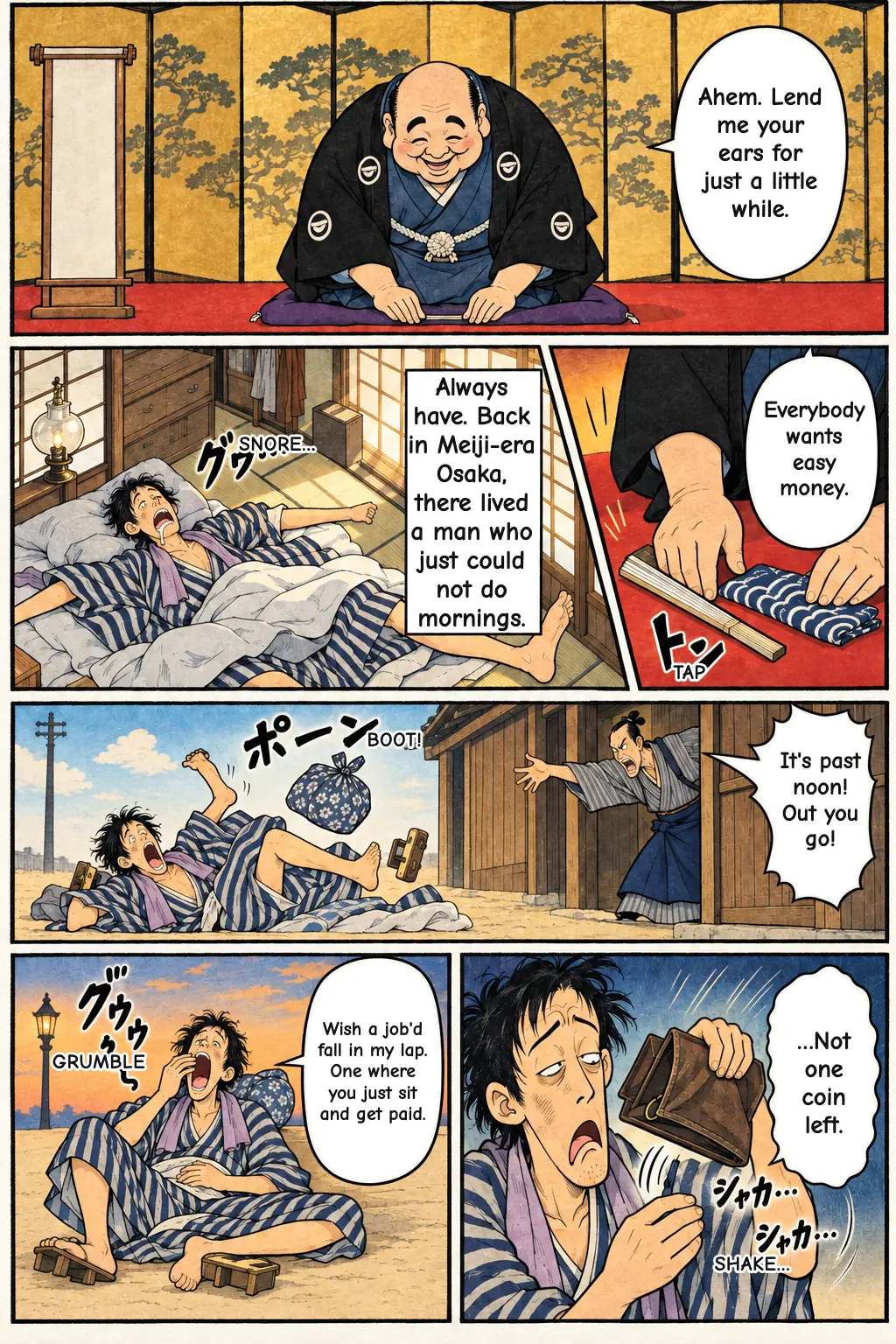
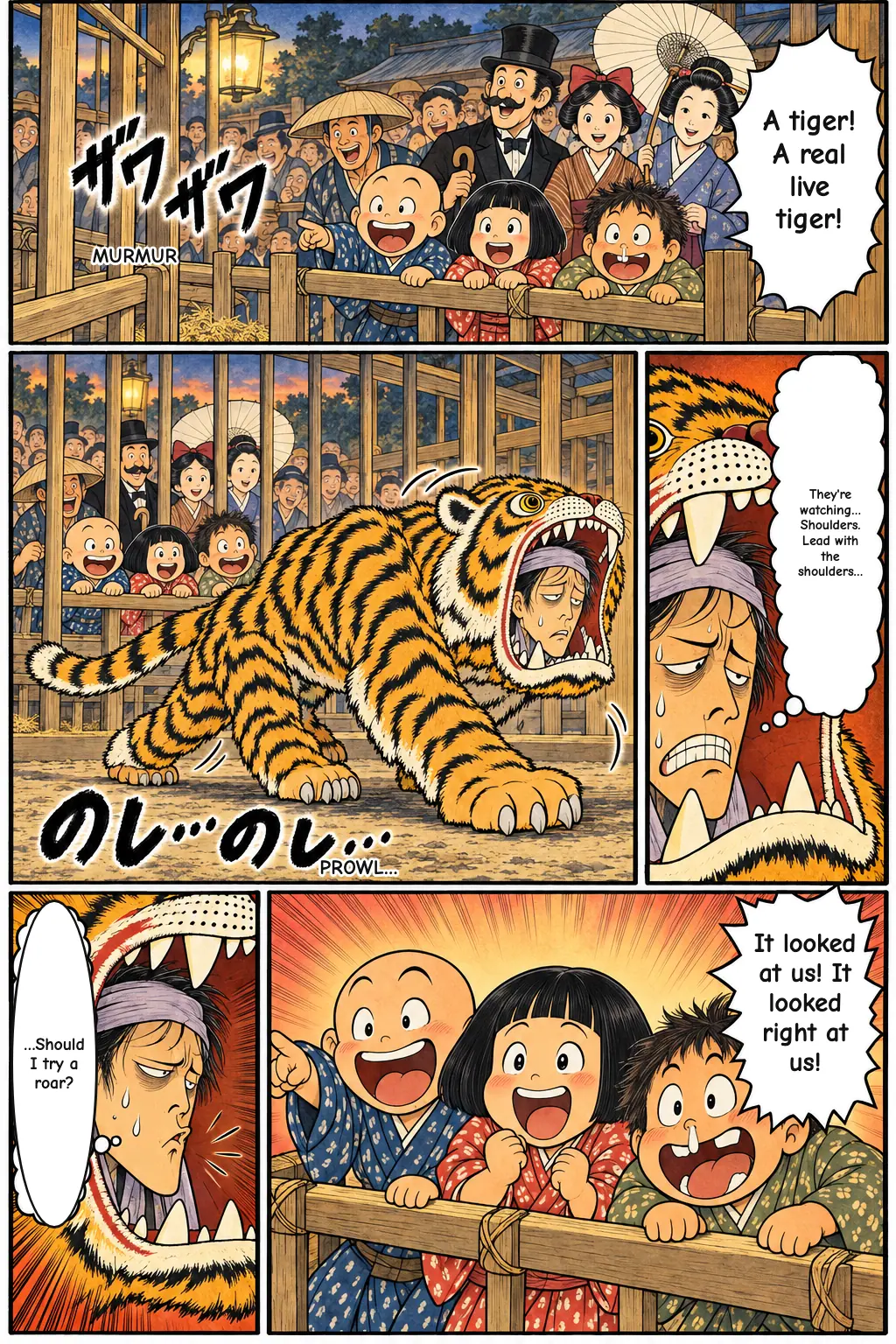
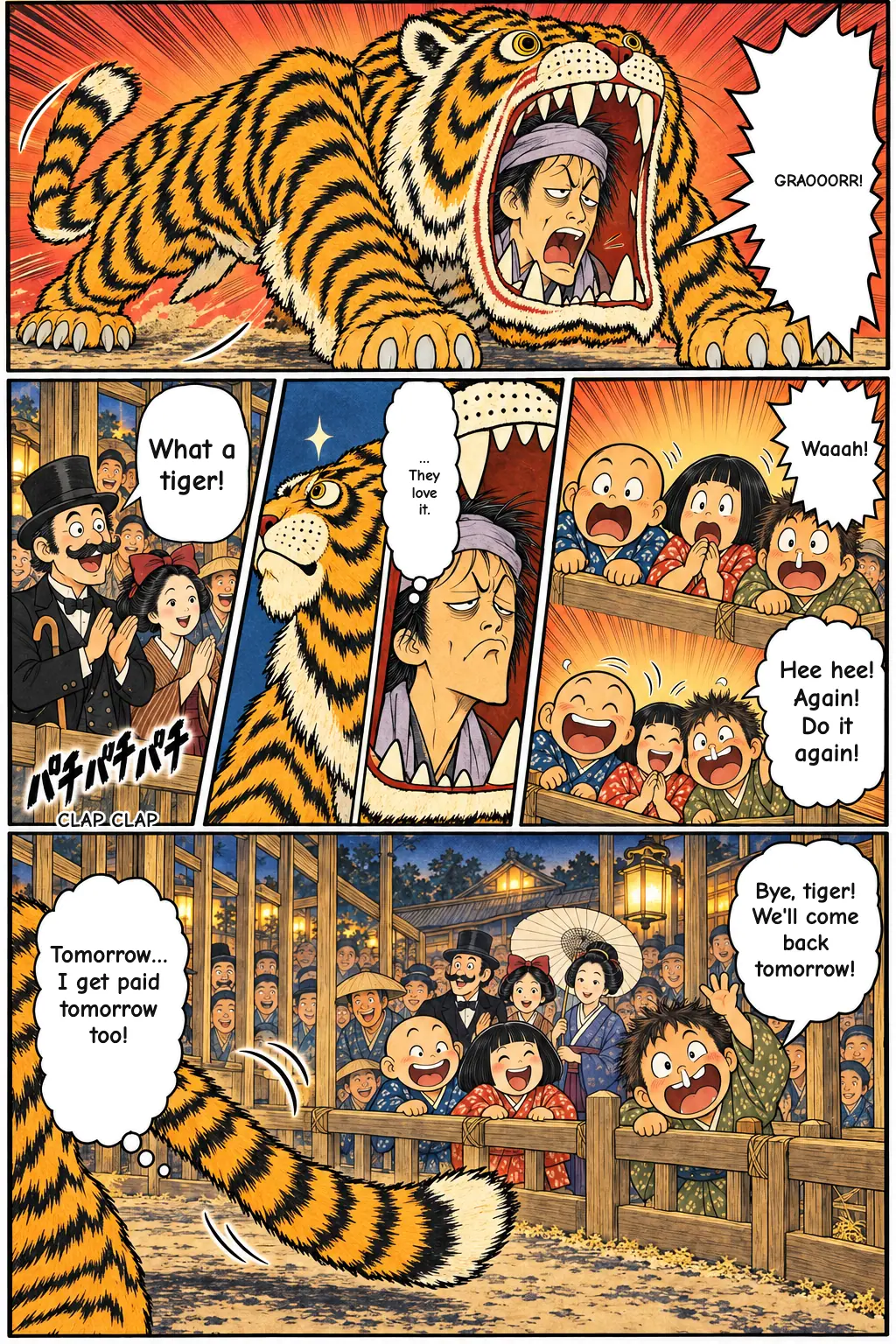
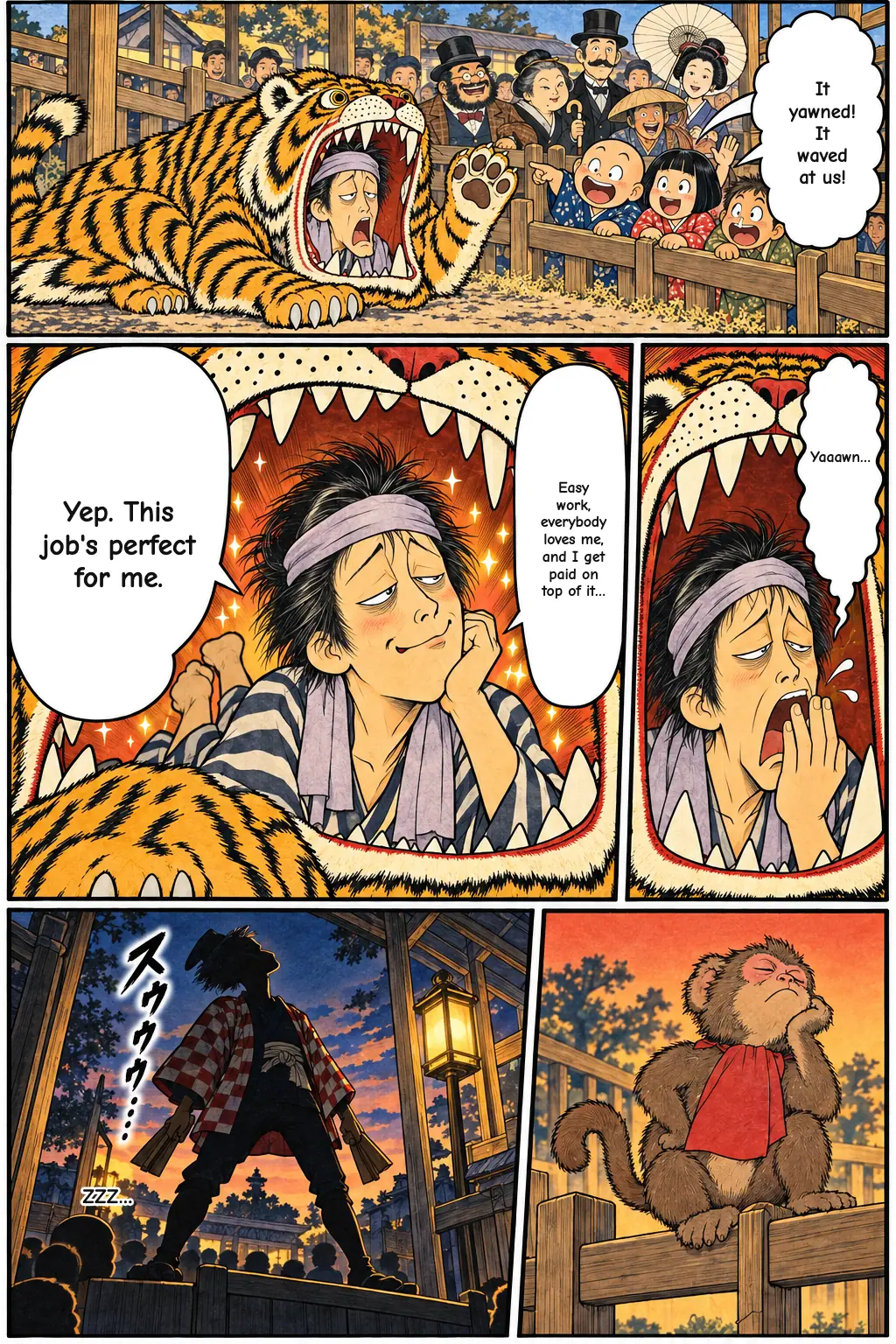
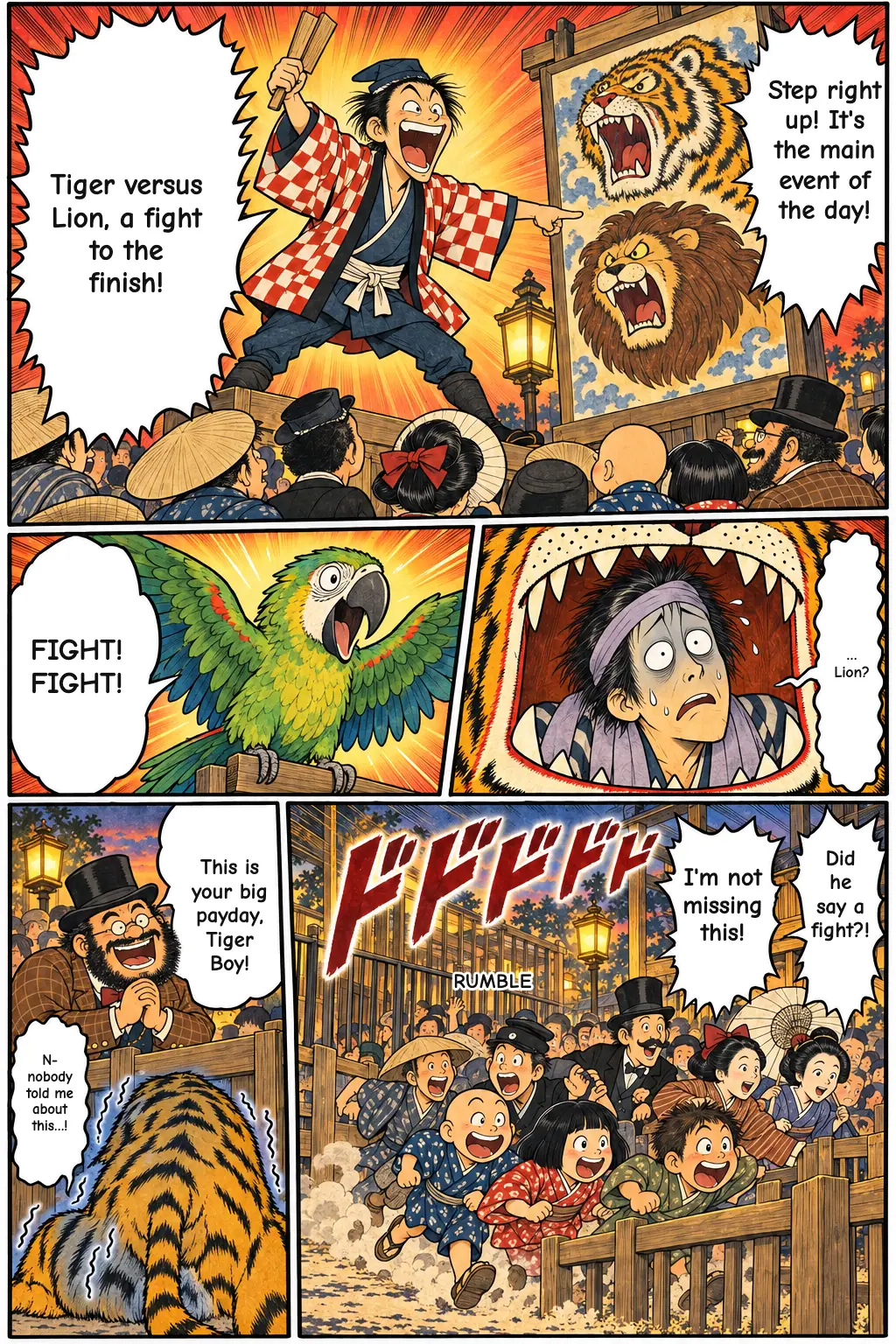
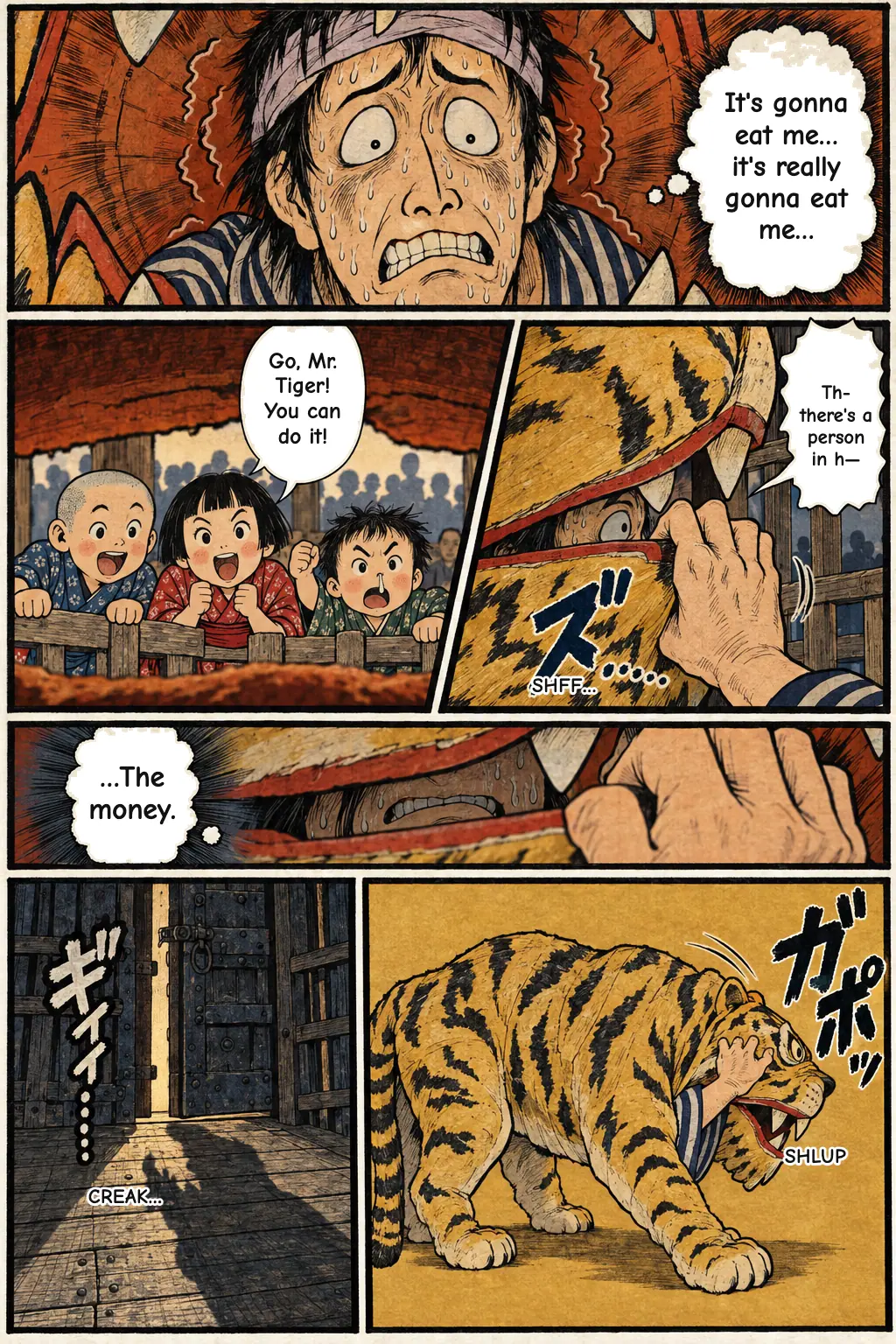
Episode 7 of RAKUGO: Japan's Comic Tales. In Meiji-era Osaka, a man who can't get up in the morning can't hold down a job either. Then he hears about one where you get a full day's pay just for sitting around. The catch: he has to wear a tiger skin. The kids love him, and he's feeling pretty proud of himself, right up until somebody announces "the Great Battle of Tiger vs. Lion."
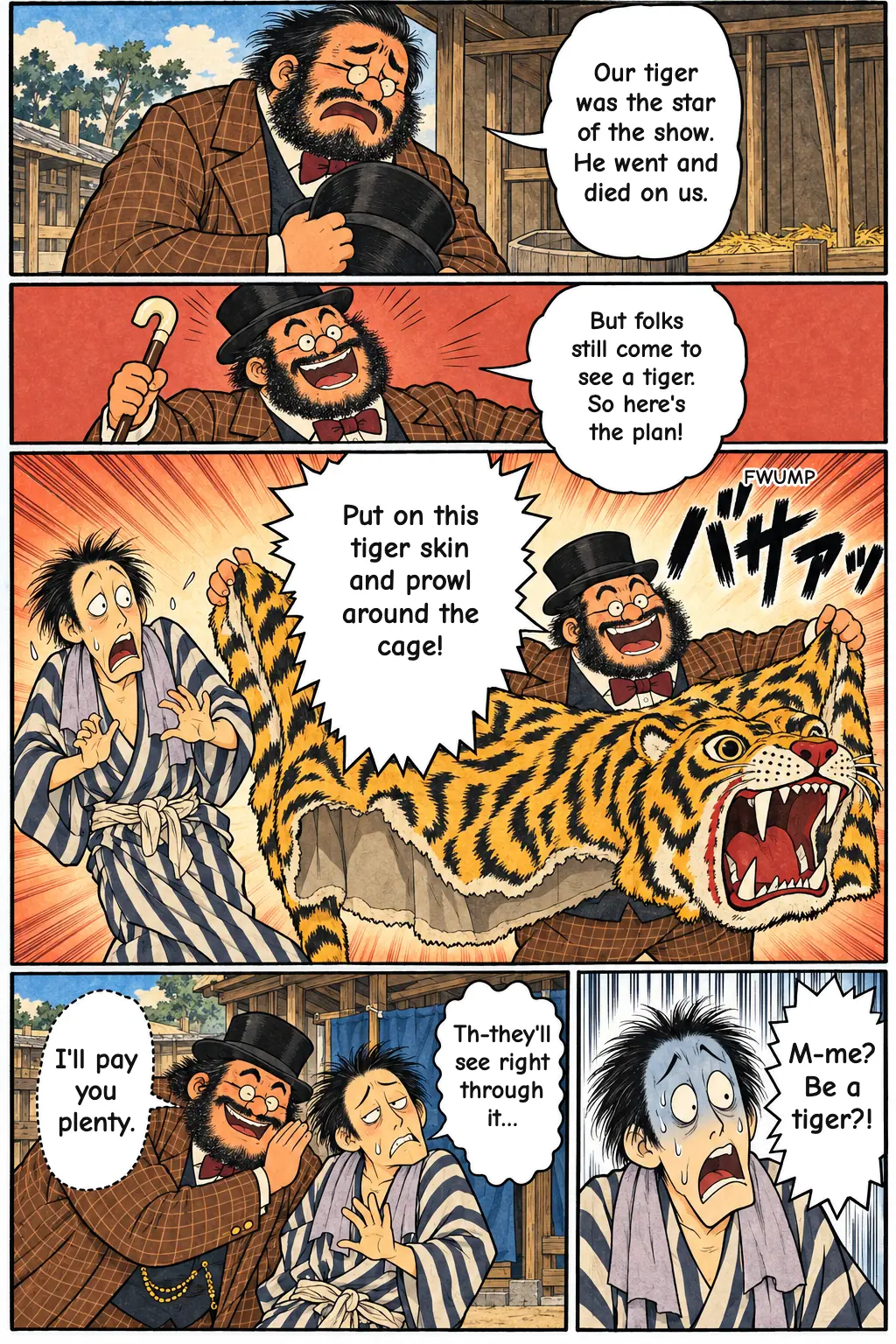
Dōbutsuen, which means "The Zoo," is a classic rakugo, a Japanese comic story told by a single performer. Our telling follows a version performed by Katsura Bunnosuke II, a storyteller from Osaka. His performance was taken down in shorthand and printed in a 1915 collection of his stories. The tale has a very simple setup and one of the best-known final twists in comic storytelling. A man can't keep a job, so someone finds him work that sounds too good to be true: easy hours and good daily pay. The job is at an animal show. Its star attraction, a tiger, has died, and the owner has a plan.
Dōbutsuen (The Zoo) Rakugo Story Summary: The Fake Tiger and the Lion Explained
The Story of Dōbutsuen (The Zoo) in Brief
Dōbutsuen, which means "The Zoo," is a classic rakugo, a Japanese comic story told by a single performer. Our telling follows a version performed by Katsura Bunnosuke II, a storyteller from Osaka. His performance was taken down in shorthand and printed in a 1915 collection of his stories. The tale has a very simple setup and one of the best-known final twists in comic storytelling.
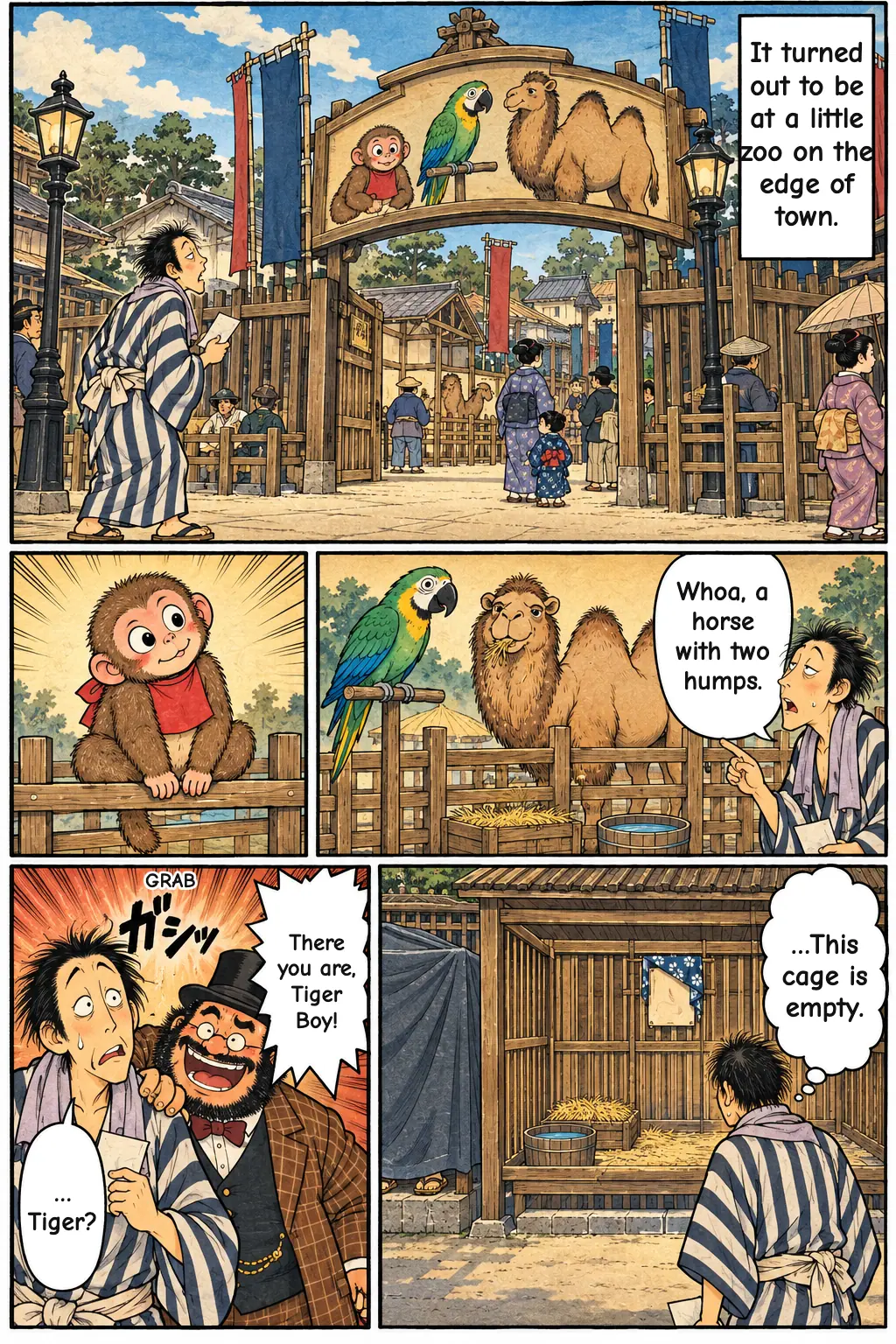
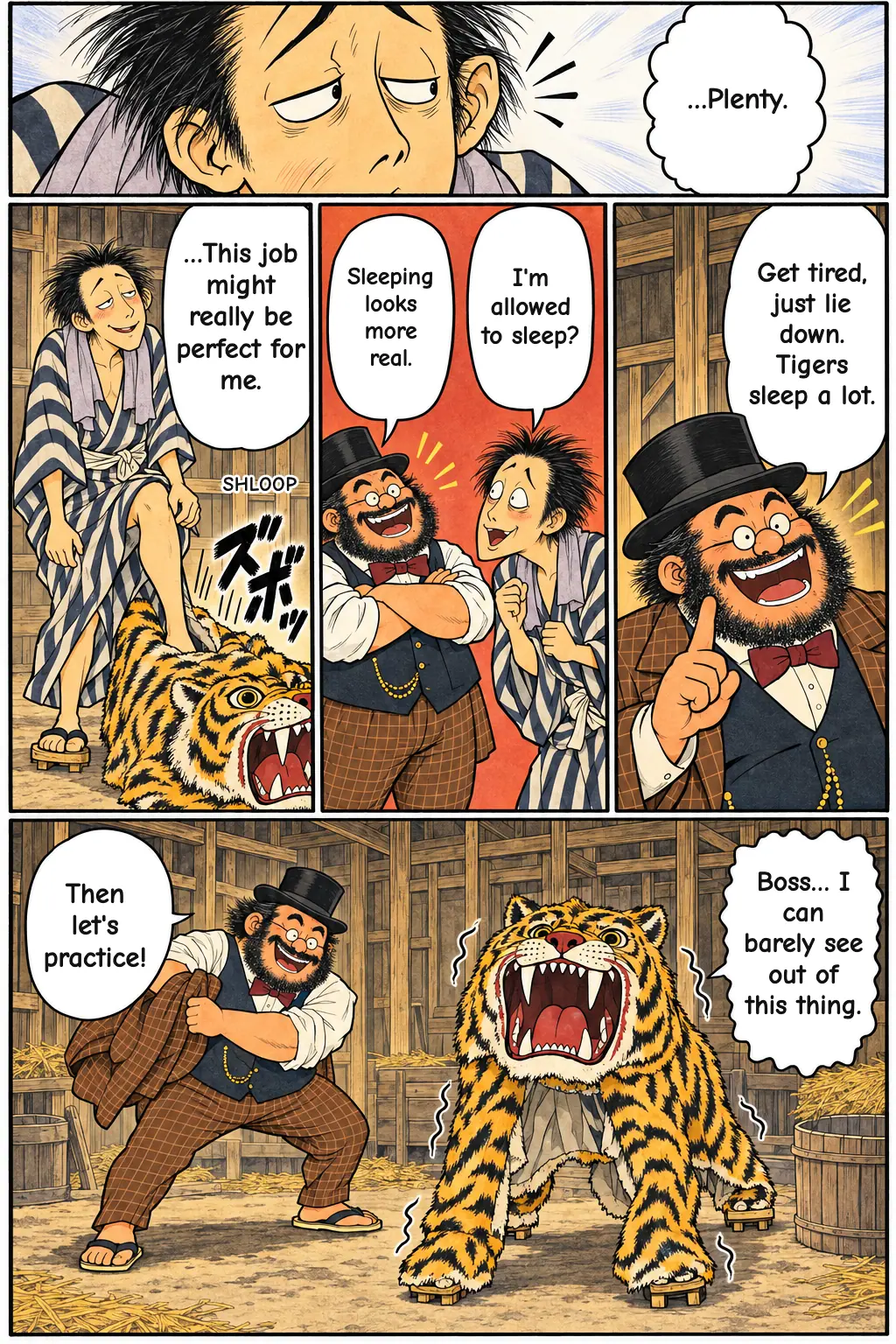
A man can't keep a job, so someone finds him work that sounds too good to be true: easy hours and good daily pay. The job is at an animal show. Its star attraction, a tiger, has died, and the owner has a plan. The man will put on the tiger's skin, sit in the cage, and play the tiger for paying customers.
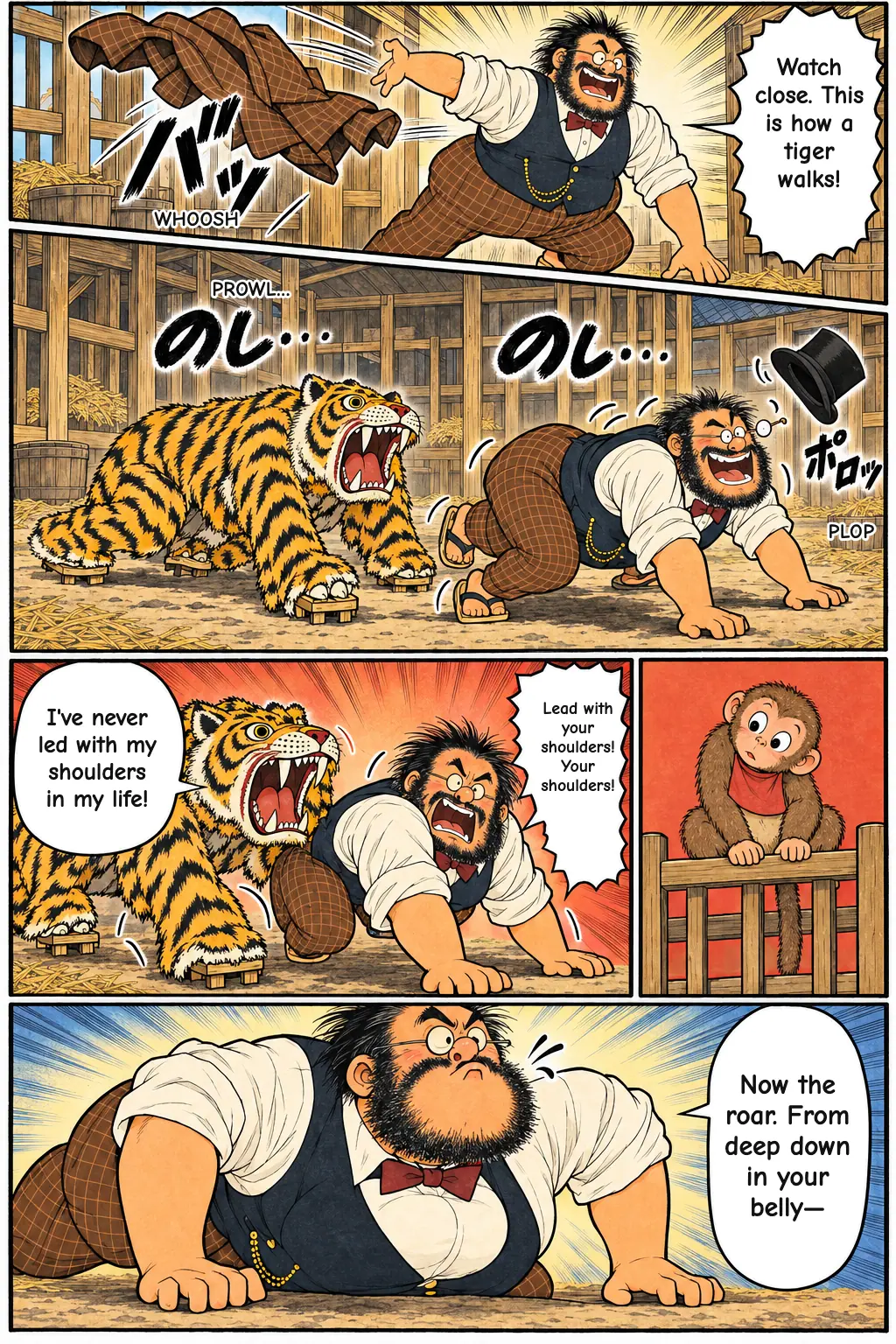
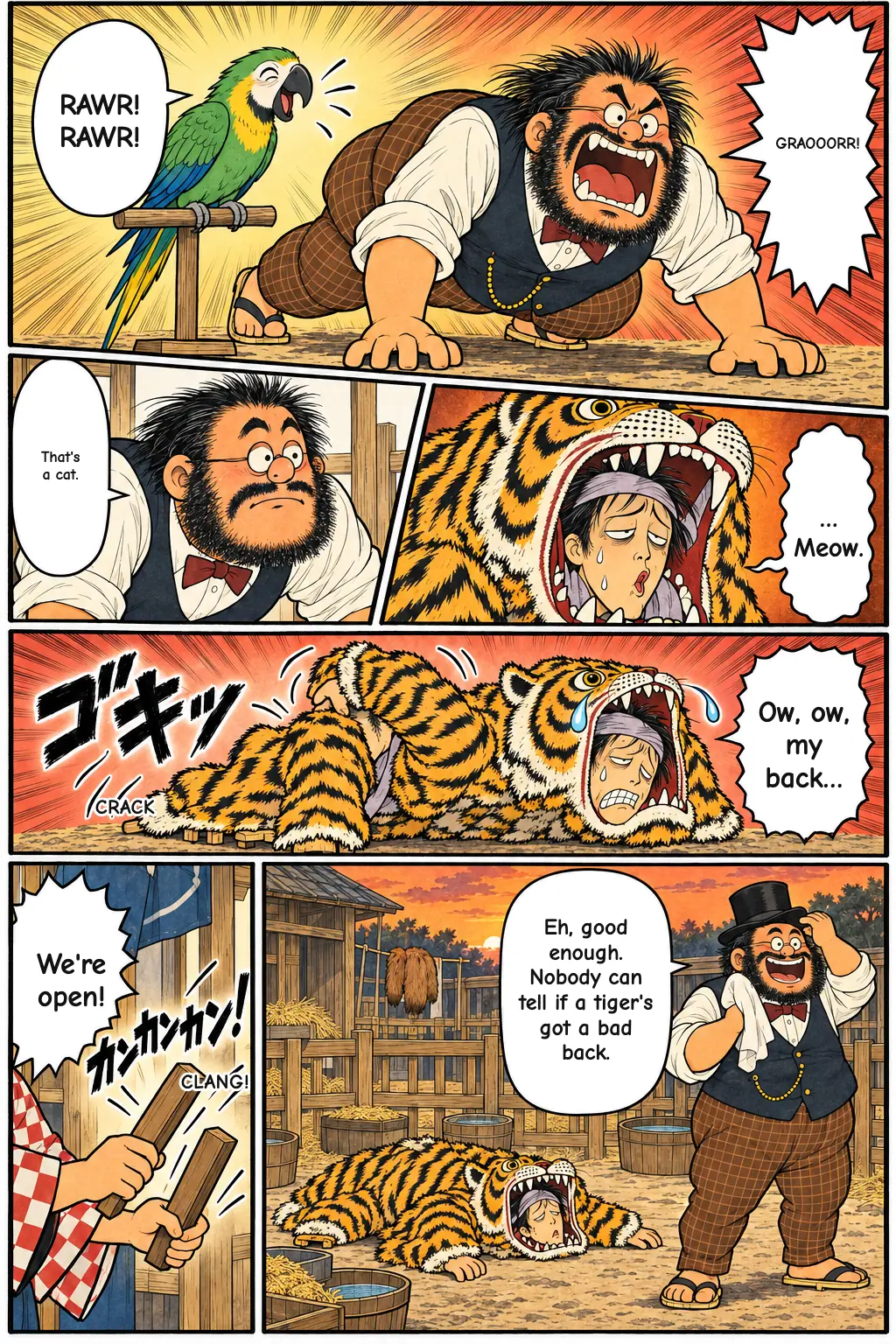
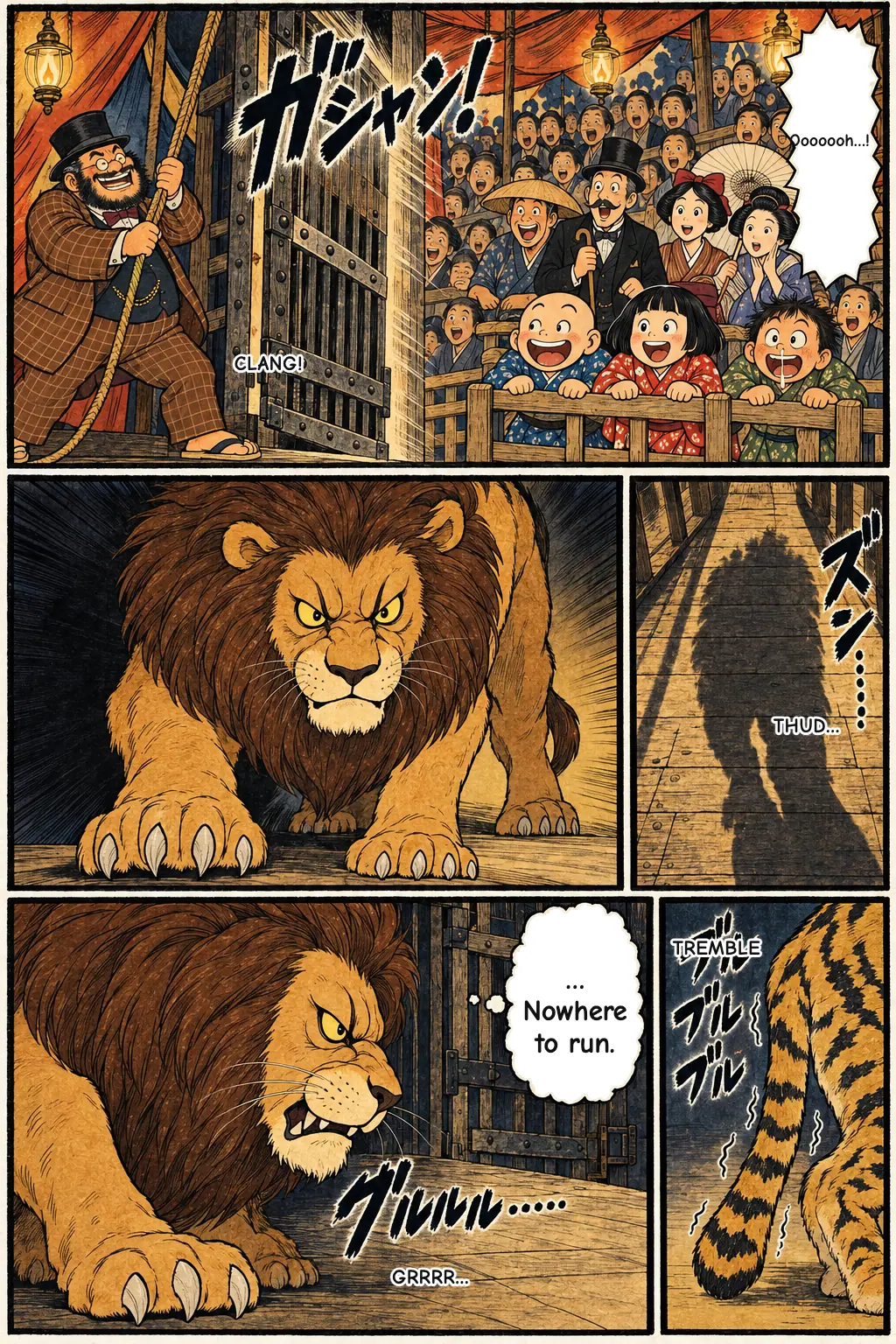
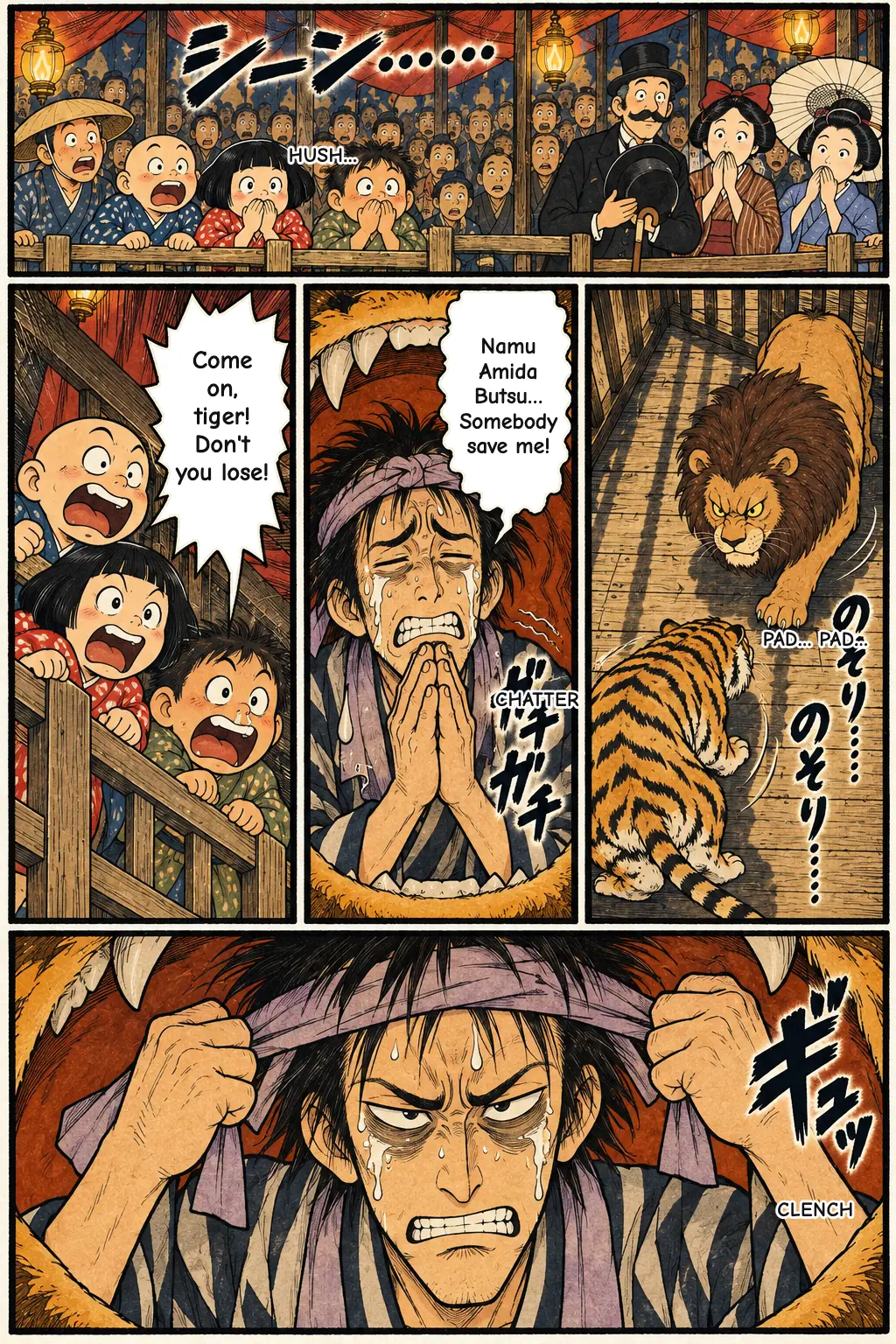
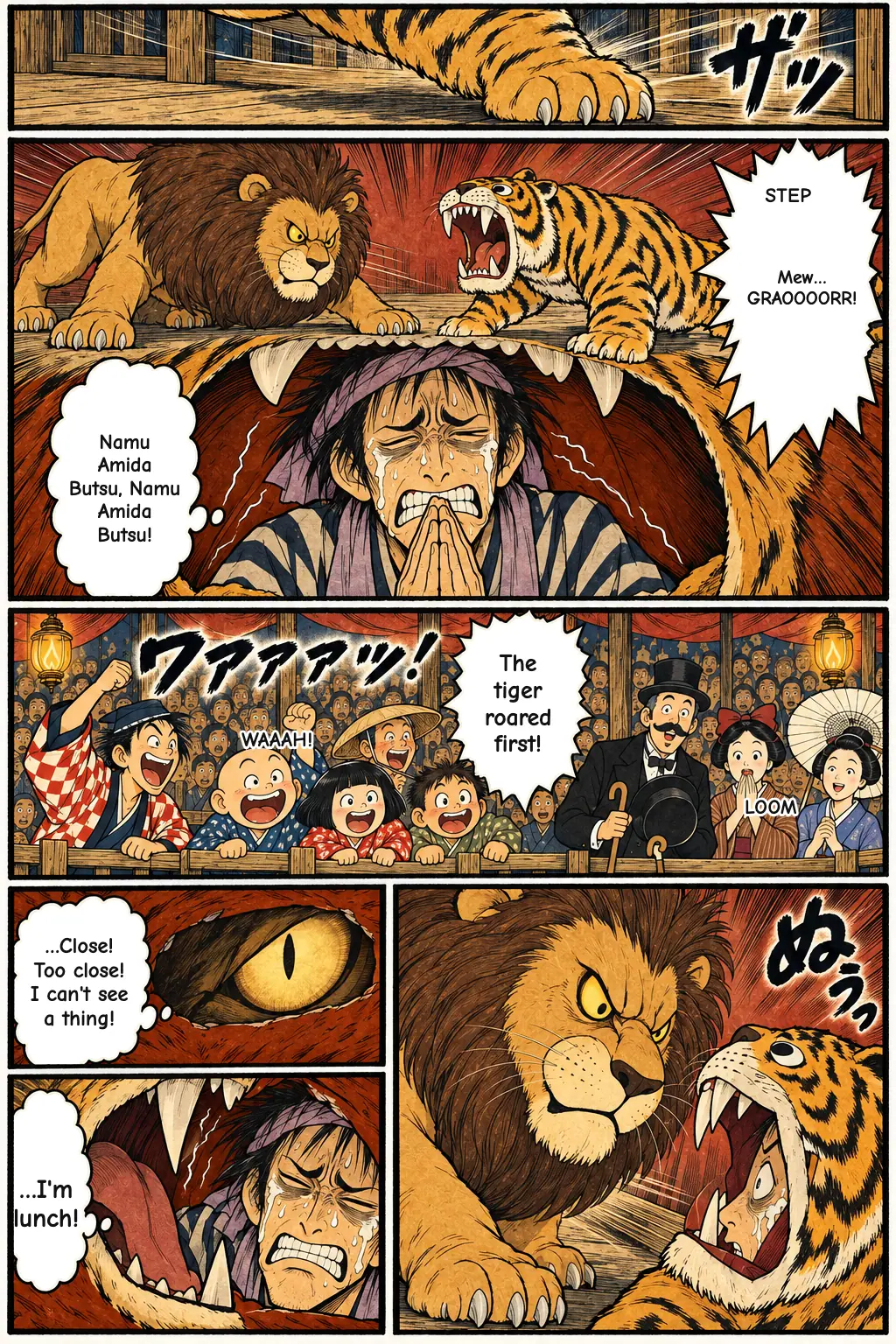
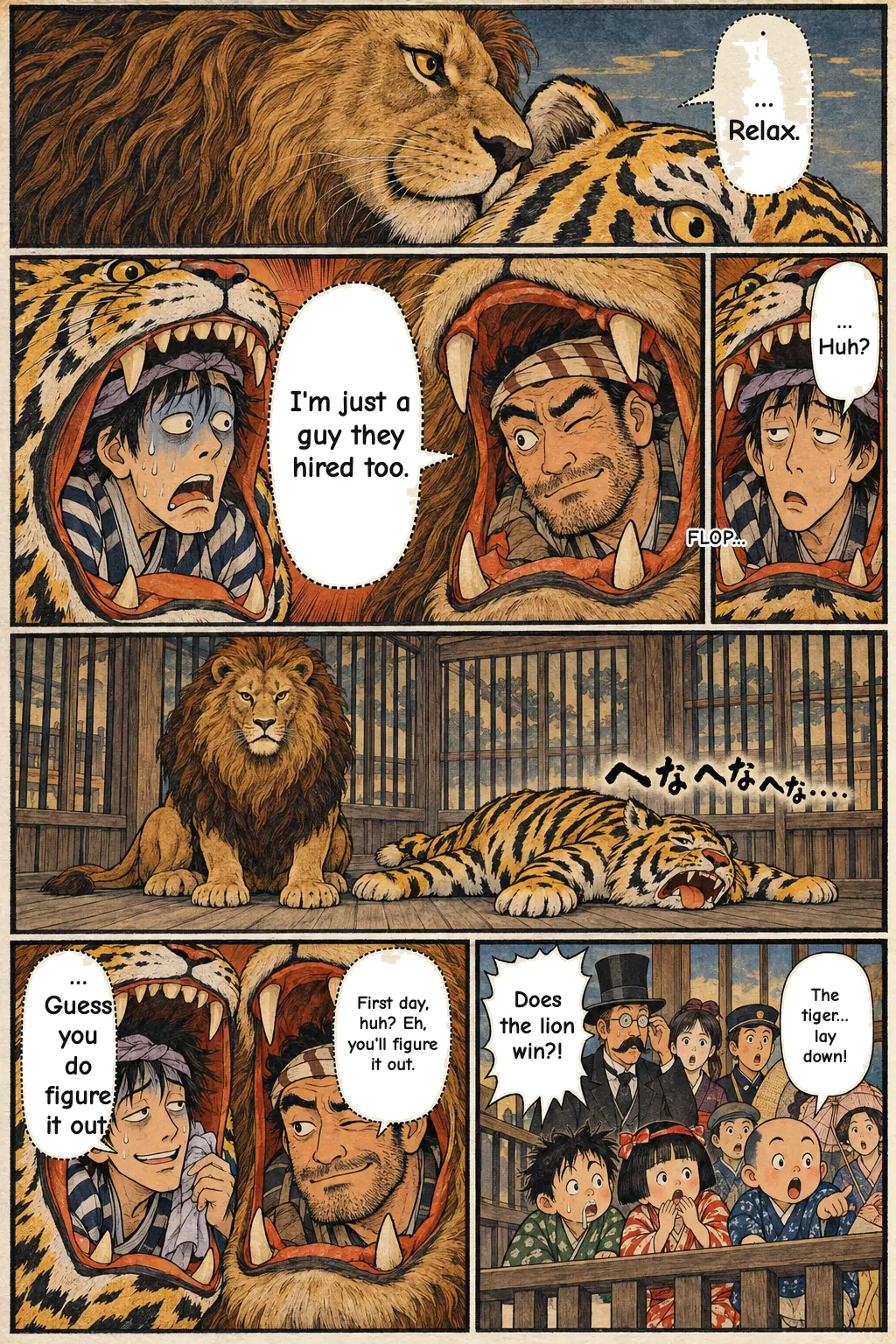
He learns how a tiger should move and growl, climbs into the cage, and does better than anyone expected. Then the barker announces a new attraction: a fight to the death between the tiger and a lion. The lion is pushed into his cage. The man is sure he is about to be eaten, and he shakes with fear inside his costume. The lion walks up, leans in close, and whispers in his ear. The lion is also a hired man in an animal skin.
What Is Rakugo?
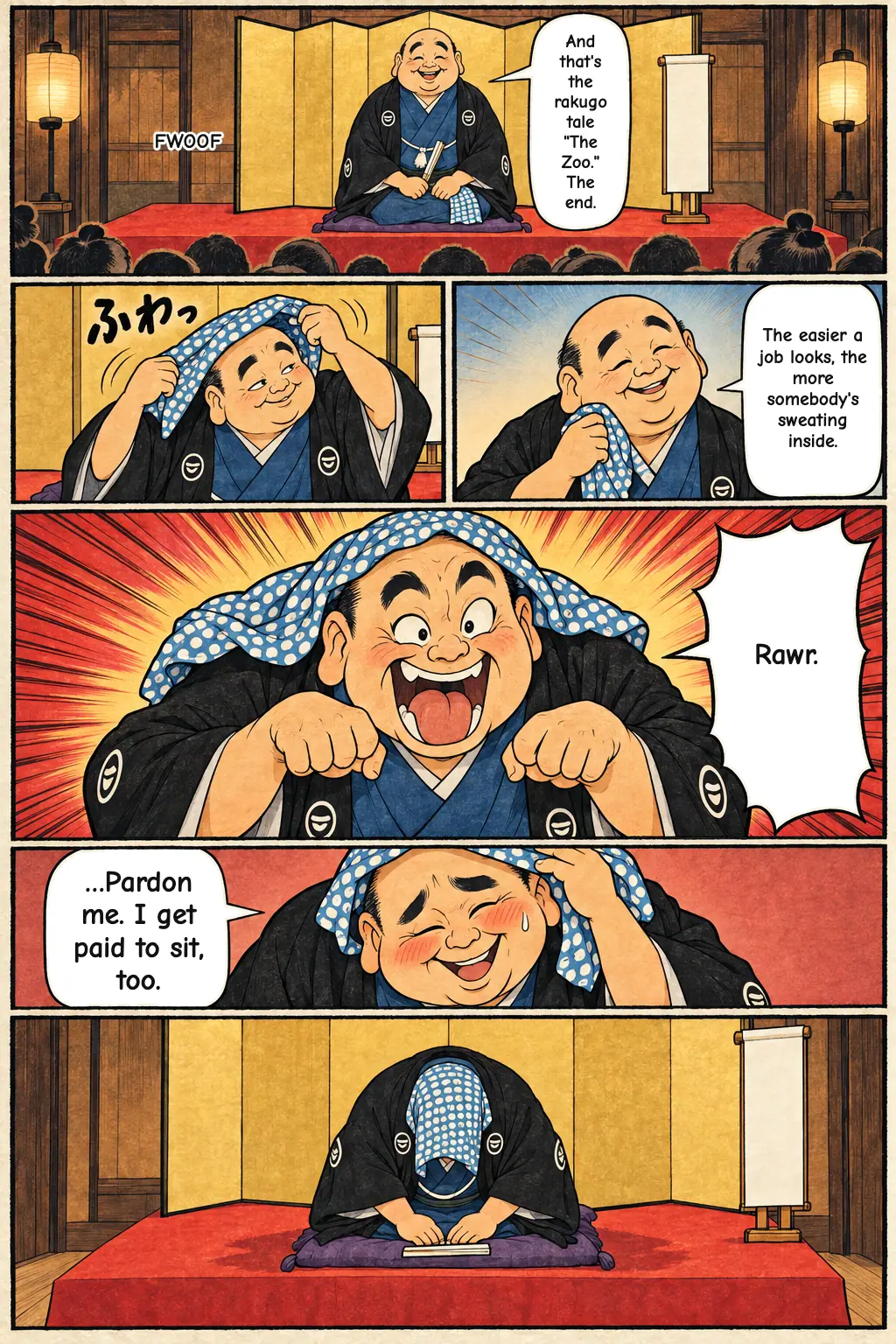
Rakugo is a Japanese storytelling art that has been performed for several hundred years. A single performer, the hanashika, kneels on a cushion and never stands up. With only a folding fan (sensu) and a small cloth (tenugui) for props, they play every character in the story: the lazy man, the boss, the crowd, even the lion. The fan can be a pipe or a pair of chopsticks, and the cloth can be a wallet or a letter. Rakugo is performed in yose, small theaters for variety entertainment. A story usually opens with a casual warm-up called the makura and closes with a punchline called the ochi or sage. In our manga, each episode is introduced and closed by Shōmontei Fukurai. Fukurai is a fictional storyteller made up for this series and is not based on any real performer.
Background: Meiji Osaka and the Traveling Animal Show
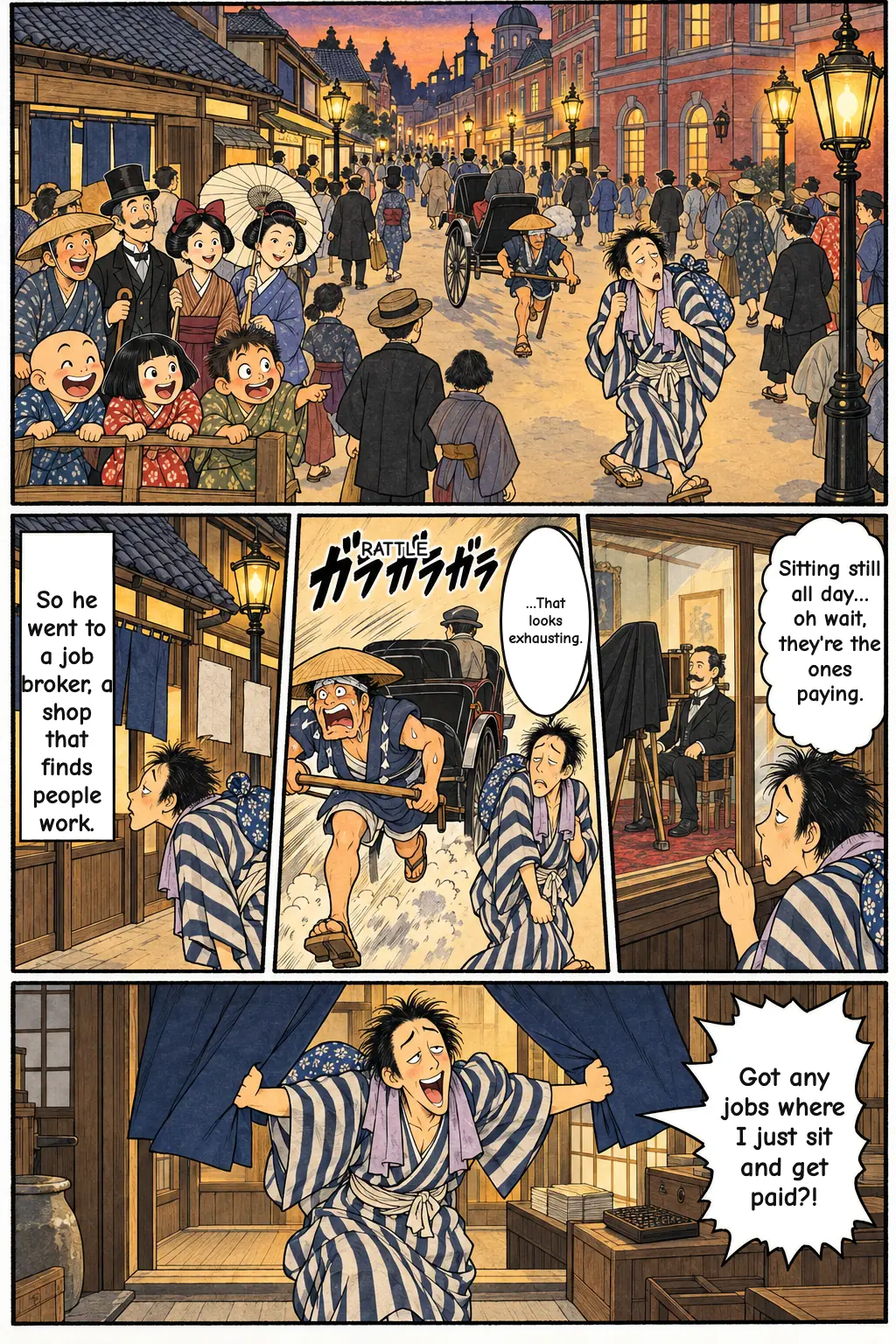
Most stories in RAKUGO: Japan's Comic Tales are set in the Edo period, the era of samurai and merchants before 1868. Dōbutsuen is the only one in the series set in the Meiji era (1868–1912), when Japan was modernizing fast. In Meiji Japan, misemono (show booths) and traveling menageries carried unusual animals from town to town. For many people, these shows were their first chance to see a tiger or a lion.
That setting is what makes the story believable. A show owner who has just lost his tiger also loses his main source of income. Putting a person in a costume looks like a cheap and clever fix. The hero's own goal is very ordinary: he wants to earn a day's pay without working hard. The joke grows out of the gap between that small wish and the huge danger he seems to walk into.
What the Manga Changed and Added
The 1915 transcription gives us the core of the story: the dead tiger, the man in the tiger skin, the lion pushed into the cage, and the lion's whispered reveal. These are the parts we kept faithfully. We wrote the script ourselves, and many details are our own invention.
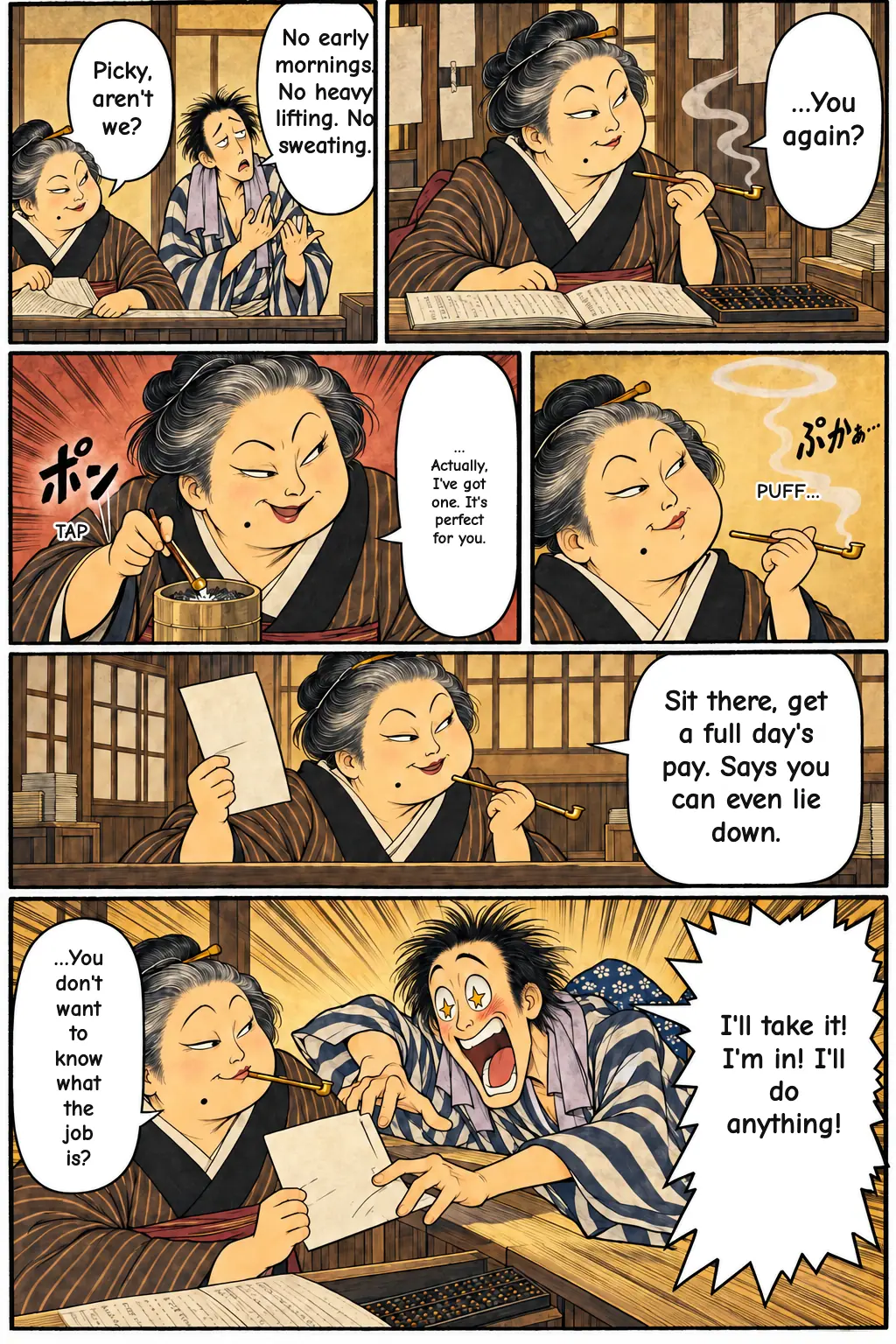
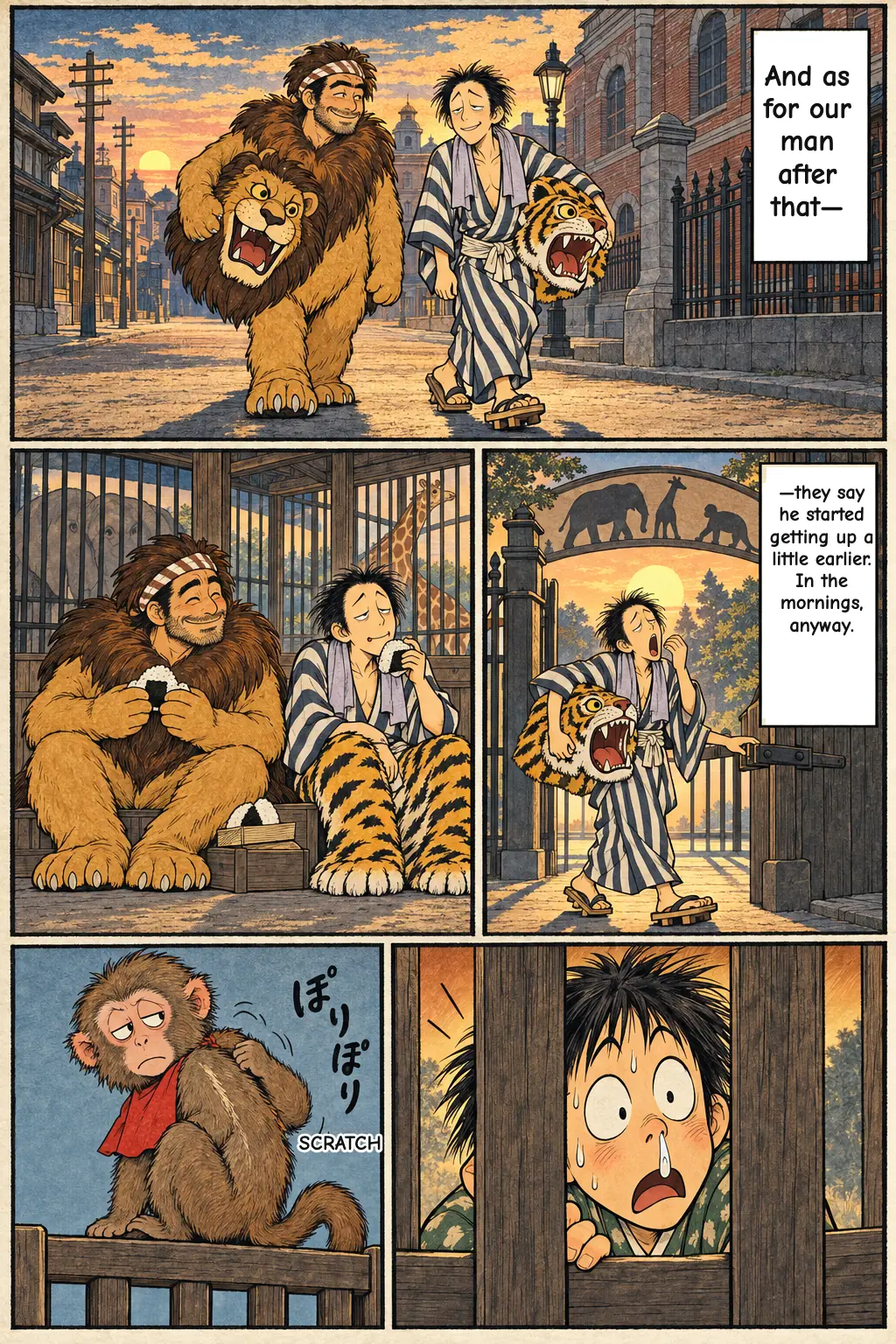
We added scenes that show the hero oversleeping and walking away from heavy work, so readers see why he can't keep a job. The employment agent's personality and dialogue are ours. So are the Meiji street scenes: gas lamps, painted show signs, and crowds in a mix of kimono and Western clothes. The show's name on the sign is made up. The tiger-training gags, the children who adore the fake tiger, the barker's announcement, the lion's dramatic entrance, and the exact wording of the final line were all written for the manga. We also added a few real, calm animals to the show. At the end of the episode, Fukurai puts the tenugui cloth over his head, lets out a "Gaoh!" roar, and bows.
The Punchline (Ochi / Sage) Explained
Spoiler warning: read the manga first. In our version, the lion leans over and whispers, "Don't worry. I'm on a day wage too." The "fierce lion" is a man in a costume, hired for the day exactly like the hero.
Here is why it's funny. Just before this, the audience has watched the man go from smug to terrified. The man who tried hardest to get easy money ends up in what looks like the most dangerous spot in the story. Then the danger turns out to be fake, because the show owner simply did the same trick twice. The two "beasts" in the cage are just two broke workers in animal skins, both in the same situation. It helps to know that a day laborer in that era was paid by the day, in cash. The phrase "day wage" tells you right away that the lion is no predator. He's a fellow worker on the same deal.
Where to Read It
You can read "The Fake Tiger Has to Fight a Lion — Dōbutsuen (The Zoo)," Episode 7 of RAKUGO: Japan's Comic Tales, on Manga Portal. Every episode is free, and you don't need to sign up. If you enjoyed this twist, the rest of the series offers more classic rakugo stories about Edo-era schemers, fools, and lucky breaks. Each one is short enough to read in a few minutes.
Characters in this episode
The Man in the Tiger Skin
A lazy man who can't hold a job and takes an easy-money gig pretending to be a tiger at an animal show.
The Show Owner
The owner of the animal show, who decides to put a man in a tiger skin after his real tiger dies.
The Employment Agent
The go-between who finds the hero the job; in the manga he works at a kuchiire-ya, a hiring agency (a detail written for the adaptation).
The Lion
The fearsome lion pushed into the tiger's cage, who turns out to be a hired man in a costume too.
The Crowd
The paying visitors to the show; in the manga, the children especially love the fake tiger.
Shōmontei Fukurai
The series' fictional rakugo storyteller, who introduces and closes each episode.
FAQ
What is the rakugo story Dōbutsuen (The Zoo) about?
A lazy man takes an easy, well-paid job pretending to be a tiger at an animal show after the real tiger dies. When a lion is put into his cage for a 'fight,' he panics, and then the lion whispers that it is also a hired man in a costume.
What is the punchline of Dōbutsuen?
The lion turns out to be a person in a lion skin, hired just like the hero. The joke is that the man who wanted easy money gets the biggest scare of his life, and the 'beast' he fears is a fellow worker in the same situation.
What is rakugo?
Rakugo is a traditional Japanese comic storytelling art that goes back several hundred years. A single performer kneels on stage and plays every character, using only a folding fan and a small cloth as props.
When is Dōbutsuen set?
It is set in the Meiji era (1868–1912), when traveling animal shows toured Japan. It is the only Meiji-era story in RAKUGO: Japan's Comic Tales; the others take place in the earlier Edo period.
Is the Dōbutsuen manga faithful to the original?
The core plot follows a 1915 transcription of a performance by Katsura Bunnosuke II. The dialogue, the side characters' details, the Meiji street scenes, and the narrator Shōmontei Fukurai were all created for the manga.