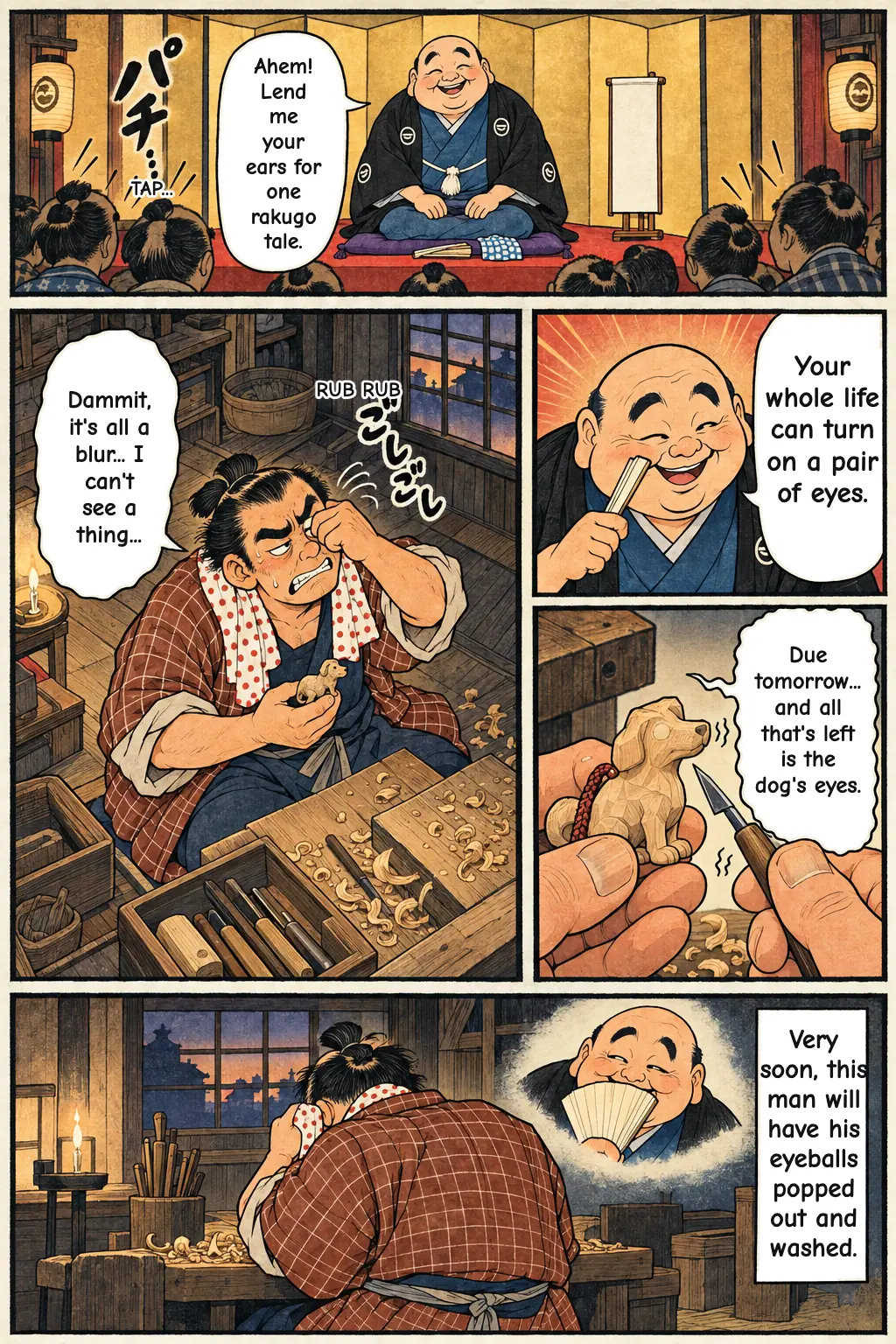
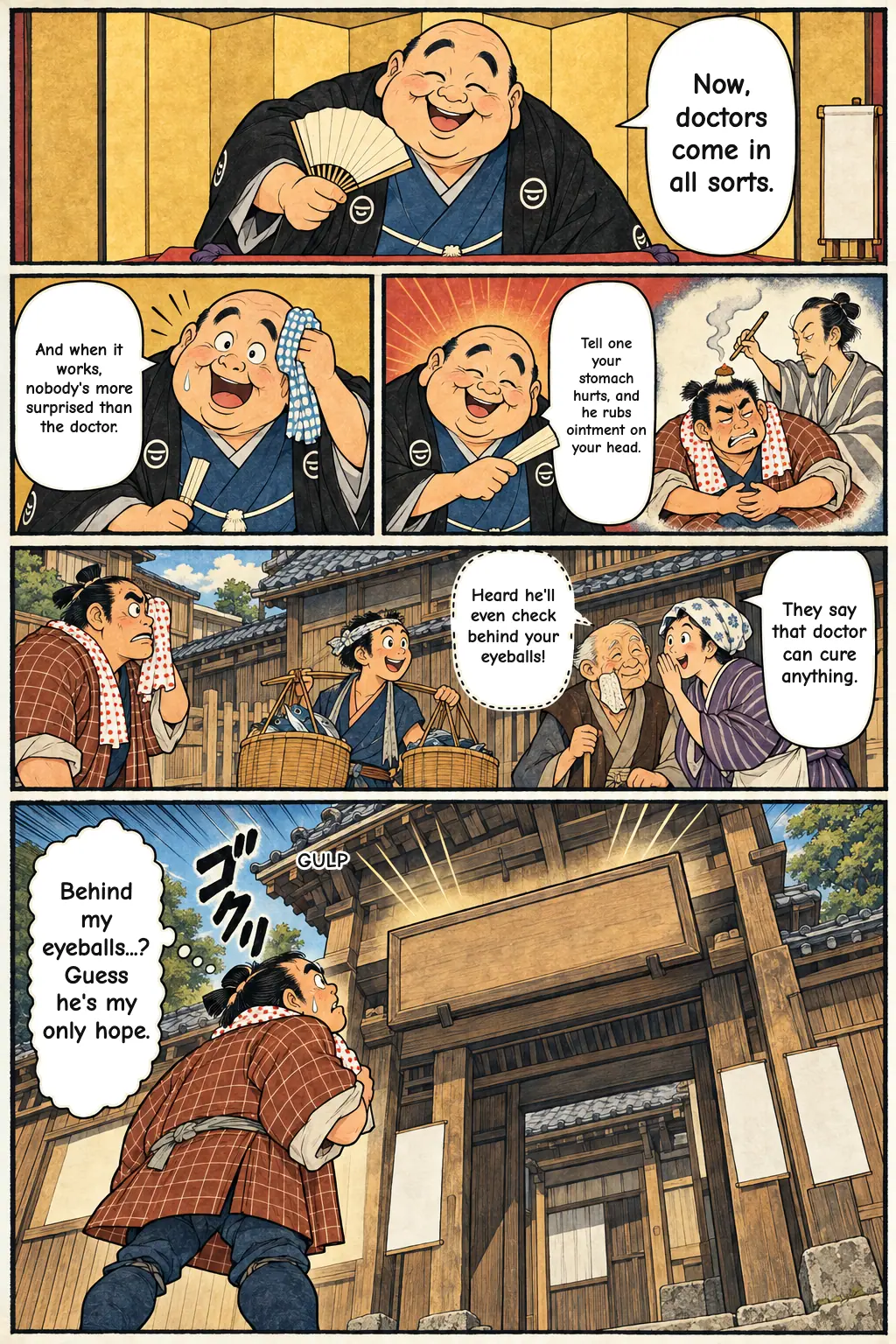
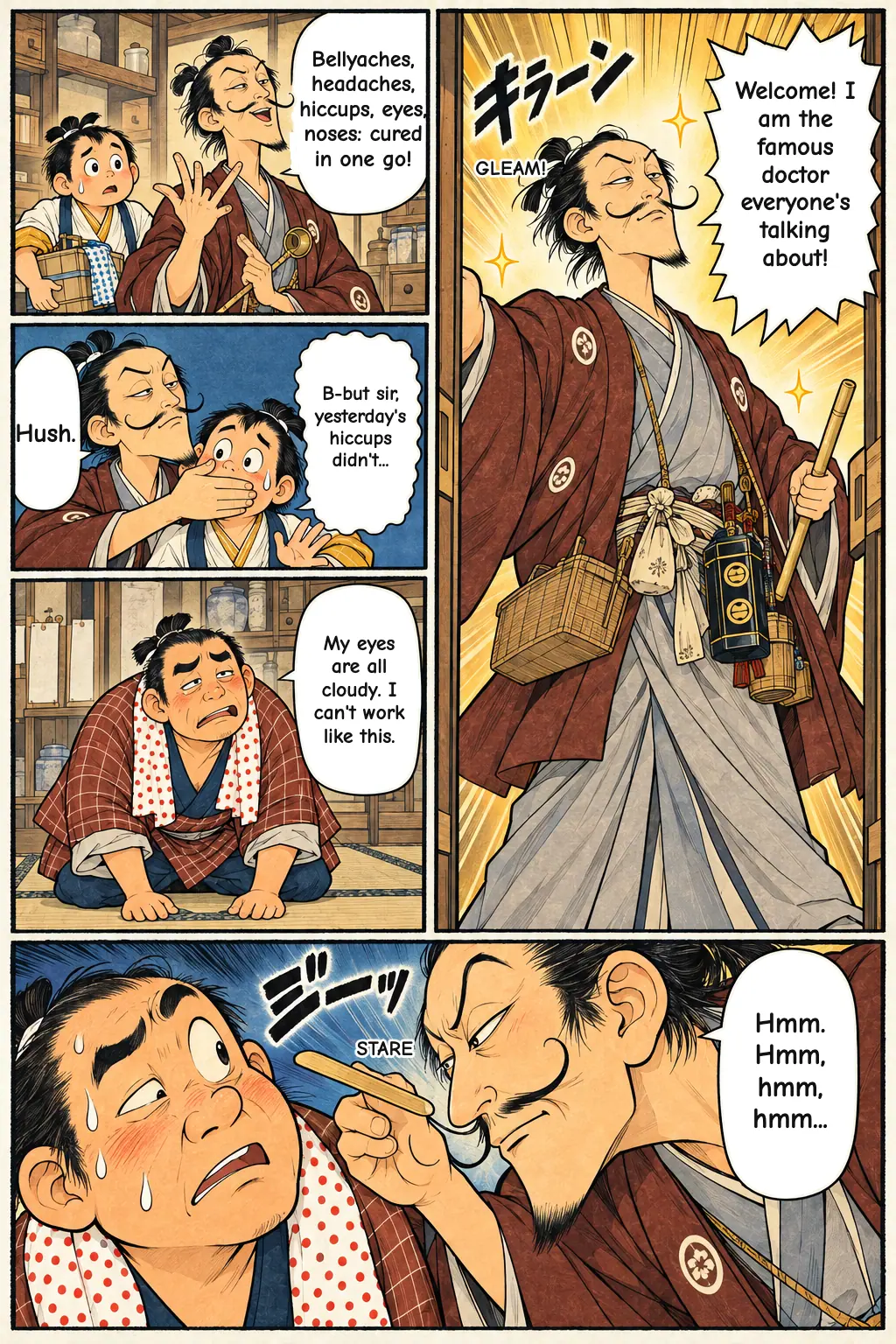
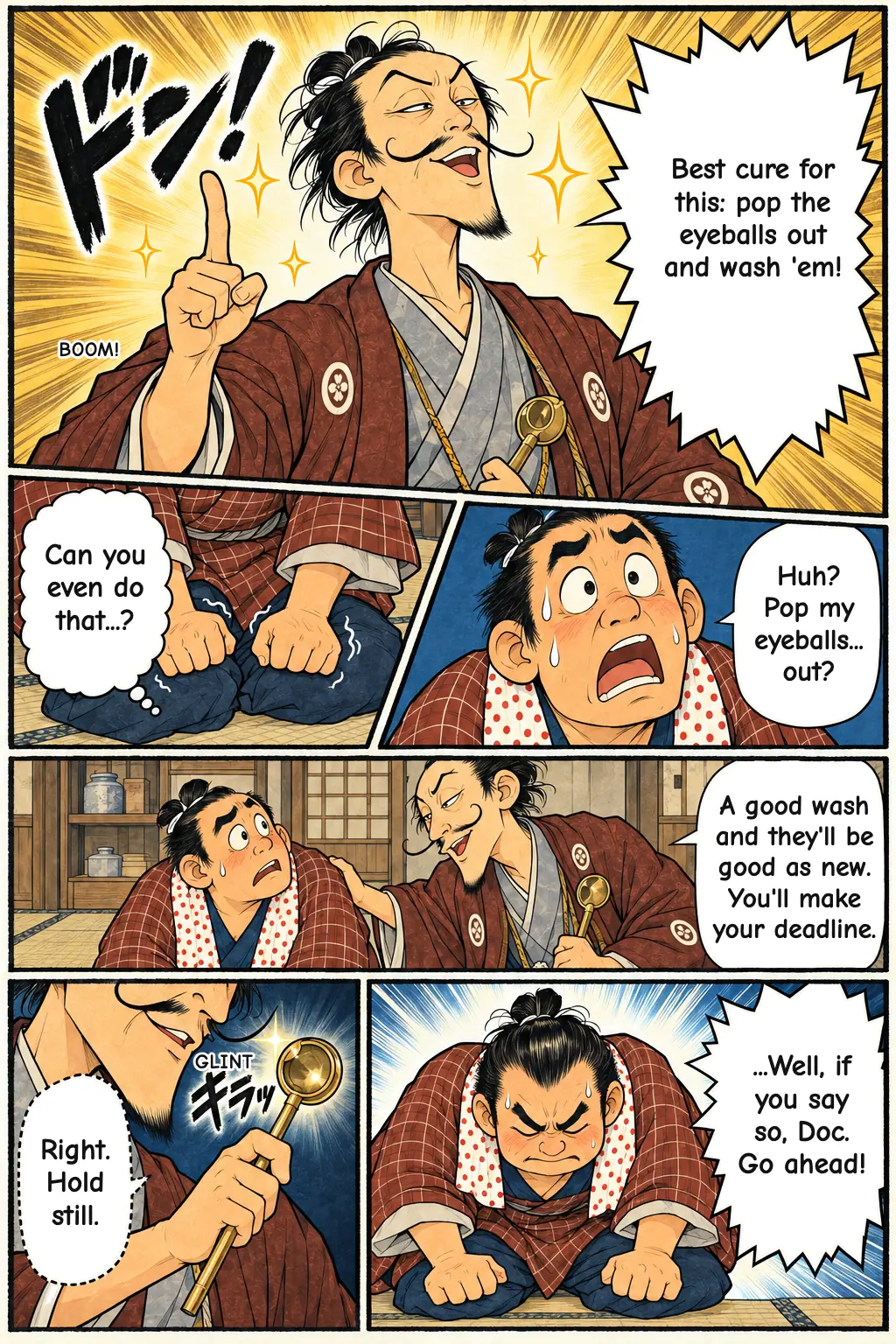
Episode 6His New Dog Eyes Work Great. Almost.Inu no Me (The Dog's Eyes)
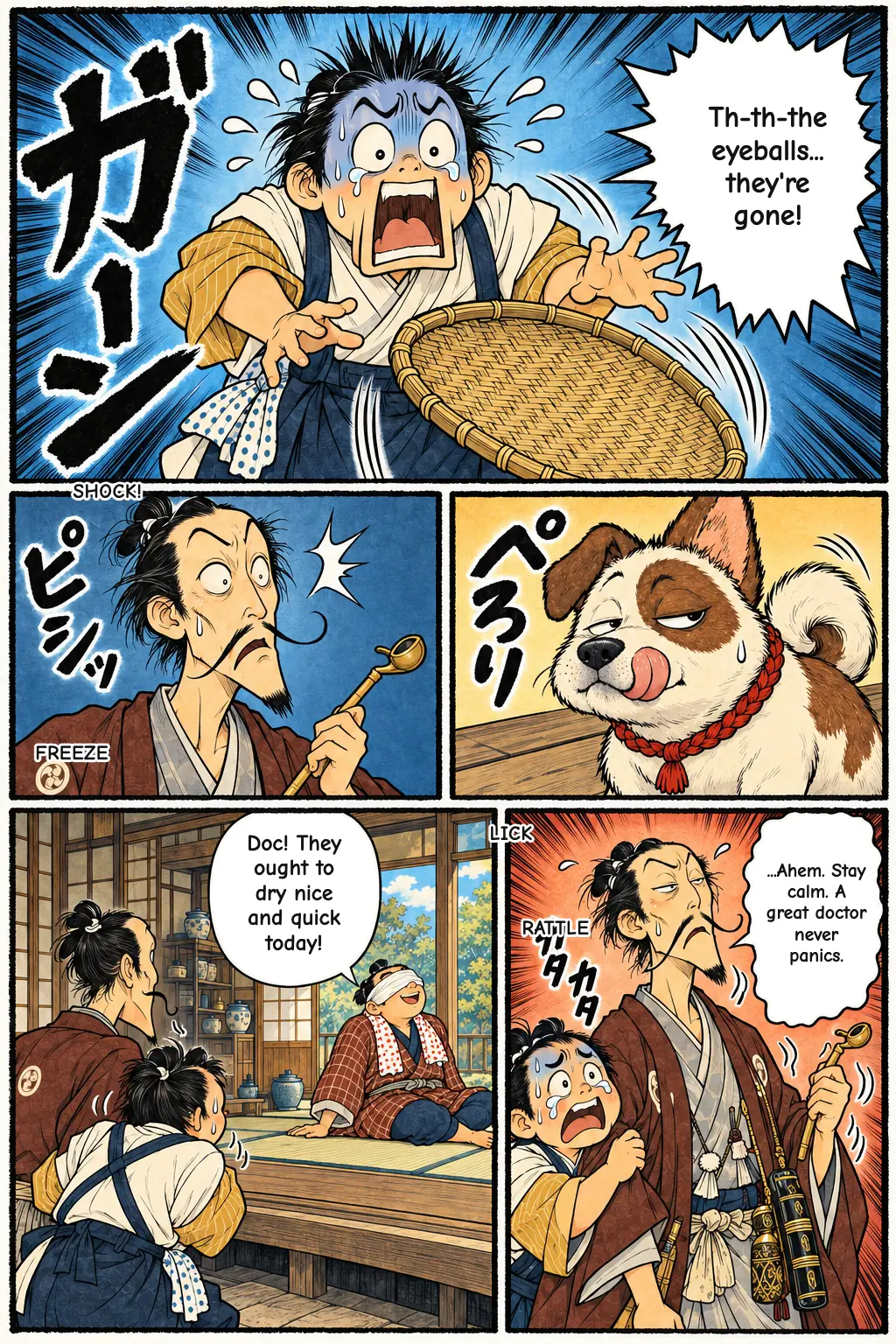
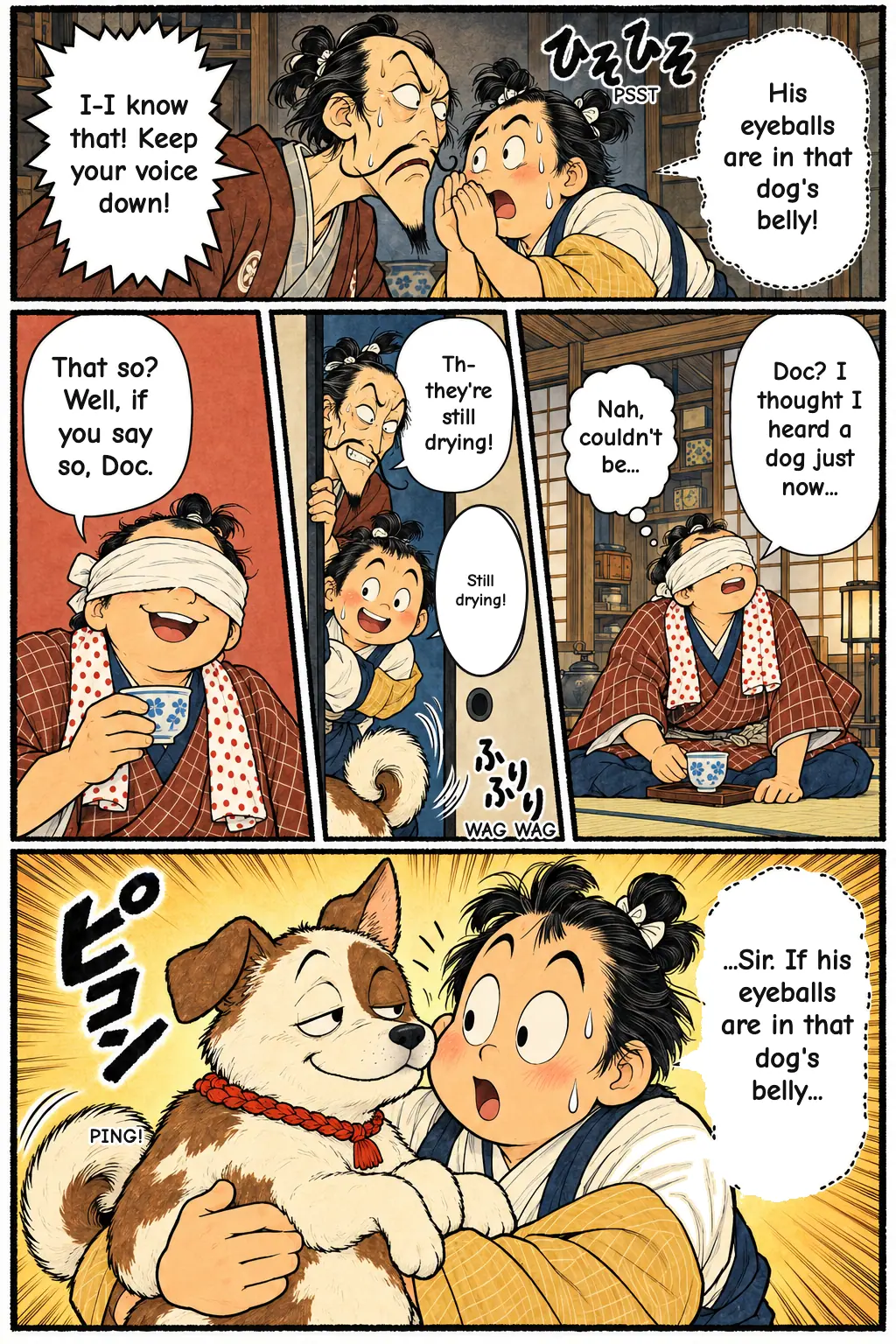
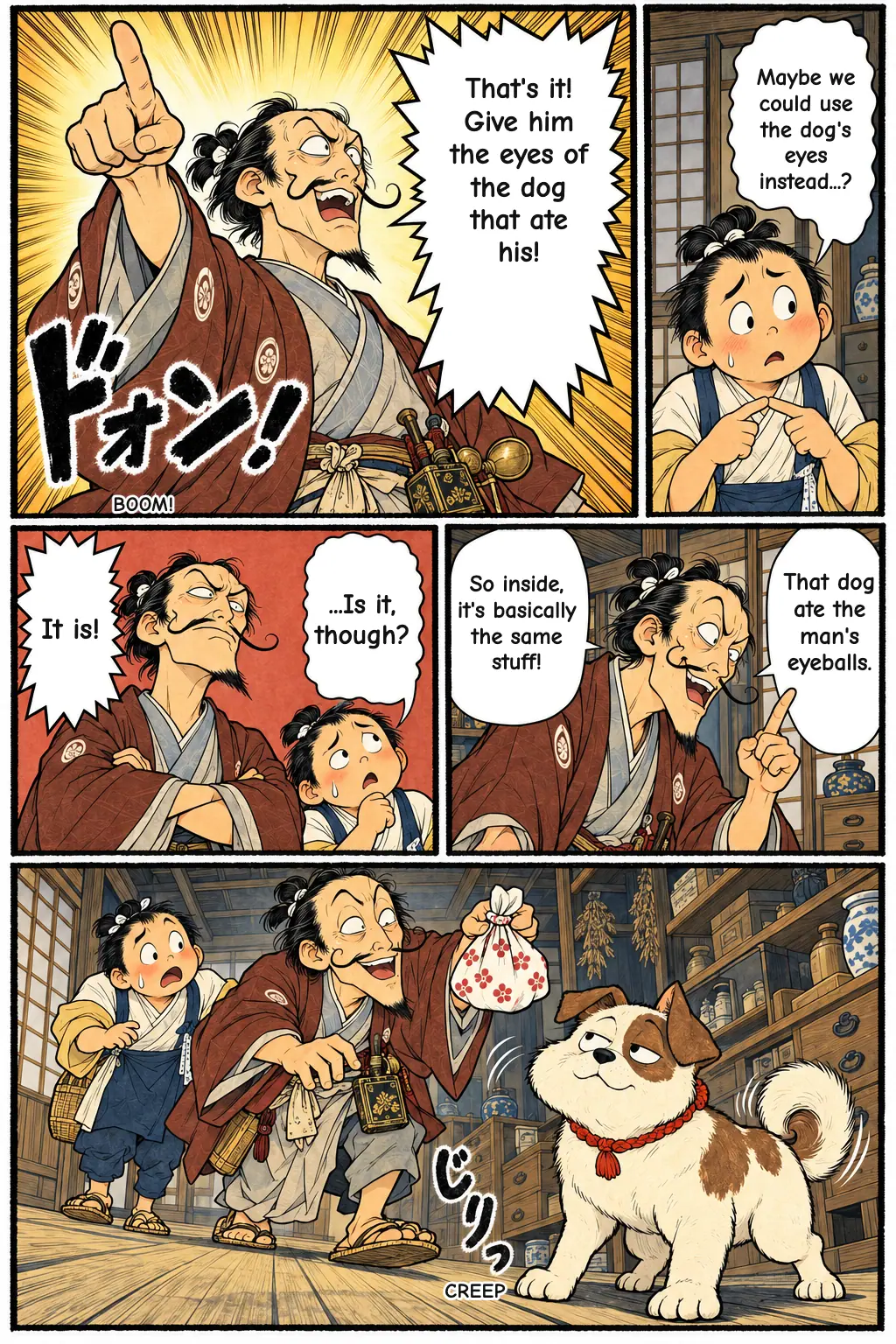
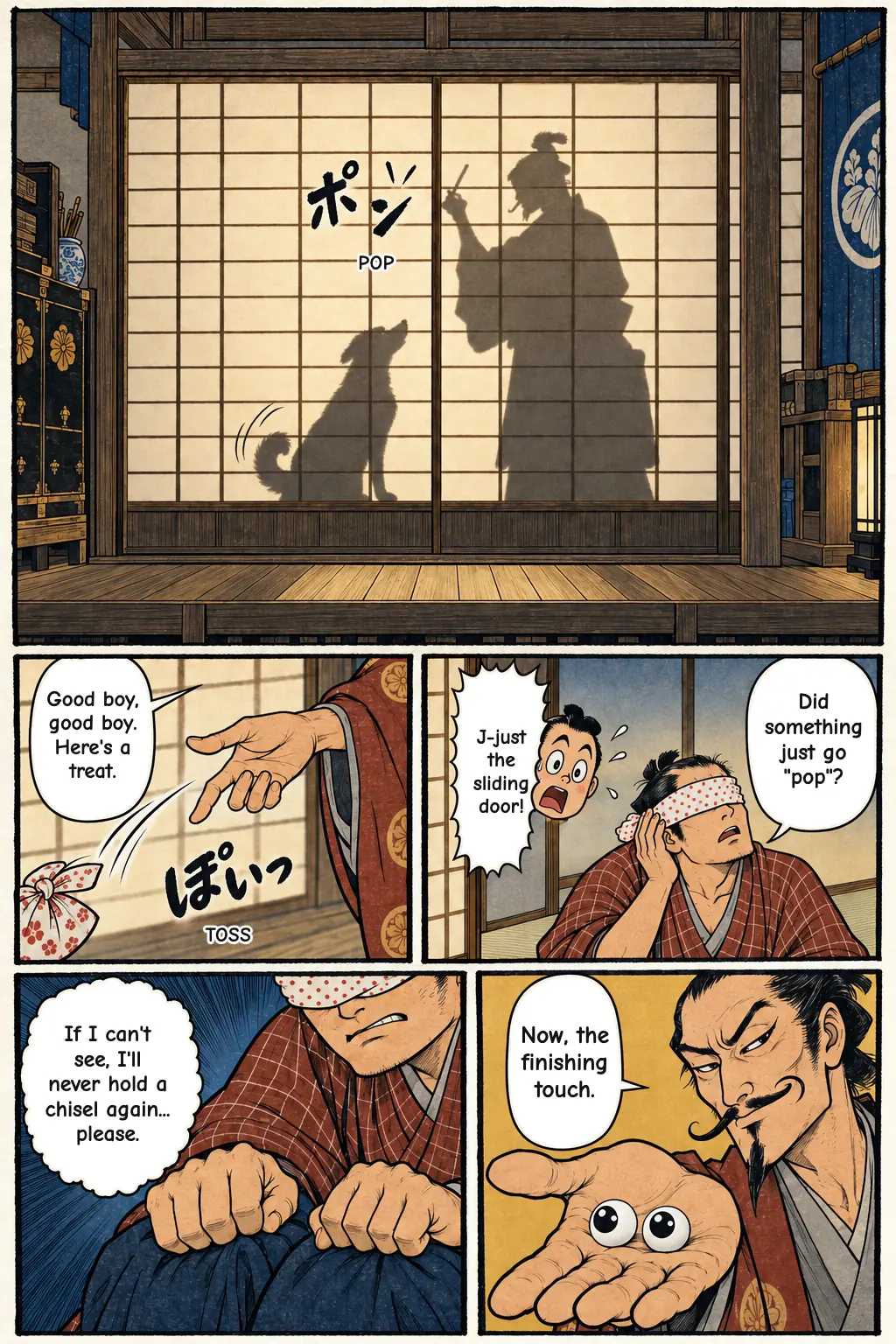
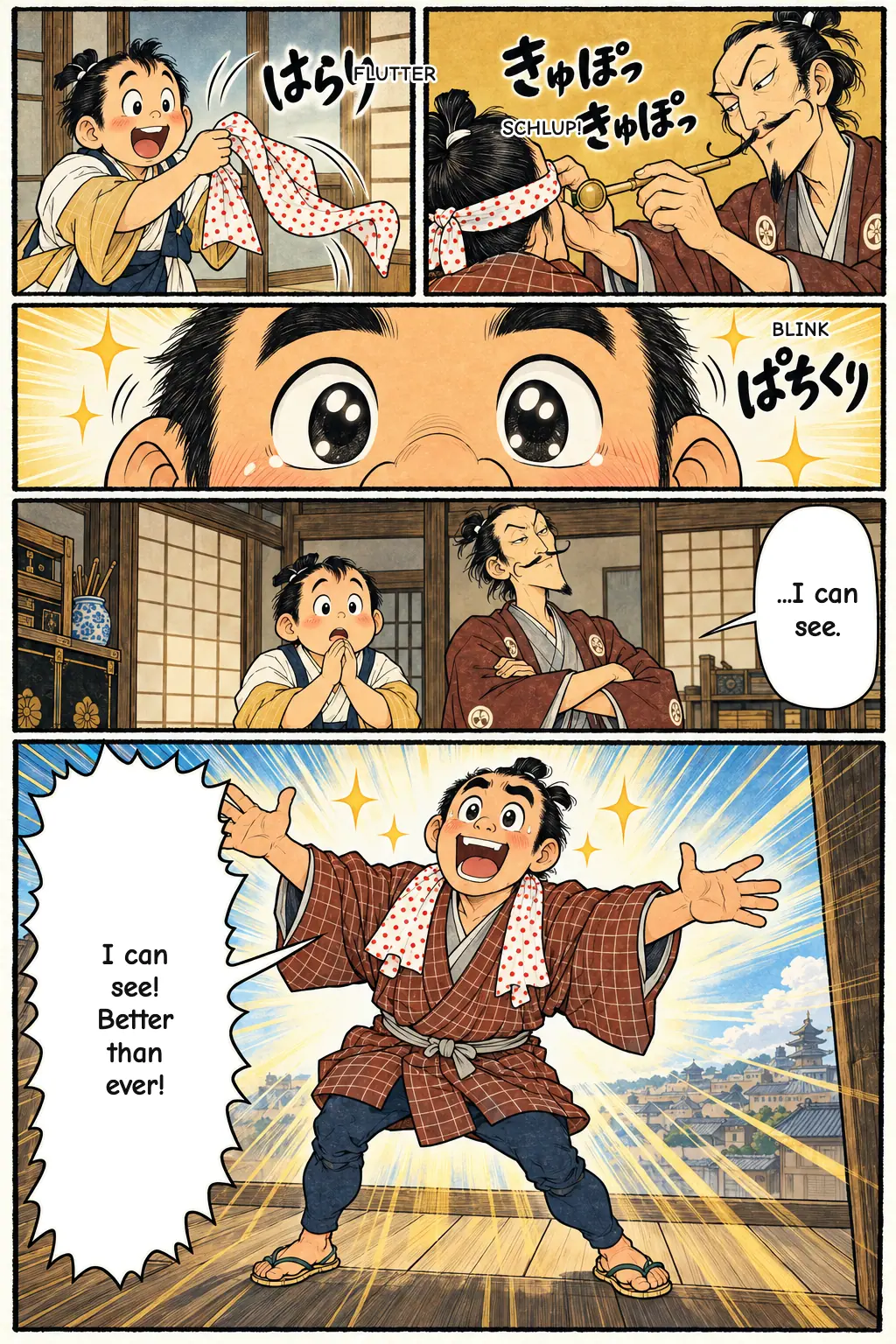
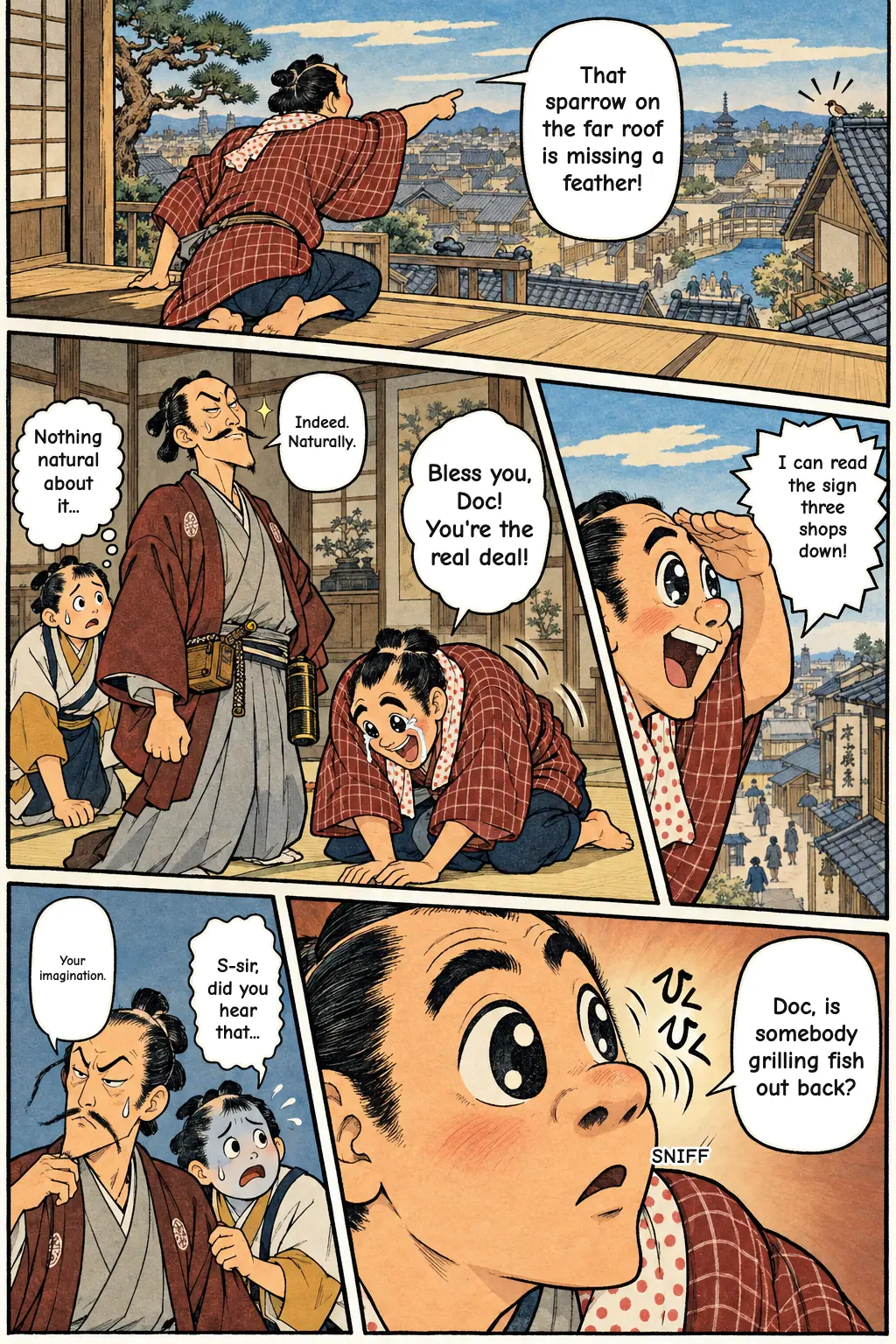
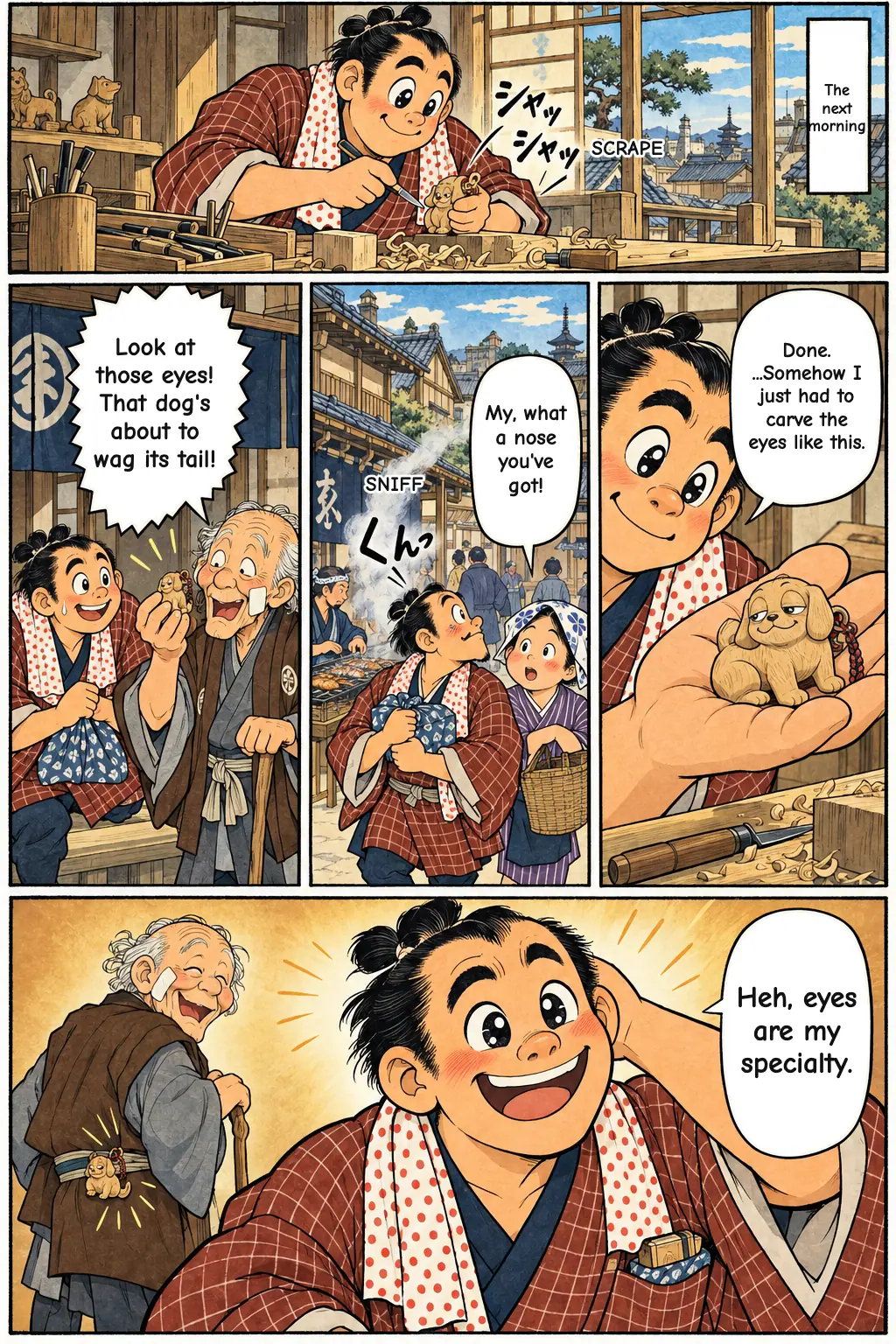
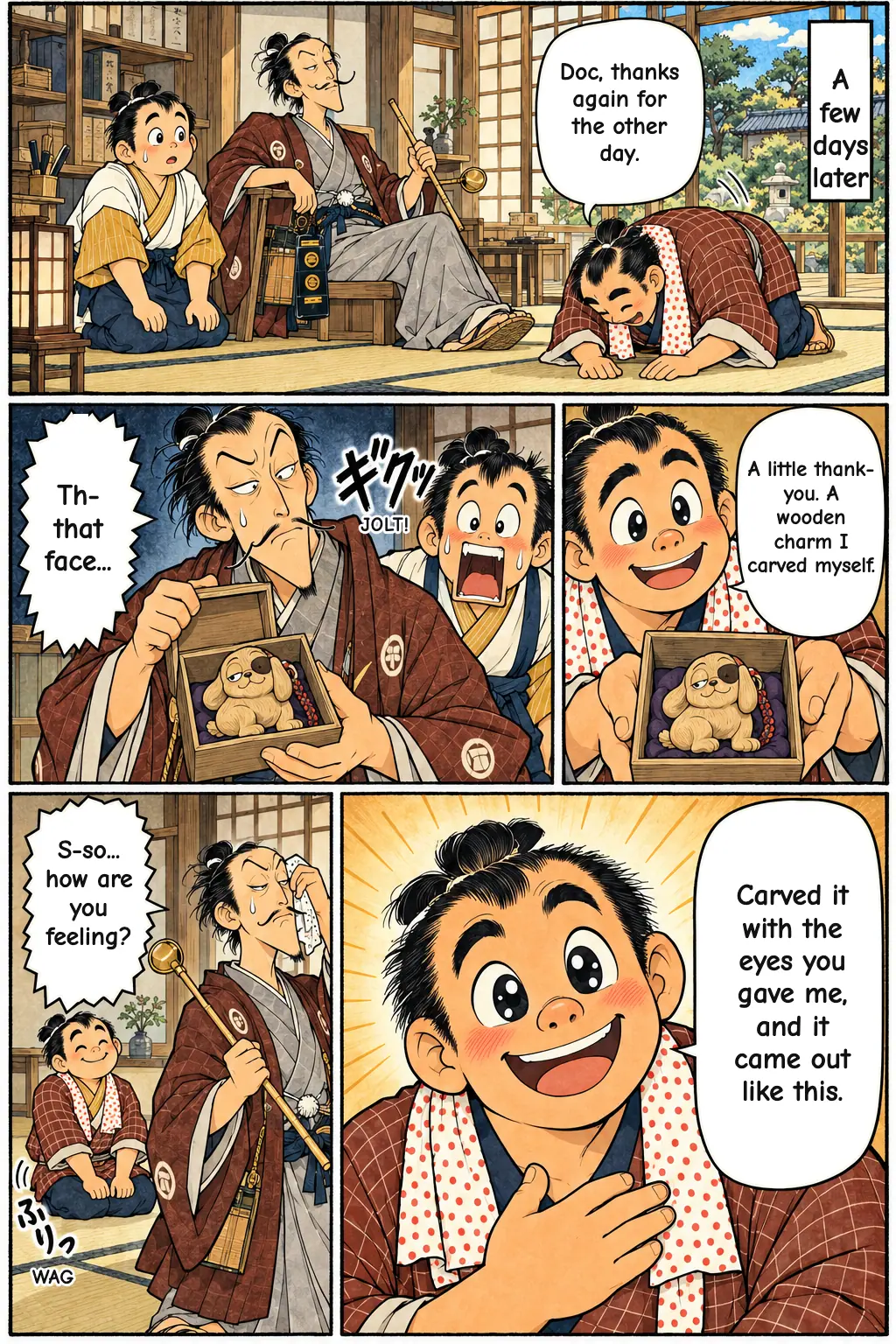
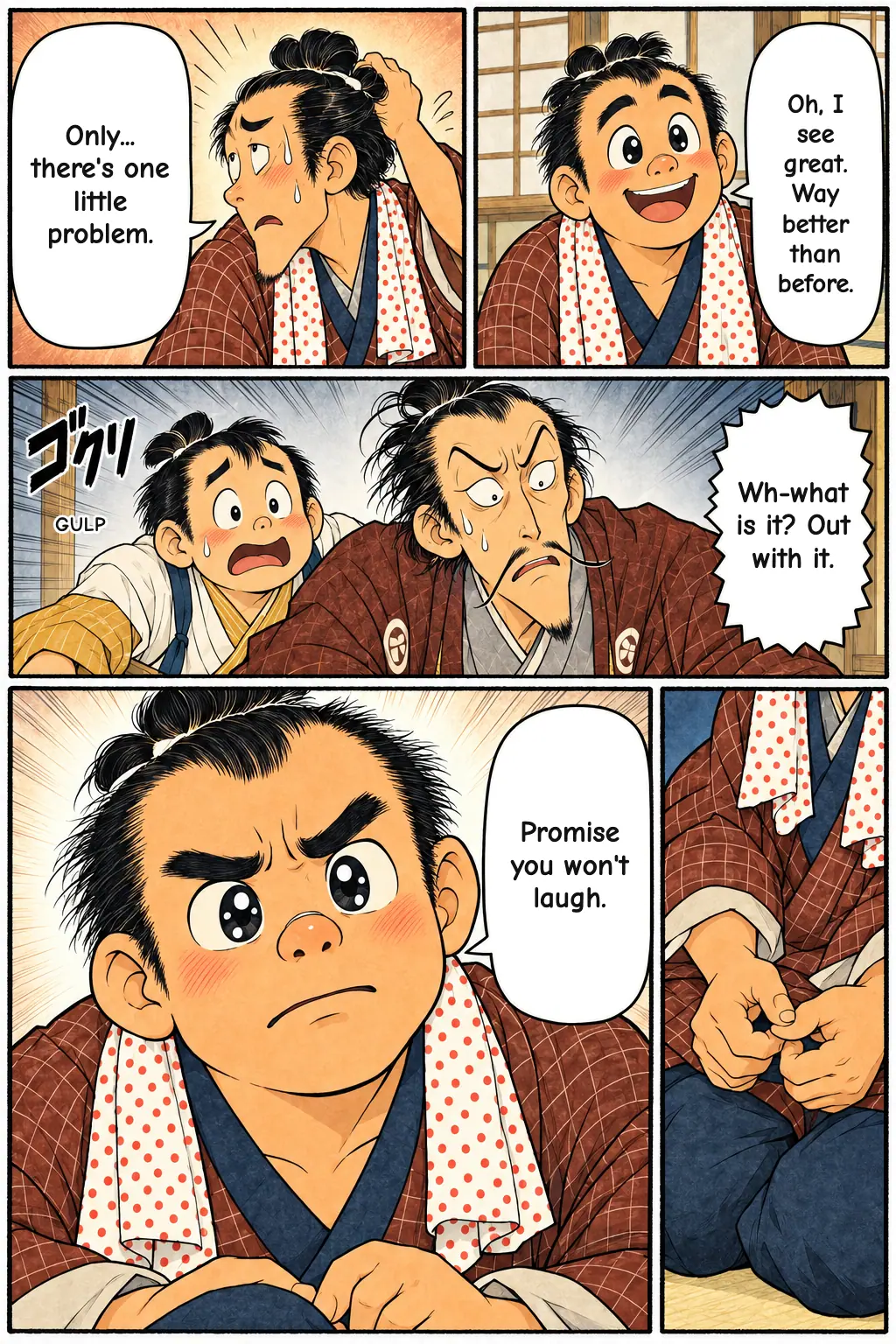
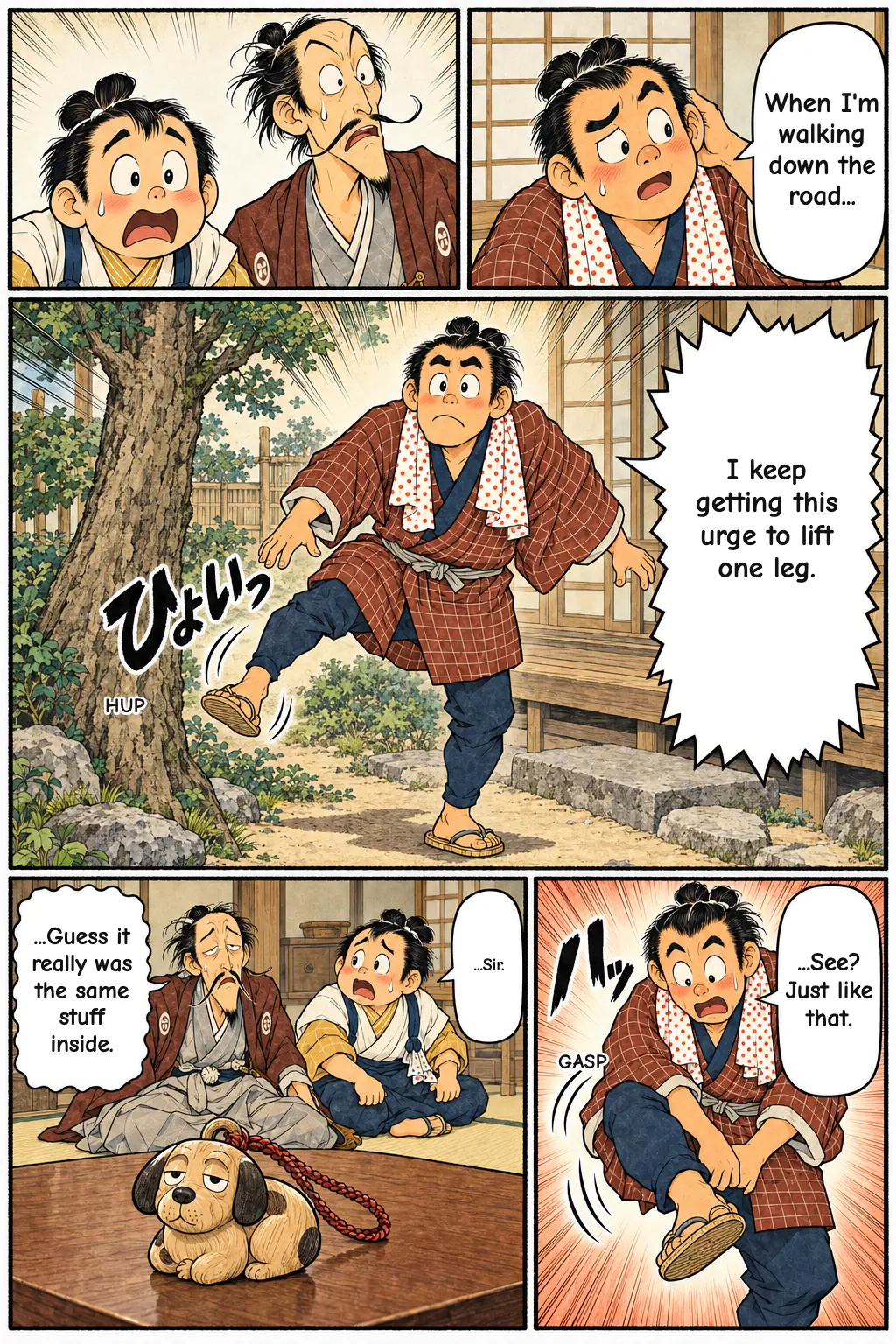
Episode 6 of RAKUGO: Japan's Comic Tales. A craftsman with sore eyes goes to a doctor everyone's talking about, who pops out his eyeballs to wash them. But while the eyeballs are hanging out to dry, a stray dog gobbles them up, and the doctor covers his tracks by putting the dog's eyes in instead. The man is thrilled to see better than ever, until he comes back to say thank you and admits to one small problem. (Adapted: the original punchline's "telegraph pole" has been swapped for "a tree" to fit the late-Edo setting.)
Inu no Me, or "The Dog's Eyes," is one of the shortest and silliest stories in the classic rakugo repertoire. A man with sore eyes visits an eye doctor everyone praises. The doctor removes the man's eyeballs to wash them, a dog eats them, and the doctor quietly puts the dog's eyes in instead. The whole story builds toward a single line at the very end. At its heart this is a tale about a yabu-isha, the Japanese word for a quack: a doctor whose reputation is far better than his skill. Rakugo has many yabu-isha stories, and this one pushes the idea about as far as it can go.
Inu no Me (The Dog's Eyes) Rakugo: Summary and Punchline Explained
What Is Inu no Me (The Dog's Eyes)?
Inu no Me, or "The Dog's Eyes," is one of the shortest and silliest stories in the classic rakugo repertoire. A man with sore eyes visits an eye doctor everyone praises. The doctor removes the man's eyeballs to wash them, a dog eats them, and the doctor quietly puts the dog's eyes in instead. The whole story builds toward a single line at the very end.
At its heart this is a tale about a yabu-isha, the Japanese word for a quack: a doctor whose reputation is far better than his skill. Rakugo has many yabu-isha stories, and this one pushes the idea about as far as it can go. It is Episode 6 of RAKUGO: Japan's Comic Tales on Manga Portal, under the title "His New Dog Eyes Work Great. Almost."
What Is Rakugo?
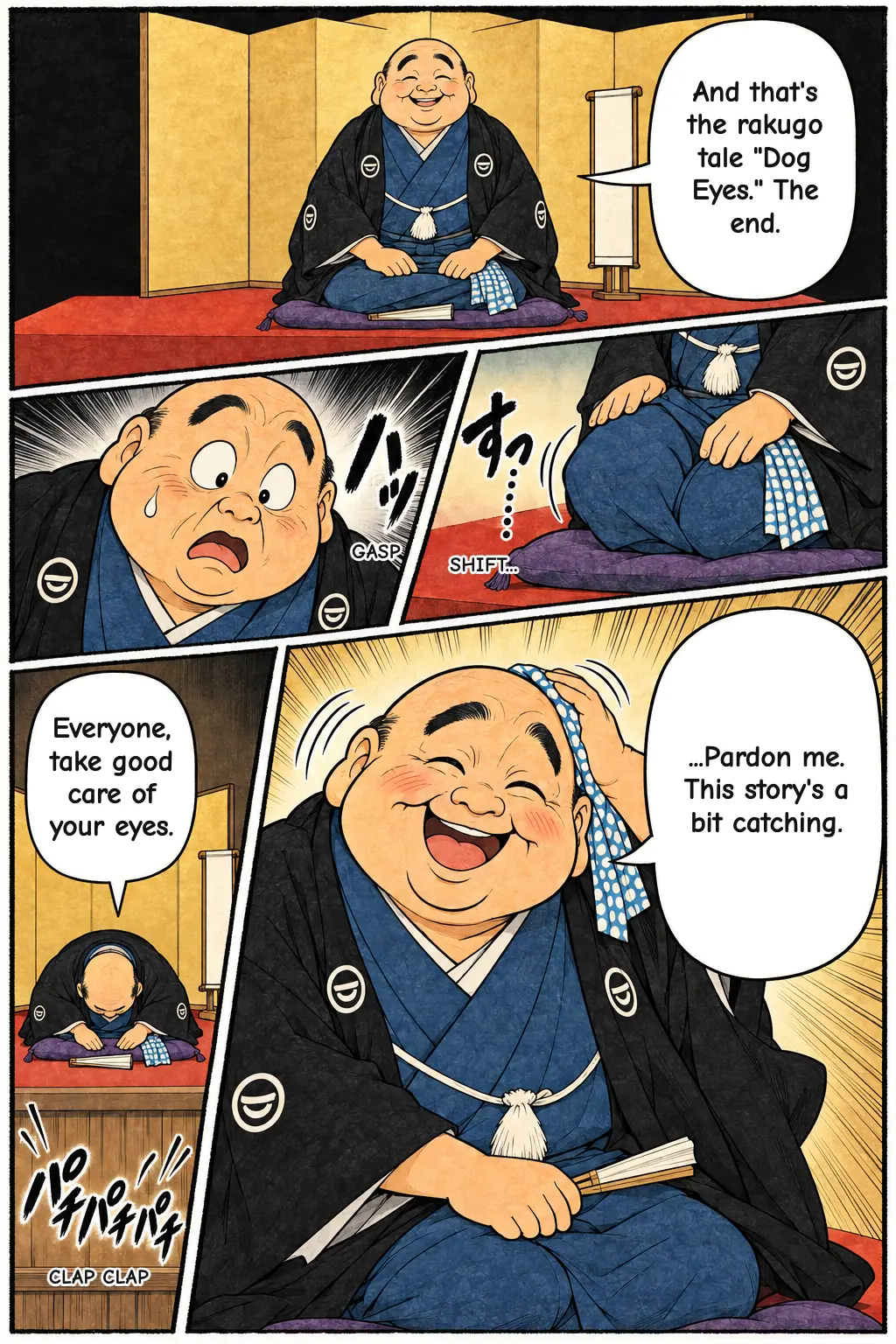
Rakugo is a Japanese art of comic storytelling. A single performer kneels on a cushion and, using only a folding fan (sensu) and a hand towel (tenugui), plays every character in the story: turning the head left and right, changing voice and posture, and turning the fan into chopsticks, a pipe, or a sword. Rakugo has been performed in yose, small storytelling theaters, for several hundred years, and each story ends with a punchline called the ochi or sage. In our manga series, the storyteller you see at the start and end of each episode, Shōmontei Fukurai, is a fictional rakugo performer created for this series. He is not based on any real performer.
The Original Story: A Short Summary
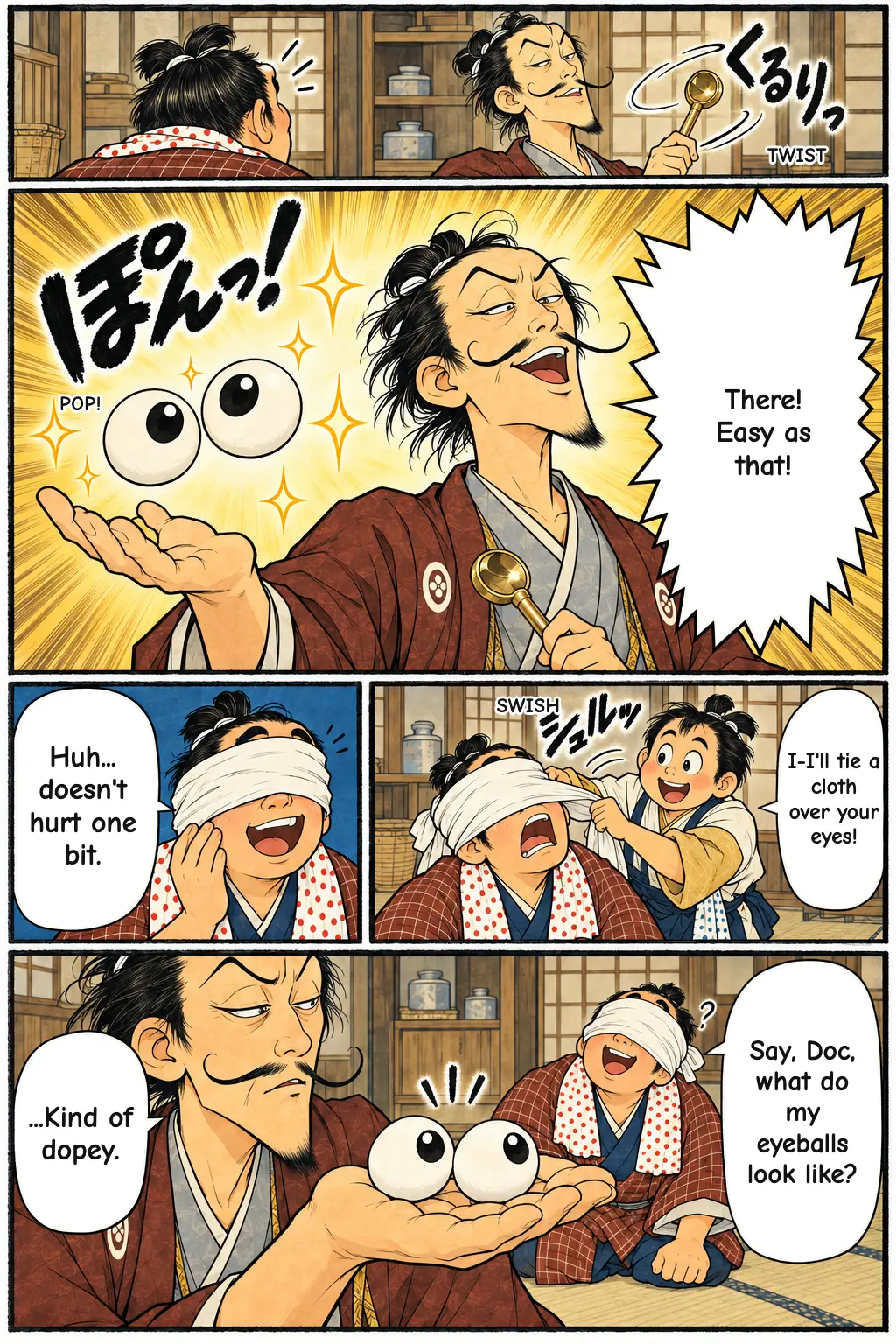
A man suffering from sore eyes hears about an eye doctor with a great reputation and goes to see him. After examining him, the doctor announces that the best cure is to take the eyeballs out and wash them in medicine. He removes both of the man's eyes and leaves them soaking in a medicinal liquid.
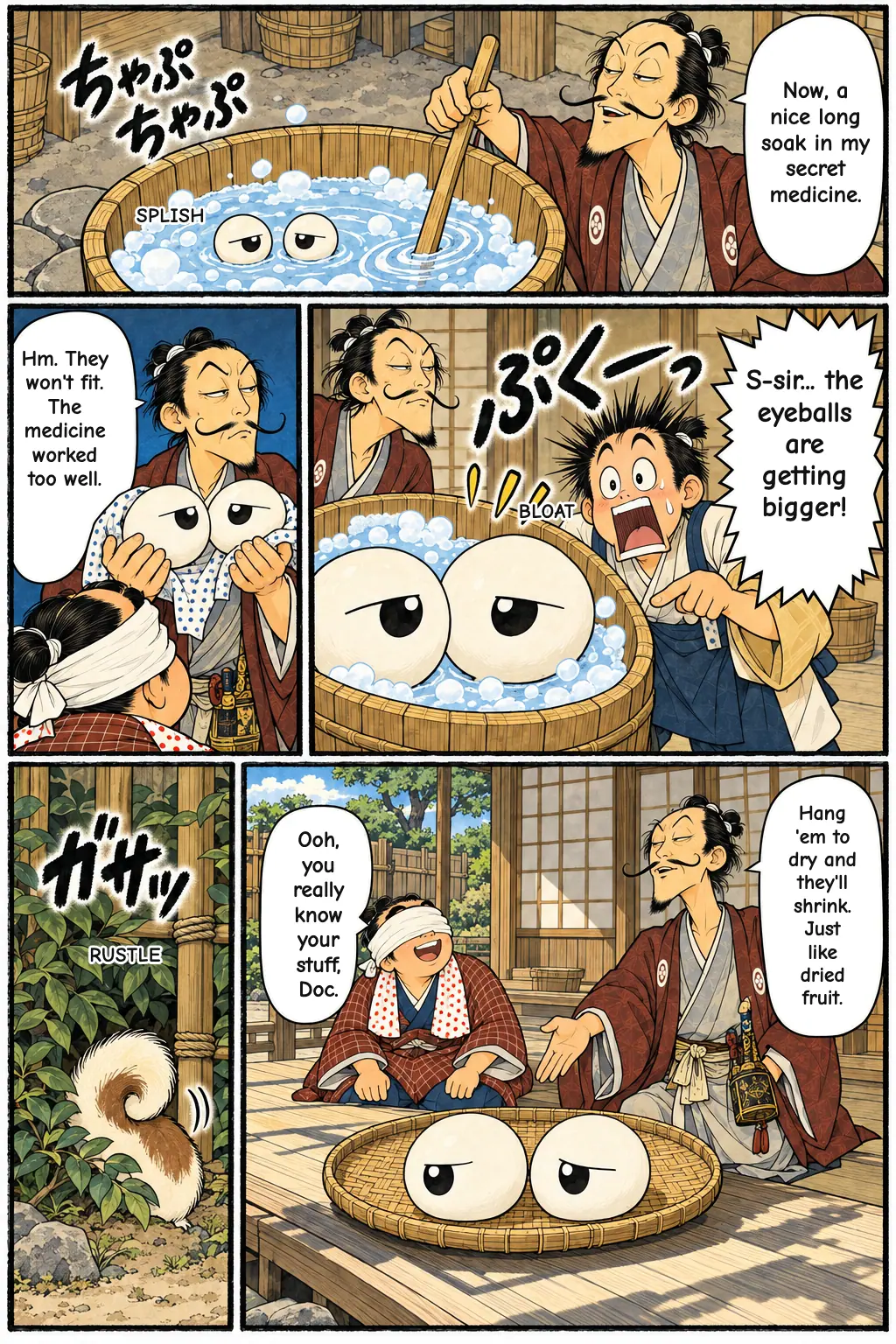
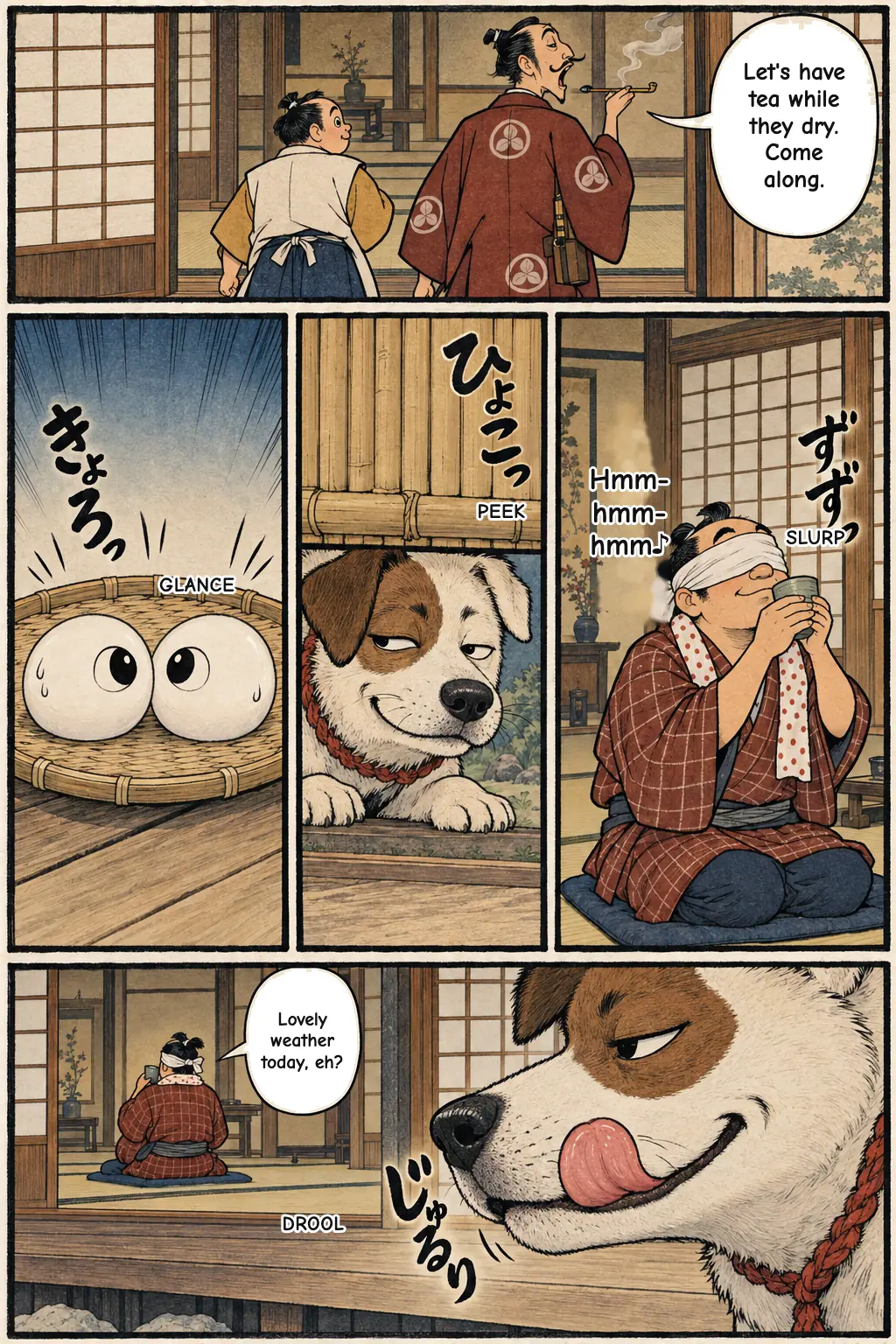
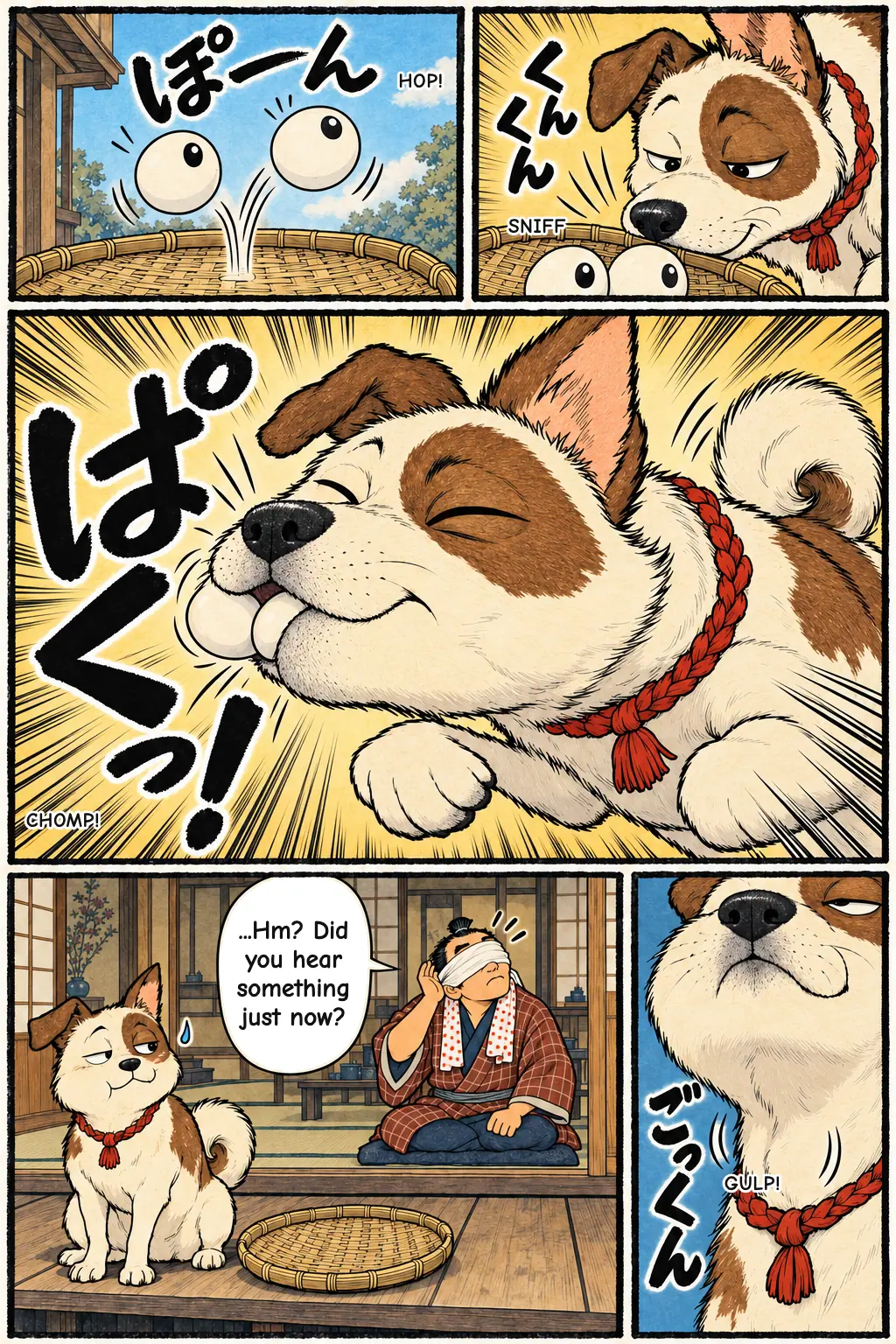
Things go wrong at once. The eyes soak too long, swell up, and no longer fit back into their sockets. Not at all worried, the doctor decides they only need to shrink, so he sets them outside to dry. While he isn't watching, a dog wanders in and eats them.
Any real doctor would panic. This one simply has another idea: since the dog swallowed the man's eyes, the fair thing is to give the man the dog's eyes. He takes them out and puts them in the patient. Amazingly, the man can see again, and he goes home delighted. Some days later he comes back to thank the doctor. When asked how his new eyes are working, he says they are wonderful, apart from one small problem. That answer is the punchline, explained below.
Where the Story Comes From and What the Manga Changed
Rakugo was passed on mainly by performance, but in the Meiji era (1868–1912) performances began to be written down word for word in shorthand and printed as books. We checked the plot of this episode against one of those records: a 1908 collection of performances by Tachibanaya Enzō IV, a storyteller who died in 1922. The collection is held by Japan's National Diet Library. The order of events follows that record, but the manga script and dialogue are our own.
What the manga adds: the framing scenes with the storyteller Fukurai, including his opening chat about doctors and his closing bow; the doctor's quick flourish when he pops out the eyes; and how the eyes are laid out to dry. The eyes are drawn as simple, marble-like cartoon shapes, so the story stays as silly as it is meant to be and never gory. The original does not say much about what happens to the dog afterward, and the manga does not show the dog being harmed. The biggest change is in the final line, explained in the next section.
The Punchline (Sage) Explained
In the Meiji-era version, the man says he can see perfectly well, but whenever he sees a telegraph pole, he gets a strange urge to lift one leg. Some tellings are said to use a stone lantern instead. Either way, the picture is the same: a dog lifting its leg to pee on a post. Along with the dog's eyes, the man has also picked up the dog's habits.
Part of the joke is the logic. The doctor's treatment makes no sense from start to finish, and the ending simply follows that nonsense one step further: if eyes can be swapped like spare parts, why not instincts too? The rest is the patient's calm innocence. He mentions this as a small side effect, politely, while thanking the man who caused it.
The telegraph pole was a modern object at the time, part of a Meiji-era update to the joke. Our manga is set in the late Edo period, before telegraph lines came to Japan, so we changed the object to a tree. A dog and a tree make the same picture anywhere in the world.
Where to Read The Dog's Eyes as a Manga
If you have just read the episode, you already know how much the final panel depends on timing. If you scrolled straight here, the manga tells the story in a few minutes, with the doctor's growing confidence and the patient's total trust shown in every panel. Episode 6 of RAKUGO: Japan's Comic Tales, along with every other episode in the series, is free to read on Manga Portal, with no sign-up needed. The other episodes collect more classic rakugo tales, each introduced by Fukurai from his cushion.
Characters in this episode
The Patient
An easygoing townsman with sore eyes who trusts the doctor completely, even after his eyes are replaced with a dog's.
The Eye Doctor
A famous quack (yabu-isha) who removes eyeballs to wash them and fixes every disaster with an even wilder idea.
The Stray Dog
A dog that wanders in and eats the eyeballs left out to dry, and whose eyes, and habits, end up in the patient.
Shōmontei Fukurai
The fictional rakugo storyteller who opens and closes each episode of the series; he does not appear in the original story.
FAQ
What is the story of Inu no Me (The Dog's Eyes)?
A man with sore eyes visits a famous eye doctor, who removes his eyeballs to wash them. The eyes swell and are set out to dry, a dog eats them, and the doctor puts the dog's eyes in the man instead. The man is happy with the result, except for one strange side effect.
What does the ending of The Dog's Eyes mean?
The man says he sees fine, but whenever he sees a telegraph pole (a tree in our manga) he wants to lift one leg. This is how a dog pees on a post, so the joke is that he got the dog's instincts along with its eyes.
What is a yabu-isha?
Yabu-isha is a Japanese word for a quack, a doctor with poor skill. Incompetent doctors are a favorite comic figure in rakugo, and the eye doctor in this story is one of the most extreme examples.
How old is the rakugo story Inu no Me?
It is a classic rakugo story that was performed long enough ago to appear in a printed shorthand record of performances published in 1908. The telegraph pole in that version shows that tellers updated the punchline to fit their own time.
What is rakugo?
Rakugo is a traditional Japanese form of comic storytelling in which one performer, kneeling and using only a fan and a hand towel, plays every character. It has been performed in small theaters called yose for centuries, and every story ends with a punchline.