Episode 5He Won a Zen Duel With Hand Signs AloneKonnyaku Mondo
Episode 5 of RAKUGO: Japan's Comic Tales. Rokubei the Konnyaku Maker sits in for Hachi, a fake monk who's in way over his head, at a high-stakes debate of faith. Without saying a single word, Rokubei gets a traveling monk to bow down in defeat using nothing but gestures. The catch? Rokubei thought the whole time that they were haggling over the price of konnyaku.
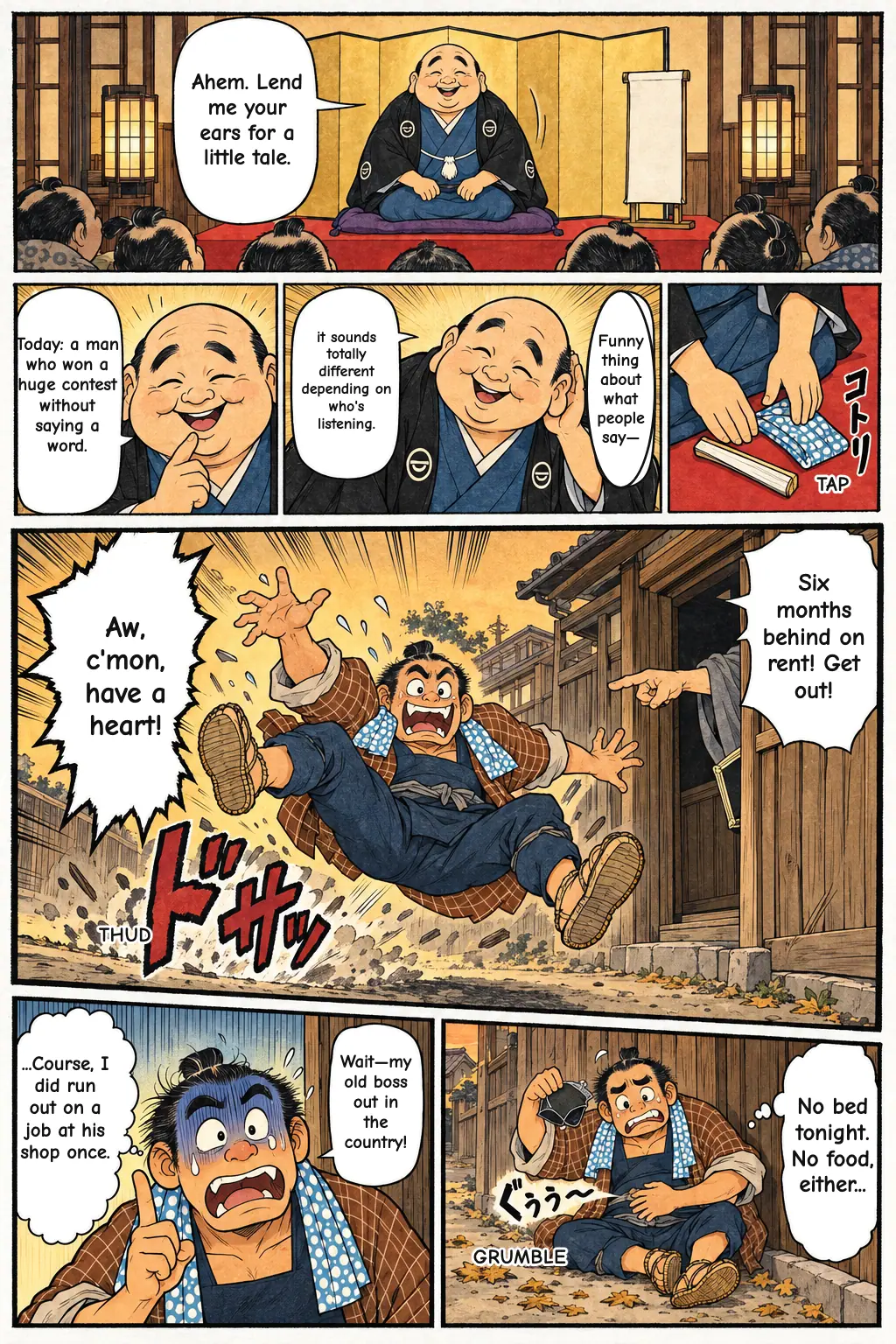
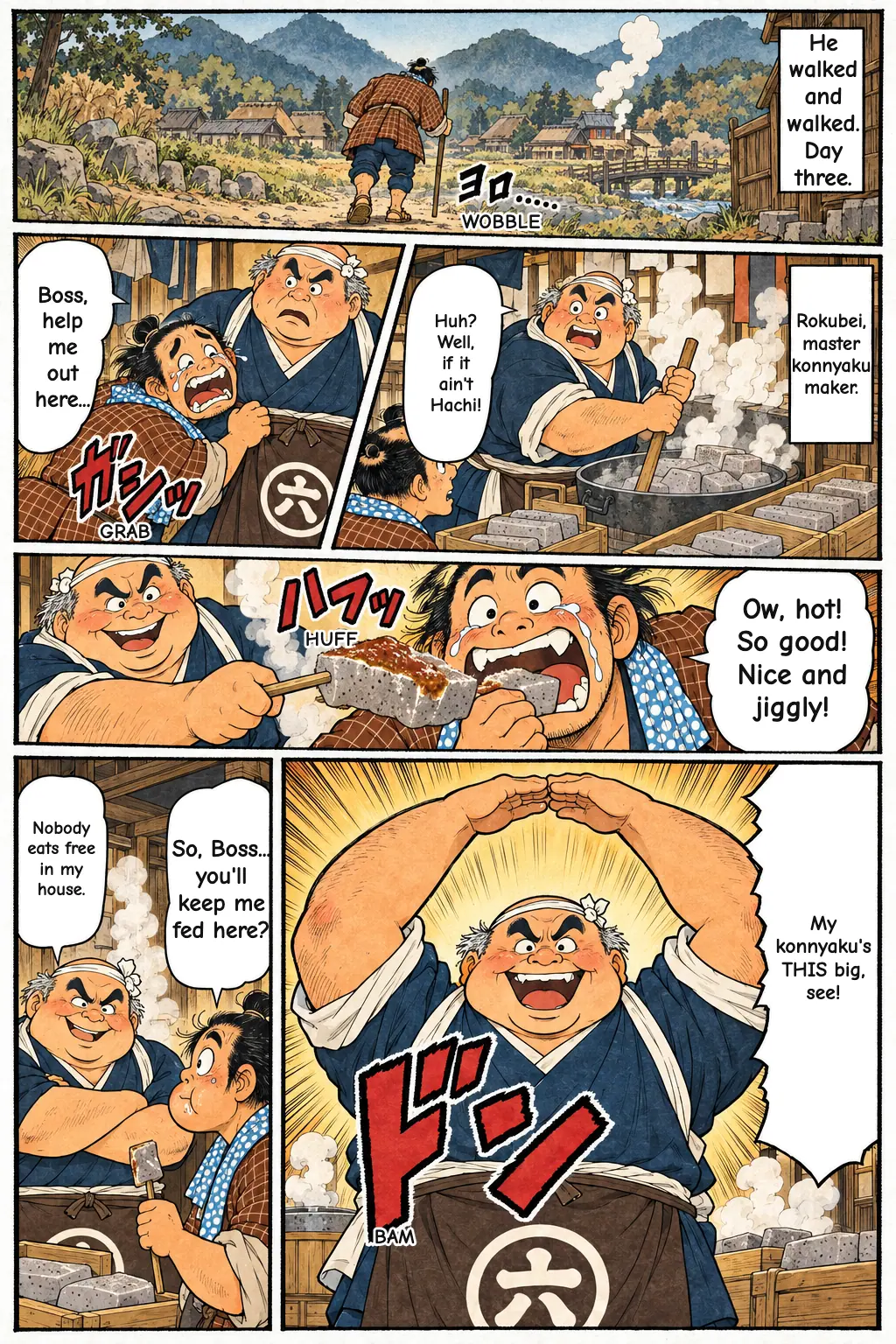
Konnyaku Mondo ("The Konnyaku Debate," also called The Silent Zen Debate) is a classic rakugo comic tale. It starts with Hachigoro, or Hachi, a good-for-nothing who has run out of luck in Edo (old Tokyo). He flees to the countryside and leans on Rokubei, a tough, good-natured man who runs a small konnyaku shop. Many tellings put the village near Annaka in Kozuke Province (today's Gunma), but details like this change from version to version.
Konnyaku Mondo Summary: The Silent Zen Debate Rakugo Explained
Konnyaku Mondo: Plot Summary
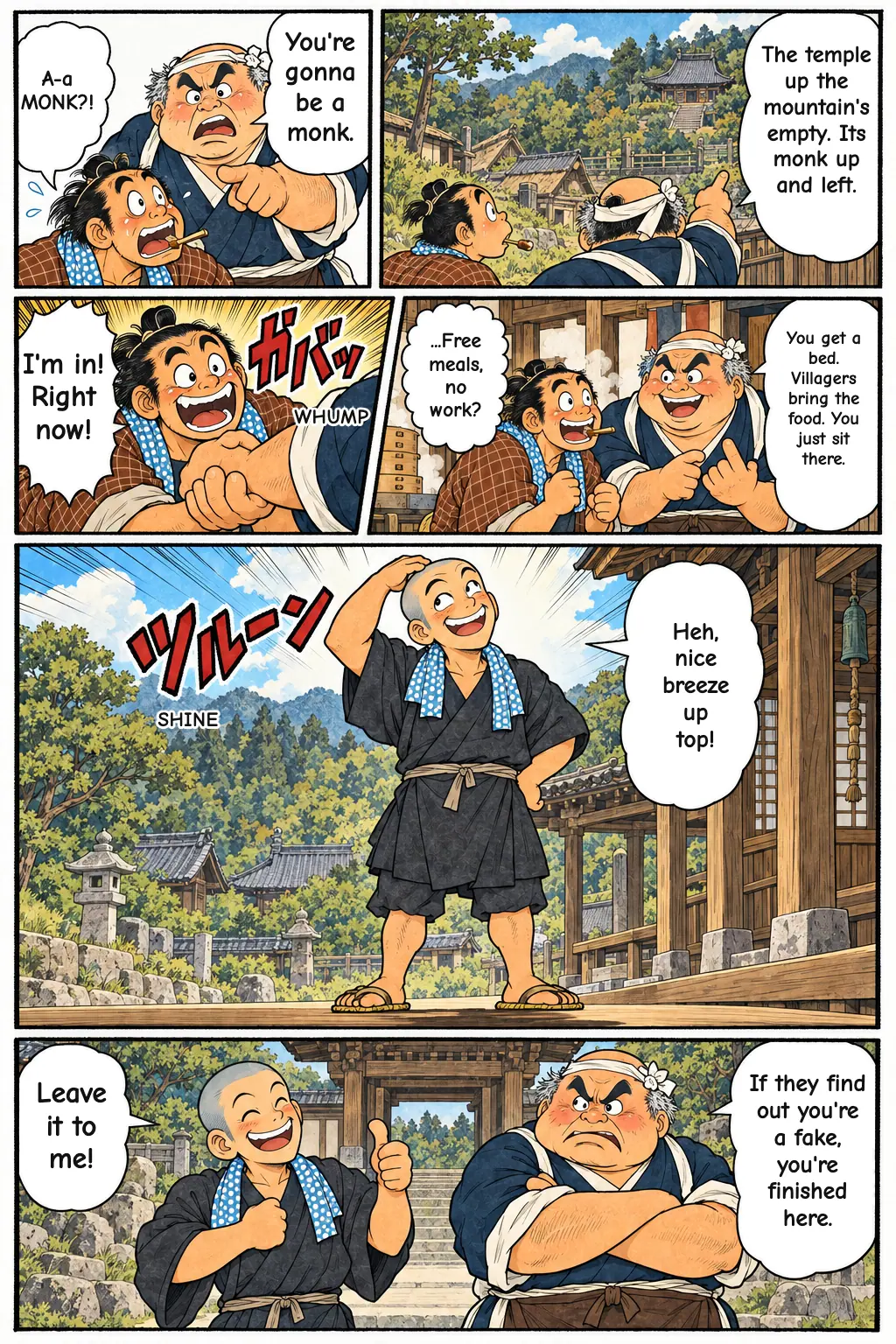
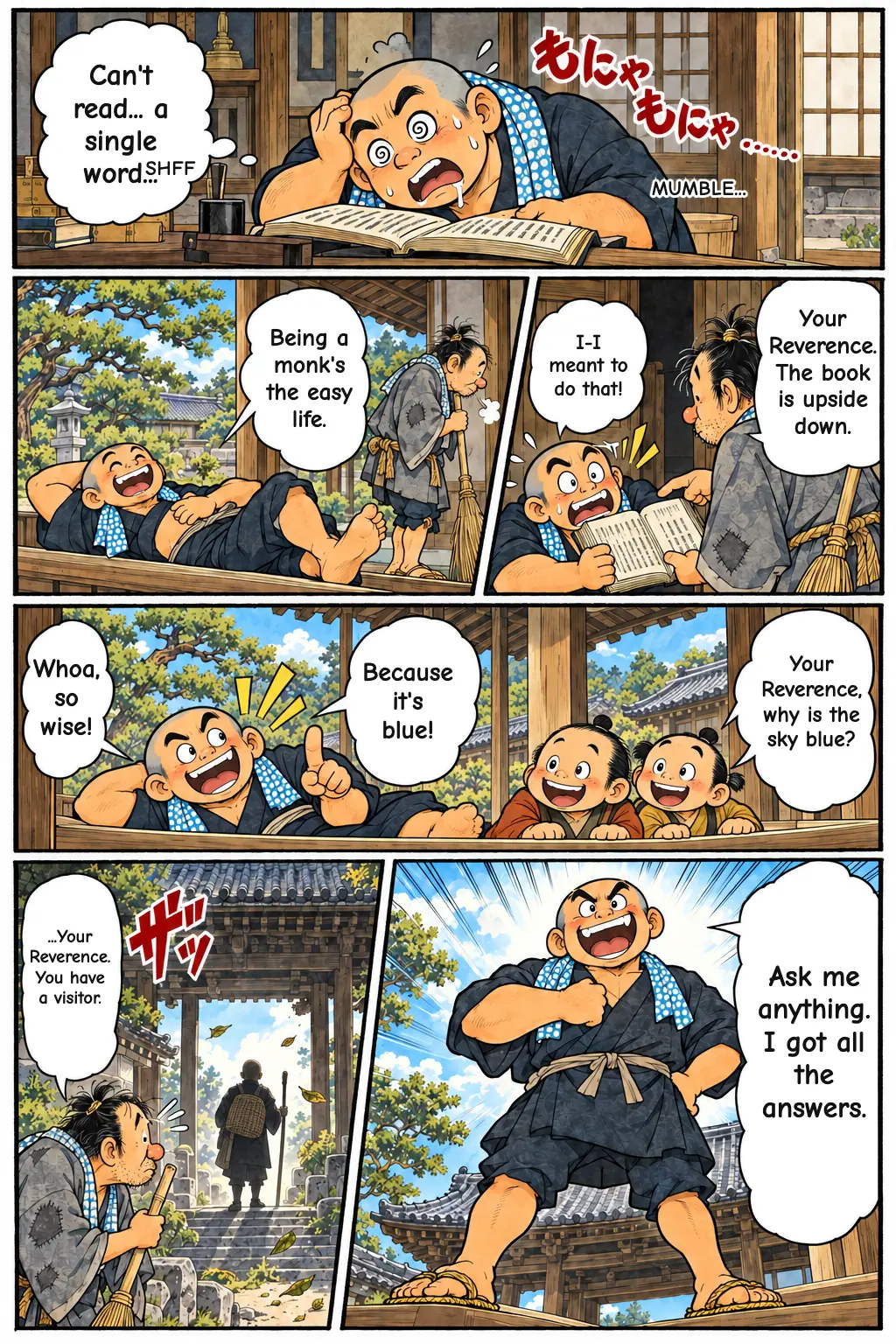
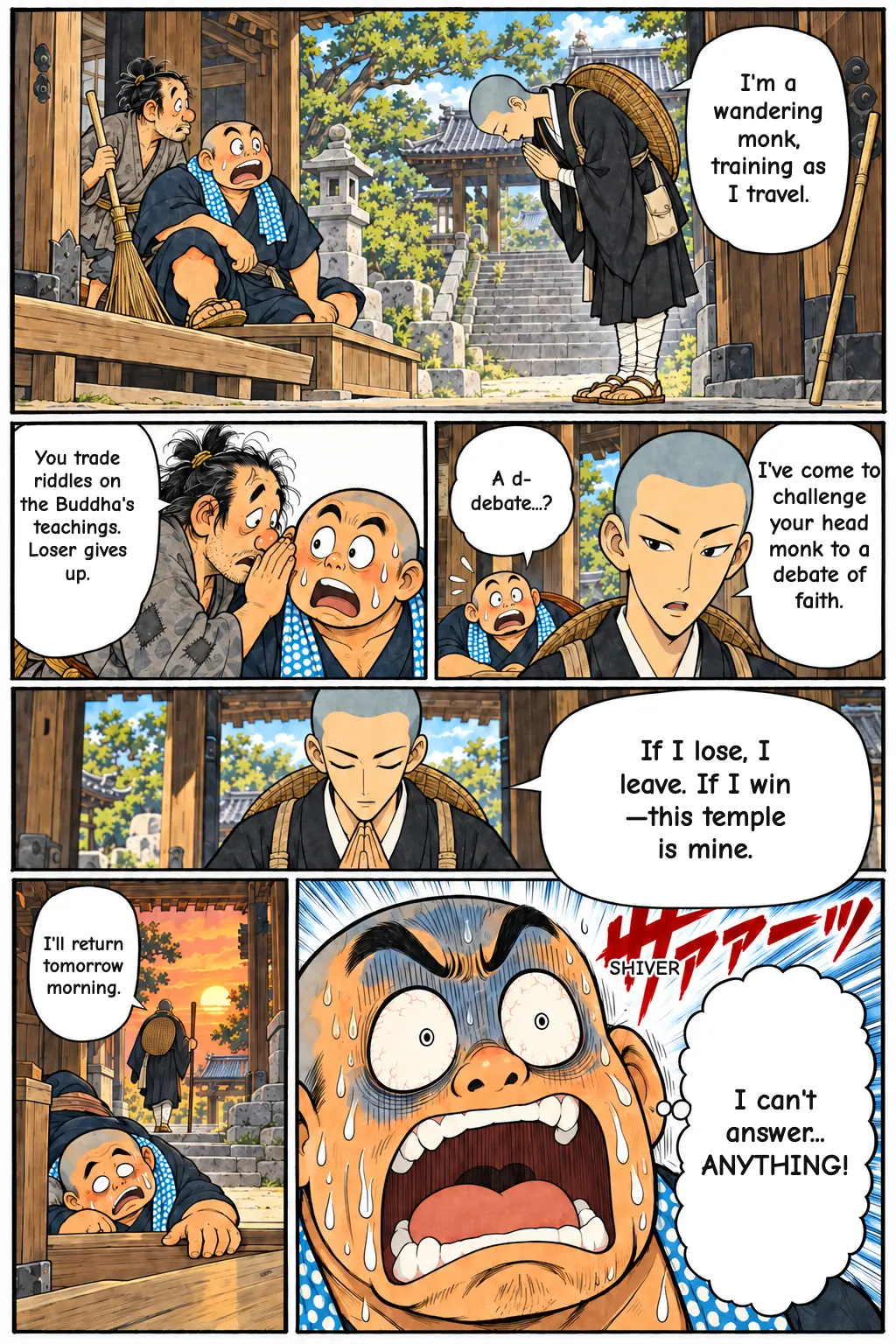
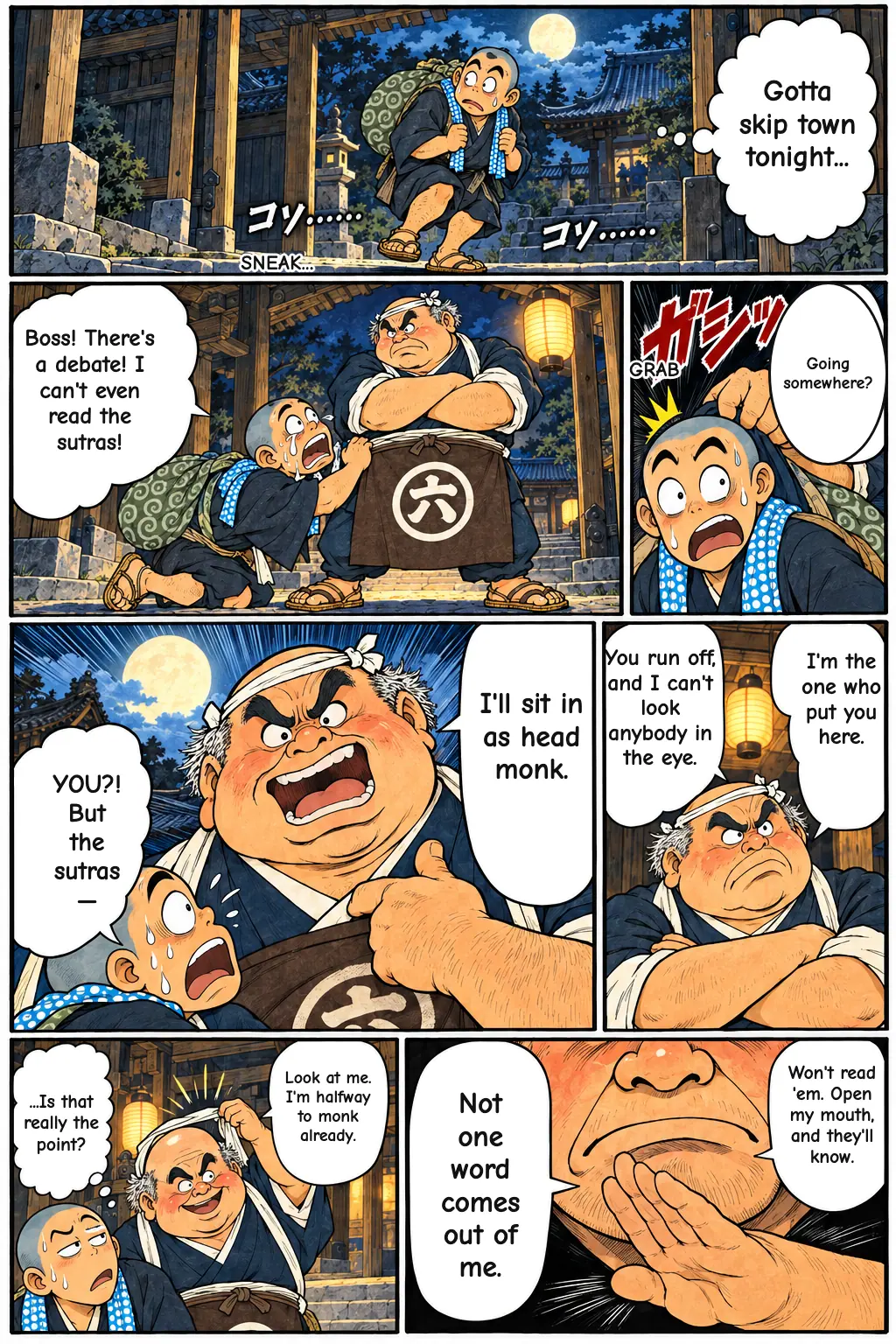
Konnyaku Mondo ("The Konnyaku Debate," also called The Silent Zen Debate) is a classic rakugo comic tale. It starts with Hachigoro, or Hachi, a good-for-nothing who has run out of luck in Edo (old Tokyo). He flees to the countryside and leans on Rokubei, a tough, good-natured man who runs a small konnyaku shop. Many tellings put the village near Annaka in Kozuke Province (today's Gunma), but details like this change from version to version. A local temple has no priest, so Rokubei has Hachi shave his head and sets him up there as an instant "priest." Hachi can't read a single sutra, but life is easy. In some versions he shares the temple with a country servant named Gonsuke.
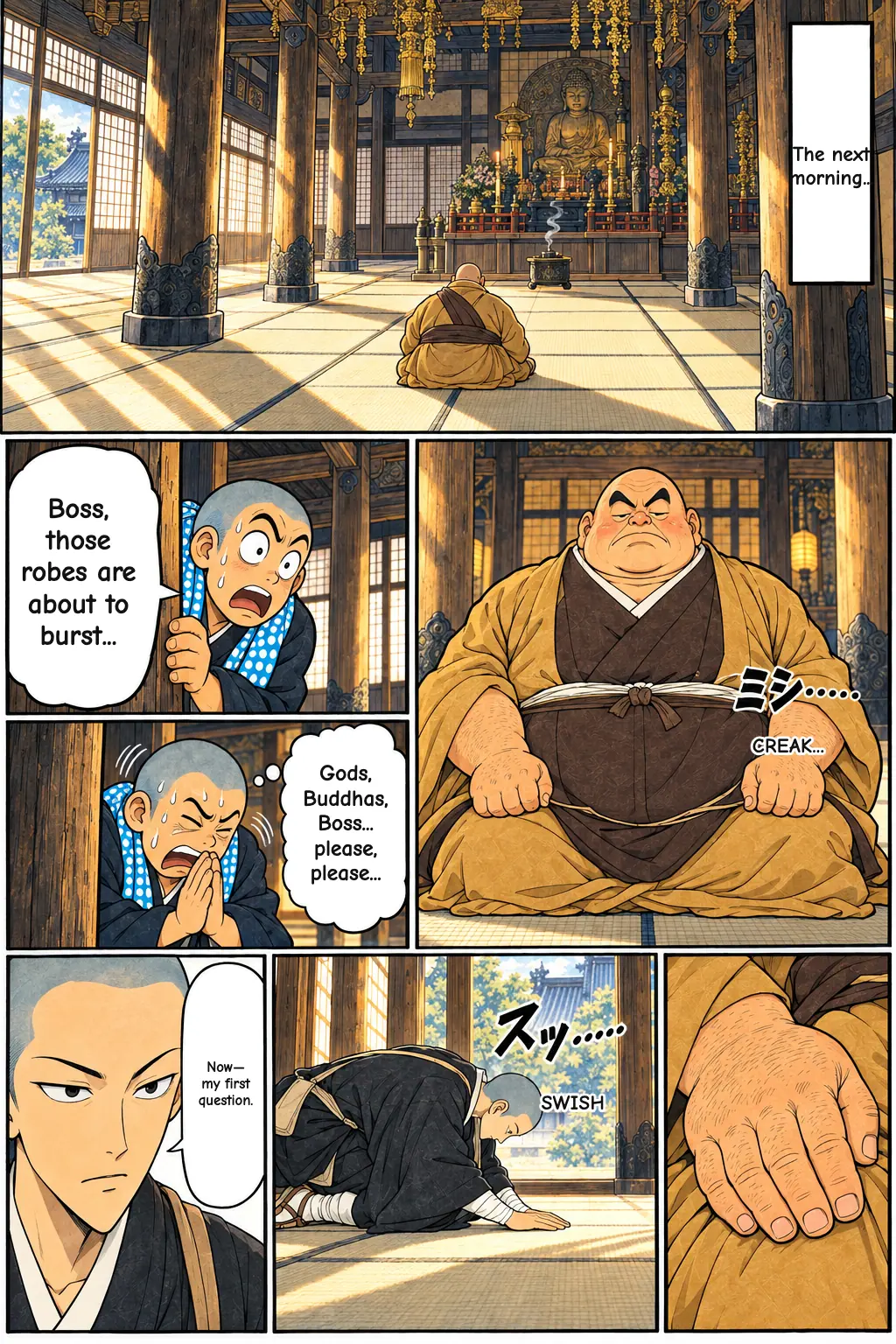
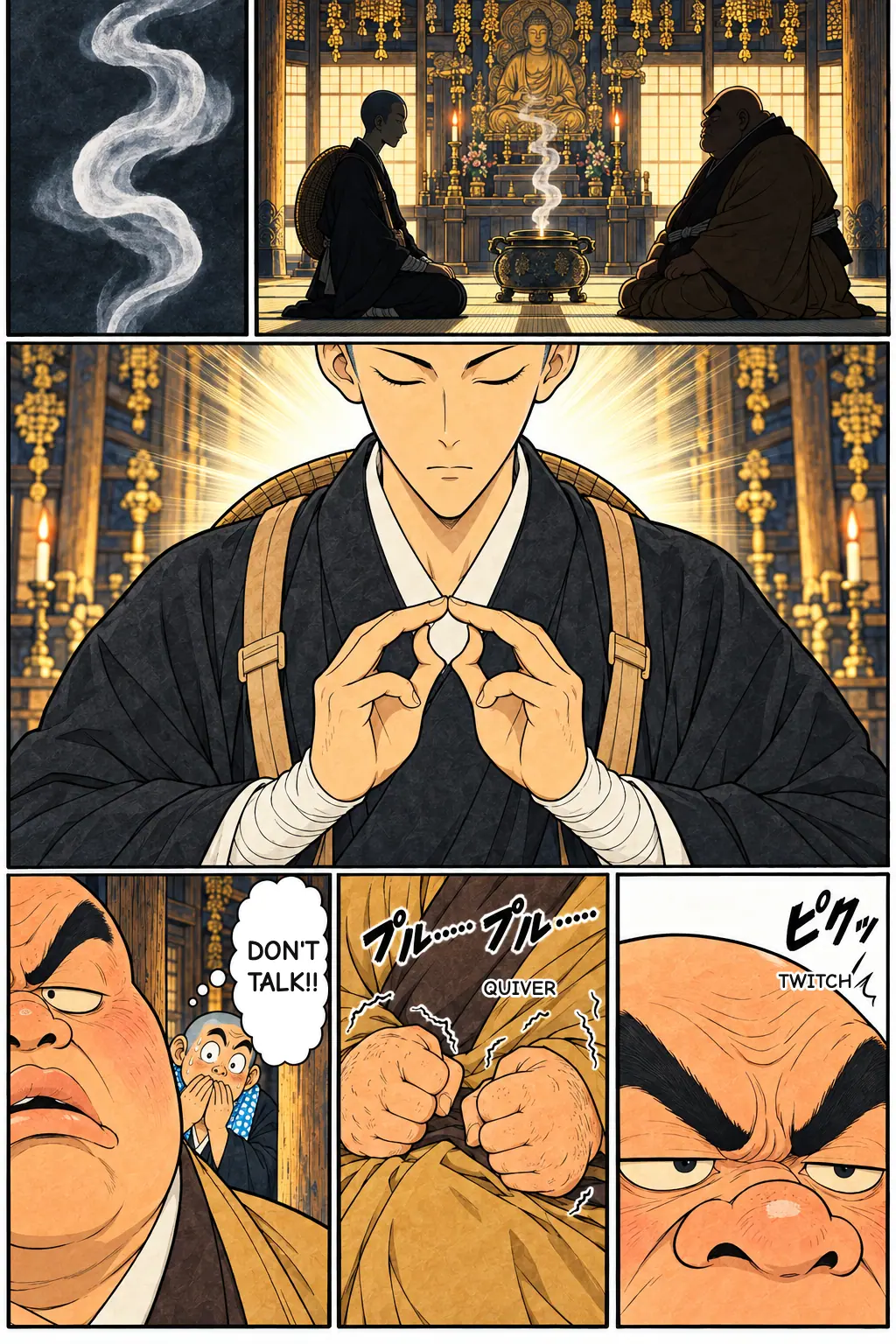
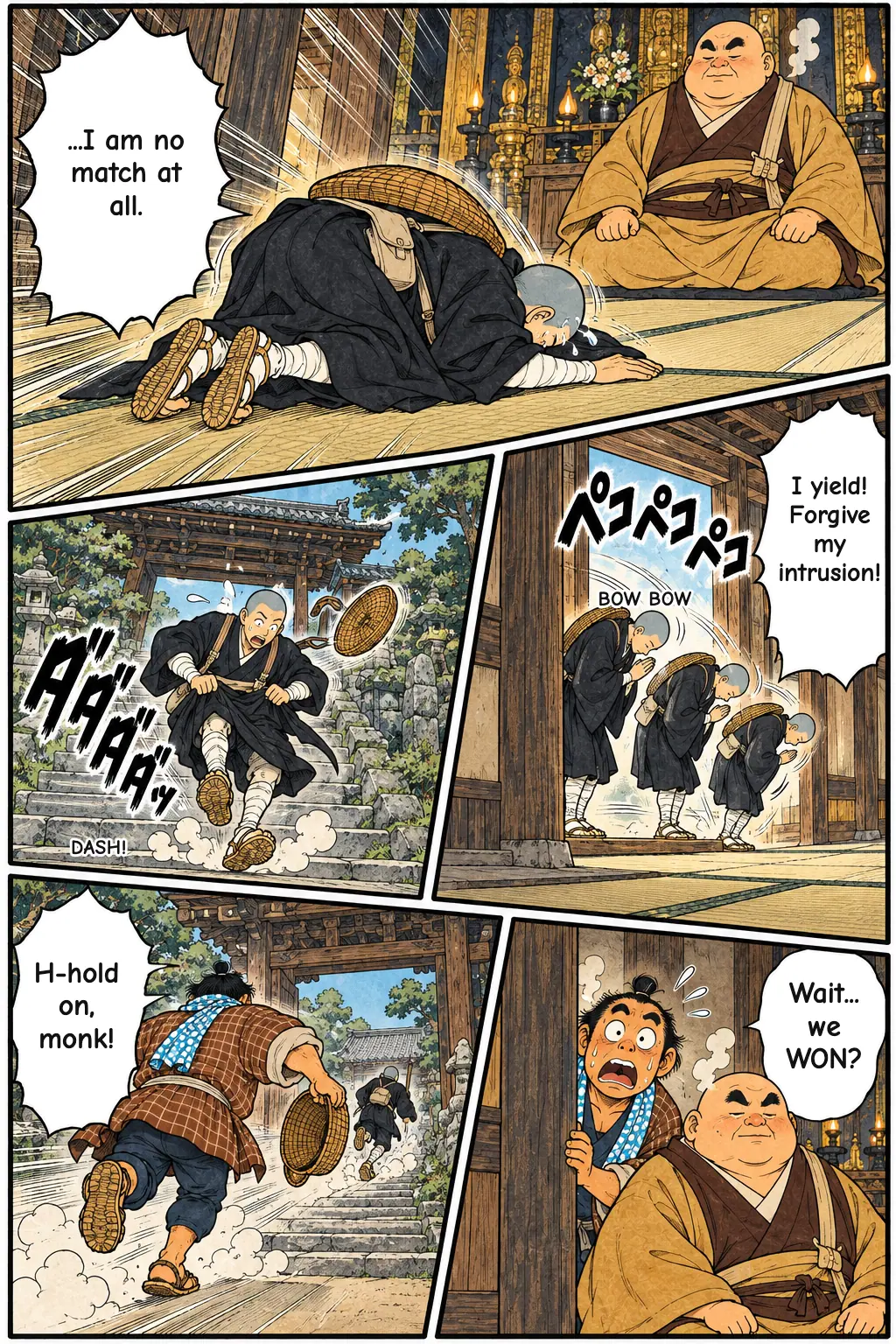
Then trouble arrives. A traveling monk on a training pilgrimage from a great temple in Echizen Province asks for a mondo, a formal religious debate. The rule is harsh: lose, and you must give up the temple. Hachi turns pale and gets ready to run. Rokubei steps in. He'll sit in the priest's seat himself, he says, and just say nothing, whatever he's asked.
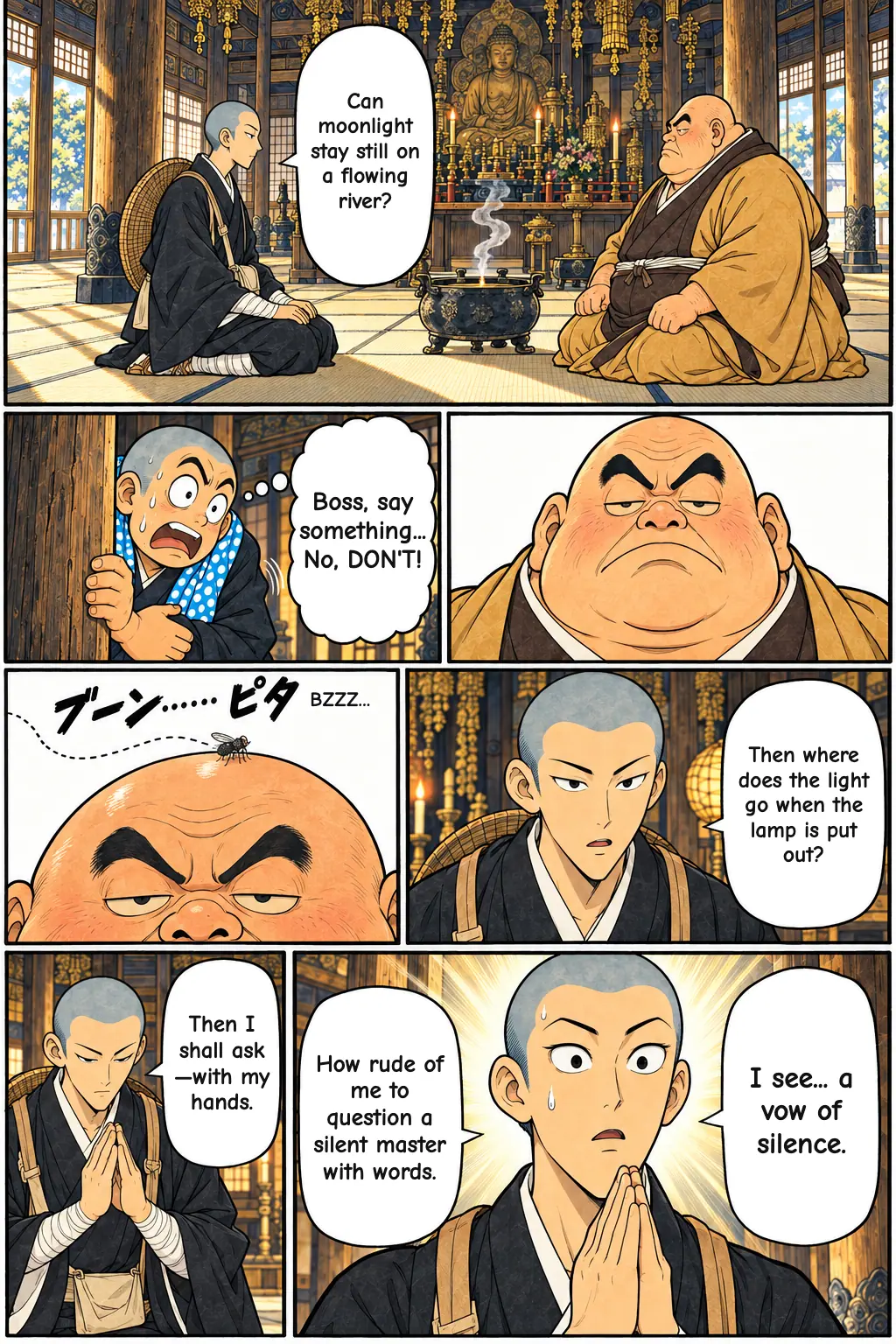
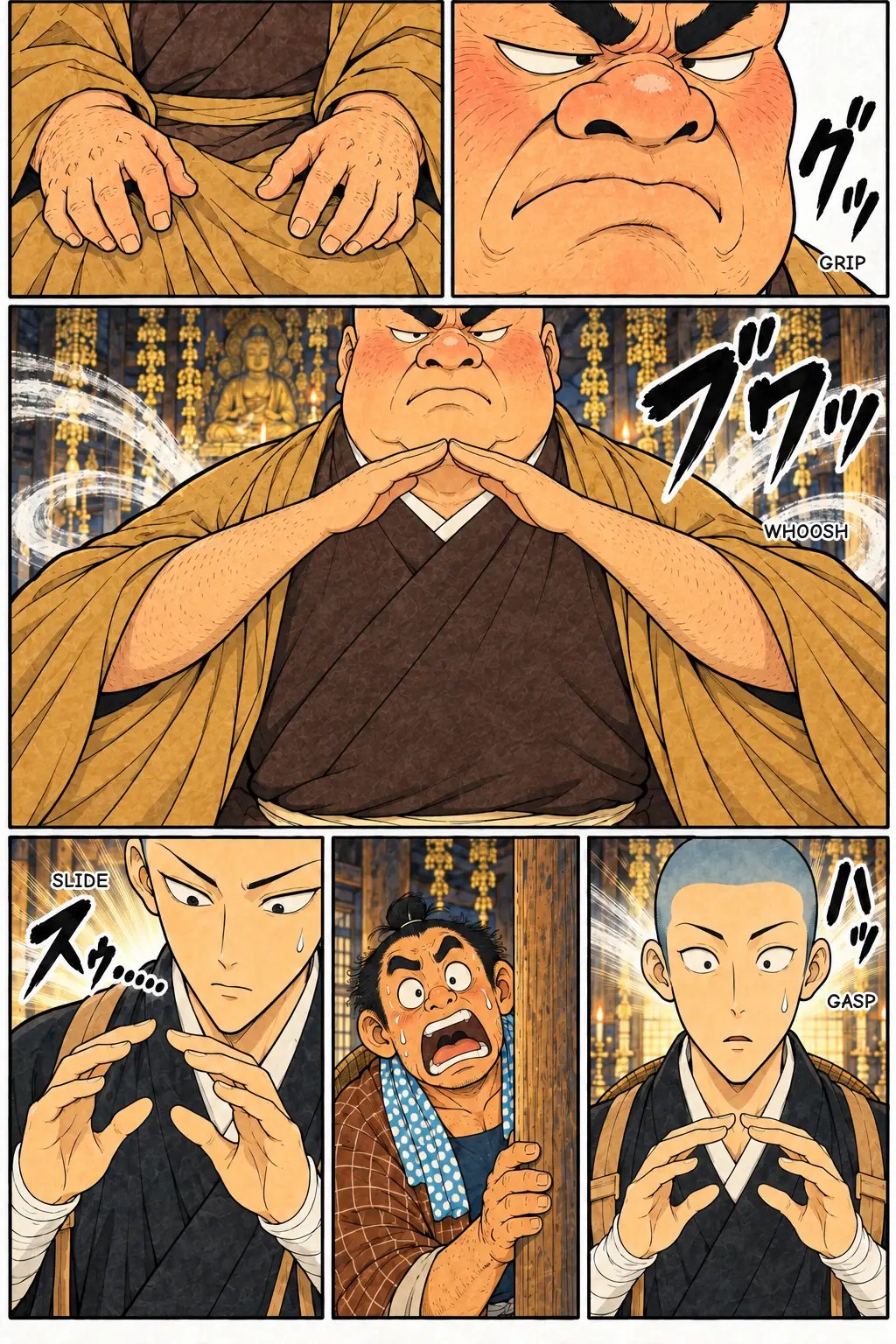
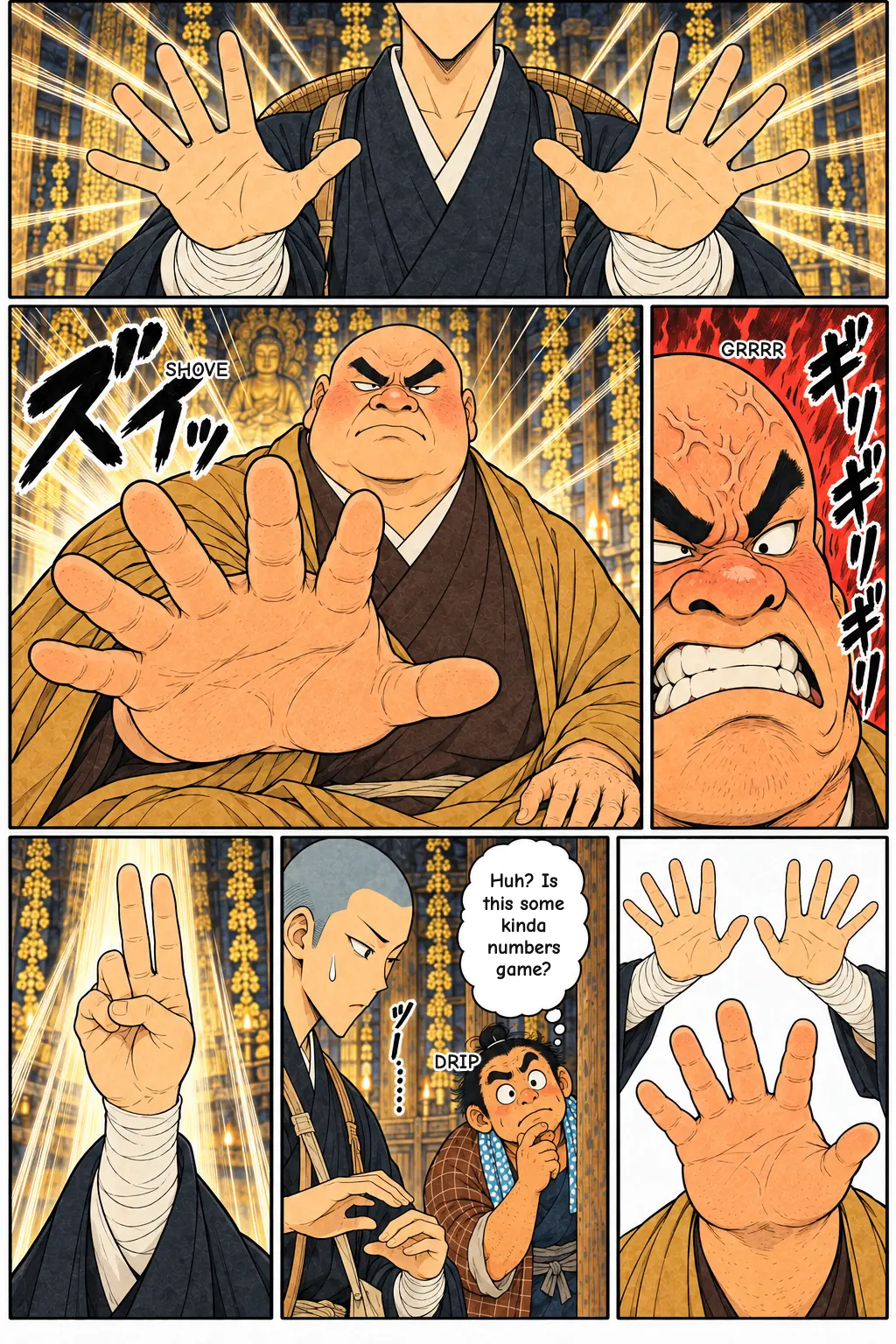
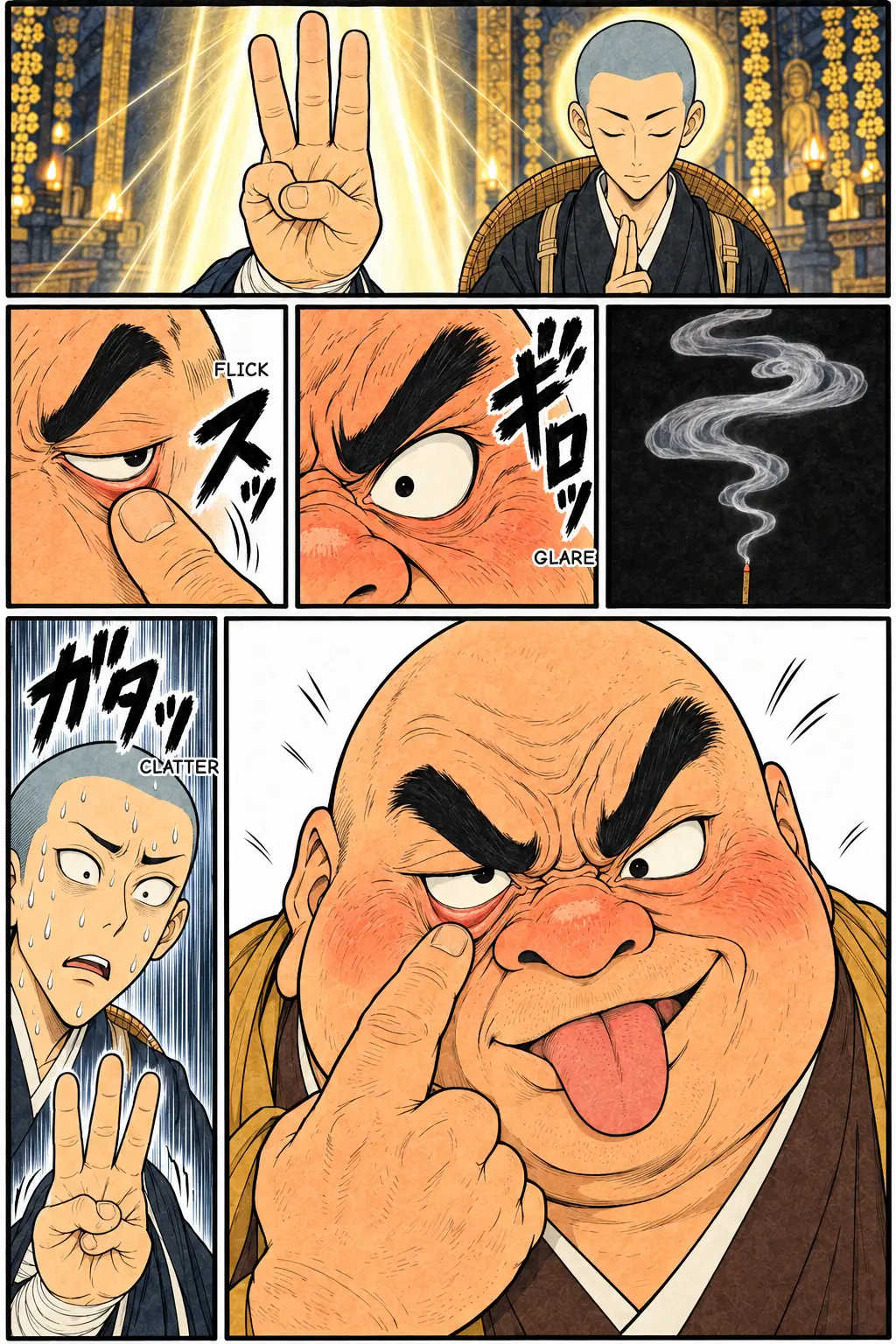
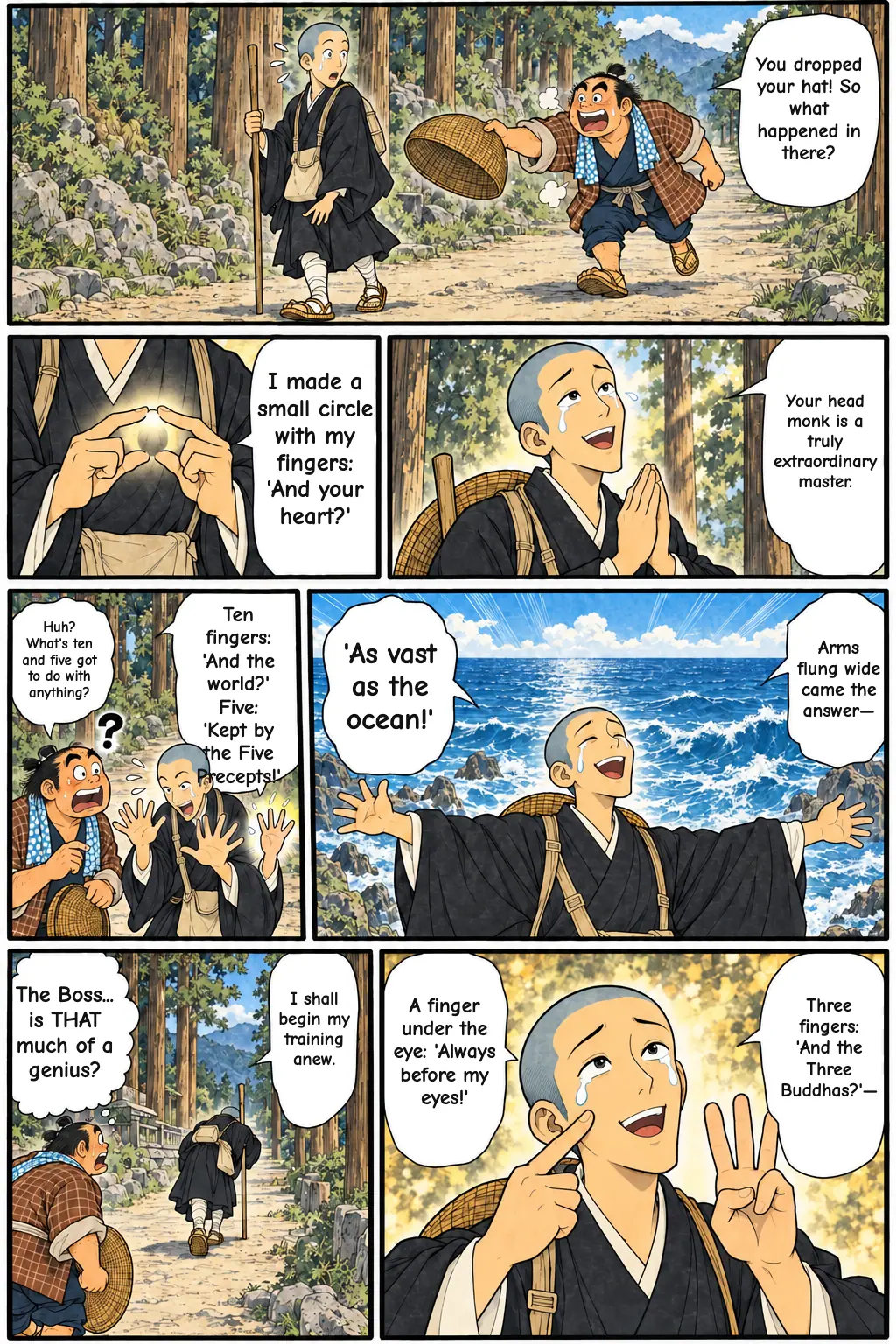
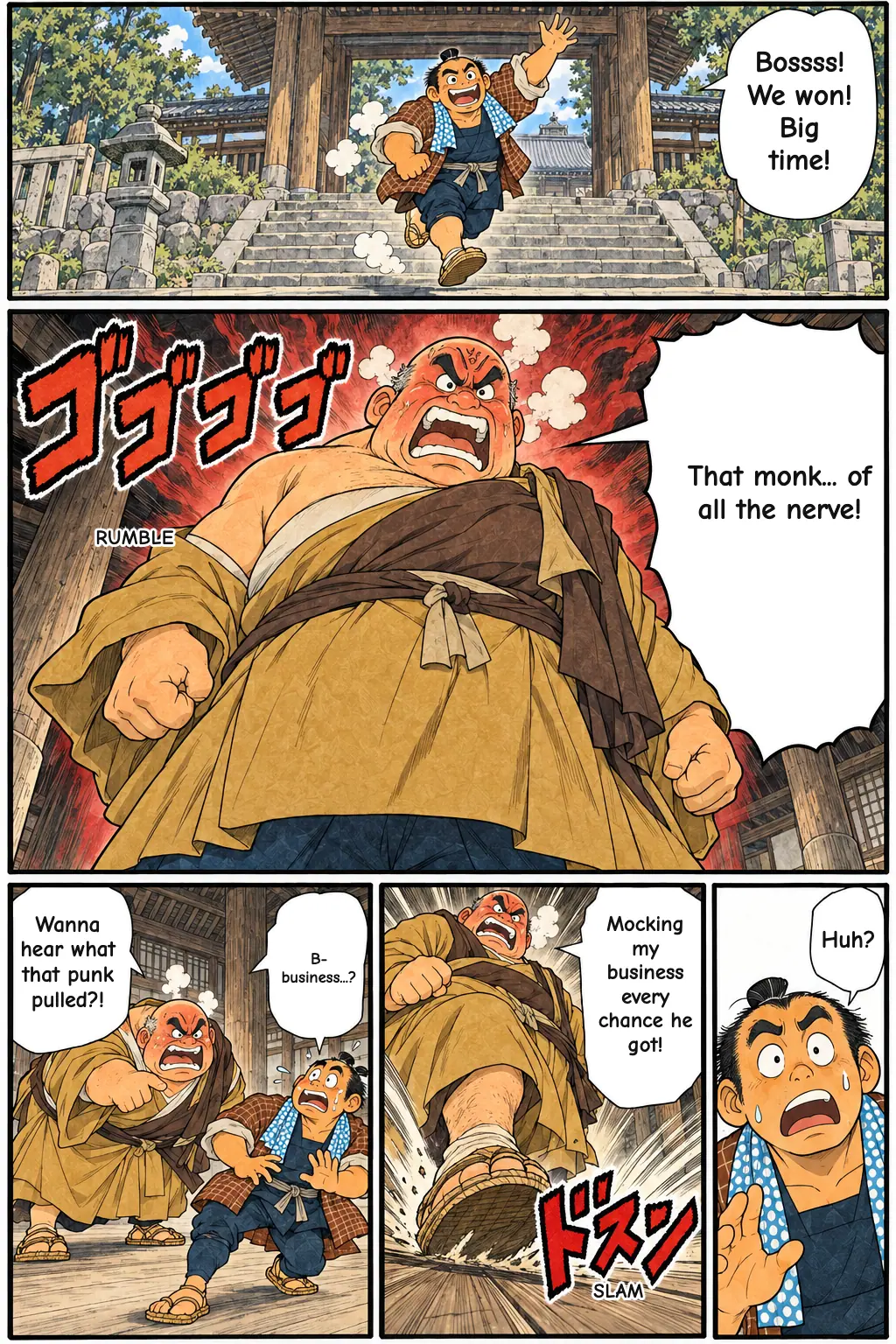
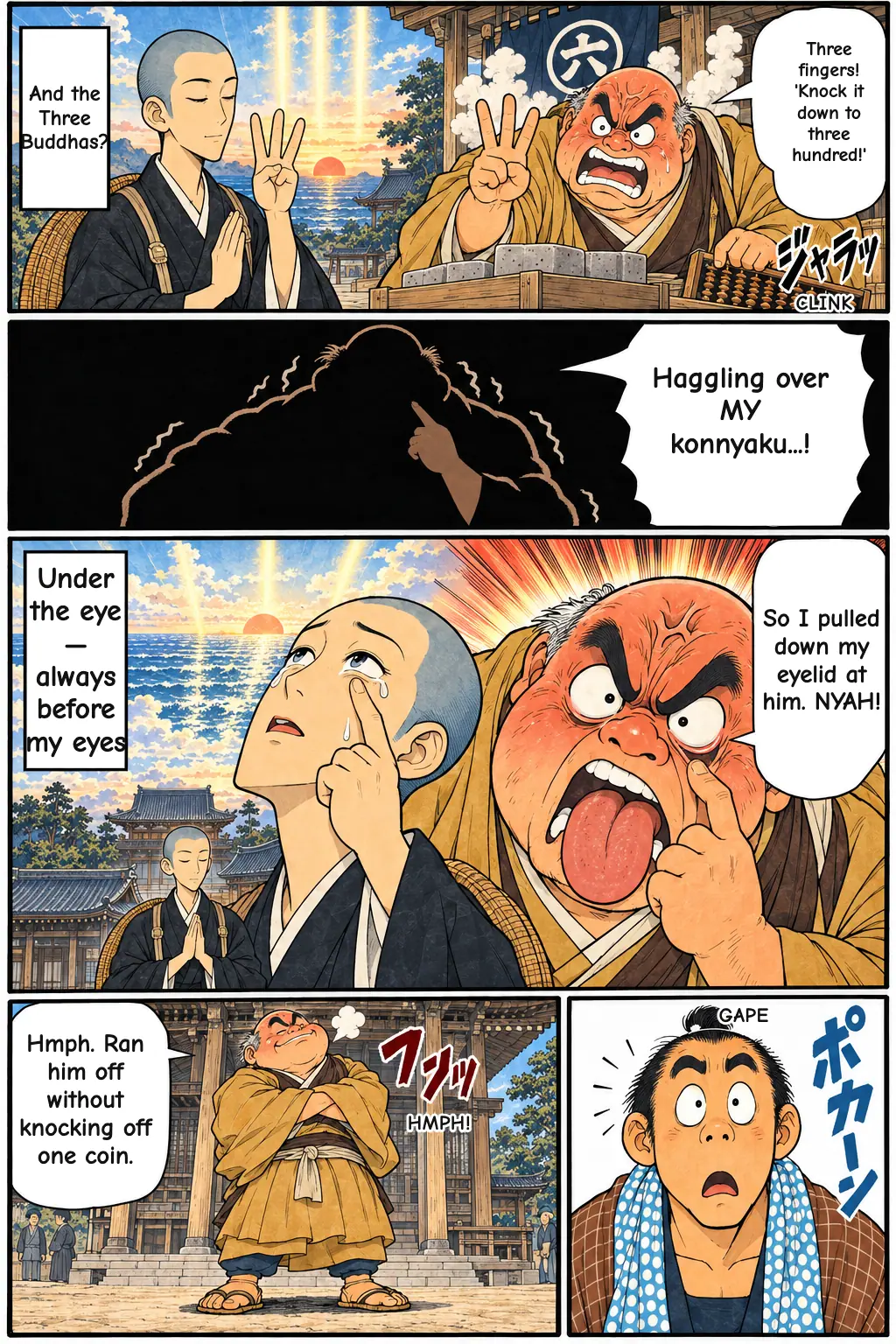
The monk starts with lofty spoken questions. Rokubei stays silent. The monk decides his opponent must be keeping a vow of silence, so he switches to gestures. He makes a small circle with his fingers, and Rokubei spreads his arms into a huge circle. The monk holds up ten fingers, and Rokubei shows five. The monk holds up three, and Rokubei pulls down the skin under one eye. The monk bows to the floor, cries that he is no match, and flees. Hachi (or, in some versions, Gonsuke) chases after him to ask why. The monk explains that every answer was profound. But back at the temple, Rokubei is red with rage. The full reveal comes in the punchline section below.
What Is Rakugo?
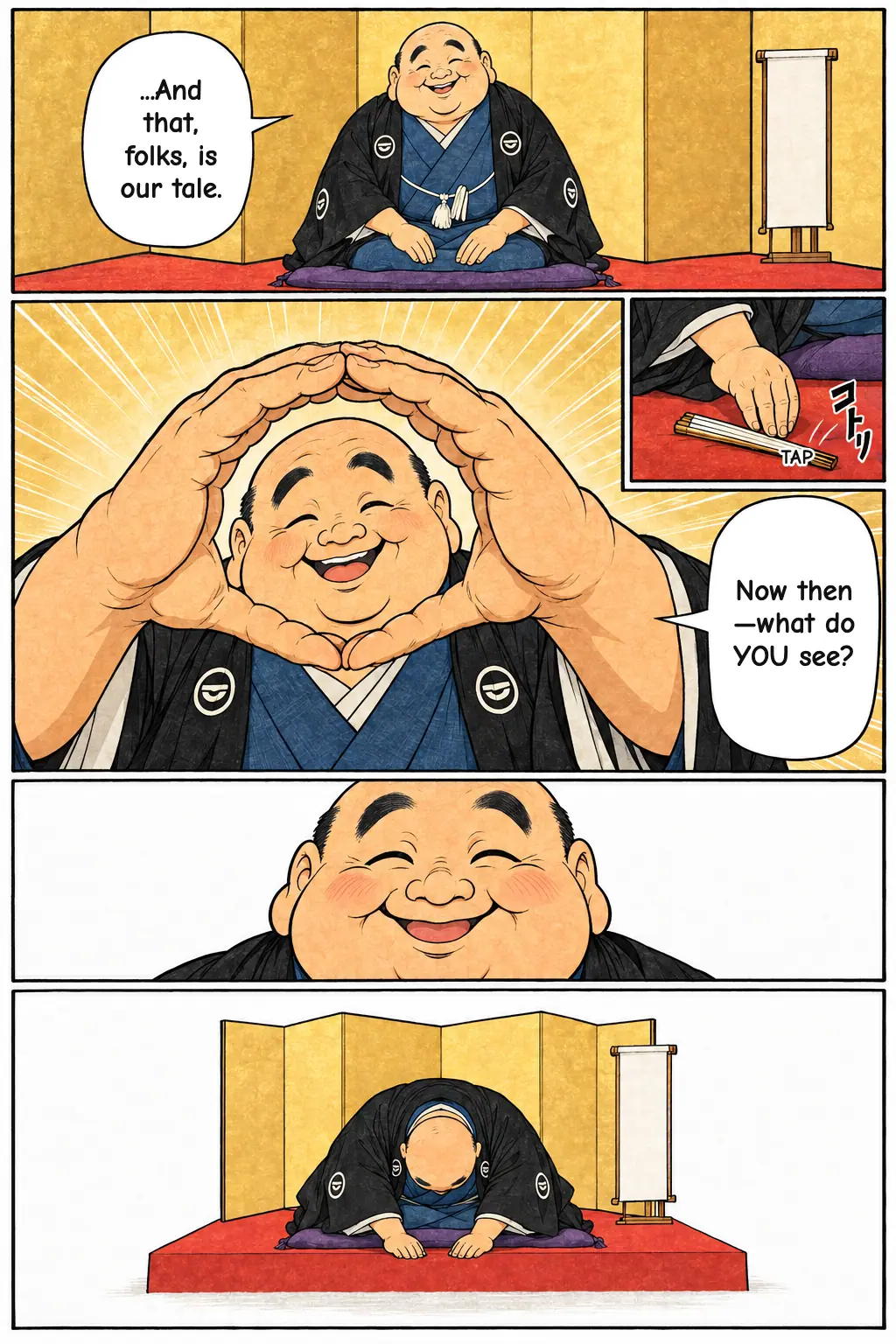
Rakugo is a Japanese storytelling art. A single performer kneels on a cushion on stage and plays every character in the story, with only a folding fan and a hand towel as props. A turn of the head means a new character is speaking, and the fan can become a pipe, chopsticks or a writing brush. Rakugo has been performed for a few hundred years in yose, small variety theaters, and many stories end on a sharp final line called the ochi or sage. In our manga series, every episode opens and closes with the storyteller Shomontei Fukurai. Fukurai is a fictional narrator created for this series and is not based on any real performer.
Background: Zen Debates and Konnyaku
In Zen Buddhism, a mondo is a question-and-answer exchange that tests a practitioner's awakening, an insight that is said to be beyond full explanation in words. Answers can be paradoxes, silence or a physical action. That is why the monk in this story finds deep meaning in a man who won't talk and only makes gestures. Keeping silent as a religious practice was a familiar idea, so a priest who refuses to speak doesn't seem strange to him at all.
Konnyaku is a gray, jiggly, nearly flavorless food made from the starchy root of the konjac plant, a kind of yam. It is sold in blocks and simmered in everyday dishes. It was cheap, ordinary food, and a konnyaku maker was a plain small-town tradesman, about as far from a learned Zen master as you could get. The comedy runs on that gap.
The Punchline (Sage) Explained
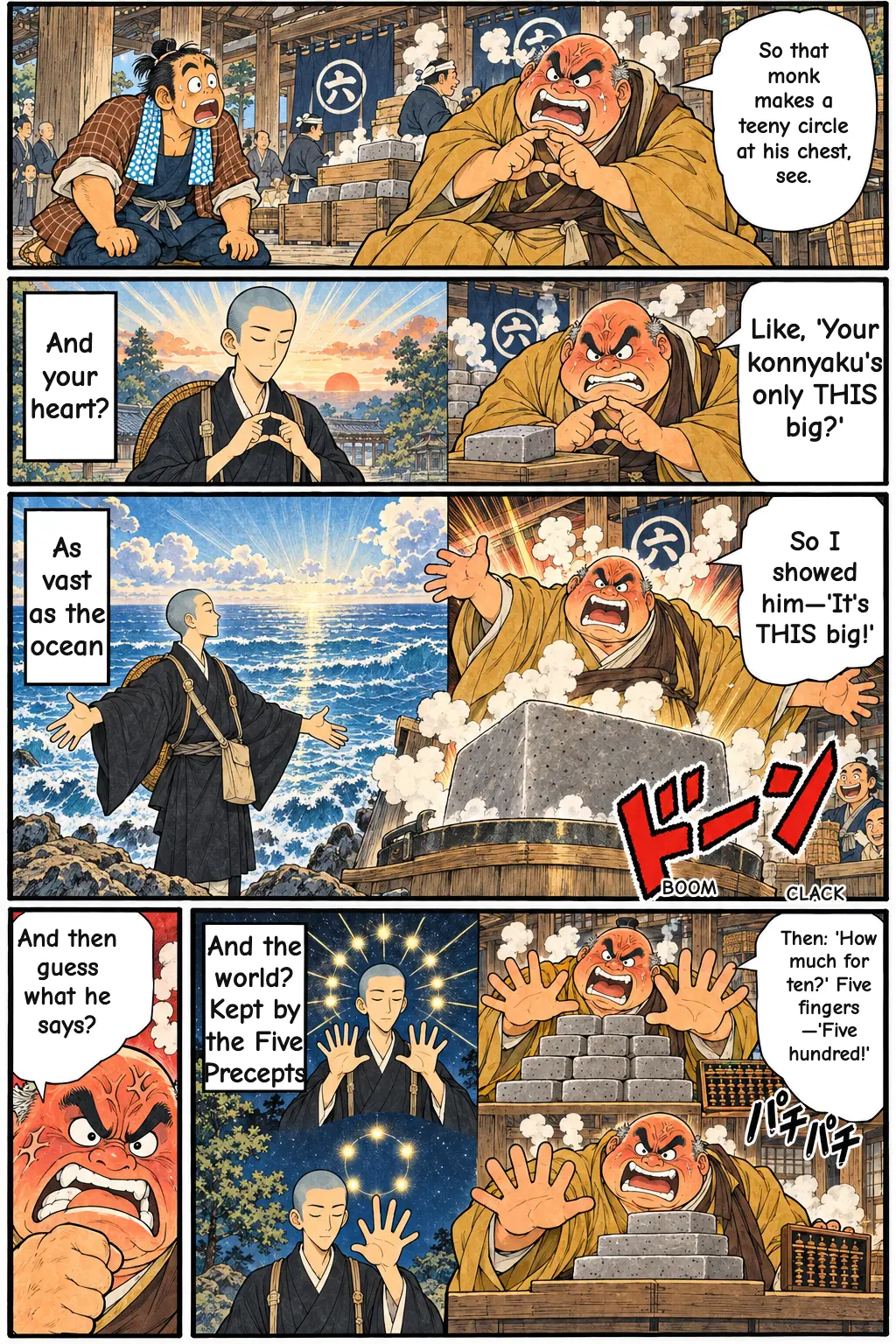
Here is how the monk read the duel. His small circle asked, "What is the great priest's heart like?" The huge circle answered, "As vast as the ocean." His ten fingers asked about the worlds of the ten directions, meaning the whole universe in Buddhist terms. The five fingers answered that they are upheld by the five precepts, the basic rules of Buddhist conduct. His three fingers asked about the Amida triad, the Buddha Amida and his two attendants. The finger under the eye answered, "Right below my eyes," meaning close at hand.
Rokubei saw something completely different: a man running down his konnyaku. The small circle meant "Your konnyaku is only this big," so he shot back, "It's THIS big!" Ten fingers meant "How much for ten blocks?", and five meant "Five hundred." Three fingers meant "Knock it down to three hundred," and Rokubei answered with akanbe, pulling down his lower eyelid. Akanbe is a childish Japanese taunt, a bit like sticking out your tongue. It means "No way!"
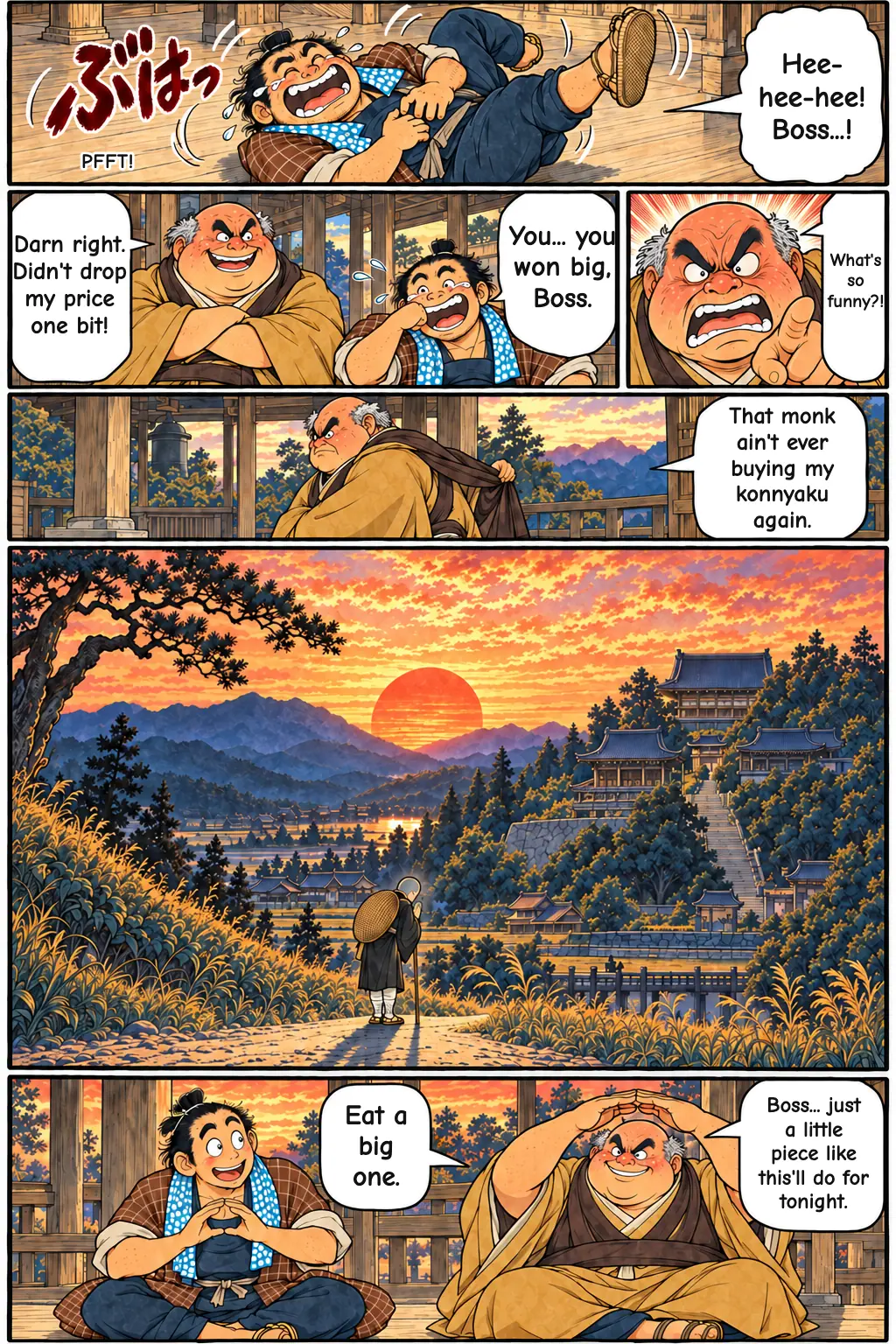
That's the whole joke. The same gestures carry two separate conversations, one about cosmic truth and one about haggling over cheap food. Each man is sure he understood the other perfectly, and the holy man is beaten by a shopkeeper who was just defending his prices.
What Our Manga Version Changed
Rakugo stories were passed down by word of mouth, so early printed transcripts are some of the best records of how they were told. We checked the plot against a transcript of a performance by Tachibanaya Enkyo IV (died 1912), published in 1908 in the Meiji-era collection Enkyo Rakugo-kai, which is held by the National Diet Library of Japan. The script for our manga is our own.
The original names a real, famous temple. In the manga, the temple, its sect, the monk's name and his home temple are all made up, and the village is left unnamed. Hachi's bluffing as a fake priest is our invention. So are the monk's spoken questions, which are written to sound like Zen but are not taken from real koans, and they don't make fun of Buddhism. The gesture duel plays out in wordless panels, and the reveal is a two-page spread that puts the monk's reading and Rokubei's reading side by side. The source never describes what the characters look like or how old they are, so we designed their faces and ages for the manga. Fukurai's opening and closing scenes are also new.
Where to Read Konnyaku Mondo as a Free Manga
Episode 5 of RAKUGO: Japan's Comic Tales, "He Won a Zen Duel With Hand Signs Alone — Konnyaku Mondo," is free to read on Manga Portal, and you don't need to sign up. Even if you already know the punchline, it's fun to watch the two faces during the silent duel: one solemn, one furious, both completely sure of themselves. If you enjoy it, the series has eleven more classic rakugo tales, all told as manga.
Characters in this episode
Rokubei the Konnyaku Maker
A tough, good-hearted country shopkeeper who stands in for the fake priest and wins a Zen debate while believing it's all about the size and price of his konnyaku.
Hachi (Hachigoro)
A broke drifter from Edo who is made an instant temple priest without knowing a single sutra, and who panics when a real monk challenges him to a debate.
The Traveling Monk
A serious, learned monk on a training pilgrimage who takes Rokubei's silence for deep enlightenment and bows out in defeat.
Gonsuke
A country temple servant who appears in some versions of the tale and is not needed for the plot.
Shomontei Fukurai
The fictional rakugo storyteller who introduces and closes each episode of the manga series.
FAQ
What is Konnyaku Mondo about?
It's a classic rakugo comic story. A konnyaku shopkeeper pretends to be a temple priest and is challenged to a Zen debate by a traveling monk. He never says a word, and he wins with gestures because the monk reads deep meaning into what are really answers about konnyaku prices.
What does the ending of Konnyaku Mondo mean?
The monk thinks his hand signs ask about the priest's heart, the universe and the Buddha Amida, and he takes the replies as wise answers. Rokubei thinks the monk is insulting his konnyaku and trying to haggle, so his "answers" mean "It's this big," "Five hundred" and a rude "No way!" The same gestures mean two different things to the two men, and that's the punchline.
What is konnyaku?
Konnyaku is a gray, jelly-like Japanese food made from the root of the konjac plant. It has almost no flavor, is sold in blocks, and has long been cheap everyday food, which is why it's funny to see it at the center of a solemn Zen debate.
What is a Zen mondo?
A mondo is a question-and-answer exchange in Zen Buddhism that tests a practitioner's awakening, which is said to be beyond explanation in words. Answers can be paradoxes, silence or gestures, so the monk in the story has a reason to treat Rokubei's silence as wisdom.
Who created the Konnyaku Mondo story?
Konnyaku Mondo is a traditional rakugo tale passed down orally by storytellers. One early record is a 1908 printed transcript of a performance by the Meiji-era storyteller Tachibanaya Enkyo IV.