Episode 4Robbing a House Where Nothing Is RealDakudaku
Episode 4 of RAKUGO: Japan's Comic Tales. The Penniless Tenant owns no furniture at all, so he has a whole wall painted with fine things and lives as if they were real. Then a nearsighted burglar breaks in, finds it's all paint, and starts acting out a pretend robbery. Soon both men are fighting a duel of pure make-believe.
Dakudaku Rakugo Story Explained: Summary, Characters and the Punchline
The Story of Dakudaku: A Summary
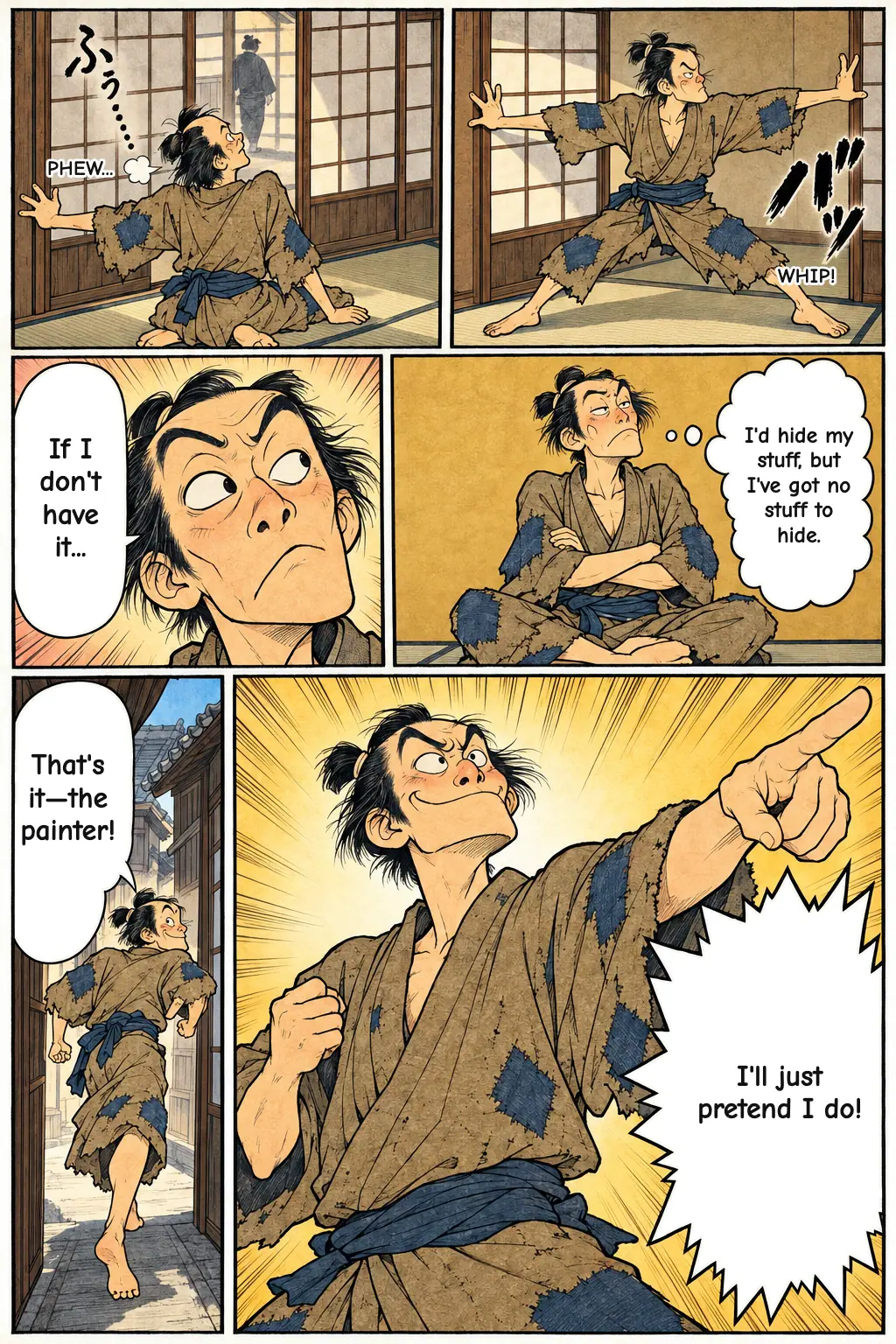
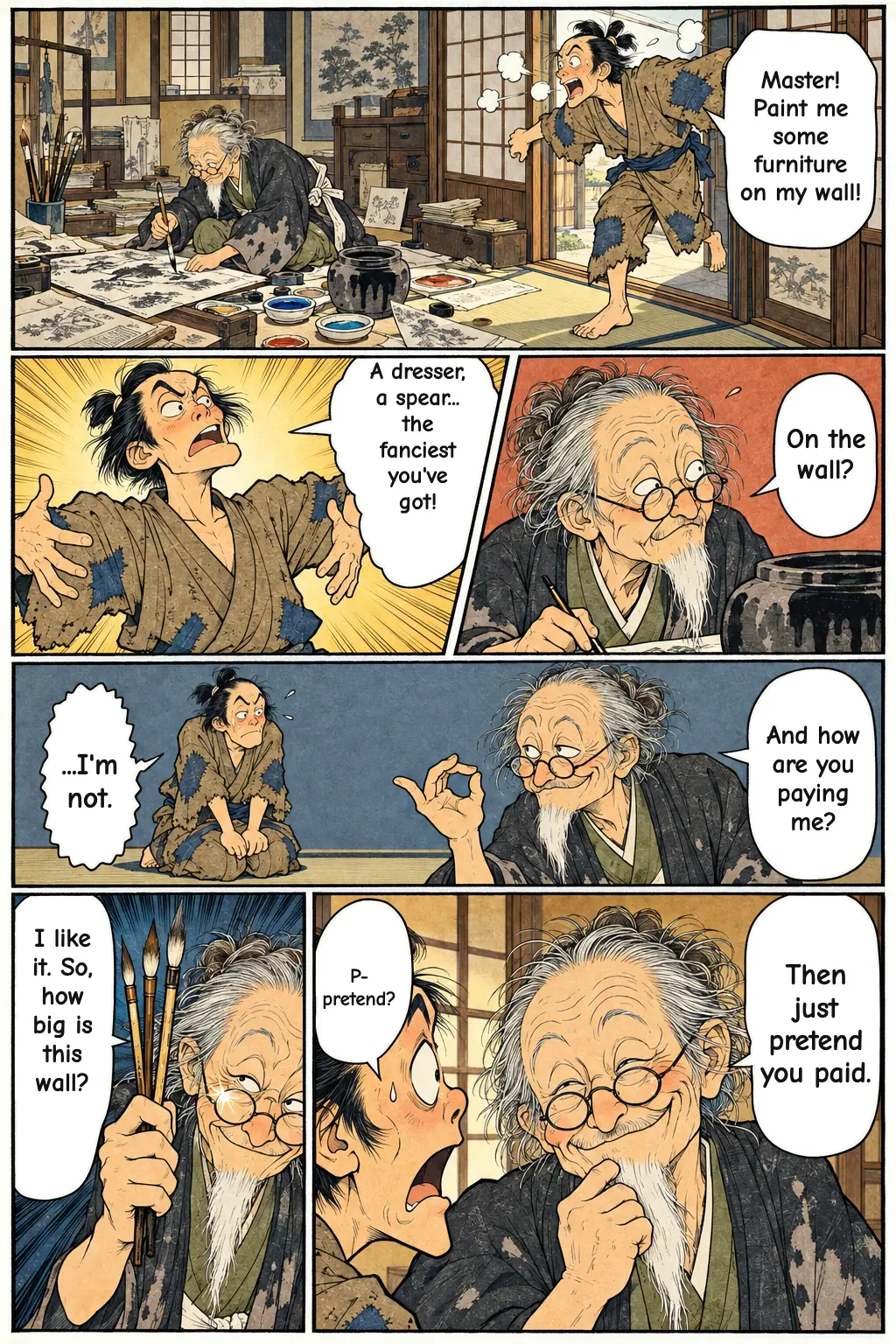
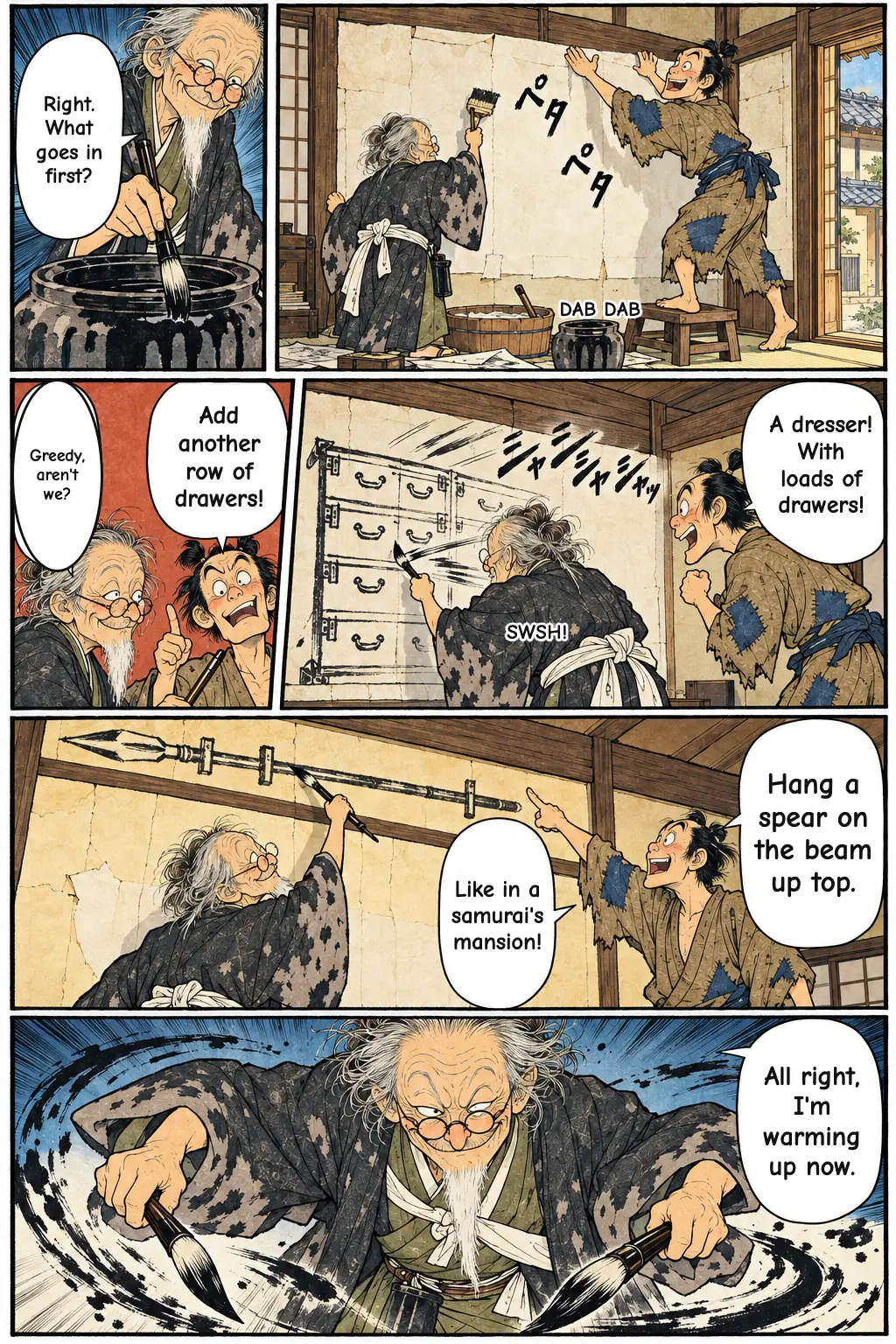
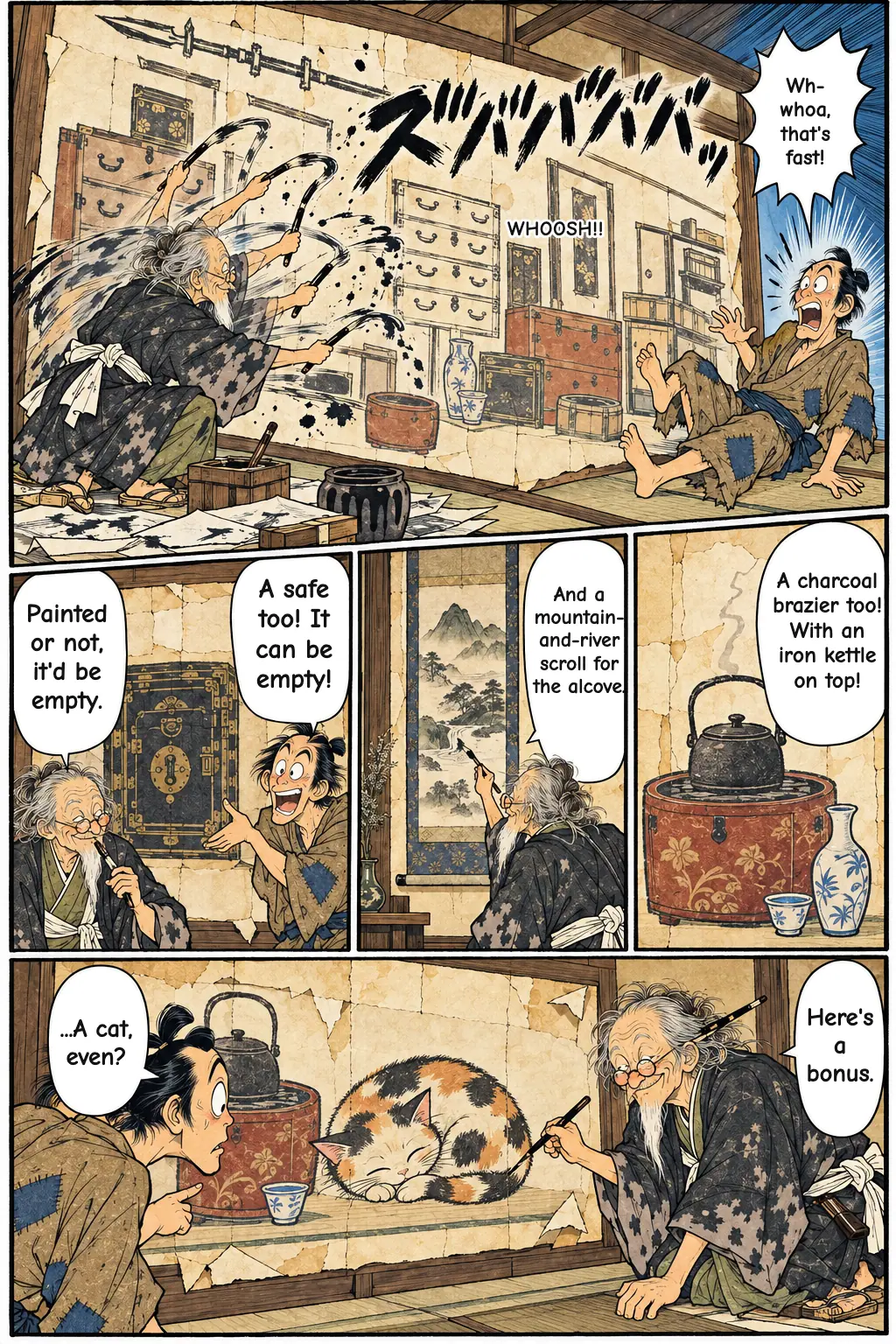
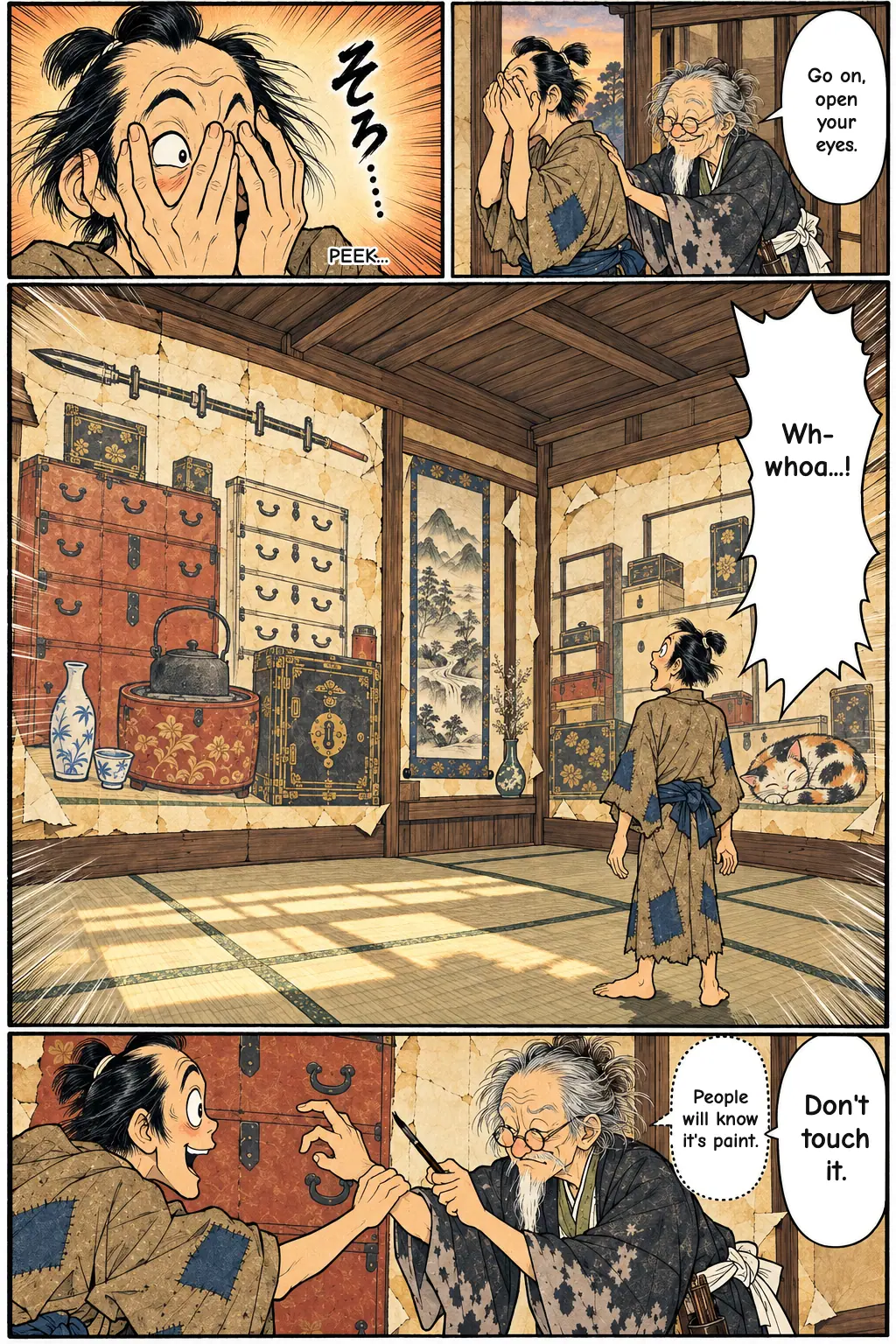
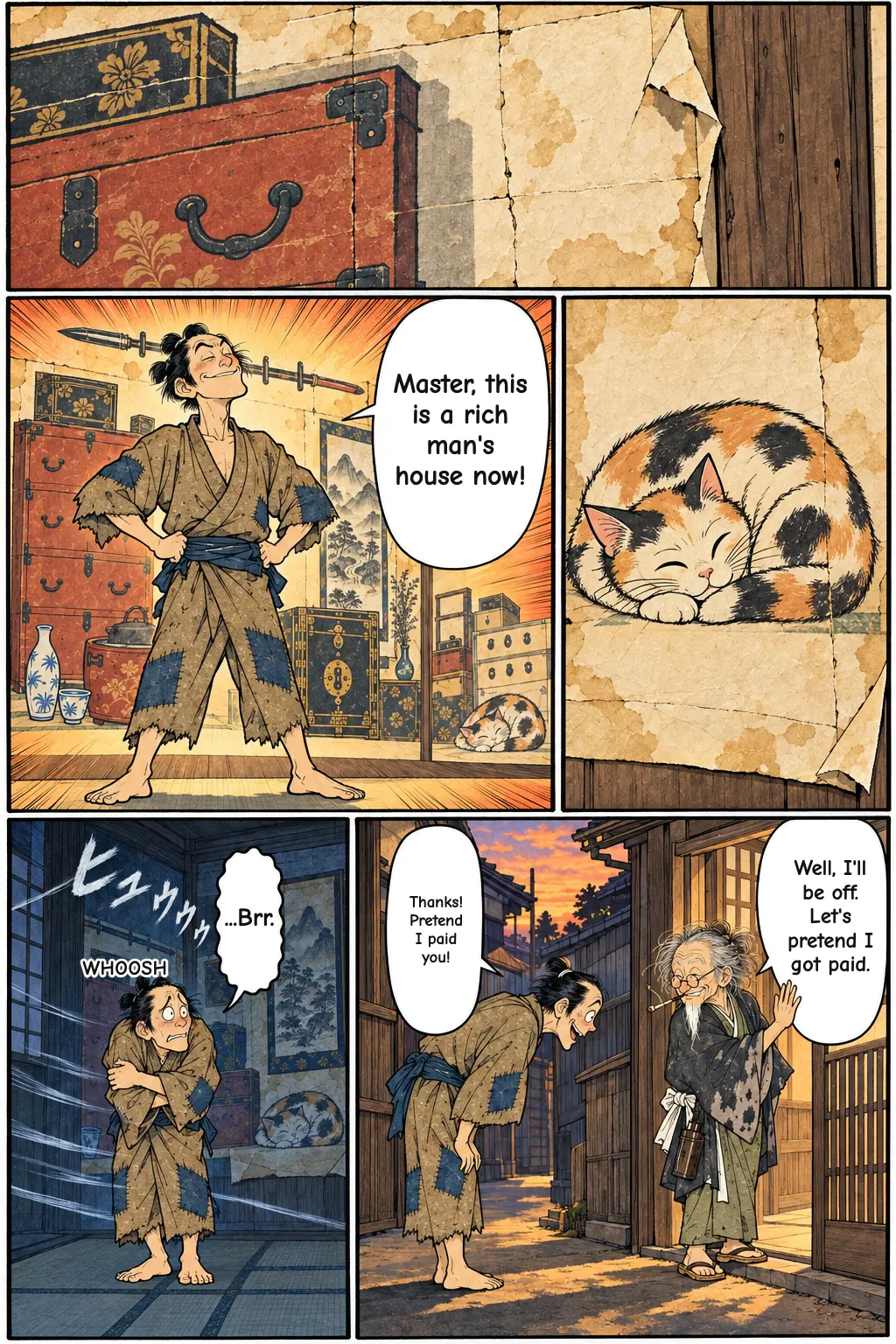
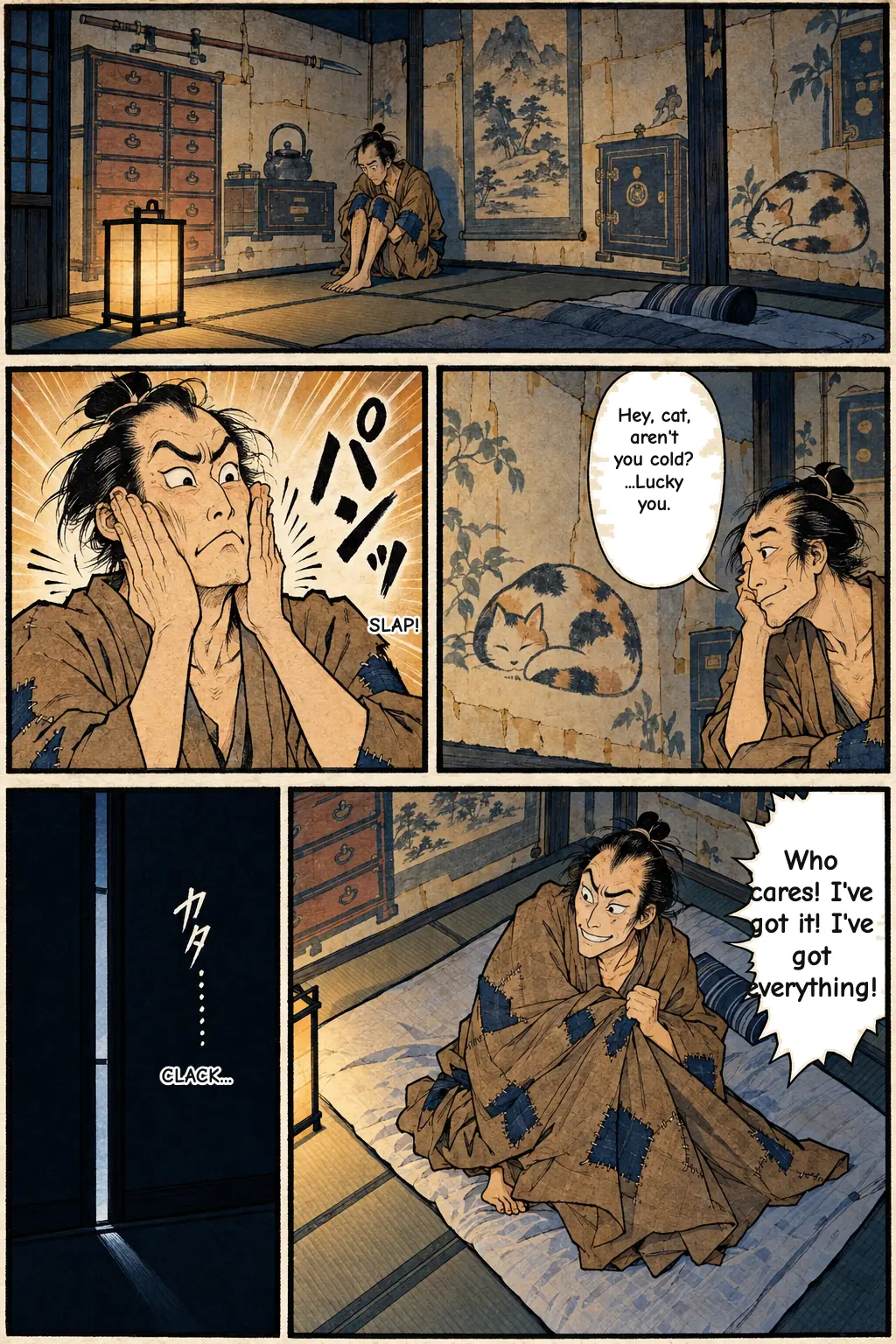
Dakudaku is a classic comic tale from rakugo, Japan's traditional art of storytelling. It starts with a man so poor that he owns no furniture at all. When he moves into a room in a nagaya (a row-house tenement where working people lived), he doesn't want the place to look empty. So he covers a wall with paper and asks a painter he knows to fill it with fine household goods: a chest of drawers, and a spear resting on the nageshi, the wooden rail that runs high along the wall. The paintings look real, and the man decides to live 'as if' he owns all of it.
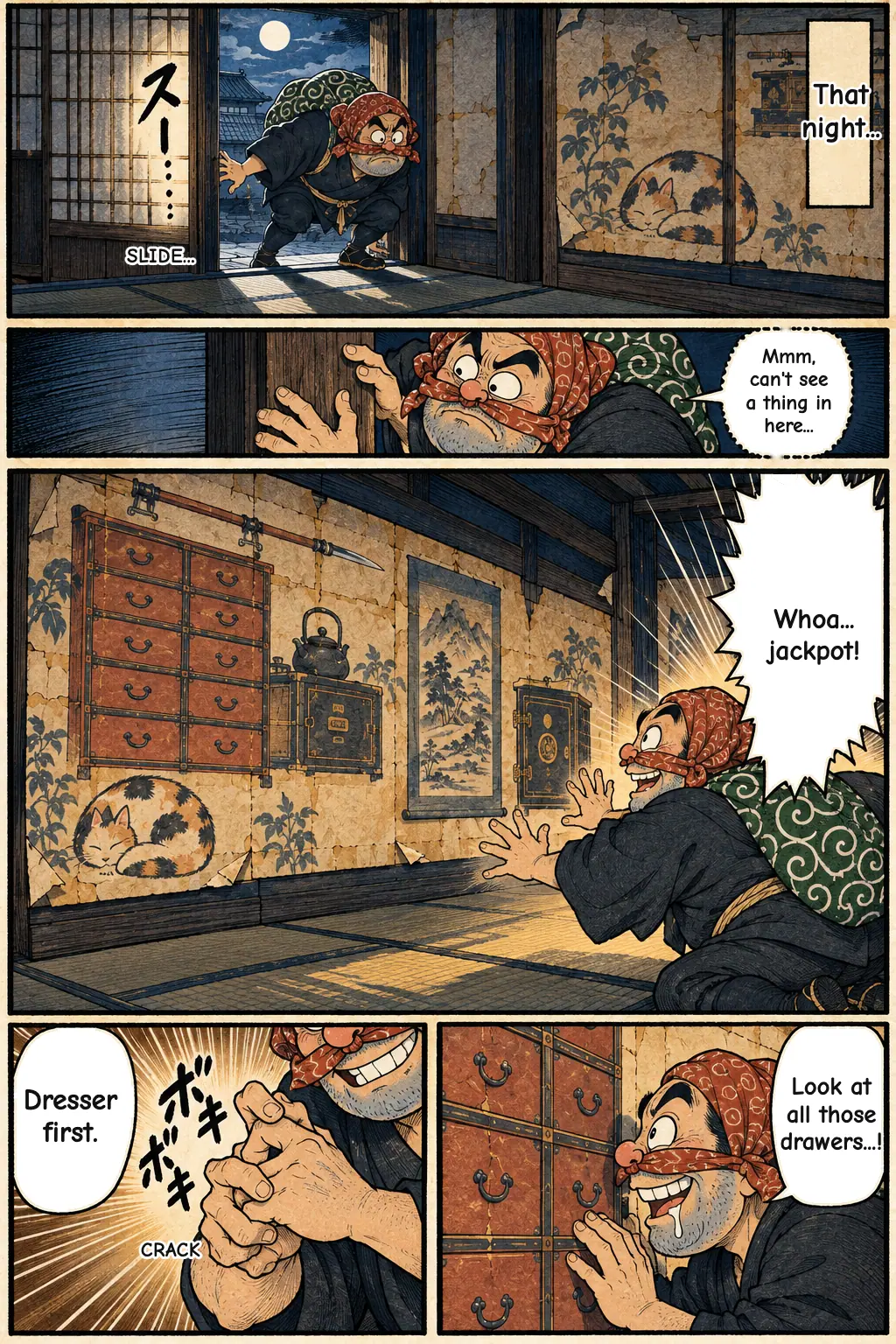
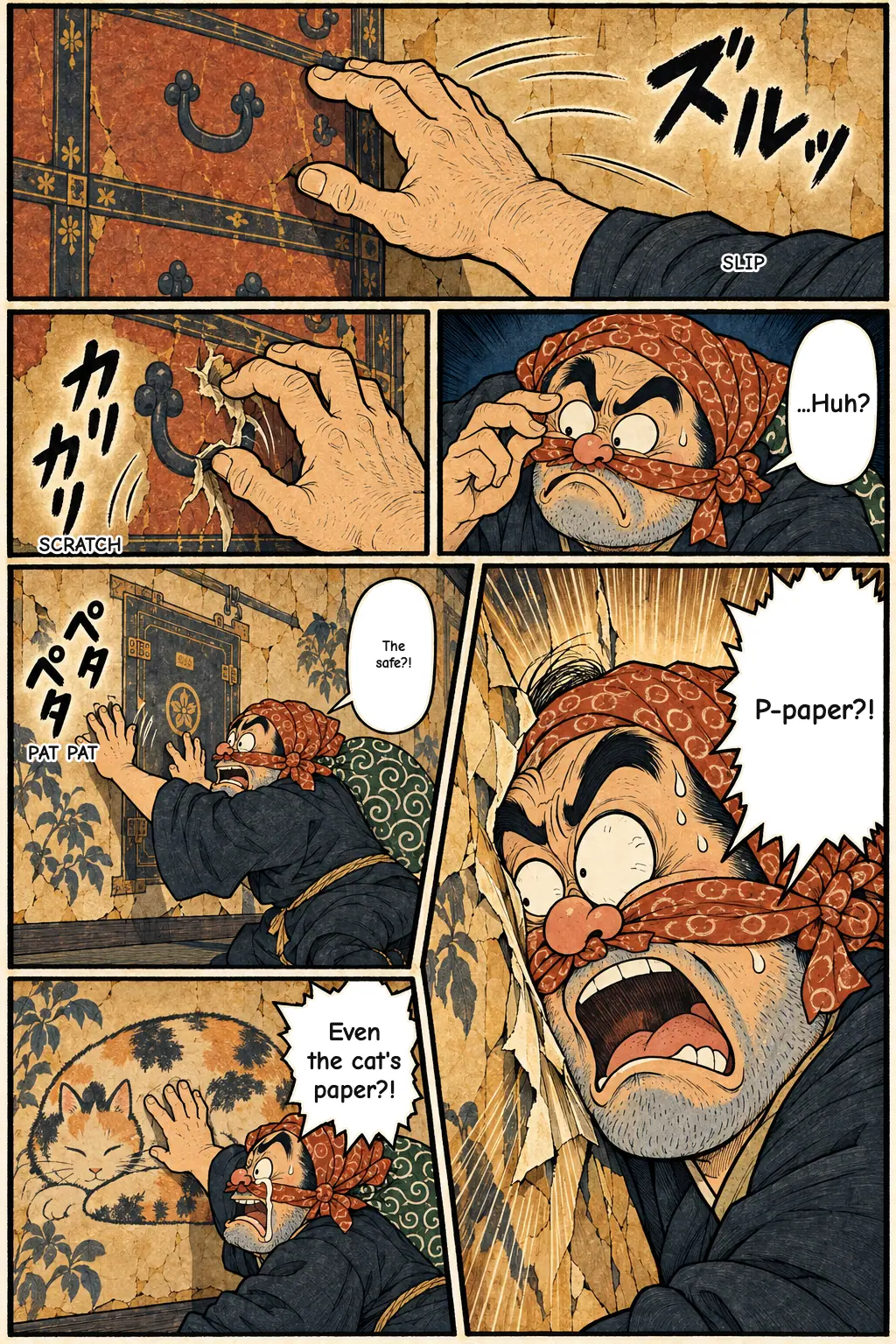
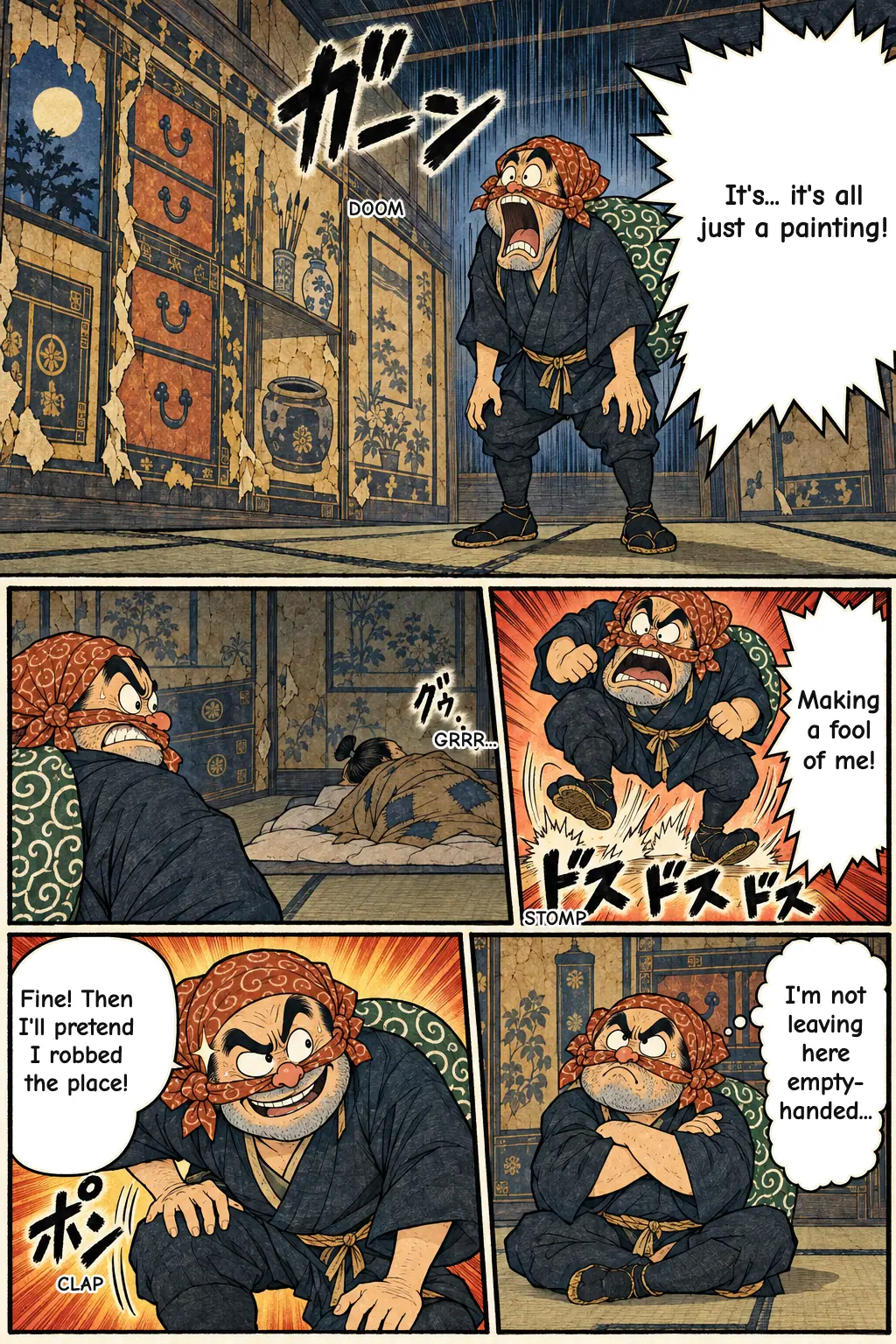
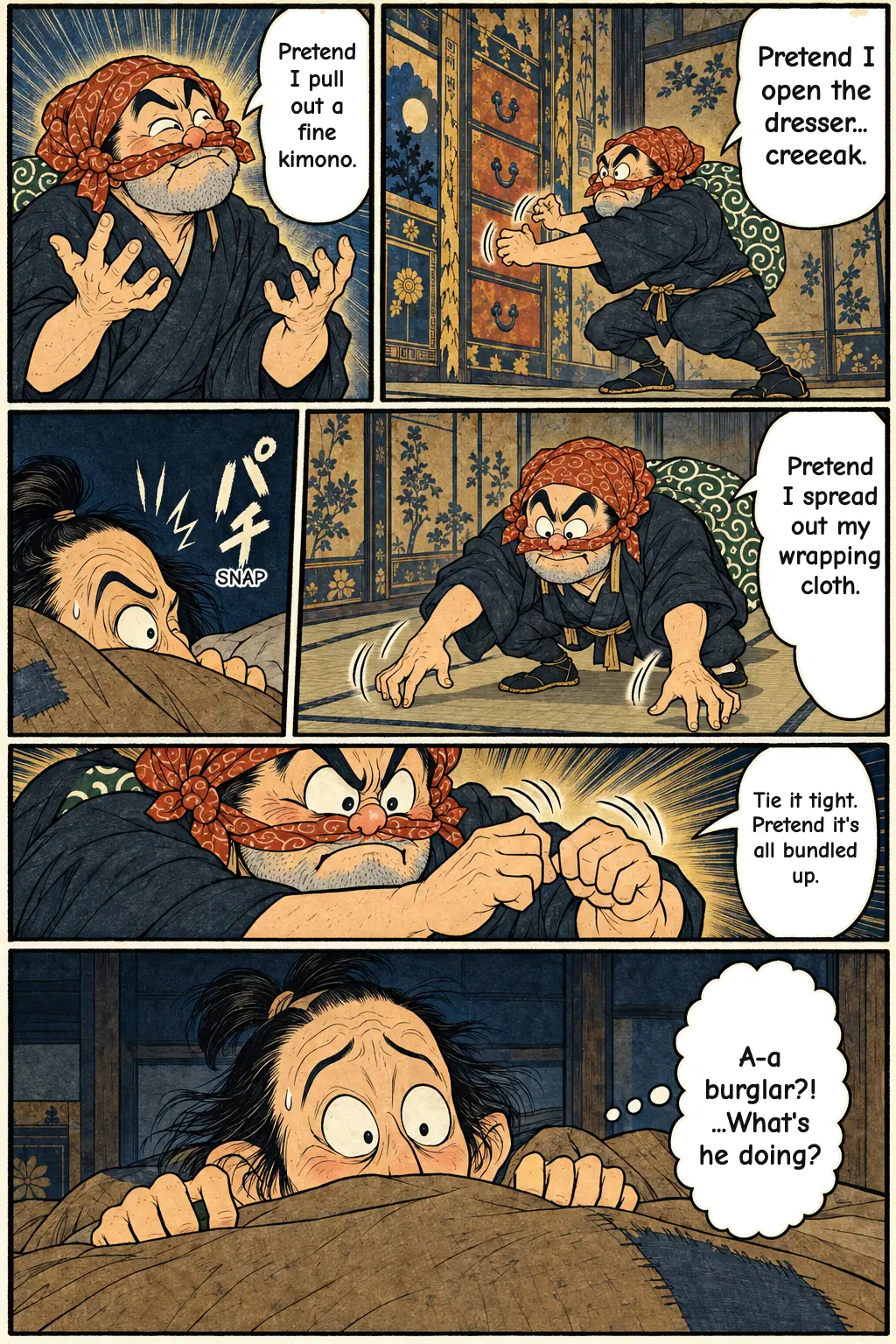
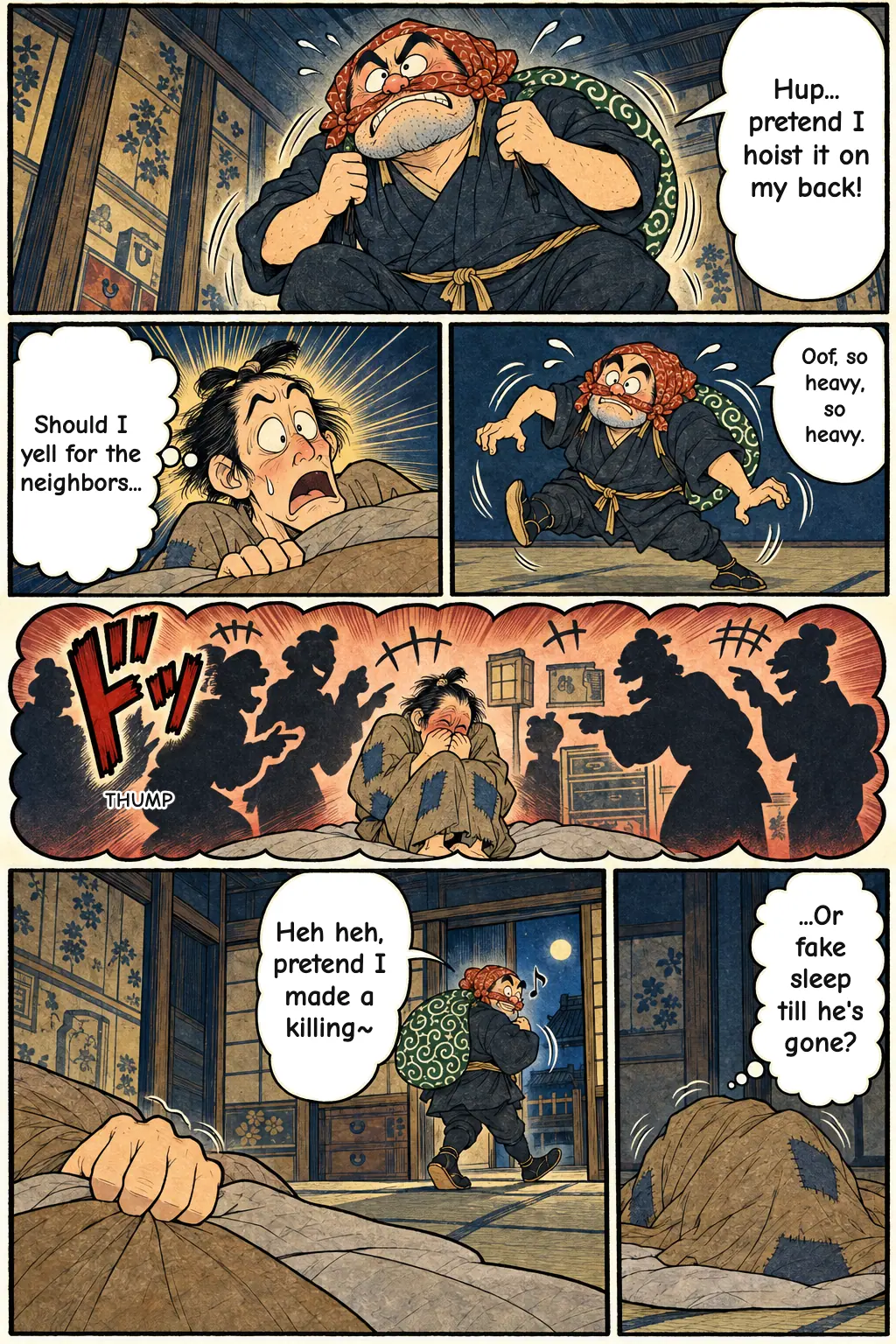
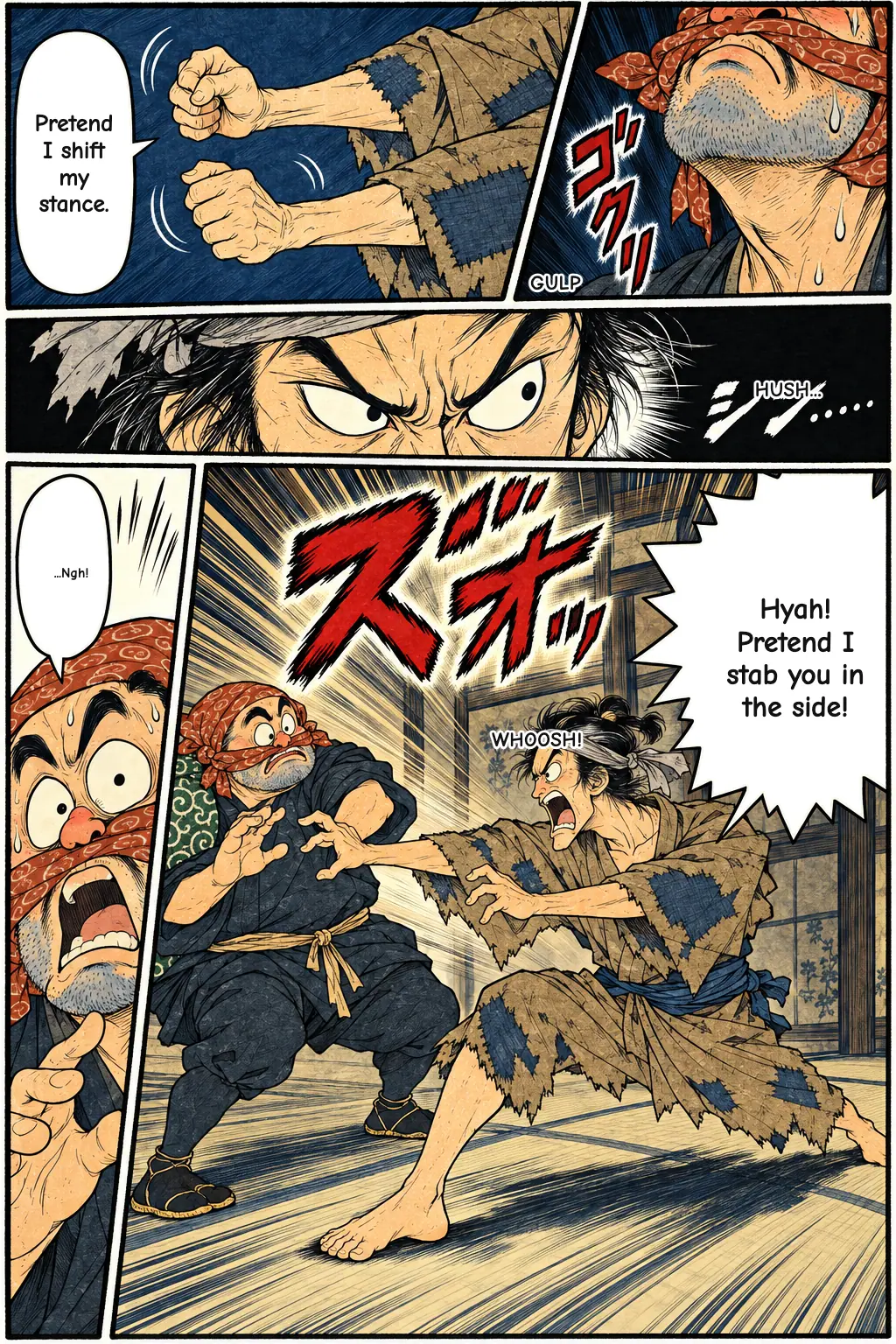
One night a burglar sneaks in. He is delighted to see such a well-furnished room, but when he reaches for the chest, his hand meets paper. Everything is painted. Instead of leaving in a huff, the burglar decides that if the furniture is pretend, the robbery can be pretend too. He starts acting it out: opening the drawers 'as if', wrapping up the goods 'as if', and getting ready to carry them off 'as if'.
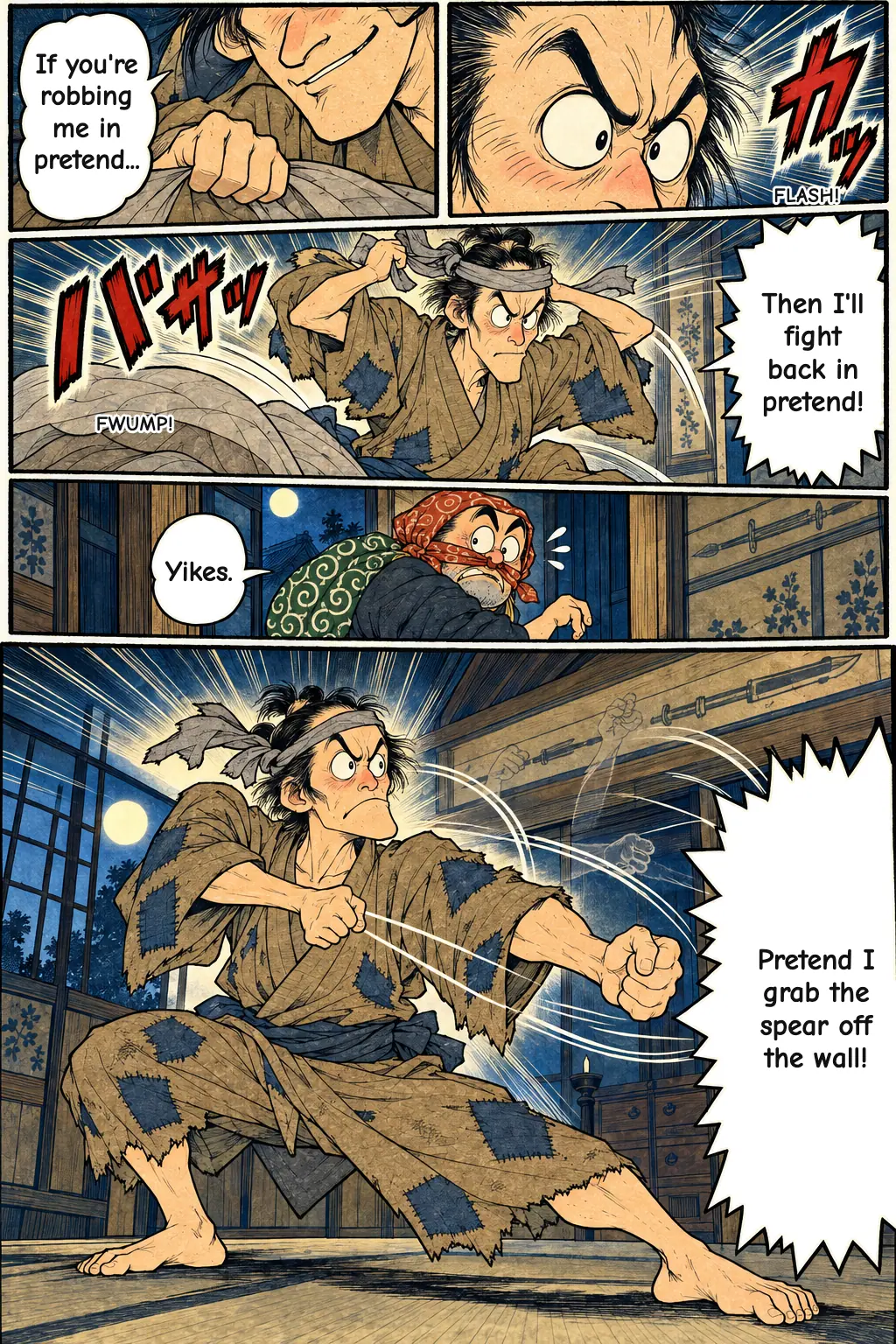
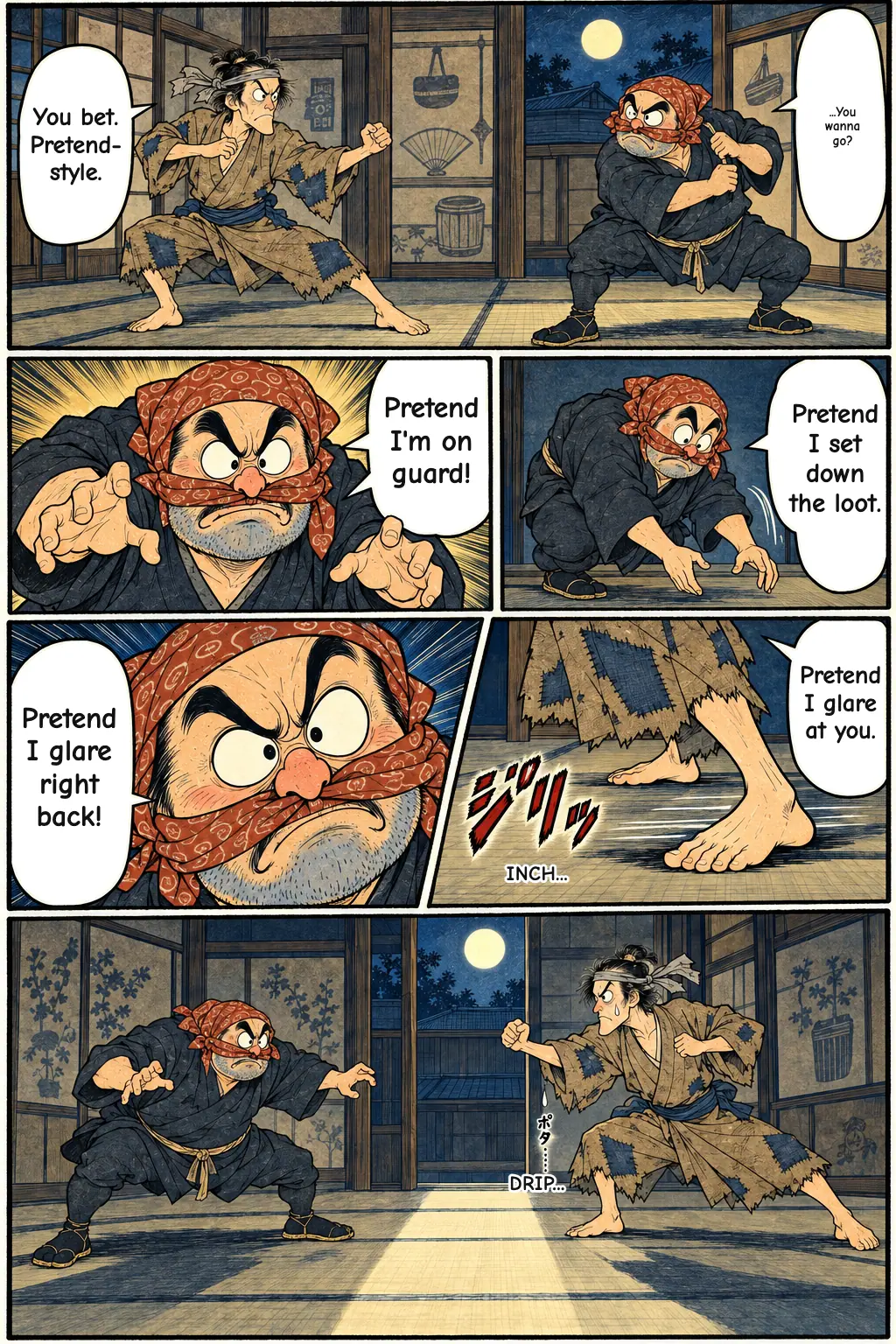
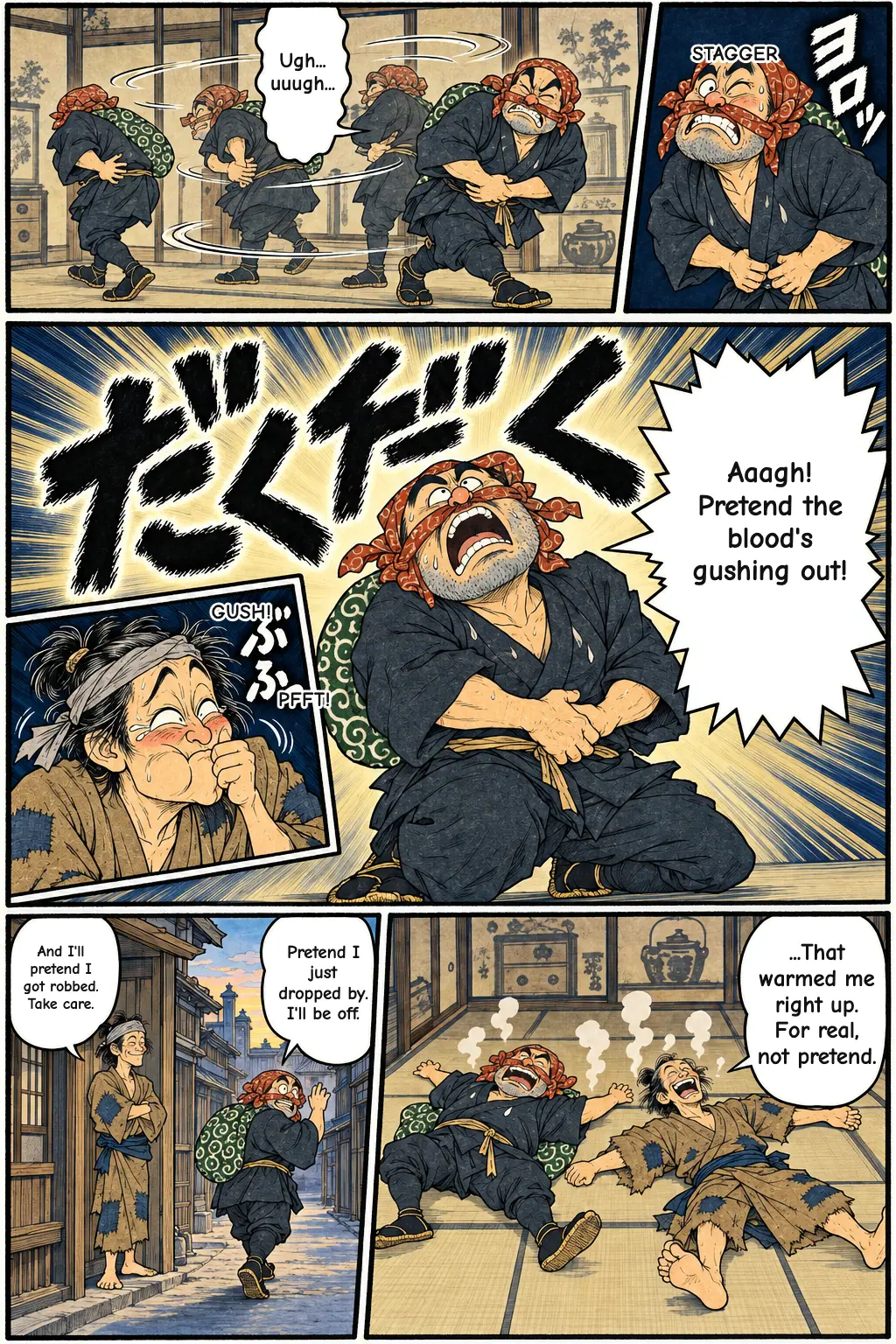
The tenant wakes up and watches. He doesn't shout for help. He joins the game. He takes down the painted spear 'as if' it were real and thrusts it at the burglar 'as if' he were stabbing him. The burglar plays along one last time, and his reply is the punchline that gives the story its name. Nobody steals anything, and nobody gets hurt.
What Is Rakugo?
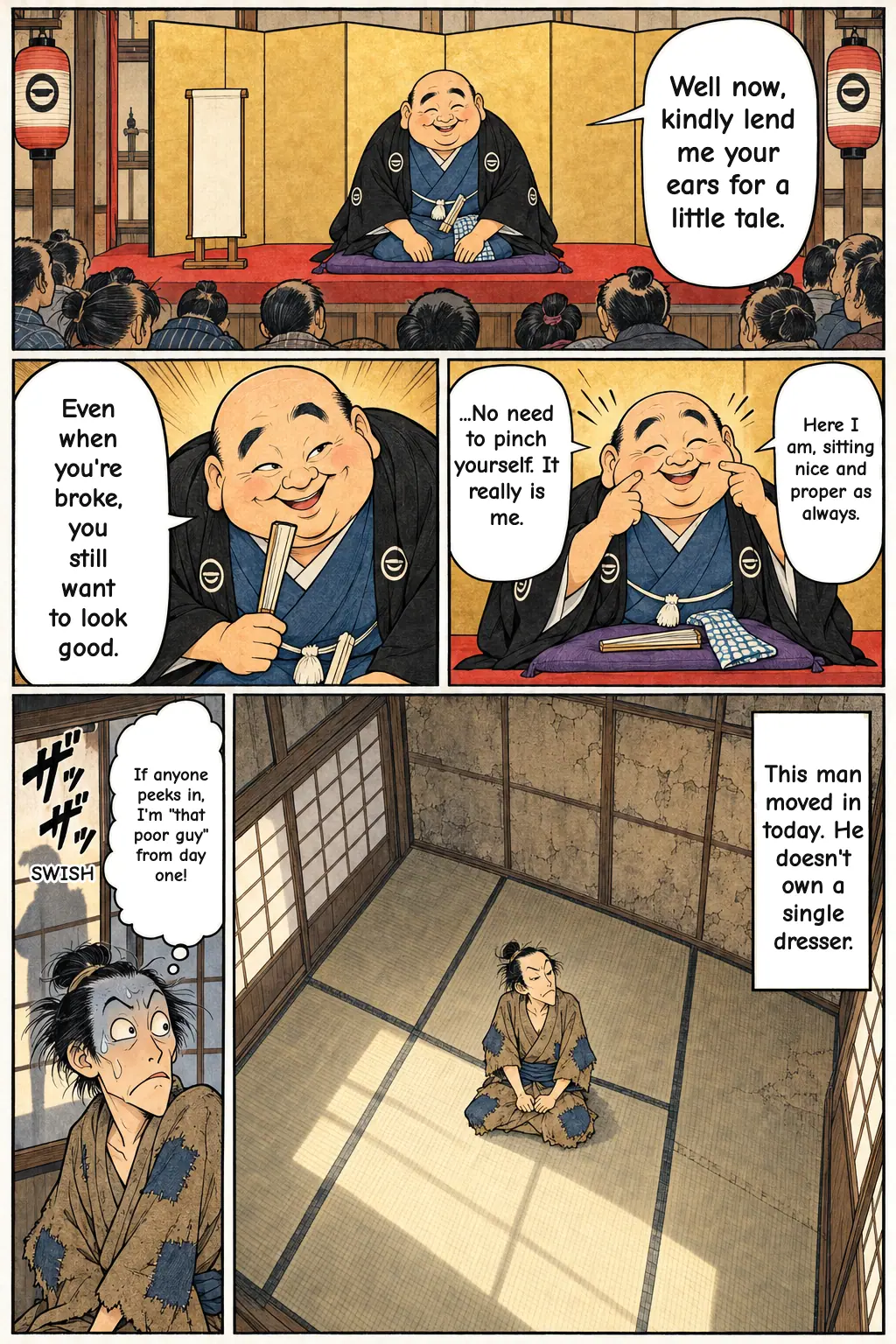
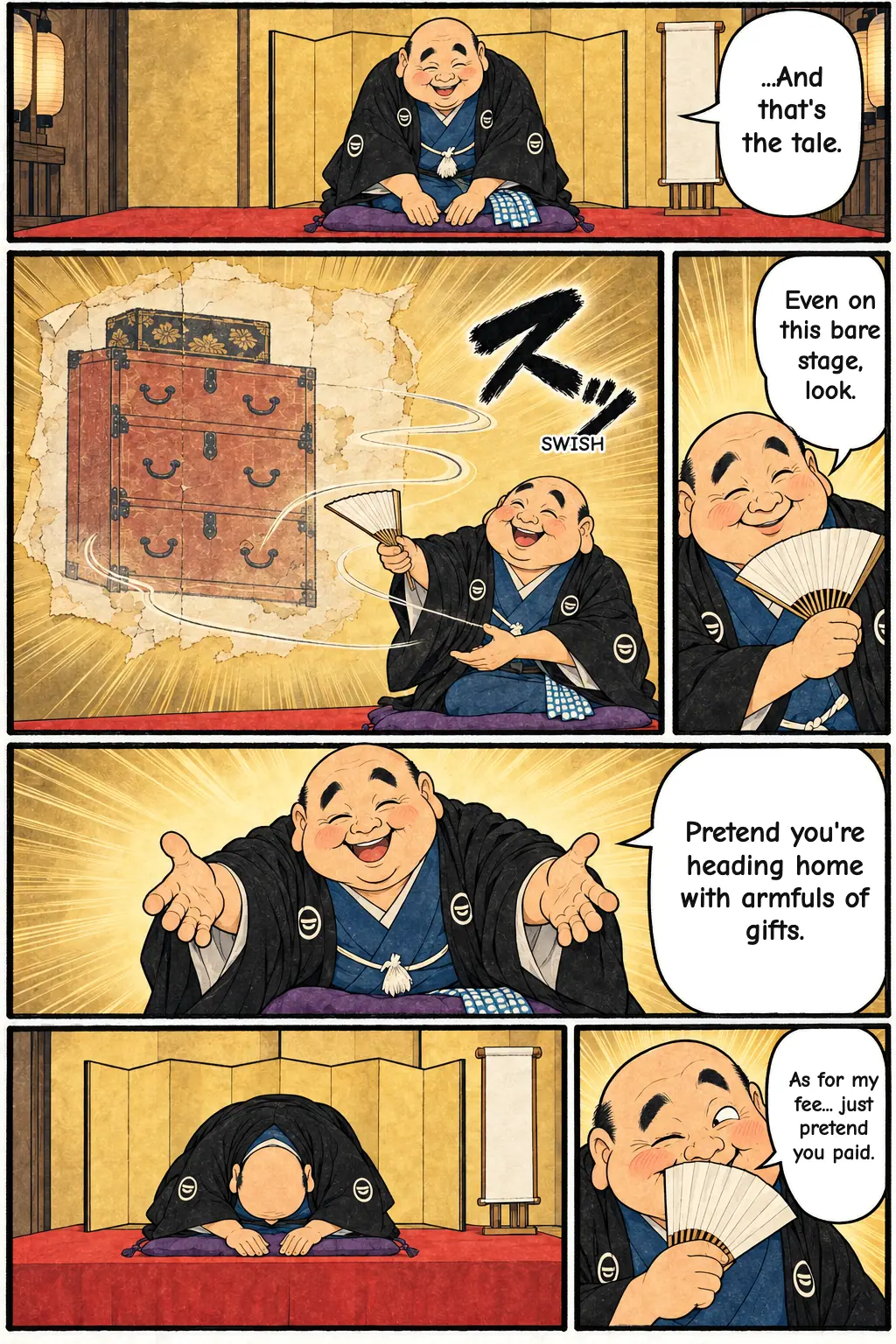
Rakugo is a Japanese storytelling art that has been performed for several hundred years in yose, small variety theaters. A single performer, the hanashika, sits on a cushion and tells the whole story alone, playing every character by changing voice, face and posture. The only props are a folding fan and a hand towel, which can become a pipe, a brush, a letter or, in this story, a spear. Many tales end on a sharp final line called the ochi or sage. Dakudaku is a perfect fit for the form: a story about pretending, told by one person who pretends everything.
Edo Life Behind the Story
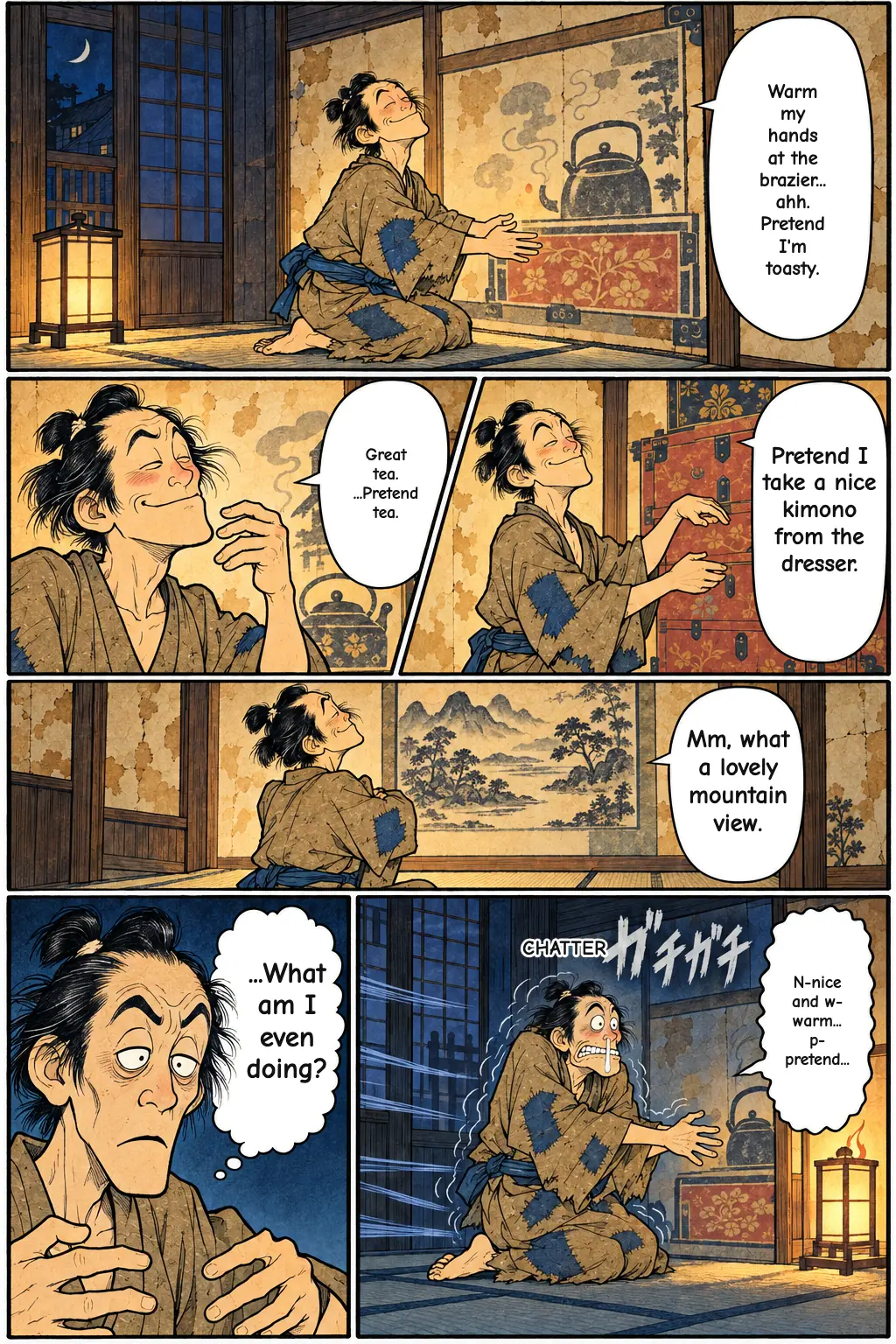
The joke rests on everyday life in old Japanese cities. Tenement dwellers often had very few belongings, and keeping up appearances mattered. The Japanese word tsumori, roughly 'acting as if' or 'meaning to', drives the whole tale. The tenant lives as if he were well off. The burglar robs as if there were something to rob.
The spear on the rail is a nice detail. A spear displayed that way suggests a respectable, even warrior-class home, which makes a painted one in a poor man's room all the more of a bluff. Behind the comedy there is a friendly view of people: a poor man with his pride, and a thief who is more of a fellow performer than a villain.
What the Manga Changed
Our team checked the plot against stenographic transcripts of rakugo performances published in 1907 and 1911, during the Meiji and Taisho years. These were word-for-word records of performers who all died before 1930. We wrote the manga's script ourselves.
Some parts are our own additions. The storyteller who opens and closes the episode, Shomontei Fukurai, is a fictional narrator created for this series, not a real performer. His opening line about the poor still wanting to show off, and his closing gesture of drawing a chest in the air with his fan, belong to the manga. We also made the burglar nearsighted to explain why he takes the paintings for real things. The extra background items, such as a hanging scroll, the painter's personality, the room's design and the night lighting, are our choices too. Ukiyo-e-style art keeps the painted furniture looking like a picture within a picture. The tenant raises empty hands for the spear, and 'dakudaku' appears only as a sound effect and exaggerated acting. No blood is drawn.
The Punchline (Ochi) Explained
Dakudaku (だくだく) is a Japanese sound word for blood gushing or pouring out, like 'glug, glug' or 'spurt, spurt' in English. When the tenant 'stabs' the burglar with a spear that is only paint, the burglar answers that blood is gushing out dakudaku, as if. That's the ending.
What makes it funny is how faithful both men are to the game. There is no furniture, no spear and no wound, yet each of them plays his part to the very end with complete seriousness. Even with a spear in his side, the burglar won't break the rules of make-believe.
Read Dakudaku as a Manga
Episode 4 of RAKUGO: Japan's Comic Tales, 'Robbing a House Where Nothing Is Real — Dakudaku', turns this duel of make-believe into fast, mime-like panels. You get to see the pretend robbery that a live storyteller can only suggest. Like every episode on Manga Portal, it's free to read with no sign-up, so it's an easy way to try a rakugo story, and then the next one in the series.
Characters in this episode
The Penniless Tenant
A man with no furniture at all who has a wall painted with fine goods and lives as if they were real, then answers a pretend robbery with a pretend spear.
The Painter
An artist friend of the tenant who paints furniture on the wall paper so skillfully that it looks real.
The Burglar
A thief who breaks in, finds that everything is painted, and plays out a make-believe robbery all the way to the punchline.
Shomontei Fukurai
A fictional rakugo storyteller created for this manga series who opens and closes each episode; he does not appear in the original tale.
FAQ
What is the rakugo story Dakudaku about?
A poor man with no furniture has household goods painted on his wall and lives as if they were real. A burglar breaks in, finds that it's all paint, and robs the place in make-believe. The tenant fights back with a make-believe spear.
What does 'dakudaku' mean in Japanese?
Dakudaku is a sound word for blood gushing or pouring out. In the story, the burglar uses it in his final line, saying the blood is gushing out as if, after being 'stabbed' with a painted spear.
Why is the ending of Dakudaku funny?
Nothing in the room is real, not the furniture, the spear or the wound, yet both men act out their parts with total seriousness to the very end. Their stubborn loyalty to the game of pretending is the joke.
Is Dakudaku a true story or folklore?
It's a classic comic tale from rakugo, Japan's traditional storytelling art, told on stage by performers for generations. Versions were written down from live performances in the early 1900s.
What is rakugo?
Rakugo is a Japanese storytelling art in which one performer, sitting on a cushion with only a fan and a hand towel, plays every character in the story. It has been performed in small theaters called yose for several hundred years.