Episode 3They Ruined His Favorite Fish by Being PoliteThe Saury of Meguro (Meguro no Sanma)
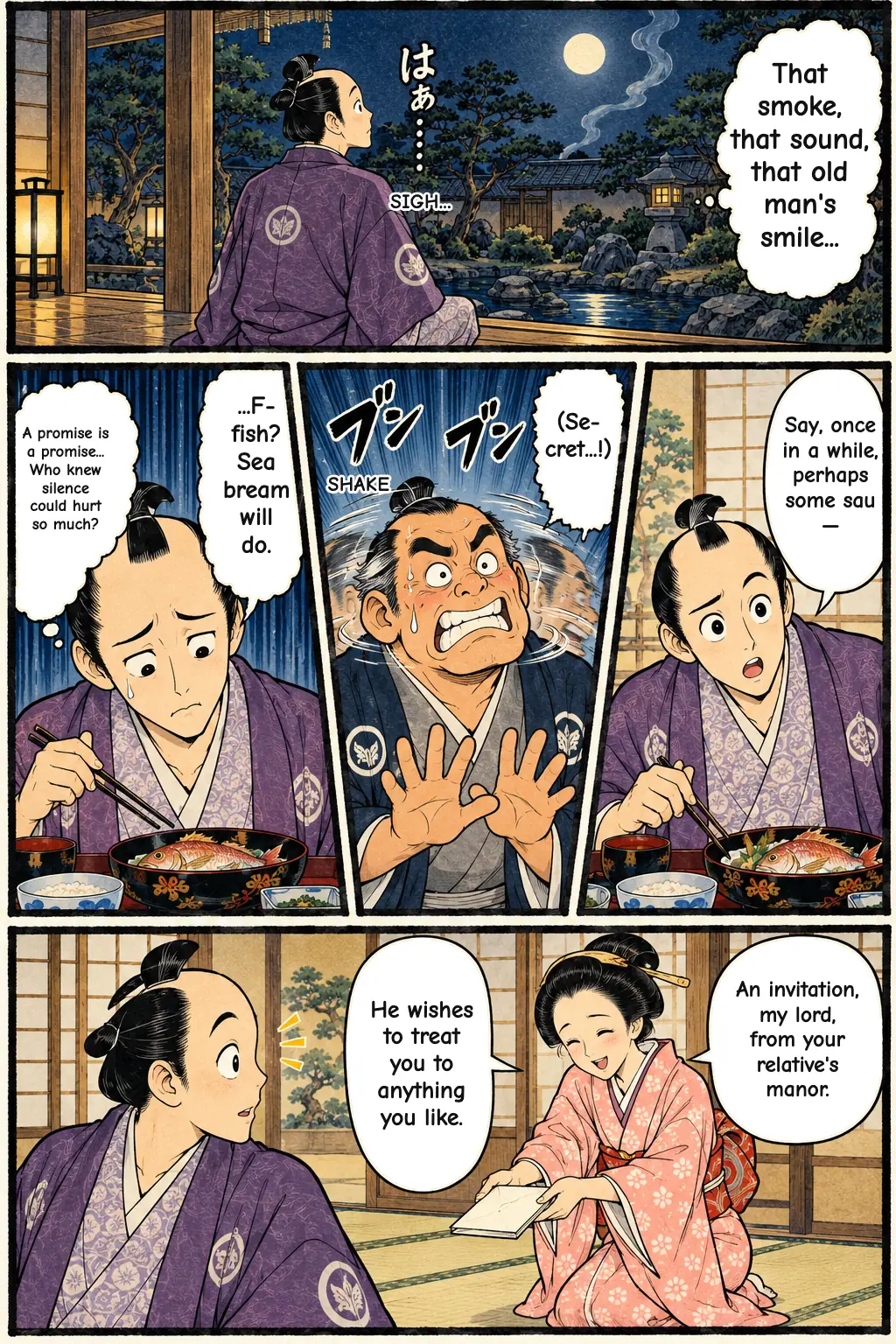
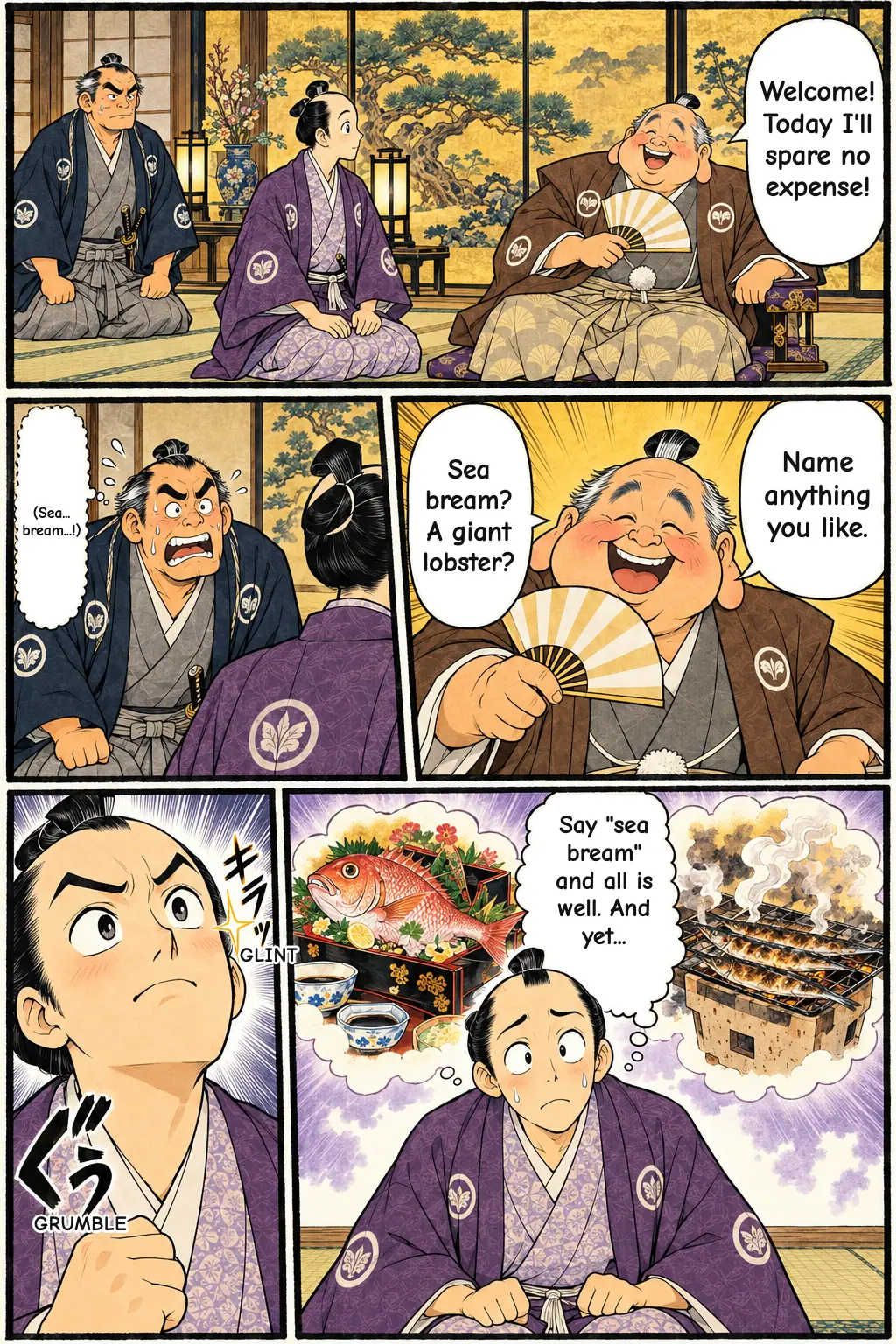
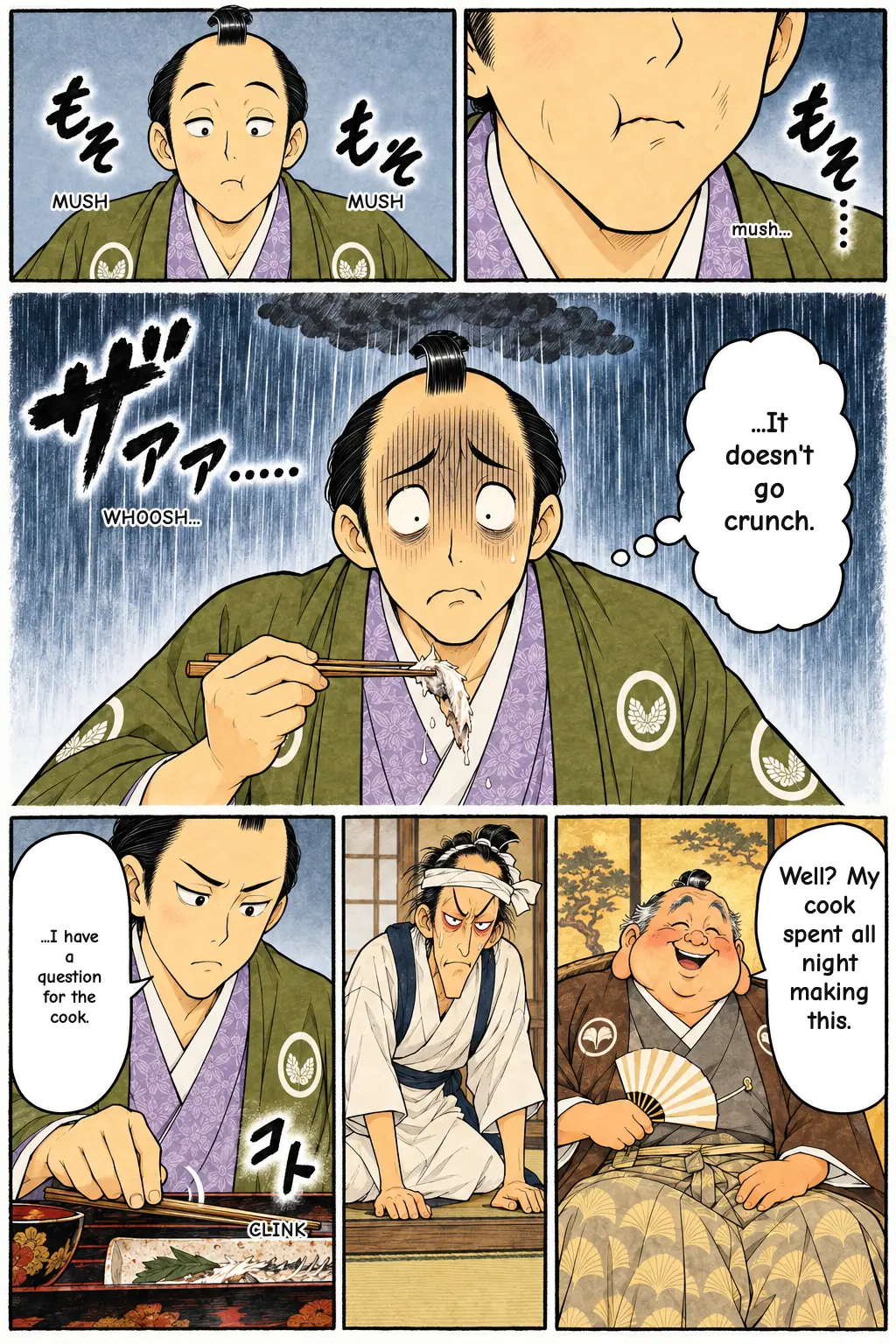
Episode 3 of RAKUGO: Japan's Comic Tales. For the first time in his life, the Lord gets truly hungry. Out in the fields of Meguro, he bites into a saury fresh off an old farmer's fire and falls head over heels for it. When he finally gets his favorite dish at a relative's feast, the Head Cook has painstakingly stripped out every drop of oil and every last bone. Faced with the sad result, the Lord announces a verdict that completely misses the point.
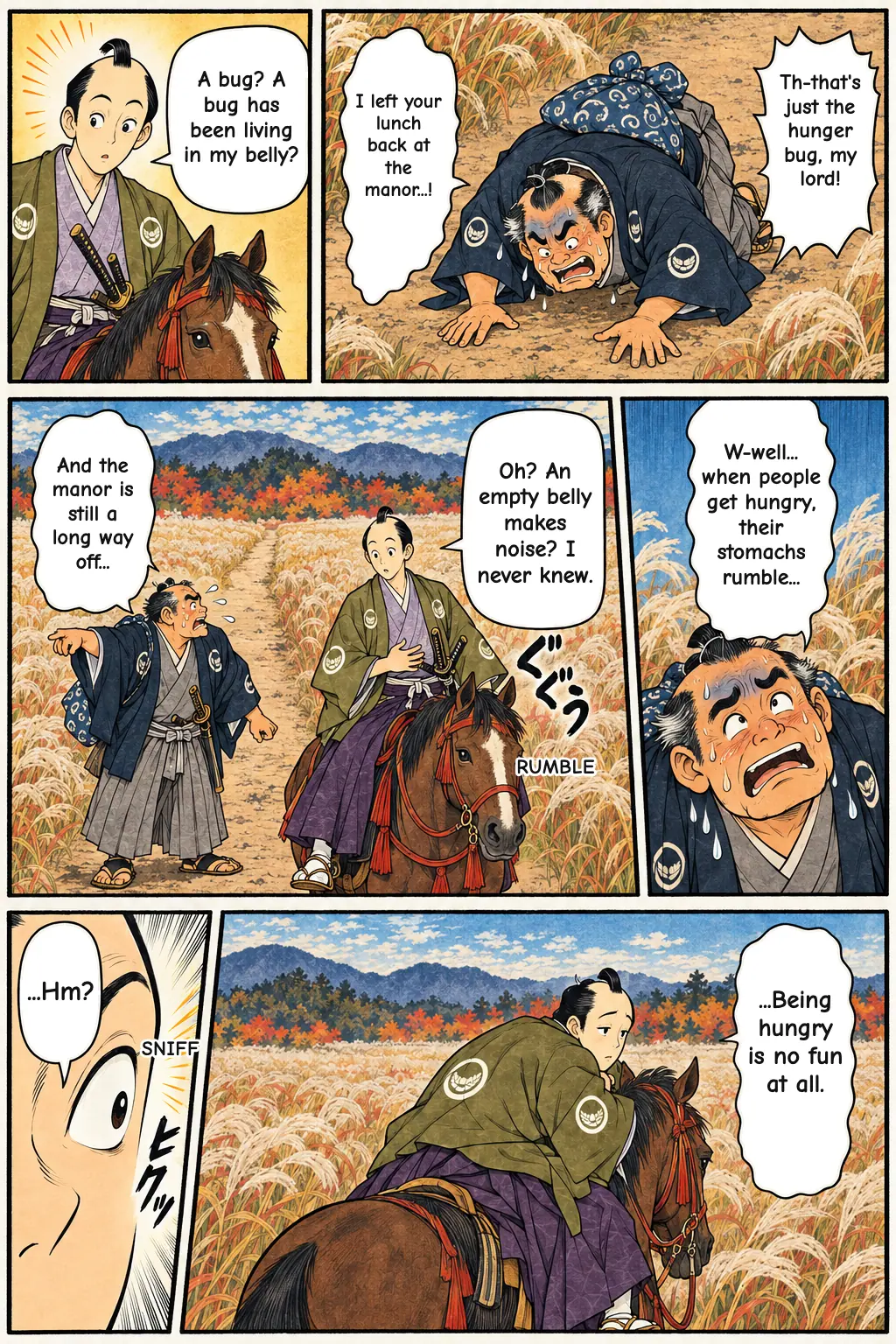
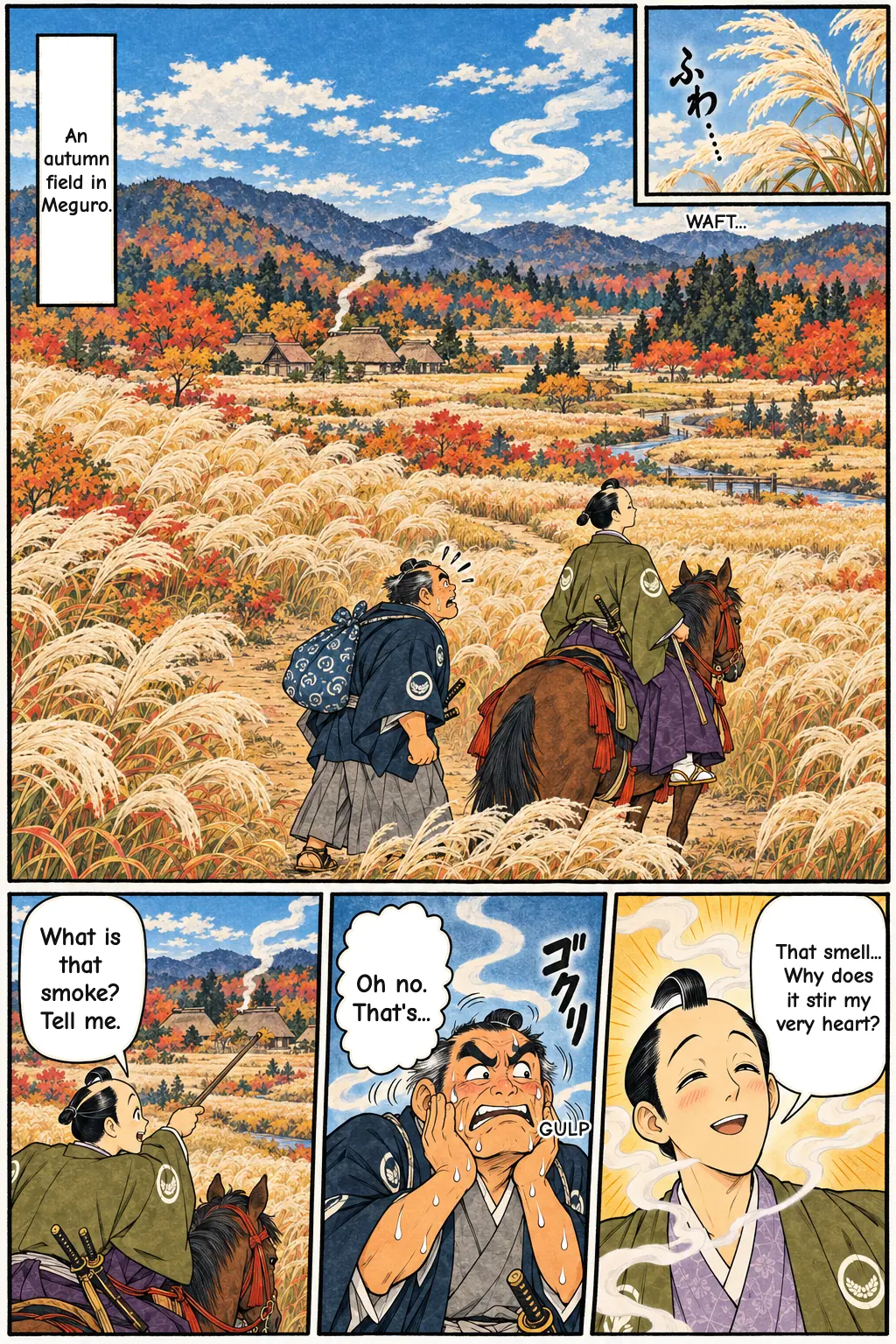
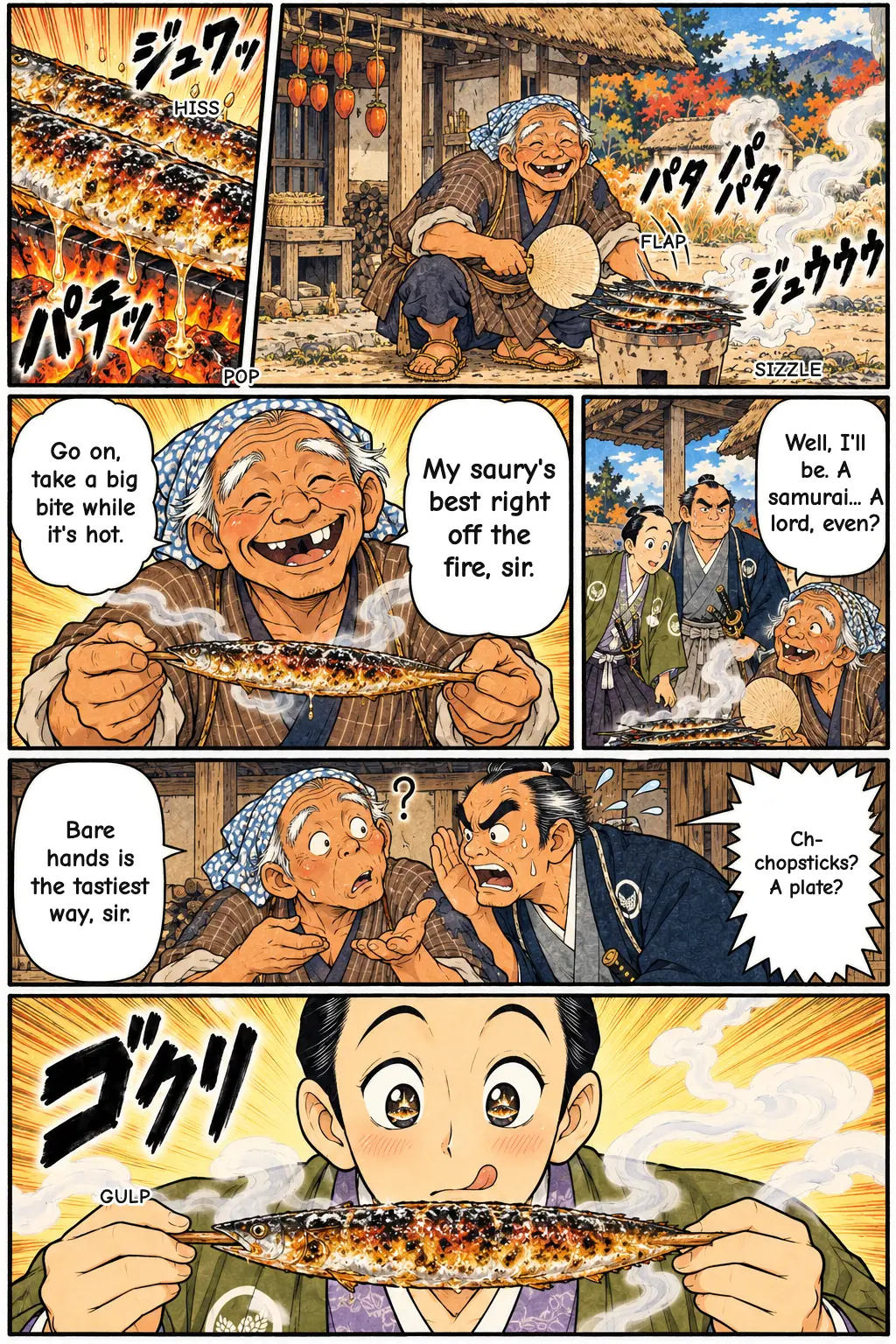
"Meguro no Sanma" (The Saury of Meguro) is one of the best-known stories in rakugo, Japan's traditional comic storytelling. Tellings differ in the details, but the widely known version goes like this. A feudal lord, the head of a samurai household who has never wanted for anything, rides out with his retainers to the fields of Meguro. In some versions it is a falconing trip. Nobody packed lunch, and before long the lord and his men are starving. Then the smell of grilling fish drifts over from a farmhouse (a roadside teahouse in some versions).
The Saury of Meguro (Meguro no Sanma): Rakugo Story Summary and Punchline Explained
The Story of The Saury of Meguro: A Plot Summary
"Meguro no Sanma" (The Saury of Meguro) is one of the best-known stories in rakugo, Japan's traditional comic storytelling. Tellings differ in the details, but the widely known version goes like this. A feudal lord, the head of a samurai household who has never wanted for anything, rides out with his retainers to the fields of Meguro. In some versions it is a falconing trip. Nobody packed lunch, and before long the lord and his men are starving.
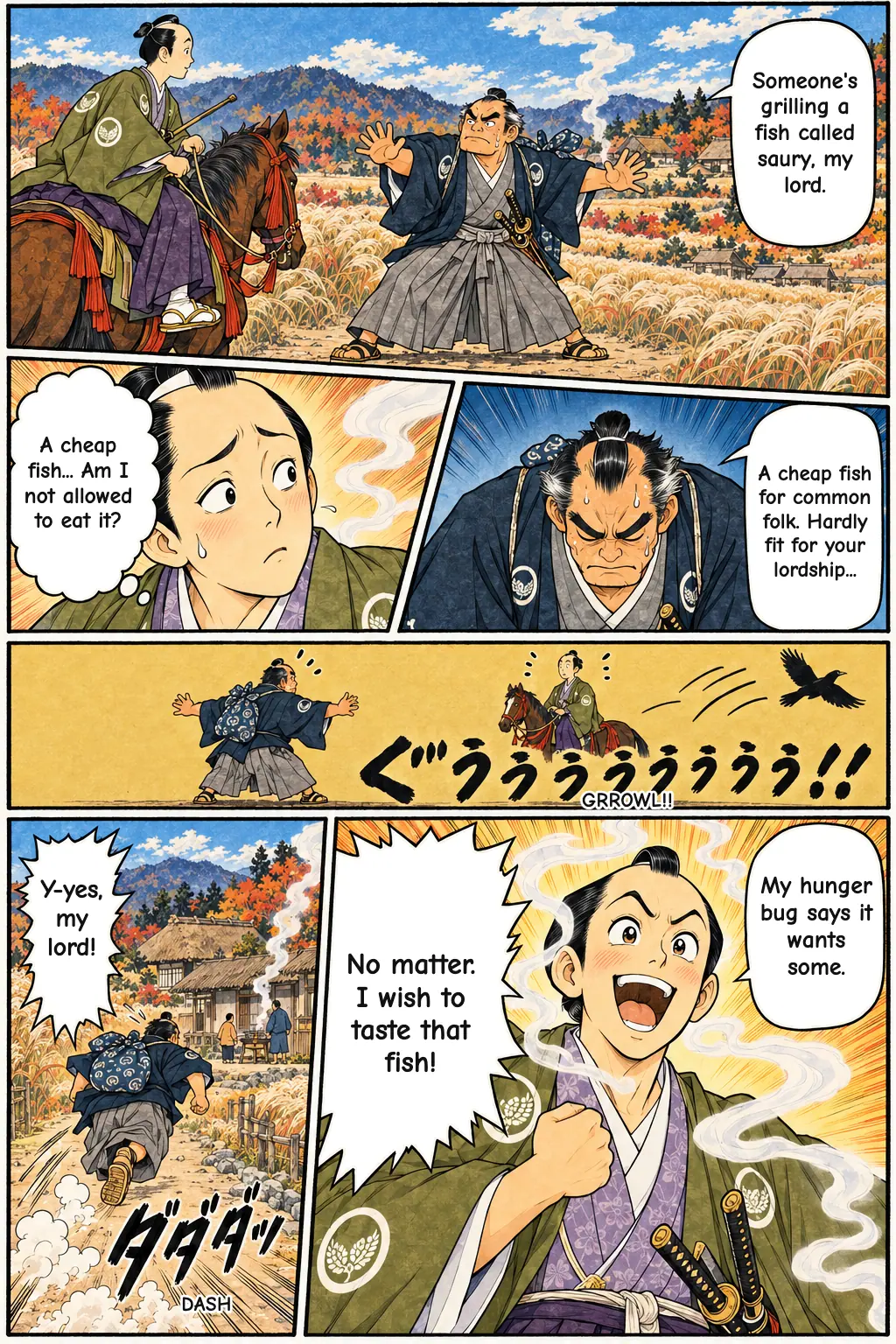
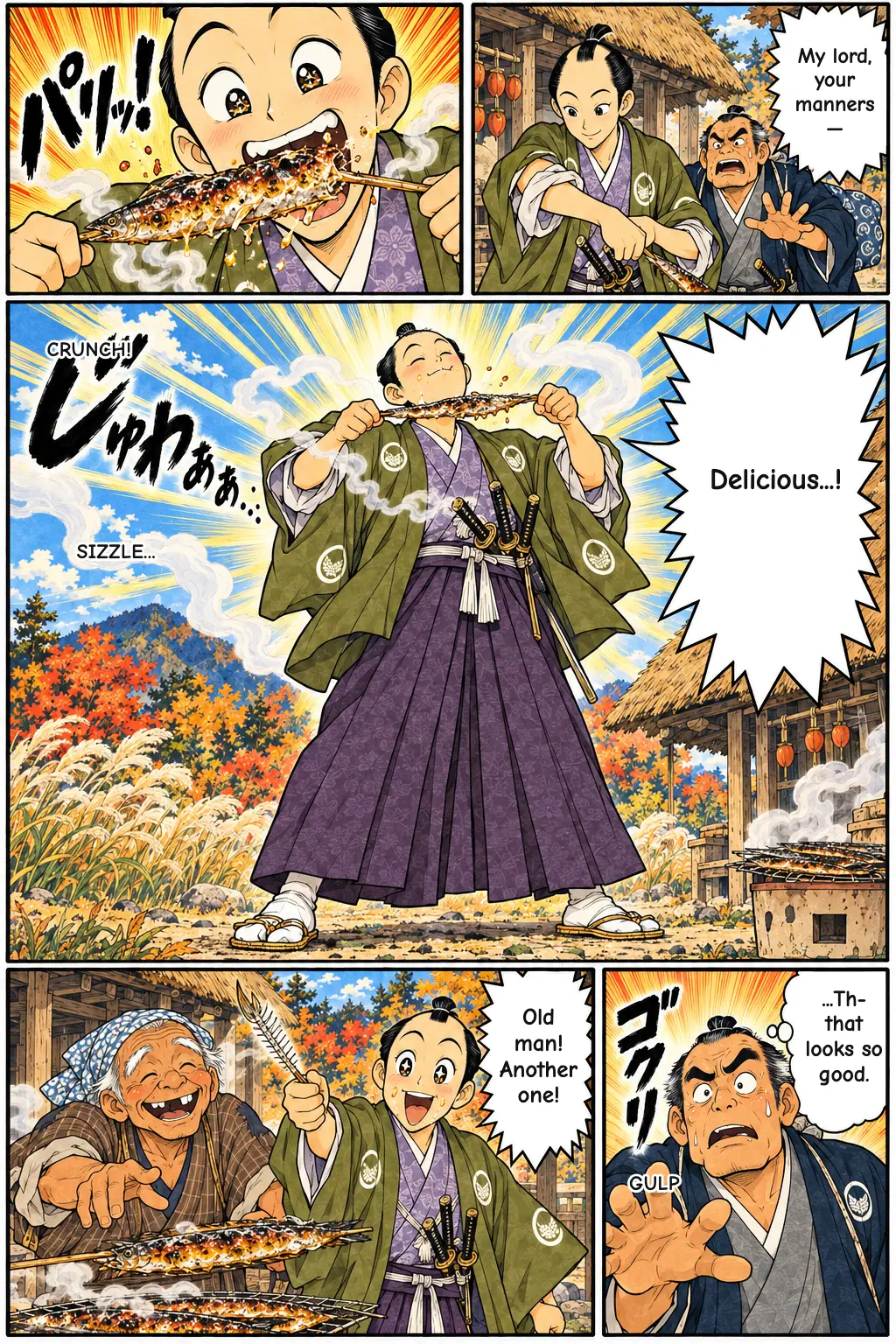
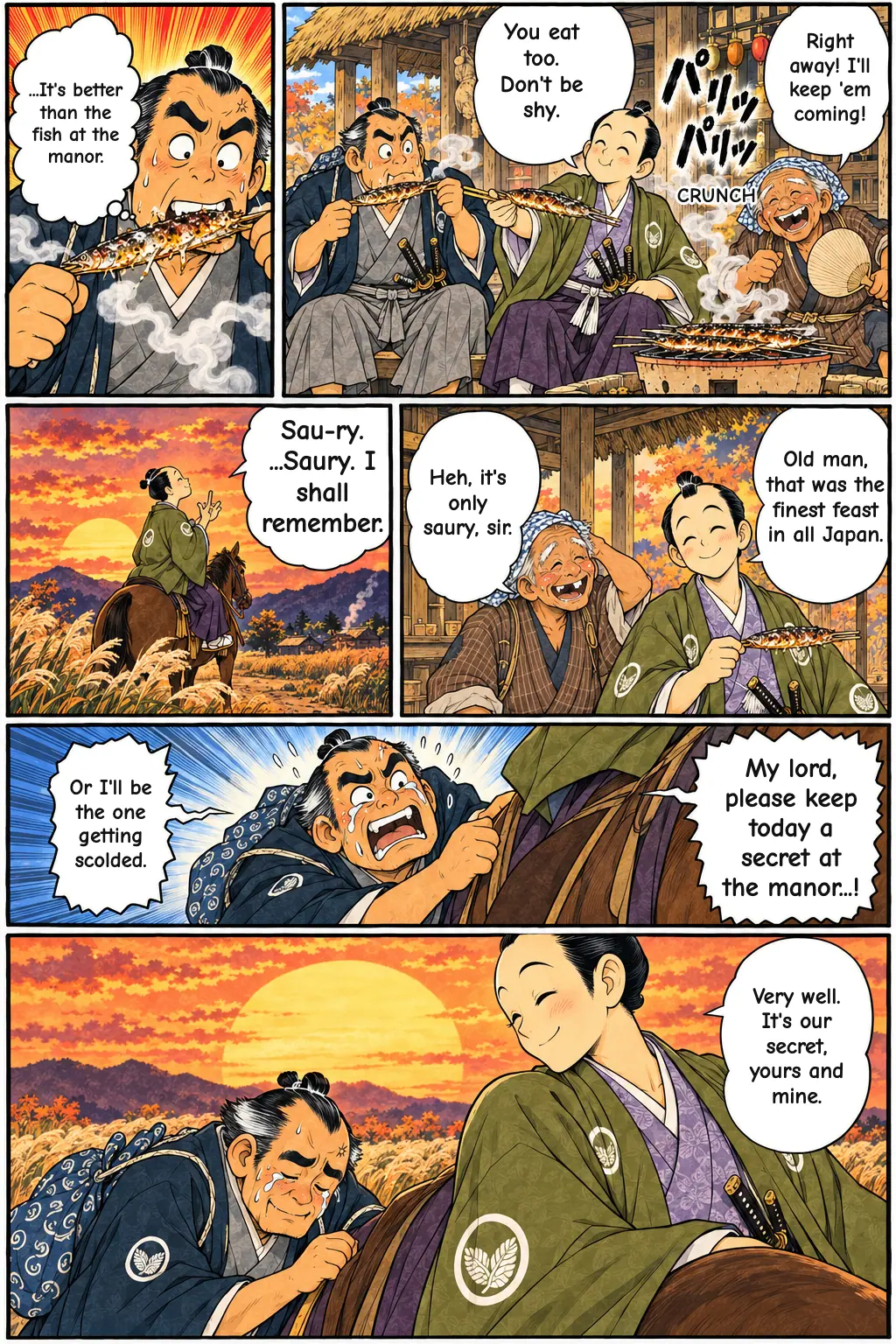
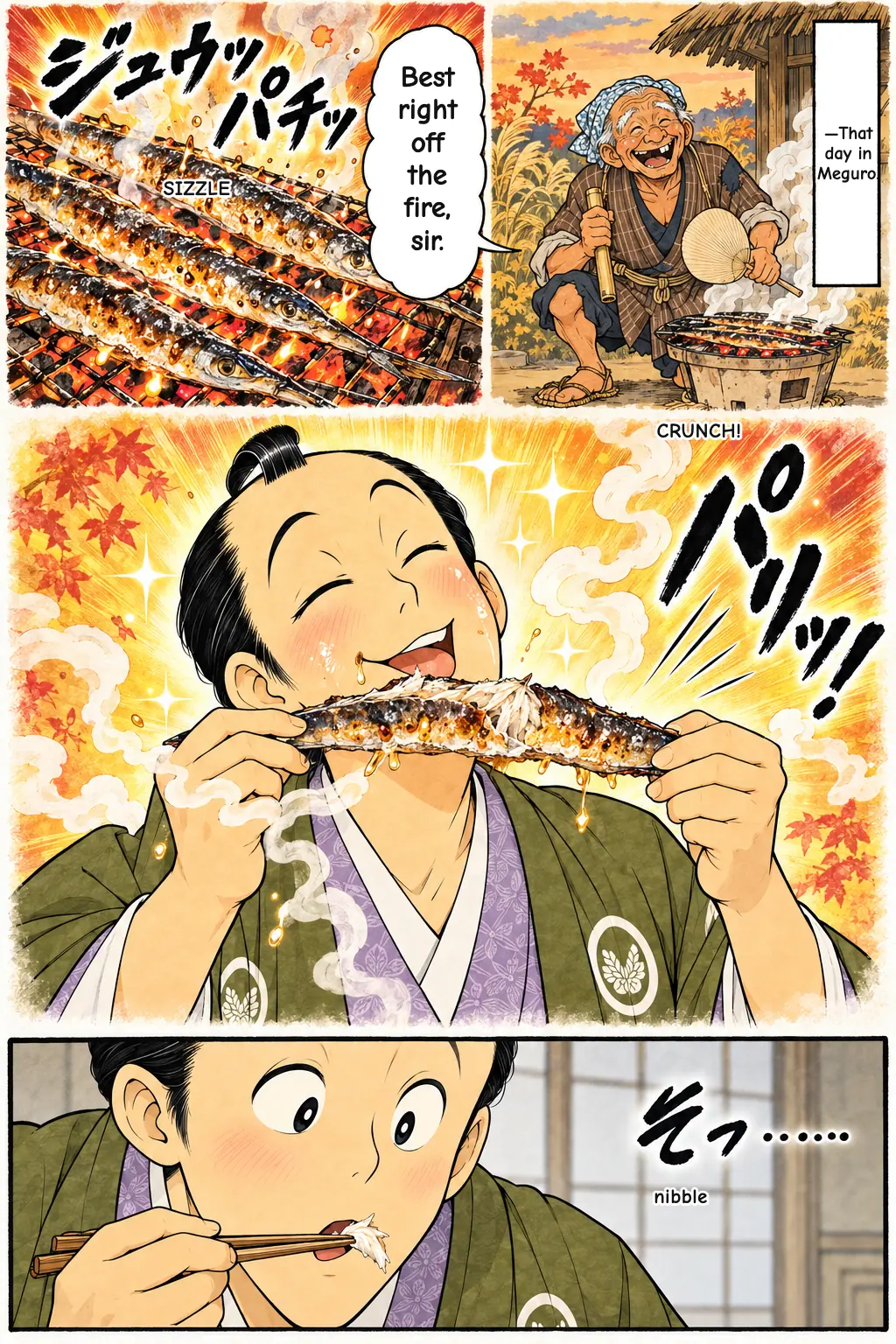
Then the smell of grilling fish drifts over from a farmhouse (a roadside teahouse in some versions). It is sanma, Pacific saury, a cheap and oily fish eaten by ordinary people. His retainers object that this is a lowly fish, not fit for a lord. He insists anyway, eats a saury straight off the fire, and thinks it is the most delicious thing he has ever tasted.
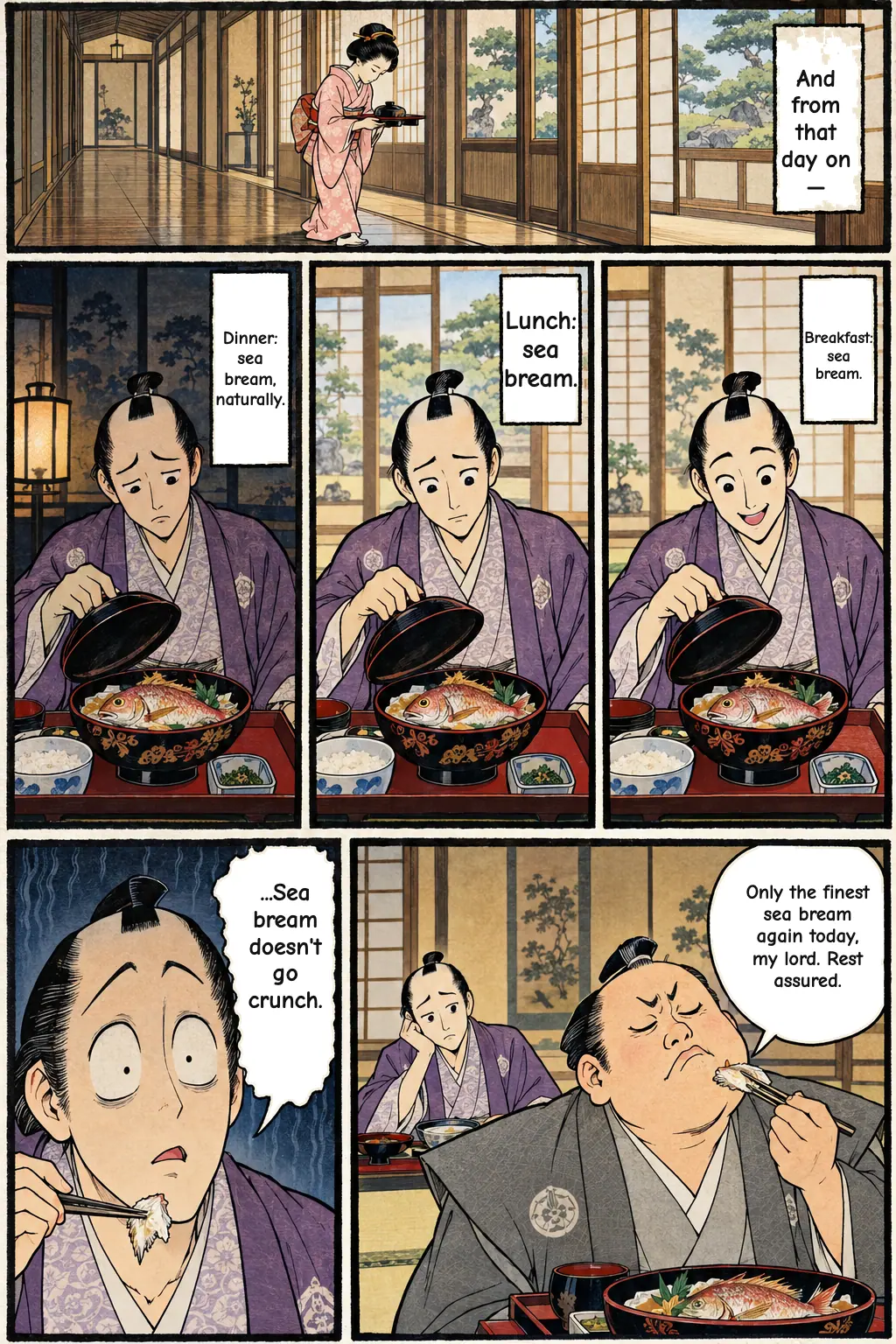
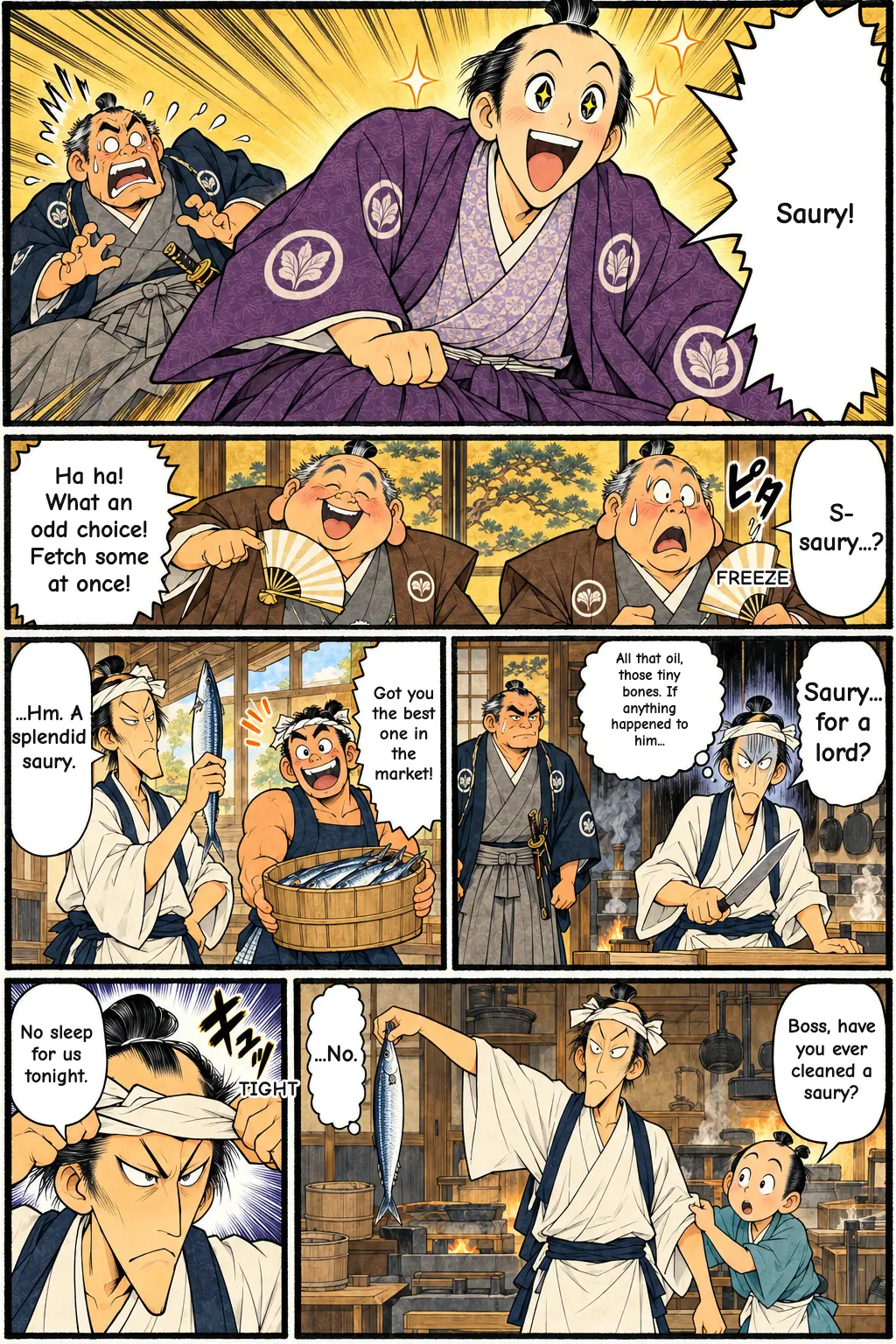
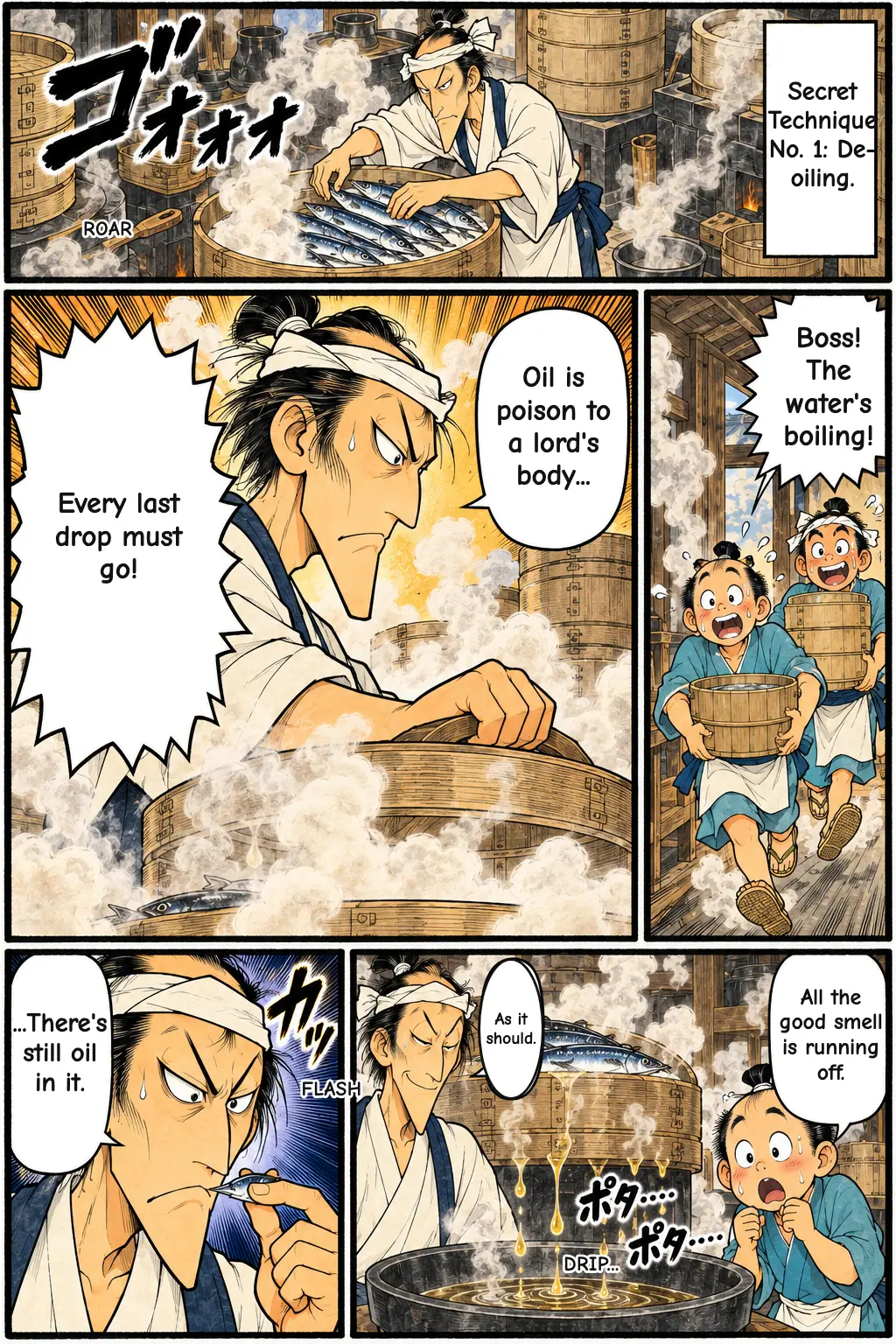
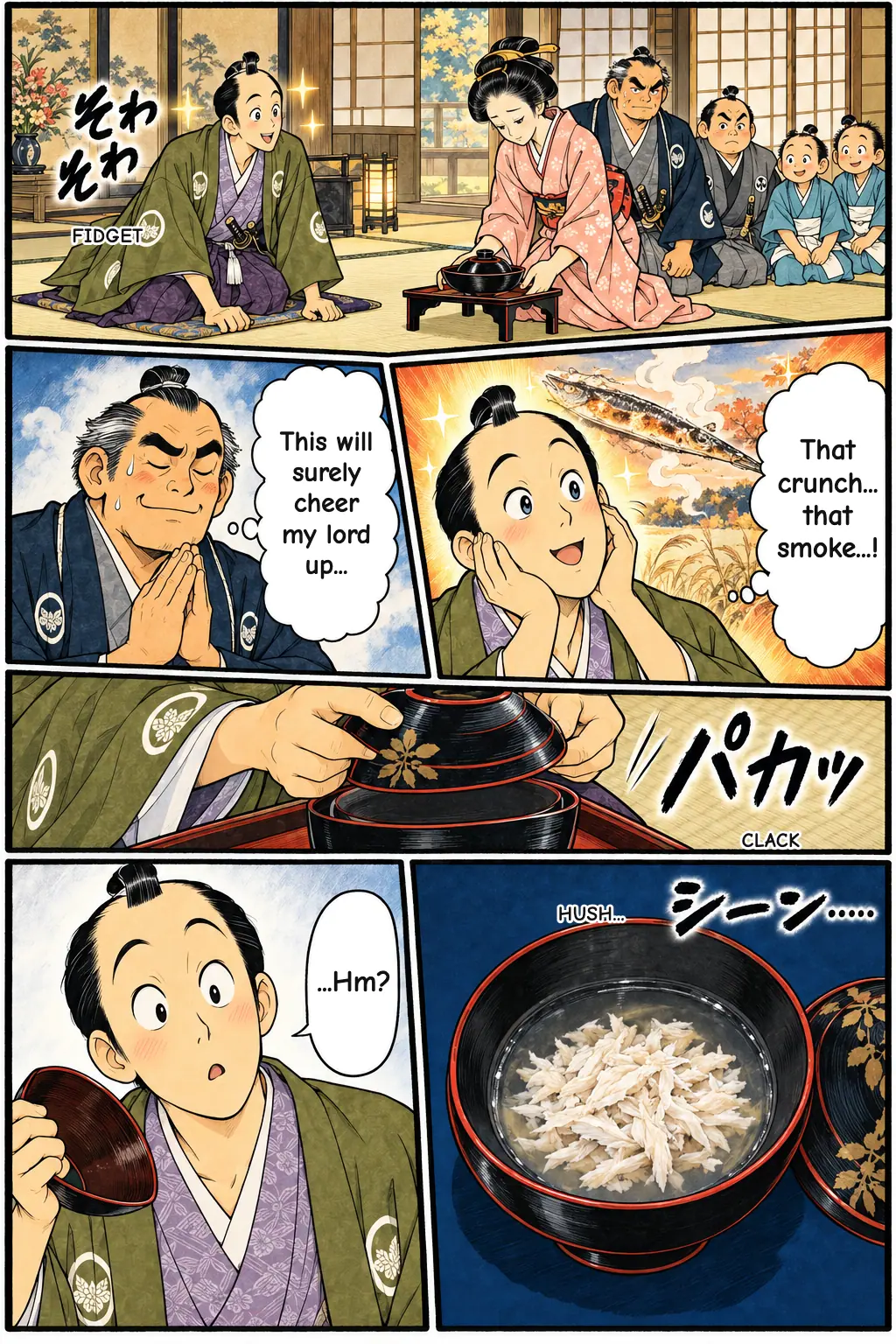
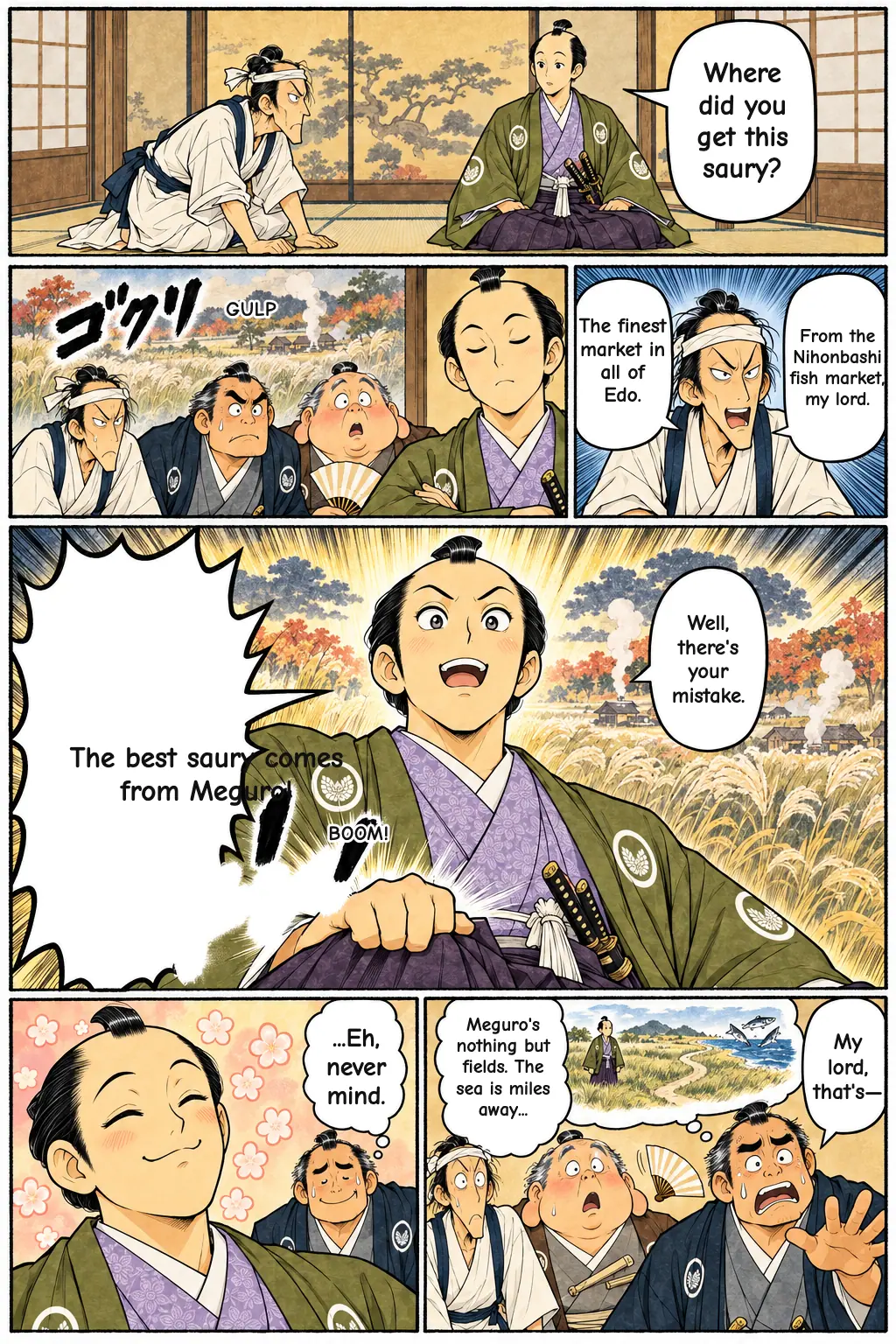
Back at his mansion, saury never shows up on his tray, because a lowly fish is never served to a lord. Then one day, at a relative's mansion (his own in some versions), someone asks what he would like to eat, and he answers at once: saury. The cooks buy top-quality fish from the Nihonbashi fish market, the main fish market of Edo (old Tokyo). Afraid the oily fish might harm his health, they steam out the fat, pick out every tiny bone, and serve what is left in a delicate soup or similar dish. It is dry and joyless. The lord asks where the fish came from. "From the fish market at Nihonbashi, my lord." He shakes his head and gives his verdict, and that line is the punchline of the story.
What Is Rakugo? Japan's One-Person Comic Theater
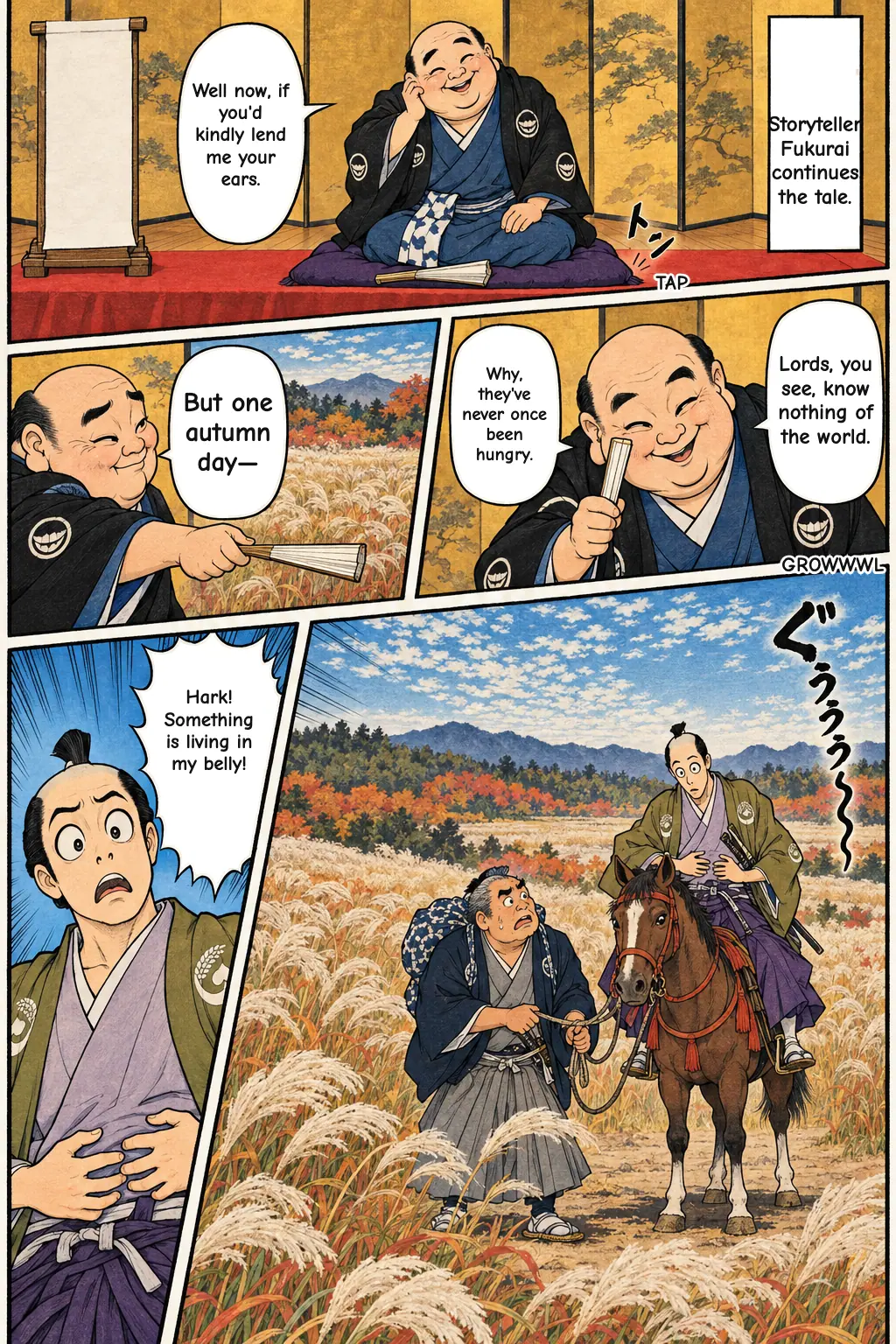
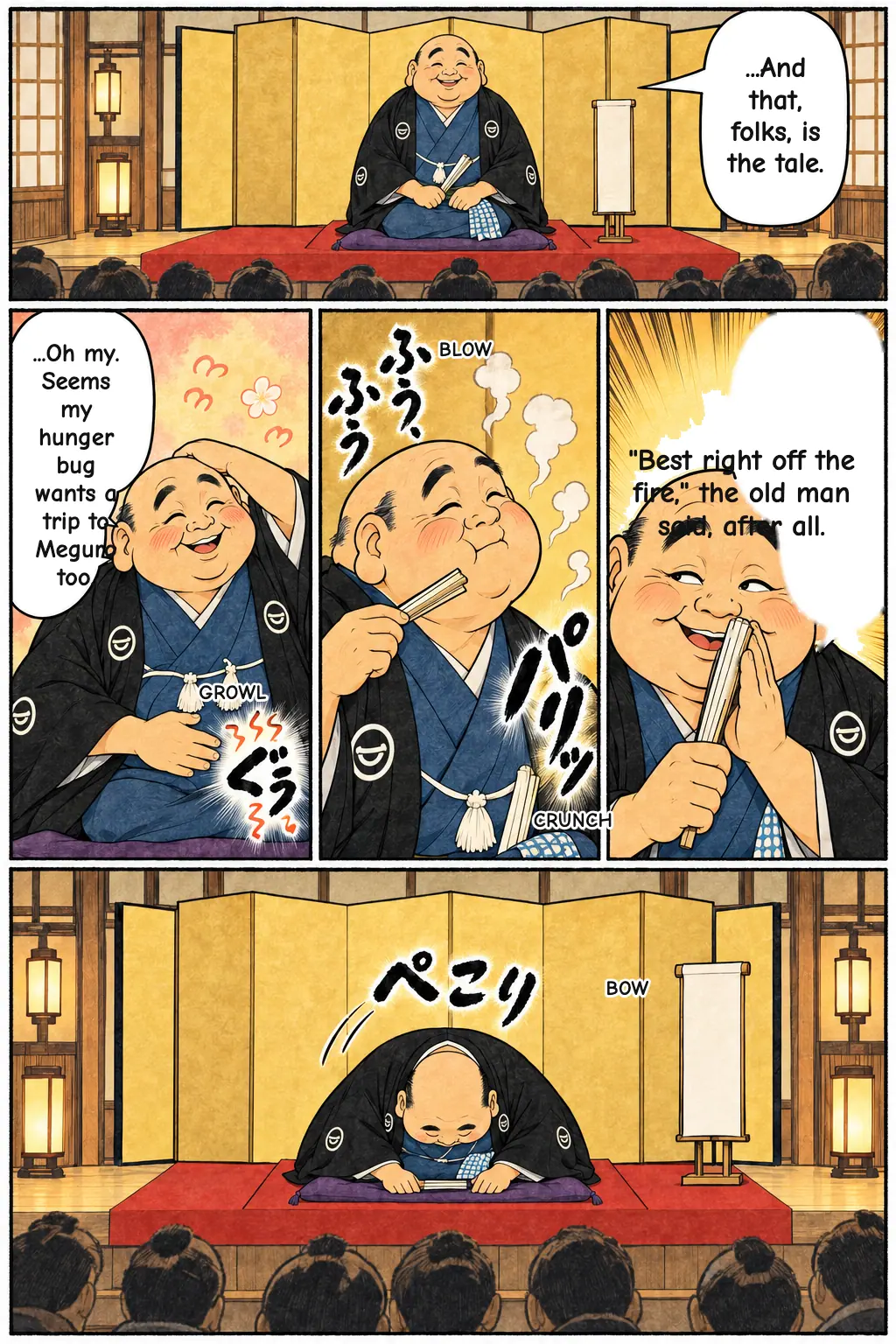
Rakugo is a Japanese storytelling art that has been performed for several hundred years. A single storyteller, called a rakugoka, kneels on a cushion and plays every character alone, from lords and servants to farmers and cooks, using only a folding fan and a small hand towel as props. A fan can become chopsticks, a sword, or a pipe, and a slight turn of the head shows that a new character is speaking. Stories are performed in yose, small variety theaters, and many begin with a casual warm-up called the makura before the tale itself starts. Most end on a sharp final line called the ochi or sage, the "drop" that ends the story with a laugh.
Background: Saury, Samurai, and Edo-Period Meguro
To get the joke, you need to know three things. First, saury was a cheap fish for common people. It is full of oil, it smokes heavily when grilled, and in the Edo period (1603–1868) it was treated as a lowly fish that did not belong on a high-ranking samurai's table. A lord's meals followed strict rules about what was proper, so he could easily go his whole life without ever tasting it.
Second, Meguro, now a busy district of Tokyo, was then farmland on the outskirts of Edo. It is inland, with no sea anywhere near it, so nobody caught fish there. Third, the lord in rakugo is a stock character: kind-hearted and sincere, but so sheltered from everyday life that he misunderstands the simplest things. That gap between his rank and his common sense is where the comedy comes from.
What the Manga Version Changed and Added
Our manga keeps the classic plot: the hungry outing, the grilled saury, the ruined dish, and the final line. Some parts are our own creations. The lord and his household are fictional and are not based on any real clan or shogun. The storyteller who opens and closes the episode, Shomontei Fukurai, is a fictional narrator invented for this series, and his warm-up, his gesture of using the fan as chopsticks, and his closing bow are all ours.
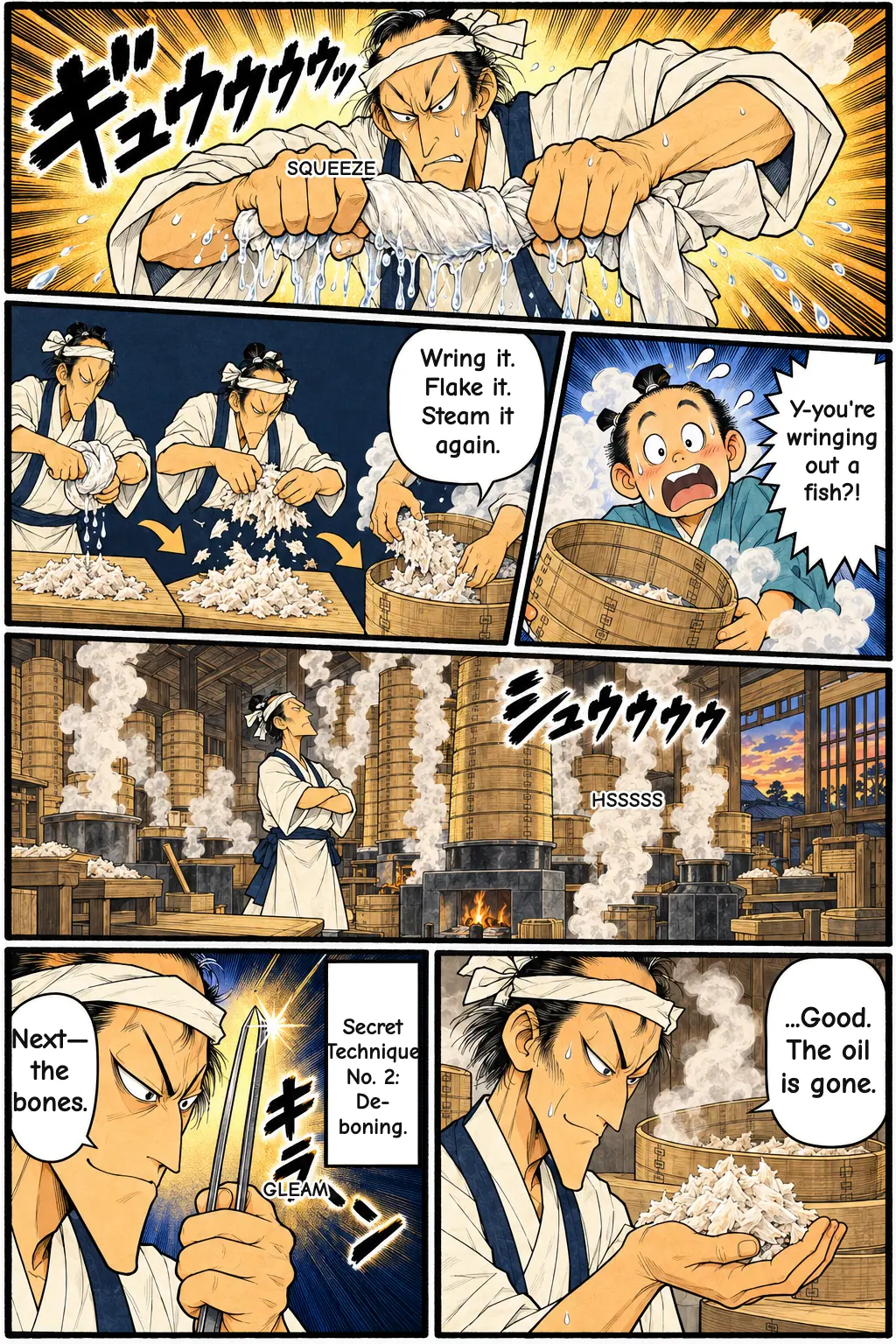
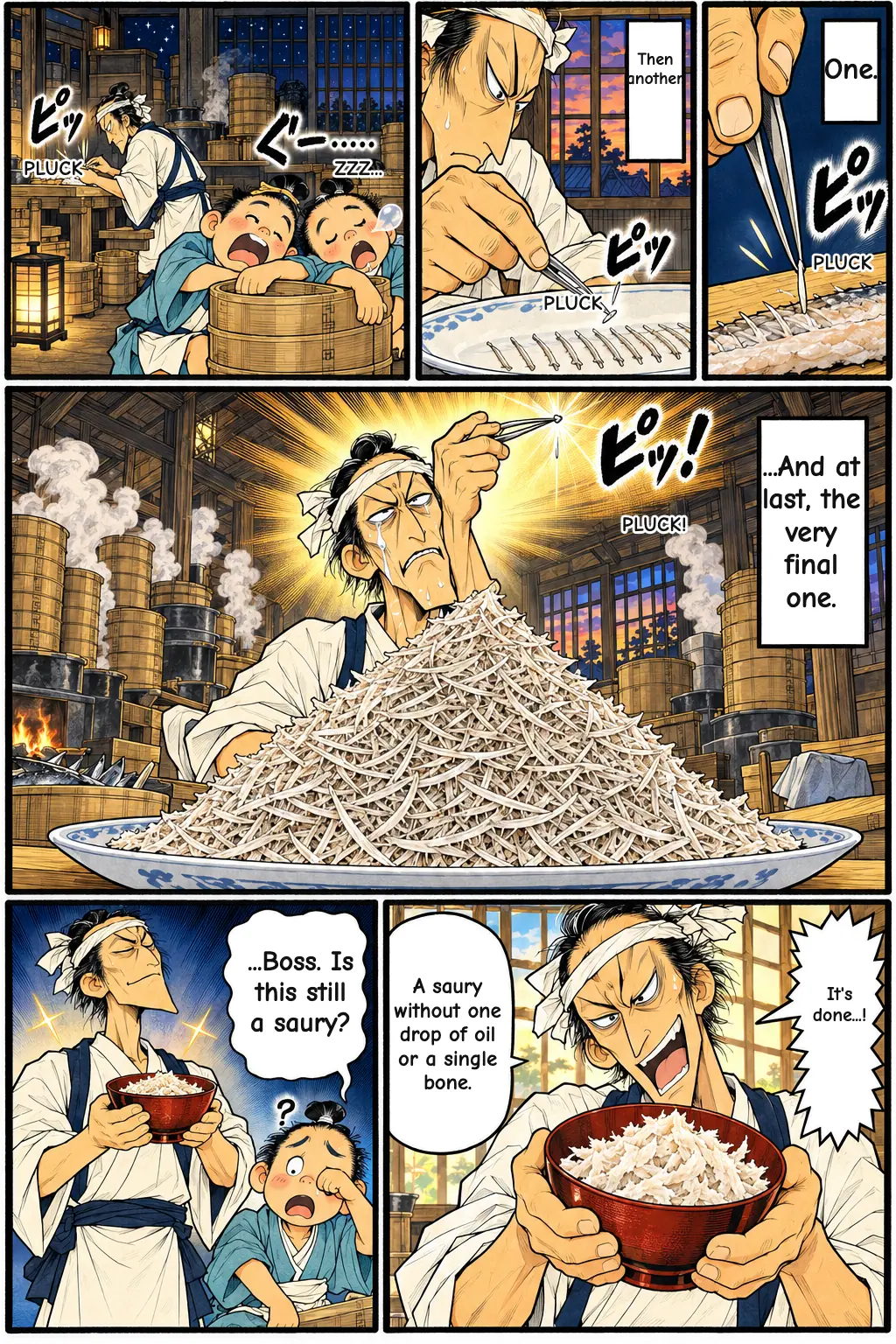
We also expanded scenes the spoken story covers in a few lines: the ride through autumn fields, the lord's growling stomach, the smell pulling him toward the farmhouse, the farmer's look and personality, and the lord's face as he takes his first bite. The Head Cook's struggle (steaming, draining the oil, pulling bones one by one with tweezers) is played as an over-the-top craft sequence across several panels. The scenes where the lord mourns the missing saury, and the setting of the relative's feast, are also our additions. For the plot we refer to rakugo transcripts printed in the Meiji and Taisho eras (1868–1926) from performers who died by 1930. The script itself was written by our team.
The Punchline (Ochi / Sage) Explained
The final line is "Sanma wa Meguro ni kagiru", meaning roughly "When it comes to saury, Meguro is the only place." He says it the way a gourmet praises a famous local product, like insisting real champagne must come from Champagne.
The joke is that Meguro had no sea and no saury of its own. What made that first fish wonderful was hunger, a farmer's open fire, and a cheap, oily fish eaten hot. The Nihonbashi fish was probably better, but the careful cooks removed everything that makes saury taste good. The lord never understands that, so he credits the place instead of the cooking. His verdict is completely wrong, and it still says something true: simple food eaten the simple way beats any refined version.
Where to Read The Saury of Meguro Manga
You can read Episode 3 of RAKUGO: Japan's Comic Tales, "They Ruined His Favorite Fish by Being Polite", here on Manga Portal. Every episode is free, and you don't need to sign up. If you enjoyed the lord's wrong verdict, the other episodes in the series bring more classic rakugo stories to life in manga form, each with its own punchline to catch.
Characters in this episode
The Lord (Tonosama)
A sheltered, sincere feudal lord who tastes grilled saury for the first time in Meguro and links its flavor to the place forever.
The Retainers
The samurai escorting the lord, who try to stop him from eating a 'lowly' commoner's fish but end up giving in.
The Old Farmer
A Meguro commoner who grills saury over an open fire and shares it with the starving lord.
The Head Cook
The careful kitchen chief at the relative's mansion who strips out every drop of oil and every bone, ruining the fish.
The Relative
A fellow noble who invites the lord to a feast and asks him what dish he would like.
Shomontei Fukurai
The fictional rakugo storyteller invented for this manga series, who opens and closes each episode.
FAQ
What is the story of The Saury of Meguro?
A sheltered feudal lord gets hungry on an outing to Meguro and eats a commoner's grilled saury, which he loves. Later, his relative's cooks serve him premium saury with the oil and bones removed, and it tastes terrible. He decides the problem is where the fish came from.
What does "Sanma wa Meguro ni kagiru" mean?
It means "When it comes to saury, Meguro is the only place." It is funny because Meguro was inland farmland with no sea, so the lord is praising a 'local specialty' that never came from there.
Why was saury not served to samurai lords?
Saury was a cheap, oily fish eaten by ordinary people in the Edo period, and it was seen as a lowly fish. Meals for high-ranking samurai followed strict rules of propriety, so a lord would normally never be served it.
What is rakugo?
Rakugo is a traditional Japanese comic storytelling art performed for several hundred years. One storyteller kneels on a cushion and plays every character using only a fan and a hand towel, and most stories end with a punchline called the ochi or sage.
Is the narrator Shomontei Fukurai a real rakugo performer?
No. Shomontei Fukurai is a fictional storyteller created for the manga series RAKUGO: Japan's Comic Tales, and his opening and closing scenes are original to the manga.