Episode 6He Woke Up Surrounded by Four QueensSir Launcelot du Lake
Sir Launcelot du Lake, the knight without equal, turns down four queens, a duel he could have skipped by hiding his name, and a sorceress who asks for "just one kiss." He says no to all of them. Only one person ever hears him say "yes."
Sir Launcelot du Lake: The Four Queens, Sir Turquine & the Chapel Perilous Explained
The Original Story: Launcelot's Adventures in Le Morte d'Arthur
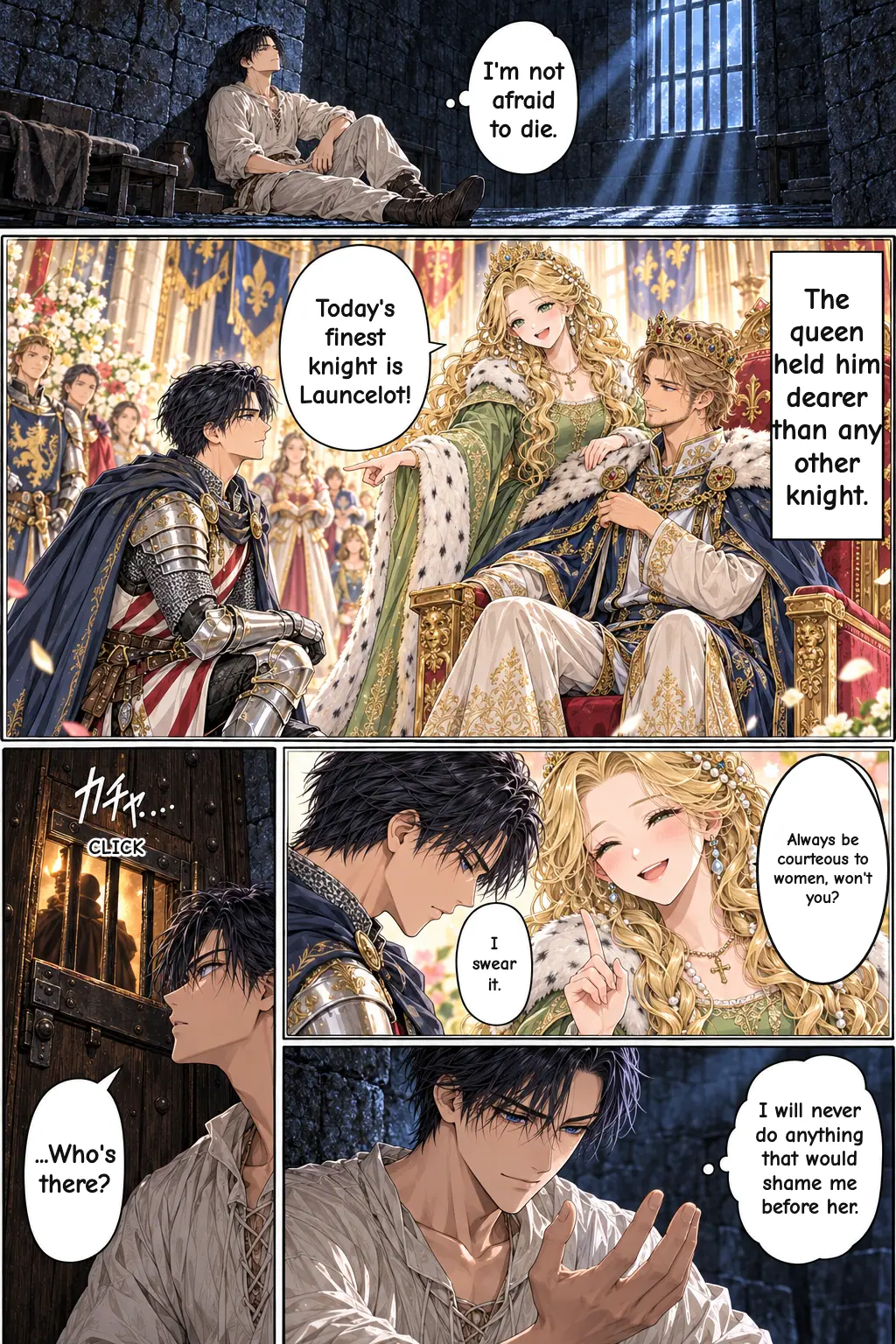
The adventures in this episode come from Book VI of Le Morte d'Arthur, the great English retelling of the King Arthur legends by Sir Thomas Malory, printed by William Caxton in 1485. After Arthur comes home from his war against Rome, one knight rises above all the rest: Sir Launcelot du Lake. No one beats him in battle or in tournaments, and Queen Guenever, Arthur's wife, honors him above every other knight. Launcelot, in turn, is devoted to her more than to any other lady.
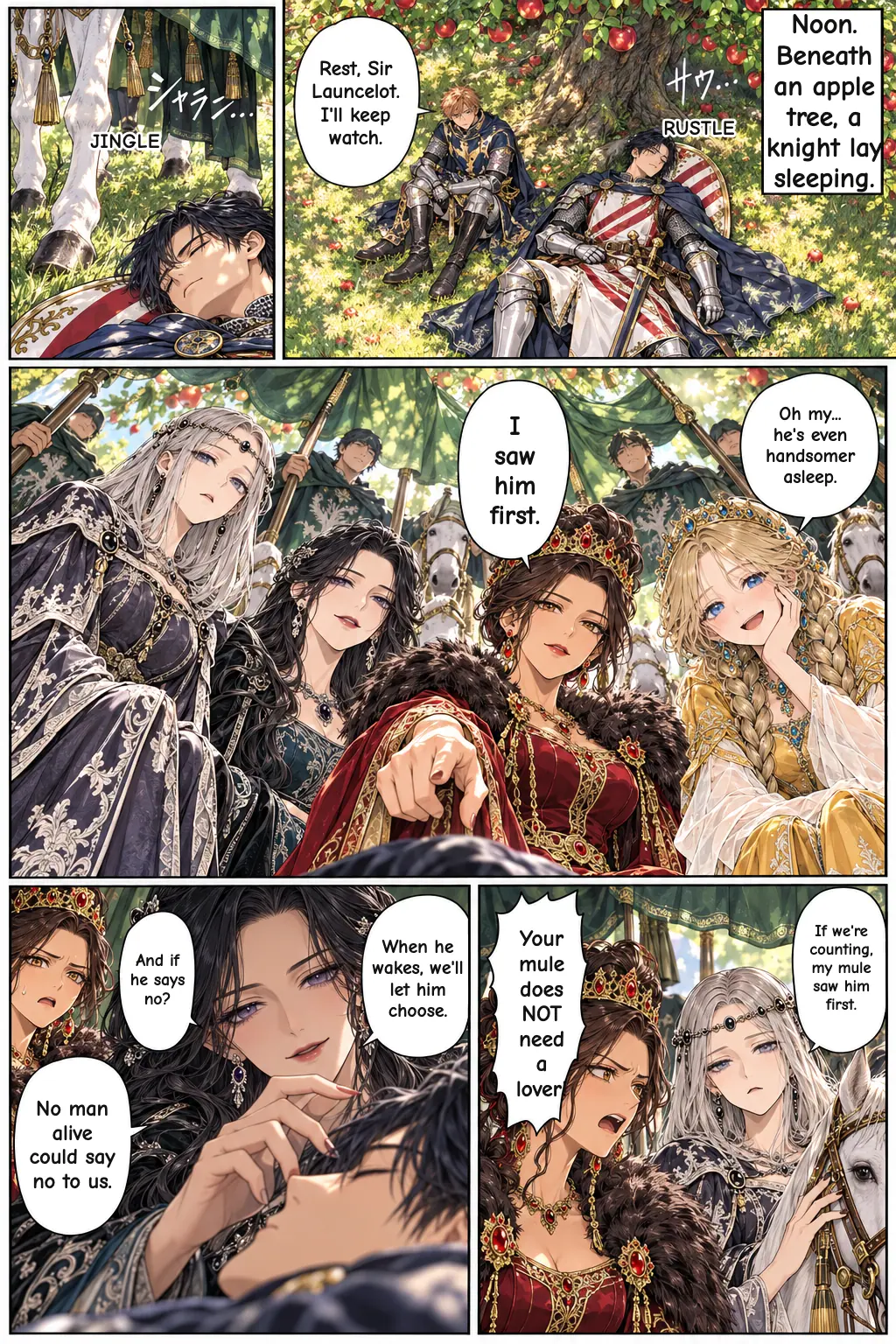
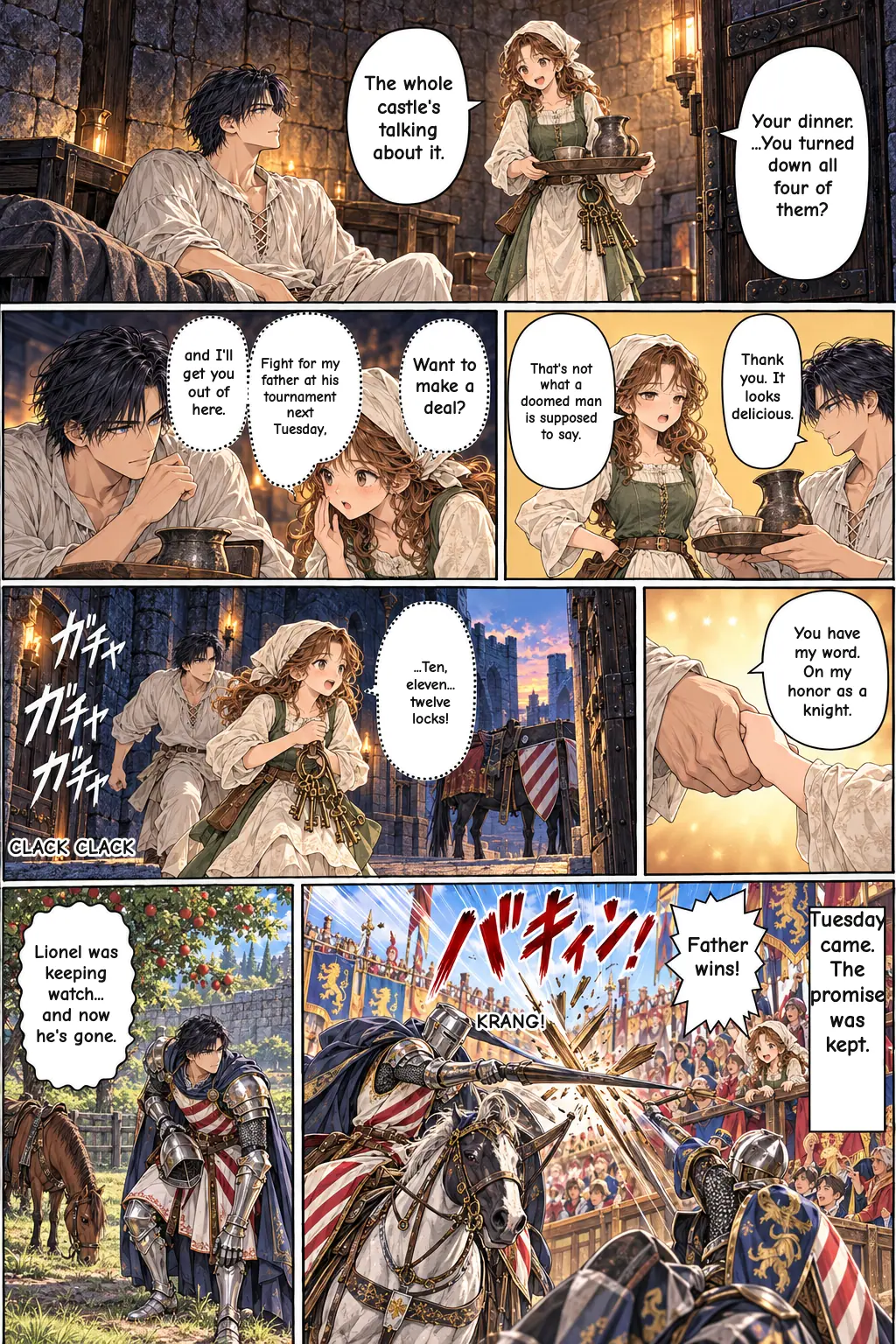
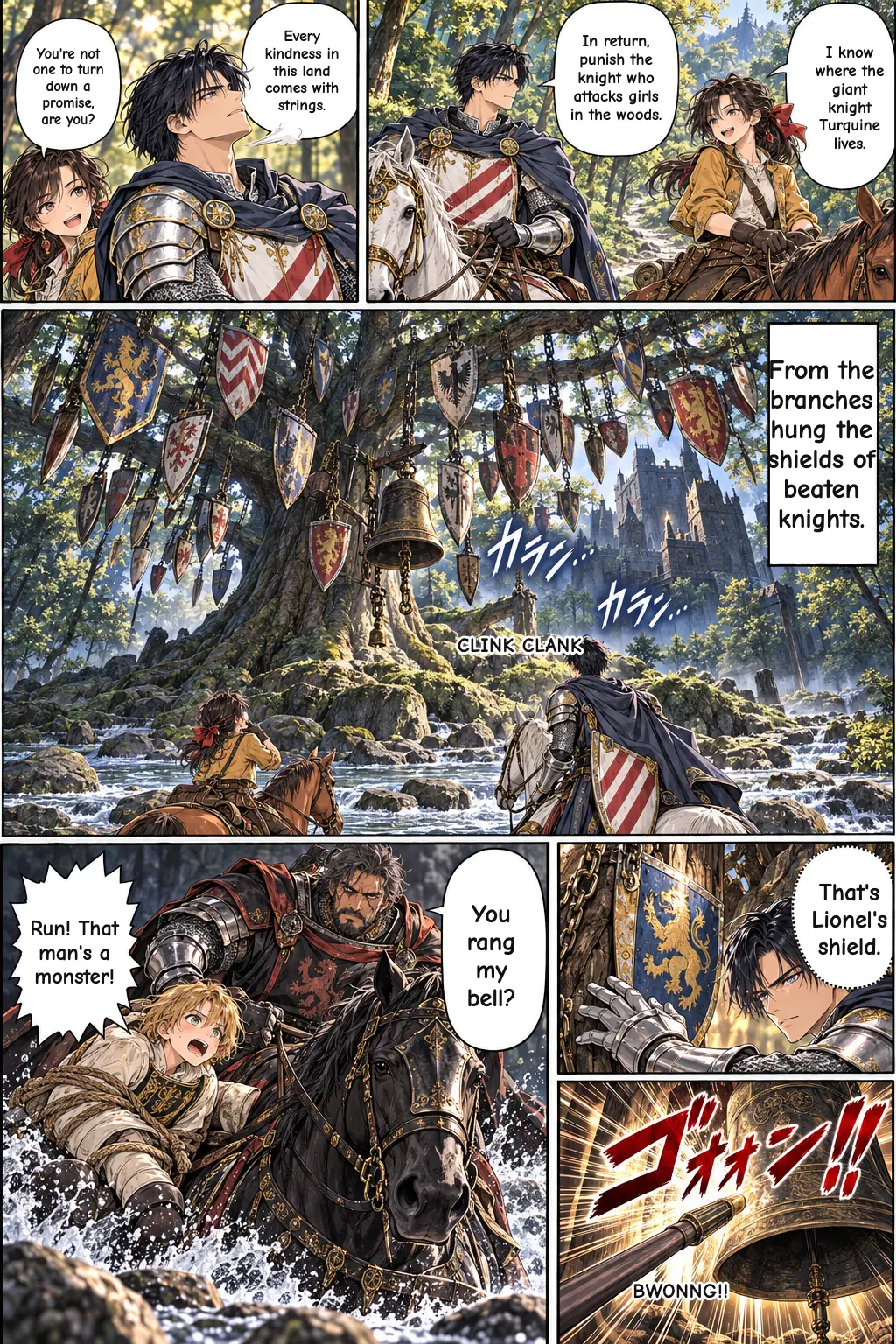
Launcelot rides out looking for adventure with his young nephew, Sir Lionel. On a hot afternoon he falls asleep under an apple tree while Lionel keeps watch. Lionel sees a huge knight overthrow three others, chases him, and is captured. That knight is Sir Turquine, who keeps dozens of Round Table knights locked in his prison. Launcelot's brother, Sir Ector de Maris, soon suffers the same fate after striking a copper basin hanging from a tree by a ford, which is how challengers summon Turquine.
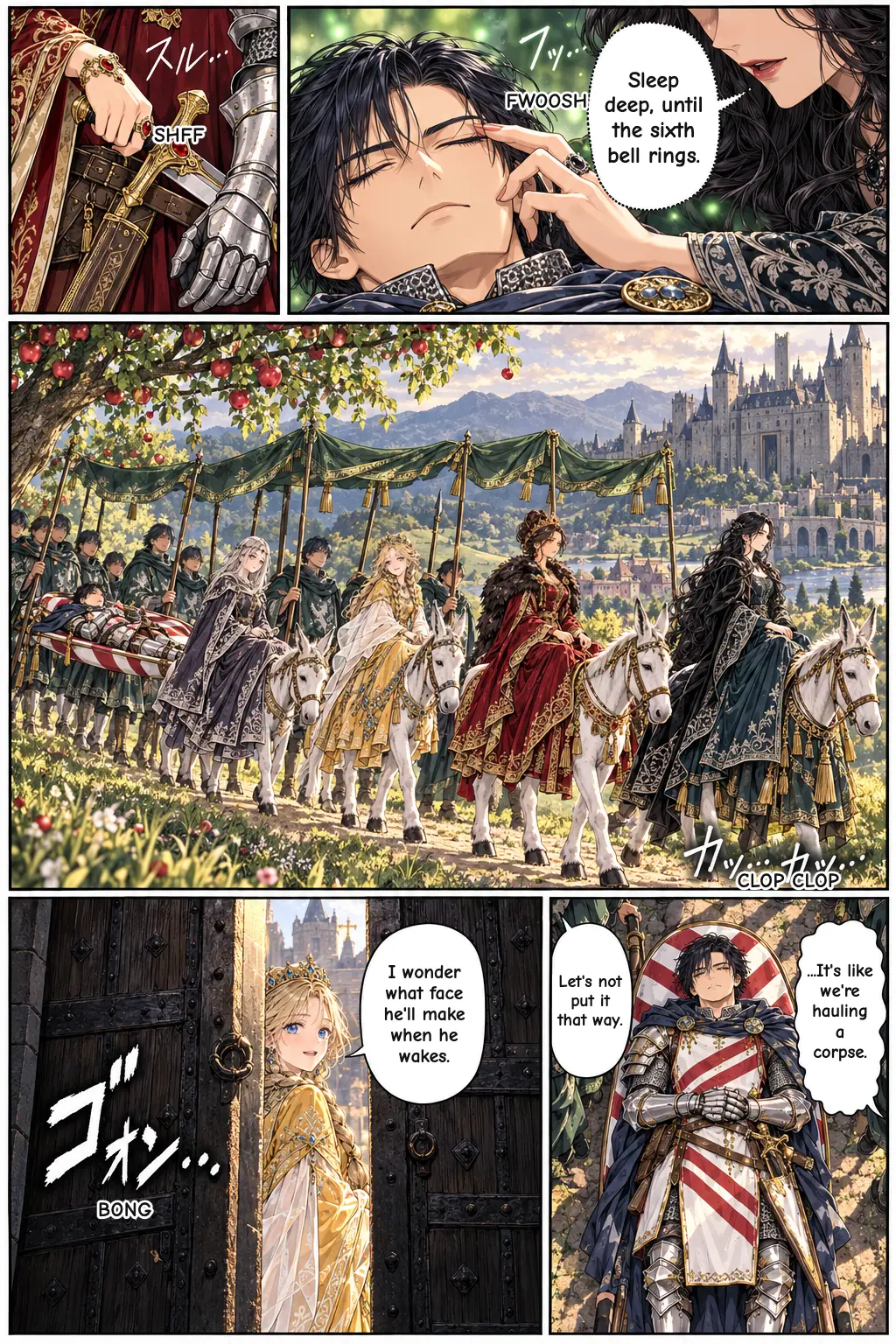
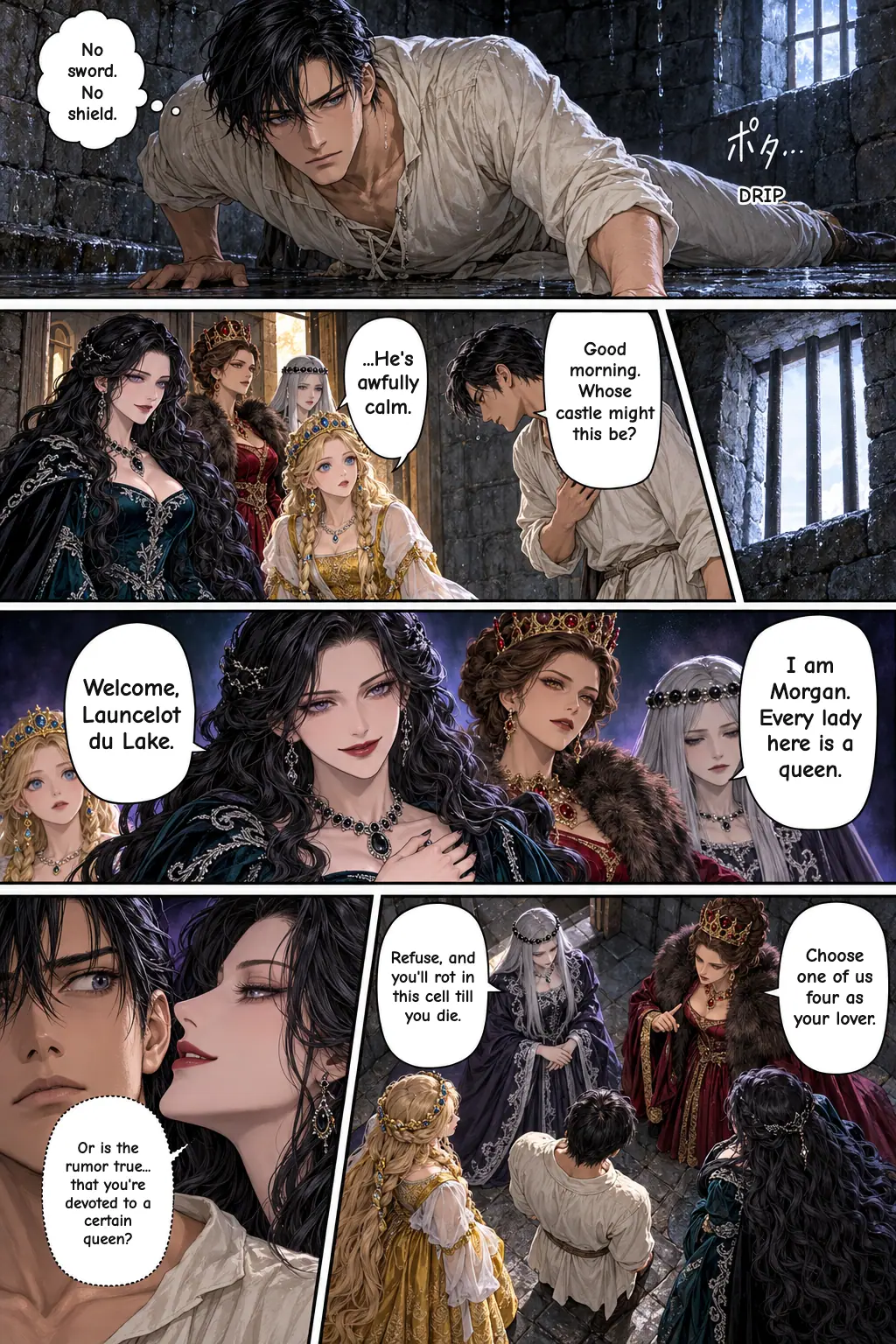
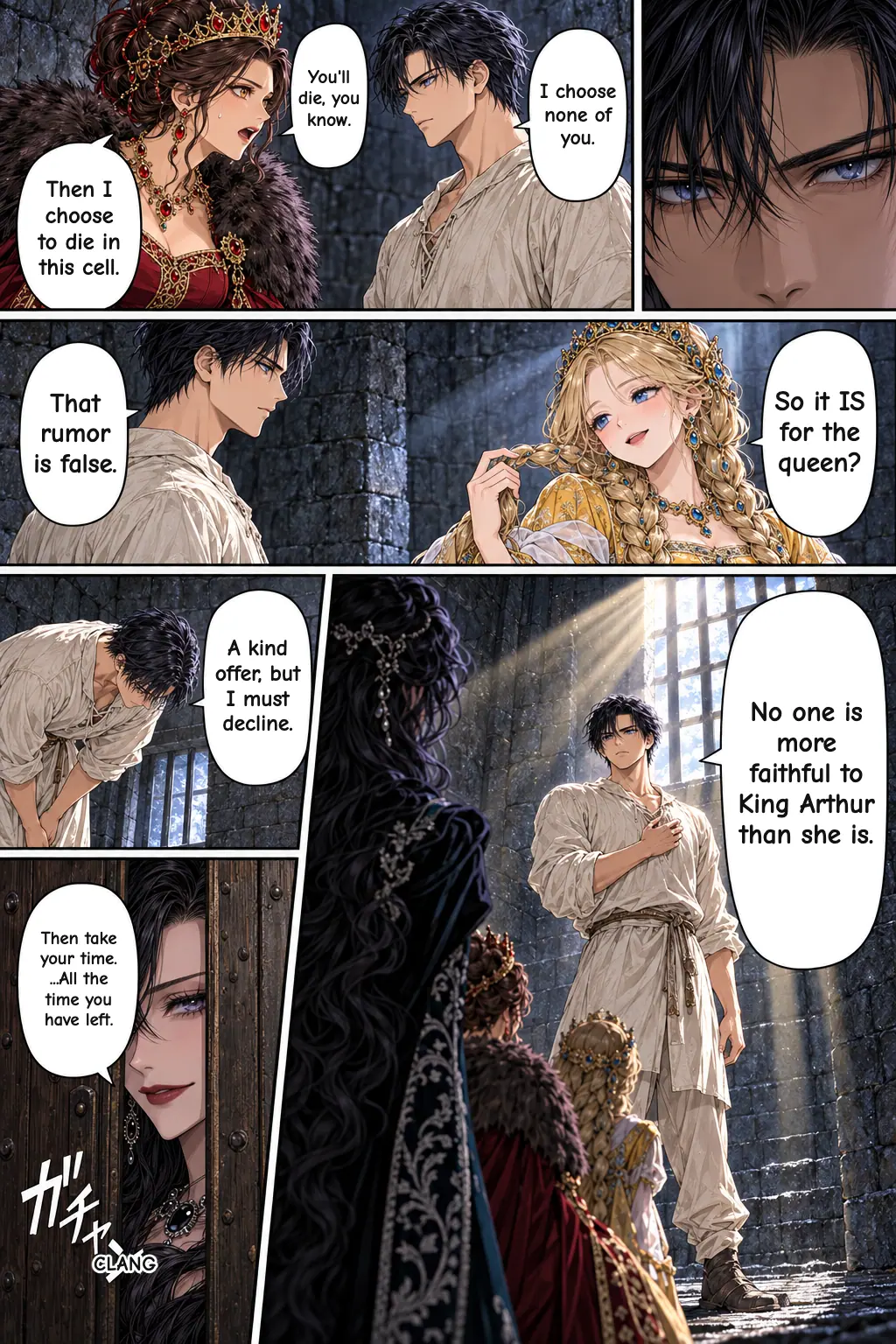
Meanwhile, four queens riding white mules find Launcelot asleep: Morgan le Fay, the Queen of Northgalis, the Queen of Eastland, and the Queen of the Out Isles. They argue over who will have him, so Morgan puts him under a spell that keeps him asleep for six hours. They carry him on a shield to Castle Chariot and lock him in a cold room. The next morning they give him a choice: take one of them as his lover, or die in prison. Launcelot refuses both, saying he would rather die, and declares that Queen Guenever is the truest lady alive.
The Duel with Sir Turquine and the Chapel Perilous
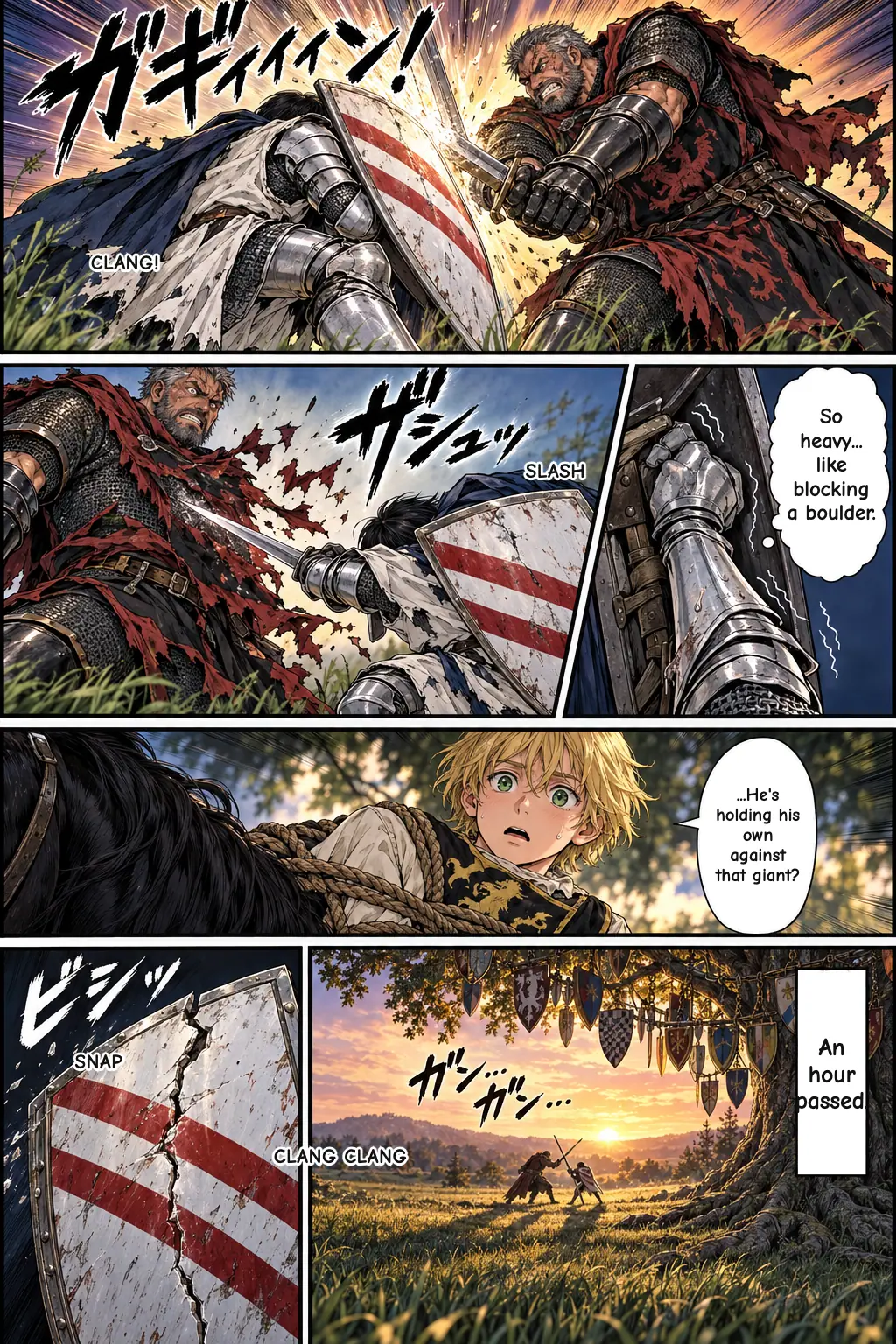
A young woman who brings him food, the daughter of King Bagdemagus, offers him a way out: she will free him if he fights for her father at a tournament the following Tuesday. He agrees, she opens twelve locks to release him, and he keeps his promise. Then, guided by another lady, he finds Turquine's manor, strikes the basin, and faces Turquine, who arrives carrying the bound knight Sir Gaheris across his horse.
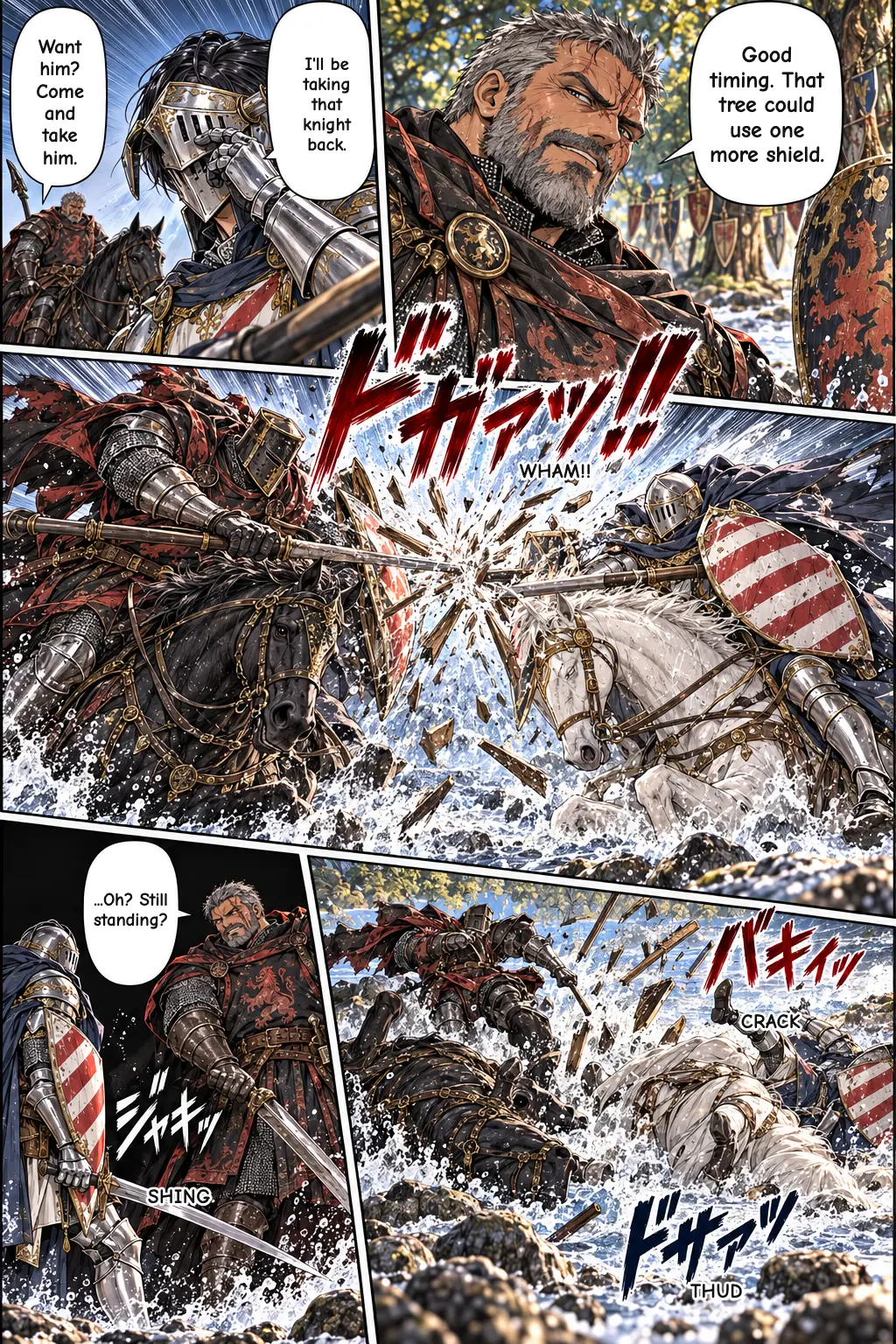
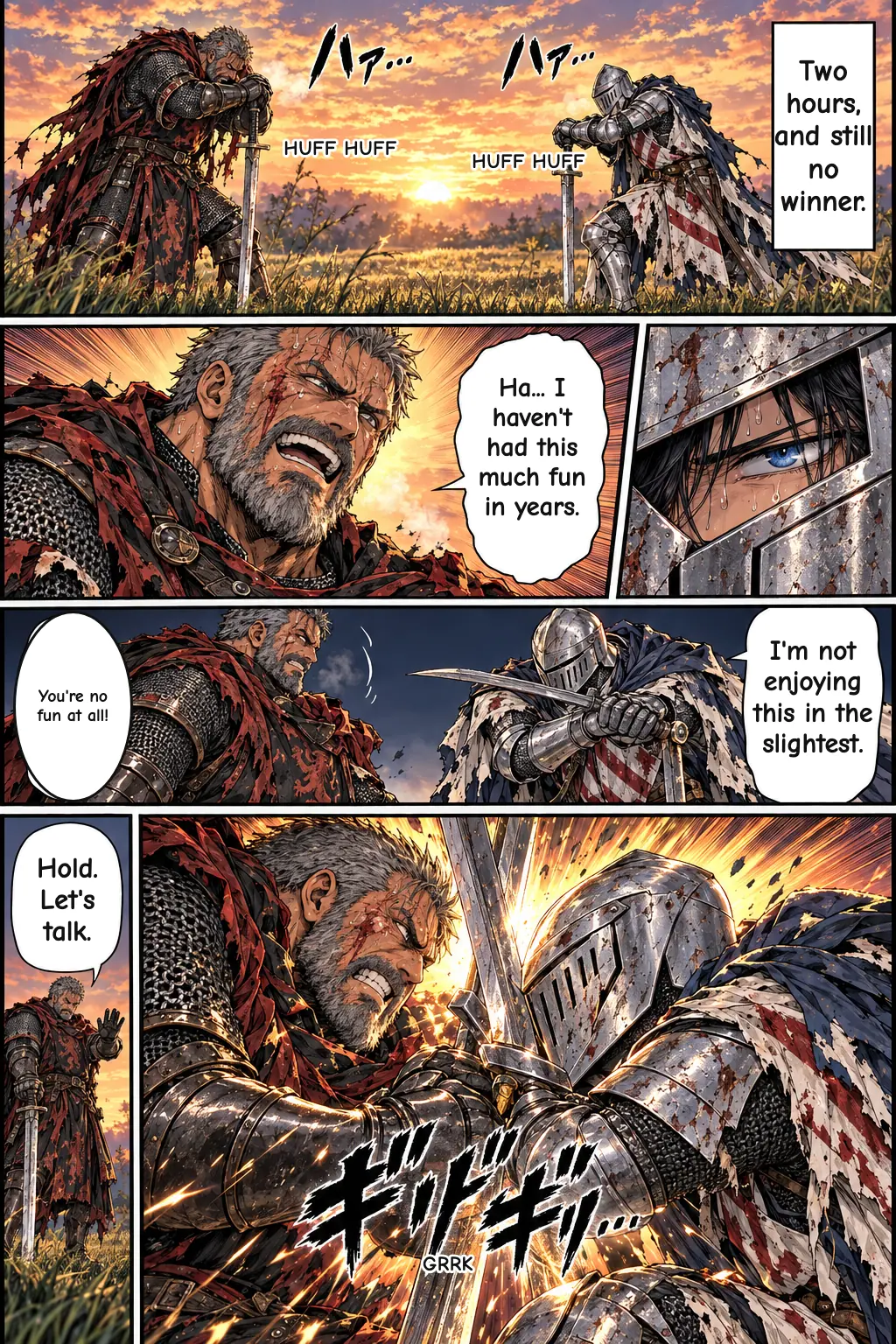
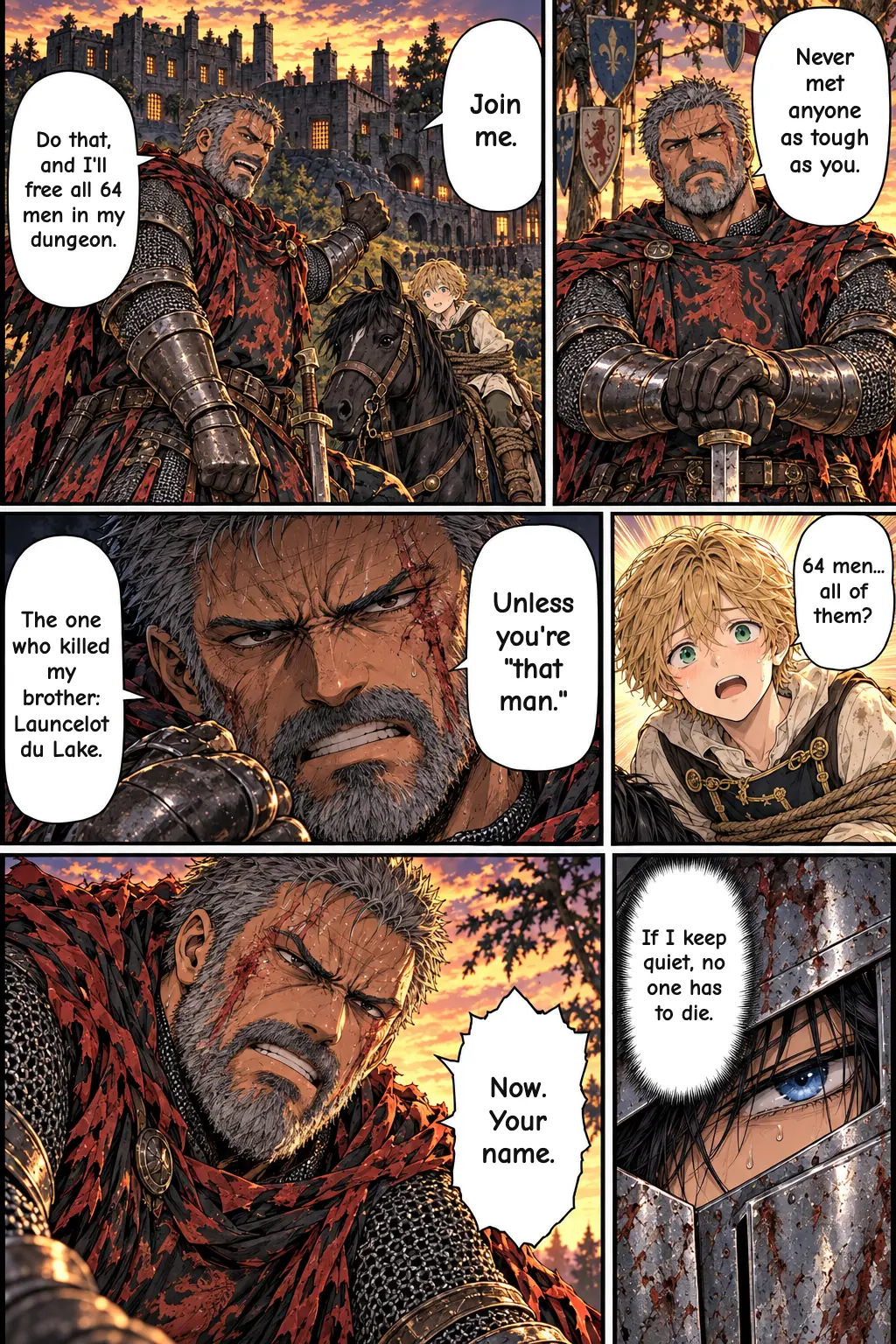
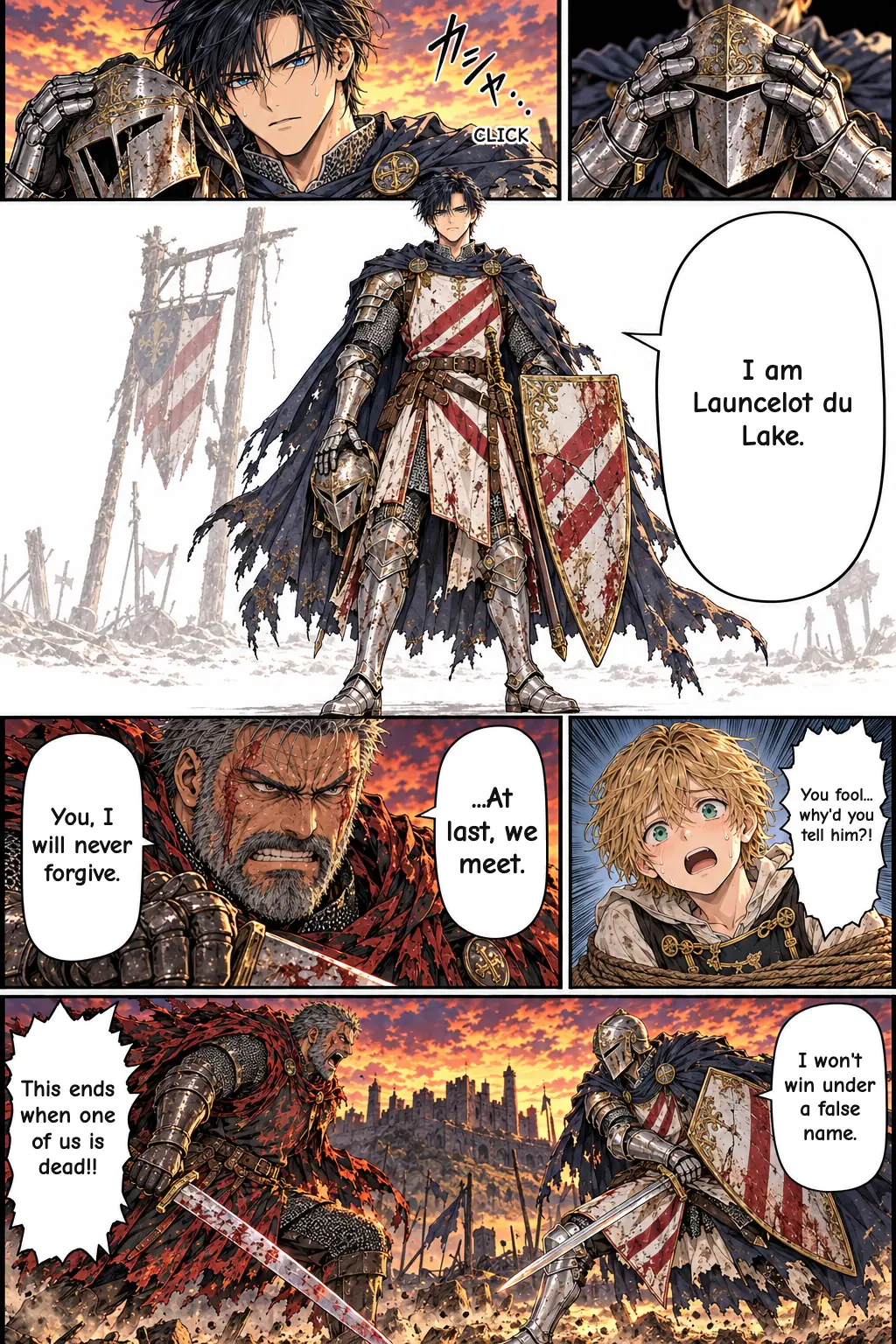
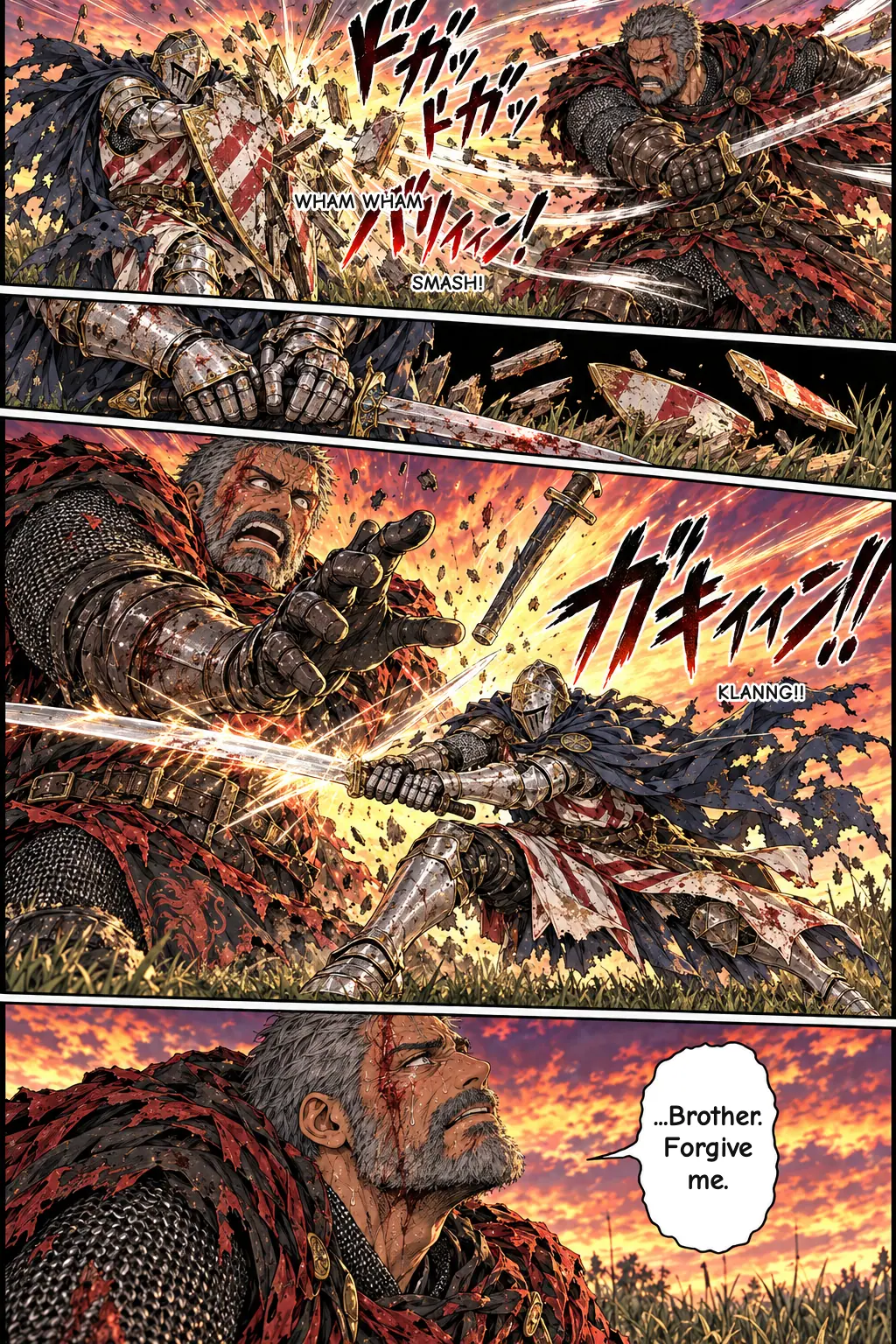
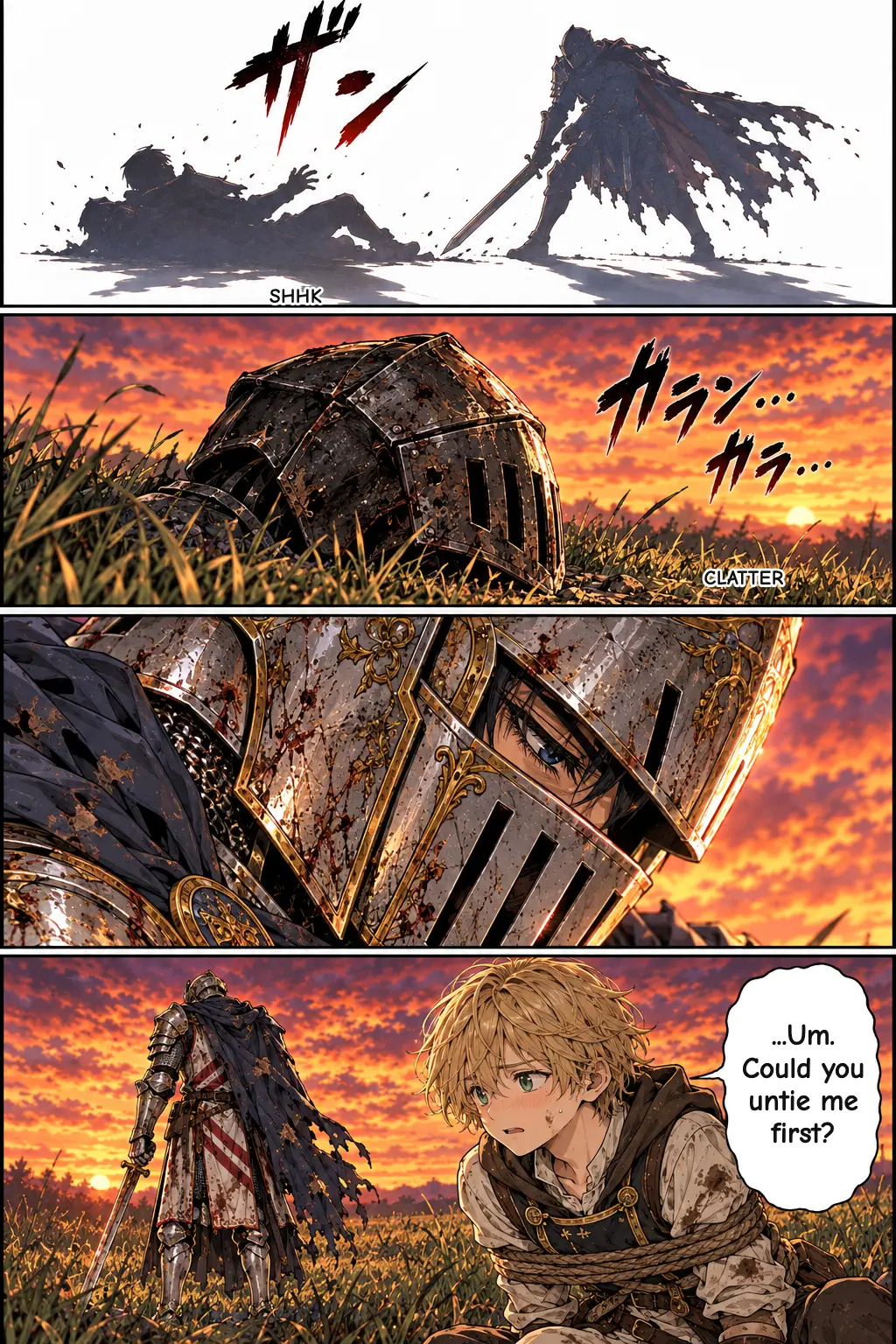
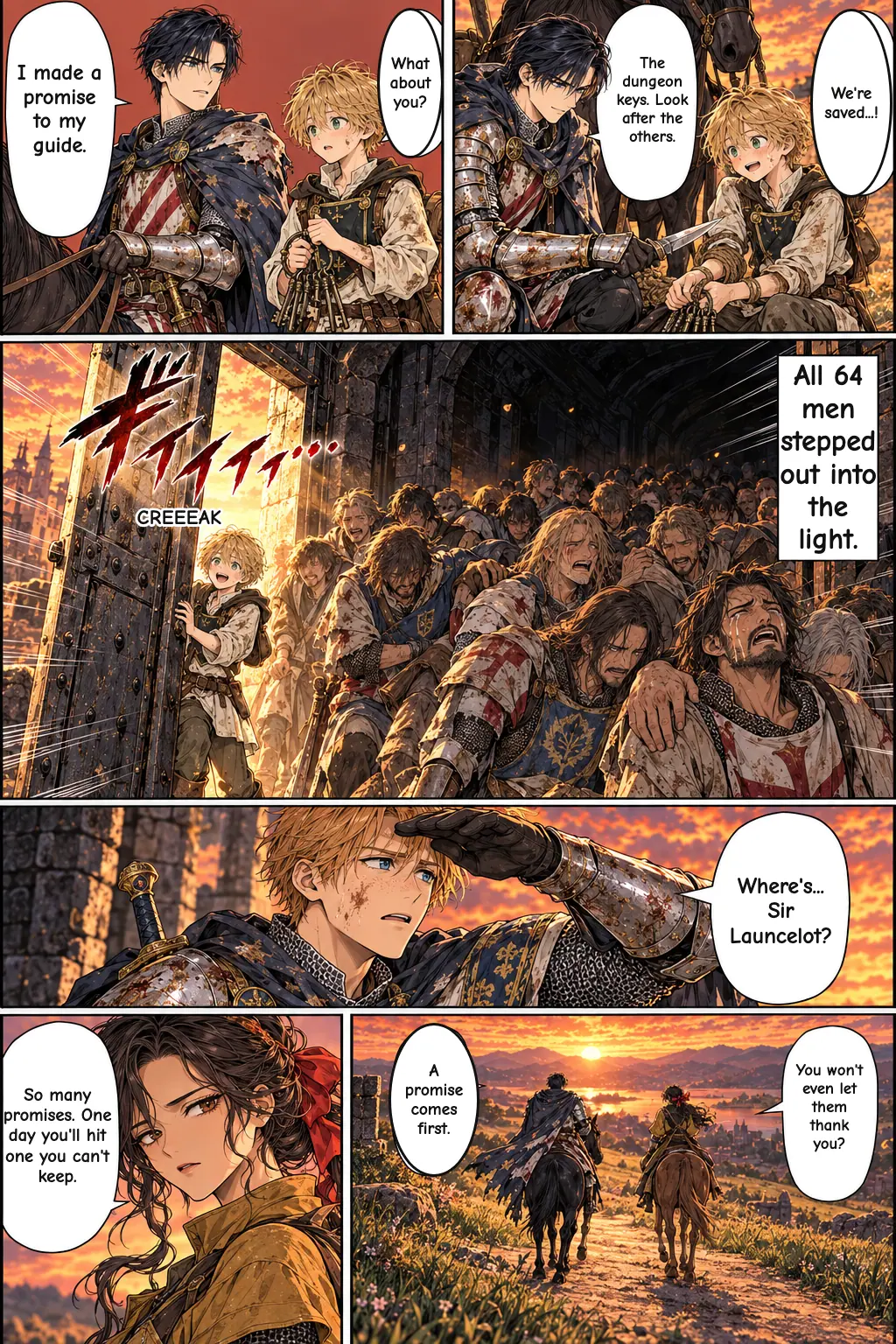
The two fight for more than two hours, both badly wounded. Turquine admits he has never met a tougher opponent and offers peace and freedom for all sixty-four prisoners, unless this knight is the one man he hates most: the knight who killed his brother Carados at the Dolorous Tower. Launcelot gives his name. Turquine swears never to make peace, the battle resumes, and Launcelot kills him. Gaheris frees the prisoners, including Sir Kay, Lionel, and Ector.
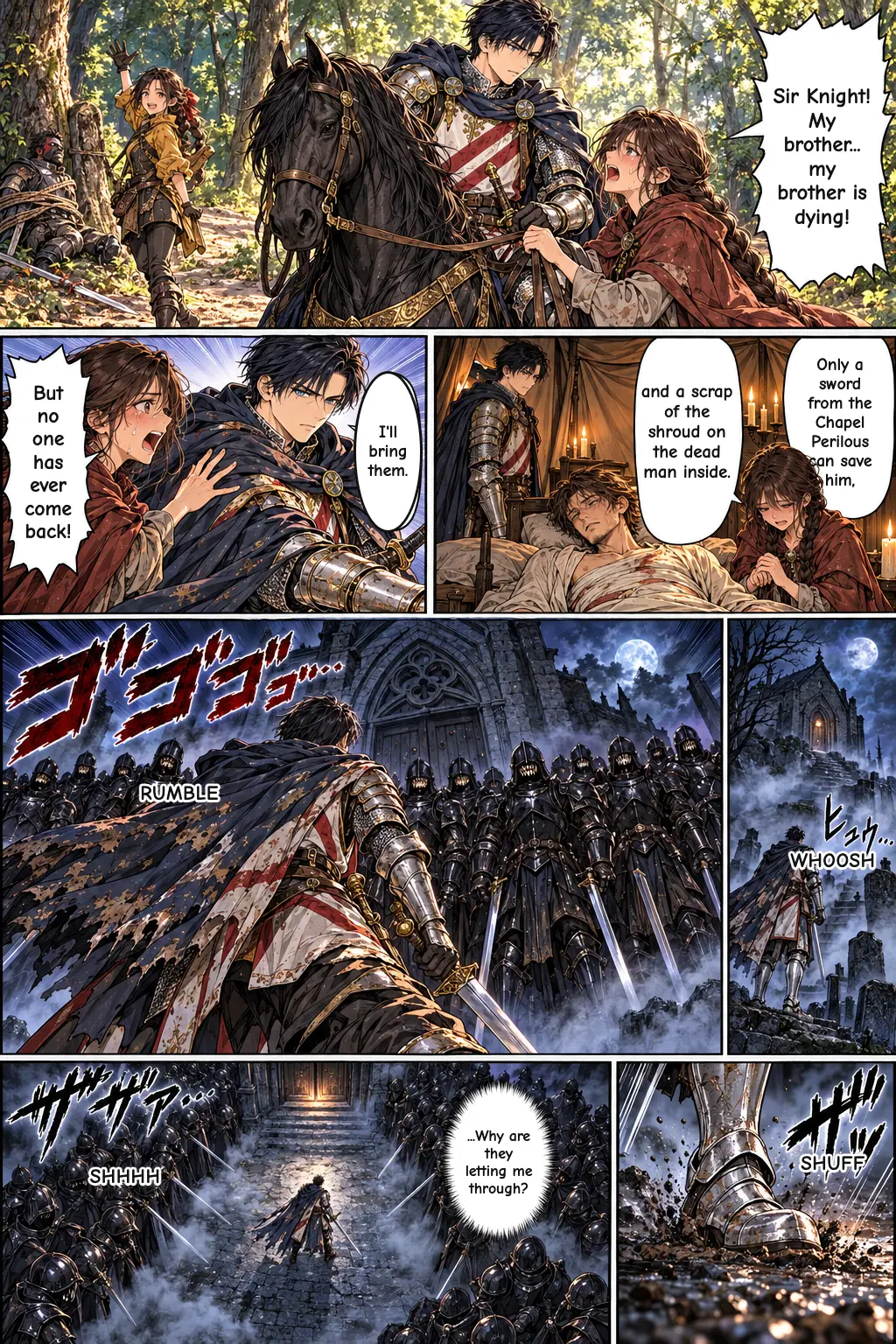
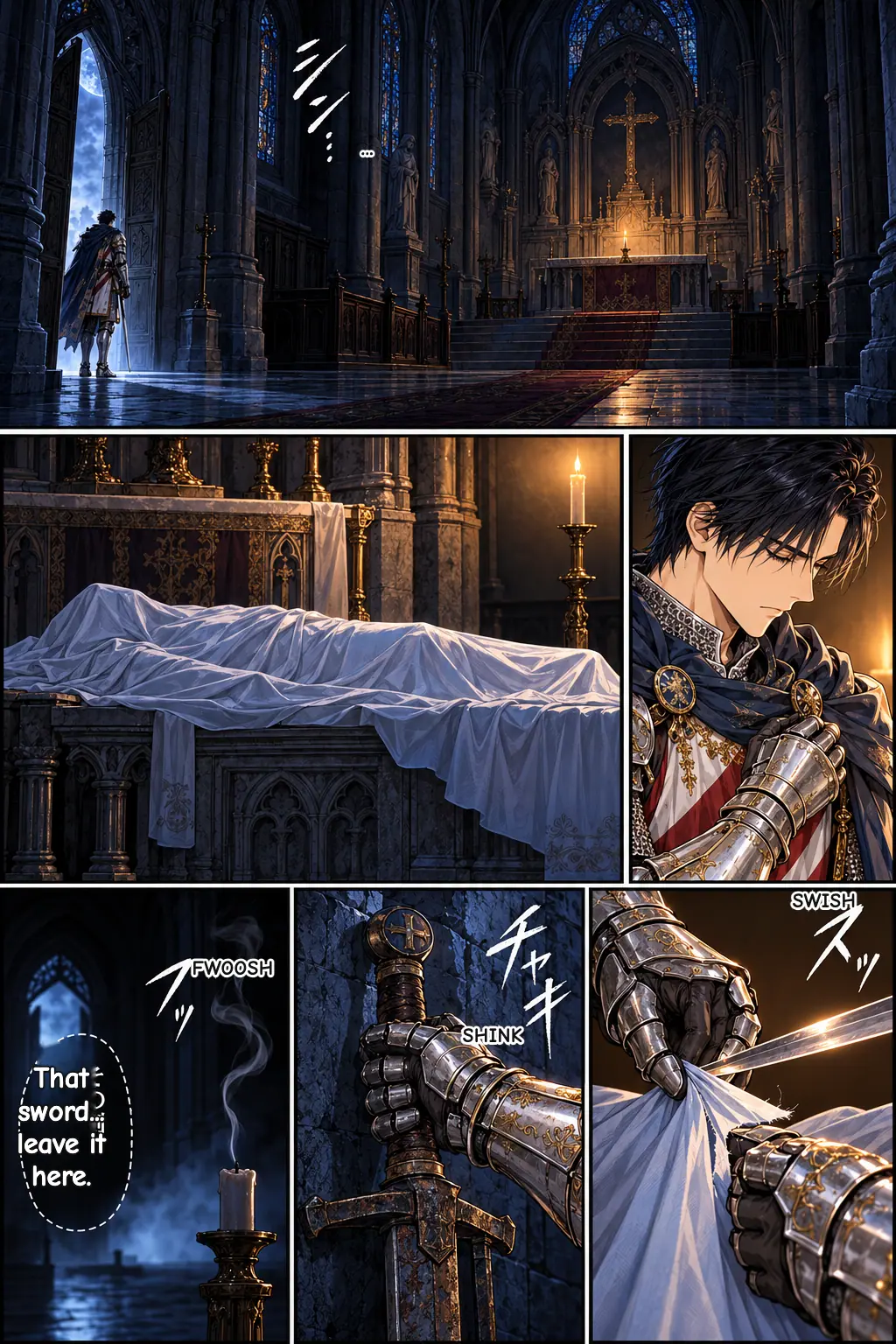
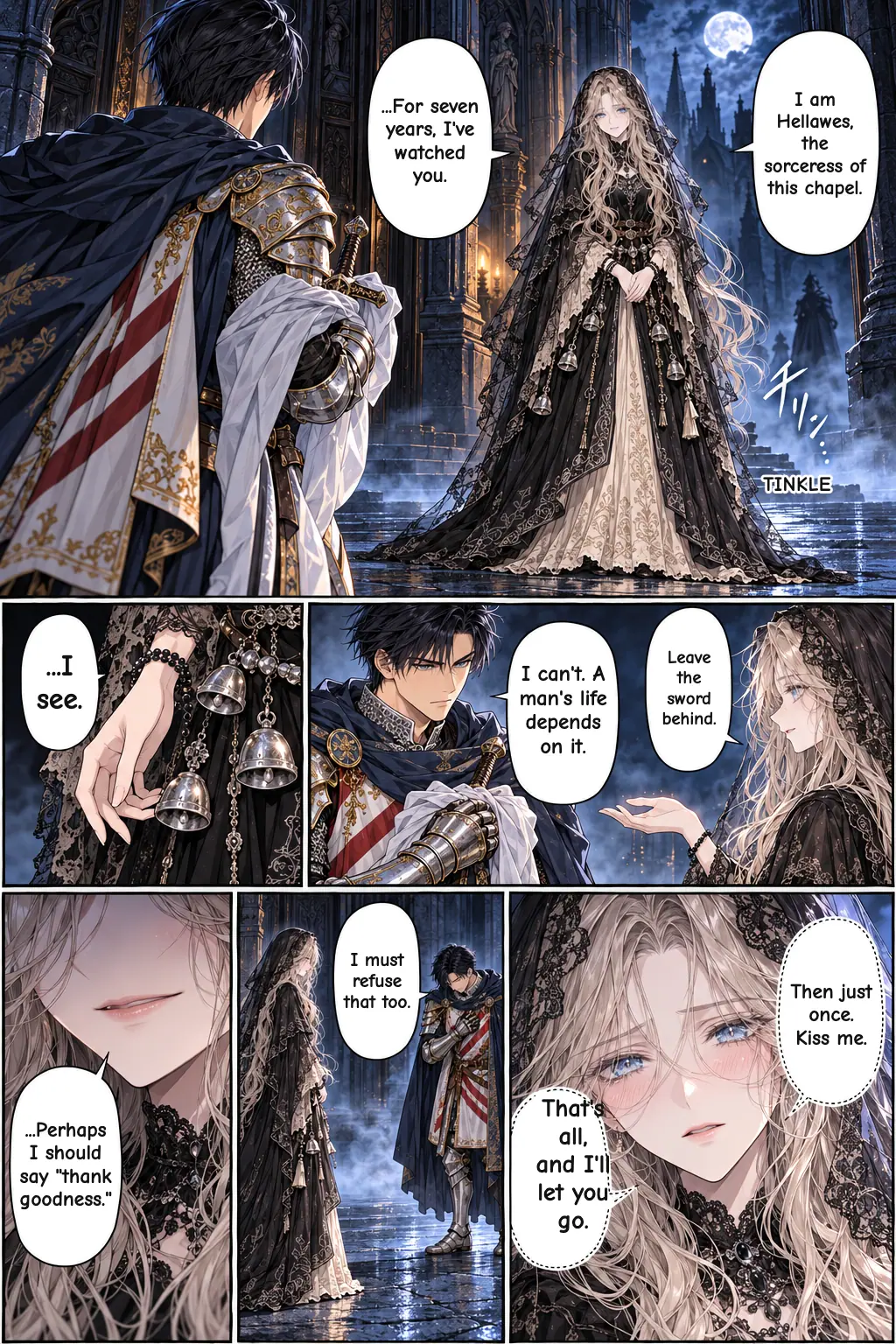
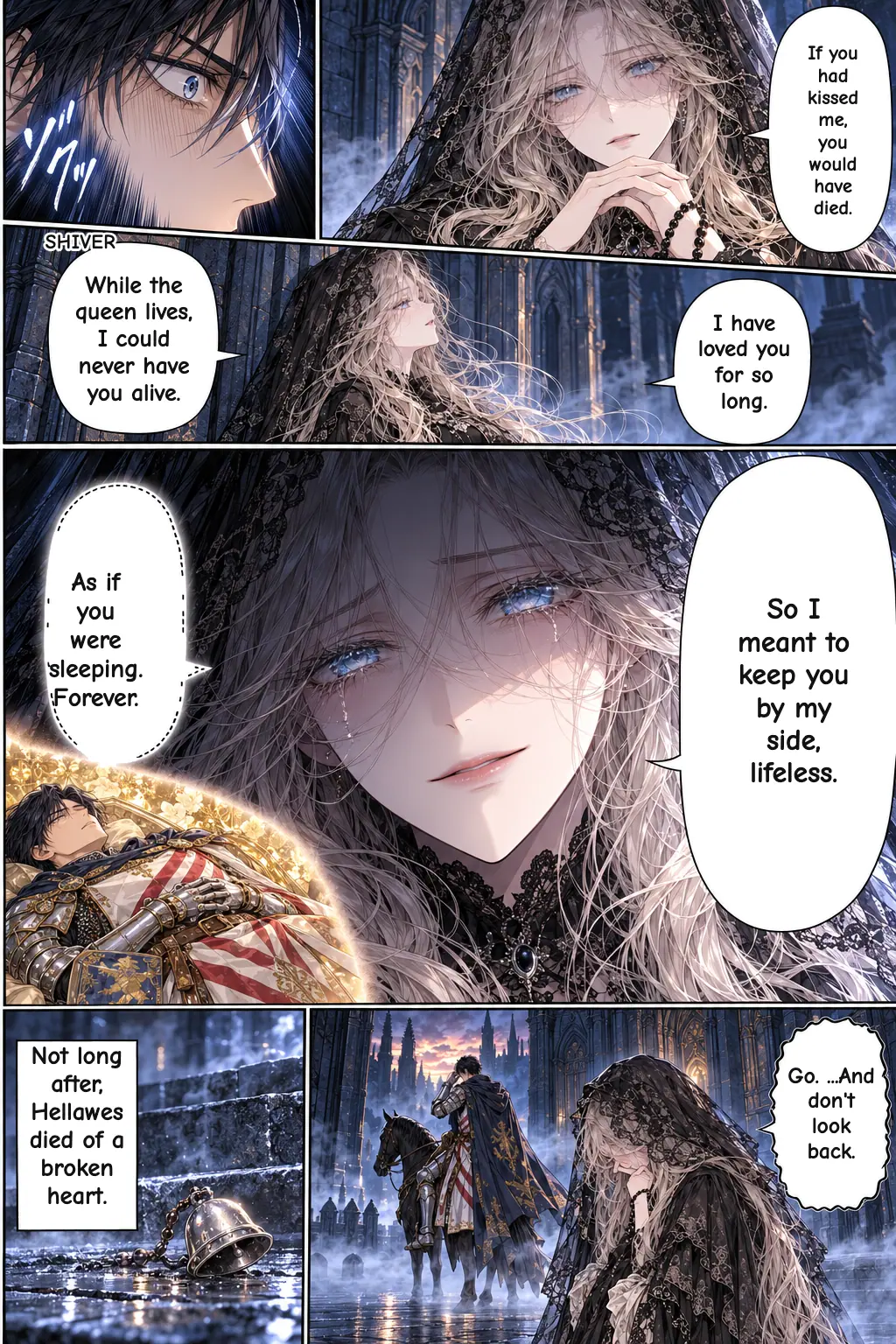
Later, to heal a wounded knight named Sir Meliot de Logres, Launcelot enters the Chapel Perilous. Thirty giant knights in black armor block his path but step aside as he walks forward. Inside he takes a sword and cuts a piece of the cloth covering a dead body. Outside, the sorceress Hellawes asks him to leave the sword, then asks for a single kiss. He refuses both. She then reveals that the kiss would have killed him: she had loved him for seven years, and since she could never have him alive while Guenever lived, she meant to keep his embalmed body for herself. She dies of grief soon after. Launcelot heals Meliot and, after more adventures, returns to court at Pentecost with his fame higher than ever.
Main Characters
Sir Launcelot du Lake is the greatest knight of the Round Table. Queen Guenever, Arthur's queen, barely appears in Book VI, but her name is the reason behind every refusal Launcelot makes. Morgan le Fay is a queen skilled in magic; other parts of Malory's book describe her as Arthur's half-sister. Sir Turquine is a powerful knight who hates Launcelot above all others. Hellawes, the sorceress of Castle Nigramous, is the woman whose "one kiss" was really a deadly trap.
What This Story Means: Chivalry, Loyalty, and a Dangerous Love
Malory wrote in the fifteenth century, drawing heavily on earlier French prose romances about Arthur's court. Launcelot himself was not part of the oldest Arthurian tales; he became famous through French romances of the 1100s and 1200s. In Book VI, Malory shows the ideal of knighthood: keeping every promise, rescuing prisoners, and staying loyal to one beloved lady.
But there is a shadow over this ideal. A lady Launcelot helps tells him people say he has no wife or lover because the queen has enchanted him. He replies that he wants neither. Readers who know the later books understand why this matters: Malory goes on to tell how the love between Launcelot and Guenever helps bring about the fall of the Round Table. The queens and Hellawes all treat Guenever as their rival, and in a way they see the truth before anyone at court does.
What the Manga Changed
Malory's descriptions are short, so the faces, costumes, castles, and the Chapel Perilous are designed by the manga. Launcelot's thoughts in the prison cell, including his inner thoughts about the queen, are new; the original gives only his answer to the queens. Bagdemagus's daughter has no name in Malory, so any name she is given in the manga is the manga's invention. The moves and turns of the Turquine duel are also invented, since Malory says little more than that it lasted over two hours.
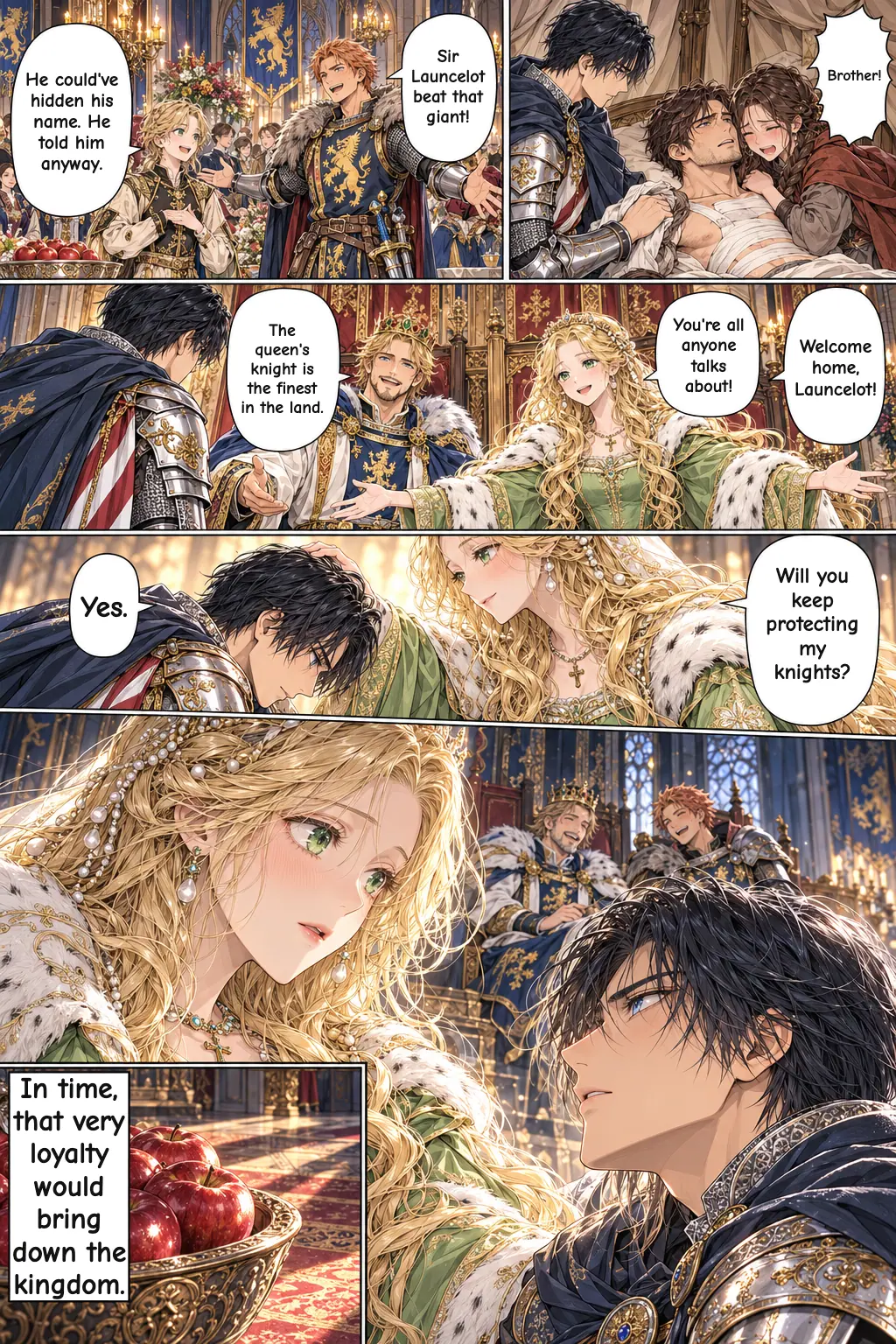
The manga leaves out many side adventures, such as the tournament, the giants at Tintagel, and Launcelot traveling in Kay's armor, and focuses on three events: the four queens, Turquine, and Hellawes. Hellawes's backstory and how she set up the chapel are expanded. The final scene, where Launcelot and Guenever face each other at court, grows out of his return in Chapter 18 and is the manga's own interpretation.
Where to Read It
If you want to see Launcelot say no to four queens, a deadly duel, and a sorceress, Episode 6 of KING ARTHUR: Twilight of the Round Table tells the story in full color on Manga Portal. Every episode is free to read, and you don't need to sign up. Start here, or go back to Episode 1 to follow the whole rise and fall of Camelot.
Characters in this episode
Sir Launcelot du Lake
The greatest knight of the Round Table, who turns down every temptation out of devotion to Queen Guenever.
Queen Guenever
King Arthur's queen, who honors Launcelot above all knights and is the lady he loves most.
Morgan le Fay
A queen skilled in magic who leads the four queens and casts a sleeping spell on Launcelot.
Sir Turquine
A fierce knight who holds sixty-four of Arthur's knights prisoner and hates Launcelot for killing his brother Carados.
Hellawes
The sorceress of Castle Nigramous, whose request for one kiss at the Chapel Perilous was a deadly trap.
Sir Lionel
Launcelot's nephew and traveling companion, who is captured by Turquine while Launcelot sleeps.
FAQ
Who were the four queens who captured Lancelot?
In Malory's Le Morte d'Arthur, they are Morgan le Fay, the Queen of Northgalis, the Queen of Eastland, and the Queen of the Out Isles. Morgan put Launcelot to sleep with a spell, and they locked him in Castle Chariot, demanding he choose one of them as his lover.
Why did Sir Turquine hate Lancelot?
Launcelot had killed Turquine's brother, Carados, at the Dolorous Tower. Turquine offered peace to his opponent until he learned it was Launcelot, then fought on until Launcelot killed him.
What happened at the Chapel Perilous?
Launcelot went there to get a sword and a piece of cloth that could heal the wounded Sir Meliot de Logres. When he came out, the sorceress Hellawes asked for one kiss; he refused, and she revealed the kiss would have killed him so she could keep his body.
Did Lancelot love Queen Guinevere?
Yes. In Book VI, Malory says Launcelot loved Queen Guenever above all other ladies, and he names her when refusing the four queens. Later books of Le Morte d'Arthur tell how their love contributes to the downfall of the Round Table.
Who wrote Le Morte d'Arthur?
Sir Thomas Malory wrote it in the fifteenth century, and William Caxton printed it in 1485. Malory based much of it on earlier French and English Arthurian romances.